



The razor cut bob has become the go-to style for anyone seeking movement, texture, and dimension without sacrificing the polished elegance of a classic bob. Unlike blunt cuts that sit heavy against the head, razor cutting techniques create intentional layers, piece-y textures, and wispy ends that catch the light and frame the face with flattering softness. Whether you’re drawn to a chin-grazing length or prefer something slightly longer, the razor cut bob offers infinite variations that work across different hair types, face shapes, and personal aesthetics.
The beauty of razor-cut bobs lies in their versatility and low-maintenance appeal. The strategically layered ends mean your hair naturally falls into place with movement, and you’re not fighting against a blunt line that requires frequent trims to maintain. A skilled stylist uses a razor (not scissors) to create crisp, clean layers that graduate in length, allowing shorter pieces to frame the face while longer pieces build body and shape. This technique creates that coveted soft, wispy finish where individual strands seem to float rather than sit in a solid block. The result feels effortless—modern, romantic, and undeniably chic.
What makes a razor cut different is how it interacts with your hair’s natural texture. A razor works with your hair’s growth pattern and density rather than against it, creating a cut that genuinely improves as your hair grows out. The tapered edges and disconnected layers mean you can style your bob in multiple ways: sleek and smooth for a polished look, slightly tousled for relaxed vibes, or deliberately textured for editorial edge. Understanding which razor cut variation suits your hair type and face shape is the key to finding your signature style.
1. The Textured Shag Bob
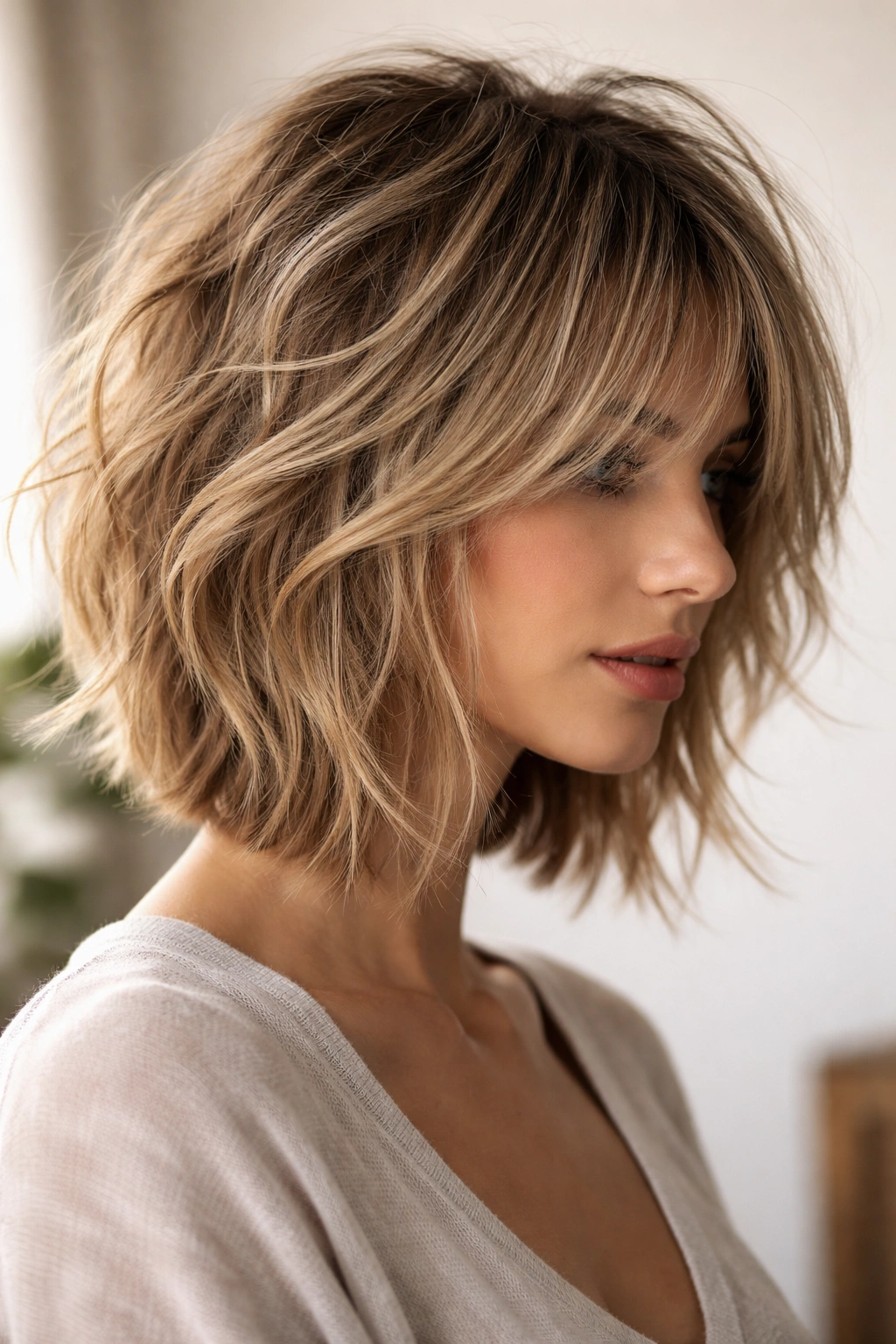
The textured shag bob brings 1970s-inspired ease into the modern era with its choppy layers, shorter crown, and longer front pieces. This style creates maximum movement with minimal styling effort, making it ideal if you’re after a lived-in, undone aesthetic that still photographs beautifully. The shag bob works especially well for fine or thin hair because the layering creates the illusion of density and fullness without requiring thick hair to pull off.
Why This Cut Works for Soft, Wispy Texture
The magic of a shag bob is how each layer works independently, creating a multi-dimensional silhouette that seems to shift with every head turn. The shorter layers at the crown provide lift and volume, while the longer pieces in front can be styled forward for a chic, asymmetrical look or swept behind the ears for a more relaxed vibe. This cut embraces texture rather than fighting it, which means your natural waves or slight curl actually enhance the style instead of working against it.
Styling Tips and Maintenance
- Use a texturizing spray or sea salt spray on damp roots to enhance movement and separation
- Blow-dry using a diffuser attachment to encourage your hair’s natural texture rather than smoothing it down
- The shorter layers tend to grow faster than the longer pieces, so plan for trims every 6-8 weeks to maintain the layered shape
- This style actually improves as it grows slightly—it deepens the shag texture rather than losing definition
- Pair with a side part for maximum visual movement and to showcase the length variation between layers
Pro tip: If your hair is naturally straight, a texturizing cream or wax applied to the ends will help define individual pieces and create that wispy separation that makes a shag bob special.
2. The Blunt-Front Wispy Bob
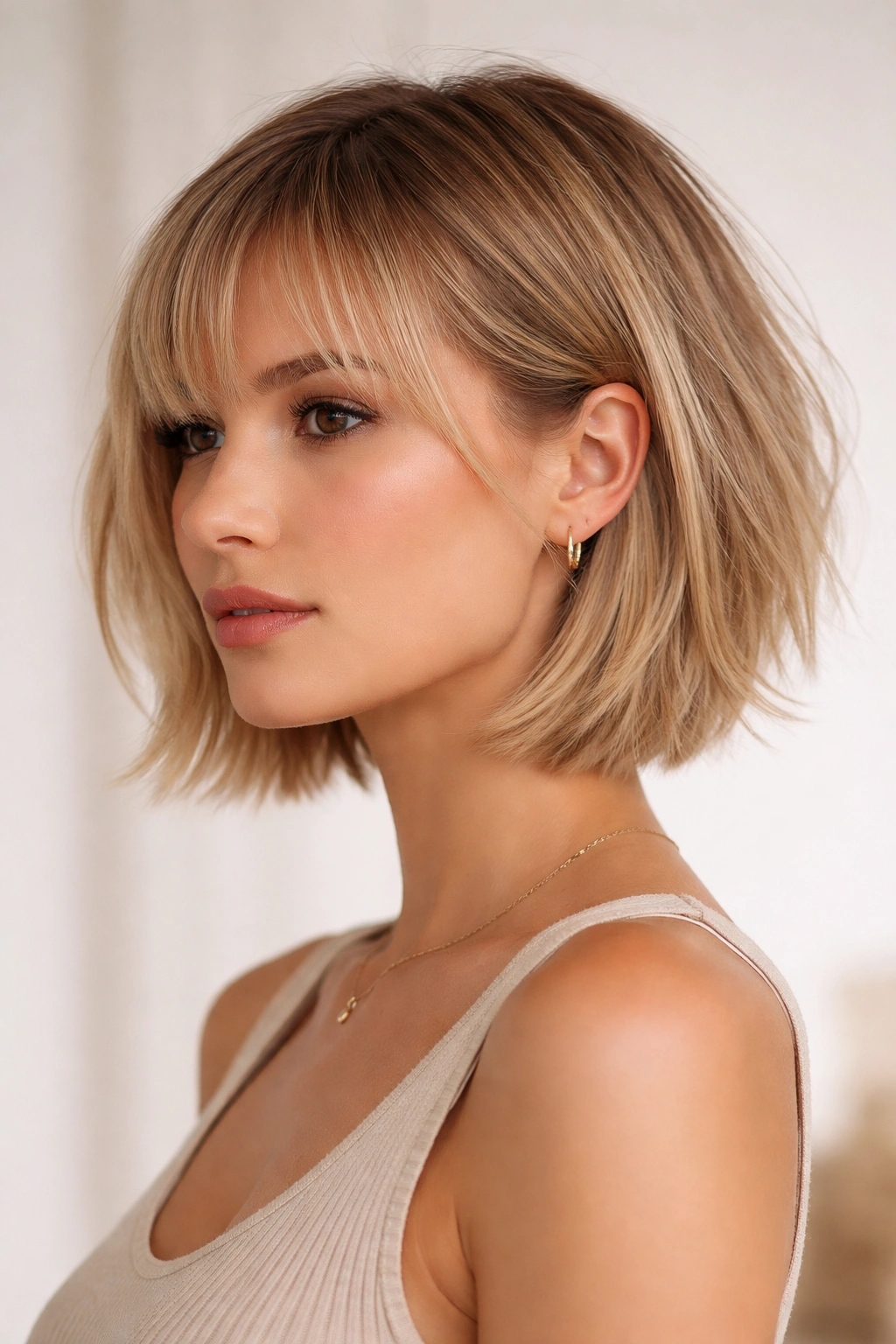
This sophisticated variation pairs a blunt, chin-length front with progressively longer layers in the back, creating an angular, modern silhouette with soft movement. The contrast between the sharp front line and the wispy layers gives your face a lifted, youthful quality while the back adds dimension and prevents the style from feeling too severe. This cut flatters most face shapes because the blunt front can be angled to complement your specific features.
Why the Blunt-Front Works
The architectural precision of the blunt front line makes your cheekbones and jawline appear more defined, while the wispy back prevents the overall look from feeling heavy or harsh. This cut creates a striking profile view while remaining soft and approachable from the front. It’s the ideal option if you want structure and sophistication with an edge—professional enough for the boardroom but with enough movement to feel contemporary and fashion-forward.
How to Style and Maintain
- Keep your blunt front precise with trims every 4-6 weeks; this is the line that defines the entire cut
- Use a flat iron on the front pieces to maintain that clean line, or embrace texture if you prefer a softer interpretation
- The wispy back layers can be worn smooth or textured depending on your mood and the occasion
- Style the back slightly outward (not tucked against your head) to showcase the layering and create a lifted silhouette
- A lightweight styling cream through the ends prevents frizz while maintaining movement
Worth knowing: This cut shows every texture and imperfection in the front blunt line, so request a razor-blunt hybrid technique where your stylist uses a razor to create a crisp line that still has subtle movement rather than a knife-straight edge.
3. The Feathered Pixie Bob
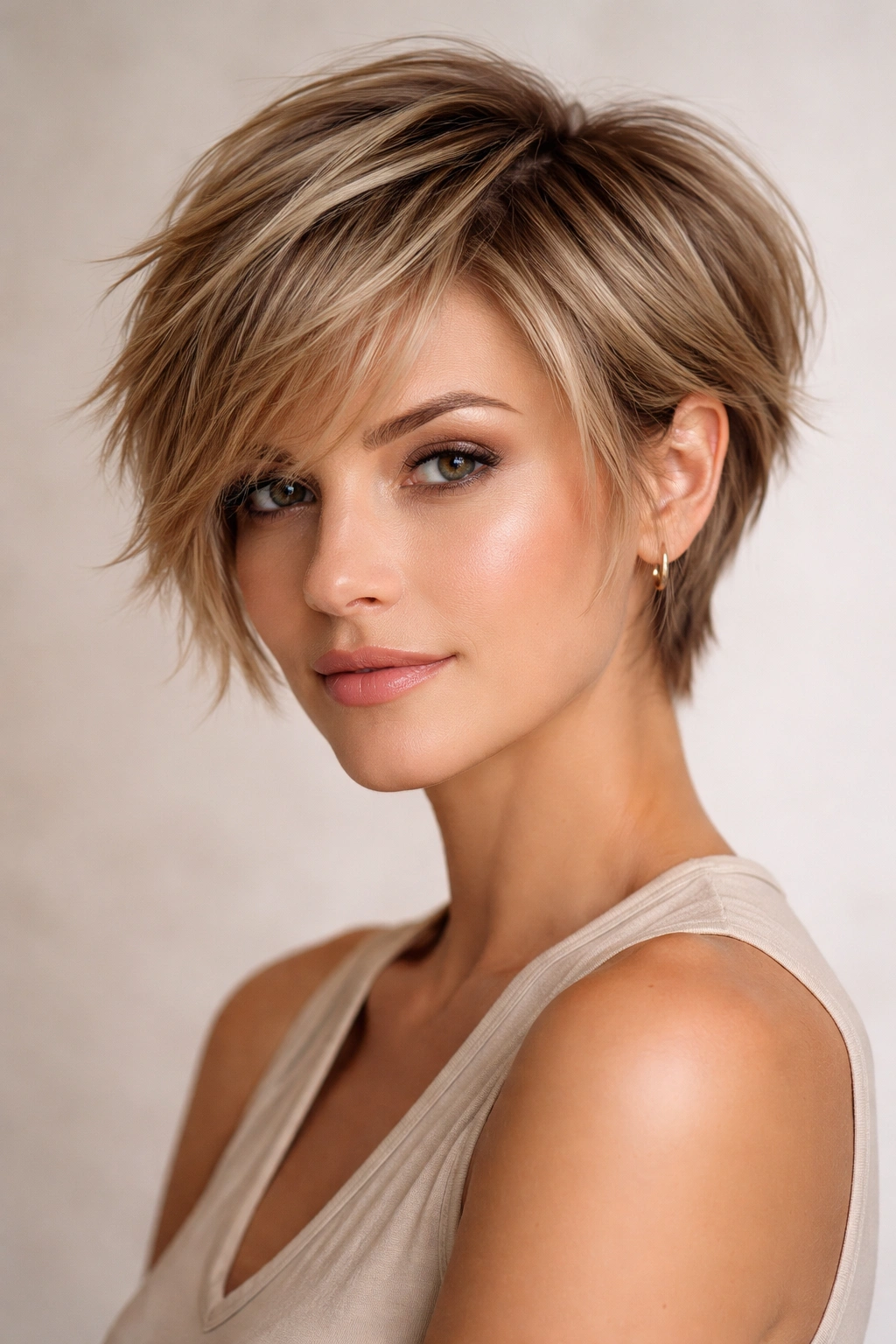
The feathered pixie bob blurs the line between a pixie cut and a bob by keeping the sides and back relatively short while maintaining slightly longer face-framing layers. This androgynous, editorial-leaning cut offers maximum texture and movement with minimal length, making it perfect for people who want the impact of a bold crop without fully committing to a pixie.
Why Feathering Creates Softness
Feathering—the technique of cutting choppy, overlapping layers that point in slightly different directions—is what transforms what could be a severe short cut into something soft and romantic. The feathered edges catch light beautifully, creating the illusion of subtle dimension and texture throughout. This cut actually looks better as it grows slightly, because the growing-out phase creates even more feathering and movement.
Styling and Cut Requirements
- Request layers throughout that feather away from the face, not layers that sit flat against your head
- Blow-dry with a round brush to create volume at the crown and encourage the feathered texture to separate
- Use a small amount of texturizing cream or pomade to define individual strands and enhance the feathered effect
- This cut needs a trim every 3-4 weeks to maintain the precision and prevent it from growing into an awkward in-between length
- The commitment level is higher than a traditional bob, but the impact is undeniably chic
Insider note: If you have thick, curly hair, a feathered pixie bob can be surprisingly manageable—ask your stylist to razor the layers aggressively so the weight is removed and curls can spring up and separate naturally.
4. The Asymmetrical Razor Bob
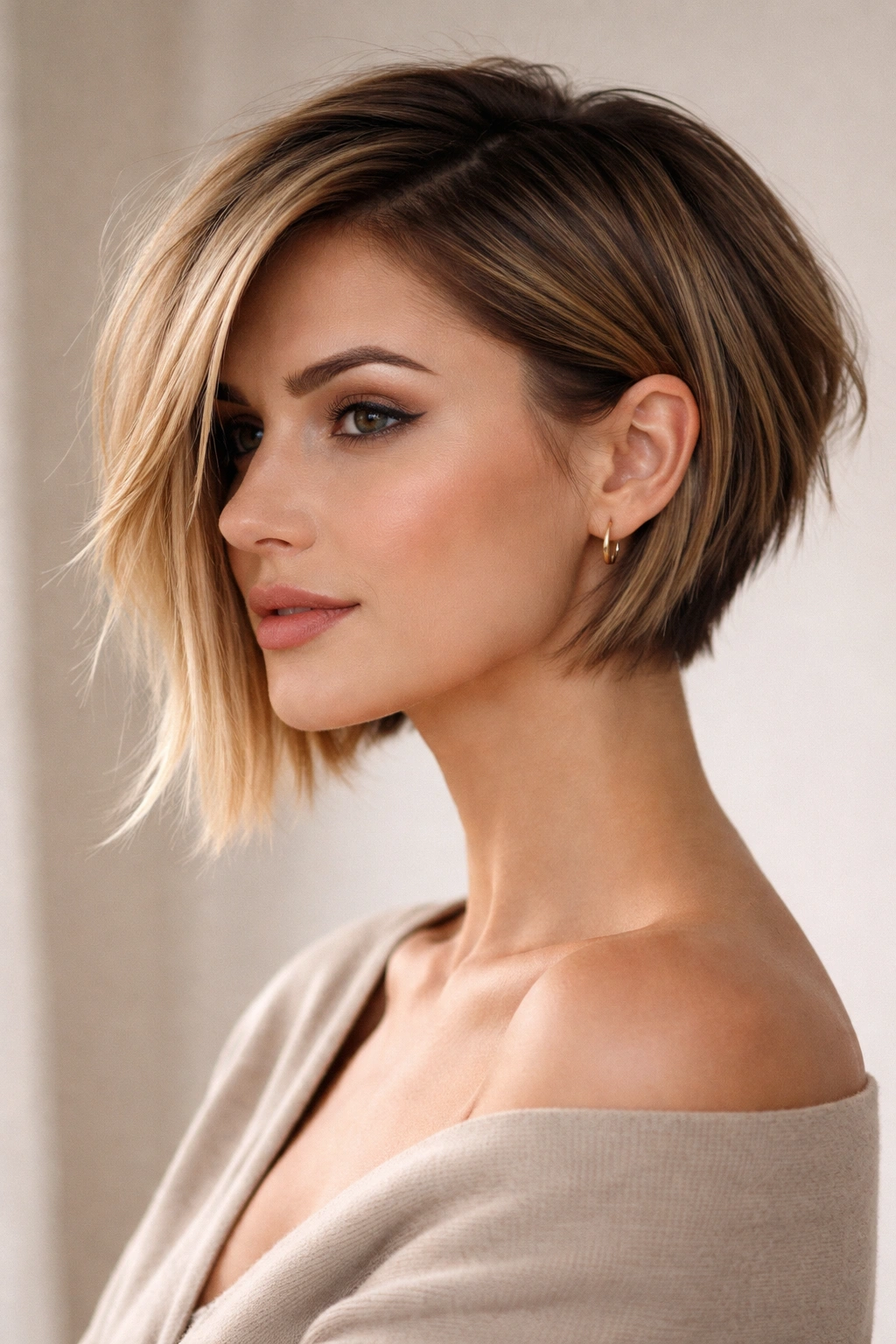
The asymmetrical bob is the cut for anyone who wants their hairstyle to make a statement. One side is cut significantly shorter (often ear-length or above) while the other side extends to chin-length or longer, creating a dynamic, fashion-forward silhouette. When executed with a razor cut and wispy finishing, this style is undeniably striking without reading as costume-y.
The Appeal of Asymmetry
Asymmetrical cuts have a built-in visual interest that symmetrical styles can’t match—your hair literally looks different from different angles, which keeps the style feeling fresh and engaging. If you have a face shape you want to emphasize or draw attention away from, an asymmetrical cut allows you to customize which side gets length and which side gets cropped. The shorter side can emphasize cheekbones and jawline, while the longer side provides softening movement.
Styling an Asymmetrical Bob
- Part your hair on the side where you want more length to fall forward
- Style the shorter side with texture or smoothness depending on the vibe you’re going for—both work beautifully
- You can wear this cut with a deep side part that really showcases the length difference, or a middle part for a more balanced appearance
- Blow-dry the longer side away from your face and the shorter side with product for definition and hold
- This cut requires precision trims every 4-6 weeks because the asymmetry shows immediately when it starts to grow unevenly
Pro tip: An asymmetrical cut photographs beautifully, which is why it’s so popular for editorial and fashion inspiration. If you love taking photos, this cut will feel custom-designed for your camera angles.
5. The Choppy Textured Bob with Face-Framing Layers
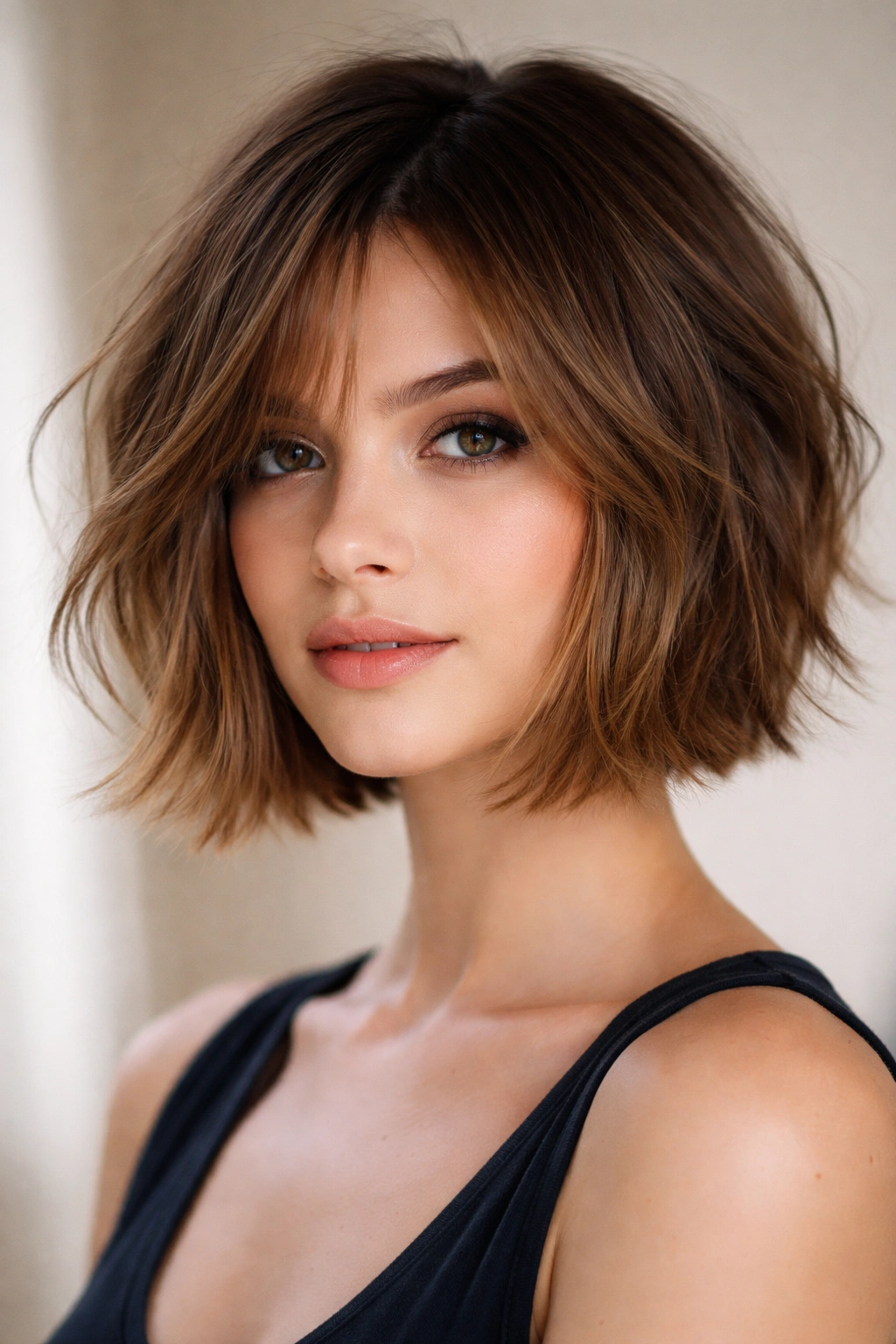
This style features a base bob length (around chin-length or slightly shorter) with multiple choppy, disconnected layers throughout that create incredible texture and movement. The key difference from a shag is that the layers are less graduated and more deliberately choppy, giving the impression that each piece is independently cut. Face-framing layers are cut shorter and positioned to curve inward, creating a subtle lift and draw attention to your eyes.
Why Choppy Layers Create the Softest Finish
Choppy, disconnected layers are the texture version of what blunt layers do for structure—they break up density, add visual interest, and create separation between individual strands. Because each layer is intentionally disconnected and doesn’t graduate smoothly into the next one, you get maximum movement and a genuinely soft, piece-y finish. This technique works beautifully on wavy or textured hair because the natural pattern of your hair becomes part of the design.
Maintenance and Styling
- Textured bobs actually look better with some texture in them, so embrace your waves or use styling tools to create movement
- Choppy layers grow quickly, so commit to trims every 5-6 weeks to maintain the intentional texture
- Use a lightweight texturizing product through the lengths and a slightly heavier cream on the ends to define the layers
- Blow-dry with a diffuser or hand-dry with your fingers to encourage movement rather than smoothing everything down
- The face-framing layers are what soften your overall look, so make sure your stylist specifically cuts these shorter and sculpts them to curve around your face
Worth knowing: Choppy layers can read as messy if they’re cut without intention or if they’re not maintained regularly. Make sure your stylist understands you want intentional texture, not just randomly hacked layers.
6. The Barely-There Layers Bob
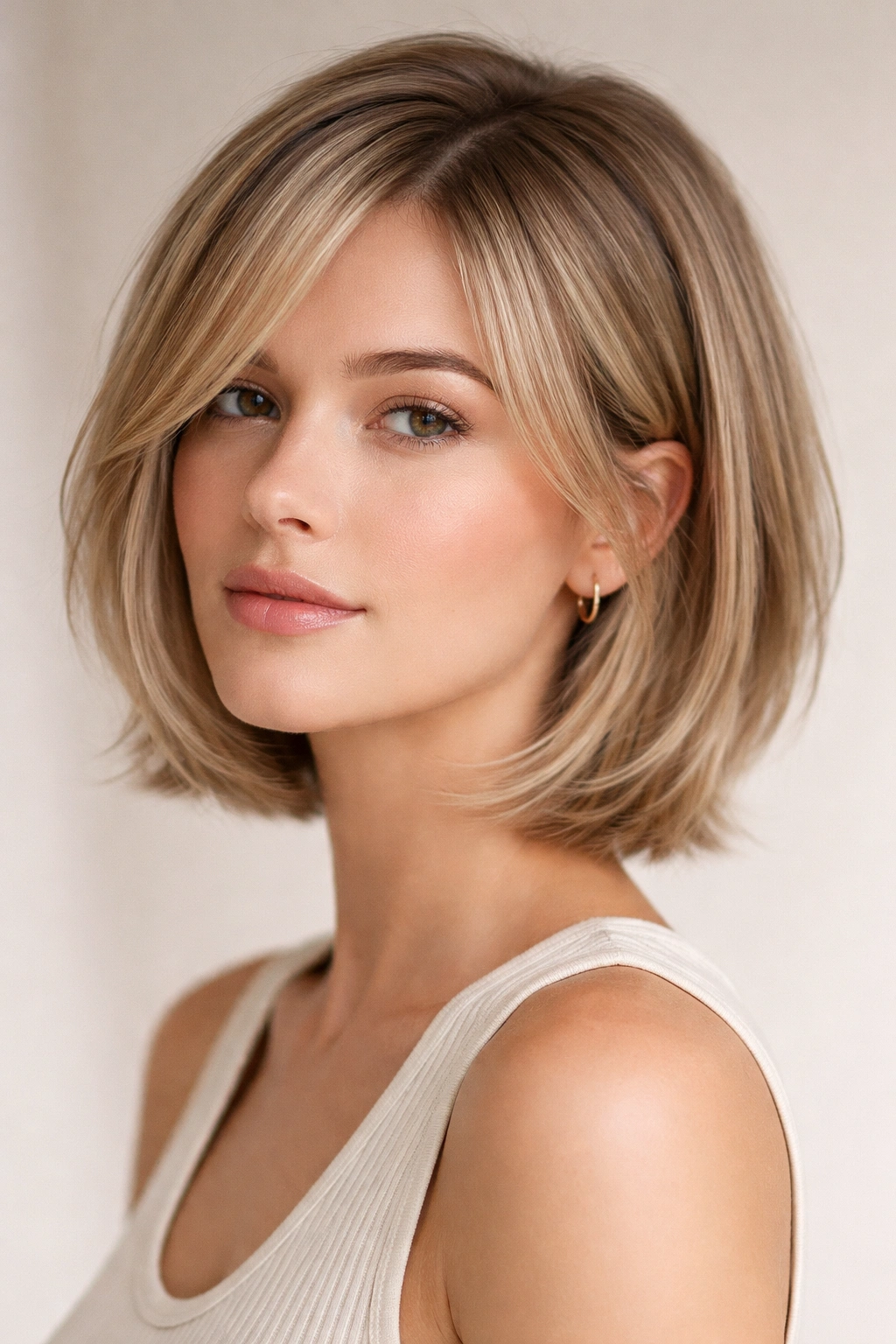
This style is for the minimalist who wants the advantages of a razor cut without major texture or choppiness. The barely-there layers bob has a clean, fundamental shape with subtle layers that are so finely graduated you barely notice them at first glance—until you see how much movement and softness they create. This cut is sophisticated and timeless, working beautifully as either a foundation for styling or a wash-and-go option.
The Sophistication of Subtle Layers
Sometimes the most refined approach is the most restrained one. Barely-there layers create movement without drawing attention away from the overall bob shape—your cut looks intentional and polished rather than accidental or trendy. This approach flatters every hair type and every face shape because it enhances rather than dramatically transforms. The wispy finish comes from the careful placement of each layer rather than from obvious choppiness.
Styling and Maintenance
- This cut works beautifully with a sleek blow-out for a polished look, or textured waves for something softer
- You have flexibility in how you style it because the layers are subtle enough to work multiple ways
- Regular trims every 6-8 weeks keep the layers crisp and prevent the cut from looking grown-out
- A lightweight styling cream or serum helps the layers catch light and creates softness without frizz
- This is the ideal cut if you have fine or thin hair, because visible layers would make density seem even lower
Pro tip: Pair this cut with a subtle balayage or dimension through the mid-lengths and ends—the tonal variation will make the layers read as softer and more modern even though the cut itself is relatively simple.
7. The Curly Girl Method Bob
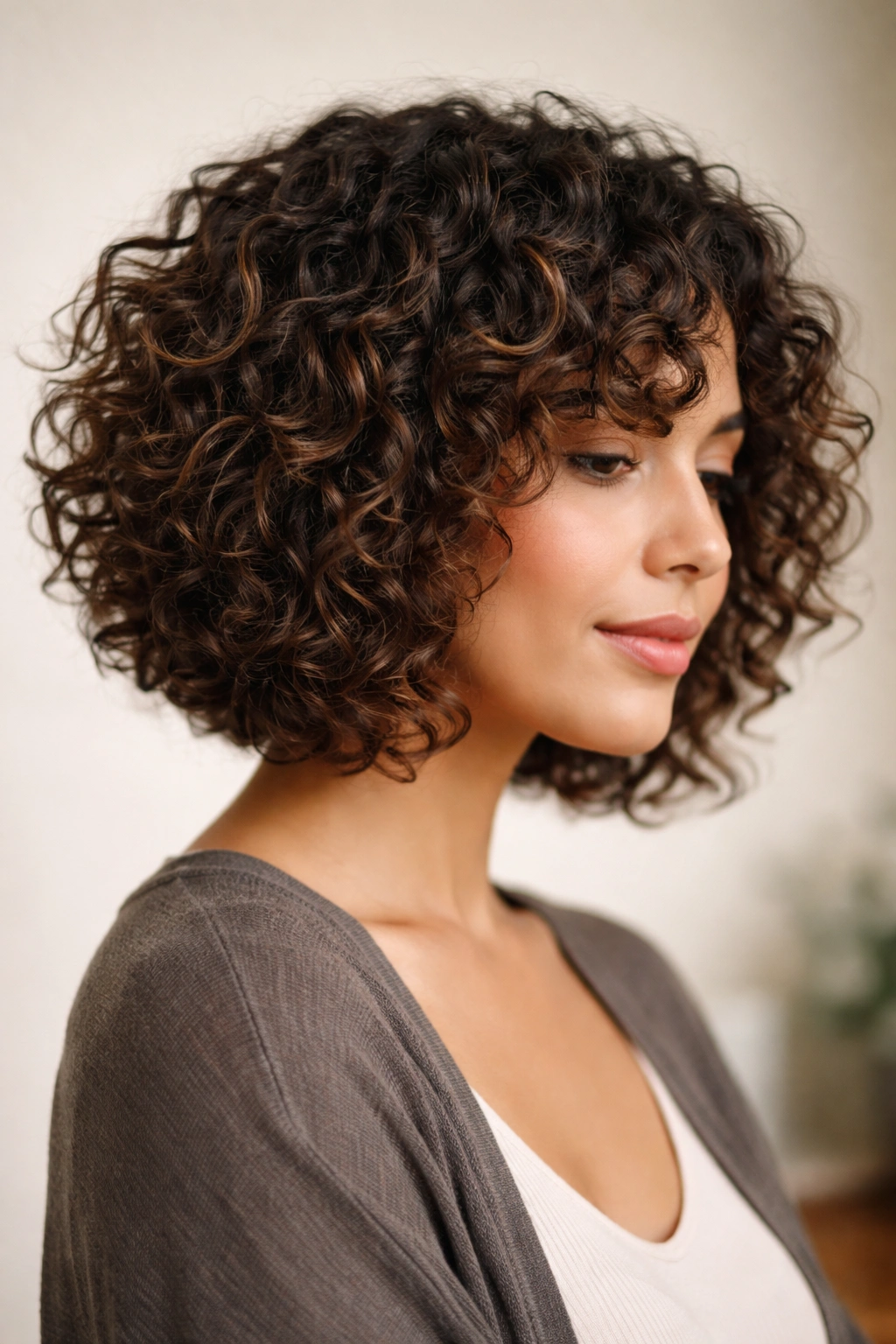
Specifically designed for curly and coily hair (Type 2C through 4C), the curly girl bob works with your natural curl pattern instead of fighting against it. The cut is shaped to enhance curl definition and create softness through strategic layering that removes weight in all the right places. A proper curly girl bob reduces frizz, encourages curl patterns to clump together, and requires styling techniques that honor your hair’s natural texture.
How Razor Cuts Enhance Curls
Curly hair is naturally shorter in length when dry than when wet, so a stylist who understands your curl pattern will cut accordingly—what looks long wet will be the right length once your curls dry and coil up. Razor cutting is ideal for curly hair because it creates cleaner lines and removes bulk without creating the blunt, visible demarcation lines that scissors can leave. The resulting layers enhance your curl pattern and create soft movement rather than frizz.
Styling Your Curly Bob
- Get a “deva cut” or curl-specific cut from a stylist trained in curly hair techniques—this is non-negotiable
- Dry your hair curly during the cut so the stylist can see your actual curl pattern and cut accordingly
- Use lightweight, curl-friendly styling products (mousse, gel, or cream) that define curls without weighing them down
- Plop your hair (wrap it in a microfiber towel) or diffuse-dry to encourage curl formation rather than friction frizz
- This cut needs trims every 6-8 weeks because curly hair grows faster vertically than straight hair grows in length
Insider note: If your curl pattern is loose or undefined, the right bob cut and styling technique (like plopping or gel-casting) can actually make your curls tighter and more defined than they were before—this is genuinely transformative.
8. The Butterfly Bob
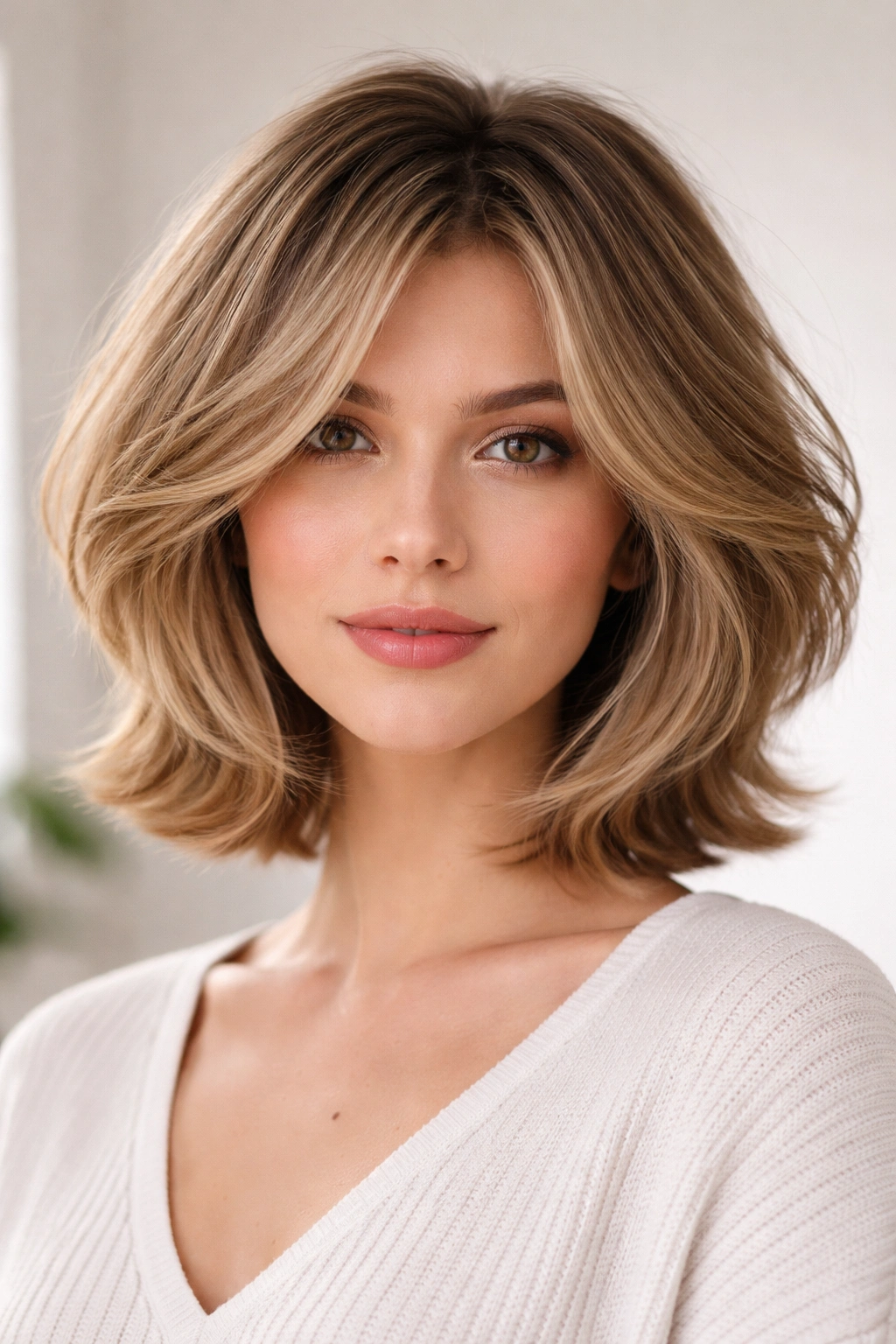
The butterfly bob is named for its shape—shorter and fuller at the crown with longer, tapered pieces in front that sweep forward like butterfly wings. The layers graduate smoothly from back to front, creating a soft, feminine silhouette that flatters round faces and adds width to narrow or oblong face shapes. The “wings” are the defining feature, and they’re cut long enough to frame the face beautifully.
Why the Butterfly Shape Is Flattering
The graduated layers that create the butterfly shape have a few optical effects: the fullness at the crown creates the illusion of height, the swept-forward front pieces slenderize the face, and the overall shape draws attention to the eyes rather than the jawline. If you have a round or square face, this cut creates angles through the longer, angled front pieces. If you have a long or oblong face, the fuller crown balances proportions beautifully.
Creating the Butterfly Look
- Request graduated layers that get progressively longer as they move from the crown to the front
- The front pieces should be long enough to brush your cheekbones or jawline—this is where the “wing” effect comes from
- Style with waves or curls that emphasize the sweep-forward motion of the front pieces
- A center part or slightly off-center part looks best with this cut because it showcases the symmetrical shape
- Blow-dry with a round brush to create volume at the crown and encourage the front pieces to curve forward
Worth knowing: The butterfly bob can look different depending on styling—sleek and polished with a blow-out, or soft and romantic with waves. This versatility is part of what makes it so appealing.
9. The Modern Mullet Bob
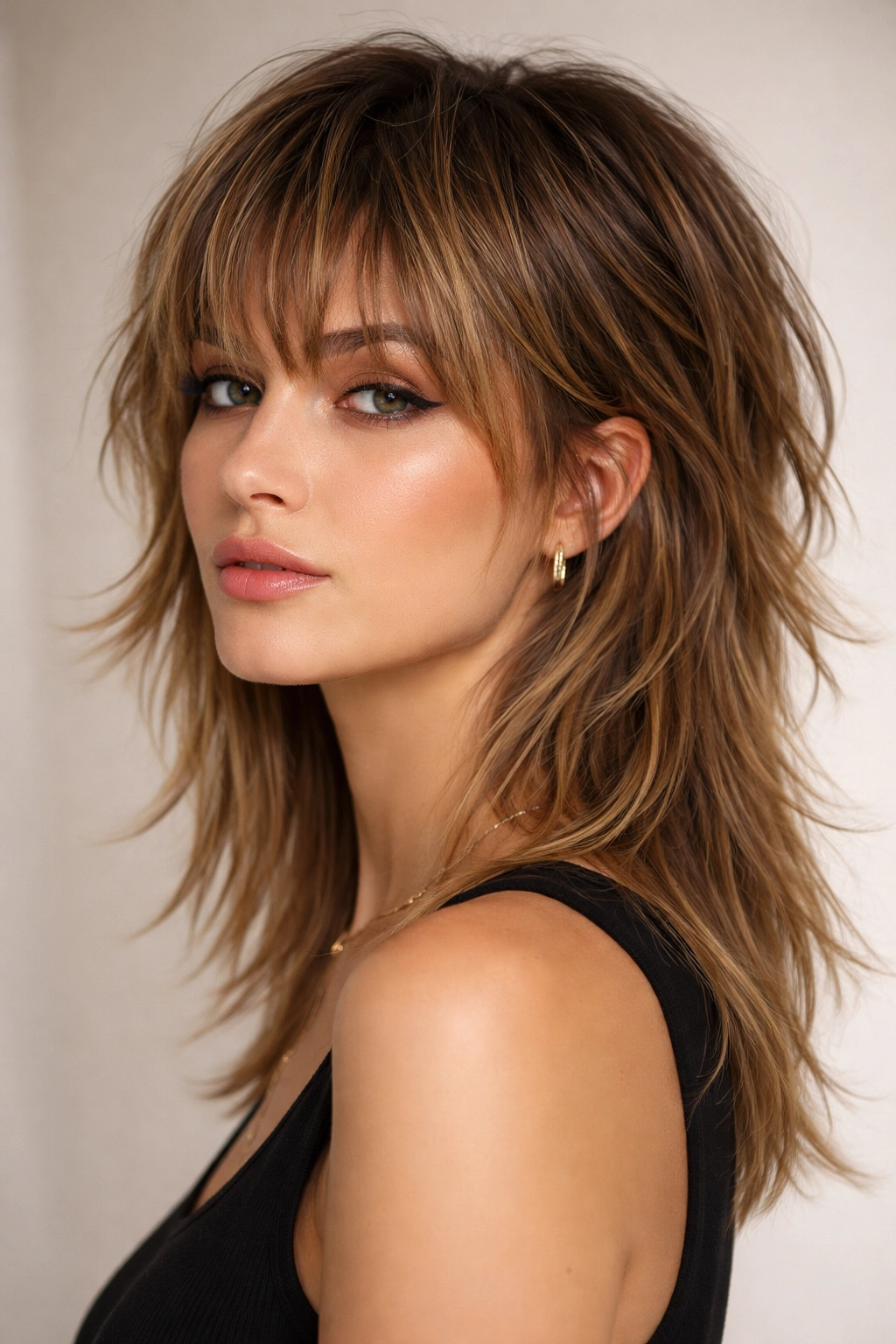
The modern mullet bob resurrects the party-in-the-back vibe with a contemporary twist: short, textured layers in front and longer length in back, but executed with such sophistication that it reads as intentional fashion rather than nostalgic novelty. The front is cut choppy and short (often nose-length or above), while the back extends past shoulder-length, creating a deliberately contrasting silhouette. When cut with a razor and styled with intention, it’s genuinely striking.
Why Modern Mullet Bobs Work
The contrast between choppy, textured front layers and sleek or softly wavy back length creates built-in visual interest and movement. This cut is especially flattering for people with angular face shapes because the chopped front emphasizes cheekbones and jaw while the longer back adds softening length. It’s also ideal if you’re drawn to statement-making hair but want the flexibility of longer length.
Styling the Modern Mullet
- The front pieces should be choppy enough to have real texture and separate naturally
- Use texturizing products on the front to enhance the piece-y effect
- The back can be styled sleek or wavy depending on your mood—both interpretations look intentional and cool
- This cut requires precision trims every 4-6 weeks because the contrast between short front and long back shows quickly as hair grows
- A deep side part or swoopy styling on top creates a softer, less severe interpretation of the mullet
Pro tip: If you’re nervous about going full mullet, ask your stylist for a “wolf cut,” which is a more gradual progression between short and long rather than a dramatic contrast.
10. The Rounded Soft Bob with Wispy Ends
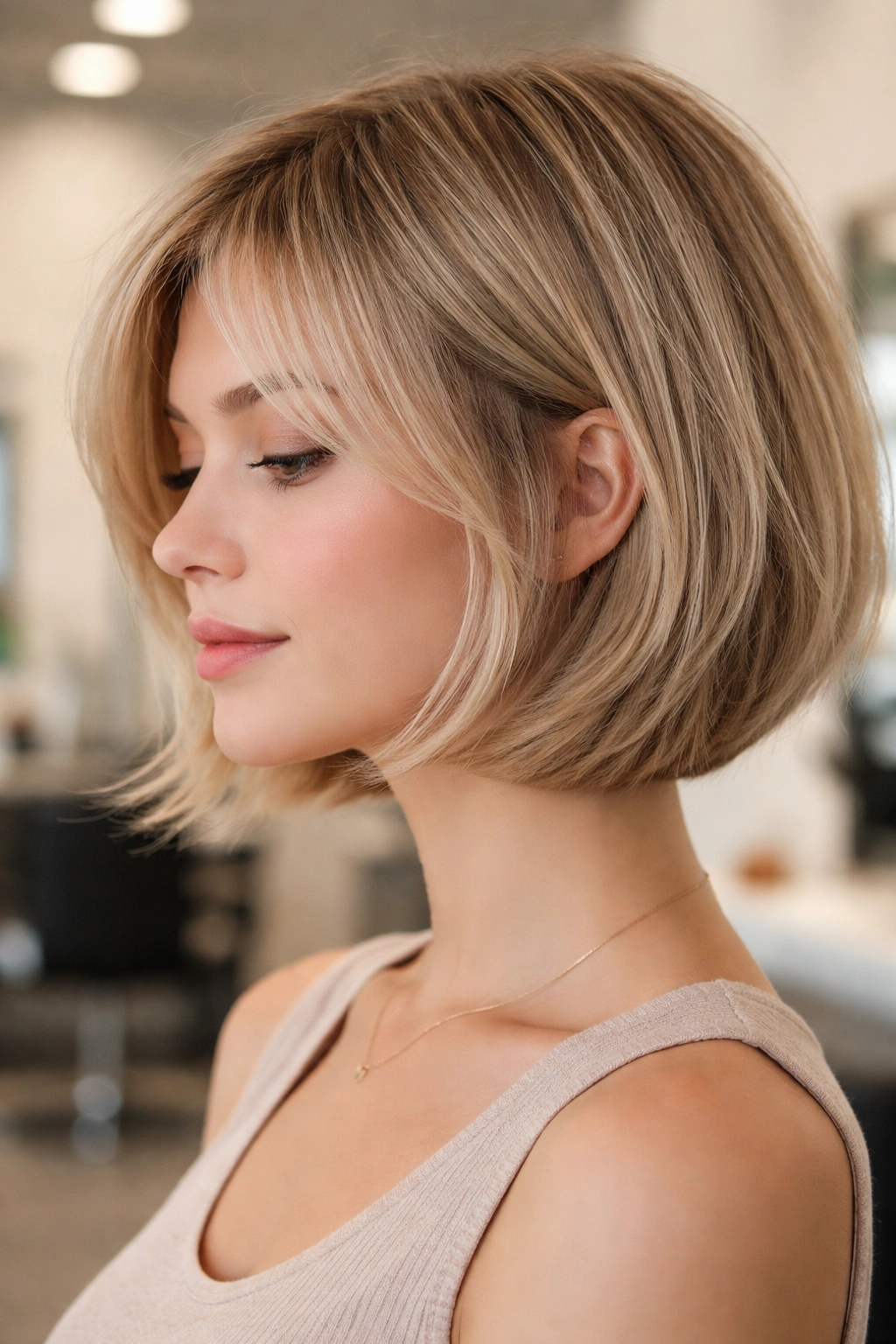
This is the classic, elevated version—a simple, rounded bob at chin-length or slightly shorter with subtle layers that create a soft, wispy perimeter rather than a blunt line. The rounded shape frames the face beautifully and feels effortlessly elegant whether you’re getting ready for casual errands or a special event. The wispy ends are where all the magic happens; instead of a harsh line, the carefully razored edge creates individual strands that catch light and move with your head.
The Timelessness of a Well-Executed Soft Bob
A perfectly executed soft bob with wispy ends is arguably the most flattering haircut available—it works on nearly every face shape, hair type, and age, and it never dates. The key is in the execution: the rounded shape should follow your head’s natural contours while the wispy ends are created through precise razor cutting that removes weight gradually rather than all at once. This cut is simple enough to look effortless but requires genuine skill from your stylist.
How to Maintain and Style
- Blow-dry with a round brush, rolling your hair under at the ends to create the soft, rounded shape
- The wispy ends can be enhanced with a lightweight texturizing product that separates the strands
- This cut needs trims every 6-8 weeks to keep the round shape clean and maintain the soft, wispy ends
- It works beautifully with minimal styling (just blow-dry and go) or with fuller styling (waves, curls, or texture)
- A subtle taper at the nape keeps the back of the cut from sitting too heavily against your neck
Pro tip: Ask your stylist for a “feathered” edge at the perimeter rather than a straight razor line—the slightly curved, piece-y finish is even softer and more forgiving as it grows out.
Final Thoughts
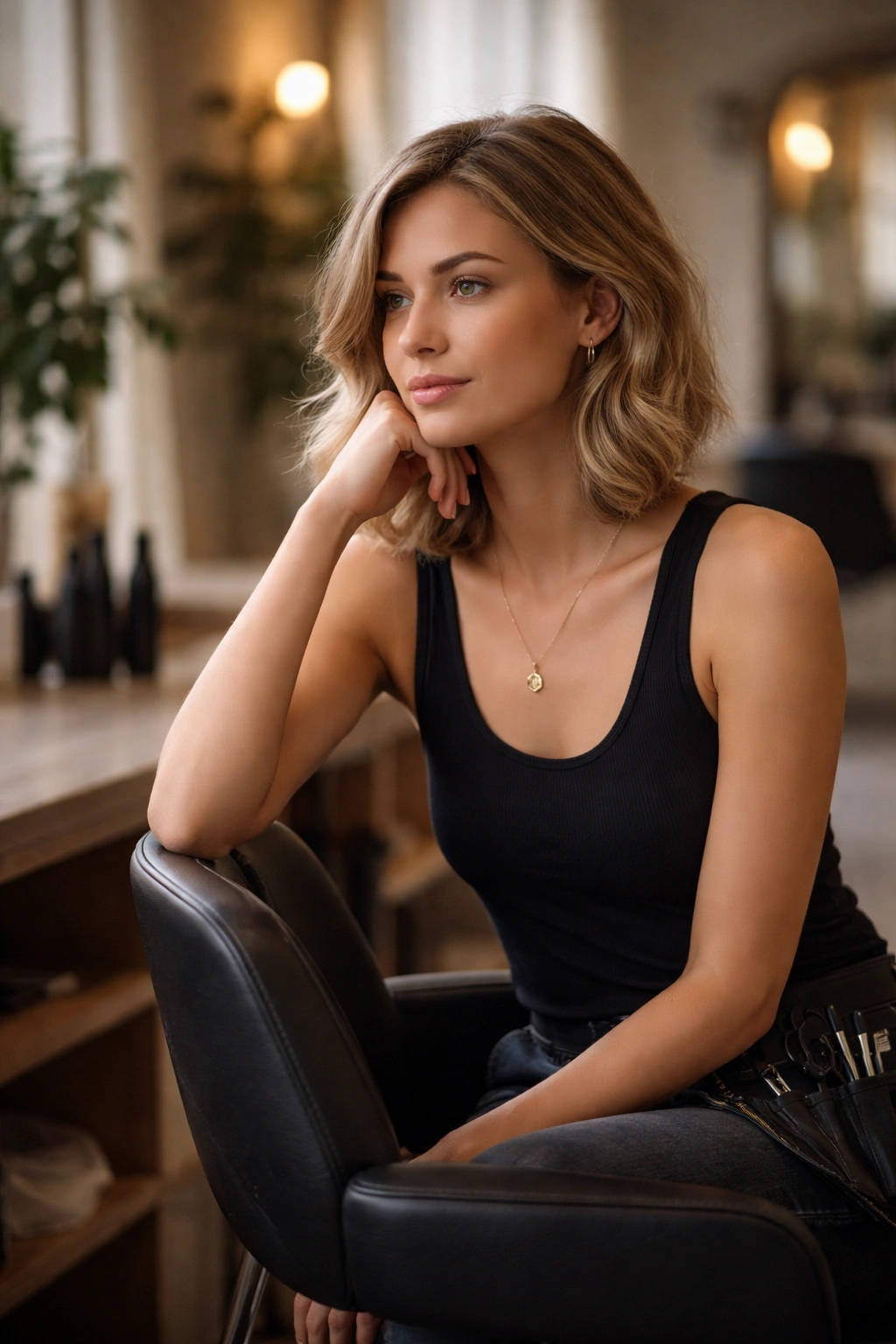
Finding the right razor cut bob is about understanding what “soft and wispy” means to you and how your natural hair texture and face shape influence which variation will look best. A soft, wispy finish isn’t accidental—it’s the result of a stylist understanding the specific techniques that create movement: strategic layering, graduated lengths, feathering, texturizing, and the precise use of a razor rather than scissors. The ideal cut for you is one that works with your hair’s natural pattern and requires styling techniques that feel achievable in your daily routine.
Before booking, bring reference photos of styles that resonate with you and have a detailed conversation with your stylist about how much styling time you’re willing to commit to. Some of these cuts (like the feathered pixie bob or modern mullet) require more frequent trims and intentional styling, while others (like the barely-there layers bob or rounded soft bob) are more flexible and forgiving as they grow. The right choice is one that makes you excited to style your hair and confident in how you look—and a skilled stylist will help you find the version that feels like yours.
