



Long face shapes are a canvas for creativity, but they come with a unique styling challenge—the right hairstyle can balance your proportions and enhance your natural beauty, while the wrong one can actually emphasize length and make your face appear narrower than it really is. The secret isn’t finding just any hairstyle; it’s understanding which cuts, layers, lengths, and textures create the illusion of width, break up vertical lines, and draw attention to your best features.
Many people with long faces assume they’re limited to certain styles, but the truth is that with strategic placement of volume, texture, and color, you have an incredibly diverse range of options. The goal is to add width at the cheeks and jawline while minimizing focus on the overall length of your face. Some of the most flattering styles incorporate bangs to shorten the face visually, while others use layering and texture to create dimension and movement that disrupts a straight, elongated line.
What makes a hairstyle work for a long face isn’t complicated—it’s all about proportion and balance. Styles that add fullness at the sides, incorporate horizontal movement, or include strategic framing around the face are your best allies. Whether you prefer short, medium, or long hair, there’s a flattering option waiting for you. Let’s explore 15 hairstyles specifically designed to complement long face shapes and make you feel confident and beautiful.
1. The Textured Bob with Face-Framing Layers
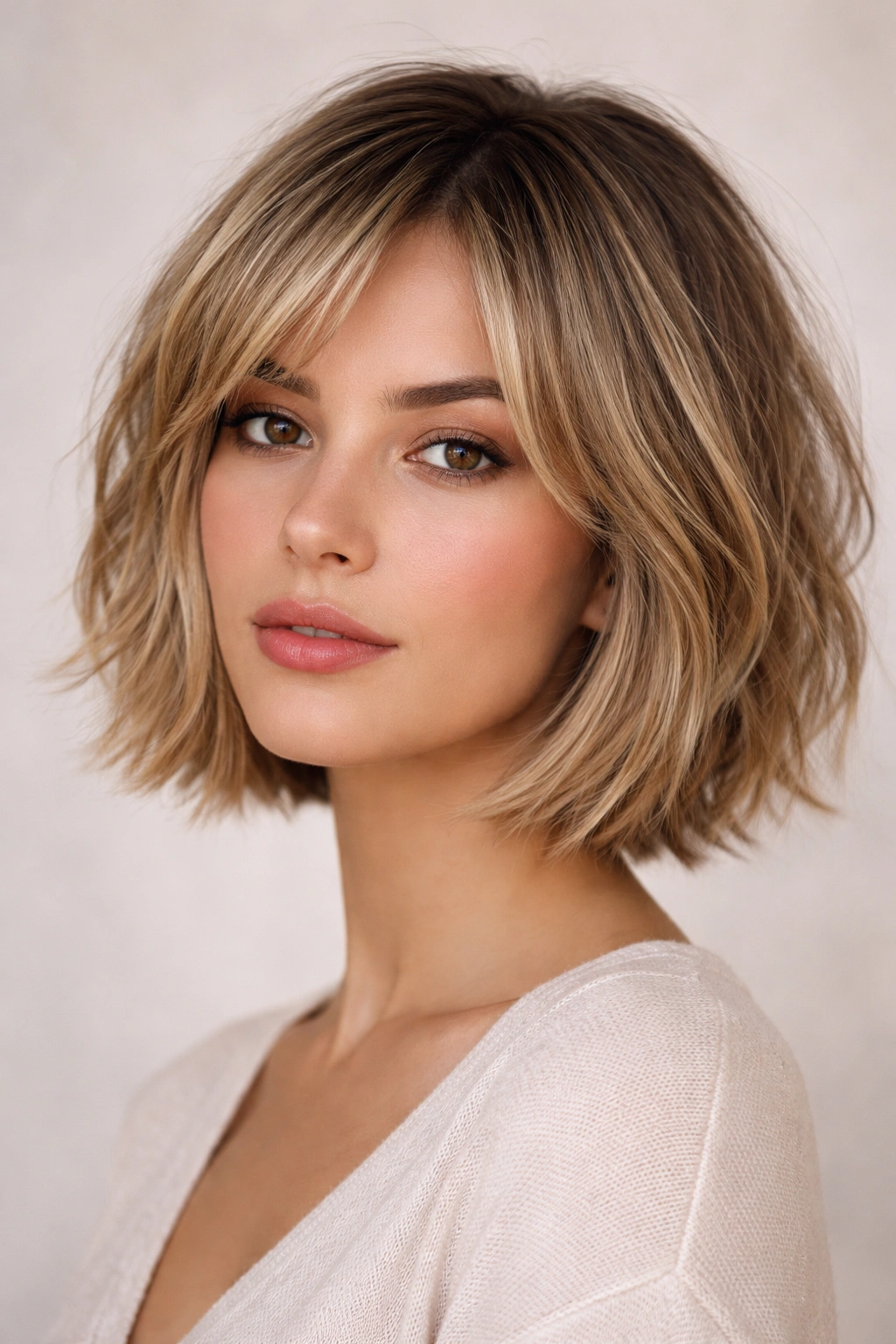
A textured bob sits right at the jawline and creates an immediate visual shortening effect by establishing a horizontal line that interrupts the vertical expanse of a long face. What makes this style particularly flattering is the addition of choppy, face-framing layers that sit around your cheekbones, creating width exactly where you need it most. The texture prevents the style from appearing too severe or blunt, adding movement and softness that feels modern and intentional.
Why This Cut Works for Long Faces
Textured bobs are transformative for long faces because they combine two powerful styling elements—a defined horizontal line at the jaw and built-in volume at the cheeks. The choppy layers catch light differently than a blunt cut, creating visual interest that draws the eye inward rather than downward. This style essentially divides your face into two sections, making each section appear shorter and wider than it would in a straight, longer cut.
How to Style and Maintain It
- Use a texturizing spray or sea salt spray before blow-drying to enhance the choppy, piece-y texture the cut is designed for
- Blow-dry your hair with your head slightly tipped forward, then flip right-side up to build volume at the roots and cheekbones
- Tousled waves work better than super-straight hair for this cut—consider using a curling iron or wand on the ends
- Visit your stylist every 4-6 weeks to maintain the shape and keep those face-framing layers sharp
- This style requires regular maintenance, but the payoff is a constantly flattering silhouette that frames your face beautifully
Pro tip: Ask your stylist to angle the layers slightly forward so they naturally fall around your cheekbones rather than sitting behind your ears.
2. Full Bangs with a Shoulder-Length Cut
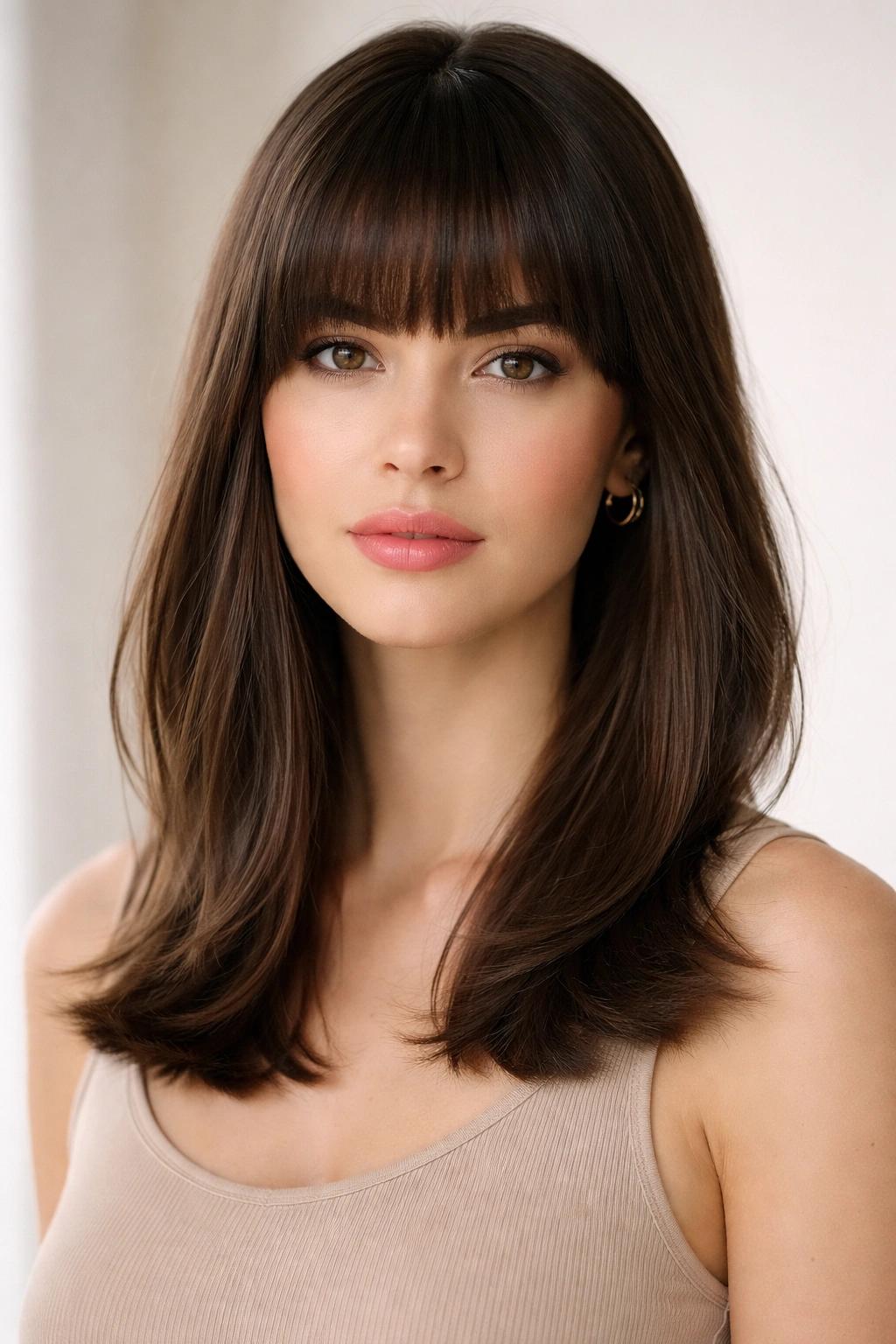
Full, blunt bangs are one of the most effective visual tricks for long faces because they immediately reduce the perceived length by covering a significant portion of your forehead. Paired with a shoulder-length cut, this combination creates a balanced, classic look that feels timeless while being incredibly practical. The bangs draw attention horizontally across the forehead, while the shoulder-length length prevents the overall style from appearing too short or choppy.
The Magic of Full Bangs
Full bangs work because they create a strong horizontal line across the upper portion of your face, breaking up the vertical space that makes long faces appear elongated. Unlike wispy bangs that can disappear or feel insubstantial, full bangs have presence and impact. They frame your eyes, create dimension, and instantly make your face appear more balanced in proportion.
Styling Tips for Success
- Full bangs require regular trims—ideally every 3-4 weeks—to maintain their length and shape
- Blow-dry your bangs straight down and slightly to one side for a polished, intentional look
- Use a fine-tooth comb and a round brush to smooth and shape your bangs while blow-drying
- Avoid parting bangs in the middle if you have a long face, as this can emphasize vertical lines
- Consider getting bangs slightly longer than you think you want them; they’ll sit at the perfect length once styled
Best Hair Types for This Style
This look works beautifully on all hair types, but if you have naturally curly or wavy hair, be prepared for slightly more styling time. Straight or lightly textured hair requires less daily effort to keep bangs looking polished and intentional rather than limp or divided.
Worth knowing: Full bangs can feel high-maintenance at first, but once you establish a routine with blow-drying and styling products, they become second nature.
3. The Blunt, Chin-Length Bob with Slight Texture
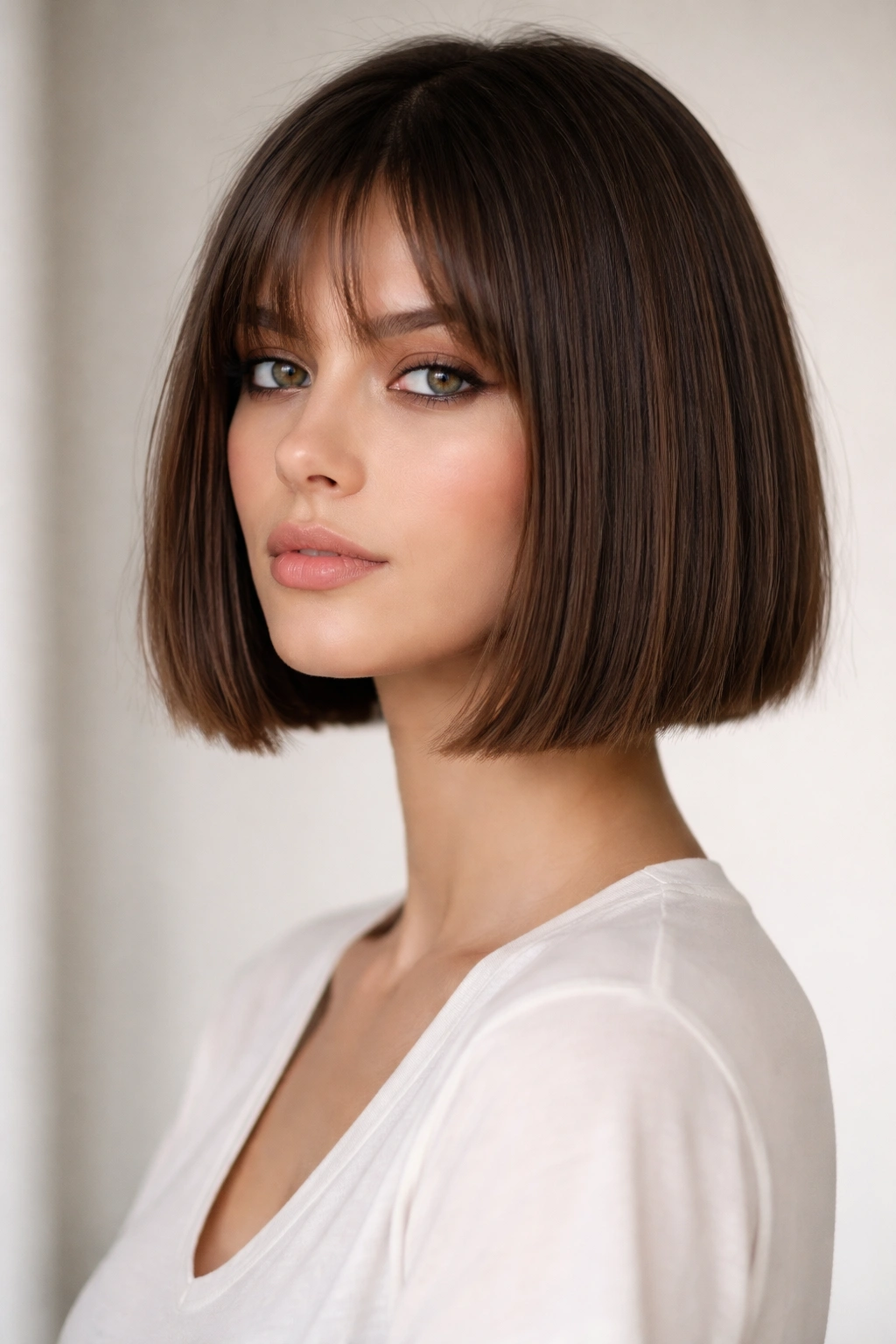
A blunt chin-length bob creates a bold, assertive line that sits at the widest point of most long faces, creating an instant width-enhancing effect. The blunt edge gives this style structure and confidence, while slight texture variations prevent it from looking too harsh or severe. This is the perfect hairstyle for someone who wants to make a statement while still maintaining a flattering silhouette.
Why Blunt Edges Enhance Long Faces
Blunt lines are horizontally oriented by nature, which is exactly what long faces need. A straight, precise edge at the chin creates a visual “stop point” that interrupts vertical length and draws attention to your jawline. The simplicity of the blunt cut allows your face shape to feel more balanced, and it’s a style that photographs beautifully and commands attention in person.
Creating the Right Amount of Texture
Blunt doesn’t have to mean severe—adding subtle texture through point-cutting or texturizing shears softens the look while maintaining the structural benefits of the blunt line. This texture can be concentrated at the ends, creating a subtle flip or movement, or dispersed throughout for a more organic feel.
Maintenance and Styling
- This cut needs precision trims every 4-6 weeks to keep the blunt line sharp and intentional
- Style with a round brush and blow-dryer for a polished, salon-quality finish
- A light texturizing product on damp hair helps create subtle movement without sacrificing the blunt silhouette
- Straightening iron can enhance the sleekness of this style, but isn’t necessary for it to look great
- This is an excellent choice if you prefer low-maintenance styling but don’t mind visiting your stylist regularly
4. Side-Swept Bangs with Layered Medium Length Hair
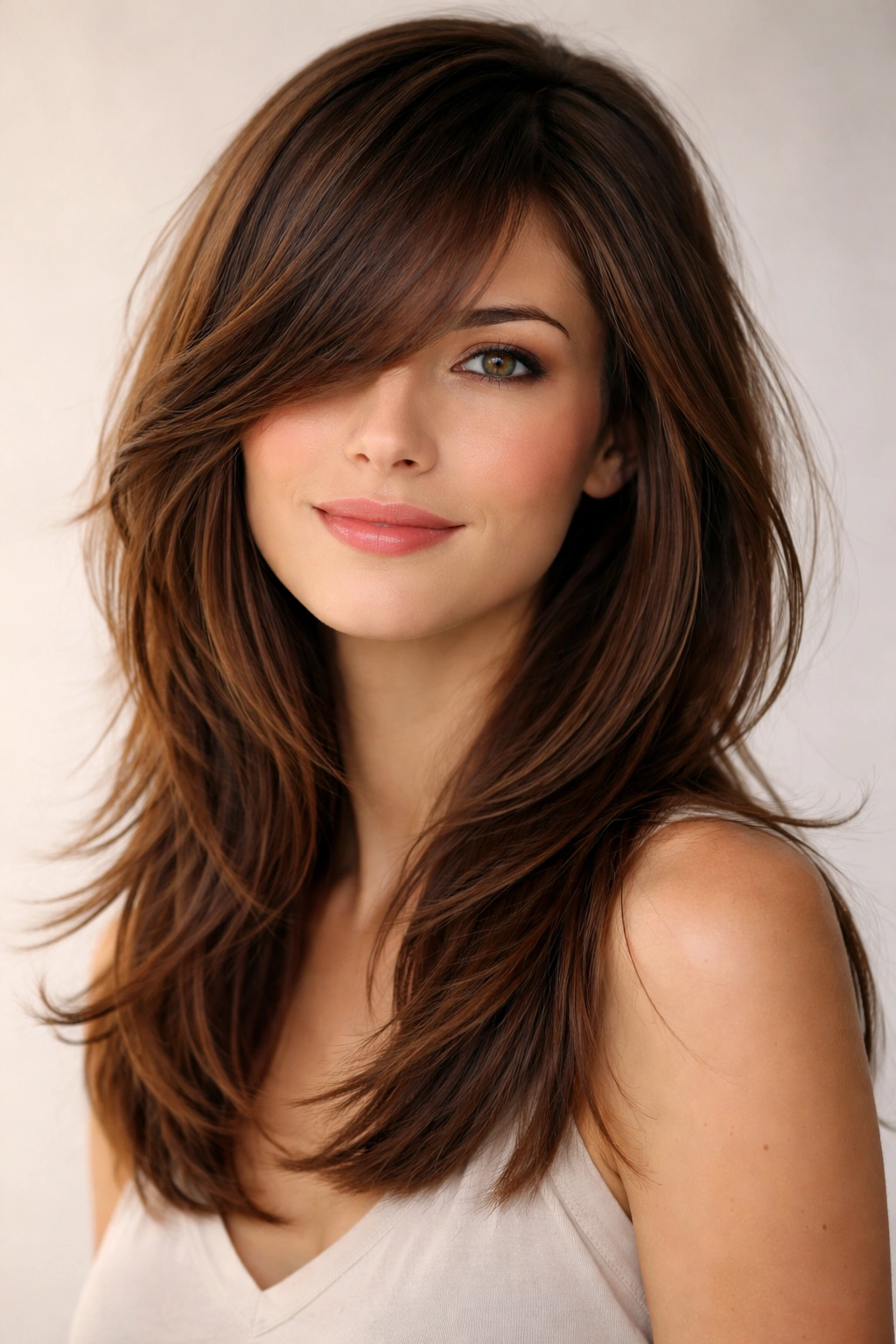
Side-swept bangs create a diagonal line across your face that’s incredibly flattering for long faces because it breaks vertical space in a flowing, soft way. When paired with medium-length, layered hair, this style adds volume at the cheekbones and creates a face-framing silhouette that’s both romantic and modern. The movement inherent in this style prevents it from ever looking flat or severe.
The Diagonal Effect of Side-Swept Bangs
Side-swept bangs work differently than full bangs—instead of creating a straight horizontal line, they create a gentle diagonal that guides the eye across your face rather than straight down. This subtle directional shift reduces the visual emphasis on vertical length while the layering underneath adds necessary width and texture.
Layering Strategy for Maximum Flattery
The layers in this style should be concentrated around your cheekbones and jawline, with longer layers throughout the rest of your hair to maintain length and elegance. This creates a graduated effect that makes your face appear wider at precisely the right points while maintaining an overall sense of flow and movement.
Daily Styling Routine
- Blow-dry your bangs to one side with a round brush and the dryer on medium heat
- Apply a light texturizing spray or mousse to damp hair before blow-drying for natural-looking waves
- Use a 1.25-inch curling wand to add loose waves throughout, concentrating on pieces around your face
- A light smoothing serum keeps everything looking polished without appearing greasy
- This style looks best with some movement, so embrace the waves and texture rather than fighting them
Insider note: Side-swept bangs work beautifully if you’re not ready to commit to full bangs but want the face-shortening benefits of fringe.
5. The Shag Haircut with Choppy Texture
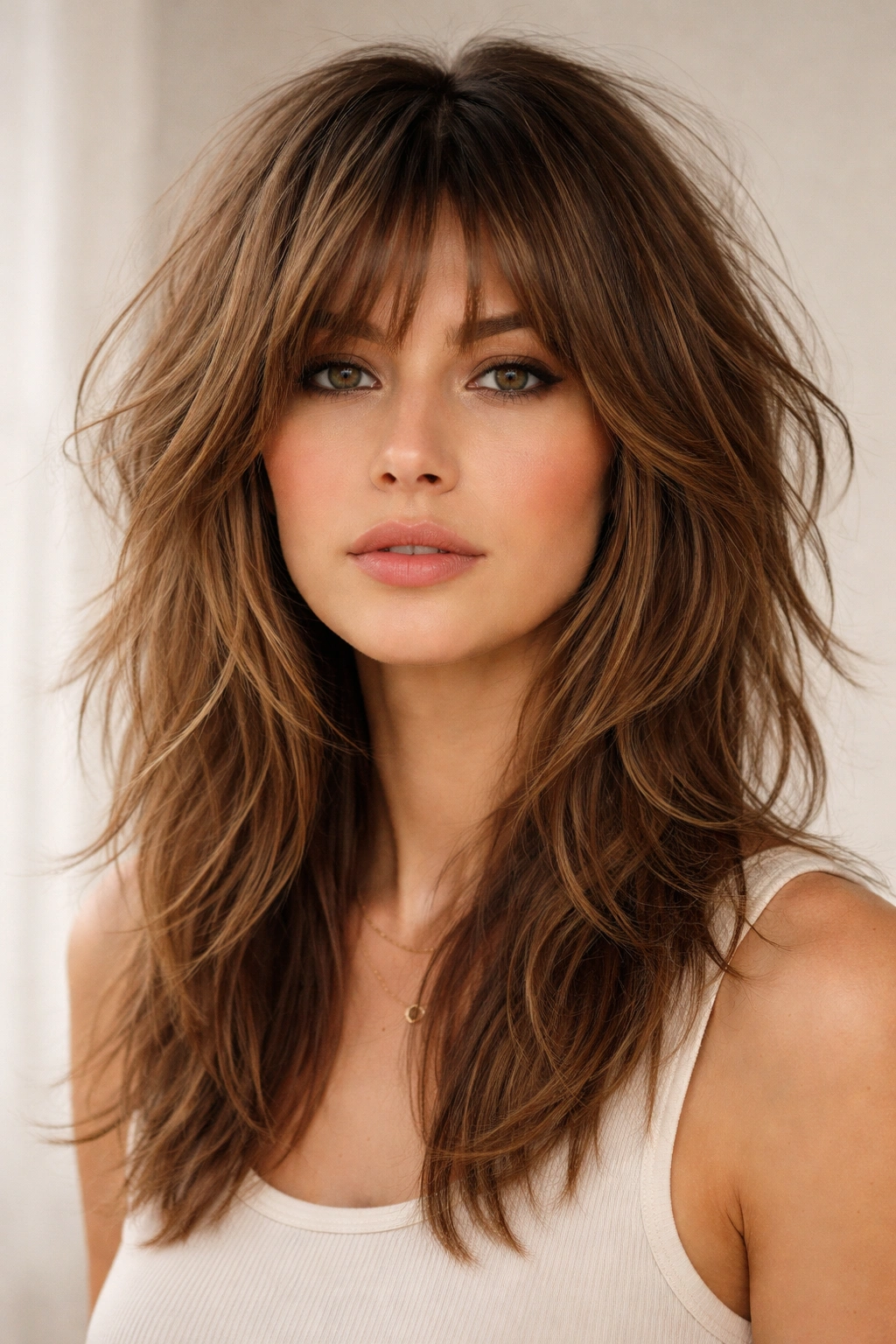
A modern shag haircut is pure textural artistry, featuring multiple layers of varying lengths that create volume throughout while preventing any sense of heaviness. The inherent choppiness and movement of a shag style breaks up vertical lines beautifully, and when styled properly, it creates width at the cheekbones without feeling bulky or unkempt. This style has experienced a significant resurgence and works beautifully for long faces.
Understanding the Modern Shag
Unlike the shags of decades past, the modern shag is refined, intentional, and incredibly flattering. It features strategic layering that creates movement and texture while maintaining a sense of shape and structure. The layers are cut to work with your hair’s natural texture, not against it, making this a style that can actually become easier to style the more familiar you become with it.
Texture and Movement Are Key
A shag lives and dies by its texture—this isn’t a style that looks good perfectly straight and sleek. Embrace the layers, enhance natural waves with products or a curling iron, and let the cut do the work it’s designed to do. The choppy layers create horizontal movement that disrupts the vertical emphasis of a long face.
Styling Your Shag
- Apply texturizing spray to damp hair before blow-drying for enhanced movement and grip
- Blow-dry with your head tipped forward to create lift at the roots, then flip right-side up
- Use a diffuser attachment if you have naturally wavy or curly hair to enhance your natural texture
- A light piece-y pomade or texturizing wax helps define individual layers and prevents the style from looking matted or flat
- Style time is usually minimal once you get the hang of it—most people spend 5-10 minutes blow-drying and texturizing
Pro tip: Ask your stylist to incorporate some longer pieces around your face that can be styled to frame your features and draw attention to your eyes.
6. The Sleek, Straight Lob with Side Part
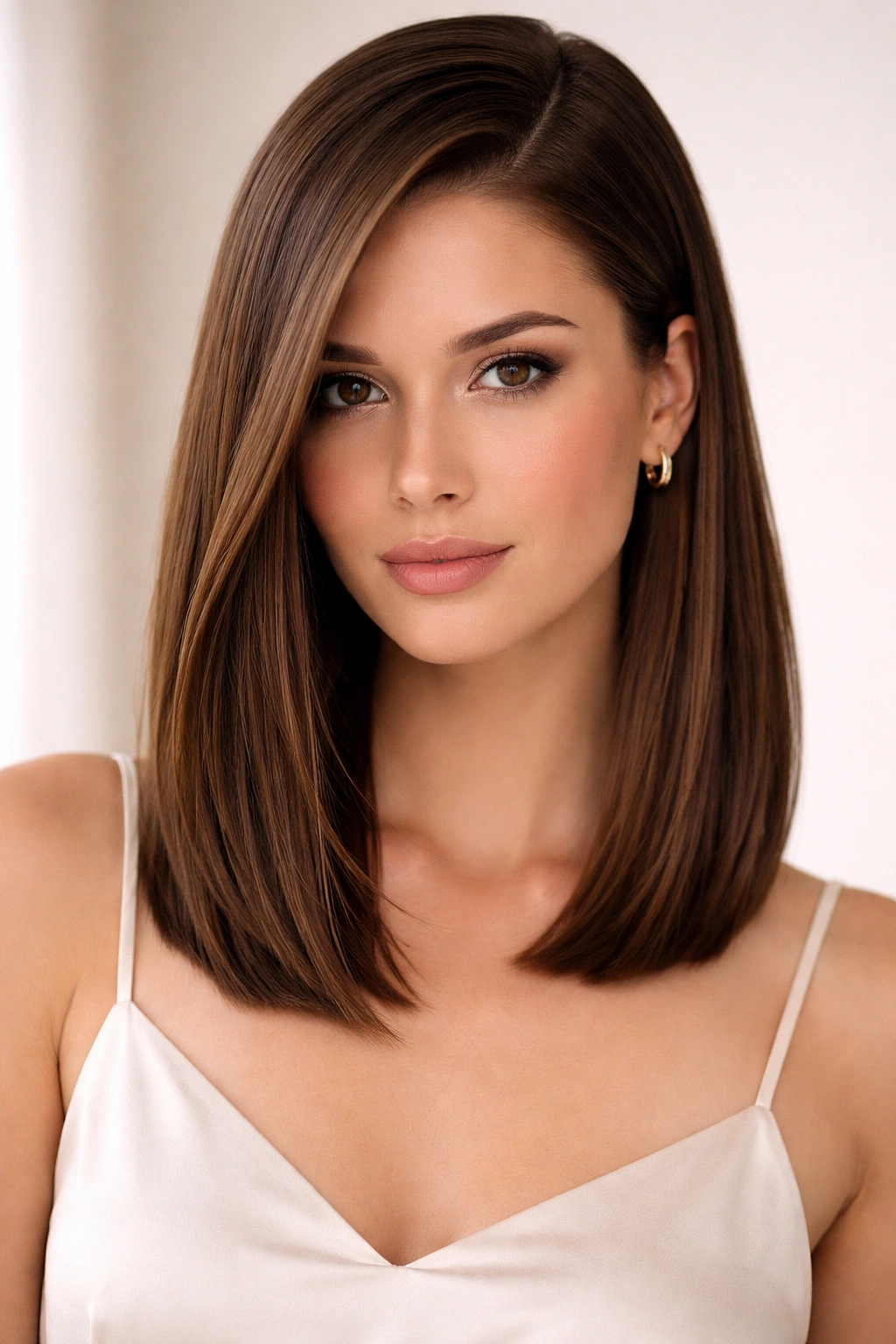
A lob—that magical midpoint between a bob and longer hair—hits right around shoulder-length and creates proportion that works beautifully for long faces when styled sleek and straight. The key is the side part, which creates a diagonal line that breaks vertical space, and the length, which sits at a point that makes your face appear shorter without appearing too short. This is an incredibly versatile style that can be dressed up or down.
Why Length Matters in a Lob
The specific length of a lob—roughly between the chin and shoulders—is what makes it work for long faces. It’s longer than a bob, so it doesn’t require the same level of maintenance, but it’s short enough that it still creates a horizontal emphasis at an important part of your face. The shoulder-length endpoint creates a natural widening effect that balances face length.
The Side Part Strategy
A deep side part creates a diagonal line that’s flattering for long faces because it guides the eye across rather than straight down. The larger volume on one side creates width and interest, while the smaller side remains sleek and intentional. This simple styling choice makes an enormous difference in how flattering this cut is.
Achieving the Sleek Straight Look
- Blow-dry your hair straight using a paddle brush and medium heat, working section by section
- Use a straightening iron to refine the style and create a sleek, polished finish
- A light smoothing serum or anti-frizz spray keeps everything looking refined without appearing greasy
- The side part should be intentional and deep—avoid centering it, which can emphasize length
- This style is low-maintenance compared to textured cuts, requiring minimal daily styling time
7. Voluminous Waves with a Deep Side Parting
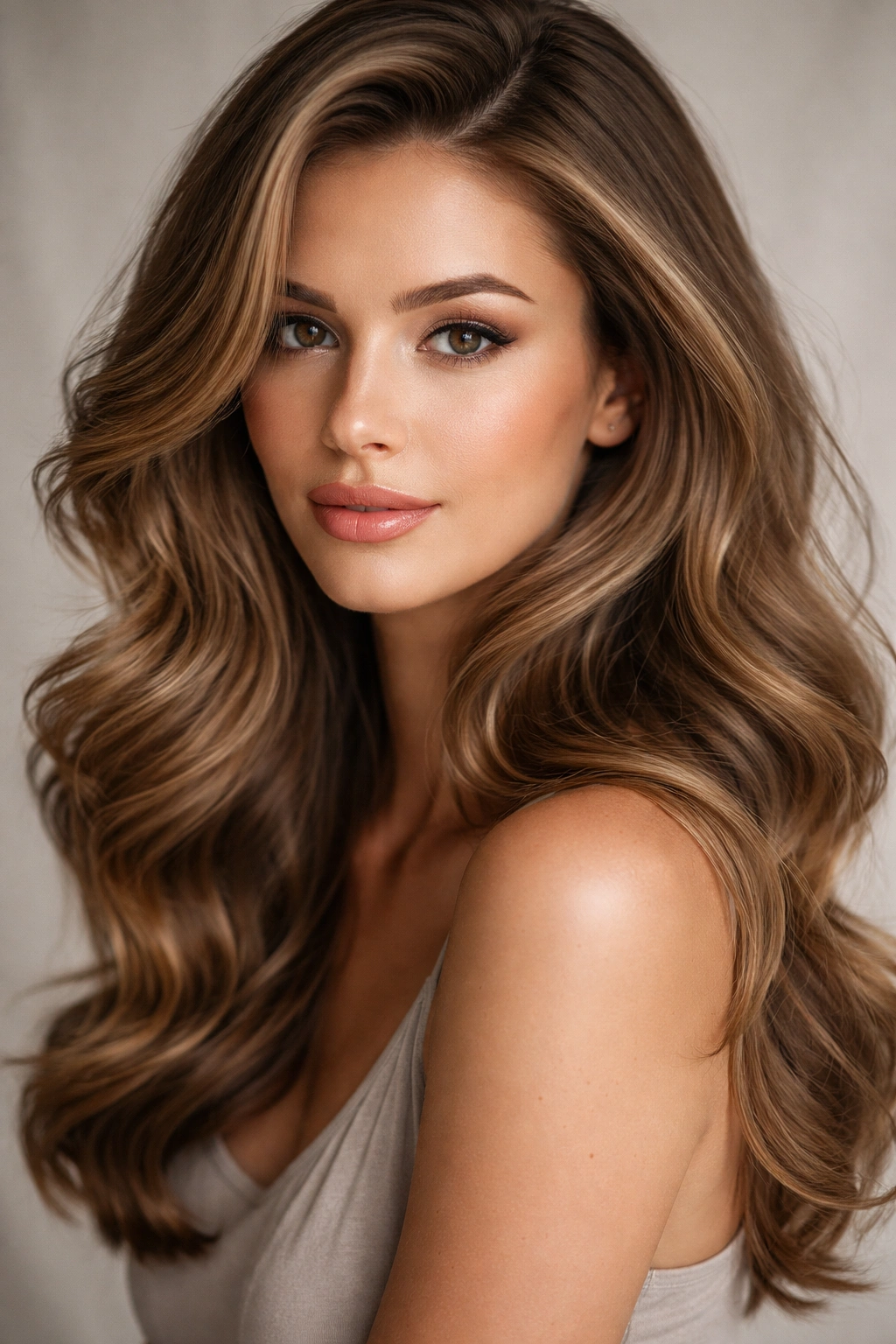
Voluminous waves create the ultimate width-enhancing effect for long faces because the movement is horizontal rather than vertical, and the body and texture prevent the style from ever appearing flat or thin. Paired with a deep side parting, this look is feminine, flattering, and incredibly wearable for everything from everyday life to special occasions. The key is ensuring the volume sits at the cheekbones rather than at the crown.
Building Volume Where It Matters
Volume at the cheekbones makes a long face appear wider and more balanced, which is precisely what this style delivers. The waves should be full and bouncy, starting around mid-length or a bit higher, and they should have movement and texture rather than appearing as tight, structured ringlets. This creates an organic, effortless appearance that’s deeply flattering.
Creating Waves That Flatter
- Use a 1.5-inch curling wand to create loose, face-framing waves that sit around your cheekbone area
- Curl away from your face for a flattering, face-framing effect
- Don’t brush out your waves into a frizzy texture; instead, gently separate them with your fingers for a more intentional look
- A volumizing mousse applied to damp hair before blow-drying helps create hold and body throughout
- Waves look best with some texture and movement, so embrace the imperfect, organic quality rather than aiming for uniformity
Styling Products That Help
Sea salt spray, texturizing spray, and light volumizing products all enhance the wave structure and prevent this style from falling flat as the day goes on. A light hairspray holds everything in place without making your hair feel stiff or crunchy.
Worth knowing: This style actually improves throughout the day as the waves relax slightly and become more textured—it’s a look that gets better, not worse, as time passes.
8. The Pixie Cut with Strategic Length and Texture
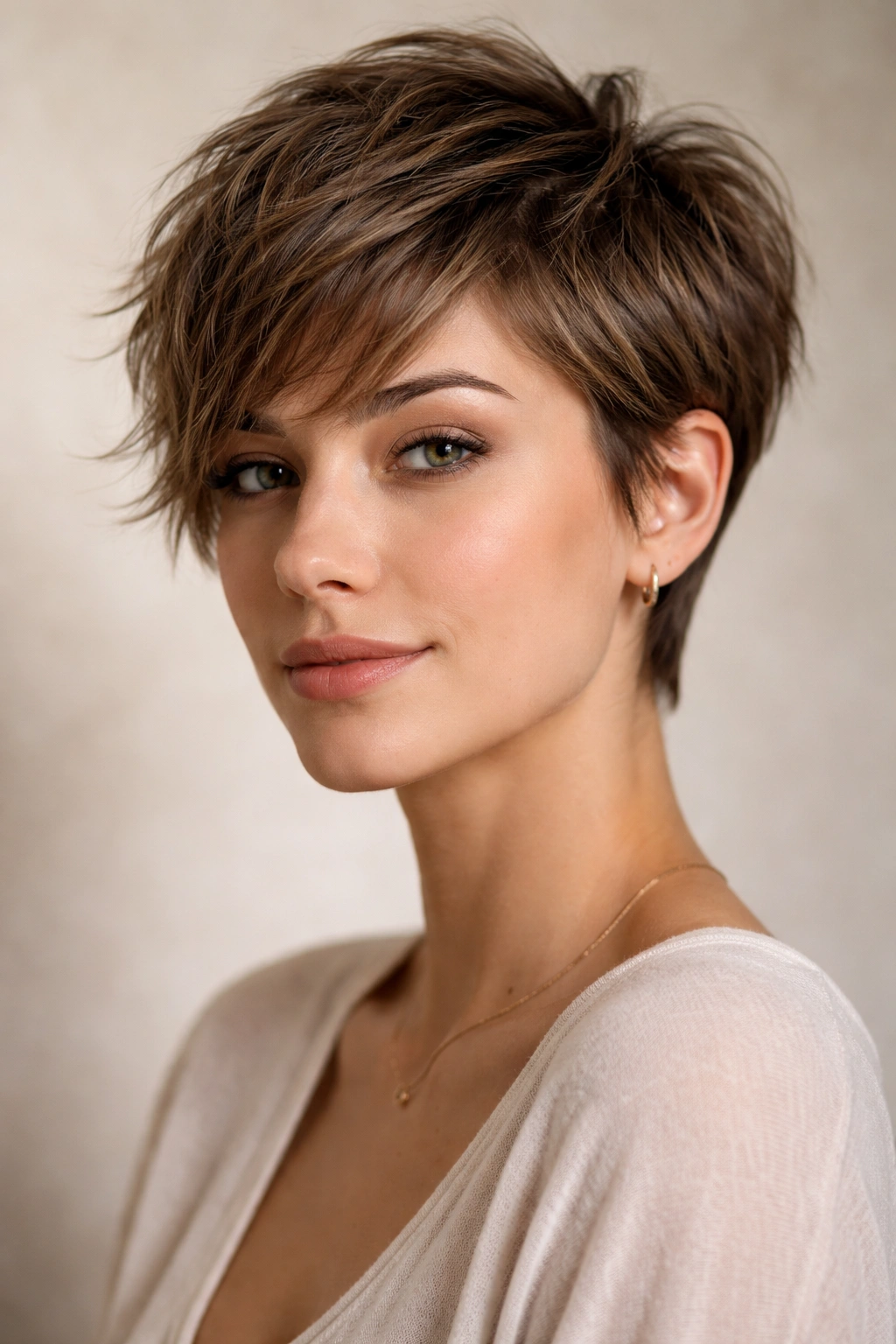
A pixie cut might seem counterintuitive for a long face, but when executed with strategic length and texture, it can be absolutely stunning. The key is ensuring that the pixie isn’t cropped too short at the sides—leaving some length creates width, while textured layers add visual interest and prevent the style from emphasizing face length. This is a bold choice that requires confidence but pays off beautifully.
Breaking the Rules With a Textured Pixie
A standard, super-short pixie can emphasize a long face, but a textured, slightly longer pixie with choppy layers is a different story. By maintaining slightly more length and incorporating texture, you create volume and movement that offsets the shortness of the cut.
Strategic Length Placement
- Keep the sides longer than a traditional pixie—about an inch or slightly more—to create width
- Use shorter length on top to create height and texture without the bulk
- Incorporate longer pieces around the face that can frame your features and draw attention to your eyes
- Ask your stylist for choppy, textured layers throughout that give the cut movement and dimension
Styling and Maintenance
- Pixies require frequent trims—every 3-4 weeks—to maintain their shape and prevent looking shaggy
- Texturizing spray is your friend with this cut, adding grip and enhancing the layered texture
- Blow-dry with your head tipped forward to create lift, or let it air-dry for a more casual, textured look
- This style is incredibly low-maintenance compared to longer hair, requiring minimal daily styling time
- Embrace the short length as an opportunity to show off your features and facial structure
9. Long Layers With a Curtain Bang Fringe
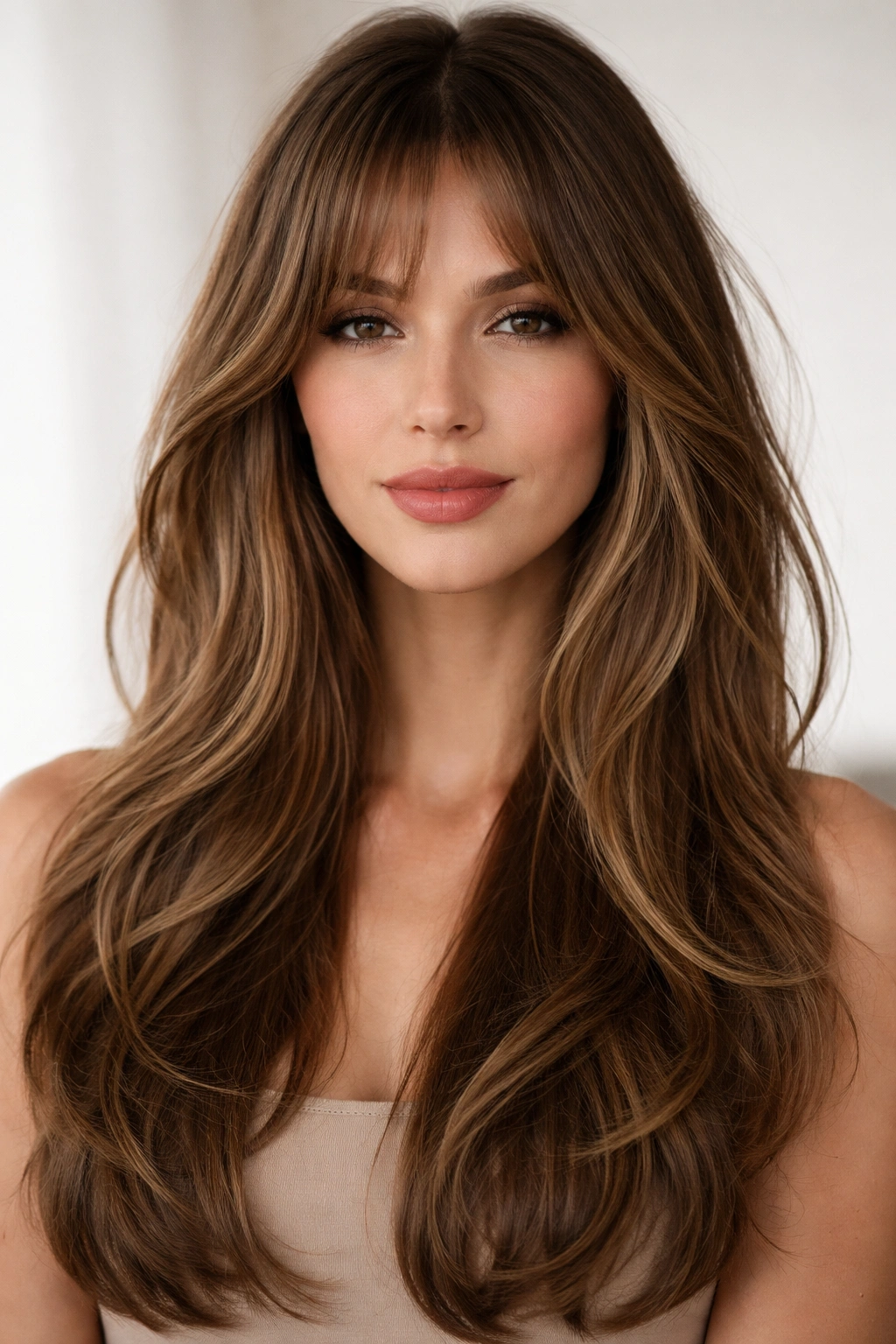
Long layers create the ultimate versatility while curtain bangs—which part in the middle and frame both sides of your face—offer face-shortening benefits without the commitment of full bangs. This combination gives you the best of both worlds: the length and elegance of longer hair with the face-flattering properties of strategic fringe. This is an excellent choice if you love having longer hair but want to balance a long face shape.
The Magic of Curtain Bangs
Curtain bangs create a diagonal line on both sides of your face that draws attention to your eyes and cheekbones rather than the overall length of your face. They’re less commitment than full bangs, and they work beautifully with longer hair because they create a balanced, intentional look rather than appearing stubby or disproportionate.
Layering for Movement and Width
Long layers throughout your hair create movement and prevent the style from appearing heavy or flat. Layers should be graduated, with longer layers at the back and progressively shorter layers as you move forward, concentrating some face-framing pieces around your cheekbones.
Styling Your Curtain Bangs and Layers
- Blow-dry your curtain bangs straight or with a slight curve away from your face
- Use a straightening iron or curling wand to refine the shape and create intentional movement
- Layers look best with some texture, so apply a texturizing spray or mousse before blow-drying
- Waves or curls throughout the hair complement this style beautifully and add volume at the cheekbones
- Curtain bangs require periodic trims—every 8-12 weeks—to maintain their length and shape
Pro tip: Style your curtain bangs by blow-drying each side away from the center, using your fingers or a small round brush to guide them into place.
10. The Textured Shag With Lots of Layers Around the Face
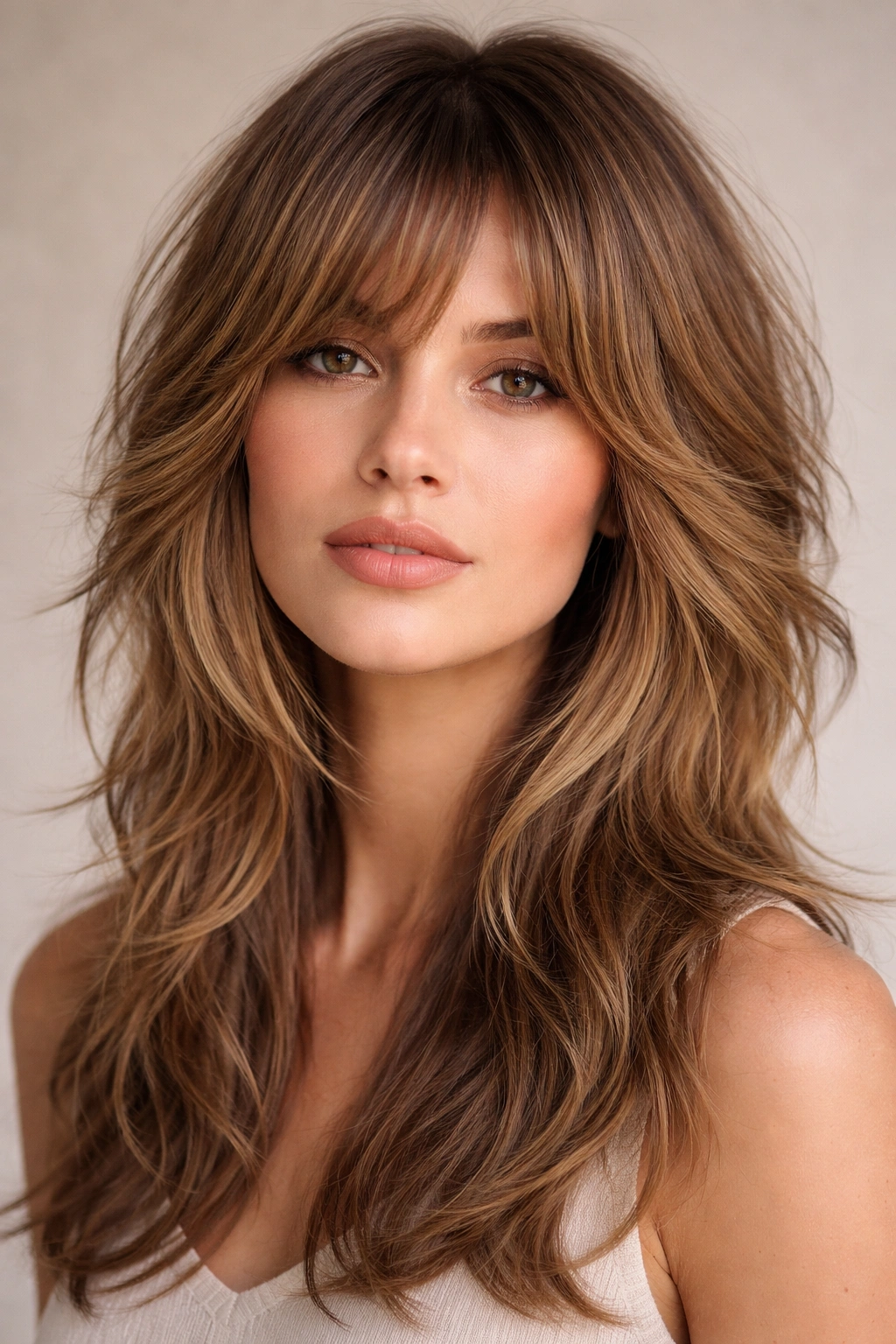
A shag with an emphasis on face-framing layers is basically a guaranteed flatterer for long faces because it combines the texture and movement benefits of a shag with concentrated volume exactly where you need it. The layers around your cheekbones and jawline create width, while the overall texture and movement prevent any sense of heaviness. This is a style that only improves as your hair grows out slightly and the layers begin to blend.
Strategic Layer Placement for Long Faces
The layers in this variation of the shag should be concentrated around your face, with the shortest pieces sitting right around your cheekbones. As you move back, the layers gradually get longer, creating a graduation that feels intentional and flattering. This concentrated face-framing maximizes the width-enhancing effect where it matters most.
Creating Dimension Through Texture
Texture is what makes this style work—the choppy, piece-y quality of the layers creates visual interest and movement that disrupts vertical lines. Avoid asking your stylist for perfectly blended, graduated layers; instead, request choppy, textured layers that have obvious definition and movement.
Daily Styling for Maximum Impact
- Use texturizing spray liberally throughout your damp hair before blow-drying
- Blow-dry with a diffuser attachment if you have naturally wavy or curly hair to enhance texture
- Use a curling iron or wand to add waves or curls, concentrating on pieces around your face
- A light pomade or texturizing wax helps define individual layers and prevents the style from looking matted
- This style requires minimal daily styling time despite looking like you spent hours on it
11. The Blunt, Textured Long Bob With Choppy Layers
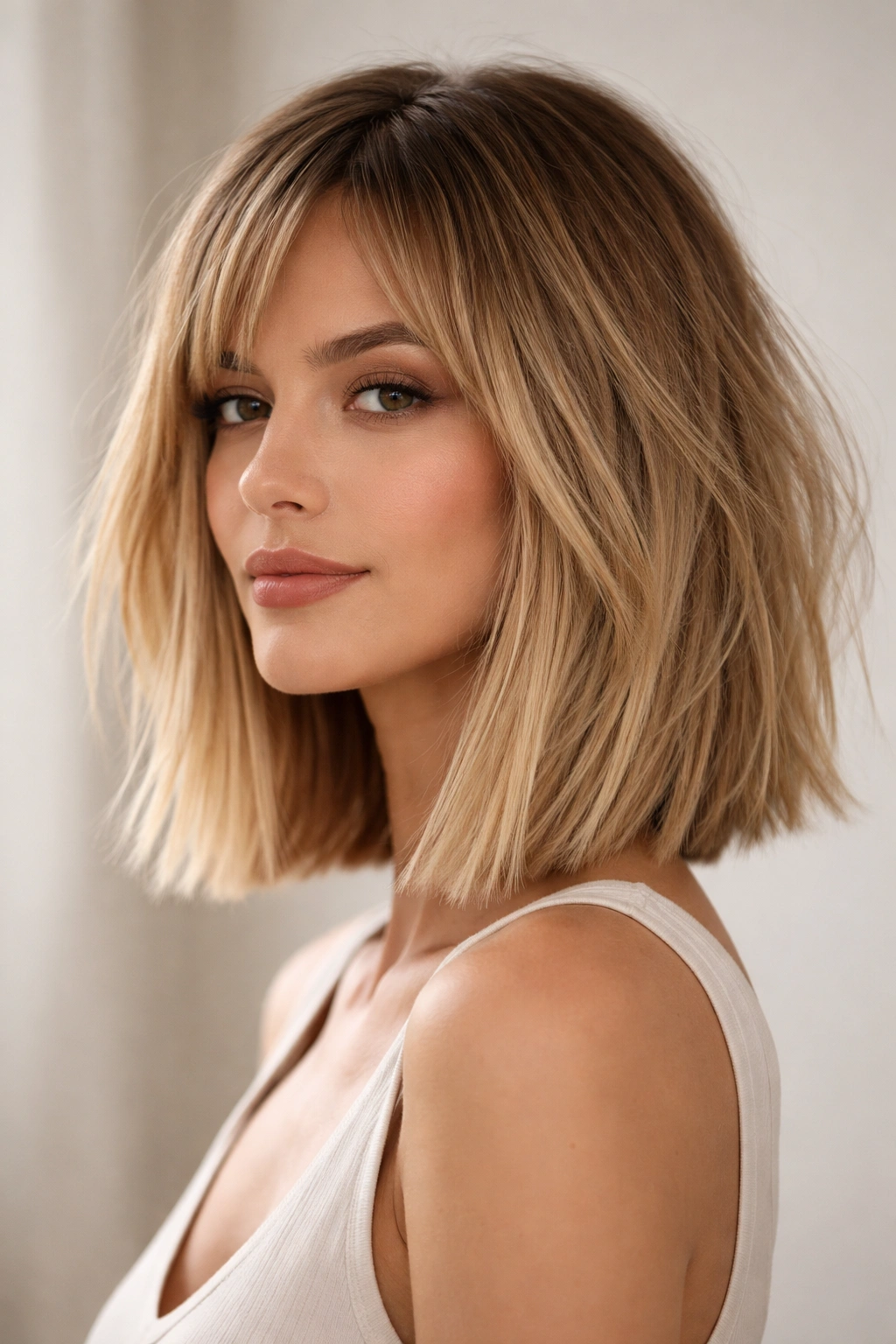
A blunt long bob—hitting around mid-neck length—combines the structural benefits of a blunt edge with the movement and texture of layers. This creates width through the blunt endpoint while preventing the style from feeling too severe. The choppy layers throughout add visual interest and movement, making this a style that looks good both styled and slightly undone.
Why Blunt Edges Create Width
A blunt edge, whether on a short bob or a long bob, creates a strong horizontal line that reads as width. The key is ensuring that the blunt edge hits at a flattering point on your face—for long faces, around the chin or just below creates the perfect balance.
Layering for Movement
Choppy layers throughout prevent a blunt bob from appearing too severe or blunt-force, adding movement and texture that makes the style feel modern and intentional. The layers should be obvious and defined, not subtle or blended, so the movement and texture are clearly visible.
Maintaining the Blunt Edge
- Visit your stylist every 4-6 weeks to maintain the blunt edge and keep the line clean and intentional
- Blow-dry with a round brush for a polished finish, or air-dry for a more textured, tousled look
- Texturizing spray enhances the choppy layers and adds grip for styling
- This style looks beautiful both straight and with subtle waves created by a curling iron or wand
- The maintenance required is moderate—regular trims are necessary, but daily styling time is minimal
12. Soft Waves With Volume at the Cheekbones
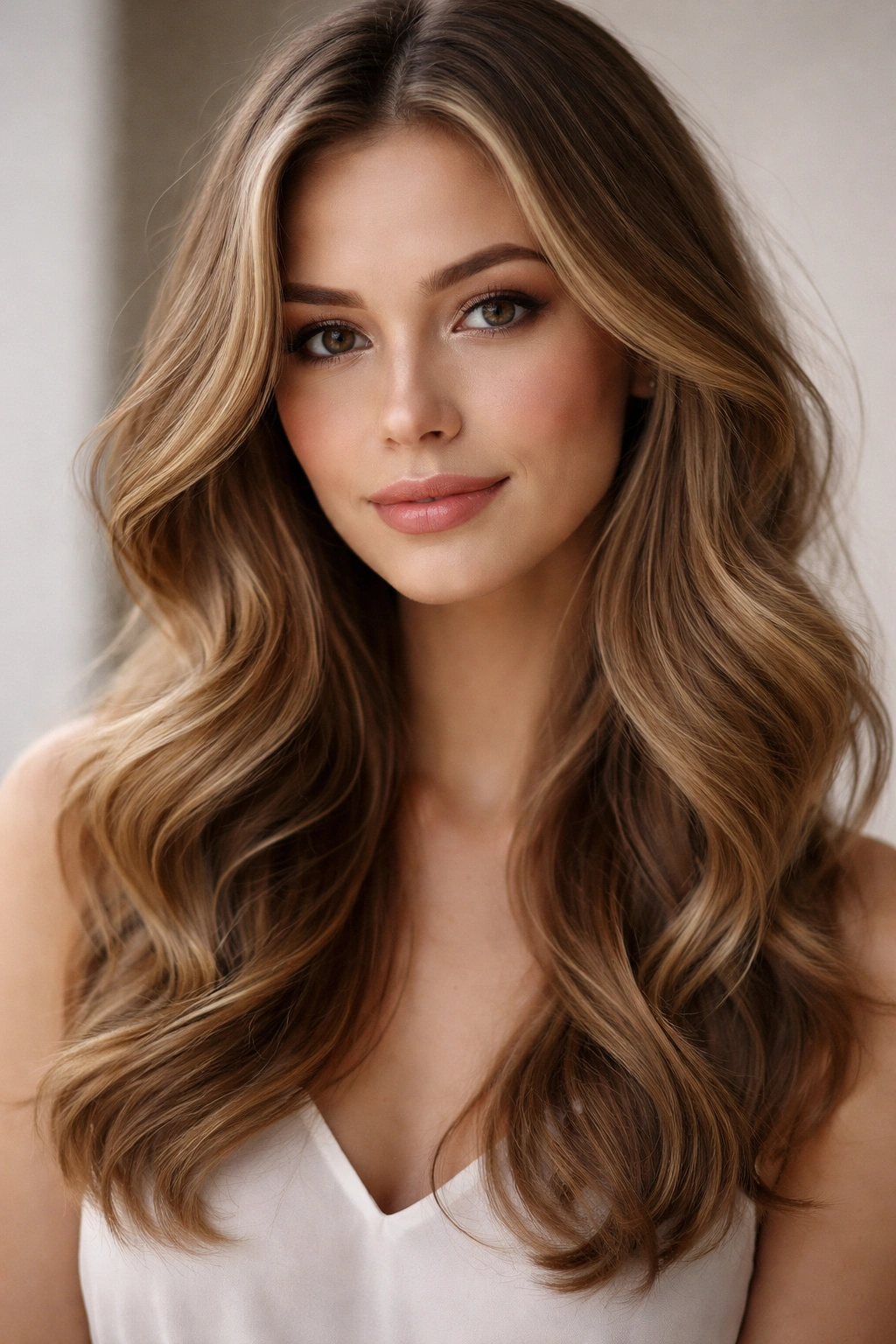
Soft waves create one of the most universally flattering looks for long faces because they add volume and width in all the right places while maintaining an elegant, feminine aesthetic. When concentrated at the cheekbones and middle lengths of your hair, waves create the illusion of a wider, more balanced face. The soft quality prevents this style from appearing dramatic or severe.
Achieving Soft, Flattering Waves
Soft waves are different from tight curls or structured waves—they’re loose, romantic, and organic in appearance. These waves should start at around mid-length or slightly higher, concentrating volume where it’s most flattering for your face shape. The goal is to create gentle movement rather than obvious texture.
Styling Techniques for Soft Waves
- Use a 1.5-inch or larger curling wand to create loose, romantic waves
- Curl away from your face for the most flattering effect, especially around your face-framing pieces
- Don’t brush out your waves; instead, gently separate them with your fingers for a soft, organic look
- A volumizing mousse applied to damp hair before blow-drying helps create hold and body
- Once your waves are created, let them relax for 10-15 minutes before touching them for the softest appearance
Making Waves Last Throughout the Day
- Use a light hairspray to hold waves in place without making your hair feel stiff or crunchy
- Sea salt spray enhances the wave texture and helps waves last longer as the day goes on
- Avoid touching or running your fingers through your waves repeatedly, as this breaks them down faster
- Reactivating spray can refresh waves that have started to fall flat by mid-day
Worth knowing: The best time to create waves is on second-day hair—hair that’s been washed the day before holds waves much better than freshly washed hair.
13. The Asymmetrical Bob With One Side Longer
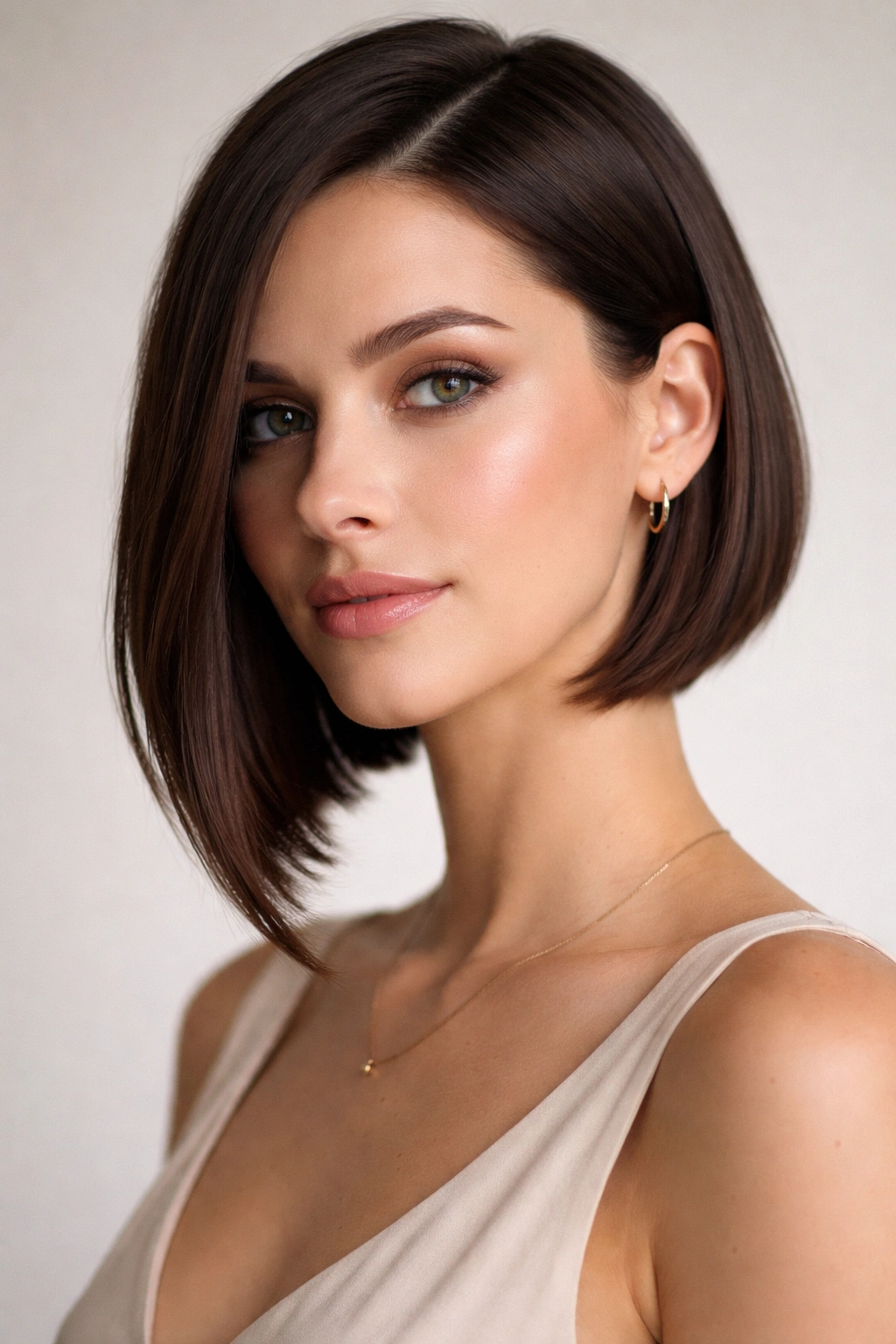
An asymmetrical bob creates inherent visual interest and breaks up vertical lines through its uneven structure. One side sits longer than the other, creating a diagonal line that’s flattering for long faces. The movement and intentionality of this cut prevent it from ever appearing flat or severe, and it’s a great choice for someone who wants a statement-making style.
Why Asymmetry Works for Long Faces
Asymmetry breaks vertical monotony because your eye follows the diagonal line created by the uneven lengths. This diagonal movement is horizontal in nature, which is exactly what long faces need. The style is bold and intentional, communicating confidence and style awareness.
Determining the Right Asymmetrical Ratio
The longer side should sit around chin-length, while the shorter side can be anywhere from earlobe length to just above the ear. The greater the difference, the more dramatic and statement-making the style; the smaller the difference, the more subtle and wearable it is.
Styling and Maintenance
- This cut requires precise trims every 4-6 weeks to maintain the asymmetrical shape
- Blow-dry with a round brush, paying attention to getting the longer side to flip slightly away from your face
- A texturizing spray or mousse adds movement and prevents the style from looking flat or severe
- Waves or curls on the longer side enhance the asymmetrical effect
- This style works best if you’re willing to spend a few minutes daily on styling, though it doesn’t require extensive effort
14. Grown-Out Pixie With Longer Top and Textured Layers
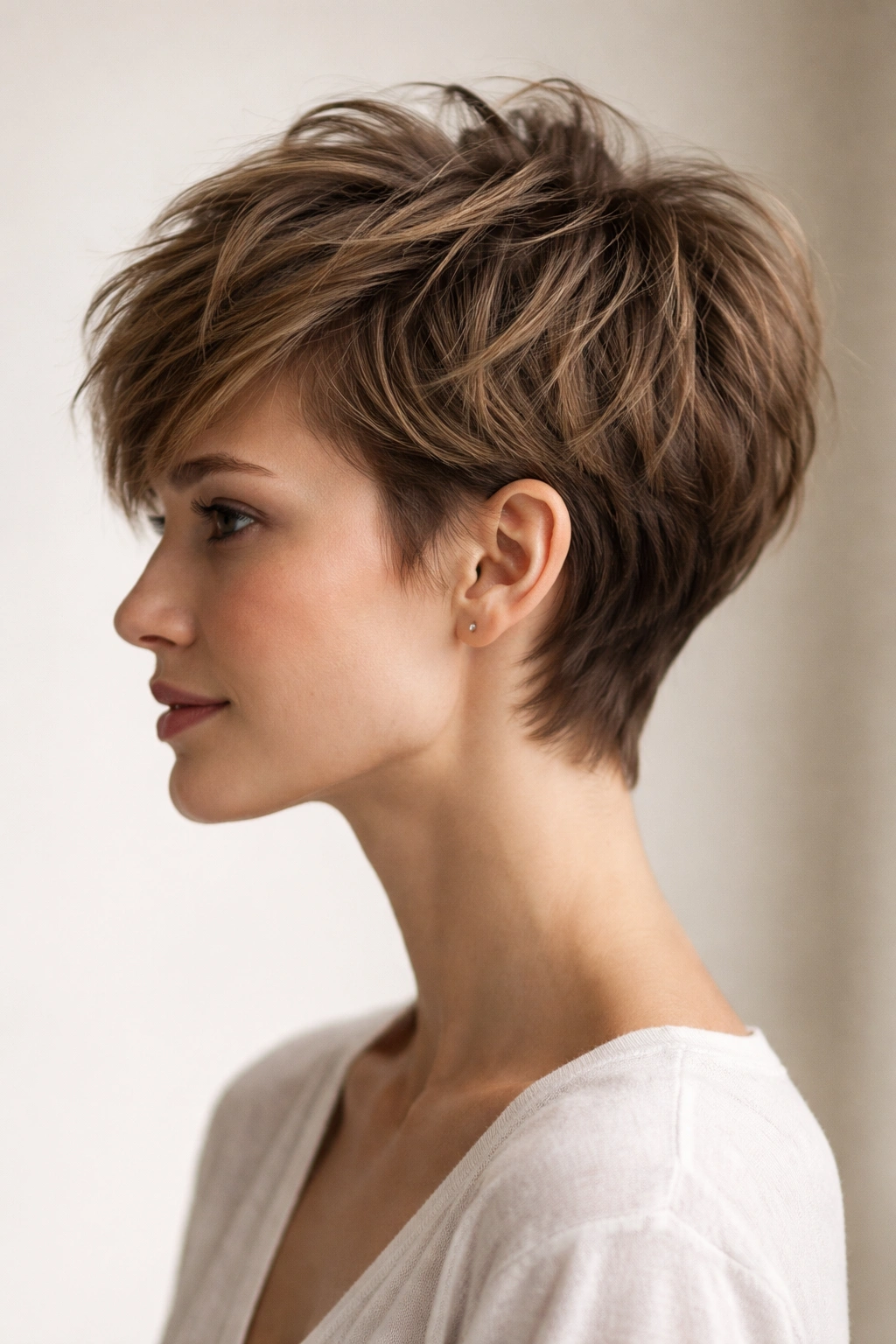
A grown-out pixie offers the low-maintenance appeal of a short cut while the additional length on top and textured layers prevent it from emphasizing face length. This style sits in an interesting middle ground—it’s technically short, but not so short that it feels severe. The longer top creates height without bulk, while side length creates width.
Growing Out a Pixie Strategically
Rather than letting your pixie grow out into an awkward shape, work with your stylist to intentionally grow it out by adding texture, maintaining choppy layers, and keeping strategic length at the sides. This ensures that as your hair grows, it remains flattering and intentional rather than shaggy.
Creating Volume Without Bulk
The key to making a grown-out pixie work for long faces is creating volume and texture through layers rather than overall length. Choppy, textured layers throughout prevent the style from appearing heavy or bulky while adding visual interest.
Styling the Grown-Out Pixie
- Texturizing spray is essential—apply it to damp hair before blow-drying for maximum grip and texture
- Blow-dry with your head tipped forward to create lift at the roots, then flip right-side up
- A diffuser attachment works beautifully for enhancing natural texture
- This style is incredibly low-maintenance once you’ve achieved the right length and layering
- Maintain the shape with trims every 6-8 weeks
15. Long Hair With Lots of Texture and Minimal Layers
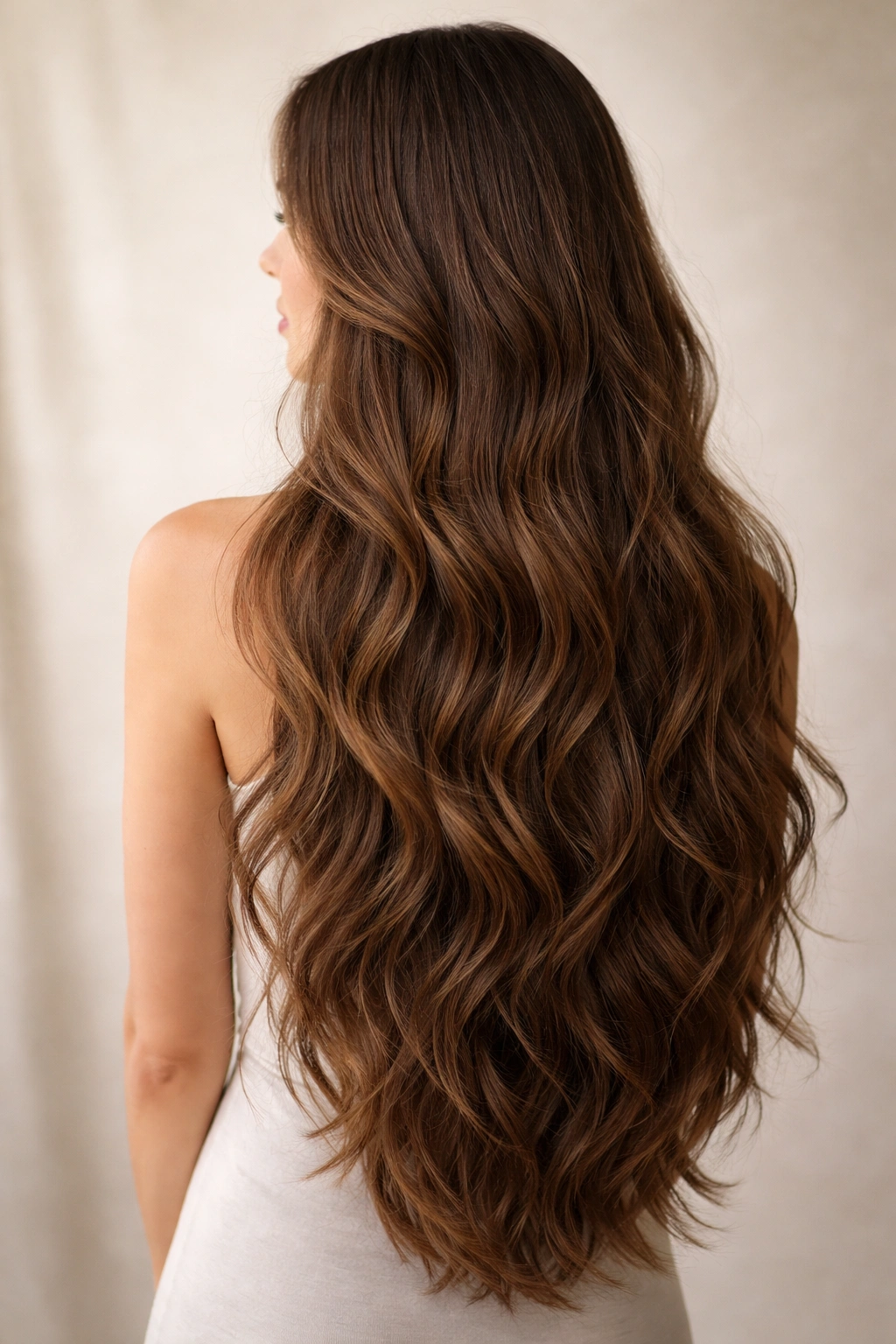
Long hair works beautifully for long faces when the focus is on texture rather than visible layers. Lots of waves, curls, or a generally textured, undone appearance creates horizontal movement that prevents the hair from appearing flat or severely long. The texture distributes visually throughout the length rather than emphasizing a single vertical line.
Using Texture as Your Face-Flattering Strategy
When you embrace texture—whether through natural curls, perm waves, or styled waves—you create movement throughout your hair that prevents it from reading as strictly vertical. Texture creates width and visual interest, making your overall look feel more balanced despite the longer length.
Creating Texture Throughout Your Hair
- Apply texturizing spray or mousse to damp hair before blow-drying for a textured base
- Use a curling wand or iron to add waves or curls, working section by section
- Don’t aim for uniform waves; instead, embrace variation and natural-looking movement
- Layers aren’t necessary with this approach, though some very subtle ones around the face can enhance framing
- The undone, textured quality should feel intentional but organic, never stiff or overly styled
Maintaining Texture and Movement
- Refresh waves and texture with texturizing spray or sea salt spray between wash days
- Use a light pomade or texturizing wax to define and separate individual waves or curls
- This style looks better the less you fuss with it—embrace the undone quality
- Wash your hair less frequently to allow the texture to build and last longer
- This is an excellent option if you prefer longer hair but want the face-flattering benefits of movement and texture
Final Thoughts
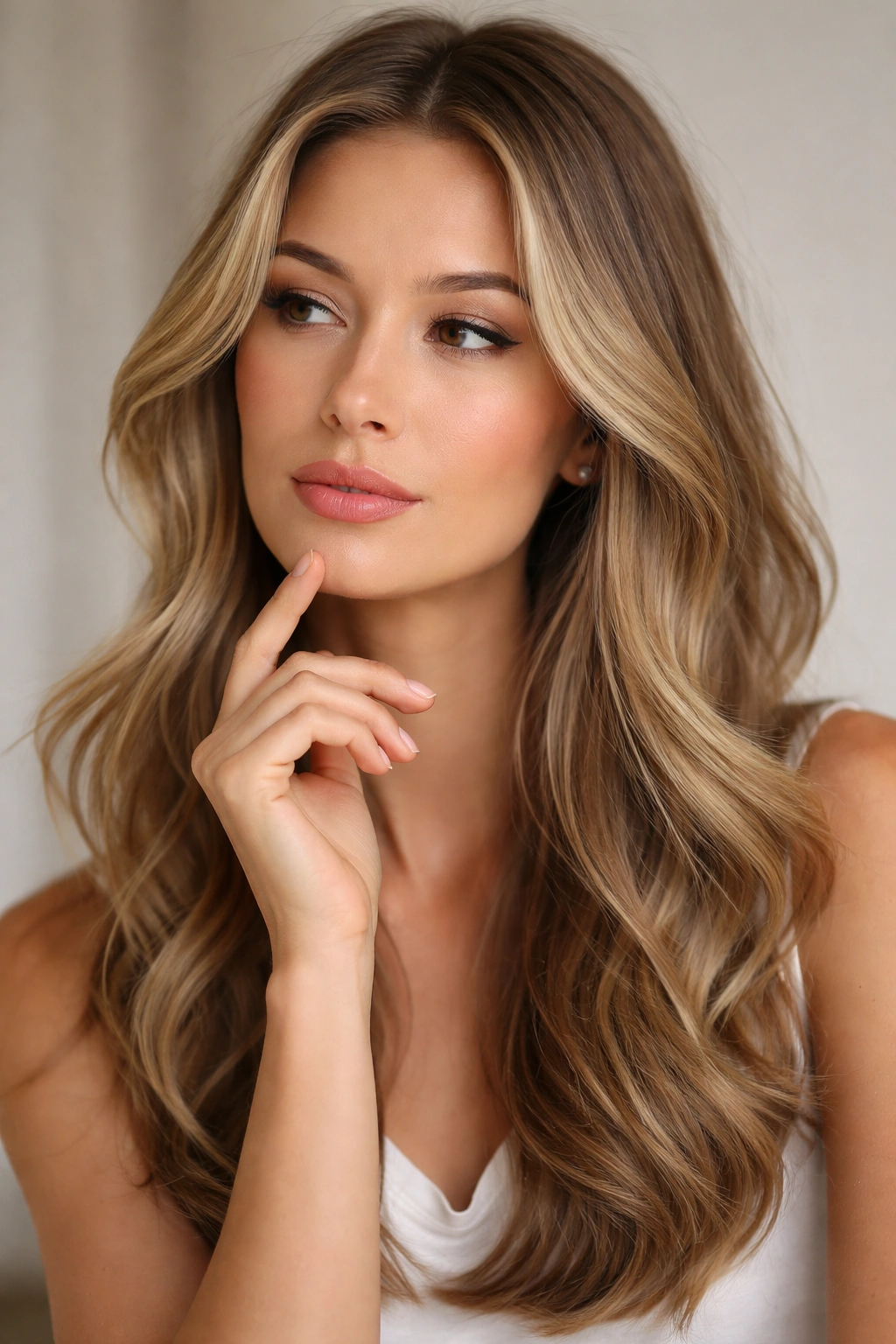
Finding the right hairstyle for a long face is about understanding proportion, balance, and the power of strategic styling. Whether you prefer short, textured cuts that create immediate width through choppy layers, or longer styles enhanced with waves and texture that disrupt vertical lines, the principles remain the same: add width at the cheekbones, create horizontal movement, and choose styles that feel confident and intentional.
The 15 styles explored here represent a diverse range of lengths, textures, and styling approaches, all designed with long face shapes specifically in mind. You might find yourself drawn to one particular style, or you might appreciate different elements from several of them. The beauty of understanding what works for your face shape is that you can then communicate these preferences clearly to your stylist, ensuring that whatever you choose will be flattering and make you feel genuinely confident.
Remember that the best hairstyle for your long face is ultimately the one that makes you feel like the best version of yourself. Visit a skilled stylist, show them examples of styles you love, and discuss your specific face shape and hair texture. A stylist who understands how to flatter a long face can work with your preferences and your lifestyle to create a style that’s not just beautiful, but sustainable and wearable for your everyday life. You deserve a hairstyle that celebrates your unique features while creating balance and proportion that makes you feel amazing every single day.
