



An angled bob strikes that perfect balance between polished and playful—it’s short enough to feel modern and fresh, but long enough to frame your face with real intention. Whether you’re drawn to subtle texture or dramatic movement, the angled bob (also called a “graduated bob” or “A-line bob”) offers endless possibilities for customization that work with nearly every face shape and hair type. The angle is what makes this cut so special: the longer front pieces create a flattering elongation that draws the eye upward, while the shorter back adds volume and movement that a blunt, straight-across bob simply can’t deliver.
The beauty of choosing an angled bob is that you’re not locked into one rigid look. You can go barely-there with just a whisper of angle—almost undetectable unless you know to look for it—or you can commit to a statement-making cut where the front reaches your chin and the back is nearly shaved. The angle can be soft and gradual, following the natural curve of your head, or sharp and geometric for an architectural vibe. Styling matters too: the same cut can look sleek and structured one day or tousled and textured the next, depending on how much time you want to invest.
What makes an angled bob different from other short cuts is the deliberate length variation from back to front. It’s not random or choppy; it’s a calculated design that creates flow and movement even when you’re standing still. This graduated structure also means the cut grows out gracefully—you won’t hit that awkward in-between stage where your hair looks shapeless. Instead, it transitions smoothly, giving you more time between salon visits if you prefer a more relaxed schedule.
If you’ve been considering a bob but weren’t sure how short to go or how much angle to commit to, this guide walks you through 15 distinct approaches, from nearly imperceptible angles perfect for conservative style to bold, dramatic cuts that make an immediate statement.
1. The Subtle Textured Angle
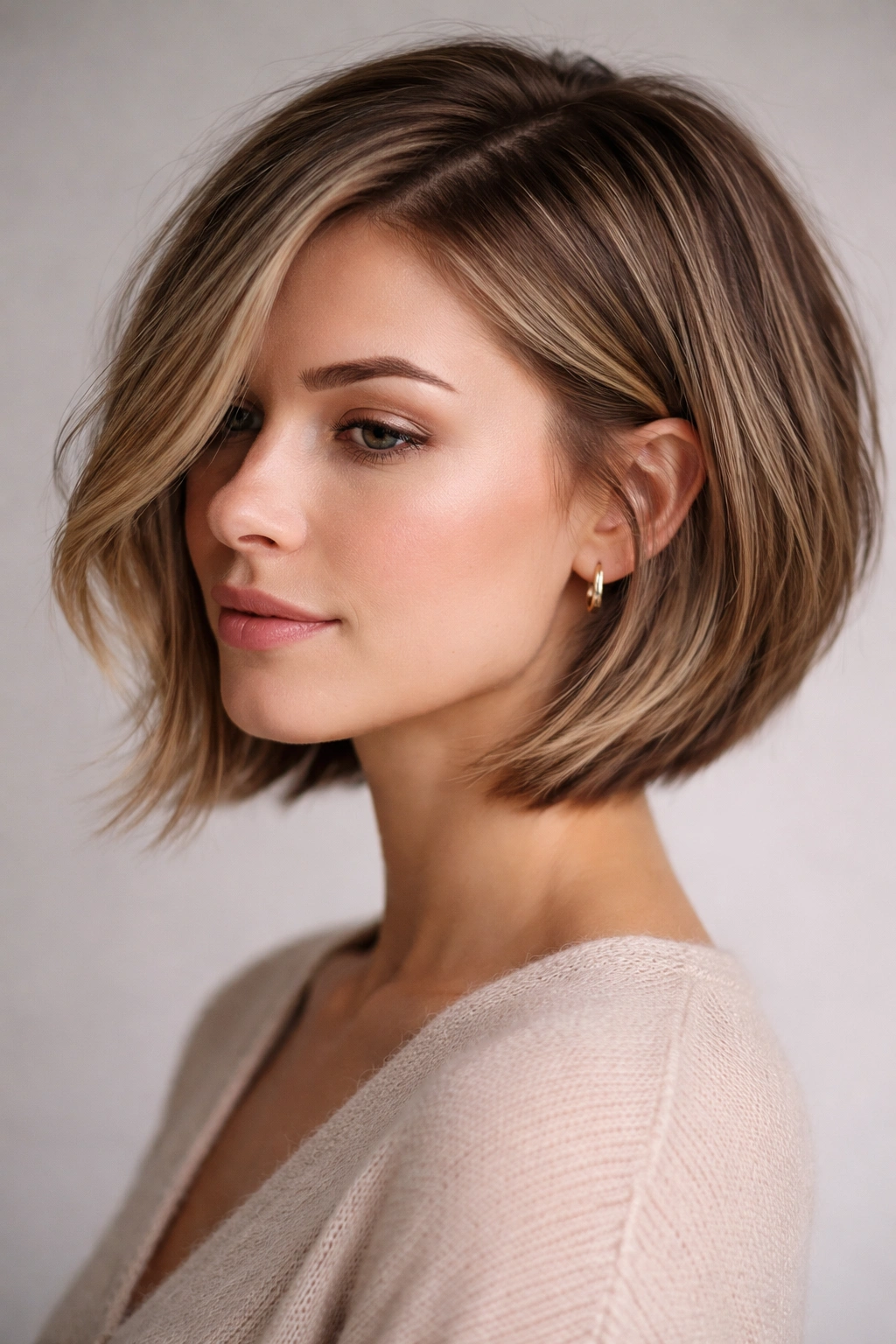
This is the gateway angled bob—the perfect choice if you’re nervous about committing to too much change. The angle here is so gentle that someone might not even realize your hair is cut differently; they’ll just notice it feels fresher, more intentional, and somehow more flattering than it was before. The front pieces are barely longer than the back, maybe just a quarter inch to half inch difference, which means the cut works beautifully whether you wear your hair straight, wavy, or with texture.
The Cut Details
The subtle angle works best when combined with choppy layers throughout, which create movement and prevent the bob from feeling heavy or blunt. Your stylist should focus on point-cutting the ends rather than blunt-cutting them, which creates a softer, more lived-in texture that feels current and effortless. The layers should be concentrated throughout the crown and mid-lengths, so the shape isn’t just about the front-to-back angle—it’s about internal movement too.
Who It Suits Best
- Anyone with naturally wavy or curly hair who wants the angled bob structure without a severe geometric look
- People with fine or thin hair who need layers to create the illusion of volume
- Those who prefer a wash-and-go approach over daily styling
- Anyone with a more conservative personal style who still wants to feel like they made a change
Pro tip: Ask your stylist to texturize rather than layer—choppy, point-cut ends give you more styling flexibility than traditional layers and work better as your hair grows out.
2. The Chin-Length Blunt Angle
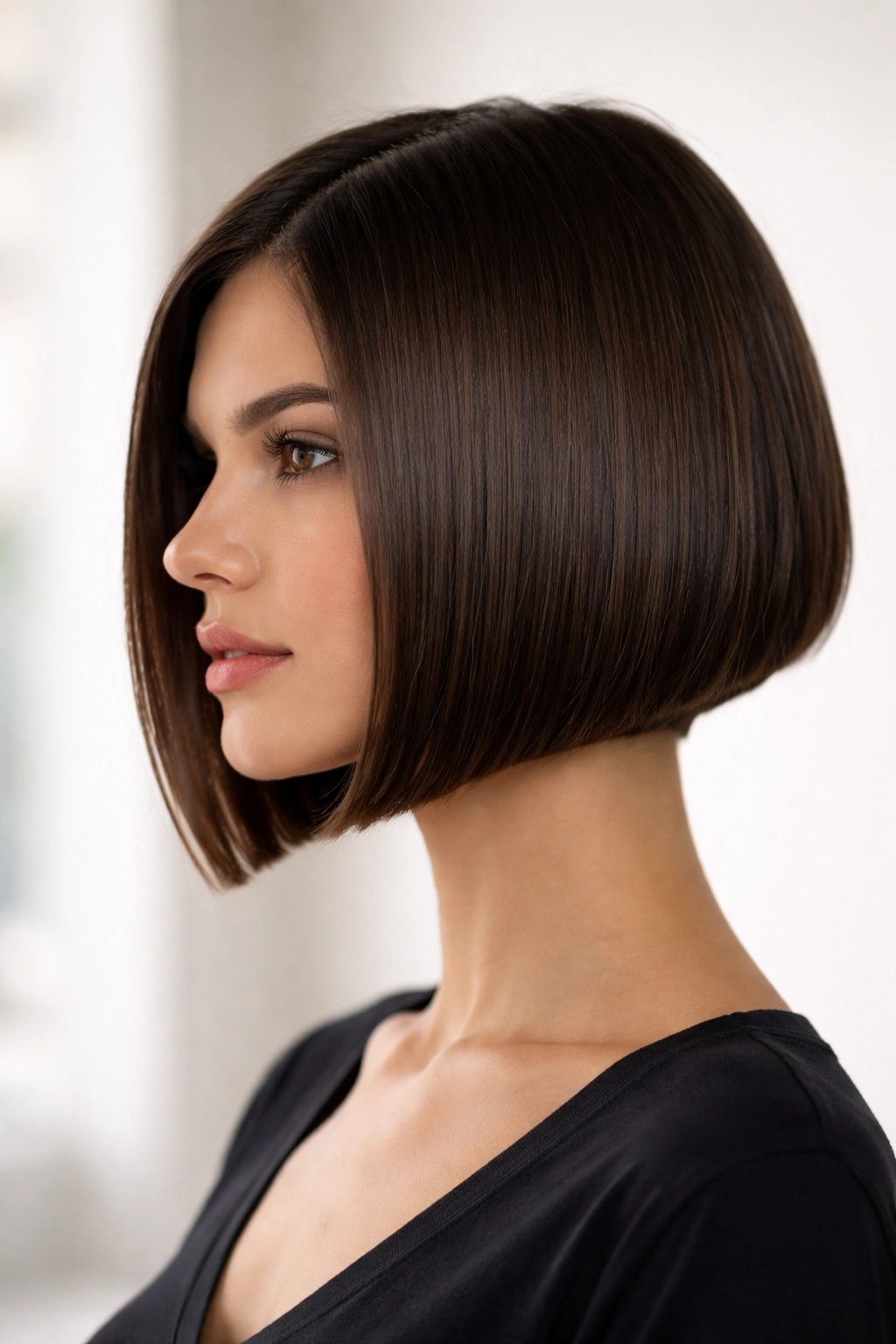
Here’s where things get more intentional. The front pieces reach your chin, while the back is notably shorter—maybe ear-length or just above. This creates a more obvious geometric shape that photographs beautifully and demands to be styled intentionally. The key word here is blunt: the ends are cut straight across rather than textured, which gives the cut a polished, almost architectural quality. This is the Bob with a capital B, the one that feels like a real style choice rather than just “short hair.”
The Cut Details
The blunt angle requires precision—your stylist needs to create a clean line at the front and make sure both sides are perfectly symmetrical. The back should be cut close to the head, creating a tapered shape that hugs the nape of your neck. Many stylists use a razor or point-cutting technique at the front to create soft rather than sharply blunt ends, which adds sophistication without sacrificing the geometric intention. The angle should be gradual and smooth, not choppy or uneven.
Who It Suits Best
- People with straight or naturally sleek hair (waves and curls need more texture work to avoid looking severe)
- Anyone with a strong sense of personal style and the confidence to own a bold cut
- Individuals with oval, heart-shaped, or square face shapes (the angle complements these proportions well)
- Those who love a polished, intentional aesthetic and don’t mind styling daily
Worth knowing: This cut requires regular trims every 4-6 weeks to maintain its clean lines—blunt angles show root growth and styling neglect quickly.
3. The Tousled Choppy Angle
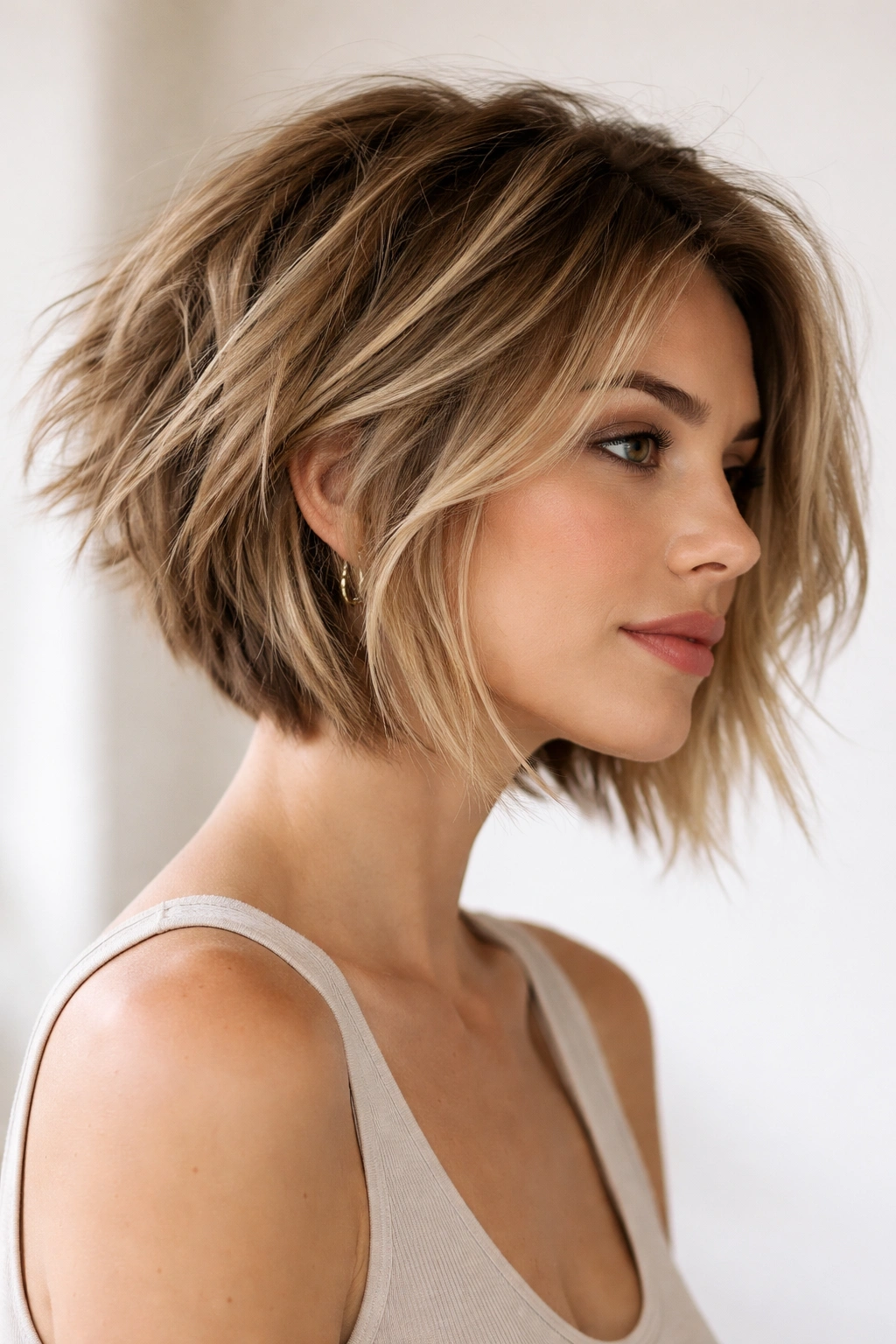
This is the angled bob that looks like you just rolled out of bed and somehow looked effortlessly cool. It’s packed with choppy, uneven layers that create tons of movement and texture. The angle still exists—the front is definitely longer than the back—but it’s obscured by all the deliberate texture, which is exactly the point. This cut is perfect if you love that “lived-in” aesthetic and want a style that works with your natural texture rather than against it.
The Cut Details
The choppy angle requires a confident stylist who understands how to cut layers that actually enhance movement rather than just making hair look unkempt. Your stylist should use razor-cutting or point-cutting techniques throughout, creating pieces of varying lengths that work together to create dimension. The angle should still be there as the underlying structure—the front longer than the back—but visually, what stands out is the texture and movement, not the geometric line. This works beautifully with styling products like texturizing sprays, sea salt spray, or lightweight pomades.
Who It Suits Best
- Anyone with naturally wavy, curly, or textured hair
- People who embrace their natural hair texture rather than fighting it
- Those with an effortless, casual personal style
- Individuals who prefer frequent salon visits for maintenance trims (choppy cuts need touch-ups every 4-6 weeks)
Insider note: Choppy angles hide styling imperfections better than blunt angles—if you miss a day of styling, nobody will notice because the texture does the work for you.
4. The Disconnected Sharp Angle
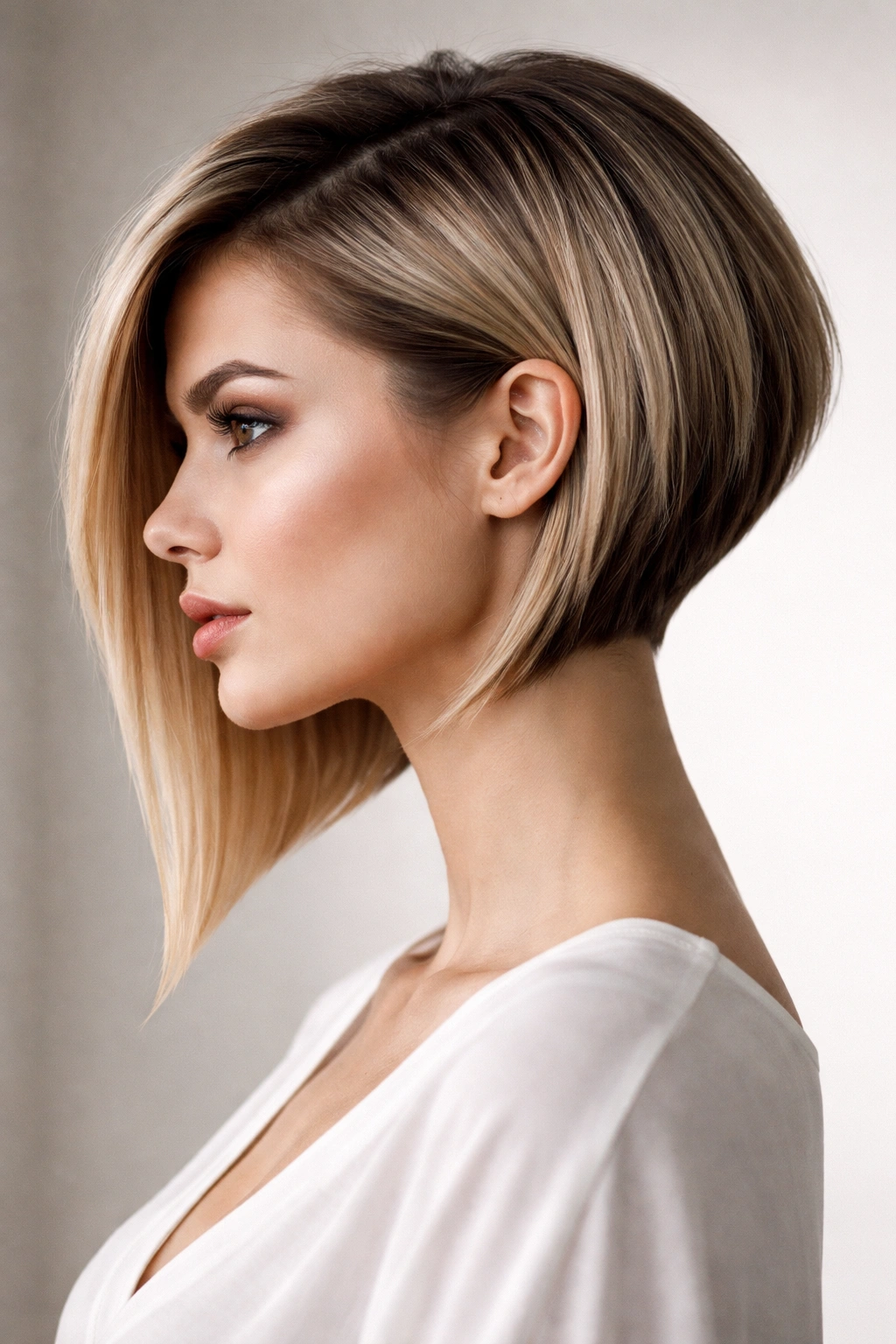
This cut plays with contrast in a deliberate way: the front section is noticeably longer and feels almost separate from the shorter back. The angle is pronounced and geometric, with a visible “line” where the longer front pieces transition to the cropped back. There’s a sharpness to this style that feels modern and intentional, almost like two different lengths living together rather than a gradual blend. It’s bolder than a classic angled bob but not as extreme as a full undercut.
The Cut Details
The disconnected angle requires precision cutting to avoid looking sloppy. Your stylist should create a clear demarcation point where the angle changes, and the front pieces should be blunt or slightly textured (depending on your preference). The back is cut close and clean, often with a tapered undercut at the nape for modern edge. The disconnection works best when it’s intentional and clean—not accidentally choppy. Some stylists use clippers on the back for a true disconnected look, while others achieve it with scissors and careful layering.
Who It Suits Best
- People with straight or naturally sleek hair who want maximum visual impact
- Anyone with a bold, fashion-forward personal style
- Individuals with longer face shapes (the horizontal line of the angle balances vertical proportions)
- Those who enjoy making a statement with their hair
Pro tip: The disconnected angle looks sharpest when the front pieces are kept sleek and straight—waves soften the disconnect, which might be desired, but it does change the visual impact.
5. The Soft Graduated Curve
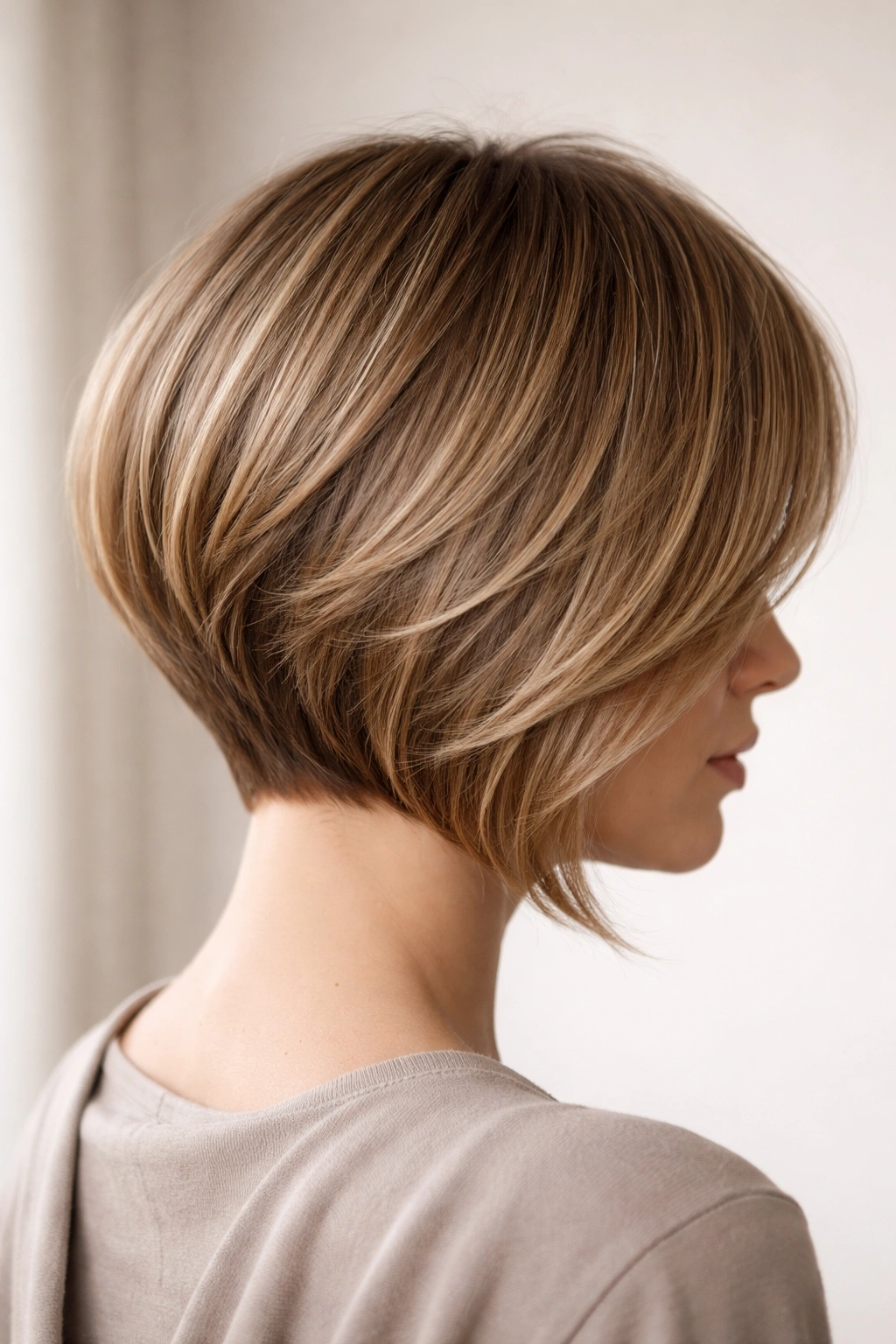
If you love the idea of an angled bob but want something that feels organic rather than architectural, this is your cut. The angle is gradual rather than sharp, following the natural curve of your head and face. Each layer is slightly longer than the one below it, creating a smooth gradient from the shortest point at the nape to the longest at the front. The result feels soft and feminine without being fussy—it’s an angled bob that works beautifully whether you style it with intention or just let it air dry.
The Cut Details
The soft graduated curve requires excellent technique from your stylist. They need to understand how to layer in a way that feels intentional without looking choppy. Each layer should be visible but subtle, and the angle should follow the natural contours of your head. Many stylists use point-cutting at the ends to soften the lines and prevent a blunt, harsh appearance. The back of the cut should taper smoothly to the nape, and the front should frame your face with pieces that are long enough to tuck behind your ears if desired.
Who It Suits Best
- Anyone with naturally wavy or curly hair (the gradient gives texture room to move)
- People who prefer a softer aesthetic over geometric shapes
- Individuals with round or diamond-shaped face types
- Those who want a low-maintenance cut that grows out gracefully
Worth knowing: This cut often looks better as it grows out than blunt bobs do—the gradual angle means you won’t hit that awkward in-between stage.
6. The Blunt Front with Textured Back
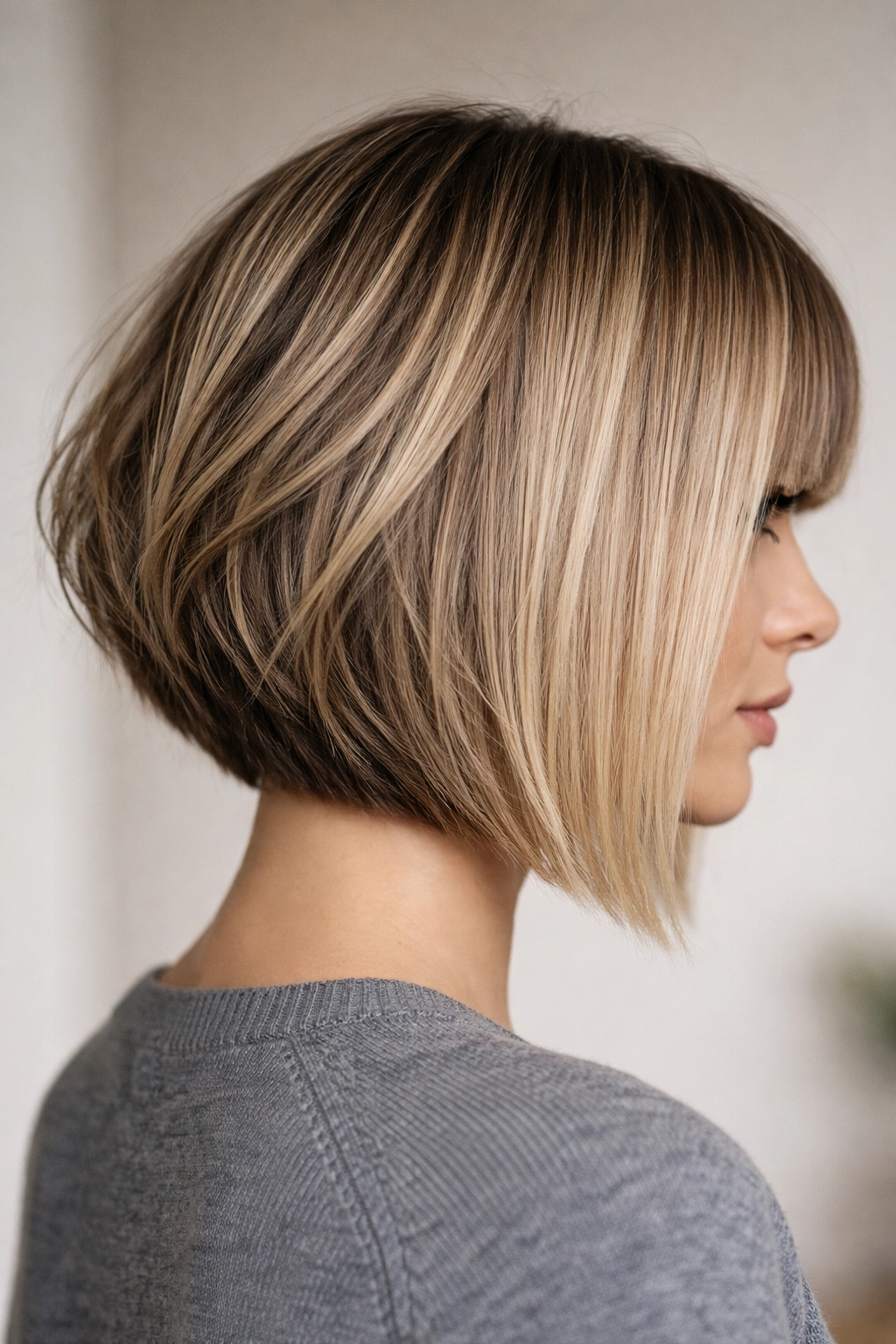
Here’s an interesting hybrid: the front is cut blunt and straight across, creating a clean line that frames your face perfectly. But the back is choppy and textured, creating movement and preventing the cut from feeling severe. This approach gives you the best of both worlds—the polished front and the relaxed, textured back. It’s sophisticated without being stiff, modern without being harsh. The contrast between the blunt front and choppy back is exactly what makes this cut feel current and intentional.
The Cut Details
Your stylist should create a clean blunt line at the front, landing somewhere around your chin or slightly below. The back should feature choppy layers of varying lengths, created with razor or point-cutting techniques. The angle still exists—the front is longer than the back—but it’s more of a supporting player than the main attraction. This cut looks best when the front is kept relatively sleek, while the back can be styled with texture, volume, or movement. The transition from blunt front to choppy back should feel natural, not abrupt.
Who It Suits Best
- People who love the polished look of a blunt cut but want more styling flexibility
- Anyone with mixed hair texture (straight in some places, wavy in others)
- Individuals who want maximum flattery at the front of their face and fashion edge at the back
- Those with oval or square face shapes
Pro tip: Style the front sleek and polished while you tousle the back for maximum visual impact—this creates an intentional, balanced look.
7. The Textured Pixie-Bob Hybrid
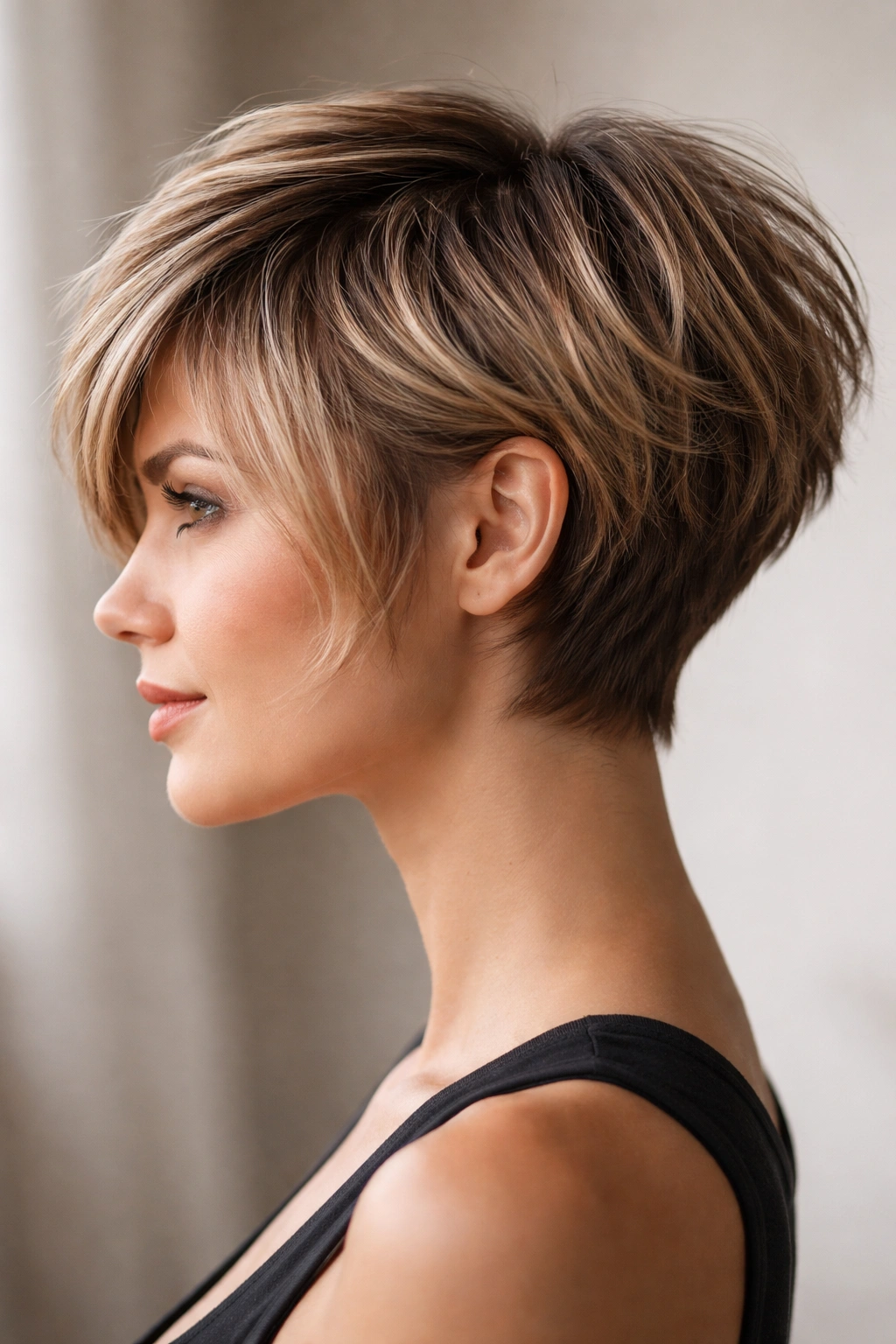
This is the cutting edge of bob styling: it’s short enough to have pixie vibes but long enough to pull back if you want. The front reaches your cheekbones or chin, while the back is cropped close to the head with texture and movement. Layers are everywhere, creating dimension and preventing the cut from feeling like a grown-out pixie. This is for people who love short hair but aren’t quite ready to commit to a full pixie, or who want more styling versatility than a pixie allows.
The Cut Details
This cut requires excellent layering technique. Your stylist should create choppy, textured layers throughout, with the longest pieces in the front gradually shortening as they move back and around the crown. The back can be clipped or cut close, creating a tapered shape that shows off the nape of your neck. Texture is essential here—blunt cuts don’t work for this style because they’ll look awkward and severe. The angle is present but soft, guided by the layering rather than a sharp front-to-back line.
Who It Suits Best
- Anyone who loves short hair but wants something with more dimension than a pixie
- People with naturally wavy or curly hair who embrace their texture
- Individuals with delicate or angular face shapes (shorter hair doesn’t overwhelm these proportions)
- Those who are willing to style their hair regularly with product and intention
Worth knowing: This cut requires frequent trims—every 3-4 weeks—to maintain its shape and prevent looking overgrown and unkempt.
8. The Sleek Geometric Angle
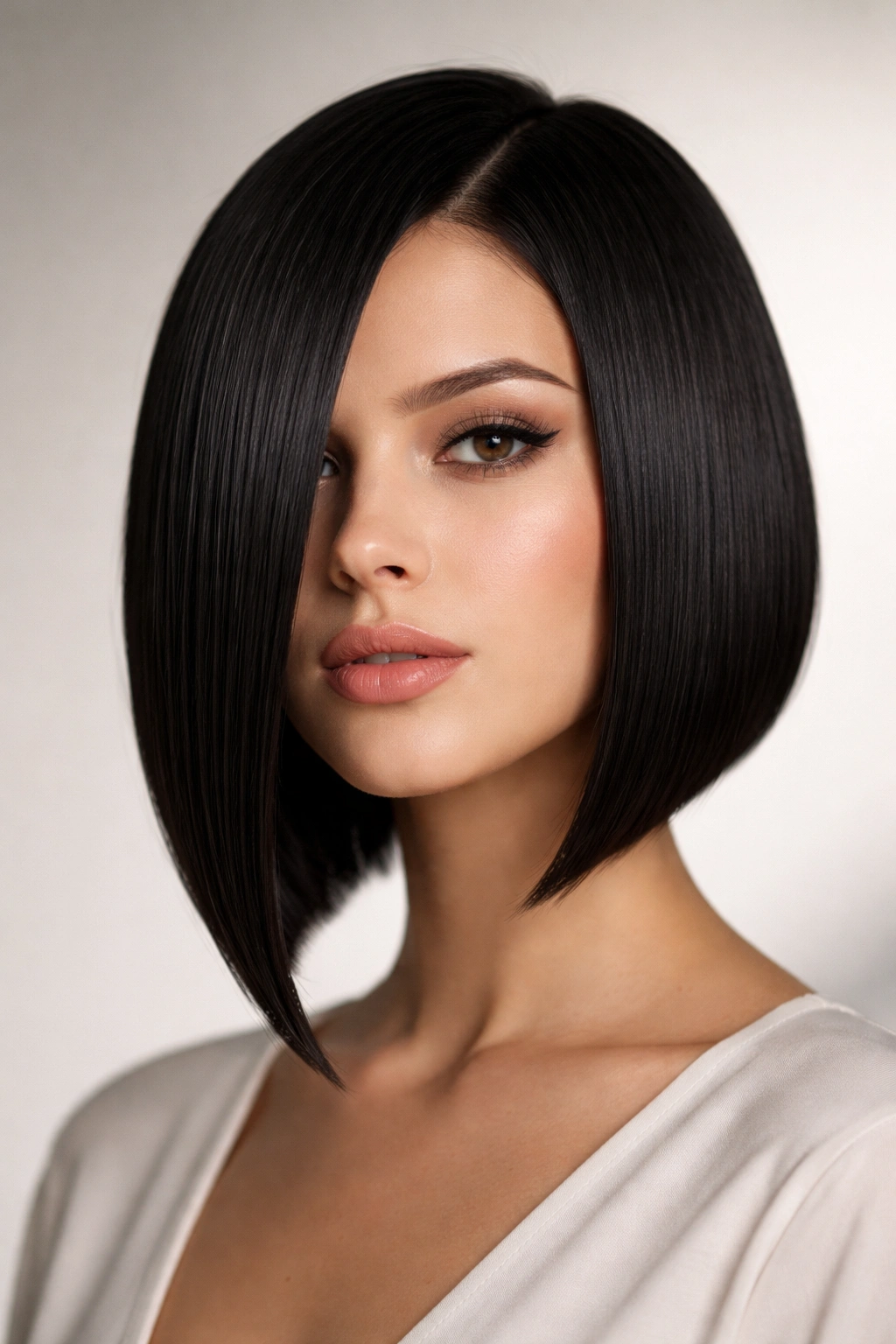
If you love clean lines and architectural precision, this is the angled bob for you. Everything is cut with geometric intention—the angle is sharp and obvious, the lines are clean and straight, and the overall effect is almost mathematical in its precision. There’s no texture, no softness, no compromises. This is the fashion-forward bob that looks best on people with straight or naturally sleek hair, because any texture or wave would soften the geometric impact. It’s bold, it’s modern, and it demands to be noticed.
The Cut Details
Geometric precision requires a stylist with excellent technical skills. Every line should be perfectly straight, every angle exactly as intended. Your stylist should use blunt-cutting techniques and probably a razor for clean edges. The angle should be obvious and intentional, with the front pieces significantly longer than the back. Many geometric bobs feature an undercut or clippered sections in the back for maximum contrast. The front might be cut to various lengths depending on face shape—longer for rounder faces, shorter for longer faces—but it should always hit that intentional geometric line.
Who It Suits Best
- People with straight hair or those willing to blow-dry smooth daily
- Anyone with a bold, fashion-forward aesthetic
- Individuals with confidence to carry a statement cut
- Those who enjoy styling and maintaining their hair’s appearance
Insider note: Geometric bobs photograph incredibly well because the clean lines create visual impact even in photos—they look sharper and more defined than textured or soft bobs.
9. The Razored Feathered Angle
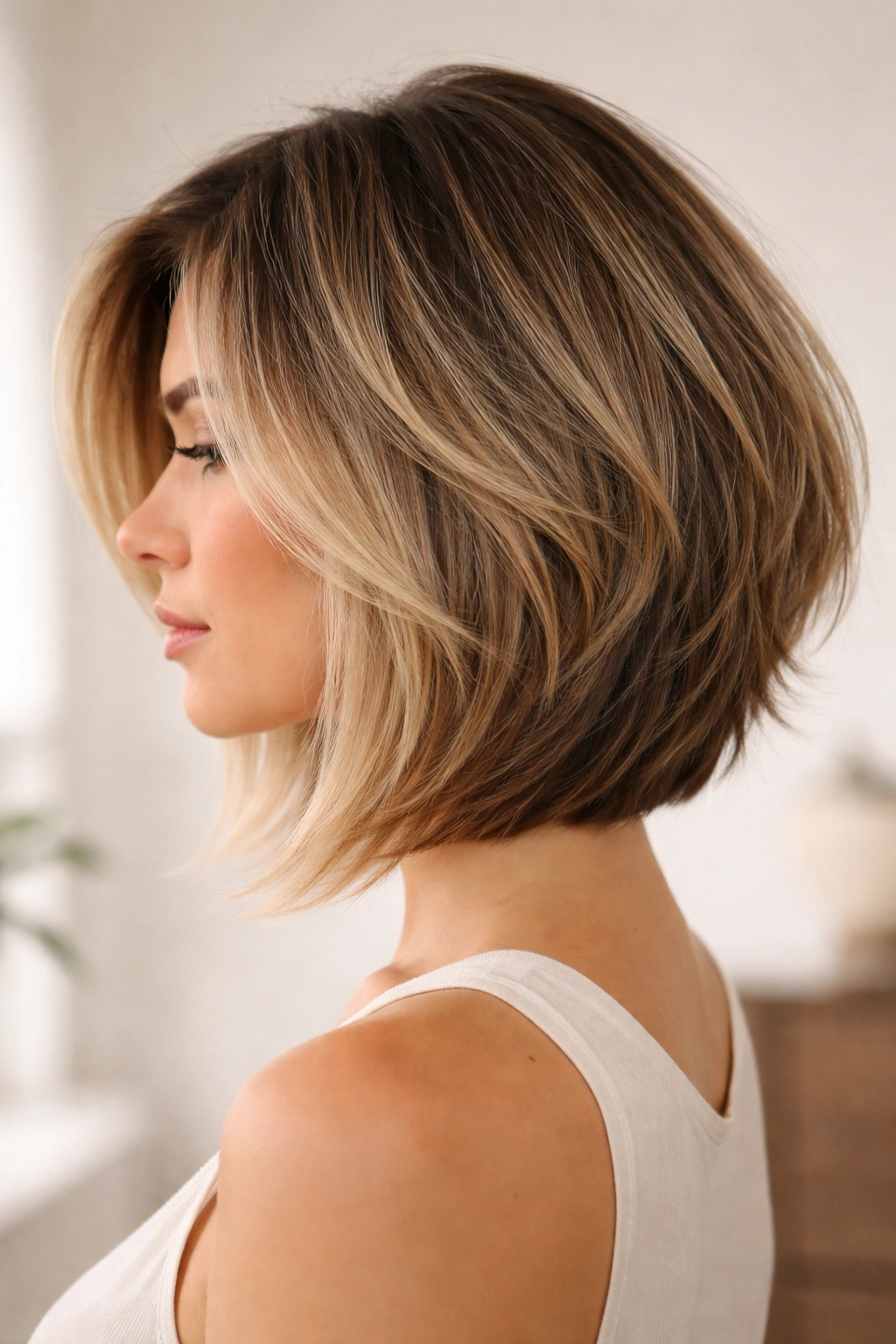
This cut features soft, feathered layers throughout that create tons of movement and lightness. The feathering technique—where the stylist uses a razor to create soft, wispy pieces—makes even shoulder-grazing lengths feel airy and bouncy. The angle is still there as the underlying structure, but it’s softened and blurred by all the feathering. This works beautifully with naturally straight or slightly wavy hair and requires a stylist who understands how to use a razor skillfully to create feathering that looks intentional rather than haphazard.
The Cut Details
Feathering is created using a razor held at an angle to the hair, drawing the blade through the hair in a specific way that creates soft, textured pieces. Your stylist should feather throughout the cut, creating layers that work together to frame your face and add movement. The angle is present but soft—the front is definitely longer than the back, but the feathering makes it feel like a gradual transition rather than a sharp line. This cut works best with styling products like light pomades, texturizing sprays, or sea salt spray to enhance the feathered texture.
Who It Suits Best
- Anyone with naturally straight or slightly wavy hair
- People who want movement and texture without a choppy appearance
- Individuals with an effortless, romantic personal style
- Those who don’t mind regular styling with products and heat tools
Pro tip: Feathered cuts look best when you blow-dry them with a round brush, directing the feathered pieces away from your face for maximum flattery.
10. The Undershaved Angle
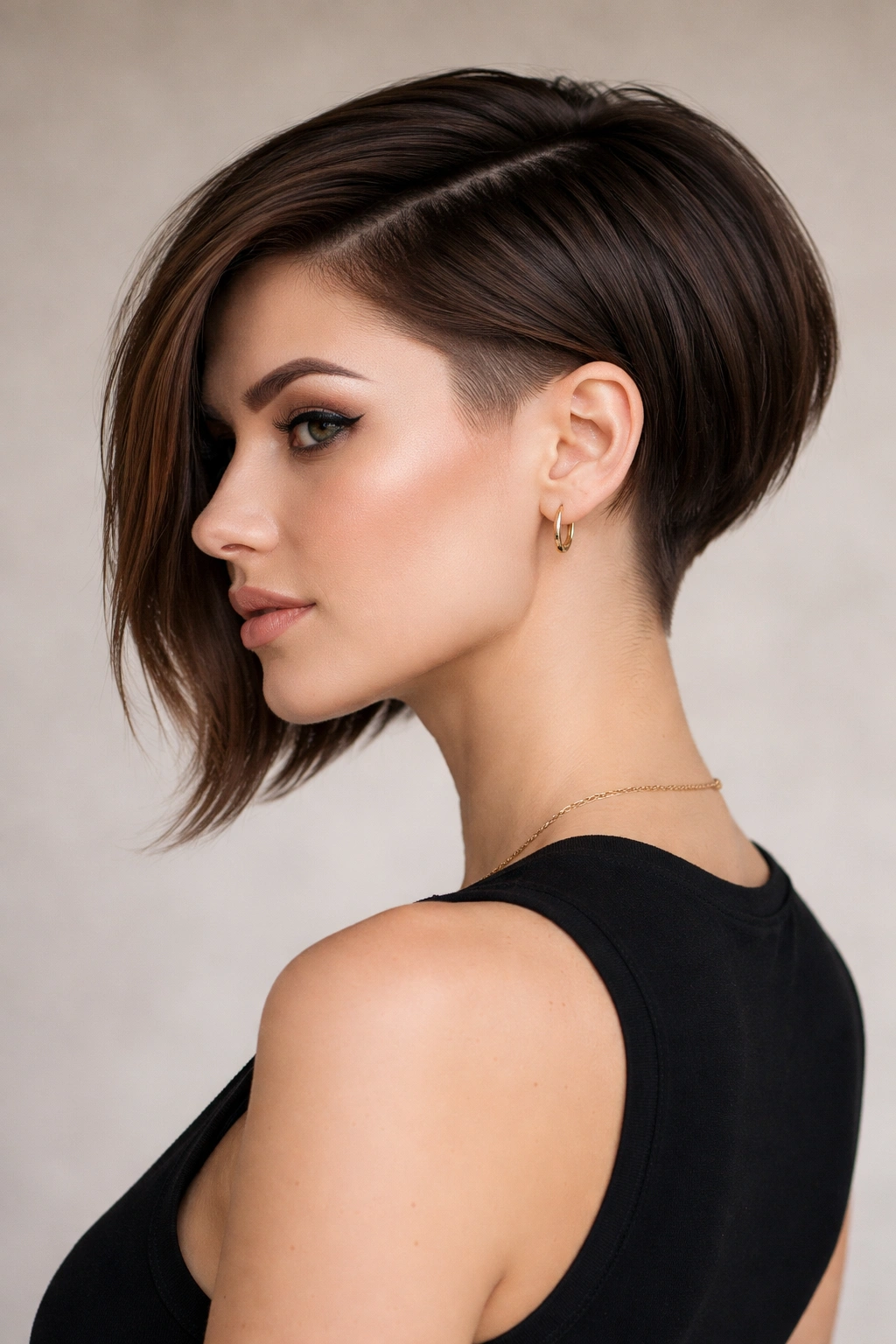
This cut combines an angled bob with an undercut—the back of your head is shaved close (often with clippers, sometimes with a fade), while the top and sides feature regular length. The angle is created between the longer front pieces and the shaved or very short back. This is a bolder, edgier version of the angled bob, perfect for people who want serious style impact and aren’t afraid of maintenance. The undercut can be hidden (if you wear your hair down it’s mostly invisible) or shown off (if you style your hair up or back).
The Cut Details
The undercut portion should be clipped very short—think ¼ inch or shorter—creating a stark contrast with the longer top. The fade can be blended smoothly into the longer hair above, or kept sharp and disconnected depending on your preference. The front angle is important here because it’s the main visible styling element—the undercut is the edgy secret underneath. Your stylist should make sure the fade or undercut is clean and precise, which means you’ll likely need touch-ups every 2-3 weeks as it grows out.
Who It Suits Best
- People with a bold, edgy personal style and confidence to carry an unconventional cut
- Anyone who loves the element of surprise (hidden undercut that shows when hair is pulled back)
- Individuals with straight hair who can style it smoothly
- Those with shorter neck and head shapes (undercuts look best when the proportions support them)
Worth knowing: An undercut requires maintenance—hair grows out quickly and clippers are the best way to maintain the clean line, so budget for frequent salon visits.
11. The Blunt Bang Angle
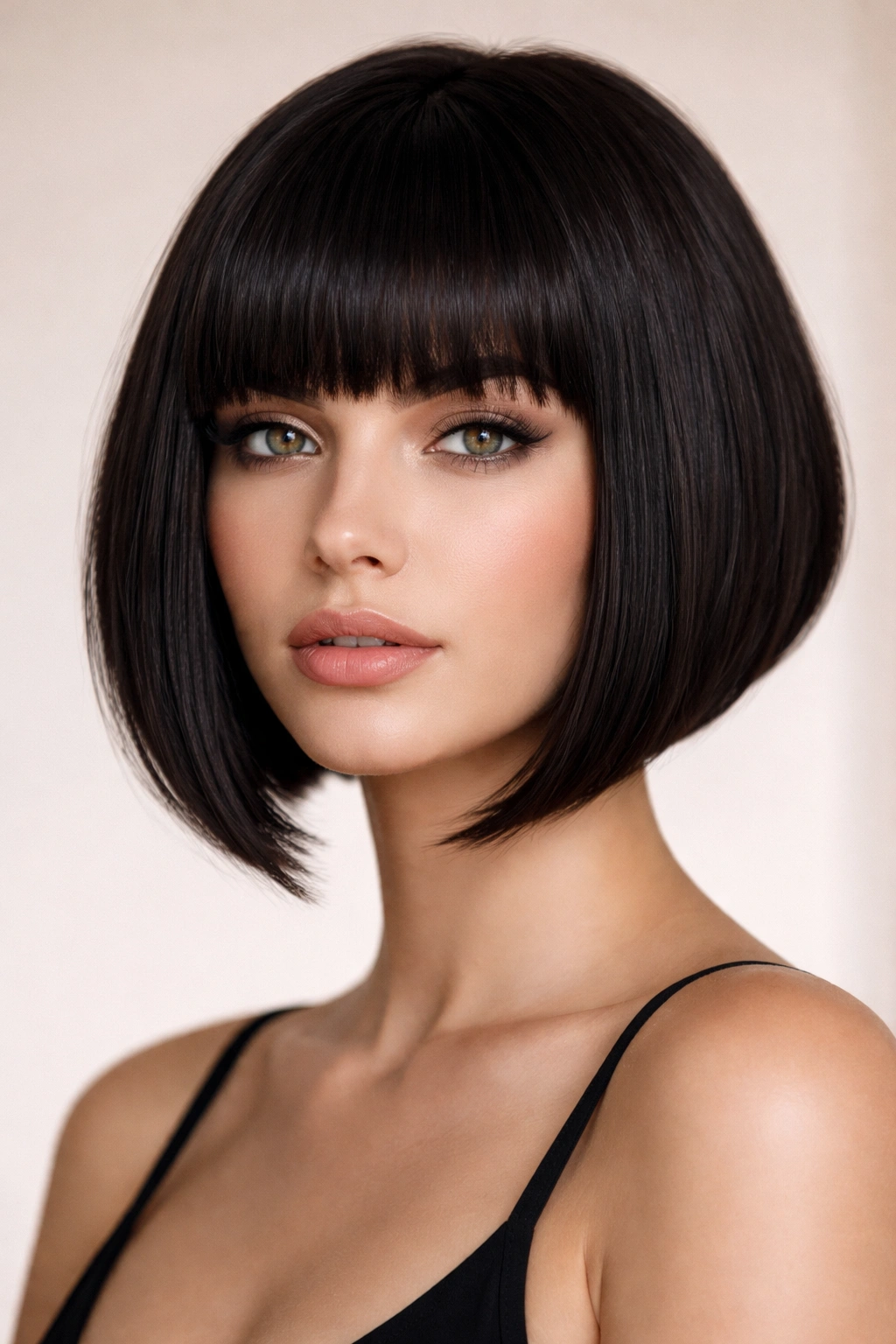
This cut pairs an angled bob with blunt, straight-across bangs that frame your face dramatically. The bangs usually hit at your eyebrows or just below, creating a bold, fashion-forward statement. The angle of the main cut is less important here than the impact of the bangs—they’re the star of the show. This works beautifully for people with longer face shapes (bangs balance long proportions) and straight hair (bangs require straight hair to look intentional rather than choppy).
The Cut Details
The bangs should be cut blunt and straight, hitting at or just below your eyebrows. They should be thick enough to feel intentional but not so thick that they’re heavy. The angle of the main bob supports the bangs but isn’t the primary focus—usually it’s a soft to moderate angle that frames the face. Your stylist should ensure the bangs are cut to the exact length you want, because even a quarter inch difference in bangs is noticeable. Many people find that bangs require occasional trims (every 2-3 weeks) to maintain the clean line as hair grows out.
Who It Suits Best
- People with longer or more angular face shapes (bangs balance these proportions)
- Anyone who loves a bold, fashion-forward aesthetic and doesn’t mind maintenance
- Individuals with straight hair who can style bangs smoothly
- Those who want an immediate transformation and don’t mind the commitment
Insider note: Bangs change your entire appearance more dramatically than any other hair change, so be very sure you want them before committing—they require a specific hairstyle approach.
12. The Longer Graduated Angle
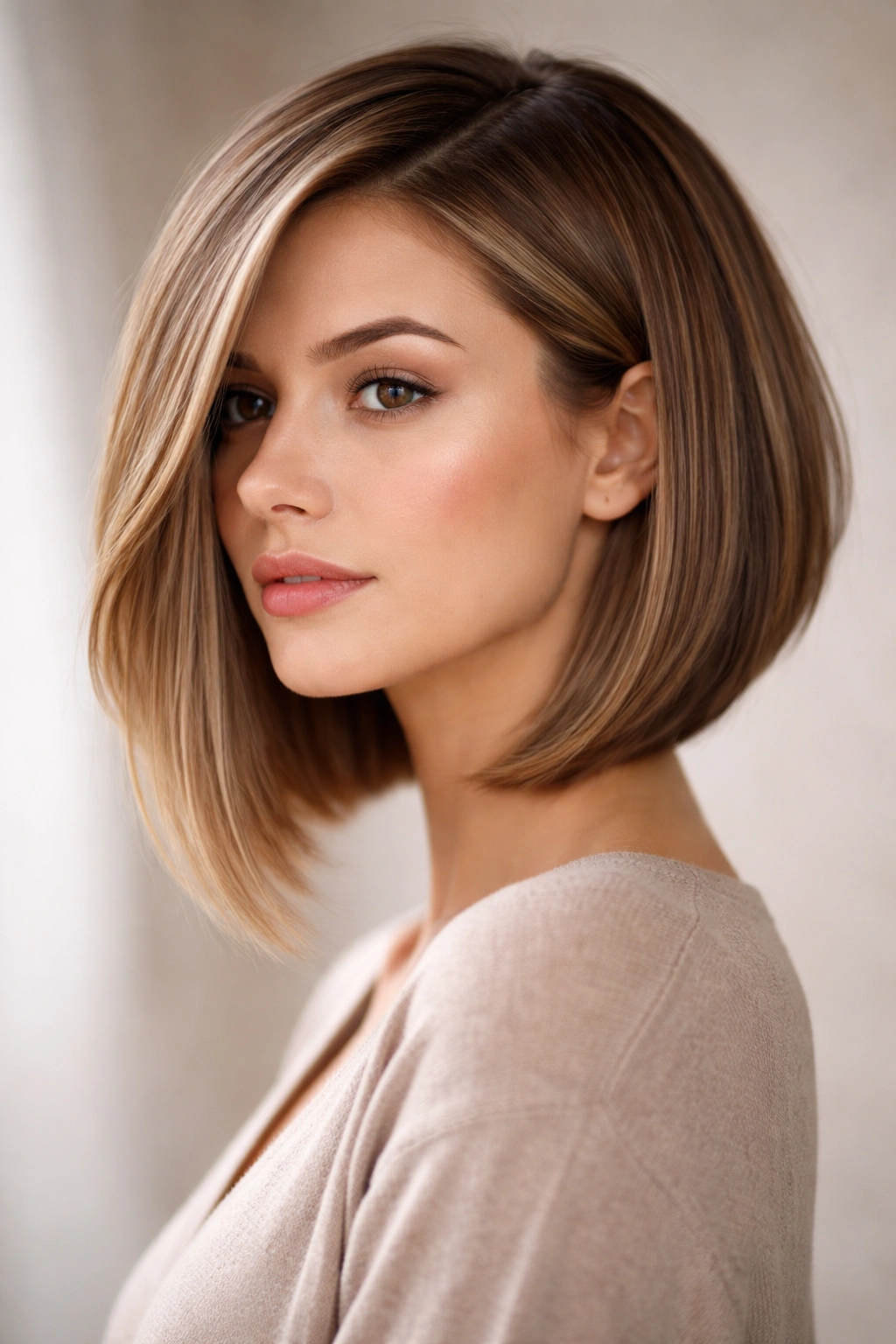
This is an angled bob that’s on the longer side of the spectrum—the front might reach your shoulders while the back is ear-length or shorter. The angle is gradual and obvious, creating a smooth graduation from back to front. This cut offers more styling versatility than shorter bobs because you have enough length to create waves, wear half-up styles, or even pull it back into a tiny ponytail. It’s still clearly a bob (not a shag or mullet), but it’s less severe than shoulder-length bobs.
The Cut Details
The longer angle works best with layers throughout, which add movement and prevent the cut from looking like a grown-out blunt bob. Your stylist should create gradual layers that work together to frame your face, with the angle guiding the overall shape. The back should be tapered and shaped close to the head, while the front can be longer and more flowing. This cut benefits from texturizing at the ends to prevent the longer pieces from looking blunt or severe. Styling this cut with waves, curls, or texture increases its visual appeal and versatility.
Who It Suits Best
- People who want the modern angled bob structure but with more length and styling options
- Anyone with wavy or curly hair (longer length gives texture room to express itself)
- Individuals transitioning from longer hair to shorter who aren’t quite ready for a very short cut
- Those who want a style that works equally well sleek and styled or tousled and casual
Pro tip: Longer angled bobs look stunning with subtle waves or curls that follow the angle’s direction—the movement mimics the cut’s intention rather than fighting it.
13. The Asymmetrical Angle
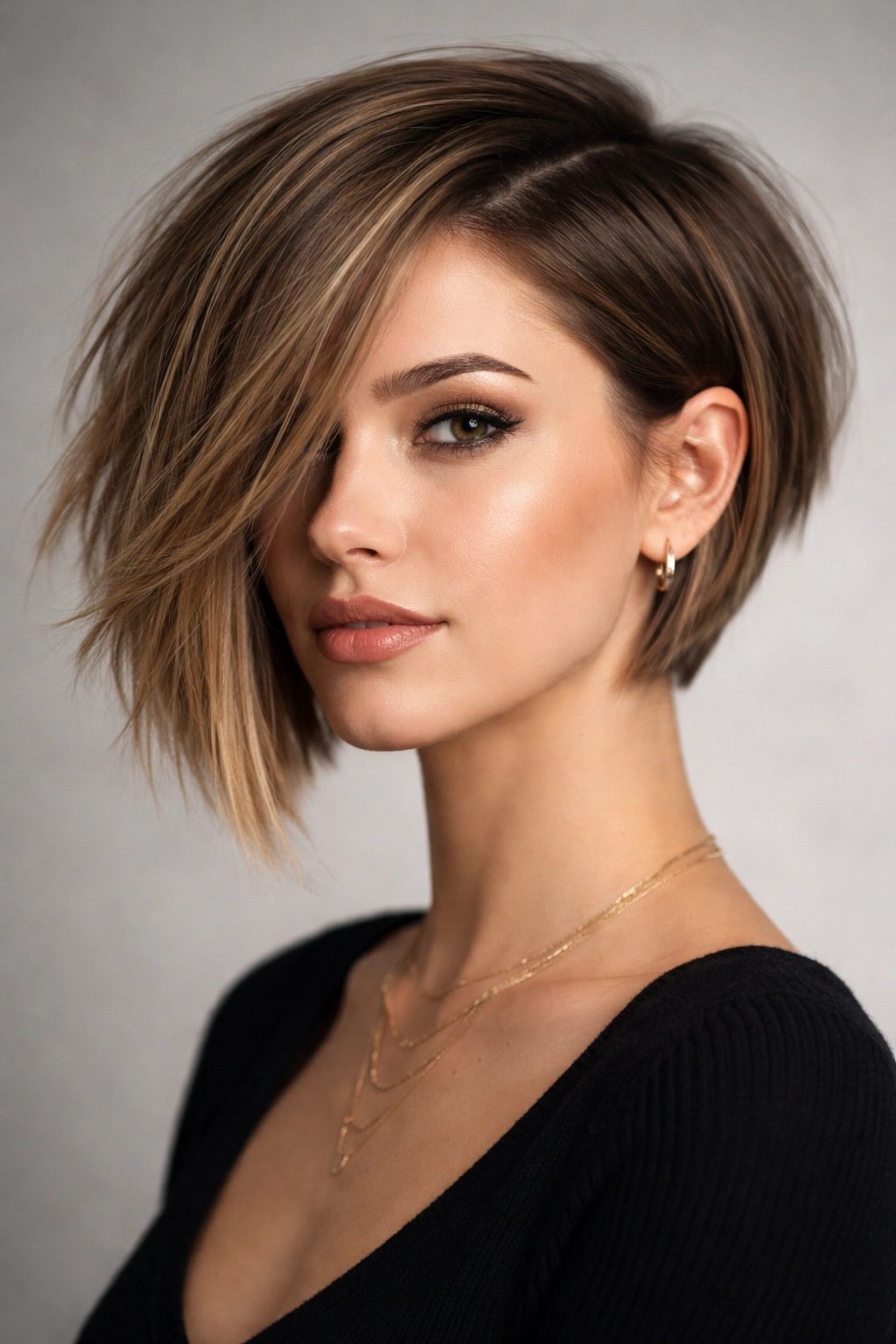
This is the fashion-forward choice: one side is significantly longer than the other, creating an obvious asymmetrical silhouette. The angle exists but it’s extreme and artistic. One side might be ear-length while the other reaches your chin, or the variation could be even more dramatic. This cut requires confidence and a clear commitment to maintaining the asymmetry, because as it grows, the imbalance becomes more pronounced. It’s edgy, it’s current, and it absolutely makes a statement.
The Cut Details
Asymmetrical cuts require excellent technique to avoid looking accidental. Your stylist should plan the exact measurements for each side—perhaps 1-2 inches difference, or even more depending on your preference. The front and back angles should be clear on both sides, even though the overall shape is asymmetrical. This cut usually looks better with some texture or layers rather than completely blunt, because the texture softens the boldness of the asymmetry. Your stylist should discuss how you’ll style the asymmetrical pieces and whether you prefer them to blend or create obvious contrast.
Who It Suits Best
- People with a bold, artistic personal style and confidence to carry an unconventional cut
- Anyone with straight hair who can style asymmetrical pieces intentionally
- Individuals who love standing out and making a statement with their appearance
- Those willing to invest in regular salon visits to maintain the asymmetry
Worth knowing: Asymmetrical bobs look best when styled deliberately—if you air dry and don’t style intentionally, the asymmetry can look accidental rather than intentional.
14. The Textured Shag Angle
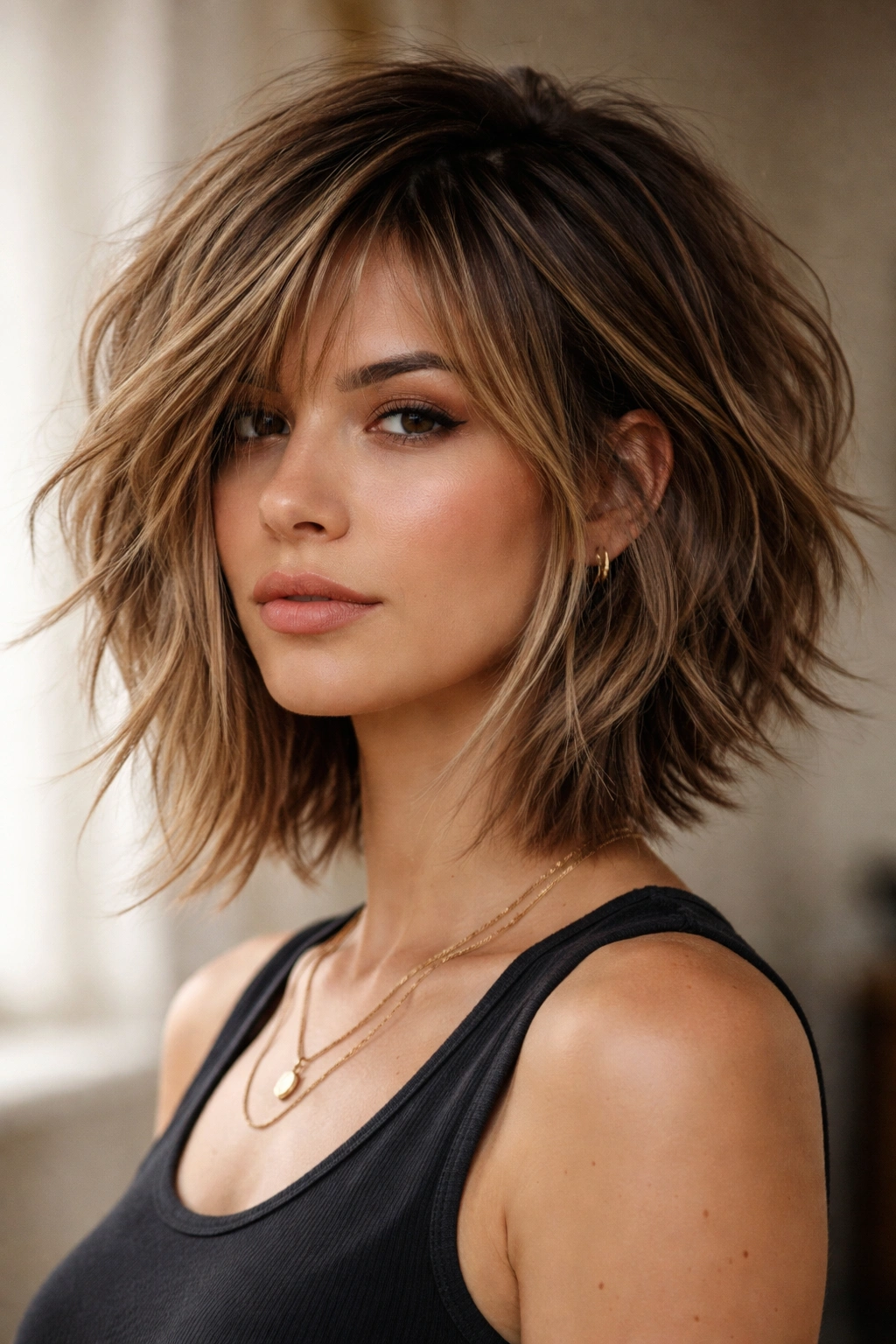
This cut blurs the line between a shag and an angled bob, featuring lots of choppy, textured layers combined with an obvious angle from back to front. It’s messier and more rock-and-roll than a traditional angled bob, with a distinctly retro-modern vibe. The layers are intentional and choppy, creating tons of movement, and the angle guides the overall shape. This works beautifully with naturally wavy or curly hair and looks best on people who embrace their texture rather than fighting it.
The Cut Details
The shag angle requires confident layering throughout, with shorter layers at the crown creating volume and longer layers framing the face. The angle is obvious but softened by all the texture—it’s there as the underlying structure, but visually the texture is what stands out. Your stylist should use razor or point-cutting techniques to create pieces of varying lengths that work together. The back should be tapered and shaped, while the front frames your face with longer, textured pieces. This cut benefits from styling with texture-enhancing products and often looks better tousled than sleek.
Who It Suits Best
- People with naturally wavy, curly, or textured hair who embrace it
- Anyone with a retro-modern or rock-and-roll aesthetic
- Individuals with oval or angular face shapes
- Those who prefer a tousled, effortless look over precise styling
Insider note: The shag angle is having a major moment because it works with the way many people actually style their hair—you don’t need to blow-dry straight or use multiple styling tools.
15. The Dramatic Short Angle
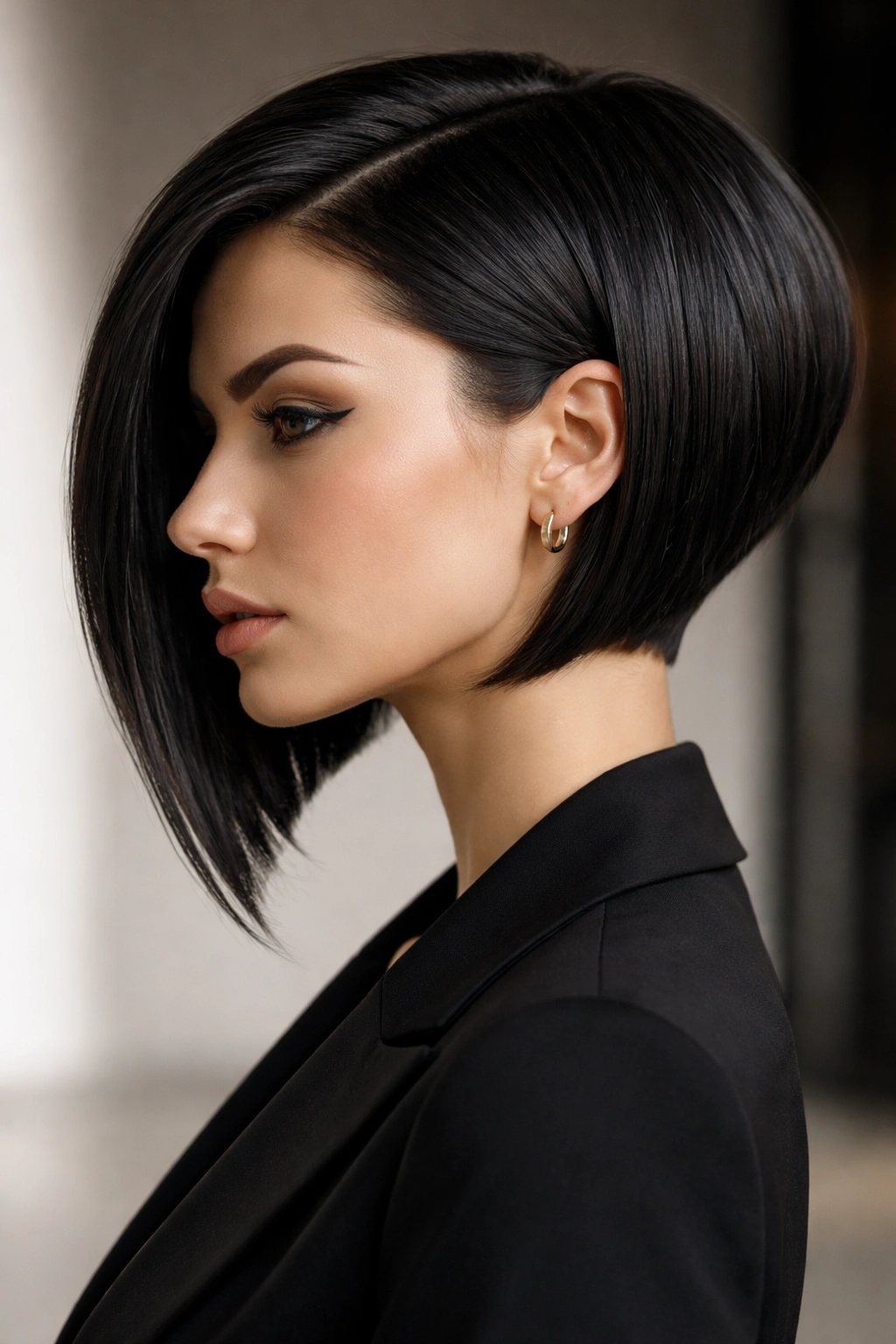
This is the most extreme version of the angled bob: the back is cut very short (almost pixie-short in some cases) while the front reaches your chin or beyond, creating a dramatic, obvious angle. This cut makes a serious statement and requires confidence and commitment. The back shows off the nape of your neck and requires frequent maintenance, while the front provides length and styling options. This is for people who want maximum visual impact and aren’t afraid of bold choices.
The Cut Details
The dramatic angle requires precision cutting to ensure both sides are balanced and the angle is intentional. The back can be clipped very short or cut with layers close to the head—either way, there should be significant length difference from back to front. The front pieces should be cut precisely to the length you want, usually blunt or slightly textured depending on your preference. Many people find that the dramatic angle works best when the front is kept somewhat sleek, creating contrast with the cropped back. This cut shows off your face and bone structure dramatically, so think carefully about whether this is the right choice for you.
The Cut Details
The dramatic angle requires confidence in cutting technique and precise execution. Your stylist should create clean lines and ensure the angle is symmetrical. The very short back might be achieved with clippers (which offers clean, faded lines) or scissors and layering. The front should frame your face beautifully—this is worth discussing extensively with your stylist before the cut. The transition from very short back to longer front might be gradual and blended, or sharp and disconnected, depending on your style preference. This cut requires styling intention—it’s not a wash-and-go option.
Who It Suits Best
- People with maximum confidence and a bold personal style
- Anyone with excellent bone structure and face proportions (this cut emphasizes facial features)
- Individuals with straight hair who are willing to style daily
- Those who want to make an unmistakable statement with their appearance
Pro tip: The dramatic angle looks best when you style the front with intention—smooth, sleek, or gently waved—creating a polished contrast with the cropped back.
Final Thoughts
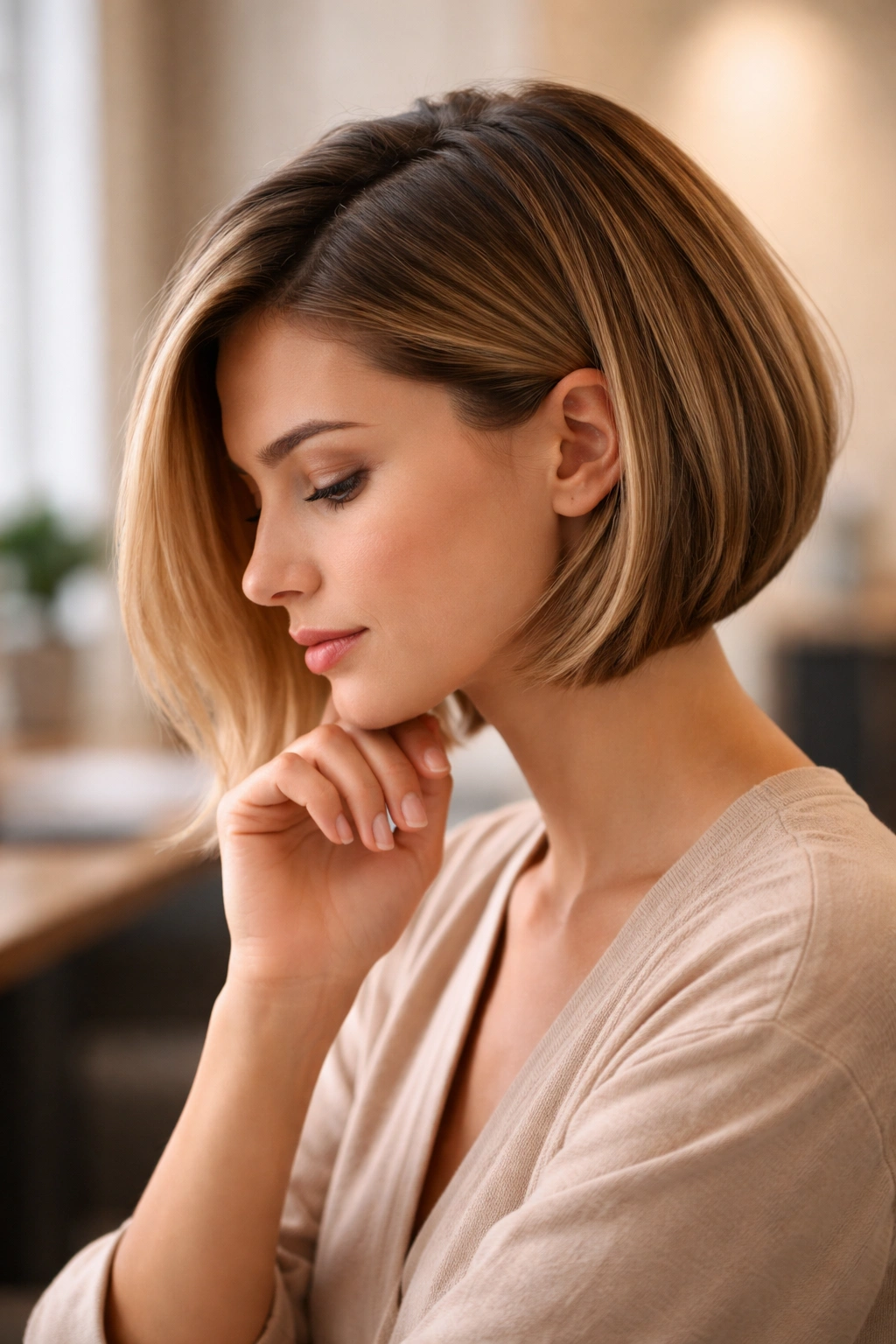
The angled bob exists on a spectrum, from barely-there softness to bold, dramatic statements, and somewhere along that spectrum is exactly the right cut for you. The beauty of choosing an angle rather than committing to a blunt, straight-across length is that you get movement, intentional shape, and a cut that grows out more gracefully than severe straight cuts.
Before booking your appointment, spend time thinking about not just how short you want to go, but how much maintenance you’re willing to commit to. Blunt angles require regular trims to stay crisp, while textured, choppy angles can stretch longer between appointments. Consider your hair type honestly too—straight hair carries geometric angles beautifully, while wavy or curly hair often looks better with softer, more gradual angles or generous texture. And think about your lifestyle: if you’re a wash-and-go person, a textured or feathered angle works better than a geometric cut that requires daily styling.
The right angled bob isn’t about following trends—it’s about choosing a cut that works with your face shape, hair type, lifestyle, and personal style. Talk openly with your stylist about what you’re envisioning, show them reference photos, and trust their technical expertise to translate your vision into something that looks beautiful in person, photographs well, and feels like you.
