



Medium short haircuts with bangs have become one of the most versatile and flattering options available, offering a fresh update that works across face shapes, hair textures, and personal styles. Whether you prefer soft, romantic movements or sharp, edgy lines, the combination of shorter length and bangs creates an instant focal point that can dramatically enhance your features. The beauty of this pairing is that bangs draw attention to your eyes and cheekbones while the shorter cut adds texture, movement, and an undeniable sense of confidence to your overall look.
Bangs are having a major moment because they’re no longer one-dimensional. Gone are the days of strictly blunt, uniform styles—today’s bangs adapt to your lifestyle, hair type, and aesthetic preferences. Pair them with medium-short lengths and you get something that’s easy to maintain, versatile for styling, and genuinely flattering across different face shapes. The key is finding the right combination that complements your unique features while fitting your daily routine and styling comfort level.
1. The Textured Bob with Wispy Bangs
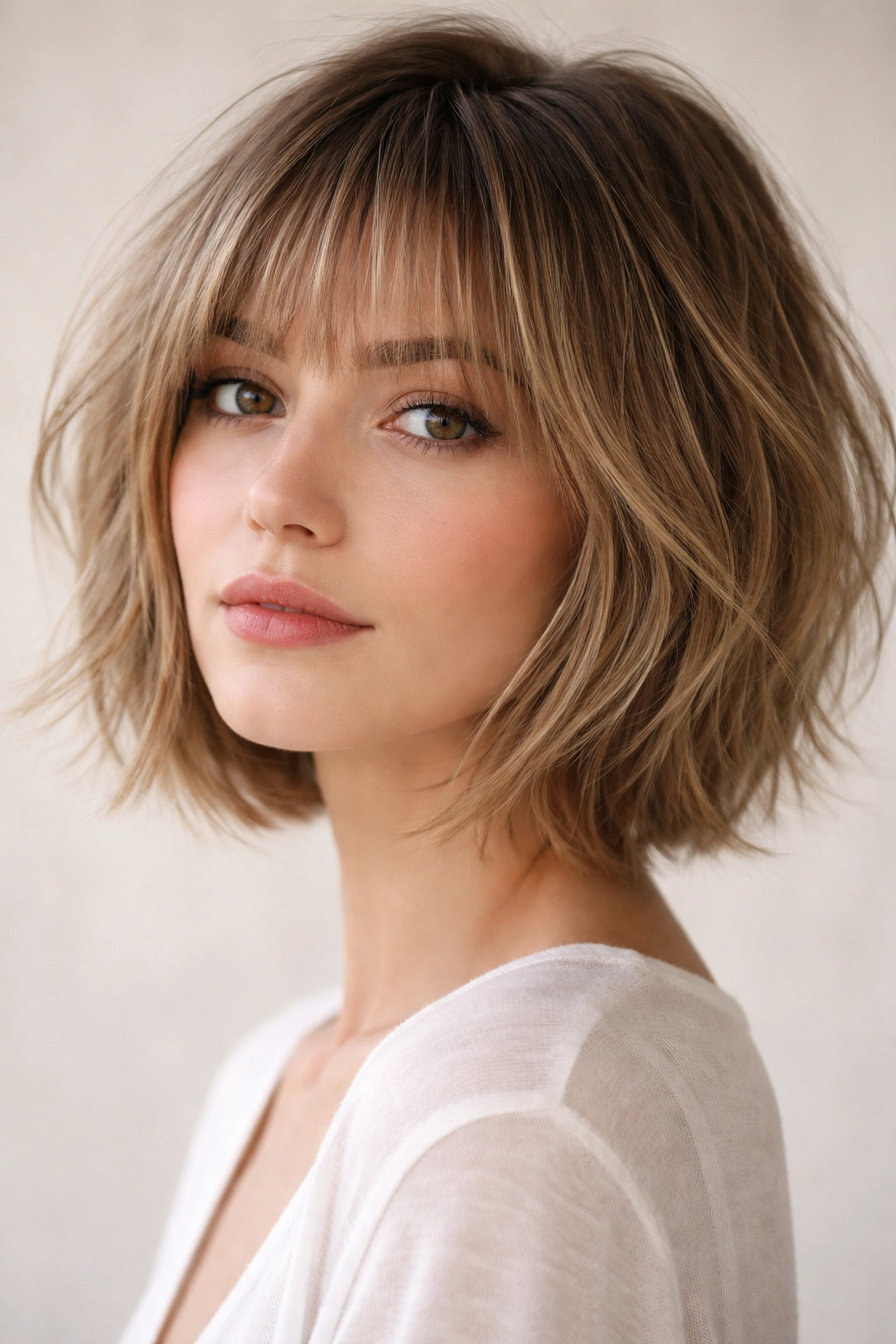
This modern take on the classic bob incorporates choppy, piece-y layers throughout with delicate wispy bangs that graze just above the eyebrows. The texture disperses weight while the wispy bangs create a soft, approachable frame around your face without feeling too heavy or blunt. This style works beautifully when you want movement and dimension without committing to an ultra-short cut.
Why It Flatters So Many Face Shapes
The scattered texture throughout the cut means there’s no one-dimensional line to highlight unflattering angles. The lighter wispy bangs refract light differently depending on how they fall, creating a softer frame that suits oval, square, and heart-shaped faces particularly well. The piece-y layers around the face also allow you to adjust how much face-framing you get based on how you style each morning.
Styling and Maintenance Tips
- Blow-dry with a round brush and flip your head forward to create natural volume and separation in the layers
- Use a texturizing spray or light sea salt spray on damp hair to enhance the piece-y quality
- Wispy bangs typically need trimming every 3-4 weeks to maintain their soft, separated appearance
- A lightweight dry shampoo between washes helps bangs feel fresher and prevents them from looking flat
Best for: Low-maintenance styling, fine to medium hair, anyone wanting softness with edge.
2. The Choppy Pixie Bob with Side-Swept Bangs
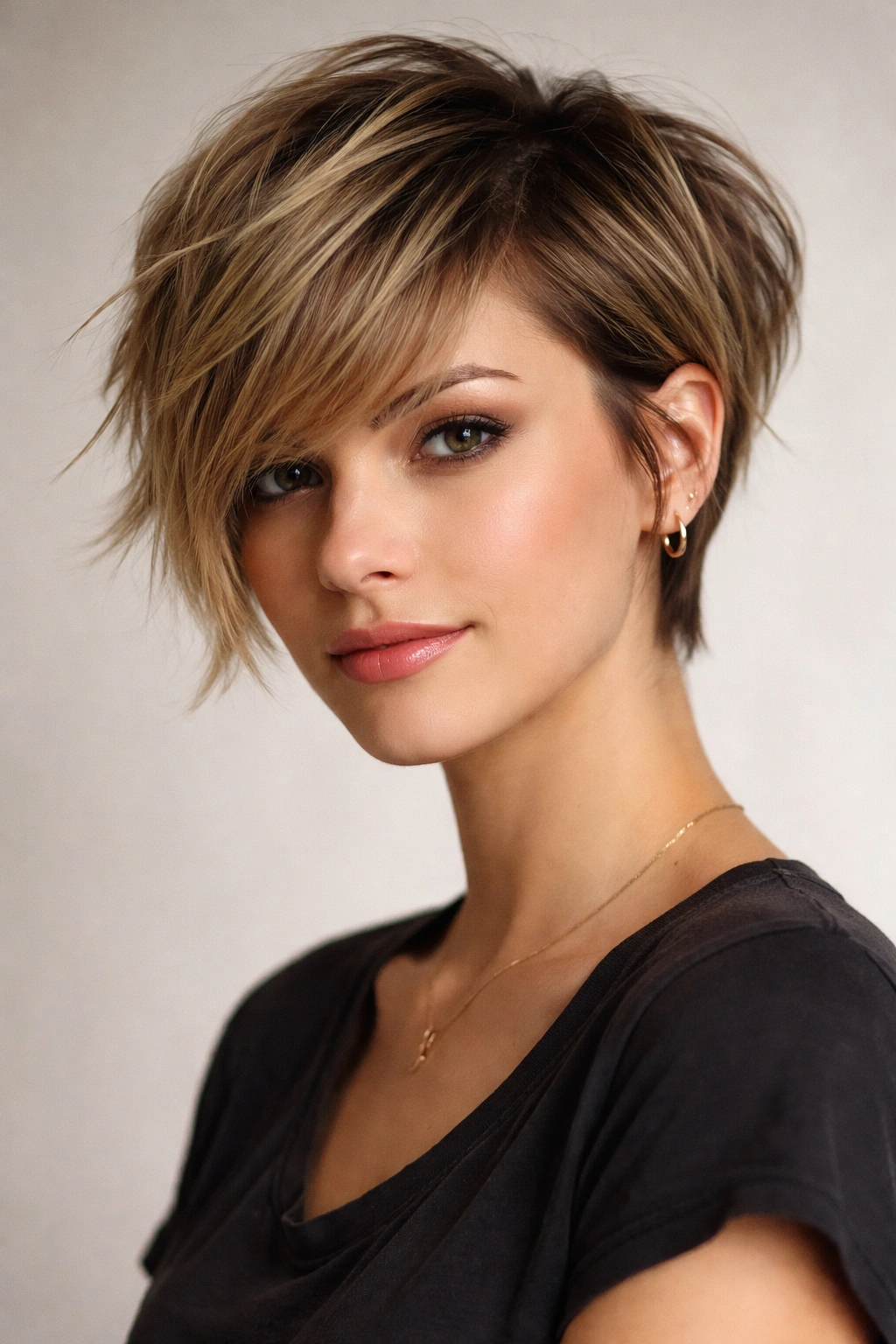
Short on the sides and back with longer, choppy layers on top, this cut pairs beautifully with side-swept bangs that angle across your forehead. The asymmetry creates visual interest while the choppy texture throughout means the style actually gets better the messier and more lived-in it looks. Side-swept bangs add femininity to what might otherwise feel too sharp or severe.
What Makes This Style Stand Out
The choppy pixie bob is inherently edgy, but side-swept bangs soften that intensity by introducing a curved, flowing element. The bangs can be styled sleek and dramatic or tousled and casual depending on your mood. This cut works especially well for people who want something undeniably short but don’t want to sacrifice a feeling of elegance or softness.
Cutting and Styling Specifics
- Side-swept bangs should angle from shorter (around cheekbone length) at the side they’re swept toward, to longer at the opposite side
- This cut is perfect for embracing your natural hair texture—the more texture you have, the better it looks
- Lightweight pomade or styling cream adds definition and helps control the choppy layers without looking heavy
- Regular trims every 4-6 weeks keep the layers sharp and the bangs at the right angle
Best for: Confident personalities, thick or wavy hair, anyone who wants unmistakably short with edge.
3. The Blunt Bangs Shag
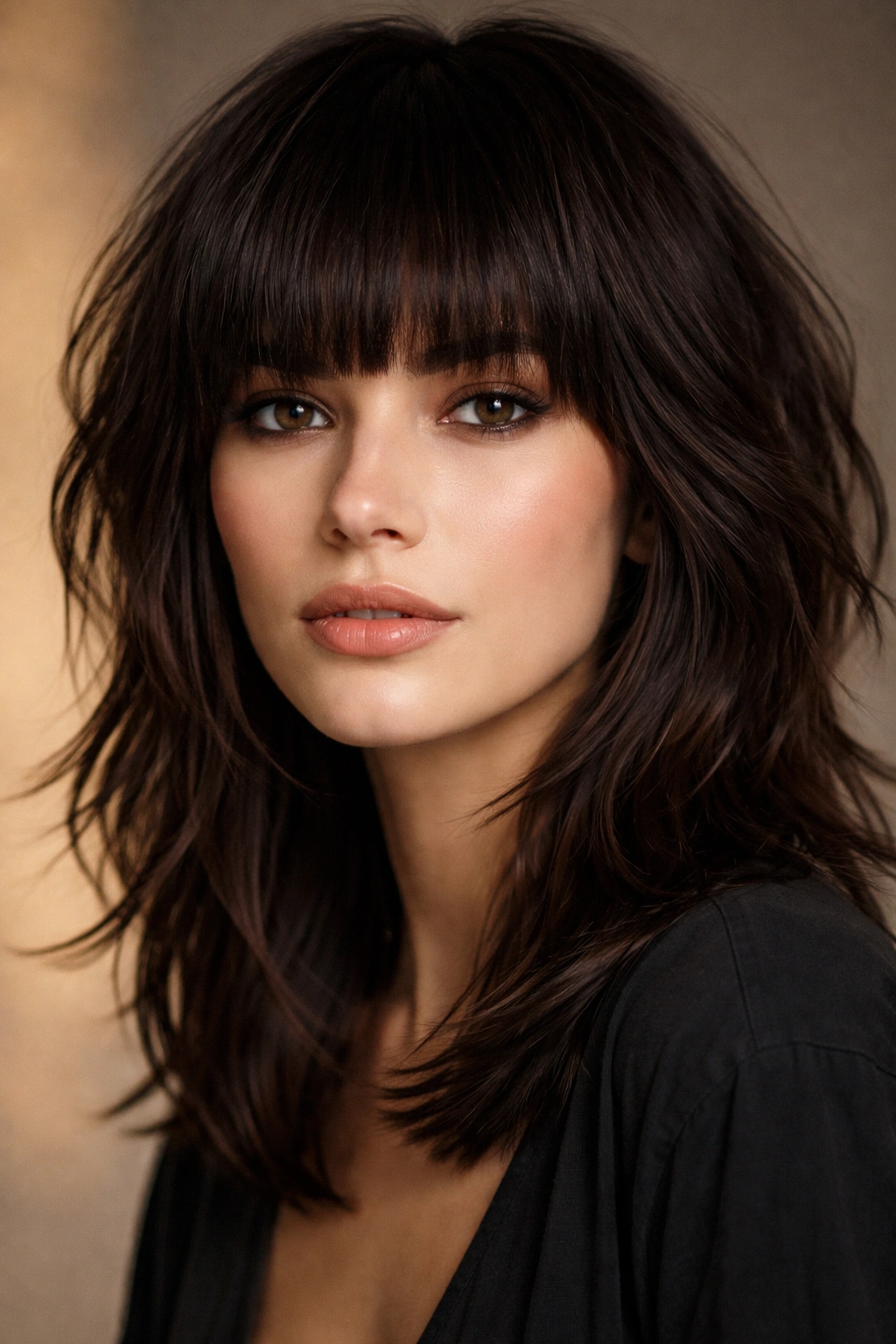
A shag layers the entire head—sides, back, and crown—creating maximum movement and texture, while blunt, straight-across bangs provide a bold, graphic contrast. The bangs sit right around the eyebrow line and are typically cut with a precise, flat edge that becomes the statement element of the entire style. This pairing creates an instantly cool, fashion-forward look with serious 70s-revival credibility.
The Impact of Blunt Bangs with Layers
Blunt bangs are a commitment, but they transform a standard shag into something genuinely striking. The straight line of the bangs frames your face decisively, while the shaggy layers below maintain softness and movement. This contrast between sharp and soft is what makes the style so visually compelling. The bangs also work as a reset point—even when layers get longer and need cutting, the bangs stay your defining feature.
Styling and Maintenance Strategies
- Blunt bangs require a dry shampoo or volumizing powder to prevent them from looking flat or heavy
- Style with a blow-dryer and round brush, angling the brush backward and upward to create texture and shape
- The shag works best with some texture—use a texturizing product or embrace your natural waves
- Blunt bangs need trimming every 3-4 weeks to maintain their sharp, graphic line
- This style actually improves with a slightly tousled, undone styling approach rather than polished precision
Best for: Bold personalities, those comfortable with regular bang trims, medium to thick hair.
4. The Layered Crop with Thick Bangs
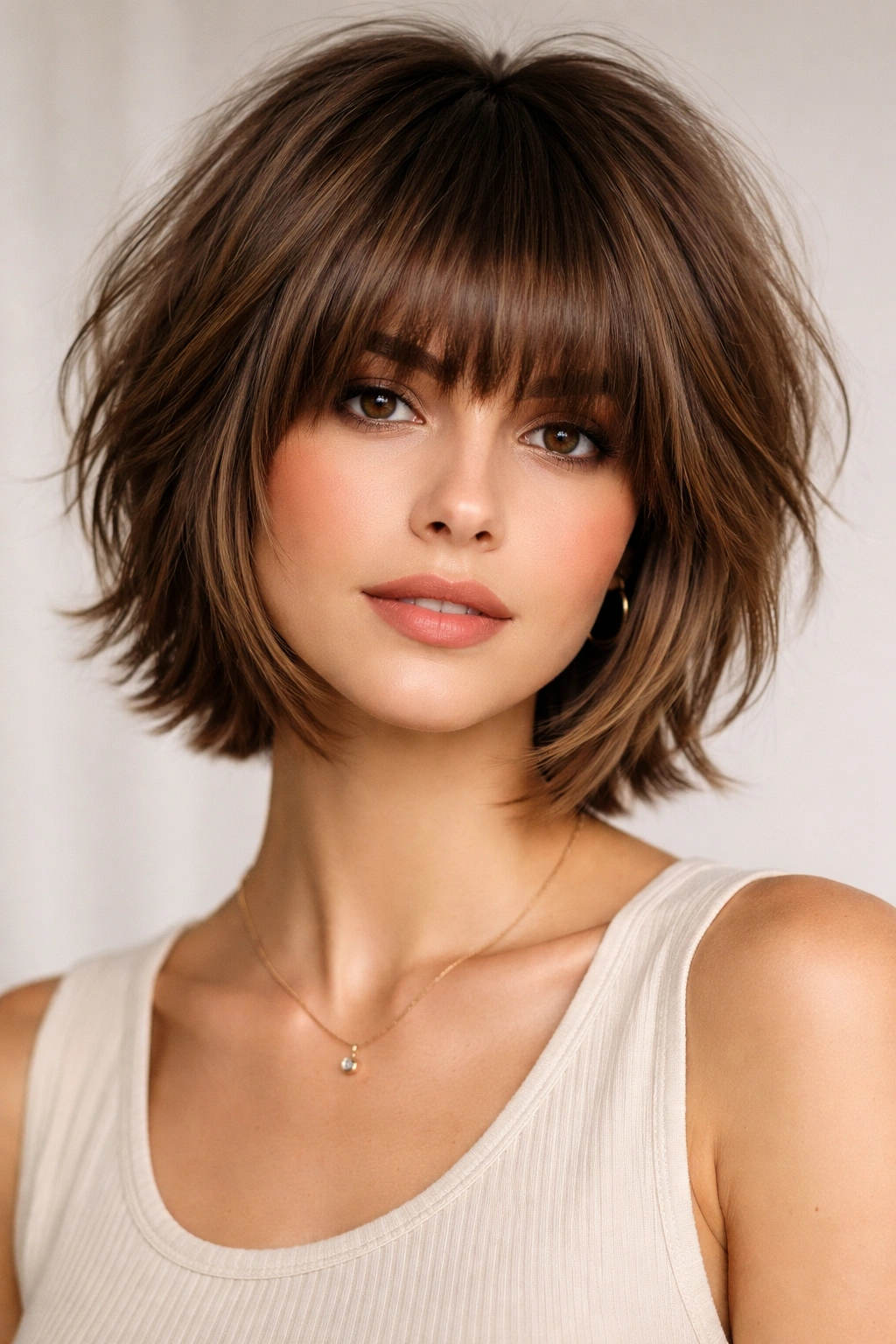
A short, cropped cut with extensive layering throughout combines with thick, full bangs that cover most of your forehead and create a bold, youthful look. The thick bangs are the focal point here, drawing all attention to your eyes and cheekbones while the cropped layers on top provide volume and texture. This style has a playful, modern edge that feels both fashion-forward and surprisingly flattering.
Why Thick Bangs Work With Crops
Thick bangs have weight and presence, which balances the airiness of a heavily layered crop. The bangs act as a visual anchor that grounds the style and prevents it from feeling chaotic or unintentional. This pairing is particularly flattering for people with delicate or fine features, as the thick bangs add strength and definition to the face without heaviness.
Styling Techniques and Upkeep
- Thick bangs look best when they have some texture rather than being perfectly smooth; embrace a slightly tousled appearance
- Style the top layers by blow-drying upward and forward to create height at the crown
- Use a lightweight texturizing cream or spray to separate individual pieces and create definition
- Thick bangs need trimming every 3-4 weeks; they grow down noticeably and will cover more of your forehead as they get longer
- Sleep texture actually works in your favor with this style—avoid over-styling for a more casual, modern look
Best for: Anyone wanting an undeniably modern style, people who enjoy frequent bang trims, those with medium to thick hair.
5. The Modern Mullet with Feathered Bangs
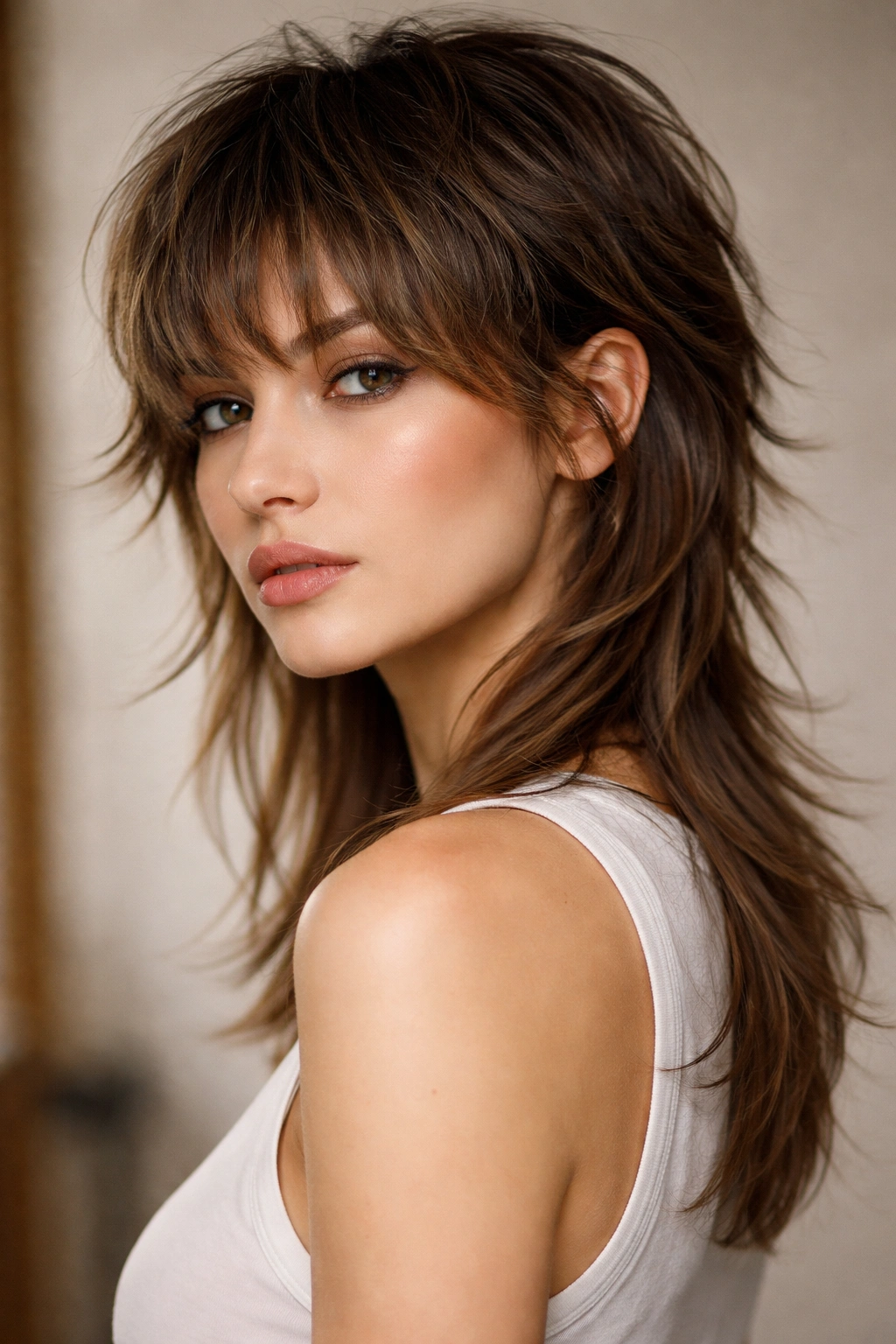
Short and cropped in the front and on the sides, longer through the back, the modern mullet is having a genuine moment of revival—and feathered bangs amplify the playful, fashion-forward energy of this cut. Feathered bangs have layers cut through them that create soft, separated pieces without being as choppy as a fully textured style. They’re somewhere between wispy and thick, offering movement while maintaining substance.
The Unexpected Appeal of Mullet Plus Bangs
The mullet is inherently unconventional, and feathered bangs lean into that aesthetic while softening the overall effect. The feathering creates a frame around your face that feels intentional and editorial rather than accidental. This combination works for people who want to make a genuine style statement without veering into territory that feels too challenging to style daily.
Styling and Maintenance Details
- Feathered bangs need to be blow-dried in a specific direction to create the separated, feathered appearance; they’ll look choppy and unfinished if air-dried
- The front of the mullet can be styled sleek and close to the head or tousled with volume depending on your preference
- Use a lightweight texture spray to keep feathered bangs separated and defined throughout the day
- Feathered bangs need trimming every 4-5 weeks; they tend to lose their defined feathering as they grow
- This style actually works beautifully with some natural texture in your hair—straight hair might require more styling to maintain the feathered appearance
Best for: Style-forward individuals, those willing to commit to regular styling, anyone wanting an unconventional statement.
6. The Sleek Lob with Curtain Bangs
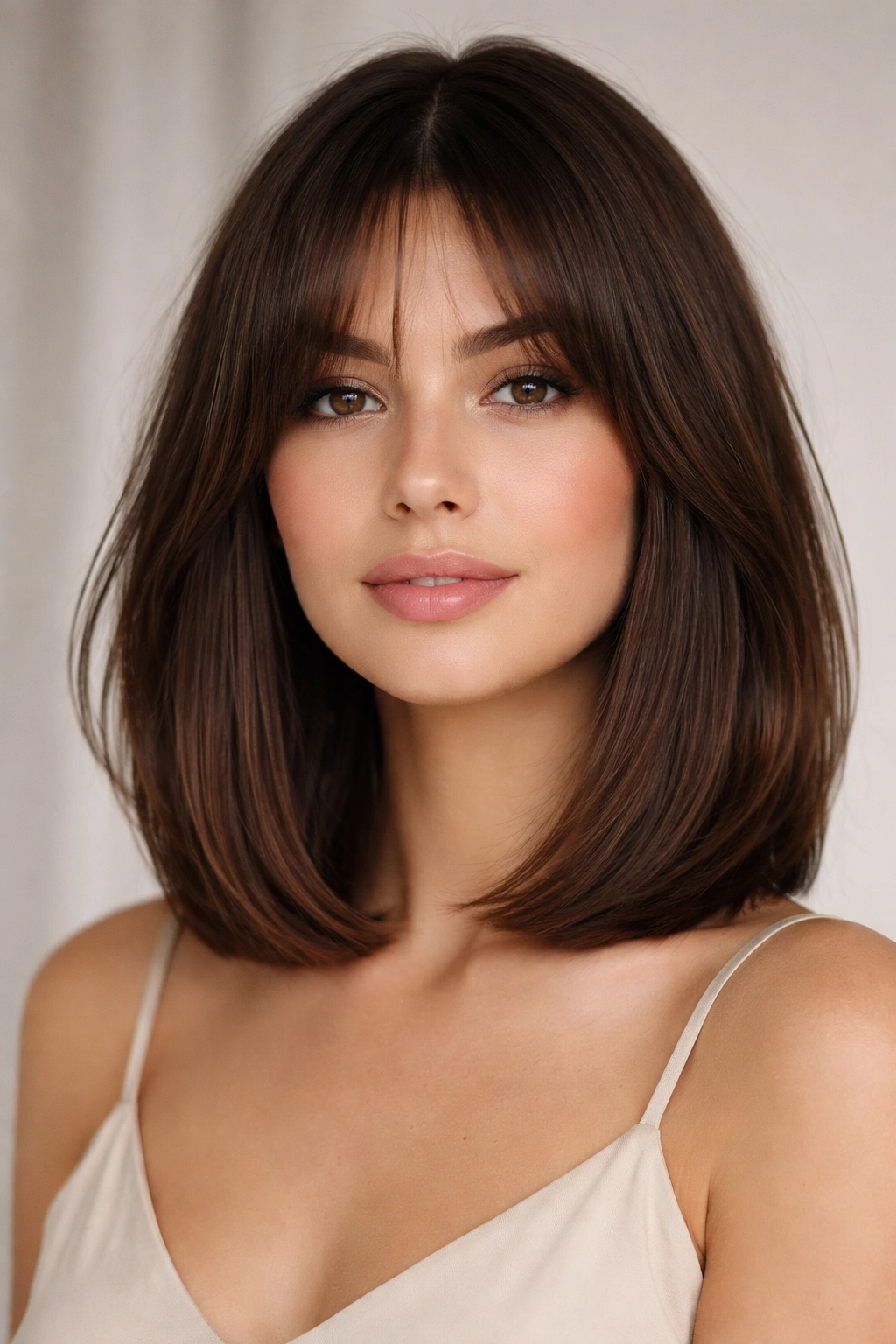
A lob (long bob) that sits just around chin length or slightly longer, styled sleek and straight, pairs beautifully with curtain bangs that part down the middle and frame both sides of your face. Curtain bangs were made famous in the 1970s and have become increasingly popular as a softer, more forgiving alternative to blunt or wispy styles. They grow out gracefully and don’t require frequent trims, making them practical for people with busier lifestyles.
Why Curtain Bangs Create Such a Flattering Frame
Curtain bangs work almost universally across face shapes because they’re designed to flow away from the face rather than sit heavy against your forehead. The parted, flowing quality adds width to narrow faces and softens angular features on square or diamond-shaped faces. They also elongate round faces by creating vertical lines rather than horizontal ones.
Styling and Maintenance Guidance
- Curtain bangs look best when they have a slight wave or bend; completely straight curtain bangs can look a bit flat
- Style by blow-drying the bangs away from your center part, using your fingers or a round brush to create a gentle curve
- Use a light hairspray to hold the shape once you’ve created it
- Curtain bangs need trimming every 6-8 weeks, much less frequently than blunt or textured styles
- This is an excellent style if you want the impact of bangs without committing to frequent trims
Best for: Busy schedules, anyone wanting a softer framing technique, all hair types and textures.
7. The Curly Shag with Face-Framing Bangs
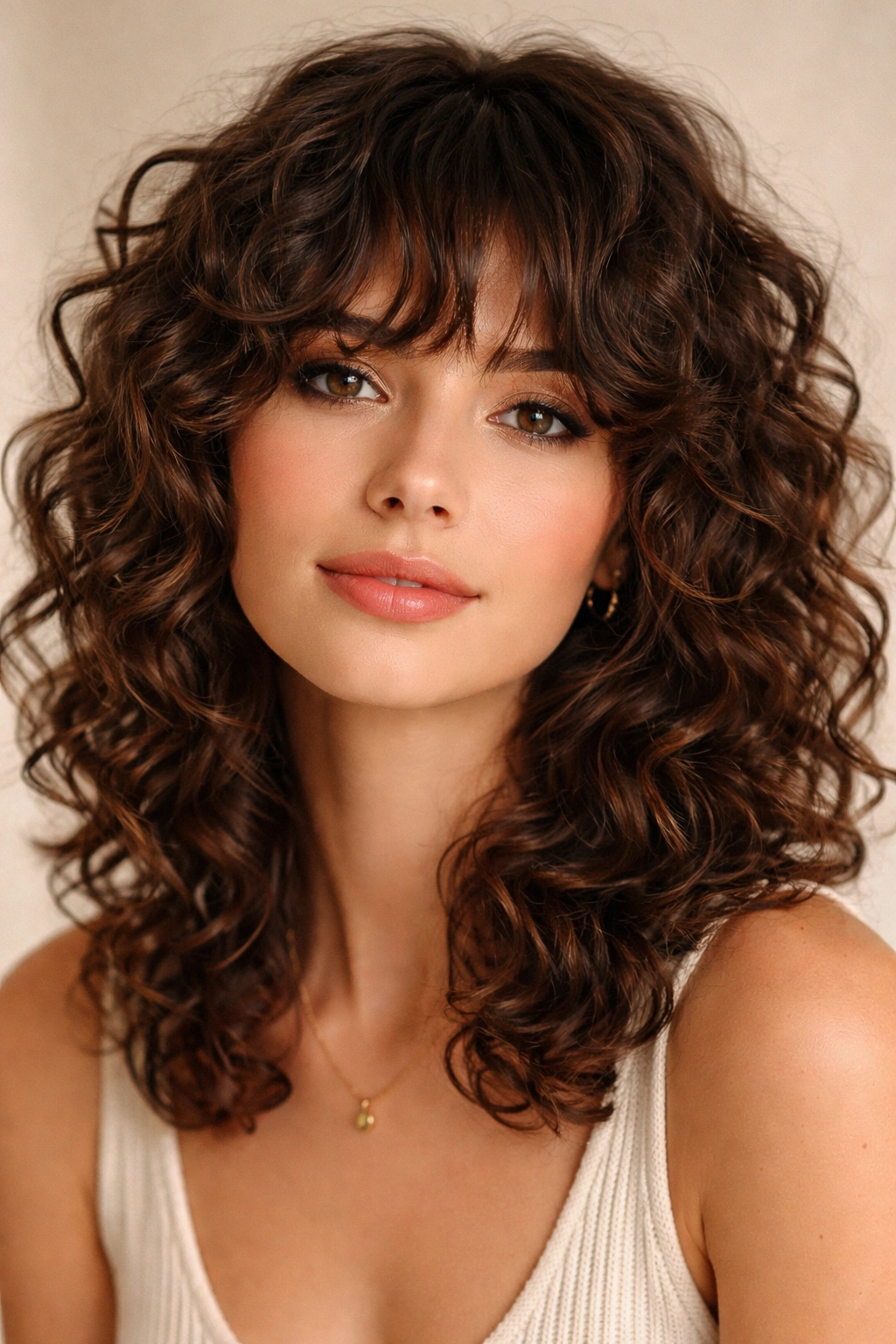
If your natural texture is curly or wavy, a shag cut embraces that texture while face-framing bangs—shorter layers that sit closer to the face—create definition and prevent the overall style from looking too voluminous or shapeless. Face-framing bangs are typically cut slightly shorter than the rest of the shag and have texture built into them to work with your natural curl pattern. This style celebrates and enhances natural texture rather than fighting it.
How Natural Texture and Face-Framing Combine
Curly hair can sometimes overwhelm the face if there’s no shorter, textured element to create definition. Face-framing bangs solve this by creating shape right around your features, channeling volume toward the back and sides while keeping the front face-flattering. The bangs work with your curl pattern rather than against it, which means you’re spending less time fighting your hair and more time enjoying it.
Caring for Curly Hair and Bangs
- Define your curl pattern with a curl-enhancing cream or mousse applied to soaking-wet hair
- Use a microfiber towel or t-shirt to scrunch and encourage your natural curl rather than rough-drying
- Face-framing bangs need to be cut with your curls in mind; a stylist familiar with curly hair will understand how they’ll shrink as they dry
- Bangs need trimming every 4-6 weeks once your curls are dry, so the stylist can see your actual curl pattern and density
- Avoid brushing or manipulating curls when dry, which causes frizz; instead, reactivate curls with a light mist of water and curl cream
Best for: Naturally curly or wavy hair, anyone wanting to embrace rather than fight their texture, those comfortable with more voluminous styles.
8. The Asymmetrical Bob with Bold Bangs
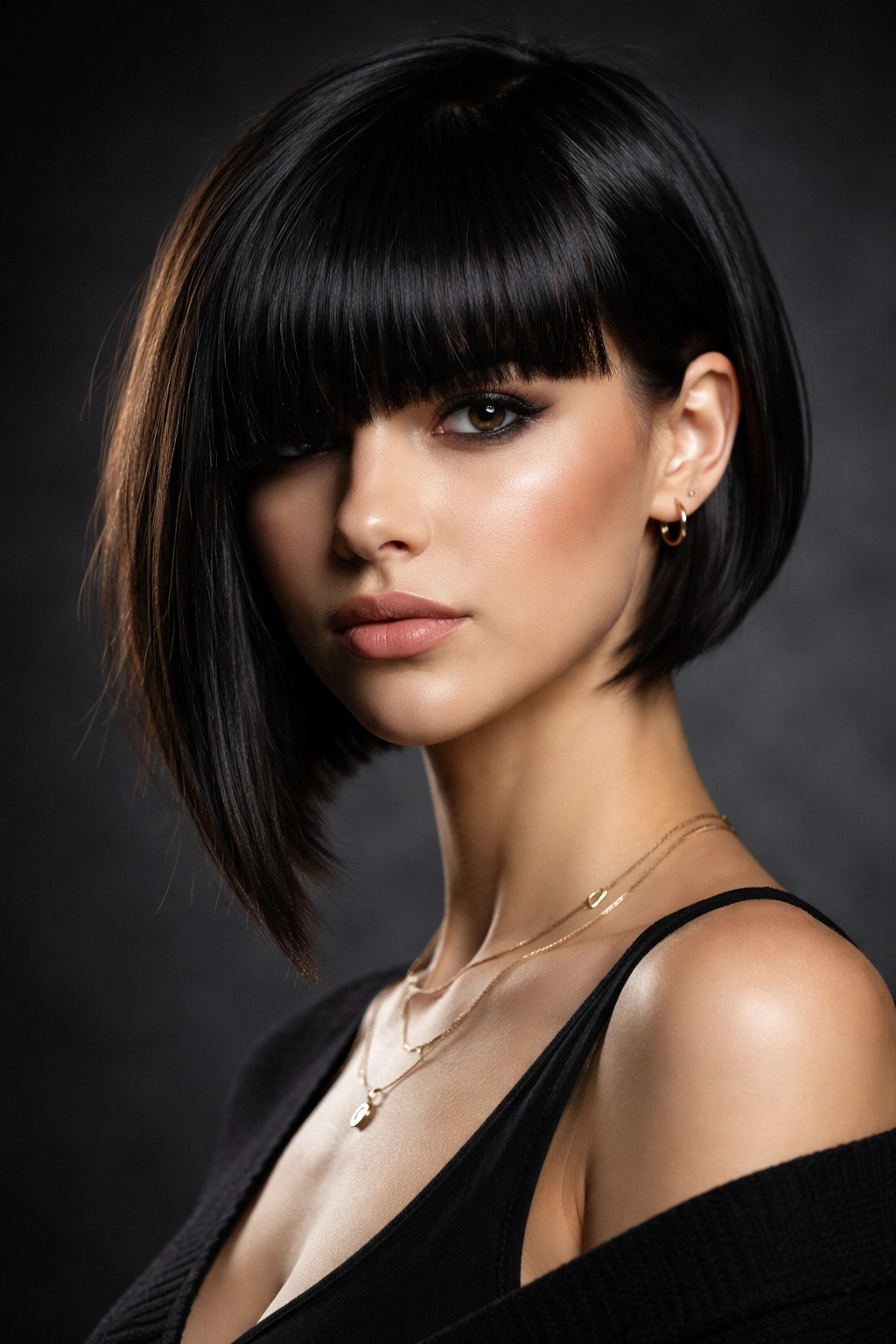
One side of this bob is cut noticeably shorter than the other, creating an off-balance, fashion-forward silhouette that’s paired with bold bangs (blunt, thick, and covering a significant portion of your forehead). The asymmetry means the bangs typically sit lower on the longer side, adding to the overall sense of dynamic movement and edge. This is a style for people who want to make an unmistakable visual statement.
The Visual Power of Asymmetry Plus Bold Bangs
Bold bangs draw attention upward; asymmetry draws attention to the movement and shape of the cut itself. Together, they create a style that’s genuinely difficult to ignore. The bangs ensure that even if someone doesn’t immediately notice the different lengths, they absolutely notice you have intentional, striking style. This pairing works especially well for people with strong features or sharp bone structure, as the asymmetry complements rather than contradicts these characteristics.
Cutting and Styling Specifics
- The length difference in an asymmetrical bob should be dramatic enough to be intentional; subtle differences can look like a mistake
- Bold bangs need to be cut so they sit evenly when your head is in a neutral position; this requires precision work
- Style the longer side sleek and close to the head, or add volume to the shorter side depending on the specific proportions and your preference
- Use a flat iron or straightening brush to keep lines clean and intentional
- This style requires maintenance every 4-6 weeks to keep the asymmetry defined and the bangs at the right length
Best for: Bold personalities, those with strong bone structure, anyone seeking an undeniable style statement.
9. The Wolf Cut with Tousled Bangs
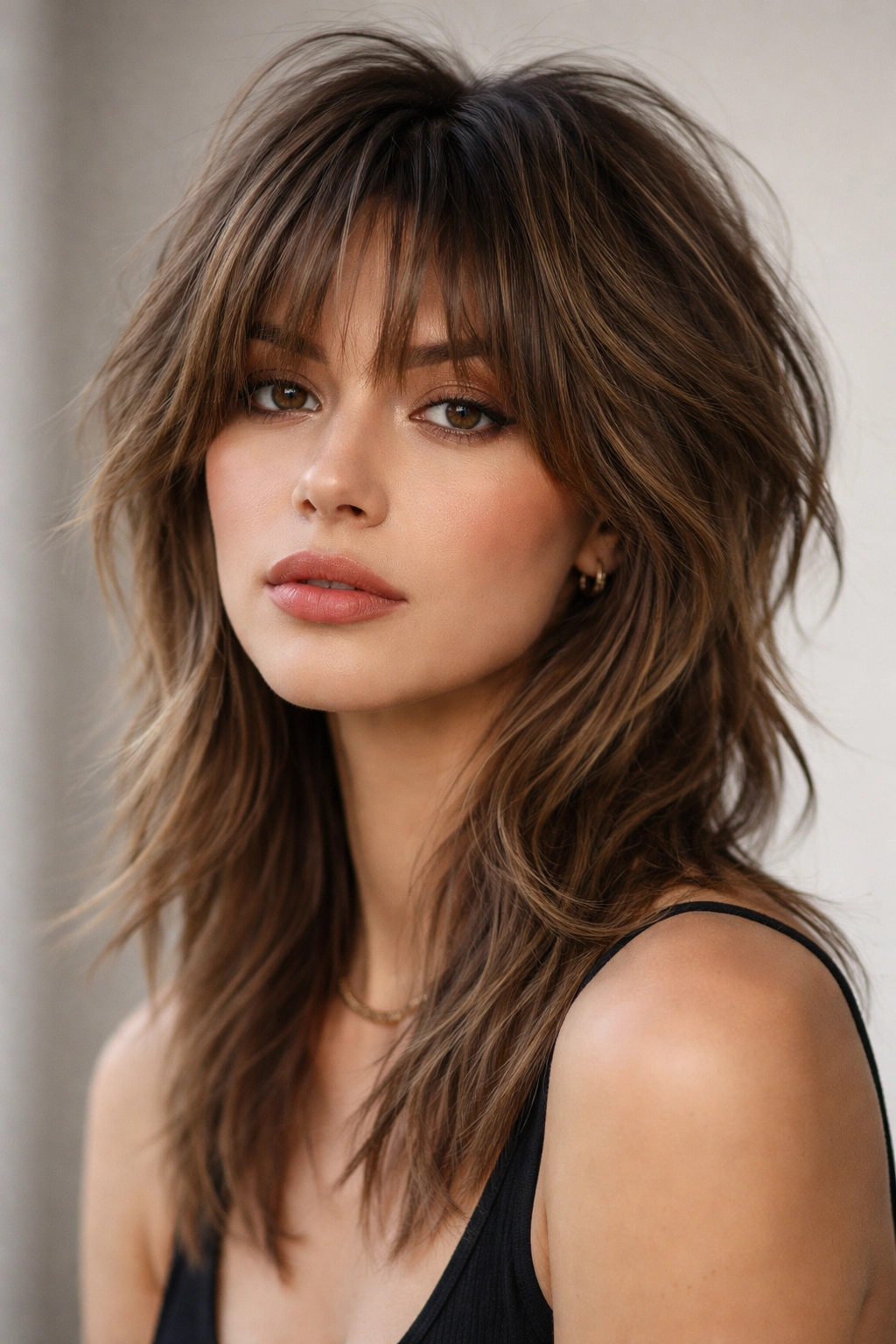
The wolf cut blends elements of a shag and a mullet—shorter, textured layers throughout with intentional longer pieces and volume at the crown. Tousled bangs (textured, piece-y, and deliberately undone-looking) pair perfectly with this style, amplifying the already intentional messiness. The wolf cut is inherently trendy and fashion-forward, and the bangs maintain that energy while framing your face.
Why Tousled Bangs Enhance a Wolf Cut
A wolf cut’s entire appeal is rooted in its intentionally undone, lived-in aesthetic. Tousled bangs extend that vibe to your face, creating a complete picture of effortless style. Unlike structured bangs that require precision styling, tousled bangs actually look better when they’re slightly messy, which makes this a surprisingly low-pressure styling situation despite the trendy appearance.
Styling and Maintenance for Wolf Cuts
- Tousled bangs work best with a texturizing spray applied to slightly damp hair; this creates piece-y separation without requiring heat styling
- Blow-dry your entire head in whatever direction feels natural rather than trying to create one specific shape
- Embrace the volume and texture; this style isn’t meant to be sleek or controlled
- Use a light texturizing cream or dry shampoo to separate individual pieces and add dimension
- Tousled bangs need trimming every 4-6 weeks to maintain their layered, separated appearance
- This style actually improves with a slightly longer time between washes; the texture and separation become more pronounced
Best for: Naturally textured hair, low-maintenance styling preferences, anyone wanting an effortlessly cool aesthetic.
10. The Slicked-Back Bob with Straight Bangs
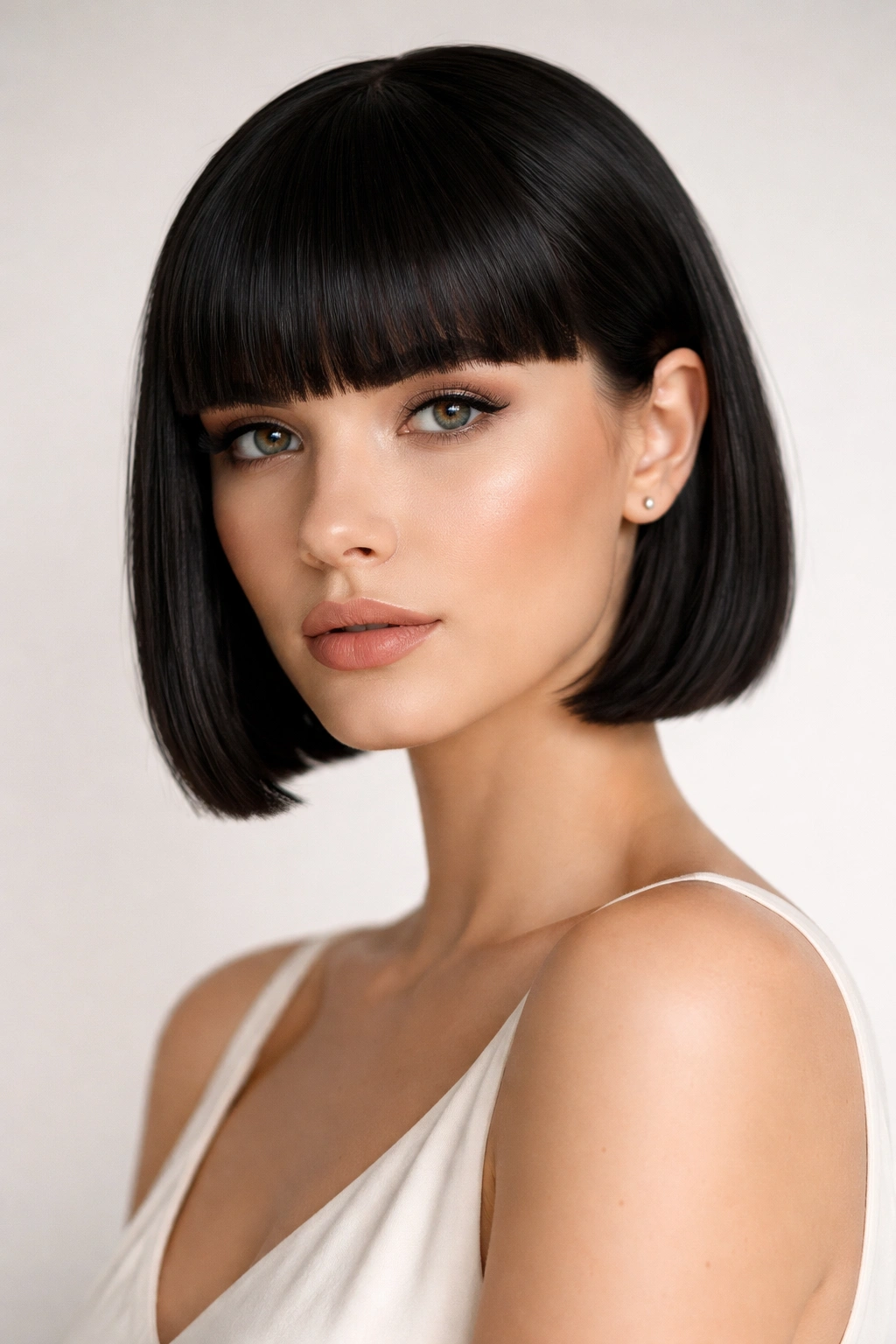
Smooth, sleek, and minimal, this bob is cut to sit right around the jawline with minimal layers, styled with a shiny finish and perfectly straight-across bangs that create a clean, graphic line. This is the opposite of textured or tousled—it’s polished, intentional, and visually striking in its simplicity. Straight bangs amplify the minimalist aesthetic by adding one bold, geometric element to an otherwise understated style.
The Visual Impact of Minimal Design
There’s something incredibly modern and editorial about a sleek bob with straight bangs. The simplicity forces precision; there’s nowhere for imperfection to hide. For people who love minimalist aesthetics or have strong features, this pairing is endlessly flattering. The straight bangs don’t soften or dilute the style—they complete it by adding one decisive visual statement.
Achieving and Maintaining the Sleek Look
- This style requires a high-quality flat iron; cheap heat styling tools will create frizz that destroys the sleek effect
- Blow-dry hair completely before flat-ironing to ensure a smooth finish without heat damage
- Use a smoothing serum or anti-frizz cream before heat styling to create a polished, reflective surface
- Straight bangs need to be cut with precision; even slight irregularities are visible
- Bangs need trimming every 3-4 weeks to maintain the clean, straight line
- This style benefits from hair that’s been treated well and is relatively healthy; damage shows more readily on sleek styles than textured ones
Best for: Strong or angular features, those with naturally smoother hair textures, anyone loving minimalist aesthetics.
11. The Undercut Bob with Choppy Bangs
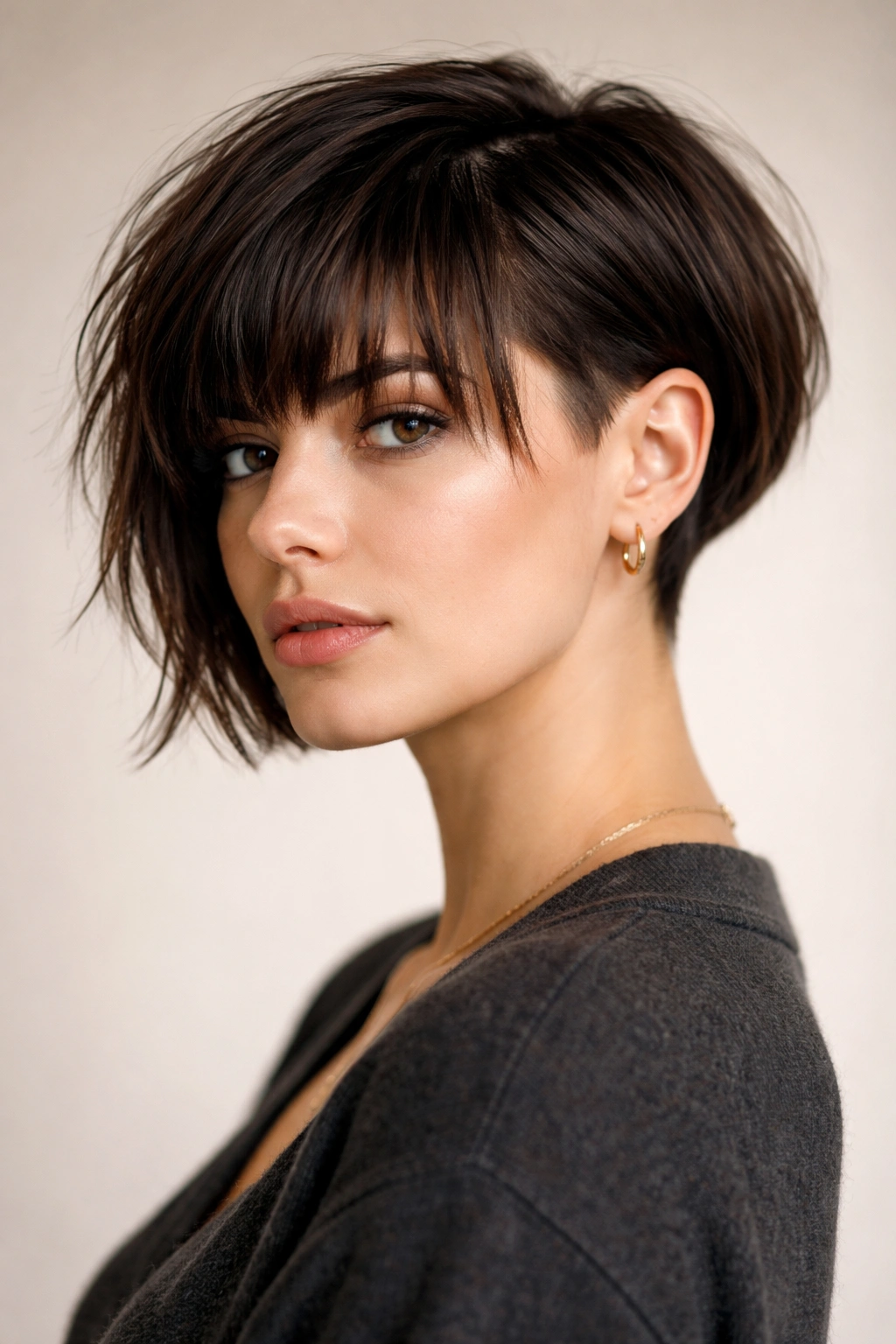
Short on the underside with significantly longer layers on top that blend into the shaved or faded undercut, this modern bob pairs with choppy, textured bangs that sit around the eyebrow line. The undercut adds edge and visual interest while allowing the longer top layers to maintain volume and movement. Choppy bangs complement this by adding texture that mirrors the choppy quality of the layers and the contrast created by the undercut.
Why Undercuts Work With Choppy Bangs
An undercut is inherently bold and modern; choppy bangs maintain that energy while creating a frame around your face. The texture of choppy bangs prevents the overall style from feeling too severe or one-dimensional. This pairing works beautifully for people who want something genuinely alternative-leaning but still wearable in professional or traditional settings.
Styling and Care for Undercuts
- The undercut requires regular maintenance every 2-3 weeks if you want the shaved or faded part to remain clean and defined
- Choppy bangs need trimming every 3-4 weeks to maintain their separated, textured appearance
- Style the top layers with volume and movement; blow-dry upward and backward to create height
- Use a texturizing spray or light pomade to enhance the choppy quality and keep individual pieces separated
- The contrast between the shaved undercut and longer top layers is what makes this style work; maintaining that contrast requires commitment to regular trims
Best for: Bold personalities, low-maintenance hair, those comfortable with very visible regular maintenance.
12. The Butterfly Layers with Soft Bangs
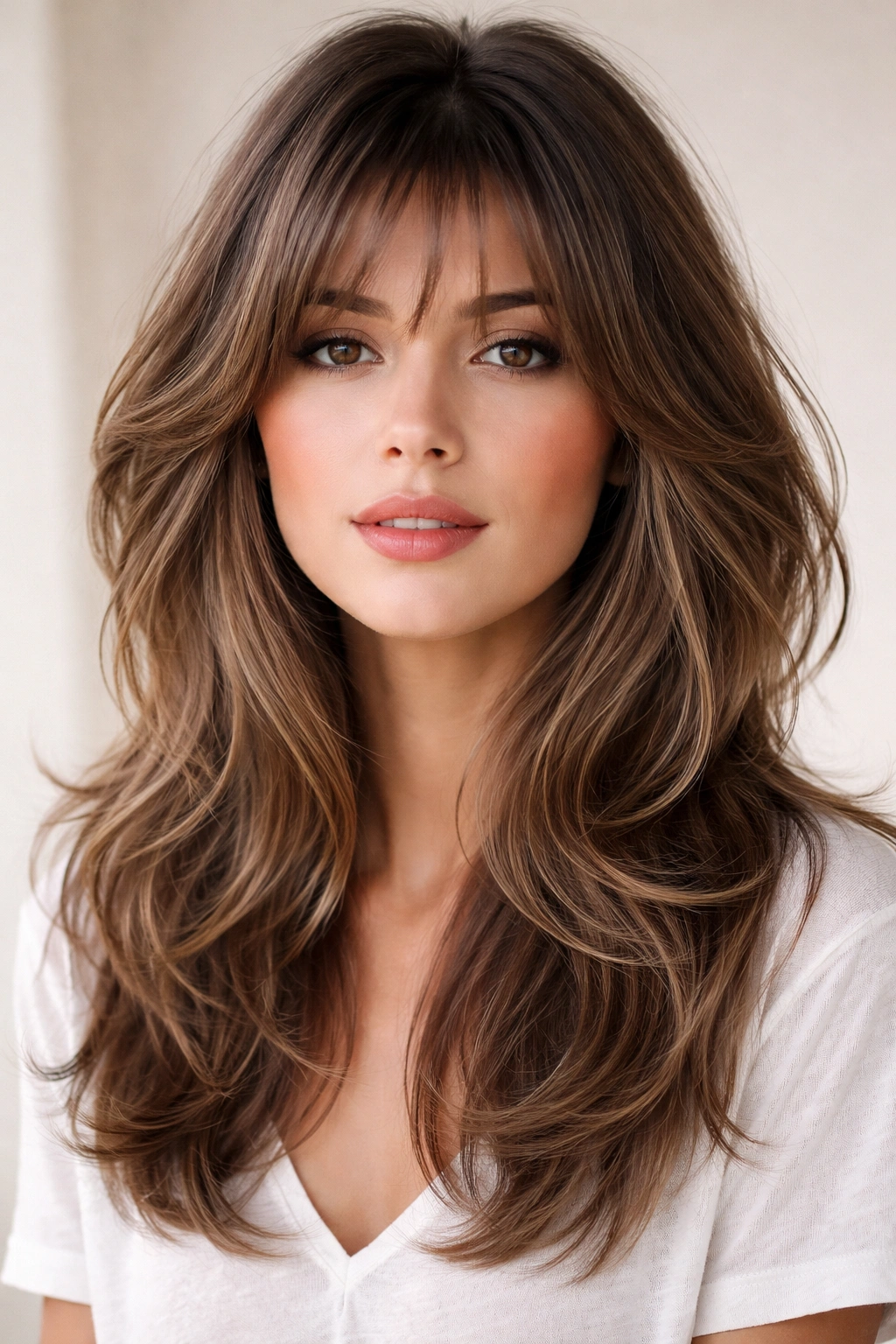
Layers cut throughout the entire head in a butterfly pattern—shorter at the crown creating lift, longer through the sides—combine with soft, wispy bangs that blend seamlessly into the side-sweeping layers. The butterfly cut creates natural volume and dimension, while soft bangs maintain that gentle, flowing aesthetic. This style is exceptionally flattering for people wanting volume without bulk.
How Butterfly Layers Create Volume Illusion
Butterfly layers work by removing weight from the crown while maintaining length, which naturally creates height and the appearance of volume. Soft, wispy bangs extend this effect to your face, creating a frame that appears lighter and less heavy. This pairing is particularly flattering for people with fine hair who want the appearance of thickness without the actual heaviness of blunt layers.
Styling Butterfly Cuts for Maximum Effect
- Blow-dry your head upside down to maximize natural volume at the crown
- Use a round brush on the sides to create a curved, flattering frame around your face
- Apply texturizing spray to damp hair before blow-drying to enhance the separation of individual layers
- Soft bangs should be styled to flow away from your face slightly rather than sitting flat against your forehead
- Layers need trimming every 6-8 weeks to maintain the butterfly shape and prevent hair from looking overly blunt at the ends
- This style actually looks better slightly tousled and undone rather than overly polished
Best for: Fine or thin hair, anyone wanting volume without weight, those preferring softer, more romantic aesthetics.
13. The Blunt Crop with Micro Bangs
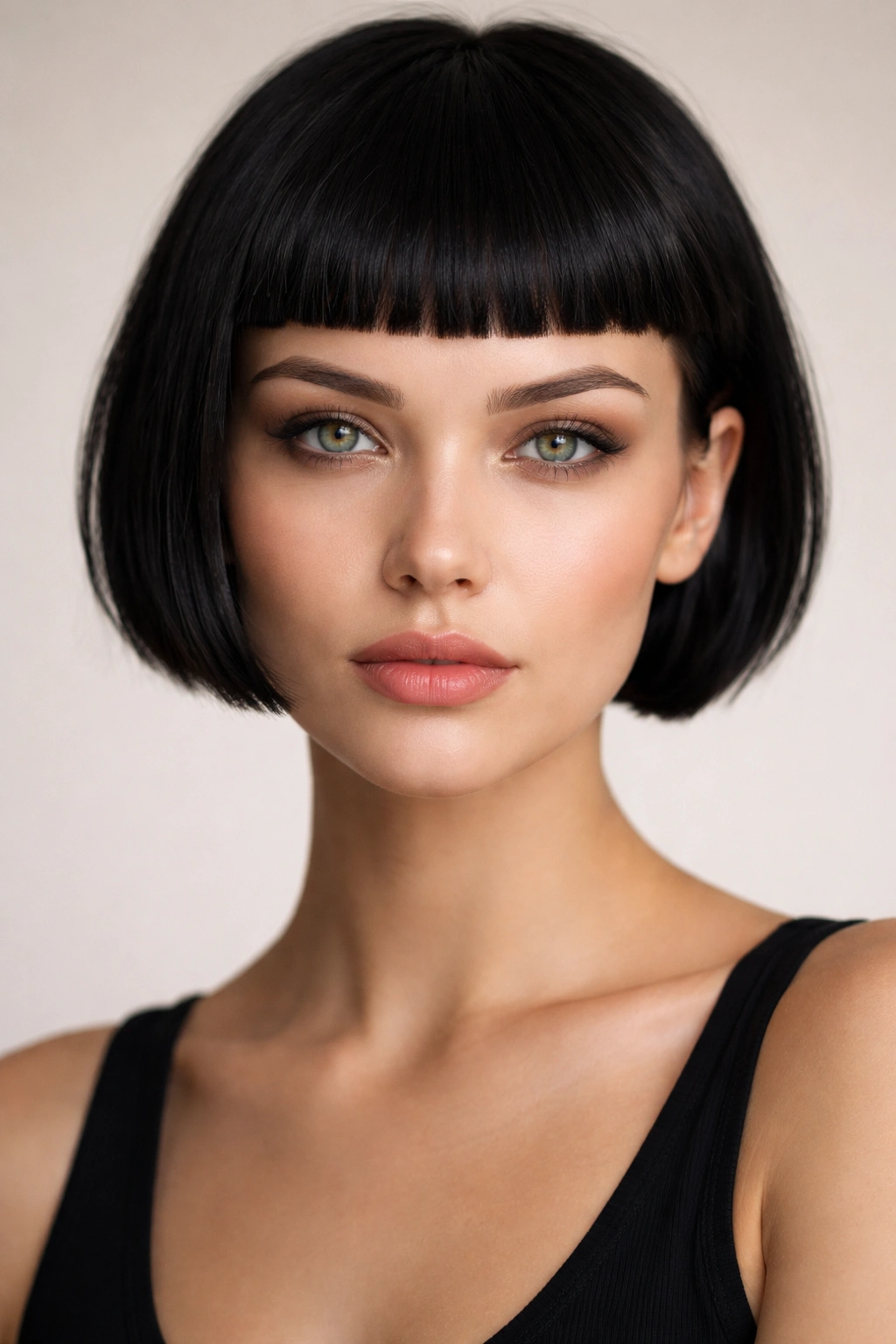
A very short, cropped cut throughout with minimal layers pairs with micro bangs—extremely short bangs that sit well above your eyebrows and often reveal significant forehead. Micro bangs are a bold statement all on their own; paired with a cropped cut, they create a deliberately playful, youthful, and fashion-forward aesthetic. This is not a subtle style—it’s a genuine commitment to a specific visual statement.
The Confidence Required for Micro Bangs
Micro bangs expose your forehead and eyes completely, which means they work best for people confident in their features and willing to commit to a dramatic look. Paired with a blunt crop, they create an instantly recognizable style that reads as intentional and editorial. This combination is perfect for people who want others to know they’re actively engaged with their style rather than playing it safe.
Practical Considerations for Micro Bangs
- Micro bangs need trimming every 2-3 weeks; they’re extremely visible and growth shows immediately
- Use a light eyebrow pencil or concealer to fill in your eyebrows slightly if you feel too much forehead is exposed
- Style the top of your head with texture and volume to balance the exposed forehead
- Use a texturizing spray or dry shampoo to prevent micro bangs from looking flat
- This style requires confidence and acceptance that you’ll need frequent trims; the maintenance commitment is significant
- Your glasses, sunglasses, or hats will sit differently on your face with micro bangs; be prepared for this adjustment
Best for: Bold personalities, those comfortable with high-maintenance bangs, anyone wanting an unmistakably fashion-forward statement.
14. The Wavy Lob with Wispy Bangs
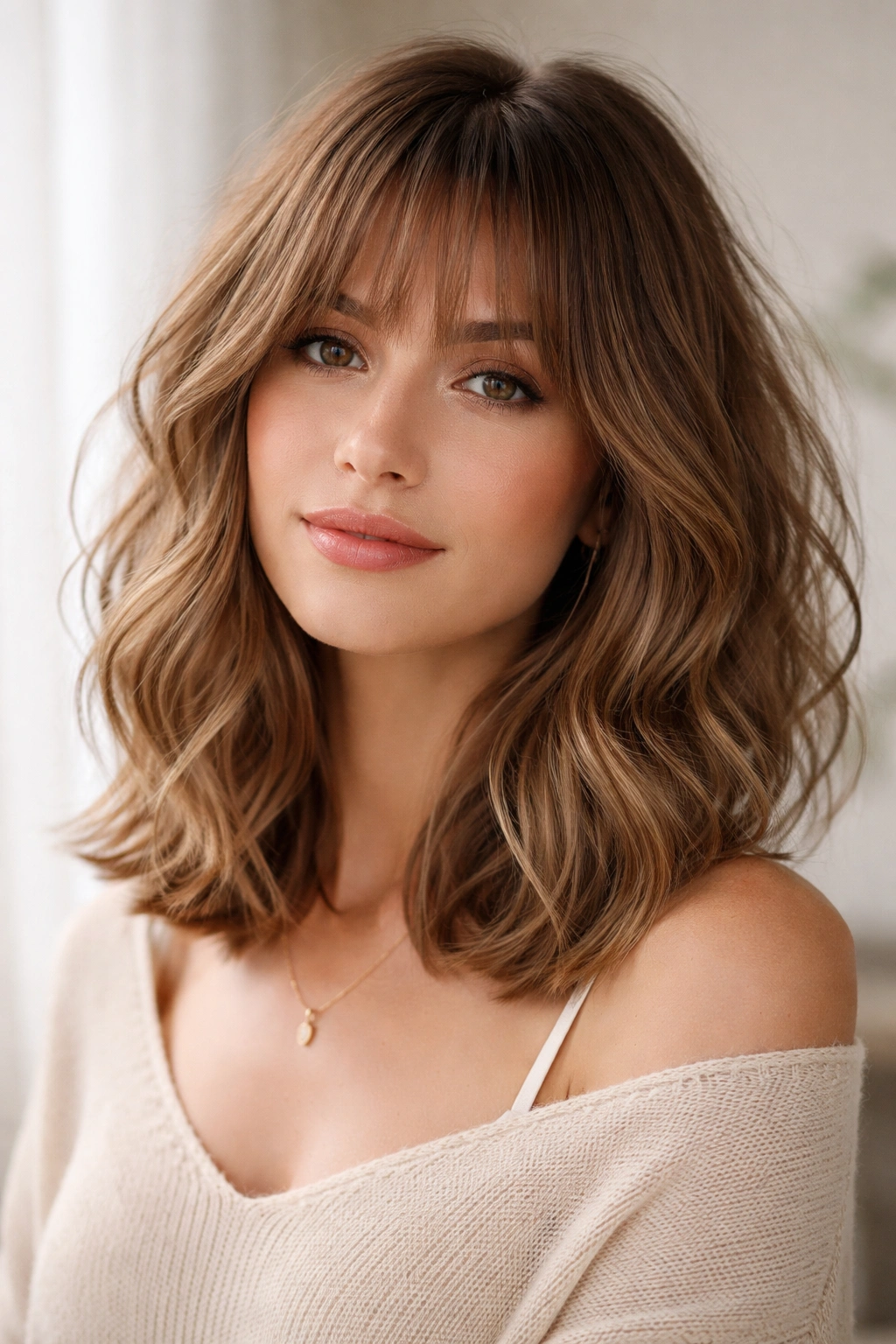
A lob cut slightly longer than a traditional bob—sitting around jawline to shoulder length—styled with soft waves and paired with wispy bangs creates a romantic, effortlessly beautiful aesthetic. The waves add movement and texture, while wispy bangs maintain the soft, approachable feeling. This style bridges the gap between short and medium length, offering versatility while still reading as a clear, intentional cut.
Why This Combination Feels So Universally Flattering
The waviness softens the lines of the cut while wispy bangs refract light and create a diffused frame around your face. Neither element feels heavy or demanding; together they create a style that reads as intentional but not overly trendy or time-bound. This pairing works across most face shapes and ages, which is why it remains perpetually popular.
Creating and Maintaining Waves
- Create waves by blow-drying with a curling iron or sea-salt spray for texture
- Apply the spray to damp hair and scrunch while blow-drying to create natural-looking waves
- Wispy bangs should be styled to blend with the waves; blow-dry them in a slight arc to create movement
- Waves improve over time with dry shampoo; sleeping in them enhances the wave pattern
- Wispy bangs need trimming every 3-4 weeks to maintain their separated, light appearance
- This style actually looks better slightly lived-in rather than freshly styled; the waves become more pronounced and interesting as they break down
Best for: Anyone wanting a timeless, romantic aesthetic, those with naturally wavy hair, anyone seeking a balanced middle ground between short and medium.
15. The Textured Crop with Side-Swept Bangs
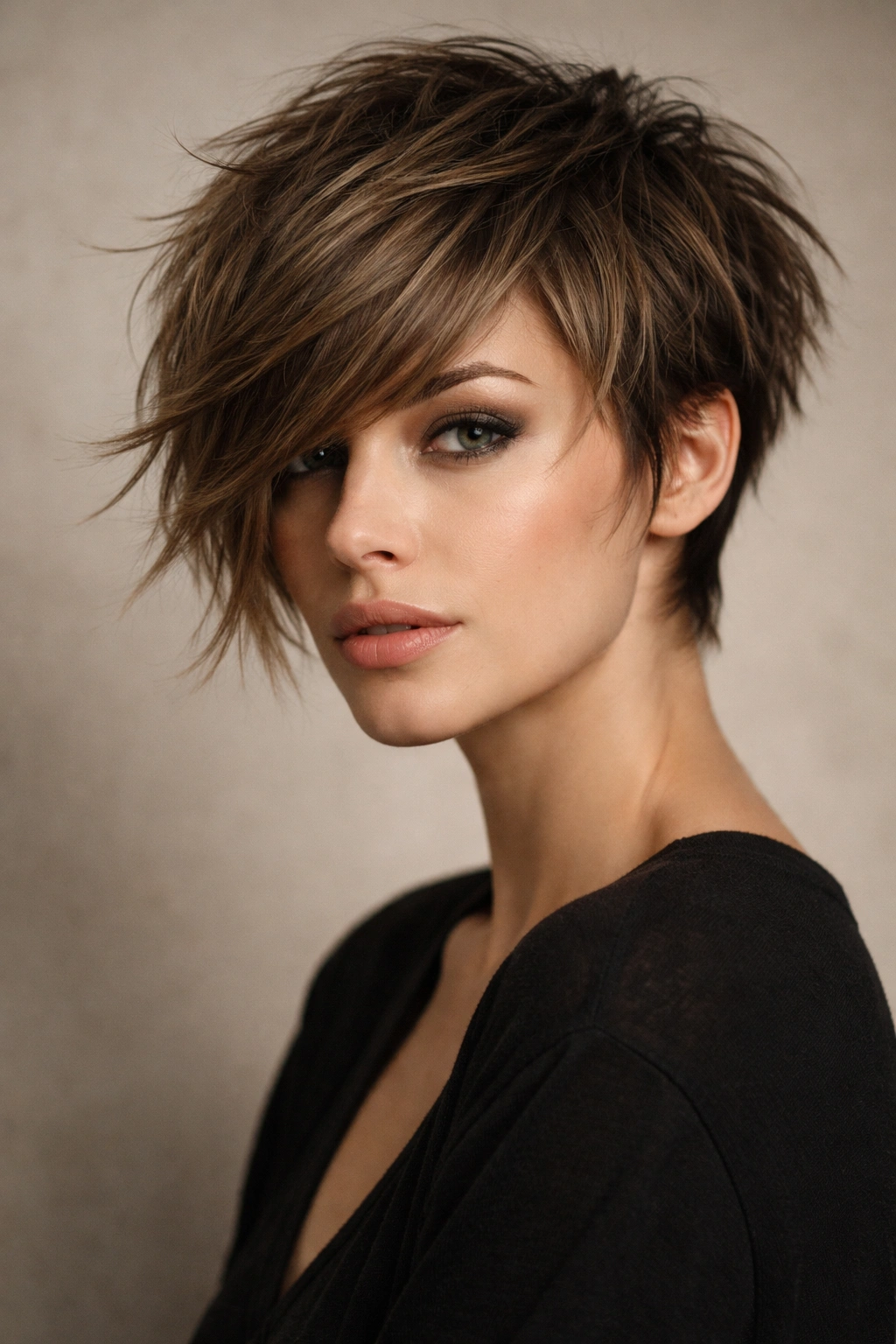
A short, heavily textured crop with choppy, separated layers throughout combines with side-swept bangs that angle dramatically across your forehead. The texture throughout the cut means every piece moves independently, creating a naturally undone, fashion-forward appearance. Side-swept bangs add movement and femininity while maintaining the edgy energy of the textured crop.
The Appeal of Texture on All Fronts
A textured crop is inherently modern and slightly unconventional. Side-swept bangs extend that modern energy while softening what might otherwise feel too severe or masculine. The bangs sweep toward one side, following the natural movement and texture created by the choppy layers, which makes the entire style feel cohesive and intentional rather than random.
Styling a Textured Crop Daily
- Blow-dry with your head tilted to naturally encourage the side-sweep of the bangs
- Use a texturizing spray or pomade on damp hair to enhance piece-y separation and definition
- The beauty of a textured crop is that it looks better the messier it gets; avoid over-styling
- Side-swept bangs can be styled sleek by blow-drying them smooth, or left textured to blend with the rest of the cut
- Trims every 4-6 weeks keep the texture crisp and prevent the style from looking overgrown or shapeless
- This style requires less daily styling than many alternatives; the texture does the visual work for you
Best for: Naturally textured hair, low-maintenance styling preferences, those wanting an undeniably modern, editorial look.
Final Thoughts
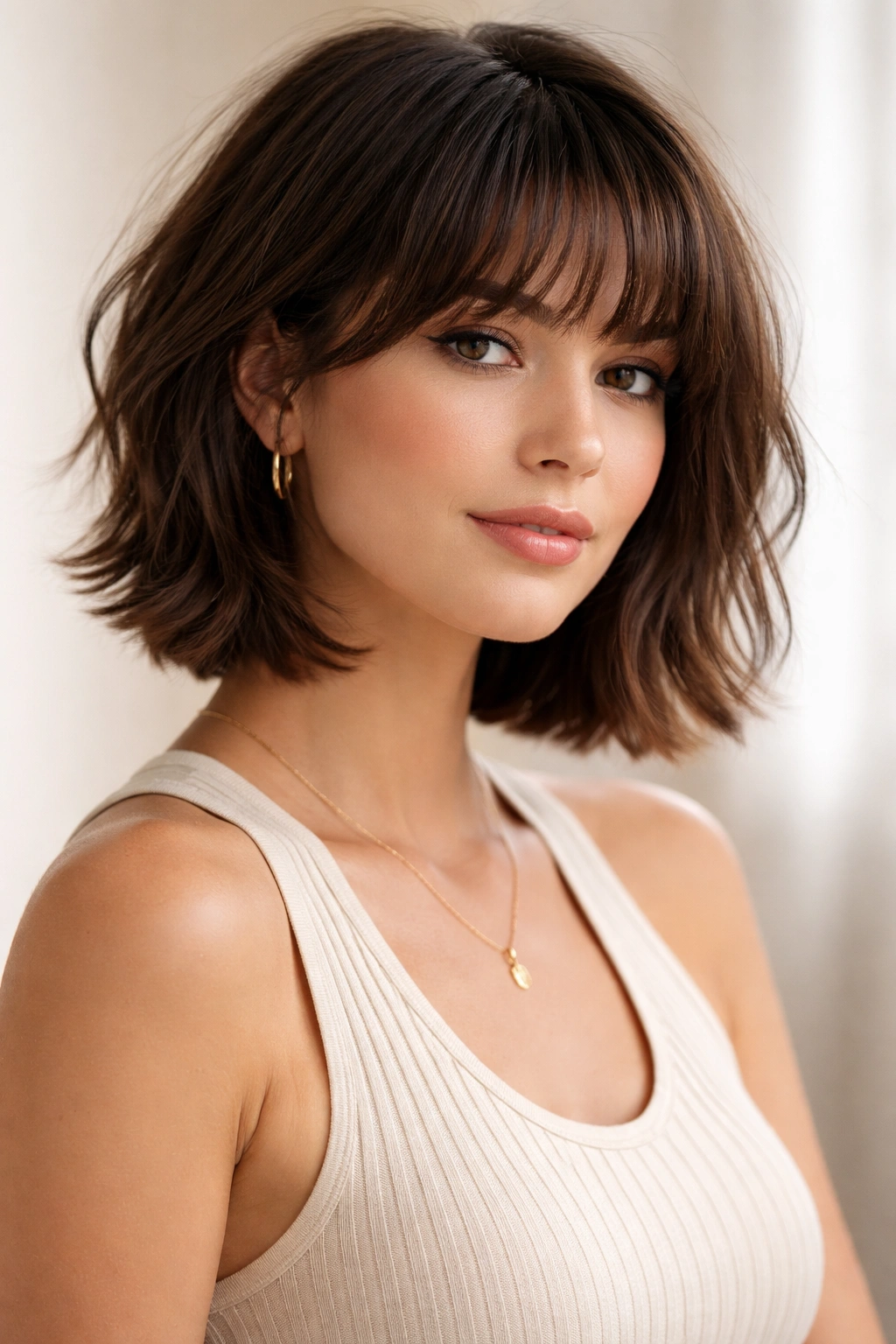
Medium short haircuts with bangs offer something genuinely special—they’re the perfect intersection of being dramatic enough to feel like a real style moment while remaining practical enough to work in your everyday life. Whether you’re drawn to the softness of wispy or curtain bangs, the boldness of blunt or micro styles, or the textured energy of choppy or feathered variations, there’s a combination that works for your face shape, lifestyle, and aesthetic preferences.
The most important part of getting any of these styles right is finding a stylist who understands what you’re after. Bring reference photos, but more importantly, have a conversation about your hair type, how much time you’re willing to spend styling daily, and how frequently you can commit to trims. Bangs require maintenance—that’s non-negotiable—but the investment pays off through the confidence boost and the genuinely flattering frame they create around your face. A good cut that works with your natural texture and features will transform not just how you look, but how you feel every single day.
