



The mullet is back—and it’s more vibrant than ever. What was once confined to the 80s and early 90s has evolved into a bold, modern statement, and when you add color to the mix, it becomes downright daring. A colorful mullet isn’t just a haircut; it’s a declaration that you’re comfortable standing out, experimenting, and expressing your personality through your hair. Whether you’re drawn to soft pastels, shocking neons, or sophisticated jewel tones, there’s a colored mullet approach that can work with your style and skin tone.
The beauty of a mullet lies in its versatility. The short, textured top gives you volume and movement, while the longer back allows for drama and visual interest—especially when color is involved. When you layer in vivid hues, ombré effects, or color-blocking techniques, a mullet transforms from retro quirk into a genuinely compelling artistic expression. The different ways colorists and stylists are reimagining this cut right now proves that it’s not about recreating the past; it’s about pushing boundaries and making it feel completely contemporary.
If you’ve been curious about taking the plunge into a colorful mullet but weren’t sure where to start, these twelve inspiring variations showcase the range of what’s possible. Some lean into maximalist color play, while others take a more refined, understated approach. Whatever your comfort level with bold hair color, you’ll find something here that speaks to you.
1. Neon Pink and Black Contrast Mullet
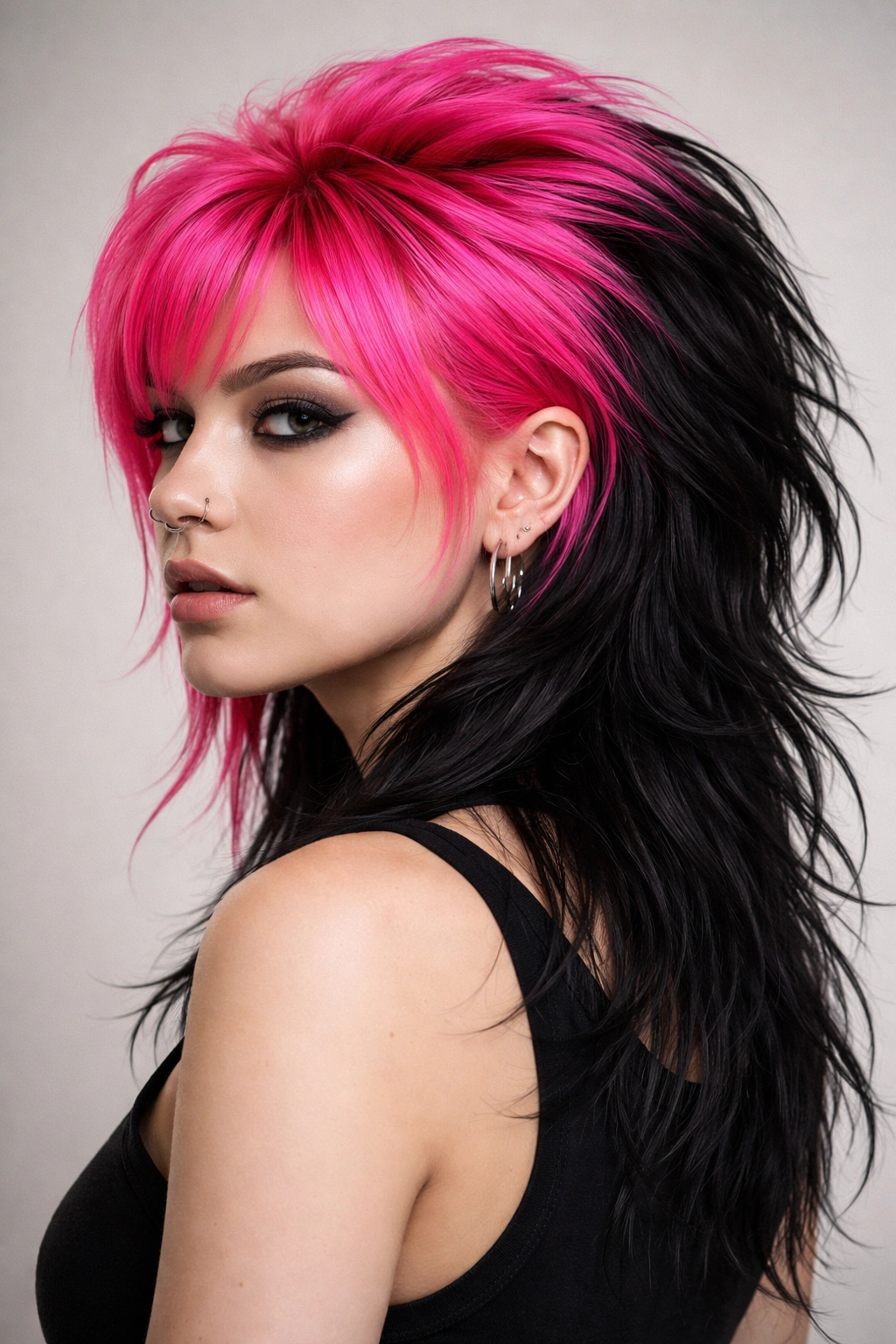
This high-contrast mullet makes an unquestionable statement. The neon pink sits bright and bold on the top and sides, while the back flows into a deep black that creates dramatic visual separation. The combination is unapologetically punk-inspired, channeling rebellious energy while staying polished enough for intentional style rather than costume.
Why This Look Commands Attention
The neon pink and black contrast works because of the sheer visual punch it delivers. Pink naturally draws the eye, especially in such a saturated, electric shade, while the black back grounds the look and prevents it from feeling one-dimensional. The color opposition creates depth; your eyes move from the boldness of the pink to the mystery of the black. This mullet works especially well if you have warm or cool undertones in your skin—the pink flatters those with cooler undertones, while the black complements virtually everyone.
Quick Facts About This Style
- Best suited to those with confidence and a willingness to maintain color regularly (neon pink fades faster than darker shades)
- Works beautifully with textured, choppy layers on top for added movement
- The black back can be sleek and smooth or texturally varied depending on your preference
- Requires purple-toning shampoo to maintain the vibrancy of the pink
- Pairs perfectly with bold makeup, leather jackets, and alternative fashion aesthetics
Pro tip: If committing to neon pink feels too extreme, consider a hot pink that reads more approachable while still delivering serious visual impact.
2. Purple Ombre Mullet with Layers
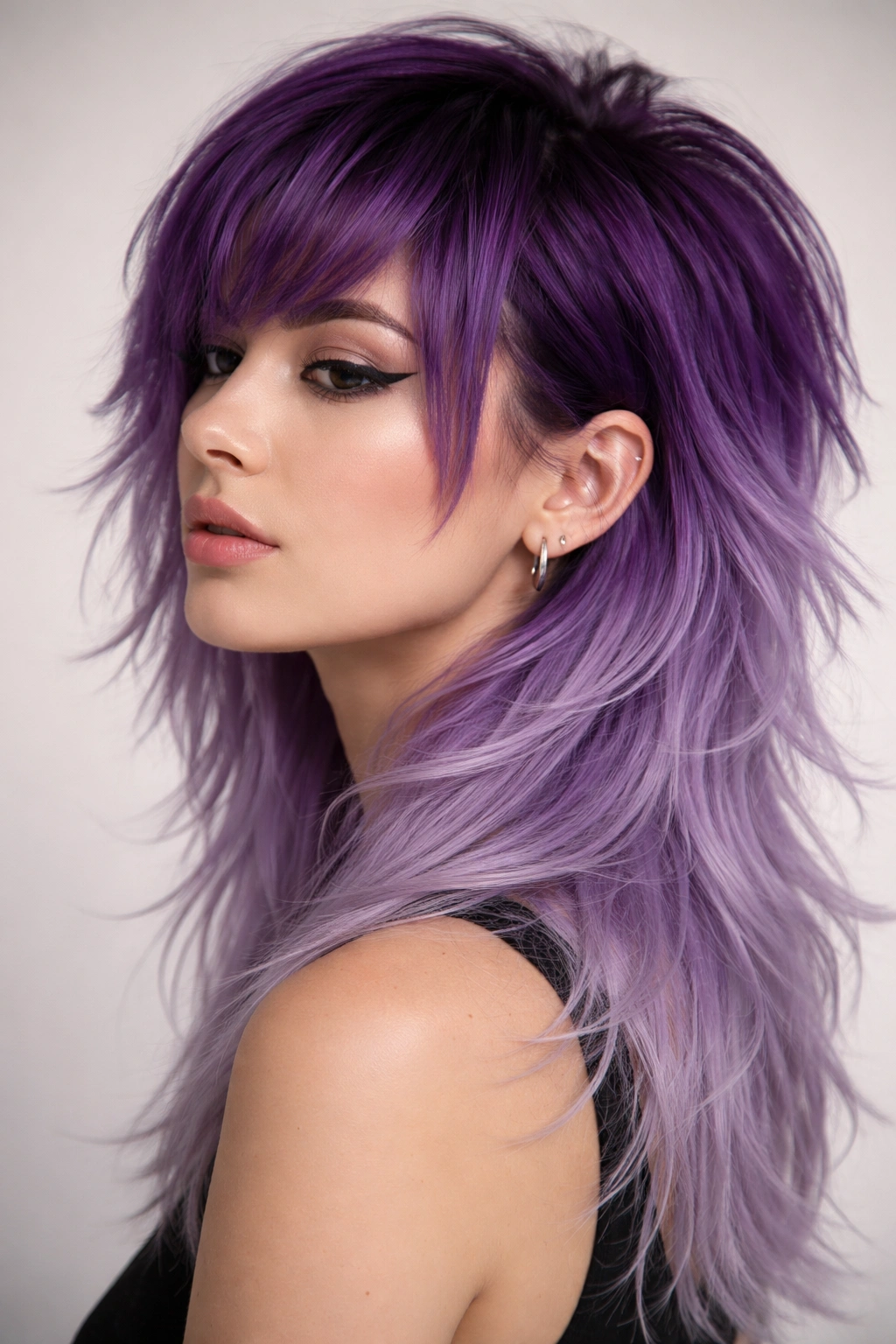
This mullet takes a more nuanced approach to color. It starts with a rich, deep purple at the roots and gradually transitions to a lighter, more lavender-forward shade toward the ends. Layered throughout for texture and movement, this style feels sophisticated enough for professional settings while still expressing creativity and personality.
Why Gradient Purple Feels Timeless
Purple sits in a fascinating space on the color spectrum—it’s bold without being aggressive, creative without being chaotic. The ombré effect from deep to light purple creates a sense of dimension that makes the mullet feel intentional rather than accidental. Layering amplifies this effect, as each layer catches light differently, creating subtle shifts in tone as you move. This style appeals to people who want noticeable color but with a slightly softer edge than pure neon.
Key Details to Consider
- Works across a wider range of skin tones than many vibrant colors, especially if you choose your purple shade carefully
- The layered texture is crucial; ask your stylist for choppy, textured layers that showcase the color variation
- This look requires commitment to purple-toning products to prevent the color from shifting toward blue or fading to muddy brown
- The ombré transition can be subtle and blended or sharp and defined depending on your style preference
- Excellent choice if you like the idea of bold color but want the option to tuck it back or style it more conservatively on certain occasions
Worth knowing: Purple’s staying power varies depending on your hair type and the specific shade chosen. Discuss with your colorist which purple will last longest on your hair structure.
3. Teal and Peach Color-Blocked Mullet
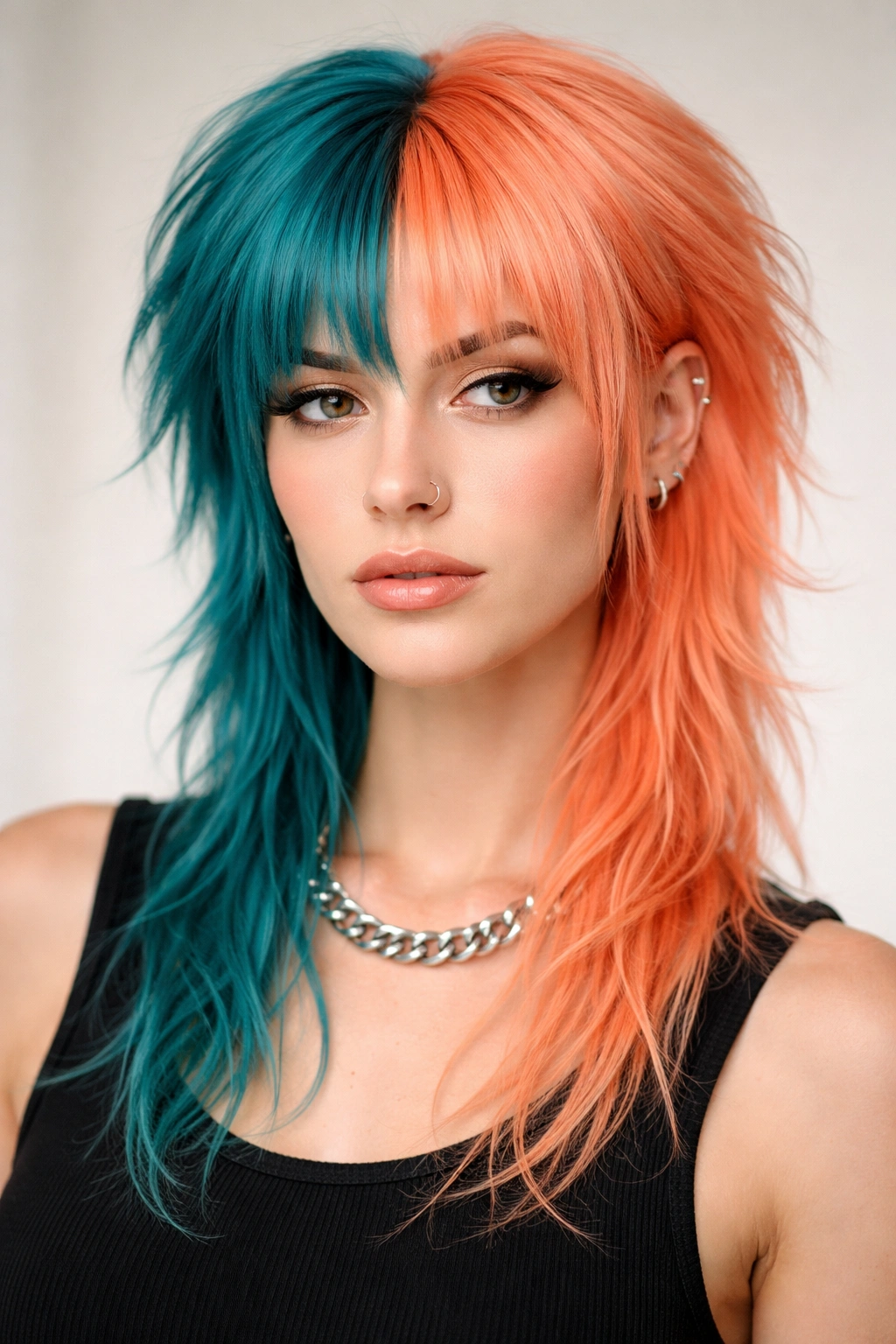
Here’s where bold creativity meets structured design. This mullet features distinct color-blocking: cool teal on one side, warm peachy-orange on the other, with the contrasting hues creating a striking asymmetrical effect. The color division follows the natural lines of the mullet, making the cut itself even more pronounced and visually interesting.
The Impact of Intentional Color Placement
Color-blocking works because it breaks the traditional “one color per section” rule in a way that feels deliberate rather than haphazard. Teal and peach are complementary opposites on the color wheel, so when placed side by side, they intensify each other’s vibrancy. This isn’t accidental color—it’s a thoughtfully designed style that shows your stylist understood your vision. The asymmetry also appeals to people who like avant-garde fashion and aren’t afraid to lean into the unconventional.
What Makes This Style Stand Out
- Requires a skilled colorist who understands color theory and can execute clean, intentional lines
- The teal-to-peach contrast is particularly striking with warm, medium, or deep skin tones
- Works best when the mullet’s structure is very clean and defined; sloppy layers diminish the impact of the color placement
- You have freedom in how sharply you divide the colors—a clean, geometric split or a more blended transition both work beautifully
- Maintenance involves touch-ups to both sections as the colors fade at different rates
Real talk: This is a look for someone who genuinely loves the artistic aspect of hair color, not just the idea of having unusual color.
4. Sunset Gradient Mullet
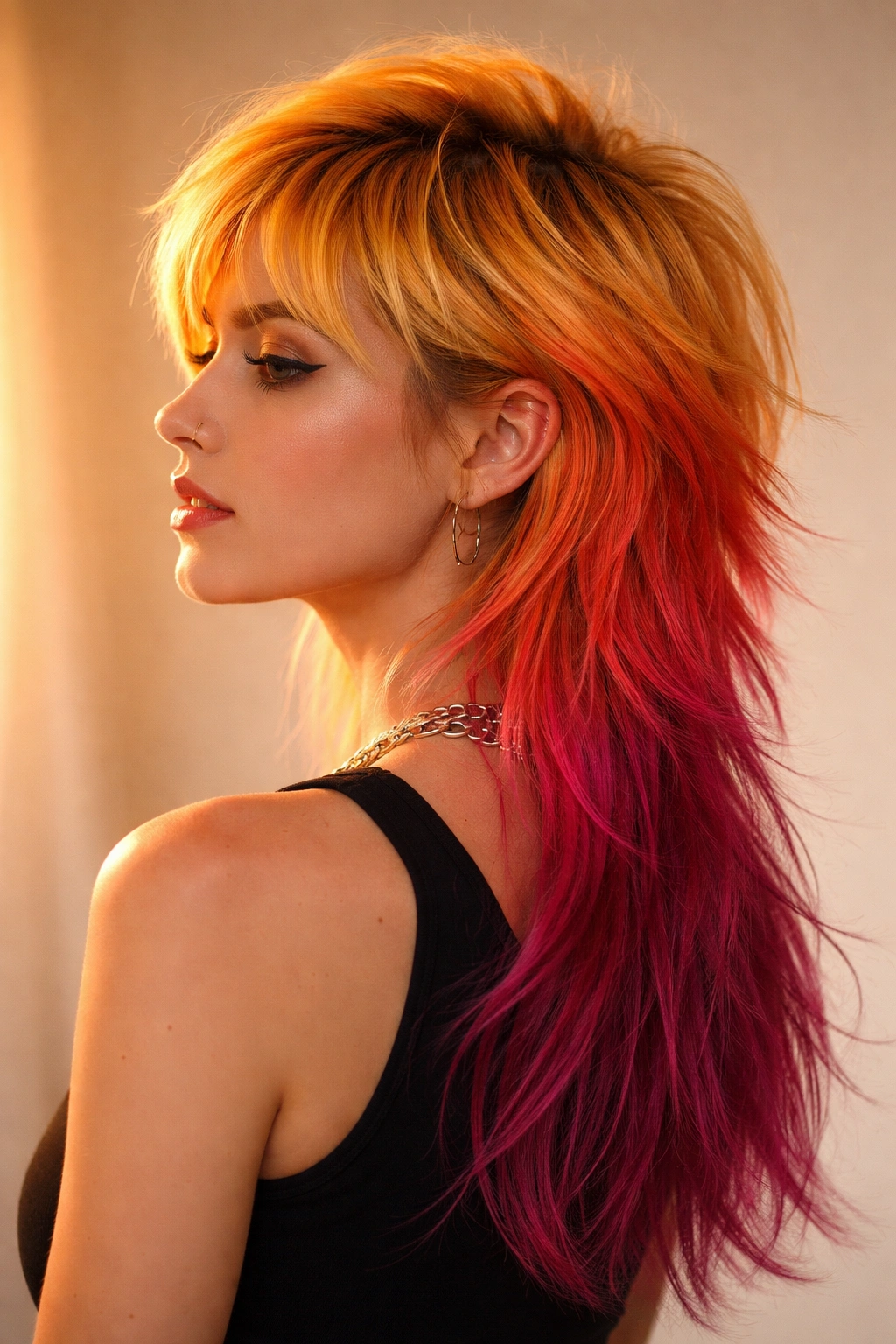
Inspired by literal sunsets, this mullet flows through warm, rich tones: starting with golden yellow or orange at the top, transitioning through red and coral in the middle, and finishing with deep rose or magenta at the bottom. It’s romantic, warm, and undeniably beautiful, creating a sense of movement that mirrors the way colors actually blend in nature.
Why Sunset Colors Feel Both Bold and Romantic
The sunset gradient works because these warm tones exist harmoniously in nature. There’s no jarring clash—instead, colors flow into each other with visual logic. This mullet appeals to people who want genuinely striking color but prefer something that feels organic rather than artificial. The warmth of the palette flatters many skin tones, particularly those with warm or golden undertones. It’s also one of the few bold-color mullets that can feel romantic and soft rather than purely edgy.
Essential Facts About Sunset Mullets
- The more layers in your mullet, the more beautifully this gradient effect shows throughout the style
- Requires multiple color applications (likely a cut that removes some hair, then color placed at different sessions) for the most seamless gradient
- Yellow and orange fade fastest, so expect touch-ups more frequently on the top
- Works beautifully with beachy waves, textured styling, or sleek straightness—the color carries any style
- Pairs perfectly with warm-toned makeup, gold jewelry, and earth-toned clothing
Pro tip: Ask your colorist about gloss treatments between color appointments; they’ll refresh the gradient effect and keep the colors looking molten longer.
5. Electric Blue and Silver Mullet
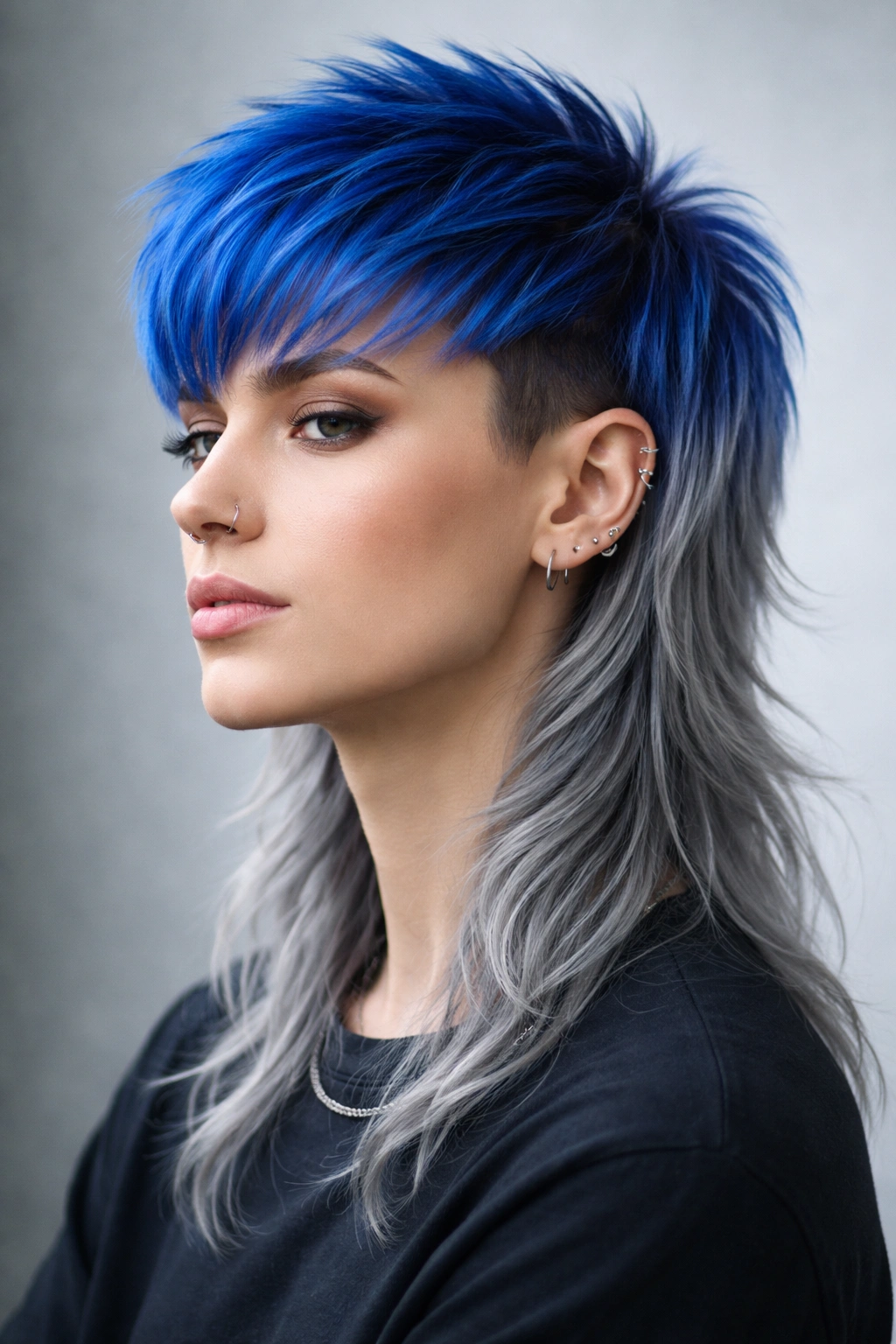
For those drawn to cool-toned color palettes, this mullet delivers pure visual impact. A vibrant electric blue tops the head with all the texture and dimension of a modern mullet cut, while the back transitions into or remains a striking silver-grey. The cool tones create an almost metallic, otherworldly quality.
The Cool-Tone Appeal
Electric blue is one of the few neon-range colors that photographs with genuine depth rather than appearing flat. When paired with silver, the blue gains intensity. Silver acts as a neutral canvas that lets the blue breathe while adding a futuristic, sophisticated edge. This color combination suits those with cool skin undertones, ash-toned natural coloring, or anyone who gravitates toward silver jewelry and cooler makeup tones.
Important Details for This Look
- Both colors fade relatively quickly and require dedicated maintenance with color-safe shampoo and purple-toning treatments
- The cut itself should emphasize texture on top; sleek, smooth hair flattens the blue’s brilliance
- Works across different hair lengths but looks most striking with a defined, pronounced short-to-long contrast
- The silver back can be maintained or allowed to fade to an ash-blonde, shifting the overall look as it evolves
- Highly complement-sensitive; what you wear dramatically changes how these colors read
Worth knowing: Blue and silver require the lightest possible starting hair base. If your hair is naturally dark, expect a long, potentially damaging lightening process. Discuss with your stylist whether your hair is a good candidate for this level of lightening.
6. Pastel Rainbow Mullet
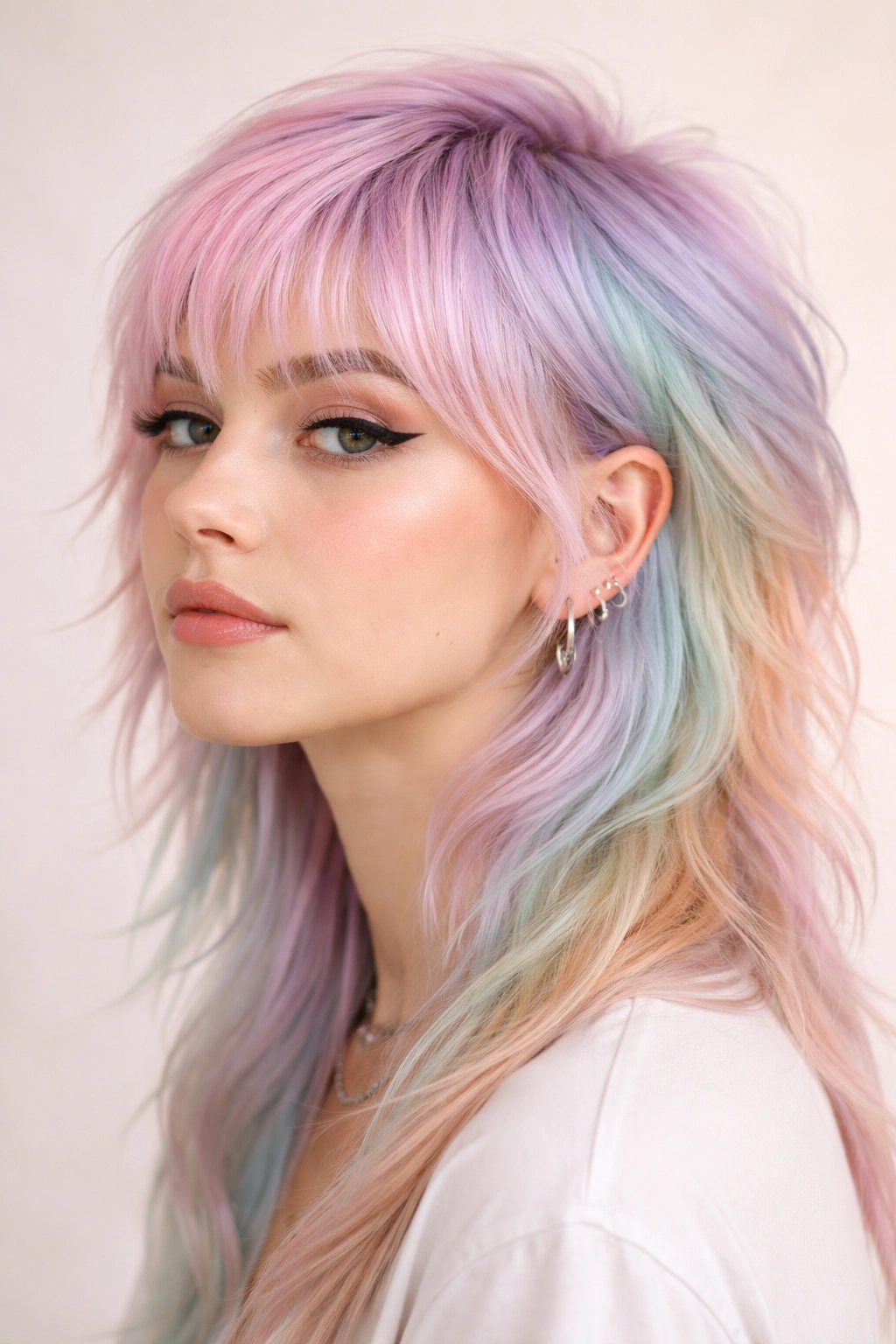
This is the gentler cousin of the bold-color mullet world. Soft pastels—think pale pink, lavender, mint green, baby blue, and peachy cream—blend together throughout the cut, creating a dreamy, whimsical effect. It’s colorful without being aggressive, artistic without being punk, and utterly charming for those who want color but prefer softer vibes.
Why Pastels Deserve Serious Consideration
Pastel colors are having a genuine moment beyond just being a “softer alternative.” They’re sophisticated in their own way; achieving clean, pretty pastels actually requires excellent color work and often better color retention than bright neons. The pastel rainbow mullet appeals to people who want to be creative and stand out without feeling like they’re making an aggressive statement. It reads as intentionally artistic rather than rebellious.
What You Need to Know About Pastel Mullets
- Pastel colors show best on light to medium hair bases; on dark hair, they can appear muddy
- The pastel palette works across most skin tones but especially flatters those with lighter or cooler complexions
- Pastels fade into even softer versions of themselves rather than turning brassy or muddy, making the color journey relatively graceful
- Works beautifully with a very textured, choppy mullet that shows off multiple colors throughout
- Coordinates naturally with softer fashion aesthetics, vintage vibes, and romantic styling
Pro tip: Ask your colorist about icy or cool-toned pastels if you have cool undertones, and peachy, golden, or warm pastels if you lean warm. The undertone of the pastel is just as important as the color family itself.
7. Hot Pink and Blonde Money Piece Mullet
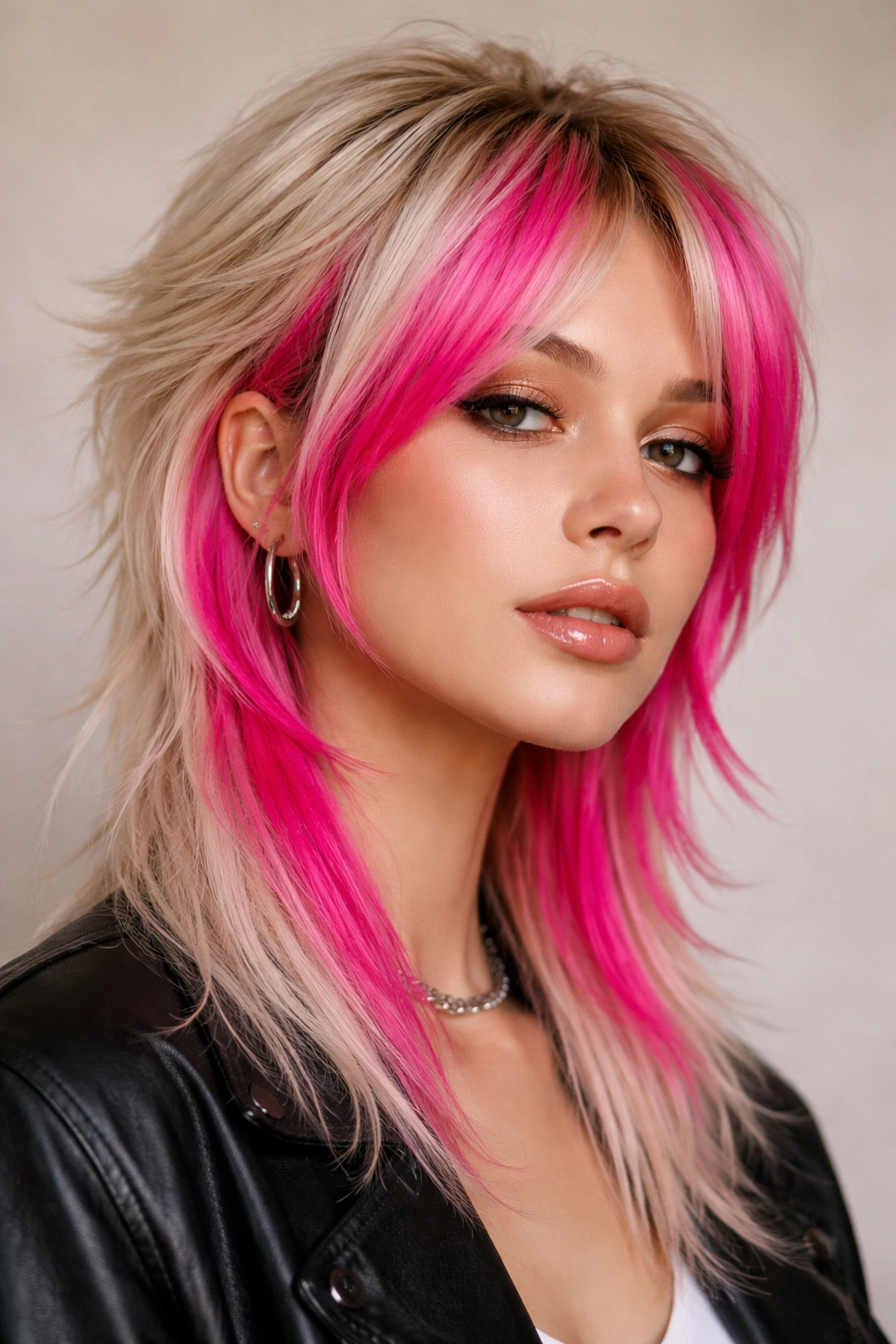
This style places a bright hot pink in strategic “money pieces”—the face-framing sections on either side of the face—while keeping the rest of the mullet a complementary blonde or platinum base. The name comes from the concept that these front pieces “frame the face” the way money is displayed, and they certainly draw attention right where you want it.
The Strategic Beauty of Money Pieces
Money pieces work particularly well on mullets because they leverage the short-to-long contrast naturally. The pink pieces frame your face in the shorter front section, immediately drawing the eye upward and drawing attention to your face shape and features. The blonde base allows the pink to feel like an accent rather than an all-over commitment, making this style more wearable for people who like bold color but need flexibility. The combination feels fashion-forward and intentional rather than experimental.
Key Considerations for This Approach
- Best executed with very clean, precise placement; muddled money pieces look accidental rather than styled
- Hot pink is highly complement-sensitive; it requires the right blonde base shade to look cohesive
- The contrast between hot pink and blonde is severe, so both colors need to be maintained regularly
- Works beautifully with nearly any hair texture, from sleek to textured
- Makes styling choices interesting; you can push the money pieces forward for maximum visibility or tuck them back for a more subtle effect
Worth knowing: This style is slightly easier to “grow out” of than an all-over color, since the base blonde is a more neutral starting point as the pink fades.
8. Deep Burgundy and Gold Mullet
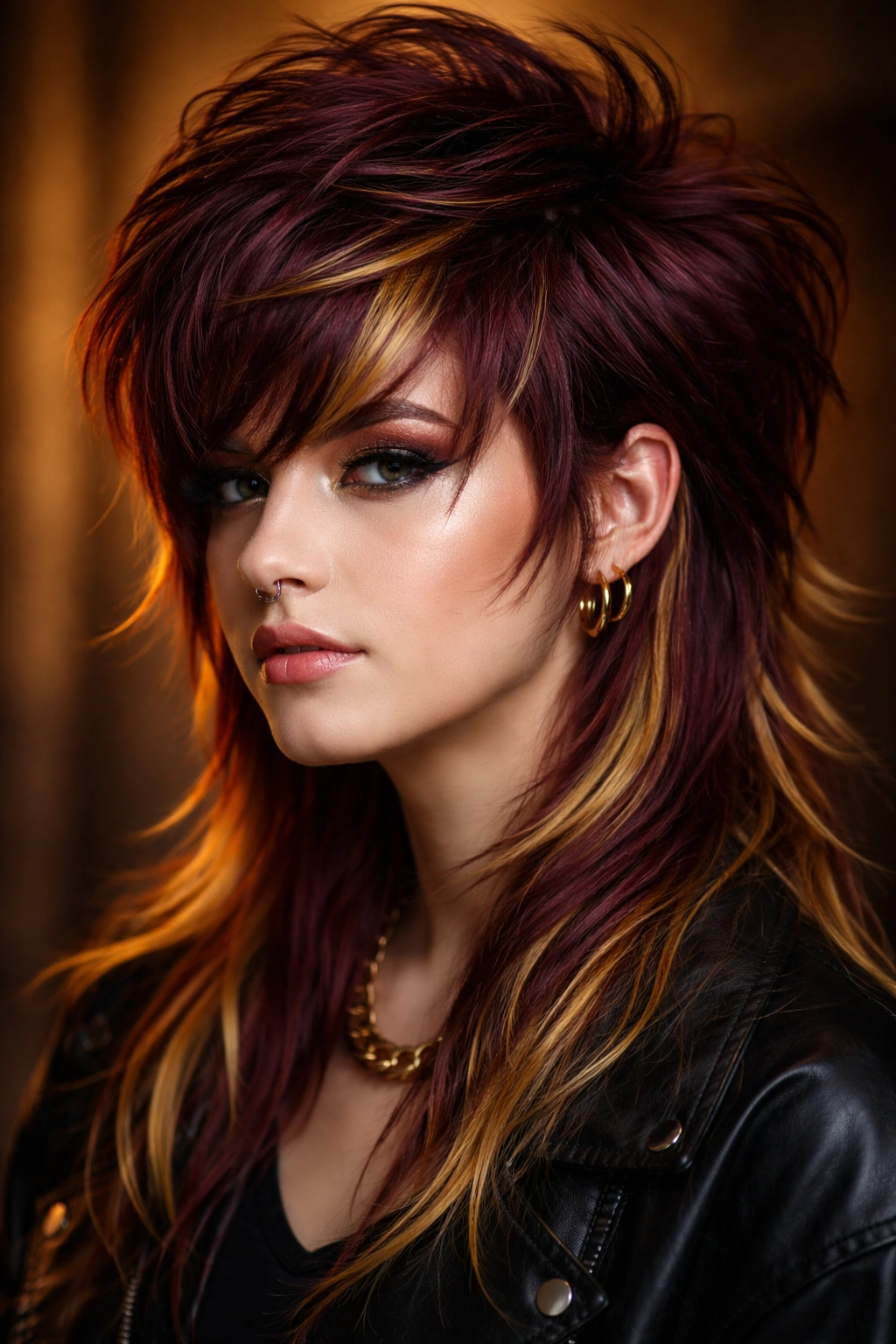
For those who prefer depth and richness over brightness, this mullet combines sophisticated jewel tones. A deep burgundy—think wine, oxblood, or maroon—covers most of the cut, with warm gold accents either woven throughout or concentrated on specific sections. It’s dramatic without feeling neon, luxurious without feeling costume-like.
Why Jewel Tones Feel Elevated
Burgundy and gold read as intentionally sophisticated rather than punk or experimental. These colors exist in luxury spaces—wine bottles, jewelry, high-end fashion—so pairing them in hair feels like a natural extension of that aesthetic. Deep burgundy is forgiving because it works across skin tones and doesn’t fade into unpleasant territory the way some warm colors do. The addition of gold creates richness and prevents the overall look from feeling too heavy or dark.
Details That Matter for This Style
- Works beautifully on those with warm skin undertones, but cool-toned individuals can make it work with the right specific shade of burgundy
- The deeper the color, the more gracefully it fades; burgundy transitions to a softer copper-brown rather than washing out
- Pairs exceptionally well with textured, tousled styling that shows movement and catches light
- Gold can be integrated subtly (as dimension throughout) or prominently (as distinct pieces), depending on your preference
- Complements jewel-toned, vintage, and autumn-inspired fashion perfectly
Pro tip: If you have warm skin and cool undertones in your natural hair, ask your colorist about a cool-toned burgundy that won’t clash.
9. Forest Green and Copper Mullet
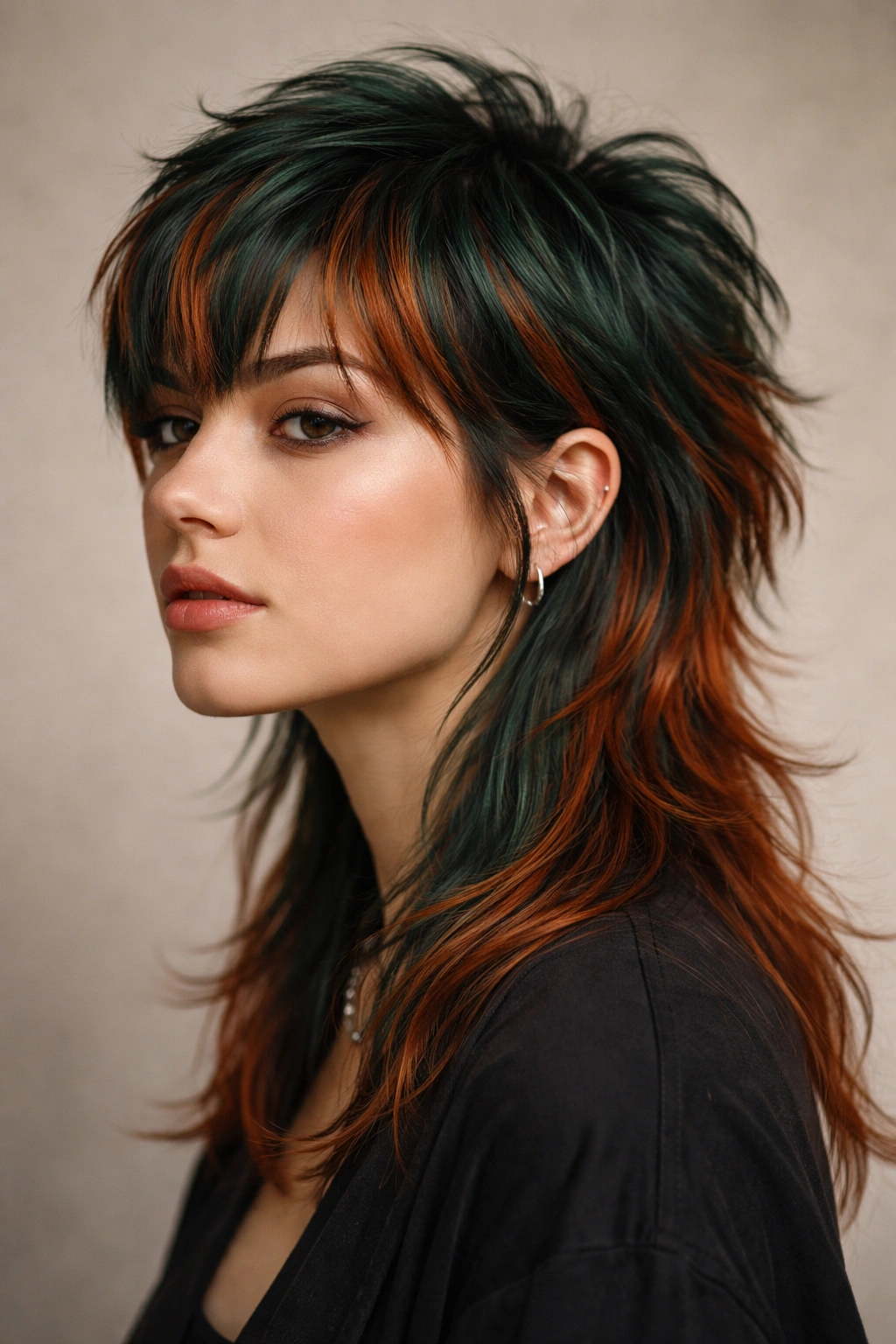
This earthy, natural-feeling mullet pairs a rich forest green with warm copper accents. It’s inspired by nature—think autumn leaves against evergreen branches—and creates a look that feels organic and grounded despite being decidedly unconventional. The two colors work together to create depth and dimension.
The Natural Appeal of Earth-Tone Color
Forest green and copper feel less “out there” than neon combinations, making this mullet an excellent choice for people who want bold color but need it to feel somewhat grounded. Green is psychologically calming and growth-oriented, while copper feels warm and energetic. Together, they create a balanced energy that’s visually interesting without feeling jarring. These colors also work beautifully across diverse skin tones when you choose the right undertones.
Important Aspects of Forest and Copper Tones
- This color combination is particularly flattering to those with warm, olive, or earth-toned complexions
- Forest green can appear muddy if your base isn’t light enough; discuss with your colorist whether you need to lighten first
- Copper is more forgiving than bright yellows and shows beautifully throughout textured mullet layers
- The combination works equally well with sleek or textured styling, though textured styles showcase both colors more effectively
- Coordinates naturally with green, brown, orange, and warm-toned clothing—making this a genuinely wearable everyday color
Worth knowing: This color story works year-round but feels especially relevant during autumn months, making it perfect if you love seasonal style shifts.
10. Two-Tone Mint and Lavender Mullet
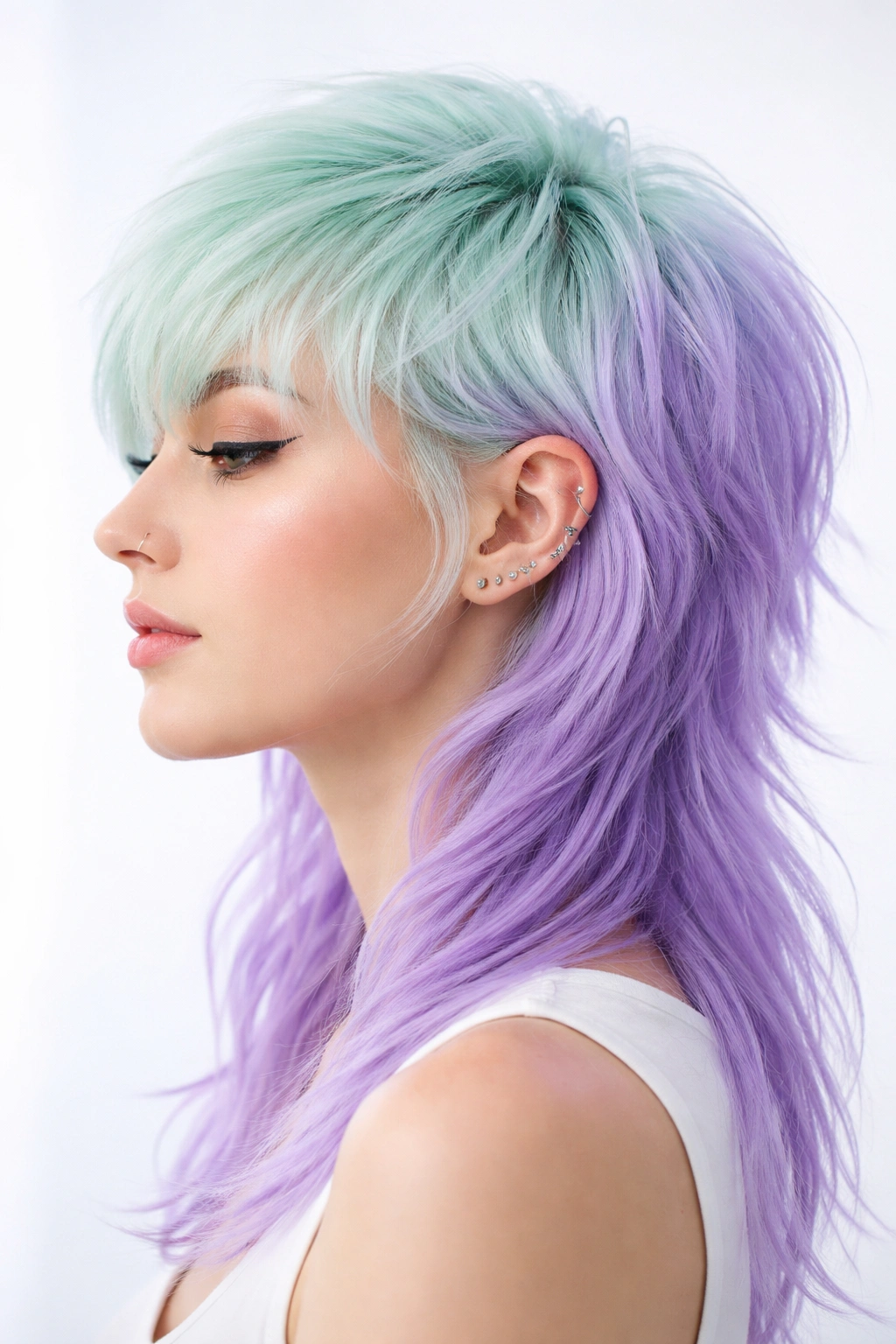
This soft, pastel-inspired mullet uses a cool mint green on top or one side and a soft lavender on the back or other side. The two colors are similar in tone (both are cool, both are light) but different enough in hue to create clear, intentional contrast. It’s undeniably Gen-Z in aesthetic but timeless in its softness.
Why Mint and Lavender Create Magic Together
Mint and lavender are the darlings of color-loving hair enthusiasts for good reason: they’re beautiful individually and absolutely stunning together. Both colors are naturally calming, making this mullet feel less aggressive than other bold-color options. The colors sit next to each other on the color spectrum, so there’s harmony rather than jarring contrast, yet they’re distinct enough to be clearly visible as separate tones. This style appeals to people who love the pastels trend but want slightly more saturation than the very softest options.
Essential Information About This Combination
- Both colors fade gracefully, shifting toward lighter, cooler tones rather than becoming muddy
- Requires a very light hair base; these colors show best on nearly white-blonde or silver starting hair
- The cool undertones of both colors suit those with cool skin tones, ash-toned hair, and a preference for silver jewelry
- Works beautifully with any texture but looks especially dreamy with a slightly tousled, lived-in style
- Pairs naturally with minimalist fashion, cool-toned makeup, and a contemporary aesthetic
Pro tip: Consider platinum or silver extensions for the longer sections if you want maximum color impact without compromising your hair’s health through excessive bleaching.
11. Vibrant Red and Violet Mullet
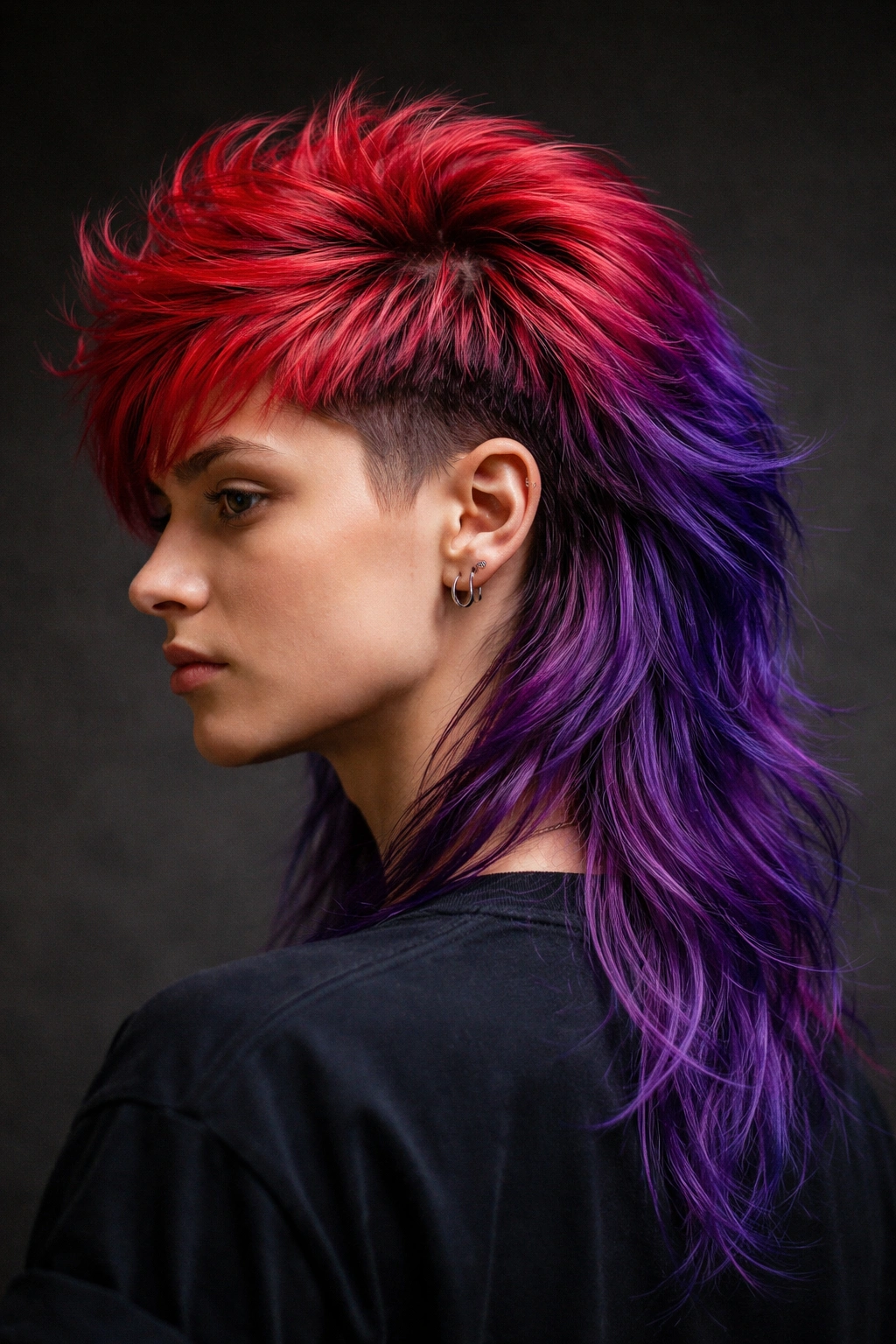
This bold combination pairs a true, vibrant red with a deep violet, creating a color story that’s part autumnal, part otherworldly. The red sits on top with texture and movement, while the violet flows through or concentrates on the longer back section. Together, they create an almost jewel-like quality that’s impossible to ignore.
The Power of Red and Violet Together
Red and violet are neighbors on the color wheel, so they create harmony while still delivering maximum visual impact. This combination works particularly well for people with warm or neutral skin tones and offers flexibility: the red can skew orange-red or blue-red depending on undertone preference, and the violet can be deep and moody or slightly brighter depending on your style. This mullet straddles the line between bold and sophisticated, making it perfect for people who want serious color but also want to feel intentional about their choices.
Key Points for Red and Violet Mullets
- Red is historically the most difficult color to maintain in hair; expect regular toning and upkeep
- Both colors show beautifully on medium to dark hair bases, which makes this a great option if you have naturally darker hair
- The combination works best with layers and texture that catch light and showcase both colors throughout
- Pairs exceptionally well with bold makeup, statement jewelry, and confident styling
- The red-violet combination has strong cultural and fashion associations; make sure you’re comfortable with those contexts
Worth knowing: Fading patterns differ for red and violet, so you might find one color needs touch-ups before the other. Plan for potentially staggered color maintenance appointments.
12. Peacock Blue and Emerald Mullet
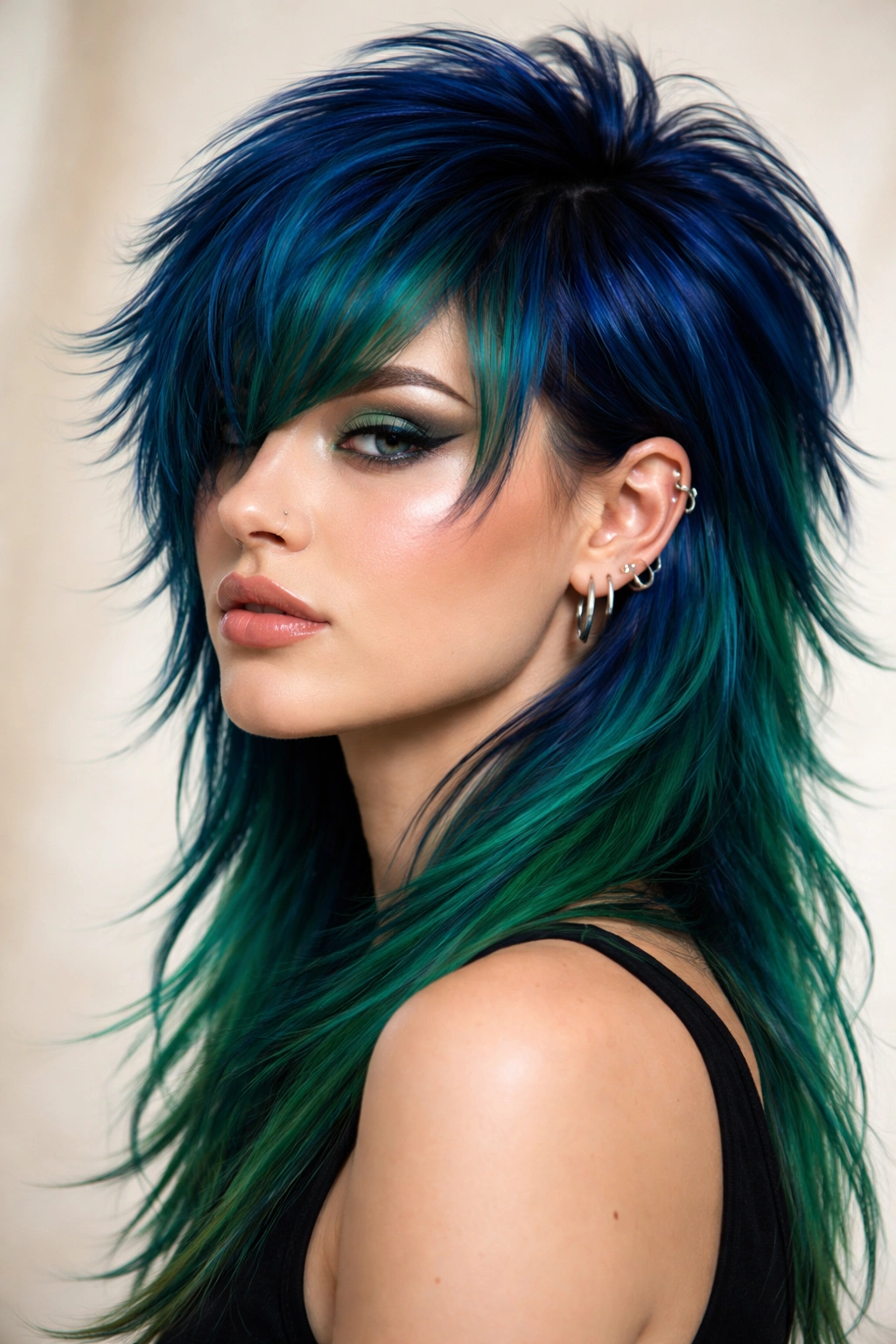
This stunning mullet channels the colors of a peacock’s tail: a brilliant peacock blue (sometimes called jewel blue or teal-blue) blended with or contrasted against a deep, rich emerald green. It’s theatrical, artistic, and undeniably show-stopping. The combination works because both colors sit in the blue-green family, creating cohesion while delivering obvious visual interest.
Why Peacock Colors Feel Artistic
Peacock blue and emerald green reference one of nature’s most visually stunning creations, immediately lending artistic credibility to this color choice. These colors work because they’re bold without being acidic; they have depth and richness that reads as intentional rather than experimental. The combination appeals to creative individuals, artists, and people who genuinely love color and aren’t afraid to make a statement through it.
Critical Details for This Bold Combination
- Both colors require a very light starting base and show best on pale blonde or silver hair
- The blue and green sit close enough on the spectrum to feel harmonious but distinct enough to be clearly visible
- This mullet needs texture and movement to really shine; sleek hair flattens the colors
- Requires serious color maintenance and professional upkeep to keep the colors true
- Coordinates beautifully with bold fashion choices, statement makeup, and artistic styling
Pro tip: If committing to both colors feels overwhelming, consider starting with just the peacock blue and adding the emerald over time, or focusing on one color with the other as subtle undertones or accents.
Final Thoughts
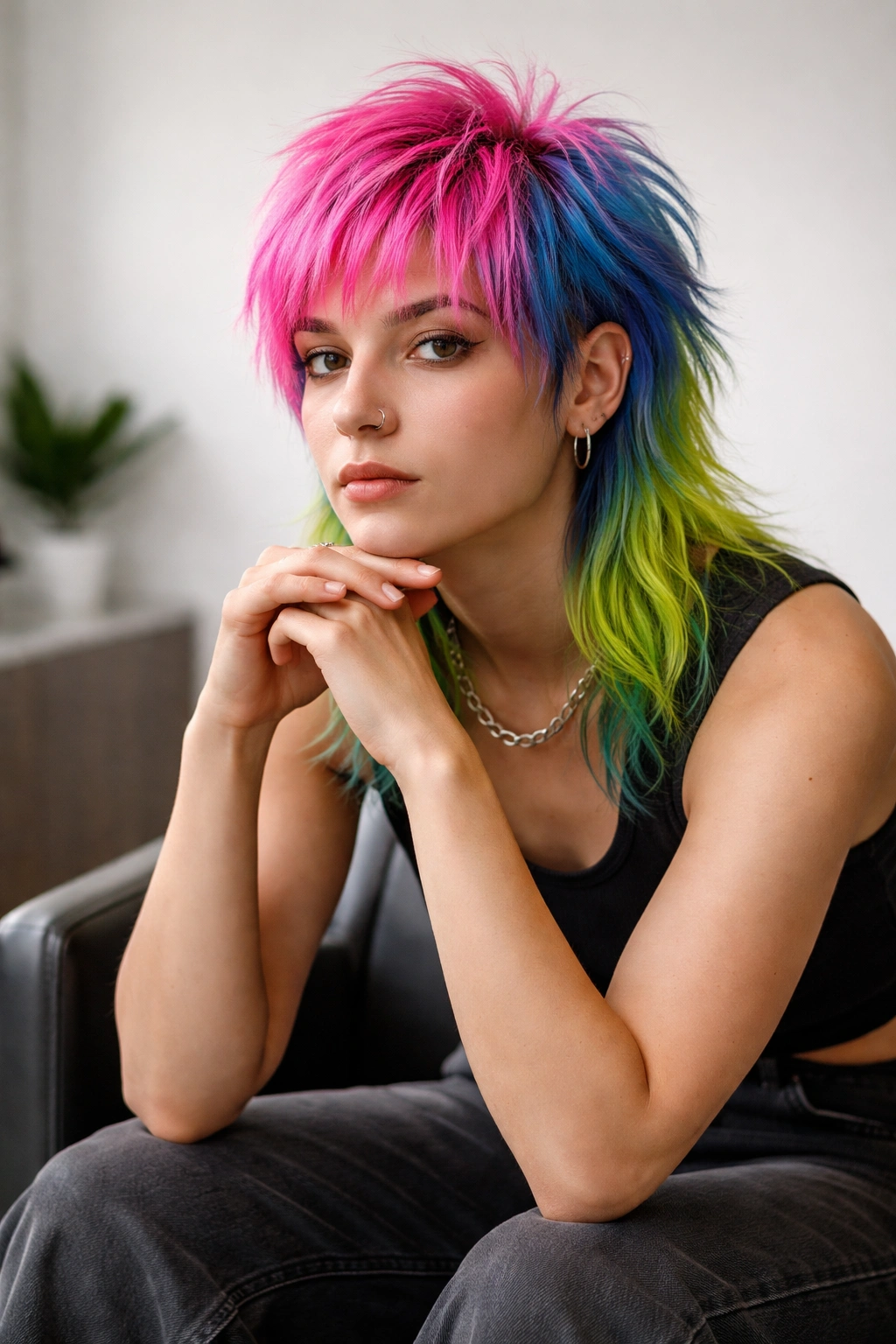
Choosing a colorful mullet isn’t just about picking a color you love—it’s about committing to a style that expresses something genuine about who you are. The twelve options here range from soft and romantic to bold and rebellious, from natural and earthy to theatrical and artistic. The best colorful mullet for you is the one that makes you feel confident, seen, and authentically yourself.
Before you book that appointment, consider your lifestyle, your maintenance bandwidth, and what colors genuinely make you feel good. Sit with reference photos for a few weeks; if you keep returning to the same images, that’s your answer. Have a detailed conversation with your colorist about starting base, maintenance, fading patterns, and realistic upkeep. And remember: if a particular version doesn’t feel right down the road, your hair grows. You can always shift the color, soften it, or move in a completely different direction. That’s the gift of color—it’s temporary, artistic, and always adaptable to who you’re becoming.
