



Short hair has become one of the most powerful statements you can make in a professional setting. It’s not just practical—it signals confidence, intentionality, and a willingness to embrace modern style without sacrificing polish. The right short hairstyle can frame your face beautifully, reduce daily styling time, and command respect in the boardroom, the courtroom, or the creative studio. The challenge isn’t finding a short hairstyle; it’s finding one that balances your professional image with your personal aesthetic while working with your hair texture, face shape, and lifestyle.
The trick to pulling off short hair at work is understanding that “short” doesn’t mean boring or androgynous unless you want it to be. Professional short hairstyles come in dozens of variations—from meticulously shaped pixies to textured crops to sleek bobs—each carrying its own energy and requiring its own maintenance approach. A style that works beautifully for someone with straight, fine hair might need different product choices or styling techniques for someone with curls or waves. Similarly, a style that reads perfectly professional in a creative industry might need slight modifications for a more conservative corporate environment.
What makes a short hairstyle workplace-appropriate isn’t really about length or structure—it’s about intentionality and polish. A purposefully styled short haircut, regardless of how short it is, signals that you’ve thought about your appearance and made deliberate choices. Messy or unkempt short hair can read as careless, but meticulously maintained short hair at any length projects competence and confidence. The styles that follow are all workable in professional settings because they can be styled with intention, maintained with care, and adapted to match your industry’s particular culture.
1. The Textured Pixie
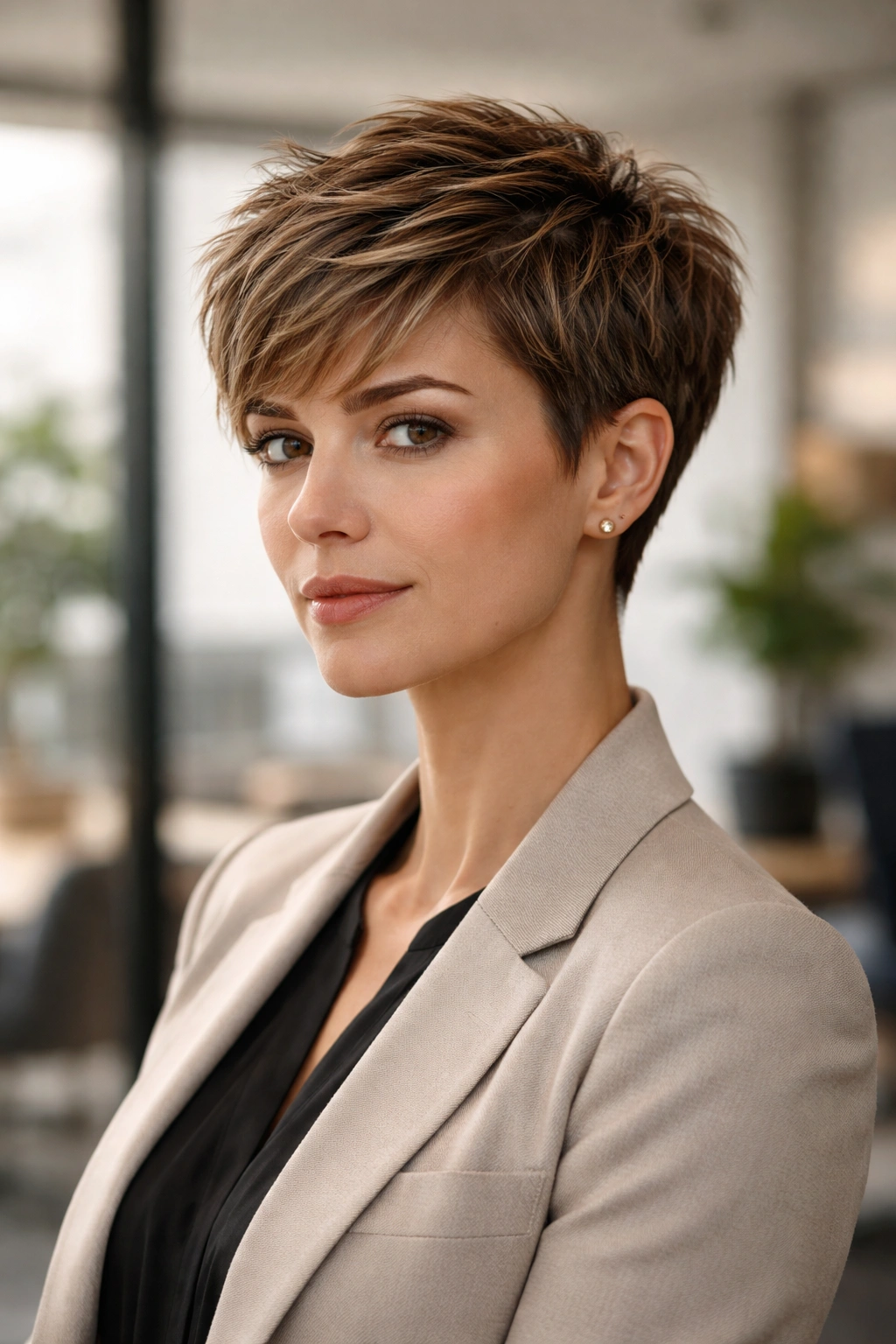
The textured pixie is the modern evolution of the classic pixie cut—longer on top with textured layers that give movement and dimension, shorter on the sides and back for that signature cropped silhouette. This isn’t the severe, geometric pixie of decades past; it’s softer, more forgiving, and significantly more wearable for diverse face shapes and hair types. The textured pixie works in virtually every professional environment because it’s undeniably polished while maintaining an approachable, contemporary vibe.
Why It Works in the Workplace
The textured pixie succeeds professionally because it combines structure with softness. The shorter sides and back give clean, intentional lines that read as put-together and professional, while the textured crown allows you to show personality and movement. Unlike a severe geometric pixie, the texture breaks up the shape in a way that’s less stark and more flattering to a wider range of face shapes. The style also ages beautifully—it doesn’t read as trendy or youthful in a way that undermines credibility, but rather sophisticated and self-assured.
How to Style and Maintain It
- Regular trims every 4-6 weeks keep the sides clean and the shape intentional; without maintenance, it loses its professional edge
- Texture spray, light mousse, or a matte styling paste adds grip and dimension without looking wet or product-heavy
- Blow-dry with fingers or a small round brush to direct the texture upward and forward for dimension
- The cut works for straight, wavy, and curly hair types, though curly hair may need more frequent trims to maintain shape clarity
- Styling time ranges from 3-10 minutes depending on your hair texture and desired finish
Pro tip: Ask your stylist to cut the textured layers at slightly different lengths to create visual interest and movement rather than uniform texture throughout—this elevates the style from basic to editorial.
2. The Sleek Bob
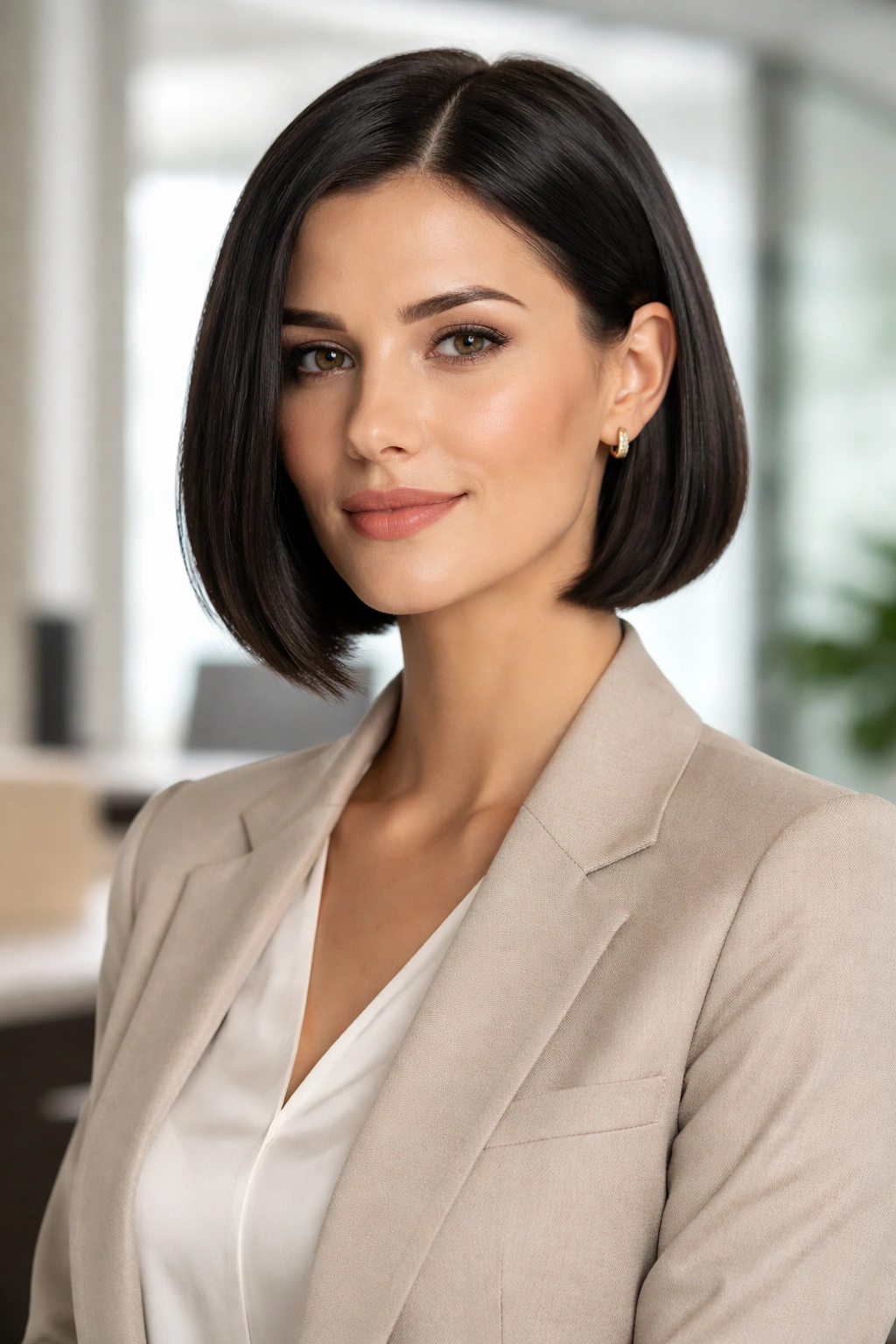
The sleek, chin-length bob is the ultimate professional chameleon—it works in law firms, corporate offices, creative agencies, medical practices, and everywhere in between. This is the haircut that says you understand professionalism without sacrificing style. A truly sleek bob requires minimal texture and maximum shine, typically with a precision blunt or slightly angled cut that frames the face with intention.
Why It’s a Professional Powerhouse
The sleek bob reads as inherently polished because it requires technical precision to execute and maintain. There’s no ambiguity to the shape—it either looks intentional and styled or it doesn’t. The blunt line at chin length frames the jawline beautifully on most face shapes, and the closed ends create a finished, complete look that photographs well and photographs professionally. It’s conservative enough for traditional industries while modern enough that it never reads as dated or out of touch.
Styling Essentials for a Polished Look
- A smoothing serum or shine spray is non-negotiable for the sleek aesthetic; matte finishes undermine the polish
- Blow-dry with a paddle brush and a concentrator nozzle on your blow-dryer to create smooth, directional lines
- Straightening iron or flat iron may be needed if you have natural texture; smooth lines are part of the style’s definition
- Regular trims every 4-5 weeks maintain the blunt line and prevent the ends from looking wispy or undefined
- Side part, center part, or tucked behind one ear—the sleek bob adapts to different styling preferences while maintaining its core shape
Worth knowing: Sleek bobs can accentuate any facial features you want to highlight or de-emphasize based on where your stylist places the length and angle, so communicate your specific face shape and proportions during the consultation.
3. The Layered Crop
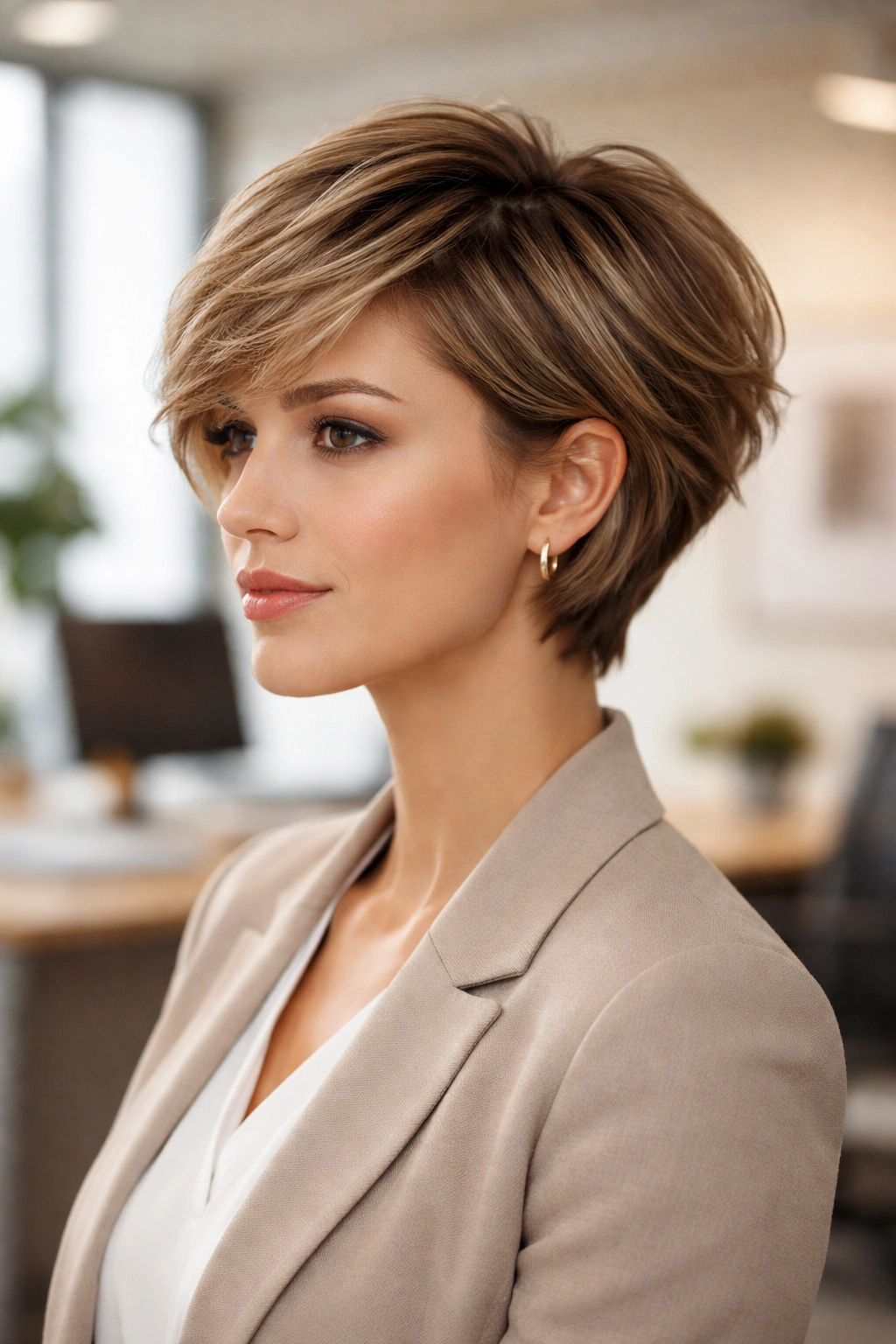
The layered crop sits between a pixie and a full bob—longer than a pixie but shorter than a bob, with multiple layers throughout that create texture, volume, and movement. This cut is the definition of “short hair that still has personality.” Layers are cut at different lengths to create dimension and movement, which means the style works beautifully on curly, wavy, and straight hair textures.
Why Professional Settings Appreciate It
The layered crop appeals to workplaces that value both approachability and polish. It’s less severe than a geometric cut but more intentional than bedhead, striking a balance that works across industries. The movement created by layering makes the style feel contemporary without reading as trendy, and the variety of styling options means you can adapt it to different professional contexts—slightly more polished for client meetings, slightly more relaxed for internal work days.
Styling Options for Different Workday Scenarios
- Apply texture spray or mousse to damp hair and air-dry or blow-dry with fingers for effortless movement
- Use a round brush to smooth and direct layers, then finish with a blow-dryer for a more polished presentation
- A light pomade or defining cream works beautifully on wavy or curly hair to shape the layers and reduce frizz
- Dry shampoo between washes adds texture and volume, extending the style’s visual impact
- The cut requires trims every 6-8 weeks to maintain layer definition as hair grows out
Insider note: Ask your stylist to point-cut (rather than blunt-cut) the ends of layers—point-cutting creates softer, less blunt-looking ends that feel more sophisticated and less choppy.
4. The Side-Swept Shag
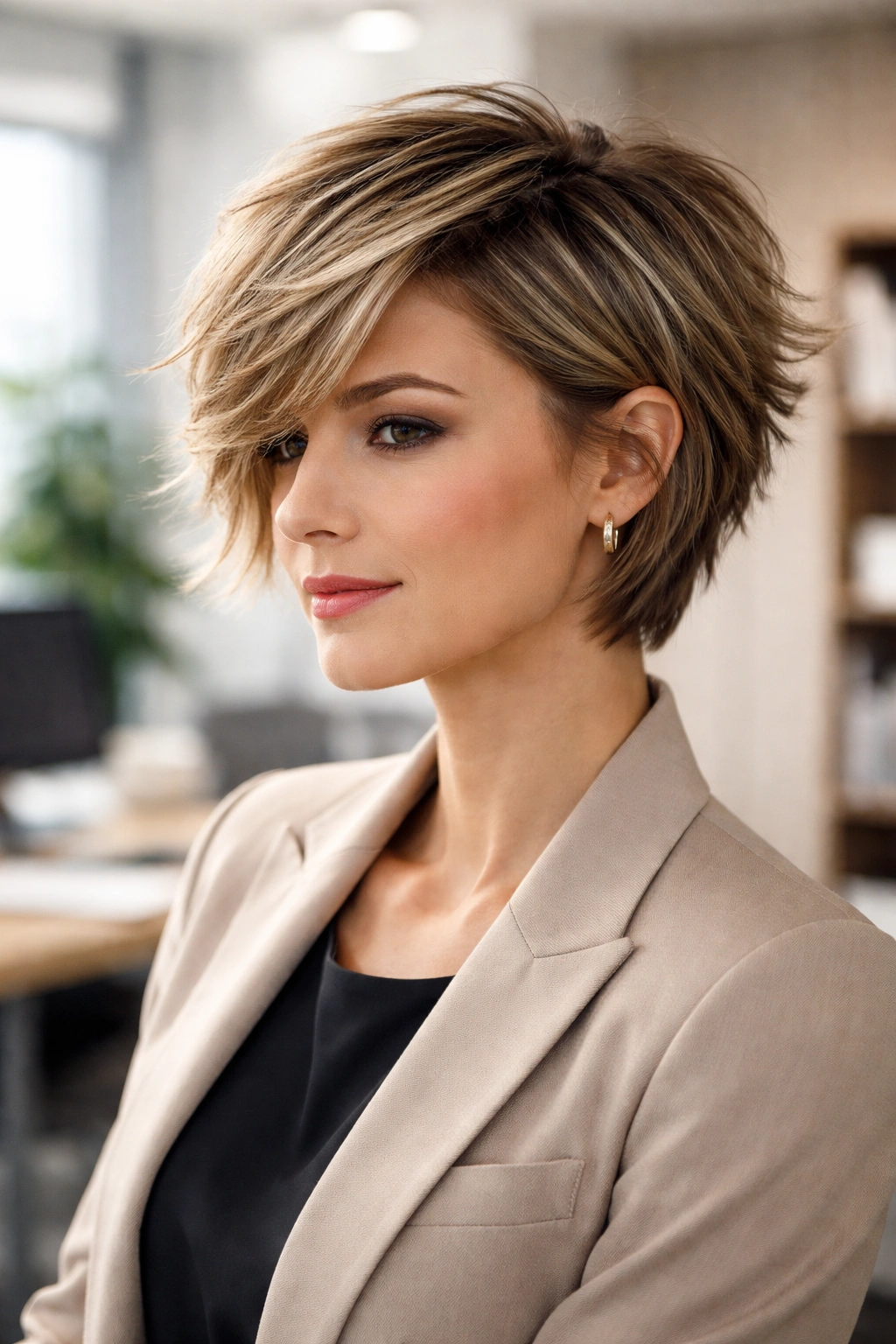
The modern shag is a textured, multi-layered short cut with deliberately piecey, separated layers that create a deliberately undone aesthetic. Unlike the severe shags of the 1970s, contemporary shag cuts are more refined, with careful attention to shape and proportion. The side-swept version angles longer layers toward one side, creating a directional quality that’s both flattering and fashion-forward.
How It Reads in Professional Settings
The side-swept shag walks a delicate line—it’s trendy enough to signal that you’re fashion-aware, but structured enough that it doesn’t read as careless or overly casual. This works best in creative industries (design, marketing, media, tech) or workplaces with more relaxed dress codes. In very conservative environments, the shag might read as too trend-driven; your industry context matters. However, styled with intention and maintained with precision, the modern shag communicates confidence and individual style.
Creating a Professional Presentation
- Product choice is critical—avoid overly matte or heavily textured products that make the shag look unmaintained; instead use light texture spray or a subtle sea salt spray
- Side-sweep the longer layers consistently to create direction and intentionality
- Blow-dry with a round brush to smooth the base while allowing layers to separate naturally
- Curly or wavy hair naturally suits this cut and can be enhanced with a curl-defining cream
- Trims every 5-7 weeks prevent the cut from looking grown-out and shapeless
Worth knowing: The shag requires more styling effort than a sleek bob or simple pixie—if you’re looking for wash-and-go convenience, this isn’t your cut. The payoff is significant visual interest and movement, but the maintenance commitment is real.
5. The Polished Undercut
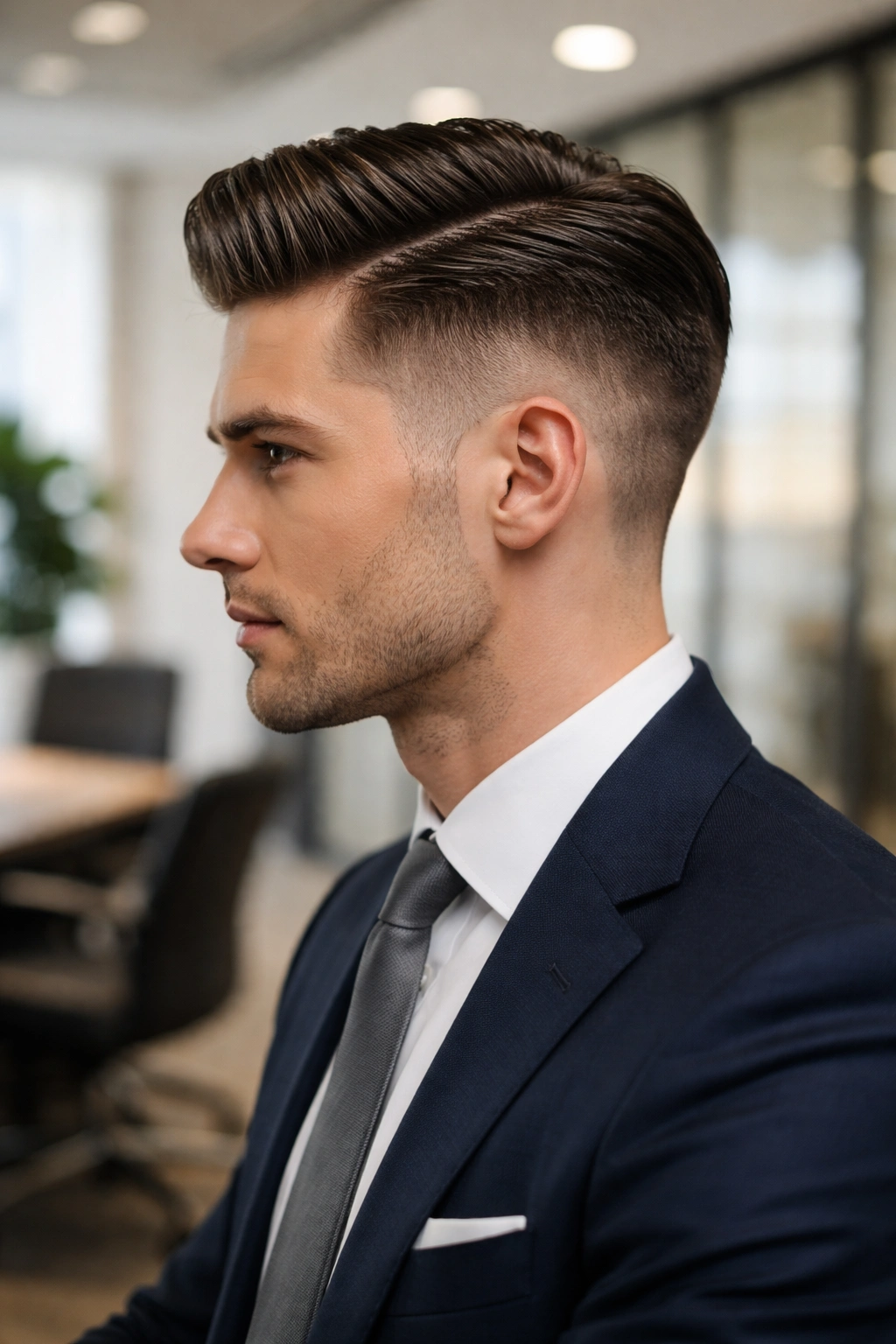
The undercut features closely cropped or faded sides with significantly longer hair on top, creating stark contrast between lengths. The “polished” version keeps the top neat and directional rather than wild or mohawk-like, with the sides cut clean and either faded smoothly or kept razor-sharp. This style is increasingly common in professional settings and reads distinctly modern without sacrificing polish.
Professional Appeal and Industry Suitability
The polished undercut works beautifully in tech, creative, finance, and entrepreneurial settings where individual style is valued and respected. It’s less suitable for conservative industries like law, banking, or government sectors where more traditional style choices are expected. What makes this cut professional rather than punk or edgy is the precision of the execution and the polished styling of the longer top section—it’s intentional and well-maintained, not casual or provocative.
Styling for Workplace Appropriateness
- The top section can be slicked back with pomade for a structured, minimalist look
- Styled upward with texture spray and mousse for volume and dimension
- Side-swept over the undercut for a more conservative presentation
- Blow-dried smooth and brushed directionally for a sleek, architectural appearance
- Requires maintenance every 2-4 weeks on the sides to keep fade lines clean and intentional
Pro tip: If you’re new to an undercut or work in a somewhat traditional environment, ask your stylist to keep the contrast subtle initially—a low fade is less dramatic than a sharp undercut, and you can always go bolder once you’re comfortable with the commitment.
6. The Chin-Length Bob with Bangs
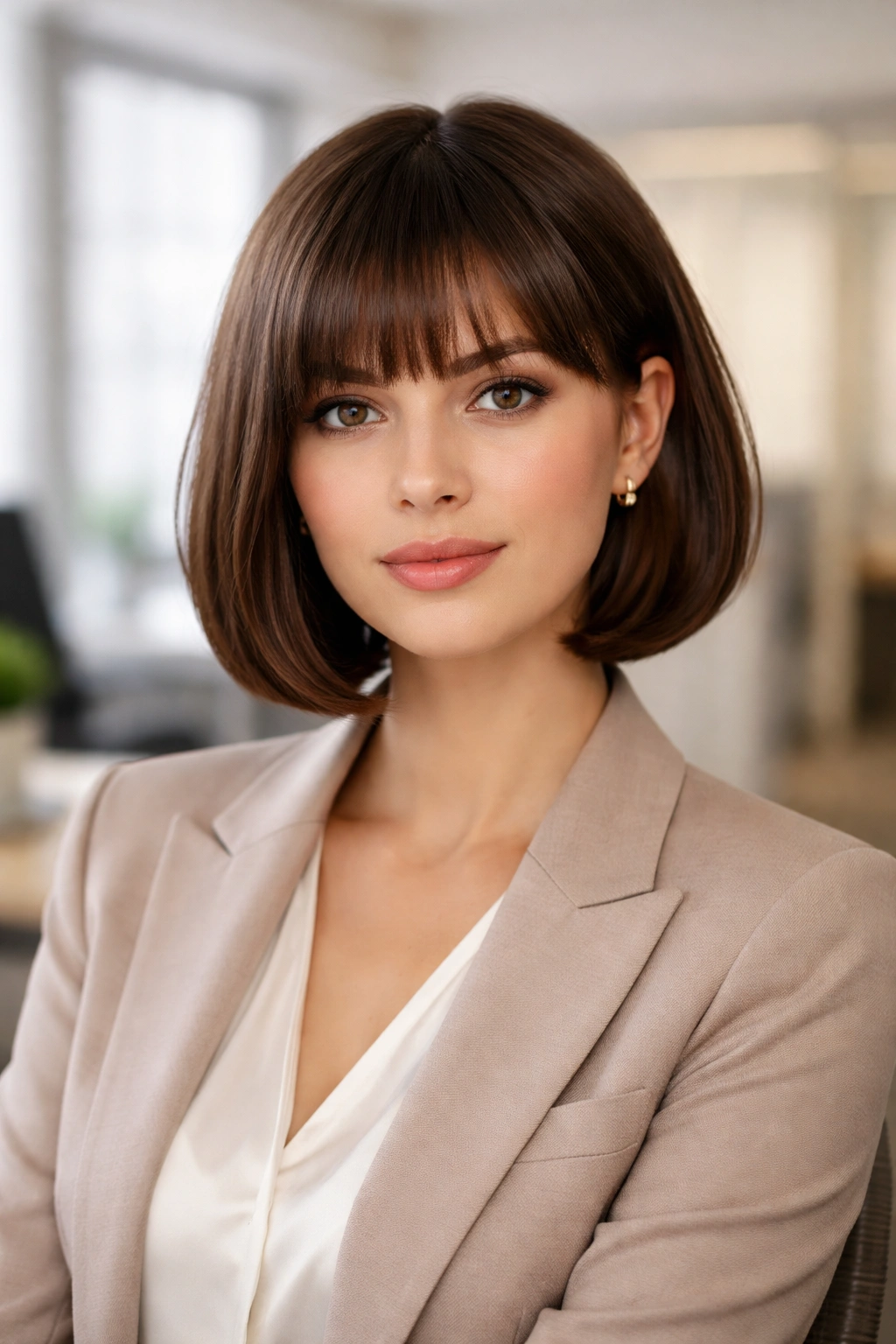
The chin-length bob with blunt or textured bangs adds a distinctive personality to this classic silhouette. The bangs draw attention to the eyes and cheekbones, add visual interest to the face, and create a cohesive, intentional look that’s distinctly put-together. The length sits right at the chin or just below, and the bangs typically land around eyebrow height or slightly below.
Why Bangs Make a Powerful Professional Statement
Bangs communicate decisiveness and style confidence—they’re a deliberate choice that affects your entire appearance. Well-executed bangs that suit your face shape and hair texture read as polished and intentional; poorly maintained or poorly angled bangs read as careless. In professional settings, the key to pulling off bangs is meticulous styling and regular maintenance. When bangs are your styling feature, everything else should be slightly more conservative to balance the statement.
Maintenance and Styling Essentials
- Trims every 2-3 weeks are non-negotiable for bangs; they grow down and lose their shape quickly
- Blow-dry bangs separately to ensure they dry smooth and directional rather than curling or flipping
- A lightweight texture spray helps bangs hold their shape throughout the workday
- Curly or wavy hair requires more frequent styling effort for bangs to read as intentional rather than textured
- Blunt bangs create a more graphic, modern statement; textured, piece-y bangs feel softer and more approachable
Worth knowing: If your lifestyle doesn’t allow for frequent trims (travel, demanding schedule, limited budget), reconsider bangs—they’re more commitment-intensive than other short styles.
7. The Tousled Lob
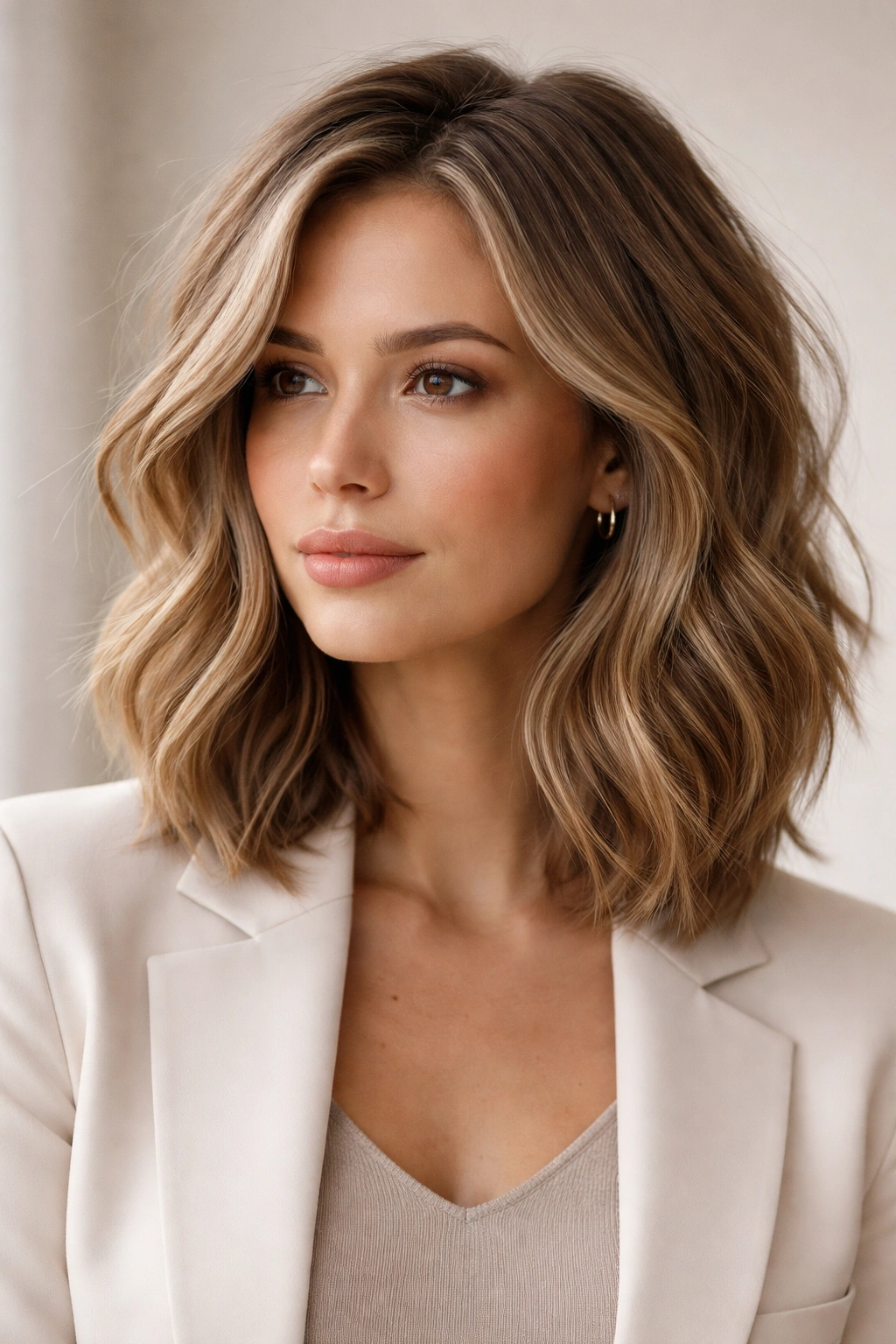
The lob (long bob) that falls between chin and shoulder length with tousled waves or texture sits in that sweet spot where it’s technically short but doesn’t read as severely short. The tousled texture creates movement and dimension, and the length gives you flexibility in how you style and present it. This cut works beautifully for people who want the ease of short hair but crave a bit more length and versatility.
Professional Versatility and Adaptability
The tousled lob is the chameleon of professional hairstyles—styled sleek, it reads polished and put-together; styled textured, it reads contemporary and approachable. The length allows you to adapt the style to different professional contexts without changing the cut. This flexibility makes it ideal for people who move between different workplace environments or want a single cut that works across multiple scenarios. It’s conservative enough for traditional industries but modern enough for creative fields.
Creating and Maintaining Textured Movement
- Beach waves or soft waves are created by blow-drying with a round brush or curling with a wand
- Texture spray applied to damp hair before blow-drying creates natural-looking tousle
- Mousse or curl cream enhances natural waves without creating overly defined curls
- The cut requires trims every 6-8 weeks to maintain shape and prevent the ends from becoming wispy
- Straight hair needs regular heat styling to maintain the tousled look; wavy or curly hair is naturally suited to this style
Insider note: Ask your stylist to cut choppy layers at the ends rather than blunt, razor-straight layers—choppy layers create the textured, tousled effect more naturally and look less severe.
8. The Professional Tapered Cut
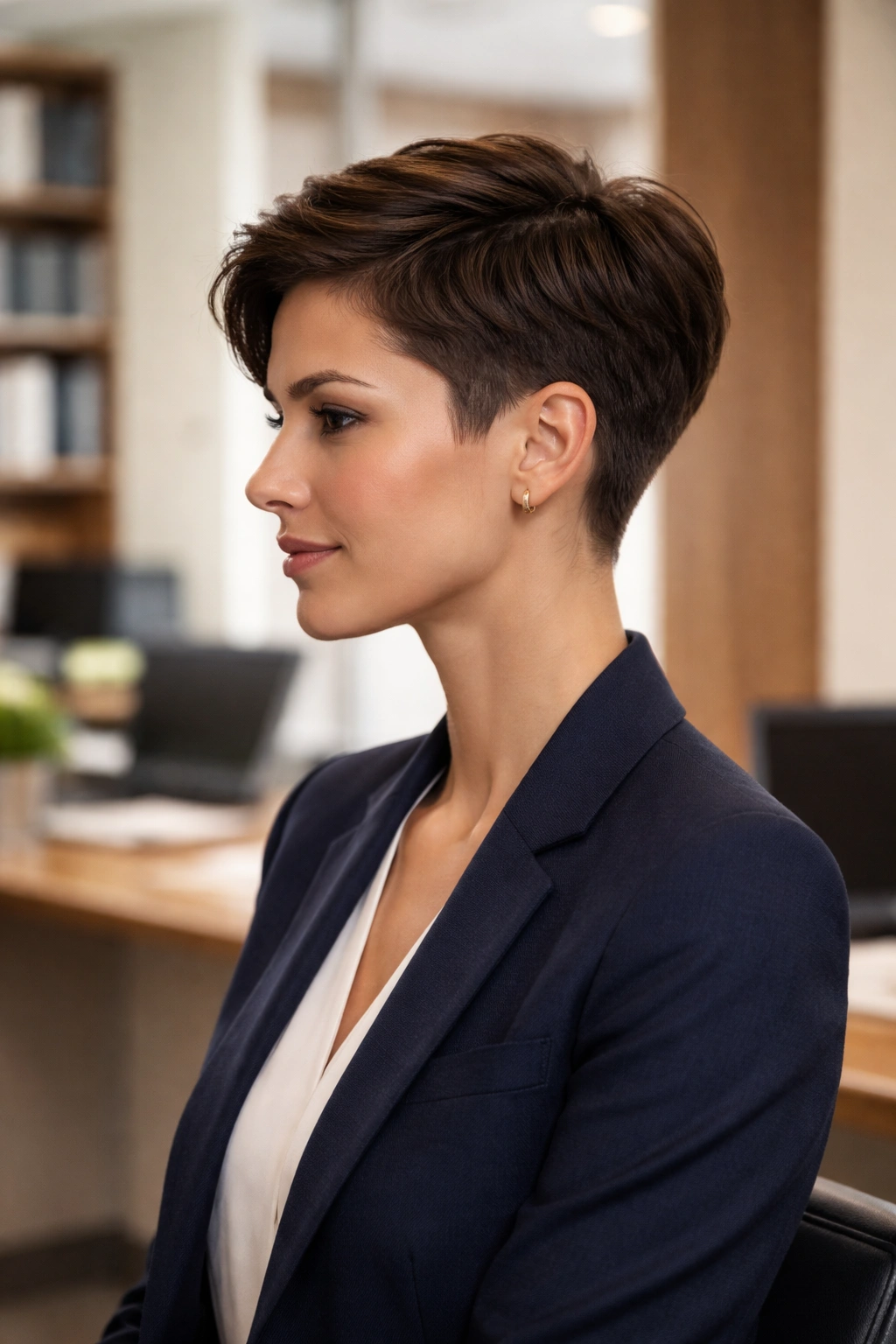
The professional tapered cut features significant length reduction around the sides and back (tapered shorter) with slightly more length on top, creating an overall neat, compact silhouette. This cut is less extreme than an undercut but more shaped than a simple blunt crop. The taper creates a clean, architectural quality that reads as intentional and professional without being trendy.
Why It Works in Conservative Environments
The tapered cut excels in traditional professional environments because it’s clean, compact, and undeniably polished without pushing style boundaries. Law firms, corporate offices, government positions, and established financial institutions tend to appreciate this cut’s structured approach. The taper creates definition and precision without the drama of an undercut, making it accessible for people who want a shaped, intentional cut without taking a major style risk.
Styling for a Polished Appearance
- Light styling products work best—avoid heavy pomades that make the cut look greasy or overly sculpted
- A touch of texture spray adds grip and helps the style hold throughout the day
- Blow-dry smoothly with a blow-dryer and comb for a finished, put-together presentation
- The cut works on all hair types but looks especially sharp on straight or wavy hair
- Maintenance trims every 4-6 weeks keep the taper crisp and the shape intentional
Worth knowing: The professional tapered cut is inherently conservative, which means it works across industries but doesn’t make as strong a personal style statement as some other cuts—it’s the safe choice for people prioritizing polish and professionalism over fashion-forward presentation.
9. The Curved Pixie-Bob Hybrid
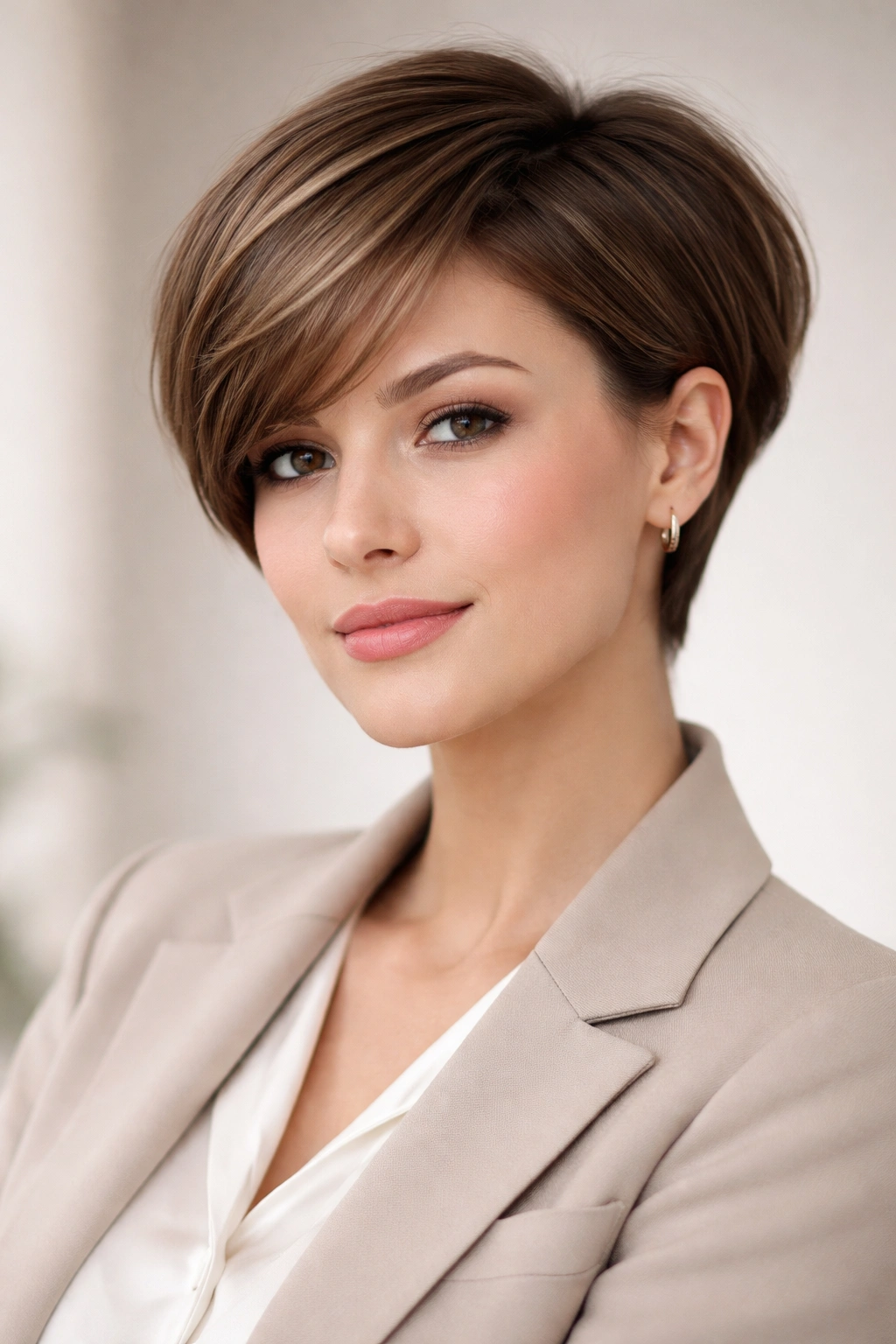
This cut splits the difference between a pixie and a bob—longer than a pixie (often 2-3 inches on top) with an overall rounded, curved shape rather than angular or geometric lines. The sides and back are shorter than the top but not cropped as close as a traditional pixie. This hybrid silhouette is wonderfully forgiving for different face shapes because the curves soften angles rather than emphasizing them.
Why This Cut Flatters Professional Presentations
The rounded, curved shape is inherently feminine and approachable without reading as overly trendy or casual. It’s more interesting than a basic pixie but more conservative than a layered crop or shag. The curved shape works beautifully for oval, square, and round face shapes, making it one of the most universally flattering short cuts available. In professional settings, this translates to looking polished and intentional while remaining accessible and approachable.
Styling Flexibility and Ease
- Blow-dry with fingers or a round brush for soft, rounded movement
- Texture spray enhances natural texture without creating a deliberately undone look
- The cut works beautifully on straight, wavy, and curly hair with minimal product dependency
- Styling time is typically 5-10 minutes for a finished appearance
- Trims every 5-7 weeks maintain the curved shape and prevent the style from looking grown-out
Pro tip: The rounded shape particularly flatters people with angular or square face shapes—the curves counterbalance sharp facial features and create visual softness.
10. The Structured Asymmetrical Cut
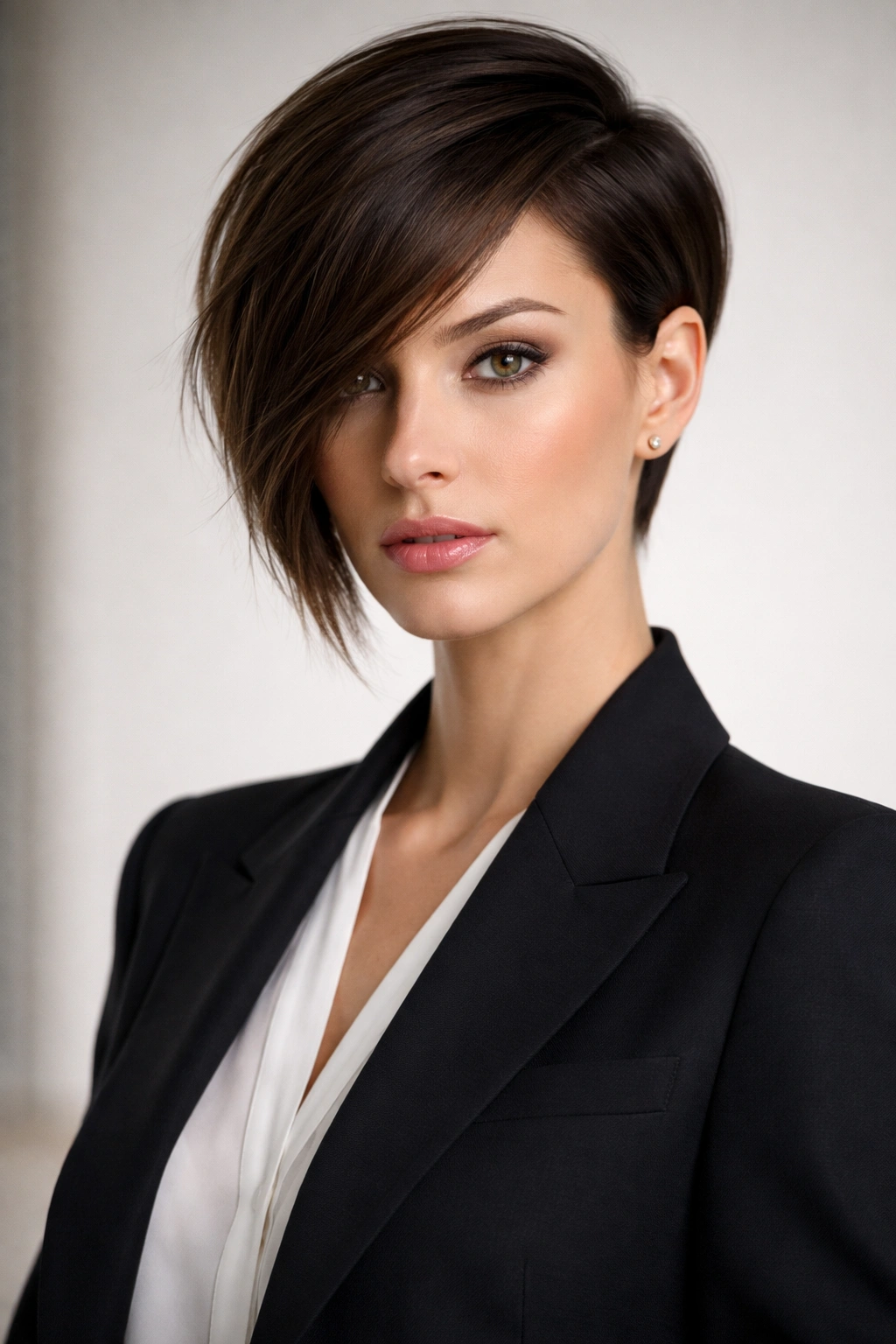
The asymmetrical cut features intentionally different lengths on either side of the head—one side significantly longer than the other, creating a directional, architectural quality. This is done with precision and intention rather than random unevenness. When executed cleanly, the structured asymmetrical cut reads as confidently modern and fashion-aware while remaining professional.
Professional Presentation and Industry Context
The structured asymmetrical cut is boldest of the styles covered here and works best in creative industries, tech companies, fashion or design fields, and workplaces that explicitly value individual style. In more traditional industries, this cut might read as too trendy or provocative. However, in the right context, a well-executed asymmetrical cut communicates confidence, style awareness, and creative thinking. The key is meticulous execution—asymmetry needs to look intentional and precisely shaped, not like an accident.
Maintaining Intentional Asymmetry
- The longer side can be styled multiple ways—sleek and smooth, textured and wavy, or deliberately undone
- The shorter side should be extremely clean and precisely shaped to emphasize intentionality
- Trims every 4-5 weeks are essential to maintain the asymmetrical proportions as hair grows
- Blow-dry each side differently to emphasize the contrast—smooth one side, add texture to the other
- Product choices should reflect the contrast—matte on the short side, shine on the long side, for example
Worth knowing: The asymmetrical cut requires confidence to wear well—you’re making a visible style statement, and that only works if you own it completely. Half-hearted commitment to an asymmetrical cut reads as uncertain rather than bold.
Final Thoughts
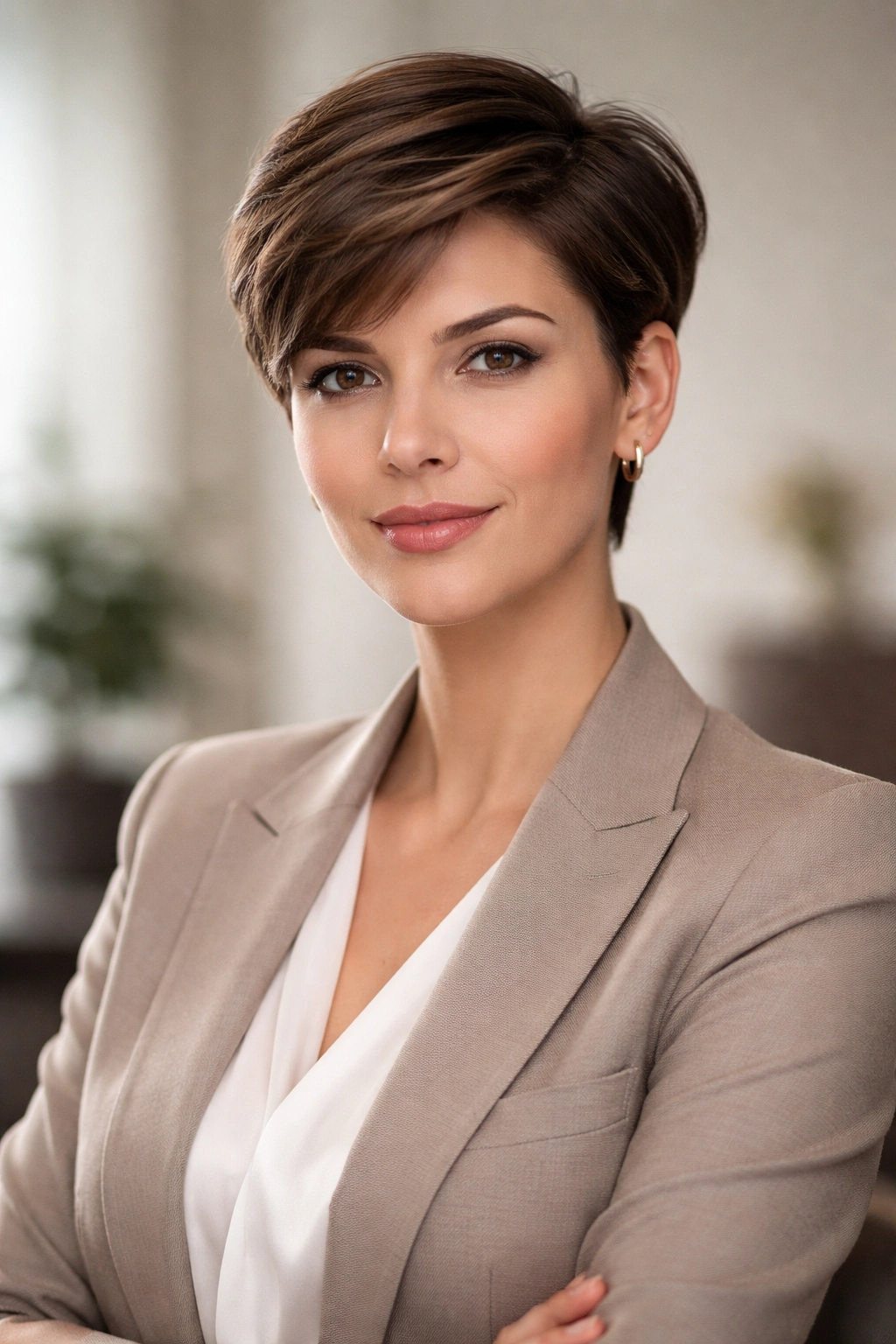
Professional short hairstyles offer incredible flexibility, visual interest, and practical benefits—when you choose the right cut for your hair texture, face shape, and workplace environment. The cut itself is only half the equation; the other half is consistent styling, regular maintenance, and wearing your choice with confidence. Whether you choose the polished minimalism of a sleek bob, the contemporary texture of a layered crop, or the bold personality of an asymmetrical cut, the key to workplace success is making sure your cut is intentional, well-maintained, and appropriate for your professional context.
The transformation that comes with a well-executed short hairstyle goes beyond appearance. Many people report feeling more professional, confident, and in control when they’re wearing a short cut that works for them. That confidence is visible, and it matters in how you present yourself and how others perceive your competence. If you’ve been considering short hair for your professional life, the styles outlined here prove that short hair can be every bit as sophisticated, versatile, and polished as longer styles—and often requires less daily effort to maintain.
