



Fine hair comes with its own set of challenges, especially when you’re craving an edgy, bold haircut. Most short cuts designed for thick, textured hair can look limp or sparse on fine strands — but that doesn’t mean edgy styles are off-limits. The truth is, the right short haircut can actually make fine hair look thicker, fuller, and infinitely more striking than longer styles that weigh it down. It’s all about strategic layering, smart styling techniques, and understanding which cuts work with your hair’s natural texture rather than against it.
The key to pulling off an edgy short cut with fine hair is knowing that less can actually be more. Textured, choppy layers create the illusion of density without requiring actual bulk. Undercuts and disconnected sections add visual drama without adding weight. Strategic disconnection between sections can make even thin hair look intentional and fashion-forward rather than sparse. When you understand these principles, you can rock pixies, crops, shags, and angular cuts that look absolutely fearless.
What makes fine hair ideally suited for edgy cuts is their lightweight, moveable quality. Fine strands don’t hold sleek lines the way thicker hair does — they shift, move, and create natural texture. Instead of fighting this trait, edgy cuts capitalize on it. The movement becomes part of the style’s personality. You’re not aiming for a blunt, stationary look; you’re after something that moves with you, catches light differently depending on the angle, and looks more dynamic the messier you style it.
The edgy haircuts that follow all share one essential characteristic: they work because they embrace the way fine hair naturally behaves rather than pretending your hair is something it’s not. Each cut comes with specific styling and maintenance tips designed to help fine hair look its absolute best.
1. Textured Crop with Disconnected Undercut
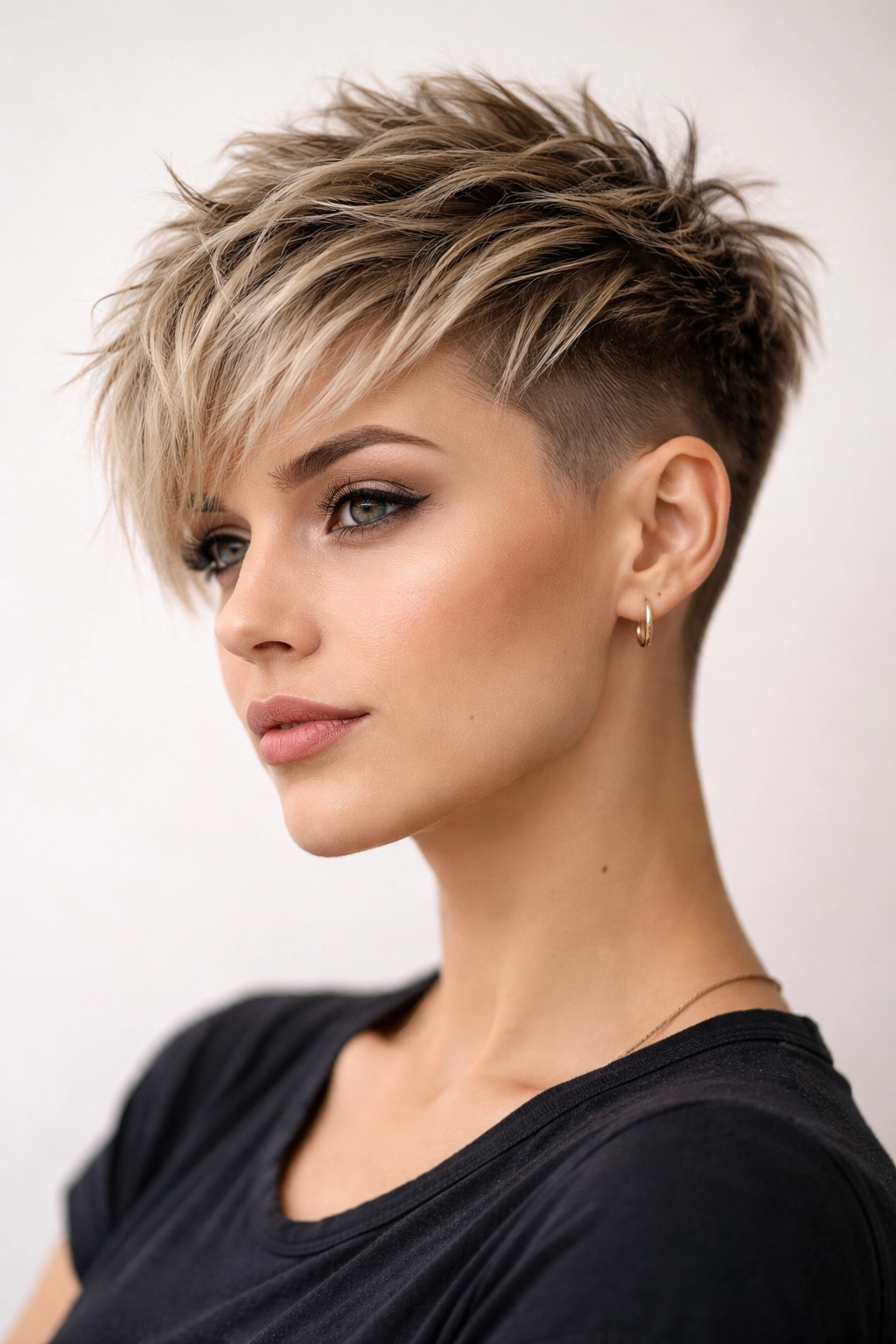
A textured crop with a disconnected undercut is basically the perfect marriage of edgy and flattering for fine hair. The undercut — shaved or faded short on the sides and back — removes weight and creates instant visual contrast, making the hair on top appear denser by comparison. The cropped layers on top are cut short and choppy, which breaks up the hair into individual pieces rather than one flat mass.
Why This Cut Works for Fine Hair
The disconnected undercut solves a major fine-hair challenge: you don’t have heavy bulk dragging down your crown. With the sides clipped short, all the visual interest and fullness happens in the textured top section. The choppy layers on top create separation between each strand, which makes the hair appear thicker and more voluminous than it actually is. It’s a cut that looks intentionally edgy rather than accidentally thin.
Styling and Maintenance Tips
- Use a sea salt spray or texturizing powder before styling to add grip and make layers more pronounced
- Blow-dry with your head tipped forward to create lift at the roots, then style upward and back
- Keep undercuts fresh every 3-4 weeks or they’ll start looking unkempt rather than intentional
- A matte clay or pomade on the top layers adds definition without making fine hair look greasy
Pro tip: Ask your stylist to point-cut the top layers rather than blunt-cut them — point-cutting creates more texture and makes the individual pieces feel lighter and more mobile.
2. Asymmetrical Pixie with Volume
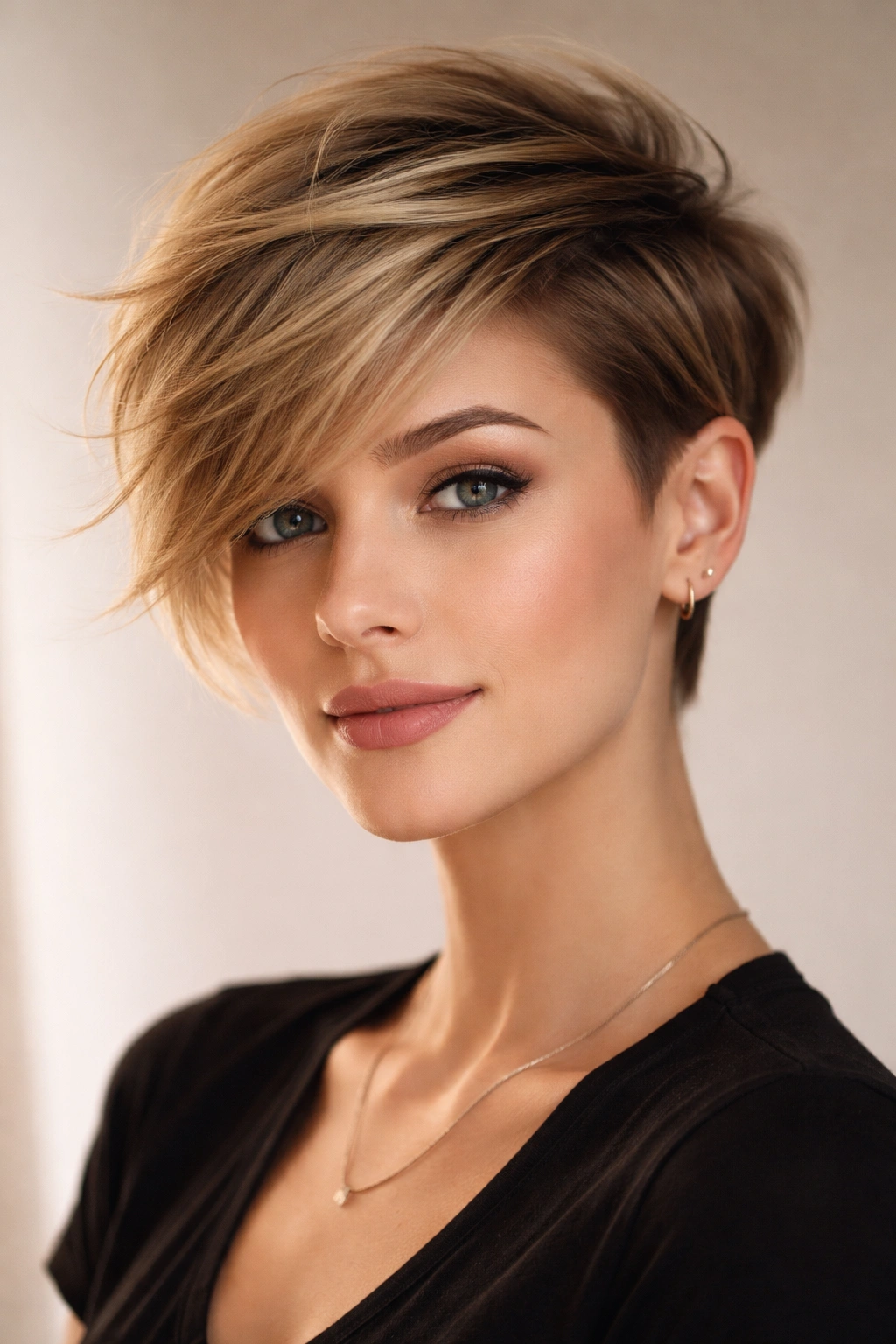
An asymmetrical pixie takes the classic pixie cut and adds movement and drama through uneven length and disconnection. One side stays shorter and closer to the head, while the other side sweeps longer and can be styled up or swept across. This style plays beautifully with fine hair’s natural movement and creates the illusion of way more volume than you actually have.
Why Asymmetry Changes Everything
The asymmetrical cut creates visual interest in multiple dimensions, so the viewer’s eye moves around your head rather than staring straight at the crown. This movement means any thinness gets camouflaged by the cut’s design. The longer side, when styled with texture and movement, drapes away from the head and catches light in a way that suggests fullness. The shorter, closer side hugs the head in a way that looks intentionally sculpted rather than sparse.
How to Style for Maximum Impact
- Apply texturizing product to damp hair before blow-drying
- Blow-dry the longer side away from the face, using a brush to direct the hair backward and upward
- Use fingers or a texture paste to separate individual pieces on both sides
- Style the shorter side flat or slicked back depending on your mood — this style actually looks great both wet and dry
Worth knowing: This cut requires more frequent trims than a standard pixie — plan on every 4-6 weeks to keep the asymmetry sharp and intentional.
3. Short Shag with Face-Framing Layers
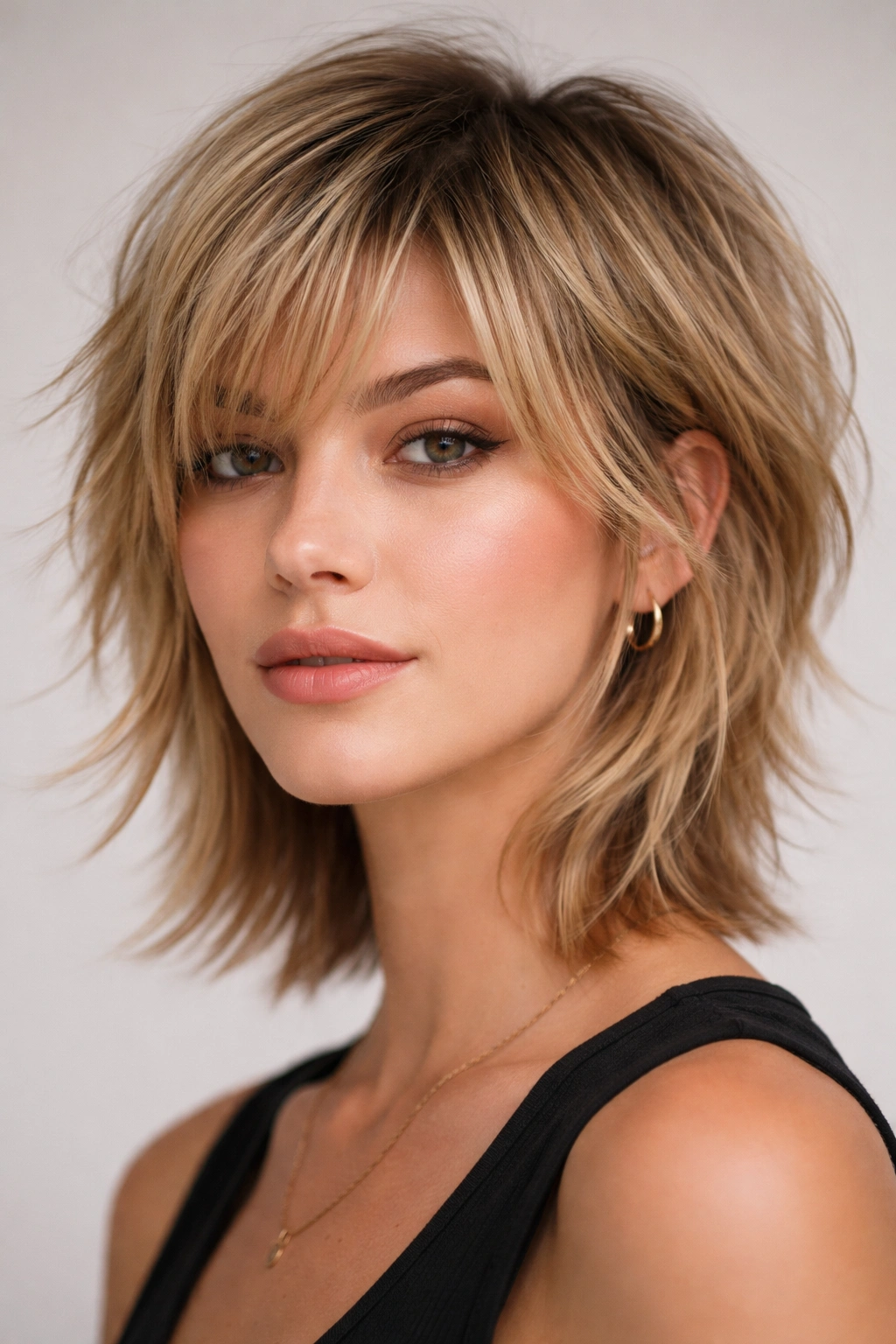
A short shag is one of the most forgiving edgy cuts for fine hair because the entire cut is essentially built on movement and texture. Shags live and die by choppy, disconnected layers that create a feathered, piece-y effect. For fine hair, this translates to a cut that automatically looks fuller because of the way layers overlap and create depth rather than relying on bulk.
The Science of Shag Structure
Shags work by stacking layers at different lengths throughout the cut — short at the crown, progressively longer as you move down. This creates an ombré effect of texture that makes the hair appear thicker from every angle. The face-framing pieces are usually the shortest and most chopped, which brings movement and softness right where you need it. Fine hair takes beautifully to this structure because the layers don’t weigh each other down.
Shag Styling Essentials
- This cut thrives on texture, so use a texturizing spray or sea salt spray daily
- Blow-dry with a diffuser attachment to enhance natural waves and create volume
- Scrunch product in while hair is damp, then let it air-dry for the most effortless texture
- Resist over-grooming this cut — the messier it looks, the better it actually works
Insider note: Shags look best when the layers feel a little bit undone, so styling them to perfection actually defeats the purpose. The best shag days are the ones where you’ve barely touched your hair.
4. Choppy Blonde Bob
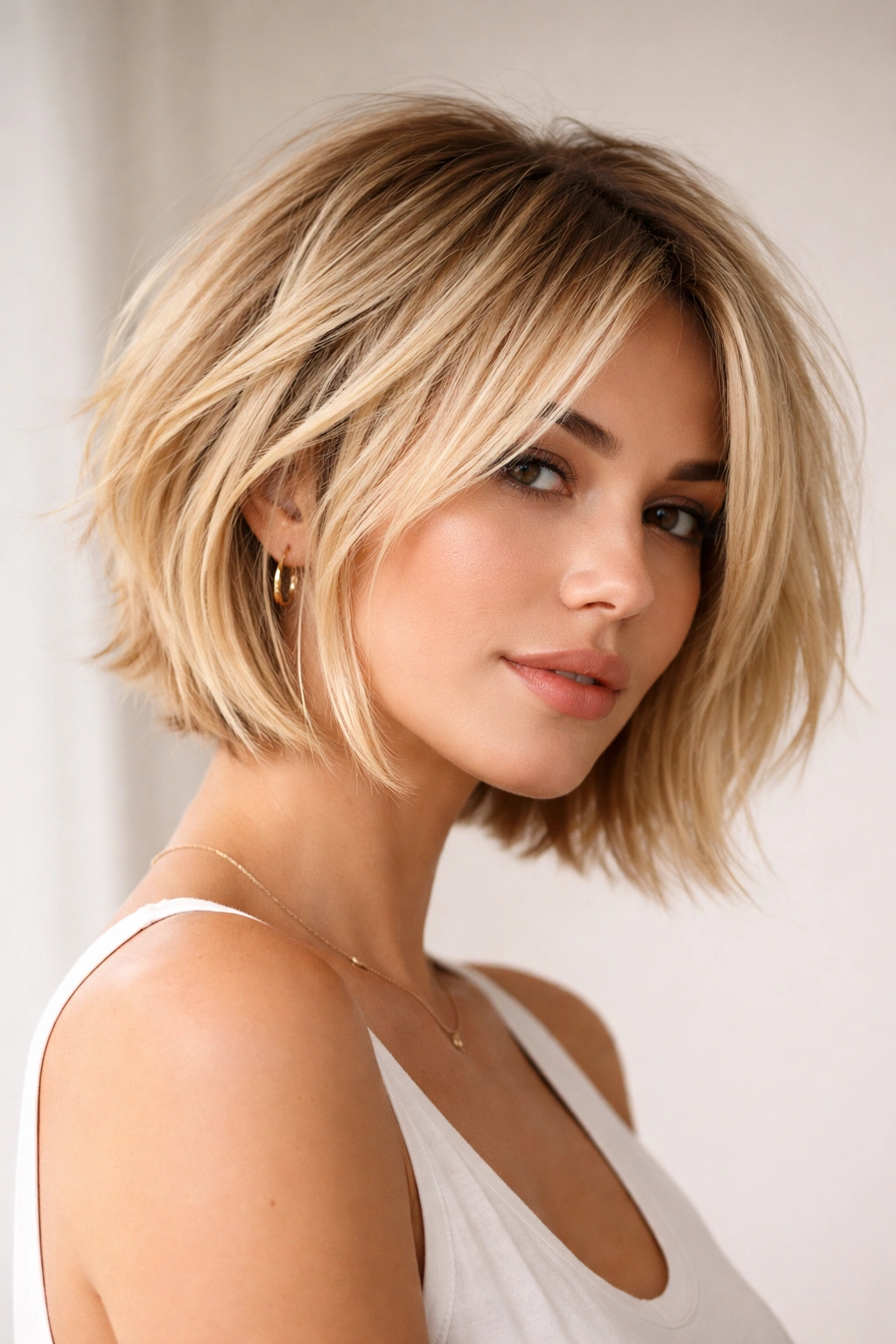
A choppy bob that hits around chin length with heavily layered, disconnected pieces is edgy without being extreme. The choppiness is what makes this work for fine hair — instead of one solid mass that hangs flat, you’ve got individual pieces that move independently. Blonde shows texture and layering more visibly than darker colors, so the cut reads as intentionally textured rather than thin.
Why Choppy Beats Blunt for Fine Hair
A blunt bob on fine hair can emphasize sparseness because every short hair shows. A choppy bob, by contrast, uses strategic layering to create the visual effect of density. The choppy pieces cast small shadows on each other, which creates the impression of more hair. Light can scatter through the pieces rather than hitting flat surface. Blonde especially showcases this effect because light reflects differently off layered blonde pieces than off a blunt line.
Maintaining a Choppy Bob
- This cut needs a trim every 6-8 weeks to keep the choppy texture looking fresh rather than grown-out
- Blow-dry with movement — straight blow-drying will flatten this cut
- Use a round brush to flip the ends outward and create volume
- A volumizing mousse applied to roots before blow-drying adds lift
Quick fact: Choppy bobs photograph especially well because the texture is visible in photos even more than in person.
5. Side-Swept Pixie Cut
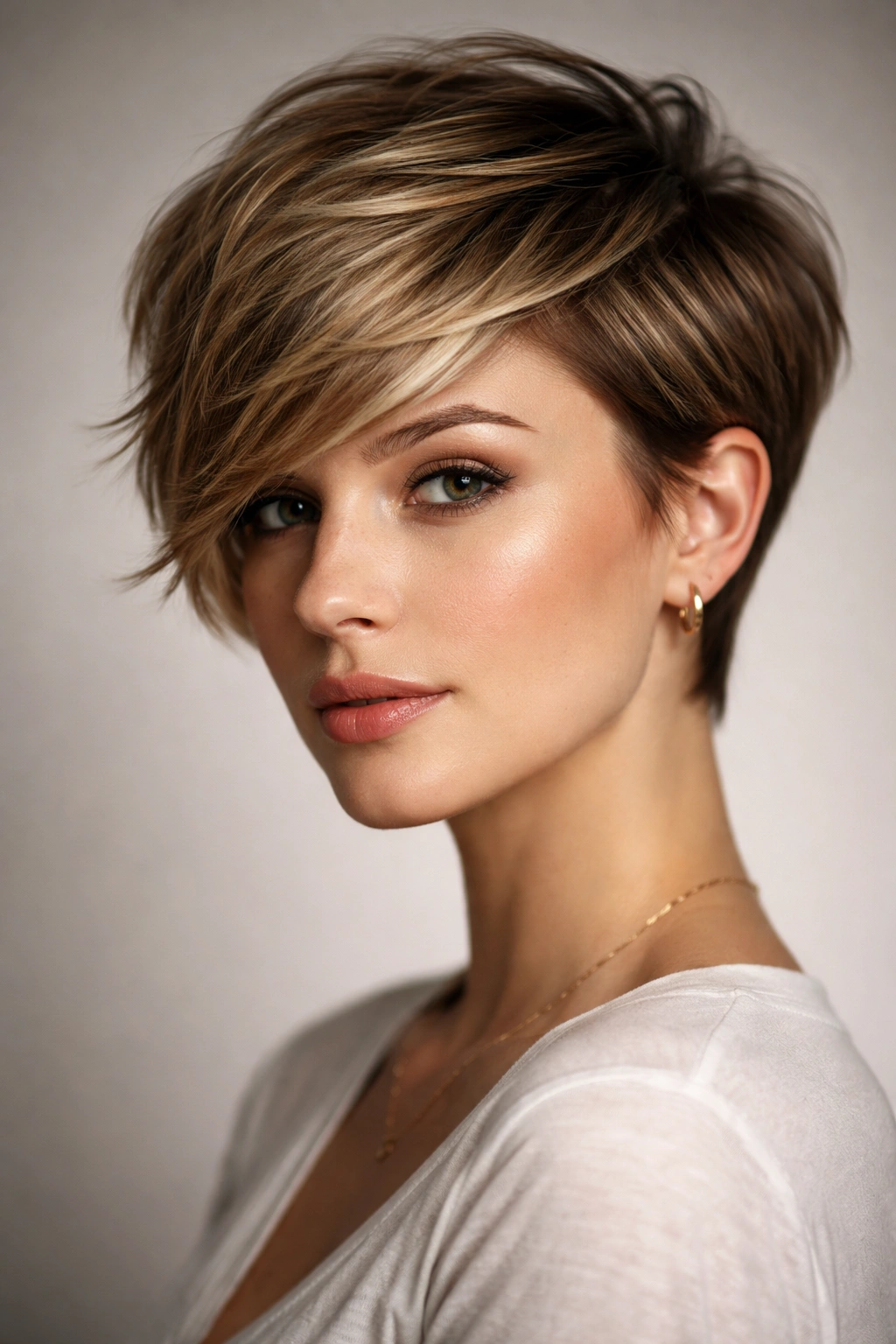
A side-swept pixie keeps the short, tight silhouette of a pixie but directs all the volume to one side, creating an asymmetrical sweep that covers more of the head. The swept side can be styled up and back dramatically, while the shorter side hugs close. This creates visual dimension that makes the cut look fuller while keeping styling relatively simple.
The Power of Strategic Sweep
When you sweep hair across, you’re covering more scalp territory without adding actual length. The visual effect is fuller, more styled, and more intentional. On fine hair, the swept side can be styled with texture and movement while the short side stays close, which creates a balanced proportion that actually flatters delicate features better than an evenly short pixie.
Styling Your Swept Pixie
- Blow-dry the swept side with a round brush, directing hair up and backward for maximum volume
- Use a light texture spray or sea salt spray to keep the swept side from falling flat through the day
- The short side can be left natural or styled slightly up for extra volume
- You can switch which side sweeps depending on your mood or styling effort level
Pro tip: This cut looks great textured and piece-y, so don’t feel pressured to make it look smooth or polished — the messier, the better.
6. Geometric Angular Cut
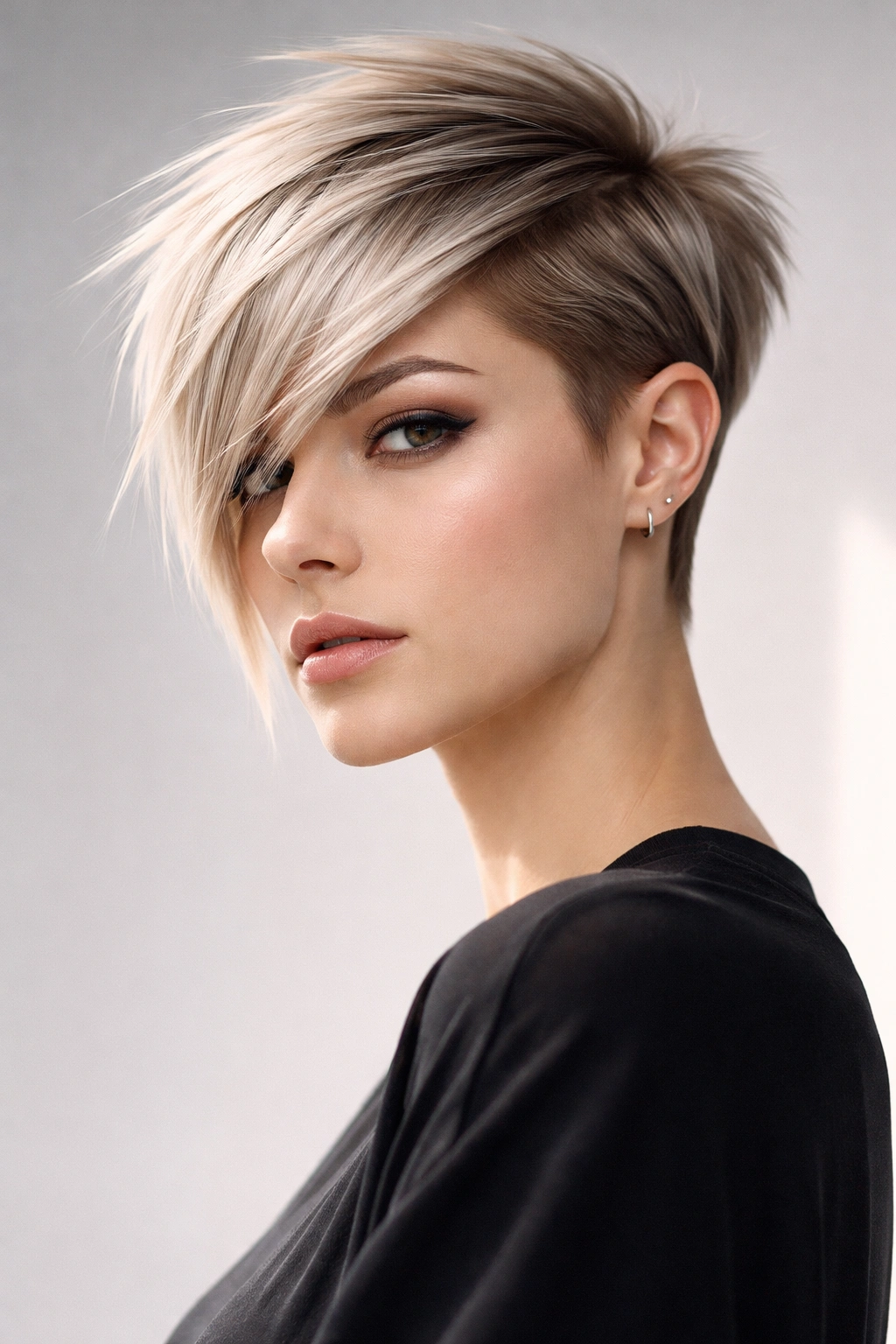
A geometric angular cut uses precise lines and strategic disconnection to create sharp, intentional shapes around the head. Think sharp angles, disconnected layers, and clean lines that emphasize the cut’s architecture rather than texture. This style reads supremely edgy and modern, and on fine hair, the angular design makes the overall shape feel more substantial than loose, rounded layers.
Why Angles Create the Illusion of Volume
Geometric shapes draw the eye along lines and edges rather than settling on any one area. Sharp angles and disconnected sections create visual interest through design rather than through bulk. For fine hair, this is perfect because the style’s impact comes from its structure and intention, not from hair density. The cut essentially says “I meant for it to look this way,” which makes even sparse hair feel intentional.
Styling a Geometric Cut
- This cut actually benefits from being blow-dried smooth or slightly textured, depending on your preference
- Use a flat iron or a round brush to enhance the sharp lines and angles
- A light pomade or gel on the ends keeps angles clean and defined
- Shorter trims every 4-5 weeks maintain the geometric precision
Worth knowing: Geometric cuts often photograph beautifully because the sharp lines create visual interest even in flat photographs.
7. Messy Tousled Crop
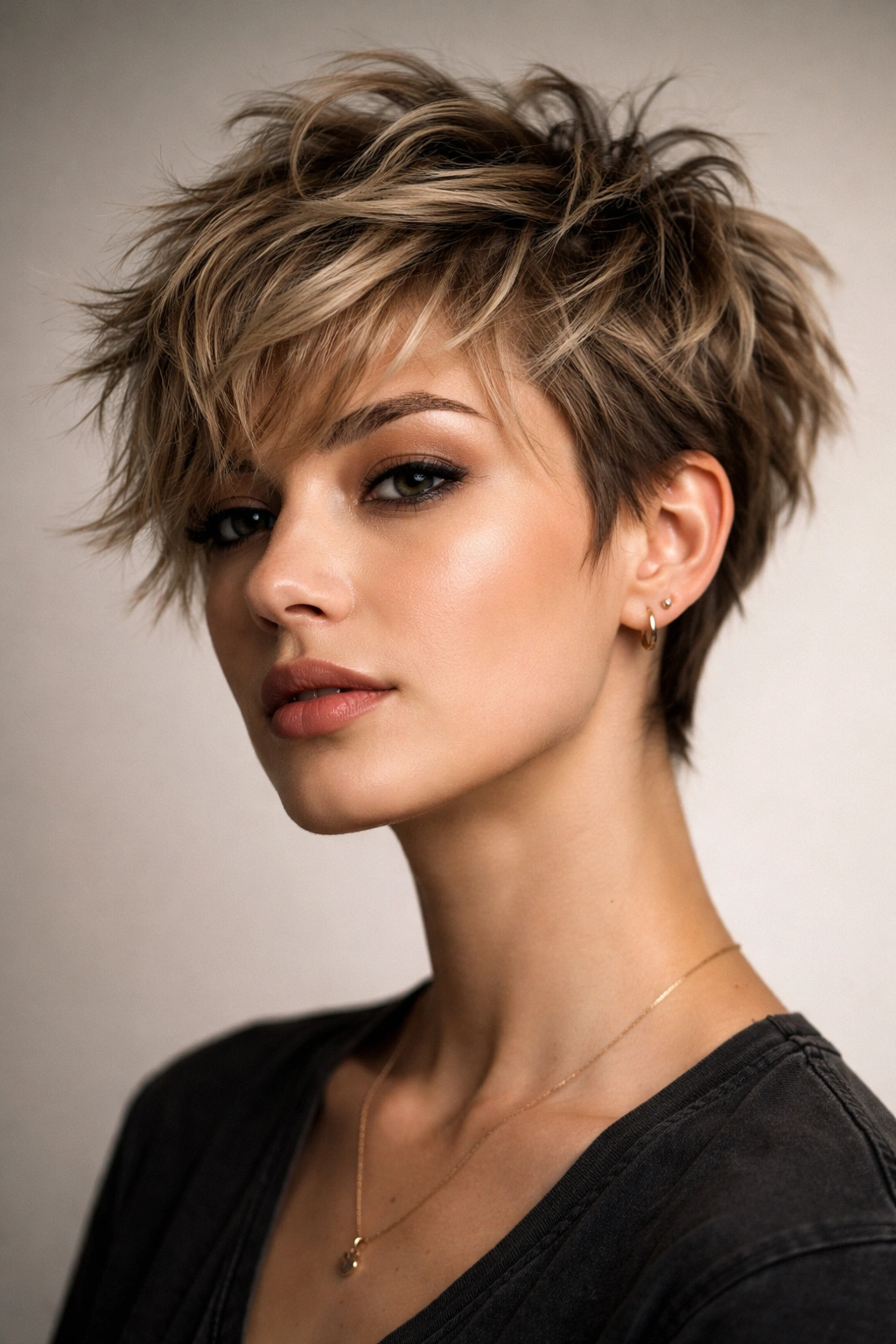
A messy tousled crop is a short, choppy crop that’s deliberately styled to look undone and textured. The cut is layered throughout and designed to be worn piece-y and movement-forward. Unlike precision crops, tousled crops celebrate mess and movement, which is absolutely perfect for fine hair because the movement is part of the style’s entire identity.
Why “Messy” Is Actually Strategic
When you embrace a messy aesthetic, you’re not fighting fine hair’s natural tendency to move and shift. You’re celebrating it. The choppy layers are designed to separate, and the styling is meant to enhance that separation. This is the rare short cut where your hair’s delicate, moveable quality becomes a feature rather than a bug. A tousled crop literally cannot look wrong because the definition of the style is intentional messiness.
Creating the Tousled Look Daily
- Apply a texturizing spray or sea salt spray to damp hair
- Blow-dry with your fingers, scrunching and tousling rather than smoothing
- You can use a diffuser or just use your hands for the most effortless texture
- A matte powder or clay on the roots and tips adds grip and prevents the hair from looking too smooth
Insider note: This might be the easiest short cut to style if you embrace the “I woke up like this” aesthetic and skip trying to make it polished.
8. Undercut with Design Detail
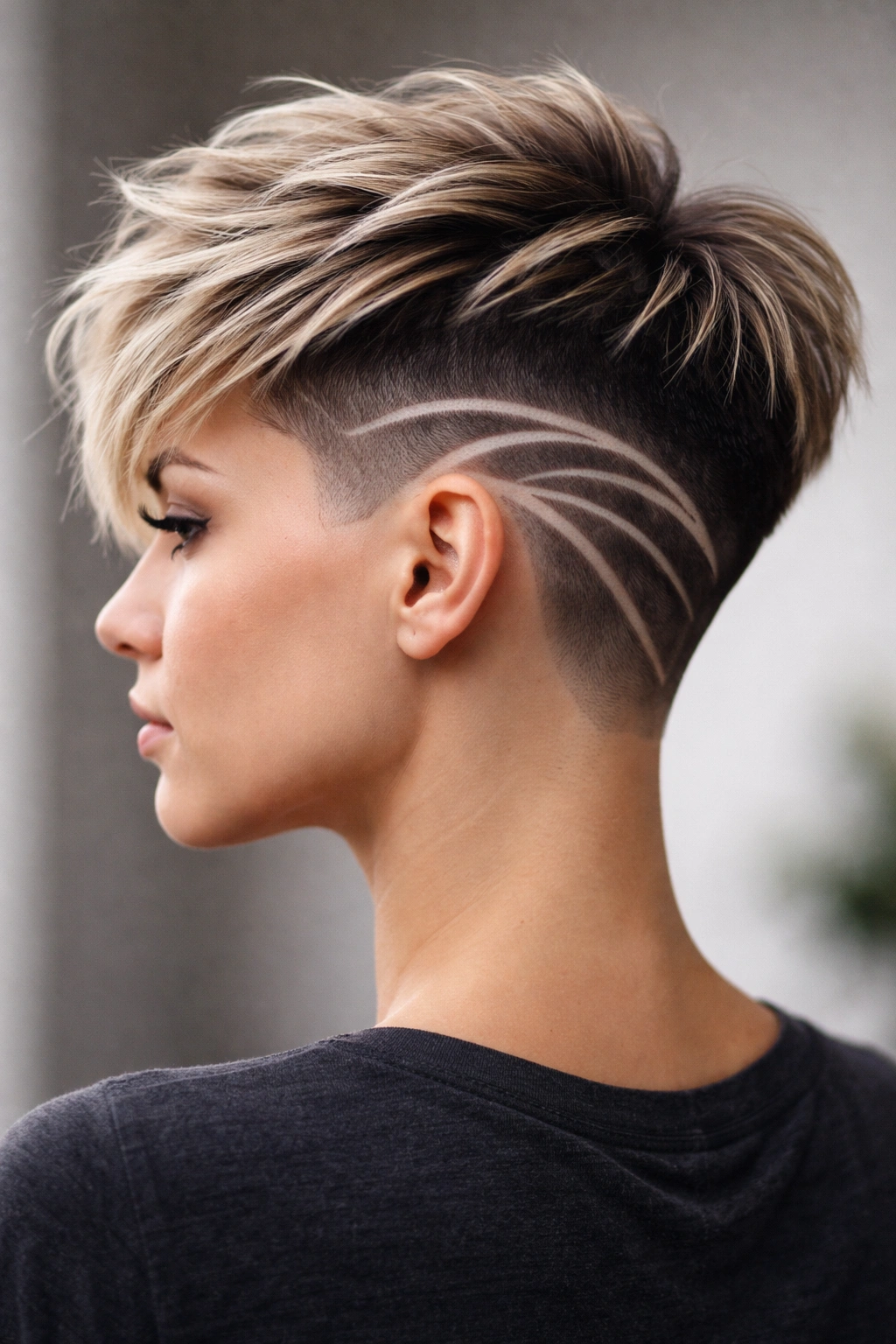
An undercut with a design detail — maybe a thin fade pattern, a razored line, or a specific shape shaved into the undercut — adds visual interest and personality to the cut. The design is usually on the side or back undercut, and it reads seriously edgy while giving the viewer something eye-catching to focus on besides your hair’s density.
The Psychology of Detail Design
A design detail in the undercut draws the eye and creates a focal point that’s separate from the top of your head. This means the viewer isn’t focused solely on how thick or thin your crown is — their attention gets divided between the design and the cut’s overall shape. For fine hair, this is a major advantage because it means the style’s impact is distributed across multiple visual elements rather than concentrated on density.
Maintaining an Undercut Design
- Undercuts with designs need fresh trims every 3-4 weeks to keep the design crisp
- The design itself should be retouched every time you get your undercut trimmed
- Keep the top layers longer and textured so they contrast visually with the clean lines of the design
- Designs show up best when the undercut is very short and closely faded
Quick fact: Designs can be as simple as a thin line or as complex as geometric shapes or patterns — you have a lot of creative freedom here.
9. Graduated Short Layers
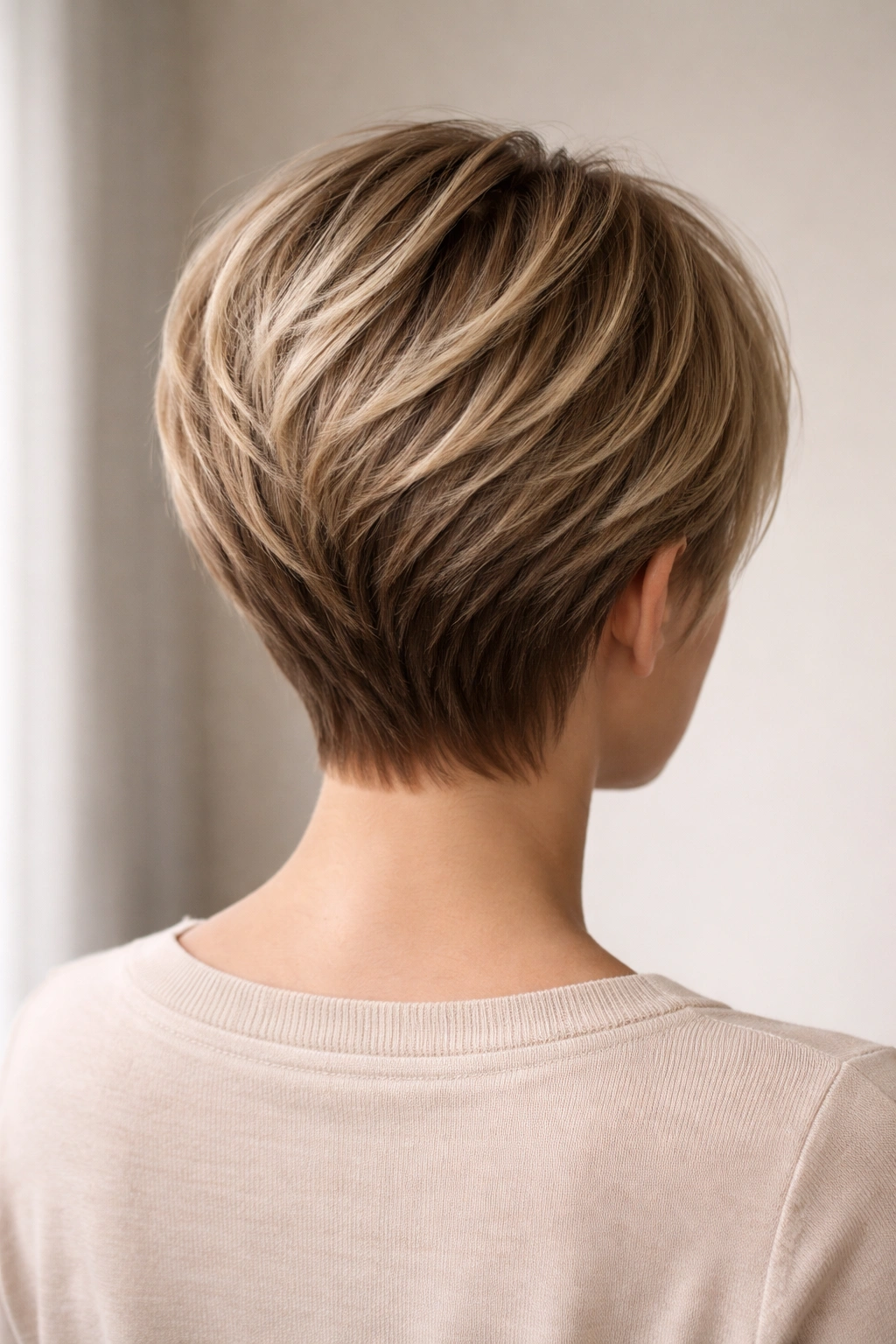
A graduated short cut uses stacked layers that increase in length as you move from the crown toward the nape and sides. This creates natural volume at the crown while maintaining a compact, neat silhouette. Graduated layers are less choppy and piece-y than shags, but still broken enough to work beautifully with fine hair’s natural movement.
How Graduation Creates Fullness
Graduation works by creating a foundation of shorter hair at the crown that can be styled upward, with progressively longer layers underneath that add shape and dimension. This structure naturally creates lift and fullness right where fine hair needs it most. The longer layers in the back and sides provide length and movement without the weight of a truly long haircut.
Styling Graduated Layers
- Blow-dry the crown area upward and backward to maximize lift
- The layers should feel smooth but piece-y, not blunt and not wildly choppy
- A light volumizing mousse or texturizing spray keeps the structure looking full through the day
- Trims every 6-8 weeks keep the graduation precise and intentional
Worth knowing: This cut walks a middle line between super-short edgy and slightly longer styles, so it’s great if you want edgy without going full pixie.
10. Edgy Faux Hawk
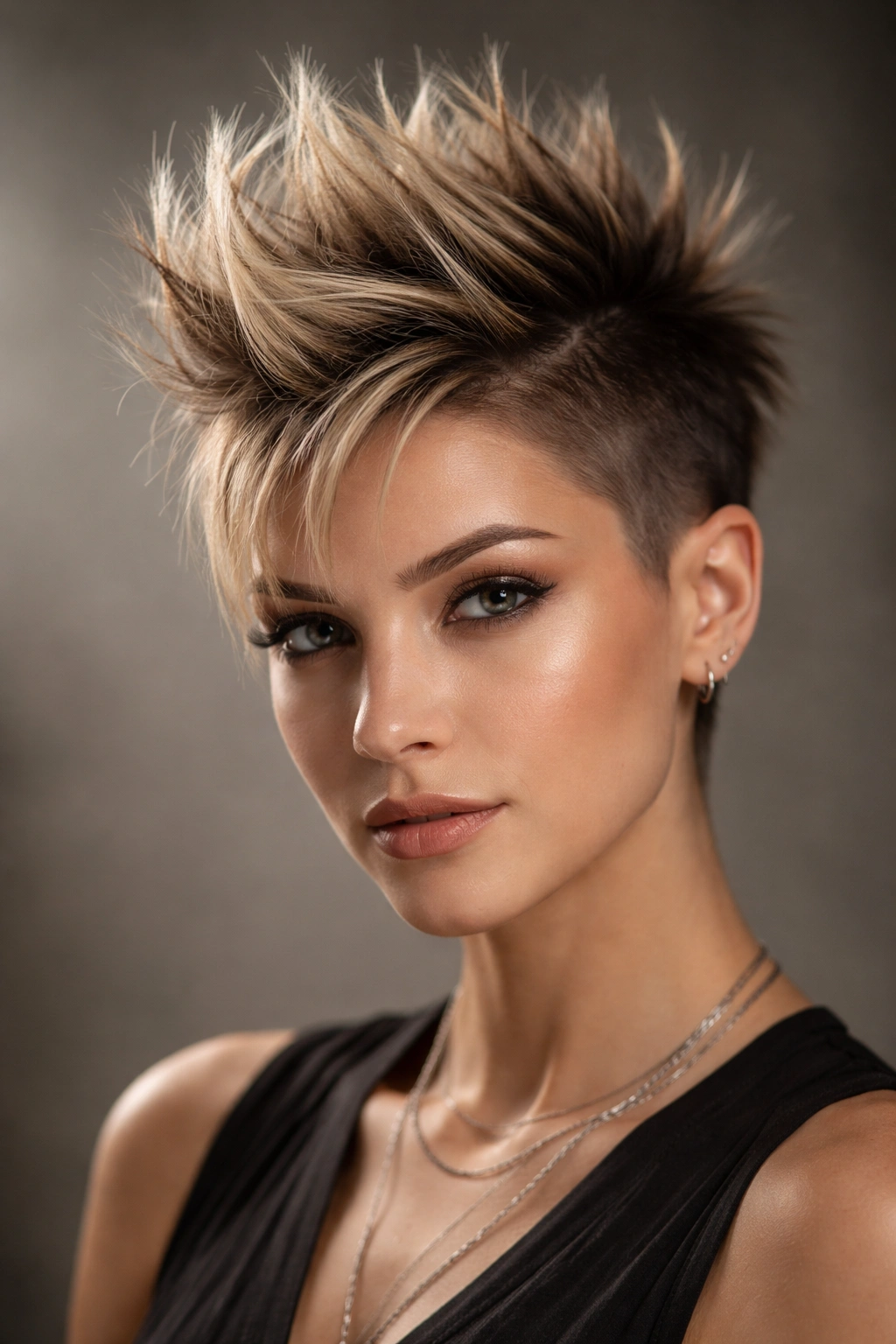
An edgy faux hawk creates the visual effect of a mohawk by using longer, choppy layers in a strip down the center of the head while keeping the sides shorter. It’s way more wearable than a real mohawk, but it has all the attitude and edge. For fine hair, the faux hawk works because the central strip can be styled with maximum texture and movement while the shorter sides keep the overall silhouette compact.
Why Fine Hair Can Pull Off a Faux Hawk
A real mohawk on fine hair would look sparse and dramatic in a way that reads accidentally thin rather than intentionally edgy. A faux hawk, by contrast, uses the illusion of a mohawk without the reality of actually removing most of your hair. The central strip is textured and choppy, which makes it appear fuller. The shorter sides maintain proportion so the overall effect reads “intentionally edgy” rather than “too thin.”
Styling Your Faux Hawk
- A strong-hold texturizing spray or sea salt spray is essential for shaping the center section
- Blow-dry the center strip upward and backward, using your fingers to separate pieces
- You can style it maximally textured for full effect or keep it slightly more relaxed depending on the situation
- The shorter sides can be styled flat, slightly textured, or even with a subtle fade
Pro tip: You can wear this cut two ways — styled up as a faux hawk for maximum edge, or styled down and textured for a more casual look.
Final Thoughts
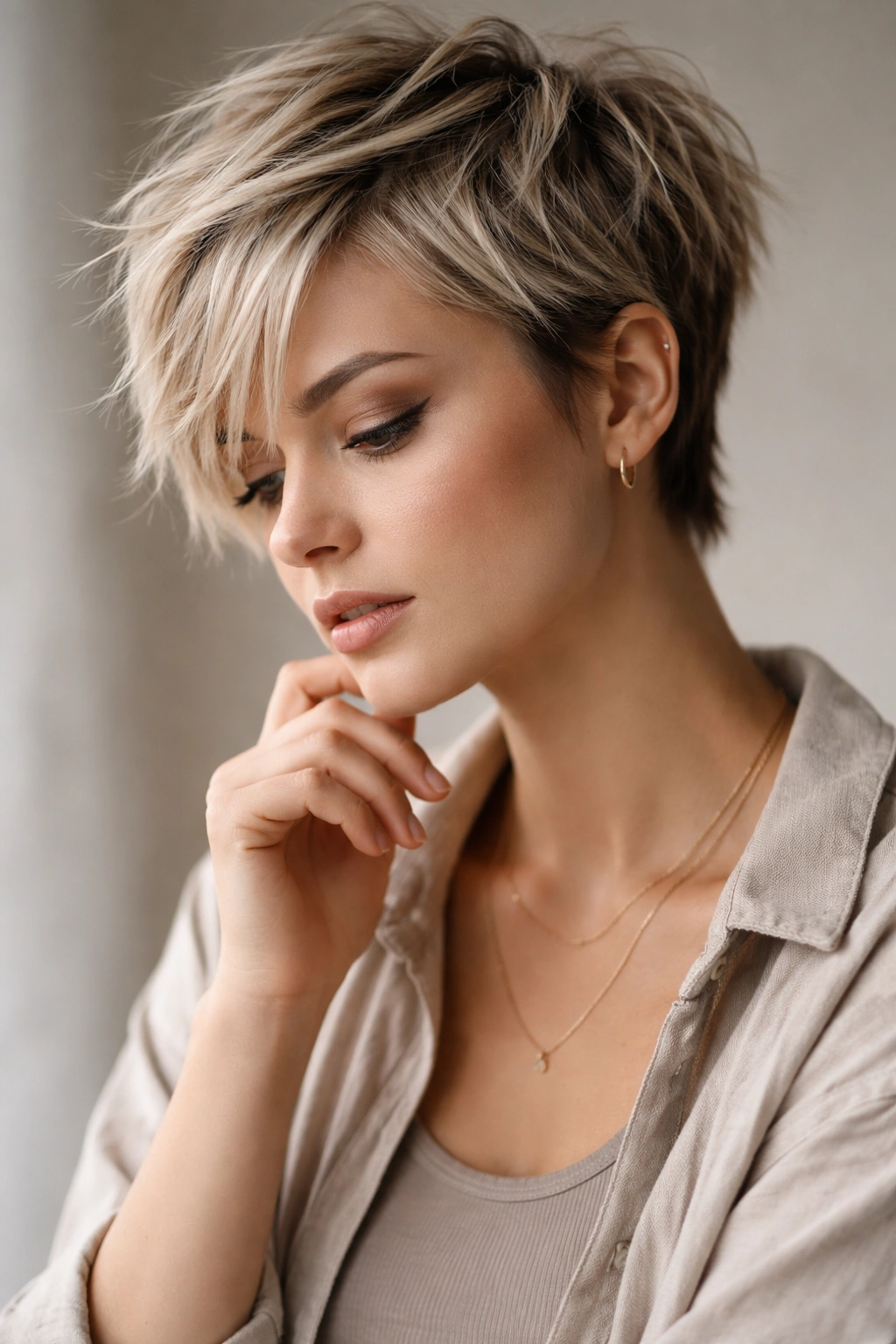
An edgy short haircut on fine hair isn’t about fighting your hair’s natural characteristics — it’s about working strategically with them. The cuts that work best are the ones that leverage texture, layering, and disconnection to create visual impact without relying on sheer bulk. Choppy layers, undercuts, asymmetrical designs, and purposefully piece-y styling all become assets instead of liabilities when you’re working with delicate strands.
The most important thing to remember is that fine hair actually holds an advantage when it comes to edgy cuts. Your hair’s natural movement and lightness means you don’t have to fight gravity or weight to achieve texture and dimension. What matters is finding a skilled stylist who understands fine hair and knows how to cut with intention. Bring reference photos of edgy cuts that appeal to you, and have a specific conversation about which ones your stylist thinks will work best with your hair’s density and texture.
Styling matters just as much as the cut itself. Every one of these styles benefits from texturizing products, strategic blow-drying, and embracing movement over polish. Fine hair forgives a lot of things, but it rewards effort with texture and dimension that thicker hair sometimes struggles to achieve. Your edgy short cut isn’t just about making a statement — it’s about finally having hair that looks like exactly what you wanted it to look like.
