



Long and narrow face shapes can feel tricky to work with, but the truth is they’re incredibly versatile when you know which cuts to choose. The key isn’t fighting your face shape—it’s working with it strategically. The right haircut can add width to your cheekbones, create visual balance, and draw attention exactly where you want it. Whether you prefer short, cropped styles or flowing waves past your shoulders, there’s a haircut designed specifically to flatter your proportions and bring out the best in your features.
The challenge with a long and narrow face is avoiding styles that elongate it further or make it appear even more angular. Cuts that add texture, volume on the sides, or strategic layers work beautifully because they create width and softness where your face needs it most. Bangs—whether blunt, wispy, or curtain-style—can shorten the appearance of your face and add instant balance. Horizontal movement, choppy layers, and strategic color-blocking all work in your favor too.
Before you book your next appointment, let’s explore fifteen haircuts that are specifically designed to complement a long and narrow face shape. Each one approaches the challenge differently, so you’ll find options whether you’re drawn to bold, statement-making styles or soft, romantic looks.
1. Side-Parted Textured Bob
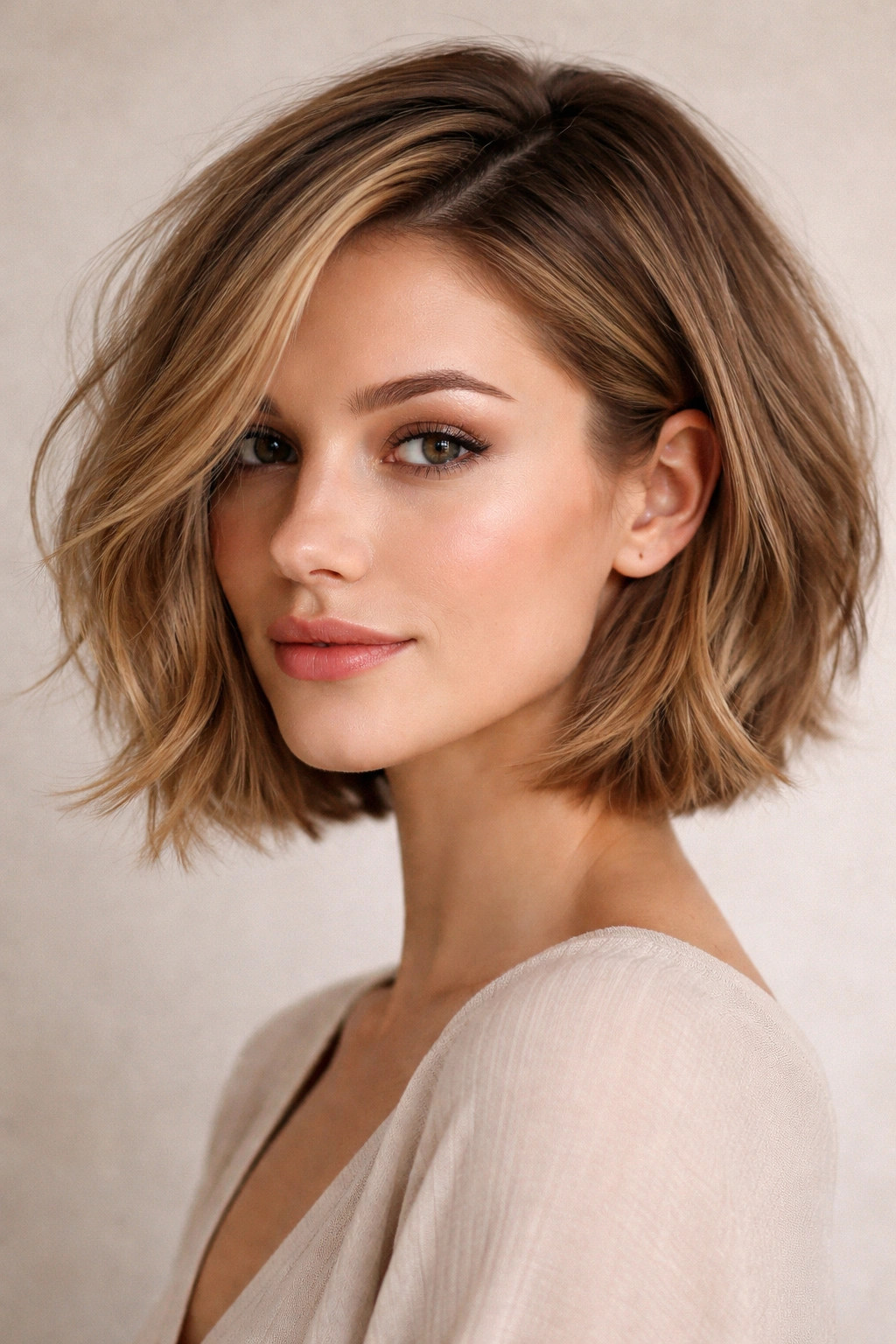
A textured bob with a deep side part is a game-changer for long faces because it creates immediate width and movement where you need it most. The horizontal line of the cut sits right at the jawline or slightly below, which visually widens your face and breaks up the vertical length. A side part adds asymmetry, which is incredibly flattering because it draws the eye horizontally rather than down the length of your face.
Why This Cut Works for Your Face Shape
The beauty of this style is that textured layers throughout the bob prevent it from looking heavy or adding to the length of your features. Instead of a blunt, one-length cut that emphasizes elongation, the choppy layers create movement and dimension. The side part naturally creates a flattering shadow on one side of your face while the fuller side adds volume and width—exactly what a long face needs for visual balance.
Key Details to Discuss With Your Stylist
- Ask for layers starting at chin-length, with the front pieces slightly longer than the back for an easy side-swept effect
- Request texture throughout rather than a sleek, smooth finish—this breaks up the vertical line of your face
- Keep the part positioned about one-third of the way across your head for maximum flattering effect
- Consider adding subtle highlights or balayage to create the illusion of even more dimension and width
Pro tip: Style this bob with a wave or slight curl using a round brush—smooth, straight texture can actually emphasize length, so movement is your friend here.
2. Long Shag Haircut
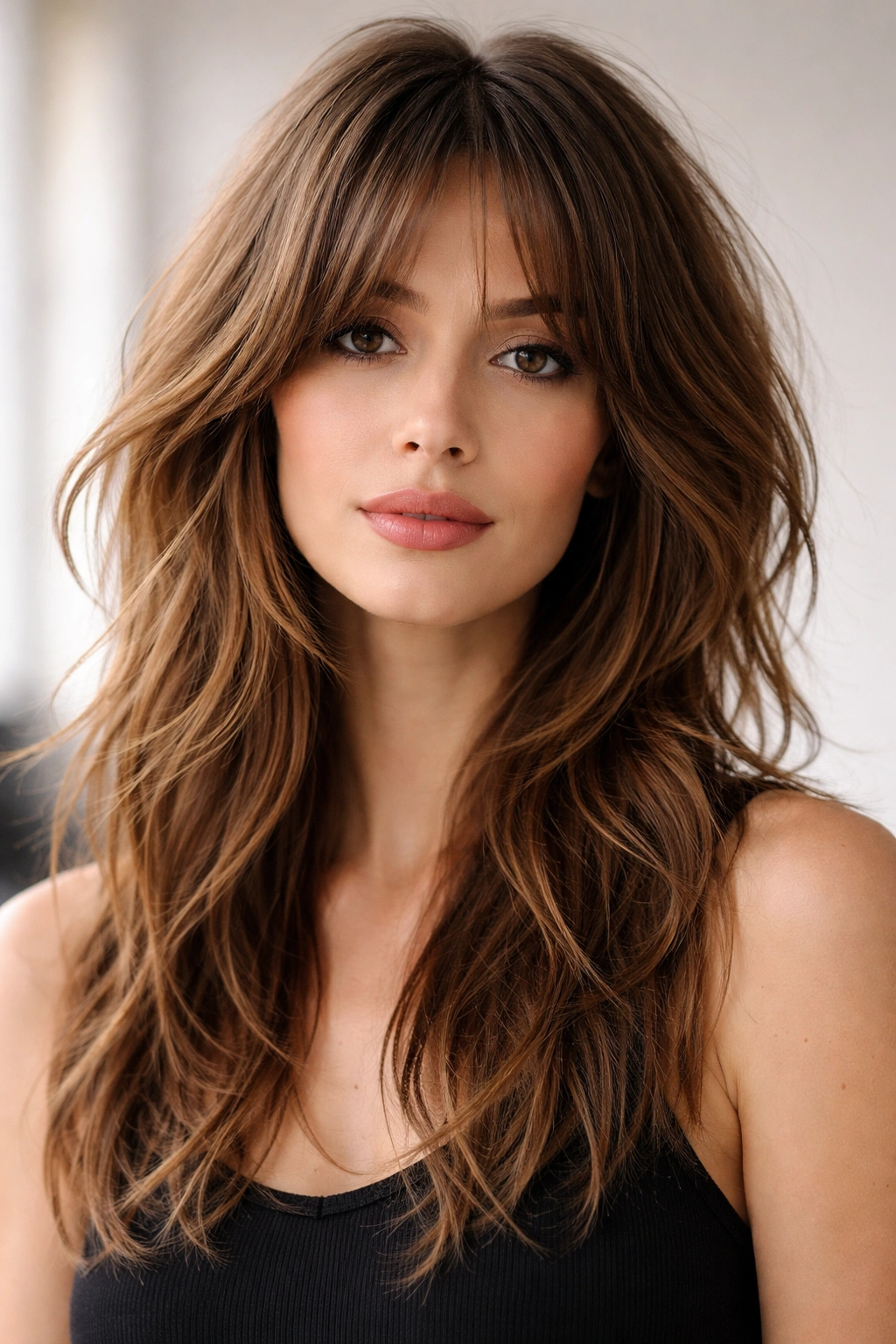
Don’t assume a long shag automatically elongates your face—the right shag can actually be beautifully balanced for long face shapes because of how the layers work together. A modern shag features choppy, textured layers that start higher on the head and graduate longer toward the bottom, creating movement that draws the eye around your face rather than straight down. The key is making sure the layers are dense enough to create fullness at the sides.
Why Shag Works Better Than You’d Think
The layered construction of a shag means hair naturally sits away from your face at the cheekbones, which creates the width-building effect you’re after. Unlike straight, one-length long hair that clings to the sides of your face and emphasizes length, a shag bounces and moves, creating visual interest and dimension. The textured, lived-in quality of modern shags also adds softness and prevents any harsh, angular appearance.
Essential Styling Elements for This Cut
- Layers should be concentrated from mid-ear down to create width at the cheekbones and jawline
- Ask your stylist for shorter, feathered layers on top to avoid heaviness that weighs down the style
- Keep the overall length somewhere between shoulder and collarbone for the most flattering proportions
- This cut requires regular styling with a blow dryer and texturizing spray to maintain its shape
Worth knowing: A shag looks best when styled with texture and movement—sleeping on wet hair or going a day between washes actually enhances the tousled look that makes this cut shine.
3. Layered Medium Length
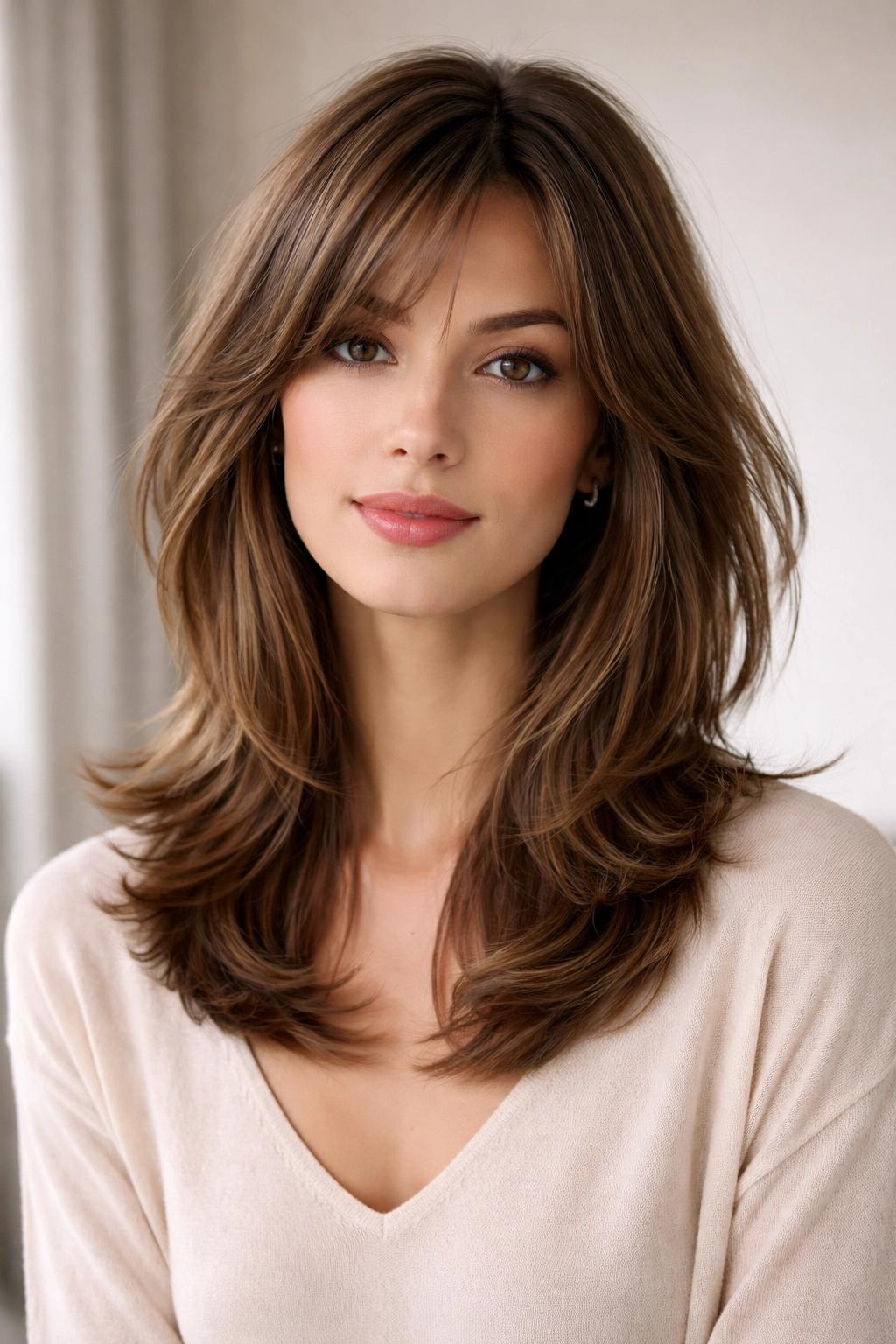
A layered medium-length cut sits right in that sweet spot where it’s long enough to feel feminine and versatile, but short enough that the layers can create serious width and movement. Shoulder-length hair with strategic layers throughout gives you the ability to add volume at the sides where your face needs it most. This is one of the most wearable, adaptable cuts for long faces because you can style it sleek on days you want polish or textured and tousled when you’re going for casual.
Why Medium Length With Layers Creates Balance
The magic happens because layers in a medium-length cut create multiple planes of movement that catch light and draw attention horizontally across your face rather than emphasizing the vertical. Layers also mean hair naturally sits away from your face at crucial points—the cheekbones and jawline—which instantly adds dimension. Unlike long hair that’s all one length, layered medium hair feels lighter and more sculpted.
How to Style This Cut for Maximum Flattering Effect
- Dry your hair with a round brush, directing the roots upward and outward to create volume at the crown and sides
- Use a 1.25-inch curling iron to add waves that break up the vertical line of your face
- Apply volumizing mousse to damp roots before blow-drying for long-lasting lift
- Consider asking your stylist for longer layers around your face and shorter layers underneath for movement
Inside note: This length works beautifully with subtle highlights or a balayage that follows the layers—light-catching dimension makes your face appear wider and more interesting.
4. Blunt Bangs With Shoulder-Length Layers
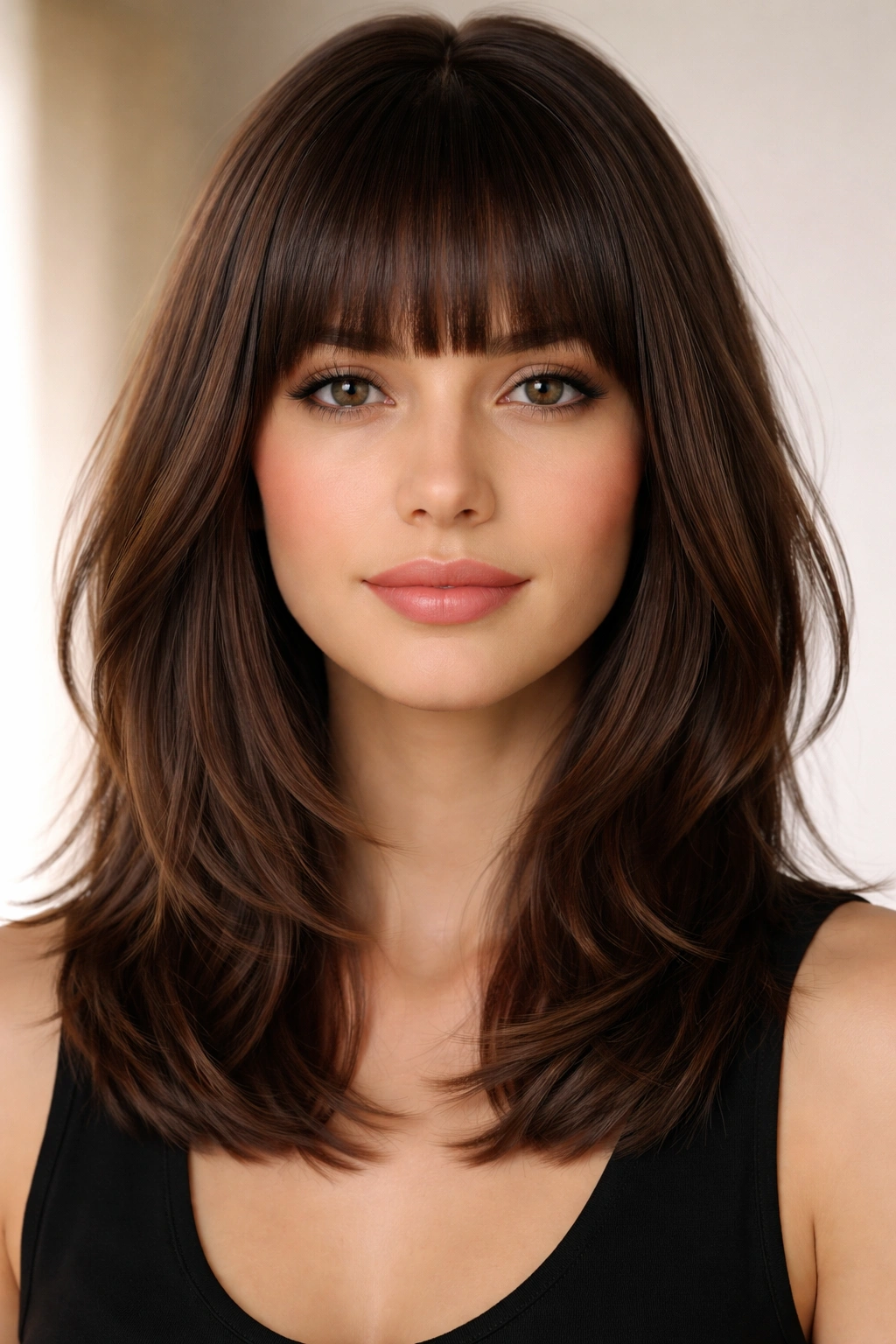
Blunt bangs are one of the most powerful tools for shortening the appearance of a long face because they create a horizontal line across your forehead that visually cuts your face in half. Pair them with shoulder-length layered hair, and you’ve got a cut that adds both visual balance and serious character. Blunt bangs require commitment and regular trimming, but they’re transformative for long face shapes.
The Psychological Effect of Blunt Bangs
Blunt, full bangs create an immediate visual break that makes your face appear shorter and wider. They draw attention to your eyes and upper face rather than the overall length of your features. Combined with layered lengths that create side volume, this style effectively reshapes how people perceive your face proportions. It’s almost like visual architecture—the bangs create a frame, and the layers provide width.
Maintenance and Styling Tips for Bangs
- Plan to trim your bangs every 2-3 weeks as they grow out—blunt bangs show growth quickly and will start to curve into your eyes if not maintained
- Style your bangs by blow-drying them downward and slightly outward, using a round brush to create a subtle curve
- Use dry shampoo on bangs between washes to maintain texture and prevent them from looking greasy or flat
- Pair straight bangs with some texture or wave in the layers—all blunt, all-one-length hair can read very severe
Quick facts about this style:
- Works best on straight to wavy hair—curly hair can make blunt bangs unpredictable
- Requires face-framing bangs to be shorter in the center, slightly longer at the sides, for the most flattering effect
- Creates a youthful, bold look that makes a genuine statement
- Needs regular maintenance to look polished
5. Choppy Pixie Bob
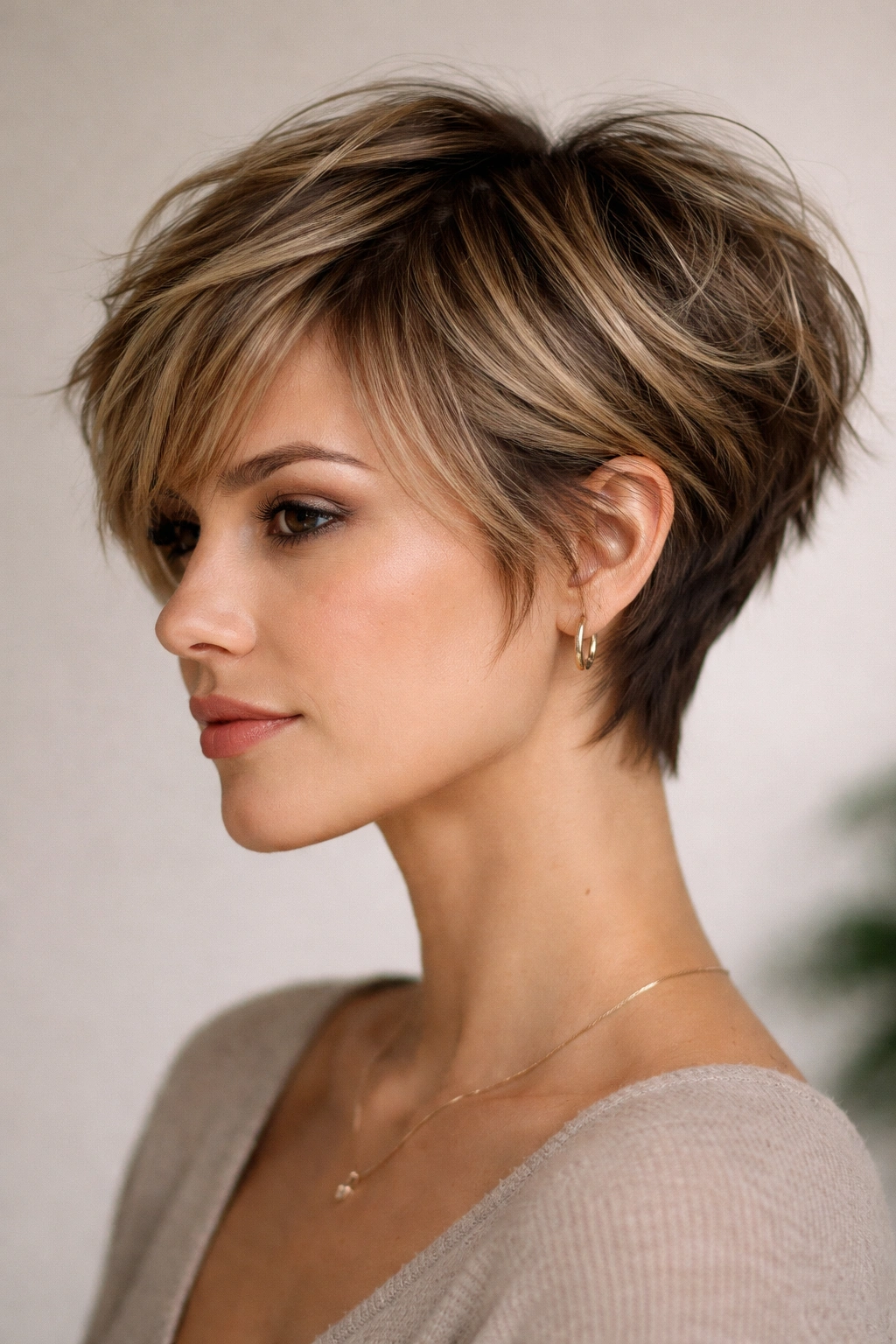
A choppy pixie bob splits the difference between short and medium length, making it perfect for someone who wants the ease of shorter hair but still wants length and movement. Choppy texture throughout means the cut doesn’t cling to your face or elongate your features—instead, it stands away from your head slightly, creating the width-building illusion. This cut has serious personality and requires someone who’s confident with styling, but the payoff is major.
Why Choppy Texture Matters for Long Faces
The choppy layers prevent any smooth, sleek lines that would emphasize your face shape’s verticality. Instead, the texture creates visual breaks and prevents the eye from traveling straight down the length of your face. A pixie bob sits somewhere between the crown and shoulders, which is an ideal sweet spot for long faces—it’s short enough to avoid looking overly elongated but long enough to have movement and dimension.
Styling and Maintenance Considerations
- This cut benefits from texture and product—use a texturizing spray or sea salt spray to enhance the choppy layers
- Style with a blow dryer and your fingers rather than a brush to encourage the lived-in texture
- Trim every 4-6 weeks to maintain the shape and choppy feel as hair grows
- Works beautifully on most hair types, but shows dimension best on straight to wavy hair
Pro tip: A choppy pixie bob is one of the few short cuts that actually looks better when slightly grown out—the in-between stage where the layers relax a bit is often when this cut looks its absolute best.
6. Wispy Curtain Bangs With Layers
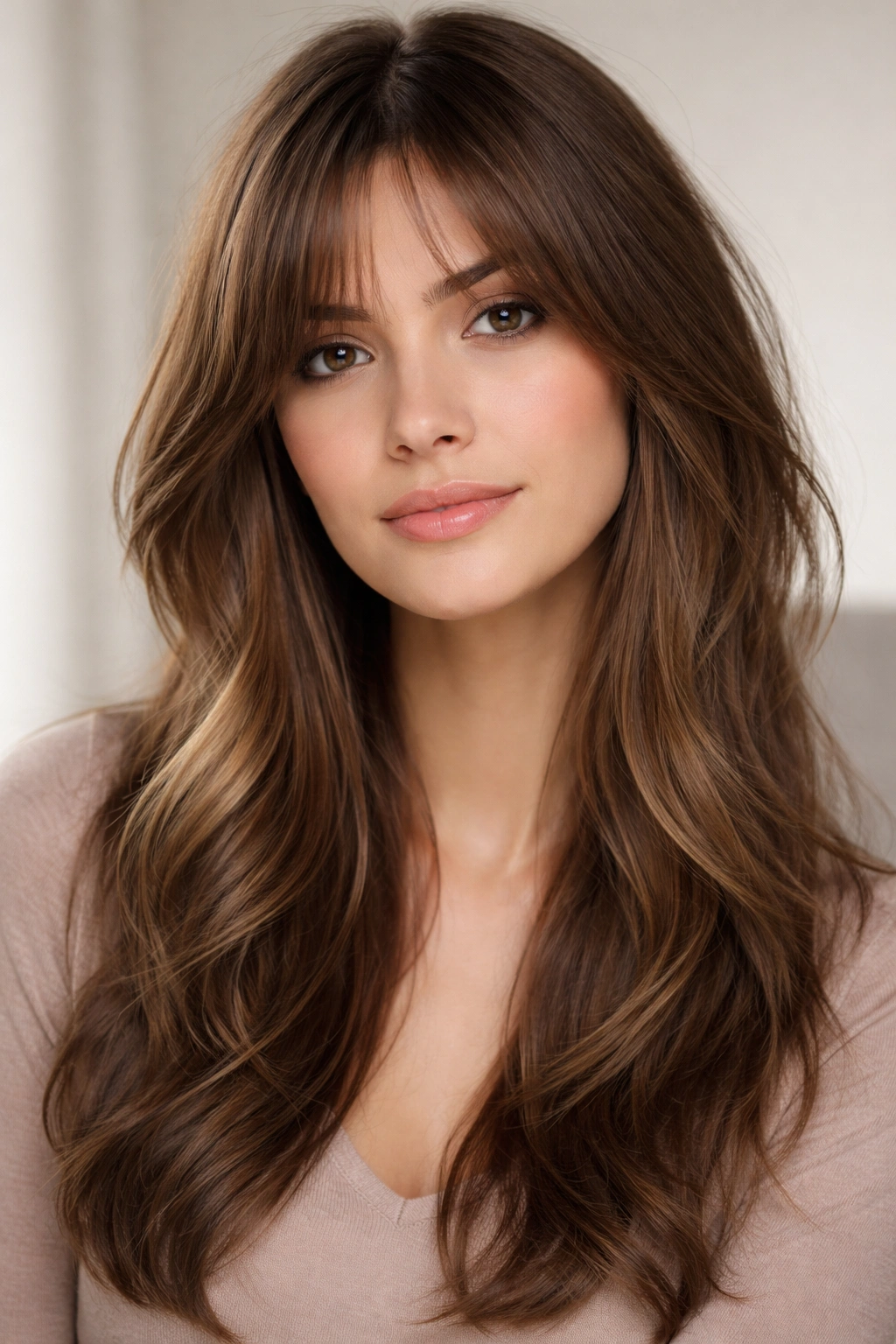
Curtain bangs are the softer alternative to blunt bangs, and they’re absolutely beautiful on long faces because they create that crucial horizontal break without the commitment of full blunt bangs. Wispy curtain bangs frame your face while gently parting in the center, and when paired with overall layers throughout shoulder-length hair, they create softness and width simultaneously. This style has a romantic, effortless quality that works for nearly every age and lifestyle.
The Visual Magic of Curtain Bangs
Curtain bangs work by creating two soft lines that frame your face and draw attention inward toward your eyes rather than following the length of your face downward. They’re shorter at the center and longer at the sides, which means they create a subtle widening effect that’s less dramatic than blunt bangs but still powerfully flattering. The feathered, wispy quality makes the whole cut feel softer and more romantic.
How to Style Curtain Bangs for the Best Effect
- Blow-dry your bangs away from your face and slightly outward, using a round brush or your fingers to create that signature gentle curve
- Avoid pulling bangs too smoothly back—a bit of texture and movement is what makes this style work
- Use a texturizing spray to add grip and dimension to the bangs themselves
- Your bangs should just barely graze your cheekbones when styled—if they’re too long, they won’t create that horizontal break you’re after
Worth knowing: Curtain bangs grow out more gracefully than blunt bangs because the longer sides blend naturally with the rest of your hair as they lengthen. You can go longer between trims if you’re willing to let them soften a bit.
7. Face-Framing Highlights With Waves
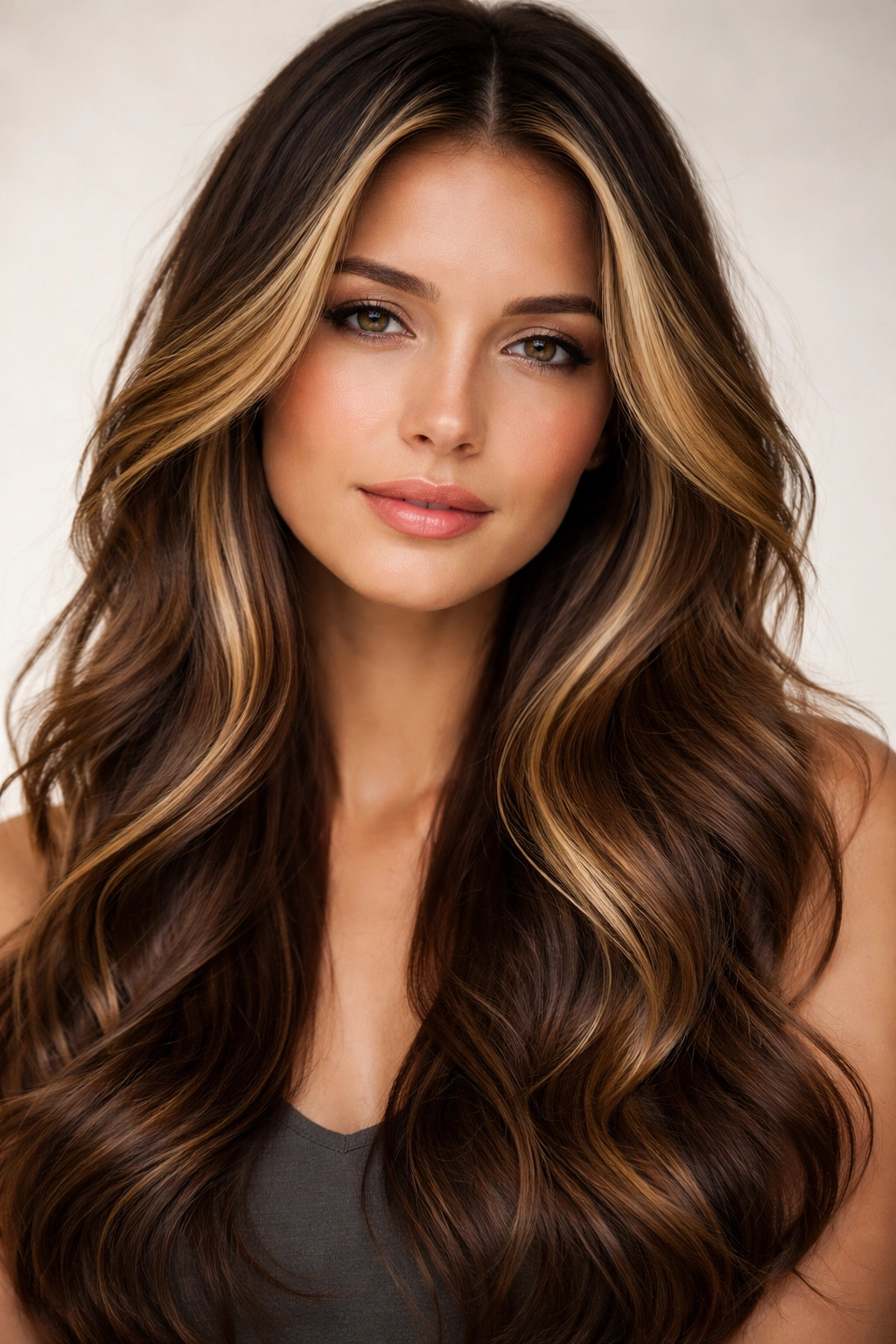
Sometimes the most flattering approach is strategic color paired with the right cut—face-framing highlights combined with waves throughout your hair create an illusion of width while adding movement and dimension. Lighter highlights placed specifically around your face draw attention inward and create the appearance of fuller cheekbones. Paired with soft waves that move away from your face, this approach is subtle but incredibly effective.
How Color Creates Visual Width
Light catches highlights and creates visual interest that breaks up the vertical line of your face. When these highlights are placed at the cheekbones and jawline—the areas where you want to add width—they literally draw the eye to those points. Combined with waves that sit away from your face, you get a two-pronged approach: the highlights add dimension and the waves add movement. Together, they completely change how your face shape appears.
Color Placement and Wave Strategy
- Ask your stylist for face-framing pieces that are 2-3 shades lighter than your base color, starting around your cheekbones
- Add subtle highlights throughout the mid-lengths and ends to create dimensional movement
- Pair this with long, flowing waves that bounce away from your face rather than clinging to it
- The waves should start somewhere around ear-level for maximum flattering effect
Inside note: This approach works beautifully on brunettes, blondes, and redheads—the key is contrast between your base color and the highlights, not the absolute shade you choose.
8. Textured Crop Top With Undercut
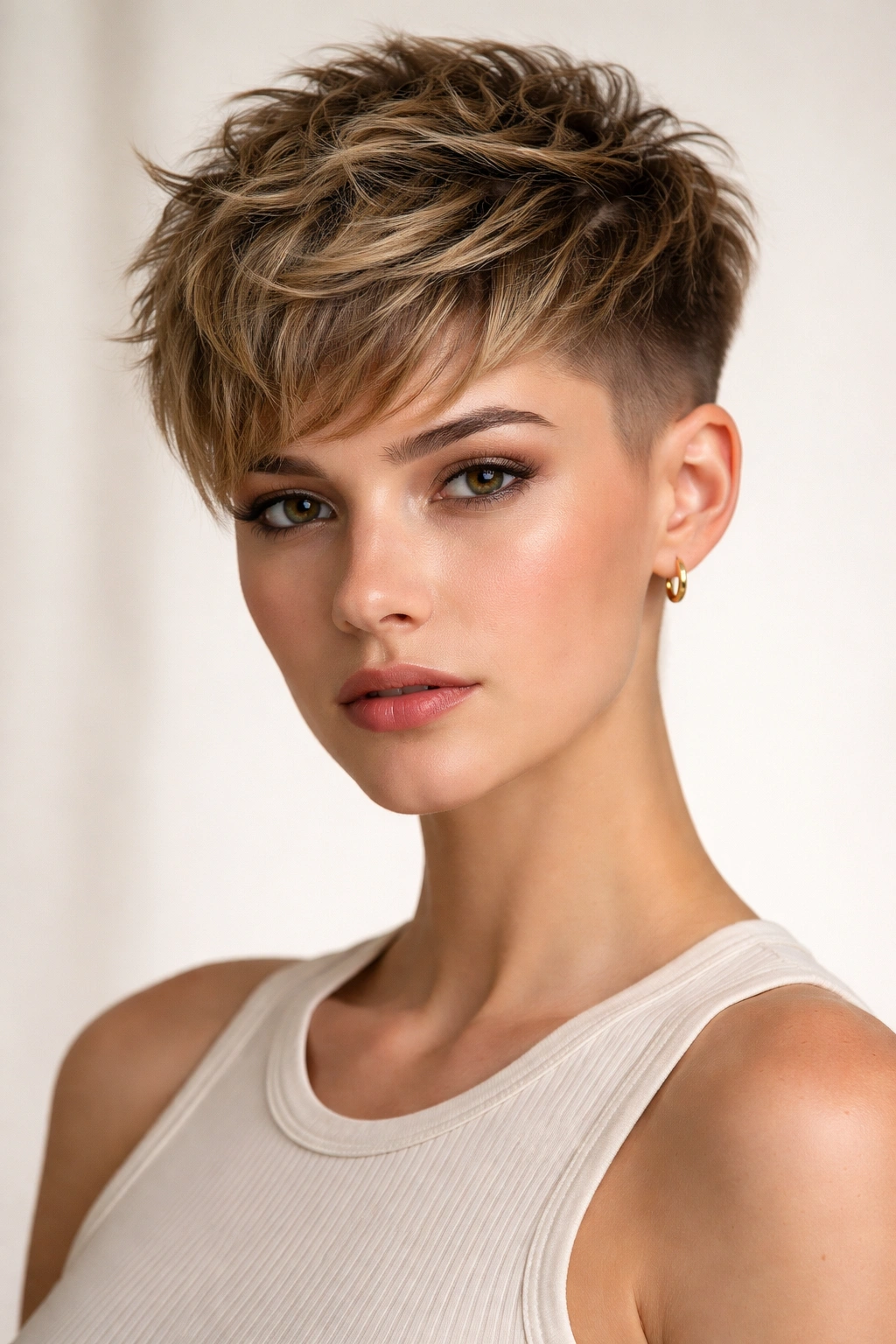
If you’re drawn to shorter styles, a textured crop on top with an undercut on the sides creates unexpected width and visual interest. The cropped texture on top adds volume at the crown, while the undercut on the sides creates clean lines and removes weight. This is a bolder choice that definitely makes a statement, but it’s surprisingly flattering for long faces when executed well.
Why an Undercut Paradoxically Creates Width
An undercut removes weight from the sides, which means the textured top sits fuller and extends further out—creating width and dimension. The contrast between the longer top and shorter sides creates visual interest that prevents your face from appearing flat or overly elongated. It’s an architectural approach to flattering a long face shape.
Styling Requirements and Considerations
- The textured crop on top needs styling—use a texturizing paste or pomade to encourage the layers to stand up and out
- Style with your fingers rather than a brush for the most flattering, piecy effect
- Plan for regular trims every 3-4 weeks as the undercut grows out quickly
- This style requires some confidence and willingness to style daily for it to look intentional rather than unkempt
Pro tip: An undercut looks especially striking when the top is longer and textured and the undercut is skin-tight—the contrast is what makes the whole style work.
9. Sleek Straight Midi-Length Cut
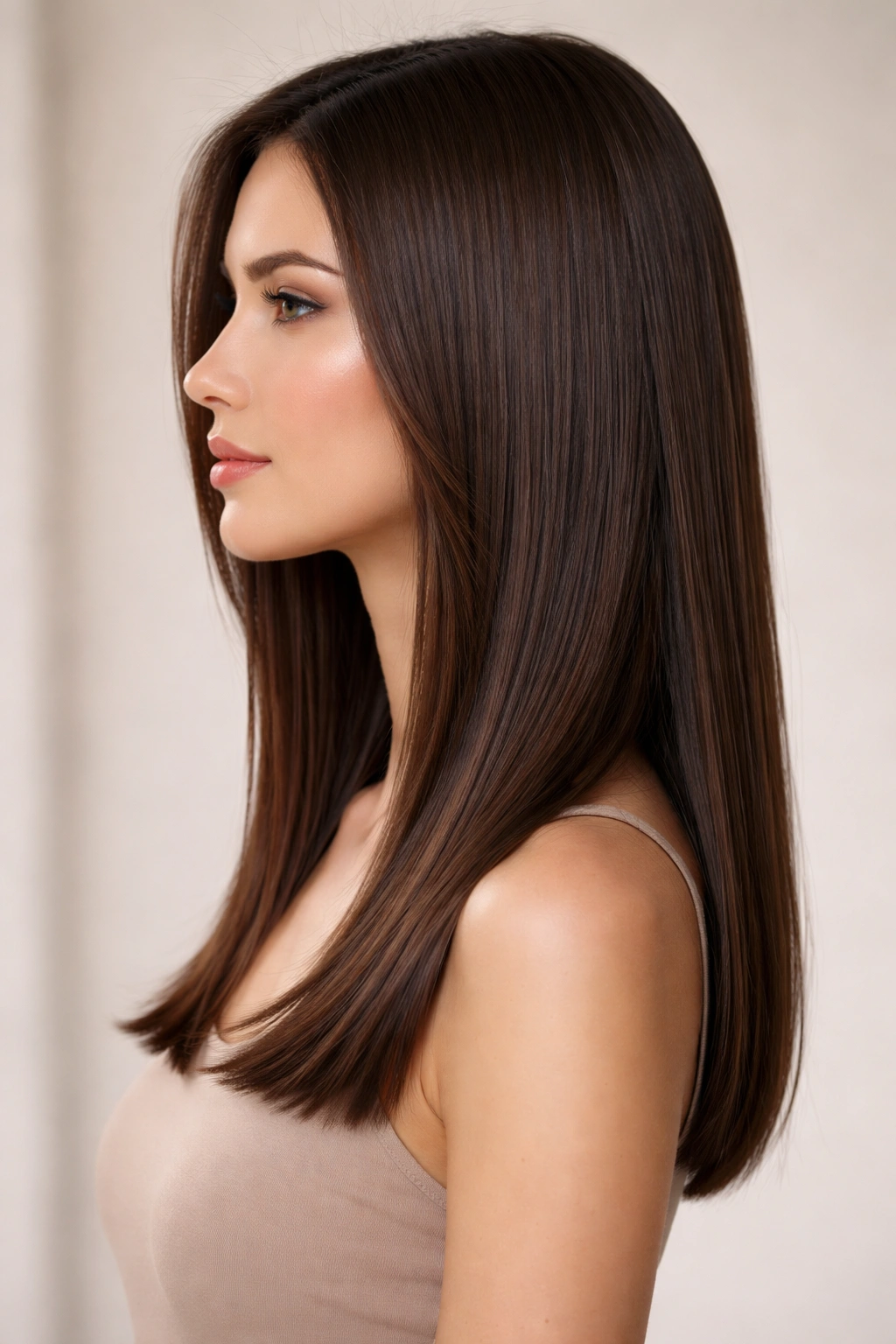
For those who prefer polish and simplicity over texture and choppy layers, a sleek, straight midi-length cut can work beautifully for a long face when styled with the right approach. Midi-length hair sits somewhere between shoulder and mid-back, and when kept smooth and straight with strategic layers, it creates a sophisticated, elongated look that actually works better than you’d expect. The key is making sure the cut includes face-framing elements and enough dimension that it doesn’t look flat.
Making Straight Hair Work for Your Face Shape
Straight, sleek hair can actually complement a long face if the cut includes very subtle, almost invisible layers that frame your face and create movement at the cheekbones. The polish and refinement of straight hair creates a different kind of visual interest—it’s not about texture and choppy movement, but about clean lines and symmetry. A midi-length provides length without appearing overly elongated, and the weight of longer hair creates a grounding effect.
Cut and Styling Details That Matter
- Ask for invisible layers that frame your face and create subtle movement at the cheekbones
- Keep the overall cut blunt at the ends for a polished, intentional look
- Use a straightening iron to achieve sleek, smooth styling and enhance the sophisticated effect
- Consider adding a middle or side part that creates subtle asymmetry and width
Worth knowing: This style benefits from healthy, shiny hair—straight hair shows damage and dryness much more obviously than textured styles, so deep conditioning is essential.
10. Feathered Layers Throughout
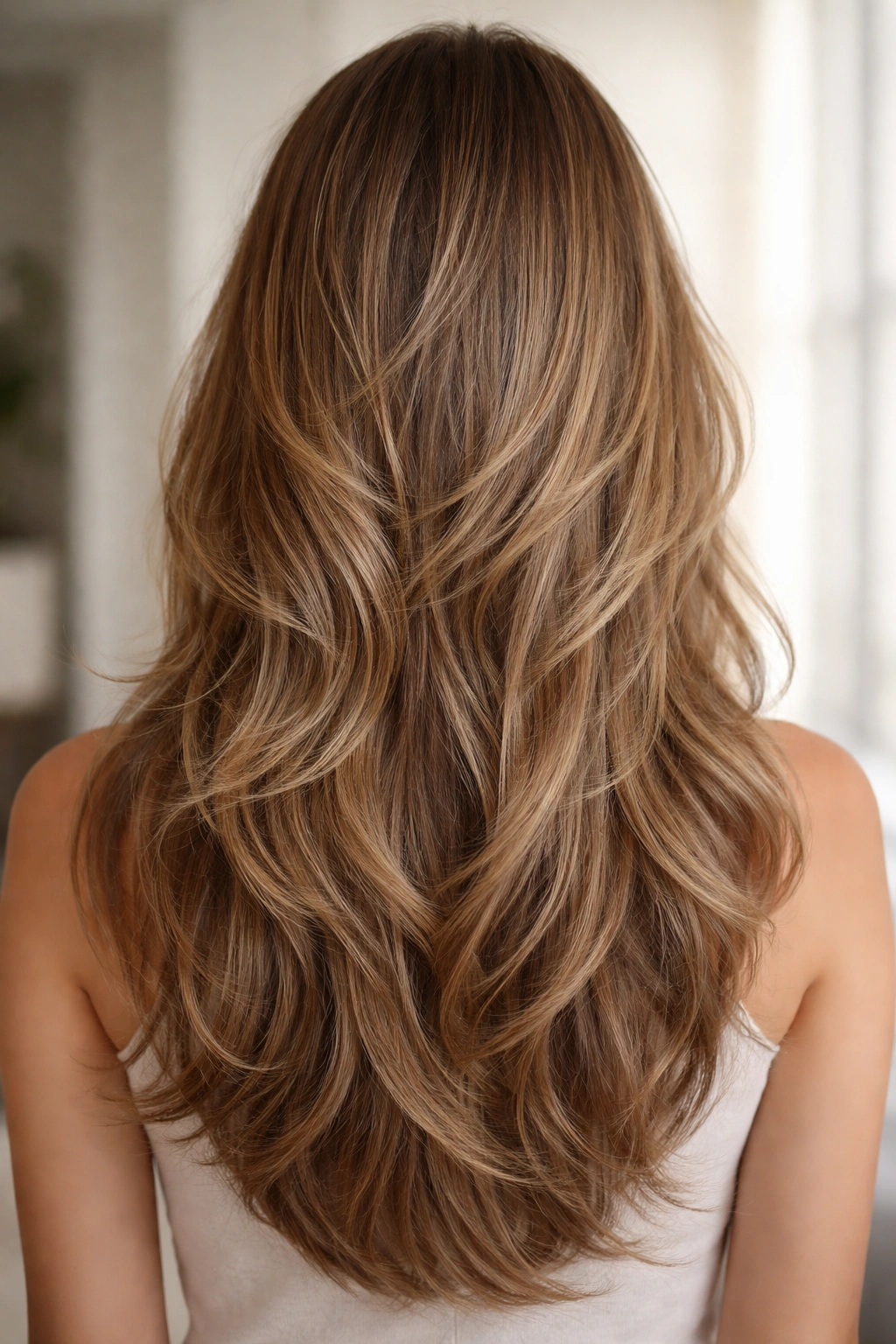
Feathered layers are the opposite of choppy—instead of chunky, visible layers, feathered layers are smaller and more subtle, creating soft movement and texture without the obvious choppiness. Feathered layers throughout your hair create a soft, romantic aesthetic while still providing the width and movement that long faces need. This is a more subtle approach to addressing face shape, perfect for someone who wants flattering movement without a dramatic change.
The Subtle Power of Feathered Layers
Feathered layers work by creating many small planes of movement rather than a few chunky, visible layers. Your hair catches light differently at different angles, creating dimension and visual interest without the sharp lines of a choppy cut. For long faces, this means movement and width without looking extreme or requiring dramatic styling.
How to Achieve and Maintain Feathered Layers
- Ask your stylist to create shorter layers at the crown that gradually blend into longer lengths toward the ends
- Feathered layers work on any length, from shoulder-length to longer
- Style with a blow dryer and round brush to encourage the layers to separate and create movement
- Use a light texturizing spray rather than heavy product to maintain the soft, feathered effect
Quick facts:
- Feathered layers require less frequent trims than choppy cuts because the blend is so seamless
- This style works beautifully with waves or curls because the texture enhances the layered effect
- Much more forgiving than blunt cuts as hair grows out
11. Angled Lob (Long Bob)
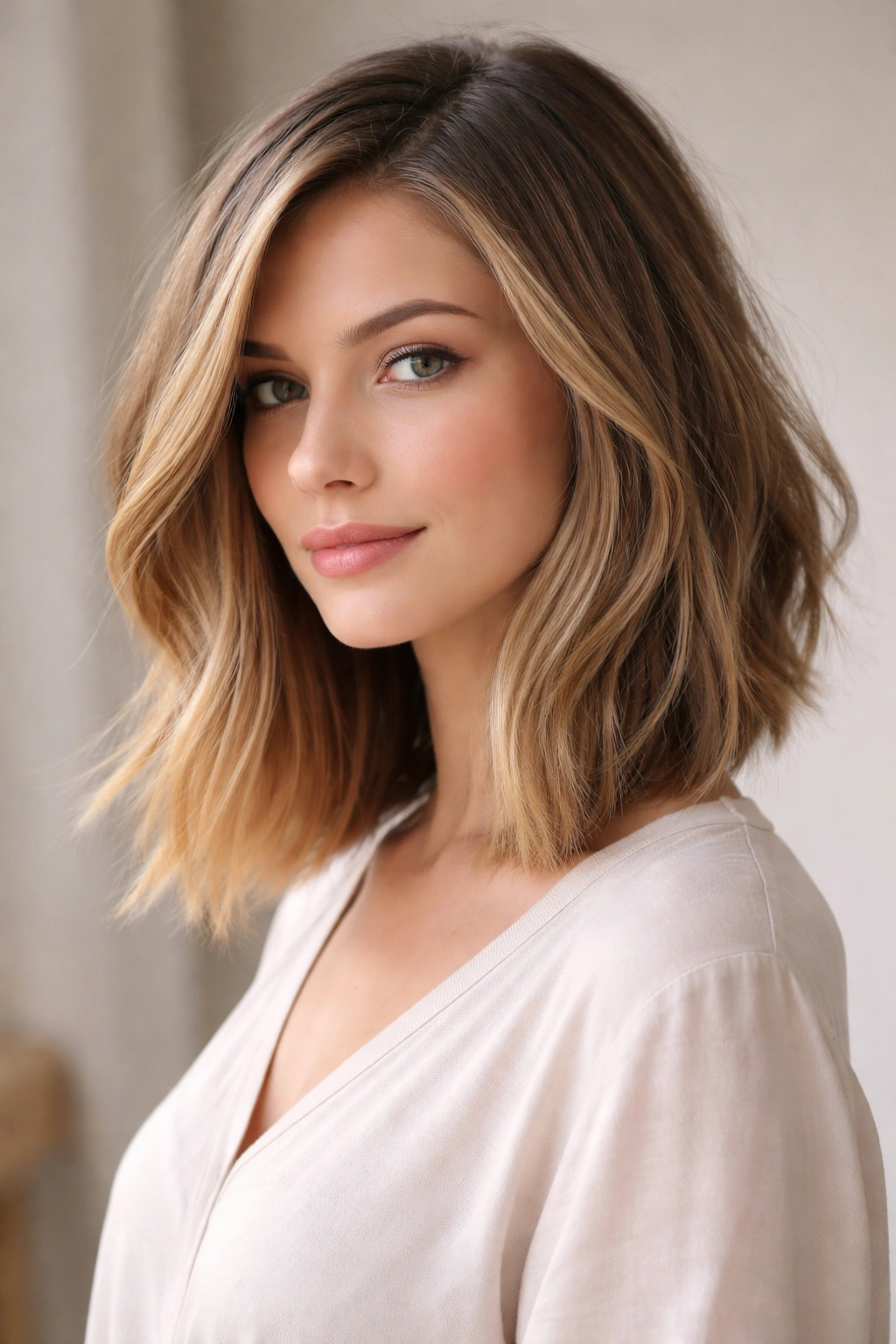
An angled lob—where the front pieces are longer than the back—creates intentional asymmetry that’s incredibly flattering for long faces. The angle draws the eye from the cheekbones downward in a diagonal line rather than straight down, which is visually more interesting and less elongating. An angled lob sits right around shoulder-length, the perfect length to add movement without appearing overly long.
The Geometry of an Angled Lob
An angled lob works because it breaks the symmetry of your face shape with a diagonal line that feels fresh and modern. The longer front pieces frame your face while the shorter back creates lift and volume. This structural imbalance is actually what makes it so flattering—it prevents your face from being the focus and instead creates visual interest in the cut itself.
Styling an Angled Lob for Maximum Impact
- The front pieces should be long enough to graze your collarbone or slightly beyond
- The back should be significantly shorter, creating a defined angle between front and back
- Style with waves or texture to enhance the movement and prevent the cut from looking severe
- Use a side part to enhance the asymmetry and add width
Pro tip: An angled lob looks best with some texture or movement—a perfectly straight angled lob can read as severe, while waves soften the overall effect and enhance the flattering angle.
12. Messy Textured Shag
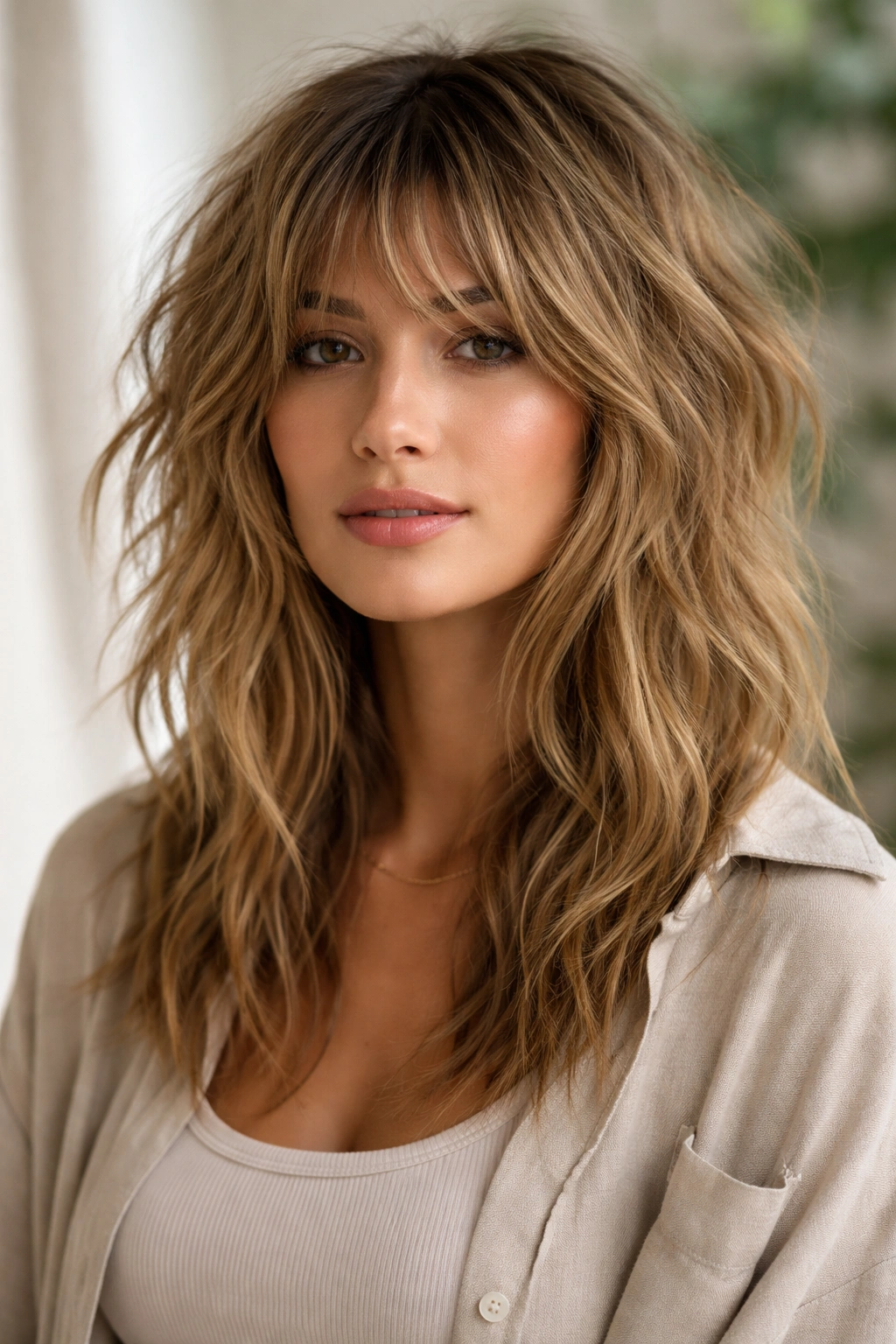
A messy, textured shag embraces movement and attitude in a way that’s both forgiving and extremely flattering for long faces. Unlike a carefully constructed shag, a messy shag is meant to look lived-in, tousled, and intentionally undone. This approach removes pressure to style perfectly while still providing all the width-building benefits of layers and texture.
Why “Messy” Is Actually Your Friend Here
The lived-in, tousled quality of a messy shag means your hair naturally sits away from your face and creates movement that prevents any elongating effect. The imperfection is what makes it work—nothing about this style emphasizes precision or draws attention to your face shape. Instead, it creates visual interest and movement that makes your overall appearance feel balanced and interesting.
How to Create and Maintain a Messy Shag
- Ask for choppy, uneven layers throughout with shorter pieces on top and longer pieces below
- Style with a blow dryer and texturizing spray for maximum tousled effect
- Embrace the undone quality—this style looks better slightly grown out than freshly cut
- Use a sea salt spray to enhance texture and create that beachy, lived-in vibe
Worth knowing: A messy shag is one of the most low-maintenance styles in terms of daily styling pressure—the whole point is that it’s meant to look undone, so perfection is actually the opposite of what you’re going for.
13. Straight Bangs With Volume on Top
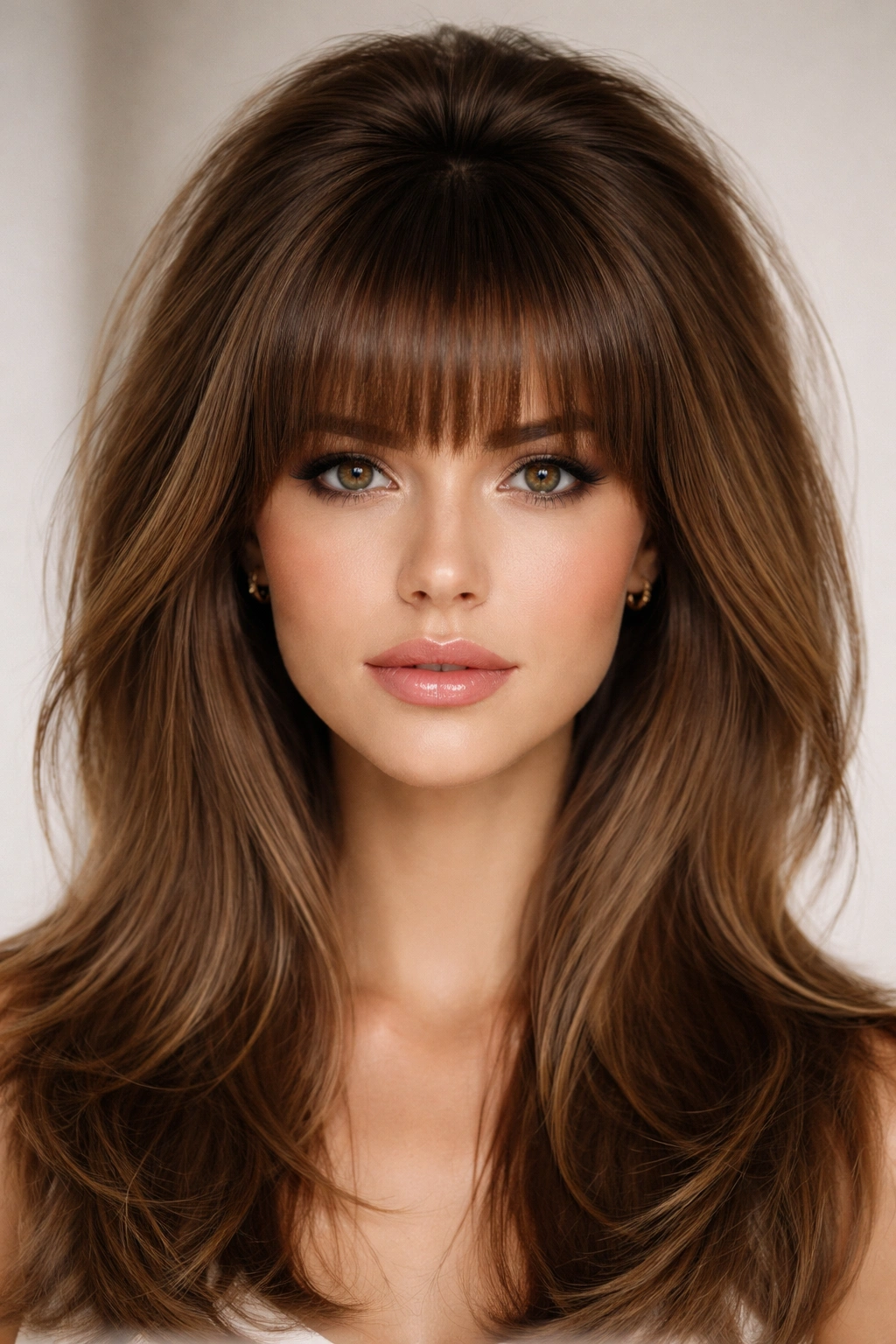
Straight bangs paired with volume on top is a bold approach that creates immediate visual balance by shortening your face and adding height at the crown. The straight bangs create that crucial horizontal break, while strategic volume on top—achieved through shorter layers and blow-drying technique—adds another widening element at the crown. This combination is surprisingly flattering and modern.
The Two-Part Strategy: Bangs Plus Crown Volume
Straight bangs handle the face-shortening work while crown volume adds width and creates visual interest at the top of your head rather than the length of your face. This two-pronged approach is powerful because it addresses your face shape from multiple angles simultaneously. The volume at the crown also creates a flattering proportion—wider at the top, moving toward your face shape naturally.
Styling Requirements for This Approach
- Blow-dry your roots with an upward motion and a round brush to create lasting volume at the crown
- Style your bangs straight down and slightly outward using a blow dryer or straightening iron
- Keep layers shorter on top to maintain the voluminous effect
- Use volumizing mousse or root-lifting spray on damp hair before blow-drying
Quick facts:
- Straight bangs show growth and damage more obviously than other bang styles
- This look requires regular trims every 2-3 weeks to keep bangs sharp
- Works best on straight to wavy hair—curly hair will fight the straight bang aesthetic
14. Asymmetrical Cut
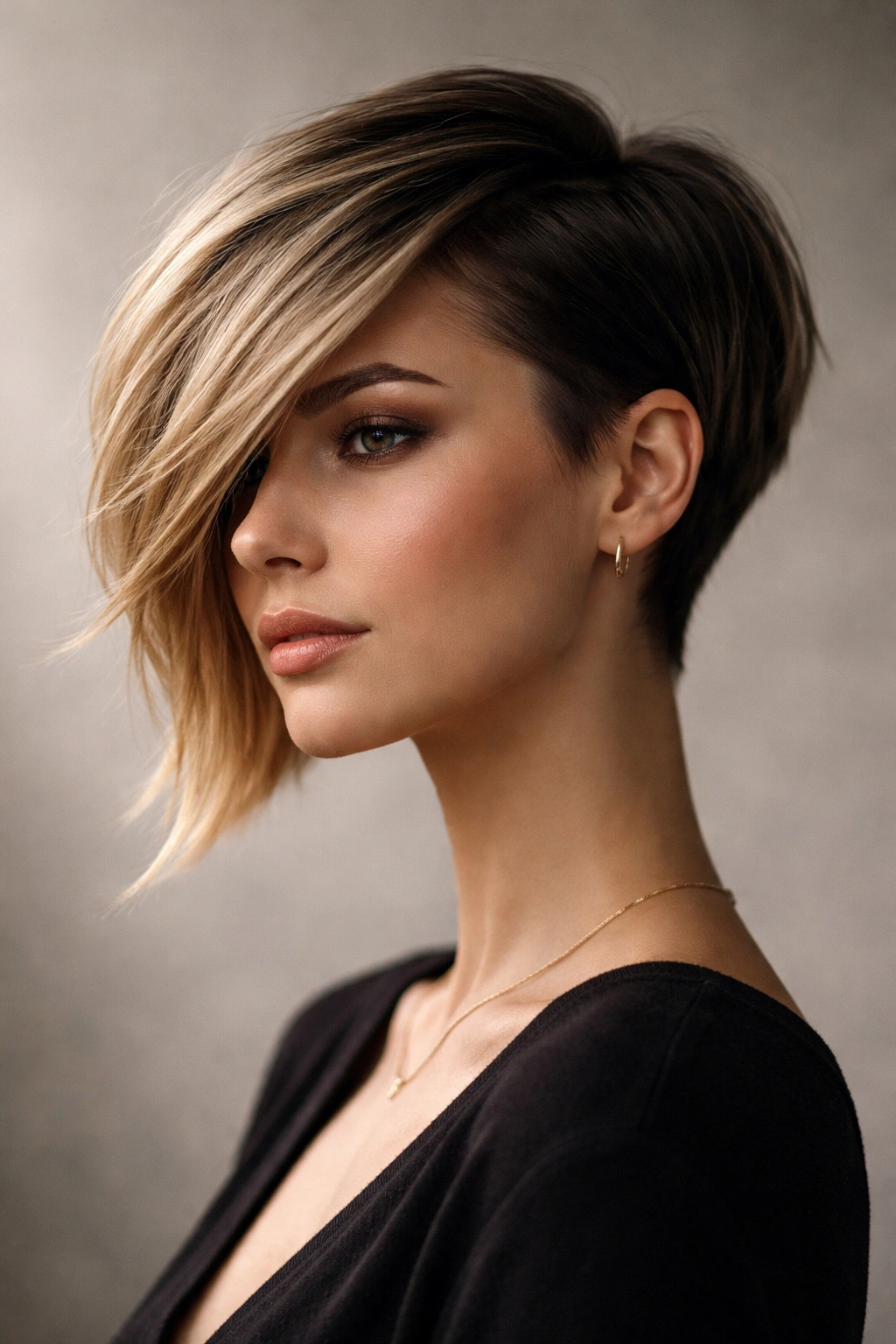
An asymmetrical cut—where one side is noticeably shorter or styled differently than the other—is a bold, modern choice that completely changes how people perceive your face shape. Because the cut itself is visually interesting and somewhat unexpected, attention goes to the cut rather than your face proportions. This is a strong statement style that works beautifully for someone confident enough to embrace something truly different.
How Asymmetry Breaks the Elongation Illusion
An asymmetrical cut removes the visual center of your face as the focus—instead, the cut itself becomes the interesting element. Your eye follows the line of the cut rather than the shape of your face, which instantly changes how your proportions appear. It’s a clever optical illusion created through structural imbalance.
Variations and Styling Options
- One side can be significantly shorter (pixie-length) while the other is longer (shoulder-length or beyond)
- Both sides can be long but styled very differently—one sleek and straight, one textured and wavy
- An undercut on one side paired with longer hair on the other creates defined asymmetry
- The key is making sure the asymmetry is intentional and well-executed, not accidental-looking
Pro tip: An asymmetrical cut requires some styling confidence—this isn’t a wash-and-go style. You’ll want to style it intentionally to enhance the asymmetry and make it look deliberate rather than uneven.
15. Layered Wavy Lob
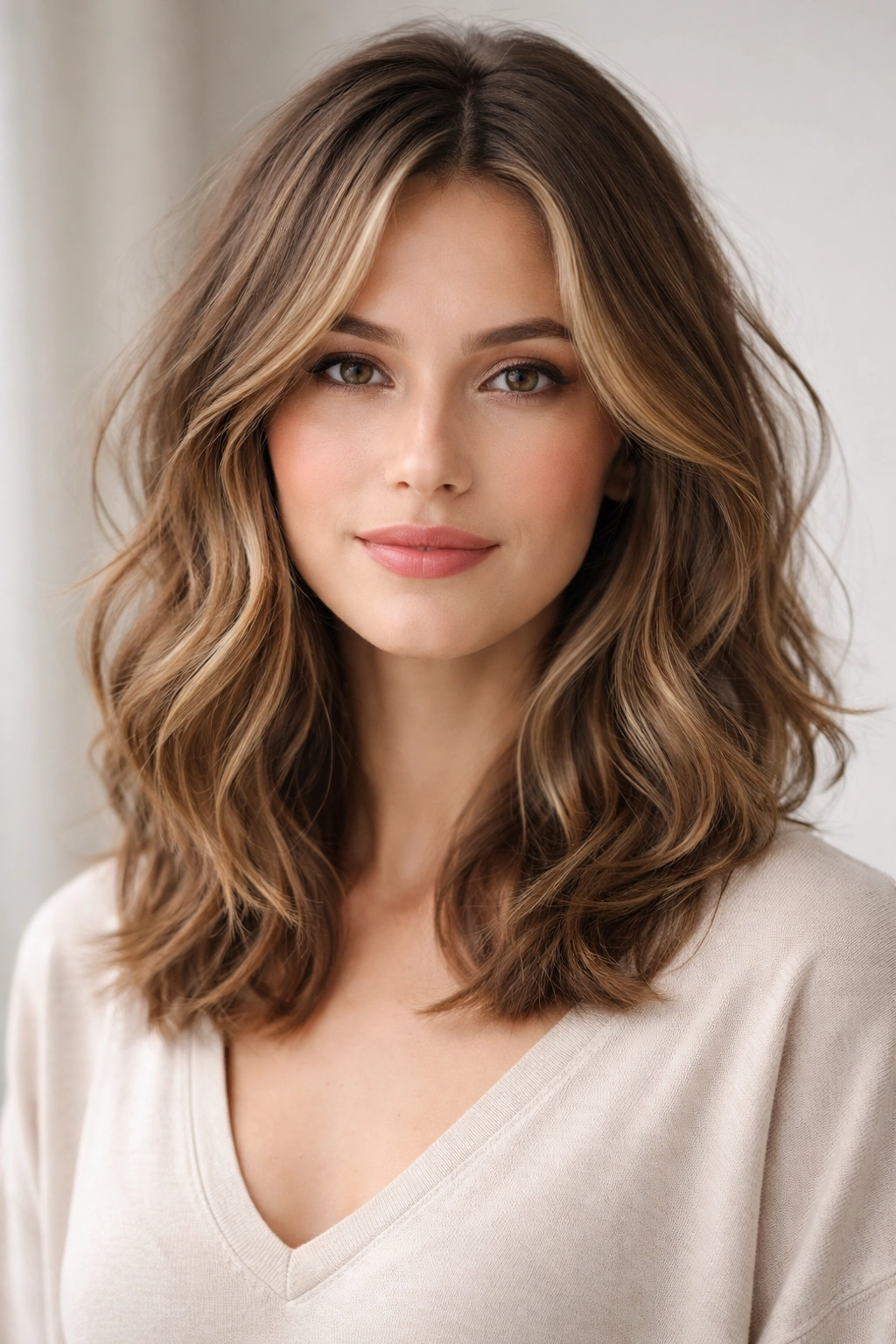
A layered wavy lob combines the best elements of several approaches: the perfect length of a lob, the flattering movement of waves, and the width-building benefits of strategic layers. Shoulder-length with waves throughout and layers that encourage movement, a layered wavy lob is feminine, versatile, and genuinely flattering for long faces. This is one of the most wearable, adaptable styles that works for almost any lifestyle and hair type.
Why This Combination Is So Universally Flattering
A lob provides the perfect length for long faces—long enough to feel feminine and flowing but short enough that layers can create serious width at the cheekbones. Waves add movement that prevents any static, elongating effect, and layers ensure that hair sits away from your face. Together, these elements create a style that’s balanced, interesting, and universally flattering.
How to Style and Maintain This Look
- Create waves using a 1.25-inch curling iron, wrapping each section away from your face
- Dry your hair with a blow dryer first to create volume before adding waves
- Use a texturizing spray or sea salt spray to enhance the wave pattern and add grip
- Layers should be concentrated around the face and mid-lengths to create movement exactly where you need it
Worth knowing: This style works beautifully whether you’re going for romantic and polished or casual and lived-in—waves naturally adapt to your styling effort and intention.
Final Thoughts
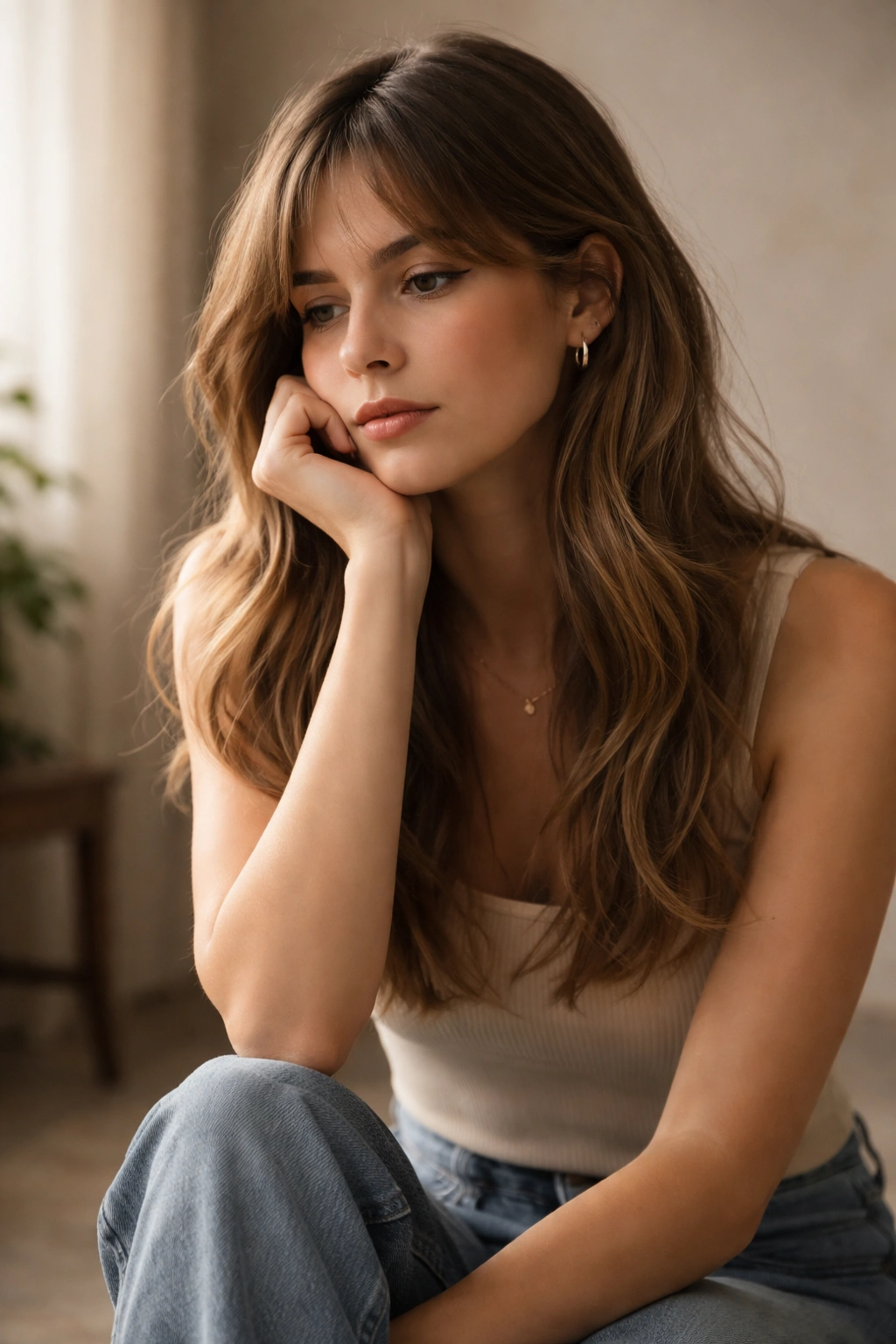
The most important thing to remember about choosing a haircut for a long and narrow face is that you have genuine options. Whether you’re drawn to bold, statement-making styles like an asymmetrical cut or an undercut, or you prefer soft, romantic approaches like curtain bangs and waves, there’s a haircut specifically designed to flatter your face shape.
The common thread running through all of these styles is that they address the vertical elongation through layers, texture, bangs, or strategic width-building elements. The best haircut for you personally depends on your lifestyle, styling commitment, and personal aesthetic. Some of these cuts require daily styling and regular maintenance, while others are specifically designed to look good with minimal effort.
When you book your appointment, bring photos of cuts you’re drawn to and have a detailed conversation with your stylist about your face shape and what you’re hoping to achieve. A great stylist can help you understand which elements matter most for your specific features and can adapt any of these styles to work perfectly with your hair texture, lifestyle, and personal style. Your face shape isn’t a limitation—it’s actually an advantage that lets you pull off styles that might not work as beautifully on other face shapes.
