



Short hair represents freedom, confidence, and a break from old expectations about what women over 30 are “supposed” to look like. A well-chosen pixie cut doesn’t make you look edgy or try-hard—it makes you look intentional, polished, and genuinely comfortable in your own skin. The trick is finding the right pixie variation for your face shape, texture, and lifestyle. Some pixies are playful and textured; others are sleek and architectural. Some frame the face softly; others emphasize bone structure boldly. The difference between a pixie that transforms you and one that just feels like a haircut is understanding which style actually suits you.
The beauty of pixie cuts after 30 is that you’ve earned the confidence to pull them off. You know your face, your coloring, and what makes you feel powerful. This isn’t the pixie you might have gotten at 22—this is a refined, strategic choice. The right pixie can highlight cheekbones, soften harsh angles, add volume where you’ve lost it, and require surprisingly minimal maintenance once you understand the styling tricks. Whether you prefer your pixie tousled and textured, slicked back and minimal, or with a bit of length on top for versatility, there’s a version that will make you feel like the best version of yourself.
What matters most is choosing a style that aligns with how you actually want to spend your time. If you love a blow dryer and product, commit to a pixie that rewards that effort with incredible texture. If you want wash-and-go simplicity, go for a shorter, more uniform cut that doesn’t demand styling. The right pixie doesn’t compete with your life—it enhances it. Let’s walk through the pixie cuts that work beautifully for women 30 and beyond.
1. The Classic Tapered Pixie
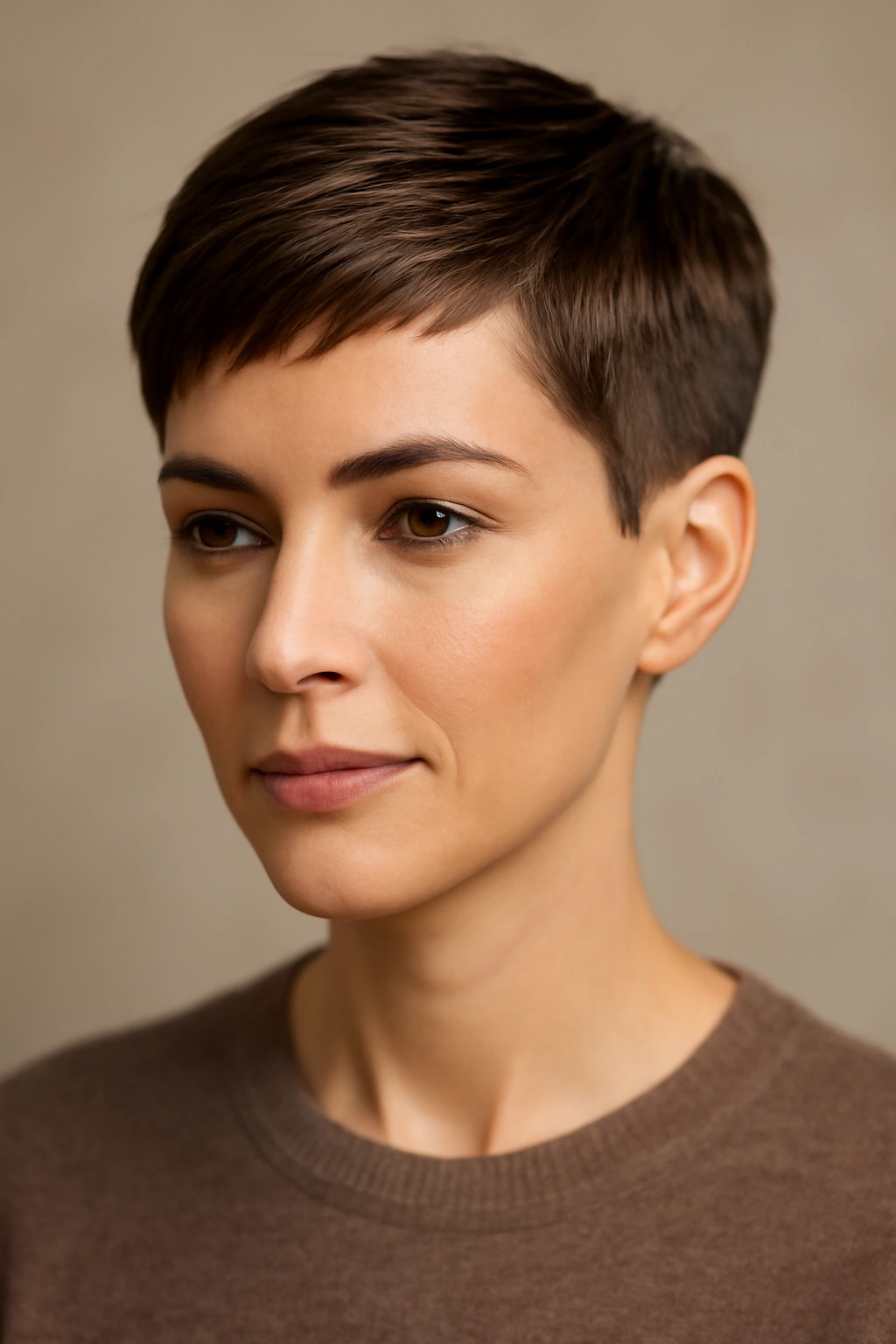
The classic tapered pixie is what most people picture when they think of the style—short and neat all over, with slightly more length on top than at the sides and back. The sides fade gradually from longer at the temples to very short at the nape, creating a clean line that frames the face beautifully. This is the pixie that never goes out of style because it’s flattering on almost every face shape and works equally well dressed up for the office or dressed down for the weekend.
Why It’s Perfect for Women Over 30
The classic pixie reads as intentional and put-together without requiring you to make a dramatic statement. It lands in that sweet spot between youthful and sophisticated—confident without being trendy. The tapered sides elongate the neck and jawline, which becomes more noticeable and defined as we move through our 30s and beyond. If you’ve spent years in longer hair, this cut offers surprising psychological power: it’s such a visible change that it forces you to own your own face in a way longer hair never did.
What Makes It Work Best
- Face shapes: Flatters oval, square, and rectangular faces beautifully; can work on round faces with slightly more length on top to create vertical line
- Hair texture: Works on straight, wavy, and curly hair, though curly hair needs a stylist experienced in cutting texture
- Styling flexibility: Can be styled sleek with pomade, tousled with texture paste, or left naturally for a softer look
- Maintenance: Requires trims every 3-4 weeks to maintain the clean tapered shape; this isn’t a style you can grow out gracefully
- Coloring opportunity: This cut showcases color beautifully—try a rich brunette, warm blonde, or even a subtle highlight around the face
The classic tapered pixie gives you permission to stop hiding behind your hair. It requires confidence, but if you’re ready to show your face to the world, this cut delivers.
2. The Textured Pixie With Longer Top
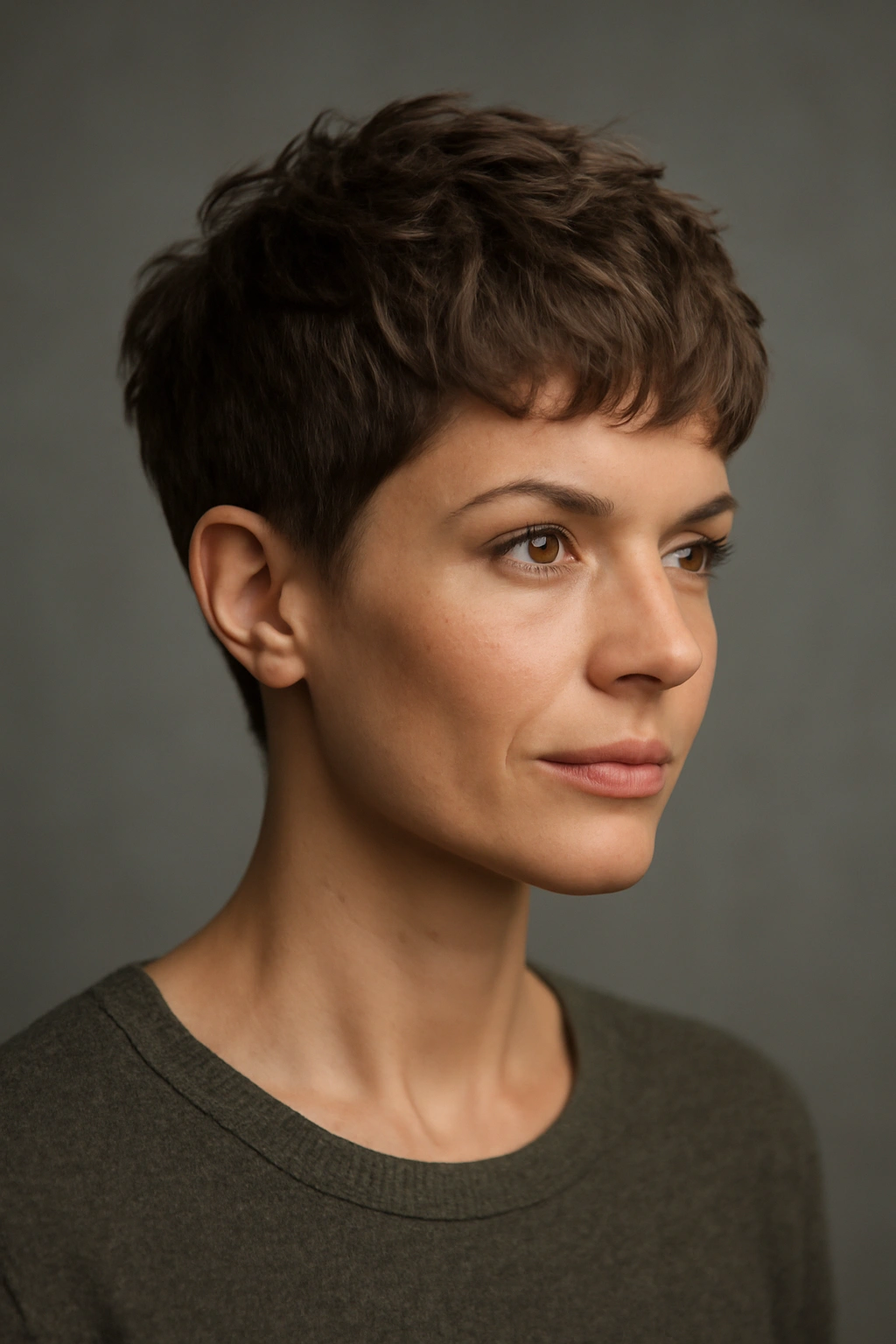
This pixie keeps more length on top—anywhere from 2 to 4 inches—while keeping the sides and back very short. The longer top creates natural texture and movement, while the short sides keep the overall look polished and manageable. The result is a pixie that feels current and intentional without being extreme, and it offers way more styling flexibility than a traditional ultra-short pixie.
Why It Works as You Age
The longer top creates the illusion of volume on top of the head, which is genuinely useful as fine hair and hair thinning become more common in your 30s and beyond. You can style this top messy and textured one day and sleek and intentional the next. The contrast between the short sides and the textured length on top is youthful-looking without reading as immature—it’s the pixie that says “I know what I’m doing” rather than “I’m rebelling.”
Styling and Maintenance Details
- The top: Work a texturizing paste or light styling cream through damp hair and tousle with your fingers while it dries, or blow-dry with a round brush for more volume and control
- Natural texture: If you have wavy or curly hair, the longer top will enhance your natural texture beautifully—this is one of the few pixies that celebrates curl rather than fighting it
- The sides: Still need trimming every 4-5 weeks, but the focus is keeping them clean and shaped rather than maintaining a perfect taper
- Coloring strategy: A darker color at the roots with lighter money-pieces framing the face adds dimension and makes the style feel richer
- Updos: With 3-4 inches on top, you can actually secure the top back in a tiny ponytail or clip for days when you want a completely different vibe
This pixie gives you the polish of short hair with the versatility of having some length to work with.
3. The Slicked-Back Minimalist Pixie
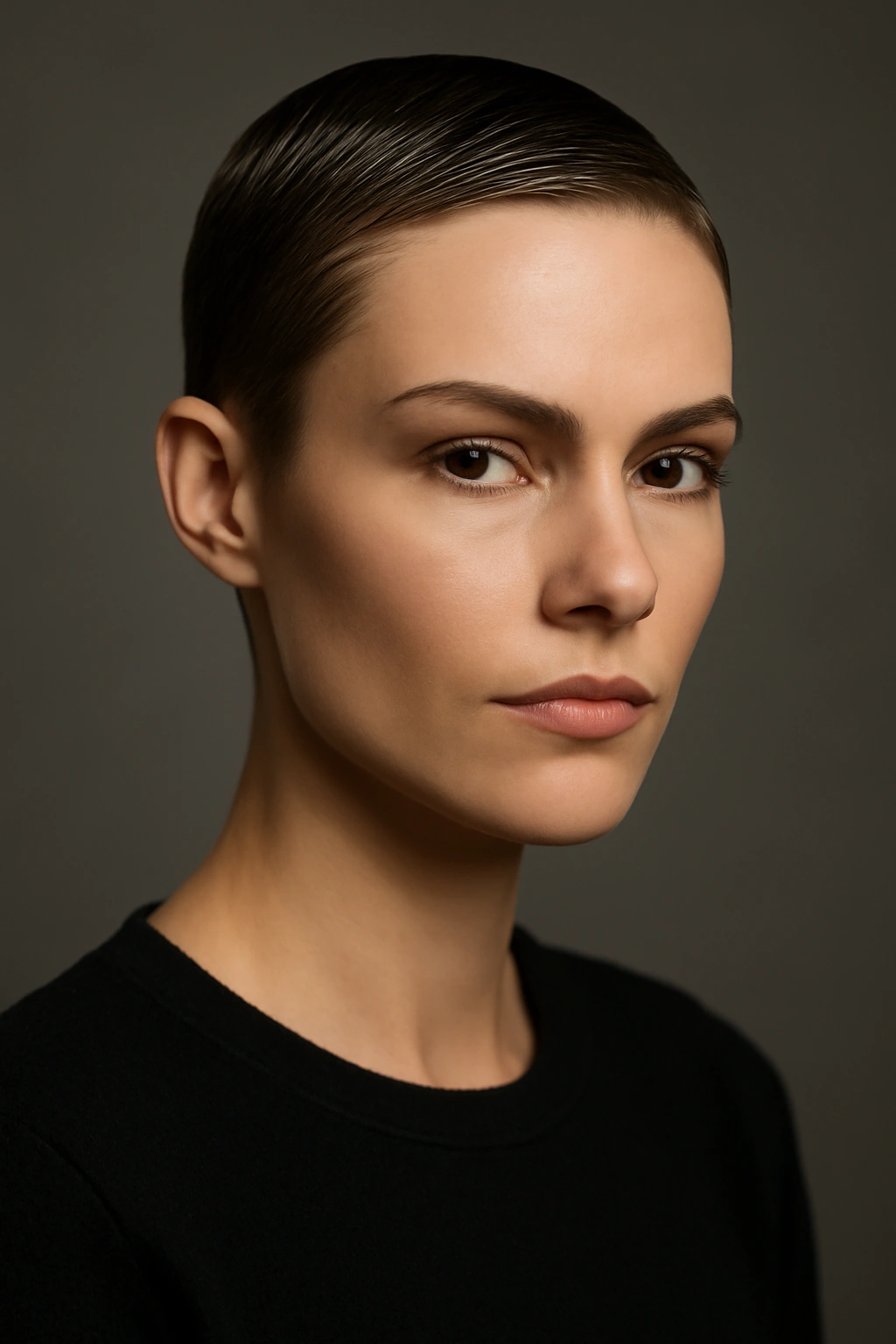
The slicked-back pixie is intentionally severe—ultra-short all over (half an inch or less), with the hair smoothed back tight against the head using pomade, gel, or a similar product. It’s the pixie that shows off your features without apology: your cheekbones, your jawline, the shape of your head, everything becomes visible. There’s no hiding here, which is precisely why it feels so powerful.
Why Confidence Peaks in Your 30s
By your 30s, you’ve stopped caring whether everyone thinks you look “pretty” in the conventional sense, and this pixie is for that version of you. It’s a style that photographs beautifully—the clean lines, the architectural quality, the absence of hair-based distraction means all the interest is in your face and your presence. It’s the cut that works for women who’ve made peace with aging and are ready to lead with features rather than framing.
The Technical Reality
- Hair length: Typically cut to about ½-inch all over, sometimes slightly longer at the very crown
- Texture requirements: Works best on straight to wavy hair; extremely curly hair is much harder to slick back convincingly
- Daily styling: You’ll need product every single day—this isn’t a wash-and-go style, but the daily ritual only takes 60 seconds
- Product choice: A light pomade gives a more polished finish than gel, which can look plastic; a matte or satin pomade is more sophisticated than shiny
- Trims: Every 3 weeks, as any growth becomes immediately obvious with the hair slicked back
- Confidence factor: This cut demands that you own your entire face—no bangs to hide behind, no side-sweep softness
This is the pixie for when you’re ready to stop softening yourself and start owning your power.
4. The Soft Wispy Pixie
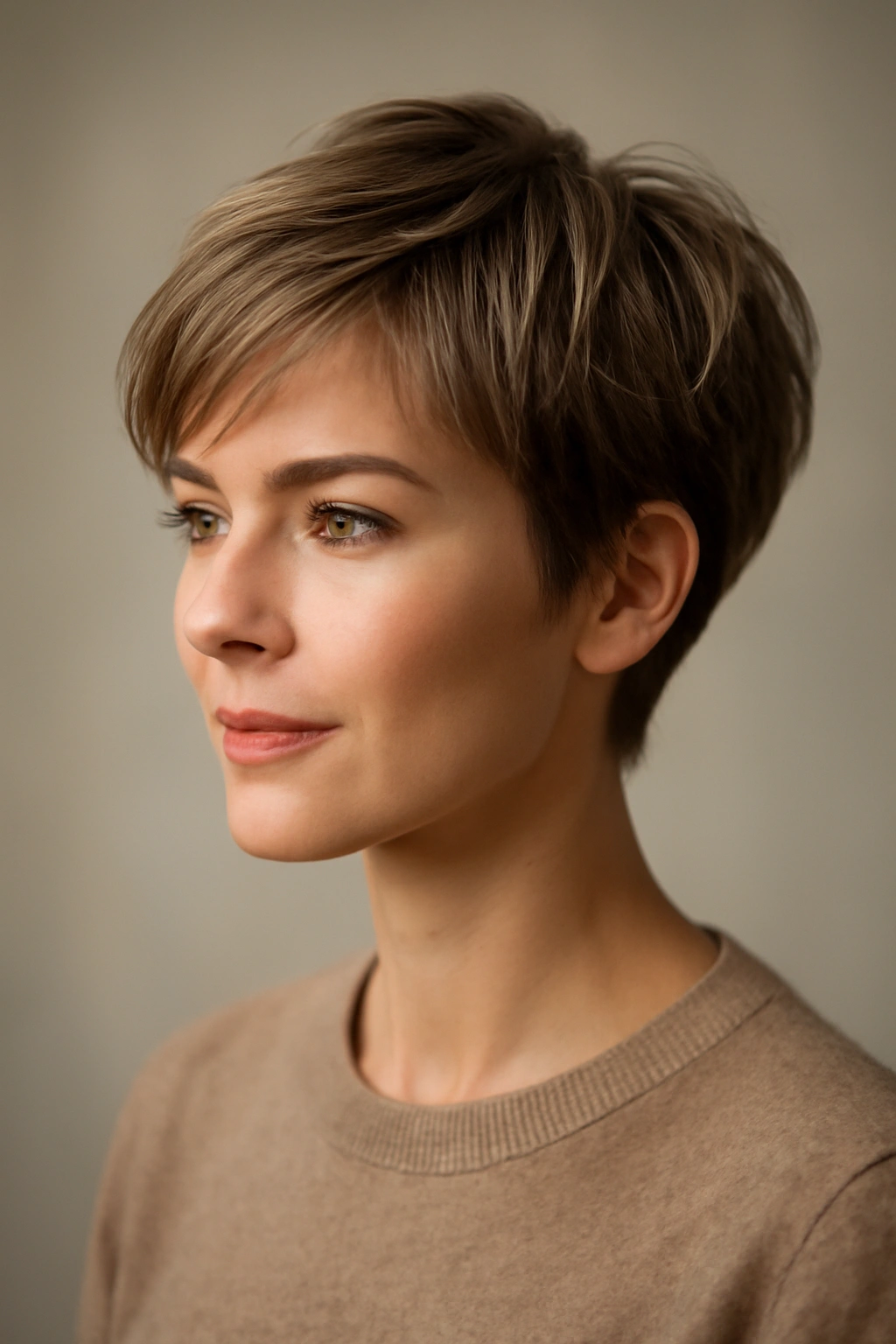
The soft wispy pixie maintains the basic short structure—tapered sides, more length on top—but every edge is intentionally softened. The longer lengths on top are choppy and textured, the sides blend gradually into the face with wisps and delicate pieces left longer near the temples and cheekbones, and nothing has a hard line. It’s the pixie for women who want the ease and confidence of short hair without sacrificing femininity.
Why This Works for 30+ Faces
As we age, harsh lines become less flattering, so the softness built into this cut is genuinely strategic, not just aesthetic. The wisps and choppy texture around the face soften the jawline without covering it, frame the cheekbones without competing with them, and create movement that tricks the eye into seeing more fullness and youthfulness. It’s short enough to feel fresh and easy, but soft enough to feel welcoming rather than severe.
How to Wear and Style It
- The disheveled approach: Let this pixie dry naturally into its choppy texture, then tousle with your fingers and a light texturizing product—the more “undone” it looks, the better it works
- Face-framing placement: Longer wisps should brush just past your cheekbones or jawline, creating a subtle frame rather than a hard edge
- Styling on good days: A light dry shampoo adds texture and volume; a texturizing spray given time to dry creates even more movement
- Coloring bonus: This texture-heavy cut shows off dimensional color beautifully—try a base color with lighter pieces throughout for depth
- Maintenance: Still trim every 4-5 weeks, but the goal is maintaining the choppy texture rather than creating perfect geometric lines
This pixie delivers the ease of short hair without requiring you to be a minimalist.
5. The Longer Pixie With Bangs
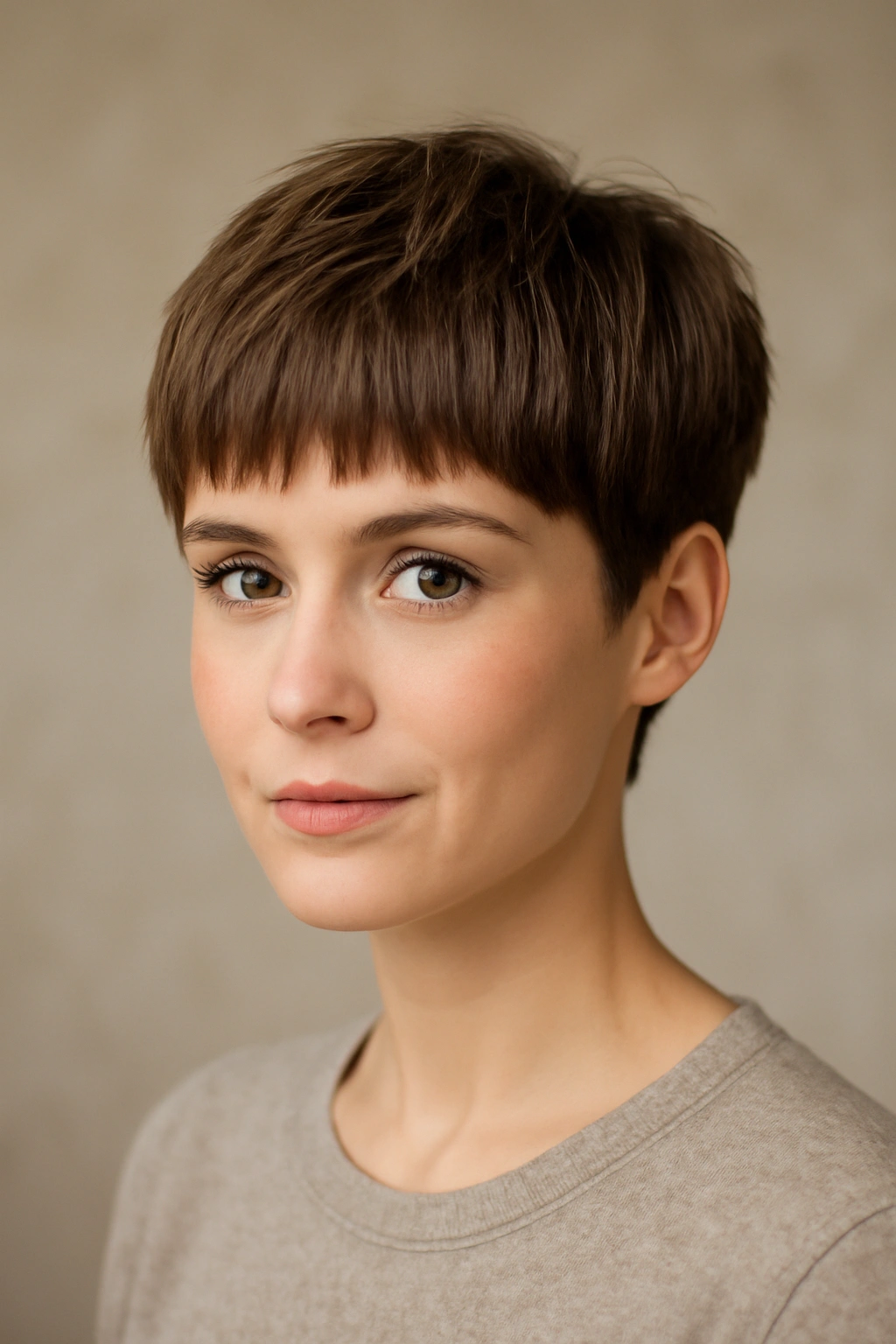
This version keeps the sides short but the top a bit longer—sometimes 3 to 4 inches—and adds a bang situation that can be blunt, textured, or side-swept. The combination gives you coverage where you might want it (the forehead area) while keeping the back and sides easy. It’s a gateway pixie for women who aren’t quite ready to commit to showing their entire forehead.
The Strategic Value After 30
Bangs—even on short hair—are incredibly face-framing tools. If you have a longer forehead, prominent brow bone, or fine lines you’d rather downplay, a pixie with bangs lets you control what gets highlighted. The longer pixie underneath gives you volume and movement, while the bangs add a bit of youth-oriented playfulness without making the whole look feel young. You get the ease of short hair and the face-sculpting power of bangs.
Bangs and Pixies: The Details
- Blunt bangs: Straight, chin-length bangs on a textured pixie create strong contrast and read as very intentional and fashionable
- Textured bangs: Choppy, piece-y bangs blend more softly with a textured pixie and feel less severe
- Side-swept bangs: Longer on one side, swept across—the most flexible option that works as it grows out
- Maintenance reality: Bangs need trimming every 2-3 weeks to maintain the cut; they’re not a low-maintenance choice
- Styling: Bangs work best when the rest of the pixie is textured and soft rather than slicked back
- Face shapes: Bangs work on most face shapes, but are particularly flattering if you have a longer face or want to soften a square jawline
This pixie says you want the ease of short hair with the dimension that bangs provide.
6. The Asymmetrical Pixie
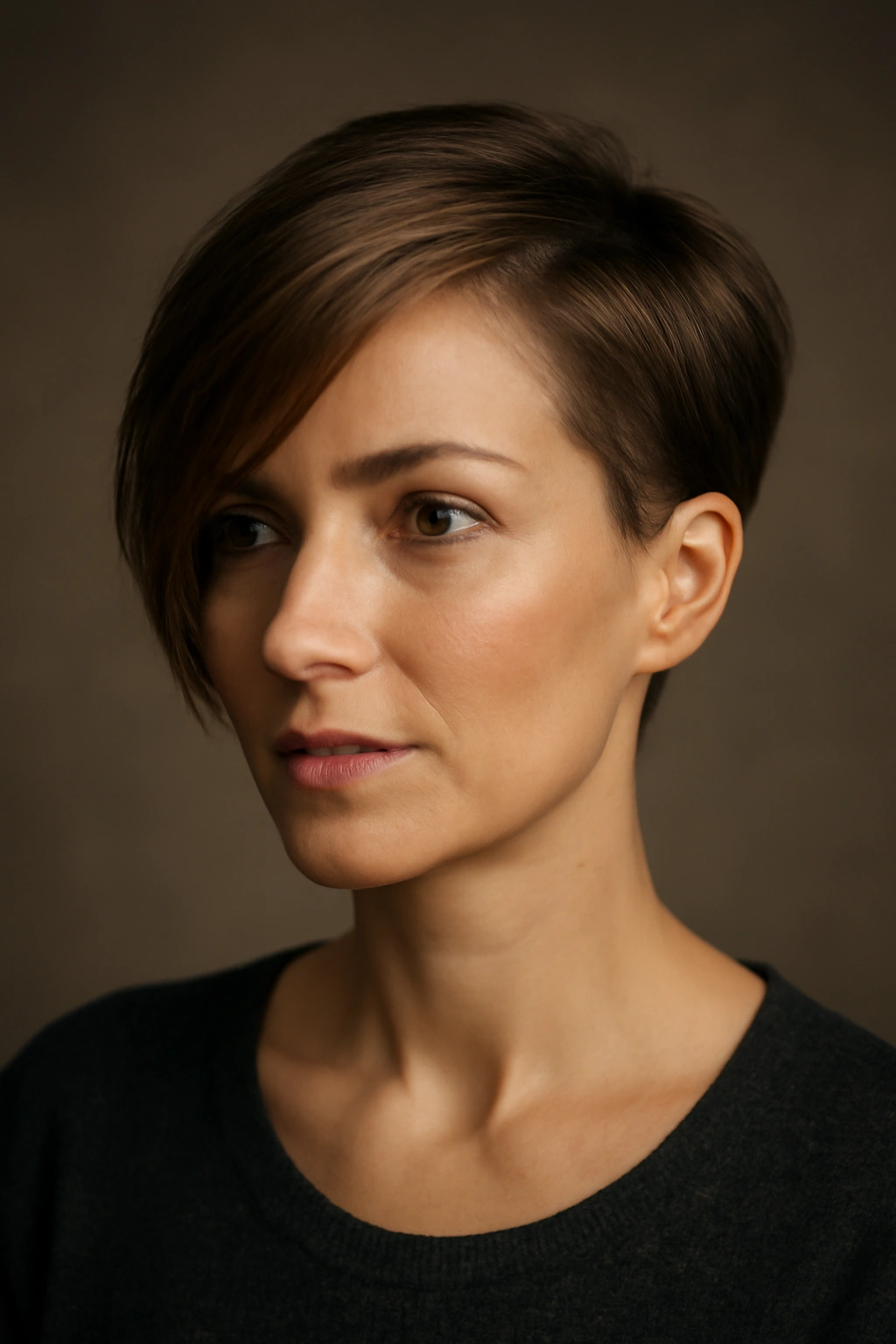
The asymmetrical pixie is deliberately one-sided—one side might be tapered very short while the other has more length, or one side is swept dramatically behind the ear while the other falls forward. It’s a style that’s modern and artistic without being costume-like. The asymmetry creates visual interest and movement that a perfectly balanced pixie doesn’t have.
Why It Resonates at 30+
An asymmetrical cut announces that you’re confident enough to wear something deliberately imperfect. It’s the haircut equivalent of not caring if your eyeliner matches perfectly—you’ve moved past the need for symmetry as a marker of beauty. The asymmetry also creates movement and visual distraction in interesting ways: it can elongate a round face, soften a square jawline, or just make you feel like you’re wearing art on your head.
Making It Work Practically
- Styling method: The longer side can be styled sleek and tucked behind the ear, or tousled forward for more movement depending on the day
- Face shaping: Works particularly well on square or round faces, as the asymmetry breaks up predictable geometry
- Maintenance: Requires a skilled stylist who understands asymmetrical cutting; trims every 4-5 weeks
- Hair texture: Works beautifully on wavy or textured hair, where the asymmetry enhances the natural movement
- Confidence factor: You need to genuinely like how it looks, because strangers will definitely notice it
- Styling time: More involved than a classic pixie, as you’re creating intentional imbalance rather than letting it fall naturally
This pixie is for the woman who wants her hair to be a conversation starter.
7. The Polished Pixie Crop
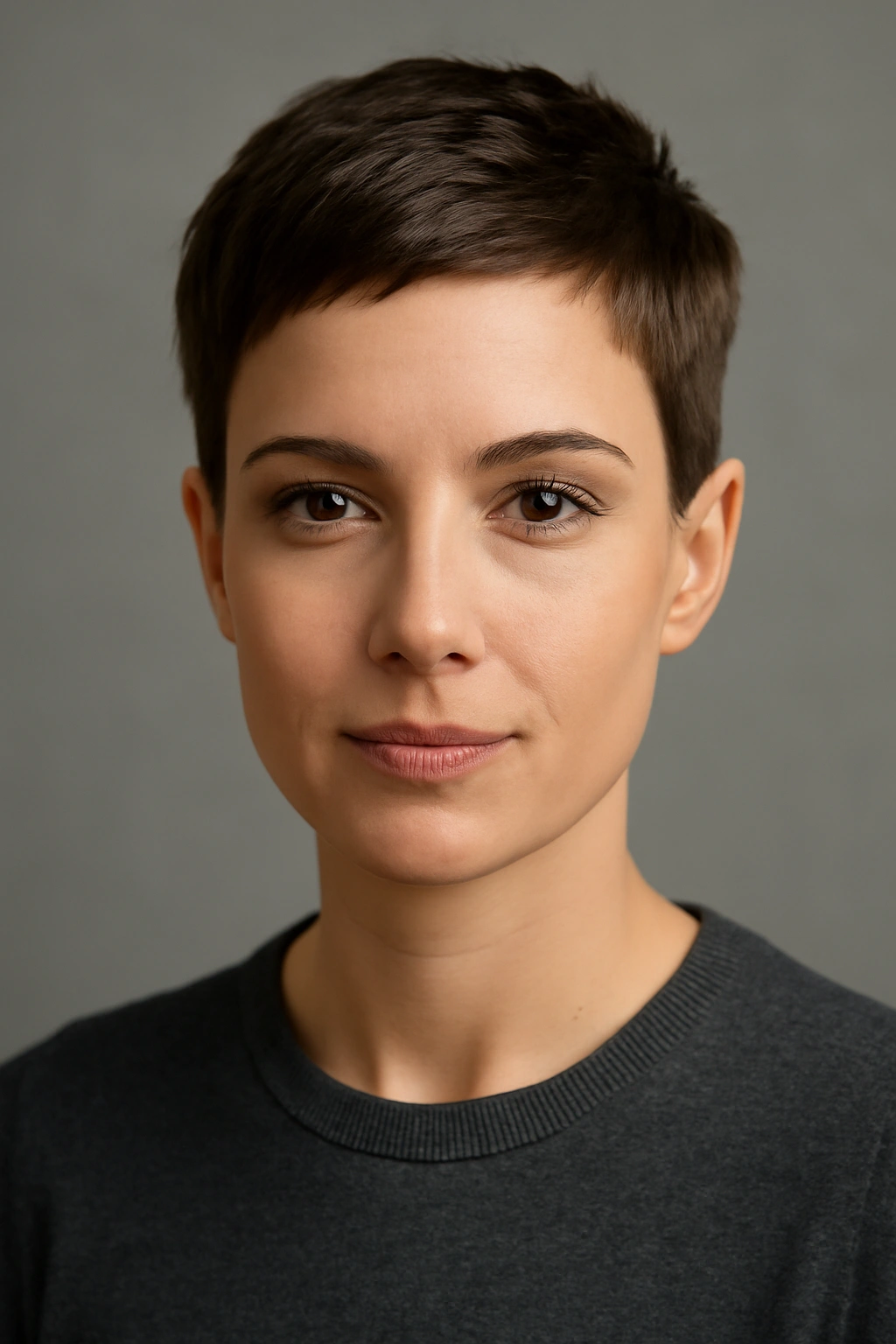
The polished pixie crop sits between a traditional pixie and a very short crop—maybe an inch long all over, with slightly more definition and texture through the crown than at the sides. It’s cleaner and more geometric than a messy textured pixie but not as severe as an ultra-short slicked-back version. Think of it as the pixie for the professional woman who needs something she can style in under a minute but that still reads as intentional.
The Professional Appeal at 30+
A polished crop says you’re serious about your work and your appearance, but you don’t waste time on unnecessary frills. It’s particularly popular among women in leadership positions, medicine, law, and other fields where your competence needs to be immediately obvious. The crop shortens your morning routine without making you look underdone—this is still a styled look, just an extremely efficient one.
The Daily Reality
- Styling: A tiny bit of pomade or texture cream through the crown in the morning, then you’re done. Some days you can skip product entirely if your hair cooperates
- Hair texture: Works on straight to wavy hair; very curly hair can be challenging since there’s nowhere to hide texture
- Trims: Every 3-4 weeks, similar to a classic pixie
- Coloring opportunity: A single-color crop looks clean and modern; highlights or dimensional color add subtle richness
- Face shapes: Flatters oval, oblong, and rectangular faces beautifully; works on square and round faces if you have cheekbones you want to highlight
- Formality: This cut works equally well at a board meeting or at the beach—it’s just inherently professional-looking
This pixie says you value your time and your appearance, but not in that order.
8. The Curly Textured Pixie
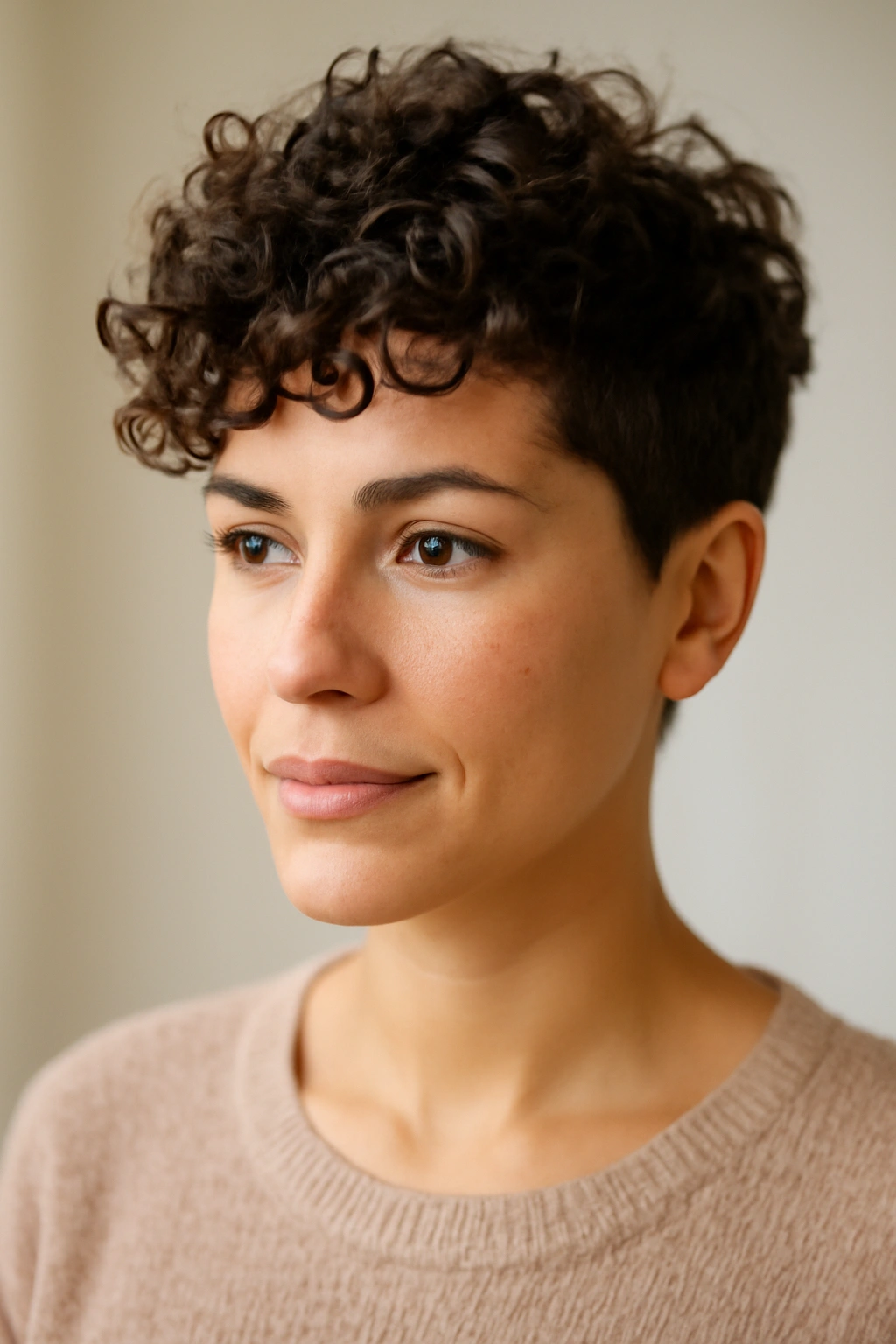
For women with naturally wavy, curly, or coily hair, a pixie cut specifically designed to enhance natural texture is revelatory. This version is cut with the texture in mind—shorter through the sides and back, more length on top where the curl can really express itself. The curl provides the volume and movement that straighter-haired pixies have to create with styling.
Why Natural Texture Changes Everything After 30
Spending 20 years fighting your natural hair texture is exhausting. A curly or coily pixie is the moment you stop fighting and start celebrating. The cut is specifically designed to work with your hair’s natural pattern rather than against it, which means your morning routine becomes significantly easier. A curly pixie dries relatively fast, styles easily, and looks intentionally beautiful without requiring blow dryers, flat irons, or constant product.
Curly Pixie Care and Styling
- The cut: Must be cut by a stylist experienced in curly hair; straight-hair stylists will often cut curly hair too short because they’re not accounting for shrinkage
- Product application: Apply leave-in conditioner and curl cream or gel to soaking-wet hair, then scrunch upward and let it air dry or diffuse dry
- Shrinkage reality: Your wet hair will be longer than your dry hair by 1-2 inches; account for this when discussing length with your stylist
- Maintenance: Trim every 5-6 weeks to maintain the shape; more frequently if you want crisp edges
- Styling flexibility: You can wear it naturally textured and voluminous, or smooth it with a flat iron or edges with a brush for more control
- Hydration: Curly hair needs more moisture than straight hair; invest in good leave-in conditioner and deep conditioning treatments
- Texture types: Works beautifully on wavy, curly, coily, and kinky hair types
This is the pixie that finally lets your hair be itself.
9. The Choppy Pixie Crop
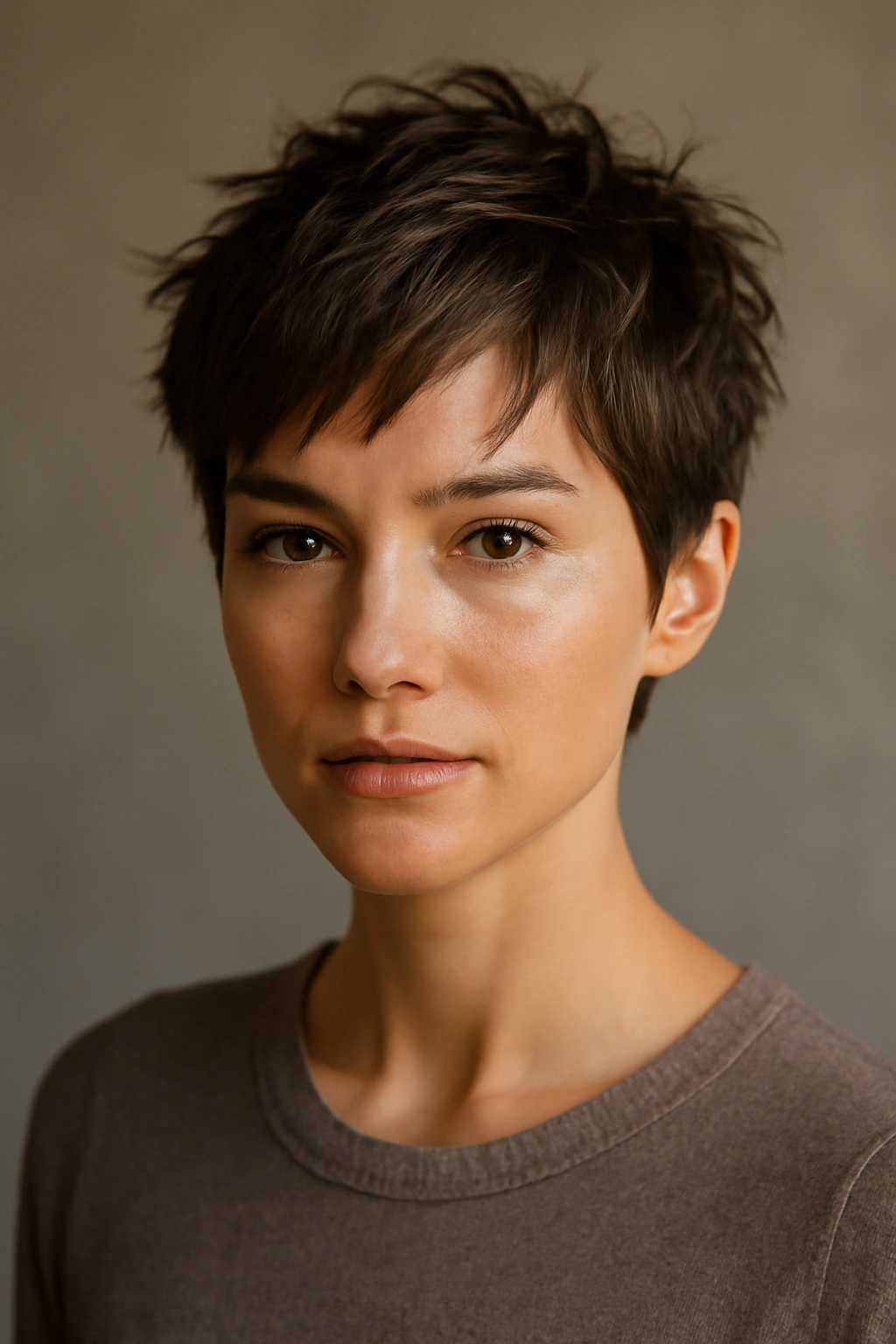
The choppy pixie crop is shorter and messier than a classic pixie—the layers are much more pronounced, and the styling is intentionally textured and undone. Every piece of hair is a different length, creating the impression of controlled chaos. It reads as youthful and current without being immature, and it photographs beautifully because the texture catches light in interesting ways.
Why It Feels Fresh at 30+
A choppy pixie says you’re not trying too hard, and that confidence is its own form of beauty. The cut acknowledges that perfection is boring and that texture and movement are more interesting than symmetry. It also hides growth phases better than a smooth pixie—you can actually go 5-6 weeks between trims without it looking messy (though it’ll look better with regular trims).
Choppy Pixie Styling and Management
- Styling method: Apply texturizing paste or lightweight pomade to damp hair and tousle until it looks intentionally messy—if it looks “done,” you’ve done too much
- Air dry advantage: This cut actually looks better if you let it air dry rather than blow-dry it; the natural texture is its whole point
- Product choice: Light texture pastes and sprays work better than heavy pomades, which can weigh down the choppy layers
- Hair texture: Works on all hair types, but looks particularly fantastic on naturally textured or wavy hair
- Face shapes: The movement and texture is flattering on most faces, though it can soften angular features particularly well
- Maintenance: Trims every 4-5 weeks keep the choppy layers sharp; letting it grow out makes it look simply messy rather than intentionally choppy
- Color payoff: Dimensional color shows off the choppy texture beautifully—the different lengths mean the light hits different colors in different ways
This pixie is for when you want to look like you didn’t try, but you actually put thought into it.
10. The Long Pixie Undercut
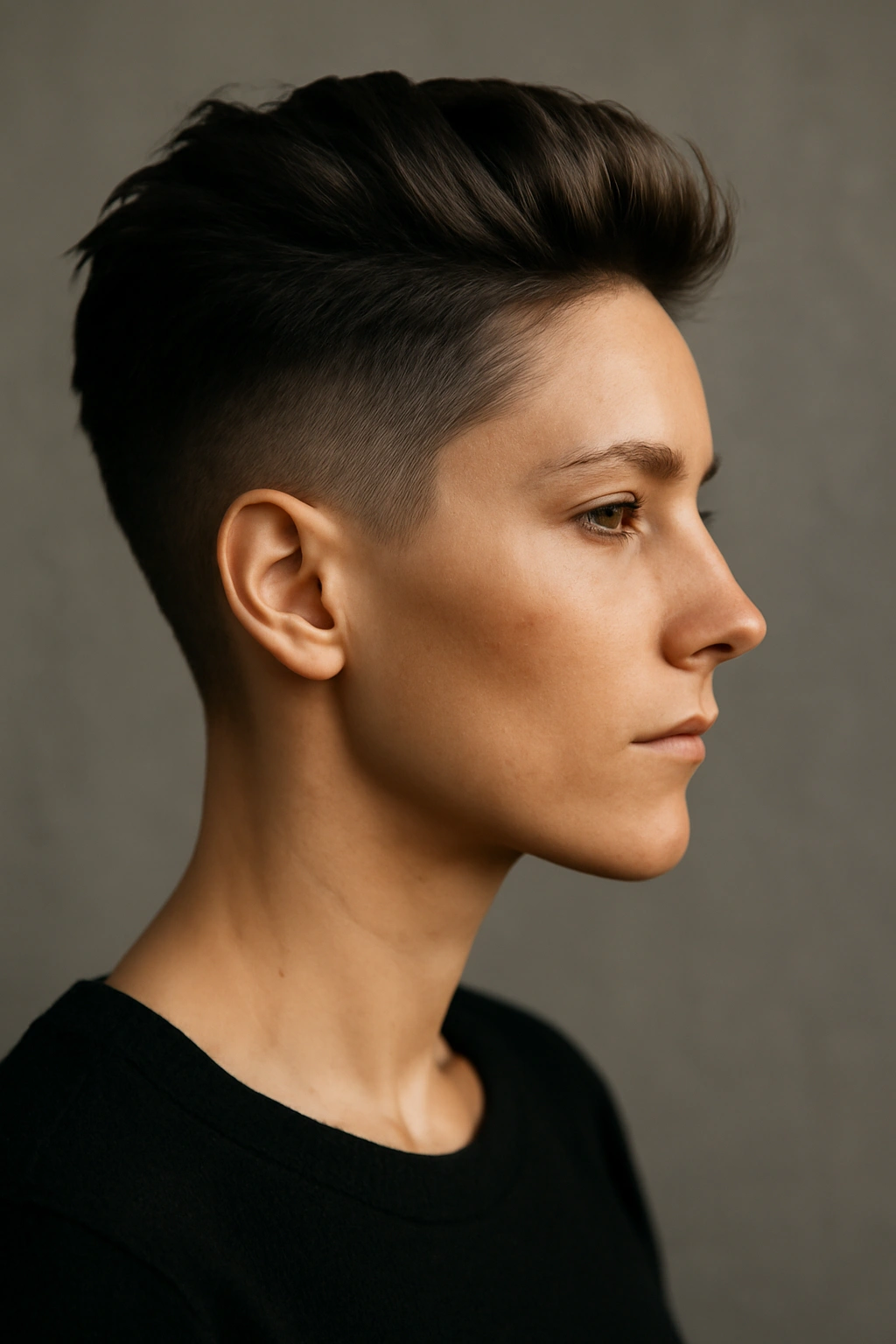
The long pixie undercut keeps significant length on top—4 to 6 inches, sometimes more—while the back and sides are cut very short, almost shaved. It’s the most dramatic pixie variation, creating stark contrast between the top and sides. It’s also the most transformable: on some days it reads as an edgy pixie, on other days you can style the longer top over the shaved sides to create the illusion of shoulder-length hair.
The Confidence Statement at 30+
A long pixie undercut announces confidence in a way few haircuts can. It’s not subtle. But for women who’ve earned their self-assurance over three decades, it’s an incredibly powerful statement. You’re literally showing the world that you don’t need to hide, that your features are interesting enough to display, and that you make intentional choices about your appearance.
Styling and Versatility
- The contrast: The stark difference between long and short creates visual interest that keeps the cut from reading as “matronly short hair”
- Flexible styling: On days you want to feel bold, style the longer top up and back to show the undercut. On days you want to feel softer, style the longer length forward over the undercut
- Best on: This cut works best on women with strong facial features and bone structure; it doesn’t hide anything
- Hair texture: The longer top can be straight, wavy, or curly; the undercut looks best clean and sharp
- Maintenance: The undercut needs edging up every 2-3 weeks; the longer top needs trimming every 6-8 weeks
- Coloring strategy: A lighter color on top with a darker undercut creates stunning contrast; you can also keep the undercut shaved to skin-tone for maximum drama
- Growth management: As the undercut grows out, it becomes less dramatic; regular trims maintain the intentional contrast
This pixie is for the woman who wants everyone to know she’s made a choice.
11. The Blonde Pixie With Darker Roots
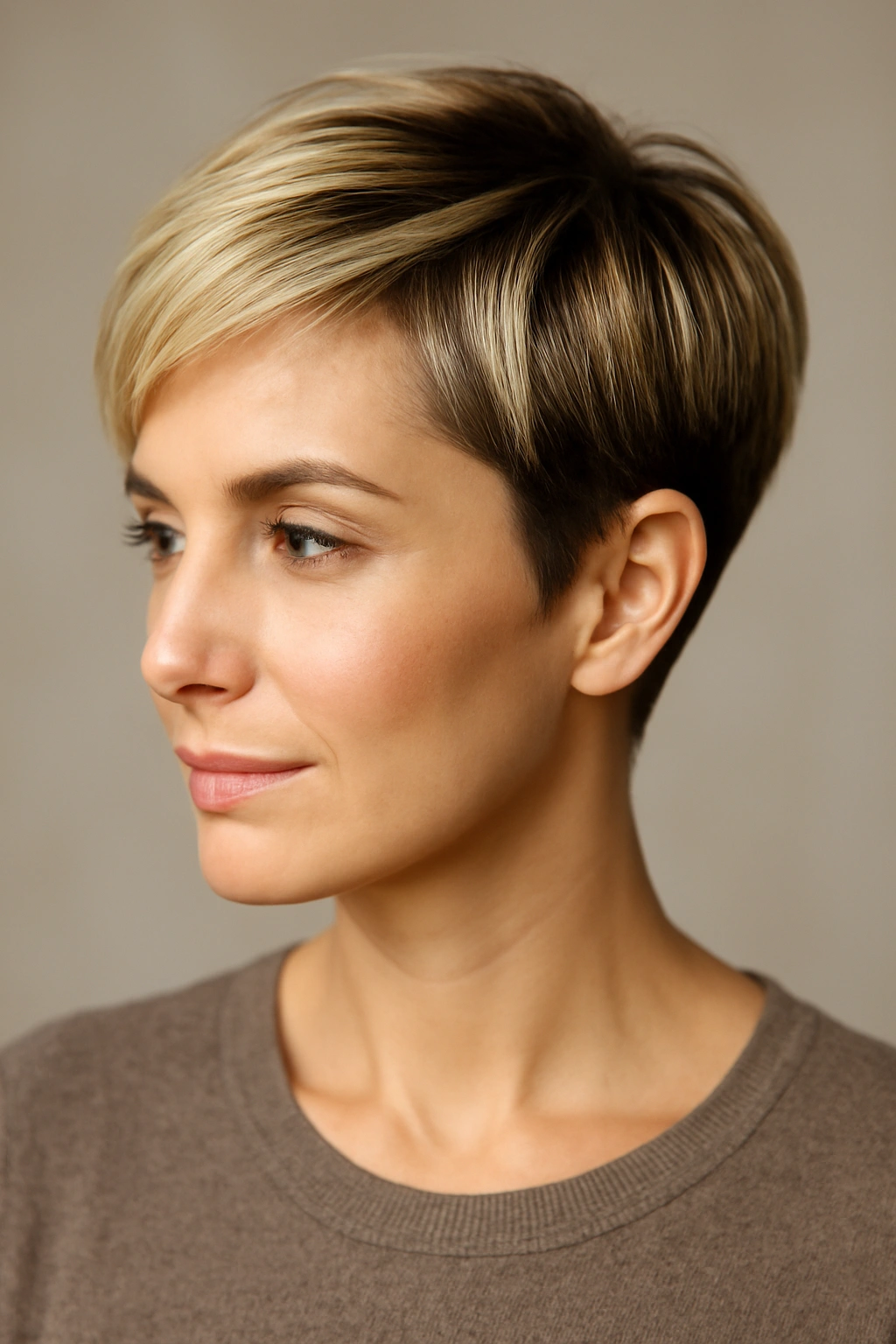
The styling here isn’t really about the cut—it’s about the coloring working with a classic or textured pixie. Keeping darker roots with lighter blonde lengths creates dimension, makes the hair look thicker, and grounds the shorter style in a more sophisticated way than all-over blonde would. The root shadow is also low-maintenance: your grow-out is intentional rather than accidental.
Why This Color Strategy Works After 30
As we age, all-over blonde can sometimes read as trying too hard to look younger. The rooted blonde pixie reads as intentional and current—you’ve made a deliberate choice about color placement. The darker roots also create the illusion of more volume at the crown and soften the overall look. And practically speaking, you’re growing out your roots every month anyway; why not make it part of the design?
Color and Cut Combinations
- Base color: A brunette, ash brown, or cool black root paired with bronde or blonde lengths
- Cut pairing: Works beautifully on textured pixies, soft pixies, and choppy pixies; the color dimension adds interest the cut might not provide alone
- Maintenance: Root touch-ups every 4-6 weeks; glossing treatments every 8-10 weeks to keep the blonde fresh
- Visual effect: Creates the appearance of highlights without the damage of actual highlighting
- Skin tone: Works on most skin tones; cool roots with cool blonde or warm roots with warm blonde is the safest approach
- Styling: The color dimension means the cut doesn’t need as much texture or movement; it can be simpler and still look interesting
- Face framing: Lighter pieces around the face create brightening and face-framing without requiring you to have longer hair
This is the pixie for maximum visual interest with minimal styling effort.
12. The Silver or Gray Pixie
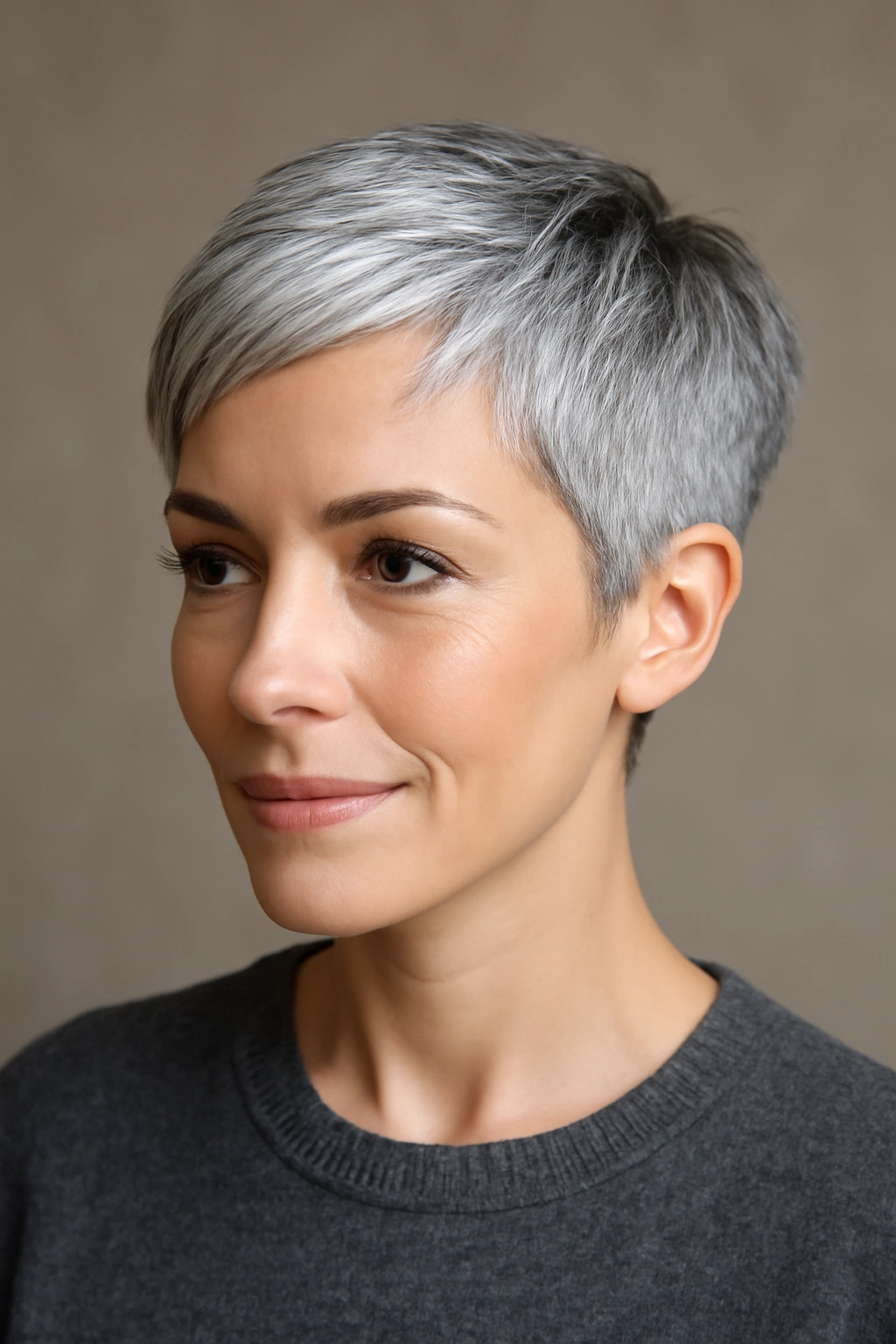
Owning your gray hair at any age is a statement, but especially after 30 when you’re old enough that gray is legitimate but young enough that it’s unexpected. A pixie cut showcases silver or gray beautifully—the short length means the color reads as intentional rather than accidental, and the modern feeling of a pixie prevents the gray from reading as matronly.
The Power of Embracing Your Natural Color
A silver or gray pixie says you’re comfortable with aging, you understand that your worth isn’t tied to looking young, and you find your own coloring interesting enough to display. It’s an incredibly modern choice, and it’s something that genuinely changes how you perceive yourself. There’s something about no longer trying to hide gray that shifts your entire relationship with your appearance.
Embracing Gray in Short Hair
- The tone: Cool grays and silvers read as intentional and fashion-forward; warm grays can look more yellow and muddy, so cool tones are generally more flattering
- Cut style: Works on all pixie variations—classic, textured, slicked back, choppy—and actually looks more interesting on textured cuts
- Skin tone consideration: Silver and gray require a bit more intentionality with makeup; a slightly warmer lip color and good brows are essential
- Maintenance: Gray hair can look dull; regular glossing treatments (even clear gloss) add shine and sophistication
- Face shaping: The shorter length means your face, features, and coloring need to carry the look—this cut rewards good bone structure
- Confidence factor: This is not a subtle choice, and you need to genuinely feel good about it; hesitancy shows
- Styling: Gray hair shows texture beautifully; a tousled or textured pixie looks more intentional than a slick one
This pixie is for the woman who’s decided that authenticity is more interesting than looking younger.
13. The Minimalist Crop With Longer Bangs
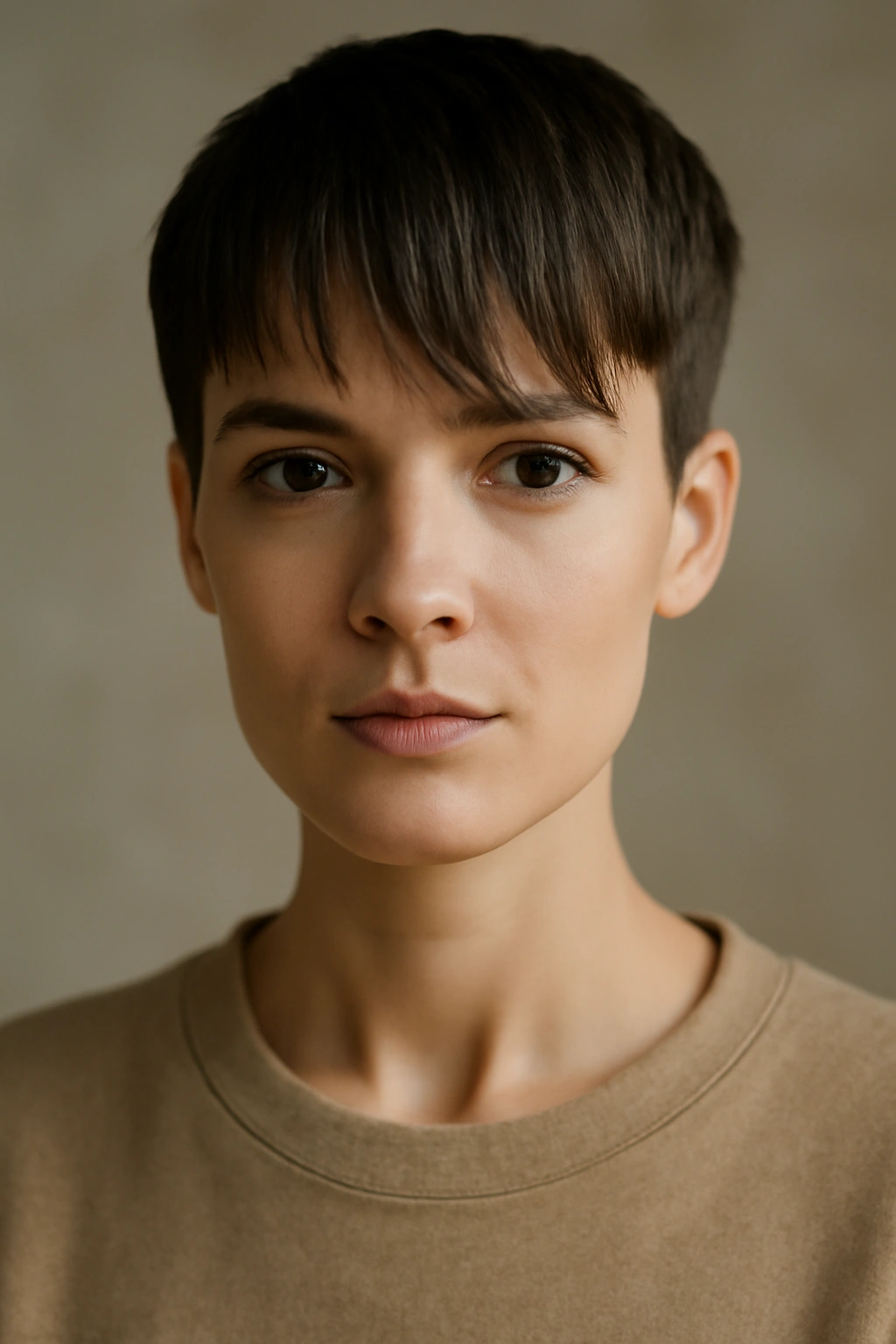
This version keeps the hair extremely short overall—maybe half an inch to an inch—but adds longer bangs that fall just below the eyebrows or to the middle of the cheekbones. The contrast between the almost-shaved sides and back and the longer front creates a striking, modern look. It’s architectural and intentional, somewhere between an undercut and a traditional pixie.
Why It Works as a Practical Choice
The longer bangs create face-framing without requiring you to grow out your entire head. You can change up the feeling of the cut by styling the bangs differently (sleek, textured, side-swept) while keeping the rest of your head maintained super short. It’s the minimal-maintenance cut with just enough dimension to feel intentional rather than purely utilitarian.
Practical Details for Daily Wear
- Bangs maintenance: Need trimming every 2-3 weeks to maintain length; they’re the feature that will show growth most obviously
- Styling versatility: Bangs can be styled sleek for a sharp look or textured for something softer; the minimalist crop underneath is forgiving
- Face shapes: Works beautifully on most face shapes; the bangs create a flattering frame regardless of your features
- Hair texture: Works on straight to wavy hair; very curly hair can be challenging since the bangs are a featured element
- Color options: A single color looks clean and architectural; darker roots with lighter lengths adds dimension
- Time efficiency: The overall cut requires minimal styling; you’re really just maintaining the bangs
- Clothing and styling: This cut is chameleon-like—dress it up for professional settings or style it casually for weekends
This pixie is for the woman who wants interest without high maintenance.
14. The Voluminous Textured Pixie
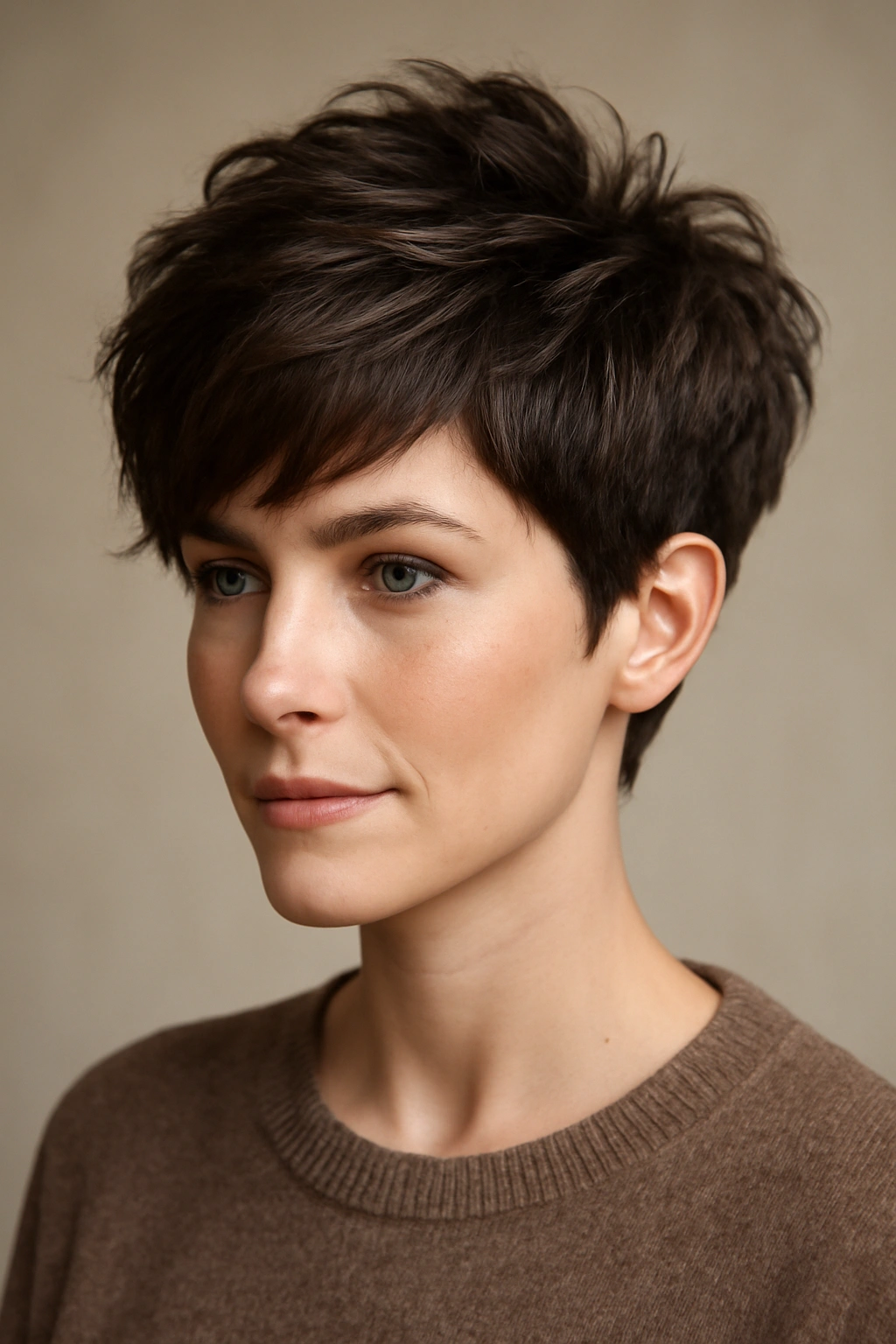
This pixie prioritizes volume and texture above all else. It’s cut shorter at the sides and back but left longer and layered extensively through the crown to create maximum lift. It’s specifically designed for women who’ve experienced hair thinning, who have naturally fine hair, or who simply want their pixie to feel voluminous and playful rather than sleek.
The Volume Story After 30
By your 30s and beyond, hair often feels thinner or less full than it once did. A voluminous textured pixie works with this reality rather than fighting it. The shorter sides don’t compete with a thinner crown, and the extensive layering on top creates the illusion of thickness even if your hair density has changed. You’re working with your hair’s reality, not against it.
Creating and Maintaining Volume
- Cut structure: Multiple layers through the crown, each progressively shorter as you move away from the very top, creating a naturally textured shape
- Styling: Apply texturizing spray or mousse to damp hair, blow-dry with a round brush using an upward motion, then tousle with your fingers
- Product choice: Volumizing mousses, texturizing sprays, and lightweight creams work better than heavy pomades
- Hair texture: Works beautifully on naturally wavy or textured hair; straight fine hair will need more styling effort
- Maintenance: Trims every 4-5 weeks keep the layered texture sharp; the more layers, the faster you’ll need trims
- Daily styling: You’ll want to blow-dry this cut to maximize volume; it won’t achieve its full potential air-dried
- Personality: This pixie feels playful and approachable—the volume and texture prevent it from reading as severe
This pixie is for when you want short hair that still feels like it has presence.
15. The Sleek Pixie Bob Hybrid
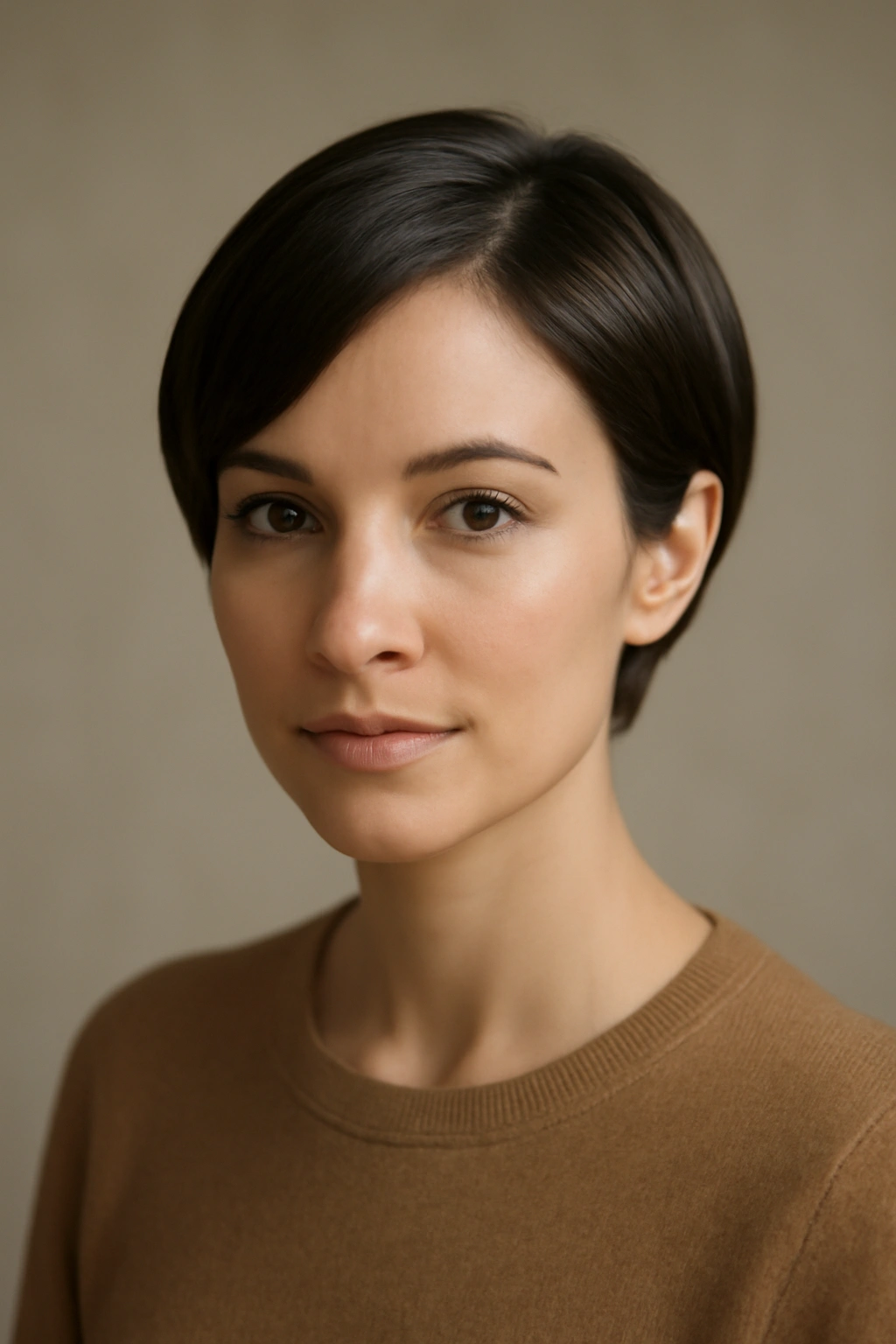
The sleek pixie bob hybrid is the longest version of a pixie—think 2 to 3 inches all over with a very slightly longer back, creating a subtle graduated shape that’s somewhere between a pixie and a short bob. The whole look is smooth and sleek, with no choppy texture. It reads as ultra-modern and is often called a “pixie bob” or “pixob.” It’s the pixie for someone who’s not quite ready to commit to true short hair.
Why This Works as a Transitional Choice
If you’ve been in long hair for decades, jumping straight to a classic pixie can feel shocking. A sleek pixie bob hybrid gives you the ease and feel of short hair without the dramatic change. It’s short enough to require minimal styling but long enough to feel somewhat familiar. It’s also the least dramatic pixie, so it’s more forgiving if you decide it’s not for you—it grows out into a regular short bob fairly gracefully.
The Hybrid Approach
- Slight graduation: The back is maybe a quarter inch longer than the sides and front, creating subtle movement rather than geometric precision
- Sleek styling: Best achieved with a blow dryer and a small round brush; aim for smooth rather than textured
- Maintenance: Trims every 4-5 weeks to maintain the subtle graduation
- Versatility: You can style it sleek and polished or add texture for a different vibe
- Face shapes: Works on virtually all face shapes because the slightly longer length softens the overall effect
- Hair texture: Works on straight to wavy hair; works better on fine to medium density hair
- Coloring: Looks clean in a single color but also looks beautiful with subtle highlights or dimensional color
- Professional application: This is a cut that really depends on your stylist’s skill—the subtle graduation is harder to execute than a more dramatic pixie
- Confidence level: This requires less overall confidence than a true pixie, making it ideal if you’re dipping your toes into short hair
This pixie is for when you want to experience short hair without committing to something dramatic.
Final Thoughts
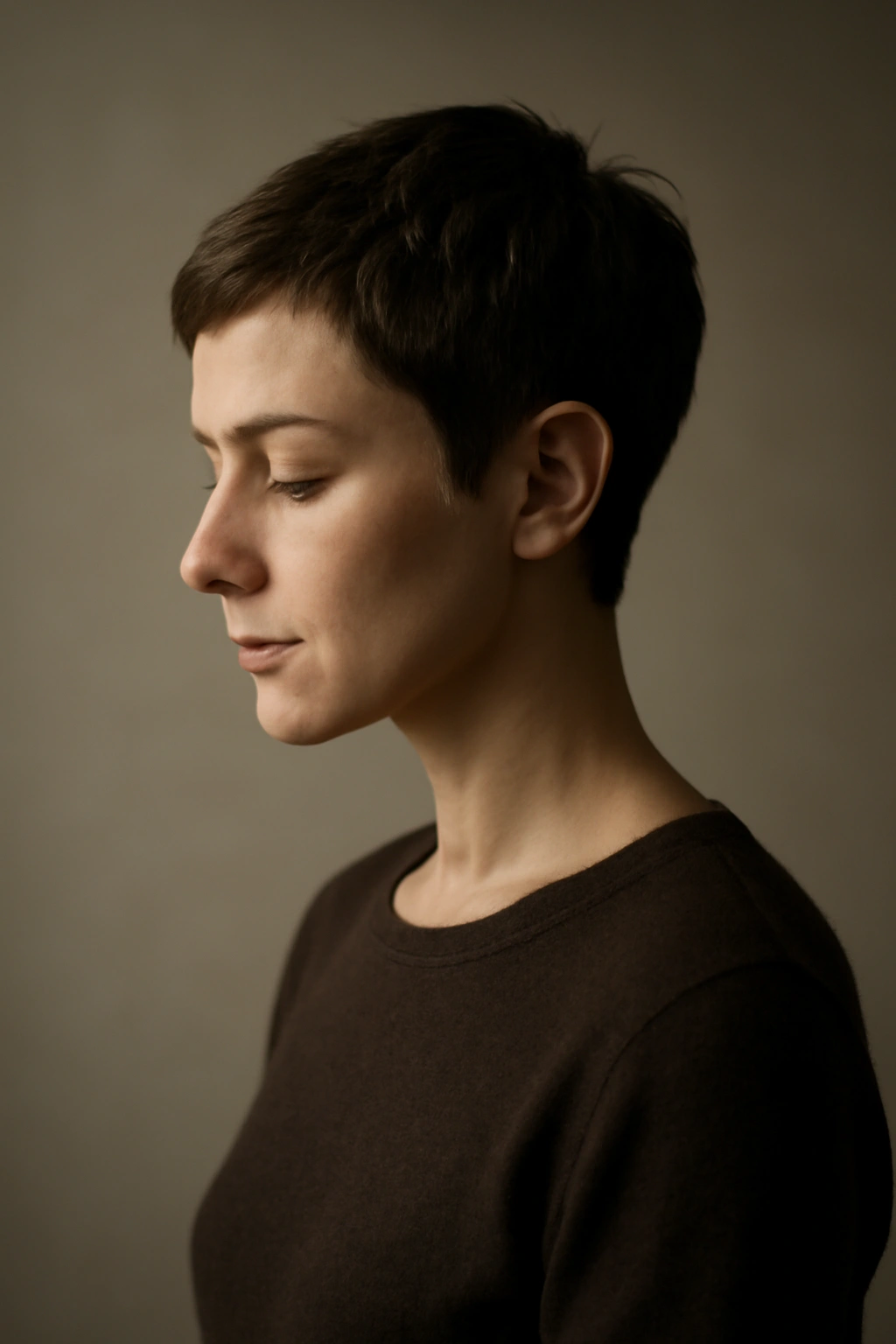
A pixie cut isn’t a rebellion or a phase—it’s a genuinely powerful way to reclaim your appearance and your time. The right pixie makes you look more like yourself, not less. It forces you to own your features without apology, simplifies your morning routine, and creates a kind of confidence that flows into the rest of your life. The woman who’s willing to wear a pixie at 30, 35, 40, or beyond has already made peace with aging on her own terms.
Your choice of pixie matters less than choosing one and committing to it. A pixie needs regular maintenance and attention—sloppy pixie hair just looks like you need a haircut. But if you find a stylist who understands your hair texture and your face, and you embrace the daily styling ritual (whether that’s a 60-second product application or a full blow-dry), a pixie will give you more confidence per minute of styling time than any other cut possibly could.
The most important thing is finding a stylist who actually listens. Bring references of pixies you love, talk about your lifestyle and how much time you want to spend styling, be honest about your hair texture, and discuss your face shape specifically. A good stylist will help you find the version of the pixie that makes you feel like the absolute best version of yourself. That’s when a pixie doesn’t just change how you look—it changes how you feel about yourself.
