



Short layered haircuts are the ultimate shortcut to volume and movement—literally. The strategic placement of layers, each cut at a slightly different length, creates dimension and texture that make even fine hair look fuller and more dynamic. Unlike blunt bobs or uniform pixies, layered cuts work with your natural hair texture instead of fighting it, which means you get more styling options and less dependence on heat tools to achieve that coveted dimension.
The beauty of going short with layers is that you’re not just cutting length—you’re engineering texture into your hair. Each layer catches light differently, creating shadows and highlights that make your cut look more expensive and intentional than a simpler style ever could. Whether your hair is stick-straight or naturally wavy, thin or thick, there’s a layered short cut that will transform how your hair photographs, how it feels in your hands, and how confident you feel running your fingers through it.
What makes layered cuts especially appealing is that they work across age ranges, hair types, and lifestyles. A busy parent can throw on a layered pixie with a little texture cream and be done in seconds. Someone with curly hair can embrace their natural texture with a layered cut that lets curls spring where they want. And if you’ve always been intimidated by short hair, a layered cut often feels less severe and more forgiving than a blunt style because the layers break up the shape and add softness.
The right short layered cut doesn’t just give you volume—it gives you a style that actually works with your hair’s natural tendencies rather than against them. Let’s walk through 12 of the best short layered cuts that deliver serious texture and dimension.
1. The Modern Shag
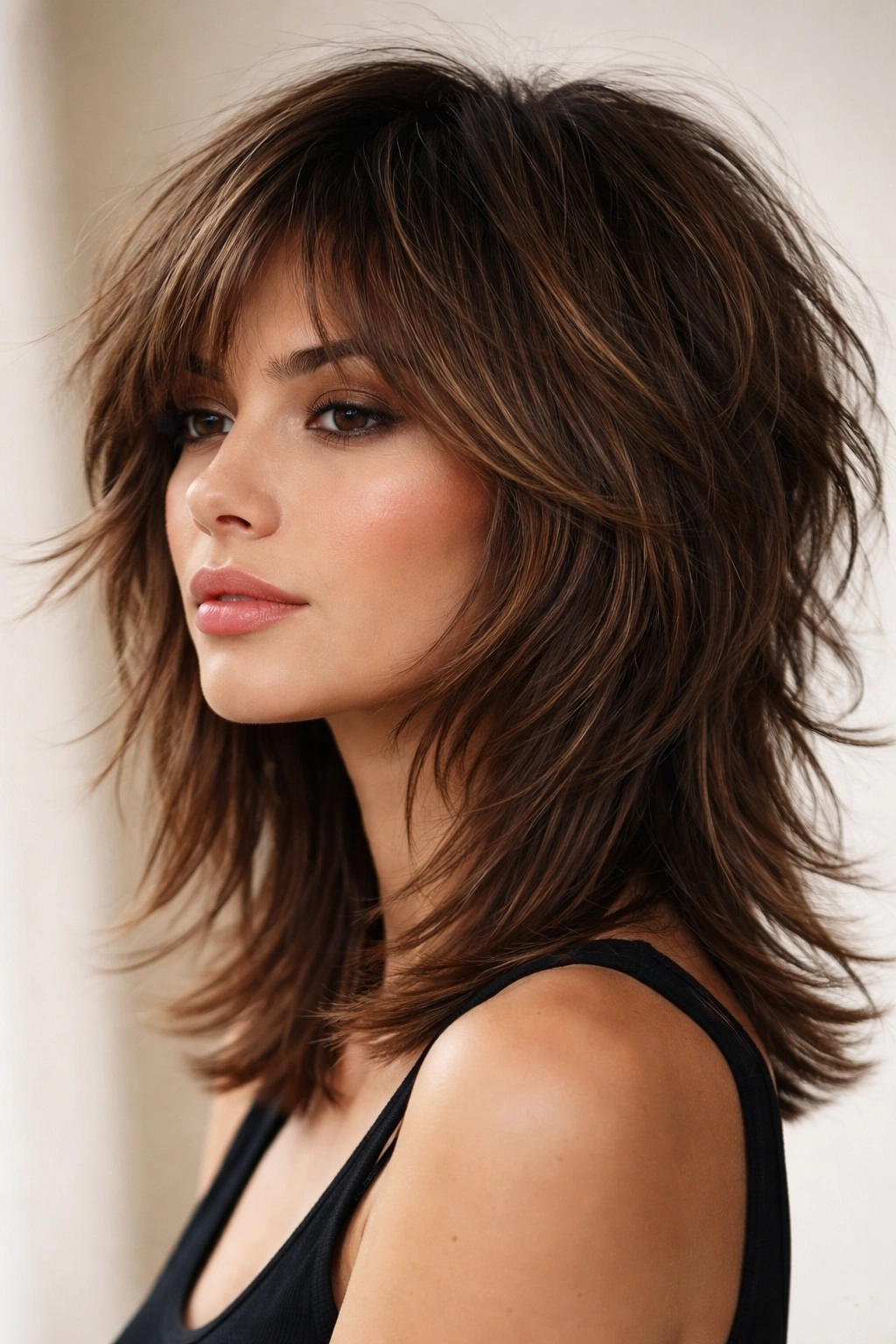
The shag has made a major comeback, and for good reason—it’s one of the most flattering short layered cuts out there. This style features disconnected, choppy layers throughout, creating a rock-and-roll edge that feels effortlessly cool. The layers are shorter on top and gradually longer toward the back and sides, giving you movement from every angle. The front is often cut to frame the face, with longer pieces that taper just below the chin.
Why This Cut Delivers Maximum Texture
The shag’s genius lies in how the choppy layers create multiple points of movement. Because each layer is cut independently at different lengths, your hair has tons of opportunities to shift, fall, and catch light. This means that even if your hair is naturally straight, the cut itself creates texture just through the way the pieces interact with each other. Fine hair gets an instant volumizing boost because the layers prevent hair from lying flat and heavy.
How to Style and Maintain the Shag
- Run your fingers through damp hair with a lightweight texturing spray for that undone, lived-in look
- Blow-dry with your head tilted to add natural movement and separation
- Use a curling iron on random sections for extra dimension if you want more drama
- Get trims every 4-6 weeks to keep the choppy layers sharp and defined
- Pair with a texturizing paste or sea salt spray to enhance the shaggy movement
The shag looks especially stunning on people with straight to wavy hair and suits most face shapes beautifully because the layers soften angles while the longer front pieces balance out broader foreheads.
2. The Textured Pixie
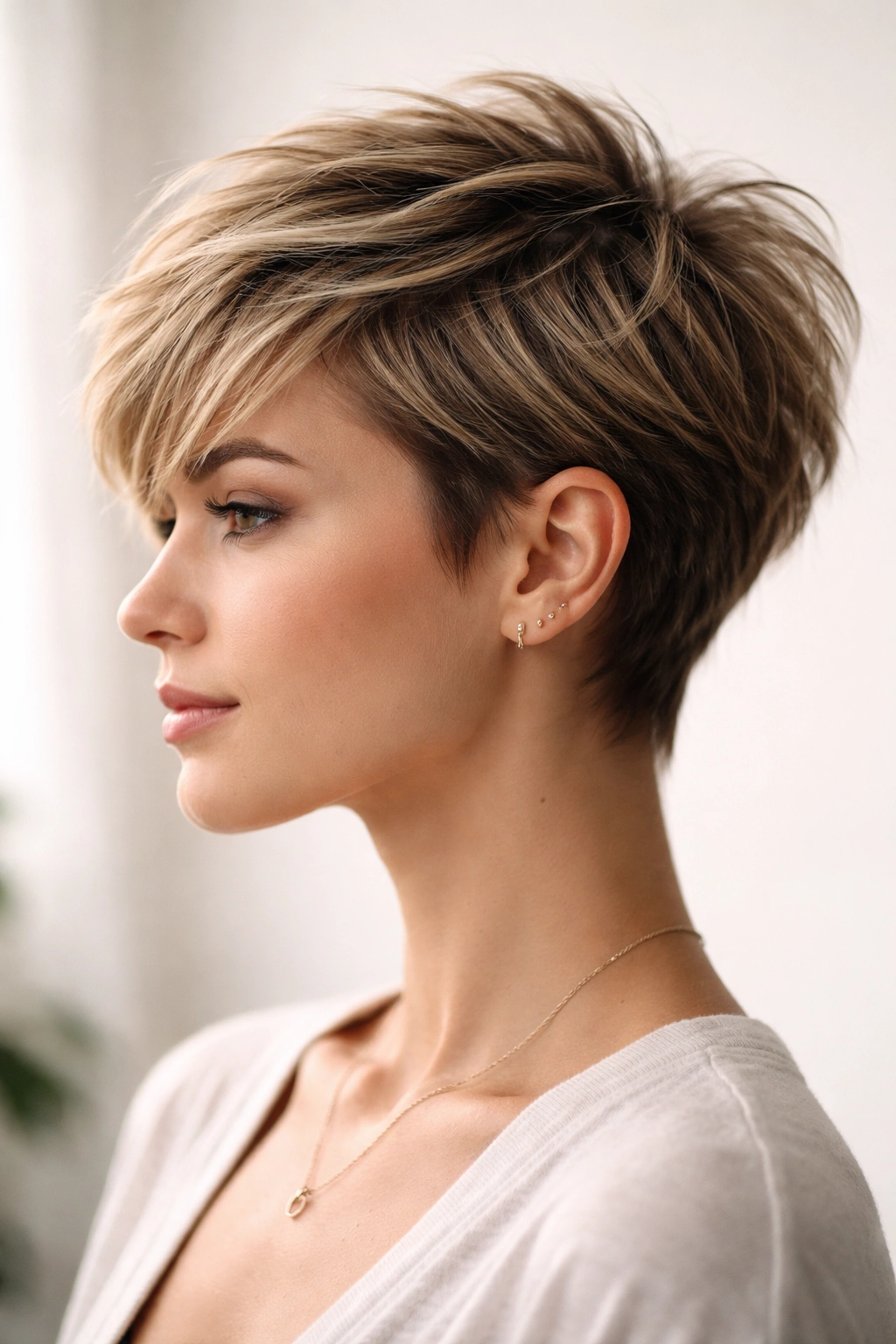
Don’t mistake the textured pixie for the severe, uniform pixie cut of decades past. This modern version features deliberate layers of varying lengths throughout, creating genuine texture and movement rather than a sleek, polished look. The top is left slightly longer to allow for styling versatility, while the sides and back are tapered closer to the head. It’s short enough for easy maintenance but textured enough to feel intentional and styled, not just cropped.
The Volume Secret Behind Short Pixies
A textured pixie creates the illusion of more hair through smart layering rather than length. The choppy layers give your hair multiple surfaces to catch light and create shadow, which your brain reads as volume. This is especially powerful on fine or thinning hair, where a blunt short cut would actually show more scalp. With layers, you get visual density from the way the pieces overlap and interact.
Styling Tips for Maximum Impact
- Apply texturizing cream or pomade to damp hair and tousle with your fingers for definition
- Blow-dry in multiple directions to encourage the layers to separate and stand up
- Experiment with slicking sections back one day and tousling them forward the next—layered pixies offer surprising versatility
- Use a blow dryer with a diffuser attachment if you have natural texture you want to enhance
- Refresh the cut every 3-4 weeks to maintain the precise layered shape as it grows
The textured pixie flatters people who love low-maintenance styles and want to show off their facial features. It works beautifully on oval, round, and heart-shaped faces, and the texture prevents it from looking too stark on anyone.
3. The Wispy Bob
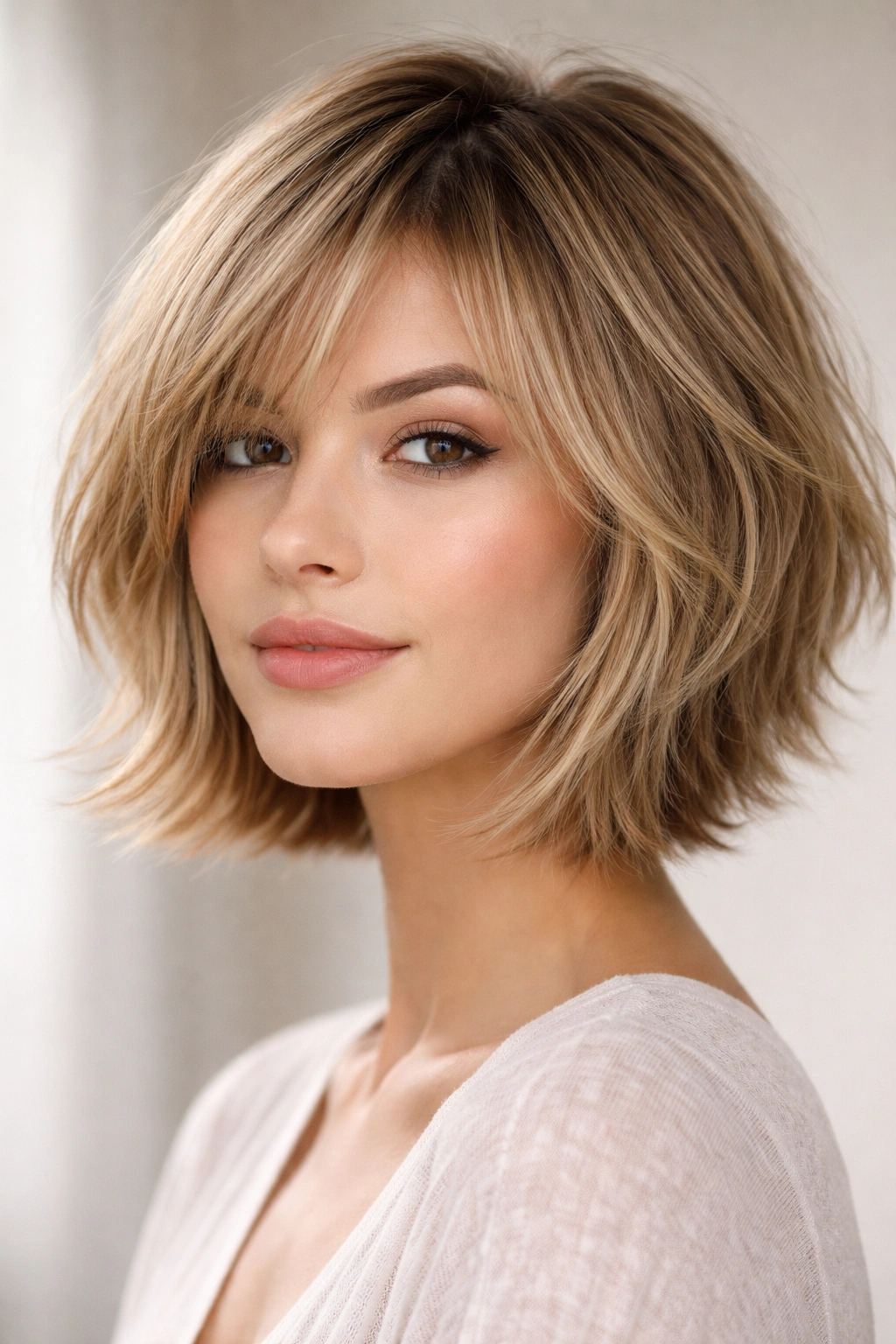
The wispy bob sits right at the jaw or just below, featuring soft, choppy layers throughout that create feathering at the edges. Unlike a blunt bob that hits all one length, the wispy version uses strategic layers to create movement and softness. The front pieces are often slightly longer than the back, and the layers throughout prevent the style from looking heavy or matronly—it’s distinctly modern and flattering.
Creating Texture Through Strategic Feathering
The magic of a wispy bob is in how the feathered layers catch light. Instead of one solid line where your hair ends, you have multiple slightly different lengths that create a softer, more textured perimeter. This feathering is what makes the cut look effortless rather than blunt. The layers also prevent that heavy, dense feeling you sometimes get with shorter bobs, especially if you have thicker hair or a lot of it.
Styling for Soft, Textured Results
- Blow-dry with a round brush to smooth the layers and create shape
- Apply a lightweight texturizing spray to damp hair before blow-drying for piecey separation
- Use a flat iron on low heat to create subtle waves that enhance the wispy layers
- Part your hair in different places throughout the week to keep the style fresh
- Schedule trims every 5-6 weeks to maintain the feathered layer shape
The wispy bob is endlessly flattering on oval and oblong faces, and the layers make it work beautifully for round face shapes too by creating vertical movement. If you have finer hair, the layered texture prevents the bob from looking thin or wispy in a bad way.
4. The Disconnected Undercut
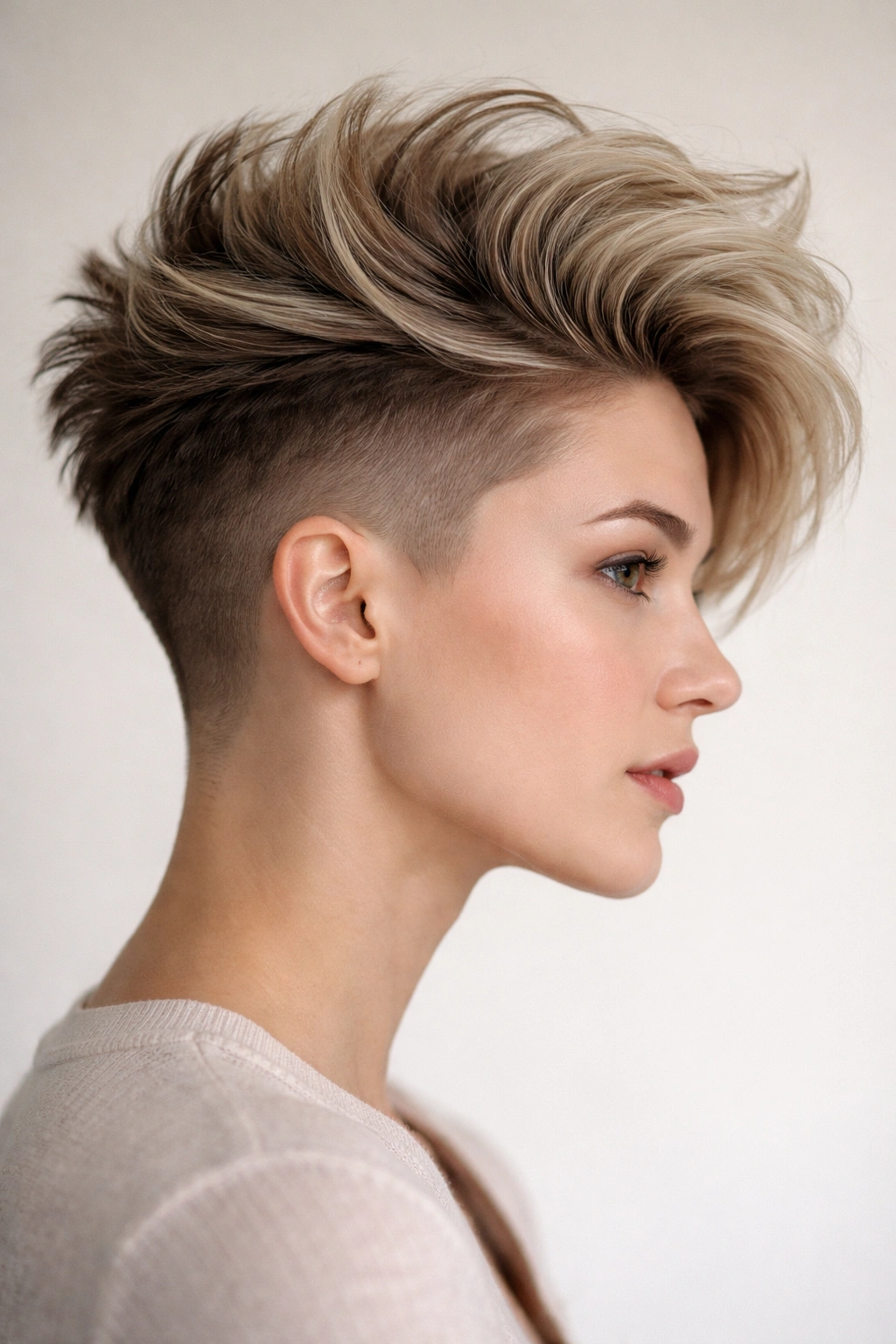
This cut features a dramatic contrast between longer layers on top and much shorter, disconnected lengths underneath. The top section has choppy, textured layers that can be styled up and away from the head, while the undercut—often faded or closely cropped—creates clean lines and surprising depth. It’s bold, modern, and incredibly textured because the top layers have nothing to rest against, so they naturally stand up and move.
Why This Cut Maximizes Volume
The genius of a disconnected undercut is that the top layers have zero weight holding them down. They literally can’t flatten because there’s nothing beneath them to anchor them. This creates inherent volume that works on every hair type. Even people with fine hair get noticeable fullness on top, and those with thick hair can style it in multiple directions without the density becoming overwhelming.
Making the Most of Your Disconnected Cut
- Embrace the contrast by styling the top layers up and forward using a texturizing paste
- Keep the undercut clean with touch-ups every 2-3 weeks for maximum visual impact
- Experiment with asymmetrical styling, pushing all the length to one side for an edgy feel
- Use a blow dryer on high heat to encourage the top layers to stand away from the head
- Consider adding subtle color to the undercut—a fade or even just keeping it darker creates more dimension
This cut absolutely shines on people with oval, square, or oblong faces. The undercut adds edge and breaks up roundness beautifully on round faces. It’s daring enough to feel special but textured enough to work across different style preferences and professions.
5. The Choppy Crop
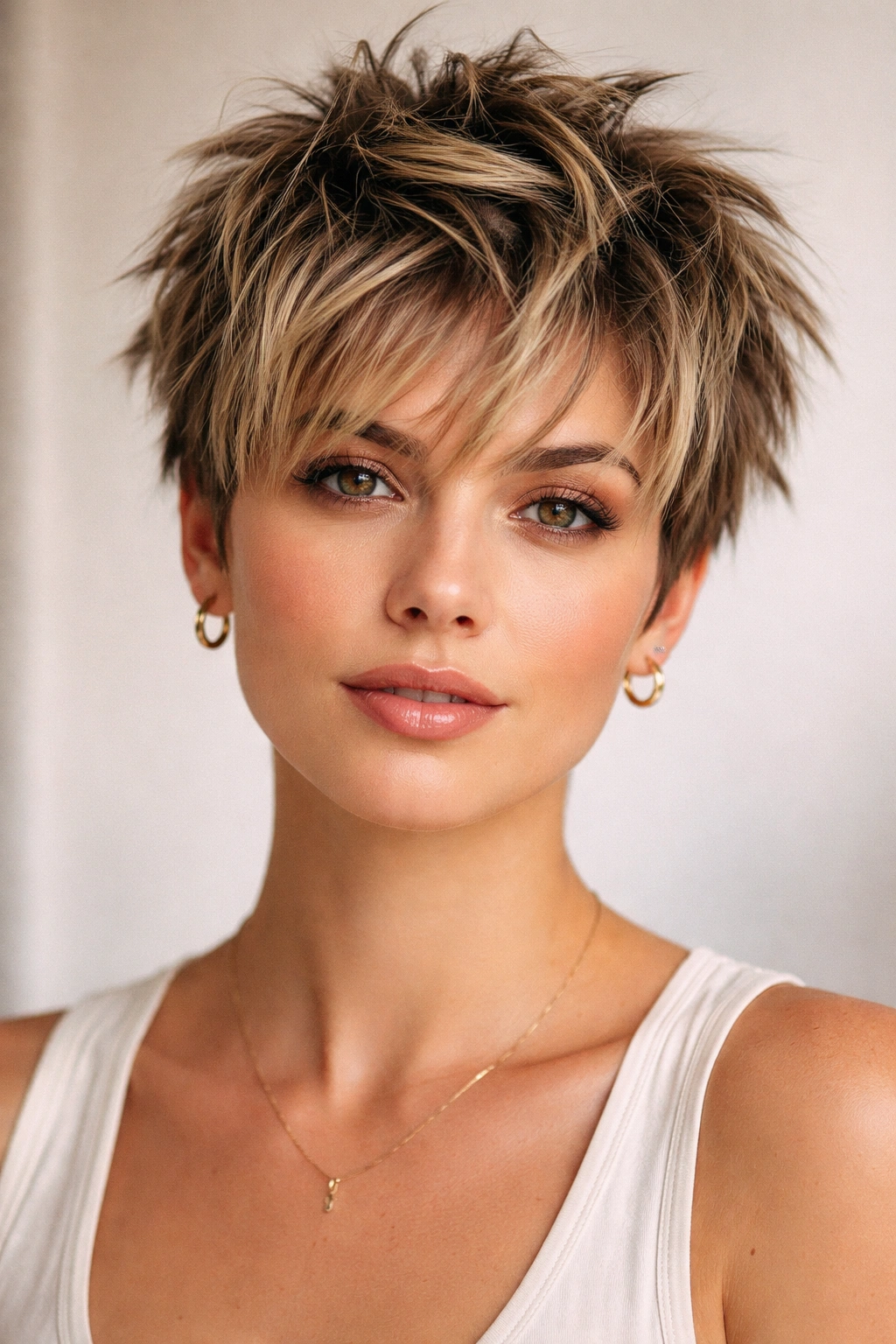
The choppy crop is short all over—usually 2-4 inches on top—but the layers are deliberately uneven and disconnected, creating a playful, textured finish. This isn’t a neat, groomed crop; it’s intentionally chaotic in the best way. The layers vary in length throughout, and the overall effect is youthful, modern, and undeniably textured. It works beautifully with straight, wavy, or curly hair because the choppy layers work with whatever your hair naturally wants to do.
The Texture Advantage of Choppy Layers
Because every layer in a choppy crop is a slightly different length, your hair has maximum opportunity to move and separate. Light bounces off multiple surfaces rather than hitting one uniform line, which your brain reads as more volume and dimension. Fine hair gets an instant boost because thin pieces can stick up naturally without looking wispy or scanty. Thick hair gets visual relief because the shorter overall length combined with choppy layers prevents that dense, heavy feeling.
Styling Strategies for Your Choppy Crop
- Use a texturizing spray or sea salt spray on damp hair and tousle with your fingers for definition
- Blow-dry in multiple directions to encourage the layers to separate rather than stick down
- Apply a matte texturizing paste to dry hair for a piecey, effortless look
- Experiment with different parts throughout the week to showcase different layers
- Trim every 4-5 weeks to maintain the choppy, intentionally uneven texture
The choppy crop works on most face shapes because the short length and textured layers soften features naturally. It’s especially flattering on people who love a playful, fashion-forward vibe and don’t mind that their cut requires a bit of intentional styling.
6. The Layered Curtain Cut
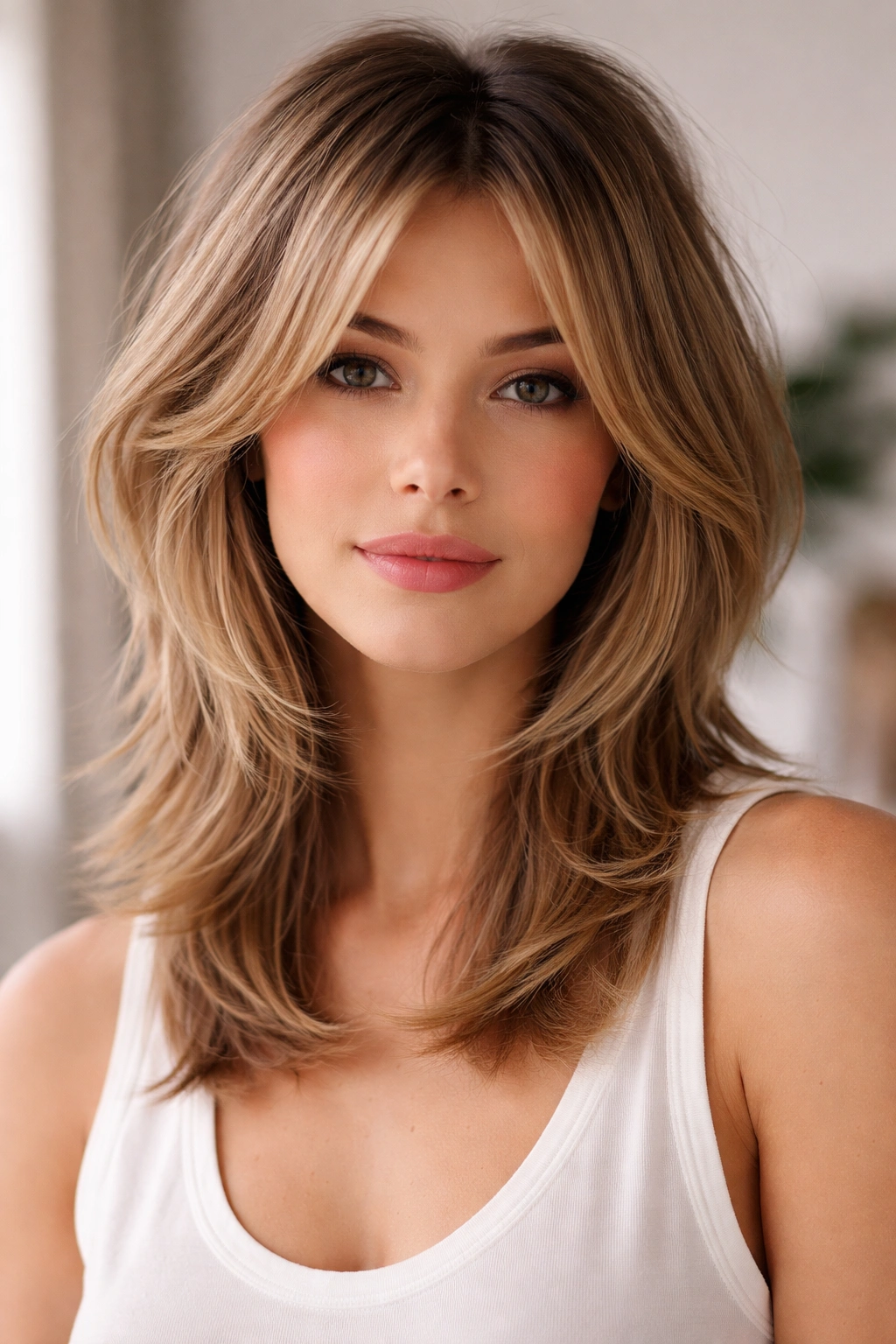
The curtain cut features two longer pieces framing the face with shorter, choppy layers throughout the crown and back. The face-framing pieces are often 2-3 inches longer than the rest of the hair, creating a distinctly flattering silhouette. The layers throughout give you texture and movement, while the longer front pieces offer a softer, more approachable vibe than a severe crop. It’s a style that bridges the gap between “very short” and “short with dimension.”
Why Curtain Layers Flatter Almost Every Face Shape
The longer face-framing pieces create vertical lines that lengthen and narrow a round face, making them especially flattering for that shape. The choppy layers throughout add movement and prevent the style from looking severe or masculine. The texture breaks up any heaviness and creates softness at the face, which is why this cut works beautifully for people who want short hair but worry about it being too harsh.
Getting the Most From Your Curtain Cut
- Blow-dry the face-framing pieces away from your face to create the classic curtain effect
- Apply texturizing spray to enhance the layers throughout the crown
- Use a flat iron to create subtle bends in the longer pieces for more controlled styling
- Part your hair down the middle or slightly off-center to showcase the curtain framing
- Trim every 4-6 weeks to keep the face-framing pieces at the right length and maintain layer definition
This cut is especially popular with people who want noticeable texture and movement but aren’t ready to commit to an all-over short style. The longer front pieces feel like a safety net while still delivering on the volume and dimension promise.
7. The Textured Wolf Cut
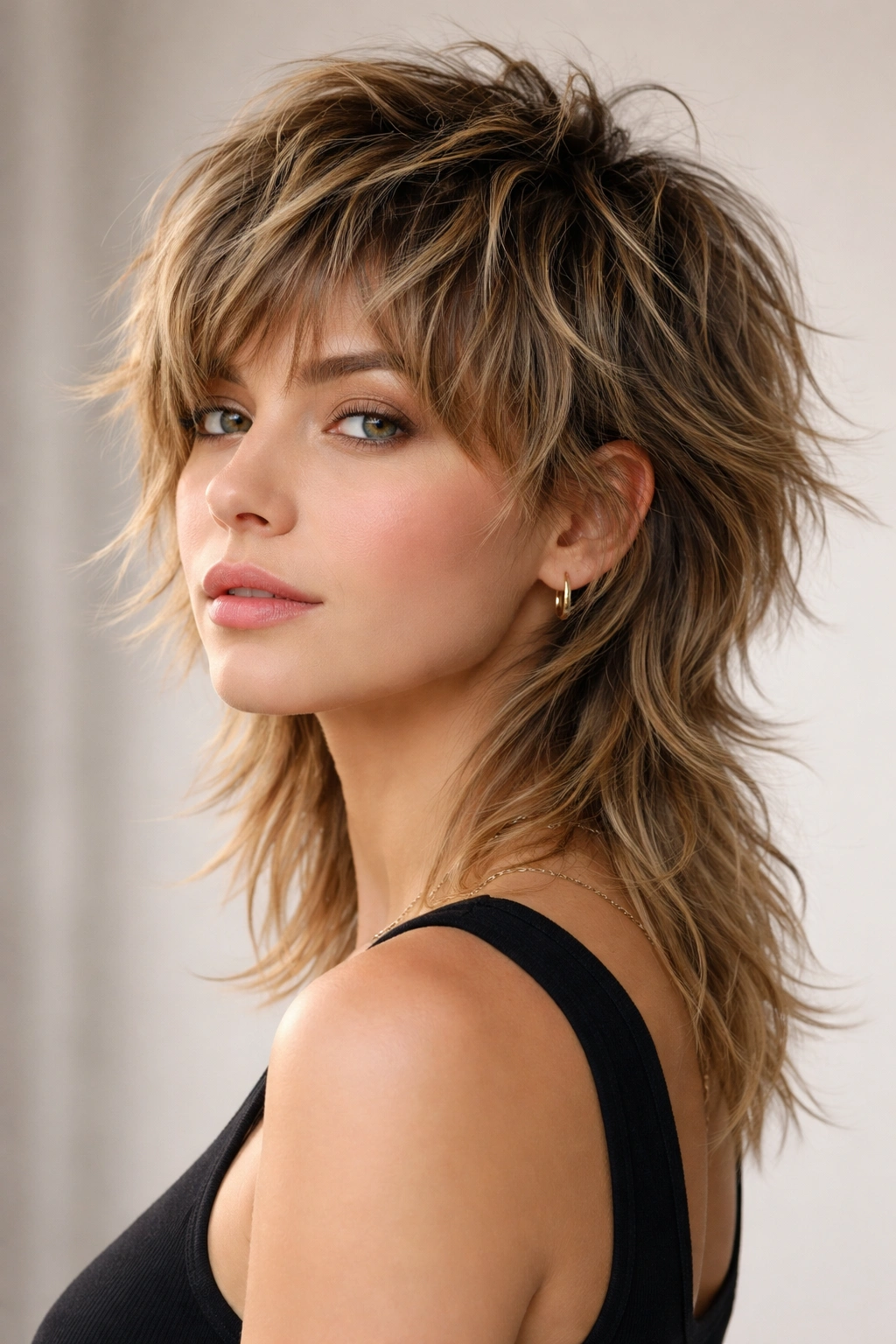
The wolf cut is a hybrid between a shag and a mullet, featuring short, choppy layers on top and slightly longer pieces in the back. What makes it distinctly textured is that every section is layered—there are no blunt lines or solid lengths anywhere on the head. The top is tousled and choppy, the sides have shorter pieces mixed with longer ones, and the back tapers gradually with lots of texture throughout. It’s edgy, modern, and undeniably dimensional.
The Volume Magic of Wolf Cut Layers
The wolf cut’s layering strategy creates volume where most people struggle—at the crown. Because the top is shorter and heavily layered, it naturally stands away from the head without any styling effort. The longer pieces in the back prevent it from looking too severe while still being short and manageable. Fine hair gets significant visual fullness from all the layering, and thick hair gets relief from the graduated length structure that prevents too much density at any one point.
Styling Your Wolf Cut for Maximum Texture
- Embrace the tousled look by using a texturizing spray on damp hair and separating with your fingers
- Blow-dry with your head upside down to encourage lift and movement
- Use a curling iron on random sections for unpredictable waves that enhance the choppy layers
- Apply a matte clay or paste to dry hair for definition and piecey texture
- Trim every 5-6 weeks to maintain the choppy layering throughout and prevent it from getting too long and losing shape
The wolf cut is ideal for people who love a bold, fashion-forward aesthetic and want visible texture and movement. It flatters most face shapes, especially when the face-framing pieces are customized to your specific features.
8. The Layered Crop with Fringe
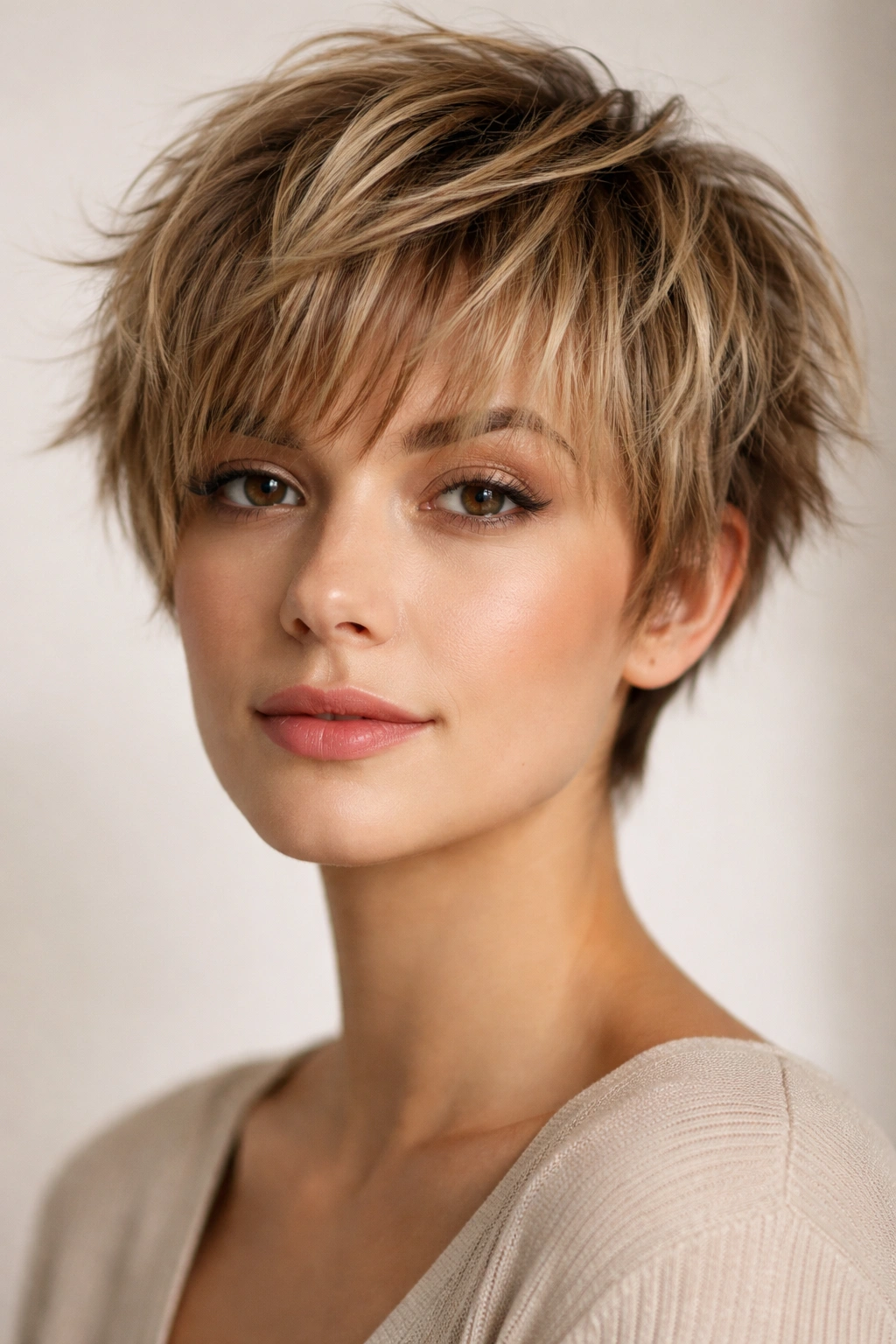
This cut starts with a short, textured crop all over but adds a slightly longer, choppy fringe in front. The fringe is textured and choppy rather than blunt, falling just above the eyebrows or grazing them. The overall effect is youthful and playful, with lots of texture throughout. The fringe creates a focal point while the cropped layers throughout ensure maximum volume and movement everywhere else on the head.
Texture and Volume Benefits of a Textured Fringe
A choppy, textured fringe is far more forgiving than a blunt one—it doesn’t require precise styling to look intentional, and it can be worn multiple ways. The fringe creates visual interest at the face while the shorter layers throughout prevent any heavy feeling. This combination is especially powerful on fine hair, where the shorter overall length combined with choppy layers creates impressive fullness. The fringe also frames the face beautifully and draws attention upward, which flatters most face shapes.
Styling Tips for Textured Fringe
- Blow-dry the fringe downward and slightly to the side for the most flattering drape
- Apply texturizing spray throughout to enhance separation and movement
- Use a round brush to curl the fringe slightly under for a more polished look if you prefer
- Experiment with pushing the fringe back and to the side on different days for styling variety
- Trim the fringe every 2-3 weeks to maintain the choppy texture and proper length
- Trim the overall crop every 4-5 weeks to keep the layered texture sharp
This cut works beautifully for people with oval or heart-shaped faces and those who love a youthful, playful vibe. The fringe requires a bit more maintenance than a simple crop, but the extra dimension it adds is absolutely worth it.
9. The Feathered Pixie
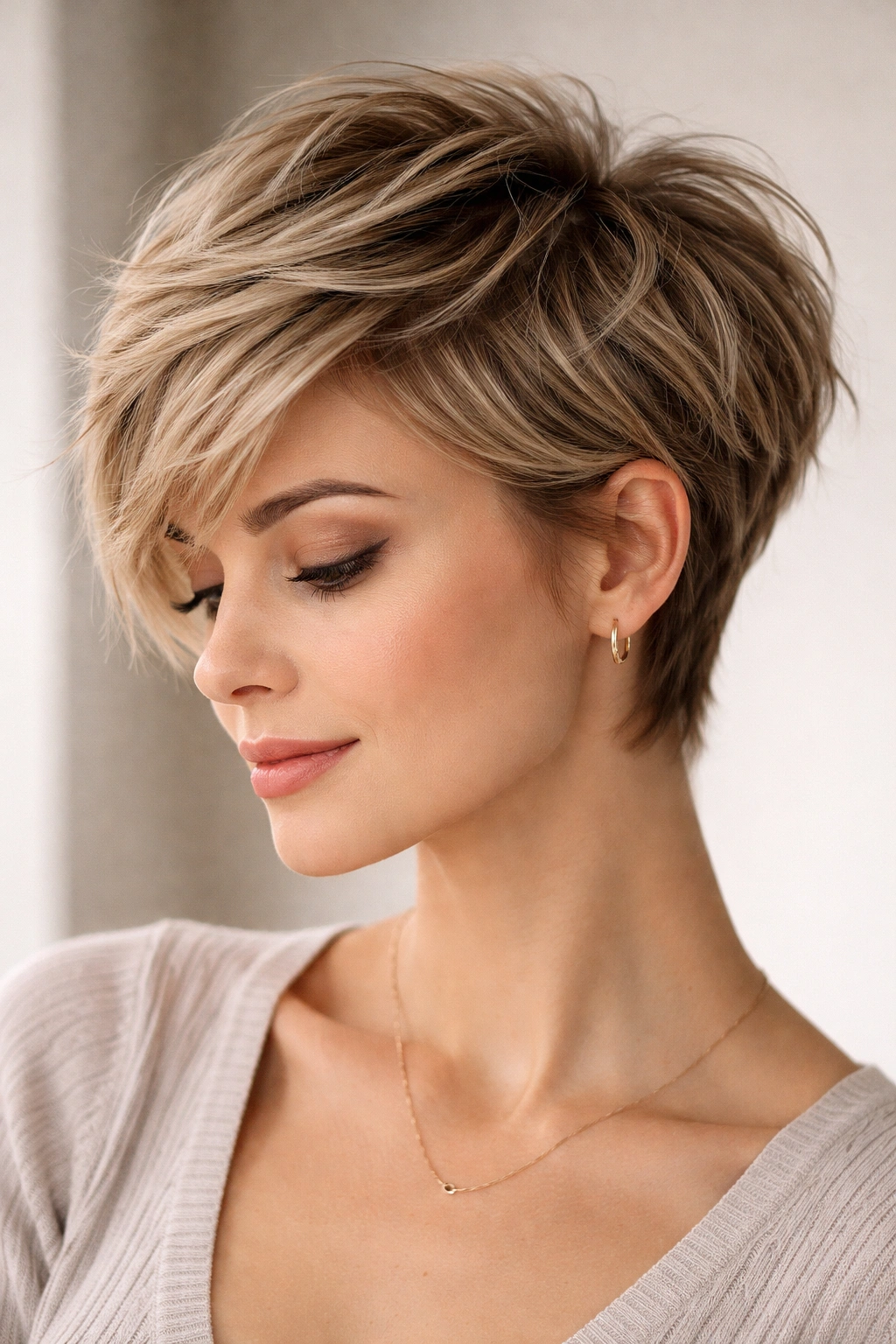
The feathered pixie takes the textured pixie concept and pushes it further, with each individual section carefully feathered to create maximum movement and lightness. Rather than choppy, disconnected layers, the feathered pixie uses longer layers that blend into shorter ones, creating a soft, flowing texture throughout. The result is a pixie that feels both edgy and feminine, short but not severe, textured but not chaotic.
The Feathering Technique and Why It Creates Volume
Feathering involves cutting the hair in a way that each layer is slightly longer than the one beneath it, creating a soft, cascading effect. This technique is magic for creating apparent volume because it prevents any flat spots on the head. Light passes through multiple slightly-different layers rather than hitting one solid surface, which creates the illusion of more hair. The feathering also works beautifully with natural hair texture, enhancing waves or curls rather than fighting them.
Styling Your Feathered Pixie
- Apply a lightweight texturizing spray to damp hair to enhance the feathered layers
- Blow-dry in the direction you want the feathering to flow for maximum control
- Use your fingers to tousle and separate the layers rather than trying to smooth them down
- Experiment with pushing the feathering in different directions for styling variety
- Use a small curling iron or wand to enhance natural texture in sections if desired
- Trim every 3-4 weeks to maintain the precise feathered layering
The feathered pixie is ideal for people who want short hair that still feels soft and romantic rather than edgy or severe. It flatters most face shapes beautifully, especially when the longer feathered pieces are customized to frame your specific features.
10. The Shaggy Lob
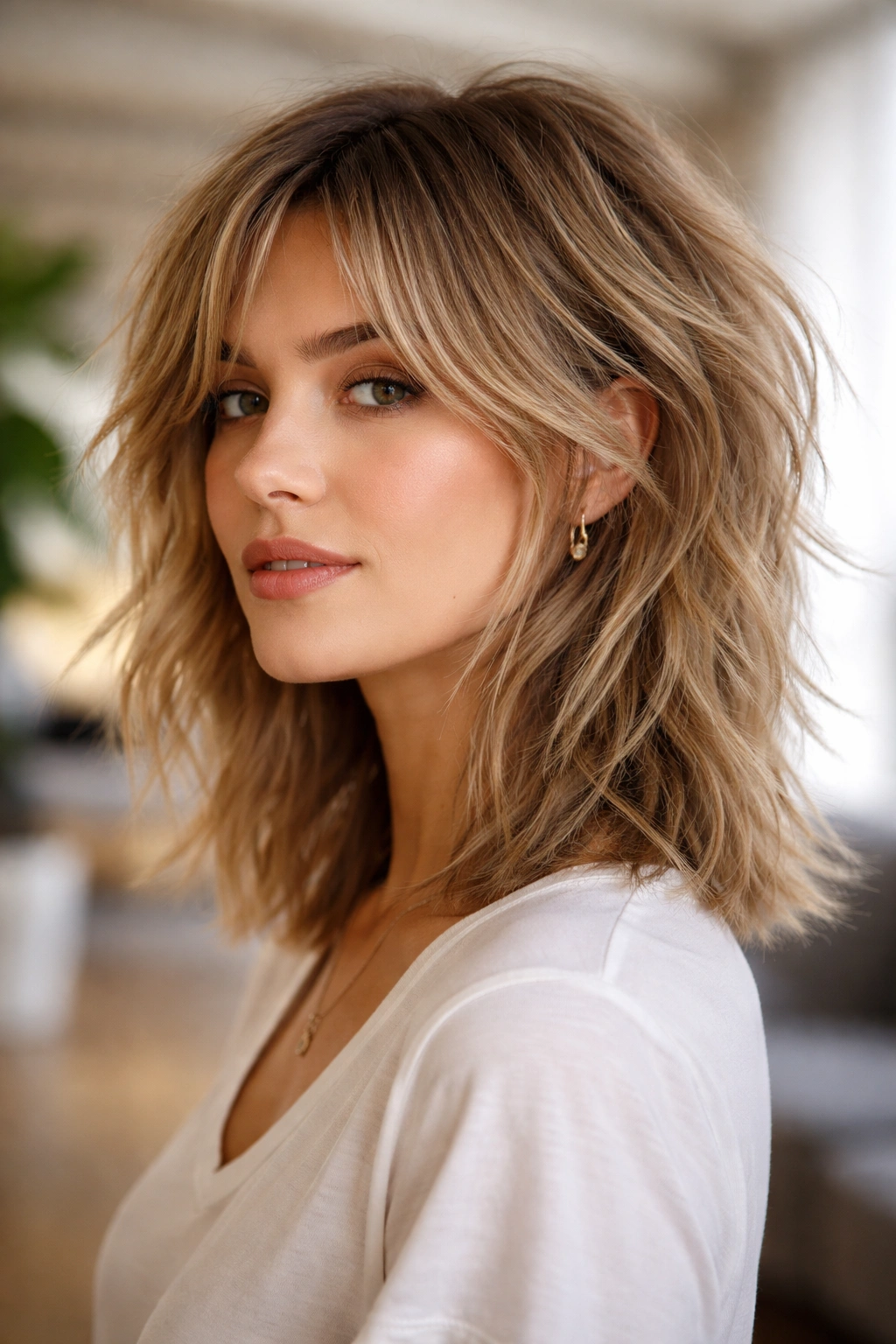
The shaggy lob (long bob) sits somewhere between a pixie and a shoulder-length cut, usually around ear-length, with choppy, heavily layered texture throughout. What makes it “shaggy” rather than just layered is the deliberate choppiness of the cuts and the emphasis on movement over sleekness. The top is shorter and lighter, the sides are tapered with texture, and the back is slightly longer. It’s textured enough to feel current and dimensional but long enough to offer some styling versatility.
Layering for Volume in a Lob
A shaggy lob creates volume through strategic length distribution and choppy layers. The shorter pieces on top and at the sides prevent any heavy density at the base of the head, while the slightly longer back creates balance. The choppy layering throughout means that hair doesn’t cling to your head or neck—it moves and breathes naturally. This is especially flattering on people with fine or thin hair who want length but not weight, or those with thick hair who want their style to feel lighter and more textured.
Making Your Shaggy Lob Look Its Best
- Blow-dry with a round brush to smooth the layers and create shape, or with a diffuser for textured waves
- Apply texturizing spray to enhance the choppy layers and create separation
- Use a flat iron on loose waves through the longer pieces for effortless movement
- Experiment with different parts to showcase the varied layers
- Trim every 6-8 weeks to maintain the shaggy, choppy layer definition
- Consider embracing your natural texture if you have waves or curls—this cut enhances them beautifully
The shaggy lob is perfect for people who love the idea of short hair but want options for styling and a bit more length to work with. It flatters most face shapes, especially when the face-framing pieces are customized to your specific features.
11. The Choppy Asymmetrical Cut
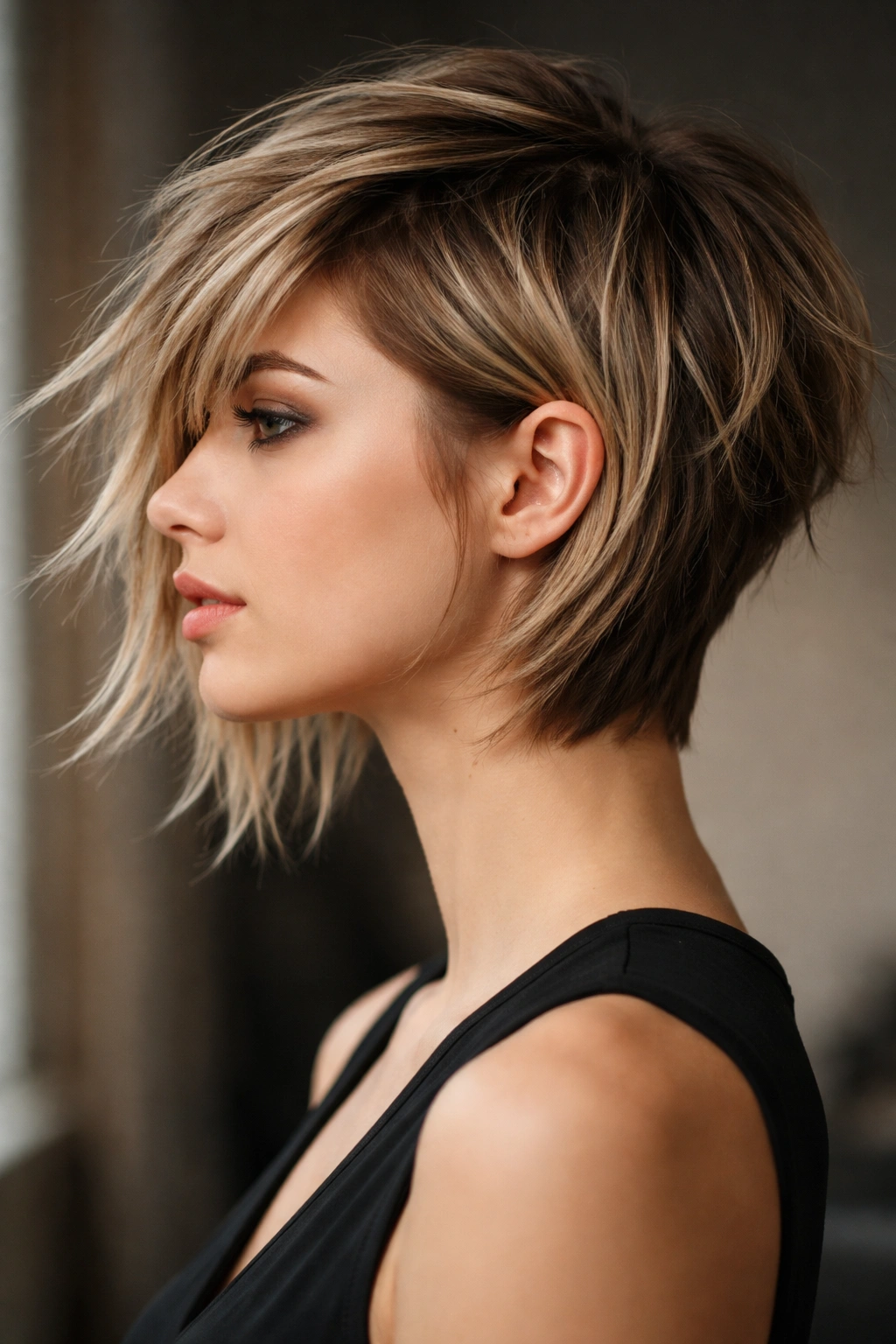
This cut features deliberately uneven layering, with one side noticeably longer than the other and choppy layers throughout. The asymmetry creates visual interest and edginess, while the choppy layers deliver texture and movement across both sides. One side might fall to the jawline while the other is cropped closer to the head, and both feature disconnected, varying-length pieces. It’s bold, modern, and distinctly textured.
Asymmetry as a Volume-Creation Tool
An asymmetrical cut is clever for creating the illusion of volume because the eye doesn’t settle on one length or silhouette. The varying heights throughout the cut create multiple points where light bounces, and the asymmetry prevents your brain from registering any flatness or heaviness. Fine hair gets substantial visual fullness from the textured layers and uneven lengths, while thick hair benefits from the choppy texture that breaks up density and creates movement.
Styling an Asymmetrical Cut
- Blow-dry one side smooth and let the other side texture up for subtle asymmetry styling
- Apply texturizing spray to enhance the choppy layers and create separation
- Style the longer side with more dramatic waves or texture for emphasis
- Use a flat iron on the shorter side for a sleeker contrast, or tousle it for more texture
- Part your hair to emphasize the asymmetrical length difference on days you want more edge
- Trim every 4-6 weeks, asking your stylist to maintain the specific asymmetrical lengths you love
This cut is ideal for fashion-forward people who love being noticed and want a style that feels distinctly personal and edgy. It flatters people with most face shapes, though it’s especially striking on oval or oblong faces.
12. The Layered Mullet
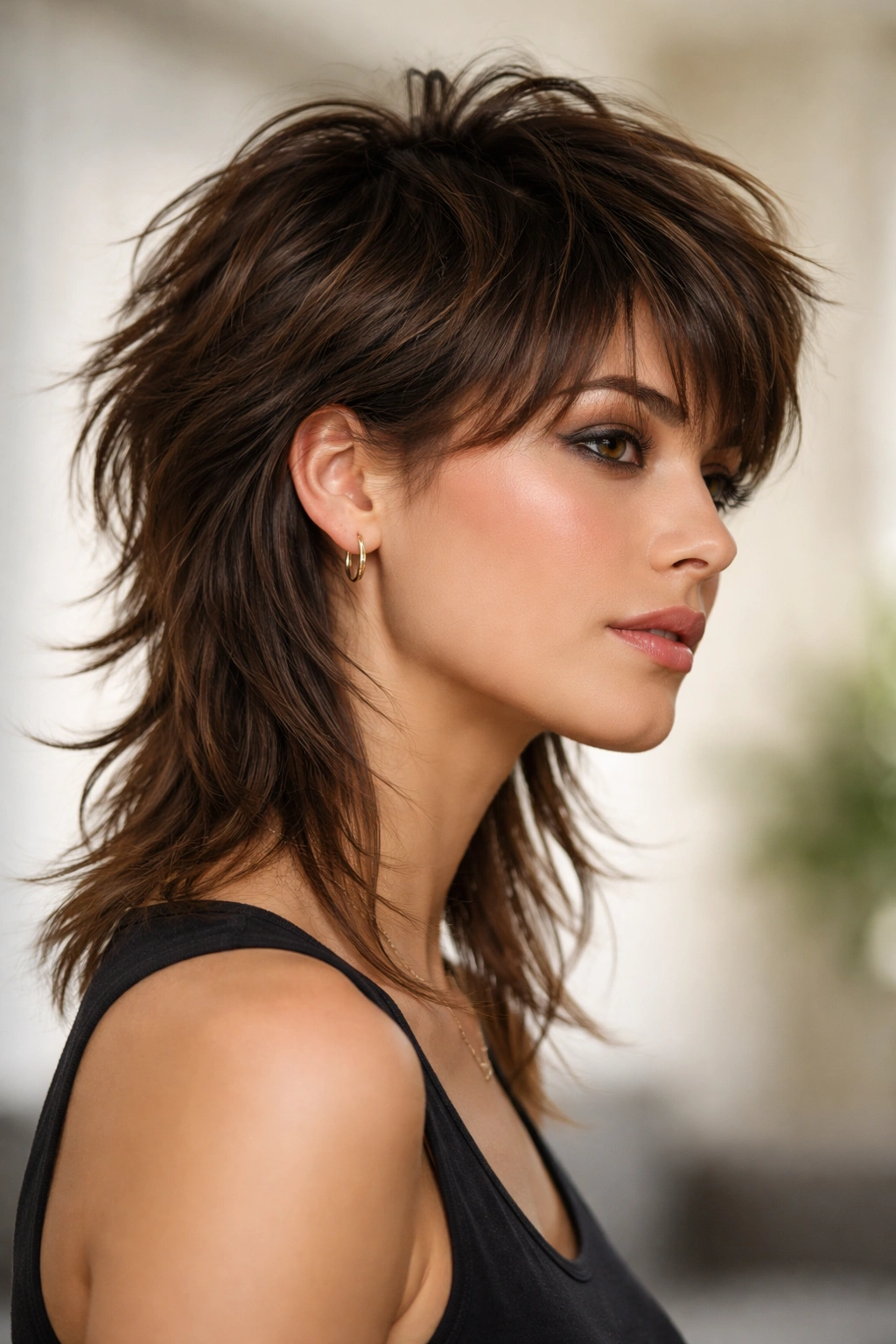
The modern layered mullet isn’t the extreme style of decades past—it’s a sophisticated short-in-front, longer-in-back cut with choppy layers throughout both sections. The front is textured and cropped, while the back is longer (often to the collar) and heavily layered for movement. Both sections feature choppy, disconnected layers rather than blunt lines, making the overall effect textured rather than harsh or dated.
Why Layering Transforms the Mullet
The choppy layers throughout—both front and back—prevent this cut from looking retro or severe. The texture creates movement and prevents any solid bulk, especially in the longer back section. The front’s short, choppy layers create volume and lift, while the back’s longer, textured layers add dimension without weight. This balance creates a silhouette that’s undeniably modern and flattering, not throwback or harsh.
Styling Your Layered Mullet
- Blow-dry the front and sides upward and forward for maximum texture and movement
- Apply a texturizing paste or sea salt spray throughout for piecey definition
- Tousle the back to show off the varied layers and movement
- Use a curling iron on the longer back section to enhance waves and texture
- Experiment with pushing the back over one shoulder for a softer, less extreme version
- Trim every 4-5 weeks to maintain the choppy layering throughout and the specific length contrast
The modern layered mullet is for people who love a bold, fashion-forward statement and want something that definitely stands out. It works beautifully on most face shapes, especially when the front is customized to frame your specific features.
Final Thoughts
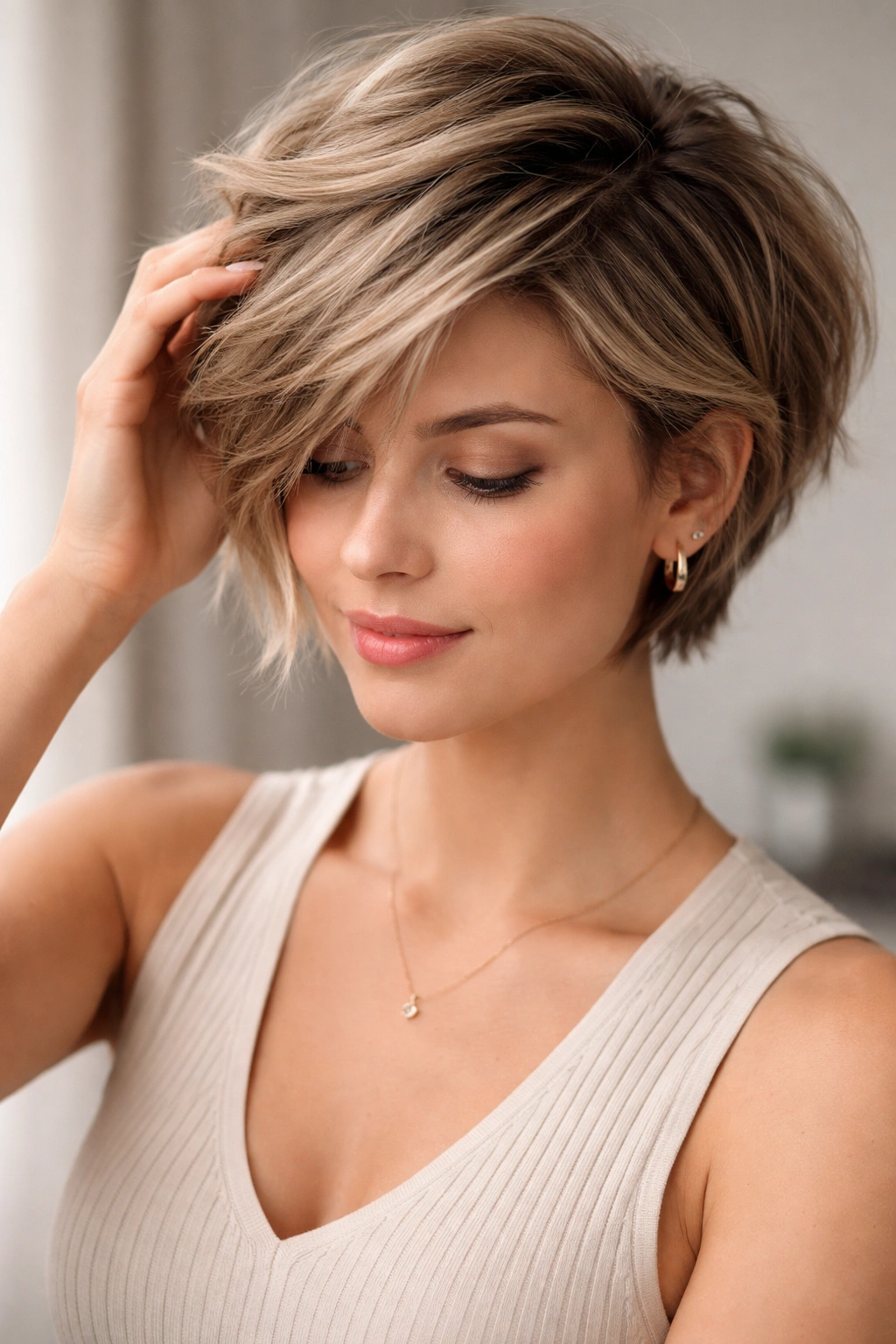
Choosing a short layered cut is one of the smartest moves you can make for your hair’s health and your daily styling routine. The layers don’t just create that coveted texture and dimension—they actually make your hair easier to manage by reducing weight and distributing it throughout the cut. Fine hair gets the volume boost it’s been waiting for, thick hair gets relief from density, and every hair type gets styling versatility from a well-executed layered cut.
The key to loving your short layered cut is finding a stylist who understands that layering is an intentional technique, not just choppy cutting. The best short layered cuts look effortlessly textured because they’re actually carefully engineered to work with your specific hair texture, face shape, and styling preferences. When you go in for your consultation, bring pictures of cuts that appeal to you and have a detailed conversation about your hair type, how much you’re willing to style, and what kind of texture you actually want.
Once you commit to a short layered cut, embrace the styling possibilities. Texture sprays, paste, sea salt spray, and even a simple blow-dryer can transform the look throughout the week. More importantly, trust that those layers are going to give you the movement and dimension you’re after—sometimes all you have to do is let them work their magic.
