



The back of your head gets more attention than you’d think. Whether someone’s walking past you on the street, you’re sitting across from someone at dinner, or you’re seeing yourself in a mirror’s reflection—that back view matters. And if you’re considering a short cut, understanding what it looks like from behind might be the final push you need to actually book that appointment.
Short haircuts have experienced a major renaissance, partly because they’re incredibly versatile and partly because they actually suit more face shapes and hair types than people assume. The real magic of a great short cut shows in the detail work: how the layers fall at the nape, the way the back is tapered or blended, and whether the overall shape gives you movement or structure. These back-view details are what separate an okay cut from one that makes you feel genuinely amazing.
The thing is, most haircut inspiration photos focus on the front and sides. You see the face-framing, the angles, the styling potential. But the back? That’s where the real technical skill lives. That’s where a stylist’s experience shows through. If you’ve been scrolling endlessly through haircut photos and thinking “I need to see the actual back,” you’re in exactly the right place. Let’s dive into fifteen different short haircuts that deserve serious consideration—all shown and explained from the back view where the real structure lives.
1. The Classic Pixie
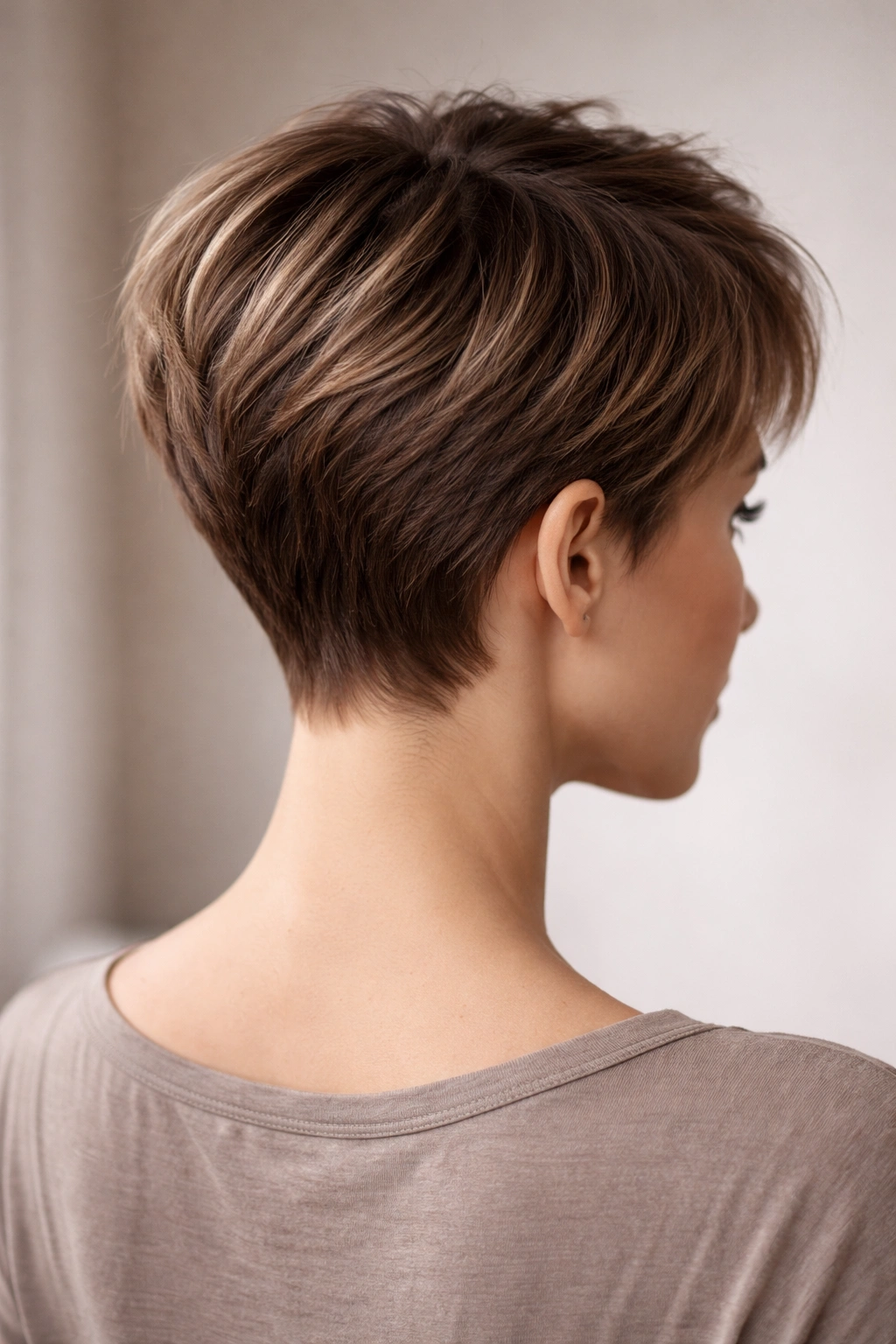
From the back, a well-executed pixie cut reveals its true elegance. The nape should be cleanly tapered, creating a smooth gradient from slightly longer hair at the crown down to neat, close-cropped sides and back. You’ll see texture and dimension rather than a blunt, helmet-like shape—the mark of a skilled cut.
Why This Cut Works So Well
The pixie is deceptively versatile. From the back, it shows off your neck and head shape beautifully, and it photographs incredibly well from every angle. It’s also one of the easier short cuts to style when you’re first getting used to short hair, because the length is so minimal that bad hair days are basically impossible. You can wear it sleek and close to the head, or you can add texture and movement with product and finger-styling.
What to Ask Your Stylist
- Request a tapered nape that gradually blends rather than a harsh line
- Ask for slightly longer length on top (at least an inch) so you have styling flexibility
- Specify whether you want the sides closely faded or left a bit fuller
- Discuss how often you’re willing to get trims (pixies typically need refreshing every 3-4 weeks)
The pixie’s back view is clean, modern, and decidedly low-maintenance—perfect if you want a polished look without daily styling effort.
2. The Textured Crop
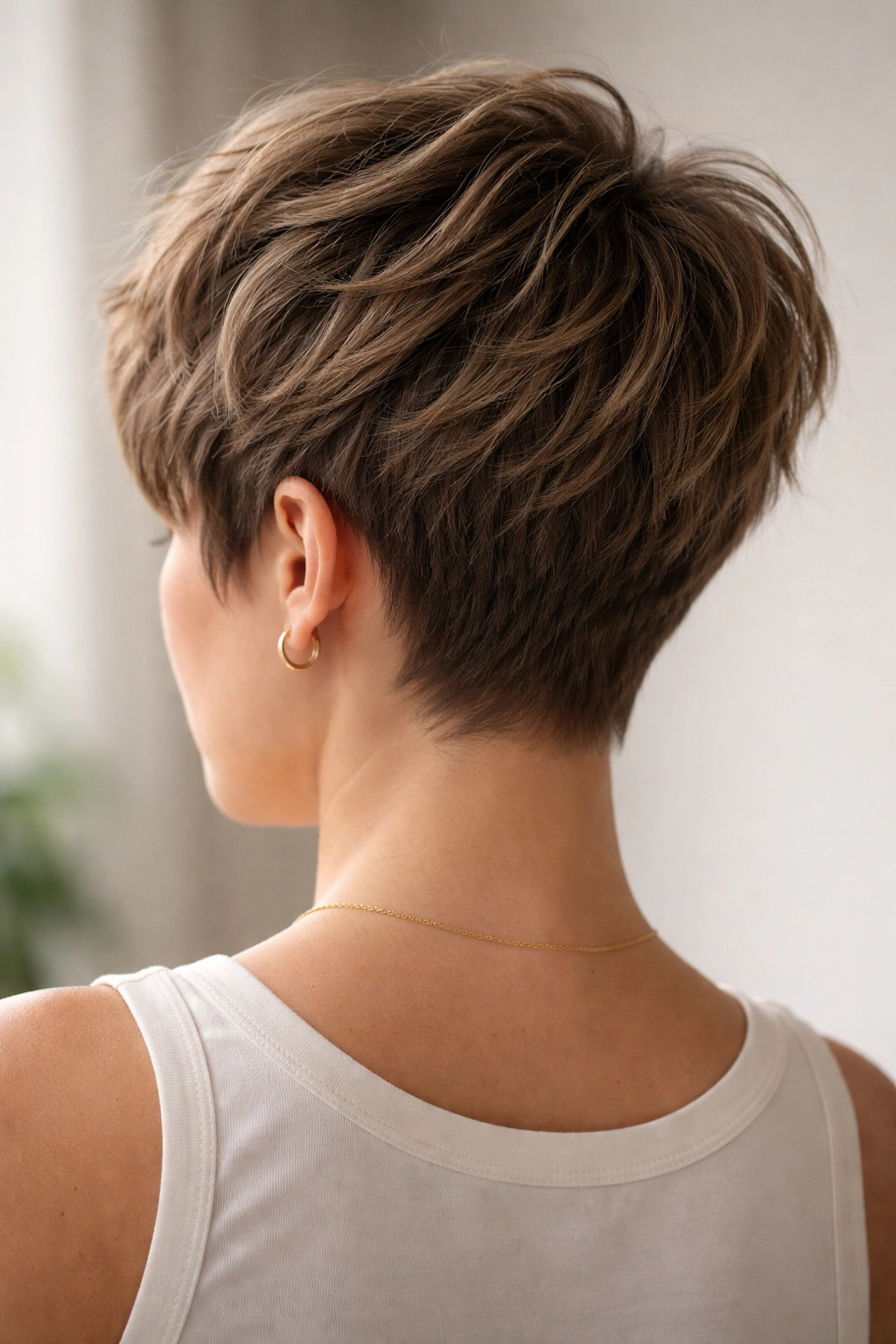
This is the pixie’s edgier sibling, and the back view shows exactly why. Instead of a smooth gradient, you’ll see deliberate texture created by choppy layers and point-cut ends. The back has dimension and movement, with shorter layers underneath and slightly longer pieces on top that create an intentionally tousled appearance.
The Visual Impact From Behind
The textured crop reads as intentional and fashion-forward. From the back, it shows off an interesting silhouette rather than a simple rounded shape. The texture catches light differently, which means your hair looks thicker and more dynamic. It’s particularly stunning on people with natural wave or curl, because the cut works with your hair’s natural movement instead of fighting it.
Styling and Maintenance Considerations
- This cut requires regular styling with texture paste, sea salt spray, or pomade to look its best
- The choppy layers mean frequent trims to maintain the shape (every 4-6 weeks)
- It works beautifully on straighter hair too—you just need to add product and work it in with your fingers
- The back view looks best when there’s visible product texture, not when it’s slicked smooth
If you love the idea of a short cut that looks intentionally styled rather than simply grown out, the textured crop’s back view delivers that vibe immediately.
3. The Choppy Bob
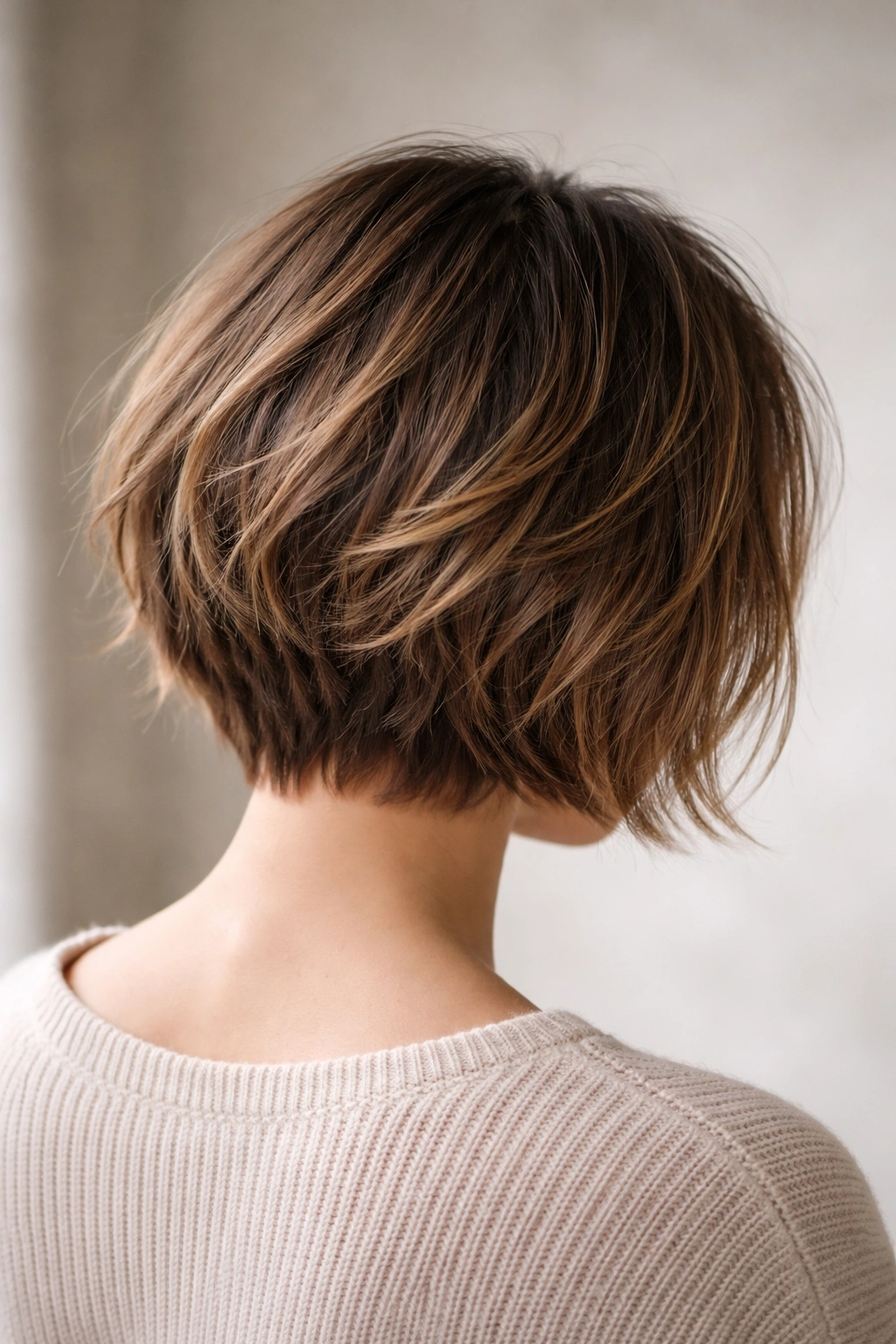
A short, choppy bob cuts through the middle ground between pixie and traditional bob. From the back, you see layers of varying lengths creating movement and shape. The longest pieces might hit your chin or just below, while shorter choppy layers underneath add texture and prevent the whole thing from looking flat or helmet-like.
The Distinctive Back Structure
What makes the choppy bob special from behind is the visible layering. You can see distinct sections of hair at different lengths, which creates a dynamic, almost tousled look even when freshly cut. The nape might be slightly tapered or left a bit fuller, depending on your preference—this is where you can really customize the silhouette to flatter your neck and shoulders.
Who This Cut Suits Best
- Anyone wanting more length than a pixie but shorter than a traditional bob
- People with fine or thin hair who want texture to create the illusion of volume
- Those with wavy or curly hair (the choppy layers enhance natural texture beautifully)
- Anyone wanting a cut that’s easy to style but doesn’t look like you didn’t try
The back view of a choppy bob shows movement and intention—it’s neither too feminine nor too edgy, just genuinely appealing and wearable.
4. The Layered Shag
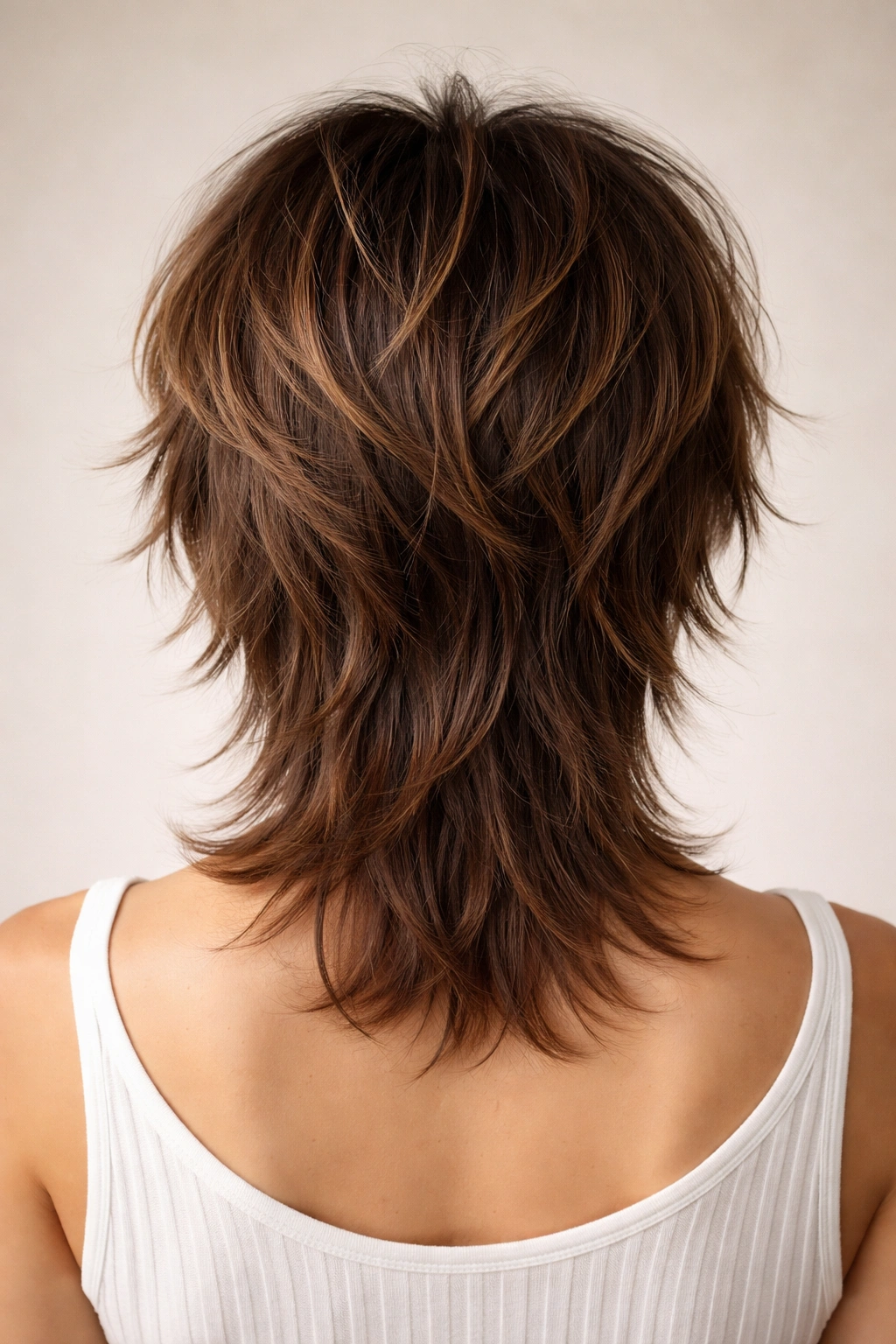
Step back and look at a shag from behind, and you immediately see why this cut has endured for decades. Layers throughout create a multi-dimensional silhouette, with shorter pieces at the crown and progressively longer layers moving down. The back view reveals a piece-y, textured shape that has inherent movement even when it’s just air-dried.
The Shag’s Distinctive Characteristics
The shag’s genius is in the layering strategy. From the back, you see how the shorter top layers give height and shape at the crown, while the longer underneath layers create flow. There’s no one uniform length—instead, there’s intentional graduation that creates a cool, lived-in silhouette. The nape is typically longer and layered rather than closely cropped, giving it a different energy than a pixie or crop.
Styling the Shag
- The shag actually looks great piece-y and texture rather than smooth
- A bit of texture spray, sea salt spray, or even just finger-combing with a light oil creates the ideal back view
- Regular trims every 6-8 weeks maintain the shape and prevent it from getting too scraggly
- This cut works on almost any hair type—straight, wavy, curly—because the layers work with natural texture
A shag’s back view is inherently cool and a little bit rebellious. It reads as effortlessly stylish rather than precisely groomed, which appeals to people who want a short cut with personality.
5. The Undercut
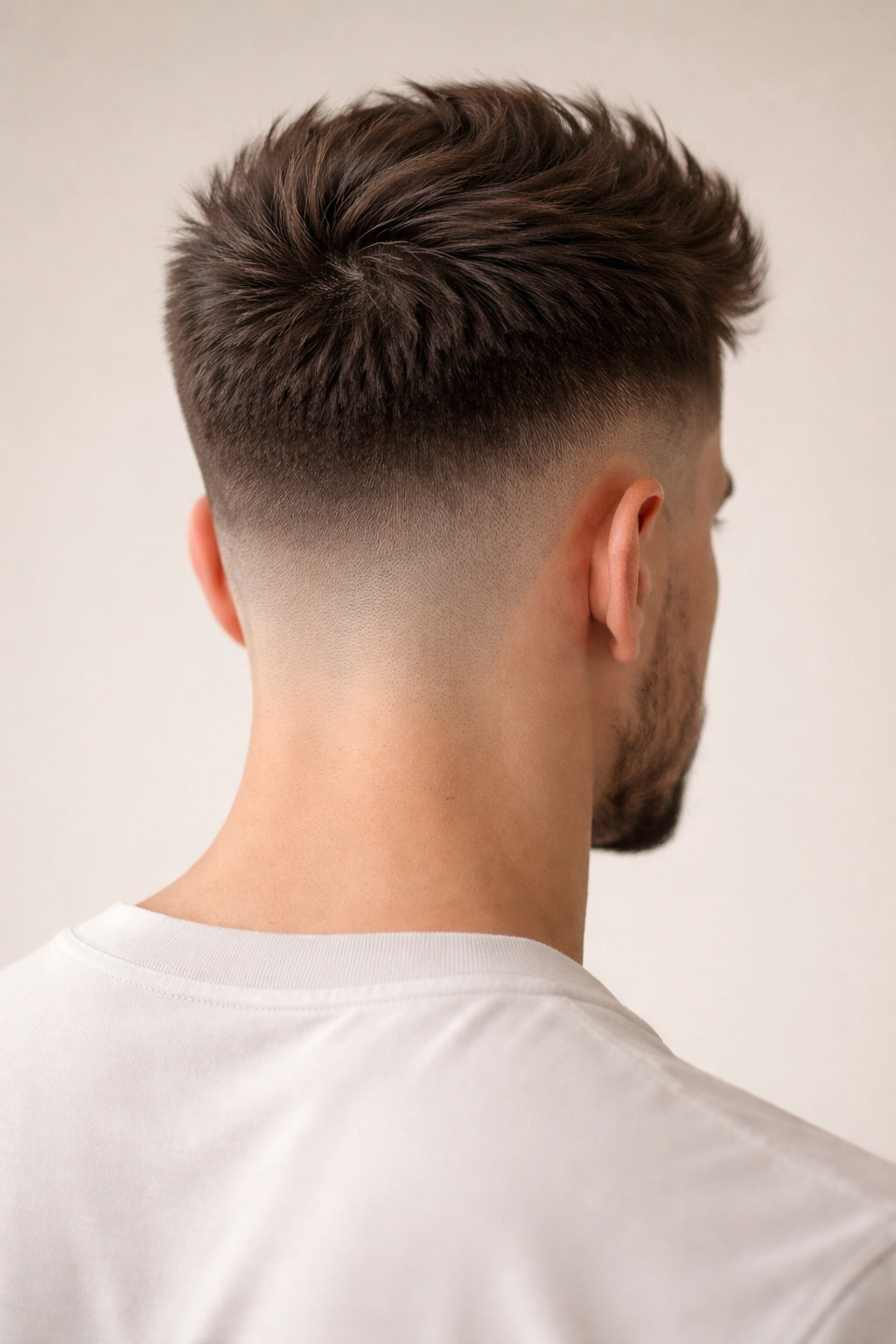
The undercut is unmistakable from the back. You see closely faded or shaved sides and back with noticeably longer hair on top. There’s a stark, clean line where the short and long sections meet, creating a dramatic silhouette. The underside is typically faded from skin-level up to a defined clipper line, while the top can be anywhere from one to several inches long.
The Bold Statement of the Undercut
This is a cut that makes a statement. From behind, it’s impossible to miss—the contrast is the whole point. It’s modern, edgy, and visually interesting. The back view clearly shows the technical skill involved; a good undercut has a smooth, even fade with clean lines, not a choppy or uneven transition. The longer top section can be styled multiple ways, from slicked back to textured and tousled.
Who Chooses the Undercut
- People who want a genuinely short haircut but with some styling versatility on top
- Anyone confident enough to carry off an intentionally bold silhouette
- Those with hair that’s naturally thick or textured enough to support contrast
- People willing to maintain it with regular clipper trims every 3-4 weeks
The undercut’s back view screams confidence. It’s not a subtle choice, and it shouldn’t be—that’s the entire appeal.
6. The French Crop
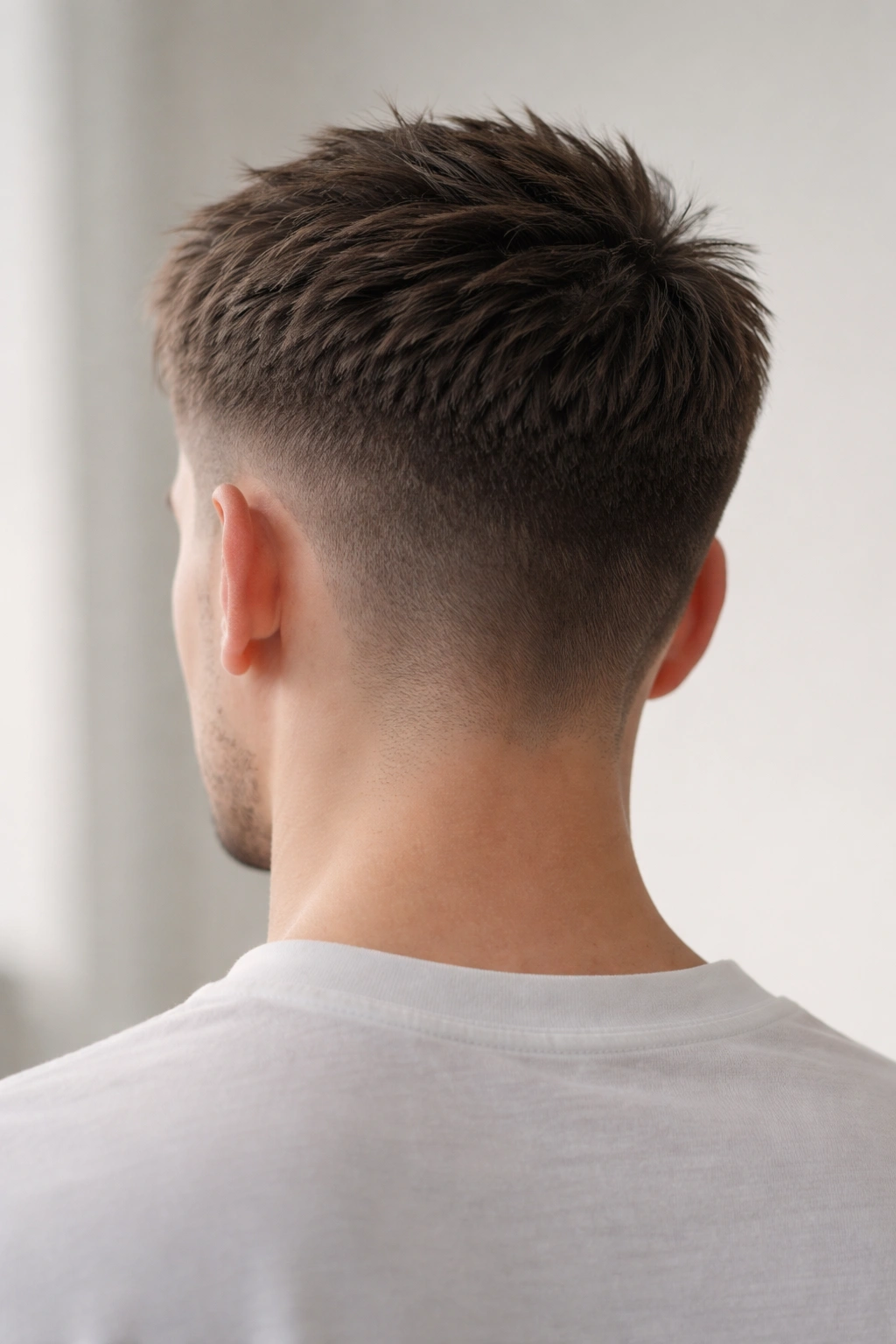
The French crop is a sophisticated European take on the short haircut. From the back, you see relatively short, tapered hair with a bit more length toward the crown. There’s a subtle, not dramatic, fade on the sides and back, and the top has enough length for texture and styling. The signature element is often a fuller crown with a cleaner nape.
The Refined Aesthetic
This cut reads as intentionally groomed without looking fussy. The back view shows clean lines and thoughtful layering, but nothing dramatic or shocking. It’s the kind of cut that works in professional settings while still feeling contemporary and stylish. The back is neat and tapered without being aggressively cropped—it respects the line of your neck and head shape.
Styling Versatility
- Works beautifully slicked back with pomade or styling cream
- Also looks great with texture and a bit of movement on top
- The back view stays looking intentional whether you’re styling it or going for a more natural look
- Regular trims every 4-5 weeks maintain the shape without constant maintenance
The French crop’s back view communicates sophistication and attention to detail. It’s a short cut for people who care about how they look but don’t want anything too avant-garde.
7. The Tapered Fade
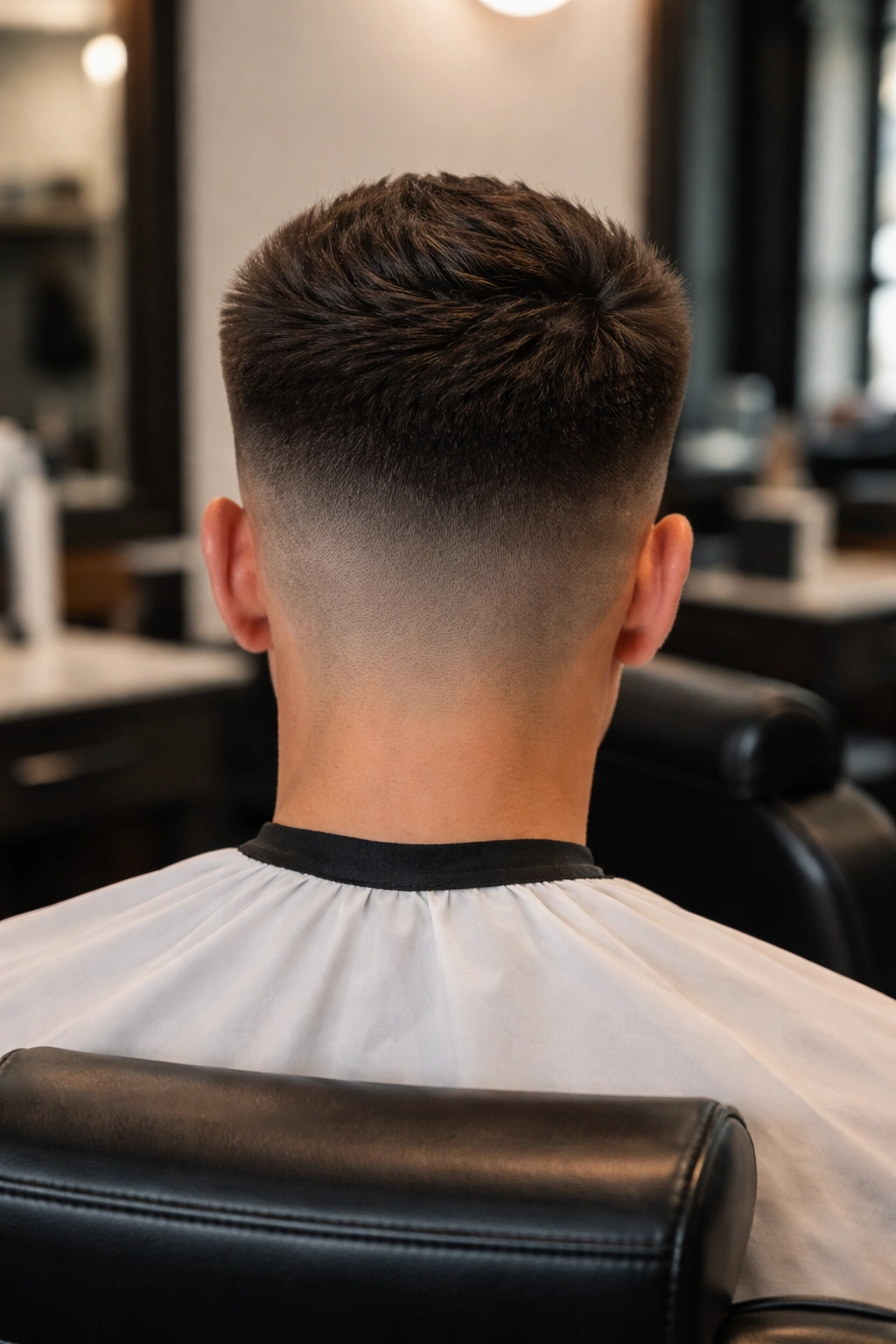
This is a barbershop classic, and its back view is pure technical artistry. You see a perfectly graduated fade moving from short (sometimes skin-level) at the nape up to progressively longer hair toward the crown. The transition is smooth and even, with no harsh lines or uneven patches. It’s precision work, and a good fade shows it immediately.
The Technical Excellence of a Fade
A quality fade isn’t accidental—it requires skill and the right tools. From the back, you can see the difference between a rushed fade and a carefully executed one. The best fades have subtle graduation through multiple clipper lengths, creating a smooth transition that flatters the head shape. The nape is clean and finished, typically with a line of definition that shows where the fade ends.
Maintaining the Fade
- Fades typically need a trim every 2-3 weeks to maintain the clean lines
- The longer section on top can be styled however you prefer
- This is a cut that works exceptionally well on textured and curly hair
- The back view looks great whether the hair is clean and neat or textured with product
A tapered fade’s back view is the hallmark of intentional grooming. It says you pay attention to details and quality craftsmanship.
8. The Tousled Waves
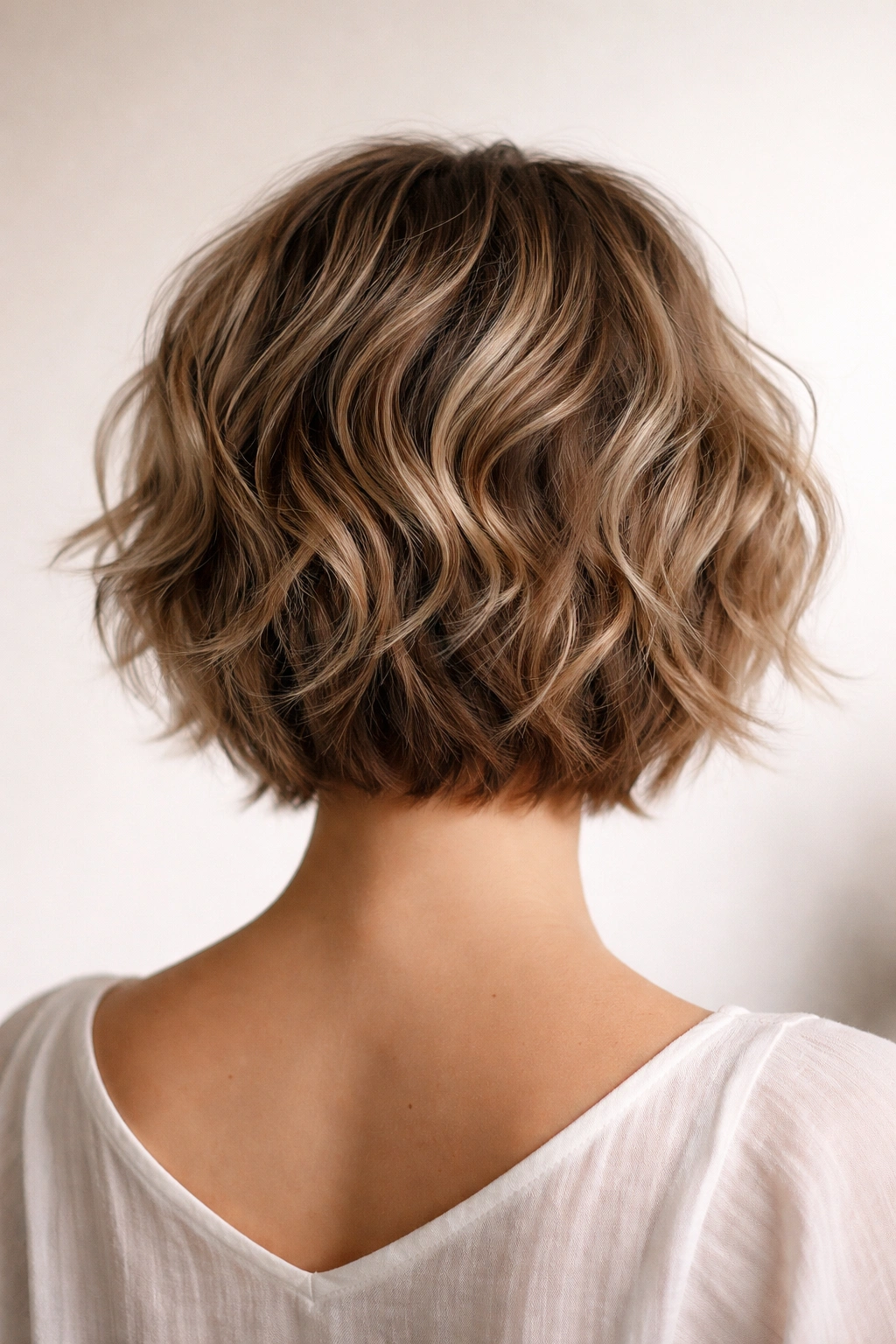
From the back, this cut shows shorter, wavy hair with visible texture and movement. There’s typically some layering, but the focus is on creating a shape that works with your hair’s natural wave pattern rather than fighting it. The back view reveals a soft, organic silhouette with dimension created by the waves themselves, not just by strategic layering.
Working With Your Natural Texture
This cut is specifically designed for people with natural wave or curl. From the back, you see how the cut enhances and celebrates the texture rather than trying to straighten or smooth it. The layers are usually shorter on top for shape and longer underneath for flow. The nape might be tapered or left fuller depending on how much weight your waves naturally have.
Styling Reality
- This cut looks best when you embrace your waves rather than fighting them
- A little bit of curl cream, leave-in conditioner, or diffuser styling brings out the best back view
- The cut actually requires less daily styling than you’d think once you stop trying to make it straight
- Regular trims every 6-8 weeks prevent the ends from getting too scraggly
The back view of tousled waves reads as effortlessly pretty and undeniably romantic. It’s a short cut that feels feminine without being overly styled.
9. The Slicked Back Short
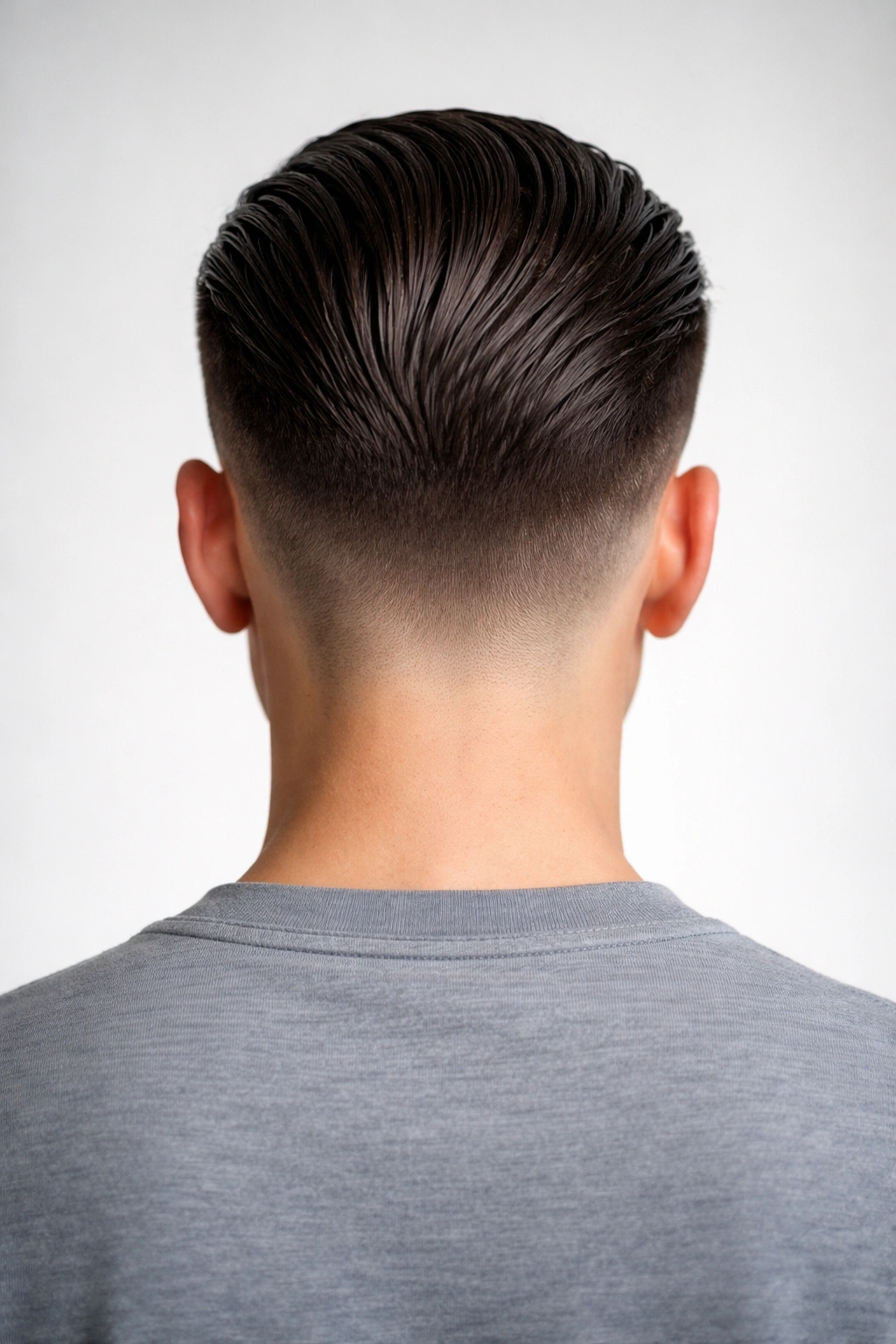
This back view shows cleanly cropped, short hair that’s styled flat against the head and swept backward. There’s minimal volume at the nape—in fact, the whole point is the sleek, close-to-the-head aesthetic. The sides are typically faded or closely cropped, and the top is left with enough length to comb or brush back, creating that distinctive groomed look.
The Polished, No-Nonsense Aesthetic
This cut is all about neatness and control. From the back, it presents a streamlined silhouette that reads as professional, confident, and thoroughly put-together. There’s no poof, no texture, no mess—just clean lines and intentional styling. The nape is finished with precision, and everything aligns smoothly.
When to Wear This Look
- Professional and formal settings where grooming matters
- When you want to emphasize your face and head shape without distraction
- For an undeniably polished appearance that photographs beautifully
- If you enjoy styling and want a cut that rewards daily attention
The slicked-back short’s back view is unambiguously sophisticated. It’s a choice for people who want their haircut to signal confidence and control.
10. The Side-Swept Crop
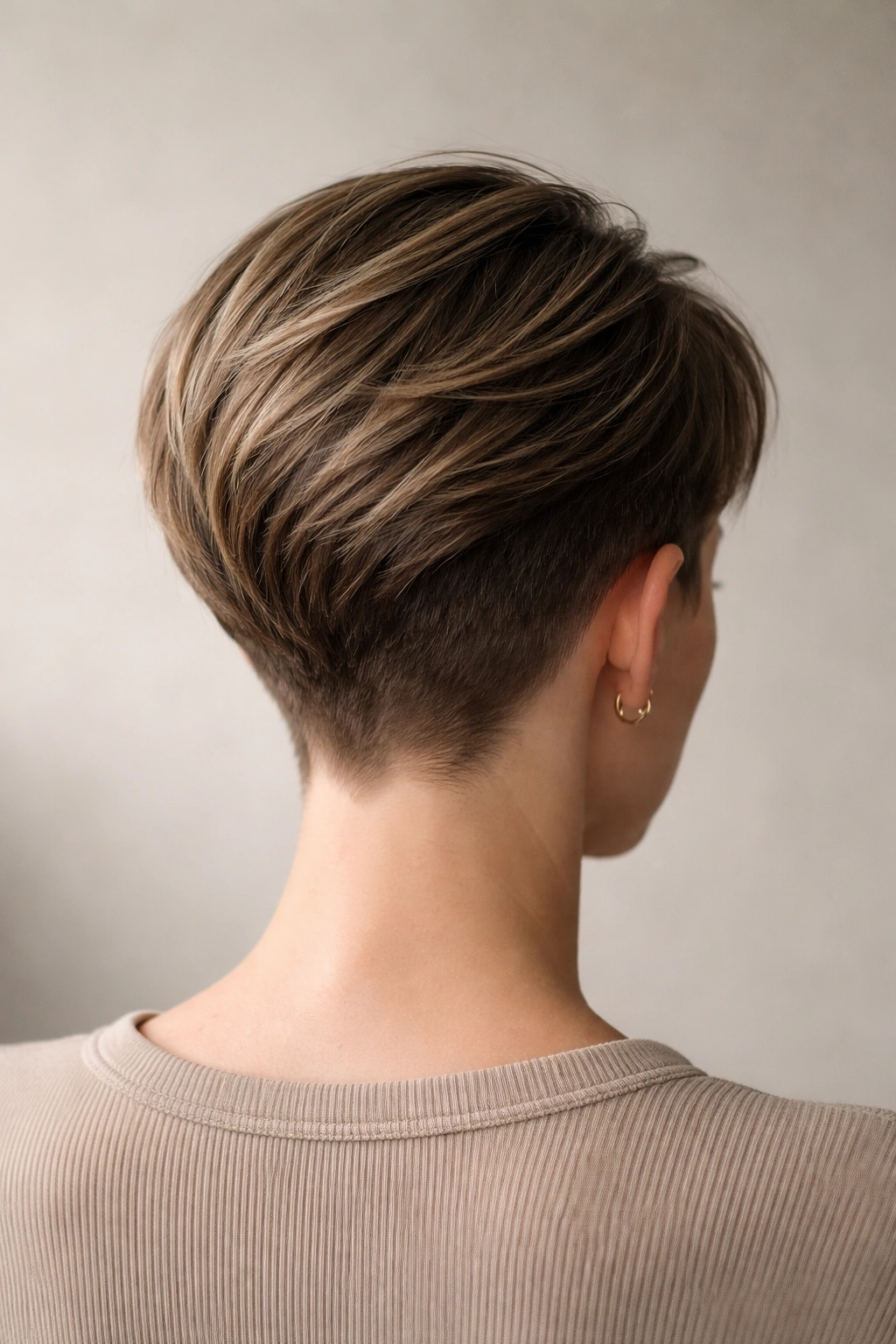
Looking at the back of a side-swept crop, you see slightly longer hair swept to one side, creating an asymmetrical silhouette. One side of the back might be slightly shorter than the other, and the longer top section is clearly styled away from the side with the deeper undercut. It’s modern and a bit edgy without being as dramatically bold as a full undercut.
The Subtle Drama of Asymmetry
The side-swept crop offers visual interest without screaming for attention. The back view shows intention and style without the statement-making boldness of a full undercut. It’s a good middle ground for people who want something with personality but not quite as avant-garde. The asymmetry is subtle enough to work in most settings but distinctive enough to feel genuinely stylish.
Versatility and Styling
- Can be styled slicked back for a cleaner look
- Also works beautifully textured and tousled
- The longer top section gives you more styling options than a strictly symmetrical crop
- Works well on both straight and textured hair
The side-swept crop’s back view communicates style and contemporary thinking. It’s a short cut for people who want to signal fashion awareness.
11. The Blunt Bangs Short
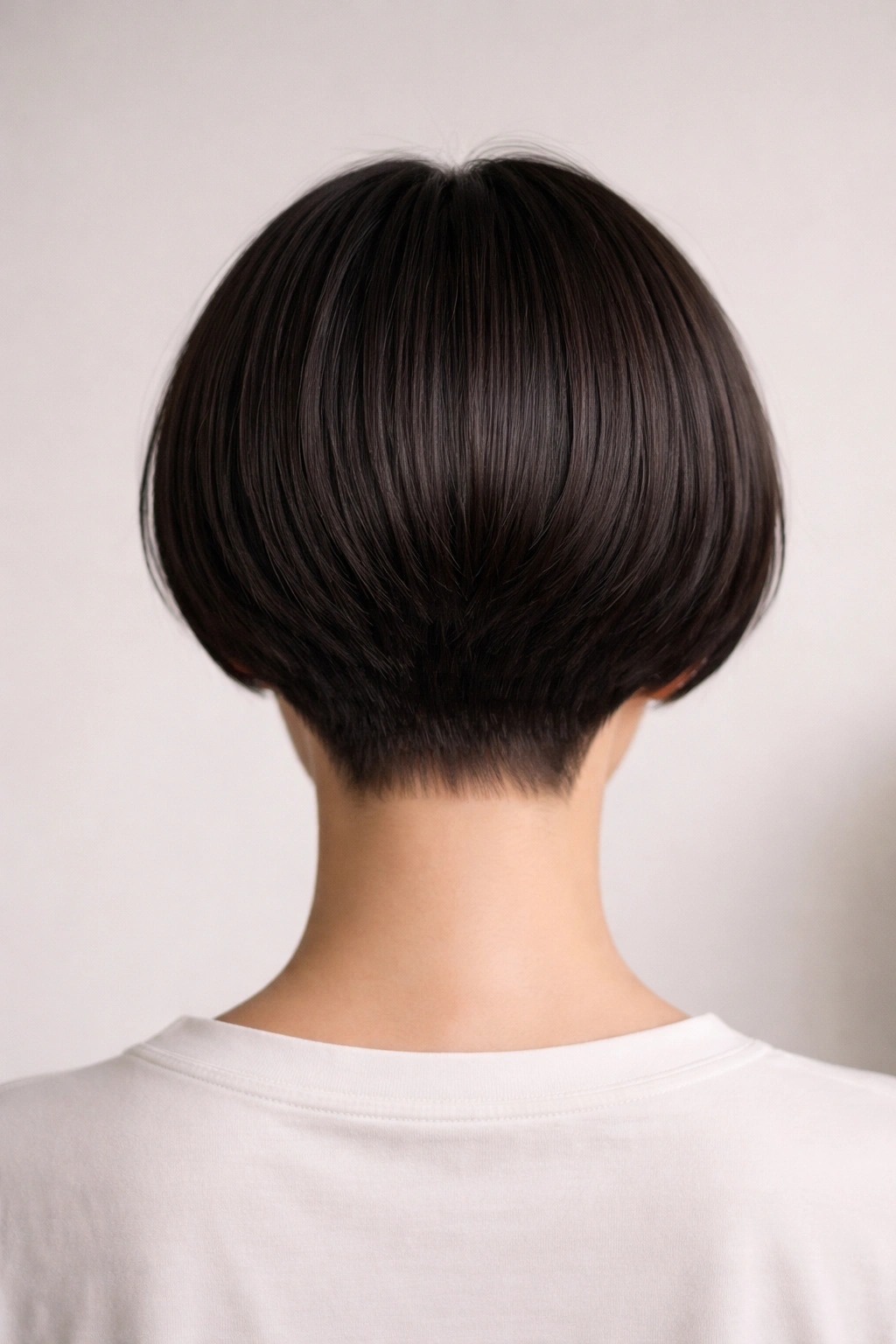
From the back, this cut shows short hair with a graphic, blunt-cut fringe in front and relatively short, neat hair overall. The back is typically tapered and clean, sometimes with visible layering, sometimes more uniform in length. The real visual signature, of course, is the blunt fringe that you might not see from the back—but the back view shows the polished, intentional aesthetic that the blunt bangs style requires.
The Graphic, Fashion-Forward Look
This is a cut with personality and intention. The back view, while not showing the dramatic bangs, still communicates that this is a carefully constructed, contemporary haircut. The back is typically neat and tidy, with clean lines that complement the graphic nature of the blunt fringe. It reads as fashion-conscious and thoughtful.
Who This Suits
- Anyone confident wearing a more fashion-forward haircut
- People with straight or lightly textured hair (blunt bangs work best on smooth hair)
- Those who enjoy styling their hair and want a cut with visual impact
- Anyone who wants a clearly intentional, non-boring short cut
The blunt bangs short’s back view, while not the most dramatic aspect of the cut, shows that this is a deliberate style choice. It reads as contemporary and intentional.
12. The Curved Pixie
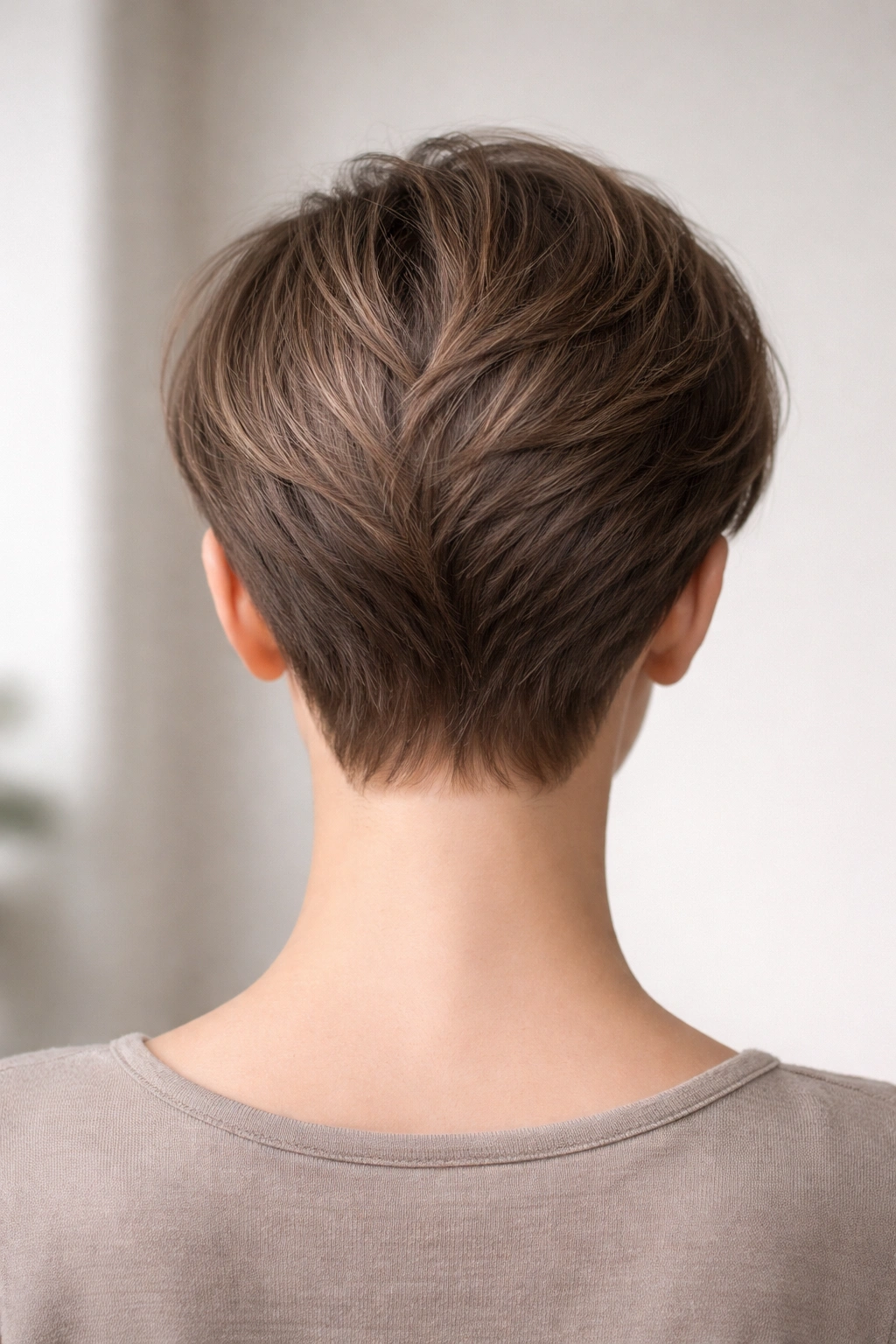
This pixie variation softens the geometric edges of a classic pixie with curved, rounded lines. From the back, instead of a simple tapered gradient, you see a more sculptural shape—rounder at the crown, with a curved nape line rather than a straight one. The layers are still present but work together to create a softer, more organic silhouette.
The Softer Alternative to Classic Pixie
The curved pixie offers all the practicality of a traditional pixie but with a warmer, more rounded aesthetic. The back view shows a distinctly different silhouette—it’s more sculptural, more flattering to people who prefer softer lines, and perhaps less severe than a sharply tapered pixie. The curved nape line is distinctive and intentional, not accidental.
Best For
- Anyone who likes the idea of a pixie but finds the classic version a bit too sharp
- People with rounder face shapes (the curved pixie complements this beautifully)
- Those who want ease of styling but a softer overall aesthetic
- Anyone wanting a pixie that feels a bit more feminine without losing the practical short-hair benefits
The curved pixie’s back view shows a thoughtful approach to short haircuts—taking the utility of a pixie but customizing it for a softer, more personalized look.
13. The Asymmetrical Cut
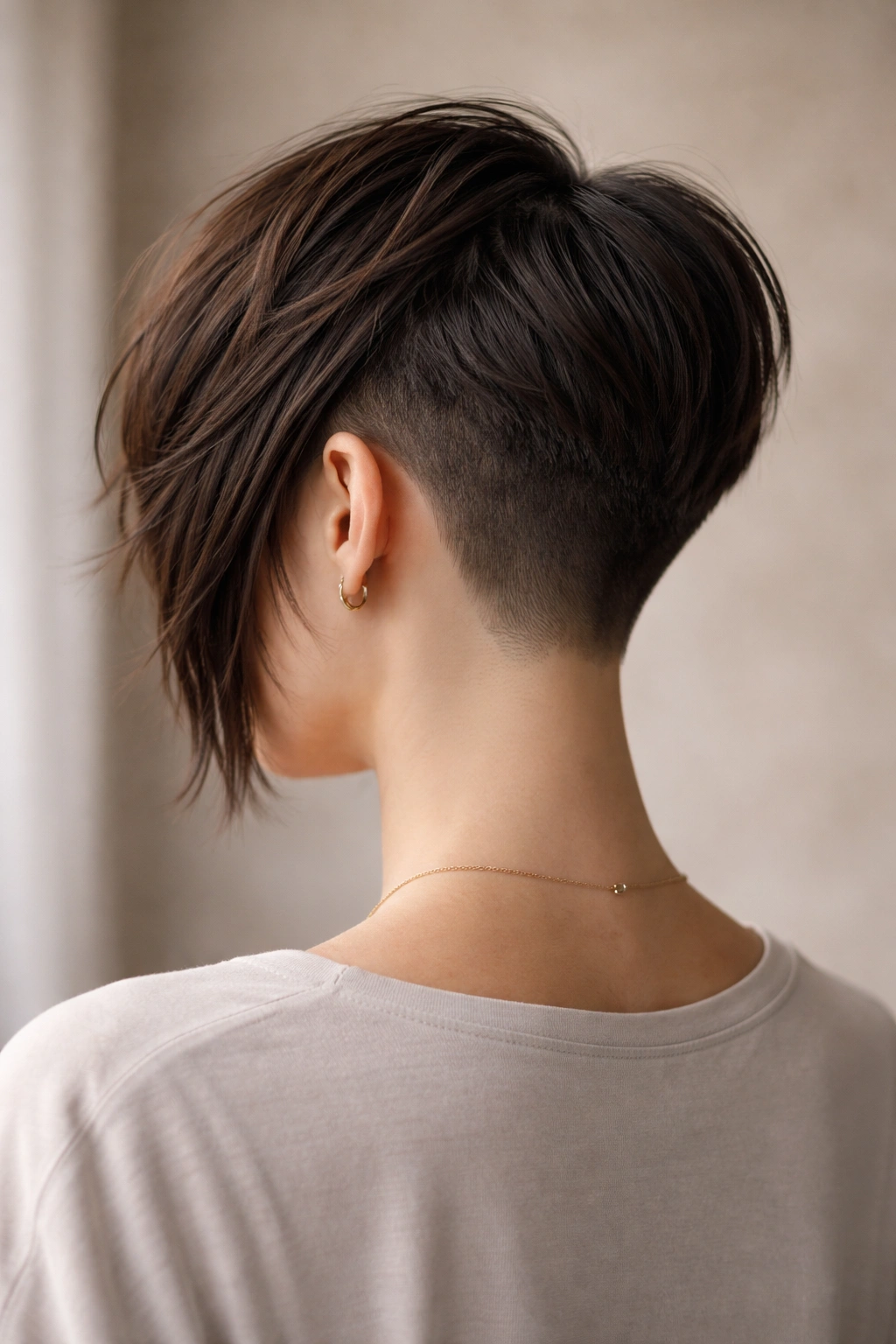
An asymmetrical haircut is immediately obvious from the back—one side is clearly shorter than the other. The back view might show a very short, nearly shaved section on one side and longer, layered hair on the other. Or it might be more subtle: one side tapered closely while the other is left a bit fuller. Either way, the asymmetry is the whole point.
The Bold Statement of Asymmetry
This is a cut that deliberately breaks symmetry and conventional rules. From the back, it’s unmistakably intentional and fashion-forward. It reads as confident and willing to take risks. The contrast between the two sides is what makes it visually interesting—it’s not a cut you could mistake for something that just grew out this way.
Who Chooses Asymmetry
- People confident enough to wear a clearly statement-making haircut
- Anyone wanting their hair to signal that they think differently
- Those with thick or textured hair that can support the contrast
- People willing to maintain the clean lines with regular trims
The asymmetrical cut’s back view is impossible to miss. It’s for people who want their haircut to be a conversation starter.
14. The Feathered Layers
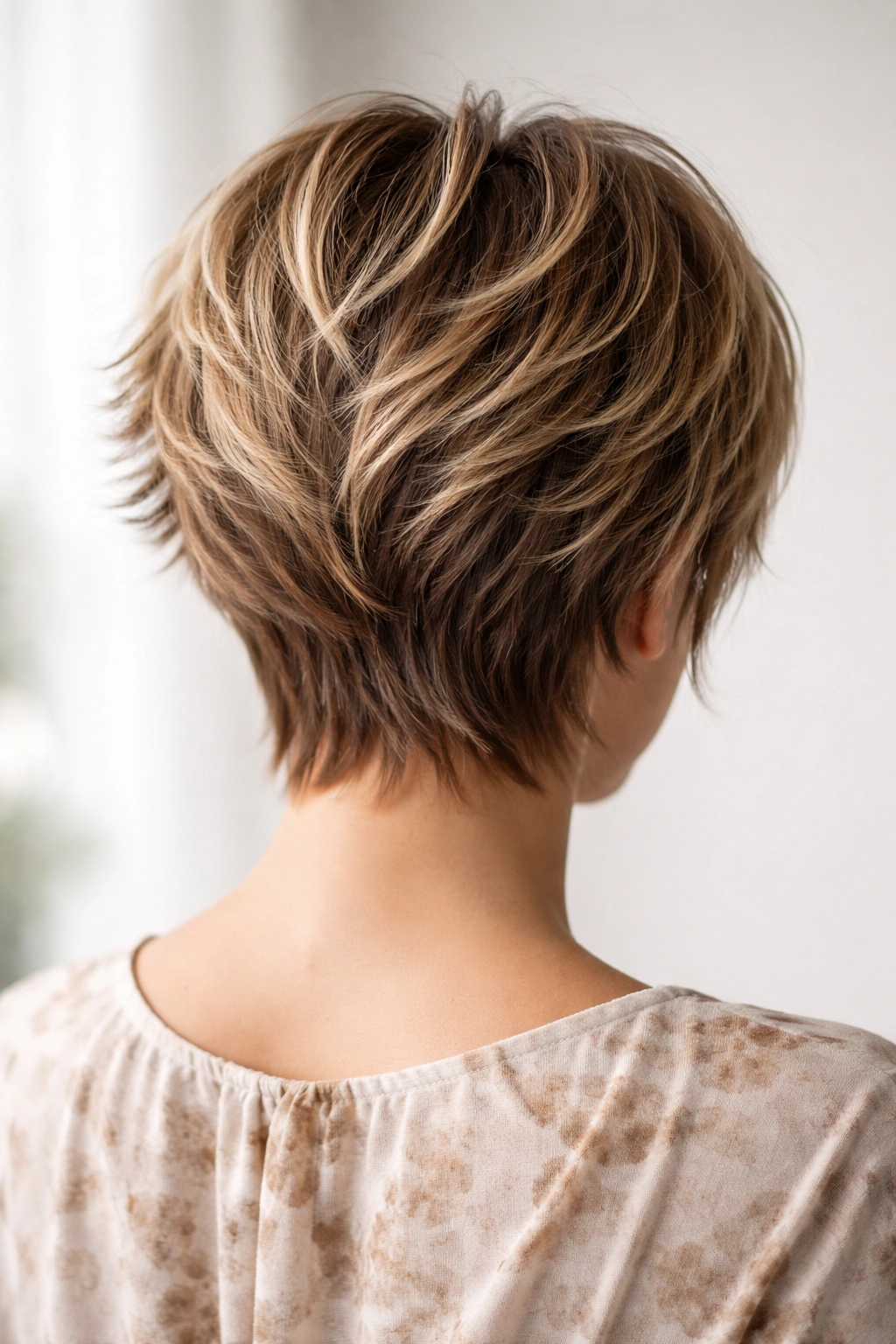
This back view shows distinctly feathered, pointed layers creating a textured, almost wing-like silhouette. Rather than blunt layers, feathered layers are cut at angles that create movement and prevent a heavy, choppy appearance. The back shows dimension and flow, with shorter pieces on top graduating to longer lengths underneath. The overall shape is softer and more movement-oriented than a blunt layered cut.
The Elegant Texture of Feathering
Feathered layers create a sophisticated, almost romantic aesthetic. From the back, you see a shape that moves and flows rather than sits heavily. It’s particularly beautiful on longer short cuts—bobs or shags that have enough length to show the feathering benefit. The technique creates the illusion of more texture and movement, even on straight hair, and it genuinely enhances natural wave or curl.
Perfect For
- Anyone wanting texture without looking choppy or rough
- People with fine or thin hair (feathering creates the illusion of volume)
- Those with natural wave or curl who want to enhance their texture elegantly
- Anyone wanting a romantic, flowing short cut rather than something architectural
The feathered layers cut’s back view is elegant and undeniably pretty. It’s a short cut that celebrates movement and flow.
15. The Disconnected Undercut
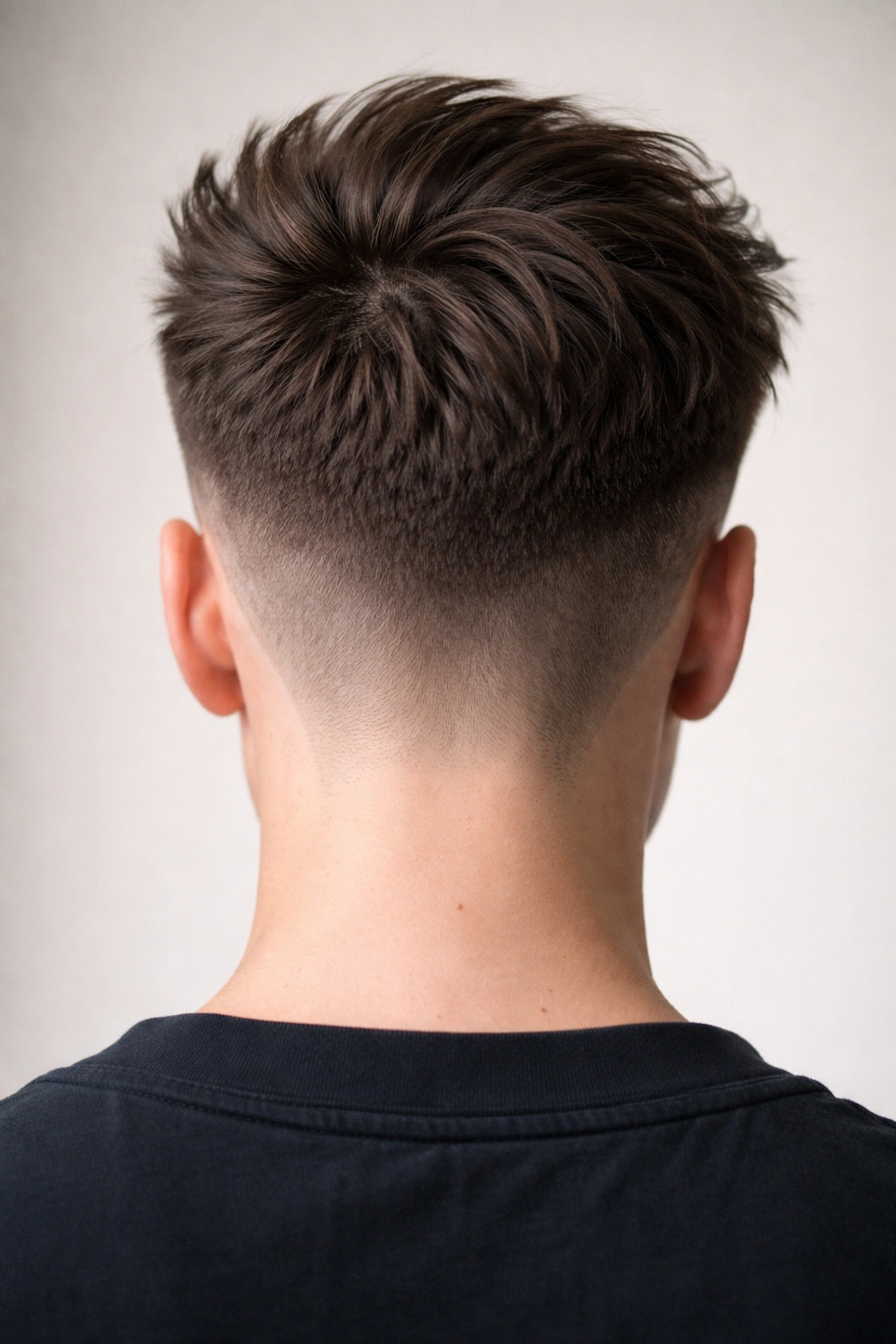
This is the most dramatic undercut variation—you see a sharp, intentional separation between the closely cropped or shaved back and sides and the noticeably longer top section. Unlike a fade, which is a smooth gradient, a disconnected undercut has a clear line of demarcation. The back view shows this stark contrast immediately: minimal or no hair at the nape, clean lines, and distinct separation from the longer top.
The Ultra-Modern Statement
A disconnected undercut is about as bold as short haircuts get. The back view is architectural, precise, and unmistakably contemporary. There’s no subtlety here—the contrast is the entire point, and it reads as fashion-forward and confident. It requires precision barbering to execute well, and a good disconnected undercut shows that craftsmanship immediately.
The Maintenance Reality
- This cut requires clipper trims every 2-3 weeks to maintain sharp lines
- The longer top section can be styled in countless ways
- It works on virtually any hair type, from straight to curly
- It’s a commitment to maintaining clean lines, but the payoff is undeniably striking
The disconnected undercut’s back view is unapologetically bold. It’s for people who want their haircut to be noticed and who enjoy the maintenance that sharp, clean lines require.
Final Thoughts
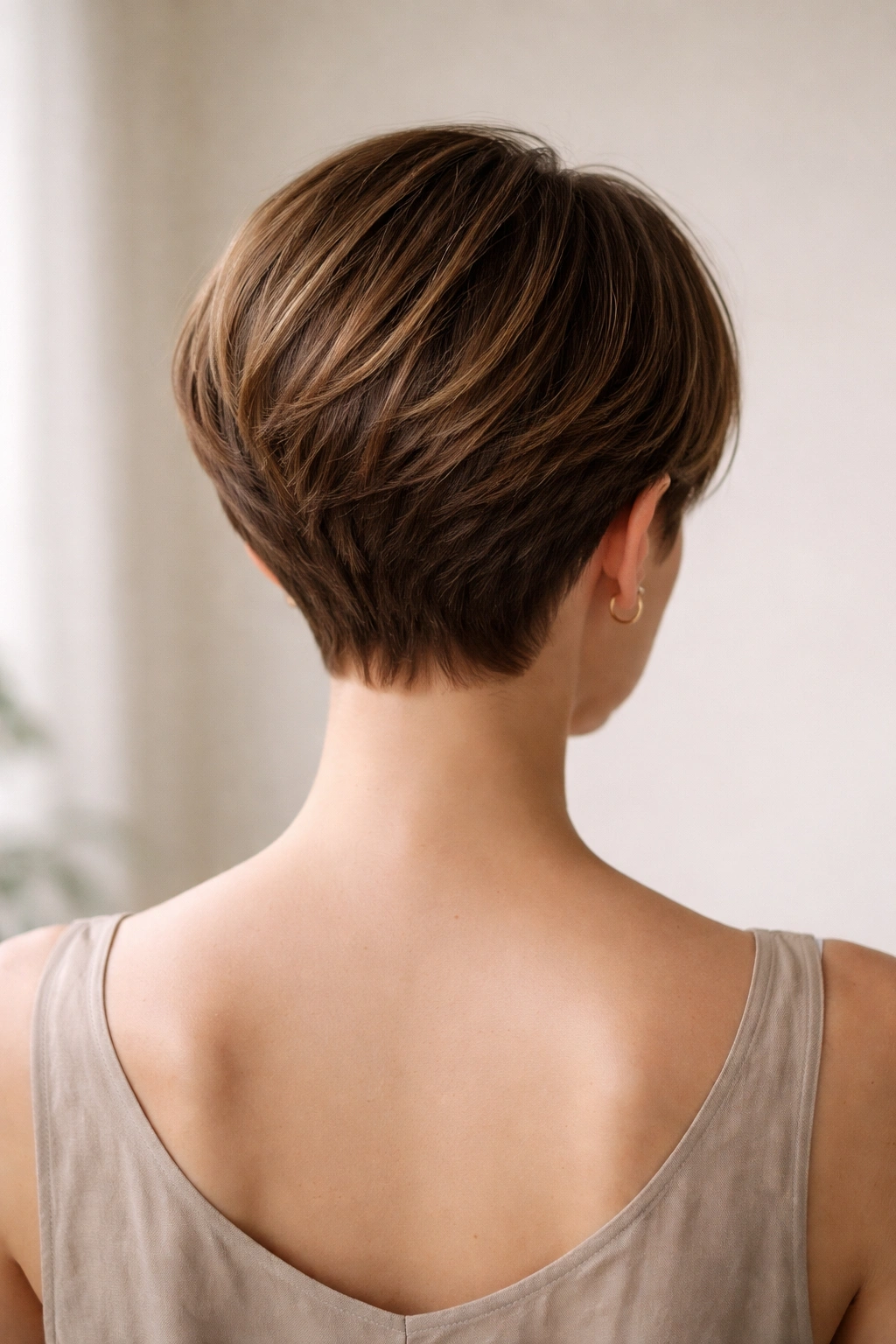
Looking at these fifteen different short haircuts from the back view reveals something important: short hair isn’t a single category. It’s a spectrum of possibilities, from the neat and classic pixie to the bold disconnected undercut. Each back view tells a different story about the cut’s technique, the person’s style sensibility, and what they want their haircut to communicate.
The back of your head matters because that’s often what people see—walking away from you on the street, sitting across from you, seeing you from behind in a photo. A truly great short haircut should look intentional and polished from every angle, not just the front. The back view should show technical skill, thoughtful design, and a cut that either celebrates your natural hair texture or creates an intentional statement about style.
When you’re choosing a short haircut, bring these images and descriptions to your stylist. Show them the back view that resonates with you. Talk about what the back view reveals: Is it a fade or a taper? Are there visible layers or a more uniform length? Is it textured and piece-y or smooth and sleek? Is it symmetrical or asymmetrical? Does it show your neck or do you want more fullness at the nape?
A stylist who truly understands short haircuts can help you choose a cut that looks just as great from behind as it does from the front. That’s when you know you’ve found the right cut.
