



Finding the right haircut is way more complicated than just walking into a barbershop and pointing at a picture on Instagram. The cut that looks incredible on your mate might be a complete disaster on you—not because of a lack of styling skill, but because your face shape and hair type are entirely different. A thick, wavy hairline behaves nothing like fine, straight hair. A square jaw paired with an oval face calls for different styling angles than an oblong face with softer features. The magic happens when you find the intersection between what suits your unique face geometry and what actually works with the texture and density of your hair.
This isn’t vanity—it’s strategy. The right cut amplifies your best features, downplays what you’d rather minimize, and actually requires less daily styling effort because it’s working with your hair’s natural tendencies rather than against them. A haircut that’s perfectly matched to both your face shape and hair type will look sharp on day one and get better over the next week as it settles. It’ll be easier to maintain, more forgiving between trims, and it’ll actually suit you instead of just looking like you’re chasing a trend.
What follows is a deep dive into twenty excellent men’s haircuts, each one mapped to the face shapes and hair types where it genuinely shines. You’ll find clarity on which cuts work best if you’ve got a round face and curly hair, or a square jaw with fine, straight strands. By the end, you’ll know exactly which direction to take your barber and why it’ll actually work.
1. Classic Fade with Textured Top
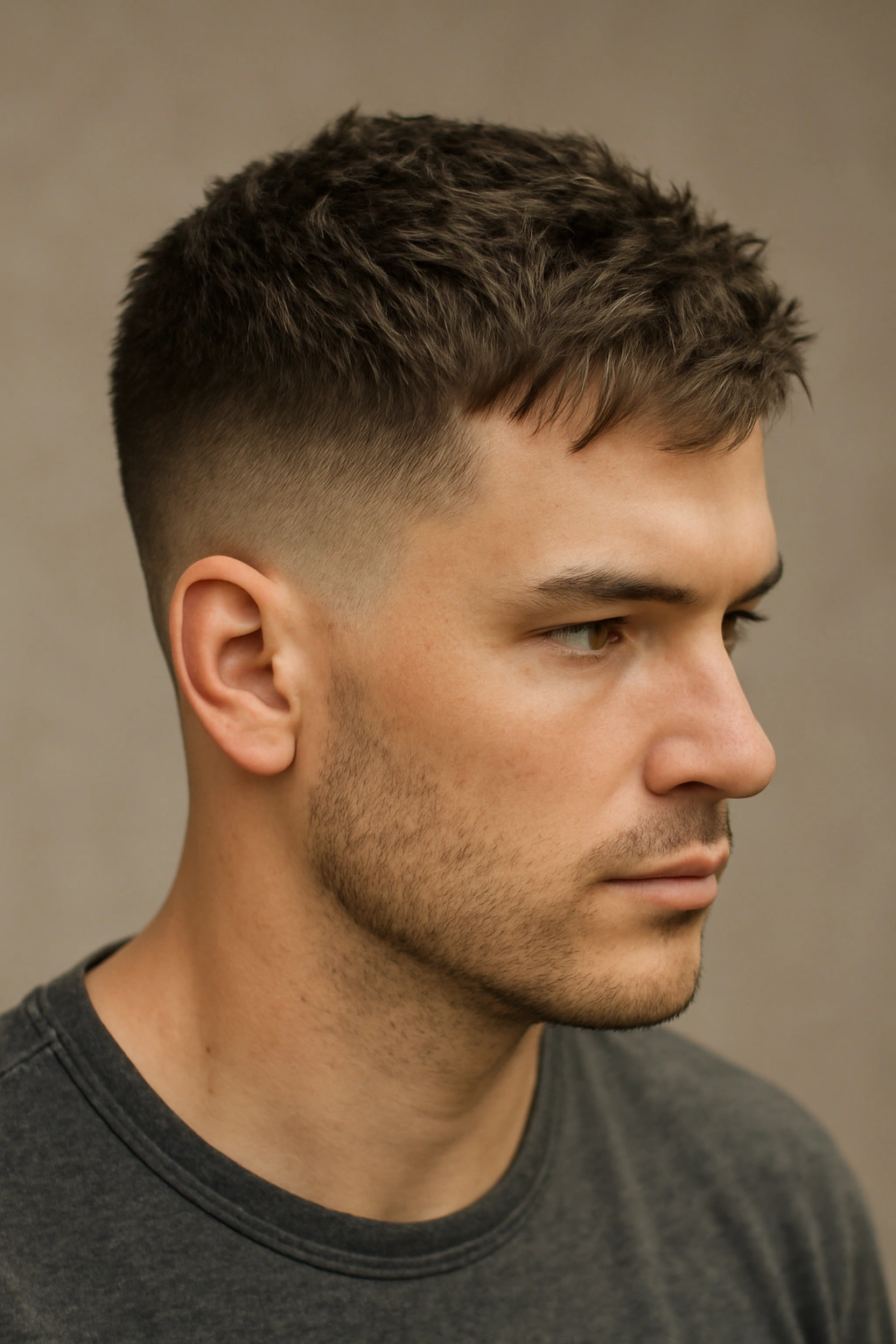
This is the foundation cut that launched a thousand barbershop conversations. The classic fade features short, progressively tapered sides that “fade” into longer hair on top—typically 2-3 inches of length that you can style forward, back, or to the side. It’s the versatility that makes this cut legendary. You can wear it messy and textured in the morning, slick it back for something more polished, or keep it natural and undone depending on your mood and where you’re going that day.
Why It Works for Different Face Shapes
This cut genuinely suits most face shapes, but it’s particularly brilliant for round and square faces. The height on top creates vertical lines that lengthen a round face, making it appear more balanced. For square faces, the textured top and fade combination softens harsh angles while maintaining masculinity. Oblong faces also look fantastic because the width created by textured styling balances the length of the face beautifully.
Hair Type Compatibility
- Works exceptionally well with straight to wavy hair—the texture on top is easier to achieve and manipulate with these hair types
- Fine hair looks thicker and fuller with this cut because the fade creates the illusion of density on top
- Thick, straight hair holds structure beautifully and requires minimal product
- Curly hair needs careful consideration; the length on top can look bulky without proper tapering underneath
Pro tip: Ask your barber for a mid-fade (fading completely by the ear) rather than a skin fade if you’ve got fine hair—it’s more forgiving between haircuts and looks intentional even at four weeks.
2. Undercut
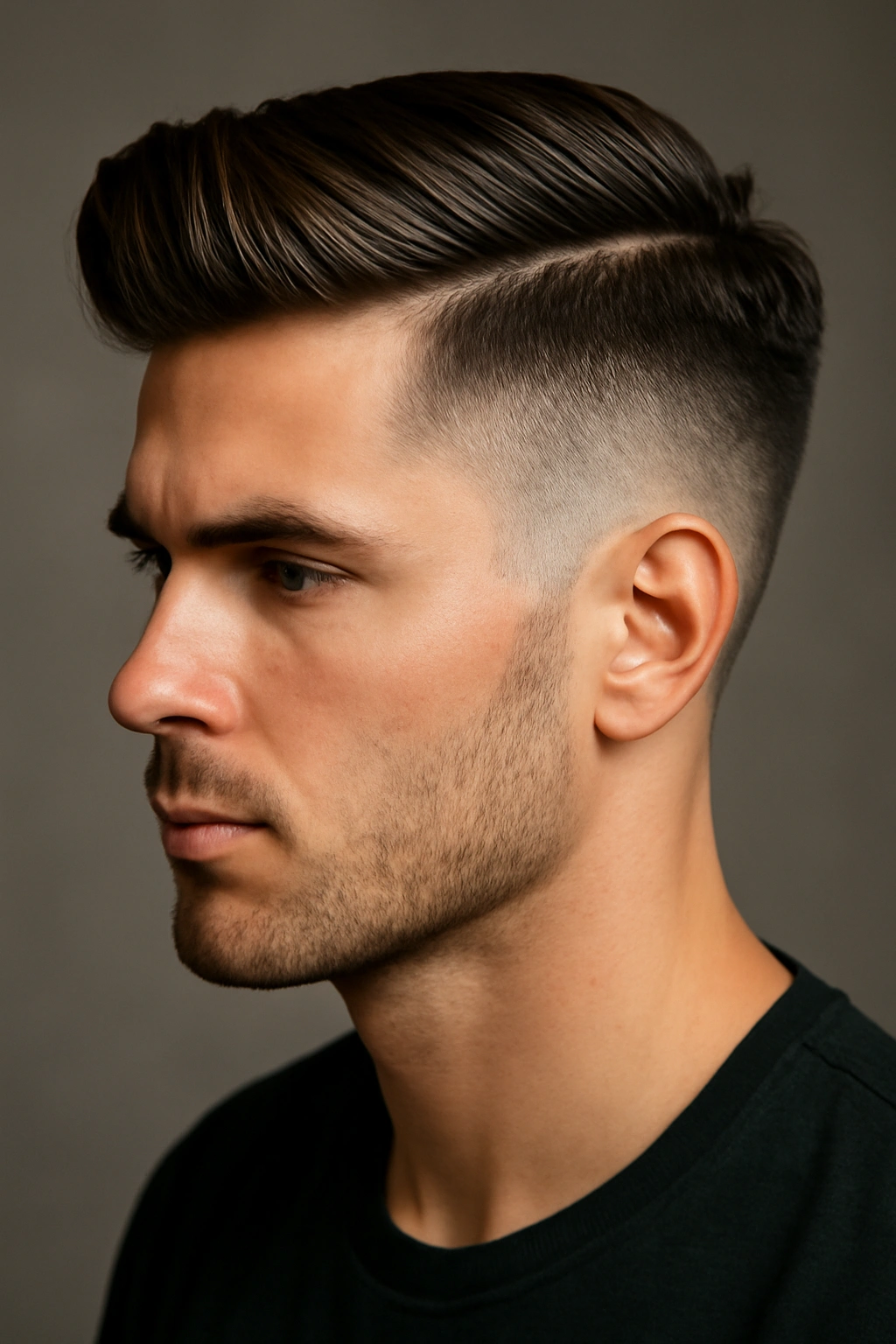
The undercut is bold, modern, and unapologetically sharp. This style shaves the sides down to nearly nothing (usually around a 1 or 1.5) while keeping significant length on top—typically 3-4 inches. There’s a sharp, defined line where the fade ends and the longer hair begins, creating instant contrast and drama. You’ll need to actively style this cut (pomade, clay, or cream to push the top back and to the side), but that’s exactly the point. It makes a statement.
Why It Works for Different Face Shapes
Square and angular faces absolutely own this cut because it emphasizes the very geometry that makes those faces striking. The shaved sides expose the jaw and cheekbones without apology. Round faces can wear it, but they need to style the top back and away from the face to maintain elongation—styling it forward will emphasize roundness. Oval faces look effortlessly good with an undercut; the proportions work naturally.
Hair Type Compatibility
- Straight to wavy hair is ideal—the top has natural structure and holds product well
- Thick hair looks commanding with this cut; the density on top becomes a feature rather than a problem
- Curly hair can work, but you’re fighting texture; the sharper lines get blurred and softened by curls, which defeats some of the purpose
- Fine hair struggles here because you need enough density to pull off the bold contrast
Insider note: This cut demands a trim every 4-5 weeks to keep those sides clean. If you’re commitment-phobic with the barber chair, the undercut isn’t your friend.
3. Crew Cut
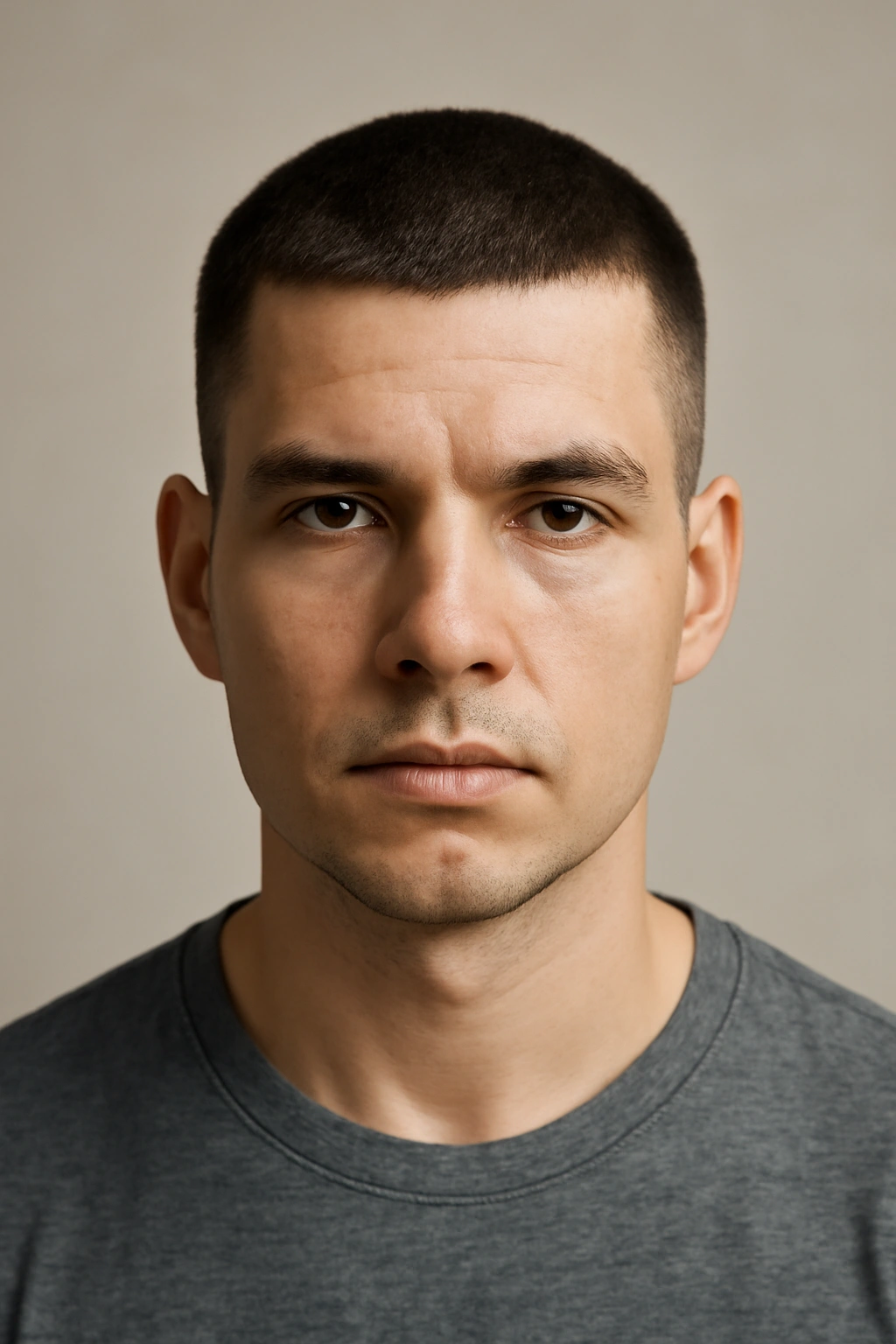
Don’t mistake the crew cut for boring—it’s one of the most effective cuts ever designed because it removes all pretense and puts everything on display. All over shortness (around 1-2 inches), no fades, no styling products required. It’s a brutally honest cut that either looks fantastic on you or reveals every imbalance in your head shape. There’s no hiding, no angles to fake it—which is precisely why military personnel and people who know what works stick with it.
Why It Works for Different Face Shapes
This cut is genius for oblong and long faces because the shortness everywhere prevents any vertical emphasis. Round faces should approach with caution—the evenness can emphasize roundness without the visual relief of longer hair on top. Square faces look absolutely perfect with a crew cut; the short length plays to angular jaw structure beautifully. Diamond-shaped faces (narrow forehead, wide cheekbones, narrow chin) look balanced because the shortness doesn’t add emphasis anywhere.
Hair Type Compatibility
- Works with absolutely everything: straight, wavy, curly, thick, fine—it doesn’t matter when hair is this short
- Actually looks better with curly or coily hair because the texture is easier to manage at this length and the natural texture reads as intentional style
- Thick hair looks neat and controlled at crew-cut length rather than unruly
- Fine hair looks fuller because there’s no length to weigh it down
Worth knowing: The crew cut is low-maintenance in the sense that it doesn’t require styling products, but it demands more frequent trims—every 3 weeks to keep that precise short shape.
4. Pompadour
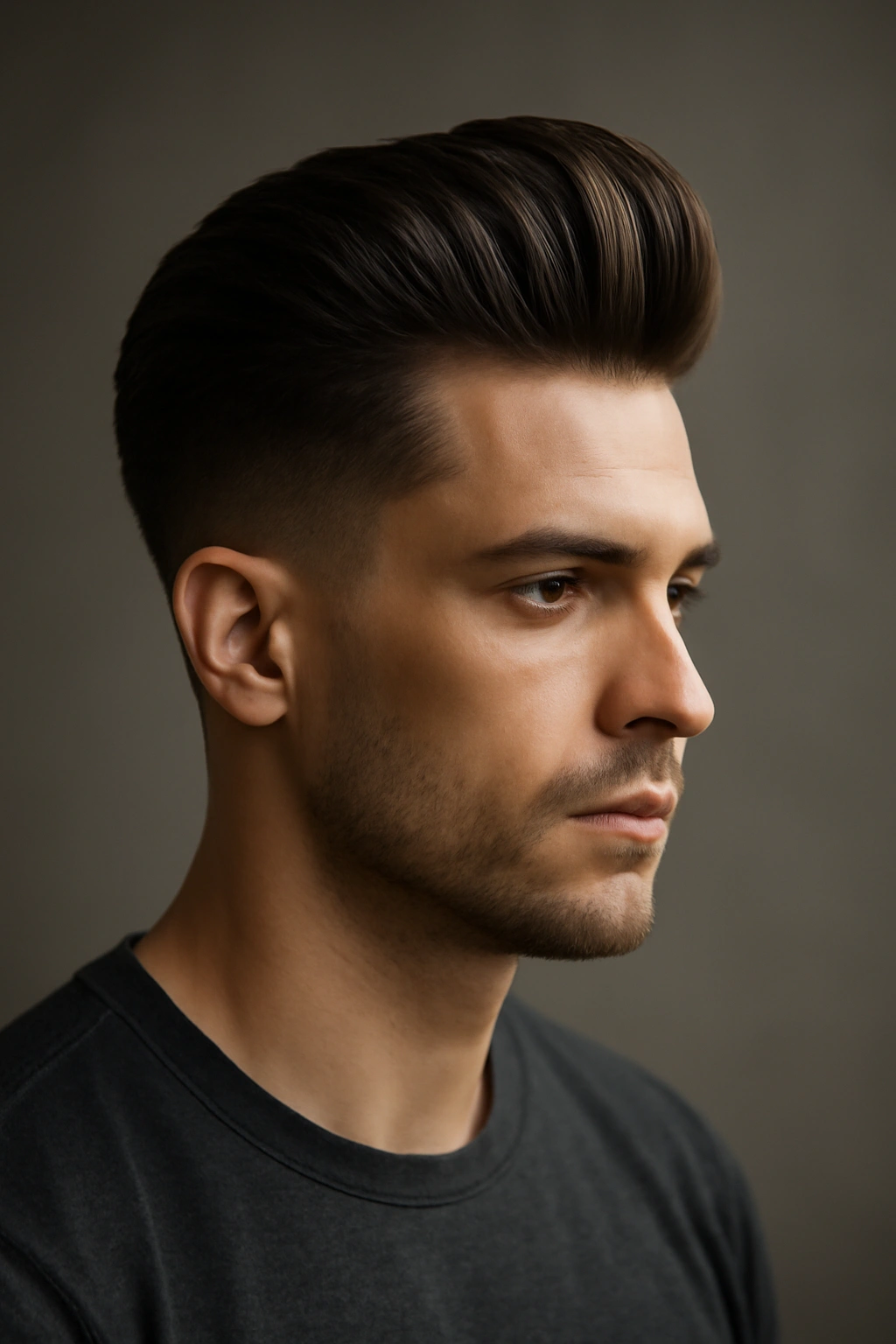
The pompadour is masculine swagger in haircut form. Think dramatic height on top (usually 3-4 inches, sometimes more), slicked back and up, with a clean fade on the sides. It’s a statement, a look that says you care about your appearance and you’re not shy about it. The pompadour works best when the front is noticeably longer than the back, creating a shape that’s almost architectural. You’ll be using product every single day—that’s the trade-off.
Why It Works for Different Face Shapes
Square and rectangular faces look incredible here because the pompadour’s height balances face length perfectly. The upswept volume doesn’t emphasize jaw width; instead, it frames the face in a way that actually enhances angular features. Round faces should skip this—the height amplifies what you’re trying to minimize. Oval faces can absolutely pull it off; there’s a reason leading actors default to pompadours.
Hair Type Compatibility
- Works best with straight to slightly wavy hair that has enough body to hold that upswept shape
- Thick hair is ideal—density creates the dramatic silhouette that makes a pompadour actually look like something
- Fine hair struggles unless you have exceptional density at the roots; fine pompadours can look thin and sad
- Curly hair is difficult because the upswept shape gets disrupted by natural curl patterns
Pro tip: A pompadour with a mid-fade (rather than a skin fade) looks more intentional and works better for everyday wear. Skin fades under a pompadour can feel costume-y unless you’re going for a very specific 1950s vibe.
5. Slicked Back
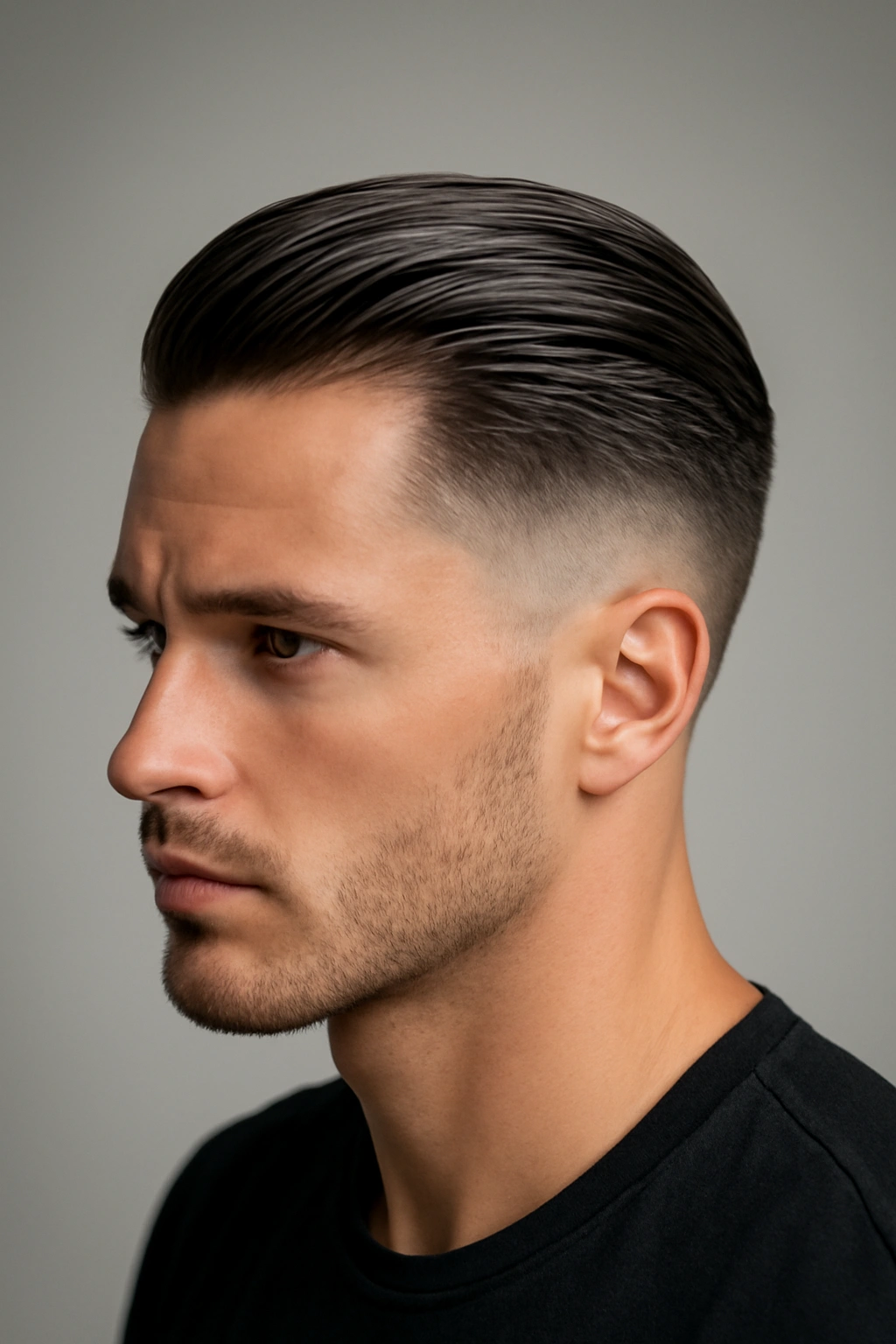
The slicked back is the pompadour’s cooler, more relaxed cousin. Instead of dramatic height, you’re combing everything straight back—usually 3-4 inches on top, faded sides—then using product to hold it in place with shine and control. It’s sophisticated without trying too hard. There’s a reason this cut is everywhere from boardrooms to music videos. It’s adaptable, it’s clean, and when done right, it looks effortlessly sharp.
Why It Works for Different Face Shapes
Oblong and long faces absolutely shine here because pulling hair straight back elongates them further… wait, actually, that works better than you’d think because the clean lines frame the face rather than emphasizing its length. Square faces look authoritative and strong; the slicked-back style plays beautifully with angular jaw structure. Round faces benefit from the height and backward momentum, which creates visual lift.
Hair Type Compatibility
- Straight hair is ideal; it holds a slicked-back shape with minimal fussing
- Wavy hair works well if you’re using the right product to smooth it down
- Thick hair looks commanding and controlled in this style
- Fine hair needs careful product selection—matte pomades and creams work better than shiny products that can look greasy on fine hair
- Curly hair can work, but you’re essentially fighting your natural texture
Insider note: This cut doesn’t require the frequency of trims that an undercut does. A good slicked-back cut actually improves slightly over 6-8 weeks as the hair settles.
6. Quiff
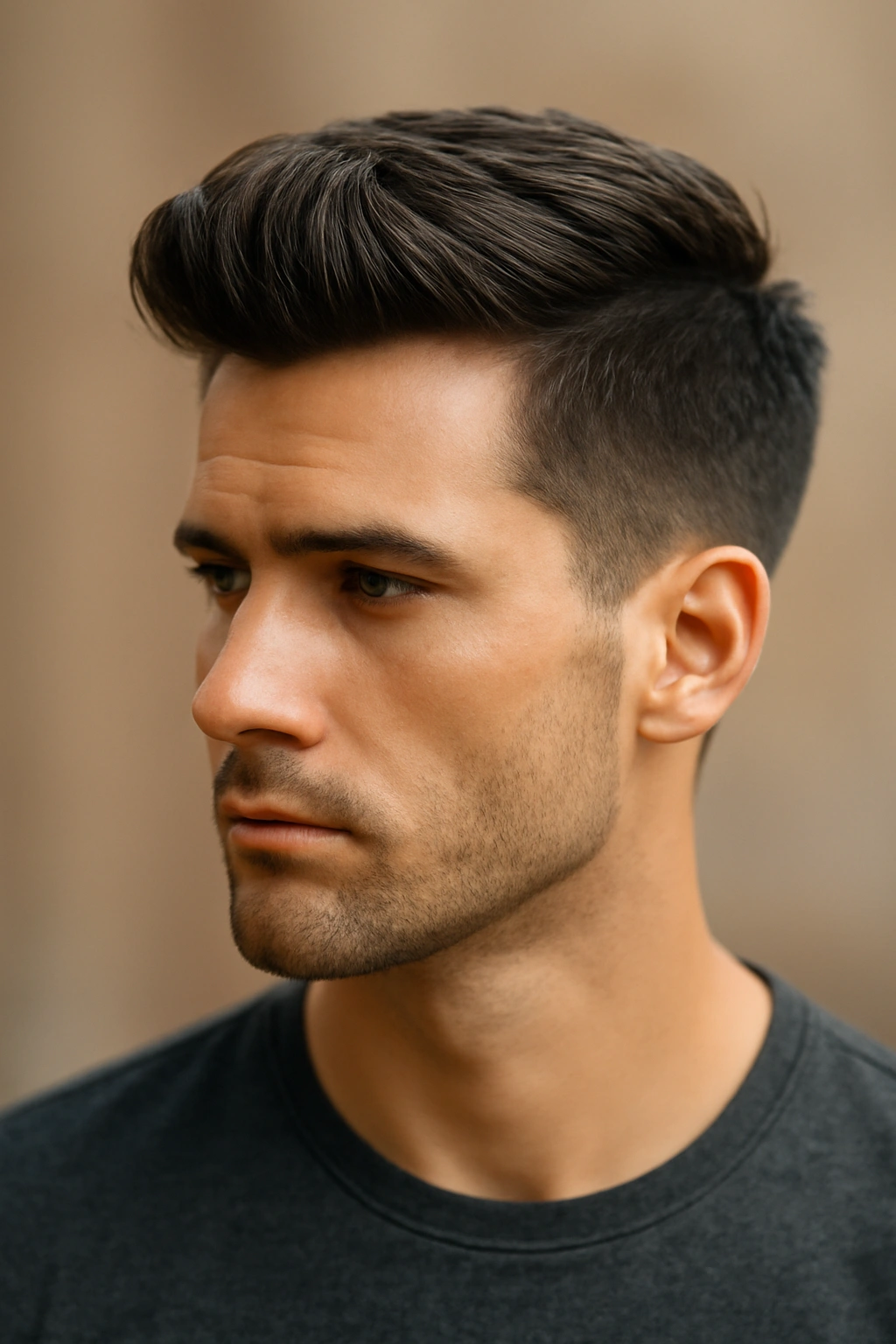
The quiff is the stylish middle ground between a pompadour and a crew cut. It’s got real volume on top (3-4 inches) but not as aggressively swept back as a pompadour—think more like volume and movement rather than architectural height. The quiff gives you versatility: you can style it back for formality, to the side for casual confidence, or even let it fall forward with texture for a completely different vibe. Same haircut, three entirely different looks.
Why It Works for Different Face Shapes
This cut is surprisingly versatile because of its adaptability. Round faces look great when the quiff is styled back and away from the face. Square faces own this cut no matter how they style it. Heart-shaped faces (wider forehead, narrower chin) work well with a quiff styled to the side, which distributes visual emphasis. Oval faces can do literally anything, as always.
Hair Type Compatibility
- Works best with straight to wavy hair that has enough body for volume without being overwhelming
- Thick hair looks fantastic; the density creates natural quiff shape without much product
- Fine hair can work if you’re using volumizing products and keeping the fade slightly longer on the sides (which adds fullness to the overall effect)
- Curly hair is tricky; natural curl can work with a quiff if you’re embracing the texture rather than fighting it, but it requires skill and the right stylist
Pro tip: A quiff is more forgiving between haircuts than a pompadour. You can go 6-7 weeks without maintenance and it still looks intentional.
7. Side Part
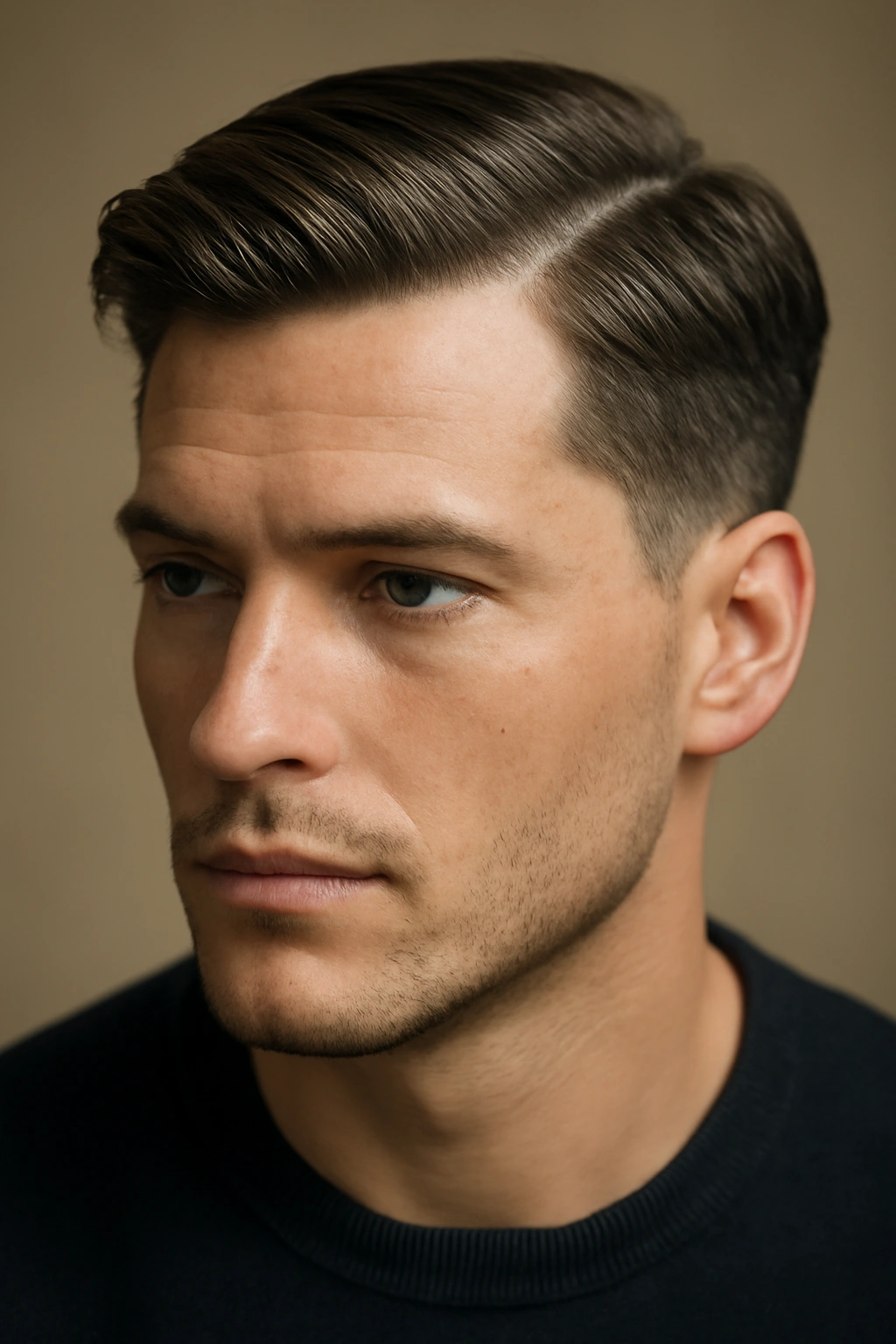
The side part is classic, timeless, and deceptively sophisticated. It’s a longer cut overall (2.5-4 inches on top, longer on the sides than a typical fade), with a defined part cut into the side of the head and hair combed across from one side to the other. This cut says “I’ve got my life together” without trying to shout it. It’s the default of people who know what works: politicians, professionals, confident men who aren’t chasing trends.
Why It Works for Different Face Shapes
Oblong and long faces look fantastic with a side part because the horizontal direction of the styling breaks up vertical emphasis. Square faces look softer and less aggressive in a side part. Diamond faces (narrow forehead, wide cheekbones, narrow chin) actually look more balanced because the width on top adds proportion. Round faces should be cautious—a deep side part can emphasize width, though styling it so the longer side covers the cheekbone helps.
Hair Type Compatibility
- Straight hair is perfect—it holds a side part definition beautifully and looks polished
- Wavy hair works great; the natural wave adds texture to the part without disrupting it
- Thick hair looks neat and controlled in a side part, especially with a bit of product
- Fine hair shows the side part more obviously (which can look even crisper) but also shows the scalp more, so styling is key
- Curly hair is challenging; the part gets blurred by natural texture
Worth knowing: You’ll need to actually cut a part line into your hair—this isn’t just something you style in. It’s a real commitment, and growing it out takes patience.
8. Taper Fade
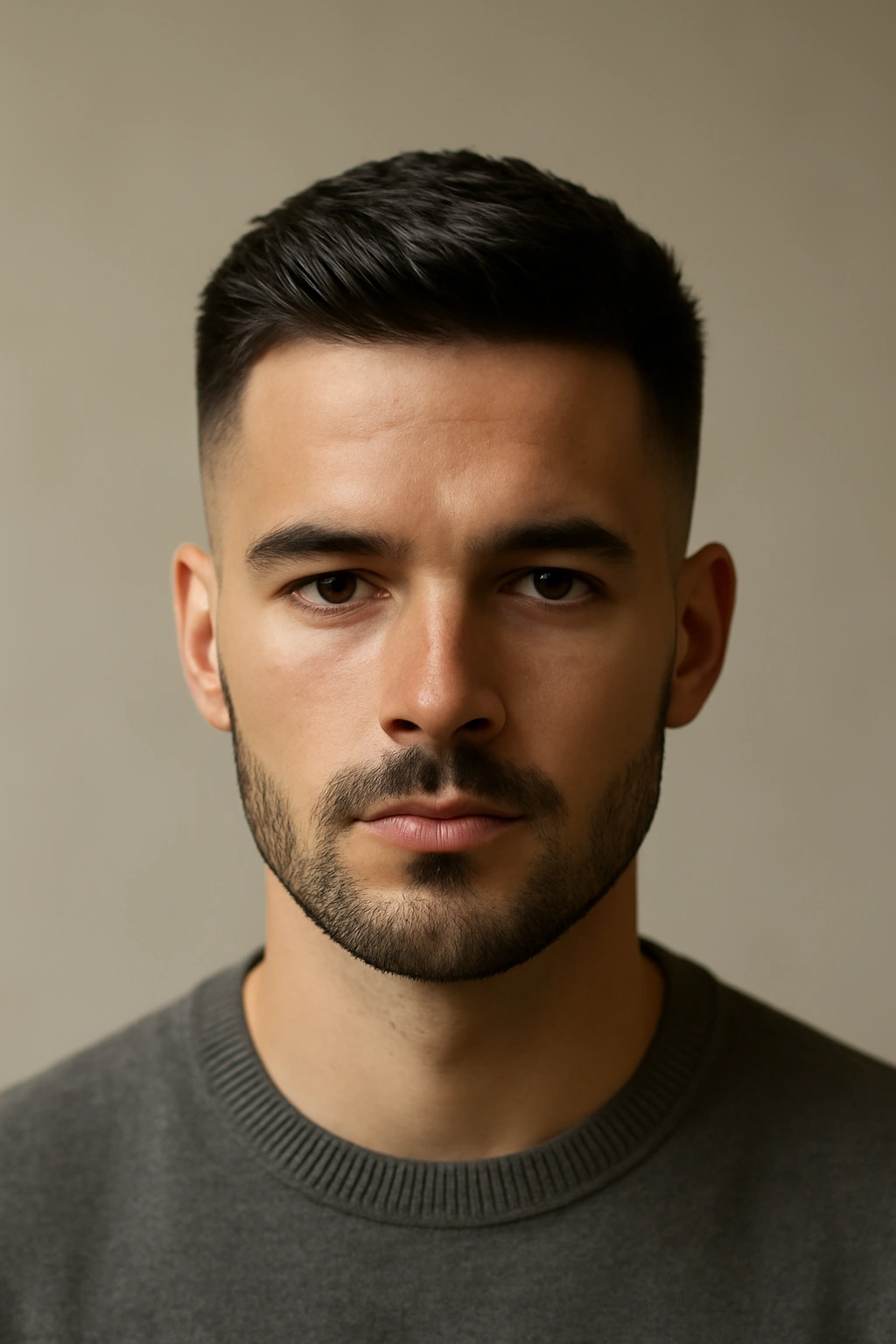
The taper fade is the Swiss Army knife of men’s haircuts. It’s a fade that starts higher up the head than a traditional fade, usually around the temples, creating a more gradual transition from longer hair on top to shorter hair on the sides and back. It’s conservative enough for formal settings, cool enough for casual confidence, and it works with almost everything. The beauty is in the gradual taper—there’s no sharp line like an undercut, just a smooth, blended transition.
Why It Works for Different Face Shapes
This cut genuinely works for every face shape because the gradual blend is flattering across the board. Round faces look better with more length on top, which a taper fade allows. Square faces look sharp and defined. Oval faces look naturally balanced. The taper fade is the barbershop equivalent of a color that works on everyone.
Hair Type Compatibility
- Works beautifully with straight hair; the taper is clean and precise
- Wavy hair looks great because the fade sides showcase wave texture subtly
- Thick hair looks controlled and neat; the taper is particularly good at managing bulk
- Fine hair can work, but the fade sides might show the scalp more—choosing a slightly longer fade (like a half-fade rather than a full fade) helps
- Curly hair works perfectly; the faded sides look intentional and the curl on top adds dimension
Insider note: A taper fade is easier to maintain than sharper fades. You can go 5-6 weeks between trims without it looking completely grown out.
9. Buzz Cut
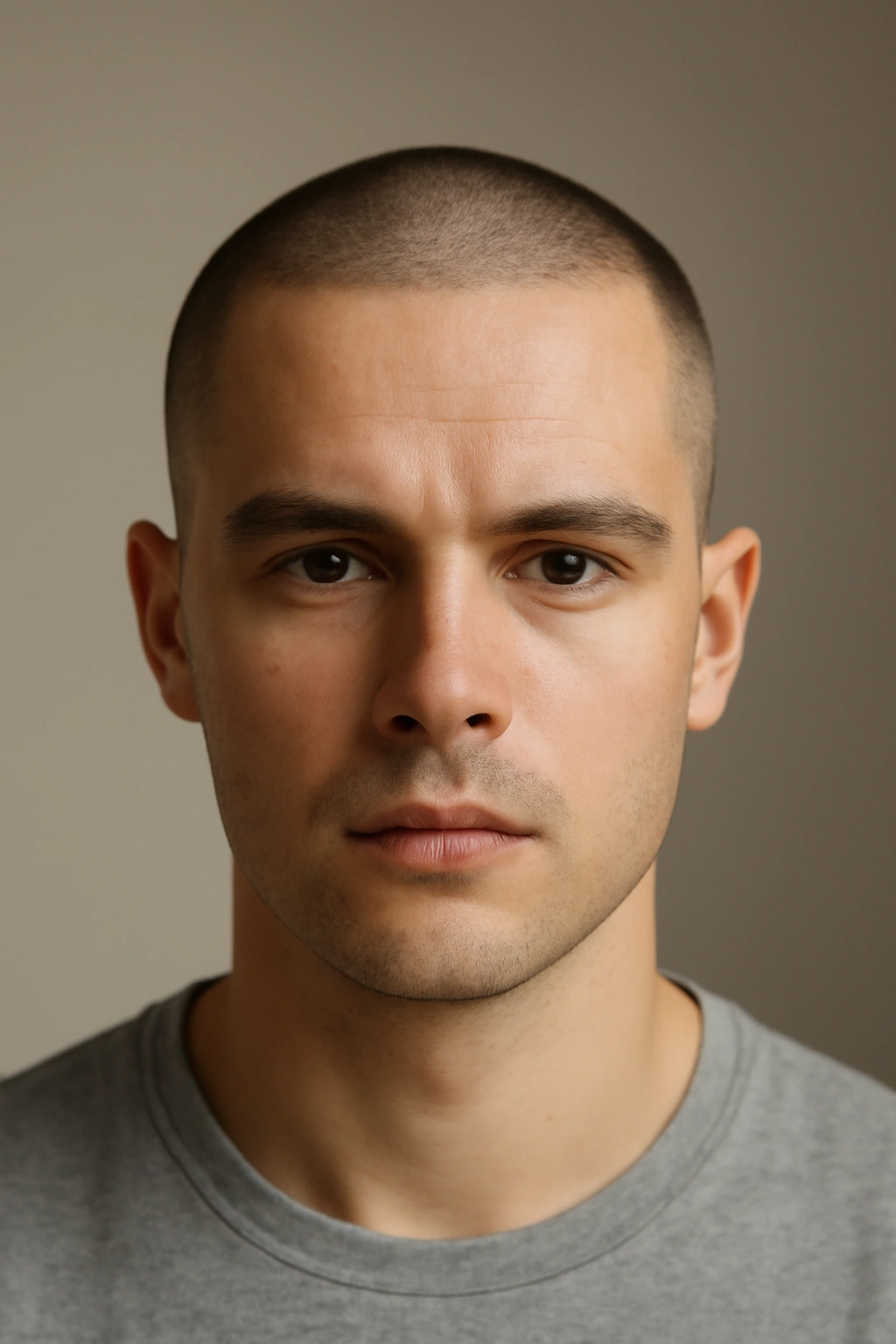
The buzz cut is the ultimate in simplicity and practicality. One guard length all over (usually somewhere between 0.5 and 2 inches), no variation, no styling. It’s what military personnel wear, what people choose when they stop caring about hair and start caring about life, and what reveals whether you’ve actually got a nice head shape or if you’ve been hiding behind hair your entire life. There’s a certain confidence required to wear a buzz cut well.
Why It Works for Different Face Shapes
Oblong faces struggle here because the uniform shortness emphasizes length. Oval faces look naturally good with any buzz length. Square and angular faces look absolutely commanding—the short length emphasizes jaw structure beautifully. Round faces should stick with a slightly longer buzz (around 1.5-2 inches) rather than a true buzz, which can emphasize roundness. Diamond faces look balanced because the shortness doesn’t add emphasis to cheekbones.
Hair Type Compatibility
- Straight hair is clean and precise at all buzz lengths
- Wavy hair shows wave texture even in a buzz, which can look textured and intentional
- Curly and coily hair actually looks fantastic in a buzz; texture becomes a feature rather than something to manage
- Thick hair looks neat and controlled; no bulkiness at short lengths
- Fine hair looks fuller; there’s nothing to weigh it down
Pro tip: If you’re considering a buzz cut, start with a 1.5 guard and see how it feels before going shorter. You can always cut shorter next time, but you can’t undo it.
10. Long on Top, Sides Faded
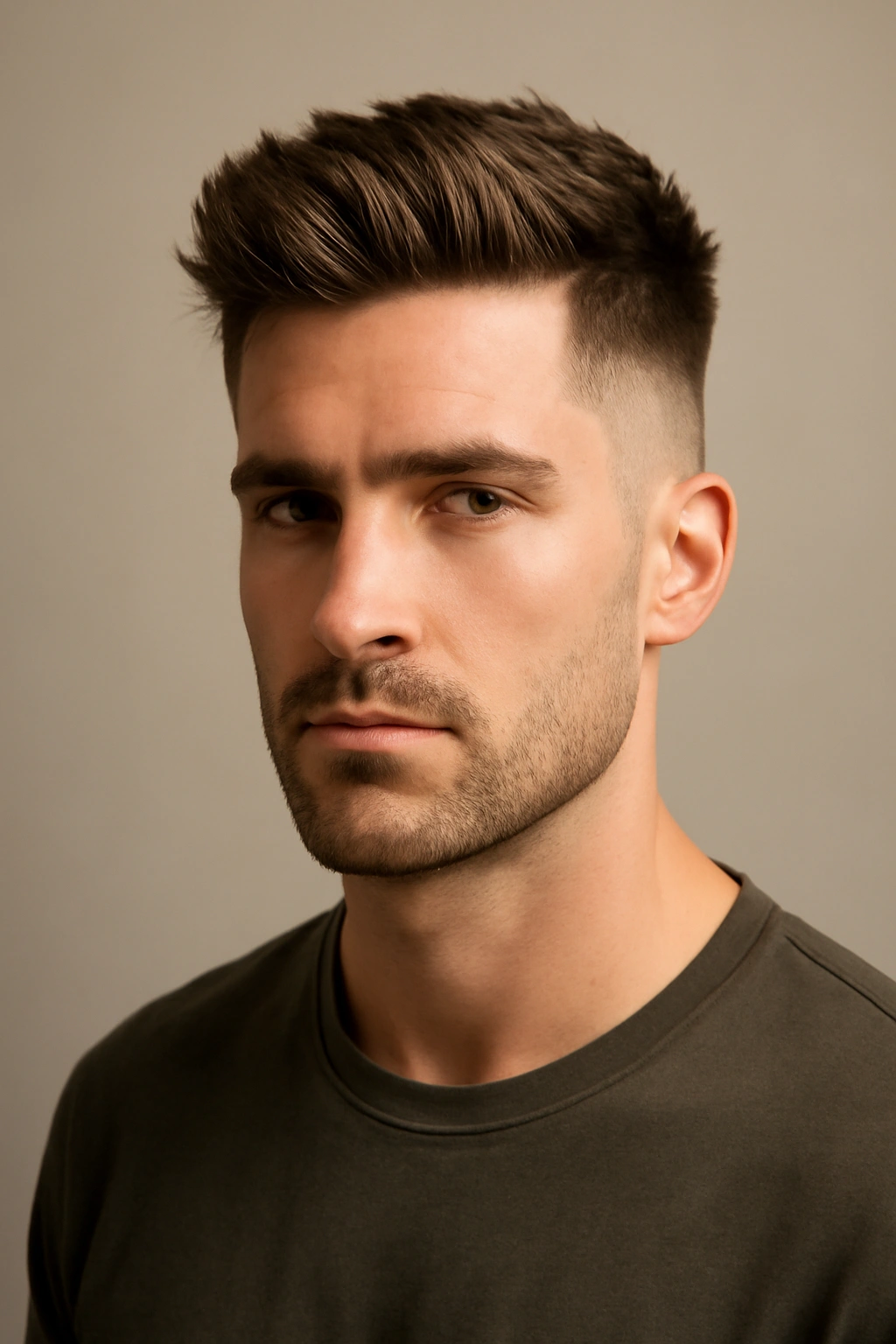
This cut is the modern default, and it’s popular for good reason. It’s got real length on top (3-4 inches typically), textured and versatile, with a clean fade on the sides and back. It’s professional enough for work, casual enough for weekend confidence, and flexible enough that you can style it multiple ways depending on your day. The fade gives definition and shape, while the length on top gives you actual styling options. It’s the best of both worlds.
Why It Works for Different Face Shapes
Round faces look better with this cut because the height on top adds vertical emphasis. Square faces look sharp; the fade sides emphasize jaw structure. Oblong faces benefit from the bulk on top, which balances length. Diamond faces (narrow forehead, wide cheekbones) look proportional because width on top balances cheekbone width. It’s a universally flattering cut when proportioned correctly.
Hair Type Compatibility
- Straight to wavy hair is ideal; texture on top is achievable and looks intentional
- Thick hair looks fantastic; the volume on top is a feature, not a problem
- Fine hair works if you’re using volumizing products and asking your barber for a slightly longer fade (which adds fullness visually)
- Curly hair looks great with this cut, especially if you’re embracing natural curl on top rather than fighting it
- Coily hair works beautifully; the fade sides show the coil texture, and length on top allows for real styling
Worth knowing: This cut becomes better-looking over time as it grows slightly and settles. You’re not locked into one look on day one.
11. Modern Shag
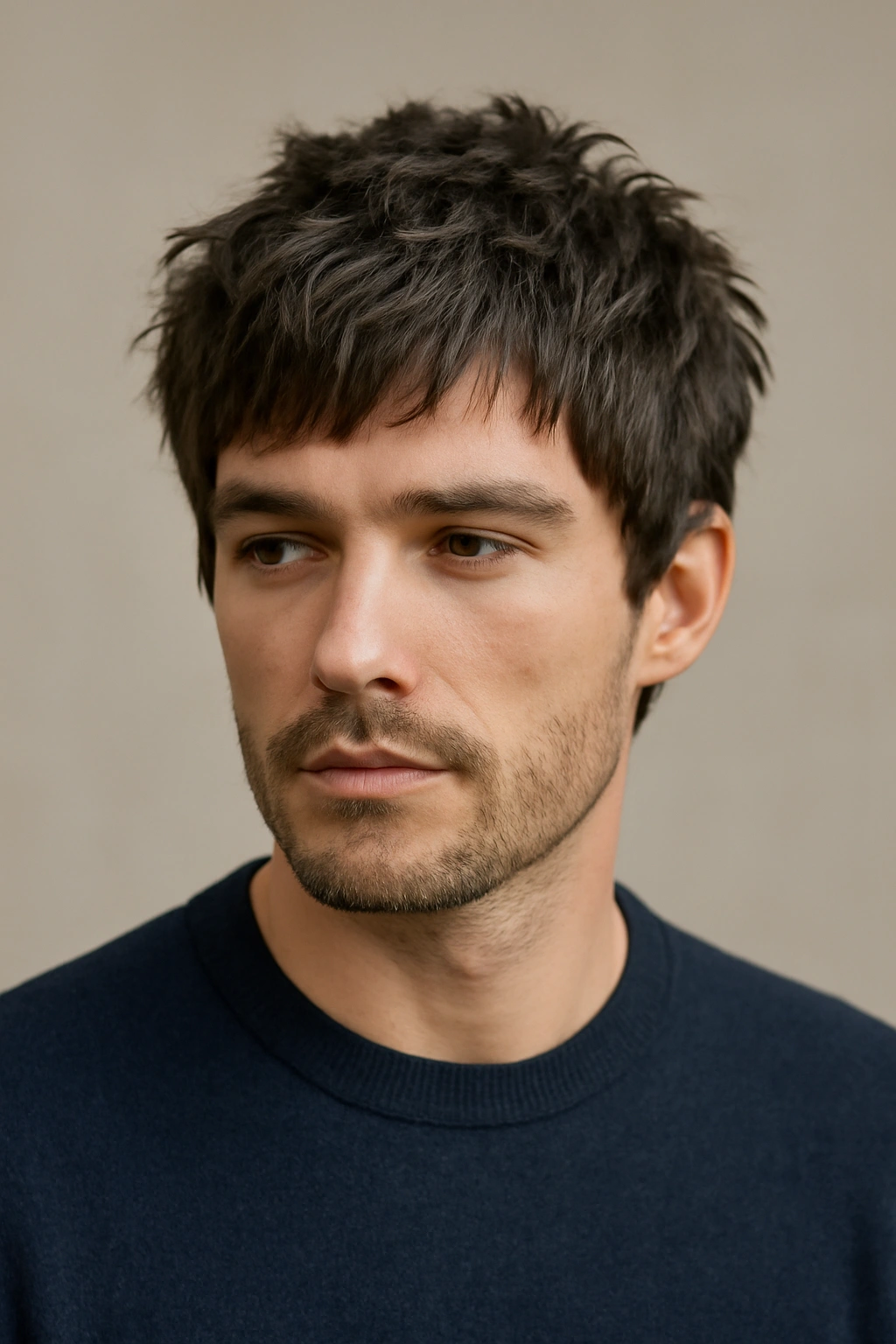
The shag is back, and it’s not your dad’s 1970s shag. The modern version is shorter overall (usually 2-3 inches on top, 1-1.5 inches on the sides), with choppy, textured layers throughout. It’s got a deliberately undone quality—messy in the best way. You’re not trying too hard, but you’re also clearly someone who knows what works. The shag is for people confident enough to wear something that’s intentionally imperfect.
Why It Works for Different Face Shapes
Round faces actually look good in a modern shag because the texture and layers add movement without requiring sculpted styling. Square faces look less aggressive; the choppy layers soften angles. Oblong faces benefit from layers that add width without adding too much top length. Heart-shaped faces (wider forehead, narrower chin) look balanced because the layers distribute visual emphasis throughout the head.
Hair Type Compatibility
- Wavy hair is ideal for a modern shag; the natural wave complements the choppy texture beautifully
- Thick hair looks controlled and intentional; the layers prevent bulkiness
- Straight hair can work, but you’ll need product and styling to create the textured, undone look
- Curly hair looks fantastic in a shag; the layers work with curl texture rather than against it
- Fine hair looks fuller because the layers create dimension without weight
Insider note: A modern shag requires more frequent trims than longer cuts (every 4-5 weeks) because the layered texture gets blobby as it grows and loses definition.
12. Textured Crop
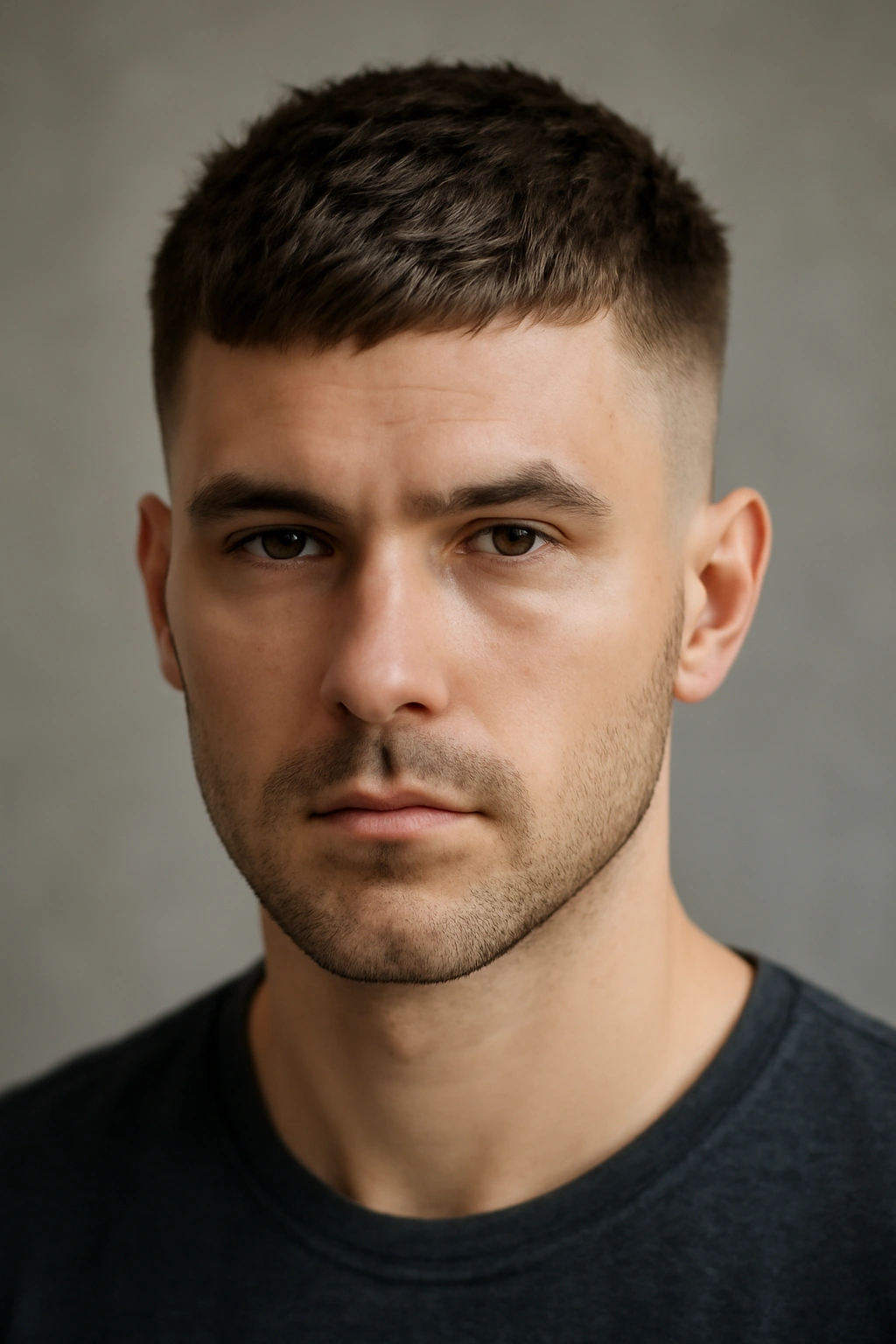
The textured crop is short, sharp, and versatile. It’s typically 1.5-2.5 inches on top with choppy, deliberate texture—almost like controlled messiness—and a fade on the sides. You can style it messy and undone or add a bit of product for structure, depending on the situation. It’s confident without being aggressive, modern without being trend-dependent, and genuinely works for most people because the shortness is forgiving and the texture adds visual interest.
Why It Works for Different Face Shapes
This cut works surprisingly well for round faces because the texture on top adds visual interest without requiring dramatic height or backward styling. Square faces look sharp; the shortness emphasizes structure. Oval faces look naturally balanced. Oblong faces benefit from the width and texture on top, which breaks up vertical emphasis. It’s one of the most universally flattering cuts you can get.
Hair Type Compatibility
- Wavy hair is perfect; the natural wave complements the choppy texture
- Straight hair works with the right product to create texture and movement
- Thick hair looks controlled and neat at this length
- Curly hair looks fantastic; the crop length shows texture beautifully
- Fine hair looks fuller because the length is short enough that nothing weighs it down
Pro tip: Ask your barber for choppy texture on top rather than a blunt line. It’s the difference between a crop that looks intentional and one that looks like you just got a generic short cut.
13. French Crop
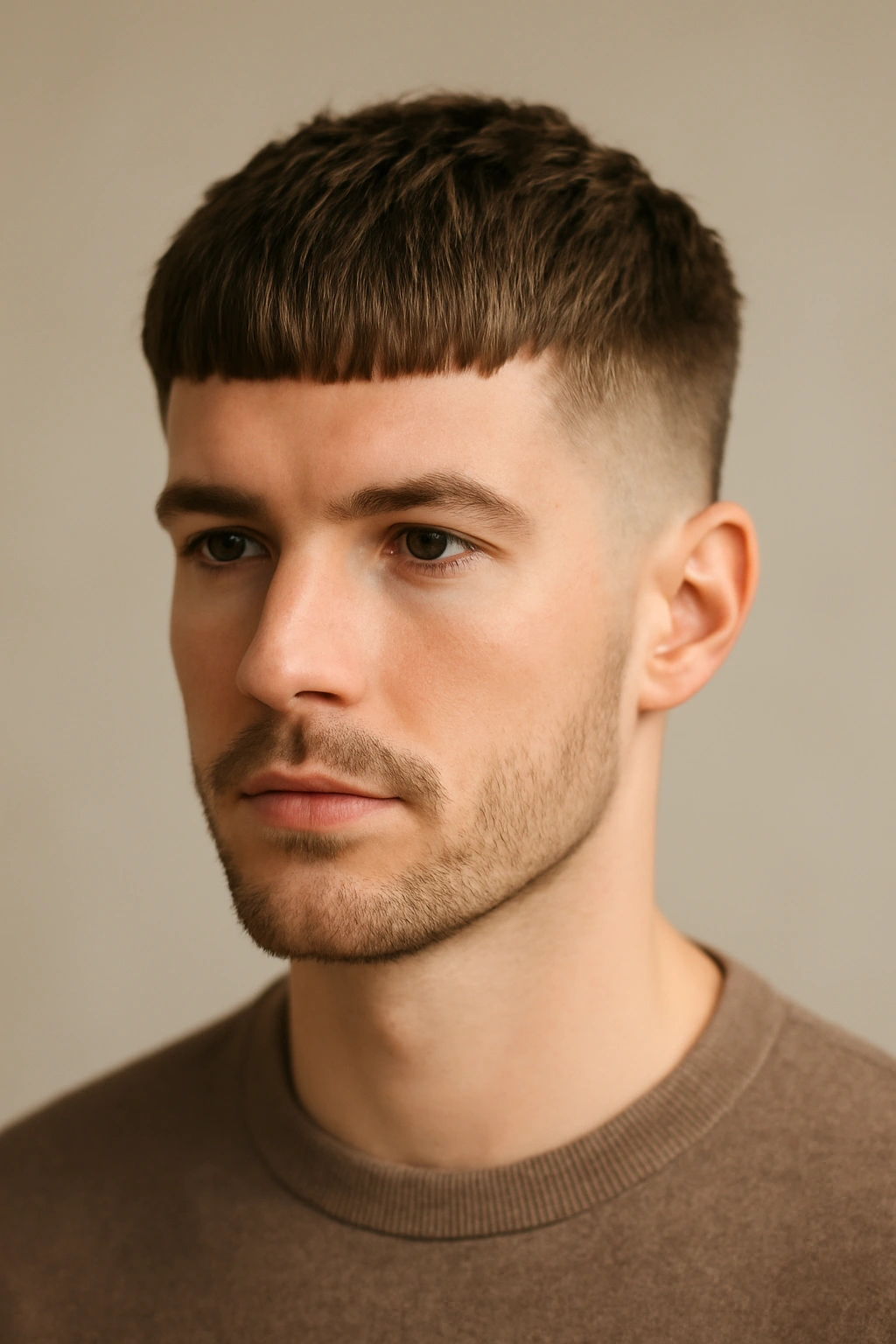
The French crop is European sophistication in haircut form. It’s got a bit more length on top than a crew cut (around 2-3 inches) with a thick, heavy fringe that hangs down and covers the forehead, while the sides and back are faded or tapered. It’s got a specific, recognizable shape that says you know what you’re doing. It’s neat and structured, not messy or undone—think more “I’m cultured” and less “I’m trying too hard.”
Why It Works for Different Face Shapes
Oblong and long faces look fantastic in a French crop because the fringe breaks up vertical emphasis beautifully. Diamond faces (narrow forehead, wide cheekbones) look proportional because the fringe adds width to the forehead. Square faces look softer; the fringe takes the hardness out of a squared-off look. Round faces should be cautious; the fringe can emphasize roundness if it’s too thick, though a thinner fringe can work.
Hair Type Compatibility
- Straight to slightly wavy hair is ideal; the fringe needs enough structure to hang properly
- Thick hair looks neat and controlled in a French crop
- Fine hair can work, but the fringe can look thin; you’ll need some texture or movement to make it look full
- Curly hair is challenging; the fringe needs to be blunt and straight to read correctly, which fights natural curl
- Coily hair is very challenging for the same reason
Worth knowing: A French crop requires more precise trimming than some other cuts. You need a barber who understands the specific geometry of the cut.
14. Hard Part
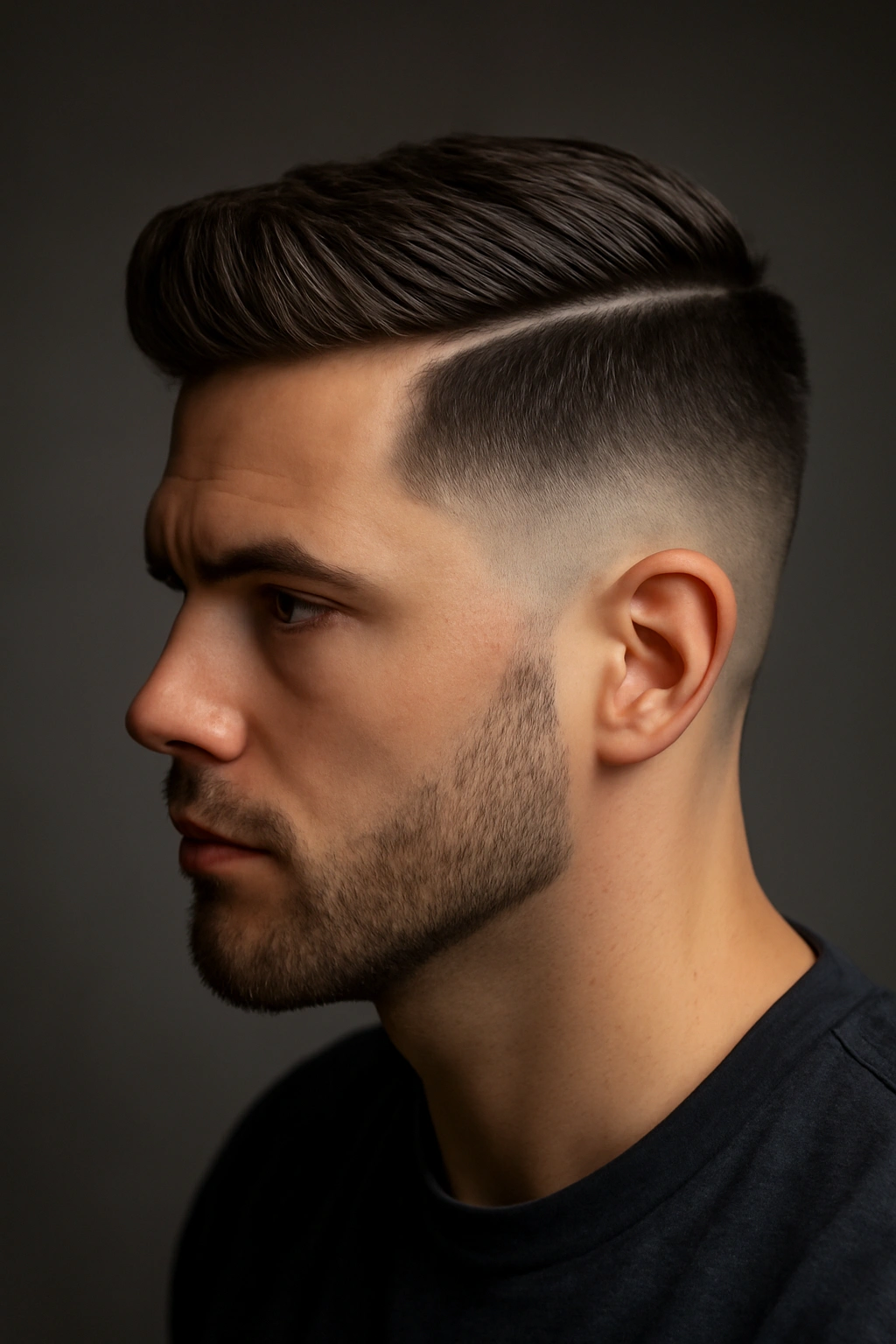
The hard part is a sharp, defined line cut into the side of your head separating longer hair on one side from shorter hair on the other. It’s like an extreme side part—unmissable, intentional, and bold. You can wear it as dramatic as you want, and it always looks deliberate. Combined with a fade (which is standard), it creates a striking look that says you’re paying attention to detail. This cut is all about precision and confidence.
Why It Works for Different Face Shapes
Square and angular faces look absolutely striking with a hard part; the sharp line complements facial structure. Oblong faces benefit because the part adds a horizontal line that breaks up vertical emphasis. Round faces can work with a hard part, though it needs to be styled so the longer section sweeps away from the round side of the face. Oval faces look naturally balanced.
Hair Type Compatibility
- Straight hair is ideal; the part line is clean and precise
- Wavy hair works, though the wave can soften the part line slightly
- Thick hair looks commanding with a hard part; the density emphasizes the cut
- Fine hair shows the part line very clearly, which can look even crisper, but the part itself might show scalp more
- Curly hair is challenging; the part line gets blurred by curl
Pro tip: A hard part works best with some length to work with—at least 2-3 inches on top. Trying a hard part with super short hair looks awkward.
15. Messy Fringe
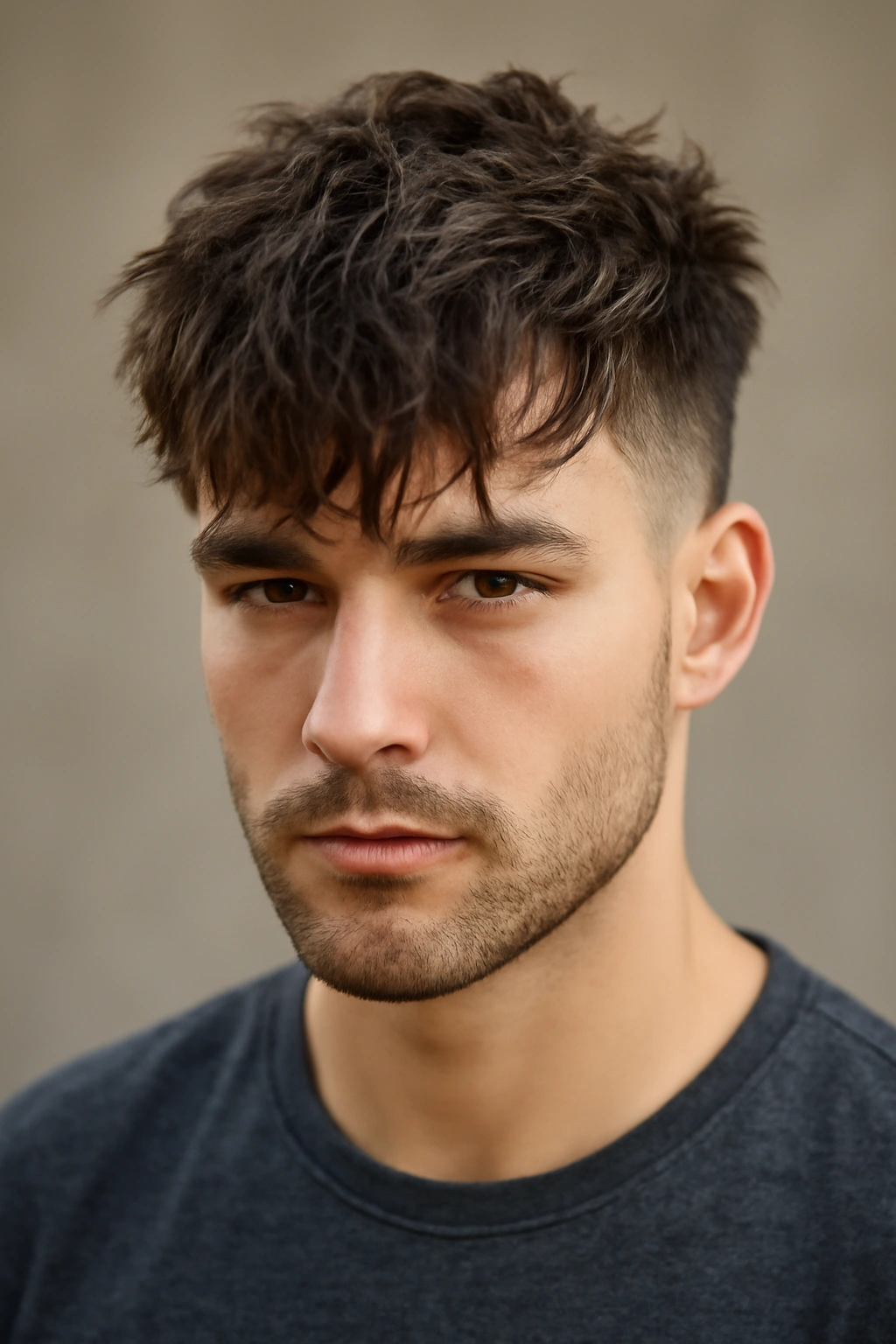
The messy fringe is textured, undone, and intentionally casual. It’s got significant length on top (3-4 inches) that falls forward over the forehead naturally, with a fade on the sides. The goal is the opposite of polish—you want it to look like you rolled out of bed and it just happened to look this good. The styling is deliberate messiness, which somehow takes more effort than neat and polished, but it reads as effortless. It’s confidence in a different form.
Why It Works for Different Face Shapes
Round faces can actually look great in a messy fringe if the length reaches past the cheekbones and covers the widest part. Oblong faces benefit because the length on top and forward movement creates width. Square faces look less angular; the softer, messier texture takes hardness out of the structure. Heart-shaped faces (wider forehead, narrower chin) look balanced because the fringe adds bulk on top.
Hair Type Compatibility
- Wavy hair is absolutely ideal; the natural wave creates the messy texture naturally
- Straight hair can work, but you’ll need product to create that undone texture without it just looking flat
- Thick hair looks full and textured; no risk of looking thin
- Curly hair looks fantastic; the fringe curl adds natural texture
- Fine hair needs careful handling—too much volume and it looks sparse, not messy
Insider note: This cut requires daily styling. If you’re the type to shower and go, a messy fringe won’t stay messy in the way it’s supposed to.
16. Short Spiky
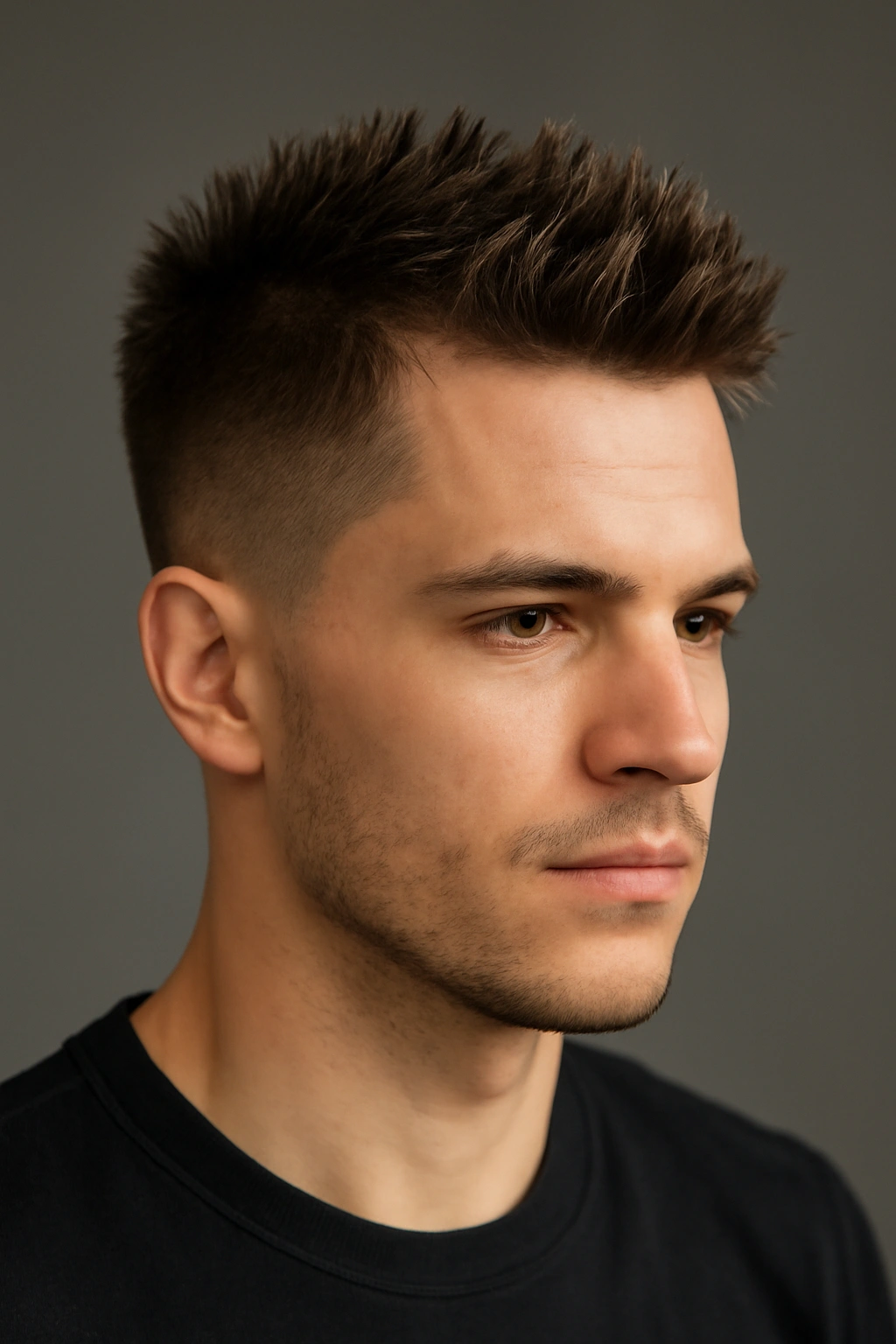
Short and spiky is youthful, energetic, and intentionally playful. It’s typically 1.5-2 inches on top with texture choppy enough that you can actually make it stand up, combined with faded sides. It reads as someone who’s having fun with their appearance without taking themselves too seriously. The style is playful, but it’s not cartoonish—done well, it’s sharp and intentional. Done poorly, it looks like you got a bad cut in 2004. Precision matters.
Why It Works for Different Face Shapes
Round faces look better with vertical emphasis, so spiky texture on top works well. Square faces look sharp and less serious. Oval faces look naturally balanced. Diamond faces (narrow forehead, wide cheekbones) actually benefit from the spike emphasis on top, which balances cheekbone width. Heart-shaped faces look proportional because the spike adds width to the forehead area.
Hair Type Compatibility
- Straight hair is ideal; it holds spike texture crisp and clear
- Thick hair looks fantastic spiky; the density creates dramatic texture
- Fine hair can work, but the spikes might not hold as aggressively without product
- Wavy hair can work with the right product, though you’re fighting slight natural wave
- Curly hair is challenging; natural curl doesn’t create clean spikes
Pro tip: A short spiky cut requires precise clipper work and good texture scissors. This isn’t a place to save money with a cheap cut.
17. Curly Top Fade
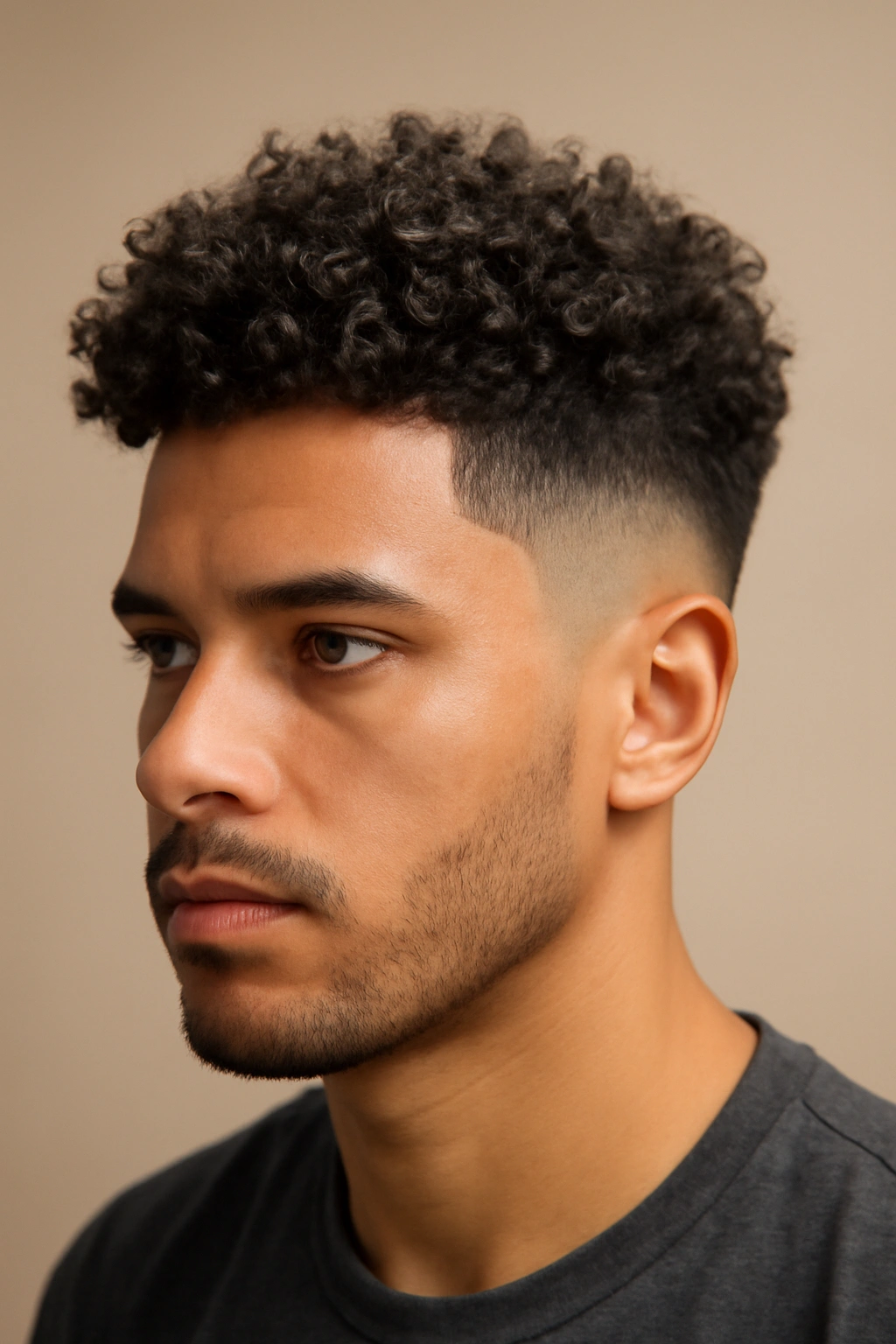
The curly top fade is literally just embracing what you have. If you’ve got naturally curly or coily hair, this cut says “I’m not fighting this—it’s a feature.” You keep significant length on top (2-3 inches minimum to let the curl have room to do its thing) and fade the sides and back short, which frames the curls beautifully. It’s a statement of confidence and self-acceptance, and curly hair done well is genuinely striking. The key is working with your curl pattern instead of against it.
Why It Works for Different Face Shapes
Round faces can look great if you’re keeping the curls on top rather than squishing them down, which adds height and creates vertical emphasis. Square faces look softer; curls take the hardness out of angular features. Oblong faces benefit from the bulk and width that curls create on top. Diamond faces look proportional because the curly texture adds fullness.
Hair Type Compatibility
- Curly hair is the entire point of this cut; it’s designed to showcase what you have
- Coily hair looks fantastic; the fade sides create definition and show the coil texture beautifully
- Wavy hair can work, though you won’t get the same dramatic curl effect
- Straight and fine hair don’t work well here; there’s nothing to work with
Worth knowing: This cut requires investing in the right products—curl creams, leave-in conditioners, and potentially a diffuser for blow-drying. You’re committing to actual curl care, not just styling.
18. Low Fade with Length
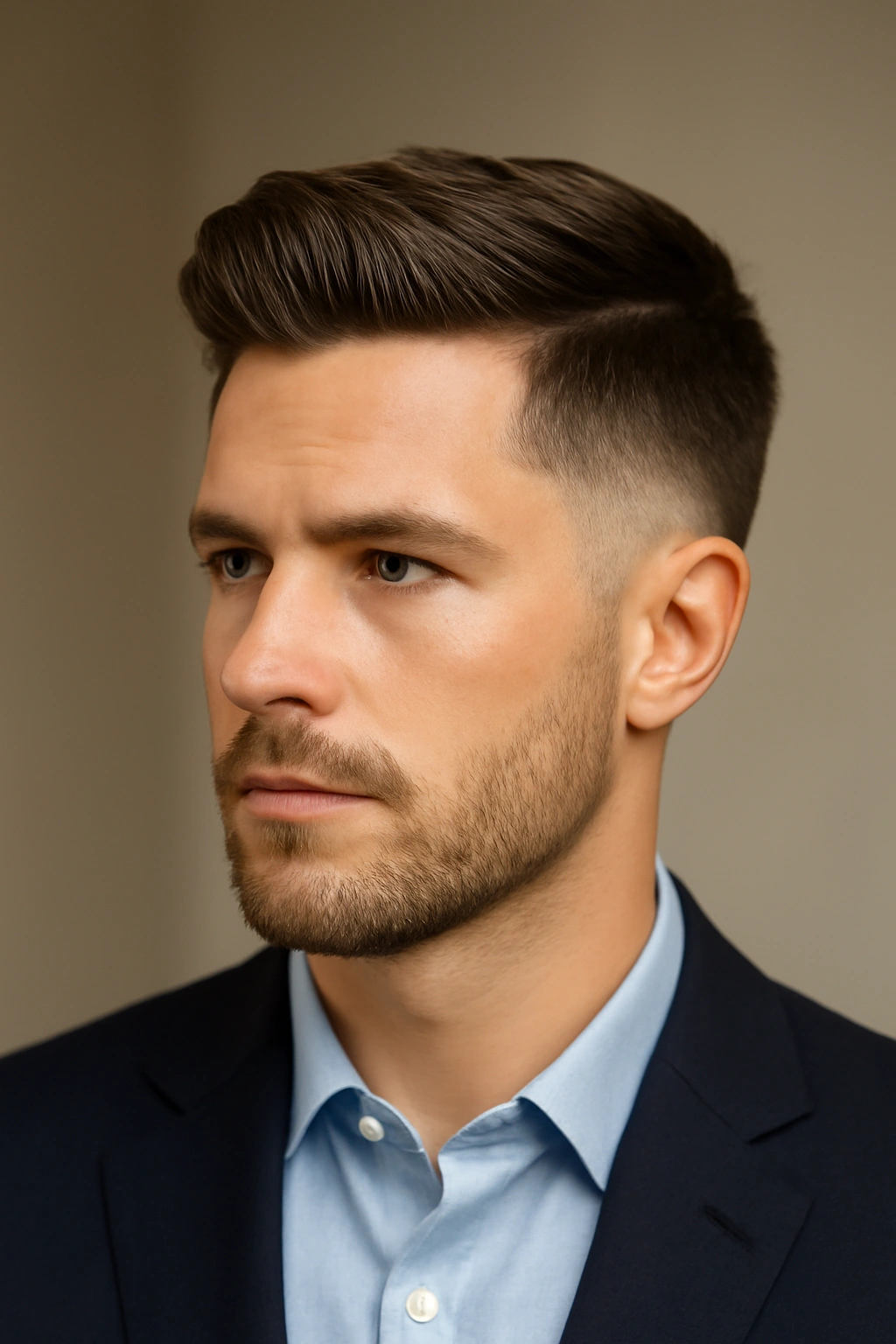
The low fade with length is understated but sophisticated. It’s a fade that doesn’t start until around the ear—so you’ve got meaningful length on the sides (maybe 1-1.5 inches) and more on top (3-4 inches). It’s a less dramatic version of a longer cut, but the fade still gives definition and shape. It’s versatile, professional, and works for people who want some length but also want clean definition. You can style it multiple ways because you’ve got real material to work with.
Why It Works for Different Face Shapes
This cut works well for most face shapes because it’s proportional and balanced. Round faces benefit from the length on top creating vertical emphasis. Square faces look sharp; the fade side creates definition. Oblong faces get proportional because the length on the sides adds width. Oval faces look naturally balanced.
Hair Type Compatibility
- Straight to wavy hair is ideal; you’ve got enough length on the sides to show off wave texture
- Thick hair looks neat and defined; the length on sides is controlled
- Fine hair can work, but longer sides might show scalp more
- Curly hair looks great; the side length shows curl texture, and the top length allows for styling
- Coily hair works beautifully
Pro tip: A low fade is more forgiving than a higher fade. You can go 6-7 weeks before it really starts looking overgrown.
19. Disconnected Undercut
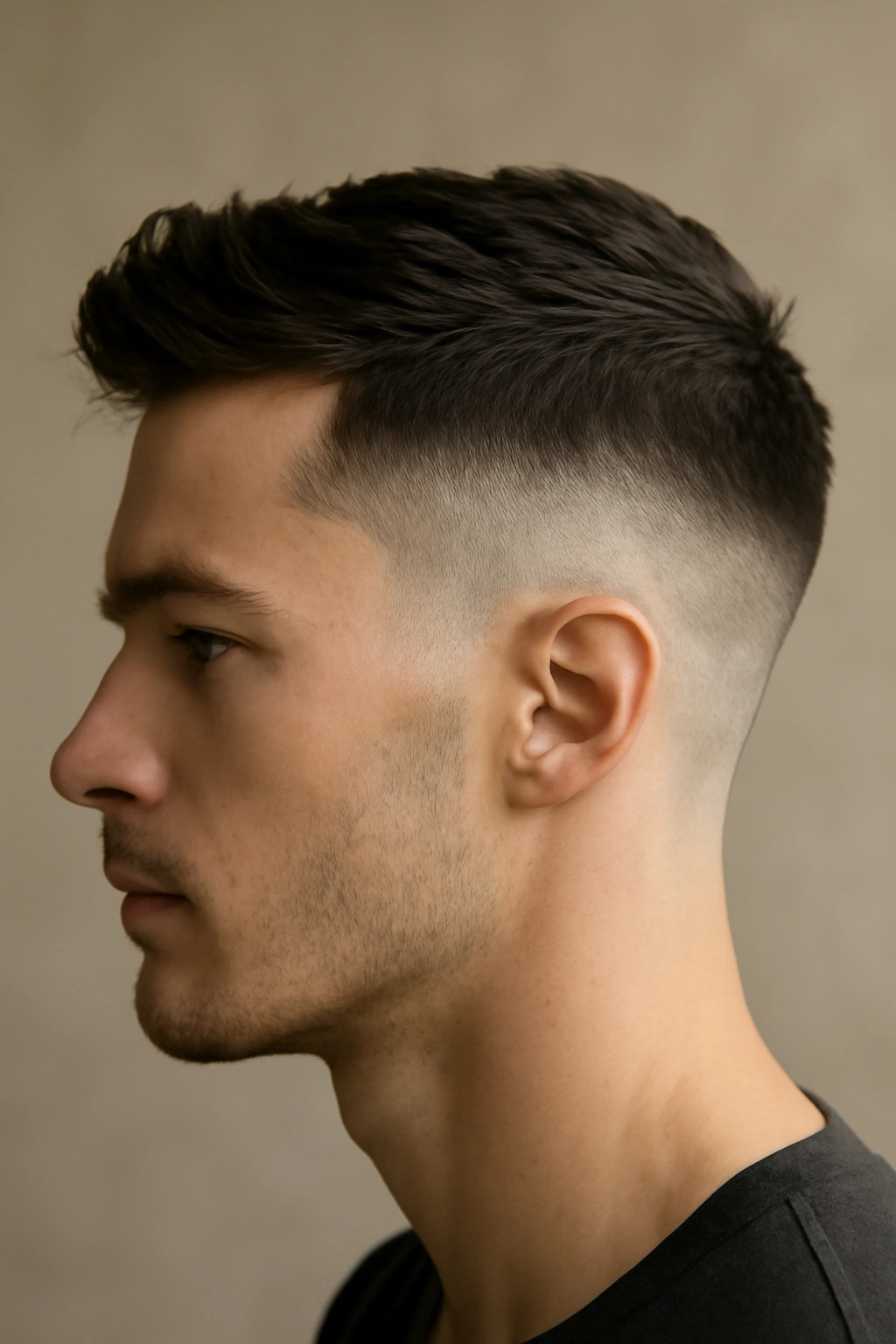
The disconnected undercut is the theatrical cousin of a regular undercut. Instead of a seamless taper from long to short, there’s a literal disconnection—the sides are shaved or extremely short (like a 0.5), and the top is much longer (3-4 inches) with no gradual taper connecting them. There’s just a line where they meet. It’s bold, it’s dramatic, and it definitely makes a statement. This isn’t a cut for people who want to blend in.
Why It Works for Different Face Shapes
Square and angular faces absolutely own this cut because it emphasizes structure dramatically. Round faces should skip it—the sharp contrast and clean lines will emphasize what you’re trying to downplay. Oblong faces can work with it, though the length on top needs to be styled to avoid elongating further. Oval faces look naturally striking.
Hair Type Compatibility
- Straight to wavy hair is ideal; the disconnection is clearest with structured hair
- Thick hair looks commanding; the density on top creates real presence
- Fine hair struggles; you need density to pull off the bold contrast
- Curly hair can work, though the curl softens the sharp disconnection, which changes the whole effect
- Coily hair works if you’re okay with the connection line getting softened by curl
Insider note: A disconnected undercut requires very frequent trims—every 3-4 weeks—to keep that line sharp. If you’re not committed to the barber chair, skip this.
20. Textured Fringe Fade
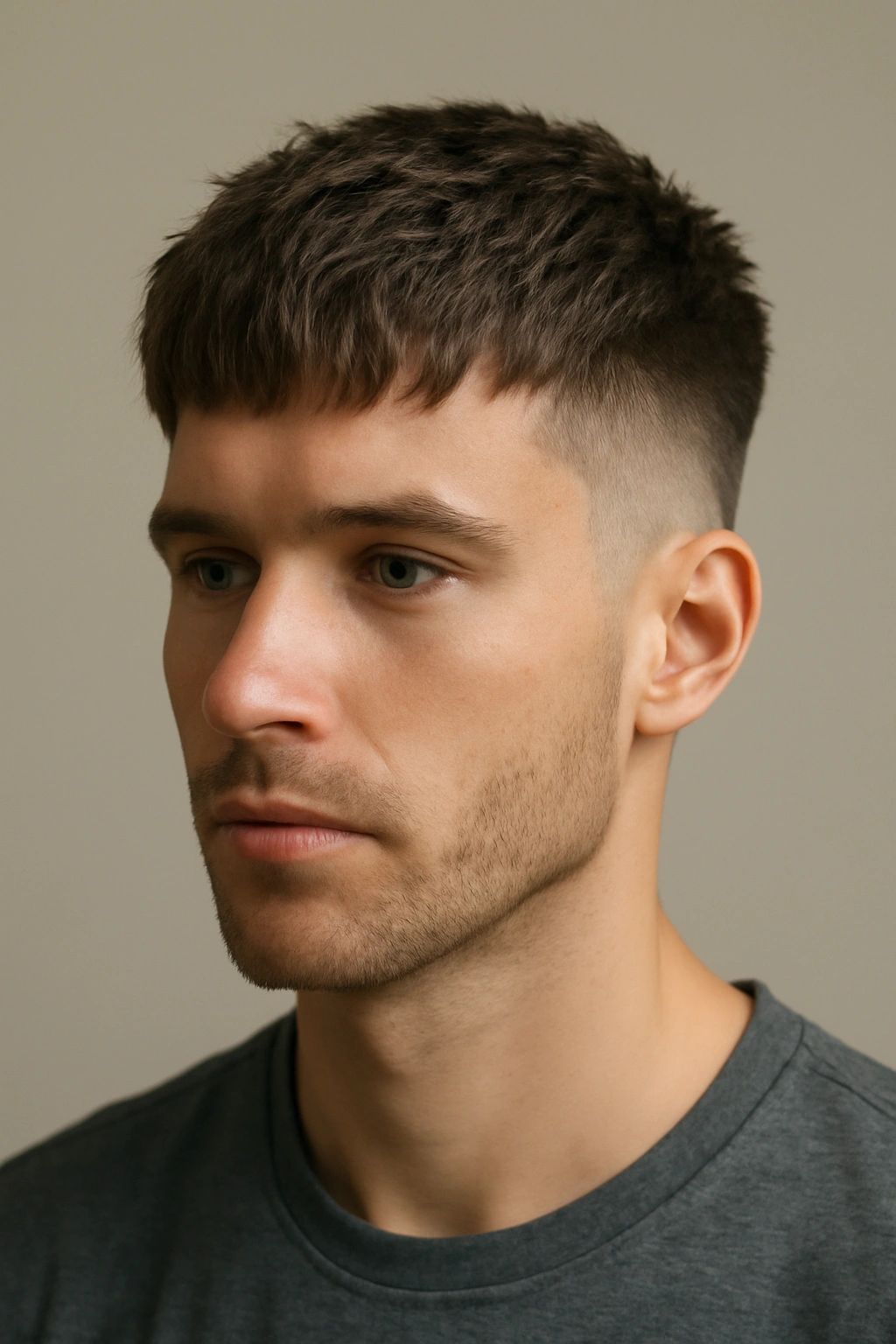
The textured fringe fade combines the best of modern cuts: length on top with texture and movement, a fringe that falls across the forehead, and a fade on the sides for definition. It’s like a mashup of a messy fringe and a textured crop, with a fade added for sharpness. The result is a cut that’s modern without being trendy, textured without being messy, and styled without looking overdone. It’s a cut that works for confident guys who know what they’re doing.
Why It Works for Different Face Shapes
This cut is remarkably versatile. Round faces benefit from the fringe covering the widest part and the top length adding vertical emphasis. Square faces look softer; the texture and fringe take hardness out of angles. Oblong faces get width from the fringe and texture on top. Diamond faces (narrow forehead, wide cheekbones) look proportional because the fringe adds forehead width. Heart-shaped faces look balanced because the fringe distributes emphasis.
Hair Type Compatibility
- Wavy hair is absolutely ideal; the natural wave creates perfect fringe texture
- Straight hair can work with product to create movement in the fringe
- Thick hair looks fantastic; the density creates natural texture without effort
- Curly hair works beautifully if you’re embracing the curl in the fringe and top
- Fine hair needs careful handling with volumizing product
Pro tip: Ask your barber to cut the fringe longer than you think you need it. It’s easier to trim shorter than to regrow if you went too aggressive on the length.
Final Thoughts

Finding your signature cut means honestly assessing two things: what your face shape actually looks like (even if you’d prefer it looked different), and what your hair actually does when it grows (texture, density, growth pattern). The best haircut is the one that plays to your strengths on both fronts. A cut that’s perfectly matched to your face shape but fights your hair type will never look right. A cut that works with your hair texture but doesn’t flatter your face will feel off no matter how well-executed.
Talk to your barber like you’re having a real conversation, not a transaction. Show them the cuts you like and explain why they appeal to you—is it the shape, the texture, the vibe? Show them your face in photos where the lighting is good and you can actually see your features. Mention your hair type specifically: “I’ve got thick, straight hair” tells them something completely different than “I’ve got fine, wavy hair.” The more specific you are, the better the cut they’ll create.
Remember that your first cut with a new barber is a conversation starter, not a final answer. Even if it’s not perfect, you’ve learned something about what works and what doesn’t. Stick with that barber for the next few cuts, and refine from there. Great haircuts are collaborations, not commands.
