



A great haircut can completely change how you look and feel. For men, short hairstyles offer the perfect balance of low maintenance and high impact—they’re easy to style, look sharp in any setting, and work with virtually every face shape. The challenge isn’t finding a short haircut that works; it’s choosing from the dozens of refined, stylish options available and understanding which one suits your hair type, face shape, and lifestyle.
The beauty of short men’s haircuts is their versatility. Whether you’ve got thick, wavy hair or fine, straight texture, whether your face is angular or rounded, there’s a cut that’ll make you look your best. The right cut becomes the foundation of your whole look—it’s the single thing that sets the tone before you add anything else. That’s why it matters to know what’s out there and what each cut can do for you.
What makes a haircut truly sharp isn’t just how it looks when you first get it. It’s how it works with your natural hair, how easy it is to maintain, and whether it still looks good as it grows out a bit between cuts. Some cuts require daily styling with product; others look fantastic with just a quick wash and comb. Some are incredibly forgiving if you don’t get to the barber on schedule; others need a trim every three weeks to stay crisp. Understanding these practical details helps you choose a cut that actually fits your life, not just your Instagram inspiration folder.
1. The Crew Cut
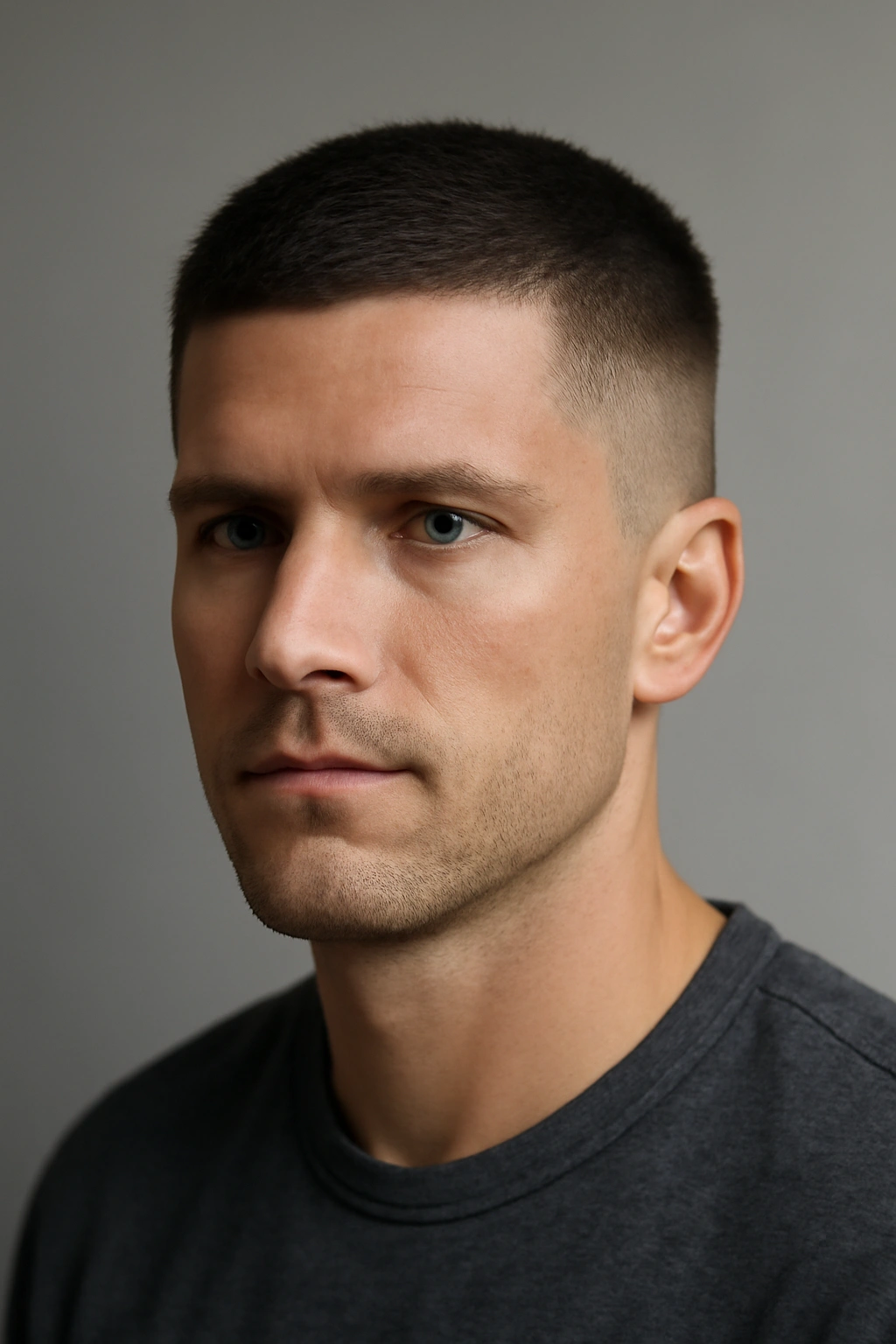
The crew cut is the foundation of men’s short hairstyles, and for good reason. This cut keeps hair short and uniform all around—usually about half an inch to an inch in length—with slightly more length on top that you can style up or leave natural. It’s the definition of sharp, minimal, and no-nonsense. Think of it as the haircut that works in literally any professional or casual context.
Why It’s a Top Choice
The crew cut works because it’s simple, flattering, and honest. It highlights your face shape without trying to distract from anything, which means it needs a face you’re comfortable showing. There’s nowhere to hide with this cut, so confidence matters. The beauty is that it suits nearly every hair type and face shape when the proportions are right—the key is working with your barber to adjust the length on top and the fade on the sides to match your specific features.
How to Style and Maintain It
- Wash daily and comb while damp for a natural, tousled look
- Minimal or no product needed—it’s designed to work au naturel
- Requires a fresh trim every 3 to 4 weeks to maintain crisp lines
- Works with short beards and clean-shaven looks equally well
- Best for guys with low-maintenance hair goals and confidence in their appearance
What to know: If you’ve got receding hair or a larger forehead, ask your barber about slightly longer texture on top to add visual balance.
2. The Fade
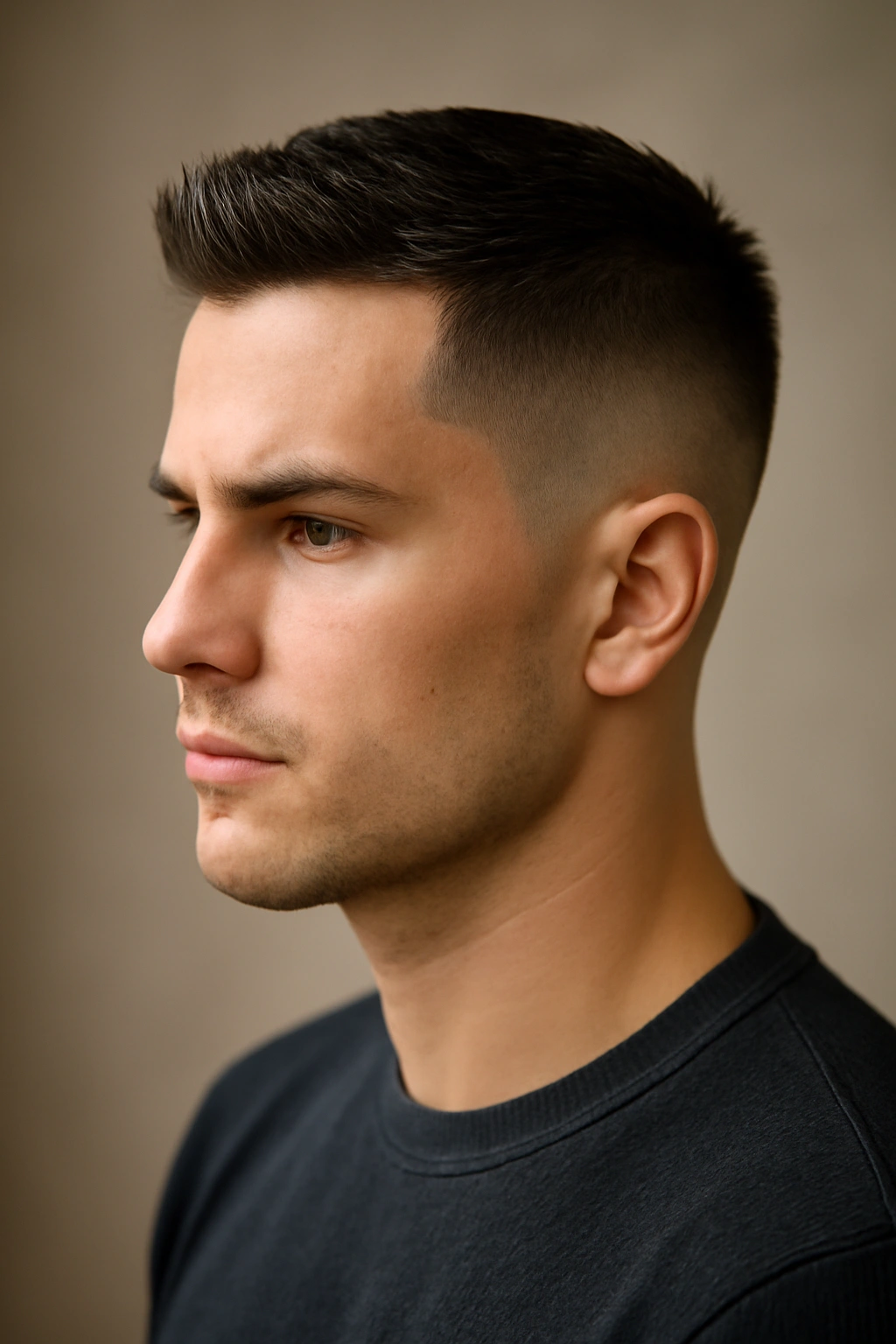
The fade is less a specific cut and more a styling technique that’s become iconic on its own. Hair is cut progressively shorter from top to bottom on the sides and back, creating a smooth transition—it might fade from a half-inch to nearly bald, or from longer hair to short, depending on the variation you choose. Pair a fade with almost any length on top and you get a modern, sharp look that’s been a barber shop standard for years.
Why Fades Look Exceptional
A good fade instantly adds dimension and definition to your head shape. It creates clean architectural lines that make your hair look intentional and well-groomed. The fade also makes longer hair on top look more intentional—instead of just having shaggy hair, you’ve got styled hair with a sharp foundation. It’s technically flattering because it creates negative space and visual contrast.
Fade Variations and Styling
- High fade: Starts fading at the temples, creates a dramatic line—requires frequent touch-ups
- Mid fade: Starts around mid-ear, offers balance between sharp and low-maintenance
- Low fade: Starts near the neckline, subtle and refined, easiest to grow out between cuts
- Skin fade: Fades all the way down to bare skin for maximum sharpness—demands the most upkeep
- Works best when paired with 2+ inches on top that you can actually style
Pro tip: Ask your barber to leave a slight guideline above the fade line so it stays crisp longer as it grows out.
3. The Undercut
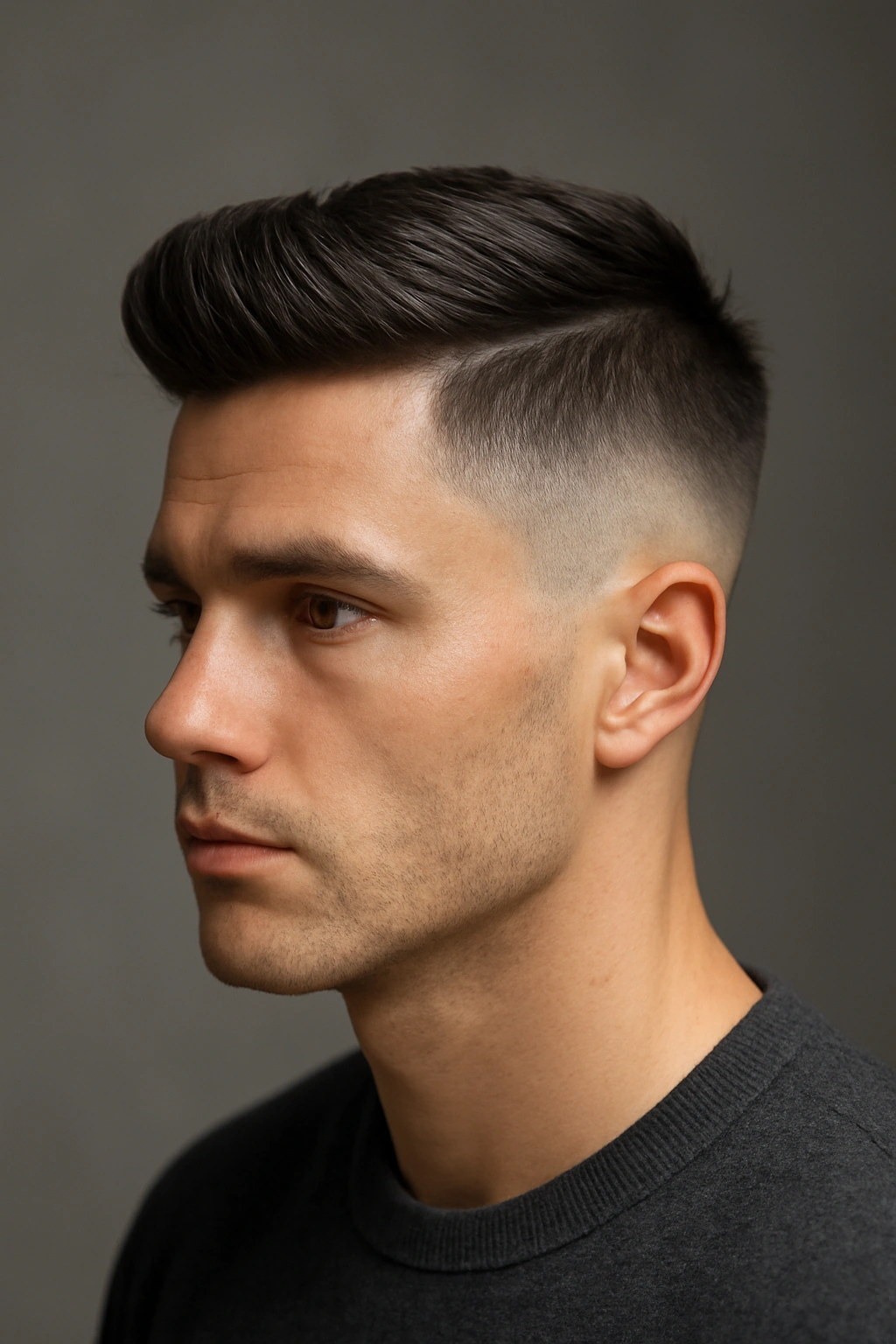
The undercut is where the sides and back are cut much shorter than the top—sometimes nearly buzzed—while the top keeps significant length and volume. This creates stark contrast and a deliberate, edgy aesthetic. The key difference from a fade is that an undercut has a defined line of separation rather than a gradual blend, which is what gives it that bold, fashion-forward vibe.
What Makes the Undercut Stand Out
The undercut makes a statement. It says you’re intentional about your style and willing to put in some effort. The volume on top paired with the short sides creates the illusion of a taller head shape, which flatters rounder faces. It’s popular because it’s highly adaptable—you can wear the top slicked back formally, textured and up casually, or even longer and more relaxed depending on your mood and the occasion.
Maintenance and Styling Reality
- Requires product and daily styling to look its best—this isn’t a wash-and-go cut
- Needs a trim every 2 to 3 weeks to keep the line defined and crisp
- Best for guys with thick hair that has natural texture or wave
- Works with longer top lengths (3 inches minimum) to create real contrast
- Pairs well with facial hair—a beard balances the edginess of the cut
Consider this: The undercut shows every hair on your scalp, so make sure you’re comfortable with your head shape and hairline before committing.
4. The Textured Crop
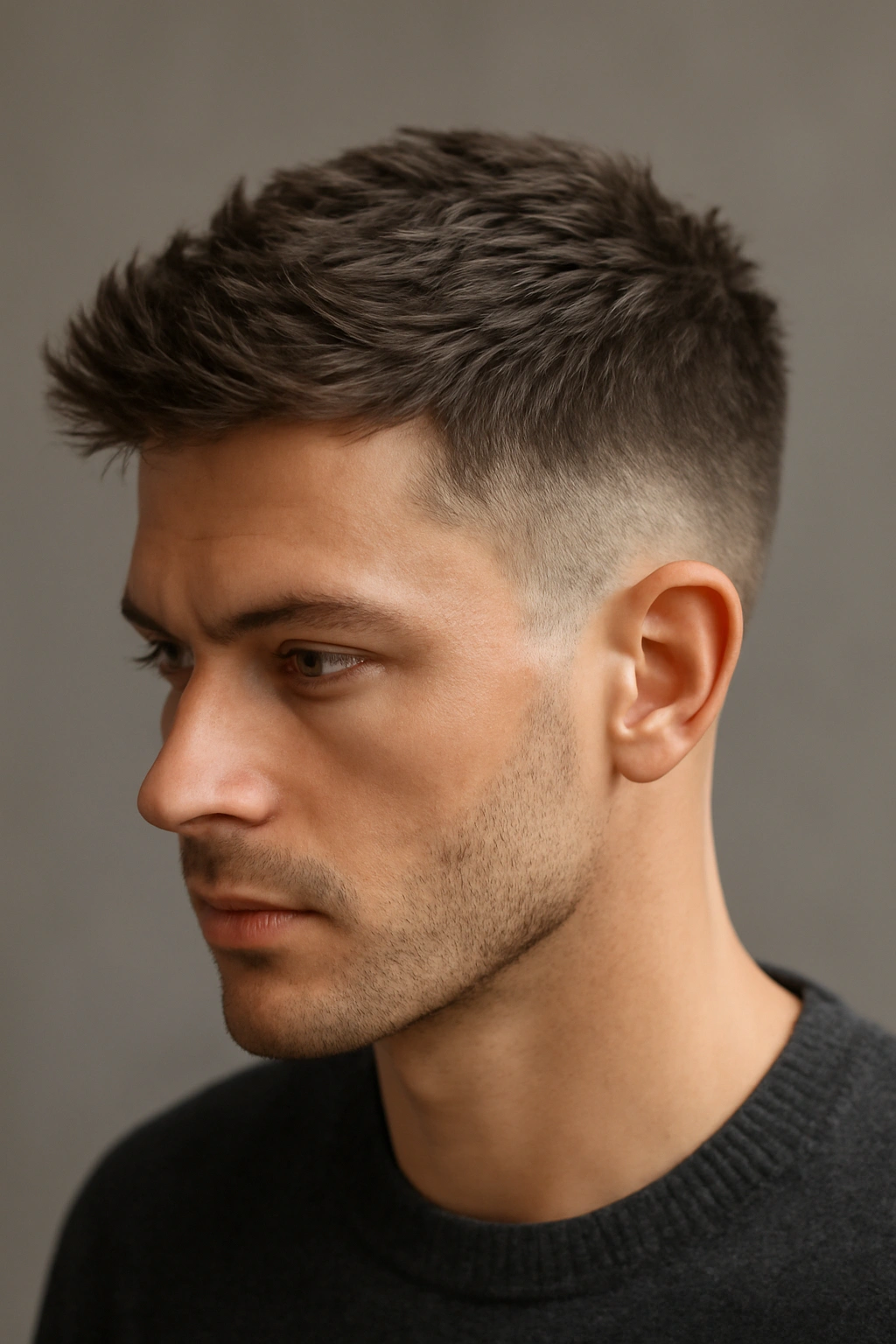
The textured crop is a modern take on the crew cut that prioritizes movement and personality. Hair on top stays relatively short (usually 1.5 to 2 inches) but is cut in a way that encourages natural texture and dimension rather than uniformity. The sides taper or fade, but the real magic is in how the top is cut to work with your hair’s natural grain and wave, creating intentional texture rather than a blunt, uniform look.
Why Texture Makes All the Difference
A textured crop works with your hair instead of against it, which means it’s genuinely easier to style than it looks. If your hair has natural movement or wave, this cut amplifies it. The result is a look that’s sharp and intentional but also lived-in and relaxed—not trying too hard. It works in professional settings because it looks polished, but it’s also clearly a modern, fashion-aware choice.
How to Make It Work
- Works best with slightly thicker or naturally textured hair
- Needs a light texturizing product to define the crop, not heavy pomade
- Gets better as it grows slightly—there’s a solid 3-week window before it needs a trim
- Requires a barber who understands texture, not just length
- Pairs well with stubble or a more grown-out beard for balance
Worth knowing: If your hair is very straight and fine, this cut may not give you the dimensional effect you’re after.
5. The Buzz Cut
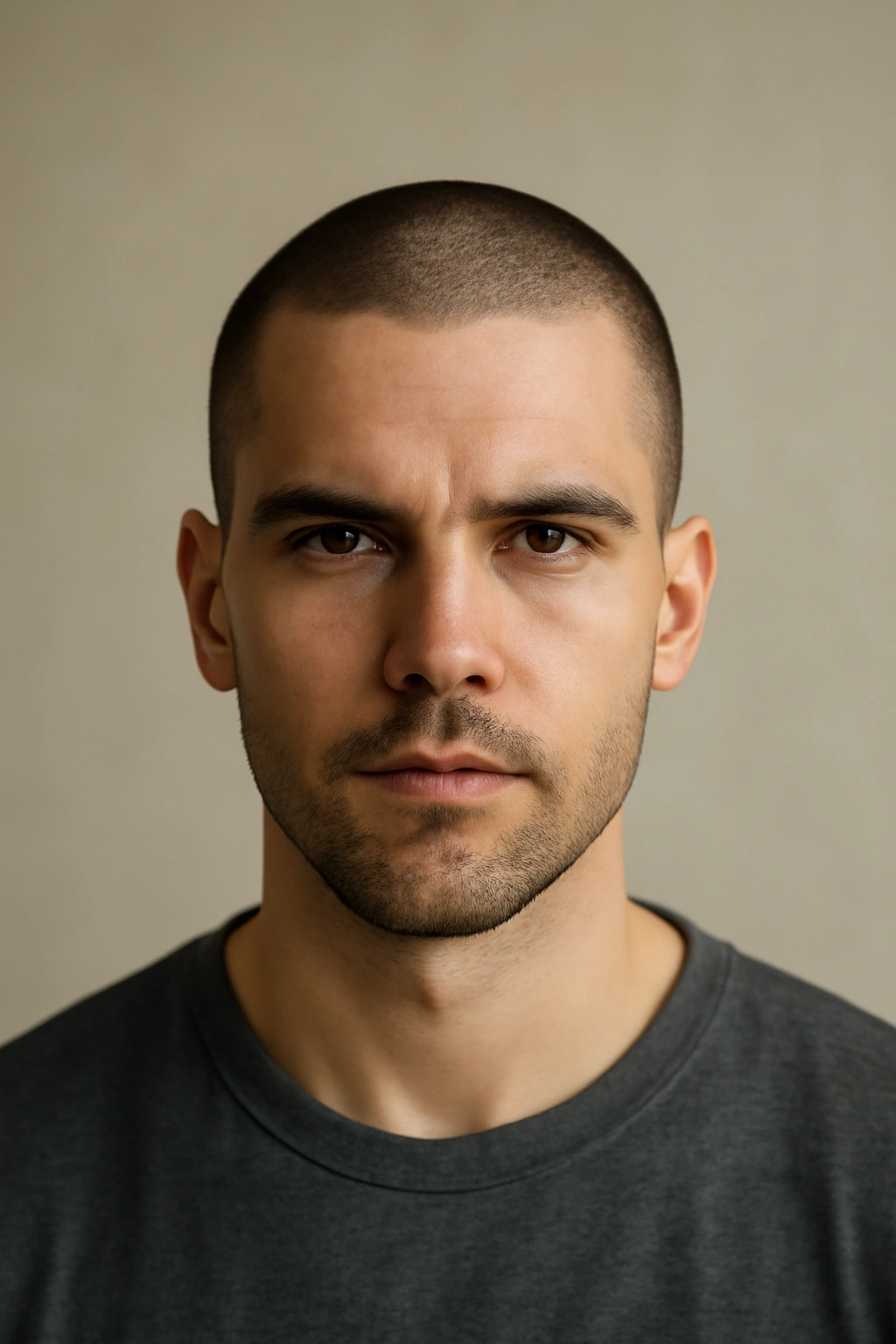
The buzz cut is the ultimate in simplicity—the same very short length all over your head, no fading, no styling, no decisions. Clippers with a single guard length (usually between 0.5 and 1.5 inches) are run over your entire head, and you’re done. It’s the most low-maintenance haircut that exists and it’s a legitimate style choice that looks sharp when executed with confidence.
The Appeal and the Honesty
A buzz cut requires genuine confidence because there’s no hiding anything—your face shape, your head shape, any receding hairline, scars, or asymmetries are completely visible. That’s exactly why it works so well for guys confident enough to pull it off. It also reads as classic, clean, and no-nonsense. Military heritage, athletes, and guys who genuinely don’t want to think about their hair all choose buzz cuts, and the look carries that earned credibility.
Buzz Cut Reality and Care
- Requires a trim every 1 to 2 weeks to maintain a clean, uniform look
- Essentially zero styling needed—wash and go
- Flatter to stronger face shapes and fuller heads
- Can make receding hairlines more noticeable, though some guys deliberately choose this cut at a certain point
- Looks excellent with facial hair as a contrast element
Real talk: The buzz cut looks fantastic on the right person, but only if you genuinely own the look. Tentative confidence shows.
6. The Quiff
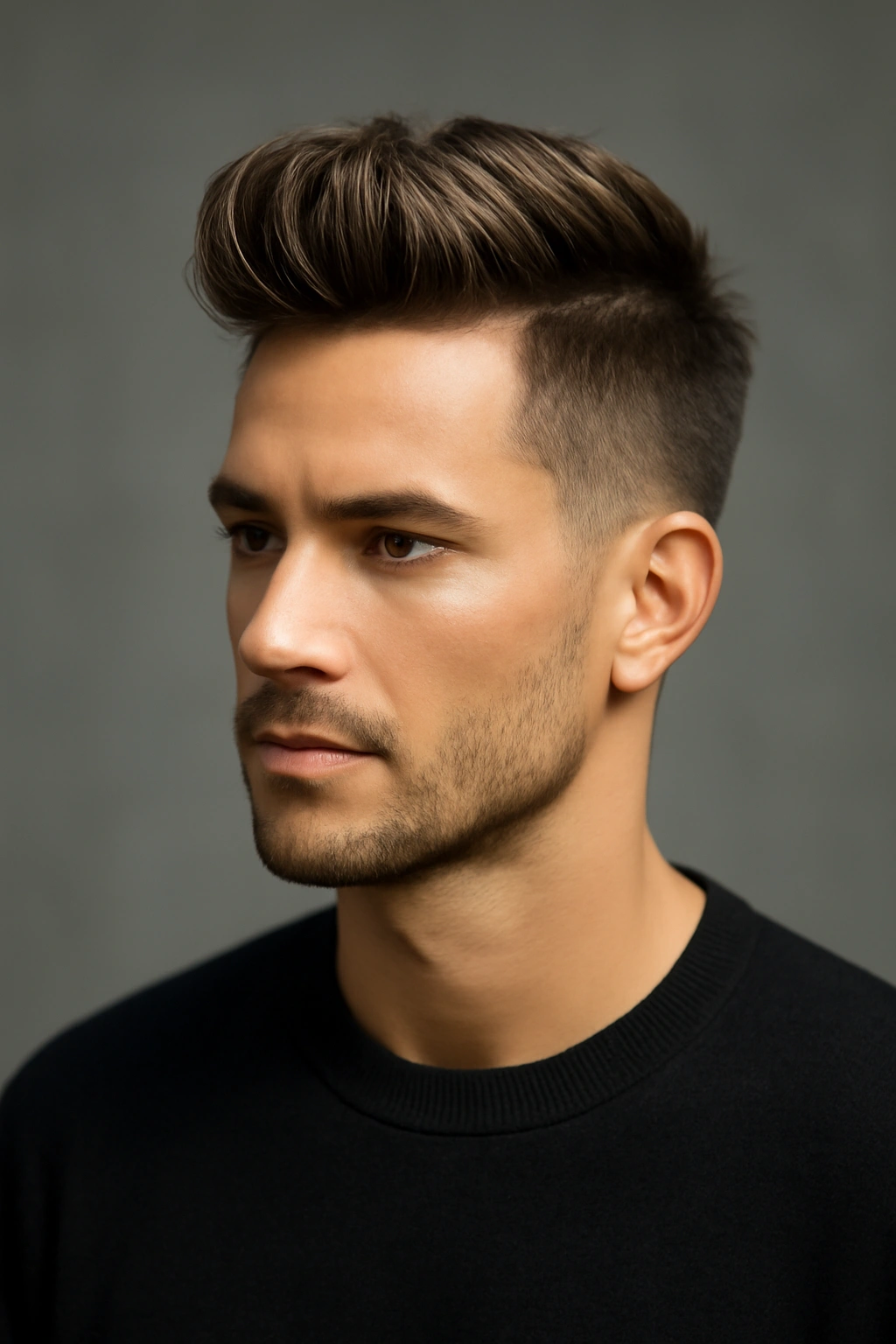
The quiff is a classic men’s cut where the front of the top is longer than the back, allowing you to sweep and style the hair back and upward. The sides are kept shorter with a fade or taper, creating height and presence at the front. It’s a dressier, more intentional cut than a crop—something that says you’re thinking about style and willing to put in some effort with product and styling.
Why the Quiff Commands Attention
The quiff works because it adds height and presence without looking theatrical. It flatters longer face shapes by drawing attention upward and sideways. The swept-back styling shows your face while the volume creates positive visual impact. A quiff immediately elevates a look from casual to intentional, which is why it’s been the choice of stylish men across decades.
Styling and Upkeep
- Needs 2 to 3 inches of length on top to work properly
- Requires a strong-hold product (clay, pomade, or matte paste) for styling
- Works best with a low or mid fade on the sides for balance
- Needs daily styling to look sharp—this is not a wash-and-go option
- Requires a trim every 3 to 4 weeks since you’re working with longer hair
What to know: The quiff works best if you have naturally thick hair or volume. Very fine hair may struggle to hold the height.
7. The Pompadour
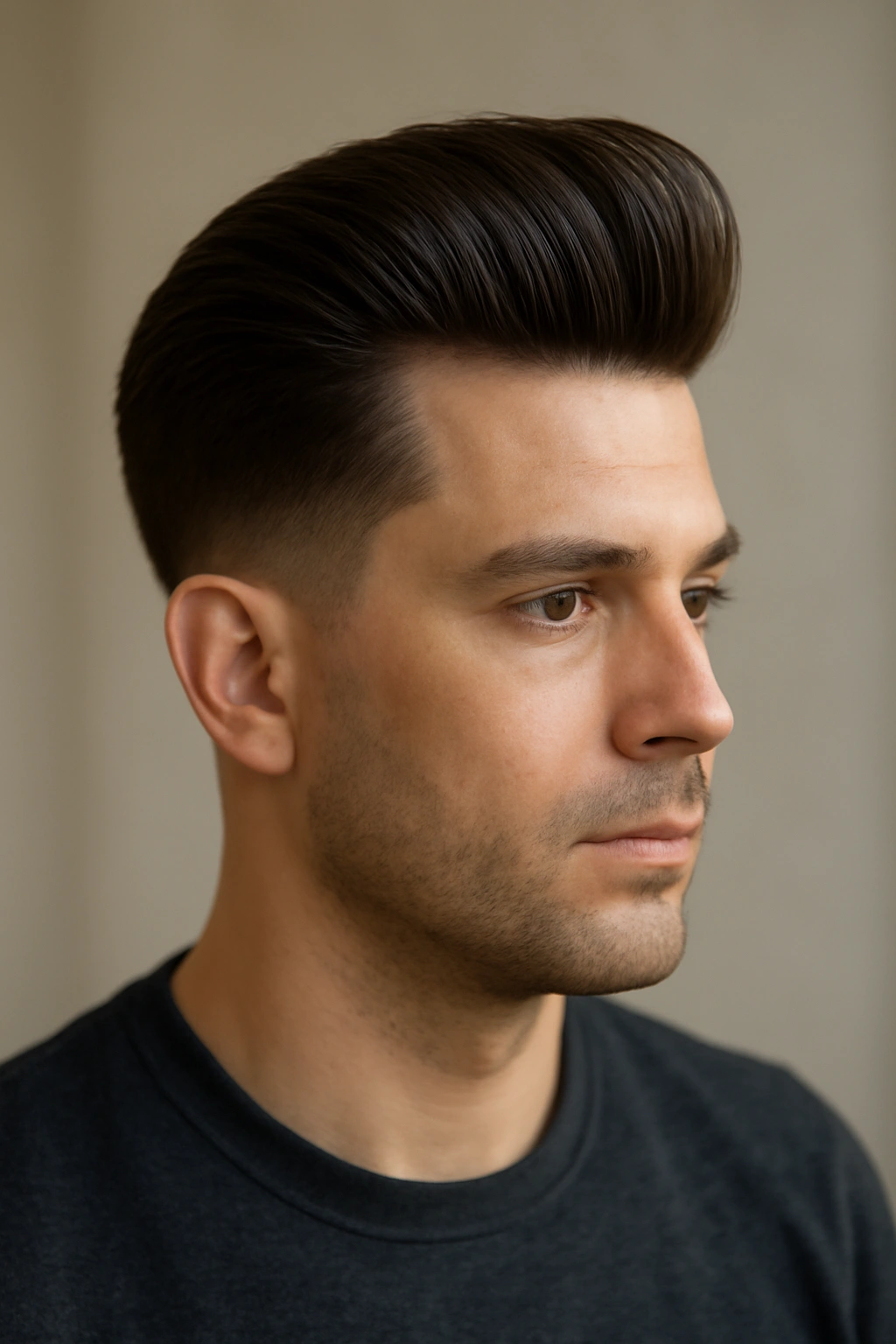
The pompadour is the quiff’s bolder, more voluminous cousin. Hair on top is cut longer (3+ inches) and styled high and back, creating dramatic height and presence. The sides are faded or tapered to keep the proportions balanced, but all the visual weight and styling focus is on that voluminous top. It’s a confident, statement-making cut that’s impossible to ignore.
What the Pompadour Says
A pompadour says you’re fashion-forward and not afraid of attention. It’s theatrical without being costumey, confident without being arrogant. The cut has genuine historical prestige—it’s worn by musicians, actors, and guys who care about standing out. It flatters face shapes that benefit from height and draws the eye upward, making it work well for rounder faces or guys with softer features.
Making the Pompadour Work in Real Life
- Requires 3 to 4 inches of length on top and thick, healthy hair
- Needs heavy-hold product (strong pomade or gel) and 5 to 10 minutes of styling daily
- Best paired with a skin fade or high fade for maximum impact
- Works for both formal occasions and stylish casual settings when styled right
- Requires a trim every 3 weeks to maintain length without looking shaggy
Pro tip: A pompadour looks incredible with a full beard or strong stubble—facial hair balances the dramatic top.
8. The Slicked-Back Undercut
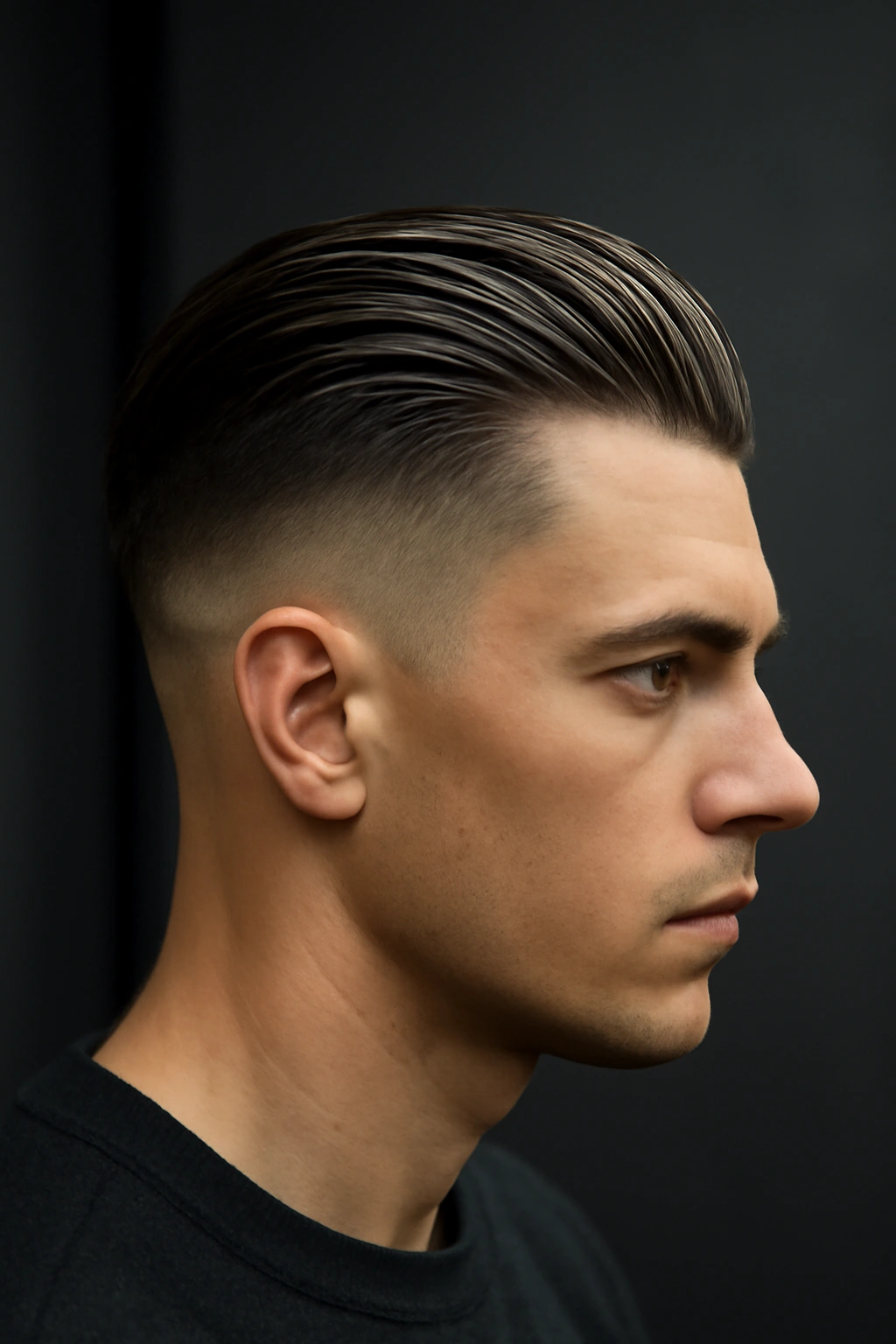
The slicked-back undercut combines the bold contrast of an undercut with the polished elegance of slicked-back styling. The sides and back are cut very short (sometimes down to skin fade), while the top is kept at 2 to 3 inches and styled straight back and sleek using strong-hold product. It’s simultaneously sharp and refined, edgy and elegant—a cut that works equally well in a boardroom or at a night out.
Why This Cut Is So Versatile
The slicked-back undercut splits the difference between multiple aesthetics. It’s modern and fashion-aware because of the undercut, but it’s also classically groomed because of the slicked-back styling. That versatility is its strength. It looks equally sharp in formal wear and designer casualwear. It photographs beautifully. It says you care about your appearance without looking like you’re trying too hard.
Practical Considerations
- Requires thick hair that can hold a slicked-back style without looking thin or greasy
- Needs heavy-hold product applied to damp hair and styled back while drying
- Requires frequent trimming—every 2 to 3 weeks to keep the undercut line sharp
- Works best with a strong jawline or full beard (the bare sides leave your face very exposed)
- Not ideal if you have a receding hairline, as slicking everything back emphasizes it
Consider: This cut requires commitment to daily styling. If you’re not willing to use product and spend 5 minutes every morning, it won’t deliver the intended effect.
9. The Taper Haircut
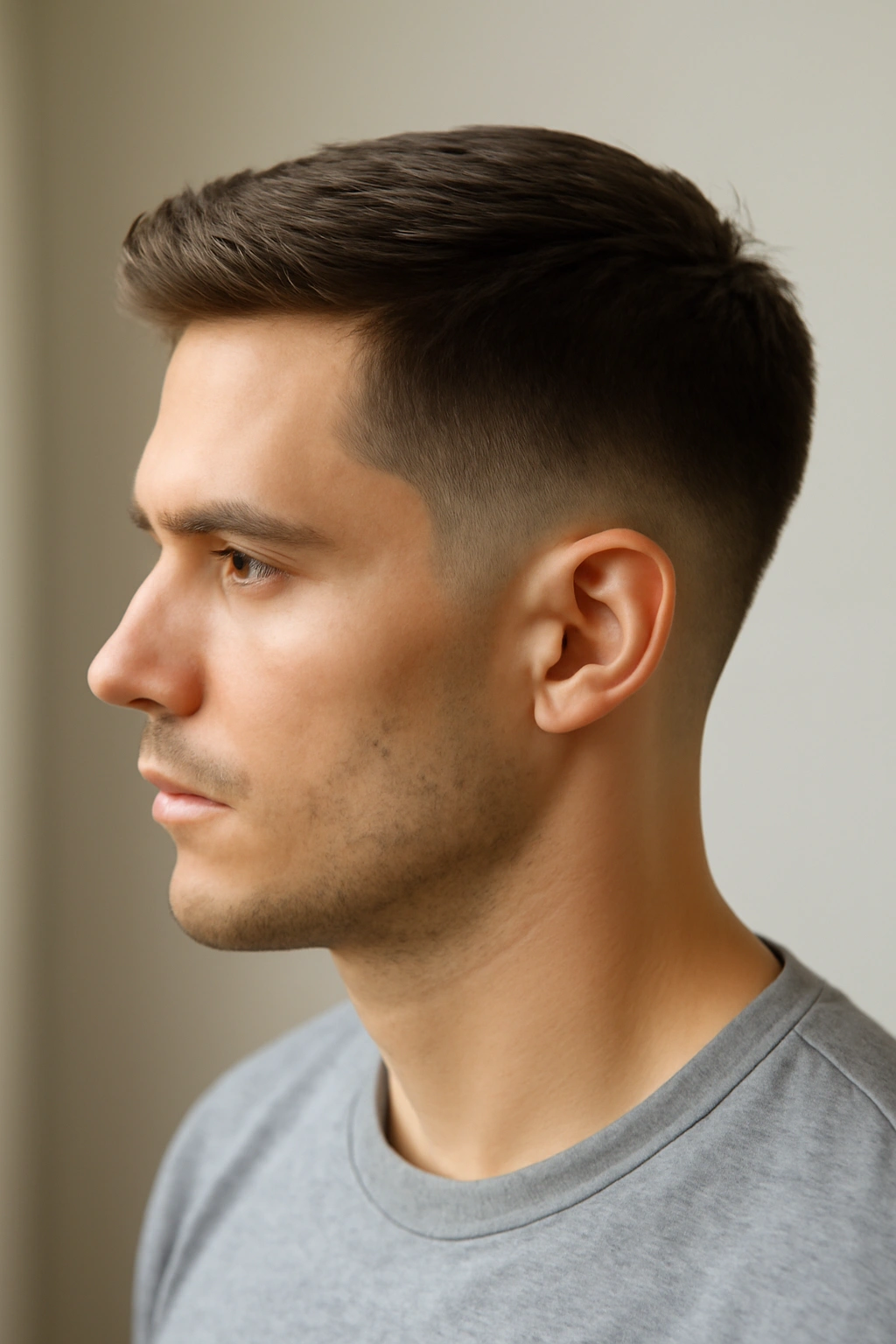
The taper is a cleaner, less dramatic alternative to the fade. Hair gradually gets shorter from top to bottom on the sides and back, but it’s a gentler transition than a fade and doesn’t go as short. You might have an inch on top, half an inch in the middle, and a quarter-inch at the bottom, creating a smooth curve rather than architectural lines. It’s refined without being flashy.
The Refined Elegance of a Taper
A taper works because it’s universally flattering without announcing itself. It looks professional, clean, and intentional in any setting—work, casual, formal. The gradual transition is easier to grow out between cuts than a fade, which means less frequent barber visits. It’s the choice of guys who want to look sharp without making their haircut the focus of conversation.
Styling and Maintenance
- Works with 1 to 2 inches on top, whether styled or left natural
- Can be worn messy and textured or combed smooth—surprisingly adaptable
- Requires a trim every 4 to 5 weeks since it’s more forgiving as it grows
- Minimal product needed—works well with just a light paste or even nothing
- Flatters most face shapes when proportions are right for your specific features
What to know: A taper is more subtle than a fade, which means it looks great but doesn’t make as bold a statement. If you want quiet sophistication, it’s perfect.
10. The Temple Fade
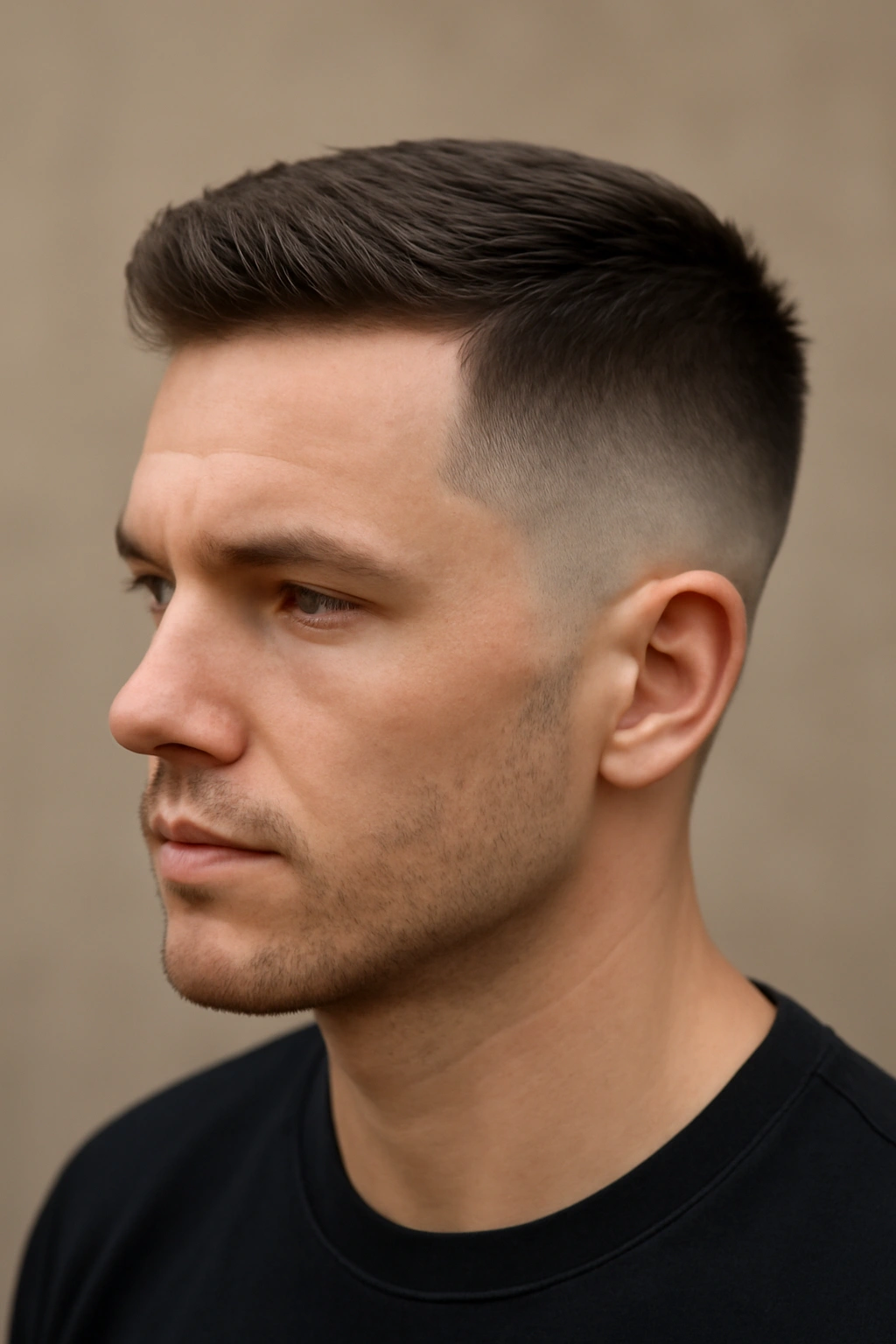
The temple fade is a modern variation where the fade is concentrated specifically around the temples and sides, while more length is preserved on top and around the crown. This creates a sharp, defined look that emphasizes the top without the commitment of a full undercut. It’s a trendier, more fashion-forward option than a simple taper but more wearable than a full undercut.
Why the Temple Fade Is Having a Moment
The temple fade specifically flatters rounder face shapes and gives definition to the sides of the head without looking extreme. It adds dimension and interest to your look while maintaining enough length on top to style in multiple ways. You can wear it swept back, textured up, or natural depending on your mood and the occasion—more versatility than an undercut, more style than a simple taper.
Getting and Maintaining the Temple Fade
- Works with 2+ inches on top for real styling potential
- The fade should be crisp at the temples while gradually blending at the sides
- Requires a barber who can execute clean lines without looking harsh
- Needs a trim every 3 to 4 weeks to maintain the defined fade lines
- Pairs well with sideburns extended just below the temples for added definition
Pro tip: Ask your barber to connect the fade line across the back of your head for a cohesive look, or keep the back slightly longer for a softer overall effect.
11. The Ivy League Cut
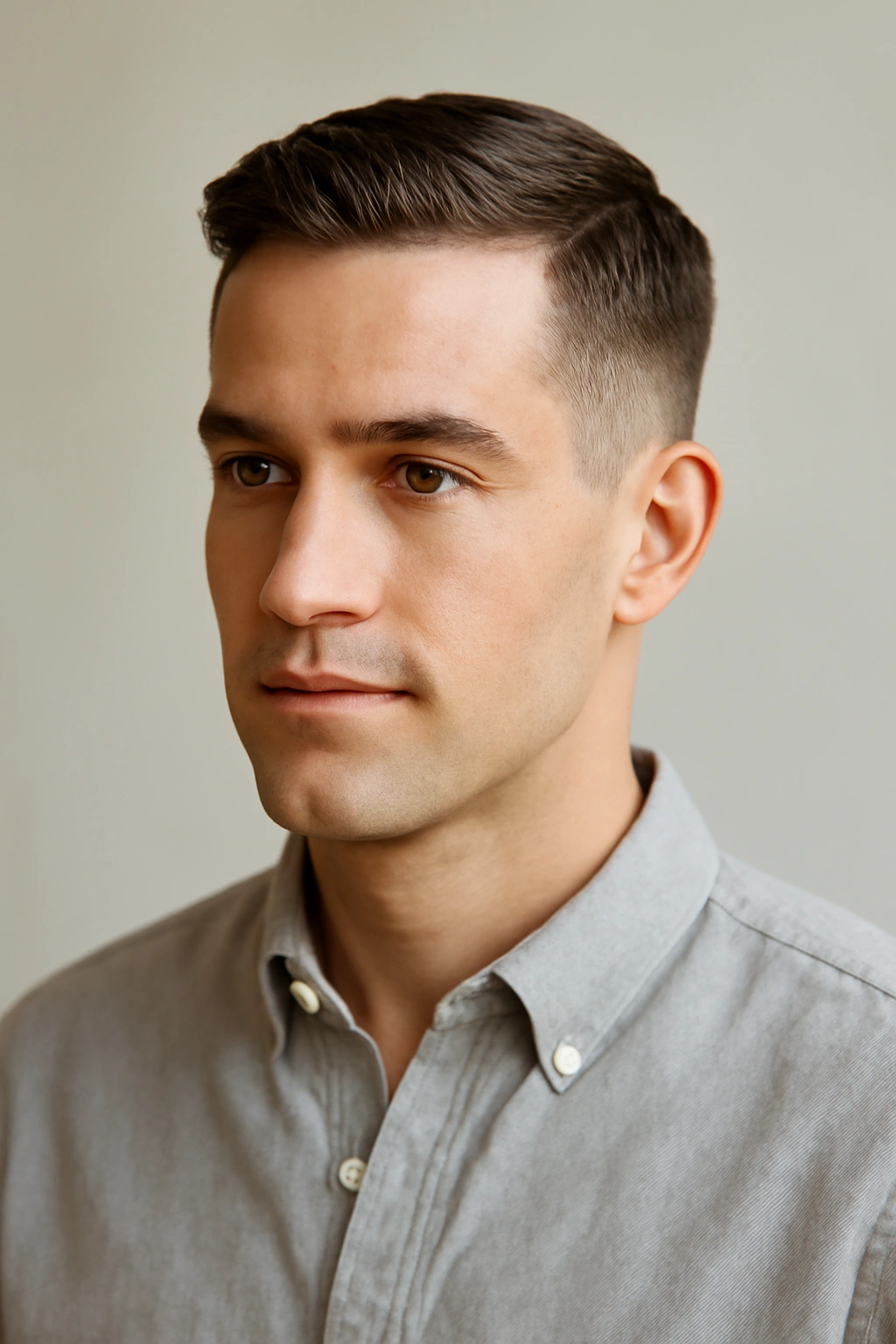
The Ivy League cut is a sophisticated, classic option that’s fundamentally a crew cut with slightly longer hair on top that can be styled—usually 1 to 1.5 inches. The sides and back are closely cropped, creating a neat, polished appearance that reads as timeless and refined. It’s the haircut of preppy tradition, old-money elegance, and guys who value understated style.
The Timeless Appeal
An Ivy League cut works because it’s effortlessly elegant. There’s no trying too hard, no fashion statement, just clean, impeccable grooming. It flatters most face shapes and looks equally sharp on an 18-year-old and a 60-year-old. The subtle styling options—you can comb it to one side, leave it slightly tousled, or keep it smooth—give you flexibility without complexity. It says you care about appearance without advertising it.
Styling and Upkeep
- Requires minimal product—maybe a light paste or just damp combing for texture
- Looks good naturally textured or combed smooth depending on your mood
- Needs a trim every 3 to 4 weeks to maintain the slight distinction between top and sides
- Works with every face shape and most hair types
- Pairs beautifully with all grooming styles—clean-shaven, stubble, or beard
Worth knowing: This cut works best if you have thick hair with some natural texture. Very fine hair may look thin with this cut.
12. The Faux Hawk
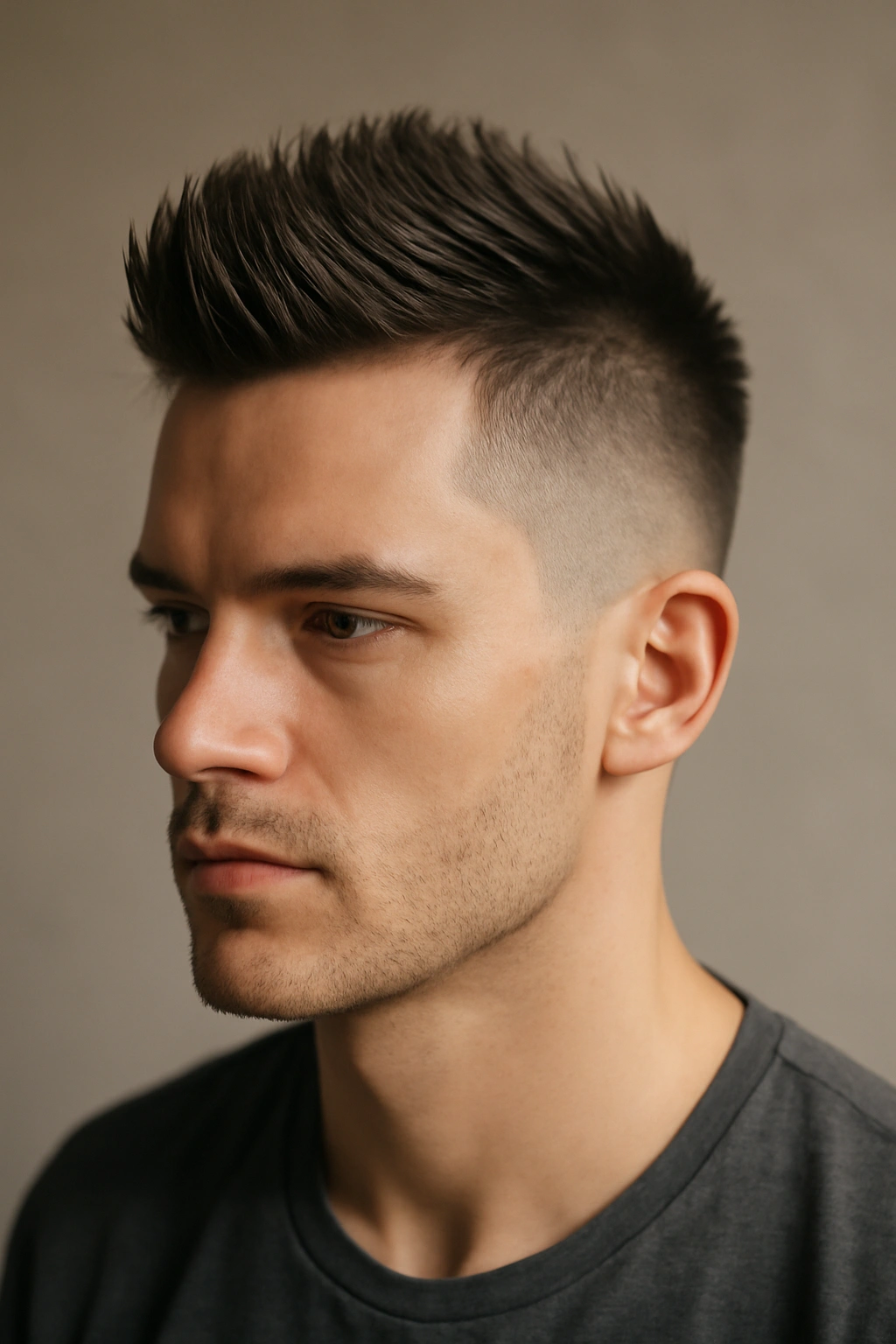
The faux hawk is the edgier, more approachable cousin of the traditional mohawk. The sides are faded or tapered short, while a strip of longer hair runs down the middle-top of your head, styled upward to create height and presence. Unlike a true mohawk, the longer hair blends into the sides rather than being dramatically isolated, making it significantly more wearable for everyday life while still maintaining that edgy visual impact.
Why the Faux Hawk Stands Out
A faux hawk gives you presence and style credibility without committing to a true mohawk. It works in most professional settings if styled subtly, and it’s perfect for guys who want visual interest and height without looking costume-y. It’s an excellent choice for guys with rounder faces since the height is incredibly flattering. The cut shows confidence and fashion awareness without requiring the commitment of a true mohawk.
Making It Work
- Requires 2 to 3 inches down the center strip to create visible height
- Sides faded short (quarter-inch to half-inch) for maximum contrast
- Needs strong-hold product (gel or pomade) and 5 minutes of daily styling
- Works best with thick hair that naturally has some texture or wave
- Trim every 3 weeks to maintain shape and prevent it from looking overgrown
Real talk: If you’re going to do a faux hawk, commit to the styling. A faux hawk with flat, unstyled hair just looks like you have patchy hair loss.
13. The Messy Fringe
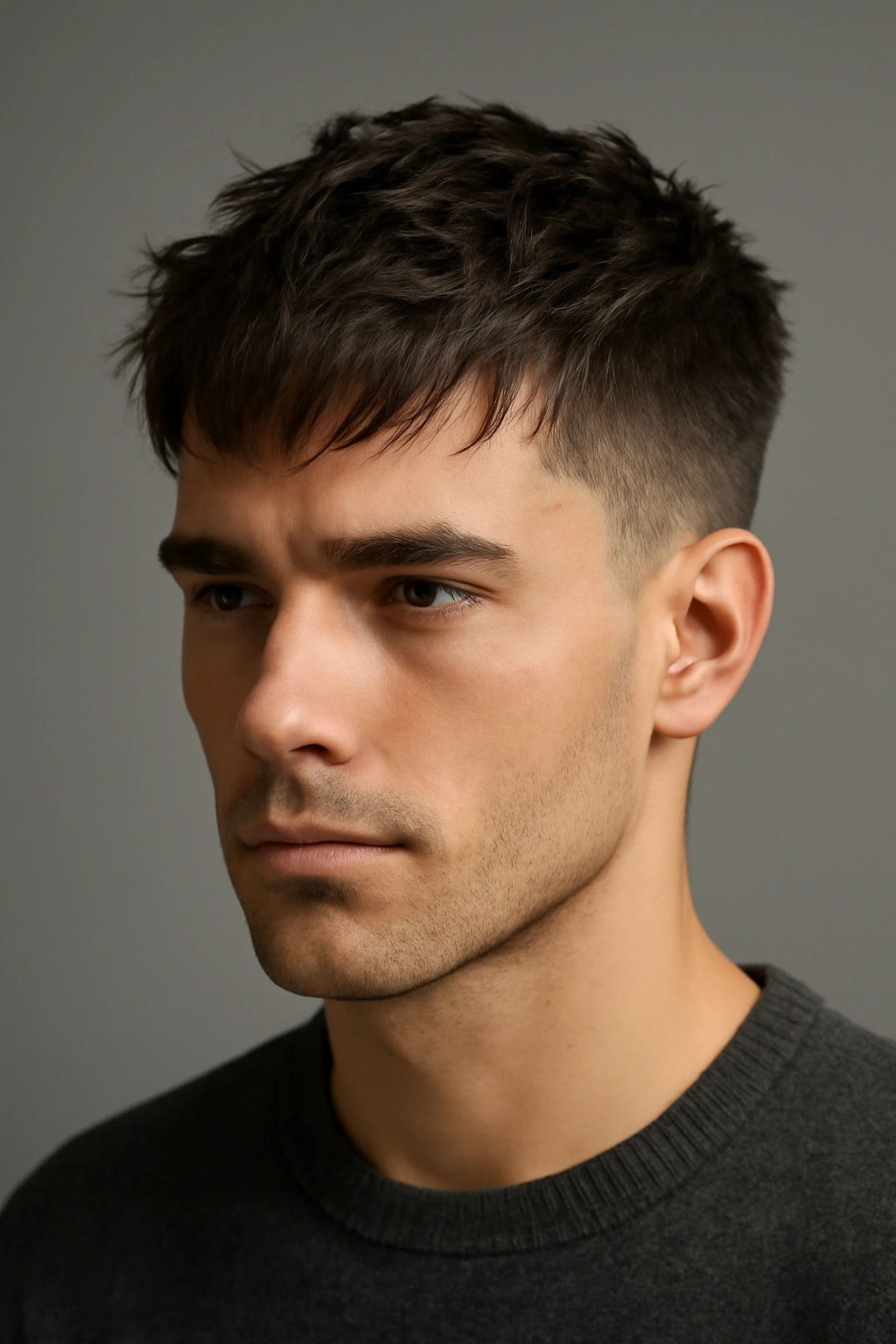
The messy fringe keeps moderate length on top (2 to 2.5 inches) with intentional texture and movement, while the sides are tapered or faded short. The front is slightly longer than the back, allowing you to brush it forward in a relaxed, undone way—like you just woke up and looked effortlessly stylish, even though you definitely didn’t. It’s modern, casual, and absolutely works in professional settings when groomed right.
Why Messy Actually Looks Sharp
There’s an art to intentional messiness. A messy fringe looks deliberately casual rather than neglected, which is why it works. The cut works with natural texture and movement rather than fighting it, making it easier to maintain than it looks. It reads as fashion-forward and youthful without looking immature. It’s the perfect middle ground between polish and casual confidence.
Styling and Maintenance
- Works best with slightly wavy or naturally textured hair
- Needs a texturizing product (matte paste or clay) applied to damp hair
- Can be styled multiple ways—messy forward, swept side, slightly back
- Requires a trim every 3 to 4 weeks as it grows and loses definition
- The front should be slightly longer to brush down; the back shorter for contrast
Pro tip: Air-dry whenever possible to encourage natural texture. Heat-styling can make it look less intentional.
14. The Disconnected Quiff
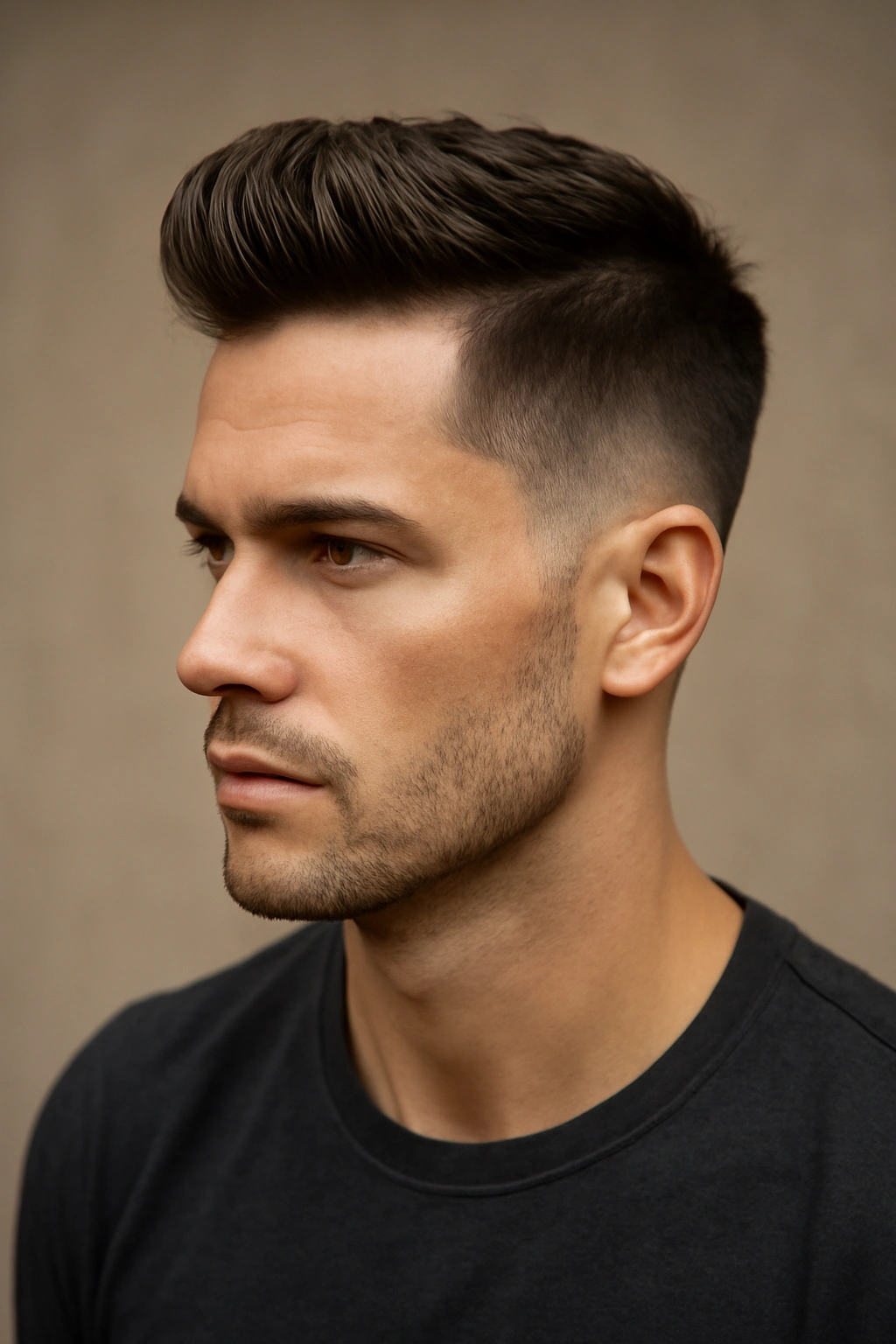
The disconnected quiff is a bolder version of the classic quiff where there’s a sharp, visible line separating the longer top from the short sides—it’s disconnected rather than blended. The top is styled back and upward, creating height and volume, while the sides are faded or cut nearly to the skin. It’s more modern and edgy than a traditional quiff, while maintaining the same fundamental elegance and styling potential.
What Makes It Stand Out
The disconnected quiff walks a balance between formal elegance and modern edge. The sharp line between top and sides adds architectural interest and makes the style look intentional and curated. It’s incredibly flattering for most face shapes, especially longer faces, since the height draws attention upward. It reads as fashion-aware and confident without looking like you’re chasing trends desperately.
Getting the Most From This Cut
- Requires 2.5 to 3 inches of length on top to create real height
- Sides should be faded or tapered very short (quarter-inch to half-inch) for maximum definition
- Needs strong-hold product applied daily for styling
- Works well with stubble or a beard to balance the dramatic top
- Requires a trim every 2 to 3 weeks to keep the disconnected line sharp
Consider: This is a cut that demands regular maintenance. If you’re not willing to visit the barber every 2-3 weeks, the disconnected line will blur and it’ll lose its impact.
15. The Hard Part
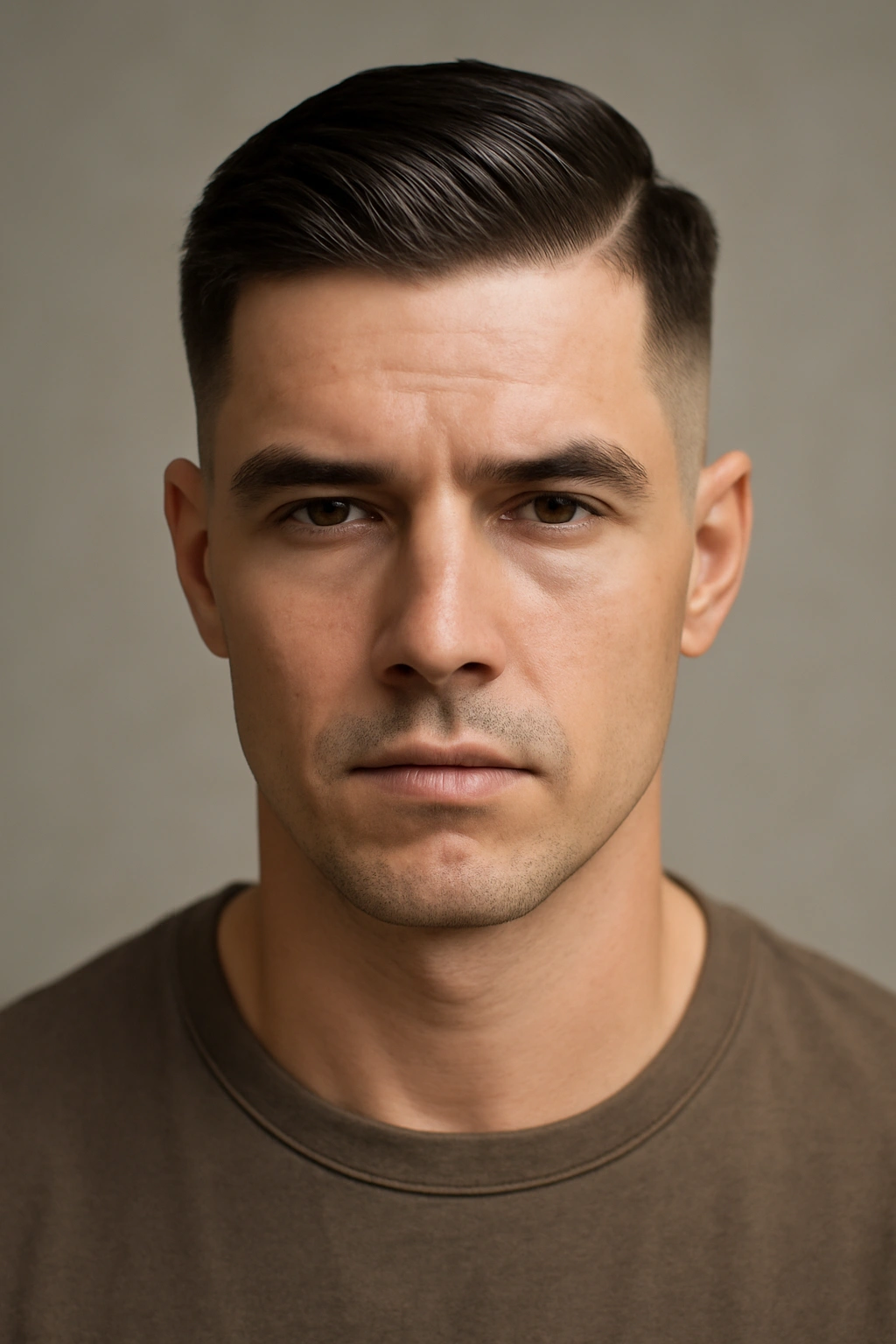
The hard part is a classic men’s cut where a clean, precise line is cut or shaved into the side of your head, usually running from your temple back toward your ear. This line visually divides the hair and creates structure. The hair on one side of the part is combed over the line, while the hair on the other side stays short, usually faded. It’s a refined, timeless look that adds definition and visual interest without requiring extreme styling.
Why the Hard Part Commands Respect
A hard part instantly elevates a look. It adds geometry and intentionality—it says you care about details and precision. The part works on most face shapes and with varying hair lengths, making it adaptable. It’s simultaneously classic (hard parts have been sophisticated for decades) and modern (contemporary barbering has elevated hard part execution). It flatters guys with strong jawlines, adds structure to rounder faces, and generally creates visual balance.
Execution and Upkeep
- Works with any fade or taper on the sides—the part works with your existing cut
- The part line should be razor-sharp and precise; it’s the whole point
- Requires a barber experienced in cutting clean part lines
- The hair on the longer side should be combed over the part daily—takes 30 seconds with damp hands
- Trim every 3 to 4 weeks to keep the part line clean and the sides fresh
What to know: A hard part emphasizes whatever facial features are on the longer side of the part. If you have a prominent scar or imperfection on one side, position the part accordingly.
Final Thoughts
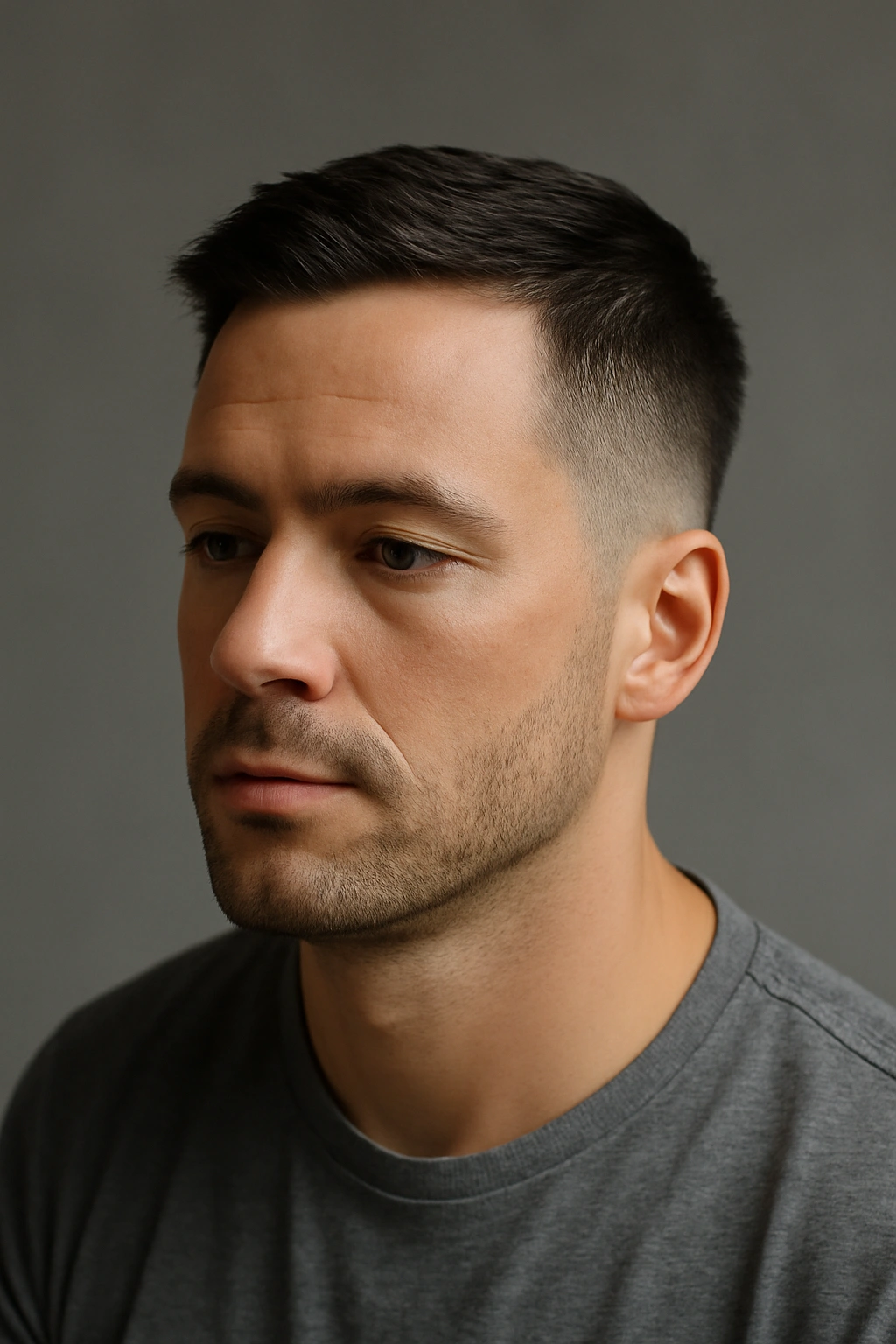
Your haircut is the foundation of your entire look, and the 15 cuts here represent the full range of sharp, masculine options available. Some prioritize low maintenance and ease; others demand daily styling and frequent trims. Some are classic and timeless; others are contemporary and fashion-forward. Some work best with specific hair types; others are incredibly versatile.
The key to choosing the right cut is being honest about three things: your hair type and how it naturally wants to sit, the amount of time and effort you’re genuinely willing to spend styling and maintaining your hair, and your face shape and features—what you want to emphasize and what you’d rather downplay. A great barber can help you with all of this. Tell them your goals, show them examples of cuts that appeal to you, and ask their honest opinion on what will actually work with your specific hair and face.
Get your cut from someone skilled enough to execute the style properly. There’s a massive difference between a mediocre crew cut and a sharp one; between a sloppy fade and a crisp one. A great barber is worth the investment. And finally, understand that as your hair grows out between cuts, the style will evolve slightly—some cuts look better at the two-week mark, others at the four-week mark. Find that sweet spot and schedule accordingly. A sharp haircut maintained well is one of the easiest and most impactful upgrades you can make to how you look and feel.
