



A sharp fade at the temples is one of the most defining features of a modern men’s haircut. The way your barber blends the hair from the sides into the temples—sometimes called a temp fade or temple fade—sets the entire tone of your look. Get it right, and you’ve got clean lines that speak to precision and care. Get it wrong, and your whole haircut feels sloppy, even if the top is perfectly styled.
The temple fade isn’t just about technical skill, though that matters. It’s about understanding the geometry of your head shape, your hair growth patterns, and what works with your specific hairline. A temp fade that looks incredible on one person might not suit another, which is why knowing your options is crucial before you sit down in the chair.
If you’re looking to upgrade your current cut or explore something fresh, understanding the different approaches to fading the temples will help you communicate exactly what you want to your barber. You’ll know the difference between subtle and dramatic, tapered and sculpted, soft and sharp. Most importantly, you’ll be able to choose a style that actually complements your face shape, hair type, and the overall aesthetic you’re going for.
1. Classic Temple Fade
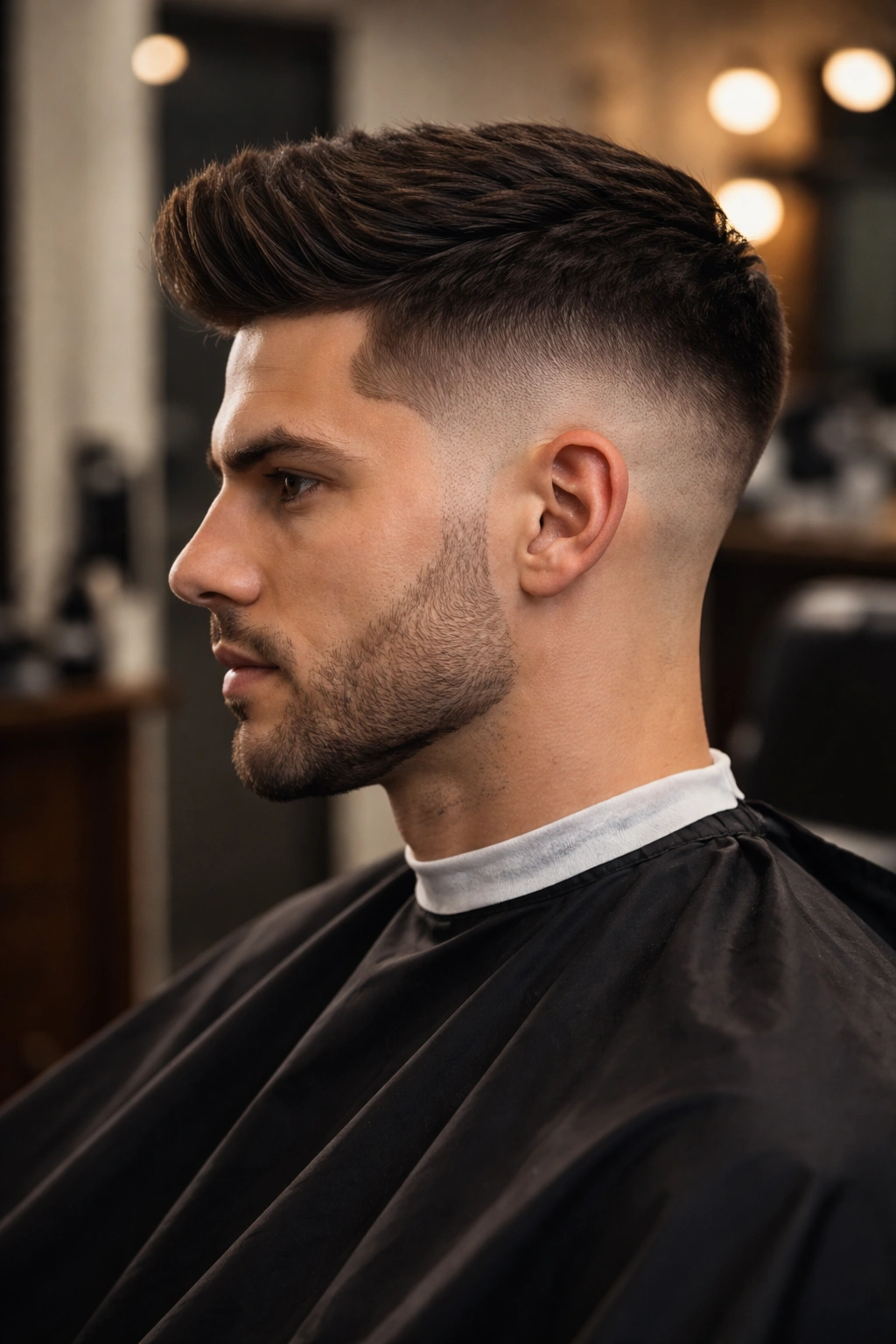
The classic temple fade is the most versatile and timeless approach to this detail. It’s a gradual, smooth blend from whatever length you’ve got on top down to the skin at the very edge of your hairline. The fade typically starts around the temple area and flows seamlessly into the sideburn region, creating one continuous taper that looks sharp but never overdone.
Why It Works for Nearly Everyone
This style works because it’s balanced and forgiving. The gradual nature of the fade means small variations in your barber’s technique don’t create harsh lines or visible mistakes. It complements nearly every hair texture, from straight to coily, and looks equally good on round, square, or oval face shapes. The fade draws attention upward toward your face and hair on top, which is exactly where you want the focus.
How to Get It Right
- Ask your barber for a medium-length fade that takes about 2-3 inches to transition from full length to skin
- Request that the fade starts at the natural temple point, not too high or too low
- Specify that you want it smooth and blended, without harsh lines between each clipper guard size
- Plan to get it cleaned up every 3-4 weeks to maintain the shape as your hair grows
The classic temp fade pairs beautifully with anything from a crew cut on top to a longer, textured style. It’s a safe choice that never goes out of style, which is precisely why it’s the go-to option for men who want to look polished without taking risks.
2. High Temple Fade
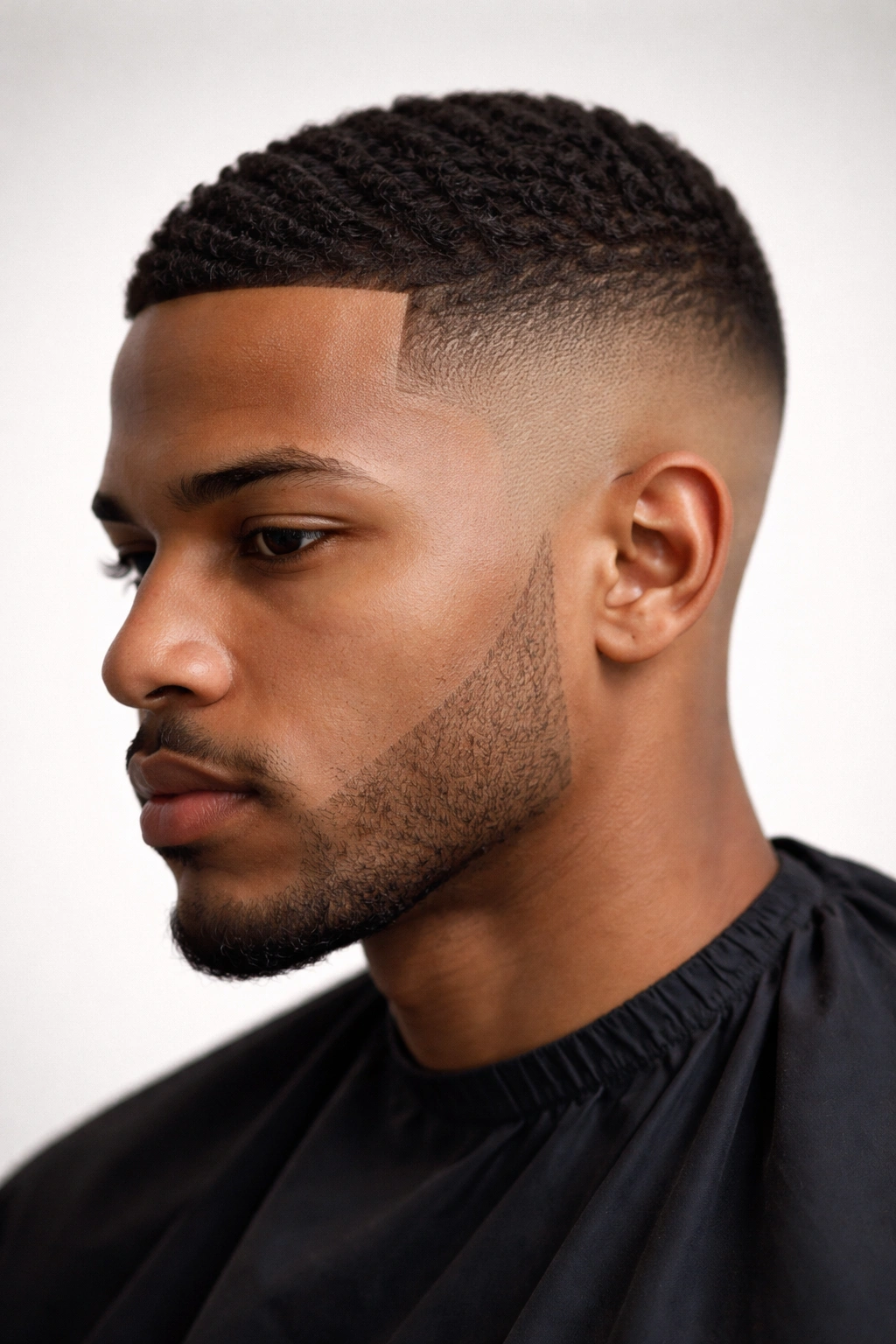
A high temple fade pushes the fade line upward, often starting around where your temple hair naturally begins to thin. Instead of a gradual descent from full-length hair, the fade begins the taper much higher up on the head, creating a more dramatic and sculpted appearance overall.
The Visual Impact
This style creates sharper, more defined lines than a classic fade. Because the fade starts higher, you get more skin exposure in the temple area, which makes the whole cut feel bolder and more intentional. It works particularly well if you’re going for an edgy, fashion-forward vibe or if you have a face shape that benefits from more definition at the sides.
Best Suited For
- Shorter hair on top (crew cuts, fades with minimal length)
- Men with naturally thicker hair who want to thin things out dramatically
- Square or rectangular face shapes that benefit from the visual tapering effect
- Anyone confident enough to rock a more dramatic look
Pro tip: If you have thinning hair on top, a high temple fade can actually emphasize that more than you want. A lower or classic fade might serve you better in that situation.
3. Mid-Level Temple Fade
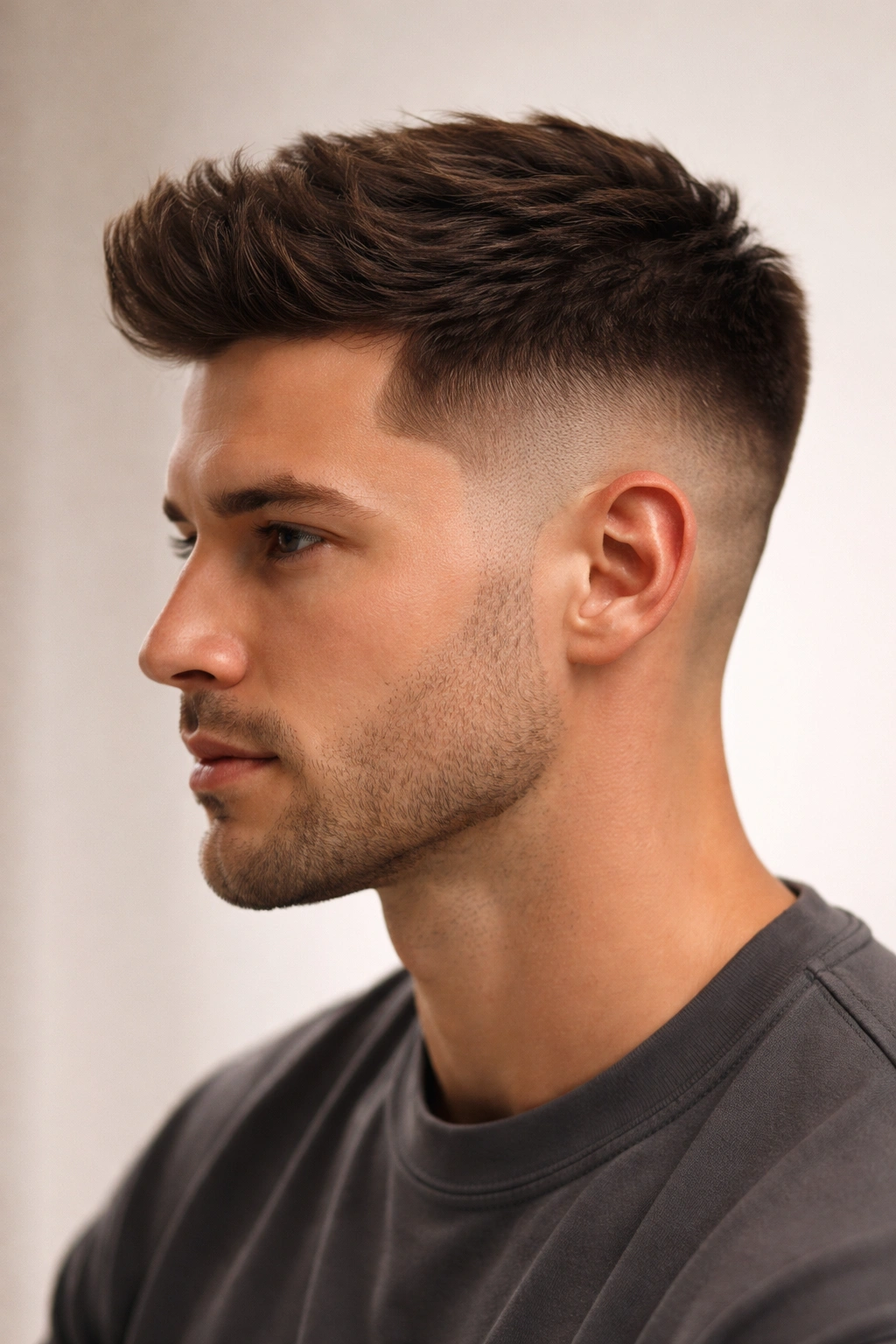
The mid-level temple fade sits right in the sweet spot between subtle and dramatic. It starts the taper around the midpoint of your temple area, creating a fade that’s noticeable and clean without being aggressively short at the edges.
Why It’s the Goldilocks Option
This fade gives you the polish of a clearly tapered cut without the commitment of showing significant skin. It’s easier to maintain between barber visits because the growth doesn’t create dramatic visible lines as quickly as a skin fade would. You get definition and sharpness without the high-maintenance aspect.
Pairing With Different Top Lengths
- Works beautifully with textured crops or fringe styles that sit 2-3 inches long
- Complements longer pompadours and slicked-back styles perfectly
- Looks sharp with medium-length fades where the top isn’t dramatically different in length
- Provides a balanced canvas if you’re growing out a longer overall style
The mid-level temple fade is reliable and versatile. It looks intentional and sharp without pushing boundaries, making it ideal if you want a modern cut that suits professional or casual settings equally well.
4. Low Temple Fade
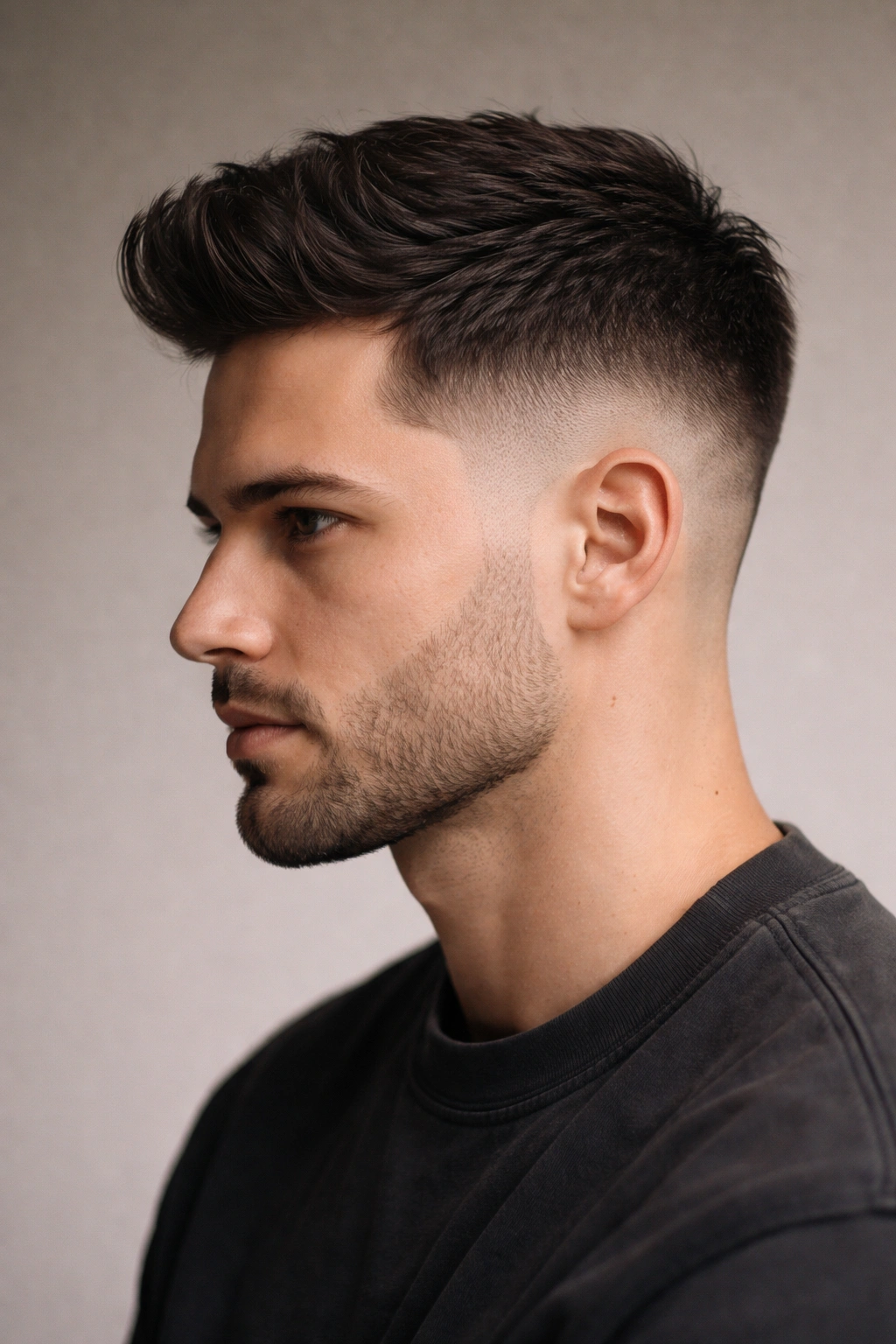
The low temple fade keeps the fade line lower, often starting right at where your natural sideburn would grow. This means more hair length is maintained through the temple area, with the actual fade happening in a smaller, more compressed zone closer to your ear and jawline.
The Subtle Approach
If you’re not ready to commit to visible clipper work at your temples, a low temple fade gives you the shape without the drama. The transition from top to sides is less pronounced, which suits men who prefer a softer overall appearance or who have sensitive skin that responds better to longer guard sizes.
Who This Suits Best
- Men with finer or thinner hair who don’t want to emphasize the scalp
- Anyone returning to shorter haircuts after growing hair longer
- Those with very dark skin tones who want to avoid visible clipper lines if they prefer that aesthetic
- Professional settings where you want sharpness without boldness
The low temple fade is understated but effective. It proves you don’t need drama to look sharp—sometimes the subtlest approach is the most sophisticated.
5. Skin Fade at the Temples
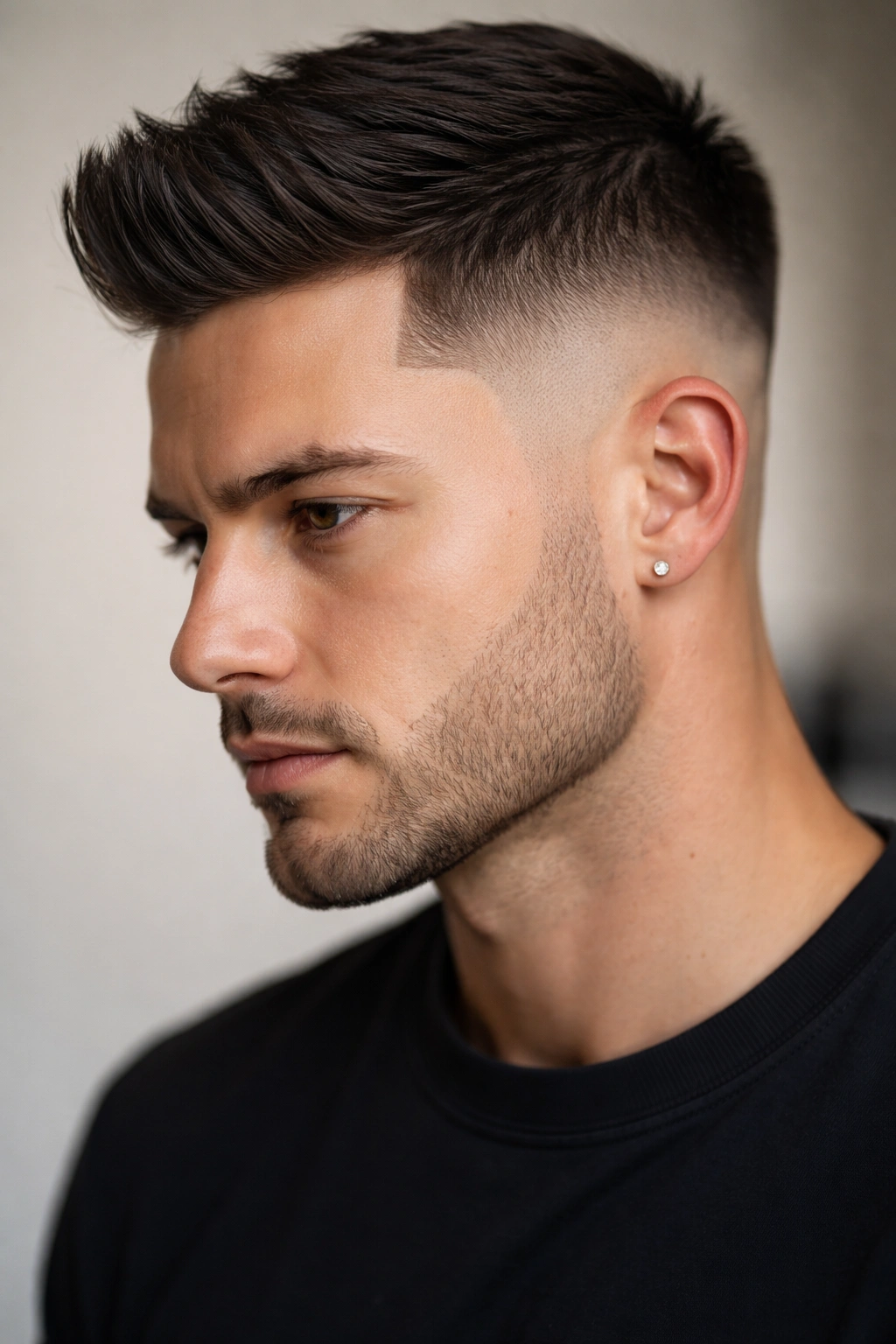
A skin fade at the temples takes the taper all the way down to bare skin right at the edge of your hairline. This is the most dramatic and high-maintenance version of a temple fade, creating clean, visible lines that demand precision from your barber and commitment from you.
What Makes It Stand Out
The visual impact is undeniable. Skin fades create stark contrast between your hair and bare skin, which makes every line razor-sharp and deliberately designed. It’s an aggressive statement that says you care about every detail of your appearance. The technique requires your barber to use a straight razor or the closest clipper guard, blended upward through multiple guard sizes.
Maintenance Reality
- Touch-ups needed every 2-3 weeks to keep lines crisp
- Requires consistent barber visits or strong home maintenance skills
- Works better if you don’t mind visible clipper lines (some men prefer the aesthetic, others don’t)
- More noticeable if your hair grows quickly or you have a strong hairline contrast
Worth knowing: Skin fades look incredible in photos and look freshest for the first 1-2 weeks after a cut. Be prepared for the reality that this style requires regular maintenance to look its absolute best.
6. Textured Top With Temple Fade
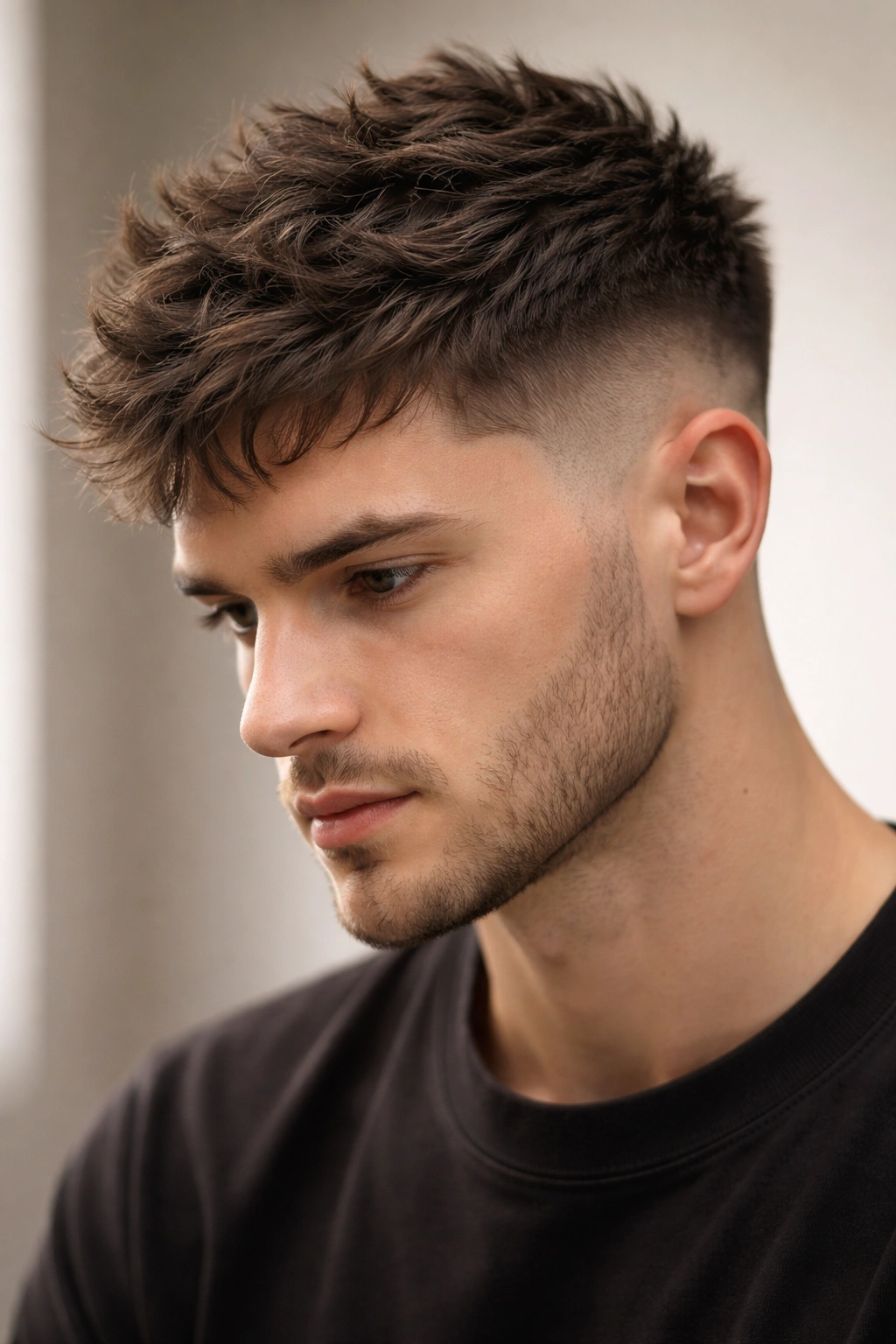
This approach pairs a faded temple area with deliberately textured, choppy hair on top. Instead of a sleek, uniform top, the hair on your crown is cut to be choppy and piece-y, creating movement and dimension while the sides remain cleanly faded.
Why Texture Matters
The texture on top creates visual interest and breaks up the severity of a fade. If you have wavy or curly hair naturally, this style works with your hair’s tendencies rather than against them. The choppy layers create space for your hair to move, making the overall look feel more relaxed and intentional rather than rigidly styled.
How to Communicate This to Your Barber
- Ask for point-cutting or choppy layers on top to create texture, not a blunt line across
- Request a fade on the sides that’s sharp enough to contrast with the choppy top
- Specify the length you want on top (usually 2-4 inches for good texture definition)
- Ask for longer pieces around the face if you want softness rather than aggressive angles
This style pairs well with matte or clay-based products that enhance texture without adding shine. The textured top keeps the look from feeling too controlled or rigid, which works great if you want something modern but approachable.
7. Undercut With Temple Definition
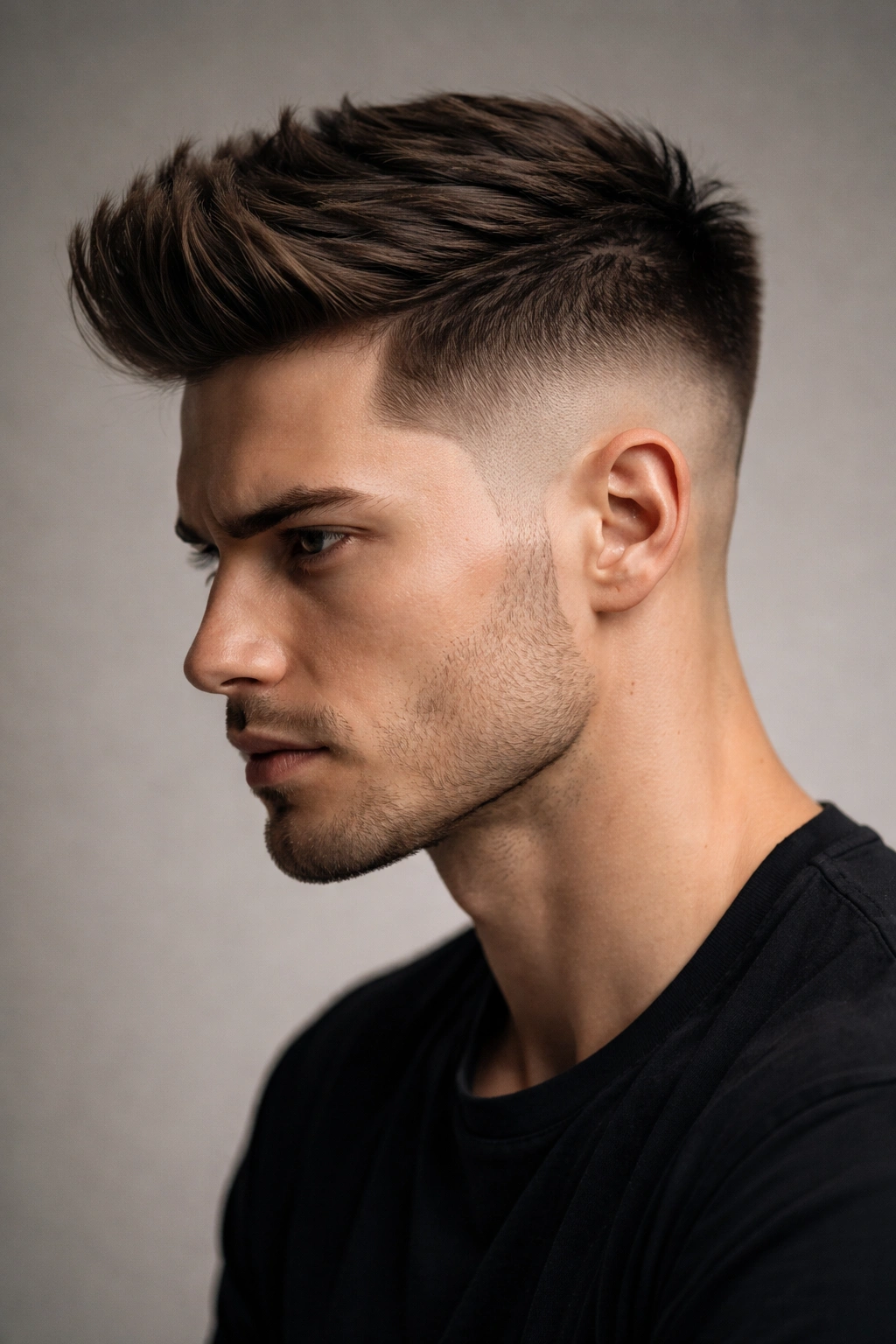
An undercut with defined temples takes the temple fade approach and amplifies it by keeping significantly longer hair on top while fading the entire side section much shorter. The contrast between a fuller top and minimal sides is dramatic and creates clean geometric lines.
The Architecture Behind It
The undercut works because of the extreme contrast in length between top and sides. Where a normal fade gradually tapers, an undercut creates almost a wall between the two sections. The temple area gets sharp definition because it’s the transition zone where all that length meets the faded sides.
Styling Implications
- Requires product to style the top back or to the side (the length demands it)
- Works best with hair that’s at least 3-4 inches long on top for proper dramatic effect
- Looks sharp with slicked-back, pompadour, or swept-side styling
- Demands a skilled barber who understands line and geometry
The undercut with sharp temple definition is bold and fashion-forward. It works beautifully for men who are intentional about their appearance and willing to style their hair regularly.
8. Burst Fade at the Temples
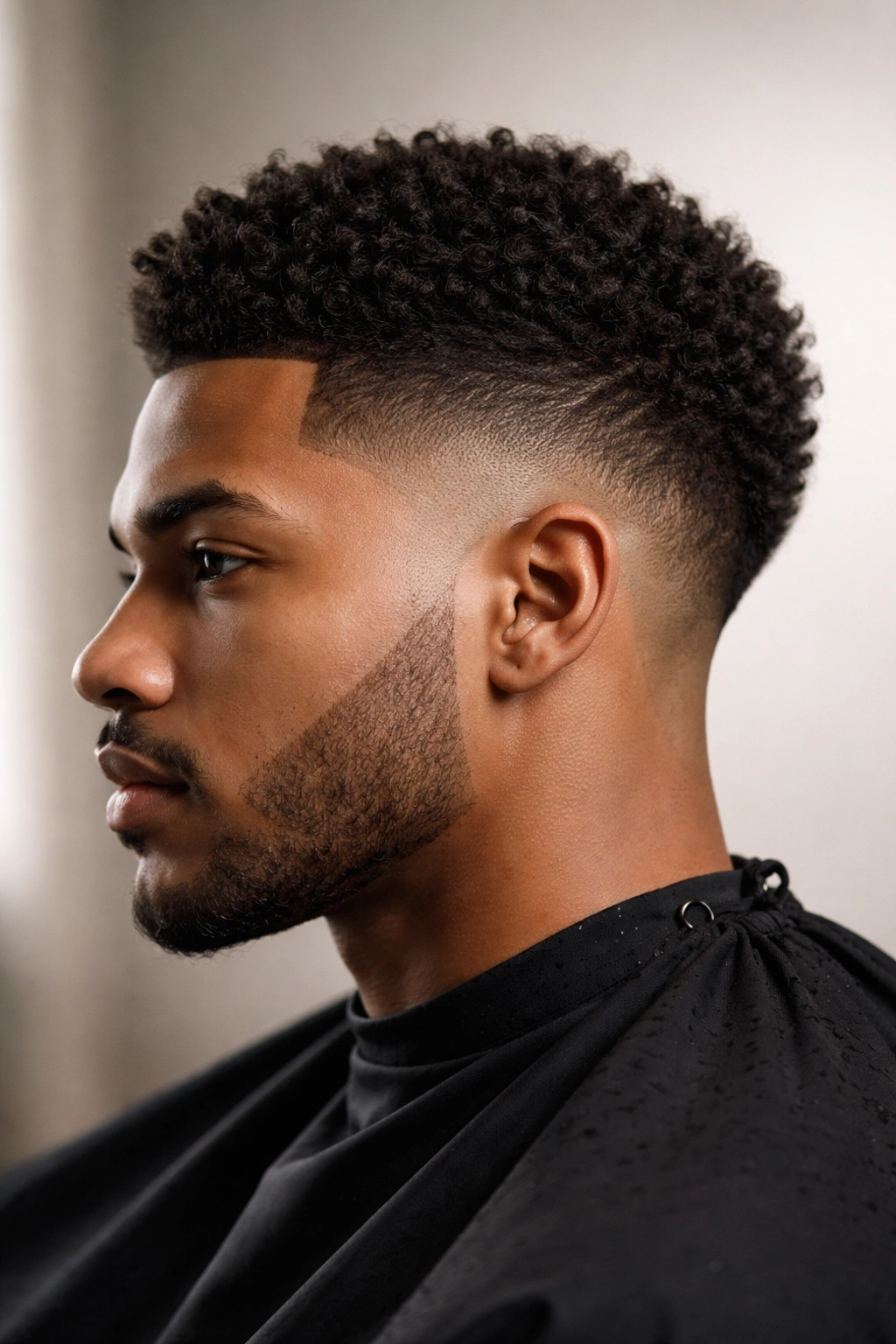
A burst fade creates curved, radiating lines that follow the natural contours of your head around the temple and ear area. Instead of straight vertical lines, the fade arcs and curves, creating an almost three-dimensional effect that follows your head shape.
The Technical Skill Required
Burst fades demand real skill from your barber. They’re not just fading hair—they’re sculpting based on your head shape, hairline, and how your hair naturally grows. The lines curve outward from behind the ear, following the temple’s contour, creating what looks like the fade is actually part of your head shape rather than something imposed on it.
Visual Results
- More sculptural and intentional-looking than a straight fade
- Flatters head shapes because the curves follow natural anatomy
- Creates visual movement even when the hair is freshly cut and clean
- Often paired with short or textured tops for maximum impact
Pro tip: If you’re considering a burst fade, bring reference photos to your barber. The execution matters enormously, and you want someone who understands the specific technique.
9. Slicked-Back Style With Tapered Temples
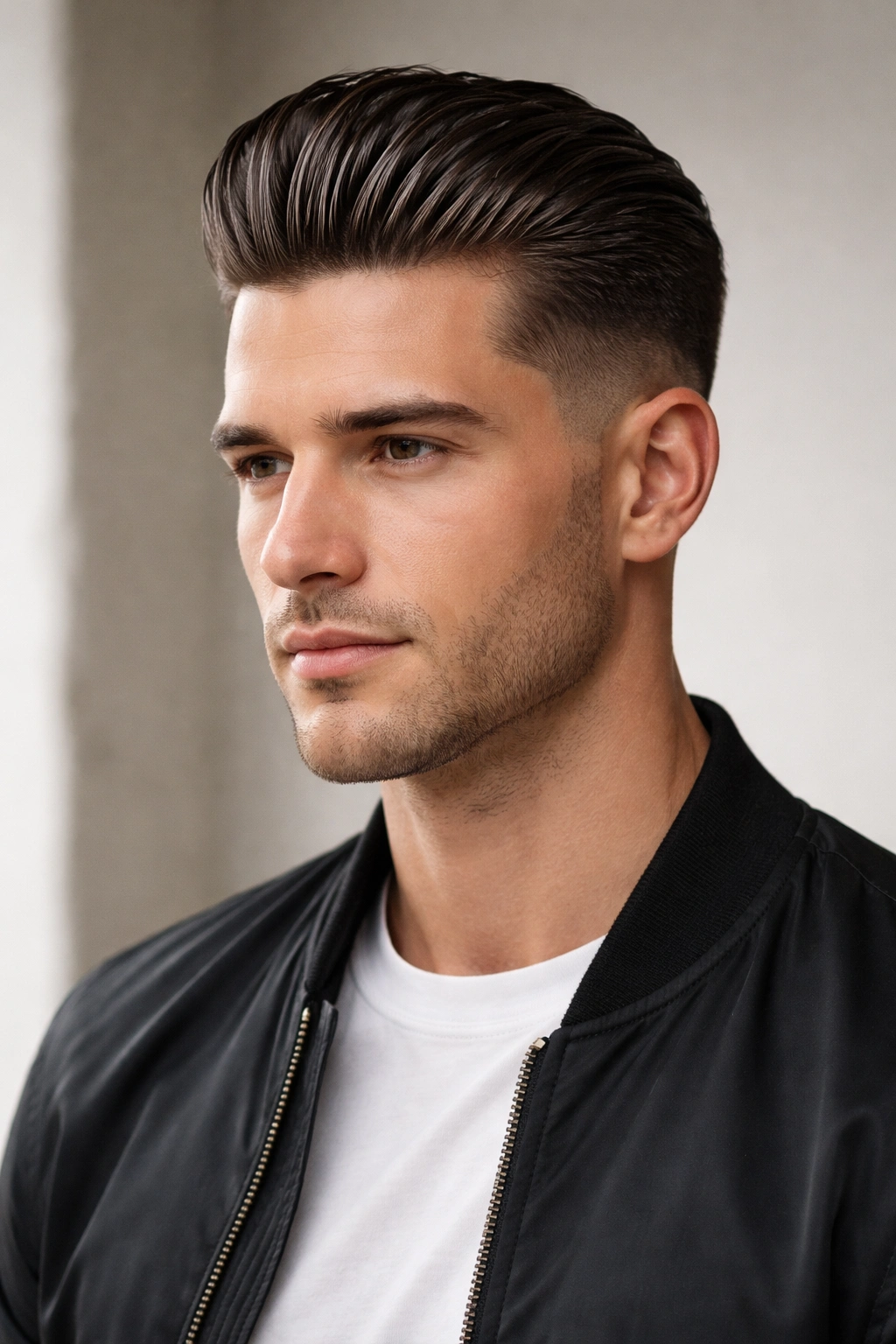
This style keeps substantial length on top—usually 3-5 inches or longer—and uses the temple fade to create crisp lines around the edges. The hair on top is typically slicked back with a pomade or gel, creating a polished, vintage-inspired look with modern clean edges.
The Vintage-Modern Fusion
This cut bridges classic men’s grooming with contemporary precision. The slicked-back top evokes 1950s sophistication, while the tapered temples with modern fade technique keep it current. It’s a style that says you appreciate heritage but you’re not stuck in the past.
Making It Work
- Keep the taper at the temples relatively clean but not necessarily skin-faded
- Ask for shorter layers underneath if your hair is very thick, so the slicked-back style doesn’t bulk up too much
- Plan for a side part or a line-up at the front to define where the style sweeps back
- Expect to maintain it with regular styling—this isn’t a wash-and-go haircut
This style works beautifully for men with straighter or wavy hair. If your hair is very curly, you’ll spend more time fighting your natural texture, which might not be worth the effort.
10. Temp Fade With Hard Part
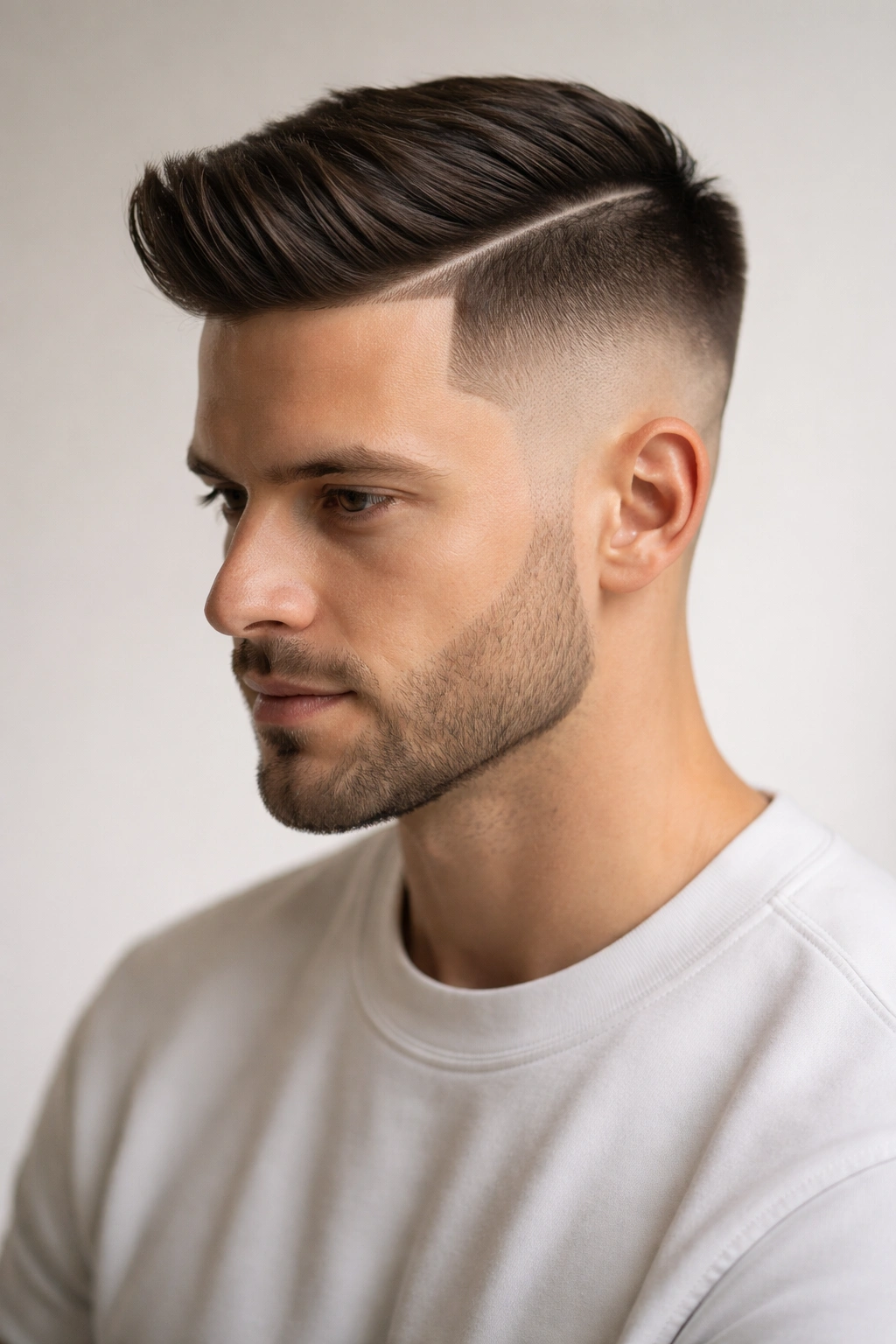
A hard part is a deliberately cut line through your hair, usually vertical or at an angle, that separates one side of your hair from the other. When combined with a clean temple fade, the hard part creates a striking graphic element that frames your face.
Why Add a Hard Part
The hard part serves multiple purposes. It creates a visual anchor point that makes your haircut feel intentionally designed. It adds graphic interest and defines your style clearly. It works particularly well with swept or side-styled hair because it gives your styling direction and purpose.
Design Considerations
- The hard part is typically cut into the hair on top, following a line from your hairline back toward your crown
- Can be subtle (barely visible) or dramatic (a clear, skin-level line)
- Works best paired with mid-length to longer hair on top (at least 2 inches)
- Requires touch-ups as your hair grows out
Worth knowing: A hard part ages quickly as your hair grows. If you want it to look sharp, you’ll need regular trims every 3-4 weeks. It’s a high-maintenance detail that announces you care about precision.
The hard part with a temple fade is a statement cut. It’s bold, graphic, and undeniably modern. It works beautifully for men who want their haircut to feel intentionally designed rather than casually accepted.
Final Thoughts

Choosing the right temple fade comes down to understanding what you want to communicate with your appearance. Do you want subtle polish, dramatic precision, or something in between? Do you have the time and money for regular maintenance, or do you need a style that grows out gracefully?
The best approach is to bring photos of styles you genuinely like to your barber and have a conversation about what’s realistic for your hair type, face shape, and lifestyle. A skilled barber can adapt any of these approaches to suit your specific situation. They’ll know whether a high fade or a low one flatters your proportions, whether skin-level lines suit you, and how to blend everything so it looks intentional rather than harsh.
Remember that your hair grows, and every style changes as it does. A skin fade looks freshest for 2-3 weeks, while a classic fade remains sharp for 4-5 weeks. Choose based on how often you’re willing to return to the chair and how you want to look at week three of your cut, not just day one.
The temporary fade area—those crucial inches at your temples—is where barber artistry truly shines. It’s the detail that separates a good haircut from a great one. Invest in finding a barber who understands this detail, and every style will look that much sharper.
