



A great haircut can be your secret weapon in a job interview. While what you say and how you present your qualifications matter most, the right hairstyle sends a subtle but powerful message before you even open your mouth — you’re professional, you care about details, and you take the opportunity seriously. Short hair, in particular, conveys confidence and decisiveness, but not all short styles read the same way in an interview setting.
The challenge is finding a short hairstyle that balances contemporary polish with approachability, one that works with your face shape, hair texture, and personal style without demanding constant fussing. You want something that looks intentional and well-maintained rather than like you just rolled out of bed, yet also something that feels authentically like you. The right short hairstyle can actually give you a psychological edge — people who feel confident in how they look tend to interview better because they’re not second-guessing their appearance.
What separates interview-ready short hair from casual everyday cuts is mostly about finishing details: sharp lines, intentional texture, strategic layering, and overall polish. These twelve styles range from ultra-sleek and traditional to modern and textured, so whether you prefer a more conservative corporate look or a contemporary creative aesthetic, you’ll find something that works. Each style here has been chosen because it photographs well on camera (important for video interviews), maintains its shape throughout the day, and signals professionalism across virtually every industry.
1. Classic Pixie Cut
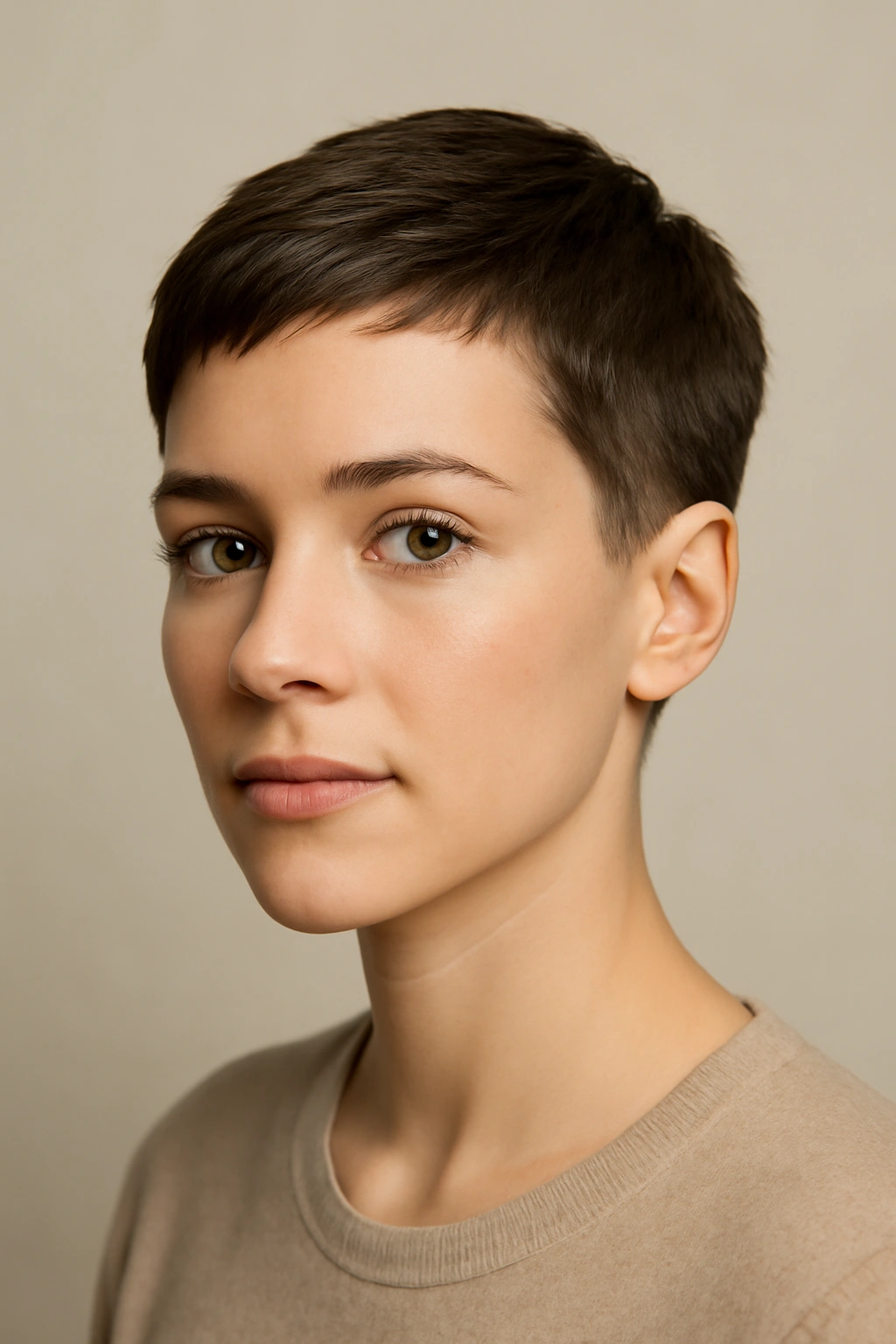
The pixie cut remains the gold standard for polished short hair because it communicates efficiency and confidence without looking severe. A true pixie features close-cropped sides (usually faded or undercut) with slightly more length on top — typically 1-2 inches — that can be styled smooth or with subtle texture depending on your preference. The style flatters most face shapes when executed correctly, as the proportions create the illusion of balance even on longer or angular faces.
Why This Works for Interviews
The pixie cut has a decades-long association with powerful women and refined elegance. It says you’re practical and low-maintenance without being lazy, and you’re confident enough to wear a style that demands a well-shaped head and clear skin (people assume anyone brave enough for a pixie has both). The simplicity reads as professional across every industry from law firms to creative agencies. It’s a cut that’s been worn by presidents, CEOs, and actors specifically because it conveys competence and self-assurance.
What You Need to Know Before Taking the Plunge
- Hair texture matters: Fine or straight hair photographs better in a pixie than very thick or curly hair, which can look diffuse without regular trims. If you have curly hair, you’ll need to commit to styling it smooth for interviews.
- Maintenance is non-negotiable: A pixie needs trimming every 4-6 weeks to maintain its shape. If you can’t commit to that schedule, this isn’t your cut.
- Face shape considerations: This works beautifully on oval and round faces. On square or angular faces, ask your stylist for slightly more softness around the edges rather than a severe geometric cut.
- Styling flexibility: A pixie can be slicked back and smooth for a formal look or textured and tousled for a more creative vibe — choose whichever feels authentic to your industry.
Pro tip: Ask your stylist to keep the top slightly longer than typical (closer to 2 inches) so you have more styling options and the cut doesn’t feel too drastic if you decide you want to grow it out later.
2. Textured Pixie with Choppy Layers
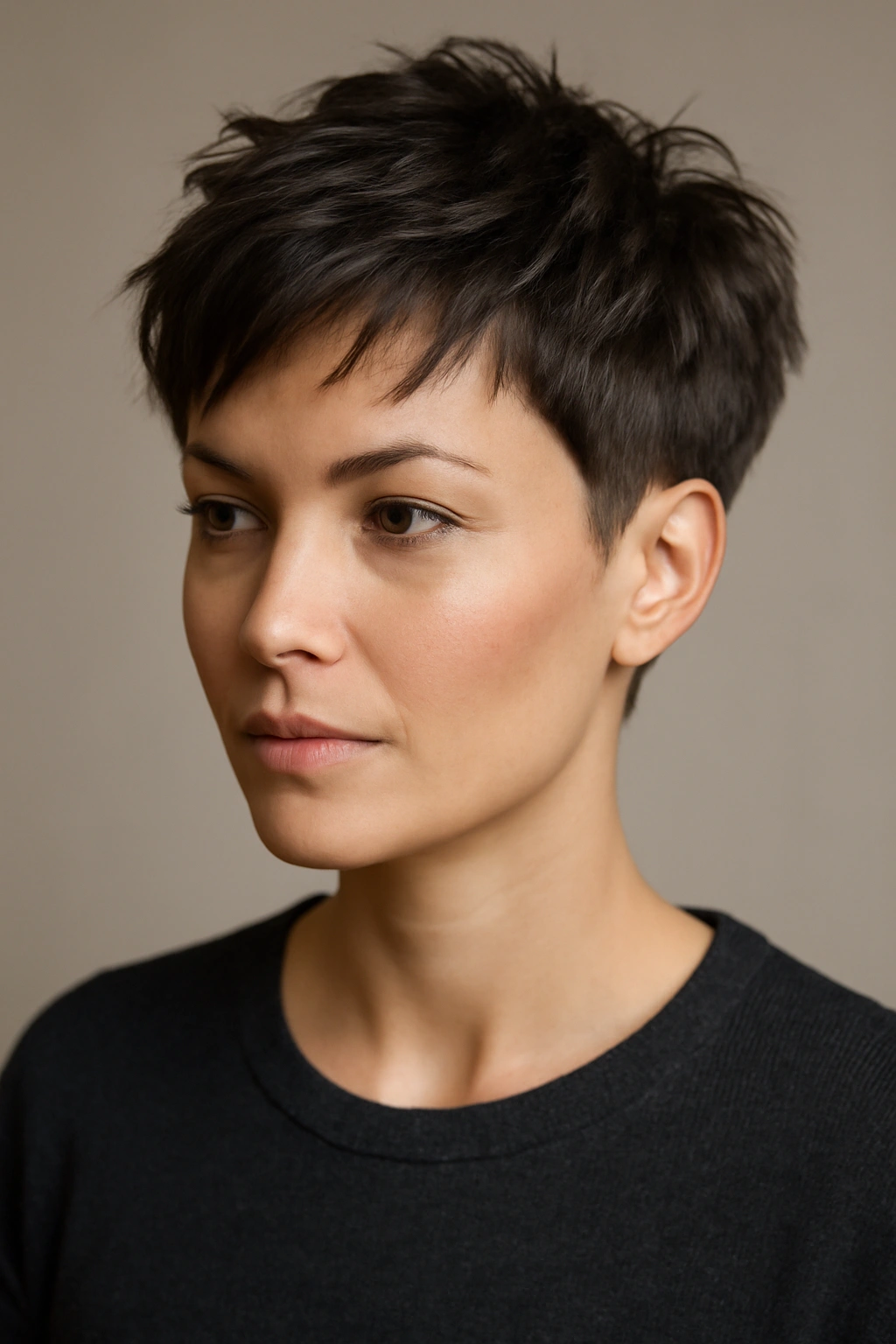
This modern variation on the classic pixie adds movement and dimension through choppy, deliberately uneven layers on top. Instead of a sleek, uniform length, the cut features shorter and longer strands mixed together, creating visual texture that catches light beautifully. The sides remain tight (usually faded), but the top becomes an intentional, architectural piece that’s clearly styled rather than simply neat.
Why This Works for Interviews
The textured pixie signals that you’re current and creatively confident without being unprofessional. It’s frequently seen in creative industries, tech, marketing, and entertainment because it reads as modern and thoughtful. This cut says you pay attention to style details and understand proportion and composition — exactly what you want to communicate in industries where aesthetic sense or forward thinking matters.
Key Features to Discuss With Your Stylist
- Length variation: The variation between shortest and longest pieces should be 1-3 inches — enough to create visible dimension but not so extreme it looks shaggy.
- Fade specificity: The fade on the sides should be clean and precise, not grown-out or blurred. Sharp lines make the textured top read as intentional rather than messy.
- Styling products: You’ll likely need a light texturizing spray or matte paste to enhance the choppy effect. Practice styling before your interview so you know how it looks its best.
- Growth timeline: You’ll want to trim every 4 weeks to maintain the intentional texture. As it grows, it quickly reads as unkempt rather than textured.
Worth knowing: This cut works especially well if you have naturally straight hair or hair that’s wavy enough to hold texture spray but not curly enough to be unpredictable.
3. Sleek Bob
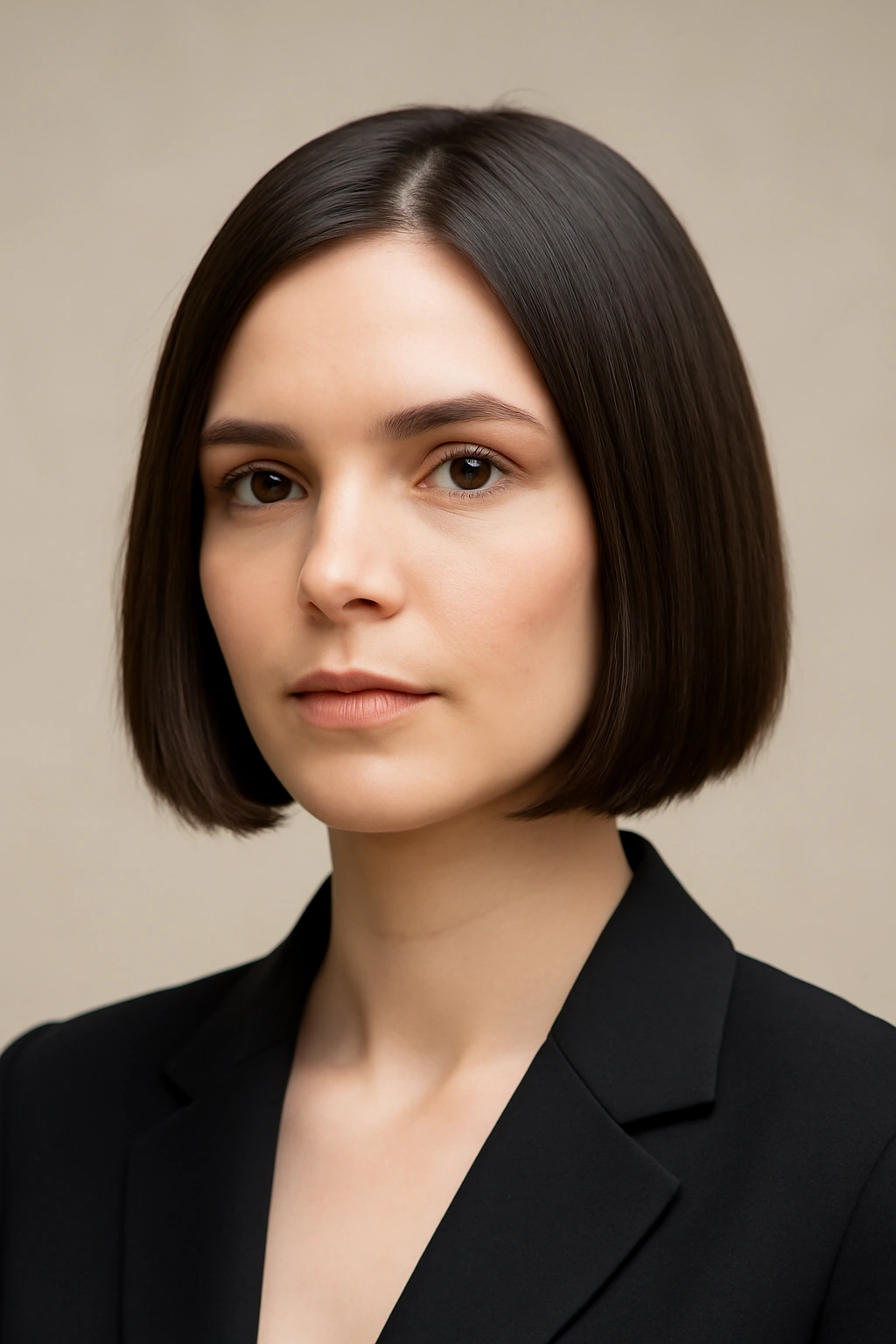
A polished short bob — chin-length or slightly longer — is the definition of professional elegance. A true interview-ready bob features blunt lines, a precise cut that’s exactly the same length all the way around (or with a subtle graduated texture), and perfectly smooth styling. This isn’t a tousled, textured bob; it’s a sharp, refined geometric shape that looks intentional and carefully maintained.
Why This Works for Interviews
The bob is the hairstyle equivalent of a well-tailored blazer. It works across every single industry and reads as put-together and professional without feeling conservative or dated when styled correctly. A sleek bob demonstrates that you understand professional presentation and that you’ve made an intentional choice about your appearance. It’s elegant without being overdone, and it photographs exceptionally well both in person and on video.
How to Achieve and Maintain the Look
- Cutting precision: The bob must be cut to exact specifications. A difference of even a half-inch can make it look uneven. Find a stylist who specializes in bobs and is willing to spend time getting it perfect.
- Styling requirements: You’ll need to blow-dry and likely use a straightening iron to get that glass-smooth finish. If you have naturally curly or wavy hair, a smoothing serum or anti-frizz cream is essential.
- Trim frequency: Plan for trims every 5-6 weeks to maintain the blunt edge. A bob looks great only when the line is sharp; once it gets fuzzy or grows unevenly, it loses its polish.
- Texture alternatives: If perfectly sleek feels too severe for your industry, ask your stylist for a subtle internal texture that keeps the clean exterior line while adding softness and movement within.
Pro tip: Bring a reference photo of exactly the bob you want. Even stylists experienced with bobs can interpret “sleek bob” differently; a clear visual prevents miscommunication.
4. Textured Bob With Movement
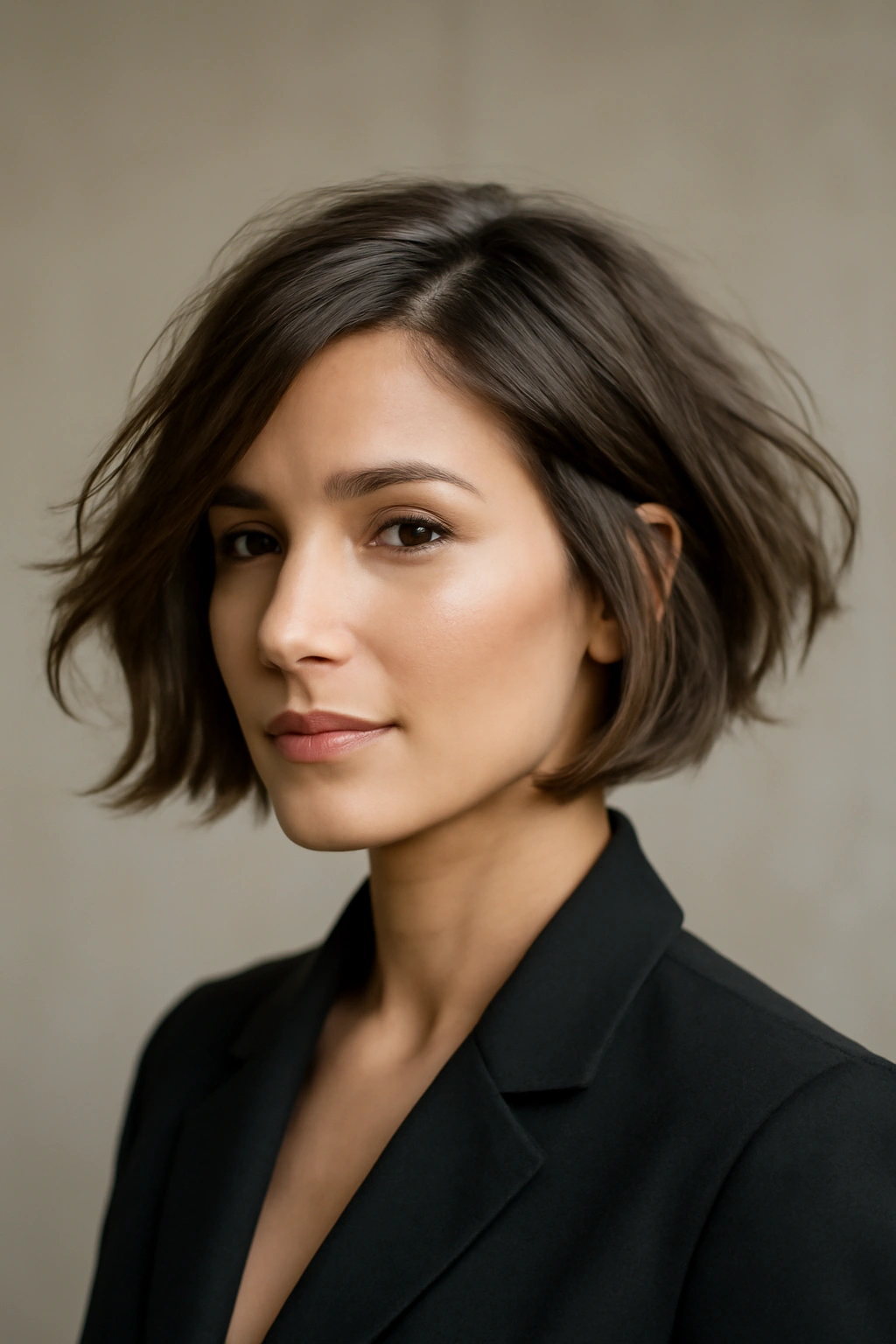
This version of the short bob adds internal layers and texture while keeping the overall silhouette defined and professional. The exterior line remains clean and intentional, but the interior is choppy and movement-forward, creating a style that’s polished yet contemporary. It works with natural wave or curl rather than fighting against it.
Why This Works for Interviews
The textured bob signals that you’re professionally grounded but also current and approachable. It reads as confident without being severe, creative without being chaotic. This style has become increasingly popular in business settings because it’s professional enough for formal environments but contemporary enough that it doesn’t read as trying too hard.
Building the Right Textured Bob
- Layer placement: Layers should be concentrated inside and around the face, not scattered throughout the cut. This maintains the clean silhouette while creating texture exactly where it adds dimension.
- Hair type suitability: This cut works beautifully with straight, wavy, or lightly curly hair. With very curly or coily hair, texture can quickly read as undefined rather than intentional.
- Styling method: You can blow-dry with a round brush for a polished finish, or air-dry with a texturizing product for a more relaxed vibe depending on your workplace culture.
- Product commitment: You’ll probably need a texturizing spray or light styling cream to enhance the movement and keep pieces separated and defined.
Insider note: The beauty of this cut is it actually looks better if you don’t style it to perfection. Some texture and slight movement is exactly the point.
5. Blunt Fringe With Short Hair
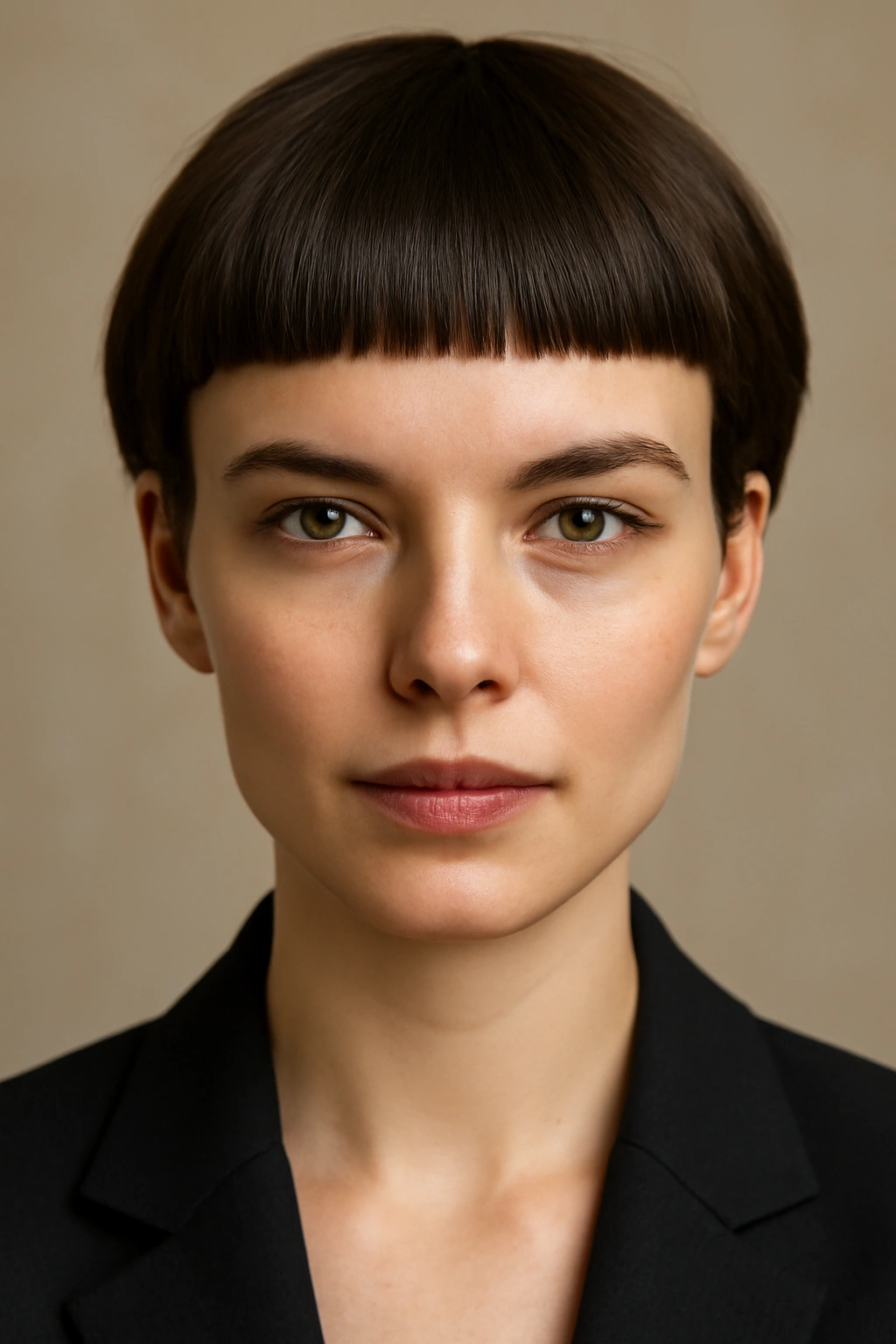
Adding a blunt fringe (or bangs) to a short cut creates instant visual interest and a more fashion-forward appearance. The fringe sits across the forehead, typically covering the eyebrows or just above them, and pairs well with pixie cuts, short bobs, or other short styles. The key is that it’s blunt and intentional, not wispy or uncertain.
Why This Works for Interviews
A well-executed blunt fringe reads as bold and sophisticated, especially in creative fields like design, fashion, media, or marketing. It shows you’re willing to make a style statement and that you understand proportion and frame. In more conservative industries, this only works if the rest of your appearance is exceptionally polished and the fringe complements your face shape specifically.
What Makes a Professional Fringe
- Length precision: The fringe should hit at eyebrow level or just above, creating a strong horizontal line. A fringe that’s too long looks like you haven’t trimmed it; one that’s too short looks choppy.
- Texture consideration: A truly blunt fringe without texture reads most polished and professional. Choppy or textured bangs read more casual or editorial, which may or may not suit your industry.
- Face shape: A blunt fringe works beautifully on oval, round, and heart-shaped faces. On square faces, it can emphasize a strong jaw in a way that’s powerful but not always what you want in an interview.
- Maintenance reality: You’ll need to trim the fringe every 2-3 weeks. Bangs grow quickly and look unprofessional the moment they get too long.
Real talk: A blunt fringe is a significant commitment and not easily grown out. Make sure you genuinely love how it looks on you before you commit to it.
6. Side-Swept Short Hair
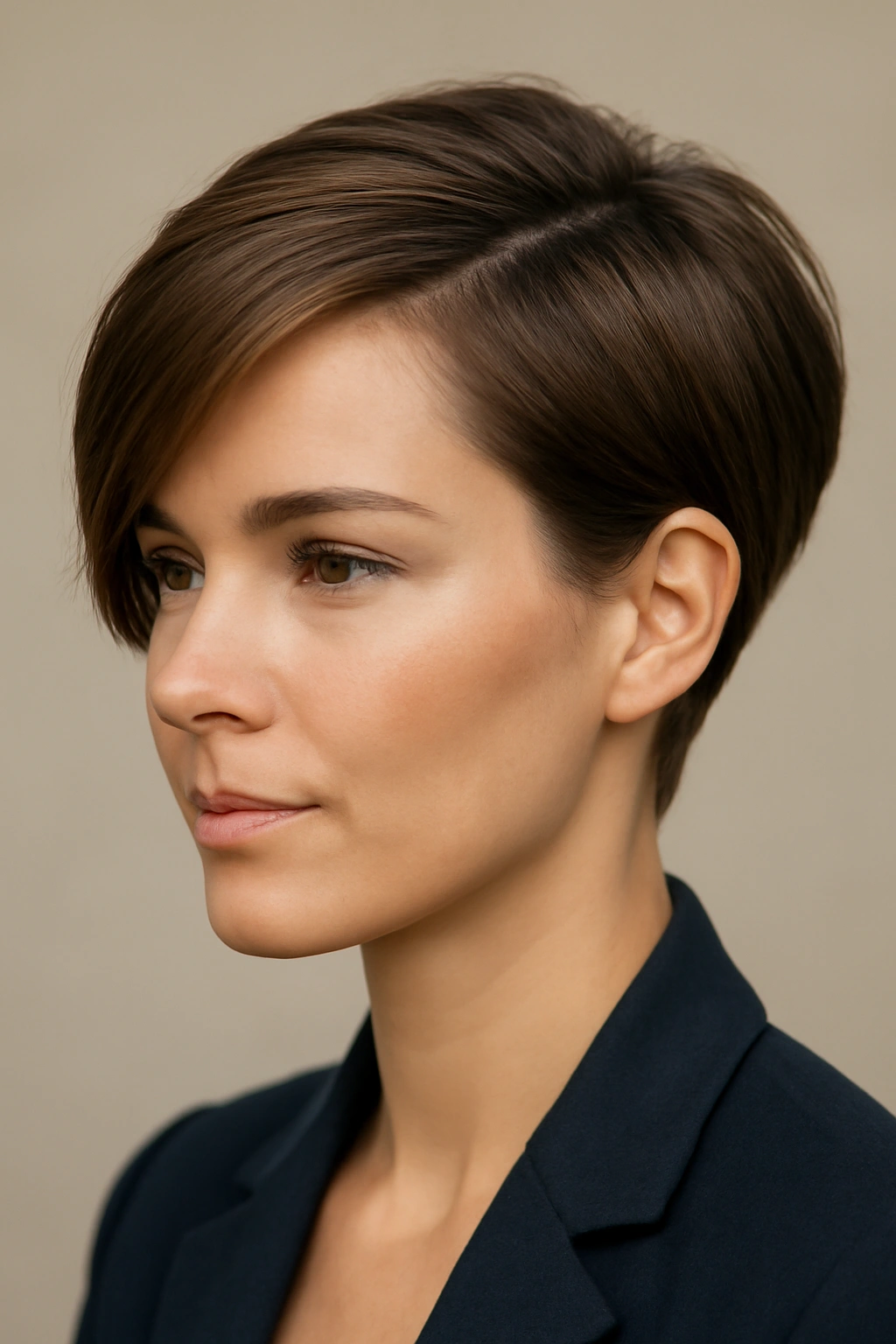
This style features short overall length (typically 2-3 inches) with significant length variation from one side of the head to the other. The front is noticeably longer than the back, creating a diagonal line that sweeps across the head. It’s modern and dramatic without being unprofessional when cut and styled correctly.
Why This Works for Interviews
A side-swept short cut reads as confident and design-conscious. It says you’re thoughtful about proportions and willing to take a minor style risk — exactly the kind of thing that appeals in creative industries. The sweep also flatters most face shapes because it creates angle and softness simultaneously depending on which direction you sweep it.
The Architecture of a Professional Side-Sweep
- The ratio: Typically the short side (back) is around 1-1.5 inches, while the swept side front is 3-4 inches. This differential is what creates the distinctive sweep rather than just being generally short.
- Fade execution: The transition from short to long should be either a clean, precise fade (very modern) or a soft, blended transition (more approachable). Avoid an awkward in-between where it looks like it just hasn’t grown in.
- Styling the sweep: You’ll blow-dry the longer side forward and across, using a small amount of texturizing spray to hold it in place. The styling is part of what makes this cut work.
- Face shape compatibility: This works well on oval and angular faces. On very round faces, ask your stylist about the proportion — sometimes the short side needs to be slightly longer to balance proportions.
Worth noting: This is a confident cut that definitely makes a statement. Make sure it aligns with your industry’s culture before committing.
7. Undercut Pixie With Geometric Design
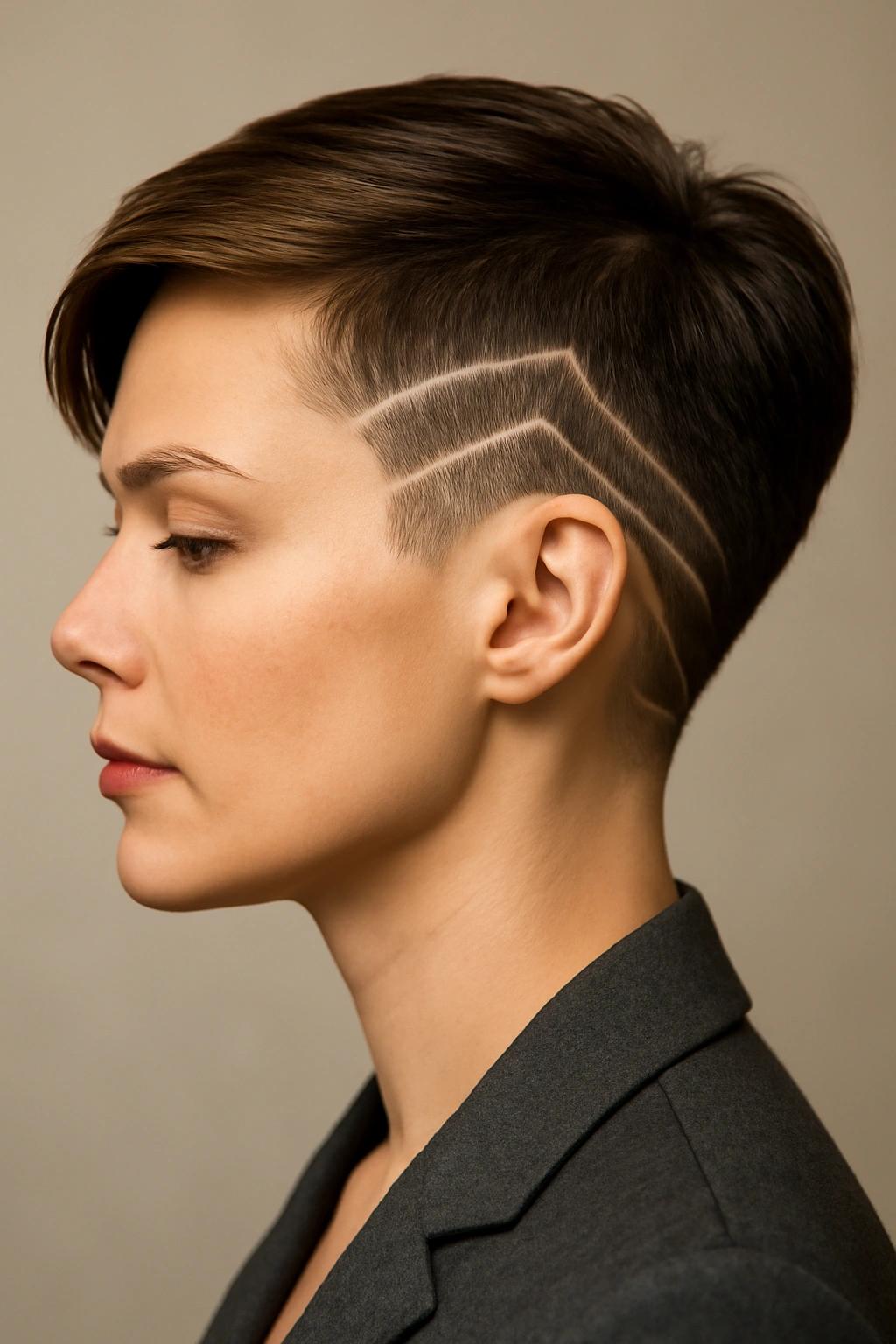
Taking the undercut concept further, this style features a traditional pixie on top paired with an intentionally undercut side or back that’s clipped very short (or faded to skin). Some versions include geometric designs, patterns, or lines carved into the undercut. When styled with the top covering the undercut, it looks like a standard pixie; when the top is swept back or styled up, the undercut becomes a design statement.
Why This Works for Interviews
This style works specifically in creative industries where boldness is valued: design, entertainment, fashion, media, tech startups. It signals that you’re innovative and confident enough to take risks. The beauty is that it reads as professional and neat when the undercut is covered, but reveals personality and creativity when you style it to show the design. You can choose to emphasize the statement or downplay it depending on the specific interview or workplace.
Understanding the Undercut Option
- Coverage versatility: When combed down, the longer top completely covers the undercut, making this look like a conventional style. When swept back or styled creatively, the geometric design becomes visible and becomes a talking point.
- Geometry specifics: Popular designs include simple lines, patterns, or shaved portions that create visual interest. Keep designs relatively minimal and well-executed rather than overly complex or trendy.
- Maintenance needs: You’ll need to trim the top regularly (every 4-5 weeks) to keep the style intact, and potentially touch up the undercut fade every 3-4 weeks depending on how dark your hair is and how noticeable hair regrowth becomes.
- Professional assessment: Before getting this cut, honestly assess whether your specific workplace will appreciate it or be put off by it. This isn’t appropriate for conservative industries.
Pro tip: Test whether you love how the longer top covers the undercut before you commit to a permanent design. Ask your stylist if they can show you with clipping or temporarily styling to see the full effect.
8. Taper Fade With Textured Top
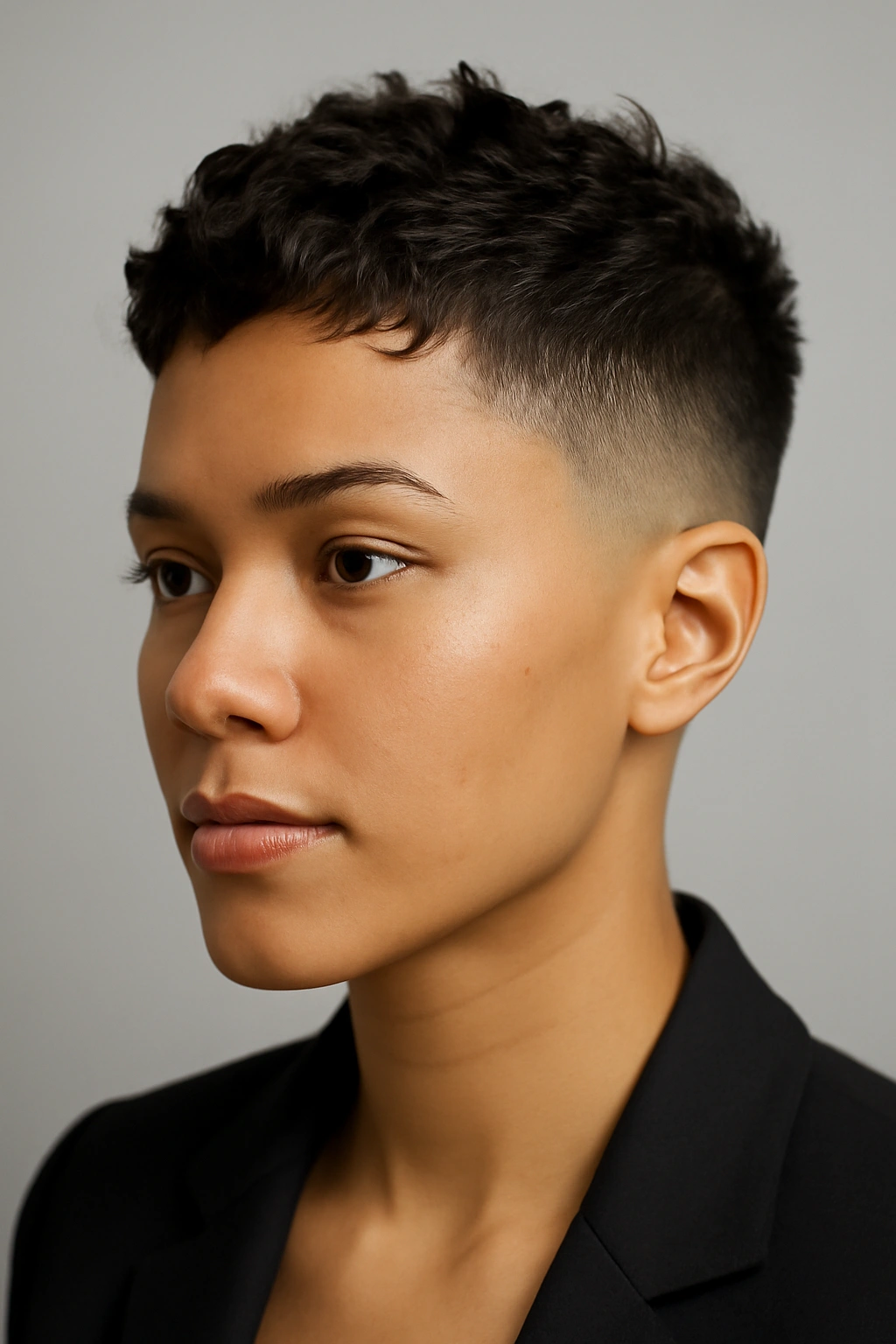
This barbershop-style cut features a gradual fade from very short on the sides to longer on top, with the top styled in textured waves or curls rather than lying flat. It’s a modern, fashion-forward style that’s gained acceptance in professional settings, especially in creative and tech industries. The fade can be skin-tight or tapered to different lengths depending on preference.
Why This Works for Interviews
The taper fade communicates that you understand contemporary men’s and women’s styling and aren’t afraid of a style that’s directional and current. It reads as confident and self-assured, particularly in industries that value innovation or creativity. The textured top adds dimension and personality while the clean fade maintains precision and polish.
Getting the Taper Right
- Fade language: When discussing with your stylist, specify whether you want a low fade (starts above the ear), mid fade (at the ear level), or high fade (well above the ear). Each creates a different visual impact.
- Top length and texture: The top should be long enough to work with natural wave or be styled with product into texture. Typically 2-4 inches depending on hair density and desired look.
- Styling products: A light pomade, matte clay, or texturizing spray will help define waves and keep pieces separated. The texture should look intentional, not like the hair just dried that way.
- Growth and maintenance: This style needs trims every 3-4 weeks to maintain the fade sharpness and the proportional difference between sides and top.
Insider note: This style looks exceptional on people with wavy or curly hair that naturally wants to texture. If you have stick-straight hair, you’ll need to style with product to get the textured effect.
9. Grown-Out Pixie (Pixie Bob Hybrid)
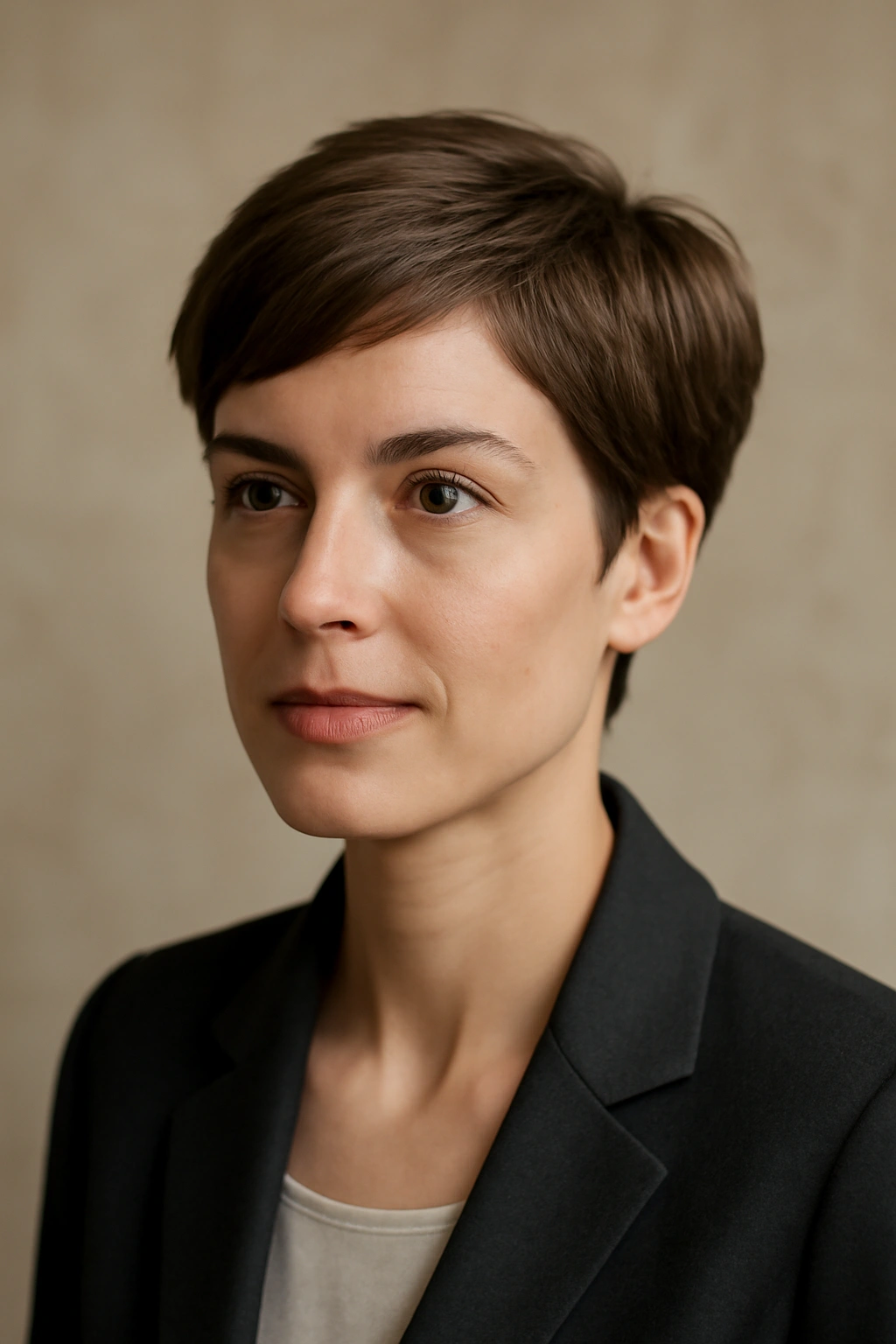
As a pixie grows out, it creates an interesting in-between stage that can actually be styled as a deliberate look: short enough to maintain pixie’s sophistication but long enough to have slightly more styling flexibility. This style embraces the growth stage rather than fighting it, with the top reaching 2-3 inches while the sides remain tapered. It’s a bridge between a pixie and a bob.
Why This Works for Interviews
The grown-out pixie reads as effortlessly polished and practical. It says you have confidence in your appearance without needing everything to be perfect, which appeals in industries that value substance over style obsession. It’s also perfect if you’re committing to short hair but not quite ready for an extreme cut. The style maintains the sophistication of a pixie while offering more styling versatility.
Styling the Grown-Out Pixie
- Shape maintenance: Even though it’s longer, it still needs trims every 5-6 weeks to maintain the intentional proportion between the tapered sides and longer top.
- Styling options: You can style it sleek and smooth for a formal look, or add texture and tousle it for something more relaxed. The versatility is one of its best features.
- Product flexibility: Depending on how you style it, you might need only a light styling cream or serum, or you could add more texture with spray or paste for a fuller look.
- Hair type: This works beautifully with straight, wavy, or slightly curly hair. With very curly or coily hair, the tapered sides can look sparse unless you have significant hair density.
Worth knowing: This is a great style to maintain while you’re deciding whether you want to commit to very short hair long-term or start growing it back out.
10. Slicked-Back Buzz With Soft Waves
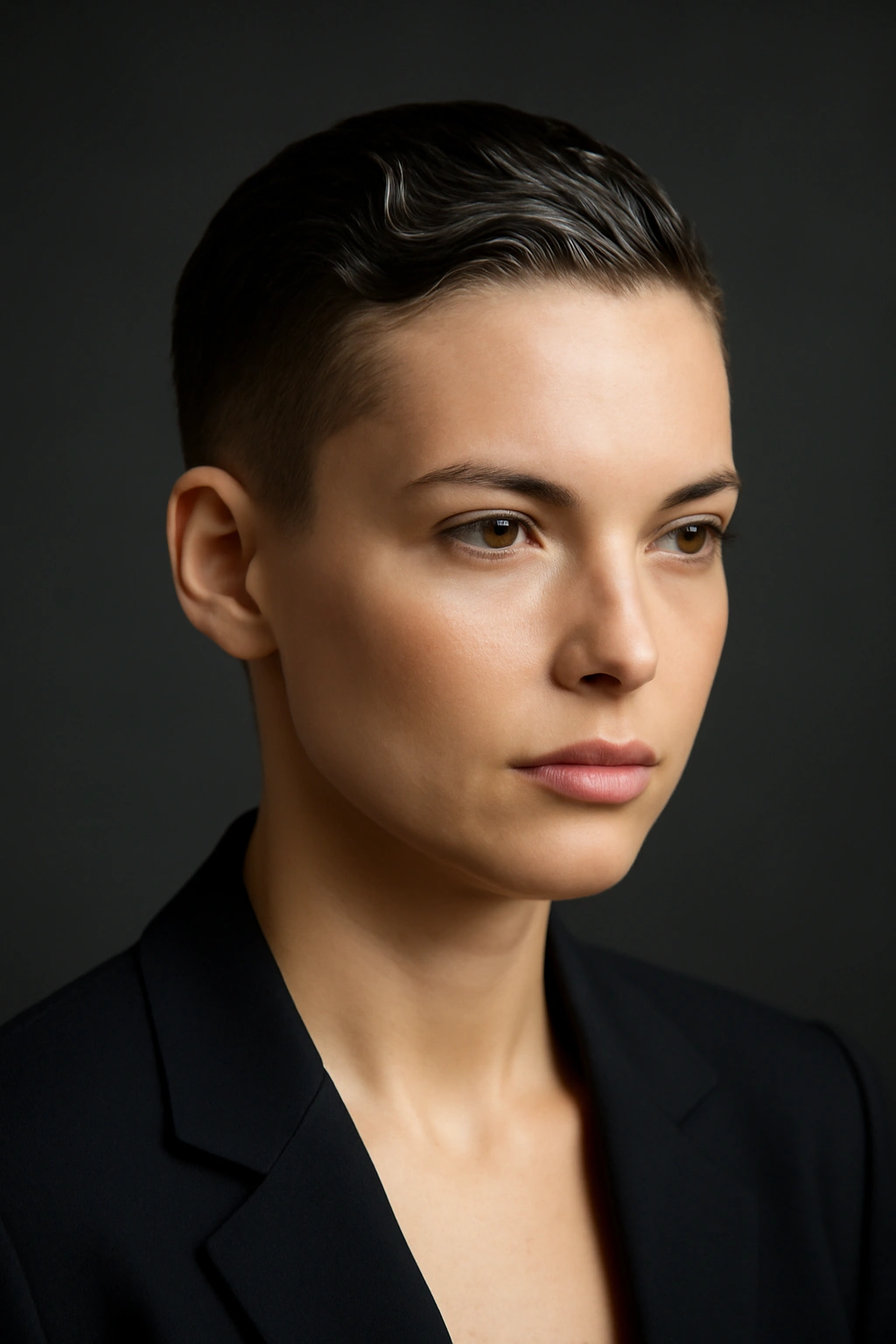
A very close buzz or very short cut on the entire head (around ½ to 1 inch all over) that’s styled slicked back with a glossy product creates an ultra-modern, architectural look. Instead of any significant styling or texture, the emphasis is on polish and a wet, sleek aesthetic. It’s an intentional, graphic style.
Why This Works for Interviews
This style reads as supremely confident and design-forward. It works particularly well in tech, creative, fashion, and progressive corporate environments. The slicked-back styling reads as intentional and sophisticated rather than just having short hair. It’s a statement style that works only in environments that appreciate risk-taking and contemporary aesthetics.
Executing the Look Professionally
- Cut specificity: Ask for an all-over buzz or extremely short cut where the entire head is the same length. The key is precision — even ¼ inch of difference becomes noticeable.
- Styling product: A glossy pomade or wet-look gel is essential. The wet, slicked-back aesthetic is what makes this polished rather than just severely short.
- Hair health: Buzzing or cutting extremely short means hair damage becomes less of a concern (you’re removing damaged ends frequently), but scalp health becomes more important. Keep your scalp clean and moisturized.
- Regrowth management: This style needs maintenance every 2-3 weeks as hair grows out and the neat appearance becomes fuzzy.
- Who this suits: This works best on people with good head shape and confidence in their appearance. It’s also easier to maintain with very thick or curly hair that would otherwise be difficult to manage short.
Real talk: This is the most confident, statement-making style on this list. Only choose it if you’re genuinely excited about it and your industry supports it.
11. Layered Shag
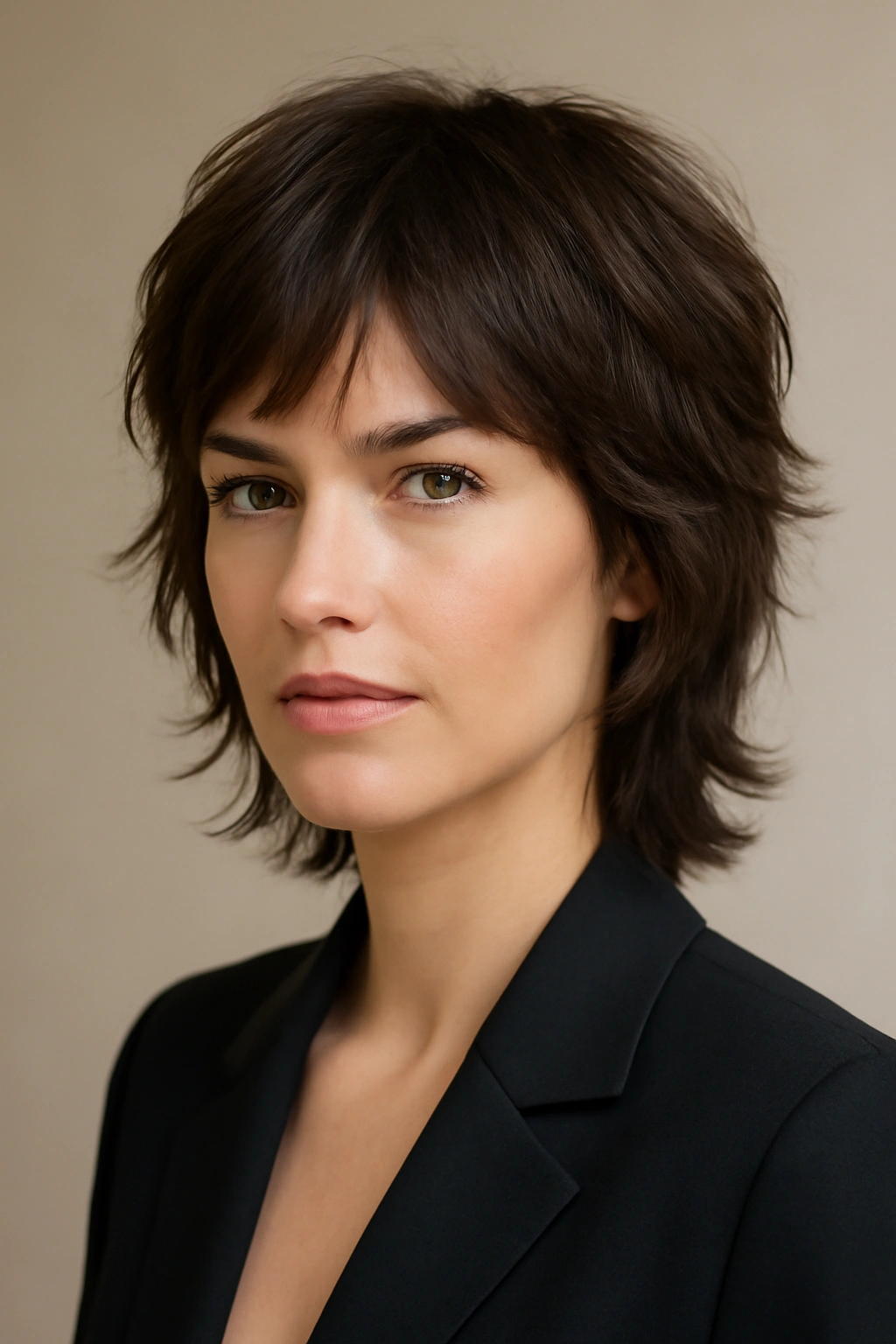
A modern shag cut features choppy, deliberately textured layers throughout, typically at varying lengths creating movement and dimension. It’s inspired by vintage shag cuts but updated for contemporary styling. Layers can be subtle throughout the entire head or more concentrated around the face and crown.
Why This Works for Interviews
The modern shag signals that you’re creative and comfortable with texture and movement rather than requiring perfection. It reads as contemporary and fashion-aware, particularly in creative industries. The shag says you have personality and style confidence, which appeals in fields like design, fashion, entertainment, media, and progressive workplaces. It’s approachable without being casual.
Shag Specifics for a Professional Look
- Layer density: Professional versions have enough texture to be interesting but not so many layers that the cut looks overly choppy or high-maintenance. Aim for strategic layering rather than layers everywhere.
- Length range: A professional shag typically ranges from 2-4 inches, which is short enough to read as intentional but long enough to have styling options.
- Styling approach: This cut looks better with some intentional styling rather than completely flat. A texturizing spray, light product, or even strategic blow-drying with a round brush enhances the designed texture.
- Hair texture: This works beautifully with straight, wavy, or curly hair. With very straight hair, you’ll need product to create texture. With curly hair, the shag is extremely flattering and relatively easy to maintain.
Pro tip: Bring reference images of shags you love, as the style is broad enough that “shag” alone doesn’t specify what you’re actually going for.
12. Asymmetrical Bob
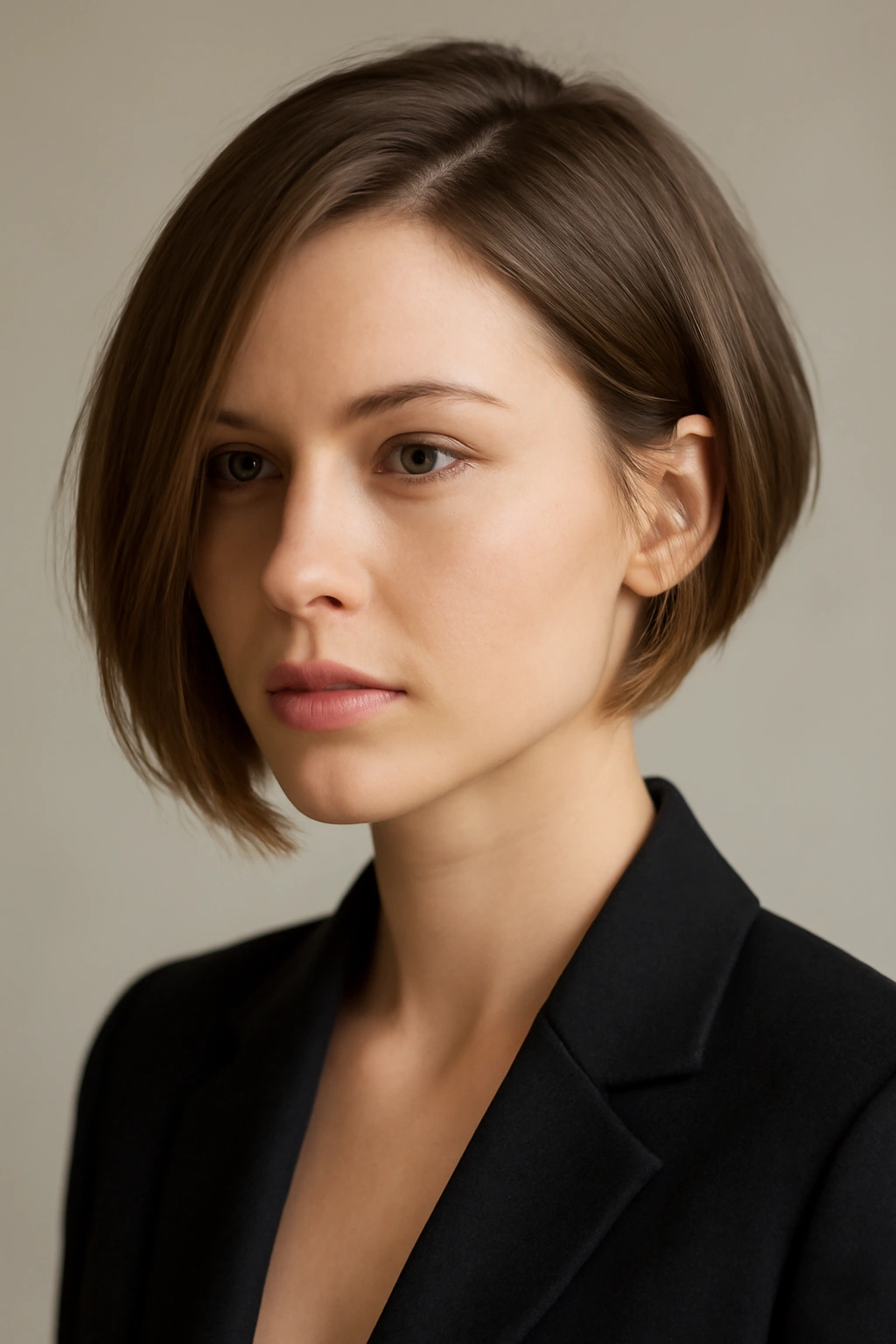
An asymmetrical cut is longer on one side than the other, typically with the front longer than the back or vice versa. When paired with a short length (around ear-length or shorter), it creates a modern, directional look that’s clearly intentional and designed. The longer side can be swept across the face or tucked behind the ear depending on styling.
Why This Works for Interviews
An asymmetrical bob reads as contemporary, confident, and design-aware. It shows you have a sense of proportion and aren’t afraid of unconventional shapes. This style works well in creative industries and any workplace that values forward-thinking and contemporary aesthetics. The asymmetry adds interest without being chaotic; it’s structured and intentional.
Designing Your Asymmetrical Cut
- Length differential: The difference between short and long sides should be meaningful — typically at least 2-3 inches — so the asymmetry is obvious and intentional rather than looking like a mistake.
- Face framing: The longer side works beautifully to frame the face, softening features and adding dimension. Consider which side of your face you prefer showing forward and make that the longer side.
- Styling options: You can style the longer side forward across the face or tuck it behind the ear depending on the day and your mood. This flexibility is one of the style’s great advantages.
- Precision cutting: Like all bobs, this needs an experienced stylist who understands proportion and can execute clean lines. The asymmetry only reads sophisticated when the lines are clean and intentional.
- Trim frequency: Plan for trims every 5-6 weeks to maintain the length differential and keep the line sharp.
Worth noting: This style works beautifully on oval and rectangular face shapes. On very round or square faces, check with your stylist that the proportion works for your features before committing.
Final Thoughts
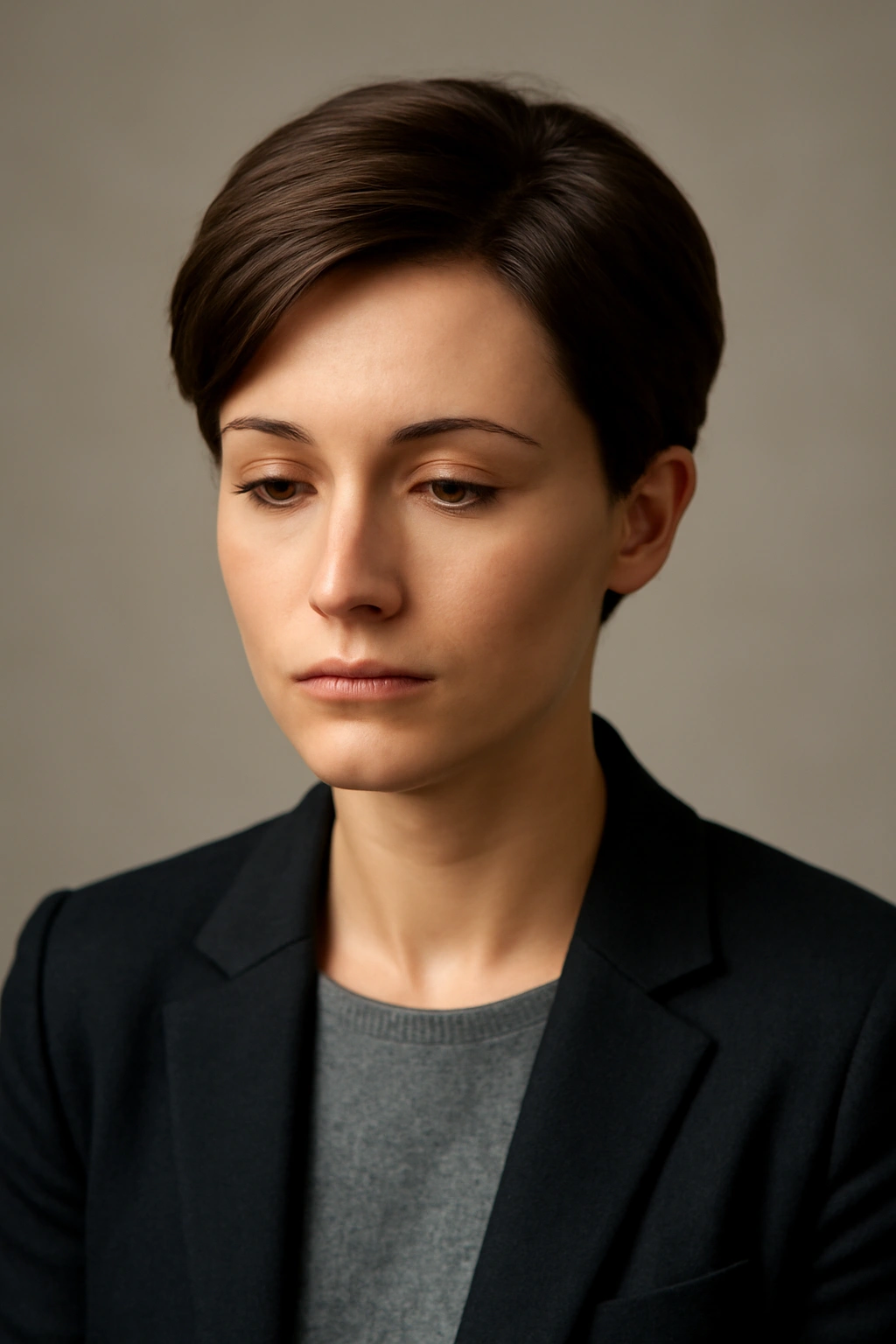
The best interview hairstyle is one that makes you feel confident, reads as polished and intentional, and aligns with your industry’s standards. Short hair offers remarkable versatility — from ultra-conservative classic pixies to bold undercuts and asymmetrical statements — so there’s genuinely a professional option for every preference and face shape.
What ties all of these styles together isn’t perfection; it’s intentionality. Whether you choose a sleek bob, a textured pixie, or a modern shag, the key is that your hair looks like you made a deliberate choice about it rather than just having decided not to deal with longer hair. The maintenance is worth the psychological boost of knowing you look your absolute best.
Remember that finding the right stylist matters as much as choosing the right style. Bring clear reference photos, discuss your lifestyle and styling commitment honestly, and don’t be afraid to ask questions about maintenance and what the cut will look like as it grows out. Most importantly, choose a style that makes you feel like the best version of yourself — that confidence will shine through in your interview far more than any particular hairstyle ever could.
