



The middle part has become one of the most flattering ways to frame your face with short hair. Unlike longer hairstyles where the middle part can feel heavy or overly dramatic, short hair with a center partition creates an effortless, sophisticated look that suits multiple face shapes and hair textures. The key is finding the right balance between length, texture, and volume to make this classic styling choice work for your specific features.
Short hair gives you freedom in ways longer styles simply can’t match—you can experiment with angles, layers, and texture without the commitment or the daily styling demands. A middle part in short hair also emphasizes your cheekbones, jawline, and overall facial structure, which is why it’s become a go-to choice for anyone wanting a more polished, intentional appearance. The good news is that there are far more variations on this trend than most people realize, each suited to different hair types, face shapes, and personal style preferences.
1. Textured Pixie With Center Part
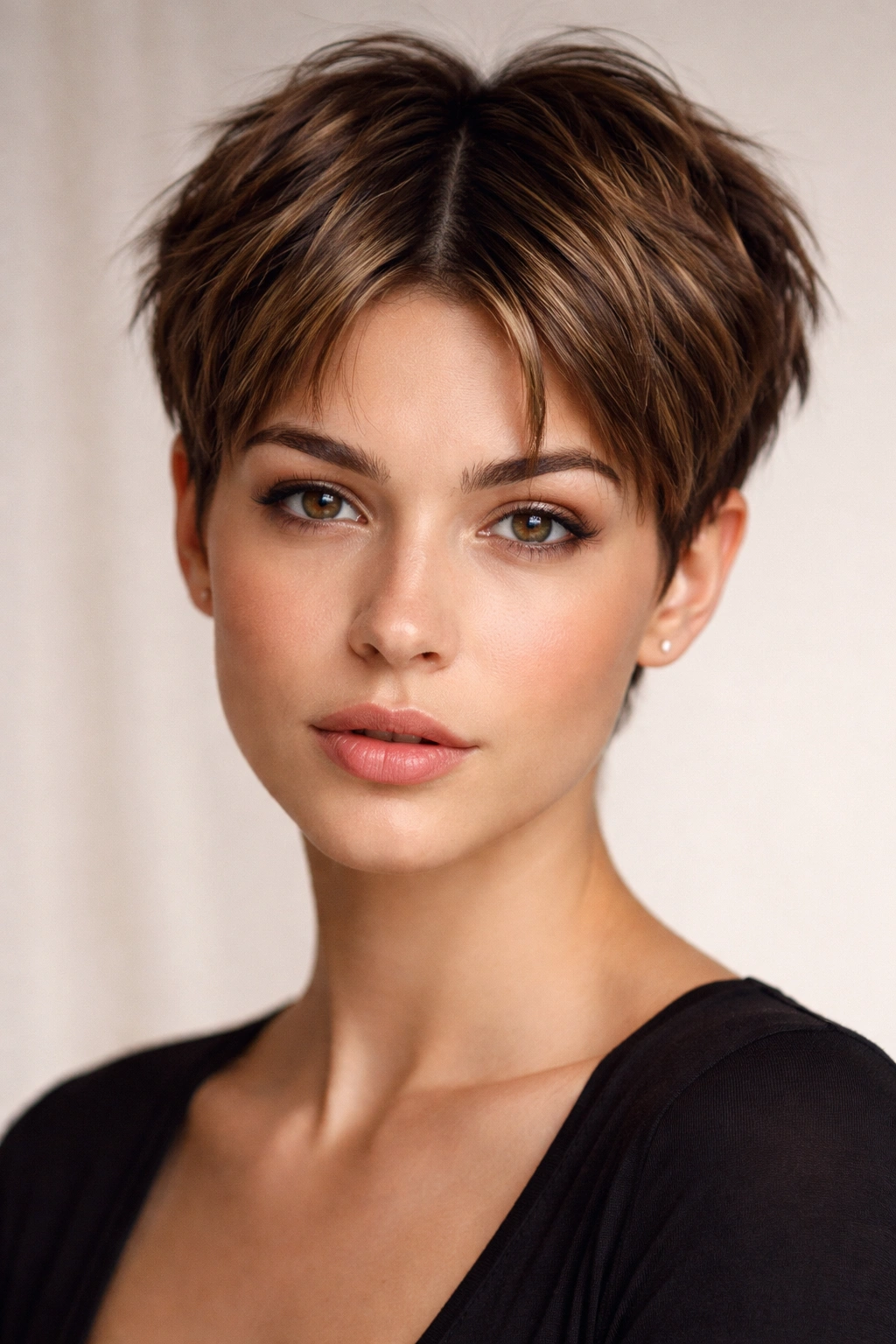
A textured pixie with a middle part challenges the conventional “neat and sleek” pixie aesthetic by introducing deliberate piece-y, choppy layers throughout the crown and sides. This style keeps the overall length short—usually between one and two inches on top—but uses shorter layers on top of longer base layers to create dimension and movement. The center part naturally draws attention to these textured pieces, making them a focal point rather than hiding them.
Why This Look Works for Versatile Styling
The beauty of a textured pixie is that it can swing from polished to undone depending on how you style it. With some texture cream or a light pomade worked through damp hair, you can create a tousled, lived-in vibe that reads casual and approachable. On other days, smoothing it down with a light gel or blow-drying it straighter gives you a more structured, intentional appearance. This versatility means you’re not locked into one styling routine—you can adapt the look to match your mood or the occasion.
The textured layers also add volume naturally, which is especially beneficial if you have fine or thin hair. Even without blow-drying, the choppy layers catch light differently and create the illusion of thicker, fuller hair. The middle part emphasizes this texture rather than flattening it, so you’re actively working with your hair’s natural movement instead of fighting against it.
Styling Tips and Maintenance
- Apply a lightweight texture cream to damp hair and scrunch it upward toward the crown for a tousled finish
- Blow-dry with a round brush if you want more structure and smoothness through the layers
- Use a fine-tooth comb to distribute your hair evenly down the middle part line for precision
- Schedule trims every four to five weeks to maintain the layered texture and prevent the style from growing out shapeless
- Sleep on a silk pillowcase to reduce friction and keep your texture intact overnight
Pro tip: If your textured pixie starts feeling flat or one-dimensional after a few weeks, ask your stylist to re-layer it with even more texture on your next cut. The difference between a tired-looking pixie and a vibrant one is often just fresher, sharper layers.
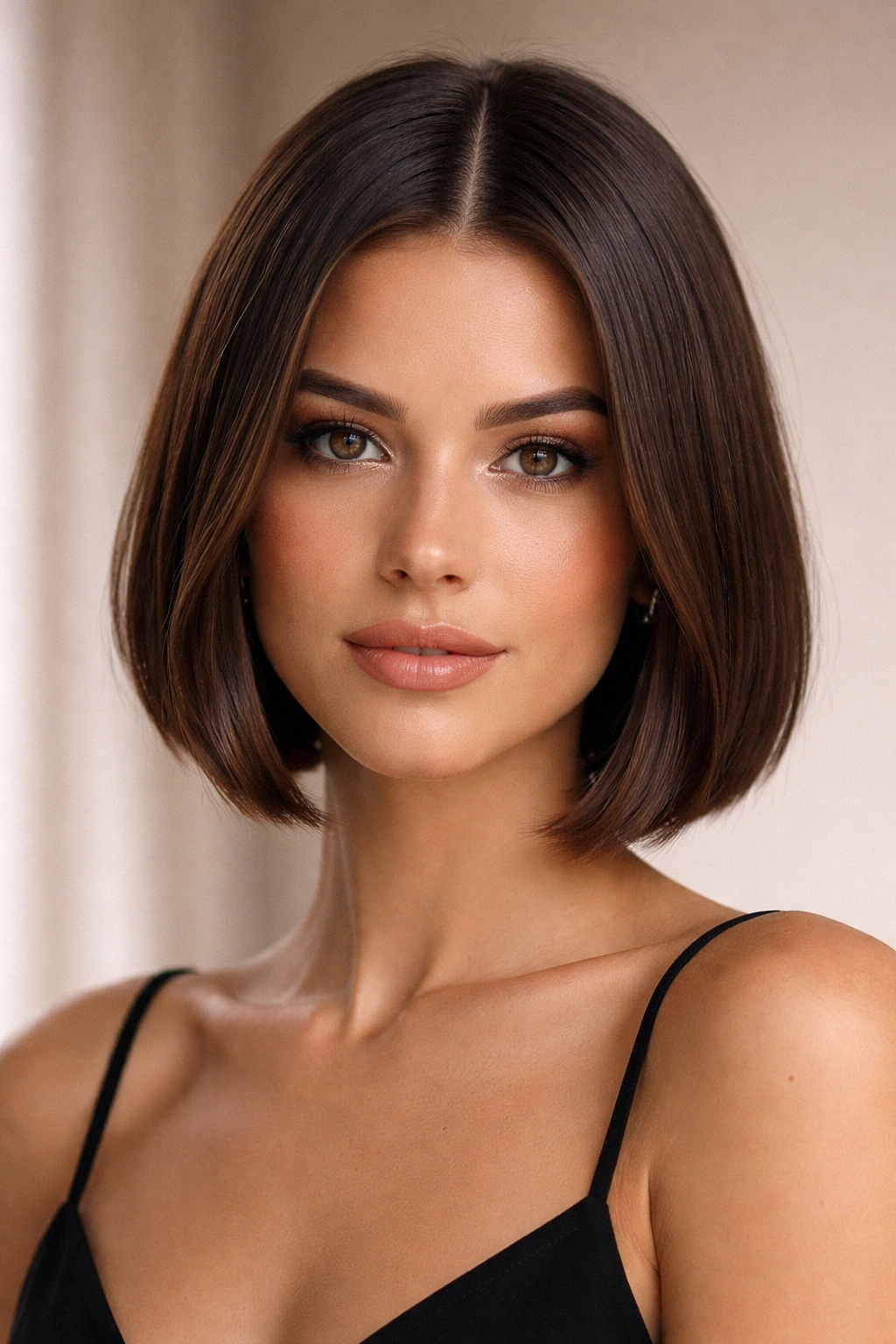
2. Sleek Bob With Blunt Middle Part
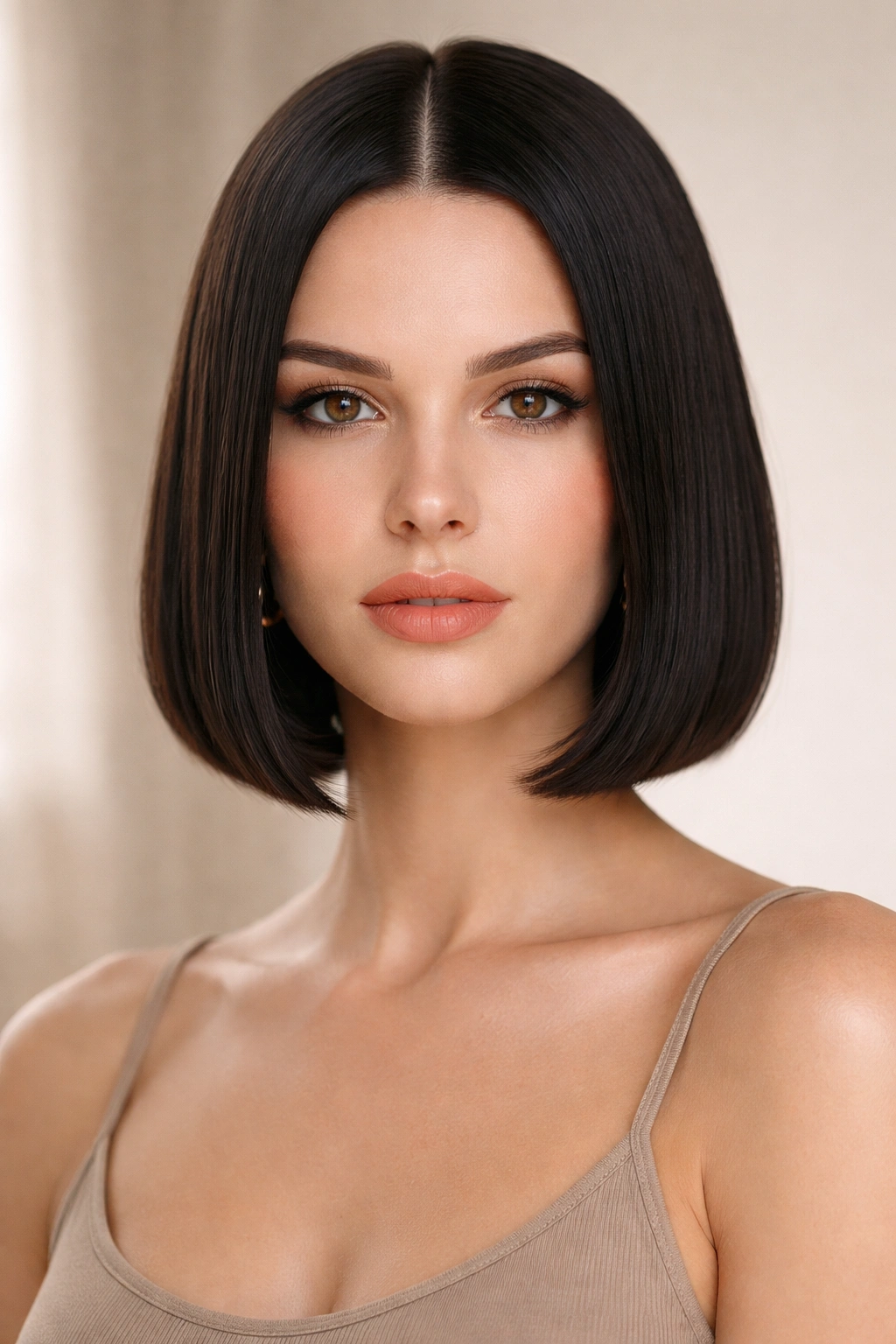
A sleek bob with a blunt middle part is the epitome of modern minimalism—clean lines, precise geometry, and an almost architectural quality to the shape. This cut sits right at or just below the jaw, with the sides and back cut blunt (no layers), and that sharp center part creates two symmetrical curtain-like panels that frame the face with intention. The bluntness of the cut combined with smooth, straight styling creates a look that feels both powerful and refined.
What Makes the Blunt Edge So Impactful
The blunt, ungraduated line at the ends of a bob has a completely different energy than a layered or textured cut. It creates weight and presence, making even a short bob feel substantial and deliberate. When you add the middle part, you’re essentially creating a mirror image on each side of your face—this symmetry is psychologically satisfying and creates a sense of calm, controlled beauty. It’s the opposite of messy or accidental; every hair appears intentional.
This style works best on straighter hair textures or with consistent blow-drying and smoothing, since the blunt line will show any waviness or bend. If you have naturally wavy hair, you’ll need to commit to using a flat iron or smoothing cream to maintain the sleek aesthetic. The payoff is a look that reads as polished and professional, the kind of haircut that works equally well in creative industries and traditional corporate settings.
Getting the Cut Right
- Request a one-length (or nearly one-length) cut with a blunt edge—this is crucial for the impact
- Have your stylist create a precise middle part before cutting, then cut along that exact center line
- Ask for a length that hits at your sharpest jawline point for maximum face-framing effect
- Bring reference photos of blunt bobs you love, paying close attention to where the ends fall
- Schedule your cuts every six to eight weeks, as blunt lines show growth more obviously than textured cuts
Worth knowing: Blunt bobs require more maintenance styling than textured pixies. Budget time for blow-drying and smoothing, especially if you have any natural texture or wave. If you’re not willing to style it regularly, ask your stylist to add subtle layers to soften the blunt line slightly.
3. Layered Shag With Movement and Flow
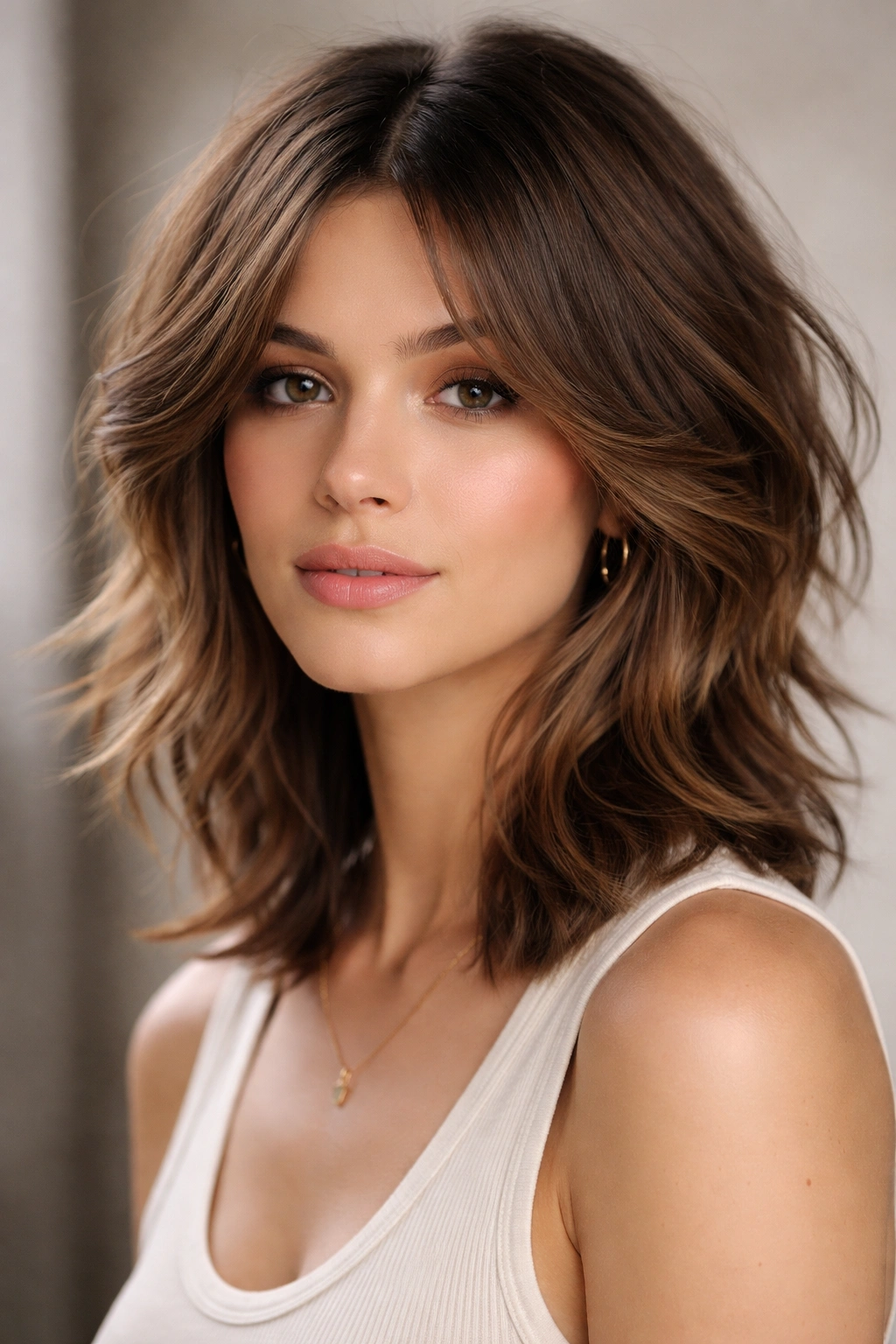
A layered shag brings back the texture and movement of classic shag cuts but reimagined for modern hair. This style features multiple layers throughout, creating a choppy, piece-y texture that moves with every head turn. When you add a middle part, those layers become even more pronounced—they fall away from your face on each side, creating a soft, flattering frame that’s less severe than a blunt bob but more structured than a full pixie.
Why Shags Have Become Relevant Again
The resurgence of shag cuts has everything to do with how they work with modern styling products and techniques. Current shag cuts are less “70s disco” and more “intentional texture”—they feel fresh because they’re cut with precision rather than randomness. The layers are calculated to fall in specific ways, and the middle part helps organize all that movement into something cohesive. For anyone tired of the minimalist aesthetic, a shag offers personality and movement without feeling chaotic.
Shags are particularly flattering on people with wavy or naturally textured hair, since the cut is designed to work with your hair’s natural movement rather than against it. If you have straight hair, you can still pull off a shag, but you’ll get more intentional styling control—you can lean into the textured, piece-y aesthetic or smooth it straighter depending on your mood.
Styling Your Shag
- Use a curl-defining cream or mousse on damp hair, scrunching upward to encourage movement
- Blow-dry with a diffuser attachment to enhance texture and prevent frizz
- Flat iron individual sections for more control, or embrace the natural texture completely
- Use a texturizing spray or salt spray for additional piece-y definition
- Refresh layers every six weeks as they start to blend together with growth
Insider note: The middle part is especially important for shag cuts because it prevents the style from looking lopsided or too one-dimensional. If you’re not seeing defined movement on both sides of your face equally, ask your stylist to check that your part is truly centered.
4. Undercut With Styled Top and Center Part
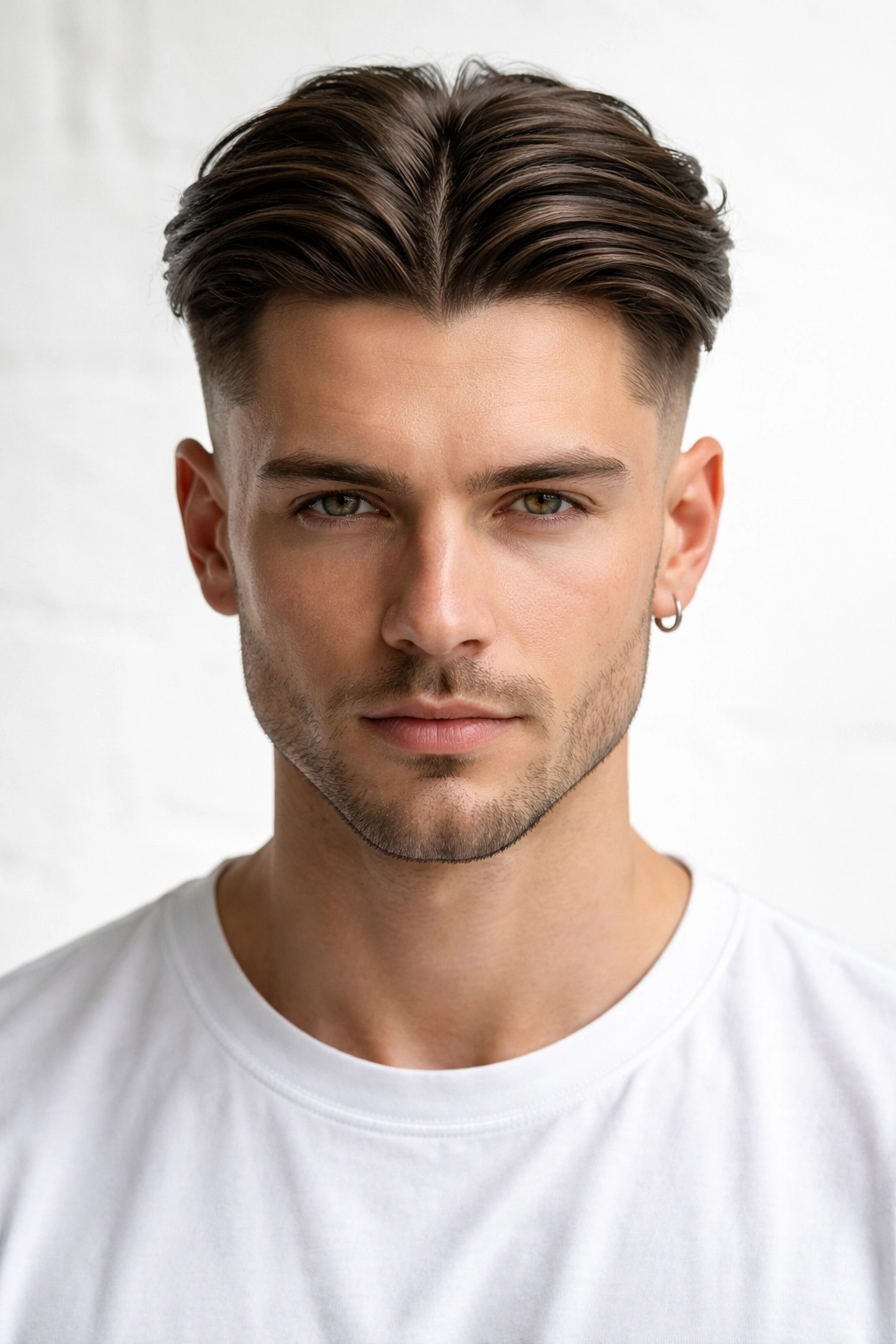
An undercut is a bold choice where the sides and back are cut very short (often clippers-short, sometimes with fading) while the top is left significantly longer, creating dramatic contrast. With a middle part, the longer top section splits cleanly down the center, and the shorter undercut becomes a sculptural frame. This style makes a statement and suits people who want their haircut to be a conversation starter.
The Visual Impact of Undercuts
The undercut creates geometric contrast that flatters oval and square face shapes particularly well—the exposed sides of your head become part of the overall look’s composition. The longer top with the middle part draws focus upward and inward, to your face and eyes, rather than outward. It’s a style that reads as confident and intentional; it works for people comfortable with unconventional beauty choices.
Undercuts also offer practical advantages—you get the styling versatility of longer hair on top while maintaining the easy maintenance of short sides. This means less frequent trims on the undercut portion (sides and back stay tidy longer), and you can style the longer top section in multiple ways—down and tousled, swept to one side, swept back, or even partially pinned.
Cutting and Maintaining an Undercut
- Work with a stylist experienced in undercuts, as the fade or transition line requires precision
- Specify how short you want the undercut (skin fade, 1/2 inch, 1 inch) and how much length you want on top
- Plan for the undercut to need trimming every three to four weeks if you want clean edges
- The longer top can go longer between cuts—usually six to eight weeks
- Bring reference images showing exactly where you want the transition line to sit
Pro tip: If you’re nervous about committing to an undercut, start with less contrast—maybe a half-inch on the sides instead of a skin fade. You can always go shorter next time, but you can’t undo a skin fade immediately if you decide you don’t like it.
5. Crop With Textured Crown
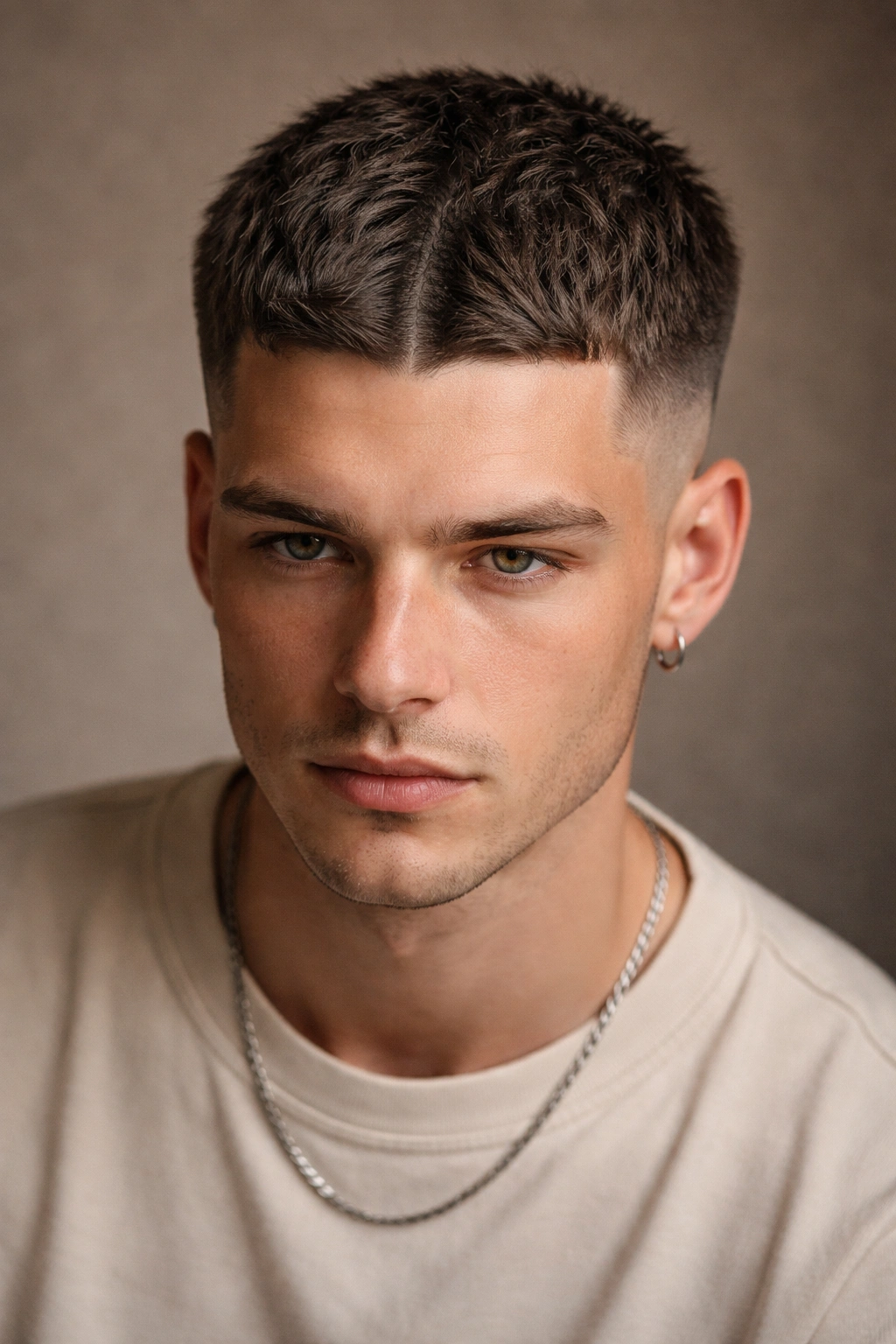
A crop is essentially a very short all-over cut, but when you add texture through layering and style it with a middle part, it becomes surprisingly sophisticated. The crown region is where most of the visible length sits (usually one to two inches), while the sides and back are faded short. The middle part creates definition in the crown, making the texture there feel intentional rather than accidental.
Texture in the Crown Creates Dimension
What distinguishes a textured crop from a basic crew cut is the deliberate layering throughout the crown region. These layers create peaks and valleys that catch light differently, adding dimension and visual interest. When you part the hair down the middle, each side of that textured crown becomes a mini landscape of texture. This is the kind of haircut that looks better with movement and texture products than it does slicked down flat.
Crops work beautifully on people who embrace their natural hair texture—whether that’s waves, curls, or coils. The short length means you’re working with your hair’s natural movement rather than fighting it, and texture products enhance rather than fight against what you naturally have. The middle part helps keep everything organized and prevents the style from reading as too casual or undone.
Styling a Textured Crop
- Apply a texture cream, pomade, or mousse to damp hair and work it through from root to tip
- Blow-dry with your fingers or a round brush, encouraging upward movement in the crown
- Use a comb to define the middle part line while hair is still slightly damp
- Finish with a light hairspray for hold without crunchiness
- Refresh cuts every four to six weeks to keep the texture sharp and prevent the style from growing out unevenly
Worth knowing: A textured crop requires more intentional styling than you might expect for such a short cut. If you’re hoping for a wash-and-go style, ask your stylist about a crew cut or clippered cut instead, where texture is less crucial to the final look.
6. Wolf Cut With Deliberate Layering
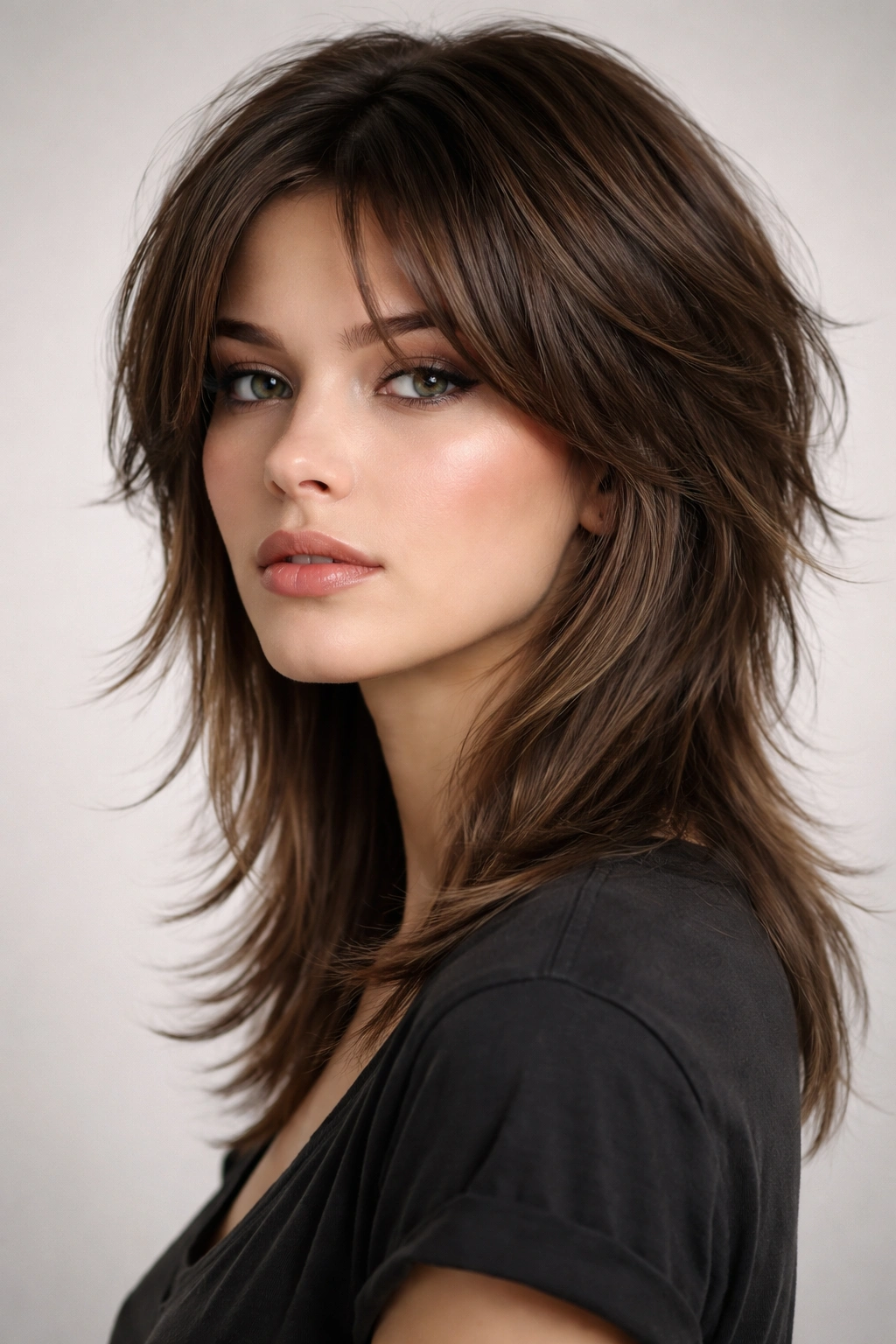
A wolf cut is essentially a hybrid between a shag and a mullet—short and voluminous on top, longer and more tapered in the back, with dramatic layers creating a spiky, piece-y texture throughout. With a middle part, the top layers fall away from your face in a flattering way, and the longer back section creates visual interest when you move. This is a style for people who want maximum texture and movement.
Why Wolf Cuts Work as a Fashion Statement
The wolf cut has cultural cache—it feels modern, intentional, and slightly edgy without being overly alternative. The middle part emphasizes the voluminous crown and makes the whole style feel more controlled and less chaotic. It’s the kind of cut that photographs well and reads as fashion-forward rather than shapeless. The longer back section (compared to a pixie or crop) gives you something to work with in terms of styling possibilities.
Wolf cuts do require more maintenance than minimalist cuts—you’re managing texture, layers, and that transition between the shorter top and longer back. But if you enjoy styling your hair and appreciate movement and texture, a wolf cut rewards that effort with a truly distinctive look that reads completely different than trendy-but-generic options.
Creating a Striking Wolf Cut
- Request short, heavily textured layers on top (usually one to two inches) with longer, more tapered layers in the back
- Ask for a sharp middle part that divides the crown texture equally
- Specify the length of your back section—some people prefer it just grazing the collar, others want it slightly longer
- Bring reference photos clearly showing the top-to-back length ratio you’re after
- Commit to 5-6 week trim cycles to keep the layered texture looking intentional
Pro tip: Wolf cuts look most striking when styled with texture and movement. If you typically wear your hair slicked down or bone-straight, this might not be the right style for you. But if you love the process of styling and creating texture, a wolf cut will give you a canvas to work with.
7. Rounded Bob With Soft Layers
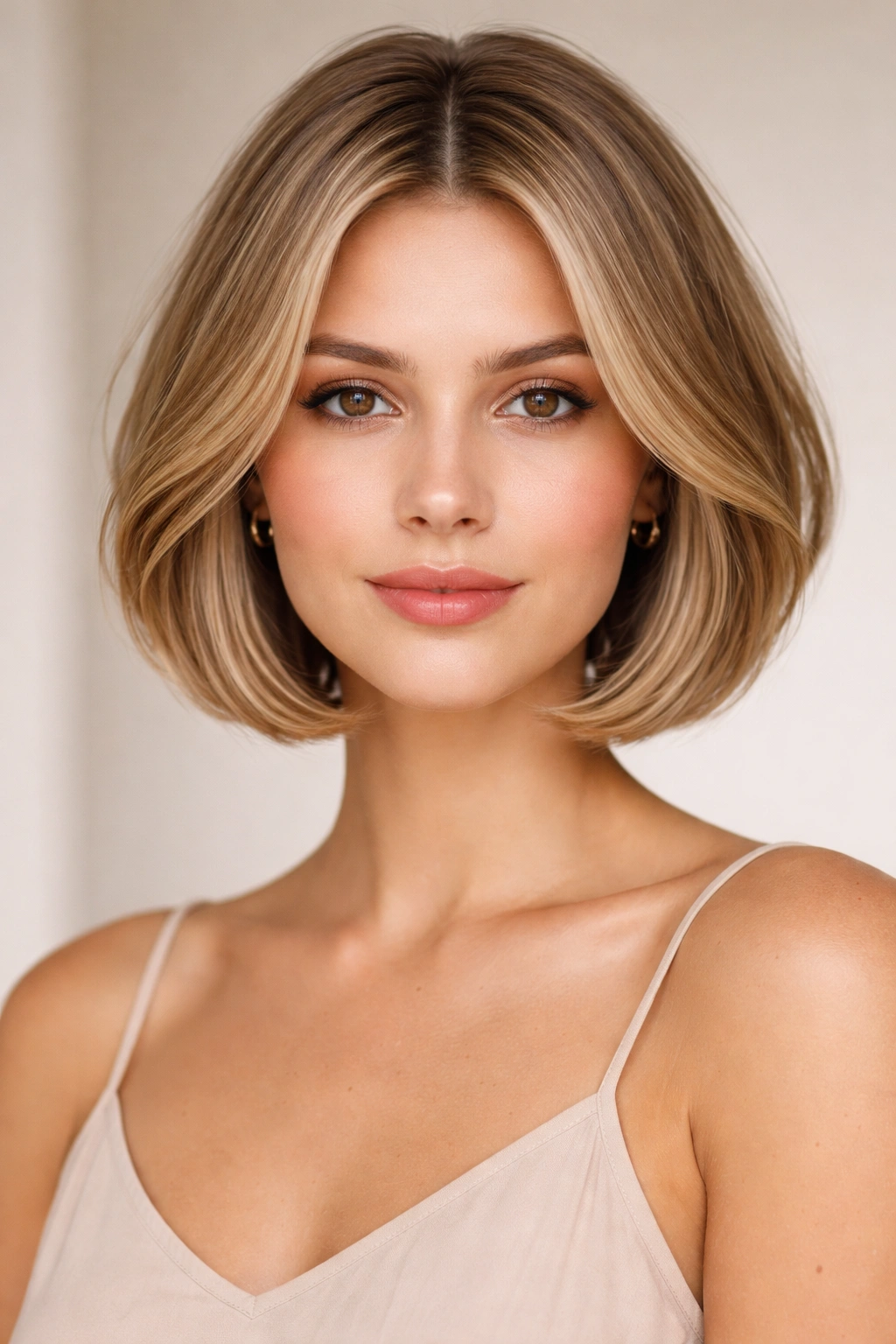
A rounded bob is exactly what it sounds like—a bob with a curved, rounded shape rather than a blunt line. Soft layers throughout the cut add movement and prevent it from reading as severe. When you add a middle part, you get the structure and intentionality of a center partition without the harshness of a completely blunt cut. This is an excellent middle-ground option for people who want sophistication without severity.
The Softness Factor
Soft layers diffuse the line of the bob, making it feel more approachable and less architectural than a blunt cut. These layers also add movement, especially through the face-framing pieces. The result is a style that still reads as polished and intentional but feels friendlier and more organic. A rounded bob with soft layers can work on multiple hair textures because the layers help shorter waves or texture work with the style rather than against it.
The middle part in a rounded bob creates two gentle curves that frame your face. Unlike the symmetrical mirror-image effect of a blunt bob, a rounded bob with soft layers feels more fluid and less formal. It’s the haircut equivalent of choosing a vintage dress over a tailored suit—both are elegant, but one feels more approachable.
Cutting and Styling a Rounded Bob
- Request a rounded line through the ends rather than blunt—this is the crucial distinction
- Ask for soft, face-framing layers throughout, particularly around your jawline and chin
- Have your stylist create the middle part before layering to ensure it’s placed perfectly
- This cut works with both straight and wavy hair, making it quite versatile
- Trim every 6-8 weeks as the layers blend together and the rounded line grows out
Insider note: Ask your stylist to cut the very shortest layers (those around your face) about half an inch shorter than the longer layers. This creates nice movement and ensures the face-framing effect doesn’t get lost as everything grows out.
8. Modern Pixie With Longer Crown
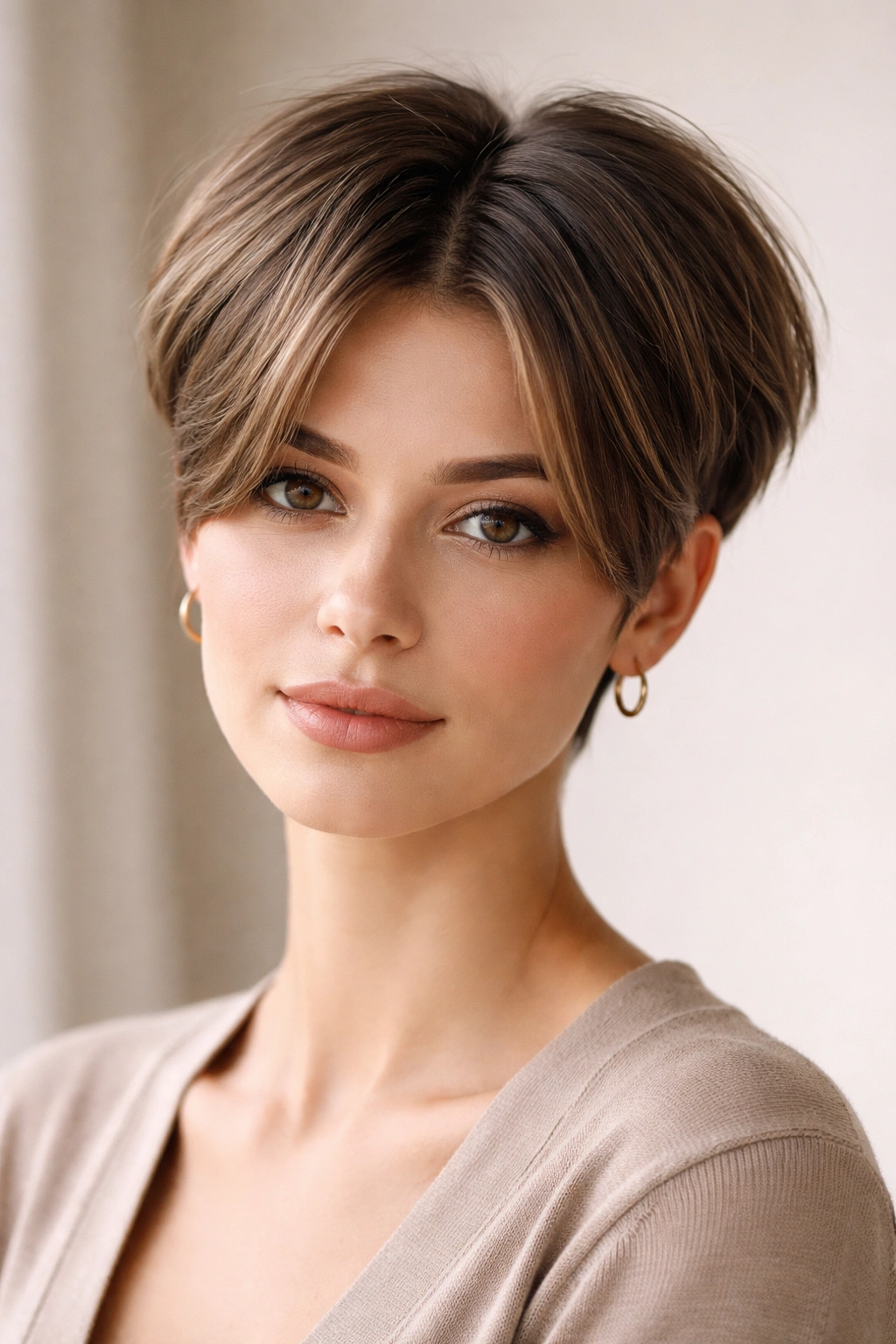
A modern pixie elevates the classic pixie cut by keeping the sides and back short and close to the head while maintaining noticeably more length through the crown and top. This creates the illusion of a fuller, rounder head shape. A middle part in a longer-crown pixie creates nice separation and definition without making the overall cut feel choppy or overly textured.
Why a Longer Crown Changes Everything
A traditional pixie that’s short all over can sometimes feel severe, particularly on angular face shapes. By keeping more length in the crown and styling it with a middle part, you maintain the practical benefits of a pixie—easy care, quick styling—while gaining softness and femininity. The longer crown also gives you room for texture and movement, and the middle part naturally organizes that texture into a flattering frame for your face.
This variation of the pixie works well on people who like the idea of short hair but aren’t sure about committing to an all-over short pixie. It’s a gentler entry point that still delivers on the benefits of short hair while feeling less dramatic. The middle part is key here—it prevents the longer crown from reading as lopsided or accident-like.
Getting Your Modern Pixie Right
- Specify that you want more length in the crown than traditional pixies—usually two inches or slightly more
- Request short, tapered layers on the sides and back for shape and easy maintenance
- Ask for texture throughout the crown to work with your natural hair movement
- The middle part should be sharp and precise to create definition
- Plan for 4-5 week trims to keep the sides tidy while the crown grows out
Worth knowing: A modern pixie with a longer crown sits in an interesting middle ground—it requires more styling than a super-short pixie but less than a full shag or longer cut. Make sure your stylist understands you want the longer crown to be intentional, not just grown-out awkwardness.
9. Asymmetrical Cut With Weighted Middle Part
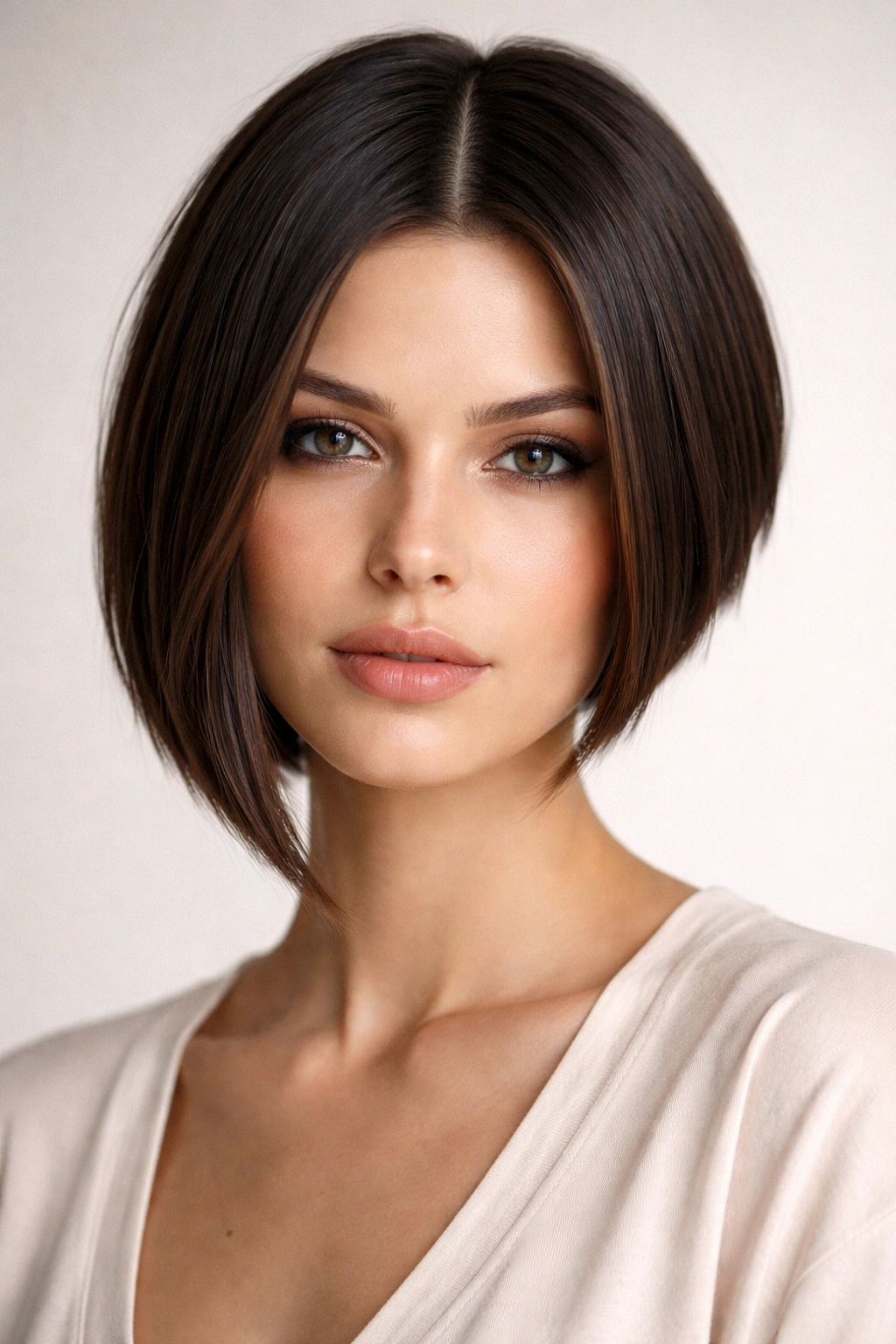
An asymmetrical cut is intentionally uneven, with one side noticeably longer than the other. This might sound chaotic, but when executed with precision and combined with a careful middle part (or sometimes styled more toward one side), it creates a fashion-forward, deliberate look. The asymmetry draws attention and reads as intentional styling rather than a mistake.
The Art of Intentional Imbalance
Asymmetrical cuts work because they’re deliberately, obviously asymmetrical. There’s no ambiguity about whether the imbalance is intentional—the length difference is clear and clean. This clarity is what prevents the style from reading as sloppy. When you add a middle part to an asymmetrical cut, you’re often emphasizing the imbalance rather than hiding it, which actually makes the style feel more confident and intentional.
Asymmetrical cuts suit people with oval, heart-shaped, or oblong face shapes well—the longer side can balance wider areas, and the shorter side creates an interesting visual movement. The middle part in an asymmetrical cut is often styled slightly off-center to emphasize the intentional imbalance.
Styling an Asymmetrical Cut
- Bring precise reference images showing exactly where the length difference should be on each side
- Ask your stylist to create an intentional, clean line showing the difference—no grown-out awkwardness
- Decide whether you want the longer piece layered and textured or sleek and blunt
- Use a side-swept or slightly off-center part styling to emphasize the asymmetry
- Trims every 6-8 weeks keep the intentional imbalance from becoming unintentional growth
Pro tip: Asymmetrical cuts photograph beautifully and read as fashion-forward in person, but they require confidence. This is a style for people who actively enjoy being noticed for their hair choices and appreciate the bravery of an unconventional cut.
10. French Girl Pixie With Tousled Texture
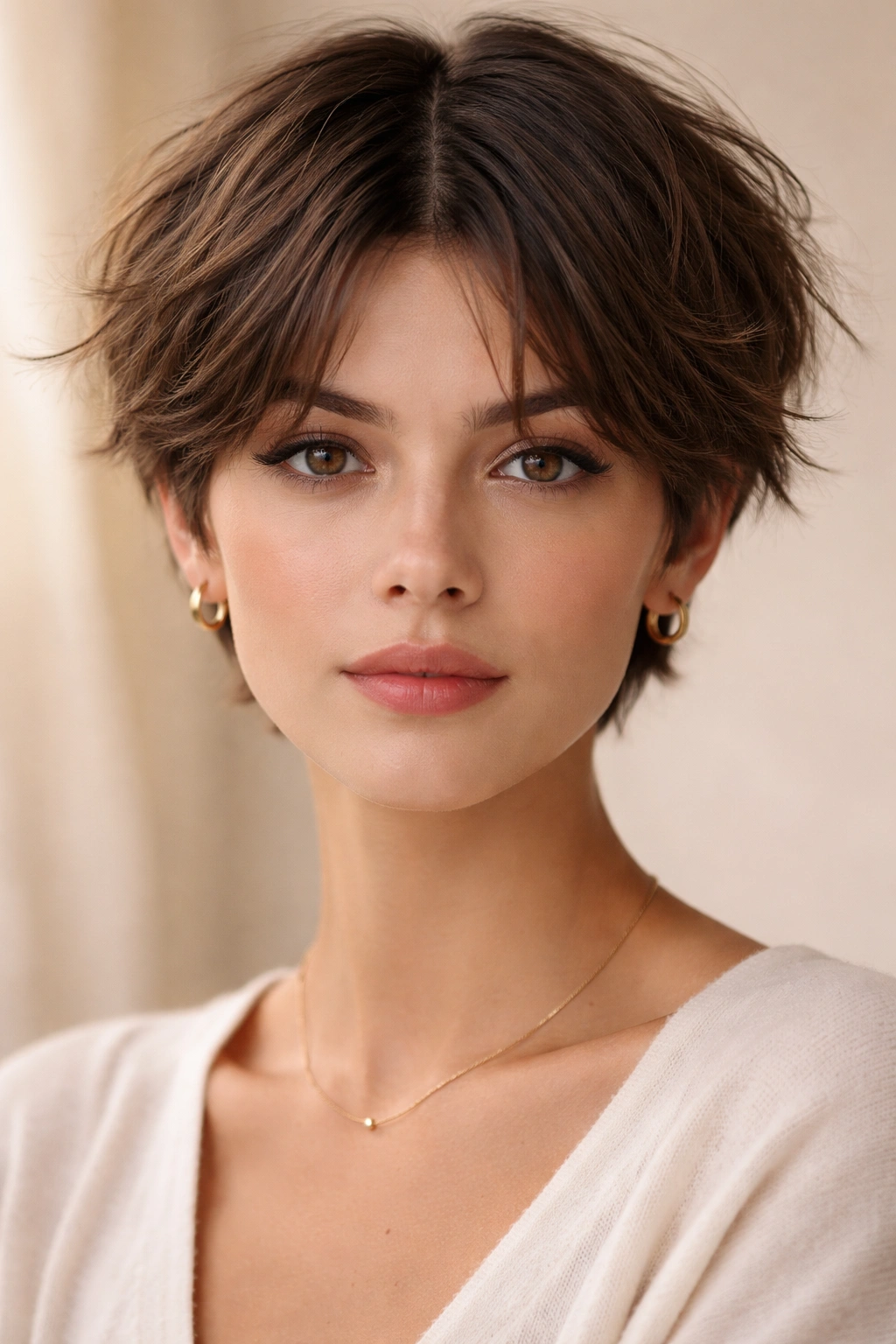
A French girl pixie is essentially a textured pixie styled to look casual, undone, and effortlessly chic—the kind of haircut that looks like you didn’t try but definitely did. The middle part adds to this aesthetic, creating an organized frame while the textured, tousled styling creates an intentional bedhead vibe. This is short hair that feels approachable, not severe.
Achieving Effortless-Looking Texture
The trick with a French girl pixie is that it’s actually very intentionally styled—it just doesn’t look like it. The cut itself features choppy, irregular layers that create movement when you style with texture products and tousle the pieces around. The middle part is sharp and precise, creating a controlled center line that contrasts with the deliberately undone texture everywhere else. This contrast is what makes the style feel modern and intentional rather than neglected.
This style suits people who have some hair texture naturally—waves, coils, or a natural wave pattern—because you’re enhancing what you naturally have rather than creating texture from scratch. If you have very straight hair, you can still pull off a French girl pixie, but you’ll be creating the texture with styling products and technique every time you style.
Styling Your French Girl Pixie
- Use a texturizing spray or salt spray on second-day hair for easier texture
- Apply mousse or a light cream product to damp hair, scrunching upward
- Blow-dry with your fingers for a tousled effect, or use a diffuser for more defined texture
- Part down the middle while still slightly damp to set the part line
- Tousle individual pieces with your fingers for that deliberately undone vibe
- Refresh cuts every 5-6 weeks as the layered texture blends out
Insider note: This style is low-maintenance compared to sleek styles but higher-maintenance than you might expect for such short hair. You’re not creating a wash-and-go texture effect; you’re intentionally styling it to look effortless, which is different.
11. Blunt Bangs With Middle Part Short Hair
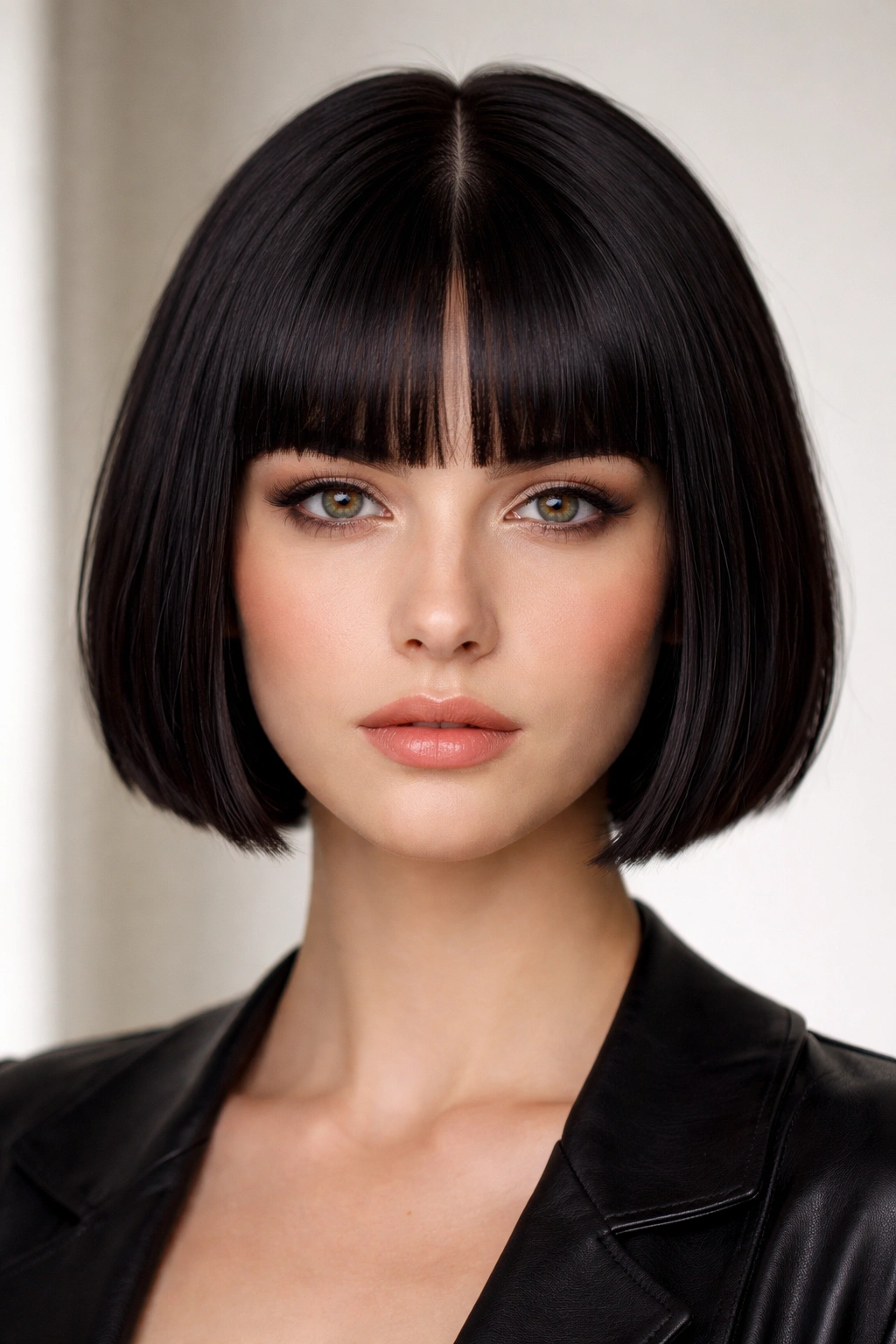
Adding blunt bangs to short hair with a middle part creates a bold, fashion-forward statement. The bangs create a horizontal line across your forehead while the middle part creates a vertical line, forming a cross pattern that’s highly geometric and visual. This style is dramatic and suits people who want their haircut to be a statement piece.
The Impact of Blunt Bangs
Blunt bangs are different from soft, textured bangs—they’re a precise, horizontal line that draws immediate attention to your eyes and forehead. When combined with a middle part in short hair, the effect is almost architectural. This is a style that reads differently depending on your face shape—it’s especially flattering on longer, rectangular faces where it breaks up vertical lines, and on people with lower foreheads where bangs add balance.
Blunt bangs require commitment. They need regular trims (every 3-4 weeks) to maintain the clean line, and they’re best styled sleek or with minimal texture (although some people prefer a softer texture bang with this look). This is not a low-maintenance style, but it’s incredibly distinctive.
Getting Blunt Bangs Right
- Request a precise, blunt line across your forehead—usually landing just above your eyebrows
- Specify whether you want them to cover your forehead completely or sit higher
- Decide whether you want heavy, solid bangs or slightly wispy (less heavy) bangs
- Commit to 3-4 week bang trims—this is crucial for maintaining the blunt line
- Plan your overall cut to work with the bangs—often a longer crown or textured pixie works best with blunt bangs
Worth knowing: Blunt bangs can be difficult to maintain if your hair is very fine, very wavy, or prone to frizz. Straight to slightly wavy hair holds a blunt line much better. If you’re not sure, ask your stylist whether your hair type will support blunt bangs before committing.
12. Tapered Cut With Length on Top
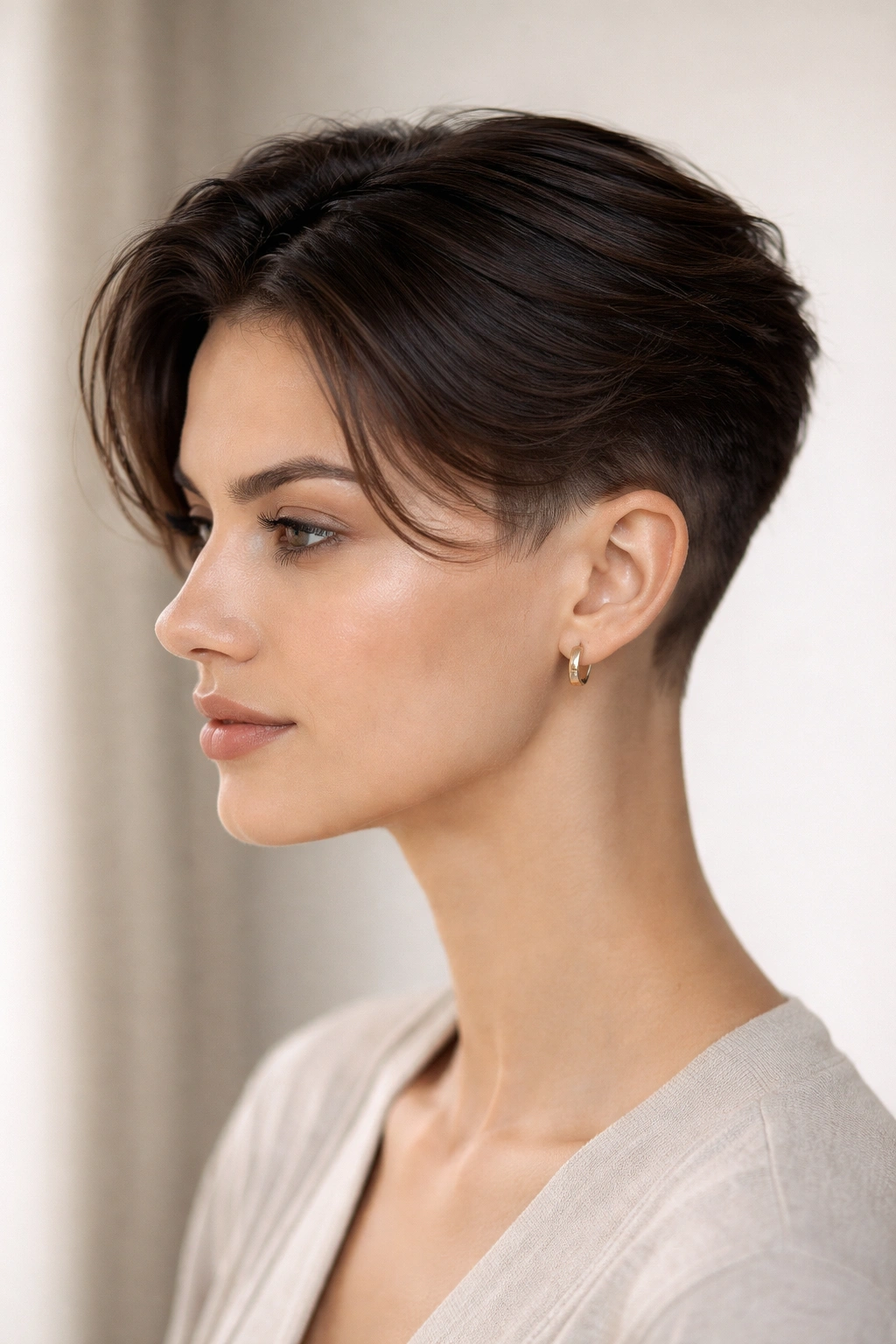
A tapered cut is a classic barbering approach where the hair is shortest at the sides and back and gradually longer as you move toward the crown. This creates a clean, sculpted look that’s versatile enough for multiple styling options. With a middle part on top, the longer crown section splits cleanly and creates a neat, controlled appearance that can swing from minimal to textured depending on how you style it.
Versatility Built Into the Cut
A tapered cut is fundamentally versatile because the longer top section can be styled multiple ways. You can wear it smooth and sleek with the middle part sharp, or you can create texture and movement with the same cut. The taper on the sides and back remains clean and neat regardless of how you style the top, which is why this cut works for people with busier lives who don’t want to restyle constantly but still want intentionality.
Tapered cuts are also excellent for people who prefer a more masculine or androgynous aesthetic, although the middle part adds femininity. This is the haircut that works equally well for anyone—it’s one of the most universally flattering cuts out there because the proportions work with most face shapes.
Achieving a Clean Taper
- Request a taper fade (short at the sides, gradually longer toward the crown) rather than a blunt transition
- Specify the shortest length at your sideburns and nape (often a fade to skin or 1/4 inch)
- Decide how much length you want on top—one inch, two inches, or longer
- Ask for a sharp, precise middle part line
- Get trims every 4-5 weeks to maintain the taper as everything grows out equally
Pro tip: If you love the look of a tapered cut but find you’re not styling the top enough, ask your stylist to add some texture through layers. This adds movement and visual interest without changing the fundamental structure of the taper.
Final Thoughts
The middle part in short hair is more versatile than it initially appears, working with everything from severely blunt bobs to textured pixies to asymmetrical cuts. The key is finding the variation that aligns with your natural hair texture, face shape, and lifestyle. A blunt bob requires commitment to smooth styling; a French girl pixie requires texture-product maintenance; an undercut needs frequent side trims—each style has its own set of requirements.
The beauty of short hair is that you can change these styles fairly dramatically with just a few months of growth or a significant restyle. If you try one variation and it doesn’t feel like the one, you haven’t locked yourself into a two-year commitment. Use this flexibility to experiment. Try the style that speaks to you most, get comfortable styling it, and commit to the trims and maintenance for at least two months. That’s enough time to develop real facility with the styling and know whether this particular cut is truly for you.
Whatever middle part short haircut you choose, remember that it’s your cut—and the best haircut is always the one that makes you feel confident when you look in the mirror. If a style makes you feel like the best version of yourself, that’s the one worth keeping.
