



Finding the perfect short haircut when you have a round face and a plus-size frame can feel like solving a puzzle. The right cut does so much more than just look good—it actually reshapes how your face reads, draws attention where you want it, and makes you feel genuinely confident every single time you catch your reflection. The trick isn’t about following generic “rules” about face shapes. Instead, it’s about understanding how angles, layers, and strategic styling work together to add dimension and balance to a rounder face while complementing a fuller figure’s natural proportions.
The magic of a great short haircut for your face shape lies in creating the illusion of length and angularity through movement, texture, and thoughtful placement of volume. A round face has width across the cheekbones and a softer jawline, so the best cuts work by either elongating vertically or adding definition through sharp angles and texture. When you’re styling a plus-size frame, you’re also thinking about proportion and how the cut relates to the overall silhouette—a crop that’s too blunt might overwhelm, while the right amount of texture and movement adds personality without feeling heavy.
The cuts in this guide have been selected because they genuinely flatter round faces while working beautifully for different hair textures, styling preferences, and lifestyle needs. Some offer bold, high-fashion statements, while others deliver everyday wearability with minimal effort. What matters most is finding one that speaks to you and then working with a skilled stylist who understands how to cut specifically for your face shape and hair type.
1. The Textured Pixie Cut
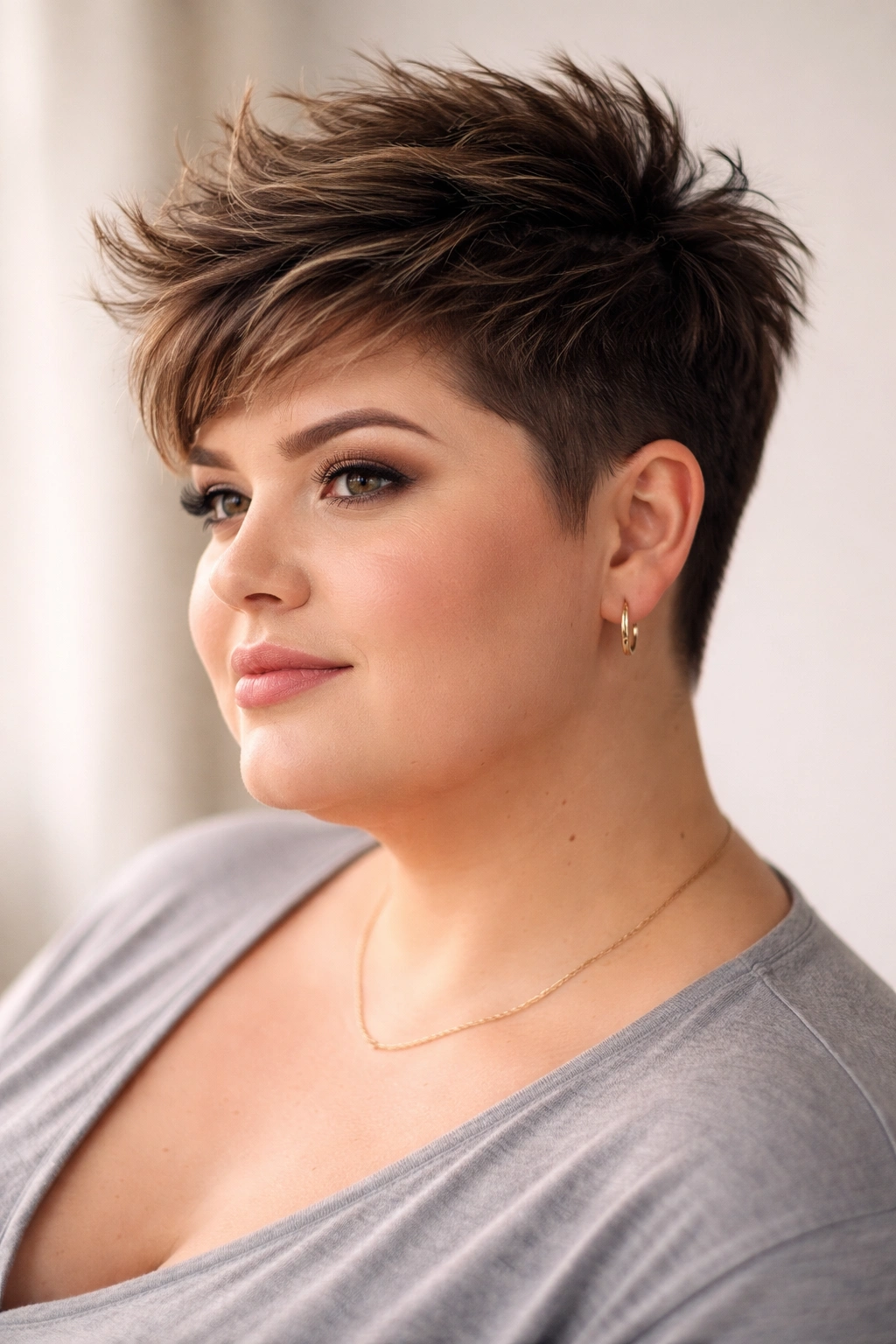
A textured pixie is one of the most transformative cuts for round faces because it works by creating movement and dimension rather than sitting flat against the head. This cut is short on the sides and back but longer on top, with choppy layers that stick up and out in carefully controlled directions. The texture breaks up the roundness of your face by adding visual interest and height, which naturally elongates your proportions.
Why It Works for Round Faces
The key to this cut’s success is the vertical movement it creates. By keeping the top longer and layered, you’re drawing the eye upward rather than letting it rest on the widest part of your cheeks. The choppy texture prevents the cut from looking blunt or severe, which is important because you want to soften the overall effect while still adding angular definition. The sides can be tapered close to the head, which actually makes your face appear narrower by contrast.
Styling and Maintenance Tips
- Textured pixies work best with a styling product that adds grip and separation—try a matte finish pomade or texturizing spray
- Use your fingers to style, not a comb, to maintain that intentional, piece-y look
- This cut requires a trim every 3-4 weeks to keep the texture looking fresh rather than overgrown
- On mornings when you want more polish, use a small blow dryer and a brush to direct the texture upward
Pro tip: Ask your stylist to keep extra texture on the crown and taper more aggressively on the sides to maximize the elongating effect for a round face.
2. The Layered Bob with Side Sweep
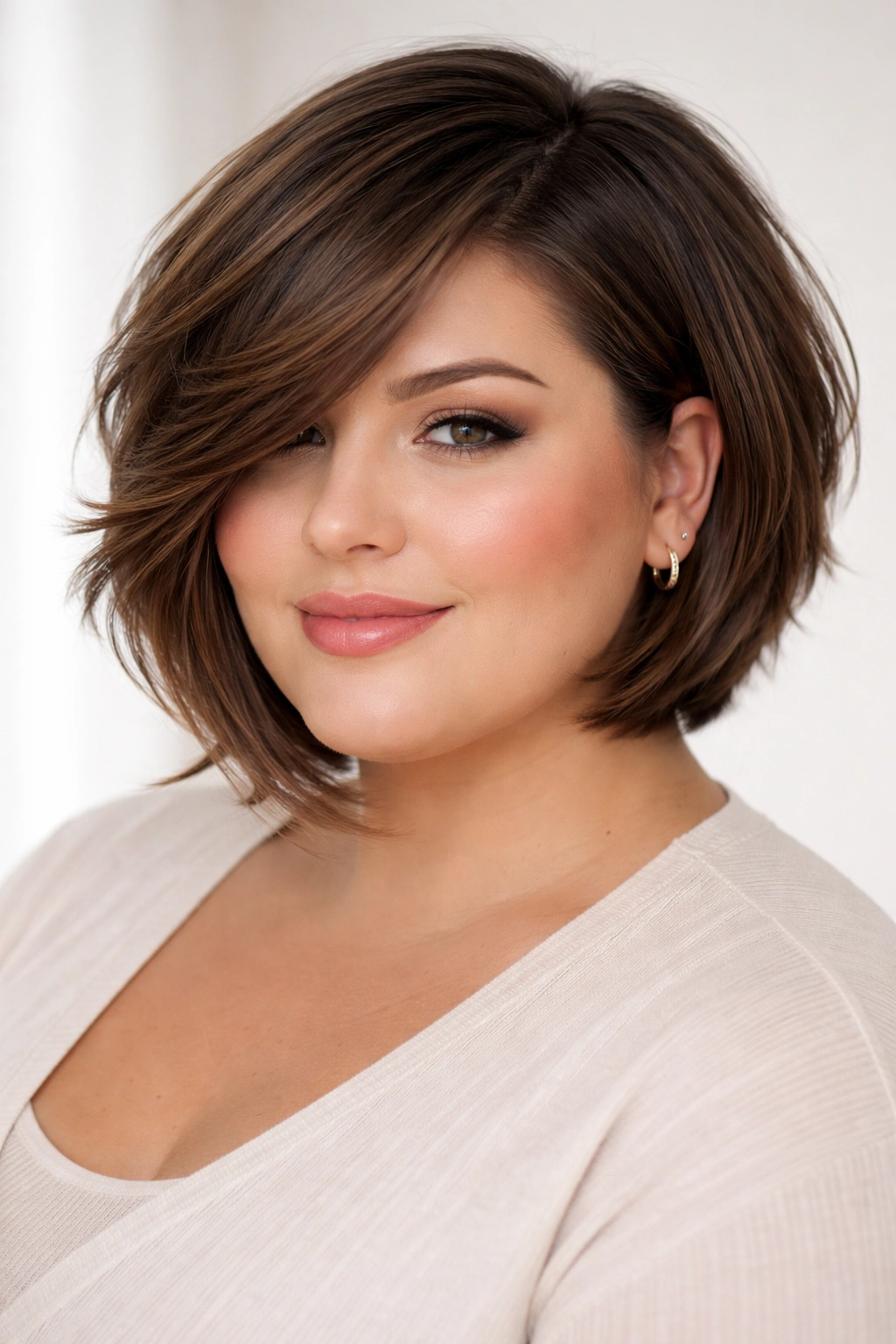
A layered bob that sweeps to one side is a chic, versatile option that works exceptionally well for round faces because of how the layers and asymmetry work together. This cut sits at or just below the jawline and features choppy, textured layers throughout that create movement and break up the roundness. The side sweep directs attention diagonally across the face rather than straight across, which instantly makes your face appear less round.
Why This Cut Delivers Dimension
Layers are the secret weapon for round faces because they interrupt the solid shape and add visual interest at different heights. When those layers are combined with a side sweep, you’re adding an asymmetrical element that the eye follows, creating the illusion of a more angular face shape. The longer side of the sweep can fall across one cheekbone, which provides subtle contouring and adds definition right where you need it.
How to Style and Maintain
- Blow dry with a round brush, directing the layers up and away from the face
- Use a texturizing product on damp hair before blow drying to enhance the movement of the layers
- This cut works beautifully with a tousled, lived-in texture or sleek and polished styling
- Schedule trims every 6-8 weeks to keep the layers sharp and the shape intentional
- Consider asking your stylist for slightly longer layers around the face to maximize the framing effect
Worth knowing: The side sweep works best when you commit to styling it consistently—even just 5 minutes with a blow dryer and some texture spray makes a huge difference in how flattering it looks.
3. The Asymmetrical Short Cut
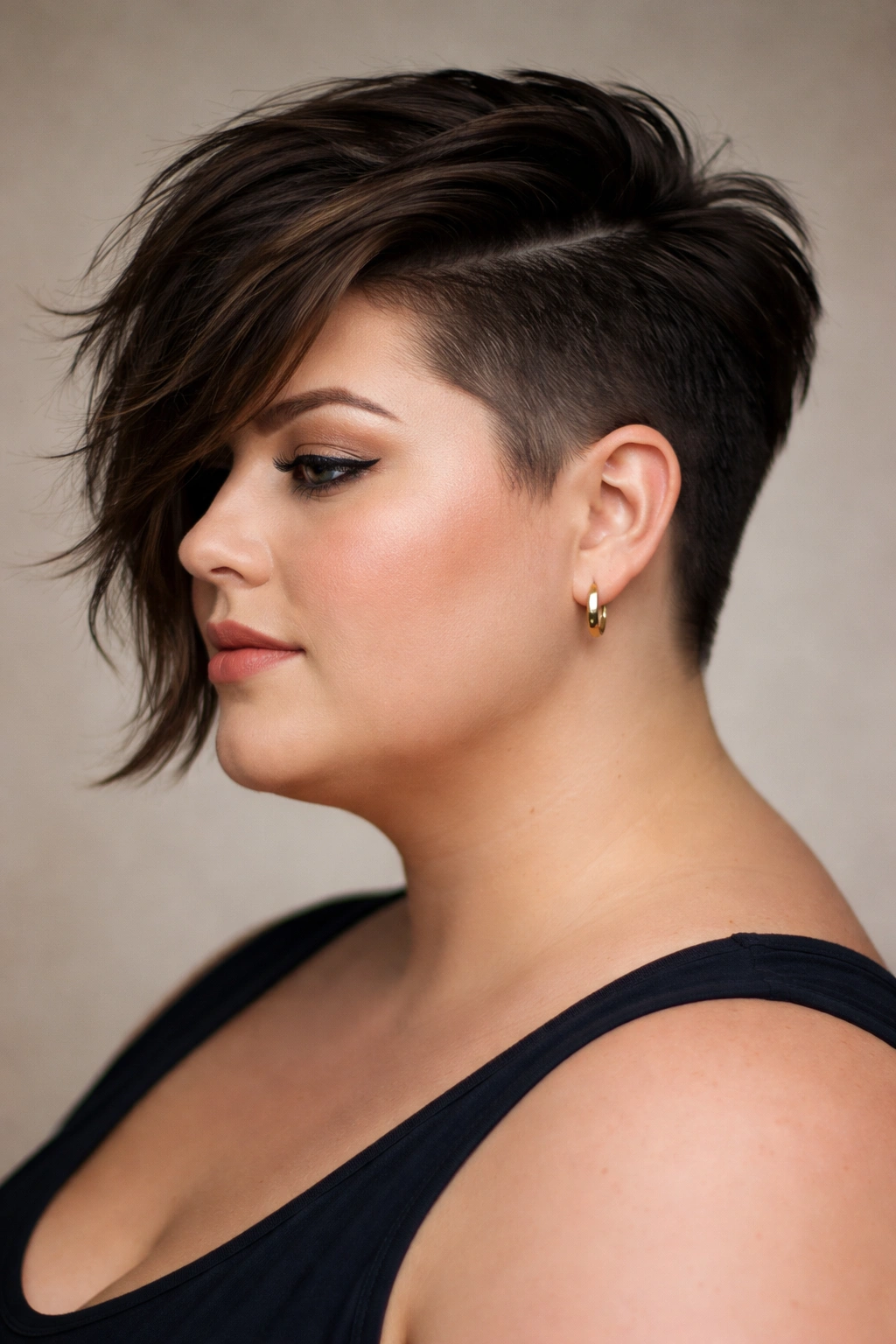
An asymmetrical cut takes the concept of imbalance and turns it into a styling advantage for round faces. One side is cut significantly shorter than the other, which immediately breaks the symmetry that can emphasize roundness. This bold cut works best if you’re willing to make a statement and want a modern, fashion-forward look that genuinely changes how your face reads.
What Makes Asymmetry So Flattering
Symmetry can intensify the roundness of a face because both sides balance each other equally. An asymmetrical cut disrupts that balance intentionally, pulling the eye toward one side of the face and away from the center where the width typically sits. The longer side can be swept back or forward depending on your preference, and the shorter side adds sharpness and edge that adds angular definition.
Styling Strategies for Asymmetrical Cuts
- The longer side typically needs a bit of blow drying to sit how you want it
- The shorter side often works best when textured with a matte product
- This cut shows off your facial features more prominently, so it’s a great option if you love highlighting your eyes or cheekbones with makeup
- Asymmetrical cuts do require occasional trims (every 4-6 weeks) to maintain the intentional imbalance
- You can change how the cut reads by styling it differently—the longer side swept back feels polished, while swept forward feels more casual
Insider note: This cut is perfect if you have strong features you want to emphasize; the boldness of the asymmetry complements confident, defined personal style.
4. The Tapered Undercut
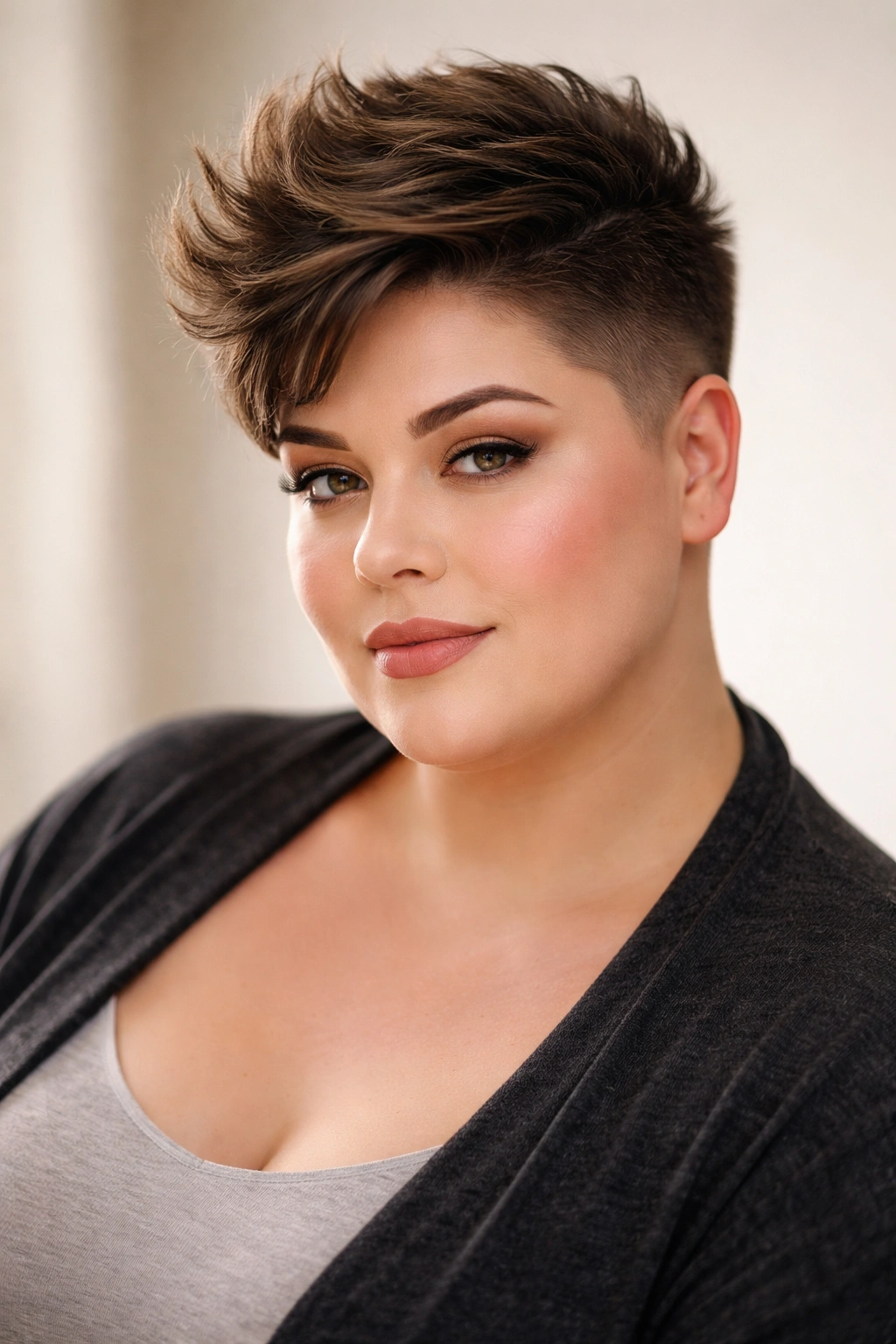
A tapered undercut combines short, tapered sides with slightly longer hair on top, creating a clean silhouette that’s exceptionally flattering for round faces. The sides fade gradually from very short near the scalp to slightly longer at the ear, while the top maintains more length and texture. This cut creates extreme contrast between the sides and top, which immediately makes your face appear narrower.
Why the Contrast Works
When you have very short, close-to-the-head sides, your face automatically appears wider in comparison—wait, that sounds wrong, but here’s what actually happens: the close-tapered sides draw attention inward and create definition at the edges of your face, which actually makes the overall proportion feel more balanced and less round. The longer top then elongates your face vertically, adding height. Together, these elements work to neutralize the roundness.
Maintaining the Sharp Look
- Undercuts require trims every 3-4 weeks to keep the fade looking sharp and intentional
- The top can be styled messy and textured or sleek and brushed back—both look great
- Use a styling product with hold to keep the top in place if you’re going for a polished look
- This cut works beautifully with minimal styling—even just running your fingers through the top and letting it sit naturally looks intentional
- The contrast between tapered sides and longer top gives you versatility in how you can express your style
Pro tip: Ask your stylist for a skin fade on the sides (where the hair tapers all the way down to the skin) rather than a fade that stops higher up; the more dramatic the contrast, the more flattering it is for round faces.
5. The Choppy Crop
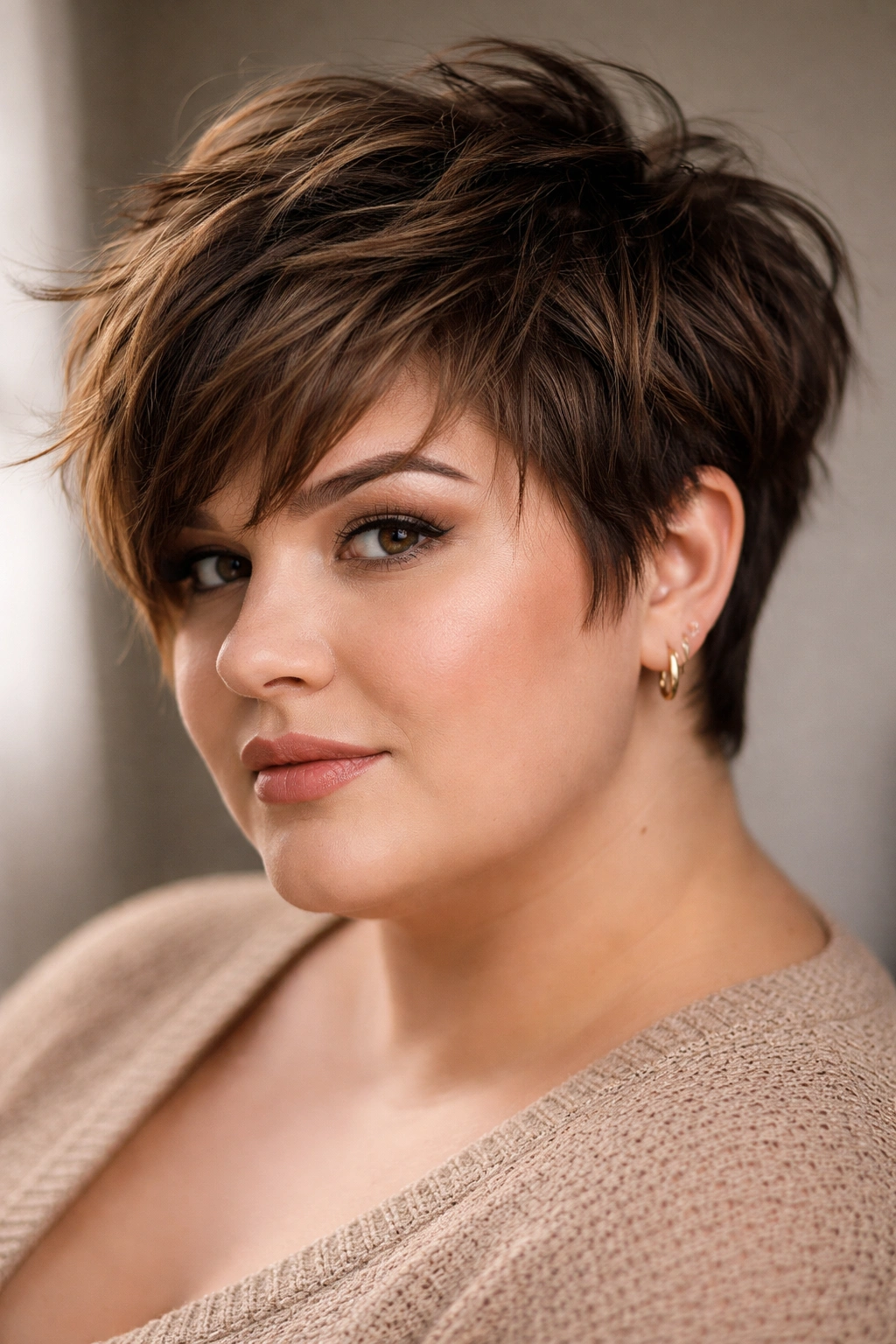
A choppy crop is a short cut with heavily textured, choppy layers throughout that create a tousled, deliberately undone appearance. The layers are cut at different lengths and angles, which breaks up the shape and prevents the cut from looking blunt or overly rounded. This cut works beautifully for round faces because the texture adds visual interest everywhere, not just in one direction.
How Texture Transforms Roundness
Texture is your friend when you have a round face because it interrupts the smooth, curved lines that emphasize roundness. A choppy crop is basically texture on top of texture, which means there’s visual movement happening in every direction. This constant visual interest makes it harder for the eye to settle on the roundness of your face shape. The cut also works because the choppy layers create tiny shadows and highlights that add dimension naturally.
Styling Tips for Maximum Impact
- Choppy crops work best with a texturizing spray or matte pomade applied to damp hair before styling
- Use your fingers rather than a brush to style—you want to separate the choppy layers, not smooth them down
- Blow dry with your fingers to encourage the texture to go in different directions
- This cut looks intentional when slightly undone, so you don’t need to fight for perfection every morning
- The cut works on straight hair, wavy hair, and curly hair, but the texture shows most dramatically on wavy and curly textures
Worth knowing: This cut requires a good stylist who understands how to cut choppy layers so they actually enhance your face rather than just looking messy. Bring reference photos to your consultation.
6. The Slicked-Back Short Style
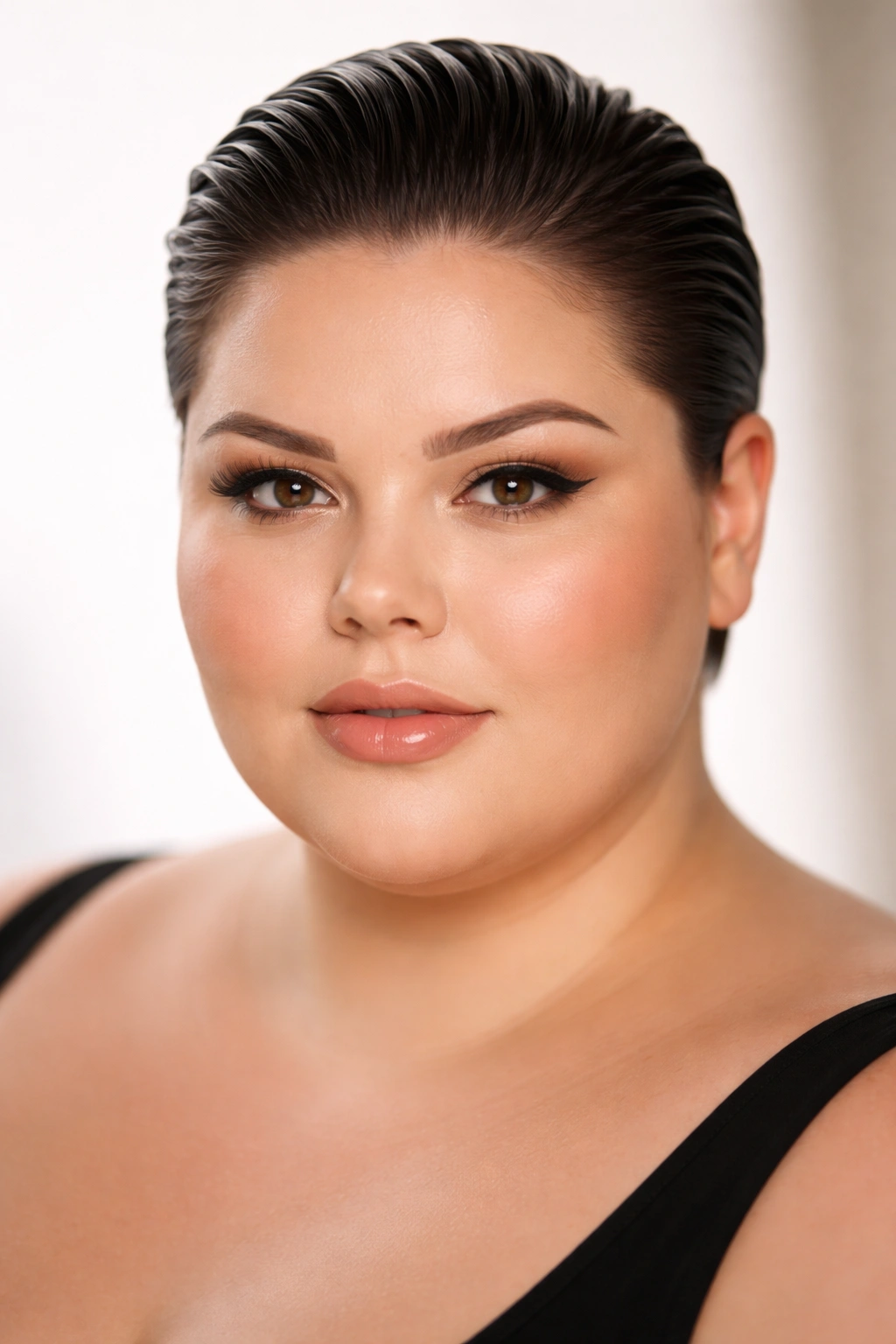
A slicked-back short cut is exactly what it sounds like—very short hair overall (often with faded or tapered sides) that’s styled smoothly back and away from the face. This cut exposes your entire face, which might sound risky for a round face, but it’s actually incredibly flattering because it draws all attention upward and backward. When nothing is framing your face or softening it, the focus shifts to your eyes, cheekbones, and overall facial features rather than the shape of your face.
The Psychology of Exposure
By completely exposing your face, you’re shifting how people visually read your face shape. Instead of seeing a rounded outline, they’re seeing your specific features—your eyes, your brow bone, the structure of your cheekbones. This is a bold move that works best if you’re confident in your features and want to make a statement. The cut also works because slicking everything back creates a very vertical line from your crown, which adds height and length visually.
How to Style and Keep It Fresh
- This cut requires regular trims (every 2-3 weeks) to maintain the short length
- Use a sleek styling product—pomade, gel, or a cream—applied to damp hair and smoothed back
- You can go for a completely smooth, polished look or slightly textured while still pulled back
- Once you’ve slicked it back, the style lasts all day; there’s no maintenance after the initial styling
- This cut works on all hair types but shows definition most clearly on straight or wavy hair
Pro tip: Pair this cut with a strong brow game and skincare routine; when your face is fully exposed, these details really shine.
7. The Shag Cut
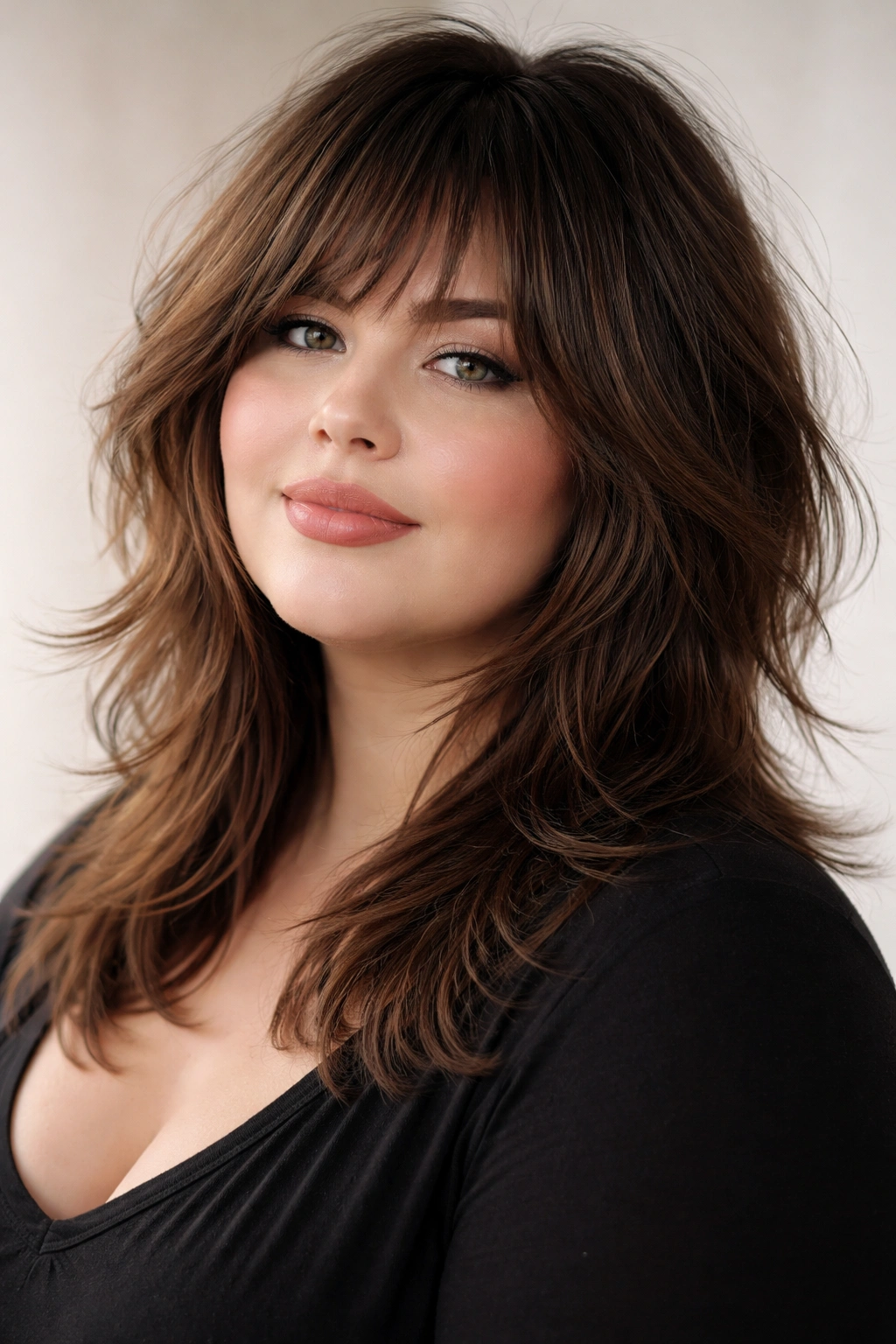
A shag cut is a classic style that’s made a major comeback, and it’s surprisingly flattering for round faces because of how the layers and movement work together. A shag features shorter layers on top that gradually get longer as you move down, creating a tapered, feathered silhouette. The layers create texture and movement throughout, and the cut naturally adds volume at the crown while staying sleeker through the neck.
Why Shags Work for Round Face Shapes
The shag’s power comes from vertical movement and dimension. The layers throughout create visual interest that prevents your face from looking flat or overly round. The shorter layers on top add height, while the longer layers underneath create movement that flows away from your face. The feathering effect also adds softness without sacrificing definition, which is the perfect balance for a round face that needs both angle and approachability.
Styling and Care Guidelines
- Shags look best with some texture, so consider styling with a texturizing spray or light product
- Blow dry to enhance the layers and movement, directing hair up and away from the face
- This cut works beautifully with wavy, curly, or straight hair—the texture just reads differently on each
- Trims every 6-8 weeks keep the layers sharp and prevent the cut from becoming overgrown and shapeless
- You can wear a shag sleek or tousled depending on your mood and the occasion
Insider note: A shag is lower maintenance than many of the other cuts on this list—it actually looks good a little undone, which is refreshing if you don’t want to style your hair every single day.
8. The Angular Fade
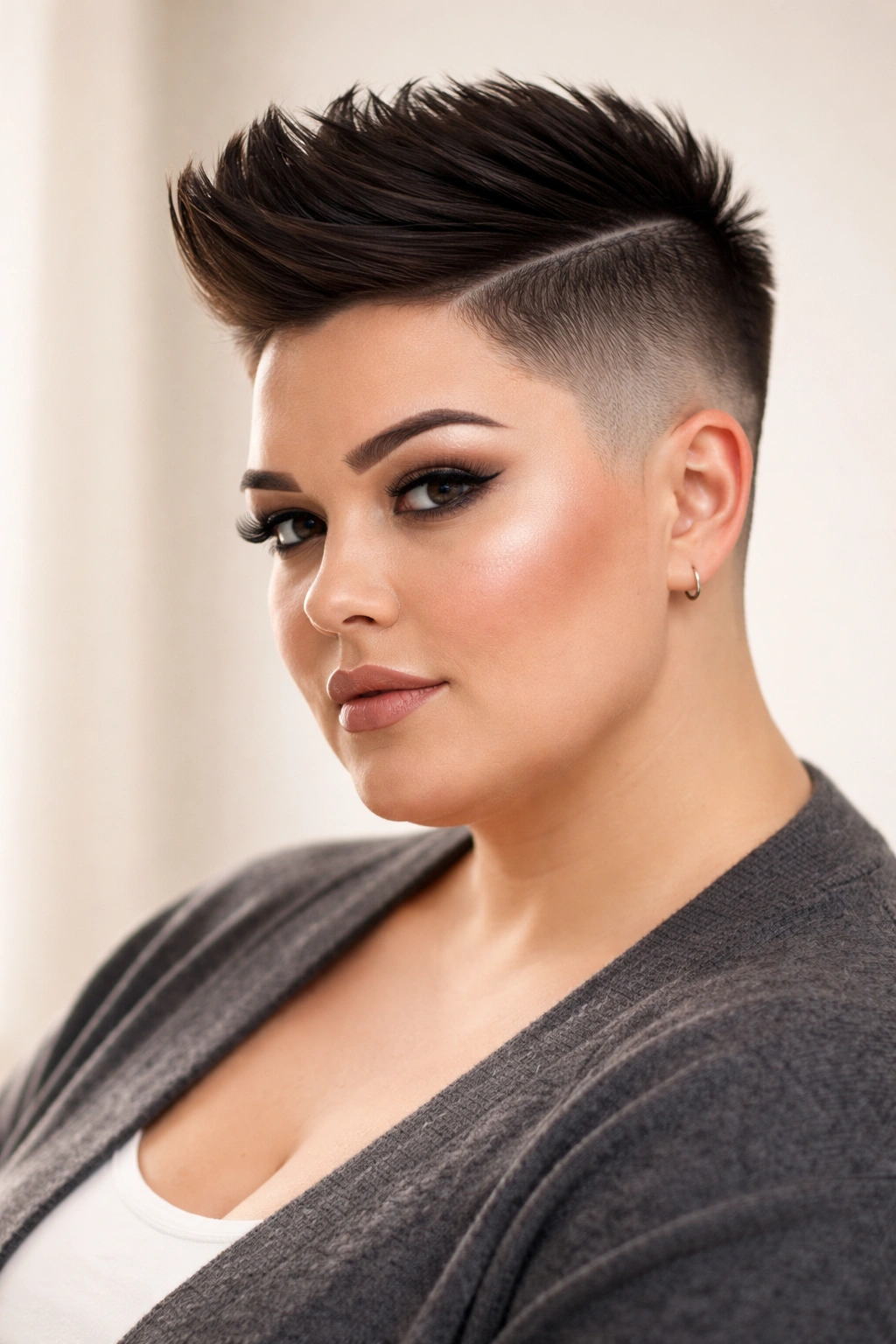
An angular fade is a precision cut that features a very short fade on the sides (similar to an undercut) but with an intentionally angular, shaped top that emphasizes geometry and line. Rather than a soft, rounded transition, the fade moves from very short to longer in sharp, defined angles. This cut is for someone who wants a sculptural, architectural look that genuinely changes how their face reads.
How Angles Counter Roundness
Angles and roundness are essentially opposites, so an angular fade works by introducing hard lines and geometric shapes that visually contrast with the natural roundness of your face. The sharp fade line creates definition along the sides of your head, while the angular shape on top directs attention upward. The result is a cut that feels very intentional and modern, and it genuinely makes your face appear narrower and longer.
Maintaining Precision
- Angular fades require very skilled cutting, so choose your stylist carefully and bring reference photos
- Trims every 3-4 weeks are essential to maintain the crisp angles and precise fade
- The top can be styled many different ways—brushed back, textured up, or swept to the side
- This cut demands a bit more styling attention than some others, but the payoff is a truly personalized, standout look
- Consider your hair texture when discussing this cut with your stylist; it shows most dramatically on straight or wavy hair
Worth knowing: This cut is a commitment to regular maintenance and styling, but if you love a polished, intentional aesthetic, it’s absolutely worth it.
9. The Tousled Textured Crop
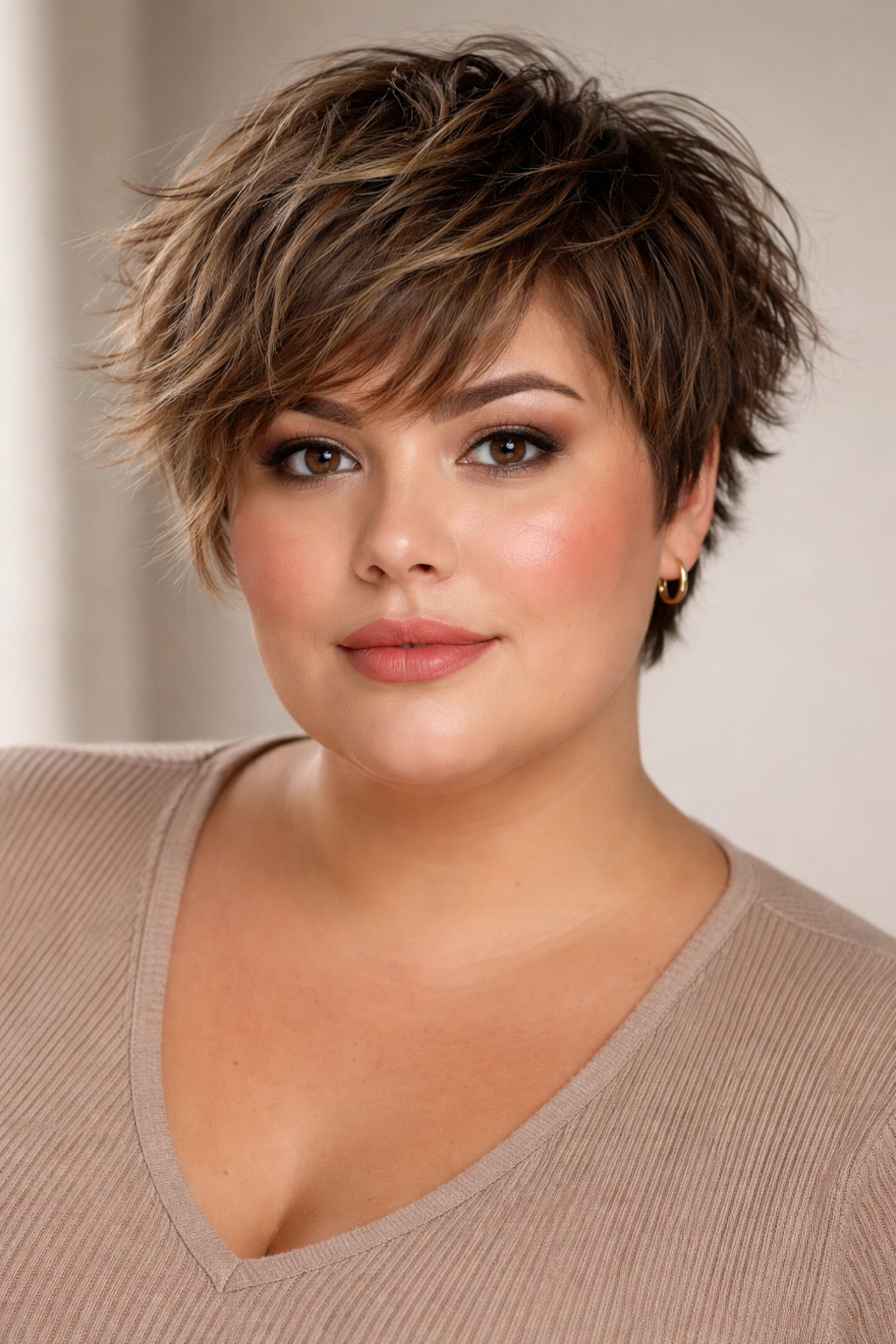
A tousled textured crop is a short, choppy cut designed to sit naturally messy and undone, with texture and movement happening throughout. This is different from a pixie because it’s slightly longer overall and relies more on natural texture than on aggressive styling. The crop sits at roughly the same length all over, but layers throughout create movement and prevent it from looking blunt or too rounded.
Why Texture Matters for Round Faces
A tousled crop works because the texture creates constant visual interest and movement that breaks up the roundness of your face. When your hair has layers cut at different angles and lengths, light hits those layers differently, creating shadows and highlights that add dimension. The tousled, undone styling (which is actually very intentional) means the texture is constantly visible and working for you, rather than being smoothed down into a shape that might emphasize roundness.
Low-Effort Styling
- This cut looks best when you lean into the textured, undone aesthetic rather than fighting it
- Apply a texturizing spray or matte product to damp hair and tousle with your fingers
- A quick blow dry with your fingers separating the layers is often all you need
- This cut works beautifully on naturally wavy or curly hair, where the texture is built-in
- Even on straight hair, the layers create enough movement to look intentional without much effort
Pro tip: This cut is perfect if you want short hair but don’t want to spend time styling every morning; the whole point is that it looks good when slightly undone.
10. The Blunt Bangs with Short Sides
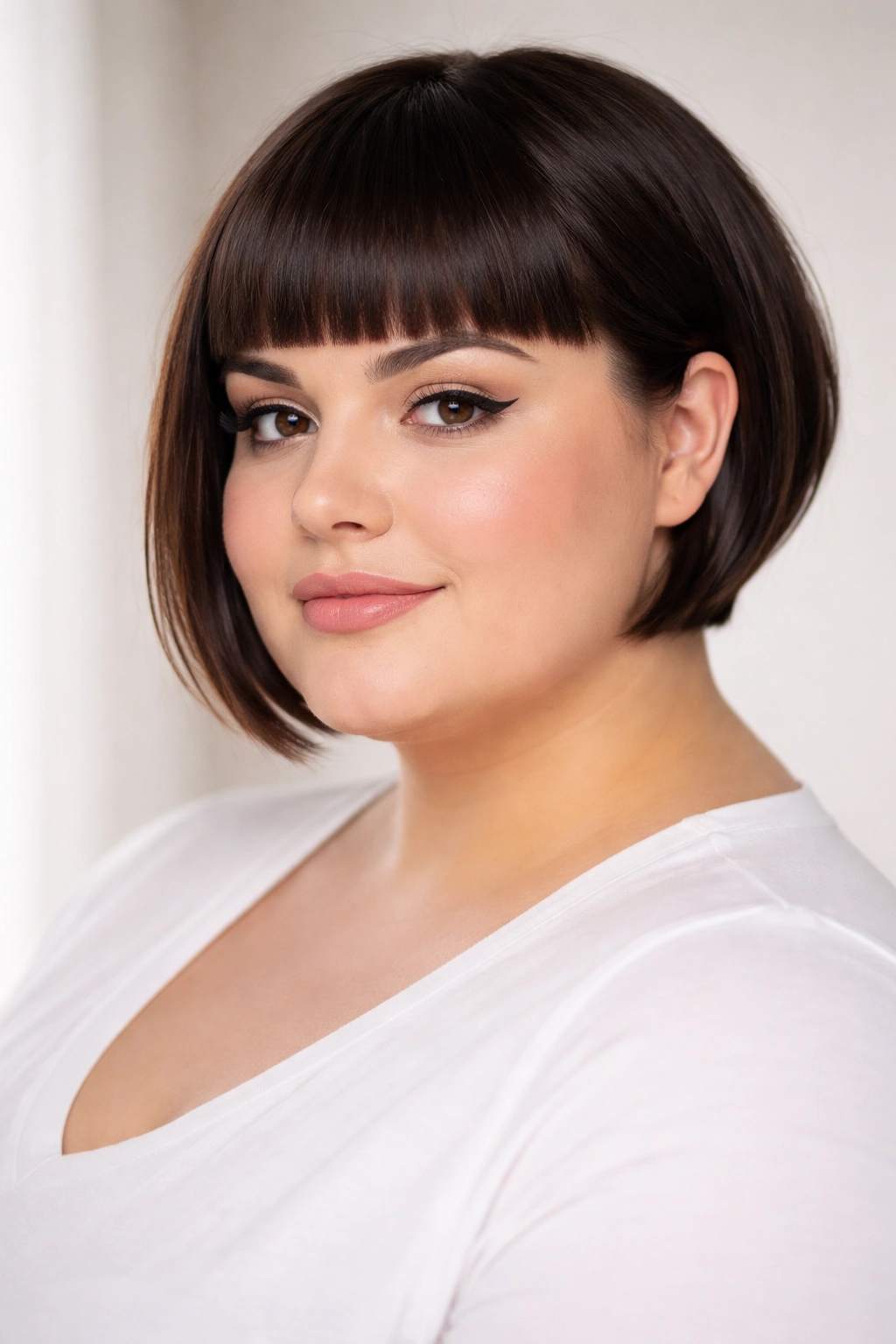
A short cut with blunt bangs and tapered sides is a statement-making option that uses bangs strategically to reshape how your face reads. The sides are tapered short (similar to an undercut), but the top is left longer specifically to accommodate a blunt, straight-across bang. The bangs sit just above the eyebrows and create a strong horizontal line that actually breaks up the vertical roundness of your face.
How Bangs Reshape Your Face
Bangs work for round faces because they create a horizontal line that interrupts the rounded shape. A blunt bang especially creates definition and structure, making your face feel less soft and round. The bangs also draw attention to your eyes, which shifts focus away from the overall shape of your face. Combined with tapered sides, you’re getting both vertical interest (from the tapered sides) and horizontal interest (from the bangs), which creates a more balanced proportion overall.
Maintaining Bangs
- Bangs require very frequent trims—every 2-3 weeks—to keep the blunt line sharp and at the right length
- You’ll need to style your hair a bit to keep the bangs in place, typically with a blow dryer and a round brush
- Bangs can sometimes feel heavy or get in your eyes, so make sure you’re genuinely comfortable wearing them before committing
- This cut works best if you’re willing to put in the styling effort, especially on humid days
- Blunt bangs show texture and individual hairs quite clearly, so they look best with healthy hair in good condition
Worth knowing: Bangs are a commitment, but they genuinely change how your face reads and can be incredibly flattering for a round face shape if you’re willing to maintain them.
11. The Curved Lob
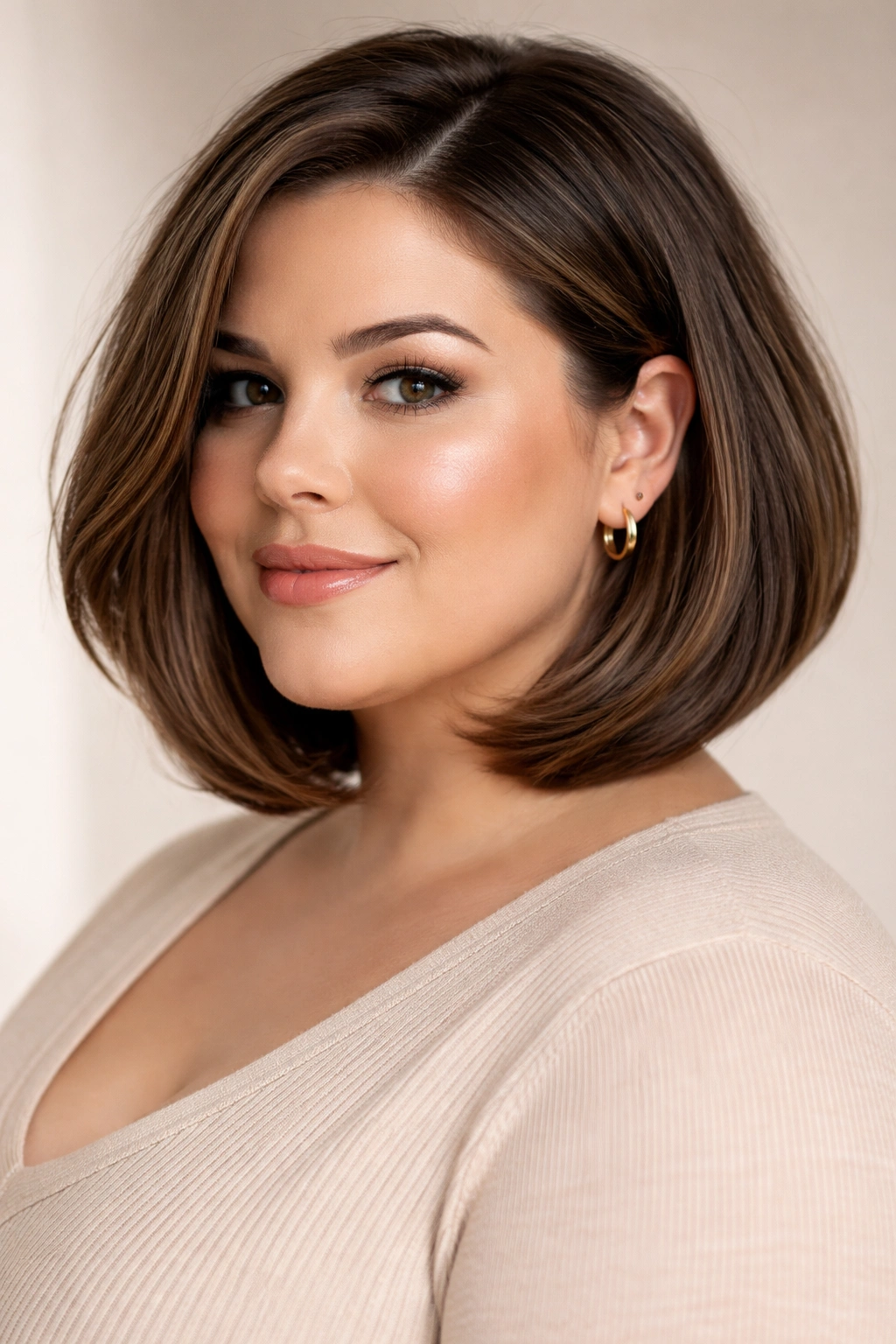
A curved lob (a short long-bob) sits right around the chin or slightly shorter and features curved, rounded layers rather than choppy ones. This cut might sound counterintuitive for a round face, but the key is in how the curve is shaped—it curves inward toward the face rather than outward, which actually creates the illusion of a more angular jawline. The slight length also gives you some softness while still maintaining the short, manageable nature of a true short cut.
Why Curves Can Work Strategically
A curved lob works because the inward curve creates an optical illusion that makes your face appear narrower. Rather than the roundness being emphasized by curved hair, the curve of the hair redirects attention and creates the suggestion of more angular cheekbones and jawline. The layering throughout prevents the cut from being too heavy or blunt, and the slightly longer length gives you styling versatility.
Styling Options
- A curved lob can be styled sleek and polished or textured and tousled
- Blow dry with a round brush if you want a smooth finish, or use texture spray for a more casual look
- The length allows for more styling flexibility than shorter cuts—you can pull it back, tuck it behind your ears, or let it fall freely
- Trims every 6-8 weeks keep the curve intentional and the layers sharp
- This cut works on all hair types, and the curve shows beautifully on both straight and wavy hair
Pro tip: Ask your stylist to emphasize the inward curve around your face and cheekbones; this detail is what makes the cut genuinely flattering for round faces.
12. The Voluminous Crown Cut
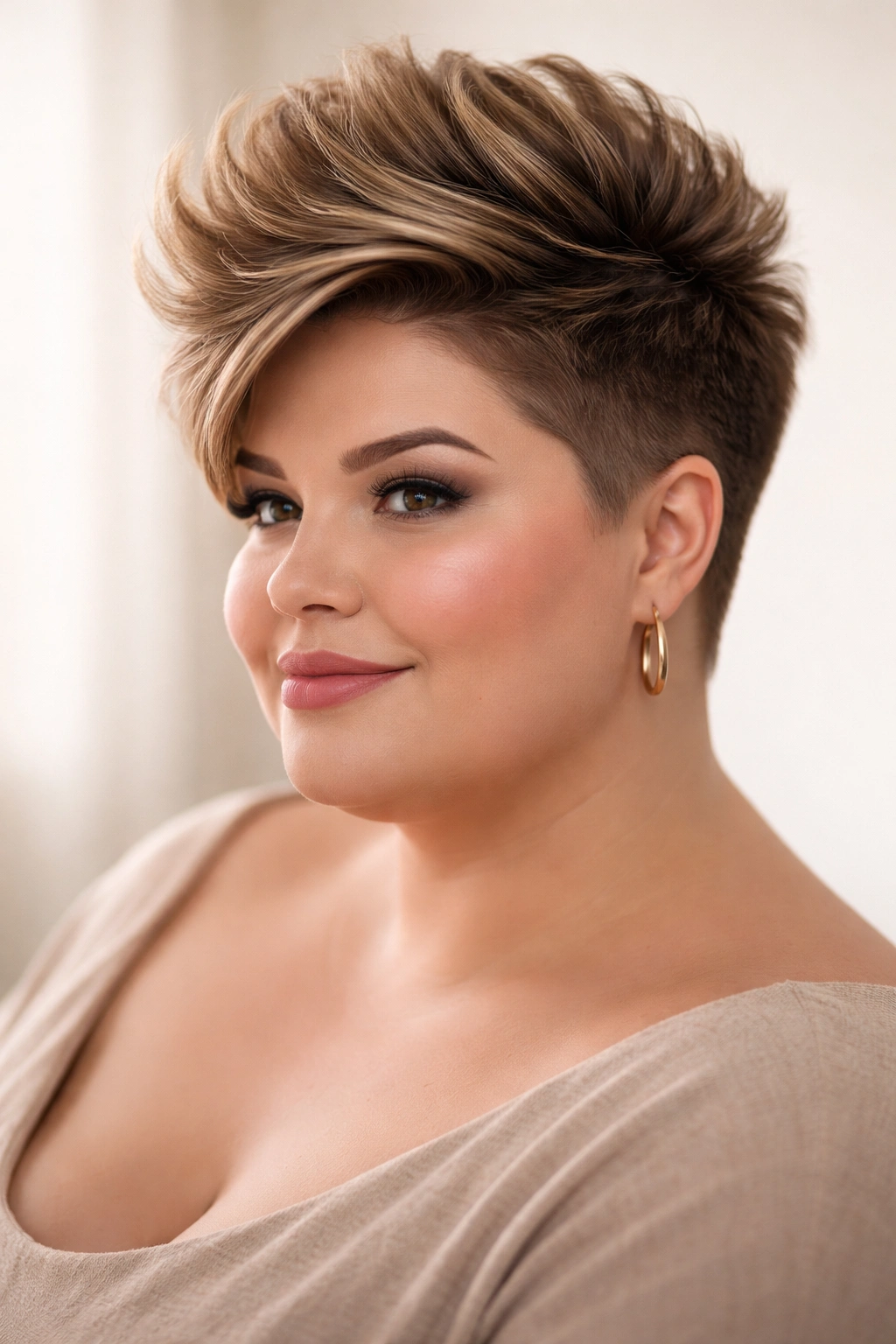
A voluminous crown cut features very short sides (often faded) with significantly more volume and length reserved for the crown and top of the head. This cut is specifically designed to add height and volume where you want it most, which makes it exceptionally flattering for round faces. The contrast between the close-cut sides and the voluminous crown creates an elongating silhouette that works beautifully for plus-size frames as well.
The Power of Strategic Volume
The voluminous crown cut works by directing all visual interest upward and creating the strongest possible vertical line. When you have height and volume at the crown, your entire face appears longer and less round. The faded sides keep the overall shape sleek and balanced, so you’re not adding bulk everywhere—just where it matters for face shape. This is a cut that genuinely changes proportions and how you read at a glance.
Creating and Maintaining Volume
- Ask your stylist to cut the top with enough texture that it naturally wants to stand up and out
- Blow dry upward and backward to encourage volume at the crown
- Use a volumizing product or texturizing spray on damp hair before blow drying
- A round brush or blow dryer alone can create lift, but a bit of product helps it last longer
- Trims every 4-6 weeks keep the shape intentional and prevent the top from becoming overgrown and heavy
Insider note: This cut pairs beautifully with a well-shaped brow and some face-framing makeup; the emphasis on your face’s upper half (eyes, brows, forehead) really showcases your features.
Final Thoughts
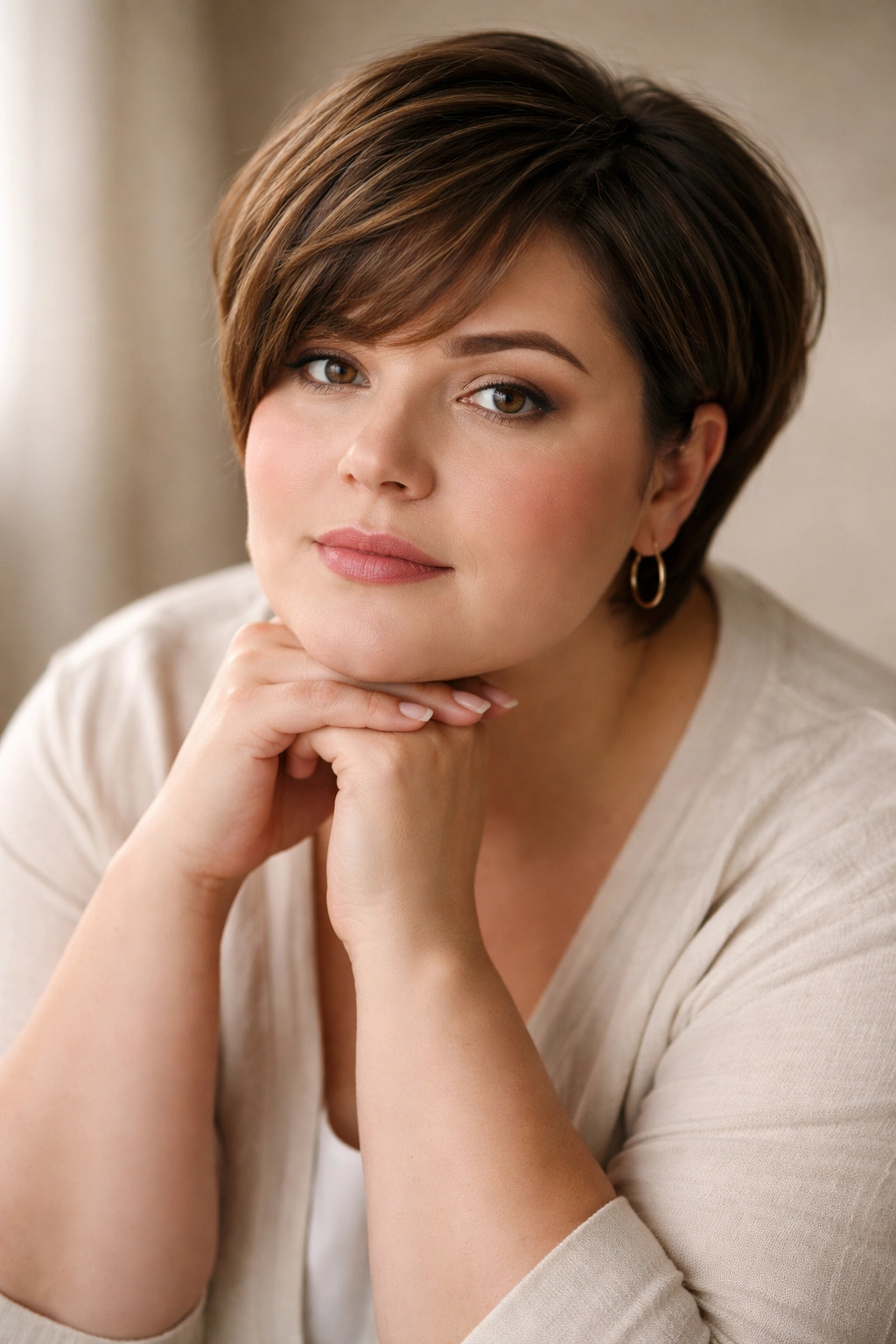
The right short haircut for a round face is ultimately about creating contrast, texture, and strategic angles that work with your natural face shape rather than against it. Whether you choose a bold asymmetrical cut, a textured pixie, or a more subtle layered bob, the key is finding a stylist who genuinely understands your face shape and is willing to cut specifically for you rather than following a generic template.
Your face shape is just one part of the equation—your hair texture, your lifestyle, how much styling you’re willing to do, and what makes you feel genuinely confident all matter equally. Bring reference photos to your consultation, but also have a real conversation with your stylist about what you’re actually going to commit to maintaining. A cut that requires a trim every three weeks and twenty minutes of styling every morning is stunning, but only if that fits your real life.
Plus-size women deserve cuts that celebrate their proportions and make them feel phenomenal. Short hair, specifically, has a way of making a statement and shifting how you move through the world. The confidence boost from a genuinely flattering cut is real and noticeable. Take time to find the right stylist, commit to the maintenance the cut needs, and then wear it with the confidence that comes from knowing it was cut specifically for you.
