



When you’re running out the door in the morning or trying to look polished without spending an hour on styling, having a roster of reliable, gorgeous hairstyles makes all the difference. Black women’s hair has incredible versatility and texture that makes it possible to create stunning looks in minutes—whether you’re working with natural curls, locs, braids, or protective styles you’ve already invested time in creating. The best everyday hairstyles are the ones that work with your hair’s natural properties, celebrate your texture, and let you move through your day feeling confident without constant maintenance.
The challenge isn’t finding a hairstyle—it’s finding ones that genuinely work for your lifestyle, hair type, and the kind of polish you want to project without feeling like you’re spending more time on your hair than actually living. That’s why I’ve pulled together 15 everyday hairstyles that deliver maximum impact for minimum effort. These aren’t elaborate looks that require a salon visit or two hours of prep time. They’re the styles that work on a Tuesday morning, hold up through a full workday, and look just as good when you catch your reflection at 5 PM as they did when you left home.
Every style here is designed specifically for the unique characteristics of Black hair—the ways it shrinks, coils, stretches, and holds. You’ll find options whether you’re wearing your hair loose, in protective styles, or anywhere in between. Some of these you might already know. Others might become your new go-to when you need something that looks intentional without being complicated.
1. The High Puff with Front Layers
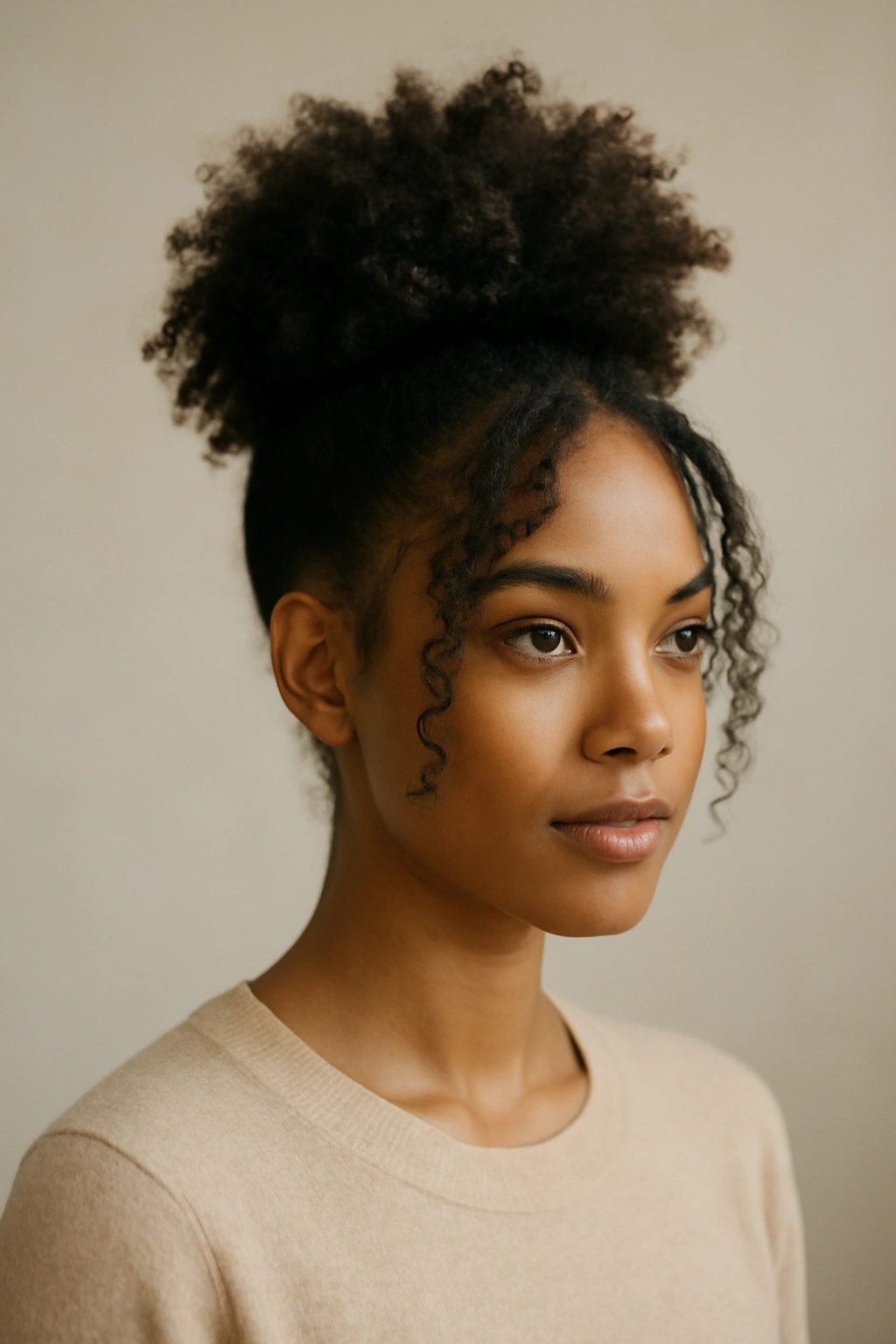
A high puff is the epitome of “I woke up like this” meets “actually I put serious thought into this look.” The magic happens when you pull your hair into a high ponytail at the crown, smooth it with a little gel or mousse, and secure it with a hair tie that matches your skin tone. The puff sits elevated and voluminous while the front sections frame your face—either pulled back smoothly for a polished finish or left loose in a few face-framing layers for a more relaxed, effortless vibe.
Why This Works for Every Day
A high puff is fast—genuinely five minutes from start to finish if you’ve already got your hair moisturized and prepped. It works on second-day hair, third-day hair, and hair that honestly might be a week old but still looks fresh because the height and movement mask any flatness at the roots. The style elongates your face and works with almost any facial shape. You can wear it to work, to the gym, to run errands, or to meet a friend for coffee. The puff is equally at home in a professional setting or a casual one, which makes it one of the most genuinely versatile everyday styles available.
How to Make It Last
- Keep a lightweight moisturizer or curl cream nearby to refresh any frizz throughout the day
- Use a hair tie that’s thick enough not to create creases but not so tight it pulls at your hairline
- Smooth your edges with a flexible-hold gel rather than something waxy—this keeps the front neat without looking crunchy
- If you’re sleeping in this style, wrap your puff loosely in a silk or satin bonnet to preserve it overnight
Pro tip: If your puff feels limp by mid-afternoon, lean over and flip your head upside down, gently separate the sections of hair in the puff with your fingers, and flip back up. That’s an instant volume refresh.
2. Twisted Crown with Center Part
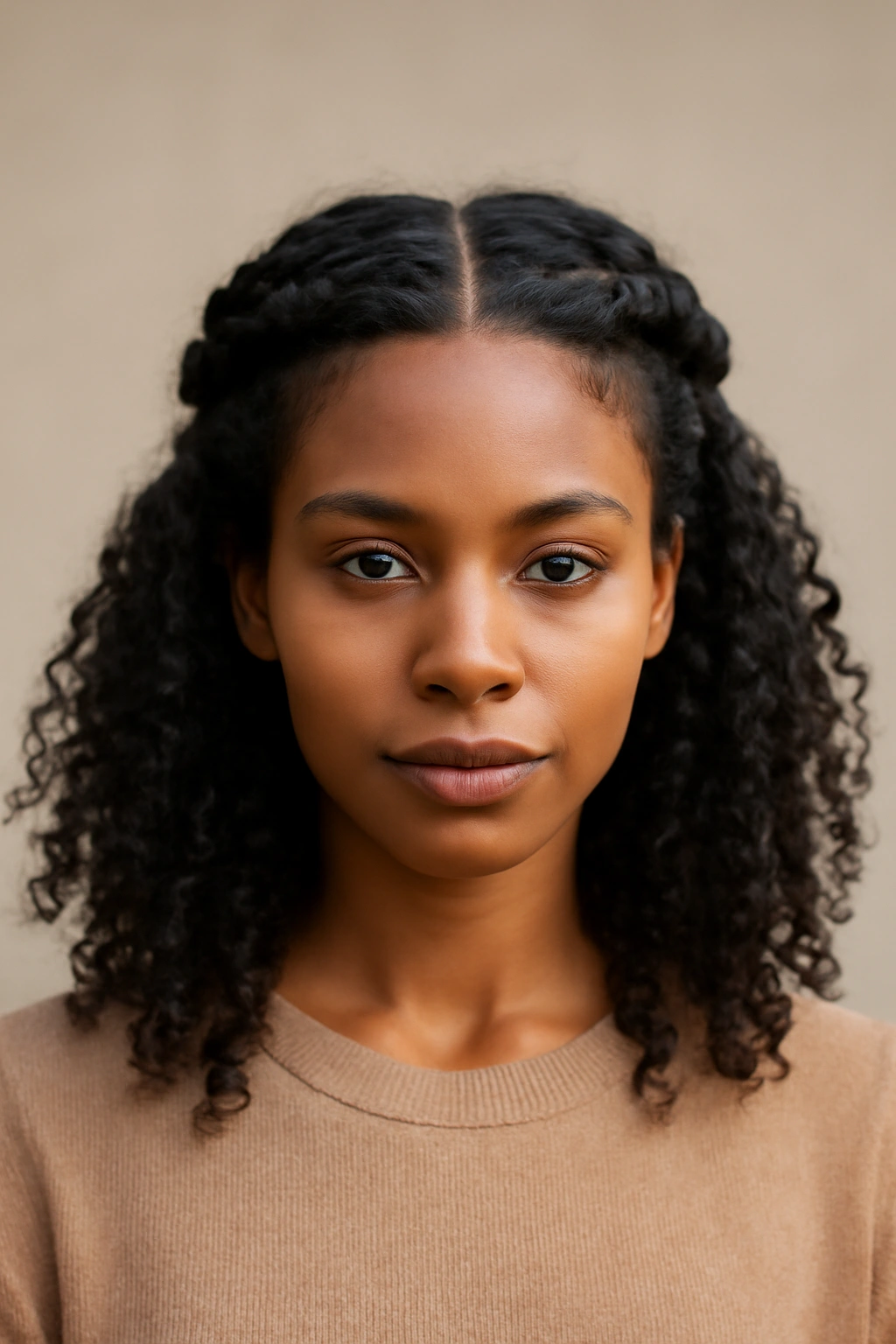
This style starts with a center part running straight back from your forehead, then you take a thick section from each side and twist it loosely toward the back of your head. The two twists meet at the crown and you secure them together with bobby pins hidden underneath. Leave the rest of your hair down—whether that’s loose curls, coils, or waves—and you’ve got something that looks intentionally styled without looking overdone.
What Makes This Style So Easy
The twisted crown is one of those hairstyles that looks more complicated than it actually is, which is exactly what you want on a daily basis. You’re not sectioning your entire head or doing anything that requires precision. The twists don’t even have to be tight—loose, relaxed twists actually look more modern and effortless. Because the twists frame your face and pull a bit of weight off your sides, your hair looks fuller and more intentional even if you just threw it together before leaving the house.
Styling Tips That Actually Work
- Twist loosely enough that you can still see texture within each twist—super tight twists can look harsh for daytime
- If your hair is naturally straight or you have relaxed hair, twist in the direction that matches your wave pattern for a smoother blend
- You can make this style work with different hair lengths by adjusting how far back you take the section to twist
- This style lasts beautifully through sleeping if you wrap your hair gently and re-twist the crown sections in the morning
Worth knowing: This style works particularly well when you want to transition between wash days—the twists add visual interest that draws attention upward to your face rather than to any root regrowth at your hairline.
3. Sleek Low Bun with Graphic Edges
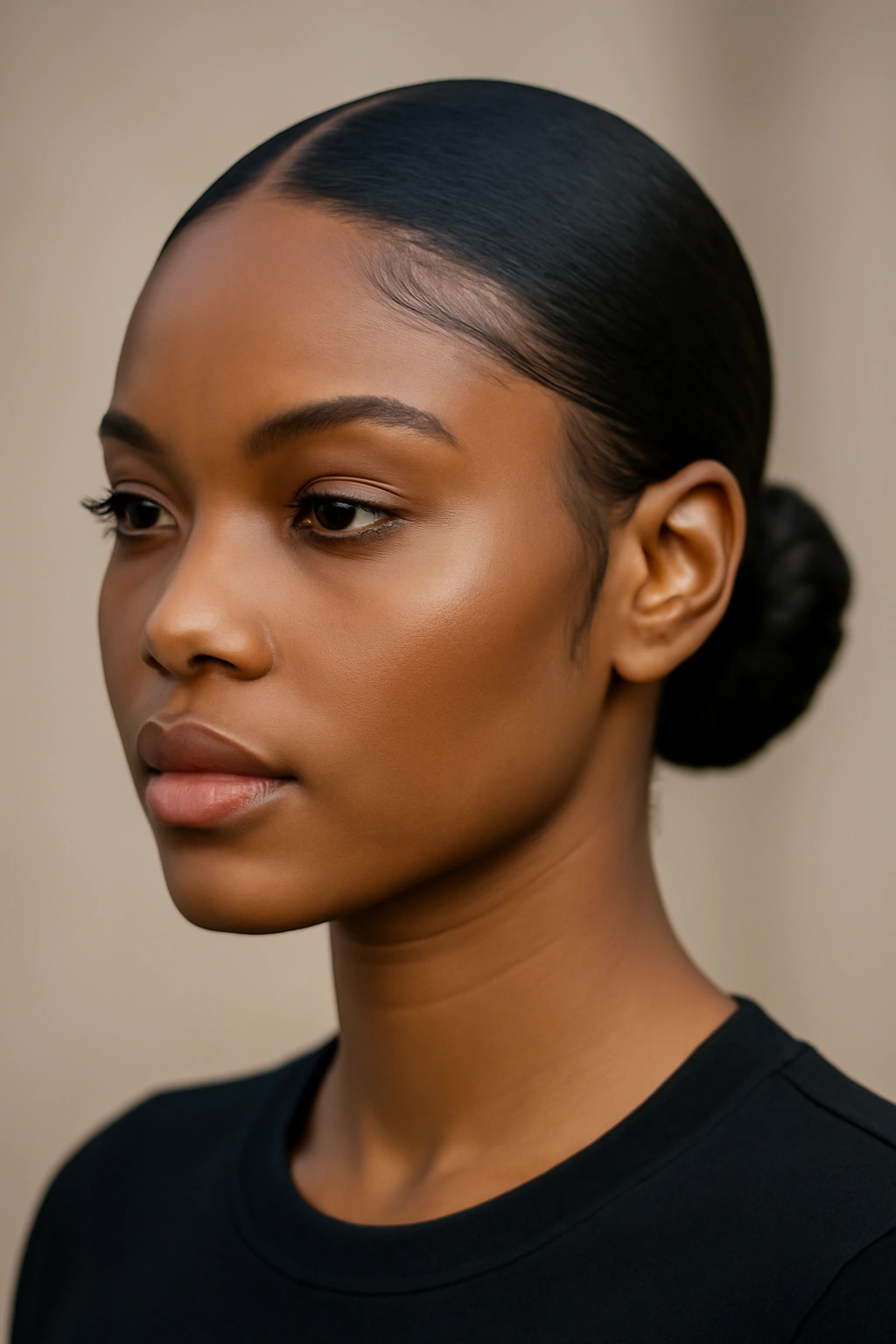
A sleek bun is a professional standby, but what makes this version work as an everyday style is the focus on graphic edges—that smooth, defined line that frames your face and hairline. You’re using edge control to create clean lines from your temple, along your jaw, and around your ears before gathering everything into a low bun at the nape of your neck. The bun itself doesn’t have to be tiny or perfect; medium-sized buns actually look more modern and intentional for daytime.
Why This Is Your “I Mean Business” Look
A sleek bun with sharp edges communicates polish and control without feeling stuffy. It’s appropriate for professional settings, but it also works when you’re going to the grocery store and want to feel put-together. The slicked-back style opens up your entire face, which is especially flattering if you have a longer face shape or want to showcase your bone structure, skin, and jewelry. Because everything is pulled back, this style is genuinely comfortable—no hair in your face, no strays coming loose throughout the day.
Technique for Edges That Stay Put
- Use an edge control with flexible hold rather than a super stiff one; it should feel smooth against your hairline, not crunchy
- Apply it in the direction your hair naturally wants to grow, smoothing with a fine-tooth comb or toothbrush
- Create a clean part line using the pointed end of a rattail comb before slicking back the sides
- Secure your bun with bobby pins that match your hair color and finish with a light hold hairspray that locks everything in place without flaking
Real talk: You don’t need your edges to be chemically treated or permanently straightened for this to work. Your natural hairline, slicked back smoothly with the right product, looks just as polished.
4. Loose Braids with Curly Ends
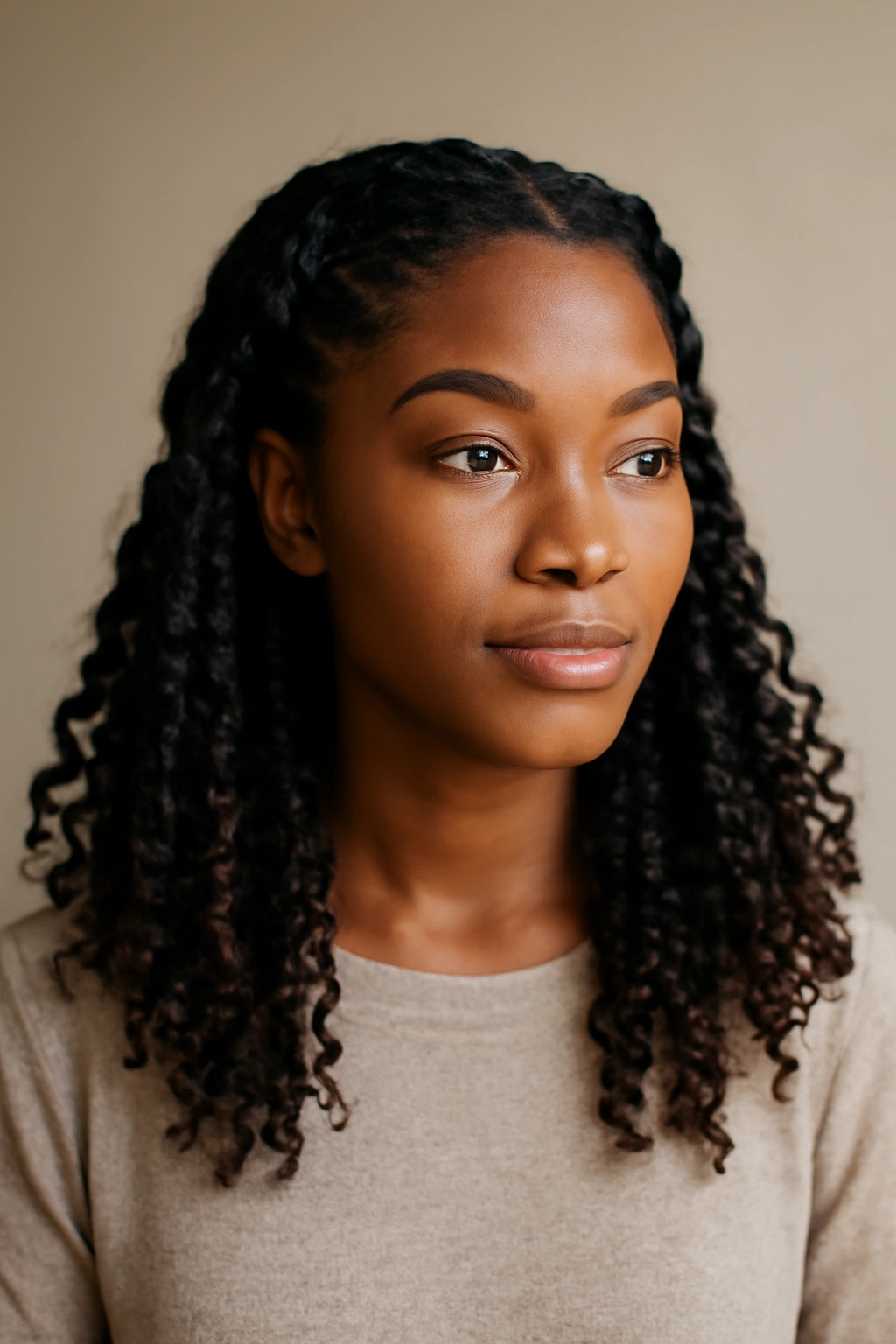
Box braids, cornrows, or simple three-strand braids—the style itself matters less than the combination of the braided section with curly, voluminous ends. You can braid a section from each side of your head and let the rest hang loose and curly, or braid two thick sections in the front and leave the back completely down. The braided parts give you a pulled-together appearance while the loose curls at the ends provide softness and movement.
Why Mixing Braids with Curls Works
This combination genuinely has something for everyone. If you love the protective benefits and low-maintenance nature of braids but find an all-braided style feels too formal or heavy for everyday wear, this is your solution. The loose ends soften the braids, making the overall look feel current and intentional rather than utilitarian. You get the styling payoff of braids—they hold your hair back, they’re neat, they last through multiple days—but without the sometimes-severe appearance of braids worn all the way through.
Making This Work With Different Hair Types
- If you have natural curls, you can braid damp hair and let the ends air-dry into defined curls that last for days
- For more elongated curls or waves, braid while hair is slightly damp, then use a curling iron or flexi-rods on the loose ends
- You can refresh loose ends with a lightweight curl cream or mousse in the morning of day two without having to redo the braids
- This style is particularly good if you have different textures on your head—braiding can unify the look while loose ends showcase natural variation
Pro tip: If your braids start to feel tired by day four or five but the loose ends still look fresh, you can unbraid just the bottom third of each braid and let those curls loose while keeping the braided sections in place.
5. Half-Up, Half-Down Ponytail with Volume
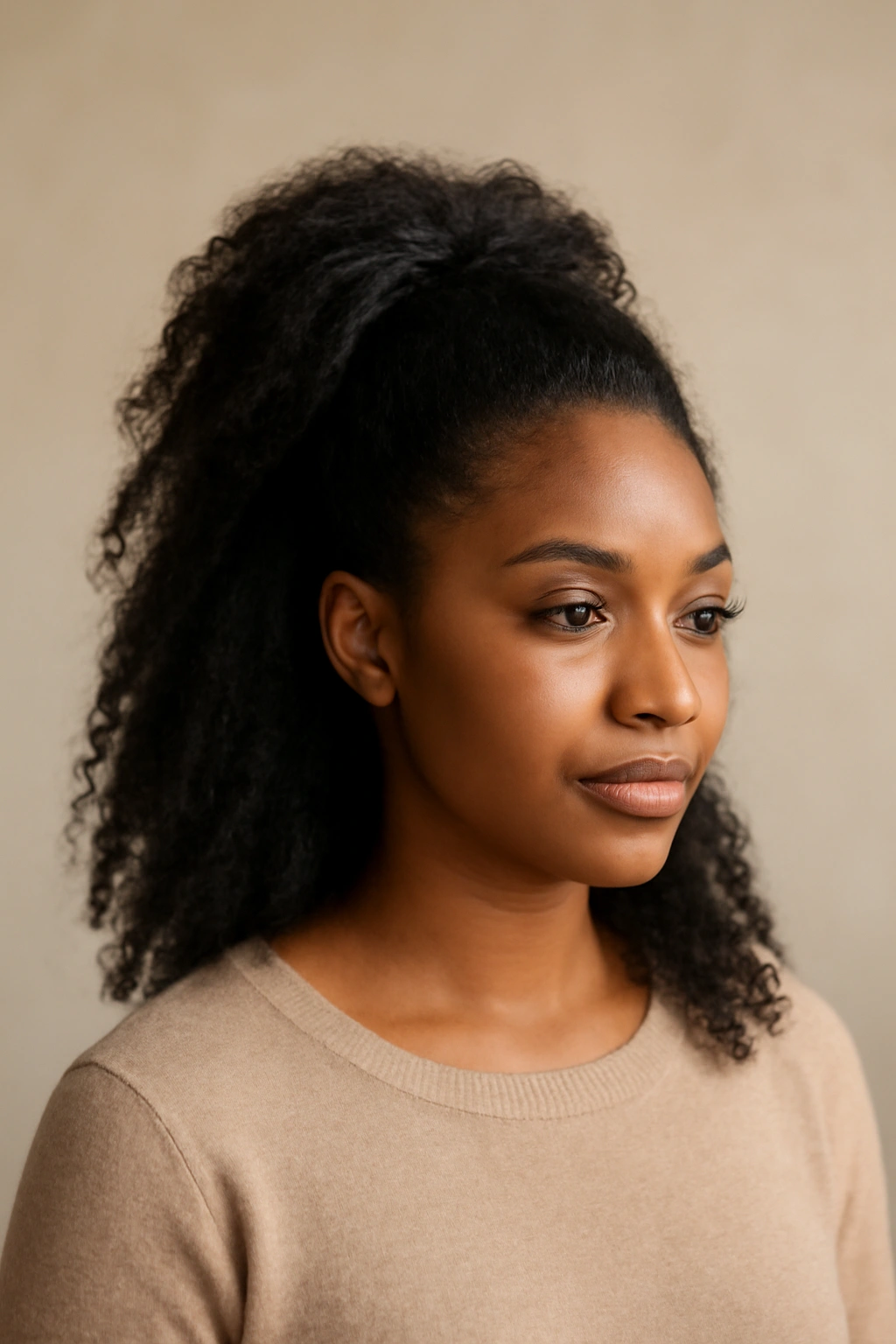
This is the style that looks effortlessly styled even when you didn’t have time to think about it. Take the top half of your hair—pulling from the crown area and the temples—and gather it into a ponytail at the back of your head. The bottom half stays completely down, creating a look that’s halfway between “I’m wearing my hair loose” and “I’ve got my hair styled.” The key is creating volume at the crown so the top half looks intentional rather than sparse.
What Makes This Feel Current
Half-up ponytails have massive staying power because they work. They’re practical when you want hair off your face without the commitment of a full updo. They work at any hair length—from shoulder-length to very long. They transition seamlessly between casual and more polished settings. The style doesn’t require your hair to be freshly washed or perfectly moisturized, so it’s genuinely a regular-day option when other styles might feel like too much effort.
Technique for Intentional-Looking Volume
- Don’t make your sections too thin; take enough hair that the ponytail looks substantial and balanced with the loose bottom half
- Use a volumizing mousse or lightweight cream on the top half to encourage texture and lift before pulling it back
- Gently backcomb or tease the crown section before ponytailing for extra height and fullness
- Secure with a hair tie and then pull out a few small sections from the ponytail to create a softer, less severe line
Worth knowing: You can wear this style with your ponytail smoothed completely or slightly textured and separated, depending on whether you want a sleek or more undone vibe.
6. Flat Twists Down the Back
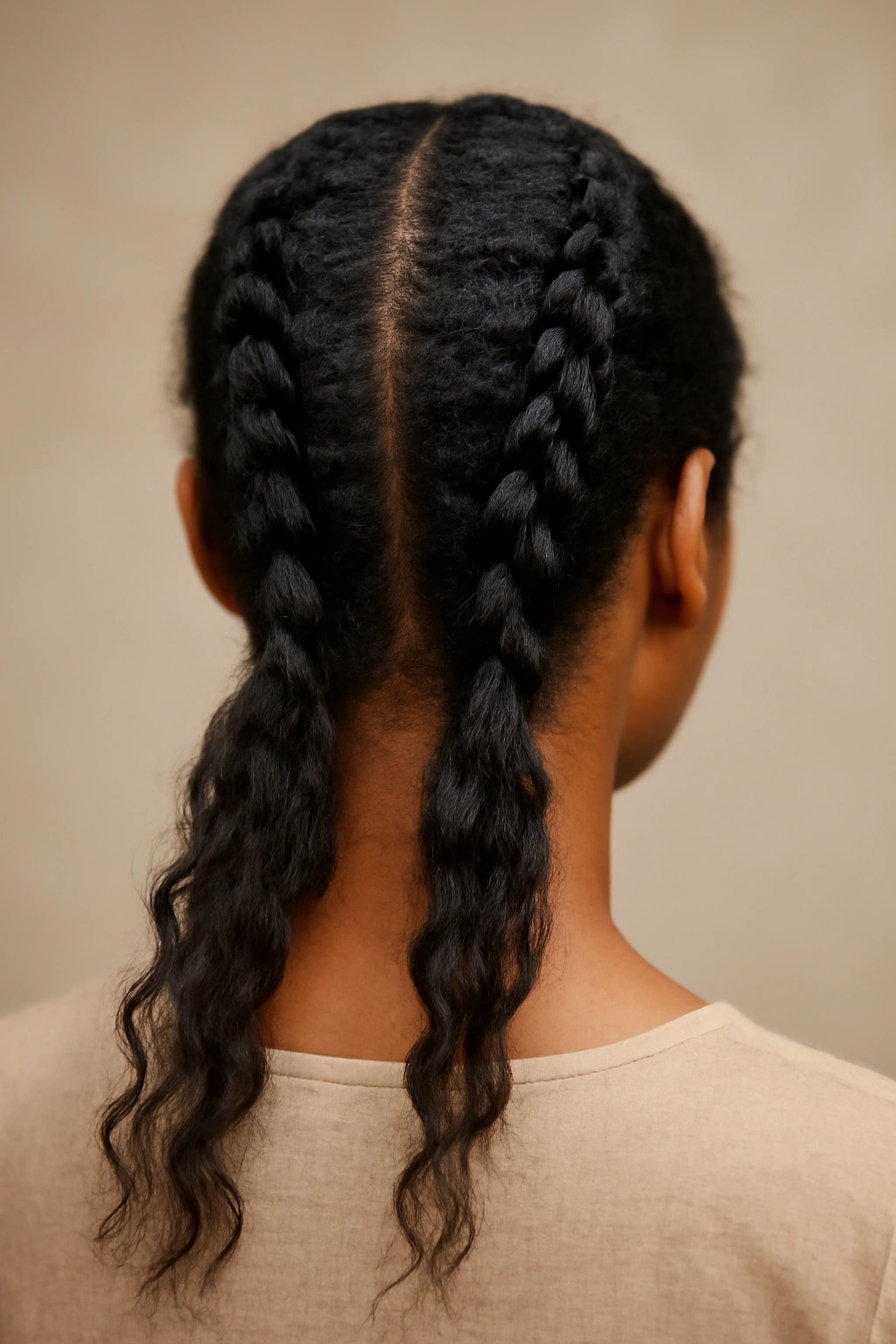
Flat twists are a practical, beautiful option that sits somewhere between braids and twists. Instead of doing individual twists in the middle of your hair, you’re twisting two sections of hair flat against your scalp, which creates a braided appearance while actually being a twist. You typically start at the crown and flat-twist down the back of your head, securing them at the nape with bobby pins. The rest of your hair stays loose below or around the twists.
Why This Works as Everyday Hair
Flat twists are genuinely fast once you get the technique down—you can do two or three flat twists down the back of your head in maybe ten minutes. They’re not as permanent as braids, so if you’re someone who likes to change up your style or doesn’t want to commit to a style for a week, flat twists are more flexible. They’re neat enough for professional settings but casual enough for everyday wear. And unlike box braids or cornrows, which require your hair to be in a specific state, flat twists work on freshly washed hair, second-day hair, or hair that’s been sitting for a few days.
Mastering the Flat Twist Technique
- Start with moisturized, detangled hair—dry hair makes twisting harder and increases breakage
- Take two sections of equal size at your hairline and twist them over each other while adding small amounts of hair from the sides, just like you’re braiding but keeping the twist pattern
- Keep tension even but not tight; the twist should feel secure but not pull on your scalp
- Once you reach the nape, twist the remaining hair without adding more sections and secure with a bobby pin
Real talk: Your first few flat twists might look imperfect. By the third or fourth one, they smooth out naturally. This is a skill that improves with practice, and your hair doesn’t care if your twist isn’t perfectly even.
7. Bantu Knots for Texture
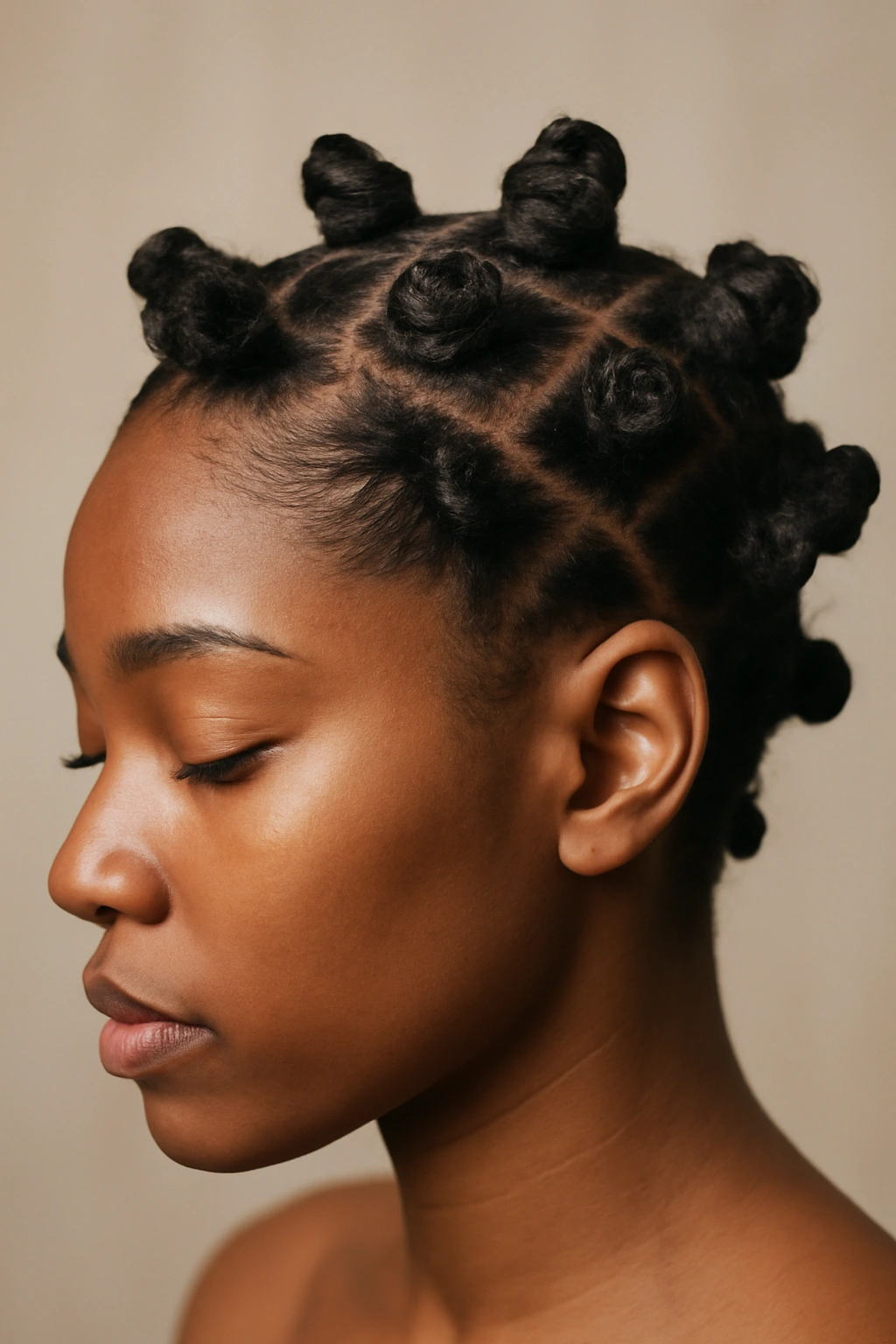
Bantu knots are small sections of hair twisted and then coiled into a knot that sits close to your scalp. You can create them all over your head for a protective style or just do a few across the top. The magic happens when you leave them in overnight or for a few hours, then unravel them for gorgeous, defined curls that last for days. Even if you wear them in for just a day as a style, they look intentional and textured.
Why Bantu Knots Are Such a Powerhouse Style
You get multiple looks from one installation. Wear them in as knots and you’ve got a protective, neat style. Unravel them and you’ve got spiral curls that look like you spent an hour with a curling iron. They’re protective because your ends are tucked into the knot, which prevents breakage and drying. They last for a week or more if you sleep in them properly, which means minimal daily styling. And because they create texture and volume, they work beautifully on finer hair that might otherwise lie flat.
How to Install Them Fast
- Start with damp, moisturized hair and a leave-in conditioner applied throughout
- Divide your hair into sections using a fine-tooth comb—how many sections depends on the coverage you want
- Twist each section, then wrap it around the base of the section where it starts to form a knot
- Secure each knot with a bobby pin or by tucking the end under the coil
- Let them set for several hours or overnight before unraveling
Pro tip: If you want the knot texture without committing to curls, wear them in for a day or two and then take them down. The knots themselves are a complete hairstyle, not just a means to curls.
8. Slicked Back Gel Look with Decorative Barrettes
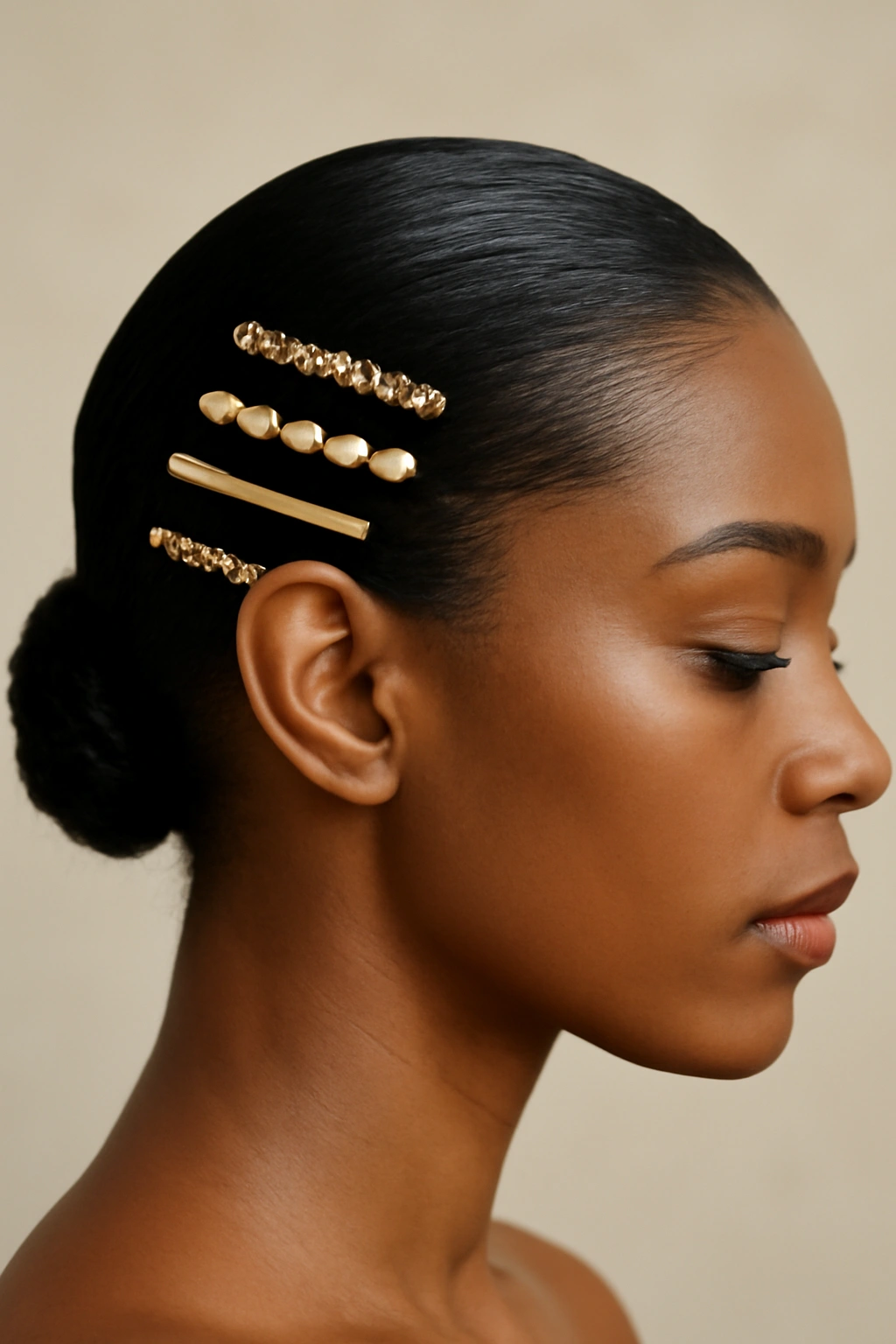
This style starts with your hair smoothed back tightly using a flexible-hold gel, then secured with decorative barrettes or clips that sit at the crown or along the back. The barrettes do the actual holding while creating visual interest and intentionality. You’re essentially wearing your hair back in a way that’s neat and secure, but the barrettes transform it from utilitarian to styled. Gold, silver, tortoiseshell, or colorful barrettes all work depending on your vibe.
What Makes This Look Modern
The barrette trend has had serious staying power because it genuinely works. What used to read as utilitarian—just holding your hair back—now reads as intentional and fashion-forward. The look works for any age, any professional setting, and any casual situation. It’s particularly flattering if you have a longer face or want to open up your features. And honestly, it’s one of the fastest ways to go from “my hair is down” to “I’ve styled my hair” without actually doing that much.
Styling for Maximum Impact
- Use a gel with a flexible hold that makes your hair smooth but not crunchy or shiny in an unnatural way
- Barrettes work best when you smooth your entire head, not just a top section—this creates that cohesive, intentional look
- Layer your barrettes if you want more visual interest; two or three along the crown or back look more current than a single clip
- Match barrettes to your outfit, skin tone, or a color that complements your natural hair for a polished finish
Worth knowing: Barrettes work at any hair length, but they create particularly striking looks on longer hair where they’ve got more to hold.
9. Low Pigtail Braids
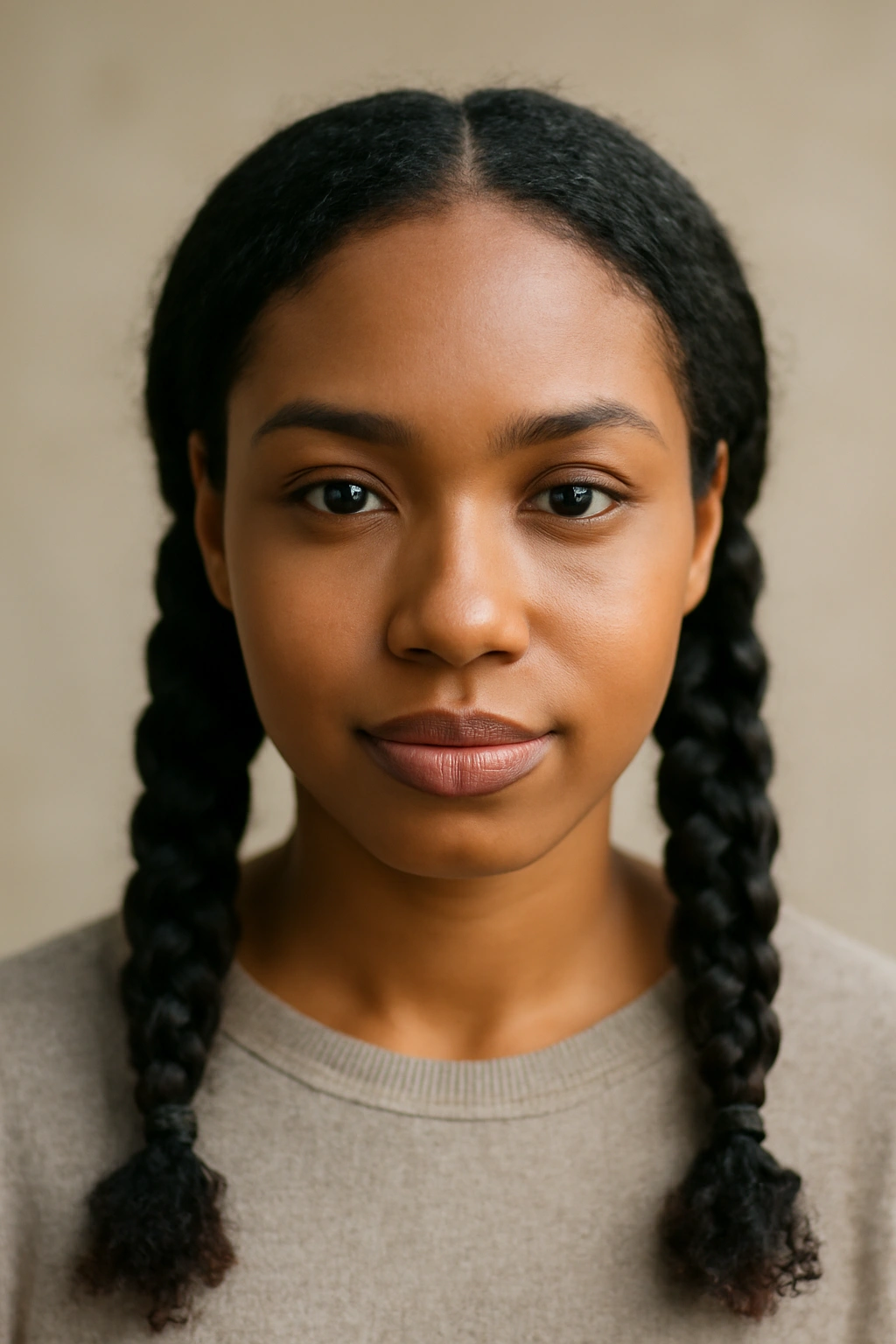
Pigtails aren’t just for kids; low pigtail braids are a genuinely cute and practical everyday style. You’re creating a center part from your forehead to the nape of your neck, then taking each side and creating a braid or twist. The braids sit low, typically starting around ear level, and you secure them with hair ties that match your hair color. The look is youthful and playful without being childish, especially if your braids are thick and loosely woven.
Why Low Pigtails Work as Adult Hairstyles
There’s something refreshing about this style—it’s playful without being unprofessional, it’s practical for keeping hair out of your face, and it creates interesting visual movement when you move. Because the braids are substantial and the style is balanced, it reads as intentional rather than like you just threw your hair in two sections. The low placement makes them feel more grown-up than traditional pigtails worn high on the head. And if you’re someone who switches between protective styles and wearing your hair loose, pigtails are a nice middle ground that feels like styling without being a major commitment.
Making Low Pigtails Look Intentional
- Take thick sections so your braids feel substantial and look like you meant to do this
- Create a clean center part using the pointed end of a rattail comb
- Braid loosely with some texture showing through rather than creating tight, sleek braids
- Secure with ties that match your hair, and leave a few small face-framing pieces loose if you want softness around your face
Real talk: Low pigtails work at any hair length, though they look particularly striking on longer hair with more movement.
10. The Pineapple Updo
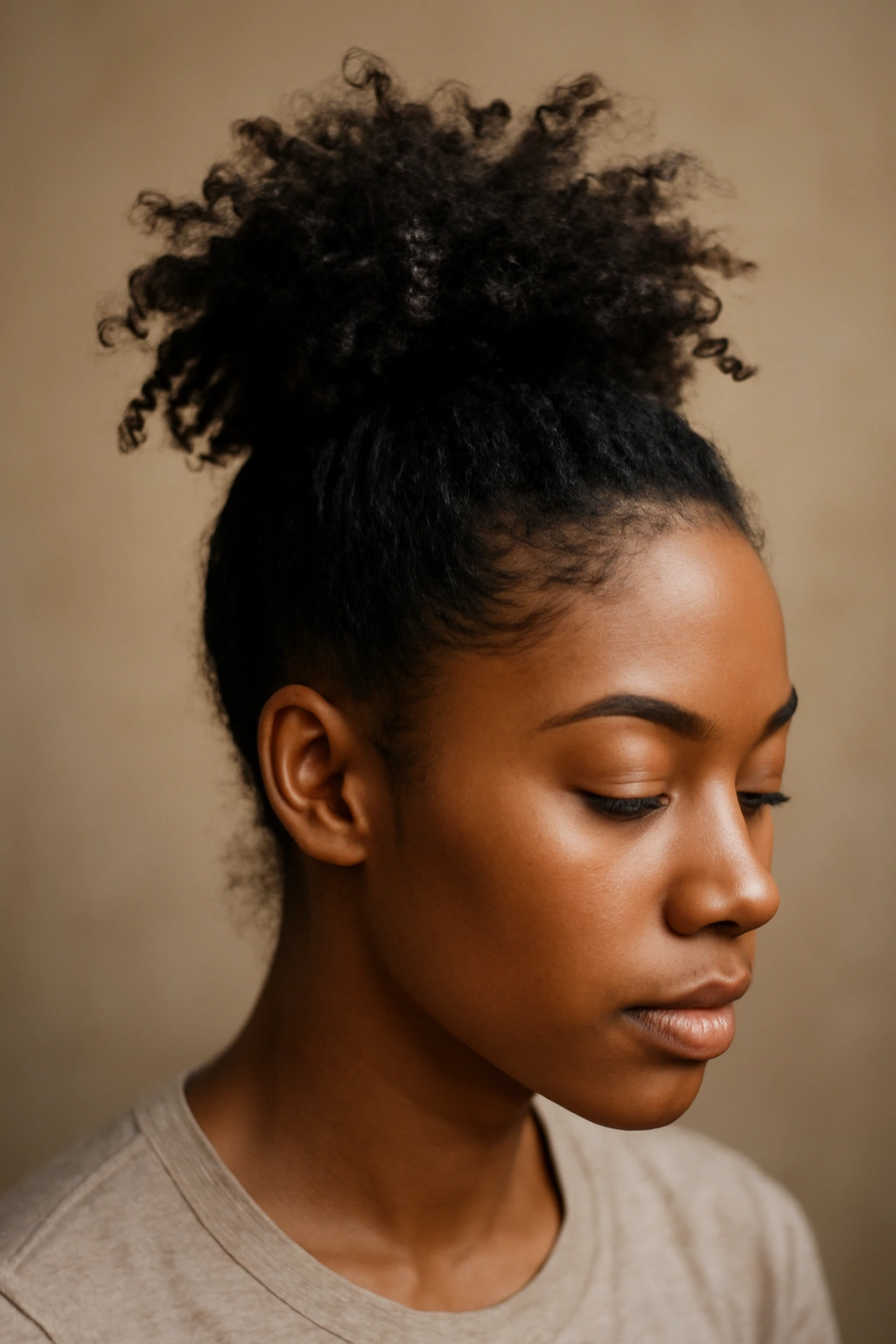
A pineapple is when you gather your hair into a high ponytail while your hair is damp or freshly moisturized, securing it with a flexible hair tie. The name comes from the shape it creates—with curls or coils sticking out from the crown like a pineapple. This is traditionally a nighttime style to preserve curls while sleeping, but it also works as a daytime hairstyle, especially if you want your hair up without it looking formal. The beauty of a pineapple updo is that it looks effortless, the curls have room to move and define as the hair dries, and it’s genuinely fast to create.
How the Pineapple Works Throughout Your Day
You can wear a pineapple to the gym, to work, while running errands, or basically anywhere you want your hair up but don’t want it to look like you’ve put serious effort into styling. The style shows off your curl pattern beautifully because everything is lifted and separated, which means you can see the texture without frizz or flatness. If you do this style on damp hair, your curls actually improve as they dry because the moisture redistributes as the ponytail holder influences them. By the end of the day, you’ve got defined, bouncy curls without having to do any styling work.
Creating a Pineapple That Looks Intentional
- Use a hair tie that’s thick and flexible; thin elastics can create creases and cause breakage
- Gather your hair roughly at the crown, not directly on top of your head—slightly off-center actually looks more modern
- Leave a few face-framing pieces loose or just slightly pulled back for softness
- You can smooth your edges with a little gel for a more intentional look or leave everything loose and textured depending on your vibe
Pro tip: If your pineapple looks a bit sparse or deflated, flip your head over and gently separate and fluff the sections of hair sticking out, then flip back up for an instant volume boost.
11. Wrapped Low Ponytail
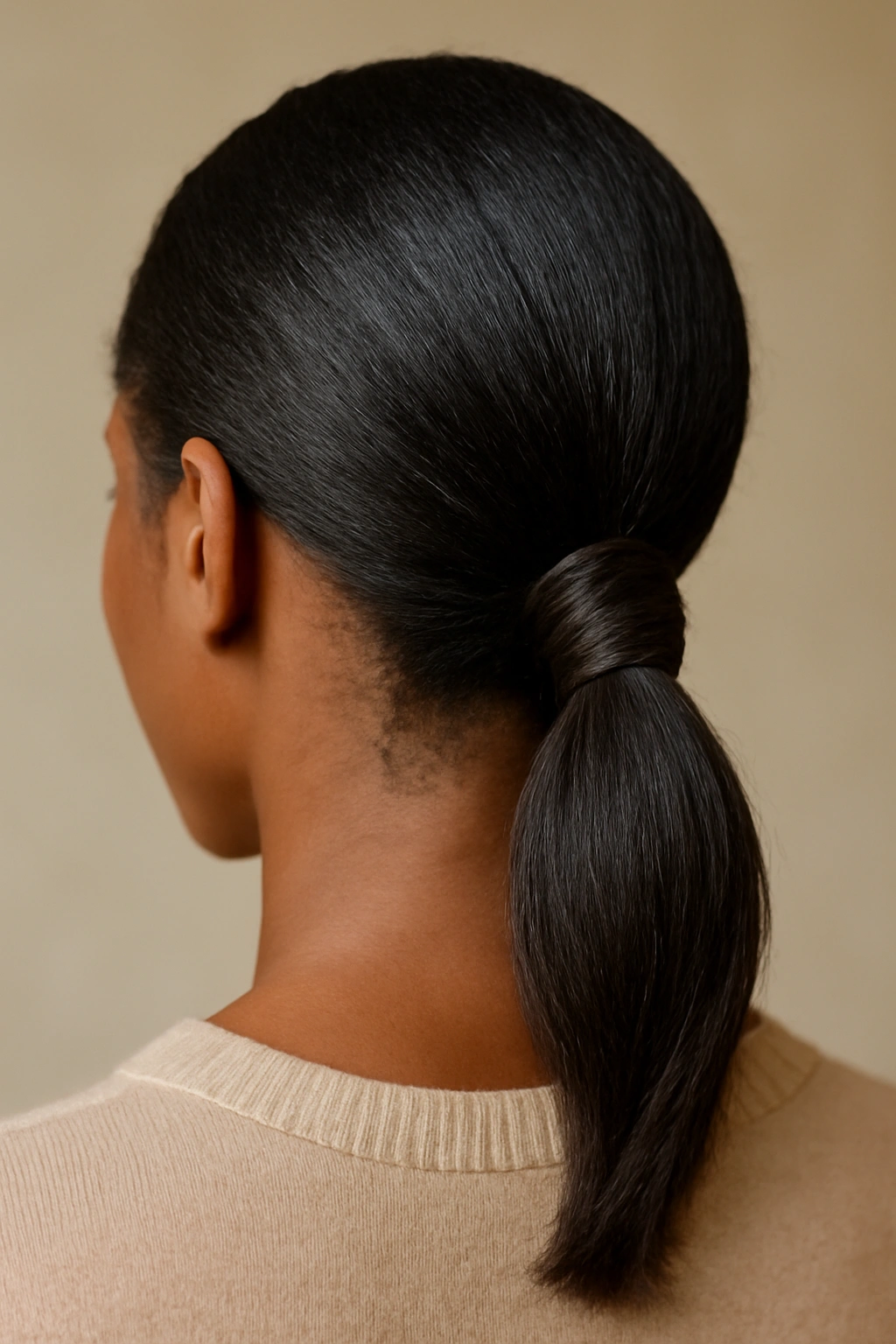
A wrapped low ponytail takes your basic ponytail and elevates it by wrapping a small section of hair around the base where the hair tie sits. You’re creating a sleek, finished look that looks intentional and polished without being overly formal. The wrapped section covers the hair tie and creates visual interest at the back of your head. This is one of those styling tricks that looks more complicated than it actually is, which makes it perfect for everyday wear.
Why This Detail Matters So Much
Taking thirty seconds to wrap a section of your ponytail around the base transforms it from “I threw my hair in a ponytail” to “I’ve styled my hair.” The wrapped section creates a focal point and makes even a basic ponytail feel intentional. Because the detail is at the back of your head, it doesn’t interfere with your day but it absolutely shows in photos and when people see you from certain angles. This is particularly useful if you’re someone who loves the simplicity of a ponytail but wants it to feel more polished.
The Technique Is Simpler Than It Looks
- Create your basic low ponytail and secure it with a hair tie
- Take a small section from the ponytail itself and wrap it around the base, covering the hair tie
- Secure the wrapped section with a bobby pin hidden underneath
- You can smooth the wrapped section with a little gel or leave it textured depending on your style
Worth knowing: This works beautifully with different ponytail styles—sleek, textured, with or without face-framing pieces. The wrap works with whatever base you create.
12. Cornrows in a Bun
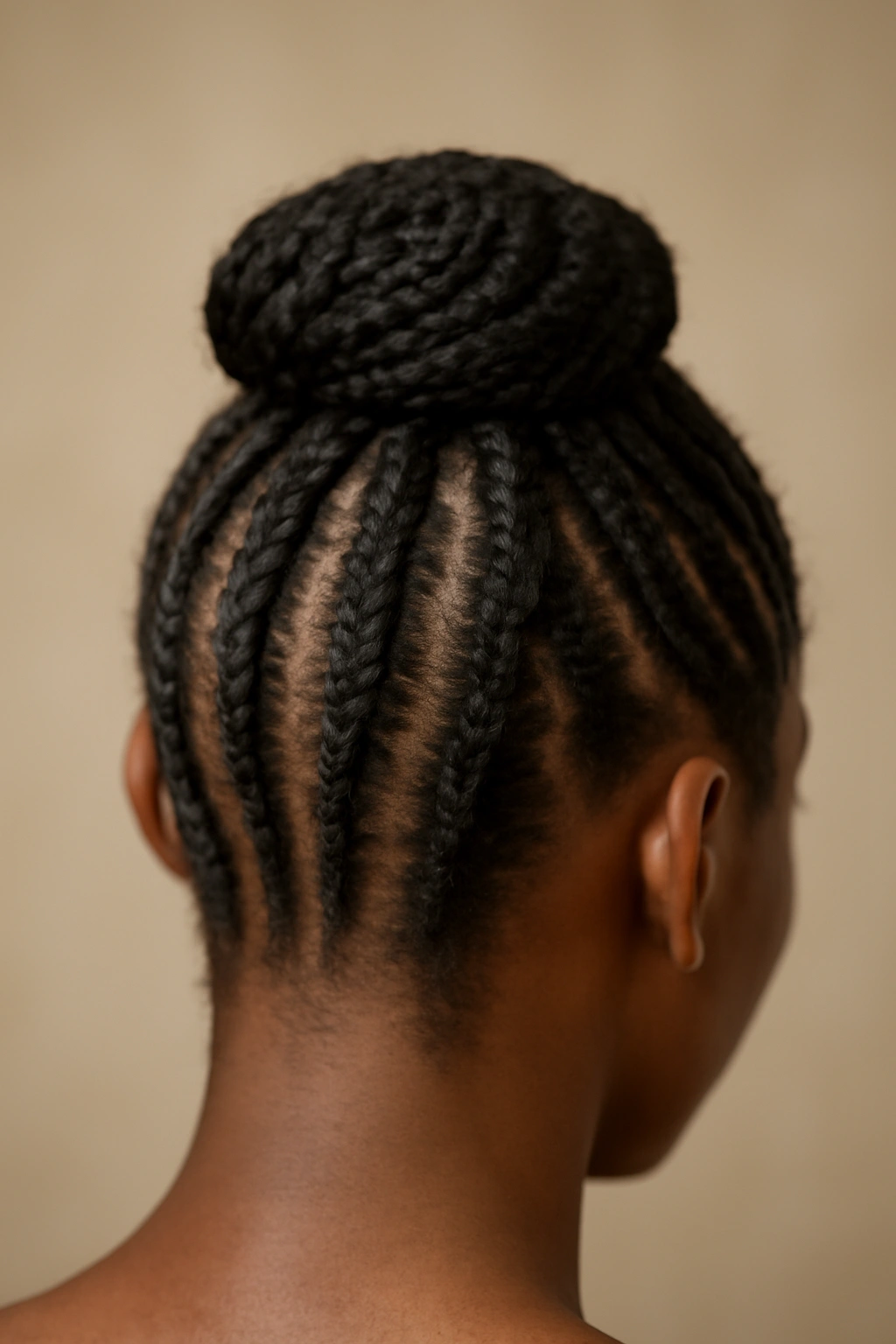
Cornrows are practical protective braids, but when you cornrow sections and gather the ends into a bun at the back or crown of your head, you create a style that’s both protective and intentional. You might do cornrows that start at your crown and are gathered into a bun, or cornrows that start from your temples and meet at the back in a bun. The braided sections keep your hair neat and tidy while the bun adds visual interest and a finished quality.
Why This Combo Works for Daily Wear
Cornrows plus a bun gives you the best of multiple worlds. The cornrows are protective—they reduce manipulation and help your hair retain moisture. The gathered bun prevents the ends from getting caught on things or drying out. The overall look is neat and professional, which works for any setting. Because cornrows are secured tightly, they last longer than most styles, which means you can go multiple days without redoing them. The bun can be small and sleek or larger and more textured depending on your preference and the occasion.
Creating This Combination
- Plan your cornrow pattern before you start; you want the braids to naturally lead toward wherever you’re gathering them into a bun
- Cornrow from your crown or temples toward the back, gathering the loose hair from each braid as you work
- Once you reach the back, twist or braid the gathered ends and coil them into a bun, securing with bobby pins
- You can smooth everything with gel for a polished look or leave texture showing for something more relaxed
Real talk: This style looks simple but requires you to think through the pattern before you start. Your second attempt will be dramatically easier than your first.
13. Butterfly Clips with Loose Curls
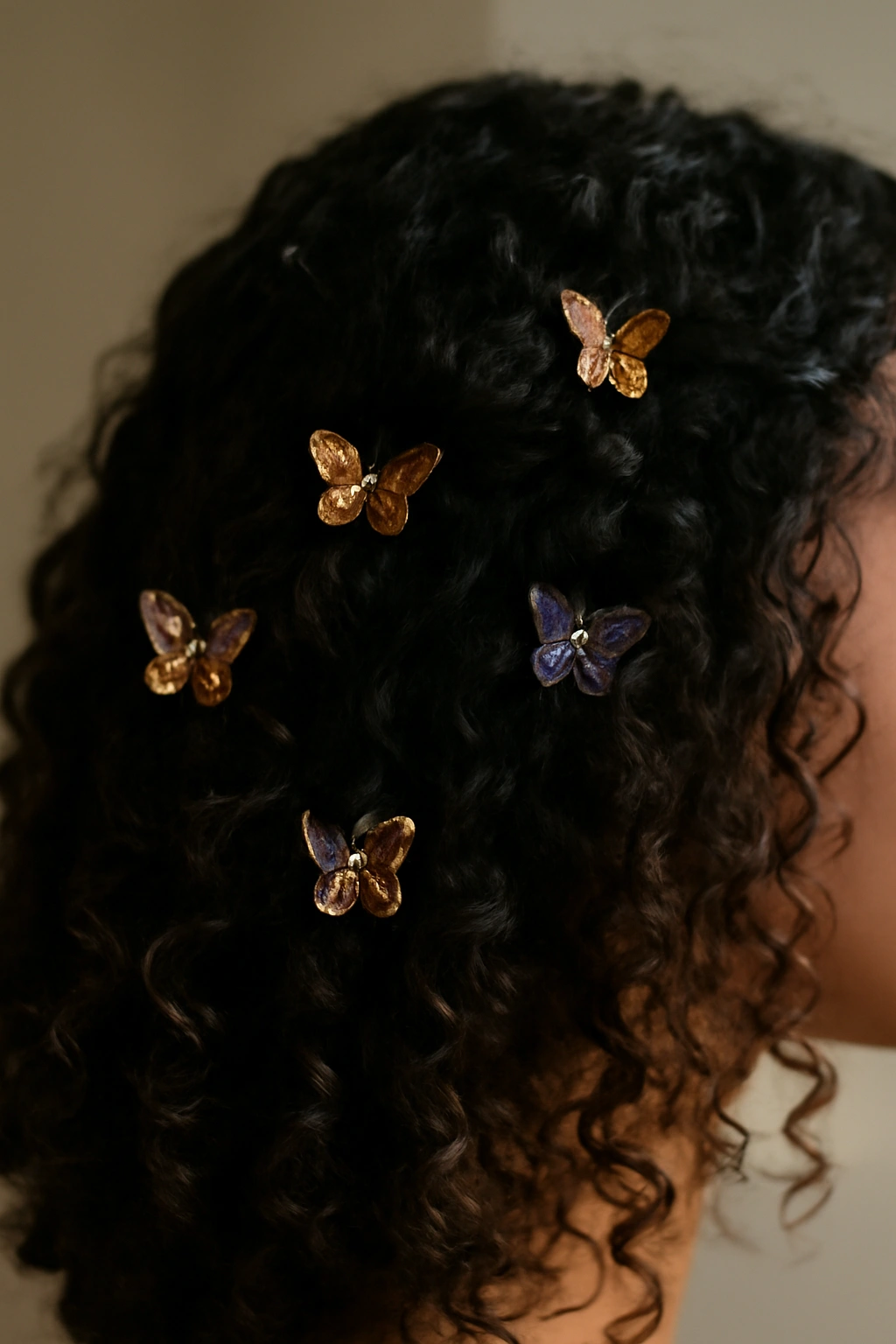
Butterfly clips—those small, decorative clips—scattered throughout loose, curly hair create a style that feels playful and intentional without being overdone. You’re not using the clips to actually hold a style in place; you’re using them as decoration positioned throughout your curls. You might use two or three on one side, or distribute them across the back. Metallic, colorful, or tortoiseshell clips all work depending on your vibe.
What Makes This Approach Work
Using clips as decoration rather than purely functional means you have so much creative freedom. You can reposition them whenever you want. You can use different clips for different days and completely change the look of your hair. The clips add visual interest and intentionality to your curls without requiring any actual styling work—your curls are doing their thing naturally, and the clips are just the cherry on top. This style works at any age and genuinely transcends from casual to slightly more elevated depending on which clips you choose and how you position them.
Making Clips Work With Your Curls
- Place clips where your curls naturally create sections, rather than trying to force them into flat sections
- Mix clip styles—a combination of two different designs looks more intentional than using the same clip multiple times
- Position some clips closer to your scalp and others lower for dimensional interest
- You can remove and reposition clips throughout the day without disrupting your actual hair
Pro tip: Butterfly clips work particularly well if you have looser curls or more elongated coils; they show up beautifully against the curl pattern without getting lost in tighter texture.
14. Sectioned Twists Down the Back
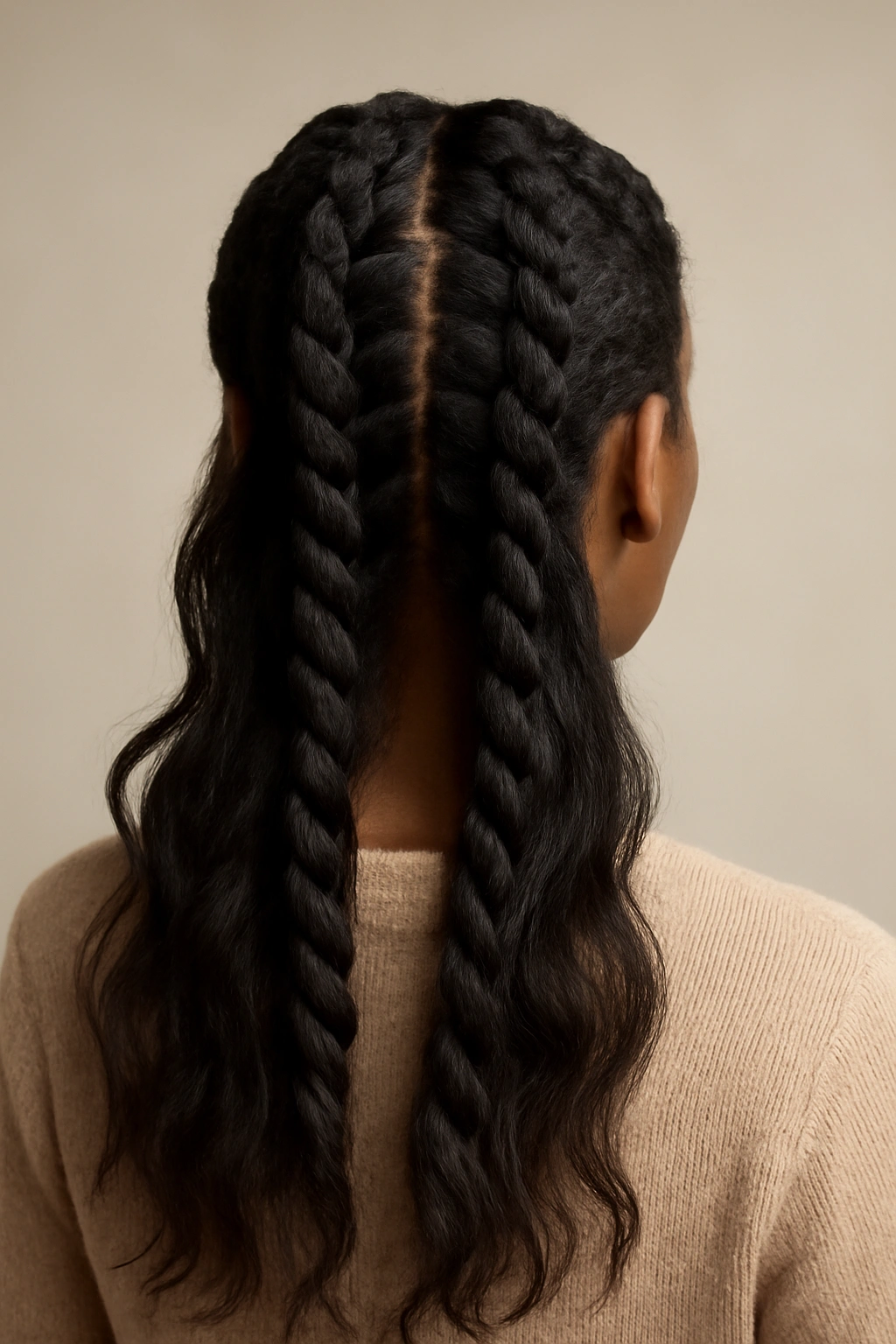
Instead of individual twists all over your head, you’re creating thick sections of twists down the back of your head, leaving the sides and front loose. You might create two, three, or four thick twists from your crown down the back, all parallel to each other. The twists are substantial enough that they read as intentional styling, while the loose hair around them provides softness and movement. This gives you a partial protective style without the full commitment.
Why Partial Protective Styles Are Underrated
A fully protective style is incredible, but sometimes you want something that’s protective just on the parts you’re concerned about, with more freedom and styling options for the rest of your hair. Sectioned twists down the back protect the hair in the crown and back areas where you might experience more manipulation or tension. The loose sides and front mean you can style the rest of your hair however you want, and the overall look feels like styling rather than a pure protective style, which makes it work for more settings and occasions.
Creating Twists That Look Polished
- Take thick, even sections so your twists are substantial and the pattern looks intentional
- Twist from the scalp to the ends rather than creating loose sections; this makes them look like a complete style rather than haphazard
- The twists should be loose enough to move a bit but tight enough to stay in place throughout your day
- You can smooth the front and sides of your hair differently depending on whether you want sleek or textured
Worth knowing: This style bridges the gap beautifully between fully loose hair and fully protective styles, making it versatile for people who want both options.
15. Slicked Back High Ponytail with Curly Ends
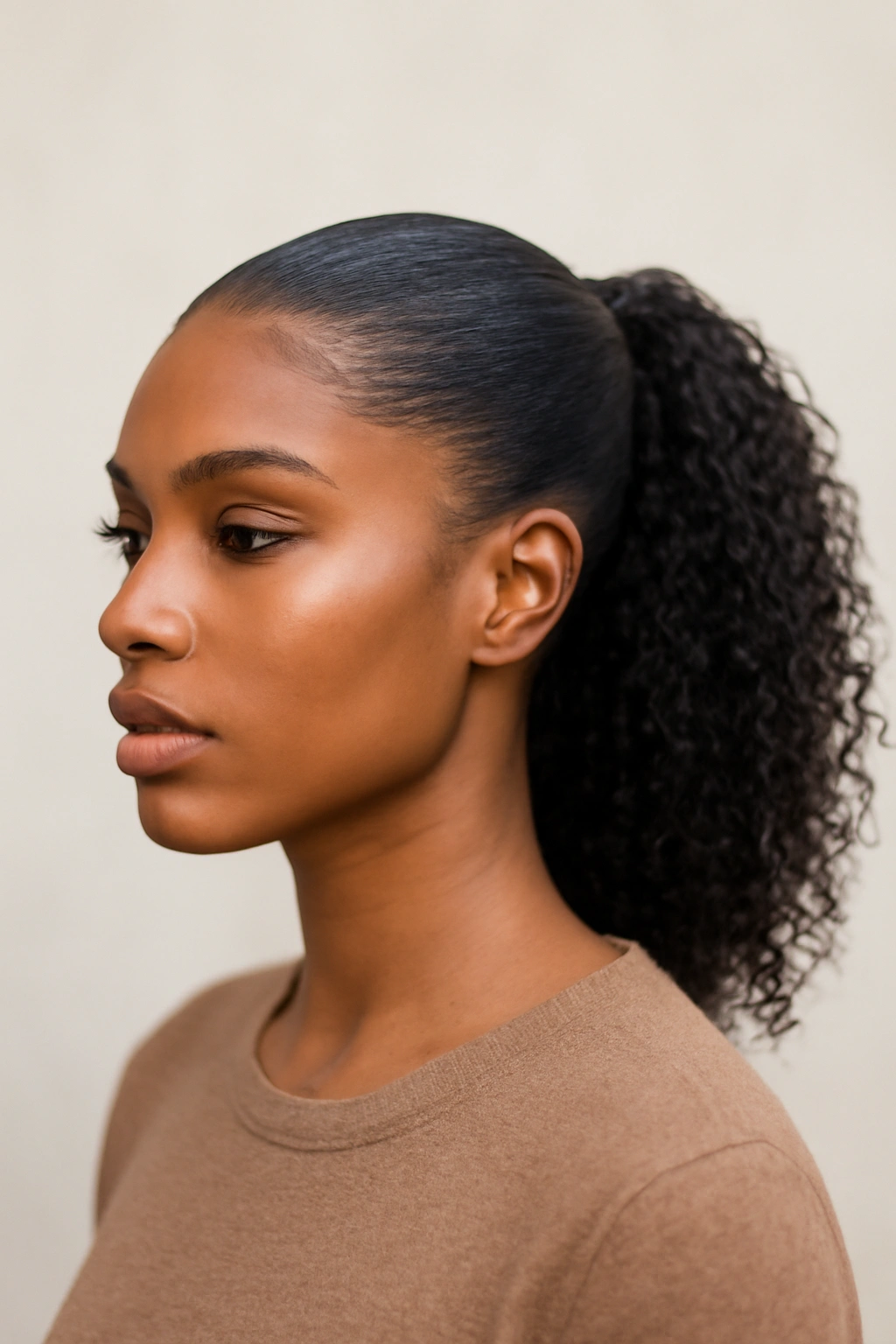
This style takes everything you know about a sleek ponytail and adds bounce to the ends. Your hair is slicked back tightly with gel or mousse, gathered into a high ponytail, and then the ponytail itself is full of texture and curls. The contrast between the sleek, smooth back and the voluminous, bouncy ends is striking. You get the polished appearance of a pulled-back style with the glamour and movement of loose curls.
Why This Contrast Works
The juxtaposition of sleek and textured is genuinely flattering and modern. The slicked-back portion opens up your face and shows off your features, while the curly ponytail adds volume and movement that’s flattering to most face shapes. This style works for professional settings because of the sleek back portion, but the curly ends make it feel current and fashion-forward rather than dated or corporate. It’s a style that photographs beautifully because you get clean lines at the top and gorgeous texture and movement in the ponytail.
Achieving the Perfect Combination
- Use a flexible-hold gel to smooth your hair back; flexible hold creates a sleek look without looking crunchy or artificial
- Gather your ponytail high at the crown; the higher it sits, the more dramatic the contrast between sleek and textured becomes
- The ponytail itself should be full and bouncy—use a volumizing mousse on it or encourage texture and curl before gathering it
- You can leave the ponytail unstyled if you have natural curls, or use a curling iron to add texture if your hair is straighter
Real talk: If you have naturally curly hair, this is one of the easiest styles because you’re just slicking back your edges and letting your natural curls do the rest of the work.
Final Thoughts
The beauty of these fifteen styles is that they’re all genuinely doable on a regular morning without requiring a professional stylist, special equipment, or hours of time. Every single one of them works with your hair’s natural texture rather than fighting against it. Some are protective, some are simple styling tricks, and some are hybrids that give you styling flexibility.
Pick three or four from this list that feel closest to your lifestyle and hair type, practice them until they feel natural, and build from there. You’ll find that once you’ve got a few go-to styles that work for you, getting out the door in the morning becomes easier and your hair looks intentional without requiring stress or extensive prep time. The goal isn’t to do every style on this list—it’s to find the ones that make you feel confident and put-together, and to give yourself options on the mornings when you need a quick win.
