



There’s a reason the shag haircut keeps coming back—it’s flattering, versatile, and incredibly forgiving on texture and movement. But shags aren’t created equal, especially when you’re navigating the unique priorities that come with mature skin and hair. A medium shag at 60+ isn’t just about recreation; it’s about finding a cut that honors your face shape, works with your natural hair texture, and requires realistic maintenance without demanding daily effort or expensive products. The right shag can add volume where hair naturally thins, create movement that softens facial lines, and make you feel like the most stylish version of yourself.
What makes medium shags so powerful for this stage of life is the combination of layered movement and wearable length. You’re not fighting your hair, and your hair isn’t fighting gravity. Medium shags sit right at that sweet spot—long enough to maintain femininity and provide styling options, short enough to feel refreshingly low-maintenance and to respond well to the texturizing and modern cuts that stylists now execute so skillfully. The trick is understanding which specific variation will suit your face shape, hair type, and lifestyle.
The 15 styles we’re covering here aren’t theoretical. Each one addresses a real situation—whether you’re dealing with fine hair that needs strategic layering, a round face that benefits from length and movement, or you simply want something that looks effortlessly polished without needing a blowout every morning. Some feature longer layers through the back for a more dramatic effect, while others keep things subtly textured and wearable. All of them work because they respect the fundamentals: good bone structure is even more striking with the right haircut, and movement is your best friend when you want to soften features and look youthful without looking like you’re trying too hard.
Let’s walk through each style with the specific details you’ll need to describe it to your stylist and the maintenance reality so you know exactly what you’re signing up for.
1. The Textured Shag with Wispy Bangs

This is the cut that bridges casual and polished beautifully. The back stays at medium length with choppy, irregular layers that create tons of texture without looking shaggy in an unkempt way. The front pieces are longest, framing the face, and the bangs—wispy, not blunt—fall just above the eyebrows. When you run your fingers through it, you feel those choppy layers doing their job, breaking up the hair and creating movement even when it’s not freshly styled.
Why This Works After 60
The irregular layers and wispy bangs soften the entire face by breaking lines and adding dimension. Fine, thinning hair looks thicker with this texture because light hits each choppy layer differently, creating visual density. The bangs address forehead lines without being too harsh, and the face-framing pieces draw attention to your eyes rather than letting the eye scan down to areas you might want to minimize.
What to Discuss With Your Stylist
- Choppy layers throughout with irregular lengths (not uniform, not blunt)
- Bangs that sit just above the brow, textured and wispy (ask them to avoid a heavy line)
- Longest pieces at the front, graduating back to ear length
- Ask your stylist to use point-cutting or razor-cutting techniques to create texture, not a blunt scissor cut
- This cut requires styling every other day or so; discuss whether you’re willing to blow-dry and can use a texturizing product
Pro tip: A lightweight texturizing spray applied to damp roots before blow-drying creates volume that lasts longer than you’d expect, and the textured layers are forgiving enough that second-day hair often looks better than day-one.
2. The Shoulder-Grazing Shag With Soft Face Framing

Longer on top, this version hits right around the shoulder, with longer layers that frame the collarbone and softer, less aggressive texturing than a choppy shag. The back has movement without being spiky or dramatic. The front pieces are decidedly longer, gently curving around the face and neck. It’s sophisticated without being severe, modern without being edgy.
Why This Works After 60
The length at the shoulder and collarbone is incredibly flattering because it hits one of the most delicate zones on the body, and the soft layers create movement that adds visual interest without age-coding you as trying too hard. Longer pieces in front are universally face-flattering because they draw the eye down and outward, away from the jawline and horizontal lines. This is an especially good choice if you’re wearing your hair down most of the time.
What to Discuss With Your Stylist
- Medium-length back layers, longest pieces hitting at the shoulder or just below
- Front pieces significantly longer, reaching toward the collarbone or lower
- Layers throughout but softer than a choppy shag—use scissors rather than a razor for a smoother feel
- Request layers that move inward toward the face, creating that softness rather than flipping outward
- This cut is styled by blow-drying with a round brush, curling the ends under slightly, or air-drying with product
Pro tip: This cut is one of the most forgiving for second-day wear. Mist with water, add a quick spritz of dry shampoo at the roots, flip your head upside down and finger-comb with product, and you’ve refreshed the entire style in five minutes.
3. The Tousled Textured Shag With Side-Swept Longer Layers

Choppy, lived-in, and intentionally undone-looking—this shag embraces texture completely. The sides are longer and predominantly side-swept, creating an asymmetrical silhouette that’s surprisingly modern. The back has shorter layers that create volume at the crown, while the front has those signature longer, choppy pieces. There’s no blunt line anywhere; it’s all movement and dimension.
Why This Works After 60
The asymmetrical, longer-on-one-side approach flatters nearly every face shape because you can position the longer side to cover what you want to minimize (a sagging jawline, for instance) and reveal what you want to feature (an good eye, defined cheekbones). The choppy layers throughout mean thinning hair instantly looks fuller because the texture creates the illusion of density. This cut actively resists looking neat, so it reads as modern and intentional, not like you haven’t styled your hair.
What to Discuss With Your Stylist
- Asymmetrical front pieces—one side longer than the other
- Heavy choppy layering throughout, especially at the crown
- Request a texturized rather than blunt cut; your stylist should use point-cutting or razoring
- The longer, side-swept pieces should fall between your chin and shoulder
- Back layers should be significantly shorter, creating height at the crown
- This cut needs styling—discuss texturizing spray, light pomade, or curl cream that works with your hair
Pro tip: Sleeping on a silk or satin pillowcase preserves this cut’s texture overnight far better than cotton, and the reduced friction means less breakage on delicate mature hair.
4. The Feathered Medium Shag

This is the cut that feels lighter and more airy than choppy. The layers are feathered throughout—meaning each layer tapers to a point rather than stopping bluntly—creating an almost ethereal quality. The back isn’t dramatically short, sitting at about ear-to-chin length, and the front pieces are longer, creating that classic face-framing. It’s textured but refined, movement without chaos.
Why This Works After 60
Feathering is technically demanding and visually stunning because it creates movement and texture while still feeling sleek and polished. This cut doesn’t read as “shaggy” in a messy way; it reads as intentionally layered and modern. Feathering also minimizes bulk, which means if your hair is thick and coarse, this cut prevents that heavy feeling without sacrificing length. If your hair is fine, feathering creates the illusion of more texture and movement.
What to Discuss With Your Stylist
- Feathered layers throughout (point-cut, not blunt)
- Medium back layers, shorter at the crown for volume
- Longer front pieces for face-framing
- Feathering means each layer comes to a tapered point, not a blunt edge
- This requires a skilled stylist—feathering is more technical than just choppy layering
- Styling is flexible: you can blow-dry smooth, air-dry with product, or even wear it more casually textured
Pro tip: Feathered layers show off hair color beautifully, so if you’re considering highlights or a refreshed shade, this cut is the ideal canvas. The dimensional layers catch light and make color pop.
5. The Shag With Curtain Bangs

Remember curtain bangs? They’re back, and they’re even better when combined with a shag because they add a fashion-forward element without looking trendy in a way that might feel uncomfortable. The bangs part down the middle and fall on either side of the face, longest at the cheekbones, and the shag layers continue underneath. The overall effect is face-focused, modern, and undeniably flattering.
Why This Works After 60
Curtain bangs are one of the most universally flattering bang styles because they work with almost any face shape. They frame the cheekbones, draw attention upward to the eyes, and require less frequent trims than blunt bangs because the longest part of the bang isn’t sitting on a hard line. The parted style creates visual lift and a modern sensibility without looking costumey. Combined with shag layers, this is an immediately recognizable, contemporary look.
What to Discuss With Your Stylist
- Curtain bangs parted down the middle
- Bangs longest at the cheekbones (typically 2-3 inches from the skin)
- Tapered/feathered rather than blunt so they move and don’t sit heavy
- Shag layers throughout, working in harmony with the bangs
- Front pieces should blend seamlessly with the curtain bangs
- This cut is styled by blow-drying with a round brush or by air-drying with texturizing product
Pro tip: Curtain bangs photograph beautifully and tend to look better slightly tousled than perfectly neat, so this is a low-pressure styling situation. A light texturizing spray and your fingers are all you need most days.
6. The Choppy Shag With Subtle Underlayer

This version keeps the top layer of your hair slightly longer and softer, with the surprise element underneath: a shorter, choppier underlayer that you see when you move or when you flip your head. The contrast creates visual depth and movement that photographs incredibly well. The front pieces are face-framing and longer, and the back has that textured, choppy quality.
Why This Works After 60
The underlayer creates surprising dimension and movement without committing to an all-over choppy look. It’s like a secret—people see movement and texture but might not immediately know why the cut is so dynamic. This approach is especially flattering if you have any width or fullness you want to minimize at the sides or back, because the shorter underlayer reduces bulk while the longer top layer maintains length and softness. It’s strategic and modern.
What to Discuss With Your Stylist
- Top layer: medium length, softer, longer pieces in front
- Underlayer: noticeably shorter and choppier, visible when you move or tilt your head
- The contrast between layers is the key—don’t ask for subtle blending
- Back should show the choppy texture, front should show face-framing softness
- This cut benefits from blow-drying because you see the layers better when there’s some volume
Pro tip: This is an excellent cut for keeping gray root coverage looking intentional and beautiful, because the choppy underlayer breaks up the line where new growth shows.
7. The Tousled Shag With Longer Back Layers

A bit longer in the back, this shag has longer layers throughout that hit at the shoulder blade rather than stopping at the shoulder. The sides and back have significant length, which adds movement and swing. The front pieces are proportionally longer, creating a graduated silhouette rather than a blunt, choppy one. It’s a more dramatic take on the shag.
Why This Works After 60
Length is powerful because it adds movement and creates visual interest that draws the eye away from areas you might want to minimize. A shag with longer back layers moves with you, creating that dynamic quality that reads as youthful and stylish. This isn’t a cut that sits still; it has motion and life, and that energy is incredibly flattering. The graduated layers mean less bulk despite the length, so it’s not heavy.
What to Discuss With Your Stylist
- Back layers hitting at the shoulder blade or lower
- Choppy, textured throughout but less severe than a super-short shag
- Front pieces longer, creating a graduated effect
- Layers throughout the crown to create volume
- This cut is styled by blow-drying or air-drying with product; it’s worth the effort
Pro tip: Longer layers like this benefit enormously from a deep conditioning treatment monthly. Mature hair needs hydration, and longer layers show damage faster, so prevent split ends with consistent deep care.
8. The Polished Shag With Precision Layers

This is the cut for someone who wants shag movement but with more precision and refinement. The layers are calculated and exact, not random or choppy. The back might be slightly shorter for volume at the crown, but everything is intentional and clean. The front has those essential longer pieces for face-framing, but they’re precisely cut rather than textured to chaos.
Why This Works After 60
A polished shag reads as elevated and intentional. It’s not trying to look undone; it’s clearly a deliberate style. This is ideal if you work in a professional environment or simply prefer a more refined aesthetic. The precision layers still create the movement and softness of a shag without the tousled, lived-in vibe. You can style this smoothly or tousle it, giving you flexibility depending on your day.
What to Discuss With Your Stylist
- Clean, precise layers (not choppy or textured)
- Strategic placement of shorter layers at the crown for volume
- Longer front pieces for face-framing
- Ask your stylist to cut bluntly rather than with point-cutting or razoring
- This cut can be styled sleek and polished or slightly tousled depending on your mood
Pro tip: This cut looks fantastic with a blow-dry. Invest in a quality round brush and a medium-hold styling product, and you’ll have a polished look that reads as elevated and intentional.
9. The Shag With Extended Front Pieces

The signature element here is front pieces that are notably longer than the back—we’re talking chin-length or longer while the back sits around ear-length. The layers throughout create texture and movement, but the visual impact is that beautiful face-framing length. It’s a flattering, dramatic silhouette with softness and ease.
Why This Works After 60
Extended front pieces are incredibly flattering because they draw the eye downward and outward, away from horizontal facial lines. They frame the face, and longer pieces create movement that is inherently flattering. The contrast with shorter back layers means you get the best of both worlds: manageability in the back, dramatic face-framing in the front. This asymmetrical approach feels modern and intentional.
What to Discuss With Your Stylist
- Front pieces intentionally longer (chin-length minimum, shoulder-length maximum)
- Back layers significantly shorter, around ear-length or slightly longer
- Choppy or feathered layers throughout to create texture
- Front pieces should frame the face, with longer pieces on the outer edge
- This cut is styled by blow-drying the front pieces to curve slightly inward or by letting them fall naturally
Pro tip: Front pieces this long can feel heavy if they’re blunt. Ask your stylist to feather or point-cut them so they feel lighter and move more freely, requiring less styling effort.
10. The Volume-Focused Shag

If fine or thinning hair is a concern, this cut is designed specifically for maximum volume. Shorter layers throughout the crown create lift, while longer layers underneath provide length without weight. The back is noticeably layered and textured, and the front has those key longer pieces for balance. The entire cut is engineered for volume.
Why This Works After 60
Thinning hair is incredibly common, but this cut makes it look full. The shorter layers at the crown catch light and create the illusion of density, while the layers allow what hair you have to move and flow rather than lying flat. The textured, choppy approach throughout means fewer solid lines where thinness might show. This cut is forgiving and flattering, making the most of your natural hair.
What to Discuss With Your Stylist
- Significantly shorter crown layers for maximum volume
- Choppy, textured throughout to break up the hair
- Longer front pieces to balance the shorter crown
- Ask your stylist to layer aggressively; this isn’t the time for subtlety
- Styling with a blow-dryer and volumizing product is important for this cut to shine
Pro tip: A volumizing mousse applied to damp roots before blow-drying, combined with blow-drying in the opposite direction of your natural hair growth, creates volume that holds most of the day.
11. The Romantic Shag With Soft Waves

This version leans into the romantic, feminine side of the shag. The layers are soft and feathered rather than choppy, and the styling includes soft waves or curls that enhance the texture without looking overly formal or curled. The front pieces are longer and gently frame the face, and the overall vibe is graceful and elegant.
Why This Works After 60
Soft waves and romantic texture soften the entire face and create a youthful, elegant aesthetic. This approach is especially flattering if you have fine hair because waves add dimension without bulk. The feathered layers and soft styling feel timeless and sophisticated, not trendy or age-inappropriate. You look put-together without looking like you’re trying too hard.
What to Discuss With Your Stylist
- Feathered, soft layers throughout (not choppy)
- Front pieces longer for face-framing
- Layers designed to work with waves or curls
- Ask your stylist about which styling tools and products will give you the look they’re envisioning
- This cut is styled with a blow-dryer and round brush, or with a curling iron if you want defined waves
Pro tip: Sleep with your hair in a loose braid or low ponytail to preserve waves overnight. In the morning, mist with water, add a light texturizing product, and gently separate the waves with your fingers for a refreshed look.
12. The Modern Shag With Disconnected Layers

This contemporary version features distinctly separated, disconnected layers—meaning each layer is noticeably different in length with defined separation rather than a gradual blend. The back might have very short, choppy layers while the front has quite long pieces, creating a bold, high-contrast silhouette. It’s modern, edgy, and undeniably current.
Why This Works After 60
Disconnected layers are fashion-forward and speak to confidence. This cut says you’re comfortable with modern style and not trying to look younger or apologize for your age—you’re embracing a contemporary aesthetic. The high contrast between lengths creates movement and visual interest that’s striking. If you have the bone structure and confidence for this, it’s incredibly flattering.
What to Discuss With Your Stylist
- Distinct separation between layers (not blended)
- Likely short, choppy layers in the back, longer in the front
- High contrast between the longest and shortest pieces
- Ask your stylist what face shapes this works best with
- This cut needs regular trims to maintain the disconnected quality
- Styling typically requires texturizing spray and blow-drying
Pro tip: This is a cut that benefits from color contrast. Highlights that emphasize the different lengths, or a two-tone color approach, can make the disconnected layers even more striking.
13. The Shag With Textured Crown and Soft Face Frame

A balanced approach: the crown has short, textured, choppy layers that create volume and visual lift, while the face-framing pieces are longer, softer, and feathered. The back has moderate length with texture, but the whole cut feels cohesive rather than disjointed. It’s textured where you need volume, soft where you need framing.
Why This Works After 60
This cut is a smart compromise if you want the benefits of both a choppy shag and a softer, more refined look. The textured crown addresses hair that might be thinning or flat, while the soft face-framing addresses your face. The balance makes it wearable for nearly any situation and any aesthetic preference. You can style it smoothly or tousled.
What to Discuss With Your Stylist
- Crown layers: choppy and textured for volume
- Face-framing: longer and softer, feathered
- Back: moderate length with some texture for movement
- This cut should feel cohesive, not like two different cuts
- Versatile styling options—you can go polished or tousled
Pro tip: This cut is forgiving with styling. On days when you don’t blow-dry, the layers fall in a way that still looks intentional and polished because of the careful layer placement.
14. The Shag With Subtle Asymmetry

Nearly balanced but slightly longer on one side, this shag has subtle asymmetry rather than dramatic. One front piece might be a couple inches longer than the other, and the sides aren’t quite even, but it’s not immediately obvious—it’s more of a feeling than a statement. The back is relatively balanced, and the overall cut is soft and wearable.
Why This Works After 60
Subtle asymmetry is incredibly flattering because it breaks the symmetry of the face without looking intentional or costume-y. If you have concerns about one side of your face, you can position the longer piece on that side. The asymmetry prevents the cut from looking too neat or severe; there’s a natural, soft quality. It reads as modern without being extreme.
What to Discuss With Your Stylist
- Gently longer on one side (just an inch or two difference)
- Soft, feathered layers throughout
- Front pieces with subtle asymmetry that isn’t immediately obvious
- Ask your stylist to blend the asymmetry so it looks natural, not like a mistake
- This cut is versatile in styling
Pro tip: Wear your hair with the longer side swept down on days when you want more face-framing, or flip it for a different vibe. The cut works multiple ways.
15. The Shag With Built-In Texture and Minimal Styling Needs

This is the low-maintenance champion. The cut is designed to look textured and intentional even without any styling—choppy layers that fall in a way that looks good when you wake up or after a quick finger-comb. The back is layered for movement, the front is longer for balance, and the entire cut is engineered for people who genuinely don’t want to style their hair daily.
Why This Works After 60
If you value your time and energy, this cut is a game-changer. It looks effortlessly polished even when you haven’t blow-dried it. The choppy, irregular layers mean second-day hair often looks better than day-one. You can add product and style it if you feel like it, but you don’t have to. This is freedom.
What to Discuss With Your Stylist
- Choppy, textured throughout, designed to look good unstyled
- Layers that fall in a way that looks intentional without styling
- Ask your stylist which products they recommend for enhancing texture on days you do want to add something
- This cut requires trims every 6-8 weeks to maintain the choppy quality
- Be honest about your styling commitment so your stylist cuts accordingly
Pro tip: Even with a low-maintenance cut, keeping it fresh requires regular trims. The choppy layers lose their definition as they grow out, so consistency with your salon appointments is the real key to making this work.
Final Thoughts
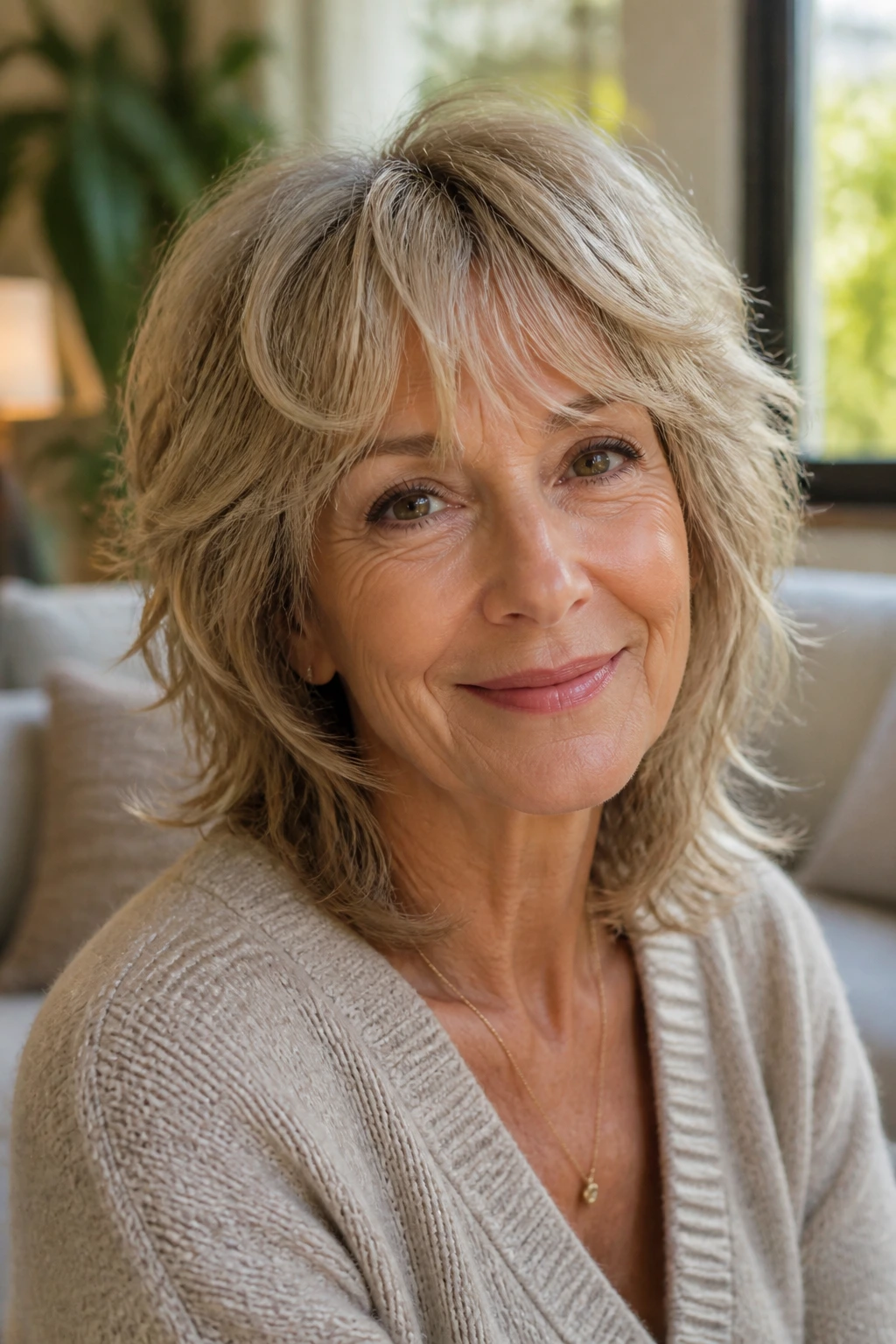
The right medium shag at 60+ isn’t about looking young—it’s about looking like the most stylish, confident version of yourself. Each of these cuts has a different energy, from polished to tousled, refined to modern, and the one that’s right for you depends on your face shape, hair texture, lifestyle, and honestly, your confidence level. A great stylist will listen to what matters to you—whether that’s minimal styling time, maximum volume, face-framing softness, or modern edge—and recommend the variation that checks your boxes.
The reality is that shag layers work because they add movement, create dimension, and soften facial features in a way that’s genuinely flattering. They’re not trying to make you look younger by pretending you’re a different age; they’re working with your bone structure and your hair to help you feel like yourself, only better. A medium length hits that sweet spot where you’re not managing heavy length but you’re still getting the movement and styling options that longer hair provides.
Go into your consultation with pictures and descriptions, be honest about your styling commitment and what you actually enjoy doing with your hair, and listen when your stylist explains why a specific variation might be the best fit for you. The most important thing isn’t the specific style—it’s finding a stylist who understands the nuances of cutting hair for mature clients and who can execute layers with skill and precision. When you get that right, the rest follows.
