



Round faces and double chins present a unique styling challenge — but the right haircut can completely transform your proportions and draw attention exactly where you want it. The key lies in understanding how length, layering, texture, and movement interact with facial geometry. When you work with rather than against your face shape, you’re not just getting a haircut; you’re creating an optical illusion that flatters your features, adds definition to soft jawlines, and instantly boosts your confidence.
The problem most people face is choosing cuts that work universally rather than strategically. A style that flatters straight hair might overwhelm curly texture. A length that works for thick hair could drag thin hair down. This is why cookie-cutter recommendations fail — your haircut needs to account for your specific hair texture, density, lifestyle, and the exact contours of your face. The cuts below are proven strategies that address round faces and double chins through carefully considered proportions.
What makes these styles so effective isn’t just about looking slimmer. It’s about understanding how light, shadow, and visual flow interact with your features. Longer lengths pull the eye downward. Layers create texture that breaks up flatness. Strategic volume placement draws focus upward. Bangs can shorten the perceived distance from your eyes to your chin. When you combine these principles with the right cut, you stop trying to hide your face shape and instead enhance it.
1. Long Layers with Strategic Volume at the Crown
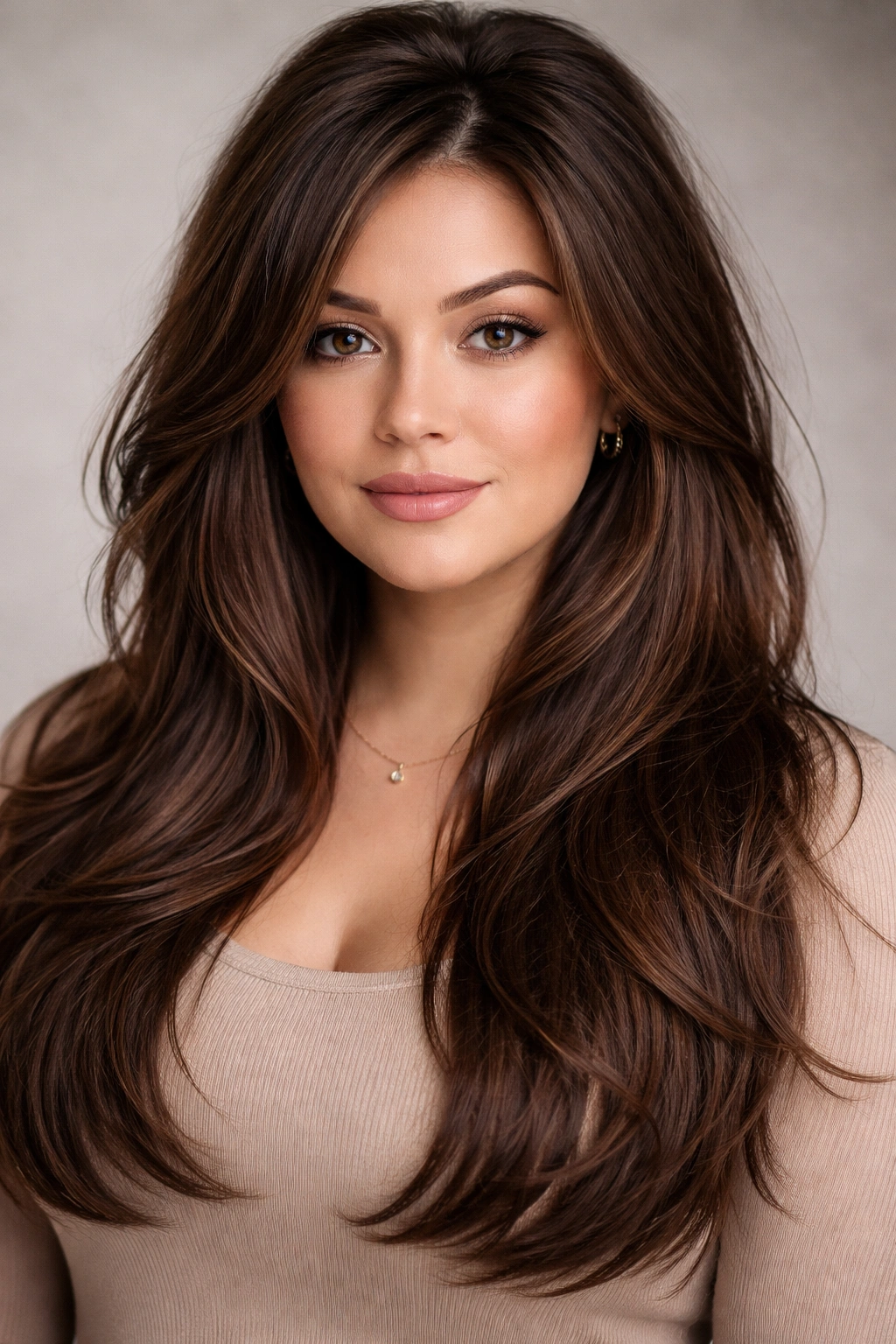
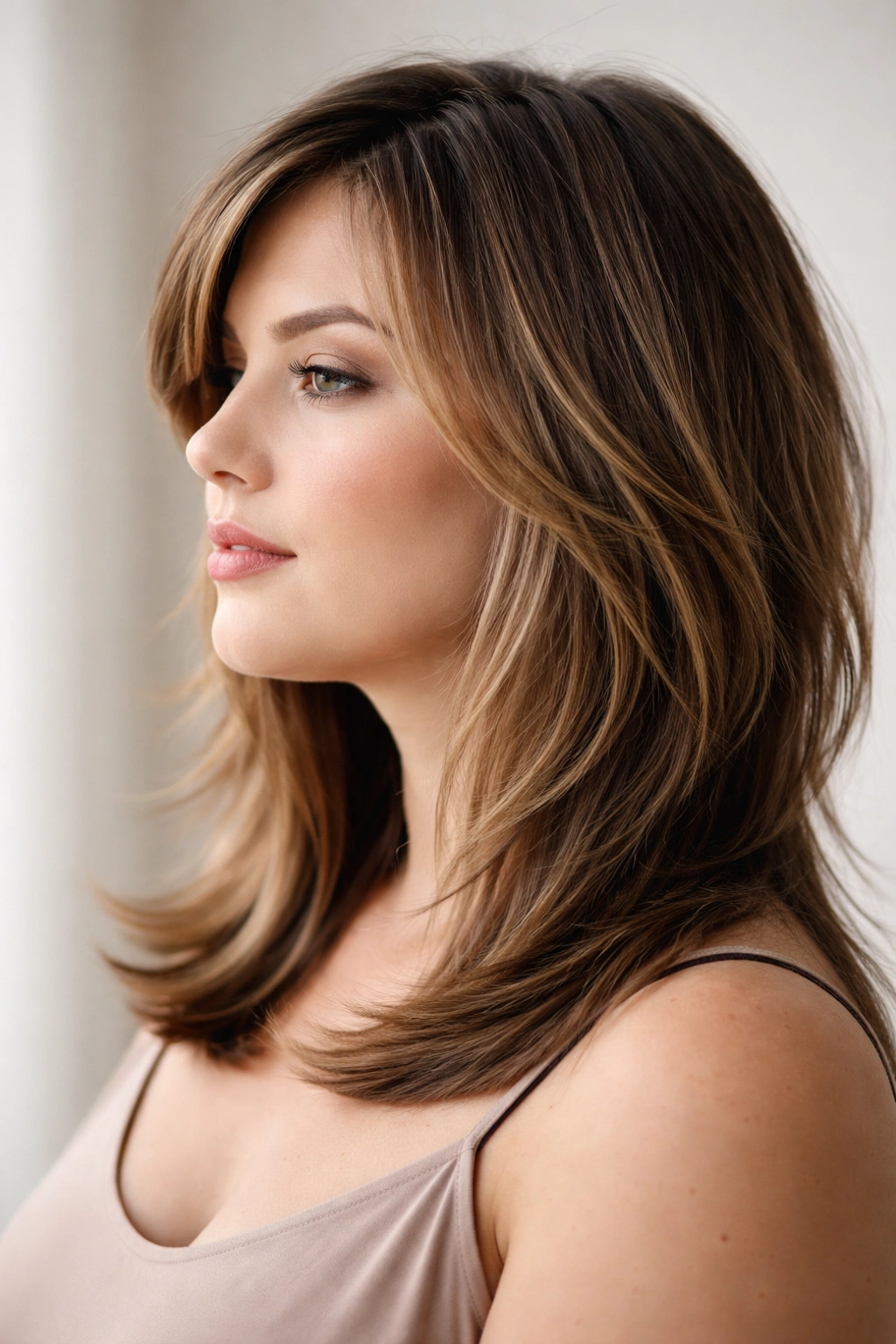
Long, cascading layers are a cornerstone strategy for round faces because they extend the face visually while breaking up the fullness around the cheeks and chin. The key is starting the layers higher than you’d normally think — often around chin length — so they create movement and texture throughout rather than sitting flat against your face. This prevents the heavy, one-dimensional look that can emphasize roundness.
Why This Cut Transforms Round Faces
Long layers work because they create vertical lines that naturally elongate the face. When layers are placed strategically, they also catch light differently at each level, creating shadow and dimension that adds definition to soft facial contours. The movement prevents hair from clinging to your cheeks, instantly widening the appearance of your jawline and making the face appear narrower overall.
Best Features of This Cut
- Layers should begin no lower than chin length to avoid dead weight at the heaviest part of your face
- Crown volume is essential — ask your stylist to add texture and lift at the roots using a blow-dry technique or even subtle styling layers
- Face-framing pieces should fall just past your jawline, angling slightly inward to draw attention upward and inward rather than outward
- Medium to thick density works best; finer hair may need fewer, more widely spaced layers to avoid looking wispy and formless
- This cut suits most hair types, though curly and wavy hair often looks particularly dynamic with this approach
Pro tip: Ask your stylist to razor-cut (rather than blunt-cut) the layers if you have finer hair — this creates softer texture that moves more freely and feels lighter on your head.
2. Textured Lob with Piece-y Movement
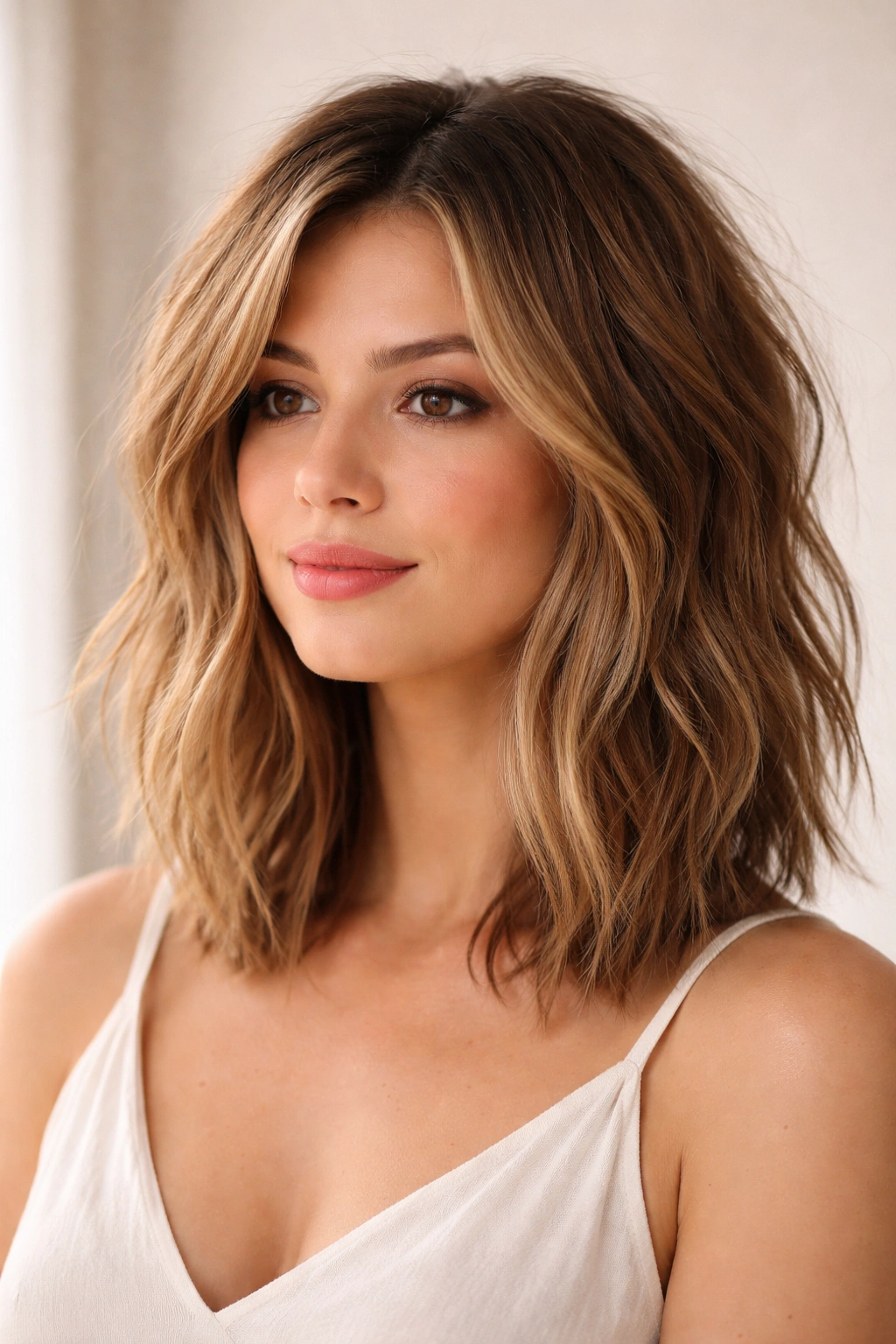
A textured lob (shoulder-length long bob) sits right around the collarbone — the perfect length to add elongation without sacrificing the shaping benefits of a shorter cut. The trick is asking for a piece-y, broken-up texture rather than a blunt, uniform length. This texture prevents your hair from hugging your face and creates visual interest that distracts from roundness.
How This Style Creates Definition
The texturing technique used on a lob is called choppy layering or point-cutting, and it creates individual strands that piece away from each other rather than lying flat and solid. This broken-up quality means light passes through and around each section, creating shadow and depth. Your hair stops looking like one solid mass and instead becomes a more complex, three-dimensional shape that flatters a round face.
Best Features of This Cut
- Length hits right around the collarbone, which elongates the face and neck area
- Texturing should be concentrated at the ends and around the face to keep layers from looking thin or stringy at the roots
- Side-swept styling works better than a center part for round faces — it creates an asymmetrical shape that breaks up symmetrical roundness
- This cut needs intentional styling; it’s not wash-and-go for most people, so commit to a daily blow-dry routine
- Works especially well for wavy and straight hair types; curly hair may need more frequent trims to maintain the piece-y texture
Worth knowing: This cut requires trims every 6-8 weeks to maintain its shape and prevent the layers from growing out and losing their definition.
3. Blunt Bangs with Extended Length
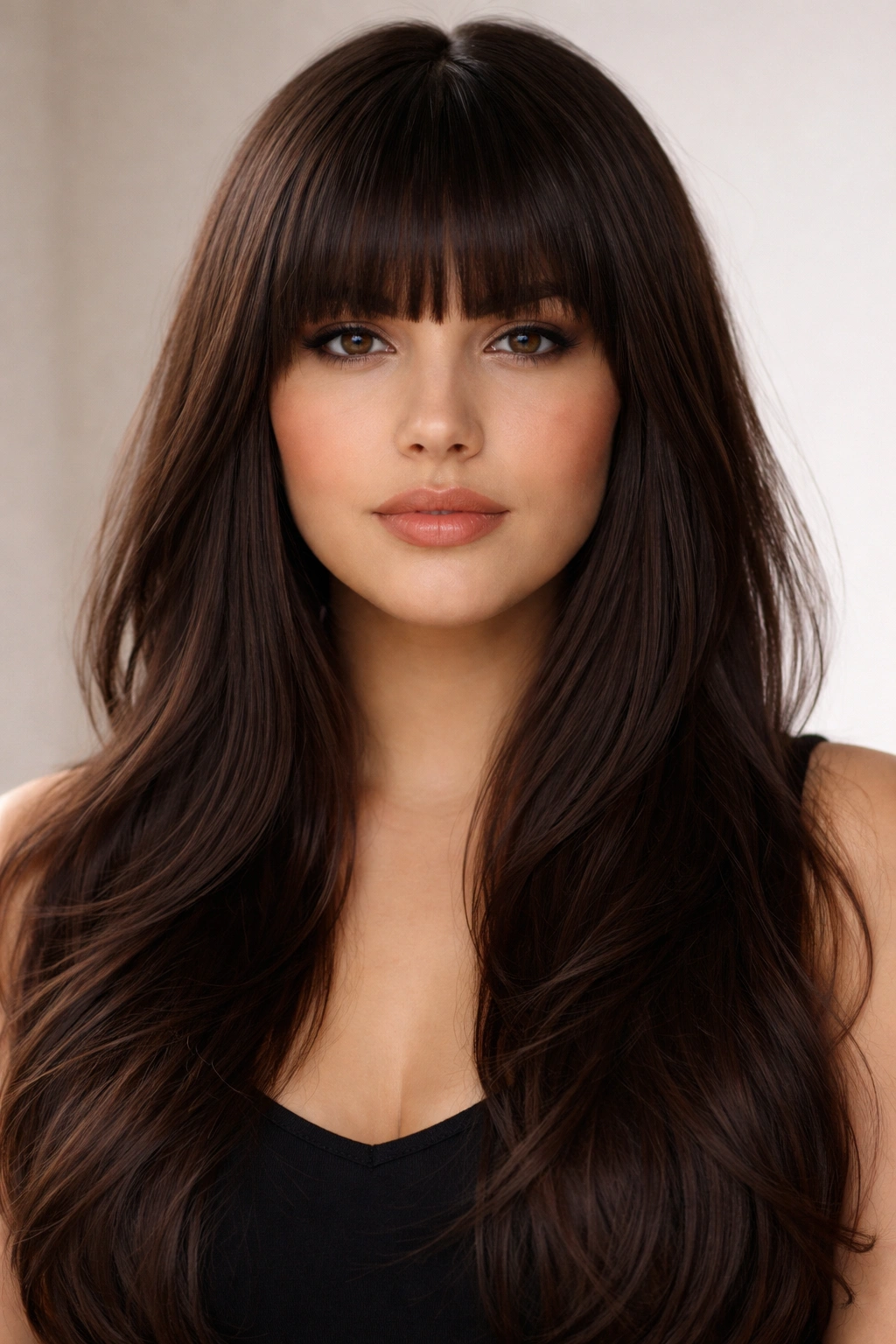
Blunt bangs — particularly when styled with longer hair — create a frame that shortens the distance between your eyes and the top of your head, shifting visual focus upward away from fullness in the lower face. Paired with longer lengths and strategic layers below, this combination is surprisingly powerful for round faces. The key is choosing the right bang length and style for your forehead.
Why Bangs Rebalance Round Face Proportions
Your face has a vertical proportion you’re working with. Round faces often appear equally wide and tall, which emphasizes the roundness. Blunt bangs interrupt the top of your face visually, essentially shortening the apparent distance from your forehead to your chin. This breaks the circular proportion and makes your face appear less round. Additionally, bangs create shadow across your forehead, adding definition and depth.
Best Features of This Cut
- Blunt bangs work best when they hit just above your eyebrows, creating a defined line rather than wispy, see-through fringe
- The hair below your bangs should be long enough to reach at least your shoulders, ideally with layers that create movement
- Pair blunt bangs with a side part rather than a center part — a side part is more flattering for round faces overall
- Your forehead size matters here; if you have a broad forehead, bangs may emphasize it, so consider consulting with your stylist first
- Straight and wavy hair work best; very curly hair can make blunt bangs difficult to maintain and style consistently
Pro tip: Blunt bangs require regular trims — every 3-4 weeks — to maintain their clean line as they grow. This is higher maintenance than you might realize going in.
4. Textured Pixie with Increased Crown Height
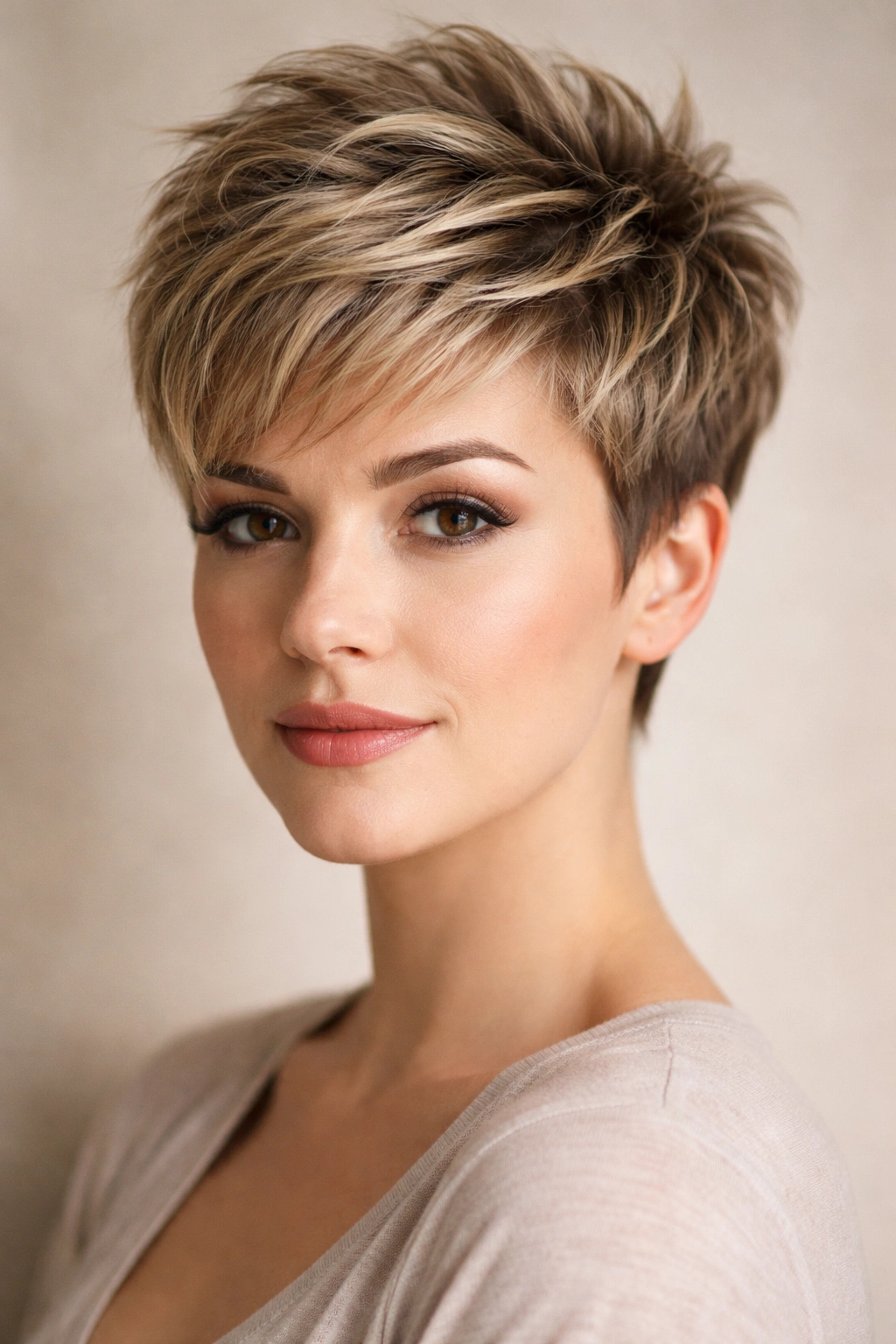
A pixie cut might seem counterintuitive for a round face, but when executed with significant volume and height at the crown, it can be surprisingly flattering. The style works because it removes weight from the sides of your face and creates vertical lift at the top, drawing the eye upward. The key is refusing a flat, close-to-the-scalp pixie in favor of one with texture and strategic height.
How Pixie Volume Flatters Round Faces
A short, textured pixie with crown lift essentially removes the frame that rounds your face. Without hair hugging your cheeks and chin, your facial features become more defined by their own natural contours rather than obscured by hair. The volume at the crown creates a vertical line that elongates the overall appearance of your face, counteracting the rounded effect. This style also requires frequent styling, which means you’re actively creating shape rather than just wearing your hair.
Best Features of This Cut
- Ask for significant texture through choppy layers and point-cutting throughout, especially at the crown
- Length on top should be at least 2-3 inches to allow room for volume and styling manipulation
- Sides and back should be closely tapered but not shaved completely — leaving some length helps frame your face
- This cut absolutely requires a blow dryer and styling product; it won’t work as a wash-and-go style
- Works best on straight to wavy hair; very curly hair can look bulky rather than sculpted
Worth knowing: A textured pixie needs salon maintenance every 4-5 weeks to keep the shape from becoming shapeless as it grows out.
5. Asymmetrical Cut with One Long Side
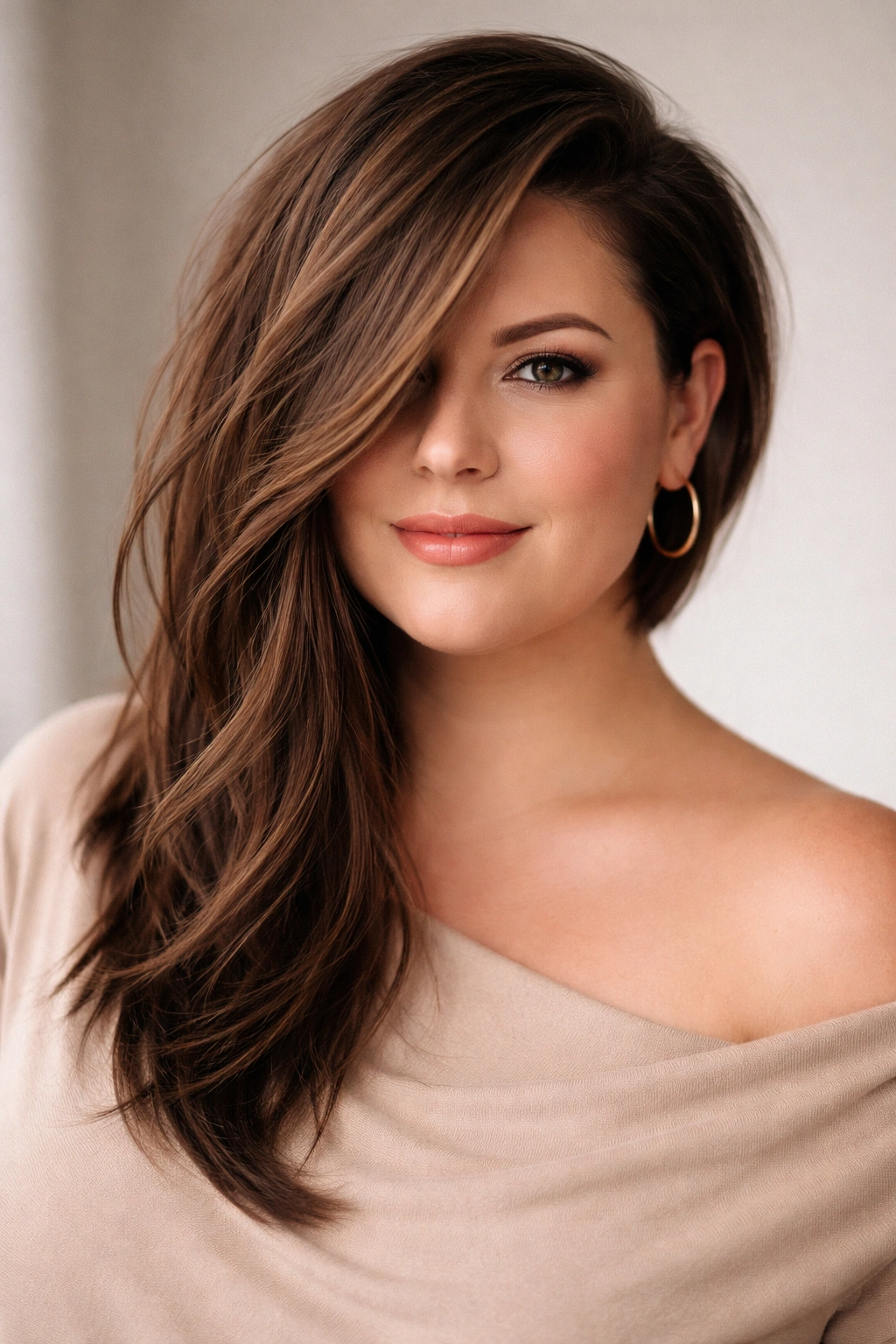
An asymmetrical cut, where one side is significantly longer than the other, creates immediate visual interest and breaks up the circular symmetry that emphasizes a round face. The longer side can sweep across your face and create angles, while the shorter side adds sculptural interest. This cut is bold and fashion-forward, but it’s genuinely flattering for the right face shape.
Why Asymmetry Tricks the Eye
Round faces are symmetrical — your features are evenly distributed on both sides, which creates the circular perception. An asymmetrical haircut disrupts that symmetry immediately, forcing the eye to follow the uneven lines rather than perceiving the circular whole. The longer side can cover part of your cheek and chin, creating shadow and dimension. The shorter side often includes more visible ear and neck area, which adds length and definition to the lower face.
Best Features of This Cut
- One side should reach at least chin length or longer, while the other can be cut significantly shorter (perhaps ear-length or shorter)
- The longer side works best when it’s textured and angled slightly inward to frame rather than expand your face
- This style absolutely requires a strong stylist who understands proportion and can execute the cut with precision
- It’s higher-maintenance than symmetrical cuts because the asymmetry is immediately obvious if one side grows out faster than the other
- Works on most hair types, but straight or wavy hair showcases the asymmetrical shape most clearly
Pro tip: Styling an asymmetrical cut is part of the appeal — you can sometimes flip which side is longer depending on your mood, or style one side sleek while the other has texture.
6. Shag Cut with Choppy Layers Throughout
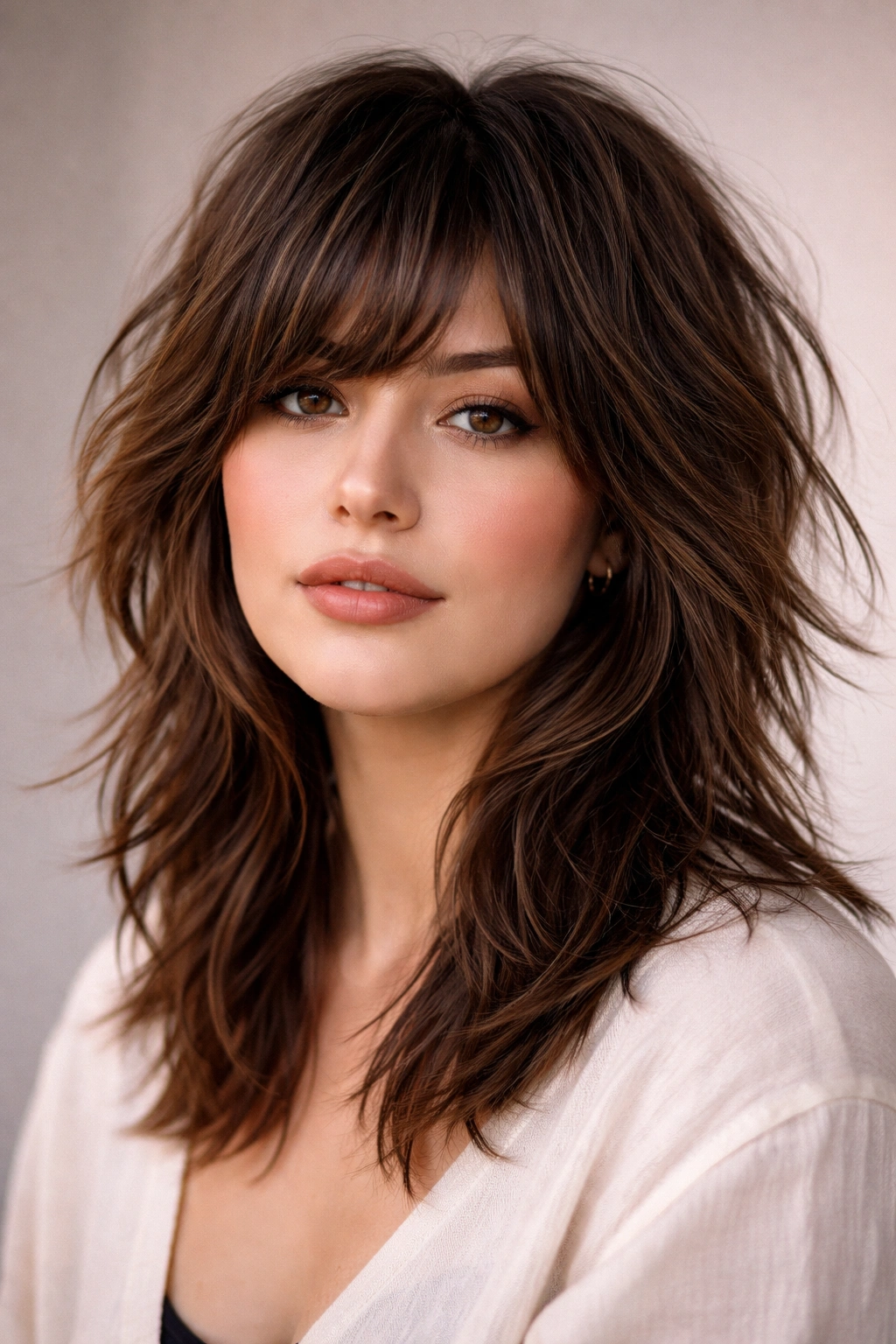
A modern shag cut features choppy, disconnected layers throughout that create maximum texture and movement. Unlike a blunt, one-length cut, a shag refuses to lie flat or solid against your face. This constant visual disruption and texture effectively masks facial roundness by preventing your hair from emphasizing the circular outline of your face.
How Shag Texture Eliminates the Roundness Effect
The genius of a shag is that it creates so much visual complexity that your brain stops perceiving your face shape and instead perceives the intricate texture. Each layer catches light differently, creating multiple focal points rather than one unified shape. Additionally, the choppy, broken-up nature means hair moves away from your face rather than framing it, so your face appears less enclosed and round.
Best Features of This Cut
- Modern shags work best at shoulder-length or longer, with layers starting somewhere around chin length
- The layers should be noticeably choppy and disconnected, not just subtle longer-and-shorter pieces
- Face-framing layers are essential — they should angle slightly inward to create flattering movement around your jawline
- Curly and wavy hair absolutely thrives with a shag; straight hair can work but needs intentional styling to achieve the texture
- This cut requires blow-drying and usually some styling product to look intentional rather than messy
Worth knowing: Shag cuts can look wispy and formless in fine hair, so this style works best for medium to thick hair with some natural texture or wave.
7. Choppy Textured Bob at Chin Length
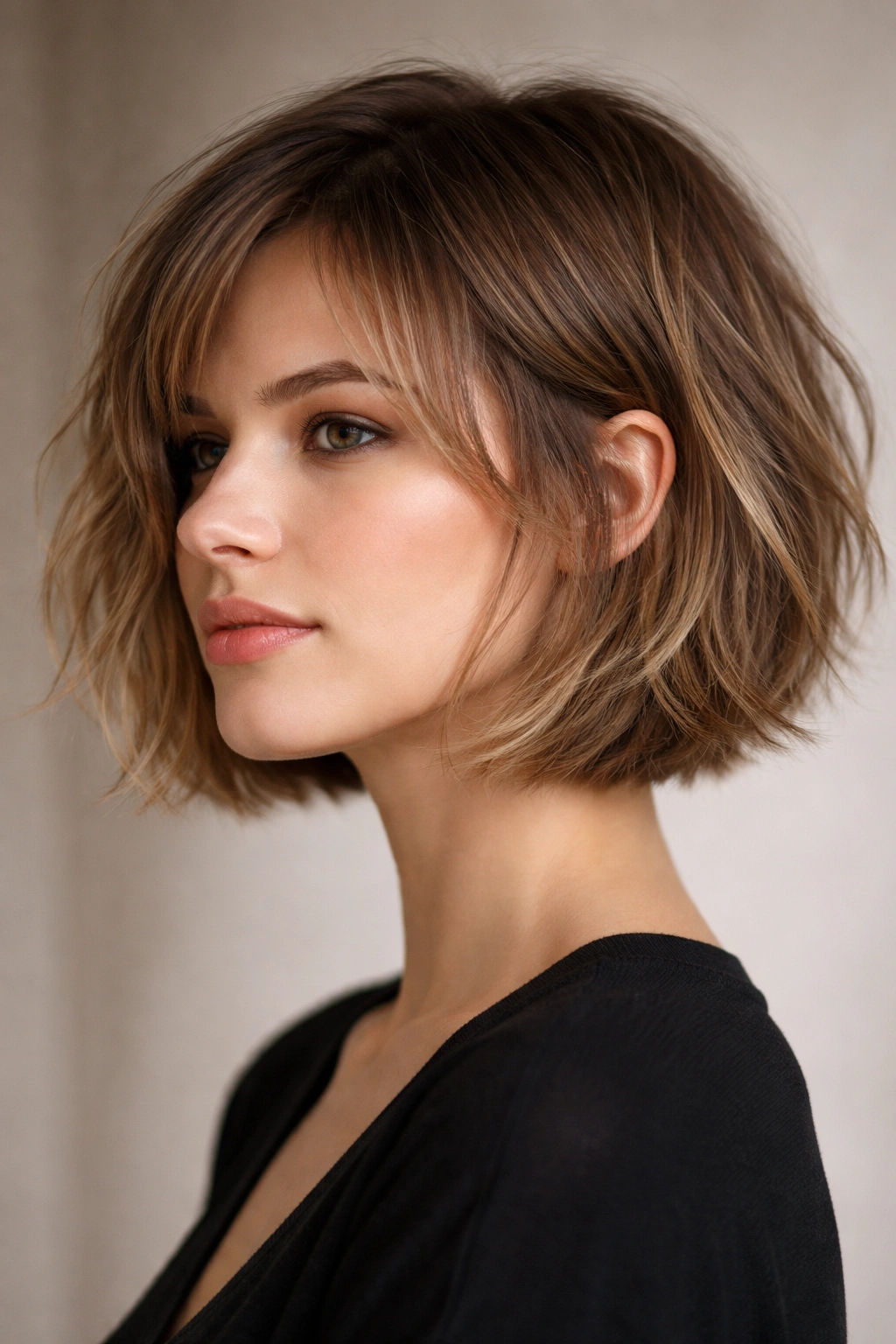
A choppy bob that hits right at your chin creates an immediate line that defines your jawline while the choppy texture prevents the style from looking severe or heavy. Unlike a blunt bob, which can make a round face look rounder by creating a solid horizontal line, a choppy bob breaks up that line and adds movement. The result is definition without harshness.
Why Choppy Texture Makes Chins Look More Defined
A blunt bob creates a solid line that runs horizontally across your chin — this emphasizes the roundness of your face by creating a geometric frame. A choppy bob, by contrast, breaks that line into pieces. Your brain perceives a broken, textured line rather than a solid one, so the emphasis on the chin is reduced. Additionally, the movement and texture create shadow and depth, which adds the appearance of definition and angles.
Best Features of This Cut
- Aim for a length that hits right at your chin, not below it (longer bobs can make double chins more visible)
- Choppy texture should be concentrated at the ends and around the face; roots should remain relatively intact for shape and volume
- This cut benefits from a side part or a deep side part rather than a center part
- Face-framing layers should fall just past your jawline and angle inward slightly
- Works well on most hair types, though requires more styling maintenance on finer hair to keep the texture from looking thin
Pro tip: Ask your stylist to cut this using a point-cutting technique (individual pieces) rather than a razor-cutting technique — the result is softer and more wearable.
8. Face-Framing Highlights with Warm Tones
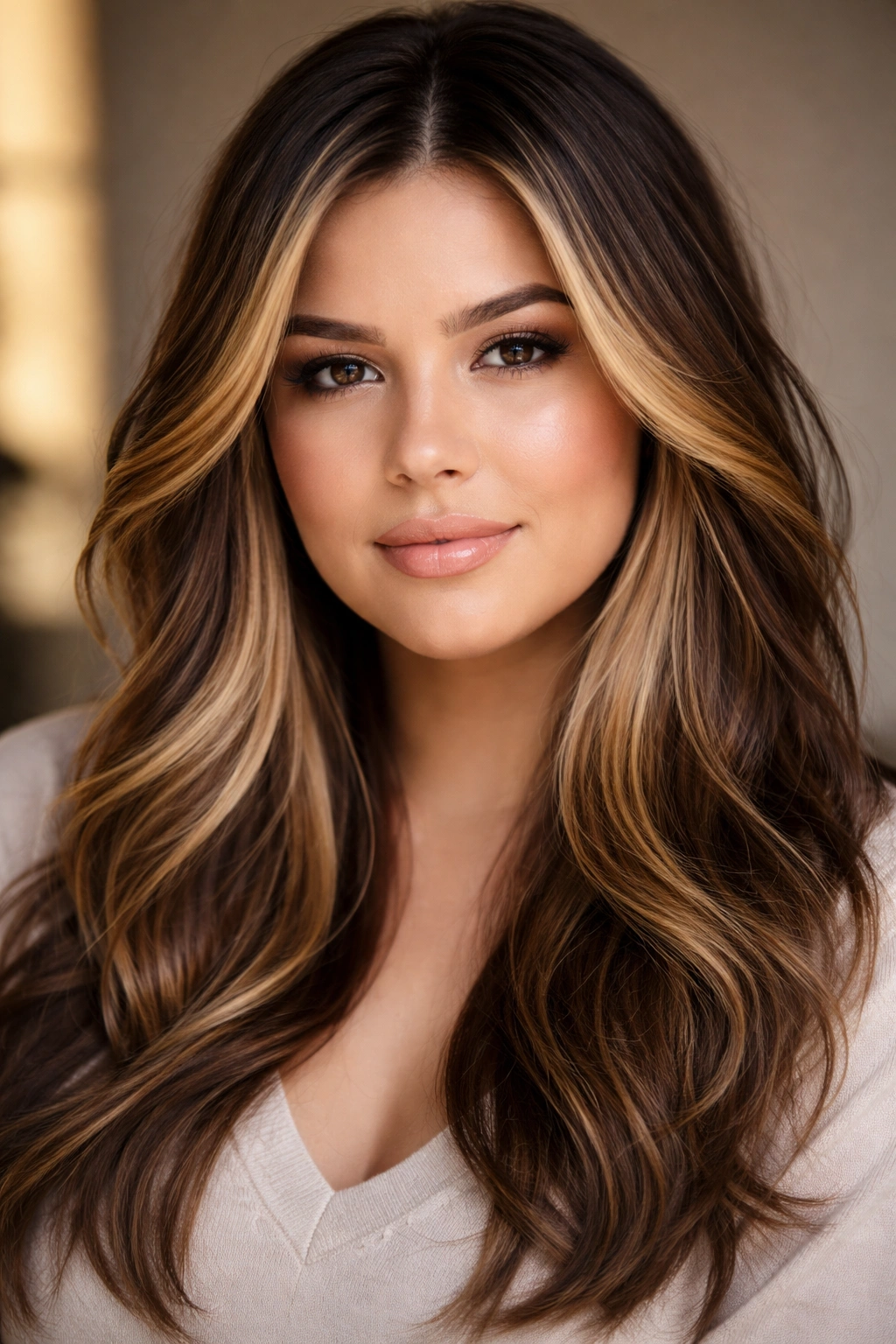
While this might seem like a color technique rather than a cut, face-framing highlights are genuinely strategic when paired with the right cut. Strategically placed lighter pieces around your face create visual interest and depth, which can effectively distract from roundness. The key is using warm tones that complement your skin and placing highlights specifically to frame and define your jawline.
How Strategic Lighting Changes Face Perception
This technique works through optical illusion. Lighter tones recede visually — they make areas appear less solid and more defined. By placing lighter highlights around your face, you’re essentially creating light and shadow that breaks up the circular appearance of your face. The warmth of the highlights also often complements skin tone in a way that makes the face appear more sculpted and defined, even though nothing structural has changed.
Best Features of This Approach
- Highlights should be concentrated around your face, not throughout your entire head
- Warm tones (honey, caramel, golden) work better than cool tones for most people with round faces, as they appear to add depth and dimension
- This technique works best on darker hair where the contrast is visible; very light hair won’t show the benefit as dramatically
- Pair this with a cut that has movement and texture — highlights alone on flat, blunt hair won’t have the same effect
- Requires professional application for best results; highlights placed incorrectly can actually emphasize roundness
Worth knowing: Face-framing highlights require maintenance every 6-8 weeks as your natural hair grows and the root line becomes visible.
9. Elongated Blowout with Long Layers
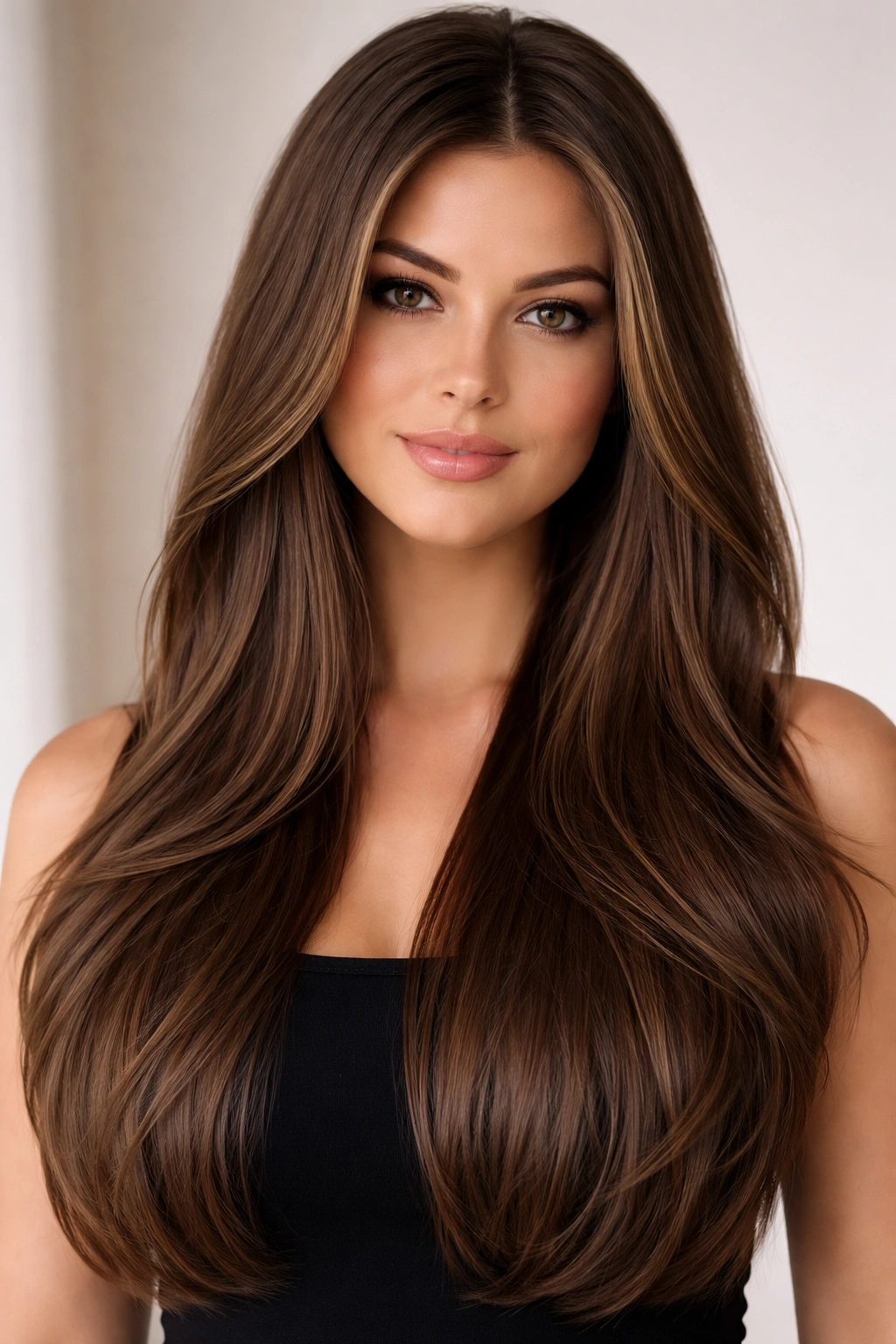
Sometimes the solution isn’t a different cut but a different styling approach. An elongated blowout — where you blow-dry your hair long and straight with subtle layers — creates vertical lines and length that instantly elongate a round face. This style works because you’re creating intentional shape rather than relying on your hair’s natural texture or the cut’s inherent shape.
Why Blow-Dried Length Transforms Round Faces
When your hair is blow-dried straight and long with layers that create subtle movement, you’re essentially creating vertical lines from your crown to your shoulders. Your eye follows these vertical lines rather than focusing on the horizontal roundness of your face. Additionally, straight hair is sleeker and less voluminous than textured styles, which means your hair takes up less visual space around your face — making your face appear narrower by comparison.
Best Features of This Styling Approach
- This works best on naturally straight or slightly wavy hair; very curly hair is difficult to achieve this look on daily basis
- You need a good blow dryer (ionic, ceramic, or tourmaline), a round brush, and ideally a smoothing serum or blow-dry cream
- Layers should be subtle and long, starting around chin length or lower
- This styling approach requires 15-20 minutes of daily effort, so commit to the maintenance before choosing this
- The effect is temporary — revert to natural texture when you don’t blow-dry, so this only works if you’re willing to style regularly
Pro tip: Use a cold shot at the end of blow-drying to seal the cuticle and enhance shine and smoothness, which elongates the face visually.
10. Textured Crop with Strategic Undercut
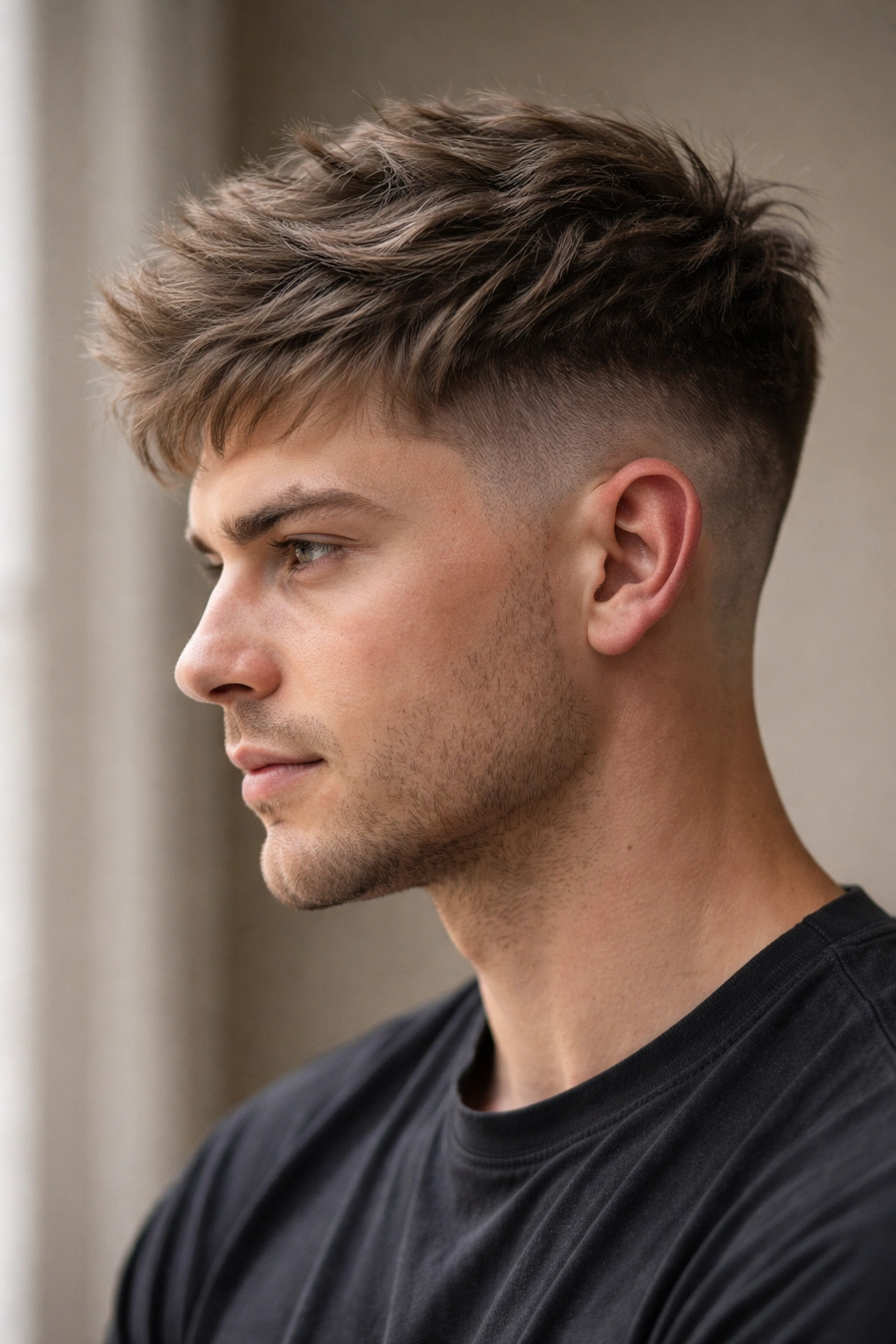
A textured crop combined with an undercut removes weight from the sides and back of your head while keeping length and texture on top. This creates the visual effect of width at the crown and narrowness at the sides, which is the opposite of what you want to emphasize in a round face. The result is a modern, striking look that genuinely flatters.
How Undercuts Rebalance Face Proportions
An undercut — where the hair at the back of your head or behind your ears is cut much shorter than the hair on top — creates a stark contrast in volume. This contrast makes your face appear narrower by reducing the visual mass around your ears and jawline. Meanwhile, texture and volume at the crown draw the eye upward. The combination creates an elongated silhouette that counteracts facial roundness.
Best Features of This Cut
- The undercut should be tapered gradually rather than shaved completely for a less severe appearance
- Top length should be at least 2-3 inches to allow for texture and volume creation
- Texture at the crown is essential — ask for choppy layers and point-cutting throughout the top section
- This is a bold style that requires regular maintenance (every 4-5 weeks) to keep the undercut from blending in as it grows
- Works best on straight to wavy hair; curly hair can look bulky rather than refined
Worth knowing: An undercut is a commitment — you’re essentially required to style this cut regularly or it loses its intentional shape.
11. Side-Swept Layers with Strategic Bangs
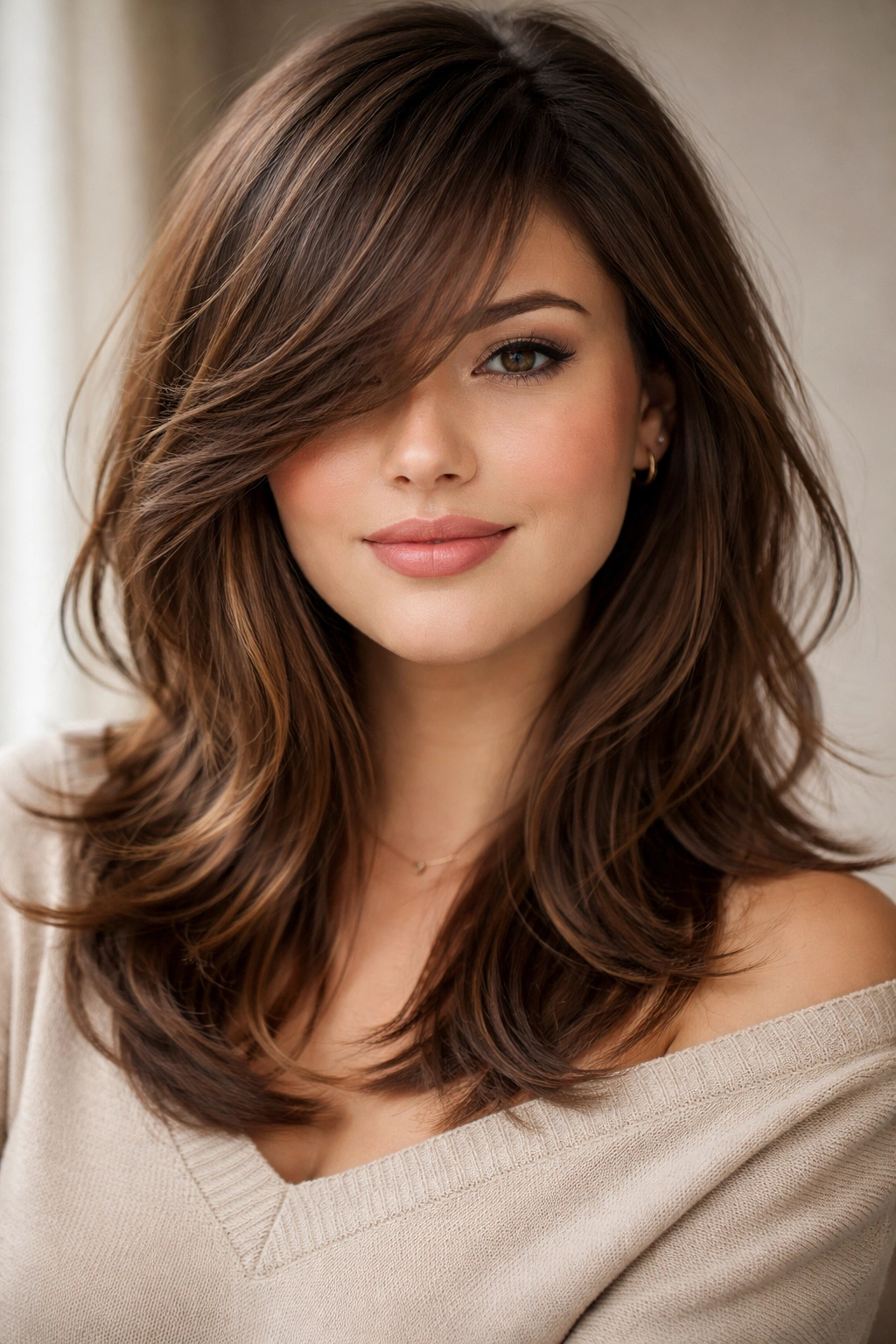
Side-swept layers combined with side-swept bangs create a flowing, asymmetrical silhouette that works magic for round faces. The layers encourage movement and flow while the side-swept styling prevents your hair from sitting flat and symmetrical on both sides. This approach is less dramatic than a full asymmetrical cut but equally flattering.
Why Side-Swept Styling Flatters Round Features
When all your hair sweeps to one side, you immediately create asymmetry that breaks up the circular perception of your face. The side away from the sweep shows more of your neck and ear, which adds length and definition to your lower face. The side with the sweep often covers part of your cheek and creates shadow. This combination of exposure on one side and coverage on the other creates optical depth and definition.
Best Features of This Cut
- Layers should begin around chin length and extend down, allowing for significant movement
- Side-swept bangs should hit somewhere between your eyebrow and cheekbone, creating a diagonal line across your face
- This style works best with a deep side part — ask your stylist to help you determine the most flattering part placement
- Medium to thick hair works best; finer hair can look thin when swept to one side
- This cut requires daily styling to maintain the side-sweep; it won’t look intentional if you just towel-dry and go
Pro tip: Use a texturizing spray or sea salt spray to encourage natural waves and movement that helps maintain the side-sweep throughout the day.
12. Slicked-Back High Ponytail with Textured Ponytail
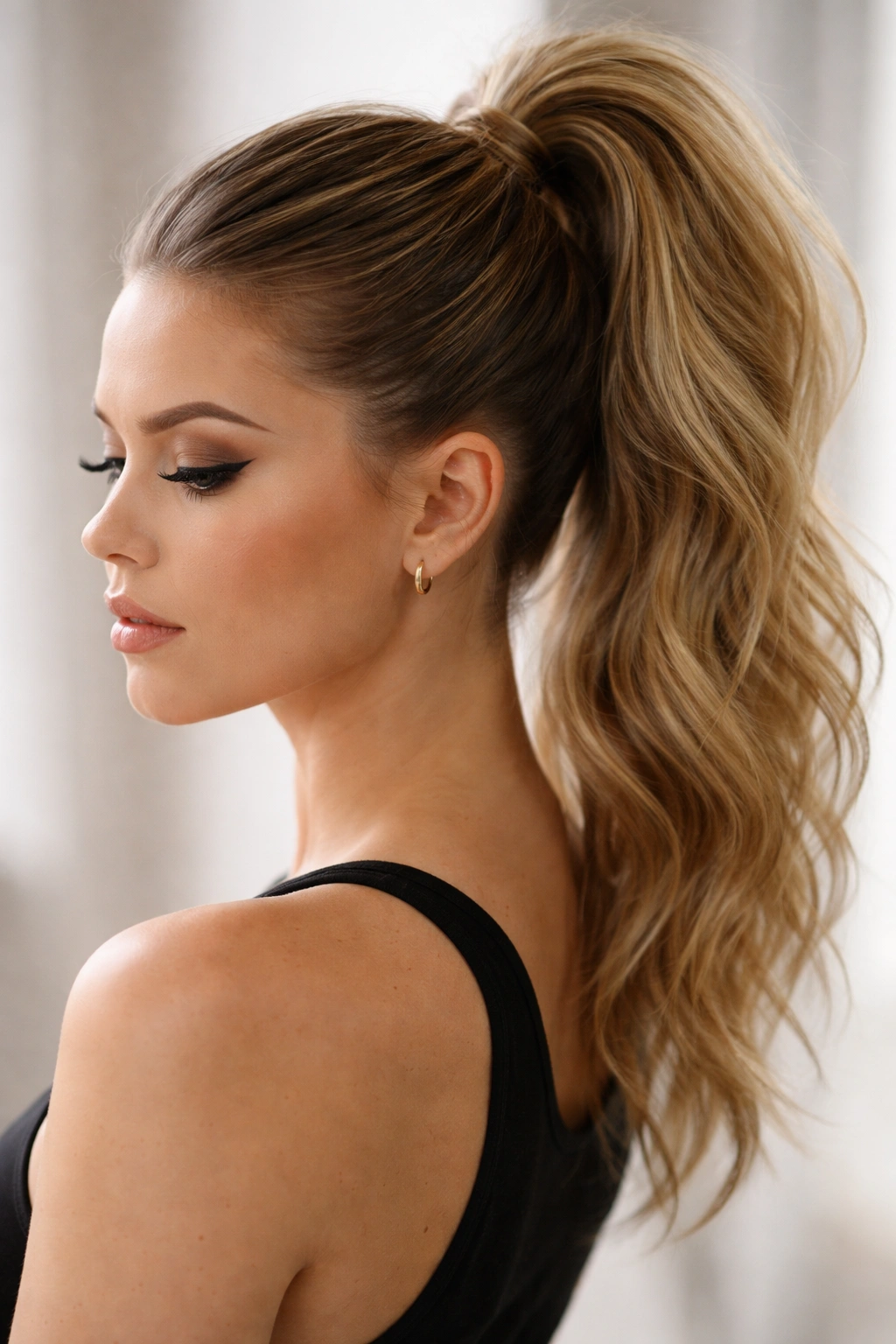
While technically a style rather than a cut, a high ponytail paired with the right cut is transformative for round faces and double chins. The key is slicking your hair back tightly to show your entire face and neck, which elongates your features and adds definition. A textured, piece-y ponytail (rather than a sleek one) prevents this from looking too severe or unflattering.
How Slicked-Back Styling Elongates the Face
When you sweep your hair completely off your face and up into a high ponytail, you expose your entire jawline, neck, and lower face. This exposure creates the visual effect of length and adds definition to areas that might otherwise feel soft or undefined. Additionally, by revealing your face fully, you’re showcasing your natural facial proportions without any hair interference — and the higher placement of the ponytail draws attention upward rather than toward your chin.
Best Features of This Approach
- The ponytail should be positioned high on the crown — not at the back of your head, but truly at the top
- For a less severe appearance, texture the ponytail by using face-framing pieces or creating a slightly undone, piece-y ponytail rather than a sleek, tight one
- Works best when you have length — at least shoulder-length hair when down
- This is perfect for days when your hair is already styled or when you’re going to the gym; it’s both practical and flattering
- Your hair texture doesn’t matter here because the styling does all the work
Worth knowing: If you wear your hair in a high ponytail frequently, make sure you’re not pulling so tightly that you’re causing tension on your hairline — regular tight pulling can lead to traction alopecia.
Final Thoughts
The most flattering haircut for your round face and double chin isn’t one-size-fits-all — it depends on your hair texture, your lifestyle, your styling commitment, and your personal preferences. Some of these styles require significant daily effort with styling tools, while others simply need a good cut and minimal maintenance. Some work best on specific hair types, while others are versatile across textures.
The common thread running through all these cuts is that they work by creating vertical lines, adding texture and movement that prevents hair from lying flat against your face, drawing the eye upward toward your crown, or strategically using asymmetry and highlights to break up the circular symmetry that emphasizes roundness. When you understand these principles, you can work with your stylist to create a cut that’s not just flattering but genuinely suited to who you are.
Before booking your appointment, bring photos of cuts you love. Show your stylist this article or describe the specific principles that appeal to you — whether that’s texture, length, layers, or a combination. Be honest about your styling tolerance; a high-maintenance cut that you won’t actually style daily won’t work for you. And consider booking a consultation first rather than jumping straight to a full cut, especially if you’re trying something significantly different. A great stylist will help you navigate your options and find the perfect approach for your unique face shape and hair type.
