



A stacked bob is one of those rare cuts that somehow flatters nearly every hair type and face shape—but it does something especially magical for people with either thick or fine hair. The layered, graduated structure creates dimension where you need it most, adding volume to flat strands or visually taming thick, heavy locks. If you’ve been searching for a cut that works with your hair rather than against it, the variations in this guide will show you exactly what’s possible.
The beauty of a stacked bob lies in its versatility. Whether your hair is fine and limp or thick and prone to frizz, a skilled stylist can customize the angle, layering, and length to play to your strengths. The key is understanding which specific variation will suit your texture and your lifestyle. Some stacked bobs are all about movement and flow, while others lean into a sharper, more structured silhouette. Some require regular styling with heat tools, while others actually look better air-dried.
The challenge isn’t finding a stacked bob that exists—it’s finding the right one for you. That’s what makes this guide so valuable. Each style below shows how the cut adapts for different hair densities, different face shapes, and different styling commitments. You’ll see how small changes in the angle, the amount of stacking, and the texture work together to create entirely different effects.
Let’s walk through 15 real-world stacked bob variations that actually deliver results for thick and fine hair alike.
1. The Classic Blunt Stacked Bob
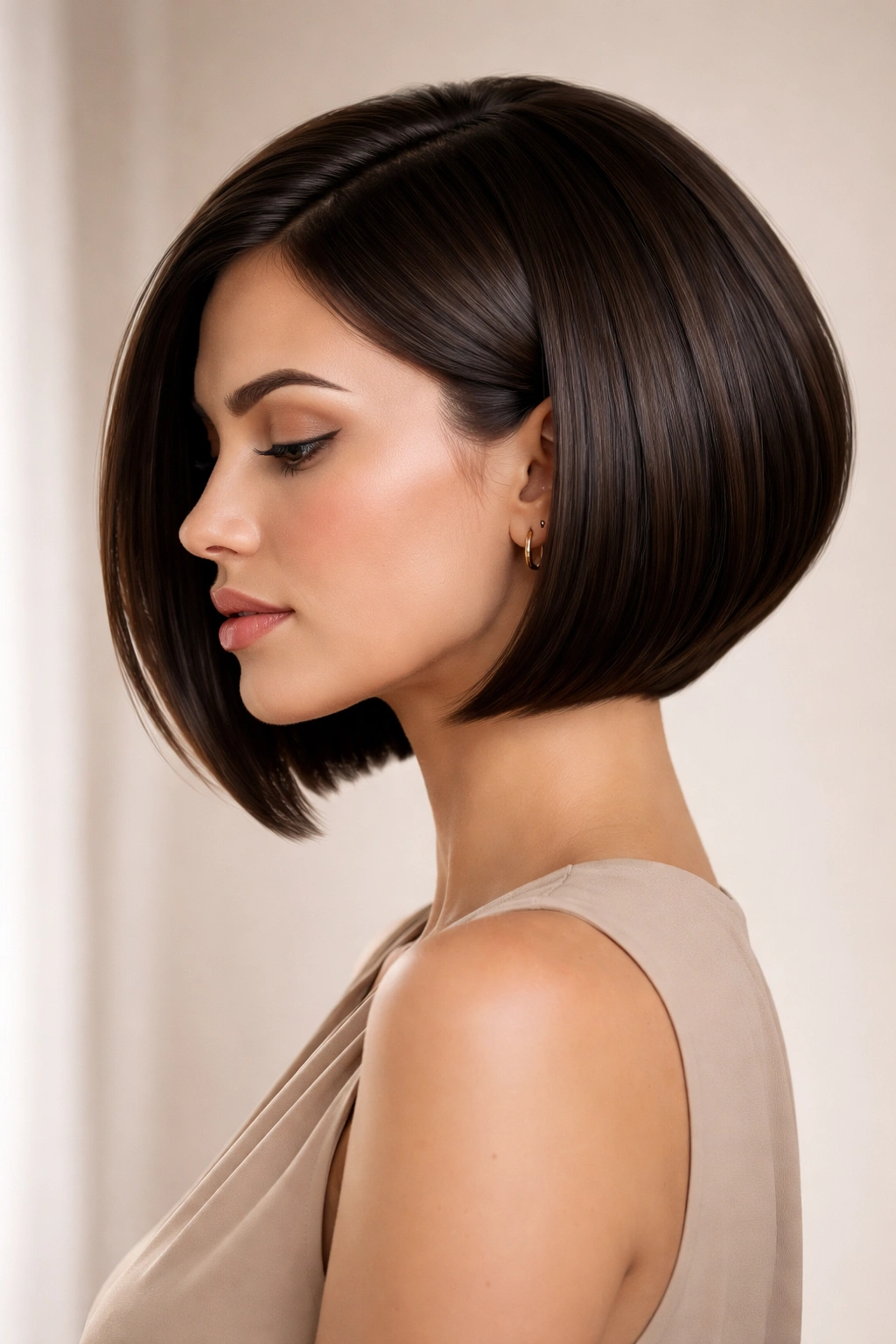
This is the foundation every other stacked bob is built on, and it remains one of the most flattering cuts you can get. The blunt bob sits at the jawline or chin, with all that gorgeous stacked texture concentrated at the back to create volume and movement. The front layers are kept longer than the back, which frames the face beautifully while the graduated layers underneath do all the heavy lifting.
Why This Works for Both Hair Types
The blunt line creates a clean, polished finish that actually looks intentional on fine hair—no wispy, accidental thinness showing through. For thick hair, the blunt bottom edge helps contain the bulk while the stacking underneath prevents that solid helmet-like appearance. The key is that the stacking is controlled and deliberate rather than choppy.
Essential Styling Tips
- Sleep on your hair damp with a silk pillowcase to minimize frizz and preserve your shape through the night
- A round brush and blow dryer will enhance the volume at the back; fine-haired folks should keep heat on low to medium
- Use a lightweight volumizing mousse on damp roots before blow-drying if you have fine hair
- For thick hair, a lightweight texturizing spray creates separation without crunchiness
- The blunt line needs trimming every 4 to 6 weeks to stay sharp
Pro tip: Ask your stylist for slightly longer layers underneath the blunt line rather than cutting straight across—it prevents that heavy, dense look while keeping the sleek front edge you’re after.
2. The Feathered Stacked Bob
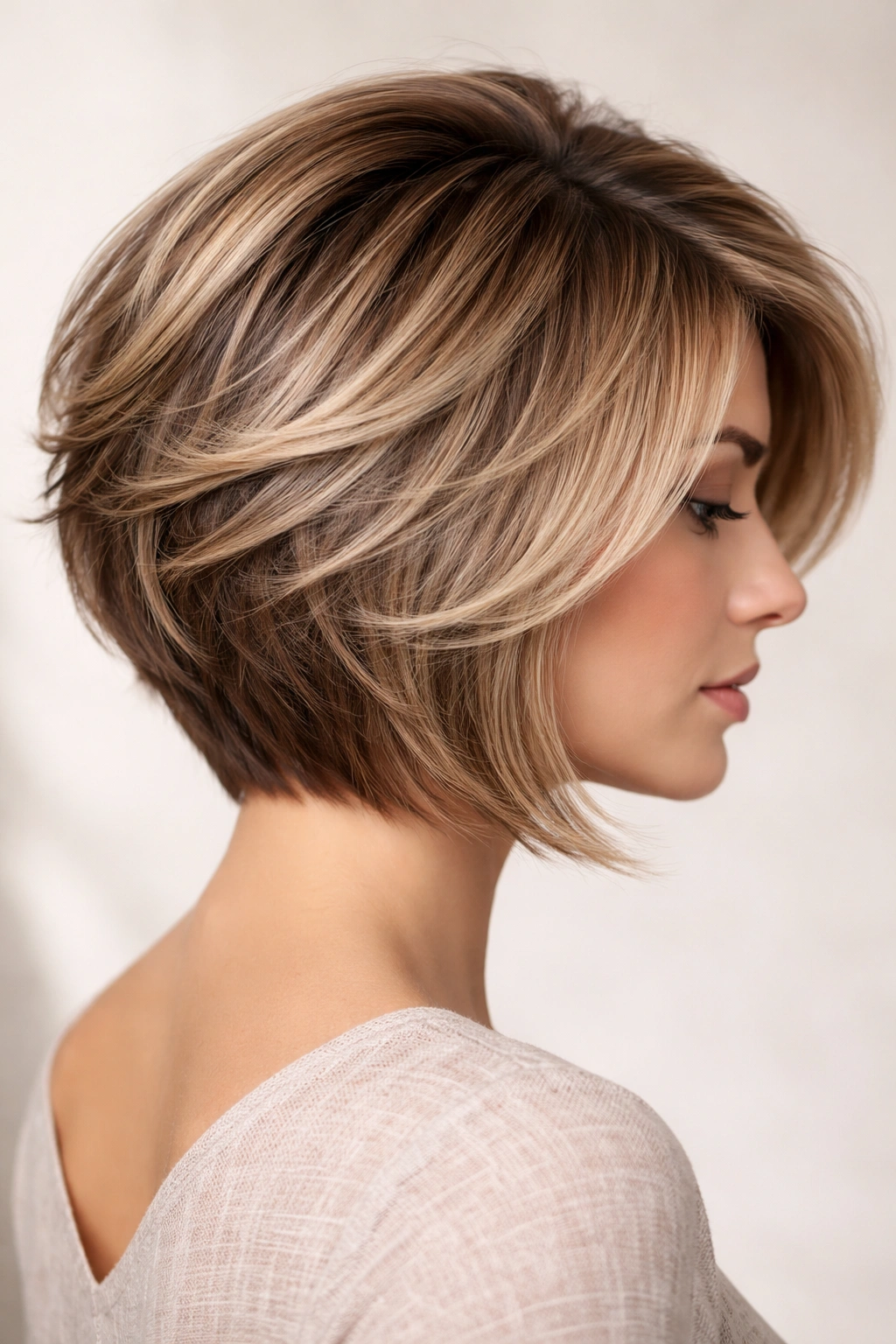
Feathering takes a stacked bob and softens it dramatically. Instead of distinct layers, the hair is cut at angles so each piece slightly overlaps the one beneath it, creating that feathered, flowing effect you might remember from the ’70s and ’80s—but refined for a modern, sophisticated aesthetic. The back remains stacked for volume, but everything moves and sweeps outward.
The Feathering Technique Explained
Feathering isn’t random texture—it’s a precise cutting technique where the stylist works at specific angles to create movement within each section. For thick hair, feathering actually helps reduce bulk by breaking up the solid mass and encouraging separation. For fine hair, feathering adds the illusion of dimension and prevents everything from looking matted together.
Best Practices for Maintenance
- Feathered bobs look best when you enhance the movement with texture spray and a blow dryer
- Don’t overbrush; use your fingers or a wide-tooth comb to separate pieces after styling
- The feathering technique shows off color incredibly well, so this cut pairs beautifully with highlights or balayage
- Trim every 6 weeks to maintain the feathered effect—the technique loses impact as it grows out
A feathered stacked bob requires a bit more styling time than a blunt version, but the movement you get is worth every minute.
3. The Choppy Stacked Bob
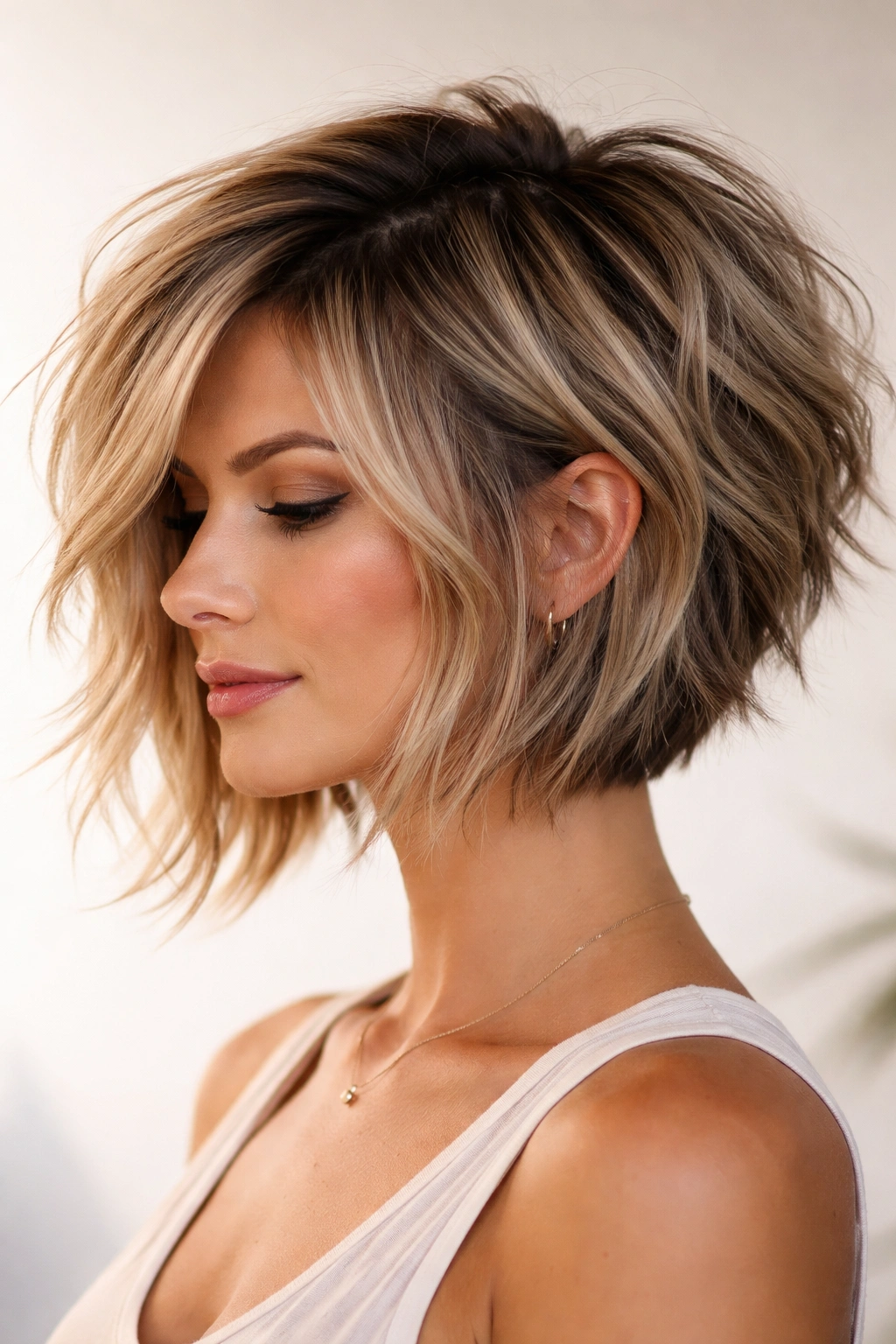
If the classic stacked bob feels too polished, the choppy version brings attitude and texture. Choppy layers are deliberately jagged and irregular, creating a piece-y, undone appearance that somehow looks intentional rather than messy. For thick hair, choppy layers distribute weight beautifully. For fine hair, the broken-up texture creates the illusion of more volume.
Why Thick-Haired People Love This Cut
Thick hair can sometimes feel heavy no matter the length. Choppy layers give you somewhere for all that texture to go. Instead of one solid block of hair, you get movement, separation, and visual lightness. The choppy technique actually breaks up the density without thinning it out, which is a distinction that matters.
Styling for Fine Hair
- Choppy layers work wonderfully with air-drying for fine hair, especially if you have natural waves or curls
- Add a curl-enhancing cream or mousse to damp hair and let it dry naturally for the most authentic texture
- If you want to blow-dry, use a diffuser attachment to encourage movement without flattening
- Sea salt spray on damp hair creates separation and emphasizes the choppy layers
A choppy stacked bob is the opposite of high-maintenance. It actually looks better when you don’t overthink it.
4. The Textured Stacked Bob with Underlayer Contrast
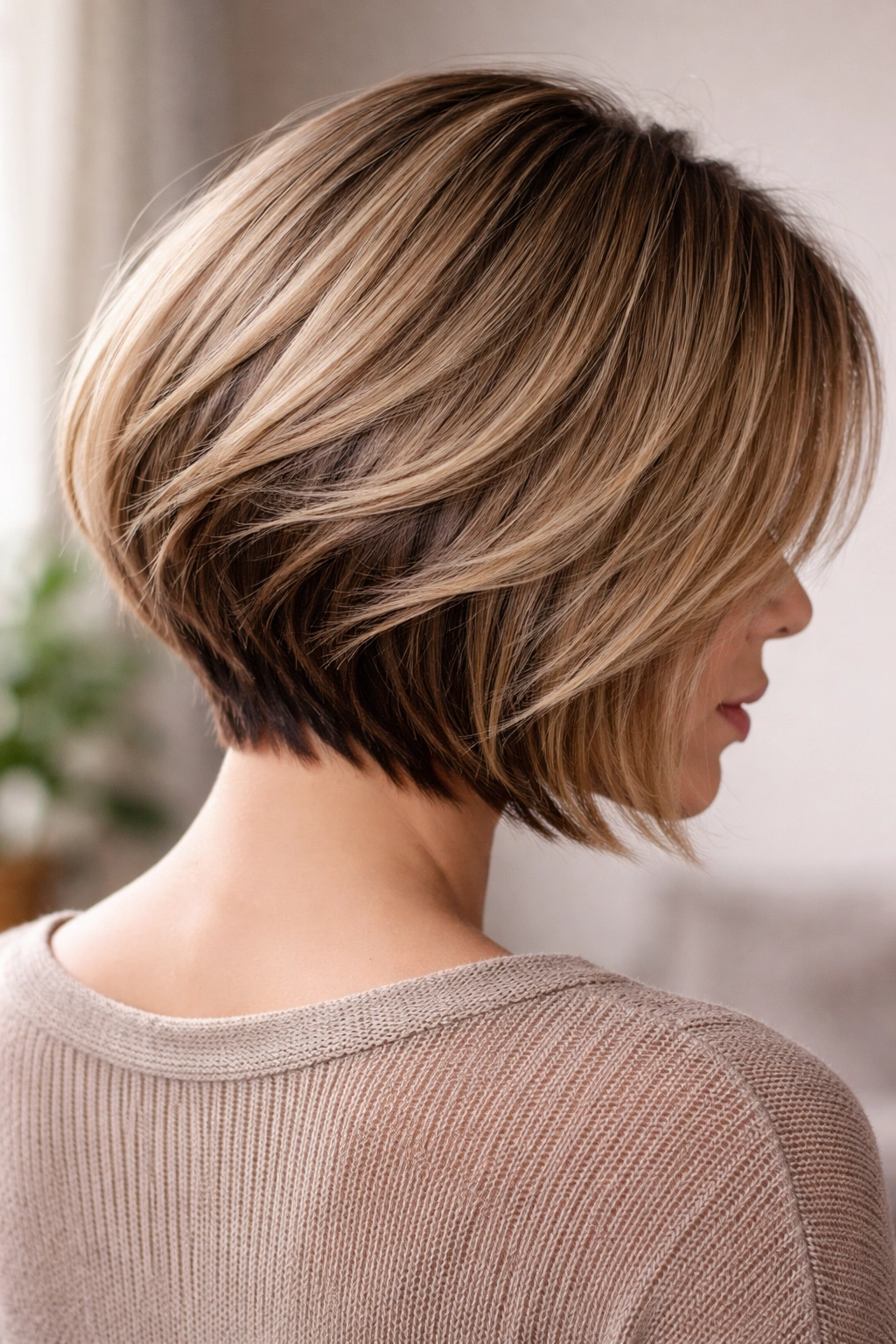
This version layers in a surprise: the underlayers (the hidden sections underneath) are cut much shorter than the top layers, creating a striking contrast when you move. From the front, it looks like a normal stacked bob, but tilt your head or move around and you see the choppy, textured layers underneath. It’s sophisticated texture that doesn’t announce itself.
The Asymmetrical Appeal
The contrast between the top layer smoothness and the textured underlayer creates three-dimensional depth that’s especially flattering on round or square faces. The shorter underlayers also provide the stacking effect that adds volume without bulk, regardless of your hair density. This is a cut that rewards movement and looks different depending on how you wear it.
Styling Options
- Wear it sleek on top with a blow dryer and smoothing serum for a sharp, modern look
- Let the underlayers show by styling your hair up in a high ponytail or bun for a playful contrast
- On wavy or curly hair, the texture showcases itself naturally without any styling required
- Fine-haired folks get the illusion of much more density thanks to the layered structure
5. The Shoulder-Grazing Stacked Bob
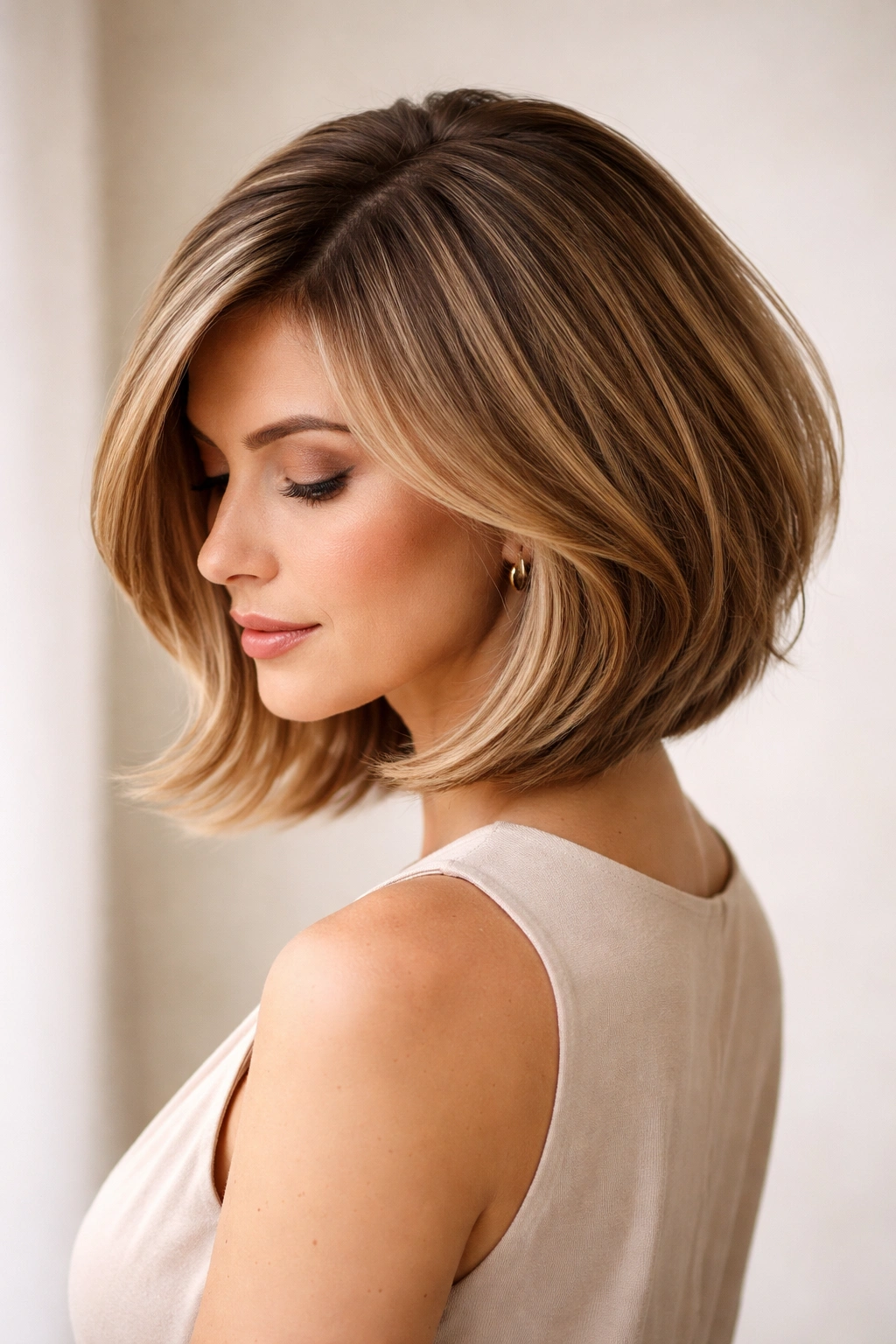
Not every stacked bob sits at the chin. A longer version that brushes the shoulder offers a softer silhouette while maintaining all the volume benefits of stacking. The extended length gives you styling versatility—wear it down for a sleek look or tuck it behind your ears for a more delicate appearance. The back stacking still provides fullness without the helmet effect.
Why Length Changes Everything
Adding length to a stacked bob doesn’t compromise the structure; it just extends it. For thick hair, the longer length helps balance the volume throughout so your head doesn’t look top-heavy. For fine hair, shoulder-length allows the layers to cascade and create movement rather than sitting flat against your head. The weight is distributed more evenly.
Maintenance for This Length
- You can go slightly longer between haircuts with shoulder-length versions since split ends are less visible
- Deep conditioning becomes more important at this length, especially if you heat-style frequently
- The longer layers create more styling possibilities—try half-up styles, sleek waves, or loose curls
- A good texturizing spray becomes your best friend for adding separation throughout the length
The shoulder-grazing length is perfect if you want a stacked bob that feels a bit more versatile and less “strong statement.”
6. The Sharp Geometric Stacked Bob
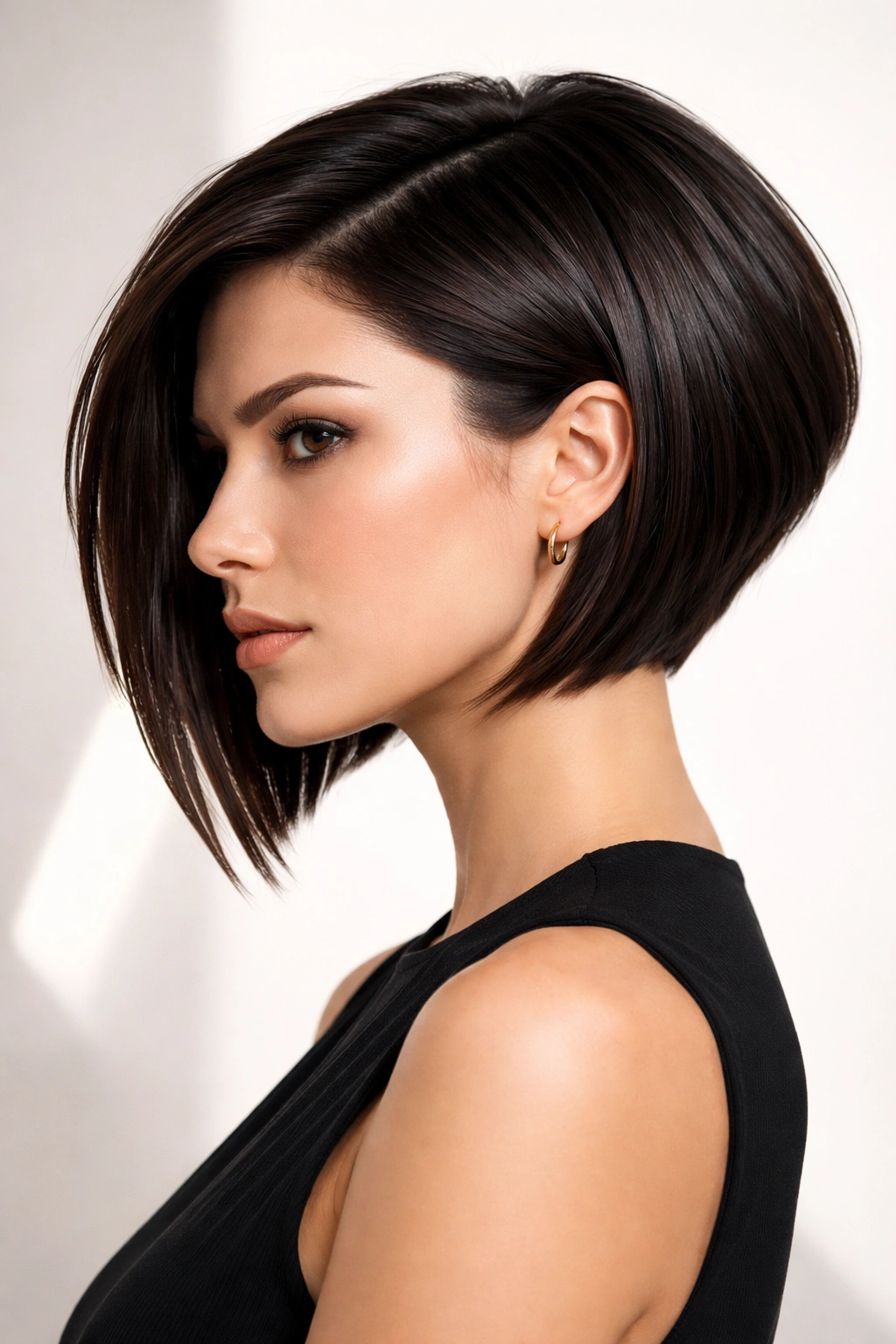
Geometry is having a serious moment in haircut design. This version uses clean lines and precise angles to create an almost architectural effect. The front layers angle forward sharply, the stacked back creates a sculptural shape, and everything hits at intentional points rather than flowing gradually. It’s modern, fashion-forward, and absolutely stunning on the right face shape.
Who This Style Flatters Most
Sharp geometric bobs work beautifully on oval and oblong face shapes because the angles complement clean facial lines. They also work wonderfully on angular, defined faces where the sharp cut echoes the face’s natural architecture. If you have a round face, a geometric stacked bob can actually help elongate and define your features when the angles are positioned correctly.
Styling the Geometric Look
- This cut looks best when it’s styled with precision—blow-dry with a round brush to enhance the structured lines
- Use a smoothing serum or light styling cream to emphasize the clean edges
- Avoid over-texturizing products that break up the geometric lines
- For thick hair, the angles actually help contain and direct the texture
- Fine hair benefits from the dimensional angles, which create the illusion of more volume in strategic spots
A geometric stacked bob requires a really skilled stylist, so make sure you’re consulting with someone who understands angle and precision.
7. The Wispy Stacked Bob
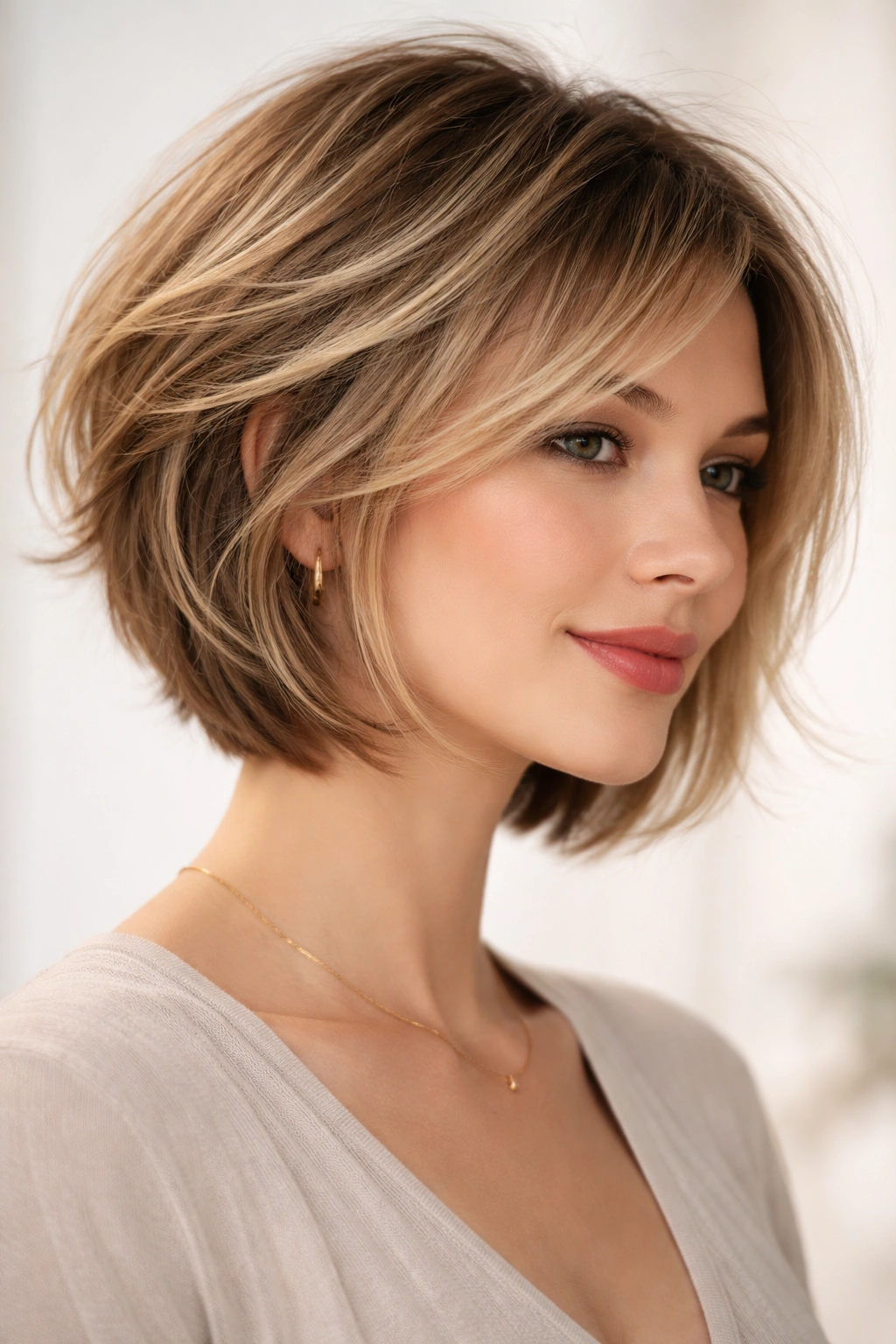
If choppy feels too aggressive, wispy offers that soft, piece-y texture with more elegance. Wispy layers are lighter and more subtle, creating movement without the intentional roughness of a choppy cut. The ends feel delicate and blend seamlessly rather than standing apart as distinct chunks. It’s a sophisticated take on textured layering.
The Wispy Technique for Different Hair Types
Fine hair absolutely shines with wispy layers because the lighter cutting technique doesn’t create obvious gaps or thinness. Instead, it enhances the hair’s natural movement and creates soft definition without making the hair look sparse. For thick hair, wispy layers reduce weight gradually across the entire cut rather than dramatically, which feels more natural and blends beautifully.
Daily Styling Requirements
- Wispy bobs look beautiful air-dried, especially on naturally wavy or curly hair
- A lightweight leave-in conditioner keeps the wispy ends soft and prevents frizz
- Light texturizing spray enhances the wispy movement without creating crunchiness
- This cut actually improves as it grows out slightly—the in-between length is often the sweet spot
- Trim every 6 to 8 weeks to keep the wispy movement looking intentional
Wispy stacked bobs are your answer if you want movement and dimension without high-maintenance styling.
8. The Voluminous Bubble Bob
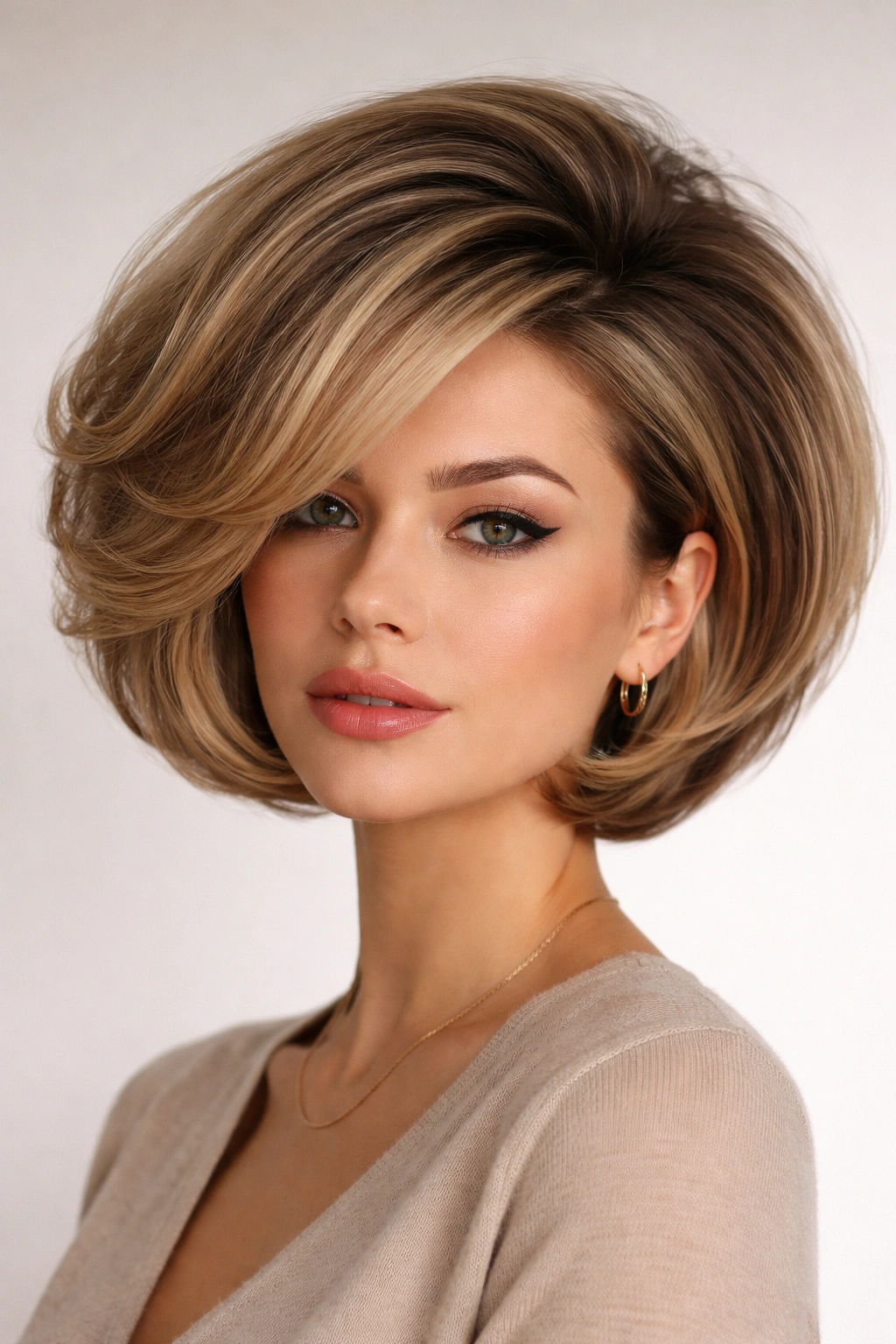
A bubble bob takes the stacking concept and cranks the volume to maximum. The back is extremely tapered and stacked, creating a pronounced bulge of fullness that sits higher on the head. It’s a bold, fashion-forward shape that makes a real statement. Don’t confuse it with a standard stacked bob—a bubble bob is deliberately exaggerated for visual impact.
Why This Works for Fine Hair
Here’s the secret: a bubble bob is actually perfect for fine hair because all that stacking creates the illusion of serious density. The shape itself adds volume, so even if your individual strands are thin, the overall silhouette is voluminous and impressive. The stacking concentrates the hair cleverly so it appears fuller than it actually is.
The Catch for Thick Hair
For thick hair, a bubble bob requires the right approach. You want stacking that’s controlled and directed rather than creating an unmanageable bulge. A skilled stylist will taper the sides slightly and angle the back stacking upward rather than outward, which creates height and volume without the visual heaviness. It’s still bold, but it’s balanced.
Styling a Bubble Bob
- Blow-dry against the natural fall direction to enhance the bubble shape
- Use volumizing mousse on roots for extra lift on fine hair
- For thick hair, a light smoothing serum prevents frizz while maintaining the shape
- The bubble effect softens as you wear it throughout the day—that’s actually part of the appeal
- This cut looks best with regular trims every 4 to 5 weeks
9. The Asymmetrical Stacked Bob
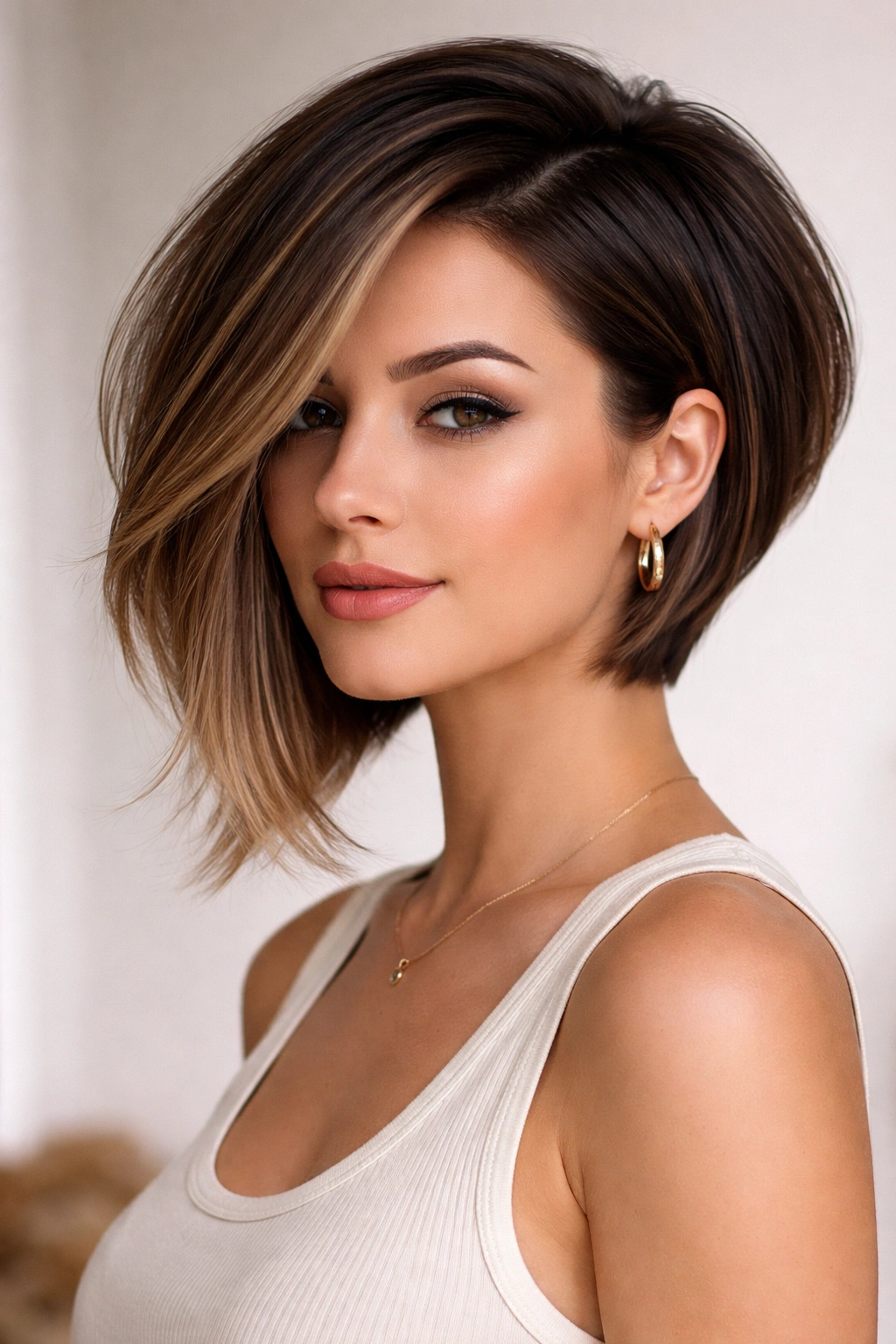
Asymmetry brings drama and modern sophistication to a stacked bob. One side is notably longer than the other, which immediately makes the cut feel current and fashion-conscious. The asymmetry can be subtle (just an inch difference) or dramatic (several inches), depending on how bold you want to go. The stacking in the back remains balanced to maintain volume.
Face Shape Considerations
An asymmetrical stacked bob works beautifully on most face shapes when the longer side falls on the side of your face that you prefer to emphasize. If you have a wider face, the longer side can create visual balance. If you have a narrower face, the asymmetry adds visual interest. The key is working with your stylist to determine which direction suits you best.
Managing the Asymmetrical Silhouette
- Blow-dry both sides with intention—the longer side should curve inward slightly for balance
- Use a round brush to direct the shorter side slightly upward, creating lift
- Texturizing spray on the longer side prevents it from looking flat or stringy
- Fine hair benefits from the asymmetrical cut because the varying lengths create the illusion of more texture
- For thick hair, asymmetry helps balance the weight—the longer side pulls some fullness forward
An asymmetrical stacked bob requires you to be confident about making a statement. If you’re the type who likes to stand out, this is your cut.
10. The Curly Stacked Bob
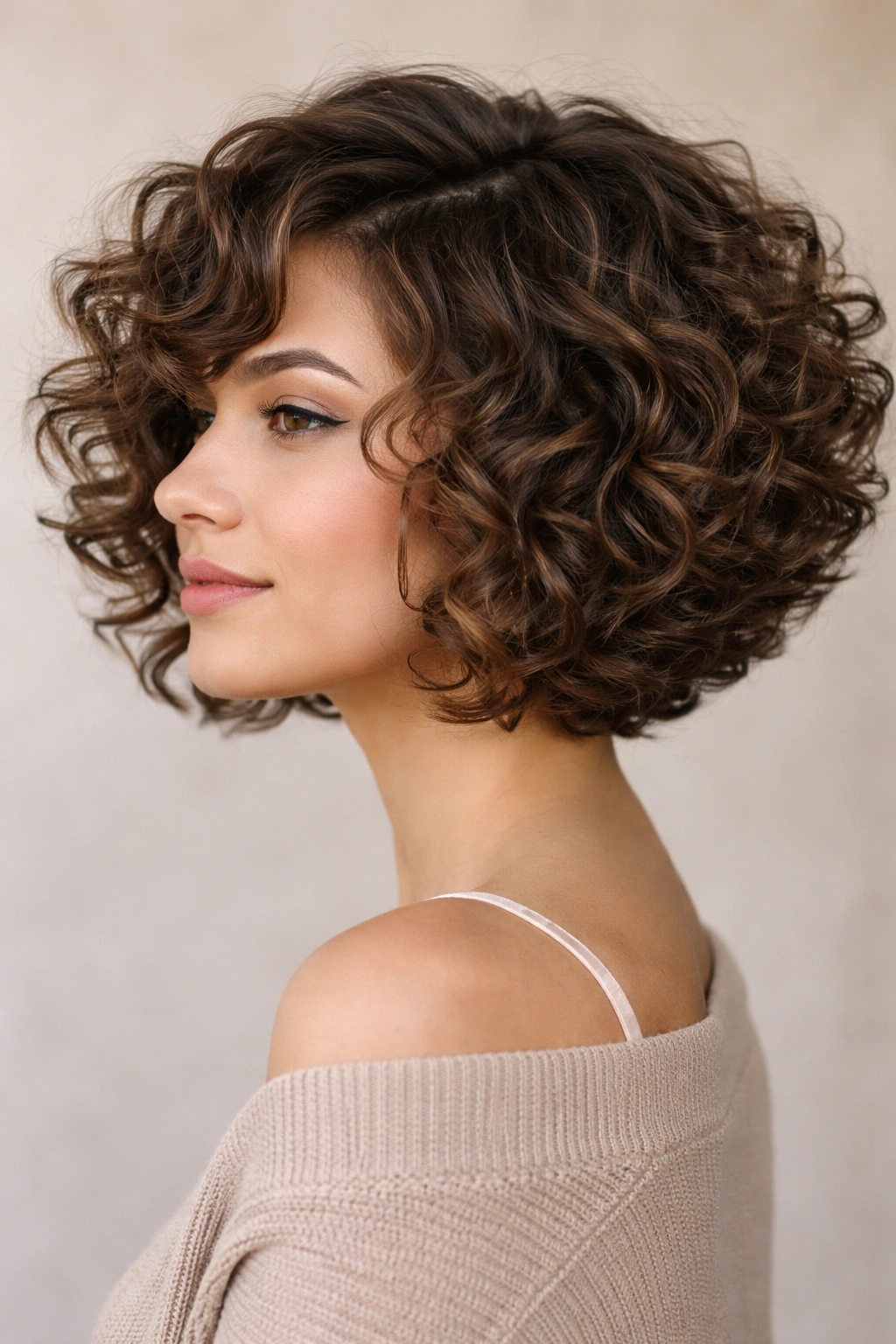
This version is specifically designed with curl pattern in mind. Instead of being cut dry on straight hair, a curly stacked bob is shaped to work with your natural curl or wave pattern. The stacking follows the contours of your curls, and the layers are positioned to enhance definition and bounce rather than fight against your texture. It’s a completely different approach than cutting straight hair and hoping it works with curls.
Why Curly Hair Deserves a Specialized Cut
Curls have their own needs. When a stylist cuts them while wet or textured, the hair actually springs up differently than straight hair does, which is why a “regular” bob can look weird on curly hair when it dries. A curl-specific stacked bob accounts for shrinkage and pattern, so when your hair dries, it lands exactly where it’s supposed to.
Styling Curly Stacked Bobs
- Never brush or comb curly hair when it’s dry—use your fingers or a wide-tooth comb when wet
- Apply leave-in conditioner and curl cream to soaking-wet hair before scrunching upward
- Plop your hair in a towel or microfiber towel for 15 to 20 minutes to encourage curl formation
- Diffuse with a blow dryer on low-medium heat, or air-dry for the least frizz
- This cut looks more amazing as your curl pattern develops, so be patient the first few weeks
A curly stacked bob is a game-changer if you’ve been fighting your natural texture your whole life. It’s finally a cut designed to celebrate what you’ve got.
11. The Sleek Stacked Bob with Straight Layers
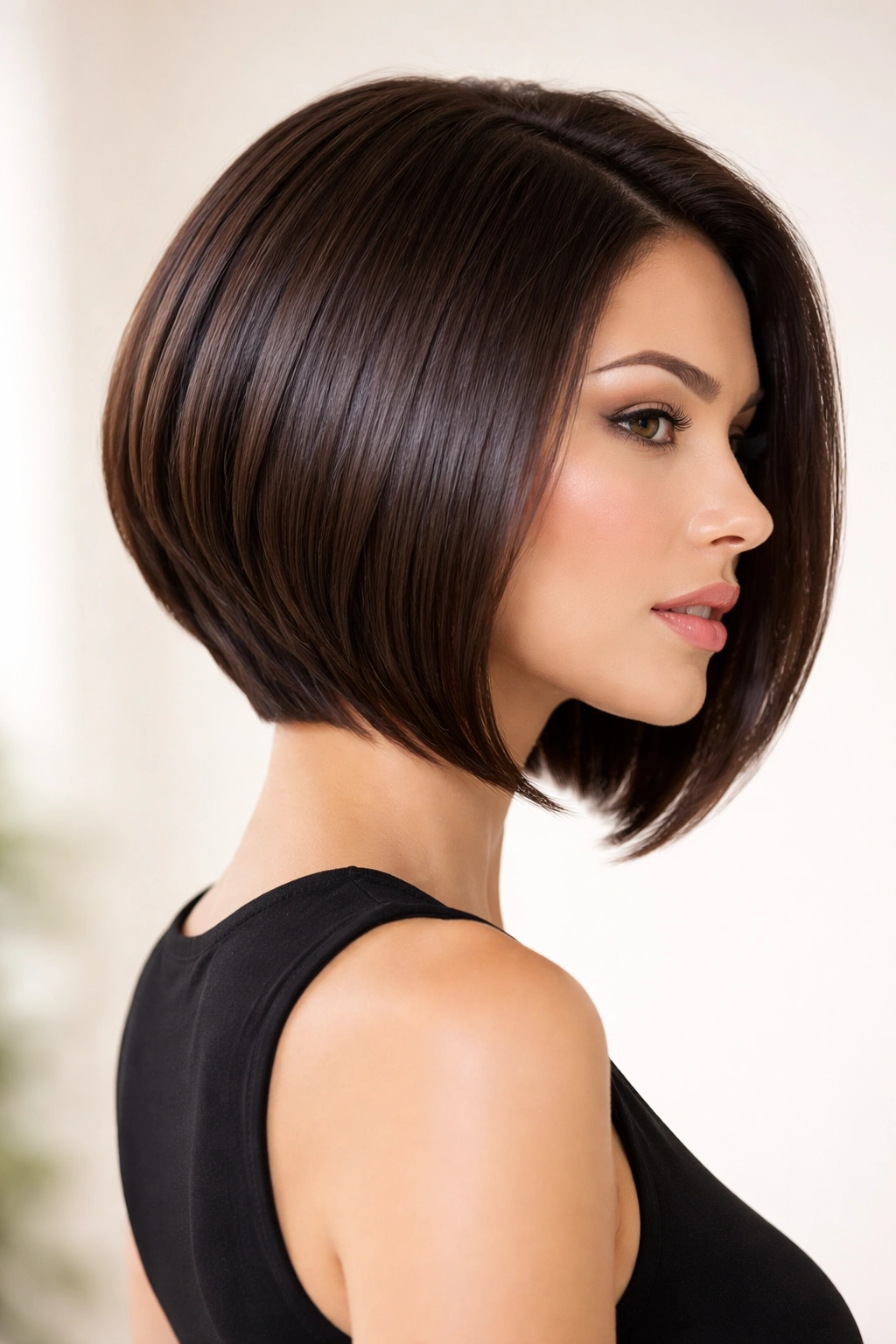
This is the opposite of choppy or curly—it’s all about clean, precise straight lines. Every layer is cut at a specific angle and sits exactly where the stylist intended it to sit. No texture, no feathering, no movement built into the cut itself. The sleekness comes from the cut’s precision, and the styling is all about maintaining that sharp definition.
Why Straight Layers Demand Precision
A sleek stacked bob with straight layers is only as good as the cut itself. There’s nowhere to hide sloppy technique because everything is visible. This is a cut for people who respect precision and are willing to go to a highly skilled stylist. But once you have it cut correctly, it’s genuinely one of the most flattering, modern-looking bobs available.
Maintaining the Sleek Look
- Blow-dry with a paddle brush for maximum smoothness
- Use a straightening serum or smoothing cream before heat-styling
- A flat iron can help enhance the straight lines if you want extra polish
- For thick hair, this cut actually helps direct the texture so it looks intentional rather than wild
- Fine hair looks incredibly sophisticated with the sleek straight layers—it gives even thin hair a sense of structure and polish
- Trim every 4 to 6 weeks to maintain the sharp lines
A sleek stacked bob is perfect if you want to look polished and put-together without a ton of styling effort once the blow-dry is done.
12. The Blonde Money Pieces Stacked Bob
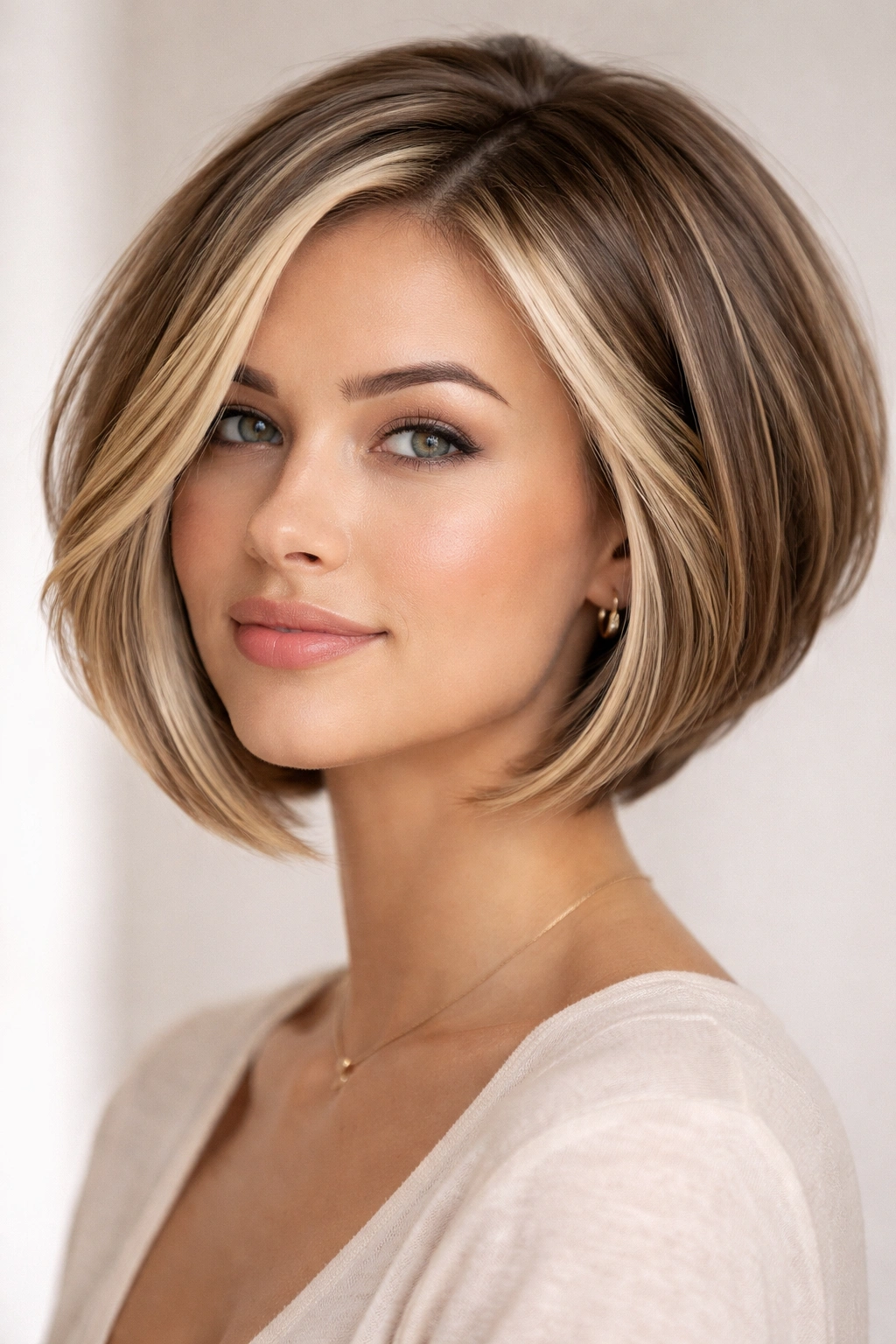
This styling twist takes a stacked bob and adds dimensional color—specifically, lighter, sun-kissed pieces around the face (often called “money pieces” because they’re the first thing people notice). The cut itself is a classic stacked bob, but the color plays with the dimension that the layers create, making the whole thing look more dynamic and expensive.
How Color Transforms the Cut
Money pieces catch the light differently than the rest of your hair, which emphasizes the movement in the layers and makes the stacking work harder. Light pieces around the face also create a flattering frame that brightens your complexion. For fine hair, strategic placement of lighter pieces creates the illusion of more texture and depth. For thick hair, the color variation breaks up the overall density.
Maintaining Color and Cut Together
- Money pieces require color touch-ups every 6 to 8 weeks to keep them looking intentional
- Invest in color-safe shampoo and conditioner to prevent brassy tones
- The layers actually show off color better than a solid cut does, so this is a great use of dimensional color
- Alternate between warm and cool-toned highlights as seasons change for a refreshed look
- For blonde pieces on darker hair, tone with purple or blue shampoo to prevent orange or brass
If you’re considering this cut, know that you’re committing to some color maintenance—but the payoff is a sophisticated, expensive-looking style that’s genuinely beautiful.
13. The Textured Spiky Stacked Bob
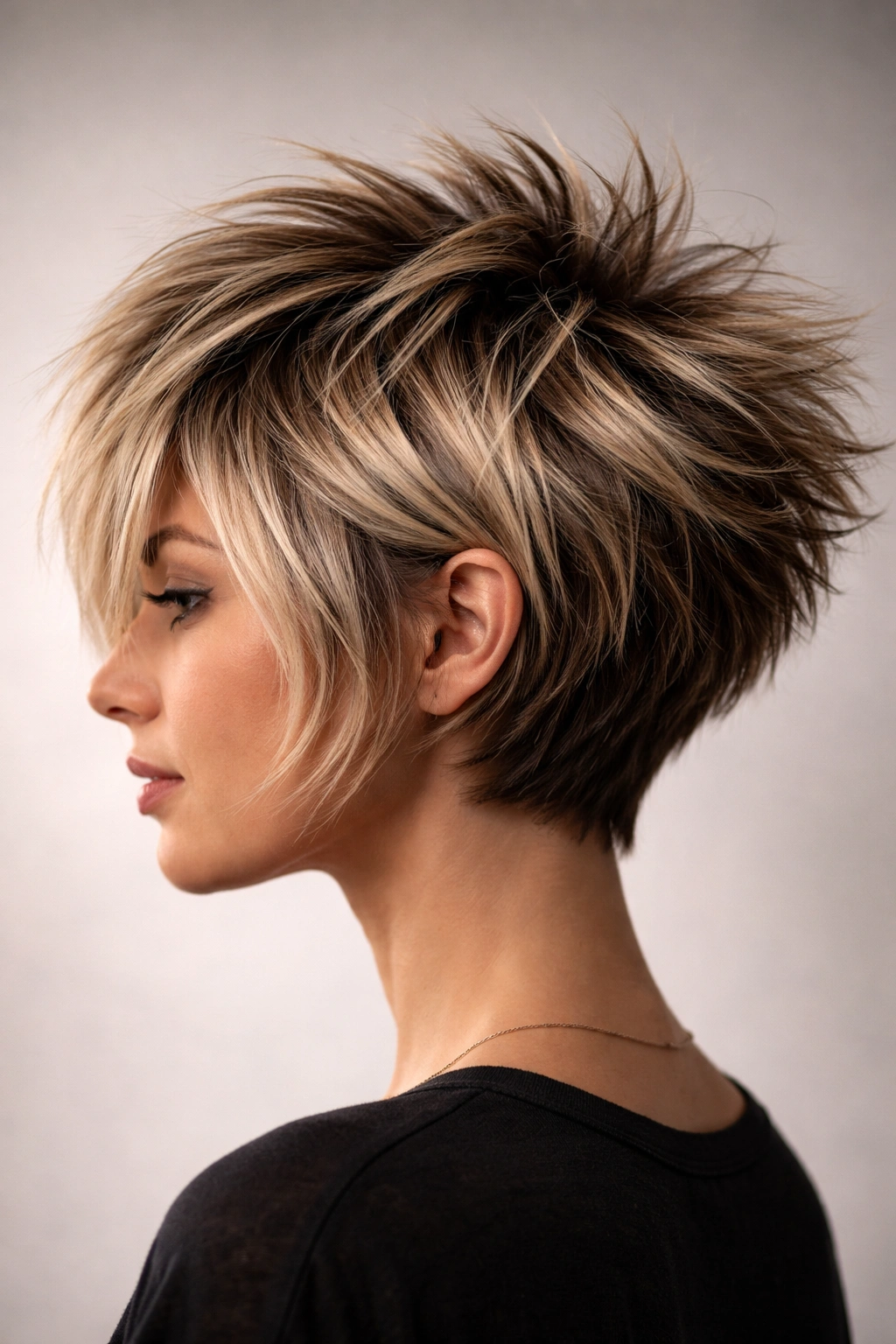
This is for people who want maximum texture and movement, and who are willing to style their hair every day to get it. A textured spiky bob is cut with shorter, choppy layers throughout that stick up and out rather than lying flat. It’s edgy, modern, and requires texture products and some blow-drying effort to look intentional.
The Styling Commitment
This cut isn’t for anyone who plans to air-dry and run out the door. But if you enjoy playing with your hair and have the time to style it daily, a spiky textured bob is incredibly fun. The trick is making it look effortlessly messy rather than actually messy. That’s the difference between a well-executed spiky bob and just a bad haircut.
Products and Techniques for Texture
- Blow-dry your hair upside down first to build volume at the roots
- Apply a texturizing paste or matte clay product to damp hair before blow-drying
- Use a blow dryer on medium-high heat to encourage the spiky texture to stand
- Separate sections with your fingers as you blow-dry rather than using a brush
- Fine hair actually looks fantastic with this cut because the texture creates instant fullness
- For thick hair, this cut helps distribute the bulk and creates definition rather than one solid mass
A spiky textured bob is a commitment, but it’s the kind of commitment that makes you feel amazing every time you look in the mirror.
14. The Graduated Stacked Bob with Subtle Underlayer
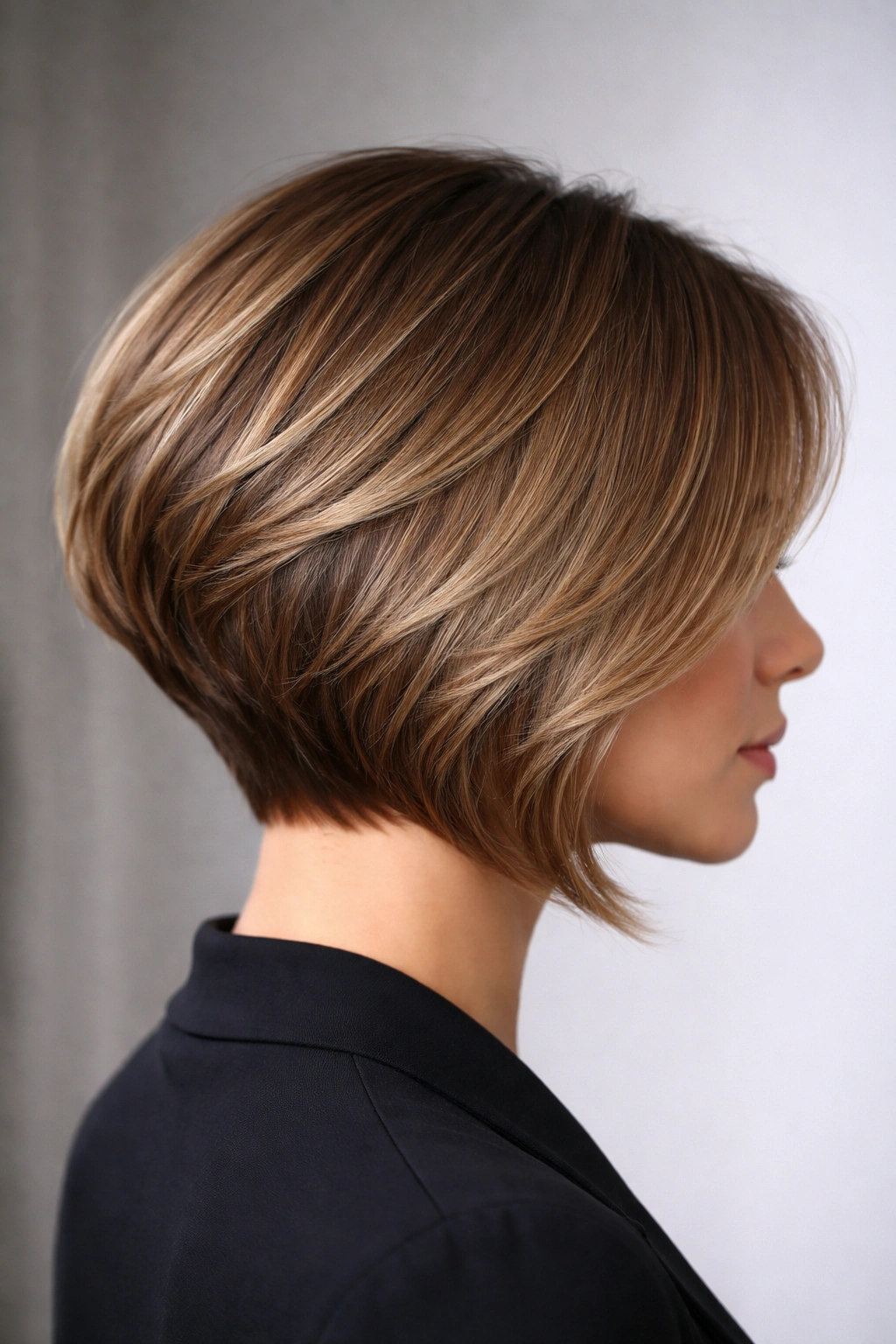
This version is the sweet spot between understated and textured. The top layers graduate smoothly, one layer only slightly shorter than the last, creating a flowing effect without dramatic choppy texture. But underneath, there’s a subtle second layer that’s cut shorter, creating volume without the visual heaviness. It looks polished from the front and has hidden dimension when you move.
The Subtle Sophistication Approach
This cut is for people who want their hair to look intentional and well-cut without announcing “this is a very textured cut.” It’s sophisticated, it works in professional settings, and it actually adds volume without the drama. The graduated approach means there’s no harsh line between lengths—everything blends beautifully.
Styling Options with This Cut
- Blow-dry smoothly for a polished, professional look
- You can also air-dry on wavy hair for a softer, more casual effect
- The cut looks better with some movement, so avoid completely flat styling
- Fine hair benefits enormously from this cut because the layering adds dimension without creating gaps
- For thick hair, the graduated approach prevents the dense, helmet-like appearance while keeping fullness
This is genuinely one of the most versatile stacked bob options because it looks good in almost any context.
15. The Disconnected Stacked Bob
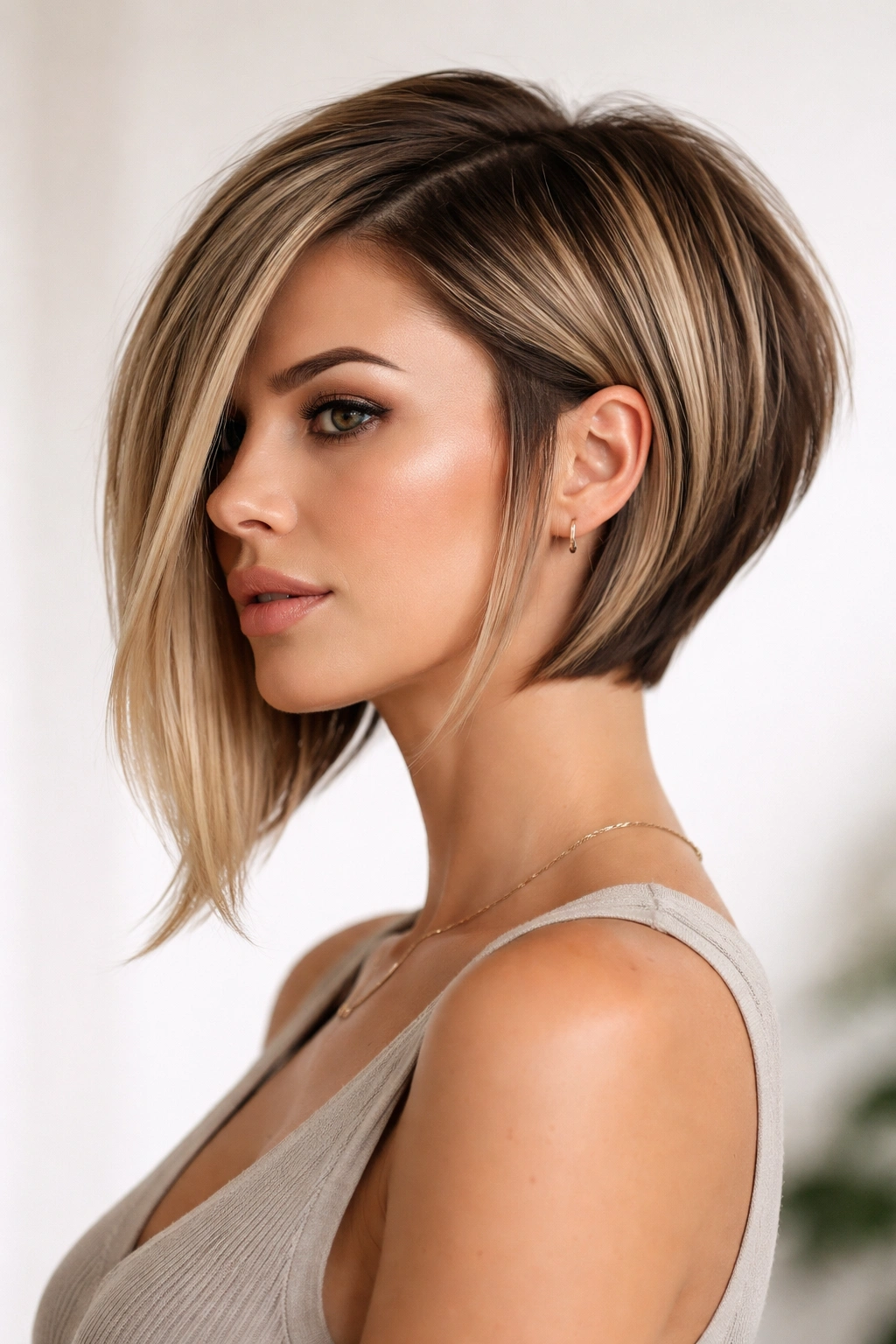
The final variation takes stacking to a different place: instead of one connected shape, a disconnected stacked bob has visibly separate sections. The front is one length, there’s a disconnection (a noticeable gap in length), and then the back is a completely different, shorter length. It’s bold and modern and makes a real design statement.
The Design Philosophy
A disconnected bob says “this is a statement cut from a stylist who knows exactly what they’re doing.” It’s not accidental layering—every section is precisely shaped and positioned. The gaps between sections are intentional and part of the overall design. This cut requires a truly skilled stylist because the proportions have to be perfect or it looks unfinished.
Who This Suits Best
Disconnected bobs work best on people with oval or oblong faces because the proportions complement clean lines and definition. They’re incredibly flattering on people with strong, angular features. For fine hair, the disconnect creates the illusion that there’s more texture than there actually is. For thick hair, the disconnect helps direct the weight and prevent one solid, heavy mass.
Styling a Disconnected Bob
- This cut looks best with intentional styling—blow-dry with purpose
- Use your round brush to create direction and movement at the disconnected points
- Texturizing spray emphasizes the separation between sections
- This cut will look slightly awkward the first two weeks as you get used to the proportions, but then it becomes absolutely stunning
- Trim every 4 to 6 weeks to maintain the clean disconnection
A disconnected stacked bob is your answer if you’ve always wanted a cut that looks genuinely different from what everyone else has.
Final Thoughts
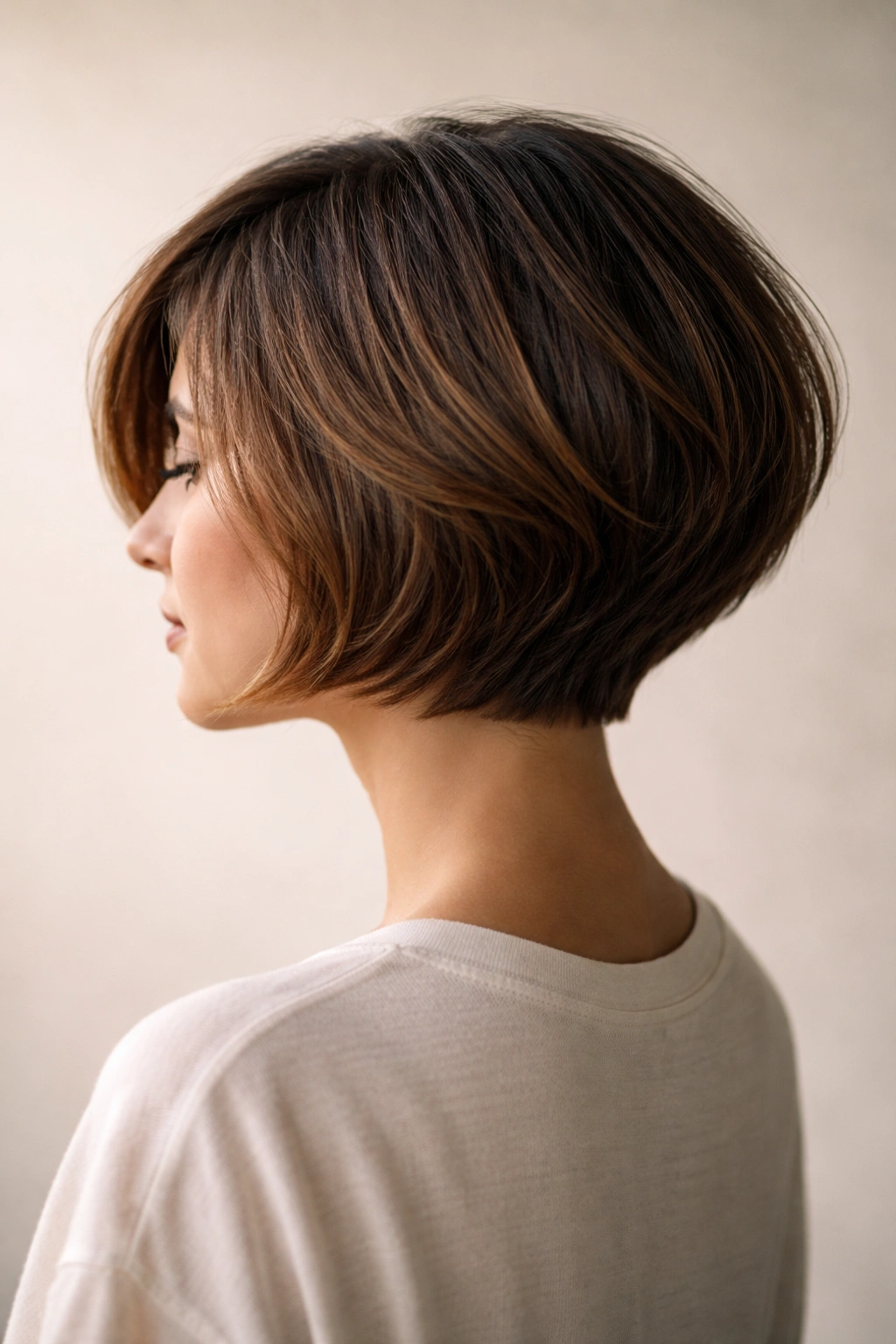
Your perfect stacked bob is waiting somewhere in this list, but the real magic happens when you consult with a skilled stylist who understands your specific hair type and texture. Take these ideas to your appointment, show reference photos, and have a detailed conversation about what you’re trying to achieve. Tell your stylist whether you want to style your hair daily or prefer something that looks good air-dried. Be honest about how much time you’re willing to spend on maintenance.
The stacked bob is genuinely one of those rare cuts that works for almost everyone because there are so many variations. Whether you have thick hair that needs taming, fine hair that needs volume, straight hair, curly hair, or something in between—there’s a stacked bob version designed specifically for you. The key is finding your version and committing to the upkeep.
