



Medium shaggy cuts have made a serious comeback, and there’s a reason why. These versatile styles offer the perfect balance between low-maintenance wearability and high-impact movement that catches light and creates dimension with minimal styling effort. Whether you’re drawn to textured, choppy layers or softer, more blended movement, a medium shag can be tailored to suit virtually any hair type, face shape, and personal aesthetic.
What makes medium shags so compelling is their inherent dynamism. The layered construction creates natural separation and texture, so even on days when you simply run your fingers through your hair, you’ve got recognizable style. Unlike longer cuts that can feel heavy, or shorter cuts that demand precision styling, medium shags live in that sweet spot where movement becomes the defining feature. They work on straight hair, wavy hair, curly hair — and honestly, they often look better with some texture because the layers play off natural movement patterns.
The key to choosing the right medium shag isn’t just about length; it’s about understanding how different layering techniques, undercut placements, and choppy vs. blended transitions create different effects. Some shags are deliberately piecy and disconnected, others are softly textured with subtle dimension, and some blur the line between shag and mullet-inspired cuts. Each approach brings its own personality, which means you can find a medium shag that feels authentically you.
1. Classic Textured Shag
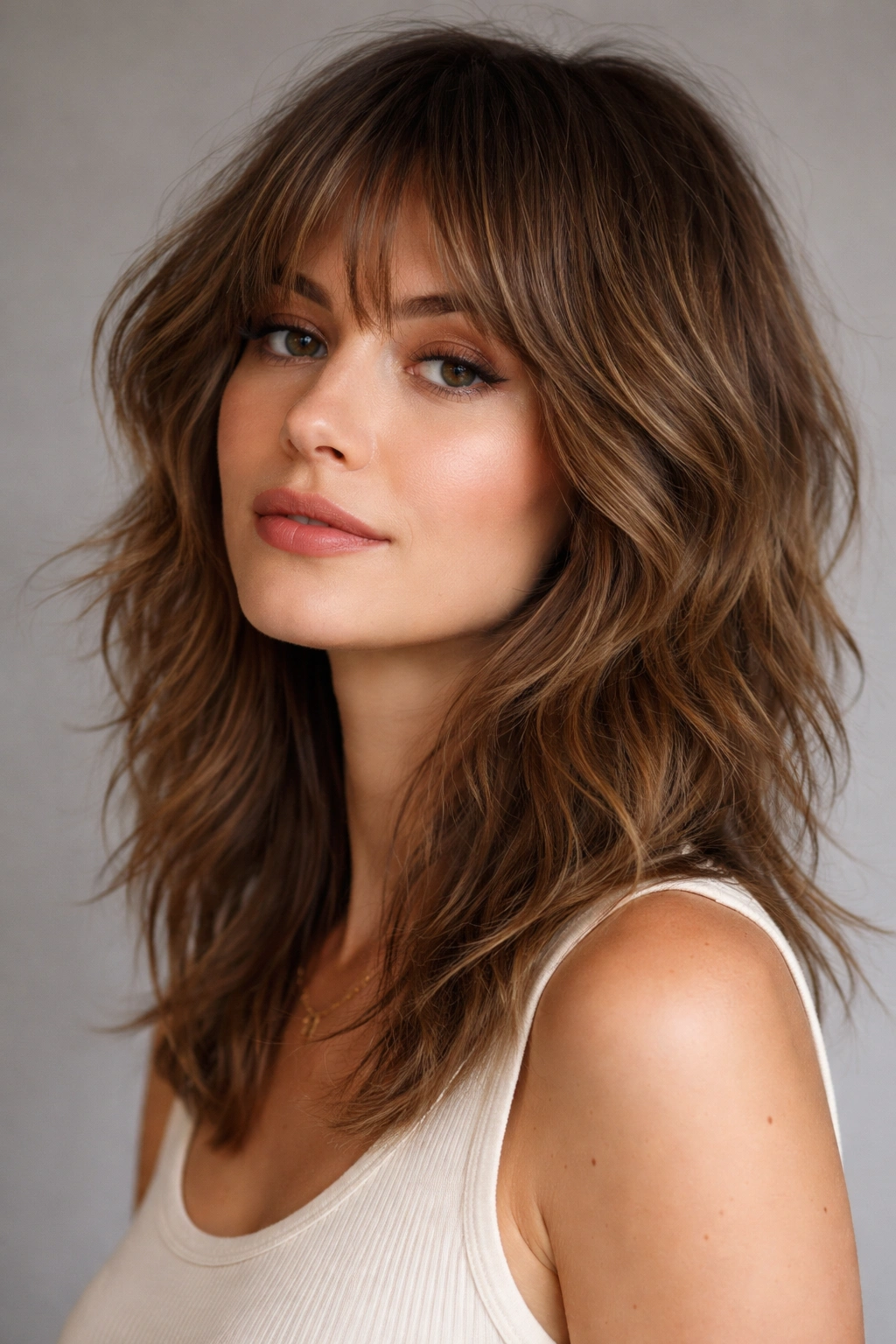
The classic textured shag is the foundation style that started the whole modern shag movement. This cut features layers throughout the entire head, creating consistent texture from the crown down through the ends. The magic happens in how those layers are arranged — they’re not haphazard, but strategically placed to enhance movement without sacrificing shape or structure.
Why This Cut Works So Well
This version thrives on hair that has even a slight natural wave or texture. Even if your hair is naturally straight, the layers create enough separation that you don’t need to blow-dry for hours to achieve the look. The layers work with gravity to create a lived-in effect that feels effortless but still intentional.
Styling and Maintenance
- Use a texture spray or dry shampoo to enhance separation between layers and add grip
- A light texturizing cream works beautifully for defining individual pieces without the crunchiness of traditional products
- Wash every 2-3 days to maintain softness while keeping the layers from feeling matted together
- Get trims every 6-8 weeks to maintain the shag structure as it grows out
Real talk: This cut actually looks better slightly grown out than it does fresh from the chair. Give it at least two weeks before deciding if you love it.
2. Face-Framing Layered Shag
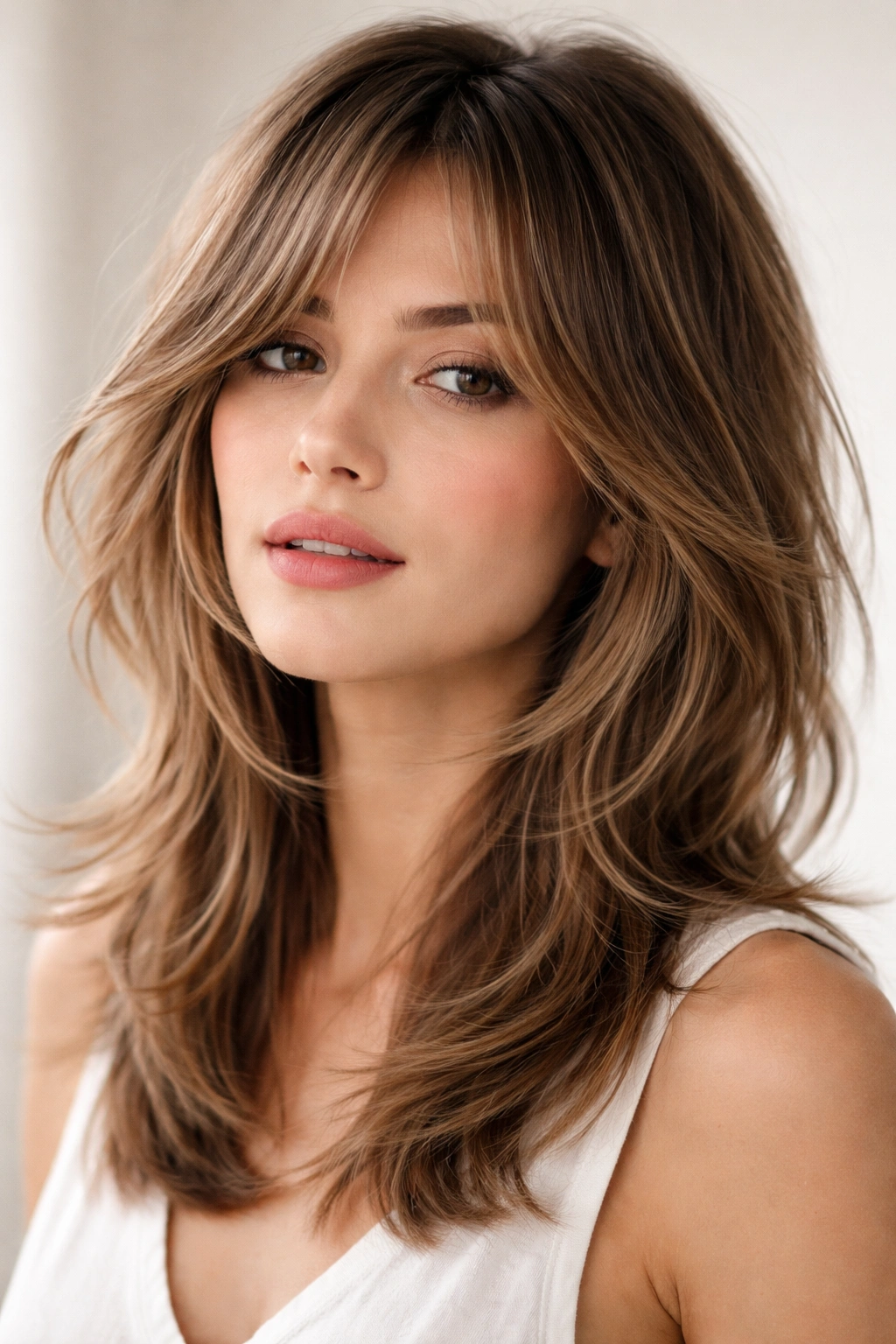
This variation prioritizes face-framing layers that start closer to the ear and work inward, creating shorter, more defined pieces that move independently around the face. The rest of the head maintains medium length with supporting layers, but the focus is on strategic shorter pieces that create an almost curtain-like effect around the cheeks and chin.
What Makes the Face-Framing Magic Happen
The shorter, wispy layers around the face are intentionally choppy and disconnected from the underlying structure. This isn’t careless cutting — it’s precise work that requires your stylist to understand exactly where light should hit and which angles flatter your specific face shape. The front pieces catch movement differently than the back, which creates dimension and visual interest.
Best Face Shapes and Hair Types
- Works especially well for round or square faces where those shorter front pieces create vertical lines that elongate
- Incredibly flattering on straight and wavy hair textures — curly hair may need extra consideration to ensure the face-framing doesn’t poof outward
- Fine hair types benefit because the shorter layers create the illusion of density without requiring the weight of longer pieces
3. Choppy Disconnected Shag
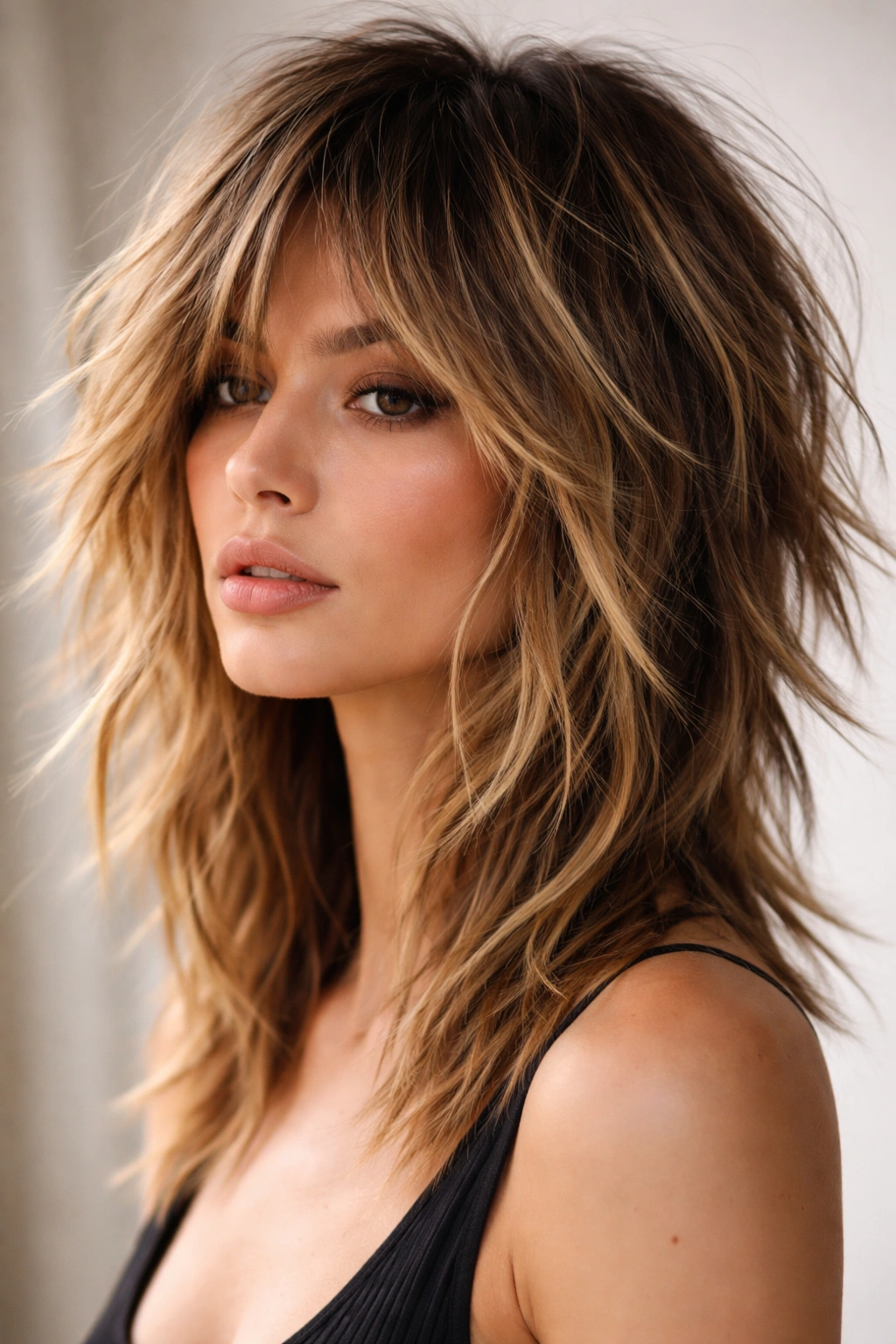
This is the more experimental, editorial version of the shag — layers are deliberately separated and piecy, with visible gaps between sections rather than a blended transition. The choppiness is the point. This cut embraces an intentional roughness that reads as intentional rather than accidental, which requires confidence to pull off but creates incredible visual impact.
The Deliberate Disconnect Strategy
Each layer sits independently, creating distinct movement patterns. The back might have longer pieces that swing, while shorter front sections create texture near the face. These pieces don’t blend together seamlessly — instead, they create visible lines and sections that move in different directions when you move your head.
Styling Requirements and Considerations
- This cut demands more styling intention than softer versions — product and technique matter here
- Works beautifully with a texturizing paste or light wax applied to damp hair, piece by piece
- Blow-drying with a brush followed by finger-tousling creates the best shape
- The cut actually requires more frequent trims (every 5-6 weeks) because the choppy layers show growth immediately
4. Modern Tousled Shag
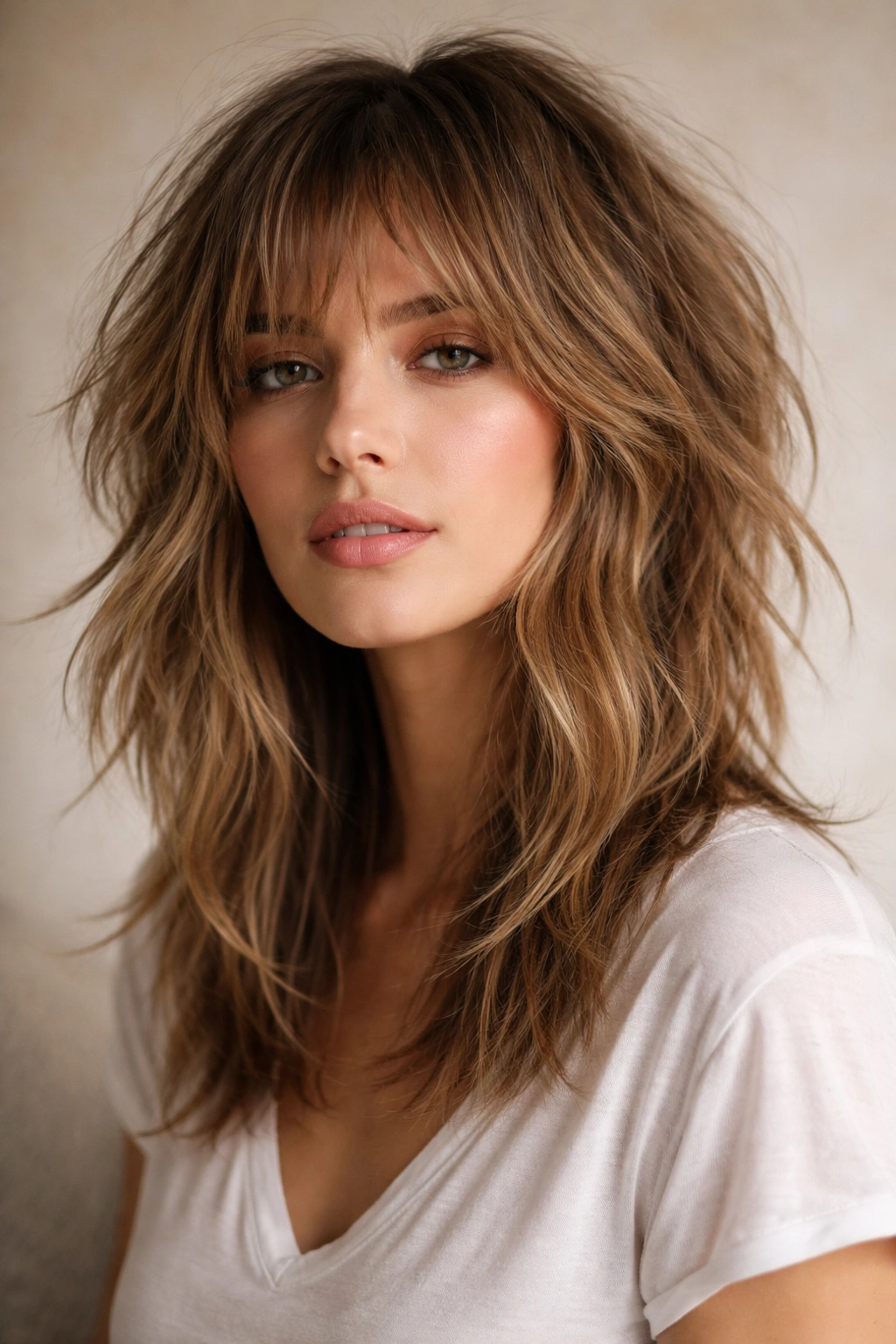
The modern tousled shag blends the textured, layered foundation of a classic shag with an intentionally messy aesthetic. This isn’t the shag of the 1970s — it’s a deliberately undone, yet clearly intentional version that works with modern styling approaches and sensibilities.
Why “Tousled” Is Different From “Just Messy”
The difference is in the precision. A stylist cuts this with the same technical accuracy as any professional cut, but the layers are arranged so that slightly imperfect styling actually looks better than perfect styling. The messiness reads as curated, not careless. It’s the difference between looking like you rolled out of bed (which you did) and looking like you rolled out of bed and you look great (which matters).
Creating the Tousled Look at Home
- Work with damp hair rather than soaking wet — damp hair takes product better and dries more naturally
- Apply a light texture spray or texturizing foam and use your fingers to scrunch and separate layers
- Blow-dry by shaking your head to let air move through sections naturally, rather than directing each piece precisely
- Finish with texture paste or a light pomade applied to fingertips and worked through the ends
5. Undercutted Shag with Volume
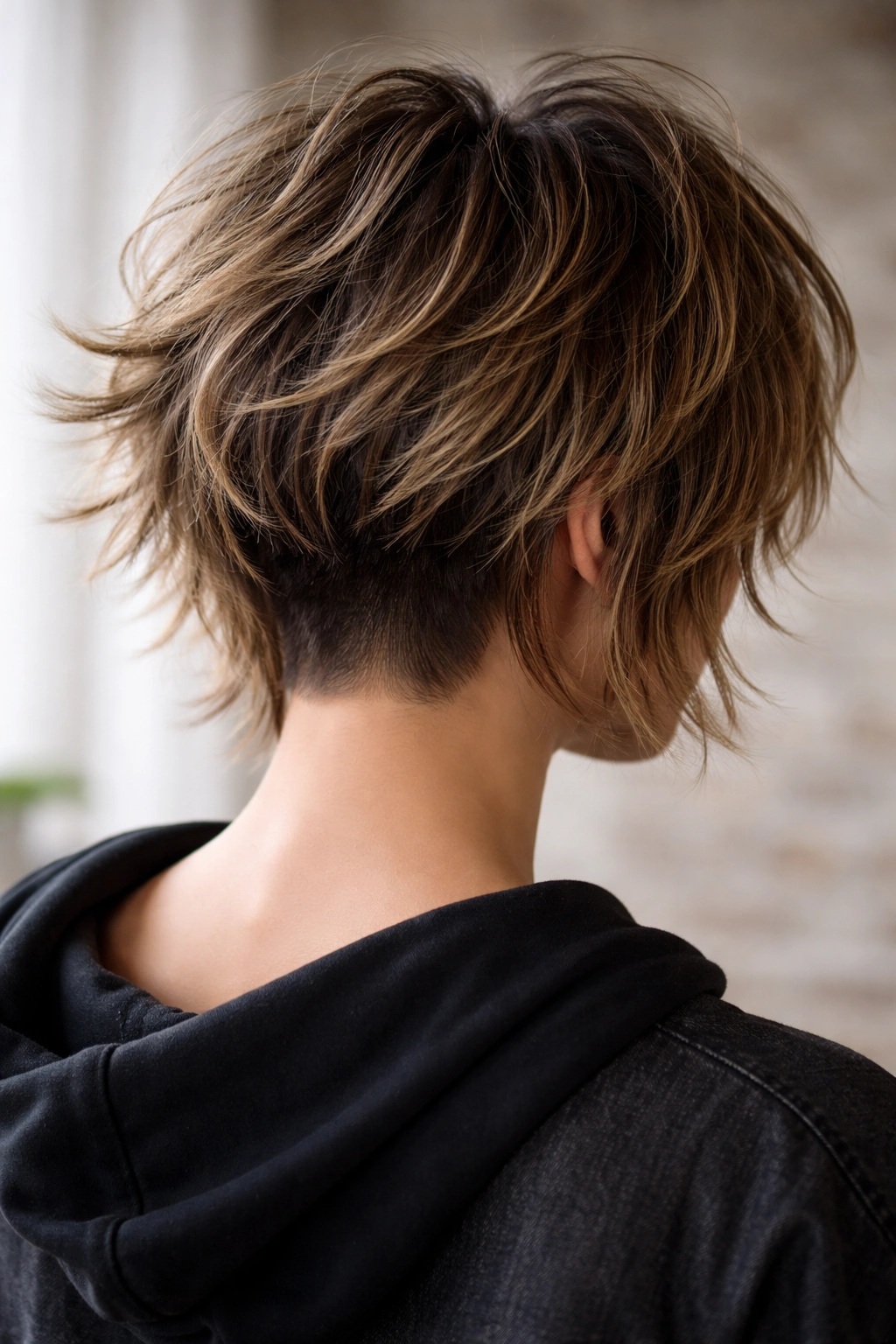
This cut combines the layered movement of a traditional shag with a strategically undercutted base — typically around the nape and lower sides. The undercut creates contrast, removes weight from underneath, and paradoxically makes the top feel even fuller by creating visual separation between layers.
How the Undercut Changes the Equation
An undercut typically sits at the natural nape line or slightly higher, and it’s clipped short — often using clippers — while the layers on top are left longer for movement. This creates a dramatic line of demarcation that amplifies the shag’s movement because there’s no weight dragging down from below.
Who This Cut Suits Best
- Excellent for thick hair types where an undercut actually reduces weight and improves movement
- Creates striking visual contrast on people with thick, dark hair against lighter or pale skin
- Works beautifully on oval and oblong face shapes where the undercut’s clean lines balance proportions
- Those with a strong jawline benefit because the undercut draws attention upward rather than emphasizing the lower face
6. Wavy Beach Shag
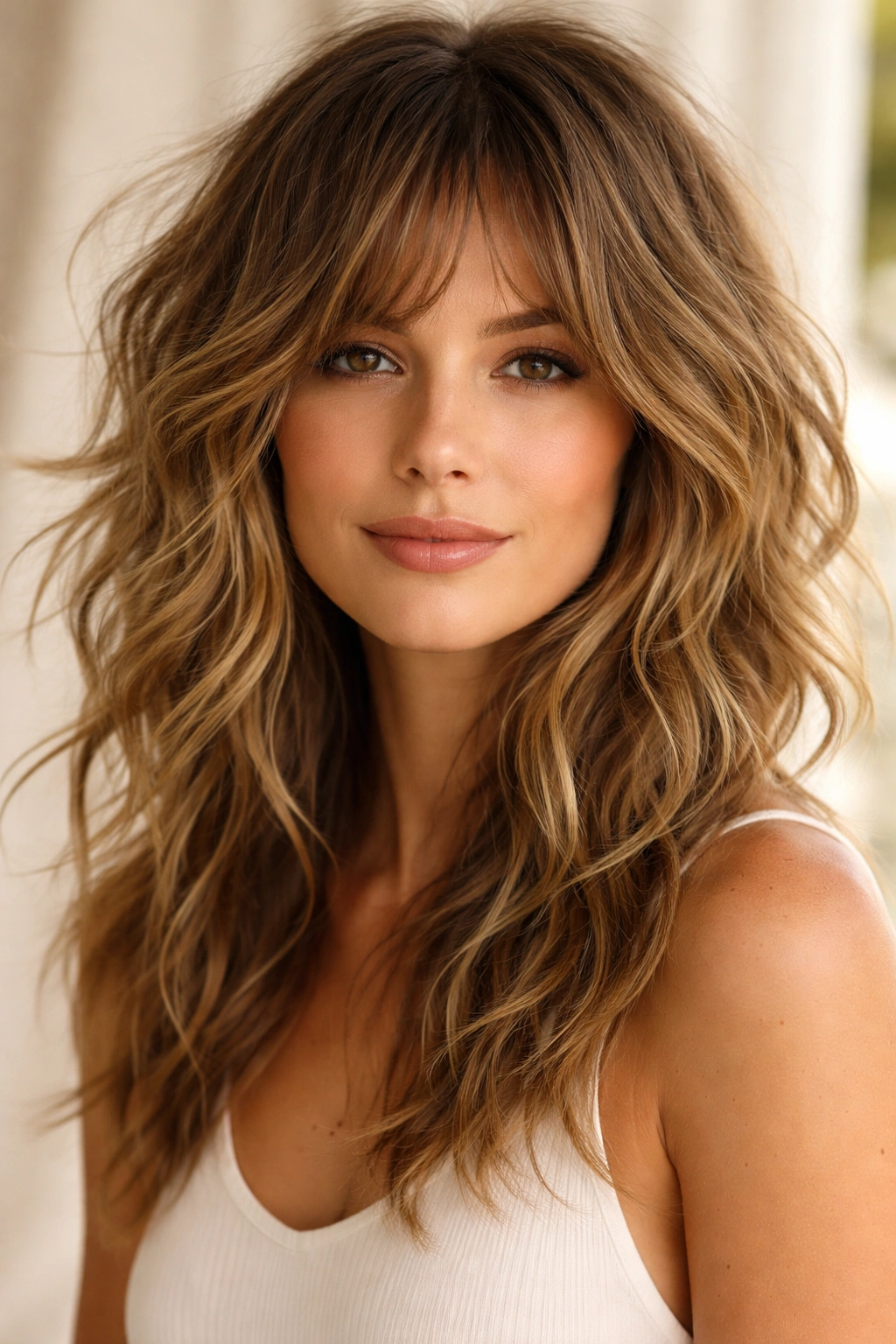
The wavy beach shag is designed specifically for people whose hair naturally waves or for those willing to enhance their natural wave pattern. Every layer, every angle, every chop is positioned to work with wave texture rather than against it. The cut becomes a collaboration between you and your natural hair texture.
The Wave-Enhancing Architecture
This cut typically has longer choppy layers that wrap around and move with the wave pattern. The top section might have slightly more definition, while longer layers underneath fall into the natural wave’s trajectory. When you style it, you’re not fighting against your hair’s natural desire to wave — you’re encouraging and amplifying that tendency.
Product and Styling for Wave Movement
- Sea salt spray is basically essential here — it creates grip and encourages wave formation
- Apply sea salt spray to damp hair and allow air-drying or use a diffuser attachment for wave emphasis
- Avoid heavy products that weigh down the wave — lightweight texturizing creams work better than thick pomades
- Refresh waves between washes with a light misting of sea salt spray on damp hair
7. Feathered Movement Shag
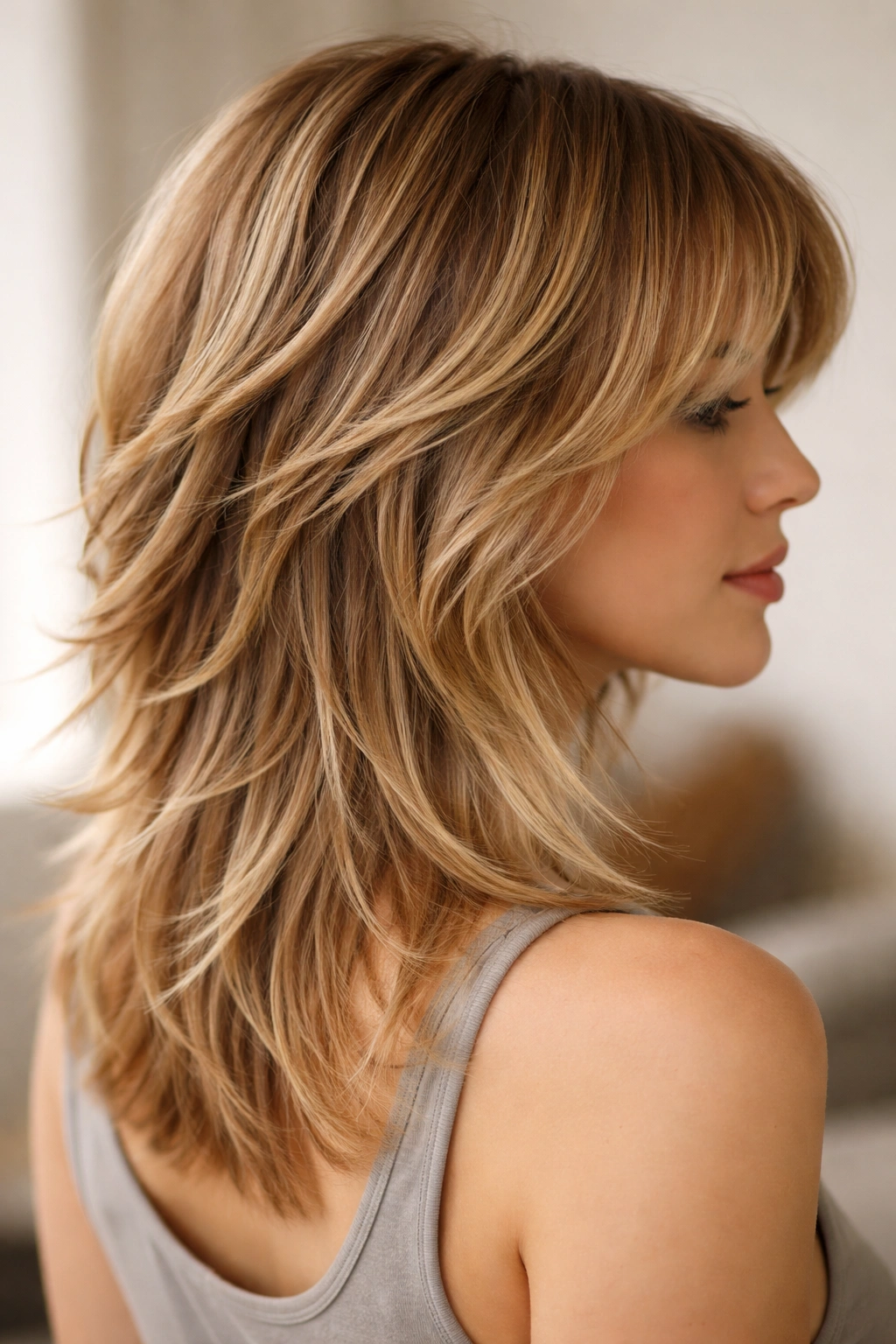
Feathering is an older technique experiencing renewed appreciation, and when done subtly in a medium shag, it creates gorgeous movement without looking dated. Rather than blunt choppy layers, feathered layers are point-cut so the ends taper and flow rather than sit in distinct sections.
The Point-Cutting Technique Explained
Instead of cutting straight across (which creates blunt edges and distinct separation), your stylist angles the scissors and cuts at points along the length. This creates tapered, feathery ends that blend more seamlessly and create a softer, more flowing movement pattern. It’s more subtle than a heavily choppy shag, but more textured than a standard blunt cut.
Best for These Hair Types and Preferences
- Absolutely stunning on straight to slightly wavy hair because the feathering is clearly visible
- Works wonderfully for anyone who wants movement and texture but finds heavily choppy layers too harsh or trendy-looking
- Ideal for fine or thin hair because point-cutting doesn’t create blunt, sparse-looking ends
- Those preferring an understated, elegant aesthetic over statement-making styles will love this approach
8. Piecey Disconnected Shag
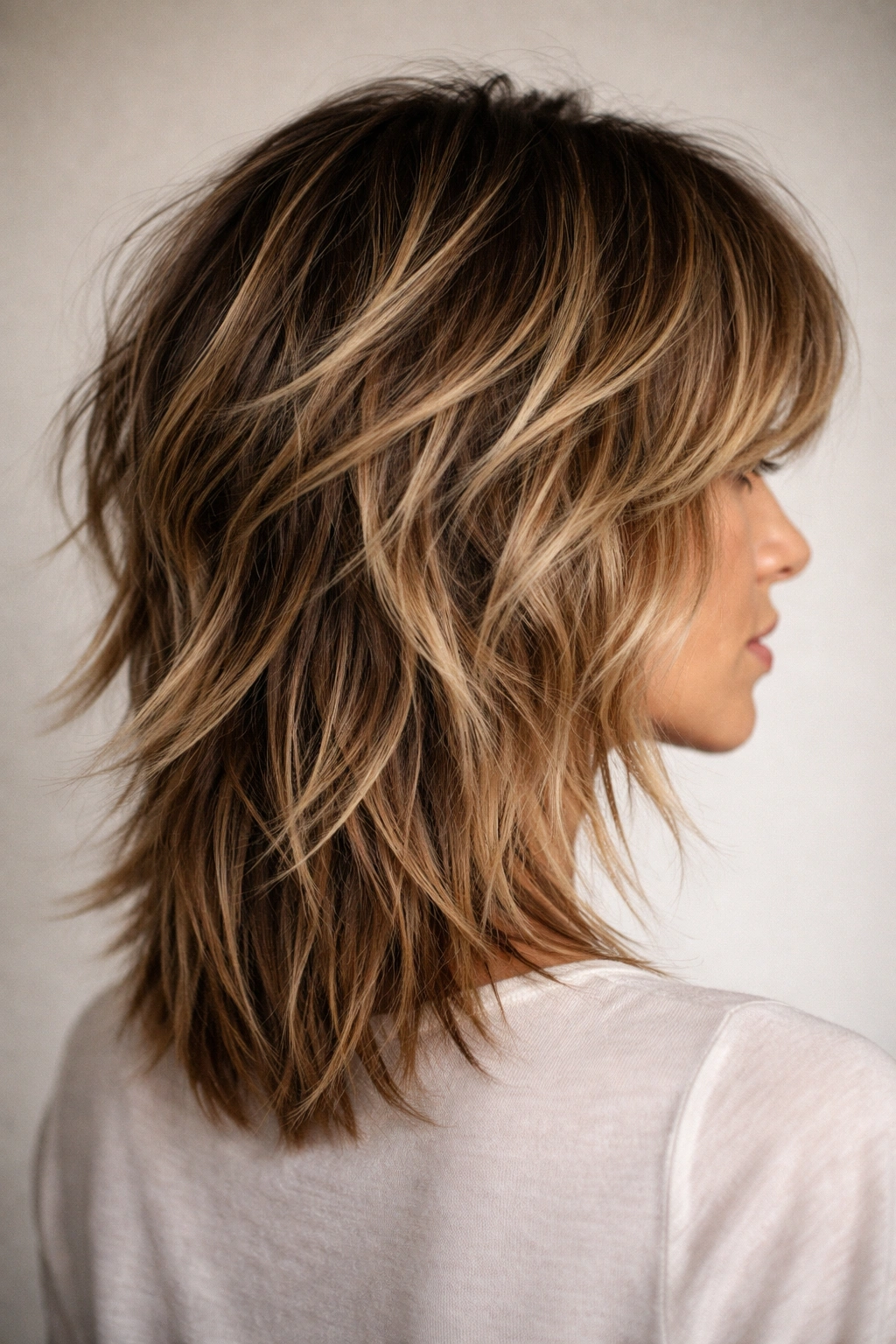
The piecey disconnected shag takes the choppy aesthetic even further — individual pieces are cut and separated so distinctly that they move almost independently. You might have one section that swings one direction, an adjacent section that falls another way, creating visible texture variation throughout the entire cut.
How Disconnection Differs From Standard Choppy
Standard choppy shags maintain overall shape while creating texture through varied layer lengths. Disconnected shags deliberately break up that cohesion — the shape is secondary to the visual texture created by individual pieces moving separately. It reads as more editorial, more modern, more fashion than a standard shag.
Styling Challenges and Rewards
- Requires intentional daily styling — this isn’t a wash-and-go cut
- Works best with texture paste, texturizing spray, or pomade applied to create definition between pieces
- Blow-dry with fingers rather than a brush to avoid blending the piecey sections back together
- This cut shows growth quickly and needs trims every 4-6 weeks to maintain definition
9. Side-Swept Shag with Texture
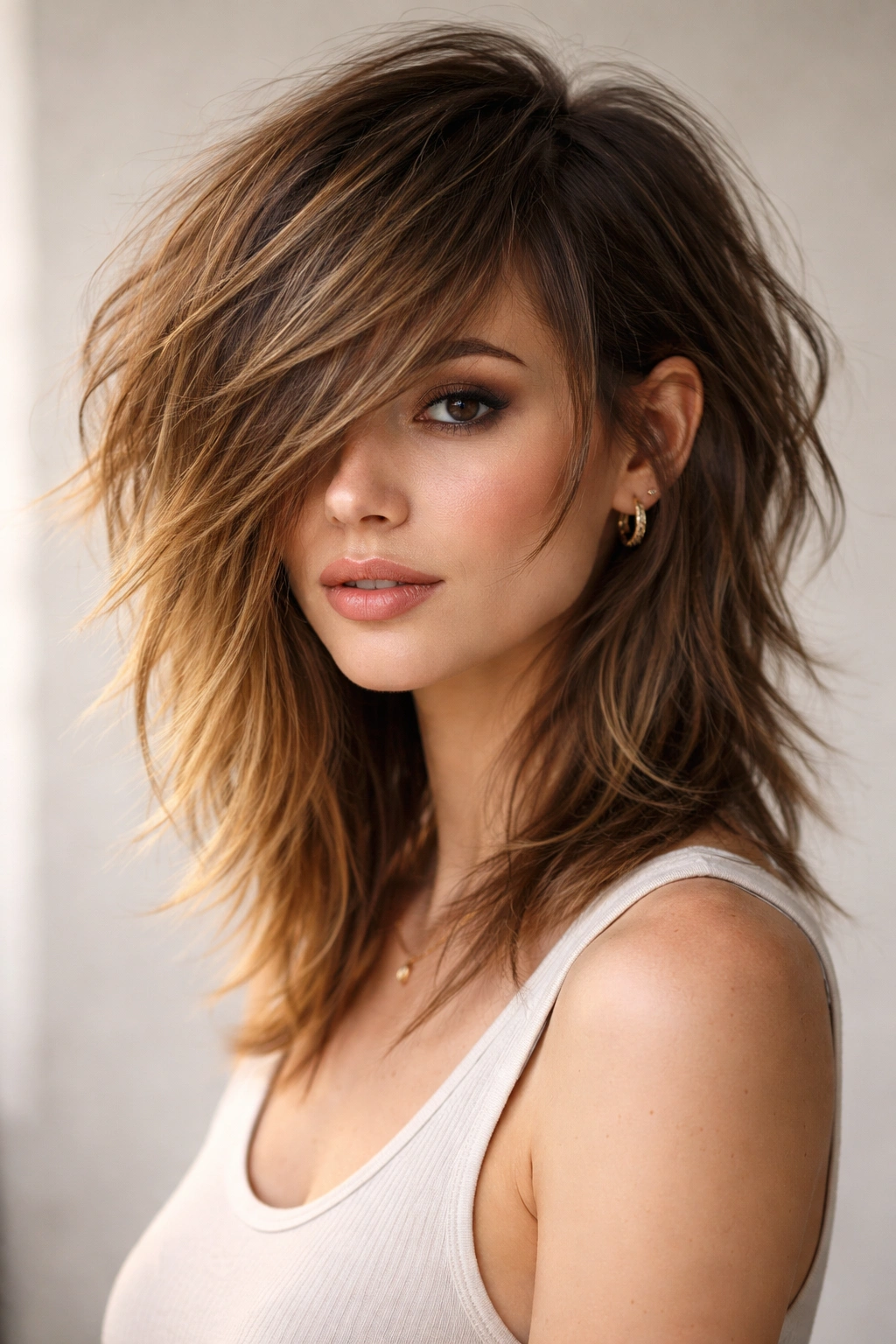
The side-swept variation adds directional asymmetry to the shag formula. One side is longer and sweeps across the face and shoulder, while the other side is shorter and more textured. This creates visual interest and is particularly flattering for oblong faces or anyone wanting to draw the eye in a specific direction.
Creating Intentional Asymmetry
The longer side might fall to the collarbone with softer layers, while the shorter side sits around the ear with choppier, more defined texture. The transition from one side to the other isn’t blended smoothly — instead, there’s clear graduation from short to long as you move around the head.
Styling the Asymmetrical Shag
- Blow-dry the longer side with gentle curves using a round brush to create soft movement
- Use texturizing product on the shorter side and scrunch with fingers to define choppy layers
- Style longer piece with intent — it shouldn’t look like you just have longer hair on one side, but rather like a deliberate fashion choice
- Works beautifully tucked behind the ear on the longer side or left to sweep across
10. Shaggy Bob with Layers
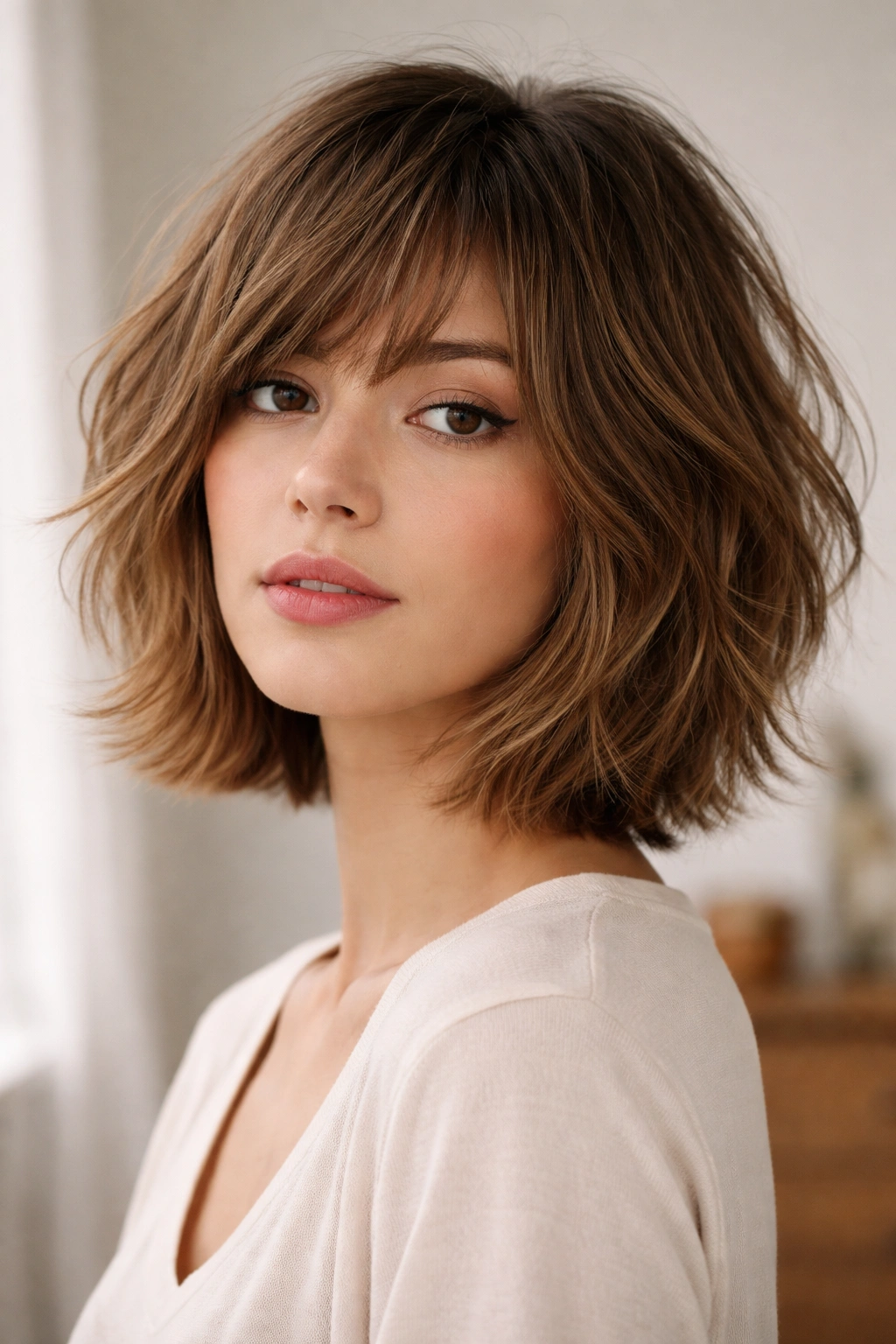
This hybrid cut blurs the line between a modern shaggy bob and a traditional shag. It’s shorter overall than a full shag — typically hitting around chin length or just below — but it incorporates the layering and movement principles of a shag to add texture and dynamism to the bob shape.
Why the Shaggy Bob Works
A regular bob can read as blunt or heavy, especially on thicker hair. Introducing shag-style layering breaks up that potential heaviness and creates movement. The layers prevent the blunt line from feeling too structured, while the overall length keeps it manageable and wearable.
Best Applications and Face Shapes
- Particularly flattering on round faces because the layered texture creates vertical movement
- Works on all hair types, though it shows movement most dramatically on straight to wavy hair
- Those with fine hair appreciate the density illusion created by choppy layers
- A great choice if you want “shag movement” but worry about maintaining a longer style
11. Curly and Wavy Shag Texture
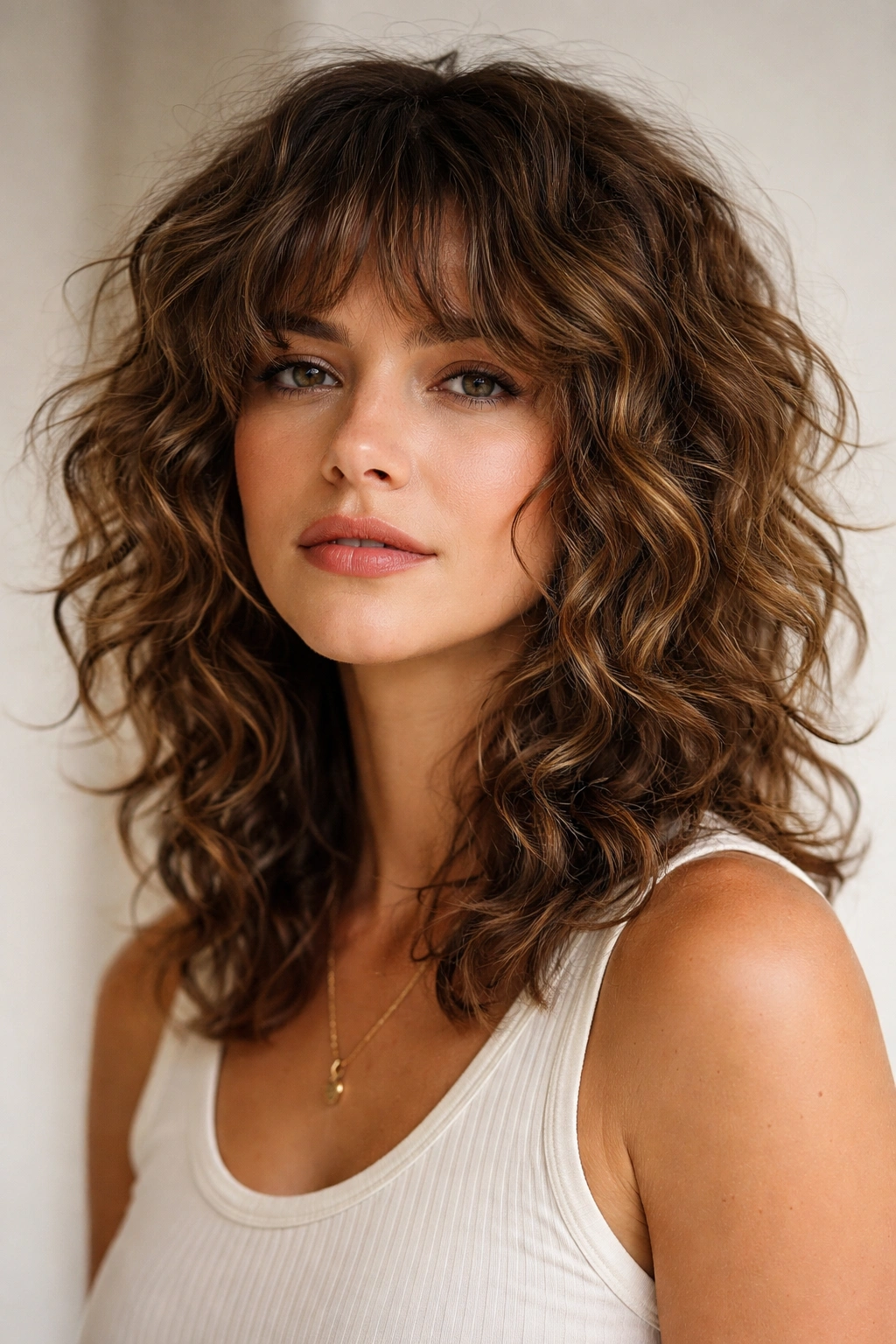
This version is specifically designed for naturally curly or wavy hair, with layers cut to sit with the curl pattern rather than against it. The cut accounts for how curls shrink up from wet to dry, and layers are positioned so that when your curls spring up, they create dynamic volume and movement.
Cutting Curls vs Styling Curls
The difference between a great curly shag and a mediocre one is whether your stylist cuts dry curly hair or wet hair. Ideally, curly-specific shags are cut when your hair is in its natural curl state, so the stylist can see exactly where each curl will land and how layers will interact with that natural movement.
Maintaining Curl Pattern Definition
- Use a curl-enhancing cream or gel applied to soaking wet hair for definition
- Avoid diffuser-drying on high heat, which can frizz or disrupt the curl pattern
- Plop or air-dry for the softest, most defined curls
- Refresh curls between washes with a light misting of water and curl cream on damp hair
12. Shag with Subtle Undercut Details
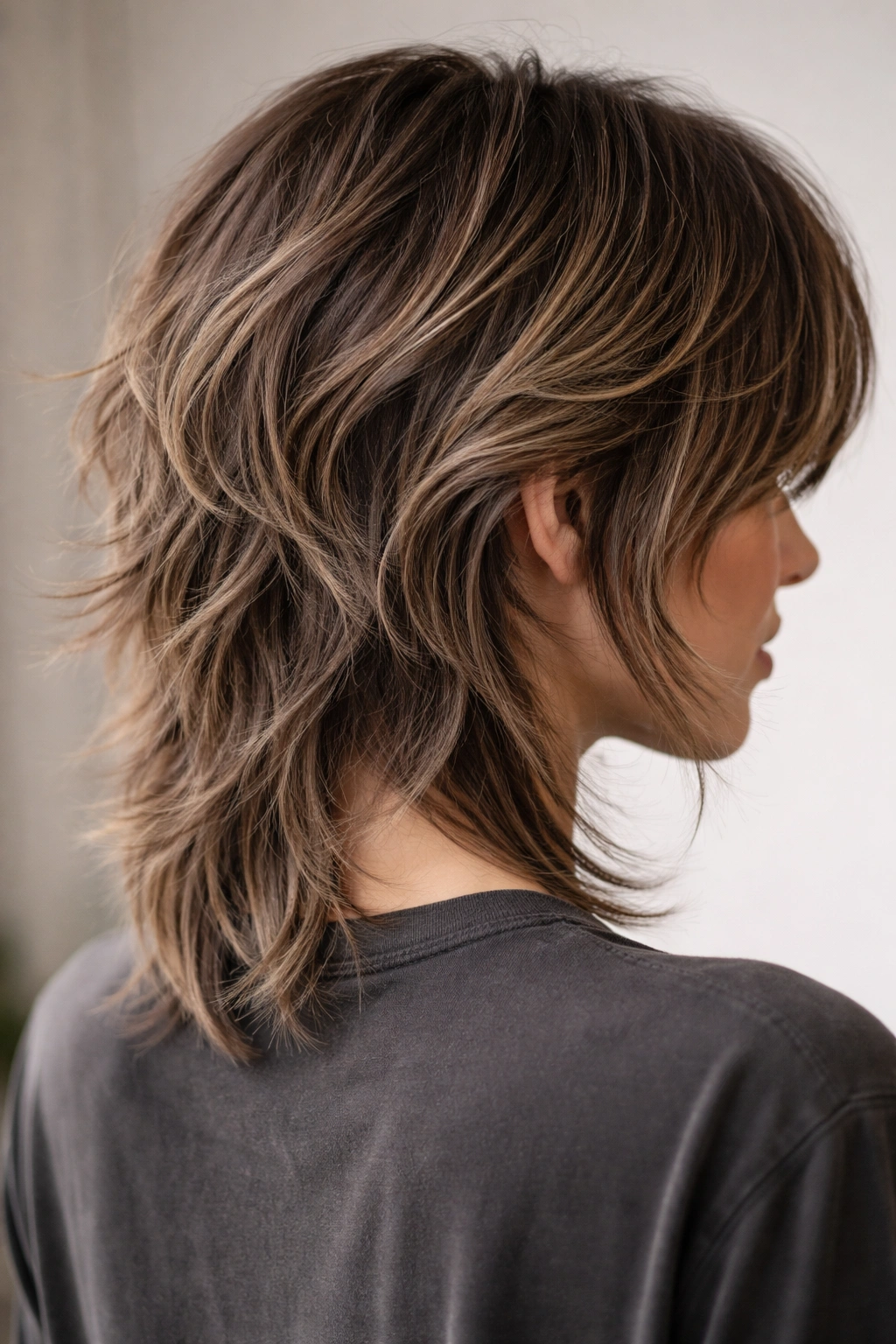
Unlike the dramatic undercut shag, this version incorporates undercut elements more subtly — perhaps clipped just slightly shorter around the lower back and sides, creating a softer line of demarcation rather than a dramatic contrast. The undercut is visible but integrated rather than statement-making.
Strategic Undercut Placement
The undercut might follow the natural hairline around the nape, sit slightly higher at the sides for a lifted look, or frame the lower back for dimension without looking obviously clippered. The key is subtlety — it’s a detail rather than the primary focus.
Who Notices the Difference
- Works beautifully for people who like the undercut effect but want something more wearable for professional environments
- Creates a cleaner nape line without the graphic quality of a full undercut
- Flatters most face shapes because the effect is integrated rather than isolated
- Perfect if you want a modern edge without commitment to frequent clipper maintenance
13. Tousled Romantic Shag
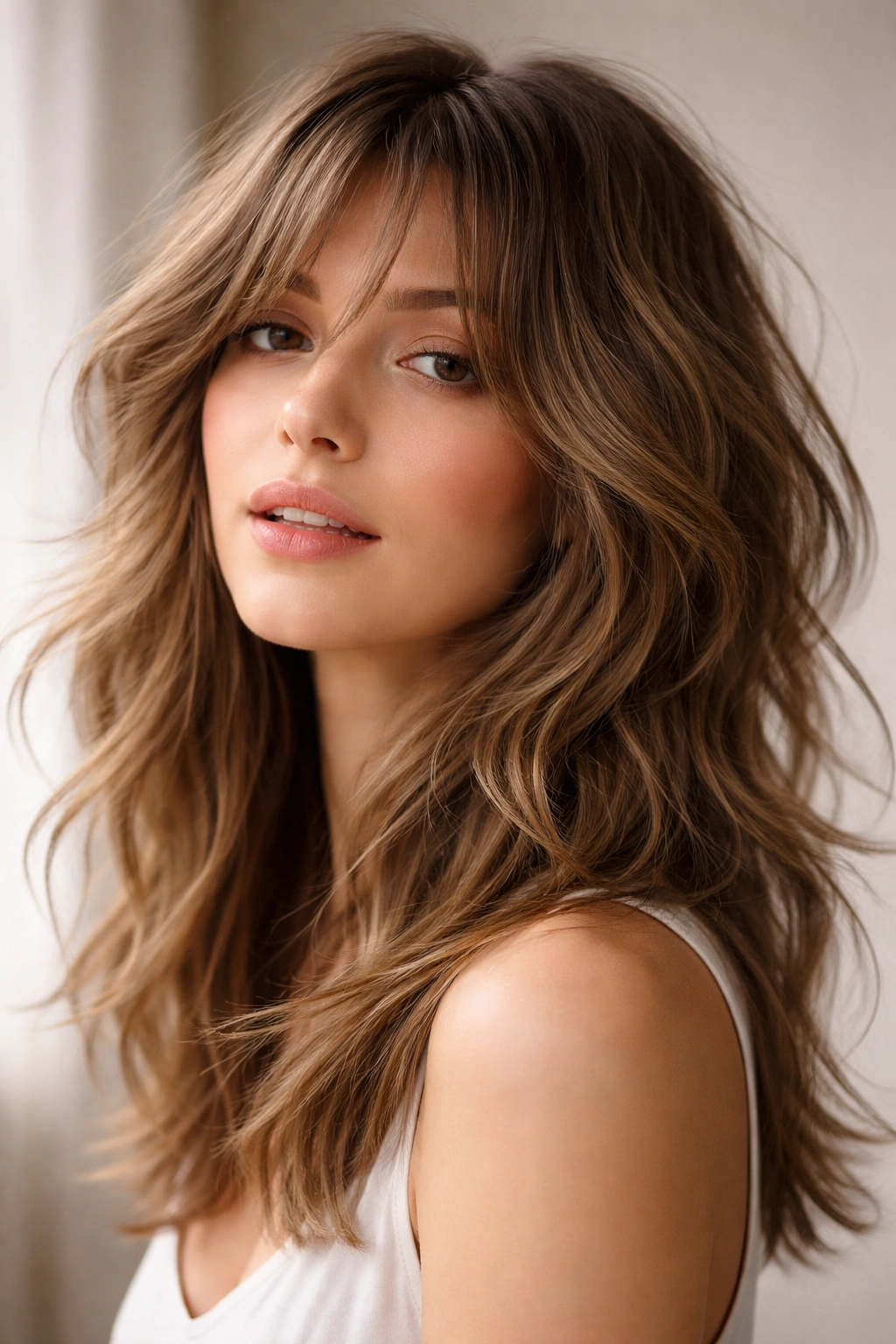
Where the modern tousled shag emphasizes intentional messiness, the romantic tousled shag leans into softer, more flowing movement. There’s still intentional texture and layering, but the overall effect is dreamy and fluid rather than edgy and deliberate.
Soft Layers Meeting Romantic Intention
This shag typically features softer, more blended layers with slightly longer lengths overall. The choppy pieces are less obvious, and the transitions are more gradual. When you style it, the goal is that hazy, “just came from a breeze” quality rather than deliberate pieciness.
Creating the Romantic Aesthetic
- Work with texture spray or light waves rather than strong definition
- Blow-dry with your fingers or a diffuser for soft, undefined movement rather than precise styling
- Use a lightweight, invisible-hold texturizing cream rather than heavy pomade
- Embrace imperfection — a strand out of place is part of the romantic aesthetic
14. Textured Mullet-Inspired Shag
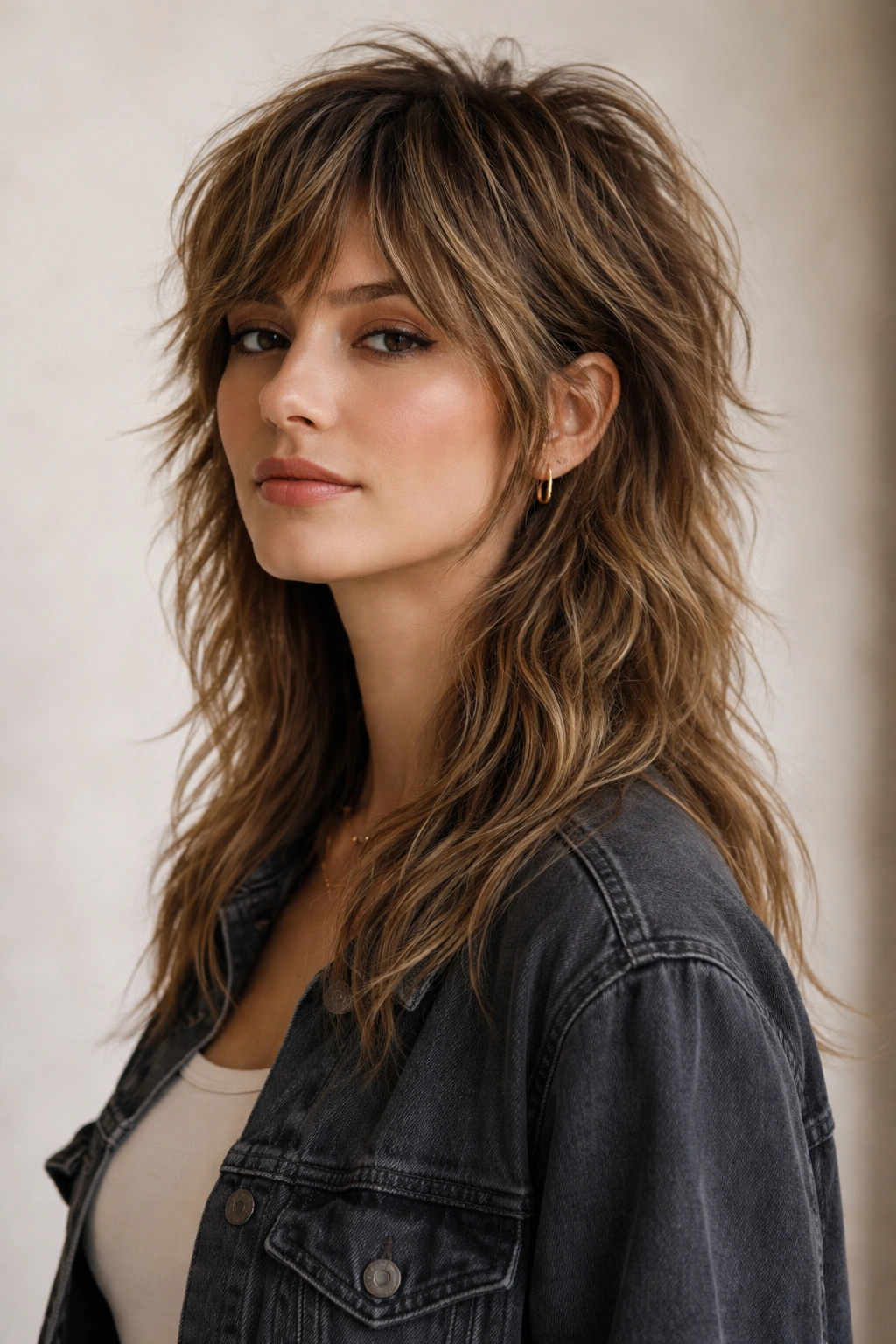
The modern mullet has evolved far beyond the ’80s, and a textured mullet-inspired shag brings that attitude to the shag formula. It’s shorter and fuller on top with more dramatic length graduation toward the back, creating a more intentional front-to-back contrast than a traditional shag.
How Mullet Energy Changes the Shag
Where a standard shag has relatively consistent layering throughout, a mullet-influenced version has shorter, more textured layers on top and at the sides, with noticeably longer pieces in the back. This creates visual drama and works particularly well with choppy, disconnected layering on the shorter sections.
Styling the Mullet Shag
- The top requires more texture and definition — use texturizing product and finger-styling to create dimension
- Back pieces can be left to move more naturally with lighter product or minimal styling
- Works beautifully with the longer back pieces slightly wavy or curled while the top is tousled
- Requires more precise styling intention than a traditional shag
15. Two-Tone Shag with Depth
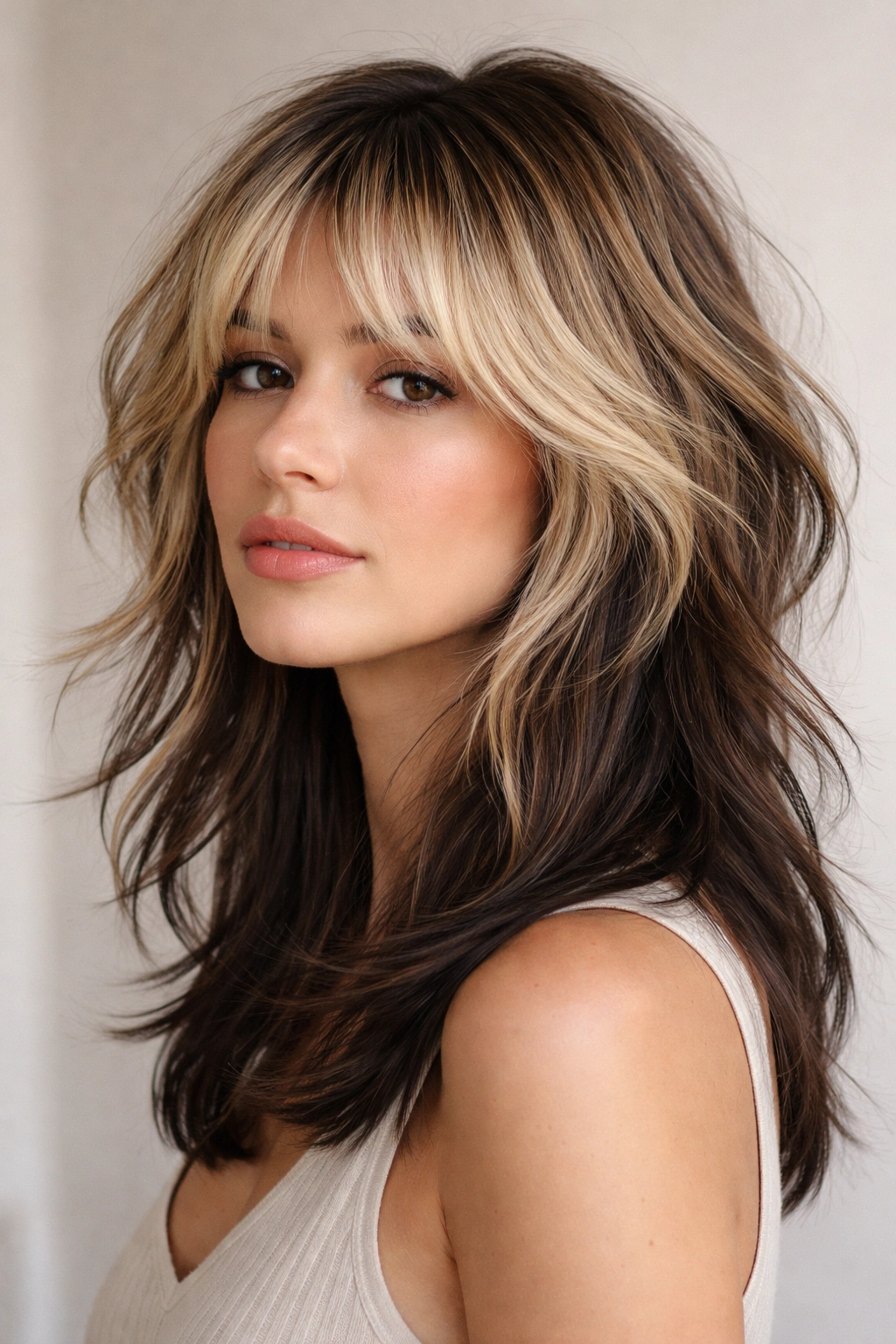
Adding color dimension to a layered shag amplifies the movement and texture exponentially. Two-tone or multi-tonal color placed strategically on different layers creates visual depth that makes the movement pop. Shorter layers might be lighter, longer layers darker (or vice versa), creating a shading effect.
How Color Placement Works with Layers
Because each layer sits at a different level and catches light differently, color placed strategically on different layers creates shadows and highlights that emphasize movement. You might have darker roots or shadow tones, lighter pieces throughout, and even lighter ends — this creates visual texture beyond what the cut alone provides.
Color Maintenance Considerations
- Two-tone shags require more maintenance than single-color cuts as different colored sections grow out at the same rate but show contrast more obviously
- Root maintenance for lighter pieces might be needed every 4-6 weeks
- The contrast actually helps — it emphasizes the shag’s movement and texture, so maintaining it is worth the effort
- Consider low-maintenance balayage or dimension over precise color blocking for easier upkeep
16. Soft Choppy Layers Shag
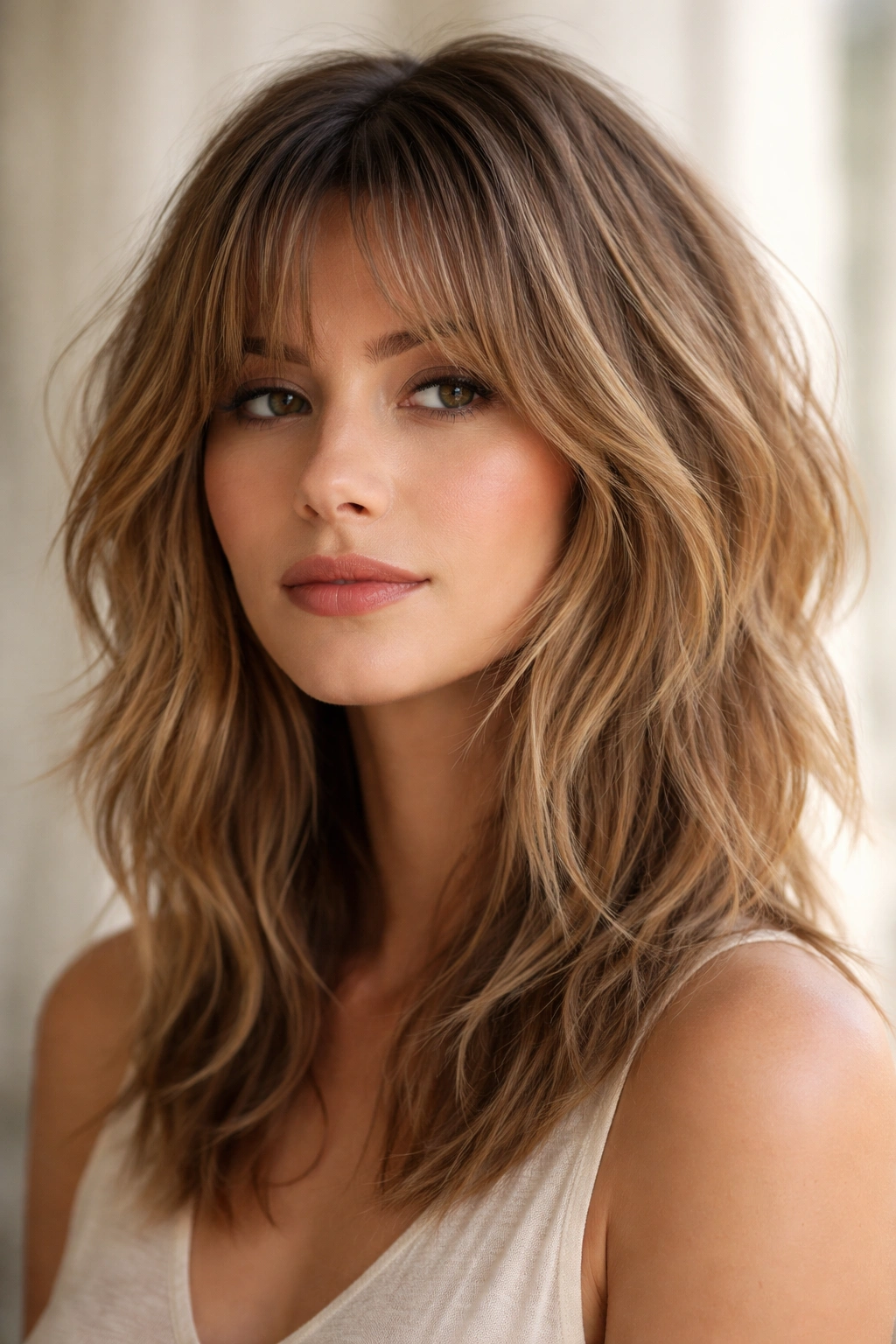
This version finds middle ground between feathered and heavily choppy — the layers are definitely chopped, creating visible texture and movement, but they’re not so extreme that they read as disconnected or editorial. The choppiness is obvious but not aggressive.
The Goldilocks Zone of Choppiness
Not quite a feathered shag (too soft and blended) and not a completely disconnected shag (too piecy), this version offers visible texture and movement without requiring heavy styling or constant maintenance. The choppiness is clear enough to create dimension but not so defined that it demands daily intentional styling.
Versatility of Soft Choppy
- Works beautifully on most hair types from fine to thick
- Requires minimal daily styling — wash, apply light texture spray, air-dry or blow-dry with fingers and you’re done
- Flattering on virtually all face shapes because the chopped texture softens rather than sharpens
- Gets better as it grows out slightly because the layers become more pronounced without growing blunt
17. Messy Lived-In Shag
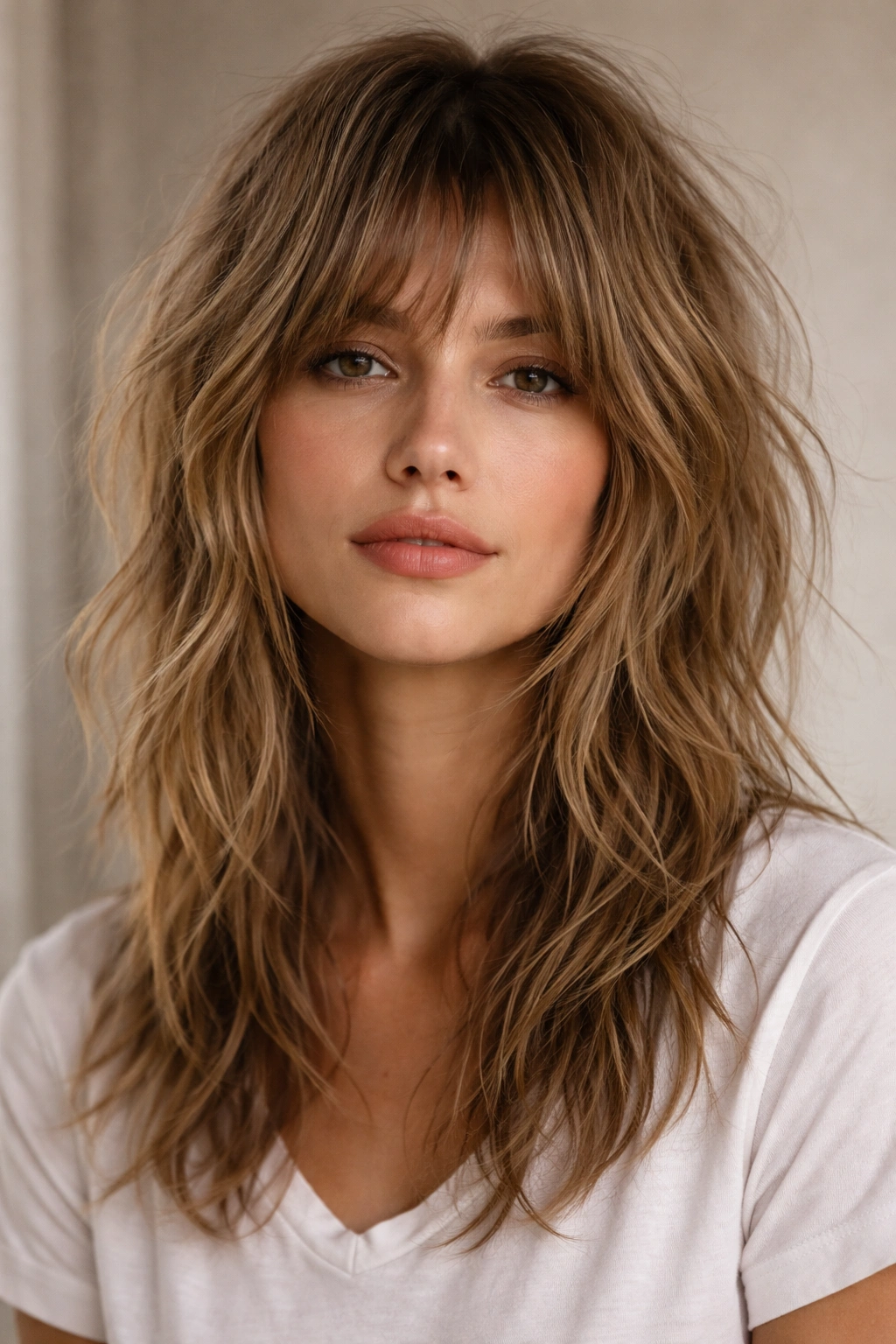
The lived-in shag embraces imperfection as its defining feature. This cut is designed to look better the day after you wash it, better with minimal styling, better slightly grown out. It’s cut with the understanding that you’re not going to style it perfectly every day — and that’s exactly the point.
Design Principles of the Lived-In Aesthetic
Layers are positioned so that your natural movement and minimal styling create the intended effect. You don’t have to blow-dry — air-drying actually looks great. You don’t need products — though a light texture spray helps. The cut essentially works with your real life rather than demanding photo-shoot preparation.
Real-World Styling for Lived-In Shag
- Wash and air-dry with minimal manipulation — seriously, just let it dry
- If you blow-dry, use your fingers rather than a brush for a soft, undone effect
- Skip heavy products in favor of light texture spray or dry shampoo
- The cut improves over 1-2 weeks after a fresh trim as it settles and softens
18. Blended Fade Shag
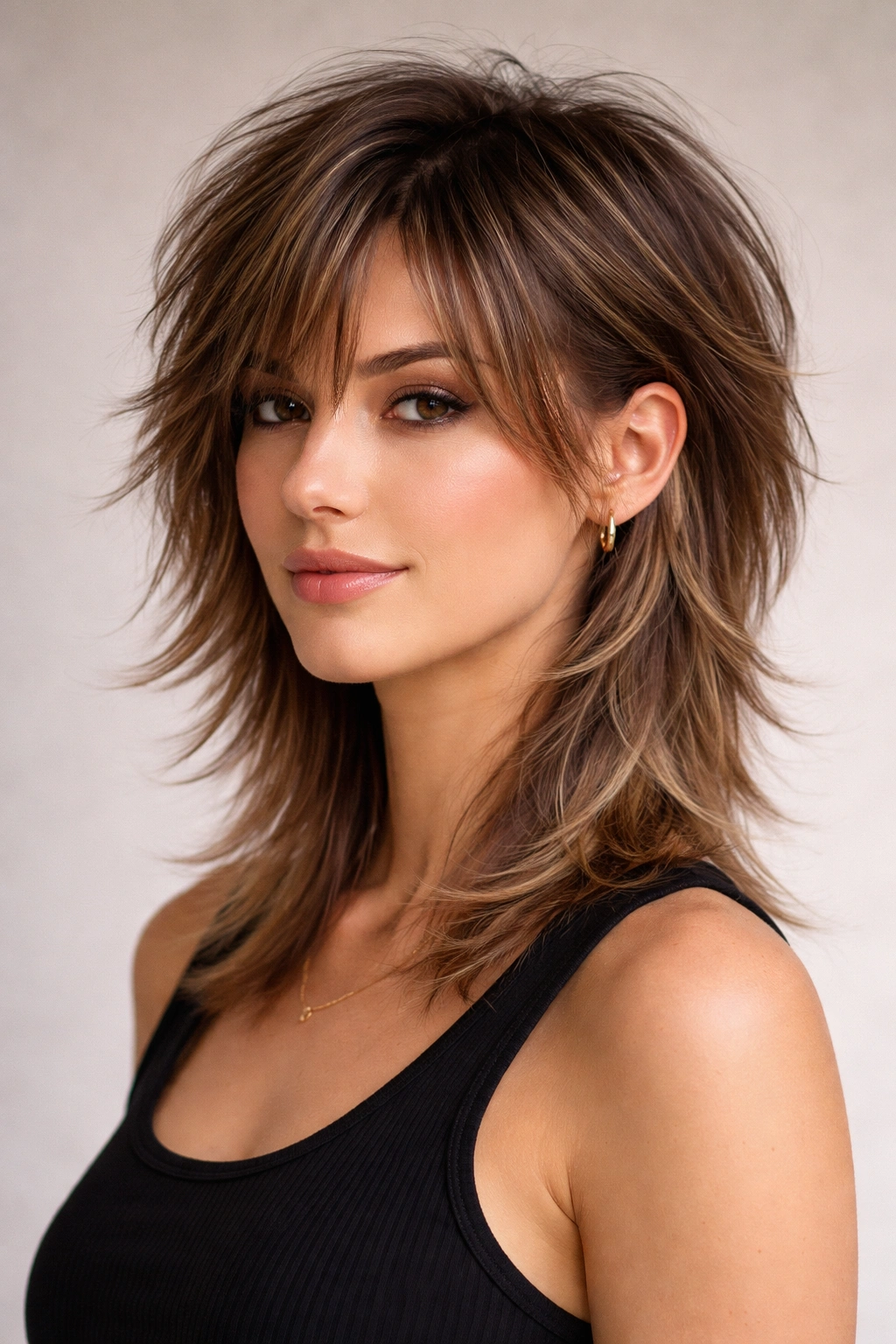
The blended fade shag incorporates barbering principles into the shag formula, with a smooth, gradual fade at the sides and back that transitions into longer, layered pieces on top. This creates a cleaner overall silhouette while maintaining the movement and texture of a shag.
Fade Precision Meets Shag Movement
Rather than an abrupt undercut, the fade creates a gradual length graduation from clipped-short sides to longer lengths on top. The top still features shag-style layering and movement, but the sides and back have that polished, blended quality. It’s modern, clean-lined, and still thoroughly textured.
Best Applications and Styling
- Works beautifully on all hair types, though particularly striking on textured or coily hair
- Requires more frequent maintenance — fades need trims every 3-4 weeks to maintain the gradient
- Styling the top is straightforward — texture spray and finger-tousling, or light texturizing cream for more definition
- Flattering on all face shapes, though particularly good for those who want polished, clean lines paired with texture
Final Thoughts

A medium shag with built-in movement is essentially a permission slip to work with your hair rather than against it. Whether you choose a classic textured approach, an editorial disconnected style, or something between, the beauty of the shag is that it’s designed to move and live and evolve. The cut accounts for the reality of your daily life — the way your hair naturally falls, how wind affects it, what happens when you run your fingers through it.
The key to finding your perfect shag is being honest about styling intention. Some people genuinely love the ritualistic daily styling that a piecey disconnected shag demands. Others prefer the wash-and-go ease of a lived-in version. Neither is wrong — they’re just different approaches to the same core idea: layered movement that requires minimal effort to look intentional.
Your stylist matters enormously here. Bring reference photos that show the specific effect you want rather than just the general category. Discuss your hair’s natural texture honestly — what your stylist needs to understand isn’t just whether you’re straight or curly, but whether you’re willing to work with your natural pattern or want a cut that works regardless of how you style it. The best medium shag is the one that makes you feel like yourself, just with better movement.
