



Short hair paired with an undercut isn’t just a practical choice anymore—it’s become one of the boldest statements in contemporary styling. The undercut, with its sharp contrast between closely cropped or shaved sides and longer hair on top, transforms even subtle cuts into something distinctly edgy and fashion-forward. What makes this combination truly powerful is how versatile it can be while maintaining that rebellious aesthetic that makes heads turn.
The beauty of edgy undercuts lies in the endless customization they offer. You’re not locked into a single look; instead, you’re working with a canvas that can be textured, sculpted, colored, or patterned to match your personality and lifestyle. Whether you want something sleek and severe or textured and playful, the undercut foundation gives you permission to experiment. The longer you keep the top, the more styling options you unlock—from slicked-back precision to tousled, undone texture.
What really sets these styles apart from standard short cuts is the intentionality behind them. An undercut requires commitment from both the wearer and the stylist, and that deliberateness is part of what makes them so compelling. You’re not defaulting to a safe, neutral option; you’re choosing to make a statement. And right now, the ways people are interpreting that statement have never been more creative or diverse.
1. The Geometric Fade Undercut
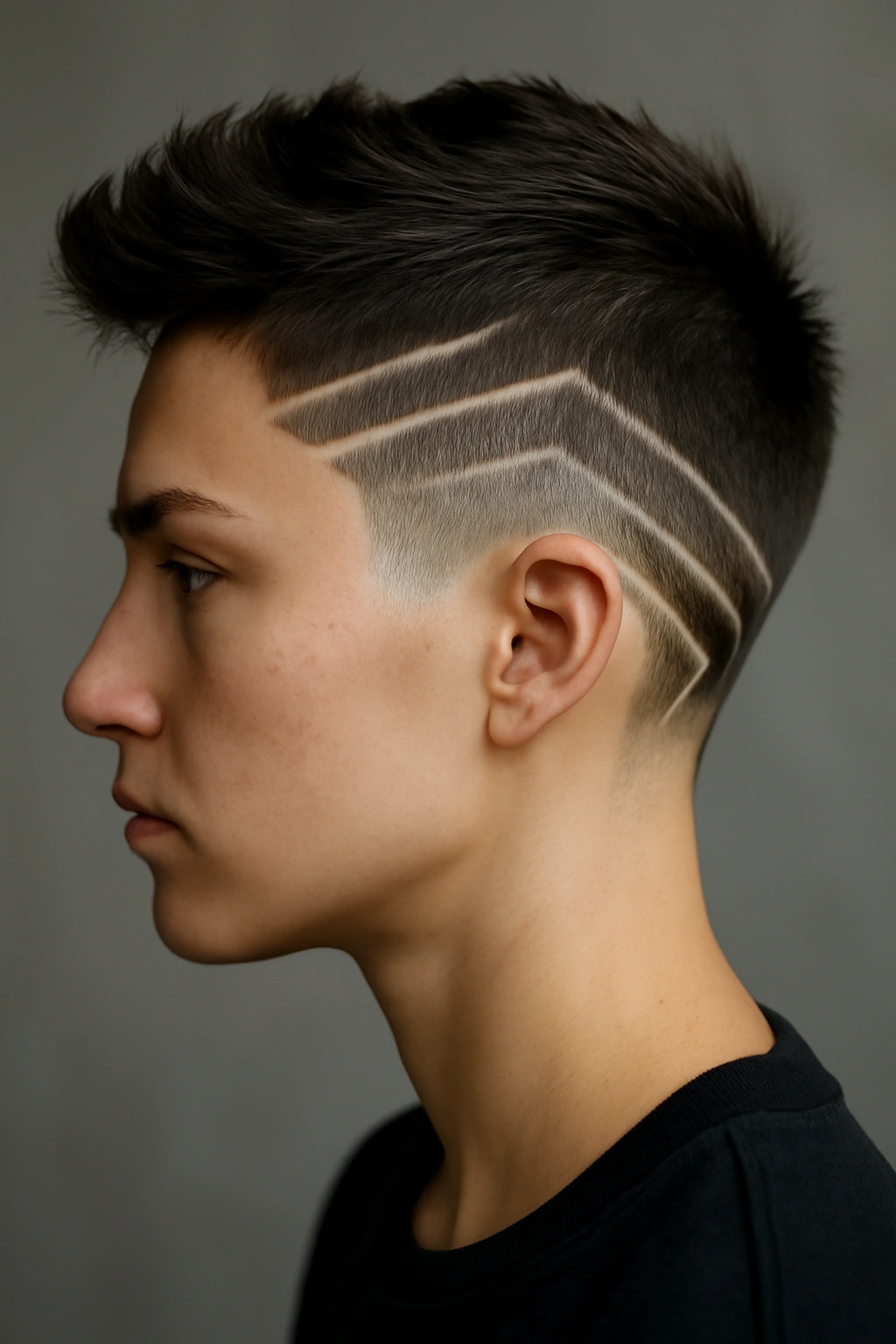
The geometric fade undercut takes precision to an art form. Rather than a simple line separating the undercut from the top, this style incorporates angled or curved patterns that create visual depth and movement. The sides might feature sharp geometric lines, chevron shapes, or concentric patterns that make the cut itself into a design element.
Why It Stands Out
This style transforms the undercut from practical to sculptural. The geometric elements demand technical expertise from your stylist, and that craftsmanship becomes part of the appeal. When you move through light or shift your head angle, the cut reveals new dimensions—it’s not static, it’s dynamic.
Key Design Elements
- Precision lines are typically cut using clippers with guard attachments or freehand techniques for maximum sharpness
- Patterns usually sit on the sides or back, leaving the visual focus there rather than distracting from the top styling
- The geometric shapes work best with darker hair or high contrast, where the line definitions are most visible
- Many people add subtle color blocking—lighter tones in the undercut and darker on top, or vice versa—to enhance the geometric illusion
Pro tip: These cuts demand frequent maintenance, typically every 2-3 weeks, to keep the lines crisp. If you’re not ready for that commitment, talk to your stylist about softer geometric shapes or simple line work that’s easier to refresh at home.
2. The Mohawk-Inspired Undercut
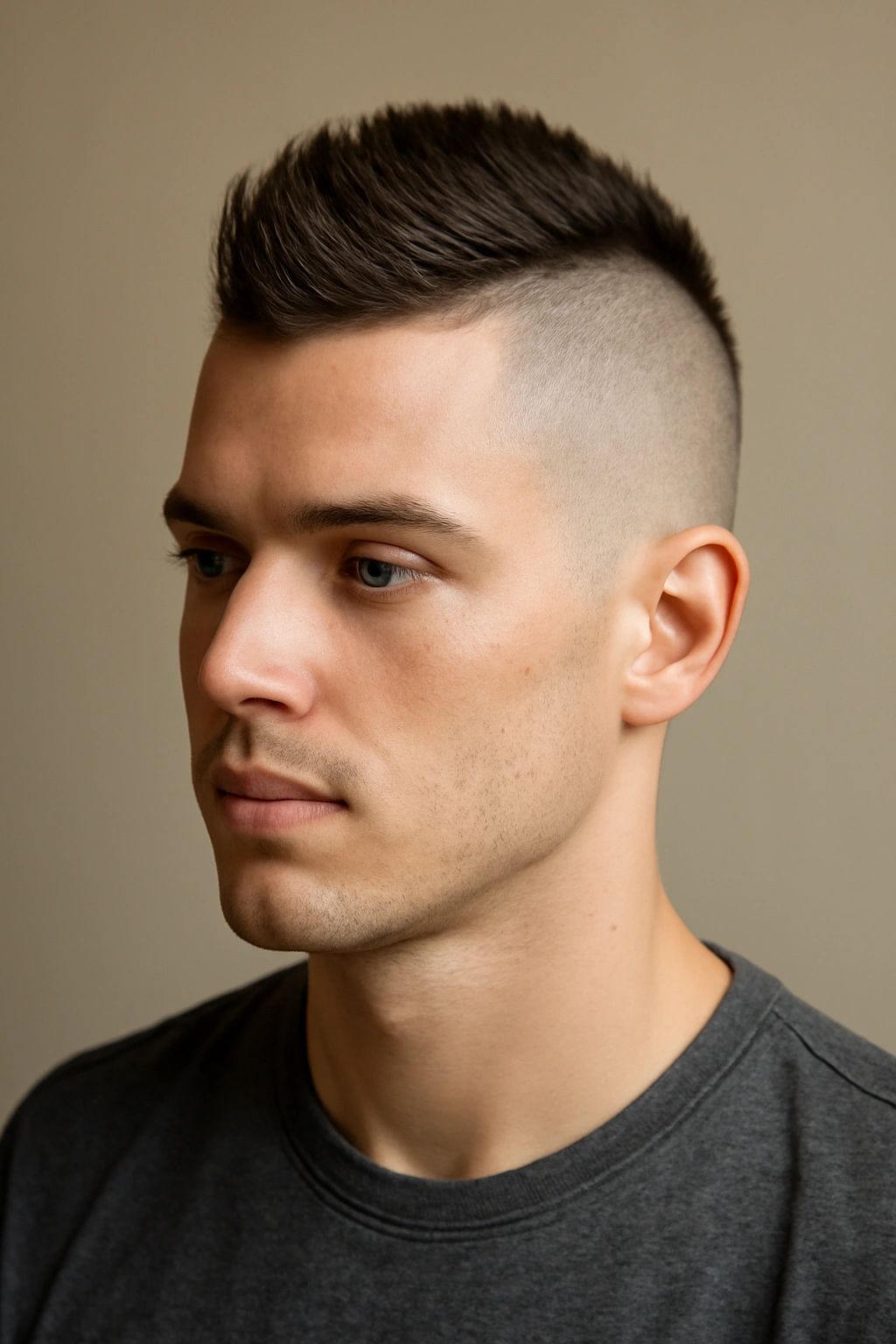
This style takes the rebellious spirit of a mohawk and refines it into something you can actually wear to professional settings. Instead of the full width of a traditional mohawk, the top section is narrower and carefully shaped, sometimes with an undercut on both sides that creates that characteristic narrow ridge of longer hair down the middle.
Why It’s Edgy Without Being Extreme
You get the attitude and visual impact of a mohawk without shaving your entire head. The narrower width of the longer hair allows for more subtle styling on regular days—you can brush it flat for work if needed, then spike or tease it for nights out. It’s punk rock energy with built-in flexibility.
Styling and Maintenance
- The top is typically 2-3 inches longer than a standard short cut, giving you room to work with texture and height
- Both sides feature clean undercuts that might be shaved smooth or faded slightly, depending on your preference
- Styling products become your friend here—texturizing paste, sea salt spray, or matte clay helps create movement and definition
- The cut works particularly well on oval, square, or heart-shaped faces where the centering draws attention upward
3. The Faded Spiky Undercut
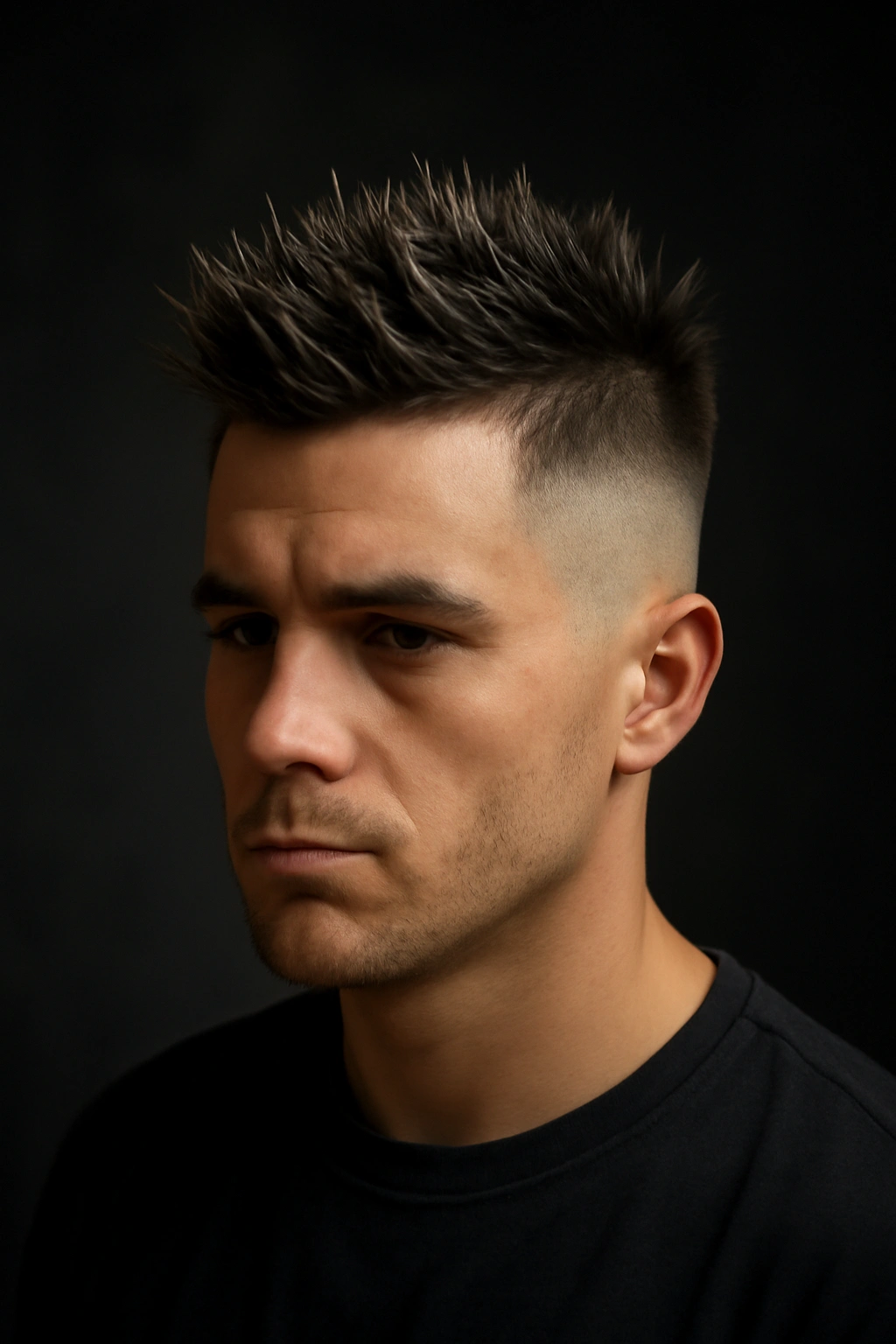
Spiky hair never goes out of style, but pairing it with a sharp fade underneath elevates it from casual to intentional. The top features longer, textured strands that naturally stand up or are styled upright, while the sides fade down to near-bare or fully shaved, creating maximum contrast and making those spikes pop visually.
Why Contrast Is Everything
When your sides are completely clean, every bit of length on top becomes more noticeable. A half-inch of hair looks dramatic when it’s sitting on a shaved base. That contrast is what gives this style its energy and makes it feel modern rather than retro.
Texture and Length Considerations
- Top length typically ranges from ½ inch to 1½ inches depending on how dramatic you want the spikes
- The hair on top should have natural texture or be cut to create texture—a barber can do this with choppy layers or point-cutting techniques
- Styling products are essential; matte clay or wax gives definition without making hair look wet or heavy
- This cut works well on all hair types but is particularly striking on straight, wavy, or naturally textured hair where spikes hold their shape
4. The Disconnected Undercut Shag
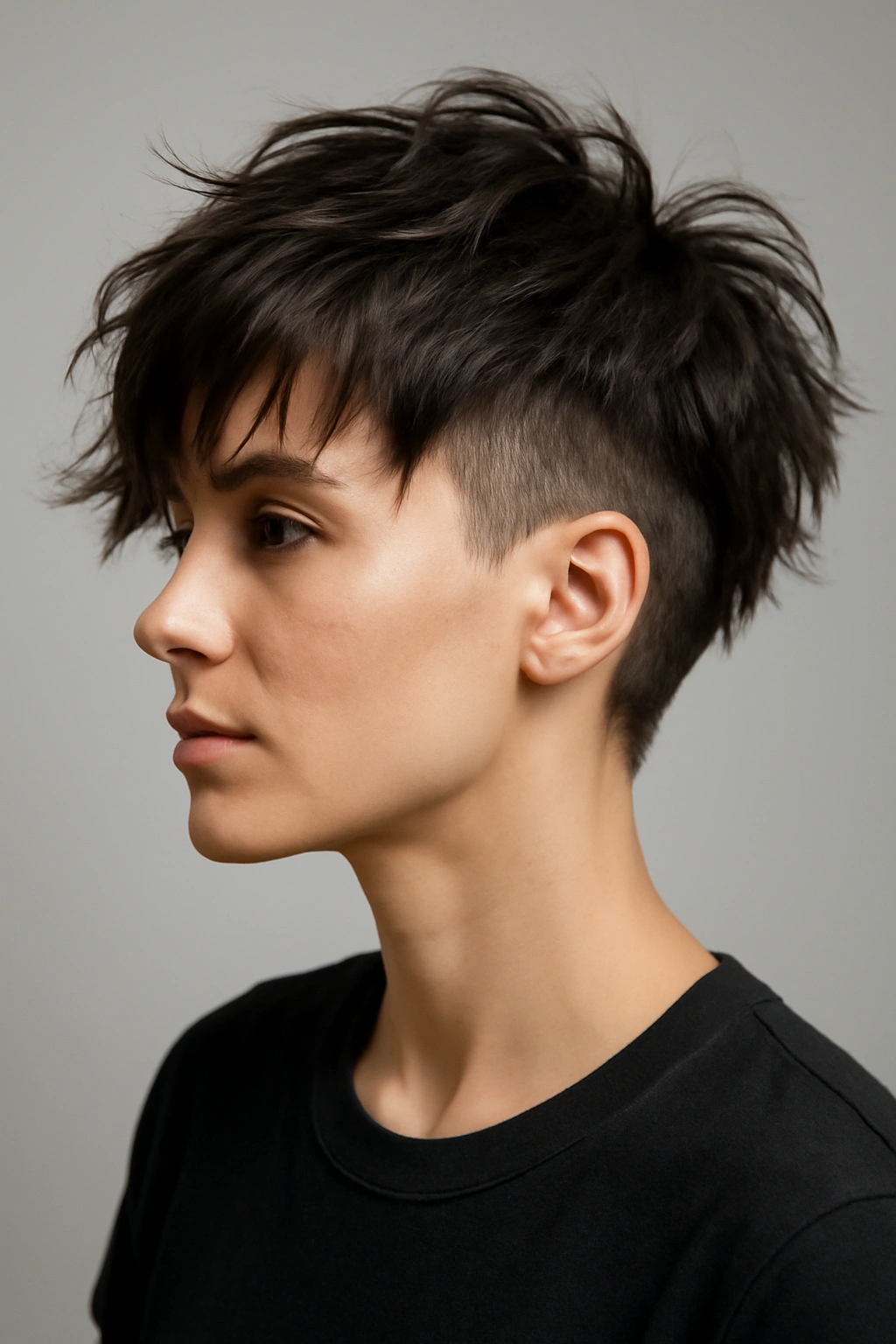
This style brings back the playful energy of a shag but grounds it with a serious undercut. The top layers are longer, choppy, and move with a shaggy texture, while the sides and back are undercut closely. The disconnect between the two creates visual drama—what’s on top looks like it’s floating above the shorter foundation.
What Makes the Shag Different From Other Edgy Cuts
Shags are intentionally undone, with pieces that move separately rather than as a cohesive mass. Layering is key—your stylist should cut shorter layers throughout the top to create movement and separation. The undercut below eliminates bulk at the sides, so the shaggy texture on top doesn’t make your head look heavy.
Styling Tips for Maximum Impact
- This cut thrives on movement, so embrace texture spray or dry shampoo to add grip and volume
- Blow-dry from underneath to lift the layers and create separation between those choppy pieces
- Let it look slightly undone—perfect precision actually works against the shag’s aesthetic
- The cut works beautifully with color; many people add subtle highlights through the top layers or a contrasting tone in the undercut
5. The Structured Quiff Undercut
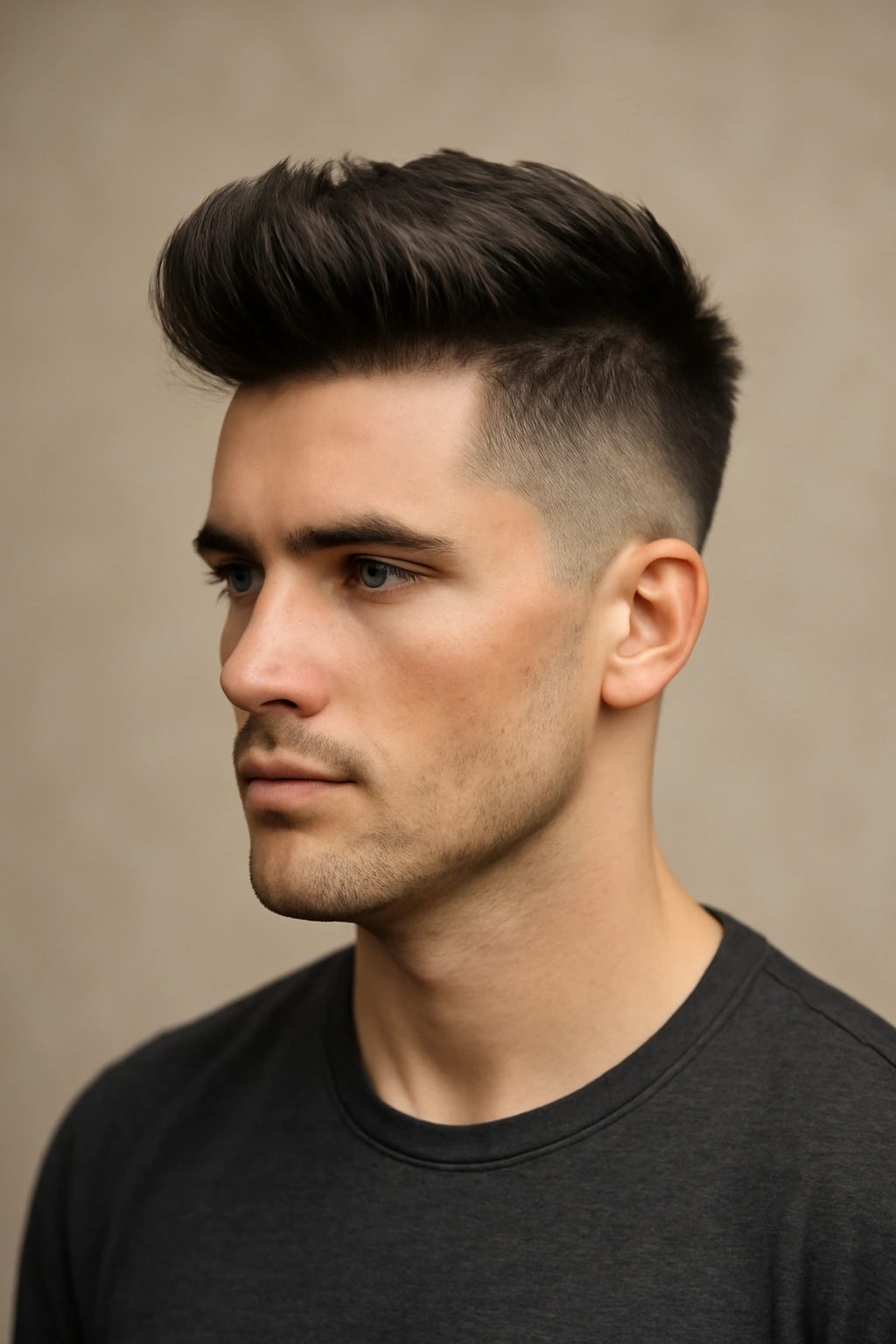
The quiff is inherently bold, and adding an undercut underneath transforms it into something genuinely statement-making. The top rises up from the forehead in a structured wave or peak, while the sides and back are sharply undercut. It’s classic with an edge—think early 1950s rockabilly meets contemporary cool.
Styling and Shape
- Length on top typically ranges from 2-3 inches, giving you enough hair to create the signature rise and sweep
- The sides fade or undercut to skin, creating a dramatic silhouette
- Styling requires product—pomade, clay, or wax helps shape the quiff and hold it in place without looking stiff
- Some people add volume through blow-drying while the hair is still slightly damp, creating a pomp-like effect
Who This Works For
The structured quiff undercut is particularly flattering on oval and rectangular faces where the vertical line of the quiff elongates the face. If you have a rounder face, asking your barber to broaden the quiff slightly, spreading the height across the top rather than concentrating it in a narrow peak, helps balance proportions.
6. The Textured Crop Undercut
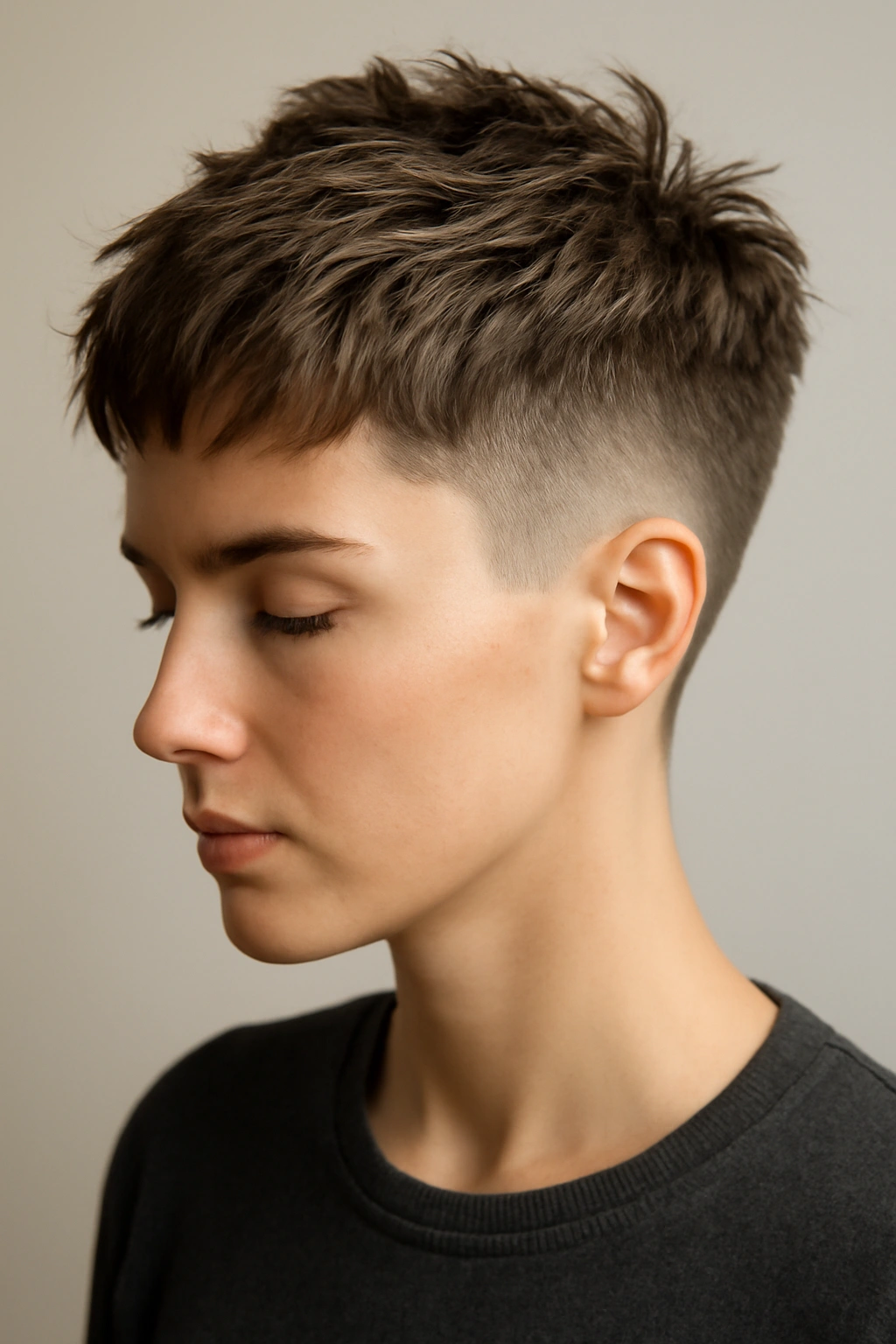
A textured crop with an undercut is the thinking person’s edgy cut—it looks considered and cool without requiring dramatic styling. The top is kept short, usually 1-2 inches, with plenty of texture built in through the cutting technique. The undercut adds dimension and structure without needing to be perfectly clean or freshly maintained.
Why Texture Matters
Texture prevents this style from looking too severe or too neat. The cutting technique—choppy layers, point-cutting, or razor-cutting—creates visual interest and movement even when the hair is relatively short. That texture is what takes it from basic to genuinely edgy.
Maintenance and Everyday Styling
- This cut is more forgiving than some others because the texture actually looks better slightly grown-in and slightly undone
- You can style it with minimal product—sea salt spray or a light texturizing paste is often enough
- The undercut allows you to wear it slicked back for more formal occasions or textured and tousled for everyday wear
- This is one of the most versatile edgy cuts in terms of different styling directions
7. The Colored Undercut With Top Design
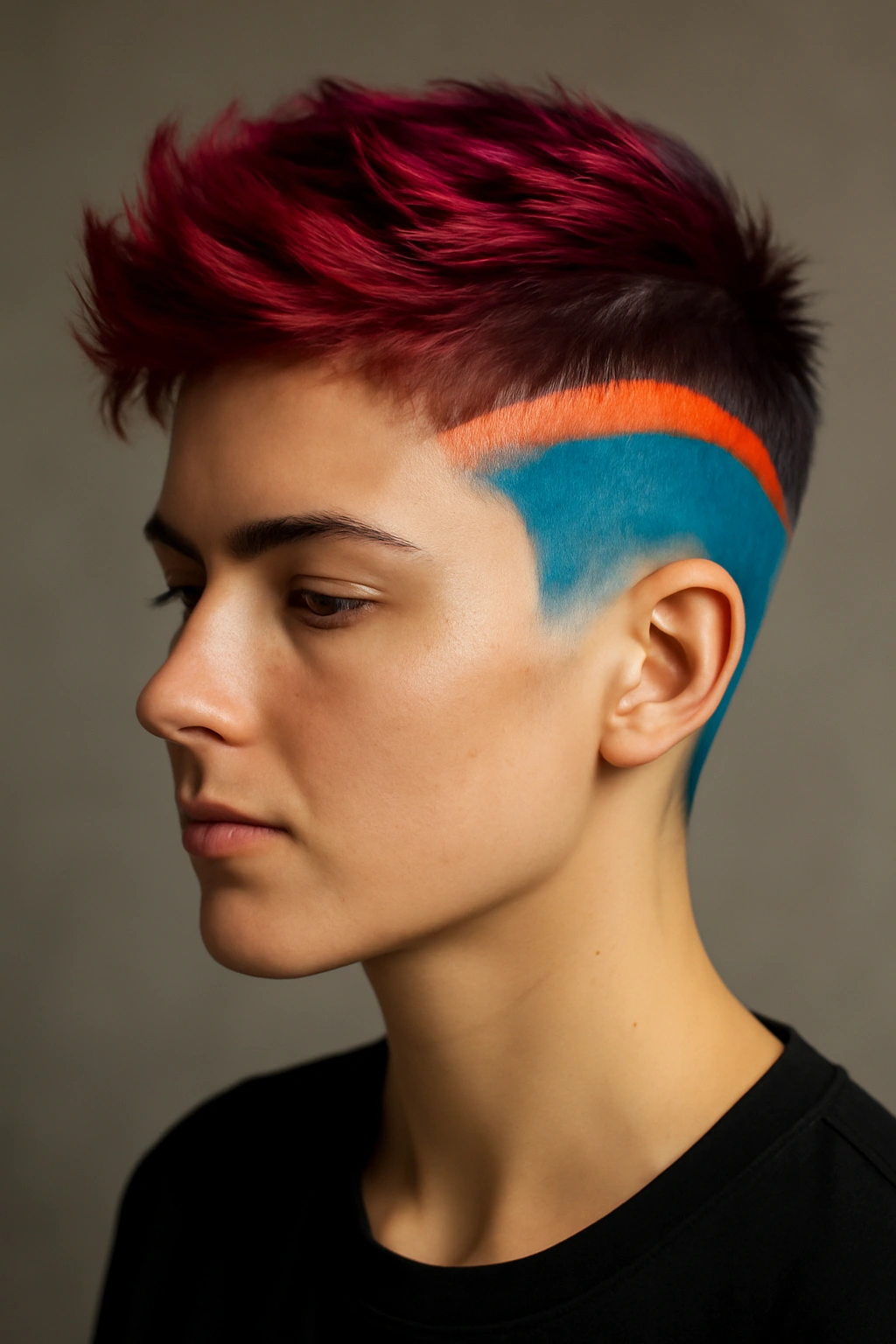
When you combine an edgy undercut with strategic color placement, you’re creating a cut that works as both a shape and a canvas. Typically, the undercut is one color (often a darker shade or a bold contrasting tone) while the top is either the same color in a different intensity or a completely contrasting hue. Some people bleach the undercut while keeping darker hair on top, creating stark graphic contrast.
Color Strategy and Maintenance
- If you’re using high-contrast colors (like white undercut with black top), the color maintenance is frequent—touching up every 3-4 weeks to keep the line sharp
- Some people use semi-permanent color to make maintenance easier and give themselves flexibility to change their mind
- The colored undercut is particularly striking when the hair on top has movement or texture—flat, sleek hair on top makes the undercut feel less impactful
- Color and cut need to work together; your stylist should understand how the color will affect the visual impact of the lines they’re creating
8. The Disconnected Wolf Cut Undercut
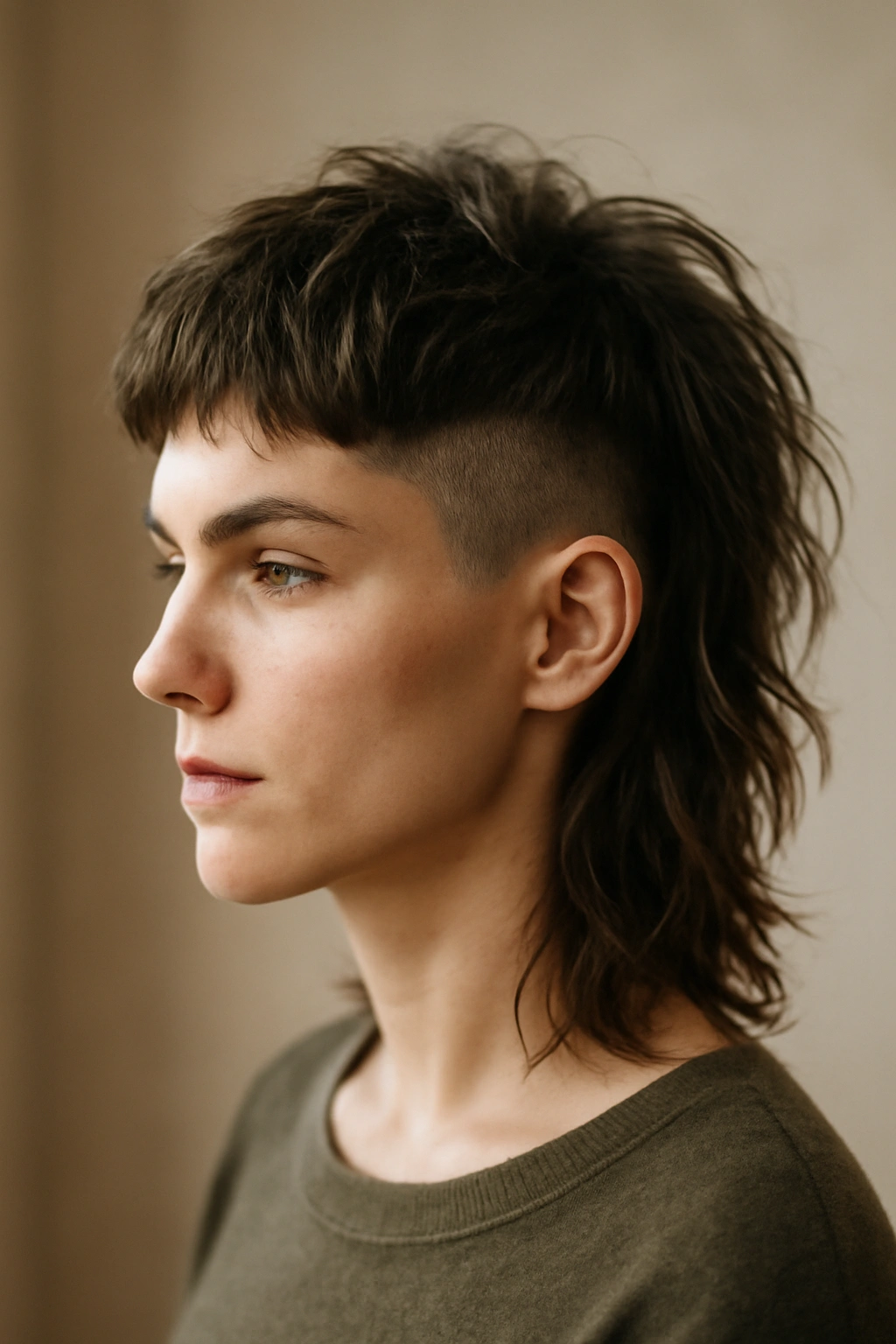
The wolf cut, named for its wild, untamed appearance, merges the playful movement of a shag with the structure of a mullet (shorter in front, longer in back). Adding an undercut to the sides creates even more dimension and lets the longer back strands really shine. It’s fashion-forward, editorial, and distinctly modern.
What Makes This Cut Stand Out
The wolf cut undercut celebrates imperfection and movement in a way that feels very contemporary. This isn’t a cut designed to look polished and precise; it’s designed to look intentional and bold. The longer back pieces contrast with the sharper front and sides, creating dynamic visual flow.
Styling for That Undone Edge
- Texture spray and loose waves or curls work beautifully here; the messier it is, the better it looks
- Some people use a curling iron or wand to create loose, informal waves through the longer pieces
- The undercut sides should be kept relatively clean, which actually makes maintenance easier than you’d expect
- This cut photographs beautifully and tends to catch attention on social media, making it popular with people who embrace experimental style
9. The Fade-to-Design Undercut
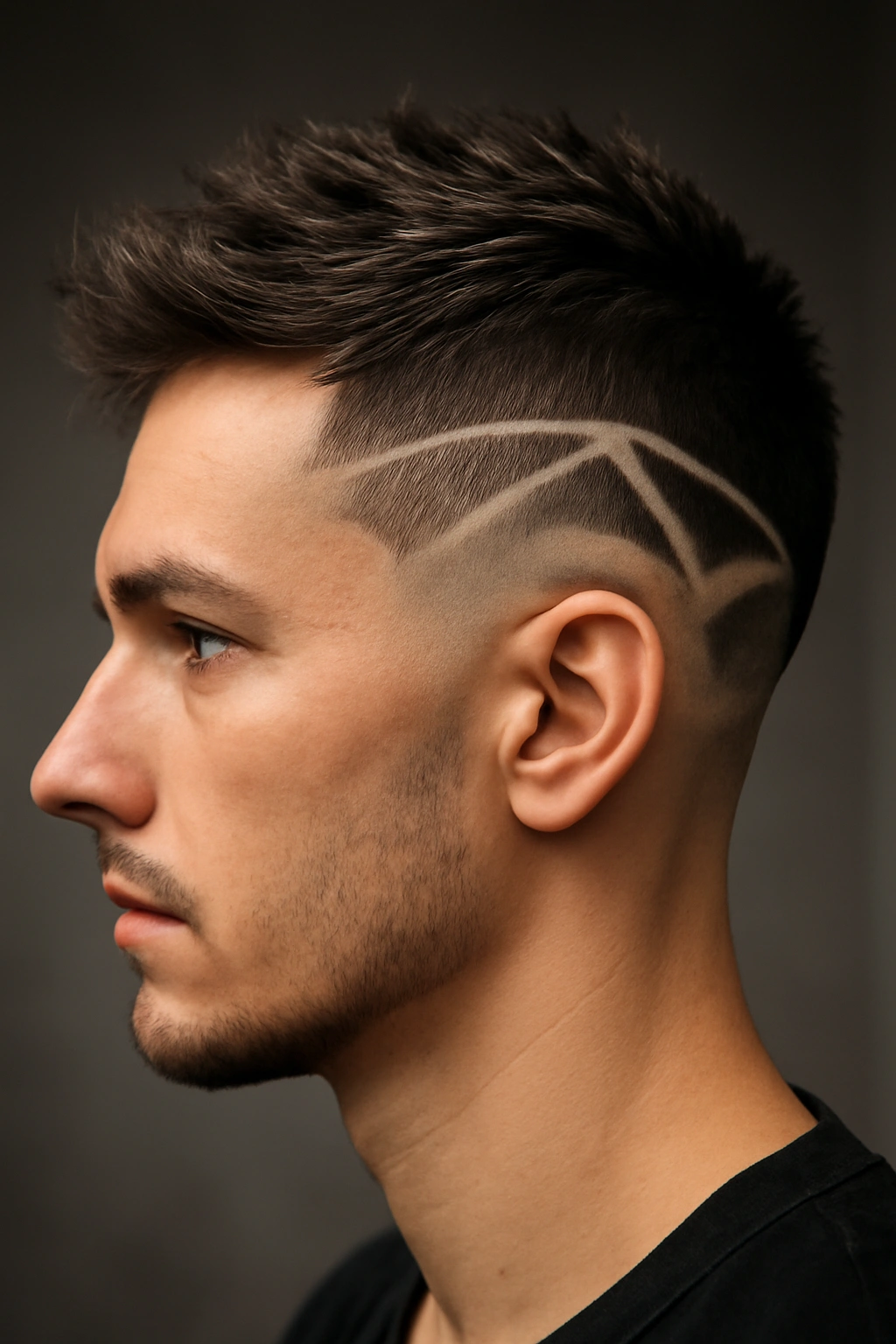
Beyond geometric lines, some people take undercut design to full illustration territory. Patterns might include abstract designs, meaningful symbols, or even portrait-style work on the shaved or faded sides. This is undercut as personal art—a statement that goes far beyond a standard haircut.
Technical Considerations
- These designs require an artist with specific expertise; not every barber is equipped to execute complex designs with clippers
- The more detailed the design, the shorter the hair beneath it needs to be for clarity
- These designs typically need refreshing every 2-3 weeks to maintain sharp line definition
- Some people do temporary designs (using washable dye or stencils) to test whether they want to commit to a permanent clipper design
Design Ideas and Inspiration
- Many people choose designs that reflect their personal identity or interests—music symbols, celestial imagery, geometric patterns
- Others go full abstract, letting their artist create something completely unique
- The design creates a surprise element—people see it when you move or turn your head, and that revelation is part of the appeal
10. The Slicked Undercut
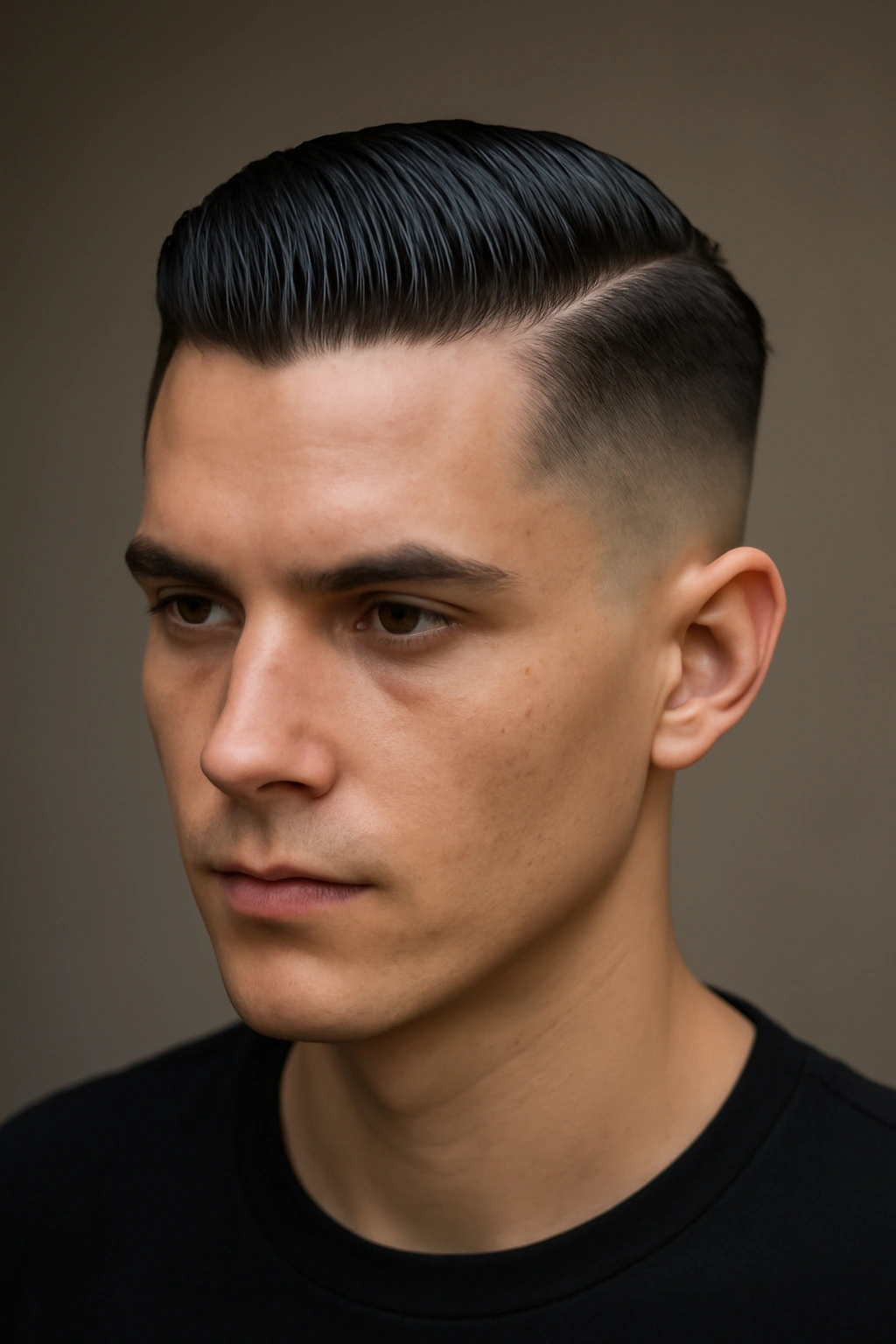
Sometimes the most edgy choice is the one that’s completely opposite to texture and volume. The slicked undercut keeps everything smooth, wet-looking, and deliberately controlled. It’s minimal and maximalist at the same time—minimal hair, maximum attitude. The top is kept relatively short and slicked back or to the side with shine and precision, while the sides are closely cropped or shaved.
The Appeal of Minimalism
This cut is striking because it’s so deliberate and unapologetic. There’s no softness or romance here—just clean lines, sharp contrast, and undeniable confidence. It works particularly well on people with naturally straight or wavy hair, where the slicked effect is easiest to maintain.
Styling and Maintenance
- A strong-hold pomade or gel is essential; you need products that create shine and lock hair in place
- Blow-drying with a comb while the product is still damp helps create the smoothness and direction you want
- This cut works best on people comfortable with intentional, visible styling—it’s not a wash-and-go situation
- The undercut needs refreshing every 2-3 weeks to maintain that clean, sculpted look
Final Thoughts
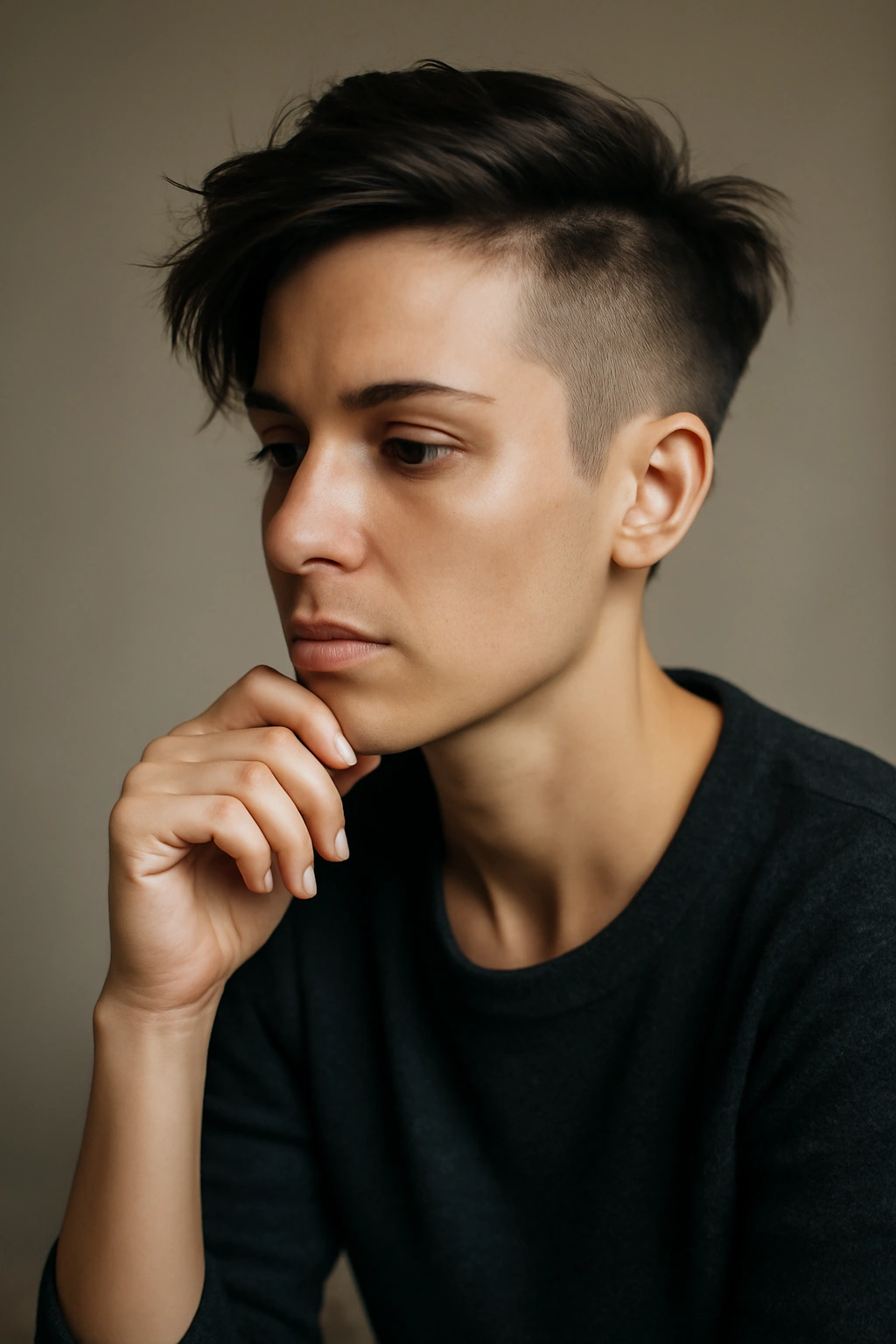
The beauty of exploring edgy undercut styles is that you’re not choosing between one fixed look—you’re choosing a foundation that adapts to your mood, your lifestyle, and your evolving sense of self. An undercut paired with any of these approaches works because it’s fundamentally a statement about intention. You’re not growing your hair by accident or maintaining a safe default; you’re actively participating in how you present yourself to the world.
What makes a cut truly edgy isn’t just the technical elements, though precision matters. It’s the confidence of wearing something that’s deliberately different. The geometric fade says you appreciate craft and geometry. The mohawk-inspired cut says you value attitude and versatility. The textured crop says you understand that imperfection can be beautiful.
Start by finding a stylist who genuinely understands undercuts and short hair—not just someone who can follow directions, but someone who can troubleshoot, adapt, and help you translate your vision into something that works with your hair type, face shape, and lifestyle. The right stylist becomes a collaborator in your style, not just a service provider. And when you find that match, you unlock the real potential of these styles.
