



Shaved sides have become one of the most transformative styling techniques for creating bold, modern looks that instantly command attention. Whether you’re drawn to high-fashion runways, celebrity-inspired trends, or just want to make a dramatic change, styles featuring cleanly shaved or faded sides offer the perfect canvas for showcasing personality and confidence. The beauty of this approach is that it works across virtually all hair textures, lengths, and face shapes—and the range of options means there’s genuinely a version that suits your lifestyle and aesthetic.
What makes shaved sides so compelling goes beyond pure shock value. This styling technique creates incredible visual contrast between closely cropped or bare sides and the hair on top, which automatically draws attention upward and can actually flatter your face in ways you might not expect. The style also offers surprising versatility: you can go edgy and punk-inspired one day, then slick everything back for a polished look the next. The maintenance is straightforward once you understand what you’re working with, and the confidence boost that comes with a genuinely statement-making hairstyle is difficult to overstate.
The following styles showcase the range of possibility when you commit to shaved or closely faded sides. Some lean into dramatic geometric patterns, others prioritize texture and movement on top, and a few blur the line between subtle and showstopping. The key is finding the style that aligns with your face shape, hair texture, personal style, and lifestyle needs—because a stunning statement hairstyle only works if you’re willing to maintain it and own it with confidence.
1. Disconnected Undercut with Long Top
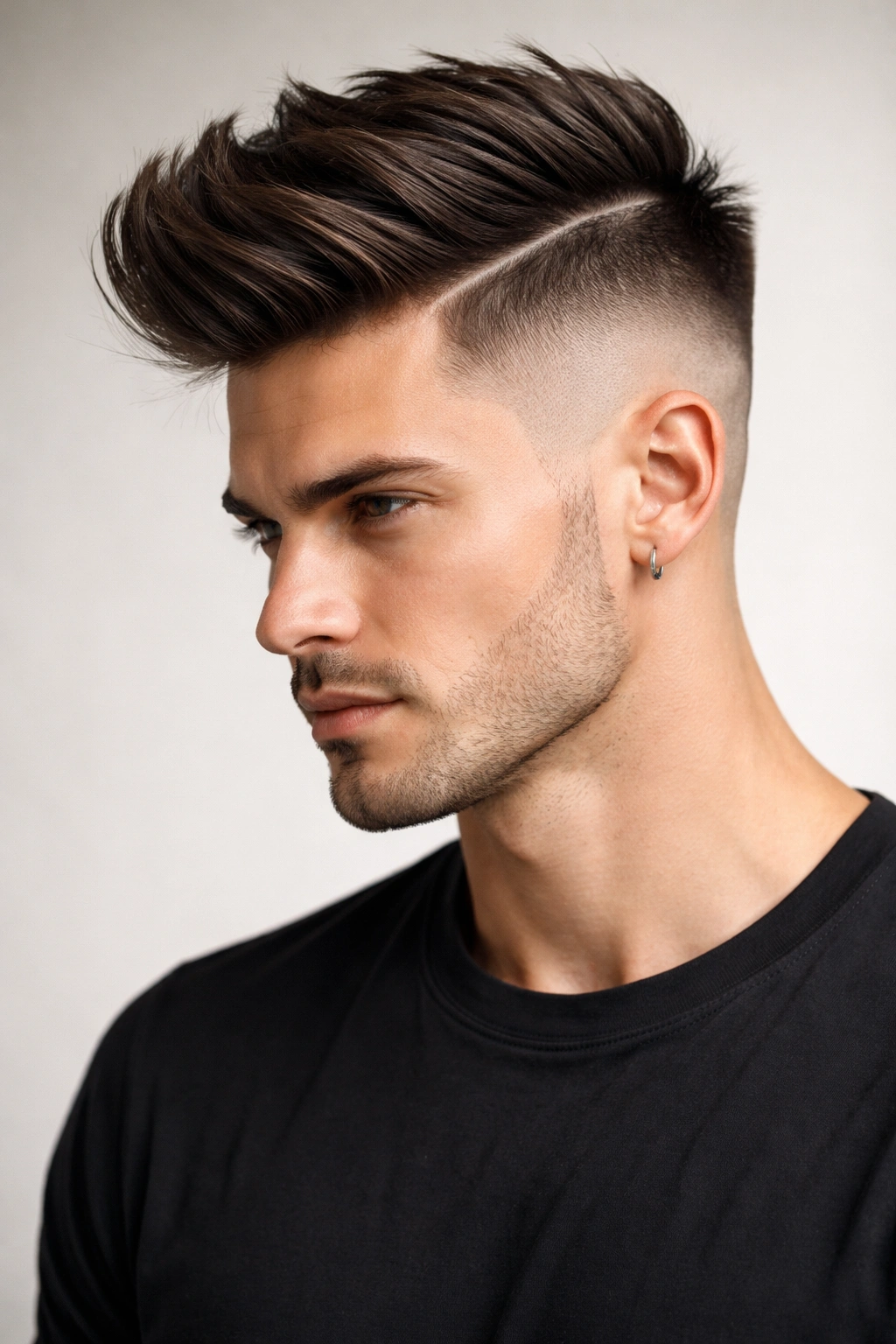
The disconnected undercut is the gold standard of statement hairstyles with shaved sides, and for good reason—it creates clean, unmistakable visual separation between the cropped sides and the substantial length on top. With this style, the sides are faded or shaved completely bare, while the top is left long enough to style and manipulate in multiple directions. The “disconnected” element means there’s a noticeable line where the sides end and the longer hair begins, rather than a gradual fade.
What Makes It Work Visually
The disconnected undercut flatters most face shapes because the contrast naturally frames the face and can actually make features appear more defined. The longer hair on top gives you tons of styling flexibility—you can slick it back for a sharp, refined look, leave it textured and messy for an edgier vibe, or even style it to one side for an asymmetrical effect. The style essentially gives you multiple looks in one cut.
Styling and Maintenance Considerations
- You’ll need to visit your barber or stylist every 3 to 4 weeks to maintain the sharpness of the disconnection and keep the sides tight
- The longer top requires regular washing and occasional conditioning to stay healthy and maintain texture
- Styling products like pomade, clay, or matte paste help you achieve different looks with the same cut
- Consider your daily grooming commitment—this style looks best when the top is intentionally styled, not left completely natural
Pro tip: Ask your barber for a slightly longer clipper guard on the sides initially (like a #2 or #3) if you’re new to shaved sides. You can always go tighter next appointment once you’re confident about how close you want it.
2. Textured Quiff with Fade
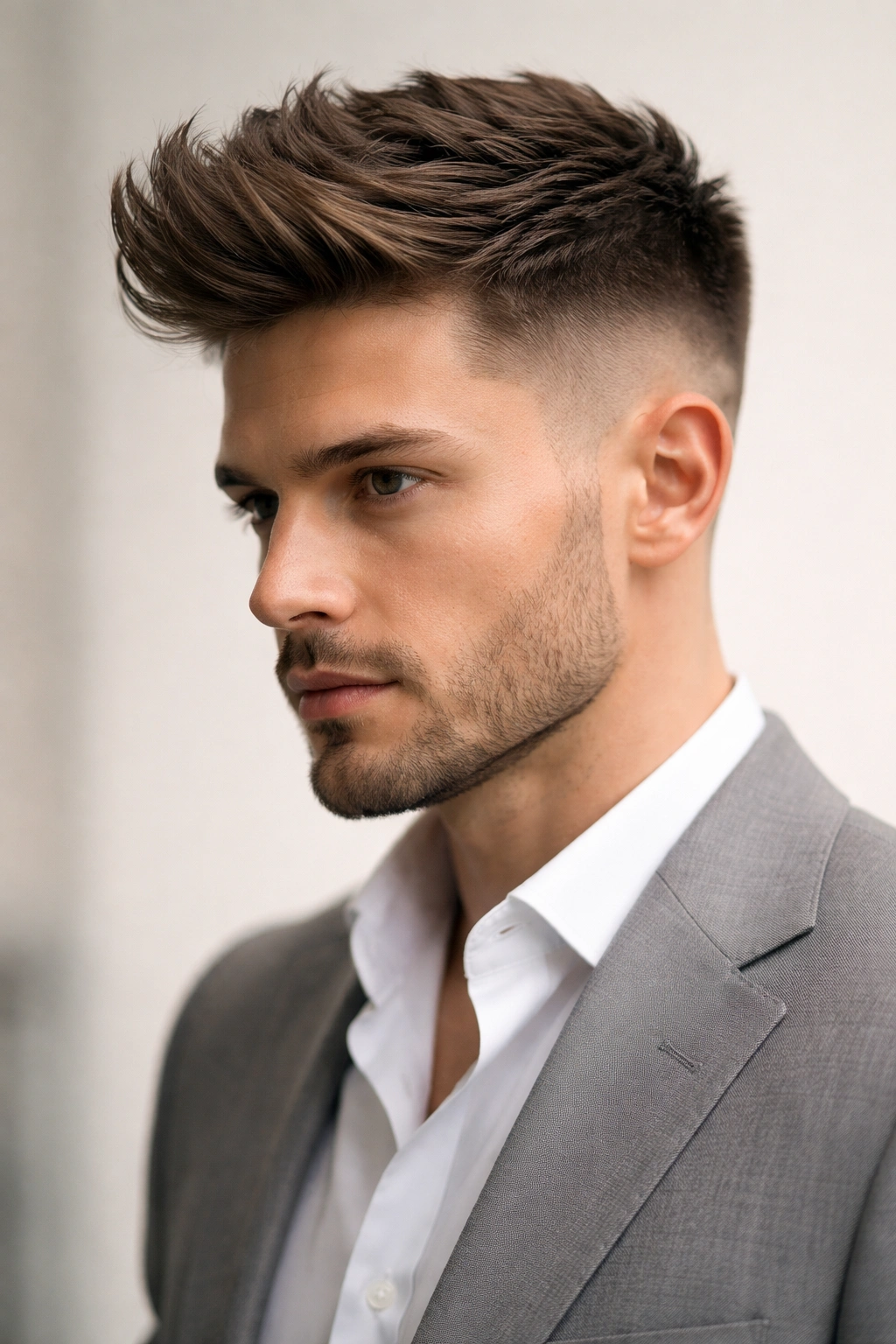
The textured quiff with faded sides represents the perfect sweet spot between high-impact statement styling and everyday wearability. This style features shorter, textured hair swept back and upward on top, while the sides graduate smoothly from short to shaved using a careful fade. The “texture” component is crucial here—it’s not slicked-back smoothness but rather deliberately choppy, piece-y hair that catches light and moves naturally.
The Fade Creates Subtle Depth
Rather than a harsh line, the fade gradually transitions the sides from roughly a quarter-inch to completely shaved skin. This progressive fade is more forgiving than a disconnected cut and suits professional settings better while still delivering serious style impact. The texture on top prevents the style from feeling too buttoned-up, striking a balance between polish and edge.
How to Style a Textured Quiff
- Use a medium-hold clay or paste and apply to damp hair before blow-drying
- Blow-dry upward and backward, working the product through for separation and movement
- For a more casual look, apply product to slightly damp hair and air-dry for a more natural texture
- The style naturally sits forward if left unstyled, so some intentional direction matters
- This works particularly well for people with naturally wavy or textured hair but can be achieved with straight hair too
Worth knowing: The texture requires regular trims every 4 to 5 weeks, but you can space out your fade touch-ups slightly longer since a fade is more forgiving than a precise disconnected line.
3. Slicked-Back Pompadour with Shaved Sides
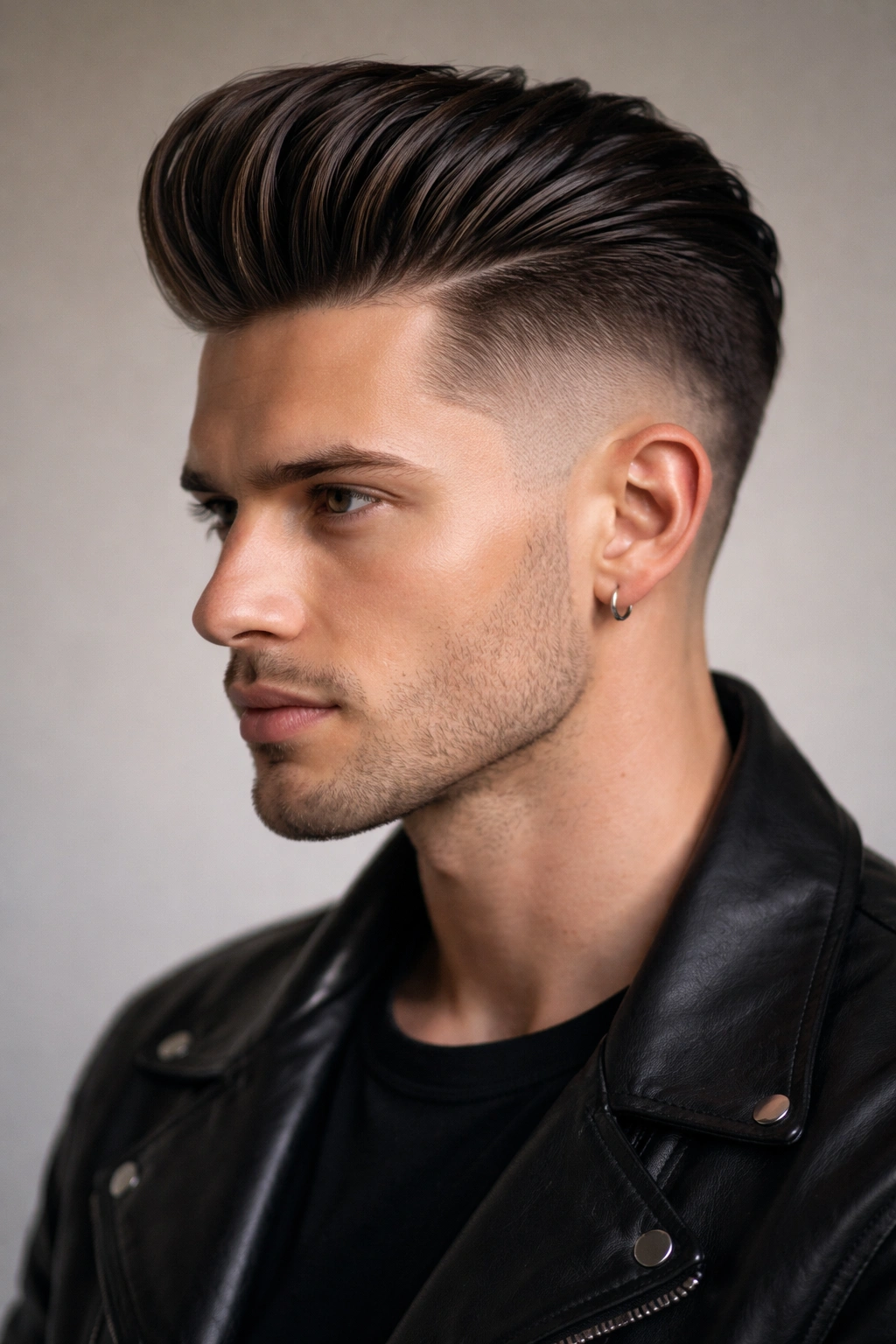
The slicked-back pompadour with shaved sides is the ultimate statement of refined confidence—all the drama and personality of a pompadour without the visual weight of full-grown sides. The top is grown out substantially (typically 4 to 6 inches or longer) and swept dramatically backward with serious height, while the sides are either faded or completely shaved. The contrast between the sleek, controlled top and the bare sides creates an impossibly sharp silhouette.
The Styling Requirement Is Real
This style absolutely demands intentional styling every single day. Pomade, gel, or a strong-hold cream is essential, and you’ll need to blow-dry the top directionally to build and maintain the height. The payoff is a look that commands the room, but it’s not a wash-and-go option by any stretch. If you’re someone who enjoys grooming rituals and doesn’t mind spending 5 to 10 minutes on your hair each morning, this style is incredibly rewarding.
Face Shape and Feature Considerations
- The height on top and bare sides creates a strong vertical line, which actually suits round or square faces particularly well
- People with longer or narrower face shapes might want to add some bulk on the sides to balance proportions
- The style emphasizes the forehead and hairline, so it works best if you have a clear, defined hairline
- If you’re experiencing any hair loss or thinning on top, this isn’t the best choice since the style depends on substantial, dense hair
Real talk: This is a high-maintenance style in terms of both grooming commitment and barber visits. Your barber needs skill to execute the fade or shaving properly, so find someone you trust.
4. Geometric Designs with Shaved Sides
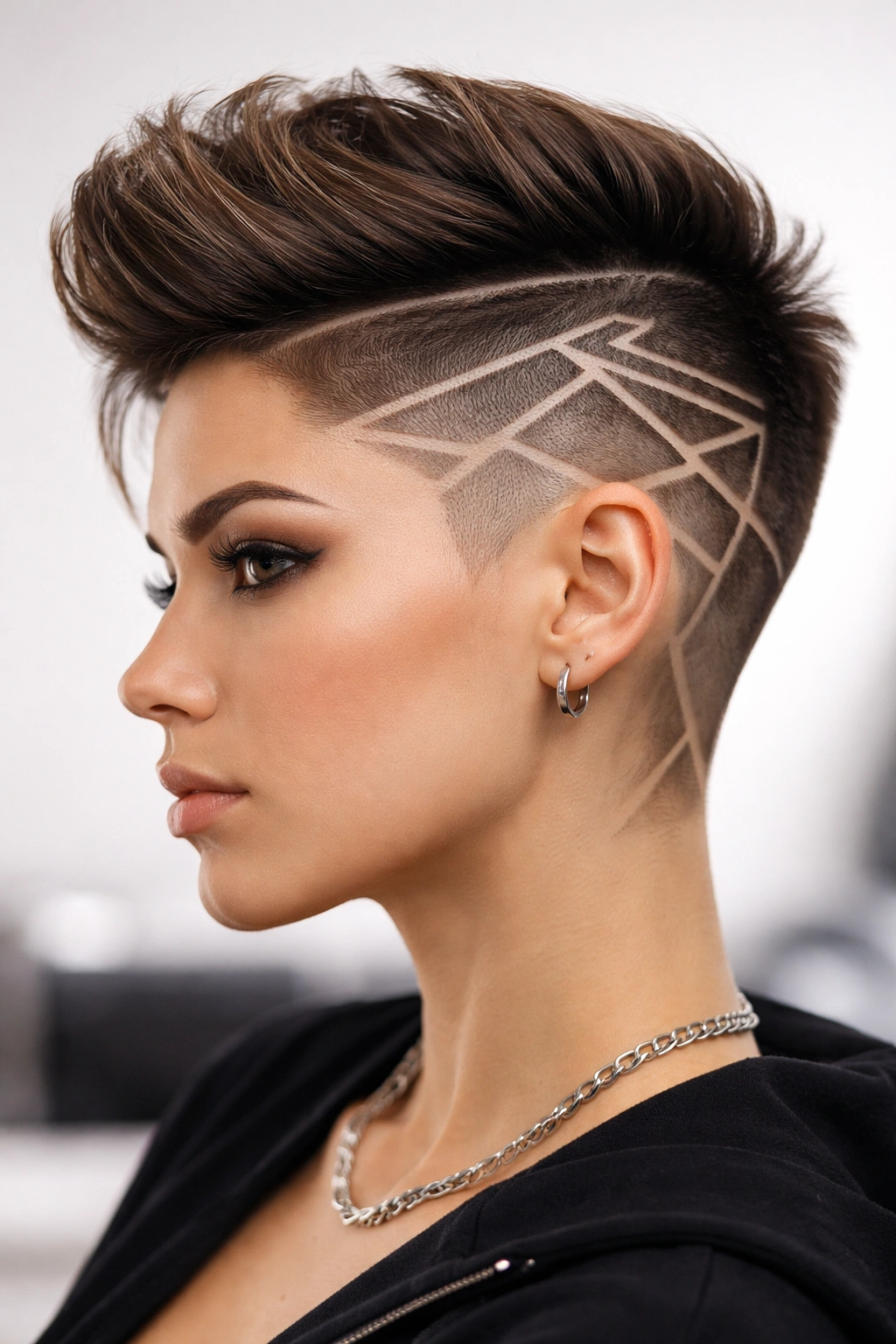
For people who want their hairstyle to genuinely function as wearable art, geometric designs carved into shaved sides deliver maximum impact. These might be simple lines and angles, complex patterns inspired by architecture or nature, or even custom designs that reflect personal interests. The designs are achieved by carefully shaving specific patterns into the closely cropped or bare sides, creating contrast between the shaved design and slightly longer hair left in other areas.
The Artistry and Planning Required
The best geometric designs aren’t spontaneous decisions—they work best when you spend time with your barber discussing what you actually want to see. Reference images are essential. The barber uses various clipper guards and hand-shaving techniques to create clean lines and precise shapes. The results can be genuinely stunning, but they also require absolute precision and a barber who has real experience with custom designs.
Maintenance and Longevity of Designs
- The designs remain visible for roughly 3 to 4 weeks before growth makes them fuzzy and less defined
- You’ll likely want a touch-up every month to keep the design sharp and intentional
- The designs look best in certain lighting—direct sunlight and strong overhead light emphasize the contrast most clearly
- Simple geometric designs (like clean lines or angular shapes) are easier to maintain than complex, intricate patterns
Insider note: Consider starting with a design that isn’t extremely intricate for your first time. You can always go bolder with your next appointment once you understand the maintenance rhythm and see what actually works with your hair growth pattern.
5. Fade Gradient into Full Top
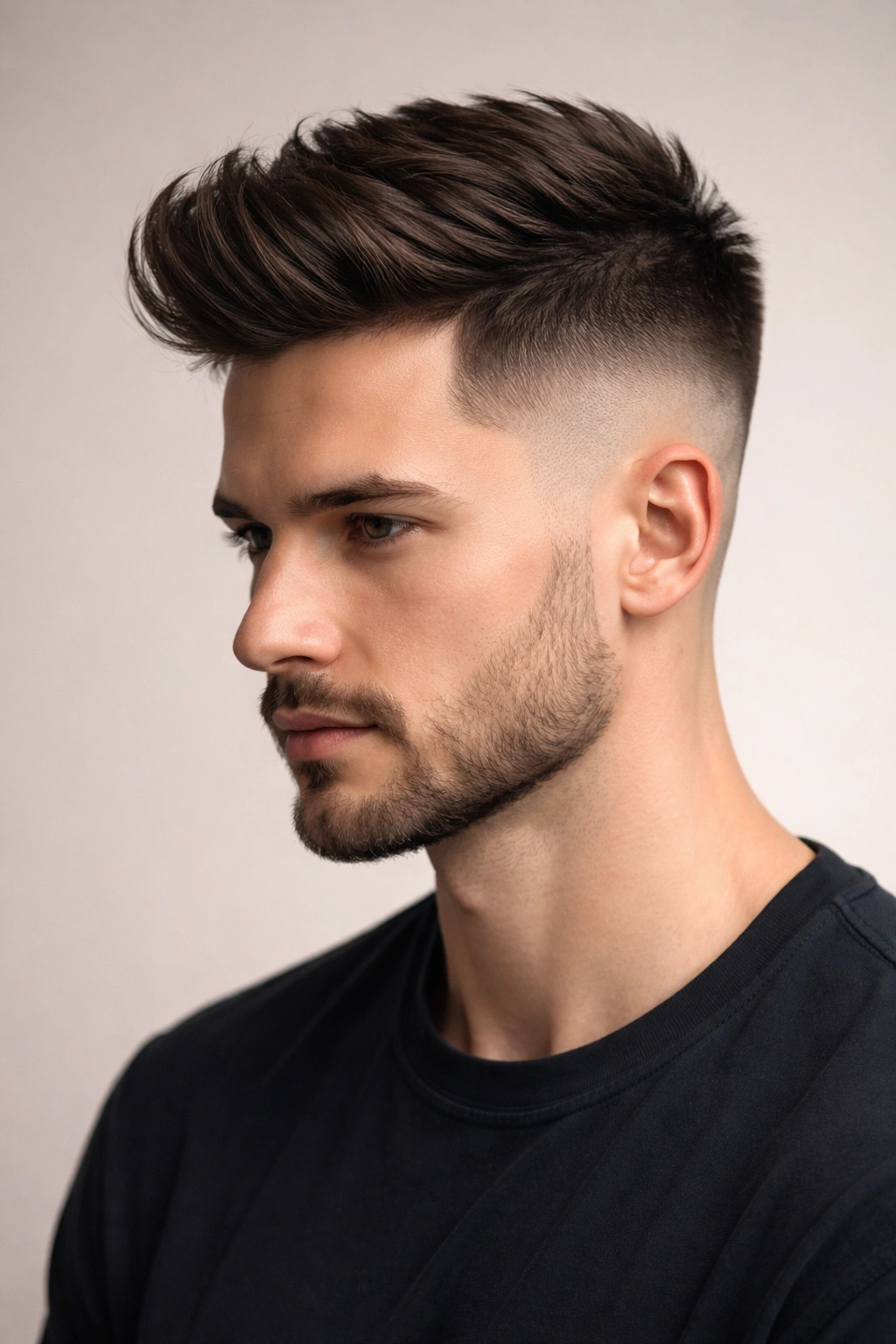
The fade gradient style bridges minimalist aesthetic and maximum statement-making by creating a smooth, continuous progression from shaved skin all the way up through gradually increasing length. Unlike a disconnected undercut where there’s a visible line, this fade is all about gradual transition—the sides might start at completely shaved, then transition through a quarter-inch, half-inch, and three-quarter-inch before blending into the longer hair on top. The result is sophisticated and modern without feeling harsh.
Why This Fade Approach Works
The gradual fade is incredibly flattering because it avoids the stark contrast that can overwhelm some face shapes. The continuous transition feels more organic and works across more styling contexts, from casual to professional. Because there’s no harsh line, the style maintains its clean appearance slightly longer between barber visits—the fuzzy growth that happens with a disconnected cut is far less noticeable here.
Styling Versatility with a Fade
- The longer top can be styled in virtually any direction since there’s no structured disconnection to work around
- You can achieve sleek looks, textured looks, side-parted looks, or tousled looks with the same cut
- The fade naturally frames the face without requiring any specific top styling
- This is genuinely one of the most versatile cuts if you like having multiple styling options
Worth knowing: Ask your barber for the specific clipper guards they’re using if this is your first fade. Understanding the progression (maybe a #0.5 at the bottom, #1 next, #2 above that, longer on top) helps you communicate what you want next time.
6. Side-Parted Undercut with Clean Line
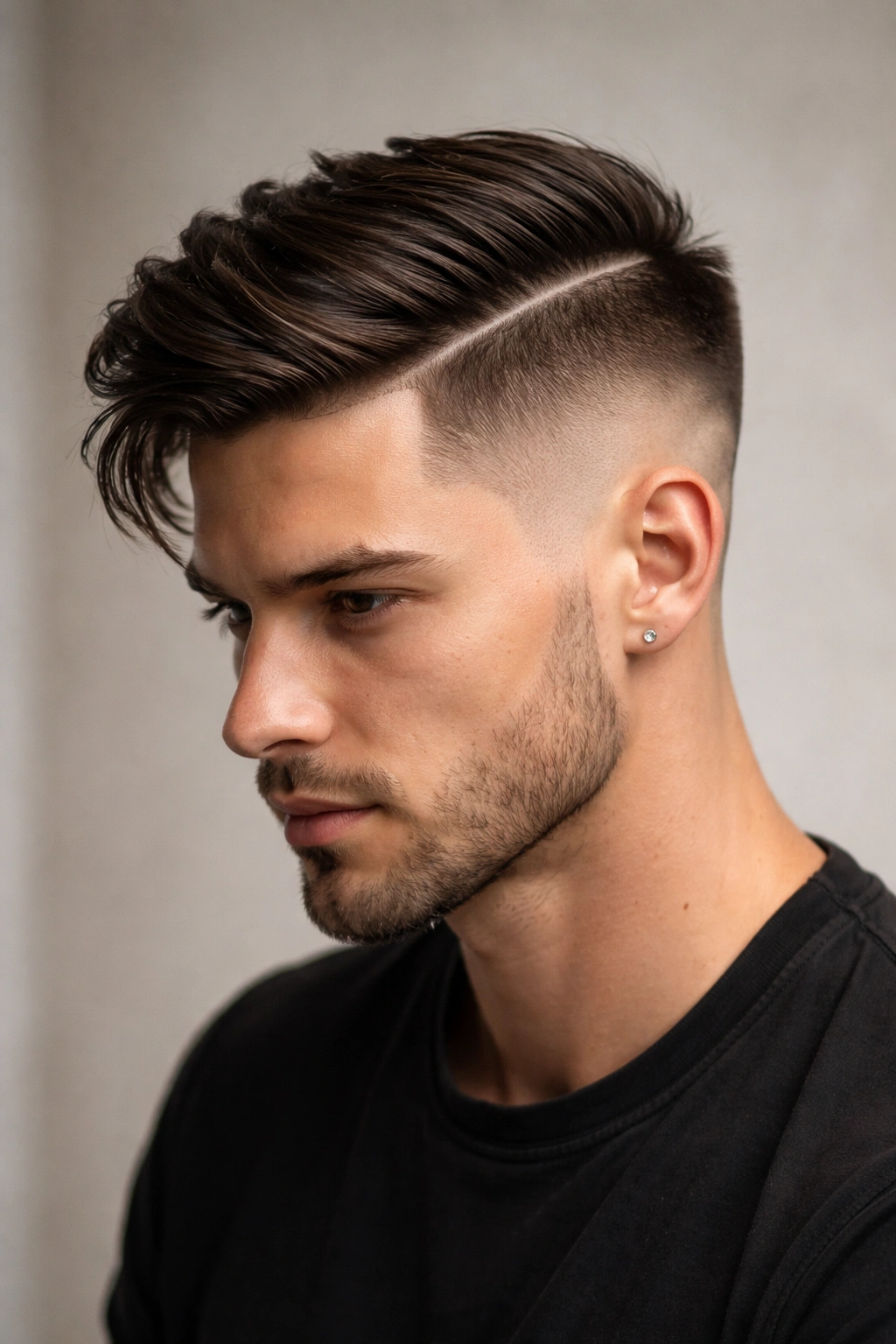
The side-parted undercut creates a distinctly polished, almost preppy version of shaved-side styling by incorporating a sharp side part that defines which way the longer hair sweeps. One side is shaved or very closely faded, while the other side blends slightly longer as it transitions upward. The hair on top is left long enough to create genuine movement and can be swept dramatically toward the longer side, creating an asymmetrical silhouette.
Creating and Maintaining the Sharp Part
The side part functions as a focal point of the style, so it needs to be genuinely crisp and clean. Your barber can actually shave or carve the line of the part into the faded side, creating a visual guideline that makes styling easier. This requires precision and skill, but the payoff is that your part has structure built right into your cut. Once styled with product, the part holds its place throughout the day.
Face Shape Considerations
- The asymmetry of this style suits oval and rectangular face shapes particularly well
- If your face is already asymmetrical or you have one side you prefer to emphasize, you can choose which side gets the longer length
- The side-parted approach can actually minimize the appearance of a wider face by directing visual attention upward and to one side
- The style creates a gentler, less aggressive aesthetic than other shaved-side variations
Pro tip: This style benefits from using a lightweight styling product like a texturizing spray or dry shampoo on the longer side. It gives grip and helps maintain the sweep without looking overly slicked or product-heavy.
7. Mohawk with Shaved Sides
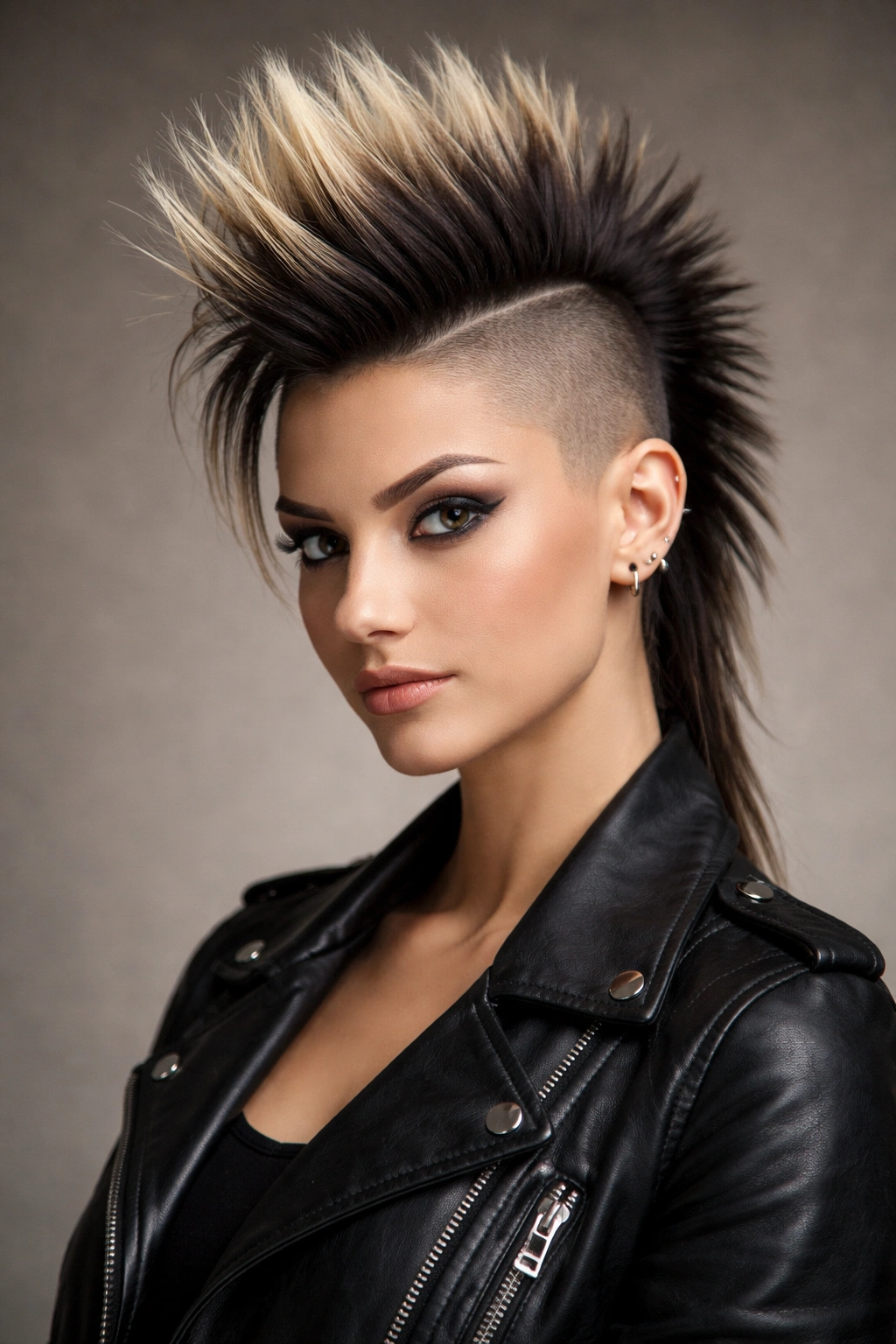
The shaved-side mohawk is the undisputed heavyweight champion of statement hairstyles—it’s impossible to ignore, unapologetically bold, and definitely not for people who want to blend in. The sides are shaved completely bare, while a strip of longer hair runs from the front hairline straight back (or sometimes from one side to the other). The height and length of the mohawk strip can vary dramatically, from a subtle inch-tall ridge to a full, gravity-defying statement that stands several inches tall.
Building Height and Texture
Some people achieve mohawk height through length alone and let gravity and natural texture do the work. Others use strong-hold styling products and blow-dry techniques to build the dramatic vertical height. Some create movement and texture by cutting the strip with layers or point-cutting, while others prefer a blunt, cohesive length. Your personal style and hair texture dictate which approach works best.
Styling Reality and Commitment
- A true mohawk requires daily styling to look intentional rather than accidental—this isn’t a casual wash-and-go style
- Styling products are essential; expect to use a strong-hold pomade, gel, or putty daily
- Blow-drying or heat-styling is usually part of the routine to achieve and maintain height
- You’ll need barber visits every 3 to 4 weeks to maintain the clean, shaved sides
- The top strip needs regular trimming to maintain your preferred length
Real talk: A mohawk is a commitment to standing out. It gets attention, it starts conversations, and it requires genuine confidence to wear. If you’re on the fence, consider a shorter version or a faux hawk (where the longer hair blends slightly into the sides) as a gentler entry point.
8. Textured Crop with Micro Fade
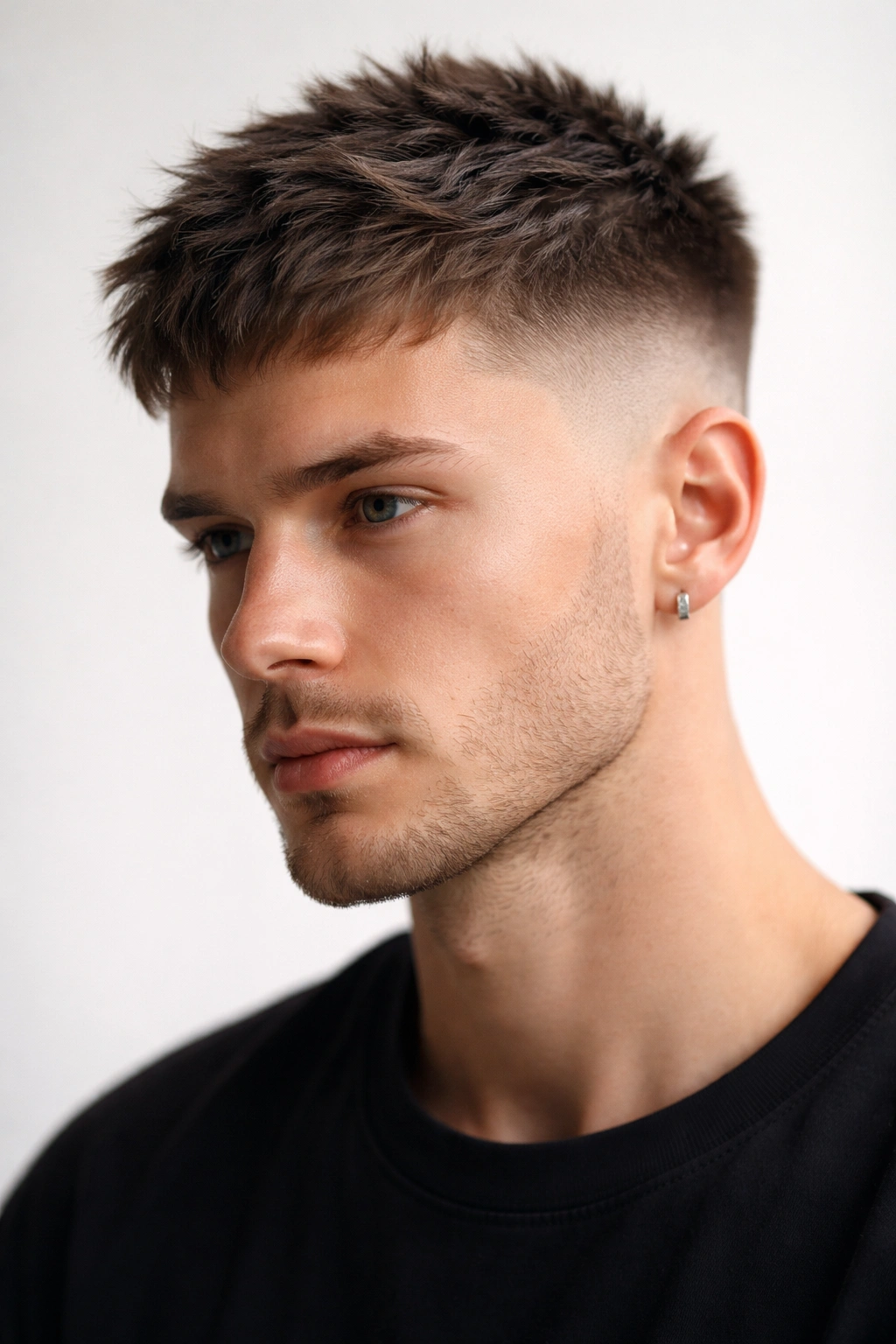
The textured crop with micro fade represents modern minimalism meeting statement styling—it’s shorter than many other options on this list, but the texture and precision fade create undeniable visual interest. The entire top is kept relatively short (maybe 1 to 2 inches of length) and cut with layers and point-cuts to create separated, piece-y texture that moves naturally. The sides fade from this textured length down to nearly shaved skin, with the fade happening over a very short distance—hence “micro fade.”
Why Texture Changes Everything at Short Length
When you’re working with shorter lengths, texture becomes absolutely crucial because it prevents the style from looking plain or flat. The layered, choppy texture catches light, creates movement, and gives dimension that a blunt-cut short crop simply can’t achieve. This texture is what transforms a basic short cut into a genuinely statement-making style.
The Appeal for Active Lifestyles
- This style is genuinely low-maintenance in terms of daily grooming—you can shower, run your fingers through it, and leave
- No blow-drying or styling products required, though they can certainly enhance the look
- Barber visits are needed every 4 to 5 weeks to maintain the texture and fade precision
- This works beautifully for people who want a bold style without high daily grooming demands
Worth knowing: This style suits straight to wavy hair exceptionally well. If you have very curly hair, the texture might look less defined since curl pattern can obscure the layered cuts.
9. Shaved Sides with Long Curly Top
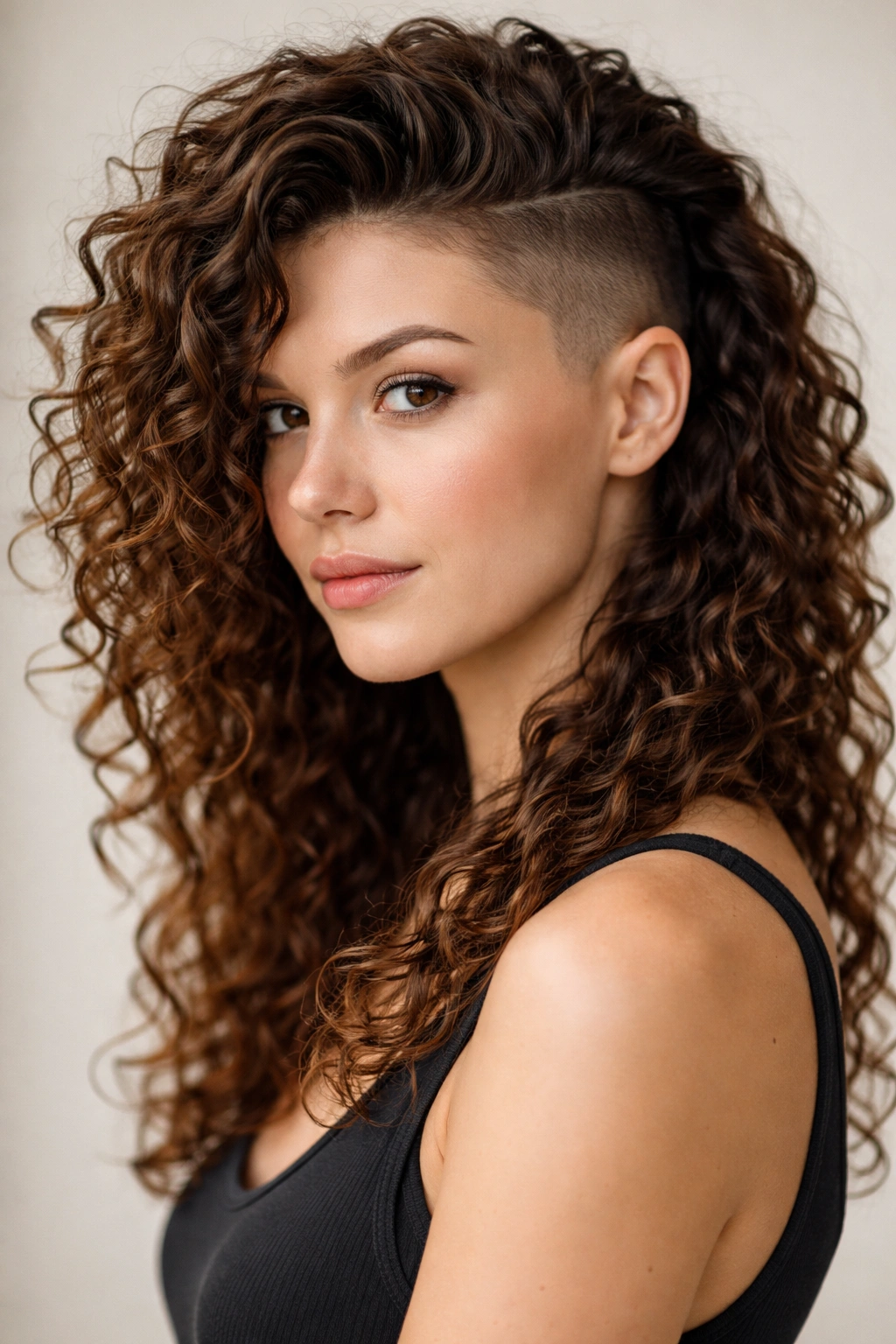
For people with naturally curly or coily hair, combining shaved sides with length and texture on top creates a striking contrast that celebrates natural hair texture. The sides are shaved clean, while the top is left to grow out to substantial length—anywhere from shoulder-length to much longer. The natural curl pattern or coils on top create volume and movement that contrast beautifully with the clean sides.
Working with Natural Texture
The key to this style is embracing and enhancing your natural curl pattern rather than fighting it. Regular deep conditioning and moisture-rich products keep the curls healthy and bouncy. Avoiding heat styling and heavy products that weigh down curls helps maintain the voluminous, statement-making quality of the style. Many people with this style use the “curly girl method” or similar approaches to enhance their natural texture.
Styling and Care Priorities
- Moisturizing products are non-negotiable because healthy curls are beautiful curls
- Regular trims (every 8 to 12 weeks) keep the longer top healthy and prevent split ends that destroy curl definition
- Protective styling at night (like a pineapple or silk bonnet) preserves curl pattern and reduces frizz
- The shaved sides require much less maintenance than the textured top—a touch-up every 6 to 8 weeks keeps them clean
Insider note: This style celebrates individuality and natural beauty in a genuinely refreshing way. The contrast between shaved sides and abundant curly length is visually stunning and makes a powerful statement about embracing what you’ve got naturally.
10. Asymmetrical Pixie with Undercut
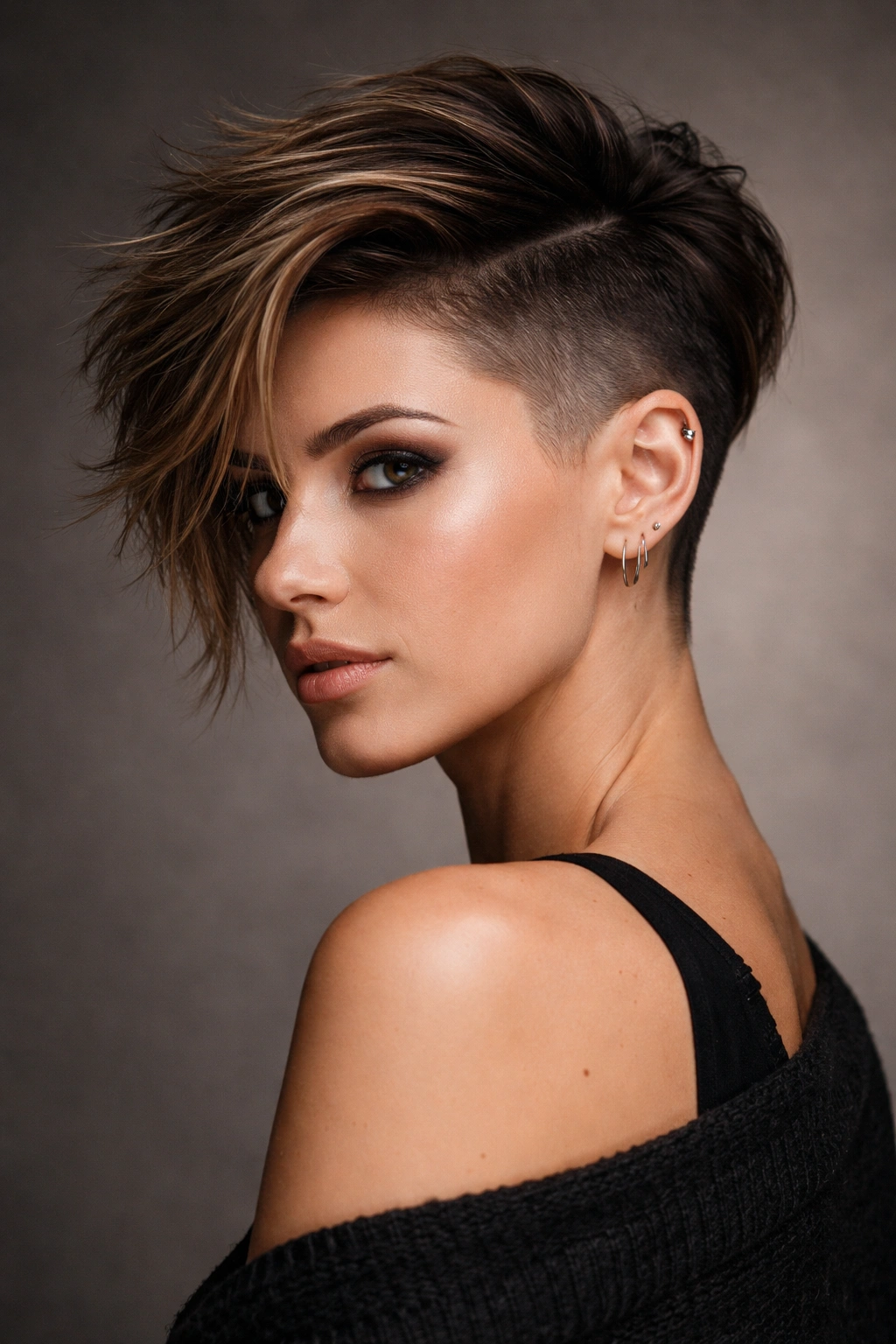
The asymmetrical pixie with undercut merges edgy minimalism with artistic styling by keeping one side substantially shorter (pixie-length, maybe an inch or less) while the other side is longer and swept over dramatically. The longer side is often shaved or faded underneath, creating layers of visual interest and movement. This style works beautifully on people who love short hair but want it to feel more playful and less conservative.
Building Dimension Asymmetrically
The magic of this style is how the asymmetry creates the illusion of more texture and movement than the actual length might suggest. When you sweep the longer side over, it creates waves and curves that add dimension. The shorter side can be textured or left smooth, depending on whether you want a softer or edgier aesthetic. The undercut on the longer side creates depth and allows the longer section to flow more freely.
Who This Style Suits Best
- People with naturally textured or wavy hair find this style incredibly flattering
- Face shapes on the rounder side often benefit from the angles and asymmetry
- If you’re nervous about going fully short, asymmetry gives you the security of length on one side
- The style reads as bold and intentional without being as dramatic as a full mohawk or complete shave
Pro tip: Styling asymmetrical pixies requires blow-drying the longer side to achieve the sweep and movement you’re after. Product helps, but heat-styling is what really brings this style to life.
11. Braided or Twisted Top with Shaved Sides
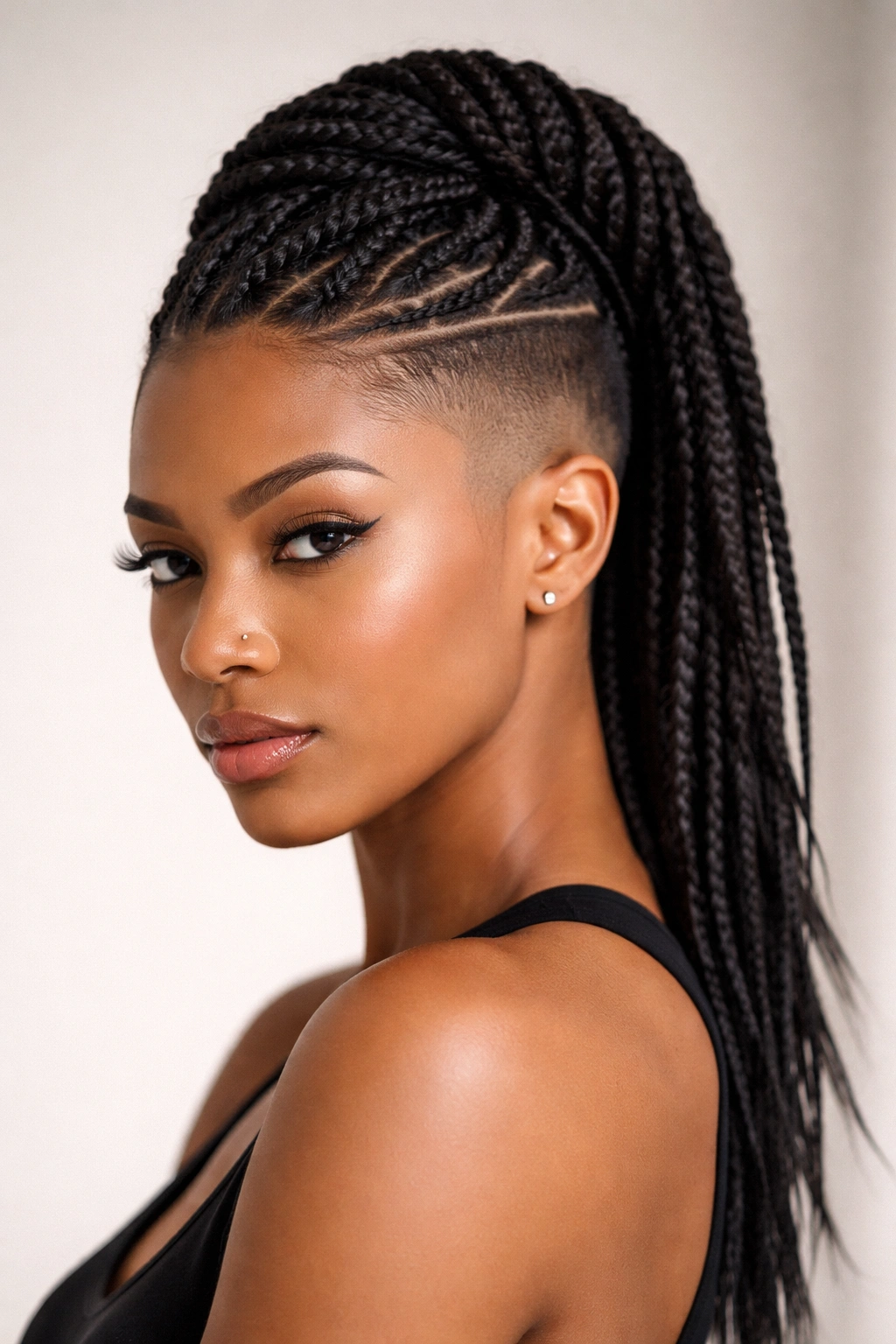
For people looking to blend protective styling with statement-making aesthetics, growing out the top long enough for braids or twists while keeping the sides shaved creates a genuinely unique look. The sides stay cleanly shaved or faded, while the longer top is regularly braided, twisted, or styled in other protective ways. This approach celebrates length and texture while maintaining the edgy contrast of shaved sides.
Styling Versatility with Protective Styles
The beauty of this approach is that it offers tremendous versatility—you can switch between different protective styles every few weeks without needing a cut. One week you might have Senegalese twists, the next cornrows or box braids. The protective styles also help your longer hair stay healthy by minimizing manipulation and breakage. The shaved sides remain a constant statement element throughout all the style changes.
Maintenance Requirements
- Protective styles on long hair typically last 4 to 8 weeks depending on the style and your lifestyle
- You’ll want regular edge and side touch-ups every 3 to 4 weeks to keep the contrast crisp
- Moisturizing is crucial for healthy, long hair—protective styles should be followed by deep conditioning
- This approach requires commitment to regular styling but offers flexibility in the actual style itself
Worth knowing: This style celebrates and honors a range of cultural aesthetics and styling traditions. It’s a way to make a statement while actively protecting and growing your hair health.
12. Colored Block with Shaved Sides
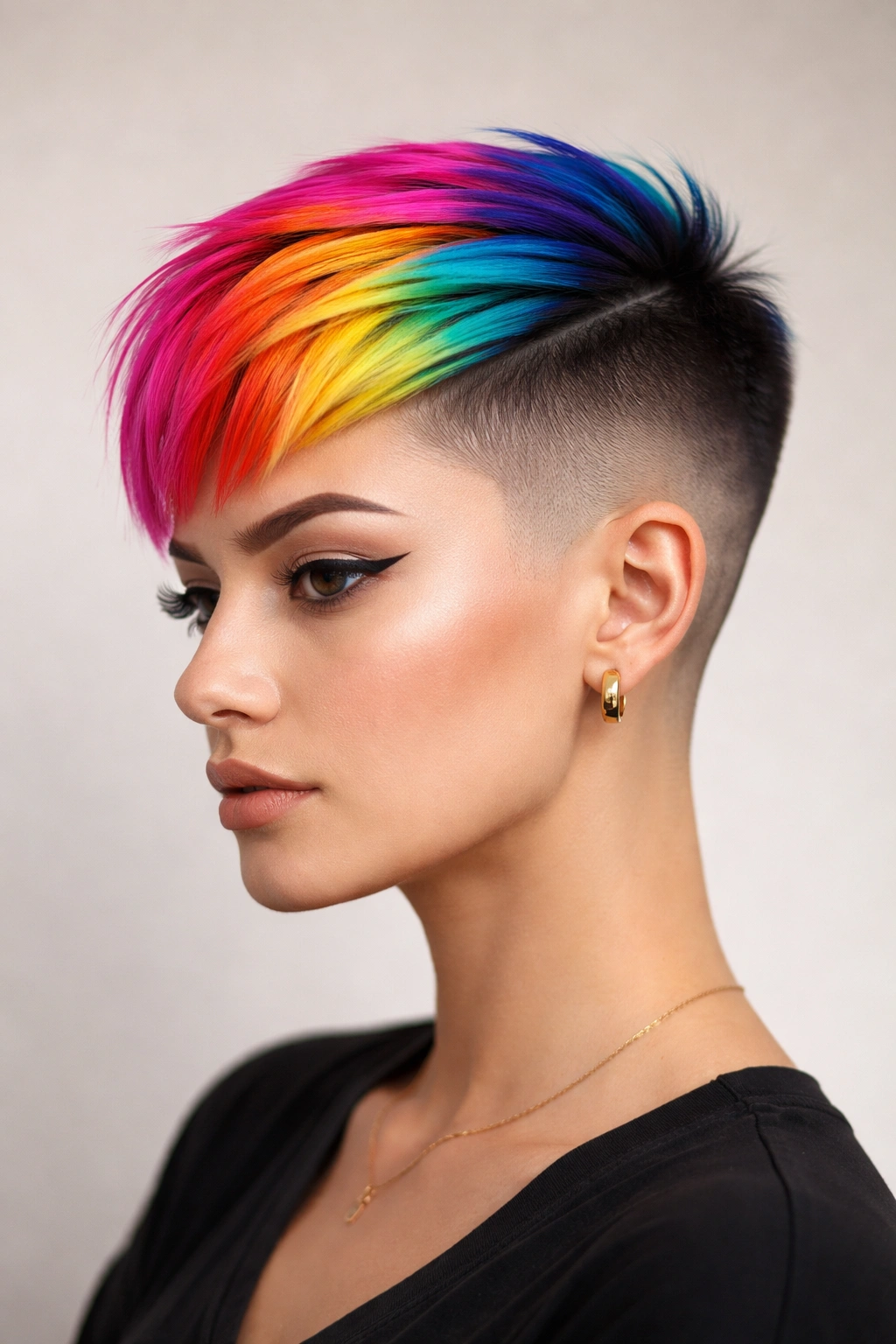
For the ultimate statement style, combining shaved sides with bold color blocking—whether that’s completely different colors in specific sections, color melting, or vivid tones that contrast with your natural color—creates an absolutely unmissable look. The shaved sides provide a clean canvas for the contrast, while the longer top showcases color in maximum visibility. The geometric precision of shaved sides actually emphasizes colored sections and patterns beautifully.
Color and Cut Working Together
The interplay between color and the geometric lines created by shaved sides can create genuinely artistic effects. You might have one bold color on top fading into another, colors that follow the contours of your cut, or a completely different color on the top versus the sides. The shaved or faded sides serve as a neutral backdrop that lets color become the primary visual statement.
Maintenance Demands
- Colored hair requires more frequent professional trims (every 4 to 6 weeks) because color processing can damage the hair
- Color touch-ups are typically needed every 4 to 8 weeks depending on the color and your natural growth
- The combination of colored hair and a shorter cut actually minimizes overall damage compared to long, colored hair
- Professional color work is genuinely non-negotiable—box dyes rarely achieve the artistic effects possible with a skilled colorist
Real talk: This is the highest-maintenance option on this list in terms of color and cut combined. If you commit to it, you’re committing to regular salon visits and professional care. But the visual payoff is genuine, bold, unapologetic statement-making.
Final Thoughts
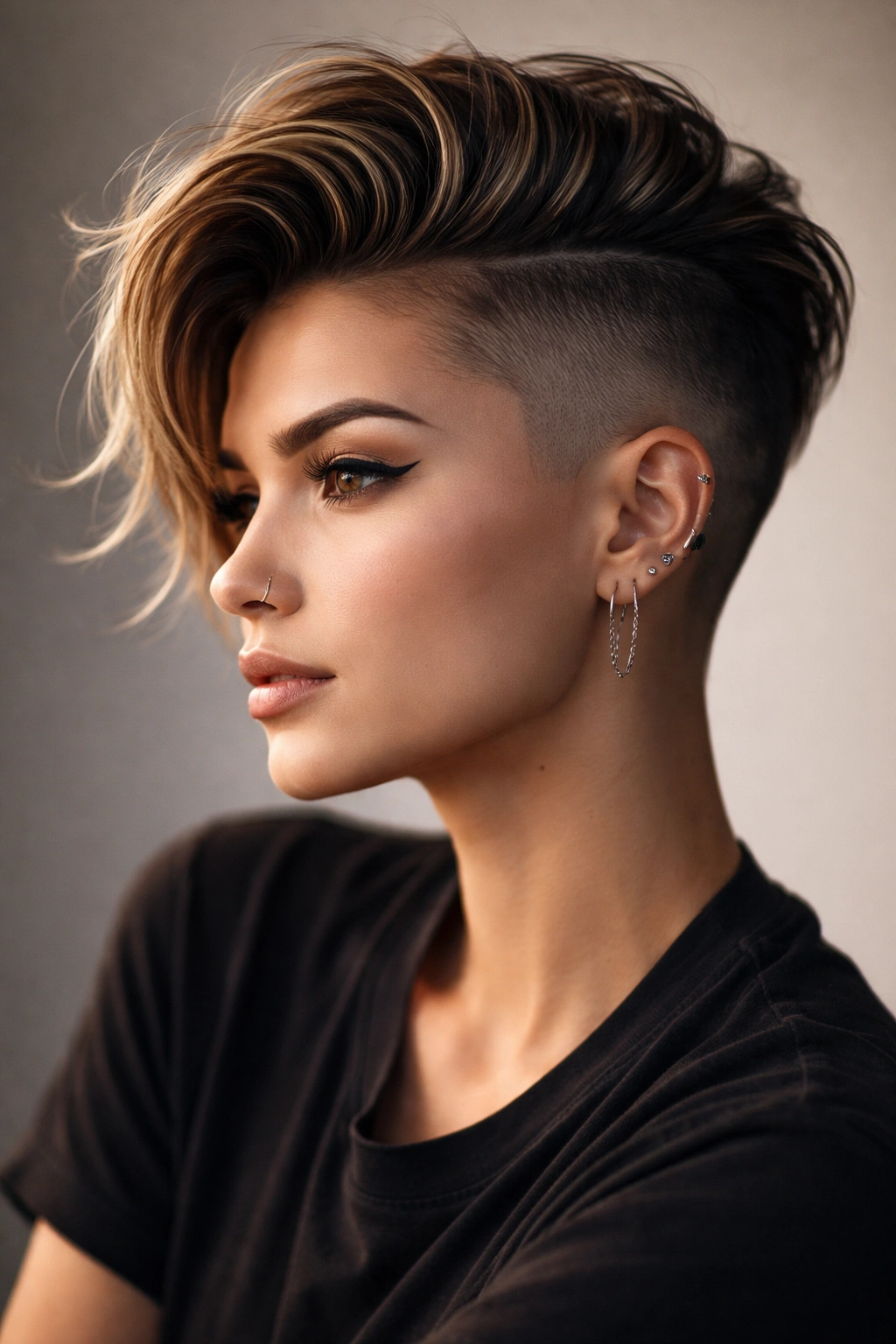
Choosing a statement hairstyle with shaved sides isn’t just about picking a look—it’s about declaring something about how you want to move through the world. These styles refuse to be ignored, and that takes genuine confidence. Whether you choose the classic disconnected undercut, the artistic drama of a mohawk, or the vulnerable boldness of shaved sides with long curls, you’re making an investment in your appearance and your self-expression.
The practical reality is that all of these styles require commitment. You’ll need a barber or stylist you trust completely, regular maintenance appointments, and usually some daily styling effort. But the trade-off is that you get to wear something that genuinely reflects who you are. You get strangers’ attention and compliments. You get the daily confidence boost that comes from knowing you look undeniably intentional.
Start by considering your lifestyle, your hair texture, your face shape, and honestly, how much styling effort you’re willing to invest each day. Then show these reference images to a talented barber and have a real conversation about what will actually work for your specific hair and life. The best statement hairstyle is the one you’ll maintain and actually wear, not the one that looks incredible in pictures but requires too much effort for your reality. Commit to it fully, and you’ll be amazed at how much a single haircut can change how you feel about yourself.
