



Short hair doesn’t mean you’re stuck with a boring gym look. In fact, some of the most stylish, secure, and sweat-resistant hairstyles work best on shorter lengths—they’re easier to secure, less likely to come loose, and can actually look fresher than longer styles by the time you’ve finished your workout. The trick isn’t finding a style that works; it’s knowing which techniques keep your hair locked in place through cardio bursts, weight-lifting sessions, and all the movement in between.
The difference between a hairstyle that falls apart halfway through your workout and one that stays put comes down to three things: the right products, the right technique, and the right choice for your hair type and length. A style that relies solely on pins or rubber bands might betray you mid-squat, but one that combines texture, product, and secure anchoring will carry you from warm-up through cool-down. You’ll also discover that certain styles actively work in your favor at the gym—they keep hair off your face and neck where sweat builds up, they prevent that awkward sweaty-hair-in-mouth moment during cardio, and they actually look intentional rather than like you just threw your hair up in desperation.
What makes short hair such an advantage in the gym is that even the simplest style gets visual impact from movement and texture. Your workout sweat won’t flatten everything into a sad, greasy mess the way it does with longer hair—short styles often look more defined and purposeful by the end of a session. Whether your hair is a pixie cut, a textured bob, or a tapered undercut, there’s a gym-proof style that matches your length and your personal aesthetic.
1. High Ponytail with Texture
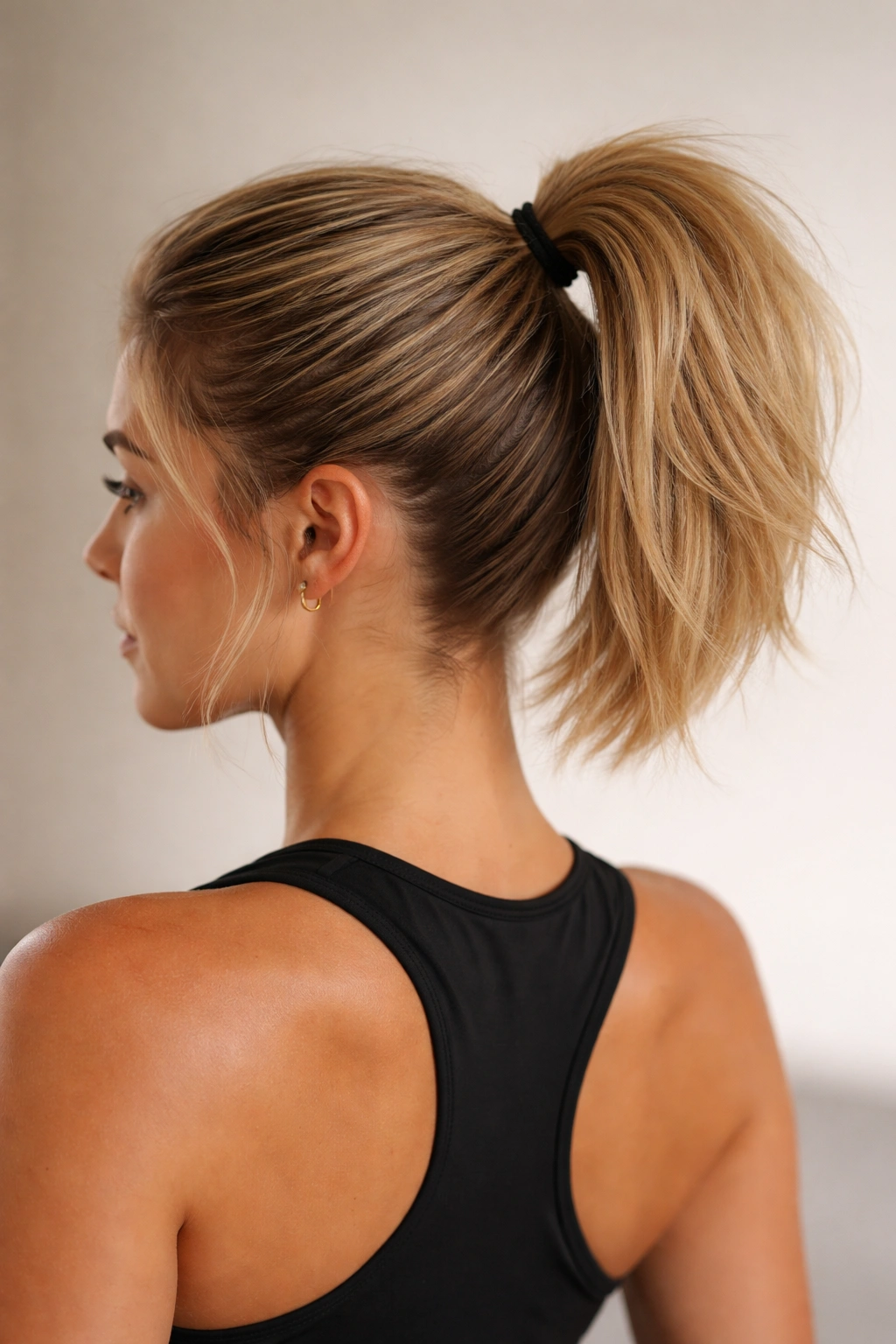
A high ponytail keeps everything off your face and neck, which is exactly what you need when you’re focused on form, not fighting your hair. The secret to keeping it secure isn’t just the ponytail holder—it’s creating texture so the hair grips itself and resists the pull of motion and gravity. Short hair needs a little help staying smooth enough to gather, but textured enough to hold.
Why It Works for Workouts
Gravity works with you here instead of against you. By anchoring your hair high on your crown, you’re putting the weight closer to where the hair naturally wants to stay put. The higher the ponytail, the less motion pulls on it during movement—whether you’re running, jumping rope, or doing lateral work. Short hair in a high ponytail sits snug against your scalp and doesn’t bounce or swing in a way that creates drag or distraction.
How to Make It Stay
- Start with slightly damp or textured hair—blow-dry it with texture spray if your hair is naturally straight and slippery
- Spray your roots lightly with texturizing spray or dry shampoo to create grip at the base where you’ll anchor the ponytail
- Gather hair at the very top of your crown using your fingers, not a brush (your fingertips create better grip)
- Use a strong elastic band designed to hold, not a thin hair elastic that slides—look for bands with grips or ridges
- Once the ponytail is secure, wrap a small section of hair around the base and pin it underneath with a bobby pin for reinforcement
- Smooth flyaways with a damp edge brush and set them with lightweight hairspray
Quick facts:
- Best for pixie cuts through chin-length bobs
- Takes 90 seconds once you’ve got the grip texture in place
- Holds through HIIT and moderate-impact cardio without touching up
- Works with both straight and textured hair types
Pro tip: Wear your ponytail on the same side you usually sleep on or part your hair—this way it sits naturally and doesn’t fight your hair’s own directional growth.
2. Sleek Low Bun
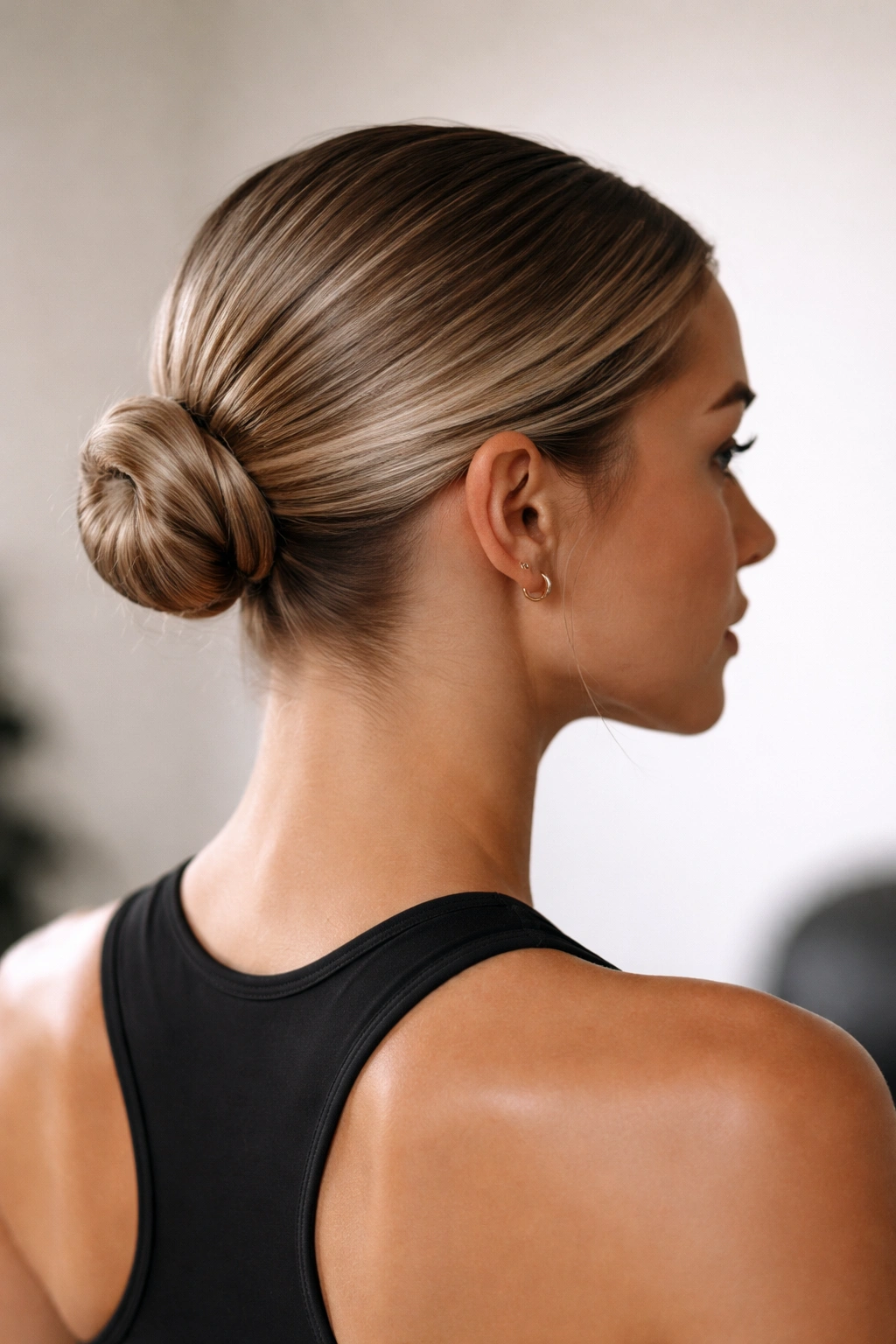
A low bun is deceptively simple, but it’s also deceptively strong. The closer to your neck you position the bun, the less leverage gravity and motion have to pull it loose. A truly sleek version—where every strand is smoothed tight and locked down—can outlast a sloppy high ponytail by miles. This is the hairstyle that gets you through intense training without a single touch-up.
Why It Works for Workouts
The magic of a low bun is that it distributes the weight of your hair evenly across a smaller footprint on your scalp. There’s no dangling length creating drag, no swinging motion pulling at the anchor points, and no hair in your face when you’re looking down at weights or doing planks. For short hair especially, a low bun looks polished and intentional rather than like you’ve just twisted everything up to get it out of the way.
How to Make It Stay
- Use a smoothing serum or light styling cream on damp hair, then blow-dry straight—sleek buns depend on smooth, cooperative hair
- Brush hair into a low ponytail at the nape of your neck, holding it tight with both hands as you secure it with a strong elastic
- Twist the ponytail gently and wind it into a coil, pressing it down and into itself to create a compact disc shape
- Secure the bun with bobby pins inserted horizontally through the center—use at least 3-4 pins, placed perpendicular to the twist so they lock the shape in place
- Spray the entire bun with hold spray, focusing on any wisps that might escape
- Use a fine-tooth comb to smooth the hairline and seal any flyaways with edge control
Quick facts:
- Best for textured, shoulder-length short hair, and bobs with some length to twist
- Takes 2-3 minutes to execute properly
- Holds through strength training and endurance workouts without adjustment
- Creates a sleek, professional look that transitions straight from gym to shower without looking rushed
Pro tip: Dampen your hands slightly and run them over the finished bun—the moisture helps set flyaways without adding visible product residue.
3. Half-Up Twisted Style
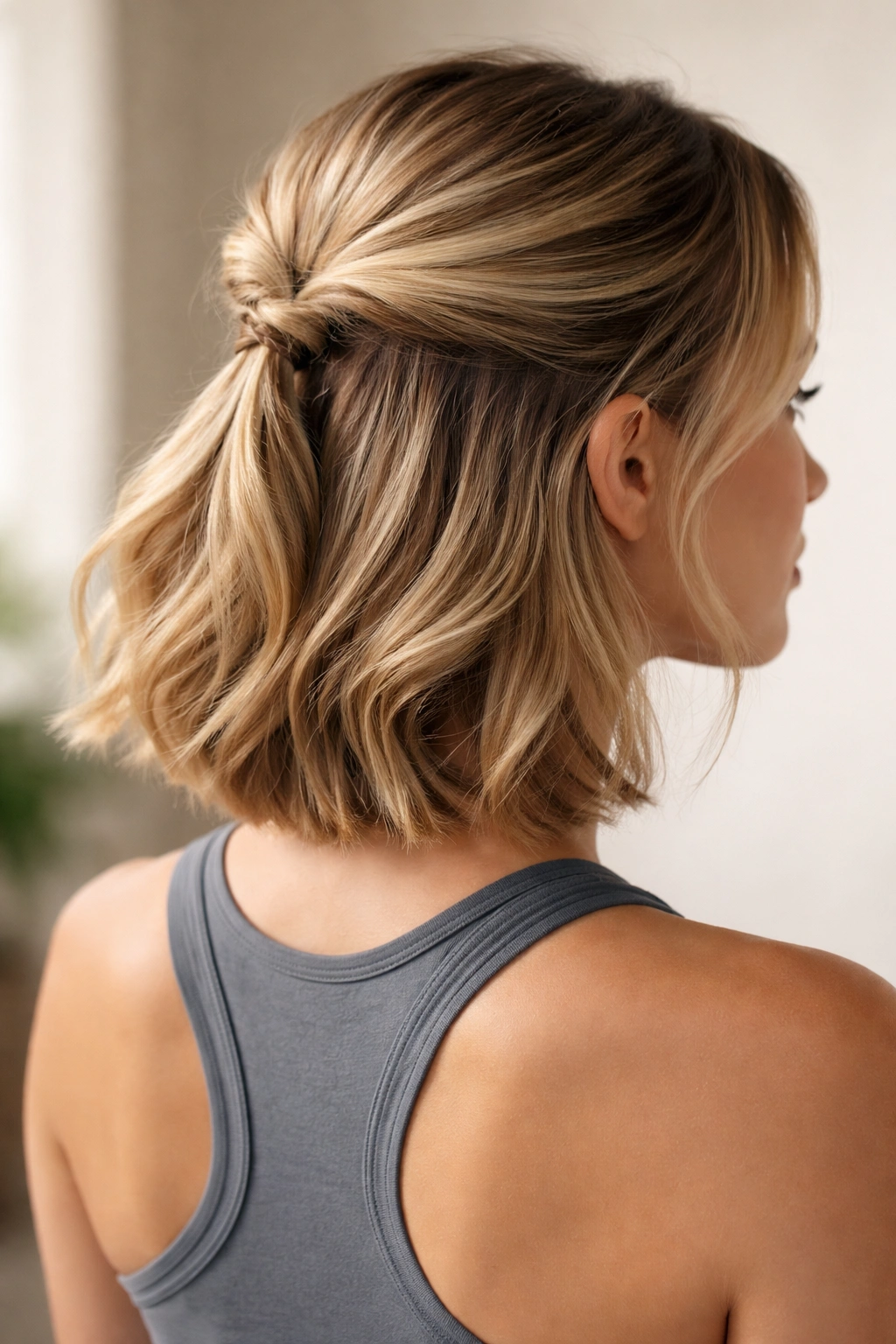
A half-up style gives you the best of both worlds: hair is partially controlled and anchored, while the bottom section stays loose and moves with you. The twist is what makes this gym-specific—it creates grip and friction that keeps the secured portion from sliding down as you move. This style works especially well for shorter bobs where you have enough length to gather but still want some freedom of movement.
Why It Works for Workouts
Half-up styles keep hair off your face and away from your neck sweat zones while still allowing airflow around your head. The twist mechanism creates internal friction that resists the pull of movement—every time you shift your weight or turn your head, the twist tightens slightly instead of loosening. For gym work, this means your style actually gets more secure as you sweat and move, not less.
How to Make It Stay
- Start with textured or second-day hair—freshly washed straight hair will slip too easily
- Create a deep side part and spray the roots at your crown with texturizing spray
- Take a section from one side of your head (above your ear) and twist it loosely as you move toward the back
- Cross the twisted section over to the opposite side, creating an asymmetrical crown effect
- Pin the twist in place at the back with 2-3 bobby pins hidden beneath the twist
- Leave the bottom half of your hair down, and tousle it slightly so it looks intentional
- Finish with a light hold spray that won’t make the loose section feel stiff
Quick facts:
- Best for bobs and shorter styles with at least 4-6 inches of length
- Takes about 2 minutes to complete
- The twist creates security that increases as you move and sweat
- Looks polished enough for before-and-after photos but casual enough for focused training
Pro tip: Grip the twist with your fingers rather than a comb when creating it—this builds more texture and friction into the hold.
4. Faux Hawk with Gel
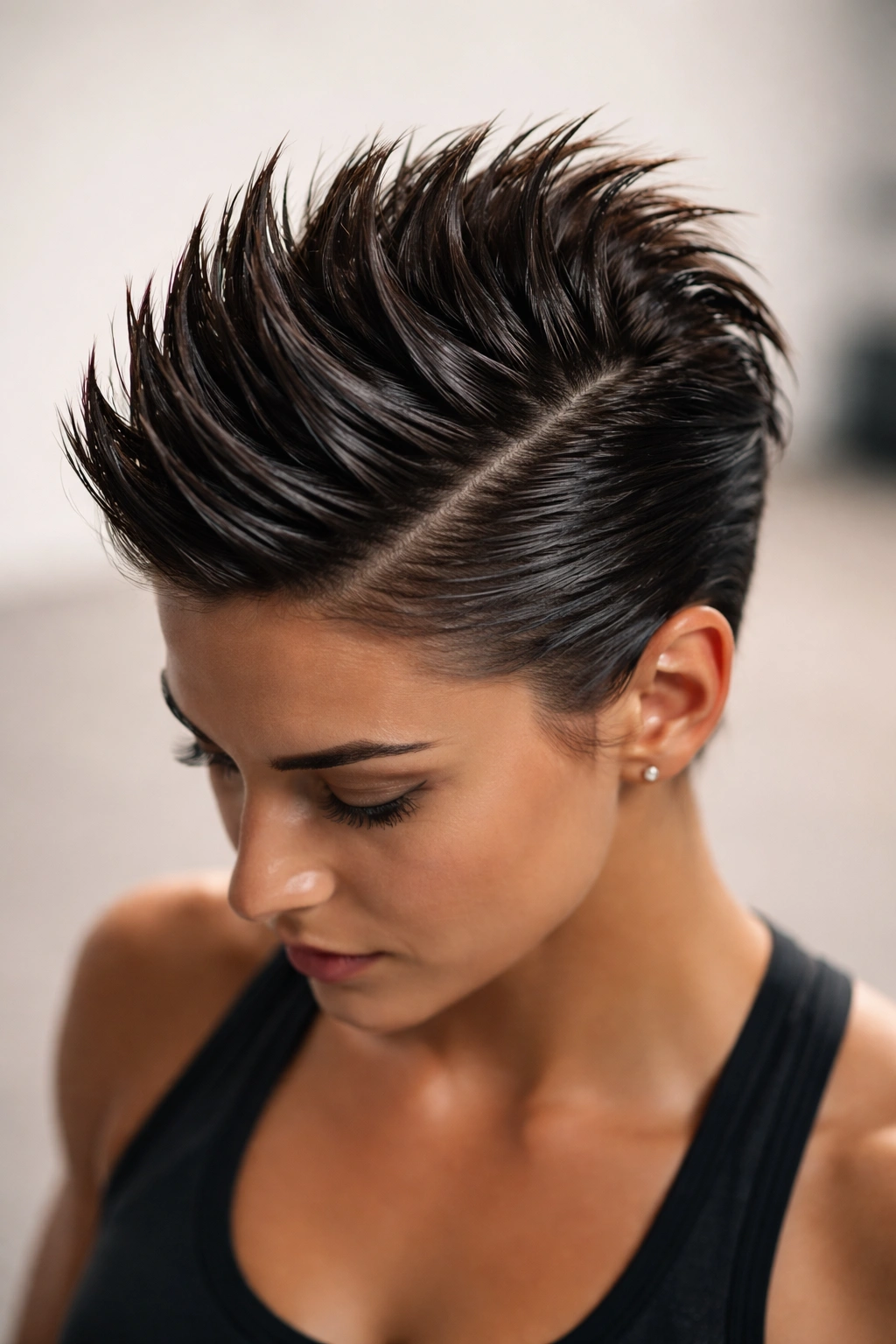
If you’ve got short textured hair or a pixie cut, a faux hawk using strong-hold gel is a gym look that’s both functional and visually striking. The gel creates a cast around your hair that acts like armor—individual strands are locked together, so nothing can separate or move independently. It’s the most no-maintenance gym style you can achieve because movement actually reinforces the hold.
Why It Works for Workouts
A gel-locked faux hawk doesn’t rely on pins or elastics at all—the product itself is doing the security work. This means there’s nothing to press against your scalp uncomfortably, nothing to shift or slip, and no bobby pins that might stick you when you’re lying on a bench. Once you’ve applied the gel and it’s set, your hair literally cannot move out of place during a workout. The texture of the style also keeps hair off your face without requiring any elastic at the hairline.
How to Make It Stay
- Start with damp hair—gel works best when applied to moisture, not bone-dry strands
- Separate the center section of hair where you want the hawk to rise (roughly two inches wide down the middle of your head)
- Apply strong-hold matte gel directly to the roots of the center section, using your fingers to rake it upward and back
- Smooth the side sections down and back with a bit of gel, creating a sleek, tapered effect
- Let the gel dry completely (usually 5-10 minutes) before working out—wet gel will move
- The style holds through an entire workout and doesn’t require any touch-ups or adjustments
Quick facts:
- Best for pixie cuts, textured short cuts, and very short bobs
- Takes 5 minutes including dry time
- Survives intense cardio, weight training, and high-sweat sessions without a single bobby pin
- Looks intentionally edgy rather than gym-practical, which is a bonus for confidence
Pro tip: Use a matte or texture gel rather than a glossy one—the finish looks more polished and less like product is involved.
5. Braided Crown
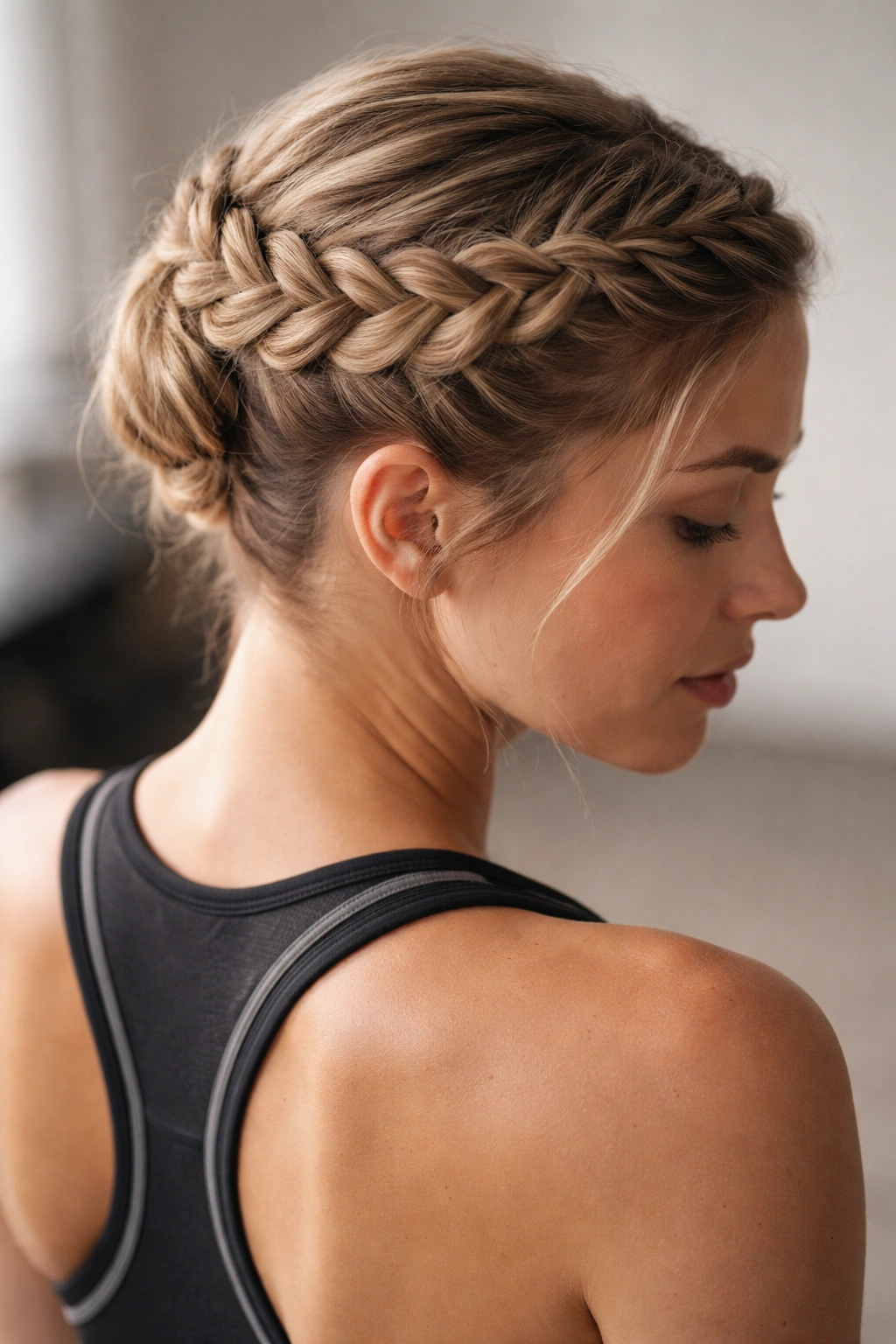
A braided crown works beautifully on short hair because it creates a defined, secure pathway for your hair to follow. Rather than trying to contain loose strands, a braid gathers them into a locked structure that can’t come undone. The crown placement keeps everything off your face and neck while distributing the hair’s weight evenly across your scalp. It’s the most charming of the secure gym hairstyles.
Why It Works for Workouts
Braids are inherently structural—they’re literally engineered to hold hair in place through tension and overlap. A crown braid adds the geometric advantage of circling your head, which means the anchor points are distributed across multiple areas of your scalp instead of concentrated in one spot. This distributes strain and makes the style virtually impossible to loosen accidentally, even through intense movement. The updo nature of a crown braid also means all your hair is pinned away from your face and neck.
How to Make It Stay
- Start with textured or slightly damp hair—smooth hair slips out of braids too easily
- Create a deep side part for a softer, more interesting final look
- Take a small section of hair at your temple on the deeper side and begin a three-strand braid
- As you braid, gradually incorporate more hair from around your head, pulling strands in from above your ear and from the back
- Continue braiding around the back of your head, curving the braid along your crown
- Finish the braid on the opposite side from where you started, and secure it with a small elastic
- Tuck the braid tail behind your ear or pin it with bobby pins hidden beneath the braid
- Spray lightly with hold spray, focusing on the anchor points and any flyaways
Quick facts:
- Best for textured hair and bobs with at least shoulder-length proportions
- Takes 5-7 minutes to perfect, but gets faster with practice
- Holds securely through all workout types without adjusting
- Can be loosened slightly after your workout and worn casually through the rest of your day
Pro tip: Braid slightly tighter than feels comfortable when you first start—as you sweat and move, the braid will loosen just enough to feel perfect.
6. Textured Pixie with Clips
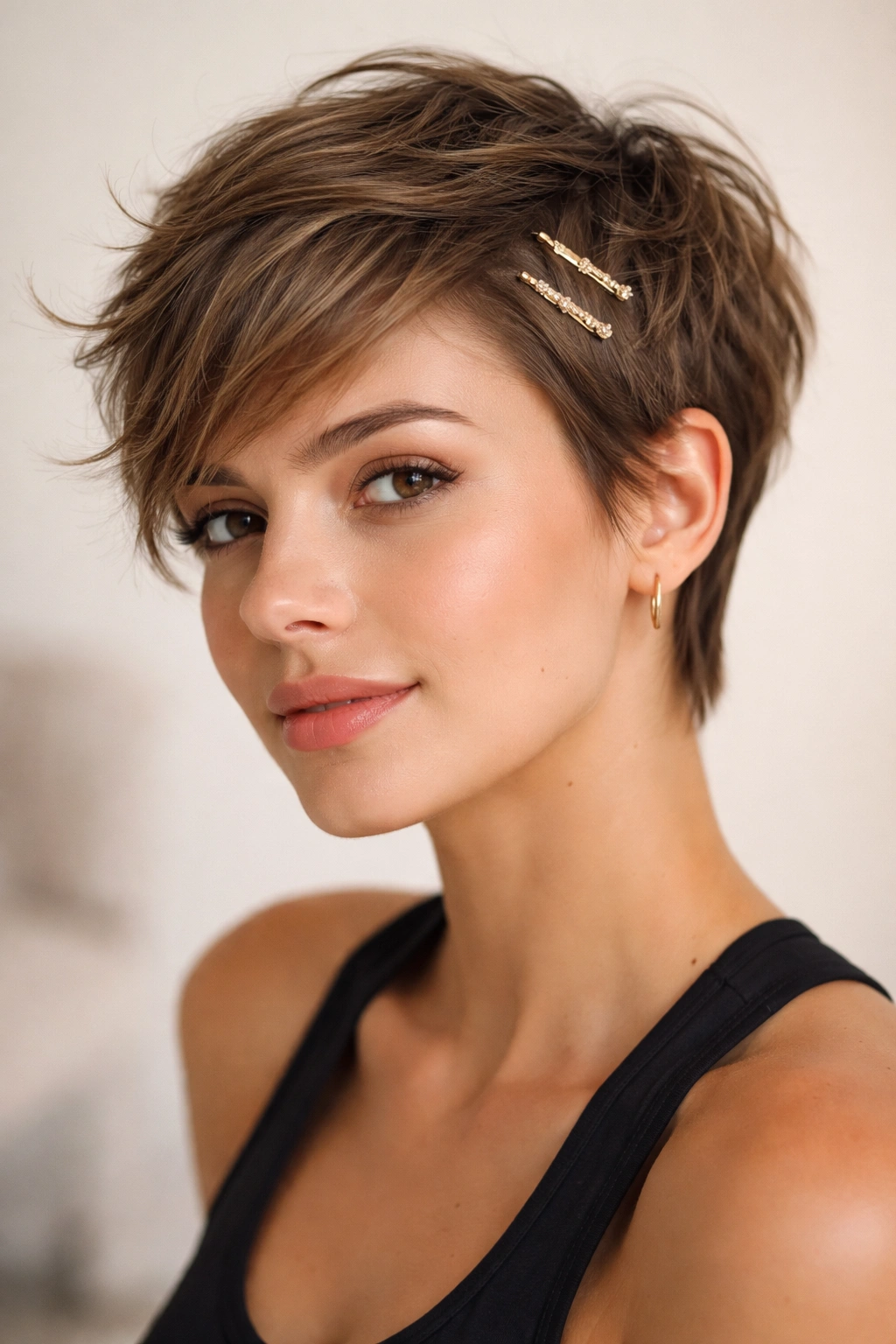
If you have a pixie cut, you might think your hairstyle options are limited at the gym. Actually, a textured pixie is already gym-ready on its own, but adding one or two decorative clips creates visual interest and can add subtle security if any flyaways are a concern. Clips won’t hold a pixie in place (there’s not enough hair), but they can tame the top or sides if your texture tends to fluff upward.
Why It Works for Workouts
A pixie cut is inherently gym-proof because there’s no length to swing, no hair to fall in your face, and no moisture to create frizz or heaviness. The only challenge is managing texture that might stand up during a workout. Clips positioned strategically can smooth that texture down and keep everything flat and intentional-looking. The clips are more about aesthetics than function, but they do add a polished touch to an otherwise maintenance-free look.
How to Make It Stay
- Start with textured, slightly damp pixie hair
- Apply texturizing spray or dry shampoo to add grip and definition
- Blow-dry your pixie while using your fingers to direct the texture the way you want it to sit
- Once dry, you can leave it as-is for a totally hands-free gym look, or add subtle clips for refinement
- Position small clips (like claw clips or decorative metal clips) along the top or sides to smooth flyaways and add visual interest
- The clips should secure hair that might otherwise stick up, not gather significant length
- No other holding is needed—the pixie cut itself is already locked down at the short length
Quick facts:
- Best for actual pixie cuts, very short bobs, and cropped styles
- Takes literally 2 minutes if you’re using no clips, or 5 minutes if you’re adding a clip accent
- Zero chance of this coming loose or needing adjustments during a workout
- Requires zero product if you prefer minimal, or texturizing spray if you want defined texture
Pro tip: Use matte black or metallicmetal clips that match your skin tone rather than shiny or novelty clips—they read more intentional and less like you’re holding your hair down with office supplies.
7. Wet-Look Slicked Style
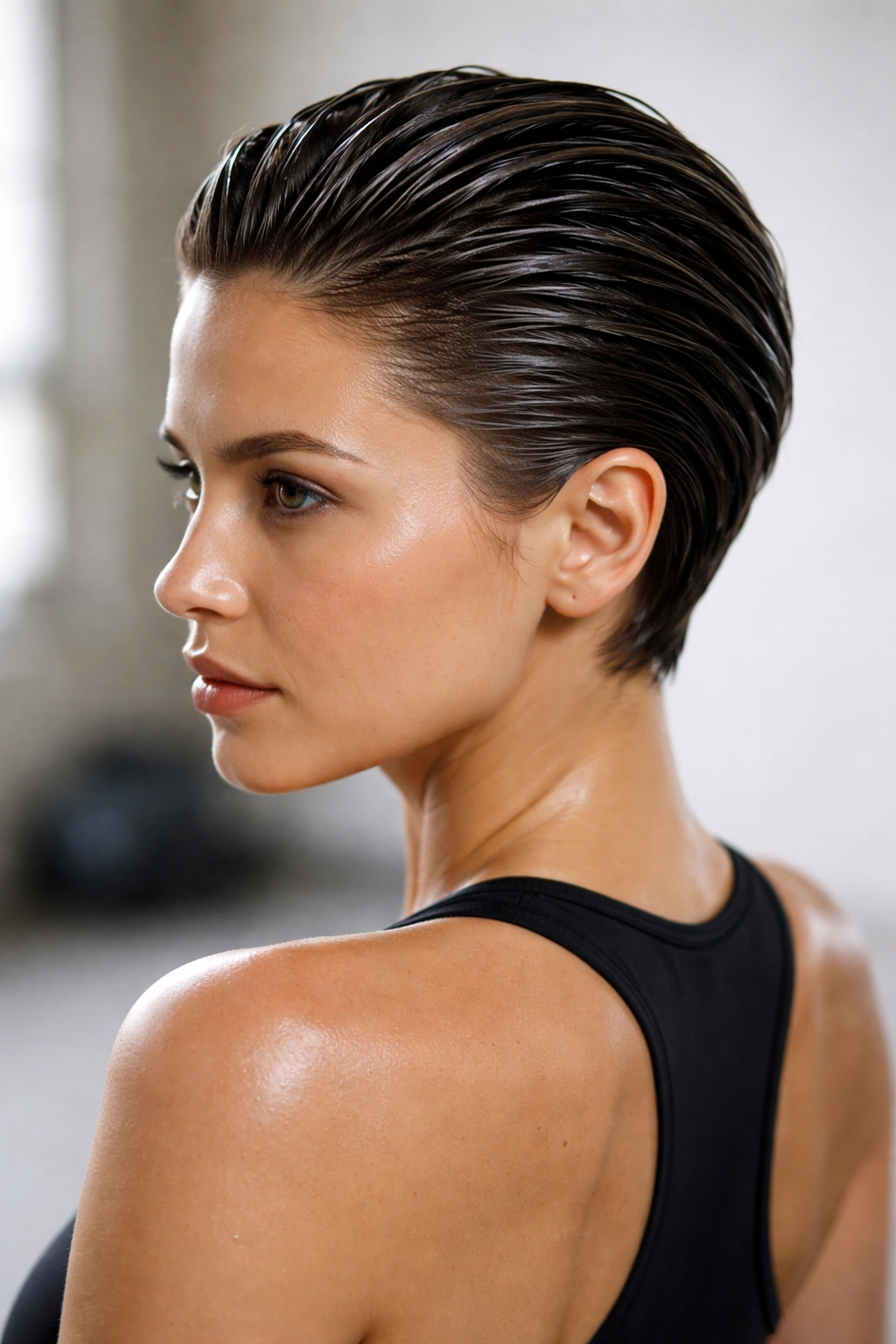
A wet-look slicked style is exactly what it sounds like: hair combed back slick and glossy using gel or a smoothing serum. This style has become increasingly popular in fitness environments because it looks polished, it’s completely secure, and it actually hides the appearance of sweat by design. The “wet” effect of the product means sweat blends in rather than creating contrast between dry and wet sections.
Why It Works for Workouts
The genius of a slicked style is that it solves the biggest gym hair problem: the transition from sweat-free to sweaty-looking. A slicked style with product already looks wet and polished, so when you actually do sweat, the contrast isn’t jarring. Your hair won’t look progressively worse as your workout progresses—it’ll look intentional and consistent. The smoothing gel also locks everything down so there’s zero movement, zero flyaways, and zero adjusting needed.
How to Make It Stay
- Work with clean or second-day hair—freshly washed hair is too slippery to hold a slick style
- Apply smoothing serum or light gel to damp hair
- Use a fine-tooth comb to brush all hair straight back from your face and crown
- Comb continuously to create a glossy, smooth surface with no texture
- Once the style is set, you can leave it loose and flowing, gather it into a low ponytail, or create a slicked bun
- The serum or gel holds the smoothness in place throughout your workout
- The style actually looks better after you sweat because it becomes progressively more glossy
Quick facts:
- Works on all hair types and lengths of short hair
- Takes 3-5 minutes to execute
- Stays perfect through any workout intensity without a single adjustment
- Looks equally good before, during, and after your workout
Pro tip: Use a clear gel or serum rather than white product—clear product dries invisibly and won’t show if it separates or flakes, while white product can look ashy on darker hair.
8. Space Buns
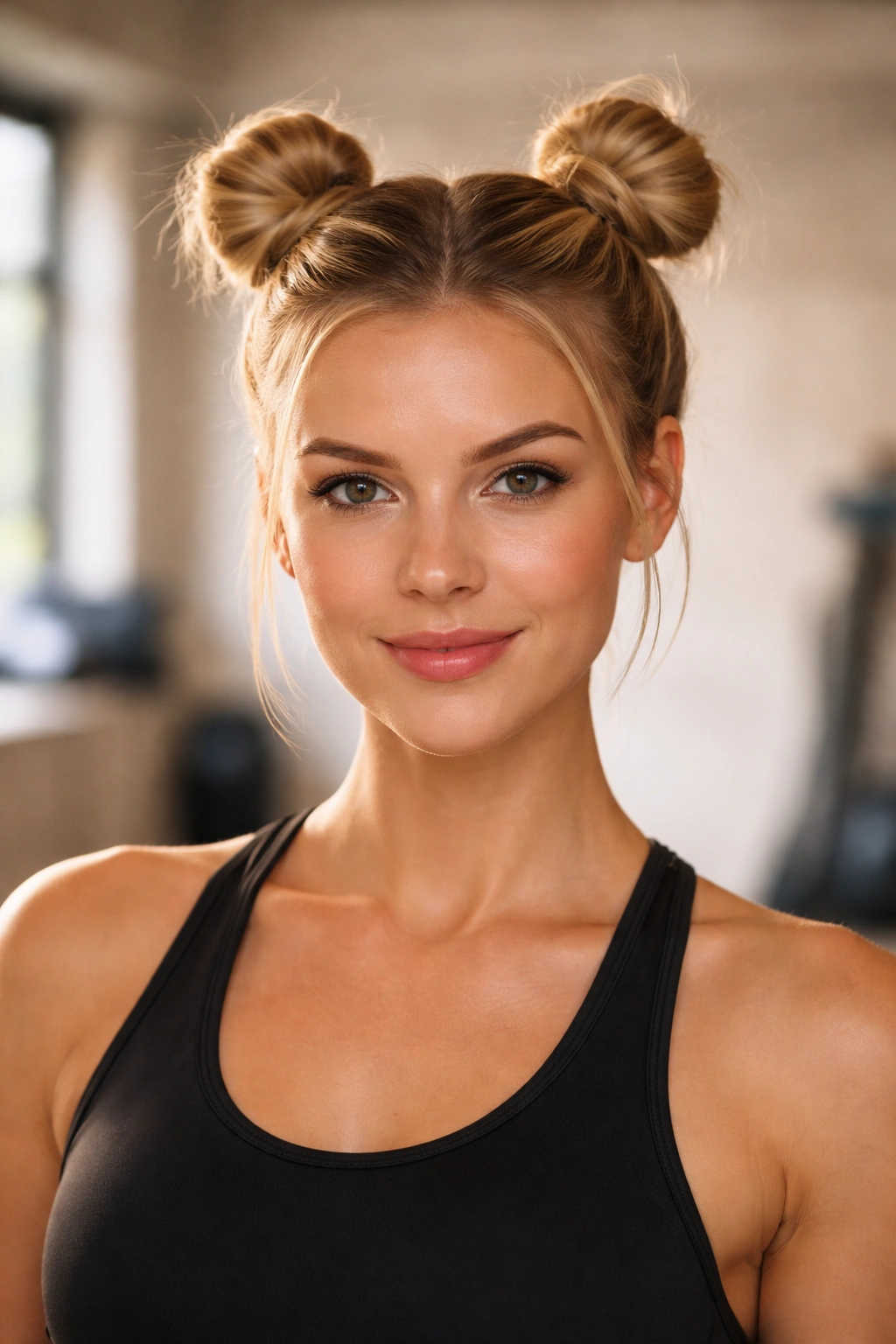
Space buns on short hair create playful visual interest while being surprisingly secure. Two small buns positioned high on your head distribute the weight of your hair across two anchor points instead of one, which makes them more stable than a single bun. They also keep hair completely off your face and neck, and they look intentionally fun rather than like you’re just trying to contain your hair during a workout.
Why It Works for Workouts
Space buns work because they’re essentially two secure points instead of one, which cuts the leverage that gravity has over your style in half. Each bun is lighter and tighter than a single larger bun would be, so they sit close to your scalp with minimal movement. The placement at the crown and top-back areas of your head also aligns with where your hair’s natural anchor points are strongest. Most importantly, they look so intentional that they read as a style choice rather than a practical gym hack.
How to Make It Stay
- Start with textured hair or apply texturizing spray to create grip
- Create a center part from your forehead to the nape of your neck
- On one side of the part, gather hair at the crown into a high ponytail and secure it with a small elastic
- Twist the ponytail and coil it into a small bun directly above the elastic, then secure the bun with bobby pins
- Repeat on the opposite side, creating a matching bun at the same height
- Smooth flyaways with a damp edge brush and spray lightly with hold spray
- Each bun should sit independently with no connection between them, creating the “space” effect
Quick facts:
- Best for bobs and shorter styles with at least 4-6 inches of length
- Takes about 5 minutes to execute
- Holds securely through any workout style
- Works for people who want a playful, bold gym look rather than a serious one
Pro tip: Make each bun slightly tighter than comfortable—as you move and sweat, it’ll loosen just enough to feel perfect, and the extra initial tightness ensures it won’t slip.
9. Tousled Side Sweep
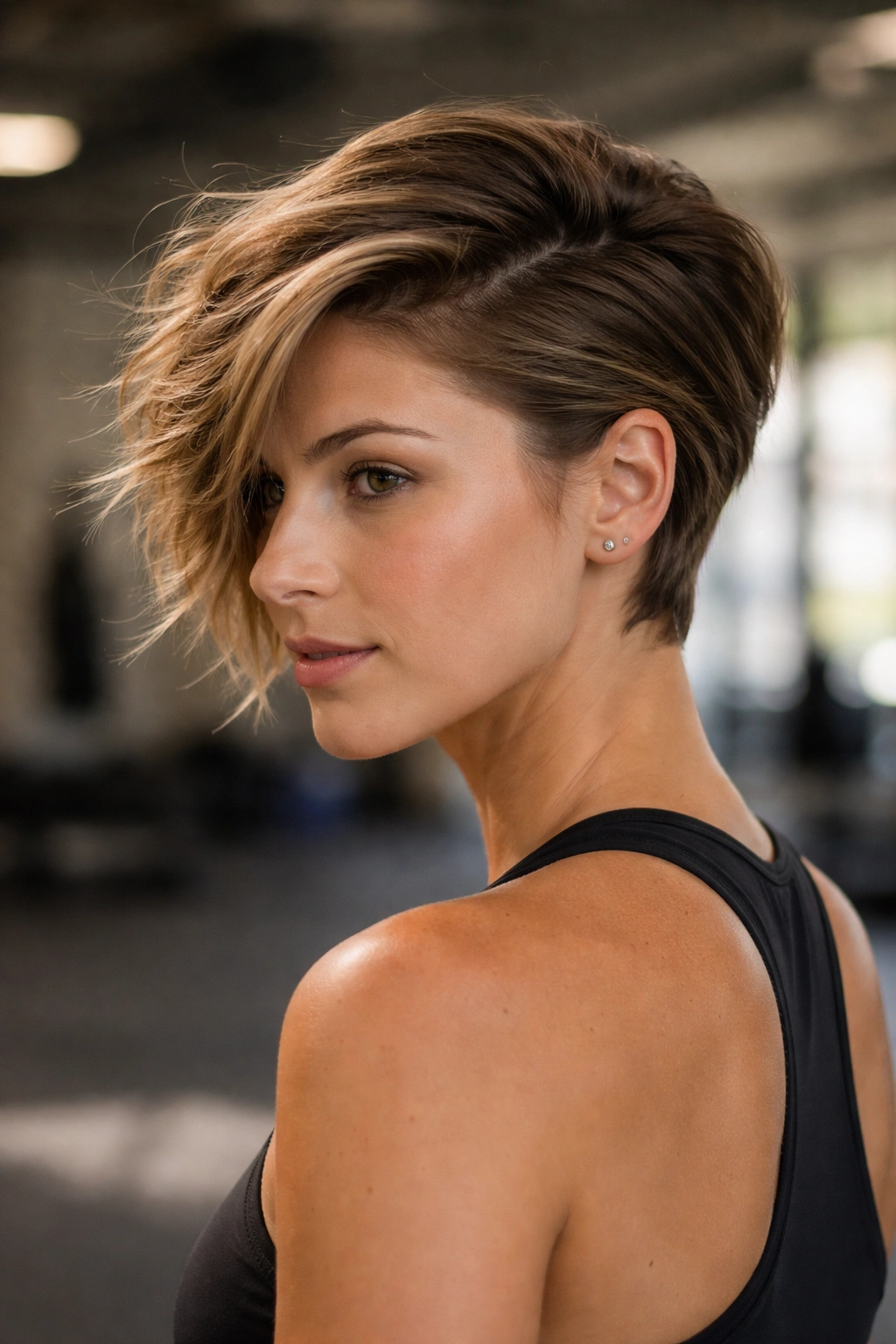
A tousled side sweep starts with hair brushed dramatically to one side, then secured with bobby pins hidden beneath the swept section. The tousle creates texture that adds grip, and the side positioning keeps everything off your face. This style walks the line between polished and casual—it looks like you put effort in, but not so much that you look overdone for a gym session.
Why It Works for Workouts
A side sweep works because gravity helps you instead of fighting you—all the hair is already pulling toward one side naturally, so the hold just needs to reinforce that existing direction. The tousled texture creates friction internally, so the style tightens slightly as you move rather than loosening. Sweeping to one side also creates an asymmetrical visual that makes the style look intentional and thoughtful, not like a last-minute emergency hair solution.
How to Make It Stay
- Apply texturizing spray to second-day hair or slightly damp roots for grip
- Blow-dry hair with your fingers directing it predominantly to one side
- Use a paddle brush to smooth the sweep, starting from the opposite side and brushing all hair toward your chosen side
- Gather the swept hair at the side of your head (roughly above your ear or slightly behind it) and secure with bobby pins inserted horizontally
- Use 3-4 bobby pins crisscrossed through the gathered hair to lock the position
- Lightly tousle the pinned section with your fingers to add texture and make the grip obvious
- Spray with light hold spray to set flyaways without making the style look stiff
Quick facts:
- Works on all short hair lengths from pixie to longer bobs
- Takes 4-5 minutes to complete
- Holds securely through moderate to intense workouts
- Creates visual interest without looking fussy or over-styled
Pro tip: Sweep to whichever side feels natural for your part and hair growth pattern—fighting your hair’s natural direction creates more flyaways and instability.
10. Secured Top Knot
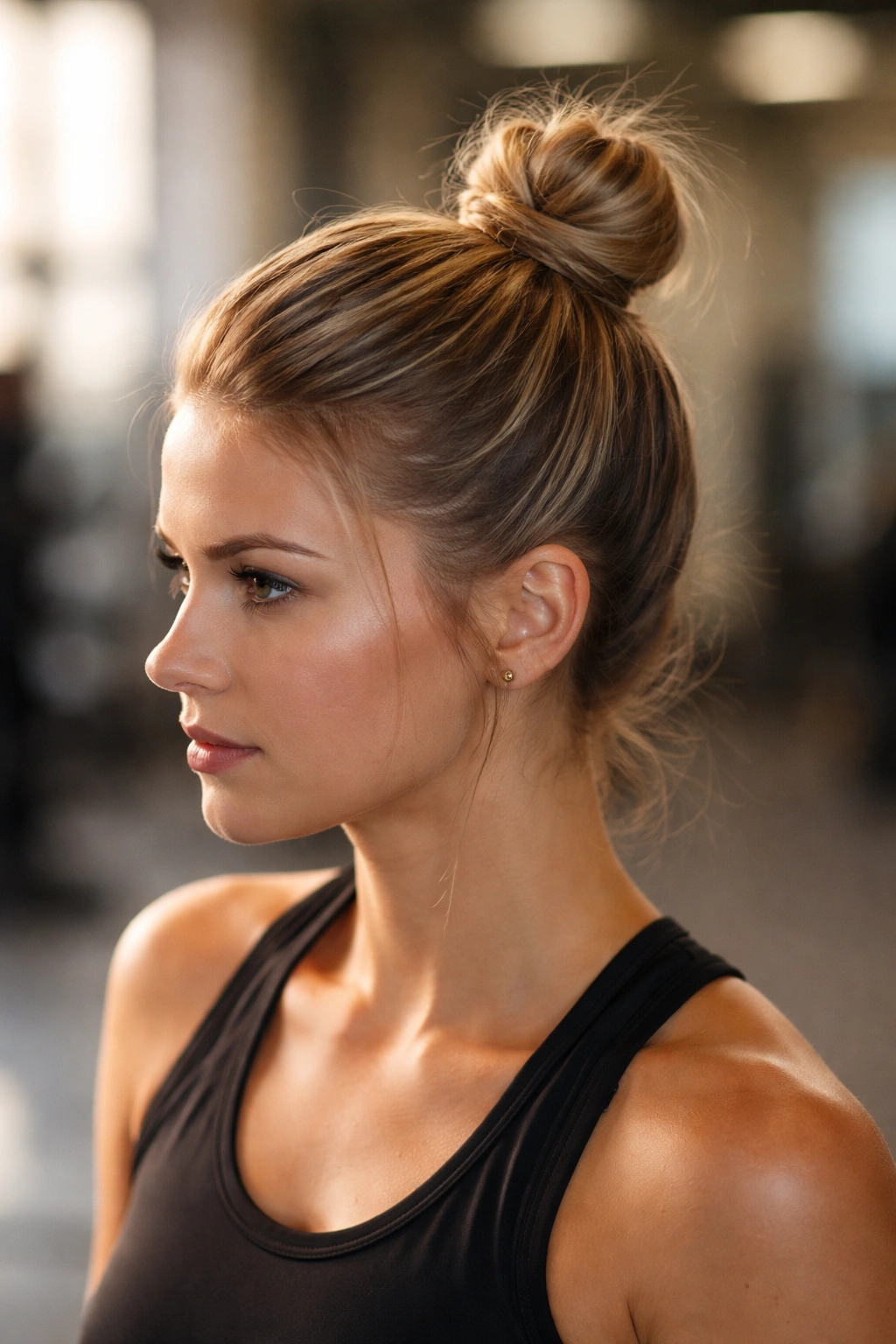
A top knot—hair gathered into a knot at the crown of your head—is the quintessential gym hairstyle, and it earns that reputation honestly. For short hair, a true top knot is tight, secure, and completely maintenance-free once it’s fastened. The single anchor point at the crown is one of the strongest positions on the scalp, and the upward-forward positioning keeps hair directly off your face and neck.
Why It Works for Workouts
A top knot works because it places all the hair weight at the natural anchor point that’s strongest and closest to the scalp—your crown. The knot itself distributes tension evenly across the gathered hair, and the compact shape minimizes movement and bounce. No hair moves independently; it’s all locked into a single solid structure. For short hair specifically, a top knot is almost impossible to loosen accidentally because there’s not enough length to create drag or leverage against the hold.
How to Make It Stay
- Start with textured or second-day hair—newly washed straight hair will slip too easily
- Spray the roots at your crown with texturizing spray or dry shampoo to create grip
- Gather hair into a high ponytail using your hands (fingers create better grip than a comb) at the very top of your head
- Secure the ponytail tightly with a strong elastic band designed to grip hair
- Twist the ponytail loosely, then wind it into a coil and press it flat against the base of the elastic
- Secure the knot with bobby pins inserted through the center and around the base—use 4-5 pins for complete security
- Wrap a tiny section of hair around the base of the knot (optional) and pin it underneath to hide the elastic
- Spray with strong hold spray, focusing on the base and any flyaways
Quick facts:
- Works on all short hair types and lengths from pixie to shoulder-length
- Takes 3-5 minutes to perfect
- Holds securely through any workout intensity without adjusting
- Straightforward, no-fuss, and universally recognized as a serious gym hairstyle
Pro tip: Make the knot intentionally slightly loose and relaxed rather than painfully tight—a knot pulled too tight will feel uncomfortable when you’re doing overhead work or lying on a bench, and a slightly looser version actually holds better because it’s not fighting tension.
Final Thoughts
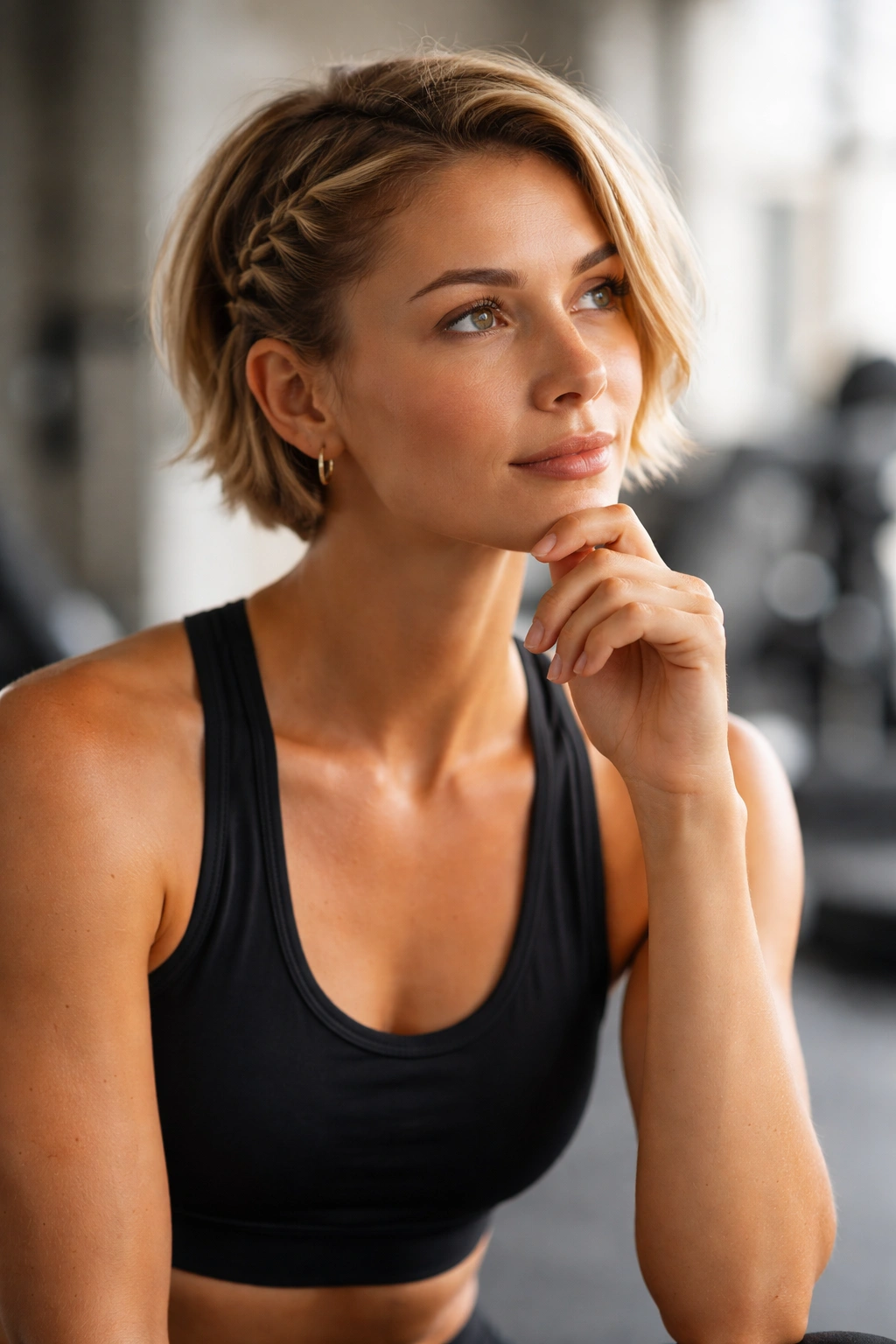
Your short hair is actually an advantage at the gym, not a limitation. Every style here works because it plays to short hair’s natural strengths: it’s easier to secure, less prone to creating that uncomfortable hair-stuck-to-neck sensation, and gets better looking (or at least more intentional-looking) as you sweat and move through your workout. The key is starting with texture or product to create grip, anchoring hair at a strong point on your scalp, and using secure pins or elastics that won’t slip under pressure and motion.
The best gym hairstyle is the one you’ll actually put your hair in before you work out. If you hate how it feels, you won’t do it consistently, and you’ll end up fighting your hair during your sessions. Pick one or two styles from this list that match your hair length and your comfort level, practice them a few times at home to build speed and confidence, and then stick with them. After a few weeks, you’ll be able to execute your chosen style in under five minutes without thinking about it—which is when you know you’ve found the right gym hair solution.
