



If you’ve been growing out your pixie, rocking a chin-length bob, or keeping your natural curls shoulder-length, you might be wondering if you can pull off an absolutely stunning wedding day look without waist-length hair. The answer is absolutely yes — and the truth is, shorter bridal styles often photograph even better than their longer counterparts.
Short hair forces you toward intentional, polished choices. There’s no hiding behind length, which means every wave, every twist, every pin becomes a deliberate design element. The camera loves this kind of precision. Whether you’re getting married in an intimate garden ceremony or a grand ballroom, a well-designed short hairstyle frames your face, showcases your features, and keeps the focus exactly where it should be — on you and your joy.
The real magic happens when you match the right style to your hair type, face shape, and the overall vibe of your wedding. Some short styles work beautifully with delicate hairpieces and minimalist designs. Others shine with texture and movement. A few pull off that coveted undone elegance that actually takes hours to perfect. The key is knowing which style amplifies your best features and complements your dress, your venue, and the photographs you’ll treasure for decades.
1. Classic Twisted Crown
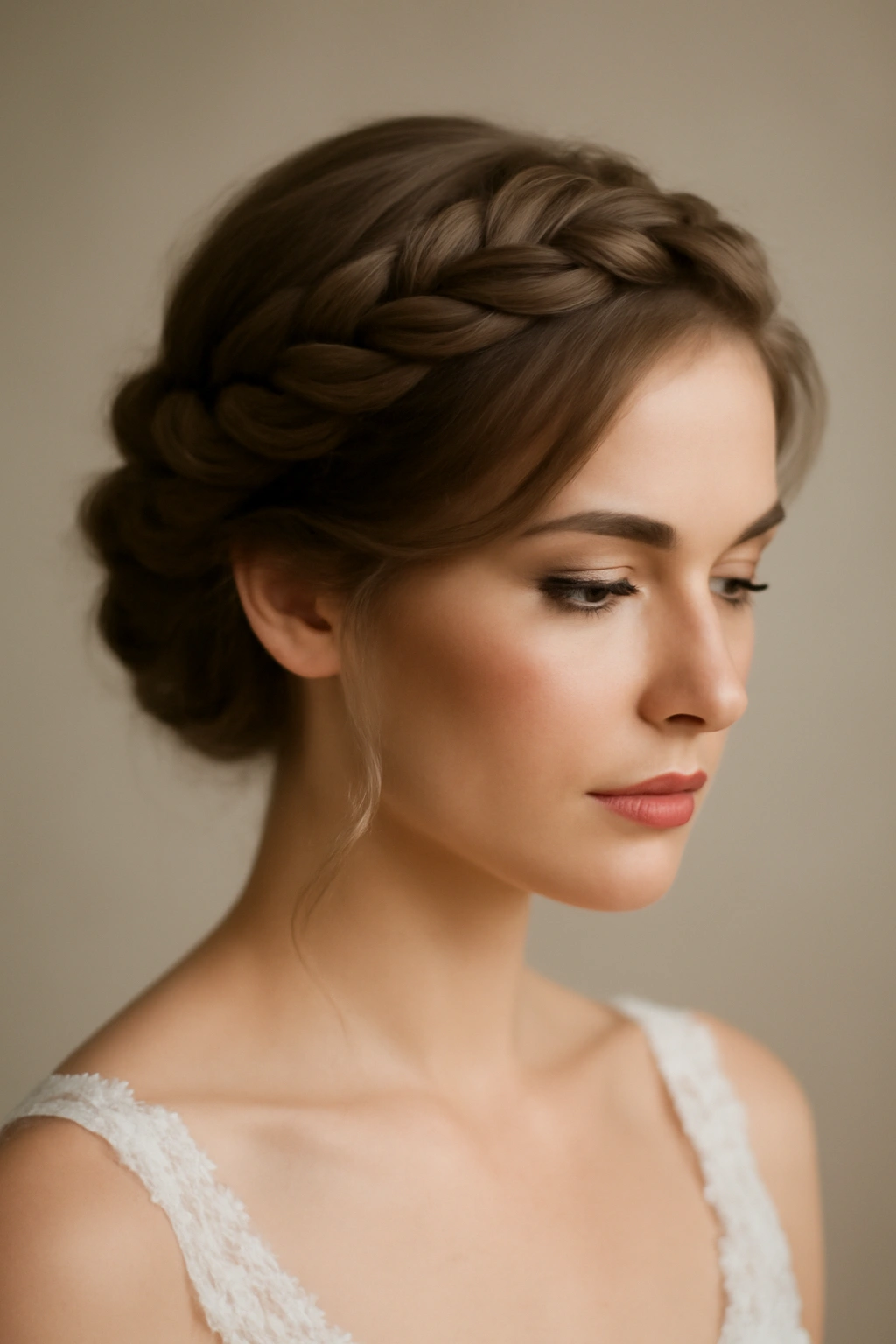
This is the hairstyle that says “I’m marrying the love of my life and I’ve got this all figured out.” The twisted crown is essentially two thick sections of hair twisted gently away from the face and pinned at the back of the crown, creating a halo effect that photographs beautifully from every angle. It works on nearly every hair type and actually enhances shorter lengths by creating the illusion of fullness and height.
Why This Style Photographs Beautifully
The twisted crown flatters most face shapes because it opens up the face entirely while adding dimension at the crown. The twist creates natural shadow and light play that translates gorgeously in photographs, especially in backlit or golden-hour wedding photos. Because the twists sit securely at the back, you get movement and softness without anything falling flat during your ceremony or first dance.
What Makes It Work for Short Hair
- Creates the appearance of fuller, thicker hair through the twisted texture and elevation
- Works equally well on straight, wavy, and curly hair types with minimal styling difference
- Stays completely secure throughout the day without excessive pinning that damages the hair
- Pairs seamlessly with any veil style — you can tuck the veil into the twist or layer it softly on top
- The crown placement means your neckline, shoulders, and dress details remain completely visible
Pro tip: Add a few delicate baby’s breath flowers or tiny crystal bobby pins threaded directly into the twist itself for a romantic touch that catches light in photographs.
2. Sleek Low Bun with Face-Framing Layers
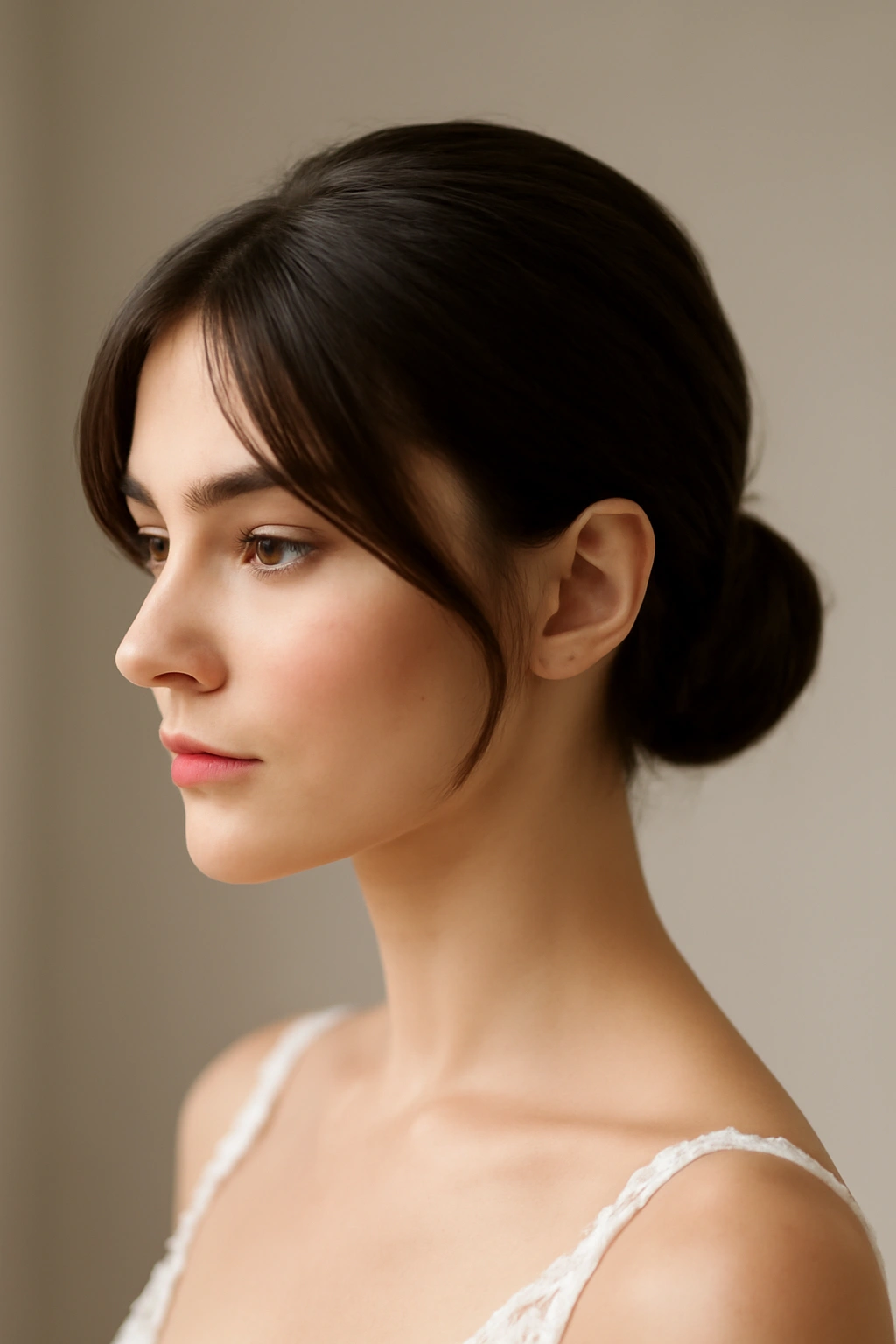
The low bun is the ultimate power move for a short-haired bride. It’s chic, it’s timeless, and when done right with intentional face-framing layers, it’s impossibly elegant. The magic lies in the layers — they soften the severe lines of the bun and create a modern, romantic vibe that photographs as both polished and effortlessly beautiful.
The Photography Advantage of Strategic Softness
A completely slicked bun reads harsh in photographs. A strategically soft bun with face-framing layers reads like editorial luxury. The wisps of hair around the face create a softer frame that enhances your features while the sleek, polished bun says you have everything under control. The contrast between the two — soft on top, polished on back — is incredibly photogenic and works across all photography styles, from documentary to traditional posed shots.
How to Make This Work with Short Hair
- Request 1-2 inch layers specifically around the face during your pre-wedding haircut for the softening effect
- Use texturizing spray or light product to give the face-framing pieces movement and dimension
- Keep the bun positioned low at the nape of the neck to avoid making a small bun look proportionally tiny on your head
- Secure the bun with smooth bobby pins hidden completely — no visible pins that catch light awkwardly
- The sleekness of the bun itself should have minimal flyaways, achieved through a light hairspray and careful styling
Worth knowing: This style pairs exceptionally well with statement earrings or an updo ornament at the base of the bun, giving your stylist a chance to add a focal point that draws the eye.
3. Half-Up, Half-Down with Pearl Pins
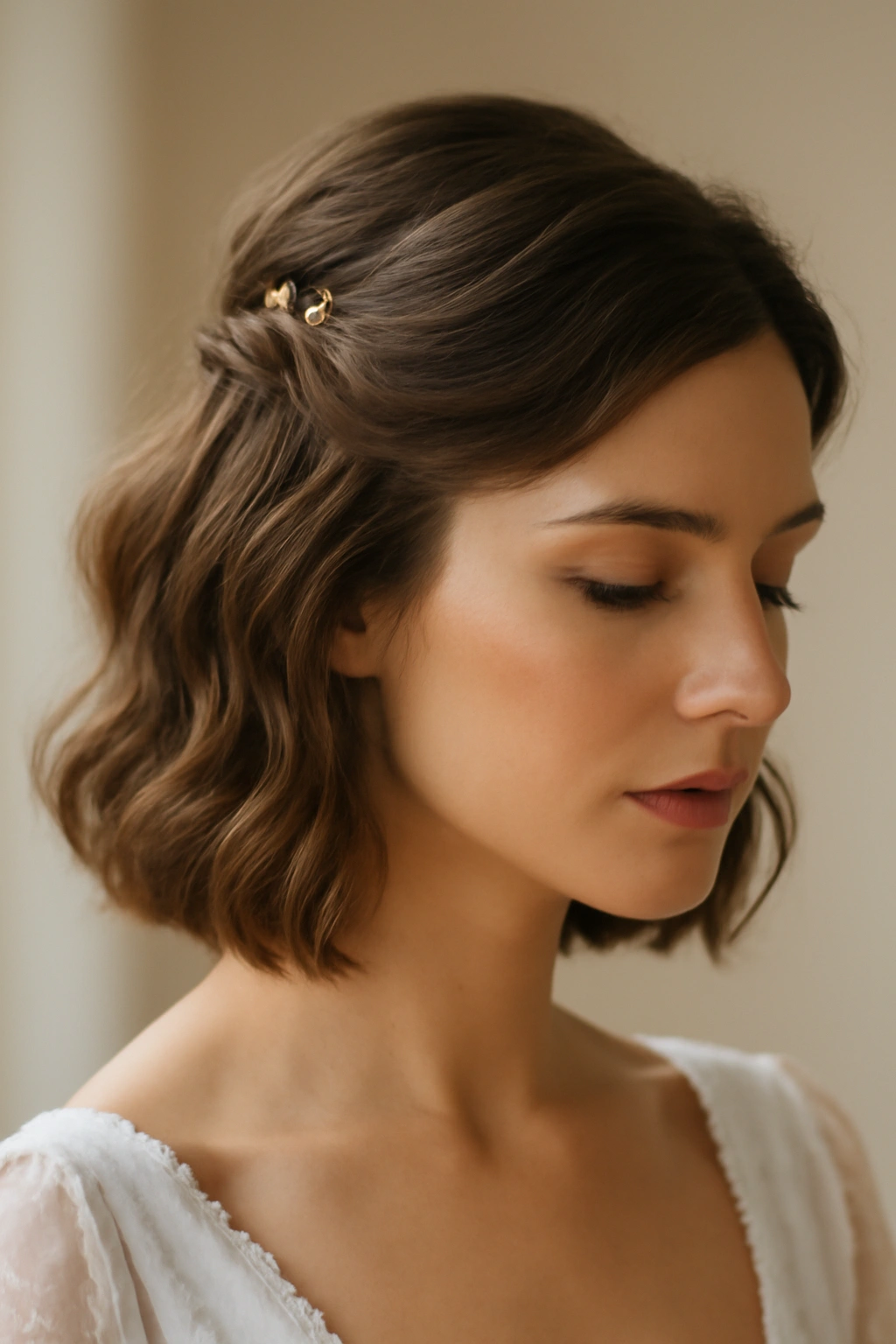
This hairstyle splits the difference between a fully up style and wearing your hair completely down, and it’s pure romance. You’re curling or waving your hair for softness and movement, then lifting the top section up and securing it with pearl bobby pins or a pearl-studded clip. It’s modern, it’s inherently photogenic, and it works beautifully on short hair because it adds the illusion of extra length while keeping hair off the face.
Why Photographers Adore This Look
The half-up, half-down style creates multiple levels of texture and movement that photograph beautifully in motion — walking down the aisle, dancing, hugging guests. The pearl pins add a decorative, intentional element that catches light without looking overdone. In photographs, the style reads as romantic and accessible, showing personality while maintaining bridal polish. The waves catch different light at different angles, creating visual richness and depth in candid shots.
Essential Elements for Short Hair Success
- Waves or curls are non-negotiable for this style — they add the texture that makes the half-up section interesting and keeps the down section from looking flat
- The pins themselves become jewelry, so choose quality pearl pins that coordinate with your dress and other jewelry
- The sections should be full enough to show intention but not so heavy that they pull uncomfortably as the day goes on
- Use texturizing spray or sea salt spray to enhance the wave pattern and give the hairstyle staying power
- Have your stylist do a practice session to confirm the wave pattern photographs well and holds through your ceremony length
Quick styling truth: This style actually photographs better in natural light than in direct studio light, so if you’re doing a bridal portrait outdoors or near windows, request this style without hesitation.
4. Romantic Textured Updo
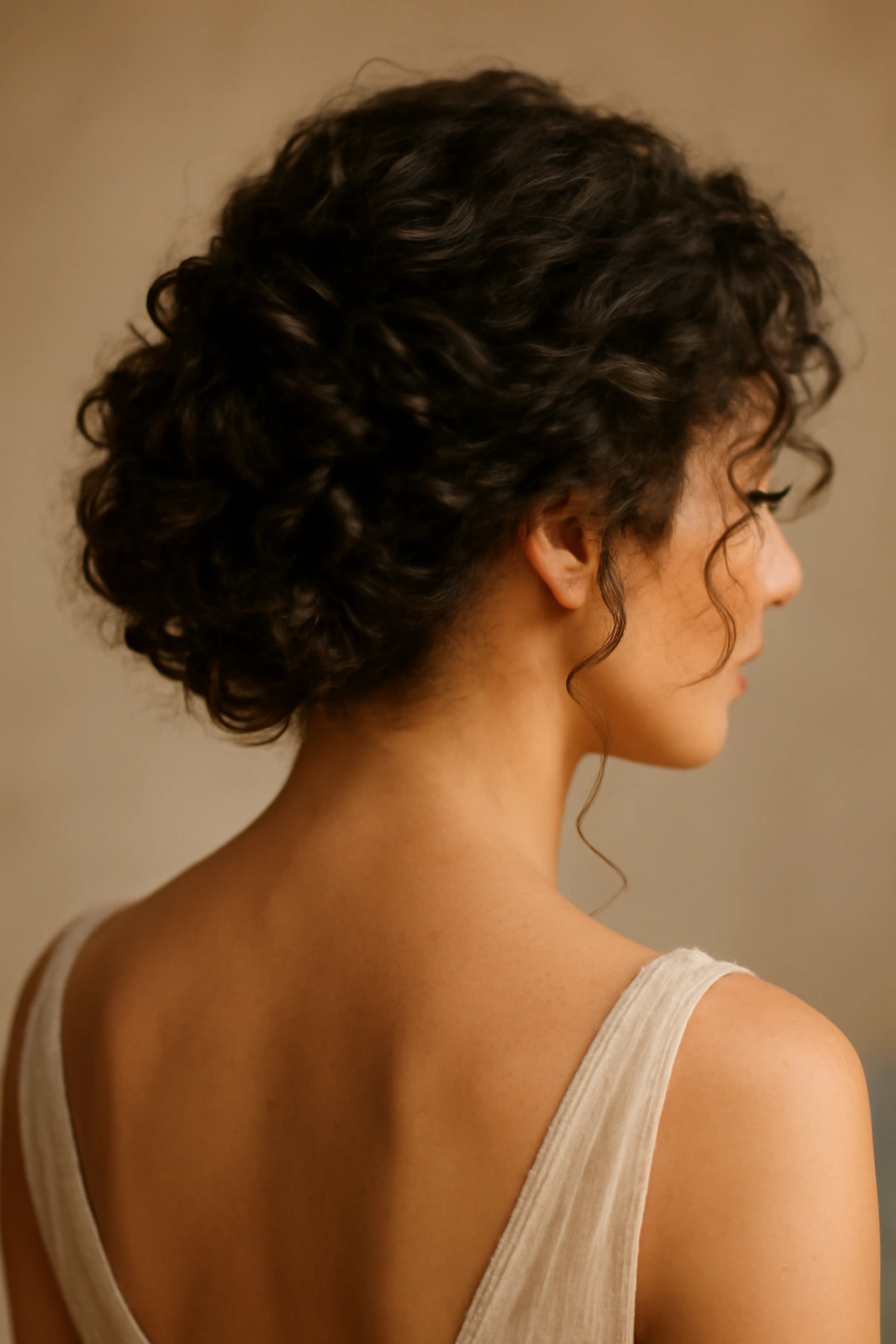
If you have naturally curly or textured hair, this is your moment to let it shine. A textured updo showcases the beauty of your natural hair pattern while creating an upswept, romantic silhouette. The curls intertwine naturally as you shape them up and pin them, creating an organic, undone-but-intentional look that photographs as deeply romantic.
How Textured Hair Becomes a Bridal Asset
Curly and textured hair often feels like a liability in conventional bridal styling, but it’s actually an incredible asset in the right hands. Textured updos photograph with an inherent softness and romanticism that straight-haired updos require product and styling tricks to achieve. Your natural texture creates shadow, dimension, and movement automatically. In photographs, a textured updo reads as bohemian, romantic, and unapologetically confident — which is exactly the energy most brides want to project.
Making Your Texture Work
- Don’t fight your curl pattern — let your stylist work with it, not against it
- A textured updo typically requires less product and manipulation than a sleek style, which means less damage to your wedding-day hair
- The placement should be slightly lower and looser than a sleek updo would be, allowing the texture to show rather than appear sculpted
- Add delicate florals or a thin wire crown that complements rather than overwhelms your natural curls
- Practice with your stylist to understand how your hair will behave throughout the day — textured updos sometimes shift slightly as the day progresses, and that’s actually part of the charm
Honest note: Textured updos photograph most beautifully in natural and golden-hour light. If you’re doing professional portraits, schedule them for late afternoon or early morning rather than midday harsh sun.
5. Side-Swept Waves with Decorative Comb
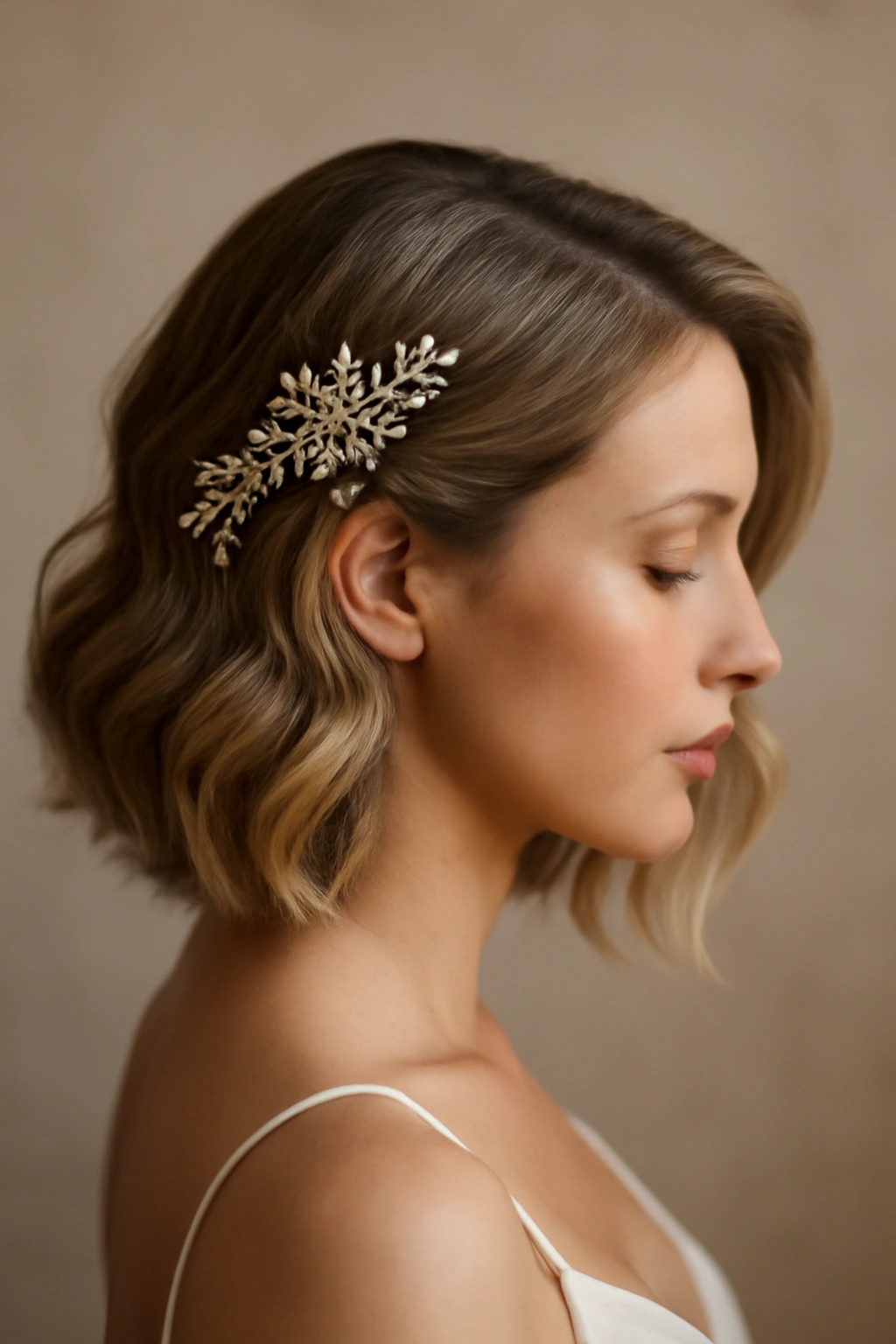
There’s something inherently romantic about hair that’s swept to one side — it’s elegant without feeling overly formal, and it photographs like a dream. This style keeps your hair down but deliberately shapes it, creating a sense of intentional styling while maintaining the softness and movement of loose waves. A decorative comb anchors the side sweep and adds a focal point without actually pinning your hair up.
The Photography Magic of Asymmetry
Asymmetrical hairstyles are incredibly photogenic because they create visual interest and movement. When your hair is swept to one side, your face gains dimension and shape in photographs. The comb adds a secondary focal point that draws the eye and provides a reason for the styled asymmetry — it’s not accidental, it’s deliberate. Photographers love this style because it works equally well for close-up bridal portraits and full-body shots, and it films beautifully during ceremony footage.
Styling This Look for Staying Power
- Waves should be soft and organic rather than tight and curled — aim for a beachy wave texture achieved through a curling iron and texturizing spray
- The sweep should be pinned underneath the wave pattern so the bobby pins are completely hidden
- Use a decorative comb with real holding power, not just a delicate comb that sits on top of the hair — it needs to actually secure the sweep
- Apply light hairspray to individual wave sections as you create them to ensure they hold without looking crunchy or stiff
- The waves on the opposite side of the sweep can be left loose and soft, creating a contrast between the intentional side and the romantic side
Insider tip: This style is incredibly forgiving for brides who aren’t sure if they want their hair up or down. You get the off-the-face elegance of an updo with the softness and movement of down hair.
6. Braided Halo Crown
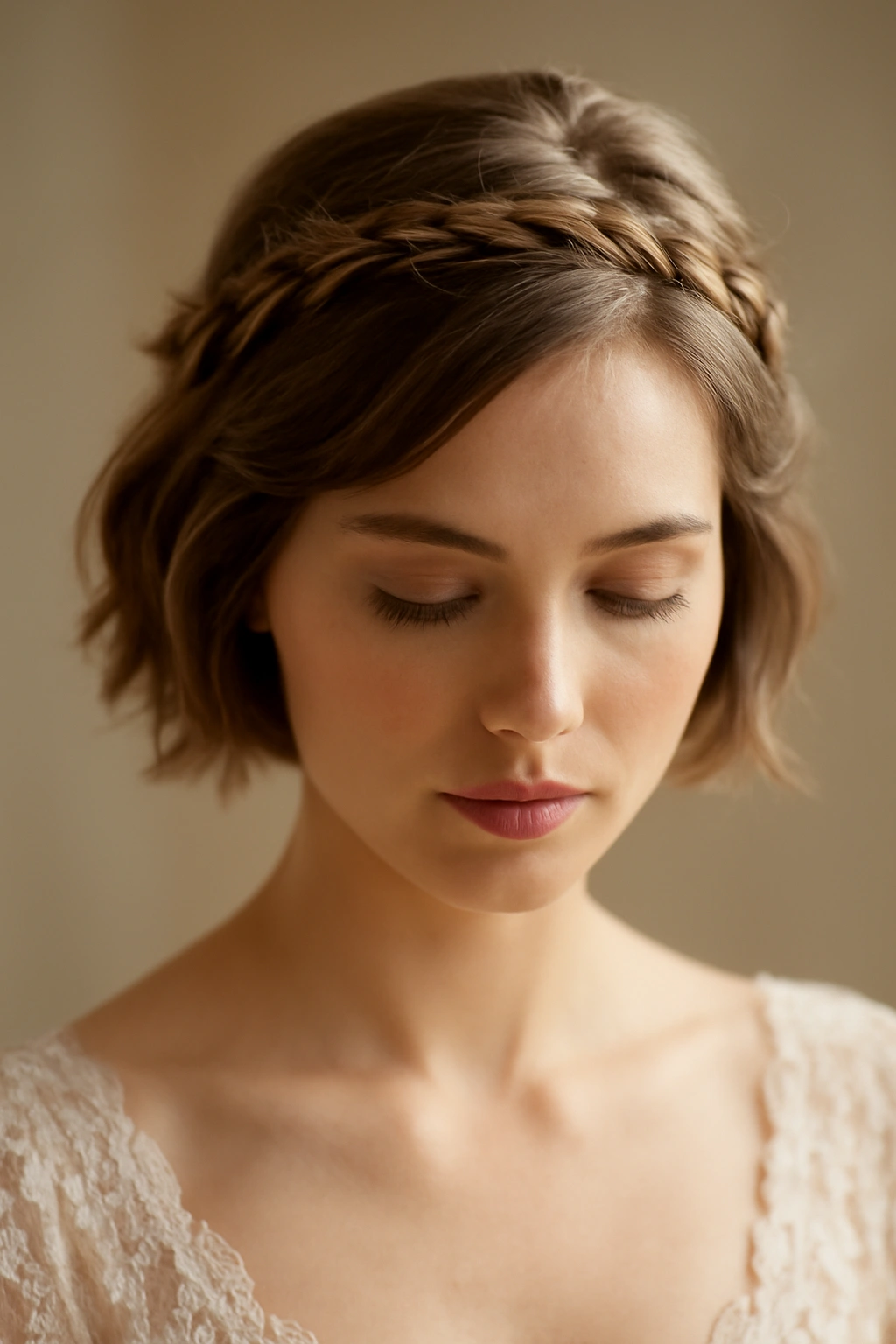
If you’re after pure romance, a braided halo crown is non-negotiable on your consideration list. This style involves creating one or two braids that encircle the head crown like a halo, which works beautifully on short hair because the braids sit on top of shorter lengths, creating visual fullness and an ethereal, princess-like quality. The braids can be thin and delicate or thick and statement-making depending on your preference.
Why This Style Reads as “Bridal Luxury”
Halos are inherently associated with angels and ethereal beauty, which is why braided halo crowns feel so magical in wedding photography. The style draws the eye upward and creates a sculptural frame around the face. In portraits, the halo creates a sense of luminosity and romance that photographs as deeply intentional and beautifully executed. It’s also inherently flattering because it creates the illusion of a fuller face shape and draws attention upward.
Making a Braid Halo Work on Short Hair
- The braids don’t need to be thick because short hair reads fuller in a halo configuration even with thinner braids
- Two thin braids create a more delicate, ethereal look; one thicker braid feels more modern and bold
- The braids should sit right at the crown, not tucked too far back, to maximize the face-framing and halo effect
- Loose waves or light curls underneath the halo create a romantic foundation that complements the structured braid
- Small flowers, baby’s breath, or baby roses can be threaded through the braid itself for an organic, romantic touch
Pro consideration: This style works best with hair that’s at least shoulder-length or has significant layers that can be braided. Very short pixies can achieve a modified halo effect with twisted sections rather than braids.
7. Tousled Pixie with Delicate Ornament
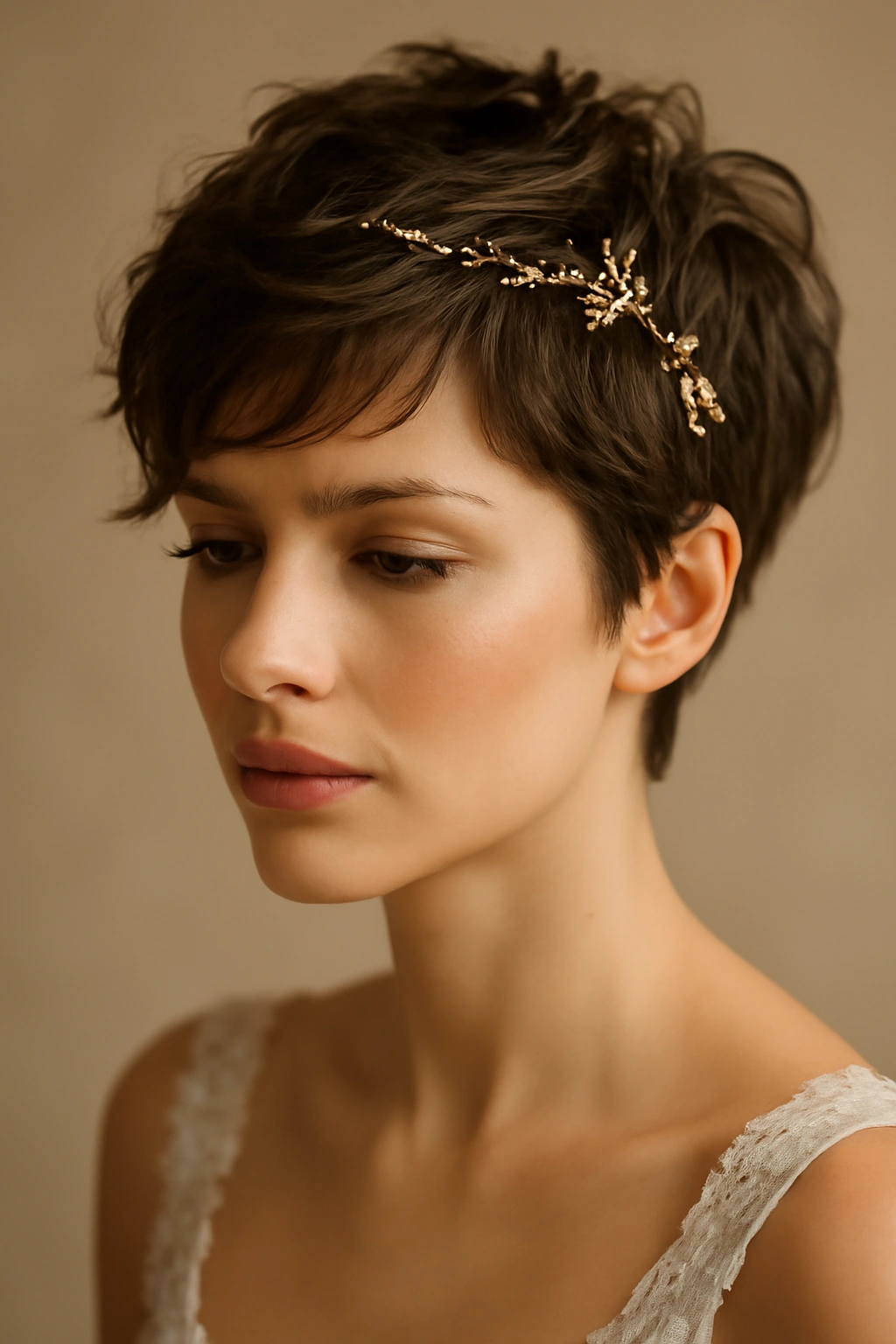
For the bride rocking a pixie cut, don’t feel pressured to do something different for your wedding. A short pixie can be absolutely stunning when you lean into the style rather than fighting it. Tousled pixies add texture and movement through careful styling and product, then a single delicate ornament — a thin wire crown, decorative bobby pin, or small comb — adds the wedding-day element without trying to transform your hair into something it’s not.
The Confidence Factor in Wedding Photography
Pixies photograph beautifully because they’re bold and confident, and confidence is the most photogenic thing a bride can wear. A styled pixie with intentional texture reads as modern, beautiful, and inherently chic. The style frames your face completely, which means all the focus lands on your smile, your eyes, and your joy. In candid shots, a textured pixie moves and responds to wind, air, and motion in a way that longer styles simply cannot, creating genuine, living moments rather than static poses.
Elevating Your Pixie for Wedding Day
- Add texture through a texturizing spray or light sea salt spray rather than wet product that would make it look unstyled
- Work with your stylist to create soft, piece-y texture that has direction and intentionality rather than looking randomly messy
- A thin wire crown, decorative bobby pins, or a small vintage comb add the “wedding” element without feeling costume-y
- Keep your makeup bold enough to stand up to the simplicity of the hair — your eyes and lips become even more important when hair is minimal
- Plan for touch-ups throughout the day, as pixies require less holding power and may need a quick texturizing spray refresh before photographs
Real talk: Pixie brides often report that their wedding day photos are their favorite they’ve ever had taken because the simplicity of the hair lets their genuine emotion shine through completely.
8. Undone Low Chignon
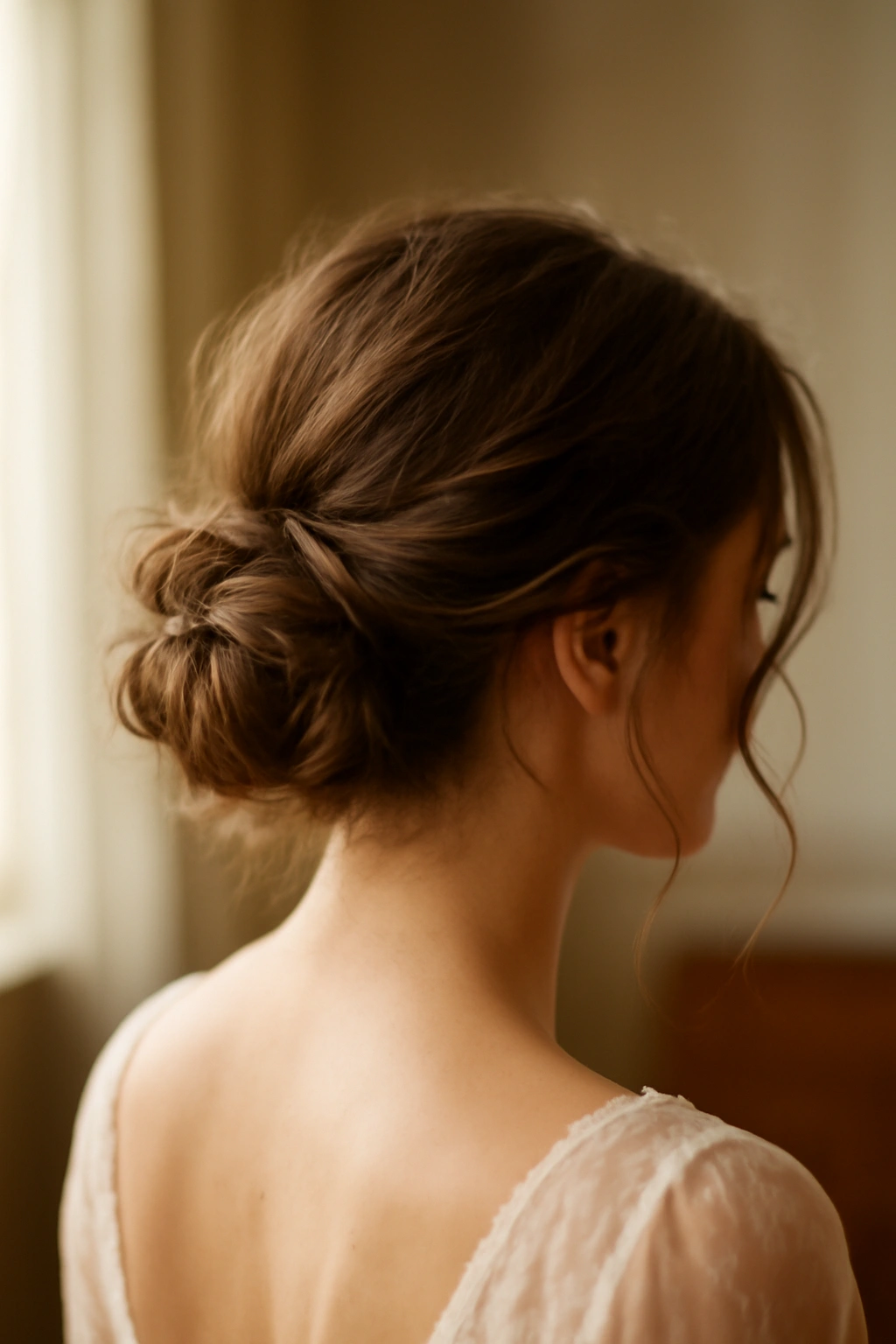
This is the style for brides who want elegance without looking overly styled or precious. An undone chignon sits low at the nape of the neck and has a soft, romantic, “I woke up like this but also I clearly put effort in” quality that photographs beautifully. The key is making it look effortless while actually creating intentional structure underneath.
Why “Undone” Reads Better in Wedding Photos
Hyperpolished, tightly controlled hairstyles can sometimes read as stiff or overly done in wedding photographs. An undone chignon has an ease and naturalness that translates as confidence and beauty without trying too hard. It photographs as sophisticated, romantic, and inherently flattering. The softness around the face and the loose texture throughout creates a dreamy quality that works across all photography styles.
Creating the “Effortless” Effect
- Blow out your hair with a round brush to create softness and body, then curl with a large barrel curling iron for loose waves
- Gather the hair at the nape of your neck but don’t pull it tight — secure it with bobby pins in a way that allows some texture to escape and frame the low bundle
- Pull a few smaller sections out around the sides of the chignon, softening the edges and creating face-framing pieces
- Use a light hairspray rather than a heavy hold so the hair maintains movement and flexibility throughout the day
- Tuck smaller sections of hair into the chignon throughout the styling process so it has an organic, undone quality rather than a polished, controlled look
Styling secret: This is actually the hardest style to execute well because making something look undone requires extreme intentionality. Work with your stylist during practice runs to nail the exact level of control and softness that photographs best.
9. Vintage-Inspired Finger Waves
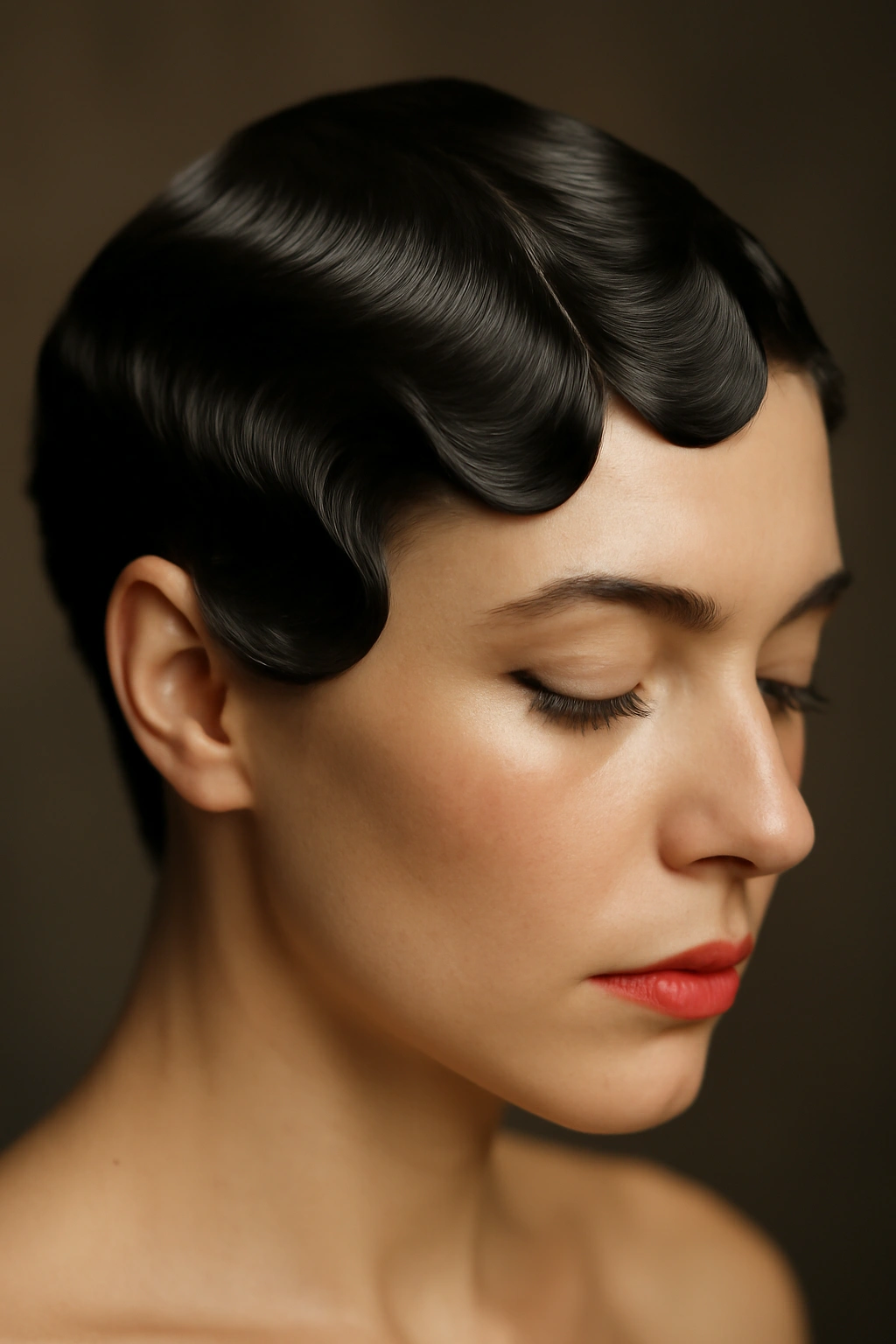
If you’re after old-Hollywood glamour, vintage-inspired finger waves are your answer. This style was pioneered in the 1920s-1930s and creates precise, geometric wave patterns that read as elegantly feminine and timelessly beautiful. On short hair, finger waves create a sculptural quality that photographs with incredible dimension and shine, especially in black-and-white portraits or with classic lighting.
The Photogenic Geometry of Finger Waves
Finger waves create perfect S-curves that form clean, repeating patterns across the head. In photographs, these patterns catch light beautifully, creating visual texture and sophistication. The style reads as intentional, elegant, and unapologetically glamorous. It’s particularly stunning in black-and-white photography, vintage-inspired wedding shoots, or any aesthetic that leans toward classic elegance. The waves create shadow and highlight that adds dimension to wedding day portraits.
Achieving Finger Waves on Short Hair
- Finger waves require the right hair texture — they work best on straight or naturally wavy hair, and they’re difficult on very curly hair
- Your stylist will use setting lotion and a fine-tooth comb to create the wave pattern, then pin the waves while they dry or set
- The waves need to sit for several hours to set properly, so this style is typically done the night before or very early morning
- Light hairspray and careful handling maintains the wave pattern throughout the day without disrupting the geometry
- The waves work beautifully with a small tiara, decorative comb, or delicate headpiece that sits on top without disrupting the pattern
Important note: Finger waves photograph most beautifully on hair that’s been styled and set properly. If your stylist hasn’t done finger waves before, this might not be the style to debut on your wedding day — practice beforehand is essential.
10. Asymmetrical Twisted Style
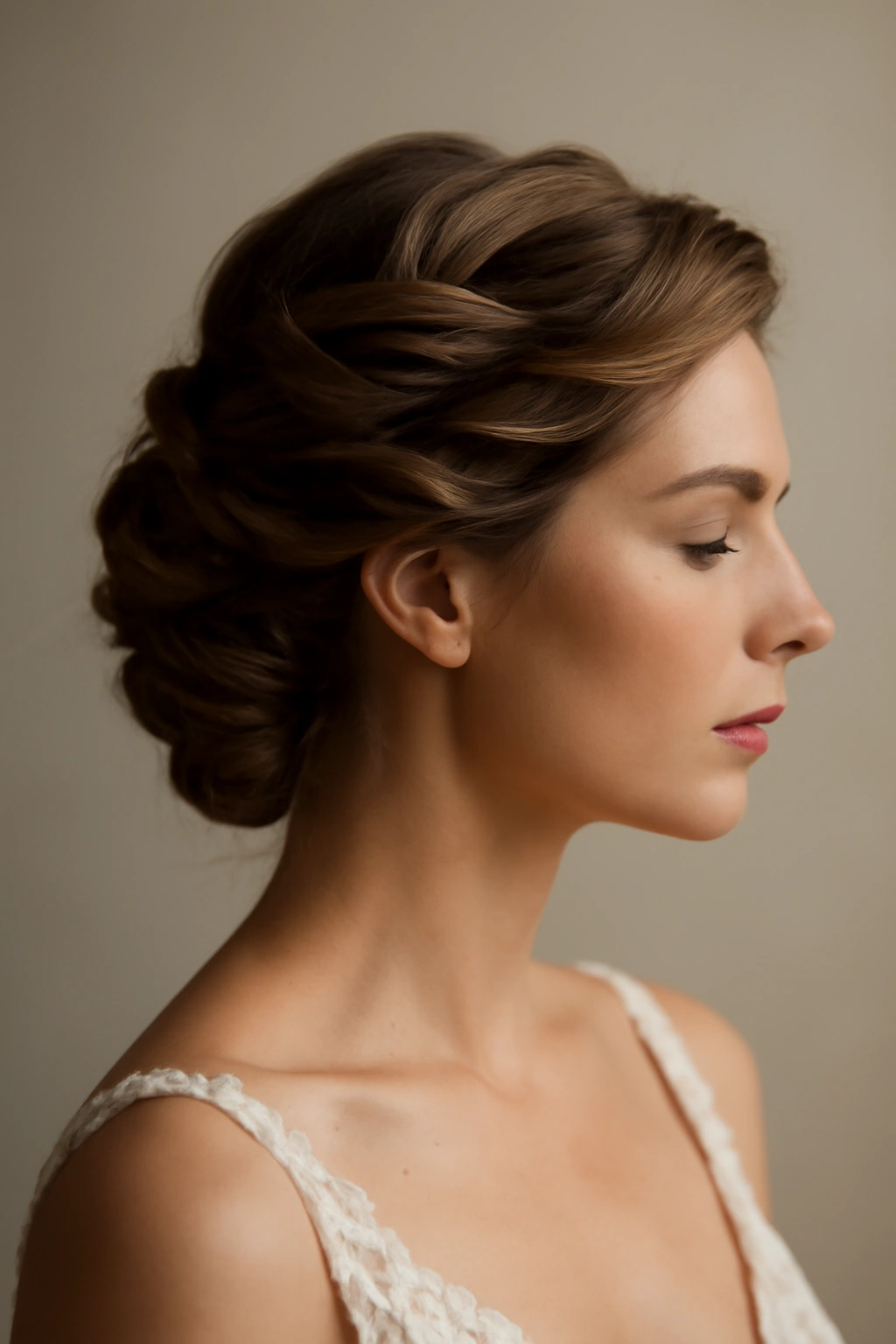
This modern, editorial take on an updo creates dramatic visual interest through asymmetry and twisted sections that anchor to one side of the head. The twists are thick and sculptural, creating a sense of movement and intention that photographs as bold and beautiful. It’s perfect for brides who want their hairstyle to make a statement while still maintaining bridal elegance.
Modern Editorial Beauty in Motion
Asymmetrical twisted styles photograph like high-fashion editorials because they break traditional symmetry and create unexpected visual interest. The twists catch light and create dimension, while the asymmetry adds movement and energy. In photographs, this style reads as confident, modern, and thoughtfully designed. It works beautifully for both posed portraits and candid shots because the structure maintains its shape while the twisted texture remains soft and romantic.
Constructing This Statement Style
- Create two thick sections at the crown and twist each one with slight texture — they should look deliberately twisted, not finely braided
- Anchor both twists to the same side of the head at the back, securing them with bobby pins hidden completely within the twist structure
- The opposite side of the head remains loose with soft waves, creating the asymmetrical contrast
- This style works on all hair types and lengths that reach at least the chin, though it’s most impactful on hair with movement and texture
- A decorative hairpiece, comb, or even a small flower arrangement can be tucked into the twist anchor point for added interest
Design consideration: This style is bold enough that it should complement rather than compete with your dress and overall aesthetic. Pair it with a simpler dress to let the hair be a feature, or pair it with an elaborate dress and keep the hair detail subtle.
Final Thoughts
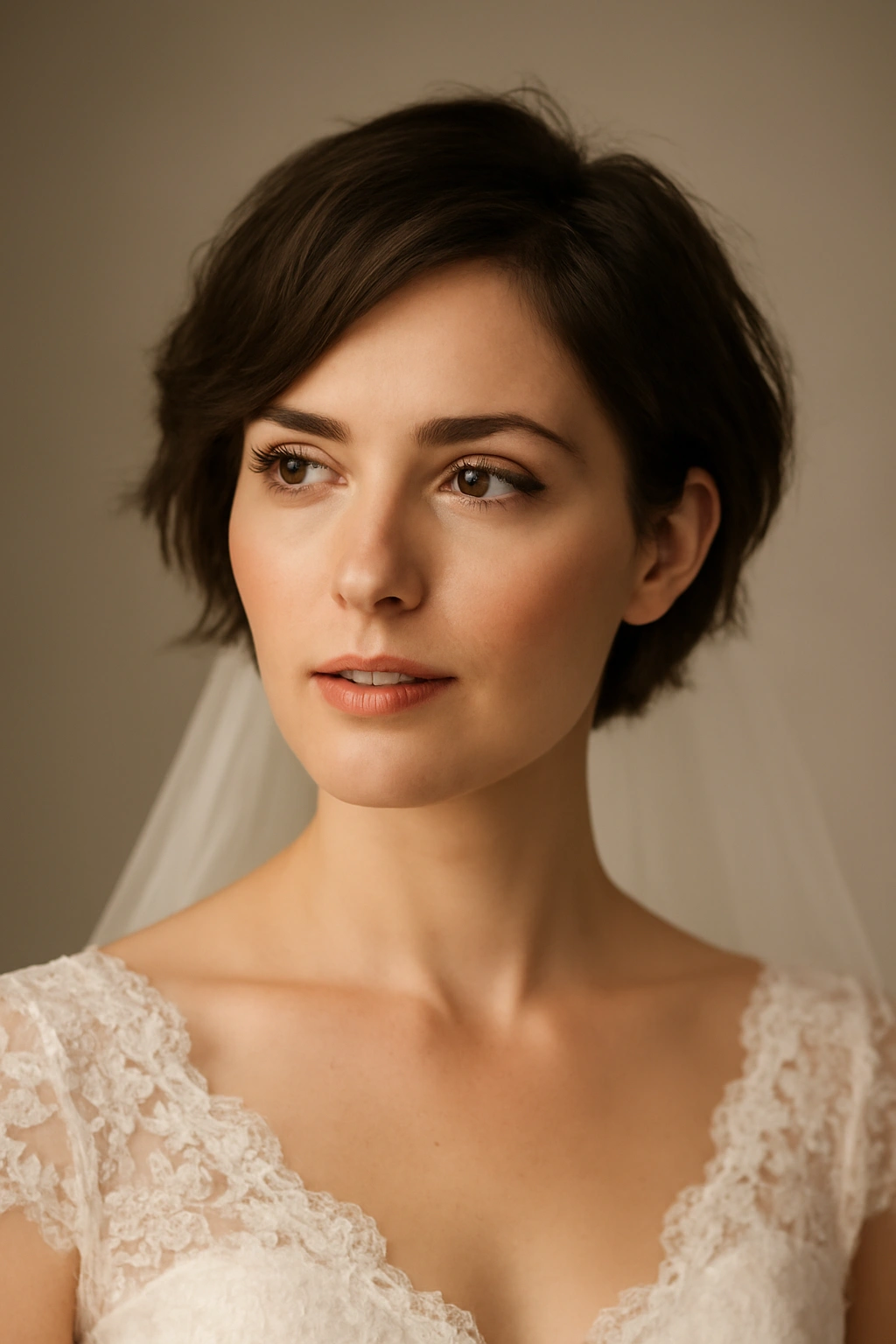
Short bridal hair isn’t a compromise — it’s an opportunity to lean into intentional, photogenic styling that frames your face and showcases your confidence. Whether you choose the romantic softness of a textured updo, the modern boldness of an asymmetrical twist, the classic elegance of a twisted crown, or the vintage glamour of finger waves, the key is matching your hairstyle to your personal style and the overall aesthetic of your wedding.
The most important thing to remember is that your wedding day hairstyle should make you feel like the most beautiful version of yourself. That confidence shows in photographs in a way that no amount of styling tricks can create. Work with a stylist who understands your hair type, respects your vision, and has experience with the specific style you’re after. Do at least one practice session before your wedding day to iron out any concerns and ensure your stylist understands exactly how you want to look.
Your shorter hair length is an asset, not a limitation. It photographs beautifully, it’s easier to manage throughout your wedding day, and it allows your face, your joy, and your genuine emotion to shine through completely in every photograph. Trust the process, trust your stylist, and trust that whatever style you choose will be exactly right for you.
