



Short haircuts that tuck neatly behind the ears offer a chic, polished look that feels intentional and put-together—whether you’re aiming for effortless elegance or bold, fashion-forward flair. There’s something undeniably satisfying about a cut that frames your face precisely while still giving you that option to sweep your hair behind your ears for a clean, open silhouette. But not every short haircut works equally well for this specific styling feature. The best ones have the right length, angle, and texture to cooperate with tucking rather than fight against it, staying tucked throughout the day without constantly falling forward or looking too severe.
What makes a haircut truly perfect for tucking behind the ears? It’s all about the precision of the cut—how the layers are angled, where the shortest pieces land around the temples and nape, and whether your stylist has built in enough shape to maintain structure even when you’ve pinned everything back. The texture matters too. A blunt, one-length cut might slide out immediately, while a cut with strategic layers and choppy texture tends to grip and hold, especially with shorter pieces around the ears that have room to tuck without showing too much scalp. The best haircuts in this category work for multiple face shapes and hair types, adapt easily to different styling preferences, and genuinely improve with a simple ear-tuck maneuver.
This guide walks you through ten excellent short haircuts that excel at the ear-tuck aesthetic. Each one has been chosen because it’s actually designed to work with this styling move—not just technically possible, but genuinely beautiful when you sweep those strands back. Whether your hair is straight and sleek, wavy and textured, fine and delicate, or thick and bold, you’ll find options that translate beautifully to your specific hair type and personal style.
1. Classic Pixie Cut
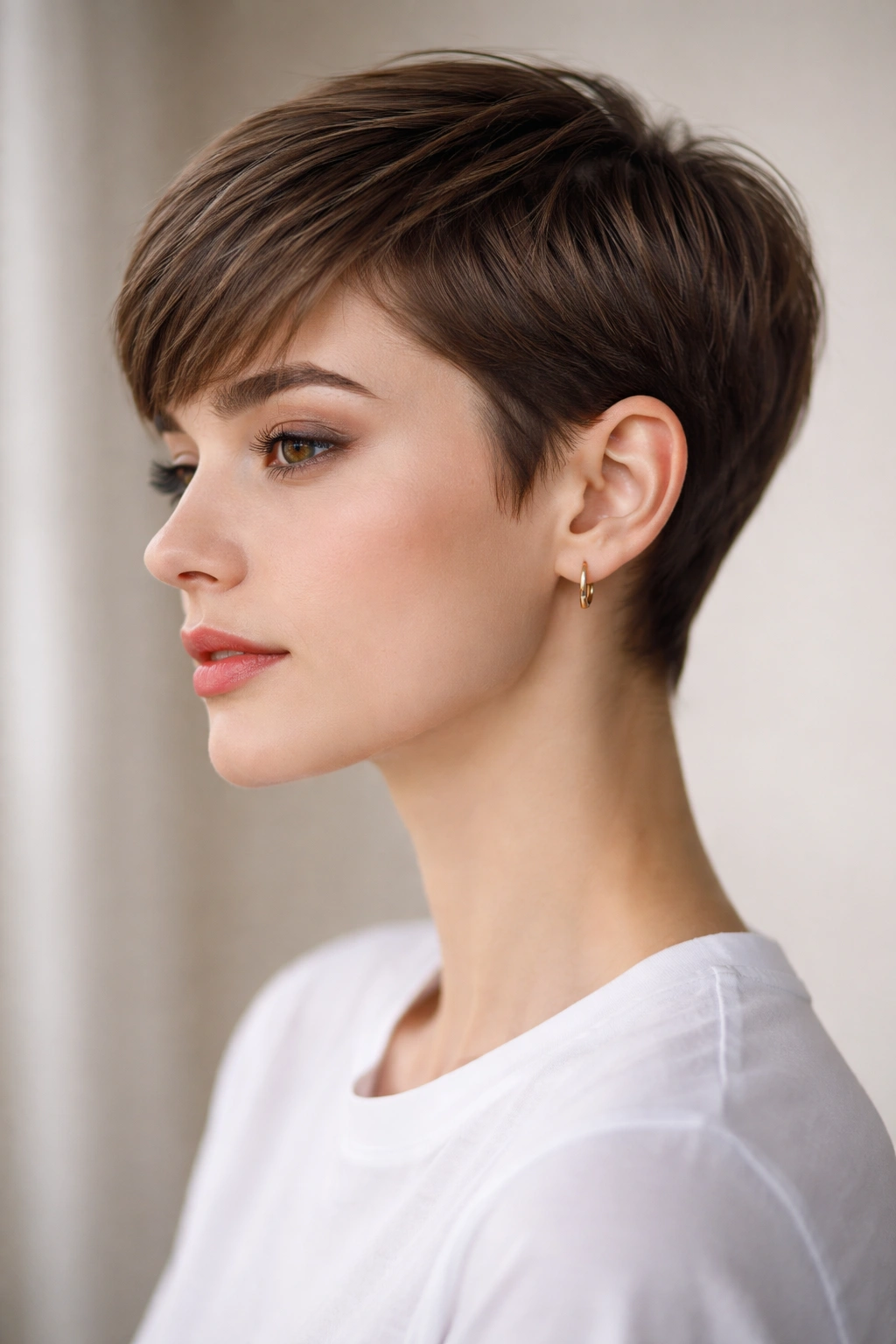
The timeless pixie cut remains the gold standard for short hair that tucks perfectly behind the ears. This cut sits very short on the sides and back—typically one to two inches—while leaving slightly more length on top for texture and movement. What makes a pixie exceptional for ear-tucking is the careful taper around the temple and behind the ears; when done well, these shorter pieces frame your face beautifully whether hair is down or tucked away.
Why It Works So Well for Tucking
A well-executed pixie cut has architectural precision built into its DNA. The barber or stylist creates graduation—longer hair at the crown that gradually shortens as it moves toward the ears and neck. This means when you tuck the longer top section behind your ears, there’s enough hair to stay in place, while the shorter side pieces frame your jawline and cheekbones without looking wispy or unfinished. The cut is designed so that even ultra-short hair around the ears looks intentional and polished rather than thin or severe.
What to Know Before Getting One
- Face shape compatibility: Pixies work beautifully on most face shapes, but they’re particularly flattering if you have good cheekbones or a defined jawline—the cut puts your face front and center with nowhere to hide.
- Styling commitment: A true pixie needs a trim every 4-6 weeks to maintain shape. The sides grow out quickly, and once they reach a certain length, the precision vanishes.
- Texture options: Ask your stylist about piece-y texture versus smooth styling. A choppy, textured pixie is more forgiving for tucking and looks less severe; a blunt, sleek pixie demands perfect hair or product to maintain its clean lines.
Pro tip: A pixie cut looks absolutely stunning with minimal styling—just add a texturizing mist and run your fingers through, or use a light pomade for defined piece-y texture. The ear-tuck moment happens naturally when you’re in a rush or want a quick polished look.
2. Textured Crop

A textured crop is a slightly longer, more fashion-forward cousin of the pixie, typically running two to three inches on top with carefully faded sides and back. The key defining feature is intentional texture—choppy layers, point-cutting, or razored ends throughout that create movement and visual interest rather than one uniform length.
Why Textured Crops Excel at Ear-Tucking
The built-in layering and texture mean the hair naturally wants to separate and tuck. Unlike a blunt cut that feels like one solid mass, a textured crop has individual strands that work independently. When you tuck the textured top behind your ears, each piece sits slightly differently, creating a deliberately undone, fashion-forward look that’s actually quite sophisticated. The texture also prevents the unflattering “slicked back” appearance some people dislike with smoother cuts.
What Makes This Cut Different From a Pixie
- Length and movement: A textured crop keeps more length on top, giving you more hair to work with and more styling options—you can wear it forward for volume or tuck it completely.
- Styling flexibility: This cut works beautifully messy and intentionally undone, whereas a pixie requires more precision styling to look its best.
- Age and style: Textured crops appeal to people who want short hair but find a pixie too severe or too “old-school.” They read as more contemporary and edgy.
Worth knowing: Textured crops benefit from a good texturizing spray or dry shampoo even on freshly washed hair. The texture enhances the tucking hold and prevents pieces from looking stringy or too thin.
3. French Crop
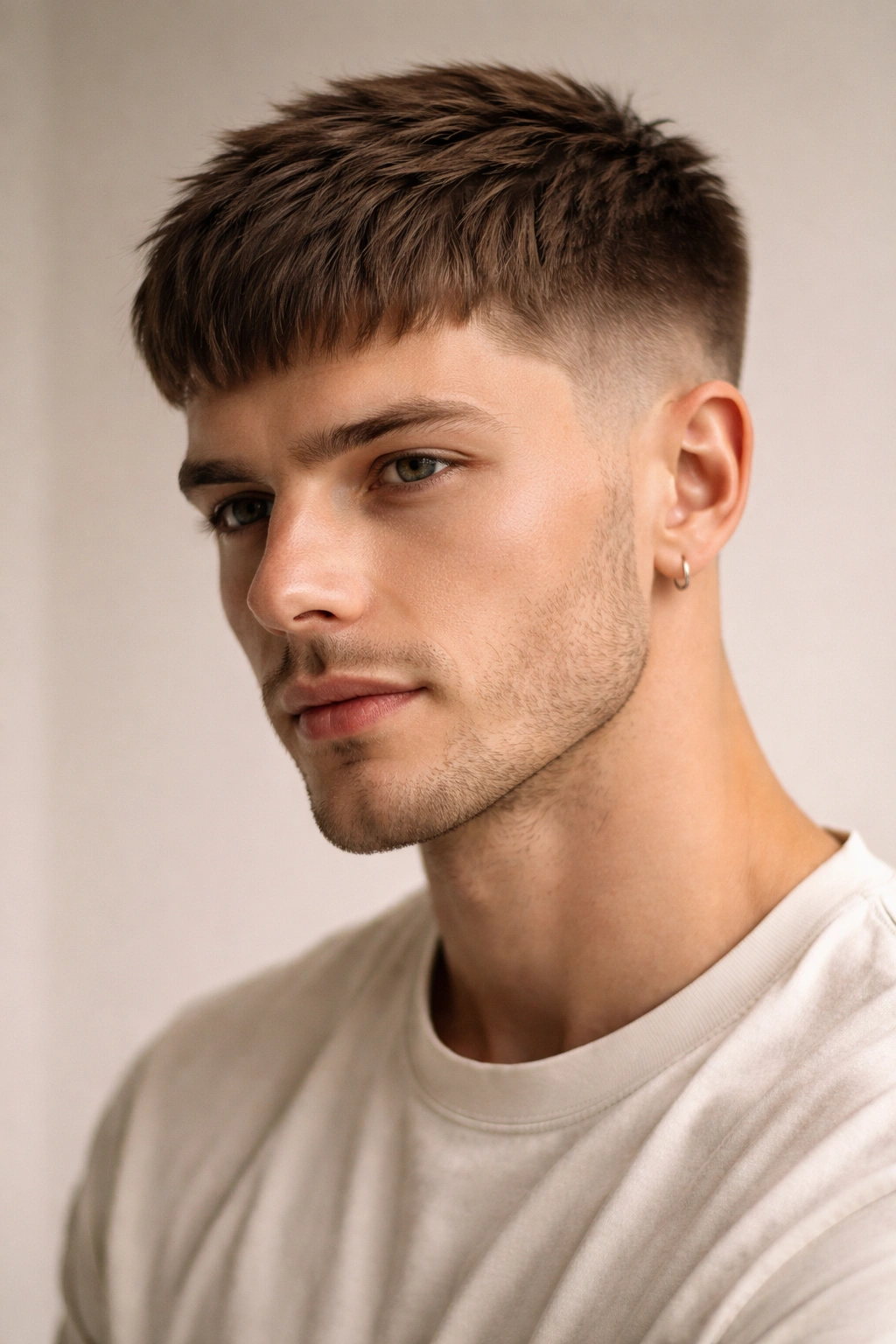
The French crop—also called a Frenchie or French crop top—sits between a textured crop and a pixie in terms of length and structure. It features slightly longer hair on top (usually three to four inches) with clean, faded sides and a defined, often blunt edge across the front hairline. The top can be worn forward, swept back, or tucked behind the ears for completely different looks.
Why This Cut Is Ideal for Ear-Tucking
The French crop’s defining feature is that it’s specifically designed as a versatile, multi-style cut. Hair is longest at the crown and graduates down, which means you have maximum material to play with when you’re tucking. The structured, often textured top sits beautifully behind the ears without the weight pulling your tuck down or flattening it. The clean fade on the sides means even when hair is completely swept back, you have a sharp, polished line that frames your face.
Styling the French Crop for Maximum Tuck Appeal
- Forward fall: For a relaxed look, let the longer top fall forward onto your forehead and temple area.
- Swept back: Use a styling cream or light pomade to comb everything straight back and tuck behind the ears for that intentional, groomed appearance.
- Texture and volume: Apply a texturizing spray and use your fingers to create separation and piece-y texture before tucking—this prevents a plastered, overly slick look.
Insider note: French crops pair beautifully with a longer beard or clean-shaven look, and they work particularly well if you have thick hair or hair that wants to have natural texture—the cut actually showcases wave and texture beautifully.
4. Side-Swept Pixie
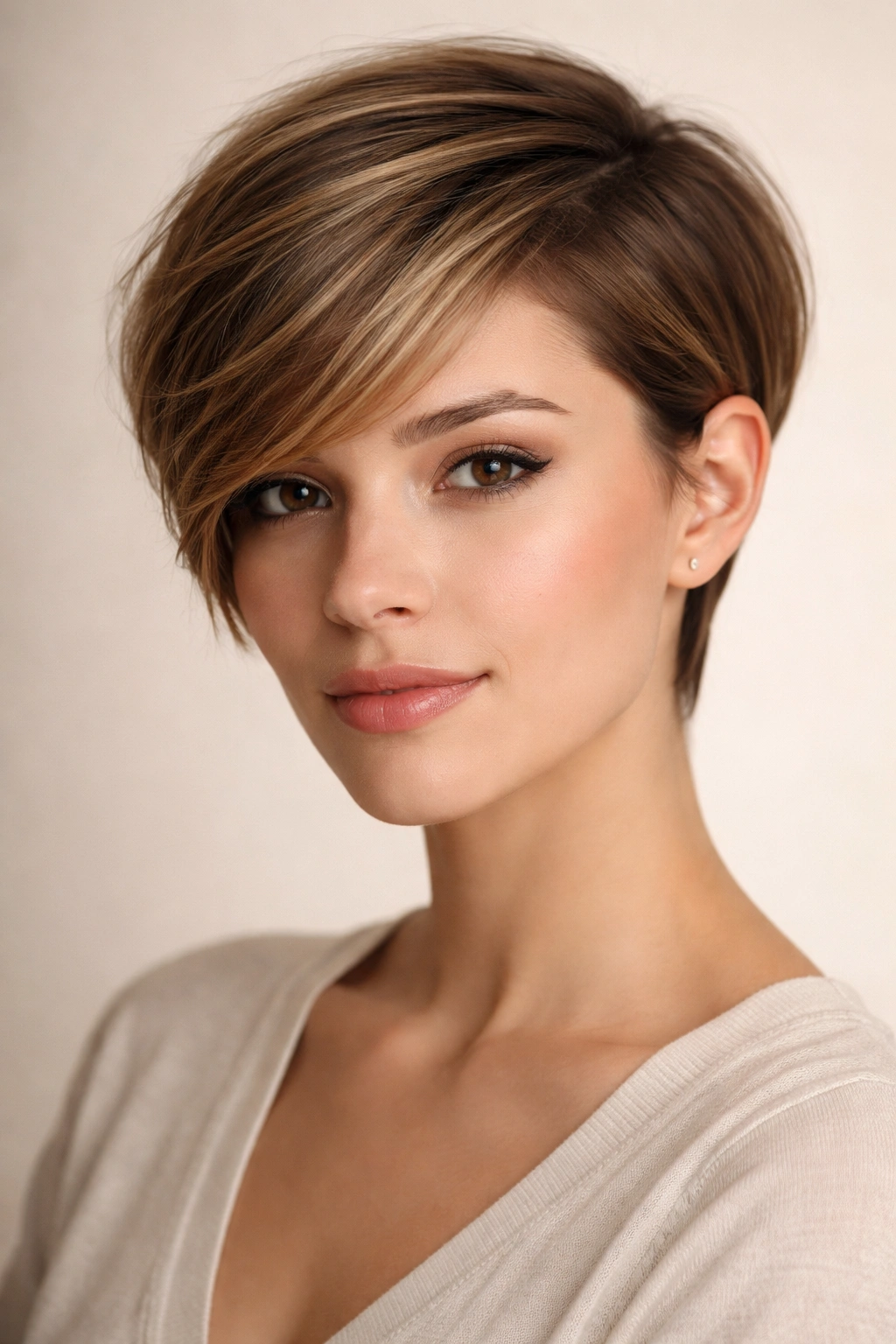
A side-swept pixie maintains the pixie cut’s short, textured structure but shifts the balance—one side is slightly longer than the other, typically with length falling forward in a subtle sweep across the forehead and temple. It’s sculptural and modern while maintaining enough length on at least one side to tuck behind the ears with real presence.
What Makes Side-Swept Pixies Work for Tucking
This cut offers the best of both worlds: the polish and low-maintenance appeal of a pixie with more directional styling options. When you tuck the longer side behind your ear, you get a real handful of hair that creates dimension and visual interest rather than disappearing. The shorter opposite side still frames your face, so even when hair is tucked, you’re getting shape and definition.
The Versatility Factor
- Two completely different looks: You can wear this cut forward (emphasizing the longer, swept side) or tucked (revealing the shorter side for a bolder statement).
- Works through the grow-out: As it grows out, a side-swept pixie actually becomes easier to style—you get more length to work with before your next cut.
- Less frequent trims needed: Because the asymmetry is part of the design, slight overgrowth actually blends into the cut rather than ruining it.
Pro tip: If you’re nervous about committing to a full pixie cut, start with a side-swept version. It reads as edgier and more intentional than a traditional pixie, and the longer side gives you fallback styling options while you decide if you love the short hair life.
5. Choppy Layers Pixie
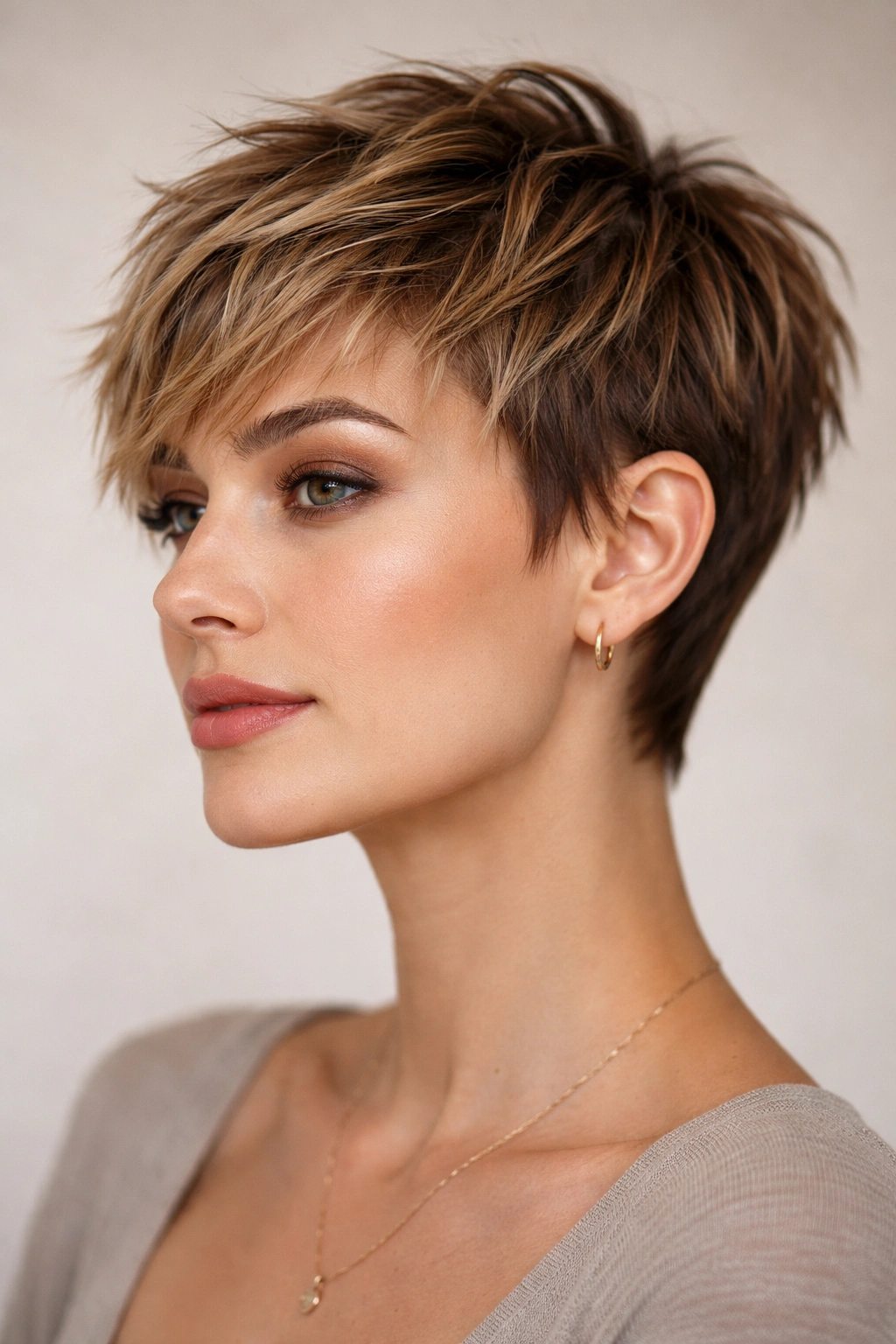
This variation keeps the pixie’s overall structure—very short sides and back—but loads the top section with choppy, heavily textured layers. Rather than graduating smoothly from short to slightly longer, each layer is deliberately choppy and defined, creating an almost shaggy texture that catches light beautifully and holds shape exceptionally well.
Why Choppy Layers Change the Game for Tucking
The texture is what makes this cut special for ear-tucking. Individual layers mean individual strands have room to move independently. When you sweep hair behind your ears, you’re not moving one mass of hair; you’re positioning multiple pieces that sit at slightly different angles. This creates volume and visual interest even when everything’s tucked, and prevents the too-flat, too-severe look some people dislike with smoother pixie cuts.
Best For Hair Types and Textures
- Fine or thin hair: The choppy layers create optical density—hair looks fuller and thicker than a blunt cut would.
- Wavy or naturally textured hair: The layers work with your hair’s natural texture rather than fighting it, creating effortless movement.
- Anyone wanting a “rocker” or fashion edge: This cut reads as bolder and more artistic than a traditional pixie.
Worth knowing: Choppy layers require slightly more styling attention than a smooth pixie. You’ll want to use a texturizing spray, clay, or pomade to enhance the piece-y quality and keep individual layers looking defined rather than matted.
6. Tapered Fade Pixie

A tapered fade pixie takes the classic pixie structure and pushes the fade technique further—the sides and back don’t just graduate down, they fade to nearly invisible very close to the skin, creating an almost clean-shaved effect that gradually blends into longer hair on top. It’s modern, sharp, and gives the cut a distinctly contemporary feeling.
The Fade Advantage for Ear-Tucking
The fade creates extreme contrast between the shaved sides and the longer top section. When you tuck hair behind your ears, this contrast actually highlights the action—you’re revealing sharp, clean lines rather than soft, graduated edges. The result is ultra-polished and intentional looking. Because the fade is so precise, even when hair is completely tucked back, the architecture of the cut is absolutely visible and flattering.
Maintenance Reality
- Fade maintenance: The fade fades as hair grows (obviously), so you’ll need a trim every 3-4 weeks to keep the sharp lines intact.
- Grow-out stage: Unlike a softer pixie, a tapered fade doesn’t look great during the grow-out phase—the sides get shaggy relatively quickly.
- Styling options: This cut requires clean, polished styling to look its best. It pairs beautifully with matte pomade, but it’s less forgiving of a messy, bed-head aesthetic.
Pro tip: If you love the precision of a fade but are concerned about maintenance, ask your stylist for a slightly less aggressive fade—you get similar visual impact with an extra week or two between trims.
7. Shaggy Pixie
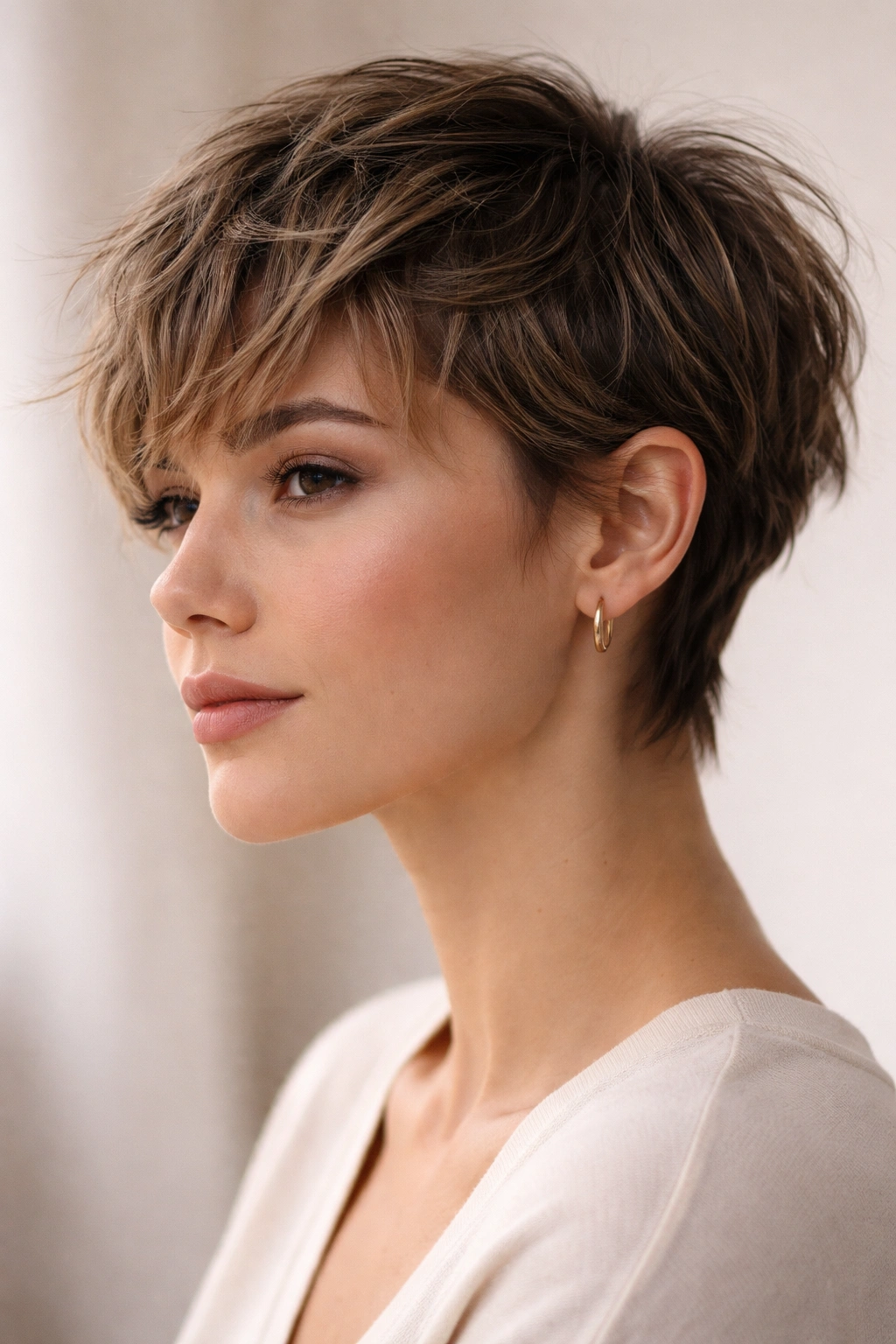
The shaggy pixie brings back some of that rock-and-roll, lived-in texture of ’70s shag cuts but applies it to modern pixie proportions. You’re looking at short sides (though not necessarily faded) and a longer, very textured, heavily layered top that has real movement and personality. It’s undone and cool without looking sloppy.
Why Shag Texture Is Perfect for Ear-Tucking
A shaggy pixie is designed to look textured and piece-y, so when you tuck it behind your ears, you get that effortlessly undone look that’s actually quite intentional. The shorter sides peek through, creating a cool contrast, while the layered top has enough substance and movement to create real visual interest even when swept back. It reads as fashion-forward and artistic rather than severe.
The Shaggy Pixie Personality
- Low-maintenance aesthetic: This cut actually looks better slightly tousled and product-free than perfectly styled.
- Works with your hair’s natural texture: If you have wavy or curly hair, a shaggy pixie lets you embrace your texture rather than fighting it.
- A bridge between short and medium: If you’re not ready for a full commitment to short hair, a shaggy pixie feels like a compromise—there’s enough length to play with.
Insider note: A shaggy pixie looks incredible with a texturizing spray and absolutely no other styling. Apply the spray, flip your head, and run your fingers through—the texture enhances naturally.
8. Sleek Chin-Length Bob
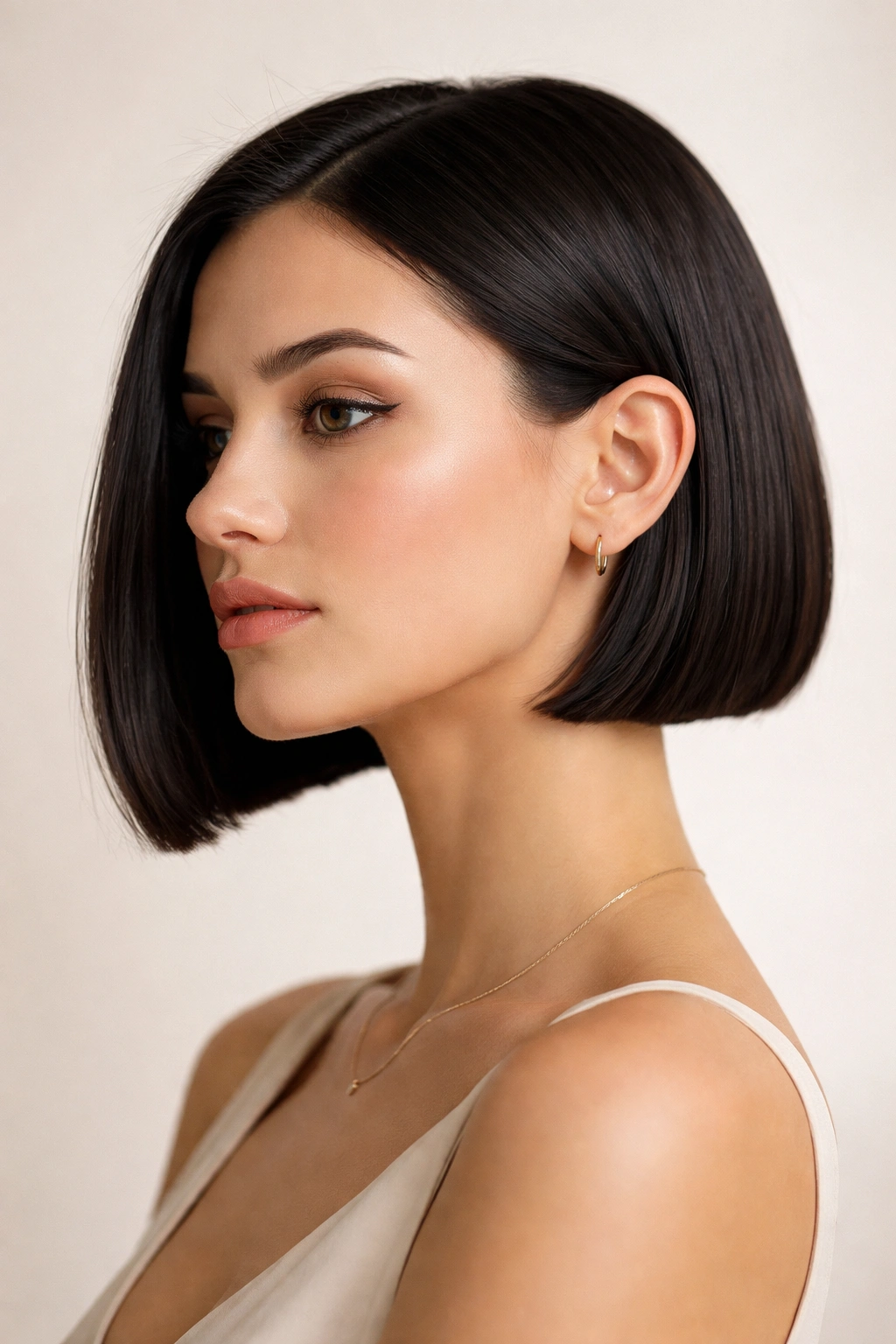
While technically a bob rather than a pixie cut, a sleek, blunt chin-length bob designed with precision can tuck beautifully behind the ears. The key is the cut itself: very sharp lines, blunt ends, clean edges, and hair that’s cut with enough angle that it naturally wants to frame the face but tucks elegantly away. Think a modern, refined take on the classic French bob.
What Makes This Bob Special for Ear-Tucking
A blunt, chin-length bob with the right angle sits right at your ear when you tuck it. The hair length means you have a real handful to work with—more than a pixie—and the blunt edges create a polished, architectural look. When tucked, this cut reveals your neck, jawline, and ears in the most flattering way possible. It reads as intentional, elegant, and effortlessly chic.
Styling and Maintenance
- Precision matters: This cut lives or dies by its precision. A blunt bob needs a trim every 4-6 weeks to maintain those sharp lines.
- Styling flexibility: You can wear this tucked for a polished look or let it fall naturally around your face for a softer approach.
- Works with texture and smoothness: A blunt bob can be styled sleek and smooth or textured and piece-y depending on your preference.
Worth knowing: A chin-length bob works beautifully on almost every face shape, but it’s particularly flattering if you want to highlight your jawline and neck. It’s also an excellent choice if you’re transitioning from longer hair—it’s still short, but it feels like less of a dramatic jump than a pixie cut.
9. Asymmetrical Pixie

An asymmetrical pixie intentionally plays with imbalance—one side is noticeably shorter or cut at a different angle than the other, creating a bold, avant-garde silhouette. Think shaved on one side, longer on the other, or one side faded while the other maintains more length. It’s a statement cut for people who want short hair to be distinctly fashion-forward.
Why Asymmetry Works for Ear-Tucking
The beauty of an asymmetrical pixie is that it gives you two completely different looks depending on how you style it. When you tuck the longer side behind your ear, you reveal the bolder, shorter side—creating drama and intentionality. The contrast is what makes this cut so striking. It’s not a default cut; it’s a choice, and that choice becomes even more obvious when you tuck it.
Who Should Consider It
- People who want to make a statement: This cut is unapologetically bold and fashion-forward.
- Those comfortable with frequent styling: An asymmetrical pixie demands intentional styling to look its best.
- Anyone wanting short hair to feel unconventional: This cut signals you’re not following the standard rulebook.
Pro tip: An asymmetrical cut actually becomes easier to maintain through the grow-out phase than a symmetrical pixie, because the asymmetry means slight irregularities blend into the design rather than ruining it.
10. Layered Crop with Undercut

This cut combines layering throughout the top with an undercut on the sides—meaning the underside (the hair touching your scalp just above your ears and nape) is very short, while the top layer is longer and can be styled multiple ways. It’s architectural, modern, and creates clean lines that absolutely shine when hair is tucked behind the ears.
Why This Cut Excels at Tucking
The undercut creates extreme definition—when you tuck hair behind your ears, you’re revealing that sharp, nearly shaved undercut, which frames your head beautifully and creates an almost architectural quality. The layering throughout the top means you get texture and movement rather than a heavy, one-length mass. This combination creates a cut that looks polished and intentional whether styled forward or tucked back.
The Professional Appeal
- Looks sharp in professional settings: This cut reads as polished and put-together even with minimal styling.
- Versatile enough for different style preferences: You can style it textured and piece-y or smooth and sleek depending on the occasion.
- Works beautifully on most hair types: The layering means the cut adapts to straight, wavy, and textured hair equally well.
Insider note: An undercut with layering is one of the most forgiving short cuts for the grow-out phase. The undercut grows out gradually, so it doesn’t look immediately shaggy or unkempt. You’ve got a solid 6-8 weeks before you really need to revisit the barber.
Final Thoughts

The perfect short haircut that tucks behind your ears beautifully combines three essential elements: the right length to give you enough hair to work with, strategic layering or texture to ensure hair stays tucked rather than immediately falling forward, and precise cutting that creates a polished, intentional silhouette whether hair is down or swept back. None of these cuts works as well by accident—each one is specifically designed to excel at this particular styling move.
The cut that’s right for you depends on your hair type, lifestyle, face shape, and how much styling effort you’re willing to invest. A pixie cut demands more frequent trims but offers maximum low-maintenance styling. A chin-length bob gives you more length to work with but still delivers that short-hair aesthetic. An asymmetrical cut makes a bold statement but requires more intentional daily styling. Whatever you choose, communicate clearly with your stylist about the tuck-behind-the-ears look you’re after—show them reference photos, discuss your daily styling habits, and be honest about how much maintenance you’re comfortable with.
The beauty of short haircuts that tuck perfectly is that you’re never locked into one look. On days when you want polished, put-together elegance, sweep it back. When you want effortless texture and movement, let it fall naturally. That versatility—combined with the precision of a cut designed specifically to work this way—is what makes these styles so rewarding. Once you find the right cut, you’ll probably find yourself doing that ear-tuck maneuver constantly. It becomes instinctive, a quick gesture that transforms how you look and feel.
