



The mullet has made an undeniable comeback, and it’s not your dad’s eighties disaster. The modern mullet on straight hair is a genuinely wearable style that bridges edgy personality with practical sophistication. What makes it work now is the subtlety—the proportions are smarter, the transitions are cleaner, and the overall effect reads as intentional rather than accidentally retro. If you’ve been curious about this polarizing cut but weren’t sure it could actually suit you, the variations available for straight hair textures are way more versatile than the original monochromatic version.
The straight hair mullet has a particular advantage that textured or curly versions don’t always share: clean lines that make the contrast between the business-in-front sections and the party-in-back flow feel deliberate and controlled. Straight hair shows off sharp transitions, distinct length variations, and the geometric play of the cut with absolute clarity. This isn’t about looking wild or ironic—it’s about choosing a structured cut that gives you dimension, movement, and a sense of style that reads as bold but not costume-like. Whether you want something subtle or genuinely statement-making, there’s a straight hair mullet variation built for your face shape and lifestyle.
The trick is finding the specific version that actually fits your personality, daily routine, and styling commitment. The difference between a mullet that looks effortlessly cool and one that feels like too much often comes down to the ratio of front-to-back, how the sides transition, and whether the back layers hit at a length you’ll actually maintain. We’re walking through twelve distinct approaches to the straight hair mullet—from barely-there modern takes to bold, theatrical versions—so you can identify exactly which cut might be the one you’ve been waiting for.
1. The Barely-There Modern Mullet
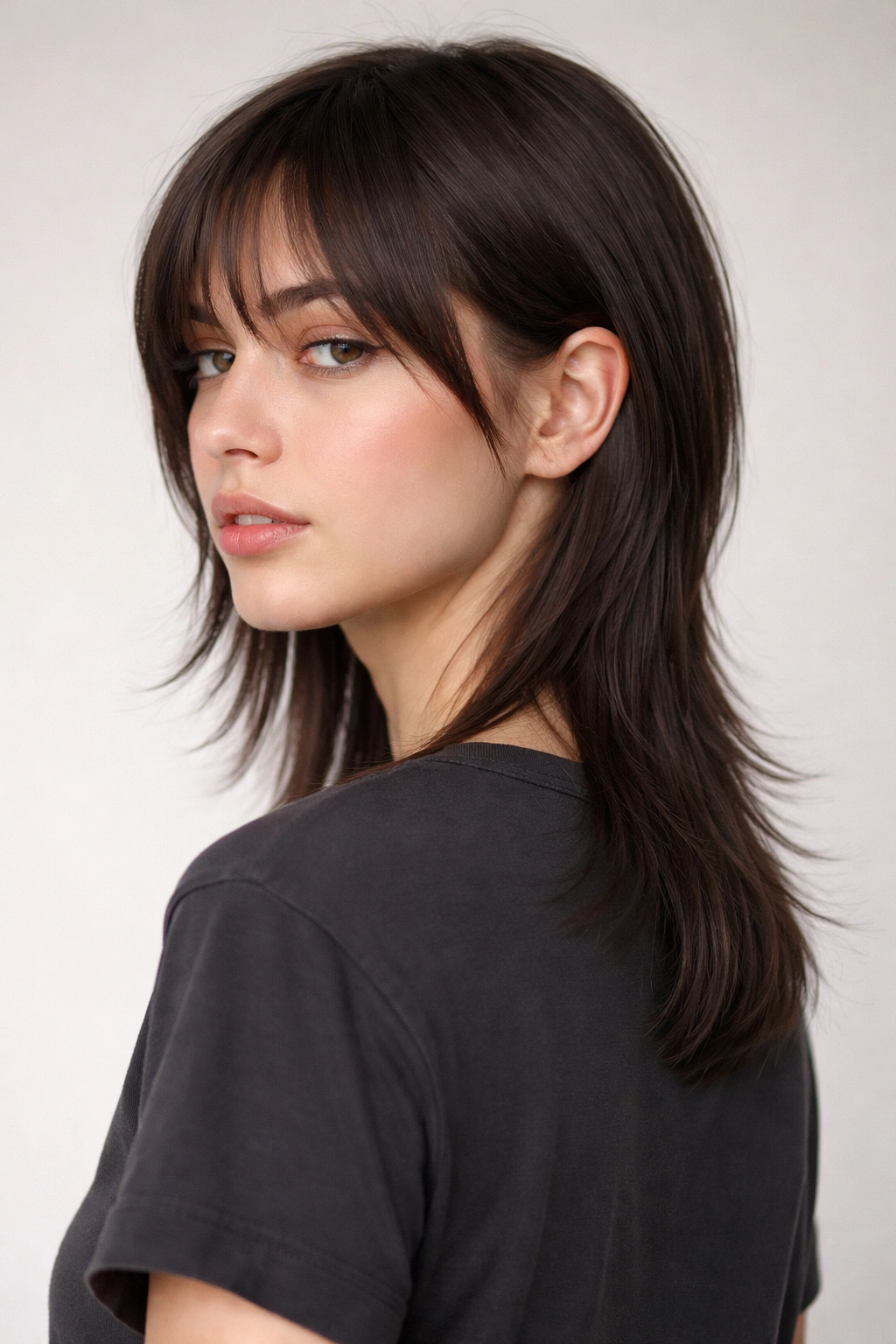
This is the entry point for anyone still nervous about committing to a mullet. The barely-there version keeps your front layers at chin-length or slightly longer, maintains clean sides at ear-level, and extends the back only modestly—typically adding 2 to 4 inches of extra length that becomes visible when you style it, but doesn’t read as dramatic at first glance. From the front and sides, it looks like a contemporary short cut. The mullet element only really reveals itself when you move, turn your head, or deliberately style the back section forward or to the side.
Why This Style Works
The genius of the barely-there mullet is that it gives you the psychological satisfaction of a bold style choice without requiring you to commit to a look that dominates every room you walk into. Straight hair shows off the back layers with clean, controlled lines—there’s no fuzzy texture to disguise imperfect proportions, so the length difference reads as deliberate sophistication rather than awkwardness. You get dimension and movement that a regular short cut doesn’t offer, plus the option to experiment with styling the back section in different directions. The front-to-back contrast is gentle enough that you can style it either way and have it work, giving you genuine flexibility in your daily presentation.
Best For & Styling Tips
This cut works beautifully for straight hair that’s fine to medium thickness and holds a style without excessive product. It suits professional environments where you want personality without being polarizing, and it’s forgiving if you skip a styling step—the cut itself does most of the work. Style the back down and blended for a softer look, or blow-dry it out and forward for a bit more drama. A lightweight styling cream or dry paste keeps straight hair from looking flat while maintaining that clean, intentional aesthetic.
- Perfect for first-time mullet wearers who want a test run before committing to a bolder version
- Works with any face shape since the front isn’t dramatically different from a standard modern cut
- Easy to maintain between salon visits—the proportions stay balanced even if growth is uneven
- Pairs well with understated personal style; doesn’t overwhelm a minimalist wardrobe
Pro tip: Ask your stylist to add subtle texture through point-cutting the back layers so they catch light and movement without looking scraggly as they grow out.
2. The Feathered Mullet
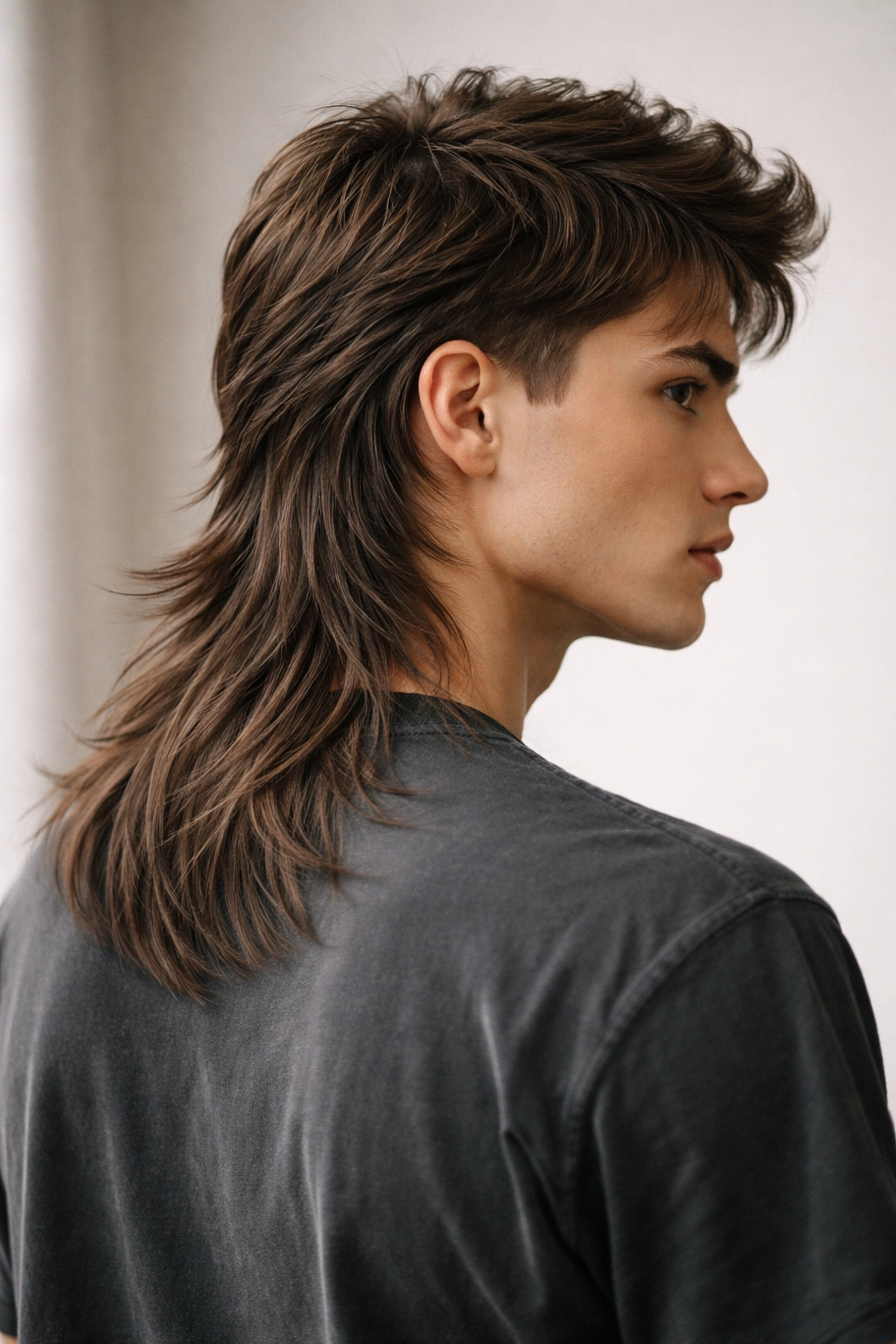
The feathered mullet takes that barely-there concept and adds deliberate dimension throughout. The entire back section gets layered and feathered, which means each strand is cut at a slightly different length rather than creating one blunt line. On straight hair, this creates a texture effect that’s almost liquid—the layers catch light and movement individually, giving the back real visual interest without looking shaggy. The front stays cleaner and more defined, creating deliberate contrast against the movement in back.
Why This Style Works
Feathering was a genius solution to straight hair’s tendency toward flatness, and on a mullet, it prevents the back from looking like one heavy, stiff section. Each feathered layer moves independently when you move your head, creating subtle animation that makes the style feel alive. Straight hair texture means the feathering reads as intentional craftsmanship rather than accident—every strand sits exactly where your stylist cut it. The contrast between the sharp front lines and the soft, feathered back creates visual sophistication that reads as professional at a glance but interesting up close.
Best For & Styling Tips
This version works best on straight hair with medium to thick density. If your hair is fine, feathering can make sections look thin; if it’s very thick and straight, the layers might resist staying in place. The feathered mullet works beautifully if you’re willing to blow-dry and use lightweight styling product to encourage movement and separation. Style it by feathering the back sections upward and outward, letting each layer catch the air differently, or smooth it back for a more controlled aesthetic.
- Requires a stylist who understands feathering technique and can execute clean, intentional layers
- Moves beautifully when you style it, giving you genuine styling options from day to day
- Works well with shoulder-width or wider face shapes where the feathered volume balances proportions
- Best on straight hair that’s naturally smooth; if your hair texture is already wavy, feathering might get lost
Insider note: Feathering looks best when freshly cut; ask your stylist when you should schedule your next trim to maintain the effect (usually 4-6 weeks for optimal movement).
3. The Shaved Sides Mullet
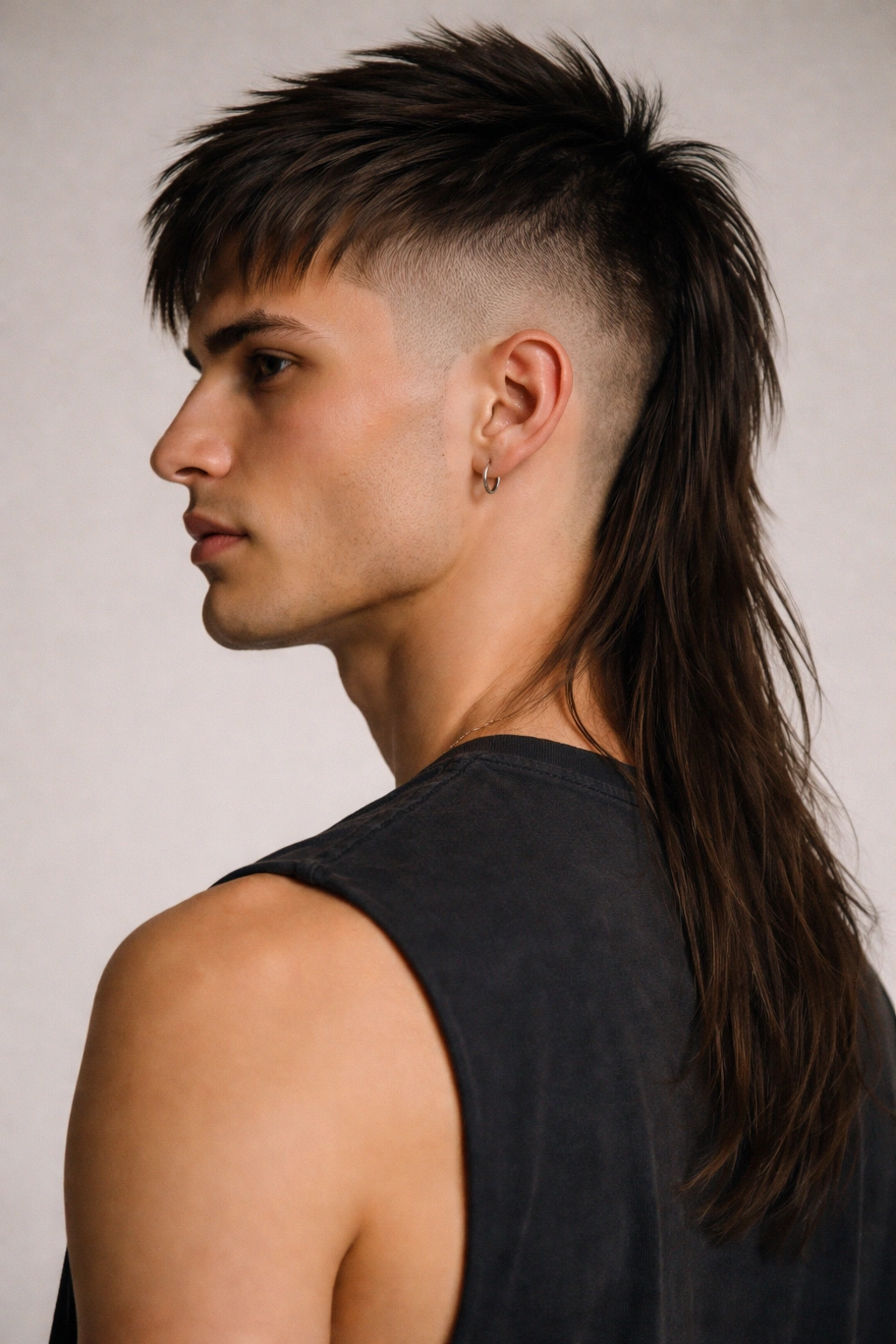
This is where the mullet gets genuinely statement-making. The shaved sides mullet keeps clean, clipped sides (typically faded from skin-level up through the ear) while maintaining substantial length on the crown and an even longer back section. The contrast is architectural—the exposed skin on the sides emphasizes the volume on top and back, creating a silhouette that reads as intentionally bold. Straight hair on top and back shows off this contrast with absolute clarity; there’s no texture to soften the graphic quality of the shaved sections.
Why This Style Works
The shaved sides create visual focus on the crown and back length in a way that subtle fades simply can’t match. You’re essentially creating a runway of straight hair down the center of your head, with exposed skin emphasizing the volume. This cut works beautifully if you have a well-shaped head and are comfortable with that level of exposure—it’s not trying to be subtle, so the commitment reads as confident rather than experimental. Straight hair lets the shaved sections stay truly clean between maintenance appointments, and the top section doesn’t get lost against texture.
Best For & Styling Tips
This version requires actual confidence and a level of styling commitment. You need to blow-dry the crown and back regularly to get the full effect—if you let it air dry, the straight hair can look a bit deflated. You’ll need to get the sides trimmed or shaved every 2-3 weeks to maintain the graphic quality. This cut works best for people with oval, oblong, or heart-shaped faces; if you have a very round face, the exposed sides might feel awkward. It suits individuals with thick, straight hair that can hold height.
- Requires maintenance commitment; the shaved sides need regular upkeep to look intentional rather than overgrown
- Best for straight hair that’s coarse enough to hold styling product without looking greasy
- Works beautifully for personal style that’s already edgy or alternative; feels out of place in very conservative environments
- Creates genuine visual impact; this isn’t a cut for people seeking subtlety
Worth knowing: If you’re new to shaved sides, ask your barber for a very conservative fade first—you can always go shorter next time, but you can’t put hair back.
4. The Textured Fringe Mullet
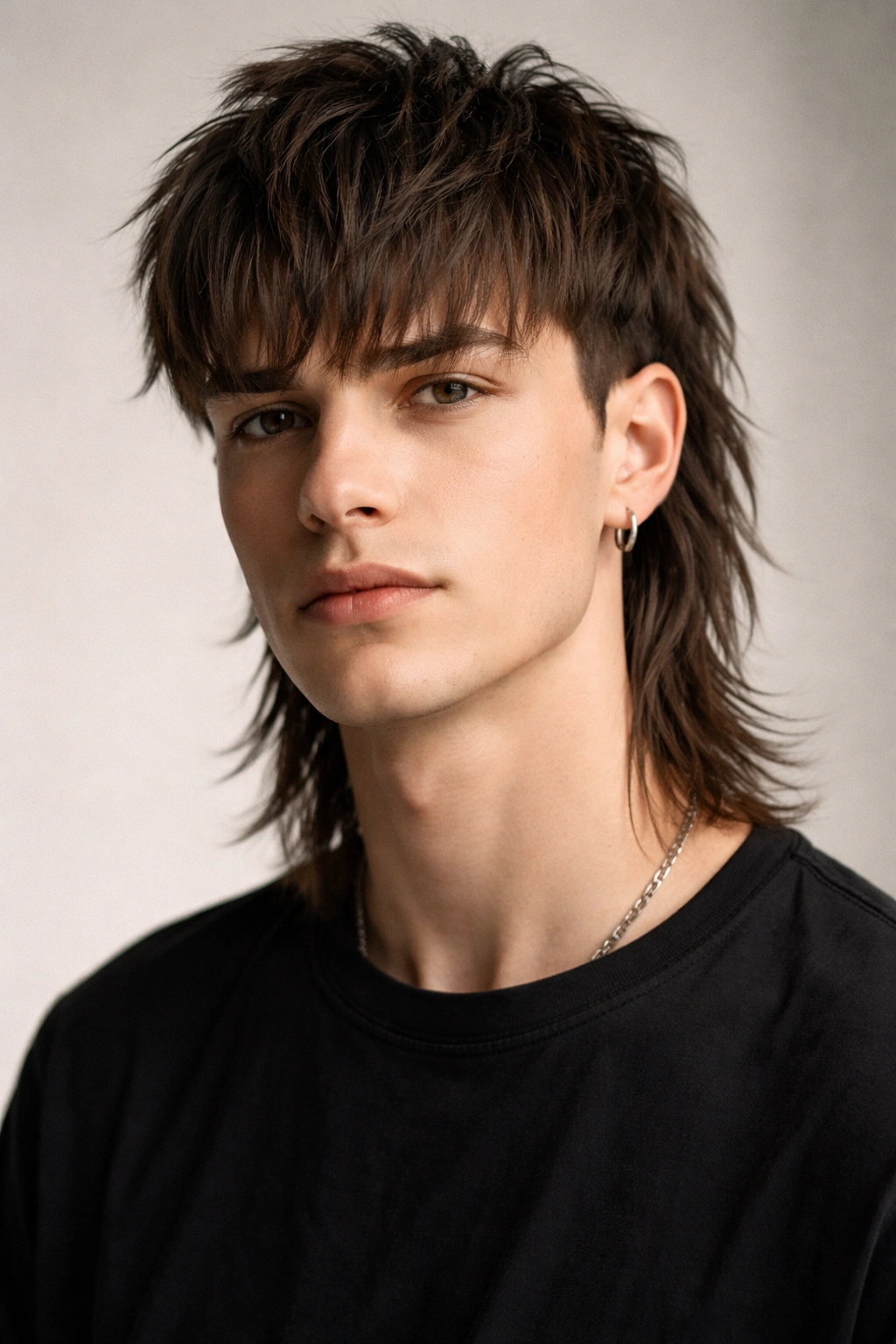
The textured fringe mullet keeps length on top through a deliberately textured fringe (think choppy, piece-y layers that graze the forehead) while maintaining the business-in-back contrast through longer layers. The front texture is the focal point—it’s where your styling effort and product go. The fringe moves in multiple directions rather than sitting as one solid curtain, creating a modern vibe that reads as fashion-forward rather than traditional. The back provides the mullet element but stays quieter than the statement-making front.
Why This Style Works
This version reverses the typical mullet psychology—instead of the back being the bold statement, the front gets the attention. On straight hair, a textured fringe shows off sharp, intentional point-cutting that creates genuine dimension and visual interest. The contrast between the choppy, dimensional front and the longer, cleaner back sections creates visual balance that feels modern rather than retro. You get the mullet structure without it necessarily being the first thing people notice, which makes the style feel less costume-like and more like an actual choice.
Best For & Styling Tips
The textured fringe mullet works best on straight hair that’s fine to medium weight. Very thick, coarse hair can look heavy with that much front texture. Your styling routine centers on the fringe—you’ll blow-dry it with a round brush or tousle it with your fingers and lightweight product to keep the layers moving separately rather than sticking together. The back can be styled smooth or with subtle waves, giving you real flexibility. This cut works beautifully if you have a longer face shape where the fringe texturing creates balance.
- Requires a stylist who understands point-cutting and can create intentional texture rather than just choppy random layers
- Works better on straight hair than wavy or curly hair, where the texture might get lost in natural texture
- Styling is centered on the front, so you have some flexibility with the back section
- Best for people who enjoy using styling product and are comfortable with a daily styling routine
Pro tip: Use a lightweight matte product on the fringe to separate the layers without making straight hair look greasy; save the heavier styling cream for the back if you want more control there.
5. The Disconnected Mullet
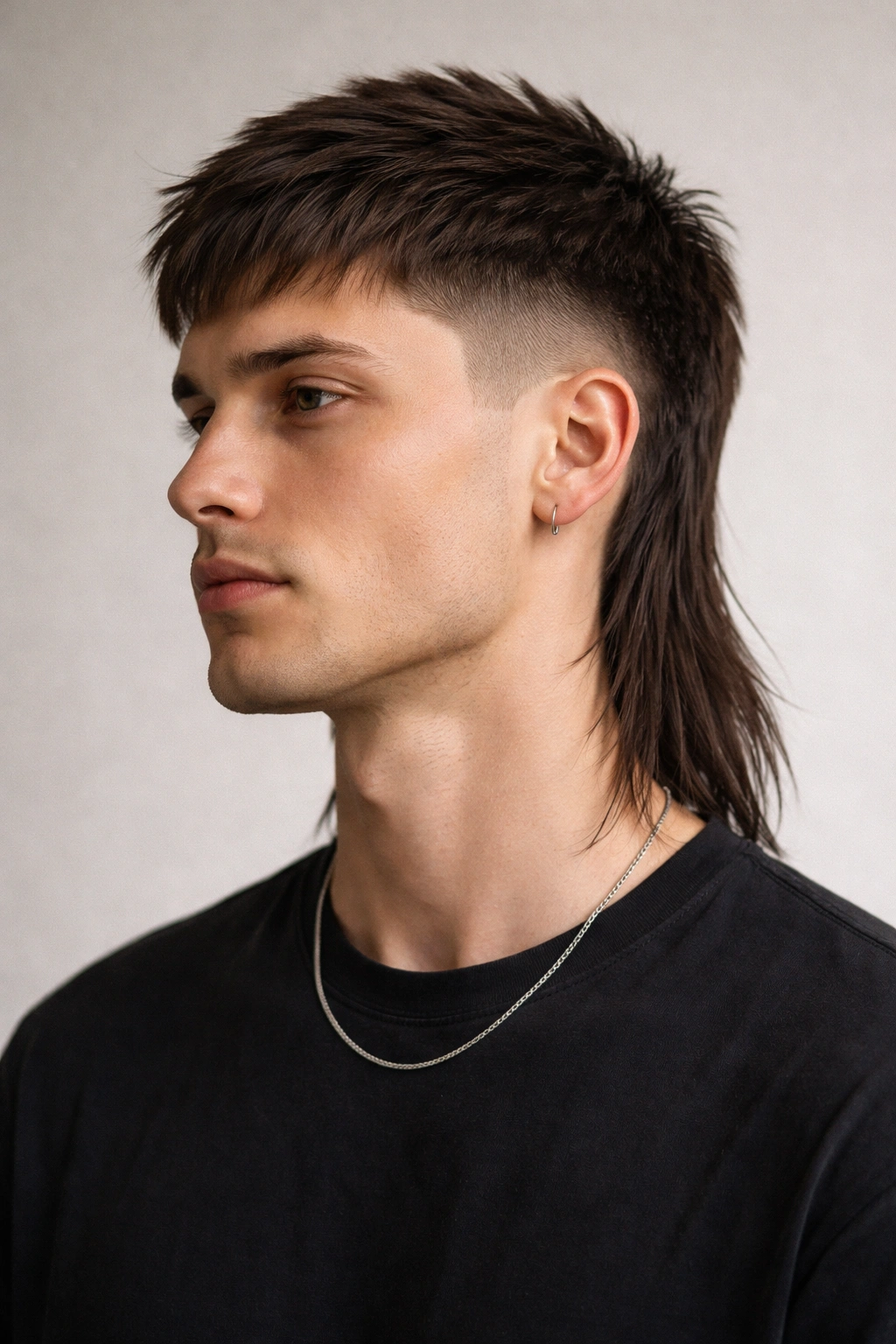
The disconnected mullet features a completely separate top section (often shorter, sometimes textured) that’s entirely distinct from the longer back. There’s no gradual blend—the transition is clean and obvious, usually marked by an undercut or a visible line where the lengths change dramatically. On straight hair, this separation is graphic and architectural. You’re essentially wearing two different haircuts that happen to exist on the same head, which sounds wild until you see it executed well.
Why This Style Works
The disconnect reads as intentional design rather than accidental contrast. Straight hair shows off clean lines with absolute precision, so the visual separation between sections feels purposeful and controlled. This version of the mullet works if you’re someone who likes strong visual statements but wants the top section to feel contemporary and wearable on its own. The top can be styled forward, to the side, or back depending on your mood, and the back length gives you versatility in how you present yourself depending on context.
Best For & Styling Tips
The disconnected mullet suits people with oval or oblong face shapes best, since the shorter top doesn’t overwhelm proportions. It works on any hair density, but you need straight hair that holds styling product without slipping. Styling requires you to actively blow-dry the top section to get the effect—if you let it air dry, the disconnection might feel accidental rather than architectural. The back can be worn down, up, or to the side depending on the occasion.
- Creates genuine visual impact; the clean separation is impossible to miss
- Best for confident people who are comfortable with a bold style choice
- Requires regular maintenance since the line between sections needs to stay sharp
- Styling centers on deliberately emphasizing the disconnect, so you’ll use product intentionally
Worth knowing: The undercut separating sections can feel exposed and cold until you’re used to it; ask your barber about the depth and angle before they start cutting.
6. The Long Straight Mullet
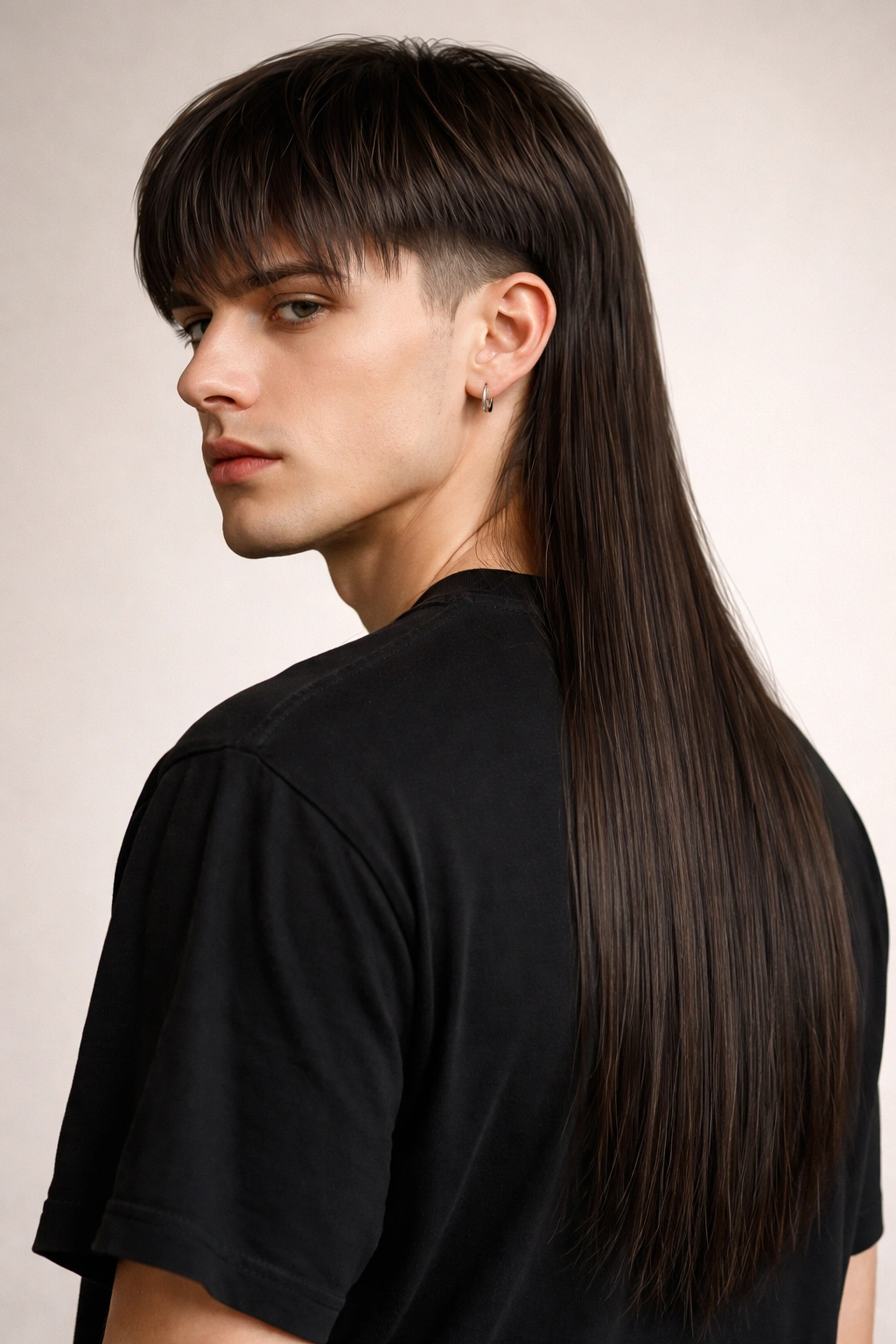
For people ready to genuinely commit, the long straight mullet extends the back substantially—typically to mid-back or shoulder-length—while keeping the front at jaw or chin level. This is the version that reads as an unmistakable mullet at any angle. The back length is undeniable, the contrast is graphic, and the visual impact is real. On straight hair, the back flows smoothly without curl or texture to interrupt the length, creating a clean cascade effect that can actually look quite elegant rather than purely statement-making.
Why This Style Works
The long mullet works because straight hair doesn’t frizz, wave, or shorten up with curly texture—it hangs at whatever length you cut it. This means the back section can look genuinely polished and flowing rather than scraggly or wild. The contrast between the controlled front and the dramatic back creates genuine visual sophistication when styled correctly. You’re making a choice that reads as confident and intentional, not ironic. Straight hair in particular can make the long mullet look less like a costume and more like an actual high-fashion statement.
Best For & Styling Tips
This version requires commitment. You need to be willing to get the front trimmed every 4-6 weeks to maintain the contrast as the back grows, and you need to have a styling routine for the back—whether that’s braiding, clipping up, or styling it forward. It works on any hair density but looks best on straight hair that’s medium thickness or thicker; fine hair can look a bit thin when extended. You’ll want a regular deep conditioning routine since longer hair needs more moisture.
- Creates unmistakable visual impact; this is a full commitment to the mullet concept
- Works beautifully for people with long hair aspirations who want to combine length with a modern top section
- Requires patience as the back grows out and regular front trims to maintain proportions
- Best for people who are comfortable being noticed for their style choices
Pro tip: Invest in a good leave-in conditioner and a silk pillowcase; longer straight hair needs moisture and care to look polished rather than just long.
7. The Blonde Money Piece Mullet
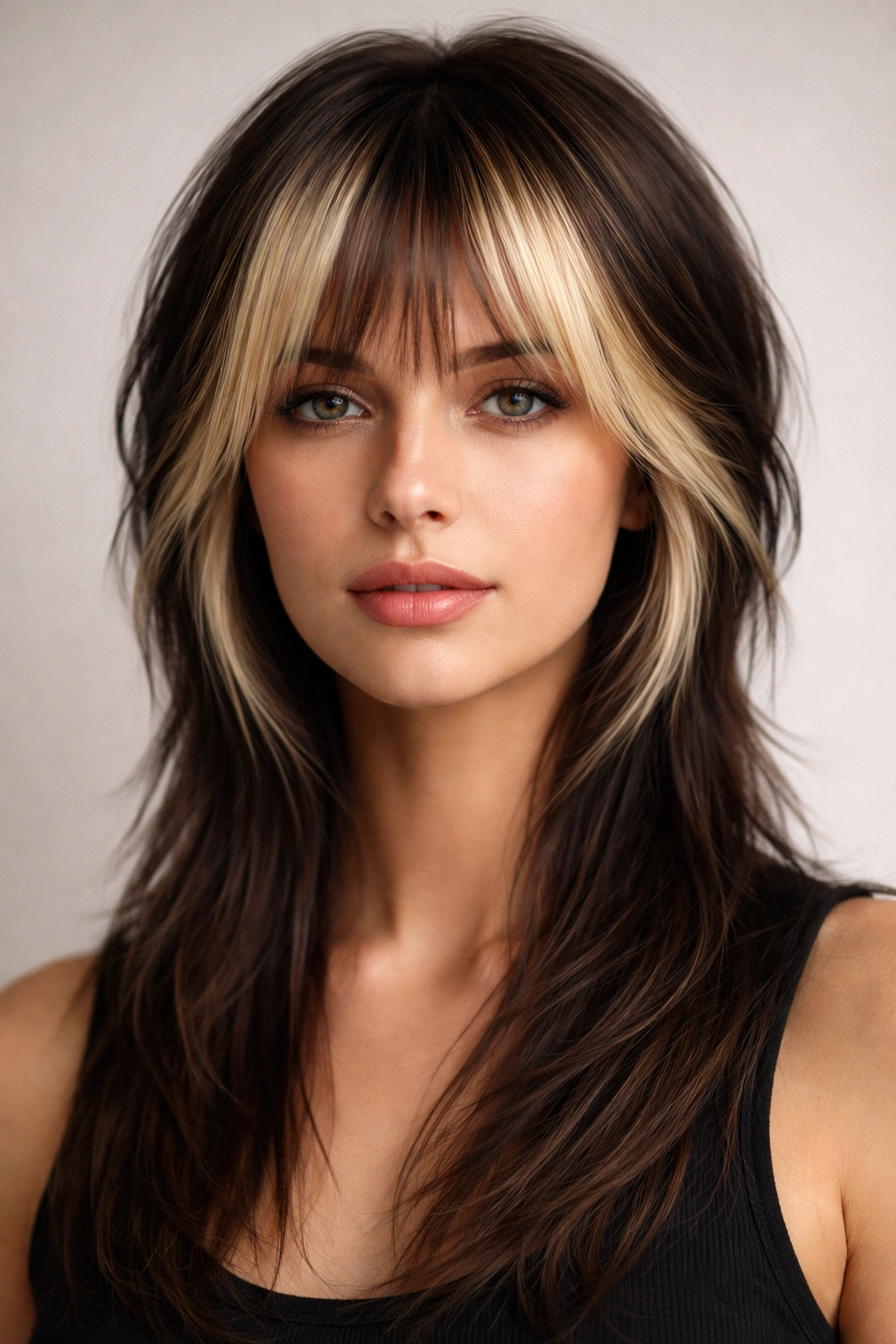
This variation keeps the structure of a classic mullet but adds a strategic blonde money piece (a frame of lighter hair around the face) that creates visual interest and makes the straight hair texture catch light differently. The blonde section is typically 2-3 inches wide on each side of the face, creating a flattering frame effect. The rest of the hair might be darker, creating a two-tone visual that’s fashion-forward without being costume-like. The blonde sections light up straight hair naturally, catching light and movement.
Why This Style Works
The money piece solves a real problem that straight hair sometimes faces: a tendency to look a bit flat or one-dimensional. By adding strategic lighter color, you create visual texture and depth that your actual hair texture might not provide naturally. The blonde frame brightens the face and creates a focal point that makes the mullet feel less about the back length and more about overall style sophistication. On straight hair, the color contrast is crisp and intentional, not muddy or blended.
Best For & Styling Tips
This version works best on straight hair that’s naturally medium to dark, where the blonde contrast reads as intentional rather than accidental. You’ll need to commit to color maintenance—money pieces need refreshing every 4-6 weeks to avoid regrowth showing too obviously. The styling is flexible; the blonde framing works whether you style the top smooth, textured, or tousled. You can wear the back down or up depending on whether you want the full mullet visible or prefer a subtler presentation.
- Adds visual sophistication and prevents straight hair from looking flat or one-dimensional
- Requires ongoing color maintenance but creates a fashionable frame that justifies the commitment
- Works on oval, oblong, and heart-shaped faces; the frame effect is flattering on most face shapes
- Best for people who are comfortable with color maintenance and enjoy playing with tone and contrast
Insider note: Ask your colorist about balayage or dimensional highlighting rather than a stark blonde block; the softer contrast often looks more polished on straight hair.
8. The Slicked Back Mullet
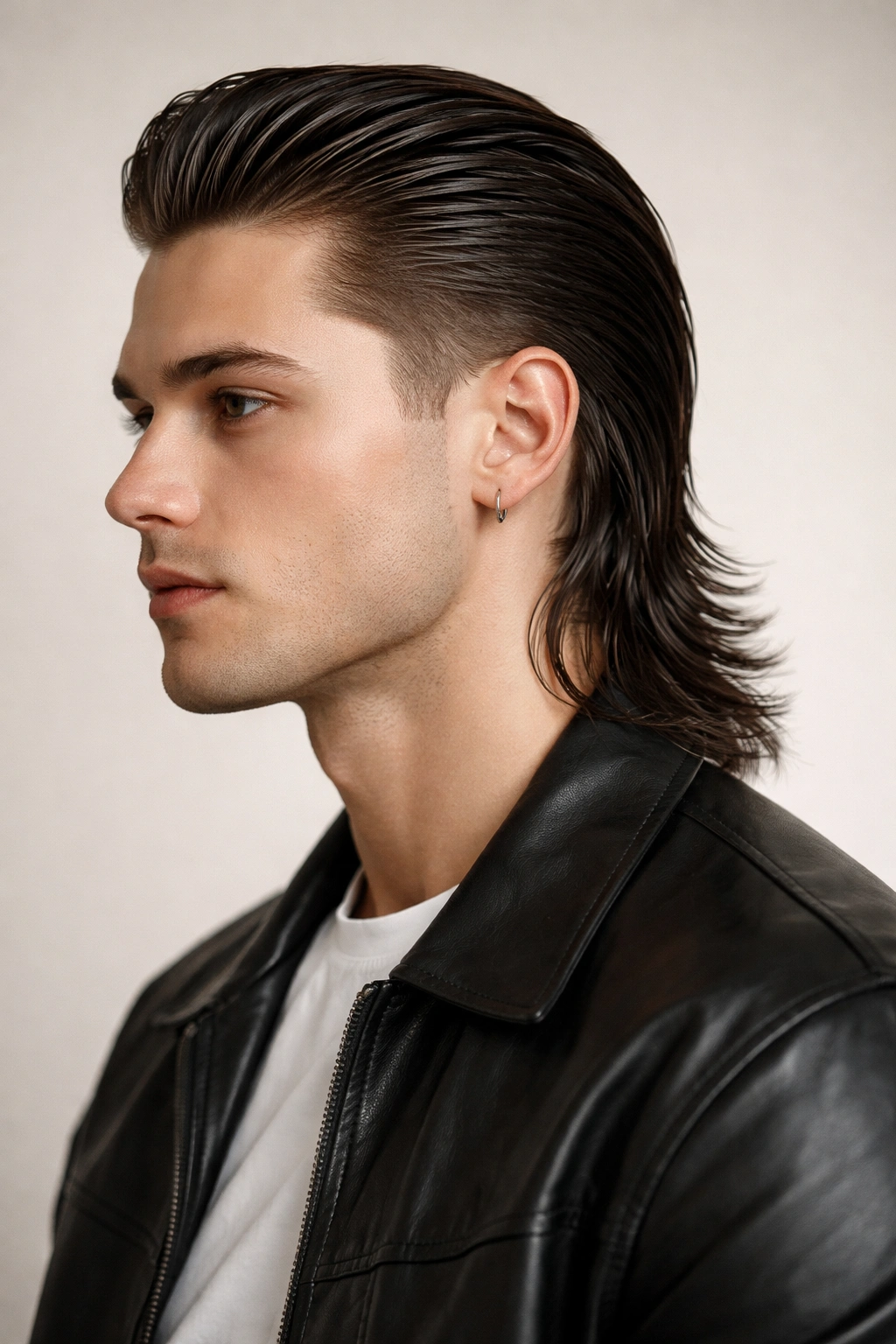
The slicked back mullet keeps moderate length on top and back but styles the entire head with gel, pomade, or styling wax that creates a wet, controlled aesthetic. Everything is deliberately sculpted backward, creating a streamlined silhouette. The back isn’t dramatically longer, but the styling makes it visible and creates a sleek effect. On straight hair, slicking everything back emphasizes bone structure and creates a genuinely polished, intentional look that’s somewhere between edgy and elegant.
Why This Style Works
Slicking straight hair back emphasizes the clean lines of your haircut and the architecture of your face. The mullet element becomes more about the subtle length in back than a dramatic contrast, making the overall effect feel sophisticated rather than wild. The wet-look styling creates visual coherence between the front and back sections, making the mullet feel purposeful rather than accidental. You’re using product and styling intentionally to create a look that reads as fashion-forward grooming rather than a style choice that’s trying too hard.
Best For & Styling Tips
This version works best on straight hair that’s coarse enough to hold strong-hold product without looking thin or greasy. Styling requires a medium to strong-hold gel, pomade, or wax applied while hair is damp, then blow-dried or air-dried in that direction. You’ll need to refresh it daily, and you might want a comb or brush handy for touch-ups throughout the day. It works beautifully on people with oval or oblong faces and suits people whose personal style is already polished and intentional.
- Creates a polished, intentional aesthetic that reads as high-fashion grooming rather than costume
- Works on any face shape but is especially flattering on people with defined bone structure
- Requires daily styling with product; this isn’t a wash-and-go option
- Best for straight hair that can handle strong-hold product without looking greasy
Worth knowing: The slicked back look requires you to wash your hair every day to prevent product buildup; if you prefer washing less frequently, this version might not be sustainable for you.
9. The Textured Back Mullet
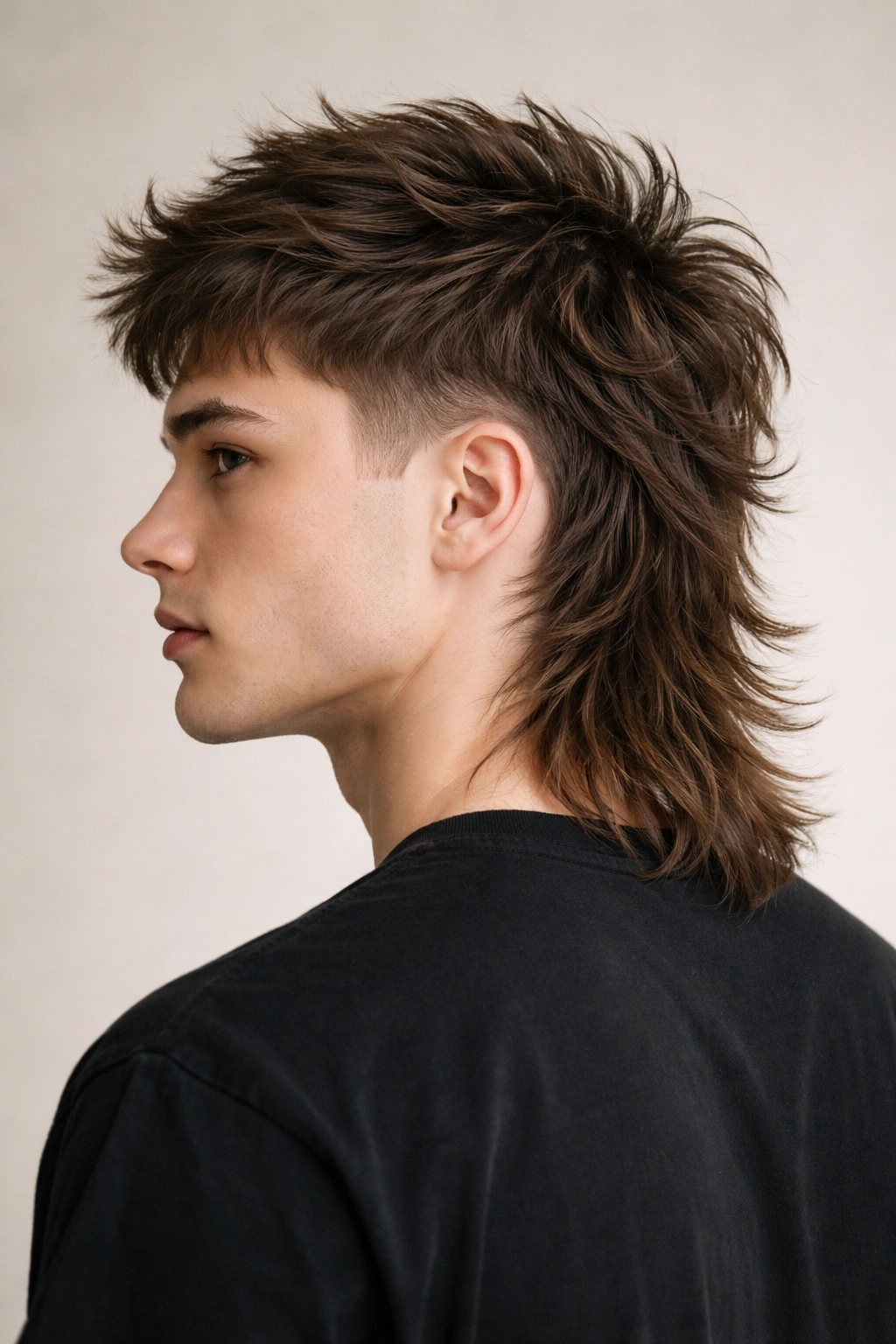
This version keeps a relatively clean, controlled front but extends the back into deliberately textured, choppy layers. The back is the focus—it’s voluminous, multi-directional, and catches light in different ways depending on how you move. The front-to-back contrast is about clean structure versus textured freedom. On straight hair, the textured back creates visual interest and movement without the weight that texture can sometimes create on curly hair.
Why This Style Works
The textured back solves the problem of a mullet feeling too graphic or harsh. By adding texture to the back section, you soften the overall effect and create genuine movement and dimension. Straight hair shows off intentional texture that’s been point-cut and shaped by a skilled stylist. The front stays clean and contemporary, so the overall effect reads as modern and intentional rather than retro or costume-like. You get the mullet structure with a contemporary twist.
Best For & Styling Tips
The textured back mullet works best on straight hair that’s fine to medium weight. Thick, coarse hair can look heavy when layered extensively. Styling involves blow-drying the back layers with your fingers or a diffuser to encourage separation and movement, then potentially finishing with a lightweight product to keep layers from clumping together. You have flexibility in how you style the back from day to day—smooth for a controlled look, or fully textured for maximum movement.
- Requires a stylist skilled in creating intentional texture rather than just choppy layers
- Works on any face shape since the front isn’t dramatically different from contemporary cuts
- Styling is flexible; you can alter the effect based on whether you dry and separate layers or smooth them down
- Best for straight hair that responds well to blow-drying and shows off texture intentionally
Pro tip: Use a lightweight, matte product on the textured layers; anything too heavy will weigh down the texture and make it look clumpy rather than intentional.
10. The Pompadour Mullet
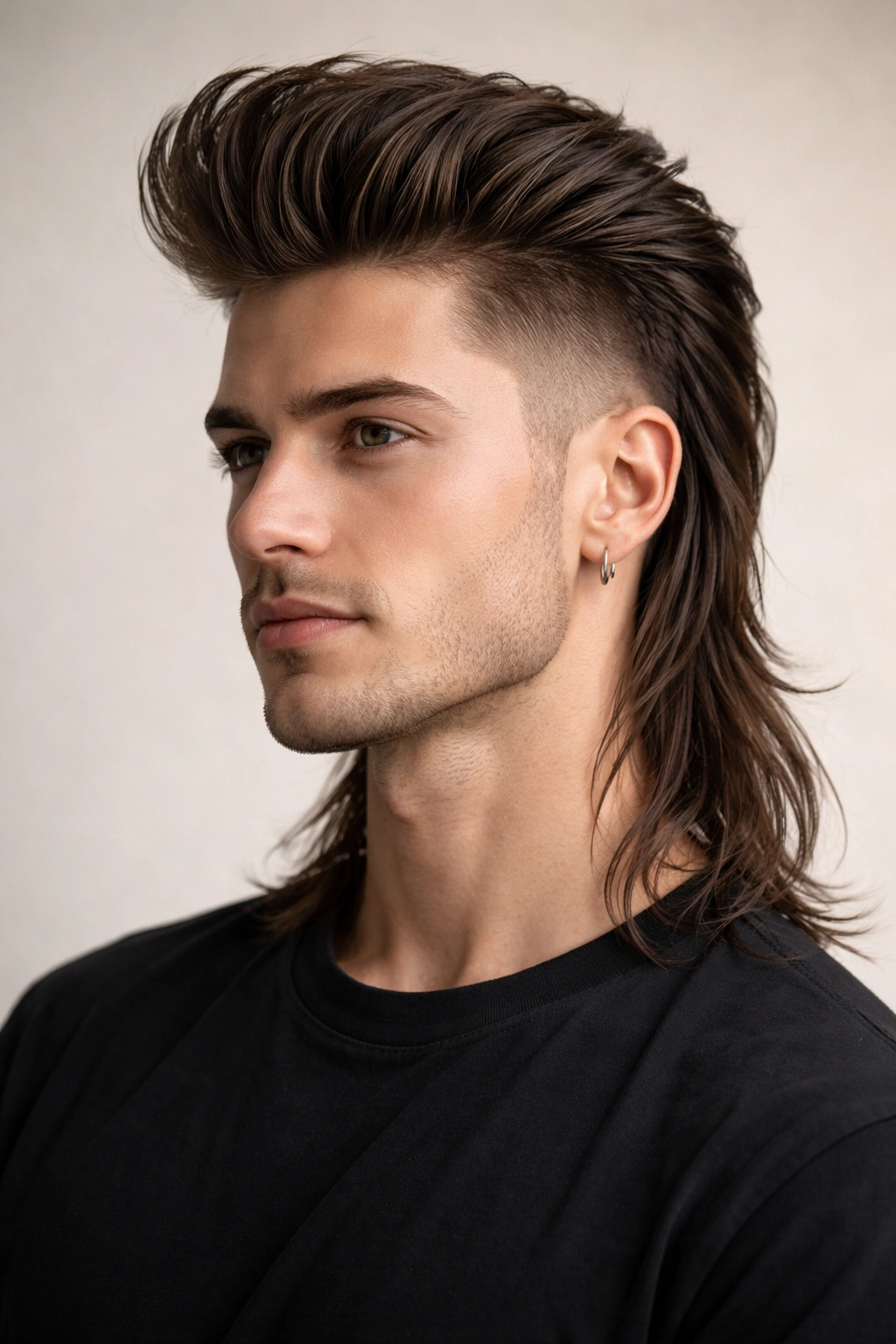
The pompadour mullet creates volume on top through longer hair in the crown that’s styled upward and backward, while maintaining moderate length in the back. The front is typically shorter and faded on the sides, creating a dramatic silhouette. The entire top section lifts away from the head, creating height and visual presence. On straight hair, the pompadour effect is clean and architectural, with volume that holds throughout the day when styled correctly.
Why This Style Works
The pompadour adds genuine personality and visual interest to the front section, making the mullet feel balanced. You’re not creating a stark contrast between a conservative front and a wild back—you’re creating visual impact on both sections. Straight hair shows off the clean lines of a good pompadour and holds the volume beautifully when styled with appropriate product. The height on top makes the overall silhouette feel confident and intentional.
Best For & Styling Tips
The pompadour mullet works best on straight hair that’s coarse enough to hold volume without product making it look greasy. You need thickness on the crown to create genuine height; if your hair is fine, the pompadour might look thin or require excessive product. Styling involves blow-drying the top section upward while it’s damp, then finishing with a medium-hold pomade or gel that creates height without crunch. It suits people with oval or oblong faces best; round faces sometimes look wider with the additional crown height.
- Creates visual impact and personality without looking costume-like when executed well
- Requires a skilled stylist who understands how to cut for pompadour height and shape
- Styling involves regular blow-drying and product application; this isn’t a low-maintenance option
- Works on thick, straight hair best; fine or thin hair might struggle to maintain height
Insider note: Ask your stylist to texturize the crown slightly through point-cutting; this helps straight hair hold styling product and maintain volume throughout the day.
11. The Undercut Mullet
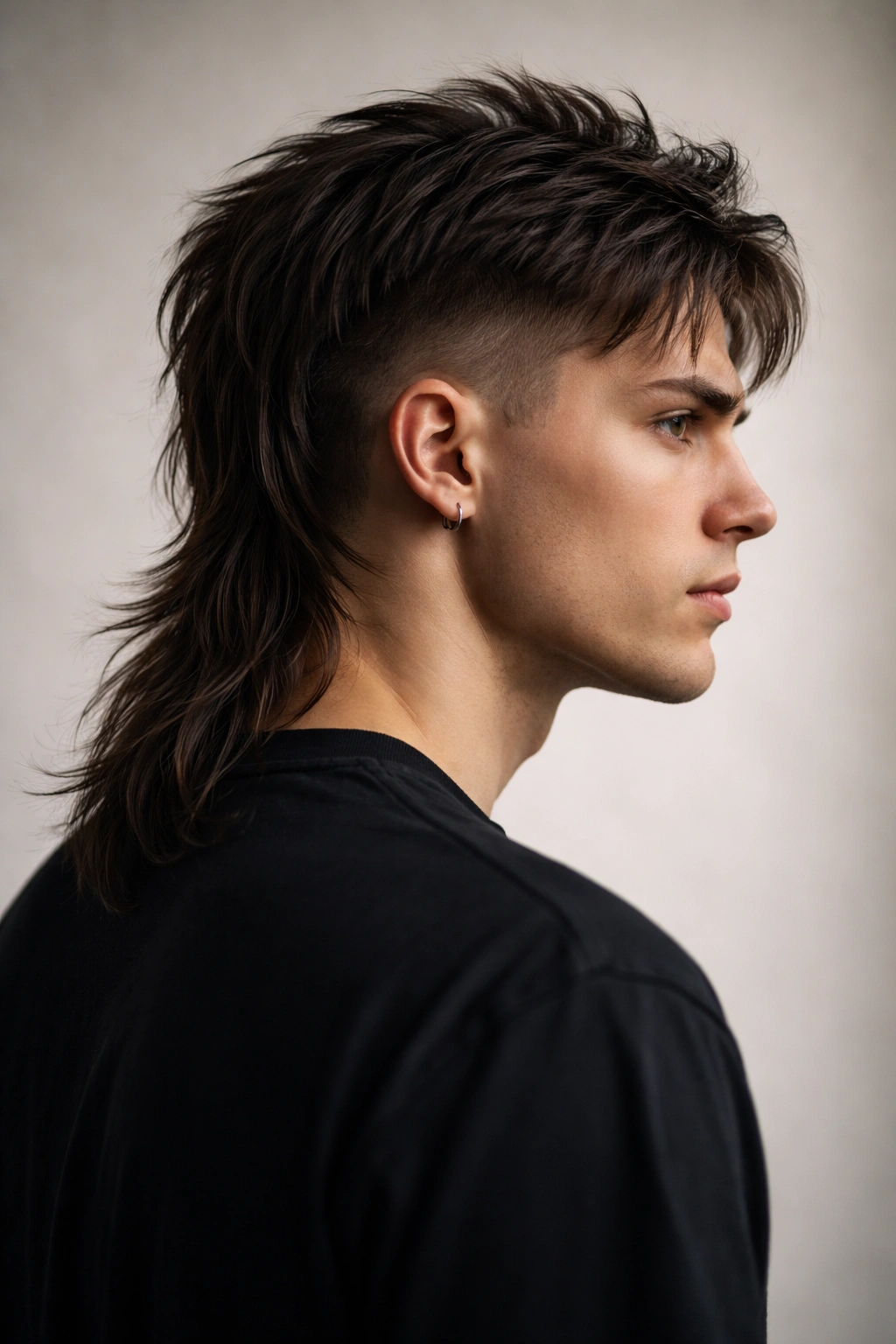
The undercut mullet features very short sides and back (clipped down to skin or nearly skin-level) while the crown extends to medium or longer length. The extreme contrast between the undercut sides and the longer top and back creates a dramatic, architectural silhouette. On straight hair, this reads as intentionally bold—there’s no ambiguity about the style choice. The undercut sections stay sharp for several weeks, making this a visually striking option.
Why This Style Works
The undercut mullet creates genuine visual drama without requiring an enormous commitment to back length. The contrast between the exposed skin on the sides and the volume on top and back is absolutely unmistakable. Straight hair displays the clean lines of the undercut with perfect clarity and shows off the volume on top without that volume looking random or unintentional. The geometric quality reads as fashion-forward and confident.
Best For & Styling Tips
This version requires comfort with exposed skin and a willingness to get sides trimmed every 2-3 weeks. It works best on straight hair that’s thick enough to create genuine volume on top and back; fine hair can look sparse with this much exposure on the sides. You need a well-shaped head and confidence—this cut makes a statement. Styling involves blow-drying the top section for height and volume, and you can wear the back down or styled up depending on your mood.
- Creates unmistakable visual impact; this is a serious style commitment
- Requires regular maintenance of the undercut sides to maintain sharpness
- Best for people with confident personal style and comfortable being noticed for their appearance
- Works on any hair density but looks best on thicker, straight hair that can sustain volume
Worth knowing: If you’ve never had an undercut, ask your barber for a conservative version first; you can always go shorter on future visits once you’re comfortable with the look.
12. The Slicked Mullet with Shine
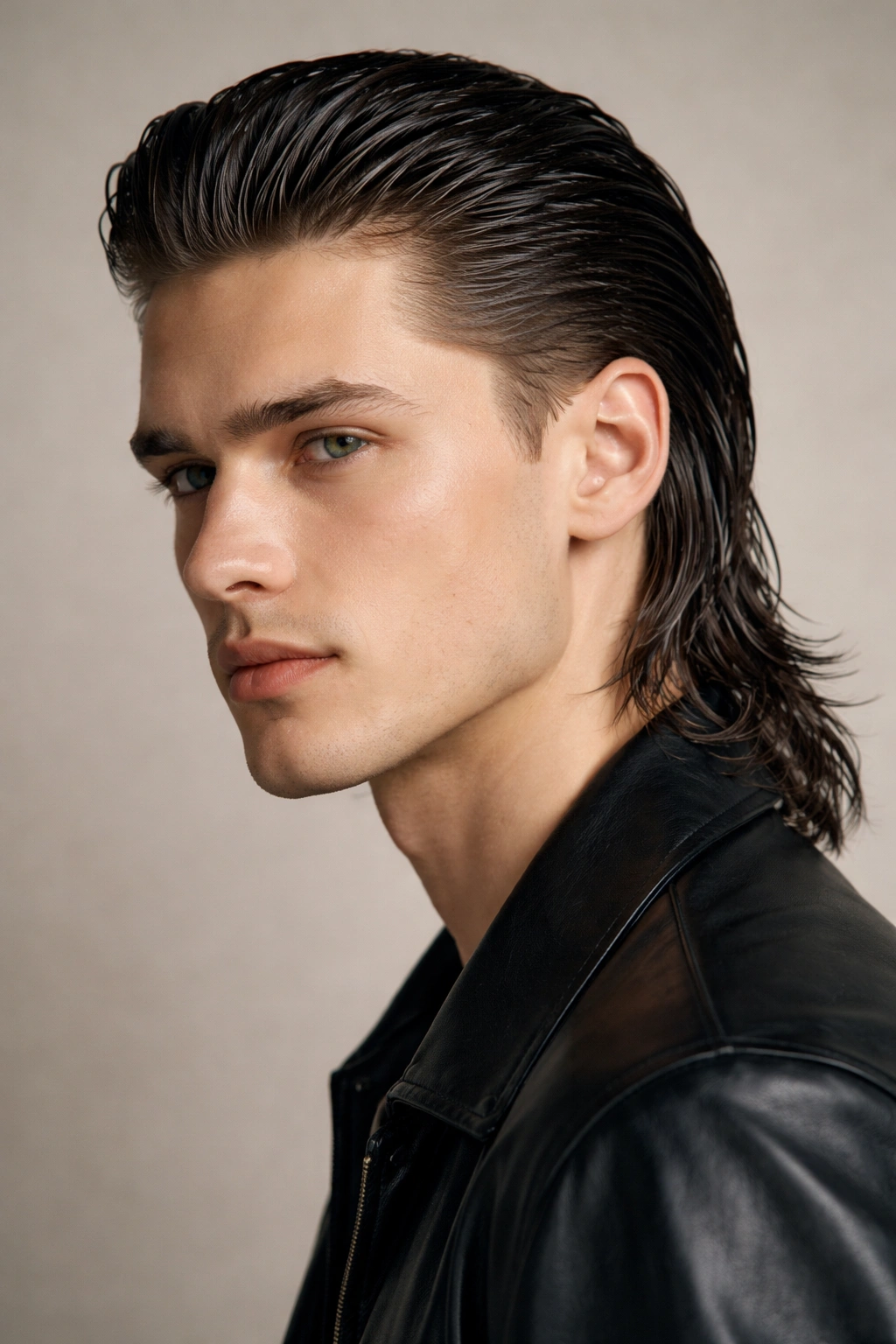
This is the style that combines sophistication with genuine edge. The slicked mullet uses enough gel or high-shine pomade to create a wet-look finish that’s intentionally glossy and polished. The back length is moderate to substantial, and everything is combed straight back or to the side, creating a streamlined effect. The shine catches light and creates visual richness—this is a look that photographs beautifully and reads as intentionally groomed and deliberately styled.
Why This Style Works
The shine factor transforms a mullet from edgy to genuinely polished. You’re using the glossy finish to create sophistication and intentional grooming rather than a casual, windblown aesthetic. Straight hair reflects shine beautifully without texture interrupting the glossy effect. The result is a look that’s bold and attention-getting but reads as confident grooming rather than costume or irony. This version works especially well for people who appreciate vintage-inspired style mixed with modern confidence.
Best For & Styling Tips
The slicked mullet with shine works on any straight hair that can hold strong-hold product. You’ll need a high-shine pomade or gel specifically designed to create that wet-look effect—standard matte products won’t give you the same visual impact. Styling involves combing everything straight back or to the side while damp, then using the product to maintain that sleek effect throughout the day. You’ll want to wash daily to refresh the style and prevent product buildup.
- Creates a polished, intentional aesthetic that’s genuinely beautiful when executed well
- Works on any face shape but is especially striking on people with strong bone structure
- Requires daily styling and product application; this is a commitment to maintained grooming
- Best for people whose personal style already incorporates intentional grooming and vintage-inspired fashion
Pro tip: Invest in a quality high-shine pomade specifically formulated for the wet-look effect; drugstore gel often looks cheap and sticky rather than polished and intentional.
Final Thoughts
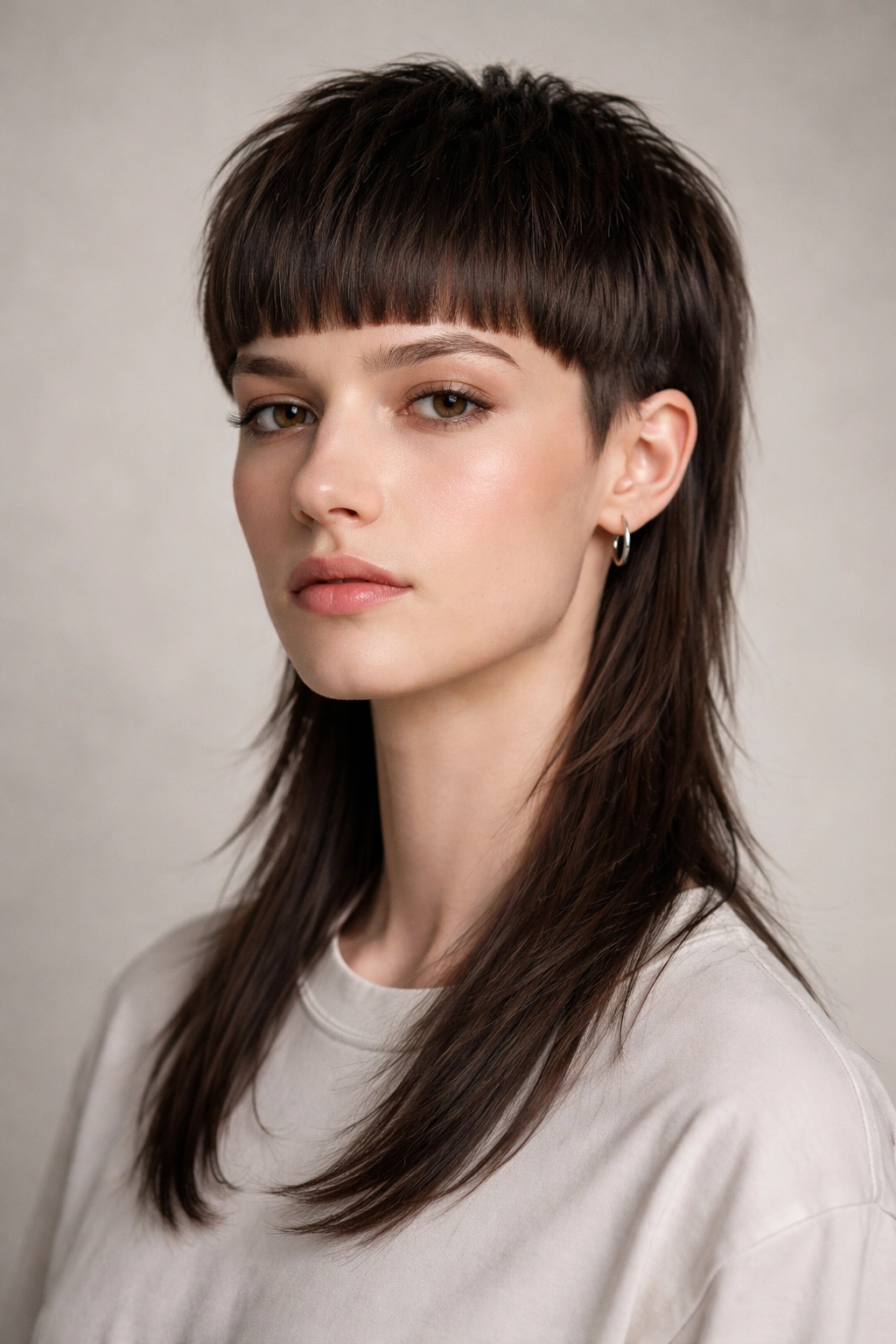
The straight hair mullet isn’t about nostalgia or irony—it’s a legitimate style choice with legitimate variations that work for different people, face shapes, and lifestyles. The key is finding the specific version that matches your comfort level with boldness, your styling commitment, and your personal aesthetic. Maybe you’re drawn to the barely-there version that reads as a contemporary cut from the front, or maybe you’re ready to fully commit to a long back and shaved sides. Both are legitimate.
What makes a mullet actually work on straight hair is precision and intentionality. Straight hair shows off sharp lines and architectural proportions with perfect clarity, which means your cut needs to be executed well and maintained consistently. This isn’t a style that survives random growth and neglect—it lives or dies based on regular trims that maintain the front-to-back contrast and side proportions.
If you’re genuinely considering a straight hair mullet, book a consultation with a stylist who’s actually cut them before. Show them photos of the specific version you’re drawn to, discuss your styling routine and maintenance commitment, and be honest about how much product and blow-drying you’re willing to do daily. The mullet’s reputation for being hard to pull off comes mostly from bad execution, not from the concept itself. A well-cut mullet on straight hair can be genuinely striking—the question is whether you’re ready to own it.
