



The mullet is back—and it’s having a major moment in Black beauty culture. What once seemed like a fashion relic from the ’80s has evolved into a sophisticated, versatile style that celebrates both boldness and versatility. For Black women specifically, the short mullet has become the ultimate statement haircut: it’s edgy enough to turn heads, practical enough for everyday wear, and customizable in ways that let you express exactly who you are.
The beauty of a short mullet lies in how it plays with proportions and texture. The shorter front and sides create clean lines and an almost androgynous edge, while the length in the back gives you movement, drama, and options for styling. Whether you’re wearing it slicked back, textured and defined, with intricate designs, or with color contrasts, the mullet works. It suits different face shapes, hair types, and personal styles in ways that feel genuinely inclusive.
Black women have been pushing the boundaries of this cut in ways that feel fresh and individual. There’s no one way to wear a mullet—it can be sleek and minimal, ornate with designs, voluminous and curly, or sharp and geometric. The styles you’re seeing range from subtle to show-stopping, and the creativity happening right now in barbershops and salons is genuinely inspiring.
If you’ve been thinking about taking the plunge or you’re looking for ways to refresh your current mullet, these ten variations are the ones turning heads and gaining serious momentum.
1. The Textured Fade Mullet
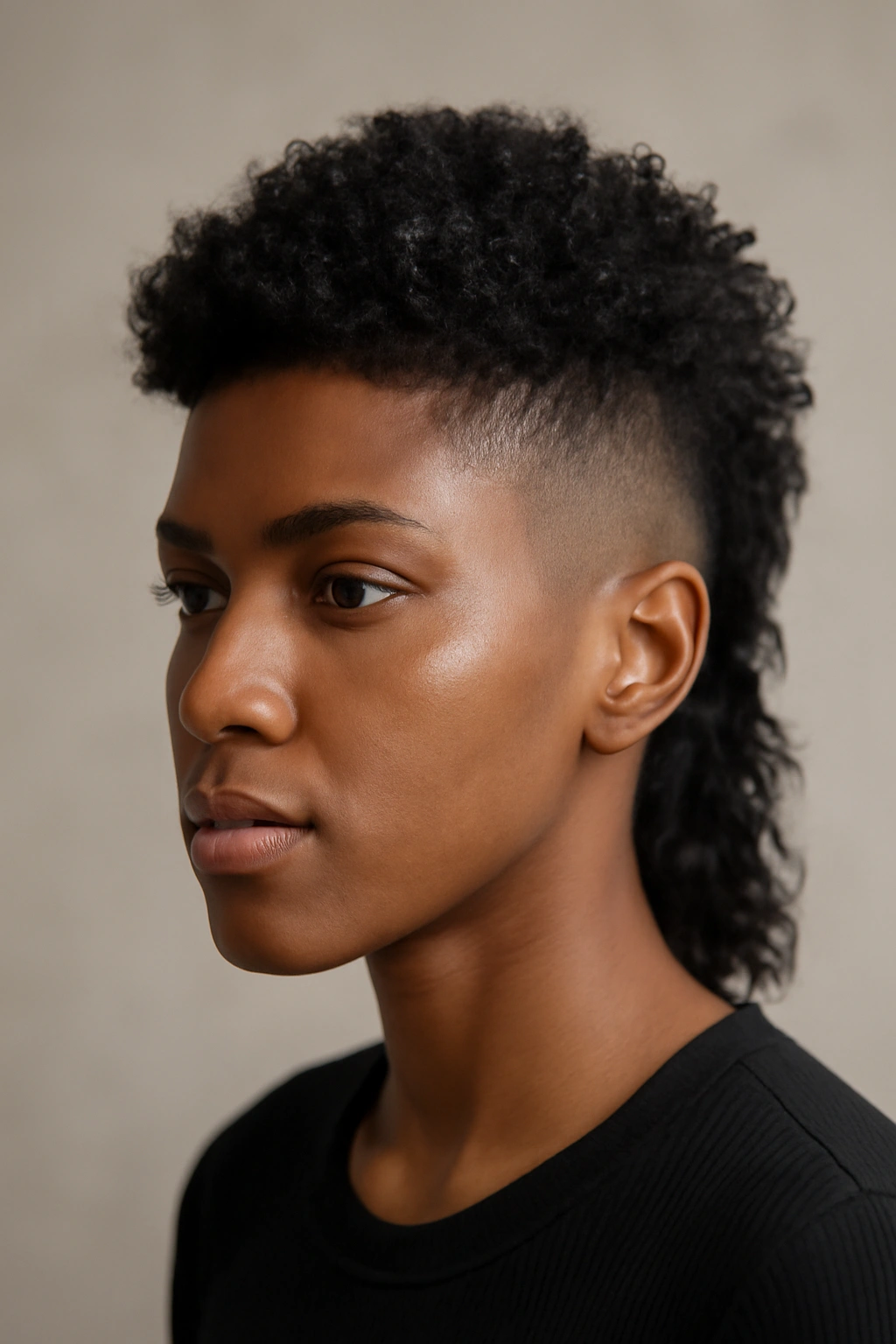
This is the mullet for someone who wants dimension without sacrificing that clean, intentional aesthetic. The sides fade down to the skin while the top stays textured and full, creating natural-looking waves or curls that catch the light. The back is left longer—usually 3 to 4 inches—with the same textured treatment so it blends seamlessly into the length.
Why This Cut Feels So Current
The textured fade mullet bridges the gap between a conservative cut and something bold. It looks professional enough for most workplaces while still reading as contemporary and thoughtful. The texture also works beautifully with natural hair because it celebrates curl patterns rather than fighting against them.
How to Style and Maintain It
- Get the shape refreshed every 3 to 4 weeks to keep the fade sharp and defined
- Use a lightweight curl cream or gel on damp hair to enhance your natural texture
- Refresh the back section daily with a spray bottle and product to maintain definition
- Sleep on a silk pillowcase or bonnet to preserve the style overnight
- For more definition, use a curl sponge on damp hair in circular motions
Pro tip: Ask your barber or stylist to create subtle lines or designs in the fade—even a single clean line can elevate the entire look without making it feel overdone.
2. The Sharp Geometric Mullet
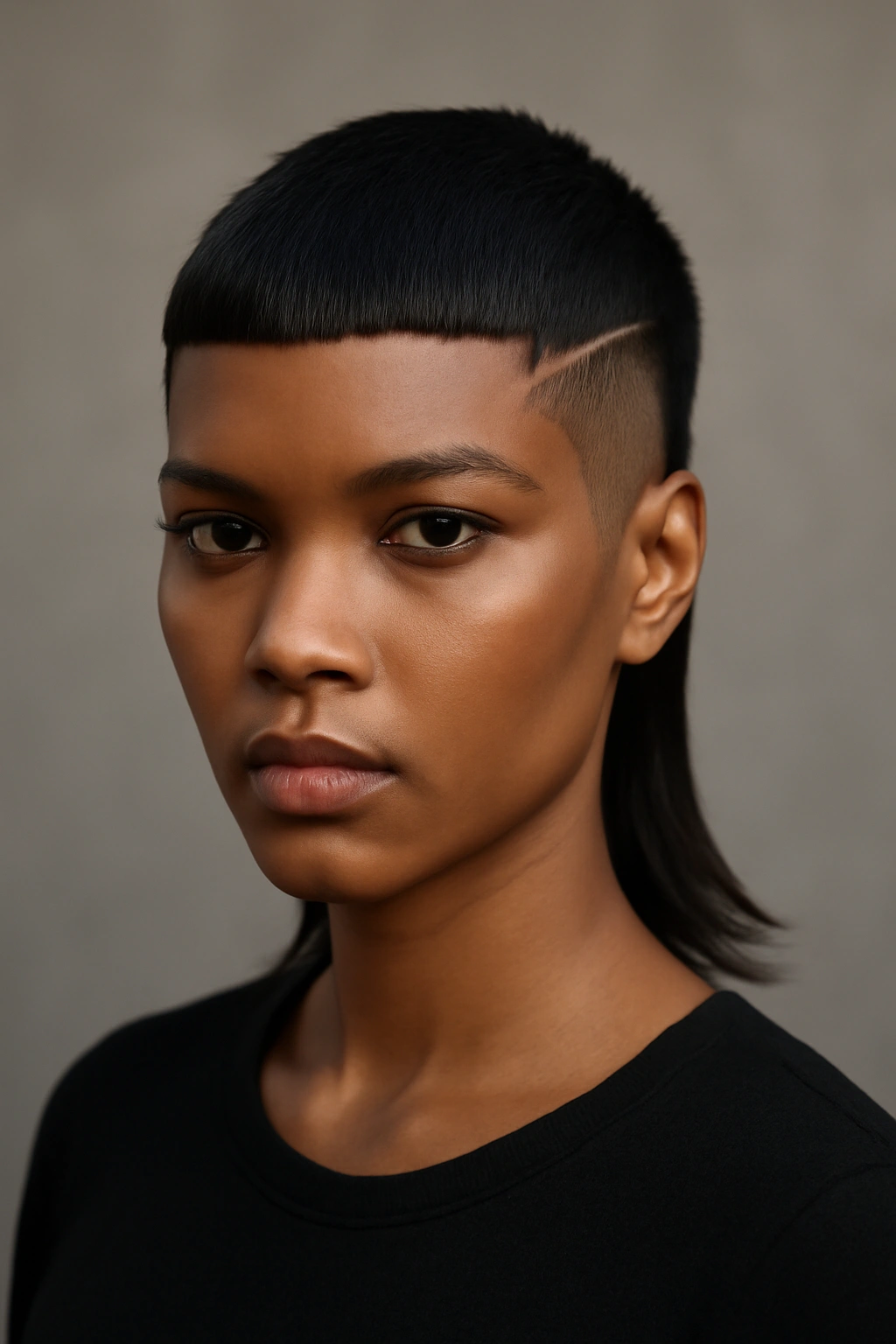
This is the mullet for people who love precision and don’t shy away from being noticed. Clean lines, intentional angles, and often geometric designs cut directly into the sides or back create a sculpture-like effect. The front might be shorter and more angular, while the back extends with the same sharp, deliberate lines.
The Appeal of Structure and Design
Geometric mullets showcase technical skill—both in the cutting and in the vision. There’s something powerful about wearing your confidence as a literal design on your head. This style makes a statement that you know what you want and you’re not apologizing for it.
Styling Tips for Maximum Impact
- Keep edges extremely clean by visiting your barber every 2 to 3 weeks
- Slick the sides and front back with a strong-hold gel to emphasize the lines
- Consider using edge control on the designs to make them pop visually
- Enhance the back with waves, coils, or curls depending on your hair texture
- Add a subtle hairline design that complements the geometric shapes
Worth knowing: This cut requires a skilled barber who understands geometry and proportion—price reflects expertise, and it’s worth the investment for a cut this intricate.
3. The Colorblocked Mullet
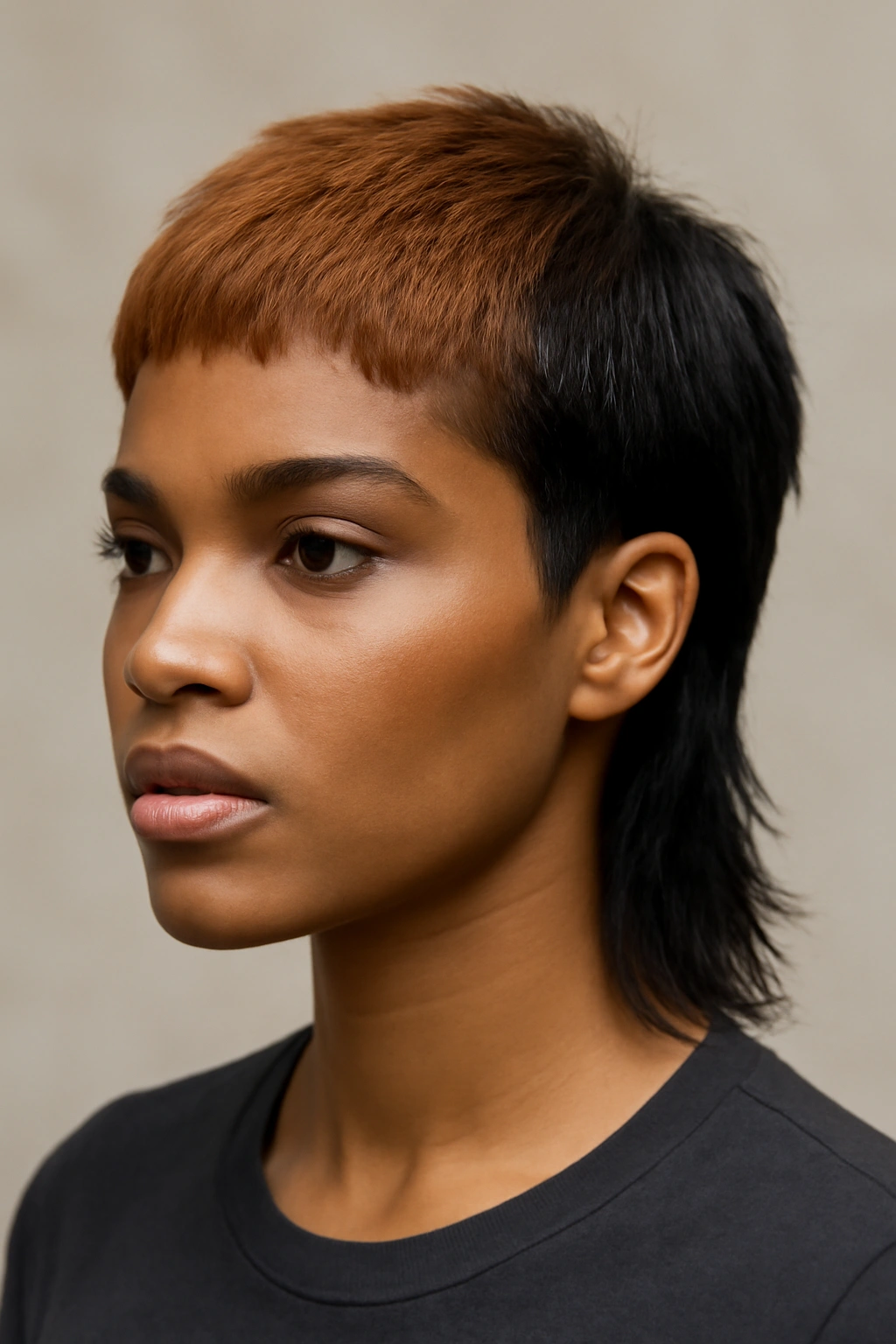
Introducing color into a short mullet completely transforms how it reads. Whether you’re doing a two-tone contrast (like blonde and black, or burgundy and natural), a full color fade, or even pastel combinations, the short mullet is the perfect canvas. The color might run from front to back, or it might create dimension with the front and back in contrasting shades.
Why Color Works Differently on a Mullet
Because the front and back have different lengths, color creates visual separation and depth. A color that might feel subtle on a longer cut suddenly becomes a focal point when it’s framed by the structure of a mullet. You can be bold without it feeling overwhelming.
Color Maintenance and Application
- Go to a colorist experienced with textured hair and mullet cuts—they’ll know how to position and apply color for the best result
- Plan on touch-ups every 4 to 6 weeks depending on how fast your hair grows and how visible the roots become
- Use color-safe shampoo and conditioner to extend the vibrancy of the dye job
- Deep condition weekly to combat any dryness from coloring
- Consider semi-permanent color first if you’re nervous about commitment
Real talk: Bold color is stunning, but it does require maintenance. Factor in touch-up costs when deciding if this is the right choice for you right now.
4. The Curly Voluminous Mullet
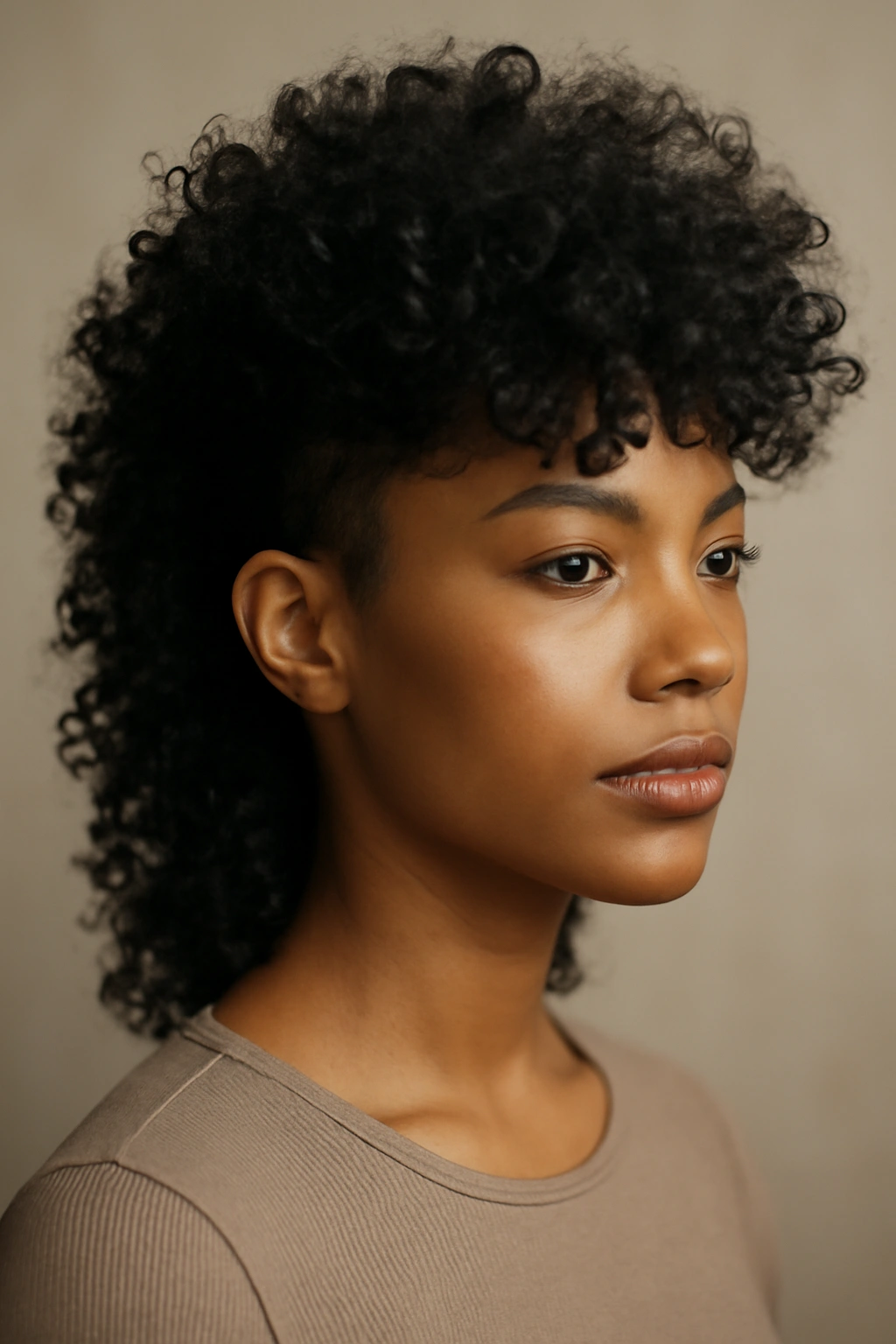
This mullet celebrates length and curl in the back while keeping the sides and front relatively controlled. The result is volume that starts at the crown and explodes in the back, creating an almost cloud-like effect. Curls can be tight coils, loose waves, or anything in between—this style works across the entire curl spectrum.
Styling for Maximum Curl Definition
The key here is embracing your natural curl pattern and enhancing it rather than fighting it. This isn’t a style that requires you to spend hours with a flat iron—it’s actually easier when you lean into what your hair naturally does.
Maintenance and Daily Care
- Refresh curls daily or every other day using the LOC method (leave-in conditioner, oil, cream)
- Sleep in a pineapple (gathering curls into a loose high ponytail at the top) or use a bonnet
- Use a gel with medium to strong hold so curls stay defined without feeling crunchy
- Get the fade or sides trimmed every 3 to 4 weeks as curls grow
- Deep condition at least twice a week to keep curls hydrated
Insider note: The back will need more frequent styling and product than the front—dedicate time each morning to refreshing those curls so they look intentional, not bedhead.
5. The Slicked-Back Sleek Mullet
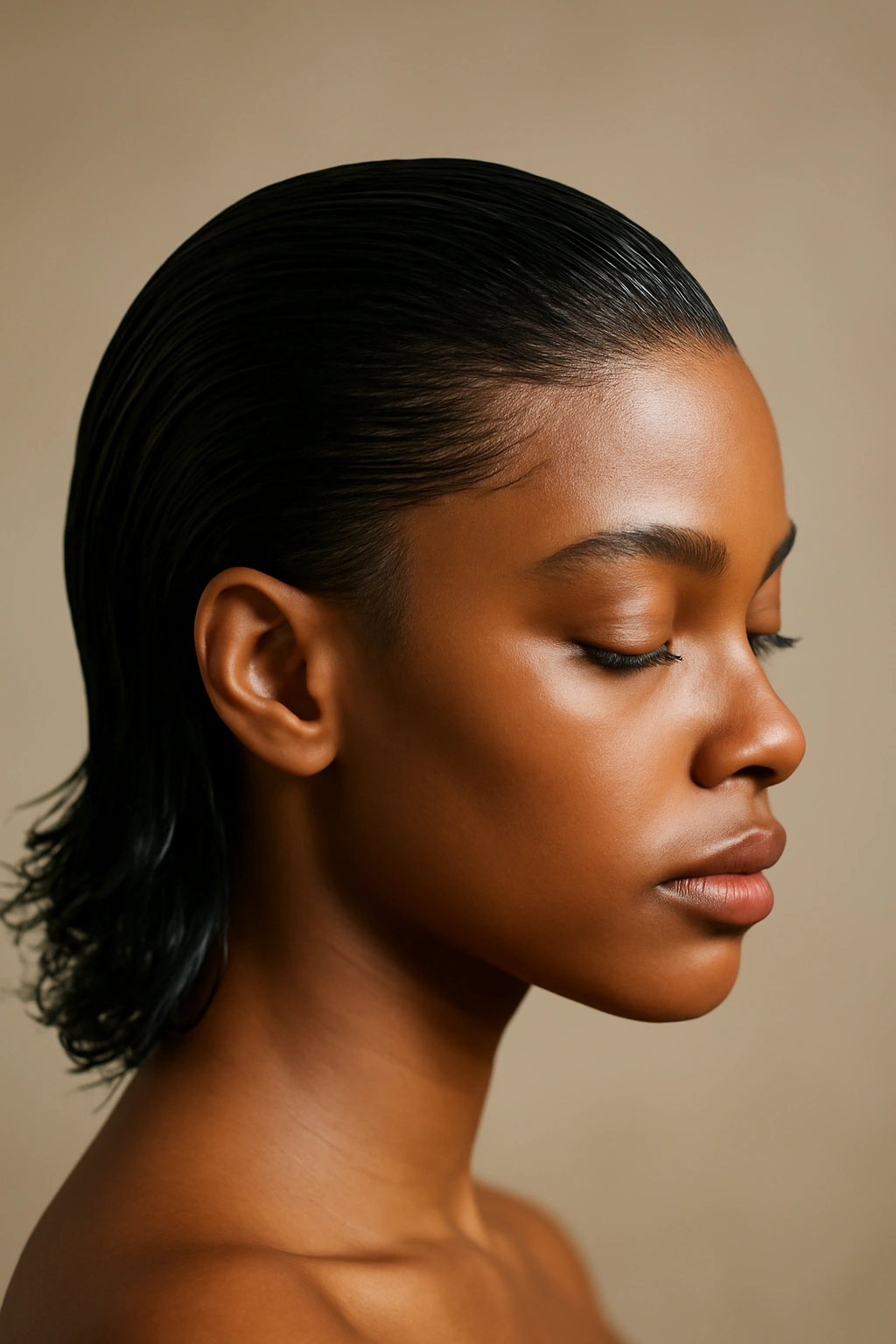
This mullet is about control, shine, and drama. The entire front and top are slicked back tightly—sometimes so close you can see the scalp in clean lines—while the back is left longer and often also slicked back, creating an almost liquid effect. This is a style that photographs beautifully and reads immediately as intentional and polished.
The Technique for Achieving Maximum Slickness
Achieving this look requires the right products and technique. A strong-hold gel, edge control, and possibly some styling cream creates that glossy, sculpted effect. The finish should look wet and shiny without looking greasy or heavy.
Daily Styling Routine
- Apply gel to damp hair and use a brush or comb to pull everything back tightly
- Use edge control around the hairline and anywhere you have baby hairs for a finished look
- Let it air dry or use a blow dryer on low heat for a smoother finish
- The back can be styled straight, with subtle waves, or even braided for variation
- Touch up edges as needed throughout the day with a small comb and edge control
Pro tip: This style works best on hair that’s freshly washed and conditioned—product grips better to clean hair, and the slickness looks more intentional.
6. The Braided Back Mullet
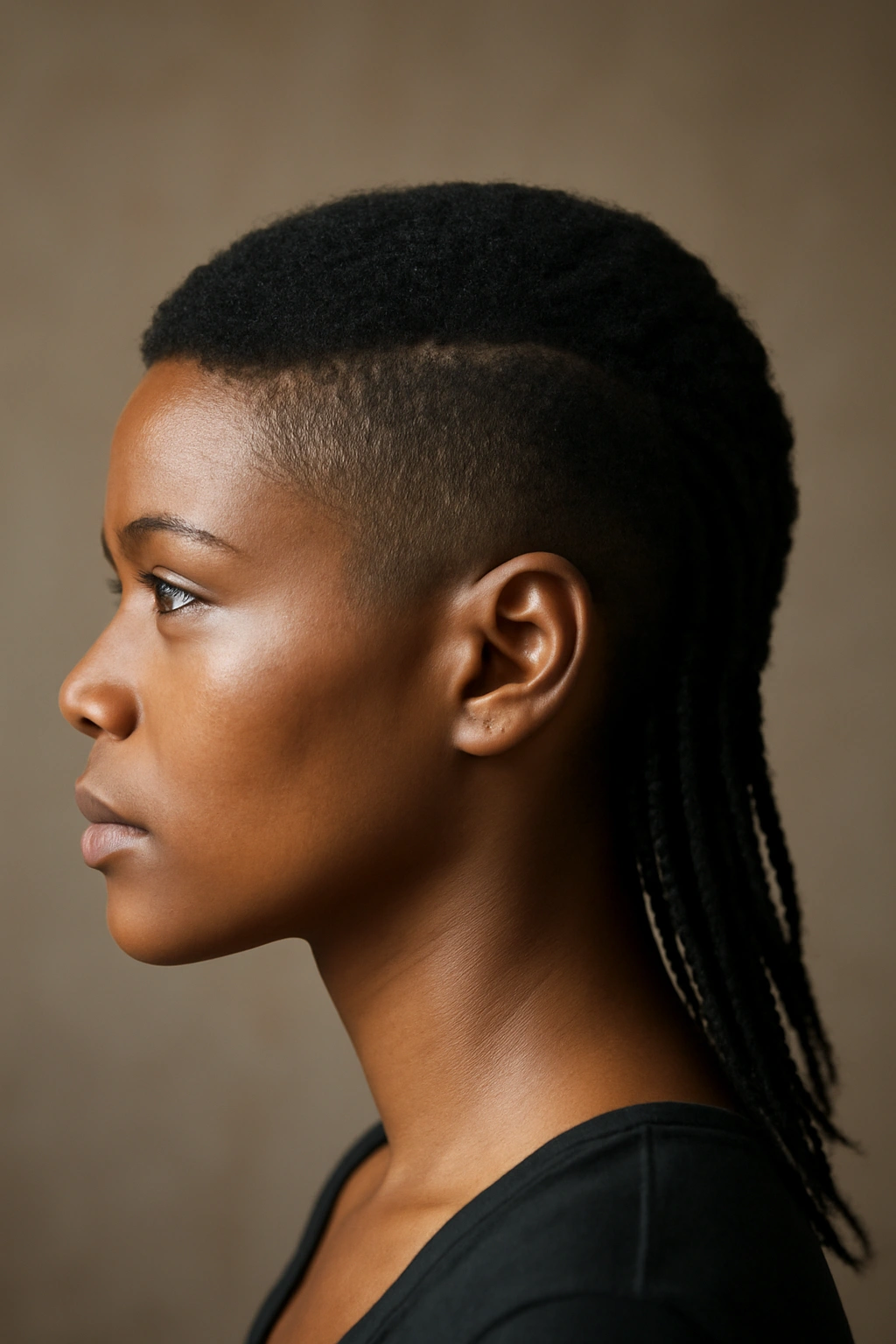
This style keeps the front short and clean while the back is braided—whether that’s box braids, cornrows, twists, or smaller braids woven throughout. The contrast between the neat front and the textured, dimensional braids in the back creates visual interest and gives you styling flexibility.
Why Braids Change the Game
Braids protect your hair while also creating volume and texture that read as intentional style rather than just protective styling. You get the benefits of a protective style with the fashion-forward edge of a mullet.
Keeping Braids Fresh and Maintained
- Braids in the back can last 4 to 6 weeks with proper care
- Use a moisturizing spray on the braids every few days to keep them from drying out
- Refresh the front with regular trims every 3 weeks so it stays sharp
- Consider getting different braid styles installed each time for rotation—box braids one round, cornrows the next
- Sleep with a bonnet or scarf to protect both the braids and your hairline
Worth knowing: A good braider who understands how to integrate the short front with the braided back is crucial—this isn’t the time for an amateur.
7. The Minimalist Sharp Mullet
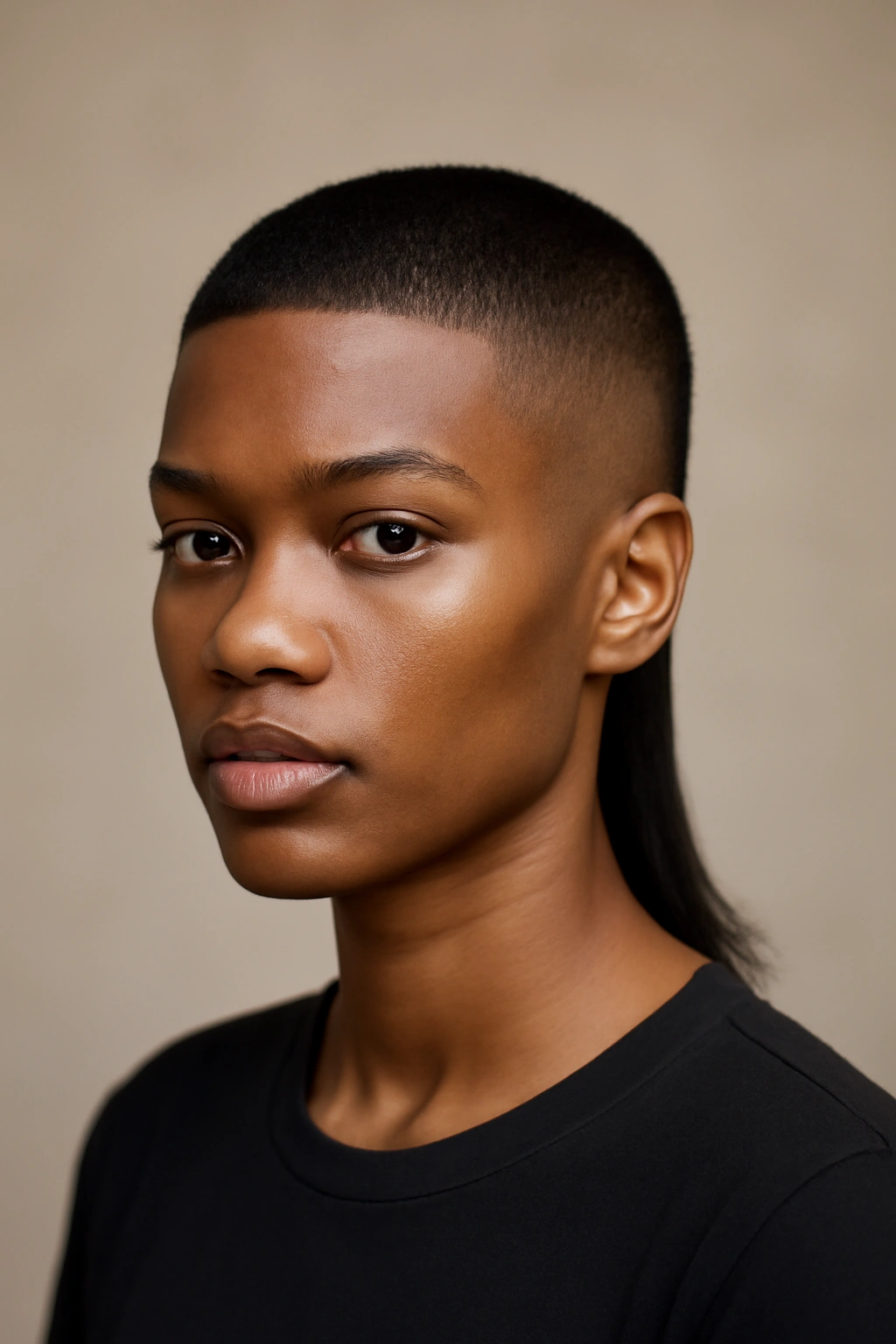
This is the mullet for someone who likes clean lines and negative space. Very short on top and sides—sometimes just a quarter inch or less—with medium length in the back. There are no designs, no elaborate fades, no extra elements. Just precise geometry and the contrast between front and back.
The Sophistication of Simplicity
There’s something undeniably powerful about a cut this simple. It requires confidence because there’s nowhere to hide—every line has to be perfect. The beauty is in the execution, not in added details.
Keeping a Minimalist Mullet Sharp
- Visit your barber every 2 to 3 weeks without fail—any growth looks unkempt on this style
- Keep product minimal; a simple oil or light moisturizer is enough
- The back can be worn textured, straight, or with subtle waves
- Edges need to be maintained constantly so the line between front and back stays precise
- Consider getting a hard part or clean parting line to add dimension without complexity
Real talk: This style is less forgiving than more intricate cuts—but if you’re willing to commit to maintenance, it’s incredibly striking.
8. The Undercut Mullet with Design Details
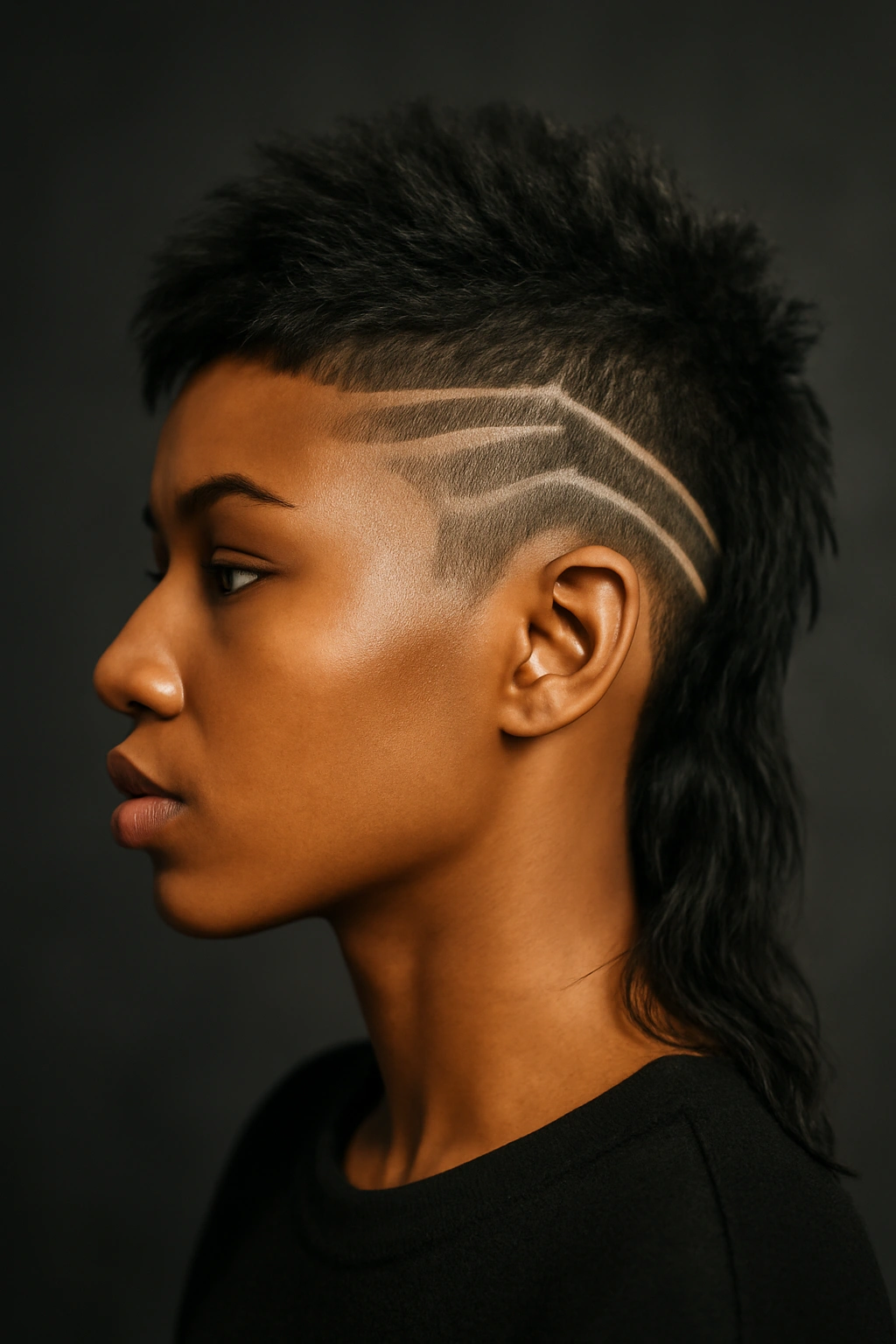
An undercut takes the fade concept further by shaving or cutting extremely close to the skin on the sides and back of the head, with longer hair only on top and in the true back section. Then add design details—perhaps a geometric pattern, lines, or shapes cut into the undercut area.
How Design Details Elevate the Cut
The designs become more prominent against the clean undercut canvas. The contrast between the shaved area and the design is stark and visually compelling. This style reads as fashion-forward and intentional.
Maintaining the Undercut and Details
- The undercut area needs attention every 2 weeks to stay sharp and clear
- Designs should be retouched or refreshed as hair grows in
- Use beard oil or a lightweight moisturizer on the undercut area to prevent irritation
- The top section can be styled multiple ways—textured, slicked, or with curls
- Keep a small edge brush at home to touch up designs between barber visits
Pro tip: Work with a barber who specializes in design work—the quality of the designs matters enormously for how polished this style looks.
9. The Waves and Coils Mullet
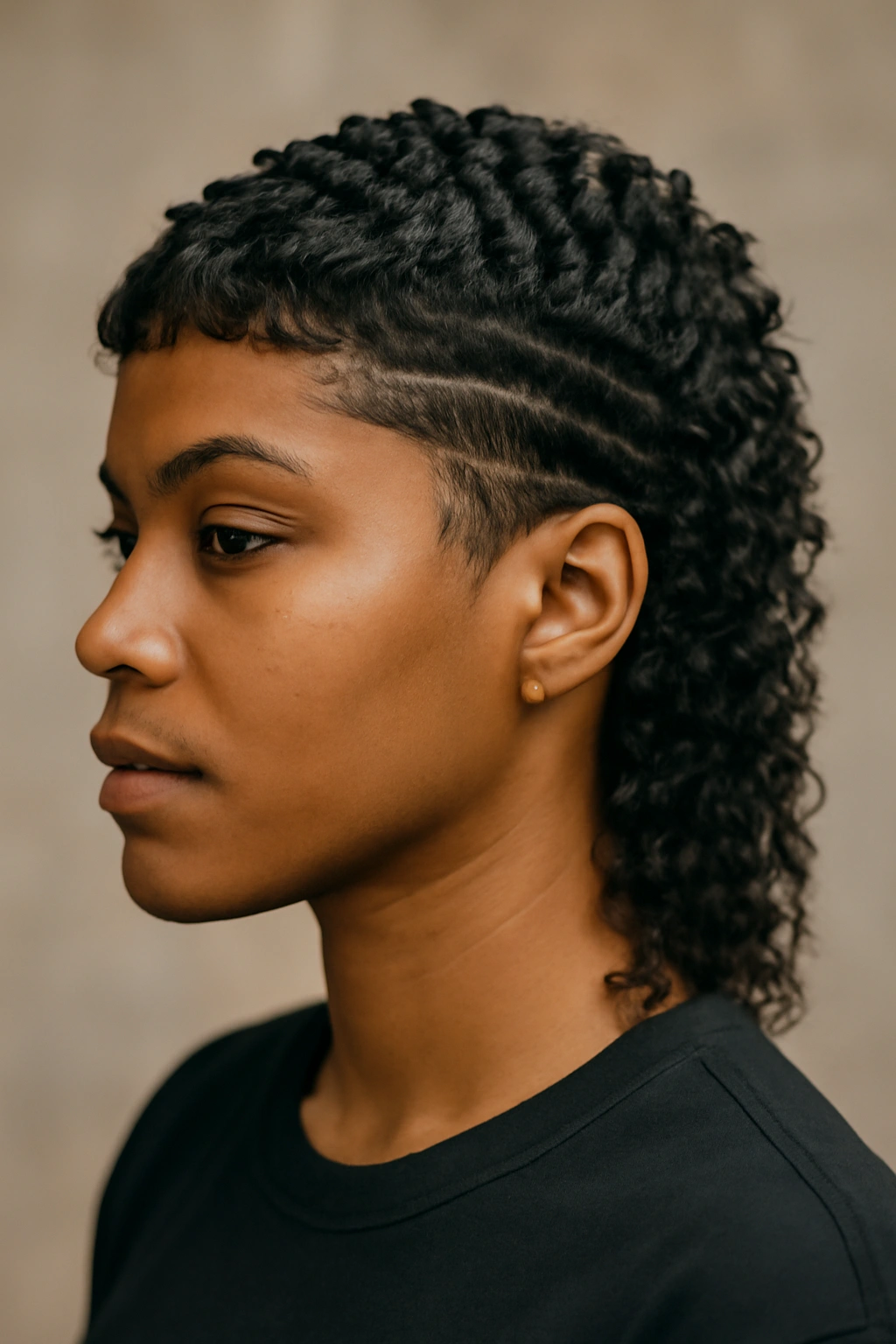
This style emphasizes wave patterns or coil definition on the sides and back while keeping the front shorter. Using products specifically designed to enhance waves or using a wave brush technique, you create a dimensional effect that’s both textured and controlled.
Creating and Maintaining Wave Patterns
Waves don’t just happen—they’re cultivated through consistent technique, the right products, and often through using a wave brush or do-rag while the product sets. The result is a style that looks effortless but requires intentional care.
Daily and Weekly Styling
- Use a wave cream or pomade designed for textured hair
- Brush or wave the hair in one direction before applying product to train the pattern
- Wear a du-rag or bonnet overnight while the product sets to lock in the wave pattern
- Refresh the pattern every morning with the wave brush and light product reapplication
- Deep condition weekly since waves require product that can sometimes feel drying
Worth knowing: Getting waves to look intentional rather than accidental takes practice—give yourself grace while you’re learning the technique.
10. The Twisted Back Mullet
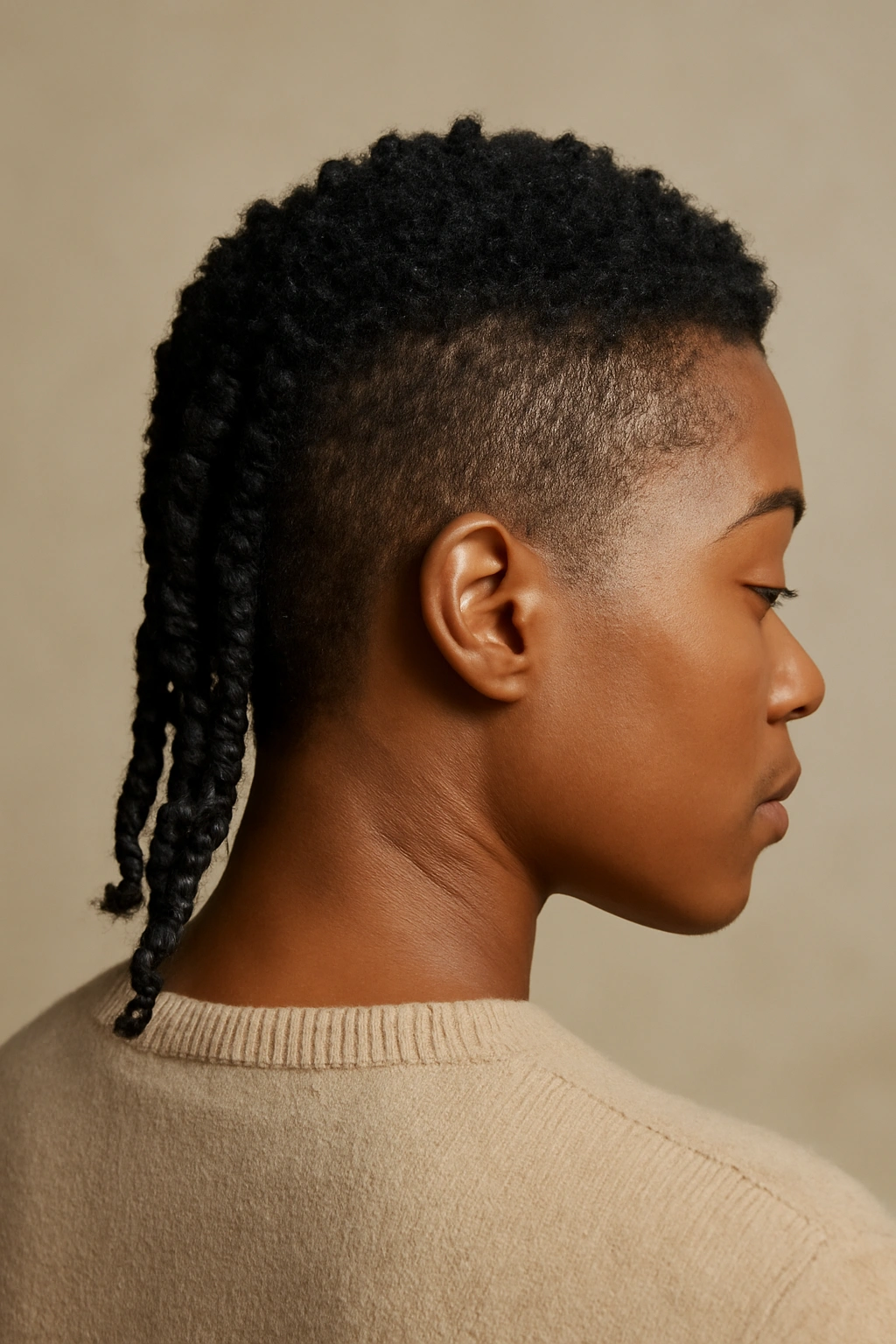
This style uses two-strand twists, comb coils, or other twisted textures in the back section while keeping the front shorter and cleaner. The twists can be left in as a protective style or can be unraveled for more volume and texture.
The Versatility of Twists in the Back
Twists give you multiple styling options from one haircut. You can wear them twisted, unraveled, pinned up, or even braided together. It’s a style that offers flexibility.
Styling and Care for Twisted Styles
- Twists can last 2 to 3 weeks with proper maintenance
- Use a moisturizing spray on twists regularly to keep them from drying out
- You can unravel twists in the evening and retwist in the morning, or wear them out full-time
- The front section gets regular trims to maintain the contrast with the twisted back
- Sleep with twists loosely gathered or in a bonnet to preserve their shape
Insider note: This style is great if you like changing up your look without commitment—you can unravel twists for a whole new aesthetic in minutes.
Final Thoughts
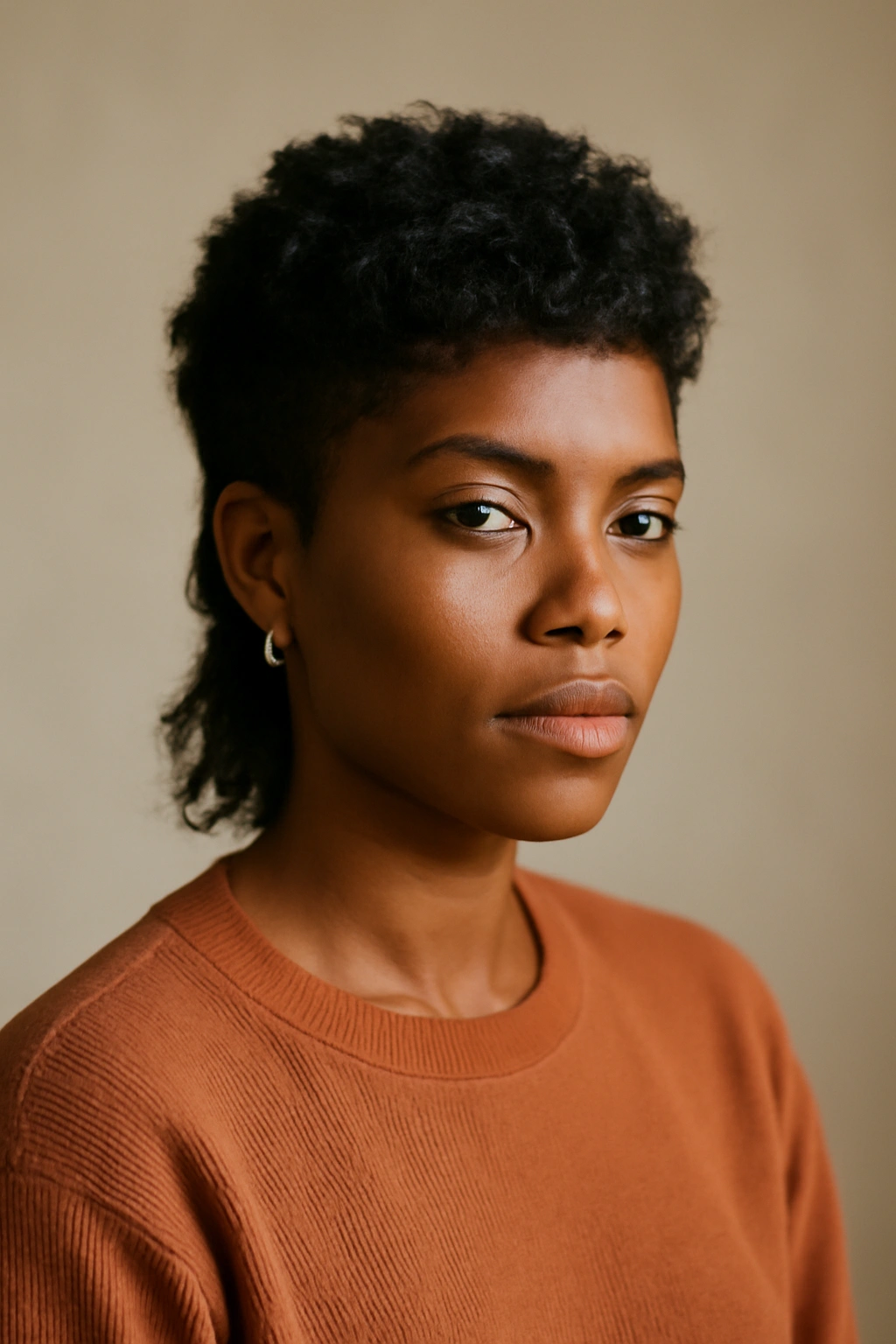
The short mullet has solidified itself as more than a trend—it’s a legitimate style choice for Black women who want something that works hard and looks good doing it. Whether you’re drawn to sharp geometric precision, textured curls, bold color, or protective styling elements like braids and twists, there’s a mullet variation that fits your aesthetic and lifestyle.
The cut itself is just the foundation. What makes each of these styles truly special is how they’re personalized through maintenance choices, styling products, and daily care. A short mullet requires commitment, but the payoff is a style that’s uniquely yours—something that expresses confidence, creativity, and an understanding of what works for your hair and face.
If you’re considering making the switch, find a barber or stylist who has experience with short mullets and with textured hair. Bring reference photos of the specific variation you’re interested in. Talk through maintenance honestly—what will you realistically be able to keep up with? The best mullet is the one you’ll actually maintain, not the one that looks perfect in photos but requires four hours of styling every morning.
