



Medium-length hair sits in this sweet spot where almost anything can work—but the right bangs? They can completely transform your entire look. Whether you’re craving a soft, romantic vibe or something bold and edgy, bangs on medium-length hair have the power to frame your face, emphasize your cheekbones, and give you a whole new sense of style without committing to a drastic cut everywhere else. The beauty of medium length is that you have enough hair to play with texture and movement, creating dimension that shorter cuts sometimes struggle to achieve.
Bangs aren’t one-size-fits-all, though. What works beautifully for someone with fine, straight hair might not give you the same impact if you have thick waves or curls. That’s exactly why we’re breaking down 12 distinct bang styles that pair beautifully with medium hair—each one described in enough detail that you can bring a reference photo to your stylist and know exactly what you’re asking for. Some of these styles require daily styling commitment; others practically work themselves once they’re cut right. Some suit rounder faces; others are perfect for softening angular features. By the time you finish reading, you’ll have a clear sense of which style matches your hair texture, face shape, lifestyle, and the vibe you’re actually going for.
1. Wispy Feathered Bangs
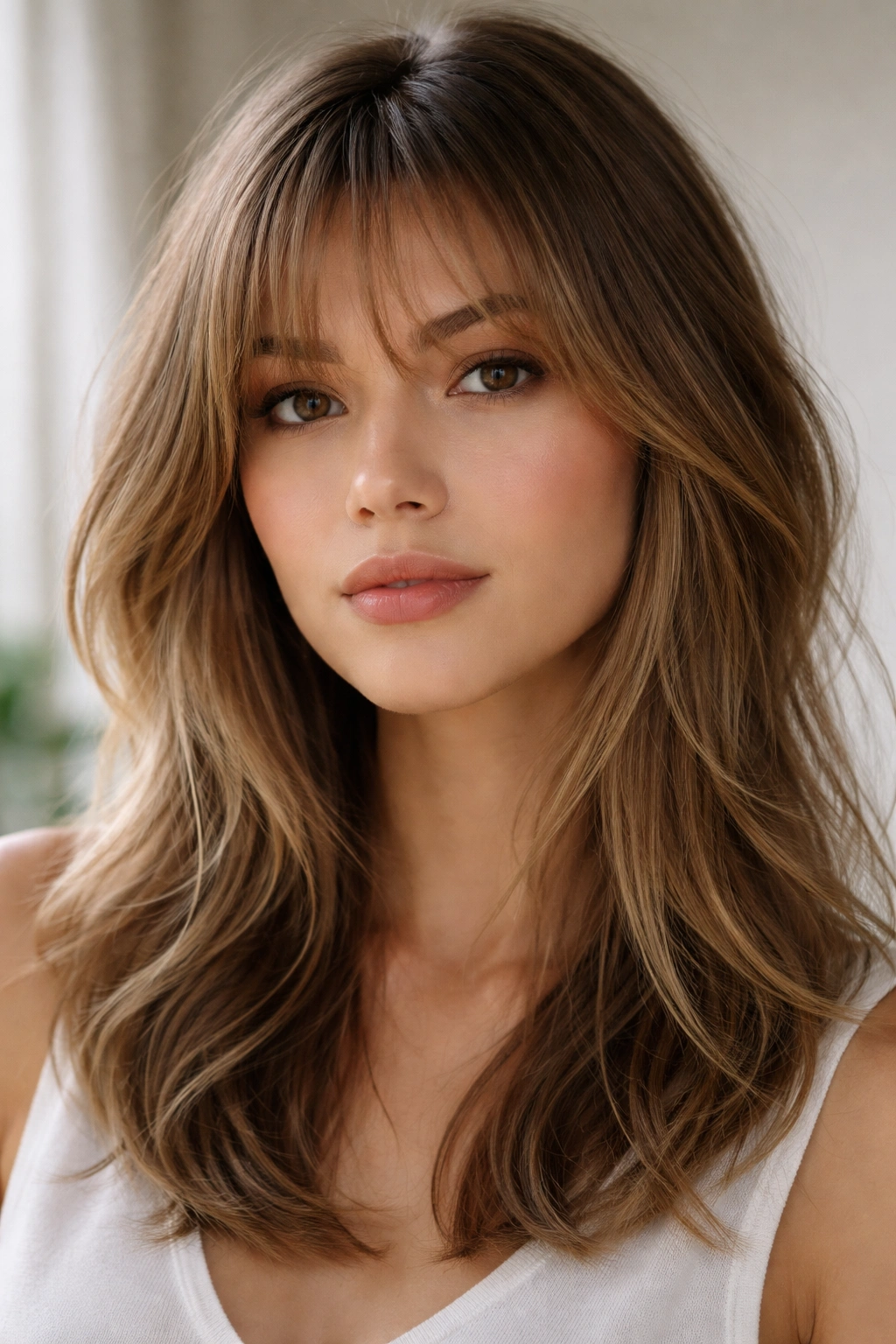
Wispy feathered bangs are the gentle, romantic option that works on almost every hair type and face shape. Instead of sitting as a solid block across your forehead, these bangs are cut so the ends taper naturally into lighter, shorter strands. They create a soft frame rather than a bold statement, making them perfect if you want a change without total commitment. The layers catch light beautifully and add movement even when your hair is stick-straight.
Why They’re So Versatile
Feathered bangs work because they soften rather than define. Someone with a broader forehead finds them less intense than blunt styles, while people with narrow faces don’t feel weighed down by heavy hair. The graduated length means they blend seamlessly into the rest of your medium-length hair—no harsh line between bang and regular length. They’re forgiving too; if your hair grows out a bit faster than expected, feathered bangs still look intentional.
How to Style and Maintain Them
- These bangs benefit from regular blow-drying to shape them properly, but they don’t demand it—even air-dried, they look soft and intentional
- A flat iron or curling iron can add a slight bend or texture if you want them to play up the feathered effect
- Regular trims every 4-6 weeks keep the tapering sharp and prevent them from looking stringy
- They work beautifully with or without styling products; light texture spray can enhance the wispy layers
Pro tip: When you’re air-drying, let your bangs dry naturally before touching them—fighting wet hair to shape feathered bangs usually creates frizz instead of the soft, piece-y effect you’re going for.
2. Blunt Straight-Across Bangs
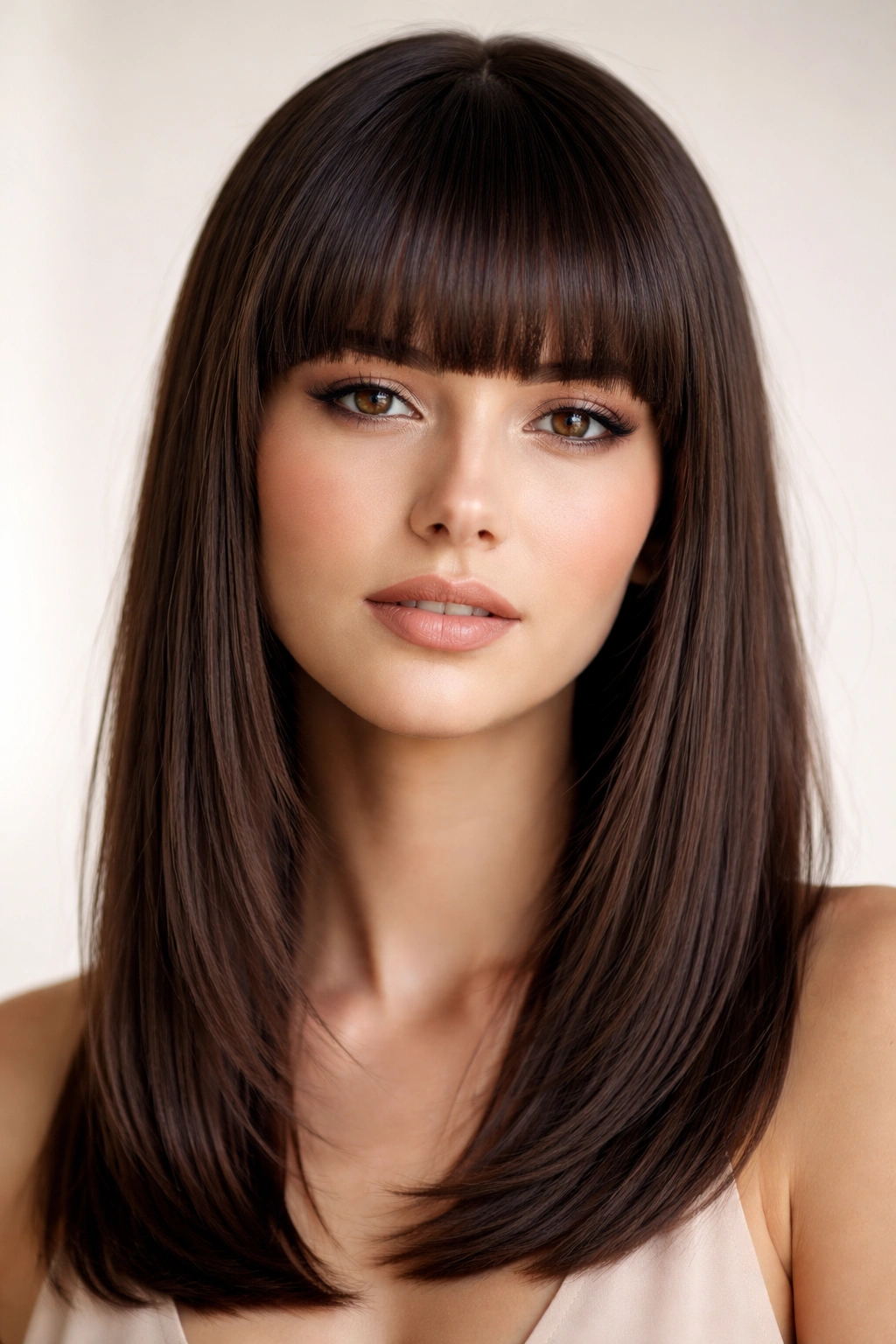
Blunt bangs are the bold, decisive choice that commands attention. These sit completely straight across your forehead in a solid line, typically cut at eyebrow length or just above. They’re the opposite of wispy—they’re graphic, modern, and they absolutely work for people who want their bangs to be the focal point. With medium hair, blunt bangs create a polished, intentional look that photographs beautifully.
Who They Suit Best
Blunt bangs photograph best on people with straight hair or hair that you’re willing to flat-iron daily. If you have natural wave or curl, blunt bangs can look frizzy and unkempt without serious styling effort. Face shape-wise, they suit longer, narrower faces beautifully because the horizontal line is so strong. On rounder faces, they can feel heavy—though many people rock them anyway and love the boldness. The key is committing to either daily styling or accepting that this is a high-maintenance choice.
Daily Styling Reality
- Blunt bangs need a flat iron most mornings to look polished rather than frazzled, unless your hair naturally straightens
- They look best kept very clean—any oil or frizz shows immediately on that solid line
- Frequent trims (every 3-4 weeks) are essential because even a slight growth makes them look less intentional
- Dry shampoo can help on days when you skip the flat iron, but it’s not a magic fix
Worth knowing: Blunt bangs photograph beautifully in person but require intention—they’re a style for someone who wants their bangs to be visible, talked about, and clearly intentional rather than subtle.
3. Curtain Bangs
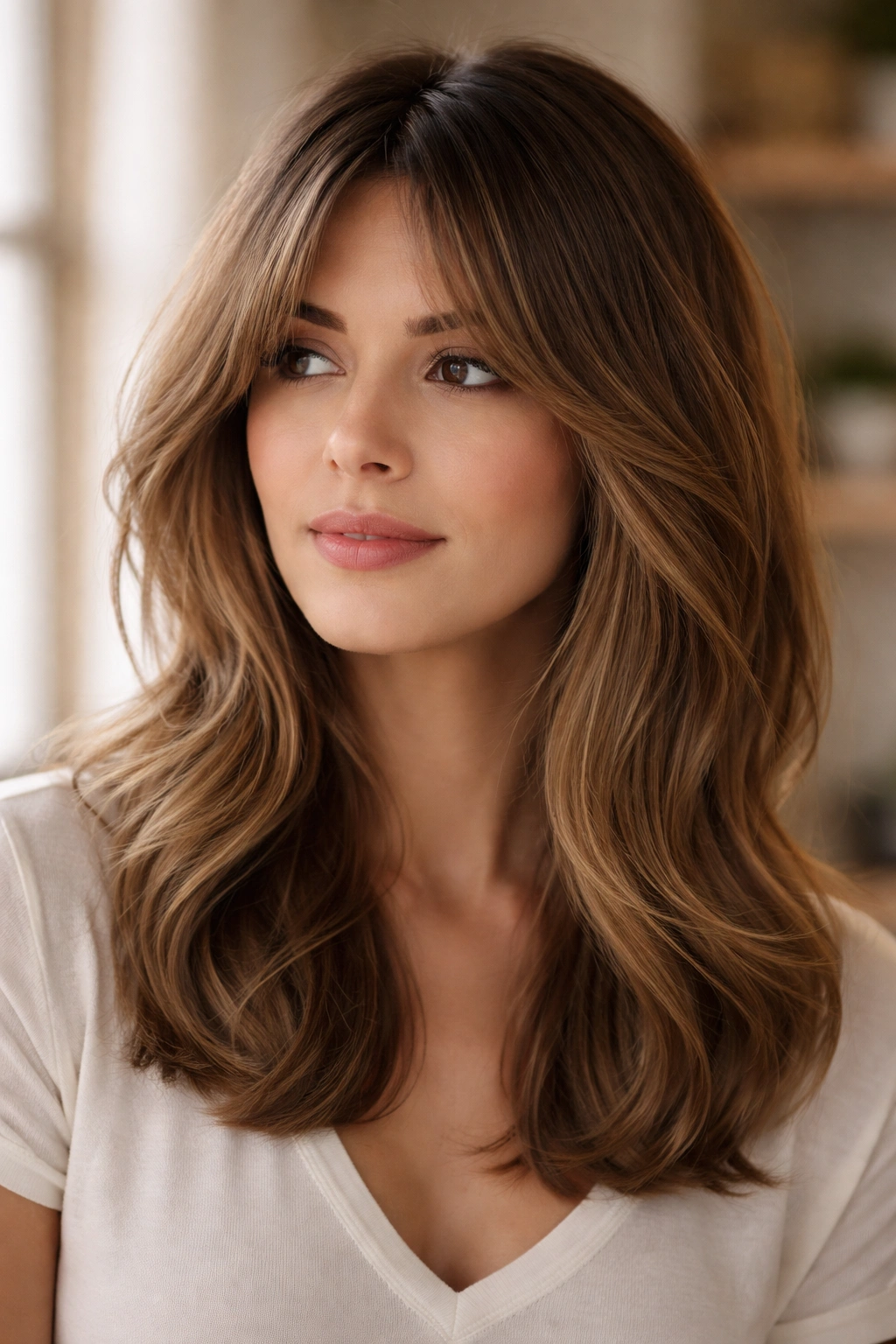
Curtain bangs part down the middle and sweep gently outward on both sides, like a theatrical curtain opening. They’re currently having a major moment because they’re flattering, practical, and create this effortless, lived-in aesthetic that most people actually want. Unlike blunt bangs that demand daily styling, curtain bangs actually look better slightly undone. They work on every hair type and face shape because the soft, curved lines are universally softening.
Why They Work So Well With Medium Hair
With medium length, curtain bangs have enough space to grow out gracefully—they don’t suddenly become awkwardly long. The gentle curve guides eyes toward your cheekbones and away from any features you’d rather downplay. They blend seamlessly into your medium layers rather than looking like a separate piece, especially if your stylist creates a cohesive gradient from bang length to overall hair length. You get that face-framing effect that makes people look fresh-faced without appearing too styled.
The Easy Maintenance Reality
- Curtain bangs actually improve with a day or two of styling—they look more intentional slightly tousled
- A simple round brush and blow dryer creates the gentle curve, or you can air-dry them and use your fingers to direct the sweep
- They grow out gracefully; you can go 6-8 weeks between trims and they still look fine
- Light texture spray or dry shampoo helps them fall into that perfect curved shape, even on flat-hair days
- Washing them more frequently keeps them from looking heavy and oil-laden
Insider note: Curtain bangs are the style that most actual hairstylists choose for themselves—they look effortless once cut properly but require minimal daily effort to maintain their appeal.
4. Choppy Textured Bangs
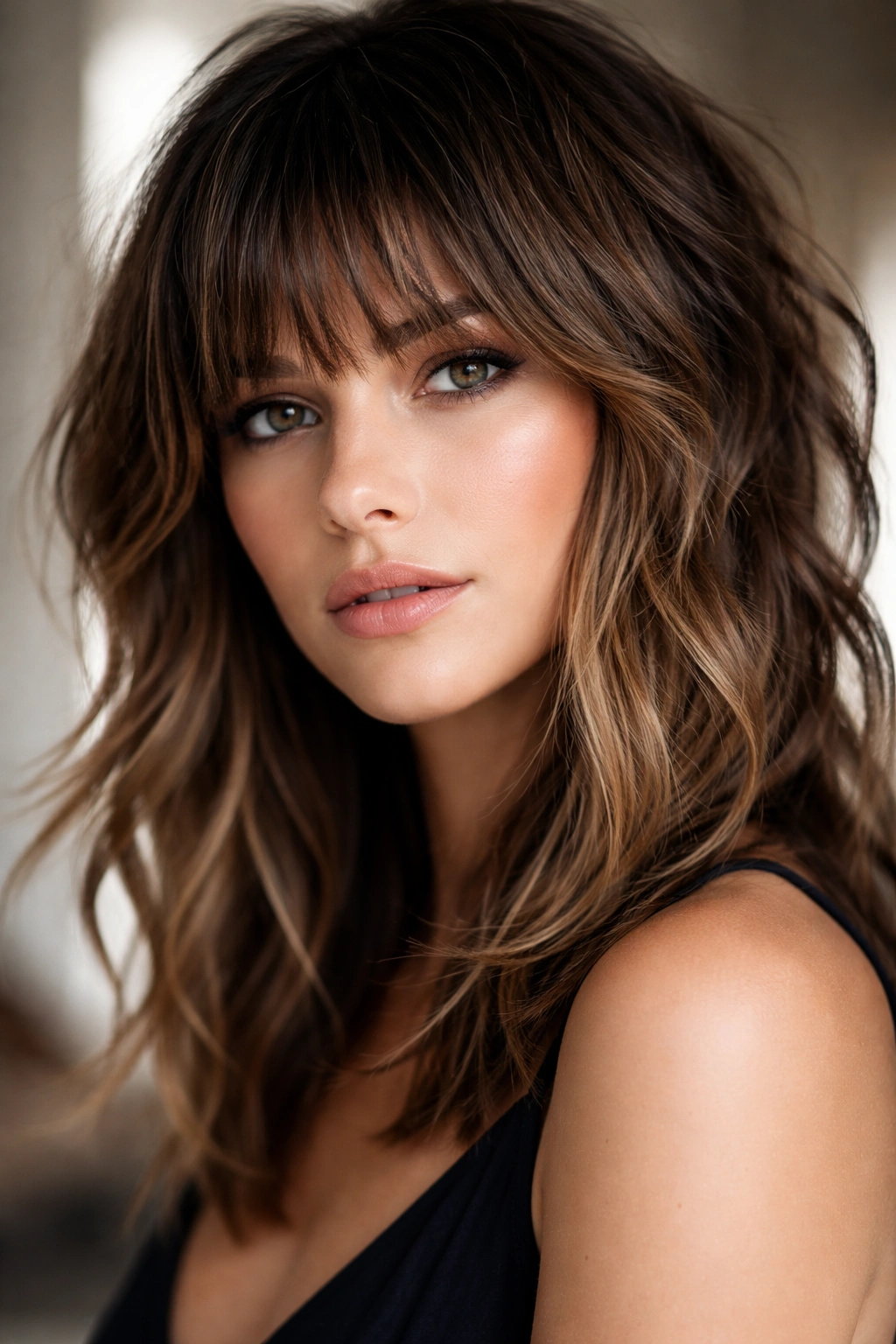
Choppy bangs are shorter, layered bangs with intentional, jagged edges that create movement and texture rather than a smooth line. They’re punk-rock adjacent without being outrageous, edgy without being severe. With medium hair, choppy bangs add personality and visual interest, especially if your medium length has layers throughout. They work brilliantly with wavy or textured hair because the choppiness matches your natural texture patterns.
The Right Hair Type Makes All the Difference
Choppy bangs absolutely shine on people with naturally wavy, curly, or textured hair—the texture works with the cut instead of against it. On stick-straight hair, choppy bangs require more deliberate styling to look intentional rather than accident-prone. Your hair thickness matters too; thick hair can handle the choppiness without looking thin or stringy, while finer hair sometimes needs a bit more weight in the bangs to avoid looking wispy-by-accident rather than artfully choppy.
Styling and Texture Building
- Textured bangs benefit from a sea salt spray or texture cream that emphasizes the choppy layers
- A blow dryer with a diffuser attachment can enhance wave and texture if you have wavy hair
- If your hair is straight, using a curling iron to add slight texture between the chops makes them look intentional
- Layering your bangs with your overall cut creates cohesion—choppy bangs work better when your whole style has similar texture and movement
- These bangs work beautifully slightly grown out; they look intentionally shaggy rather than overdue
Real talk: Choppy bangs are perfect for people who embrace imperfection in their style. If you like everything picture-perfect and precisely aligned, go with blunt or feathered instead.
5. Side-Swept Bangs
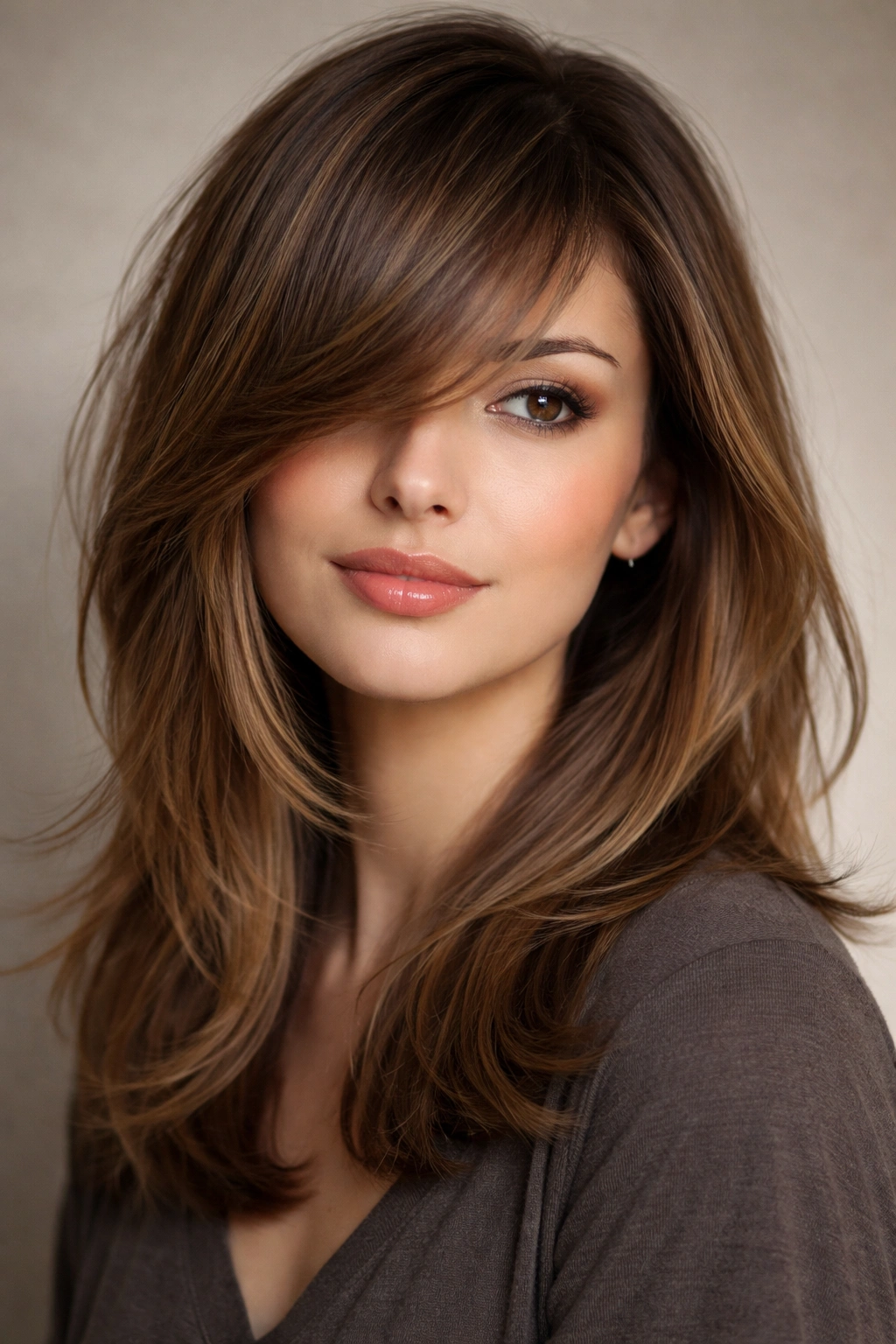
Side-swept bangs are essentially curtain bangs’ cooler, more directional cousin. Instead of parting in the middle, these longer bangs sweep dramatically to one side, creating an asymmetrical frame. They’re one of the most flattering styles for most face shapes because they create vertical lines that can slim, elongate, or balance depending on which direction they sweep. With medium hair, side-swept bangs add movement and sophistication.
Face Shape Considerations
For round faces, side-swept bangs sweeping downward create a lengthening effect. For oblong faces, sweeping them across can add width where needed. Square faces benefit from the softening effect of longer, swept bangs rather than blunt or heavy styles. The beauty of side-swept bangs is their inherent ability to reshape how your face looks—it’s largely about directing that sweep intentionally rather than leaving it to chance.
Styling and Daily Management
- Side-swept bangs need a simple blow dry with a round brush to set that sweep, but they’re very forgiving after
- They pair beautifully with beach waves, soft curls, or sleek straight styles because the directional sweep works with any texture
- These bangs grow out well—you can wait 6-8 weeks and they still look intentional, just longer and sweepier
- They work equally well side-parted or center-parted depending on your mood, giving you styling flexibility
- A light hairspray holds the sweep without making bangs feel crunchy or stiff
Pro tip: If you part your hair the opposite direction from your swept bangs (bang sweeping right, part on left), you create an extra-interesting asymmetrical frame that photographs beautifully.
6. Micro Bangs
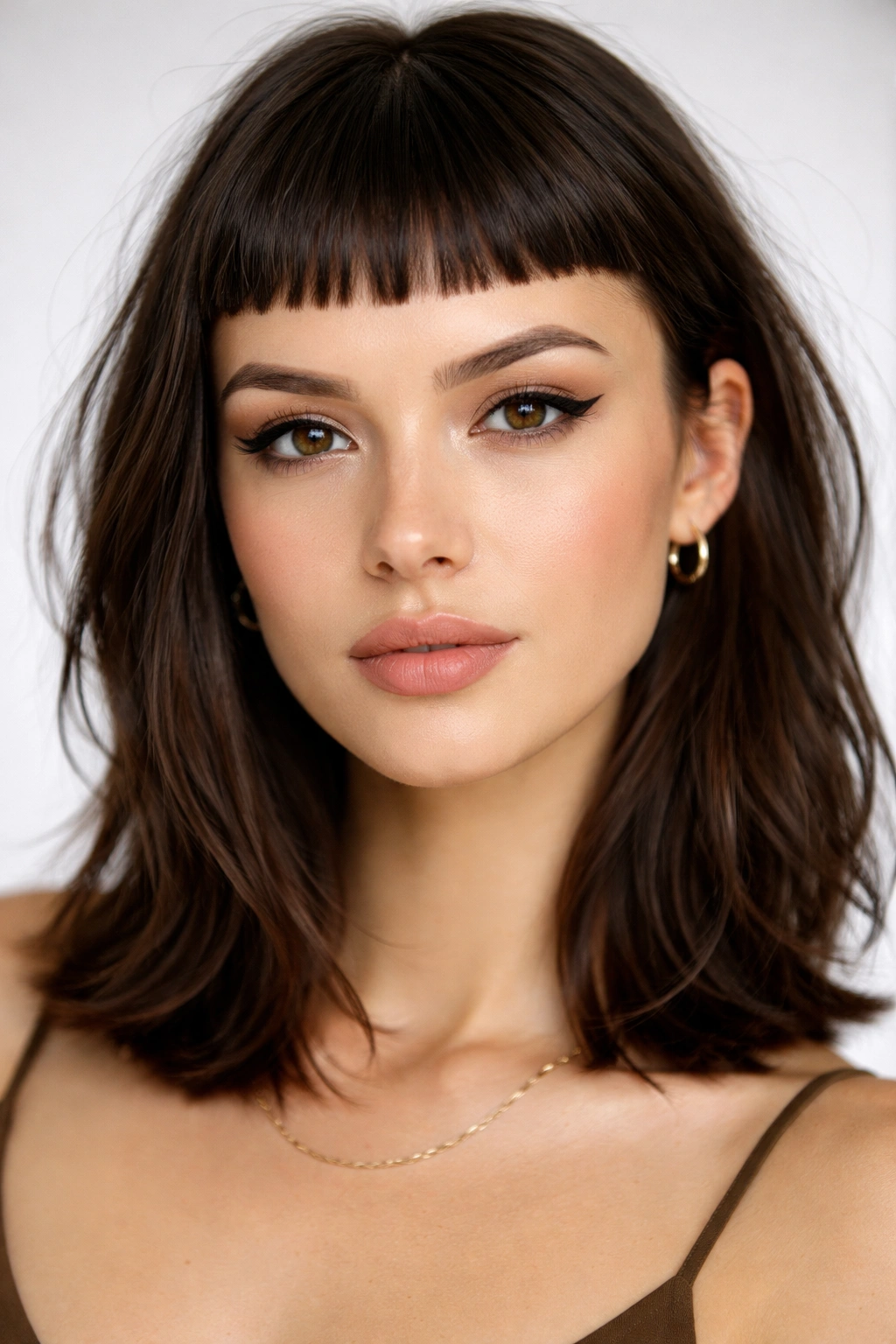
Micro bangs are short, hitting right above the eyebrows (or even higher), creating a bold, artistic, fashion-forward statement. They’re not for the faint of heart—micro bangs say “I’m confident and I’m making a choice.” But they’re absolutely stunning on the right person, especially with medium hair that creates balance to the short bangs. They’re having a real moment among people who want a striking, memorable look.
The Bold Aesthetic and Who Can Pull It Off
Micro bangs work best on people with longer face shapes or high foreheads where the exposed forehead space actually works proportionally. They suit people with editorial, fashion-forward style intentions rather than classic, timeless looks. Your face shape should be relatively balanced; micro bangs can overwhelm delicate or very round faces. They work on any hair texture but look especially striking on sleek, straight hair where the clean line is maximized.
The Commitment Level Required
- Micro bangs require trims every 3-4 weeks without fail—they grow out visibly quickly
- Your daily styling effort depends on hair type; straight hair often looks fine air-dried, while wavy hair needs intentional styling
- They work best on people with good bone structure and confidence because they expose so much of your face
- They photograph beautifully in editorial contexts and for special events, but some people find them too bold for everyday wear
- Growing them out takes planning because there’s an awkward phase where they’re too long to be micro but too short to tuck away
Worth knowing: Micro bangs commit you to a specific aesthetic—they’re difficult to hide or transition away from, so make sure this is a style you’ll love for at least 6-8 months.
7. French Bangs
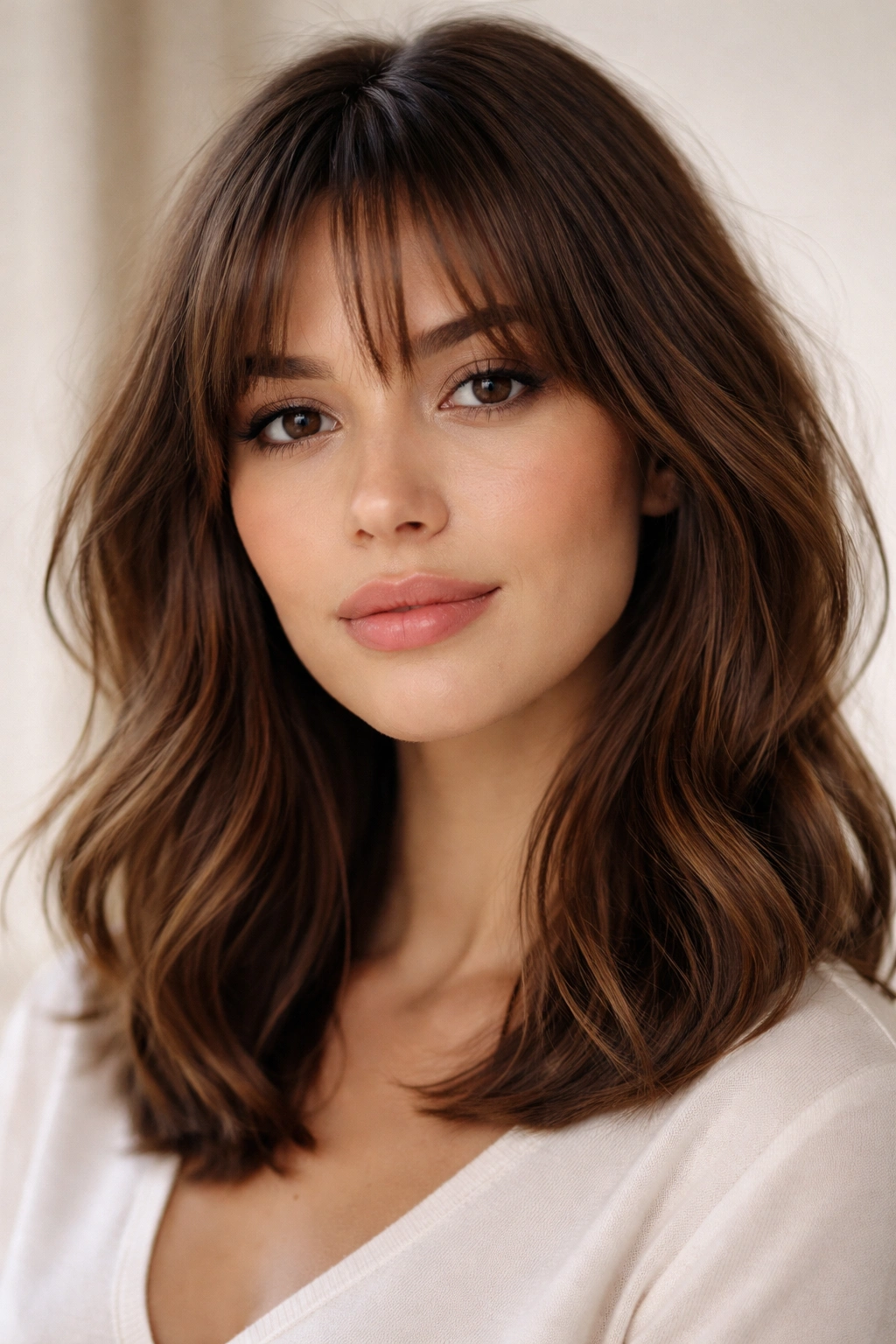
French bangs (or “Bardot bangs”) are wispy, minimal bangs that sit very high on the forehead—basically just grazing the very top of your forehead before your natural hairline. They’re inspired by the effortless chic of French style and work beautifully on people who want bangs for style rather than forehead coverage. With medium hair, French bangs add a subtle frame without commitment, which makes them perfect for someone testing whether bangs work for them at all.
The Minimal Approach to Bangs
French bangs essentially give you the face-framing benefits of bangs without the heavy forehead coverage. They work on any face shape because they don’t really define the forehead—they just add a delicate line and texture. They’re perfect for people with longer faces who want subtle bangs, and they work beautifully on people with smaller foreheads where full bangs might feel heavy. The minimal coverage means you can wear your hair up in ponytails and buns without it looking incomplete.
Styling Simplicity
- French bangs require minimal styling; a light blow dry or air-drying is completely fine
- They work beautifully with any hair texture because they’re short enough that they sit naturally
- These bangs are extremely low-maintenance for trims; you can probably go 8-10 weeks without them looking noticeably grown out
- They pair beautifully with slicked-back styles, half-ups, and any updo because they look intentionally minimal rather than undone
- No daily styling products or heat tools needed—these are the easiest bangs to maintain
Insider note: French bangs are perfect if you love the idea of bangs but worry they’ll be high-maintenance—they might be the lowest-commitment bang style available.
8. Layered Bangs
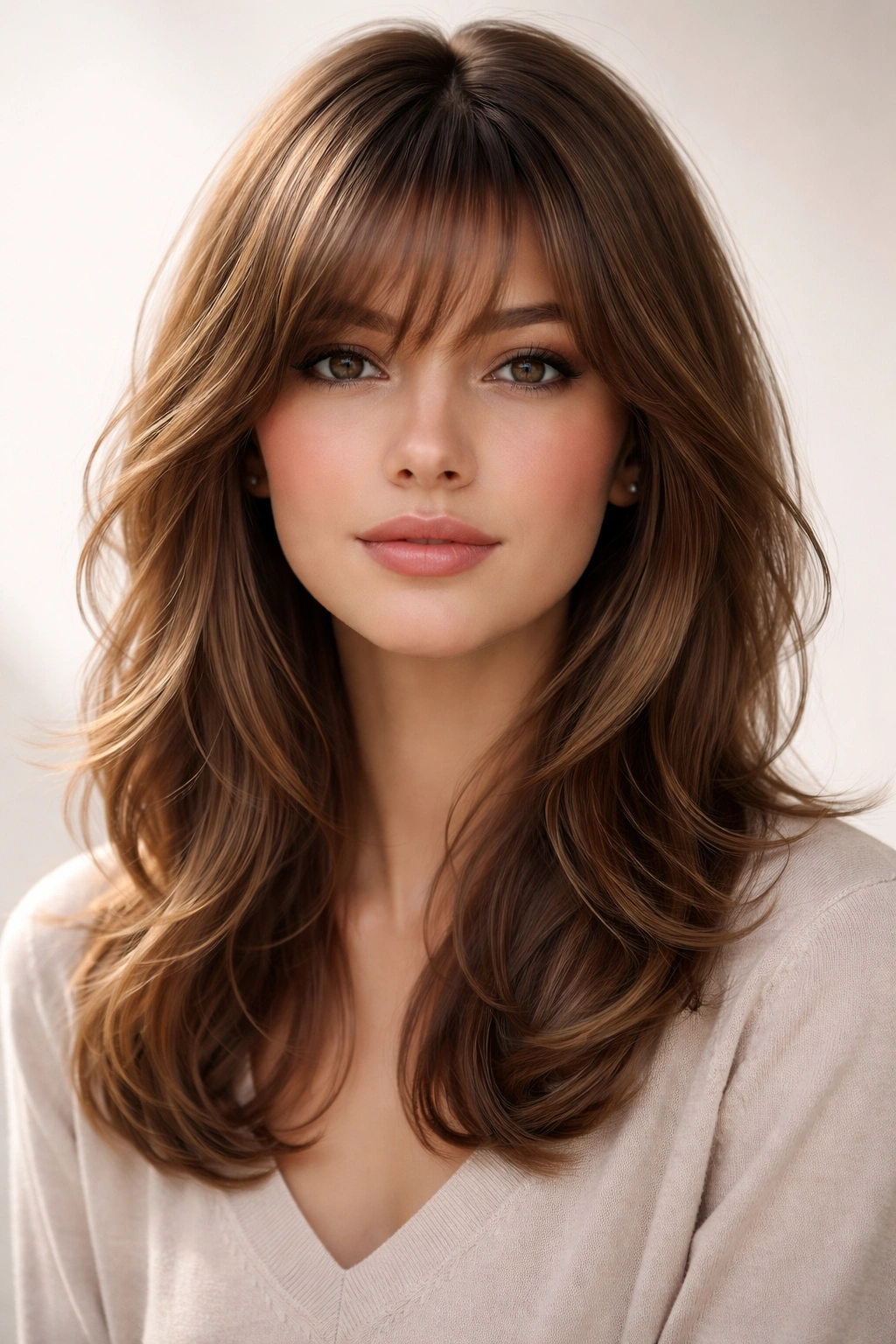
Layered bangs integrate seamlessly into your overall haircut when your stylist creates different lengths throughout the bang section. Rather than one blunt line, layered bangs have graduated lengths that move into each other, creating volume, texture, and movement. With medium hair, layered bangs can create a cohesive look where your bangs feel like a natural extension of your overall style rather than a separate element.
How Layering Creates Dimension
Layered bangs work because each layer catches light differently, creating dimension that makes your hair look thicker and more textured. On fine hair, this creates the illusion of volume. On thick hair, layers prevent bangs from looking heavy or flat. The graduated lengths mean your bangs blend into the rest of your hair length—if your medium-length cut has layers throughout, layered bangs create visual continuity. They’re especially beautiful on people with wavy or curly hair because the layers follow the natural texture pattern.
Creating the Cohesive Look
- Layered bangs work best when your entire cut has similar layering throughout—it looks intentional and cohesive
- They’re versatile enough to work with straight, wavy, or curly hair as long as the layers are cut to match your texture
- Styling is flexible; you can blow dry them straight, add waves, or let them air dry depending on your hair type
- These bangs transition gracefully as they grow, which means you can go slightly longer between trims
- Texture spray and dry shampoo help emphasize the layers and create movement
Pro tip: When consulting with your stylist about layered bangs, bring photos showing the overall haircut you want—layered bangs work best when your stylist understands how they’ll integrate into your complete look.
9. Shaggy Bangs
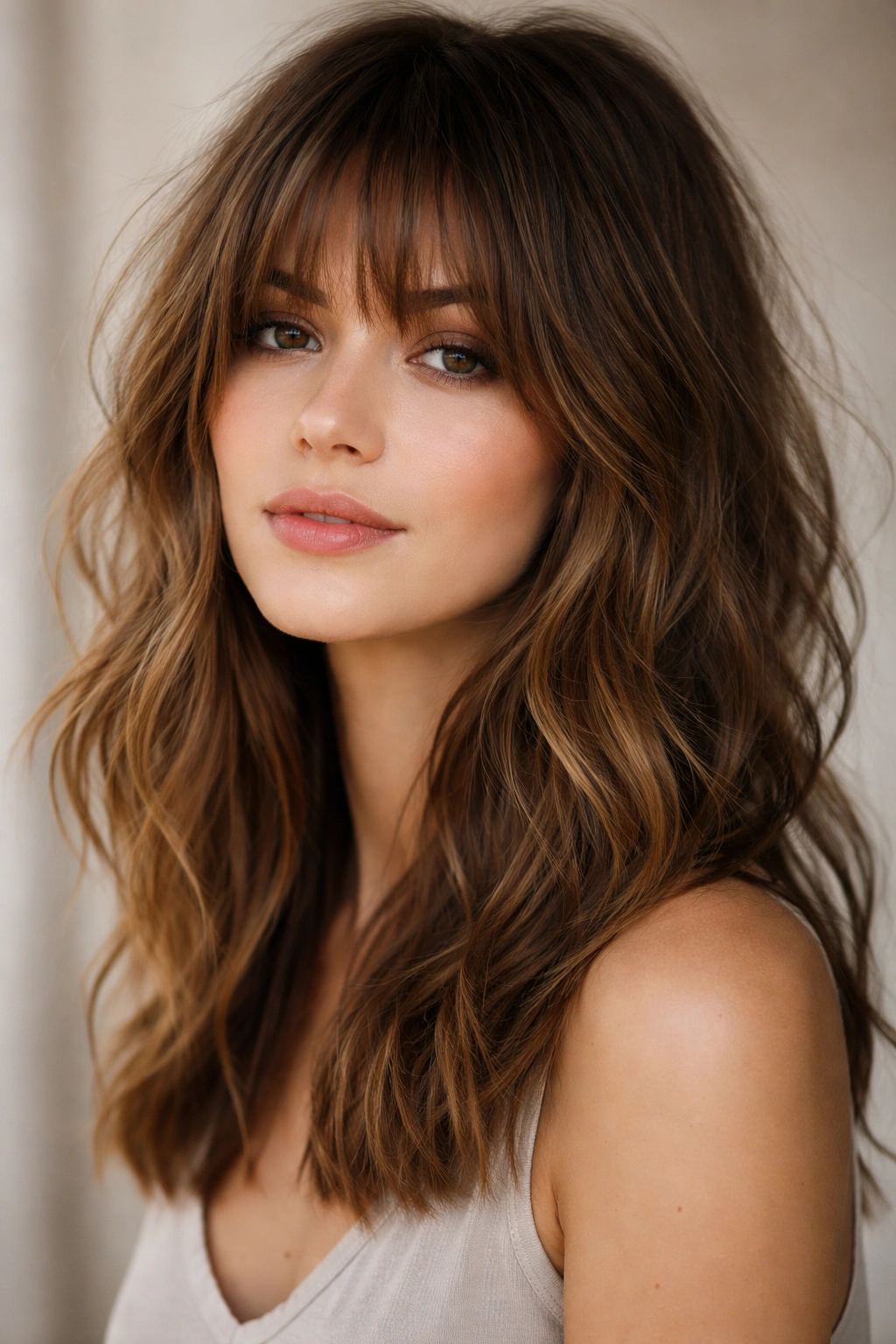
Shaggy bangs are intentionally undone, textured, and piece-y—like you just rolled out of bed with effortless style (even though some styling effort goes into maintaining them). They sit somewhere between choppy and feathered, longer than most bang styles, and work beautifully with shaggy haircuts. Shaggy bangs on medium hair create that relaxed, bohemian, lived-in vibe that feels modern and approachable rather than overly polished.
The Relaxed Aesthetic Works With Medium Length
Shaggy bangs pair perfectly with medium-length hair because you have enough length to create movement throughout without looking thin or stringy. They work on any face shape because the soft, moving pieces don’t emphasize structure the way blunt bangs might. They’re ideal for people who embrace a less-controlled aesthetic—they look better slightly undone than perfectly styled. If you’re naturally low-key about your appearance, shaggy bangs let you spend less time fussing while still looking intentional.
Achieving That Effortless Texture
- Shaggy bangs benefit from texture products like sea salt spray or dry shampoo that create piece-y separation
- A blow dryer with your fingers (no brush) creates natural-looking texture and movement
- They work beautifully with wavy or curly hair—the natural texture enhances the shaggy effect
- On straight hair, you might use a curling iron to add subtle texture between the layers
- These bangs look better when they’re ever-so-slightly grown out; they start looking overgrown much later than other styles
- Don’t wash them daily; slightly oil-laden shaggy bangs look more intentionally textured than freshly washed ones
Real talk: Shaggy bangs require you to own an attitude of “I don’t care if this looks perfectly controlled”—if you prefer precision and polish, they’ll probably drive you crazy.
10. Rounded Bangs
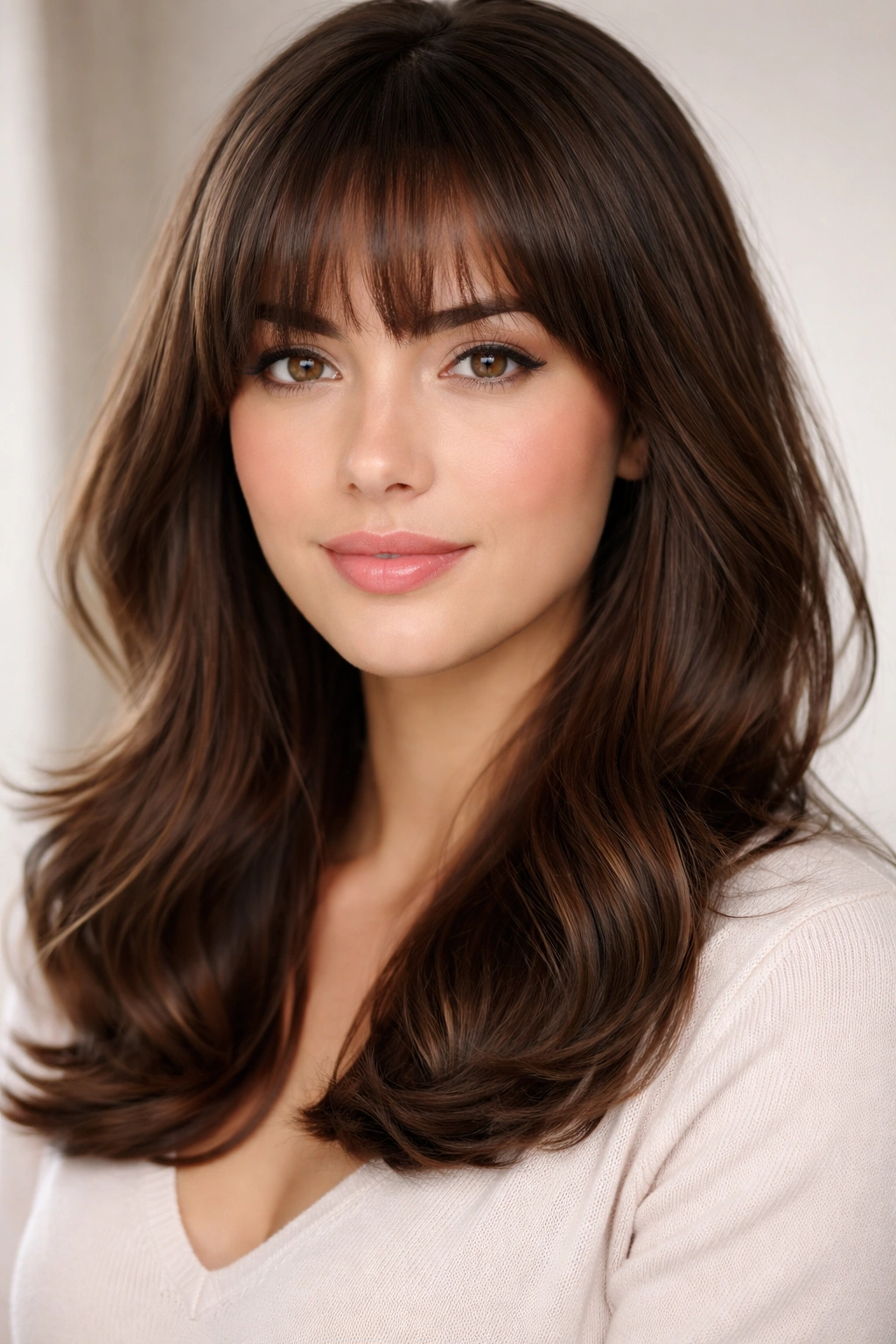
Rounded bangs arc gently across your forehead rather than sitting completely straight or sweeping dramatically to one side. They follow the natural curve of your head and forehead, creating a soft, romantic, almost old-Hollywood vibe. They’re longer than micro bangs but more defined than wispy bangs, hitting somewhere around eyebrow length or just below. With medium hair, rounded bangs create a polished, intentional look that feels feminine and thoughtful.
Why The Curve Matters For Your Face
Rounded bangs work because they follow the natural contours of your face. A gentle arc softens angular features while adding definition to rounder faces. They’re more flattering on most people than blunt bangs because the curve prevents that single strong horizontal line that can feel harsh. They work on straight, wavy, and curly hair, though the curve reads most clearly on straight or blown-out hair. They photograph beautifully and look elegant in both casual and formal settings.
Maintaining The Curve
- Rounded bangs need a blow dry with a round brush to maintain their curve, but you don’t need them to be perfect
- A flat iron can enhance the curve, creating a more dramatic arc if you want
- Trims every 4-6 weeks keep the curve shape consistent as they grow
- They work beautifully with side parts or center parts—the curve complements both
- Light hairspray helps the curve hold without making bangs feel stiff or unnatural
- These bangs actually improve with a day or two of styling; they look more intentionally curved slightly lived-in
Worth knowing: Rounded bangs are the bridge between soft, wispy bangs and more defined blunt styles—they give you definition without harshness.
11. Peekaboo Bangs
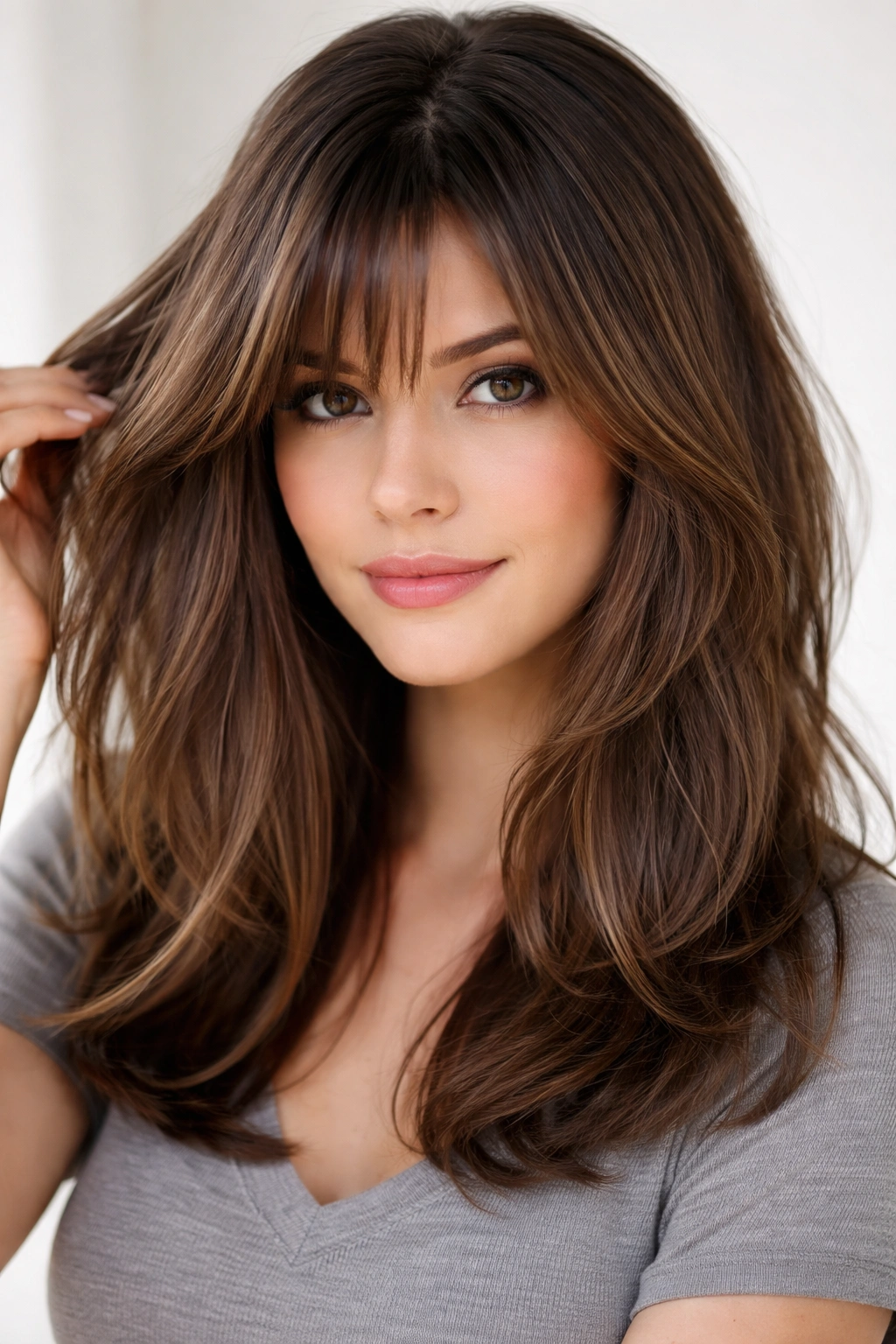
Peekaboo bangs are hidden bangs—layers cut into your hair that only show when you move, style your hair a certain way, or part your hair in a specific direction. The rest of the time, they’re concealed beneath your longer surface layers. This style is perfect for people who want bang flexibility: bangs when you want them, no bangs when you don’t. With medium hair, peekaboo bangs add surprise and dimension without commitment.
The Flexibility Factor
Peekaboo bangs let you experiment with having bangs without fully committing. If you decide you love them, you can bring them forward and make them more visible. If you’d rather not wear them, you simply style your hair to conceal them. They work beautifully when you have layers throughout your hair—the bangs become one layer among several. They’re perfect for people with varied style preferences who might want different looks on different days. No other bang style gives you this flexibility.
Styling Options and Visibility
- Peekaboo bangs can be styled to show by parting your hair differently, or hidden by styling surface layers over them
- They require less frequent trims than visible bangs because they’re not being worn the same way daily
- When you do wear them visible, they can be styled with any of the techniques you’d use for regular bangs
- They work beautifully with medium hair where you can easily control surface layers
- Some people keep them cut long enough that they’re barely visible, while others cut them shorter for more dramatic reveal-and-hide potential
Pro tip: When asking your stylist for peekaboo bangs, clarify exactly when and how you want them visible versus hidden—different cutting techniques create different levels of visibility.
12. Asymmetrical Bangs
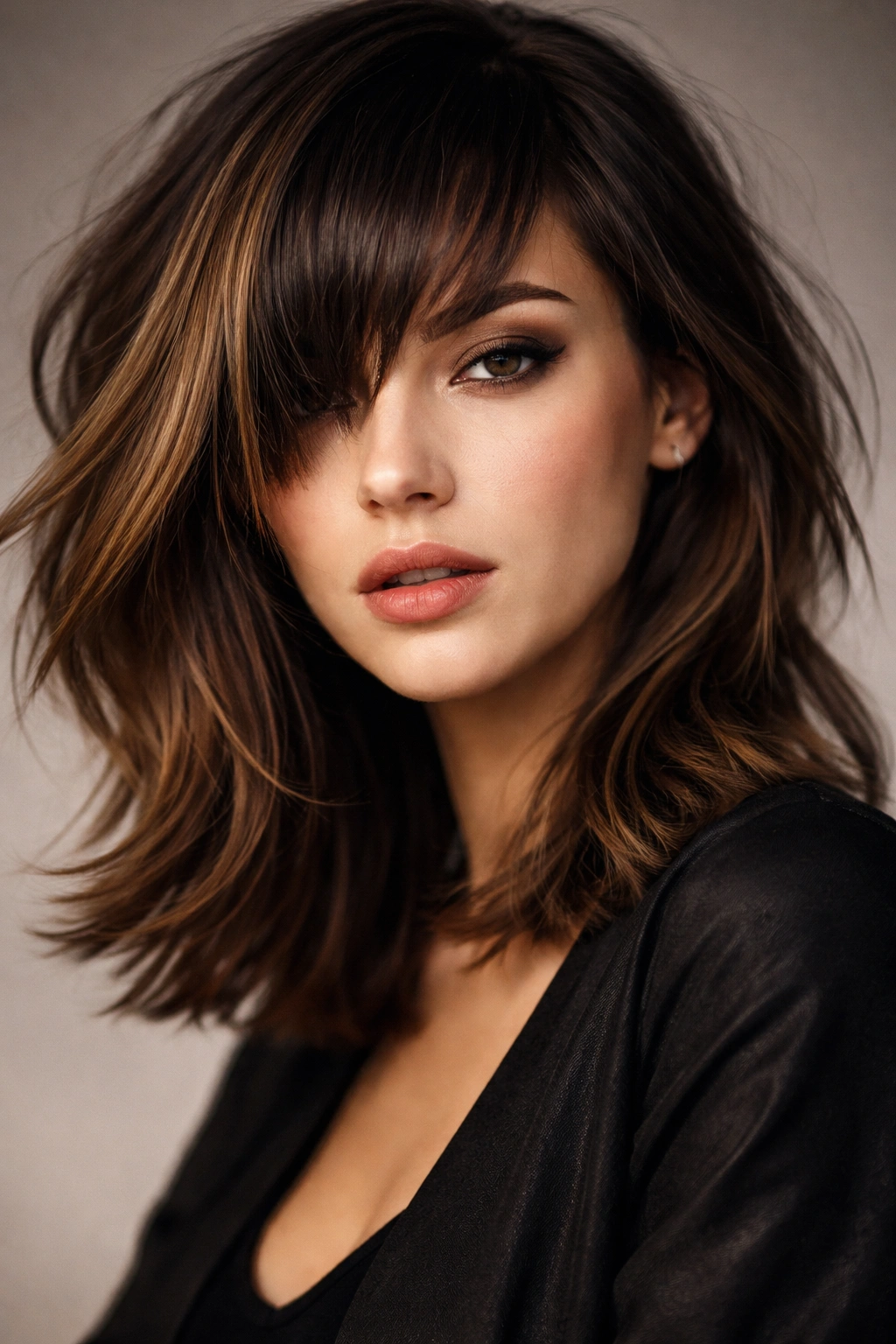
Asymmetrical bangs have completely different lengths on each side, creating an intentionally unbalanced frame. One side might be much shorter (potentially micro-bang length) while the other sweeps longer. They’re the most editorial, fashion-forward bang choice that demands confidence and intention. With medium hair, asymmetrical bangs create maximum visual interest and signal that you’re making a deliberate style choice rather than following conventional rules.
The Bold Statement Aesthetic
Asymmetrical bangs work for people with strong personal style who want their hair to reflect that boldness. They suit longer face shapes where the asymmetry adds visual interest rather than emphasizing imbalance. They work beautifully on people with good bone structure because they expose different amounts of each side of your face. They photograph beautifully in editorial contexts and make a powerful statement. They’re not for people who prefer subtle, understated style—these bangs are meant to be noticed and discussed.
Styling and Maintenance Reality
- Asymmetrical bangs require you to decide which side is short and which is long, and styling is directional
- Daily styling depends on your hair type and the severity of the asymmetry
- The shorter side needs more frequent trims (every 3-4 weeks) while the longer side can go longer between cuts
- They work beautifully with edgy styling, sleek styles, or textured styles depending on the overall look
- Growing them out requires careful planning because the asymmetry becomes increasingly awkward during that phase
- They make a powerful statement, which means they work for some people and feel uncomfortable for others
Worth knowing: Asymmetrical bangs are a commitment to a specific aesthetic. If you think you might want classic bangs in six months, this probably isn’t your style.
Final Thoughts
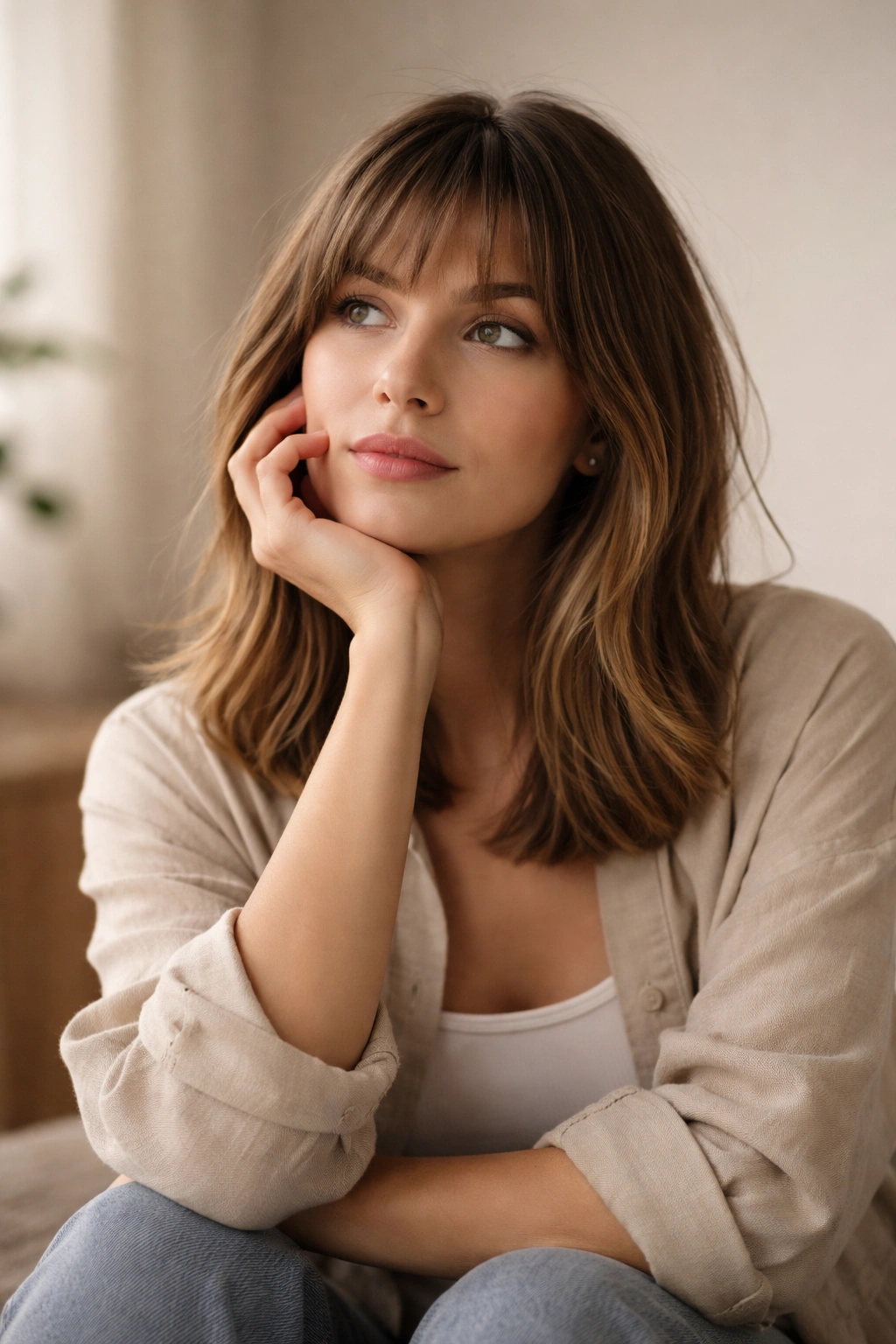
The right bang style isn’t just about what looks good in photos—it’s about what actually fits your hair type, your daily styling reality, your face shape, and most importantly, your personal style confidence. Some of these 12 styles require daily blow-drying commitment and frequent trims, while others basically maintain themselves. Some suit round faces, others flatter longer faces, and several work beautifully on anyone willing to commit to the right styling techniques.
Before you schedule that appointment, be honest with yourself about your hair’s natural texture and how much daily styling you’re actually willing to do. Wispy or curtain bangs require less daily effort than blunt or side-swept styles. French or peekaboo bangs give you the most flexibility, while micro or asymmetrical bangs demand the most commitment. Look at your face shape and consider whether you want bangs that frame softly or define boldly—that question alone eliminates several options and narrows your choice considerably.
The beauty of medium-length hair is that it gives you options. Most of these bang styles work on medium length without looking thin or stringy. You have enough hair to play with texture and movement, and you have enough overall length to balance the bangs rather than feeling overwhelmed by them. Take the time to really visualize yourself wearing each style, consider your actual daily routine, and bring your stylist reference photos of bangs (not whole haircuts) so they understand the specific style, length, and texture you’re imagining. The right bangs can transform how you feel in your own skin—it’s worth getting that choice exactly right.
