



A wolf cut is basically short hair having its own personality crisis—and we mean that in the best possible way. It’s that hybrid style that crashes the mullet concept (business in front, party in back) with a modern shag aesthetic, creating something that feels genuinely edgy without requiring you to commit to a full undercut or go fully ’80s rock. The beauty of wolf cuts on shorter hair is that they look intentional and cool rather than accidentally disheveled, and they work across different hair textures, face shapes, and styling preferences in ways that straighter, more uniform short cuts often don’t.
What makes wolf cuts so magnetic right now is the permission they grant you to break symmetry. Instead of every strand hitting the same length, you’re mixing textures—choppy layers on top, graduated length through the mid-section, and sometimes shorter, tapered sides. On shorter hair specifically, this textural contrast prevents that flat, one-dimensional look that can happen with blunt bobs or basic pixies. The style also photographs exceptionally well because it catches light differently at different angles and looks dynamic whether you’re wearing it sleek, tousled, or somewhere in between.
The wolf cuts featured here represent different interpretations of the core concept, each suited to different hair types, styling commitments, and personal aesthetics. Some are more subtly textured, while others commit fully to the choppy, layered vibe. What they share is that quality of controlled chaos—deliberate styling choices that create visual interest and movement, making short hair feel exciting rather than safe. Whether you’re considering a first wolf cut or refining one you already have, these variations show just how versatile the style can be.
1. The Shaggy Textured Wolf
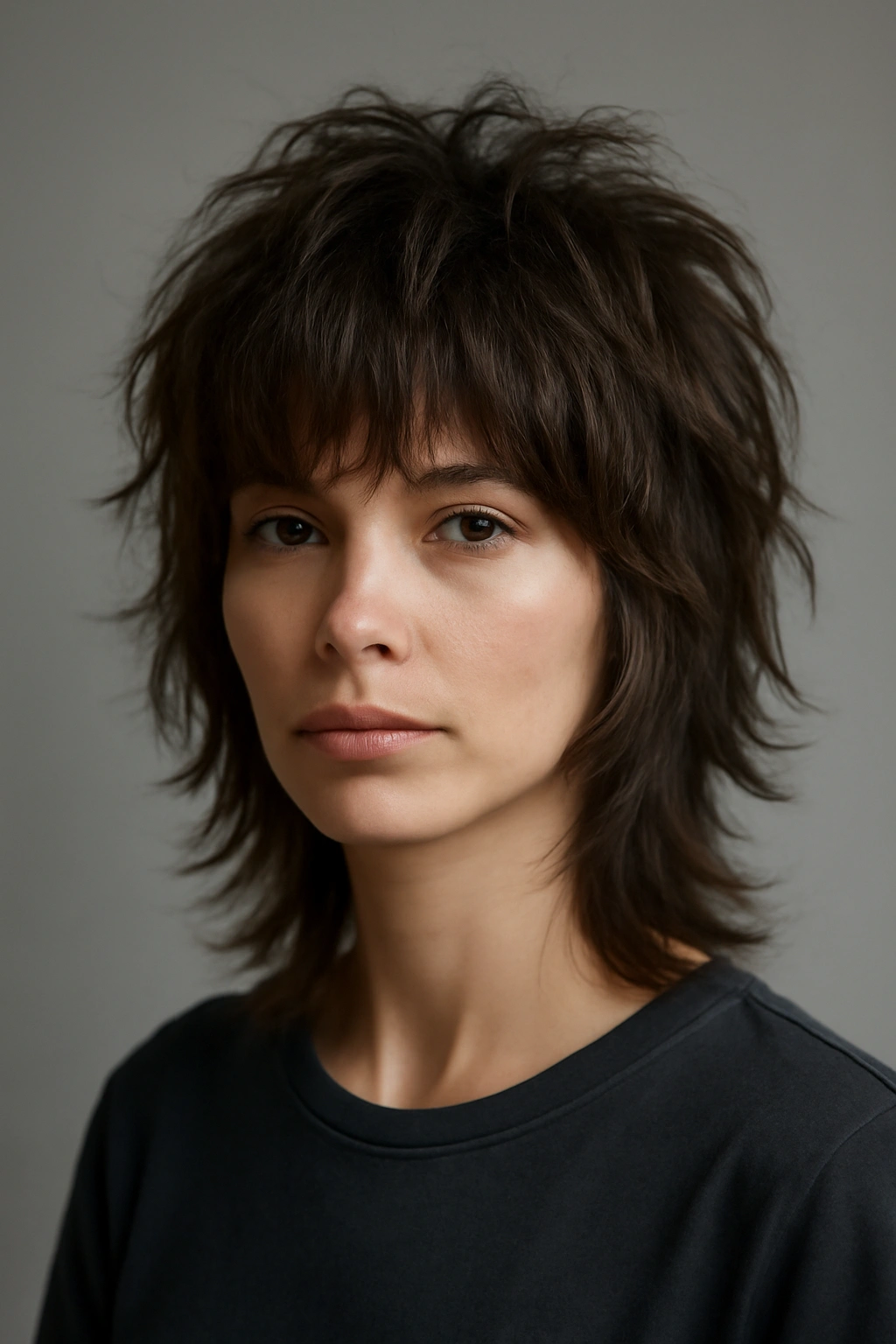
This is the classic wolf cut that leans heaviest into shag DNA—choppy, feathered layers throughout that create maximum texture and volume. The cut sits roughly chin-length or slightly shorter, with deliberate disconnection between sections so each layer is visibly distinct. The top has serious movement and piece-y separation, while the underneath holds structure and weight so it doesn’t look wispy or overly thin.
Why This Version Stands Out
The shaggy textured wolf works beautifully on naturally wavy or curly hair because it works with your texture instead of fighting it. The choppy layers break up bulk, eliminate frizz-prone length, and give curls room to bounce individually rather than clumping together. Even on straight hair, this cut reads as intentionally rock-and-roll rather than trying to look polished, which gives it a confidence that feels fresh. The disconnected layers mean you can achieve a tousled, lived-in look without actually sleeping in your clothes.
How to Style and Maintain
- Works beautifully with sea salt spray applied to damp hair for natural texture and separation
- Blow-dry with a diffuser to emphasize waves and create volume at the crown without effort
- Styling cream or lightweight pomade runs through the pieces for definition without flattening texture
- Requires trims every 4-6 weeks to maintain the choppy, layered separation—the shag effect dulls quickly as the cut grows out
- Looks intentional when tousled; avoid over-smoothing unless you want to completely change the vibe
Pro tip: This cut actually looks better when it’s slightly undone. The more you try to control it into submission, the less striking it becomes—lean into the movement instead.
2. The Blunt Shag with Undercut
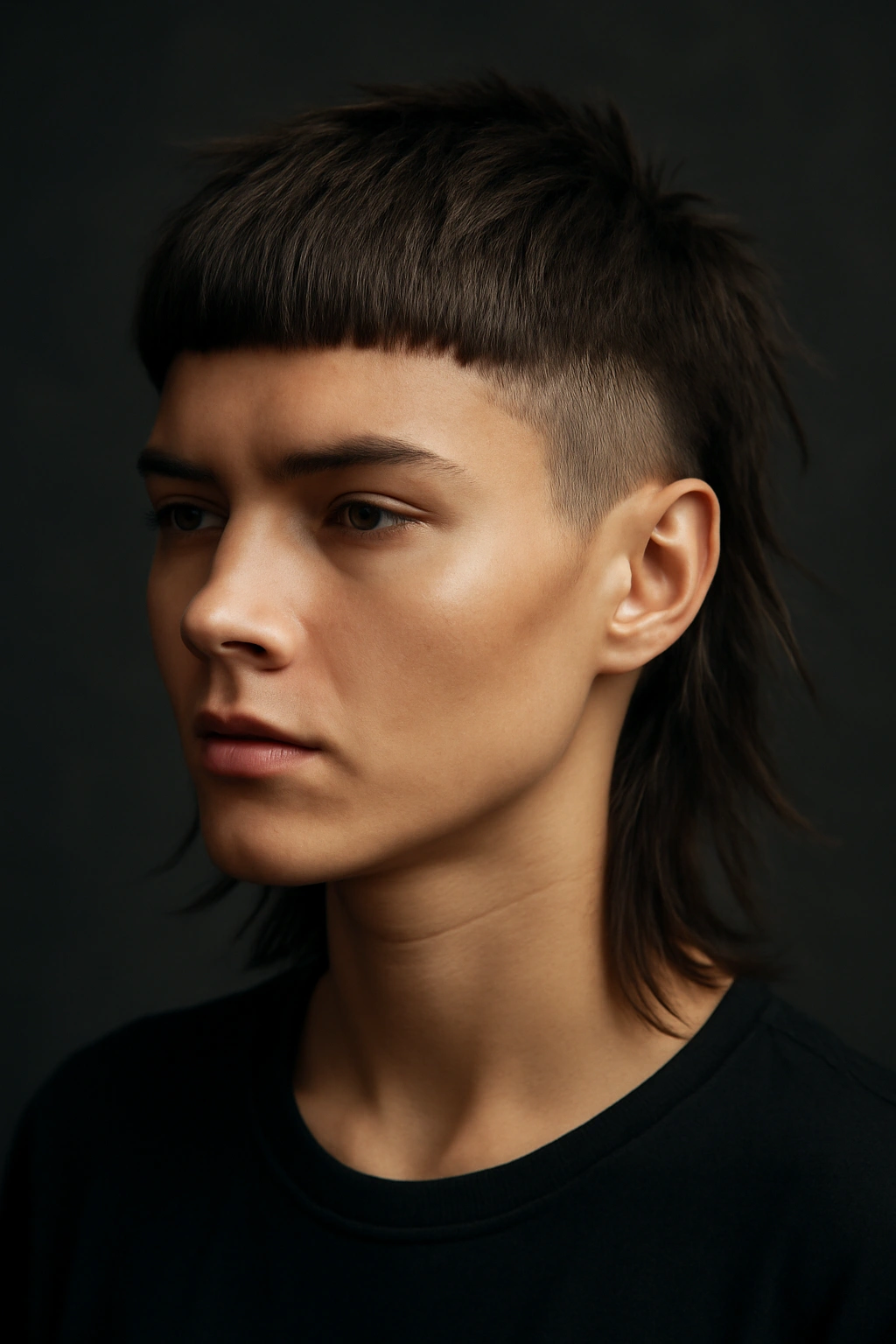
This wolf cut combines a more defined, straight-edged silhouette on top with an intentional undercut or fade on the sides and back. The top section is choppy and layered with texture, but maintains a slightly blunter line than the full shag, while the sides are significantly shorter—sometimes nearly shaved. It’s the wolf cut for people who like definition and edge in equal measure.
What Makes It Distinctly Edgy
The undercut element transforms a wolf from “cool shag” to “deliberately alternative,” which opens the door to some seriously striking styling options. The visual contrast between long textured layers on top and bare (or nearly bare) sides creates an architectural quality that photographs beautifully. This version reads as more intentional and designed than a full shag, which appeals to people who like their style to look deliberate rather than accidental.
Styling Ideas and Considerations
- The undercut area requires regular maintenance—a trim every 2-3 weeks if you want sharp definition
- Top layers can be styled slicked back with gel for maximum contrast, or left textured and messy for a softer take
- Works exceptionally well with colored hair, since the contrast between shaved sides and colored top sections is visually dramatic
- Best on people with face shapes that aren’t bothered by the side exposure—this isn’t the cut if you’re trying to hide the sides of your face
- Requires consistent upkeep and regular barbering; this isn’t a low-maintenance style
Worth knowing: The stubble-to-layer transition can feel uncomfortable during the growth-out phase. Many people find it worth the maintenance, but it’s not a “grow it out if you change your mind” situation.
3. The Soft Layered Wolf
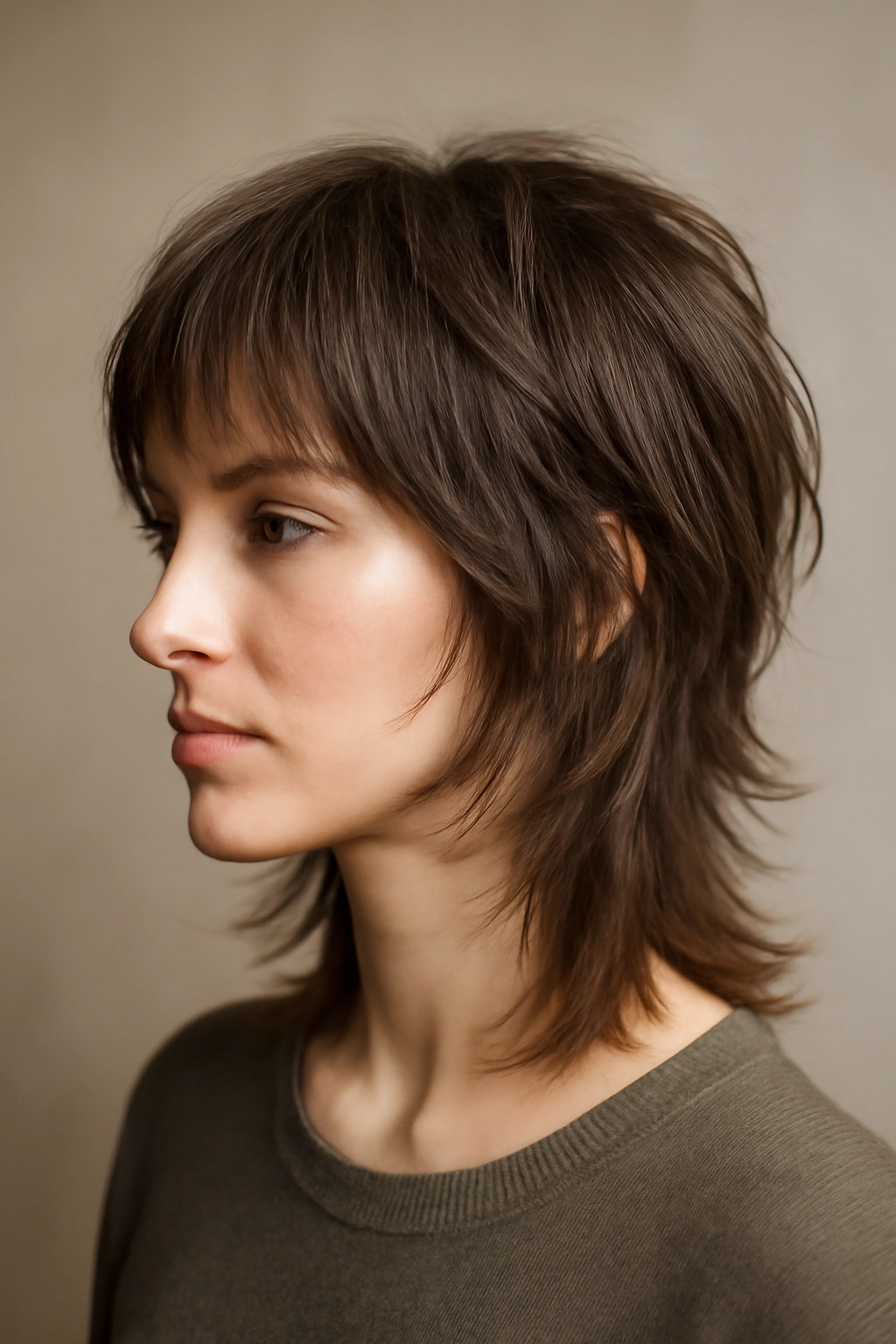
This version prioritizes texture without the choppy, disconnected feel of a full shag. The layers are closer together, more blended, and they’re achieved through point-cutting or razor techniques rather than obvious disconnection. It’s a wolf cut for people who want movement and shape but prefer a slightly more wearable, less statement-making aesthetic.
Why It’s Perfect for Softer Hair Types
Soft, fine, or delicate hair often struggles with choppy wolf cuts because they can look thin and wispy rather than intentionally textured. The soft-layered approach uses more subtle techniques to build shape and movement without creating obvious gaps or sections. This makes it ideal for people with lower hair density who still want that contemporary, textured short-hair feeling without looking sparse.
How to Work With This Cut
- Point-cut layers blend more naturally, so the cut looks intentional but not harsh
- Works well with minimal styling—product and texture happen naturally without heavy-duty styling products
- Styling cream, texturizing spray, or light mousse creates definition without weighing fine hair down
- Grows out more gracefully than a choppy shag because the layers blend rather than disconnect
- Trim every 6-8 weeks to maintain shape; less frequent than choppy versions
- Pairs beautifully with subtle highlights or balayage that emphasize the layered movement
Quick fact: This cut often surprises people with how much shape it holds once your hair grows slightly past the initial cut—layers in fine hair sometimes don’t feel full until they have an extra inch or two of length to work with.
4. The Tousled Pixie Wolf Hybrid
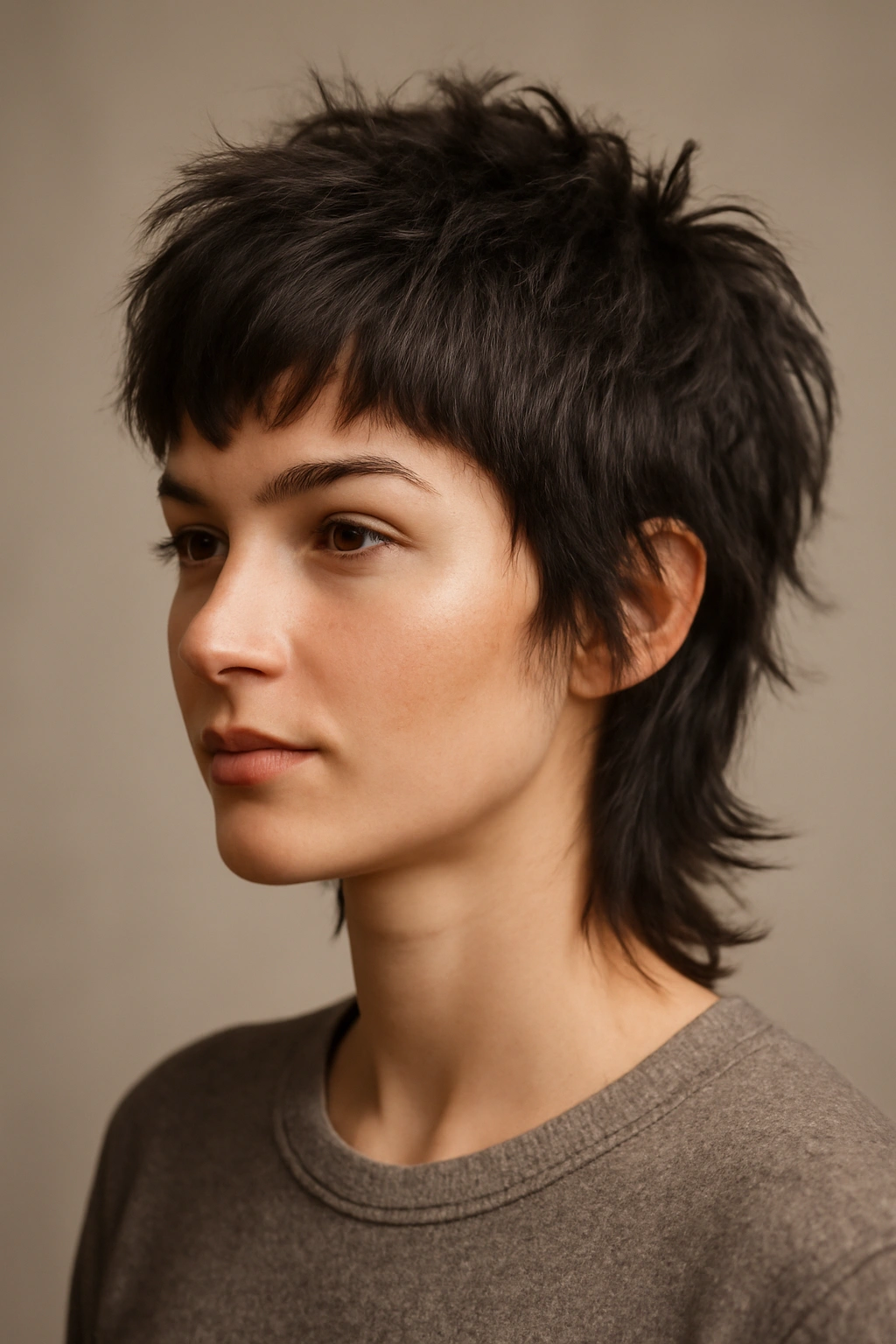
This is a wolf cut for people who love pixie energy but want more length and texture to play with. It’s shorter than a traditional wolf cut overall—sometimes only 2-3 inches on top—but it incorporates wolf-cut layering and choppy texture rather than the neat pixie structure. It’s basically a long pixie with shag layers rather than a short wolf.
The Appeal for Short-Hair Lovers
If you’re someone who likes short hair but found traditional pixies felt too cropped or structured, this hybrid gives you pixie-level ease with more styling flexibility. The choppy layers read as textured and interesting rather than just short, and the overall look has an androgynous, artistic quality that feels contemporary. It’s short enough to be genuinely low-maintenance but long enough to express personality through styling choices.
Styling and Daily Wear
- Can be worn completely unstyled and still look intentional; this is genuinely wash-and-go territory for many people
- Texturizing spray or dry shampoo adds volume and texture without any real styling effort
- Blow-dry with fingers running through for a slightly fuller take, or let it air-dry for a more natural, undone feel
- Works beautifully with color—the short length means color can be bold or subtle depending on how you layer it
- Maintenance is frequent but quick—trims every 4-5 weeks, but you’re spending less than 20 minutes at the salon
- Suits people with face shapes that look good with significant ear and neck exposure
Pro tip: The back of this cut sometimes needs slightly more length than the front to prevent the pixie-ish feel you’re trying to escape. Ask your stylist for a subtle disconnect between front and back, with the back being a quarter-inch longer.
5. The Side-Swept Wolf
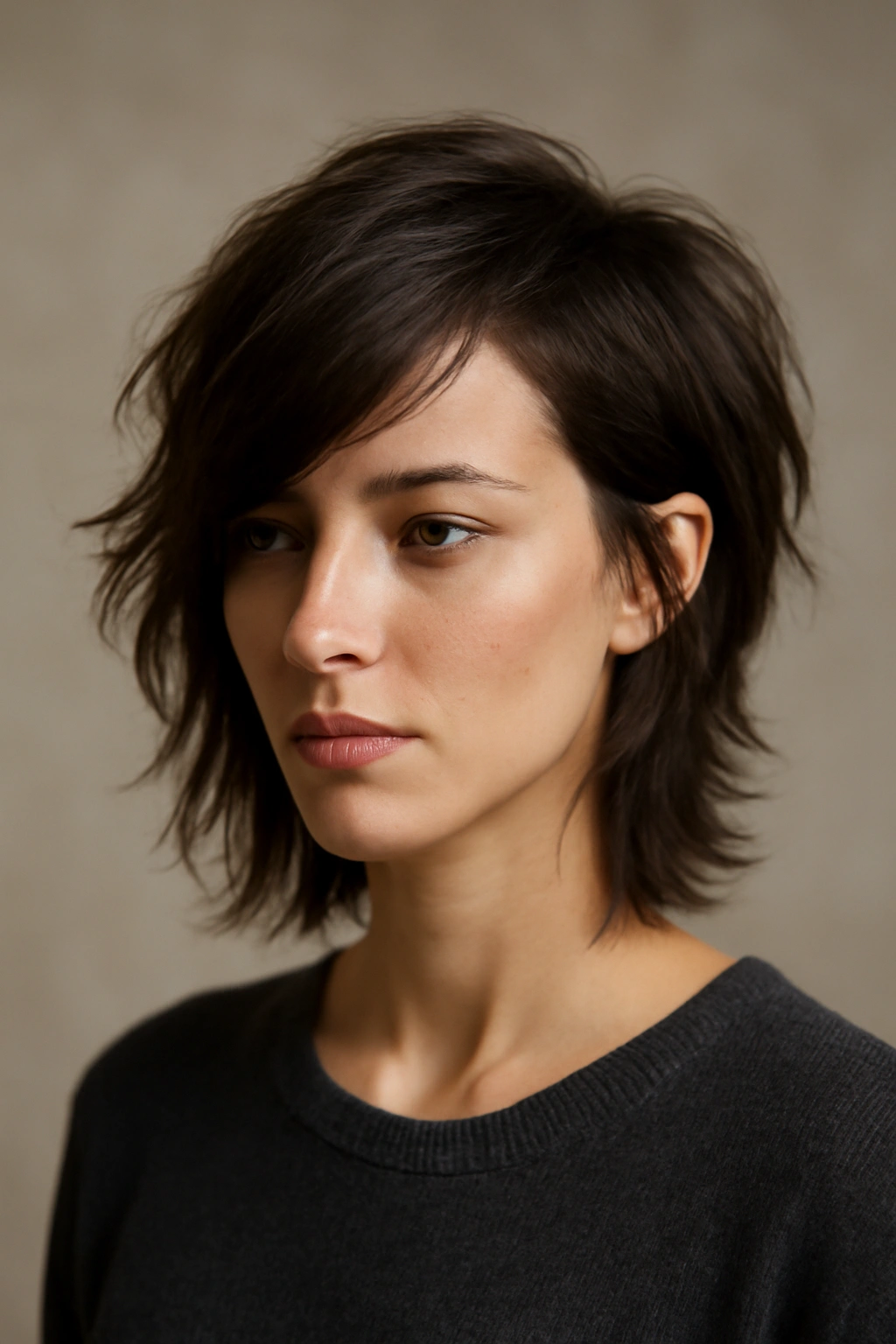
This wolf cut plays with asymmetry as its core design principle. One side is noticeably longer or fuller than the other, with longer layers on the fuller side that sweep across and down. It’s less about the undercut drama of a blunt shag wolf and more about using asymmetrical length to create movement and visual interest.
Why Asymmetry Changes Everything
An asymmetrical wolf cut creates the illusion of movement even when your hair is completely still. The longer side creates a natural sweep and prevents the cut from feeling static or same-same. This approach works particularly well for people whose hair naturally has directional growth patterns or who prefer styling their hair to one side anyway—you’re working with your hair’s habits rather than against them.
How to Make Asymmetry Work for Your Face
- The longer side should ideally sweep toward your stronger features (typically one side of the face is slightly wider, and sweeping length there can balance proportion)
- Styling the long side forward creates a softer, more feminine silhouette
- Pushing the long side back or clipping it up changes the whole vibe of the cut—suddenly it looks edgier and more sculptural
- Face shapes that benefit most: heart-shaped faces (longer side near the jawline adds balance), oval faces (any direction works), and pear-shaped faces (longer side near cheekbones)
- Requires consistent styling intention—if you don’t usually style your hair, the asymmetry can look accidental rather than intentional
- Trims every 6-7 weeks, focusing slightly more on the shorter side to maintain the intentional asymmetrical gap
Worth knowing: Asymmetrical cuts can feel disorienting in photos at first if you’re used to symmetrical styles. Take a few photos from different angles before deciding you hate it—many people find it grows on them quickly.
6. The Textured Crop Wolf
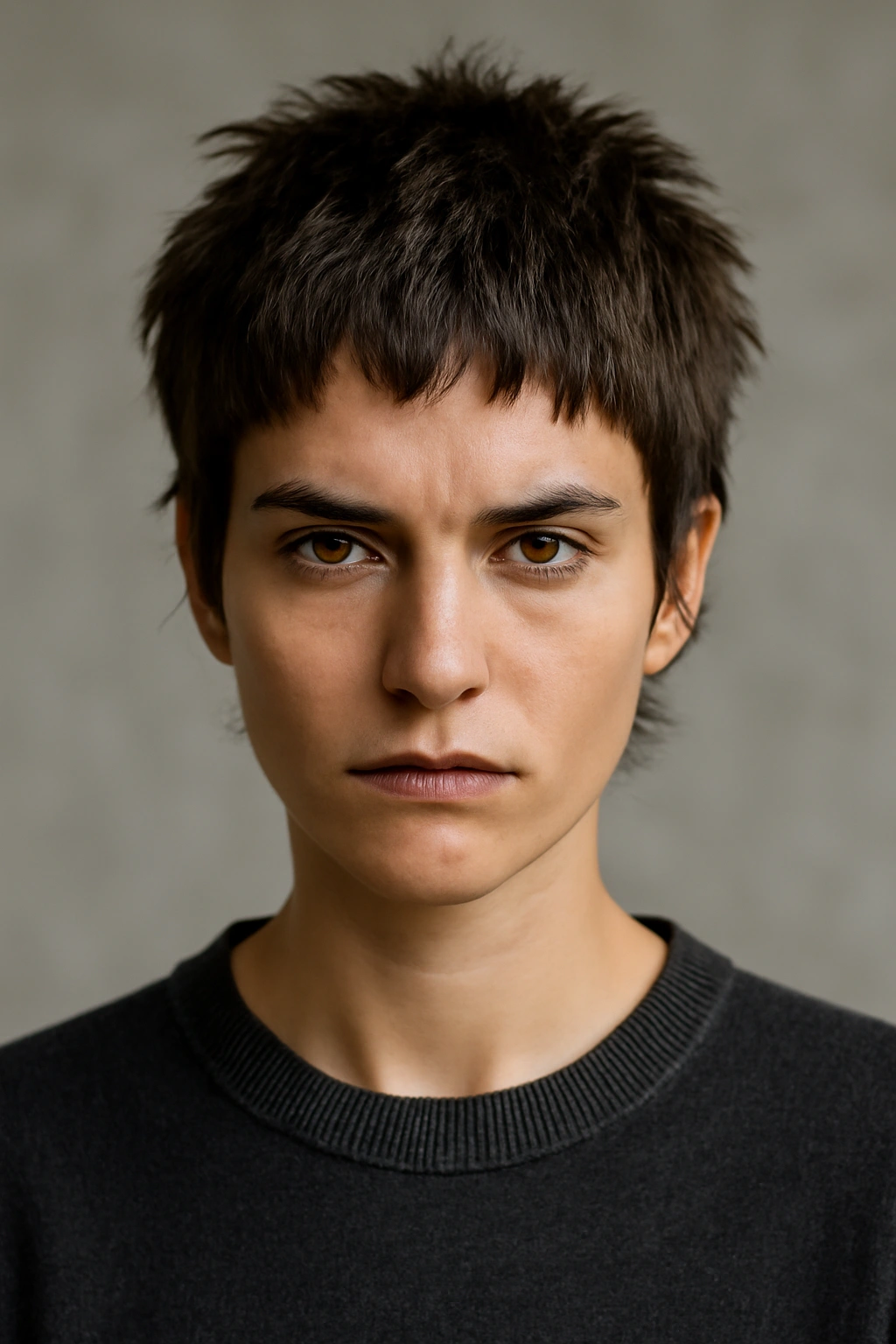
This wolf cut is somewhere between a textured crop cut and a full wolf—shorter overall, with the bulk of the length sitting around ear-length or slightly shorter, but with chopped-up texture and subtle layers throughout rather than the sleeker crop structure. It has maximum attitude in minimal length, making it ideal for people who want serious style credentials without longer hair to work with.
The Sharp, Sculpted Edge
A textured crop wolf reads as designer and intentional rather than “just short hair.” The chopped texture prevents it from looking utilitarian or like you grabbed the smallest guard setting at the barber. Instead, it looks like a specific, thought-out cut that was created with deliberation. This works beautifully for people with strong facial features who want a cut that doesn’t compete with their face but complements it.
Styling and Upkeep
- Texturizing cream or pomade is almost essential here—the length is so short that product can be visible if it’s heavy, but texture is needed to prevent a too-neat look
- Blow-dry with fingers for a slightly tousled effect; letting it fully air-dry can look too neat and formal
- Works exceptionally well with color because the short length and choppy texture are visually interesting on their own
- Trims every 4-5 weeks are important—the sculptural quality of the cut dulls faster than longer styles
- Suits people with strong jawlines, prominent cheekbones, or distinctive facial features that benefit from minimal framing
Quick fact: This cut actually requires more styling consistency than longer wolf cuts because the short length means every hair is visible. If longer styles can get away with sometimes looking a bit rough, this one reads more obviously as either well-styled or disheveled.
7. The Curly Wolf with Defined Ringlets
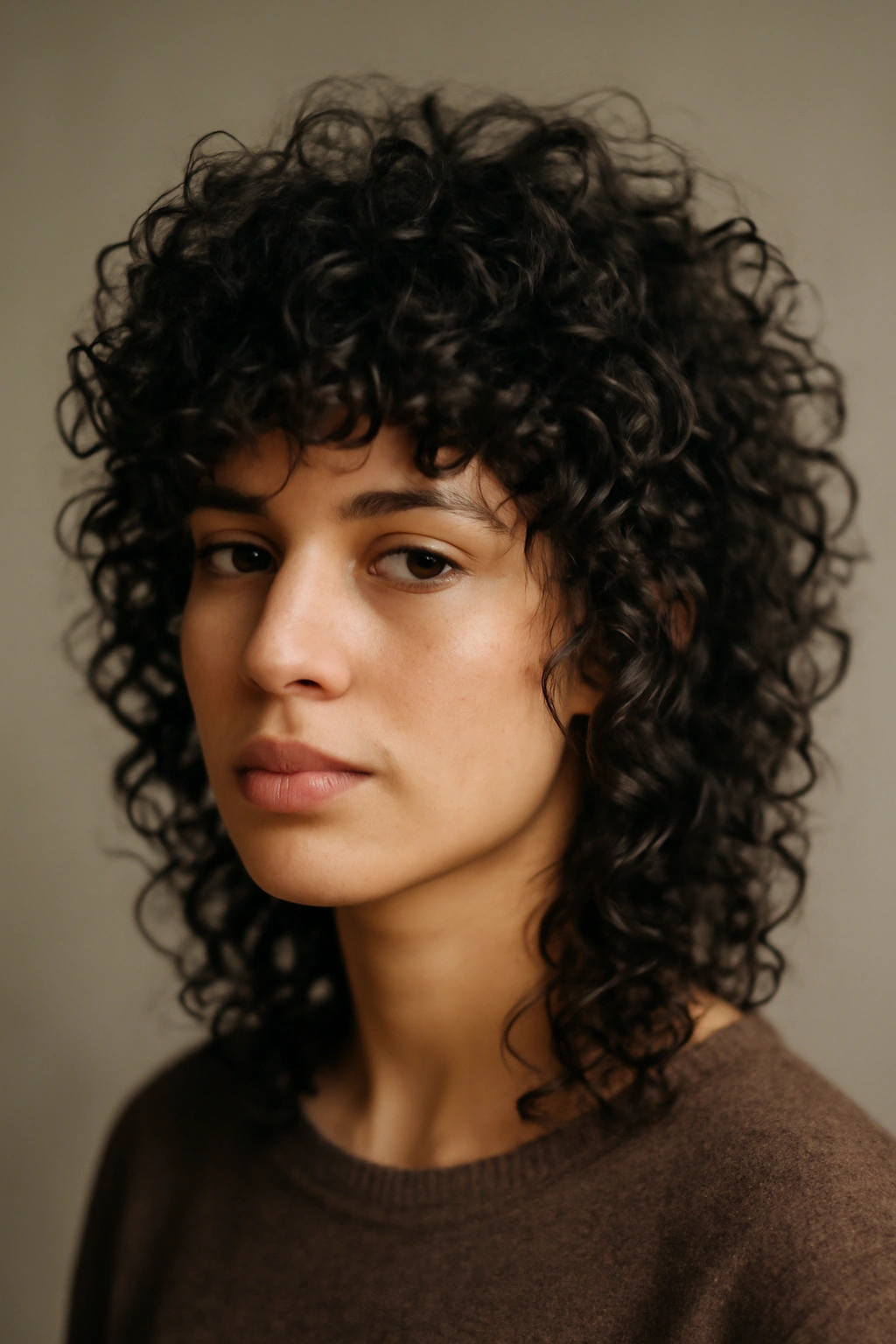
This wolf cut is specifically designed to work with natural curls or coils rather than against them. The layers are choppy and textured like a traditional wolf but strategically placed so that each curl or coil can hang individually without creating bulk or frizz. The result is a cut that looks intentionally shaped while still honoring your natural texture.
Working With Curl Patterns
Curly hair and wolf cuts are actually a match made in heaven because the natural texture of curls creates that shaggy, layered visual effect without any styling effort. The key is that the chopping happens at points where your curl pattern naturally wants to separate anyway, rather than fighting your curl structure. This means the cut can look incredible on days you do nothing to your hair.
Caring for Curly Wolf Cuts
- Cuts should be done on dry curly hair so the stylist can see exactly how your curl pattern sits and works
- Products matter—leave-in conditioner, curl cream, or gel applied to soaking-wet hair prevents frizz and defines ringlets
- Dry styling methods matter too: plopping (wrapping in a towel), microfiber towels, or air-drying all work better than regular blow-drying for most curl patterns
- Frizz-fighting becomes easier with a wolf cut because the shorter length means less surface area for humidity to affect
- Trims every 6-8 weeks prevent split ends from traveling up the curl and making ringlets fuzzy
- The cut looks better the curlier your hair is—tighter coils create more interesting texture and shape than loose waves
Pro tip: Many curl-pattern wolf cuts actually look better without specific styling the first few days—your curls are still structured from the cut, so they hold shape with just product and no additional styling.
8. The Sleek Modern Wolf
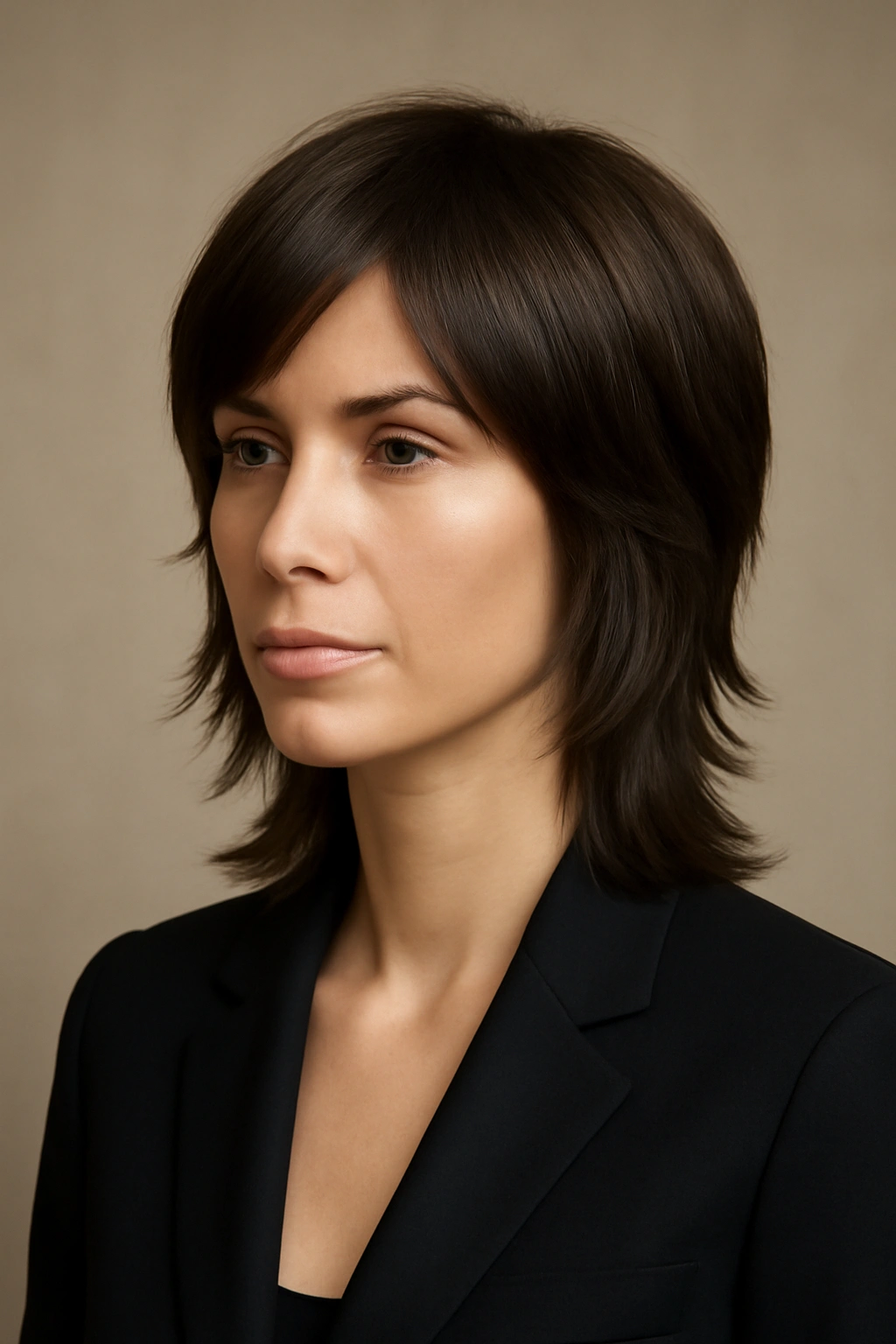
This version maintains the wolf-cut framework—layers, texture, shorter sides—but executes it with a more refined, blended approach that reads as intentionally modern rather than rock-and-roll shaggy. The layers are there, but they’re blended and polished rather than obviously disconnected. Think “wolf cut that looks like it cost $400 and required a very skilled stylist” rather than “DIY shag homage.”
The Polished Edge
A sleek modern wolf works beautifully in professional or creative settings where you want to signal style without looking deliberately casual or undone. The technical execution matters here—this cut requires a truly skilled stylist who understands how to create movement and texture through subtle blending rather than obvious choppiness. It reads as intentional and designed rather than haphazard.
Styling for the Polished Look
- Styling products should be invisible—lightweight mousse, texturizing spray, or dry shampoo rather than heavy pomades
- Blow-drying creates sleekness; scrunching creates texture; you have flexibility depending on the occasion
- Works beautifully sleek and polished for professional settings or tousled and textured for casual days
- Color and highlights can be subtle (balayage, babylights) or bold, depending on the overall aesthetic you’re creating
- Trims every 6-8 weeks maintain the polished blending; if you skip trims, it starts to look intentionally choppy rather than intentionally blended
- Face shape consideration: works on most face shapes because the blended approach is more flattering than obvious disconnection
Worth knowing: This cut requires investment in quality styling products and potentially a more skilled stylist than some other wolf cuts. It’s not more high-maintenance day-to-day, but the execution matters more than on less refined versions.
9. The Colored Wolf with Contrast Layers
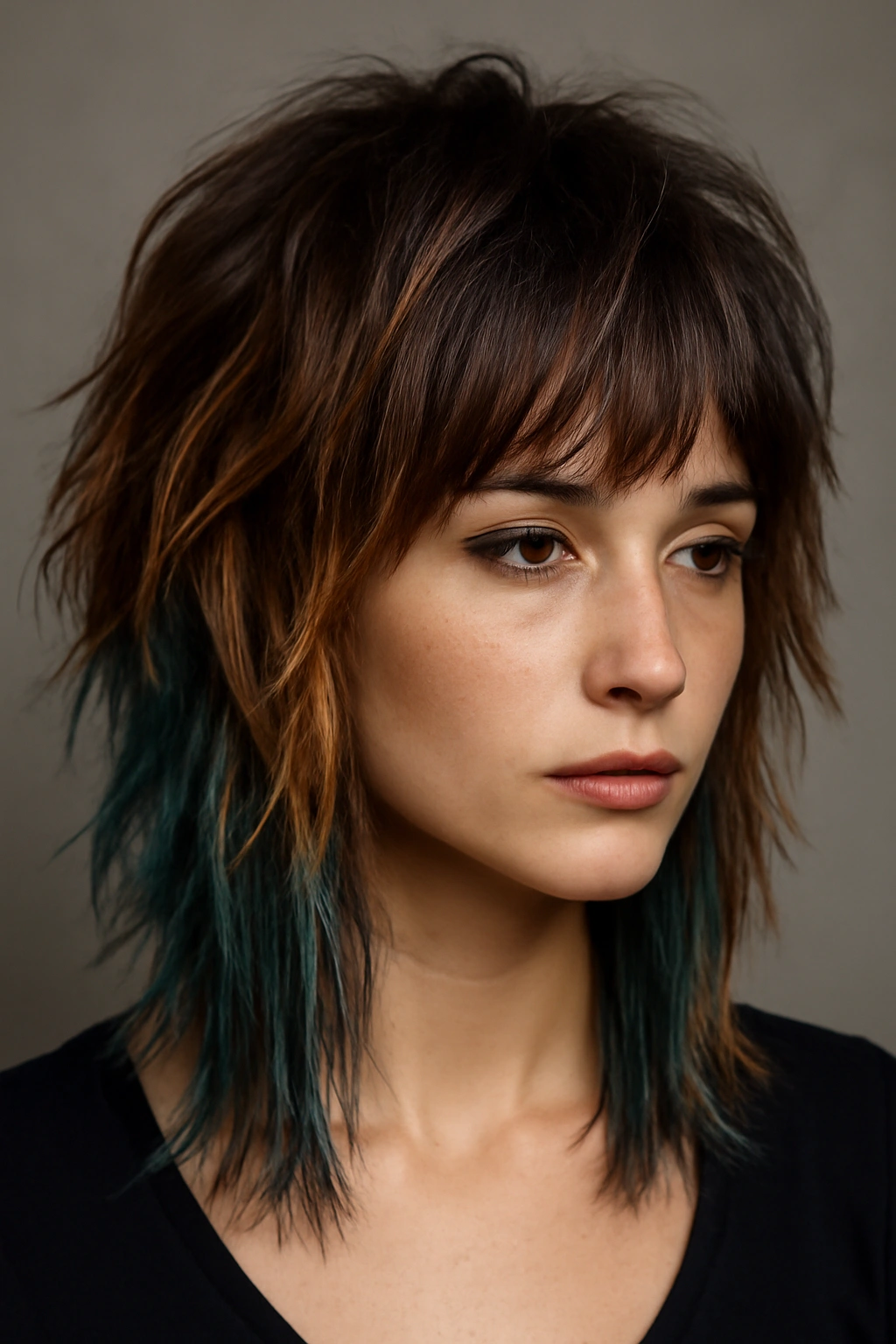
This wolf cut leverages color as part of its visual design—different lengths show different colors, or colors are placed specifically on the choppy layers to highlight the cut’s texture. It might be subtle (darker roots with lighter ends, or a balayage that looks different at various layers) or dramatic (split dye, bold contrasts between top and underneath sections).
How Color Amplifies the Cut’s Texture
Color on a wolf cut does something that color on a blunt cut can’t do as effectively—it emphasizes the cut’s natural movement and texture. When colors are placed on the layers (lighter on the top choppy section, darker underneath, or vice versa), each movement of your hair reveals a different color dimension. This transforms the cut from interesting-shaped hair into a genuine style statement.
Color Options and Maintenance
- Balayage or face-framing highlights work beautifully, creating color variation that emphasizes the layered texture naturally
- Root shadow (darker roots, lighter ends) can be subtle or dramatic and works with almost any color combination
- Bold two-tone or split-dye versions make a serious statement and suit people who are ready for that level of intentionality
- Colored sections should ideally land on the choppier, more visible parts of the cut rather than underneath sections that stay hidden
- Color maintenance and cut maintenance timing: coordinate trims and color services so the cut structure is fresh when color is vivid
- Shorter hair means color grows out faster—plan on refreshing highlights or toning every 4-6 weeks for maximum vibrancy
Quick fact: Wolf cuts actually look better with color than without because the varying lengths of the cut are revealed through color variation. A monocolor wolf cut is lovely, but one with intentional color placement is genuinely striking.
10. The Disconnected Layers Wolf
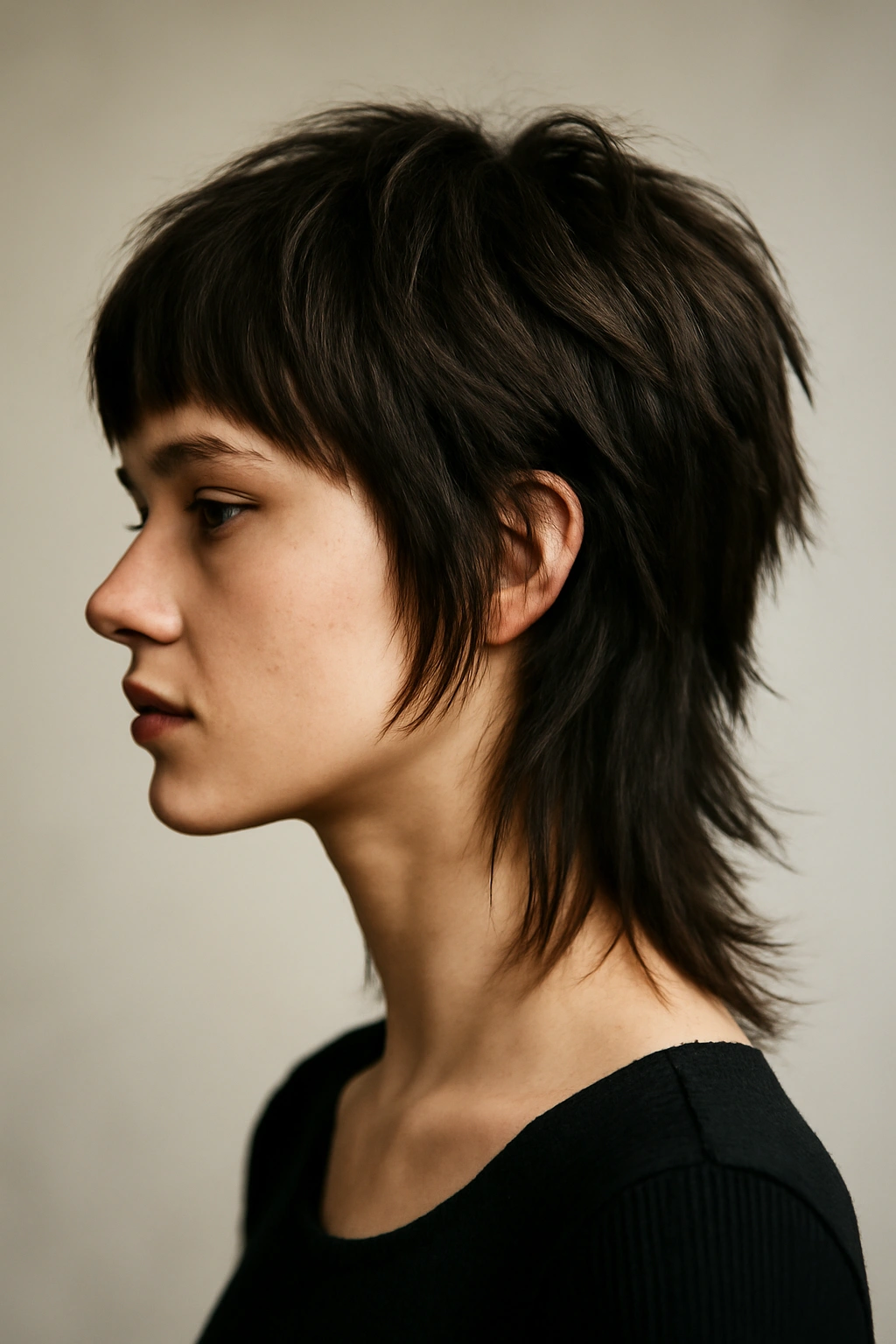
This wolf cut leans fully into the disconnection concept—layers are obvious, visibly distinct, and deliberately separated rather than blended or smoothed. It’s choppy in the most intentional sense, almost exaggerated. There’s no attempt to create a cohesive, unified shape; instead, the layers are the point. It’s a wolf cut for people who want the aesthetic to be “yes, this is visibly layered and choppy” rather than subtle.
When Maximum Disconnect Works Best
This approach suits people who are genuinely drawn to the visual language of choppy, shag-influenced cuts rather than people who think they should have a wolf cut. The disconnected-layers version is more fashion-forward and specific in aesthetic—it’s not trying to work for everyone. It works beautifully on straight hair, where the choppy layers are visually obvious, and on curly hair, where the disconnected sections let each curl hang completely independently.
Maintenance and Styling
- Requires trims every 4-6 weeks to maintain the sharp distinction between layers; the disconnection dulls quickly as hair grows
- Styling can go either direction: sleek (combed or blow-dried smooth) or textured (product, tousling, or scrunching)
- The stark layers work beautifully with bold color, especially colors placed specifically on different layer sections
- Suits people who enjoy regular styling and maintenance; this isn’t a low-maintenance cut
- Face shape consideration: works best on people who like their ears, neck, and jawline visible—the choppy texture frames rather than obscures
- Can photograph a bit more harshly than blended styles, so the styling direction (sleek vs. tousled) matters more for photos
Pro tip: On very fine or delicate hair, disconnected layers can look thin or wispy. Pair this cut with volumizing products or go for a softer blend instead of maximum disconnection.
11. The Choppy Fringe Wolf
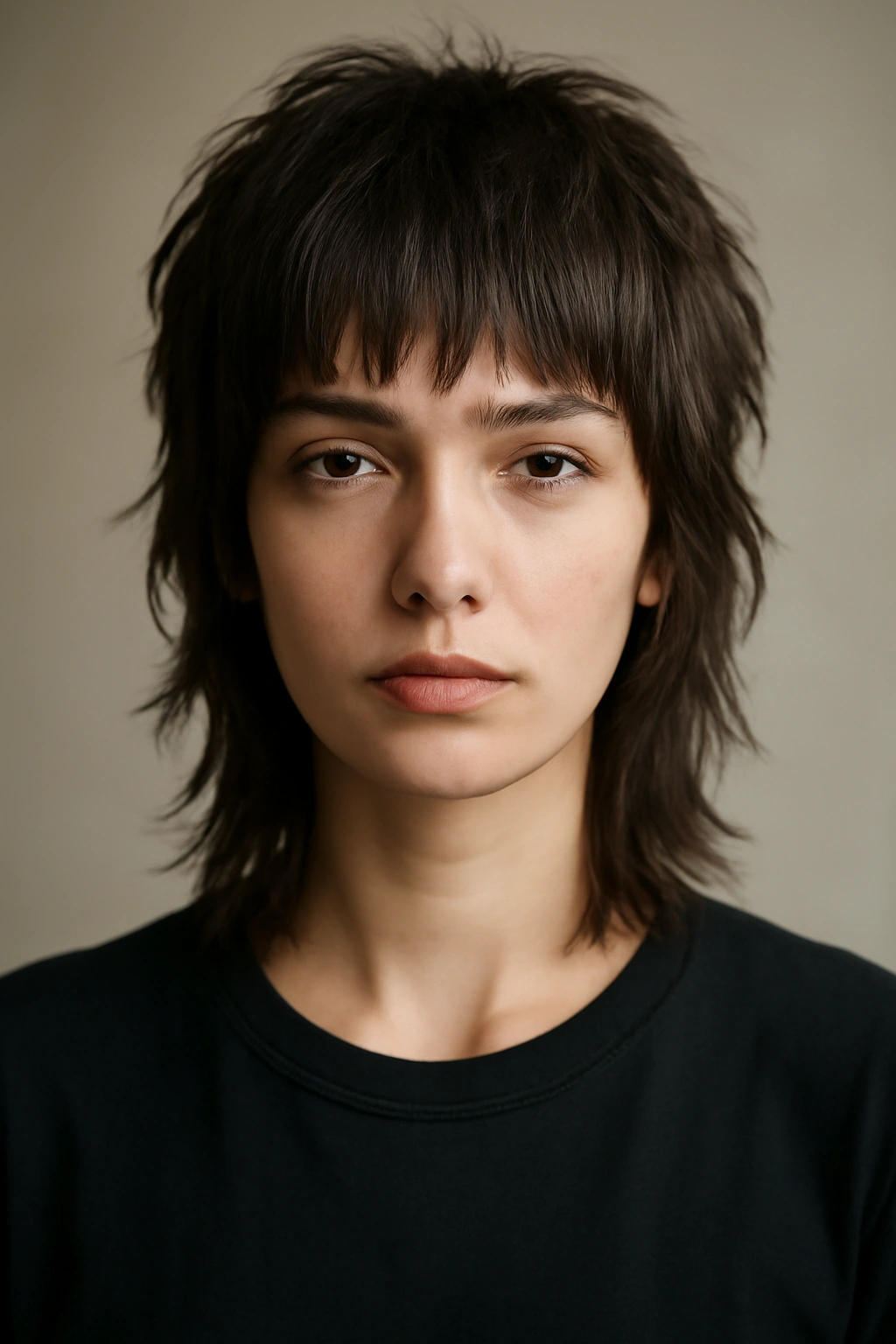
This wolf cut incorporates a choppy, textured fringe (bangs) as part of the design rather than adding fringe to an existing wolf cut. The fringe is layered and shaggy rather than blunt, matching the texture and energy of the rest of the cut. It creates a unified, cohesive look where the entire cut speaks the same visual language.
The Power of a Choppy Fringe
A choppy, textured fringe changes the entire face-framing dynamic of a wolf cut. Rather than the layers starting from the crown or ears, they start literally at your hairline, immediately drawing attention to your eyes and upper face. It’s a bold choice that commits fully to the shag aesthetic rather than creating a slightly more conservative wolf.
Wearing and Maintaining a Choppy Fringe
- Choppy fringes need styling attention—they look best when textured or tousled rather than completely smooth
- Texturizing spray or dry shampoo applied to the fringe area adds movement and prevents a too-heavy or flat appearance
- Styling with fingers (no brush) maintains the choppy, piece-y separation of the fringe
- The fringe needs trimming every 3-4 weeks because it falls directly in your line of sight when it gets too long
- Face shape best suited: works beautifully on oval faces, heart-shaped faces (shorter fringe placement), and square faces (where choppy layers soften angles)
- Eye shape matters too: looks striking on people with larger, almond-shaped, or round eyes where the fringe can frame them effectively
Worth knowing: Choppy fringes require intentional styling if you want them to look great. If you’re a wash-and-go person, you might want a wolf cut without fringe or with a longer, less-choppy fringe that blends into the rest of the layers.
12. The Long-in-Front Wolf
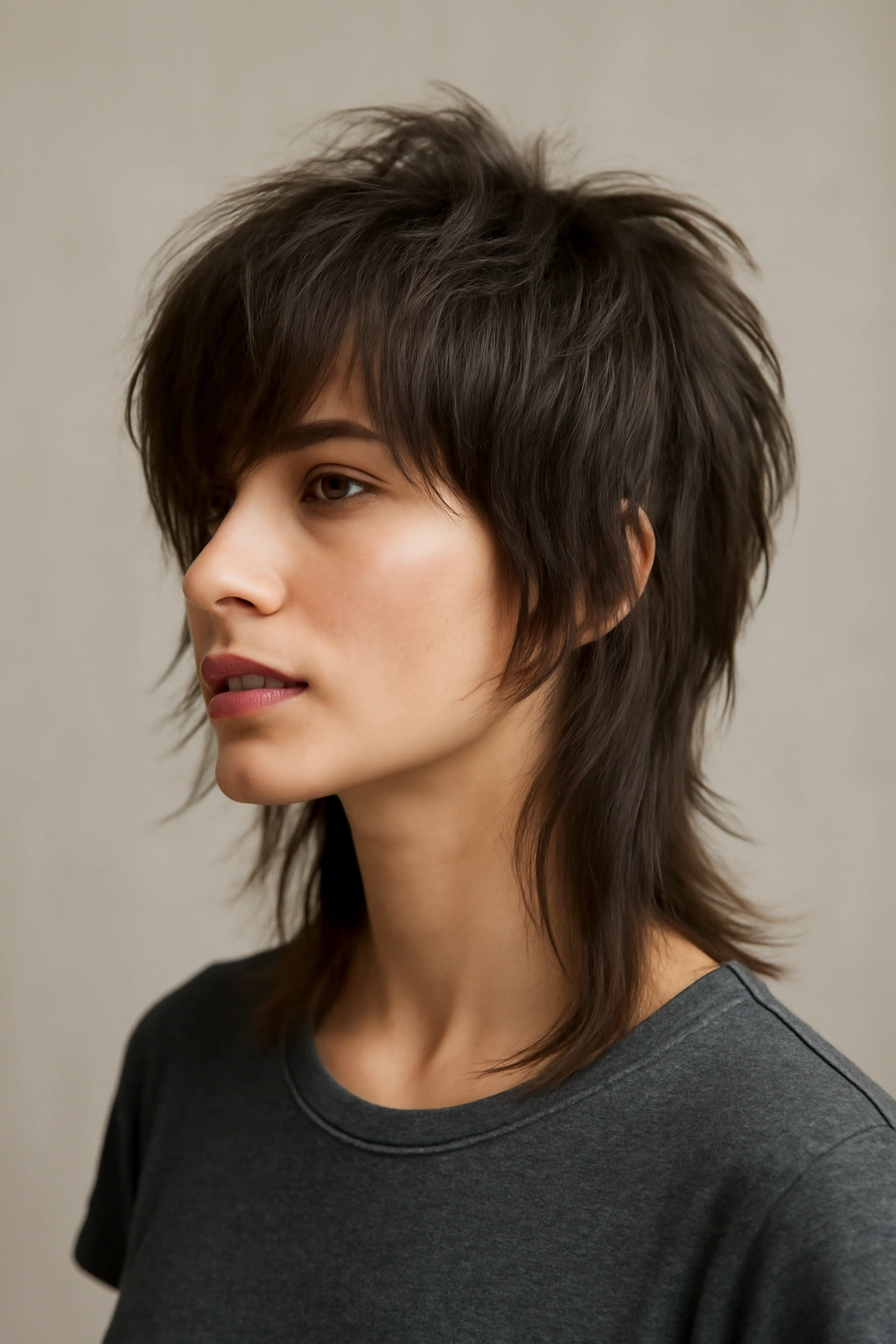
This final variation plays with asymmetrical length in a specific way: the front is noticeably longer (sometimes approaching shoulder-length or longer) while the back is significantly shorter. It’s somewhere between a wolf cut and a mullet in concept but executed with the texture and layer aesthetic of a wolf rather than the structured density of a true mullet.
The Modern Take on Front Length
A long-front wolf works beautifully for people who want more hair to style with in the front but shorter, lower-maintenance length everywhere else. The visual effect is striking—you have volume and styling options in front while the sides and back are cropped shorter, creating an interesting asymmetrical silhouette. It photographs exceptionally well because the longer front layers create movement.
Styling and Adaptation Options
- Front layers can be styled forward (creating softness and movement) or swept back (revealing the shorter sides and creating an edgier silhouette)
- The longer front means you can wear your hair in half-up styles, clips, or braids using just the front section
- Back section should be choppy enough to look intentional rather than like you just haven’t gotten a haircut; maintain that shorter, textured quality
- Trims every 5-6 weeks keep the length differential intentional and prevent it from blending into an awkward medium-length situation
- Color works beautifully here—different colors on the long front and short back create striking visual contrast
- Face shapes best served: heart-shaped and round faces benefit from longer front framing; works on most other shapes too
Quick fact: This cut can feel awkward during certain styling phases (when the back starts growing out or the front hasn’t been trimmed in a few weeks). The maintenance window is narrower than some other cuts, so consistency matters.
Final Thoughts
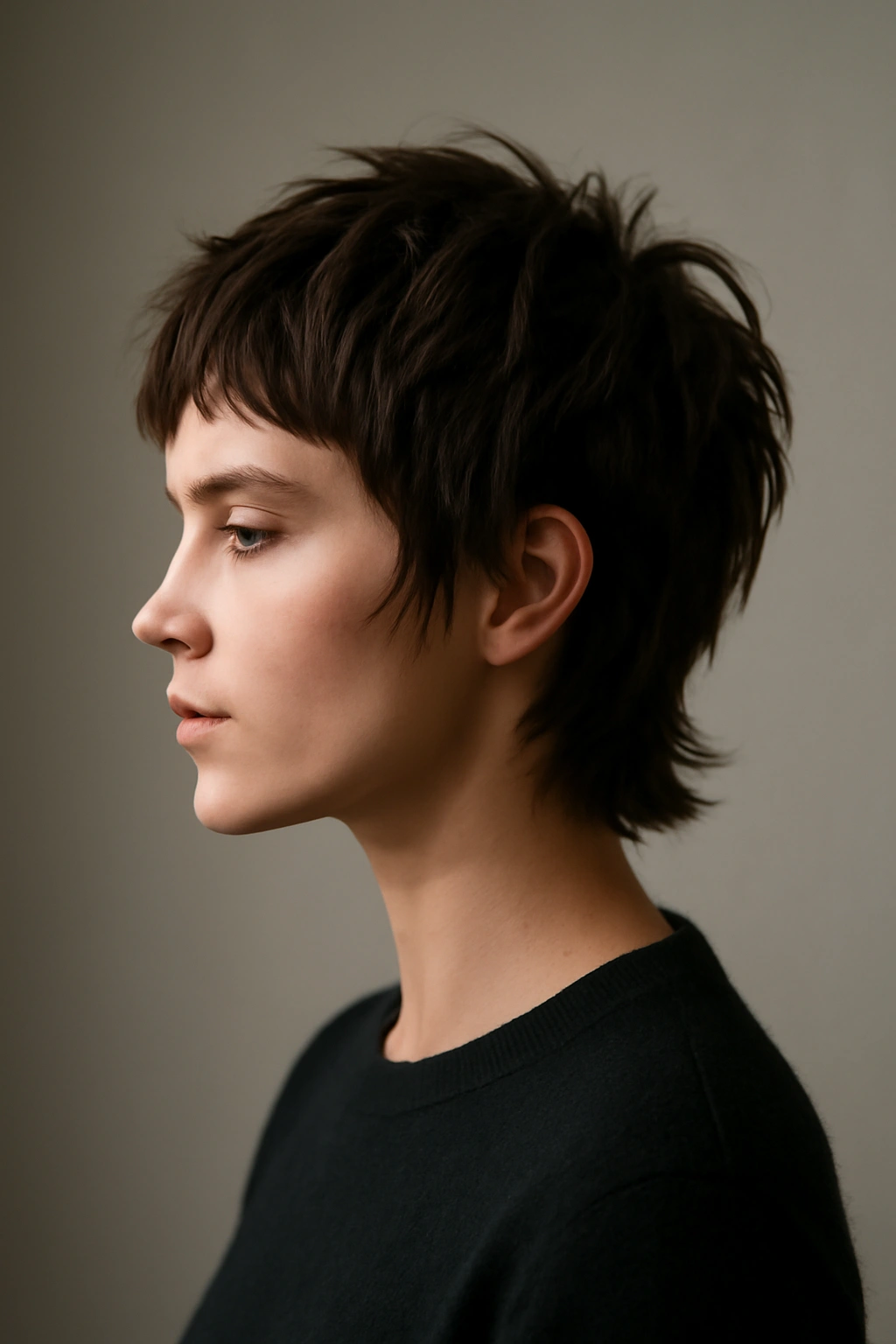
Wolf cuts have genuinely earned their place in contemporary short-hair styling because they refuse to be boring. Whether you’re drawn to the full shag texture, the sculptural edge of an undercut version, or the asymmetrical play of a side-swept style, there’s a wolf-cut interpretation that matches your hair type, face shape, styling commitment, and personal aesthetic. The core promise of the style is simple: short hair that looks intentional, interesting, and like you’ve made a genuine styling choice rather than just cutting everything short.
The best version of a wolf cut is the one you’ll actually style and maintain consistently. If you love the idea of a textured crop but know you won’t blow-dry it regularly, the unstyled pixie-wolf hybrid is a smarter choice than a sleek modern wolf. If you’re excited about bold color and architectural edge, the disconnected-layers or colored versions will genuinely excite you. The most important step is finding a stylist who understands not just wolf cuts, but your hair texture, lifestyle, and the specific variation you’re drawn to. That expertise makes the difference between a great wolf cut that becomes your signature style and one that leaves you frustrated. Once you find that stylist and that specific variation, you’ll understand why so many people are willing to commit to regular trims to keep the style alive.
