



Hair has a way of defining us—and it doesn’t stop mattering once we hit 70. If anything, finding the right cut becomes even more important because the right style can dramatically brighten your face, work with natural texture changes, and give you that polished, confident look that makes you feel like yourself. The good news? There are genuinely beautiful options available that work with mature hair, not against it. The key is finding a cut that builds volume where hair naturally thins, complements your face shape without high maintenance, and feels age-appropriate without trying too hard. These aren’t “age-defying” hairstyles—they’re styles that celebrate where you are right now while looking absolutely gorgeous doing it.
1. Layered Pixie Cut
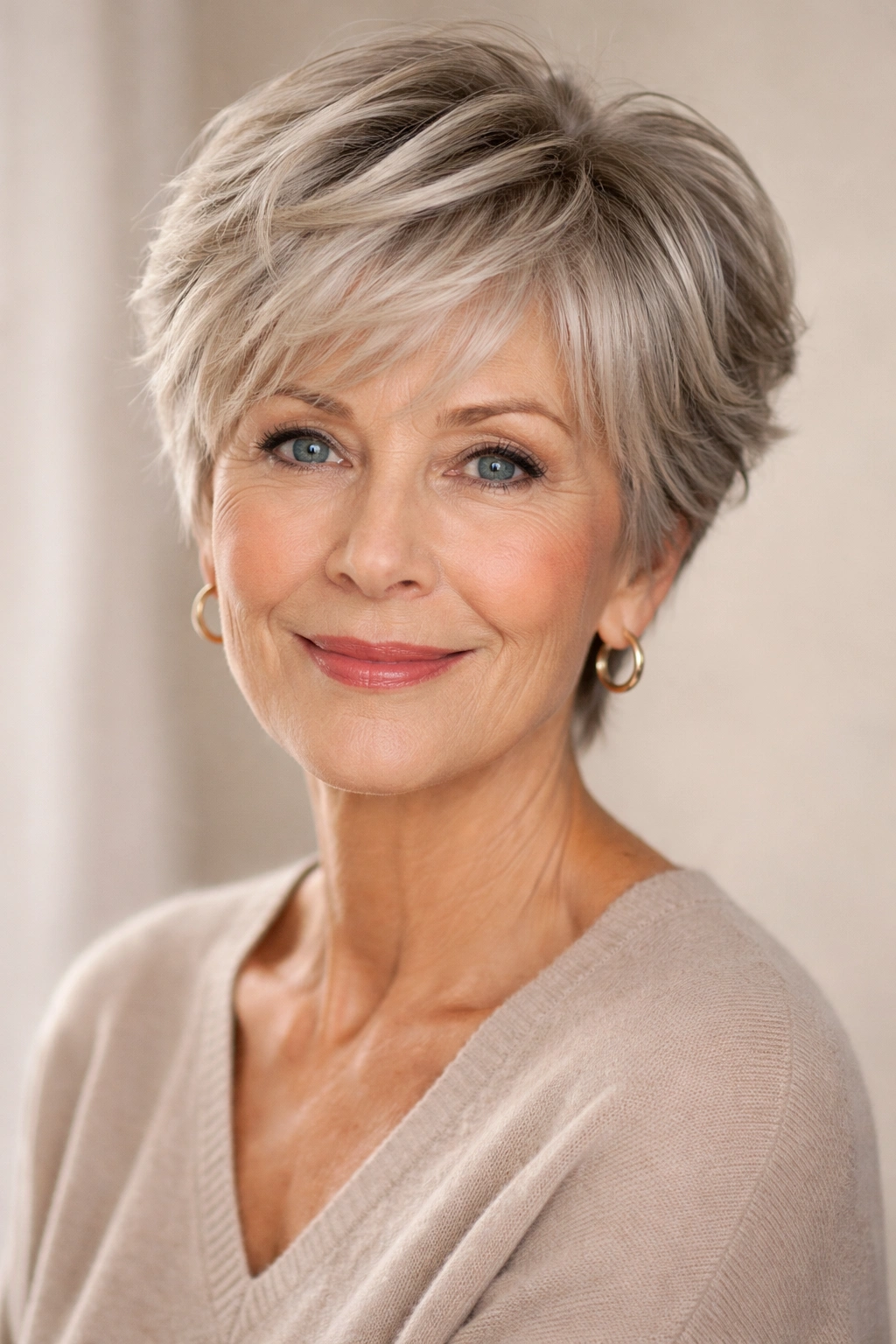
A layered pixie cut is a game-changer for women over 70 who want something low-maintenance but undeniably stylish. The shorter length means you skip the weight that can make thinning hair look limp, and the layers create the illusion of thickness throughout. This cut works beautifully whether your hair is naturally straight, wavy, or textured—it adapts. You can style it sleek and polished for occasions or let it have that tousled, piece-y texture for everyday wear. The best part? A good pixie needs a trim every 4-6 weeks to stay sharp, which means you’re visiting your stylist regularly and always looking put-together.
Why This Cut Works for Mature Hair
A pixie cut bypasses one of the biggest challenges with aging hair: the tendency to look flat and lifeless when it’s long. Shorter hair gets better circulation at the scalp, which can actually support healthier growth. The layers work with natural wave patterns that often become more pronounced as we age, creating movement without requiring you to blow-dry and style heavily. This cut doesn’t hide your face—it highlights it—which means great skincare and a good brow shape become your accessory, not your anxious area.
What You Should Know First
- The cut requires a skilled stylist who understands how to work with mature hair texture and density
- You’ll need a trim every 4-6 weeks for it to maintain shape and look intentional
- It suits all face shapes, but your stylist should customize the length and layering to flatter yours specifically
- A very short pixie can feel risky the first time—ask about a “longer pixie” option if you want slightly more length
- This style pairs beautifully with gray hair that has good shine and dimension
Pro tip: Have your stylist thin out the back layers if you have fine hair—this prevents the back from looking thick while the front looks sparse, a common complaint with pixies on mature hair.
2. Sophisticated Shoulder-Length Bob
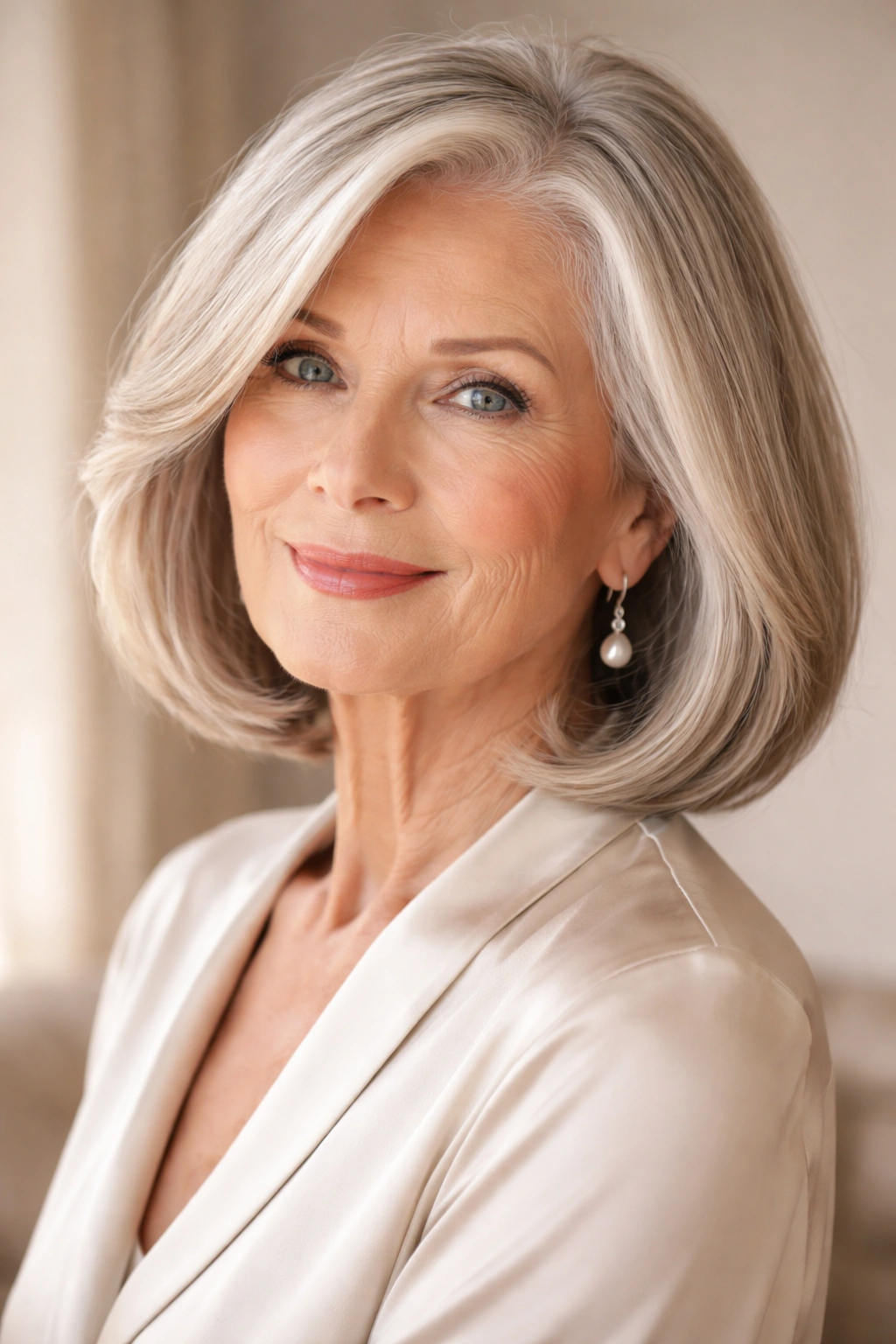
The shoulder-length bob is the reliable friend in your hairstyle lineup—it looks polished, it’s versatile enough for both dressy and casual occasions, and it hits right at that magic point where it has enough length to feel elegant but stays off the shoulders so your neck stays visible and elongated. A good bob at this length can be styled so many ways: tucked behind your ears for a clean line, worn down and loose, curled under for a classic finish, or straightened for something more contemporary. The shape gives your face framing without requiring you to commit to anything too dramatic.
Why This Length Is Flattering at Any Age
Shoulder-length hair skims past that awkward zone where hair can look stuck-in-between. It’s long enough to feel feminine and sophisticated, but short enough that it doesn’t weigh down or emphasize areas you might want to de-emphasize. The length also means you have options for styling—you can create volume at the crown, add waves for movement, or keep it sleek. Women with fine or thinning hair particularly benefit because the bob shape and layering create the appearance of density without requiring a very short cut. Shoulder length also puts the focus on your face and jawline, which are features worth highlighting at this stage of life.
Things to Consider
- Ask your stylist for layers throughout, not just at the ends—this creates movement and prevents the blunt, heavy look
- Side-swept or face-framing layers around the cheekbones are especially flattering as they subtly lift the face
- This style needs a trim every 6-8 weeks to maintain its shape
- Shoulder-length bob works beautifully with gray, blonde, or brunette hair, but requires good shine and health to look its best
- Styling options include waves, curls, sleek finish, or tousled texture depending on your preference
Worth knowing: A shoulder-length bob looks more sophisticated when the back is slightly shorter than the front—ask for a subtle “graduated” shape that elongates your neck.
3. Textured Shag With Modern Movement
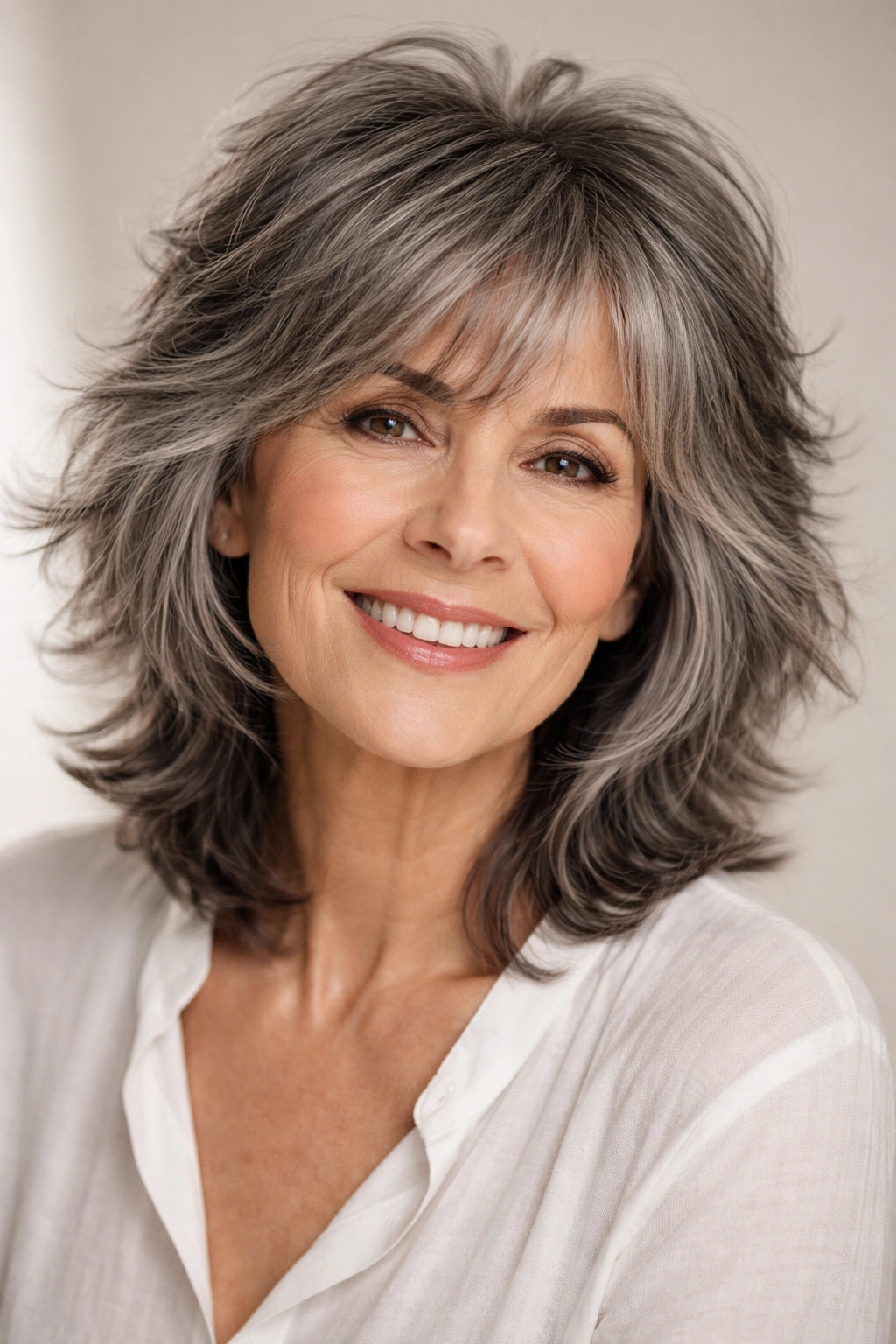
The shag is having a genuine moment of relevance, and the modern version designed for mature hair is nothing like the 1970s precursor. Today’s shag is strategically layered throughout to create dimension and movement without looking messy. The texture comes from carefully placed choppy layers at multiple lengths, which work beautifully with salt-and-pepper or gray hair because the contrast in texture creates visual interest. A textured shag gives you that effortless, lived-in look that actually takes some skill to achieve but minimal effort to maintain day-to-day.
How Shag Styling Works for Mature Hair
The multiple layers in a shag naturally create volume at the crown, which addresses one of the biggest concerns with aging hair—flatness. The shorter pieces around the face and throughout the crown catch light differently, making hair appear thicker and shinier. The choppy texture also means you don’t need to achieve perfection—slightly undone actually looks intentional. This style pairs particularly well with natural texture, whether you’re wavy or curly. If your hair is straight, a shag can be dried with some product and a diffuser to create that textured effect, or you can wear it sleek for a different vibe entirely.
Before You Book Your Appointment
- A shag requires a stylist experienced with modern, choppy cutting techniques—not all stylists execute this well
- You’ll need some styling product and maybe a blow dryer with a diffuser attachment to get the intended texture
- Trims every 6-8 weeks keep the shape looking intentional rather than just grown out
- This works beautifully on wavy, curly, or textured hair—straight hair requires more styling effort
- Gray or salt-and-pepper hair shows off the textured layers gorgeously
Insider note: Ask your stylist to keep the layers choppy and deliberate—smooth layers in a shag can look unkempt rather than intentional.
4. Face-Framing Waves With Side Part
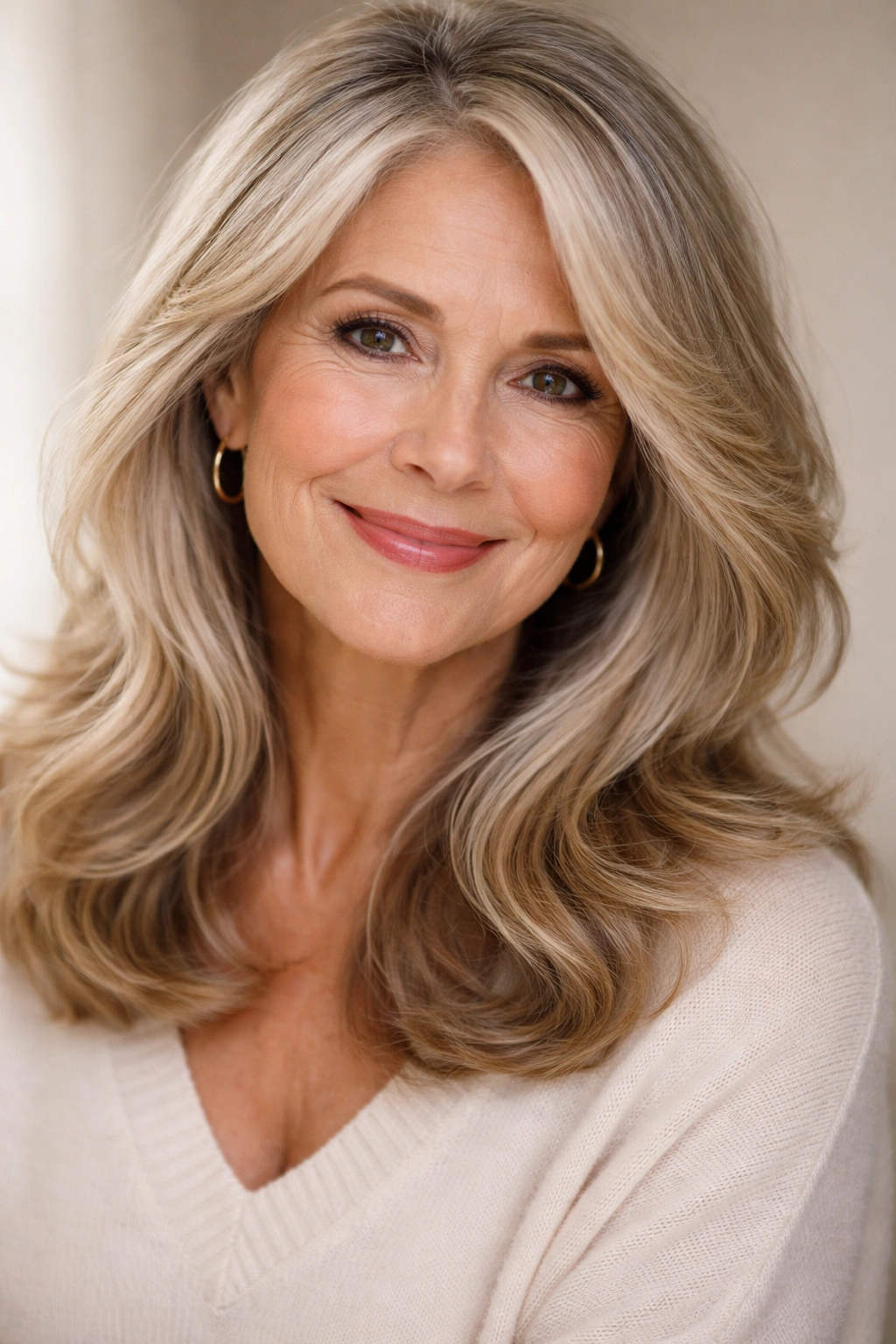
This classic approach—longer layers with soft waves and a deep side part—is timeless because it genuinely works. The waves add movement and texture, the side part creates asymmetry that’s flattering to most face shapes, and the face-framing layers ensure that the style highlights rather than obscures your features. You can wear this style loose and flowing for special occasions, or pull it back partially for everyday wear. It’s the hairstyle version of a good blazer—instantly more polished, endlessly adaptable.
Why This Style Feels Effortless Yet Elevated
The side part immediately creates dimension and prevents that centered, flat look that can age you. Face-framing layers draw attention upward and inward toward your face, highlighting your eyes and bone structure. The waves add texture and movement without requiring a permanent wave—you achieve them with a blow dryer and round brush, or maintain them with light styling products if your hair naturally waves. This style is particularly flattering if you have any facial asymmetry you want to emphasize or if you want to show off a good skin-care routine and well-groomed brows.
Key Details to Discuss With Your Stylist
- Layers should be subtle and longer overall—choppy, short layers can look too young for this classic approach
- The side part should be deep enough to create visible asymmetry without looking lopsided
- Face-framing pieces should be 1-2 inches shorter than the overall length to create intentional definition
- Waves can be achieved through styling or a gentle permanent wave if you prefer low-maintenance texture
- This works beautifully on longer hair (shoulder-length to mid-back), but layering is essential for movement
Pro tip: Use a large barrel blow-dry brush and focus waves around the face and crown—this is where movement matters most for a flattering effect.
5. Chin-Length Lob With Layered Texture
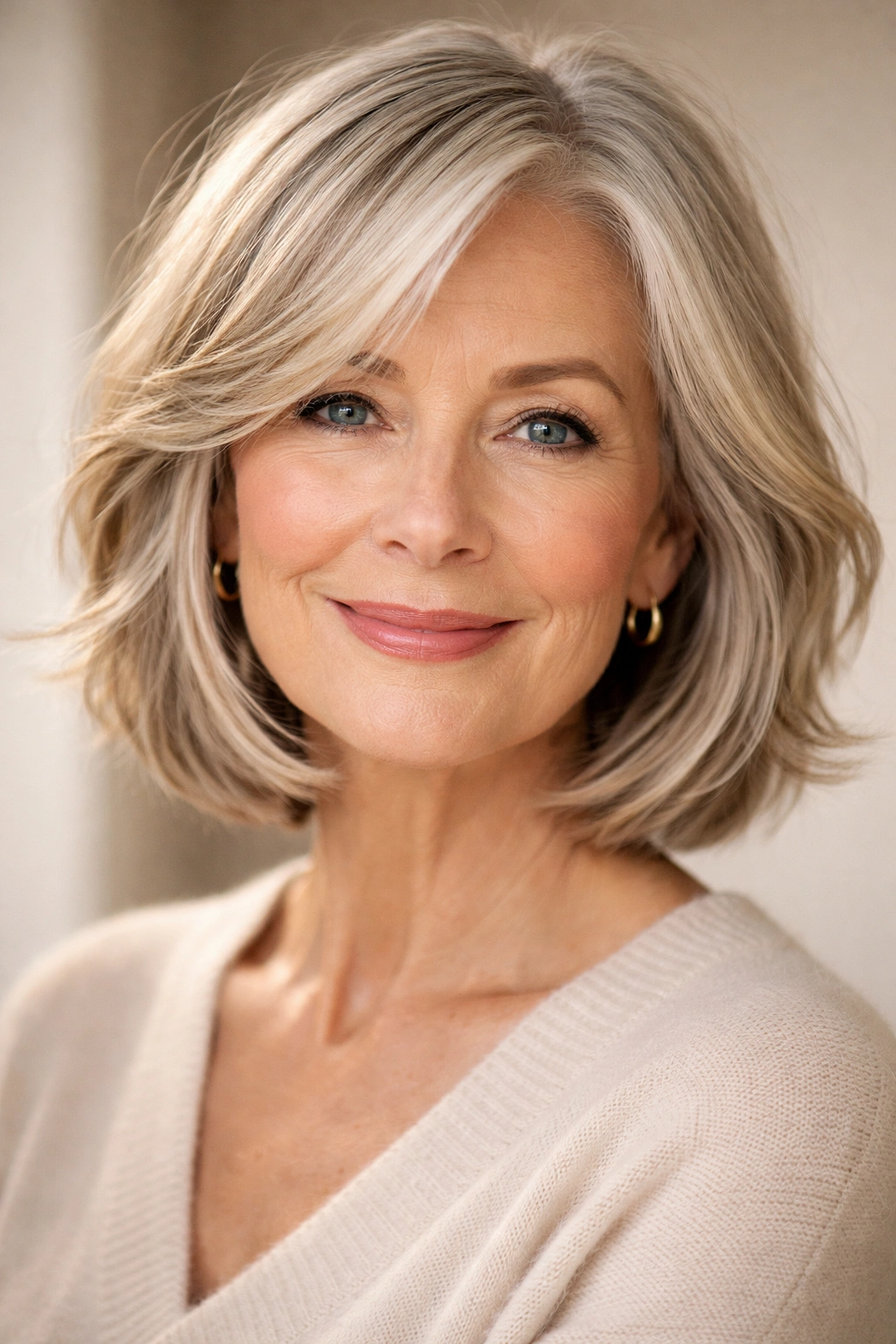
The lob (long bob) at chin-length hits a sweet spot for mature women—it’s versatile, manageable, and universally flattering. A chin-length lob with thoughtful layering throughout creates movement without requiring you to style it elaborately every day. You can wear it down and flowing, tucked behind your ears for a neater appearance, partially pinned back, or curled for added texture. The length is long enough to feel feminine and substantial, but short enough that it doesn’t require extensive styling time. This is the hairstyle that works whether you’re going to the grocery store or a dinner party.
The Flattery Factor of Chin-Length Hair
Chin-length puts the end of your hair right at the jawline, which is a naturally harmonious place visually—it creates a frame that emphasizes your face rather than pulling focus downward. The layers throughout allow for styling flexibility; you can achieve different looks with minimal effort. A chin-length lob also sits perfectly for tucking behind ears, which instantly makes any hairstyle look polished and intentional. For women with fine or thinning hair, this length avoids the weight that can make longer hair look straggly, while still providing enough length to feel elegant.
Styling and Maintenance Considerations
- Ask for layers throughout, especially around the face, to create movement and prevent a blunt, heavy look
- A good lob needs a trim every 6-8 weeks to maintain its shape and prevent split ends
- You can style this with waves, curls, straightened, or tousled texture—many options with one cut
- This length works beautifully with all hair textures, from straight to curly
- Gray or highlighted hair shows off layered texture gorgeously
Worth knowing: A lob with face-framing layers angled slightly inward (shorter in front) is more flattering than layers angled outward for most mature faces.
6. Sleek Low Ponytail
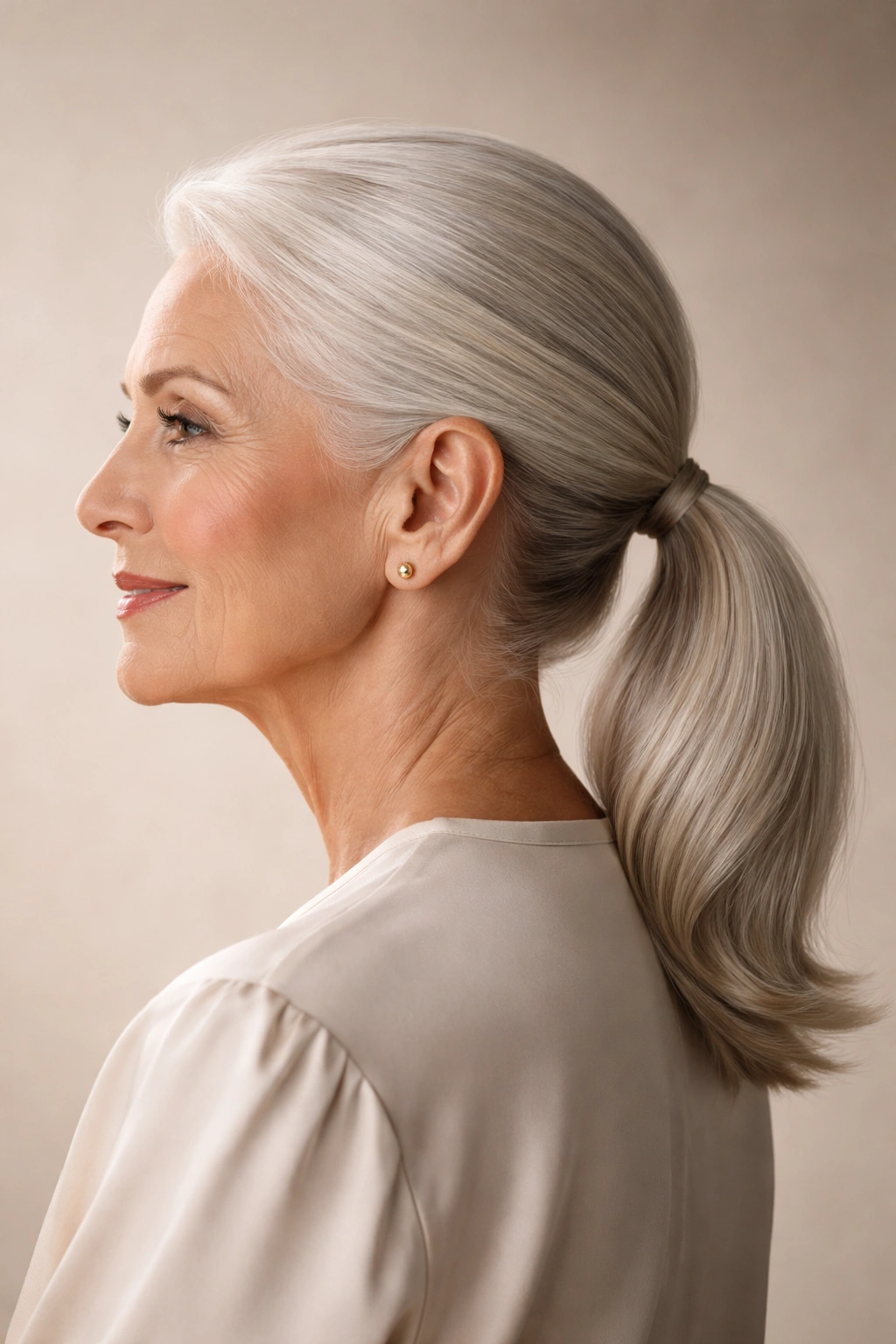
Don’t underestimate the power of a sleek low ponytail for women over 70. When executed well—smooth, pulled back tightly but not uncomfortably, secured low at the nape of the neck—it’s sophisticated, polished, and instantly age-appropriate without trying too hard. A low ponytail keeps hair off your face, which showcases your skin and jawline. It’s perfect for occasions where you want a neat, elegant look, or for everyday wear when you want hair out of the way without a casual appearance. The key is in the execution: a disheveled, messy bun reads as trying too hard; a sleek, intentional low ponytail reads as polished.
Why a Low Ponytail Flatters Mature Features
Pulling hair back opens up your face, which emphasizes cheekbones, eyes, and jawline—the features worth highlighting at this life stage. A low ponytail doesn’t pull as dramatically as a high one, so it’s more comfortable and requires less maintenance on your hairline. The style is timeless and works equally well for casual and formal occasions. It’s also incredibly practical—you can secure it loosely for comfort or tightly for a very polished appearance depending on the situation. For women with thinning hair at the crown, a low ponytail means you’re not emphasizing that area the way a high ponytail would.
How to Execute This Style Beautifully
- Use a hair elastic that matches your hair color to make the ponytail look intentional and seamless
- Create a smooth base by using a fine-tooth comb and a smoothing serum or light hairspray
- Consider wrapping a small section of hair around the elastic to hide it—this elevates the look significantly
- You can leave the ponytail sleek or create soft waves by loosely curling it after securing
- A low ponytail works on all hair lengths, but longer hair (shoulder-length or longer) shows off the style more dramatically
Pro tip: If you have frizz around your hairline, apply a tiny bit of gel or smoothing serum just to those edges before pulling back—this keeps the style looking intentional and polished all day.
7. Tousled Layers With Crown Volume
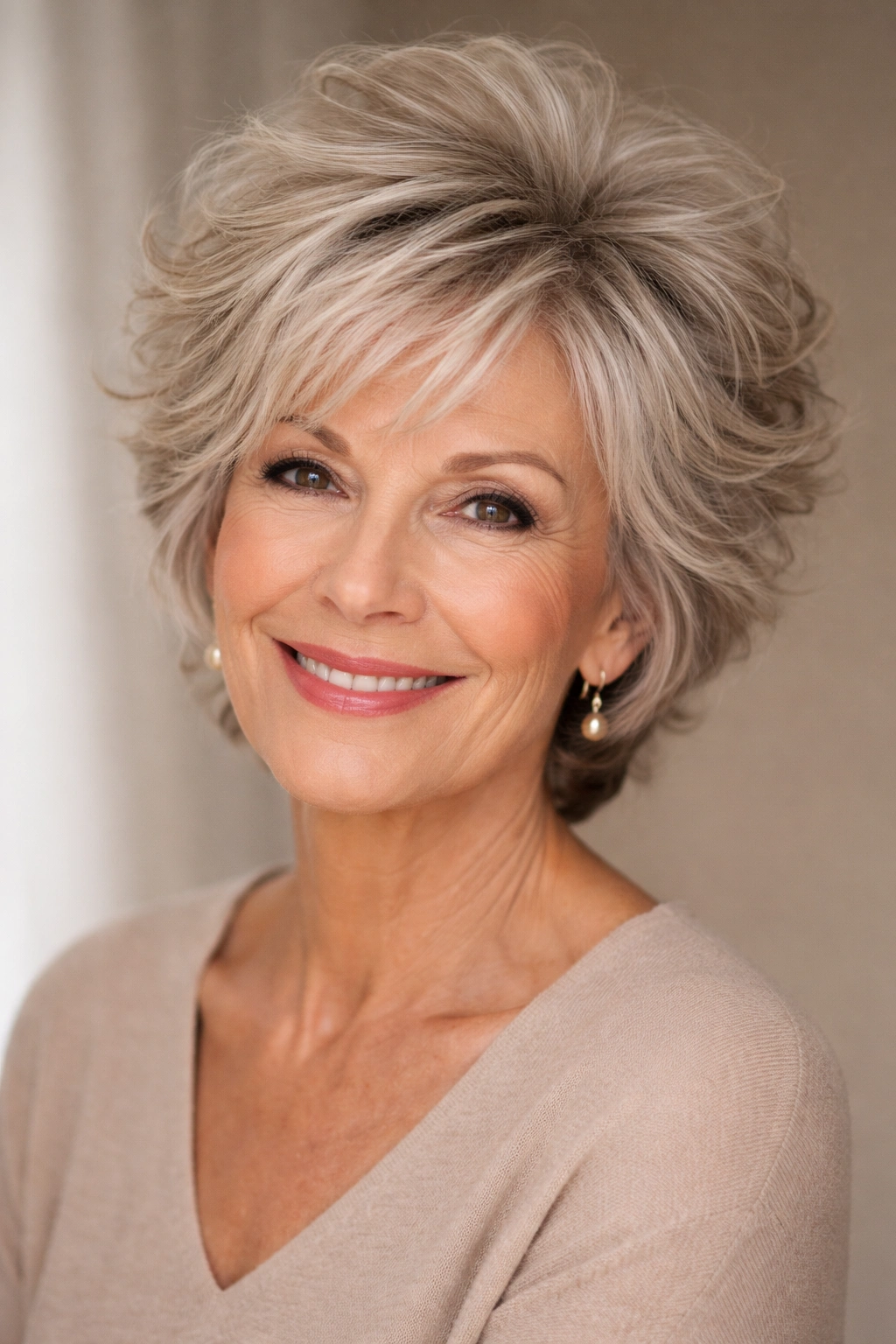
This style is all about creating height and volume where it matters most—at the crown—while keeping the rest of the hair at a manageable length. Strategic layers throughout the head, combined with shorter pieces at the crown, create the illusion of fullness. The tousled finish means you’re not aiming for perfection; slightly undone actually works in your favor. This is the style that says you’ve put thought into your appearance without looking like you spent three hours getting ready. It works beautifully with natural wave or curl, but straight hair can achieve it too with a blow dryer and texturizing product.
How Layering Creates Volume Where You Need It
As hair matures, it often loses density at the crown while maintaining more fullness at the ends—which is the opposite of what you want. Strategic short layers at the crown catch air and create lift, making thin hair appear thicker. Longer layers underneath provide shape and movement without adding unnecessary weight. The tousled texture means you’re not trying to achieve a smooth, sleek appearance; instead, texture is your friend. This approach works especially well for women who’ve noticed their hair looking flatter over time. The layers also mean you can style this multiple ways depending on your mood—sleek, wavy, curly, or tousled.
Making This Style Work for Your Hair Type
- Your stylist should focus on shorter layers at the crown and longer layers at the sides and back
- Tousled texture works best with some natural wave or curl—straight hair needs more styling effort
- Use a volumizing mousse or texturizing spray at the roots while hair is damp to build lift
- Blow-dry with a round brush, focusing on lifting hair away from the scalp at the crown
- A diffuser attachment (if your hair is wavy or curly) helps create that tousled, piece-y texture
- Trims every 6-8 weeks maintain the shape and prevent the style from looking grown-out
Worth knowing: This style looks intentional when a few pieces are slightly longer or shorter—perfection actually makes tousled layers look messy rather than intentional.
8. Soft Curls Throughout
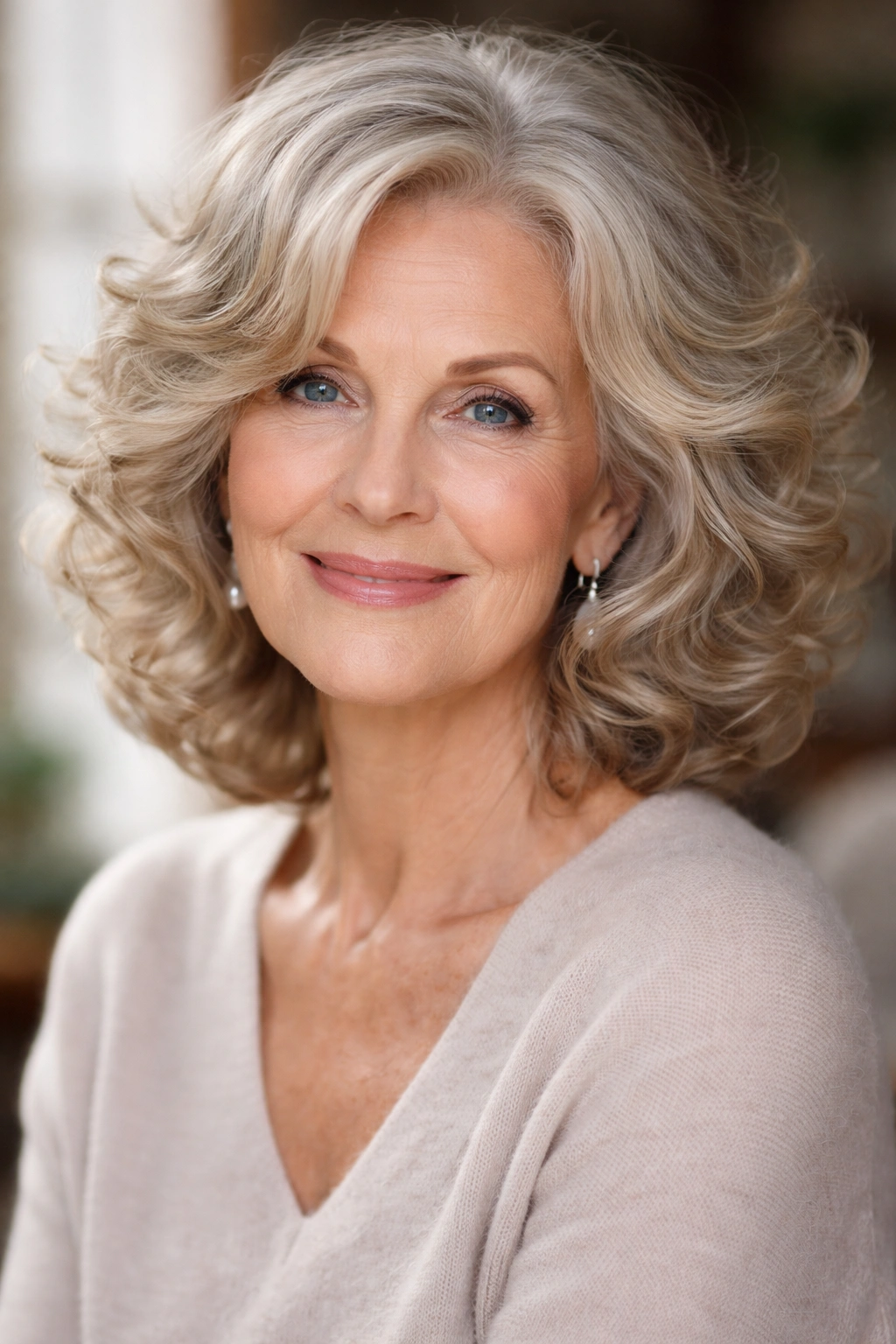
If your hair has natural curl or wave, embrace it with a cut designed to work with your texture rather than against it. Soft curls throughout—whether achieved naturally or with a permanent wave—create texture, movement, and the appearance of volume. The beauty of curl is that it reads as youthful, energetic, and full of life. A good cut for curly or wavy hair includes layers to prevent weight buildup, strategic shorter pieces around the face, and enough length to show off the curl pattern. You can style curls loose and flowing, partially pulled back, or defined with styling products for a more polished appearance.
Why Curls Are Particularly Flattering for Mature Hair
Curls naturally create volume and movement, which addresses the flatness that can come with aging hair. The texture of curls also hides imperfections better than straight hair—slightly different density or color variation reads as dimension rather than flaw. Curls frame the face beautifully, especially if you ask your stylist to ensure shorter, curl-forming layers around your cheekbones. The youthful energy of curls is undeniable—they read as full of life and personality. For women with gray or salt-and-pepper hair, curls add visual interest and prevent the severity that can sometimes come with straight gray hair.
Curly Hair Care and Styling
- Use a stylist experienced with cutting curly hair—straight-hair stylists often remove too much curl
- Ask for layers throughout to prevent weight buildup that can flatten curl
- Shorter, face-framing layers around the cheekbones are especially flattering
- Use curl-specific products (creams, gels, oils) rather than standard hair products
- Consider a curl-specific cut like the Deva Cut if you want precision curl shaping
- A permanent wave is an option if your hair is naturally straight but you want curl without daily styling
Pro tip: Apply styling products to damp hair and scrunch gently upward rather than smoothing downward—this helps define and support your natural curl pattern.
9. Angled Bob With Longer Front
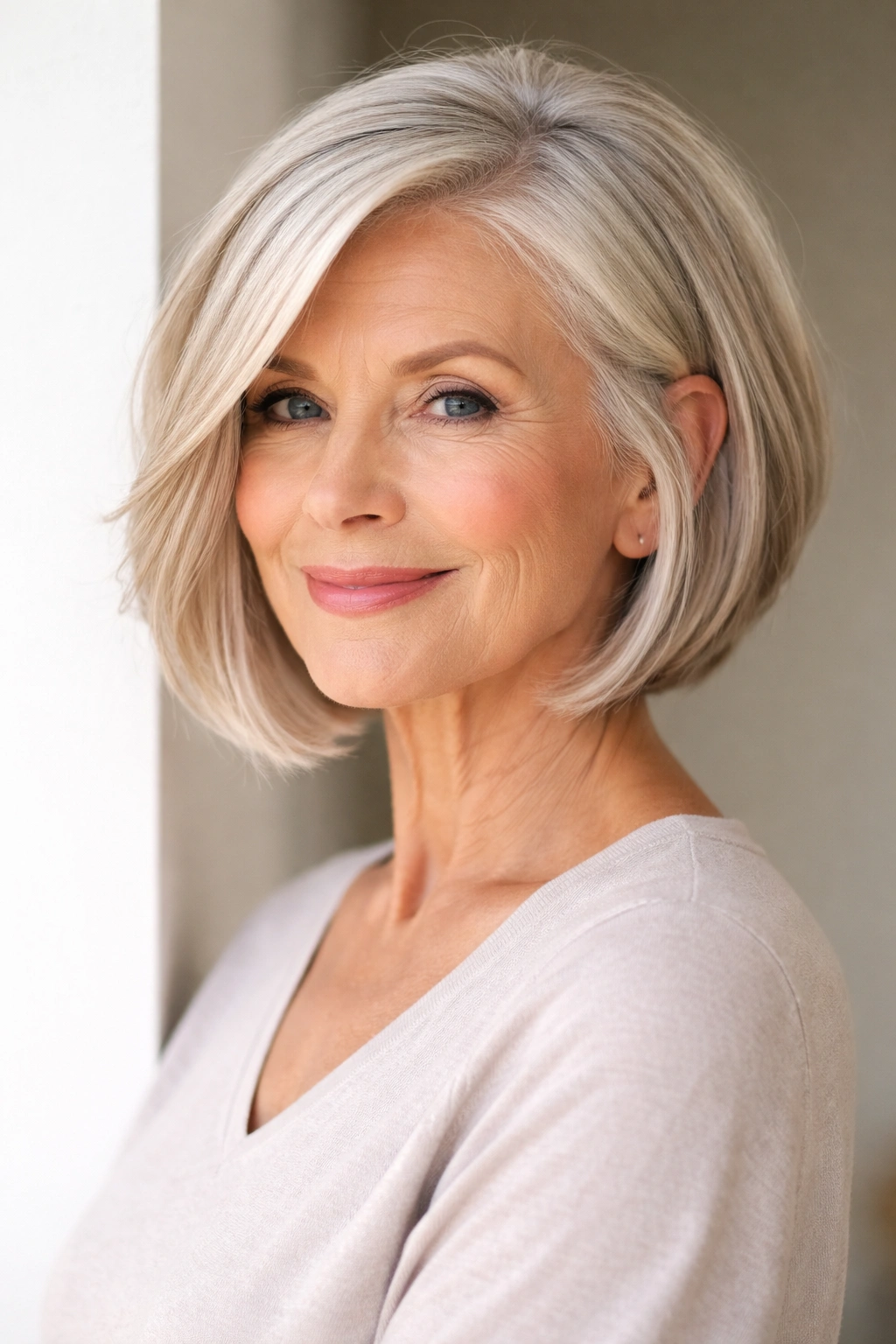
An angled bob with longer front pieces—think a graduated shape that’s shorter in the back and longer toward the face—is incredibly flattering for mature faces. The longer front pieces frame your face, while the shorter back creates movement and prevents weight. This cut is sophisticated, versatile, and works beautifully on most face shapes. You can wear it with a center part, a side part, or tucked behind your ears depending on your mood. The angle creates natural movement without requiring you to curl or style elaborately. This is a cut that looks intentional and polished every single time you style it.
The Geometry of a Flattering Angled Bob
An angled cut creates visual movement and prevents the flat, stationary look that can age you. The longer front pieces naturally frame your face and emphasize your cheekbones and jawline. The shorter back keeps hair off your neck and prevents that heavy feeling some women experience with longer hair. The angle also means that when you move, your hair moves with you—it’s dynamic rather than static. For women with finer hair, an angled bob prevents the dense, blunt look while still providing structure. The shape is so inherently flattering that minimal styling keeps you looking polished.
Customizing This Cut for Your Face
- Ask your stylist to angle the front pieces longer toward your face rather than away from it
- The shortest point of the back should be at the nape of your neck, not shorter
- Face-framing layers around your cheekbones add extra flattery and movement
- This works beautifully on all hair textures, from straight to wavy to curly
- Pair with a side part for added dimension and flattery
- Trims every 6-8 weeks maintain the angle and prevent the cut from looking shapeless
Worth knowing: The angle matters—front pieces shorter than the back reads as trendy-young; front pieces longer than the back reads as elegant and flattering for mature faces.
10. Blunt Bob With Textured Ends
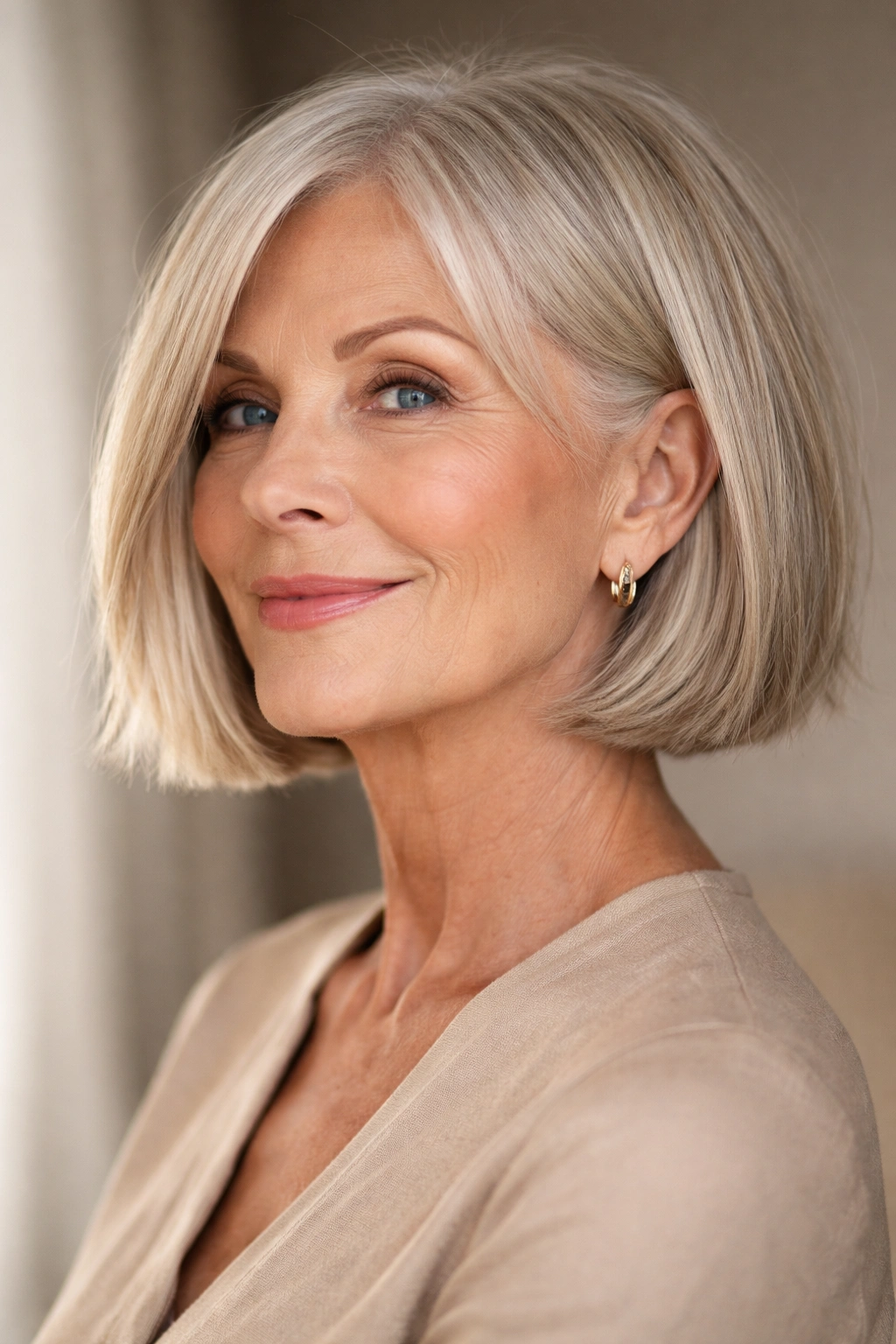
A blunt bob has a defined, no-nonsense elegance that works beautifully for women over 70 who want something polished and intentional. “Blunt” doesn’t mean rigid or severe—a great blunt bob has slightly textured or choppy ends that create movement and prevent the harsh, heavy look. The straight line of the cut frames your face, and the length (typically chin-length or slightly longer) is sophisticated and versatile. A blunt bob works equally well dressed up for evening or styled casually for daytime. The key is in the execution; your stylist needs to cut a truly blunt line without making it look severe.
Why a Defined Line Works for Mature Hair
A blunt cut creates a clear, intentional shape that reads as polished and put-together. The defined line frames your jawline and face, emphasizing your features rather than hiding them. A blunt bob prevents that wispy, undefined look that can sometimes happen with heavily layered hair. The straight line also means that your hair naturally falls the same way every time, so styling is consistent and easy. For women with fine hair, a blunt bob with textured ends provides shape and weight without requiring extensive layers. The clean line is also easier to maintain—a trim every 6-8 weeks keeps it looking sharp.
Getting the Texture Right
- Ask for a blunt line at the ends, but ask about very subtle choppy texturing to prevent harshness
- Face-framing layers (if you want them) should be subtle enough that the overall line remains mostly blunt
- The blunt line looks more flattering when it’s slightly angled (shorter in back) rather than perfectly straight across
- Use a smoothing serum or light hairspray to enhance the clean line of the cut
- This works beautifully as a chin-length or shoulder-length cut—the length affects how dramatic the line appears
Pro tip: A blunt bob looks most polished when you have a good trim every 6-8 weeks—letting it grow out softens the intentional line you’ve worked to achieve.
11. Wispy Bangs With Layered Top
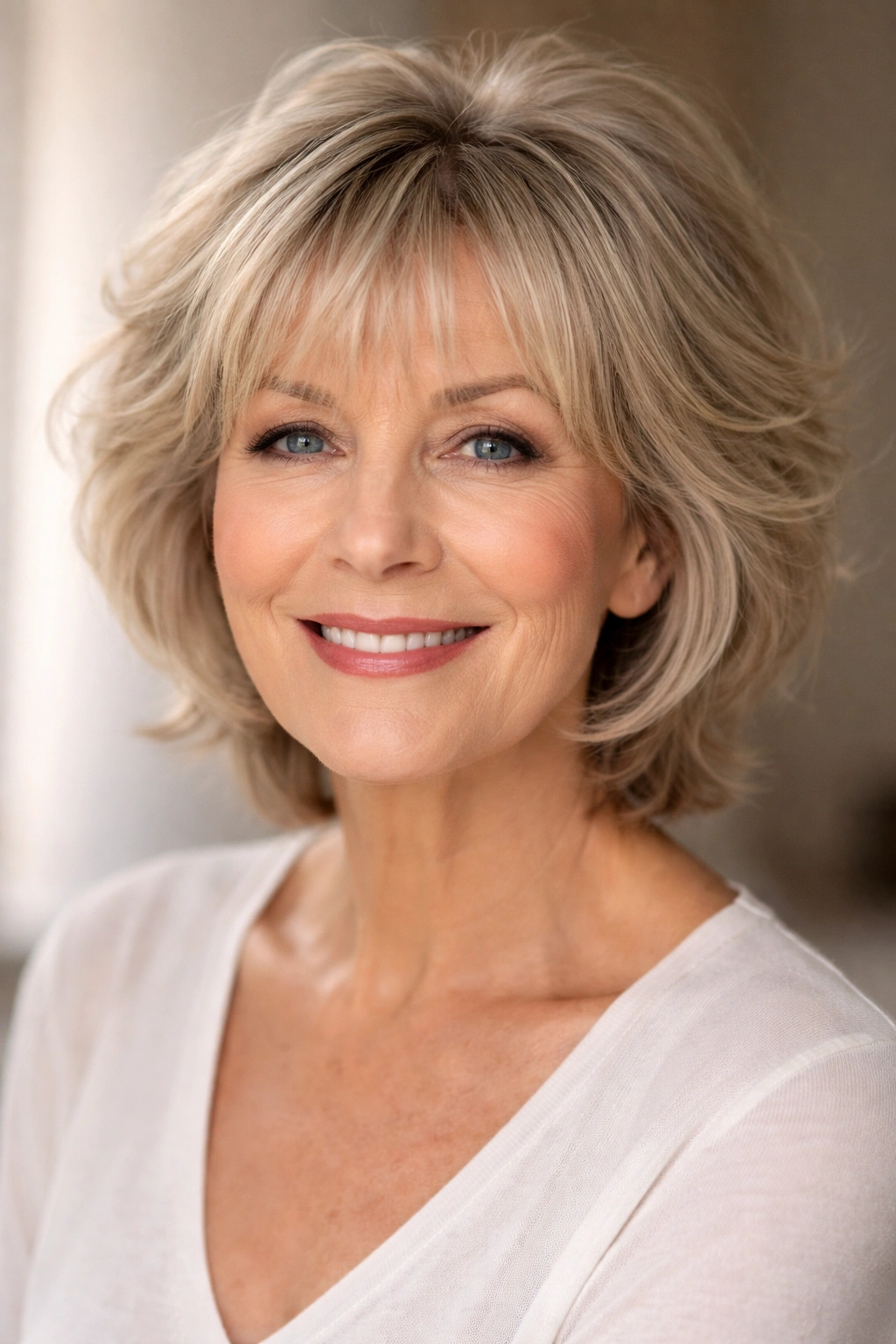
Bangs can seem risky at 70, but wispy bangs (not blunt bangs) combined with layers throughout can be incredibly flattering. The wispy bangs create a softness that frames your eyes and forehead, while the layered top gives volume and movement. This style works beautifully whether your hair is straight, wavy, or curly. The bangs open up your forehead (which can read as more youthful), and the layers prevent that heavy look that blunt bangs on aging hair can create. This is a style that requires a bit more styling—blow-drying to create shape—but delivers a genuinely elegant result.
Why Wispy Bangs Flatter Rather Than Age
Wispy bangs are softer and less dramatic than blunt bangs; they sit lightly on your forehead rather than covering it heavily. They create a frame around your eyes, which draws attention upward and highlights your eyes and brows. Bangs can make your face appear fresher and younger, as long as they’re wispy and expertly layered rather than blunt or severe. Combined with layers throughout, wispy bangs create movement and dimension rather than flatness. The key is that your stylist understands how to cut bangs for mature skin—they should be longer and lighter than you might initially think.
Styling and Maintaining Wispy Bangs
- Wispy bangs should be longer and lighter than traditional bangs—they work best at around eyebrow length or slightly longer
- Ask your stylist to layer the bangs (not cut them blunt) so they’re feathery and soft
- Combine bangs with layers throughout the head for movement and balance
- You’ll need to blow-dry bangs to shape them—they won’t fall perfectly on their own with this style
- Trim bangs more frequently than the rest of your hair (every 4-6 weeks) since they fall in your eyes quickly
- Bangs work on all hair types, but require more styling effort on very straight or very curly hair
Worth knowing: Bangs should start slightly longer than you think you want—they appear shorter once styled, and you don’t want them so short that they feel overwhelming.
12. Half-Up Styles With Texture
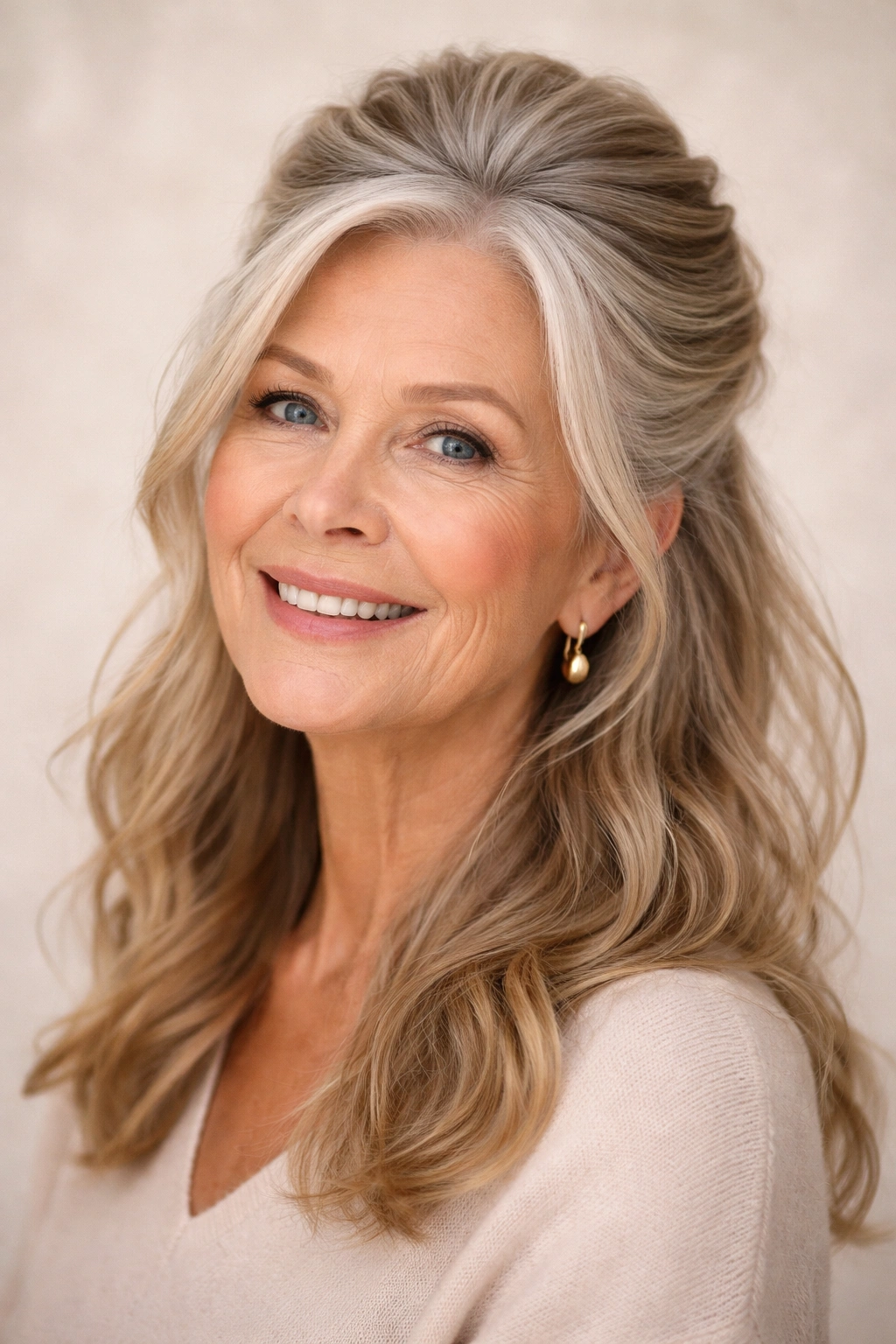
A half-up hairstyle—where you pull the top section back and leave the length down—is endlessly elegant and versatile. This style works beautifully for both casual and formal occasions, and it gives you volume and shape without requiring you to fully commit to an updo. The half-up approach also keeps hair off your face while maintaining the elegance of longer hair. You can secure the back section with a clip, an elastic, or wrap a strand around it; style the updo portion sleek or with texture; and leave the length down with waves or curls. It’s a style that feels special without looking over-done.
Why Half-Up Works for Mature Hair
A half-up style addresses flatness by creating height and volume at the crown, which many women over 70 appreciate. The lifted top portion opens up your face and emphasizes your features. You maintain the elegance of longer hair without the weight—the lower section is pulled into the style, so it doesn’t create the flattening effect that full-length hair sometimes does. The style is also incredibly forgiving; slightly undone or tousled actually adds to the charm. You can execute a half-up in less than a minute once you know how, making it practical for everyday wear as well as special occasions.
Creating and Styling a Half-Up
- Pull the top section back from your temples, gathering about a quarter to a third of your hair
- Secure with an elastic, a clip, or wrap a small strand around the section to hide the elastic
- You can leave the updo portion smooth and sleek, or backcomb it gently for texture and volume
- The bottom section can be left straight, waved, or curled depending on the occasion
- This works on all hair lengths and textures
- A half-up pairs beautifully with a side part or a center part depending on your face shape
Pro tip: If you have fine hair and want extra volume at the crown, gently backcomb the top section before pulling it back—this creates height without looking messy.
13. Elegant Low Bun
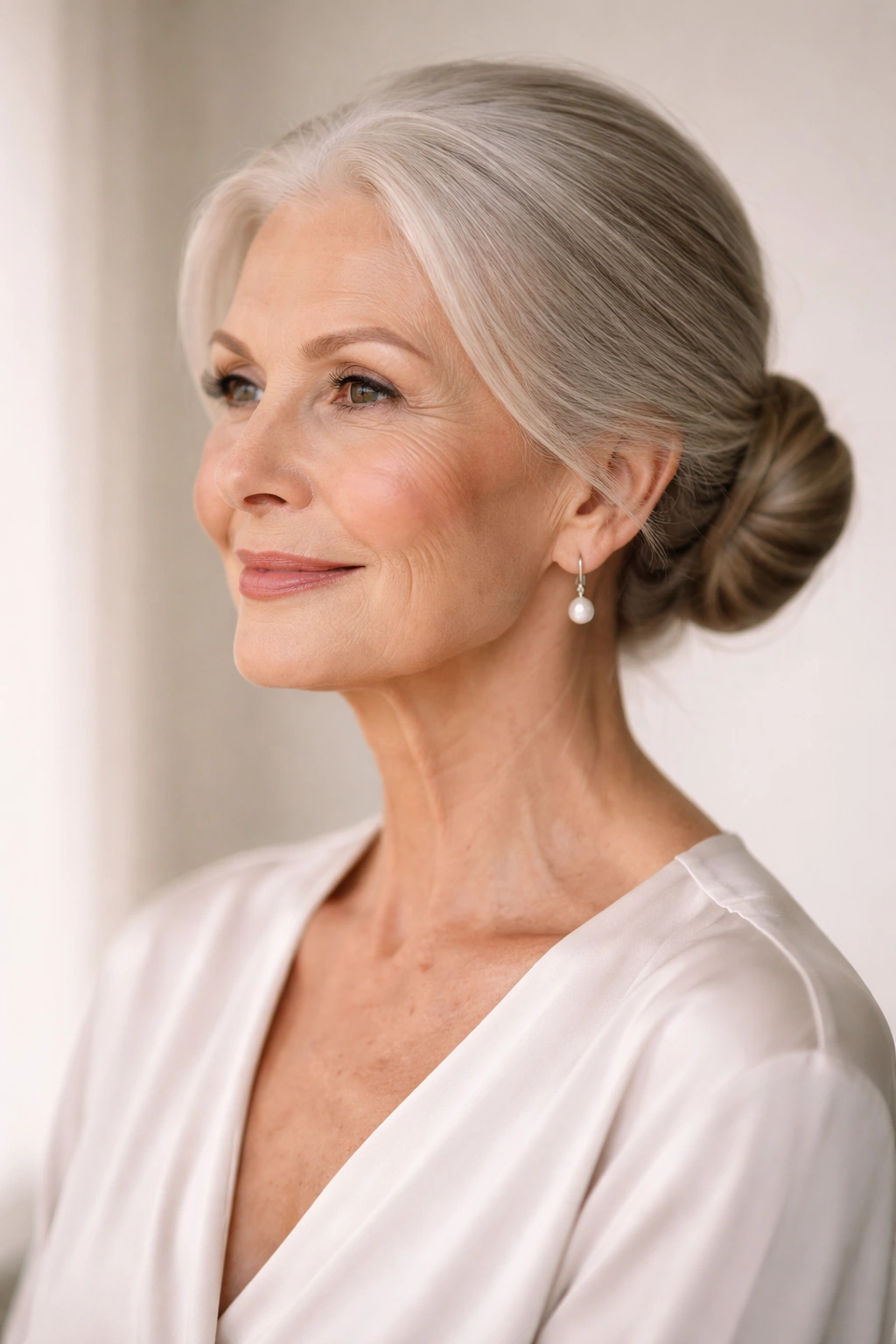
A classic low bun sits at the nape of your neck and reads as sophisticated, polished, and intentional. This style works beautifully on all hair lengths and textures, and it’s practical—your hair is completely off your face and neck, which is often flattering as we age. A low bun works equally well for everyday wear and formal occasions depending on how you execute it. A very smooth, sleek bun reads as formal and polished; a slightly softer, slightly undone bun reads as casual elegance. The beauty of a bun is that it works with hair at virtually any density or texture—volume isn’t the issue, the shape and placement are.
The Timeless Elegance of a Low Bun
A bun instantly communicates intentionality and polish. Low placement (rather than high) prevents the severe, tight look that can age you; instead, it emphasizes your jawline and neck. A bun also keeps your skin clear—no hair falling in your face means no irritation from oils or products. The style is incredibly practical for active days, exercise, or situations where you want hair completely out of the way. A low bun also works beautifully if you’re managing thinning hair; you can strategically place it to disguise less-full areas while still looking put-together.
Executing a Polished Low Bun
- Gather your hair low, at the nape of your neck, using your fingers or a brush
- Twist the section into a rope, then coil it into a bun shape
- Secure with bobby pins that match your hair color, inserting them horizontally through the coil
- For extra hold and polish, use a light hairspray—not so much that it looks stiff, just enough for all-day security
- You can leave it sleek or gently pull out a few face-framing pieces for softness
- A bun works beautifully on all hair lengths from shoulder-length up
Worth knowing: The placement matters—a bun right at the nape of your neck (lower) is more flattering than one higher up, which can look severe on mature faces.
14. Face-Framing Layers With Volume at Crown
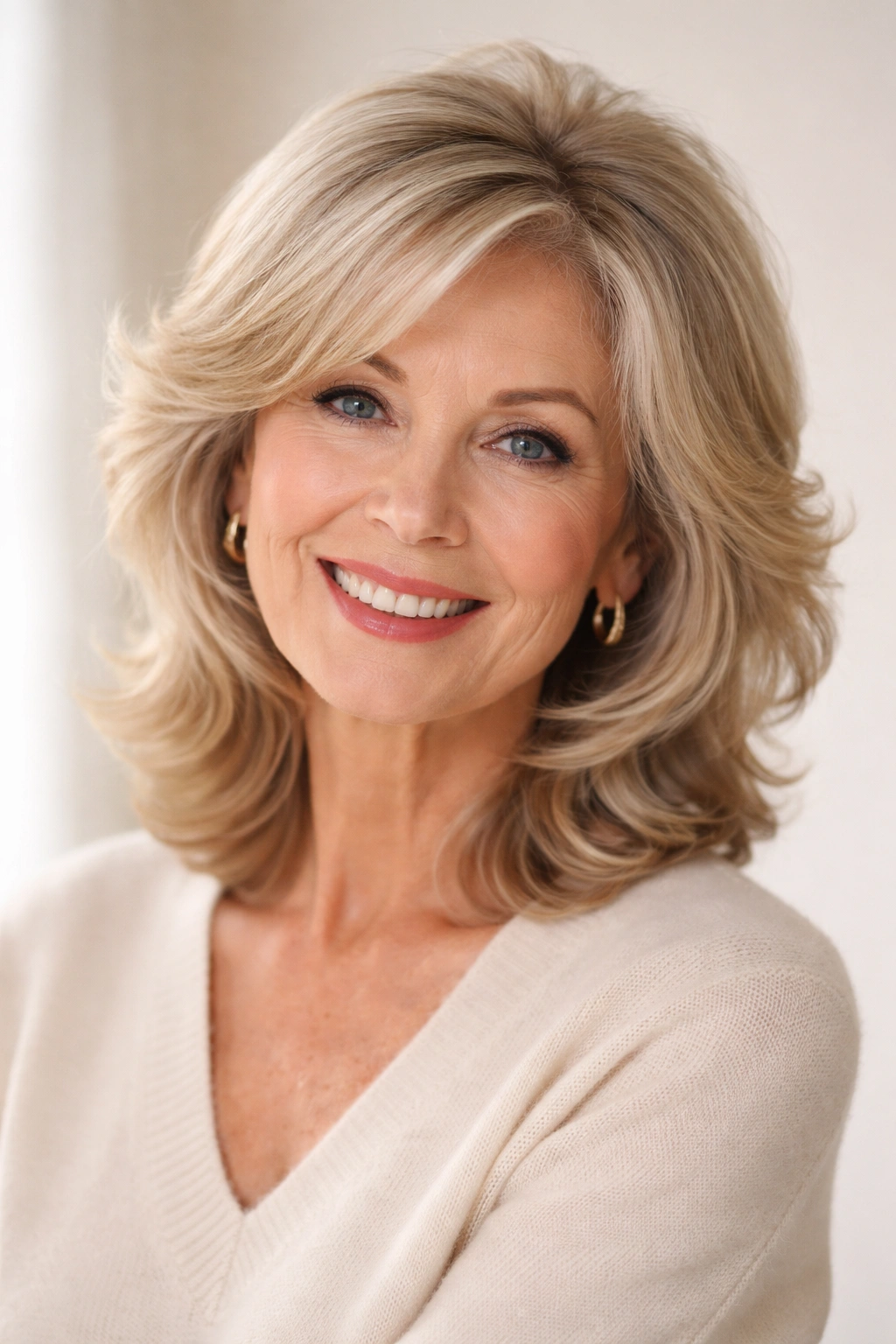
This style combines the best elements of flattering cuts for mature hair: shorter, face-framing layers around your cheekbones, strategic volume at the crown, and enough length to feel elegant and feminine. The face-framing layers are the star of this style—they draw attention to your eyes and cheekbones, and they can be styled to soften or define depending on the occasion. The volume at the crown prevents flatness, while the layering throughout creates movement and texture. You can style this with waves, curls, straightened, or tousled texture; the cut works with multiple styling approaches.
Why Face-Framing Layers Are Transformative
Face-framing layers naturally draw the eye toward your most flattering features—your eyes, cheekbones, and jawline. They’re shorter than the rest of your hair, which creates intentional movement right where it matters most for your face. The contrast between shorter face-framing pieces and longer underneath creates dimension. These layers also allow for styling versatility; you can tuck them behind your ears for a neat appearance, style them forward for softness, or curl them separately for added definition. For women with fine or thinning hair, face-framing layers prevent the blunt, heavy look while creating movement.
Customizing Face-Framing for Your Face Shape
- Face-framing layers should be 1-2 inches shorter than the rest of your hair
- Ask your stylist to position them around your cheekbones and jawline, not too close to your ears
- The layers should hit at a point that emphasizes your cheekbones
- Ask for shorter, crown-focused layers that create lift and prevent flatness
- This works beautifully on all hair textures and lengths
- Styling product can enhance the layers—a light mousse at the roots creates volume where face-framing layers begin
Pro tip: When you style, blow-dry your face-framing layers in the direction you want them to fall, using a round brush to create shape and movement.
15. Textured Pixie Bob
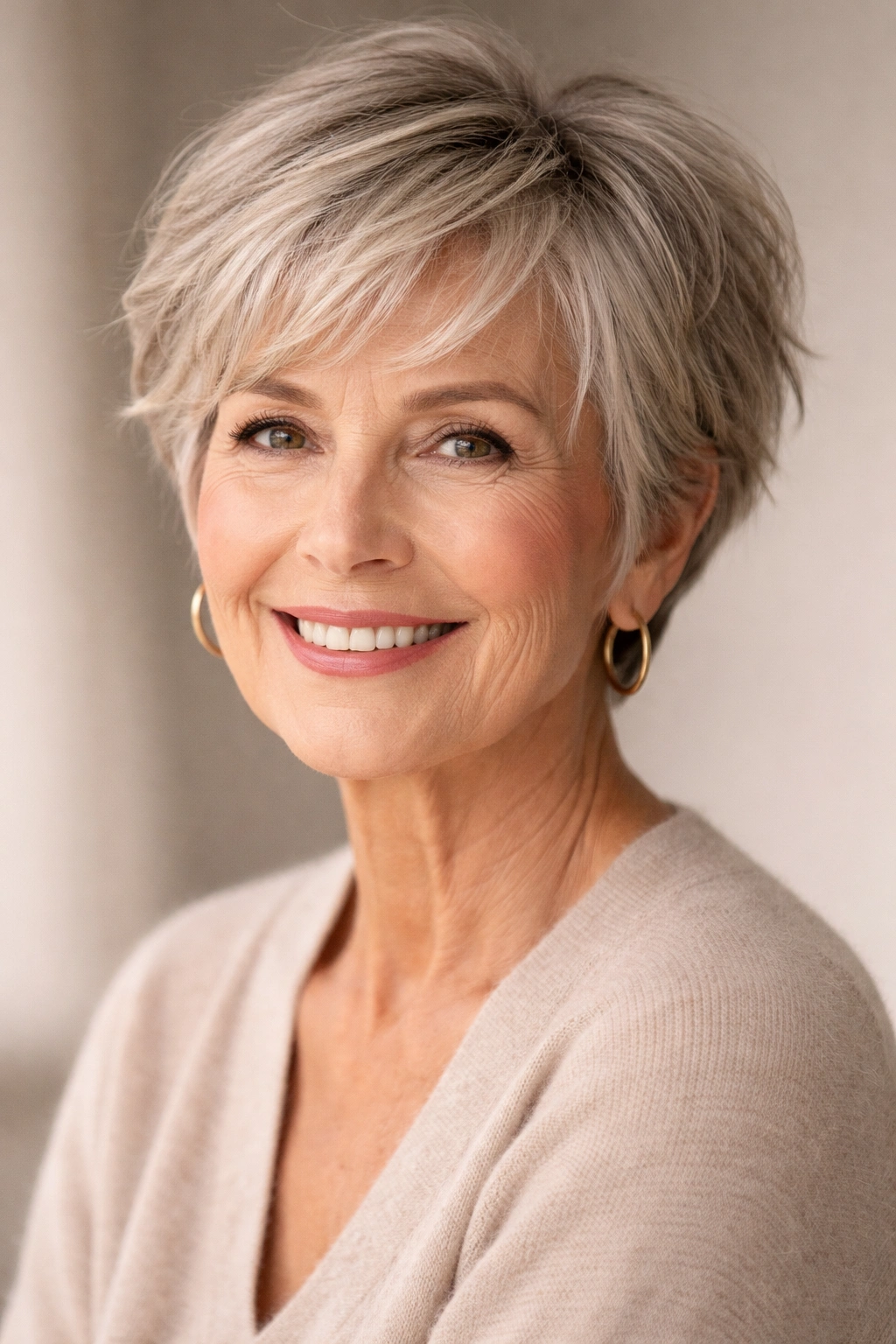
A textured pixie bob is the sophisticated younger sibling of a traditional pixie cut. It’s longer than a strict pixie (usually around ear-length or slightly longer) but shorter than a full bob, and the texture comes from choppy layers throughout. The style is modern, polished, and incredibly flattering for women over 70 who want something genuinely short and easy to manage without looking severe. The textured, choppy layers prevent the severe, sculptural look of a blunt pixie, creating softness and movement instead. You can style it sleek, tousled, or slightly undone depending on your mood and the occasion.
Why a Textured Pixie Bob Is the Goldilocks of Short Cuts
A pixie bob is short enough to be genuinely low-maintenance—no lengthy styling required—but long enough that it feels substantial and elegant rather than extreme. The choppy layers prevent weight buildup while creating texture and movement, which address the common concerns with aging hair. The length is long enough that you have styling options: you can create movement with a blow dryer and product, or wear it tousled and relaxed. For women with fine or thinning hair, this length and texture is ideal because it shows volume rather than density. The style is contemporary enough to feel current, but timeless enough to age beautifully.
Making a Pixie Bob Work for You
- Ask your stylist for choppy layers throughout, not a blunt, sculptural cut
- Layers should be deliberately textured, creating a piece-y look rather than smooth
- The cut should graze your ears or extend slightly past them, not right at the nape of your neck like a traditional pixie
- This works beautifully on all hair textures, but especially on naturally wavy or textured hair
- Styling with a diffuser or round brush creates movement; you can also wear it with minimal styling
- Trims every 4-6 weeks keep the textured shape intentional and prevent the cut from looking overgrown
Worth knowing: The difference between a severe pixie and a flattering pixie bob often comes down to texture—ask explicitly for choppy, textured layers rather than a smooth, blunt cut.
Finding the Right Cut for Your Face and Hair
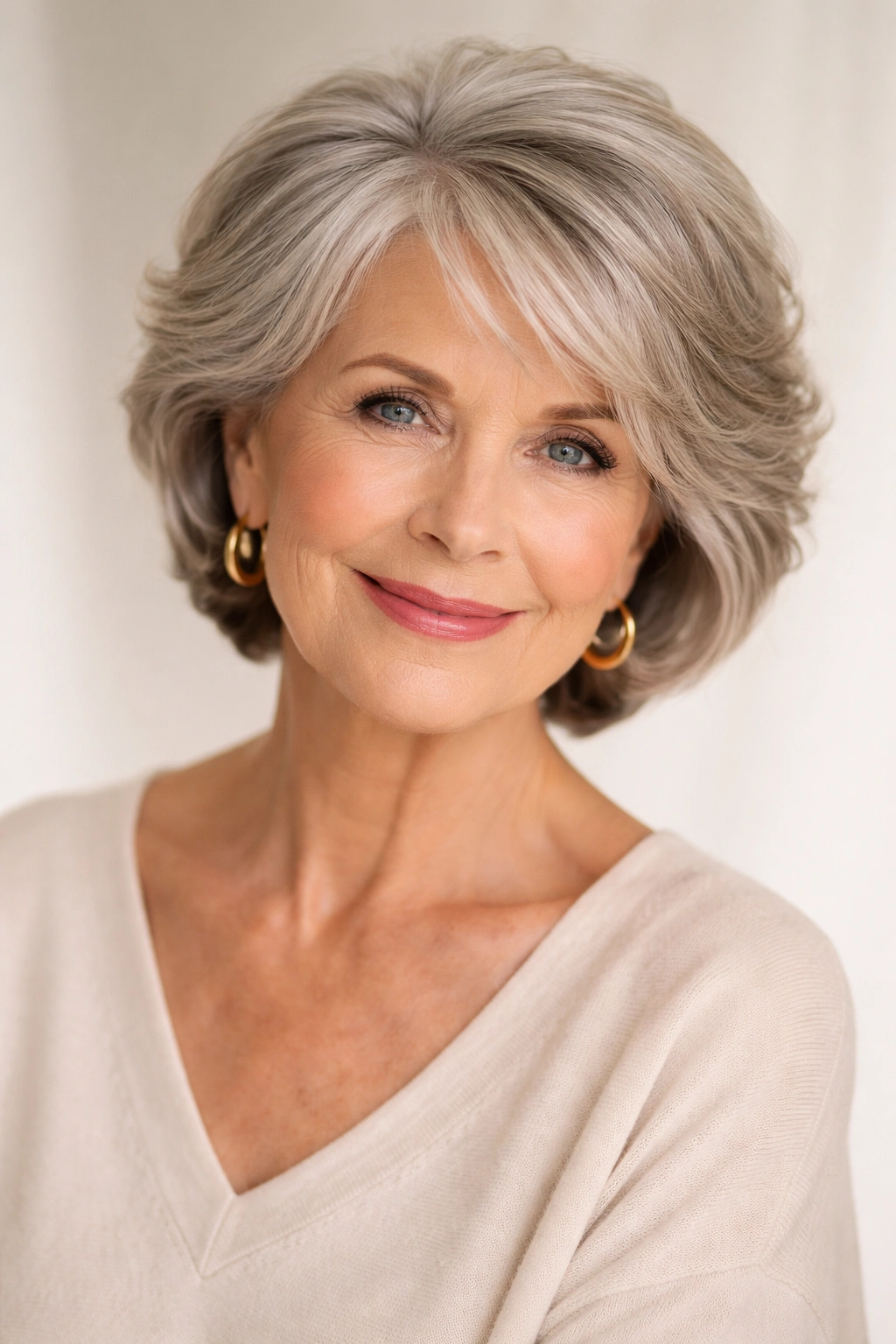
The best hairstyle for you depends on several factors beyond just age. Your face shape, hair texture and density, daily lifestyle, and personal style all matter enormously. A stylist who specializes in cutting mature hair—not all stylists do—will assess your specific situation and recommend something that works with your hair’s natural tendencies rather than against them. Don’t hesitate to bring inspiration photos of hairstyles you love; a good stylist can adapt any style to your specific features and hair type. The right cut should feel like you—confident, polished, and genuinely beautiful.
Equally important is finding a stylist you trust. Regular trims (typically every 6-8 weeks depending on the cut) keep any style looking intentional and polished. Good haircare products matter too—your stylist can recommend products designed for your hair texture and the specific needs of mature hair. And remember: the most beautiful hairstyle is one that makes you feel like yourself, confident and ready to face whatever comes next. You’re worth the investment in a great cut and the time it takes to style it well.
Final Thoughts
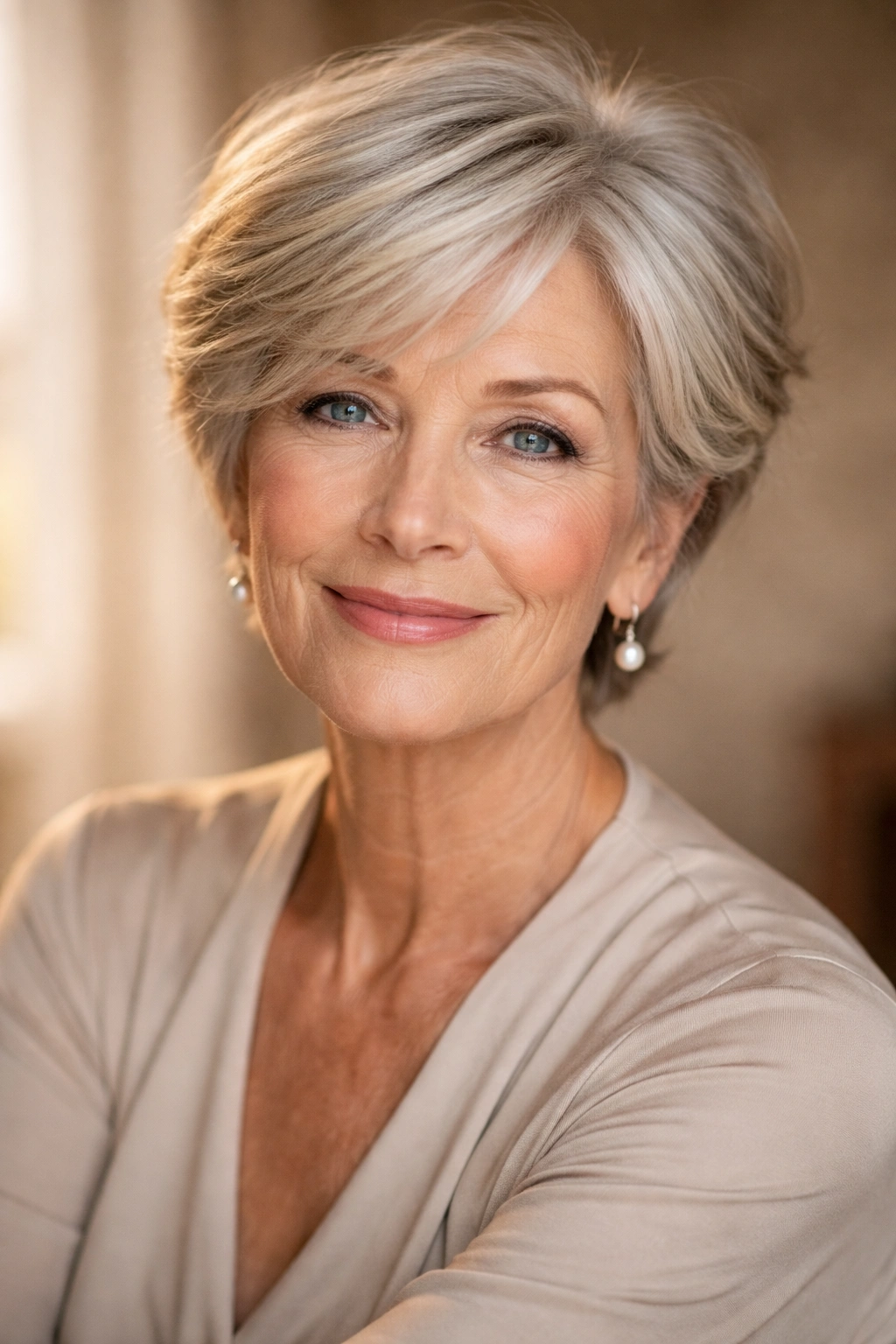
The hairstyles that look most gorgeous on women over 70 aren’t about fighting age or trying to look younger—they’re about working with your features, your hair, and your lifestyle to look genuinely polished and like the best version of yourself. Whether you choose a short pixie, a sophisticated bob, or longer layers, the right cut addresses the specific ways hair changes over time while emphasizing your most beautiful features. A skilled stylist who understands mature hair, regular maintenance, and the right styling products all contribute to keeping your hair looking its absolute best. Your hair is part of your presentation to the world—invest in a cut that makes you feel confident, beautiful, and undeniably yourself.
