



If you’ve ever sat in a salon chair wondering whether a short pixie cut would actually suit you—and more importantly, whether you’d have the time and skill to style it every morning—you’re not alone. The pixie cut carries this reputation for being a bold, high-maintenance choice, something that requires a gifted stylist, frequent trims, and endless manipulation with products and tools. But here’s what most people miss: a well-chosen pixie cut actually styles itself.
The secret isn’t in finding a magical cut that requires zero effort. It’s in understanding which pixie variations work with your hair type, face shape, and lifestyle, and then choosing a style that complements rather than fights against your natural texture. A pixie that’s cut with the right layers, tapered at the right angles, and textured in the right places can look intentionally polished with nothing more than a quick tousle and maybe a swipe of texturizing spray. Some pixies look better slightly messy. Others dry into perfect shape on their own.
What makes a pixie “practical” differs for everyone. For someone with thick, straight hair, a pixie with blunt edges and minimal layering might be ideal—it’ll hold its shape and look sharp without constant fussing. For someone with fine, curly hair, a choppy, textured pixie that embraces natural movement might be the answer. The pixies in this list aren’t ranked by trendiness or boldness; they’re organized around actual wearability, the kind that proves a short cut can be low-effort, flattering, and still make a real statement.
Whether you’re considering your first pixie or returning to short hair after years away, understanding the nuances of how each style works—what makes it easy to maintain, who it flatters, and how to ask for it at the salon—makes all the difference between a cut that feels right and one you regret before the first month is over.
1. Classic Tapered Pixie
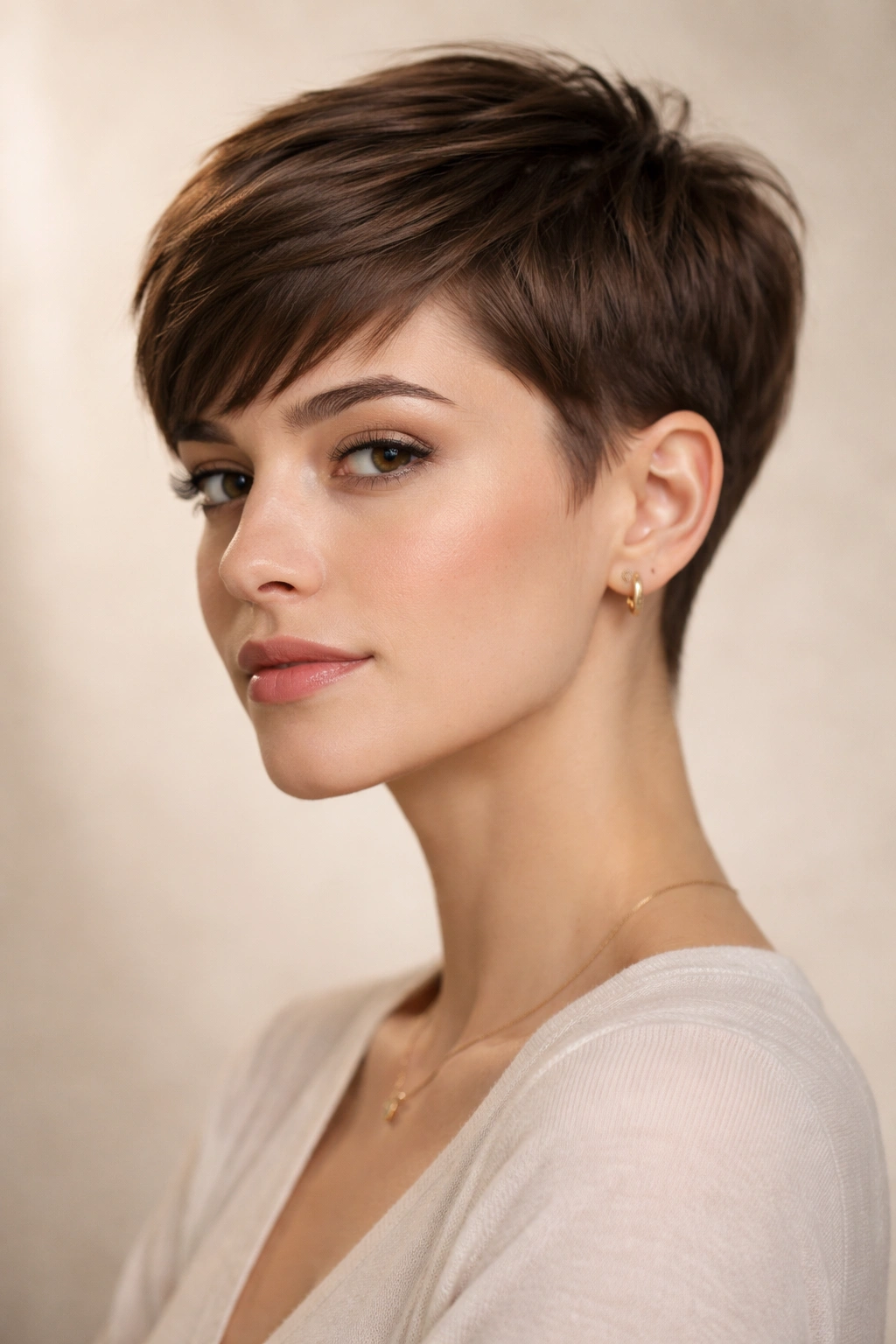
The classic tapered pixie is the foundation style that’s earned the pixie cut its reputation for sophistication. Hair on top stays longer—typically 2 to 3 inches—while the sides and back taper down cleanly to the skin or a very short clipper length. This creates a naturally flattering silhouette that frames the face and works with virtually every face shape.
Why It Works Without Fussing
The beauty of a classic tapered pixie lies in its built-in structure. Because the top has length and the sides are cut close, the style has an inherent sense of polish even when you do nothing to it. Your natural hair growth patterns—the way your hair naturally falls and lies—become an asset rather than something you’re fighting against. The shorter sides mean less daily styling is required, and the longer top gives you enough hair to work with on days when you want a bit more presence.
How to Style It
- Run your fingers through damp hair and let it air dry for a completely effortless look
- Use a blow dryer with your fingers for more control and texture, taking 5–7 minutes total
- Apply a light texturizing spray or matte clay to the top for definition if you want a piecier appearance
- Comb through with your fingers rather than a brush to maintain softness and avoid creating hard lines
- The cut works beautifully tousled, slicked back, or side-swept depending on your mood
Best for: Anyone looking for a first pixie or someone who values simplicity and timelessness. This cut suits oval, round, square, and rectangular face shapes. It’s particularly flattering on people with medium to thick hair texture.
2. Choppy Textured Pixie
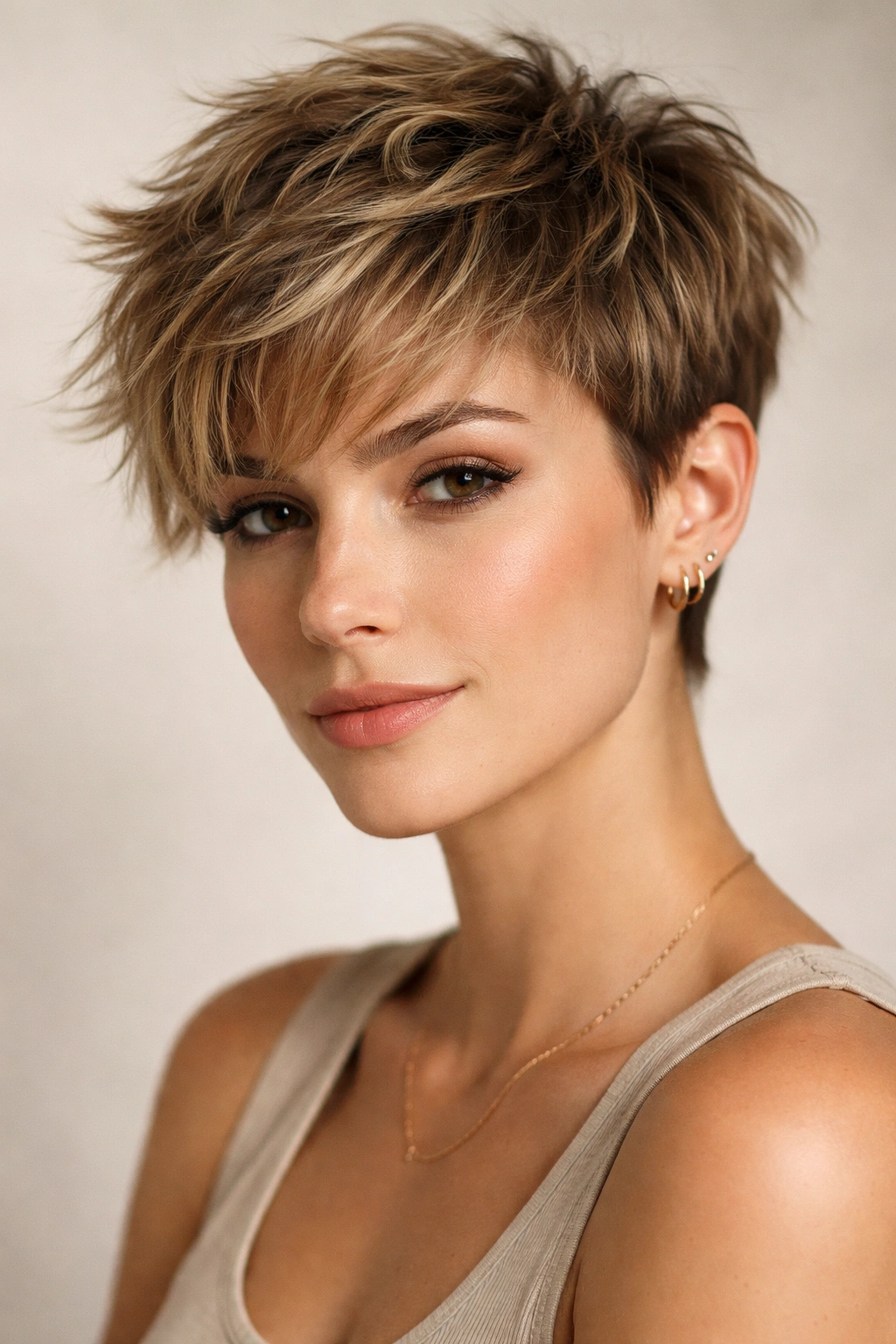
This style embraces movement and variation in length rather than fighting for uniformity. Choppy layers throughout the top create peaks and valleys that catch light differently and add visual interest. The sides remain short, but the layering on top is intentionally uneven, giving the cut a modern, artistic quality that looks interesting even without styling.
What Makes It Low-Maintenance
A choppy textured pixie actually looks better when it’s slightly undone. Because the layers are cut into the hair at different angles and lengths, the style is forgiving of regrowth and natural texture. If your hair grows in slightly wavy or curly, a choppy pixie works with that movement instead of against it. The cut dries into dimension on its own, and a quick finger-comb is often enough to activate the layers.
Styling Tips and Texture Details
- Blow dry on low speed while scrunching upward to encourage natural texture and movement
- Use your fingers, not a brush, to separate the layers and create intentional choppiness
- A texturizing powder or dry shampoo applied at the roots adds grip and makes layers more pronounced
- On days when you want more definition, apply a light mousse to damp hair before blow drying
- The cut works beautifully with bedhead texture—messy is the point here
Best for: People with naturally wavy, curly, or textured hair who want a style that enhances rather than fights their natural movement. This cut also suits anyone who appreciates a modern, less buttoned-up aesthetic.
3. Side-Swept Pixie
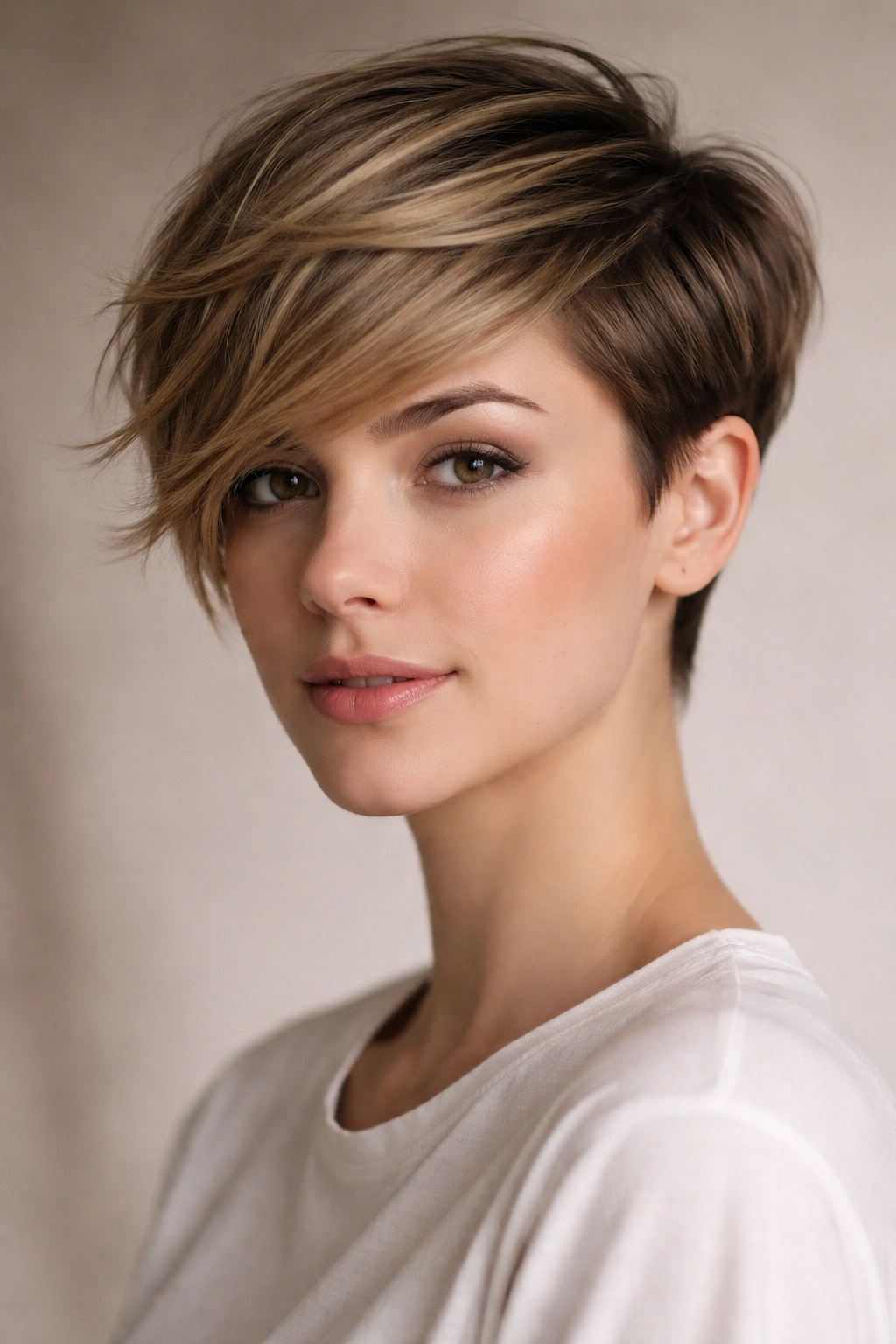
The side-swept pixie keeps one side longer—typically 3 to 4 inches—while the other side is clipped very short. This creates an asymmetrical silhouette that’s visually striking and surprisingly easy to manage. The longer side can be swept across the top or tucked behind the ear depending on how you’re styling it that day.
The Asymmetry Advantage
An asymmetrical cut actually offers more versatility than a symmetrical one. You can style the longer side swept dramatically over, pinned back with a clip for a completely different look, or tucked behind your ear for a subtle variation. The short side requires almost no maintenance and doesn’t need daily styling. This means you have flexibility without needing two completely different haircuts—one style can shift dramatically based on how you arrange the longer side.
How to Wear It Different Ways
- Sweep the longer side fully across for a dramatic, fashion-forward look
- Pin the longer side back with a bobby pin or clip to show off the short side
- Part it more subtly in the middle and let both sides fall naturally for balance
- Use texturizing spray on the longer side to create piece-y separation
- The short side dries completely on its own and rarely needs attention
- On the longer side, finger-comb while air drying for an effortless, tousled finish
Best for: People with oval or rectangular face shapes who want a style with edge and personality. This cut is particularly striking on people with strong facial features. It’s also a good choice if you like the idea of a pixie but want something that feels more fashion-forward than classic.
4. Textured Crop Pixie
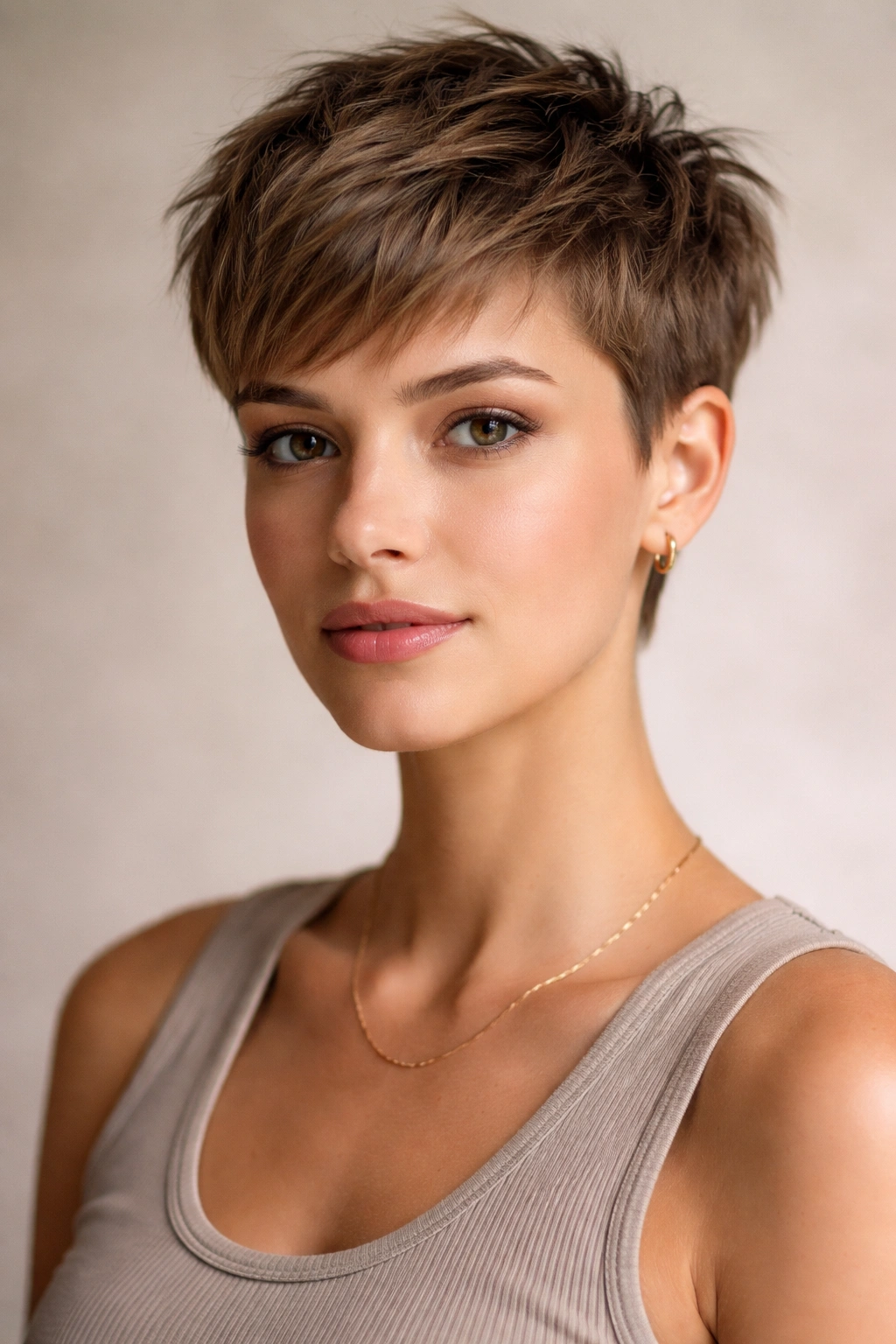
A textured crop sits between a pixie and a crop—slightly longer overall than a traditional pixie, usually 1 to 2 inches on top, with texture throughout rather than defined layering. The sides and back are still short, but the top has enough length to create visible texture without looking shaggy. This style suits people who want the bold statement of short hair without the commitment of a very close-cut pixie.
Why Slightly Longer Means Easier Styling
When a pixie has just a bit more length—even an extra half inch—it opens up more styling options and requires less frequent trims. You can build a bit of height through blow drying or texturizing products, and the cut still looks intentional even when it’s grown out slightly. Regrowth is less noticeable on this style than on a very short, blunt pixie.
Styling Techniques
- Apply a volumizing mousse to damp roots and blow dry with fingers for height
- Use a texturizing spray while hair is damp to encourage a piecier finish
- On days you want minimal effort, just finger-comb and go—the longer length holds style better than a super-short pixie
- The longer top can be brushed smooth for a polished look or left tousled for something more casual
- This cut works beautifully with a bit of natural curl or wave
Best for: People who like the idea of short hair but want slightly more styling flexibility. This cut suits those with fine to medium hair who want the impression of volume without a very short cut. It’s also good for people with mature features who want modern short hair without something too stark.
5. Bleached Platinum Pixie
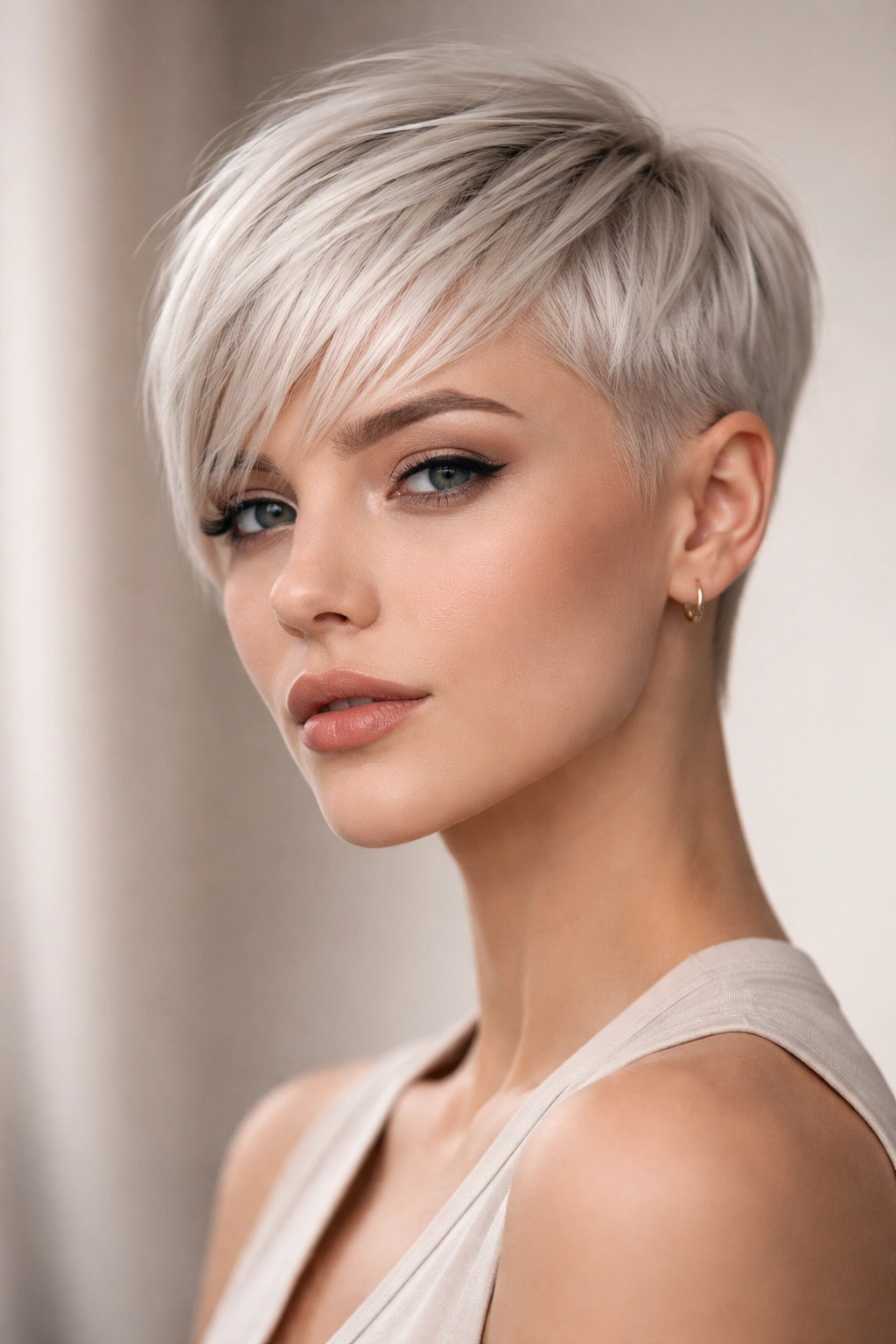
While the color itself isn’t technically part of the cut, a platinum or ash-blonde pixie requires a specific kind of haircut to really shine—typically a very clean, blunt pixie or a geometric, structured style. The cool tones of platinum hair show off the architecture of a well-executed pixie cut, and the crispness of the cut is enhanced by the shimmer and lightness of the color.
Why This Cut Looks Effortless at Any Length
Platinum or ash blonde has a visual quality that makes hair look thicker and fuller than it actually is. A pixie in these tones appears intentionally voluminous and polished even when you’ve done nothing but finger-comb it. The color also camouflages regrowth slightly better than darker shades because the contrast between new growth and the bleached lengths is less dramatic.
Maintenance and Styling
- Invest in a purple-toning shampoo and conditioner to keep platinum cool and bright
- Style with texture—the contrast between glossy blonde and textured peaks looks more intentional
- Use a lightweight dry shampoo between washes to absorb oils and maintain volume
- On days you want extra shine, apply a hair oil or serum to the ends
- The bleached lengths are more delicate, so be gentle when blow drying and avoid excessive heat
- This style looks stunning slightly grown out—about 4 to 6 weeks—as the roots create intentional dimension
Best for: Anyone with cool undertones in their skin who wants a style that feels modern and polished. Platinum pixies are particularly striking on people with fair or olive skin tones. This cut is also excellent for people who want a style that reads as intentional and fashion-forward.
6. Curly Pixie
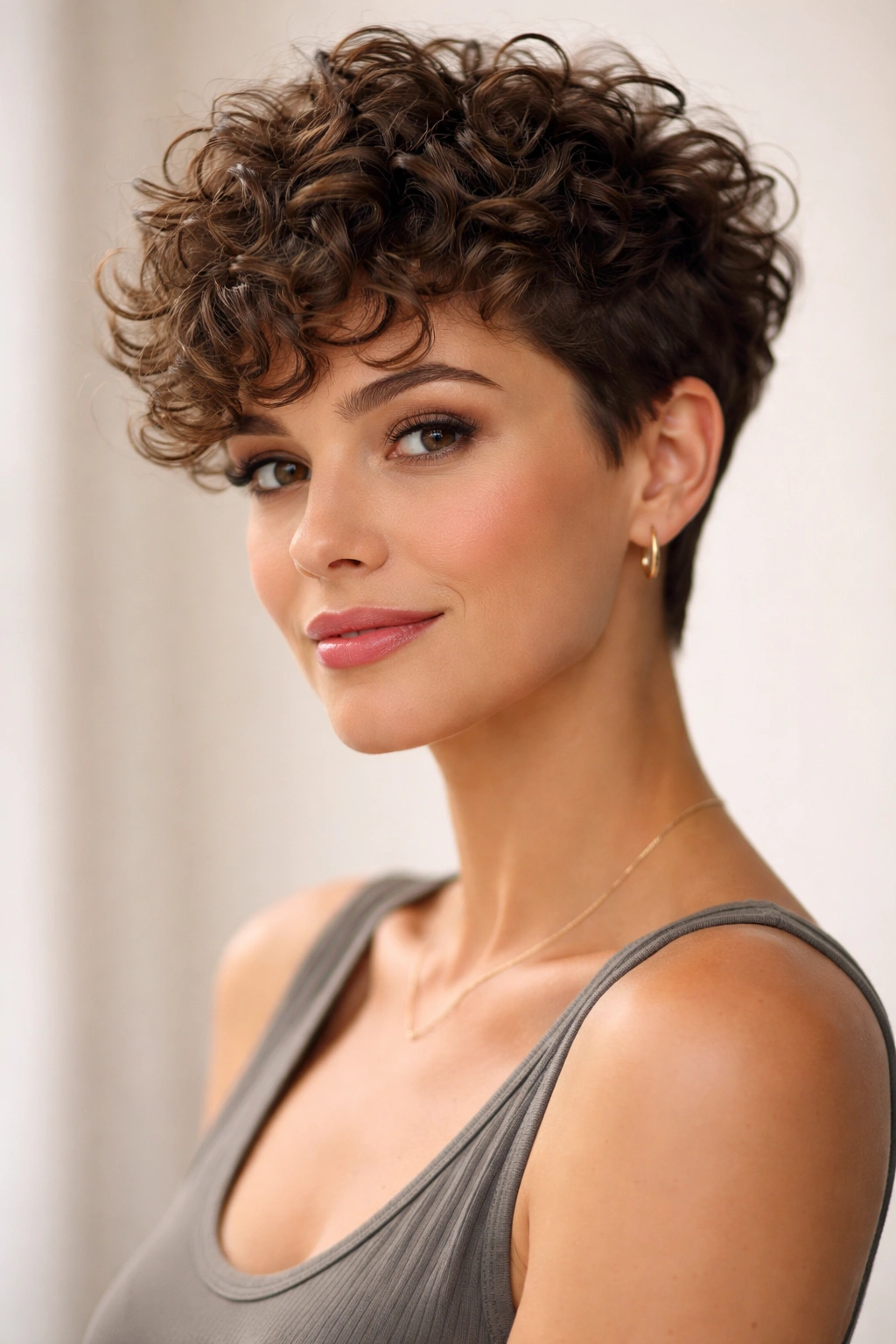
A curly pixie cut is designed specifically for naturally curly or coily hair. Rather than fighting your curl pattern, this cut works with it, using shorter lengths on the sides to avoid bulk and carefully layered length on top to encourage springy curls. The key is asking for a cut that’s designed by someone who understands curly hair, not someone who cuts straight hair and assumes it’ll translate.
How Curls Actually Make This Easier
When you cut properly for curl, the curl itself provides all the texture and volume you need. You don’t need to blow dry, add products for texture, or spend time styling. Your curls do the work. A curly pixie actually dries into its best shape on its own once you’ve learned your curl’s preferences. The shorter length also means less frizz and faster drying time—you’re spending less time fighting your hair, not more.
Styling Your Natural Texture
- Apply your curl products (cream, gel, or mousse) to soaking wet hair before air drying
- Use the praying hands method or raking method to apply products evenly
- Allow hair to air dry completely for the most defined curls
- If you need to speed up drying, use a diffuser on low heat
- Refresh second-day curls with a spray bottle of water and a bit of product re-applied
- Avoid brushing curls once they’re dry—finger-comb or pick if needed for separation
Best for: Anyone with naturally curly, coily, or textured hair who’s been told they can’t wear short hair. A curly pixie can actually be easier to maintain than longer curly hair. This cut is liberating for people who’ve spent years managing length they didn’t want out of fear that short hair would be unmanageable.
7. Androgynous Crop
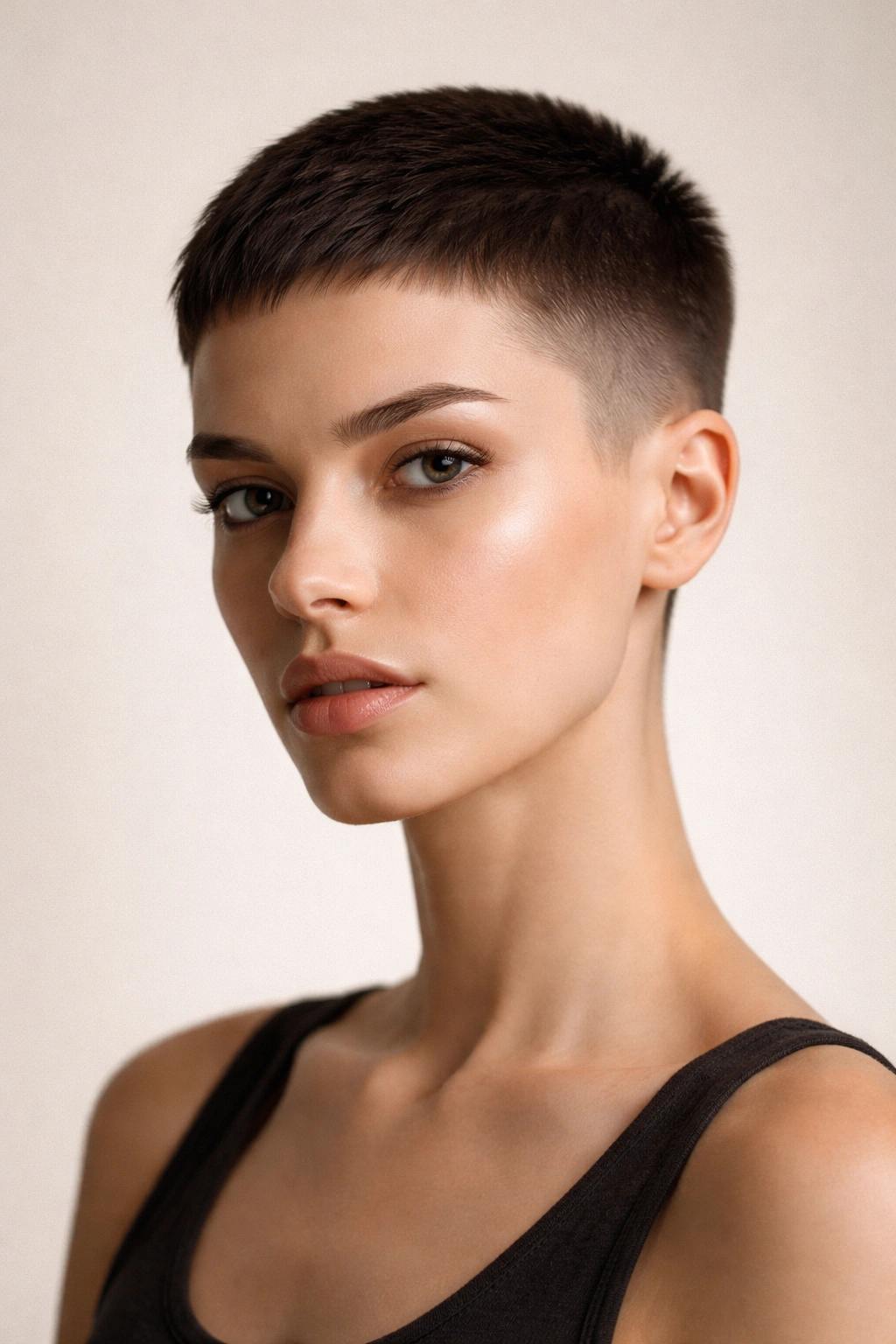
An androgynous crop is a very short, clean, geometric style—sometimes called a “masculine pixie” or “butch pixie.” Hair is cut close to the head all over with minimal length variation, creating clean lines and a bold silhouette. This style reads as intentionally edgy and modern and suits people who want something that feels genuinely different.
The Confidence Factor
An androgynous crop makes a clear statement, and part of what makes it work is the confidence of someone who actually wants to wear it. Because the cut is so spare and close to the head, it shows off facial structure, ear shape, and your actual face without anything to hide behind. The styling is genuinely minimal—it’s about the cut itself, not about products or technique.
Minimal Styling, Maximum Impact
- Wash and let air dry—this is truly a wash-and-go cut
- Once fully dry, run a hand through it, and you’re done
- On days you want a bit of texture, use a matte clay or texture powder for slight definition
- Some people with this cut use a small scissors to trim between salon visits, but that’s entirely optional
- This style is perfect for people who genuinely don’t want to spend time styling
Best for: People with strong facial features who want a cut that says something about who they are. This style suits oval, square, and rectangular face shapes beautifully. It’s ideal for anyone who values simplicity, directness, and intentionality in their appearance.
8. Feathered Pixie
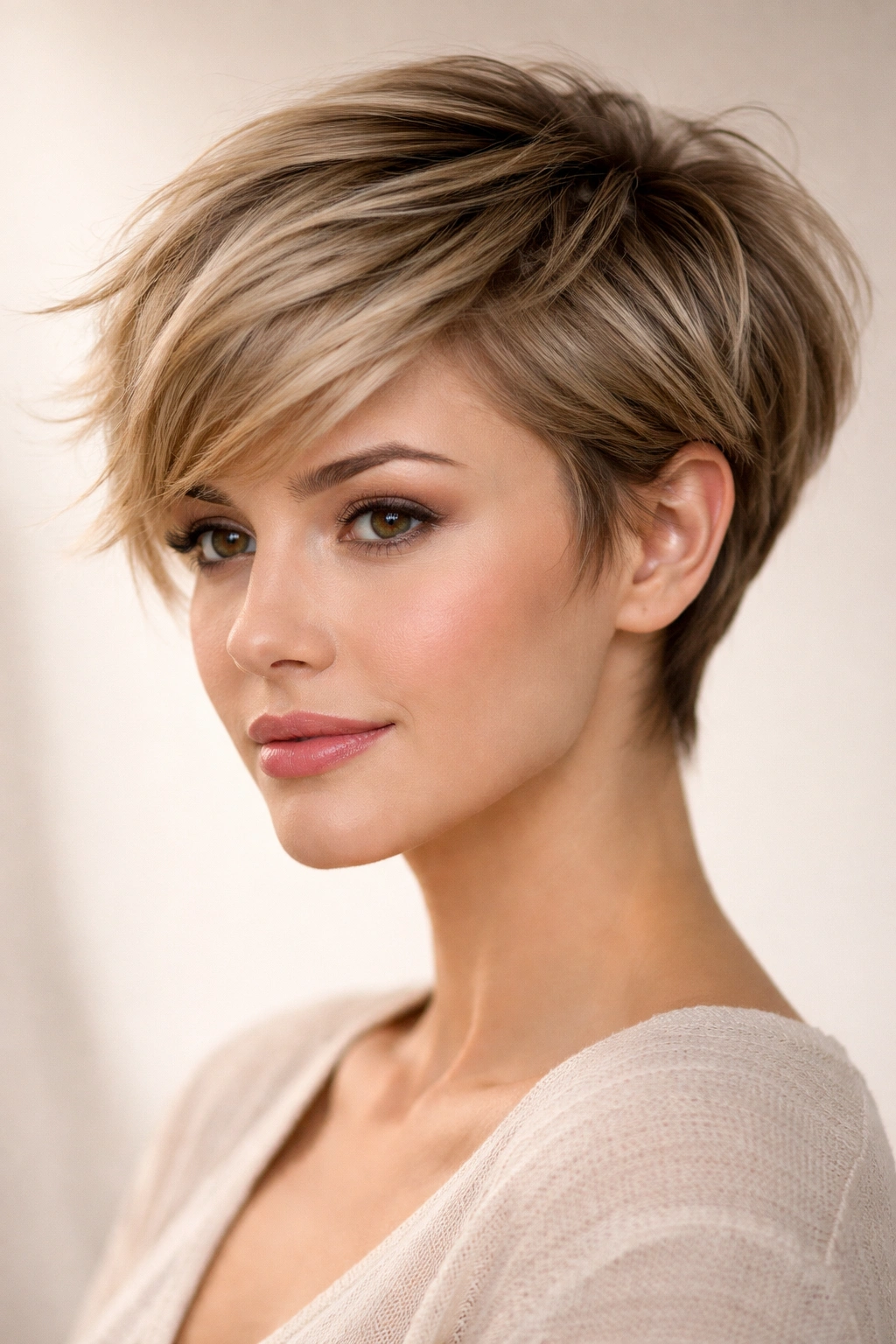
A feathered pixie combines length variation with soft, diagonal-cut layers that create movement without choppiness. Rather than blunt lines or dramatic choppy peaks, feathered pixies have a more flowing quality. The layers are cut at angles that encourage the hair to flip and move, creating a softer silhouette while maintaining that short, easy-to-manage length.
Movement Without Maintenance
Feathering creates natural movement that shows up even with minimal styling. Because the layers are angled rather than cut straight across, they dry into a textured, slightly lifted shape on their own. You’re not fighting against the cut—the geometry of the cut is doing the work for you. This style is often more flattering than a blunt pixie on people with finer hair because the feathering creates the illusion of more fullness.
How to Bring Out the Feathering
- Blow dry with your fingers while directing hair upward and backward to encourage lift
- Use a texturizing spray while hair is still slightly damp
- Once dry, use your fingers to separate layers and show off the feathering
- This cut looks beautiful tousled and doesn’t require a sleek, polished finish
- Air drying works too—the feathering will show up naturally
Best for: People with fine to medium hair who want short hair that doesn’t look sparse. This cut suits oval and heart-shaped faces beautifully. It’s also ideal for anyone who likes the idea of a pixie but wants something that feels slightly softer or less bold.
9. Slicked-Back Pixie
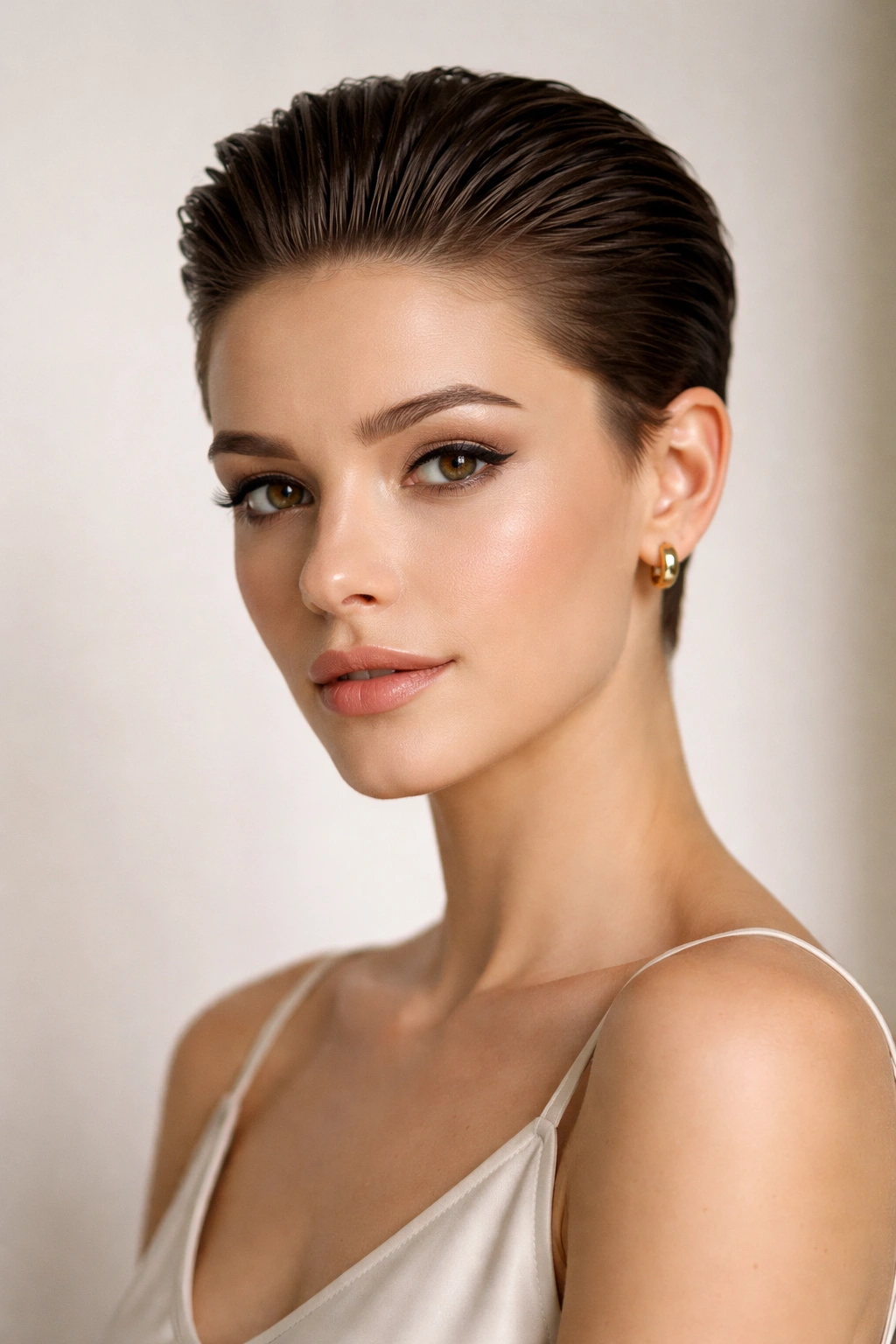
A slicked-back pixie is cut short overall but is styled by deliberately smoothing the hair back and away from the face, sometimes with gel, pomade, or a slicking product. The cut itself is typically clean and tailored, often with longer length on top than on the sides, but the styling choice transforms it into something with a completely different vibe.
Why It’s Easier Than It Looks
A slicked-back look actually requires very little effort once you have the right product. You apply gel or pomade to damp hair, smooth it back, let it dry, and you’re done. There’s no need for blow-drying equipment or complex technique. The beauty of a slicked-back pixie is that it looks intentional and polished with minimal time investment.
Styling Steps
- Apply a pomade, gel, or styling cream to damp hair
- Use a comb to smooth hair straight back and away from your face
- Let hair dry completely for hold, or blow dry on low heat for speed
- This look works beautifully for professional settings, dates, or any time you want something polished
- The same cut can be worn tousled on days you want a different aesthetic—it’s versatile
Best for: People who like clean, structured aesthetics and don’t mind using a styling product. This cut suits oval, square, and round face shapes. It’s particularly flattering on people with angular features and on anyone who appreciates a polished, put-together appearance.
10. Wispy Pixie Bangs
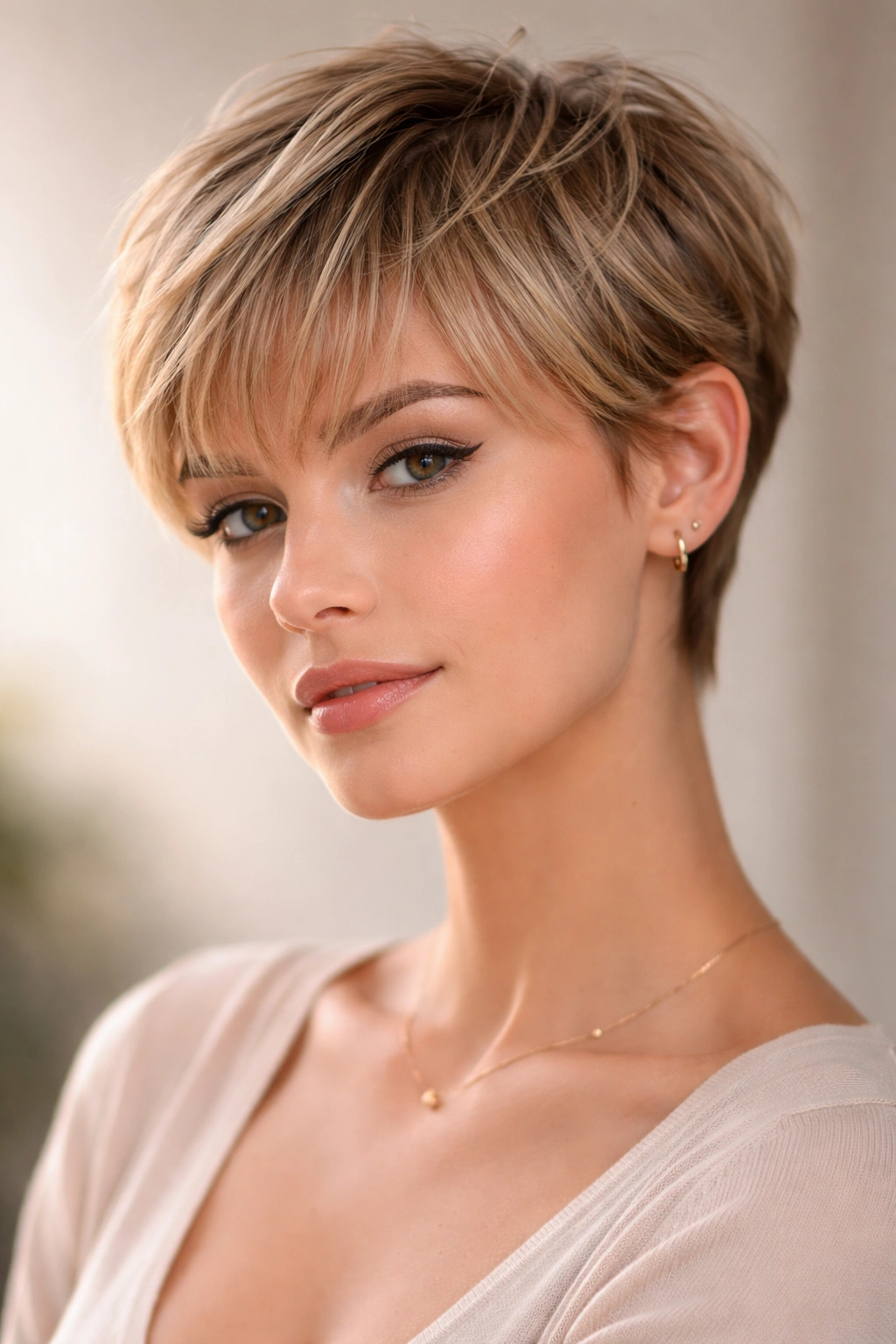
A wispy pixie focuses on creating soft, delicate bangs that fall across the forehead while keeping the sides and back short. The bangs are cut at varying lengths to create a feathered, wispy effect rather than a blunt line. This style offers the boldness of short hair with the softness of longer hair in front, creating an interesting contrast.
Why Wispy Bangs Are Forgiving
Wispy bangs are perhaps the most forgiving bang style because they don’t require a perfect, blunt line. They can be slightly uneven, can vary in length, and look better that way. Regrowth is essentially invisible on wispy bangs because there’s no blunt line to grow out noticeably. This means you need fewer trims than you would with a blunt pixie.
Maintaining and Styling Wispy Bangs
- Blow dry bangs downward and slightly to the sides for a soft, feathered look
- Use a round brush to create a bit of flip or movement
- Air drying works too—wispy bangs often dry into a nice shape on their own
- If bangs get in your eyes between trims, you can pin them back with a clip or bobby pin
- Texturizing spray applied to bangs adds a softer, piecier quality
- These bangs work beautifully with curly or wavy hair
Best for: Anyone who wants short hair but is nervous about committing to a full pixie. Wispy bangs give you a preview of short hair without the complete commitment. This style is particularly flattering on round and heart-shaped faces. It’s also excellent for people with fine or thin hair because the wispy, lighter density looks intentional rather than sparse.
11. Buzz-Cut Pixie
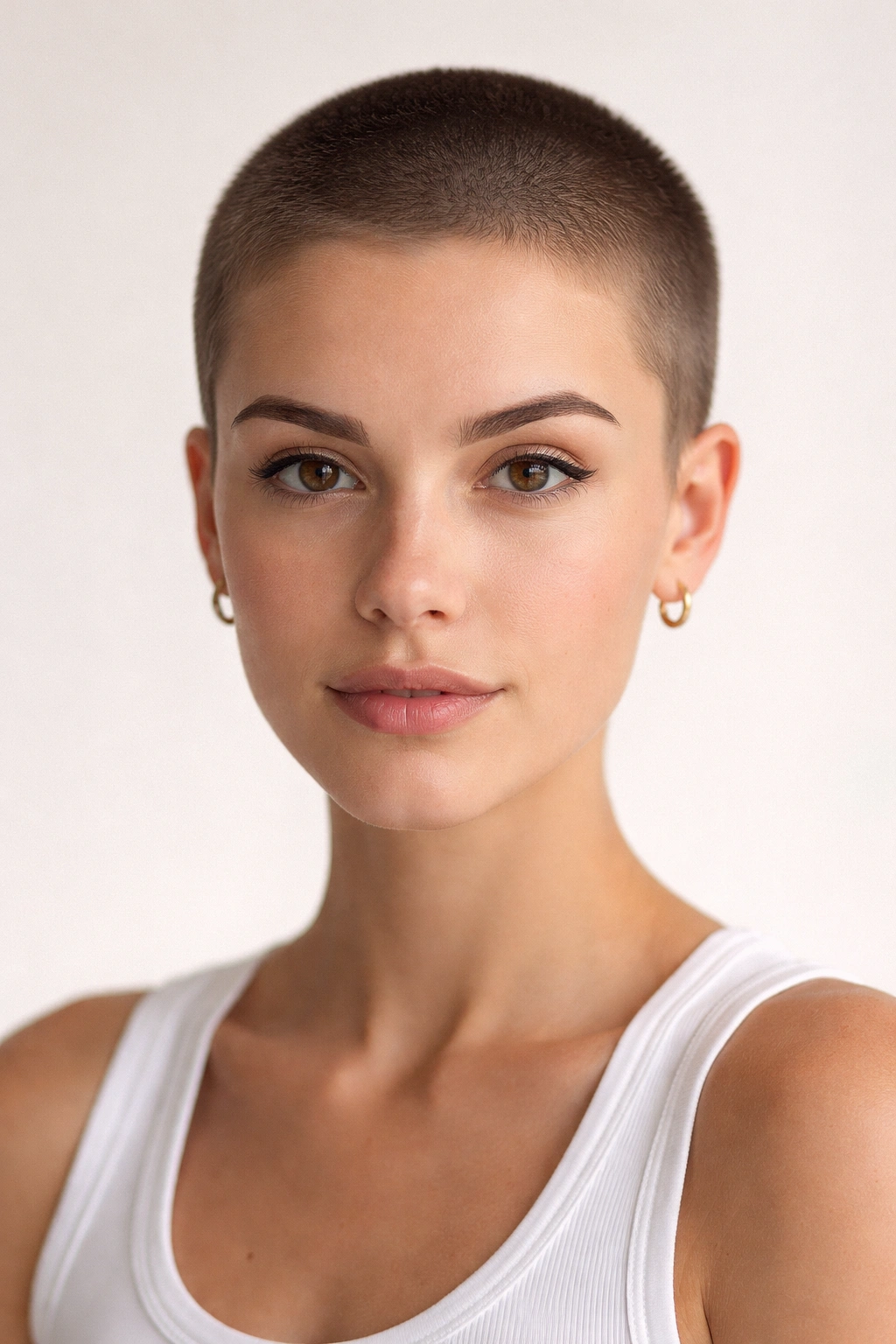
A buzz-cut pixie uses clippers all over the head—typically a size 1 or 2 guard—creating a very uniform, close cut. This is about as low-maintenance as hair gets. There’s no styling needed, no products required, and minimal fuss. The cut itself is the style, and the appeal is in that simplicity and the bold statement it makes.
The Ultimate No-Fuss Cut
A buzz-cut pixie is ideal for people who genuinely don’t want to think about their hair. You wash it, it dries on its own in minutes, and you’re done. There’s no decision-making, no product application, no learning curve. For people with thick, straight hair, a buzz cut can actually look fuller and more intentional than you’d expect. The closeness of the cut emphasizes the shape of your head and your facial features.
Caring for a Buzz Cut
- Wash with a gentle cleanser—the scalp is now exposed to sun and wind
- Apply sunscreen to your scalp on sunny days or use a hat
- Trim every 3 to 4 weeks to maintain the shape and clean lines
- On days you want slight texture, use a matte powder or texture spray
- This cut looks great grown out a bit—about 2 to 3 weeks—creating a slightly longer, softer version
Best for: People with strong facial features and the confidence to wear something genuinely minimal. This cut suits most face shapes beautifully because nothing distracts from your features. It’s ideal for anyone who values practicality above all else or who simply likes the way very short hair feels and looks.
12. Shaggy Pixie
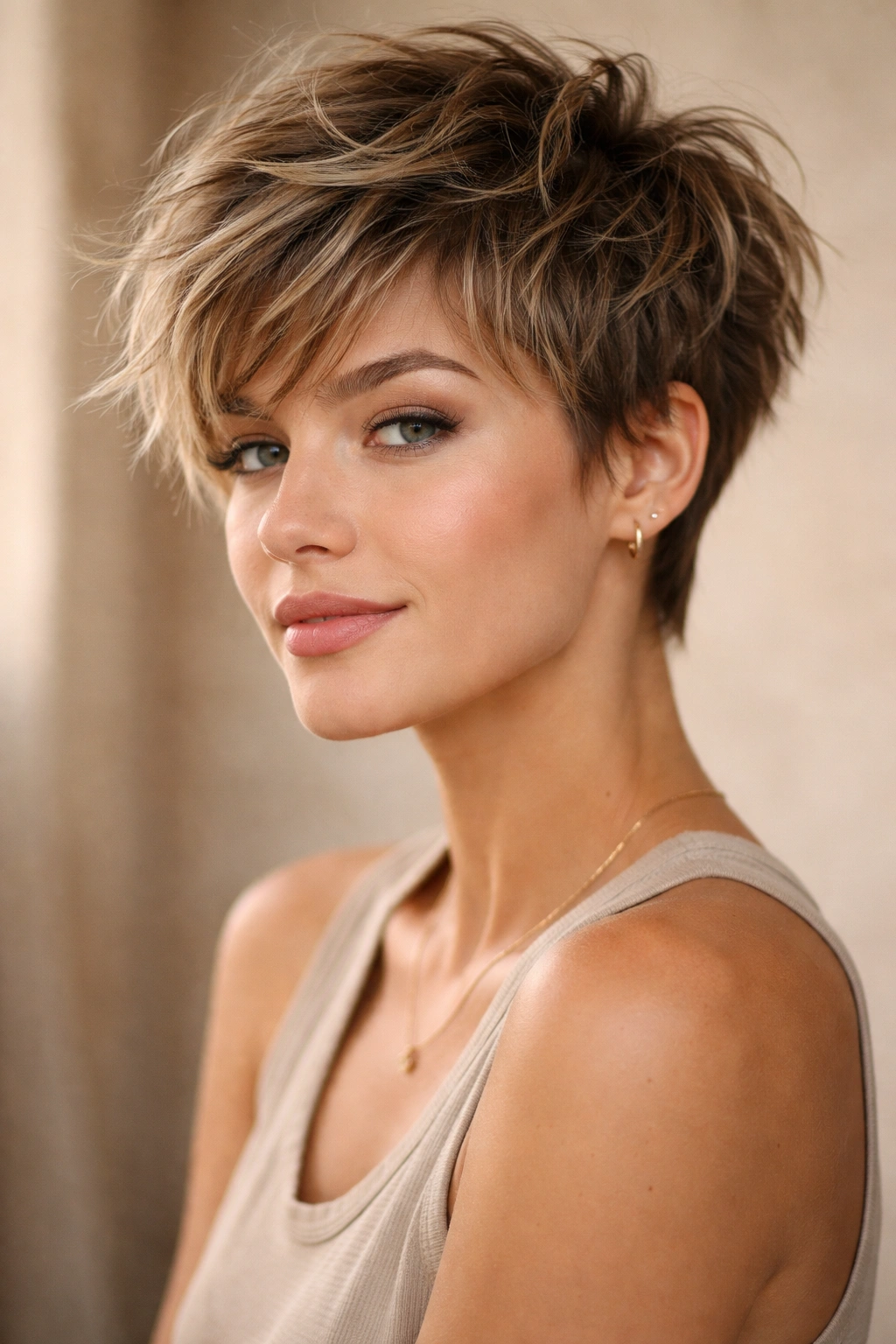
A shaggy pixie blends short hair with longer, shaggier layers on top, creating a grunge-meets-modern aesthetic. Hair on top can be 2 to 3 inches with lots of uneven layering, while the sides and back remain short. This style looks intentionally undone and works beautifully with a slightly messy, tousled finish.
Why Shaggy Layers Make Styling Optional
Because a shaggy pixie is designed to look slightly messy, you can actually skip styling on days when you don’t feel like it. The more texture and movement in the cut, the better it looks when you haven’t touched it. A shaggy pixie actually benefits from being a bit messy—that’s the whole point. This means you’re working with your natural hair behavior rather than against it.
Getting the Shaggy Texture
- Blow dry with your fingers or a brush, directing hair in different directions for texture
- Use a texturizing spray or dry shampoo for grip and pieciness
- On lazy days, just finger-comb and go—it looks good undone
- Scrunching while blow-drying on low heat enhances natural wave or curl
- A slight bit of bedhead is actually the ideal look for this cut
Best for: Anyone who likes modern, fashion-forward styles and appreciates an “undone” aesthetic. This cut suits most face shapes and hair types, but works particularly well on people with naturally wavy or curly hair. It’s ideal for younger people or anyone who doesn’t need their hairstyle to read as corporate or traditional.
13. Geometric Pixie
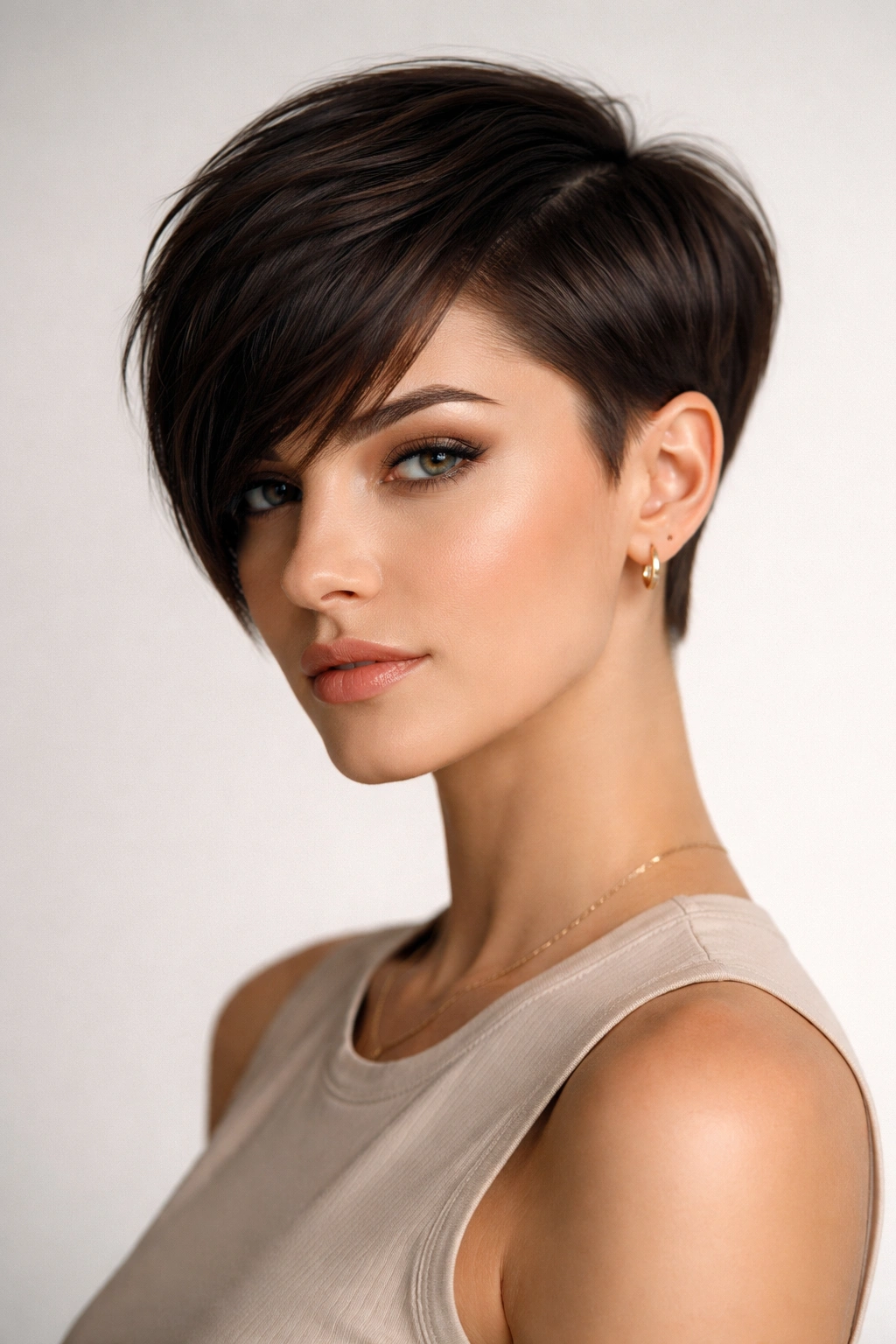
A geometric pixie is cut with precise angles and clean lines, often creating a slightly architectural silhouette. The cut might be longer on one side, have defined angles around the face, or use different lengths to create specific geometric shapes. This style is visually striking and modern.
The Precision Advantage
A geometric pixie actually looks better when it’s precise and intentional. This means you do want to style it—but the styling is straightforward and rewarding. The clean lines mean that every styling choice you make is visible and adds to the intentional look. It’s not forgiving in the way a shaggy pixie is, but it’s also incredibly striking.
Styling a Geometric Cut
- Blow dry with a brush or your fingers in the direction the cut is meant to go
- Use products to emphasize the geometry—a pomade or texturizing spray works well
- The key is consistency—style it the same way regularly so the shape becomes familiar
- This cut works best when styled deliberately, not in a “wash and go” way
- Because the style is geometric and precise, growing it out doesn’t look as natural as other pixies
Best for: People who like clean, modern design aesthetics and don’t mind taking a few minutes to style. This cut suits oval and square face shapes particularly well. It’s ideal for fashion-forward people or anyone in creative fields who wants their hair to read as intentional and considered.
14. Grown-Out Pixie (The Emo Swoop)
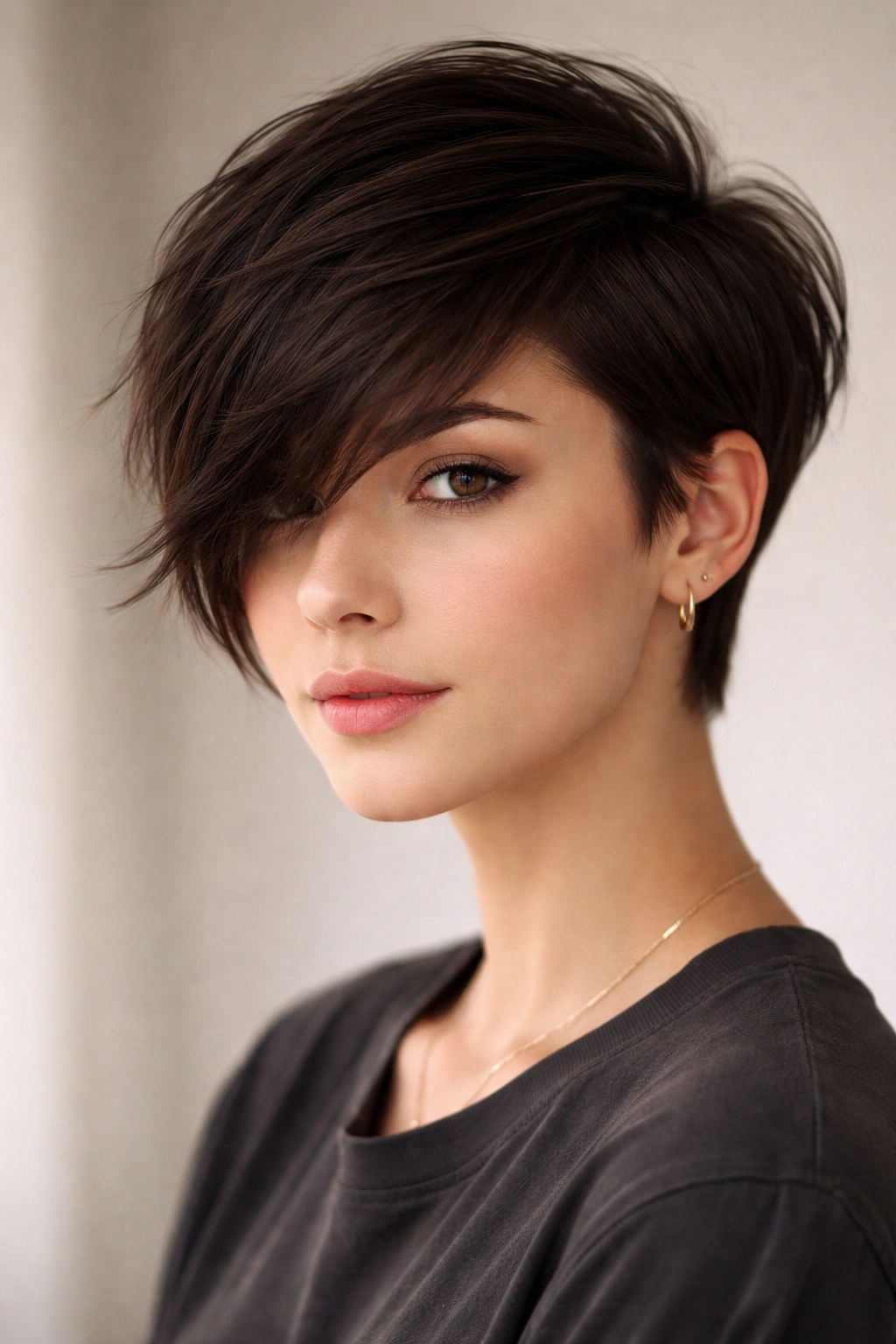
Sometimes called an “emo swoop” or “grown-out pixie,” this style is a pixie that’s been growing out for several months and now has enough length to sweep across the forehead dramatically. Hair can be 3 to 4 inches on top with the longer side sweeping down, while the back and other side remain short. It’s not quite a bob, not quite a pixie—it’s somewhere in between.
Why Growing It Out Actually Works
Many people grow out their pixies unintentionally and discover they actually like the in-between length. A grown-out pixie gives you the best of both worlds—short, easy sides and back with enough length on top to experiment with styling. You can sweep it across, pin it back, or let it fall naturally. The regrowth creates intentional dimension and isn’t something you need to fight against.
Styling Your Grown-Out Pixie
- Blow dry the longer side with a round brush to encourage the sweep
- Use texturizing product on the longer side while damp
- Pin the longer side back with a clip for a completely different look
- The cut works beautifully with slightly damp, tousled styling
- As it grows, it naturally transitions into a short bob if you let it
Best for: People who aren’t entirely sure about committing to a full pixie but want short hair. This in-between length is a good testing ground for understanding what works with your face shape and lifestyle. It’s also excellent for anyone who likes versatility—you can change the look significantly just by rearranging the longer side.
15. Widow’s Peak Pixie
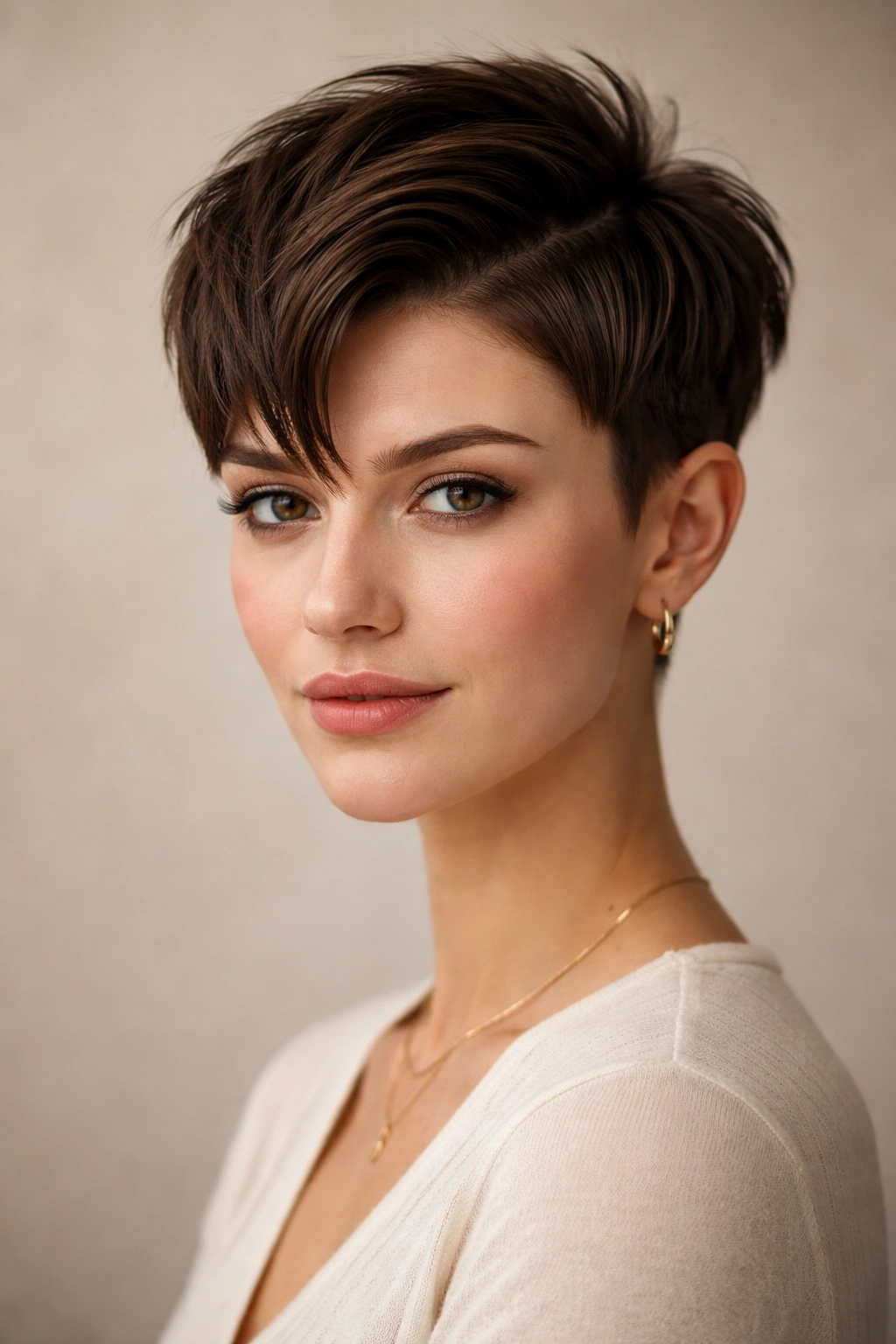
A widow’s peak pixie is cut to work with a natural widow’s peak rather than trying to hide it. The cut is typically longer in the center of the forehead and shorter on the sides, which means a widow’s peak becomes a design feature rather than something to camouflage. This approach is often more flattering than fighting your natural hairline.
Making Your Hairline Work for You
When you cut a pixie that acknowledges your widow’s peak, you’re working with your natural pattern rather than against it. This often means the cut looks more proportional and flattering on your specific face. The longer center creates a focal point that can be styled different ways—swept to one side, parted down the middle, or swept back.
Styling Options
- The longer center can be swept across dramatically or to either side
- Part it down the middle for a more balanced look
- Smooth it back for a sleek style that still shows your natural hairline
- The natural peak becomes part of the cut’s design—it looks intentional, not accidental
- This approach works particularly well for people with angular or prominent features
Best for: Anyone with a widow’s peak who’s been trying to hide it. This cut reframes your hairline as a design feature rather than something to camouflage, which is often more flattering than pixies that fight your natural pattern. It suits most face shapes, particularly square and rectangular ones.
16. Tousled Textured Pixie
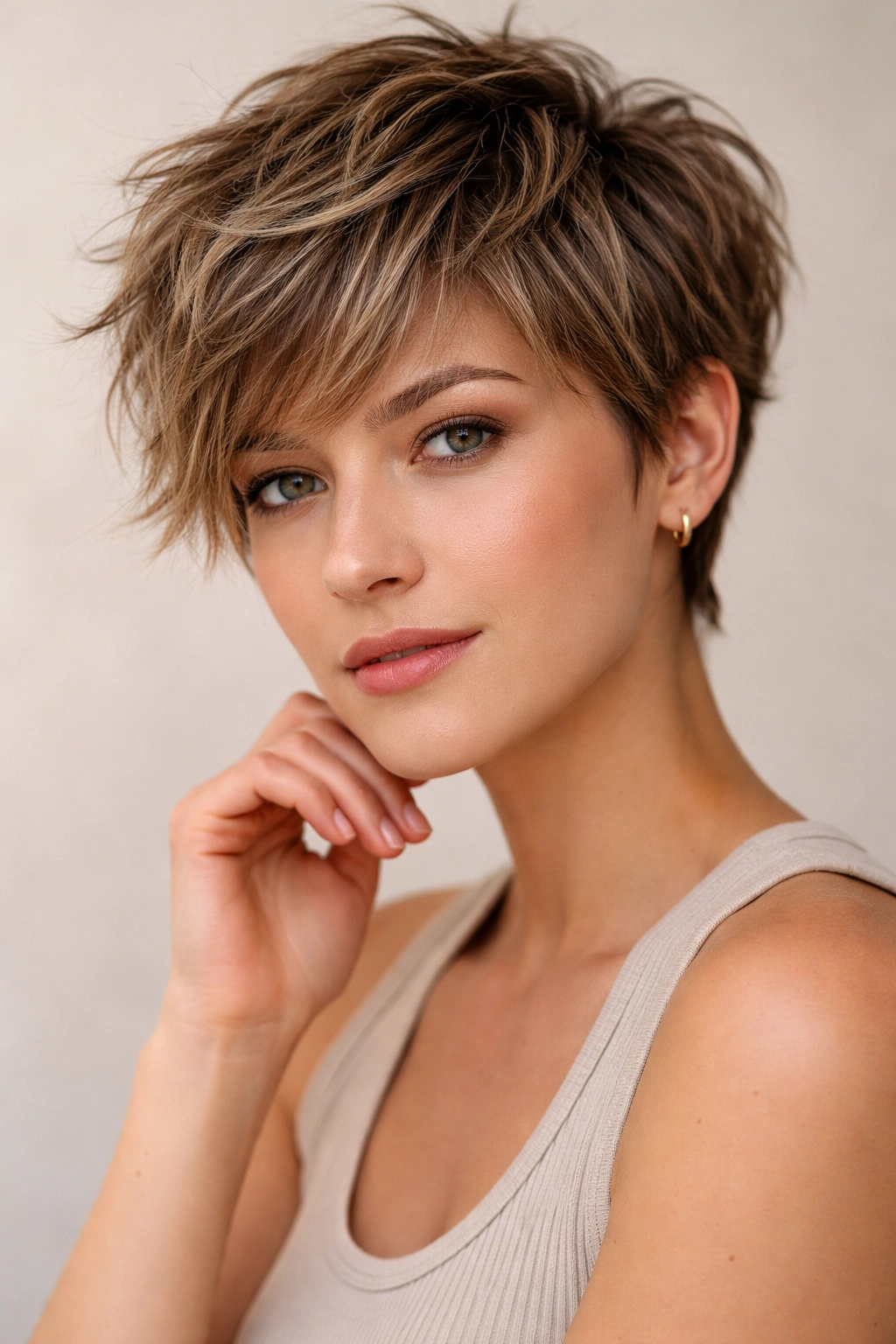
A tousled textured pixie is cut with lots of layers throughout and styled to look deliberately messy and disheveled. Every layer is visible, and the goal is a lived-in, textured, “I just woke up like this” appearance. This is a style that requires understanding textured layers but minimal styling technique.
Low Effort, High Impact
The beauty of a tousled pixie is that the styling can be incredibly minimal while still looking intentional. You’re not trying to create sleekness or polish—you’re enhancing texture and movement. This means you can literally just finger-comb your hair and call it done on most days. The cut does the heavy lifting, not the styling.
Creating the Tousled Look
- Apply texturizing spray to damp hair and scrunch gently
- Blow dry on low with your fingers, tousling as you go
- Allow some air drying time—tousled pixies look better slightly undone
- Once dry, finger-comb to separate layers and create more texture
- Using dry shampoo adds grip and makes layers more pronounced
- This style works beautifully with natural wave or curl
Best for: Anyone who wants a pixie but doesn’t want to spend time on precise styling. This cut works on most hair types, though it’s particularly suited to people with naturally wavy, curly, or textured hair. It’s ideal for creative people, younger people, or anyone who likes an intentionally undone aesthetic.
17. Elegant Tapered Pixie with Long Undercut
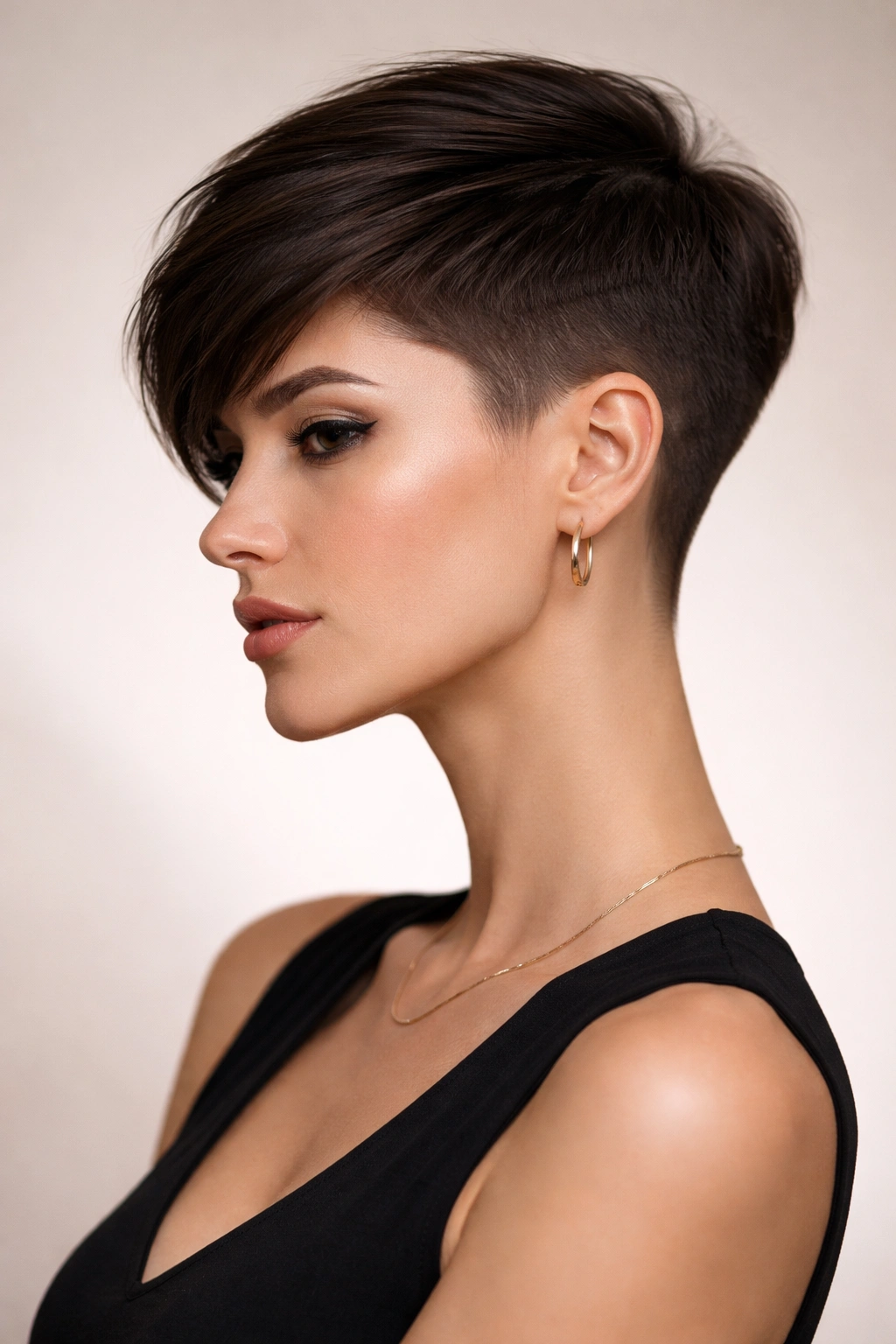
This is a variation on the classic tapered pixie that takes the undercut very short—sometimes clipper-short on the sides and back—while keeping length on top at 2 to 3 inches. The contrast between the very short undercut and the longer top is visually dramatic and creates an elegant, high-fashion look.
Visual Impact With Minimal Styling
The high contrast of this cut means it looks striking and intentional even without any styling. You can wear it slicked back, tousled, or anywhere in between, and it reads as polished. The very short undercut means the sides and back require zero styling attention. All your effort, if you choose to style, goes to the top.
Styling the Top Section
- Blow dry the top with your fingers for a tousled look
- Use a pomade or gel to slick it back for something more polished
- Texture spray on the longer top sections adds definition
- The short undercut looks beautiful faded or fully clipped
- Consider that as the undercut grows out, it changes the proportions—plan for regular fades if you want to maintain the contrast
Best for: Anyone with strong facial features who wants a cut that makes a real statement. This style suits oval, square, and rectangular face shapes. It’s particularly striking on people with fair or olive skin tones and is ideal for anyone in fashion, creative fields, or simply someone with a bold personal style.
18. Soft Feminine Pixie
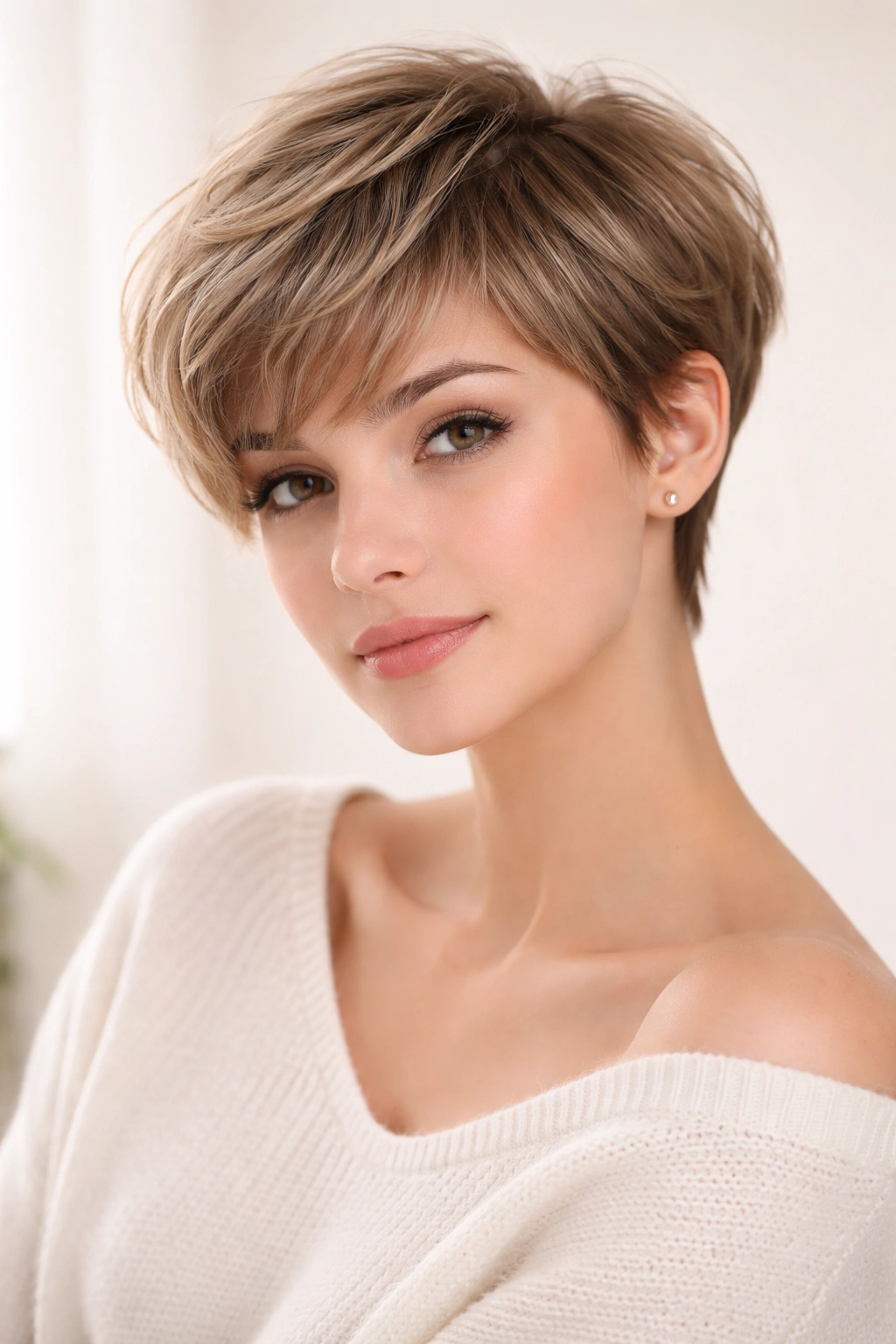
A soft feminine pixie uses rounded lines, feathering, and slightly longer lengths compared to a classic pixie. This style is designed to be flattering on feminine face shapes and features gentle softness rather than stark angles. Hair might be 2 to 3 inches on top with soft, wispy layers, and the sides are shorter but not extremely close.
Softness as a Design Feature
The softness of this cut isn’t about trying to hide or downplay anything—it’s a deliberate design choice that works beautifully on certain people and certain occasions. The rounded lines and feathered layers create a look that’s modern and short but not aggressive or overly edgy. This is a pixie for people who want short hair but with a distinctly feminine energy.
Styling for Softness
- Blow dry with a round brush to encourage roundness rather than angles
- Use a texturizing spray for pieciness rather than slickness
- Style with your fingers for a soft, natural finish
- This cut works beautifully air-dried
- Avoid anything too geometric or too slicked-back—work with the soft quality of the cut
Best for: Anyone who wants a pixie but worries about it feeling too masculine or aggressive. This cut suits heart-shaped and round face shapes beautifully. It’s ideal for people who like modern fashion but with a distinctly soft, feminine energy. It works well on people with naturally fine, straight, or wavy hair.
19. Heavily Layered Textured Pixie
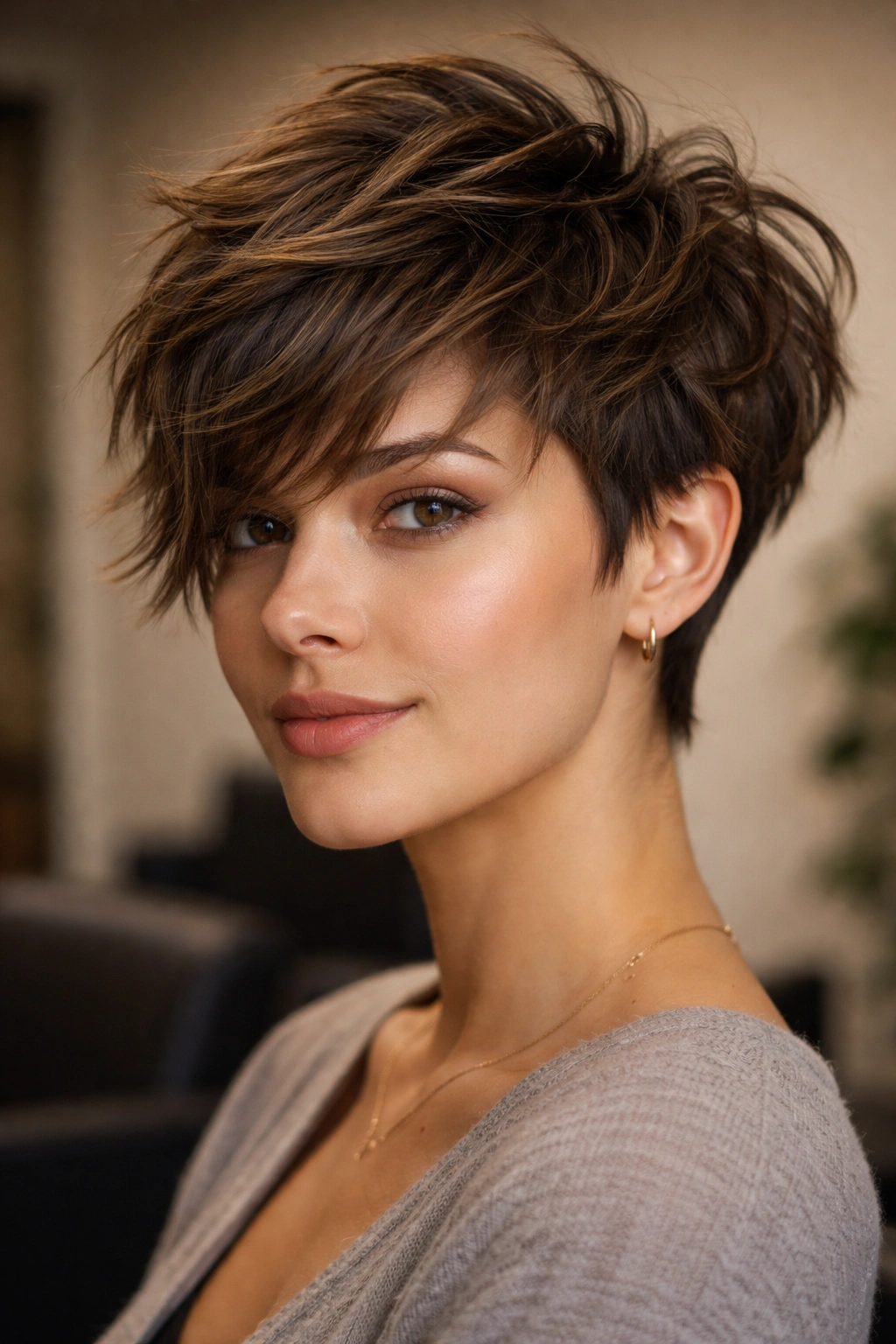
A heavily layered textured pixie is cut with dramatic differences in length—much longer on top, progressively shorter toward the back, and very short on the sides. The layering throughout creates an incredibly textured, dimensional look. This is about as far from a blunt pixie as you can get while still being short.
Maximum Texture Equals Maximum Interest
When a pixie is heavily layered, every angle of your head shows a different texture and dimension. This visual complexity means the cut looks interesting and modern, and styling doesn’t need to be perfect for it to look good. The layers do the work. This is an excellent choice for people who want their short hair to feel like it has movement and dimension.
Building Dimension in the Layers
- Blow dry while directing hair in different directions to emphasize the layers
- Use a texturizing spray or mousse on damp hair before blow-drying
- The layers look best with texture rather than smooth, polished styling
- Scrunching or tousling while blow-drying enhances the effect
- Air drying works too—the layers will create natural texture
Best for: Anyone with wavy, curly, or naturally textured hair who wants a short cut that celebrates rather than fights their hair’s natural behavior. This cut suits most face shapes and is particularly striking on people with longer faces. It’s ideal for anyone who wants their short hair to look dimensional and modern.
20. Minimalist Short Crop
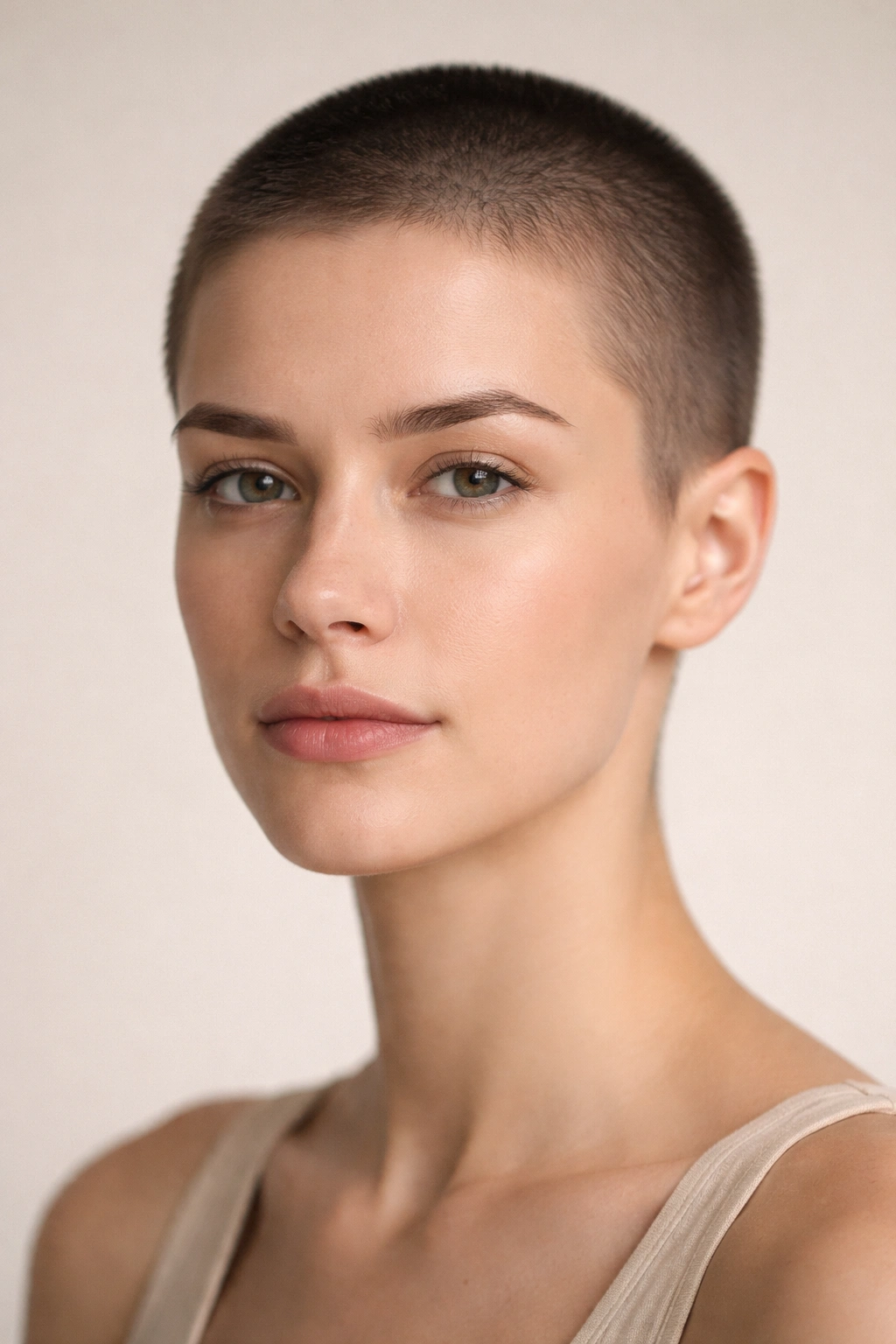
A minimalist short crop is the absolute shortest practical version of short hair—essentially what a buzz cut becomes when you’re trying to keep a tiny bit of styling possibility. Hair is cut extremely short all over, typically ¼ inch to ½ inch, with no length variation. This is as minimal as hair styling gets—it’s a wash-and-go cut in every sense.
Ultimate Simplicity
A minimalist crop is for people who genuinely want to stop thinking about their hair. There’s no styling, no products, no decisions. You wash it, it dries in minutes, and you’re done. For people with thick, healthy hair, a minimalist crop can actually look sophisticated and intentional. It’s the opposite of fussiness.
Care and Maintenance
- Wash gently—scalp is completely exposed
- Apply sunscreen to your scalp or wear a hat in the sun
- Trim every 2 to 3 weeks to maintain the shape
- On days you want slight definition, a matte powder adds subtle texture
- This cut shows off facial structure, so confidence in your features is key
- The cut grows out and softens within a week or two, which is actually beautiful
Best for: People who value practicality and simplicity above all else. This cut suits anyone with strong facial features and good-quality skin (since nothing covers your face). It’s ideal for athletes, people in active lifestyles, or anyone who simply wants to remove hair decisions from their life entirely. It reads as intentional and confident rather than like you couldn’t afford a better cut.
Final Thoughts
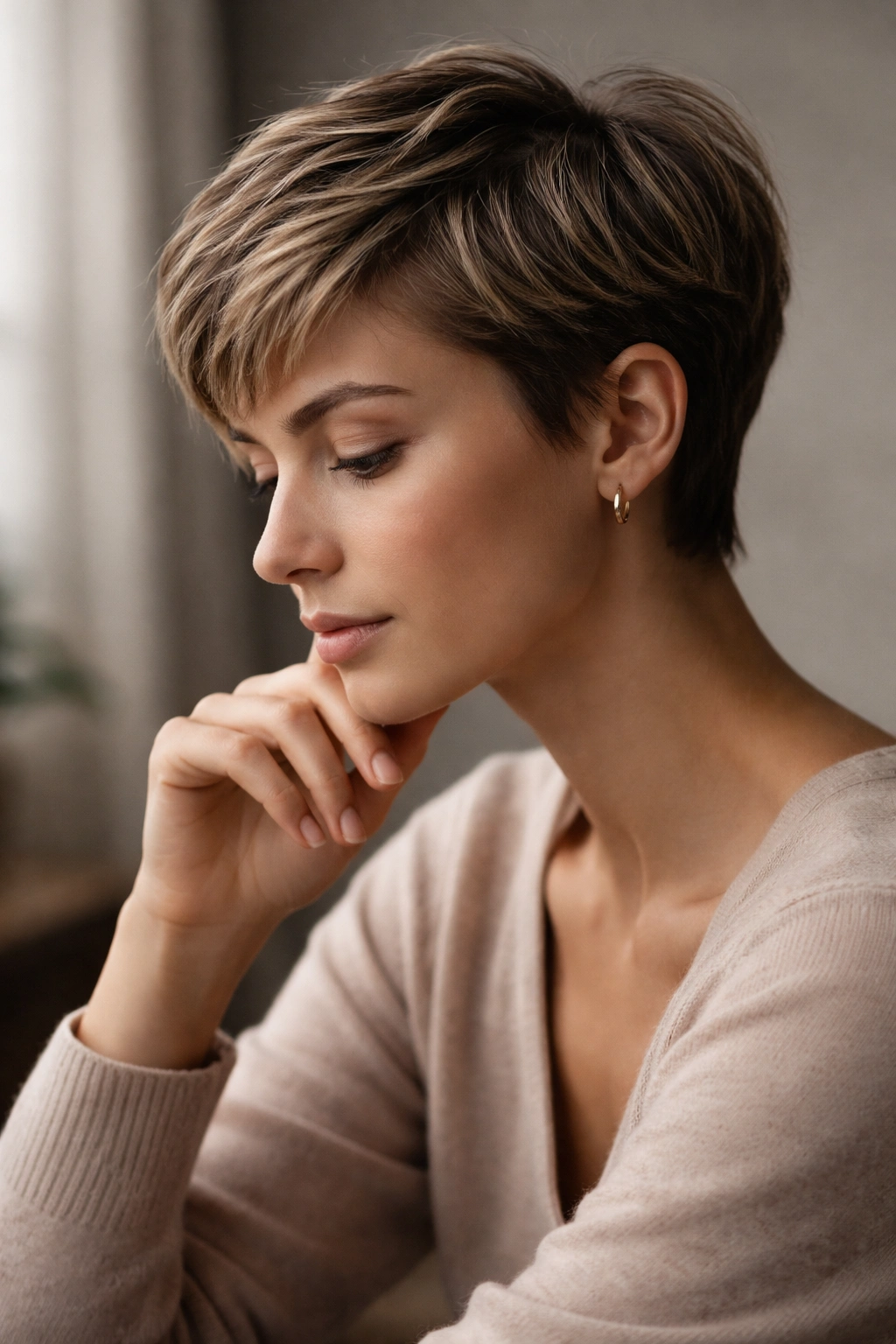
Short pixie haircuts earn their reputation for being easy to maintain not because there’s no styling involved, but because the right cut works with your natural hair pattern rather than against it. The distinction between a pixie that feels like a constant battle and one that practically styles itself comes down to choosing the right variation for your hair type, texture, and face shape, then asking a skilled stylist to execute it with precision.
The pixie cuts in this list show the range of what’s possible with short hair. You might discover that a classic tapered pixie is all you need, or you might find that a heavily layered textured version is what finally makes sense with your curly hair. A side-swept asymmetrical cut might give you versatility you didn’t expect from short hair, or a minimalist crop might turn out to be the most liberating styling choice you’ve made in years.
What all these styles share is that they’re not requiring you to fight your hair into submission every morning. They’re designed to work. That’s what makes a pixie practical—not zero effort, but effort that feels worthwhile because it actually improves how you look and feel about your hair.
