



If you’ve been scrolling through hairstyle inspiration and keep coming back to images of voluminous, textured bobs that seem to defy gravity while looking effortlessly chic, you’ve probably been admiring stacked bob cuts. There’s something magnetic about a well-executed stacked bob—it delivers movement, dimension, and that enviable blend of modern sophistication with approachable texture that works whether you’re heading to the office or out for the weekend.
The stacked bob has evolved dramatically over the years, moving far beyond the blunt, uniform cuts of decades past. Today’s stacked bob styles come in variations that range from barely-there short crops that hug the head to shoulder-grazing mediums that still maintain that signature layered, chunky texture at the crown. What makes them so compelling is their versatility—they work with virtually every hair type, face shape, and lifestyle, and they can be styled sleek, tousled, textured, or dramatically swept depending on your mood and the occasion.
The beauty of a stacked bob isn’t just visual. This cut creates instant volume at the crown and around the face, which is why it’s become the go-to choice for people with fine or thinning hair who want to feel fuller and more confident. The shorter layers in the back create movement and bounce, while the longer face-framing pieces ensure you don’t lose softness or femininity. Whether you prefer a blunt, graphic take or a softer, more blended approach, there’s a stacked bob variation that aligns perfectly with your personal style.
1. The Classic Textured Stack
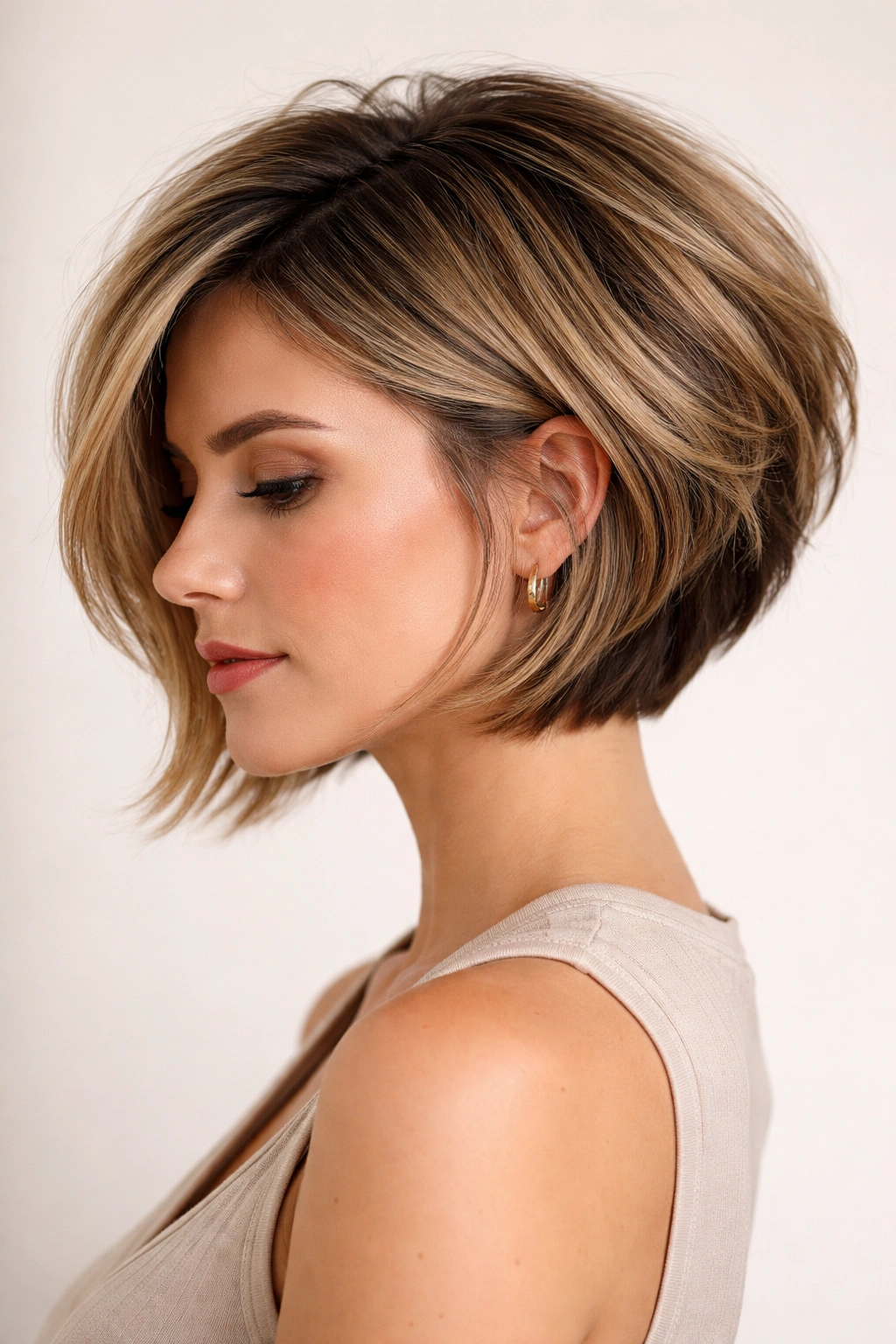
This is the foundational stacked bob that started it all—short, choppy layers throughout the crown and back that create undeniable texture and movement. The layers are deliberately chunky and visibly separated, never blended into seamless transitions. The front pieces typically fall just to the jawline or slightly shorter, framing the face with clean lines while still allowing for soft styling.
Why It Works So Well
The textured stack thrives on movement. Every time you move your head, the layers catch light differently and seem to shift and reshape themselves, which makes the cut look alive and dynamic. This style requires regular trims every 4-6 weeks to maintain that defined, separated layer structure—once those layers start blending together, you lose the cut’s signature impact.
How to Style It
- Blow dry with a round brush for volume at the crown, or let it air dry for a more effortless, piecey texture
- Use a texturizing spray or light dry shampoo to enhance the layered effect and add grip between washing
- Finish with a light-hold hairspray so the texture reads clearly without looking stiff or helmet-like
- Work in product with your fingers rather than combing it through, which helps maintain that deliberately choppy, separated look
Pro tip: This cut looks best with slightly tousled, undone styling. Trying to smooth it into a polished finish works against the design—lean into the texture.
2. The Blunt Stacked Bob
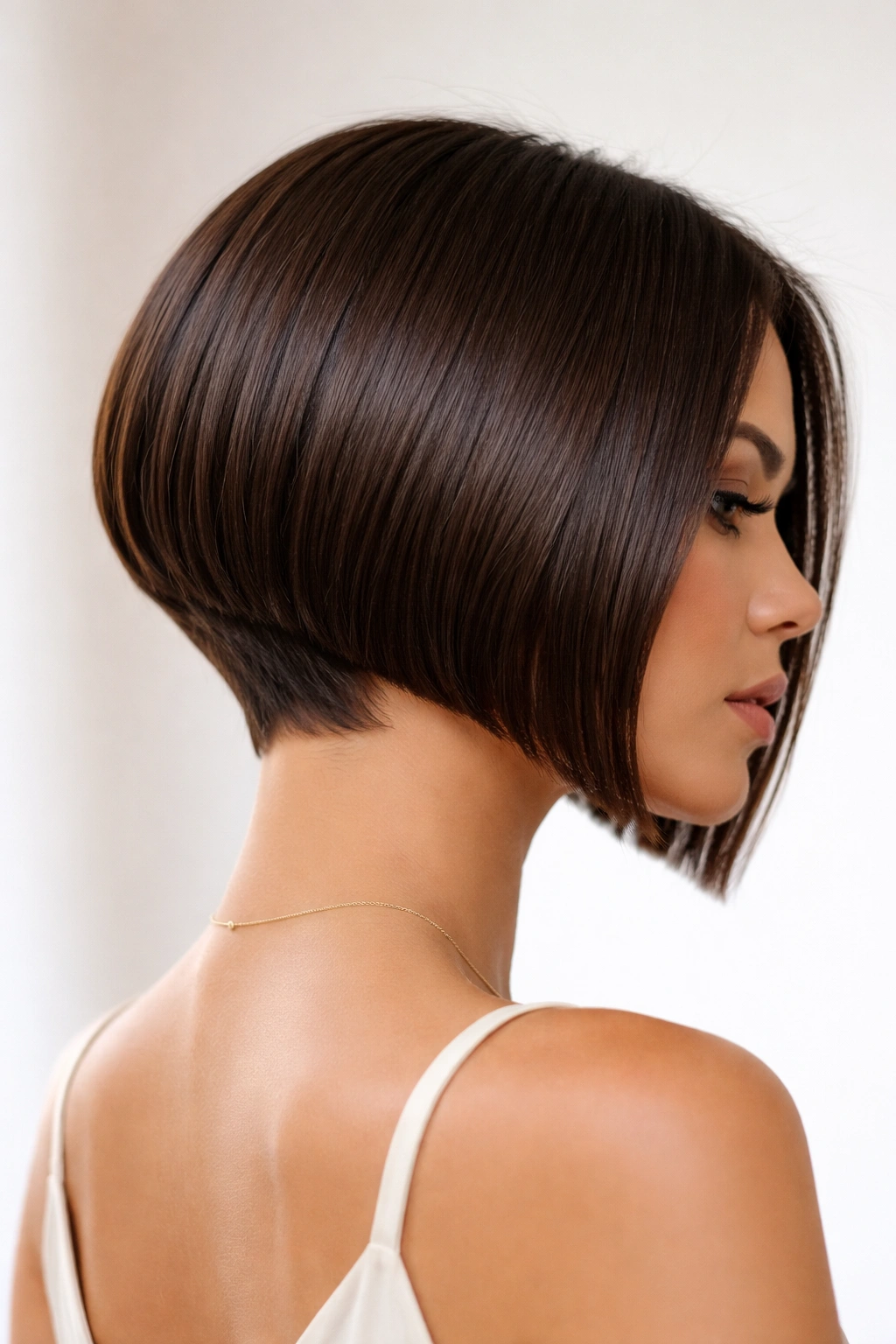
Take everything textured about a classic stack and make it precise, geometric, and sharp. A blunt stacked bob features clean, even lines with minimal layering, creating a crisp silhouette that reads modern and graphic. The back sits short and compact, while the front pieces maintain a defined perimeter line that doesn’t soften or blend.
Why It Stands Out
This is a bold, statement-making haircut that photographs beautifully and feels decidedly fashion-forward. The blunt lines create a sense of structure and intention that reads as intentional and curated rather than casual. It demands a confident wearer, but the payoff is a cut that feels distinctly individual and memorable.
The Styling Approach
- This cut looks sharpest when blow-dried straight or with a slight outward flip at the ends
- Use a flat iron to emphasize the clean lines and geometric shape
- Keep the styling sleek and polished—this cut is about precision, not texture
- A smoothing serum or light oils help emphasize the blunt edges and create shine
Worth knowing: Blunt bobs show every hair texture and cowlick more obviously than layered versions. If you have a stubborn crown whorl or very fine, wispy layers, this might require more daily styling effort than you’re willing to invest.
3. The Soft Stacked Bob
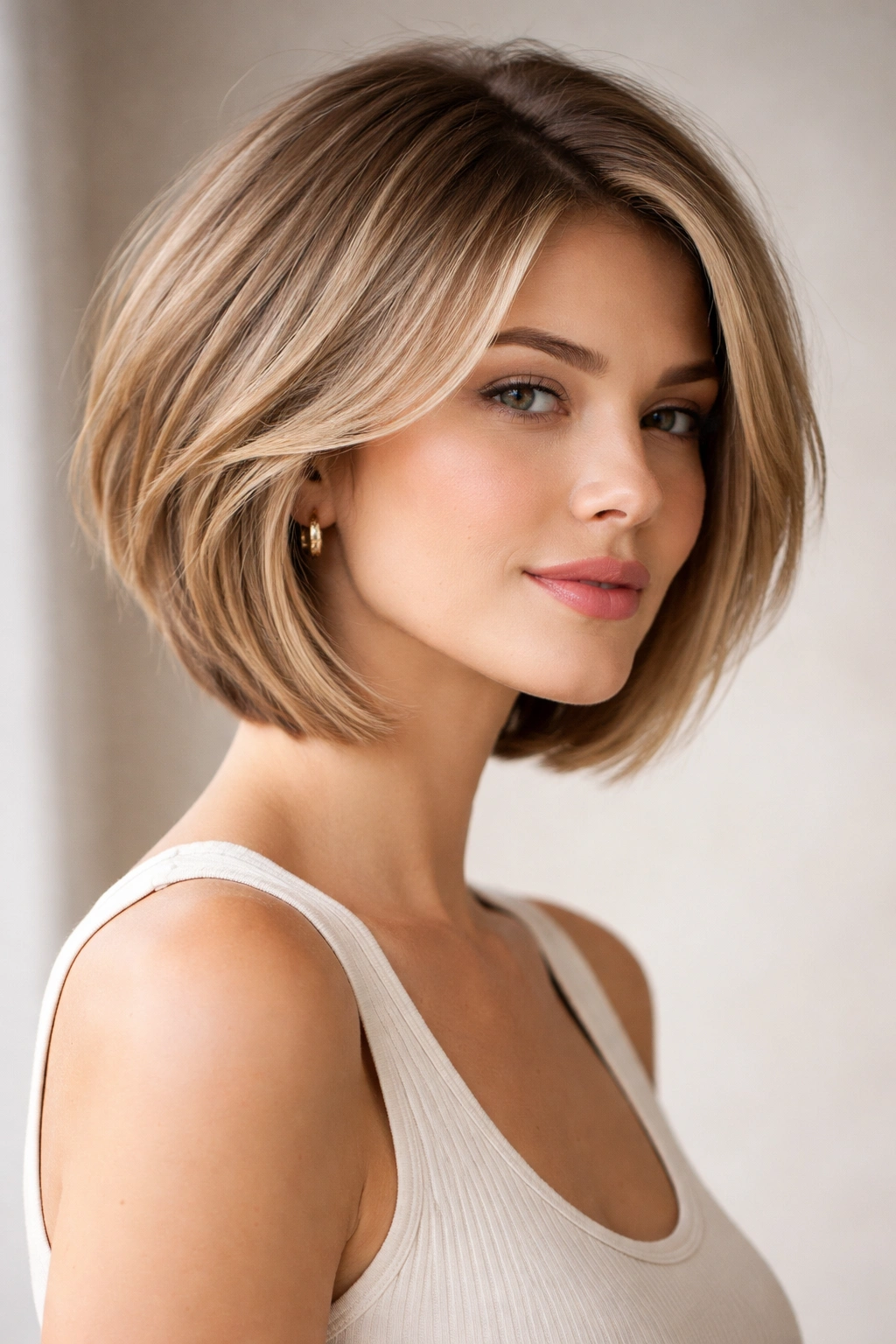
This version splits the difference between textured and blunt by using longer, more subtle layers that create movement without the deliberately choppy, separated effect. The layers blend into each other smoothly, creating a softer overall silhouette while still maintaining volume at the crown and visual interest throughout.
How It Differs From Other Stacks
The soft stack prioritizes blending and gradation over visible texture. Rather than distinct, chunky layers, you’re looking at a graduated length progression that creates shape and movement without that sharp, piecy quality. This version tends to feel less architectural and more romantic or undone.
Styling Suggestions
- Blow dry with movement for a soft, face-framing effect, or air dry for an even more relaxed vibe
- Use a curling iron or wand to add gentle waves, which works beautifully with the subtle layers
- This cut looks great both polished and undone, depending on how you style it
- A light texture spray enhances movement without creating that deliberately choppy appearance
Insider note: The soft stack is the most forgiving of the stacked variations if you can’t commit to frequent trims—the subtle blending means it can go a bit longer between cuts without losing shape.
4. The Short Pixie-Bob Hybrid
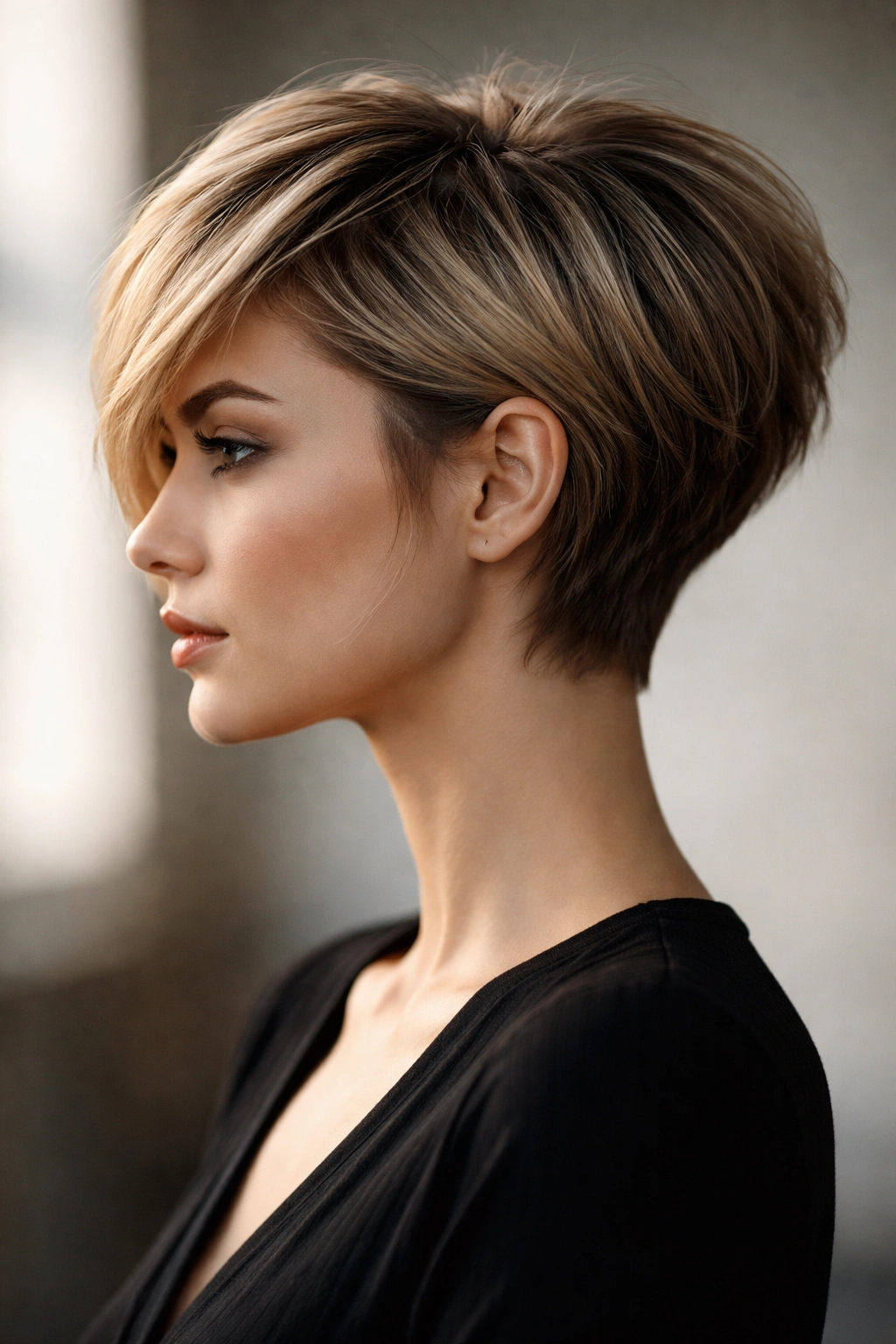
This is where short and stacked collide, creating a hybrid cut that sits somewhere between a pixie and a bob. The back and crown are cut very short with significant texture and undercut details, while the front pieces are grown out to frame the face at cheekbone length or just below. It’s a daring, high-impact cut that immediately communicates confidence.
Why It Commands Attention
This cut plays with proportion in an unconventional way—the stark contrast between the very short back and the longer front pieces creates visual drama and movement. It’s a cut that refuses to be boring or overlooked, and it works beautifully as a statement piece for people who aren’t afraid to stand out.
Styling and Maintenance
- The short back and crown require frequent touch-ups every 3-4 weeks to maintain the cropped silhouette
- The longer front pieces can be styled sleek, waved, or tucked behind the ears depending on your mood
- Use texturizing products on the short sections to add interest and dimension
- This cut looks stunning when you lean into edge and attitude in how you style it
Real talk: This is a cut for people who genuinely want short hair but aren’t ready to fully commit to a pixie. It gives you the option to grow out the front pieces if you change your mind, making it slightly less permanent than a full pixie.
5. The Choppy Medium Stack
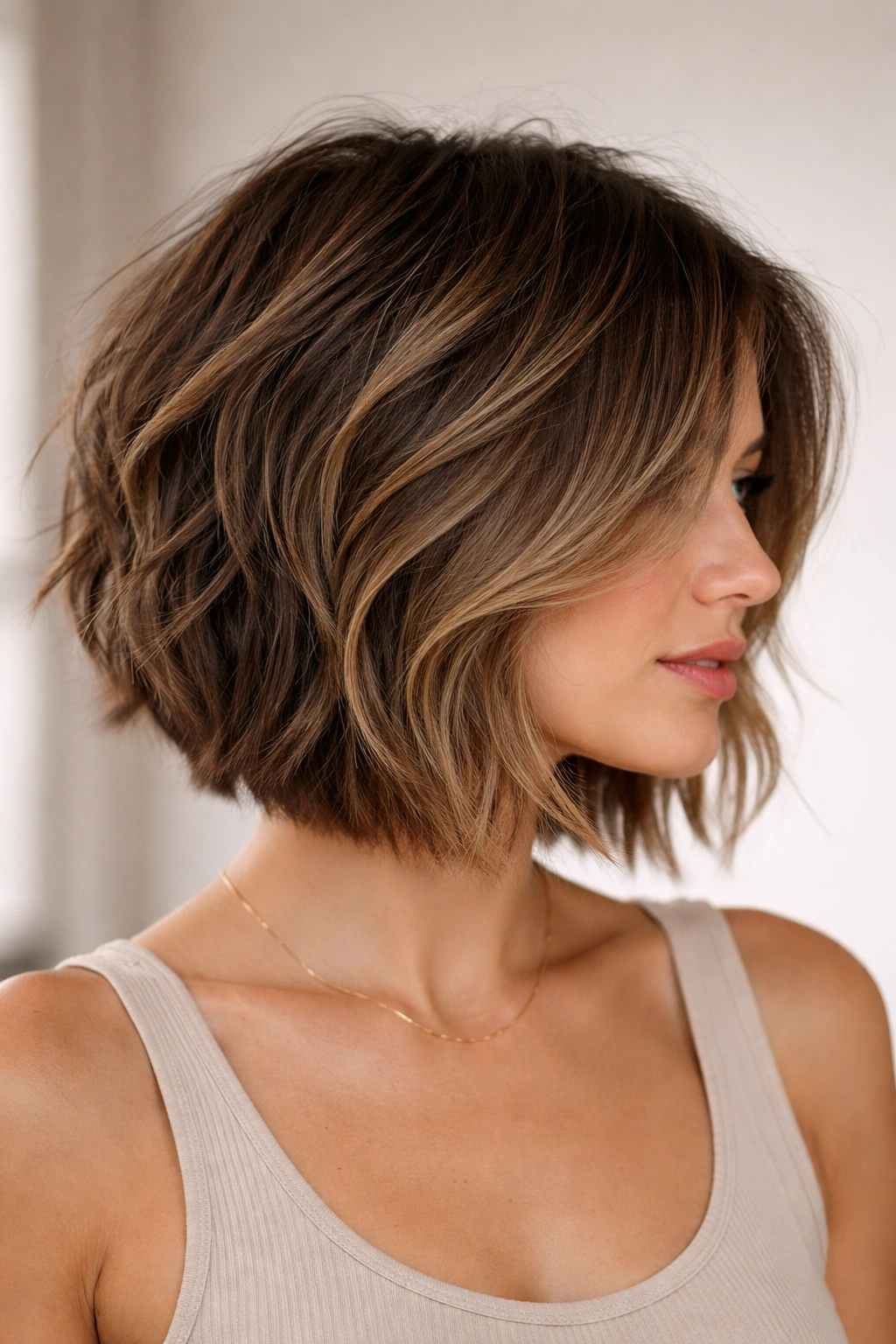
Move into medium-length territory with a choppy, layered bob that reaches somewhere between the ears and shoulders. This version uses more pronounced, visible layers throughout the entire cut to create texture and movement, but because of the added length, it feels slightly softer and more accessible than a super-short stack.
What Makes It Medium
The defining characteristic of a medium choppy stack is that it extends past the jawline—typically to somewhere between the ears and shoulders—while still maintaining that signature layered, textured quality. You’re getting more length for styling versatility without sacrificing the volumizing benefits of the cut.
Styling Options
- Blow dry with a round brush for volume, or scrunch in products for a beachy, textured wave
- Works beautifully with a tousled, undone aesthetic that’s very current
- Can also be styled sleek and smooth for a more polished look
- Waves or curls enhance the layered texture beautifully
Pro tip: This length is ideal if you want to experiment with color treatments like balayage or babylights, because the layering and movement really showcase color dimension.
6. The Sleek Layered Stack
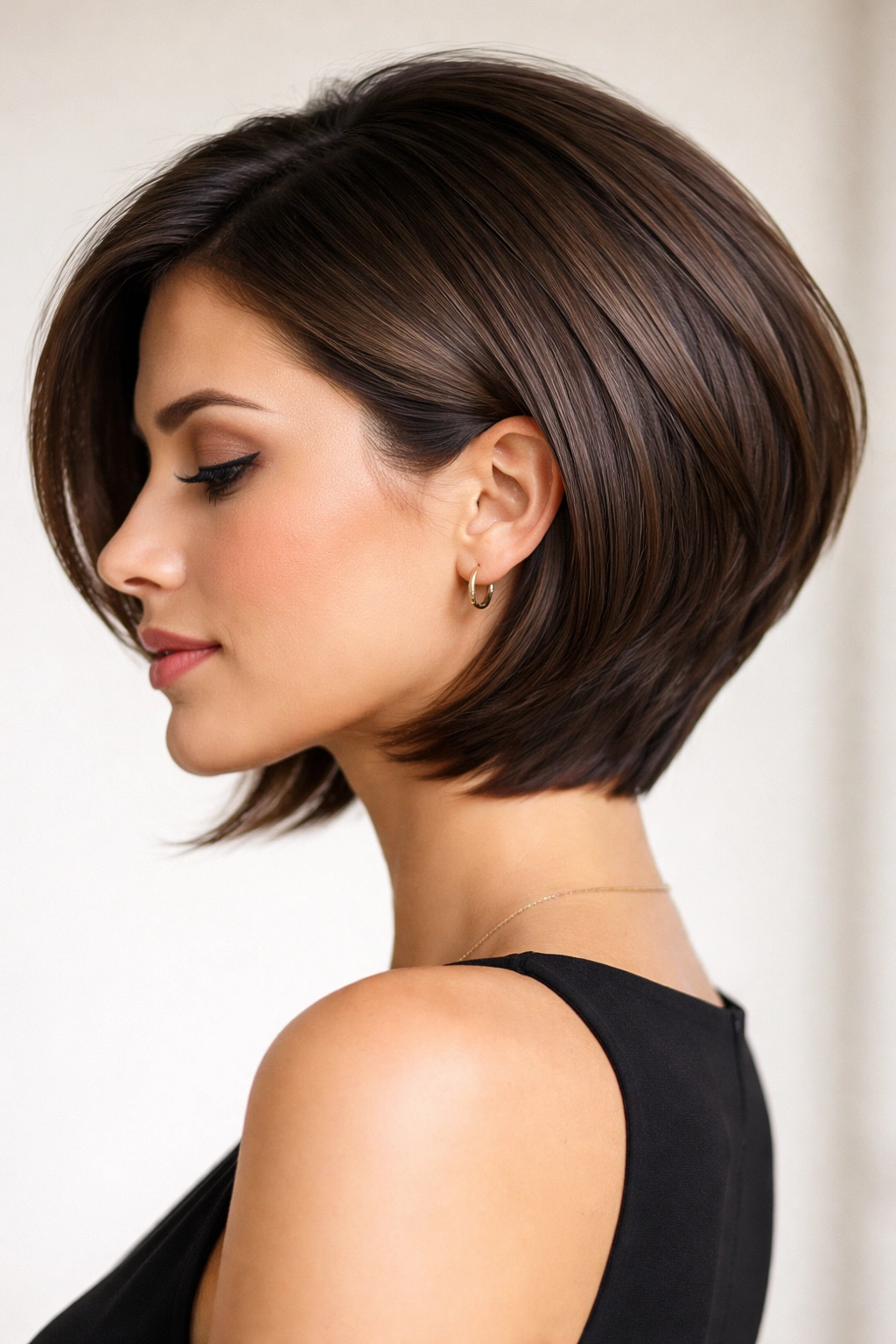
This version uses longer, more refined layers that still create shape and movement but with a focus on sleekness and polish rather than texture. The cut is deliberately grown out slightly longer and features subtle graduation that creates a streamlined, elegant silhouette.
The Philosophy Behind It
Where a textured stack embraces choppy separation, a sleek layered stack prioritizes cohesion and flow. The layers work together to create an overall shape rather than individual pieces. It’s a cut that reads sophisticated and intentional without feeling overly trendy or high-maintenance.
How to Get the Look
- Blow dry smooth with a paddle brush and a smoothing product for polished results
- A flat iron can emphasize the sleek, refined lines
- Use light oils or serums to add shine and enhance the blended layers
- This cut looks great styled straight or with loose, romantic waves
Worth knowing: This cut suits people who prefer a more put-together, polished aesthetic and are willing to spend a few minutes styling each morning for a refined finish.
7. The Disconnected Stacked Bob
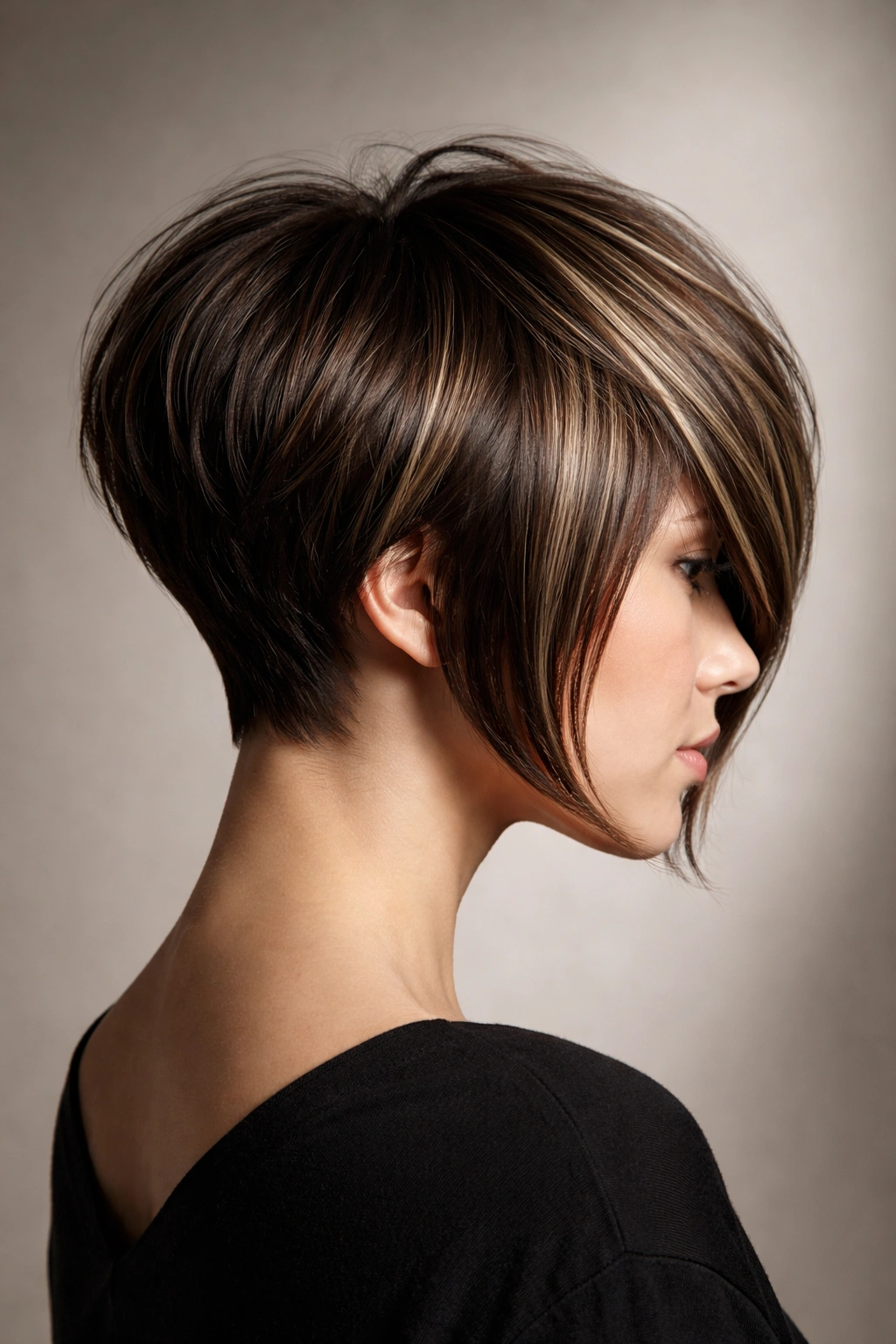
This cut features a dramatic disconnect between the top layers and the longer bottom section—essentially stacking two different lengths in one cut. The crown and top layers sit quite short, while the underneath and front pieces are considerably longer, creating a bold silhouette with multiple lengths happening simultaneously.
Why The Contrast Matters
The disconnect creates visual interest and movement that a more blended stack simply can’t achieve. It’s a cut that works beautifully in black and white photography and reads as intentional, editorial, and fashion-forward. The contrast between short and long also makes the cut photograph differently depending on angle and lighting.
Styling Approach
- The short crown can be styled smooth or textured, depending on your preference
- The longer underneath and front pieces can be styled independently—sleek, wavy, or tousled
- This cut gives you more versatility in daily styling options because different sections can be approached separately
- The disconnect reads best when it’s clearly defined and not accidentally blended through styling
Insider note: This cut requires a skilled stylist who understands proportion and can execute the disconnect precisely—it’s not a beginner’s cut to create, but it’s absolutely worth seeking out an experienced hand.
8. The Textured Angled Stack
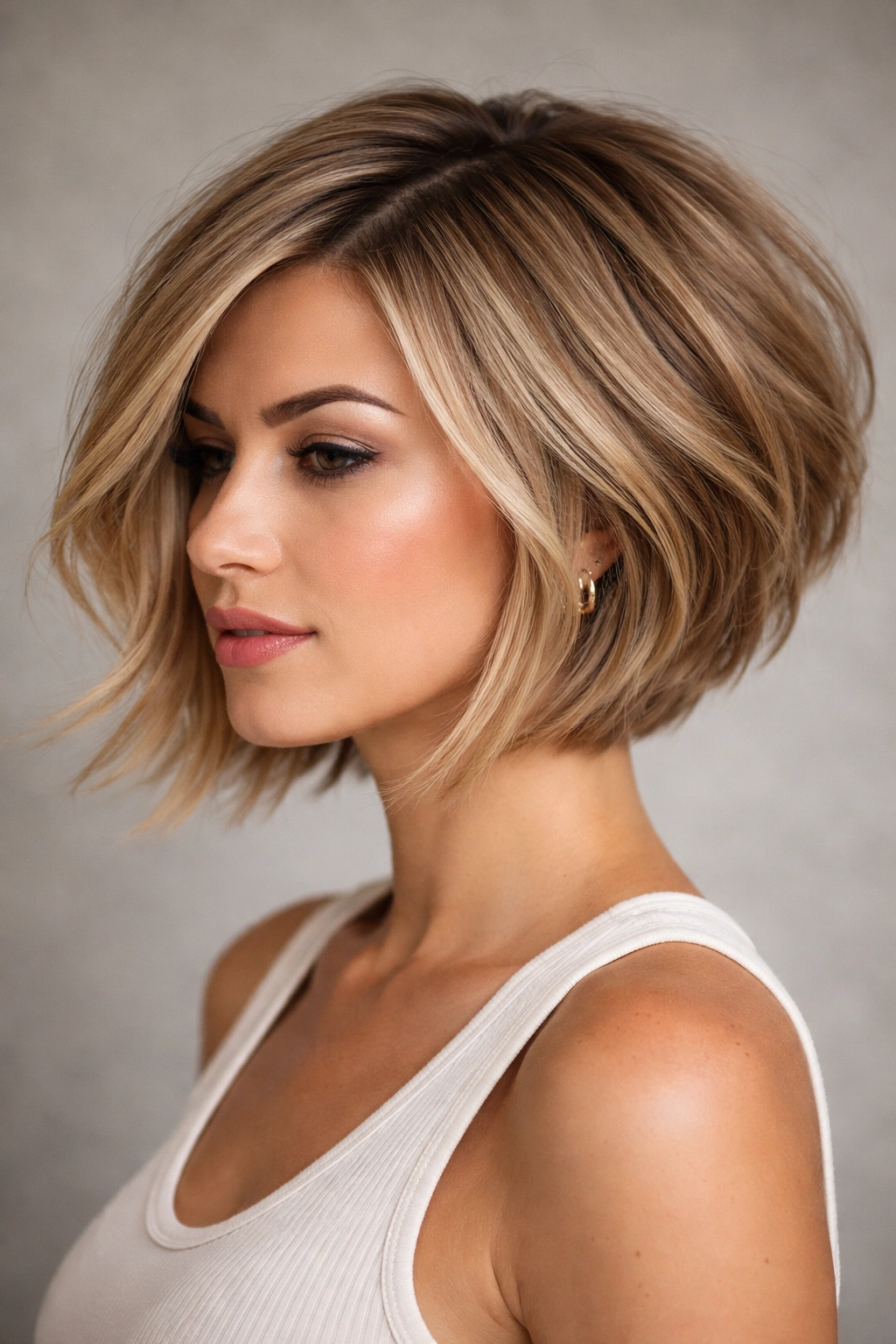
This version uses layers to create an angle—shorter in the back, progressively longer as it moves toward the face, creating that classic angled bob silhouette with the added dimension of visible texture. The layers ensure you’re not just getting an angle, but movement and volume as well.
How The Angle Works
The forward-facing angle is inherently flattering because it frames the face and draws attention upward. When you add texture and layering to that angle, you get a cut that’s both structurally sound and visually interesting. The shorter back layers create volume at the crown, while the angled, longer front pieces soften the overall effect.
Styling Suggestions
- This cut looks beautiful with gentle waves or curls that follow the angle
- Blow dry with a round brush directing hair outward and downward to emphasize the angle
- The textured layers mean you don’t have to achieve perfect smoothness—it looks great slightly undone
- Use texturizing products to enhance the layering and create movement
Real talk: If you have naturally straight hair, you might need to use a curling iron or wand regularly to get the most from this cut’s potential. The angle and texture shine when there’s movement and dimension in the hair itself.
9. The Undercut Stacked Bob
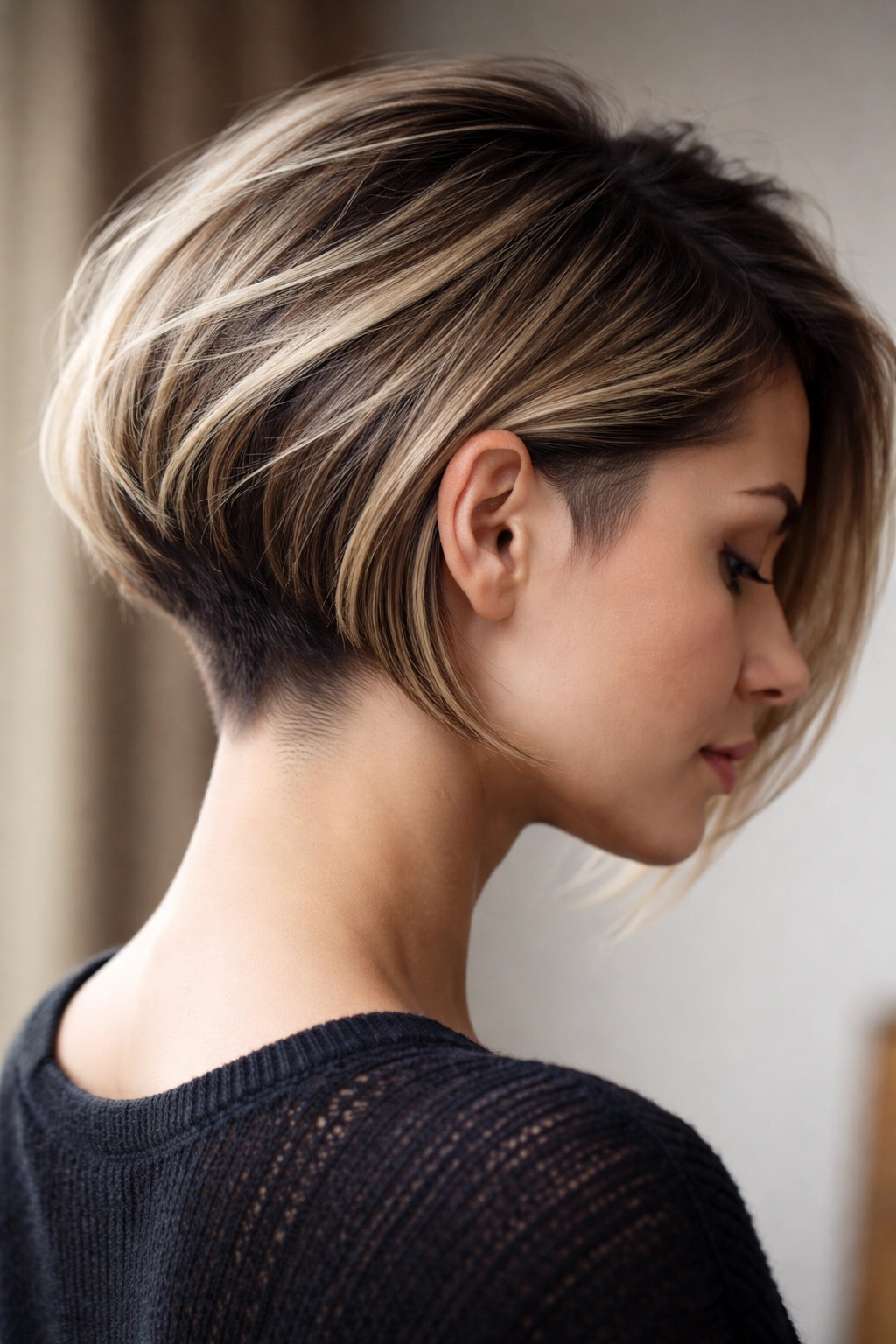
This bold variation incorporates an undercut—where the underneath layers are cut significantly shorter than the top section, creating hidden texture and volume. When you put your hair up or tuck it behind your ears, you reveal the unexpected cropped undercut, which adds an element of surprise and edge.
The Purpose Of The Undercut
An undercut achieves multiple things simultaneously: it reduces bulk on the bottom while creating the illusion of extra volume on top, it allows for more styling flexibility (you can flip the undercut out for texture or hide it for a sleeker look), and it gives the cut an edgy, modern sensibility that feels current and intentional.
How To Manage It
- The undercut requires touch-ups every 4-6 weeks to maintain the defined length difference
- You can style the top section independently from the undercut, giving you flexibility
- The undercut adds texture when exposed, creating interesting styling possibilities
- This cut works particularly well for people who love changing up their look depending on styling choices
Pro tip: An undercut is also excellent if you run warm or want less hair bulk during warmer months—you can keep the top longer for styling while maintaining breathability with the short undercut.
10. The Feathered Stacked Bob
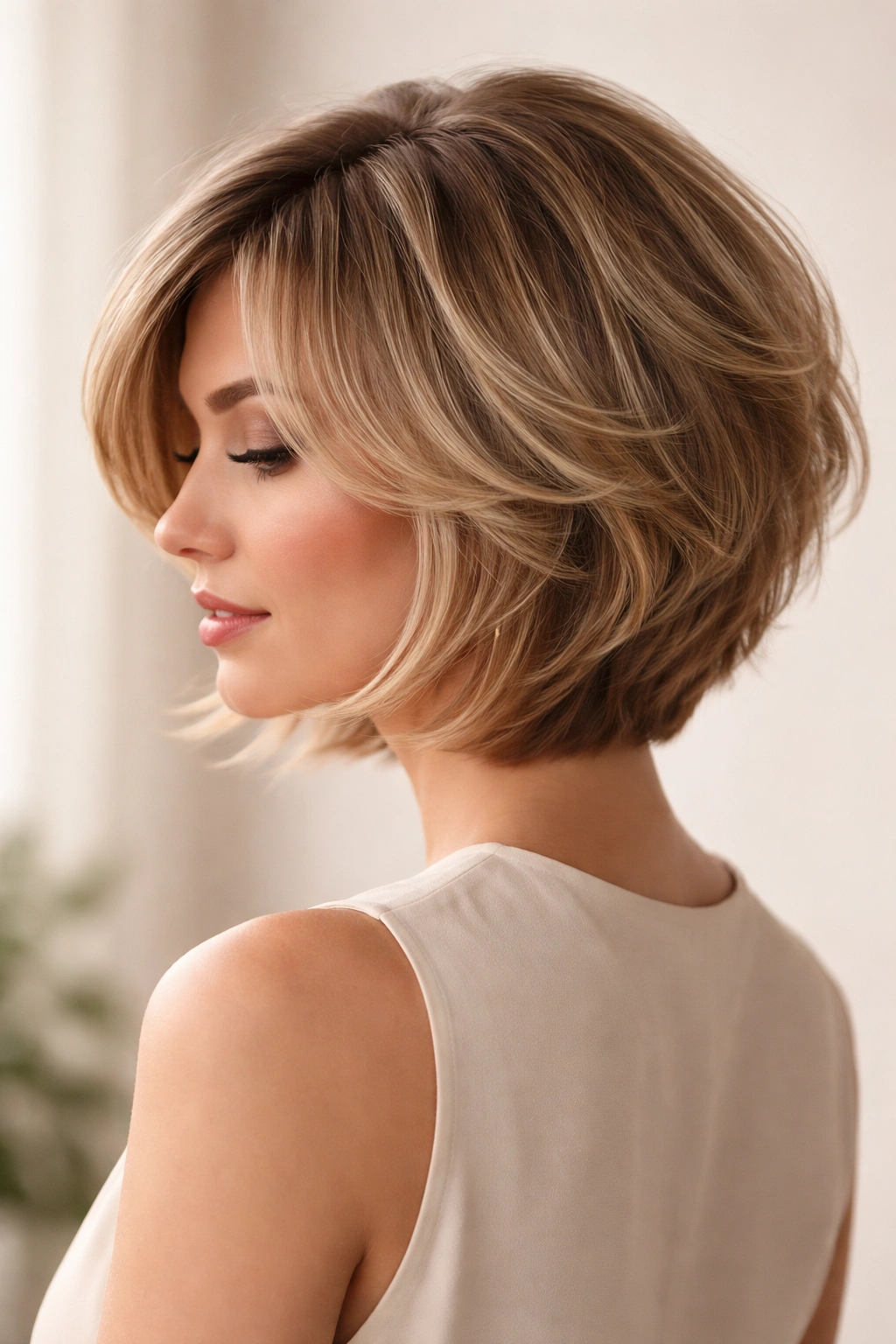
This version uses longer, more delicate layers that feather and blend rather than stack sharply. The layers are softer and more romantic, creating movement without that deliberately chunky, textured appearance. It’s a cut that works beautifully with movement and creates a softer overall silhouette.
Why Feathering Changes Everything
Feathering is the opposite of stacking in terms of layer presentation—instead of distinct, separated layers, you’re creating a gradual transition from longer to shorter. This makes the cut feel less architectural and more organic, with layers that work together to create shape rather than individual pieces that read as separate elements.
Styling the Feathered Stack
- This cut is forgiving with styling because the soft feathering works with almost any approach
- Blow dry for volume and movement, or air dry for a more effortless effect
- Waves and curls look particularly beautiful with feathered layers
- Light texturizing products enhance the soft, layered effect without making it look stiff
Worth knowing: Feathered bobs can look a bit wispy or thin if your hair is very fine or you don’t style them with volume. If volume is important to you, discuss this with your stylist—you might prefer a more structured stack.
11. The Razored Stacked Bob
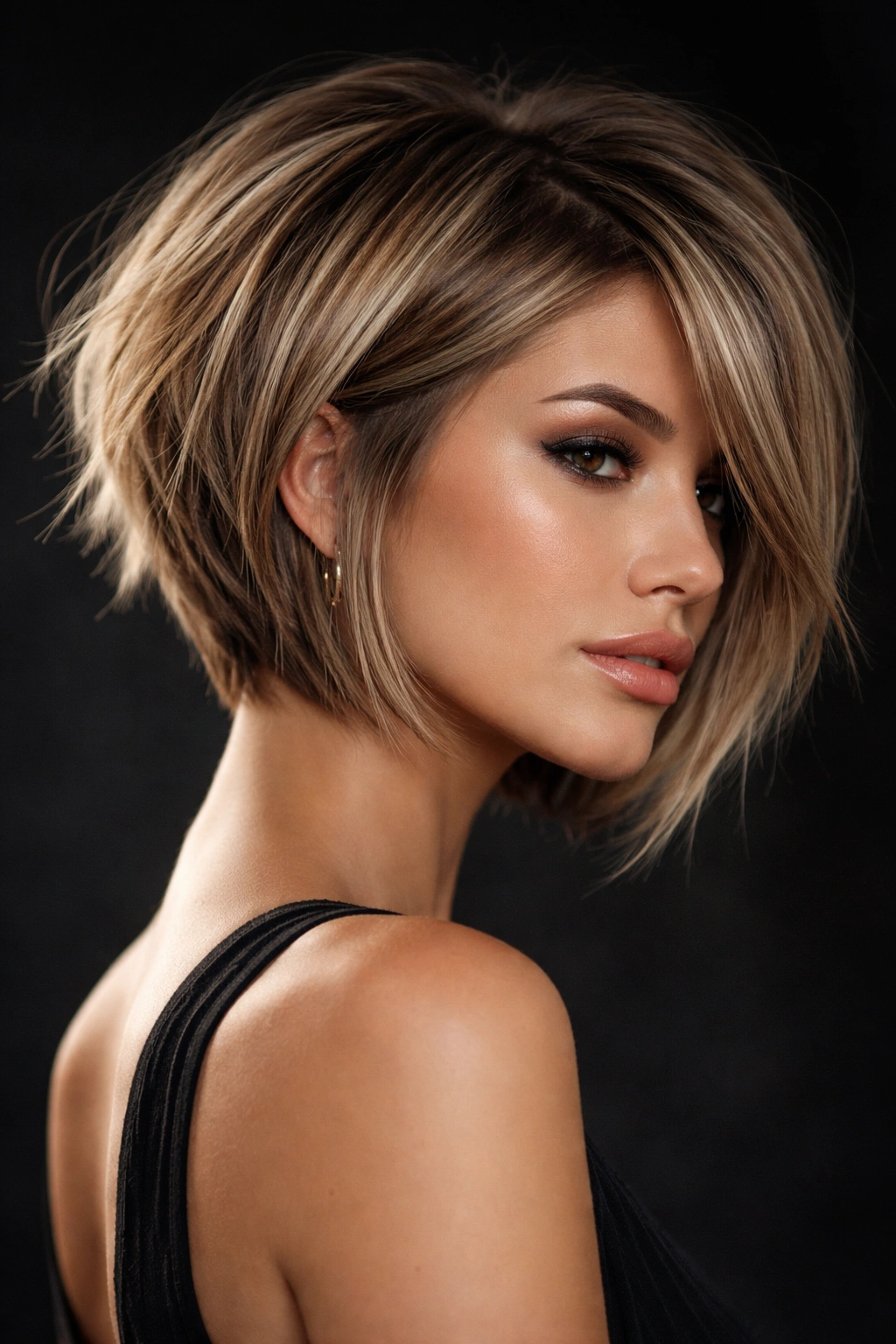
This cut is executed with a razor rather than scissors, creating a sharp, edgy quality to the layers with slightly piece-y, separated ends. Razoring creates a different texture than scissor-cut layers—the ends are thinner and more delicate, giving the cut an almost art-deco, graphic quality.
The Razoring Technique
Razoring is a more advanced cutting technique that requires skill and precision. The razor cuts through the hair at an angle, creating thin, tapered ends that look ultra-modern and slightly edgy. This technique is particularly effective for creating that deliberately choppy, separated layer look that defines a statement stacked bob.
How It Looks Different
Razored layers read more sharply defined and visually interesting than blunt-cut layers. There’s more light play and visual movement because the tapered ends create variation in the perimeter. It’s a technique that works beautifully for people who want that high-fashion, editorial look.
Maintenance and Styling
- Razored bobs need regular trims to maintain sharp definition—every 4-6 weeks is ideal
- Styling with texture spray or dry shampoo enhances the piece-y quality
- This cut looks best with slightly undone, tousled styling rather than sleek smoothness
- Works beautifully with darker hair tones where the layer separation reads more obviously
Insider note: Ask your stylist specifically if they work with a razor and feel confident with it—not all stylists use razors regularly, and you want someone experienced with the technique.
12. The Shag-Influenced Stacked Bob
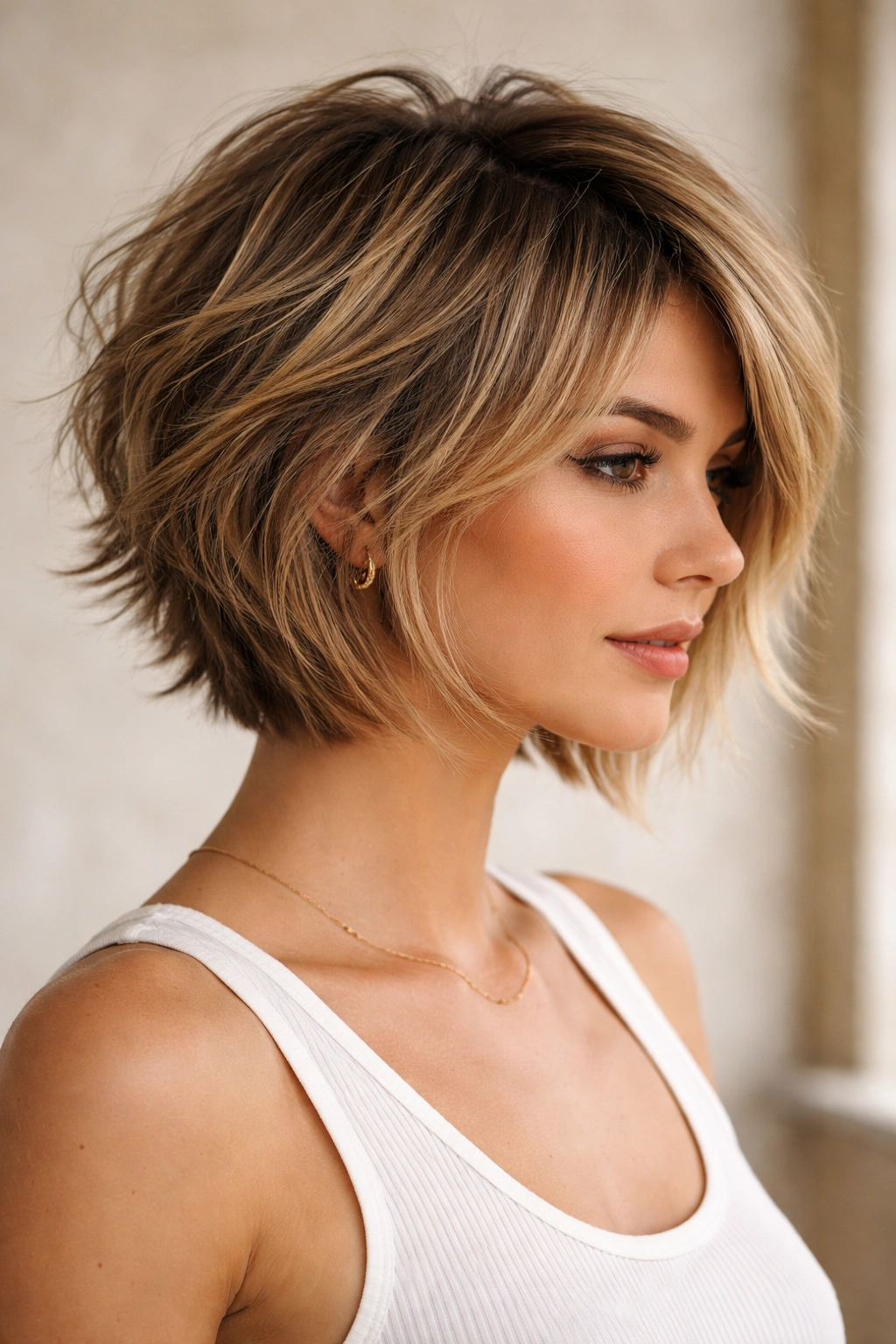
This cut borrows the spirited, rock-and-roll energy of a shag while maintaining the compact structure of a stacked bob. It features choppy, piecey layers throughout that create an almost tousled-on-purpose effect, with more dramatic layering at the crown that creates volume and movement.
What Makes It Shag-Inspired
A shag traditionally features choppy layers throughout the entire head with a focus on texture and movement over structure. When you apply shag principles to a stacked bob, you’re creating a cut that’s slightly wilder and more undone than a traditional stack, with an emphasis on that lived-in, effortless aesthetic that feels inherently cool.
The Right Vibe
This cut works beautifully for people who want a haircut that looks good a little messy, that doesn’t require meticulous styling daily, and that embraces texture rather than fighting it. It’s a cut with attitude and personality built into the structure.
Styling Approach
- Embrace tousled, undone styling—this cut looks better slightly textured and piece-y than sleek
- Use texturizing spray or sea salt spray to enhance the shag-like quality
- Blow dry with your fingers through your hair for that lived-in effect
- Works beautifully with natural waves or curls that the choppy layers will enhance
Real talk: This cut shows every hair texture, wave pattern, and curl pattern—which is part of its charm, but it’s not ideal if you want to hide or minimize texture.
13. The Modern Graphic Stack
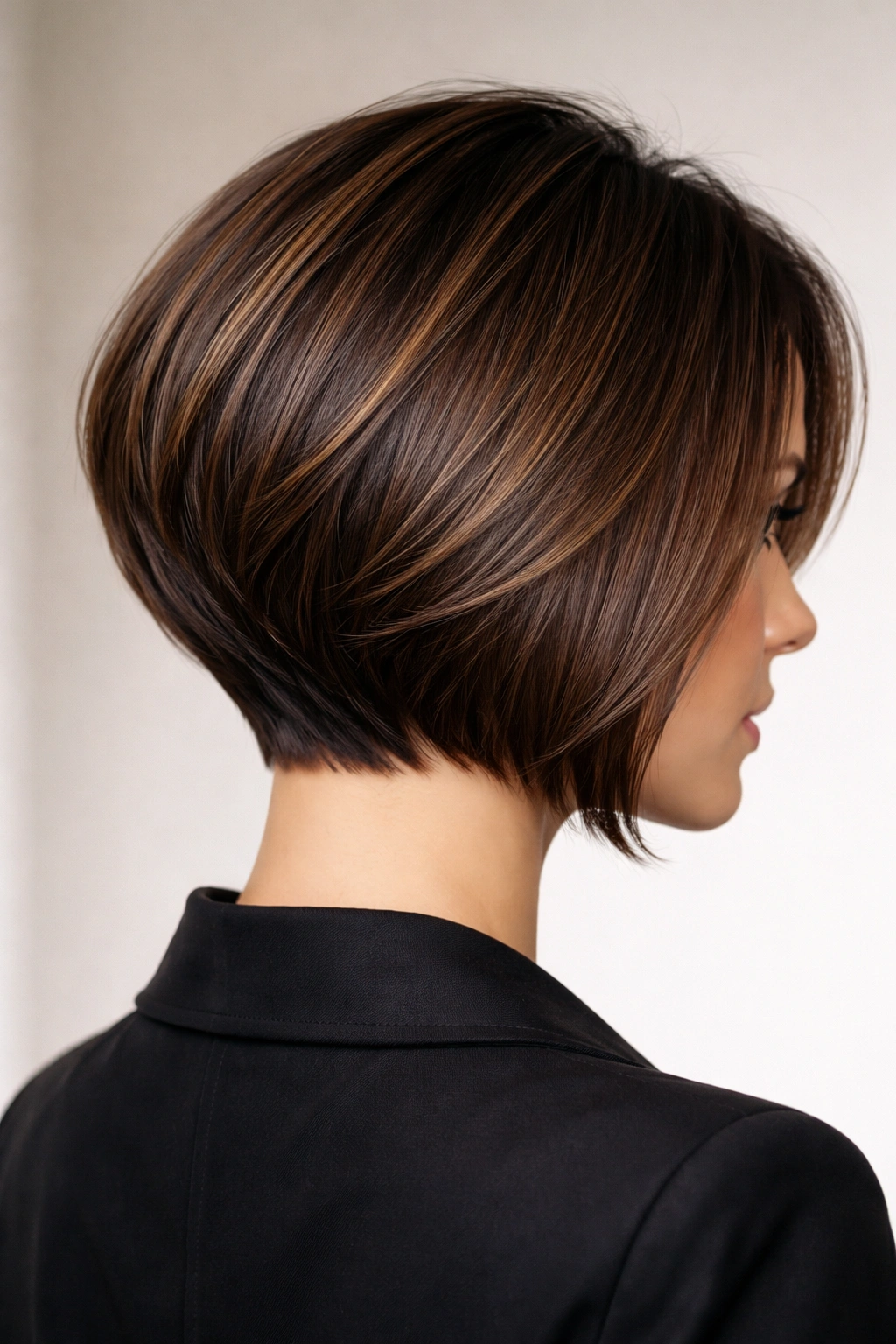
This is a precision-cut stacked bob with clean, intentional lines and geometric proportion. It’s shorter and more compact than many stack variations, sitting well above the shoulders, with clear separation between different sections of the cut. It reads very current and fashion-forward.
The Geometric Approach
A modern graphic stack prioritizes proportion, angle, and intentional design. Every line in the cut serves a purpose—nothing is accidental. The back might be cut in a specific shape, the sides might follow a particular angle, and the layers are positioned to create maximum impact. This is a cut that demands precision in both execution and styling.
Who This Suits
This cut works beautifully for people with strong features, confident personalities, and a willingness to style their hair intentionally each day. It’s not a wash-and-go cut—it’s a cut that rewards daily styling attention with a polished, deliberate appearance.
Styling Requirements
- This cut requires blow-drying and styling to look its best
- Use a round brush for volume, and a flat iron for clean lines
- Keep styling sleek and controlled rather than undone
- This cut looks best with hairspray to maintain precise lines throughout the day
Pro tip: Bring inspiration photos to your consultation that show exactly what you mean by “modern” and “graphic”—this level of precision requires clear communication with your stylist.
14. The Curly Girl-Friendly Stacked Bob
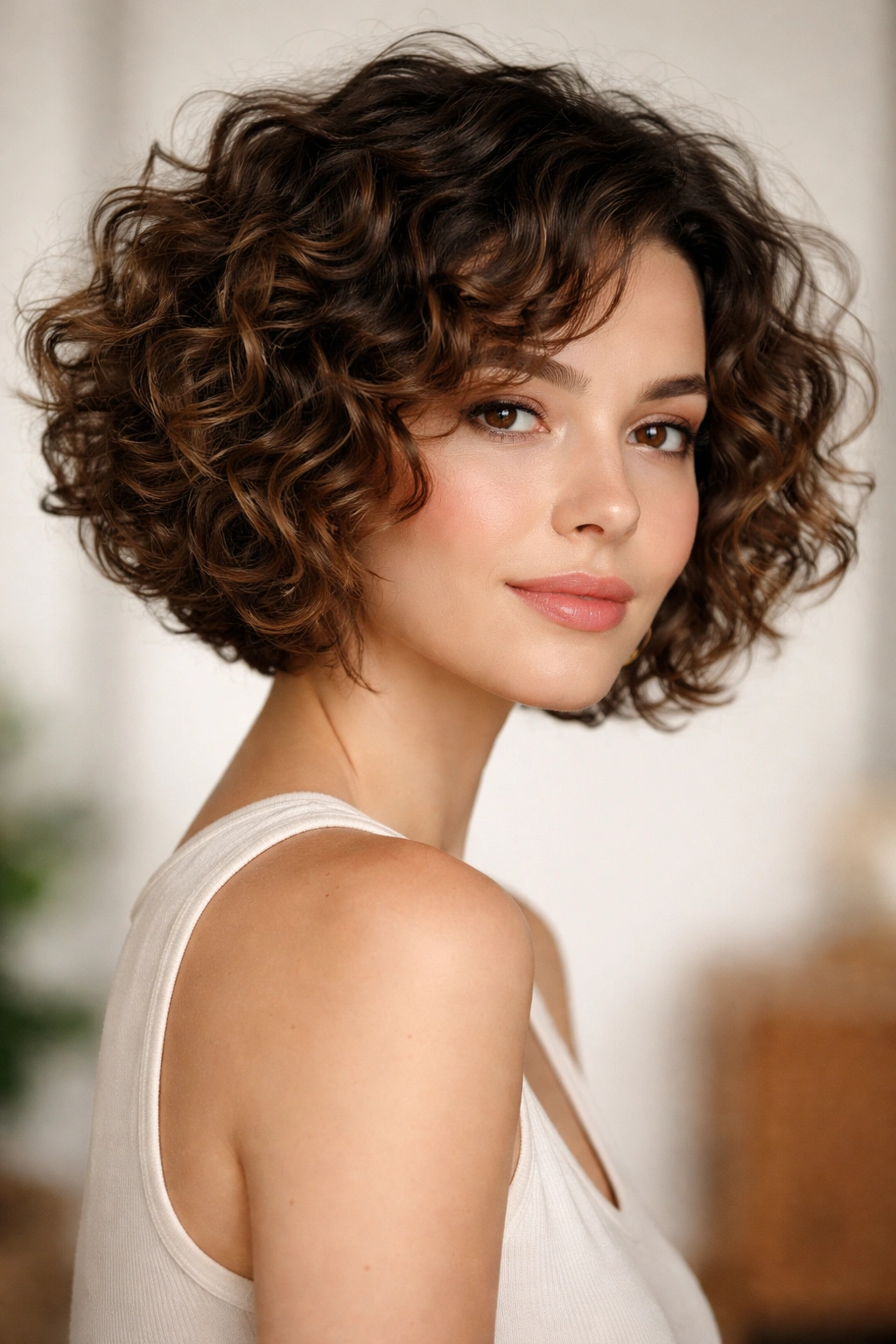
This version is designed specifically with curly and wavy hair in mind. The layers are positioned and cut to work with your natural curl pattern rather than against it, with longer layers on top to prevent the dreaded triangle effect that can happen when you stack heavily on naturally curly hair.
How It’s Different For Curls
Curly hair requires a different approach to stacking because curls shrink up when dry, creating more volume at the crown naturally. A curly-friendly stack uses longer layers on top and shorter, more textured layers throughout to enhance curl definition without creating bulk or frizz. The cut is designed to work with your curl pattern, not fight it.
Styling Curly Stacks
- Embrace the Curly Girl Method with leave-in conditioner and gel for definition
- Plop or microfiber towel to encourage curl formation while minimizing frizz
- Diffuse your curls gently rather than rough blow-drying
- Refresh waves between wash days with water and product rather than restyling from scratch
- The cut should enhance your natural curl pattern, not require you to fight it
Worth knowing: Working with a stylist who specializes in curly hair is non-negotiable for this cut. They’ll understand how your curls will behave when dry and cut accordingly.
15. The Subtle Stack With Long Face-Framing
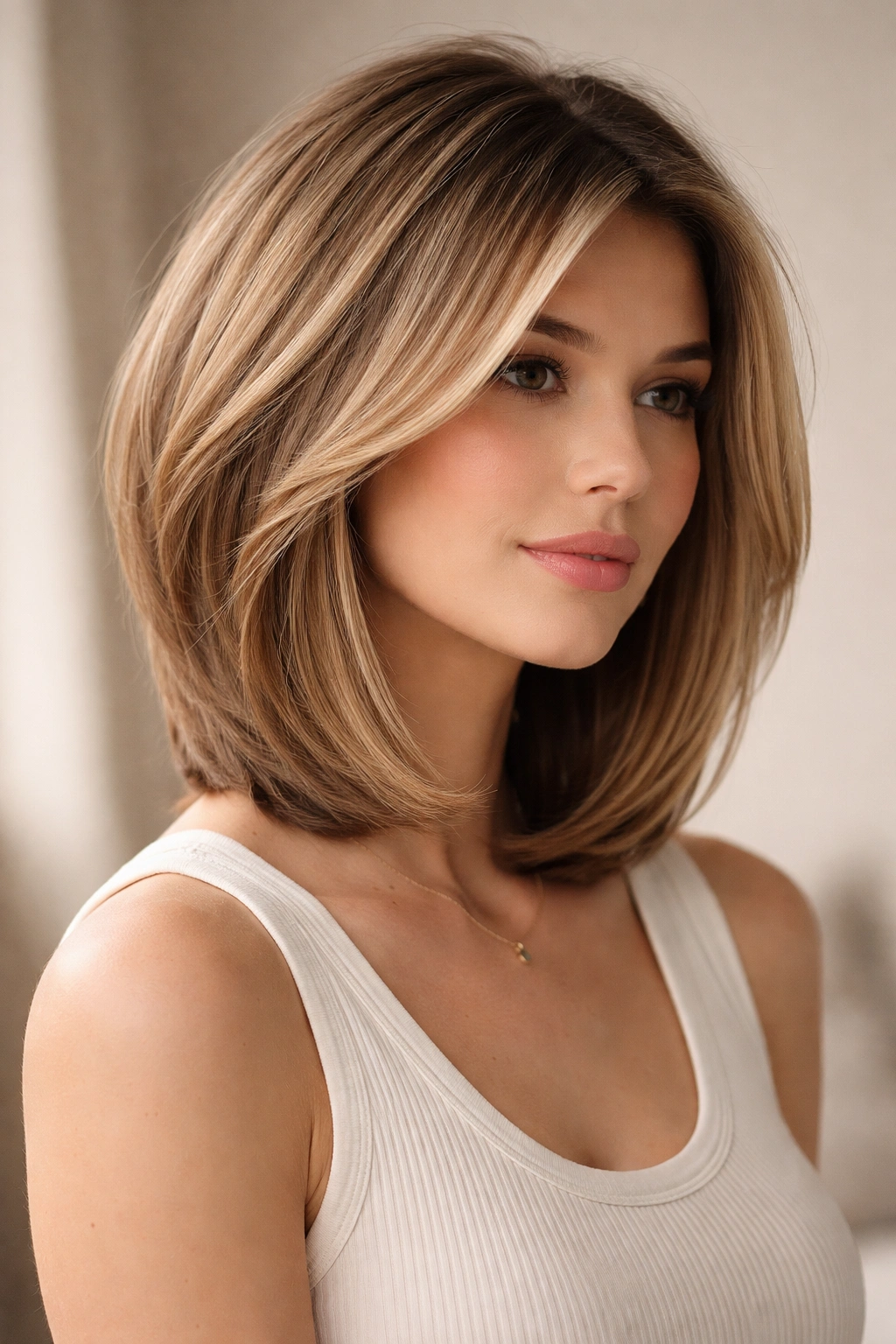
This is a stacked bob that plays it slightly safer with a longer overall length (closer to shoulder-length) and more subtle layering that focuses specifically on face-framing pieces. The back is still stacked and layered for volume, but the overall effect is less dramatic and more wearable for someone who wants a modern cut without going too short.
The Strategic Approach
This version layers where it matters most—around the face for flattering frames and at the crown for volume—while keeping the overall length more conservative. It’s an ideal bridge for someone who loves the stacked bob concept but isn’t quite ready to commit to a very short cut.
Styling Flexibility
- Works beautifully styled sleek and polished or tousled and undone
- The longer length gives you more options for updos and different styling approaches
- Face-framing pieces can be styled with waves or curls independently
- This length is versatile enough for multiple occasions and dress codes
Insider note: This cut is an excellent starting point if you’re new to stacked bobs and want to see how the style suits you before committing to something shorter and more dramatic.
16. The Blunt Textured Hybrid
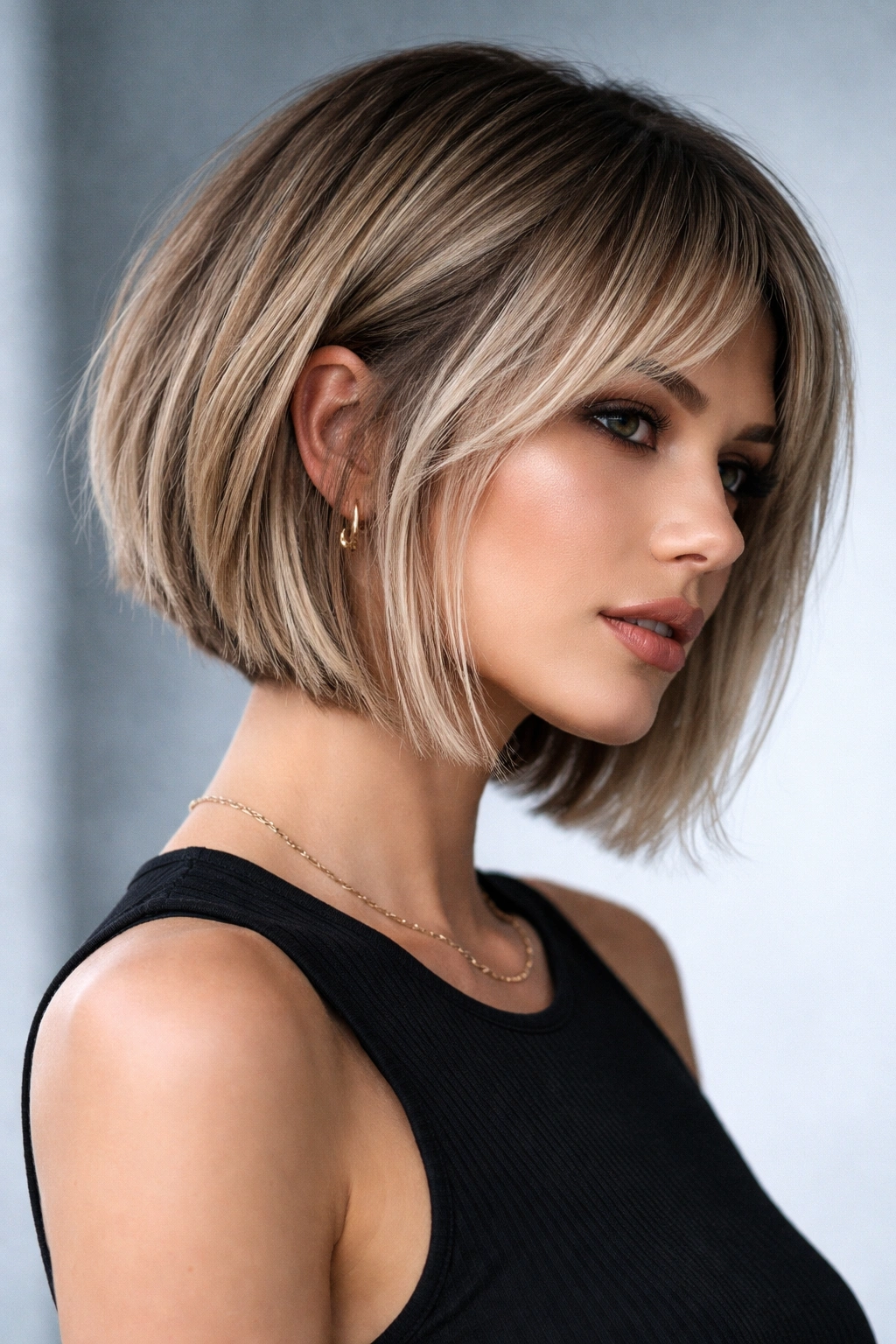
This cut combines the best of both worlds—the clean, graphic lines of a blunt bob with visible texture and choppy layers throughout. It’s not a pure blunt (which would have smooth, seamless edges) and not a pure textured stack (which would prioritize layers over line), but rather a deliberate blend of both aesthetics.
The Balance
By combining blunt structure with textured layers, you get a cut that reads modern and intentional while still having movement and life. The blunt perimeter creates a sense of polish and precision, while the interior layers ensure you’re not sacrificing volume or visual interest.
How To Style It
- This cut looks great blown out straight with clear lines or textured with some piece-iness
- You can adapt the styling to match different occasions—sleek and polished or undone and cool
- Use texturizing products selectively to enhance layers without losing the overall blunt structure
- The versatility of this cut means you can change the vibe depending on your styling choices
Real talk: The blunt-textured hybrid requires a stylist who understands how to balance structure with texture—not all stylists will execute this the way you’re envisioning it, so be very specific in your consultation.
17. The Grown-Out Stacked Bob
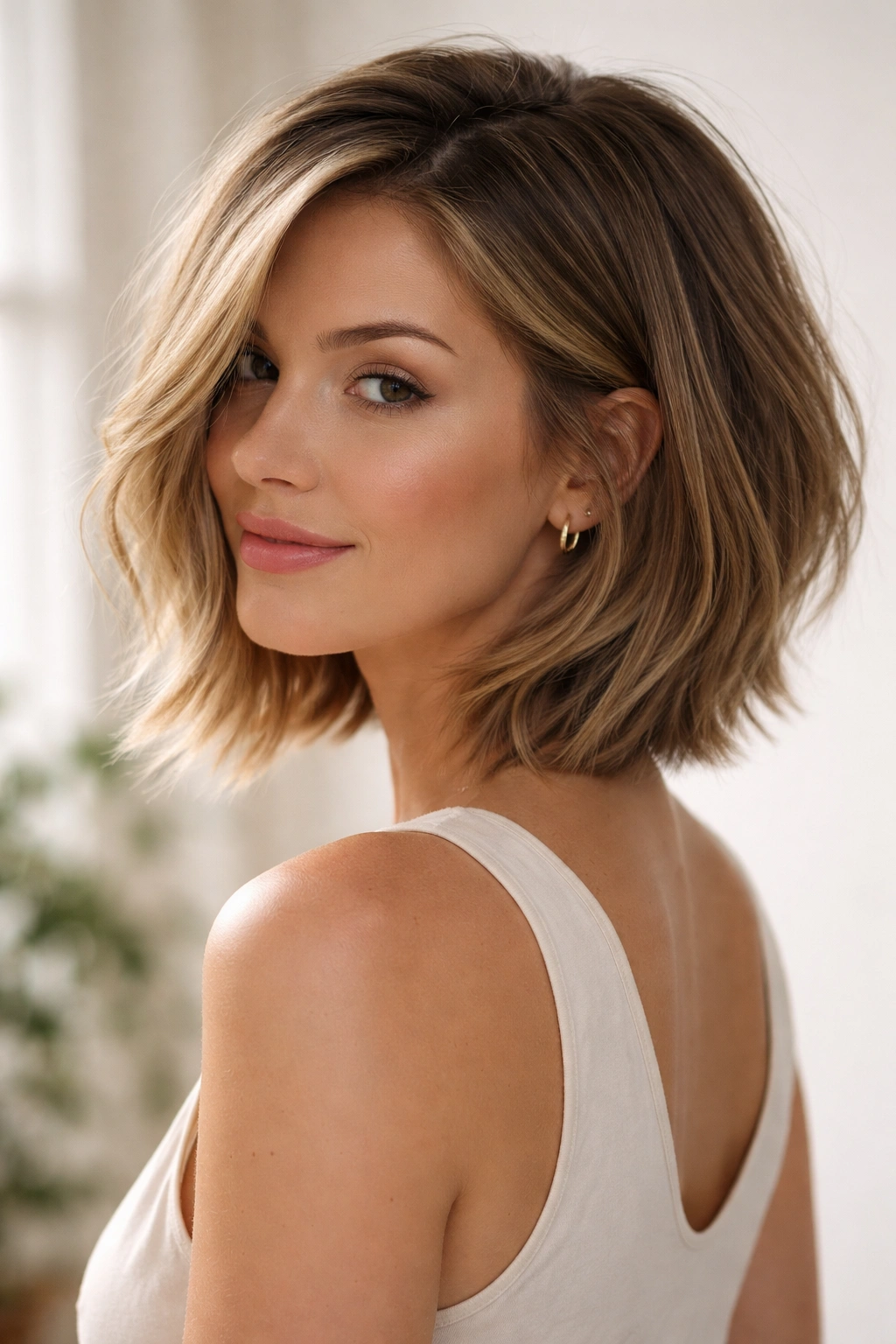
This is a stacked bob that’s been allowed to grow out past its typical maintenance window, creating a longer, slightly softer version of the style. The layers are still visible and create movement, but they’re less defined than a freshly cut stack, giving the cut a more relaxed, lived-in quality.
Why This Works
Some people find that they prefer a stacked bob once it’s been out for a few months—the layers blend slightly, the overall length increases, and the cut becomes less architectural and more effortless. If this resonates with you, you might discuss with your stylist how to cut your stack knowing that you’ll let it grow slightly longer before the next trim.
The Styling Sweet Spot
- The grown-out phase is often when the cut looks best with minimal styling effort
- Natural texture and waves are enhanced by longer, slightly blended layers
- You can still maintain volume at the crown while having more length for versatility
- This phase typically lasts 2-3 months before it starts looking shaggy rather than intentionally grown-out
Pro tip: If you know you’re not great about getting regular trims, discuss asking your stylist to cut the stack slightly more conservatively knowing it’ll grow out and mellow over time.
18. The Textured Shoulder-Grazing Stack
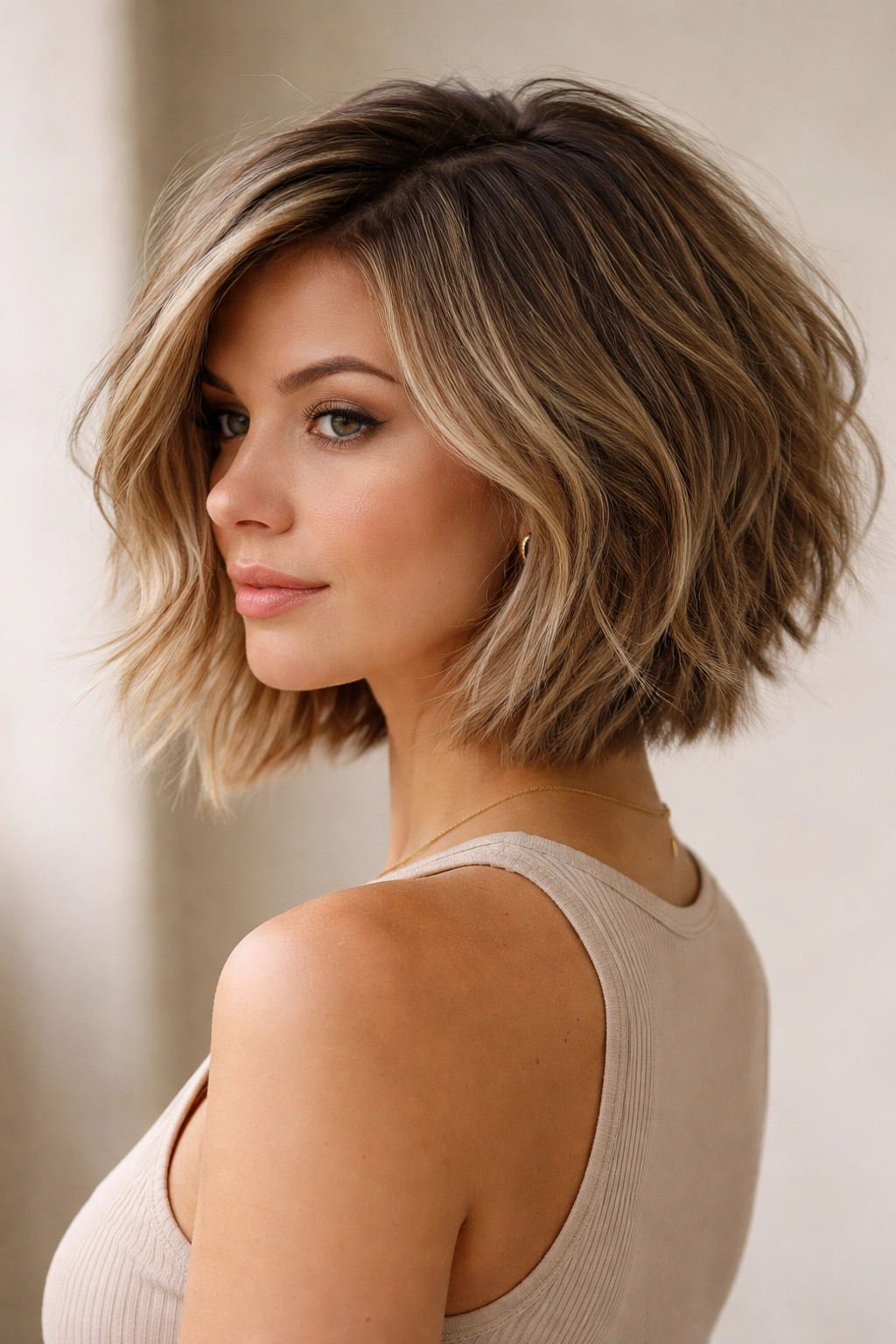
This final variation pushes the stacked bob to its longest still-stacked length—somewhere around shoulder-grazing—while maintaining choppy, visible layers throughout. It’s a cut that blends bob and shag territory, with enough structure to read as stacked but enough length to feel like you haven’t gone super short.
Why This Length Works
Shoulder-grazing length is the sweet spot for people who want movement and layers but aren’t ready for a genuinely short cut. The layers and texture create volume and visual interest without the commitment of a cropped stack. It’s long enough for styling versatility (braids, half-ups, styled with waves) while still delivering the modern, textured vibe.
Styling Options
- Waves and curls look stunning at this length with layered texture
- You can style sleek or tousled depending on your mood and the occasion
- Enough length to pull up or tuck behind ears if you want a different silhouette some days
- The chopped layers mean you don’t need to achieve smoothness—textured styling is ideal
Worth knowing: At this length with this much texture, you’re requiring trims every 6-8 weeks to maintain the shape. If you can’t commit to that timeline, this version might require more styling effort than shorter stacks as it grows out.
Final Thoughts
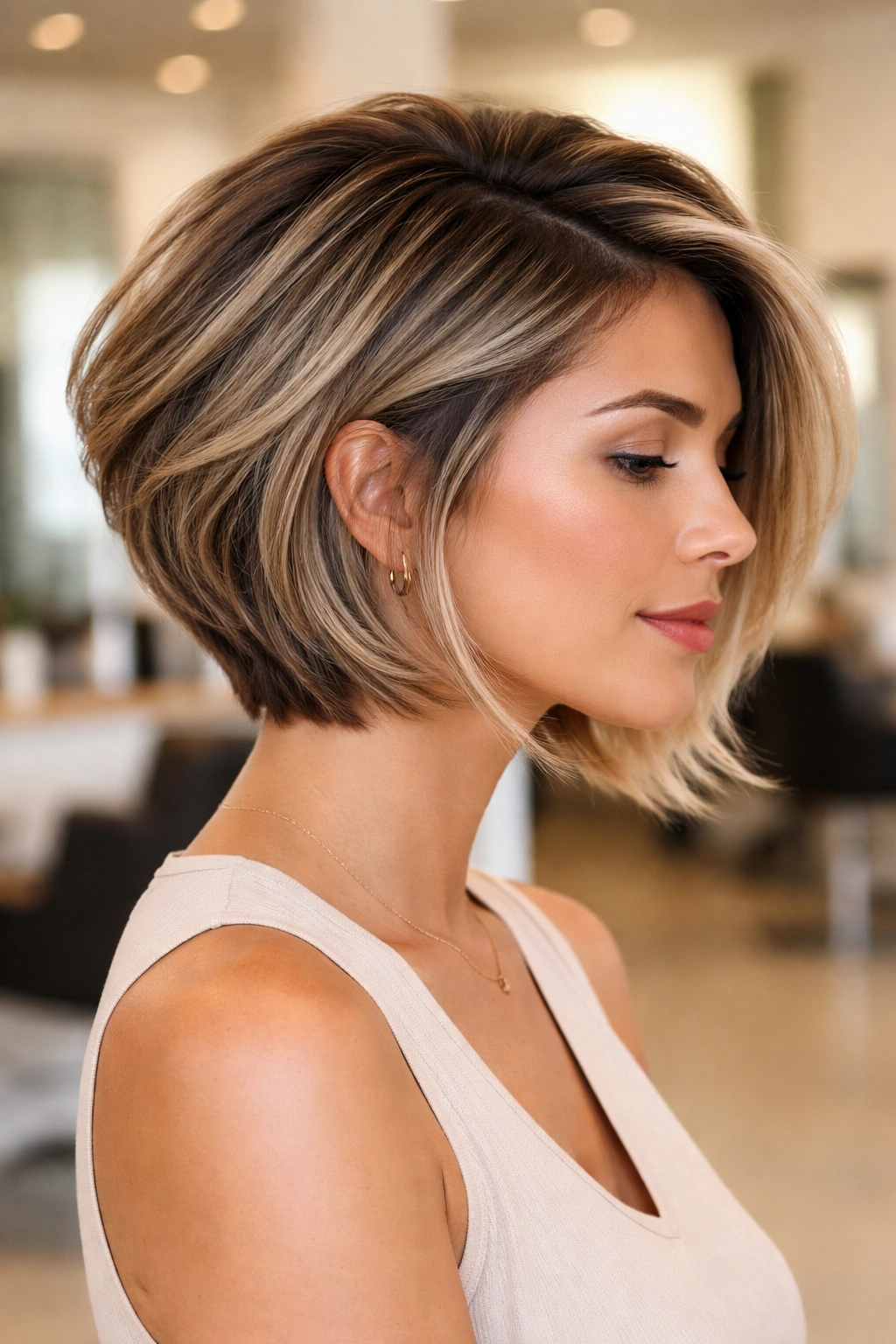
A stacked bob is fundamentally about choice. Whether you go for a razor-sharp geometric statement, a soft and romantic feathered version, or something that sits somewhere in between, the underlying magic of the cut is that it delivers shape, texture, and volume in a compact package that works with almost any hair type, face shape, and lifestyle.
The best stacked bob for you isn’t the one you see in an Instagram post—it’s the one that aligns with how much styling effort you’re willing to invest daily, how often you can commit to trims, what your natural hair texture is, and what aesthetic genuinely reflects who you are. A stacked bob shouldn’t feel like a compromise or a trend you’re chasing. It should feel like a version of yourself that’s slightly more polished, slightly more confident, and absolutely more interesting than you were before.
Go into your consultation with reference photos that speak to you, be honest with your stylist about your daily routine and styling commitment level, and trust that the right cut—whether it’s one of these eighteen or a hybrid variation—will feel immediately right once you see it reflected back at you.
