



Finding the right hairstyle becomes more important—and sometimes trickier—when you’re navigating the combination of mature features and eyewear. If you wear glasses, you’ve probably noticed that not every hairstyle works equally well with frames. The wrong cut can either fight with your glasses or disappear behind them, while the right one will actually complement and enhance your entire look. Glasses can absolutely coexist beautifully with flattering hairstyles for women over 40—you just need to know which cuts, lengths, and textures work in harmony with your frames rather than against them.
The good news is that some of the most flattering hairstyles for women over 40 work exceptionally well with glasses, not despite them. Face-framing layers, strategic texture, and the right proportions can actually make both your hair and your frames look more polished and intentional. Whether you prefer low-maintenance cuts, statement-making styles, or something in between, there’s a hairstyle designed specifically to flatter the way glasses sit on your face while addressing the concerns that matter most to women in this age group—thickness, movement, and youthful dimension without trying too hard.
The key is understanding how glasses interact with different lengths and textures. A cut that’s too heavy can overwhelm both you and your frames. A style with too little dimension can look flat and tired under glasses. But when you find the sweet spot—which often means embracing layers, considering how your hair falls around your frames, and choosing cuts with built-in movement—you’ll feel like both your glasses and your hair are working for you, not competing for attention.
1. Textured Pixie Cut
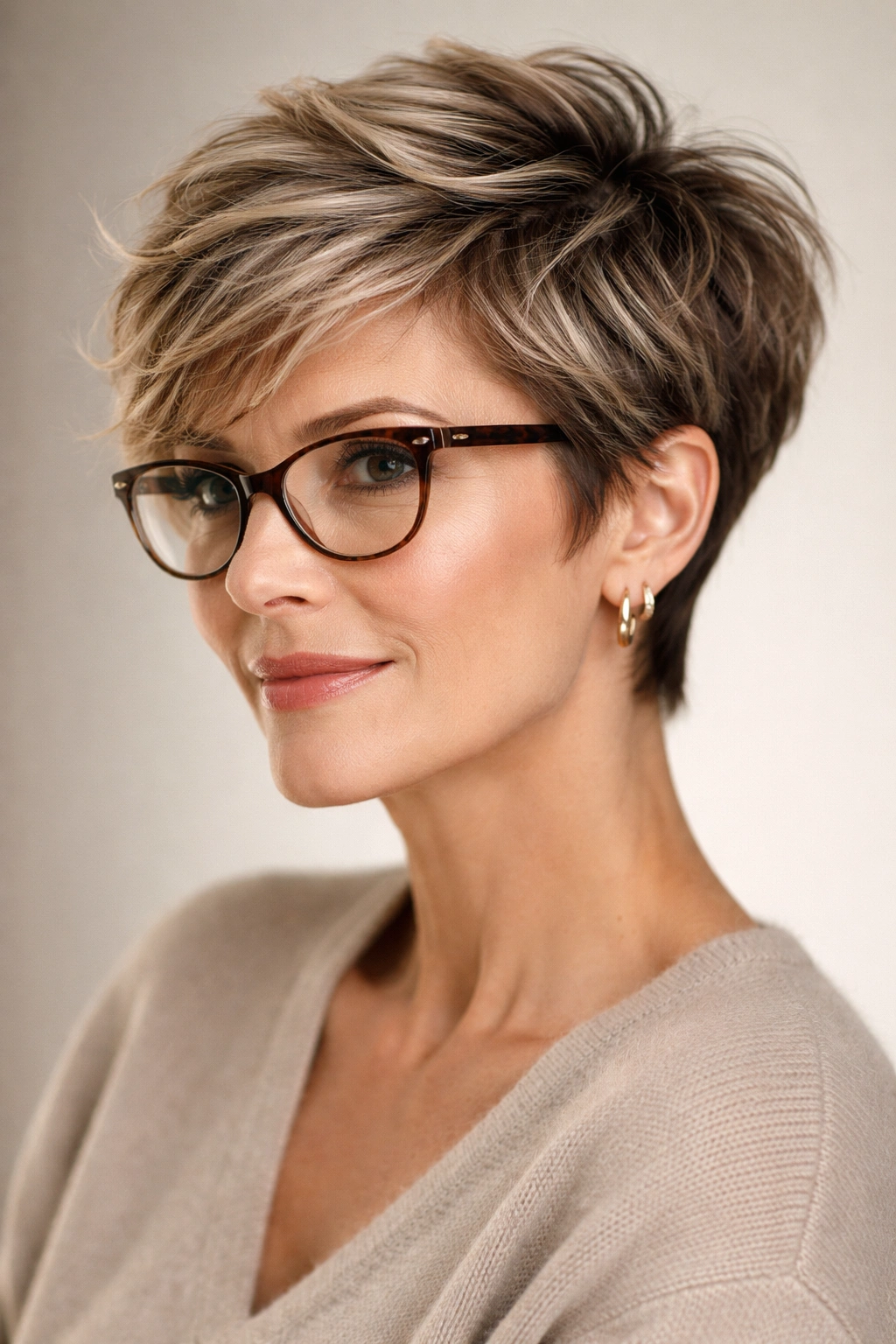
A pixie cut isn’t just for women in their twenties—this sophisticated short style is having a major moment with the over-40 crowd, especially for glasses wearers. The key is choosing a textured pixie that’s cut in layers rather than slicked back, which keeps the look youthful and adds dimension around your face. With glasses, a textured pixie creates visual balance because your frames have breathing room, and the cropped layers draw attention to your cheekbones and eyes rather than competing with your eyewear.
Why It Works Beautifully With Glasses
A textured pixie is actually one of the best short styles for glasses because it eliminates the problem of hair getting caught behind frames or creating bulk on the sides of your head. The cut sits just above and around your ear area, so there’s zero interaction between your hair and your frames—they coexist on completely different parts of your head. This style also emphasizes your face and eyes, which is exactly where you want attention when you’re wearing glasses. The texture creates movement that makes the style feel less severe and more approachable, which balances out the somewhat geometric presence of frames.
Styling and Maintenance Tips
- Textured pixies require a good cut every 4-6 weeks to maintain their shape, but styling is minimal—just use a texture spray or sea salt spray and finger-comb it through
- Blow dry with a texture cream for added dimension, or let it air dry for a more undone look
- Work with your stylist to ensure the crown has enough length to create height rather than lying flat
- Avoid flat-ironing a pixie, as the whole point is embracing that tousled movement
This is one of the lowest-maintenance options on this list, which is a huge benefit if you value simplicity and quick morning routines.
2. Shoulder-Length Lob With Layers
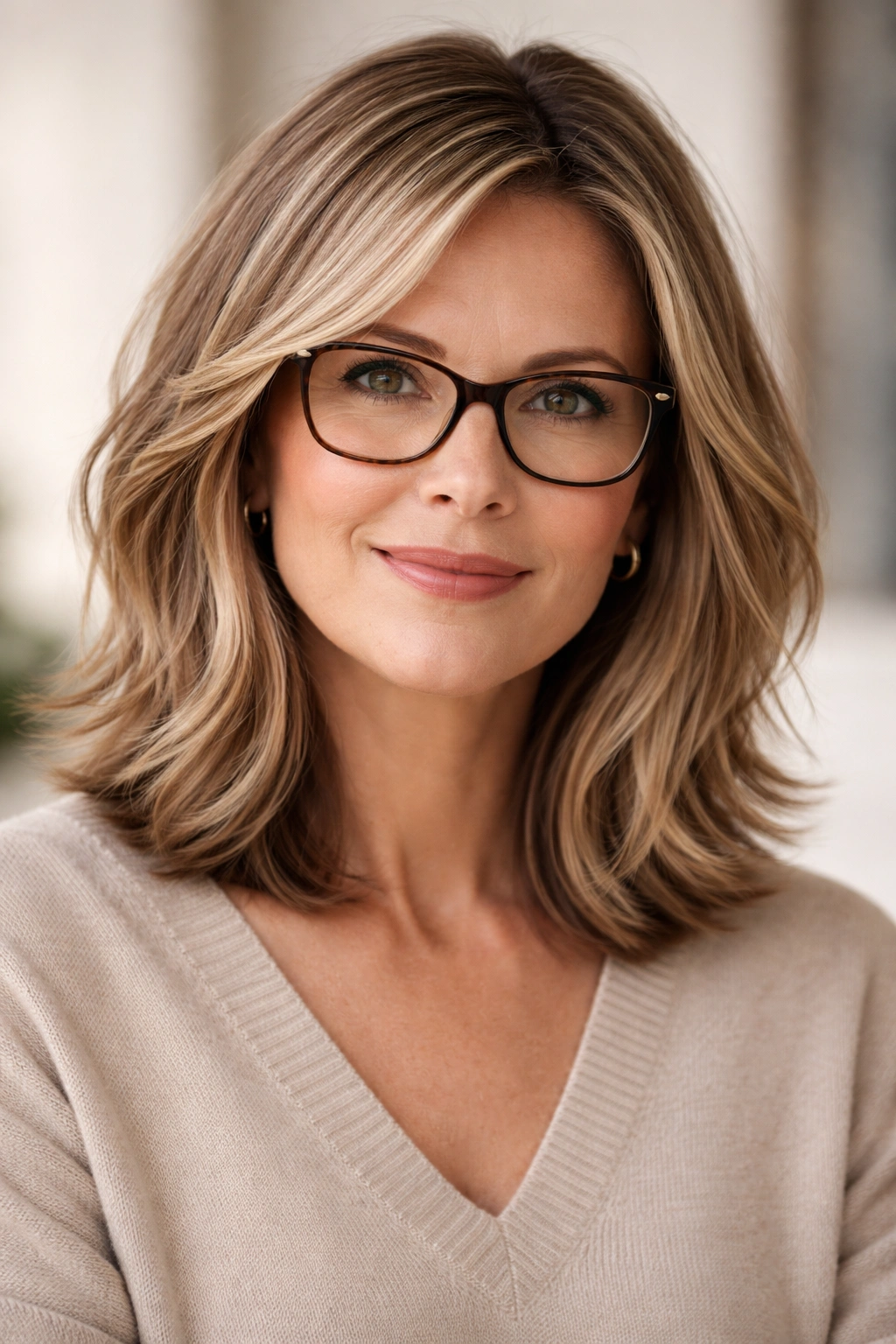
The “lob” (long bob) remains endlessly flattering for women over 40, and when you add layers throughout, it becomes especially smart for glasses wearers. This length hits right at your shoulders, which is the sweet spot for creating frame-flattering movement without the weight of longer hair. Layers work their magic by creating texture and movement around your face, which draws light and dimension into your features—something that becomes increasingly important as skin texture changes with age.
Why Layers Matter With Eyewear
When you wear glasses, layers around your face become your best friend because they create separation between your frames and the bulk of your hair. Rather than having one solid mass of hair beside your face, layers allow your hair to move around your glasses instead of pressing against them. This also prevents the “heavy hair overtaking glasses” look that can happen with blunt, thick cuts. The layers also frame your eyes beautifully, which makes your glasses feel like an intentional part of your overall aesthetic rather than something separate.
How to Style Your Layered Lob
- Ask your stylist for face-framing layers that begin around cheekbone height and work down through the length
- Blow dry using a round brush to create a slight bend at the ends—this adds movement without the “helmet hair” effect of heavy waves
- Use a texturizing spray or light mousse for grip and separation between layers
- This length works well with a deep side part, which adds sophistication and elongates your face
- Get a refresh cut every 8 weeks to keep layers from looking stringy or shapeless
The lob is incredibly versatile—you can wear it sleek, tousled, down, partially up, or with braids. That flexibility means it suits different occasions and moods.
3. Sleek Bob With Side Part
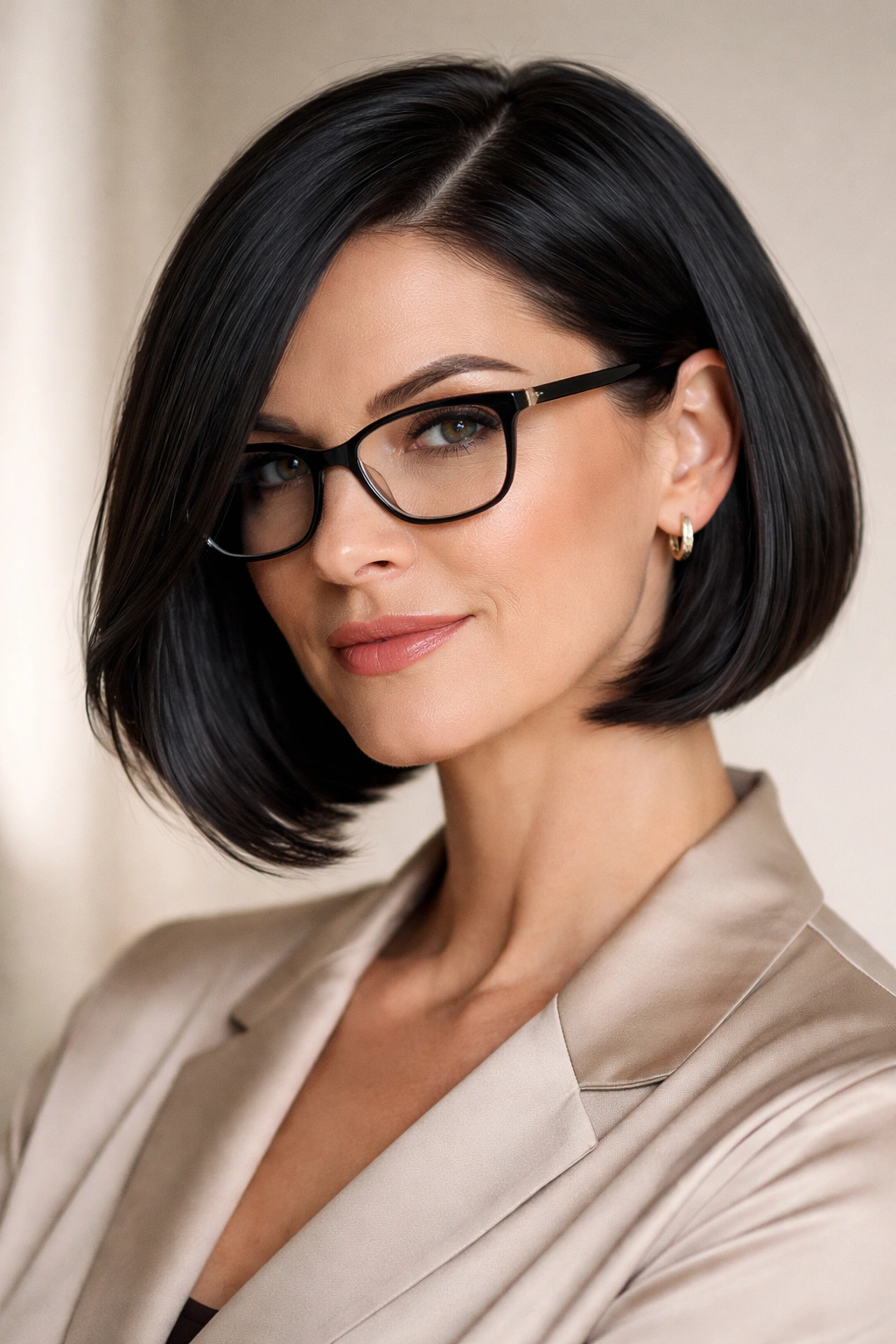
Don’t underestimate the power of a classic bob, especially when it’s paired with a dramatic side part. A sleek bob in a structured, blunt line (cut at approximately chin length or slightly shorter) looks polished and intentional, particularly when you style it with a deep side part that sweeps one section across. With glasses, the side part creates a beautiful visual flow that directs the eye across your face, making the entire composition feel more balanced and dynamic.
The Glasses-Friendly Elements
This style works beautifully with frames because the swept side section creates a frame-like quality itself—your hair becomes an extension of your eyewear’s visual weight and angle. The blunt line of a bob also emphasizes the horizontal, which can actually complement the geometric nature of glasses frames. Rather than competing, they create a cohesive, architectural look. The key is having enough volume at the roots so the side part doesn’t flatten your hair on one side, which would make glasses look heavier on that side.
Styling Instructions for Maximum Sophistication
- Blow dry using a blow dryer and paddle brush, directing the side part section down and across as you dry
- Use a straightening iron to create a subtle bend at the very ends—this keeps the line sharp without looking too severe
- A light smoothing serum gives this style a high-shine finish that photographs beautifully and looks polished for work or events
- This style benefits from getting a line trim every 4-5 weeks to maintain the blunt, defined edge
- Consider adding subtle highlights or lowlights if your natural color feels flat—this adds dimension that reads beautifully on a sleek canvas
This is the most “executive” option on the list and works exceptionally well in professional settings.
4. Soft Waves With Face-Framing Pieces
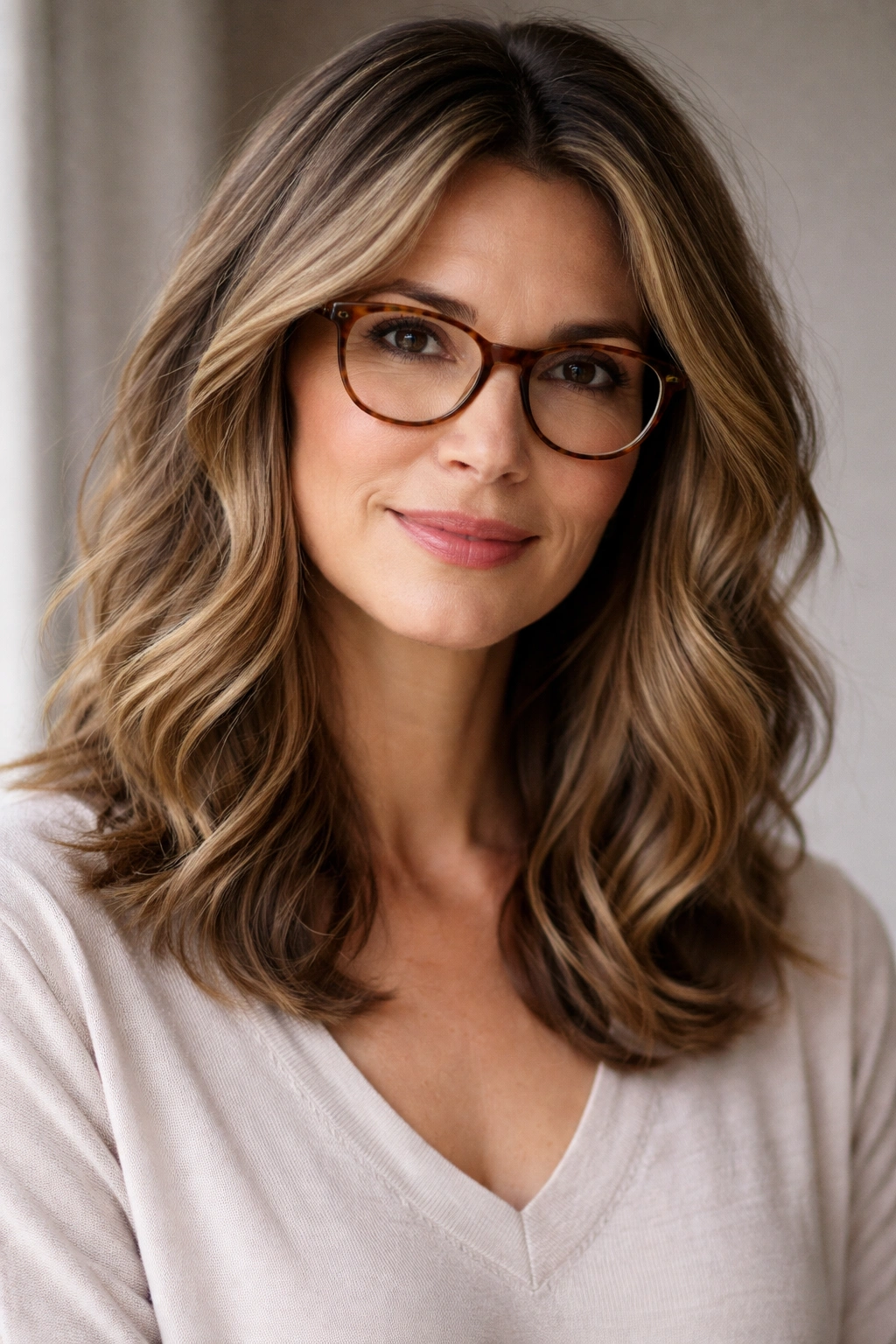
If you love the idea of length and movement but want something that feels softer and less severe than a blunt cut, soft waves with intentional face-framing pieces are your answer. This style typically sits at shoulder length or slightly longer, with carefully placed shorter pieces that frame your cheekbones and temples. The waves create fluidity and dimension without the weight of straight, long hair, and the face-framing pieces ensure that your glasses aren’t the dominant feature—your whole face is.
How This Style Balances Glasses
Face-framing pieces are transformative when you wear glasses because they create multiple focal points across your face rather than letting your eyes (and frames) dominate. When you have soft, shorter pieces around your cheeks and temples, combined with longer pieces in back, your glasses become part of a complete picture rather than the starring role. The waves also prevent the hair from looking flat or limp, which can happen with longer straight hair—the movement keeps everything looking alive and intentional.
Maintaining Your Waves and Layers
- This style requires a cut every 6-8 weeks to keep the face-framing pieces shaped properly and prevent them from looking shaggy
- Blow dry with a round brush to enhance natural wave pattern, or use a curling iron on the lengths for more defined waves
- A light wave cream or sea salt spray before blow drying helps waves form and hold throughout the day
- Protect your waves with a heat protectant spray before using any hot tools
- Overnight waves: braid damp hair loosely before bed and release in the morning for effortless texture
This style is particularly forgiving if you’re dealing with fine hair that’s thinned with age, as the waves create the appearance of more volume than the hair actually has.
5. Blunt Bangs With Medium Length Hair
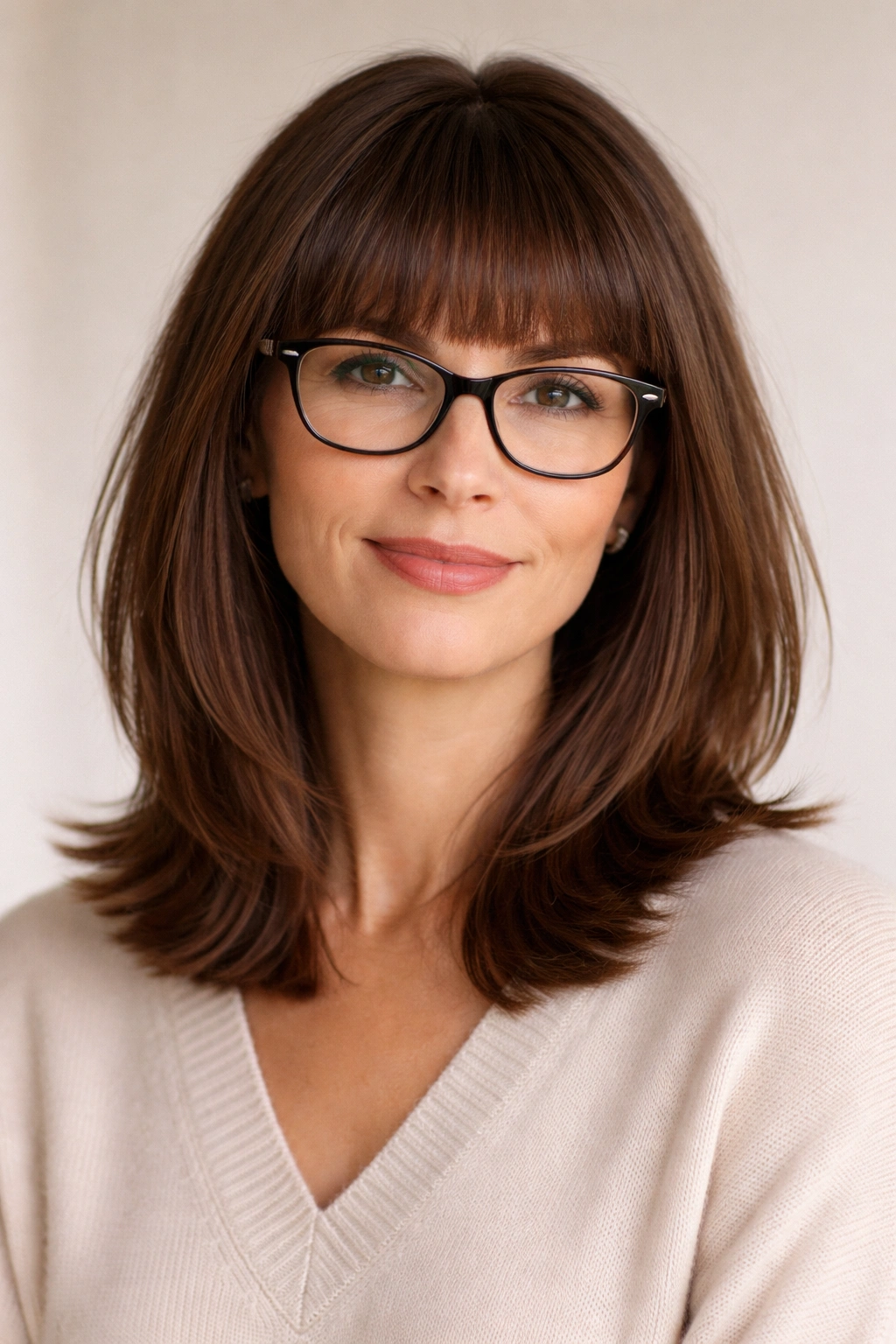
Bangs have made a serious comeback, and for women over 40 in glasses, blunt bangs paired with medium-length hair creates a striking, fashion-forward look that feels modern without being trendy. The key is keeping bangs at a length that sits just above your eyebrow line, which allows them to sit above your glasses frames rather than under them. This positioning means bangs and glasses create two distinct visual layers—they don’t fight or overlap.
The Strategic Advantage for Eyewear Wearers
Blunt bangs draw immediate attention to your eyes and forehead, which actually balances out the visual weight of glasses frames. When you wear bangs, your glasses become part of a balanced composition rather than the focal point. The bangs also create a youthful appearance—this isn’t about pretending to be younger, it’s about the visual freshness that bangs inherently bring. Against medium-length hair (typically shoulder-length), bangs feel cohesive rather than choppy or costume-like.
Daily Care for Bangs and Glasses
- Bangs require styling almost every day, especially if you have fine or thin hair—they’re the highest-maintenance element of this cut
- Blow dry bangs straight down while they’re still damp using a paddle brush, or use a small flat iron for a sleek finish
- If your glasses have a high bridge or sit very close to your forehead, you may find bangs rubbing against your frames—consider slightly longer bangs that rest just above the frame instead
- Schedule bang trims every 3-4 weeks to maintain the blunt line and prevent them from growing into your eyes
- Use a texturizing spray or dry shampoo on bangs between washes to add grip and texture
Blunt bangs pair beautifully with either straight medium-length hair or with layers throughout the length for added movement.
6. Asymmetrical Bob
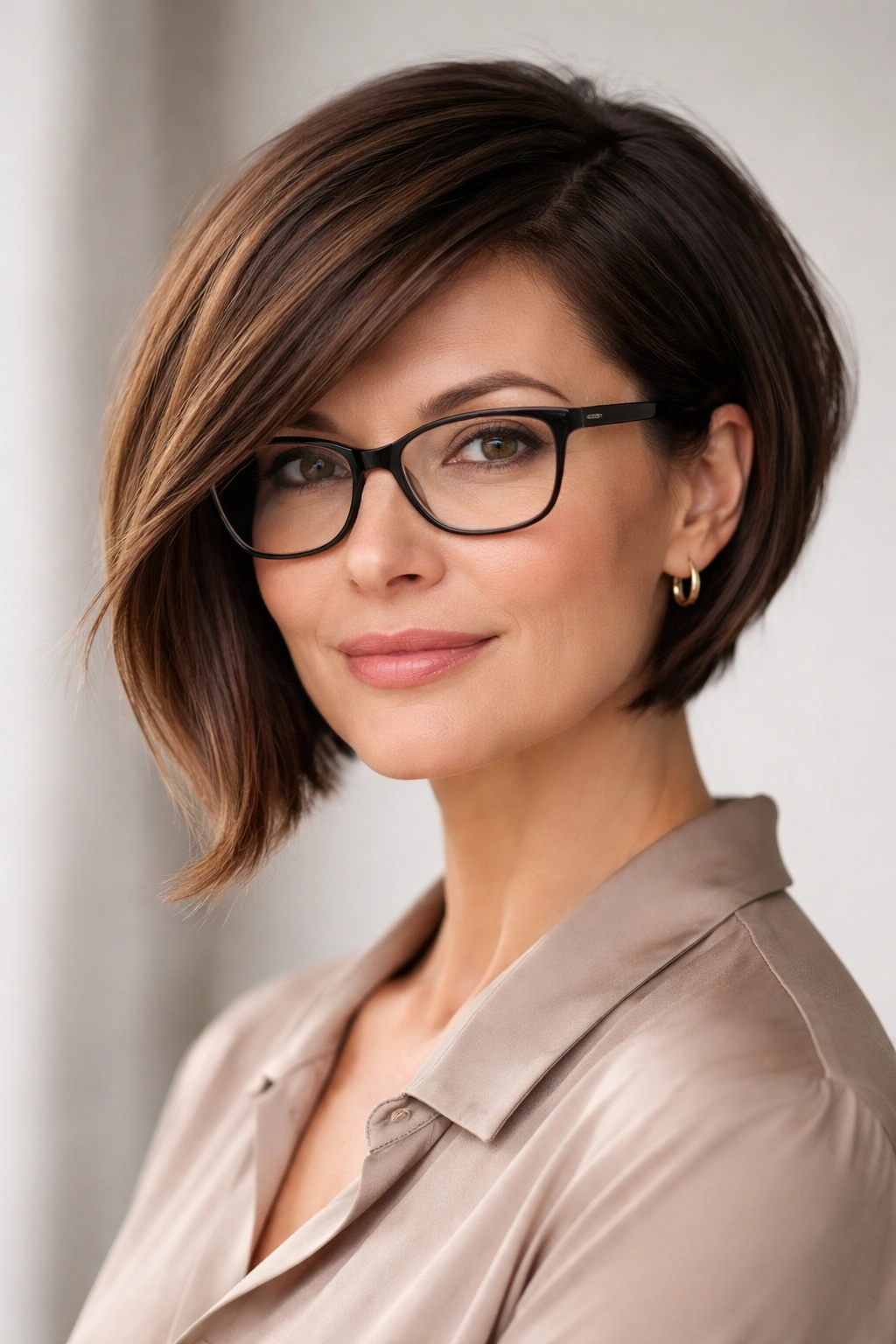
An asymmetrical bob—where one side is longer than the other—is a bold choice that feels surprisingly flattering on mature faces. The asymmetry creates movement and visual interest, and when one side is longer than the other, it naturally creates a face-framing effect. With glasses, an asymmetrical bob is especially smart because the unequal sides prevent the style from feeling too geometric or matching the rectangular shape of many frames.
Why Asymmetry Complements Eyewear
Glasses are, by nature, symmetrical—they sit evenly on both sides of your face. An asymmetrical cut actually breaks that symmetry in a beautiful way, creating a composition that feels more dynamic and less “corrected” by eyewear. The longer side of an asymmetrical bob can be swept back or forward depending on which side is extended, which gives you options for how your hair interacts with your frames. This style reads as intentional and fashion-aware, which elevates your whole appearance.
Styling Your Asymmetrical Bob
- Ask your stylist to cut the longer side at least 2-3 inches longer than the shorter side for the asymmetry to be visually apparent
- Blow dry the longer side with a round brush to create a subtle curve that frames your face
- The shorter side can be styled sleek or with texture—vary it depending on your mood
- Side parts work particularly well with asymmetrical bobs; sweeping the longer side across accentuates the intentional imbalance
- Maintain this style every 5-6 weeks because the asymmetry becomes less defined as hair grows and lengths even out
This is one of the most fashion-forward options on the list and works beautifully if you enjoy standing out.
7. Long Layers With Movement
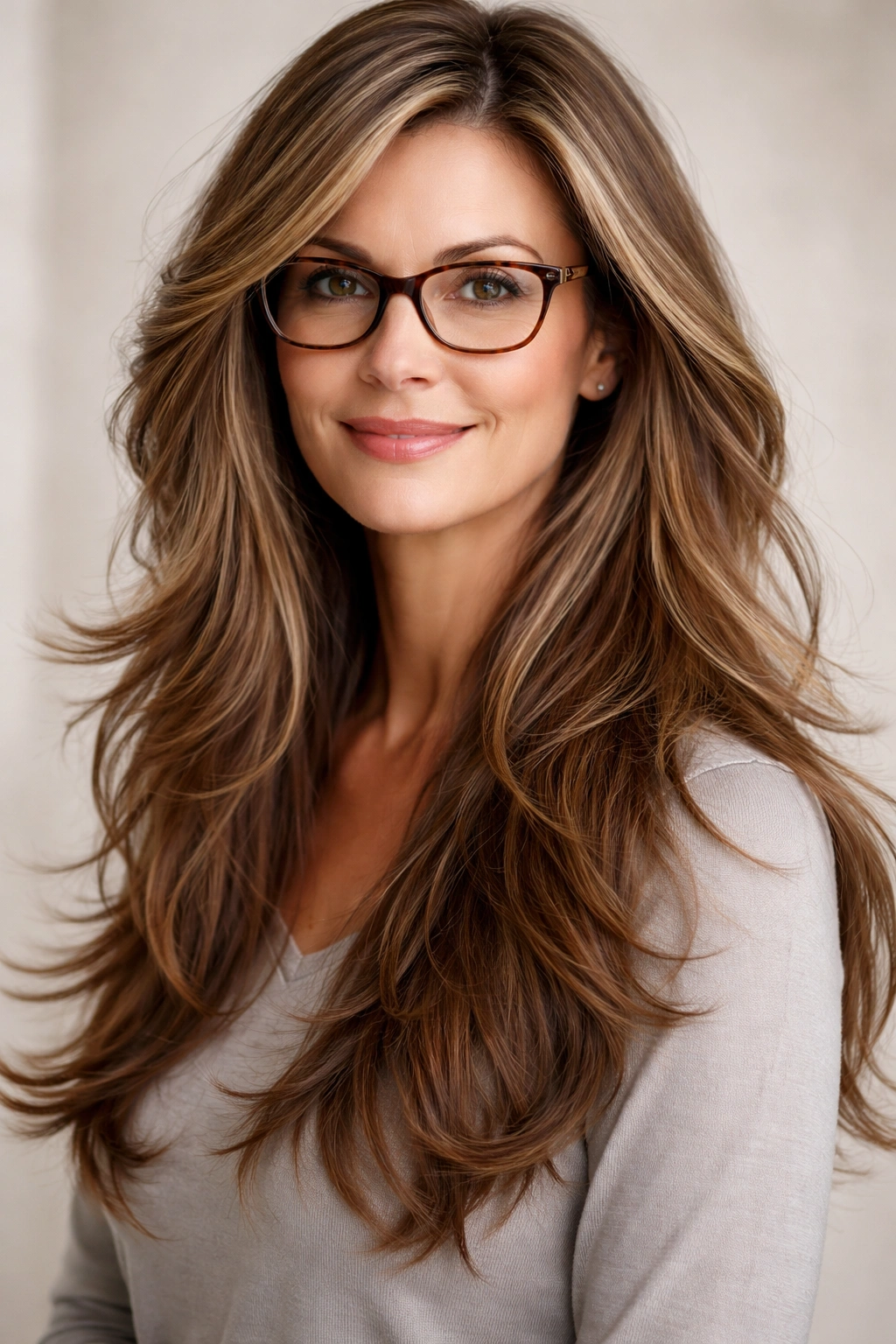
Long hair doesn’t have to be off-limits for women over 40 in glasses—the secret is embracing layers throughout to create movement and prevent the heavy, one-dimensional look that can age you. Long layered hair (typically mid-back or longer) works with glasses when it has enough texture and dimension that it doesn’t look like a single heavy sheet. The layers create visual separation and movement that prevents your hair from overwhelming your frame or looking flat.
How Layers Transform Long Hair
Without layers, long hair can look heavy and one-dimensional, which can actually make glasses seem like the only thing adding dimension to your face. Layers change everything by creating peaks and valleys in your hair—light and shadow that give your whole appearance more visual interest. The layers also prevent your hair from sitting flat against your shoulders and sides, which means it won’t press against your frames. With glasses, long layered hair reads as deliberately styled rather than just “long hair,” which makes the overall look feel more intentional and polished.
Caring for Long Layered Hair
- Layers require refreshing every 8-10 weeks to prevent the ends from looking wispy or stringy
- Use a blow dryer and round brush to create movement in the layers, or embrace your natural texture if you have waves
- Long hair needs regular conditioning, especially if you use heat tools—consider a deep conditioning mask weekly
- Layers in long hair benefit from texturizing products like sea salt spray or texture cream that enhance separation
- Consider getting your ends trimmed every 4-6 weeks (even between full cuts) to prevent split ends from traveling up the hair shaft
Long layered hair is highest-maintenance on this list in terms of styling time and products, but it’s the most romantic and effortless-looking option.
8. Chin-Length Bob With Texture
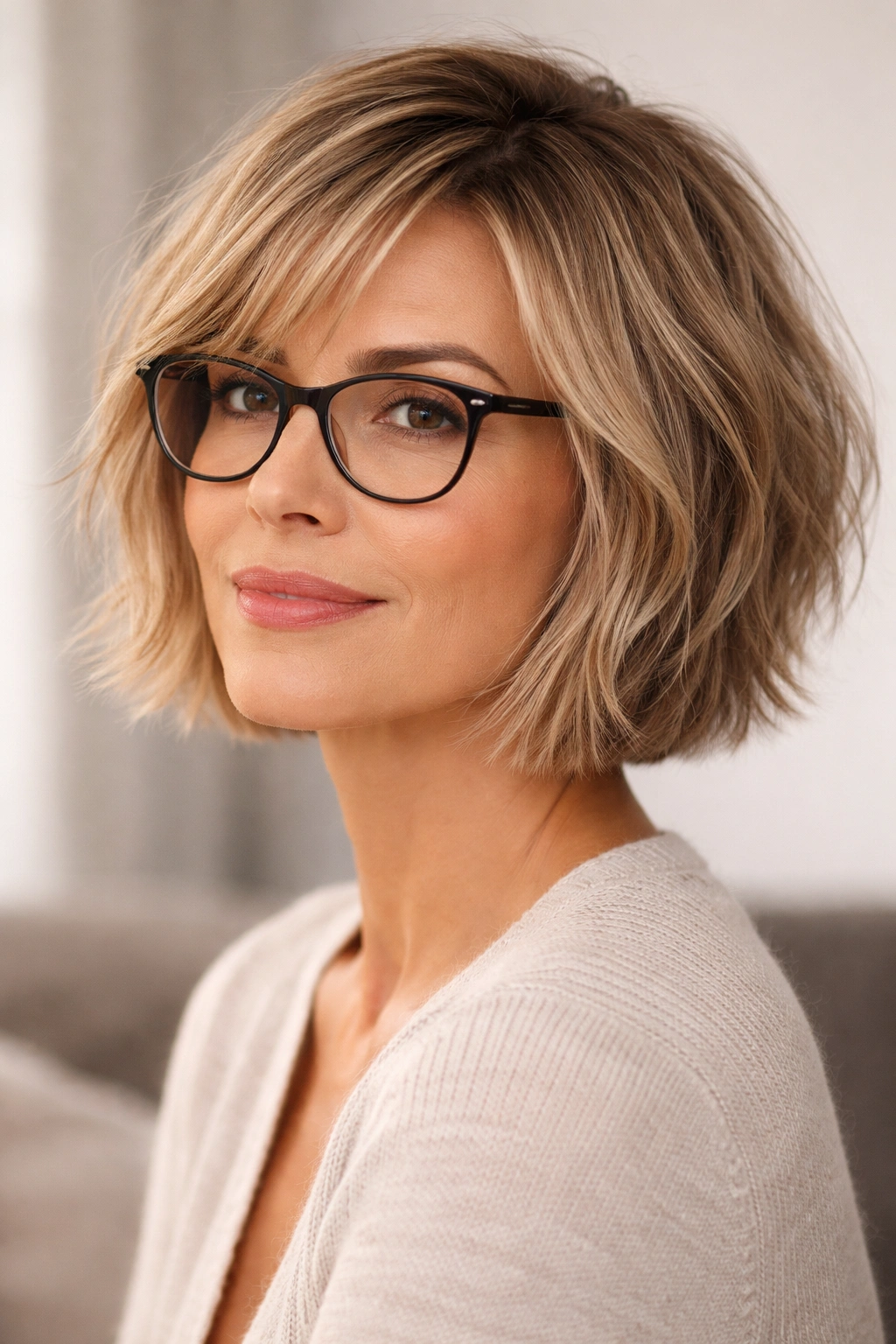
A textured bob that hits right at your chin is the sweet spot between short and medium length, and it’s exceptionally flattering for women over 40 in glasses. The texture—created through choppy layers, point-cutting, or a tousled styling approach—prevents this length from looking severe or heavy. A chin-length bob with texture feels modern, approachable, and forgiving all at once, which is exactly what most women over 40 are looking for.
Why Chin Length Works With Frames
Chin-length hair sits at the perfect point for glasses wearers because it doesn’t create bulk on the sides of your head (where glasses rest) but still provides enough hair to frame your face beautifully. The texture means your hair isn’t pressing against the sides of your frames, and the shape naturally directs attention to your entire face rather than letting glasses dominate. This length is also short enough to not require extensive styling but long enough to have real styling options on days when you want to do more.
Achieving and Maintaining Textured Texture
- Ask your stylist for choppy, piece-y layers throughout that create movement and prevent a solid, blunt appearance
- Blow dry using a round brush and directing layers in different directions, or use your fingers and a texture cream for a more undone look
- A light texturizing spray applied to damp hair before blow drying helps layers separate and hold their shape
- This cut requires a refresh every 6 weeks to maintain the choppy texture before it starts looking shaggy
- Consider playing with styling options: slick it back with gel for a sleek moment, tousle it for casual elegance, or create a side part for sophistication
This is an excellent middle ground if you’re torn between short and longer styles.
9. Side-Swept Waves
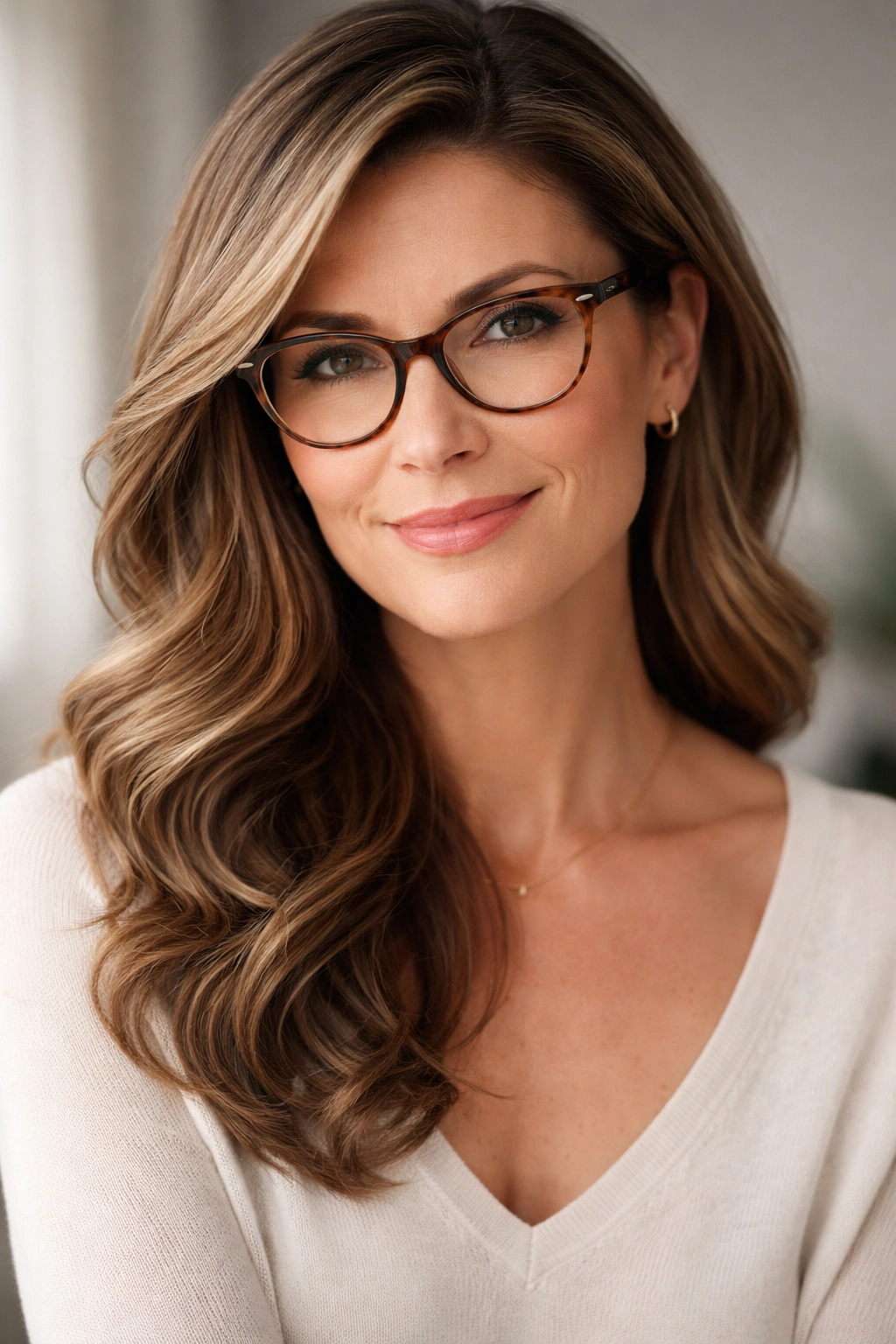
Side-swept waves create a romantic, effortless look that feels especially elegant when paired with glasses over 40. Rather than waves throughout, this style concentrates movement on one side that sweeps across your head, while the other side stays smoother. The sweep creates a face-framing effect that’s flattering from multiple angles, and because the waves are concentrated on one side, they don’t create bulk around your frames.
The Visual Elegance of Side-Swept Styling
Side-swept waves are pure romance, but they’re also surprisingly sophisticated when you’re wearing glasses. The swept side creates a beautiful diagonal line that complements the horizontal or slightly angled nature of most frames. Your hair becomes part of the compositional line rather than fighting against your eyewear. This style works especially well for women with round faces because the diagonal sweep creates elongation, and it flatters angular faces by softening sharp lines.
How to Create and Sustain Side-Swept Waves
- Start with shoulder-length or slightly longer hair cut in layers
- Blow dry using a round brush, concentrating on one side and creating a deeper curve through that section
- Use a 1-1.5 inch curling iron on the sweep side, wrapping sections away from your face and letting curls cool before brushing out gently
- A light wave spray or texture product applied before heat styling helps waves hold throughout the day
- This style is particularly forgiving because slight messiness in the waves actually adds to the elegance—perfect waves aren’t the goal
- Style it fresh every day or refresh overnight waves with a straightening iron run lightly through for texture
This is the most “date night” option on this list, though it works beautifully for professional settings too.
10. Tousled Shag Cut
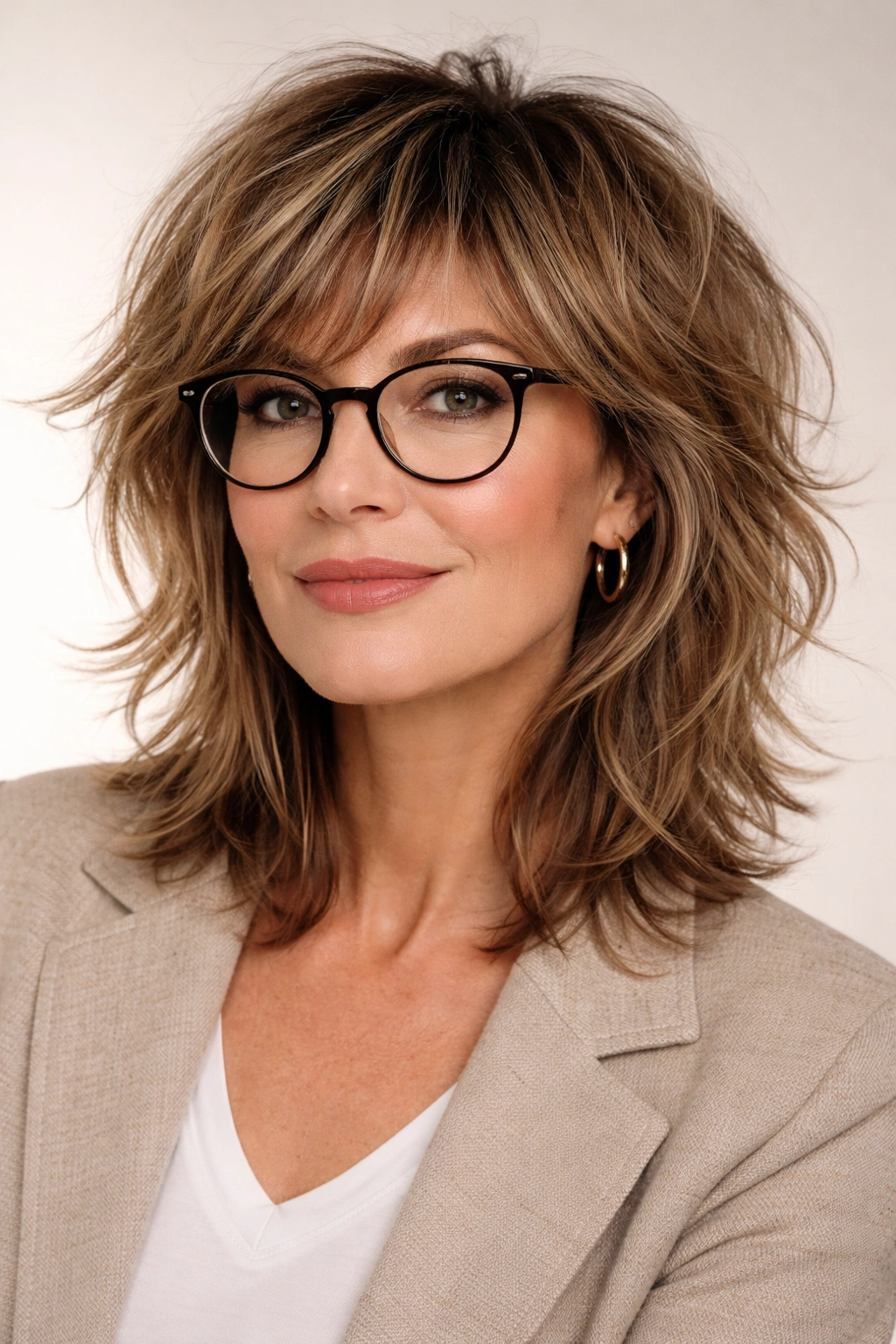
The shag—a cut created with choppy layers throughout that create intentional texture and movement—is having a serious renaissance, and it’s especially flattering for women over 40 in glasses. A modern shag is nothing like the ’70s version; it’s a sophisticated, textured cut with intention. When you wear glasses, a shag is brilliant because the choppy layers prevent hair from pressing against your frames and create such visual movement that your glasses feel like an intentional accessory rather than a vision correction device.
Why Shags Are So Flattering With Eyewear
A shag cut has inherent movement and texture that creates visual interest throughout your entire head, not just around your face. This means glasses become one element in a more complex visual picture rather than the dominant feature. The choppy layers also prevent any heaviness, which is crucial for avoiding an older appearance. There’s something effortlessly cool about a shag—it reads as fashion-forward without trying too hard, which is exactly the energy most women over 40 want to project.
Styling Your Modern Shag
- Shags require a good blow dry to really shine—use a round brush and direct the choppy layers in slightly different directions for maximum movement
- Apply a texture spray or dry shampoo to damp roots before blow drying to create grip and hold throughout the day
- A light curl cream applied to damp hair before heat styling helps define the choppy texture
- Shags benefit from refresher cuts every 6-8 weeks; the shape deteriorates if layers get too long
- This style looks better slightly tousled than perfectly smooth—lean into the texture rather than fighting against it
- Embrace a slightly undone aesthetic; this style isn’t meant to look polished or formal
If you want a hairstyle that says “I’m stylish and confident,” a modern shag is the answer.
11. Sleek High Ponytail
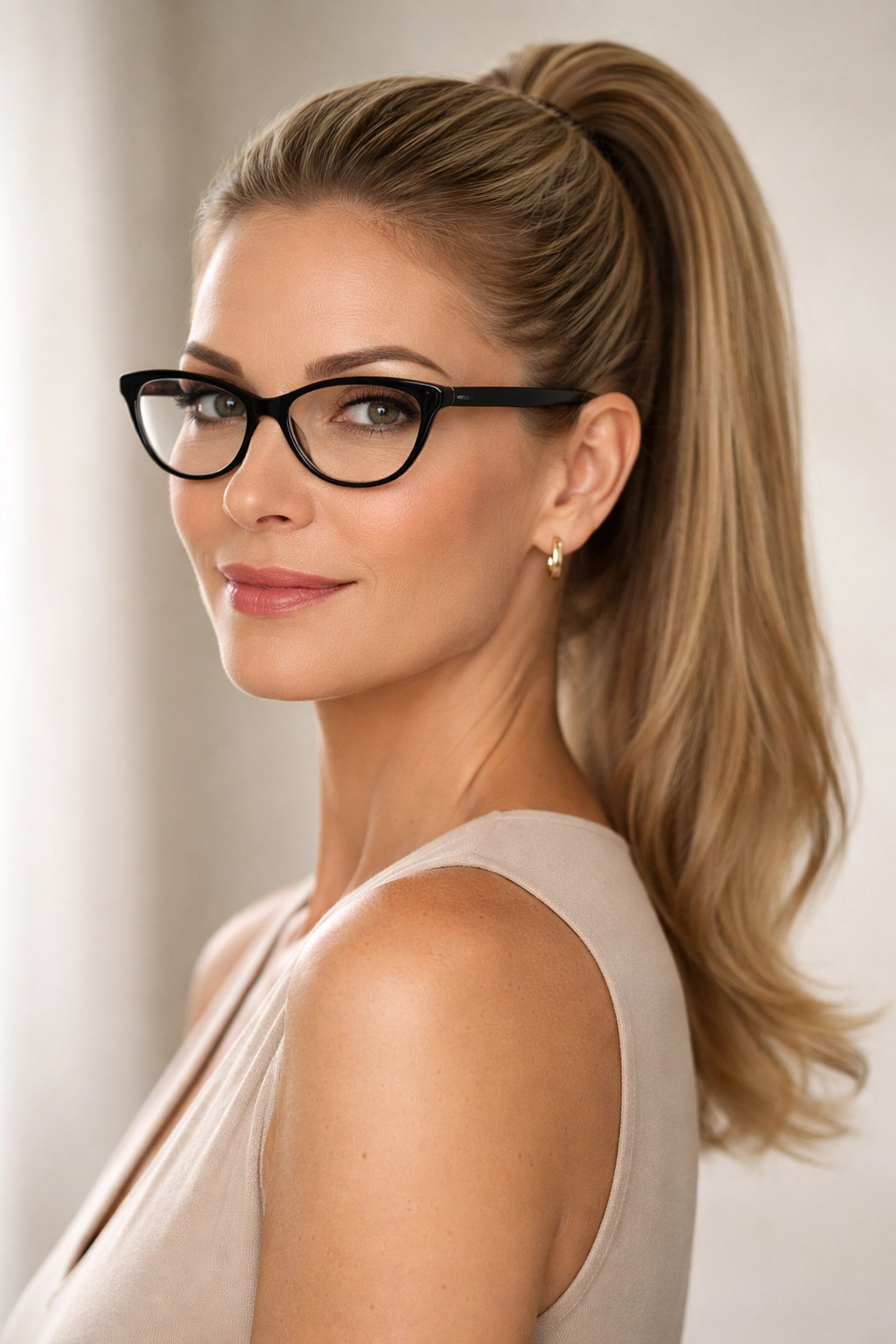
A high ponytail might seem like a departure from the previous styles, but it’s an essential option for women over 40 in glasses because it completely changes your appearance for events or days when you want to maximize your face. A sleek high ponytail drawn from the crown area creates immediate lift and opens up your entire face. With glasses, a high ponytail is particularly flattering because nothing competes with your frames—your face and eyes become the absolute focus.
How a Ponytail Transforms Your Face
A high ponytail lifts and tightens the skin, which has a subtle face-lifting effect that’s especially noticeable when you have mature skin. By removing all hair from your face and neck, a ponytail actually shows off your bone structure and skin in a way that a down style can’t. Your glasses become a focal point of beauty rather than a utility device. This styling option also gives you flexibility if your hair doesn’t feel its best on a particular day—a sleek ponytail looks intentional and polished even if your roots need touching up.
Creating Your Best High Ponytail
- Use a volumizing mousse on your roots before blow drying to create maximum lift at the crown
- Blow dry your hair at the roots using a round brush, directing volume upward and backward
- Gather your hair at the crown in a high ponytail, using a clear elastic or silk scrunchie to minimize breakage
- Smooth any flyaways using a small brush and a light hairspray or smoothing serum
- Create a sleek finish by wrapping a small section of hair around the base of the ponytail to hide the elastic
- For extra polish, straighten the ponytail using a flat iron or create waves in it using a curling iron
- A high ponytail is particularly flattering when you have a few face-framing pieces left down, creating softness while maintaining the lifted look
Wear a high ponytail with confidence—this is a style that commands attention in the best way possible.
12. Soft Updo With Face-Framing Pieces
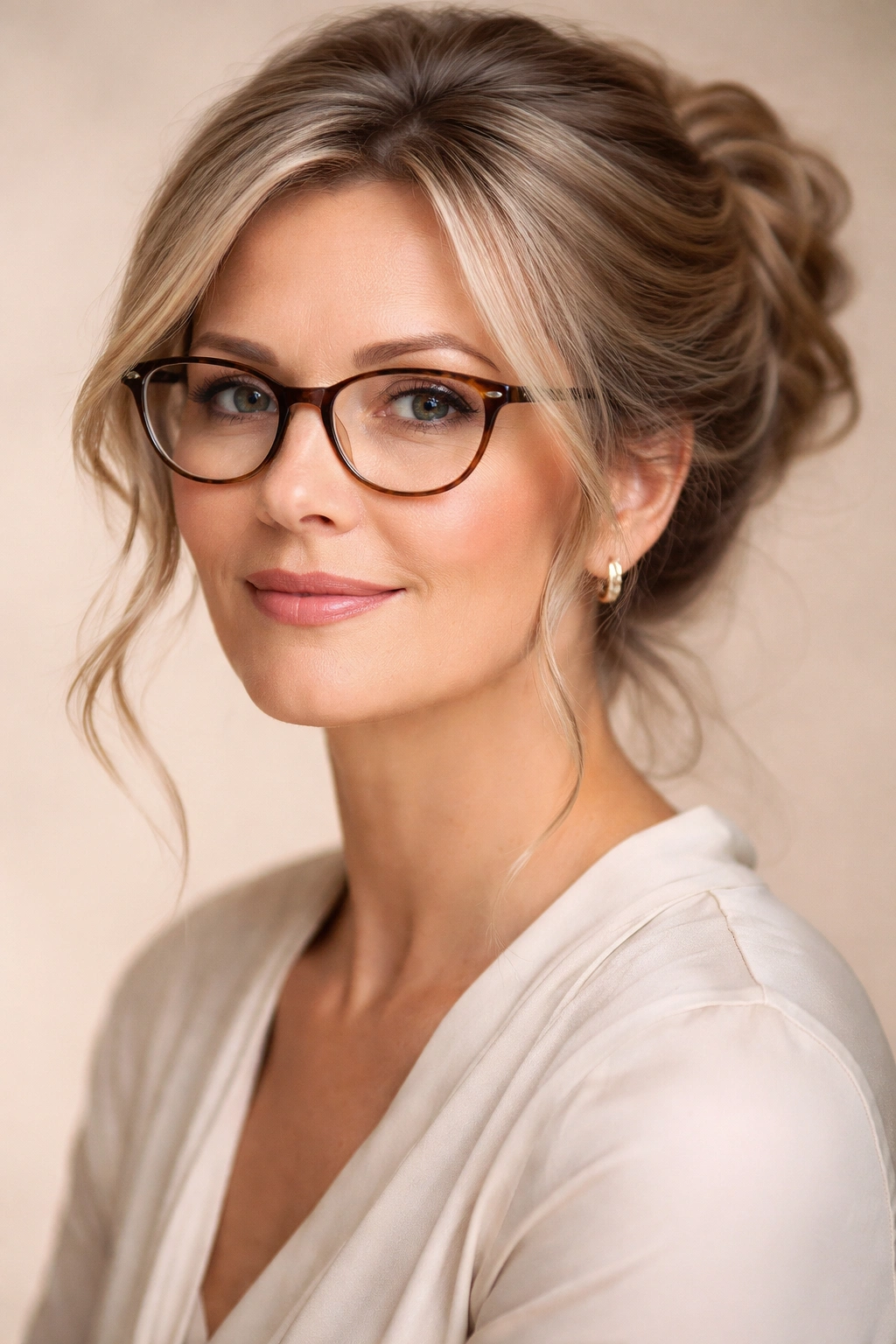
An updo doesn’t have to be severe or aging—when it’s soft and deliberately structured with face-framing pieces left down, an updo is one of the most elegant options for women over 40 in glasses. Rather than pulling everything back tightly, a soft updo has texture and softness throughout, with shorter pieces intentionally left around your face. This style completely transforms your appearance for events while still feeling approachable and modern.
The Elegance of Strategic Face-Framing
A soft updo with face-framing pieces is brilliant for glasses because the pieces around your face soften the visual weight of frames while the updo itself creates a polished, intentional appearance. You get the benefit of an elevated style without the severe look of a tight bun. The face-framing pieces also mean you’re not showing the full architecture of your face and head—you have softness and movement around your features. With glasses, this creates a beautifully balanced appearance that feels both elegant and approachable.
How to Create Your Soft Updo
- Start with hair that has texture—soft waves or curls actually work better than straight hair for this style
- Leave out 2-4 pieces around your face, from temple to cheekbone area
- Create your updo by gathering the back section into a ponytail, twisting or braiding it, and pinning it loosely at the crown or middle-back of your head
- The updo should have a slightly undone quality—pieces and tendrils visible, not perfectly smooth
- Tease gently at the crown and base of the updo to create height and texture
- Use bobby pins that match your hair color and position them strategically so they don’t show
- Finish with a light hairspray that holds without feeling stiff or heavy
- You can also create a soft updo by twisting sections and wrapping them around each other, creating a romantic spiral effect
This style is perfect for weddings, date nights, professional events, or anytime you want to feel especially elegant.
13. Wispy Bangs With Shoulder-Length Hair
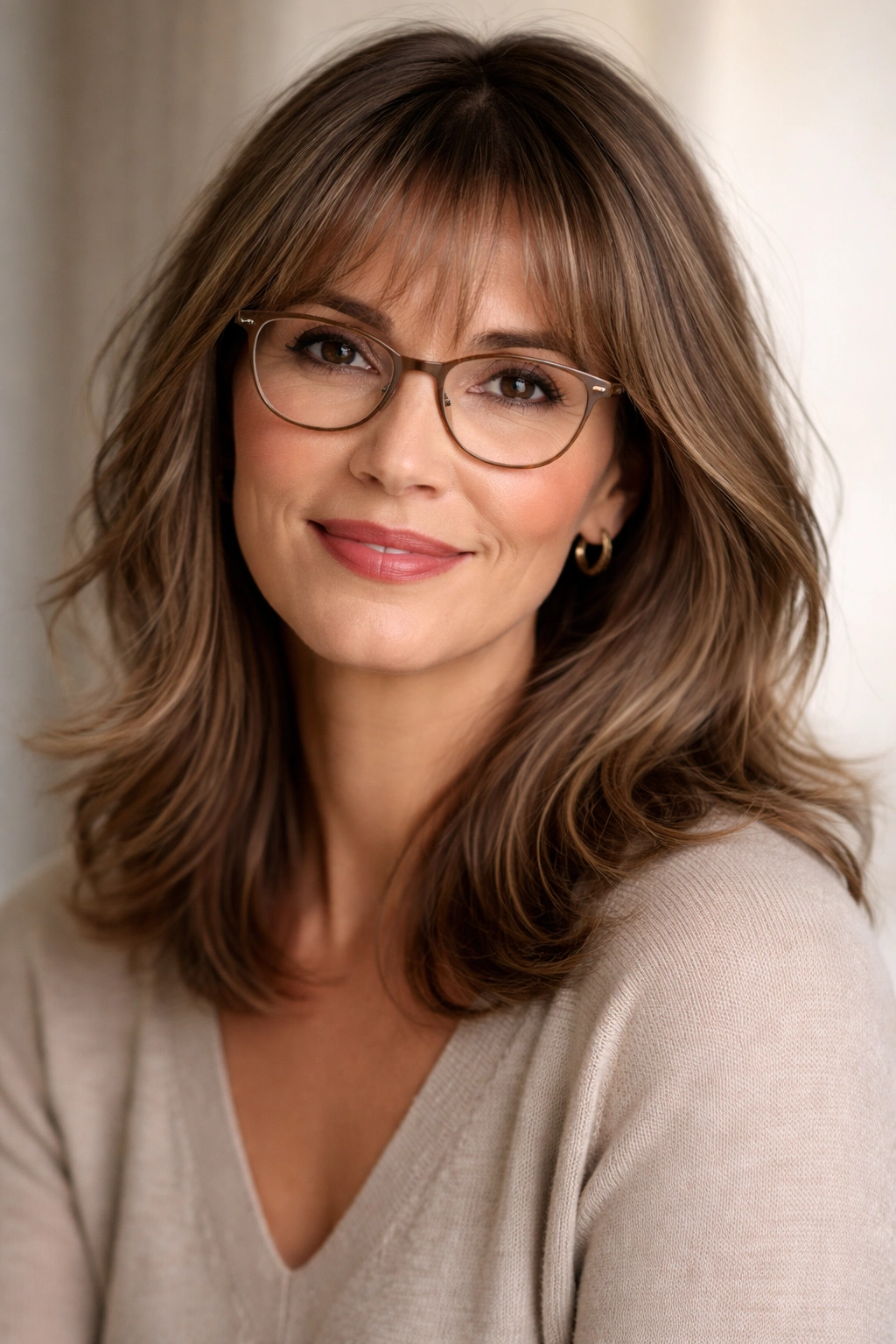
Wispy bangs are the softer, more modern cousin of blunt bangs, and they’re perfect for women over 40 who want the face-framing benefits of bangs without the heavy, severe look. Wispy bangs are shorter and more tapered rather than blunt, creating a feathery frame around your eyes that feels romantic and intentional. Paired with shoulder-length hair, wispy bangs create a complete, cohesive look that’s incredibly flattering with glasses.
Why Wispy Bangs Complement Eyewear
Wispy bangs create movement and soft framing around your eyes, which is exactly what you want when you’re wearing glasses. Rather than creating a solid line (like blunt bangs do), wispy bangs allow light and air around your eyes. They’re sophisticated without being severe, and they instantly make your face feel softer and more approachable. With glasses, wispy bangs create a composition that feels balanced—your frames have softness around them rather than sitting alone on your face.
Styling Wispy Bangs for Daily Wear
- Blow dry wispy bangs to the side, using a round brush to create a subtle curve rather than blowing them straight down
- Apply a light texturizing spray to damp bangs before blow drying for grip and movement
- Use a small curling iron to add a slight wave to the bangs if you want more dimension
- Wispy bangs require a refresh cut every 3-4 weeks, though they’re more forgiving than blunt bangs if you skip a trim
- Style them slightly textured and piece-y rather than smooth and solid—this is where their sophistication comes from
- Consider face-framing layers throughout your shoulder-length hair to echo the softness of your wispy bangs
This style is perfect if you love the idea of bangs but worry about the maintenance or severity of blunt bangs.
14. Textured Pixie-Bob Hybrid
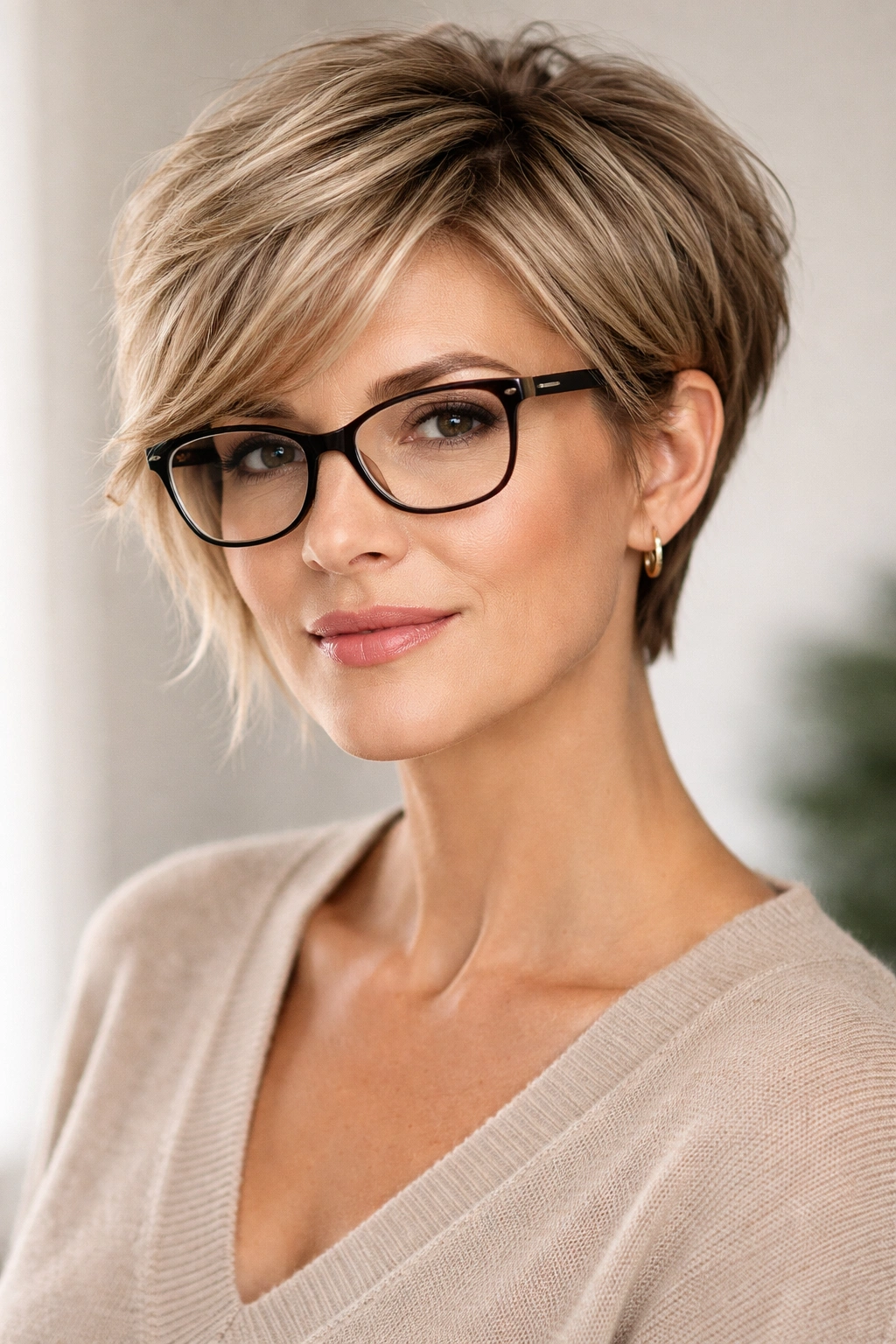
If you’re torn between the low-maintenance appeal of a pixie and the versatility of a bob, a pixie-bob hybrid—a cut that’s pixie-short on the sides and back but longer on top and around the face—might be your perfect match. This style gives you the best of both worlds: minimal maintenance on most of your head, with enough length on top to have some styling options and face-framing pieces that work beautifully with glasses.
The Versatility and Flattery of a Hybrid Cut
This cut works brilliantly with glasses because the longer top section and face-framing pieces provide the softness and dimension that draws attention away from your frames, while the short sides eliminate any interaction between hair and eyewear. You can style the longer top section with texture and movement, or slick it back with gel for variety. This style reads as bold and fashion-forward without being as high-maintenance as a full pixie, and it’s far more interesting than a standard bob.
Making This Cut Work Every Day
- Ask your stylist to cut the sides and back quite short (often called an undercut), then leave length on top that you can style
- Tease gently at the roots on top to create volume and height
- Blow dry the top section using your fingers and a texture cream or volumizing product for movement
- You can style this cut sleek and polished or tousled and undone depending on the occasion
- Maintain the short sides every 3-4 weeks; the length on top can go 6-8 weeks between trims
- This cut pairs beautifully with color—consider adding highlights or a different shade on the longer top section for dimension
This is an excellent choice if you want to feel like you’re taking a real style risk without making a commitment you’re unsure about.
15. Voluminous Waves With Highlights
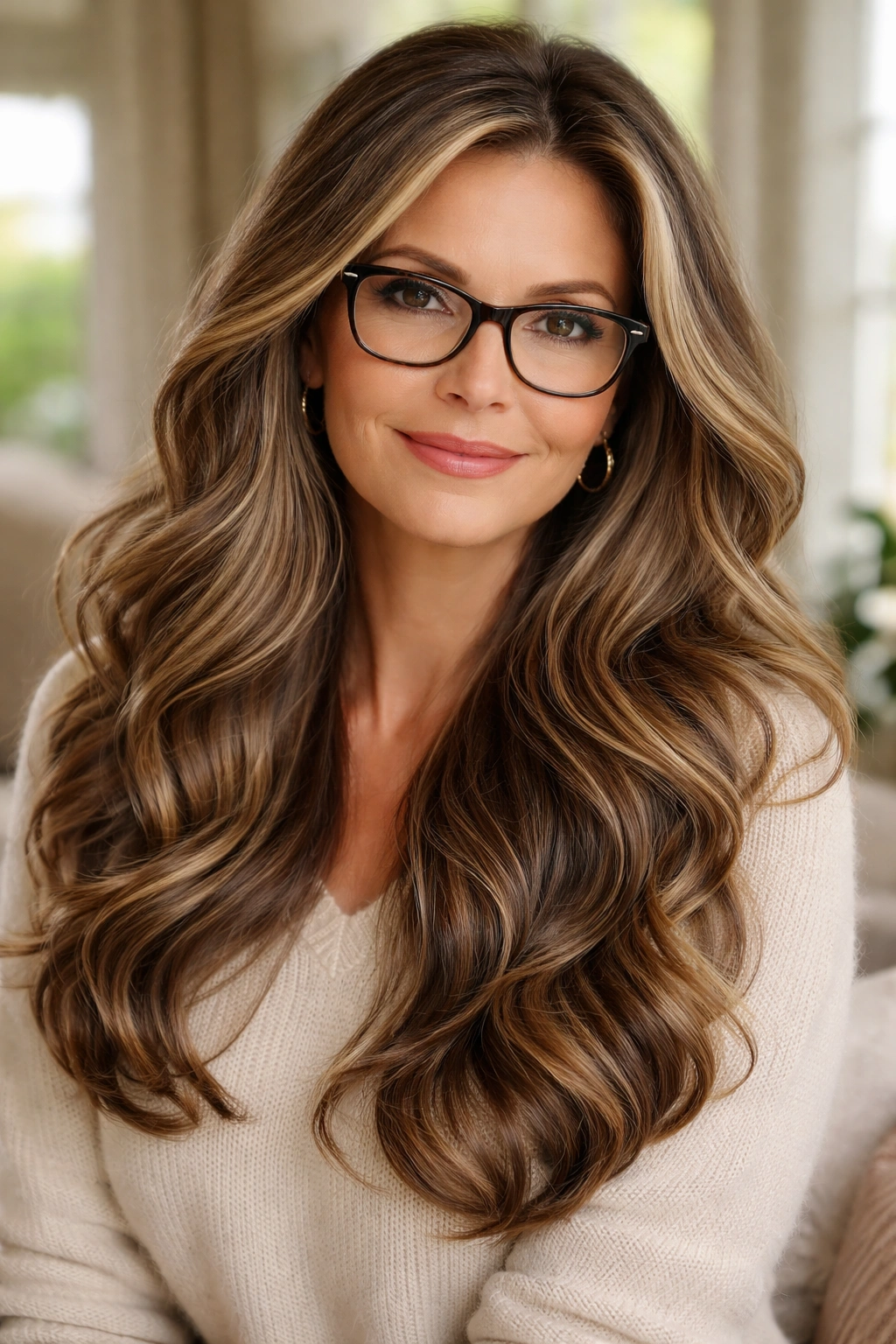
Long, voluminous waves with strategic highlights create an effortlessly glamorous look that’s absolutely achievable for women over 40 in glasses. This style relies on texture, movement, and the visual interest of color to create sophistication and youthfulness. Rather than looking like you’re trying to be young, voluminous waves with highlights read as polished, confident, and intentional.
How Volume and Highlights Enhance Your Appearance With Glasses
Voluminous waves create so much visual movement and interest that your glasses become just one element in a beautiful, complex composition. The highlights add dimension and light-reflection that makes your entire face look brighter and more luminous. When you have waves with movement and highlights creating visual interest, glasses feel like an accessory that adds to your style rather than a device you need to wear. This is particularly true if your highlights are placed around your face—they work in harmony with your frames to brighten your features.
Creating and Maintaining Your Voluminous Waves
- Start with a solid layered cut; layers are essential for creating true volume and movement in long hair
- Blow dry using a round brush at the roots, directing hair upward and backward to create maximum volume at the crown
- Use a 1.5 to 2-inch curling iron on the lengths and ends, wrapping sections away from your face and allowing curls to cool completely before brushing out gently
- Apply a wave cream or texture spray before blow drying to help waves hold throughout the day
- Highlights should be placed around your face and throughout the lengths for maximum dimension
- Refresh highlights every 6-8 weeks to maintain brightness, or embrace slightly grown-out roots for a softer, more natural look
- Sleep in loose braids or a silk pillowcase to help maintain waves overnight and reduce breakage
This is the most glamorous option on the list and works beautifully for anyone who loves the feeling of voluminous, romantic hair.
Final Thoughts

The right hairstyle for you isn’t just about the cut—it’s about finding a style that works with your glasses rather than fighting against them, that makes you feel confident at 40 and beyond, and that actually fits your real life in terms of styling time and maintenance. Whether you choose a low-maintenance pixie, a versatile layered lob, a bold asymmetrical bob, or something entirely different, the most important thing is selecting a cut that makes you feel like the best version of yourself.
The intersection of your unique face shape, hair texture, glasses frame style, and lifestyle is where your perfect hairstyle lives. Don’t be afraid to bring photos of styles you love to your stylist, and don’t hesitate to have an honest conversation about what you’re willing to do in terms of daily styling and maintenance. A good stylist will understand how to adapt these styles to work specifically for you—for your hair type, your face shape, and your preferences.
Remember that even the best hairstyle needs consistent maintenance to keep looking its best. Schedule regular trims according to your cut’s needs, invest in good styling products that work for your hair type, and don’t underestimate how much impact proper blow-drying technique can have. With the right cut, products, and approach, you can look and feel absolutely stunning in your glasses. Your hairstyle and your frames can absolutely work together to create a polished, confident, beautiful version of you—you just needed the right starting point.
