



The pixie cut has long held a reputation as one of the most versatile and flattering short hairstyles available — but the secret that most people miss is that there’s no single “pixie cut.” Instead, there’s an entire universe of pixie variations, each designed to complement different face shapes, hair textures, and personal style preferences. A pixie that’s absolutely stunning on someone with an oval face might look completely different — and less flattering — on someone with a round or square face shape. The good news? That means no matter what your face shape, there’s a pixie cut that’s been specifically engineered to enhance your best features and work with your natural proportions.
The magic of the pixie cut lies in how the length, layers, texture, and styling direction can shift and reshape how your face appears. A pixie that’s cut longer on one side creates visual balance for angular faces. Texture and choppy layers add dimension and softness for rounder faces. Strategic undercuts can make wider faces appear more proportional, while a slightly longer crown adds height for those with shorter or rounder face shapes. The key is understanding your face shape first, then finding the pixie variation that’s been designed to work with your unique features — not against them.
What makes this particularly exciting is that pixie cuts have evolved dramatically from the severe, one-size-fits-all style of decades past. Modern pixies embrace texture, asymmetry, layering, personalization, and styling versatility in ways that make them accessible and flattering for far more people than ever before. Whether your hair is straight, wavy, curly, or coily; whether you prefer a polished professional look or a tousled, textured vibe; whether your face is round, square, heart-shaped, oval, or somewhere in between — there’s a pixie cut waiting for you. Let’s explore fifteen distinct pixie variations and find the one that’s going to make you feel absolutely confident.
1. The Classic Pixie with Textured Layers
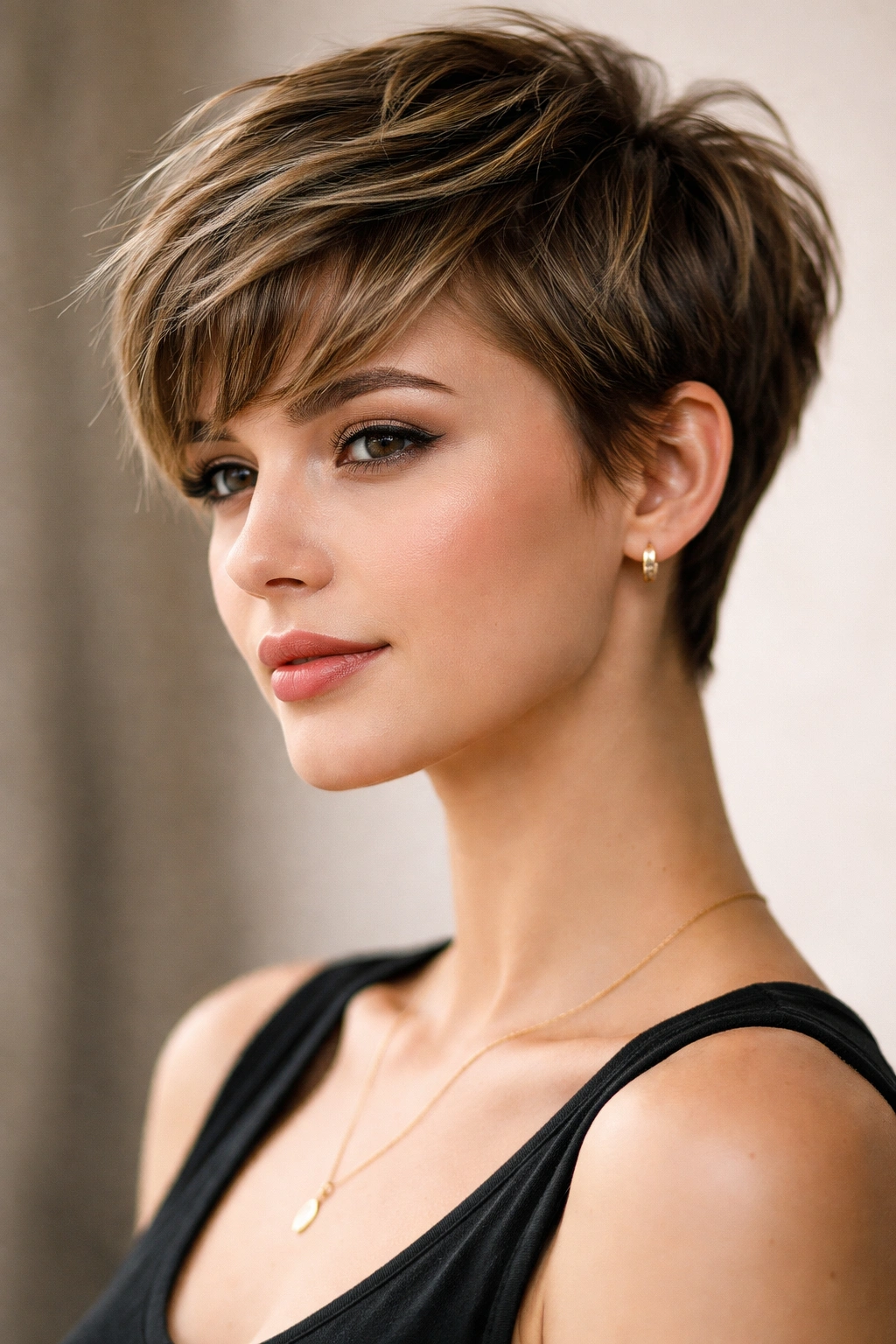
The timeless textured pixie is the baseline from which all other pixie cuts evolve — short on the sides and back, slightly longer on top with choppy, face-framing layers that create movement and dimension. This version works beautifully on oval and oblong face shapes because the layers don’t compete with or overwhelm those longer proportions. The short sides keep the style crisp and modern while the textured crown adds visual interest and prevents the cut from looking too severe or flat-topped.
Why This Cut Stands Out
A well-executed classic pixie with choppy layers creates immediate softness and movement, even with straight or fine hair. The texture prevents the style from looking harsh, while the graduated length from the sides to the top creates a subtle lift that flatters most face shapes without overwhelming them. This is the pixie cut you see on red carpets and in editorial photography — it’s endlessly sophisticated because it’s so fundamentally well-proportioned.
Best Features to Expect
- Soft, face-framing layers that draw attention to eyes and cheekbones
- Slightly longer crown creates balance and prevents a pinhead appearance
- Choppy texture adds movement and visual softness throughout
- Minimal styling time required — air-dry texture is the goal
- Works beautifully with both straight and wavy hair textures
Pro tip: Ask your stylist to keep the layers a bit longer on the first cut — you can always take them shorter as you get used to the style, but it’s harder to add length back.
2. The Rounded Pixie for Full Faces
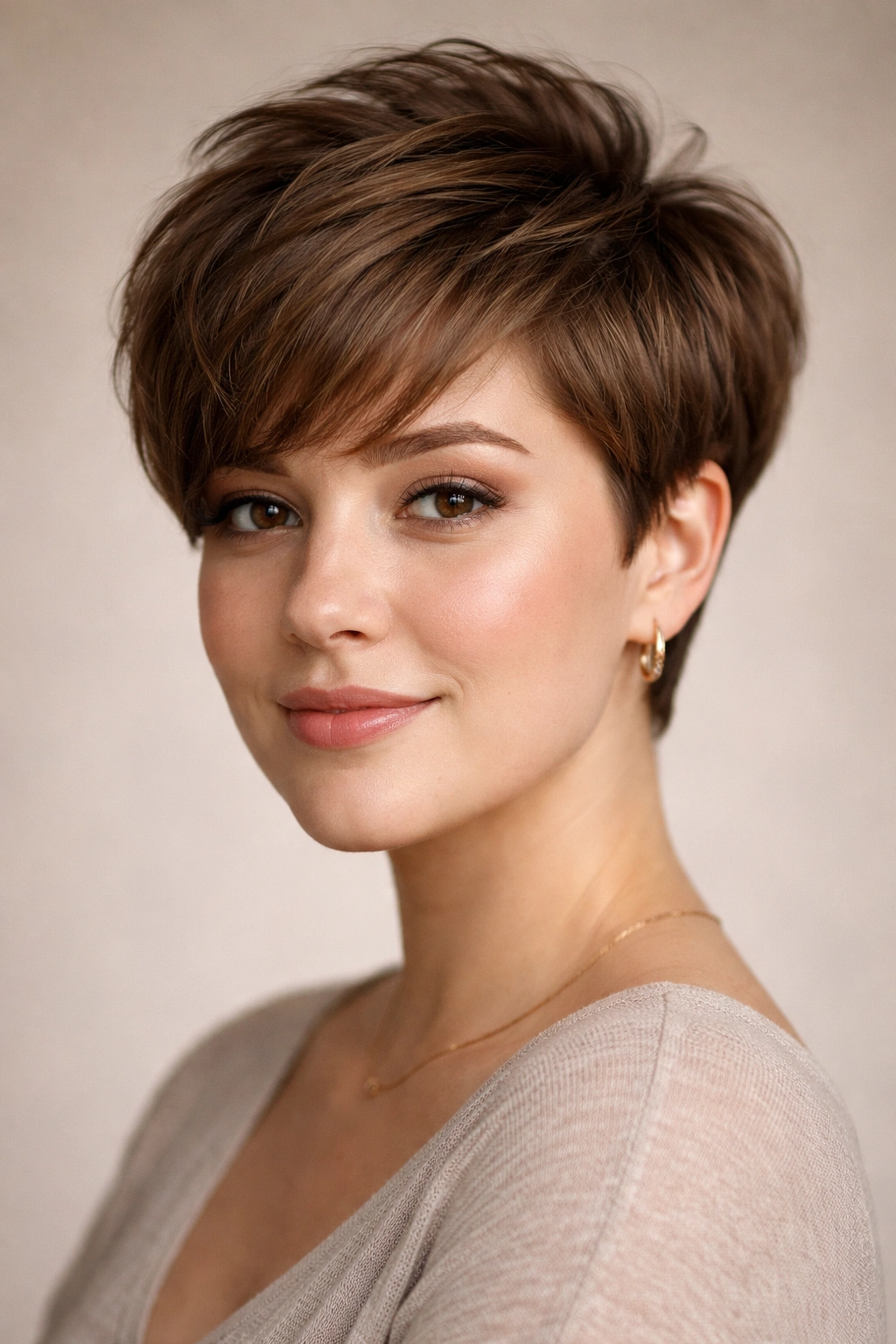
If you have a round or fuller face shape, you need a pixie that adds height rather than width — and that’s exactly what the rounded pixie delivers. This cut keeps sides shorter and closer to the head while building volume and length on top, creating an elongated silhouette that visually stretches the face. The crown is fuller and more voluminous, and the sides taper more closely, which creates a streamlined appearance that’s incredibly flattering for round and square faces.
What Makes It Different
The key distinction of this pixie is the intentional height created at the crown — not just choppy layers, but actual structured volume that’s styled upward and back. This vertical emphasis counteracts the horizontal width of a rounder face shape, creating better visual balance and proportion. Think of it as a visual optical illusion that works in your favor.
Styling and Shaping Details
- Longer hair on top (1.5 to 2 inches) versus very short on sides (0.5 to 1 inch)
- Sides blend smoothly into longer crown rather than stark contrast
- Layers concentrated on top to maximize texture and lift
- Works best with some natural wave or styling product for volume
- Requires minimal blow-drying but benefits from light texture work
Insider note: The height needs to be actively styled upward, not left flat — this isn’t a wash-and-go cut unless you have naturally textured hair that grabs volume easily.
3. The Extended Pixie Bob for Long Faces
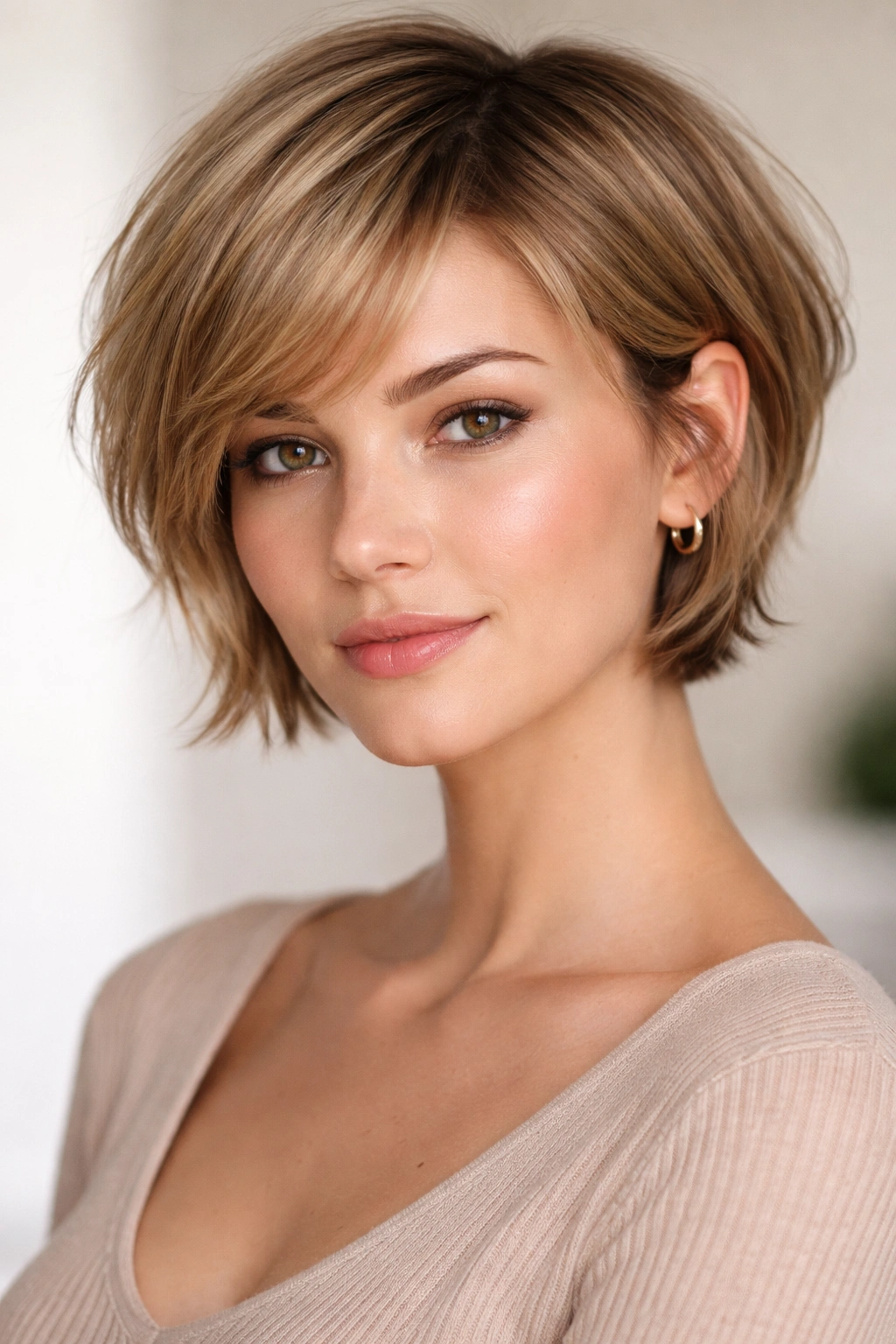
An oblong or long rectangular face shape needs length and width, not height — and that’s why the extended pixie bob is specifically designed for these proportions. This cut keeps more length overall, transitioning more gradually from sides to top, with the back potentially reaching chin-length or just below. The extra length provides balance for longer faces, while keeping the style short enough to maintain that signature pixie vibe and ease of styling.
Why Longer Faces Need This Variation
Long faces need to break up their vertical length, and this pixie accomplishes that by providing more horizontal elements — length around the face and through the middle of the style — while still maintaining the practical, low-maintenance benefits of a pixie. The graduated, longer cut also softens the overall appearance and prevents the style from looking too severe or top-heavy.
Essential Measurements and Styling
- Back of cut extends to approximately jaw-length or slightly longer
- Sides blend in a very gradual, soft taper rather than sharp contrast
- Top length remains 1.5 to 2 inches for texture and movement
- Requires regular trimming every 4 to 5 weeks to maintain shape
- Benefits from light layering throughout for softness and movement
4. The Sideswept Pixie for Heart-Shaped Faces
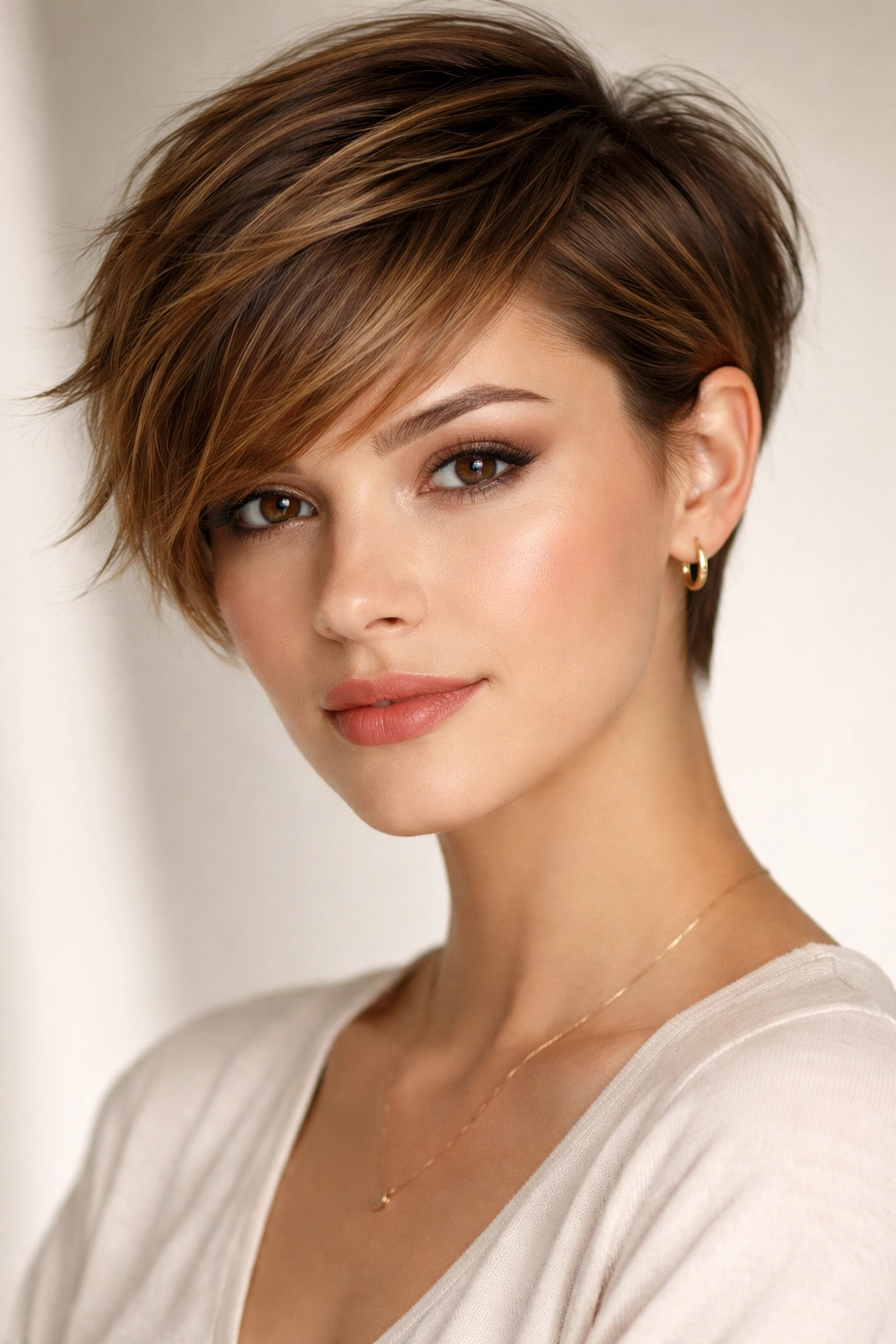
Heart-shaped faces are wider through the forehead and cheekbones and narrower through the jaw — so a pixie that directs hair to the side and downward is strategically brilliant. The sideswept pixie keeps one side longer and swept across or down, which provides width and balance to the narrower jawline while softening the broader forehead. This creates visual harmony by filling in the lower half of the face and drawing attention downward rather than emphasizing the wider upper face.
The Strategic Angle of the Sideswept Design
This pixie works specifically because of its directional emphasis — the hair isn’t cut evenly all around but rather angled longer on one side and shorter on the other. This creates instant visual balance for heart shapes and also adds a chic, slightly edgy element to the overall aesthetic. The sideswept movement also provides styling options — you can sweep it across, style it back, or let it fall naturally depending on your mood.
Cut and Styling Specifications
- One side extends to ear-length or slightly longer
- Other side tapers much shorter, close to the head
- Top has choppy layers that work with the sideswept direction
- The longer side frames and softens the jawline
- Creates an asymmetrical, fashion-forward appearance
Worth knowing: This cut requires intentional styling — you need to actively sweep or direct that longer side, or it can look awkward and unkempt.
5. The Undercut Pixie for Square Faces
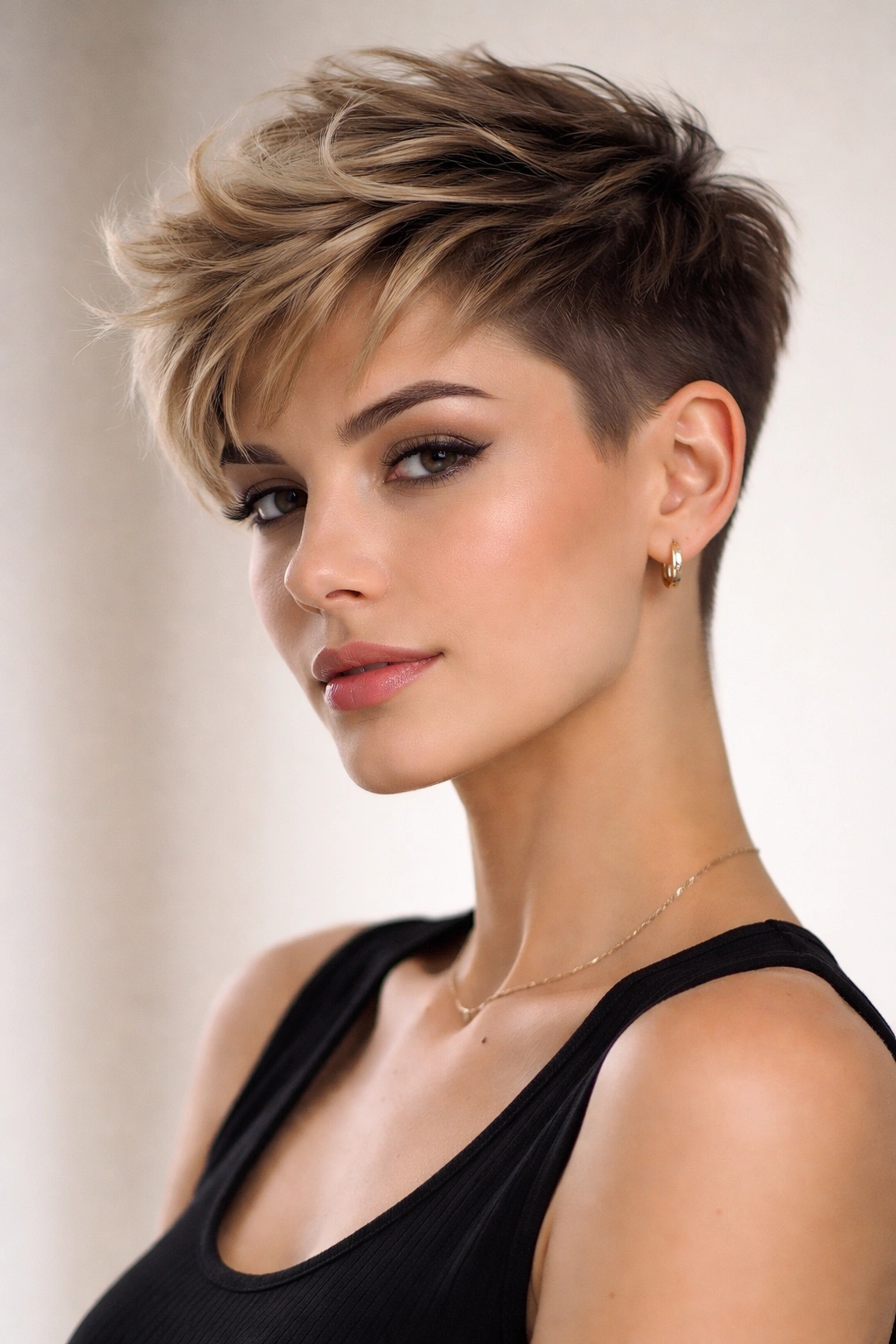
Square faces benefit from softness and angle — never straight, blunt lines that echo the face’s natural structure. The undercut pixie accomplishes this by shaving or cutting the sides and back very short (creating that edgy, defined detail) while keeping substantial length and texture on top and around the face. The contrast between the clean undercut and the textured, slightly longer crown creates visual interest and depth, while the longer top area softens the jawline and forehead.
How the Undercut Transforms a Square Face
The undercut creates a dramatic visual separation that prevents the style from hugging the face too closely — short, clean sides mean the wider cheekbones and jawline aren’t emphasized by hair sitting right against them. Meanwhile, the longer, textured top and face-framing layers add softness and reduce the angular appearance. The undercut also adds an undeniable cool factor and allows for styling versatility — you can slick everything back, sweep hair to the side, or style it up and forward.
Technical Details and Styling Approach
- Sides and back cut to 0.5 inches or shorter (can be faded or blended)
- Top remains 1.5 to 2.5 inches with choppy, face-framing layers
- Undercut can be subtle or dramatic depending on preference
- Top section is styled forward and outward, not plastered down
- Requires intentional styling and product for full effect
6. The Tousled Pixie for Oval Faces
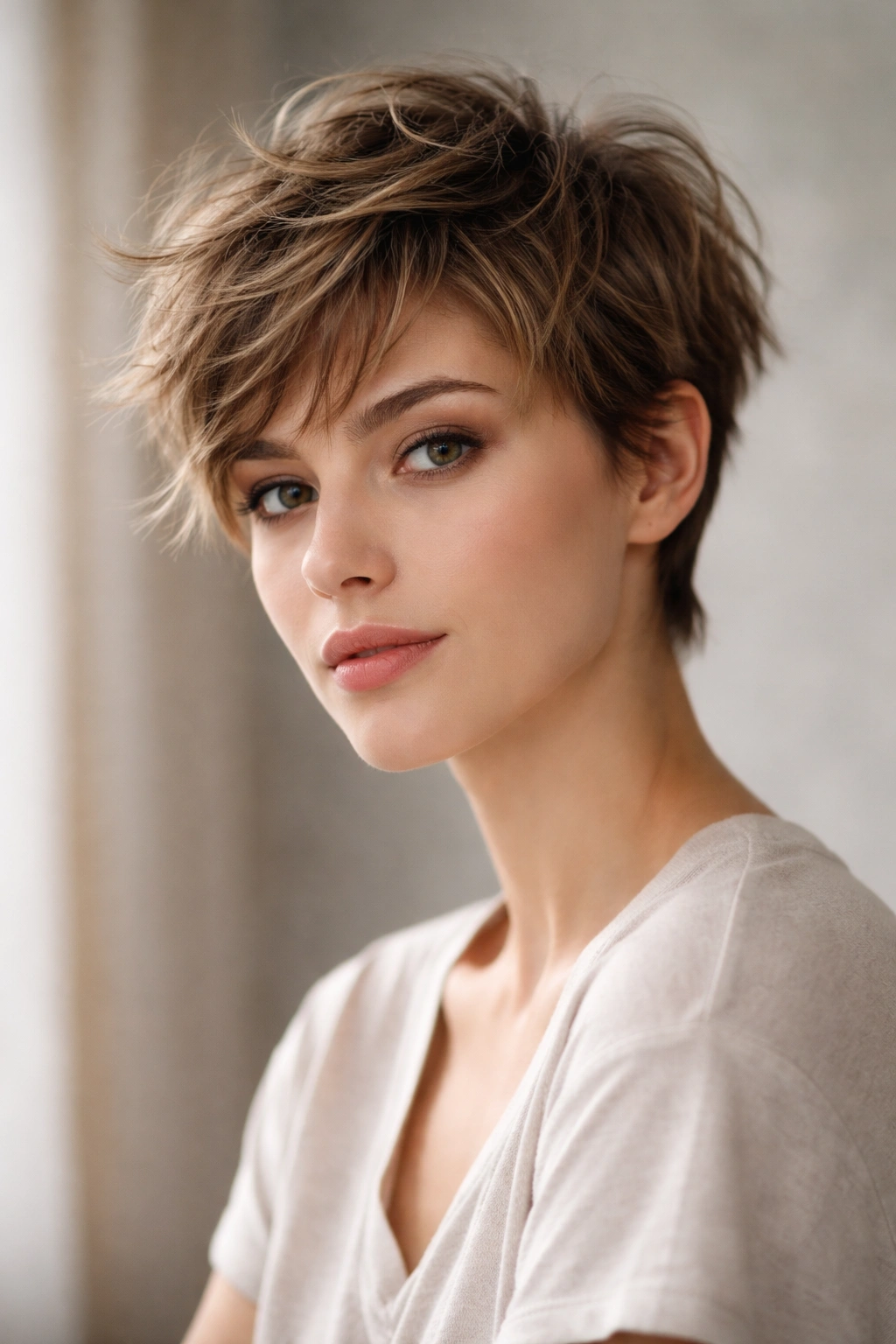
Oval faces are the most versatile of all face shapes — they’re well-proportioned and can pull off almost any style. The tousled pixie leans into this advantage by emphasizing texture, movement, and that effortlessly undone aesthetic that’s become increasingly popular. This version is intentionally choppy and layered throughout, styled with movement and slight dishevelment, creating a relaxed, modern vibe that looks equally good whether you’ve styled it or just woken up.
Why Ovals Can Embrace the Tousled Approach
Because oval faces are already well-balanced, you can focus purely on aesthetic and personal style rather than correction. The tousled pixie is all about texture, personality, and that coveted “I woke up like this” appearance — which actually takes more styling skill than it appears. The choppy layers create multiple planes and angles that catch light differently, adding visual depth and dimension throughout the cut.
Creating and Maintaining the Tousled Look
- Multiple choppy layers throughout create instant texture
- Layers are shorter on sides, longer and more textured on top
- Styling involves using fingers or a texturizing product for movement
- Hair is deliberately undone and piece-y, not sleek or controlled
- Works beautifully with naturally wavy or textured hair
- Straight hair requires product and styling effort for the full effect
Pro tip: This cut benefits from matte texture products (sea salt sprays, texturizing pastes) rather than shiny styling creams that can make it look too slick.
7. The Nape-Length Pixie for Diamond Faces
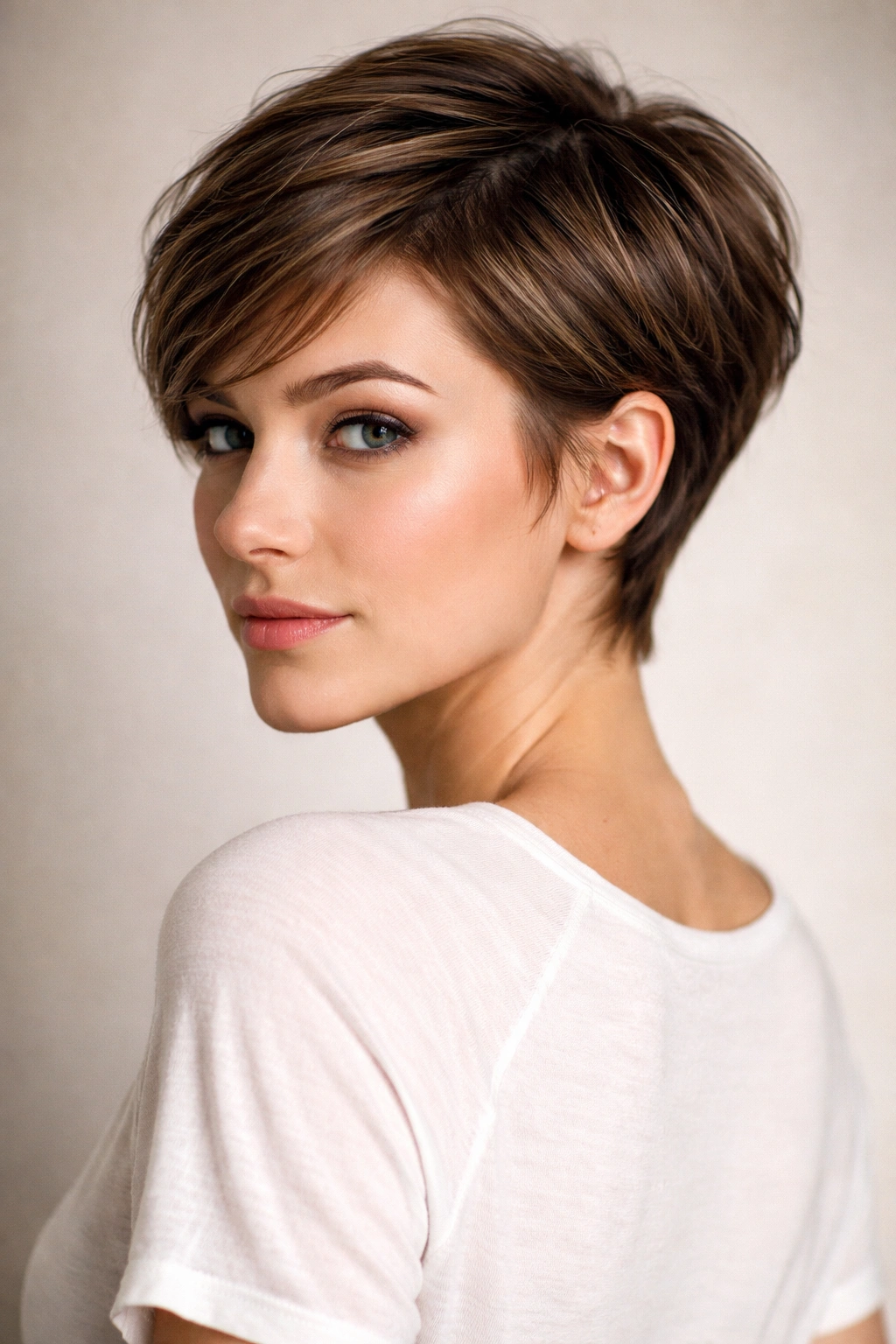
Diamond-shaped faces are narrow through the forehead and jawline but wider through the cheekbones and temples — which means you need a pixie that provides width and fullness where it’s needed (around the cheekbones) and stays close to the head elsewhere. The nape-length pixie accomplishes this by keeping the back of the cut longer — extending down the nape of the neck — while keeping the sides short and close to the head, and the top slightly fuller to add width at the cheekbone level.
The Strategic Advantage for Diamond Proportions
This variation provides fullness exactly where a diamond face needs it (cheekbone area) while creating length in the back that balances the narrower jawline. The nape length also means the cut isn’t as dramatically short as a classic pixie, which some people with narrower faces prefer. The extra length in the back creates a more gradual shape and prevents the cut from looking too severe.
Cut Specifications and Styling Needs
- Back of cut extends 2 to 3 inches down the nape of the neck
- Sides taper close to the head, shorter than the back
- Top has layers that provide fullness at the cheekbone level
- Creates an inverted triangle or subtle mullet-like shape
- Requires regular trimming to maintain the nape length
8. The Pixie Fade for Textured Hair
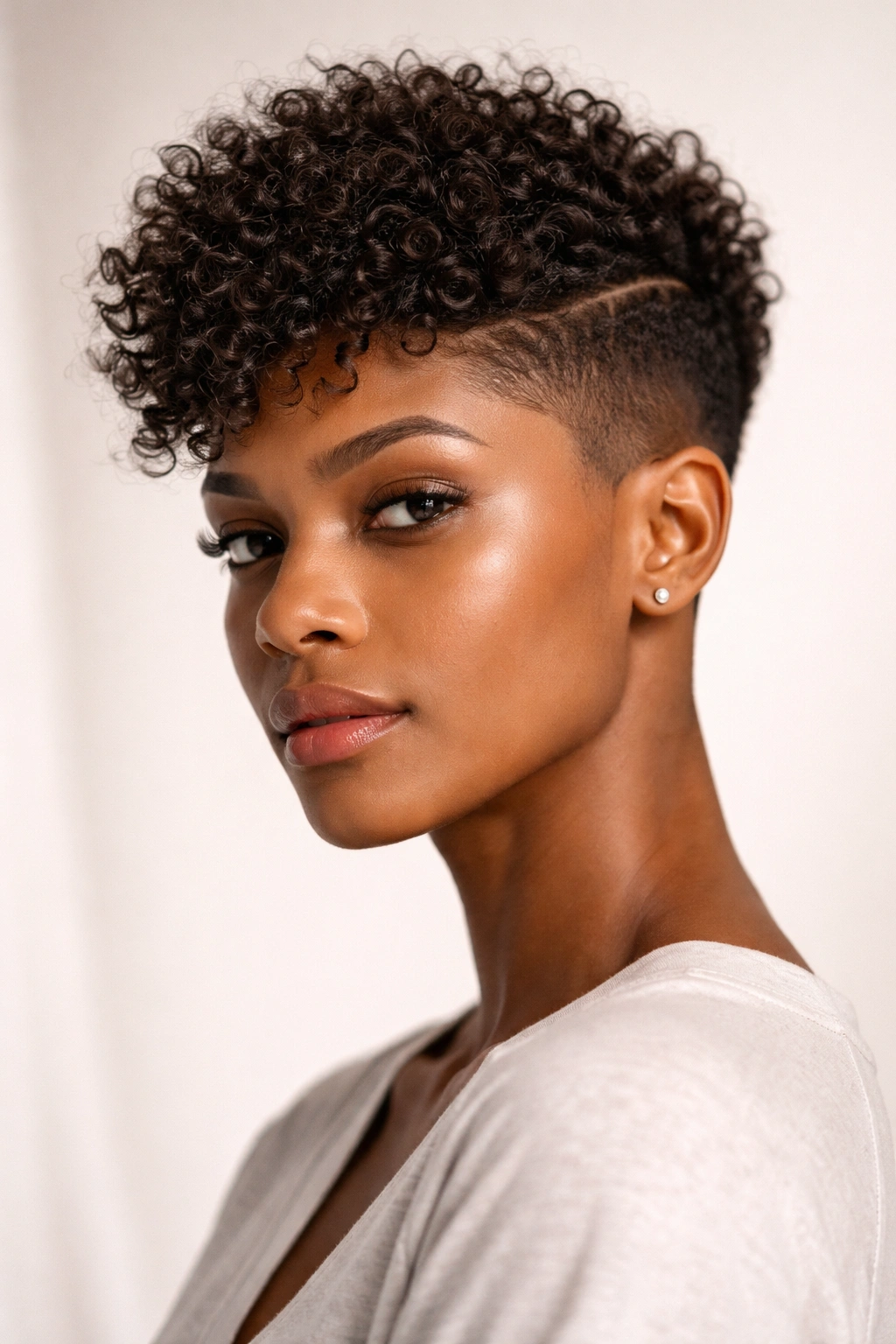
If you have naturally curly, coily, kinky, or textured hair, a traditional pixie can sometimes look sparse or less impressive because the texture compresses against the scalp differently than straight or wavy hair. The pixie fade celebrates natural texture by using a fade or taper on the sides and back (which keeps the cut clean and defined) while allowing the textured crown to fully express its natural pattern and volume. This creates a style that’s both sharp and textured, honoring your hair’s natural behavior rather than fighting against it.
How Textured Hair Changes the Pixie Equation
Textured hair has natural volume and often shrinks significantly when dry, which means a pixie cut that looks short and simple on straight hair can look dramatically different on coily hair. The pixie fade embraces this by using the fade to create definition and edge while letting the crown do what it naturally does. This approach celebrates texture rather than trying to suppress or straighten it.
Cutting and Styling Approach for Textured Hair
- Sides and back are faded or tapered for clean definition
- Crown is left longer to showcase natural curl pattern
- Cut works with the hair’s natural grain and pattern
- Requires products designed for textured hair (creams, butters, gels)
- Air-drying maintains the natural curl pattern
- Crown curl pattern often creates natural volume and lift
Real talk: This is one of the few pixie cuts that can genuinely be a true wash-and-go style because your hair’s natural texture does the heavy lifting for you.
9. The Asymmetrical Pixie for Rectangular Faces
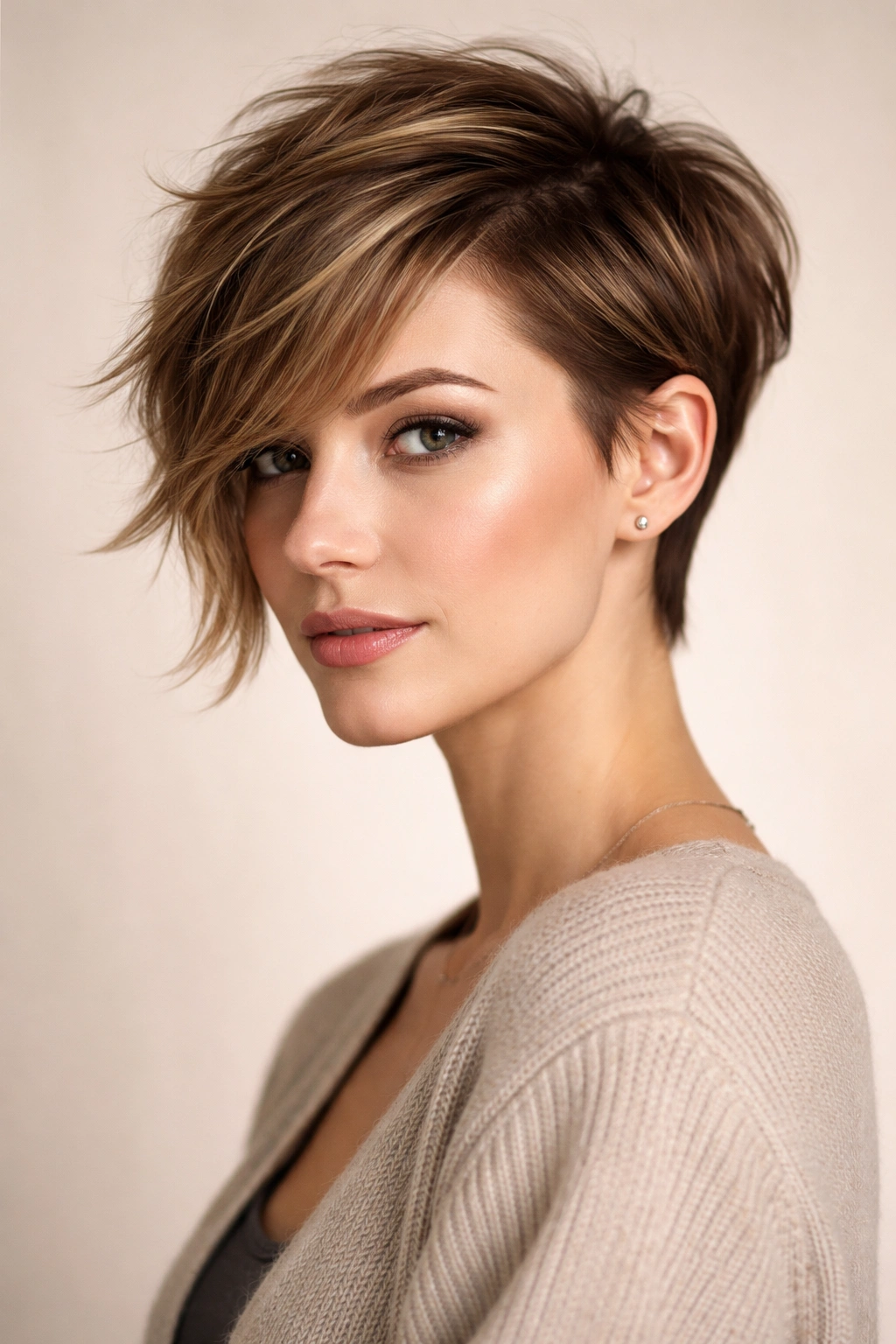
Rectangular faces benefit from the same principle as oblong faces — they need visual breaks in vertical length — but an asymmetrical pixie takes this further by deliberately creating imbalance in a flattering way. One side is cut noticeably longer (potentially ear-length or longer) while the other side is shorter, creating a dynamic, directional line that breaks up the face’s rectangular proportions and adds visual interest and movement.
The Psychology of Asymmetry for Rectangular Shapes
Asymmetrical cuts prevent the eye from traveling straight up and down the face — instead, the directional cut redirects the eye sideways and across, which interrupts the vertical emphasis of a rectangular face. This makes the face appear less long and more balanced. The asymmetry also adds a contemporary, editorial feel that many people find more interesting than a symmetrical style.
Asymmetrical Cut Details and Considerations
- One side extends to jaw-length or longer
- Other side tapers significantly shorter, close to the head
- Creates a clear, intentional direction and visual movement
- Requires intentional styling to maintain the asymmetrical effect
- Works best with some length on the longer side (at least 1.5 inches)
- Allows for multiple styling options as the longer side grows out
10. The Pixie with Longer Bangs for Round Faces
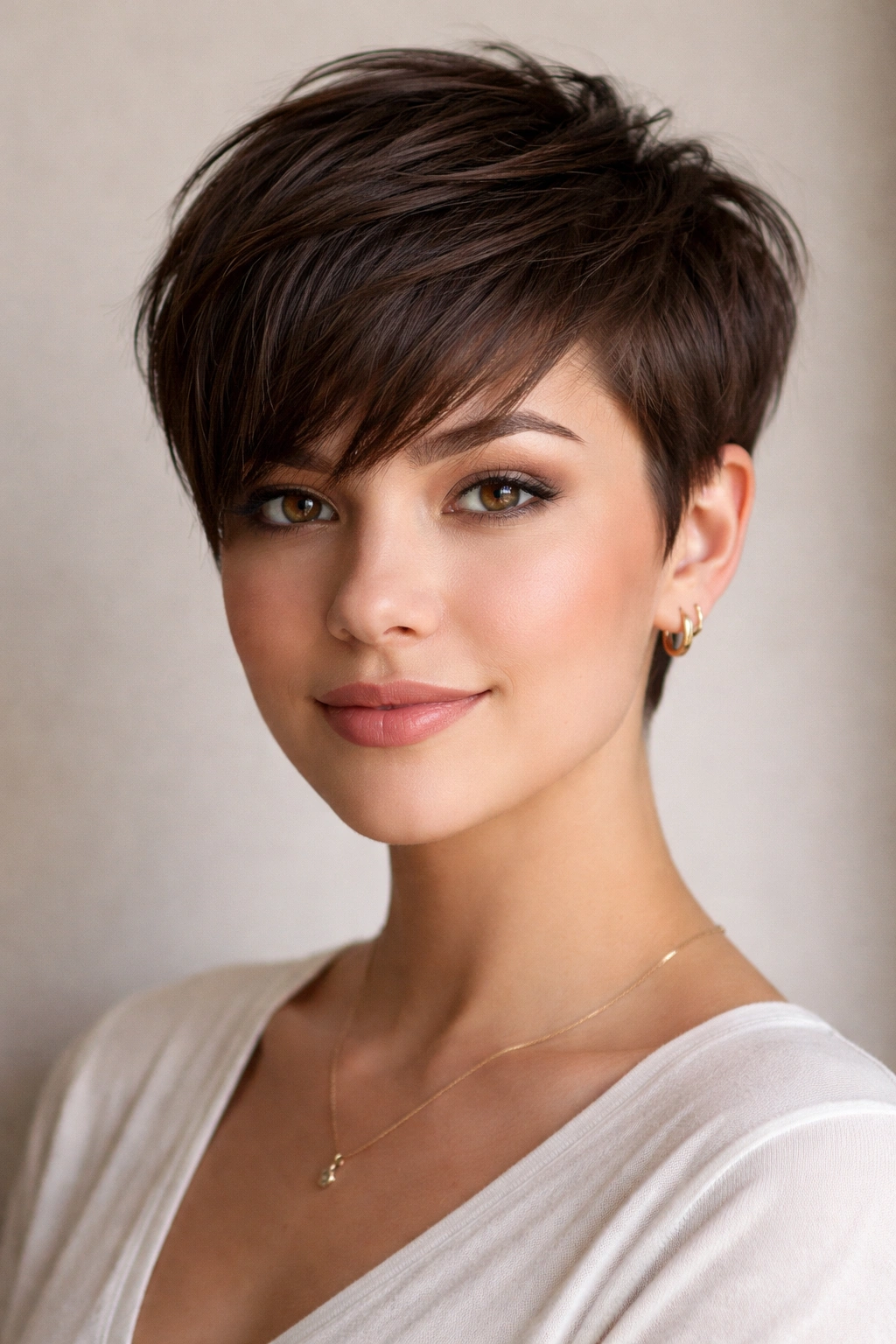
While we’ve discussed height strategies for round faces, another highly effective approach is using longer, piece-y bangs that fall across the forehead. This pixie keeps the sides and back short and close to the head (preventing width) while growing out longer, textured bangs that sweep across the forehead. The bangs break up the roundness of the face by creating vertical lines across the forehead and drawing attention upward rather than emphasizing the round cheekbones and jawline.
Why Longer Bangs Work for Rounder Proportions
Bangs that fall to eye level or slightly longer create a visual interruption across the widest part of the face (the cheekbones and face width). This interruption makes the face appear less round and more balanced. The piece-y, textured nature of the bangs also adds softness and movement, preventing a heavy, severe appearance.
Cutting and Styling the Longer Bang Pixie
- Sides and back remain very short, close to the head
- Bangs extend from the crown down to eye level or slightly below
- Bangs are choppy and textured, not blunt or heavy
- Top section is longer and layered to blend with the bangs
- Requires regular trimming as bangs are the first thing to grow
- Works best with styling product to maintain shape and texture
11. The Soft Curly Pixie for All Face Shapes
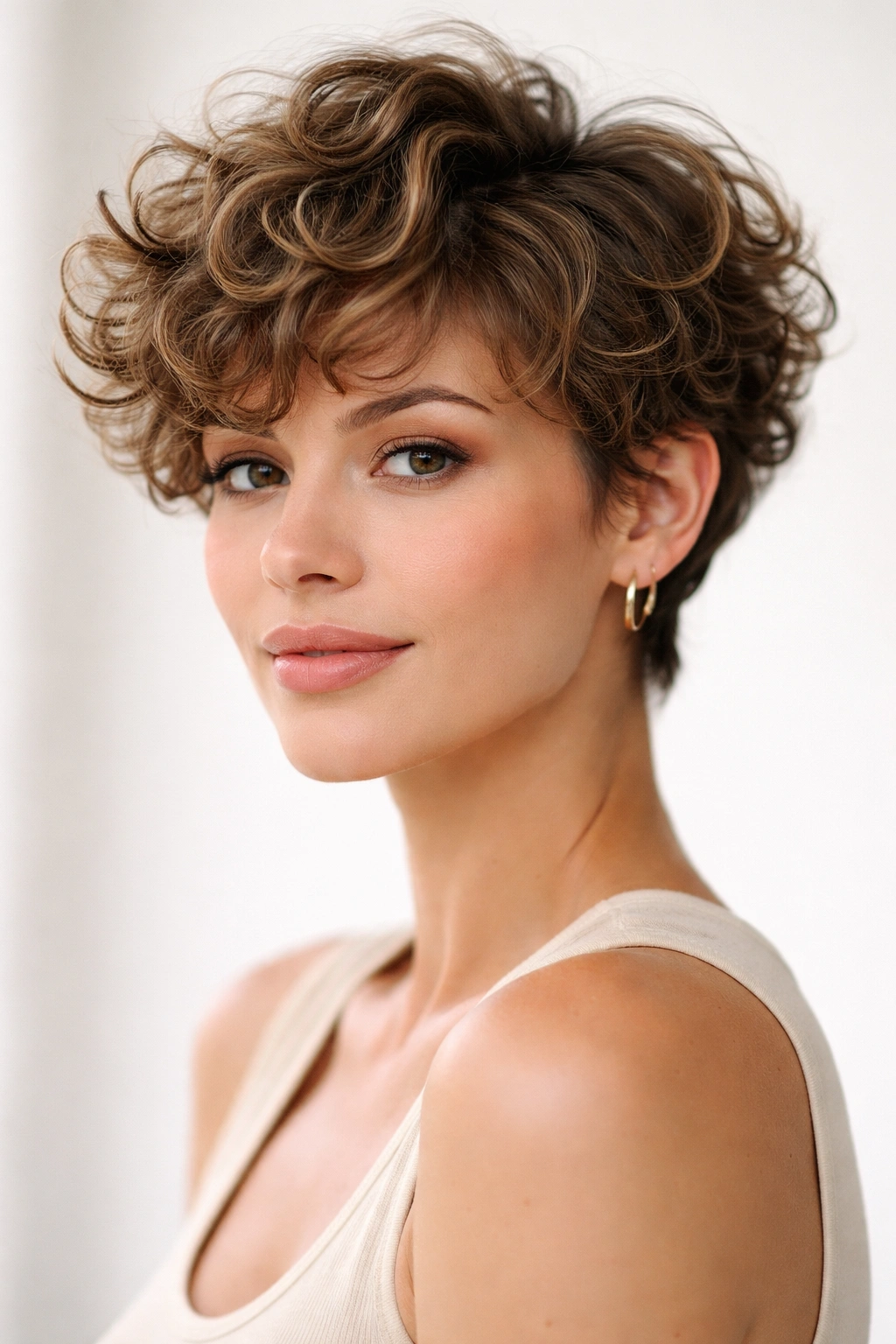
If you have naturally curly or wavy hair and love your texture, the soft curly pixie celebrates your hair’s natural pattern instead of suppressing it. This version is cut with layers that work with the curl pattern rather than against it, keeping the cut structured enough to maintain its shape while allowing the curls to express themselves fully. The result is a soft, romantic, undeniably textured pixie that’s incredibly flattering because it honors your hair’s natural behavior.
How Curls Change the Pixie Aesthetic
Curly hair in a pixie cut creates an entirely different silhouette than straight hair in the same cut — the curls add volume, softness, and movement that straight hair doesn’t provide. This means the cut can be shorter overall while still appearing voluminous and full. The curls also hide any styling mistakes and create that effortlessly undone aesthetic more naturally than straight hair.
Cutting Strategy for Curly Hair
- Layers are designed to work with curl pattern, not against it
- Cut is done on dry, curly hair (never cut straight and assume the curl will help)
- Crown is kept fuller to embrace natural volume
- Sides can be shorter without looking too severe because of curl density
- Requires products designed for curly hair (leave-ins, gels, creams)
- Air-drying maintains the natural curl pattern and texture
Worth knowing: A stylist experienced with curly hair is essential here — someone who doesn’t understand how curls shrink and move will likely cut it too short.
12. The Pixie Mullet for Edgy Personal Style
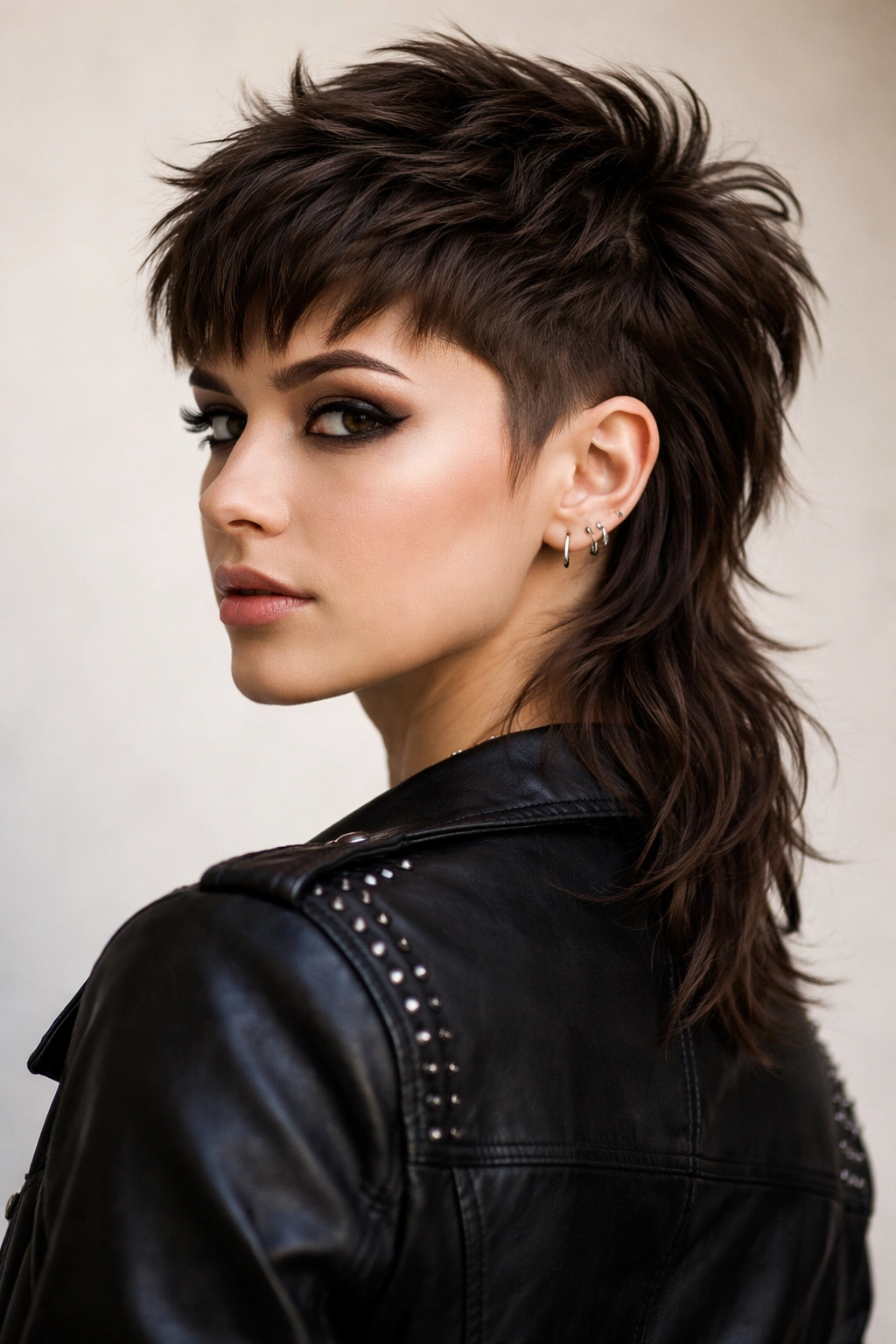
The modern pixie mullet is having a moment for people who want an undeniably bold, fashion-forward statement. This cut is dramatically short on top and sides (think quarter-inch fade or shorter) with significant length in the back — sometimes extending to shoulder length or beyond. This creates maximum contrast and visual drama while still maintaining the pixie’s signature short-and-easy aesthetic on the top and sides.
When the Pixie Mullet Works Best
This cut works best for people with rectangular or oblong faces because the length in the back adds balance to longer face proportions. It also works beautifully for people with naturally textured hair where the contrast between the short, faded crown and the longer, textured back creates stunning visual interest. The pixie mullet is undeniably a statement cut — it’s not subtle, and that’s exactly the point.
The Pixie Mullet Technical Breakdown
- Crown and sides are faded or cut extremely short (0.5 inches or less)
- Back extends significantly longer, creating maximum contrast
- Usually worn with the longer back section styled in waves or texture
- Requires confidence and a willingness to stand out
- Works on all face shapes but requires the right attitude
- Demands regular trims on the short sections to maintain sharpness
Real talk: This is a cut for people who want to make a bold statement. If you’re looking for subtle or understated, the pixie mullet isn’t your cut.
13. The Pixie with Precise Undercut Design for Square Faces
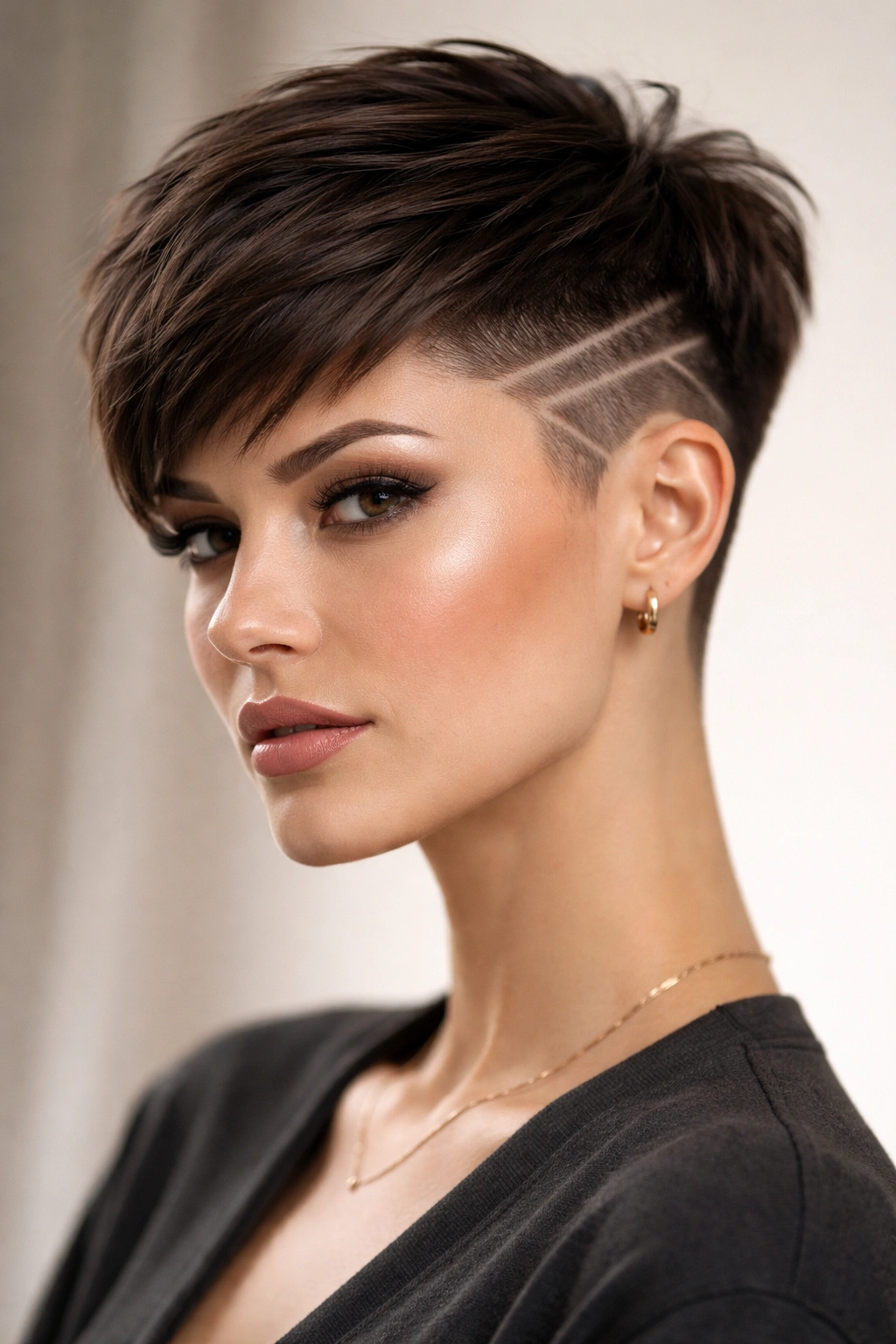
Taking the undercut concept further, this pixie features a deliberately designed undercut pattern — clean geometric lines, fading, or even shaved designs on the sides or back. For square-faced individuals, this approach is doubly beneficial: the undercut removes bulk from the wider jawline and cheekbones, while the patterned or artistic element adds visual interest and becomes a personal style statement. This is a cut for people who want precision, design, and edge.
The Graphic Element of Designed Undercuts
A designed undercut transforms the pixie from simple hairstyle into wearable art. Whether it’s a subtle fade with crisp lines, geometric patterns, or more elaborate designs, the undercut becomes a visual focal point that draws attention and adds personality. For square faces, this also strategically removes hair from the areas that need it most.
Precision and Maintenance Considerations
- Undercut design is precise and intentional, not just functional
- Sides or back feature fade, line work, or patterned design
- Top section is longer and layered in contrast to the sharp undercut
- Requires skilled barber or stylist for clean, precise lines
- Needs maintenance every 2 to 3 weeks to keep undercut sharp
- The design becomes a signature element of your personal style
14. The Tapered Pixie for Narrow or Oblong Faces
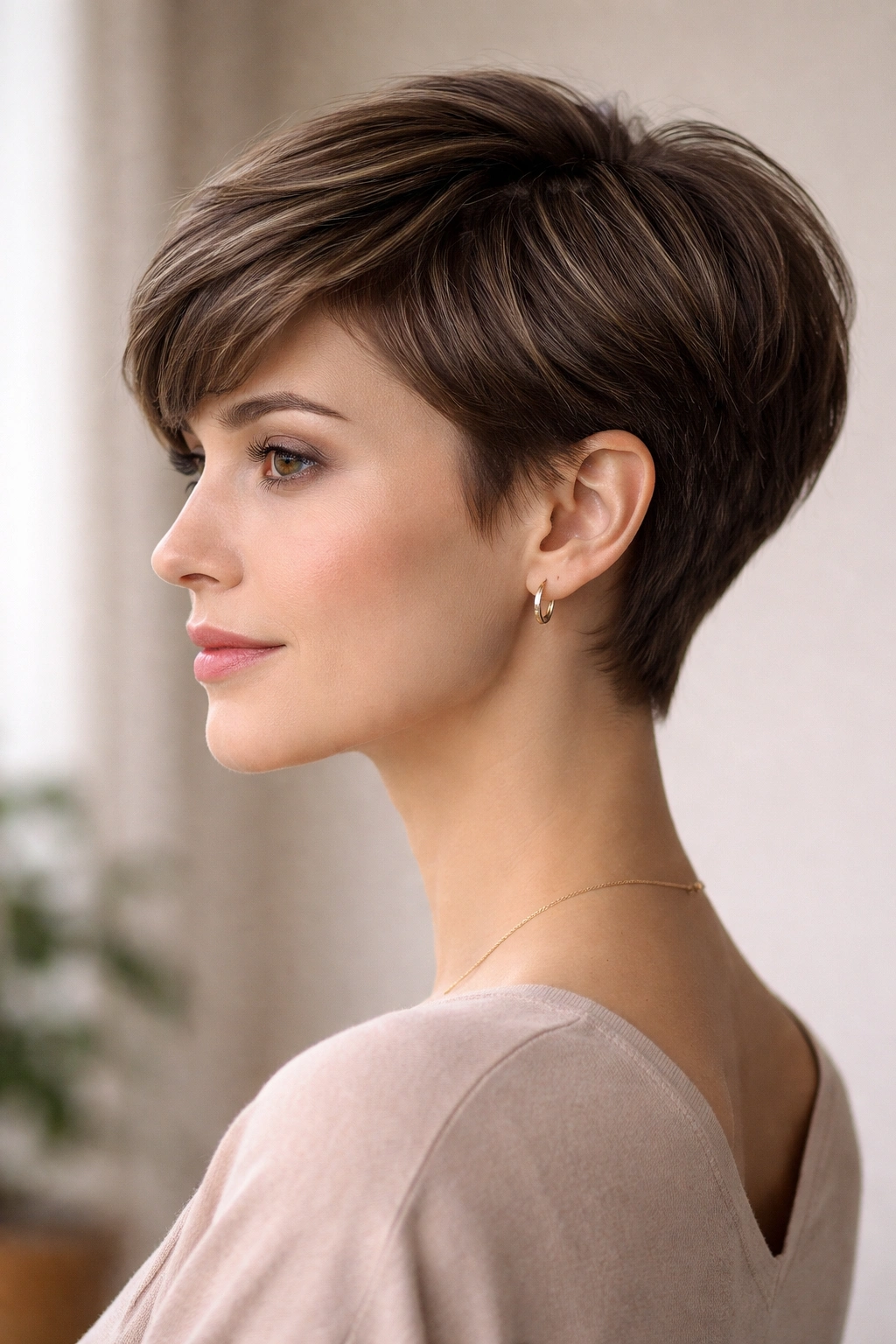
A narrow face needs width and fullness, and the tapered pixie delivers this by keeping fuller length on top and sides while tapering gradually shorter toward the nape. Unlike the extended pixie bob which maintains more length overall, the tapered pixie is still recognizably short and easy to style — it just provides strategic fullness in the right places. The taper creates a subtle shape that adds balance without adding awkward length.
How Tapering Creates Strategic Balance
A taper transitions gradually from longer to shorter, which means hair sits fuller at the cheekbone and temple level while becoming shorter at the nape. This adds width exactly where a narrow face needs it while maintaining the practical, short-style benefits of a pixie. The taper is also flattering because it creates subtle dimension and shape.
The Tapered Shape in Practice
- Top and sides remain longer (1.5 to 2 inches)
- Back gradually tapers shorter toward the nape
- Creates a subtle shape rather than blunt lines
- Works beautifully with all hair textures
- Requires regular trims every 4 to 6 weeks to maintain taper
- Can be styled multiple ways depending on the occasion
15. The Romantic Pixie with Wispy Texture for Heart Faces
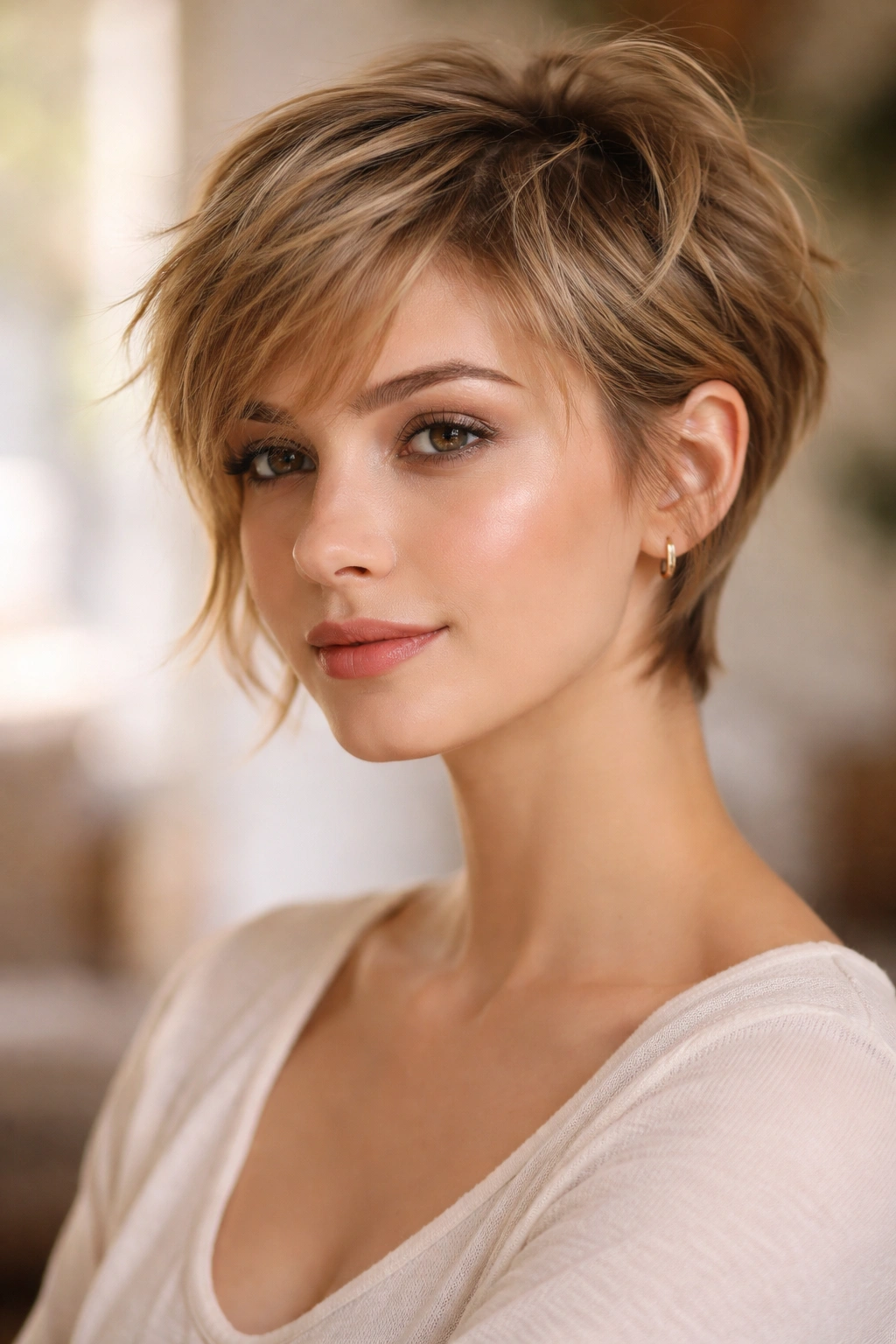
Completing our journey through pixie variations is the romantic pixie — soft, wispy, and intentionally gentle. This version is perfect for heart-shaped faces because it emphasizes softness and movement rather than precision and edge. Wispy layers throughout the cut create a feathered, romantic aesthetic while the overall shape still directs fuller hair toward the jawline and away from the forehead. It’s a pixie for people who want short hair that still feels undeniably feminine and soft.
The Softness Factor for Heart-Shaped Balance
Heart-shaped faces are often angular and defined in the upper face — so a romantic pixie that emphasizes softness, wispy texture, and gentle layers provides visual balance and softness. The cut works with, not against, the face’s natural lines, but softens them through texture and movement rather than length.
Creating the Romantic Pixie Aesthetic
- Multiple wispy layers throughout create soft movement
- Longer side-swept sections provide jawline softness
- Top is layered and textured for movement and lift
- Overall shape is deliberately soft and undone
- Styling emphasizes texture and movement over structure
- Works beautifully with all hair textures, especially those with natural wave
Pro tip: This cut shines with the right styling approach — sea salt spray, texturizing cream, or light oil creates the effortless, romantic aesthetic.
Final Thoughts
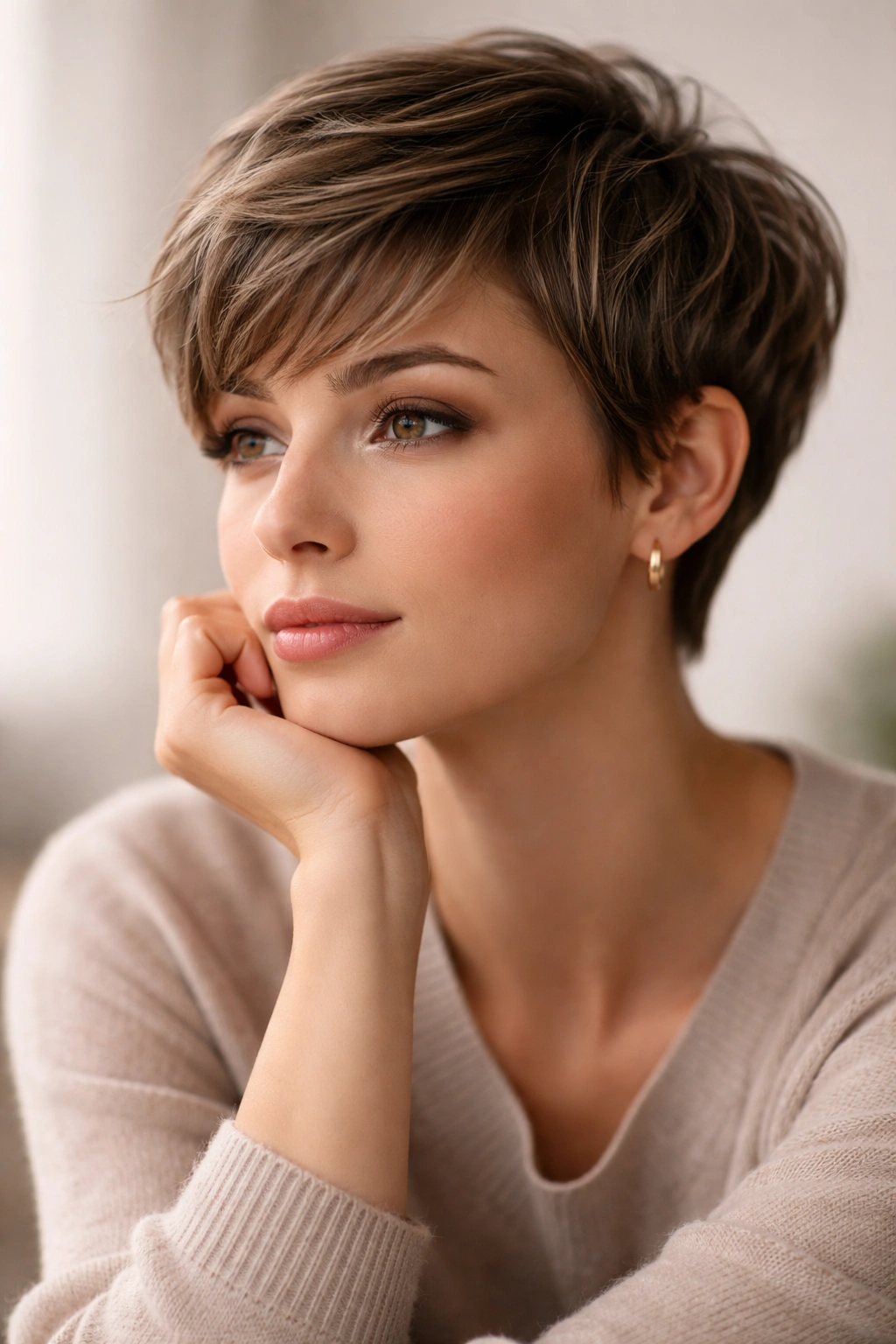
The beauty of the pixie cut lies not in finding the one perfect version, but in understanding which variation works specifically for your face shape, hair texture, and personal style. The classic pixie that looks stunning on your best friend might make you feel like you’re fighting the cut — but there’s another pixie variation on this list that’s been engineered specifically for your unique proportions. The transformation that happens when you find your ideal pixie is genuinely remarkable: suddenly the cut works with your features instead of against them, and what felt like a risky, short hairstyle becomes one of the most flattering styles you’ve ever worn.
The key is communication. Bring reference photos of the specific variation you’re drawn to, and have a detailed conversation with your stylist about your face shape, hair texture, and styling preferences. A skilled stylist who understands how different pixie variations work for different face shapes will listen carefully, ask clarifying questions, and guide you toward the version that’s going to make you feel most confident walking out of their chair. This isn’t a one-size-fits-all haircut — it’s a personalized cut that’s been tailored specifically to you, and that’s what makes it so powerful.
