



Short hair doesn’t mean sacrificing formal elegance—it actually offers a freedom that longer styles struggle to match. The right short haircut, styled intentionally, can look just as polished and sophisticated as any floor-length updo or intricate braid. In fact, some of the most memorable formal appearances feature women in precisely cut short styles that command presence and highlight facial features with striking clarity. The secret isn’t adding length; it’s choosing a cut that works with formal styling techniques and understanding how to elevate it for the occasion.
The challenge many women with short hair face is that what works for everyday wear doesn’t automatically translate to formal events. A casual, lived-in textured crop needs to transform into something refined. A carefree pixie requires intentional grooming and styling choices. But here’s what makes this exciting: short hair, when styled formally, has an inherent sophistication that feels modern and confident. It shows you’re not hiding behind length—you’re committing to a refined silhouette and letting your styling expertise shine through.
Whether you’re attending a wedding, gala, black-tie dinner, or elegant evening event, these ten formal styles prove that short hair can absolutely be your answer. Each one works with specific hair textures, face shapes, and personal style preferences. Some require products and precision; others lean on natural texture with polished finishing touches. All of them deliver that crucial combination of polished elegance and modern edge that makes formal events feel special.
1. Polished Side-Swept Pixie
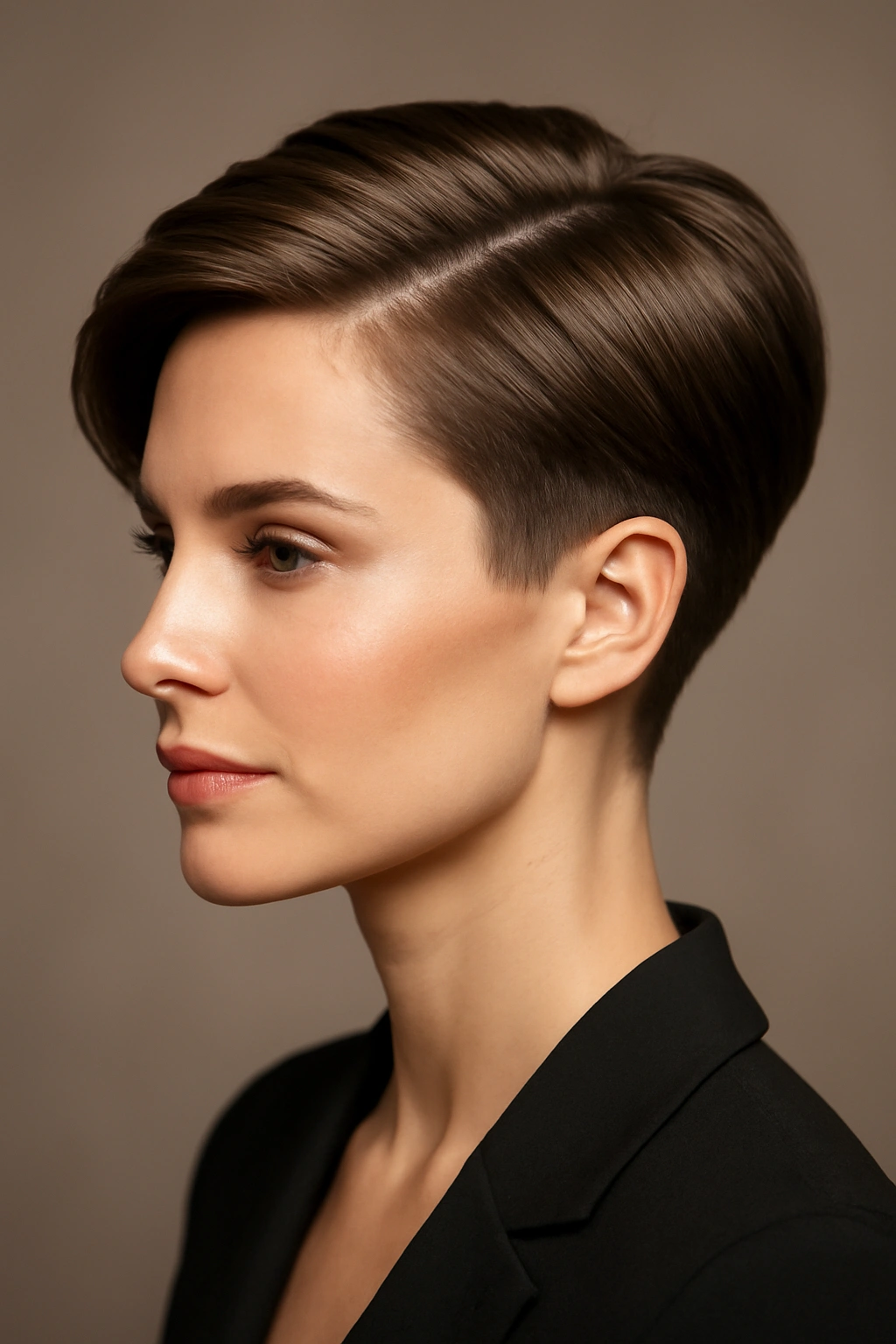
A side-swept pixie is the formal short-hair workhorse—it’s structured enough to feel dressy, yet playful enough to maintain personality. The key distinction between an everyday pixie and a formal one is how much intentionality goes into the direction, smoothness, and shape. Instead of tousled texture, you’re going for a sculpted side sweep that actually requires styling products and a precise blow-dry.
Why It Commands Formal Elegance
A side-swept pixie works because it draws attention to your face while the angled, directional styling reads as intentional and refined. The swept direction creates a visual line that’s inherently flattering—it elongates the face and adds sophistication through pure geometry. This style says you’ve made an effort for the occasion, even though the cut itself is minimal.
How to Achieve the Look
- Start with a pixie cut that’s longer on top (2-3 inches) and faded shorter on the sides and back (¼ to ½ inch)
- Blow-dry with a round brush, directing all the length to one side, sweeping it across the crown
- Use a texturizing cream or light pomade to define the sweep and add holdable structure
- Ensure the fade on the sides is perfectly clean and shaped—this is what elevates the look from casual to formal
- Set the style with a light hairspray that doesn’t add shine or stiffness
The back should be smoothly faded, never textured or messy-looking for formal wear. Your stylist should understand that you’re aiming for polished direction, not casual movement. The sweep needs enough product grip to hold through an entire evening, but not so much that it looks slicked down or artificial.
2. Sophisticated Sleek Bob
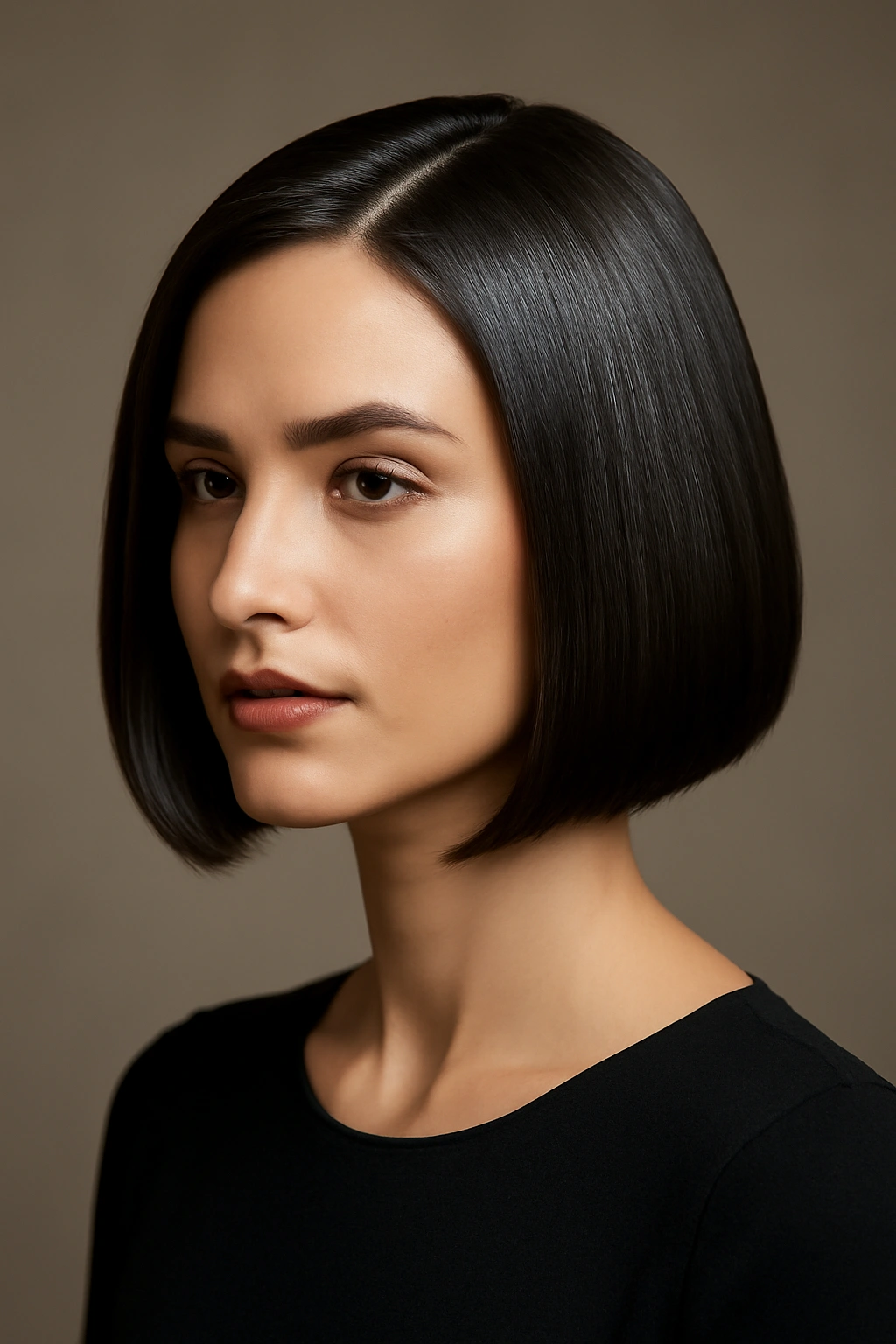
The bob has always been a formal option, but when we’re talking about truly short bobs—chin-length or slightly shorter—the styling shifts dramatically. A sleek, smooth bob is fundamentally different from a textured, piecey bob. For formal occasions, you want a blunt line, refined shine, and perfect symmetry (or an intentional asymmetrical cut that’s equally sharp).
The Art of Making a Short Bob Formal
A short bob becomes formal through three non-negotiable elements: smoothness, shine, and precision of line. You’re not aiming for texture; you’re aiming for that glass-like, mirror-finish quality that screams meticulous styling. The cut itself must be perfectly shaped—even a quarter-inch of growth will disrupt the intentional line, so timing with your stylist matters.
Achieving Maximum Polish
- Blow-dry with a paddle brush and tension, aiming for completely smooth, flat hair with no flyaways
- Use a smoothing serum or lightweight oil on damp hair before blow-drying—this creates the sleek finish
- Once dry, a light pass with a flat iron adds gloss and flattens any remaining texture
- Apply a tiny amount of pomade or gel to tame flyaways and add subtle shine
- The part should be razor-sharp, whether center, side, or asymmetrical
A sleek short bob pairs beautifully with statement earrings since your neck and ears are completely exposed. Consider your face shape carefully—a truly short, blunt bob isn’t universally flattering, so work with a stylist who specializes in precision cuts that enhance your specific features.
3. Sculptural Textured Crop with Accessories
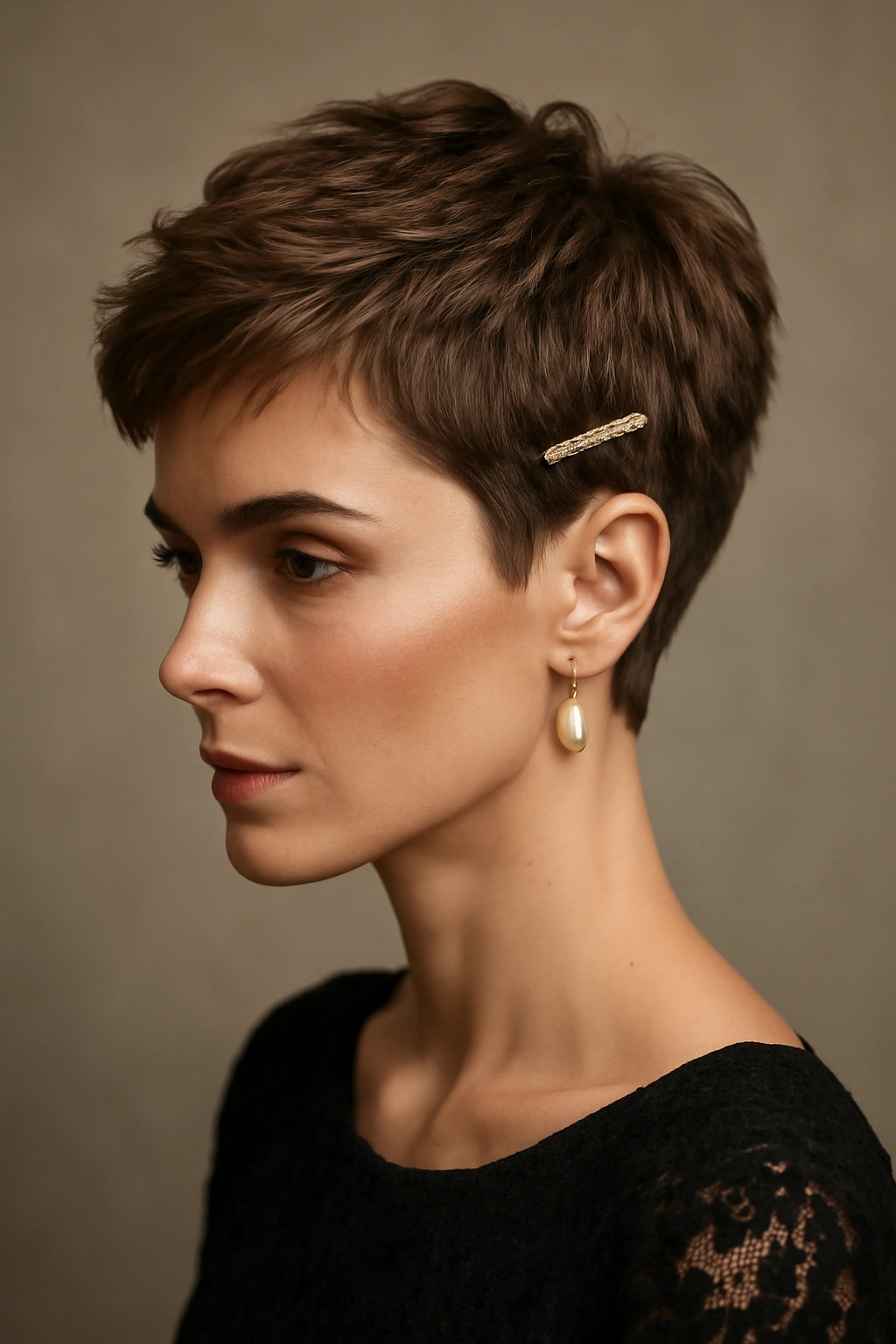
If sleek isn’t your texture preference, a sculptural textured crop offers a completely different formal approach. This style keeps the short length and clean shape of a crop but embraces texture, curl, or deliberate piece-work. What makes it formal is the intentional sculpting—clean lines, defined shape, and carefully placed accessories that elevate the look.
Why Texture Can Be Formal
Don’t assume texture equals casual. A well-defined textured crop is architectural and modern, especially when paired with the right styling choices and accessories. The texture should look deliberate—each piece separated and shaped—rather than just “textured.” Think structured rather than tousled.
Styling for Formal Impact
- Use a strong-hold cream or paste to define each piece and section of texture
- Blow-dry with a diffuser attachment to enhance natural texture or curl without flattening
- Create intentional partings or lines that show off the cut’s structure
- Add a metallic hair comb, minimalist clip, or jeweled pins in strategic spots
- Keep the back completely clean and shaped—the contrast between intentional texture on top and clean sides is what reads formal
Accessories are especially important with textured crops. A sleek bob can stand alone, but a textured crop benefits from one sophisticated accessory that says “this is intentional styling for a special occasion.”
4. Elegant Deep-Side-Part Bob
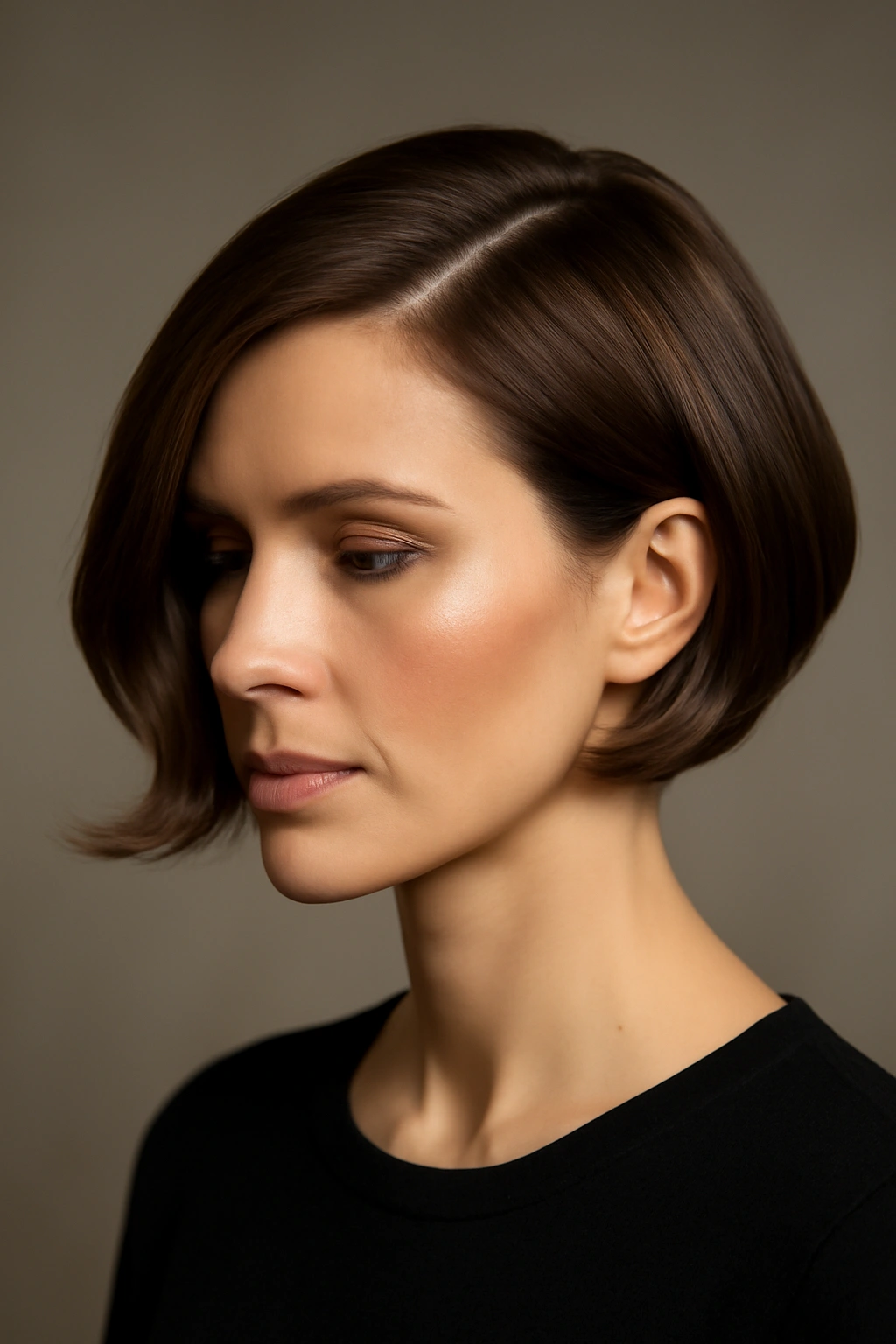
A deep side part transforms a standard short bob into something that feels more elegant and dimensional. By sweeping all the hair dramatically to one side, you create an asymmetrical visual that’s both romantic and contemporary. This style works especially well for formal occasions because the movement and dimension read as deliberate styling effort.
The Power of Asymmetry
An extreme side part creates a visual sweep that’s inherently flattering—it elongates the face, adds movement, and shows off one side of your face beautifully while creating an elegant shadow on the other. For formal wear, this asymmetry says intentional elegance rather than careless sweep.
Executing the Deep-Part Bob
- Begin with a medium-length bob (chin-length or slightly shorter) with some layering for movement
- Create an exaggerated part, starting from behind one ear and sweeping to the opposite temple
- Blow-dry the shorter side smoothly back against the head
- Blow-dry the longer side with volume and direction, sweeping it across and slightly under
- Use a light pomade on the swept side to keep it in place without visible product
- Finish with a light hairspray to maintain the sweep through the evening
The key is that the part should look like you chose this specific direction, not that your hair happened to fall this way. The styling needs hold, but it should feel soft and natural, not stiff or over-product-ed.
5. Defined Curls on a Close Crop
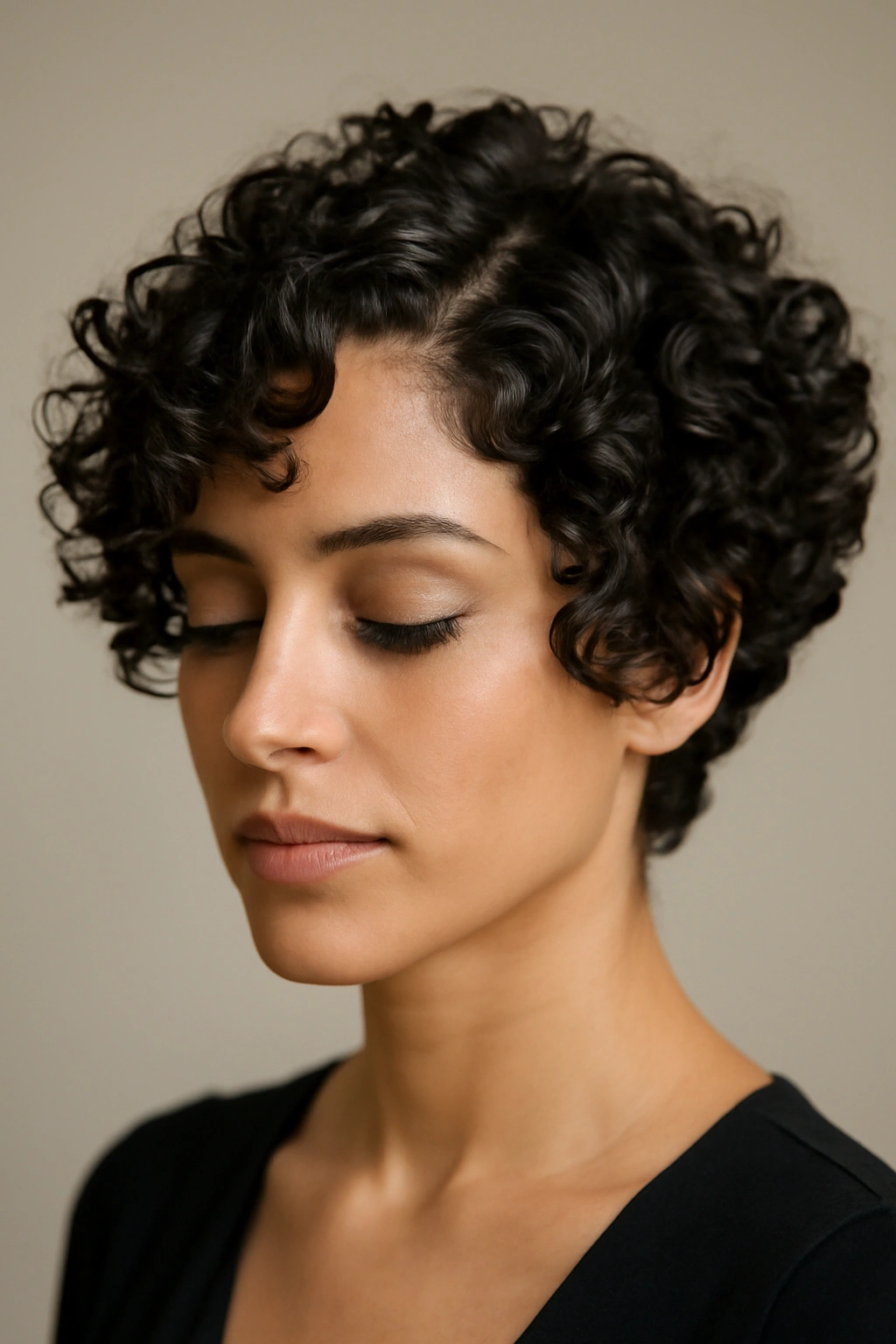
If you have naturally curly or textured hair, a close crop worn with defined, separated curls is absolutely formal-ready. The cut itself is minimal—very short all over—but the styling is where the formal sophistication lives. Each curl should be intentional, separated, and sculpted.
Making Curls Formal
Curly hair can absolutely be formal; the distinction is in the definition and care. Formal curls are never fuzzy, undefined, or frizzy. They’re shaped curls that show clear separation and intentional styling. Think editorial beauty shoot, not casual beach waves.
Creating Defined Curls on Short Hair
- Use a curl-defining cream or gel applied to soaking-wet hair, scrunching upward
- Diffuse-dry on medium heat and low speed, never touching or separating the curls while damp
- Once completely dry, gently separate individual curls with your fingers to create definition
- Apply a light curl-setting spray to hold the shape without adding crunch
- If needed, use a small curling iron to refine and re-curl any pieces that lost definition
- Keep the back neatly shaped and tapered—avoid bulk or undefined texture in back
This style is particularly stunning with makeup and jewelry that plays up your facial features. The sculptural nature of the curls means nothing competes with them, so make your other details count.
6. Asymmetrical Formal Shag
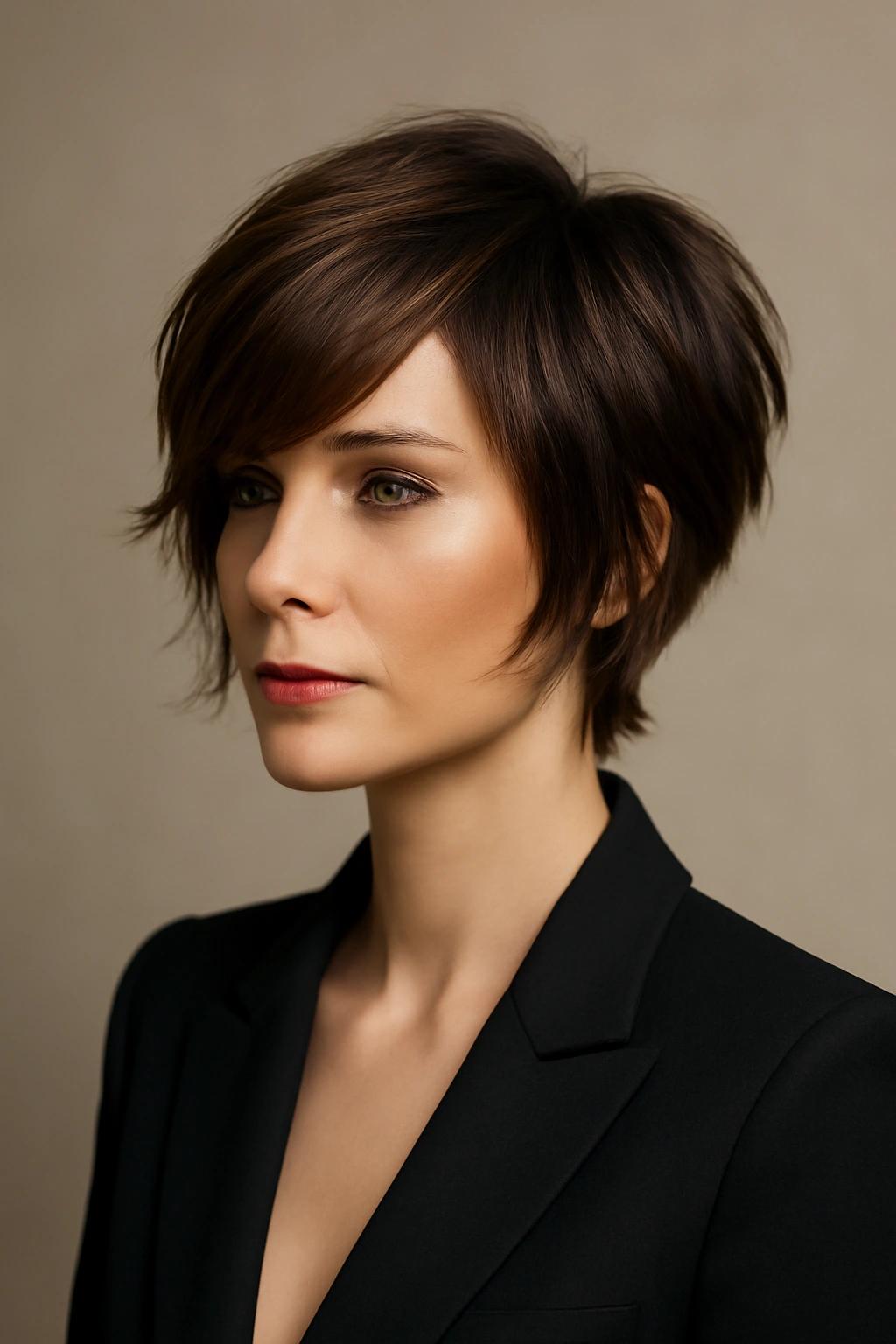
The shag—that’s right—can absolutely be elevated for formal occasions if you approach it strategically. The key is starting with a precise cut that has intentional asymmetry (longer on one side or in front, shorter in back), then styling it with polish rather than bedhead texture.
Making a Shag Formal
A shag is formal when the layers are clearly intentional, the shape is precise, and the styling feels curated rather than effortless. You’re not going for “I woke up like this.” You’re going for “this is my statement cut, styled deliberately for tonight.”
Formal Shag Styling Approach
- Start with a cut that has distinct asymmetry—perhaps longer, textured pieces in front and shorter, cleaner lines in back
- Blow-dry with a round brush, directing the longer pieces with intention and the back smoothly
- Use a light texturizing cream to define layers without creating frizz
- Ensure the asymmetrical lines are visible—you want someone to notice the cut, not just see messy layers
- Keep the nape and sides very clean and shaped—this keeps the look sophisticated rather than shaggy
- Add a small clip or pin at the longer side to show intentionality
The asymmetry is what keeps this modern and special-occasion-worthy. A perfectly symmetrical shag reads casual; an intentionally asymmetrical shag reads like you have a very specific aesthetic.
7. Elevated Faux Hawk
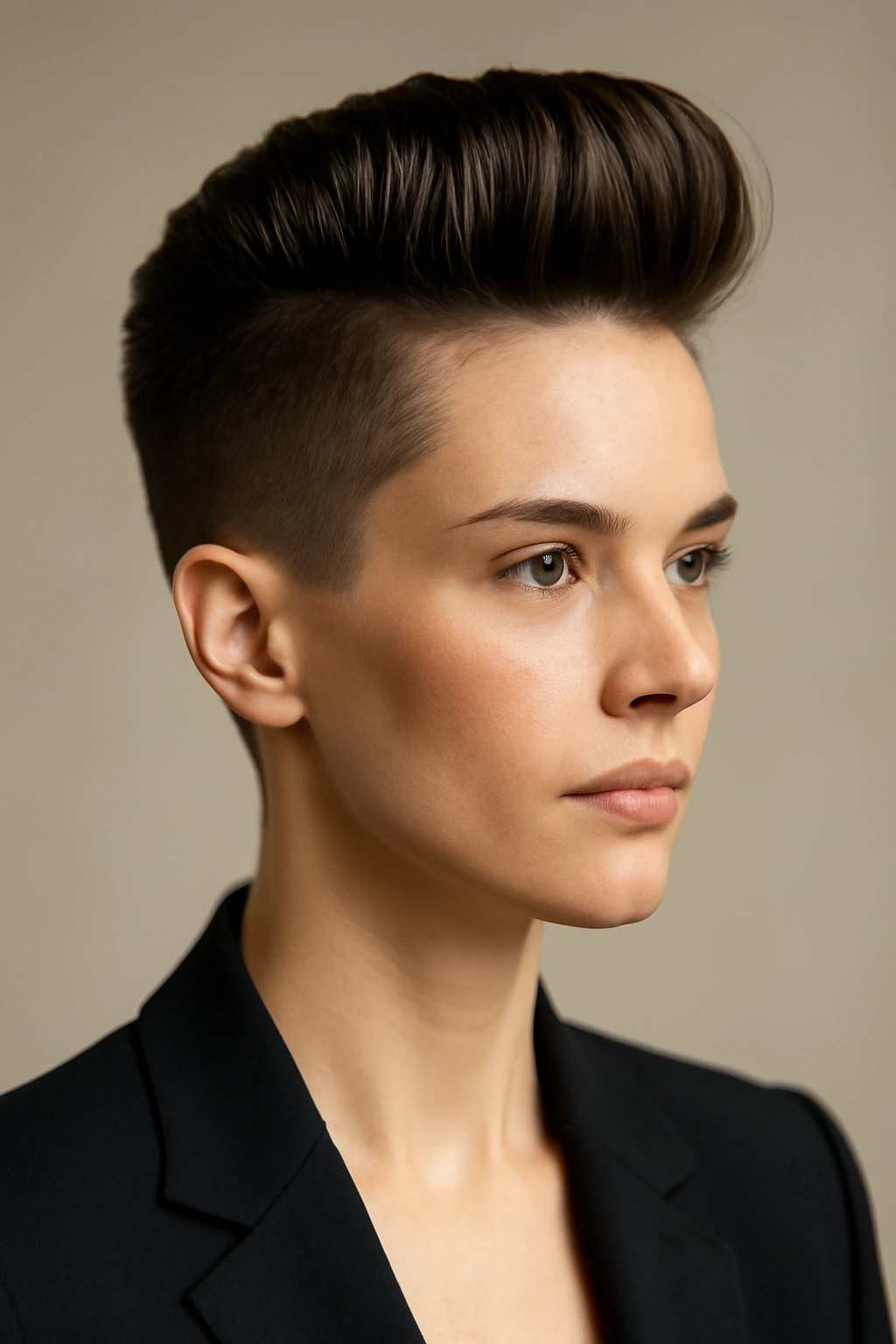
A faux hawk—shorter sides with volume on top, but longer than a traditional pixie—is surprisingly formal when styled with precision. The key is that it reads sculpted rather than edgy. You’re aiming for architectural elegance, not punk attitude.
How to Make a Faux Hawk Formal
The difference between a casual faux hawk and a formal one is all about intentional shaping and polished styling. The sides need to be absolutely clean and sleek; the top needs sculpted volume that looks deliberately styled, not naturally textured.
Styling for Formal Impact
- Get a cut with very short, tapered sides and noticeably longer hair on top (2-3 inches minimum)
- Blow-dry the top section with a round brush, creating smooth volume straight up the crown
- Use a strong-hold styling cream or pomade applied to the roots for grip and shape
- Blow-dry with your head tipped forward, then flip it back for maximum volume
- Smooth any flyaways with a flat iron or pomade
- The sides should be completely smooth and sleek—this is what elevates it
- Consider a side part on the top section rather than a center part for added sophistication
A formal faux hawk works best on people with strong facial features and a sophisticated personal style. It’s bold, and it works best when worn with confidence and deliberate styling choices.
8. Vintage-Inspired Finger Waves
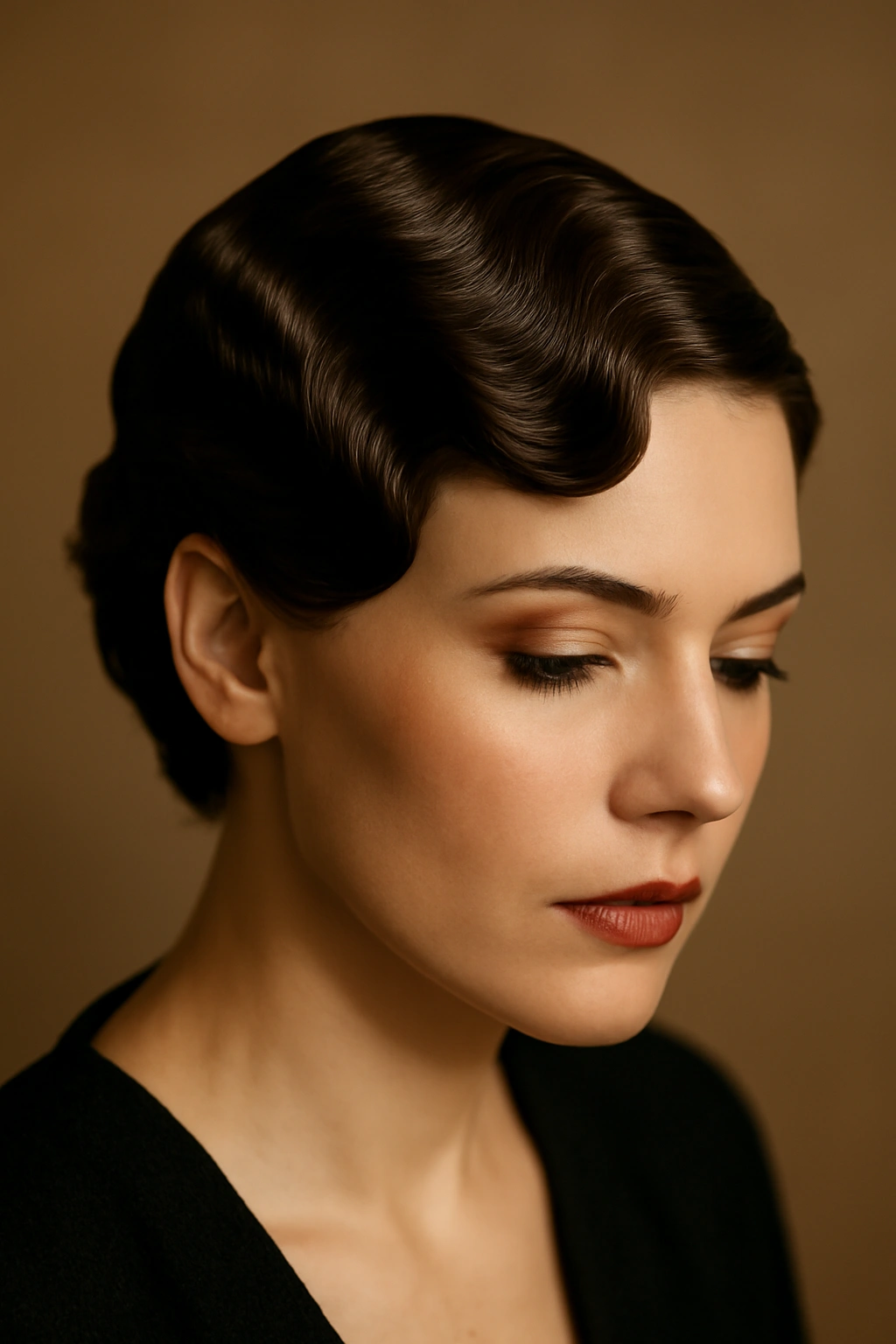
Finger waves are classically formal and have seen a real resurgence in contemporary styling. On short hair, finger waves create an instantly elegant, timeless look that feels special and intentional. This is a style that requires product, technique, and some practice, but the payoff is undeniably sophisticated.
Why Finger Waves Scream Formal
Finger waves are inherently associated with old Hollywood glamour and formal elegance. They’re not something people do casually—they require deliberate styling, which immediately signals occasion and intention. On short hair, finger waves create a polished, sculpted look that’s both retro and completely modern.
Achieving Finger Waves on Short Hair
- Use a smoothing cream or curl-setting product on damp hair
- Section the hair into sections about 2 inches wide
- Using a combination of fingers and a fine-tooth comb, create S-shaped waves, pinning each wave as you go
- Sit under a warm hood dryer or use a blow dryer on cool to set the waves
- Once completely dry, gently remove pins and separate waves with your fingers
- Lightly set with hairspray—the waves should have movement, not be stiff
- Consider adding a subtle hair comb or decorative pins for extra elegance
Finger waves work on any hair texture, but they’re easiest on straight to wavy hair. If you have very curly hair, work with a stylist who specializes in finger waves to get the technique right.
9. Geometric Sharp-Lined Pixie
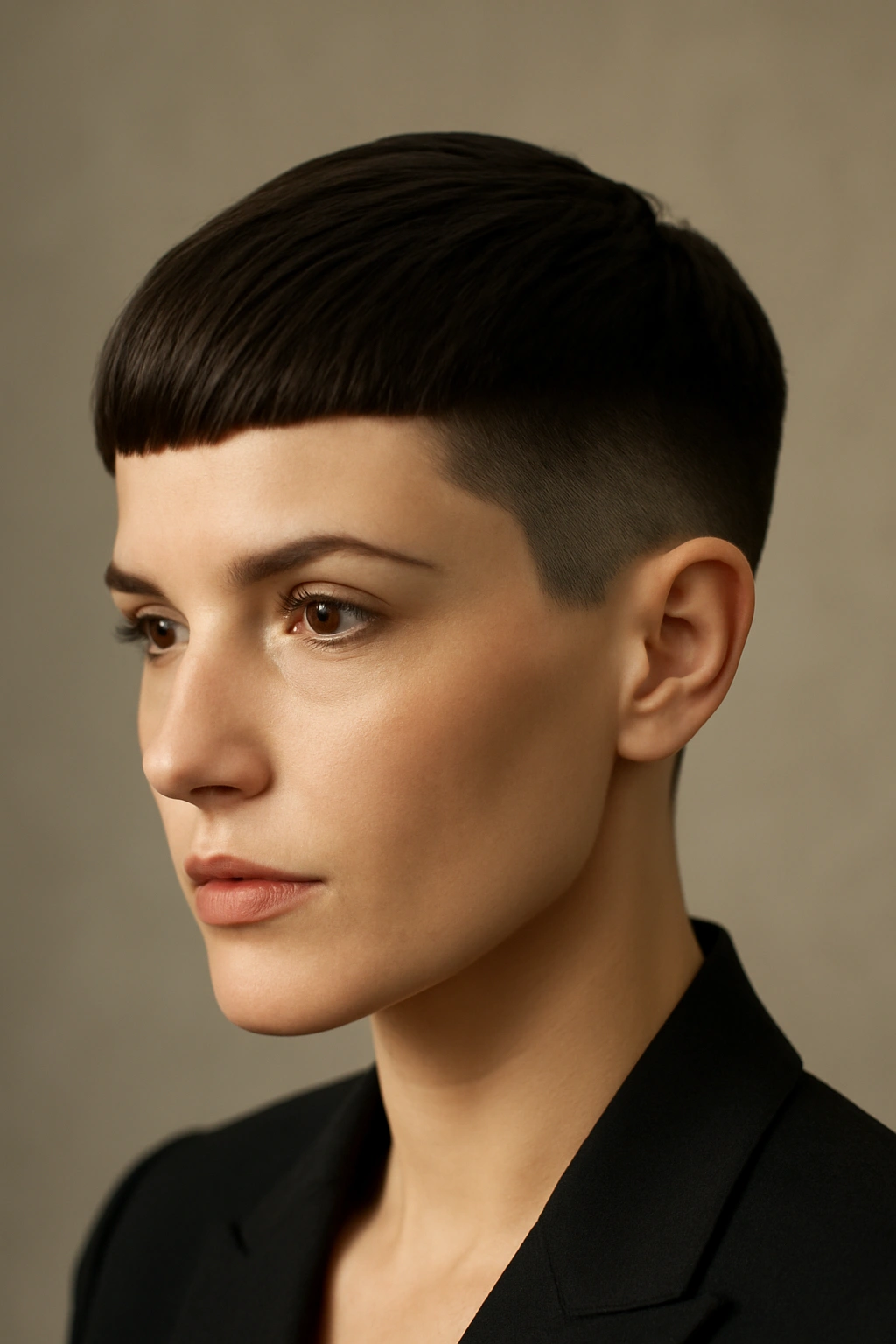
A pixie with a geometric, precisely cut line is architecture made of hair. When executed perfectly, this style is absolutely formal because it demonstrates masterful cutting and requires impeccable styling. Every line has intentional shape—sharp angles, clean edges, and architectural precision.
What Makes It Geometric vs. Standard
The difference is in the intentionality of line. A standard pixie is flattering and easy to maintain. A geometric pixie is a statement—it often features sharp, unexpected angles, perhaps an undercut that’s visible, or a part that creates visual division. It’s sculpted and modern.
Styling Geometric Precision
- Ensure your haircut has very intentional lines—ask your stylist to create clean angles and sharp edges
- Blow-dry with a paddle brush, aiming for smooth, sleek surfaces
- Avoid texture; this style is about clean lines and shine
- Use a light pomade to emphasize the geometric lines and add subtle definition
- Keep the styling completely polished—no flyaways or soft edges
- The cut itself is the statement, so styling should enhance rather than soften the geometry
- This style is stunning with bold makeup and jewelry since the clean lines are so sculptural
This look requires a highly skilled stylist and fairly regular trims (every 3-4 weeks) to maintain the sharp lines. It’s not a low-maintenance style, but the payoff is a uniquely sophisticated formal look.
10. Sleek Undercut with Styled Top
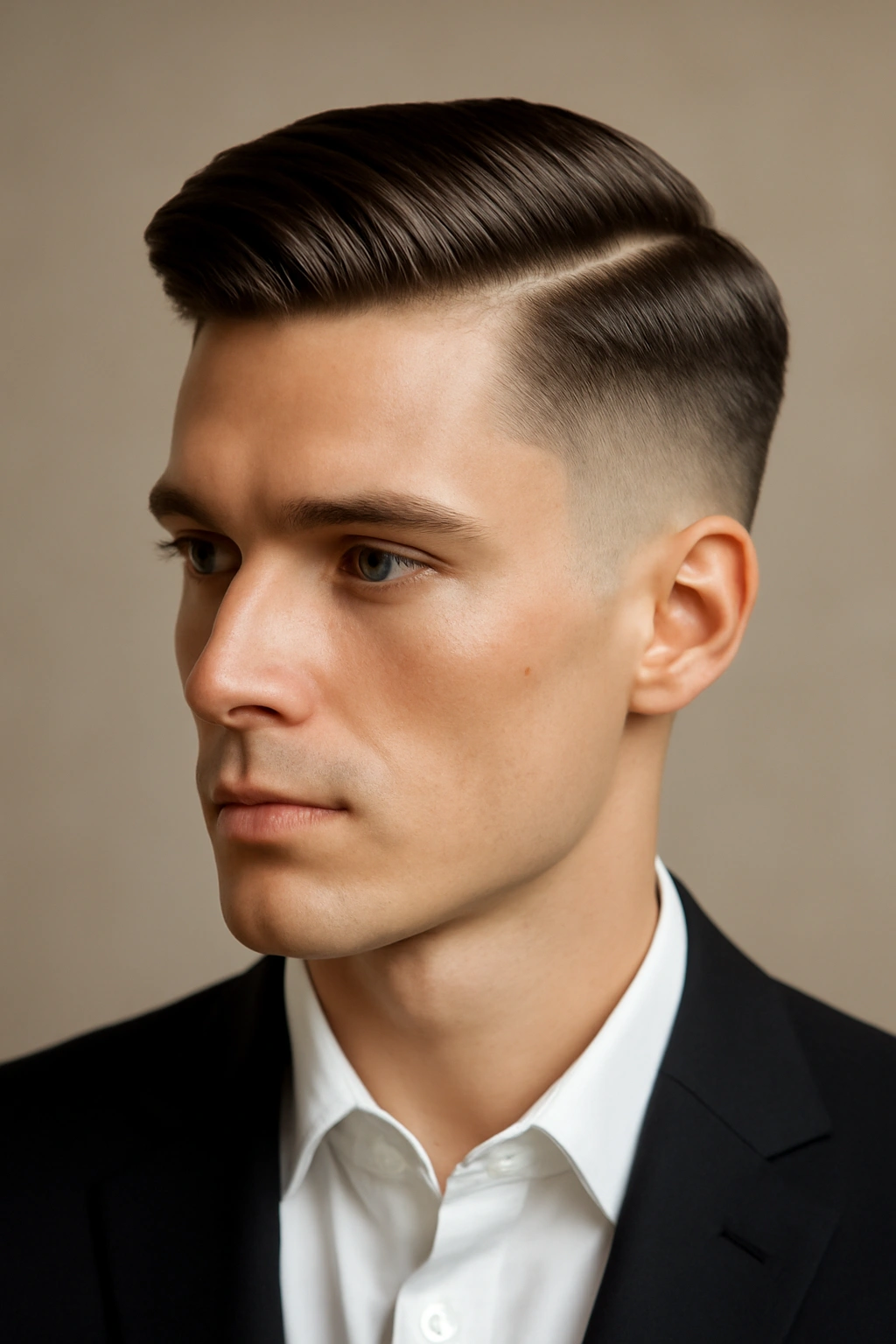
An undercut—where the sides and back are very short while the top is noticeably longer—offers maximum contrast and modern sophistication. When styled intentionally for formal occasions, it’s a bold, striking look that works beautifully with almost any face shape.
The Modern Formality of an Undercut
An undercut feels contemporary and bold, but when you style the top section with polish and intention, it transforms into formal elegance. The contrast reads as intentional and artistic rather than edgy or casual. The key is how you style the longer top section.
Creating Formal Impact with an Undercut
- Get a cut with very short sides and back (even shorter than a pixie fade, perhaps ¼ inch or less)
- Keep the top section noticeably longer (2-4 inches, depending on your preference)
- You can wear the top section slicked back, swept to one side, or styled with volume
- If slicked back: use a strong-hold pomade or gel, creating a smooth, shiny surface
- If swept to the side: blow-dry with intention and hold with a light product
- If styled with volume: blow-dry upward and use a texturizing product for definition
- The contrast between the sleek sides and the styled top is what makes it formal
- Keep the sides and back absolutely smooth and clean—this is non-negotiable for formal wear
An undercut is particularly striking with statement earrings and bold lip color since your entire face and neck are visible. This is a style for someone who wants to make a clear statement about their personal aesthetic.
Final Thoughts
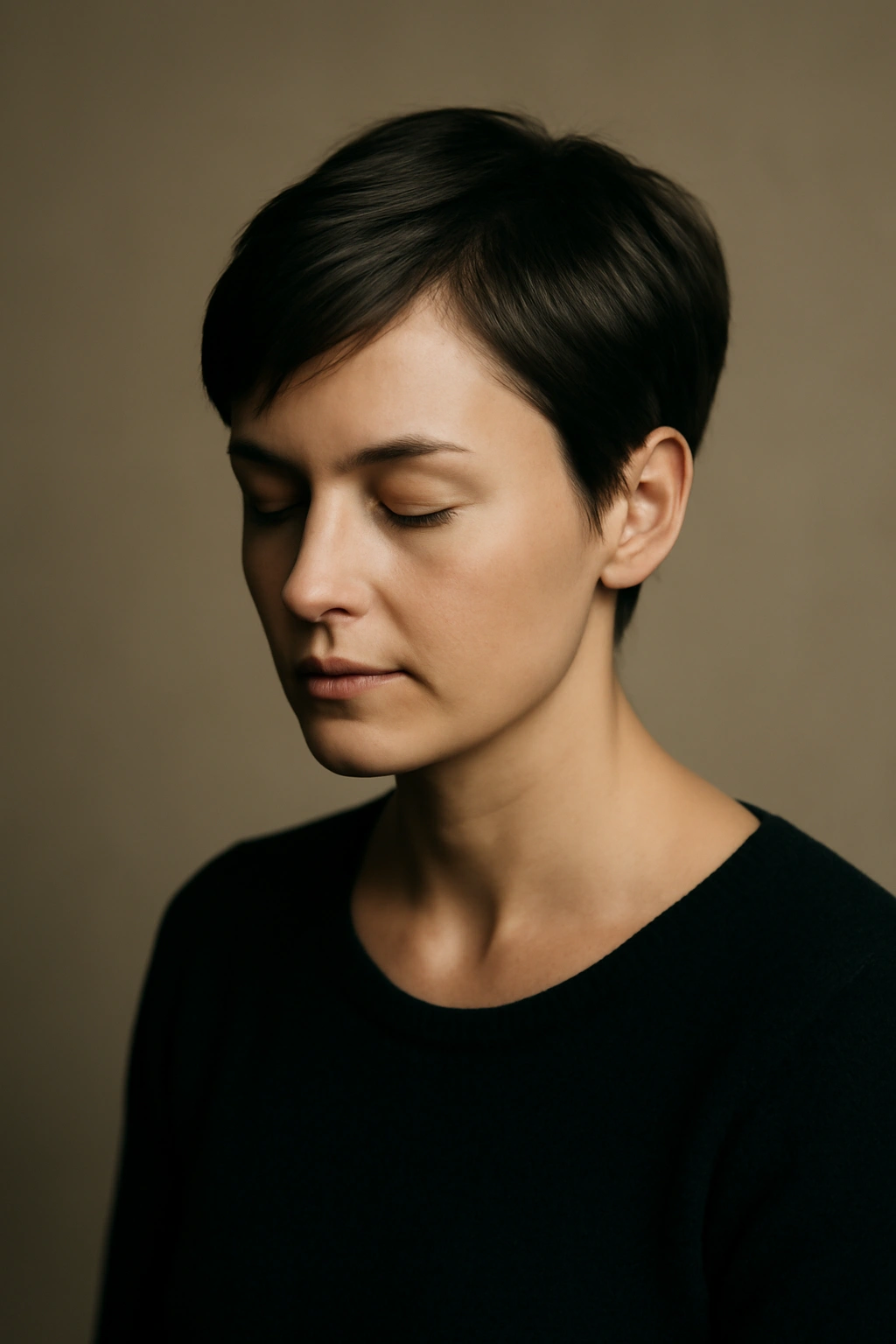
Formal short hair isn’t about wishing you had length—it’s about understanding that short hair requires different styling approaches than longer lengths, and that’s actually an advantage. Each of these ten styles combines a solid, precise cut with intentional styling that transforms everyday short hair into formal elegance. The common thread across all of them is polish—whether that’s glossy smoothness, sculptural texture, intentional asymmetry, or architectural precision.
The most important factor is matching the style to both your hair texture and your personal comfort level. You won’t feel confident in a style that requires constant fussing if you prefer low-maintenance styling. You won’t feel polished in a style that doesn’t flatter your face shape, no matter how beautifully it’s executed. Work with a stylist who specializes in short hair and can guide you toward cuts and styles that work with your hair’s natural tendencies rather than against them.
Remember that formal short hair styling often requires products, blow-dry time, and sometimes heat tools. If you’re not comfortable using these elements, choose a style that relies more on cut than styling technique. And don’t hesitate to have your stylist show you exactly how they’d style your specific cut for a formal occasion—bring inspiration photos, ask detailed questions, and consider booking a styling appointment before your actual event if you’re trying a new style. The confidence you gain from knowing exactly how to recreate your formal look is worth every minute of preparation.
