



The pixie cut has evolved far beyond the short, androgynous crop associated with 1990s minimalism. Modern interpretations—particularly longer pixie styles—blend the practicality and edge of short hair with the softness and femininity that fuller lengths allow. These cuts work because they keep the playful texture and low-maintenance spirit of a traditional pixie while adding dimension, movement, and versatility that appeal to people seeking something genuinely flattering without the commitment of growing out a full bob or longer style.
If you’ve been curious about taking the pixie plunge but worried it might feel too severe or require constant salon visits, the longer variations featured here prove that pixies can be incredibly wearable, feminine, and forgiving. They’re also surprisingly adaptable—you can style them sleek and polished one day, textured and tousled the next. Whether you have fine, thick, curly, or straight hair, there’s a longer pixie cut that will enhance your natural texture while giving you that sought-after soft, modern edge.
1. The Textured Shag Pixie
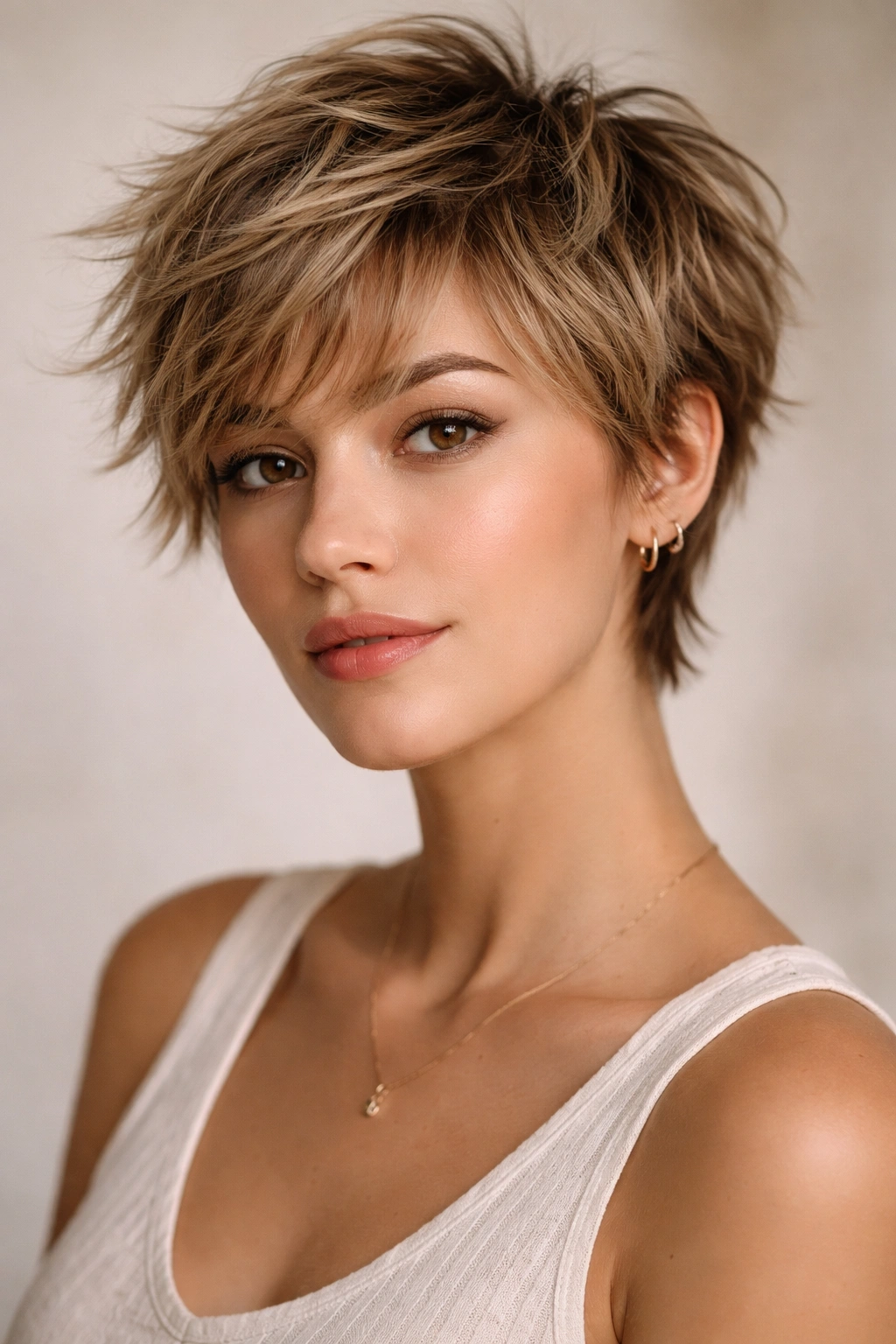
The textured shag pixie combines choppy, piece-y layers throughout the crown and sides, creating a deliberately undone, romantic vibe that reads far softer than a traditional pixie. The length sits roughly between a true pixie and a short bob—typically 2 to 3 inches on top—giving you enough hair to work with for movement without the styling demands of a longer cut. The layers are the magic here; they remove weight, catch light, and create natural dimension that flatters most face shapes.
Why This Cut Works So Well
The layering reduces bulk and creates movement even on stick-straight hair, while the slightly longer length provides enough surface area to show off texture and color. This cut works beautifully with face-framing pieces that soften the sides without requiring daily styling commitment. The shag pixie is particularly forgiving on thicker hair because the choppy layers prevent that heavy, helmet-like appearance many people fear.
Best Styling Approach
- Use a lightweight texturizing spray on damp hair to enhance the piecy quality
- Blow-dry with your fingers for an effortless, tousled finish
- Let it air-dry for an intentionally undone look on casual days
- A bit of dry shampoo adds grip and makes layers more pronounced
2. The Grown-Out Side-Swept Pixie
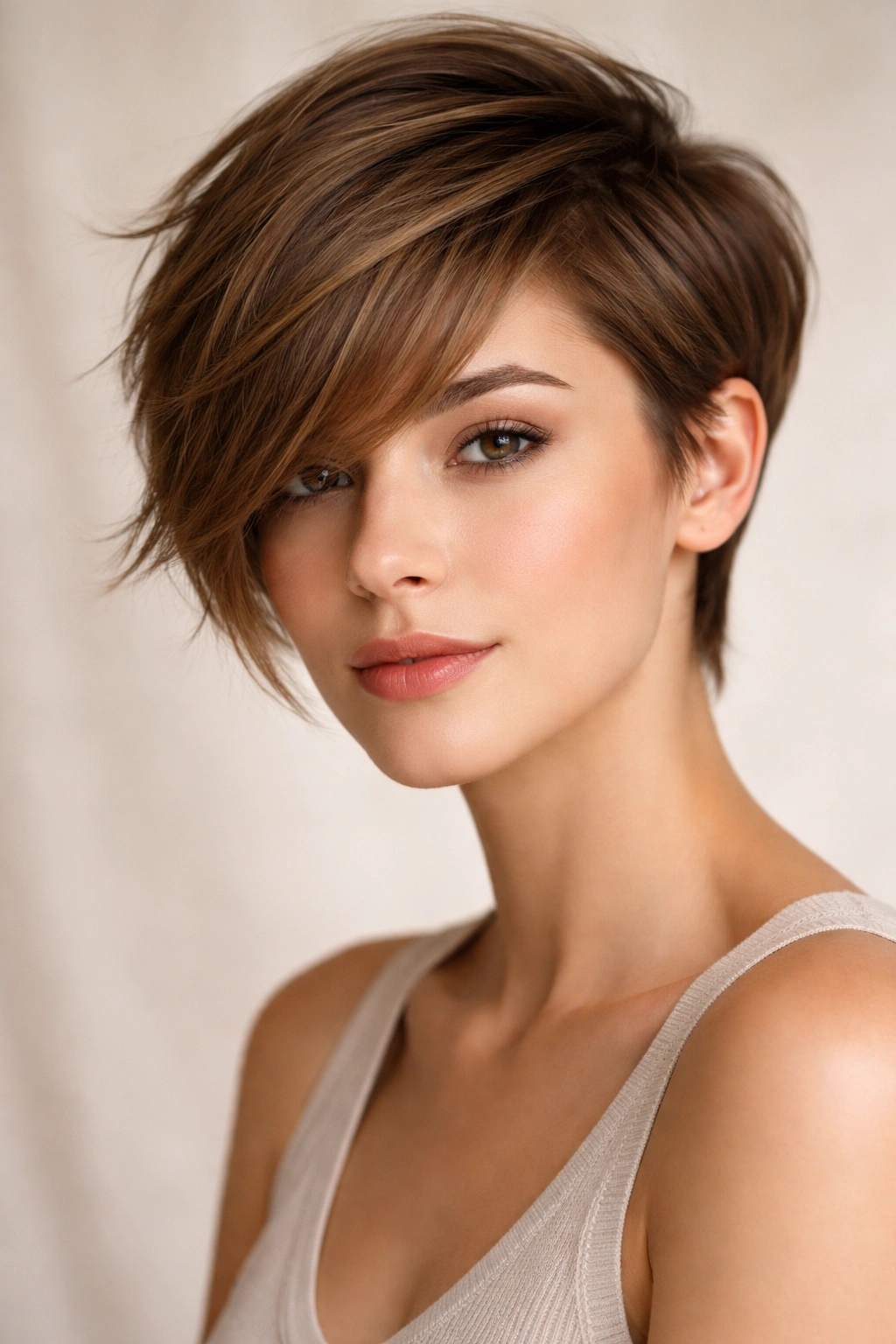
This style keeps the cropped pixie silhouette on one side while allowing significantly longer length on the other, with hair swept dramatically across the face. The asymmetrical balance creates visual interest while the longer side softens an otherwise edgy cut. You get the best of both worlds: the sculptural, neat appearance of a pixie paired with the feminine, face-framing quality of longer strands.
The Appeal of Asymmetry
The side-swept pixie works particularly well for people with strong jawlines or angular faces because the longer side provides softness and curves to balance those features. The cut reads modern and intentional without feeling severe. It’s also a brilliant transitional cut if you’re growing out a pixie gradually—you can maintain that neat aesthetic while slowly building length.
How to Wear and Maintain It
- Tuck the longer side behind your ear for a polished, corporate look
- Sweep it across your face for a softer, more romantic appearance
- The asymmetry becomes even more striking with an undercut on the shorter side
- Plan a trim every 4 to 5 weeks to maintain the sharp contrast and prevent it from growing into an awkward shag
3. The Curly Pixie with Volume
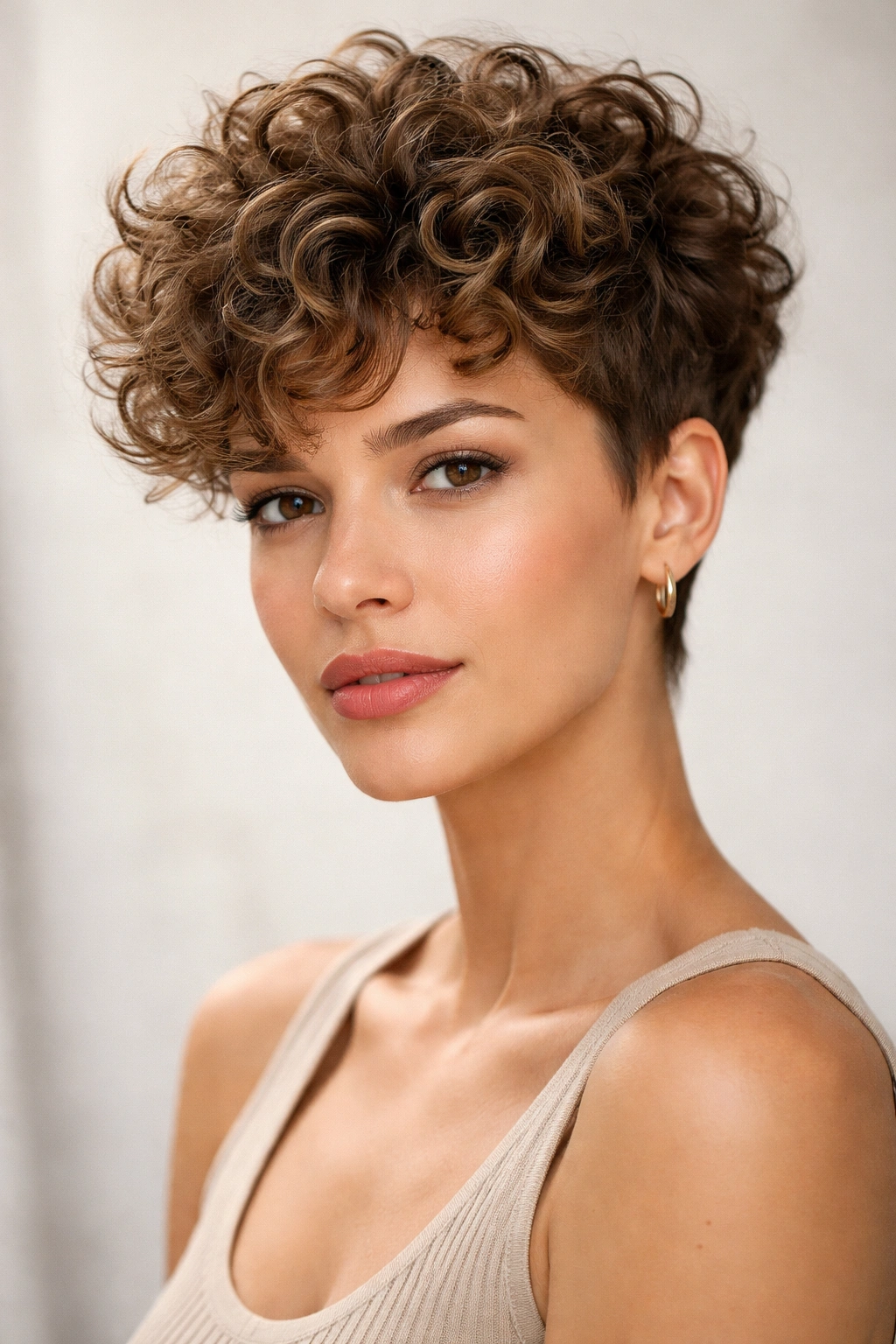
For curly and coily hair types, the longer pixie cut becomes a celebration of natural texture. Cutting into curl at slightly longer lengths—roughly 3 to 4 inches through the crown—allows the natural pattern to dictate the shape rather than fighting against it. The result is a cut that looks intentional and textured rather than stubby or flat, and it requires remarkably little maintenance once the initial shape is established.
Working With Your Natural Curl Pattern
Curly pixies shine when the stylist cuts into the curl in its natural state, not when stretched. This means the cut will look noticeably shorter once it dries and contracts than it appears when wet. The shape emerges from your curl pattern rather than being imposed on it, which creates a much softer, more organic appearance. Deep layers throughout prevent the cut from looking too dense at the roots.
Maintenance and Styling Tips
- Define curls with a curl-enhancing cream or gel applied to soaking-wet hair
- Plop or diffuse-dry for maximum volume and definition
- Refresh curls between washes with a spray bottle and curl cream
- Trims every 6 to 8 weeks keep the shape crisp as new growth emerges
4. The Soft Wispy Pixie with Bangs
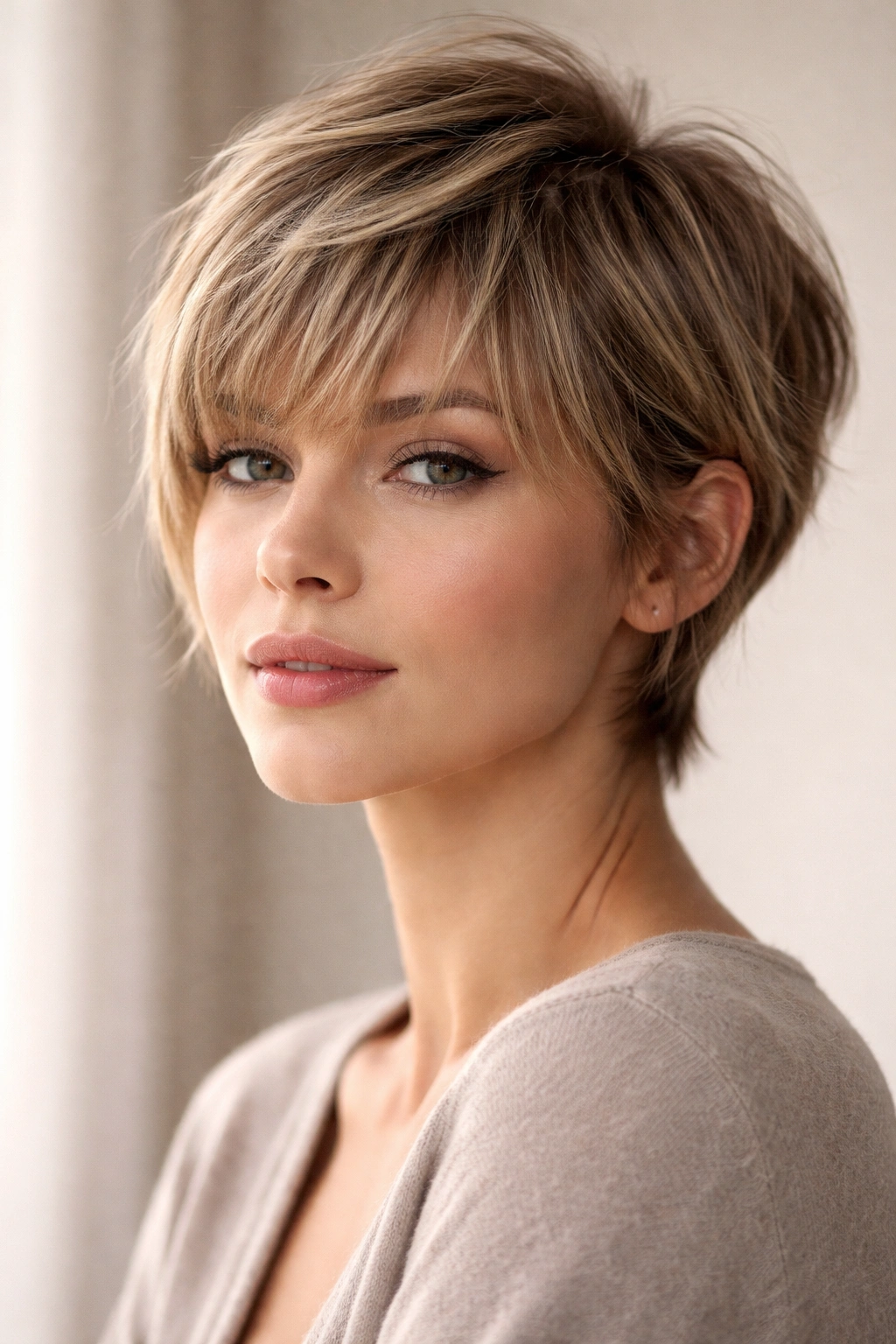
This cut introduces delicate, wispy bangs that fall just to the eyebrows, paired with longer layers throughout the back and crown (typically 2.5 to 3.5 inches). The bangs add a decidedly feminine, romantic element while keeping the practical pixie vibe. It’s a youthful, playful cut that softens the face and creates instant dimension.
Why Bangs Transform a Pixie
The bangs draw attention to the eyes and create a flattering frame for most face shapes. They also break up the expanse of forehead and add character that makes the cut feel less stark. Unlike blunt bangs, wispy ones blend into the rest of the cut rather than creating a harsh line, maintaining that soft aesthetic you’re after.
Styling and Upkeep Considerations
- Bangs require a bit more frequent trims (every 3 to 4 weeks) to maintain their wispy quality
- Style bangs by sweeping them to the side or straight across depending on your mood
- A lightweight texturizing spray helps keep bangs looking intentionally soft rather than flat
- On humid days, a quick pass with a flat iron keeps them smooth and shaped
5. The Tousled Pixie Crop with Length on Top
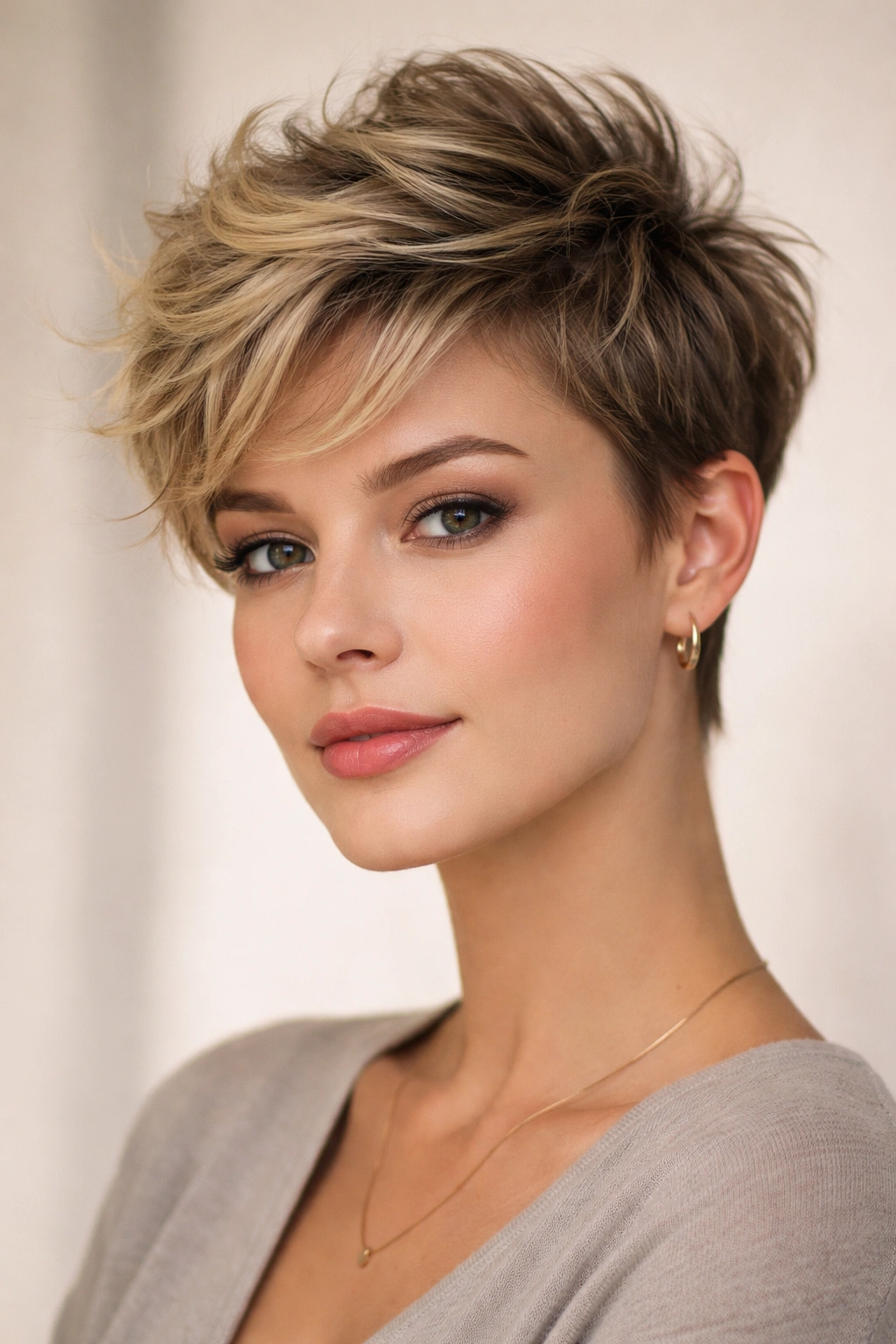
This style maintains significant length on top—up to 3 to 4 inches—while keeping the sides and back cropped close and neat. The contrast between the voluminous crown and the clean sides creates a modern silhouette that’s undeniably feminine. It’s a cut that photographs beautifully and looks intentional rather than like you’re growing out an accident.
The Modern Appeal of This Contrast
The longer crown allows for actual styling versatility; you can slick it back for a graphic look, style it messy and tousled for softness, or sweep it to one side. Meanwhile, the cropped sides give you that signature pixie edge and require zero styling. This cut works well on people who want a short-hair vibe without the commitment of daily styling.
Achieving the Right Texture
- Ask your stylist to point-cut or razor-cut the top layers for movement and texture
- Blow-dry with your fingers through the crown for natural-looking volume
- A texturizing spray enhances the tousled quality without added weight
- The sides need tidying every 3 to 4 weeks to maintain definition
6. The Feathered Pixie with Disconnected Layers
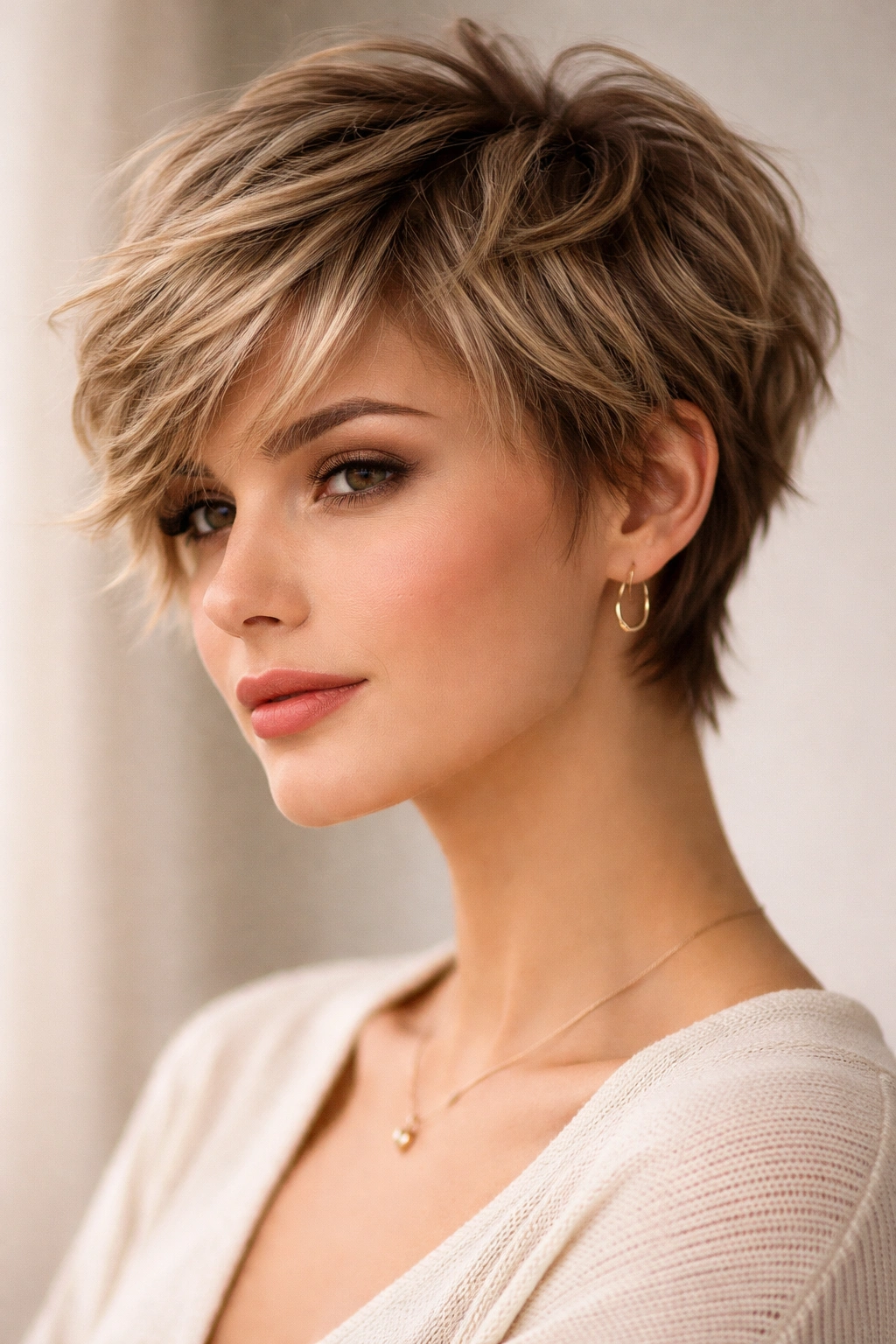
This cut takes the longer pixie concept and creates deliberately disconnected, feathered layers throughout—meaning each layer sits independently rather than blending seamlessly. The result is a cut with serious texture, movement, and a distinctly soft, face-framing quality. It reads vintage-inspired and romantic despite its short overall length.
What Makes Feathering Different
Feathering involves cutting each layer to point outward at different angles, creating that signature feathery texture. This technique requires a stylist who understands how to work with it deliberately. The disconnect means the cut will have visible texture and shape rather than blending into a cohesive whole. On softer hair types, feathering adds much-needed movement and interest.
Styling to Enhance the Effect
- Use a round brush while blow-drying to encourage layers to flip and separate
- A light texture spray adds grip without weighing down the feathered effect
- Fingers are your best tool for styling—raking through to encourage separation
- Trims every 5 to 6 weeks maintain the feathered shape and prevent bluntness
7. The Blunt-Edged Pixie with Soft Face-Framing
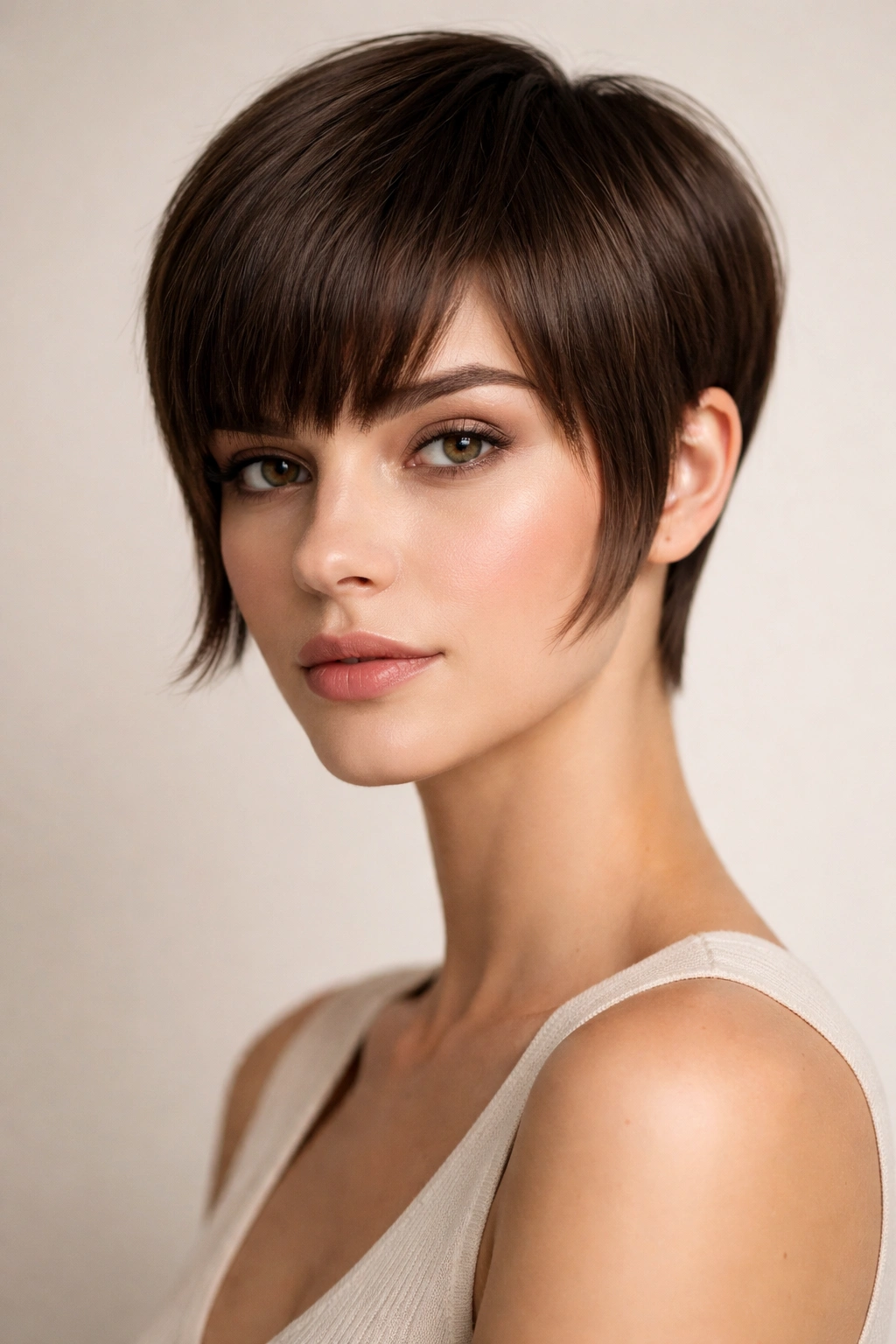
This cut keeps lines relatively clean and geometric, particularly along the back and sides, but incorporates longer, softer lengths around the face. The face-framing pieces fall at roughly cheekbone length, softening what might otherwise be a stark silhouette. It’s modern, architectural, and thoroughly feminine when executed well.
Balancing Structure With Softness
The key to this style is the contrast between the blunt, defined lines and the softer pieces that frame the face. The bluntness requires more precise maintenance (trims every 4 weeks), but the payoff is a cut that looks intentional and polished. This style suits people with good skin and confident personal style since it doesn’t hide the face.
Maintenance and Care
- Trims are crucial; the blunt edges show growth quickly
- Blow-dry straight to emphasize the clean lines, or rough-dry for a softer feel
- The face-framing pieces can be tucked behind ears for a sleeker look
- A straightening iron helps maintain the blunt edges on non-blunt-textured hair
8. The Romantic Wavy Pixie
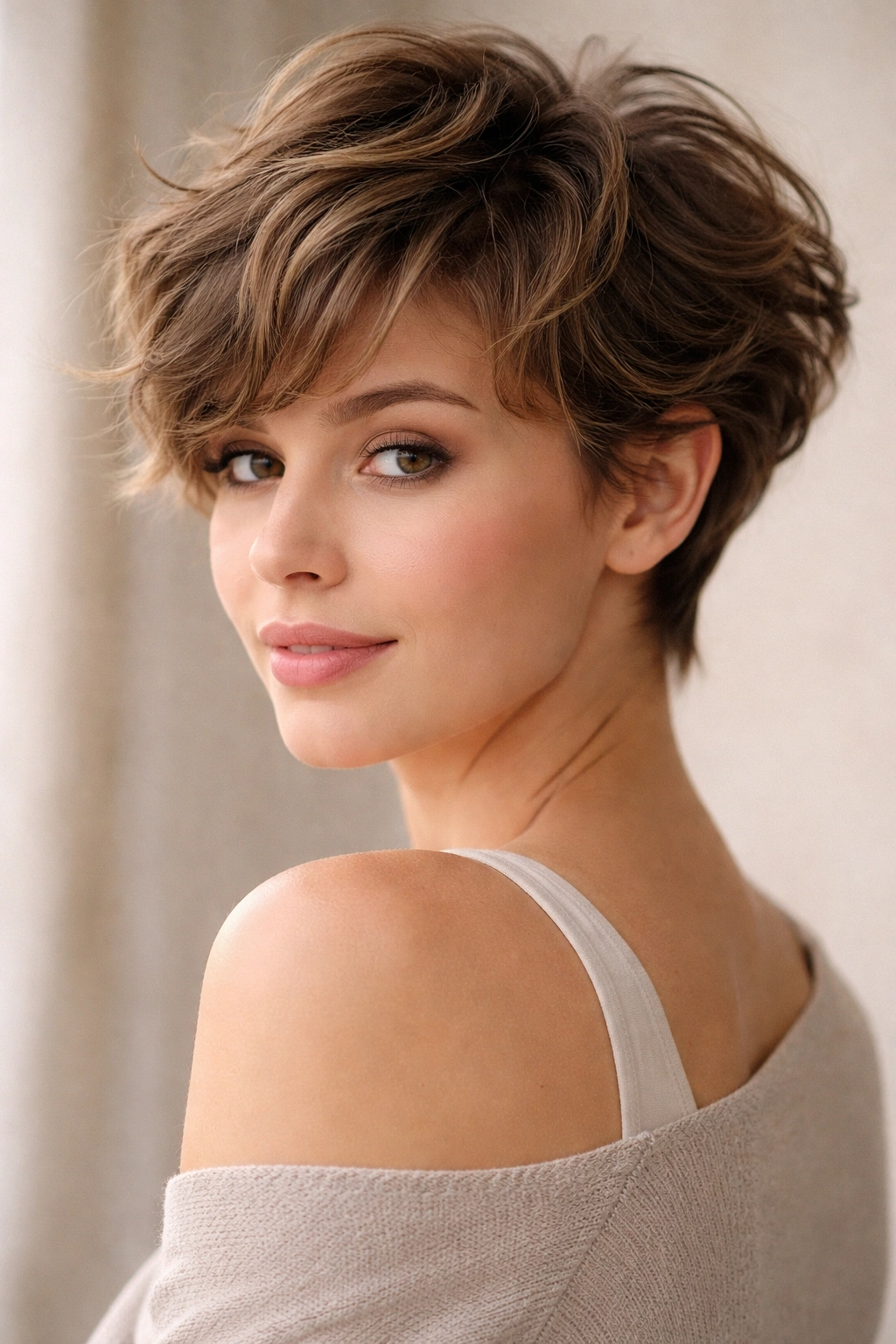
This style grows out the pixie to roughly 3 to 4 inches on top while incorporating soft waves or curls, either natural or styled in. The waves add significant softness and femininity to a cut that could otherwise feel sharp. It’s a cut that works beautifully with texture and celebrates rather than fights against natural wave or curl patterns.
Creating Softness Through Wave
Waves instantly make any short cut read softer and more romantic. Whether you’re using a curling iron to create waves or enhancing natural texture, the effect is transformative. The waves need to be loose and flowing rather than tight ringlets to maintain that soft pixie aesthetic. This cut gives you the practical benefits of short hair with the romantic quality of longer waves.
Styling Techniques
- Curl your hair on large-barrel rollers or with a 1.25-inch curling iron for soft waves
- Apply curl cream to damp hair and air-dry for a more natural, undone wave
- A sea salt spray enhances texture and gives waves more grip and definition
- These waves often look best on day two or three of styling, when they’ve softened slightly
9. The Longer Pixie with Disconnected Undercut
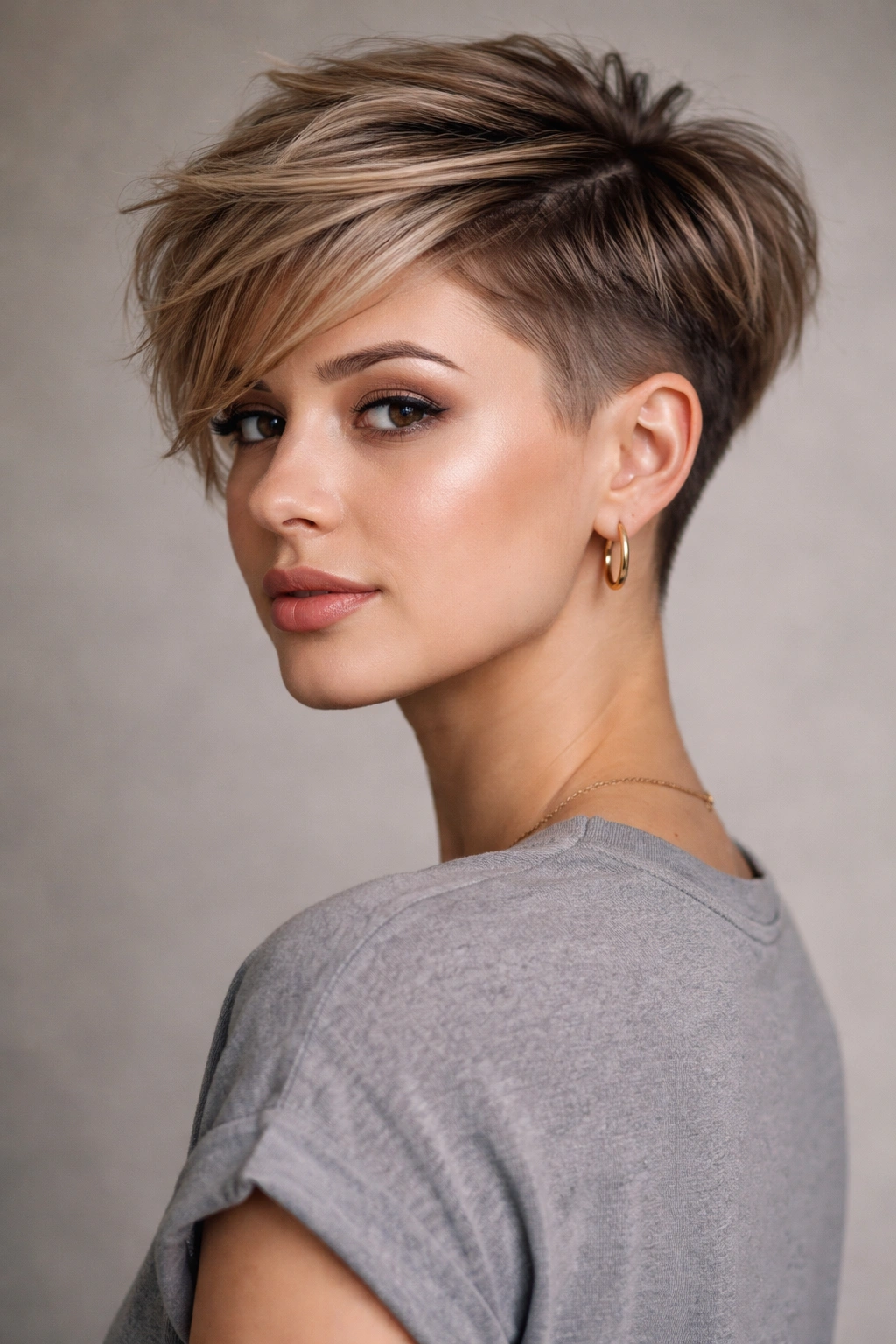
This style creates dramatic contrast by keeping disconnected length on top—often 3 to 4 inches or more—while the sides and back are cut extremely short or even undercut (shaved closely to the scalp). The undercut keeps the style feeling modern and edgy while the longer top maintains femininity and versatility. You can style the longer portion down for a softer look or pull it back to show off the undercut.
The Versatility of This Approach
The undercut pixie is brilliant because it works in nearly every setting. In professional environments, you can style the longer hair over the undercut for a more conservative appearance. In casual settings, show it off for edge and attitude. The undercut portion requires minimal maintenance—usually just a trim every 6 to 8 weeks.
Styling for Different Occasions
- Blow-dry the longer top straight and smooth for professional settings
- Style it messy and piece-y for casual, textured appeal
- Pull it back in a low bun or twist to fully showcase the undercut
- The undercut looks particularly striking when paired with edgy makeup or statement jewelry
10. The Choppy Pixie Bob Hybrid
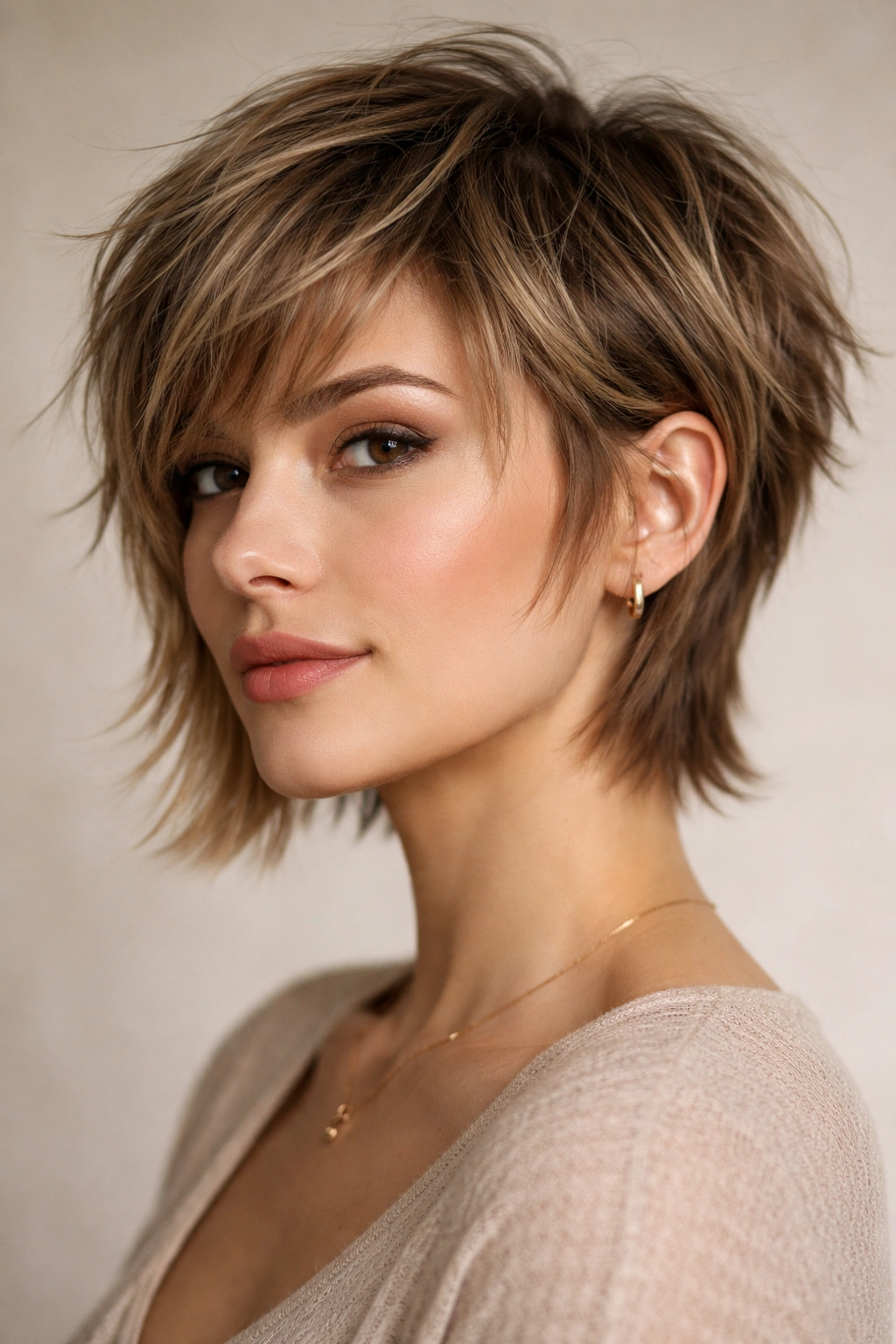
This cut sits at the intersection of a pixie and a bob, growing out the sides and back while maintaining shorter, choppy layers on top. The overall length might reach just past the jaw on the longest pieces, creating a shape that’s fuller and more substantial than a traditional pixie while retaining its core energy. It’s an ideal transition cut for people committing to shorter hair for the first time.
Why This Hybrid Works
The choppy layers throughout prevent the cut from reading as flat or boring. Each layer catches light differently and creates movement. The length at the back provides more security for people nervous about going too short. This cut is forgiving on various hair textures and works for people who want short hair without quite committing to a true pixie crop.
Achieving Maximum Movement
- Point-cut or razor-cut layers to encourage texture and separation
- Blow-dry with a round brush for volume and movement
- Texture spray adds grip and enhances the choppy quality
- Trims every 4 to 6 weeks keep the layered shape from becoming shaggy or dull
- This cut often looks best when slightly underdried—rough-dried for texture rather than smooth and polished
Final Thoughts
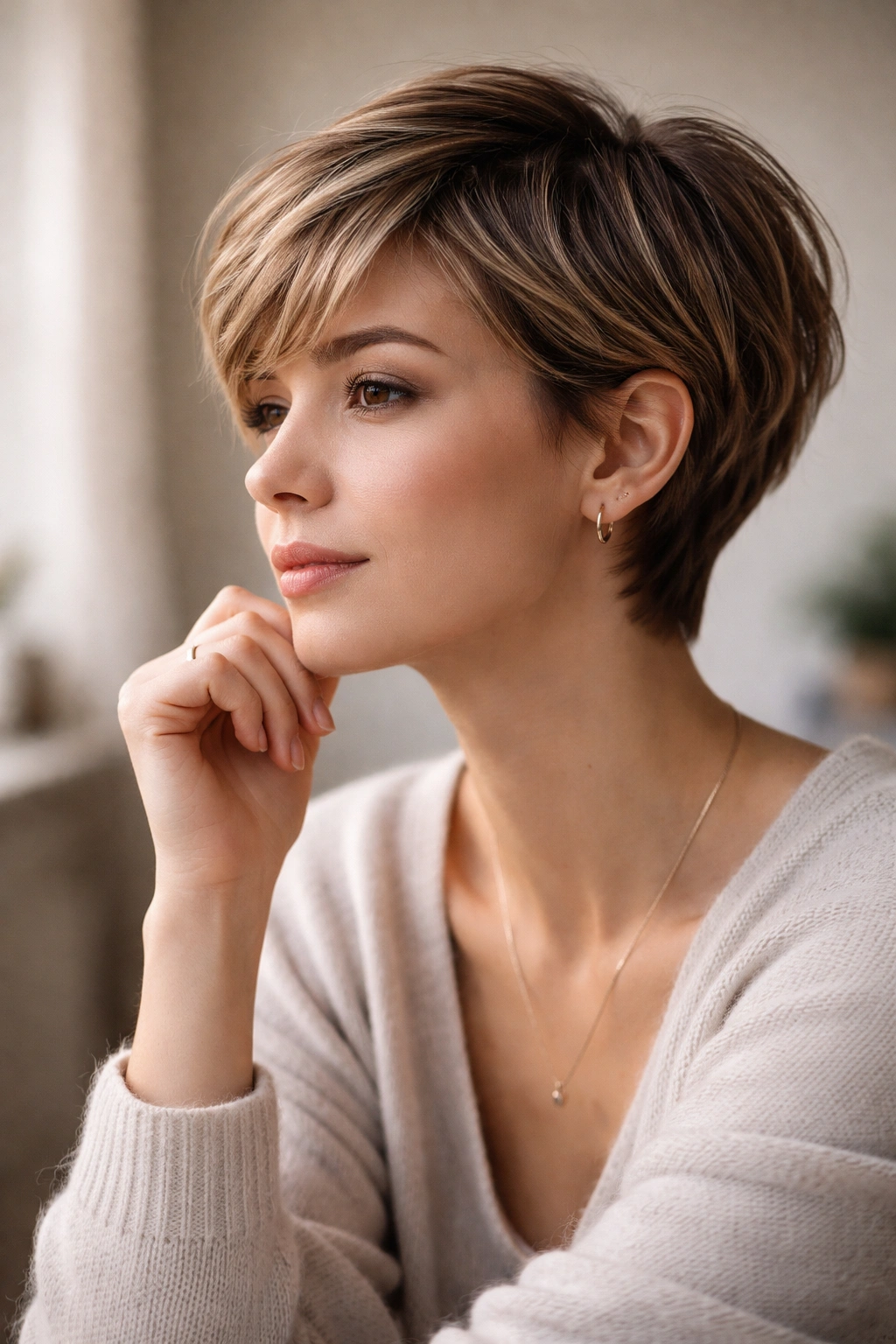
The longer pixie cuts featured here prove that short hair doesn’t have to mean severe, androgynous, or difficult to style. Each of these styles brings softness, femininity, and genuine wearability to the pixie silhouette. The key to choosing the right longer pixie for you is considering your hair texture, daily styling willingness, face shape, and personal style aesthetic.
Start by bringing reference photos to your stylist showing not just the cut you love but the styling and texture you’re drawn to. Discuss how much time you’re willing to spend styling daily, and be honest about your salon visit frequency. A great longer pixie should feel like a version of yourself you’re excited to see in the mirror—not a compromise or a phase on the way to growing it out.
The maintenance commitment sits somewhere between a true pixie and a bob, making these cuts ideal if you want versatility without the styling demands of longer hair. Most longer pixies need a trim every 4 to 6 weeks to maintain their shape and dimension, which is well worth the investment for a cut that looks intentional and flattering every single day.
