



Long faces come with a natural elegance, but the wrong hairstyle can actually emphasize their length rather than celebrate it. The goal with face-flattering hair isn’t to change your face—it’s to create visual balance by adding width where the face is narrow and breaking up vertical lines that can make the face appear stretched. The good news? There are countless hairstyle options that work beautifully with your face shape, and you don’t need to settle for boring cuts just because of your proportions.
What makes a hairstyle flattering for a long face comes down to a few key principles. You want horizontal lines, texture, and volume in the right places—typically around the cheeks and jawline where you can create the illusion of width. Avoiding styles that pull straight back or fall in long, unbroken lines is crucial; those styles actually emphasize the length rather than balance it. The most successful cuts for long faces typically include bangs, layers, waves, or horizontal movement that breaks up that vertical length.
The beauty of working with your face shape is that it’s not restrictive—it’s actually liberating. Once you understand what actually works with your proportions, you’ll start to notice which styles flatter you immediately. You’ll stop fighting your hair and start working with it. The styles ahead aren’t just technically flattering; they’re genuinely stylish options that look great on anyone, especially when customized to your specific hair texture and personal style. Let’s explore twelve excellent hairstyles that will add dimension, width, and personality to a long face.
1. Shoulder-Length Bob With Blunt Bangs
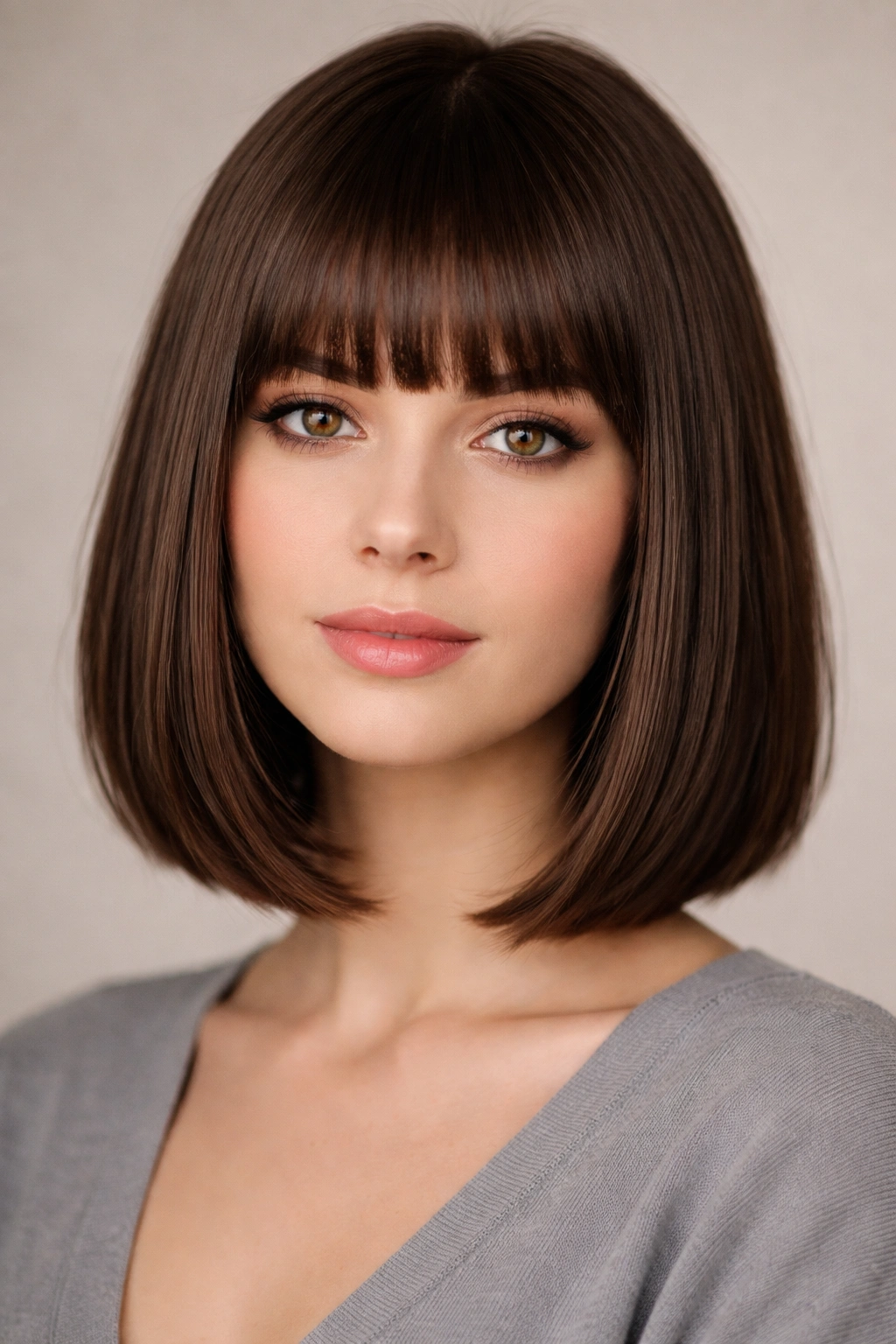
A chin-length or shoulder-length bob is one of the most universally flattering cuts for long faces because it creates a horizontal line at precisely the right spot. When paired with blunt, straight-across bangs, this cut becomes even more strategic—the bangs sit right at the eyebrows and create an immediate horizontal break that visually shortens the face. The weight and density of a blunt bang style also adds the kind of straightforward volume that counters vertical length beautifully.
Why This Works for Long Faces
The blunt bob works because it operates on pure geometry. Long faces have more distance between the forehead and chin, and a bob that hits at the shoulders creates a visual endpoint that breaks up that expanse. Blunt bangs add another horizontal line, effectively dividing the face into sections rather than allowing the eye to scan from top to bottom in one uninterrupted line. This is why the style feels so dramatically flattering—you’re not just adding a haircut, you’re reshaping the perceived proportions through strategic placement.
How to Make It Work Best
- Ask your stylist for bangs that hit between the eyebrows and the top of your eyes—this creates the optimal break point for a long face
- Keep the blunt edge sharp and clean; a slightly grown-out or wispy bang defeats the purpose of the horizontal line
- Blow-dry the bangs smooth and straight rather than curling them under, which would soften the horizontal effect
- Pair with a deep side part or center part depending on your preference—both work equally well with this cut
- Refresh the cut every 4-6 weeks to keep the bob shape sharp and the bangs in proportion
2. Layered Shag With Textured Waves
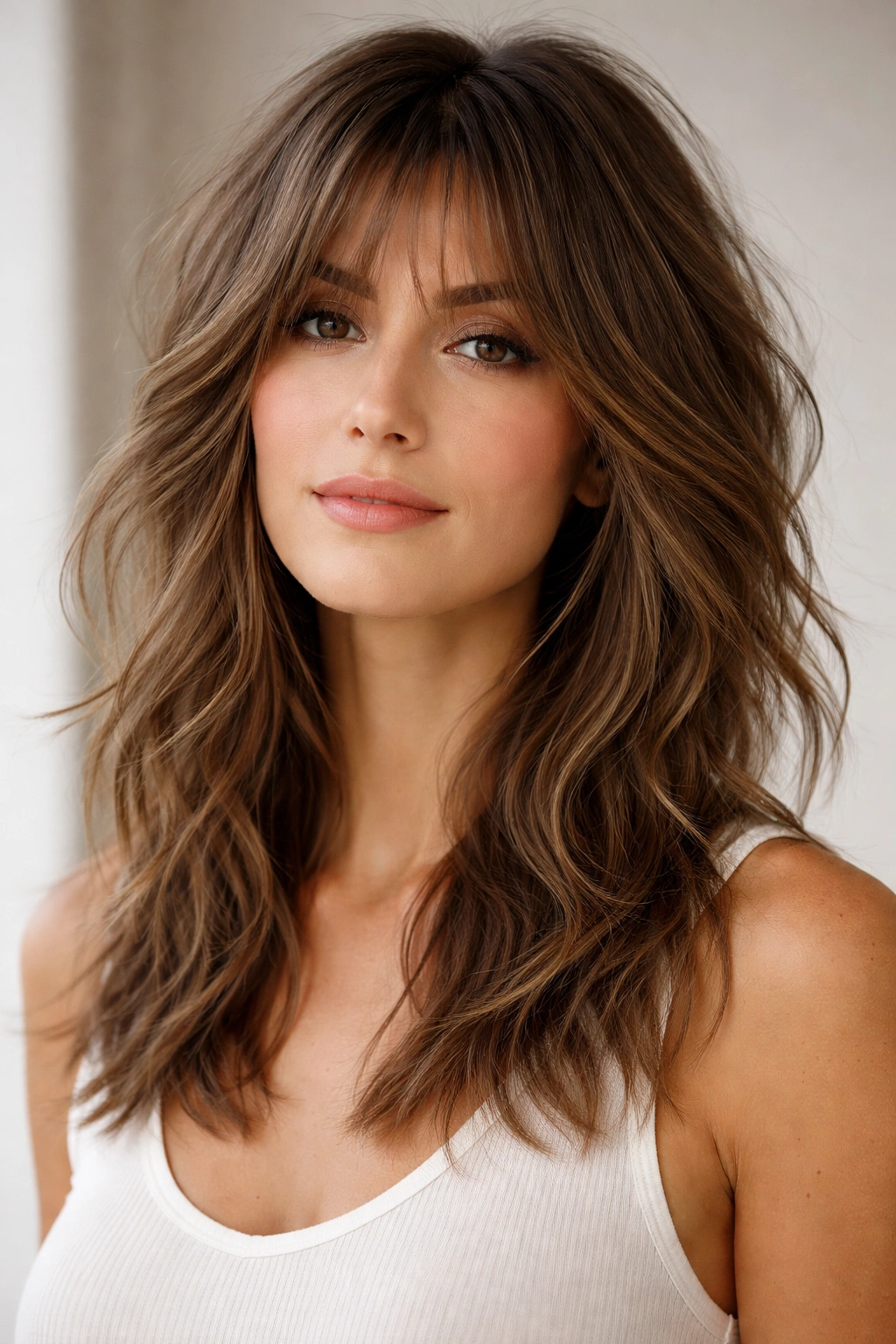
A modern shag brings back the best elements of the classic style—texture, movement, and playful volume—without any of the dated awkwardness. Shags work exceptionally well for long faces because the layers create multiple breaking points throughout the hair, preventing any single uninterrupted line from emphasizing vertical length. When styled with textured waves rather than stick-straight hair, the shag adds visual width and dimension that flatters the face shape dramatically.
Why Layers Break Up Vertical Length
Layers work for long faces because they interrupt the continuity that emphasizes length. Instead of seeing one long line of hair, the eye encounters multiple starting and stopping points created by the different lengths. This natural disruption is what creates the flattering effect—it’s less about what the layers add and more about what they prevent, which is that unbroken vertical emphasis. A good shag also naturally creates movement and texture, which adds fullness to the sides of the head where you want width.
Getting a Shag That Actually Works
- Work with a stylist experienced in modern shags; the cut has a specific structure that’s easy to mess up
- Ask for layers that start around the chin or slightly above rather than much higher; you want enough hair length to create shape
- Specify textured waves rather than tight curls or pin-straight hair; the texture is what creates the flattering fullness
- Plan for regular styling—shags look best when blow-dried with a round brush or styled with waves, not worn straight
- Consider your hair thickness; shags work on most hair types but look particularly stunning on fine or medium-textured hair
3. Side-Swept Bangs With Long Layers
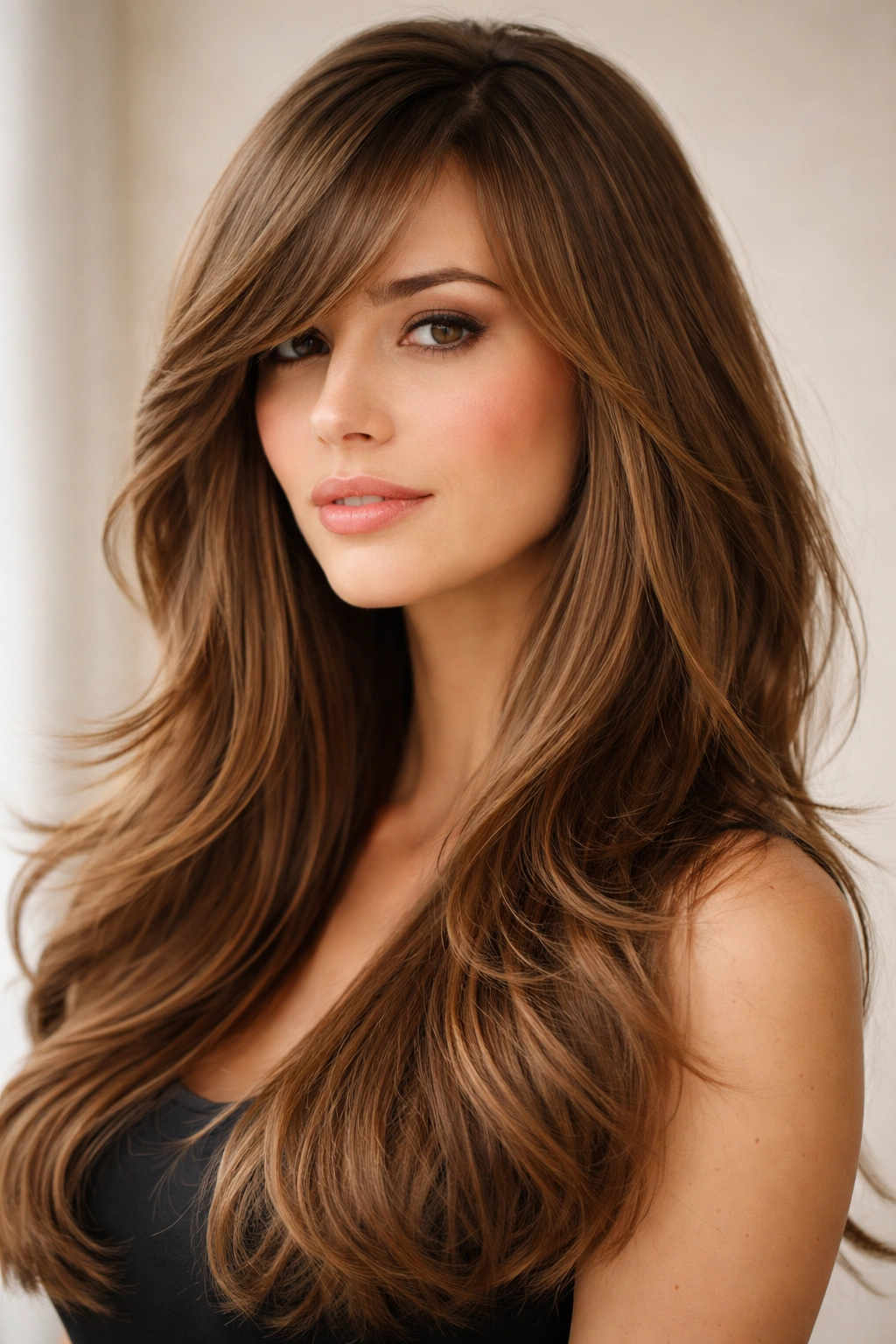
Side-swept bangs approach the same principle as blunt bangs differently—instead of a horizontal line across, they create a diagonal movement that still breaks up facial length but with more flow and softness. Combined with long, graduated layers throughout the hair, this style creates dynamic movement and multiple breaking points that prevent the long-face emphasis. The side-swept look works particularly well for people who want something more glamorous or bohemian than a blunt bob.
How Side-Swept Bangs Change Face Perception
A side-swept bang creates a diagonal line that leads the eye across rather than straight down, which is inherently more flattering for vertical face shapes. The bang originates from one side of the forehead and sweeps across, creating a longer, angled line rather than a straight horizontal. This angled approach adds movement and interest while still serving the core function: breaking the uninterrupted vertical line. Combined with layers, you get multiple directional changes that add visual width and complexity.
Styling and Maintenance Tips
- Request bangs that are longer on one side than the other; they should blend smoothly into the side-parted hair
- Blow-dry the bangs to one side to maintain the sweep; straight, unstyled bangs won’t create the same effect
- Pair with long, face-framing layers that hit between the chin and shoulders
- Use a round brush and a blow dryer to create subtle waves throughout; this enhances the flattering movement
- Consider your face width carefully; side-swept bangs work best when the longer layers in the back provide balance
4. Wavy Lob With Volume at the Crown
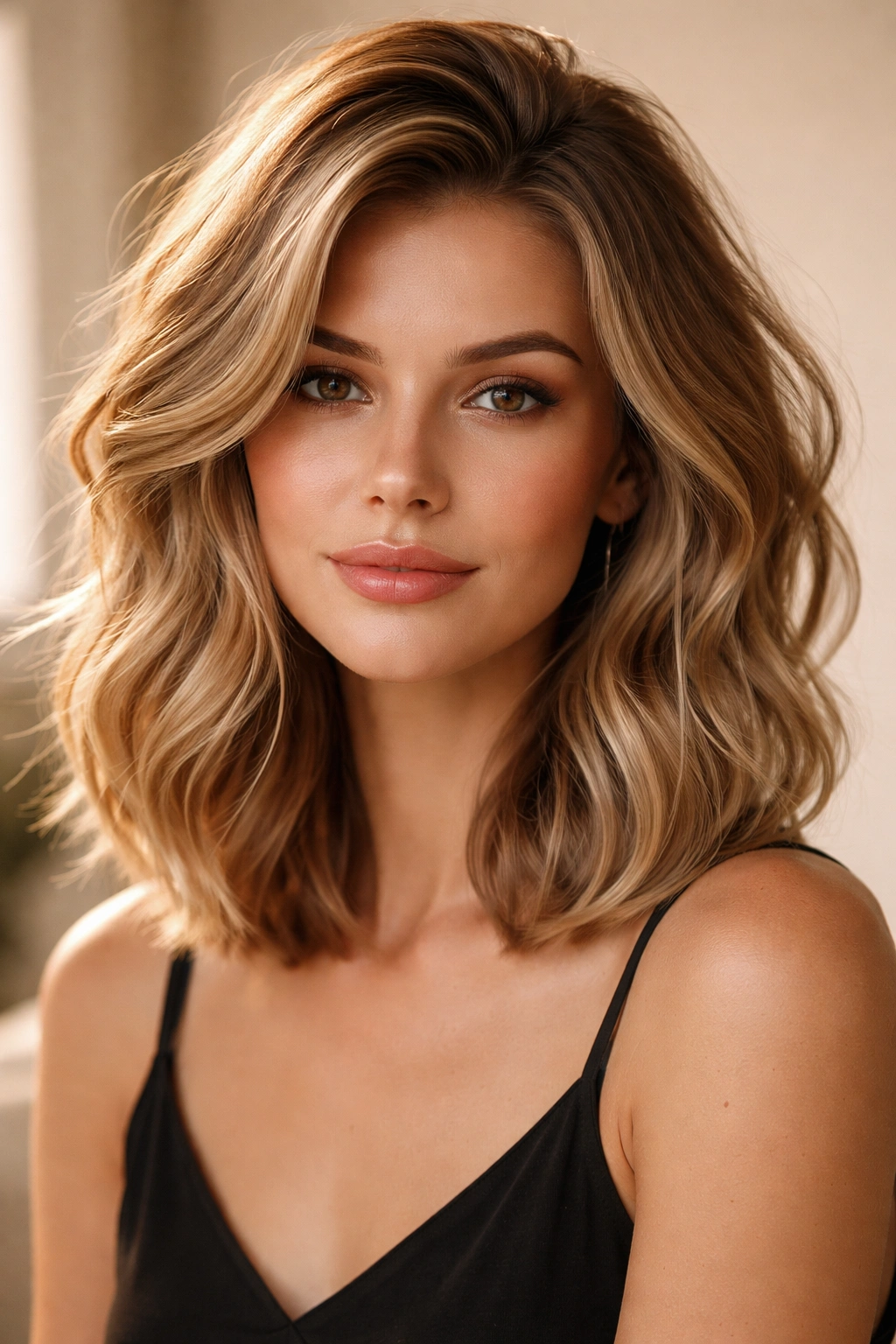
A lob is basically a longer bob—typically hitting between the chin and shoulders—and when styled with waves and volume at the crown, it becomes an incredibly flattering option for long faces. The waves create horizontal movement and texture that adds perceived width, while volume at the crown prevents the style from appearing flat or emphasizing vertical length. The lob sits in that sweet spot between short and long, offering versatility without the problematic length that long, straight hair can emphasize.
The Science Behind the Wavy Lob
Waves are inherently more flattering than straight hair for long faces because they create multiple directional changes. Instead of one long line, waves create peaks and valleys that make the hair appear wider and fuller. Combined with a lob length, you get a shape that’s proportional without being too short, and the horizontal movement of waves directly counteracts the vertical emphasis of face length. Volume at the crown also prevents the hair from lying flat against the head, which would only emphasize how long the face actually is.
Creating the Perfect Wavy Lob
- Ask your stylist for subtle layers that create movement without too much choppy texture
- The lob should hit at or just below the chin for maximum face-flattering effect
- Style with waves using a curling iron or wand; aim for loose, romantic waves rather than tight curls
- Apply texturizing spray to the roots before styling to get better grip and longer-lasting volume
- Sleep in braids occasionally to create natural-looking waves and give yourself a break from heat styling
5. Rounded Pixie Cut With Length on Top
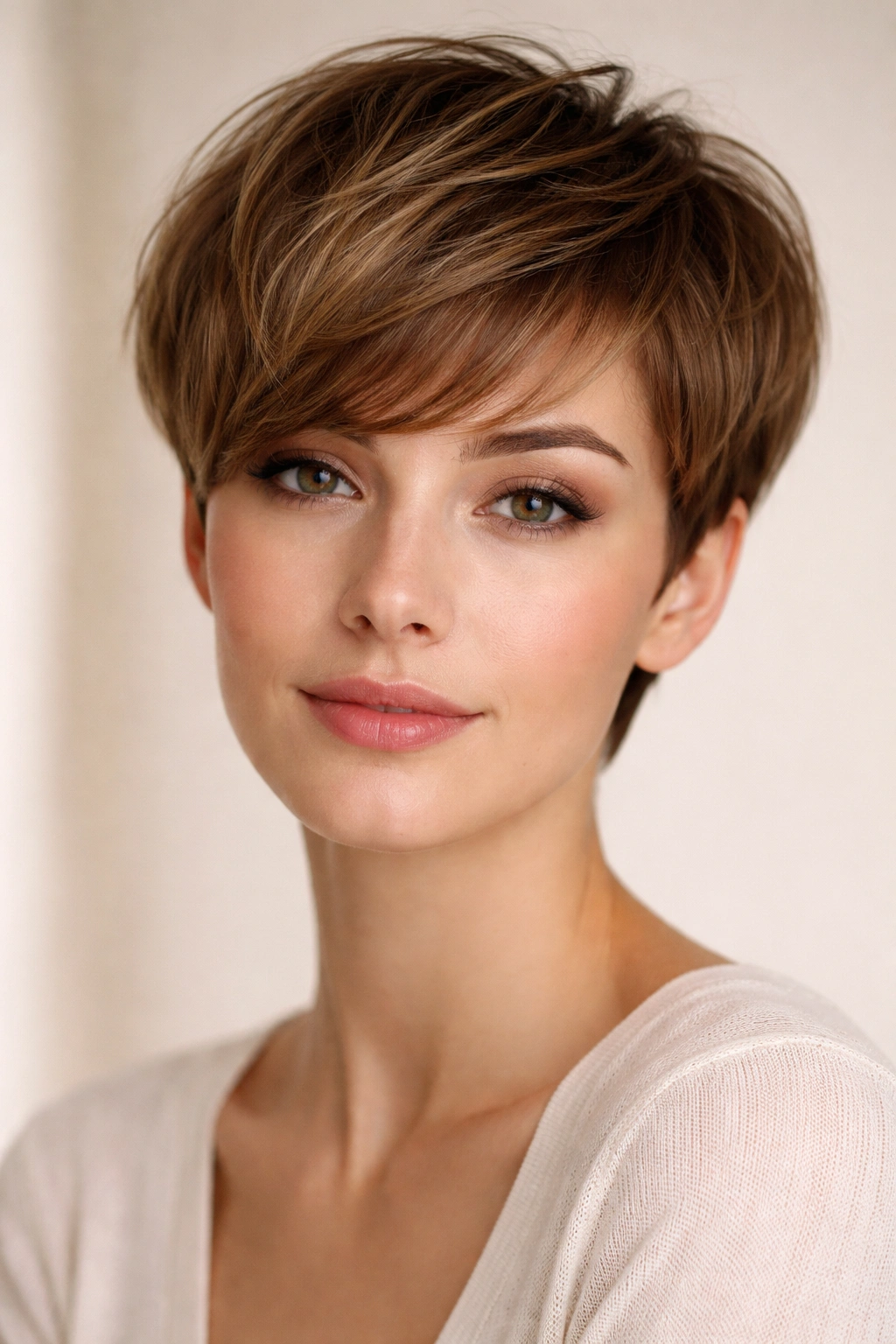
A pixie cut might seem like an unusual choice for a long face, but a strategically styled pixie—specifically one with more length and texture on top and shorter sides—can be surprisingly flattering. The key is creating height at the crown while keeping the overall look soft and rounded rather than severe. This style only works if you’re committed to regular trims and styling, but for those willing to put in the effort, a textured pixie adds personality and dimension.
Why a Pixie Works (With the Right Proportions)
A pixie creates width by removing hair from the sides of the face and drawing the eye upward with crown height. This doesn’t sound flattering for a long face, but the strategy is to shift visual emphasis upward rather than attempting to add width to the lower face. The key is a rounded shape—not angular or sharp—and enough length on top to create texture and movement. A properly styled pixie also shows off facial features and bone structure, which can be incredibly flattering when you have strong features.
Making a Pixie Flatter Your Face
- Choose a pixie with longer length on top (at least 2-3 inches) and shorter, tapered sides
- Ask for a rounded shape rather than anything angular or severe
- Style with texture and movement, not slicked back or perfectly smooth
- Plan for salon visits every 3-4 weeks to keep the shape fresh
- Consider your face features carefully; this style works best with good cheekbones and defined features
- This is a higher-commitment style that requires daily styling to look its best
6. Curly or Coily Hair With Width at the Sides
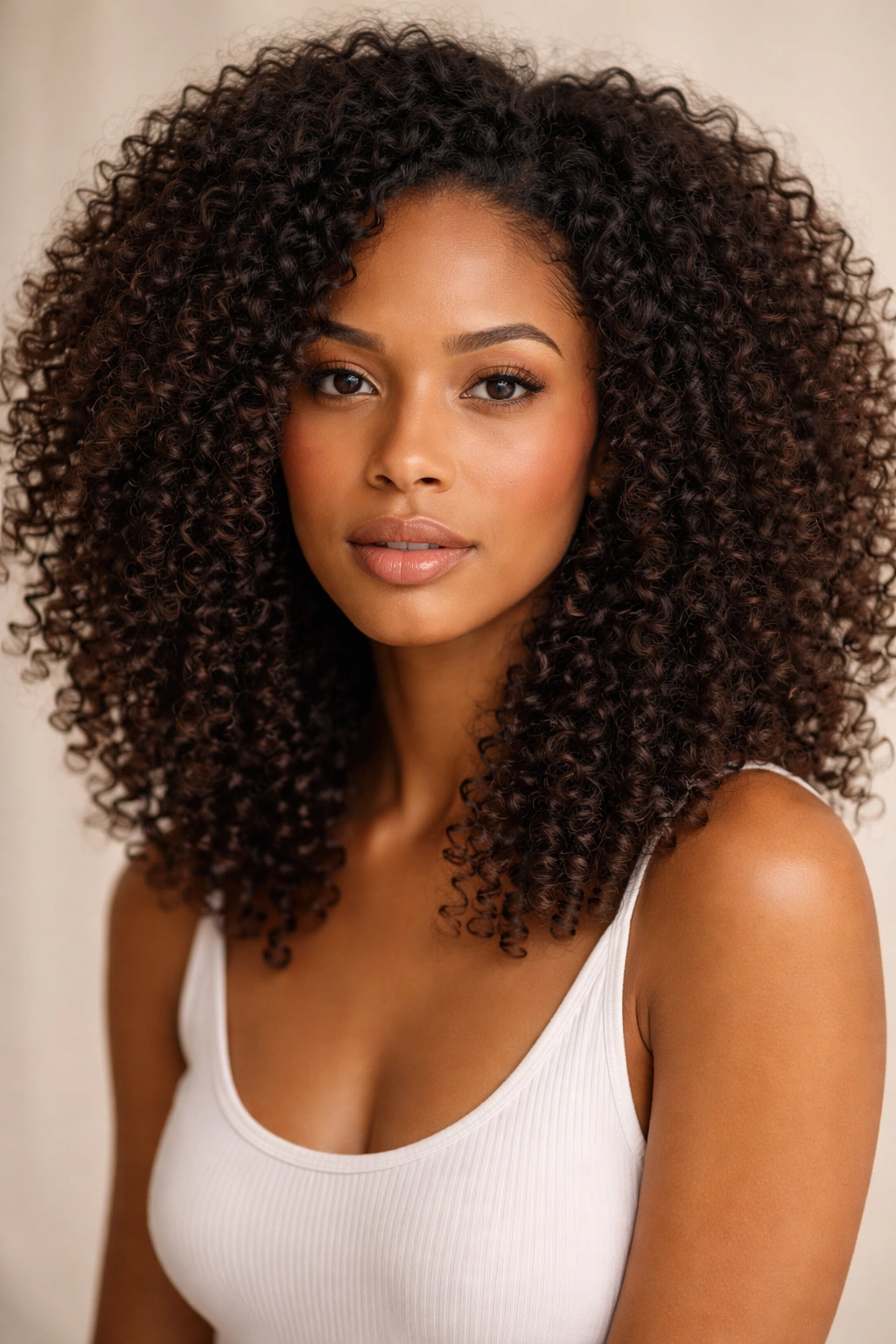
If you have naturally curly or coily hair, you already have texture working for you—the key is styling it in a way that emphasizes width rather than length. This means encouraging fullness on the sides of the head, particularly around the cheeks and ear area, and avoiding styles that stretch the hair vertically. Curls and coils are naturally flattering for long faces because texture always creates the illusion of width, and the curl pattern prevents any one line from being too dominant.
The Width Advantage of Natural Texture
Curly and coily hair has an inherent advantage for long-face shapes because the texture itself creates visual width. Straight hair can look long and lean, but curls and coils add dimension and fullness that breaks up vertical emphasis. The key is understanding that you don’t need to fight your natural texture—you need to enhance it strategically. Focusing volume on the sides of the head, around the cheekbone area, is the most flattering approach for any textured hair on a long face.
Enhancing Curly or Coily Hair for Flattery
- Avoid stretching your curls vertically through tension; let them shrink to their natural length
- Use styling techniques that encourage volume on the sides, like diffusing at the roots or using a pixie cup
- Consider layers to create movement and prevent the curls from packing down
- Avoid super-sleek styles or stretched curls; the texture is your greatest asset
- Use products that enhance definition and hold without weighing the hair down
- Focus on styles that place curls around the face and cheeks rather than pulled back
7. Face-Framing Layers With a Deep Side Part
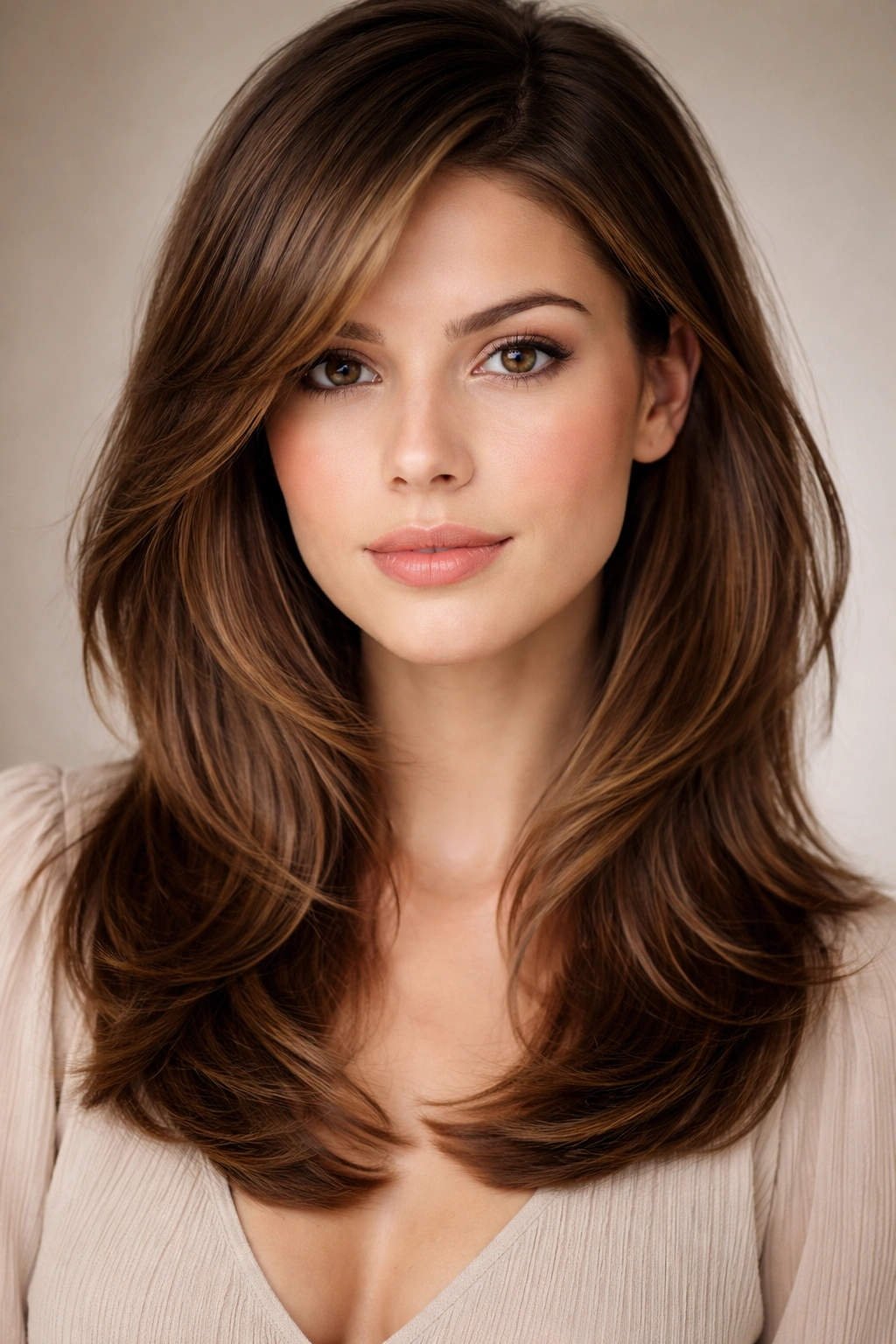
Face-framing layers that sit around the chin and cheek area create exactly the kind of horizontal movement you want for a long face. When combined with a deep side part, this style creates an asymmetrical visual that breaks up facial length and adds movement. The layers frame the face directly, which brings focus to your features rather than the overall face shape, making this an excellent psychological choice in addition to a geometrical one.
How Face-Framing Creates Visual Balance
Face-framing layers work because they literally frame your face—they create a defined perimeter around your features that breaks the vertical line of a long face. The layers should sit around the highest point of your cheekbones and continue softly toward the chin, creating a shape that widens rather than lengthens. A deep side part adds to this effect by creating a strong diagonal line that leads the eye sideways rather than downward. Together, these elements create a flattering, balanced look without requiring a dramatic cut.
Building the Perfect Face-Frame
- Ask your stylist for layers that sit right at or slightly above your cheekbones
- Keep the layers longer than typical—they should blend into your overall hair length rather than looking choppy
- Request a deep side part that naturally falls on one side of your face
- Style with a blow dryer and round brush to create subtle waves in the frame pieces
- Consider how your hair naturally falls; if it prefers to fall in the center, a deep side part may be frustrating to maintain
- Plan for trims every 6-8 weeks to keep the face-framing layers fresh
8. Straight Bob With Volume at the Crown
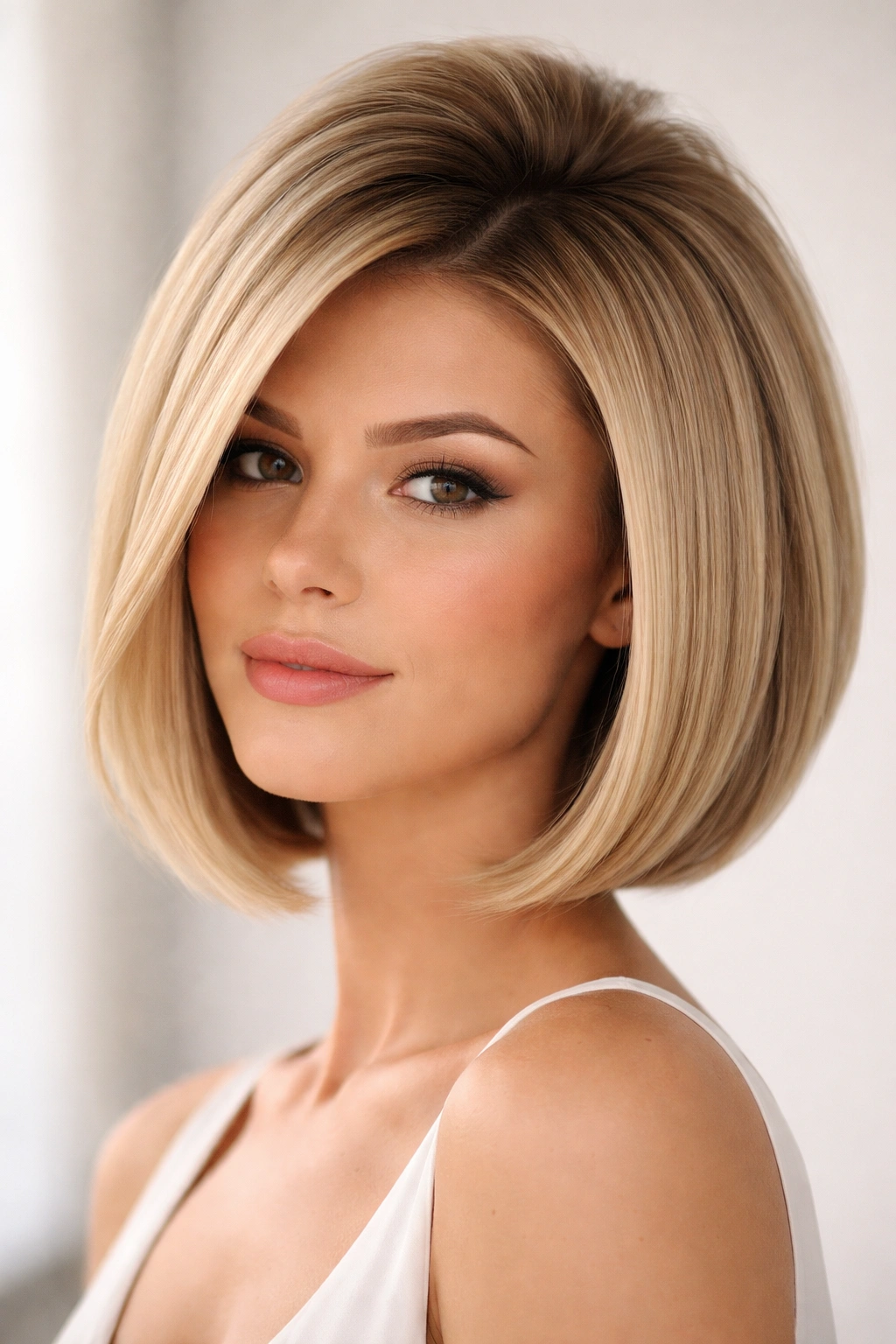
A sleek, straight bob can look incredibly chic and modern, especially when paired with strategic volume at the crown. The key difference between a flattering and unflattering straight bob on a long face is the placement of volume. Rather than letting the hair sit flat and create a long, lean line, you’re intentionally building height at the top of the head, which visually shortens the face by drawing the eye upward. This style requires some daily styling effort but delivers a polished, sophisticated look.
The Role of Crown Volume in Face Shape
Crown volume shifts visual focus upward and away from the length of the face. When you place height at the crown and keep the rest of the hair sleek and smooth, you create a shape that’s proportionally flattering to a longer face. The straight edges of the bob are clean and modern, while the crown volume adds dimension and prevents the style from looking flat or severe. This is a case where a very structured, minimal style becomes flattering through the strategic placement of volume.
Creating Long-Lasting Crown Volume
- Use a volumizing spray at the roots before blow-drying; this gives you better grip
- Blow-dry your crown area against its natural growth pattern to boost volume
- Use a round brush or blow-dryer concentrator nozzle to direct air upward at the crown
- Consider a light teasing at the roots (once daily is fine, just be gentle)
- A light, dry texturizing spray keeps volume in place throughout the day without making hair feel stiff
- Sleep on a silk pillowcase to preserve your styling and minimize friction
9. Shoulder-Grazing Waves With Soft Layers
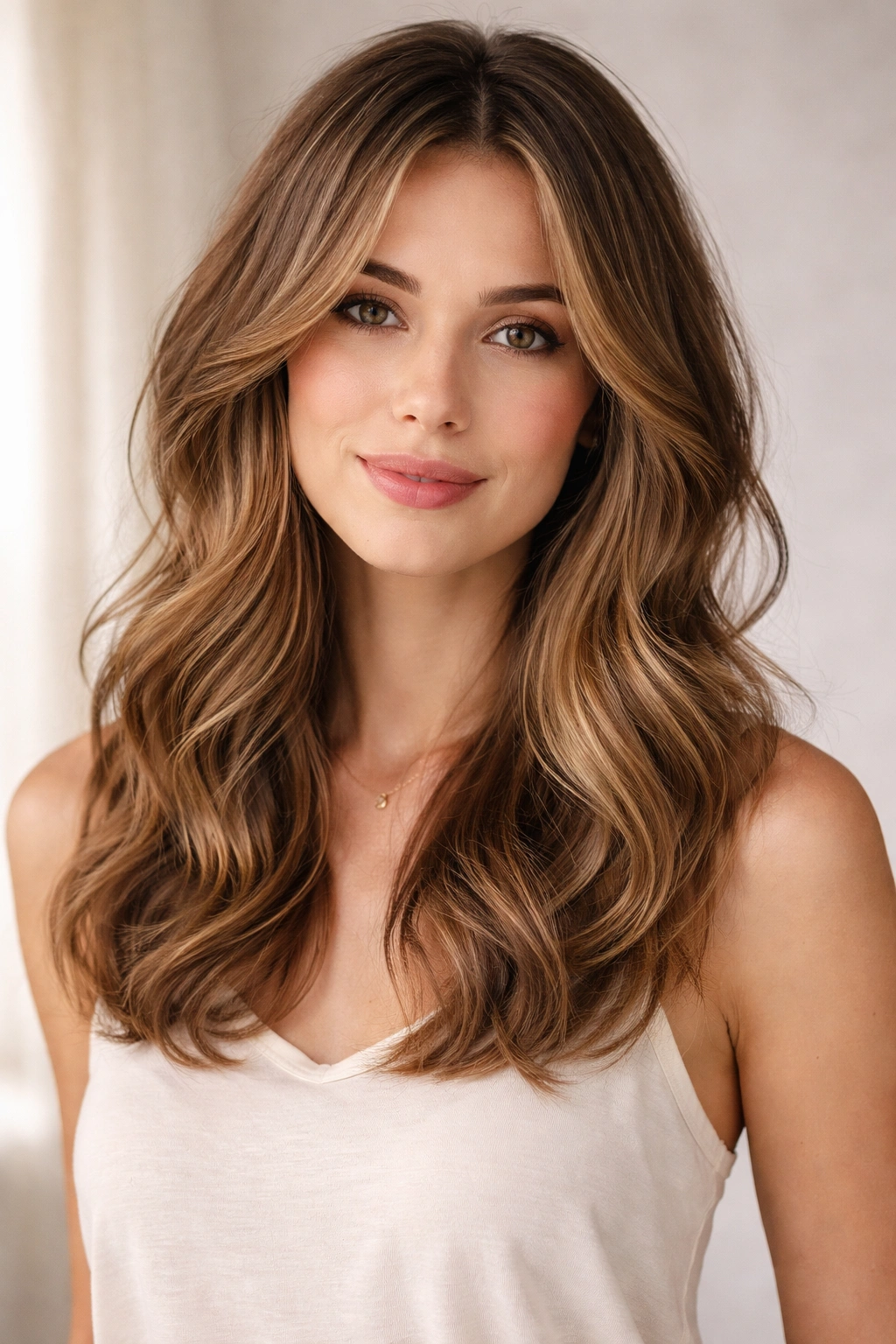
Long hair doesn’t have to emphasize face length—it depends entirely on how it’s styled. Shoulder-grazing waves with soft, subtle layers work beautifully for long faces because the waves create horizontal movement and the layers add texture and dimension. This is about embracing longer hair while strategically preventing it from looking like one long, continuous line. Soft waves and gentle layers create a romantic, effortless feel that’s both flattering and feminine.
Why Waves Change the Entire Effect of Length
Straight, long hair emphasizes a long face because it creates one uninterrupted vertical line. Waves, however, create direction, movement, and multiple breaking points that prevent that vertical emphasis. Soft layers add even more dimension by creating areas where the hair divides and rejoins, further disrupting the continuity. The result is that you can keep the length you love while completely changing how it reads on your face shape.
Achieving Waves That Last
- Ask for subtle layers starting around the chin; too many layers can make long hair look thin
- Waves look best when created with a large-barrel curling iron or wand; aim for loose, romantic waves
- Sleep in braids to create natural waves and extend the life of your styling
- Use a sea-salt spray to enhance texture and hold without crunchiness
- Apply waves while hair is slightly damp rather than completely dry for better hold
- Consider a perm if you want permanent waves without daily styling (modern perms are much gentler than old versions)
10. Textured Bangs With Long, Choppy Layers
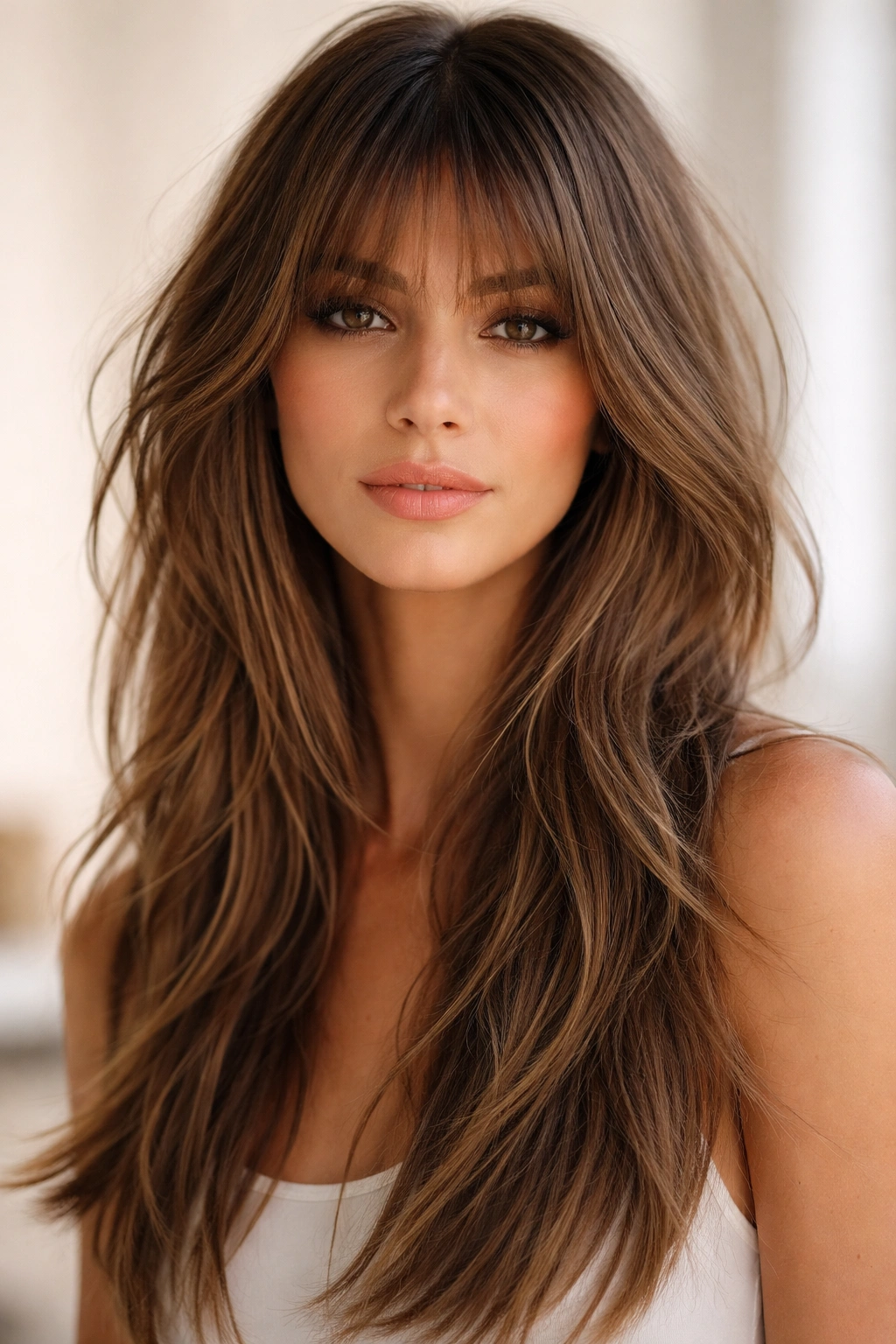
Choppy layers create movement and texture that breaks up vertical length, and when combined with textured bangs rather than blunt ones, you get a style that’s modern and interesting. Textured bangs have a more piece-y, lived-in quality than blunt bangs, and they blend more seamlessly into the rest of the hair. This creates a cohesive look that still provides the horizontal break you want for a long face but with a softer, less dramatic feel than a blunt style.
The Modern Appeal of Textured Layers
Choppy layers have come back into style because they create movement and personality that more subtle layers sometimes lack. Combined with textured bangs, you get a unified look where the bangs feel like part of the overall hair design rather than a separate statement. The texture throughout prevents any smooth, uninterrupted line from forming, which is exactly what you want for a long-face shape. This is a style that works best on hair with some natural wave or texture—very straight hair can look stringy with too many choppy layers.
Styling Textured Choppy Layers
- This style works best on hair that has natural body or wave
- Ask your stylist for textured bangs that sit between your eyebrows and eyes
- The bangs should blend into the top layers rather than sitting as a separate section
- Style with texturizing spray and your fingers for a piece-y, lived-in look
- A blow dryer with a diffuser attachment enhances natural texture and prevents frizz
- Regular trims every 6-8 weeks keep the choppy layers from looking overgrown
- This style requires less styling than some others but does need regular maintenance
11. Voluminous Waves With a Center Part
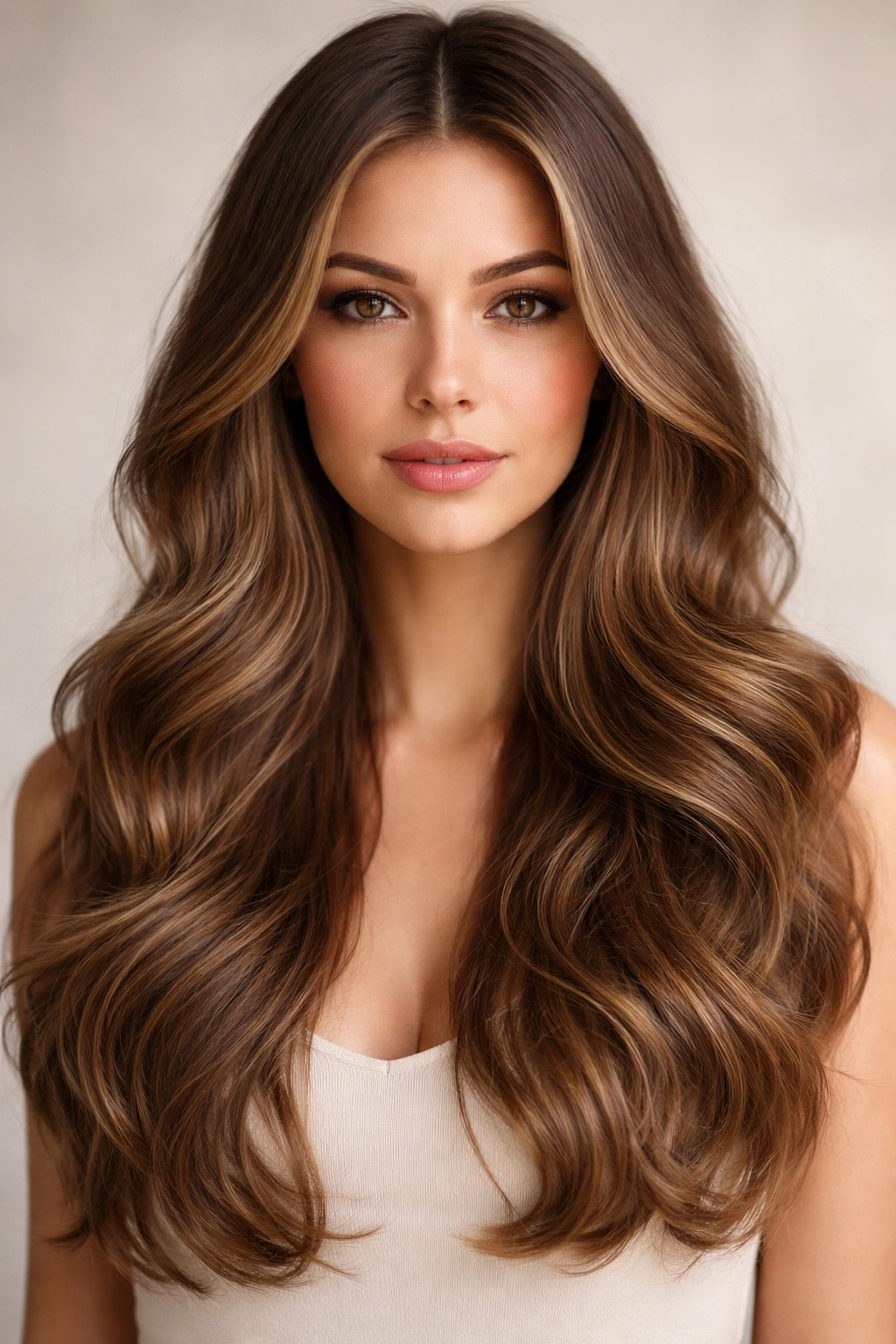
Full, voluminous waves with a center part creates a balanced, symmetrical look that’s undeniably flattering for long faces. The volume adds width and dimension, while the center part creates a vertical line that’s less severe than asymmetrical styles. The waves themselves create the crucial horizontal movement that prevents vertical emphasis. This is essentially a glamorous, feminine version of the width-and-texture strategy.
Symmetry and Volume as a Flattering Combination
A center part with voluminous waves appeals to the principle of balance—symmetrical styling can actually be very flattering when combined with the right volume placement. The center part creates a clean vertical line, but this is softened by the voluminous waves that fall on both sides. The overall effect is balanced rather than emphasizing length. Voluminous waves also create the illusion of a fuller face, which naturally counters the narrow appearance of a long face.
Building Voluminous Waves That Last
- Section your hair and use a large-barrel curling iron (1.5 inches or larger) to create loose waves
- Curl each section around the barrel and release rather than wrapping tightly; this creates volume
- Alternate the direction you wrap each section to build natural-looking movement
- Apply a heat protectant spray before curling and a texturizing spray after for hold
- Tease at the roots gently for extra volume and longevity
- A deep moisture mask before styling helps your hair hold waves better
- Sleep in the waves carefully to preserve them; avoid sleeping on one side exclusively
12. Blunt Lob With Subtle Waves
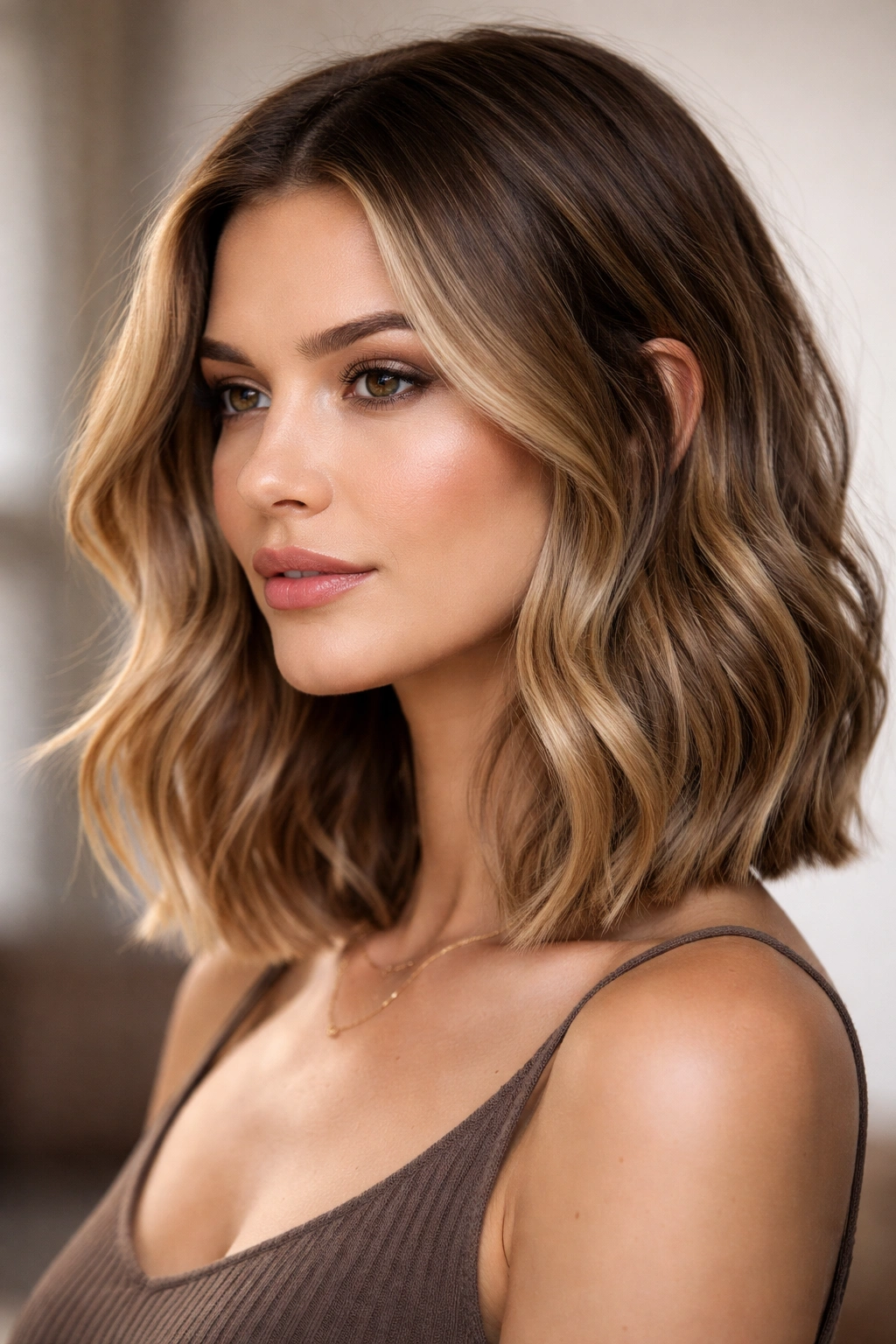
A blunt lob—a blunt-cut bob in a longer length, typically hitting between the chin and shoulders—combines the structural flattery of a bob with the versatility of slightly longer hair. When styled with subtle waves rather than left completely straight, it becomes a style that’s polished enough for professional settings but still adds dimension and movement. The blunt edge creates a definitive horizontal line, while the subtle waves prevent it from looking too severe or severe.
The Power of Blunt Edges for Long Faces
A blunt cut creates a clean, definitive line that serves as a visual stopping point—the eye sees a distinct boundary rather than hair that gradually tapers away. For a long face, this blunt endpoint is strategically flattering because it interrupts vertical lines and creates a horizontal emphasis. The longer lob length keeps the style from feeling too short or severe while still maintaining that crucial blunt-edge benefit. Subtle waves soften the blunt edge just enough to keep the look modern and wearable.
Maintaining a Blunt Lob Between Appointments
- Get your blunt edge trimmed every 4-6 weeks to keep it crisp and defined
- Blow-dry straight if you want a sleek look or with subtle waves for added dimension
- Use a flat iron on the ends to maintain the blunt edge’s sharpness and cleanliness
- Texturizing spray helps create subtle waves without looking intentionally curled
- Deep conditioning treatments keep the ends of a blunt-cut lob looking healthy and shiny
- A glossing treatment every 8-12 weeks keeps the entire length looking polished and finished
Final Thoughts
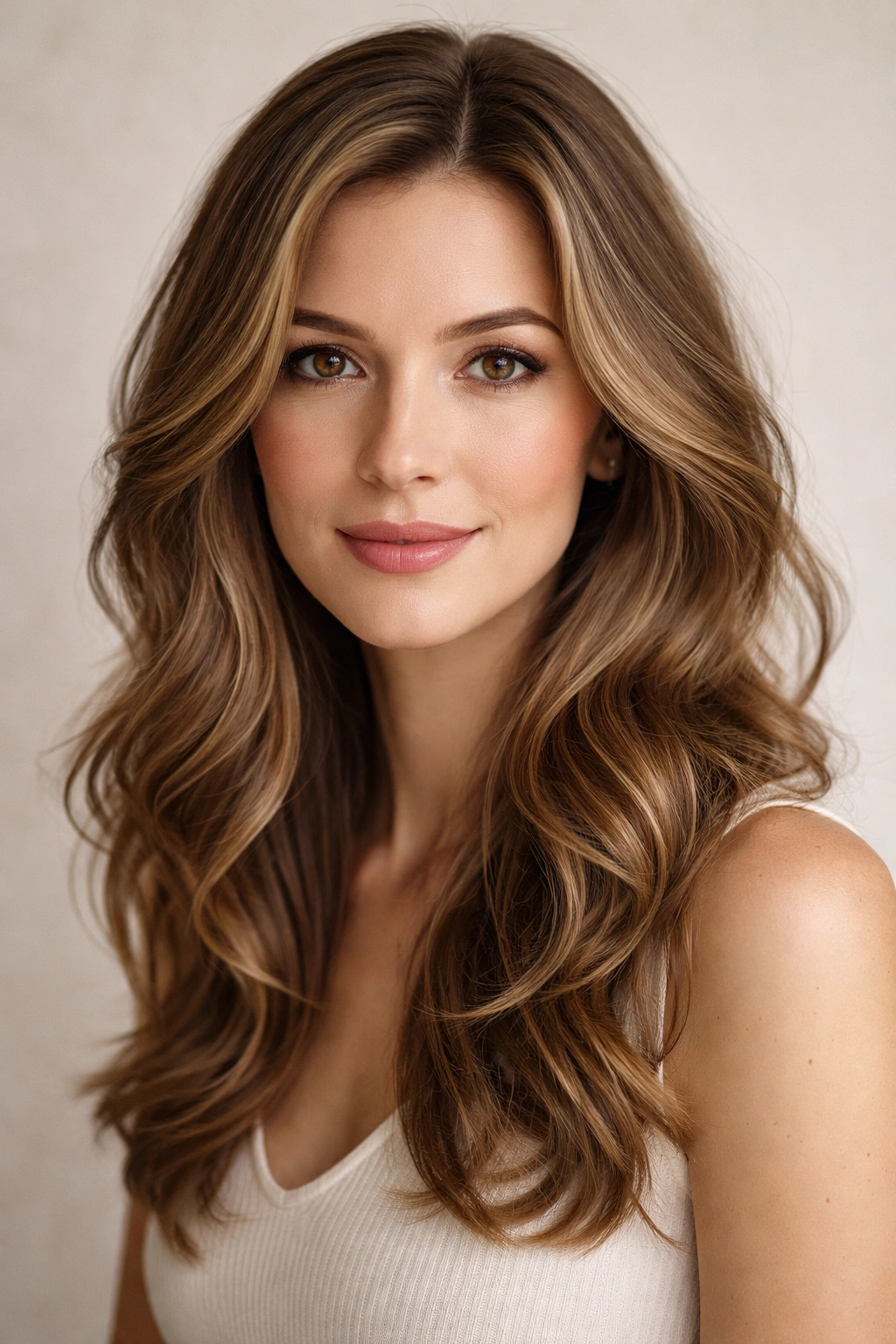
The most important thing to remember about face-flattering hairstyles is that principles matter far more than specific styles. Horizontal lines, texture, volume in the right places, and breaking up vertical emphasis—these are the core concepts that make any style work for a long face. Once you understand these principles, you can take any haircut you love and work with your stylist to adapt it in ways that flatter your specific face shape.
Long faces aren’t a limitation—they’re actually a canvas that works with many different styles when they’re cut and styled strategically. Whether you choose a dramatic bob with blunt bangs or embrace longer waves and layers, the goal is the same: create visual balance and draw attention to your beautiful features rather than the overall face shape. The best hairstyle for your long face is the one that makes you feel confident and reflects your personal style, executed with the flattering principles in mind.
Don’t be afraid to experiment or ask your stylist for their professional input on what would work best with your specific hair texture, lifestyle, and personal style preferences. A great stylist understands face shapes and can customize even these suggestions to work perfectly with your unique features and hair type. The right hairstyle won’t just look flattering—it’ll make you feel like the best version of yourself.
