



Longer faces come with their own set of styling challenges, but here’s what most people don’t realize: the right haircut can completely transform how your face shape appears. Instead of fighting against your natural proportions, strategic cuts and styles work with them, adding width where you need it and breaking up vertical lines that can make a longer face feel even more elongated. The key isn’t about finding one perfect cut—it’s about understanding which proportions, textures, and placement strategies work best for your specific face structure.
The most flattering haircuts for longer faces share some common principles: they typically include horizontal movement rather than straight vertical lines, incorporate layers or texture that add volume at the sides, and often feature bangs or shorter sections that shorten the overall appearance of the face. Whether you’re drawn to bold, blunt styles or softer, textured waves, there’s a cut that’ll work beautifully with your face shape. The trick is knowing exactly what to ask your stylist for and understanding why each cut works so well for longer faces.
What makes this such an exciting time to explore new cuts is that longer-face-friendly styles span every hair type, texture, and aesthetic preference. You don’t have to sacrifice your personal style to enhance your natural features—you just need the right cut tailored to your face shape and hair texture. Let’s walk through 12 haircuts that consistently work beautifully on longer faces, breaking down exactly why each one flatters this face shape and how to style it for maximum impact.
1. Blunt Bob with Face-Framing Layers
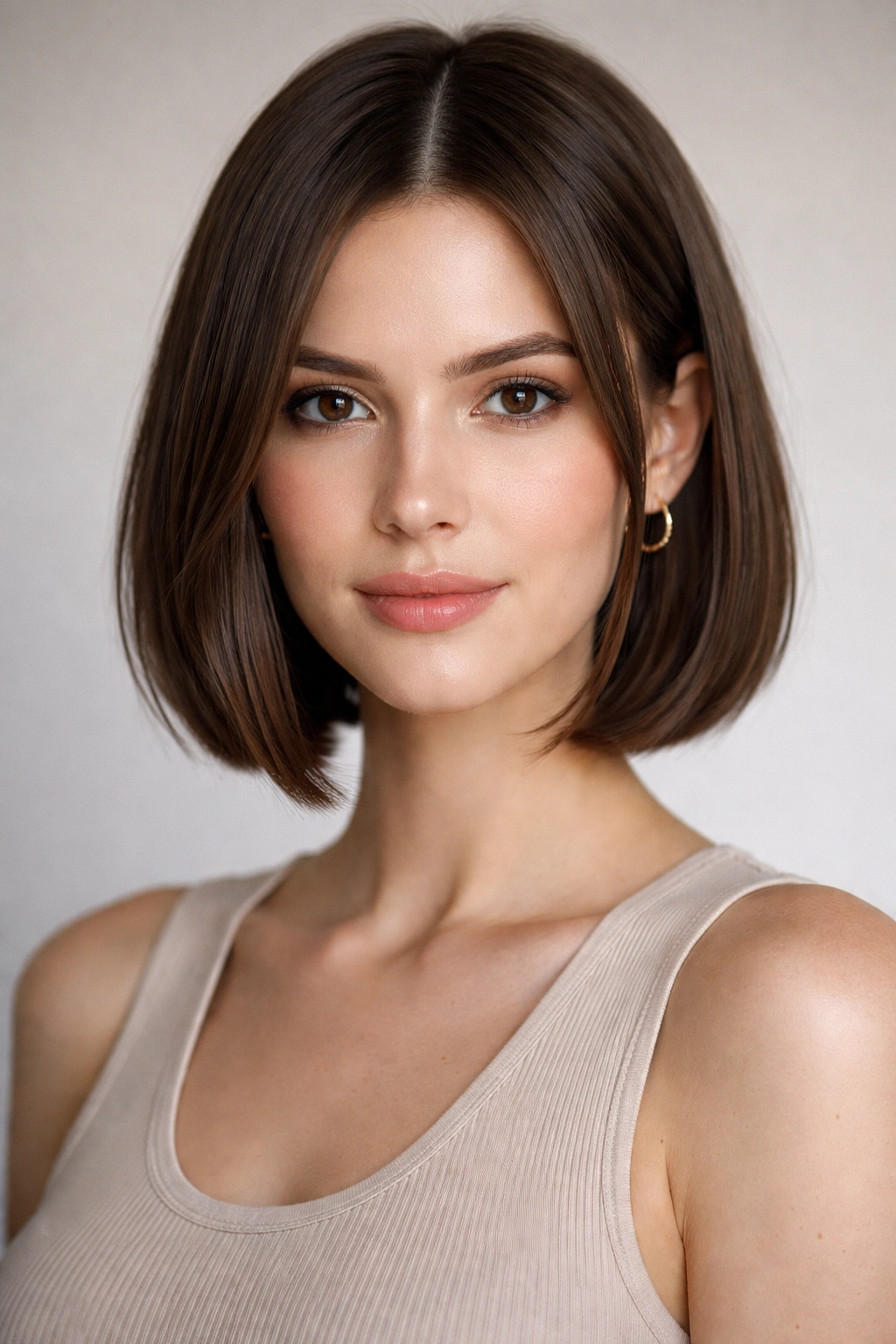
A blunt bob sits right at chin level or just below, and when paired with strategic face-framing layers, it becomes a powerhouse cut for longer faces. The horizontal line created by the blunt ends sits directly at the widest part of your cheeks and jawline, instantly adding visual width to your face. What makes this cut work so well is that the blunt edge creates a decisive stopping point that breaks up the vertical length, while the shorter layers around the face draw the eye inward rather than down.
Why It Works for Longer Faces
The blunt bob’s straight-across bottom line creates the optical illusion of width, counteracting the elongation of a longer face shape. The face-framing layers around your cheekbones add movement and texture, drawing attention to the middle of your face rather than emphasizing length. This cut works especially well if you have a prominent jawline or high cheekbones—the blunt ends actually emphasize these features in the best way possible.
What Makes This Cut Special
- Requires regular trims every 4-6 weeks to maintain the blunt edge and prevent the cut from looking overgrown
- Works beautifully with both straight hair and slightly textured waves
- Face-framing layers can be cut at different lengths to customize how much movement you want
- Styling with a center part or deep side part completely changes the vibe while maintaining the flattering proportions
- The cut creates natural fullness at the jaw level, which is exactly where longer faces need more width
Pro tip: Ask your stylist to keep the layers slightly shorter and more textured if you have finer hair—this prevents the cut from looking flat and maximizes the face-widening effect. If you have thicker hair, slightly longer layers work beautifully without creating bulk.
2. Textured Pixie Cut with Volume on Top
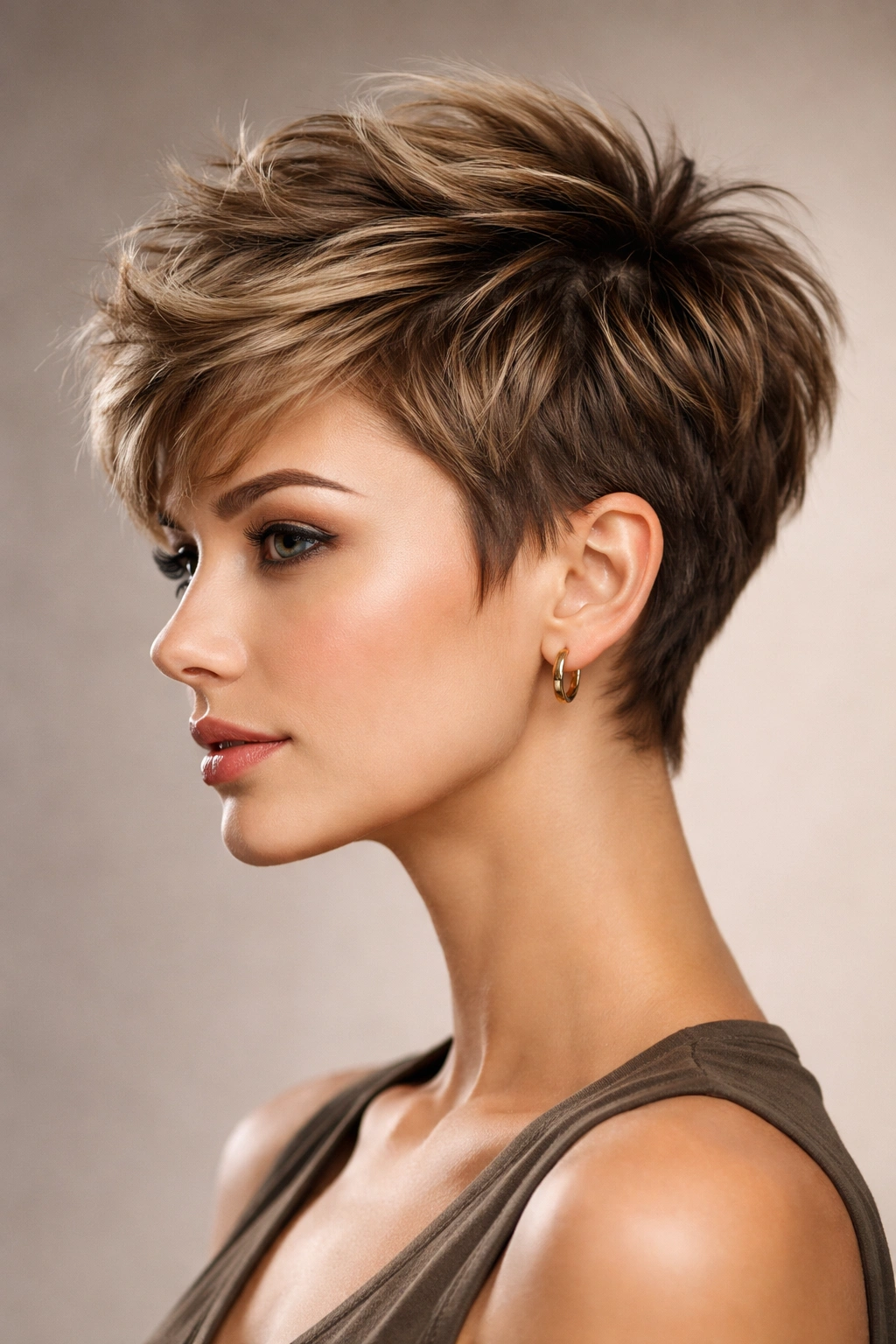
A pixie cut might seem counterintuitive for a longer face, but when cut with the right proportions, it becomes incredibly flattering. The key is building significant volume on top of the head while keeping the sides shorter and tapered. This creates height and width at the crown, balancing the length of your face and drawing the eye upward rather than down the full length of your face.
Why This Shape Flatters Longer Faces
By concentrating volume and length at the very top of your head, a textured pixie actually shortens the perceived length of your face. Your eye naturally travels to the fullest, most textured part of the style, which is now at the crown rather than further down. The shorter sides and back minimize any vertical lines and create a more balanced, proportional appearance overall.
Key Features of This Cut
- Requires layering throughout to create that effortless, textured look rather than a smooth, blunt pixie
- Top can be styled forward for extra volume or swept back depending on your preference and hair texture
- Works best on hair with natural texture or wave—straight, thick hair might need styling products to achieve the right look
- Sides are typically undercut or faded, which creates clean lines and maximizes the volume contrast at the top
- Grows out beautifully if you visit your stylist every 4-5 weeks for maintenance
Worth knowing: This cut requires styling intention—without product and styling, it can look too flat or one-dimensional. Texturizing sprays and lightweight pomades work wonderfully to enhance the natural texture and keep everything looking intentional.
3. Shoulder-Length Shag with Choppy Layers
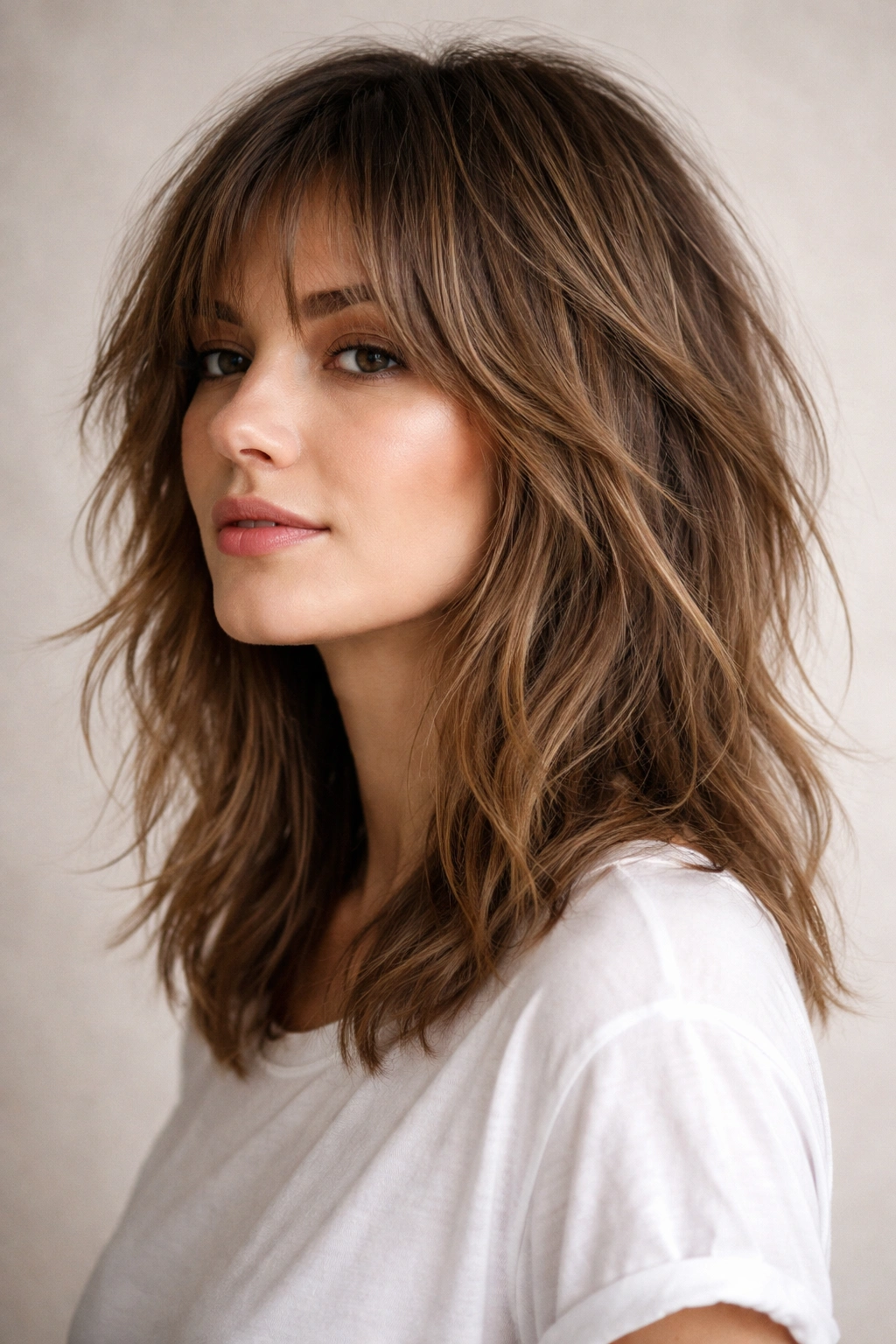
The modern shag is experiencing a major comeback, and it’s one of the best-kept secrets for longer faces. This cut features choppy, distinct layers throughout, with slightly longer pieces around the face and more movement overall. The layering creates horizontal and diagonal lines instead of straight vertical ones, which is exactly what breaks up the elongation of a longer face shape.
Why It Works for Your Face Shape
A well-executed shag cut combats length through strategic layering and movement. Each layer creates a horizontal line across your face and hair, and the choppy texture prevents any sense of sleekness or vertical emphasis. The result is a cut that feels voluminous, textured, and deliberately broken up—which automatically makes your face appear shorter and wider.
Essential Details About This Cut
- Requires layers cut at multiple lengths, typically with shorter pieces at the crown and progressively longer pieces toward the ends
- Face-framing layers should hit around cheekbone length for maximum face-shortening effect
- Works beautifully on most hair types, though it’s especially stunning on naturally wavy or curly hair
- Styling with waves or curls enhances the layering and makes the cut look fuller and more dimensional
- Needs a touch-up every 6-8 weeks to maintain the shag’s choppy definition
Insider note: The key to a modern shag (versus a 70s-style shag) is keeping the layers choppy but intentional—not overly blunt. Ask your stylist for layers that blend slightly rather than being super disconnected, which keeps the look polished rather than chaotic.
4. Curtain Bangs with Long Straight Hair
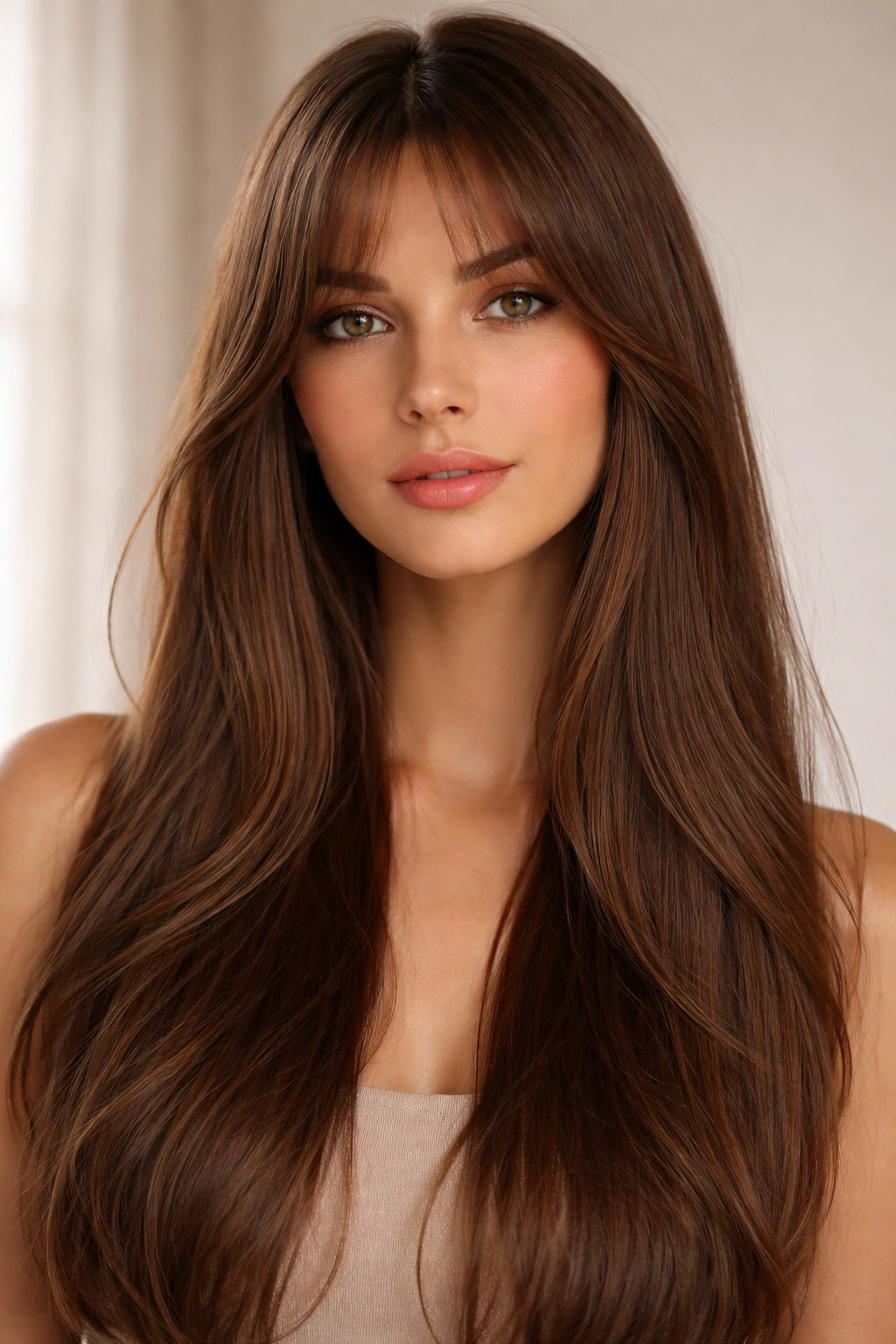
Curtain bangs frame the face beautifully and add horizontal lines exactly where you need them for a longer face. These bangs start longer in the center and gradually get shorter toward the sides, creating a natural frame that draws the eye toward your cheekbones and eyes rather than the full length of your face. They work with long hair to create visual interest without requiring a dramatic cut.
Why This Style Flatters Longer Face Shapes
Curtain bangs instantly break up the vertical line of long hair by adding a horizontal element right across the middle of your face. They create width at cheekbone level and add texture and movement that prevents your look from feeling too linear or elongated. The bangs draw attention to your eyes and upper face rather than emphasizing the lower portion of a longer face.
What You Need to Know About This Style
- Bangs should be cut slightly longer than perfectly blunt so they have movement and softness
- Work beautifully with either straight or wavy hair, though they require more styling intention with straight hair
- Need a trim every 3-4 weeks to maintain their shape and prevent them from covering your eyes
- Can be styled with a slight wave or curl for added texture and dimension
- Pair with long layers throughout to enhance the movement and prevent the overall look from feeling too heavy
Pro tip: Use a smoothing serum or lightweight styling cream on your bangs to keep them looking polished and to prevent them from separating into too many individual pieces. This keeps the face-framing effect clean and intentional.
5. Chin-Length Lob with Side Part
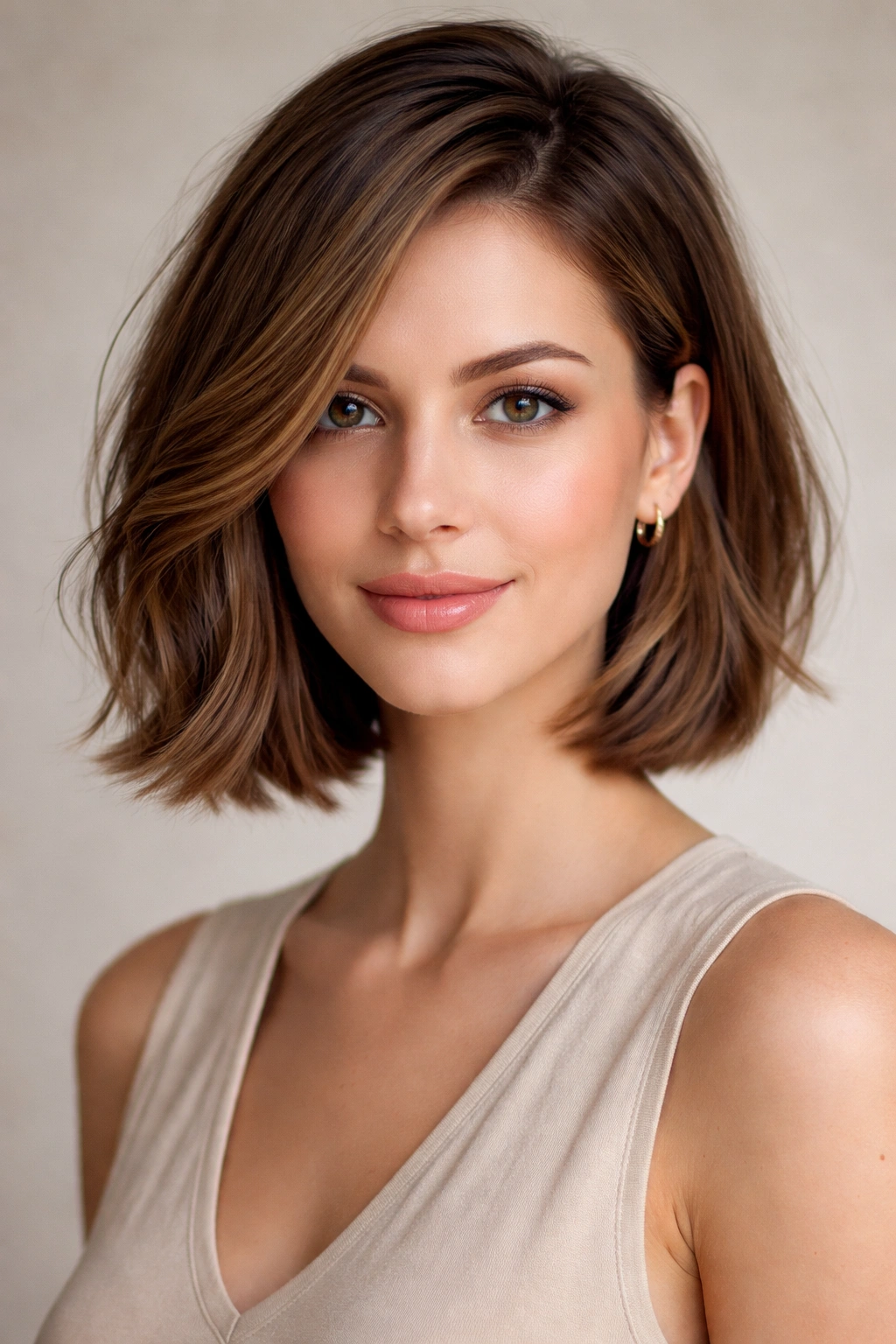
A lob—that’s long bob—cut to around chin length creates the perfect proportion for a longer face. When combined with a deep side part, it adds asymmetrical movement that makes your face appear wider and shorter. The length sits right at the jawline, which is the sweet spot for breaking up vertical length while maintaining enough length to feel flattering and versatile.
Why It Works for Longer Faces
The chin-length placement creates a horizontal line exactly where you need one for face balance. A side part adds asymmetry and movement, preventing any sense of stark verticality. Together, these elements create the illusion of width and proportion, making your face appear more balanced overall. The lob is short enough to feel fresh and intentional, but long enough to maintain styling versatility.
Important Details for This Cut
- Works beautifully with both straight and wavy hair, though styling amplifies the flattering effect
- Side part should be deep enough to create obvious asymmetry—shallow side parts don’t create the same face-widening effect
- Layers around the face add movement and should be cut to frame your cheekbones and eyes
- Needs a trim every 6-8 weeks to maintain the chin-length placement and prevent it from growing too long
- Styling with waves or curls at the ends adds dimension and prevents the cut from looking blunt or severe
Worth knowing: Ask your stylist to cut the back slightly shorter than the front, which creates a subtle graduated shape. This keeps the style from looking too blunt while maintaining the chin-length front pieces that do so much to balance your face.
6. Textured Waves with Volume at Roots
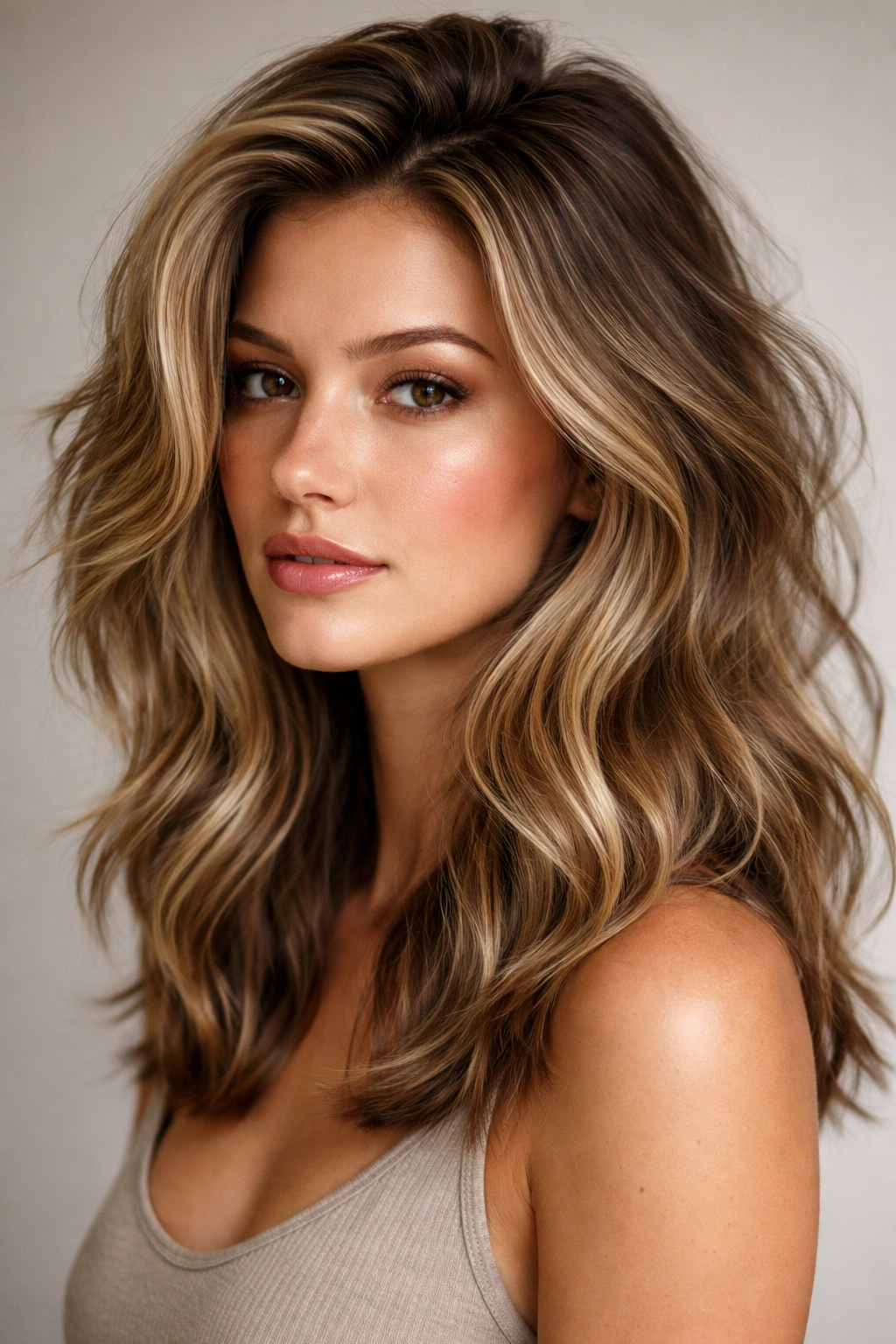
Sometimes the most flattering approach for a longer face is adding waves and texture to longer lengths while strategically building volume at the roots. This isn’t a specific cut so much as a styling approach paired with the right layering. The waves create horizontal lines and texture throughout your hair, while the root volume adds height and prevents your face from appearing overly elongated.
Why This Styling Approach Flatters Longer Faces
Waves and texture create multiple horizontal lines throughout your hair, which breaks up the vertical line of length. Root volume draws the eye upward to the crown, making your face appear shorter by comparison. Together, these elements add movement, dimension, and visual complexity that prevents any sense of stark, face-elongating straightness.
How to Achieve and Maintain This Look
- Works best with layers cut throughout to enhance the wave pattern and prevent the style from looking flat
- Requires styling products—volumizing mousse at the roots and texturizing spray throughout helps create the wave pattern
- Can be achieved with a curling iron, curling wand, or braiding method, depending on your hair texture and styling comfort level
- Dry shampoo adds texture and grip to your waves, making them last longer and look fuller
- This styling approach works on most hair types, though it’s especially easy on naturally wavy or curly hair
Insider tip: Don’t worry about perfect waves—slightly imperfect, tousled waves actually look more flattering and modern. The irregularity creates more visual texture and prevents your hair from looking too sleek or face-elongating.
7. Long Layered Cut with Minimal Bangs
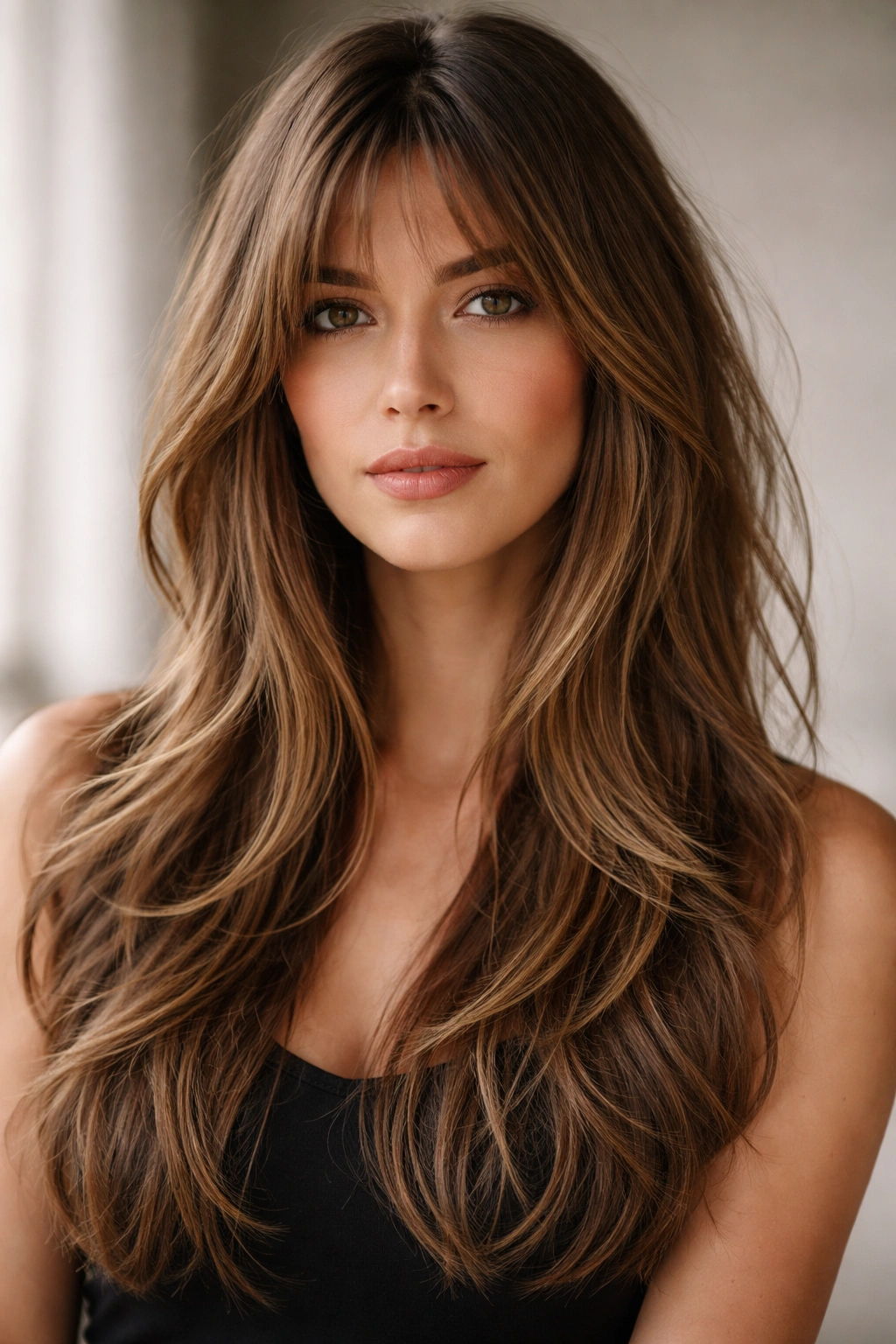
If you prefer longer hair but want to flatter a longer face, a long layered cut with minimal bangs creates movement and texture without requiring a dramatic length change. The layers create horizontal lines and add volume throughout, while the minimal bangs—just a few shorter pieces around the face—break up the vertical line without feeling like a major style commitment.
Why This Cut Balances Longer Faces
Layers throughout your hair create multiple horizontal lines and texture, which naturally counteracts vertical elongation. The minimal bangs add just enough horizontal line to break up the very top of your face without requiring constant styling or maintenance. The result is a cut that feels effortless and flattering while maintaining the length you love.
Key Elements of This Cut Style
- Layers should be cut at varying lengths, with shorter pieces around the face and progressively longer pieces toward the ends
- Minimal bangs typically hit between eyebrow and eye level, creating a subtle break without covering too much of your face
- Works beautifully with natural waves or curls, which enhance the layering effect
- Can be styled straight or with waves depending on your preference and hair type
- Needs a trim every 8-10 weeks to maintain the layer definition and prevent split ends
Pro tip: Ask your stylist to cut the layers so they blend smoothly rather than being too choppy—this creates dimension without looking fragmented or overly textured. Blend is key for a polished, modern look.
8. Sleek High Ponytail Base with Undercut
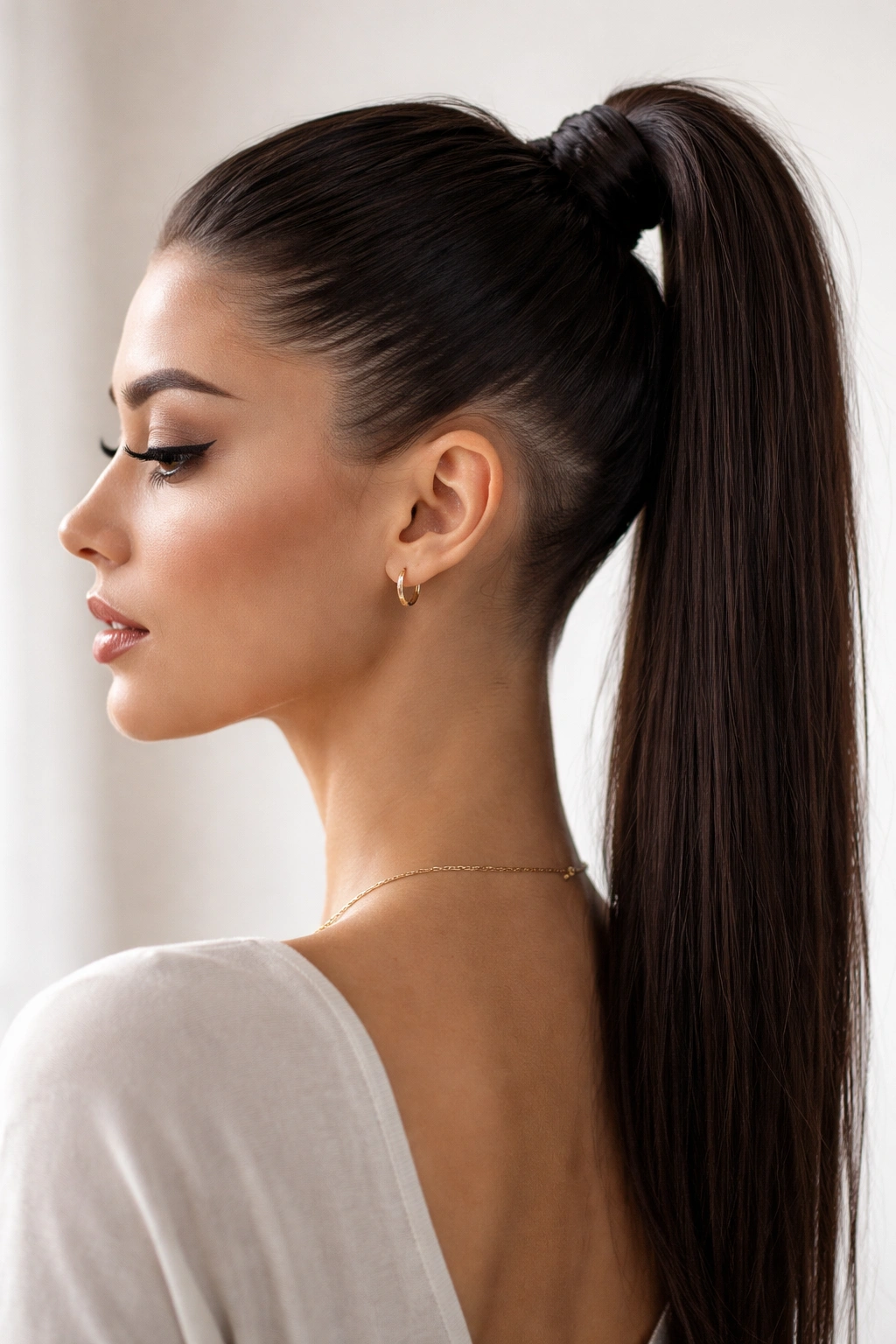
An undercut—closely trimmed or shaved sections underneath the top layer—paired with a sleek high ponytail creates a striking look that flatters longer faces beautifully. When styled in a high ponytail, the height adds visual width at the crown and draws the eye upward. The undercut adds edginess and prevents the overall look from feeling too simple or one-dimensional.
Why This Cut Flatters Longer Faces
The high placement of the ponytail draws attention to the crown and upper face rather than the full length. The undercut adds visual texture and interest at the sides, creating the illusion of width. Together, these elements balance the vertical length of your face and create a modern, intentional look that feels flattering and stylish.
Important Styling and Maintenance Tips
- The undercut needs to be maintained every 3-4 weeks to keep the edges clean and defined
- Ponytail should be pulled high and tight to create maximum lift and the face-shortening effect
- Works best with straight or slightly wavy hair—texture can make the undercut less visually striking
- Style with sleek gel or pomade to keep flyaways smooth and the ponytail looking intentional
- Can be worn with face-framing pieces pulled loose for a softer, less severe look if you prefer
Worth knowing: The undercut works best if you have confidence wearing it—the edginess of the cut really shines when you style it with intention and wear it proudly. Apologetic styling undermines the whole aesthetic.
9. Bouncy Curls with Strategic Layers
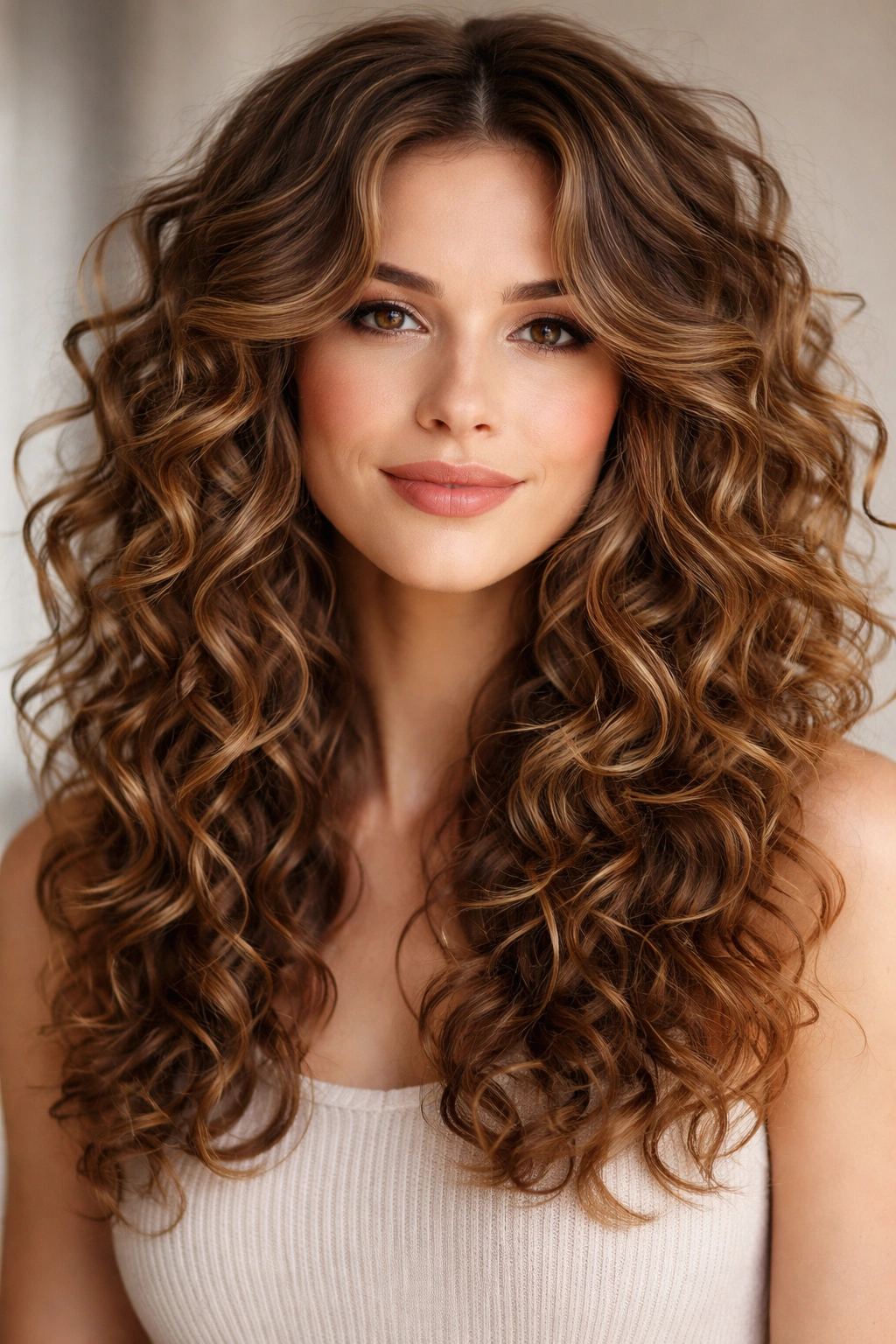
If you have naturally curly hair or are willing to style your hair curly regularly, bouncy curls with strategic layers create exceptional flattering volume for longer faces. The curls add width through their natural texture and volume, while the layers prevent the curls from appearing too heavy or elongating. The result is a style that feels full, dimensional, and decidedly face-flattering.
Why Curly Hair Works for Longer Faces
Curls naturally create width and volume, which counteracts the vertical line of a longer face. Strategically placed layers prevent the curls from weighing down or appearing too heavy at the ends. The overall effect is a style that creates the illusion of width and adds playful texture that makes your face appear shorter and more balanced.
Essential Details for Curly Styles
- Layers should be cut while your hair is curly, not straight, to ensure they work properly with your curl pattern
- Shorter layers around the face should fall at cheekbone level to maximize the face-framing, face-shortening effect
- Longer layers at the back should be angled rather than blunt to prevent weight at the ends
- Requires a curl-specific styling routine—leave-in conditioner, curl cream, and possibly a diffuser for drying
- Get trims every 8-10 weeks to maintain layer definition and prevent the curls from appearing shapeless
Insider note: The key to making curly hair look flattering on a longer face is ensuring the curls have definition and aren’t just a frizzy cloud. Proper styling products and technique make all the difference between “volume” and “frizz.”
10. Side-Swept Bangs with Medium Length
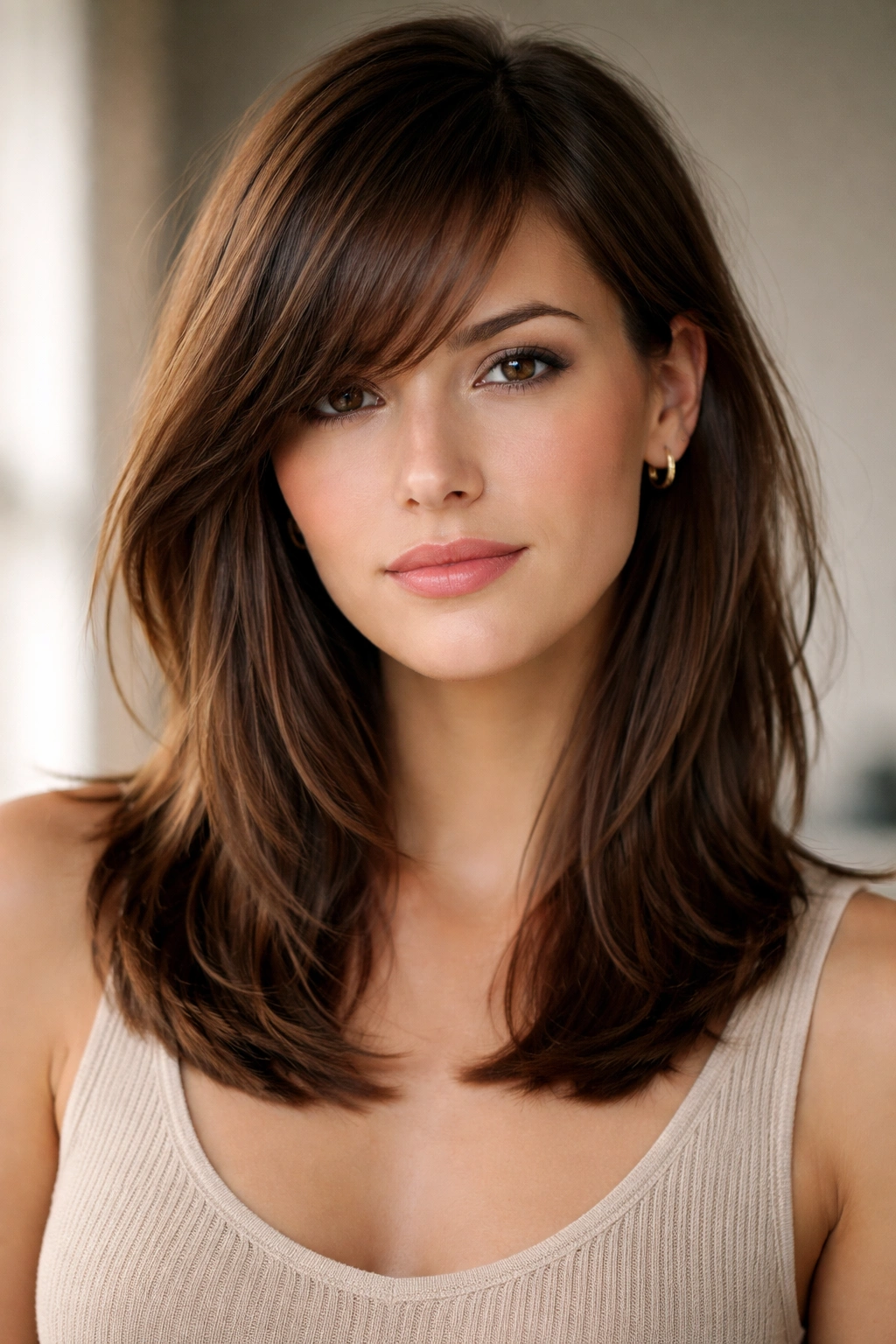
Side-swept bangs create a subtle but powerful flattering effect for longer faces. These bangs are longer on one side and shorter on the other, creating an asymmetrical frame that draws the eye toward your cheekbones and adds perceived width. Paired with shoulder-length hair, this creates a classic, versatile look that works in almost any setting.
Why This Cut Flatters Longer Face Shapes
The asymmetry of side-swept bangs naturally adds balance to a longer face by creating horizontal movement and preventing any sense of stark symmetry. The bangs draw attention to your eyes and cheekbones rather than emphasizing the length of your face. The shoulder-length hair provides enough length to feel flattering without being so long that it emphasizes vertical lines.
What You Should Know About This Style
- Bangs should be cut at an angle, shorter on one side (around eyebrow level) and longer on the other (around cheekbone level)
- Works beautifully with both straight and wavy hair, though waves enhance the asymmetrical effect
- Pair with layers throughout the mid-length and ends to add movement and prevent the style from looking blunt
- Needs a trim every 4-6 weeks to maintain the side-sweep shape and prevent the bangs from growing out awkwardly
- Can be styled swept to one side or, on casual days, brushed more toward the center for a different vibe
Pro tip: Use a light texturizing spray or sea salt spray on your bangs and hair to enhance the movement and prevent the style from looking too sleek or rigid. The slight texture makes the asymmetry more obvious and flattering.
11. Tousled Beach Waves with Volume
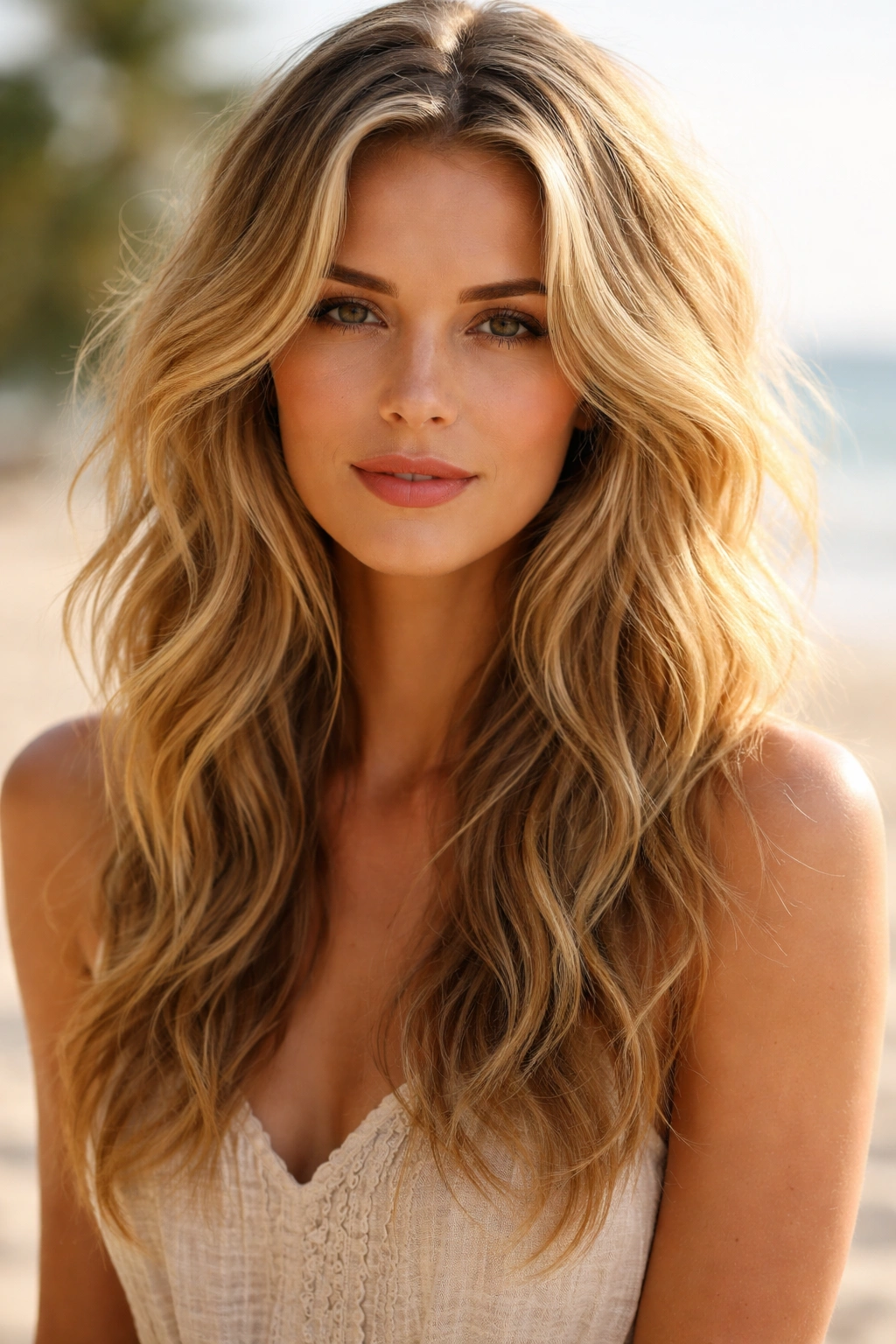
Tousled beach waves paired with strategic layering create a relaxed, flattering look for longer faces. The waves add horizontal lines and texture, while the slightly undone styling prevents any sense of sleekness that might emphasize vertical length. This style works beautifully on longer hair and creates a breezy, effortless aesthetic that’s both flattering and wearable.
Why Beach Waves Flatter Longer Faces
The horizontal lines created by waves naturally break up vertical length and add visual width to your face. The tousled, textured styling prevents any sense of stark or severe lines. The overall effect is relaxed and dimensional, which makes your face appear more balanced and less elongated than it might with completely straight hair.
How to Create and Maintain This Look
- Layers throughout your hair enhance the wave pattern and create the tousled effect
- Shorter layers around the face should fall at cheekbone or shoulder level for maximum face-framing
- Styling requires a curling wand, curling iron, or braiding method, depending on your preference and hair texture
- Texturizing spray, sea salt spray, or dry shampoo helps create and maintain the tousled texture throughout the day
- Works on most hair types, though naturally wavy or curly hair requires less styling effort
Worth knowing: The beauty of this look is that it doesn’t have to be perfectly executed—slightly imperfect waves look more modern and flattering than perfectly smooth waves. Embrace the tousled aspect rather than trying to create uniformity.
12. Blunt Bangs with Tapered Layers
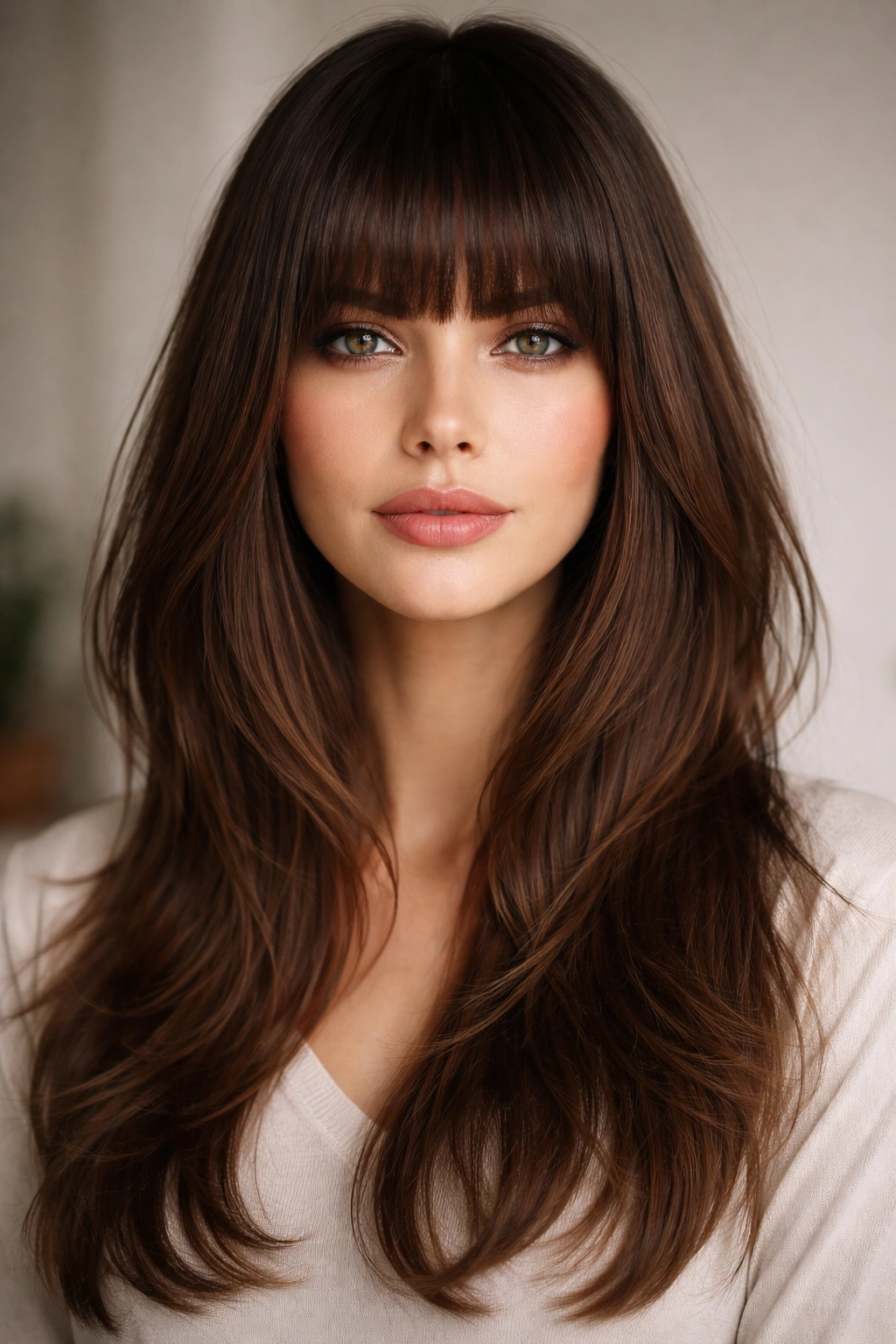
Blunt bangs create a bold statement and instantly break up the vertical line of a longer face. When paired with tapered layers that gradually get shorter toward the face, they create a sophisticated, modern look that’s incredibly flattering. The blunt bangs sit right at eye level or slightly above, creating a horizontal line exactly where you need it for face balance.
Why This Cut Is So Flattering
Blunt bangs create an immediate, decisive horizontal line across your forehead, which powerfully counteracts vertical elongation. The tapered layers add movement and texture while keeping the sides and back shorter than a simple bob would be. Together, these elements create a cut that’s both bold and deeply flattering for longer face shapes.
Important Details About This Style
- Blunt bangs need to be trimmed every 3-4 weeks to maintain their shape and prevent them from growing too long
- Layers below the bangs should be cut at varying lengths to create movement without appearing choppy
- Works best with straight or slightly wavy hair—too much texture can make blunt bangs look undefined
- Styling with a flat iron keeps the bangs smooth and defined, enhancing their face-shortening effect
- The tapered layers work beautifully styled straight or with gentle waves
Pro tip: Ask your stylist to cut the bangs slightly thicker than you think you want them—thinner bangs can look wispy and insubstantial, while thicker bangs create more of a visual impact and the face-framing effect you’re looking for.
Final Thoughts
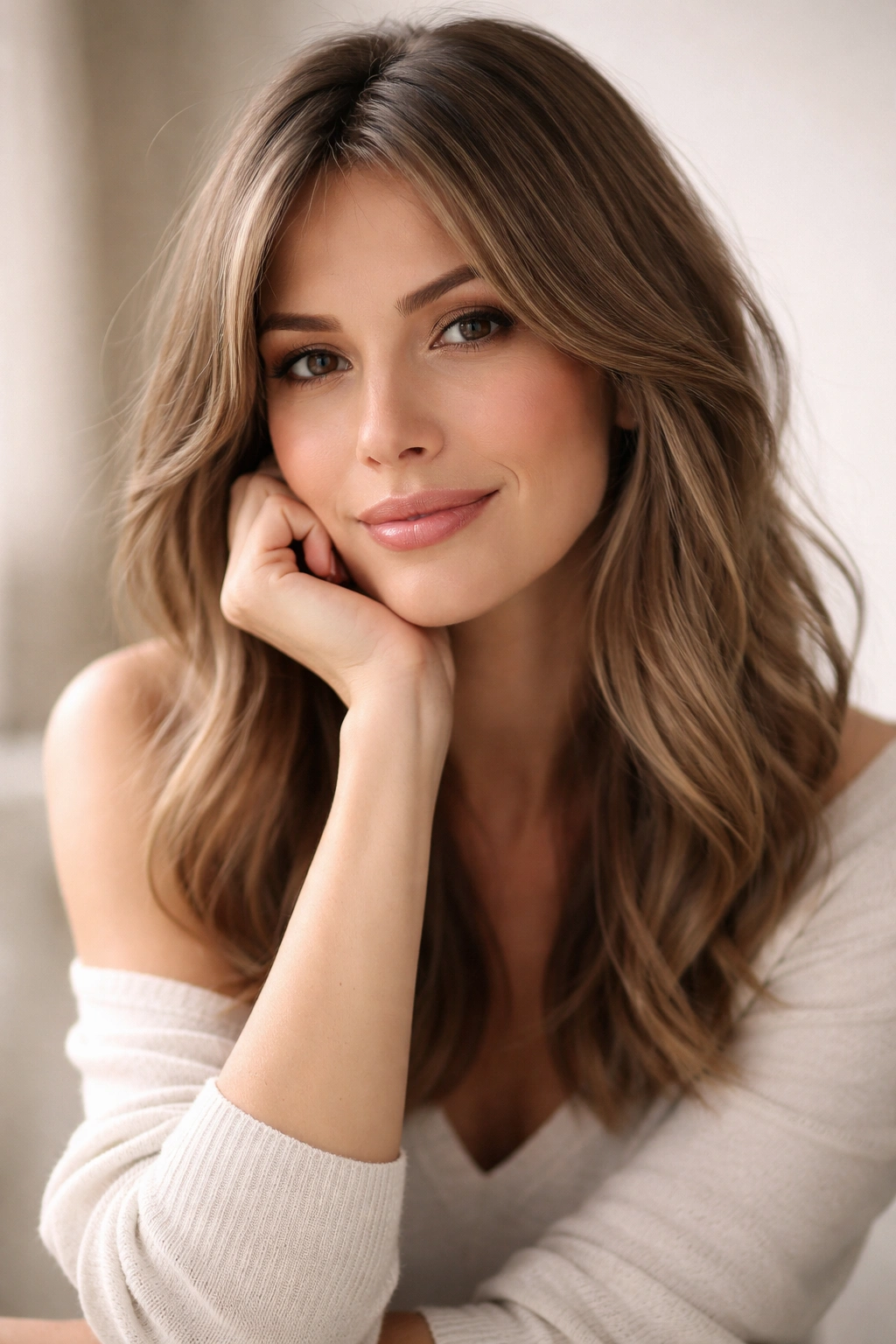
Finding the right haircut for a longer face comes down to understanding a few key principles: horizontal lines and texture break up vertical elongation, volume and width at cheekbone level creates better face balance, and strategic layering adds movement that prevents any sense of sleekness. None of these cuts will “fix” your longer face shape—that’s not the point. Instead, they work with your natural features to enhance your best angles and create visual balance through proportion and clever styling.
The most important thing to remember is that your face shape is just one consideration when choosing a cut. Your hair type, texture, lifestyle, and personal style should all factor into your decision. A cut that’s technically flattering for a longer face won’t work if you hate maintaining it or if it clashes with your aesthetic. Talk to your stylist openly about your concerns regarding your face shape, show them reference images of cuts you love, and be honest about how much styling you’re willing to do daily.
Ultimately, the most flattering cut is one that makes you feel confident and like yourself. When you feel good in your hair, that confidence shines through and becomes the most flattering thing about your appearance. These 12 cuts offer a range of options—from bold and edgy to soft and romantic—so there’s something here that matches your style while working beautifully with your face shape.
