



If you’ve ever caught yourself in the mirror thinking your face feels a little elongated, you’re not alone—and here’s the good news: bangs are one of the most flattering styling choices you can make for a longer face shape. The right bangs create horizontal lines that break up vertical length, subtly widening the face and adding proportion where it matters most. The trick isn’t whether bangs work for you; it’s finding the specific bang style and hairstyle pairing that complements your features and personal style.
The beauty of bangs for long faces is that they’re incredibly versatile. Whether you prefer soft, face-framing wisps, bold blunt lines, or something in between, there’s a bang-and-hairstyle combination designed to enhance your natural proportions. The goal is to draw attention to your eyes and cheekbones while minimizing the appearance of length through strategic layering and horizontal movement. When paired with the right cut and length underneath, bangs become a powerful styling tool that transforms not just how you look, but how you feel about your appearance.
What makes certain combinations work so well is understanding how line weight, texture, and density interact with face shape. A blunt, heavy bang creates a strong horizontal statement. Feathered or wispy bangs offer softness and movement. Curtain bangs frame the face from the sides. Each approach changes the entire dynamic of your look—and when combined with thoughtful layering, texture, and overall hairstyle length, they create genuinely flattering results. The styles ahead showcase the most flattering bang and hairstyle combinations specifically chosen to suit longer face shapes, plus exactly how to style and maintain each one.
1. Blunt Bangs with Layered Shoulder-Length Bob
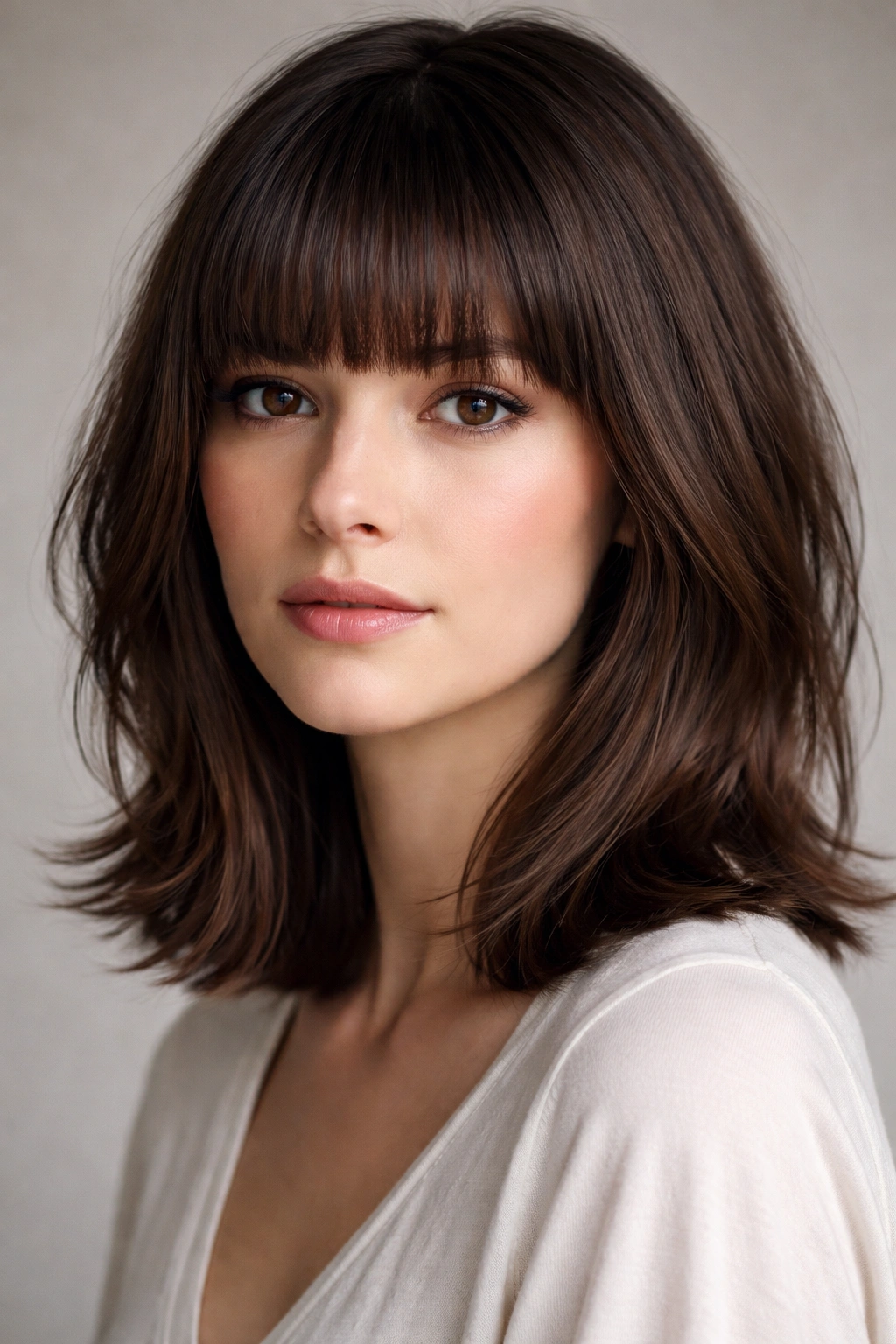
A blunt, straight-across bang paired with a textured shoulder-length bob is one of the most effective strategies for balancing a longer face. The solid horizontal line of the blunt bang creates an immediate visual break, while the shorter length and layers underneath add movement and prevent the cut from feeling heavy. This combination feels contemporary and polished without requiring elaborate styling.
Why This Works for Long Faces
Blunt bangs sit right at eyebrow level and create a definitive horizontal line that interrupts the vertical length of your face. The shoulder-length bob beneath keeps the overall silhouette compact and prevents the hair from elongating your face further. Layers woven throughout the rest of the cut add texture and movement, which breaks up straight lines and creates visual interest. The contrast between the structured bang line and the softer layers below creates dimension that’s particularly flattering on longer faces.
How to Style and Maintain
- Blow-dry your bangs straight down and slightly outward at the ends for a polished finish
- Use a flat iron to keep bangs smooth and precise if you have naturally wavy or curly hair
- Refresh your bangs every 3-4 weeks to maintain that clean, blunt edge
- Tousle the layers underneath with a curling iron or texturizing spray for movement
- Apply a lightweight serum to the ends of your bangs to prevent fraying and keep them looking sharp
Best For
This style suits those with straight to wavy hair who appreciate a bold, graphic look. It works especially well if you have a larger forehead or want to draw focus to your eyes. The textured bob length makes it flattering for most face shapes, though it’s particularly effective for longer faces because of how the bang-and-length combination creates visual proportion.
Pro tip: This style actually improves with time—as bangs grow out slightly, they naturally feather and soften, giving you two distinct looks before you need a trim.
2. Wispy Curtain Bangs with Long Layers
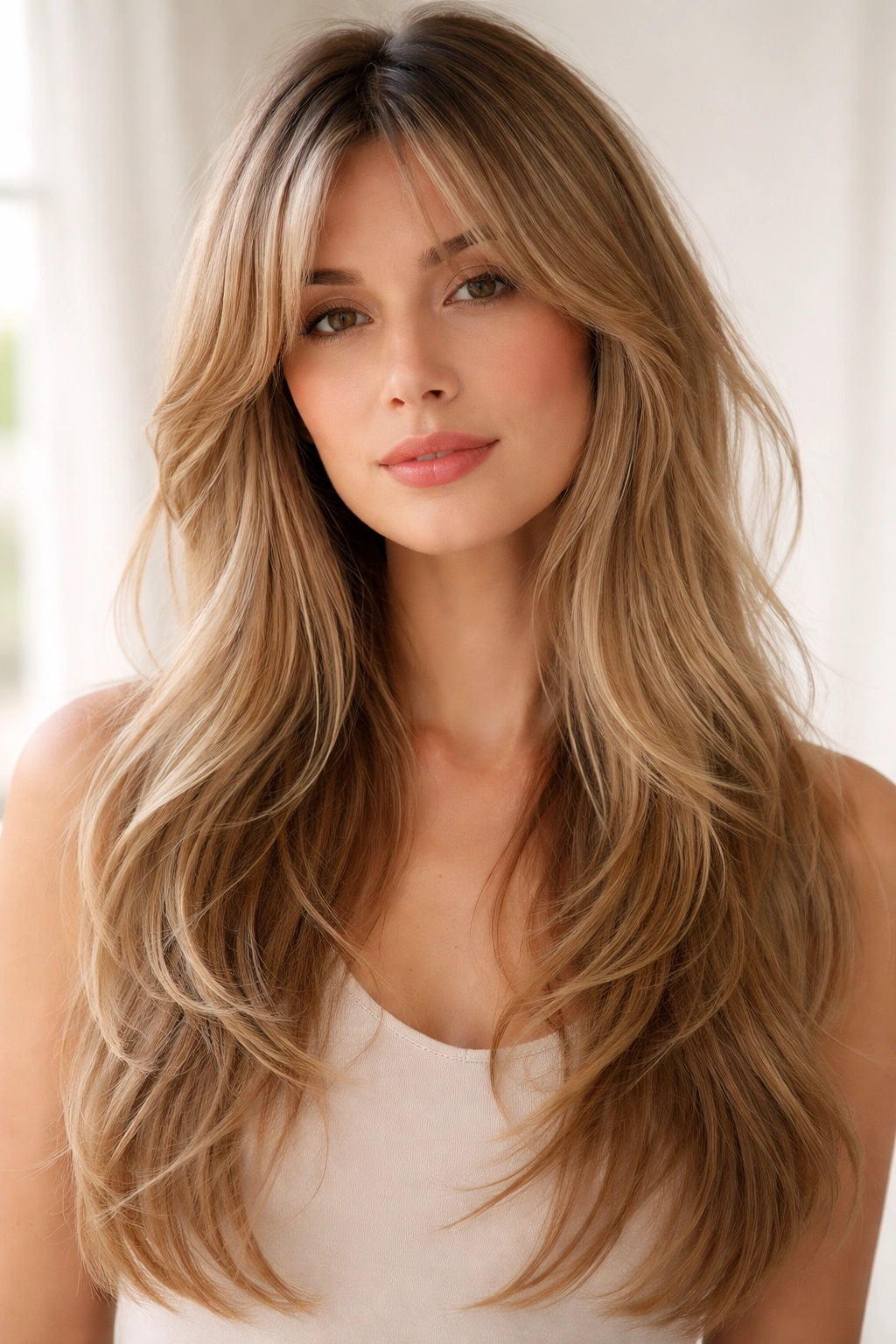
Curtain bangs that sweep to either side, paired with long flowing layers throughout, create a romantically flattering look that softens long face shapes while maintaining beautiful movement. Unlike blunt bangs, curtain bangs allow hair to frame the face from multiple angles, adding width and reducing the visual impact of length. The long layers beneath keep the overall style feeling airy and graceful.
Why This Works for Long Faces
Curtain bangs part down the middle and sweep outward, creating a subtle horizontal frame that sits wider than the face itself. This width-adding effect is exactly what a longer face needs. The layers beneath the bangs continue that sweeping movement downward, which guides the eye across the face rather than straight down. Because curtain bangs are wispy and feathered rather than blunt, they feel softer and less severe—a plus if you want sophistication without drama.
How to Style and Maintain
- Blow-dry curtain bangs with a round brush, directing each side away from your face
- Smooth them with a flat iron if needed, adding a slight curve at the ends
- Use a blow-dryer and your fingers to create movement rather than relying solely on flat styling
- Refresh bangs every 4-5 weeks; they’re more forgiving than blunt styles as they grow
- Apply a texturizing or sea-salt spray to enhance movement and soften the overall look
- Curl the layers throughout your hair using a 1.25-inch curling iron for gentle waves
Best For
This style is ideal for those who prefer a softer, less dramatic look than blunt bangs. It suits wavy and curly hair types beautifully because the movement works with your natural texture. Long-faced individuals who want their bangs to feel effortless rather than structured will love this approach. It’s also wonderful if you’re transitioning back to no bangs—curtain bangs are the gentlest way to ease into them.
Worth knowing: Curtain bangs photograph beautifully from most angles and tend to be forgiving in between trims since the wispy texture masks slight unevenness.
3. Textured Bangs with a Choppy Lob
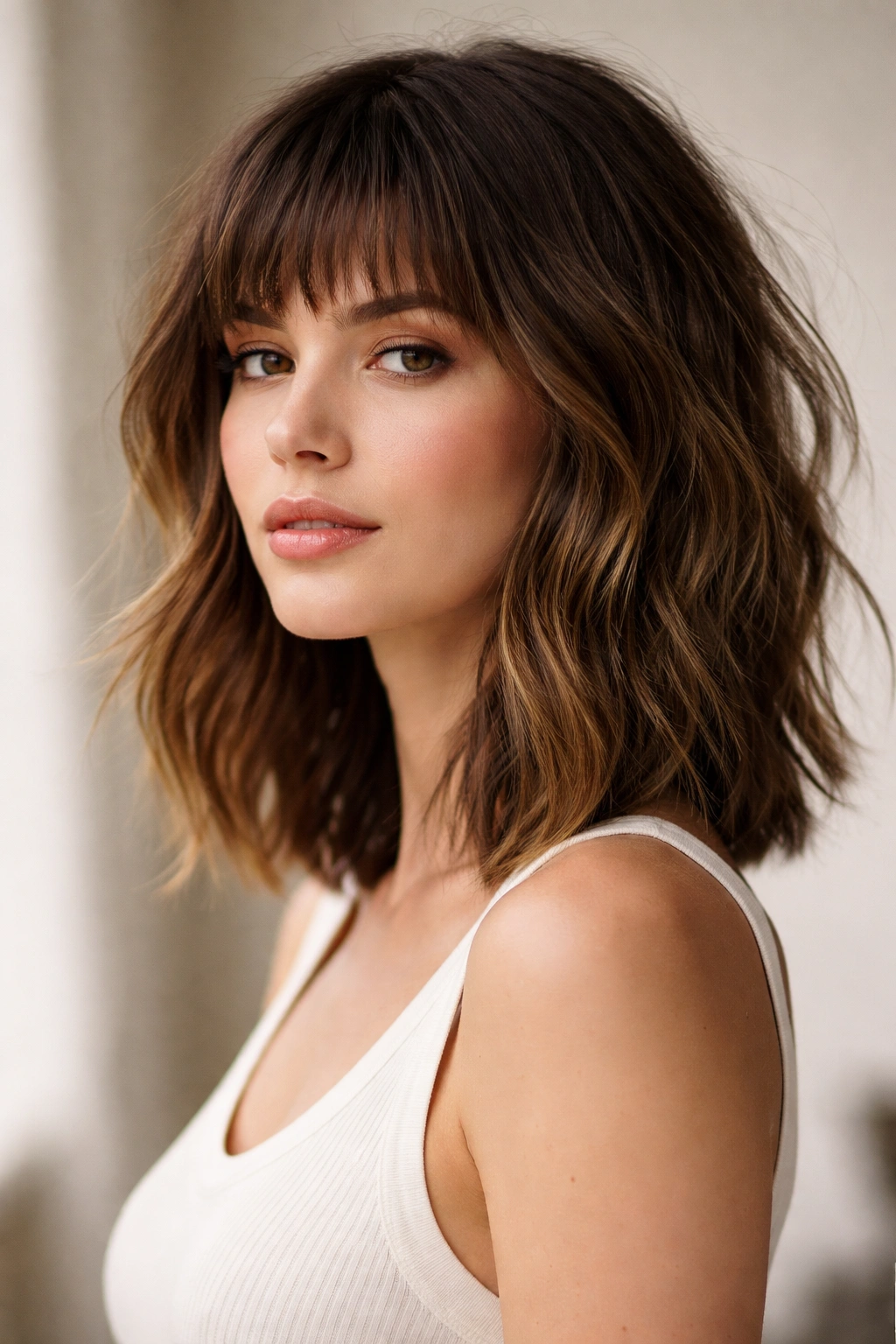
Choppy, shorter bangs combined with a textured lob (long bob, typically hitting mid-neck to shoulder) create visual movement and break up vertical space in a way that’s both trendy and face-flattering. The textured bangs add dimension right at face level, while the choppy layers throughout prevent the style from feeling heavy or dated.
Why This Works for Long Faces
Choppy texturing creates irregular horizontal lines within the haircut itself, which is excellent for breaking up the visual length of a longer face. The shorter-length lob keeps the overall silhouette from becoming too elongated, while the choppy texture adds interest that draws attention to specific features rather than letting the eye travel the full length of the face. The textured bangs are particularly effective because they’re thicker and fuller than wispy curtain bangs, creating a more substantial horizontal line.
How to Style and Maintain
- Tousle your bangs upward and to the side while blow-drying for a lived-in texture
- Use a texturizing spray or dry shampoo to enhance the choppy layers and add grip
- Finish with a curling iron, taking random sections and adding loose waves
- Bangs should be trimmed every 3-4 weeks to keep the texture definition sharp
- Apply a lightweight cream or oil to the ends to prevent the choppy layers from looking dry or frayed
- Sleep in loose braids to enhance the natural texture and movement of the cut
Best For
This style is perfect for those with naturally wavy or textured hair who want their bangs to feel integrated into the overall cut rather than separate. It suits individuals who enjoy a more undone, effortless aesthetic. If you have a longer face and want to feel current and creative with your style, this combination delivers both edge and flattery.
Insider note: The beauty of this style is that imperfection is the point—the more textured and irregular the styling, the more intentional and flattering it appears.
4. Side-Swept Bangs with Voluminous Waves
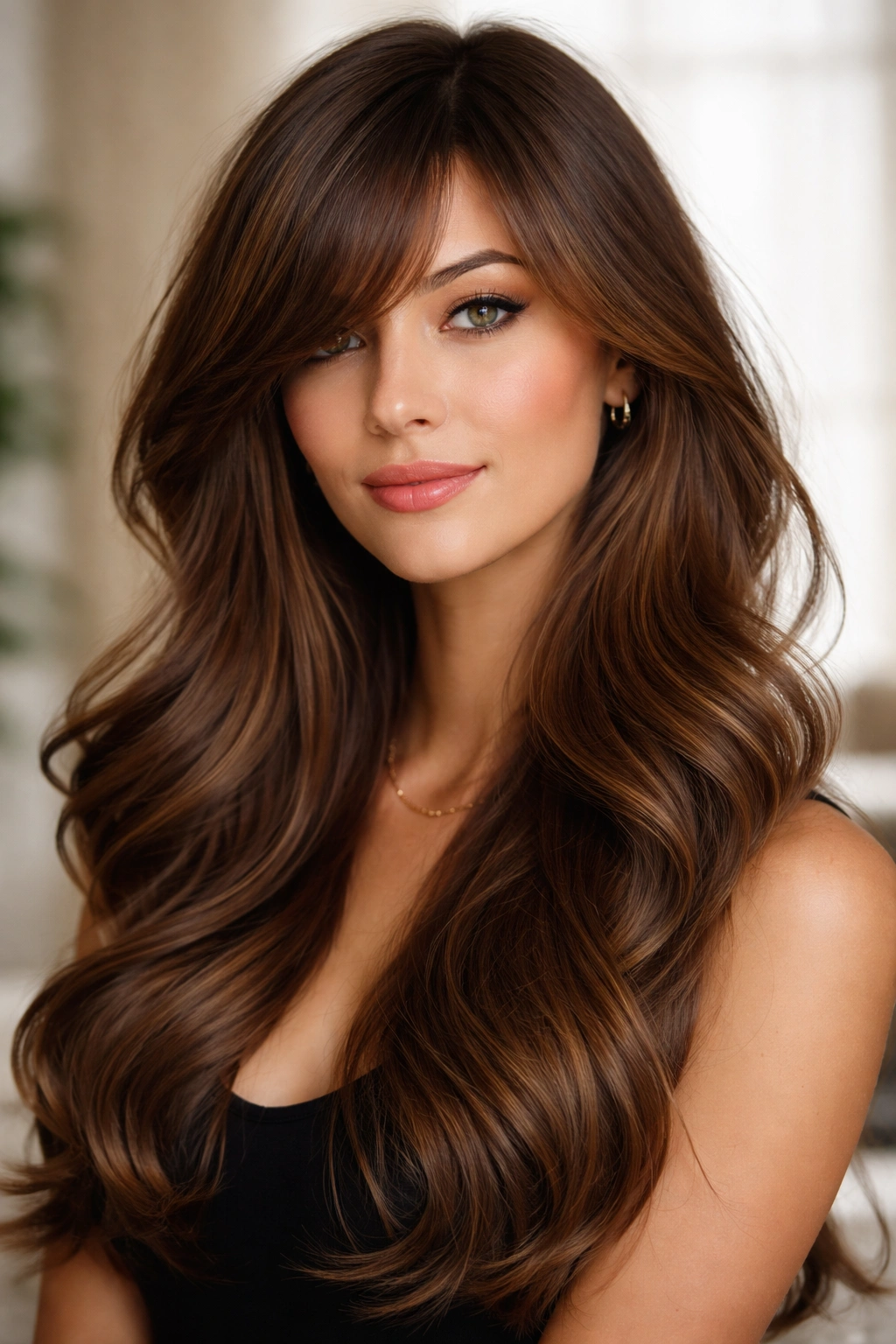
Long, side-swept bangs that flow across one side of the face, paired with voluminous waves throughout, create a soft, face-framing effect that’s incredibly flattering for longer faces. The asymmetry of side-swept bangs draws attention horizontally, while the waves add fullness and prevent the hair from appearing limp or heavy.
Why This Works for Long Faces
Side-swept bangs function as a curved frame that follows the contour of the face, creating subtle width without the stark horizontal line of blunt bangs. The length of the bangs—typically extending to cheekbone length or slightly longer—allows them to blend with the rest of the hairstyle rather than existing as a separate element. Voluminous waves add depth and texture, creating shadow and movement that breaks up vertical length. The combination makes the face appear wider and shorter proportionally.
How to Style and Maintain
- Blow-dry your roots with a round brush, directing hair upward for volume
- Create waves using a 1.25-inch curling iron, wrapping sections away from the face
- Sweep your bangs across your face and secure them with a light-hold spray
- Add texture with a sea-salt spray to enhance waves and create grip
- Tease gently at the crown for additional lift and volume
- Refresh bangs as needed between regular trims; side-swept bangs are more flexible about growth
- Sleep on a silk pillowcase to preserve waves and minimize frizz
Best For
This look is ideal for those with straight to wavy hair who want a romantic, feminine aesthetic. It’s particularly flattering if you have a wider forehead or want to draw attention to one side of your face. If you enjoy styling your hair and don’t mind spending time creating waves, this style rewards that effort with genuinely stunning results.
Pro tip: The key to this style is volume at the crown—without adequate root lift, the waves can actually elongate your face, so invest in a good volumizing product.
5. Micro Bangs with a Sleek High Ponytail
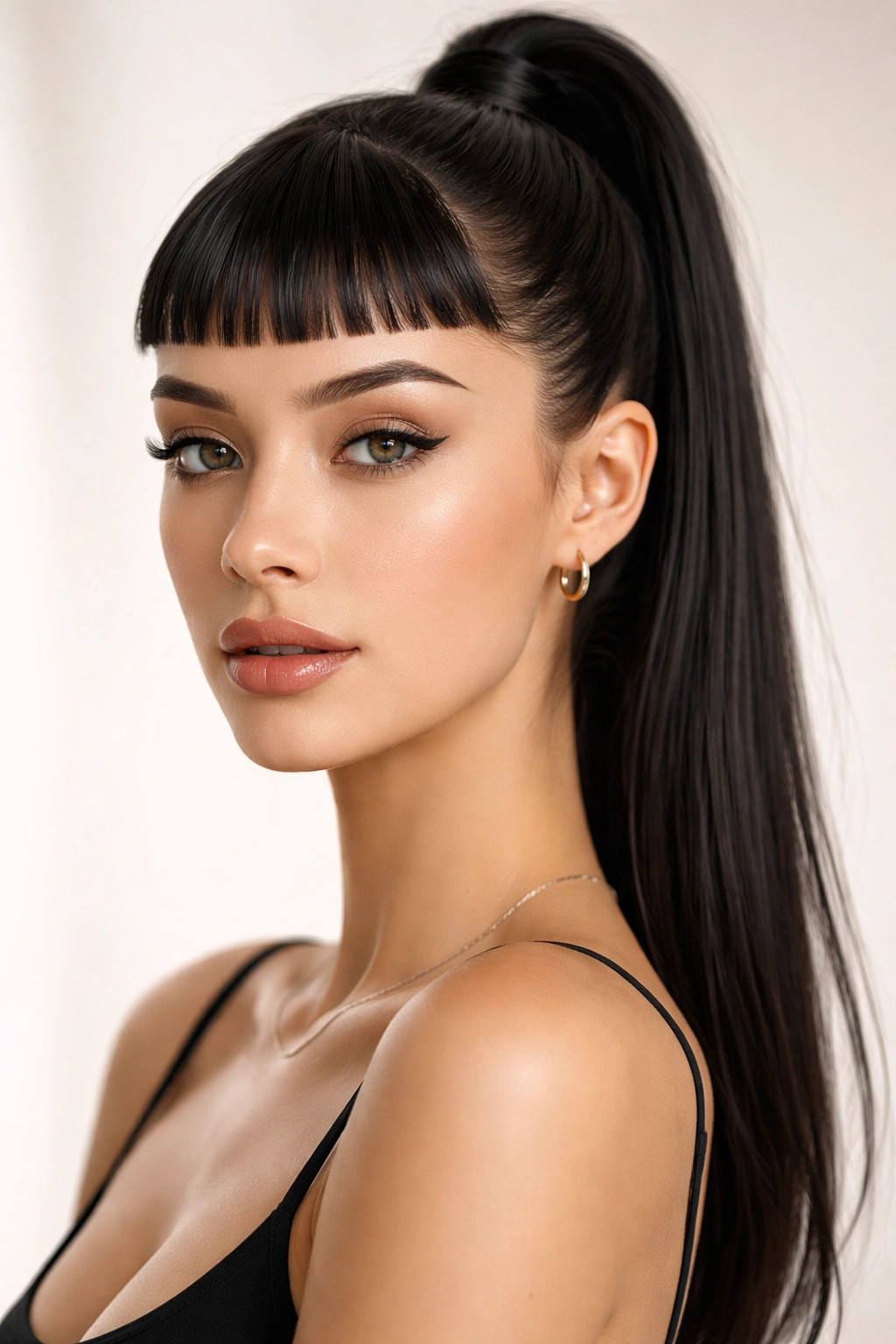
Micro bangs—short, just-above-the-eyebrows bangs—paired with hair pulled back into a high ponytail or bun create a bold, modern look that exposes the face while the short bang length creates a flattering horizontal line. This style is particularly striking and works beautifully for long faces because it removes the distraction of length while the bang placement creates proportion.
Why This Works for Long Faces
Micro bangs sit higher on the forehead than traditional bangs, creating a horizontal line in a different area of the face. When paired with all hair pulled back, this creates maximum cheekbone and face exposure, and the bang placement balances the elongated shape. The simplicity of the back of the head also prevents visual clutter, allowing the bang-and-face relationship to be the focal point. There’s nowhere for the eye to travel because the style is so intentionally minimal.
How to Style and Maintain
- Keep micro bangs blunt and precise; they require trimming every 2-3 weeks
- Blow-dry bangs straight down with a flat iron for a polished finish
- Pull the rest of your hair into a high, tight ponytail for maximum impact
- Use a smoothing serum on your bangs to keep them sleek and shiny
- Consider a low ponytail or bun as a softer alternative if high styles feel too severe
- Deep condition regularly to keep hair healthy since this style creates pulling tension
- Style the ponytail hair itself with waves or curls for movement that balances the severe bangs
Best For
This style requires confidence—it’s bold and exposes the face entirely. It’s best suited for those with good skin and strong facial features who enjoy making a style statement. It’s particularly flattering on longer faces because the bang placement and exposed face create better proportion than you’d get with longer hair. Those with straight hair and a commitment to maintenance will get the most from this look.
Worth knowing: This is an excellent style for athletic or active individuals because pulling hair back prevents distraction while the bangs keep the style from feeling too severe or utilitarian.
6. Feathered Bangs with Face-Framing Layers
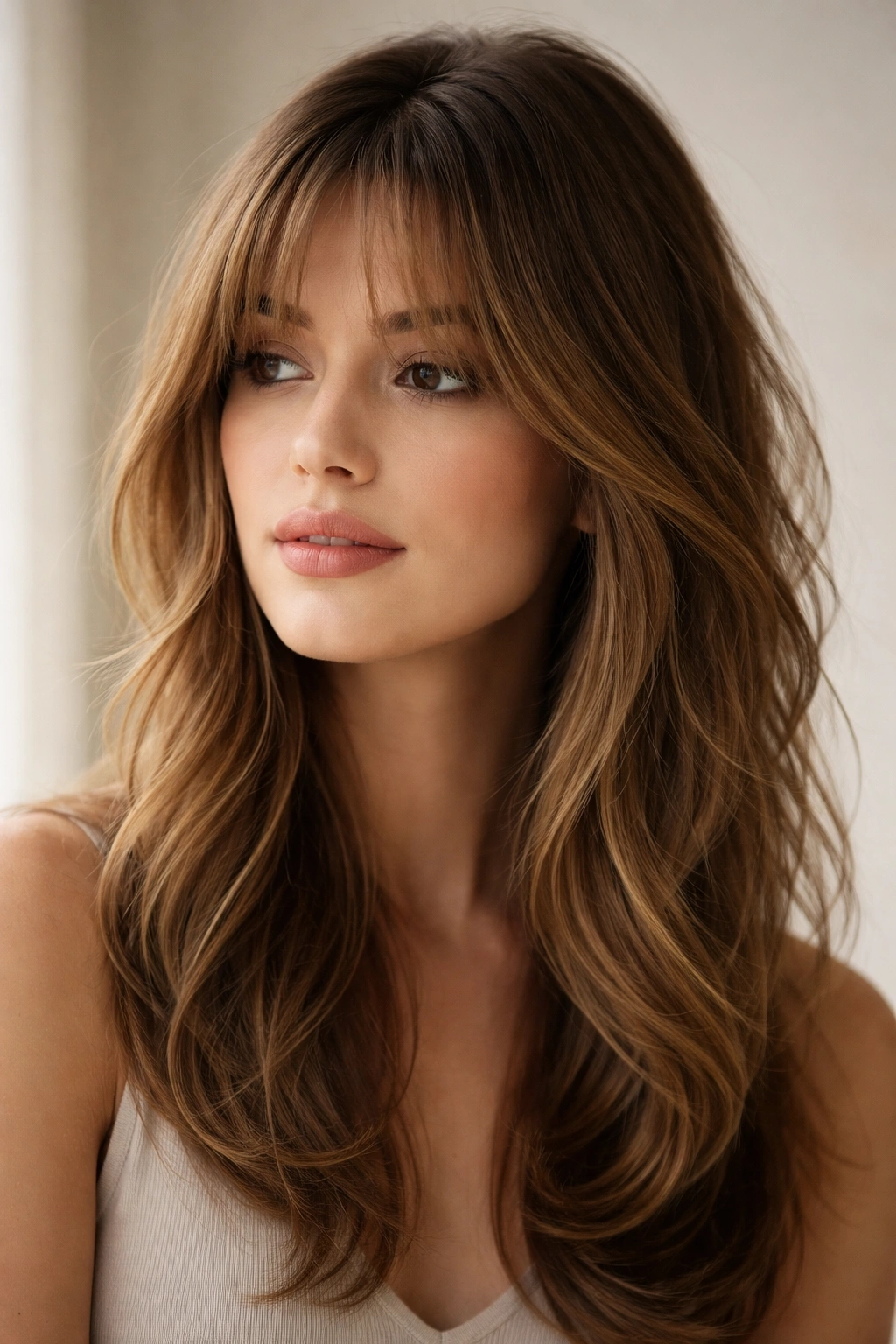
Feathered bangs with gentle, face-framing layers throughout create a soft, approachable look that’s been flattering for decades and works beautifully on longer faces. The feathering creates movement and texture right at face level, while the layers blend the bangs seamlessly with the rest of your hair.
Why This Works for Long Faces
Feathered bangs have shorter layers on the interior mixed with slightly longer pieces, creating irregular horizontal lines throughout the bang area. This visual texture is excellent for breaking up vertical length. The face-framing layers that extend beneath the bangs continue to create width around the cheekbones and jawline, essential for balancing a longer face. The overall softness of the feathering prevents the style from feeling heavy or severe, no matter the hair length underneath.
How to Style and Maintain
- Blow-dry bangs away from your face, using a round brush to create movement
- Point your blow-dryer downward to enhance feathering and create a polished finish
- Use a 1-inch curling iron to gently curl the feathered sections if you want more defined waves
- Apply a light texturizing spray to enhance the feathered texture
- Trim every 4-5 weeks to maintain the feathered texture definition
- The face-framing layers should be refreshed at the same time as bangs for cohesion
- Use a smoothing serum on the ends to prevent frizz and keep feathering looking intentional
Best For
This style is incredibly versatile and flattering on most hair types and face shapes. It’s especially wonderful for those transitioning to bangs because feathered bangs are inherently forgiving as they grow. If you prefer a softer, less dramatic bang style but still want real face-framing benefit, feathered bangs deliver both. This works beautifully on both straight and wavy hair.
Real talk: Feathered bangs are having a major moment because they’re genuinely flattering and feel fresh without being trendy in a way that dates them quickly.
7. Blunt Bangs with a Shag Haircut
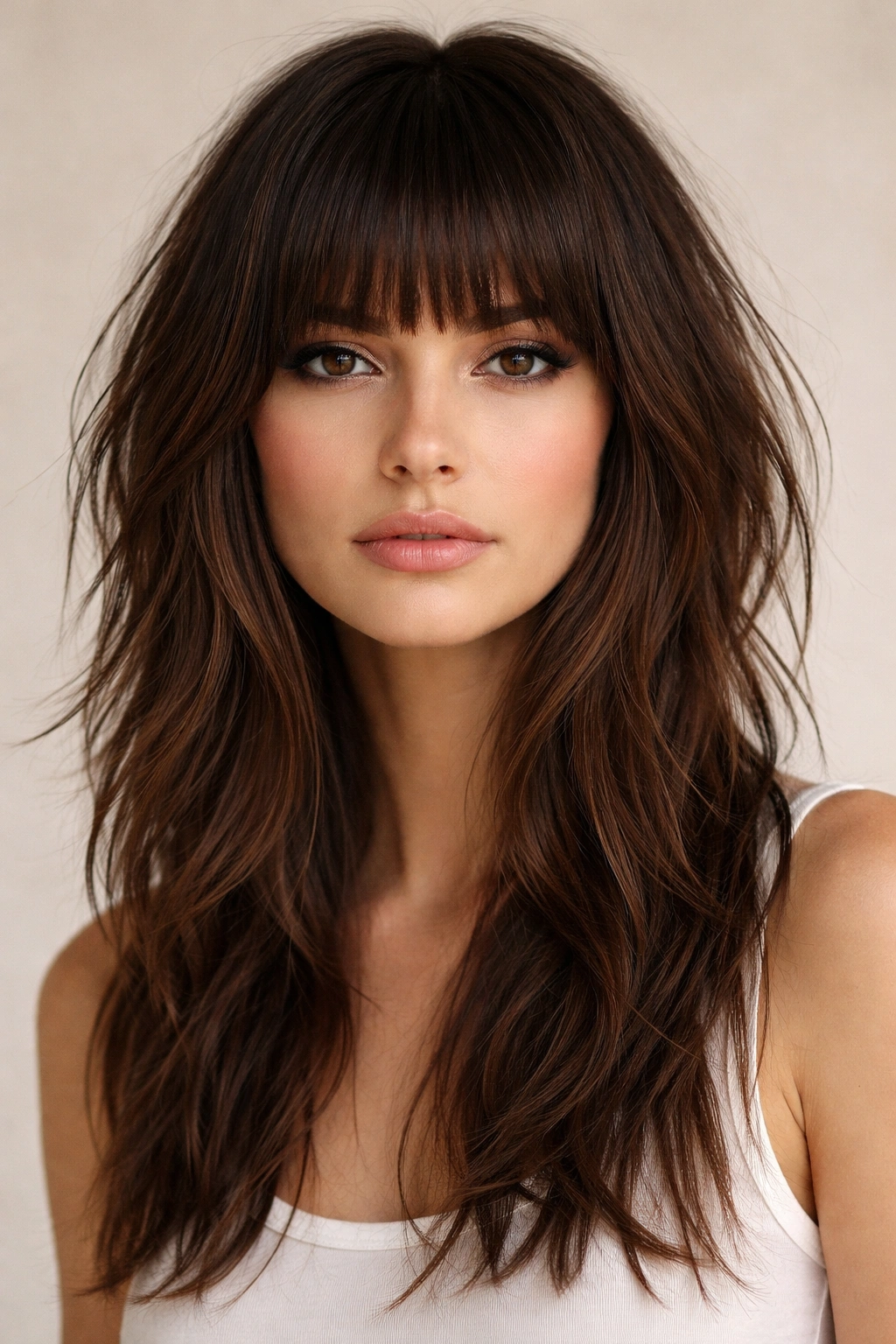
A shag—a layered, textured cut with choppy layers throughout—paired with blunt bangs creates a bold, statement-making look that’s particularly flattering on longer faces because the layers add movement and texture that breaks up vertical space dramatically. This combination is edgy yet wearable and surprisingly easy to maintain.
Why This Works for Long Faces
A shag cut is essentially controlled chaos—multiple layers at different lengths create visual texture and prevent the overall silhouette from feeling heavy or monotonous. The blunt bangs anchor the style at the top with a strong horizontal line, while the shaggy layers below continue breaking up vertical length throughout the entire cut. The combination creates the appearance of more volume and movement than a standard long hairstyle, which is exactly what longer faces need. The texture-heavy construction naturally creates width.
How to Style and Maintain
- Blow-dry against your natural hair growth pattern to maximize texture and volume
- Use a texturizing spray or sea-salt spray liberally to enhance the shag layers
- Tousle and separate the layers with your fingers rather than smoothing everything flat
- Apply the blow-dryer upside-down at the roots for volume and lift
- Trim every 6-8 weeks to keep layers crisp and defined; the shag requires more frequent maintenance
- Avoid heavy products that can weigh down the layers—stick to lightweight texturizing options
- The blunt bangs need their own regular trims to maintain definition
Best For
This style is perfect for those with straight to wavy hair who want a trendy, fashion-forward look. It suits individuals who enjoy styling their hair and appreciate a more undone, textured aesthetic. If you have a longer face and want to feel current without sacrificing flattery, the shag-and-blunt-bang combination is worth considering. Those who appreciate ’70s-inspired or rock-and-roll aesthetics will love this style’s attitude.
Pro tip: This is one of the few bang styles that actually looks better slightly grown out—the bangs feather naturally as they grow, adding to the shag’s overall texture.
8. Straight-Across Bangs with a Chin-Length Bob
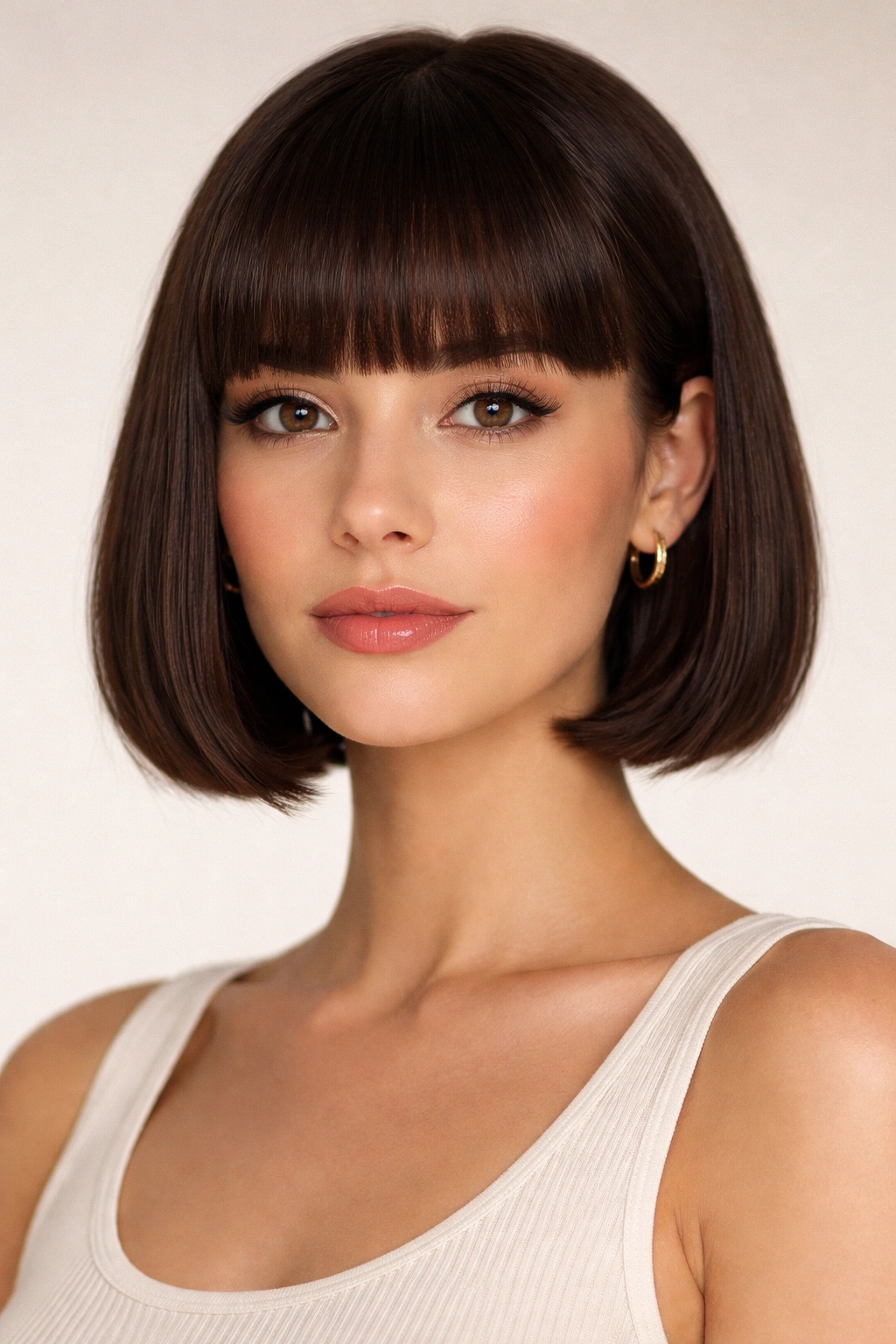
A blunt chin-length bob with straight-across bangs creates a graphic, chic look that’s particularly effective for longer faces because the shorter length prevents the hair from elongating the face further. This is a classic combination that works because of fundamental proportions, not because it’s trendy.
Why This Works for Long Faces
A chin-length bob is short enough that it doesn’t drag the face downward, yet long enough to maintain some movement and style options. Paired with straight-across bangs sitting at the brow, you create two horizontal lines—one at the forehead and one at the chin—that effectively shorten the visual appearance of the face. This proportional approach is one of the most mathematically flattering for longer faces. The shorter length also allows the face itself to be the focal point rather than the hair.
How to Style and Maintain
- Blow-dry bangs straight down with a flat iron for precision
- Use a round brush on the rest of the bob, curling ends slightly inward or outward depending on preference
- Keep this style sleek with a smoothing serum or light styling cream
- Trim every 3-4 weeks to maintain the blunt lines and fresh appearance
- Add subtle waves with a 1.25-inch curling iron for a softer version
- Use a texturizing spray if you prefer a more undone aesthetic
- This style requires regular maintenance, but styling time is minimal
Best For
This style suits those who appreciate clean lines and prefer a polished aesthetic. It works beautifully on straight to wavy hair and is particularly flattering if you have good cheekbones or want to emphasize them. If you enjoy a structured, graphic look without elaborate styling, this combination is ideal. Those with an oval or longer face shape will find this especially flattering.
Worth knowing: This exact style has been flattering for generations because it’s based on solid proportional principles rather than trends—it never truly goes out of style.
9. Wispy Bangs with Bouncy Curls
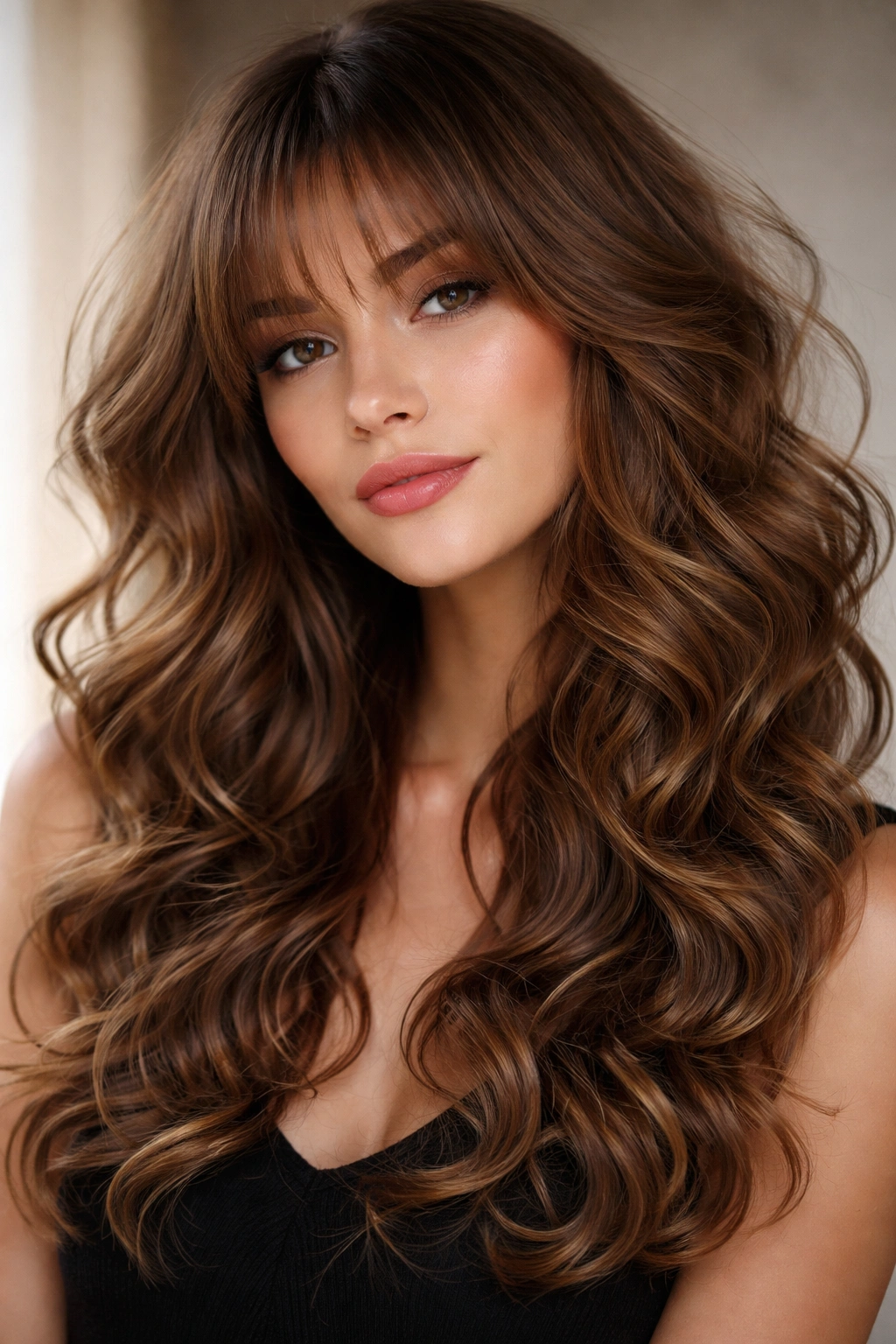
Wispy bangs paired with bouncy curls throughout create a romantic, voluminous look that adds serious width and texture to longer faces. The curls prevent any appearance of elongation, while the wispy bangs create a soft frame that works beautifully with natural texture.
Why This Works for Long Faces
Wispy bangs are lighter and less dense than blunt styles, creating a softer horizontal line that feels less severe. Paired with full-bodied curls throughout, you create layers of width and movement that counteract vertical length. Curls inherently add volume and break up straight lines, and when combined with bangs, they create an incredibly flattering frame. The combination makes faces appear rounder and shorter proportionally, which is exactly what longer faces benefit from.
How to Style and Maintain
- Apply a curl-defining cream or mousse to damp hair before styling
- Use a curling iron, perm rod, or your preferred curling method to create consistent curl patterns
- Diffuse your blow-dryer on low heat to set curls without frizz
- Apply a light hairspray to hold curls in place throughout the day
- Refresh curls overnight using the pineapple method (gathering hair in a loose ponytail on top of your head)
- Deep condition weekly to keep curls hydrated and prevent frizz
- Trim bangs every 4-5 weeks; they’re forgiving as they grow
- Trim the rest of your hair every 8-12 weeks to maintain curl definition
Best For
This style is ideal for those with naturally curly or wavy hair who want to lean into their texture. It’s particularly flattering if you have longer hair and want to avoid looking too elongated. If you enjoy embracing your natural curl pattern or don’t mind spending time styling curls, this combination is romantic and genuinely flattering. Those with more volume-friendly hair will get the best results.
Insider note: The key to this style is using curl-specific products and methods—standard styling products won’t achieve the same results on textured hair.
10. Side Bangs with a Razored, Textured Lob
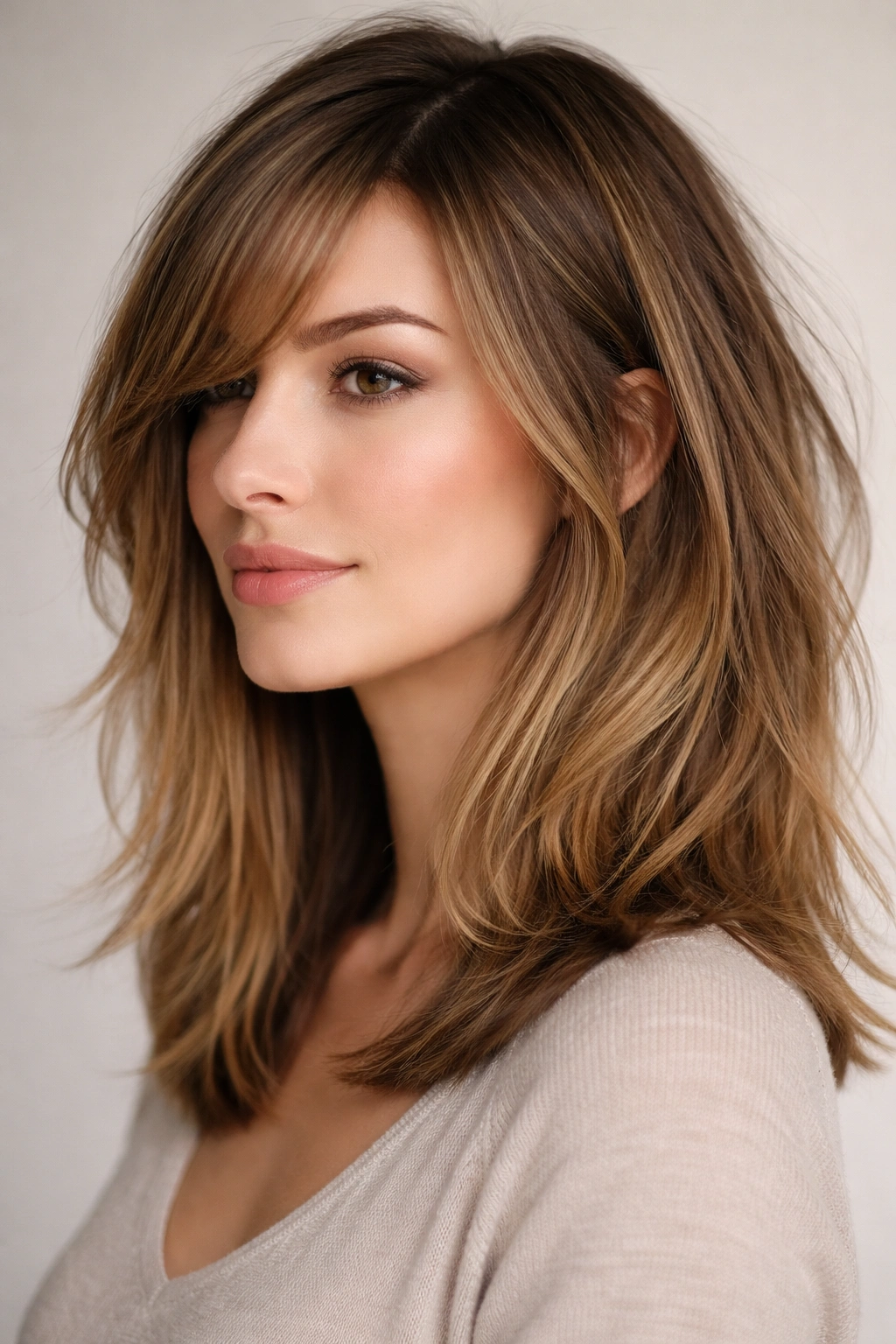
Side bangs that extend to cheekbone length, paired with a textured lob featuring razored layers, create a modern, fashion-forward look that’s surprisingly easy to maintain while being deeply flattering on longer faces. The asymmetry of side bangs combined with textured layers creates visual interest and movement.
Why This Works for Long Faces
Side bangs function as a curved frame that adds width without the severity of straight-across styles. The razored layers throughout the lob create irregular lines and texture that break up vertical length throughout the entire cut. Razoring—a technique where scissors are used at an angle rather than blunt—creates softer edges and more movement than traditional blunt cutting. This combination results in a hairstyle that appears fuller and shorter proportionally, ideal for longer faces.
How to Style and Maintain
- Blow-dry with a round brush, directing roots upward for volume
- Use a flat iron to smooth the side bangs slightly across your face
- Apply a texturizing cream or spray to enhance the razored layers
- Create loose waves with a 1.25-inch curling iron for added movement
- Avoid heavy products that can weigh down the delicate layers
- Trim every 6-8 weeks to keep the razored texture sharp
- The side bangs should be refreshed as needed, more frequently than the rest of the cut
- Sleep on a silk pillowcase to preserve styling and minimize damage
Best For
This style is perfect for those with straight to wavy hair who want a contemporary look without high-maintenance styling. It suits individuals who appreciate subtle asymmetry and movement. If you have a longer face and want to feel current without sacrificing practicality, this combination delivers. Those who prefer minimal styling time but want maximum flattery will appreciate how this cut works with you rather than requiring elaborate daily styling.
Pro tip: Razored layers naturally enhance movement in any hair type, so even if you have straight hair, this cut will create the appearance of more texture and dimension than a standard layered cut.
11. Thick Bangs with Strategic Undercut Sides
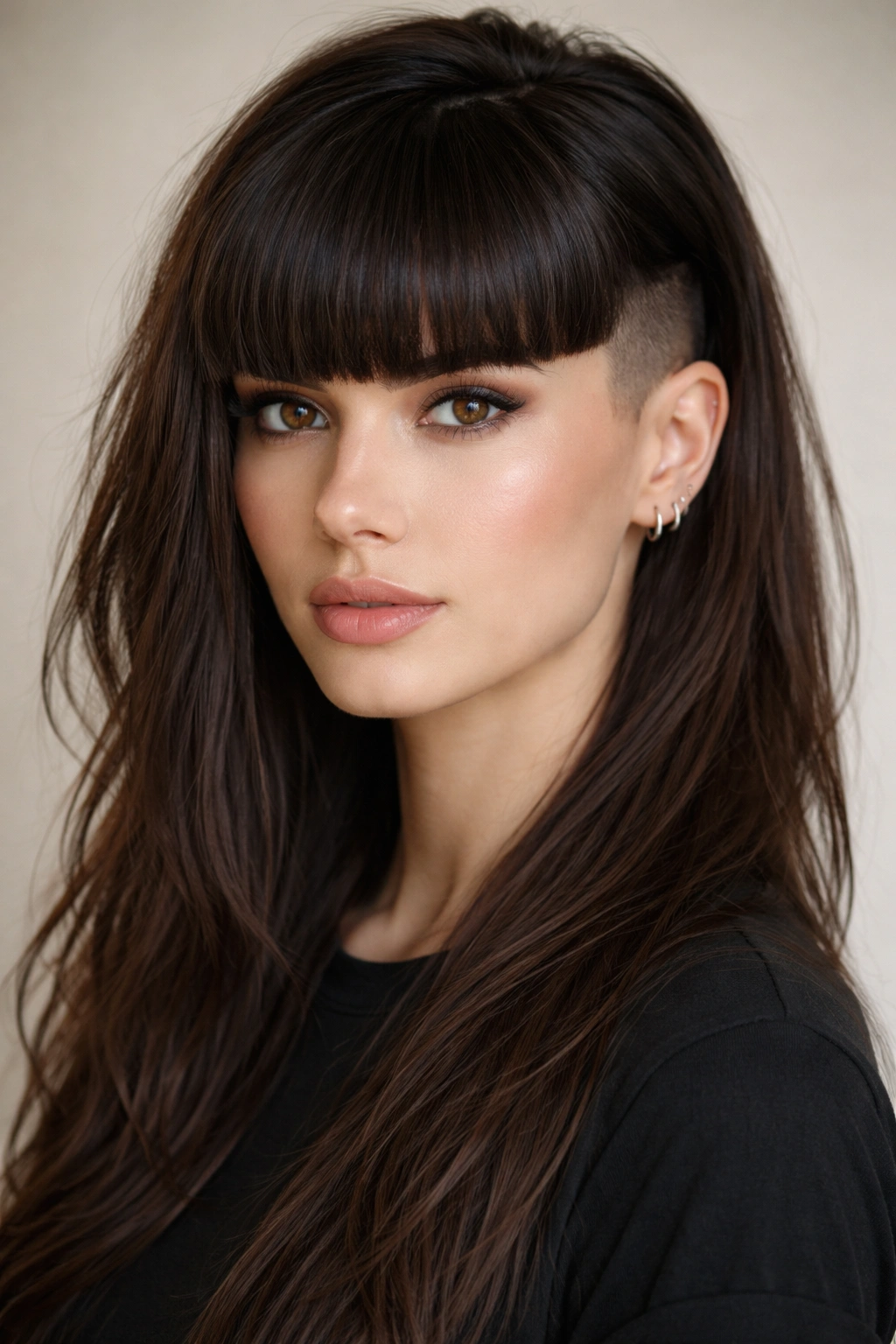
Thick, full bangs paired with longer hair featuring an undercut on the sides create a striking contrast that’s both flattering and fashion-forward. The thick bangs create a strong horizontal line, while the shorter sides create visual width and prevent the longer top from elongating the face.
Why This Works for Long Faces
Thick bangs are substantial and create a bold horizontal statement exactly where longer faces need it most. The undercut sides—where hair is cut shorter underneath or on the sides—create the illusion of width at the temples and sides of the face. This width-creating technique, combined with thick bangs, is exceptionally flattering on longer faces because it creates visual proportion. The contrast between the thick bangs and the exposed sides also creates visual interest that prevents the eye from traveling straight down the length of the face.
How to Style and Maintain
- Blow-dry bangs straight down with maximum precision; they’re substantial enough to require careful styling
- Use a flat iron to ensure bangs are perfectly smooth and even
- Style the longer top section of hair with waves or curls to add volume and break up length
- Keep the undercut sides clean and defined; they require trims every 4-6 weeks
- Apply a smoothing serum to bangs to keep them looking polished
- Use texturizing spray on the longer top to prevent it from feeling flat or heavy
- This is a higher-maintenance style requiring frequent trims and regular styling
Best For
This style is bold and requires confidence. It’s best suited for those with strong facial features and good skin who enjoy making a style statement. It works beautifully on straight to slightly wavy hair. If you want a haircut that’s genuinely attention-grabbing and fashion-forward while still being flattering on a longer face, this combination delivers impact. Those committed to regular trims and styling will get the most from this look.
Worth knowing: This style is particularly stunning on those with strong jawlines or cheekbones that an undercut can emphasize beautifully.
12. Softly Blended Bangs with Long Layers and Movement
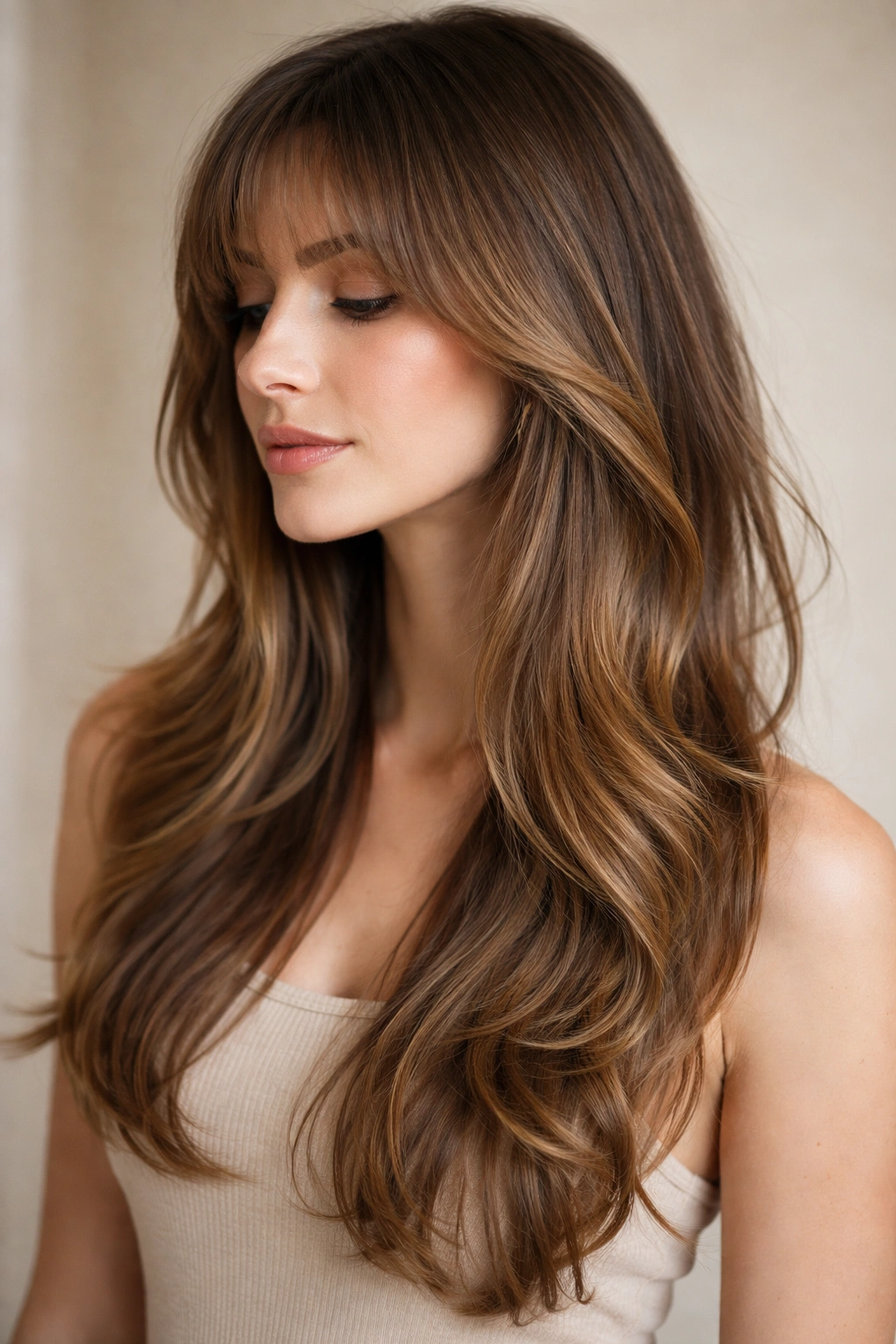
Softly blended bangs that transition seamlessly into face-framing layers, paired with long layers throughout the hair, create a universally flattering look that works on nearly every face shape and hair type. The subtle horizontal line and gentle transitions make this approachable yet deeply flattering.
Why This Works for Long Faces
This style works because it combines multiple flattering elements: the horizontal line of the bangs, the width-adding face-framing layers, and the texture-creating layers throughout. Rather than being dramatic, the style whispers its flattery, making it feel natural rather than constructed. The blended nature of the bangs means they feel integrated into the overall hairstyle rather than separate, creating a cohesive, professional appearance. For longer faces, this is the safest choice that still delivers genuine flattery.
How to Style and Maintain
- Blow-dry with a round brush to create gentle movement and volume
- Use a 1.25-inch curling iron to add soft waves throughout
- Apply a light texturizing spray for movement and grip
- Use a smoothing serum on the ends to prevent frizz
- Trim every 6-8 weeks to maintain blend and softness; this style loses its impact without regular trims
- The softly blended nature means slight growth is forgiving
- Style time is minimal; this cut works with your natural texture rather than requiring elaborate daily styling
- This style works beautifully with minimal product or full styling depending on your preference
Best For
This is the most universally flattering bang-and-hairstyle combination. It works on straight, wavy, and curly hair. It suits those who prefer a softer aesthetic and appreciate understated elegance. If you’re new to bangs, this is the safest first choice. Those with longer faces who want genuine flattery without high-maintenance styling should absolutely consider this approach. It’s professional enough for any setting while remaining stylish and current.
Real talk: This style might seem the least dramatic of the options, but that’s exactly why it’s so effective—the flattery is built into the cut itself rather than relying on styling to make it work.
Final Thoughts
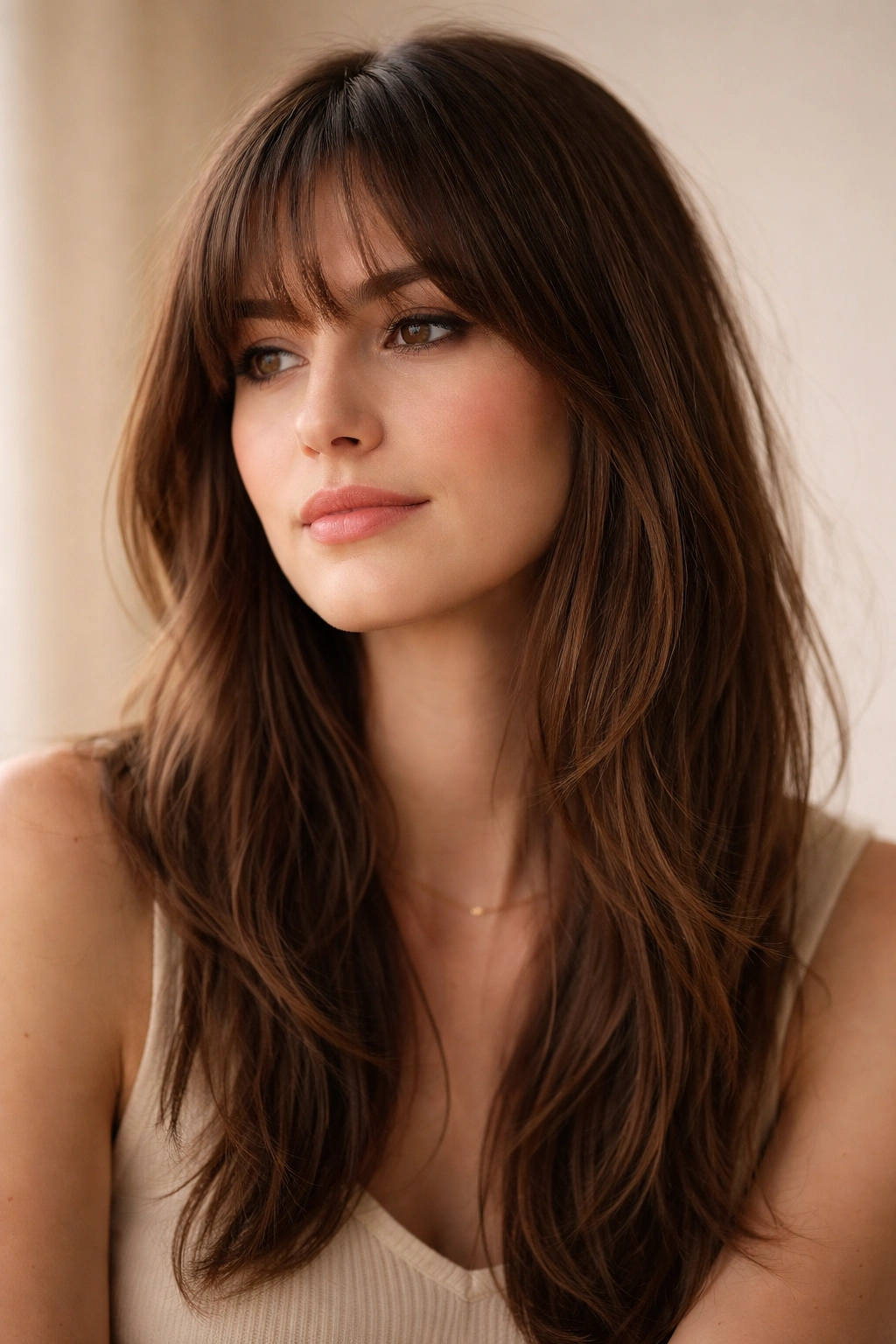
Bangs are one of the most powerful styling tools available for longer faces, and the right combination of bangs with a complementary hairstyle can genuinely transform how you look and feel. The styles above represent different aesthetic approaches—from bold and graphic to soft and romantic to modern and edgy—but they all share the common principle of creating horizontal lines and visual width that balance vertical length.
The best style for you depends on three things: your natural hair texture, your personal aesthetic, and your lifestyle. If you have straight hair and enjoy styling, bold blunt bangs or thick bangs can be stunning. If you prefer a softer look or have naturally wavy hair, curtain bangs or wispy styles tend to work more harmoniously with your texture. If you want maximum flattery with minimal maintenance, any of the textured, layered options will deliver results without requiring elaborate daily styling.
Before committing to bangs, have a detailed conversation with your stylist about which style aligns with your hair type, face shape, and how much styling time you’re willing to invest. Bangs are a real commitment requiring regular trims every 3-5 weeks depending on the style, so choosing one you genuinely love is essential. Start with a style you’re enthusiastic about, not just one that theoretically should work, and trust that the right bangs combined with the right cut will make a difference you’ll see every time you look in the mirror.
