



The mullet shag is having a renaissance—and for good reason. This isn’t your parents’ 1980s mullet or the oversimplified “business in front, party in back” cliché. Modern mullet shag cuts blend the structured sophistication of a carefully shaped front with the lived-in texture and movement of shaggy layers, creating a style that reads as intentional, edgy, and surprisingly wearable. What makes the mullet shag so compelling is that it pulls from two distinct hair philosophies: the clean lines and control of a true mullet, combined with the freedom, texture, and dimension of a classic shag. The result is a style that works across genders, face shapes, hair types, and personal aesthetics.
The genius of the mullet shag hybrid is versatility. Depending on how your stylist approaches the length contrast, layer placement, and texture work, the same basic concept transforms into something dramatically different. Some versions feel punk-rock rebellious. Others feel fashion-forward and editorial. Some lean into everyday wearability, while others make a bold, unmissable statement. The styling possibilities are equally endless—you can slick it back for a polished vibe, work the texture into something tousled and undone, or add color to amplify the cut’s natural drama.
Whether you’re considering your first mullet shag or exploring variations to refresh what you already have, understanding the different approaches to this cut will help you find the version that matches your hair texture, lifestyle, and personal style. Here are fifteen mullet shag cuts that represent the full spectrum of how to blend these two powerful silhouettes.
1. Classic Textured Mullet Shag
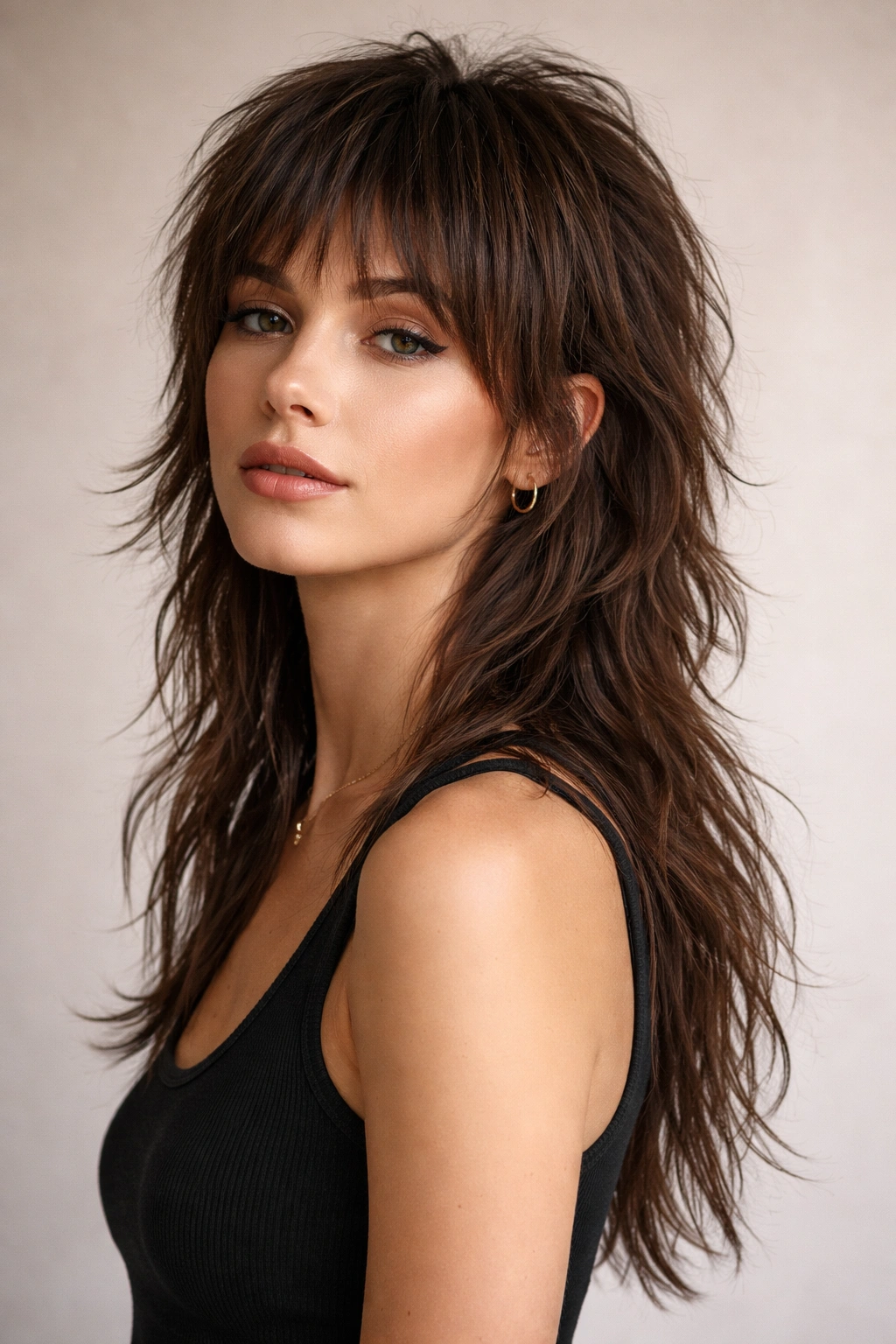
This is the foundational version—the one that defines the mullet shag aesthetic. The front and sides are cut to a structured, deliberate length (typically chin-length or slightly shorter), while the back is dramatically longer, often reaching the mid-back or lower. What elevates it beyond a traditional mullet is the layering throughout. Every section gets choppy, piece-y layers that create movement and texture, breaking up any heaviness and adding dimension even when the hair is worn down and flat.
Why This Cut Works So Well
The classic textured mullet shag succeeds because it respects both sides of the equation. The front maintains enough shape that the cut reads as intentional and modern, while the layers prevent it from feeling too severe or dated. You get the visual impact of length without the weight dragging down your face or neck. The texture also means the cut works beautifully whether your hair is naturally wavy or straight—the layers catch light and create visual interest either way. This is the version that works for almost anyone willing to commit to the basic silhouette.
Key Features to Discuss With Your Stylist
- Front length: Typically chin-level or slightly shorter, angled slightly toward the face for a flattering frame
- Layer placement: Choppy, disconnected layers throughout the crown and sides; denser layering in the front for movement
- Back length: Long enough to feel dramatically different from the front—aim for at least 6-8 inches of length contrast minimum
- Texture detail: Ask for layers that flip out naturally at the ends rather than blunt, heavy ends
- Styling potential: Works with every styling approach, from fully blown-out to air-dried texture
Pro tip: This cut requires a stylist who understands how to work with choppy layers without making them look chaotic. Bring reference photos that show the specific layer texture you want, not just the overall shape.
2. Disconnected Layers Mullet Shag
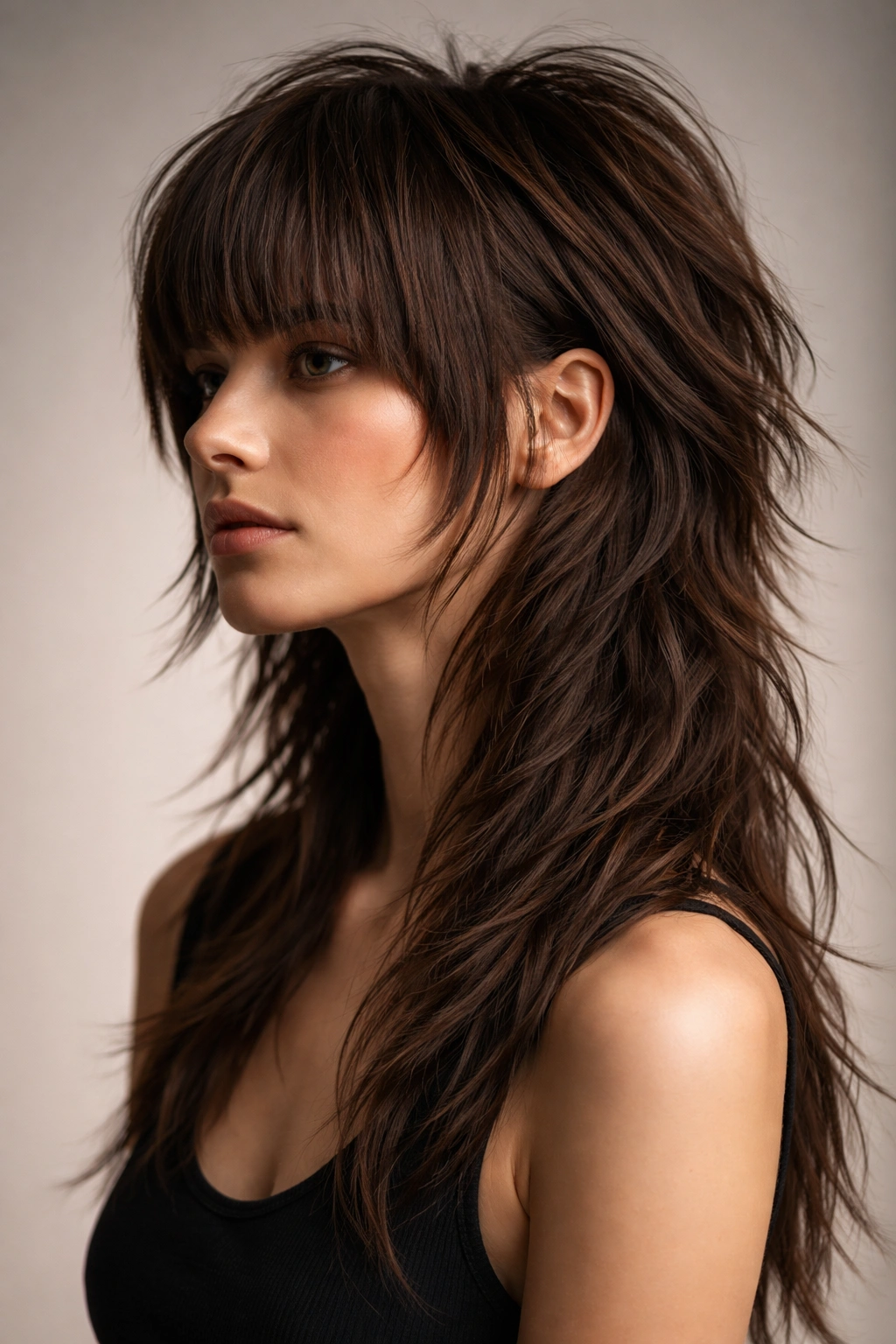
This version emphasizes separation. Rather than flowing, blended layers, the disconnected layers mullet shag creates distinct, clearly visible layers that don’t connect smoothly to one another. You’ll see literal separation between layers—the top layer ends and there’s a visible gap before the next layer beneath it begins. The front maintains a clean, almost blunt perimeter while the layers underneath are shorter, creating a stacked effect. The back remains long, but with that same disconnected quality so you get clear lines and obvious structure rather than seamless movement.
The Appeal of Disconnected Texture
This approach creates a bolder, more fashion-forward statement. The separated layers catch light dramatically, create volume where you need it, and read as deeply intentional rather than naturally grown out. If you’re aiming for an editorial, avant-garde take on the mullet shag, this is your version. The cut shows excellent detail work from your stylist—you’re not paying for a shape, you’re paying for precise layer placement. It’s a cut that photographs beautifully and translates well to color, highlights, or any kind of textural enhancement.
What Makes It Different From Standard Shag
- Layer visibility: You can see each layer as a distinct section, not a gradual transition
- Stacked sections: Layers stack on top of one another rather than flowing into each other
- Front structure: The front perimeter is cleaner and more defined
- Back treatment: Long back sections remain visible as separate layers, not blended
- Styling requirement: Needs product and intentional styling to look its best; not as forgiving as blended layers
This version demands more commitment to styling. It looks best when you’re actively working the texture with product, blow-drying, or other styling methods. Air-drying might result in a flatter, less polished look.
3. Tapered Modern Mullet Shag
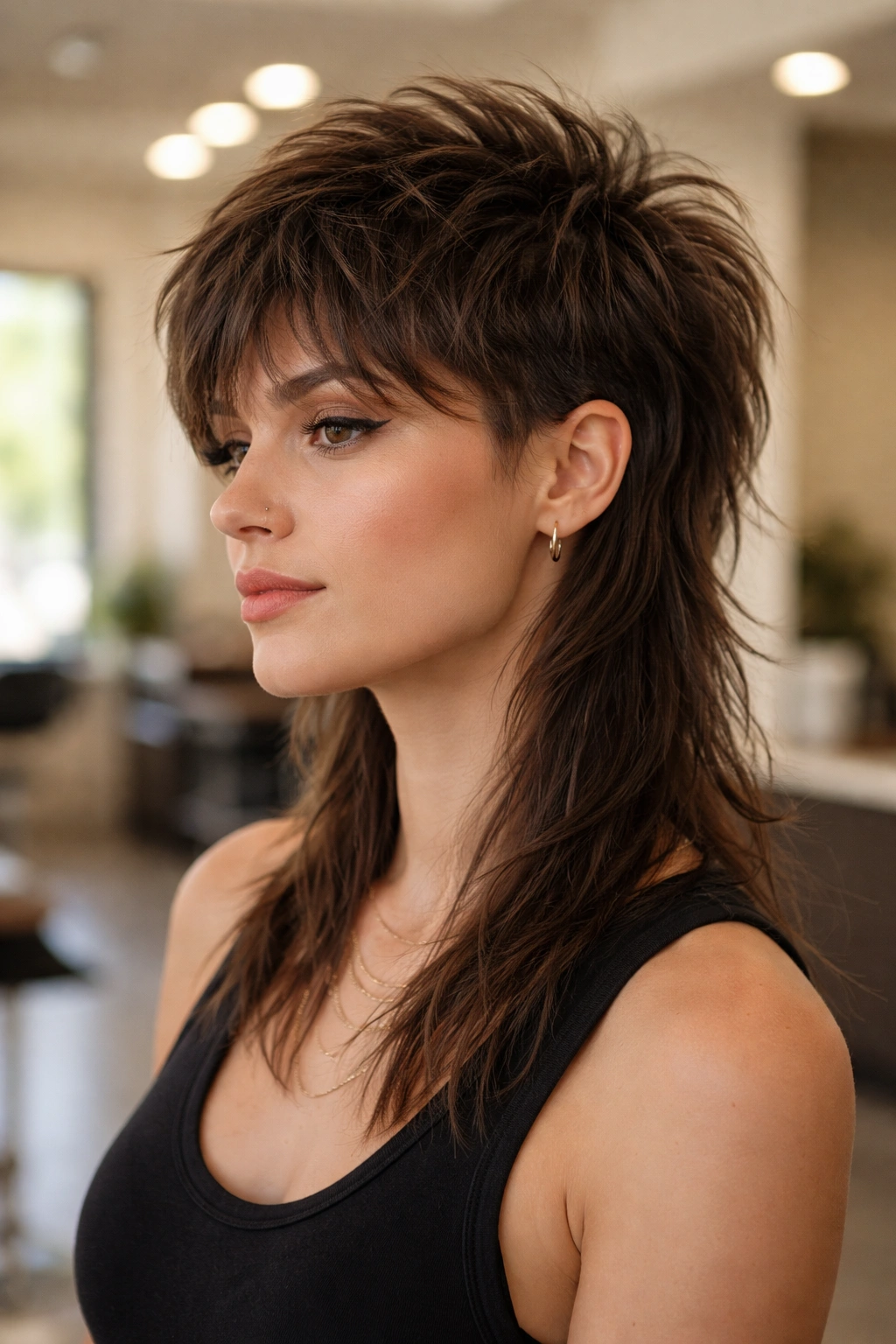
The tapered modern mullet shag keeps the sides and back tapered rather than full-bodied. This is a more contemporary approach that borrows from modern men’s cuts and styles that prioritize clean lines and undercut aesthetics. The sides taper down, often quite close to the scalp by the ears, while the crown maintains length and texture. The back is still longer than the front, but it’s not necessarily dramatically so—maybe 4-6 inches of contrast instead of 8-12. Choppy layers throughout keep everything textured and dimensional.
Why Tapered Works for Modern Mullet Shag
This version appeals to people who want the mullet shag’s edge without the full volume through the sides. It’s sleeker, more refined, and reads as contemporary rather than retro. The tapered sides actually draw more attention to the longer back length, making the length contrast feel more dramatic visually even if the actual measurement difference is smaller. This is also an excellent choice if you’re returning to the office or any environment where you need a cut that can be styled more conservatively but still feels intentional and interesting.
Tapering Details That Matter
- Side taper: Starts at ear level and gradually gets shorter toward the neckline; can go quite close to skin
- Crown length: Maintained for texture and style versatility; often 2-3 inches longer than tapered sides
- Back shape: Long but controlled; the taper creates a clean line where longer back hair meets shorter tapered sections
- Blend zones: The transition from tapered sides to longer back requires skillful blending to look polished
- Face frame: Shorter sides expose cheekbones and jawline while longer back and crown lengths provide style options
This cut requires a stylist who’s comfortable with both precision tapering and choppy layer work—two different skill sets that need to work together seamlessly.
4. Wolf Cut Mullet Shag
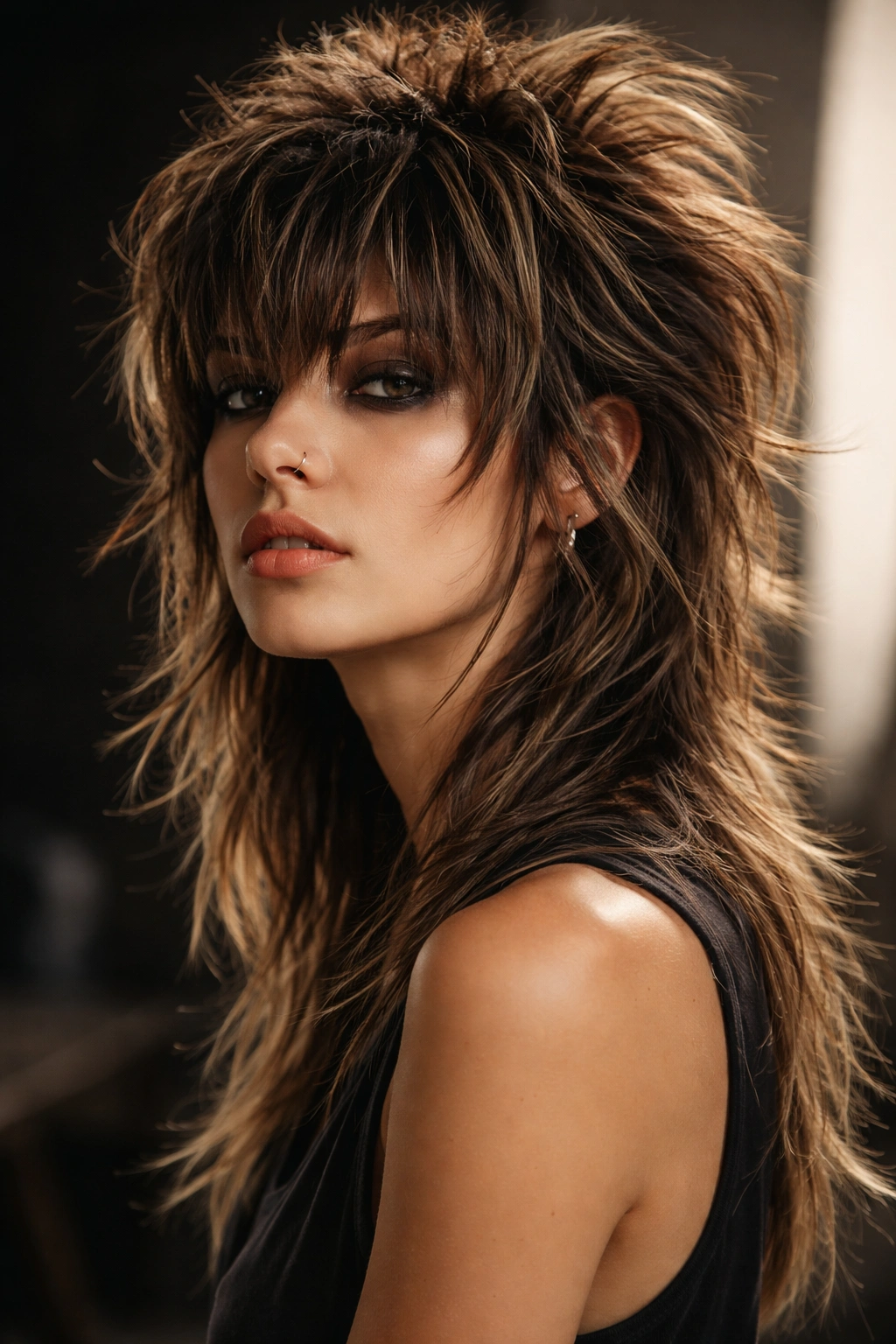
The wolf cut mullet shag takes influence from the TikTok-famous wolf cut (a mashup of shag and mullet originally) and doubles down on the shaggy, layered aesthetic. This is less about clean structure and more about deliberate, obvious texture. Layers are choppy and piece-y throughout, created with point-cut or razor techniques that make individual strands visible. The front and sides are shorter and heavily layered, creating an almost spiky, textured crown. The back is significantly longer and equally textured—you’re looking at a style where every layer is visible and meant to be worked with.
The Wolf Cut’s Aesthetic Appeal
This version is unapologetically trendy and editorial. It reads as fashion-forward, textured, and deliberate. The wolf cut mullet shag works exceptionally well with color—the layering showcases dimension beautifully. It’s also a style that demands you engage with it—blow-drying with texture, working in product, running your fingers through it to separate and define layers. If you want a cut that feels alive and requires active styling participation, this is it. It’s a statement cut that announces you’re intentional about your appearance.
Wolf Cut Technical Details
- Layer density: More layers, more visible separation; think “a lot of texture” as your baseline expectation
- Cutting technique: Often created with razor cuts or point cuts that create visible individual strands
- Front texture: Shorter, heavily layered sections that create visual texture even when flat
- Length contrast: Still maintains mullet-style length difference, but both front and back are aggressively textured
- Styling maintenance: Requires regular styling; air-drying often results in a flatter, less defined look
This cut needs regular trims—every 6-8 weeks—to maintain the defined, sharp texture. As it grows out, it can start looking shaggy rather than intentionally textured.
5. Feathered Mullet Shag
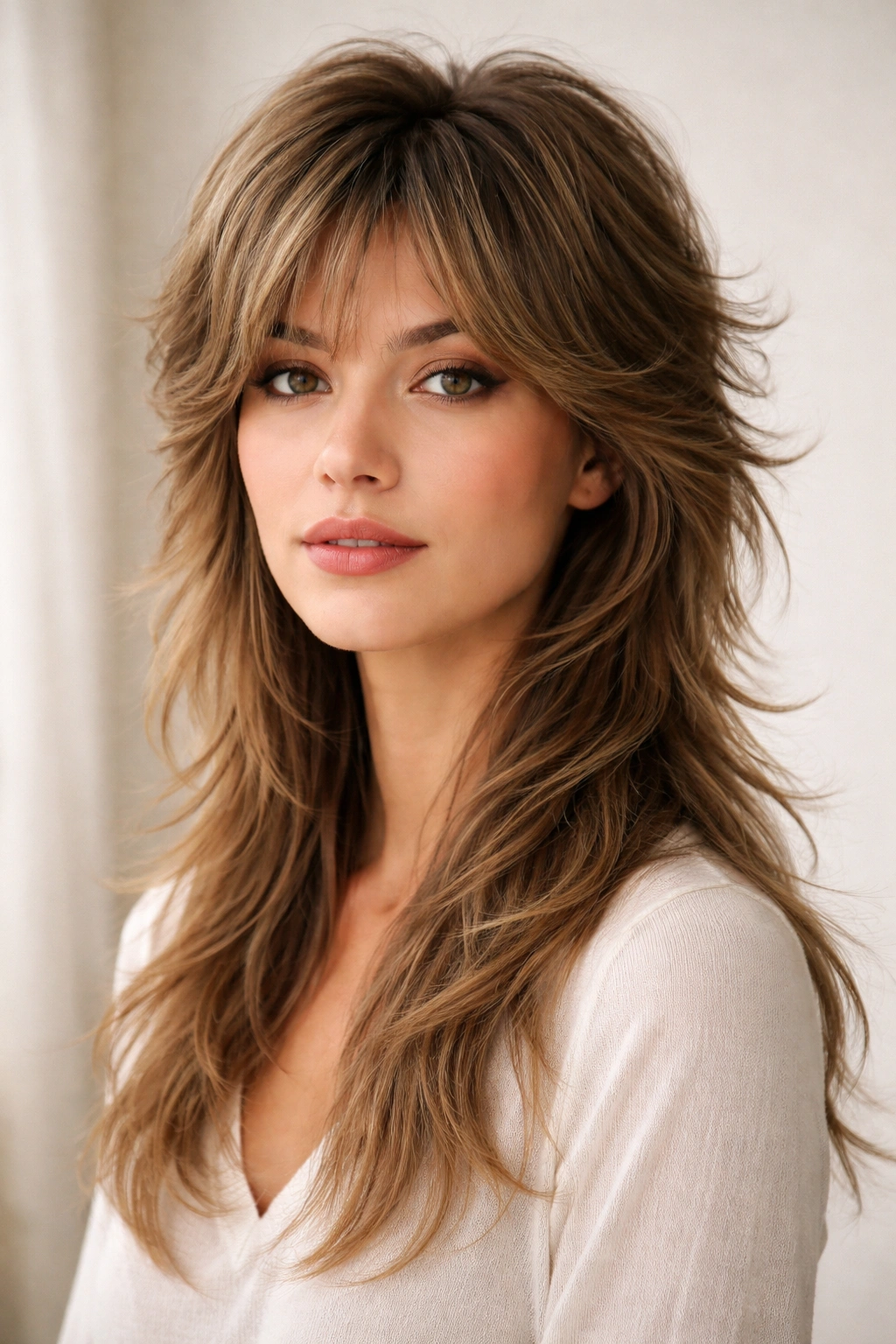
The feathered mullet shag takes the choppy texture concept but refines it with feathering—a technique where the scissors cuts at an angle to create layers that taper at the ends rather than being blunt. This creates a softer, more organic texture that looks like individual feathers. The front is shorter and feathered back from the face, creating a flattering frame with soft movement. The sides feather back as well, rather than tapering close to the head. The back remains long but is feathered throughout, so you get length without weight.
Feathering vs Choppy Texture: The Difference
Feathered layers are softer and more romantic than choppy layers. Where choppy layers create visible separation and an almost spiky quality, feathered layers blend more smoothly and create a more flowing movement. The feathered mullet shag is an excellent choice if you want the mullet shag’s structural contrast and length variation without the edginess or the punk-rock aesthetic. It works beautifully on people with naturally wavy or curly hair because the waves enhance the feathering. On straight hair, feathering creates softer movement than choppy cuts do.
Feathering Technique Essentials
- Angle of cut: Scissors held at an angle so hair tapers gradually rather than cutting straight across
- Result: Softer, more blended layers than choppy texture
- Front styling: Feathered front sections can be swept back or to the side with gentle, flowing movement
- Side treatment: Feathered sides frame the face more softly than tapered sides
- Back flow: Feathered layers in the back create movement and flow rather than stacked, separate sections
- Hair type compatibility: Works especially well on wavy, textured, or curly hair; can require more styling on straight hair
Feathering requires a stylist with solid technical skills—it’s not as forgiving as choppy cutting, and blunt mistakes show immediately.
6. Choppy Undercut Mullet Shag
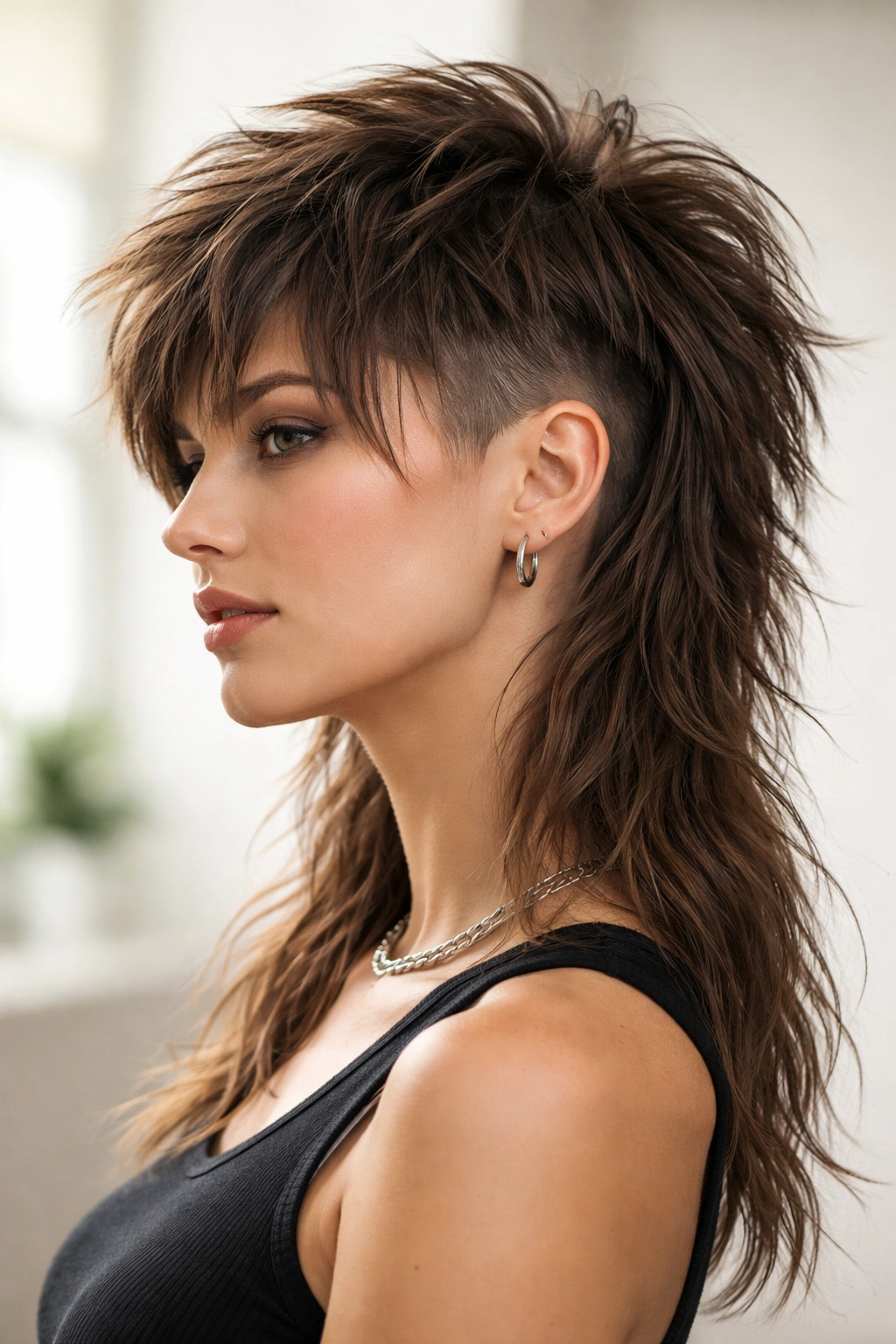
This version takes the mullet shag structure and adds an undercut on the sides and potentially the nape. An undercut means the underneath layers are significantly shorter than the top layers—sometimes very close to the scalp. When you lift the longer top sections, you reveal a dramatic contrast. On a mullet shag, this creates a punchy, edgy silhouette. The front and crown remain layered and textured on top, while underneath you’ve got tight, clean undercut sections. The back is longer, textured on top with the possibility of an undercut underneath as well.
The Undercut’s Visual Impact
The undercut makes the top layers appear fuller and creates visual drama when the hair moves or when you sweep it in certain directions. It’s a cut that photographs well from both the back (showing the length and texture) and the sides (revealing the undercut when hair moves). This is an excellent choice if you want a cut that feels edgy and contemporary, with enough structural interest that it reads as intentional even when minimally styled. The undercut also allows you to play with visibility—wearing your hair down covers the undercut for a more conservative look; styling it back or to the side reveals it for maximum impact.
Undercut Specifications to Discuss
- Undercut depth: How short the underneath goes—skin-tight, or slightly longer for some softness
- Undercut placement: Just at the nape, along the sides, or both
- Top layer length: Maintains the mullet shag’s choppy texture while the undercut hides beneath
- Visibility options: Can be hidden or shown depending on how you style
- Maintenance: Undercuts grow out noticeably and require regular trims (every 4-6 weeks) to maintain
- Styling flexibility: Works blown out, air-dried, slicked back, or swept to the side
Be aware that an undercut requires regular maintenance. As it grows out, you lose the sharp contrast and the cut starts looking less intentional.
7. Side-Swept Mullet Shag
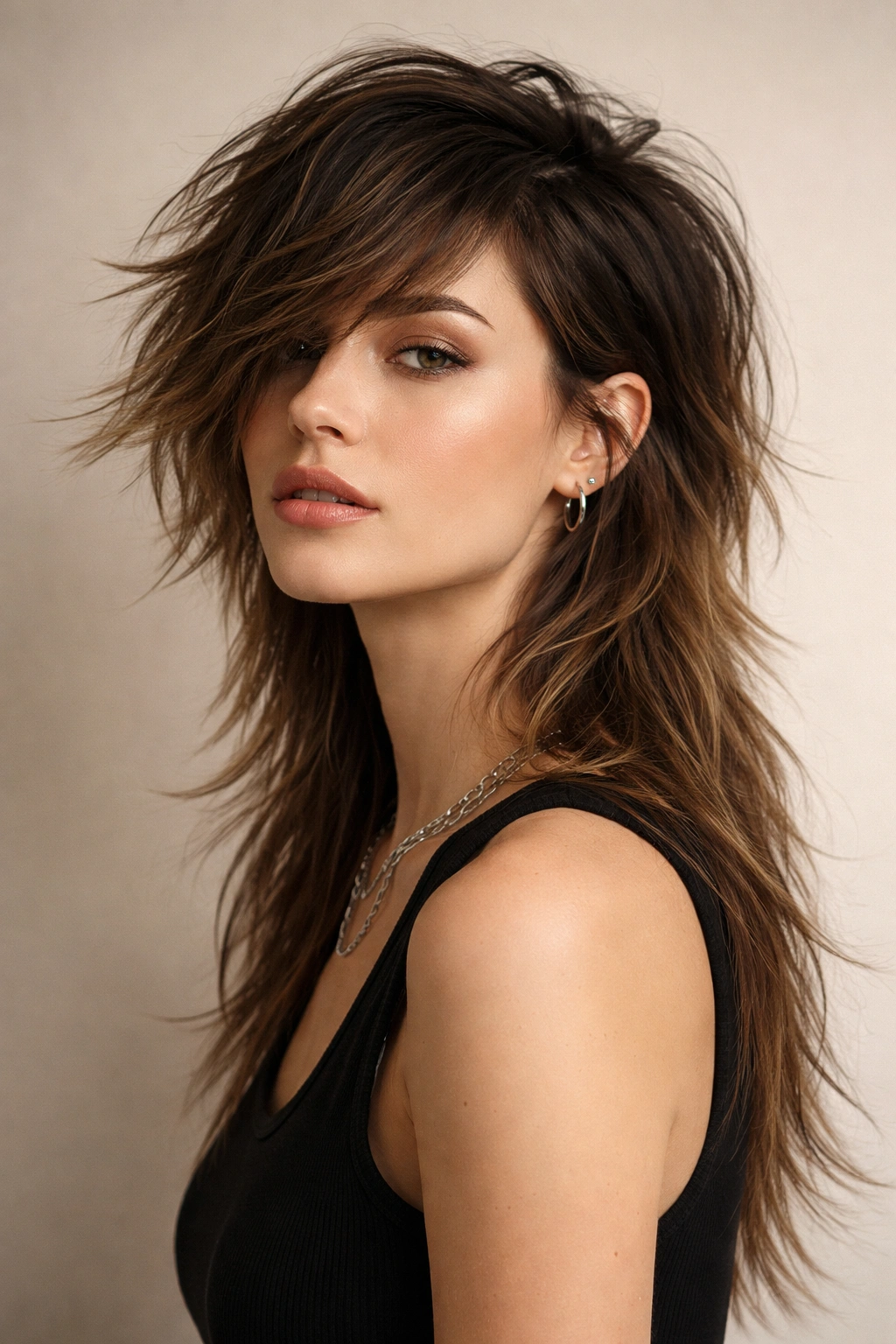
This version emphasizes asymmetry by sweeping longer sections to one side. The front is shorter and layered on one side, while longer hair sweeps dramatically across the head and down the opposite side. The back remains long and textured, but the front’s asymmetrical sweep creates a distinctive, fashion-forward silhouette. It’s still a mullet shag structurally—you’ve got the front-to-back length contrast—but the asymmetry adds visual interest and creates a dynamic, editorial feel.
Asymmetry as a Design Element
The side-swept mullet shag works beautifully for people with longer faces who want to create the illusion of width, or people who simply love asymmetrical, directional styles. The swept side can cover or expose different parts of your face depending on how you style it, giving you flexibility. This version often photographs exceptionally well because asymmetry is inherently interesting visually. It’s also a cut that can feel softer and more fashion-forward than symmetrical mullet shags—it reads less “retro” and more “contemporary editorial.”
Creating the Asymmetry
- Shorter side length: One side of the front is cut shorter, maybe ear-length or slightly shorter
- Longer side sweep: The opposite side is left significantly longer, sweeping across and back
- Layer placement: Layers are distributed asymmetrically to support the sweep and create movement
- Back balance: The back remains relatively balanced and long, anchoring the asymmetrical front
- Side part line: Often styled with a dramatic side part to emphasize the asymmetry
- Styling requirement: Benefits from styling to maintain the directional sweep; air-drying might not preserve the intended line
This cut requires commitment to styling. The swept side works best when intentionally blow-dried or styled with product to maintain direction and shape.
8. Curly Mullet Shag
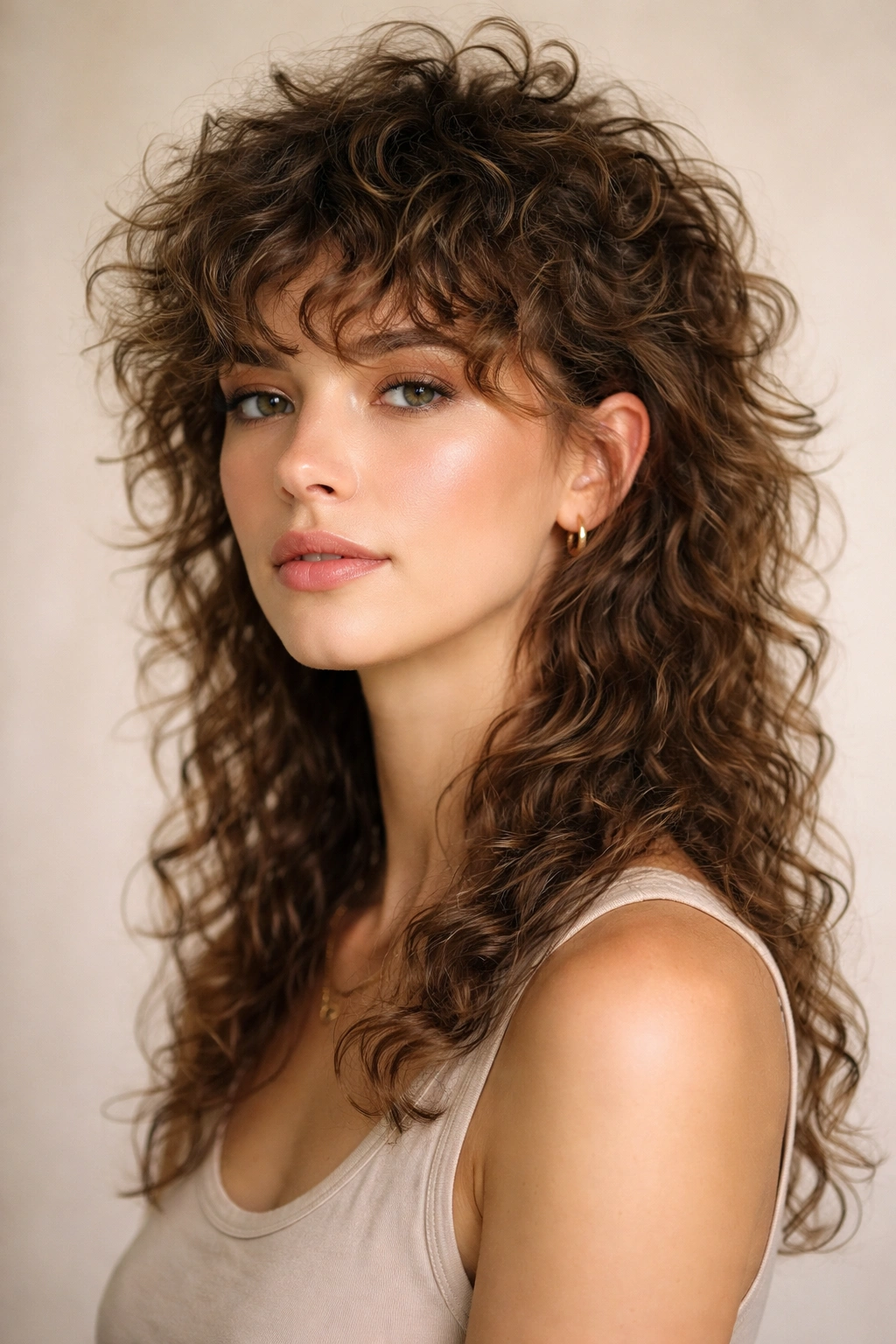
For people with naturally curly or textured hair, the curly mullet shag is a game-changer. This version is cut specifically to work with curl pattern rather than against it. The front is shorter, allowing curls to spring up and create natural volume. Layers are strategically placed to reduce bulk while enhancing curl definition. The back is longer, showing off the length while the curl pattern creates inherent texture and movement. This cut reads as intentional and works beautifully with a curly-girl-method styling approach or any curl-focused routine.
Why Curly Hair Changes the Mullet Shag Equation
Curly hair naturally creates texture and movement, so the mullet shag works differently. You don’t need aggressive choppy layers to create visual interest—the curl pattern does that work. Instead, the cutting strategy focuses on shaping the curl pattern, removing weight strategically, and creating the front-to-back length contrast in ways that complement how curls actually behave. A curly mullet shag can actually be easier to style than a straight-haired version because the texture is built in.
Curly-Hair Cutting Strategy
- Dry cutting: Best cut on clean, dry curls so your stylist can see the actual curl pattern and where bulk sits
- Layer placement: Removes weight and bulk while enhancing curl definition rather than fighting it
- Length consideration: What looks short curly might look quite different straightened, so discuss expectations in natural state
- Product integration: Works beautifully with curl-enhancing creams, gels, and oils
- Styling approach: Embraces natural curl pattern rather than requiring blow-drying
- Growth pattern: Curls often show growth sooner, so trims might be needed every 6-8 weeks
Ask your stylist if they have experience cutting curly hair specifically. A stylist trained in curly-hair cutting will understand how to work with your curl pattern rather than against it.
9. Dyed Contrast Mullet Shag
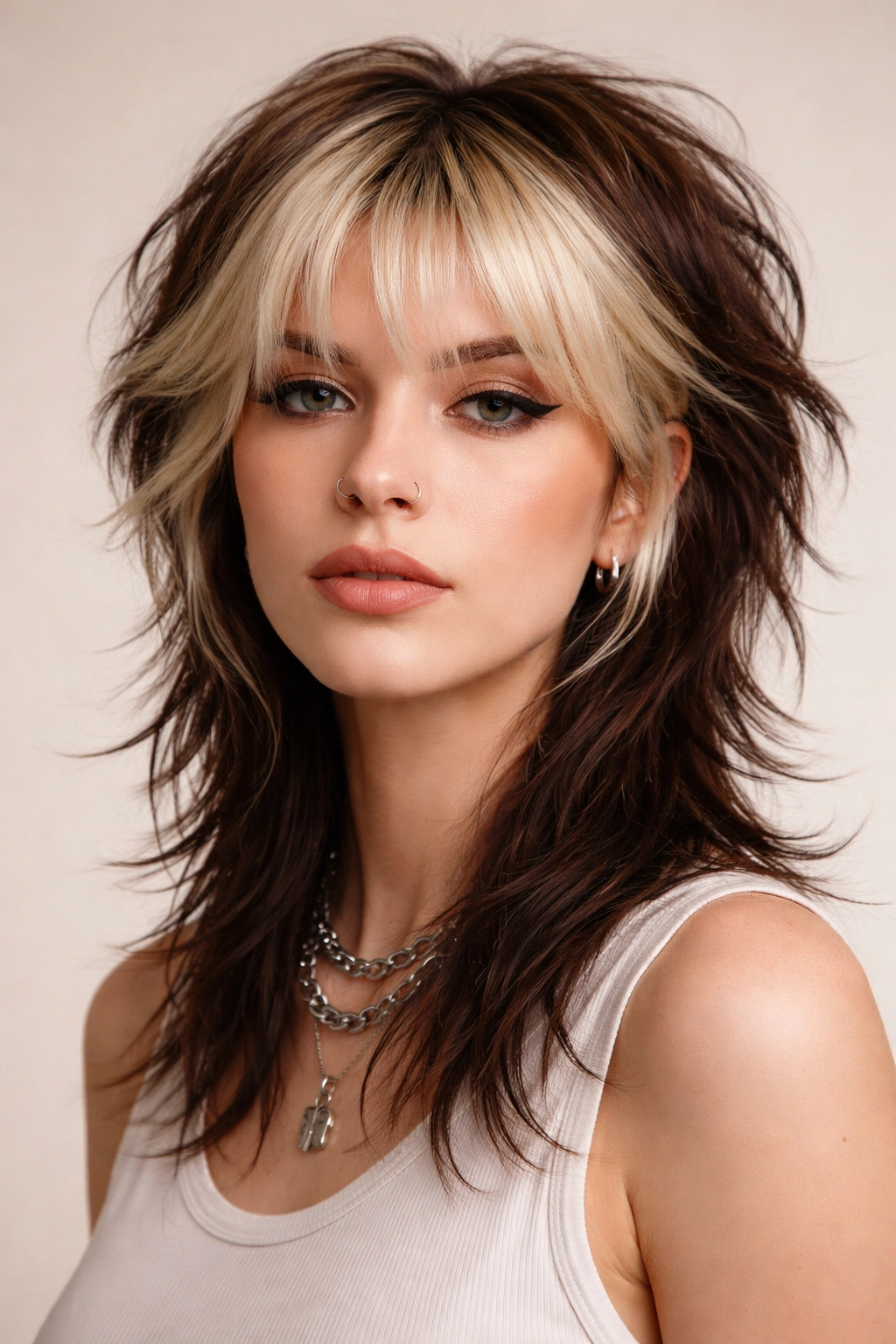
Color dramatically changes how a mullet shag reads. The dyed contrast mullet shag uses strategic color placement to emphasize the cut’s shape. You might dye the shorter front sections one color and leave the long back another color—creating a visual color contrast that mirrors the structural length contrast. Or you might add dimensional highlights throughout the shorter sections while keeping the back a solid color. Some versions use more dramatic color approaches—a bleached blonde front with dark roots in the back, or a colored front section (think emerald, red, or purple) with a natural-colored back.
Color as a Styling Tool
Color dramatically amplifies a mullet shag’s visual impact. It makes the cut read as more intentional, more editorial, and more fashion-forward. Color also helps showcase the texture and layering—especially with techniques like balayage or face-framing highlights that work with the cut’s structure. If you’re nervous about the mullet shag silhouette, adding color can make the overall look feel more fashion-forward and less retro. If you love the bold statement, color can make the cut absolutely unforgettable.
Color Approaches That Work Well
- Two-tone: Different color on front vs. back sections (blonde front, brunette back, for example)
- Highlights: Dimensional highlights throughout shorter sections, with or without color in the longer back
- Face-framing: Lighter pieces around the face to draw attention to where the cut is shortest
- Roots and length: Darker roots with lighter bleached lengths creates built-in dimension
- Monochromatic with tone: One color family but different saturation levels (light blonde to darker blonde)
- Graphic color: A bold, solid color on one section contrasts dramatically with natural hair color elsewhere
Color requires maintenance. Depending on your color choice, you might need touch-ups every 4-8 weeks to keep it looking intentional rather than grown-out and unintended.
10. Slicked-Back Mullet Shag
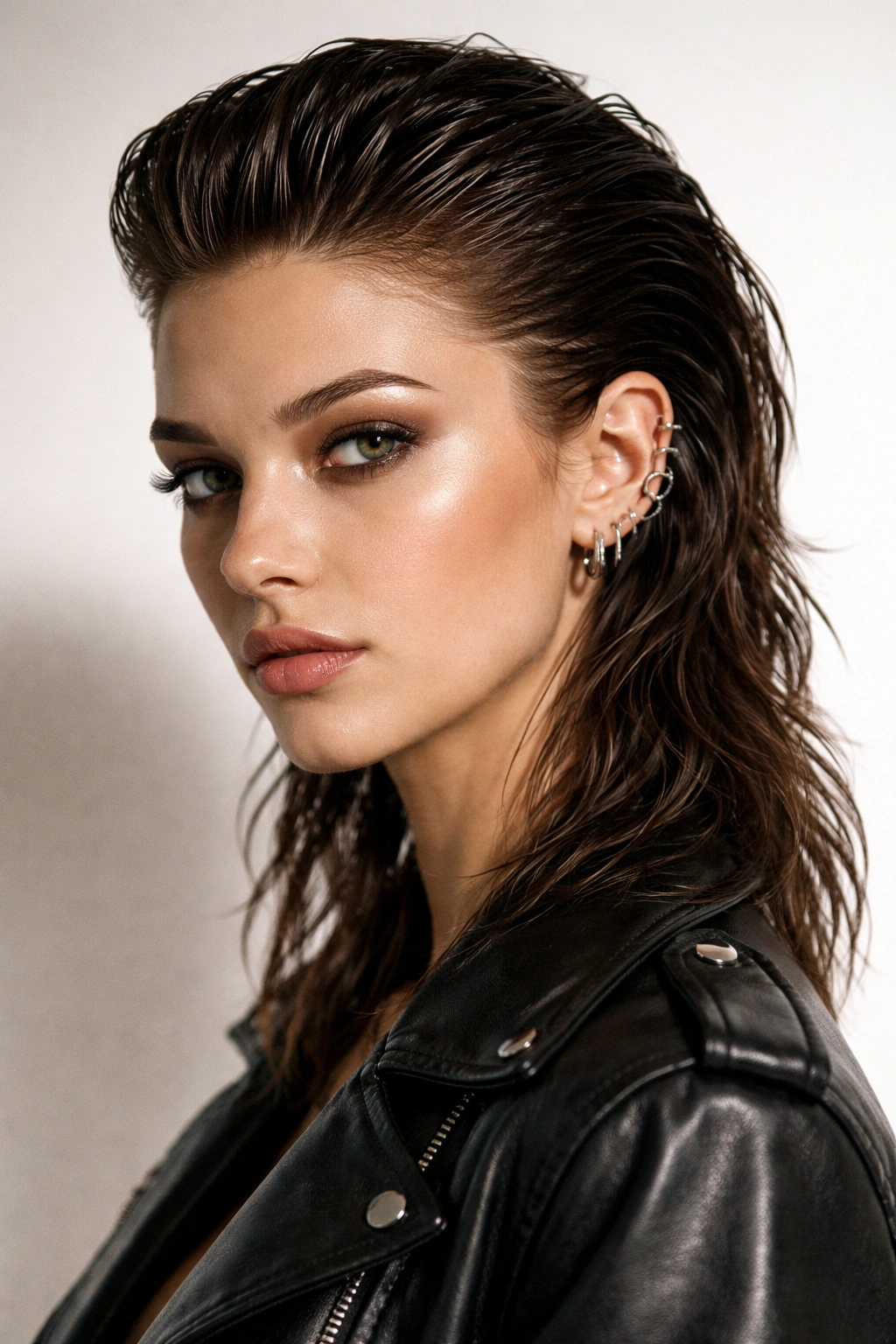
This styling approach takes any mullet shag and slicks the front and shorter sections completely back, revealing the full face and emphasizing the longer back sections dramatically. It’s more of a styling choice than a cutting technique, but certain mullet shag cuts work better for this approach. Shorter front lengths and layers that lay smooth when wet work best. The result is a sleek, almost severe front contrasted with textured length in the back—very high-fashion and editorial.
When Slicked-Back Works Best
The slicked-back mullet shag styling works exceptionally well for formal occasions, performances, or when you want maximum impact. It’s also a styling that reads as very intentional and fashion-forward—not accidental or undone. The approach works on both straight and textured hair, though textured hair might require product to maintain the slicked-back hold. This is an excellent way to show off bone structure and facial features while maintaining the mullet shag’s edge through the longer back length.
Styling Techniques for Slicked-Back
- Product choice: Gel, mousse, or pomade works depending on desired hold and shine level
- Wet application: Apply product to damp hair, then comb back smoothly
- Drying method: Blow-dry while combing back for maximum control, or air-dry for a softer hold
- Hold duration: Gel provides the strongest hold; pomade offers shine; mousse is lighter
- Face framing: Some pieces can be left slightly free around the face for a softer version
- Back styling: While the front is slicked back, the back can be textured, tousled, or left to its natural state
This styling requires daily effort—you can’t air-dry and have it look slicked back. It’s a choice for days when you’re willing to spend time styling.
11. Textured Volume Mullet Shag
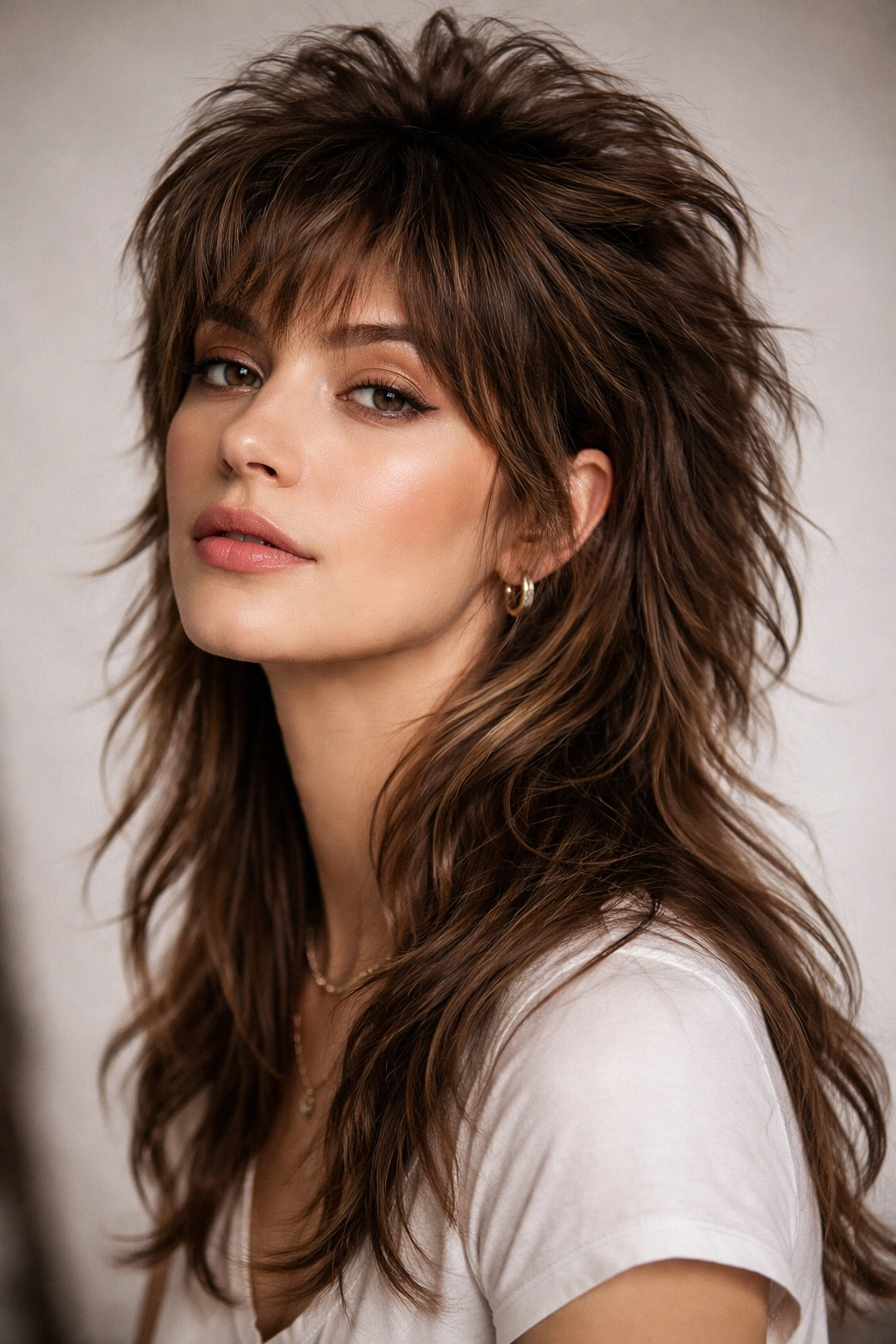
This version maximizes volume through strategic layer placement and cutting technique. Rather than creating separation between layers, this approach stacks and places layers to build volume at the crown and through the sides. The front is shorter and voluminous, created through layers that support each other and hold shape. The back is longer and equally voluminous—this isn’t a sleek mullet shag, it’s an abundant one. The overall silhouette is bigger, bolder, and more statement-making.
Building Volume Through Cutting Strategy
Volume comes from how layers are placed and how the cutting technique supports hair’s natural tendency to stand up or flip out. This cut is especially effective on people with fine or thin hair because the layering creates the illusion of density. On naturally thick hair, it creates a dramatic, high-impact silhouette. The textured volume approach means this cut actually looks better with some air-drying rather than being blow-dried smooth—the texture is the whole point.
Volume-Building Techniques
- Layer stacking: Layers placed to support each other and create height at the crown
- Choppy cutting: Creates natural separation and encourages hair to flip and stand away from the scalp
- Graduated length: Shorter layers on top that get progressively longer, supporting volume
- Texture throughout: Every section is textured, not blended smoothly, so volume reads throughout
- Styling approach: Works beautifully air-dried or with minimal product; too much blow-drying can flatten
- Best on: Works well on naturally wavy or textured hair; can require more styling on perfectly straight hair
This cut tends to look better as it grows out a bit—right after a cut, some people feel like it’s too short. Give it a week or two of growth and styling before deciding if you love it.
12. Asymmetrical Mullet Shag
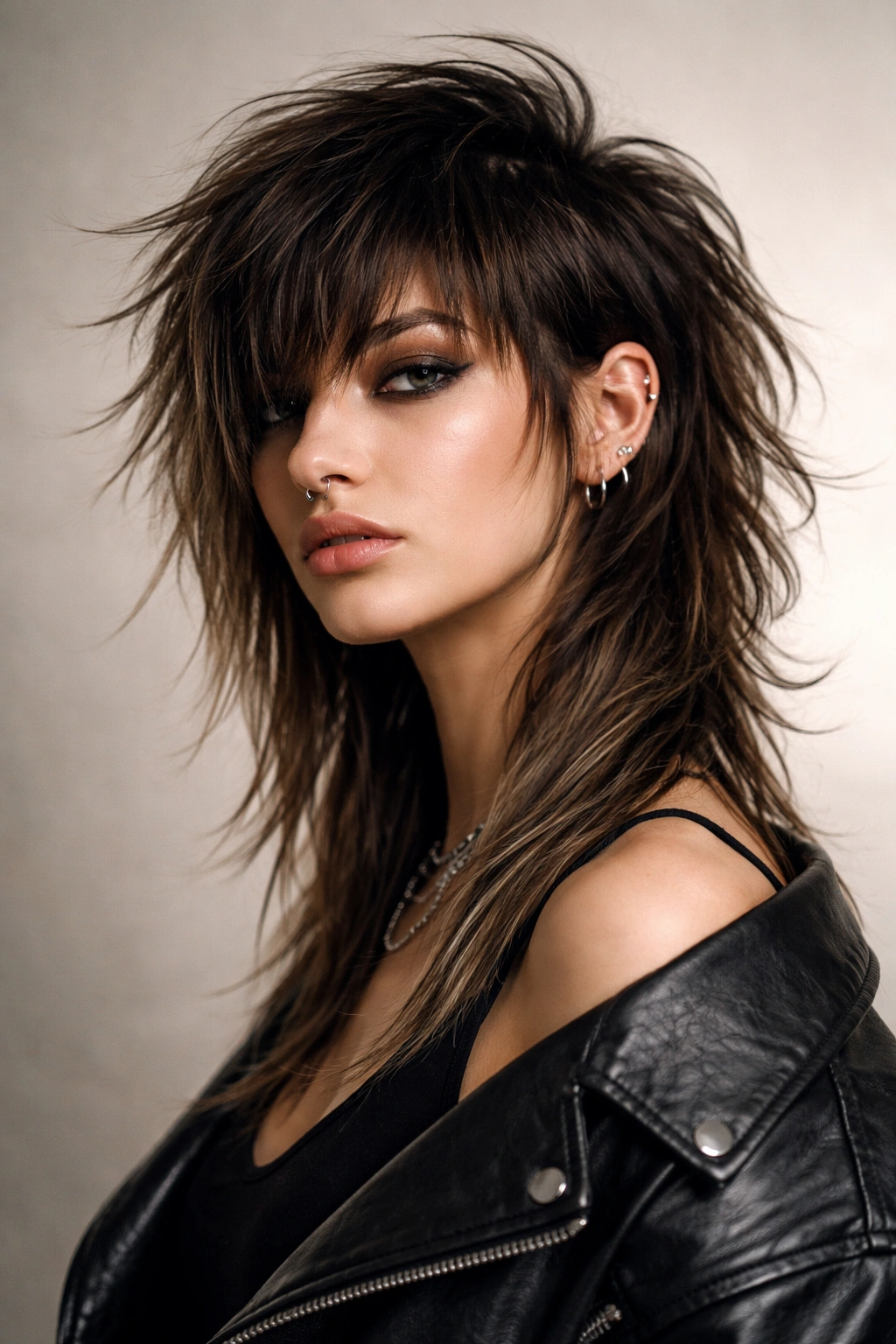
Beyond the side-swept version, a fully asymmetrical mullet shag takes the concept further. One side of the back might be significantly longer than the other. The shorter front might be shorter on one side. You’re creating an intentionally unbalanced silhouette where left and right sides are distinctly different. This is a cut for people who love fashion-forward, editorial styling and aren’t interested in symmetry.
Asymmetry as High Fashion
Asymmetrical cuts read as intentional, modern, and fashion-forward. They’re inherently interesting visually because our brains expect symmetry, so asymmetry demands attention. This approach works beautifully for people with strong personal style who want a cut that announces they’re not following conventional rules. It’s also excellent for creative professionals—artists, performers, designers—who use fashion as self-expression.
Asymmetrical Specifications
- Side-to-side variation: Deliberately different lengths or layer placements on left vs. right
- Front asymmetry: One side might be chin-length, the other ear-length
- Back asymmetry: One side might extend much longer than the other
- Layer distribution: Asymmetrically placed layers create visual interest even when hair is worn down
- Styling flexibility: Can be styled to emphasize or downplay the asymmetry
- Maintenance consideration: Growth shows differently on asymmetrical cuts; some areas might need trimming sooner than others
Make sure you and your stylist have a very clear conversation about what asymmetry looks like. Bring references showing exactly how unbalanced you want to be.
13. Bleached Blonde Mullet Shag
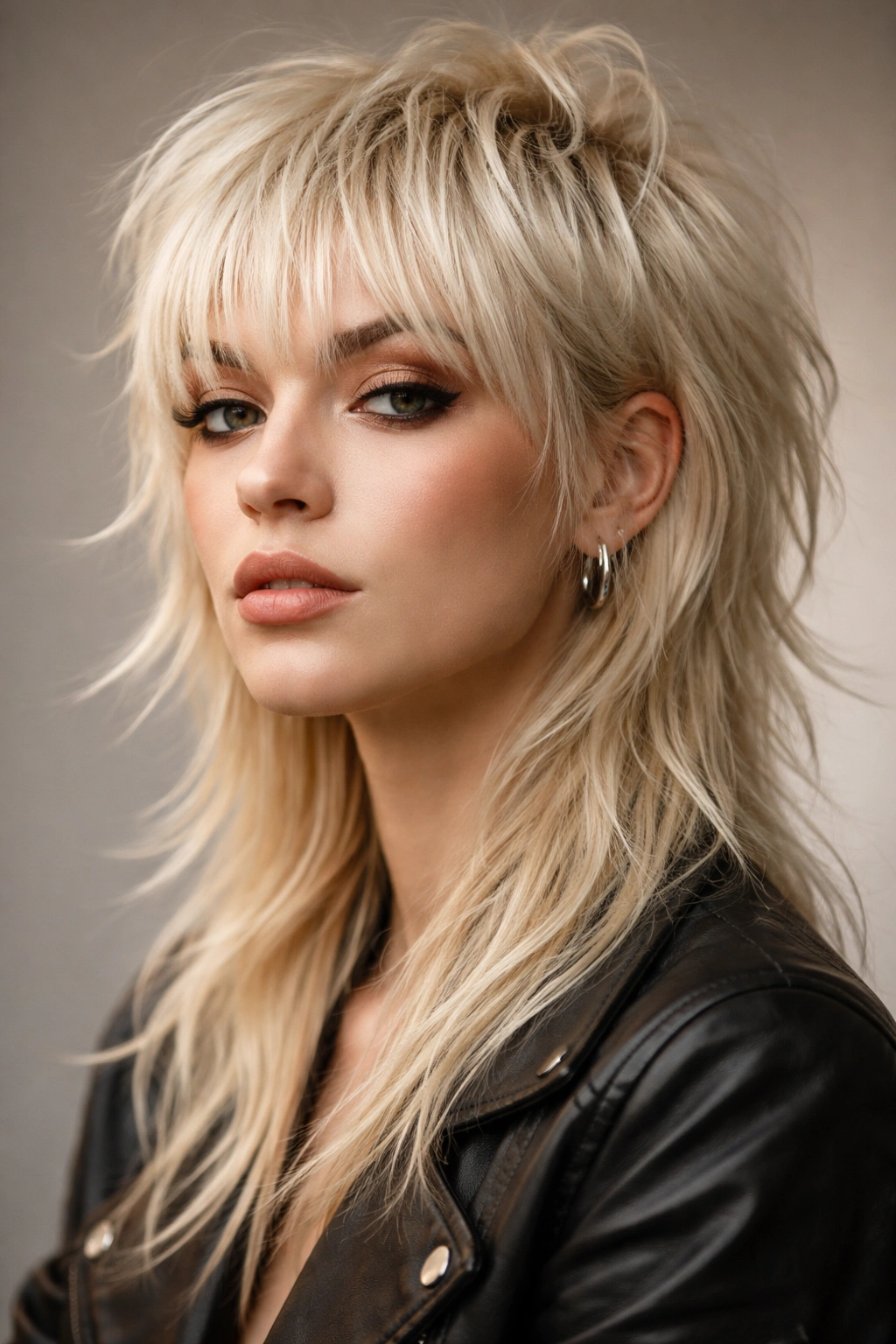
Taking the dyed contrast concept and going maximum drama, the bleached blonde mullet shag features platinum or light blonde throughout, especially in the shorter front sections. This is a high-maintenance color choice that demands commitment to upkeep, but the visual impact is undeniable. The blonde emphasizes texture and layering beautifully—every cut line reads distinctly. This version reads as very rock-and-roll, very fashion, very intentional. It’s a cut that announces you’re bold and committed to your style.
Why Blonde Shows Texture So Well
Lighter hair naturally shows dimension and layer placement more clearly than darker hair. The cut’s texture reads more dramatically on blonde, which is partly why this combination is so visually striking. Blonde also photographs beautifully and works well with many skin tones. The downside is that bleaching is damaging and requires serious maintenance—you’ll need regular conditioning treatments, trims to remove damaged ends, and color maintenance every 4-6 weeks as your natural hair grows out.
Blonde Mullet Shag Care Requirements
- Bleaching damage: Blonde requires healthy hair to look its best; damaged, fried blonde looks worse than any other color
- Toning: Even platinum blonde needs toning every 3-4 weeks to maintain color and prevent brassiness
- Conditioning: Deep conditioning treatments become non-negotiable; weekly masks are the minimum
- Purple shampoo: Necessary to maintain cool blonde tone and prevent yellowing
- Trim frequency: Every 6-8 weeks to remove damaged ends and maintain the cut’s shape
- Styling products: Heat protectant is essential; bleached hair is more fragile
This is genuinely a high-maintenance choice. Only commit if you’re willing to spend money on color maintenance and hair care.
14. Grown-Out Mullet Shag
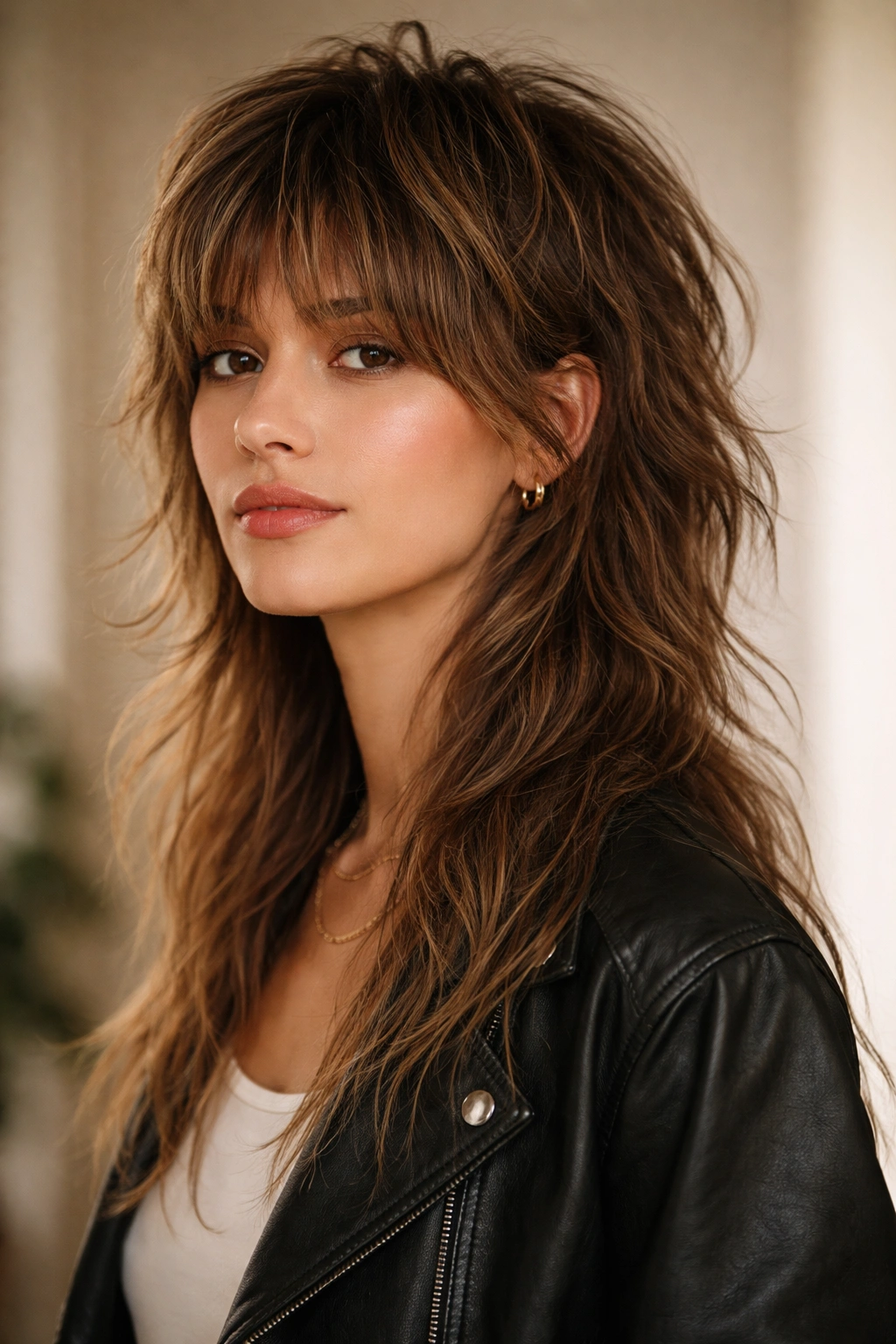
Not every mullet shag stays precisely cut. The grown-out mullet shag embraces the stage where your cut has grown several months past the trim line but hasn’t reverted to your natural long hair yet. The front and sides have grown out, the shorter layers are now mid-length, and the back is substantially longer. The whole silhouette is softer, shaggier, less defined—but still clearly mullet shag in structure. This works beautifully as an intentional style choice rather than just neglected hair. You’re leaning into the shaggy aesthetic completely.
Grown-Out as a Styling Phase
Some people actually prefer their mullet shag in this slightly-grown-out phase. The cut maintains its basic structure while the extra growth adds dimension and softness. It requires less frequent trims (you might go 10-12 weeks between cuts rather than 6-8) and the grown-out length gives you more styling flexibility. You can wear it textured and shaggy or blow it smooth. It reads as intentionally lived-in rather than accident-prone.
Managing the Grown-Out Phase
- Timeline: Usually hits its sweet spot around 8-12 weeks of growth
- Styling flexibility: More length means more styling options
- Lower maintenance: Fewer required trims, but eventually you’ll want to refresh the cut
- Texture changes: Longer layers can start looking stringy or unintentional if you go too long
- Refreshing strategy: Plan to get a light trim that mostly refreshes layers rather than cutting everything shorter again
- When to cut fresh: After 12-16 weeks, most mullet shags benefit from a fresh cut rather than continuing to grow
This phase works well if you’re intentional about it. The key is deciding when to refresh the cut before it starts looking neglected rather than intentional.
15. Pin-Straight Mullet Shag
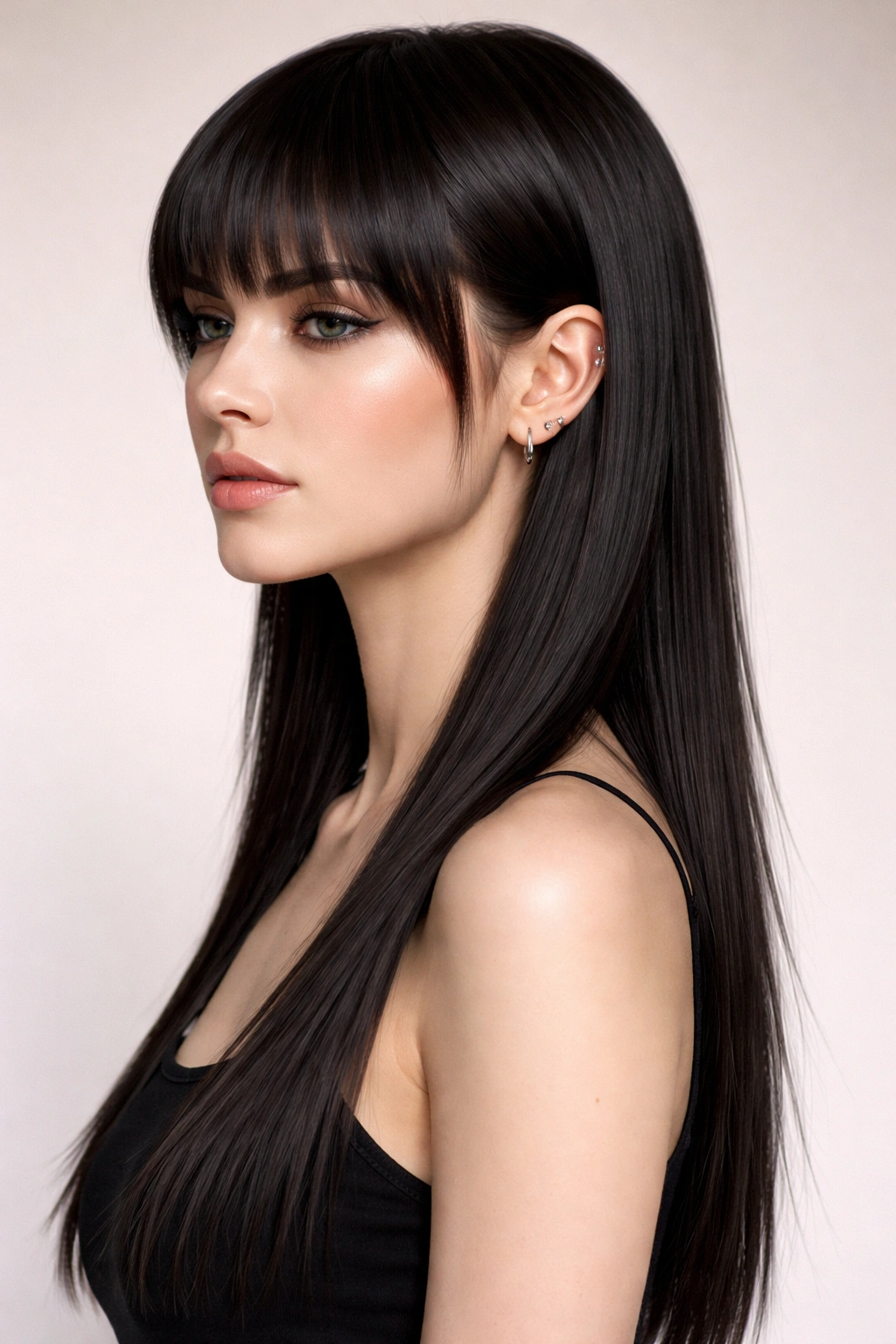
For people with naturally straight hair or those who style it smooth, the pin-straight mullet shag is about clean lines and dramatic length contrast without texture. The front is cut short and blunt, creating a precise perimeter. The sides are smooth and straight. The back is dramatically longer and equally smooth—you see the length contrast without layers creating a textured effect. The result is sleek, modern, and high-fashion. It’s a mullet shag for people who prefer refinement to texture.
Straight vs. Textured: Different Aesthetics
A textured mullet shag reads as more organic and lived-in. A pin-straight mullet shag reads as more intentional, more controlled, more fashion-editorial. Both are completely valid approaches; it’s just a different aesthetic. The straight version requires more styling commitment—you’ll need to blow-dry it smooth to maintain the look, and you probably can’t air-dry successfully. But if you love clean lines and precision, this version delivers exactly that.
Styling the Pin-Straight Mullet Shag
- Cutting approach: Blunt perimeter lines that read distinctly when hair is smooth
- Layering strategy: Minimal choppy layering, focusing instead on length contrast and clean lines
- Blow-drying requirement: Essential to achieve the smooth, straight aesthetic
- Product use: Smoothing serum, anti-frizz products, or light styling cream maintains sleekness
- Heat tools: Blow dryer and possibly straightening iron to achieve pin-straight results
- Maintenance schedule: Regular trims keep perimeter lines clean and sharp
- Best on: Naturally straight hair or people willing to invest in daily styling
This cut requires daily styling commitment. You won’t be able to air-dry and achieve the pin-straight effect—it’s a choice for people who enjoy blow-drying as part of their routine.
Final Thoughts

The mullet shag works because it solves a style equation that’s been challenging people for years: how do you have length and movement while still maintaining a sharp, intentional front? How do you look modern rather than retro, fashion-forward rather than nostalgic? The fifteen variations above show that there’s no single “right” way to approach this cut—you can make it edgy or refined, textured or smooth, symmetrical or asymmetrical, conservative or bold.
The key is finding the version that matches your hair type, your lifestyle, and your personal style. If you have naturally curly hair, a curly-adapted mullet shag is probably going to look better than a pin-straight version. If you love high-fashion aesthetics, an asymmetrical or choppy undercut version might speak to you more than a classic textured approach. If you prefer low-maintenance styling, a feathered or textured version that embraces your natural hair texture will serve you better than a slicked-back style that requires daily product and blow-drying.
The most important conversation you can have with your stylist is about what your mullet shag will actually look like when you’re styling it at home, not just in the salon chair. Ask to see references of how the cut looks air-dried, how it looks styled, and whether the specific version you’re choosing requires daily styling or works well with minimal effort. A cut that’s beautiful on your stylist’s blow-dry but requires an hour of styling every morning might not be the right choice if you’re looking for something lower-maintenance. The perfect mullet shag is the one that makes you excited to style your hair, not the one that becomes a daily burden. Choose the version that works with your life, your hair, and your personal aesthetic—and you’ve got a cut that you’ll genuinely love for months between trims.
