



Wolf cuts have become a definitive hairstyle moment, and it’s easy to see why. This hybrid style—blending the textured layers of a shag with the sleek sophistication of a modern cut—works for nearly every hair type, length preference, and personal aesthetic. Whether you’re drawn to soft romantic waves, edgy angular layers, or something in between, there’s a wolf cut variation that speaks to exactly what you’re looking for. The beauty of this trend is its versatility; no two wolf cuts need to look identical, which means you can customize it to match your face shape, lifestyle, and styling commitment.
What makes the wolf cut such a standout isn’t just how it looks—it’s how alive it feels. The intentional movement, the way those choppy layers catch light, the confidence of wearing something that’s undeniably a statement. Women are gravitating toward this cut because it delivers visual interest without requiring a complete overhaul of how they normally style their hair. You can wear it tousled and textured for an effortless vibe, or smooth it out for something more polished. Below are the wolf cut iterations that are genuinely resonating with women right now, each one offering its own distinct personality and practical appeal.
1. Soft Romantic Wolf Cut with Face-Framing Waves
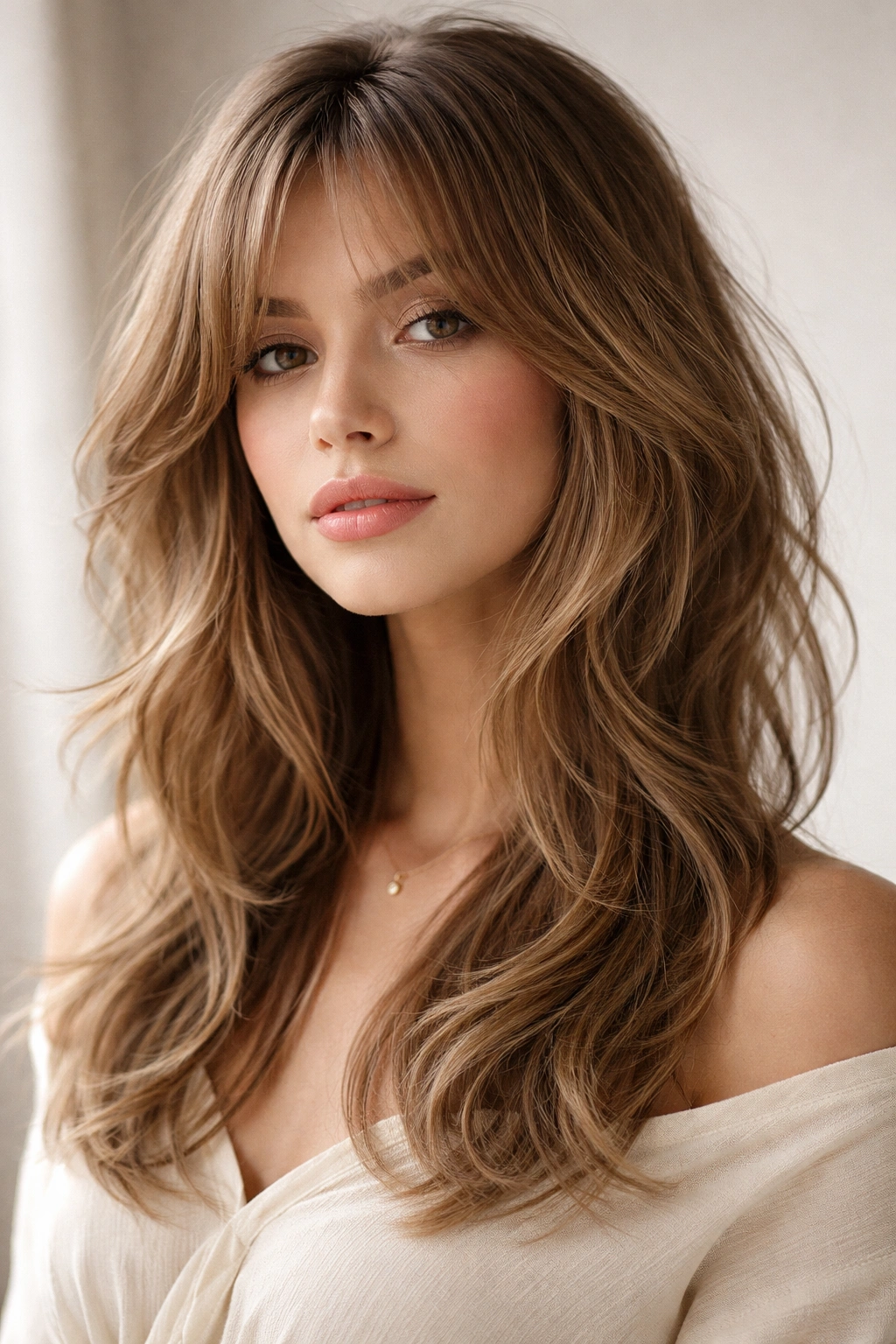
This version softens the wolf cut’s edge by emphasizing gentle, romantic waves throughout the length. Rather than sharp, choppy layers, this approach uses longer face-framing pieces and flowing mid-lengths that create movement without aggression. The layers are still present and intentional, but they blend seamlessly into one another, creating a cohesive wave pattern that catches light beautifully.
Why It Flatters So Many Face Shapes
A soft wolf cut works exceptionally well for heart-shaped and oval faces because the flowing waves create balance without adding visual weight where you don’t need it. The face-framing pieces draw attention to your eyes and cheekbones while the longer lengths keep the overall silhouette elongated and elegant.
What Makes This Version Special
- Creates an effortlessly romantic aesthetic that reads as intentional, not undone
- Works beautifully on finer or thinner hair because layers add dimension without bulk
- Requires medium-length styling (about 14-18 inches minimum) for the waves to move properly
- Layers can be spaced further apart than traditional wolf cuts, requiring less frequent trims
- Pairs perfectly with beachy waves, loose curls, or even a sleek blow-dry
Pro tip: This wolf cut variation actually improves with a texturizing spray and minimal heat styling—the more you fight for perfection, the less romantic it becomes. Embrace the natural texture of your hair.
2. Blunt-Edged Wolf Cut with Sharp Geometric Layers

The blunt-edged wolf cut takes the concept in a deliberately modern, architectural direction. Rather than feathering or blending layers, this version features precise, clean-cut layers with visible separation between each section. The result is a bold, geometric shape that photographs incredibly well and makes a confident statement.
The Modern Edge Factor
This cut appeals to women who want something that clearly reads as “styled” rather than “naturally textured.” The geometric precision makes it feel current and intentional, pairing beautifully with contemporary fashion and a minimalist aesthetic.
Styling and Maintenance Considerations
- Requires a stylist experienced with precision layering—small errors become very visible
- Blunt edges need more frequent trims (every 4-6 weeks) to maintain definition
- Works best with straight or very straight hair; curly hair can obscure the geometric structure
- Creates a more formal, put-together look compared to textured wolf cut variations
- Pairs excellently with sleek styling, leather jackets, and statement jewelry
Worth knowing: If your hair has natural texture or wave, a blunt-edged wolf cut will emphasize that movement. Consider whether that amplifies your aesthetic or works against it before committing.
3. Long Wolf Cut for Thick, Voluminous Hair
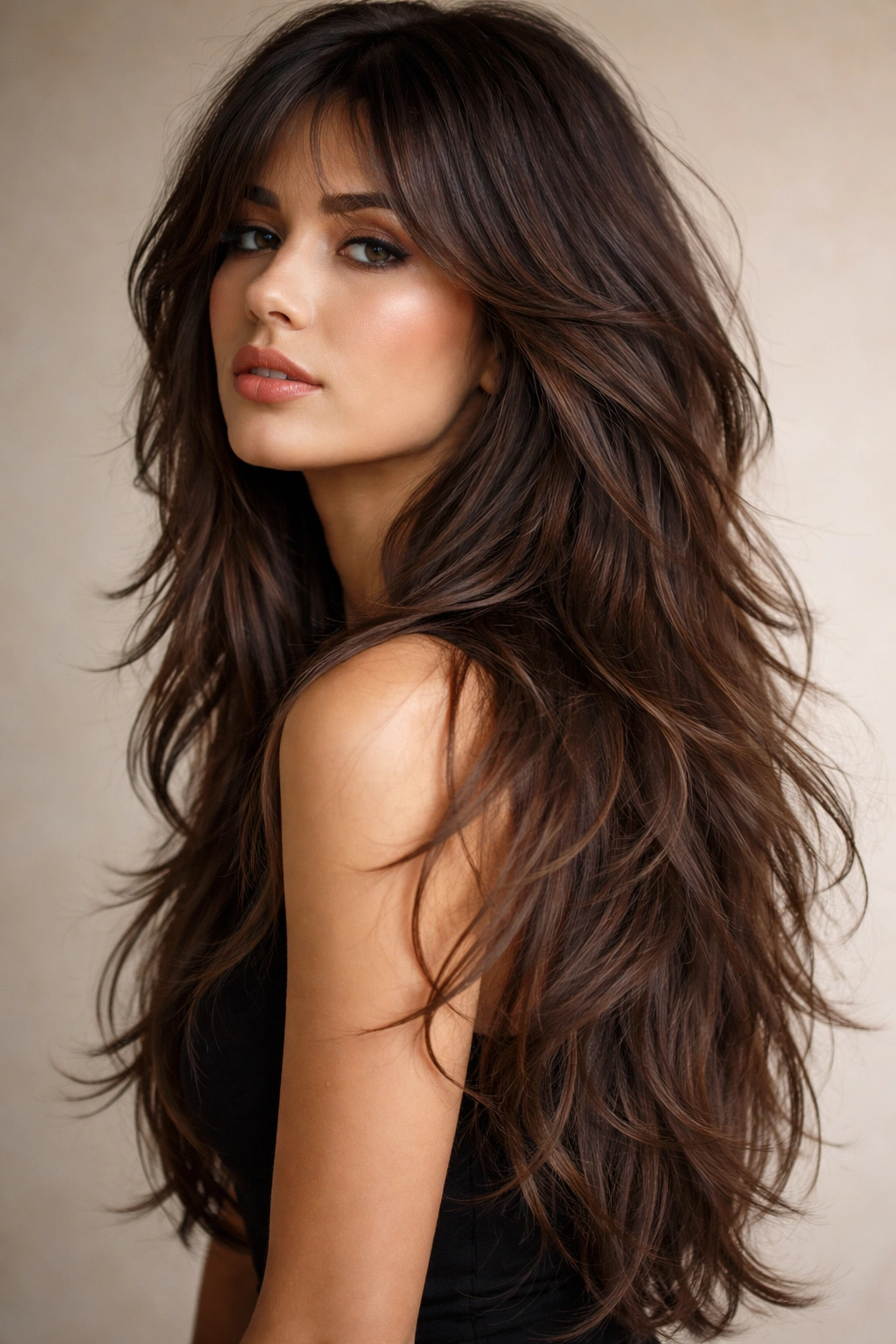
Women with genuinely thick, dense hair often struggle to find cuts that work with their texture rather than against it. The long wolf cut designed for thick hair embraces that density by using strategically placed layers that remove bulk while maintaining length and volume. Layers are deeper and more spaced out, creating shape without creating mushroom effect or excessive poof.
Why Thick Hair Changes the Game
Thick hair can actually wear longer lengths beautifully when layered intentionally. Instead of becoming a heavy, shapeless mass, a well-executed wolf cut on thick hair creates movement and definition throughout the entire length.
Customization for Density
- Layers should be graduated rather than choppy—this removes weight gradually rather than creating sudden separation
- Face-framing layers work best when slightly longer so they don’t fan out awkwardly
- Consider requesting texture work (point-cutting or texturizing shears) to refine the bulk further
- Mid-length placement (around shoulder-blade length) is often more flattering than extremely long
- This version truly shines with volume-building products rather than flattening ones
Real talk: If you have thick hair and you’ve been wanting a wolf cut, this is your moment. Many stylists actually prefer working with thick hair for this cut because it naturally has the density needed for the style to work.
4. Choppy Textured Wolf Cut with Wispy Bangs
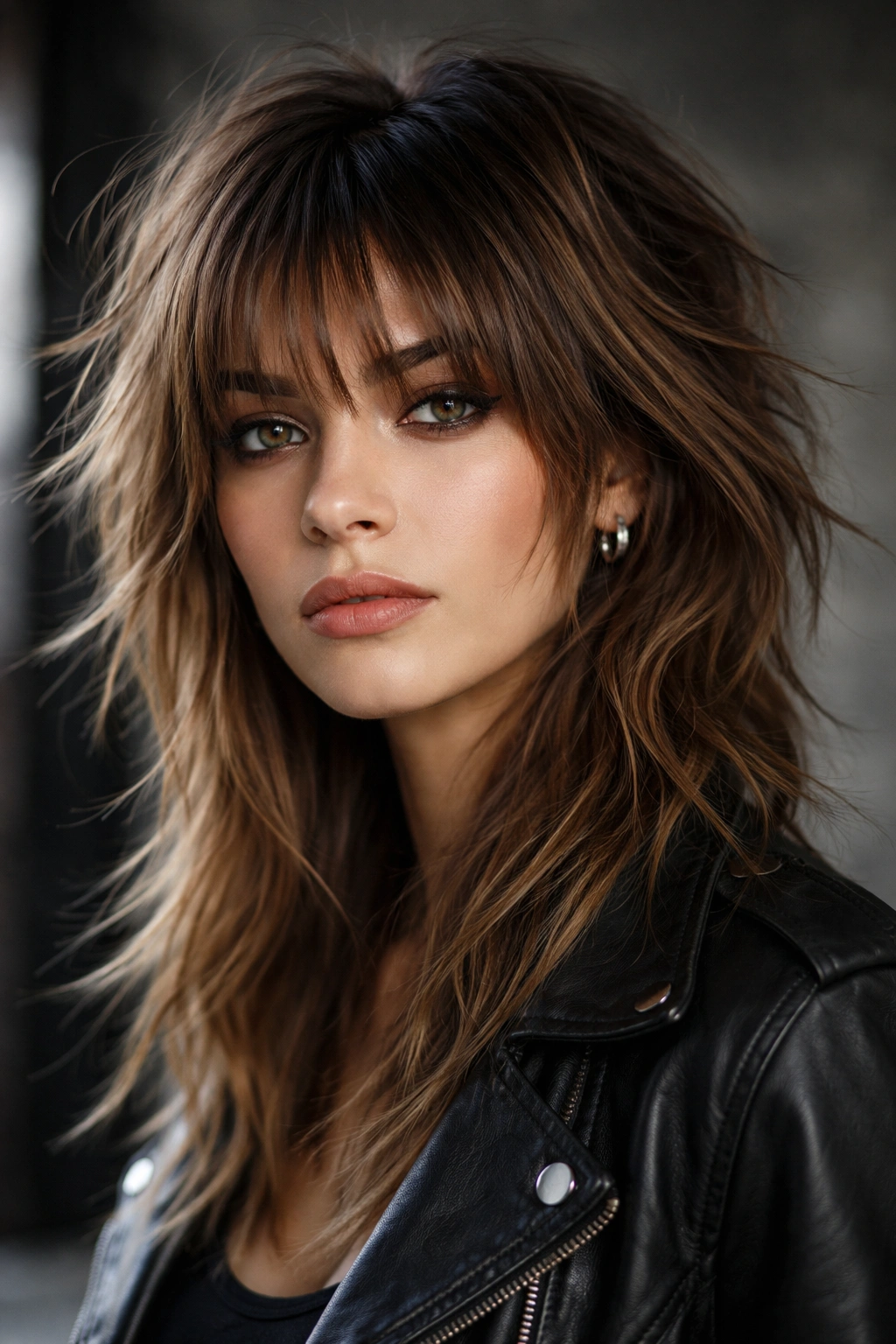
This interpretation of the wolf cut emphasizes choppy, intentionally textured layers throughout with dedicated wispy bangs that graze the eyebrows. The choppy texture isn’t accidental—it’s achieved through strategic point-cutting and texturizing techniques that create visible, deliberate separation between sections. The bangs add an extra layer of personality and modern edge.
Bangs as the Defining Element
Wispy bangs dramatically change the energy of a wolf cut, making it feel more editorial and fashion-forward. They also frame the face in a flattering way while adding another dimension to the overall movement of the style.
Styling Approach and Personality
- This version requires more intentional styling to look cohesive—expect to spend 10-15 minutes with styling products
- Works best on naturally straight to slightly wavy hair (curly hair tends to blur the choppy definition)
- Bangs will need regular trims every 2-3 weeks to maintain their shape
- Pairs beautifully with edgy fashion, alternative aesthetics, and bold makeup
- The choppy texture naturally photographs well and creates visual interest from every angle
Pro tip: This wolf cut looks significantly better when you embrace its textured nature rather than trying to smooth it. Products like sea salt sprays, texturizing paste, and light hairsprays enhance the intentional choppiness.
5. Curtain-Framed Wolf Cut with Center-Parted Movement
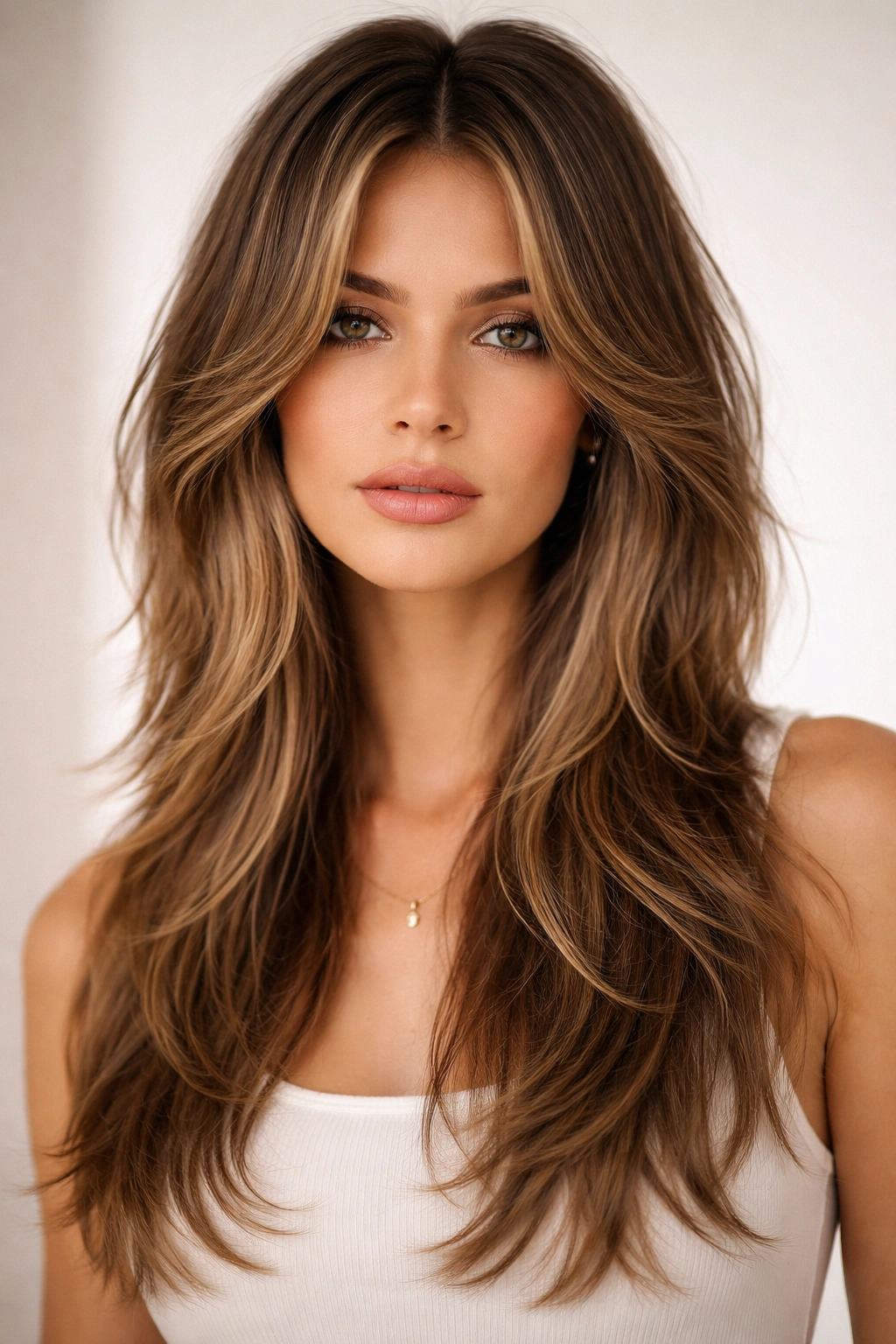
The curtain wolf cut uses longer, face-framing layers that are explicitly designed to part in the center and sweep outward, creating a beautiful framing effect around the face. This version bridges the gap between a classic curtain cut and a modern wolf, offering the romantic face-framing benefits of curtains with the textured movement of a wolf.
Why Center-Parting Changes Everything
A center part naturally creates symmetry and balance, which many face shapes find flattering. Combined with the wolf cut’s movement, it creates a hairstyle that feels both intentional and effortlessly romantic.
The Styling Sweet Spot
- Requires at least shoulder-length hair (16+ inches) for proper curtain movement
- Face-framing layers should be slightly longer than the shortest choppy pieces in the back
- Works beautifully with both straight and wavy hair—curly hair also works if you embrace the texture
- Can be styled multiple ways: smooth and sleek, softly waved, or textured and tousled
- The center part naturally works with side-swept styling if you prefer asymmetry
Insider note: This cut actually gets better as your hair grows out slightly, because the layers become more integrated and the curtain effect becomes more pronounced. You don’t need to trim it as frequently as some wolf cuts.
6. Shorter Wolf Cut (Chin-Length) with Maximal Texture
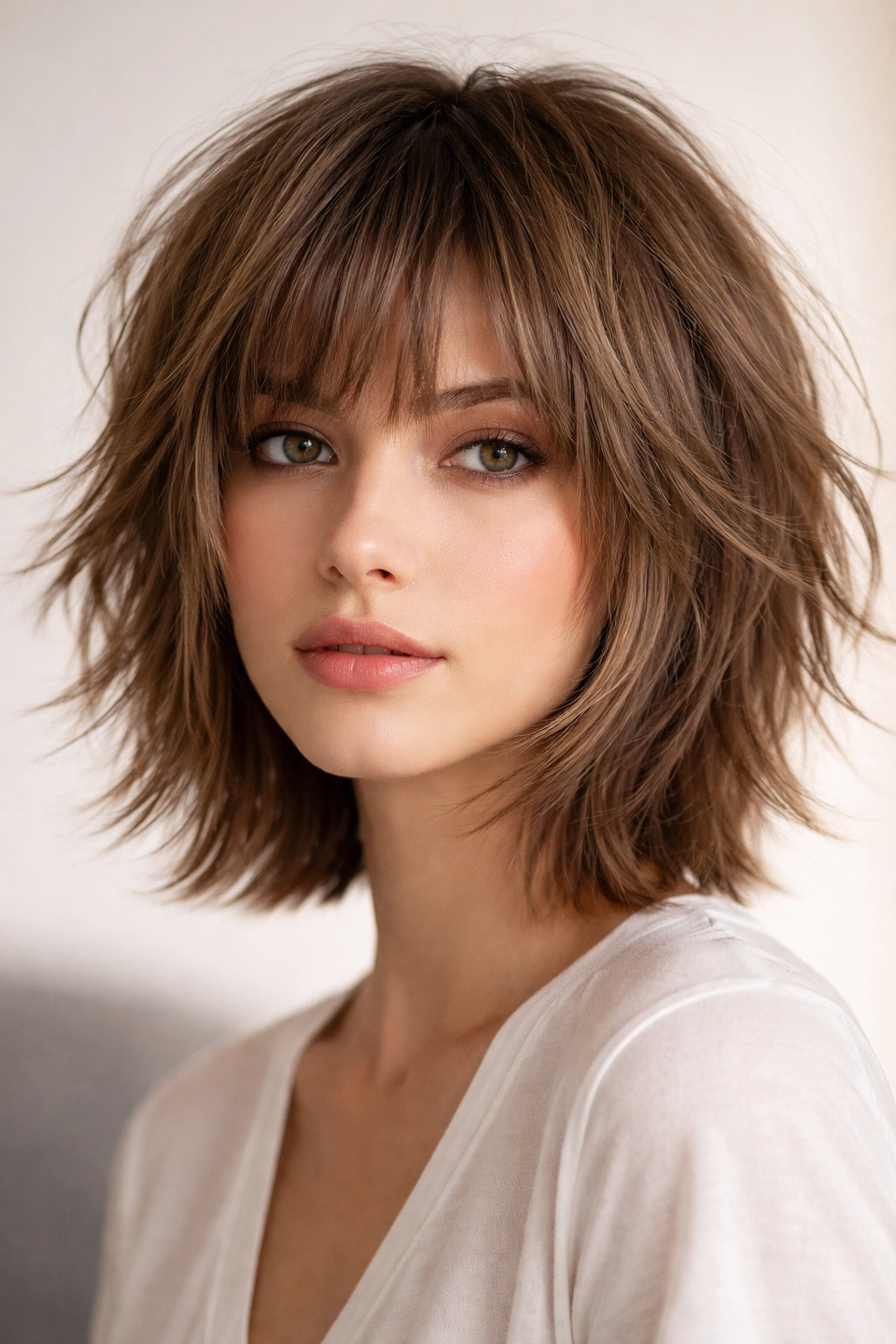
For women who prefer shorter hair but still want the personality and movement of a wolf cut, a chin-length version delivers maximum impact. This shorter interpretation stacks layers more densely to create texture and movement despite the reduced length. Every layer counts in a shorter cut, so the stylistic choices become even more intentional.
When Shorter Is Actually Better
A shorter wolf cut works exceptionally well for fine or thin hair because it removes the weight that can make longer lengths look limp. The denser layer placement creates an illusion of volume while still allowing movement and texture.
Practical Benefits of Going Shorter
- Requires significantly less styling time—10 minutes maximum for a polished look
- Dries faster and requires less product to style
- Face-framing becomes more dramatic because layers are closer to the face
- Works beautifully with both straight and curly hair types
- Chin-length positioning is incredibly flattering for most face shapes, especially round and square
Worth knowing: Shorter wolf cuts actually trend differently depending on the density of your hair. If you have finer hair, this length and texture work magic. If you have thick hair, you might need slightly longer length for the style to feel intentional rather than just short.
7. Shaggy Textured Wolf Cut with Lots of Movement
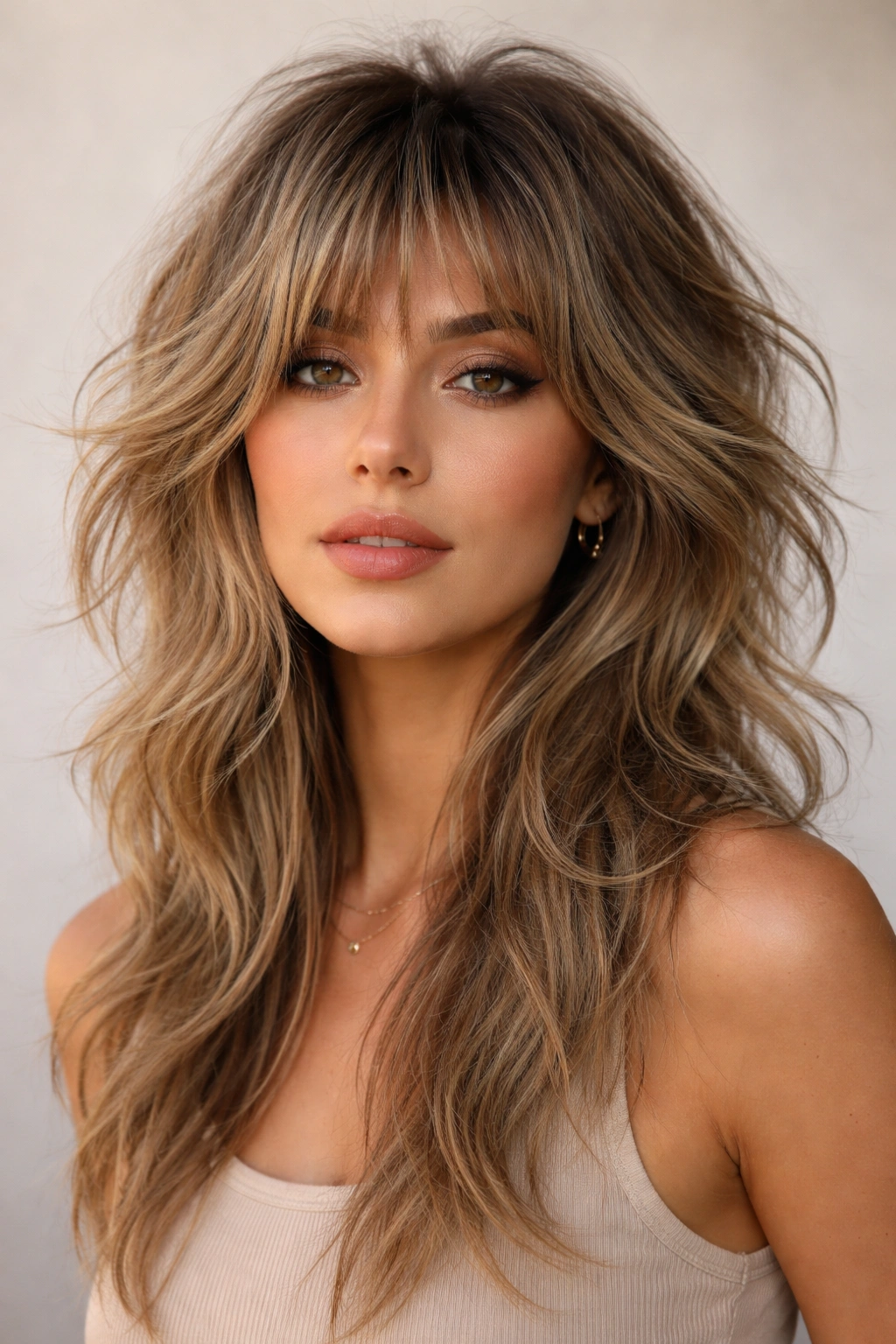
This version emphasizes maximum movement and texture, creating a deliberately shaggy aesthetic that nods to 70s-inspired shag cuts while maintaining modern wolf cut sensibility. Layers are numerous, slightly choppy, and designed to move and separate dramatically. This version reads as playful, youthful, and effortlessly cool.
The Shag Connection
True shag haircuts are having a moment alongside wolf cuts, and this hybrid embraces the texture-forward philosophy of shags while keeping the face-framing and length balance of a wolf. It’s less severe and architectural than some wolf cuts, more carefree and movement-focused.
Achieving That Lived-In Movement
- This cut requires layering throughout the entire head, not just at the ends
- Choppy, visible separation between layers is intentional and beautiful when styled well
- Works wonderfully with texturizing sprays, sea salt sprays, and loose curling products
- Best suited for women who enjoy spending 15-20 minutes styling their hair
- Creates natural-looking movement even when your hair is naturally straight
Pro tip: Shaggy wolf cuts are one of the few versions that actually look better when you don’t over-style them. The more imperfect and textured, the more intentional and cool it feels.
8. Sleek Blowout Wolf Cut with Polished Waves
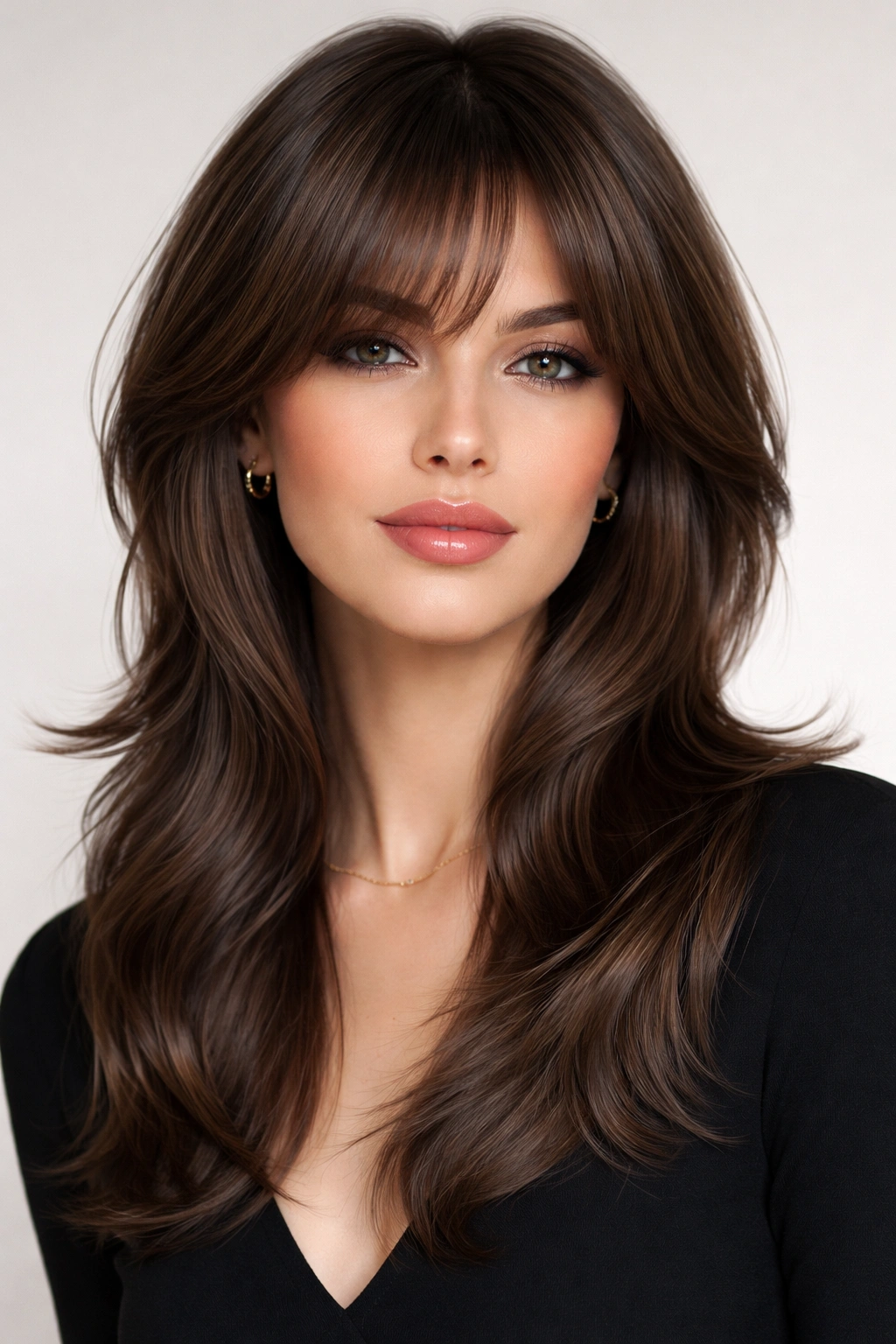
This wolf cut variation is designed specifically for women who want the modern cut structure of a wolf but prefer a polished, elegant aesthetic. Rather than embracing texture and choppy separation, this version uses smooth, intentional waves created through blow-drying and styling products. The layers are present but appear integrated and refined rather than visibly choppy.
The Polished Approach
This version of the wolf cut works beautifully for professional environments and formal occasions because it reads as intentional and sophisticated without looking casual or undone. It bridges the gap between a traditional modern cut and a trendy wolf style.
Styling and Product Strategy
- Requires a really good blow-dry technique or professional styling to achieve the refined wave pattern
- Works best with smoothing serums, shine sprays, and lightweight styling products
- Fine to medium hair achieves the sleekest results; thick hair needs more product and technique
- Layers need to be slightly longer and less choppy than extreme wolf cut variations
- This version actually benefits from regular styling—the more you refine it, the better it looks
Real talk: If you love the modern edge of a wolf cut but your job or personal aesthetic calls for polish, this is your answer. You get the trendy cut structure with a completely professional presentation.
9. Tousled Boho Wolf Cut with Long Flowing Lengths
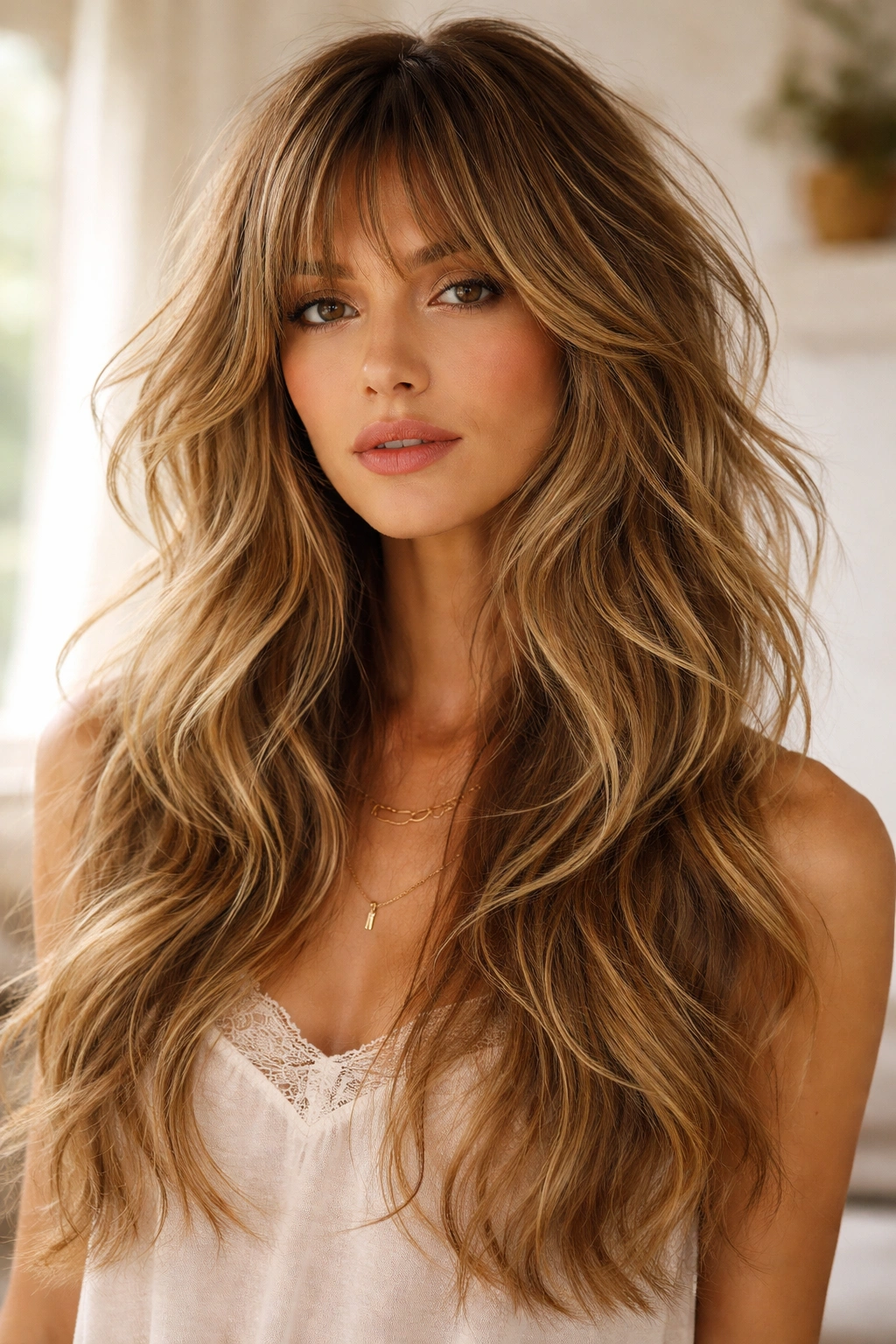
The boho wolf cut emphasizes romantic length while maintaining the textured layers that define a wolf cut structure. This version prioritizes soft, tousled waves that feel intentionally effortless. It works beautifully for women who want visible texture and movement but prefer longer overall length and a softer, more bohemian aesthetic.
Bohemian Energy in Modern Form
This cut pairs the romantic, free-spirited aesthetic of bohemian style with the modern edge and structure of a wolf cut. The result feels both current and timeless, practical and poetic.
Creating the Tousled Effect
- Works best with naturally wavy or curly hair, but straight hair can achieve this with products and styling
- Longer lengths (18+ inches) work better for this version because there’s more surface area for waves
- Layers should blend together rather than being sharply defined or aggressively choppy
- Styling method: apply sea salt spray to damp hair, scrunch, and allow to air-dry for maximum texture
- Face-framing pieces should be long enough to blend with the rest of the hair, not drastically shorter
Insider note: This wolf cut variation actually improves with time. The more you wear it, style it, and develop your own technique, the better it becomes. It’s less about perfection and more about personal texture development.
10. Asymmetrical Wolf Cut with Longer One Side
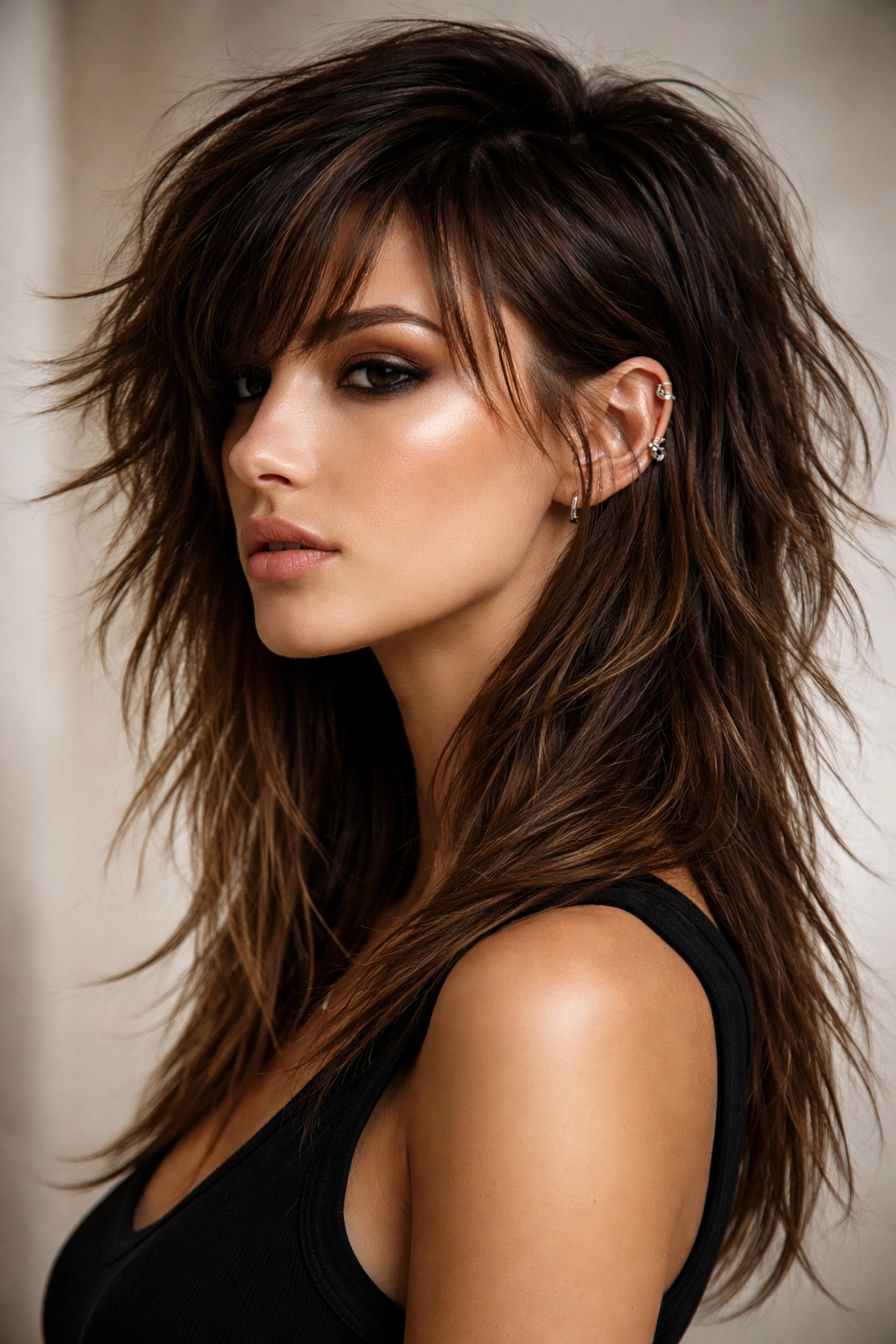
An asymmetrical wolf cut uses deliberately uneven lengths to create drama and visual interest. One side remains notably longer than the other, while layers are distributed asymmetrically throughout the cut. This version appeals to women who want a bold, immediately recognizable statement piece.
Bold Visual Impact
Asymmetrical cuts automatically read as more fashion-forward and intentional because the imbalance is immediately noticeable. Combined with a wolf cut’s texture and movement, asymmetry elevates the entire aesthetic.
Execution and Styling Considerations
- Asymmetry works best when the length difference is genuinely noticeable (at least 2-3 inches)
- One side can be chin-length while the other extends to shoulder-blade length for maximum drama
- Layers should be distributed to balance the asymmetry—the longer side might have fewer, larger layers
- This version requires confident styling; it won’t look intentional if you try to make it even
- Face-parting becomes asymmetrical too, adding to the overall bold effect
Worth knowing: Asymmetrical cuts require commitment. You’ll need to style your hair regularly for it to read as intentional rather than accident-prone. But if you’re willing to put in that effort, the payoff in terms of visual impact is significant.
11. Fine Hair Wolf Cut with Strategic Layering
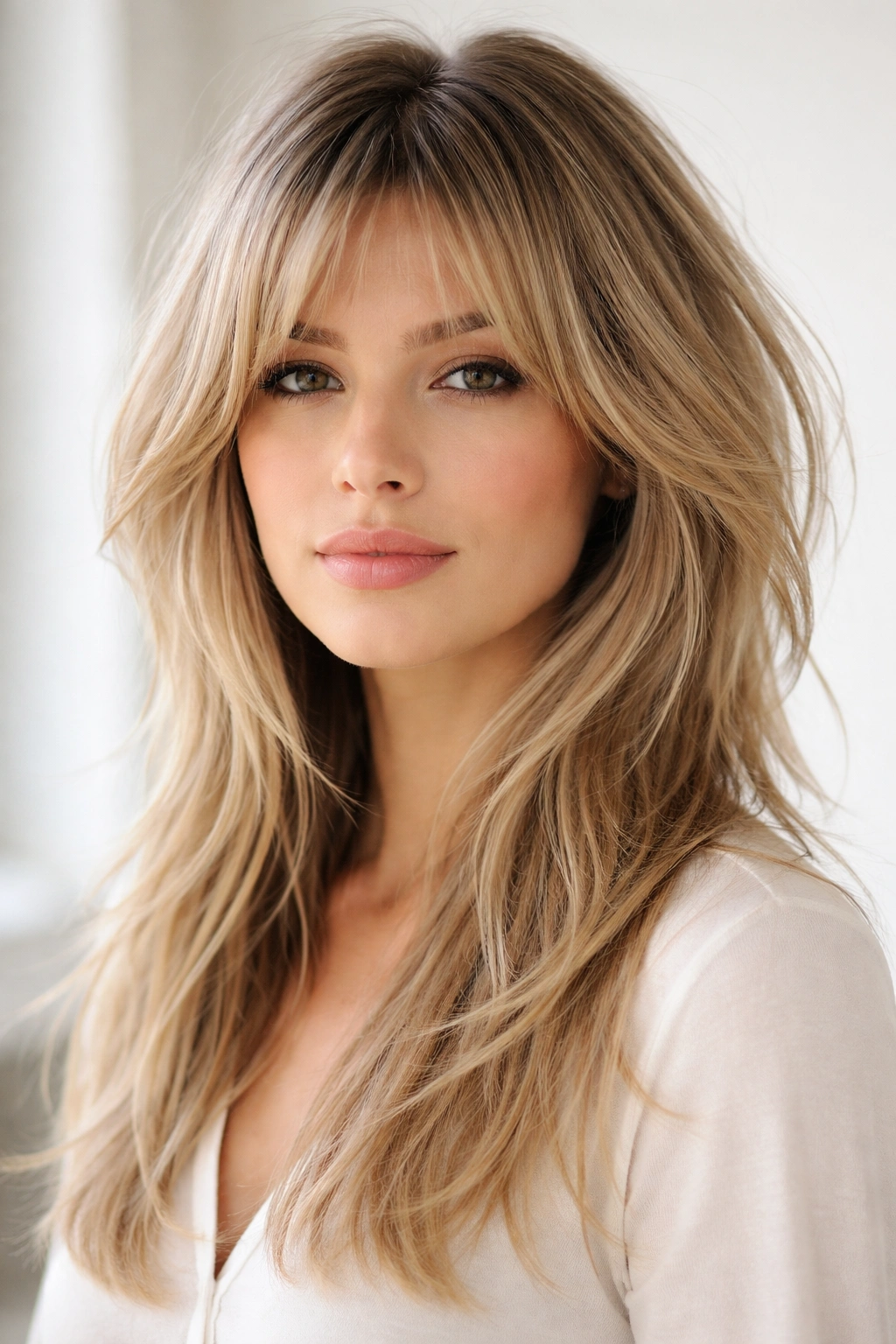
Women with genuinely fine or thin hair often avoid layered cuts because they fear losing density. However, a strategically designed wolf cut can actually create the illusion of more volume while maintaining the movement and style of the cut. The key is layer placement, density of layers, and styling technique.
Strategic Layering for Fine Hair
Fine hair wolf cuts use layers that are slightly longer and less densely packed than versions for thick hair. The goal is to create separation and movement without creating gaps or making the hair appear thinner.
Customization for Finer Hair Types
- Shorter overall length (chin to shoulder) works better because it distributes the hair volume more effectively
- Layers should be graduated rather than choppy to avoid creating visible thinness
- Asking for a “texturizing” approach rather than visible choppy layers prevents the fragmented look
- Styling products become crucial—volumizing mousse and texturizing spray add the thickness that the cut alone can’t provide
- Side-parting often works better than center-parting for fine hair because it redistributes the visual weight
Real talk: If you have fine hair, work with a stylist who specifically understands fine hair. They’ll know how to create the wolf cut structure without creating gaps or making your hair look wispy and thin.
12. Curly Hair Wolf Cut with Defined Ringlets
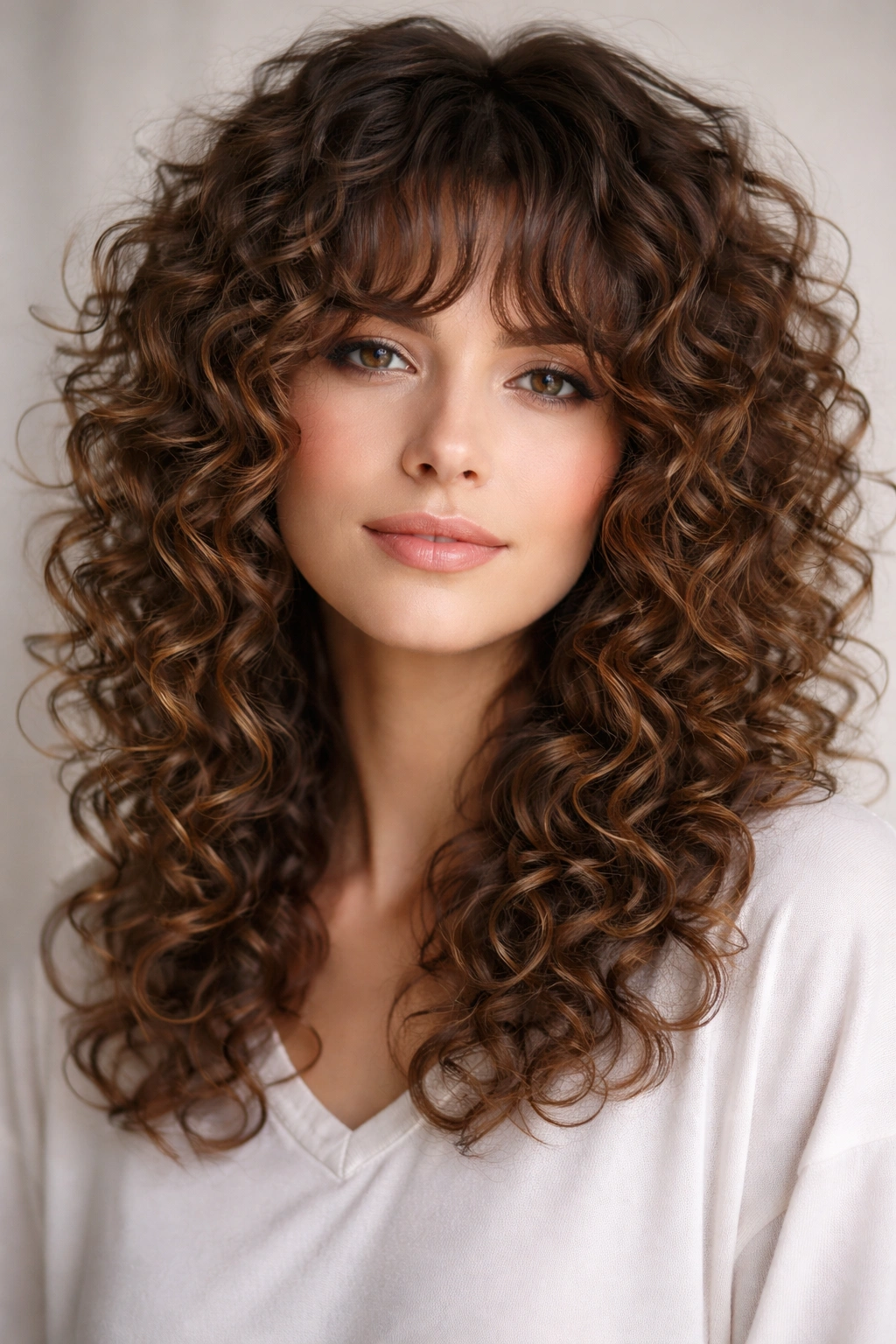
Curly hair can wear a wolf cut beautifully when the cut is designed specifically for curl patterns. Rather than fighting the curl, this version embraces it by layering strategically to create defined ringlets and texture that naturally separates due to the curl pattern itself. The result is a cut that looks intentional and beautiful both when curly and when stretched out.
Curls as the Design Element
Curly wolf cuts work so well because curls naturally create the separation and movement that straight-haired wolf cuts achieve through choppy layering. The layers amplify the curl pattern, making it appear fuller and more defined.
Working With Curl Patterns
- Get a cut from a stylist trained in curly hair cuts (this is non-negotiable—they understand how curls interact with layers)
- Layers should be longer than you might think; curls shrink up significantly as they dry
- The wolf cut structure becomes visible in the curl pattern—you’ll see the intentional layering through how curls fall
- Styling method: apply leave-in conditioner and curl cream to soaking wet hair, scrunch upward, and allow to air-dry or diffuse
- This cut works beautifully stretched out too—you can refresh curls with water and products between wash days
Pro tip: Curly hair wolf cuts genuinely need less frequent trims than straight-haired versions because curls hide regrowth and blend layers more naturally. Aim for every 8-10 weeks rather than every 6 weeks.
13. Balayage-Friendly Wolf Cut with Highlight Integration
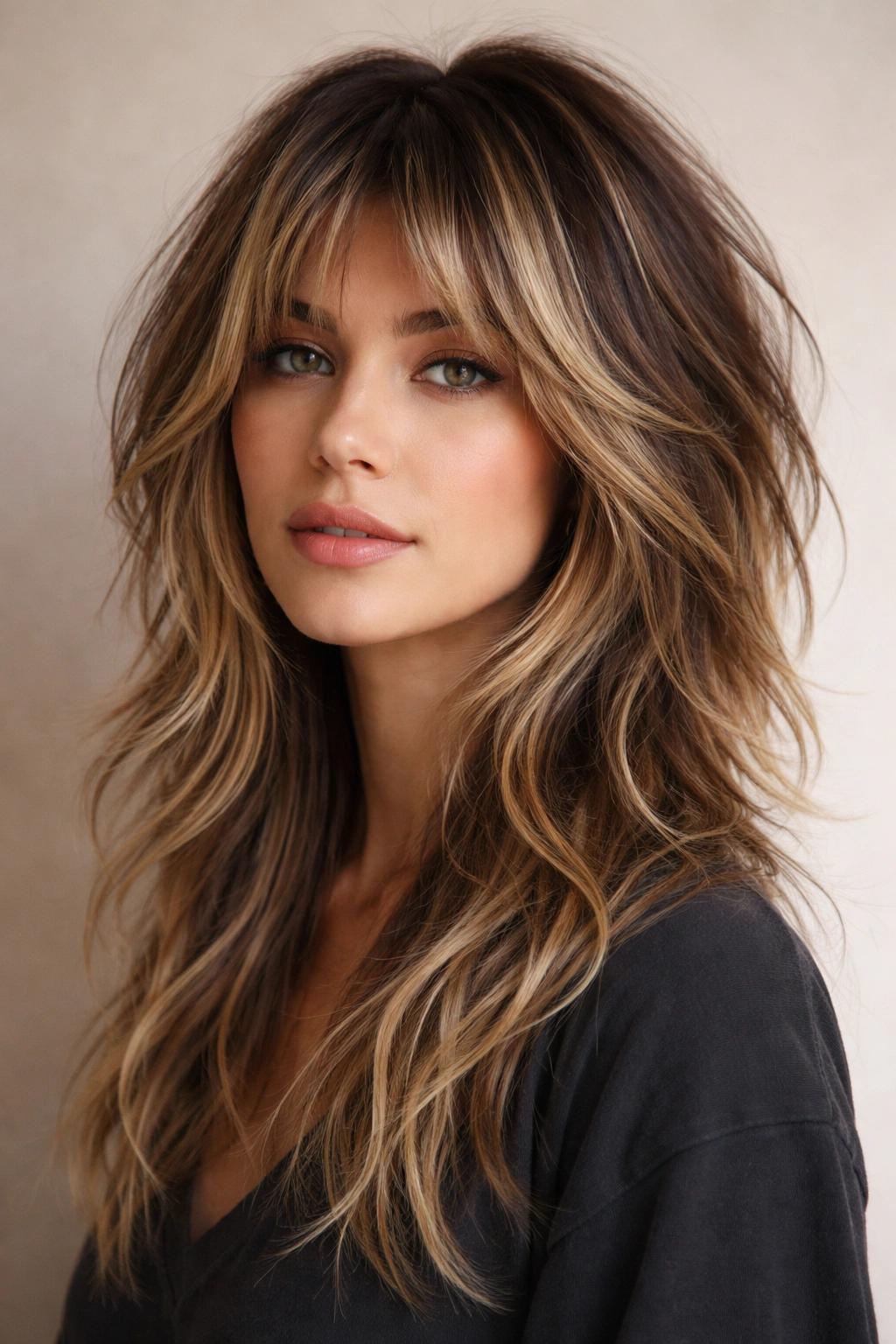
This wolf cut version is designed specifically to showcase balayage, highlights, or dimensional color work. The layered structure and movement create a perfect canvas for color placement. Lighter pieces can be strategically placed within the layers to amplify movement and catch light beautifully.
Color and Cut as One Entity
When a wolf cut is designed with color in mind, the cut and color work together to create significantly more visual impact than either alone. The layers become more defined through strategic color placement, and the color appears more dimensional because of how the layers catch light.
Strategic Color Placement
- Face-framing pieces work beautifully with slightly lighter color to draw attention to features
- Choppy layers of varying lengths create perfect placement for highlighted pieces
- Darker shadow tones at the roots provide depth while lighter highlights at the ends create lift
- Movement in the cut is amplified when color follows the layer lines
- This approach works with any color—blonde, brunette, red, or even color-treated hair
Worth knowing: If you’re planning to do balayage with your wolf cut, tell your stylist during the consultation. They can design the cut layers to work with your color plans and vice versa.
14. Low-Maintenance Wolf Cut for Busy Women
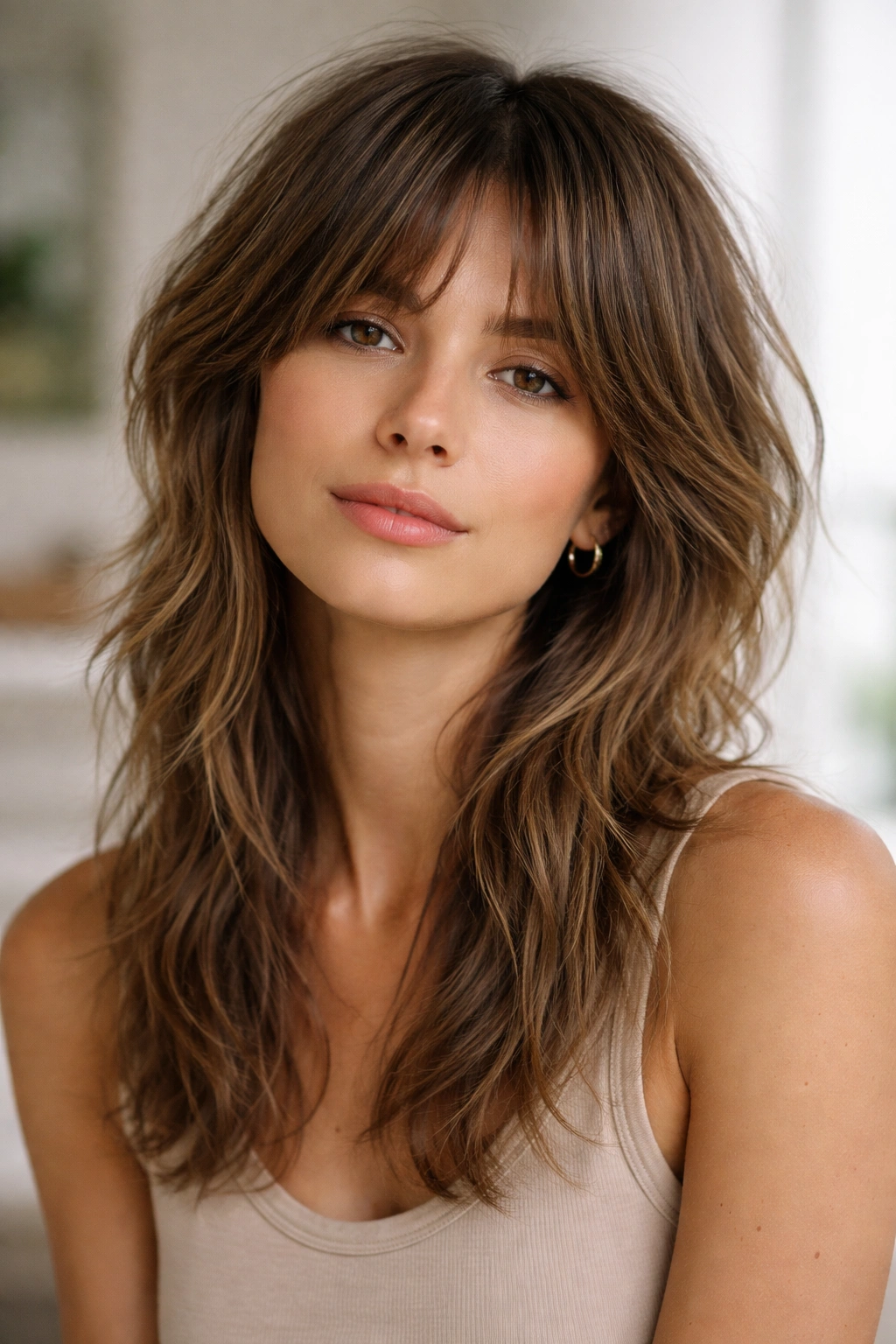
Not everyone has time for high-maintenance styling. This wolf cut version is designed for low manipulation and minimal styling while still delivering the texture and movement that makes a wolf cut appealing. Layers are placed to enhance natural texture without requiring heat tools or complex styling routines.
Built-In Ease Factor
This version prioritizes wash-and-go potential while maintaining the wolf cut structure. It works beautifully for women with naturally textured hair, busy schedules, or those who simply prefer not to spend time styling.
Practical Low-Maintenance Features
- Works best with naturally wavy or curly hair that already has texture
- Layers should be longer and less densely packed to reduce frizz and styling needs
- Texturizing sprays become your best friend—spray, scrunch, and you’re done
- Shorter overall length (chin to shoulder) dries faster and requires less product
- Regular trims (every 6-8 weeks) keep the shape intact without constant styling maintenance
Real talk: A low-maintenance wolf cut still requires some intentionality, but you can absolutely have this cut without a daily styling routine. It’s about working with your natural hair texture rather than against it.
15. Dramatic Layers with Choppy Fringe Wolf Cut
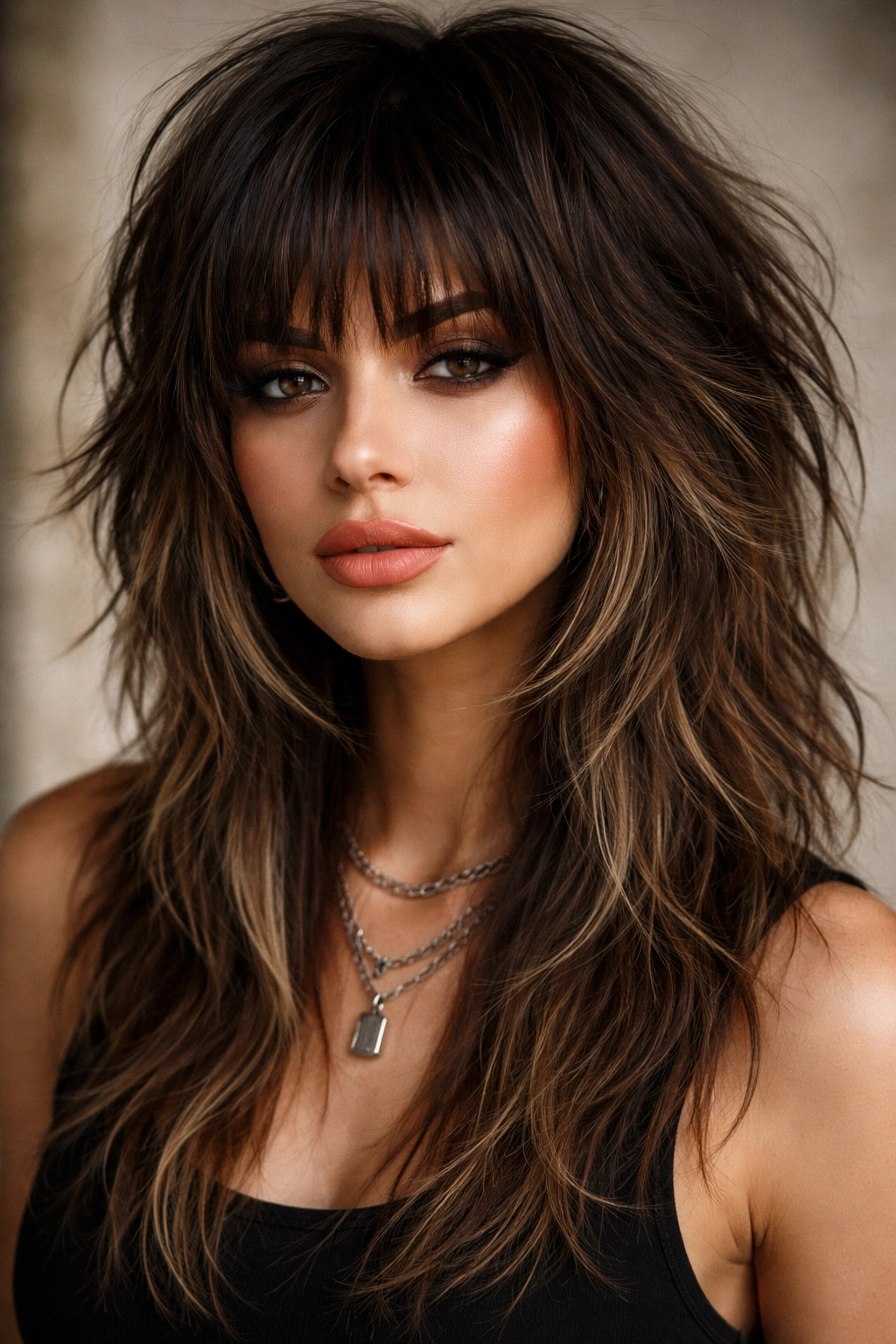
This version maximizes drama by combining a wolf cut structure with a choppy, textured fringe that sits just above the eyebrows. The fringe isn’t a traditional, blunt bang—it’s choppy and separated, perfectly integrated with the rest of the layered cut. This approach creates incredible visual impact and works beautifully for women who want an undeniably fashion-forward statement.
The Fringe Factor
A choppy fringe changes the entire energy of a wolf cut, making it feel more editorial, more rock-and-roll, and more intentionally styled. It adds another dimension to the textured movement.
Integration and Styling
- The fringe should appear integrated with the face-framing layers, not separate or disconnected
- Choppy fringe requires regular trims (every 2-3 weeks) to maintain the intended shape
- Styling is crucial—this cut needs to be actively styled to look intentional rather than just messy
- Works best on straight to wavy hair; curly hair can obscure the fringe definition
- Pairs beautifully with bold makeup and confident styling
Pro tip: Choppy fringe wolf cuts are genuinely one of the most photogenic hairstyle versions available. They photograph incredibly well and create natural visual interest in photos.
16. Subtly Layered Wolf Cut for Minimalists
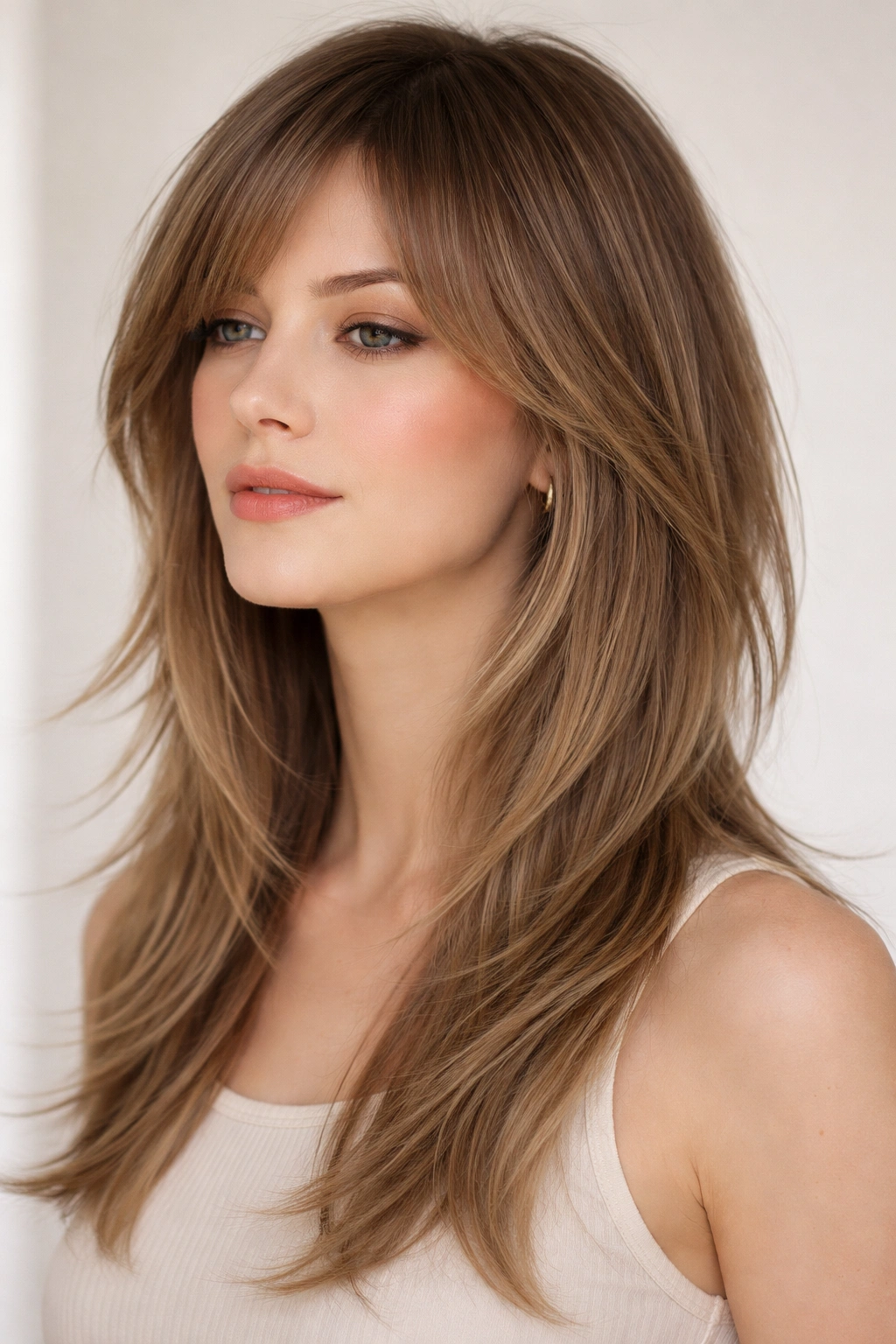
For women who love the concept of a wolf cut but prefer a more subtle interpretation, this version uses minimal, strategically placed layers rather than aggressive choppy texturing. The layers are present and intentional but so integrated that the overall effect reads as modern and refined rather than visibly textured.
Subtlety as Sophistication
This wolf cut version appeals to women who want modern movement and structure without the drama or boldness of more aggressive wolf cut interpretations. It works beautifully in professional settings while maintaining the contemporary edge of the style.
Refined Layer Placement
- Layers are longer and more graduated, creating blended movement rather than visible separation
- Face-framing is present but subtle, extending only slightly shorter than the length behind it
- Styling can go polished and smooth or slightly textured—the cut works either way
- Works beautifully on all hair types and textures
- Requires less frequent trims because the integrated layers blend more naturally with regrowth
Worth knowing: A subtly layered wolf cut is actually harder to execute than a dramatically choppy one. It requires real precision and understanding of how layers should blend and move. Find a stylist who excels at this approach.
17. Colored Wolf Cut with Split-Tone or Dual-Tone Effect
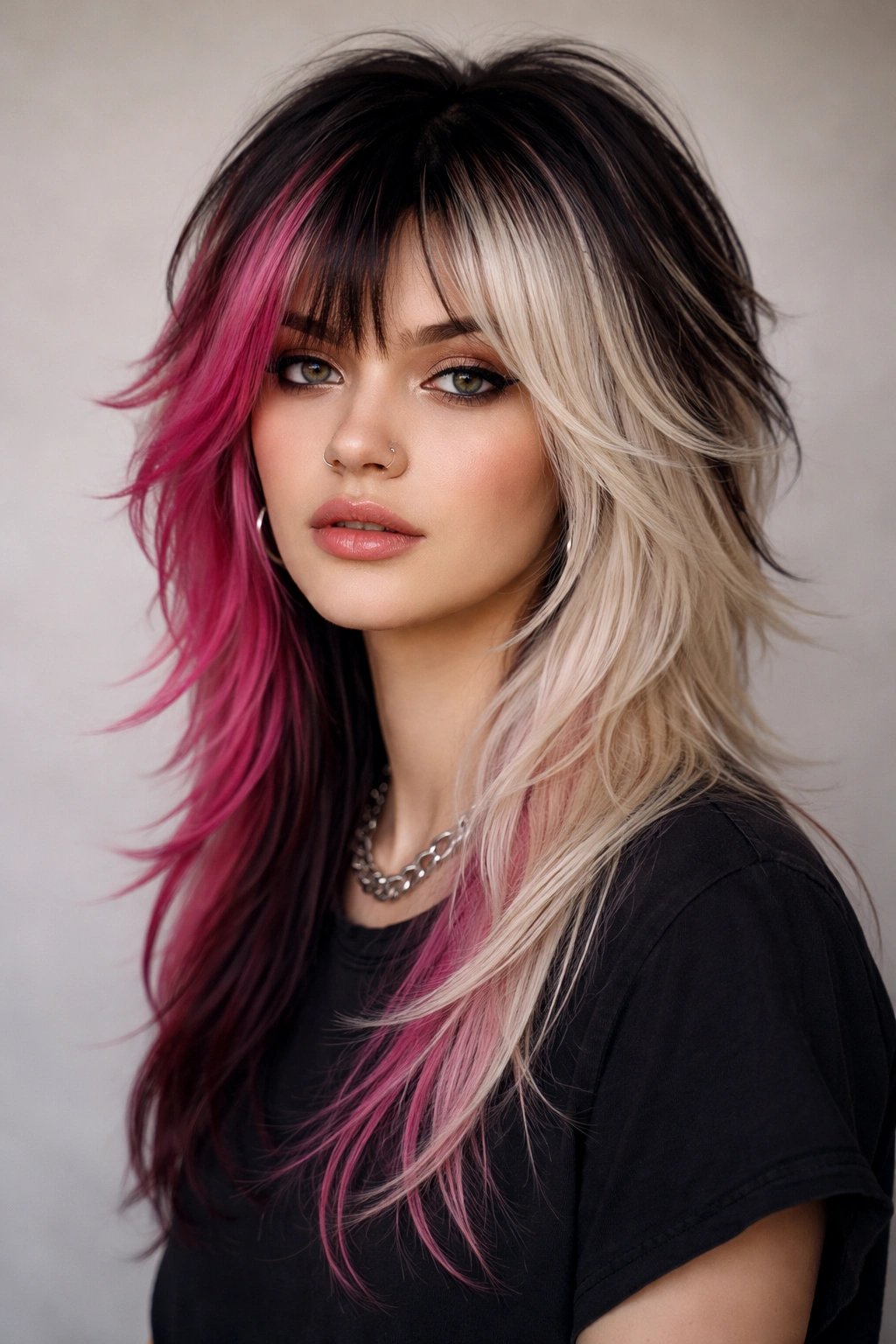
This version pairs a wolf cut with intentional dual-tone or split-tone coloring for maximum visual interest. One section of the hair might be a richer tone while another section is noticeably lighter, with the color change creating drama and enhancing the cut’s movement.
Color Blocking Through Layers
Split-tone coloring works beautifully with wolf cuts because the layers naturally separate color sections. A darker tone at the roots or in interior sections contrasts with lighter tones at the ends or face-framing pieces.
Execution and Visual Impact
- This approach works with any color combination—dark roots and light ends, contrasting jewel tones, or neutral color blocking
- The color change should happen in a way that complements the layer structure
- Maintenance is higher because the color contrast becomes more obvious with regrowth
- The dual-tone effect makes the cut appear more textured and movement-filled than it might be alone
- Works beautifully for women who want a truly statement-making style
Pro tip: If you’re considering split-tone coloring with a wolf cut, book with a stylist who can do both the color and cut—they’ll coordinate the two to work together rather than compete.
18. Textured Pixie-Wolf Hybrid for Very Short Hair
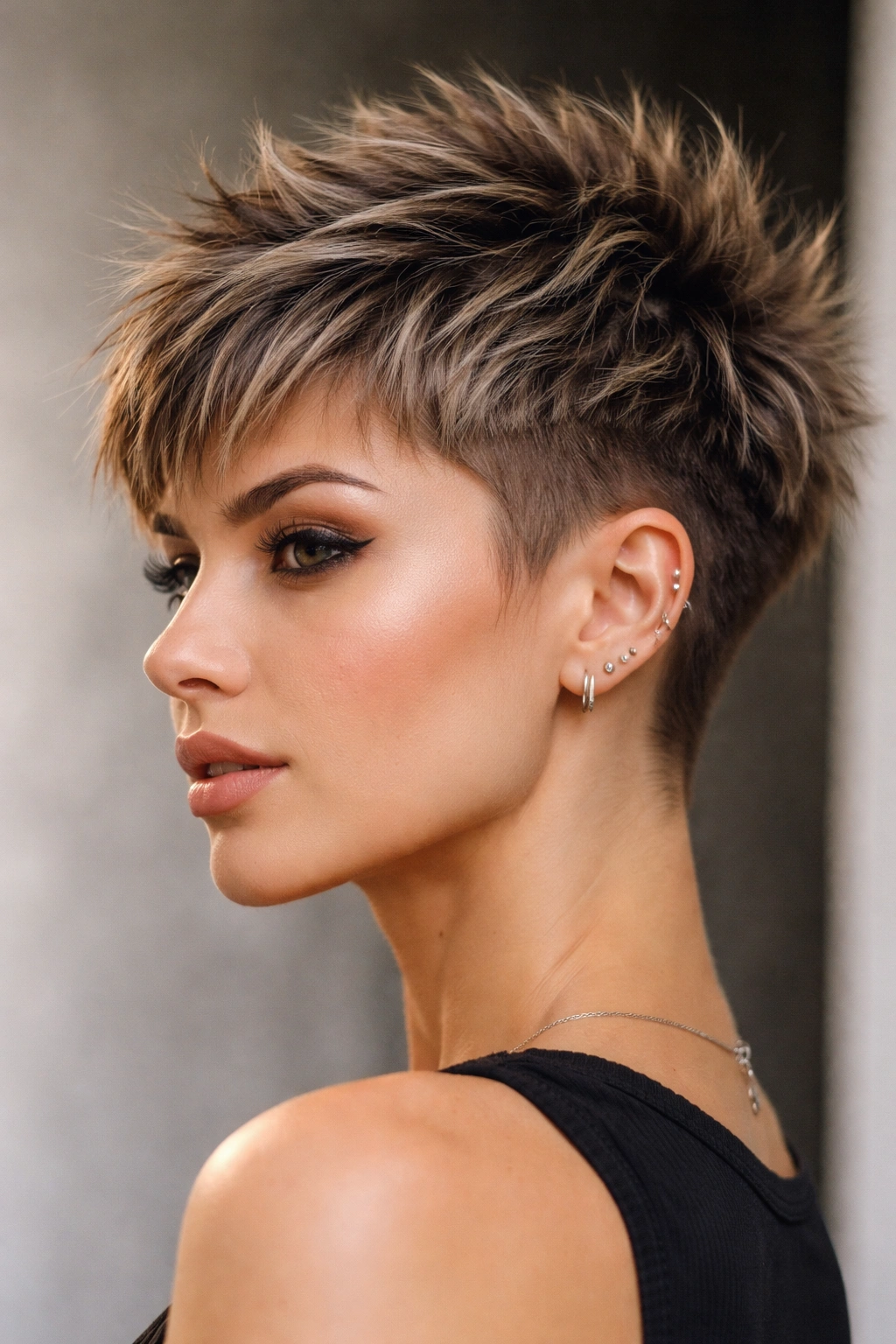
For women who want maximum edge and minimal length, a pixie-wolf hybrid combines the radical shortness of a pixie cut with the textured, layered movement of a wolf cut. The result is an incredibly bold, fashion-forward statement that works beautifully for women with confident styling sensibilities.
Combining Two Powerful Cuts
A pixie-wolf hybrid is the ultimate short cut for texture and personality. It delivers the statement-making boldness of a pixie with the intentional texture and movement of a wolf cut.
Styling and Personality Fit
- This cut requires the most styling commitment of any wolf cut version—it won’t work as wash-and-go
- Best suited for women who actively enjoy the process of styling their hair
- Creates an immediately recognizable, undeniably fashionable aesthetic
- Face shape becomes much more important with such short length—this cut works best on oval, heart, and oblong faces
- Pairs beautifully with bold makeup and confident personal style
Real talk: This cut is genuinely dramatic. It’s not for everyone, and it requires confidence and willingness to be visibly different. But if you’re ready for that level of boldness, the payoff is incredible.
19. Feathered Wolf Cut with 90s Inspiration
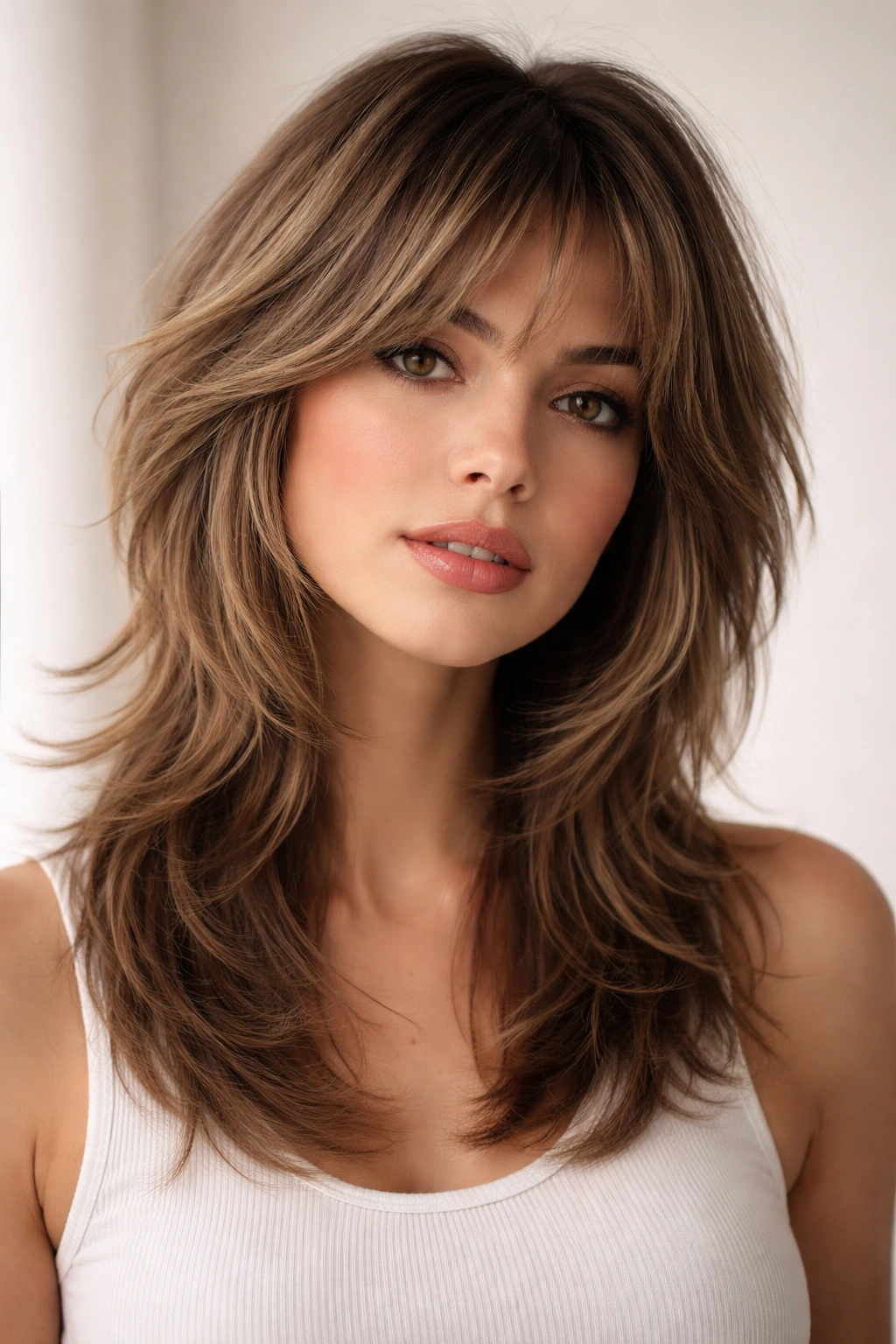
This version pulls from 90s feathered hair trends while maintaining modern wolf cut sensibility. Rather than choppy, separated layers, feathering creates smooth-looking texture where individual strands are slightly shorter than others, creating an overall feathered effect. It’s nostalgic without feeling dated.
Feathering Technique Details
Feathering is a specific layering technique where layers are shorter but blend together smoothly, creating texture without visible separation. When applied to a wolf cut structure, feathering adds movement while maintaining a more integrated appearance.
90s-Inspired Modern Update
- This approach works beautifully on longer wolf cuts (shoulder-length and longer)
- Feathering creates amazing movement and texture without looking choppy or fragmented
- Works with straight, wavy, or curly hair
- Requires less frequent trims than choppy wolf cuts because the layers integrate as they grow
- Styling can be smooth and refined or textured and tousled—the feathering works either way
Insider note: Feathered wolf cuts are having a moment because they capture the 90s nostalgia that’s currently popular while feeling completely modern and intentional. It’s the perfect bridge between trend and timelessness.
20. Professional Wolf Cut Styled for the Workplace
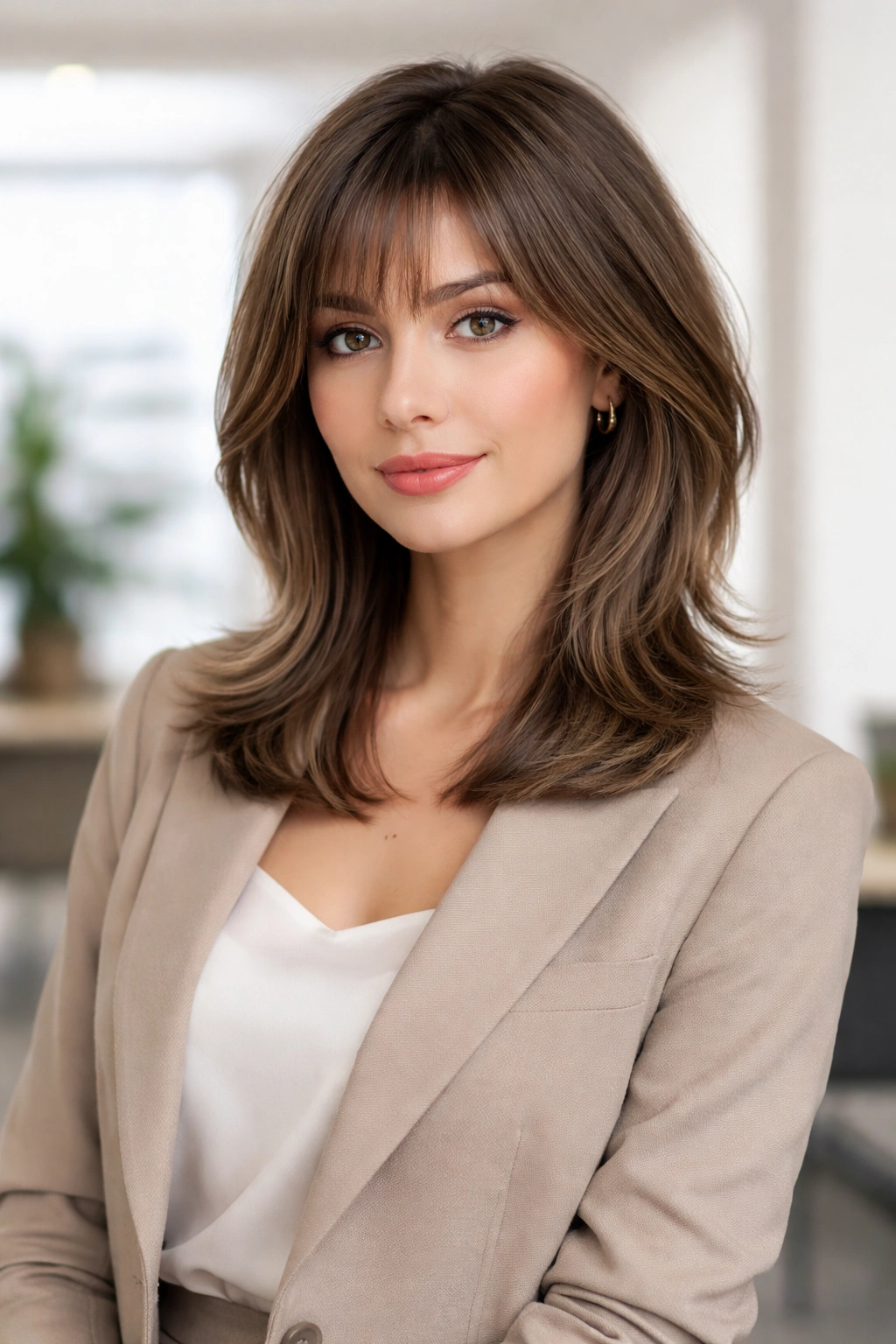
This final variation designs a wolf cut specifically for professional environments where you need style, modernity, and intentional fashion sense but also need the cut to read as workplace-appropriate. The result is a cut with all the personality of a wolf while maintaining polish and professionalism.
Professionalism Without Sacrificing Style
Professional wolf cuts use the same layering structure as other versions but with slightly longer lengths, more integrated layering, and styling approaches that feel polished and refined. You get the modern edge without raising eyebrows in conservative workplaces.
Workplace Integration Strategy
- Layers should be integrated rather than dramatically choppy, creating movement without chaos
- Styling should skew toward polished—smooth blow-dry or intentional waves rather than deliberately tousled texture
- Length should be at least shoulder-length to avoid reading as too short or edgy for professional settings
- Face-framing is present but subtle, adding dimension without drama
- Pair with professional styling products that create shine and polish rather than texture and chaos
Worth knowing: A professional wolf cut is genuinely possible. You don’t have to choose between modern style and workplace appropriateness. Work with a stylist who understands both the cut and professional styling approaches.
Final Thoughts
The wolf cut phenomenon isn’t just about following a trend—it’s about finding a hairstyle that works with your hair texture, fits your lifestyle, and genuinely makes you feel like yourself. What works as a dramatic statement for one woman becomes a low-maintenance favorite for another. What reads as effortlessly cool on someone with naturally curly hair might take styling intention for someone with straight hair.
The beauty of these twenty variations is that there truly is a wolf cut for every person, every hair type, and every aesthetic. Whether you’re drawn to the soft romanticism of flowing waves, the bold statement of sharp geometric layers, or something entirely in between, this cut can be customized to your exact needs and preferences.
Before booking your appointment, spend time thinking about which of these versions genuinely resonates with you. Consider your natural hair texture, how much styling time you’re willing to invest, what aesthetic genuinely makes you feel confident, and what you want the cut to communicate about your personal style. Then find a stylist who has experience with wolf cuts and can translate that vision into reality.
A great wolf cut isn’t just about the cut itself—it’s about the relationship between the cut, your hair’s natural texture, your styling approach, and your personal confidence. Get it right, and you’ll understand why women are genuinely obsessed with this style.
