



Your wedding day hair deserves to be as memorable as every other detail you’ve planned. Whether you’re envisioning yourself in an architectural updo that photographs like a dream or flowing waves that move with you as you walk down the aisle, the right hairstyle transforms how you feel in photographs and throughout the entire celebration. The challenge isn’t finding a wedding hairstyle — it’s finding the one that makes you look and feel like the most confident, beautiful version of yourself while working with your hair texture, dress style, venue, and personal aesthetic.
The good news? Wedding hair has moved far beyond rigid, overly done styles that look beautiful in stills but feel uncomfortable to wear for eight hours. Today’s wedding hair celebrates both polish and softness, both structure and movement. You can have an updo that’s sleek enough for a formal evening reception and loose enough to actually feel like you, or waves that photograph with definition but move naturally when you turn your head. The key is understanding which styles actually work with your hair type, what your venue’s atmosphere calls for, and which approach to hair design — whether that’s smooth and structured or textured and undone — makes you feel like yourself.
This guide walks through 18 wedding hairstyle options that span the full spectrum, from deeply romantic to strikingly modern, so you can see what resonates with your vision. Each style is detailed enough that you can show it to your stylist with confidence, understand how it’ll work with your hair, and know what to expect on your wedding day.
1. Low Sleek Bun
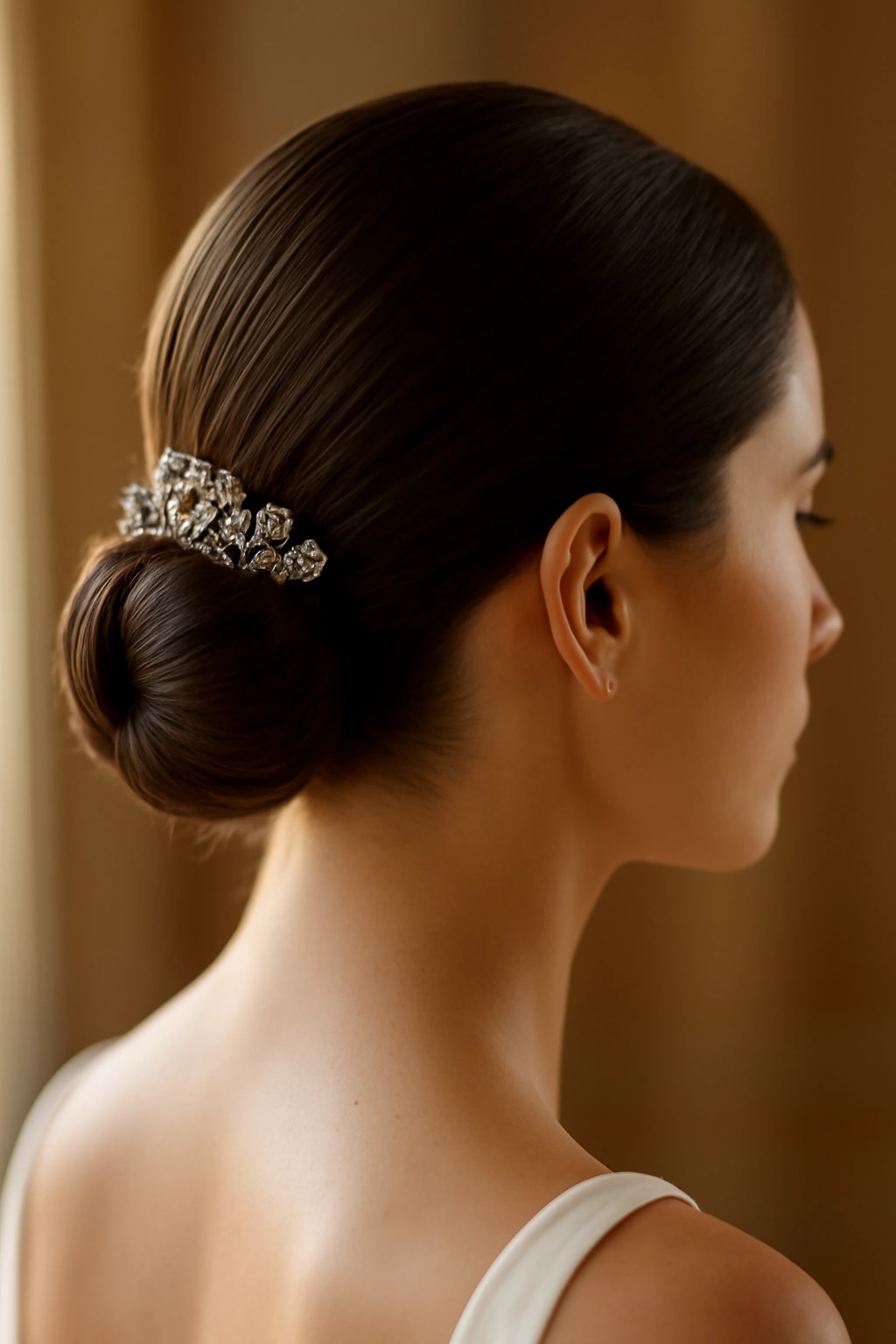
The low sleek bun is the ultimate timeless choice — think Grace Kelly, Audrey Hepburn, and Kate Middleton. This style works for nearly every hair texture and face shape, which explains why it’s remained a wedding favorite for decades. The key to making it feel wedding-appropriate rather than corporate is the precision. A sleek bun demands perfectly smooth hair, a visible part line, and usually some kind of embellishment at the base — whether that’s a jeweled comb, delicate bobby pins, or fresh flowers.
Why It Works for Weddings
A low sleek bun reads as intentional, elevated, and unforgettable in photographs. Because all your hair is pulled back, your face, neck, shoulders, and the neckline of your dress become the focal points, which means a stunning gown and jewelry truly shine. The style stays perfectly in place through dancing, hugging, and movement, and it works beautifully whether you’re getting married on a beach, in a cathedral, or in a modern loft.
What You Need to Know
- Hair length requirement: Works best with hair at least collarbone-length, though longer hair creates a fuller bun
- Styling time: 45-60 minutes with a professional stylist; the smoothness takes time
- Best for hair textures: Naturally straight or wavy hair that can be smoothed; curly hair needs a relaxer or significant smoothing treatment
- Hold method: Typically uses gel, pomade, and many bobby pins for security and sleekness
- Add polish with: Jeweled hair pins, vintage combs, fresh peonies, or a delicate headpiece tucked into the bun base
Pro tip: Ask your stylist to tease the crown slightly before creating the bun itself — this adds volume at the top of your head and prevents a flat, pulled-back appearance even though the style looks smooth.
2. Romantic Soft Waves
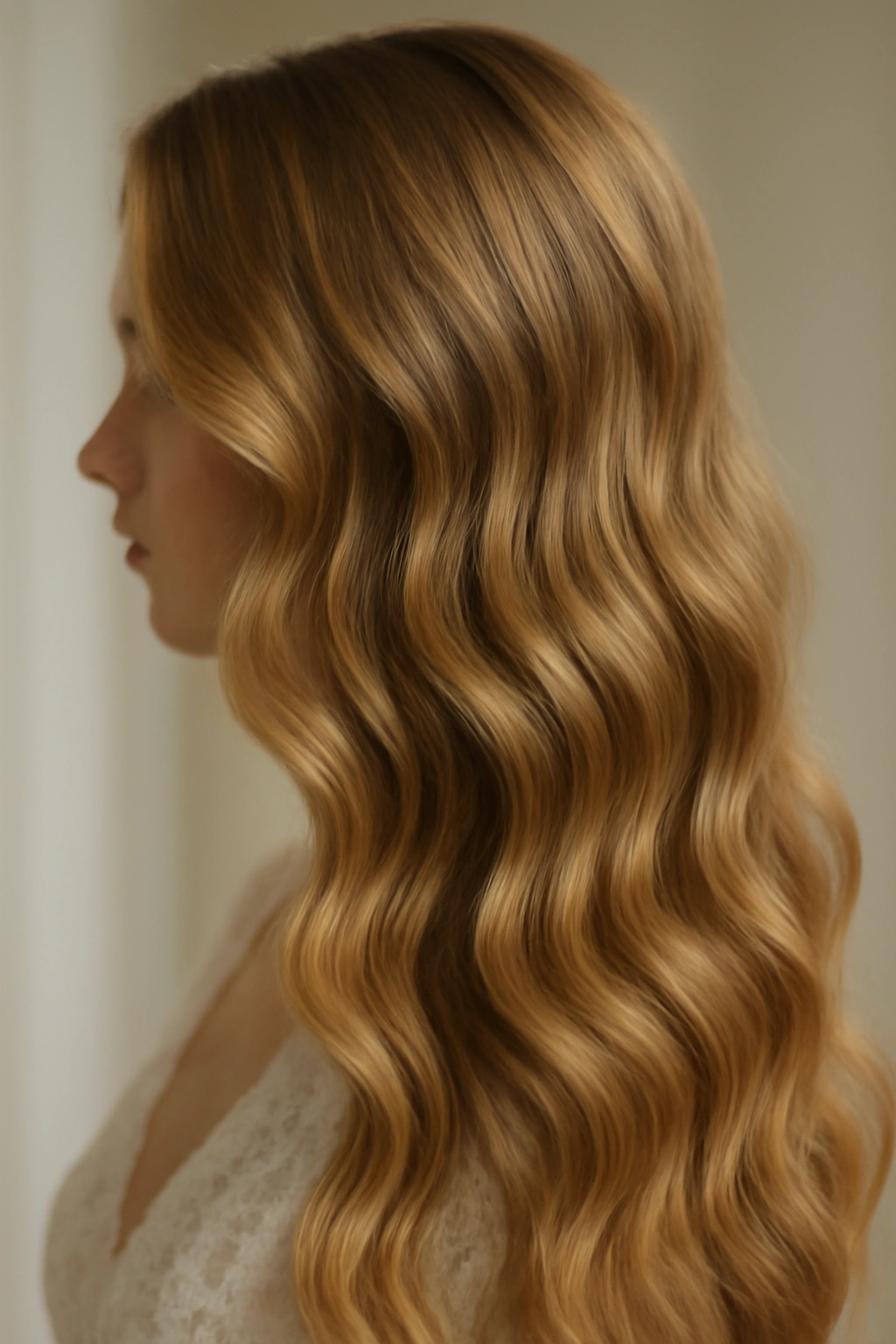
Soft waves represent the opposite end of the spectrum from the sleek bun, and they’re often the choice for brides who want to feel ethereal and organic rather than formal. These aren’t beach waves or casual curls — they’re intentional, styled waves that look effortless but take real skill and products to maintain. Soft waves work with lace details, flowing fabrics, and bohemian settings, but they also pair beautifully with more structured gowns when you want to soften the overall look.
Why Brides Choose This Style
Soft waves feel romantic and feminine in a way that feels personal rather than performative. The style flatters nearly every face shape, keeps hair off your shoulders and out of your face (when styled with the right structure), and photographs with incredible dimension and movement. Unlike blunt waves or curls that can look dated, soft waves feel timeless and elegant — they just look different depending on whether you’re doing them in 2025 or five years from now.
Key Elements for Success
- Wave pattern: Loose, gentle waves rather than tight ringlets; waves should be approximately 2-3 inches wide
- Texture base: Usually created with a large barrel curling iron or wand, then brushed out and finger-combed for softness
- Hold products: Lightweight hairspray and texturizing spray so waves don’t feel stiff or sticky
- Best for hair types: Works beautifully on straight, wavy, and naturally curly hair — the texture just looks different on each
- Styling longevity: Waves can soften slightly throughout the night, which is actually part of their charm
Worth knowing: If you have very straight hair, ask your stylist about a loose perm wave treatment a few weeks before the wedding — this gives you the base texture you need so waves hold all day without requiring heavy products.
3. Half-Up Half-Down with Braids
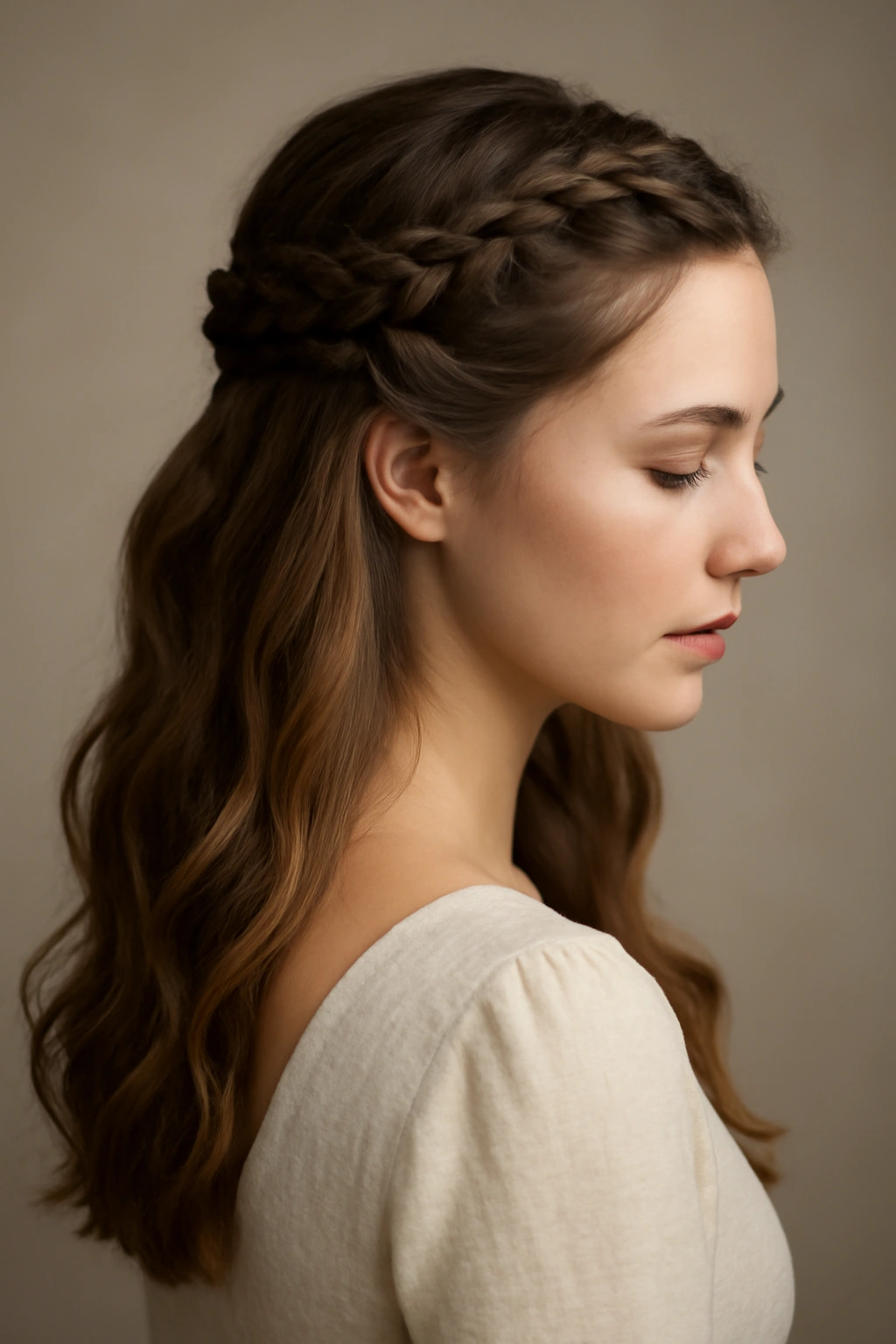
The half-up half-down style offers the best of both worlds: it’s romantic and soft like fully down hair, but it feels more intentional and keeps hair from your face like an updo. Adding braids to the half-up section transforms it from simple to intricate. One or two braids that frame the face before being swept into the back section create visual interest and sophistication, and this style photographs beautifully from every angle.
Why This Style Stands Out
A well-executed half-up braid style feels effortlessly elegant rather than overdone. It works with nearly every dress style — whether you’re wearing a sleek sheath or an elaborate ballgown — and it suits outdoor ceremonies, formal venues, and everything in between. The braids add texture and visual detail without requiring an extreme updo, which many brides appreciate. The style also naturally keeps some hair off your face without feeling as pulled-back as a full updo.
How to Pull It Off
- Braid placement: Typically two French braids or Dutch braids that start at the temples and meet at the back center
- Where braids secure: Usually 2-3 inches below the crown, with loose waves flowing from that point down
- Additional texture: The down portion usually has gentle waves or curls to coordinate with the braided section
- Embellishments: Baby’s breath, delicate greenery, or pearl bobby pins tucked between the braids
- Best for: Hair textures with natural wave or texture; very straight hair may need waves added first
Pro tip: Ask your stylist to braid loosely and then gently pull the braid strands apart after it’s complete — this creates a fuller, more romantic look that reads beautifully in photographs while maintaining security.
4. Twisted Crown
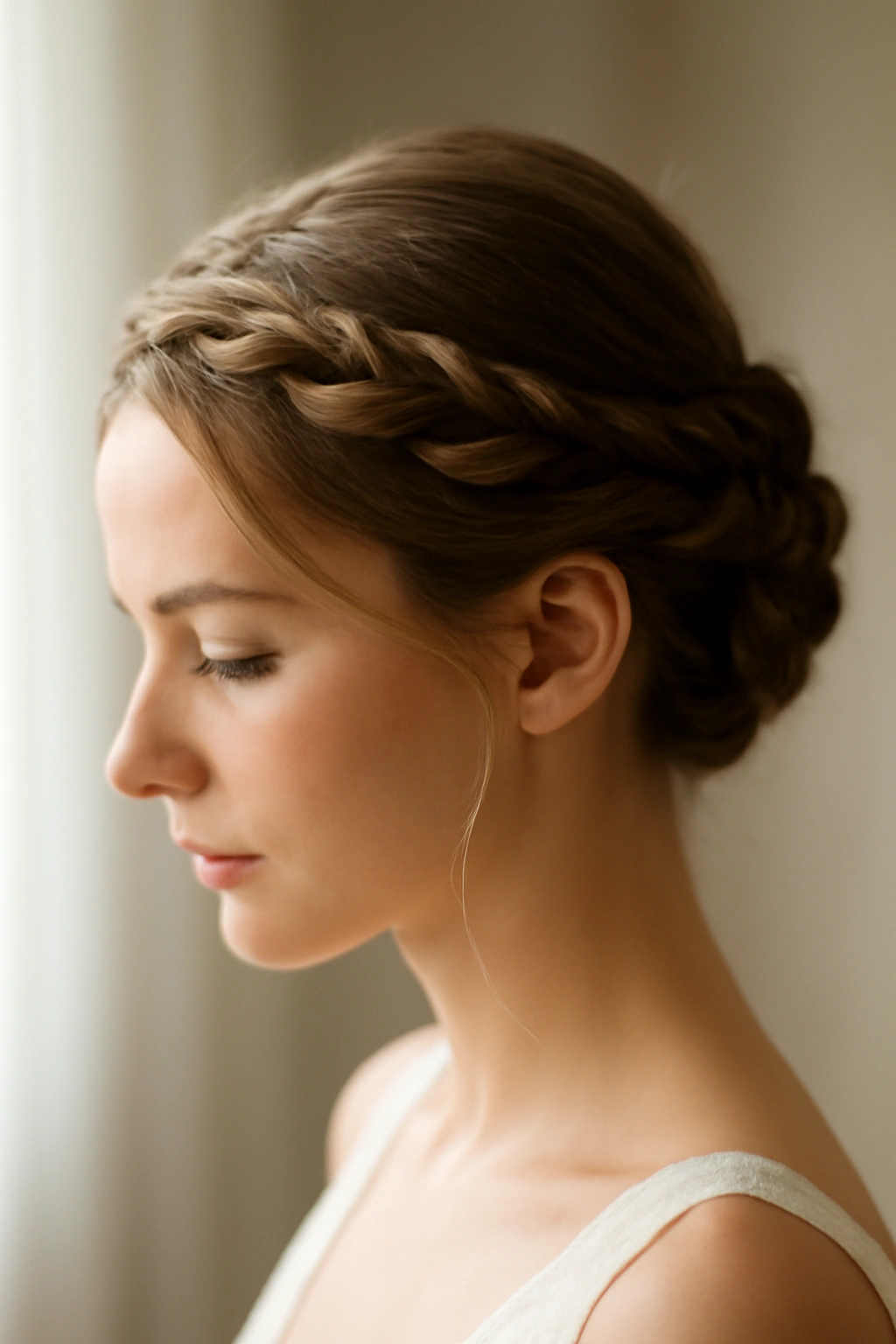
A twisted crown hairstyle creates an elegant frame for your face while keeping hair fully up and away. Rather than using traditional braids, this style relies on twists — typically two thick twists that spiral around the crown like a halo before meeting and securing at the back. It reads as formal and intentional while feeling softer than a traditional crown braid, and it works especially well for brides with thinner hair or those who want a style that feels more subtle.
What Makes It Special
Twisted crown styles feel regal without being costume-y. The twists catch light beautifully in photographs, and the style creates natural framing for your face and neck. Because it’s intricate enough to capture attention but not as heavy as some braided styles, it pairs well with both delicate and statement-making jewelry. The style also stays secure throughout the day without requiring excessive product or pins.
Styling Specifics
- Twist technique: Usually starts with two twists at the temples that spiral back and meet at the crown
- Securing method: The twists wrap around to the back of the head where they’re secured with bobby pins and the remaining hair
- Remaining hair: Can be left loose and wavy, pulled into a low bun, or styled as a small ponytail
- Volume: Works best when you have some natural texture or when your stylist teases the crown slightly
- Face-framing: Typically includes a few soft pieces around the face that aren’t twisted
Worth knowing: This style works particularly well for brides with medium-length hair or those who don’t want a full updo but want their hair fully secured. It’s also easier to maintain than braids if you have any concerns about your stylist’s braiding skills.
5. Textured Updo with Face-Framing Pieces
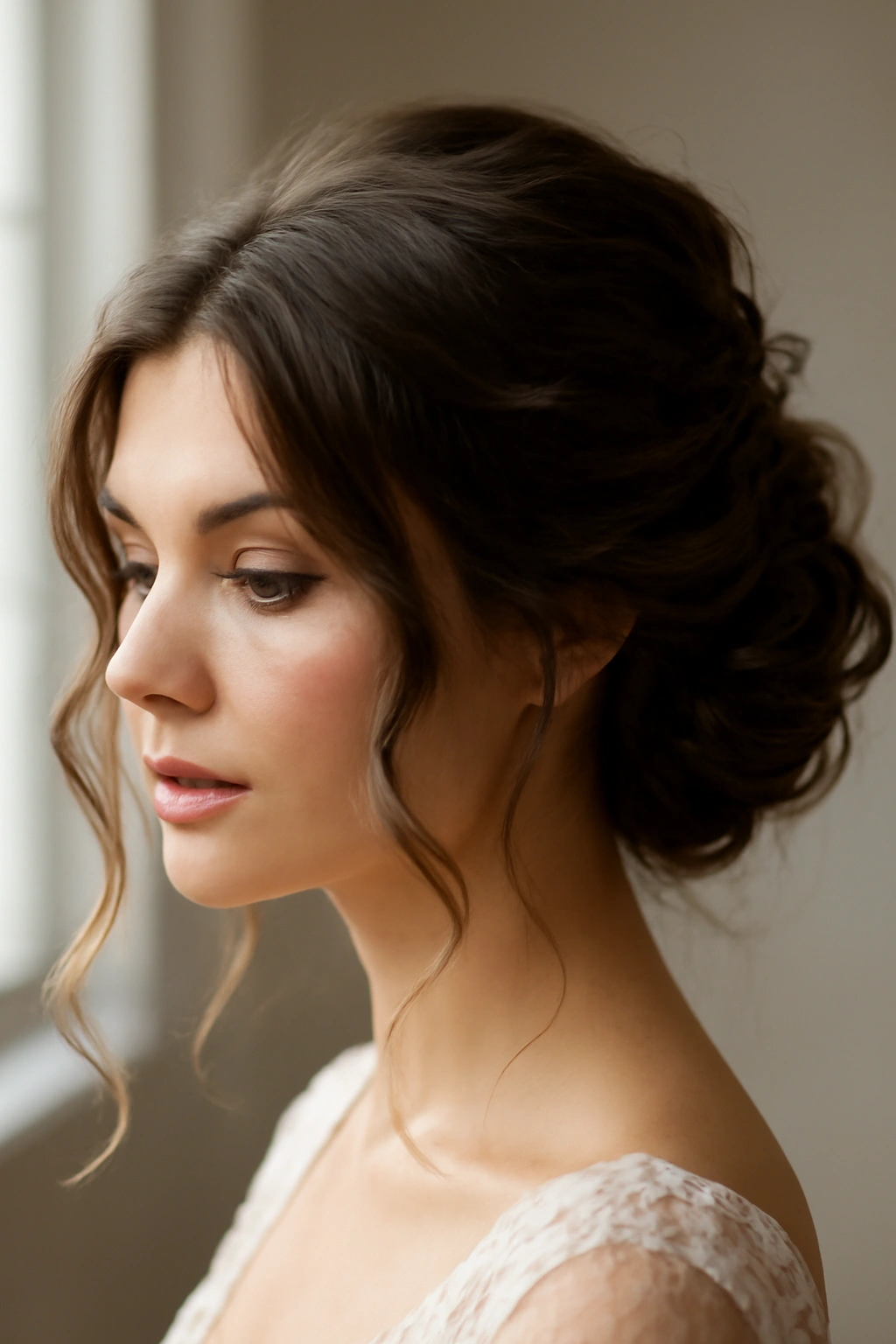
A textured updo blends the polish of an updo with the softness of down hair by incorporating face-framing pieces and visible texture throughout. Rather than a smooth, structured updo, this approach creates dimension and movement. The bulk of the hair is up and secured, but strategically placed pieces curl around the face, and the updo itself shows visible waves or curls rather than being sleekly smoothed. This style reads as romantic, modern, and intentional.
Why Brides Love This Approach
A textured updo gives you the security and polish of an updo without looking overly formal or austere. The face-framing pieces soften your appearance and keep the style from pulling too tightly, which is both more comfortable and more flattering. This style photographs beautifully because the texture catches light, and the movement created by the face-framing pieces adds dimension that reads stunning in both still photos and video.
The Details That Matter
- Updo base: Typically a loose low bun, twisted knot, or braided base rather than a sleek gathered bun
- Face-framing: Usually 1-2 inches of hair on each side of the face, curled or waved to coordinate with the updo texture
- Updo texture: Visible waves, curls, or section definition rather than smooth sleekness
- Product use: Texture spray and light hairspray to maintain definition without stiffness
- Best for hair types: Works particularly well on wavy, curly, or textured hair; works on straight hair but requires more styling
Pro tip: Bring photographs to your stylist showing the exact texture you want in the updo portion — textured updos can range from subtle to highly visible, and clarity prevents misunderstandings.
6. Hollywood Glam Waves
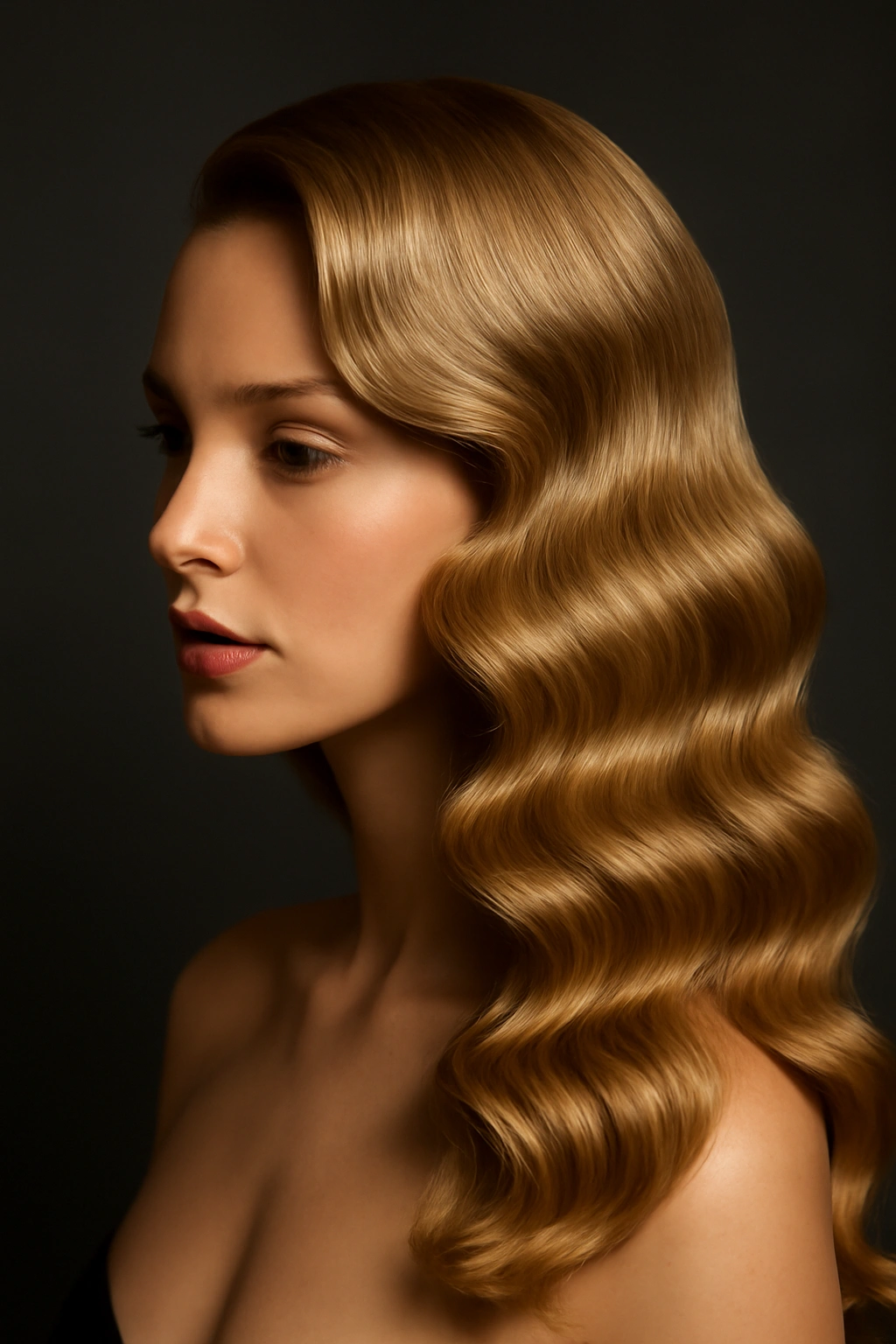
Old Hollywood glamour represents a completely different energy than soft waves or modern updos. These are full-bodied, defined waves with shine and volume — think Marilyn Monroe, Joan Crawford, or Rita Hayworth. Hollywood waves are statement hair. They demand attention, photograph beautifully, and work best when paired with equally glamorous makeup and dress choices. If you love drama and vintage elegance, this is your style.
What Defines Hollywood Waves
Hollywood waves aren’t loose or tousled — they’re intentional, groomed, and bouncy. The waves are typically about 2-3 inches wide with clearly defined peaks and valleys. The hair is usually side-parted, with more volume on the larger side of the part, creating asymmetry and movement. The overall effect is polished, seductive, and undeniably elegant. This style reads as vintage-inspired rather than actually vintage, which gives it a modern feel even though the technique is decades old.
How to Achieve This Look
- Styling method: Typically created with pin curls or a large curling iron while hair is damp, then brushed out to form waves
- Volume: Requires significant teasing and hairspray to maintain the body and definition throughout the day
- Shine: Usually achieved with hair oil or shine spray applied before or during styling
- Side part: A deep side part is almost always part of the Hollywood wave aesthetic
- Face-framing: The longer side of the part has waves that softly frame the face
- Staying power: Requires strong-hold hairspray and touch-ups mid-reception for maximum longevity
Worth knowing: This style takes significant time with a professional stylist — usually 60-90 minutes — and it requires confidence and a love of drama. This isn’t a subtle style, and it shouldn’t be; that’s the entire point.
7. Ethereal Braided Ponytail
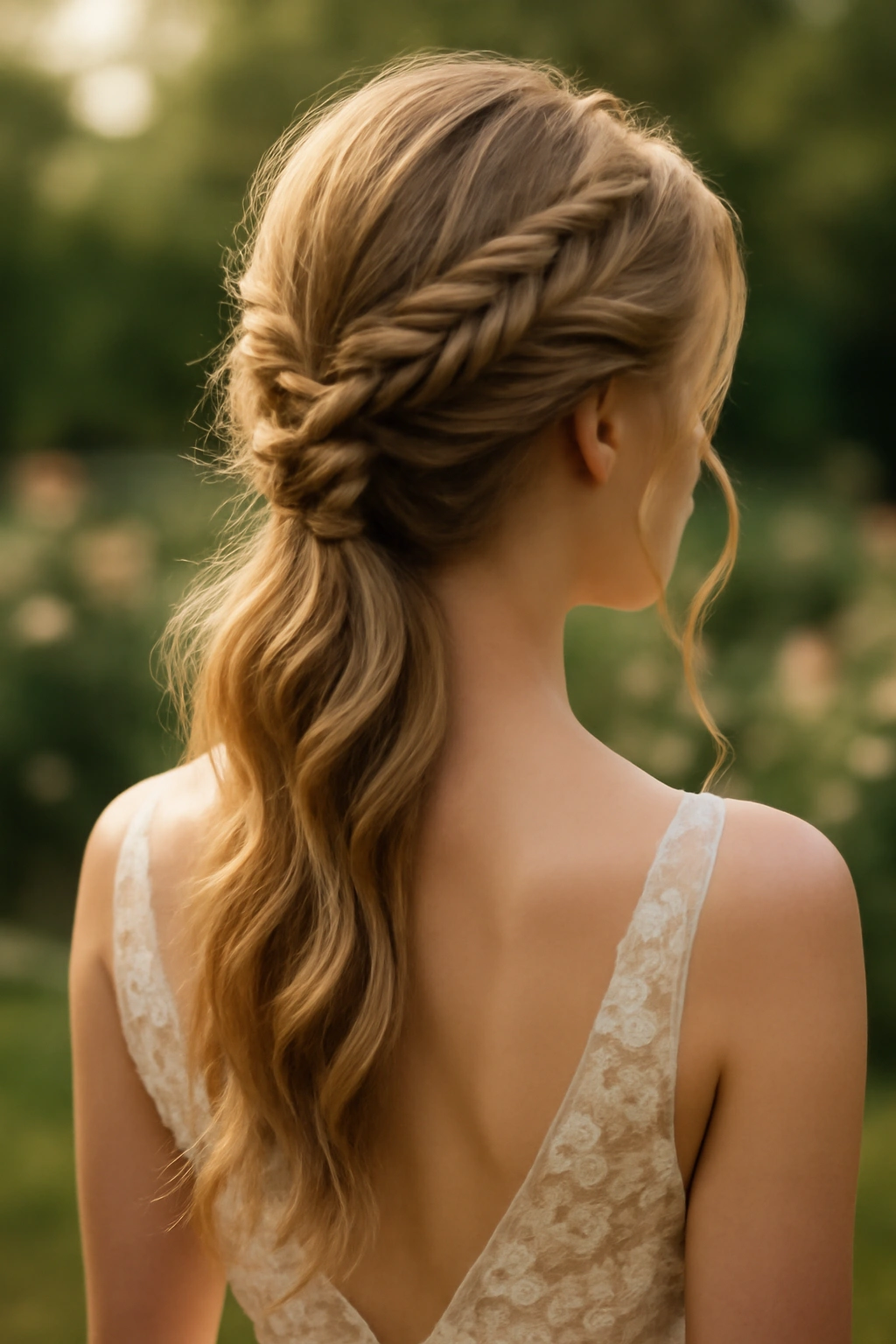
A braided ponytail might sound simple, but an ethereal version — one with loose, romantic braids and flowing texture — is anything but basic. This style typically features one or two braids that run down the length of the ponytail, with some hair left unbraided for softness, and the overall effect is movement, dimension, and romance. It works beautifully for outdoor weddings, garden ceremonies, and any setting where you want to feel light and ethereal rather than heavily styled.
Why This Style Works for Weddings
A braided ponytail feels like an elevated version of down hair rather than a traditional updo, which appeals to brides who want to keep their hair down but with more intention and polish. The style is incredibly secure — your hair stays perfectly in place during dancing, movement, and emotion — while still feeling soft and romantic. In photographs, the braid creates visual texture and dimension that simple waves don’t provide, and the braids catch light in a way that reads as elegant and detailed.
Styling Considerations
- Ponytail placement: Usually a low or mid-low ponytail rather than a high one, which photographs better and feels more bridal
- Braid type: French braid, Dutch braid, or fishtail braid depending on the texture you want
- Loose texture: The bottom portion of the ponytail below the braid typically has loose waves or gentle curls
- Embellishments: Ribbon woven through the braid, fresh flowers at the base, or delicate hair jewelry tucked into the braid
- Best for hair types: Works beautifully on wavy and curly hair; works on straight hair but benefits from added texture
Pro tip: Ask your stylist to braid loosely and pull the braid strands apart gently after braiding — this creates a fuller, more romantic aesthetic while maintaining security.
8. Sleek High Ponytail
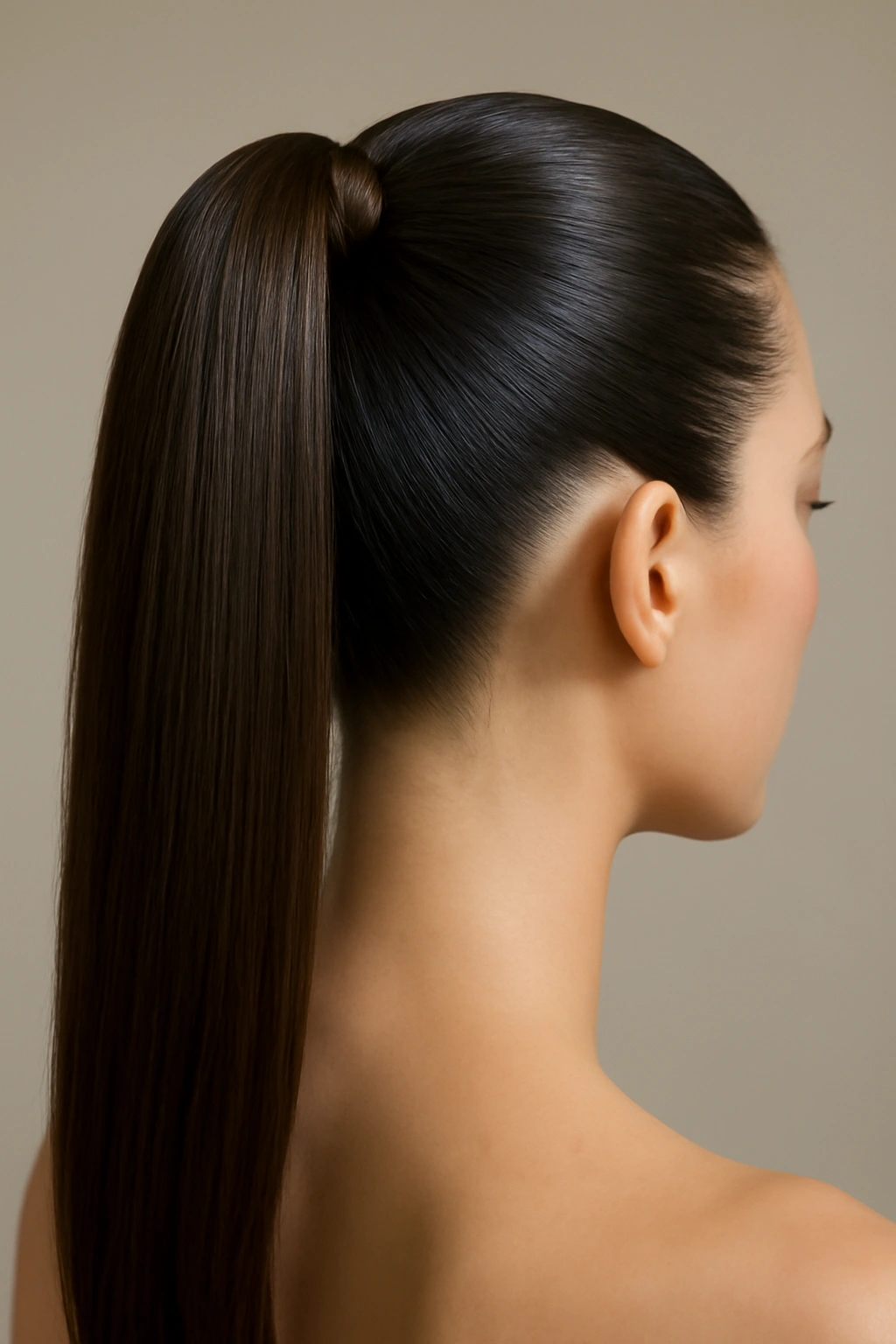
If you want to feel modern, energetic, and undeniably chic, a sleek high ponytail delivers all three. This style pulls hair smoothly back from the face and secures it high on the crown, creating a fresh, youthful look that works beautifully with contemporary gown styles, minimalist weddings, and any bride who wants to make a bold statement. A sleek high ponytail reads as intentional and editorial rather than casual, especially when the smoothness is truly polished.
What Makes It Bridal
A high ponytail worn at a wedding needs perfection. The hair must be genuinely sleek — no flyaways, no frizz — and the ponytail itself is usually quite full and voluminous at the base. Many brides add extensions or use a ponytail extension piece to create a fuller look that reads more luxurious. The style pairs beautifully with statement earrings and an exposed neck, and it photographs with striking simplicity and elegance.
Key Points for Success
- Smoothness level: Hair must be completely smooth with no texture or frizz — this typically requires a smoothing treatment and a skilled stylist
- Volume at base: While the ponytail is sleek, the base is usually teased and full for a more luxurious appearance
- Ponytail height: High ponytails read as more modern and editorial than low ones; positioning at the crown is typical
- Tail length: Should hit at least mid-back, often longer, for a dramatic appearance
- Embellishment: Jeweled hair ties, ribbon, or decorative elements can elevate the simplicity
- Best for: Works on all hair types and lengths, though longer hair photographs more dramatically
Worth knowing: If you have naturally curly or very wavy hair and want a sleek ponytail, discuss with your stylist whether a relaxer or smoothing treatment makes sense for you. The style doesn’t work well without genuine smoothness.
9. Tousled Low Chignon
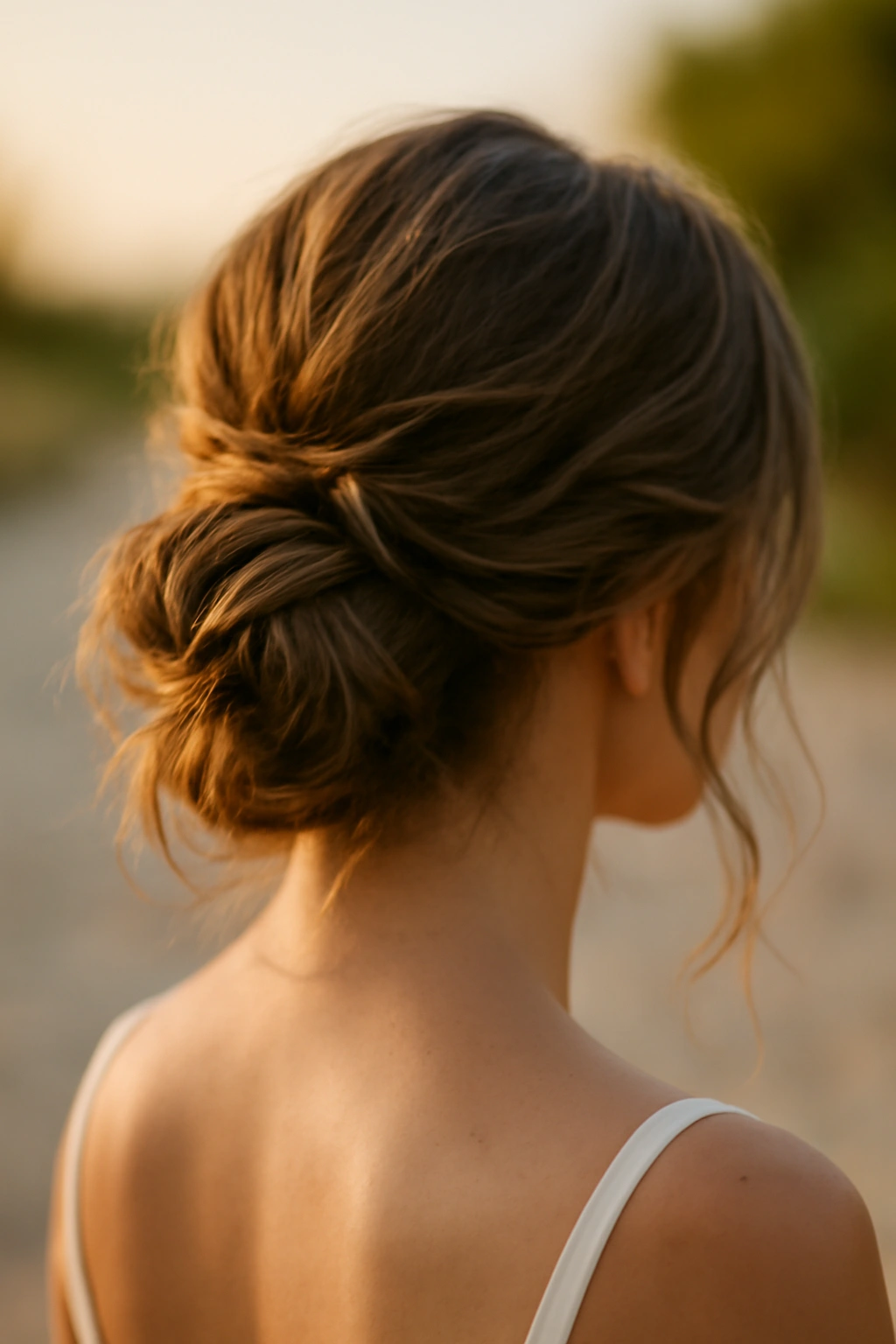
A chignon is a gathered knot of hair, but a “tousled” version — one with visible texture, gentle disarray, and romantic looseness — feels completely different from a formal, sculptural chignon. This style keeps hair off the neck and shoulders, works beautifully in warm weather, and creates a softly undone appearance that’s actually quite intentional. The chignon sits low on the back of the head, and the texture can range from gently waved to visibly curled, depending on your preference.
Why Brides Choose This Style
A tousled low chignon reads as effortless and romantic rather than formal and structured. It’s comfortable to wear, stays secure through movement and dancing, and photographs beautifully because the texture catches light and creates dimension. This style works especially well for beach weddings, garden ceremonies, and any setting where you want to feel soft and romantic rather than rigidly styled. The style also suits a wide range of dress types, from flowing bohemian gowns to sleek modern designs.
How to Achieve This Look
- Chignon base: Hair is gathered low, usually about 2-3 inches above the nape of the neck
- Texture creation: Before gathering into the chignon, hair usually has gentle waves or curls throughout
- Securing method: The gathered hair is twisted, braided, or looped into a loose knot and secured with bobby pins
- Loose pieces: Face-framing pieces and a few wisps around the chignon soften the overall appearance
- Hold products: Texture spray and light hairspray maintain definition without stiffness
- Embellishments: Flowers tucked into the chignon, delicate clips, or greenery create romantic detail
Pro tip: This style works particularly well if you have any concerns about your hair holding curls all day — the chignon structure keeps looser curls in place even if they soften slightly during the reception.
10. Flower Crown with Loose Curls
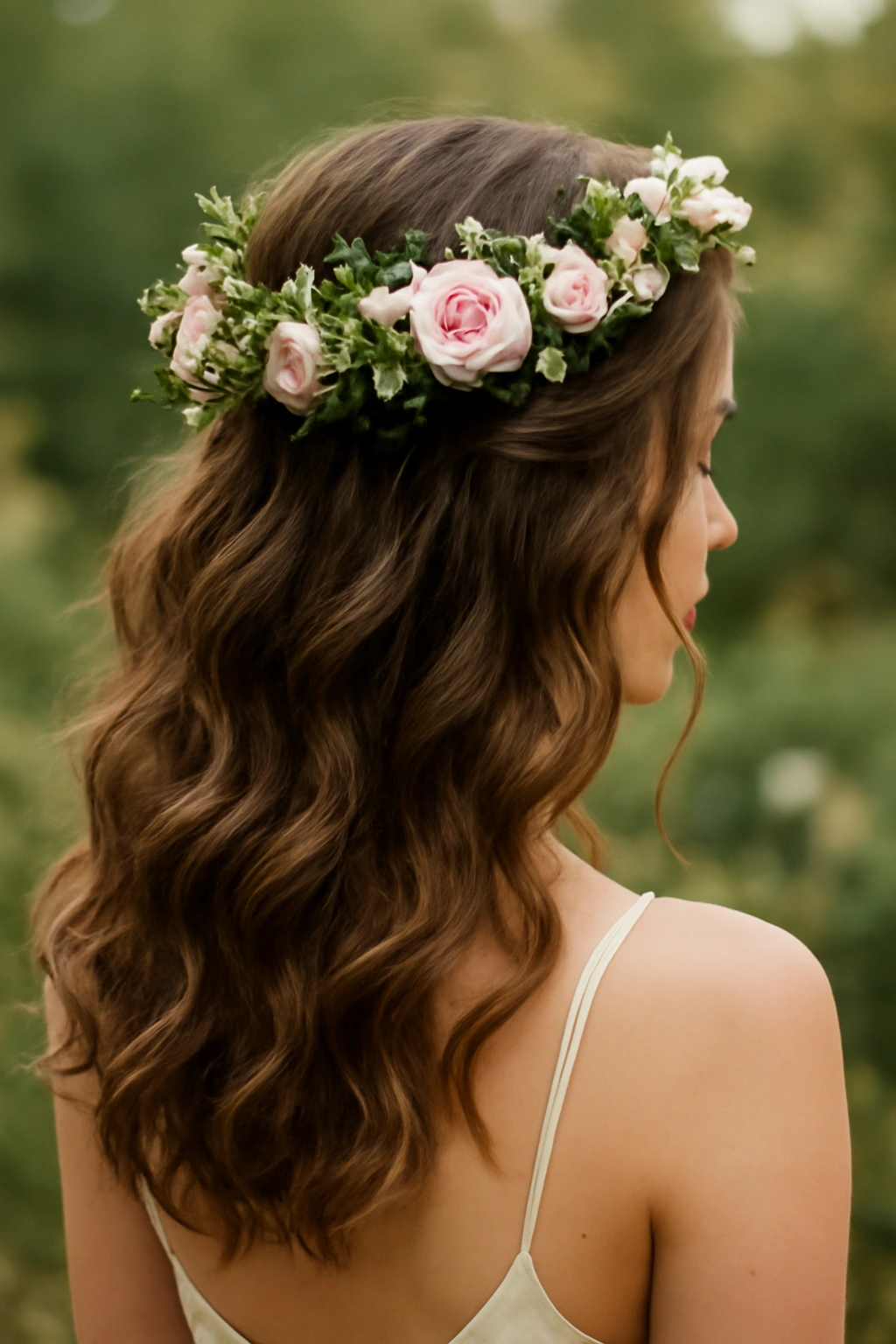
A flower crown transforms your entire bridal aesthetic from elegant and formal to romantic and bohemian. This style works when your hair is worn down with loose curls or waves — the crown sits atop your head, typically just back from your hairline, and creates a ethereal, garden-inspired look. Flower crowns work beautifully with romantic, bohemian, or garden-themed weddings, and they photograph like dreams, especially in natural lighting.
What Makes a Flower Crown Work
The success of a flower crown hairstyle depends on several factors: the crown itself must be constructed well so it stays secure without slipping or feeling heavy, your hair must have enough texture to hold curls throughout the day, and the overall effect should feel romantic rather than costume-y. The curls supporting the crown should be loose and flowing rather than tight ringlets, and the crown should enhance your hair rather than compete with it.
Styling Components
- Hair texture: Loose curls, waves, or a combination created with a curling iron, wand, or heatless methods
- Curl type: Waves and curls should be soft and romantic rather than tight or bouncy
- Hair volume: Works best with fuller hair or when your stylist adds texture and teasing for volume
- Crown construction: Made from fresh flowers, silk flowers, or a combination; should be lightweight and secure
- Face-framing: Soft pieces frame the face; not all hair is pulled back
- Longevity: Fresh flower crowns last 4-6 hours before flowers begin wilting; consider contingency plans
- Best for: Outdoor weddings, garden settings, or any bohemian-inspired celebration
Worth knowing: If you choose fresh flowers for your crown, coordinate with your florist and have a backup plan in case flowers wilt faster than expected. Some brides choose a combination of fresh and silk flowers to extend the crown’s lifespan.
11. Twisted Side Updo
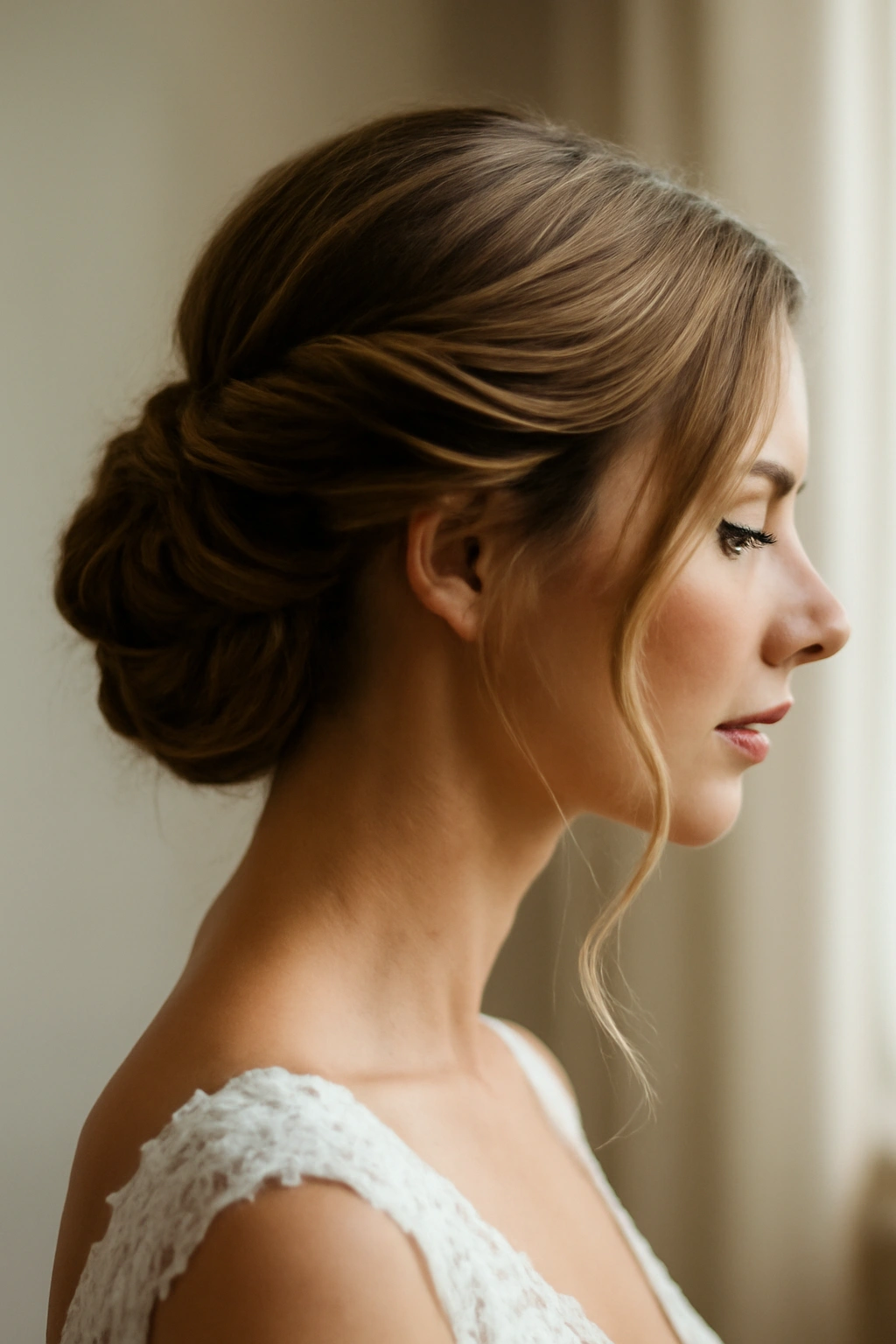
A twisted side updo creates asymmetrical elegance by gathering most of your hair to one side and securing it in a low twisted knot or bun. The twist can be a single thick spiral or multiple thinner twists woven together, and face-framing pieces create softness around the face. This style works beautifully for brides who want an updo that’s less formal than a centered style but more polished than down hair. The asymmetry of the side placement adds modern interest to a traditional silhouette.
Why This Style Stands Out
A side updo photographs beautifully from nearly every angle, especially when your photographer captures the detail of the twists and the elegant curve of the style along your head. The side placement creates natural framing for your face and shows off the profile, which is important for ceremony photos. This style works with romantic, modern, and traditional dress styles, and it suits nearly every venue and wedding style.
Technique Details
- Hair gathering: Hair is pulled to one side, typically the right side, at about ear level
- Twist method: Hair is twisted as it’s gathered, or twisted once gathered, creating spiral texture
- Securing method: The twisted knot or bun is secured at the side-back of the head with bobby pins
- Face-framing: Pieces left down frame the face on both sides, with a few wisps on the side where the updo sits
- Remaining texture: The updo itself usually shows visible texture or waves rather than being sleekly smooth
- Embellishments: A jeweled clip, fresh flowers, or delicate pin at the base of the updo
Pro tip: Bring a photograph showing the exact placement you want — some brides prefer the updo directly at the ear, while others want it slightly back from the ear. Clarity with your stylist prevents disappointment.
12. Beachy Waves with Hairpiece
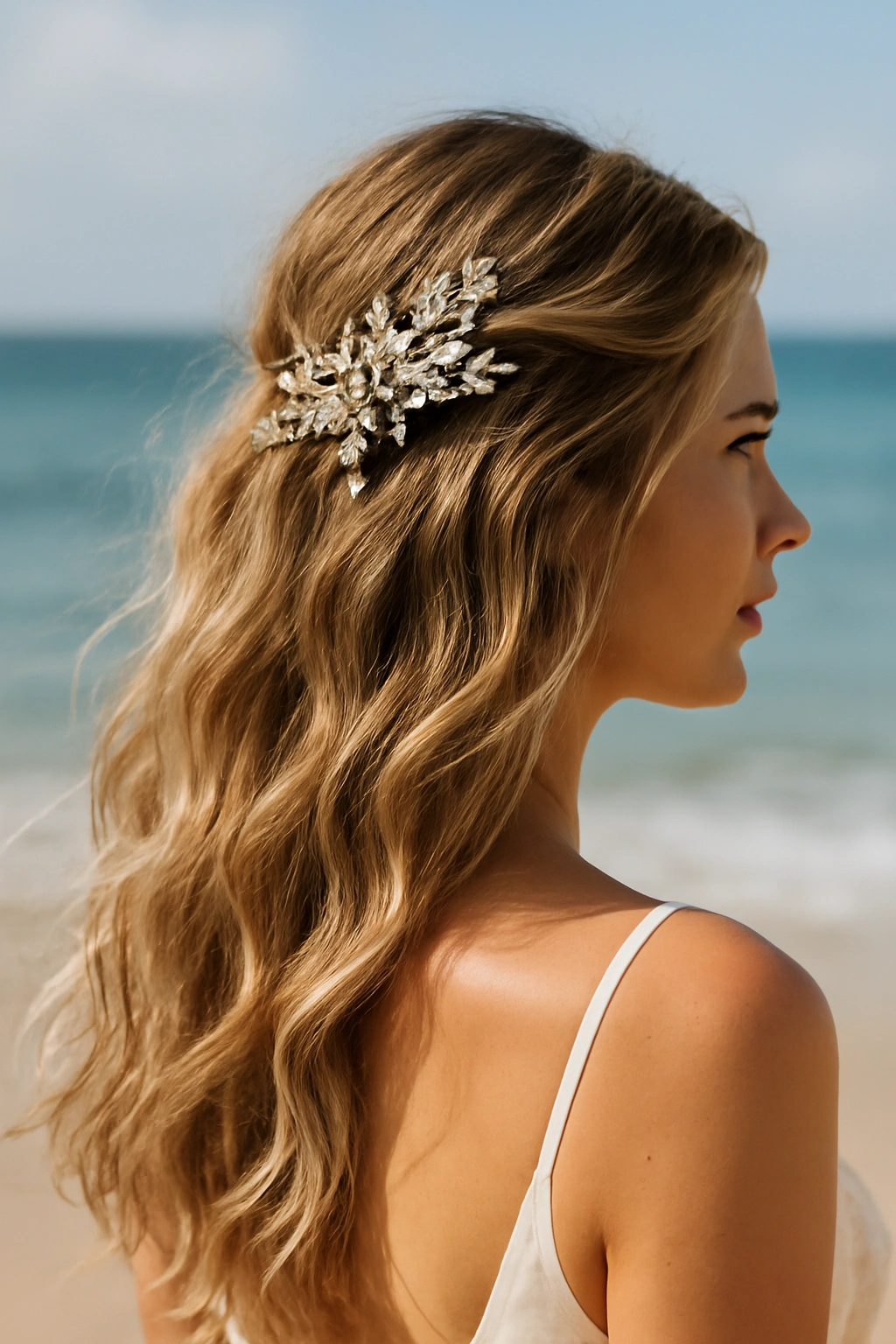
Beachy waves evoke vacation, relaxation, and natural beauty, making them perfect for brides who want to feel effortless and free. Rather than a hairpiece-free style, adding a decorative hairpiece to beachy waves — such as a delicate comb, a beaded hair chain, or a vintage clip — elevates the style from casual beach vibes to intentional bridal elegance. This combination works beautifully for destination weddings, beach ceremonies, and brides who want the feeling of down hair without sacrificing a polished, put-together appearance.
What Works About This Combination
Beachy waves feel organic and movement-based, while a beautiful hairpiece signals intention and formality. Together, they strike a balance between romantic ease and celebration. The hairpiece draws attention to your hair and face without requiring the styling time and products that some other styles demand, and the waves work with nearly every hair texture. This style photographs beautifully with the movement of the waves and the detail of the hairpiece.
How to Style It
- Wave creation: Loose, tousled waves created with a curling iron, wand, or braiding method; waves should be approximately 2-3 inches wide
- Wave placement: Waves throughout the length of hair, with more volume at the crown
- Hairpiece style: A delicate comb, hair chain, beaded piece, or vintage clip that coordinates with your jewelry and gown
- Hairpiece placement: Typically positioned at the side or back of the head, secured into the waves
- Face-framing: Soft pieces frame the face naturally without being deliberately placed
- Products: Texture spray, sea salt spray, and light hold hairspray create the wave definition and movement
- Best for: Works on all hair types and lengths, though longer hair displays waves more dramatically
Worth knowing: Test your waves with your specific hairpiece before the wedding day. You want to confirm the piece stays secure within the waves and doesn’t slip throughout the celebration.
13. Structured Side Bun
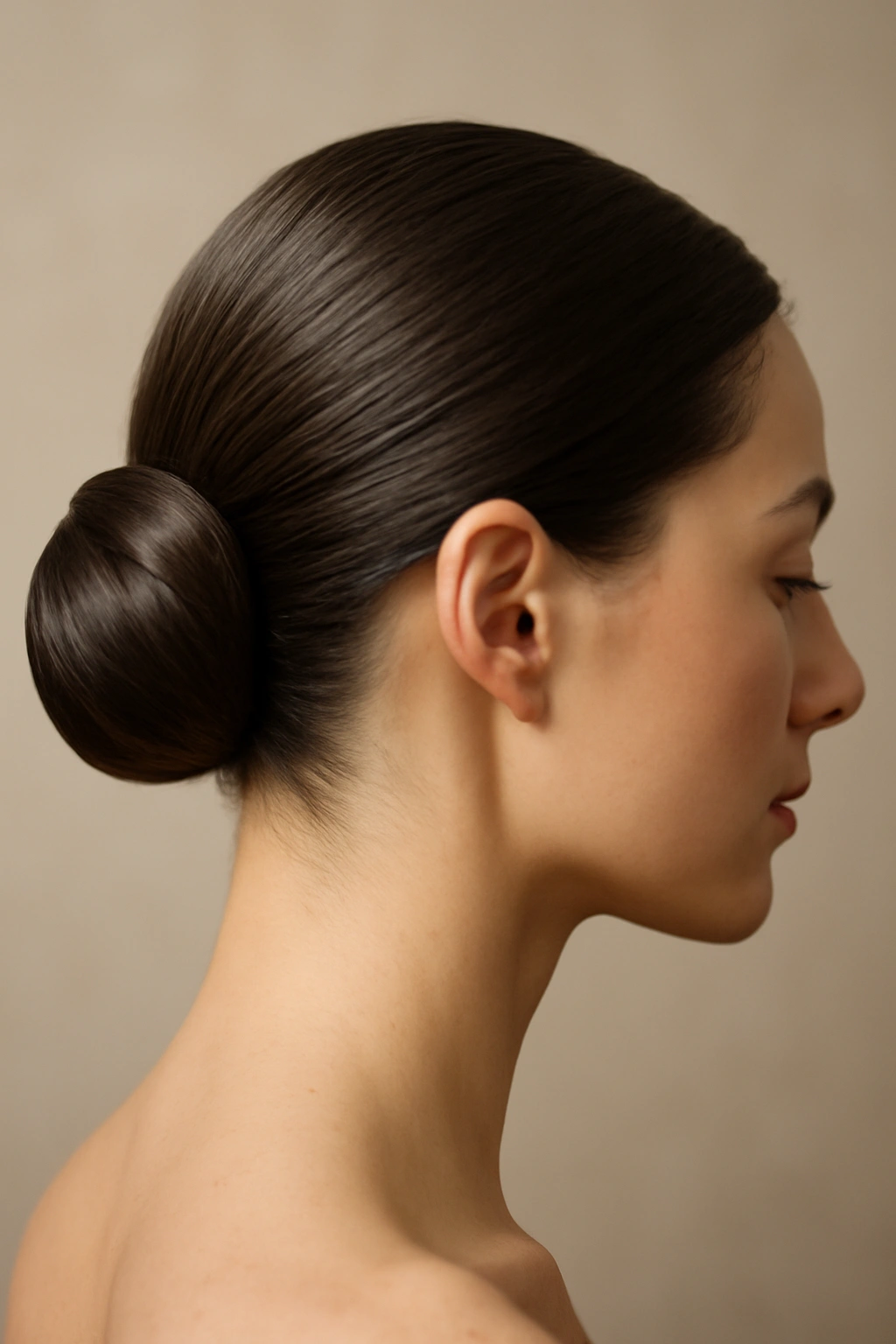
A structured side bun is the chicest updo variation — it’s sleek, modern, and undeniably elegant. Unlike a tousled chignon, a structured side bun is intentionally polished and smooth. The hair is gathered tightly to one side and formed into a compact, well-defined bun. This style works beautifully for brides who love minimalist, modern aesthetics and want their dress and jewelry to be the focal points. It also works for smaller weddings, elopements, and any celebration where understated elegance is the goal.
Why Brides Choose This Approach
A structured side bun photographs with striking simplicity and elegance. The style shows off your face, neck, shoulders, and the side profile beautifully, which is important for wedding photography. The side placement adds asymmetry and interest compared to a centered bun, while the structured smoothness reads as highly intentional and refined. This style pairs beautifully with statement jewelry, an exposed neckline, and contemporary dress designs.
Styling Specifics
- Smoothness: Hair must be genuinely sleek with no texture or frizz visible
- Bun placement: Typically positioned at the back-left or back-right, depending on your preference
- Bun formation: Can be a wrapped bun, twisted bun, or braided bun, as long as the final result is smooth and compact
- Volume: Some teasing at the crown adds flattering height; the bun itself should be dense and well-defined
- Finish: Usually finished with a jeweled clip, decorative pins, or left plain for true minimalism
- Best for: Works on all hair types and lengths, though longer hair creates a more voluminous bun
Pro tip: If you have curly or very wavy hair, discuss with your stylist whether a relaxer or smoothing treatment is right for you. A structured bun requires genuine smoothness to read as intentional rather than slicked-down.
14. Romantic Braided Updo
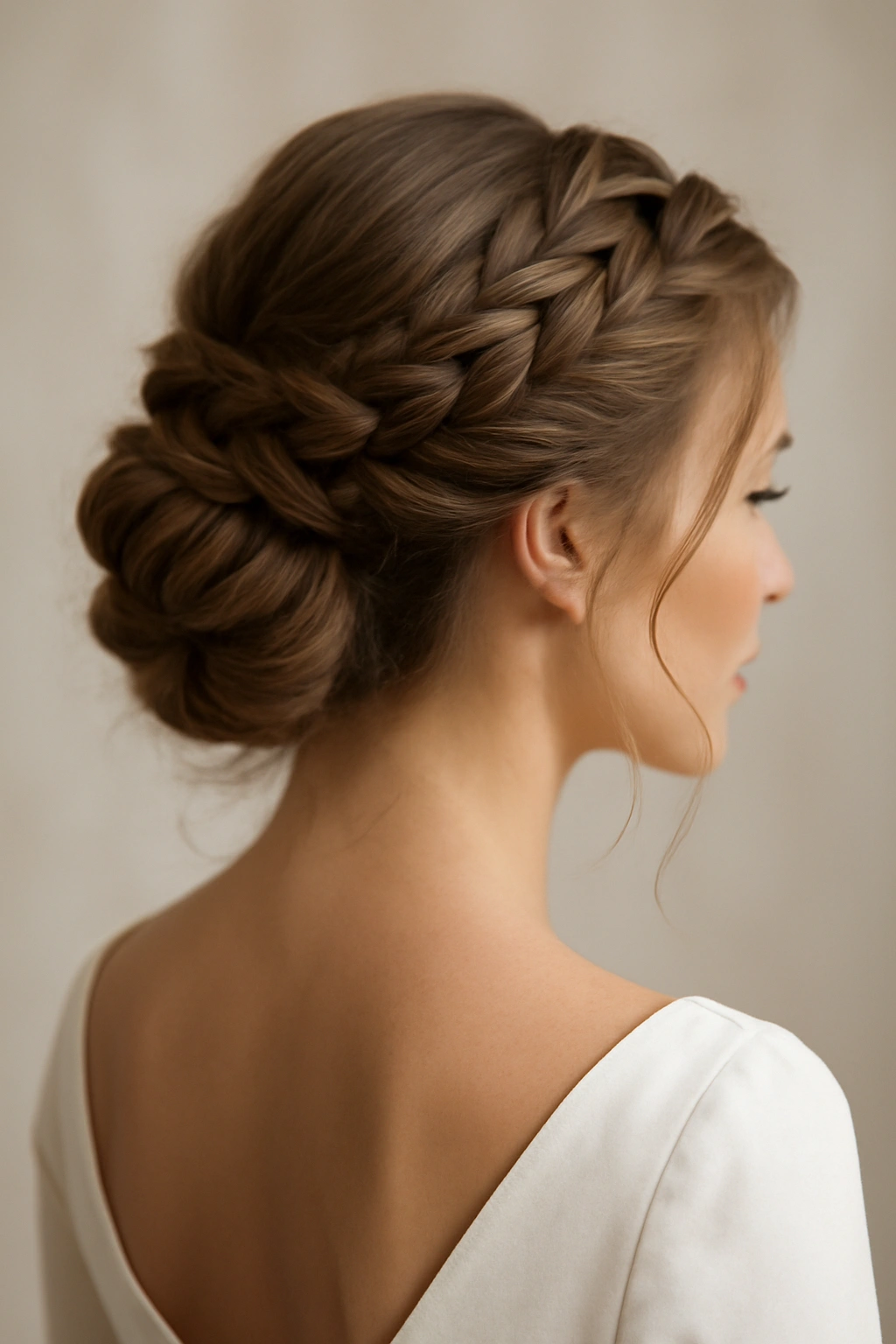
A romantic braided updo combines the security and polish of an updo with the softness and texture that braids provide. This style typically features one or more braids that form the structure of the updo — perhaps two braids that wrap around the head and meet at the back — and loose, wavy texture throughout. The braids catch light beautifully, add visual interest, and create a style that feels both intentional and effortless.
What Sets This Style Apart
A braided updo feels more personalized and detailed than a simple bun or twist, while remaining more romantic and soft than severely structured updos. The braids act as both decoration and structural element, which means the style works on all hair types and doesn’t require the same smoothing treatments or products that sleek updos demand. This style photographs beautifully because the braids catch light and create dimension, and they’re detailed enough to be interesting in close-up photos.
How to Execute It
- Braid placement: Usually two French braids or Dutch braids that start at the temples or crown and wrap around the back of the head
- Where braids converge: The braids typically meet at the back where they’re secured into a low bun or gathered knot
- Remaining hair: Any hair below or around the braids usually has loose waves or gentle curls
- Braid texture: Braids are usually loosely braided and then gently pulled apart to create fullness and romance
- Embellishments: Baby’s breath, greenery, pearls, or delicate pins tucked into the braids or gathered section
- Best for: Works beautifully on all hair types; particularly stunning on wavy and curly hair
Worth knowing: Ask your stylist to show you reference images of the exact updo structure you want — whether you prefer a low gathered bun, a loose chignon, or a different structure affects how the braids will look.
15. Soft Curls with Pearl Clips
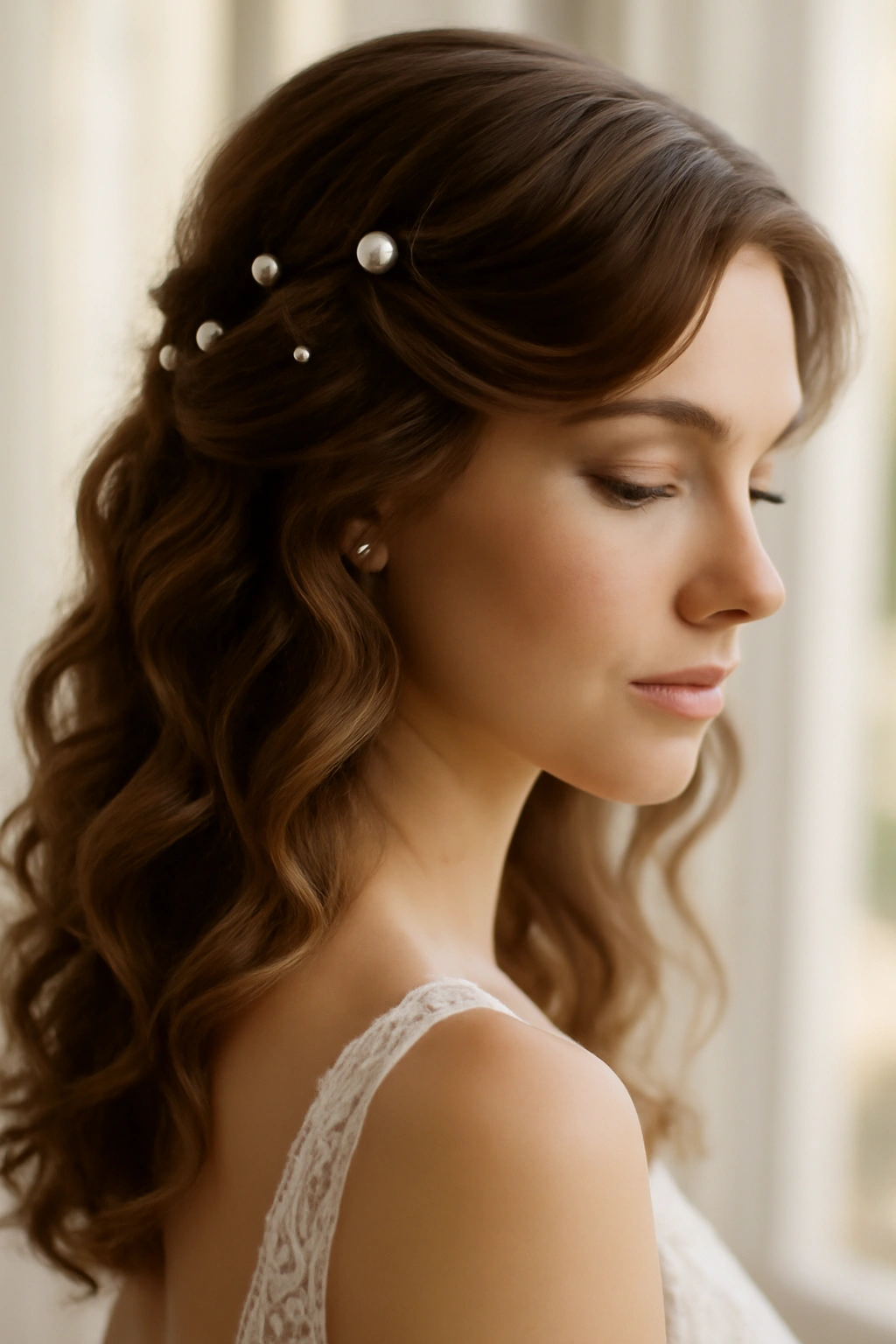
Sometimes the most romantic bridal hair is simply soft, loose curls with a few delicate accessories. This style keeps your hair down, celebrates your natural (or styled) texture, and uses minimal product so your curls feel soft and touchable rather than stiff. Adding pearl clips — either a single statement clip or a few smaller ones scattered throughout — elevates the softness and adds the formality and intention that separates bridal hair from everyday curls.
Why This Approach Works
Soft curls with pearl clips read as romantic, youthful, and effortlessly beautiful. The style is comfortable to wear all day, stays relatively secure without requiring an updo structure, and photographs with incredible softness and movement. The pearl clips add just enough formality and intentionality that the style reads as bridal rather than casual, while the overall aesthetic remains light and romantic. This style works beautifully with vintage, romantic, bohemian, and modern dress styles.
Styling Elements
- Curl type: Loose, soft curls rather than tight ringlets; waves and curls should be mixed for a natural-looking texture
- Curl creation: Can be created with a curling iron or wand, braiding method, or on naturally curly hair
- Volume: Teasing at the crown creates flattering height and fullness
- Pearl clip placement: Can be worn as a single large clip at the back, or multiple smaller clips scattered throughout
- Face-framing: Soft curls frame the face naturally without being deliberately placed
- Hold products: Texture spray and light hairspray maintain curl definition without stiffness
- Longevity: Curls soften slightly throughout the day, which adds to the romantic, undone feel
Pro tip: If you have naturally straight hair, ask your stylist about adding a texture spray before curling — this helps curls hold longer and feel softer and more natural.
16. Modern Geometric Updo
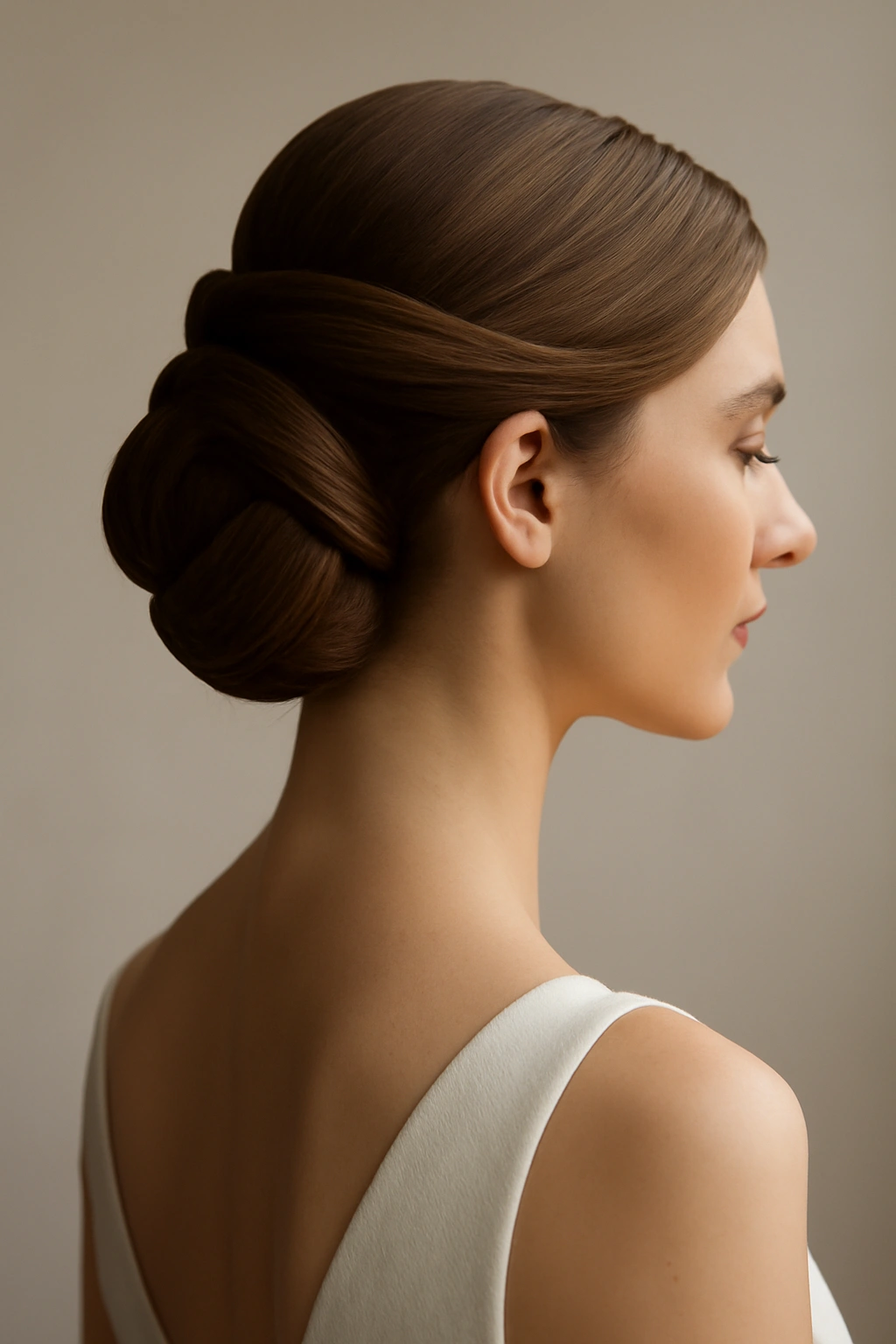
A modern geometric updo sounds architectural, and it is. This style features clean lines, defined shapes, and intentional structure — perhaps a series of parallel twists, a asymmetrical knot, or a woven pattern that’s visually striking. This style appeals to brides with a modern aesthetic who want their hair to make a statement. A geometric updo works beautifully with minimalist, architectural, or contemporary dress designs and photography-forward settings.
What Makes It Special
A modern geometric updo is distinctive and memorable in a way that more traditional updos aren’t. The style showcases your stylist’s skill and creativity, and it photographs absolutely beautifully because the geometric shapes and lines create visual interest and dimension. This style works particularly well for brides who want their hair to be a focal point rather than just a supporting element, and for celebrations where personal style and individuality are valued.
How to Achieve It
- Updo structure: Can feature parallel twists, a geometric braid pattern, a sculpted knot, or an asymmetrical design
- Precision: The lines must be clean and well-defined for the geometric quality to read clearly
- Texture: Can be smooth or show visible texture, depending on the design
- Securing method: Usually requires multiple bobby pins and a strong hold product to maintain structure
- Embellishments: Often left plain to let the geometric structure speak for itself, though metallic clips or pins can add interest
- Best for: Brides with longer hair and a modern aesthetic; works on all hair types
Worth knowing: This is a style where bringing multiple reference images to your stylist is absolutely essential. Communication about the exact geometric design you want prevents misunderstandings and ensures your stylist has the skills to execute your vision.
17. Cascading Half-Up Style
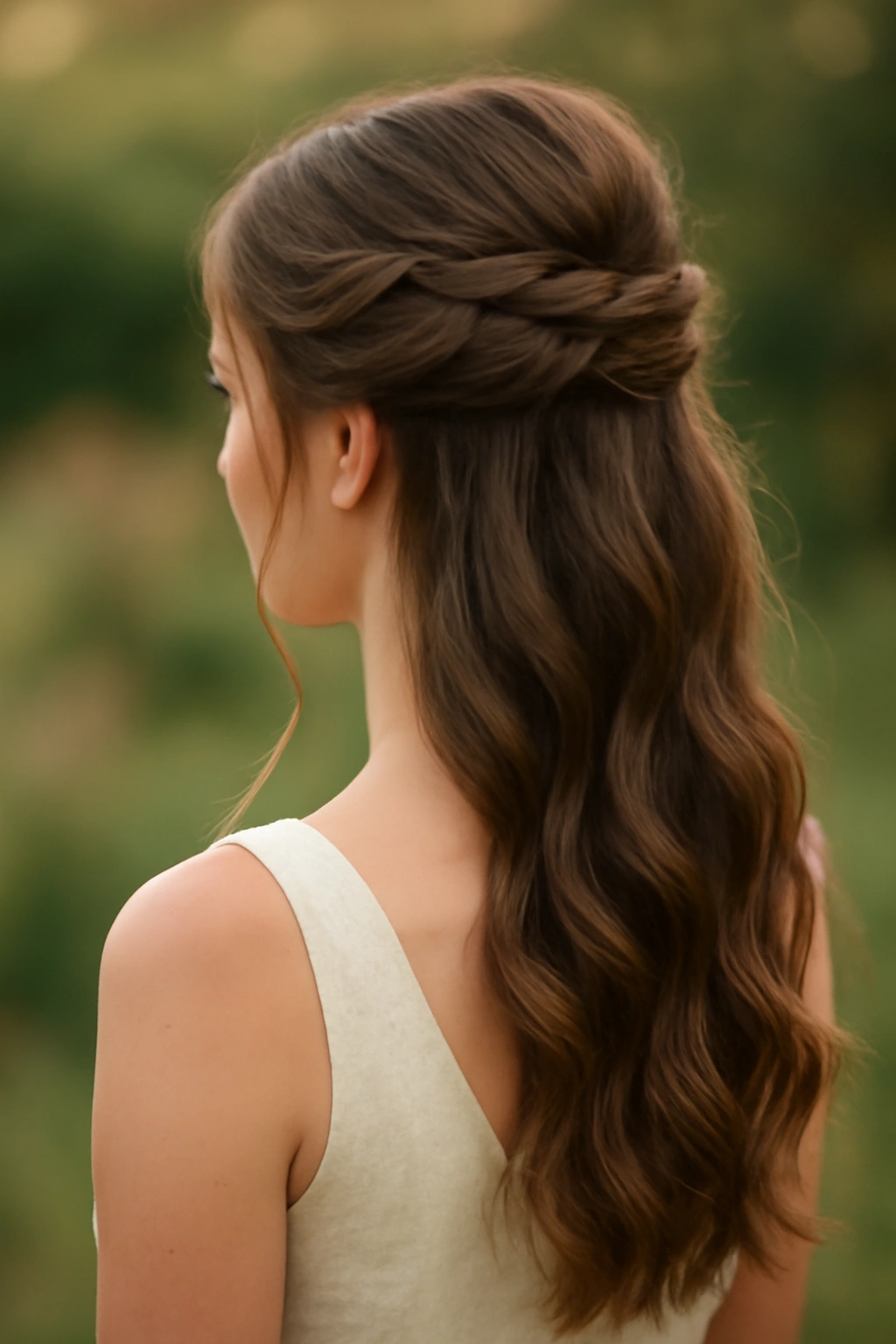
A cascading half-up style pulls the top portion of your hair back and allows the bottom portion to flow freely, creating movement and romance. Rather than securing the back portion into a bun or ponytail, the “cascading” version lets strands fall loosely, often in a waterfall or loosely twisted pattern. This style looks elegant and intentional without requiring the security of a full updo, and it photographs beautifully because of the movement and flow.
Why Brides Love This Look
A cascading half-up style balances the formality of an updo with the romance of down hair. It keeps hair somewhat off the face and neck while allowing the majority of your hair to flow, which works beautifully for warm weather, outdoor weddings, and brides who want softness rather than structure. The style reads as romantic and intentional without feeling overly done, and it works with nearly every dress style and wedding aesthetic.
Styling Details
- Top section gathering: Hair from the crown and temples is gathered and secured, typically with twists, braids, or a simple hold
- Bottom section: The remaining hair cascades loosely, usually with gentle waves or curls
- Securing method: The gathered top section is secured with bobby pins or an elastic band that’s hidden by falling strands
- Cascading texture: Can be straight, wavy, or curled depending on your preference and hair type
- Face-framing: Soft pieces frame the face on both sides
- Embellishments: Flowers, ribbons, or delicate clips in the gathered section
- Best for: Works on all hair types and lengths
Pro tip: Bring a photo showing exactly where you want the half-up section to begin — some brides prefer a higher gathering at the crown, while others prefer it lower at the ear level.
18. Clean Straight with Statement Accessories
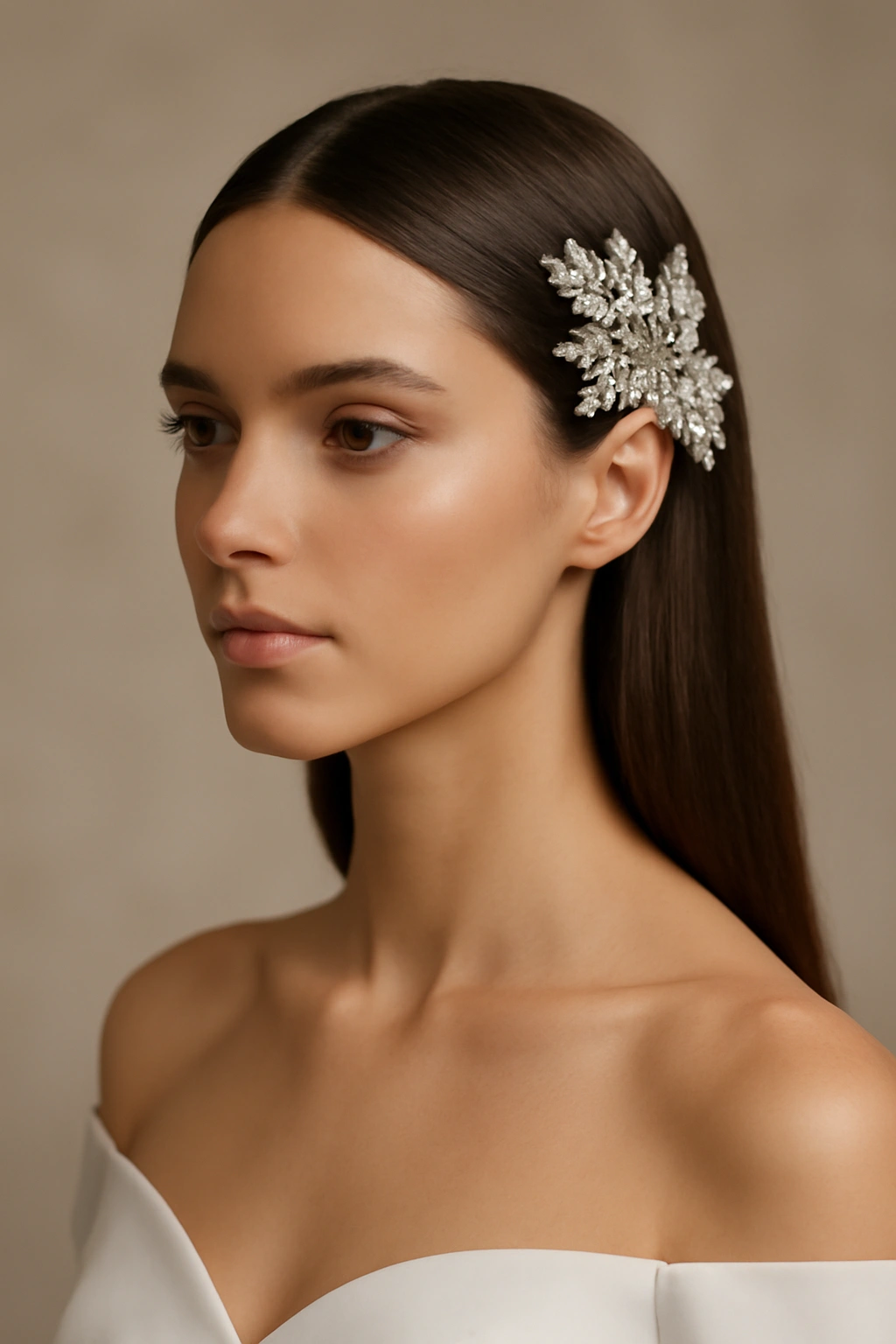
Sometimes the most striking bridal hairstyle is simply clean, straight hair styled with intention and statement-making accessories. This approach appeals to brides with naturally straight hair or those who want to showcase their hair texture itself rather than covering it with curls or pins. A sleek straight style paired with a jeweled comb, a statement hair cuff, a crystal-adorned clip, or a dramatic headpiece reads as modern, sophisticated, and uniquely personal.
Why This Works as a Wedding Style
Clean straight hair allows your face, your dress, and your statement accessories to be the focal points. The style reads as confident, modern, and intentional — this is clearly a choice rather than an accident. It photographs beautifully, especially with jewelry and accessories that catch light, and it requires less styling time and product than many other wedding styles, which means you can focus on other aspects of your bridal preparation.
How to Execute It
- Hair smoothness: Hair should be genuinely smooth and shiny; a smoothing treatment may be appropriate depending on your hair texture
- Length: Works on all lengths, though longer hair displays the straightness and movement more dramatically
- Shine: Usually achieved with a shine spray or hair oil applied before or after styling
- Styling method: Can be achieved with a flat iron or professional smoothing treatments
- Accessory choice: Statement pieces that coordinate with your dress and jewelry; could be metallic, jeweled, vintage, or modern
- Accessory placement: Positioned strategically to enhance the style without looking like it’s slipping
- Best for: Brides with naturally straight or smoothable hair; works on all hair types with appropriate styling
Worth knowing: If you have curly or very wavy hair and want this style, discuss with your stylist whether a relaxer or smoothing treatment makes sense for you, or whether you’d prefer a different style that celebrates your natural texture.
Final Thoughts
Your wedding day hairstyle is a deeply personal choice that should make you feel beautiful, confident, and authentically yourself. Whether you’re drawn to the timeless elegance of a sleek low bun, the romantic movement of soft waves, the modern geometry of an architectural updo, or any of the 18 styles in between, the right choice is the one that resonates with your vision, works with your hair, and feels comfortable to wear for the entire celebration.
The most important thing you can do is find a stylist who listens carefully, asks good questions about your hair texture and concerns, and shows you exactly how your chosen style will look. Book a trial appointment before your wedding day — this allows you and your stylist to test the style, make adjustments, confirm it works with your dress and accessories, and build confidence for the actual wedding morning. A good trial also means you’ll feel relaxed on your wedding day because you already know exactly what to expect.
Your hair on your wedding day is part of your overall bridal look, but it’s also deeply personal. Choose a style that makes you feel like the best version of yourself, and you’ll photograph beautifully and feel genuinely joyful throughout the celebration.
