



Shaggy hair has been the go-to move for people who want their hair to look intentionally lived-in—textured, moveable, and full of personality. There’s something magnetic about a style that looks like you just rolled out of bed after the best hair day of your life, even though the reality is that getting those effortless waves requires the right cut, the right technique, and knowing exactly how to work with your natural texture. The beauty of shaggy styles is that they work across hair types, face shapes, and lengths, which is why they keep cycling back into the conversation season after season.
What makes a true shaggy cut different from just having choppy layers is the intentionality behind the placement. A skilled stylist knows exactly where to place cuts, how much to thin out the ends, and which sections need length versus lightness. The best shaggy styles create movement at multiple levels—some movement at the roots for volume, some at the mid-length for texture, and some at the ends for those signature piece-y details. It’s a cut that practically asks for movement; your hair does half the work, and you do the other half with a blow dryer, a texturizing spray, or just your fingers running through damp strands.
The versatility is part of the appeal. You can wear a shaggy cut sleek and polished for professional settings, tousled and tousled for weekend vibes, or anywhere in between. You’re not locked into one look—instead, you’ve got a cut that adapts to what you want on any given day. Whether you’re working with natural waves, straight hair, or curls, there’s a shaggy style waiting for you.
1. The Modern Wolf Cut
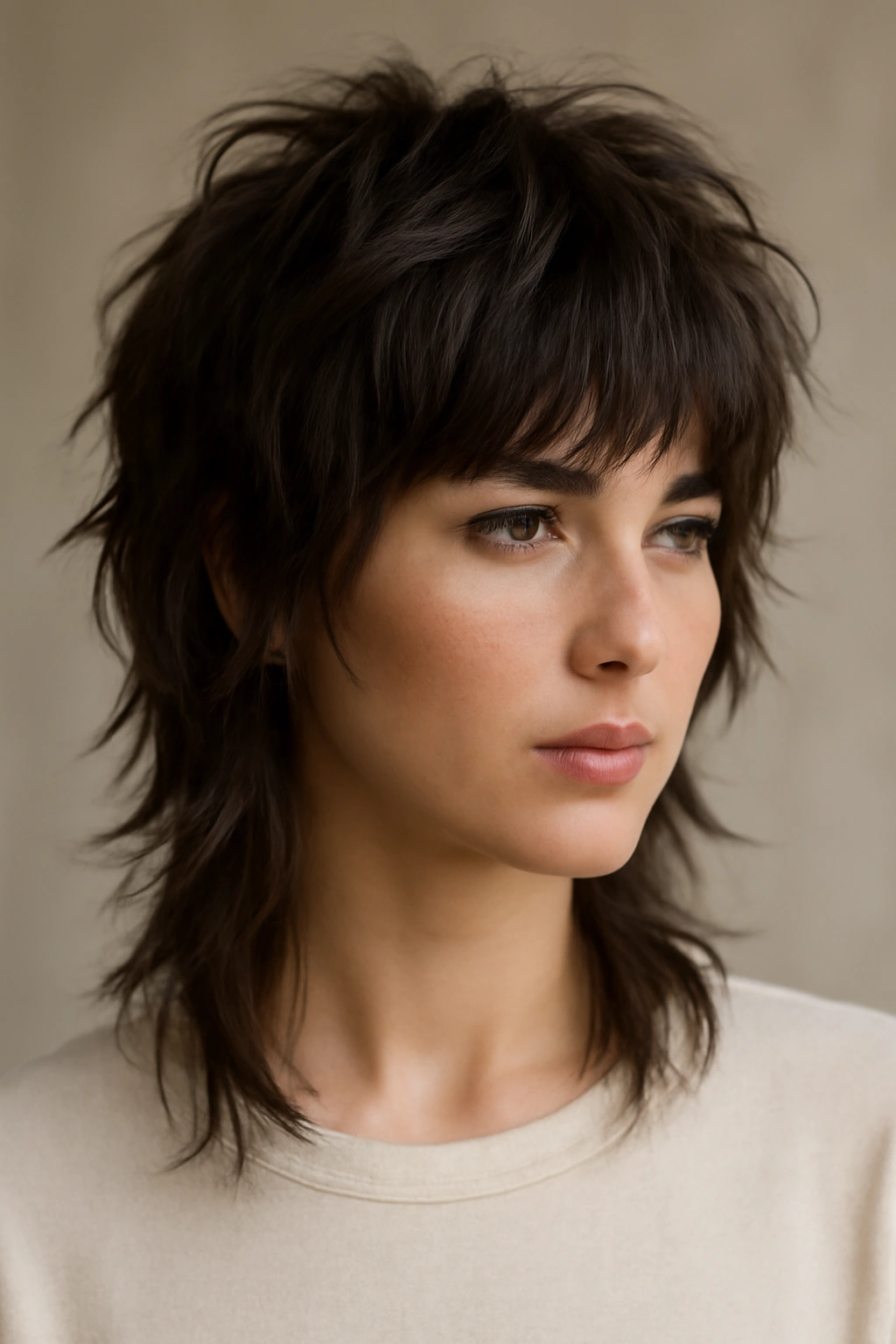
The wolf cut is part shag, part mullet—and yes, it actually works. This style sits somewhere between a wolf’s textured coat and an edgy, intentional shape, with shorter choppy layers on top that create serious volume and longer length in the back that gives you movement and dimension. The layers are dramatically shorter at the crown and gradually lengthen toward the ends, creating this beautiful graduated effect that catches light beautifully.
Why This Cut Captures Modern Texture
The wolf cut works because it gives you the best of both worlds: the volume and thickness perception that comes from shorter layers on top, plus the length and movement you get from a longer underneath layer. The short choppy layers create tons of dimension, which makes thin hair look fuller and gives thick hair somewhere to go so it doesn’t feel heavy. The back length means you’re not committing to short hair; you’ve still got length to work with for styling options.
The Best Way to Style It
- Blow dry with a round brush if you want a sleeker finish, or scrunch in a texturizing mousse while hair is damp for a more piece-y, natural look
- Add a volumizing spray to the roots before blow drying for even more lift at the crown
- Use a curl-enhancing cream if you have natural waves; the layers will amplify whatever texture you already have
- Layer a texturizing spray over dry hair to define individual sections and keep pieces separated throughout the day
2. The Choppy Lob with Layers
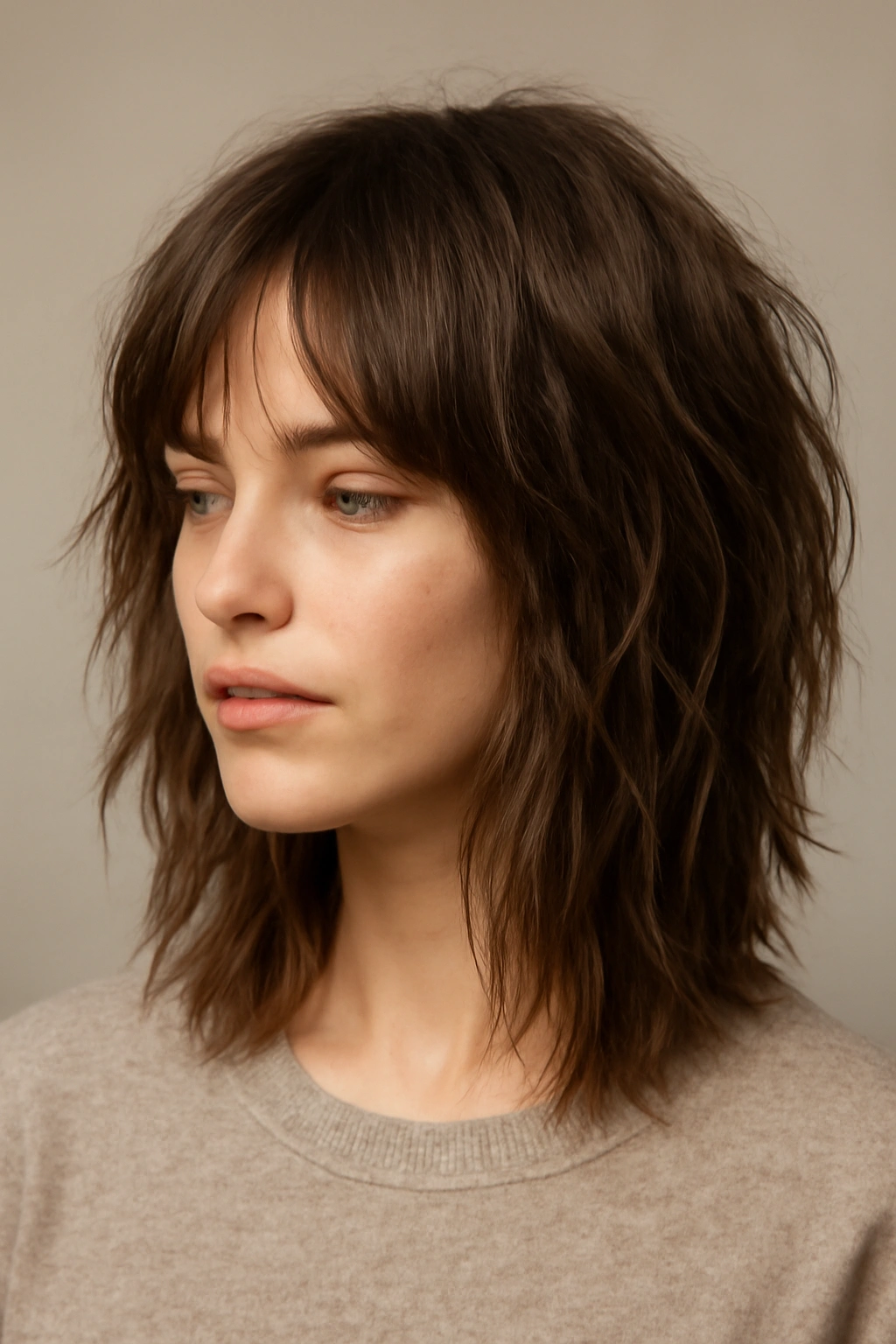
A lob—that in-between length that hits right around chin-level or shoulder-level—becomes something entirely different when you add choppy, face-framing layers. This version keeps the longer length you love about a lob while introducing texture and movement throughout. The choppy layers start at the jawline and work their way down, creating an uneven, deliberately imperfect edge that’s anything but boring.
What Makes Choppy Layers So Effective
Choppy layers disrupt weight in exactly the right places. Instead of a heavy, blunt edge at the ends, you’ve got broken-up sections that move independently. This means more volume at the ends (even if you have fine hair), more texture (even if you have naturally straight hair), and more visual interest (because the eye travels across different lengths instead of stopping at one blunt line). The face-framing layers draw attention upward and outward, which is why this style flatters so many face shapes.
Styling and Maintenance Tips
- Texturizing spray is basically non-negotiable here; it defines the choppy layers and keeps them looking intentional
- Blow dry with your fingers rather than a brush to encourage the choppy texture to separate and move naturally
- Get a trim every 5-6 weeks to maintain the shape and keep the choppy edges looking fresh, not wispy
- Pair with a tousled wave or your natural texture rather than trying to smooth everything out; the imperfection is the whole point
3. The Shaggy Pixie
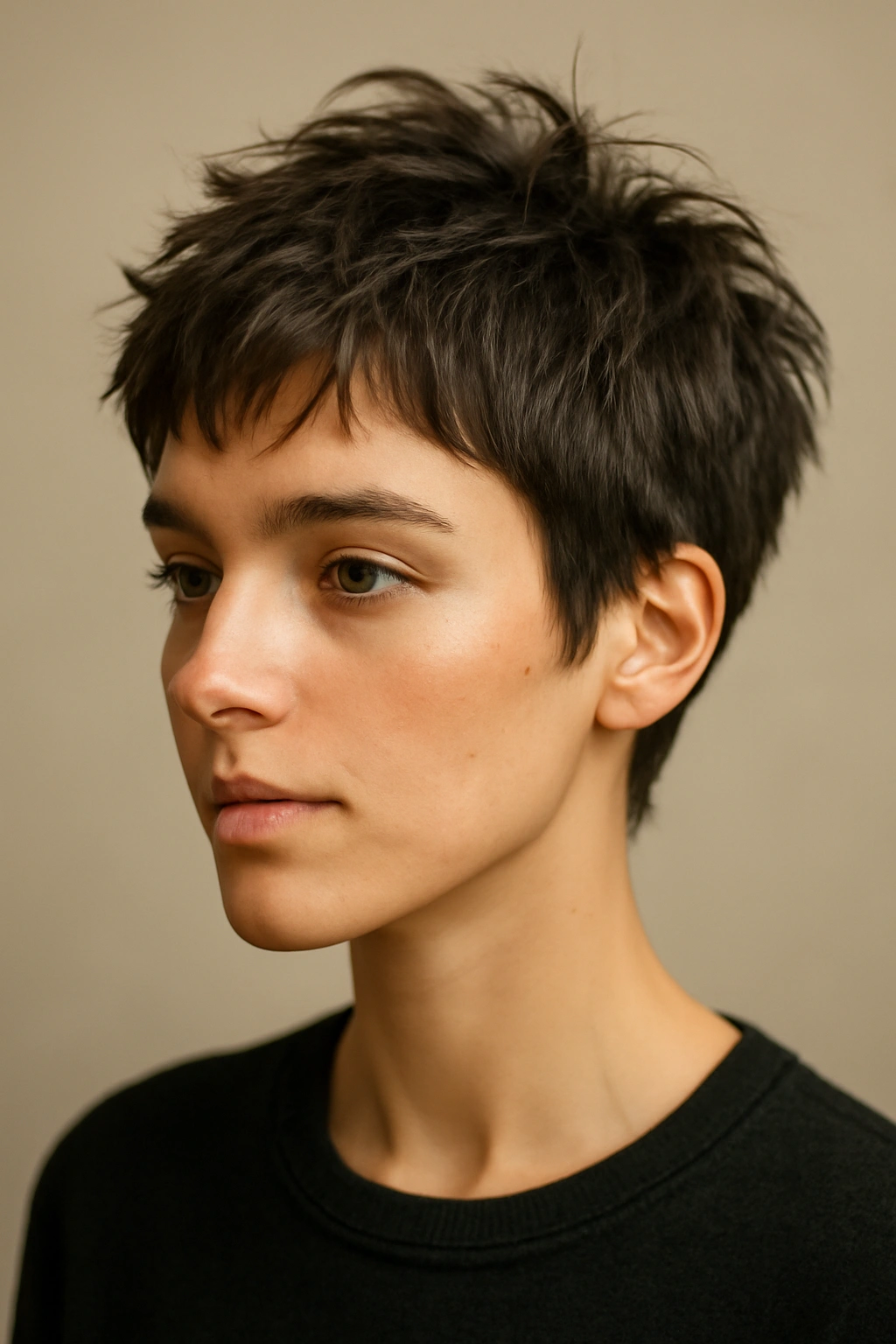
If you love the idea of short hair but don’t want it to feel severe, a shaggy pixie gives you short length with tons of texture and movement. This is a pixie cut that’s been layered and choppy rather than smooth and precise—longer on top than on the sides, with texture throughout that makes it feel soft and approachable rather than architectural and sharp. The layers are key; they create the shagginess that makes this cut feel intentional rather than like you just got a boring short cut.
Why Shaggy Pixies Feel More Accessible
Regular pixies can feel very chic and architectural, but they demand a certain confidence. A shaggy pixie softens that vibe while keeping all the practical benefits of short hair. The layers mean you’re creating movement and softness rather than relying on a crisp, geometric shape. The texture also hides the fact that your hair is growing out between cuts more gracefully than a blunt pixie would. Plus, a shaggy pixie photographs beautifully and looks completely different depending on how you style it—sleek and minimal one day, tousled and textured the next.
How to Make a Pixie Work for You
- Ask your stylist specifically for choppy, shaggy layers throughout—not a smooth, blunt pixie
- Textured styling products become your friend; a matte clay or texturizing cream emphasizes the layers
- Consider your face shape: this works beautifully for round faces (the short layers on the sides balance width) and oval faces, and it can work for square faces if the longer top length is styled to soften jawline angles
- Blow dry with a lightweight volumizing product to encourage the layers to separate; never smooth it down
4. The Shag with Bangs

Adding bangs to a shag cut creates this incredibly cool juxtaposition—long shaggy layers down the length of your hair, but a shorter, choppy fringe hitting your forehead. The bangs are usually shaggy themselves (not blunt), which keeps the whole look cohesive rather than creating a jarring contrast. This is the style for people who want maximum texture and movement but also want the face-framing drama that bangs provide.
The Power of Shaggy Bangs
Regular bangs can feel a bit strict or formal, but shaggy bangs are the opposite. They’re choppy, they move, they don’t feel like a heavy line across your forehead. The layers in the bangs mean they frame your face without feeling restrictive. Paired with shaggy layers everywhere else, you’ve got this incredible cohesion—the whole cut is texture and movement, no straight lines anywhere. This works especially well for people with naturally wavy or curly hair because the bangs can move with the texture rather than fighting against it.
Styling Shag Plus Bangs
- Blow dry bangs with a round brush if you want them to fall smoothly, or scrunch them while damp if you want them to sit more textured and piece-y
- Keep the bangs shorter than you think you want them; they’ll feel longer when you style them, and you want them sitting just above or right at your eyebrow
- Use dry shampoo or texturizing spray on bangs mid-week to keep them from getting too heavy or stringy
- Be prepared for a trim every 3-4 weeks to keep bangs looking intentional; they grow out faster than the rest of your hair and change the whole look when they get too long
5. The Shaggy Bob with Movement
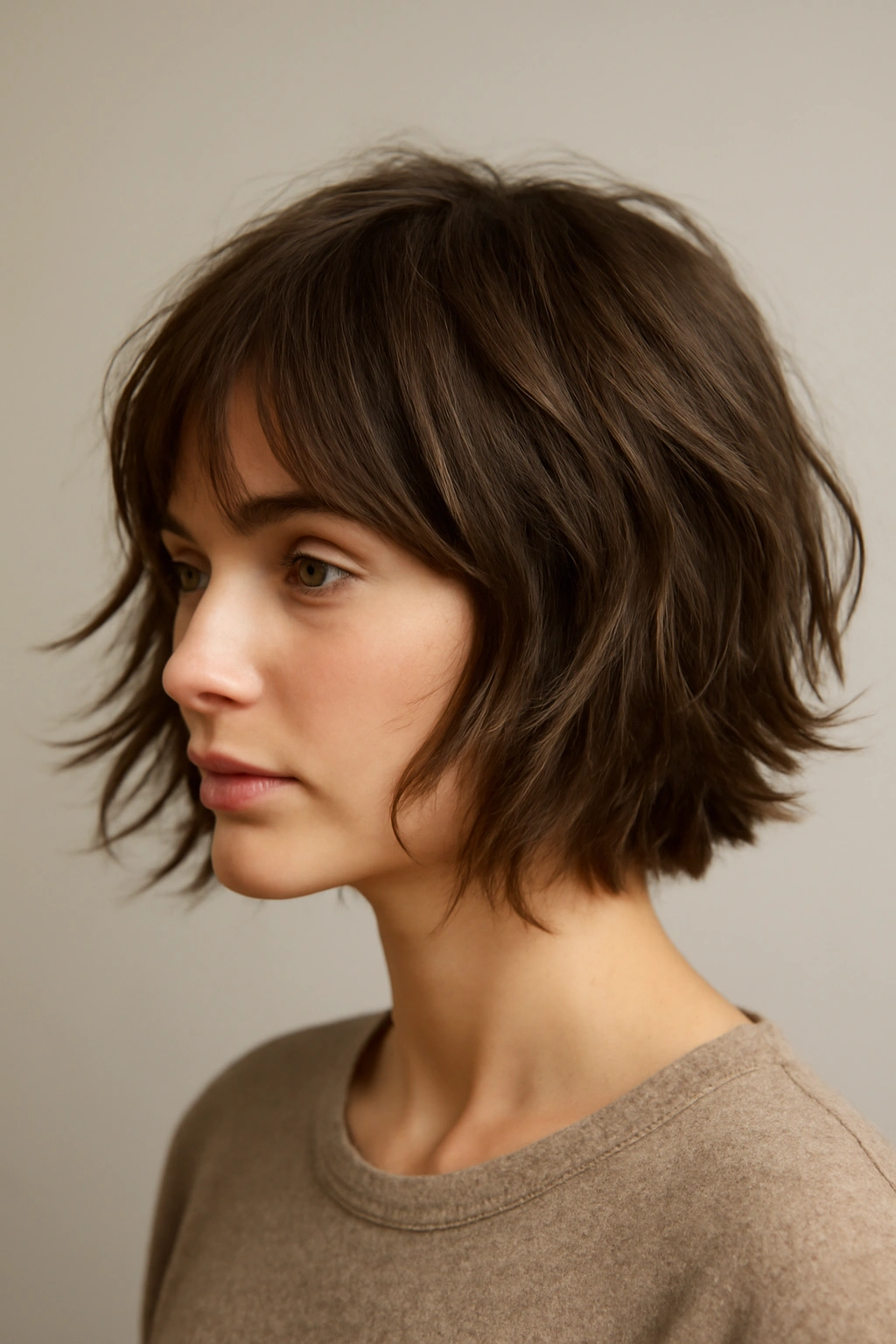
A shaggy bob is shorter than a lob (usually chin-length or slightly above), but instead of being a blunt, precise shape, it’s layered and textured throughout. The shorter length gives you practical styling benefits—easier to manage, quicker to style—but the shaggy layers keep it from feeling boring or basic. The layers create tons of texture and allow your hair to move naturally, which keeps the whole style feeling young and dynamic rather than a rigid bob.
What Shaggy Does for a Bob
A traditional bob can feel a bit stiff or formal, depending on how it’s cut. A shaggy bob removes that formality and brings in softness and movement. The layers mean the ends aren’t heavy—they’re broken up and piece-y, which creates volume and dimension. For people with fine hair, this is transformative because it makes thin hair look thicker. For people with thick hair, the layers give texture without creating bulk. The overall effect is sophisticated but never stuffy.
Styling a Shaggy Bob
- This length is short enough that you can get major volume by blow drying with a round brush; the layers amplify the effect
- Texturizing spray applied to dry hair defines the layers and keeps everything looking intentionally piece-y rather than messy
- You can style this sleek and smooth for professional settings or embrace the texture for a more casual vibe
- Trim every 4-6 weeks to maintain the shape; bobs show growth more obviously than longer styles
6. The Long Shag with Face-Framing Layers
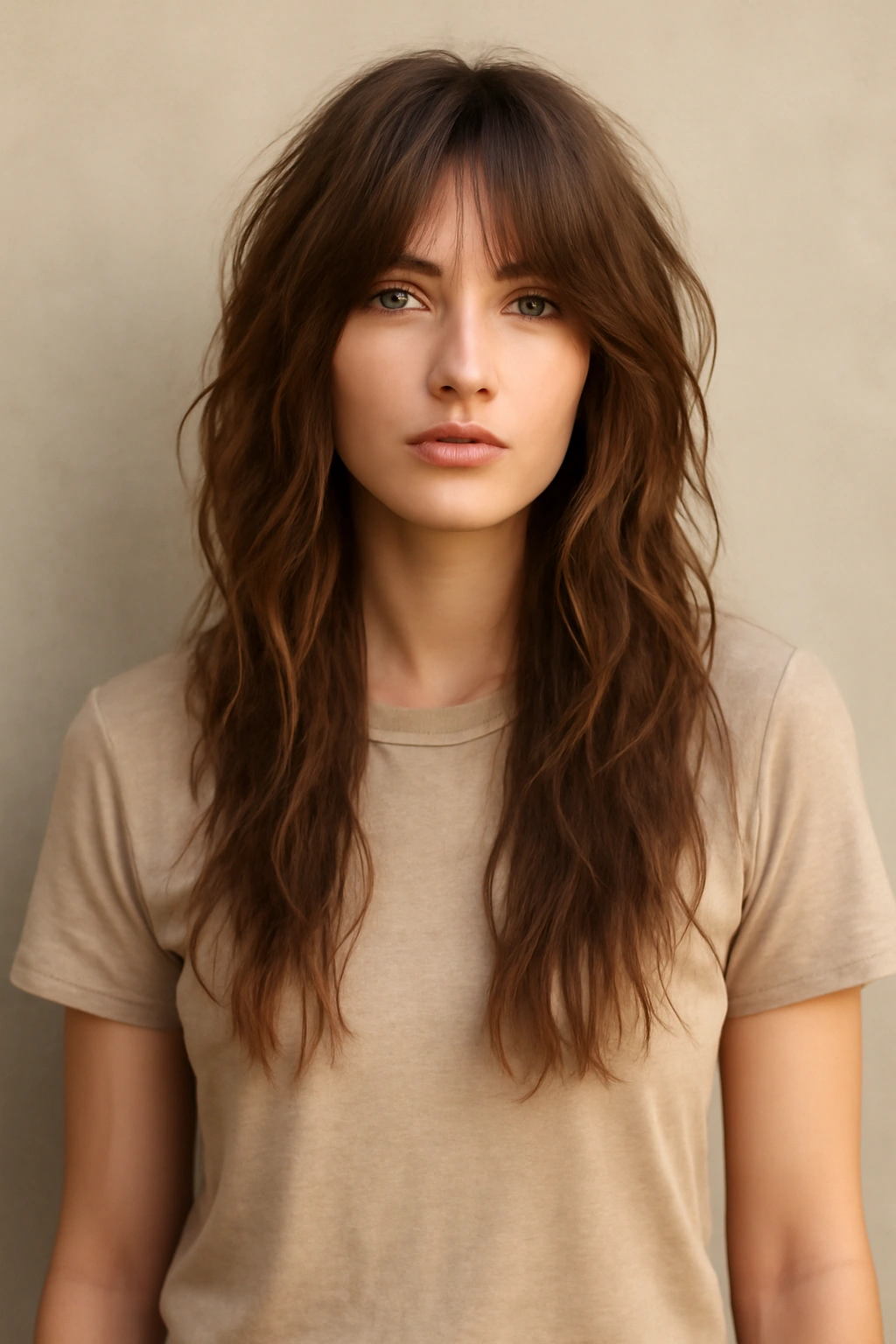
This is the classic shaggy hairstyle that works at longer lengths—think waist-length or mid-back-length hair, but with strategically placed layers that create movement and prevent it from feeling like one heavy, uniform mass. The face-framing layers start shorter, around cheekbone or jawline length, and gradually lengthen as you move back and down. The overall effect is movement and dimension throughout, with the longest layers sitting all the way at the ends.
Why Long Shag Feels So Effortless
When hair is this long and heavy, a blunt, unlayered cut can feel thick and immobile—not effortless at all. But strategic layering changes everything. The shorter face-framing layers create movement around your face, which draws attention upward. The longer layers throughout the length mean your hair moves as one cohesive piece rather than feeling monolithic. This is the style that genuinely looks good tousled and bed-head-ish; the layers work with any texture rather than fighting against it.
Making Long Shag Actually Wearable
- Blow dry is optional but highly recommended; your hair will dry faster with layers than it would unlayered, and the movement is even more beautiful when you’ve helped it along
- A lightweight texturizing spray or ocean spray keeps the layers separated and defined throughout the day
- Get trims every 8-10 weeks to maintain the shape and keep the ends from getting wispy and stringy
- This length works beautifully with both straight hair and natural texture; the layers complement both equally well
7. The Textured Shag with Highlights
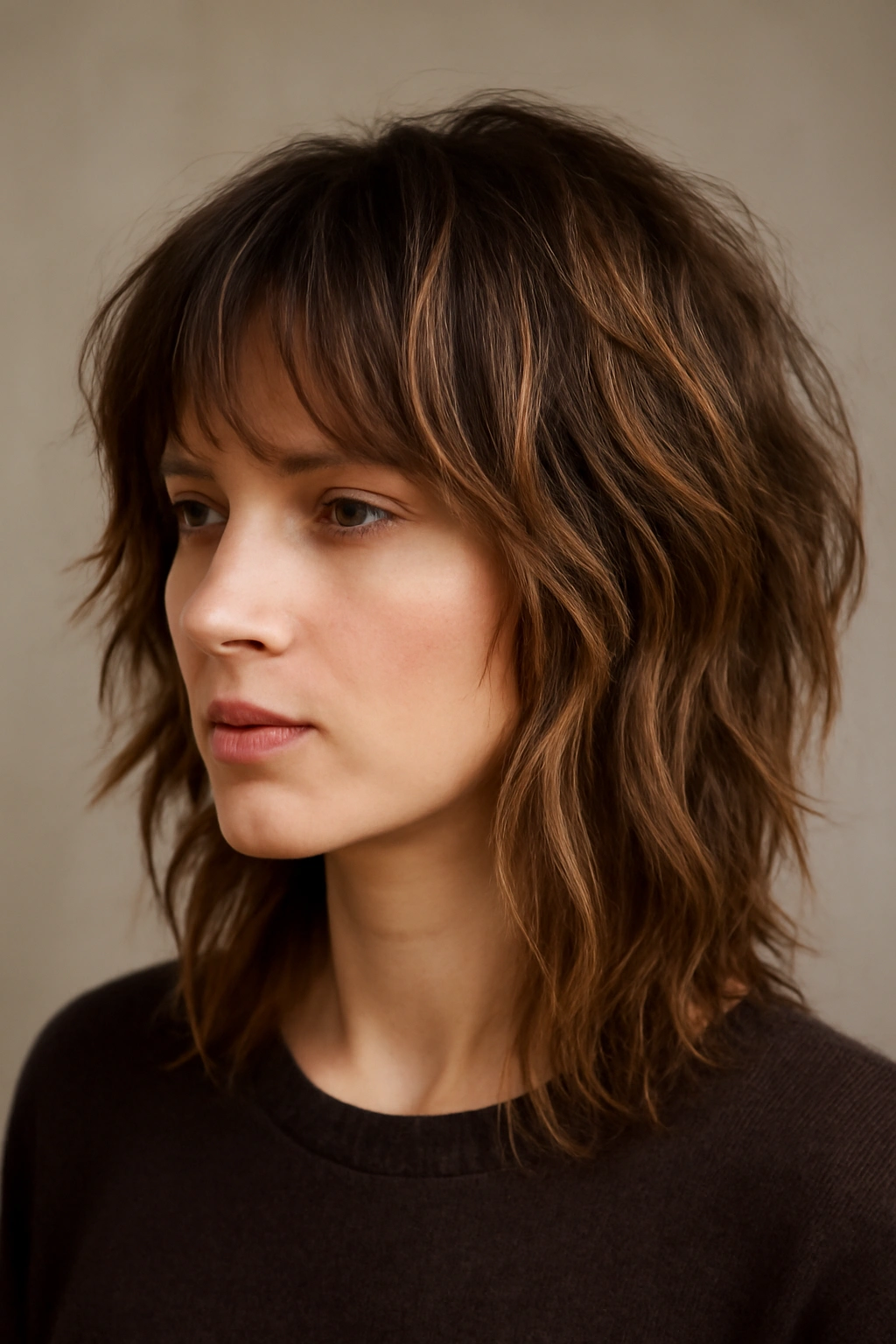
Adding dimension through color—whether that’s subtle highlights, balayage, or a more dramatic color placement—amplifies the texture that shaggy layers create. When light hits the different layers and lengths, color variation makes the dimension even more obvious. A shag cut with subtle lighter pieces woven throughout looks infinitely more textured than the same cut in one solid color, even though the actual cut is identical.
How Color Amplifies Texture
This is optical illusion meets actual styling: highlights break up the visual mass of hair while simultaneously drawing attention to the movement and texture of the layers. A piece-y, choppy layer that’s one color might look pretty subtle, but that same layer in a lighter shade suddenly becomes a focal point. The eye jumps between different color values, which makes the texture feel more pronounced. This is why shaggy cuts paired with dimensional color look so effortlessly textured.
Styling Textured, Highlighted Shags
- Texturizing spray becomes even more important when you have color; it emphasizes the lighter pieces and makes the dimension more visible
- Blow dry with movement rather than smooth; you want the lighter pieces to catch the light
- Tousled, piece-y styling shows off the color dimension better than smooth, sleek styling
- Consider your color refresh schedule; dimensional color requires touch-ups more frequently than solid color, usually every 4-6 weeks for dimensional pieces
8. The Shaggy Mullet
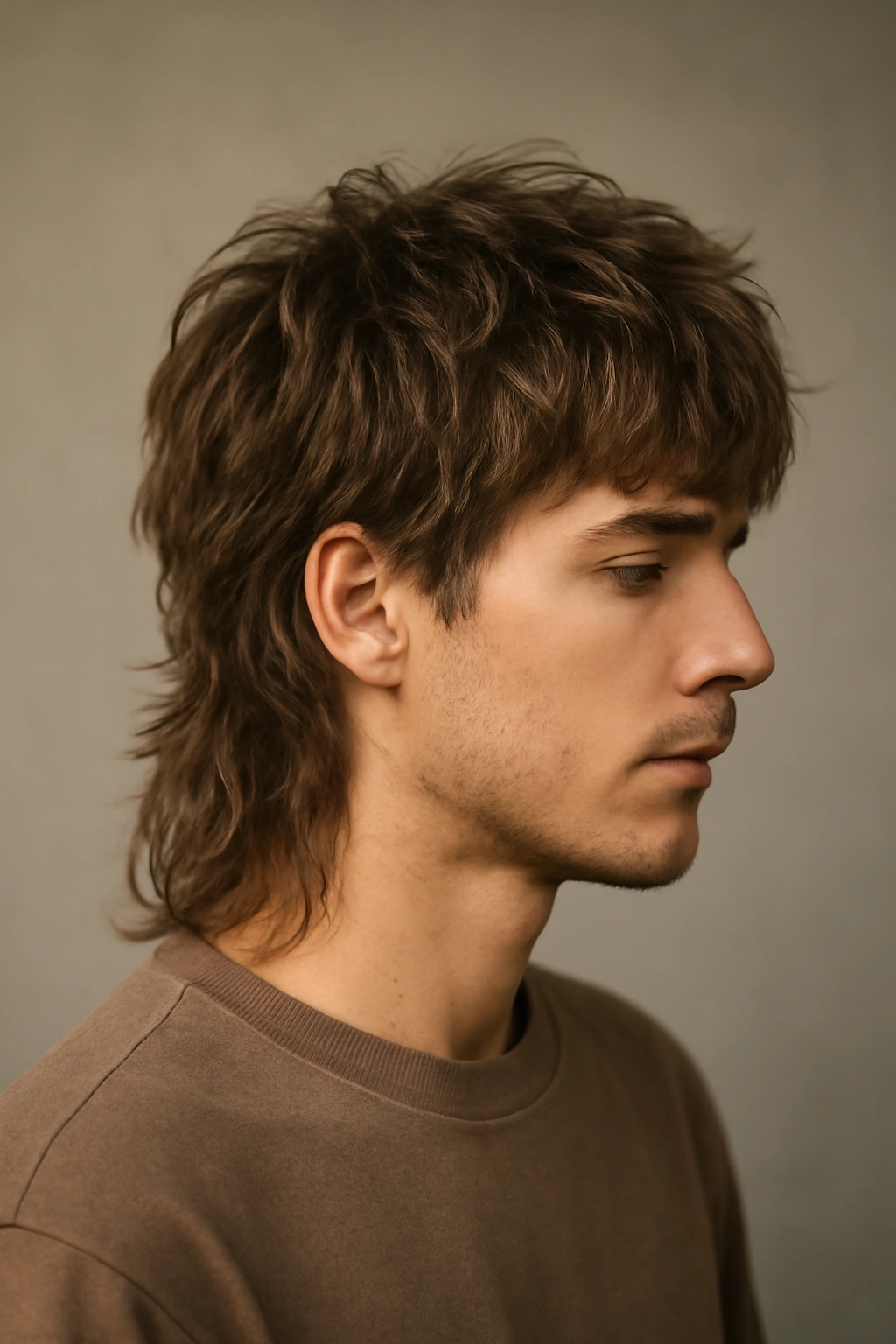
Yes, mullets are back, and the shaggy version is actually incredibly cool. This is business in the front, party in the back—but executed with choppy, textured layers everywhere rather than a harsh contrast between short and long. The top is shorter and layered for volume, the back is longer for movement, and the whole thing is textured so it doesn’t feel harsh or ironically retro; it feels genuinely modern.
Why Shaggy Mullets Actually Work
A sharp, blunt mullet reads very intentionally retro. A shaggy mullet feels more contemporary because the layers soften the contrast and create movement and texture throughout. You’re not making a stark statement; you’re playing with proportion and texture in a way that feels creative rather than costume-y. The shorter front gives you manageability and the perception of volume, while the longer back gives you the styling versatility and movement of longer hair. It’s a style that works for people who genuinely want something different.
Styling and Committing to a Shaggy Mullet
- Blow dry the top for maximum volume; the shorter layers will hold volume longer than the longer back sections
- Texturizing products are essential; they keep the longer back from looking stringy or overly separated
- Styling can go a few directions: sleek and smooth on top with piece-y texture in the back, or fully textured throughout
- This is a commitment—it’s a statement cut that reads confidently. Make sure you actually love the idea before committing to it
9. The Shag with Curly or Wavy Texture
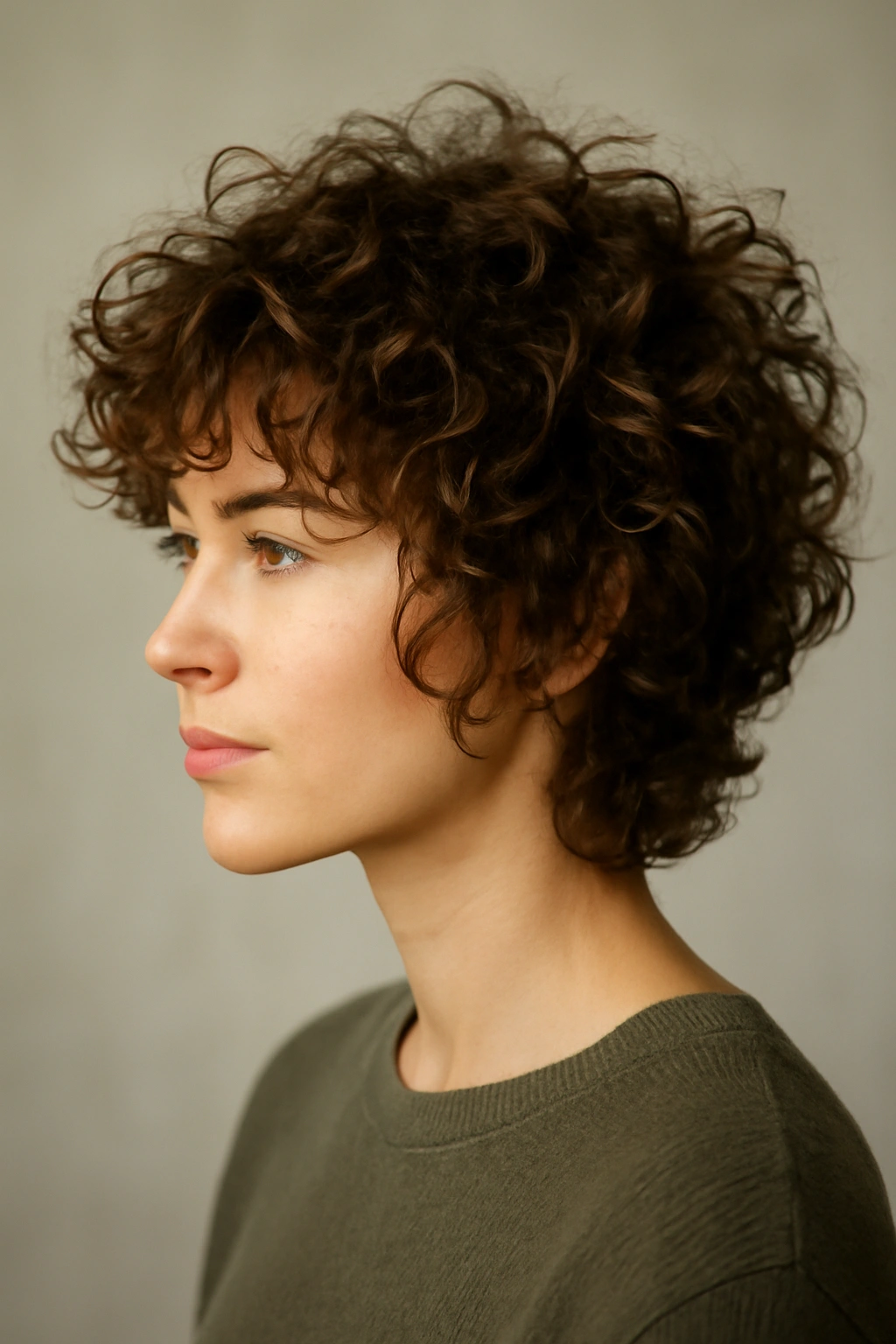
If you’ve got natural waves or curls, a shaggy cut becomes something special because the layers amplify your natural texture instead of fighting against it. The short layers on top add volume at the roots, the longer layers underneath allow curls to form and move independently, and the choppy ends prevent one dense mass of curl. This is the cut that makes people with curly hair suddenly feel like their texture is an asset rather than something to manage.
Why Shag Cuts Are Perfect for Curly and Wavy Hair
Layers are transformative for curly and wavy hair because they reduce bulk without reducing the amount of hair—the weight is distributed more evenly instead of sitting heavy at the ends. When a curly-haired person gets a blunt, unlayered cut, the curl pattern gets compressed and heavy. But with layers, each curl has room to form and move independently. The shorter face-framing layers bring out the texture near the face, and the longer layers throughout create a gorgeous graduated shape that flatters curly hair uniquely.
Working with Your Texture
- Dry your hair by scrunching products upward into your curls rather than smoothing downward; this encourages curl formation and definition
- Use curl-specific products: a gel or curl cream will hold texture better than a light spray
- Diffuse dry for best results, or let your hair air dry completely before touching it (wet curls look completely different than dry curls)
- The choppy, layered nature of the cut means you don’t need your curls to be perfectly uniform; the variation is the whole point
10. The Shaggy Layers with Minimal Length Loss
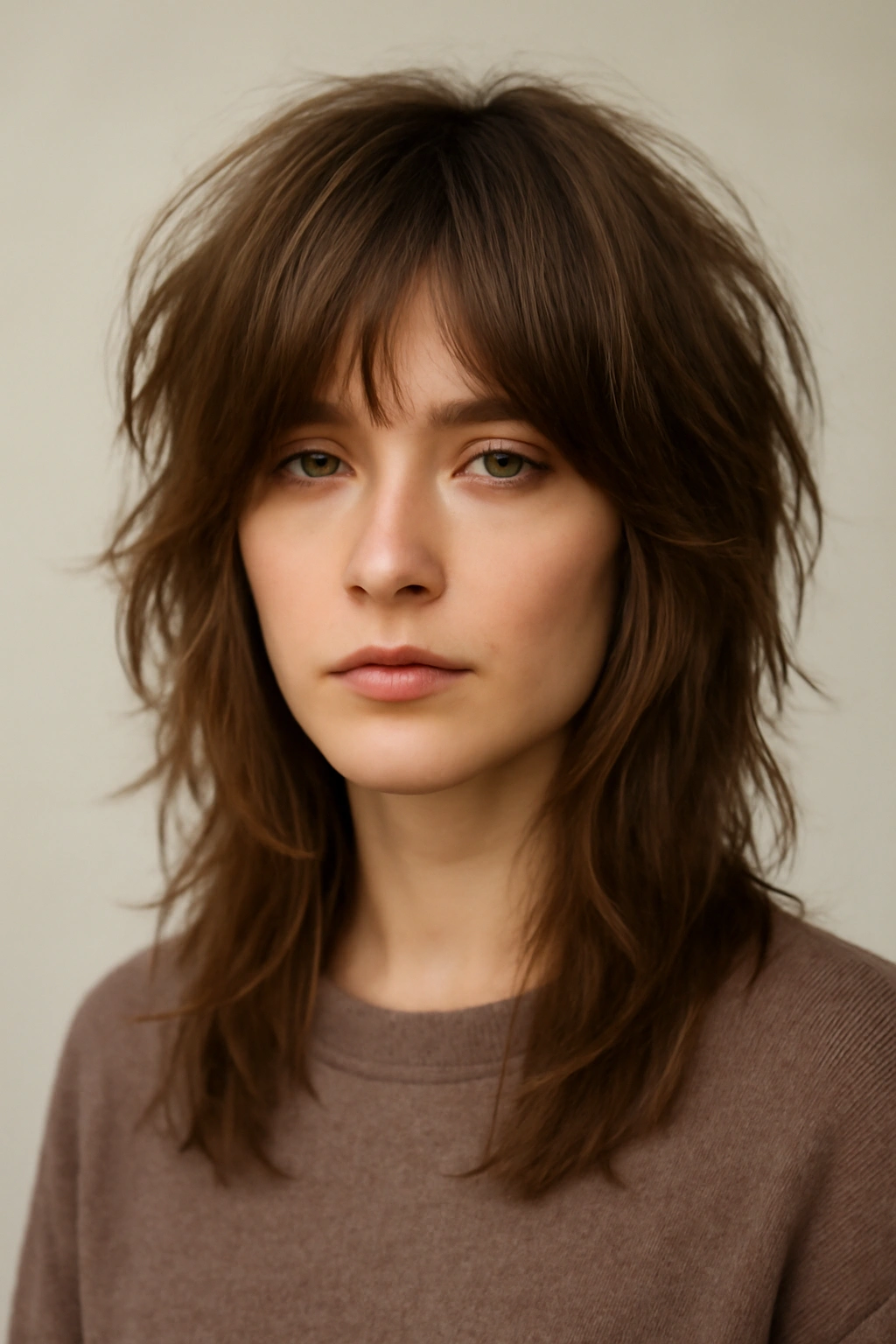
Some people love the idea of shaggy texture but are nervous about removing length. A smart approach is adding choppy layers strategically without dramatically reducing your overall length. Your stylist focuses layers on the top half and throughout the mid-length, creating texture and movement while keeping the bottom section longer and less layered. You get the textured, effortless vibe without feeling like you’ve gone significantly shorter.
Balancing Texture and Length
This is about layers that create visual texture and movement without requiring dramatic length removal. The key is layer placement: shorter, choppy layers at the crown and face-framing zones, gradually lengthening as you move down the back and sides. Your ends might be slightly shorter than they were, but not dramatically so. The whole effect is texture and movement, but you’ve maintained enough length that you can still put your hair in a ponytail or bun if you want to.
Styling for Maximum Movement
- Blow dry to activate the layers and create volume; this style shows off the texture best when it’s been styled rather than just air-dried
- Texture spray applied to damp hair before blow drying helps the layers separate and move
- You can wear this sleek and smooth on days when you want polish, or textured and tousled on days when you want to embrace the movement
- The layers will feel more integrated and less choppy as your hair grows; plan for trims every 6-8 weeks
11. The Choppy, Choppy Shag
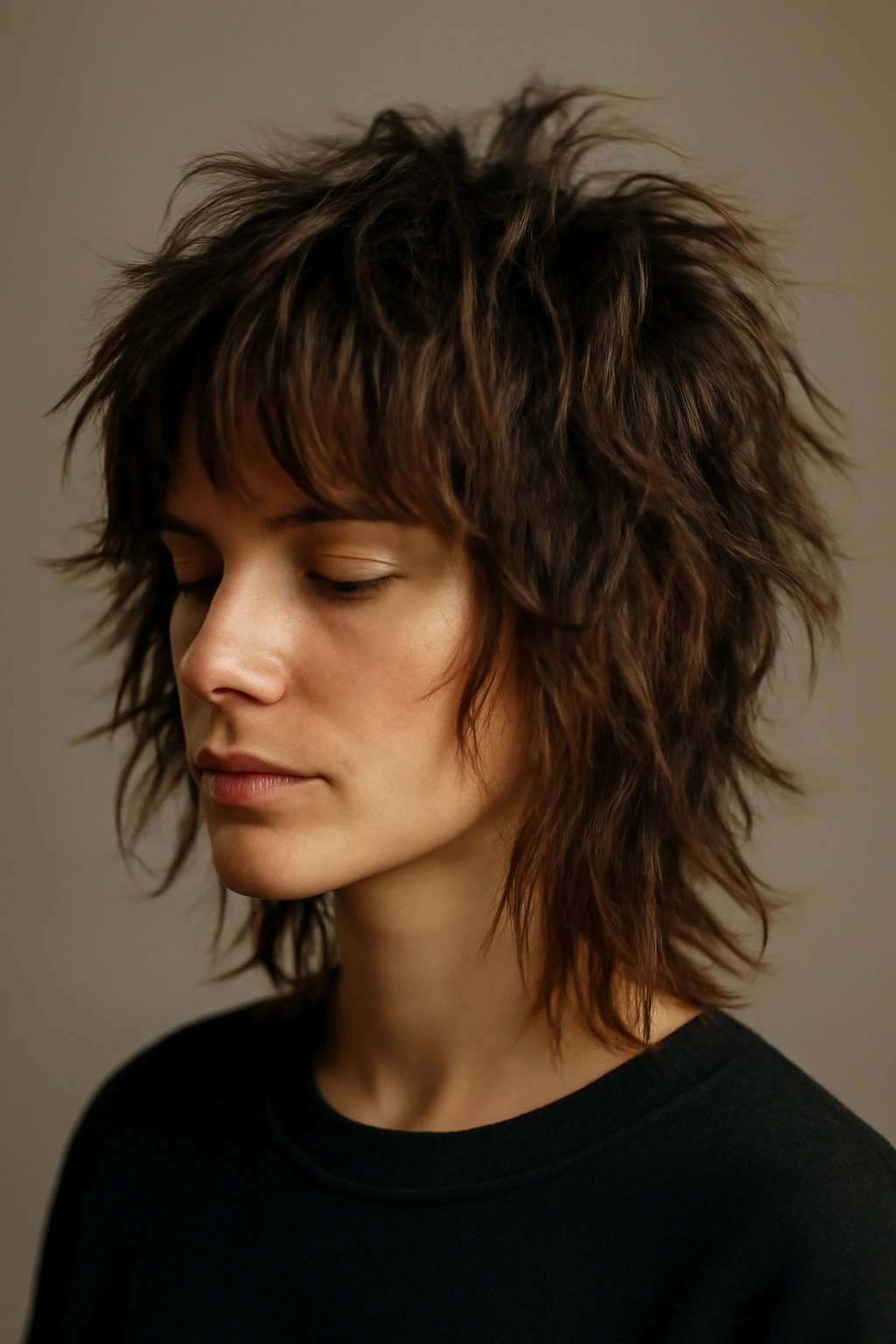
For people who want maximum texture and absolute zero straight lines, the ultra-choppy shag takes the concept to its extreme. Every layer is choppy, including the ends. The whole cut is staggered and uneven in a way that’s completely intentional—this isn’t accidental messiness; it’s architectural messiness. Think very short, sharp layers on top, longer pieces throughout the mid-length, all slightly different lengths, all creating maximum movement and texture.
The Appeal of Extreme Texture
An ultra-choppy shag is powerful because it’s a statement cut that broadcasts confidence and intentionality. You’re not trying to hide anything or look “normal”—you’re saying “I like texture, I like movement, I like my hair to look alive.” This cut works beautifully on people with straight hair (because the choppy layers create the illusion of texture), on wavy hair (because it amplifies natural movement), and on curly hair (because it reduces bulk while maintaining curl definition). It’s a genuinely versatile style once you commit to the choppiness.
Making Extreme Texture Wearable
- This requires styling commitment; left unstyled, it might look a bit chaotic rather than intentional
- Texturizing spray is non-negotiable; it defines each choppy layer and makes the cut look deliberate rather than haphazard
- Blow dry with movement and separation, using your fingers to encourage the layers to go different directions
- A trim every 4-6 weeks keeps the choppy edges sharp and defined; when it grows out too long between cuts, it starts to look unkempt
12. The Shag with a Defined Undercut
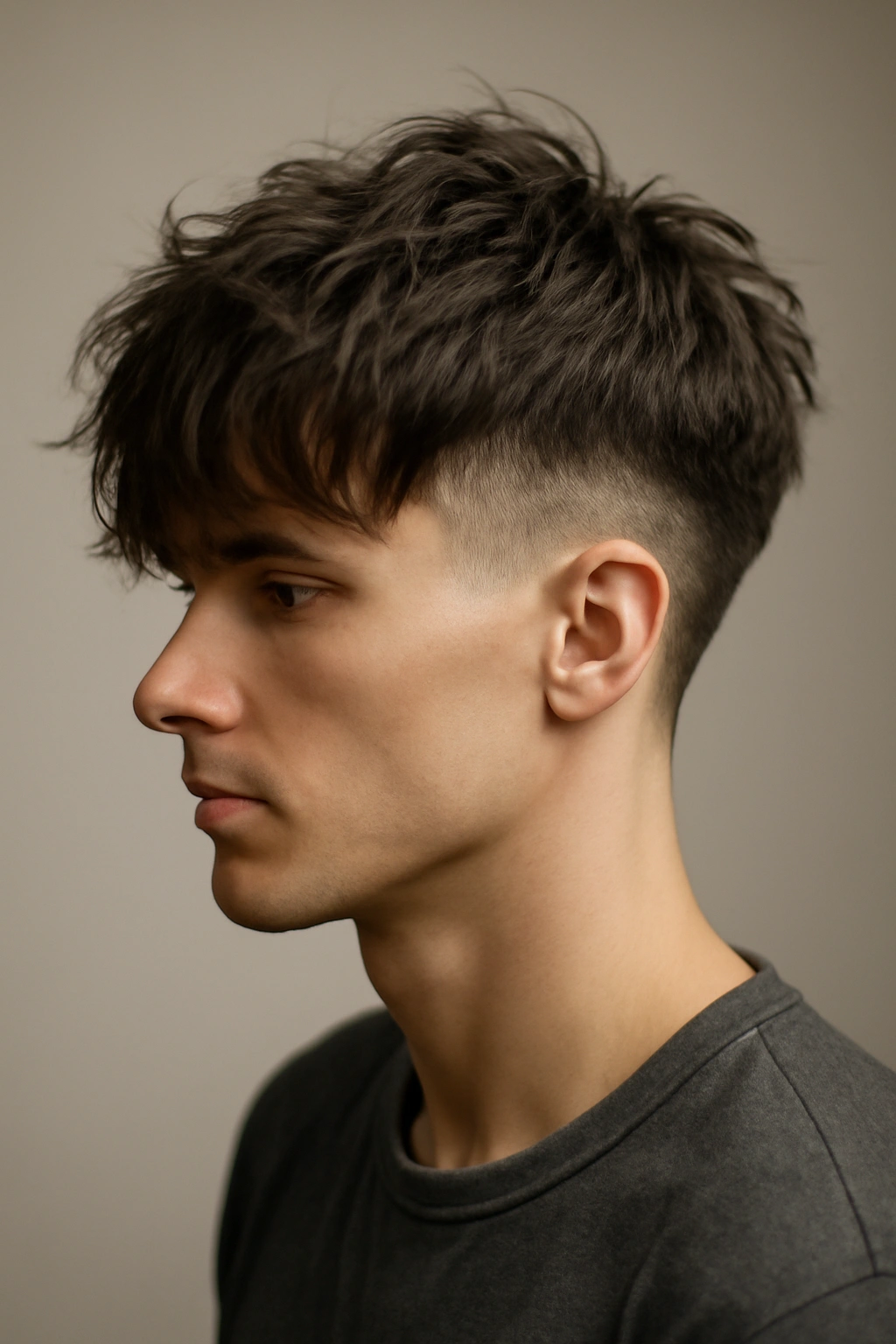
For a more modern, sculptural take on shaggy style, combine layers on top with an undercut underneath—shorter sides or back that create contrast with the longer shaggy layers above. This gives you the textured, piece-y movement of a shag cut with a more contemporary silhouette. The undercut creates a clean line underneath while the top stays textured and shaggy, which is a really appealing visual combination.
The Balance of Structure and Texture
An undercut provides structure and clean lines, while the shaggy layers on top provide texture and movement. Together, they create a cut that feels modern and intentional rather than just messy. The undercut also gives you practical benefits: it reduces overall weight and bulk if you have thick hair, and it makes blow drying faster because you’re not styling that underneath section. The contrast between the clean undercut and the choppy, textured top is visually striking.
Styling the Shag-and-Undercut Combo
- Blow dry the top section for texture and movement; the undercut can be kept smooth or textured depending on your preference
- Texturizing spray on the top, clean lines on the undercut—this creates visual interest through contrast
- As it grows out, the longer section will eventually cover the undercut, which is fine; you can refresh it every 6-8 weeks or let it grow out depending on your preference
- This style works across hair types and face shapes; the proportions can be adjusted based on what suits you
13. The Shoulder-Length Shag
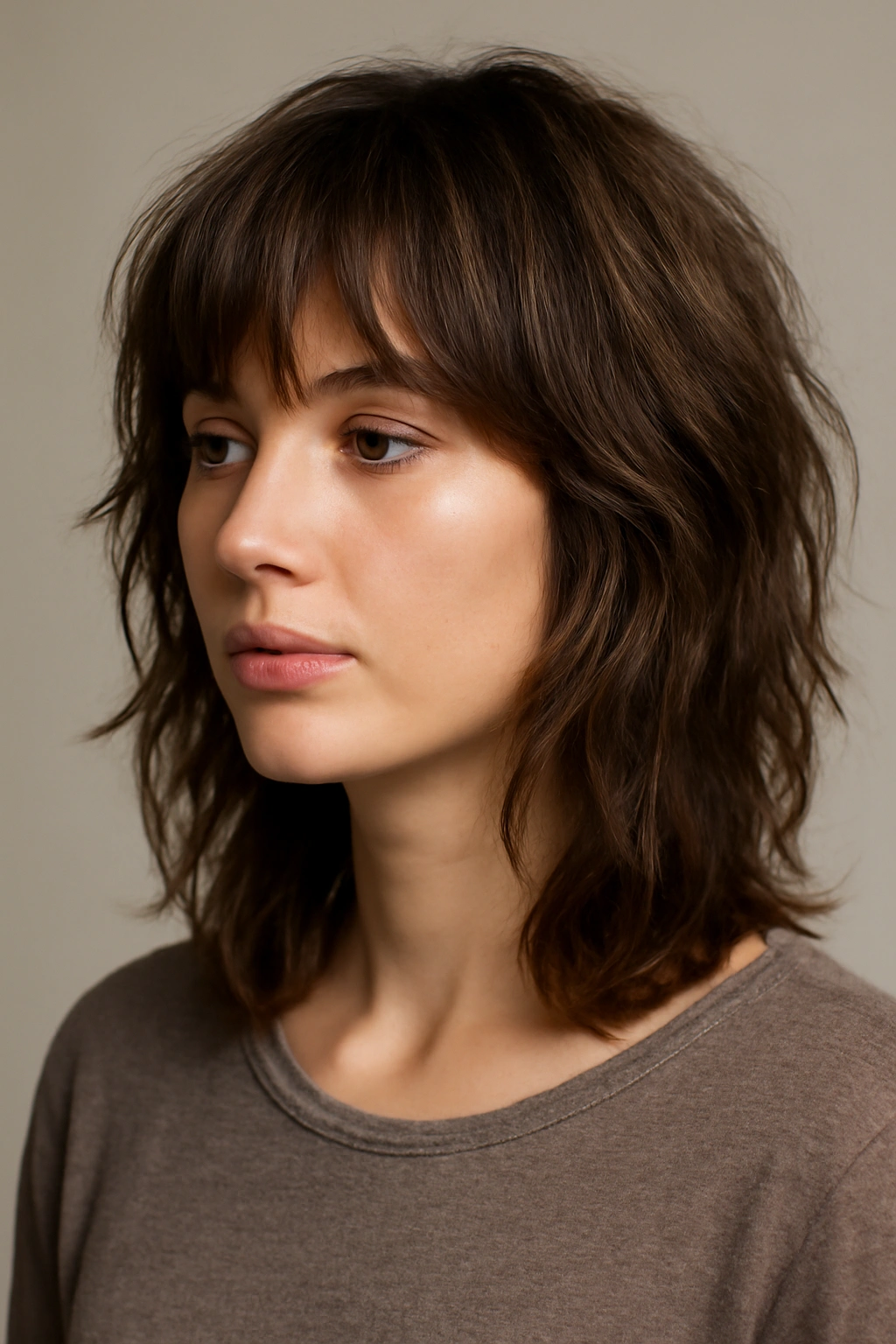
Shoulder-length hair with shaggy layers is the sweet spot for people who want versatility, movement, and the practical length to style multiple ways. At this length, you can put your hair in a ponytail or bun, but the layers ensure it never feels heavy or one-dimensional. The face-framing layers start shorter, around the cheekbone or jawline, and graduate down to the shoulder-length end, creating beautiful movement and dimension throughout.
Why Shoulder-Length Hits the Balance Point
This length is long enough that you’ve got options—you can style it down and textured, or pull it up into a ponytail or bun. It’s short enough that it’s highly manageable and dries relatively quickly. The layers work beautifully at this length because they create movement without making your hair feel wispy or thin at the ends. The weight is distributed evenly, and the texture makes even fine hair look fuller without requiring extreme layering. It’s genuinely the Goldilocks of shaggy lengths.
Making This Length Wearable Every Day
- Blow dry for maximum movement and dimension, or scrunch in texturizing products while damp for a tousled, air-dried vibe
- This length and style is forgiving between washes; second-day texture often looks better than fresh-from-shower texture
- You can wear this sleek for professional settings or embrace the texture for more casual vibes
- Trims every 6-8 weeks keep the shape fresh and the layers from getting too wispy at the ends
14. The Shag with Disconnected Pieces
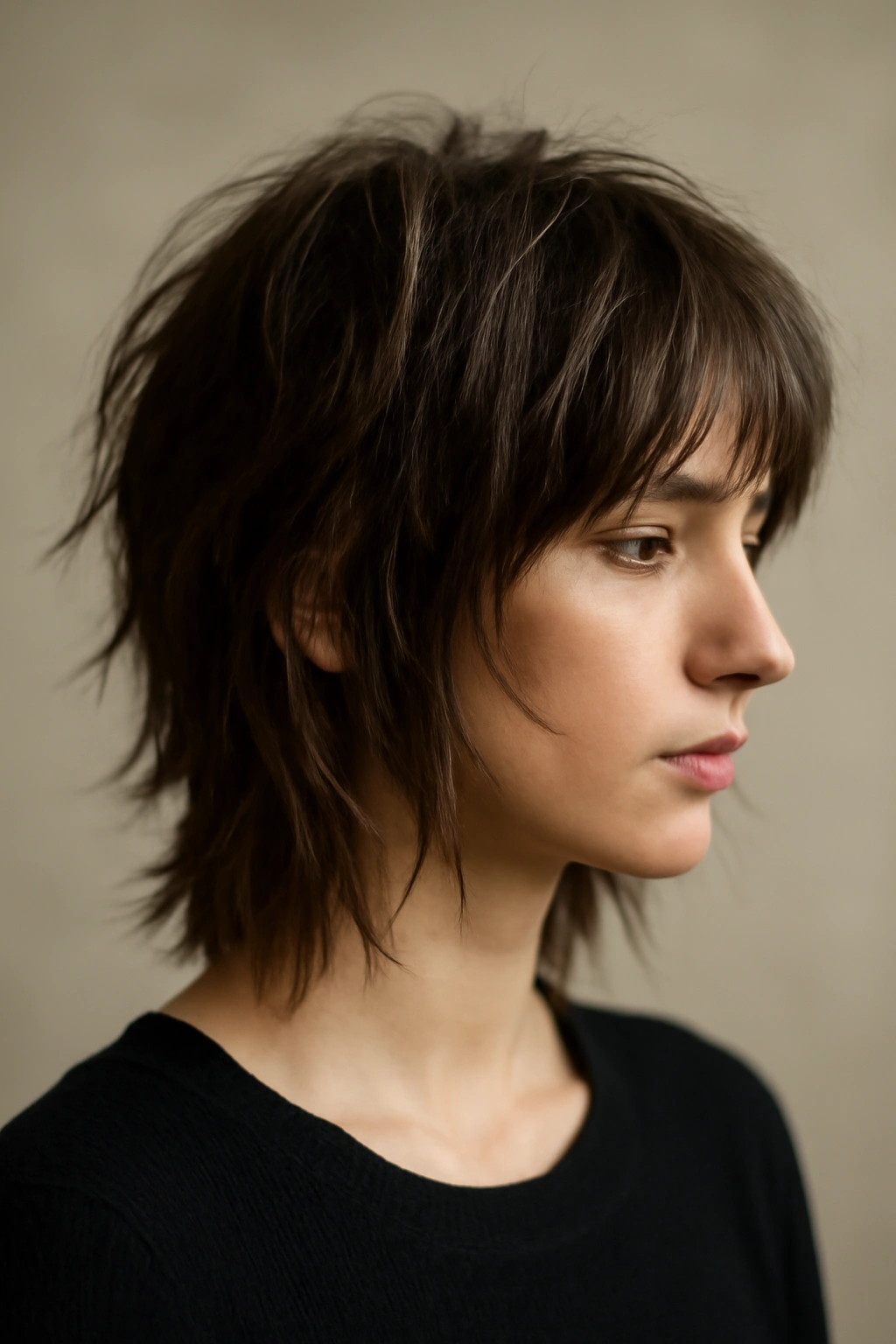
For maximum visual texture and movement, some shaggy cuts feature intentionally disconnected layers—shorter pieces that don’t transition smoothly into longer pieces but instead have a more obvious length difference between sections. These disconnected pieces are still choppy and textured, but the jump between lengths is more dramatic. This creates visual interest and movement that’s even more pronounced than a graduated shag.
The Visual Impact of Disconnected Layers
When layers are disconnected rather than smoothly graduated, the eye travels more actively across different lengths, which makes the cut feel more textured and dynamic. Disconnected pieces also create movement differently than graduated layers—instead of flowing from short to long, the pieces move independently and in different directions. This style is perfect for people who want their cut to feel intentionally modern and editorial rather than softly textured.
Styling Disconnected Pieces
- Texturizing spray is absolutely essential; it emphasizes where the disconnection is and makes each piece feel intentional rather than choppy
- Blow dry with separation and movement; you want each piece to move independently rather than blending together
- This style works beautifully with highlights that fall on different pieces, which emphasize the disconnection and create visual interest
- Trim every 4-6 weeks to maintain the disconnected shape; once it grows out, the pieces start to blend together
15. The Shag with Longer Bangs
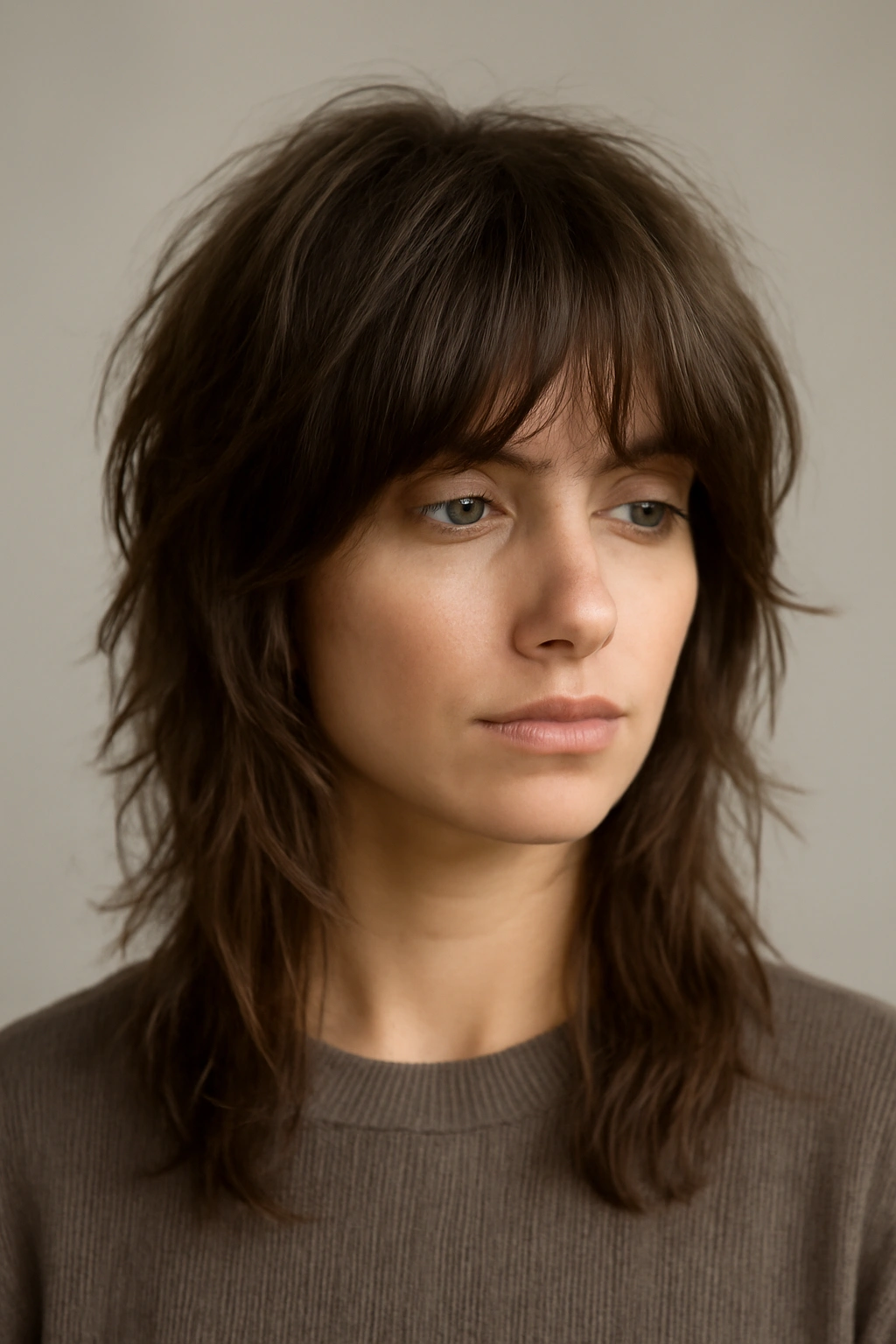
For a softer take on shaggy style, go with longer, choppy bangs that sit closer to your eyes—around nose-length rather than forehead-length. These bangs are shaggy themselves, which keeps them from feeling severe, and they create face-framing without the blunt statement that shorter bangs make. The longer bangs work beautifully with shaggy layers throughout, creating a cohesive, textured look from roots to ends.
Why Longer Bangs Feel More Flexible
Longer bangs give you face-framing without feeling like a commitment or a statement. They move more than shorter bangs, they’re easier to style multiple ways, and they don’t require as frequent trimming. Shaggy longer bangs are particularly versatile because they can be styled straight, wavy, or textured depending on your vibe that day. They work for more face shapes and hair types than shorter, blunt bangs, which is probably why they’ve remained a popular choice.
Styling Longer Shaggy Bangs
- You can tuck longer bangs behind your ears if you want them out of the way, or let them frame your face—they work both ways
- Blow dry with a round brush if you want them to sit smoothly, or scrunch while damp for a piece-y, textured look
- Texturizing spray keeps the bangs separated and defined throughout the day
- Trim the bangs every 5-6 weeks to keep them looking intentional; they grow faster than the rest of your hair
16. The Shag with Lots of Volume at the Crown
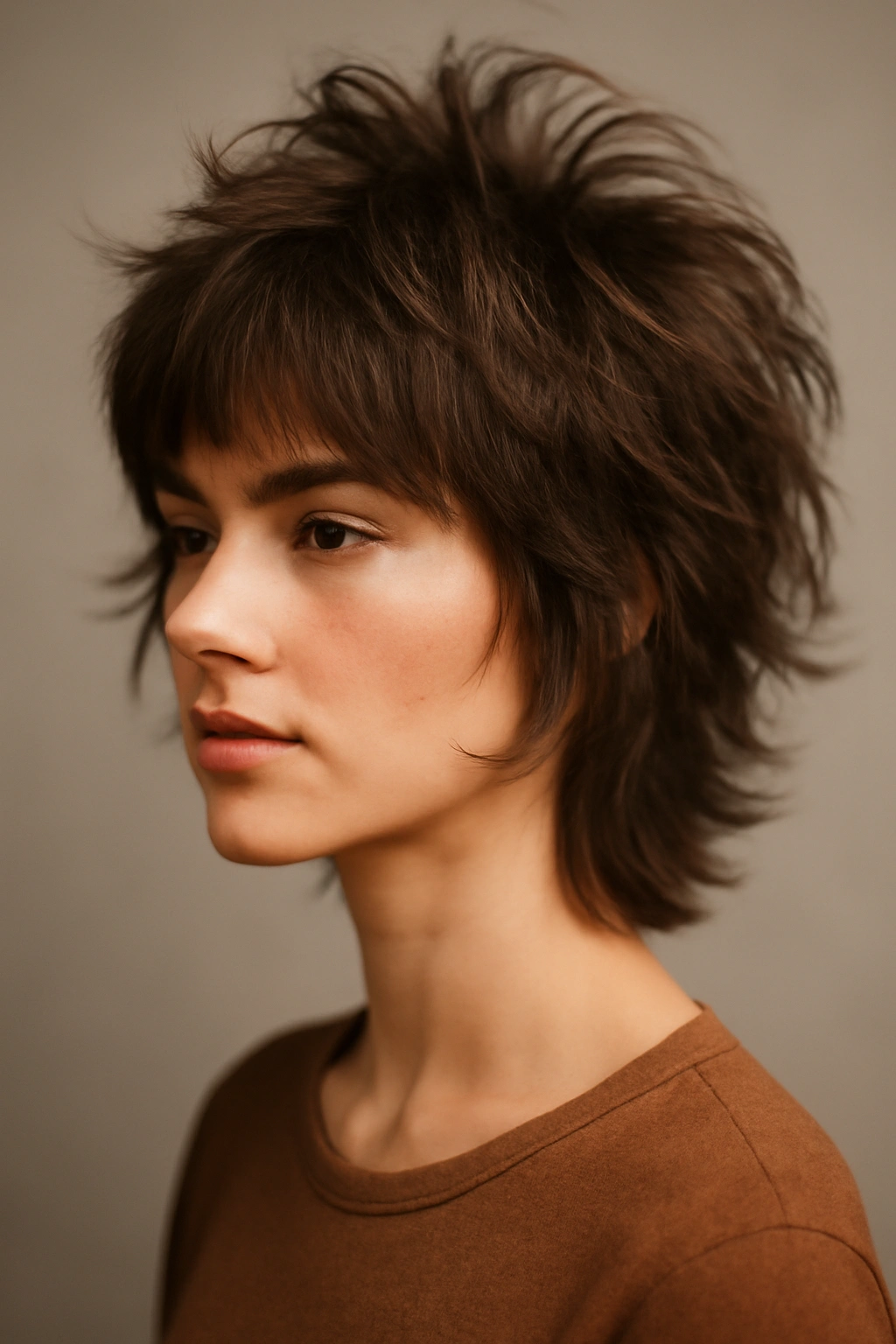
If you’re working with fine hair or straight hair that needs volume, a shag cut with extra-short, choppy layers at the crown creates lift and the perception of much thicker hair. These crown layers are dramatically shorter than the rest of the cut, which pulls hair away from the scalp and creates space at the roots. The longer layers graduate down from there, creating both volume at the crown and movement throughout the length.
Why Crown Layers Change Everything for Fine Hair
Fine hair often lacks natural volume, especially at the crown. But strategic, very short layers at the crown change that entirely because they remove weight and create separation at the roots. Combined with longer layers throughout, you’ve got a cut that looks thicker overall while still maintaining the movement and texture of shaggy style. The short crown layers also dry much faster than longer hair, so blow drying to create volume is easier.
Styling for Maximum Crown Lift
- Blow dry the crown first, directing your brush and blow dryer upward to create lift
- Use a volumizing spray or mousse applied to the roots before blow drying; the short layers at the crown hold volume beautifully
- Texture spray on dry hair keeps the volume separated and prevents the crown from collapsing by midday
- This style is forgiving; second-day hair often has even more texture than fresh-washed hair
17. The Shag with Curved, Face-Framing Layers
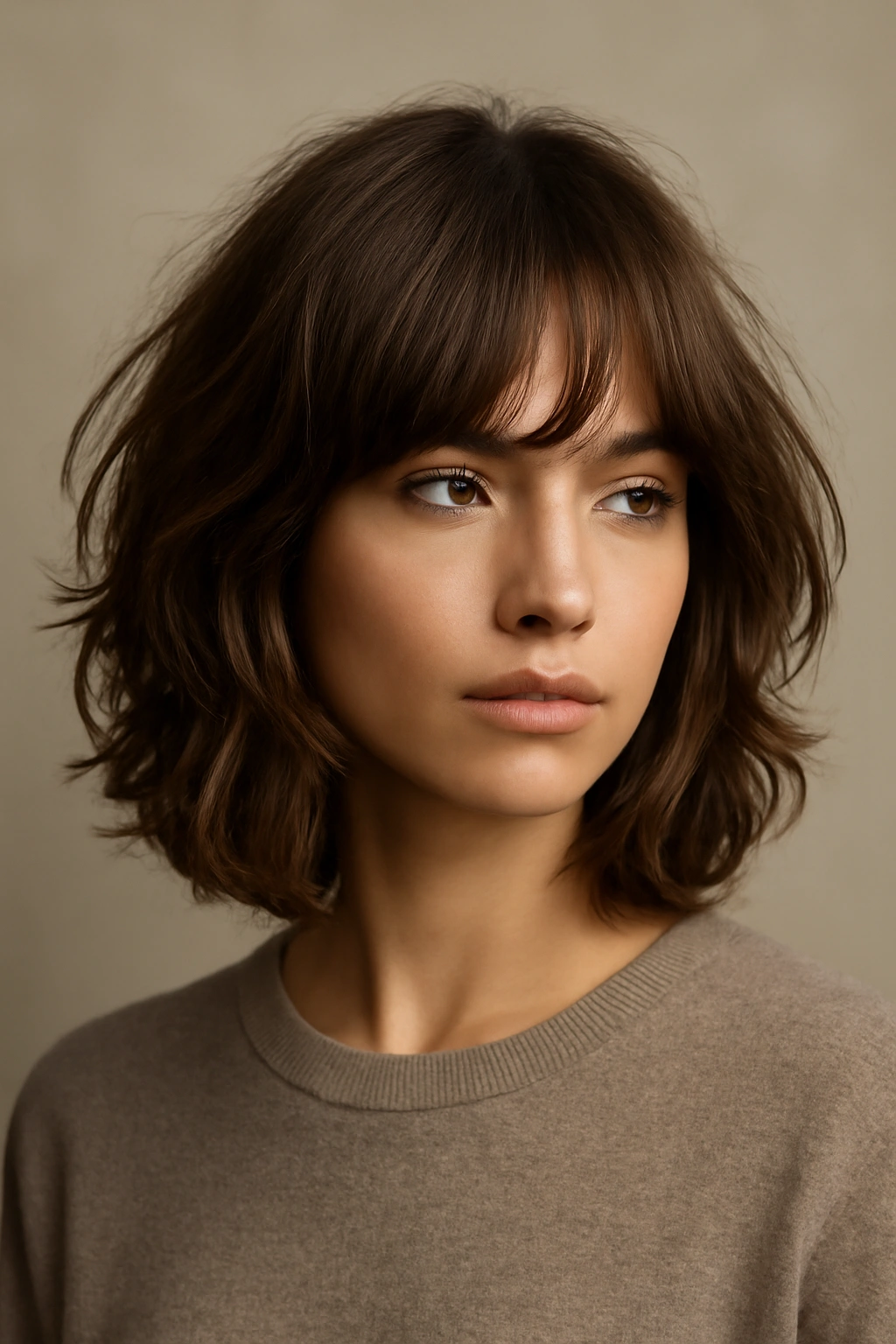
While shaggy layers are often choppy and somewhat angular, a variation involves curved, face-framing layers that flow and curve inward toward the face rather than sitting straight or choppy. These layers are still choppy—the whole cut is still textured—but the face-framing pieces have a soft curve that follows the natural line of your face. It’s less angular than some shag cuts, more flattering for certain face shapes, but still maintaining the movement and texture that makes shag so appealing.
The Subtle Difference Curves Make
Curved layers can feel slightly more polished and intentional than purely choppy layers, while still maintaining all the movement and texture. Curved face-framing layers are particularly flattering for round faces because the curves draw the eye downward and outward, and they work beautifully for heart-shaped faces because they soften the forehead. The curves don’t compromise the texture or movement; they just direct it in a slightly more intentional way.
Styling Curved Face-Framing Layers
- Blow dry with a round brush to enhance the curve, or let air dry if you have natural wave or curl that will emphasize the curve naturally
- Texturizing spray keeps the layers separated without disrupting the curve
- This style photographs beautifully because the curves catch light and create visual softness
- Trim every 6-8 weeks to maintain the curve; once it grows out, the curve flattens
18. The Lived-In Shag
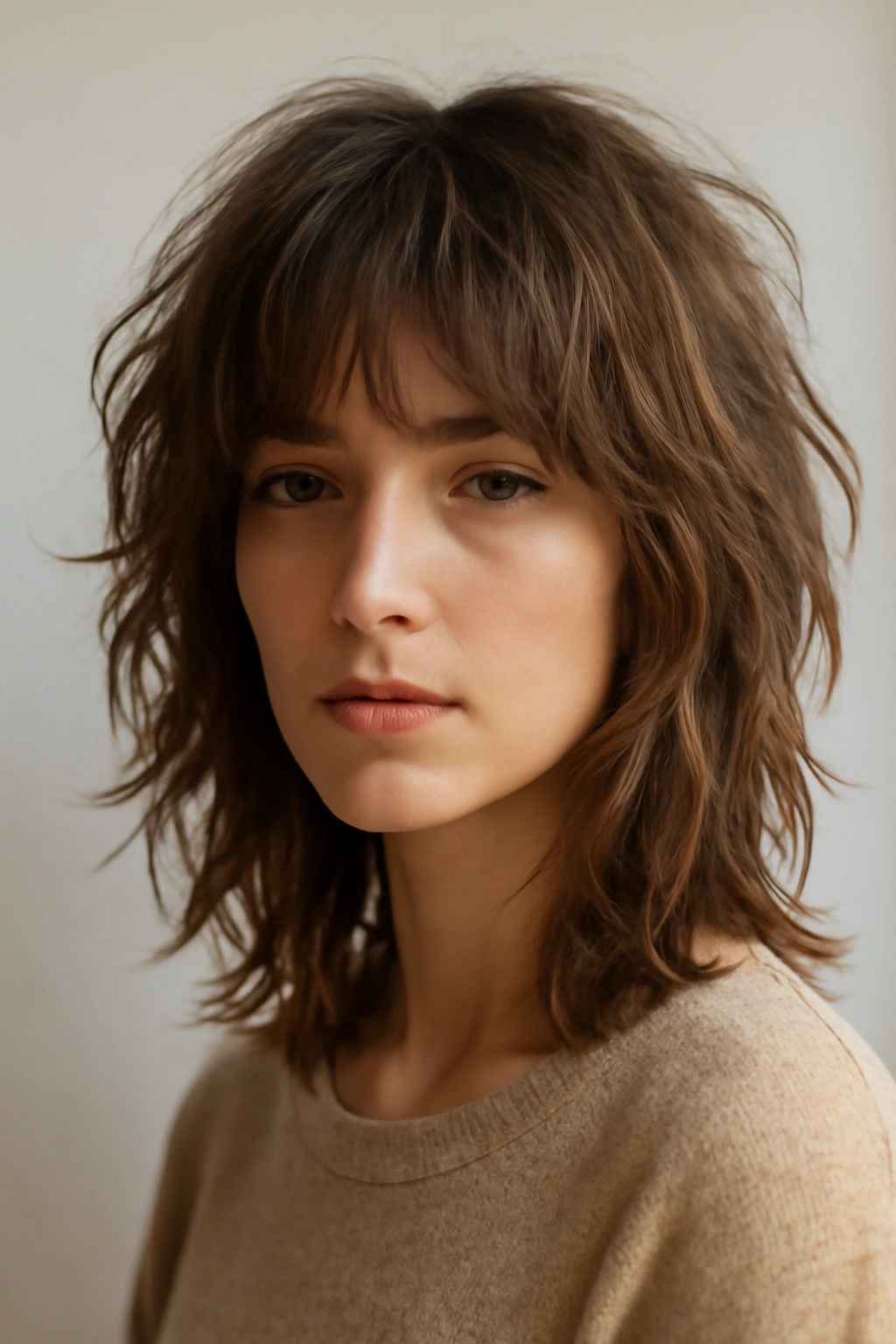
This is the ultimate “effortless” shag—a cut designed to look like you just rolled out of bed and somehow look amazing. It’s choppy, it’s textured, it’s slightly undone, and that’s completely intentional. Every layer is designed to sit slightly imperfectly, and styling is minimal—basically just texturizing spray and maybe some finger-scrunching. This is the cut for people who love the shag aesthetic but don’t want to spend time styling.
Why This Works as Effortless Style
The beauty of the lived-in shag is that the more undone it looks, the better it reads as intentional and cool. This is a cut where bedhead is actually the goal. The layers are designed to separate and move naturally without requiring a blow dryer or extensive styling. A quick scrunch of texturizing spray and you’re done. This is perfect for people with naturally wavy or textured hair, but it works for straight hair too—the layers create the visual texture you’re after.
Minimal Styling Approach
- Texturizing spray is basically your only product; spray on damp or dry hair and you’re ready to go
- You can blow dry if you want more volume or more defined separation, or skip it entirely if you’re happy with air-dried texture
- This style actually improves with a day or two of not washing; the oils and products build up and the texture becomes more defined
- Trim every 6-8 weeks to maintain the choppy shape and prevent the lived-in look from sliding into actually messy territory
19. The Shag with Blunt Ends
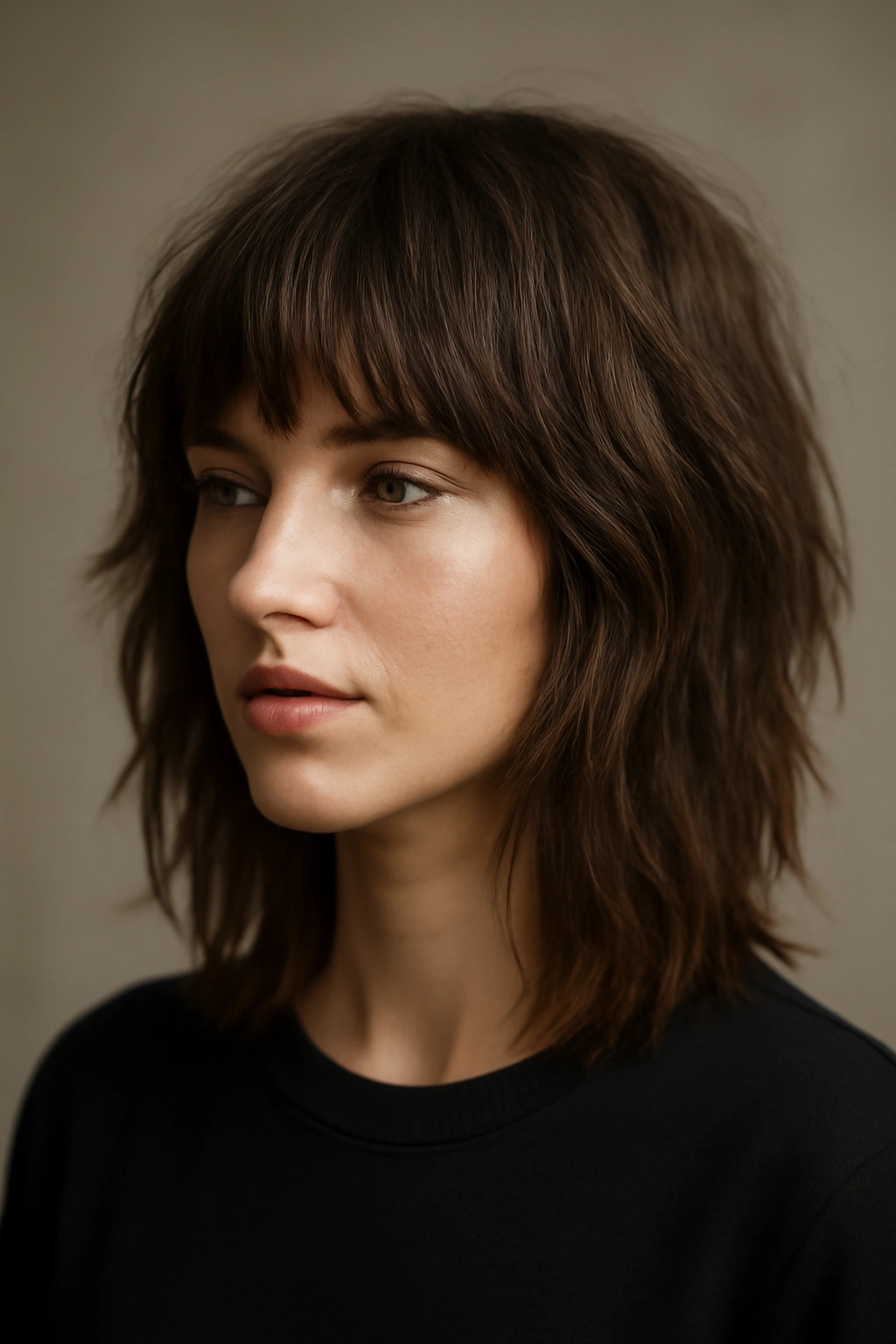
For a slightly more modern, intentional take on shag, some stylists create shaggy layers throughout but keep the very bottom ends slightly more blunt and defined rather than super choppy. This gives you the texture and movement of shaggy layers but with a cleaner endpoint that reads as deliberate rather than growing-out-ish. The contrast between the choppy layers and the more defined ends is visually interesting and feels very current.
The Appeal of Blunt Endpoints
Completely choppy, wispy ends can sometimes feel a bit scattered, especially as your hair grows out. But keeping the very bottom slightly more intentional—not blunt and severe, but not feathery and completely choppy—provides an anchor. The cut still feels modern and textured, but the bottom line gives it direction. This works beautifully at any length and works especially well if you prefer a slightly more polished version of shag style.
Styling and Maintenance
- Blow dry works beautifully with this approach; the blunt-ish ends catch light nicely when they’re been styled
- Texturizing spray emphasizes the choppy layers while keeping the ends relatively defined
- Trim every 5-6 weeks to maintain the blunt-ish endpoint; without regular trims, the ends will get too choppy
- This style photographs beautifully because the blunt endpoint creates a clean visual line even though the layers are textured
20. The Shag with Color Dimension Throughout
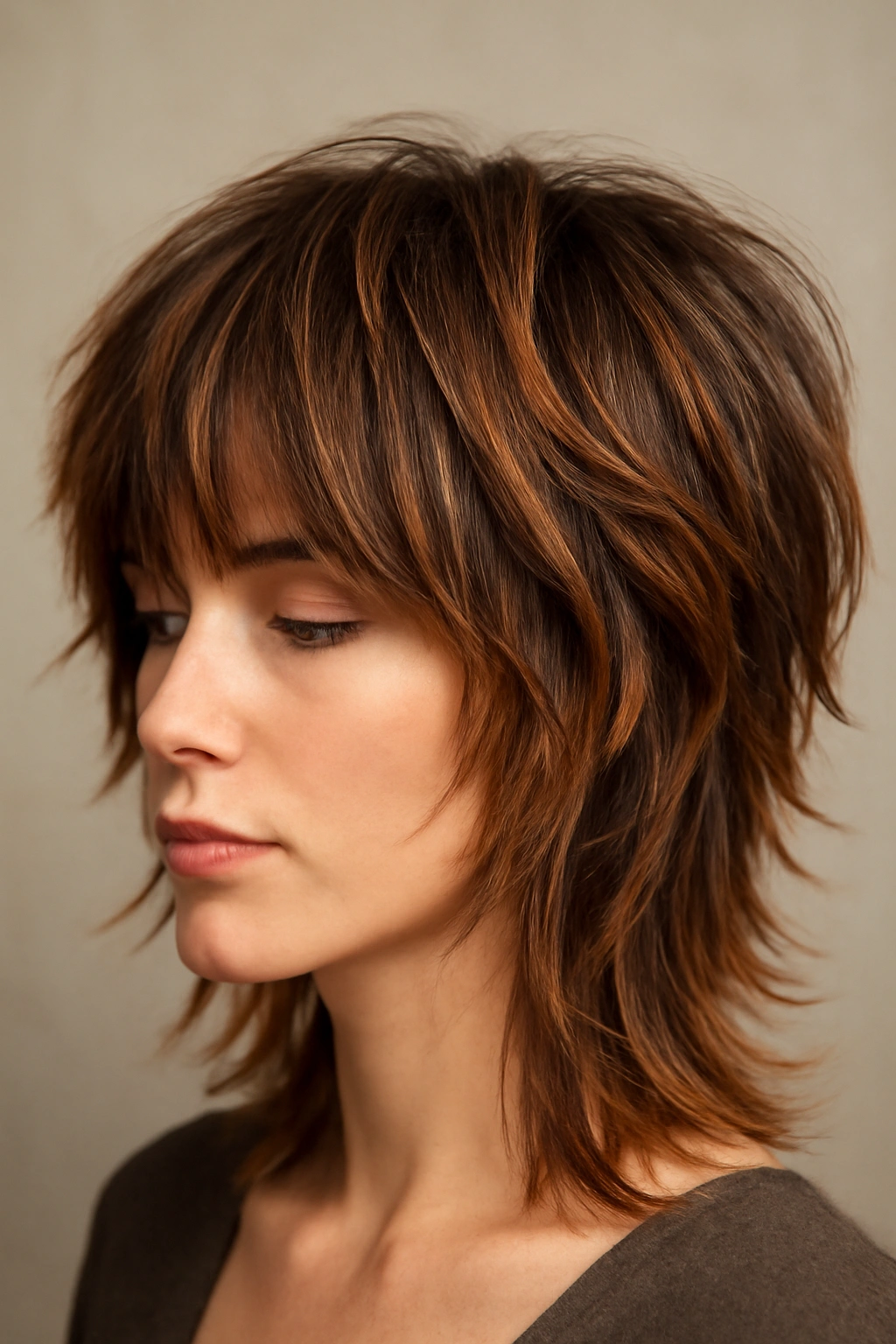
The ultimate version of shaggy texture is when color dimension is woven throughout the entire cut—not just highlights, but color variations in multiple directions that make the texture and layers even more visible and interesting. This might be balayage with multiple tones, dimensional color melting, or pieces of color placed strategically where the layers fall. The result is a cut where color and cut work together to create maximum texture perception.
Why Color Throughout Amplifies Texture
Color dimension is the ultimate texture amplifier. Even a moderately choppy shag cut with subtle dimensional color looks infinitely more textured than the same cut in one solid color. The different color values create visual separation, which makes you perceive more texture and movement than is actually there. This is especially effective for people with fine hair—color dimension can make fine hair look much thicker and more textured visually.
Styling for Color Impact
- Texturizing spray is essential; it separates the layers and makes the color variations visible
- Tousled, piece-y styling shows off color dimension better than smooth, sleek styling
- Blow dry with movement to catch light and emphasize the different color values
- Color maintenance is important; dimensional color requires touch-ups every 4-6 weeks to keep the color distinction visible and intentional
- Consider asking your stylist for a “money piece” technique where the shortest, face-framing pieces are the lightest, so the dimension is most visible where people see your hair first
The Bottom Line
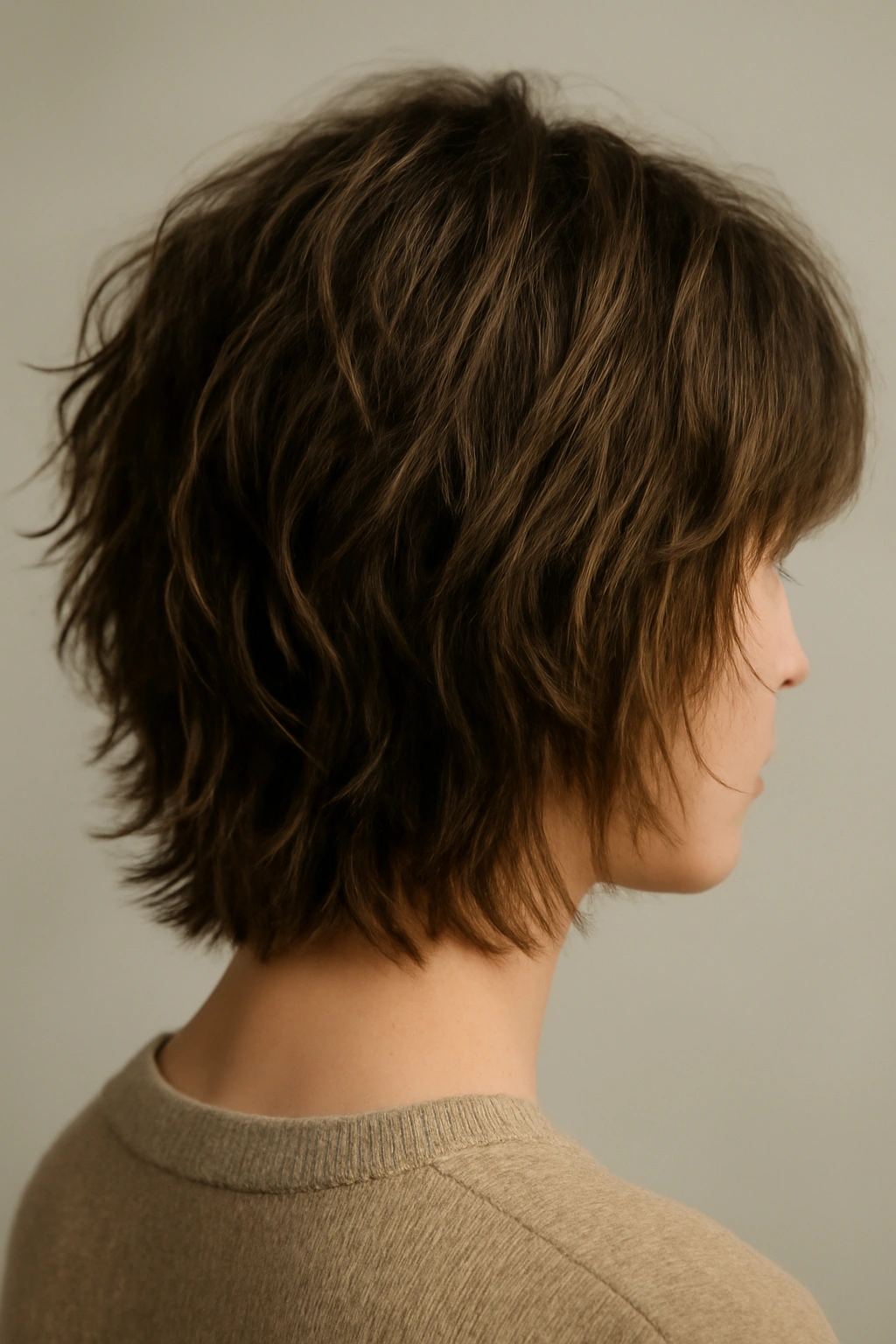
Shaggy styles work because they embrace movement, texture, and the beautiful imperfection of real hair instead of fighting against it. Whether you go for an ultra-choppy statement cut or a subtle, textured take on shag style, the core appeal is the same: a cut that looks intentionally effortless and makes you feel good about your hair without requiring a major styling commitment every single day. The key to making any shaggy style work is finding the right balance between choppiness and your natural texture, getting regular trims to maintain the shape, and embracing texturizing products as your styling ally rather than seeing them as a chore. Pick the version that speaks to your style, your hair type, and your lifestyle, and you’ll have a cut that feels fresh and wearable for months to come.
