



The misconception that short hair can’t be feminine is exactly that—a misconception. Some of the most elegant, powerful, and genuinely beautiful looks happen when you take the scissors up and embrace the freedom of shorter length. The key isn’t the length itself; it’s how the cut is shaped, textured, layered, and styled to work with your face shape, hair type, and personal aesthetic.
What makes a short haircut read as feminine rather than purely androgynous comes down to several deliberate technique choices. Soft lines, movement through texture and layers, strategic length variation, and thoughtful styling all play a role. A short cut can showcase your facial features beautifully, frame your bone structure with intention, and actually require less styling time while looking intentionally polished.
The beauty of modern short haircut options is that femininity doesn’t mean length anymore—it means intention. Whether you’re drawn to something structured and sleek, tousled and textured, or somewhere in between, there’s a short cut that will make you feel confident, stylish, and undeniably yourself. Let’s walk through twenty different approaches to short hair that prove feminine style has nothing to do with how many inches of length you’re keeping.
1. Textured Pixie with Soft Layers
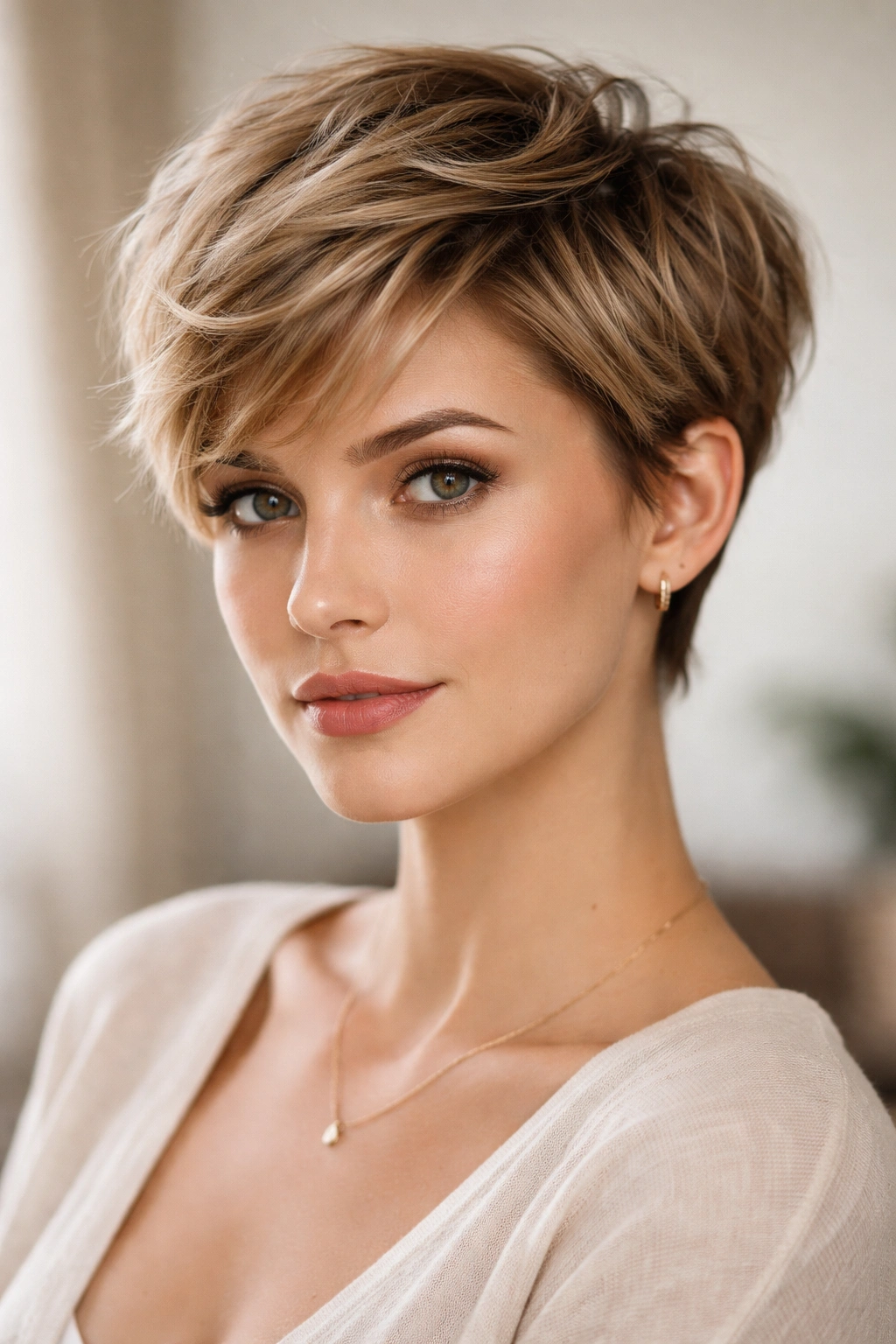
A textured pixie works beautifully for people with naturally wavy or curly hair, or those willing to add texture through styling. The cut keeps things short on the sides and back—think 1 to 2 inches—while leaving slightly longer length on top, typically 3 to 4 inches. What makes this approach feel distinctly feminine is the way the top layers are cut to separate and move independently rather than sitting in a single block.
Why This Cut Stands Out
The texture creates natural dimension and movement that reads as soft rather than severe. When you run your fingers through it or add a bit of product, the individual pieces catch the light differently, creating an almost playful quality. This cut photographs beautifully and translates well across different face shapes because the texture adds visual softness around the cheekbones and jawline.
How to Style and Maintain It
- Use a lightweight texturizing spray or sea salt spray on damp hair and scrunch upward to enhance natural wave patterns
- A small amount of matte-finish clay or wax applied to fingertips and worked through the top layers creates deliberate separation
- Blow-dry with your head tilted slightly forward to encourage volume at the crown, then flip back to set the texture
- Schedule trims every 4 to 5 weeks to keep the layers defined and the overall shape from becoming too shaggy
Pro tip: Ask your stylist to use point-cutting or texturizing shears rather than blunt scissors—this technique removes weight and creates the piecey, separated look that gives this cut its signature feminine movement.
2. Soft Undercut Pixie
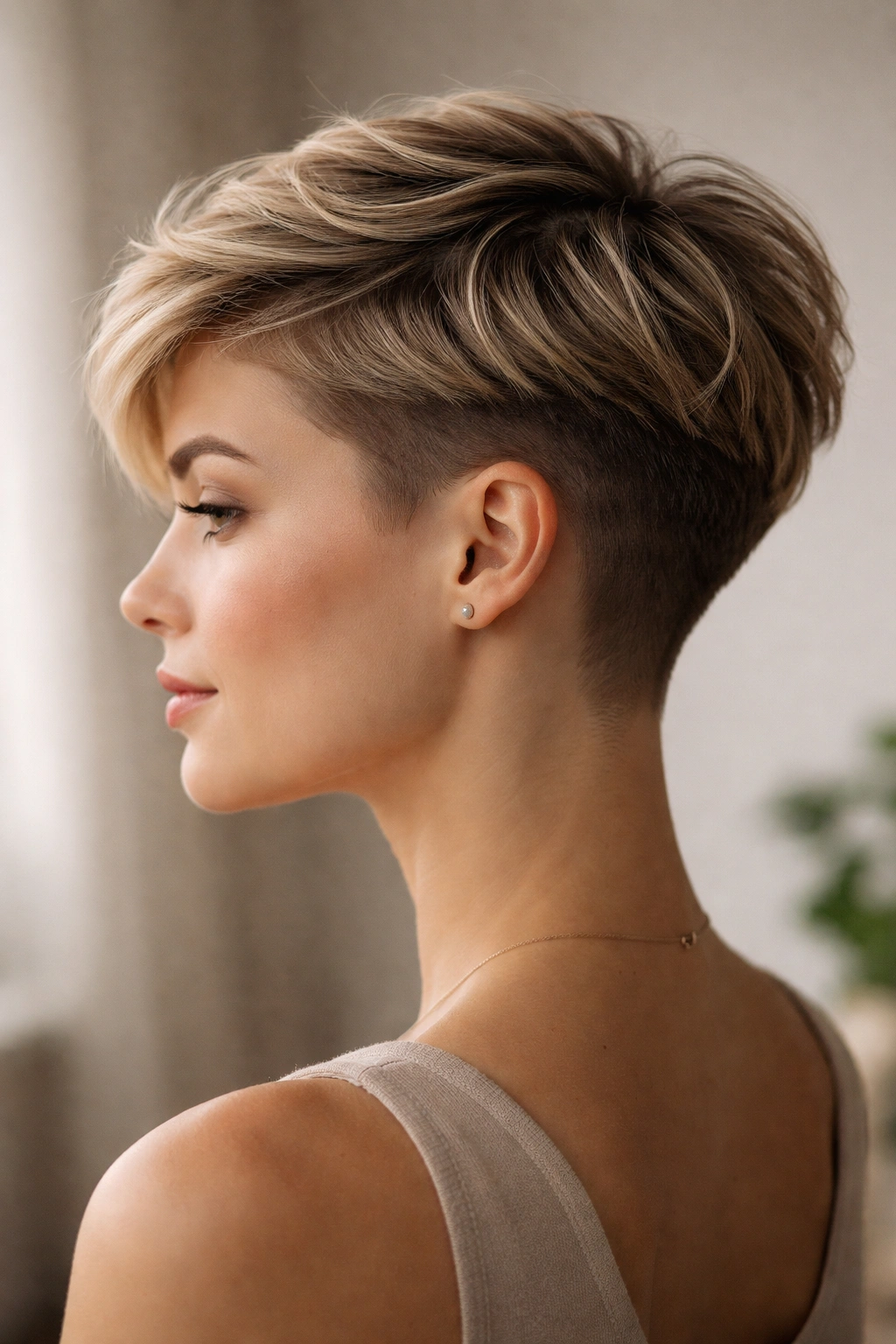
An undercut involves removing significant length from the sides and back while keeping the top much longer, creating a dramatic contrast between short underneath and styled length on top. A soft undercut pixie keeps this concept but maintains rounded, blended lines rather than harsh, visible separation. The undercut might sit at half an inch on the sides, while the top tapers gradually upward to 3 to 4 inches.
What Makes It Different
The softness comes from the blend—your stylist should feather and taper the sides rather than creating a clear line between the undercut and the top section. This creates a feminine silhouette that still has visual interest and movement. You get the benefit of having less hair to style on hot days or when you want a sleek look, but also enough length on top to play with different styles.
Styling Flexibility
- Wear it tousled and textured for a casual, modern vibe
- Slick the top back with a pomade or gel for an edgy-feminine look
- Create soft waves or curls in the top section for romantic styling
- The undercut gives you options to show off your ear, neck, or scalp art if you have tattoos in those areas
- You can style the top forward over one eye for a face-framing effect
3. Short Shag Haircut
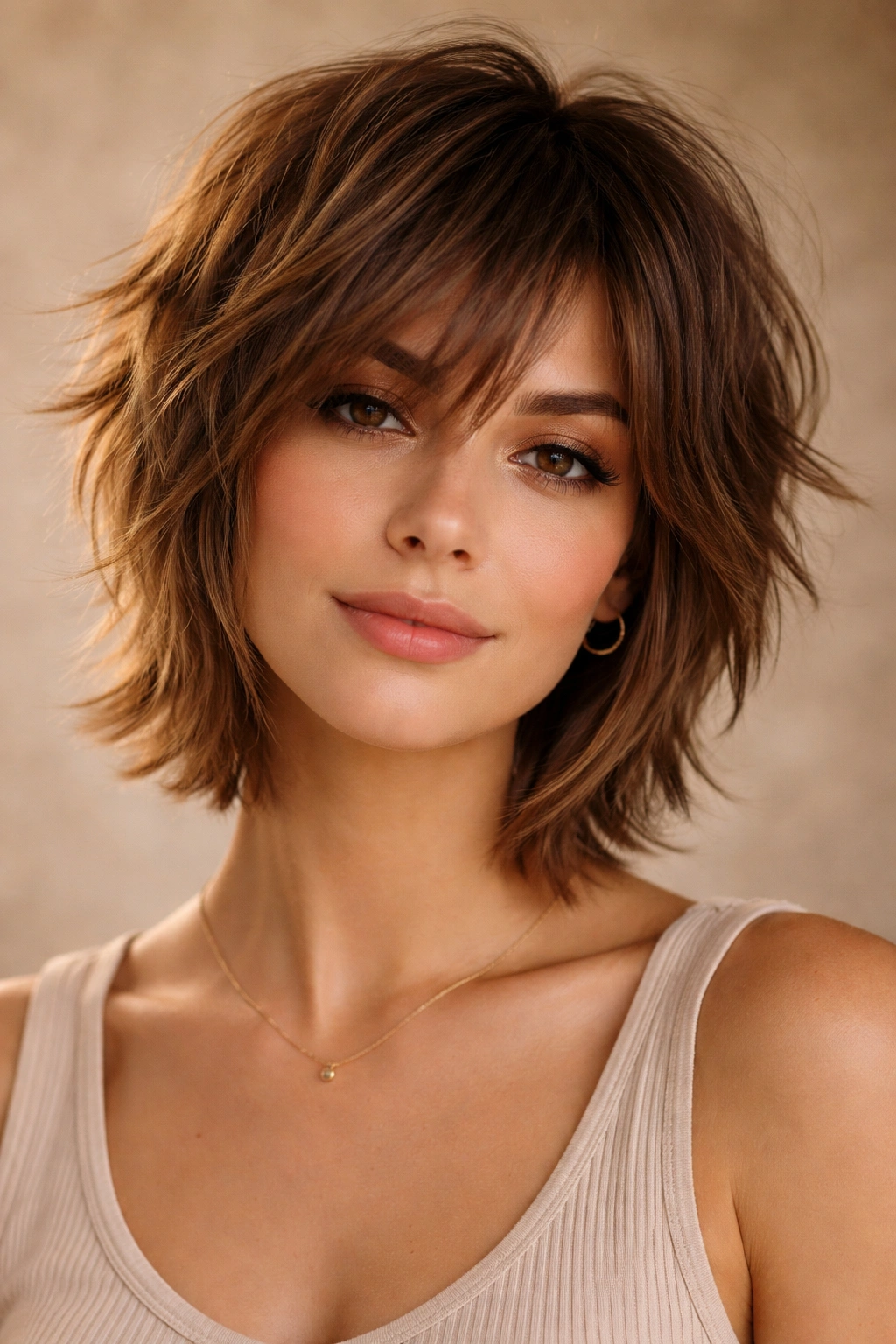
A modern shag is nothing like the heavy, mullet-adjacent shags of decades past. Today’s short shag combines the best elements: choppy, uneven layers throughout that create movement and texture, with longer pieces around the face for framing. The overall length typically sits between 2 to 4 inches, with noticeable length variation creating the signature shag silhouette.
Why Shags Are Having a Moment
Short shags work across an impressive range of hair types and textures—from straight and fine to thick and curly. The layers allow straight hair to show movement and texture, while they work with natural curls and waves rather than fighting against them. The longer pieces around the face create a naturally feminine frame without requiring blunt bangs.
Getting the Look Right
- Shags work best with some texture, whether natural or created through styling
- A texturizing product like a salt spray or lightweight mousse enhances the natural separation of the layers
- Blow-dry sections upward and outward to encourage the pieces to move away from your face rather than laying flat
- The beauty of a shag is that it looks intentionally undone, so perfect polish isn’t the goal—movement and texture are
- Trims every 6 to 8 weeks keep the layers sharp and prevent the look from becoming too shaggy
4. Choppy Layers Throughout
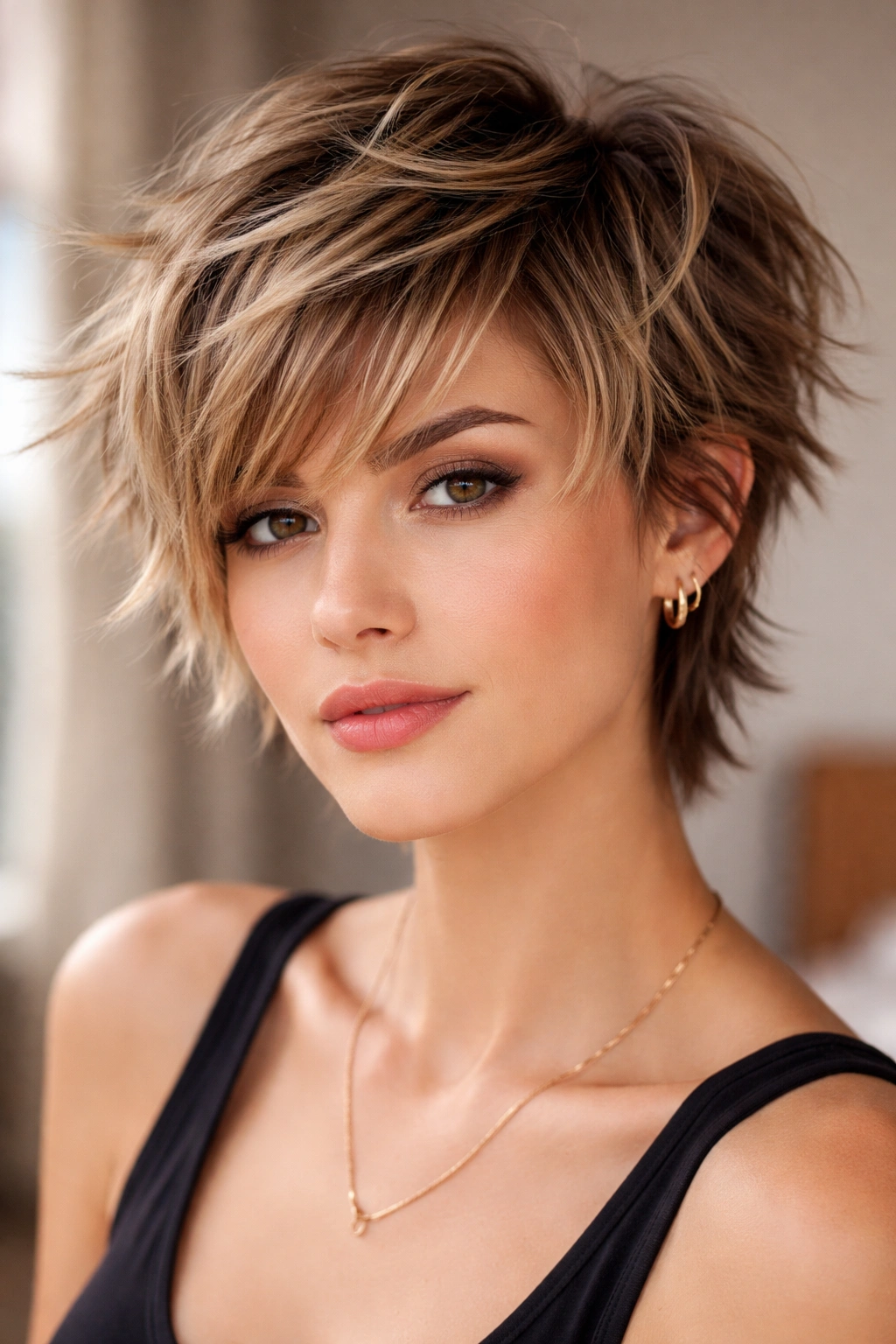
Sometimes the most straightforward approach is the best one. Choppy layers cut throughout the entire head—with varying lengths creating distinct sections rather than a blended taper—give you a cut with serious personality and movement. Pieces might range from 1.5 inches at the shortest to 3 to 4 inches at the longest, creating visual interest from every angle.
The Technique That Makes It Work
Choppy layers aren’t just randomly different lengths—they’re strategically placed to frame your face, add volume where you need it, and create a shape that’s flattering for your specific bone structure. A skilled stylist will assess your face shape, hair texture, and styling commitment before placing each section of choppy layers. The result is a cut that looks effortlessly cool but is actually quite intentional.
Daily Styling
- Choppy layers show off texture beautifully, so adding waves with a curling iron or creating texture spray results in maximum visual impact
- The layers move naturally even with minimal styling, which is part of their appeal
- You can wear this cut tousled and relaxed, or sleek it back for a more refined look
- The varied lengths mean some pieces might fall into your face naturally—decide whether you want to pin them back or embrace that softer framing
5. Tapered Fade with Longer Crown
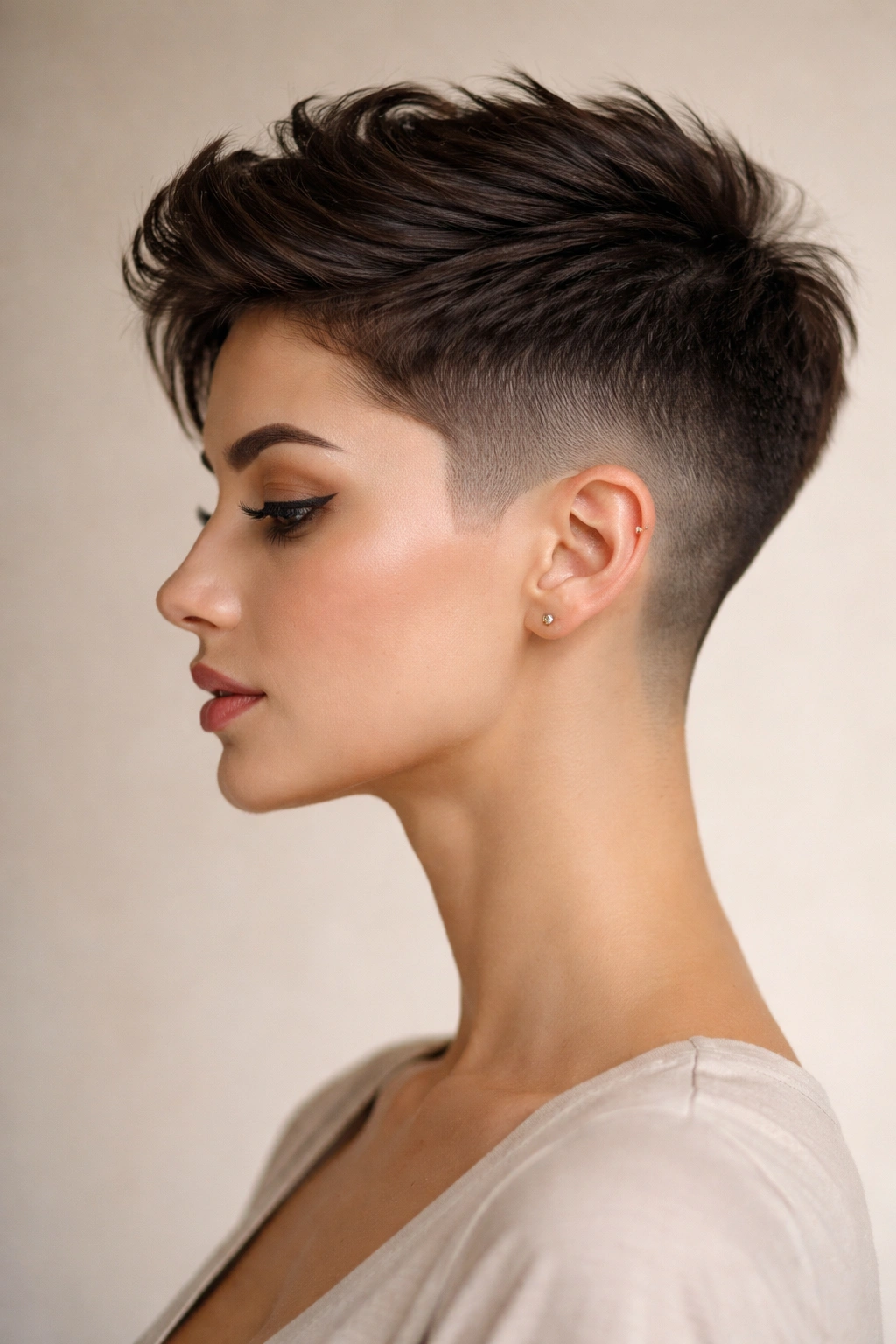
This cut blends the best of both worlds: a clean, faded undercut on the sides and back that tapers up gradually into slightly longer length on top and crown. The fade is what creates the sharp, intentional look—it’s not just short, it’s precisely graduated from very short to longer. The top typically measures 2.5 to 4 inches, giving you enough length to work with while maintaining the overall short aesthetic.
Why This Cut Feels Feminine Despite Being Sharp
The length on the crown and top softens what could otherwise read as purely androgynous. When you style the crown section with volume and movement—especially if you have natural texture or add waves—it creates a distinctly feminine silhouette. The sharp fade actually highlights your neck, jawline, and bone structure beautifully, which reads as very intentional and chic.
Maintenance and Styling Needs
- Fades require more frequent trims—every 3 to 4 weeks—to keep the gradient clean and sharp
- The top section can be styled in numerous ways: textured and tousled, slicked back, side-swept, or with soft waves
- A texturizing product on the crown adds dimension and prevents the top from laying flat against your head
- The fade transitions best when done by someone skilled in the technique—ask to see examples of their fade work before booking
6. Blunt Short Bob
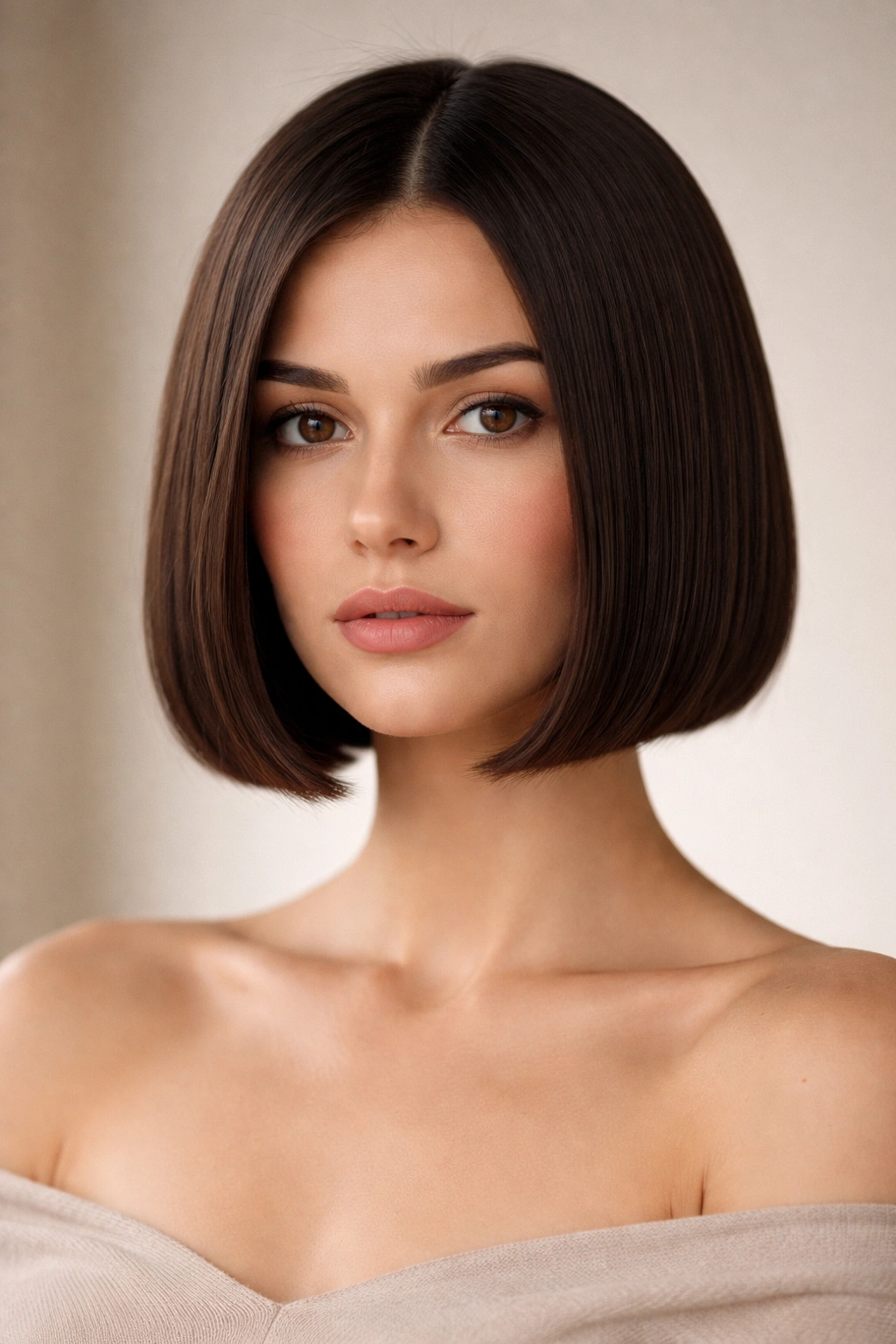
A blunt bob is deceptively simple: it’s short, typically chin-length or slightly shorter, with a clean, precise line all the way around. No layers, no texture work, just clean lines. The bluntness is what gives it impact—it says you’re intentional and confident about your style. This works beautifully for people with straight to wavy hair and those willing to commit to regular trims to keep the line crisp.
The Minimalist Appeal
There’s something undeniably feminine and chic about the simplicity of a blunt bob. It draws attention to your face, your eyes, your features. The clean line frames your jawline and neck, and there’s something almost architectural about how intentional and precise it is. It’s a cut that works equally well with a leather jacket or a vintage dress.
Styling Considerations
- A truly blunt bob requires more regular trims—every 4 to 6 weeks—to maintain the crisp line
- Straight hair shows off a blunt bob best, though wavy hair can work if you’re willing to blow-dry smooth
- The simplicity means your styling and makeup become even more important to your overall look
- A side part adds femininity and movement to what could otherwise read as severe
- You can wear this cut sleek and polished, or tousle it slightly for a softer vibe
7. Feathered Pixie Cut
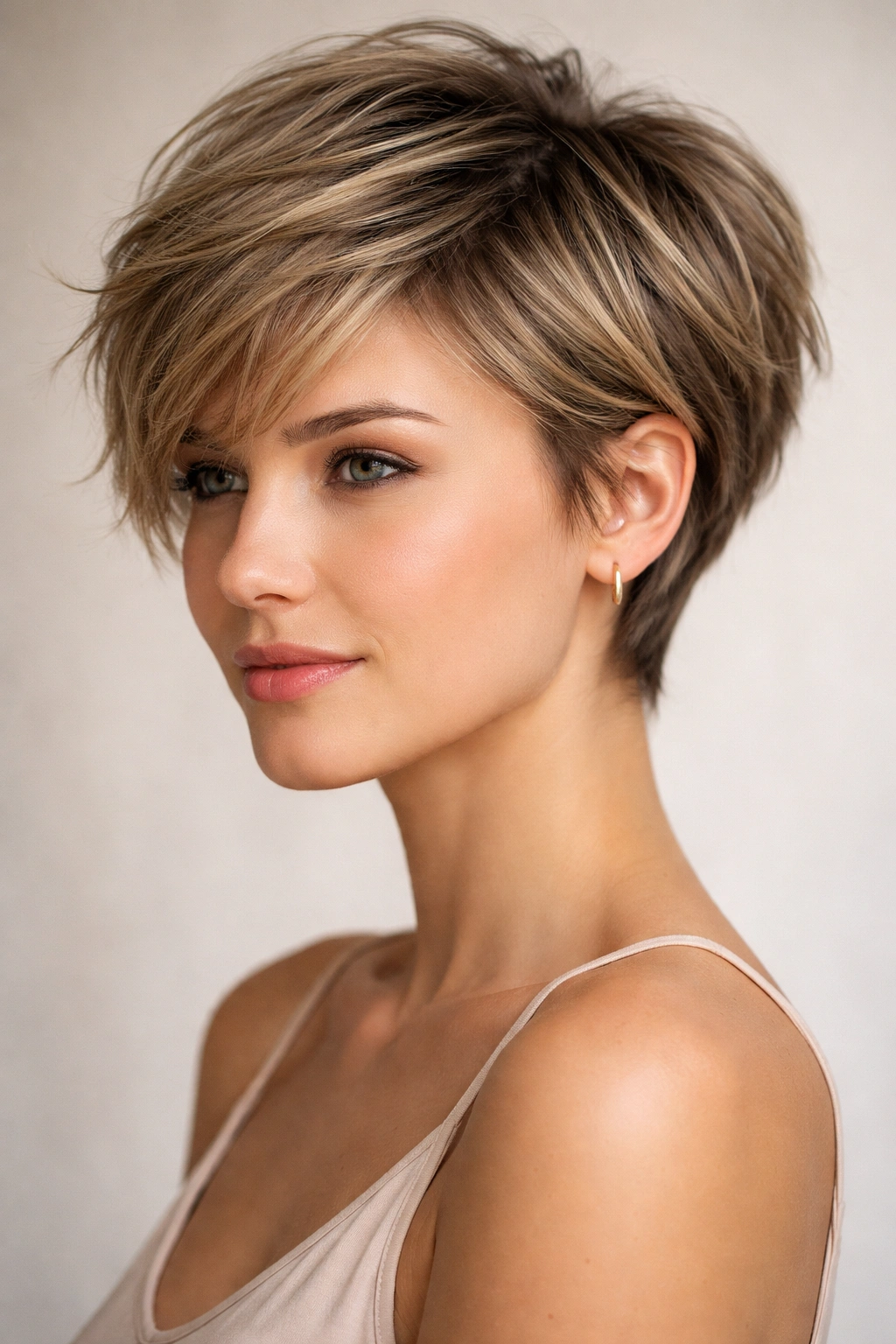
A feathered pixie takes the classic short pixie and adds movement through technique rather than length variation. Instead of blunt layers, a feathered pixie uses scissor techniques that create soft, movement-oriented layers that seem to float rather than sit heavily. The overall length stays quite short—usually 1.5 to 3 inches—but the feathering creates visual softness.
What Feathering Does Differently
The feathering technique removes weight and creates a direction of movement. Rather than sitting as separate chunks, feathered pieces blend together while still maintaining individual movement. This creates a feminine, almost romantic quality that reads as intentionally styled rather than simply short.
Bringing Out the Best
- Feathered pixies work beautifully with naturally textured or curly hair, where the feathering enhances natural movement
- On straight hair, a light texturizing spray or salt spray helps the feathering show up
- The softness of feathering means this cut is very flattering for people who worry that short hair will feel harsh
- Styling time is minimal—usually just running your fingers through with a texturizing product
- Trims every 5 to 6 weeks keep the feathering refined before it starts to look shaggy
Pro tip: Feathering is an advanced technique—make sure your stylist is experienced with it, as it requires skill to execute correctly. Look for stylists who specialize in short, textured cuts.
8. Side-Swept Pixie with Longer Front
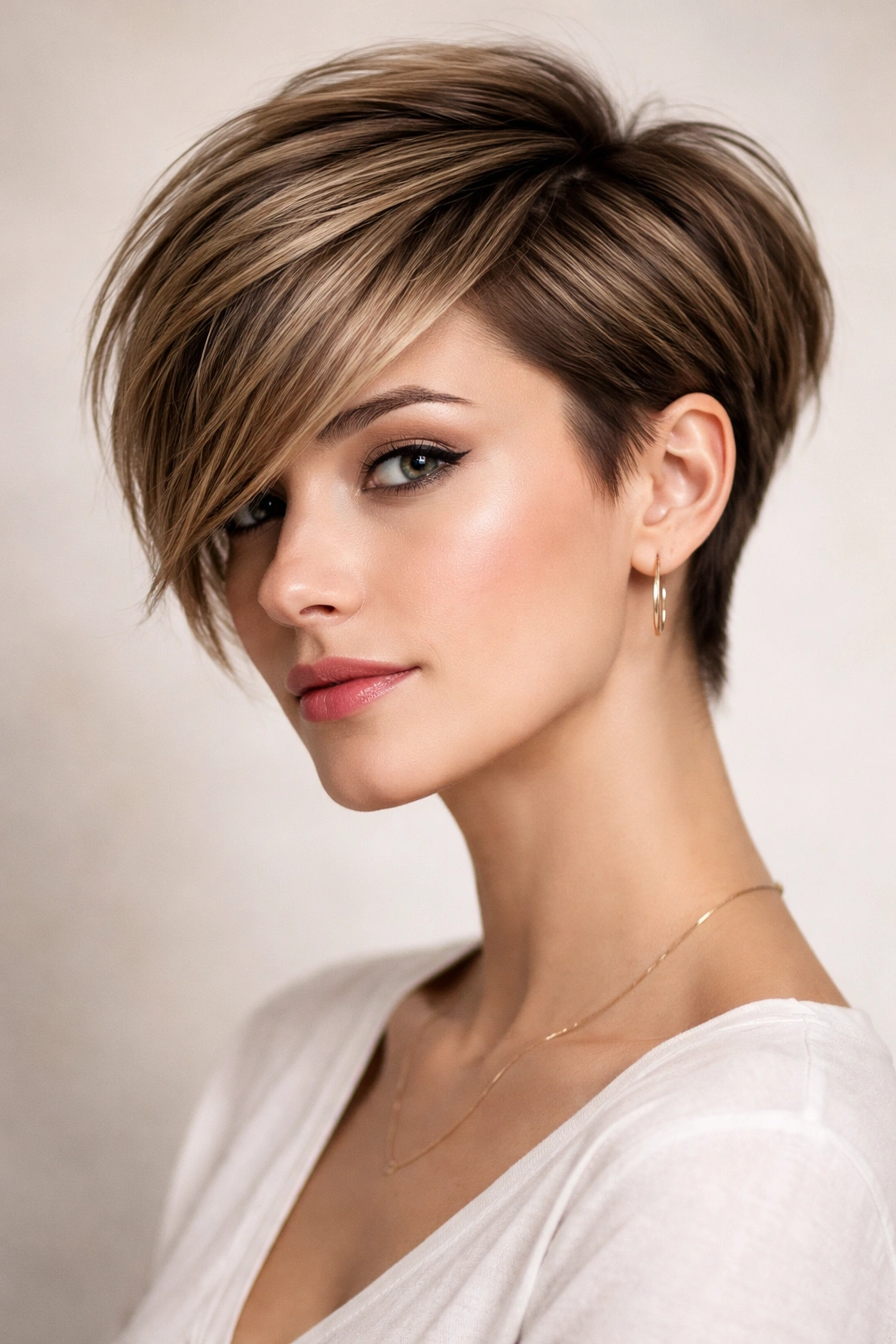
This cut keeps the back and sides quite short—around 1.5 to 2 inches—while deliberately leaving longer length in the front sections that sweep across and can be styled to the side. One side might be significantly longer than the other, creating an asymmetrical, deliberately off-balance silhouette that reads as very current and feminine.
Why Asymmetry Feels Intentional
An asymmetrical cut immediately signals that you know what you’re doing stylistically. It’s not accidental or uncertain—it’s a deliberate choice that shows confidence. The longer side-swept pieces frame your face and allow you to show off different angles depending on how you part and style your hair.
Making It Work for You
- The longer front pieces can be tucked behind your ear, swept across your face, or styled forward for different looks
- This cut offers styling flexibility despite being short overall
- It works beautifully with straight, wavy, or curly hair—texture actually enhances the asymmetry
- The asymmetry means this style photographs beautifully from certain angles, making it popular on social media for good reason
- Trims every 5 to 6 weeks maintain the intentionality of the asymmetry before it starts to feel accidental
9. Asymmetrical Pixie with Undercut
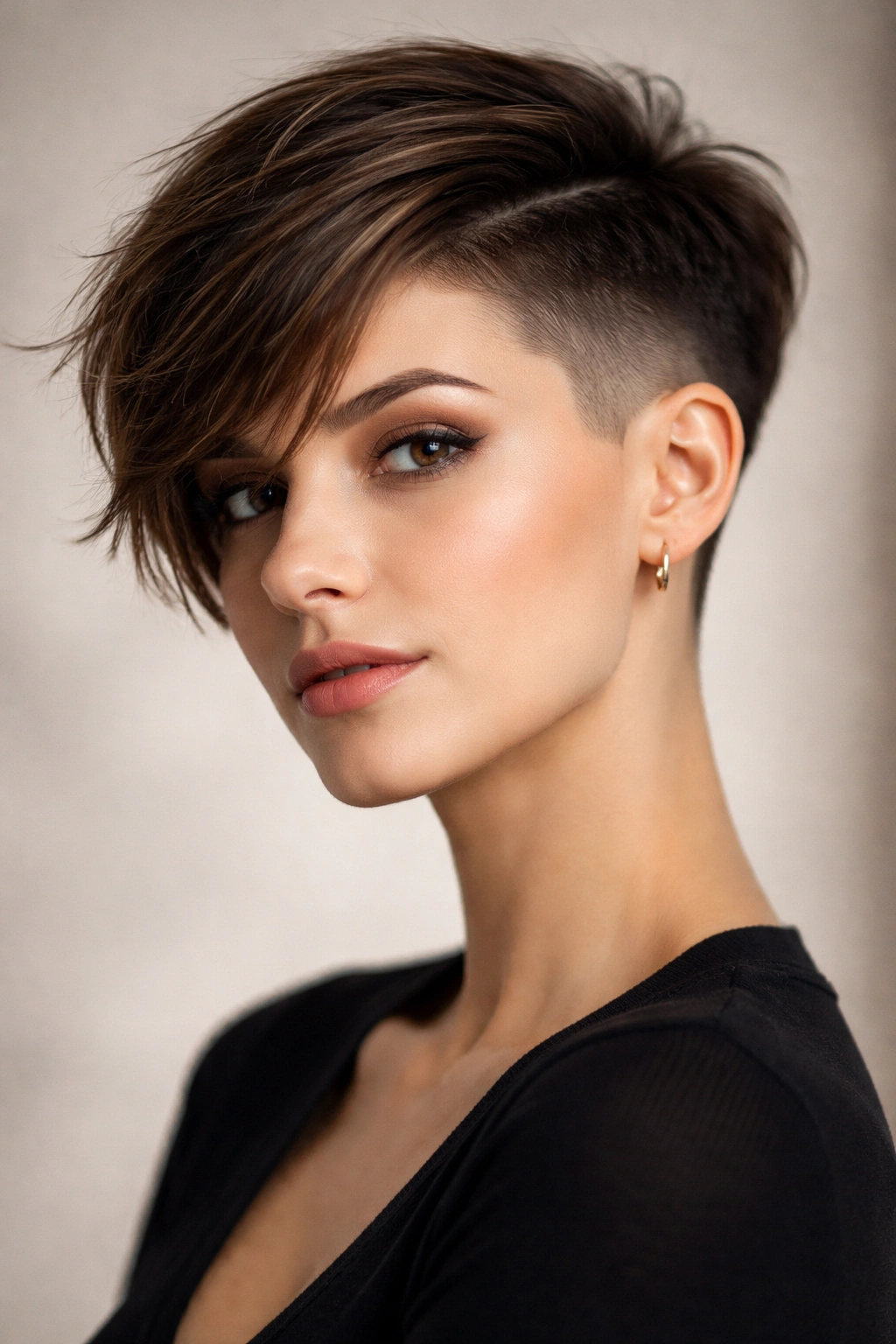
An asymmetrical pixie takes the concept even further: one side might have a visible undercut that’s very short—almost shaved or at half an inch—while the other side maintains more length (2 to 3 inches). This creates a striking, confident look that’s undeniably modern and has serious feminine edge to it.
The Confidence Factor
This isn’t a timid haircut. It’s bold and requires you to own it with confidence. The asymmetry means you’re making a clear style statement, and the undercut on one side adds an edge that balances out any softness from longer pieces on the other side. It’s a look that works for people who aren’t afraid to stand out.
Styling to Enhance It
- The longer side can be styled with waves, texture, or sleek depending on your mood
- The undercut side showcases your ears, neck, and bone structure
- If you have a tattoo on your neck or behind your ear, this cut highlights it beautifully
- The asymmetry works with any hair texture, though it makes the biggest visual impact with texture or wave
- Undercuts require frequent trims (every 3 to 4 weeks) to maintain their clean, intentional look
10. Modern Short Wolf Cut
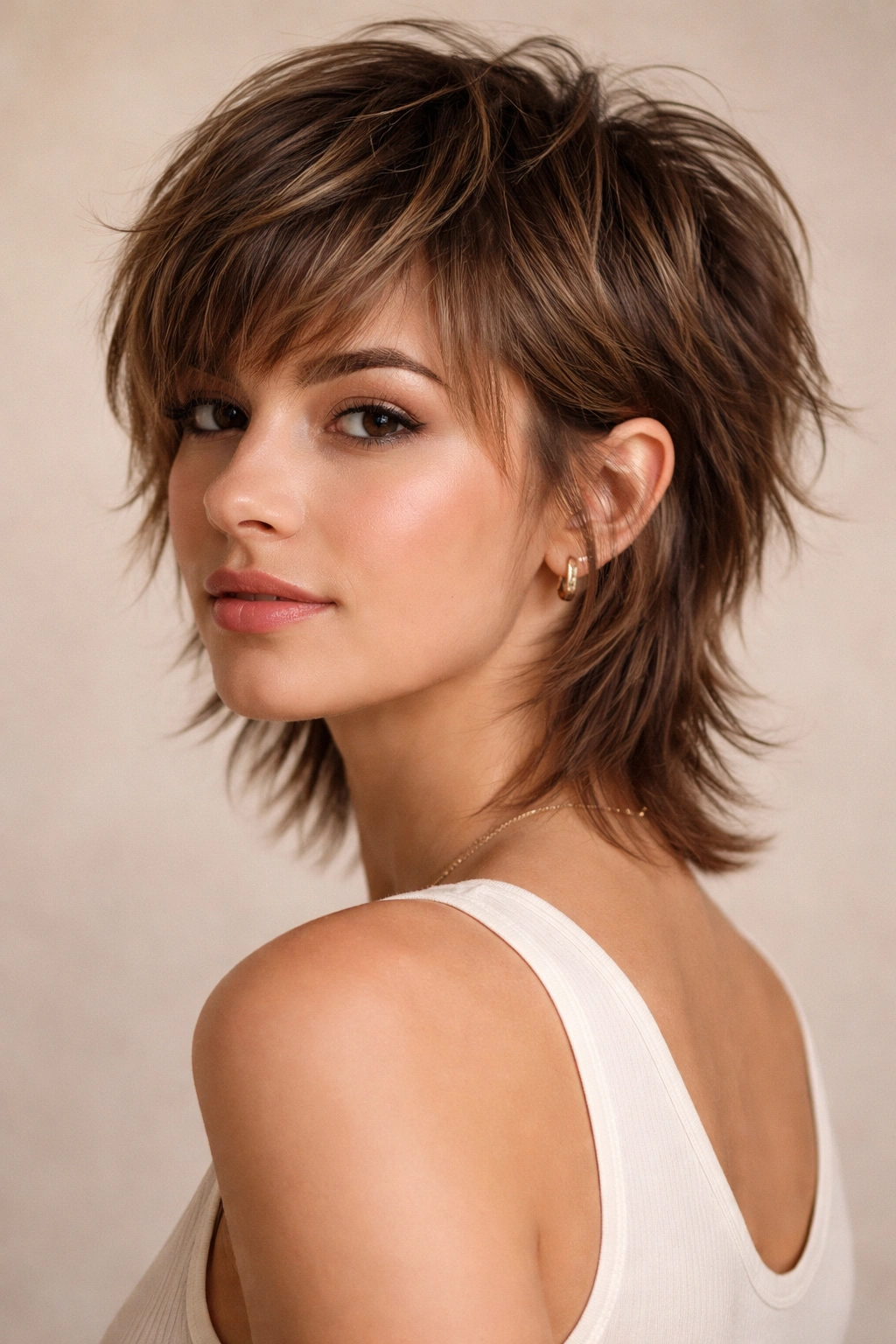
The wolf cut is a shag meets mullet moment—it has shorter, textured layers throughout the top and sides but maintains slightly more length in the back, creating an almost mane-like quality. In its short form, this typically means 2 to 4 inches overall with distinct layering that creates movement and shape.
Why It Reads as Feminine
Despite its wild-sounding name, a well-executed short wolf cut is incredibly flattering. The layers frame your face, the texture creates movement, and the slightly longer back gives you enough to work with stylistically. It’s soft and structured at the same time, which is a genuinely feminine balance.
Getting the Look
- Wolf cuts thrive with texture, so if you have naturally wavy or curly hair, this is an excellent choice
- On straight hair, you’ll need to add texture through styling or be prepared to refresh waves regularly
- The layering throughout means styling can be minimal—just add texture product and let the cut do the work
- The back pieces can be styled sleek or tousled depending on your preference
- Trims every 6 to 8 weeks keep the layers defined and prevent the cut from becoming too shaggy overall
11. Curly Crop Cut
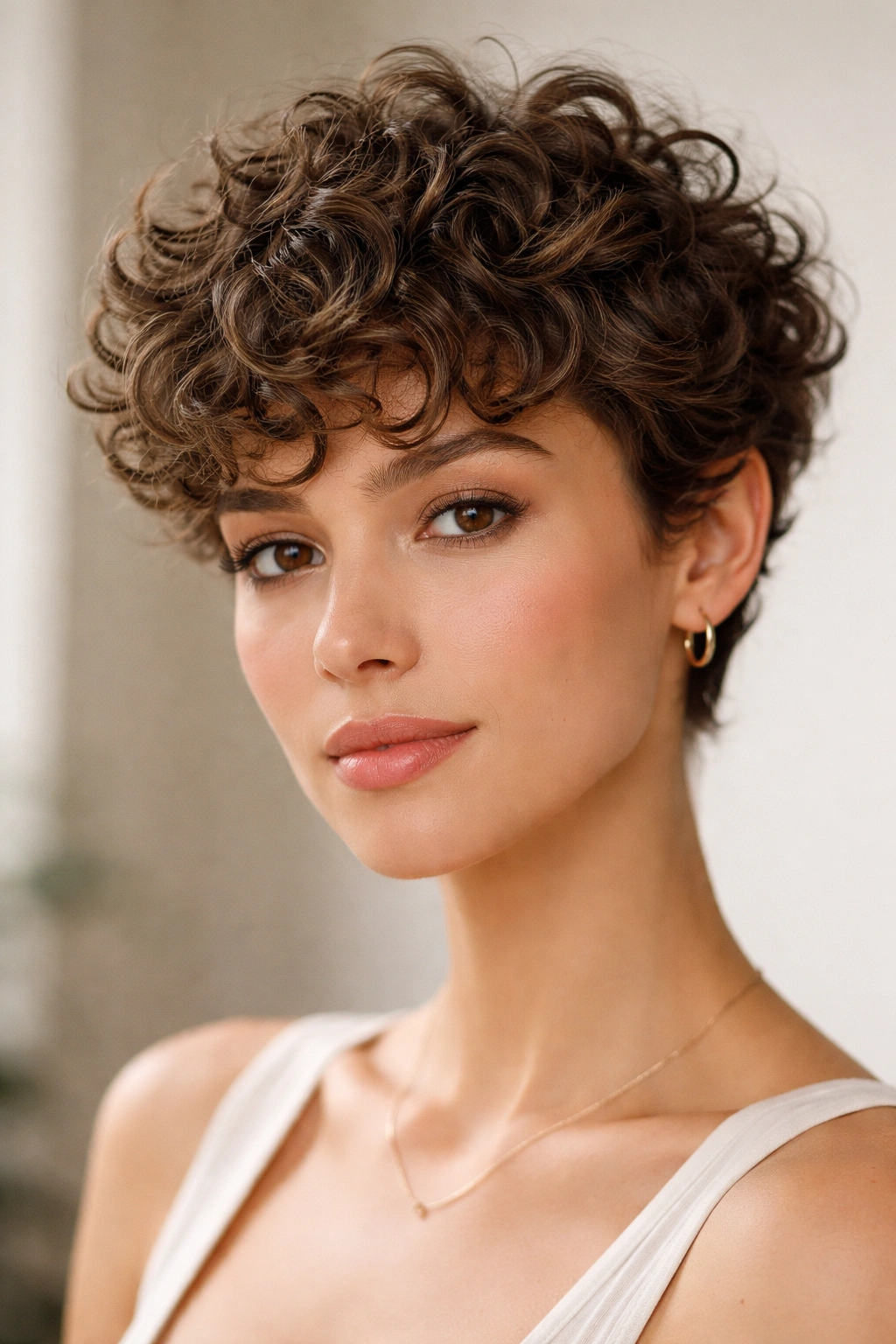
A curly crop is specifically cut to work with naturally curly or coily hair, with shorter length throughout (usually 1.5 to 3 inches) that’s shaped to enhance the natural curl pattern. Rather than fighting curls, this cut celebrates them, using the curl itself to create shape and volume.
How Curls Create Femininity
Curly hair has inherent softness and movement that reads as very feminine, even when the cut is quite short. A well-shaped curly crop makes a statement—it says you’re embracing your natural texture and confident enough to let it show. The shape comes from the curl itself rather than from styling, which is incredibly freeing.
Caring for Your Curly Crop
- Use a curl-specific stylist who understands how to cut curls when dry (so they see how they’ll actually sit)
- The cut works best when you follow a curl-care routine with appropriate products and techniques
- Regular trims every 5 to 7 weeks keep the shape refined and prevent frizz from compromising the silhouette
- Defining your curls with the right products creates the polished version of this cut
- The beauty of a curly crop is minimal styling—your hair naturally creates the movement and texture
12. Styled-Back Pixie with Volume
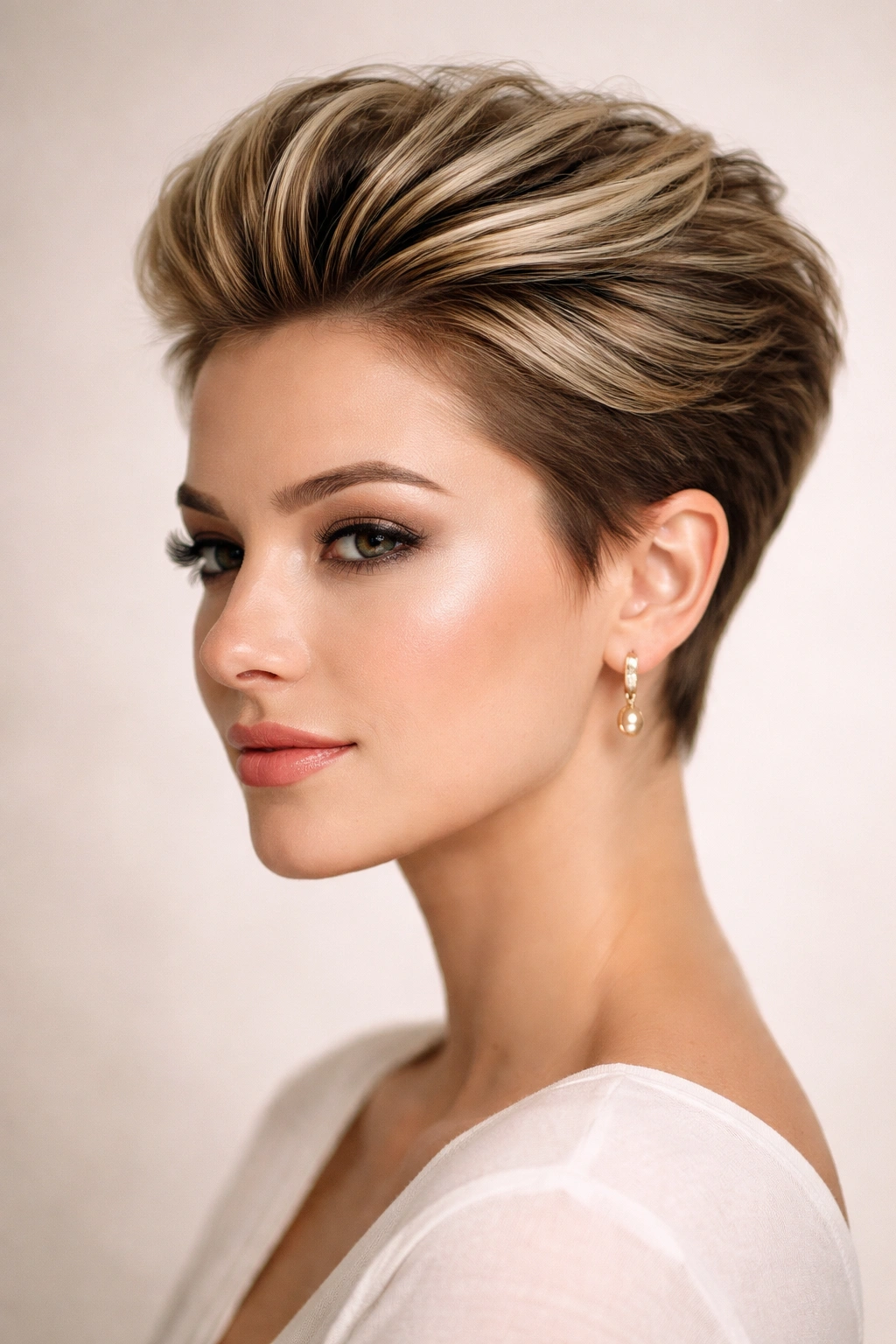
This pixie keeps overall length quite short—around 2 to 3 inches—but is cut specifically to allow you to blow-dry and style the entire top section backward, creating volume at the crown and a sleek, polished silhouette. It’s short but undeniably styled, which gives it more feminine polish than a simply-tousled pixie.
Creating the Polished Look
The key to this cut is the blow-dry. Your stylist will cut the top section with a slight lift at the crown and perhaps slightly longer length there, allowing you to dry it upward and backward. The result is a feminine, put-together look that reads as intentional and polished rather than casual.
Daily Styling Steps
- Blow-dry the top section with a round brush, directing hair backward and upward
- Once dry, you can smooth with a flat iron if desired for extra polish
- A light hairspray holds the shape without making it feel stiff
- The sides and back stay short and relatively simple, which balances the volume on top
- This cut works with straight to wavy hair—texture actually helps hold the volume
13. Short Modern Mullet
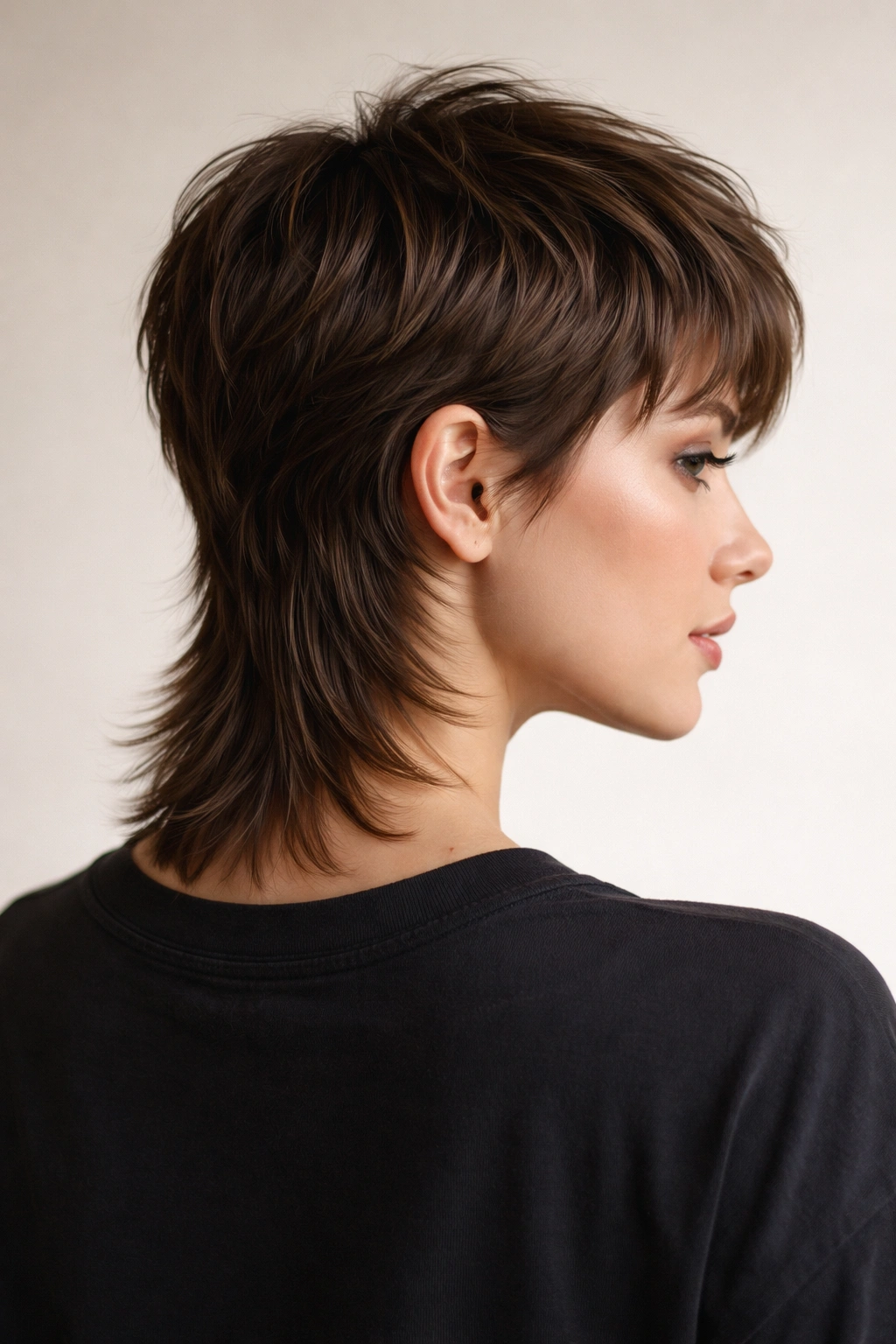
A modern short mullet isn’t the business-in-front-party-in-back look of the 80s. Instead, it’s a refined cut with shorter, textured length on top and sides (2 to 3 inches) and deliberately slightly longer pieces in the very back (3 to 4 inches). The transition is blended rather than stark, creating a contemporary, fashion-forward look.
Femininity Through Intention
A well-executed short modern mullet reads as intentional and current rather than retro or joke-y. The blended transition means it’s not as dramatic as a classic mullet, and the textured layers throughout create softness. This is a cut for people who like to make a style statement with confidence.
Styling Options
- The top and sides can be textured and tousled for a casual vibe
- The slightly longer back creates an interesting silhouette, especially visible from behind
- You can add waves throughout for a softer, more romantic version
- The cut works with most hair types but shows best with some texture or wave
- Trims every 5 to 6 weeks maintain the balance between the shorter and longer sections
14. Wispy Layered Short Cut
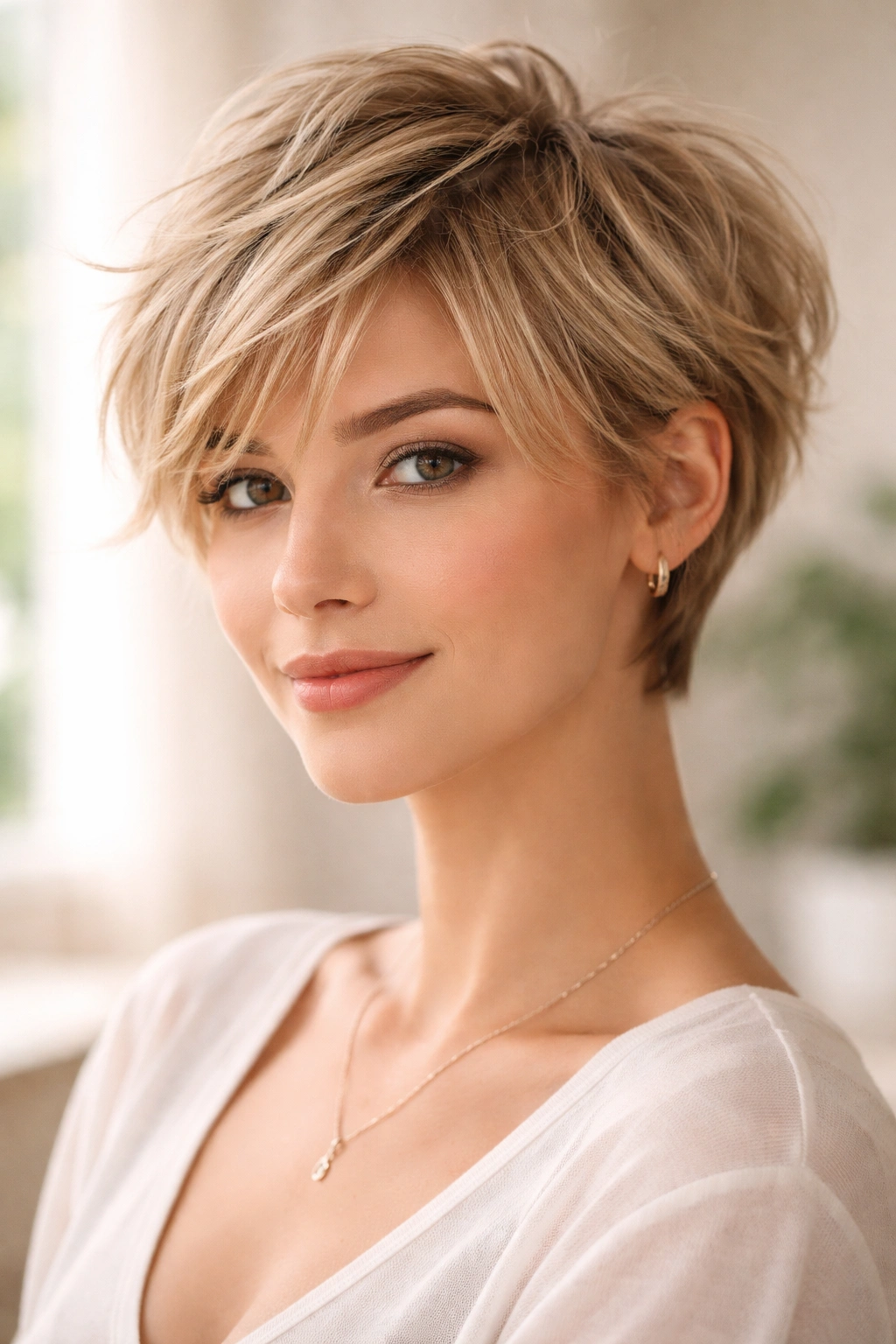
A wispy layered approach creates short hair that feels light and airy rather than blunt or heavy. Layers throughout remove weight and create movement, but they’re cut in a way that still maintains a relatively cohesive shape. Overall length might be 2 to 3.5 inches with layers that range slightly in length to create dimension.
Why Wispy Feels Feminine
There’s something inherently soft about wispy layers. They create movement and catch the light in a way that reads as feminine and approachable. The pieces seem to float rather than sit heavily, which gives the cut an ethereal quality while still being decidedly short.
Bringing Out the Wisps
- Wispy layers work beautifully with straight to wavy hair
- A lightweight texturizing spray applied to damp hair and scrunched creates definition
- Blow-drying with layers separated (using your fingers to direct them as you dry) shows off the wispy quality
- The cut photographs beautifully in natural light because the layers catch light at different angles
- Trims every 5 to 6 weeks keep the layers crisp and prevent the cut from looking overgrown
15. Slicked-Back with Strategic Volume
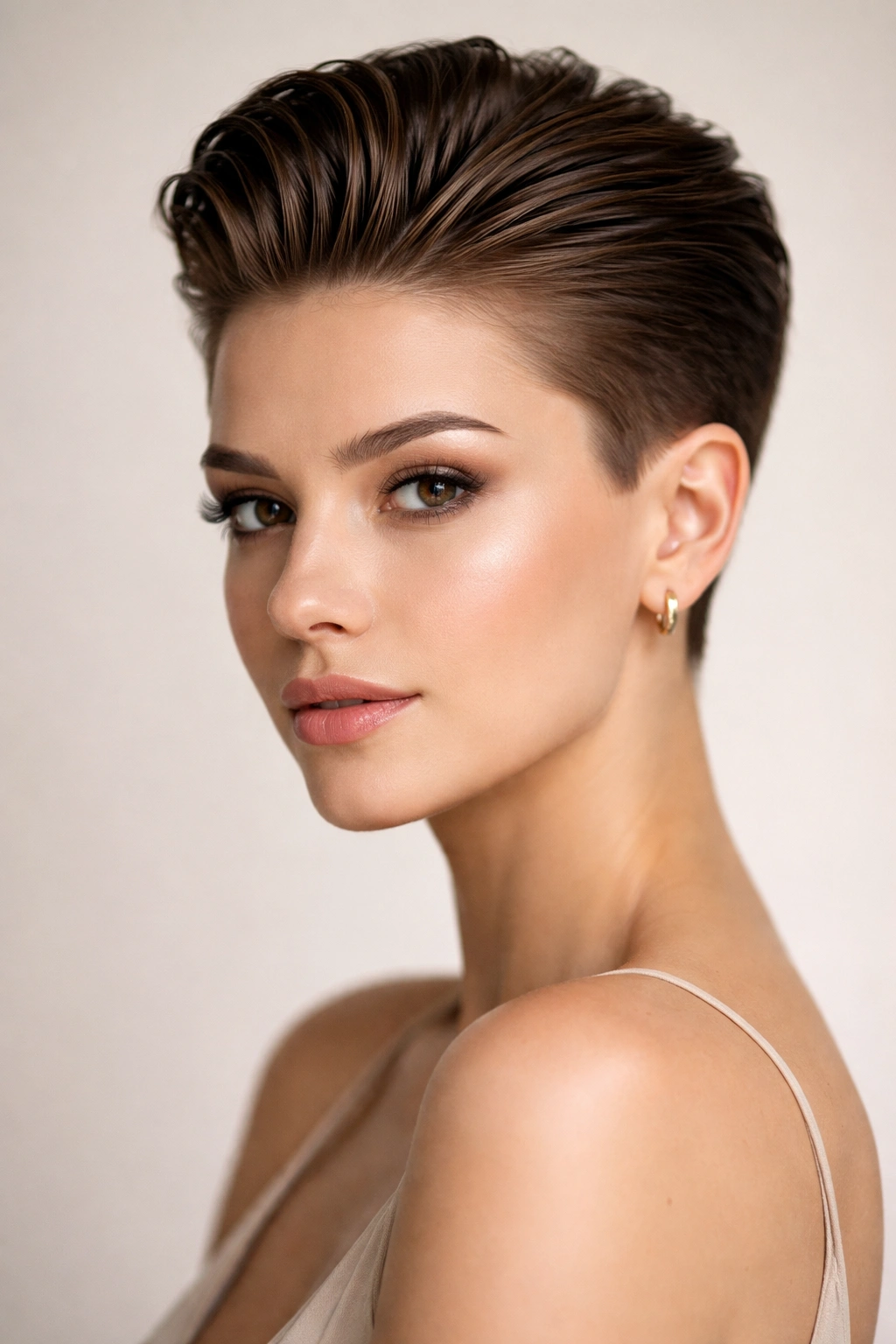
This cut keeps most of the head quite short and sleek, but strategically maintains slightly longer length at the crown and perhaps in a small section at the top-front. Everything is slicked back with product for a polished, almost sculptural look, but the strategic volume points prevent it from reading as severe.
The Art of Strategic Placement
The key to this cut is that it’s intentionally designed to be styled slicked back—the shorter, tapered sides and back create a clean, sculpted look, while the slightly longer crown catches light and adds softness. Together, they create a look that’s both sleek and feminine.
Styling for the Sleek Look
- Use a strong-hold pomade or gel to smooth everything backward
- A blow-dryer with concentrator nozzle helps direct hair backward while drying
- The crown can dry with slight volume, or you can smooth it back completely for maximum sleekness
- This look is very clean and modern, working beautifully for professional or formal settings
- Trims every 3 to 4 weeks maintain the clean, tapered sides that define this cut
16. Rounded Pixie with Soft Bangs
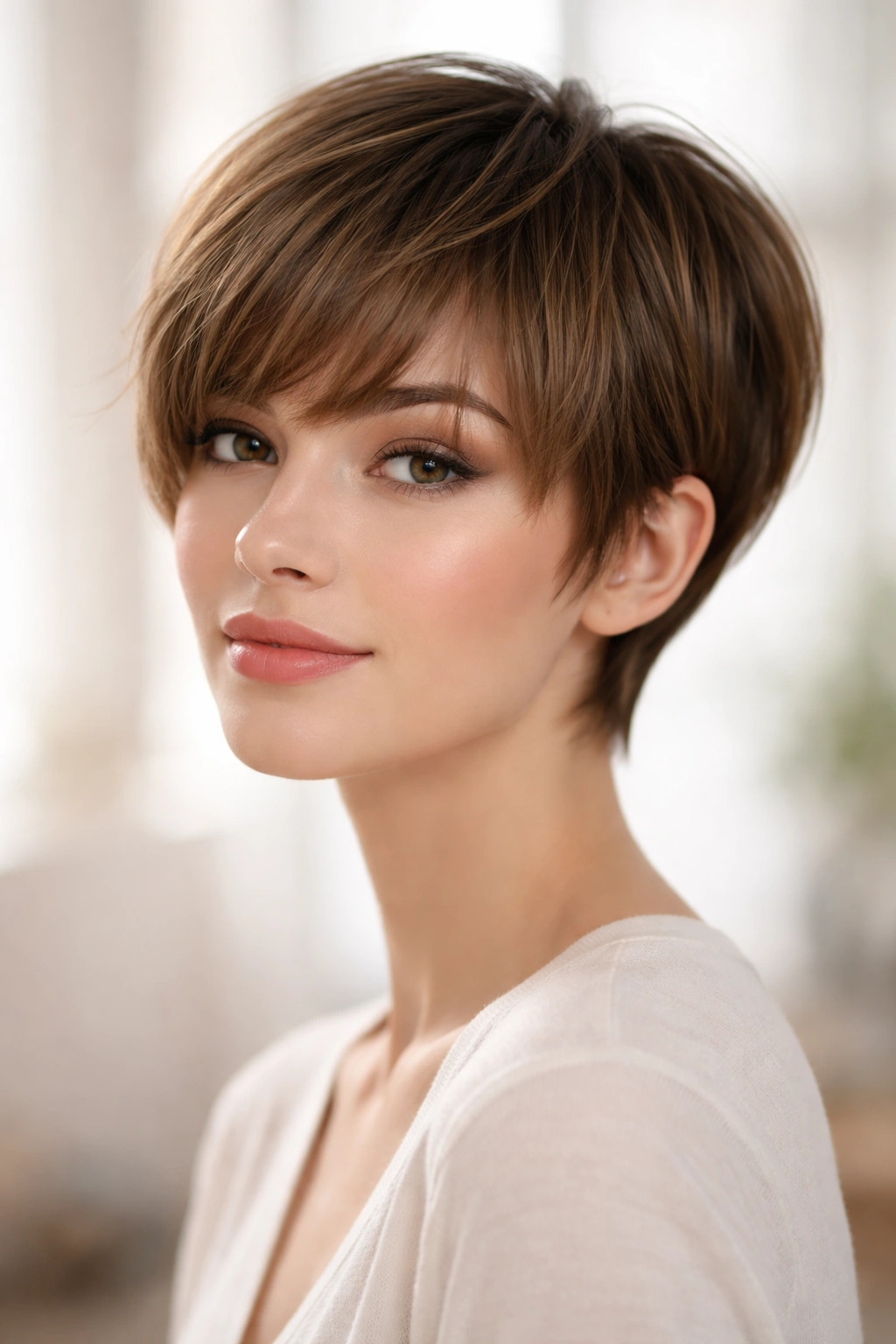
A rounded pixie prioritizes shape and softness over edge. The cut is rounded at the crown and sides rather than pointed or angular, creating an almost cap-like silhouette. Strategic soft bangs—not blunt but rather feathered or face-framing—add femininity and draw attention to your eyes.
Why Softness Matters
The rounded shape feels inherently more approachable and gentle than an angular pixie. Combined with soft bangs that feather rather than cut bluntly, this creates a cut that’s unmistakably feminine while still being decidedly short. It’s elegant and refined without being severe.
Styling and Shaping
- The rounded shape can be enhanced by blow-drying slightly outward from the crown
- Soft bangs work best with texture, so a light texturizing product helps them move naturally
- The bangs can be styled to sweep to one side, or worn more forward depending on your preference
- This cut works beautifully for people who want short hair but worry it might feel too harsh
- Trims every 4 to 5 weeks maintain the rounded shape and keep the bangs at the right length
17. Textured Crop with Face-Framing Pieces
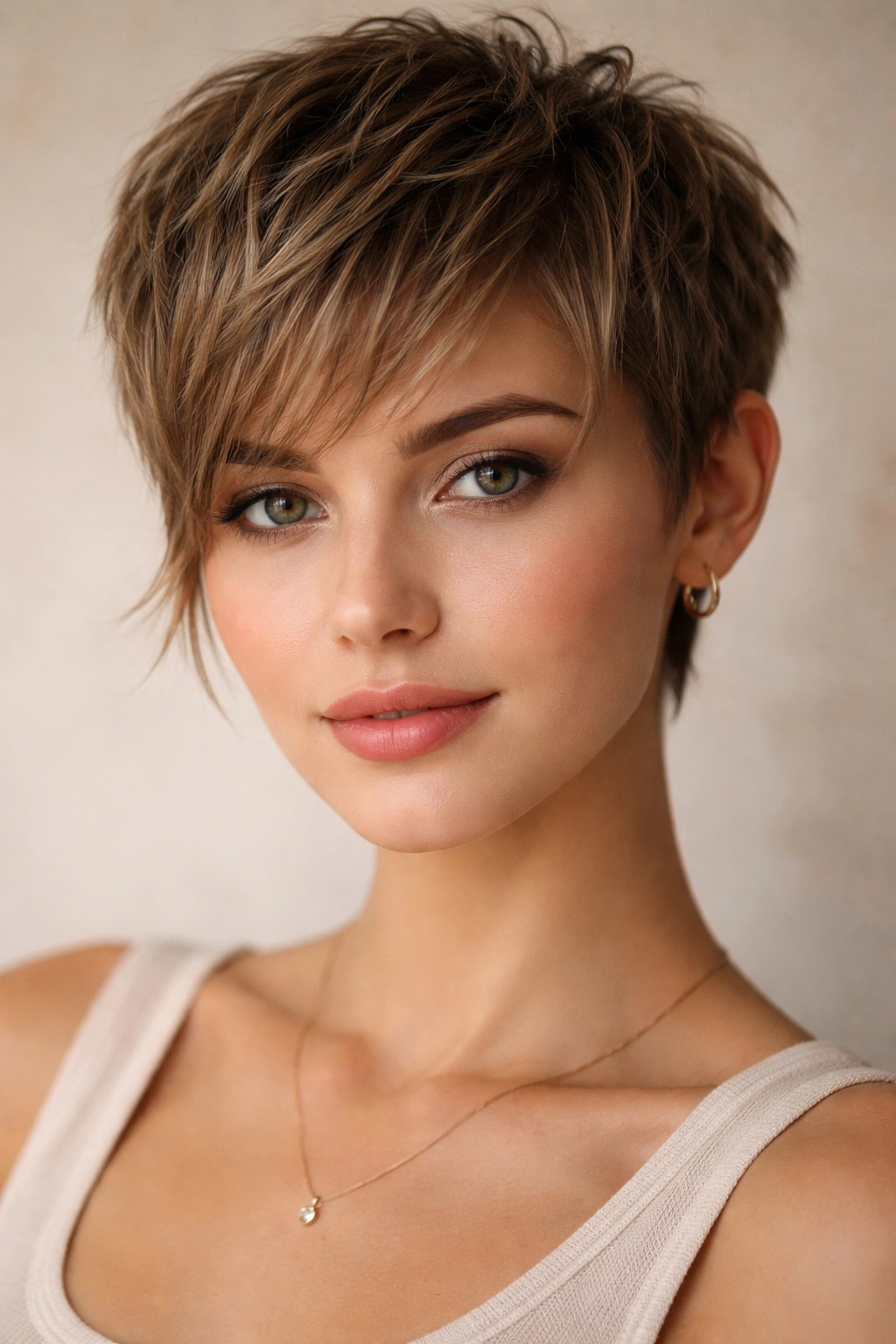
A textured crop keeps overall length quite short—around 1.5 to 3 inches—but deliberately maintains slightly longer pieces specifically placed to frame your face. These aren’t full bangs but rather strategic longer pieces at the temples and around the cheekbones that draw attention to your features.
The Strategic Longer Pieces
The face-framing pieces serve a double purpose: they add a feminine touch by drawing attention to your face, and they actually flatter most face shapes by adding softness and dimension. The rest of the head is cropped short enough to be low-maintenance, but the frame-pieces give you something to style and play with.
Making It Work
- Texture is essential here—whether natural or created through styling, the crop shows movement best with texture
- The face-framing pieces can be styled forward, tucked behind your ears, or swept to the side
- This cut works with most hair textures and face shapes because the longer pieces are customizable
- A texturizing product applied to damp hair and scrunched creates the right movement
- Trims every 5 to 6 weeks keep the crop neat and the face-framing pieces at the right length
18. Short Bob with Bangs
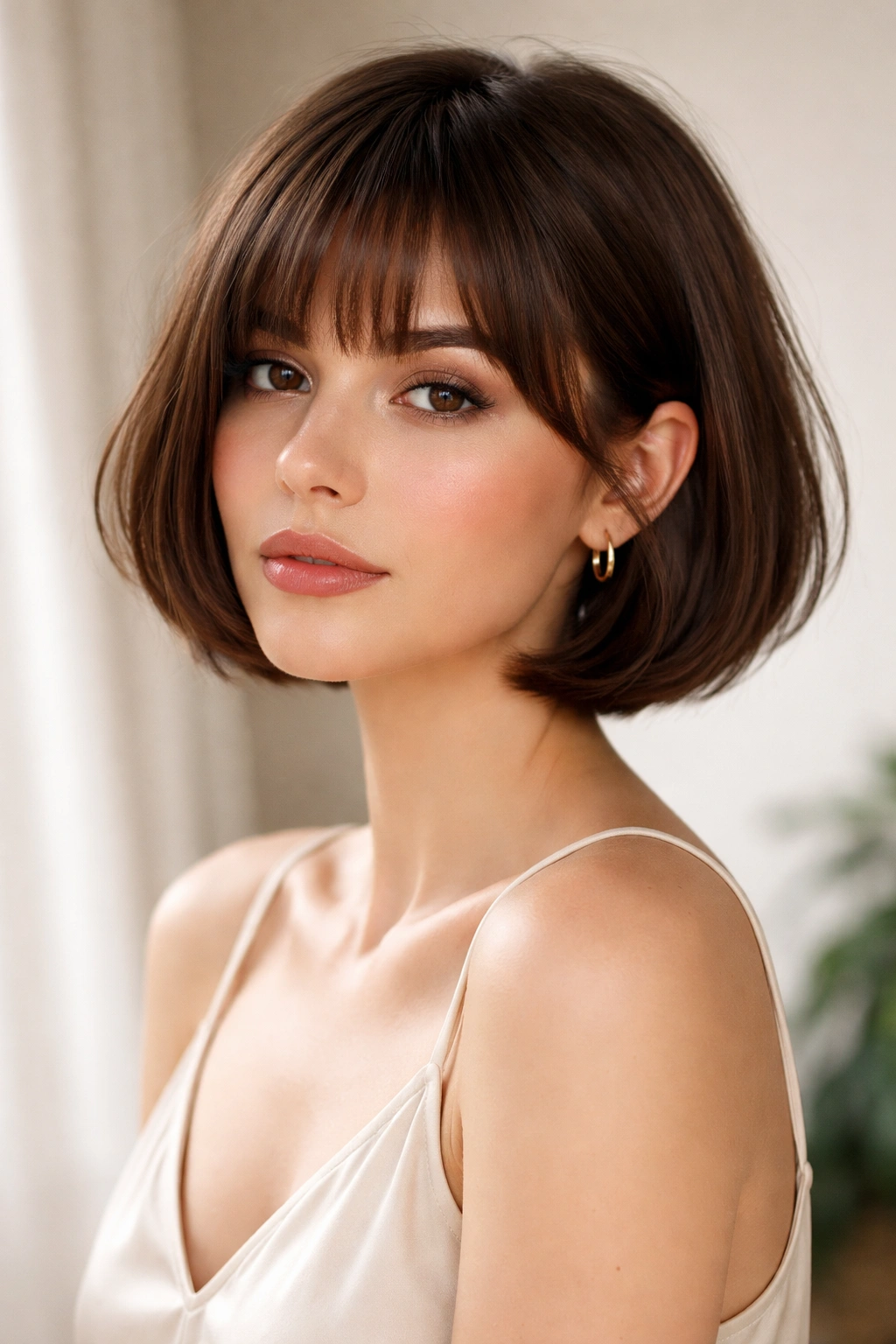
A short bob with bangs is a classic combination that never goes out of style. The bob itself is typically chin-length or slightly shorter, with clean or slightly textured lines, while the bangs might be blunt, wispy, or softly side-swept depending on your preference.
Why Bangs Add Femininity
Bangs frame your face and draw attention to your eyes, which reads as feminine and intentional. They can be styled in different ways—sleek and blunt, soft and wispy, or side-swept—giving you styling flexibility within a short cut. The combination of a short bob and bangs is inherently chic and has serious vintage-inspired appeal.
Bangs Styling and Care
- Blunt bangs require blow-drying with a round brush or flat iron to stay crisp
- Wispy or textured bangs are more forgiving and work with less styling
- Side-swept bangs offer a softer, more casual version of the look
- Bangs typically need trimming more frequently than the rest of your hair (every 3 to 4 weeks) to maintain their style
- The bob itself can be textured or blunt depending on whether you want movement or clean lines
19. Sleek Short Cut with Subtle Taper
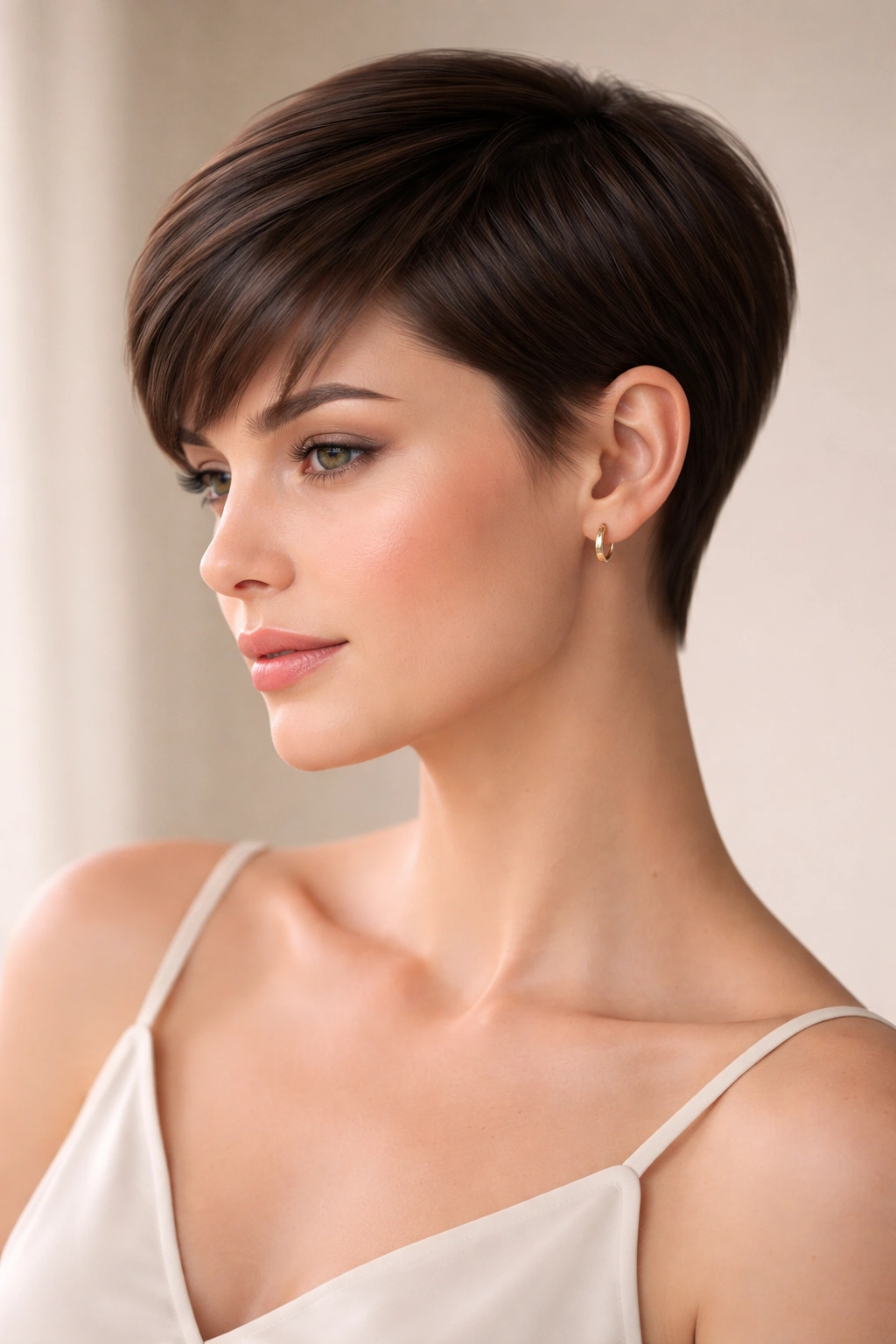
A sleek short cut keeps everything relatively short and smooth—typically 2 to 3 inches—with a subtle, almost invisible taper on the sides and back. Rather than a visible fade or undercut, the taper is gradual and refined, creating a polished, minimalist silhouette that’s undeniably chic.
Why Subtle Works
Sometimes the most sophisticated approach is the most understated. A subtle taper creates shape and definition without looking like you’re trying too hard. It’s clean and modern while remaining soft and approachable, which reads as effortlessly feminine.
Maintaining the Sleek Look
- This cut works best with straight to wavy hair that can be styled relatively smooth
- A light blow-dry, potentially with a smoothing product, keeps it sleek
- The subtlety of the taper means it’s less frequently visible, which means fewer trims (every 5 to 6 weeks is usually sufficient)
- The simplicity of the style means makeup and personal styling become more visually important
- This is an excellent choice for people who want short hair with minimal maintenance but maximum polish
20. Layered Crown Pixie with Texture
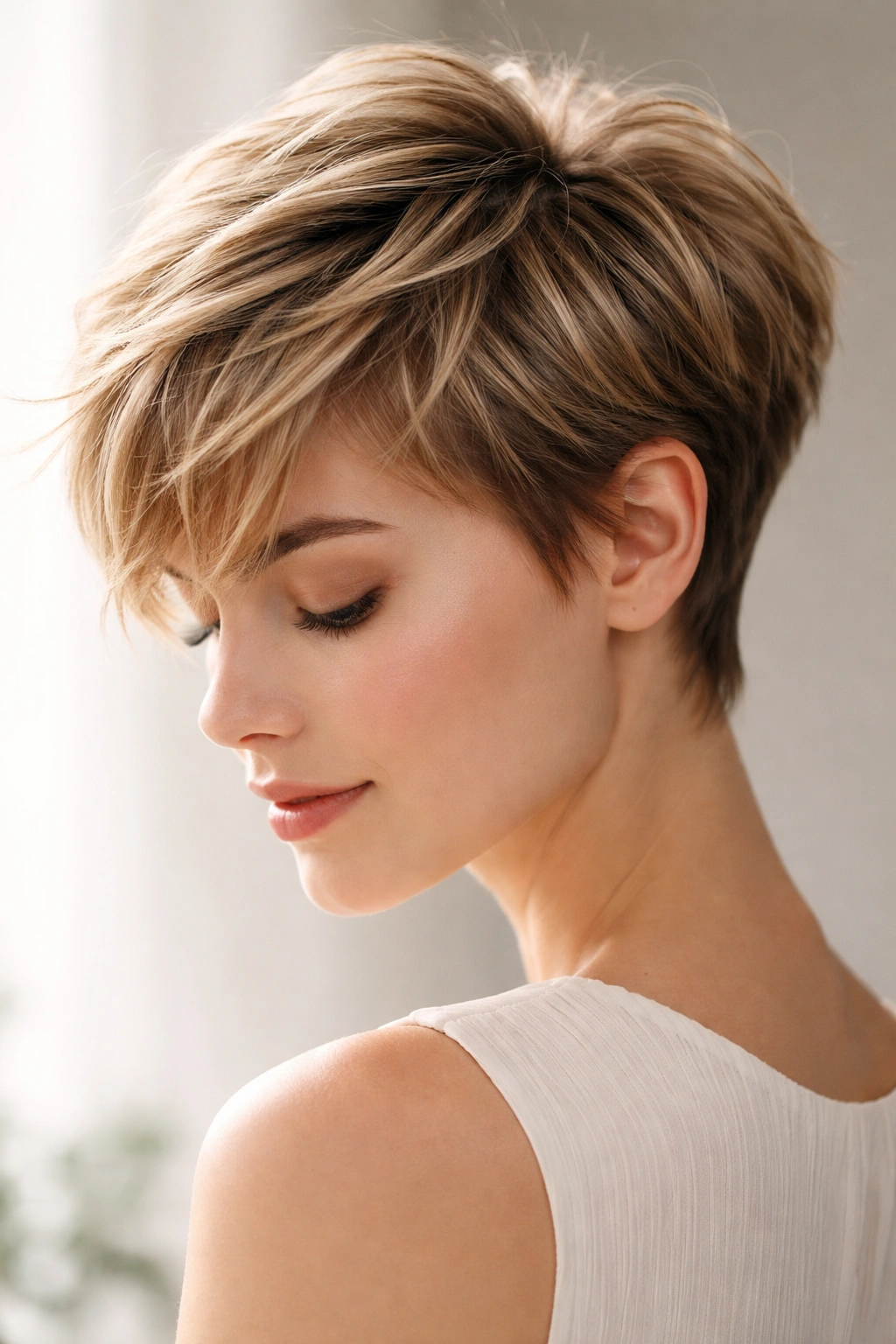
A layered crown pixie keeps the overall length quite short—around 2 to 3 inches—but concentrates longer, choppier layers specifically at the crown and throughout the top. The sides and back are shorter and relatively smooth, while the top has serious texture and movement.
Why the Top Gets the Focus
By focusing length and layering at the crown, you create volume exactly where it’s flattering for most face shapes. The texture and layers catch light beautifully, adding dimension and movement. This creates a cut that’s both modern and undeniably feminine.
Styling to Maximize Impact
- Texture is essential—apply a texturizing or salt spray to damp hair
- Blow-dry the top section upward and outward to encourage the layers to separate and show movement
- Run your fingers through the crown section to enhance the layering
- The shorter sides create a clean silhouette that balances the texture on top
- Trims every 5 to 6 weeks keep the layers defined and maintain the shape
Final Thoughts
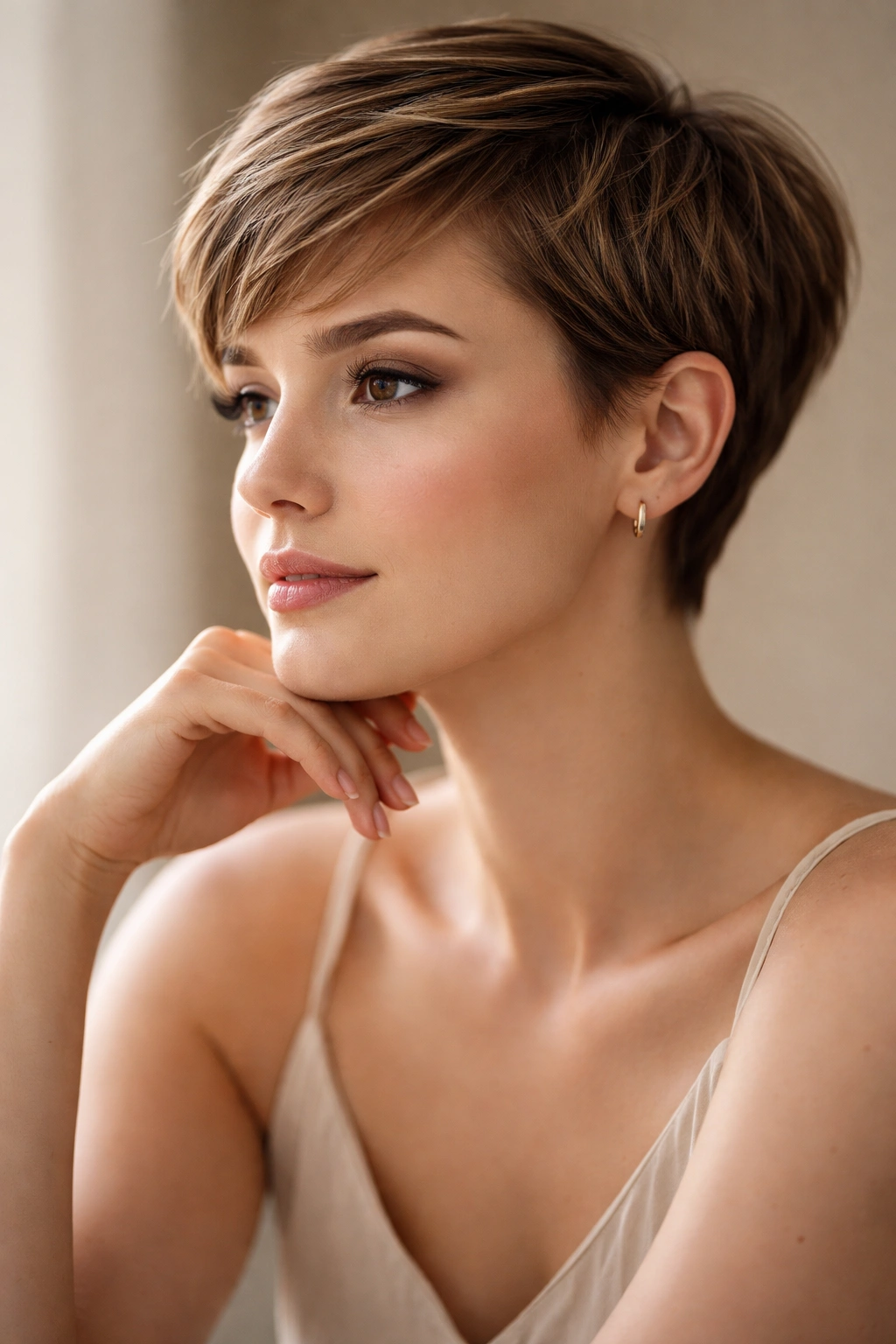
The idea that femininity requires length is genuinely outdated. Short haircuts can be just as feminine, elegant, and expressive as any other style—sometimes more so. What matters is the intentionality behind the cut, the way it’s shaped and textured to flatter your specific features, and how you feel wearing it.
The cuts covered here range from soft and romantic to bold and edgy, textured and tousled to sleek and polished. Some require more styling commitment than others, and some work better with specific hair types or face shapes. The real magic happens when you find the cut that resonates with your personal style and makes you feel confident stepping out into the world.
Short hair also offers practical benefits that sometimes get overlooked—faster mornings, lower styling product expenses, and the incredible freedom of not having hair pulling on your scalp or sticking to your neck. Many people discover that they actually prefer short hair once they commit to it, not just for how it looks but for how it feels.
If you’re considering making the leap to shorter hair, bring reference photos to your consultation and have a detailed conversation with your stylist about your daily styling habits, your hair texture, and what kind of look will actually make you happy to see in the mirror every morning. The best haircut is one that works for your real life, not one that requires thirty minutes of styling every day if you’re not willing to do it. Work with your stylist to find the short cut that feels authentically feminine to you.
