



Long hair remains one of the most versatile and flattering styling options available, but here’s what many people don’t realize: not every long haircut works for every hair type. The difference between a long style that looks stunning and one that falls flat often comes down to cut technique, layering strategy, and how the shape interacts with your specific hair texture and thickness. A perfectly executed long cut can enhance your face shape, add dimension, and actually make your hair easier to manage — but choose the wrong cut for your hair type, and you might end up with something that requires hours of styling just to look decent.
The good news? Long hair offers incredible possibilities, whether you’ve got thick, wavy strands, fine, straight hair, curly texture, or something in between. The trick is understanding which cuts work with your hair’s natural tendencies rather than fighting against them. A layered cut that looks gorgeous on thick, straight hair might leave fine hair looking thin and scraggly. Meanwhile, a blunt cut that creates a sleek line on straight hair could accentuate frizz and weight down curls.
What makes a long haircut truly successful is having a clear strategy: knowing exactly where to place layers, which sections to keep dense for structure, where to create movement, and how to finish the ends so they look intentional rather than just long. Your stylist should understand the difference between a haircut designed for straight hair versus one engineered for natural curl patterns. They need to know how to cut with your hair’s texture, not against it.
In this guide, you’ll find 25 long haircut styles, each chosen because it genuinely works for specific hair types and addresses real styling challenges. From thick waves to delicate fine hair, from natural curls to dead-straight strands, these cuts have been selected because they’re achievable, wearable, and actually flattering when done right.
1. The Blunt Long Bob
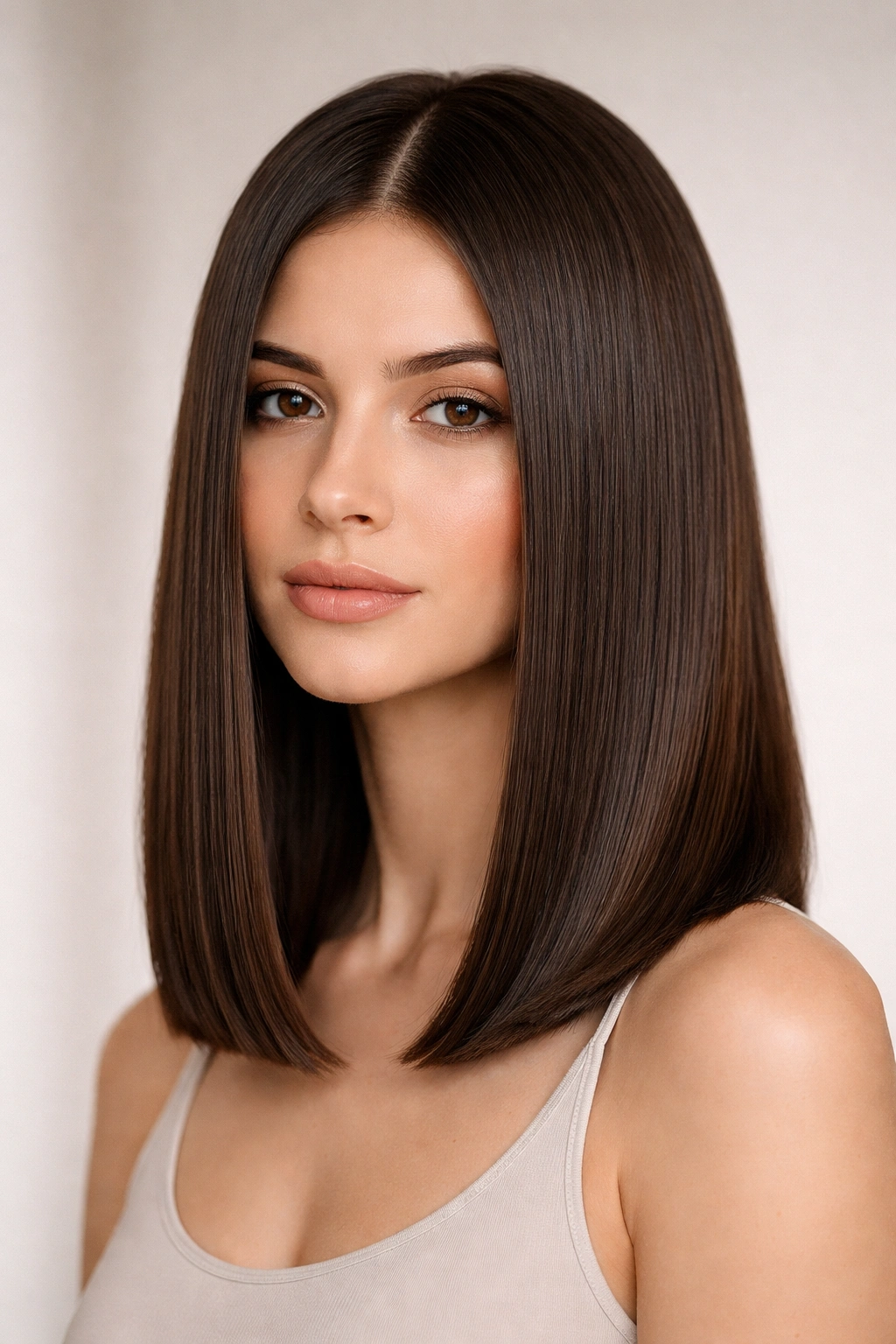
The blunt long bob sits right at the shoulder blade or slightly longer, with a completely straight, even hemline that creates an almost graphic line. This cut works best on naturally straight hair or hair that’s fine and holds a style well. The precision of the blunt edge means any texture or waviness shows immediately, so this demands either naturally straight hair or regular straightening.
Why It Works
The blunt cut creates an optical illusion of thickness — even fine hair looks fuller because the straight line gives the impression of density and weight. The cut is minimal and low-maintenance once you’ve got the right hair type for it. There’s no blending or feathering to grow out, so you can wear it through different lengths without it looking shaggy.
Best For
- Straight or naturally sleek hair textures
- Fine to medium hair density
- Minimalist aesthetics and modern vibes
- People who like bold, graphic lines
- Those willing to straighten regularly for polish
Styling reality: Plan for blow-drying straight and possibly using a flat iron to maintain that precise edge. This cut requires trims every 6-8 weeks to keep the line sharp.
2. The Razor-Sharp Layered Cut
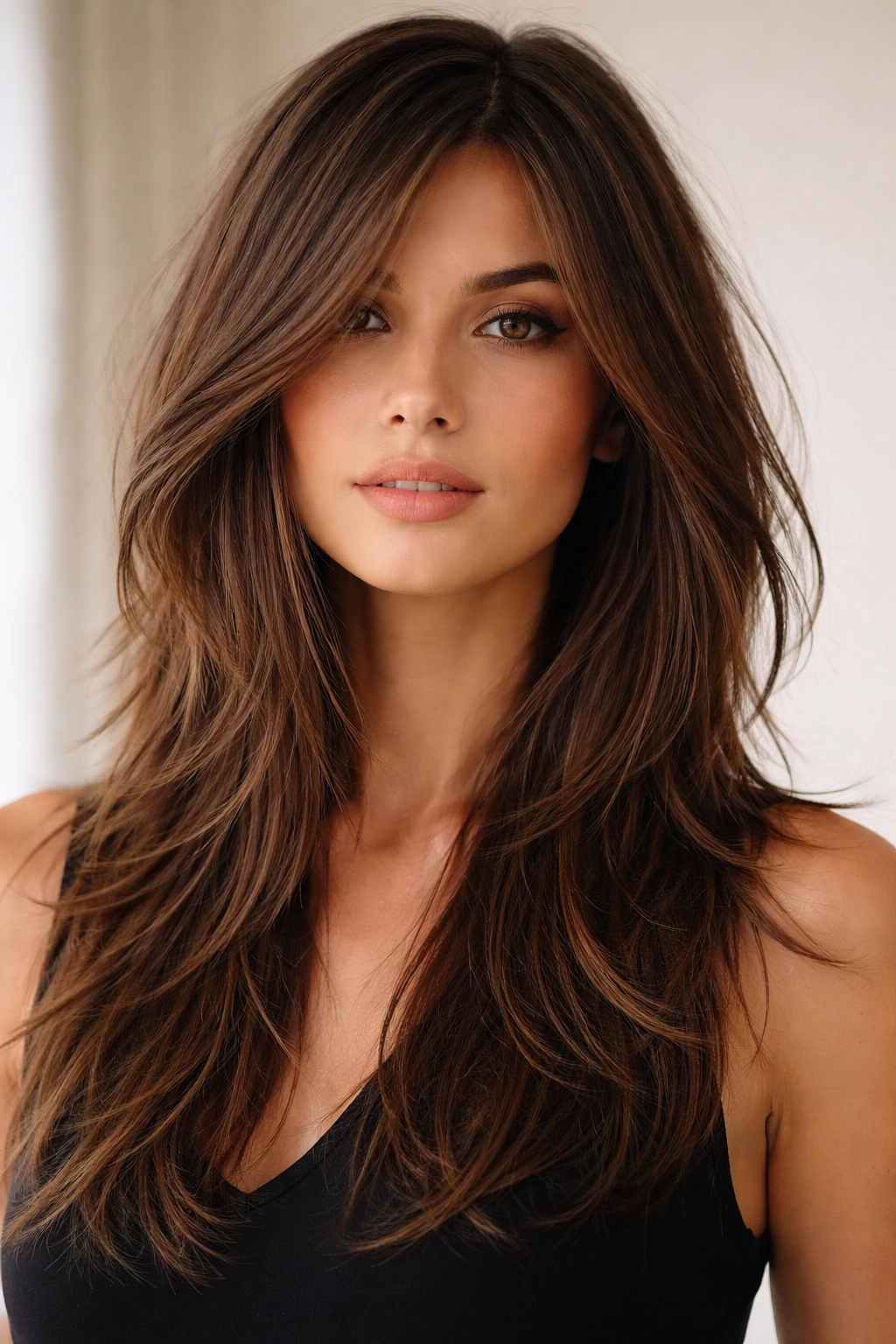
This cut features precise, choppy layers throughout that are cut with a razor for that intentionally piece-y, textured effect. The layers start around mid-length and build toward the face, creating movement and separation. It’s especially flattering on straight or wavy hair that has some natural body.
Why It Creates Movement
Razor layers remove weight strategically and encourage movement rather than fighting it. The choppy edges catch light differently, making hair appear thicker even if it’s fine. The layering gives you options — you can style it straight, wavy, or with texture depending on the day.
Best For
- Straight to wavy hair with some natural texture
- Medium to thick hair density
- People who like an effortless, undone feel
- Those with good face shape who want that framing effect
- Anyone wanting a cut that looks good at multiple lengths as it grows
Pro tip: This style actually improves as it grows out slightly because the layers soften and the texture becomes more pronounced.
3. The Subtle Face-Framing Layers
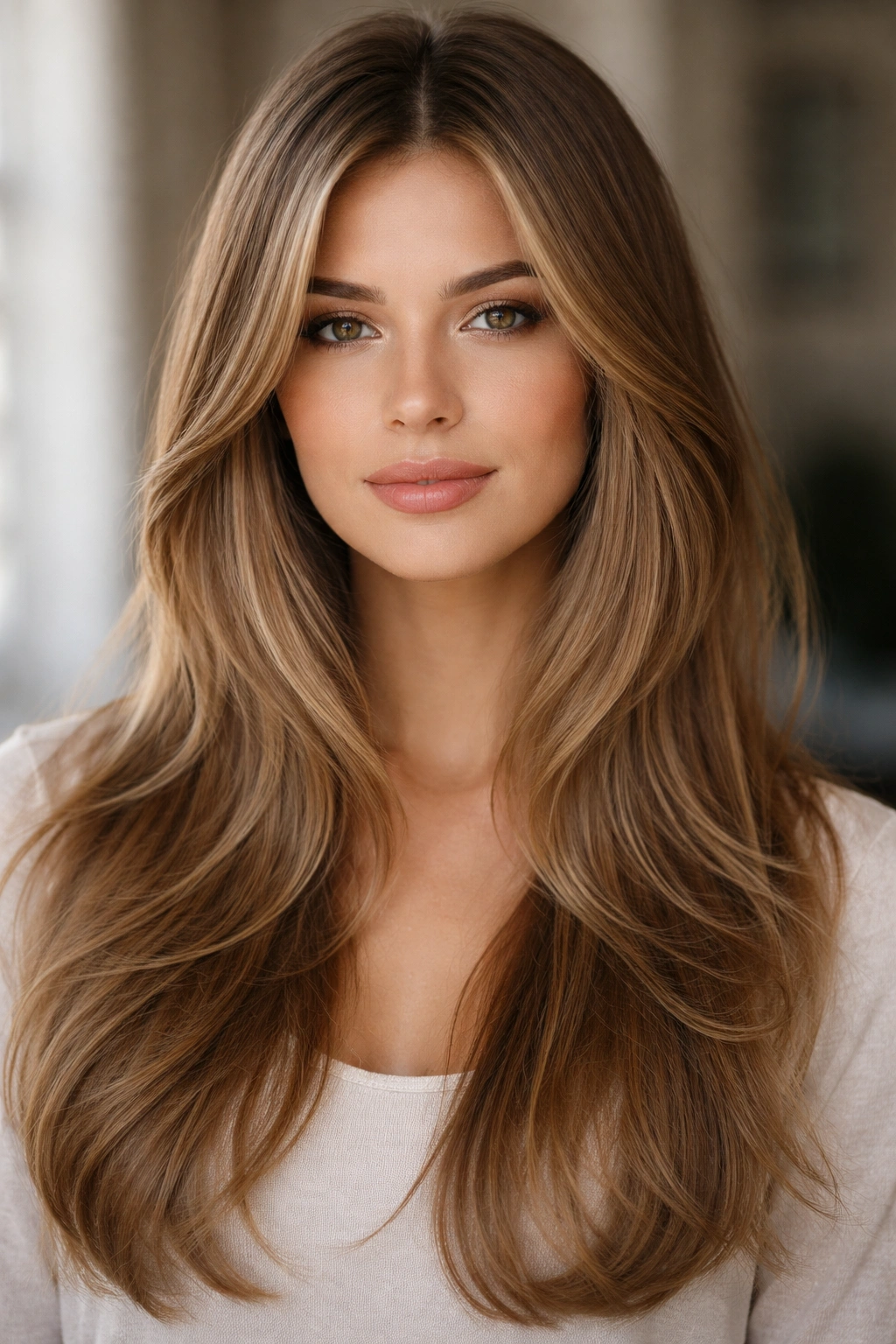
Ultra-fine, minimal layers positioned primarily around the face rather than throughout the entire length. The back stays relatively straight, while the front sections graduate to shorter pieces that frame the cheekbones and jawline. This is a genius option for fine hair because it adds dimension without removing too much length or creating a scraggly appearance.
Why Minimal Layers Work for Fine Hair
Instead of cutting layers all over (which can leave fine hair looking thin), this technique strategically places layers where they’ll catch light and frame your features, while keeping the bulk of the hair denser. You get movement and face-framing without sacrificing thickness.
Best For
- Fine or thin hair that needs strategic styling
- Anyone nervous about layered cuts
- Oval or heart-shaped faces
- Straight to slightly wavy hair
- People who want subtle dimension rather than dramatic texture
Worth knowing: Ask your stylist to point-cut these layers rather than slice them — point-cutting leaves the ends thicker and less wispy.
4. The Curtain-Bang Long Layers
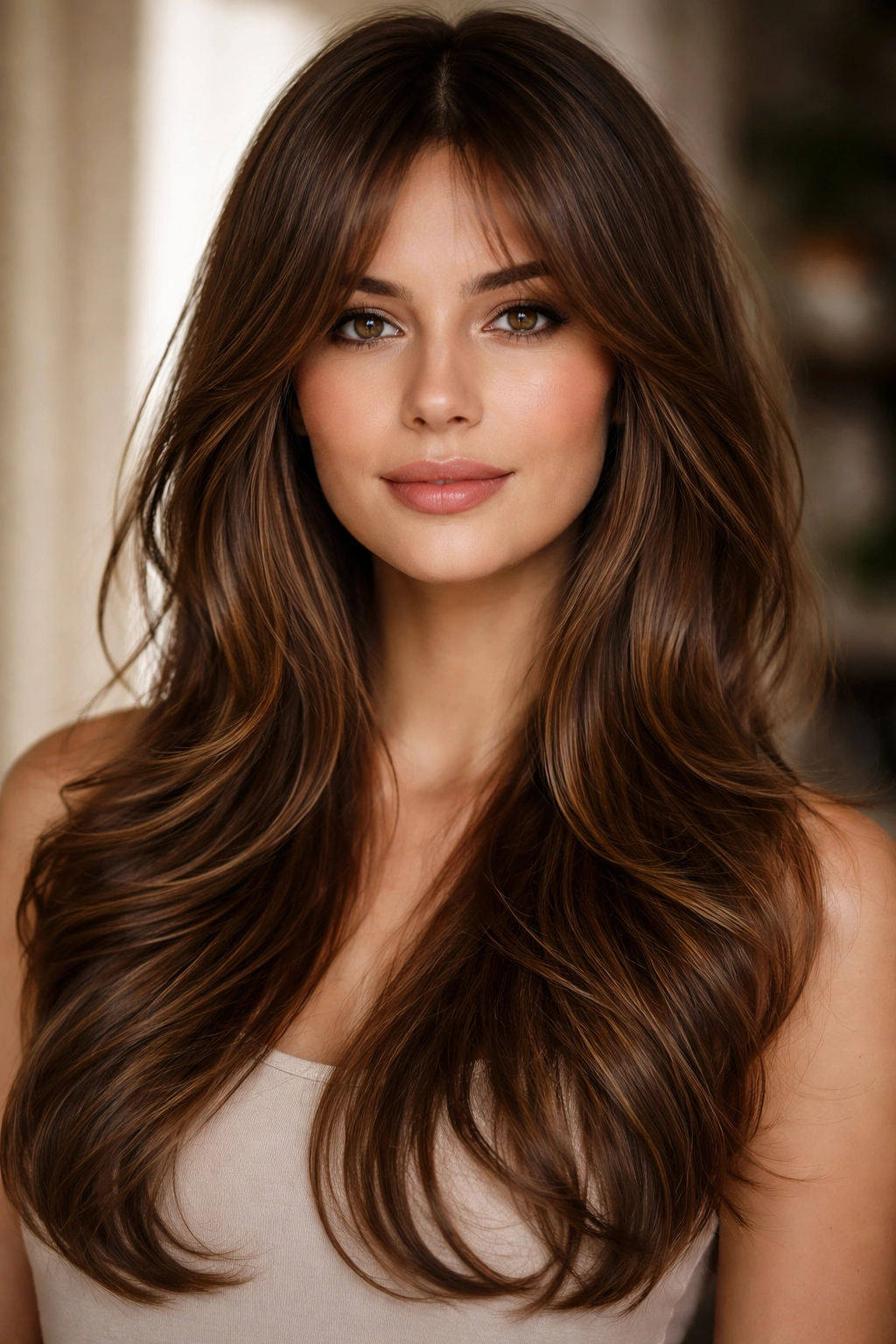
Long, face-framing bangs that are longer on the sides and shorter in the center, paired with soft layers throughout. The entire effect is romantic and movement-focused, with hair flowing around the face. This cut works on wavy or straight hair and adds immediate dimension.
Why Curtain Bangs Transform Long Hair
The center-parted bangs create a flattering face frame that softens features and draws attention upward. Paired with long layers, this cut has instant movement and texture. It’s also incredibly forgiving — as it grows out, the bangs gradually blend into the layers rather than looking awkwardly grown-out.
Best For
- Wavy, straight, or slightly curly hair
- Medium to thick hair density
- Heart-shaped or wide faces
- Anyone wanting a romantic, undone vibe
- Those tired of looking exactly the same every day
Styling tip: Blow-dry the bangs away from the face with a round brush for that perfect curved, flowing effect.
5. The Heavily Textured Shag
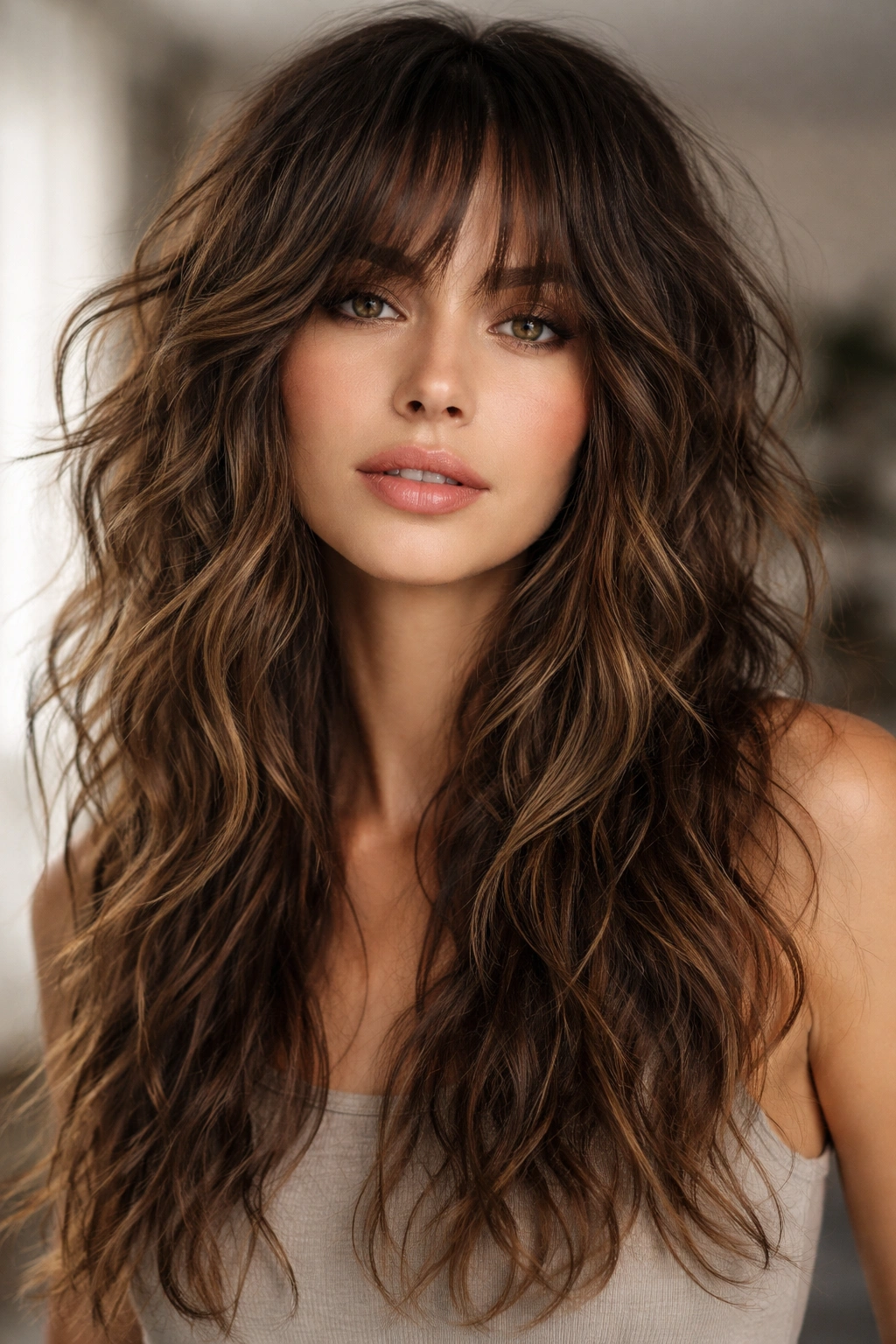
A modern shag features shorter, choppy layers throughout with longer length in the back, creating maximum texture and movement. Think ’70s inspiration but refined for today. The cut is deliberately layered to remove weight and encourage the hair to move and separate.
Why Shags Work for Wavy or Curly Hair
A properly cut shag actually works with your hair’s natural tendency to texture and separate. Unlike some cuts that fight curl or wave, a shag is engineered for movement. The layers mean your hair can breathe, curl up, and still look intentional.
Best For
- Wavy or curly hair textures
- Thick hair that needs weight removal
- Anyone wanting dramatic, undeniable texture
- People with naturally tousled hair who embrace it
- Those wanting a statement-making style
Real talk: This cut requires embracing your hair’s natural texture — it doesn’t look right straightened. It’s best for people who want to work with their waves or curls, not against them.
6. The Seamless Long Balayage Cut
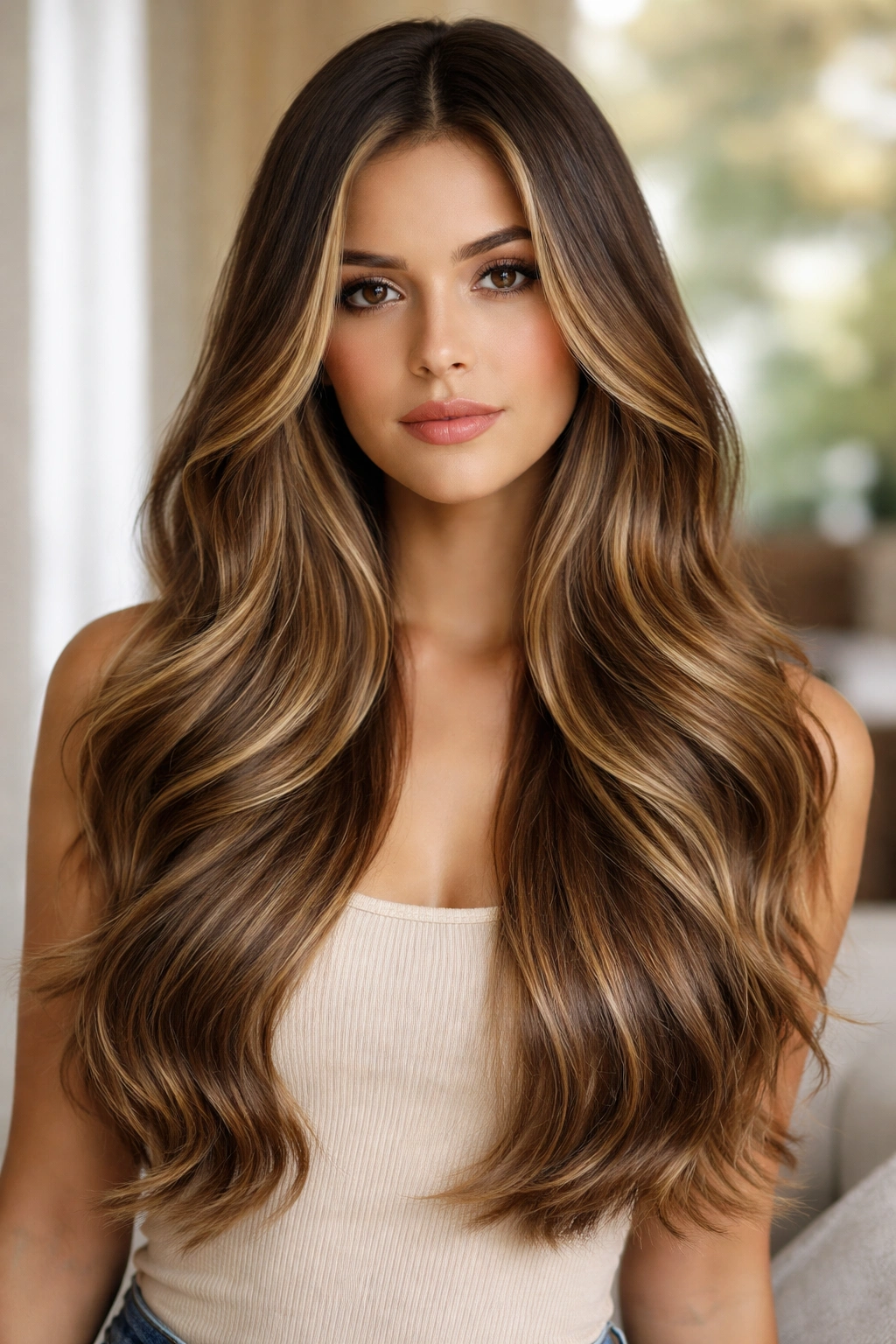
A cut designed to work specifically with balayage coloring, featuring longer length with selective, strategic layering that allows different color pieces to show. The layers aren’t dramatic but are placed to showcase the painted pieces beautifully. This works on any hair type but is especially striking on thick hair.
Why Texture Enhances Dimensional Color
Subtle layers create natural separation that makes balayage color pop without the cut looking choppy. The movement in the cut allows different colors to catch light from various angles, making the coloring job look even more dynamic and professional.
Best For
- Anyone getting balayage or highlight coloring
- Medium to thick hair density
- People wanting a sophisticated, blended look
- Those who like the idea of dimension through both cut and color
- Anyone wanting a high-impact style without extreme choppy texture
Pro tip: Ask your stylist to cut the layers to follow the color placement — don’t do them separately or the two won’t work together.
7. The Micro-Bangs with Long Straight Hair
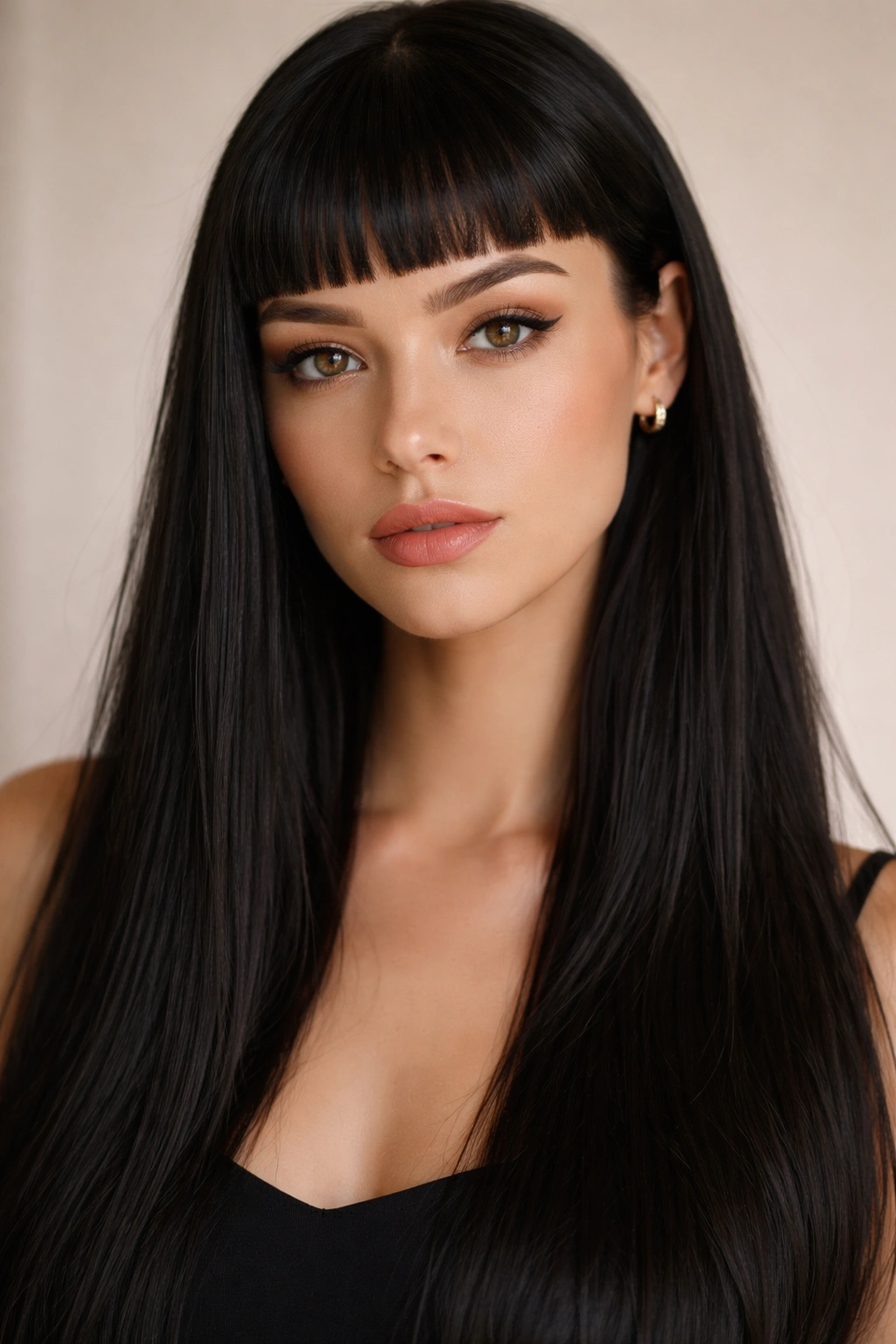
Very short bangs (think just below the eyebrows or shorter) paired with long, mostly-straight hair creating a bold, modern contrast. The shorter bangs play against the length, creating visual interest. This works beautifully on straight or nearly-straight hair.
Why the Contrast Works
The shortness of the bangs makes the length feel even more dramatic and striking. This cut is very modern and contemporary. The precise short bangs draw attention to the eyes and forehead, balancing a longer face shape.
Best For
- Straight or naturally sleek hair
- Those wanting a bold, fashion-forward statement
- Long or rectangular face shapes
- People with high cheekbones
- Anyone confident in a dramatic look
Styling reality: These bangs require regular trims (every 3-4 weeks) and daily styling to look right. This isn’t a wash-and-go cut.
8. The One-Length with Hidden Layers
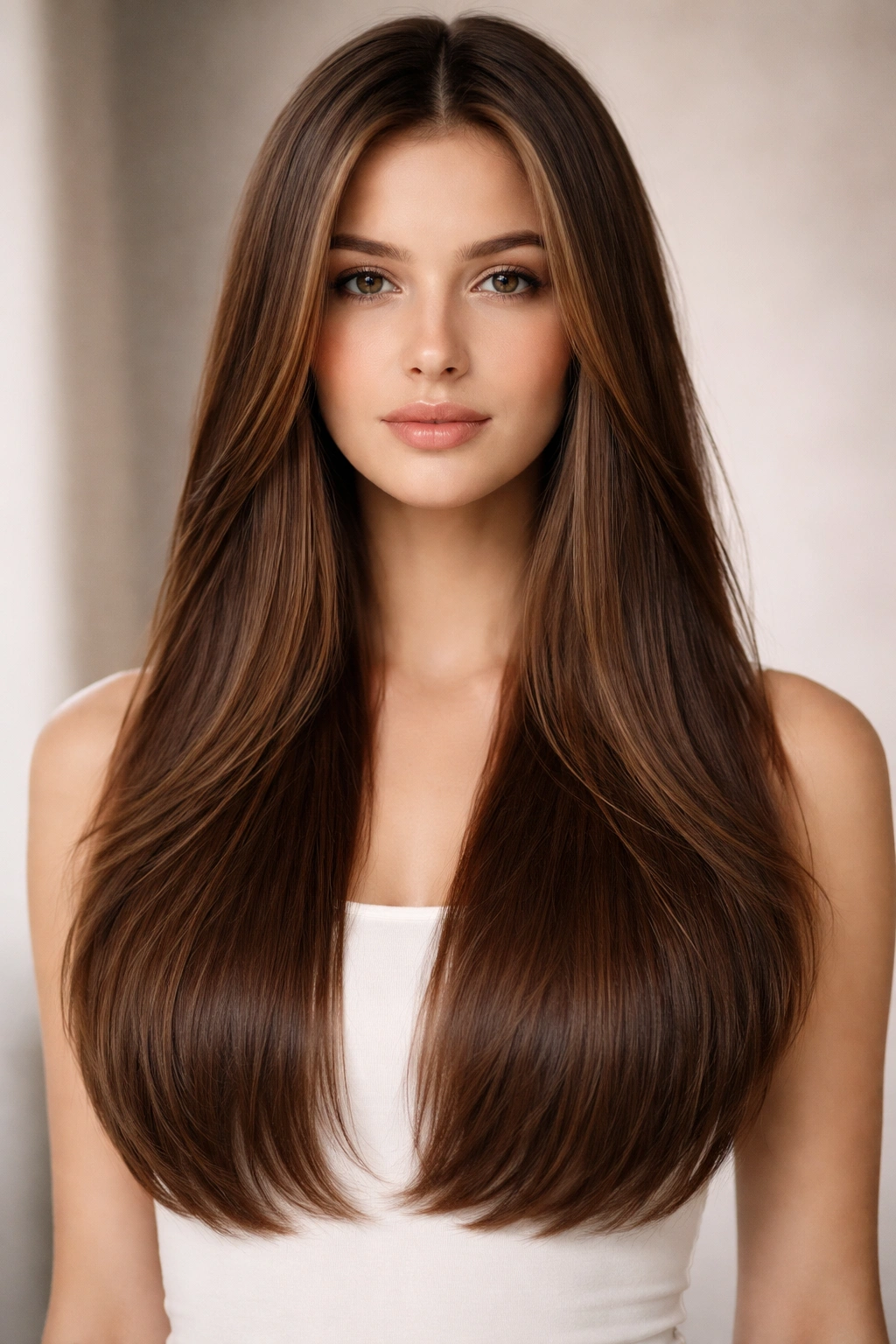
This cut appears to be one-length from the front, but hidden layers are woven throughout the interior to remove weight and create movement without visible chopped texture. It’s a genius option for people who want the simplicity of one-length hair with the wearability of layered hair.
Why Hidden Layers Change Everything
You get movement and texture from within without the cut looking choppy or textured on the outside. The hair flows smoothly but isn’t weighed down. This is particularly smart for thick or heavy hair that needs weight removal without dramatic choppy texture.
Best For
- Thick or heavy hair that needs internal weight removal
- Anyone wanting a polished look without choppy texture
- Straight to wavy hair
- People who like the idea of layers but don’t love the look of them
- Those wanting versatile styling options
Worth knowing: These layers should be cut with a razor or point-cutting technique so the internal texture doesn’t create split ends at the exterior line.
9. The Spiral Curl-Cut for Curly Hair
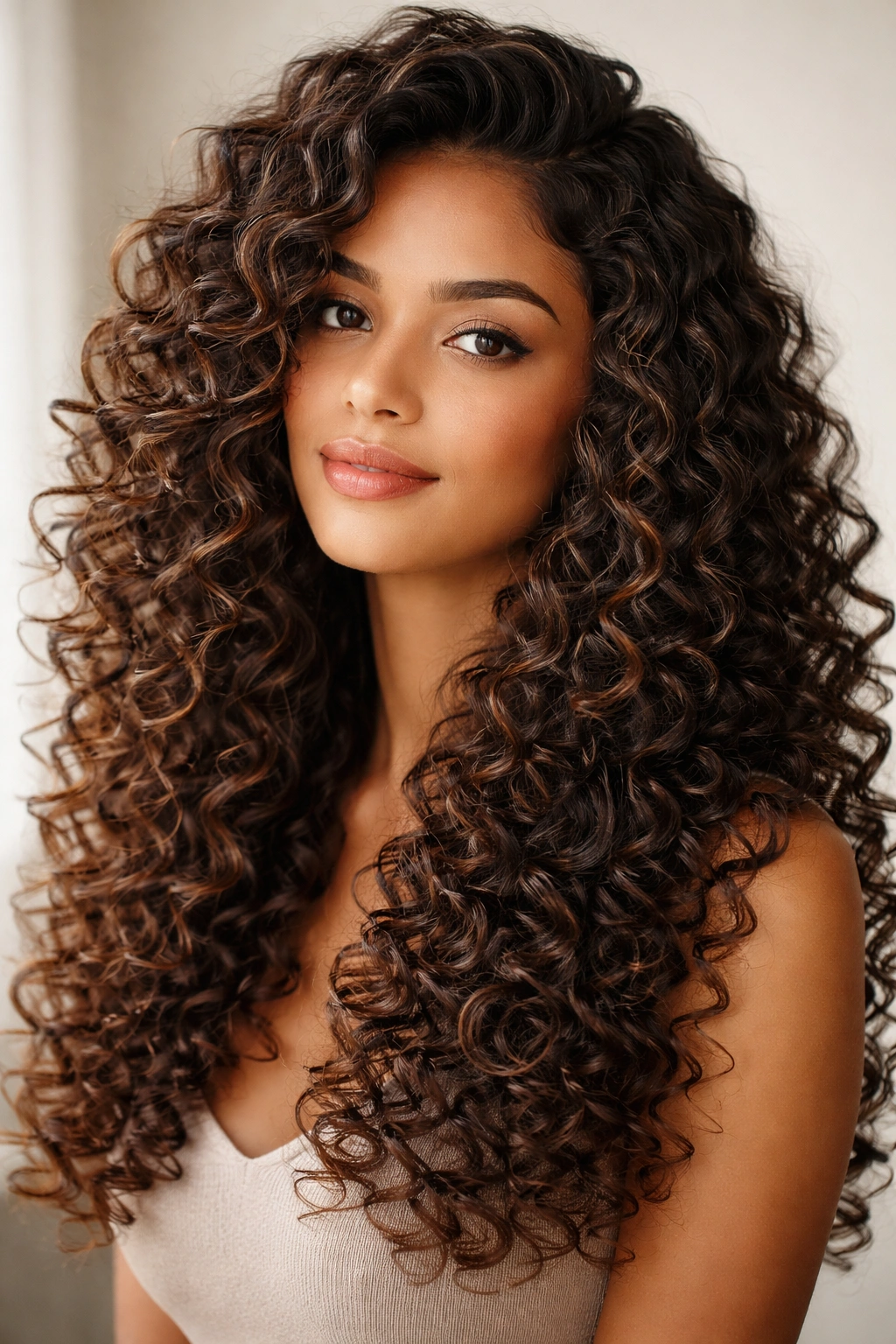
A cut specifically engineered for naturally curly or coily hair, with layers placed to enhance and define curl patterns rather than fight them. The cut respects the hair’s shrinkage, works with natural curl formation, and encourages curls to separate beautifully.
Why Traditional Layering Fails Curly Hair
Regular layering can make curly hair look too choppy or create stringy pieces. A spiral cut places layers in a way that works with how curls actually form and group together. The result is defined, bouncy curls instead of hair that looks thin or odd when worn curly.
Best For
- Naturally curly or coily hair
- Thick, textured hair density
- Anyone wanting to embrace their curl pattern
- People tired of fighting their hair
- Those wanting a cut that looks good curly, textured, or wavy
Pro tip: Always get a curly-cut specialist — regular stylists often don’t understand how to cut curly hair to work with its natural pattern.
10. The Straight-Across Face-Frame
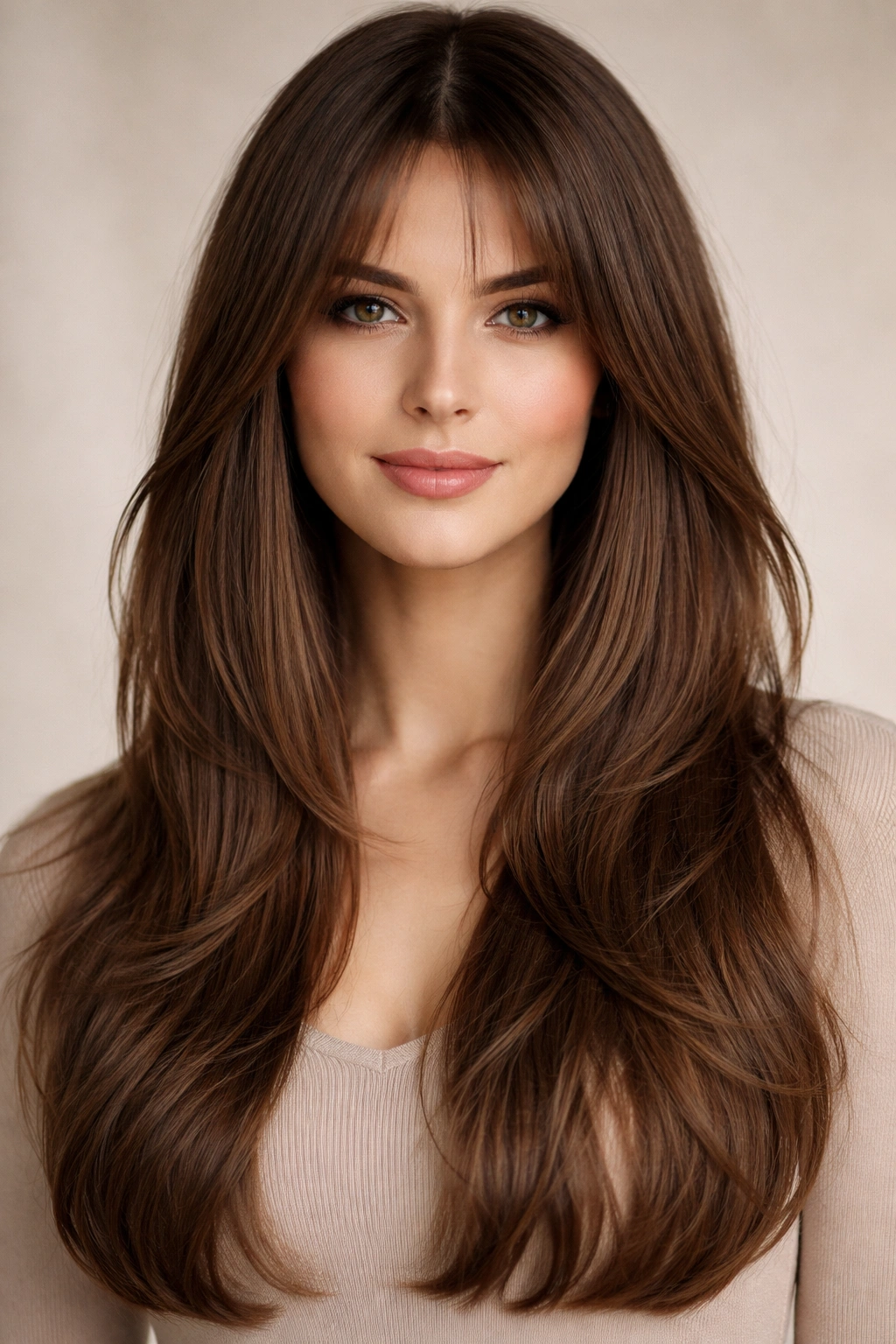
Longer hair with a straight-across fringe-like section that frames the face, created by keeping front sections noticeably shorter while the back stays long. It’s structured but not blunt, flattering but not dramatic. This works well on straight or wavy hair.
Why Face Framing Matters
Strategic shorter pieces around the face draw attention to features you want to highlight while creating balance with longer back length. The straight line of the frame is modern and intentional-looking without being harsh.
Best For
- Straight to wavy hair
- Any hair density
- People wanting structure without drama
- Those with wider faces or broad features
- Anyone wanting a modern, polished look
Styling approach: Blow-dry the face-frame pieces away from the face to create a flattering curve rather than letting them hang flat.
11. The Soft, Shoulder-Length Layers
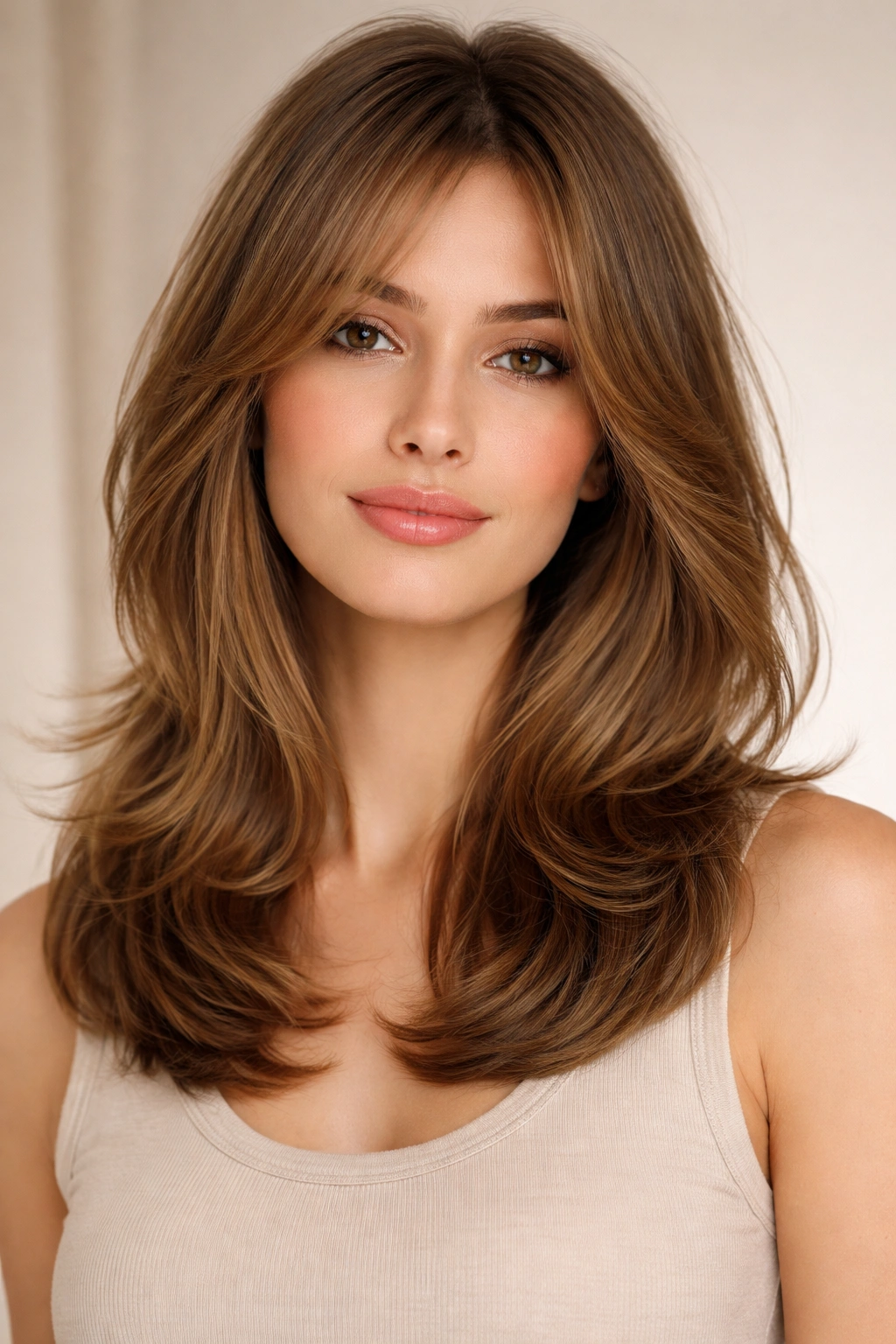
Layers that begin around shoulder-length and graduate toward longer back pieces, creating a soft, feminine shape. The layers are gentle and flowing rather than choppy or dramatic. This is incredibly wearable and flattering on most hair types.
Why Soft Layers Flatter Most People
This cut creates shape and movement without being trendy or dramatic. The soft graduation is flattering on different face shapes. Layers that begin lower on the head create less bulk at the crown while still maintaining density.
Best For
- Any hair type or density
- Almost any face shape
- People wanting classic femininity
- Those new to layers
- Anyone wanting a reliable, always-flattering option
Real versatility: This cut works styled straight, wavy, with curlers, or with natural texture. It’s genuinely adaptable.
12. The Thick, Blunt Bangs with Layered Length
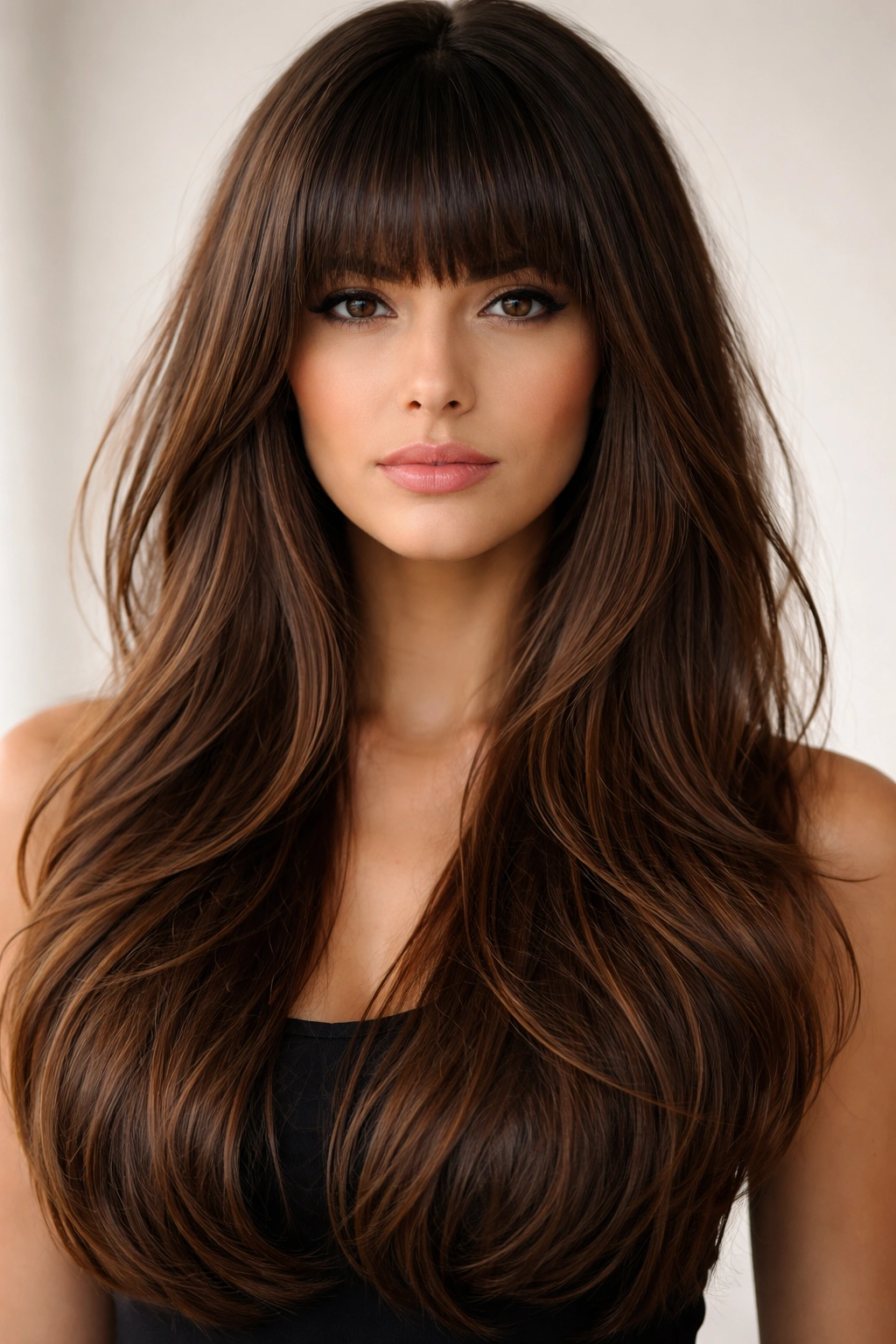
Bold, thick bangs (full-coverage across the forehead) paired with long, layered hair. The bangs are the statement piece while the rest of the hair features soft to moderate layers. This combination is modern and striking.
Why Thick Bangs Demand Layers
Thick bangs can make hair feel heavy overall if the rest isn’t layered. Pairing them with layers removes that heaviness and allows the bangs to be the focal point without the entire head feeling weighted down.
Best For
- Straight to wavy hair with some texture
- Medium to thick hair density
- Oval or long face shapes
- People wanting a bold focal point
- Those embracing a stronger, more defined look
Maintenance note: Thick bangs require regular trims (every 2-3 weeks) and blow-drying daily to look polished.
13. The Mesh Layering for Fine Hair
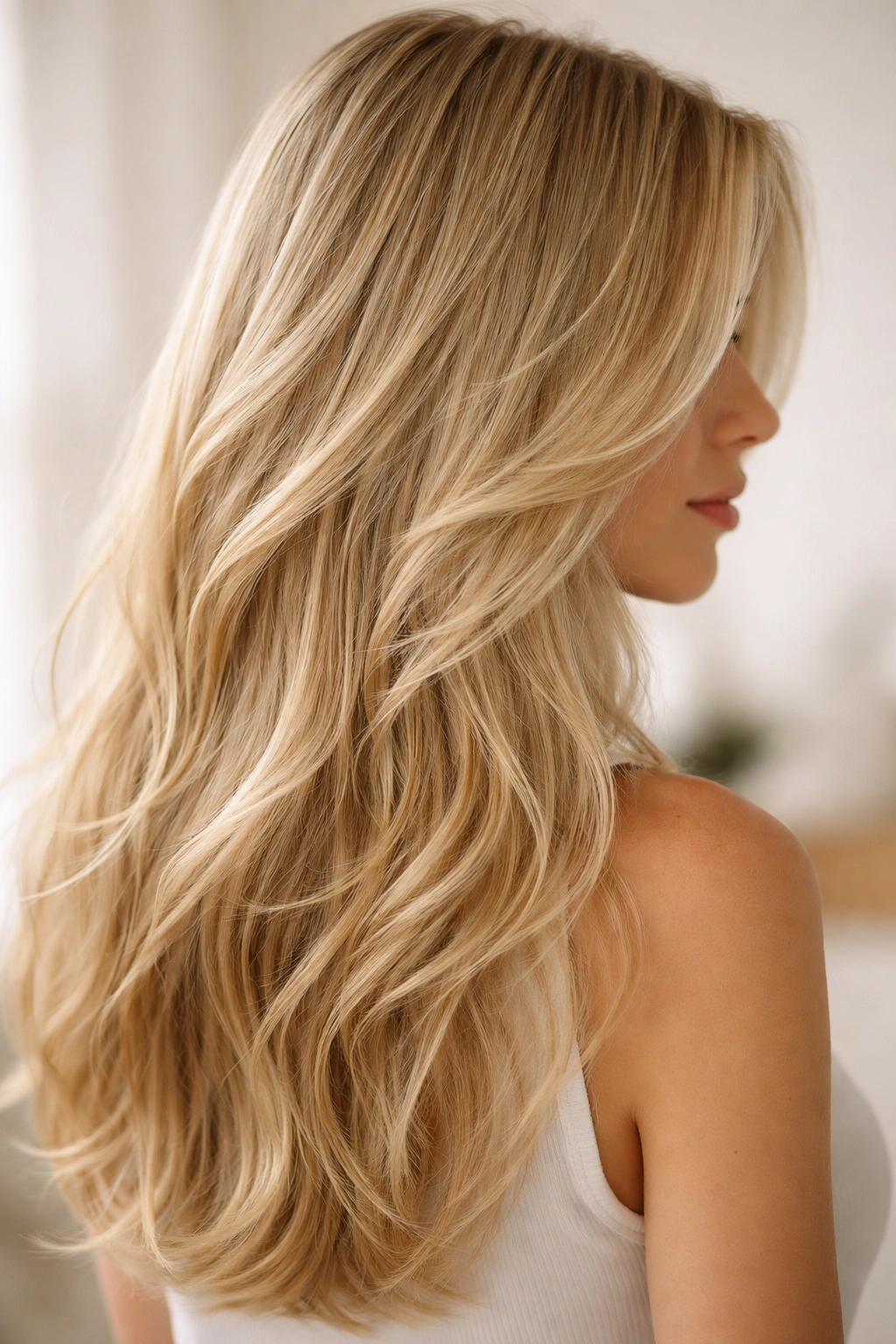
Ultra-fine layers woven throughout the hair (like a mesh pattern) that create dimension and movement without the heavy, choppy appearance. This technique is specifically designed for fine hair that can look thin if layered too dramatically.
Why Mesh Layers Look Fuller, Not Thinner
Instead of removing large chunks of hair, mesh layering creates tiny transitions throughout that give an impression of more texture and fullness. The layers are so subtle that they don’t create visible gaps or thinness.
Best For
- Fine or thin hair
- Straight to slightly wavy textures
- Anyone nervous layers will make thin hair thinner
- Those wanting dimension without sacrifice
- People with sensitive scalps or who dislike too much texture
Pro tip: Ask your stylist to use point-cutting or notching rather than slice-cutting for these layers.
14. The Choppy, Textured Wolf Cut
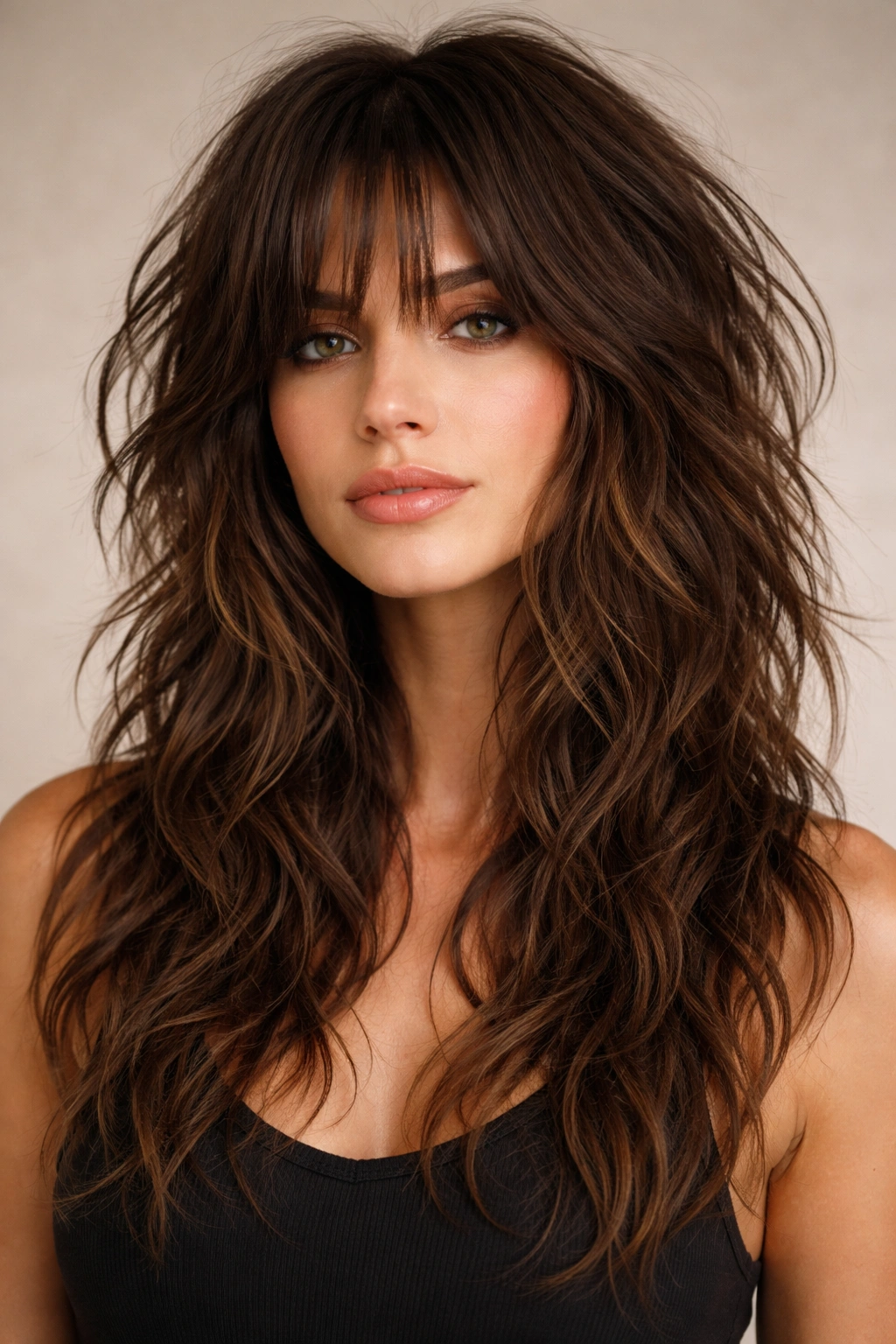
A modern interpretation of the wolf cut combining a shag-like texture with longer length, featuring random, deliberately choppy layers throughout. The effect is wild, textured, and movement-focused. This works beautifully on wavy or curly hair.
Why Choppy Layers Suit Textured Hair
Choppy layers encourage separation and movement in wavy or curly hair instead of creating a heavy, matted appearance. Each layer can move independently, creating maximum dimension and bounce.
Best For
- Wavy, curly, or coily hair
- Thick hair that benefits from weight removal
- Anyone wanting a bold, fashion-forward statement
- People embracing their natural texture
- Those willing to style actively rather than passively
Styling reality: This cut works best with product (texture sprays, creams, or gels) and intentional styling.
15. The Sleek, Straight-Across Long Cut
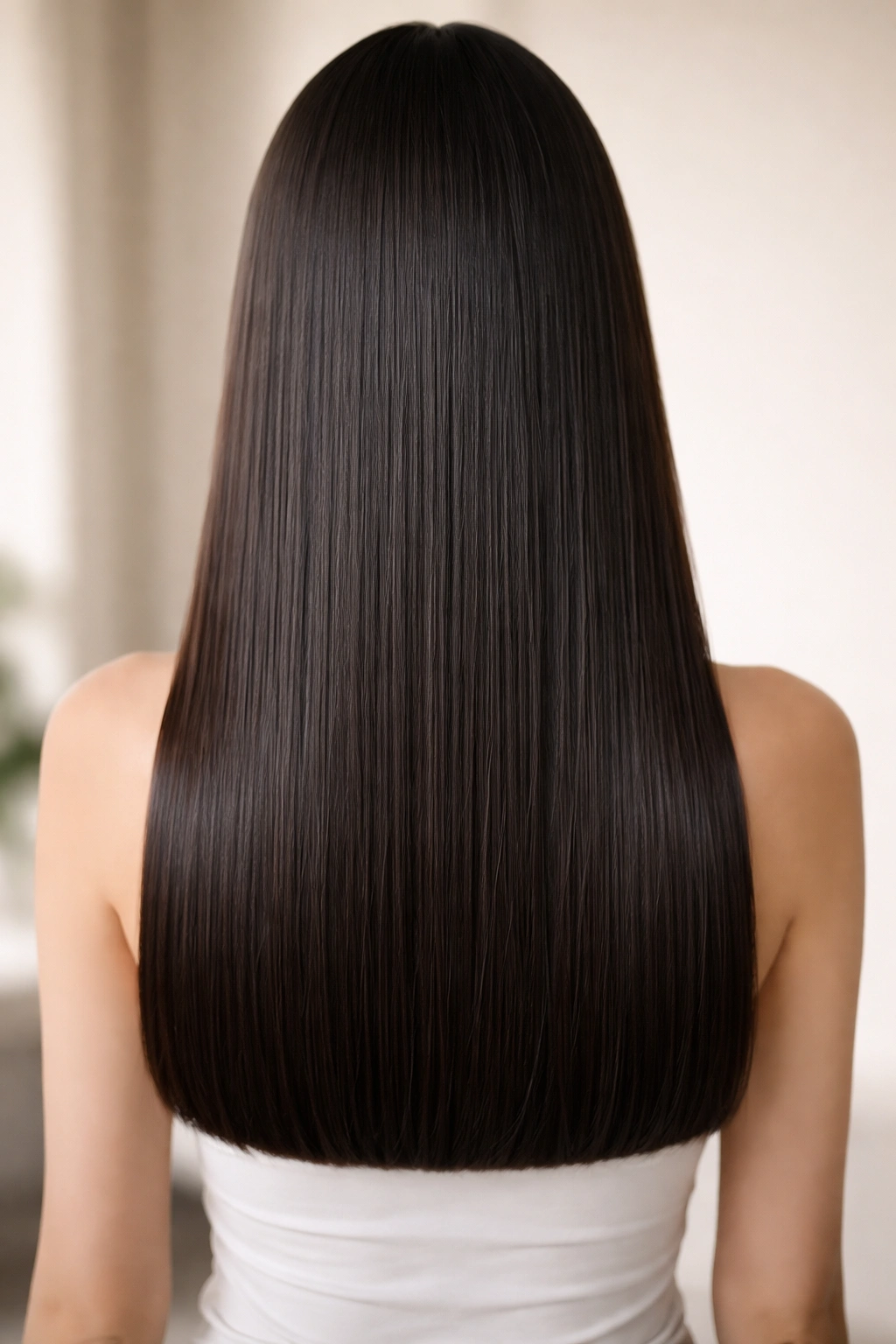
Long hair with minimal layers, cut bluntly across, creating an almost graphic, perfectly straight line. This is the opposite of choppy — it’s precision, polish, and simplicity. Requires naturally straight hair or commitment to straightening.
Why Precision Flatters Straight Hair
A perfectly executed straight cut looks expensive, modern, and intentional. There’s nowhere for the eye to rest except on the cut’s perfection, which makes it incredibly striking when done right.
Best For
- Straight or naturally sleek hair
- Fine to medium density
- Minimalist, modern aesthetics
- Professional or formal settings
- Anyone appreciating understatement
Honest note: This cut shows every imperfection in the line, so you’ll need regular trims (every 6-8 weeks) to maintain it.
16. The Feathered Long Layers
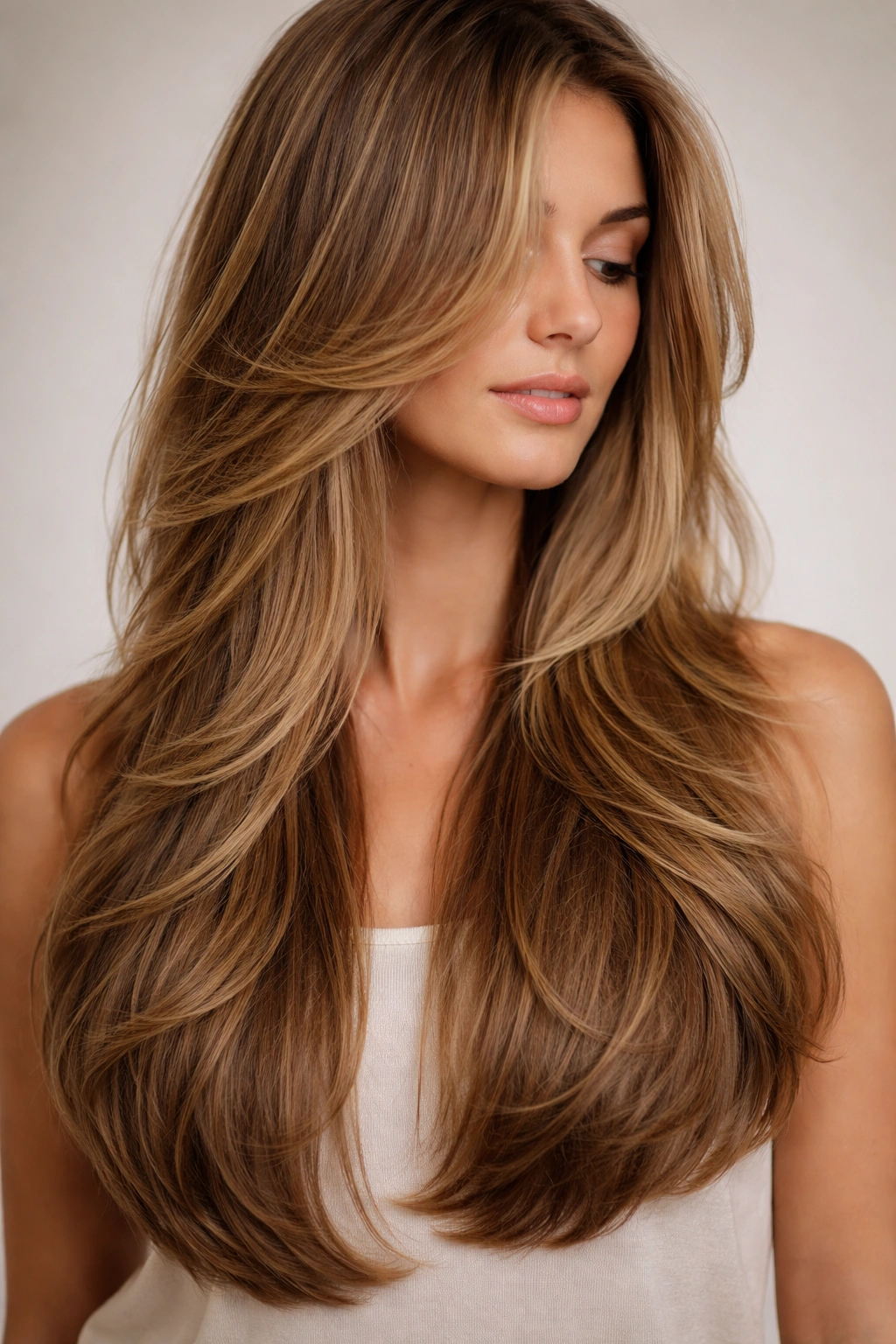
Layers cut with a feathering technique where each layer gradually blends into the one beneath it, creating a soft, flowing appearance. The feathering is subtle and creates movement without choppy edges. This works on straight, wavy, or slightly curly hair.
Why Feathering Creates Softness
Feathered layers blend seamlessly, creating a gradient effect rather than obvious cuts. The result is soft, feminine, and incredibly wearable. Your hair moves as one cohesive unit rather than in separate pieces.
Best For
- Any hair type that has some natural movement
- Medium to thick hair density
- Anyone wanting soft, blended texture
- Romantic or bohemian aesthetics
- People who want layers but not choppy texture
Versatility: Feathered layers look good straight, wavy, or curled — they’re genuinely adaptable.
17. The Asymmetrical Cut with Side Length
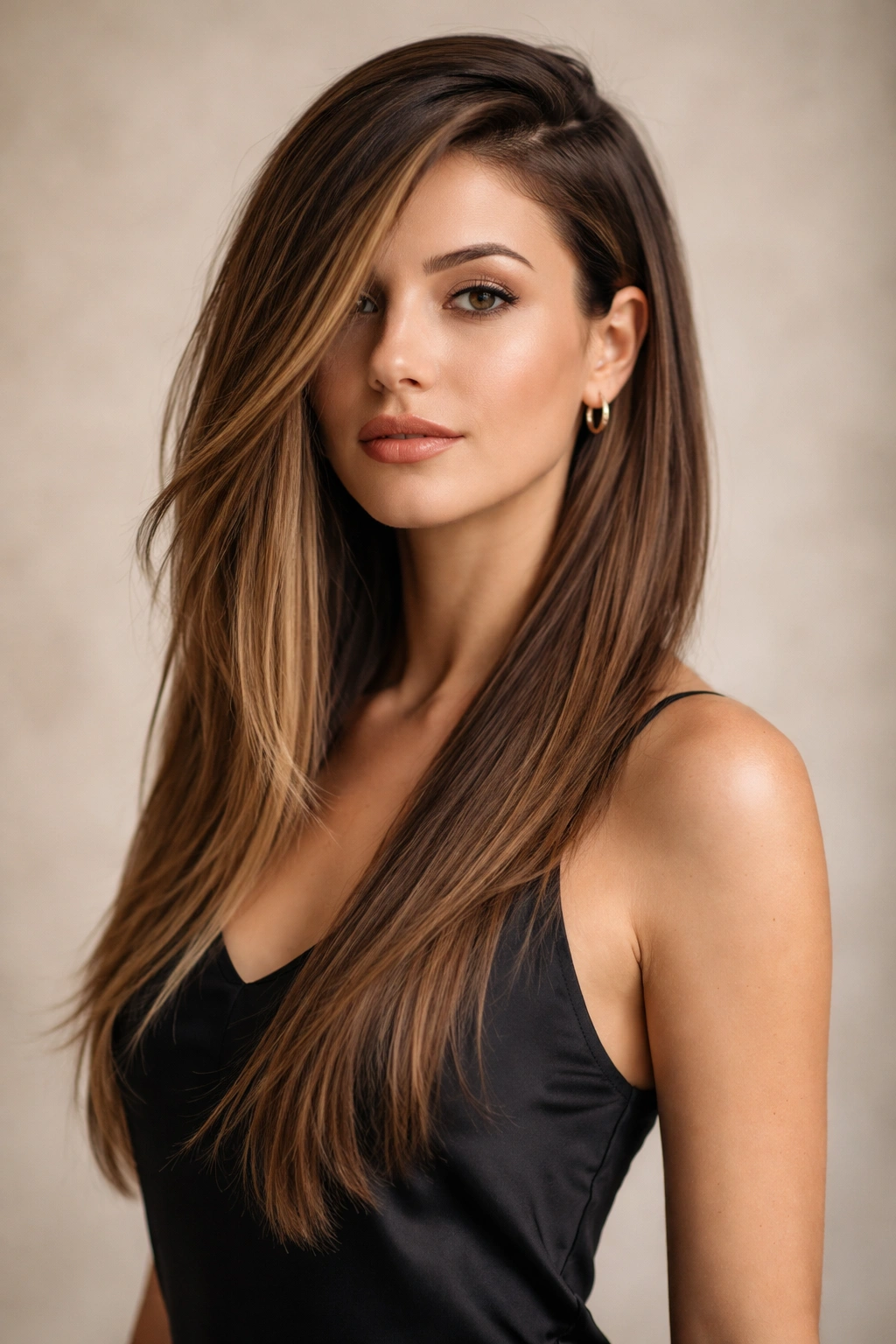
Hair that’s longer on one side and shorter on the other, creating asymmetrical but intentional lines. The longer side might graze the collarbone while the shorter side hits chin-length or above. This works on straight or wavy hair and is modern and fashion-forward.
Why Asymmetry Draws Attention
An asymmetrical cut draws the eye across the face in a specific direction. It can elongate a round face or balance an asymmetrical face shape. The cut is bold without being extreme.
Best For
- Straight to wavy hair
- Anyone with an asymmetrical face wanting to play with it
- Fashion-forward individuals
- People comfortable with something less conventional
- Those wanting a cut that photographs beautifully
Note: This cut is trendier than some options, so consider whether you’ll love it long-term.
18. The Textured Ends with Minimal Layers
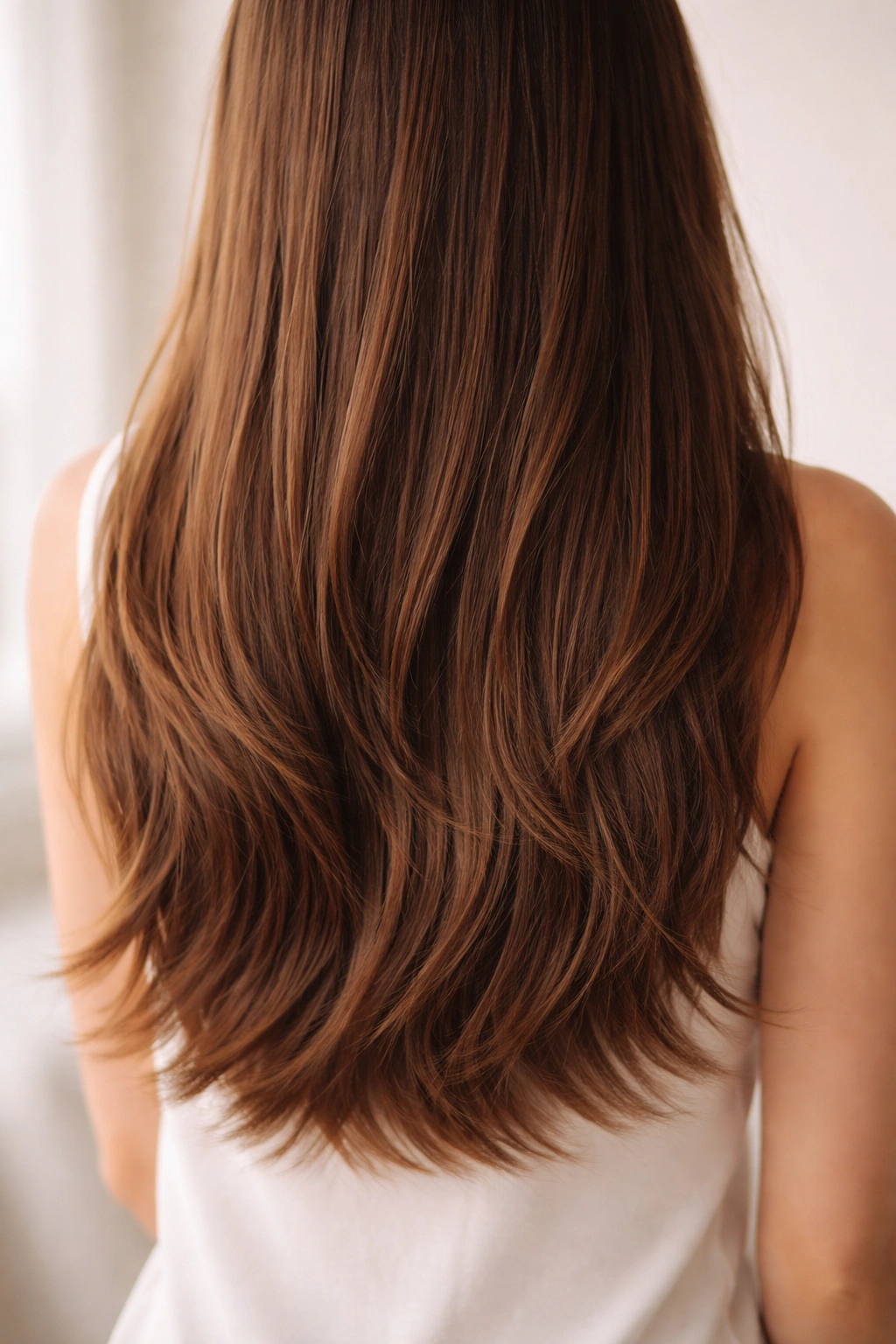
Long hair with layers only at the ends (the bottom 4-6 inches feature choppy, textured cutting while the upper length remains denser). This gives you movement and texture without removing weight throughout. It works on most hair types.
Why End Texture Matters
Cutting texture only at the ends removes weight where it’s most visible while keeping density higher up. This approach is flattering on longer hair because it doesn’t thin out the mid-lengths and upper layers.
Best For
- Any hair type or density
- Straight to wavy hair
- Anyone wanting movement without a choppy appearance
- People with longer faces wanting visual fullness higher up
- Those wanting a modern, piece-y look with polish
Maintenance: The textured ends will need re-texturing every 8-10 weeks as they blend out.
19. The Bra-Strap Length with Moderate Layers
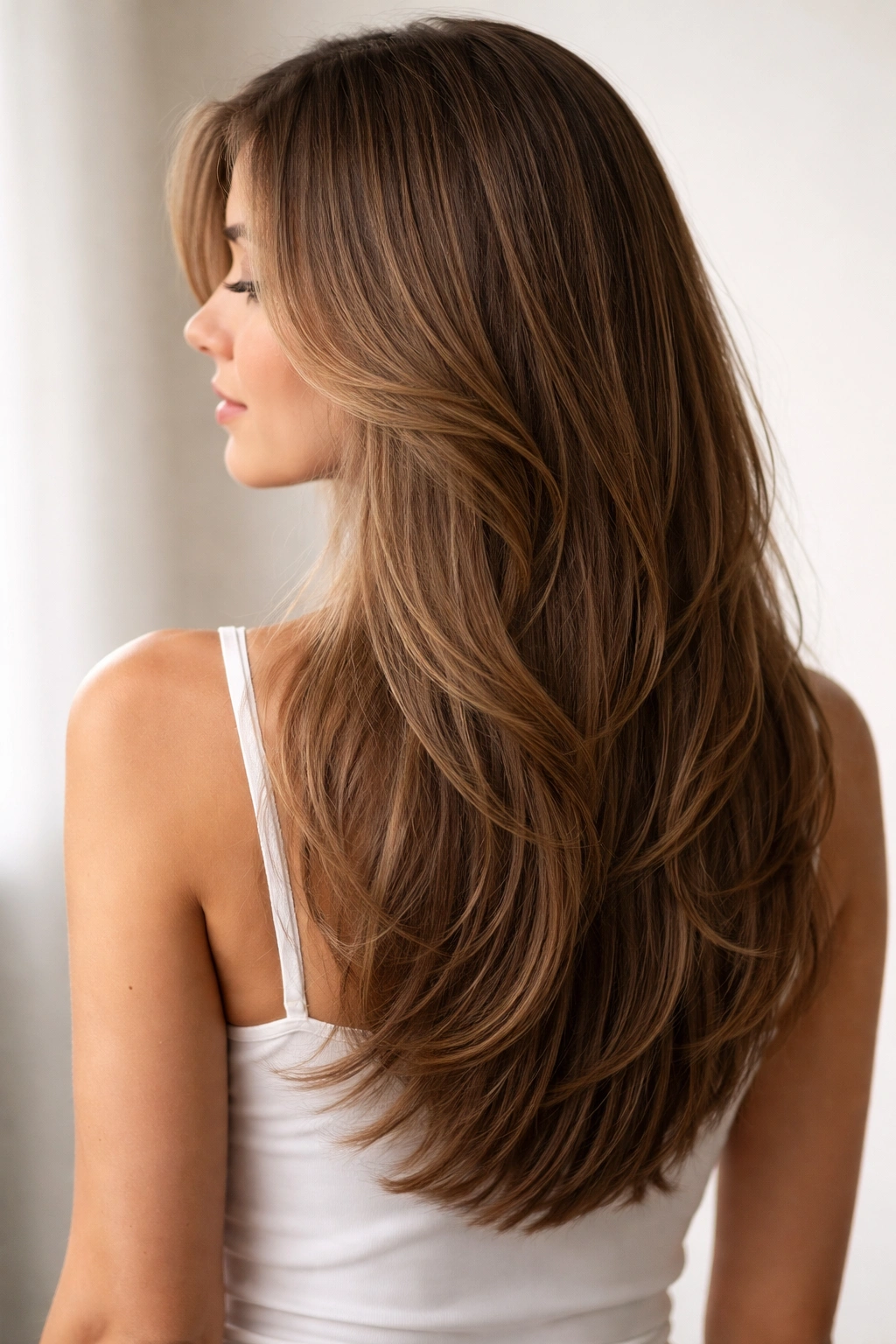
Hair that reaches bra-strap length (longer than shoulder-length) with moderate, evenly-distributed layers throughout. The layers create movement and shape without being dramatic. This is a true classic that works on most hair types.
Why Bra-Strap Length Is Flattering
This length is long enough to feel dramatic and romantic but short enough to avoid the dreaded “long hair is thin and stringy” problem. Moderate layers at this length create beautiful movement without looking choppy.
Best For
- Any hair type or density
- Almost any face shape
- Classic, timeless aesthetics
- Anyone wanting reliable, always-wearable length
- People not sure how long they want to commit to
Versatility: This length works with updos, down styles, waves, straightness — genuinely adaptable.
20. The Thick-Textured Shag with Shorter Layers
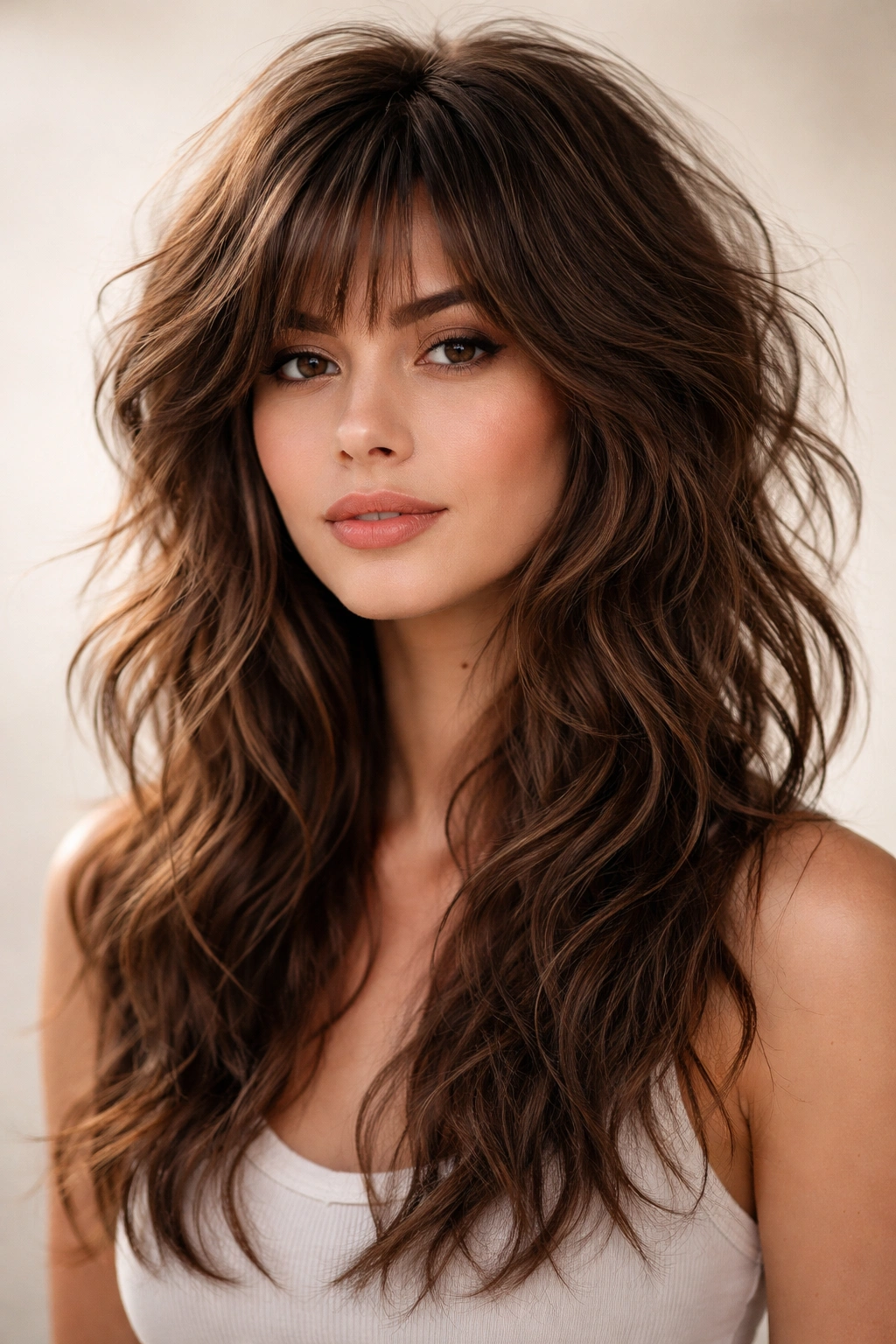
A heavily-layered shag where even the top layers are noticeably shorter, creating tons of texture from crown to ends. This is for people who want maximum texture and movement. It works best on wavy or curly hair.
Why Top-Layer Texture Matters
By cutting shorter layers throughout (not just at the bottom), you create maximum volume and movement at the crown. This works beautifully for people with finer hair or limp textures — the layering creates the appearance of fullness.
Best For
- Wavy or curly hair
- Fine hair that needs the appearance of fullness
- Anyone wanting dramatic texture and movement
- People embracing a tousled, undone aesthetic
- Those with naturally textured hair
Styling note: This cut looks best when styled with movement — blow-dried waves, curls, or texture spray.
21. The Straight, Blunt Long Style
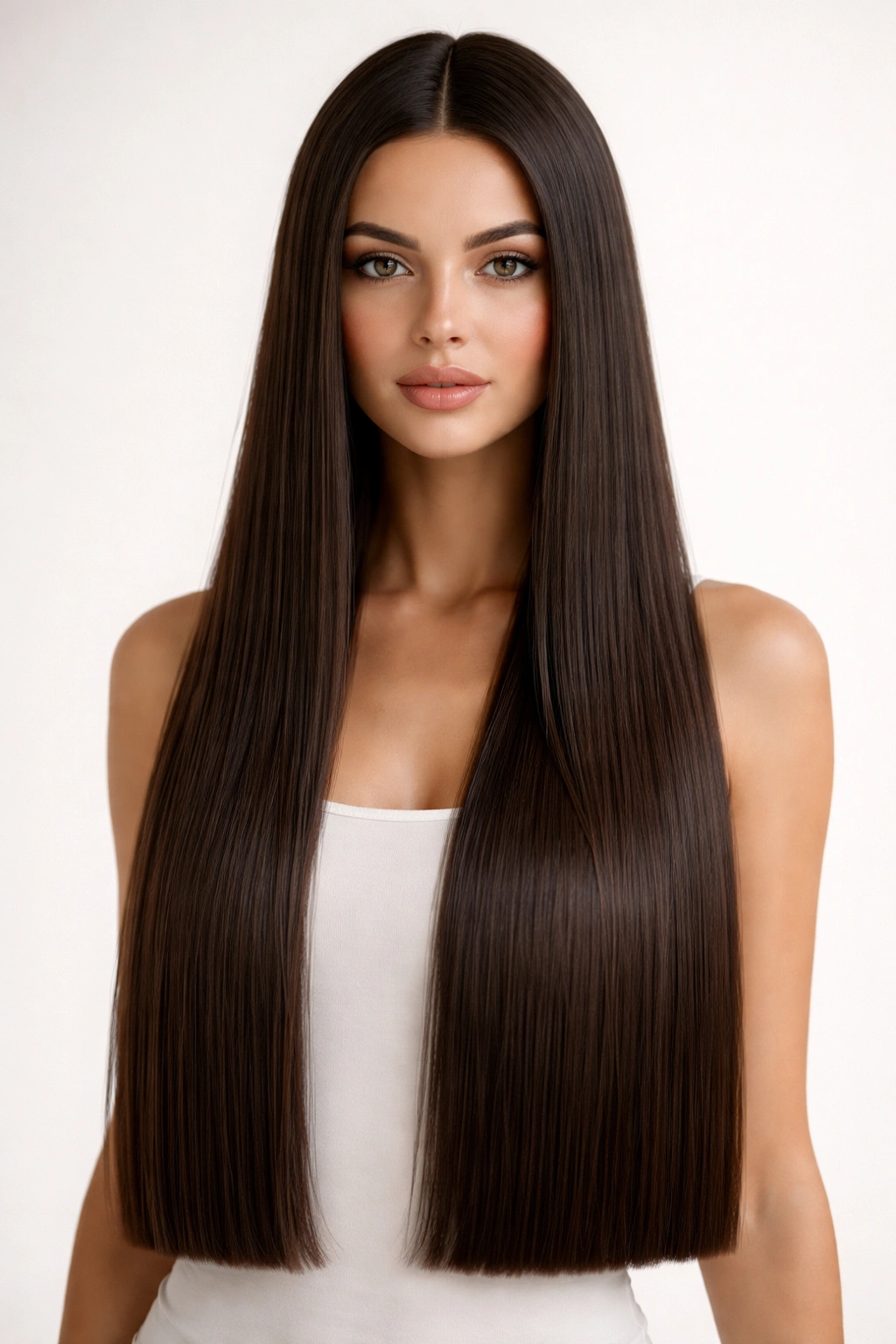
The absolute opposite of layers — long hair with zero layers, cut bluntly straight across at one length. The hair is treated as a single, unified unit. This is bold and striking but requires naturally straight hair.
Why One-Length Works on Straight Hair
A single line of hair flowing from roots to ends is incredibly striking and modern. There’s a purity to the simplicity. The cut must be executed perfectly because there’s nothing to hide imperfections.
Best For
- Straight or naturally sleek hair
- Fine to medium density
- Modern, minimalist aesthetics
- People committed to regular maintenance
- Anyone wanting maximum length without layering
Reality check: Ends will need attention frequently (every 6-8 weeks) to keep the line perfect.
22. The Curly-Pattern-Enhancing Cut
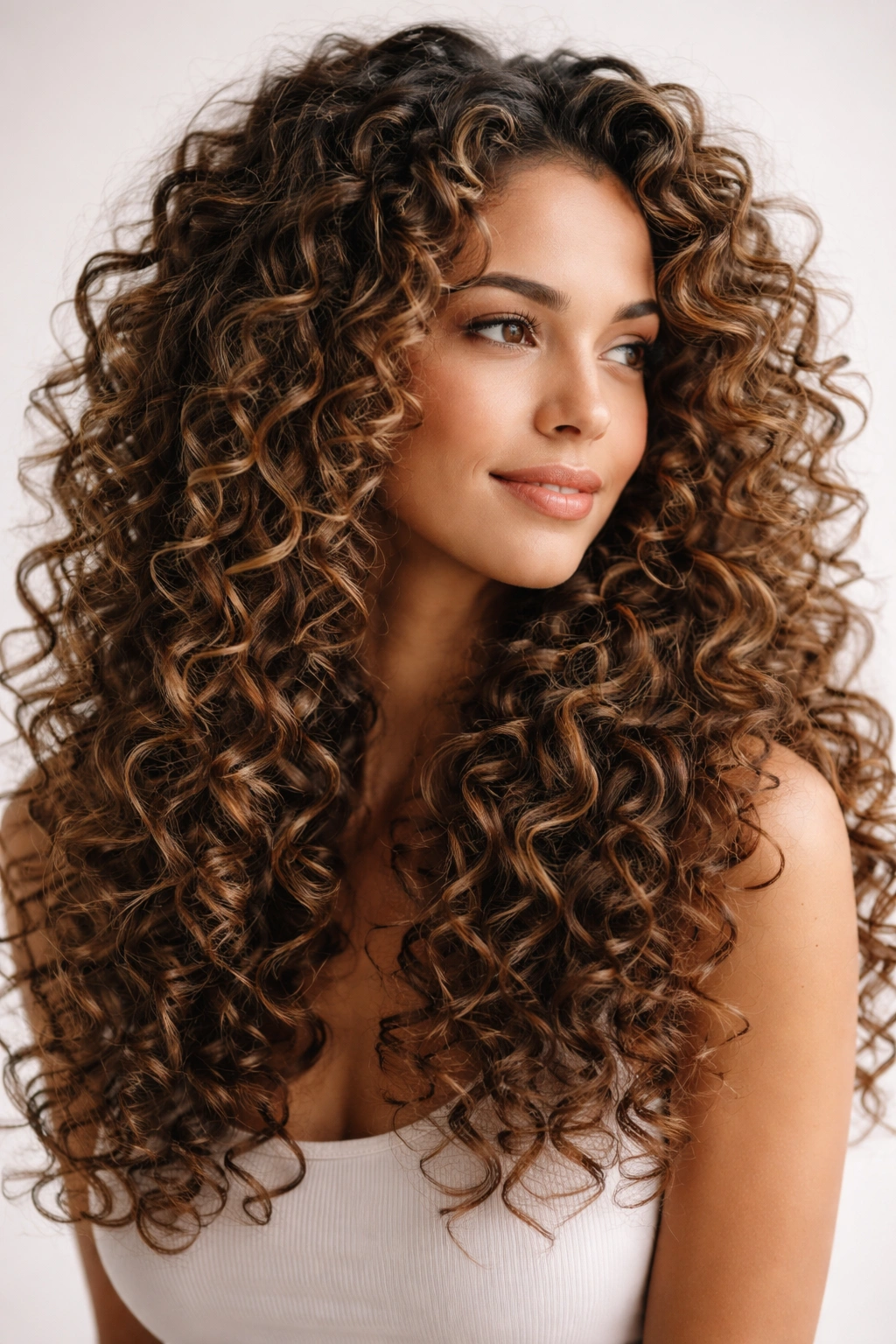
A cut specifically designed for natural curls, where layers are placed to enhance individual curl patterns, definition, and bounce. The cut respects the hair’s natural shape and works with curl groupings rather than against them. This is essential for naturally curly hair.
Why Pattern-Respecting Cuts Transform Curls
When a cut honors your curl pattern, your curls look defined, bouncy, and full instead of frizzy or odd. The cut works with your hair’s nature rather than fighting it, which means less daily styling required.
Best For
- Naturally curly or coily hair
- Thick to very thick hair density
- Anyone wanting to embrace their curl pattern
- People tired of fighting their hair texture
- Those wanting a low-manipulation style option
Essential: This truly requires a stylist trained in curly-hair cutting — it’s a specialized skill.
23. The Barely-There Layers with Blunt Ends
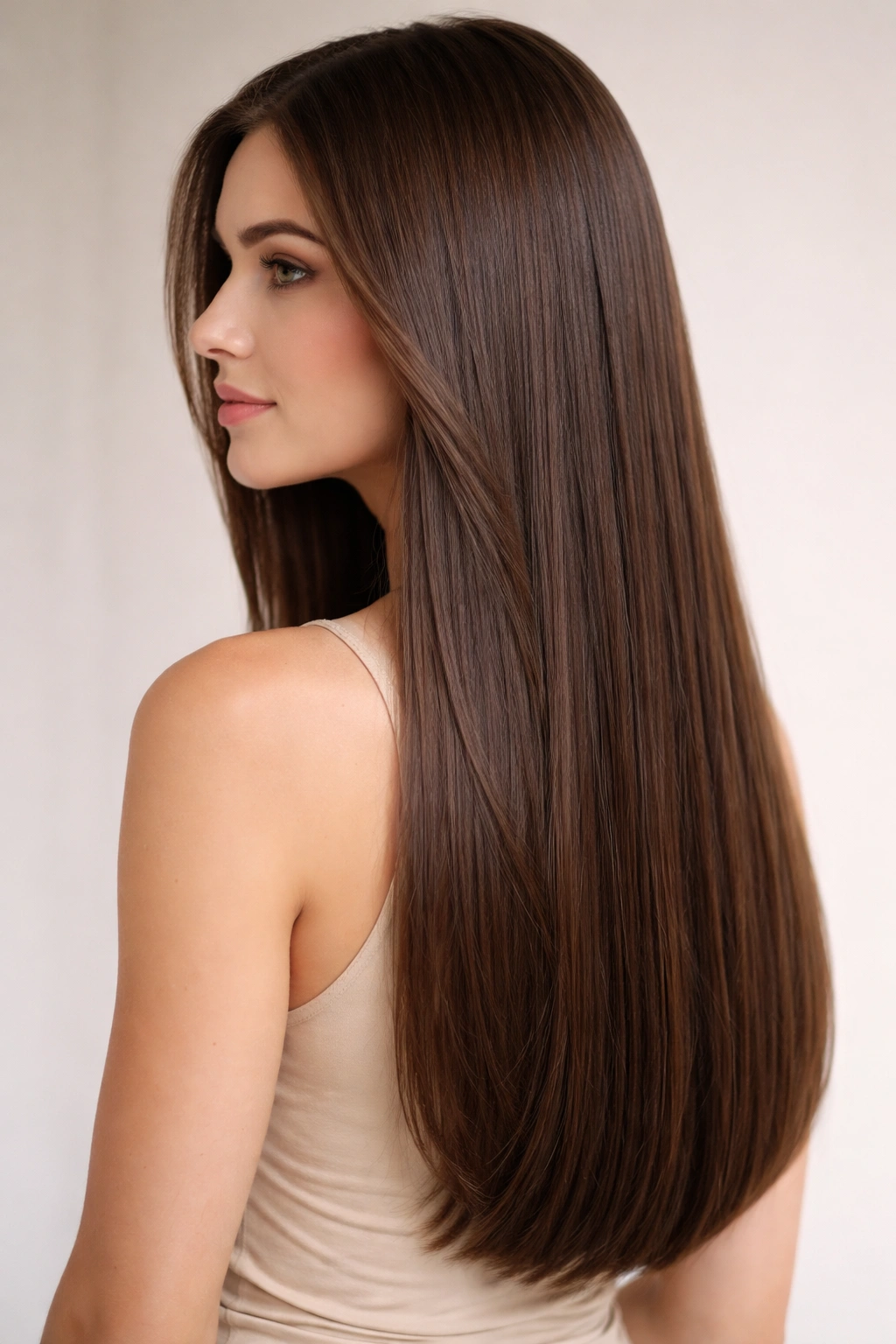
Long hair with such subtle, minimal layers that they’re almost invisible, but the ends remain bluntly cut. This gives you the benefits of layering (movement, shape) without looking layered. The blunt ends are precise and intentional.
Why Invisible Layers Are Genius
You get dimension and movement from internal layers while the exterior looks polished and one-length. This approach works on fine hair because the internal layers don’t create visible thinness.
Best For
- Fine or thin hair
- Straight to wavy textures
- Anyone wanting polish without visible choppy texture
- Minimalist aesthetics
- People who like the idea of layers but not the look
Worth noting: These ultra-subtle layers require a skilled stylist who understands how to layer without creating visible separation.
24. The Razored Texture Throughout
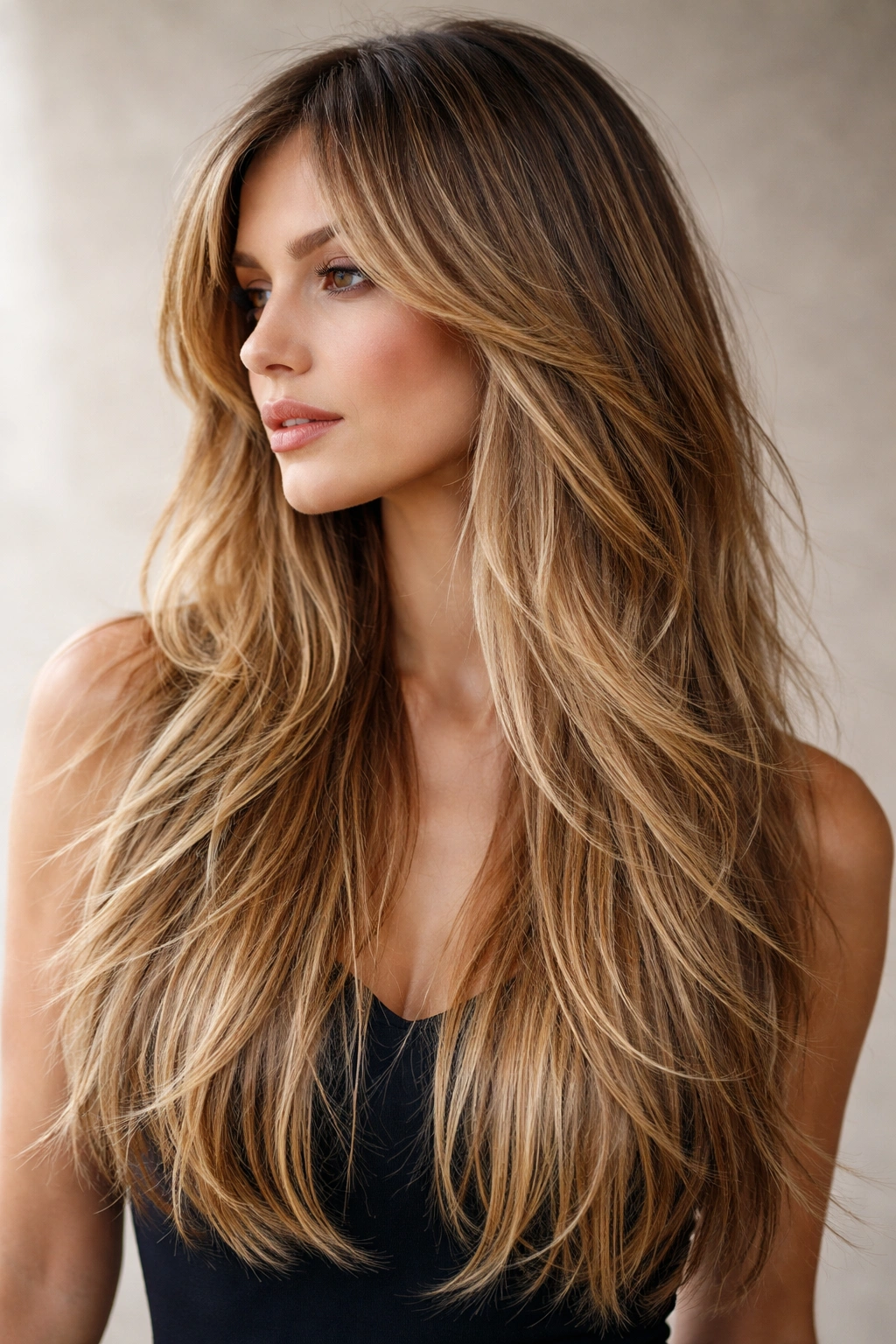
A cut executed entirely with a razor (rather than scissors), creating intentional texture and separation throughout the hair. The razor cuts create slightly softer, feathered edges compared to blunt scissor cuts. This works well on straight, wavy, or wavy-curly hair.
Why Razor-Cutting Changes Everything
Razor-cut layers create a different texture quality than scissor-cut layers — they’re slightly softer and less blunt. The cut has an effortless, undone quality that’s very modern and flattering.
Best For
- Straight to wavy hair
- Medium to thick density
- Anyone wanting an effortless, undone vibe
- People embracing texture
- Those wanting a modern, slightly choppy look
Maintenance: Razor-cut layers might need trims every 8 weeks since the texture can look shaggy if grown out too long.
25. The Long Layers with a Modern Blunt Back
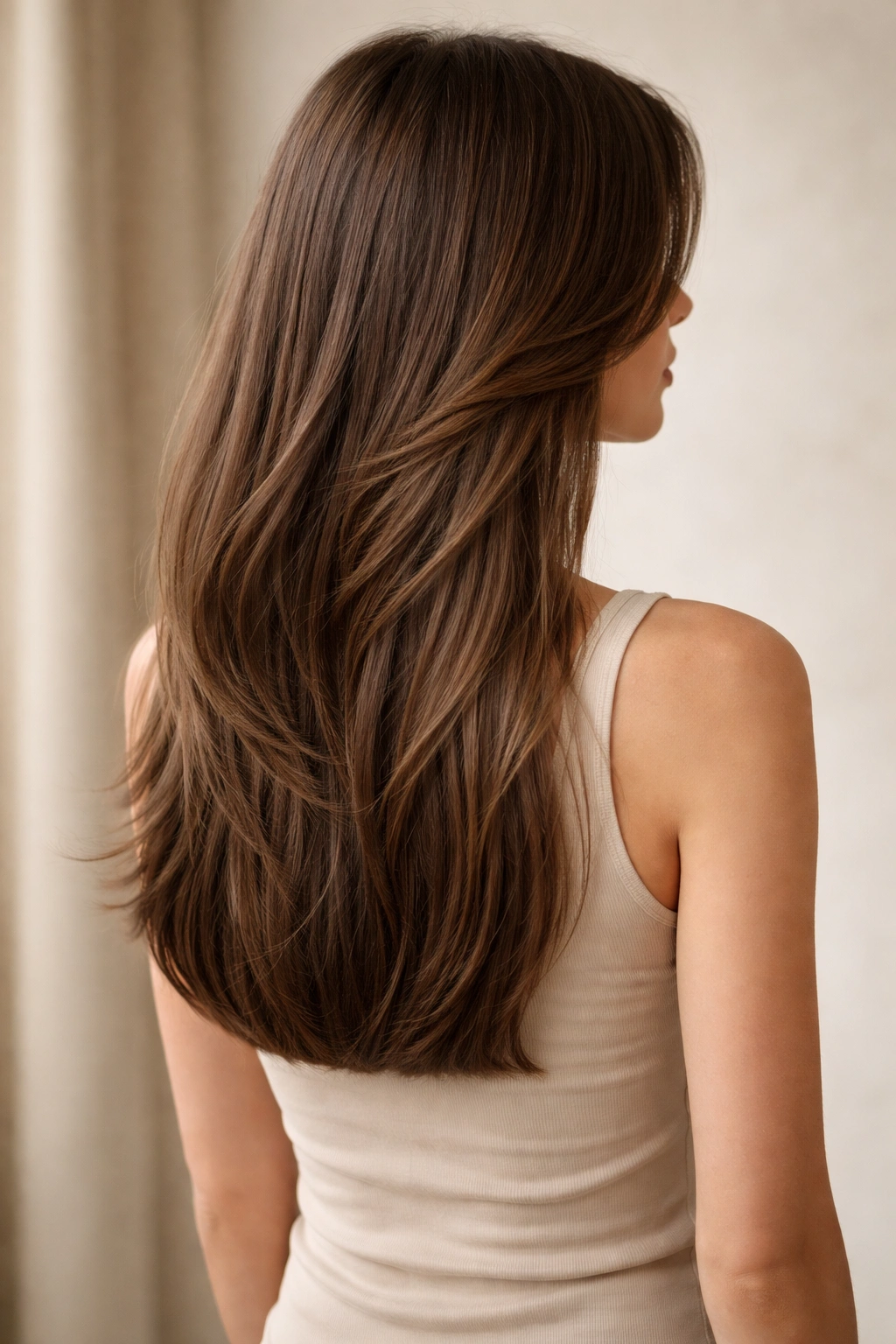
Long hair with soft, graduating layers throughout, but the very back is cut bluntly straight across, creating a defined, modern shape. The layers provide movement and face-framing while the blunt back gives structure and definition.
Why Blunt Back Layers Work
This combination gives you movement and shape (from the layers) with a modern, polished structure (from the blunt back). The cut is contemporary but wearable on many hair types.
Best For
- Straight to wavy hair
- Medium to thick hair density
- Anyone wanting layers with modern polish
- People who like defined, intentional shape
- Those wanting a cut that works for professional and casual settings
Styling flexibility: This cut works styled smooth, wavy, or with texture depending on your preference.
Final Thoughts
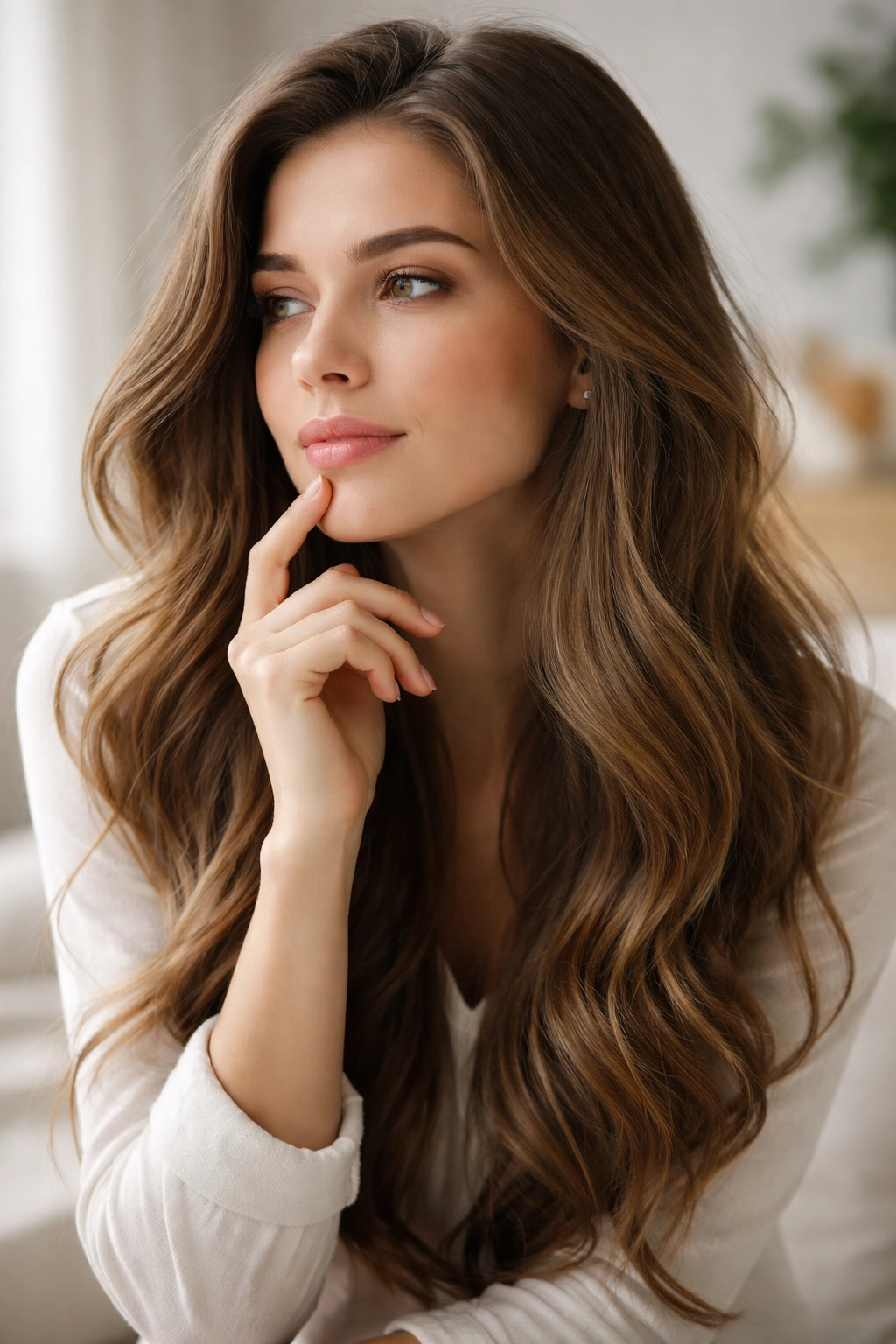
The right long haircut is genuinely transformative, but it has to match your hair’s reality — not some imagined version of your hair you wish you had. Straight hair cut as if it were wavy will never work. Fine hair cut like it’s thick will always disappoint. Curly hair cut like it’s straight becomes your daily battle instead of your best feature.
The common thread through all these styles is intention. A good long cut is engineered for your specific hair type, not just long hair with layers thrown in randomly. When you find a stylist who understands the difference between cutting different hair types, who can see your hair’s actual texture and density, and who knows how to work with (not against) your hair’s nature — that’s when long hair becomes something you genuinely love wearing instead of something you’re managing.
Bring pictures of the cut you love, but more importantly, tell your stylist about your hair’s reality. How it waves. How it tangles. Whether it gets frizzy. How much time you’re actually willing to spend styling. A great stylist will adjust the cut to serve your actual life, not an imaginary version of it.
