



Short haircuts have become the ultimate statement—they’re bold, liberating, and undeniably flattering when they’re cut right. Walk into any salon and you’ll find women asking their stylists for the same handful of cuts over and over again. These aren’t just trendy styles destined to fade in a season; they’re versatile, timeless cuts that work across different hair types, face shapes, and personal aesthetics. Whether you’re craving a dramatic transformation or ready to embrace a lower-maintenance look, understanding what these cuts actually are and how they work on different heads makes the difference between a gorgeous result and a disappointing salon visit.
The beauty of short hair is that it demands precision from your stylist—there’s nowhere to hide mistakes. But that same precision also means these cuts have serious staying power. From the eternal pixie to the edgy wolf cut, from polished bobs to textured crops, these are the styles women are genuinely asking for, and for good reason. Each one offers a different vibe, different styling possibilities, and different ways to express who you are. Let’s walk through the cuts that have earned their place as the most-requested styles out there.
1. Classic Pixie Cut
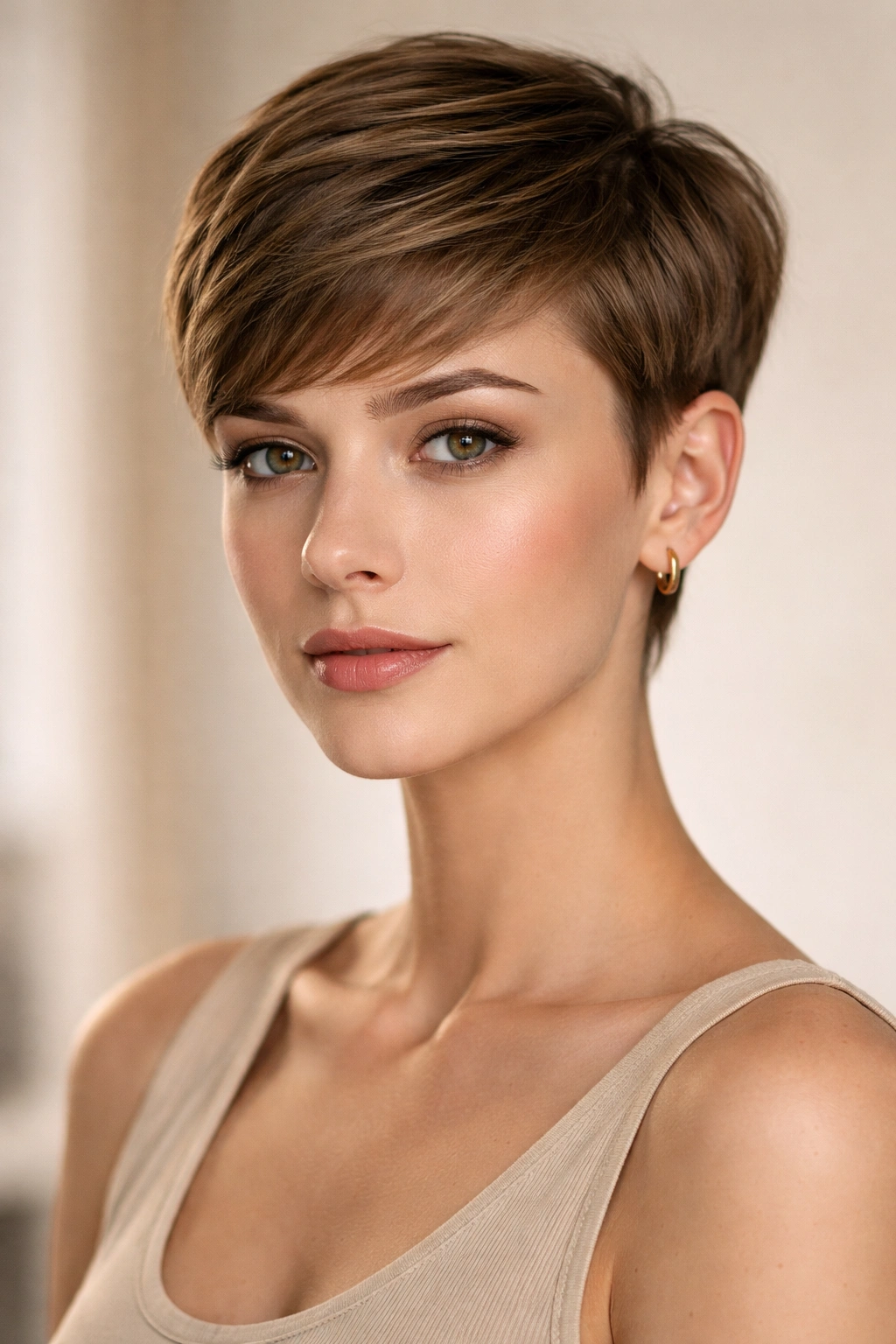
The pixie cut is the grandmother of short hairstyles, and it’s never going anywhere. This cut sits close to the head with closely cropped sides and back, while the top has enough length to style or sweep to the side. What makes the classic pixie so enduring is its radical simplicity—it’s basically the opposite of fussy. You’re looking at hair that’s typically 1 to 2 inches on top, fading down to barely a quarter-inch on the sides and back.
Why This Cut Demands Respect
The pixie cut works because it puts your face front and center. There’s no hiding behind hair, which is exactly why women with strong jawlines, high cheekbones, or striking facial features love it. But here’s the thing most people get wrong: you don’t need a “perfect” face for a pixie to look amazing. A good stylist can angle the cut to balance your specific face shape—longer on top if you have a wider face, shorter overall if you’re more delicate-featured.
The Maintenance Reality and Styling Options
- A pixie needs a cut every 3 to 4 weeks to maintain its shape, more frequently than other short cuts
- You’ll need a tiny amount of styling product—pomade, clay, or a light styling cream—to direct it the way you want
- Works beautifully with color, especially root shadowing, balayage, or a contrasting undercut dye
- Can be slicked down and smooth, messy and textured, or swept dramatically to one side depending on your mood
Pro tip: Sleep on damp hair to create natural texture, then style in the morning. A pixie looks best when it’s got some movement rather than lying perfectly flat.
2. Shaggy Short Layers
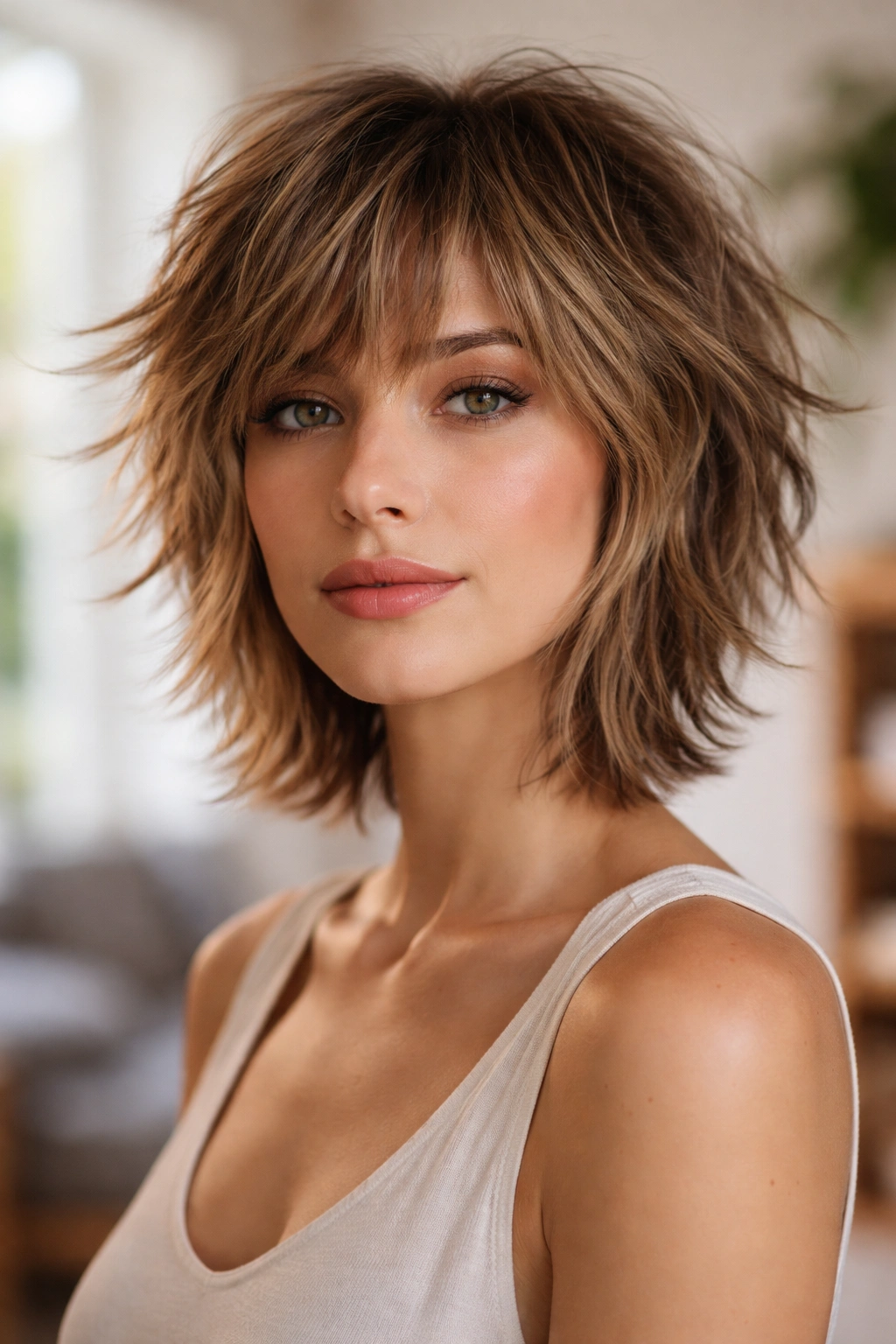
The shaggy short layers cut brings texture and movement to shorter hair without requiring the dedication of a full pixie. This style has choppy, disconnected layers that create volume and an inherently tousled, effortless vibe. It’s modern, forgiving, and honestly, feels more wearable to most people than a tightly cropped pixie.
What Makes This Cut Special
Shaggy layers work because they play with dimension. The varying lengths catch light differently, making your hair look thicker and fuller even if you have fine hair. The choppy nature means bedhead actually looks intentional—you can literally wake up and go, which is basically the dream for anyone tired of styling routines. The disconnected layers also move and bend rather than lying flat against your head.
Face Shapes and Styling
- Creates a softer frame around the face compared to pixies, making it flattering for rounder or wider faces
- The longer layers in front can be worn tucked behind the ears or falling across the face, giving flexibility
- Looks incredible with a bit of texture cream or salt spray for that lived-in aesthetic
- Works on wavy, straight, and curly hair with different results (curlier hair creates more volume naturally)
Worth knowing: Ask your stylist for choppy, disconnected layers rather than uniform, blended layers if you want that shaggy movement. The gap between different lengths is what creates the characteristic texture.
3. Textured Bob
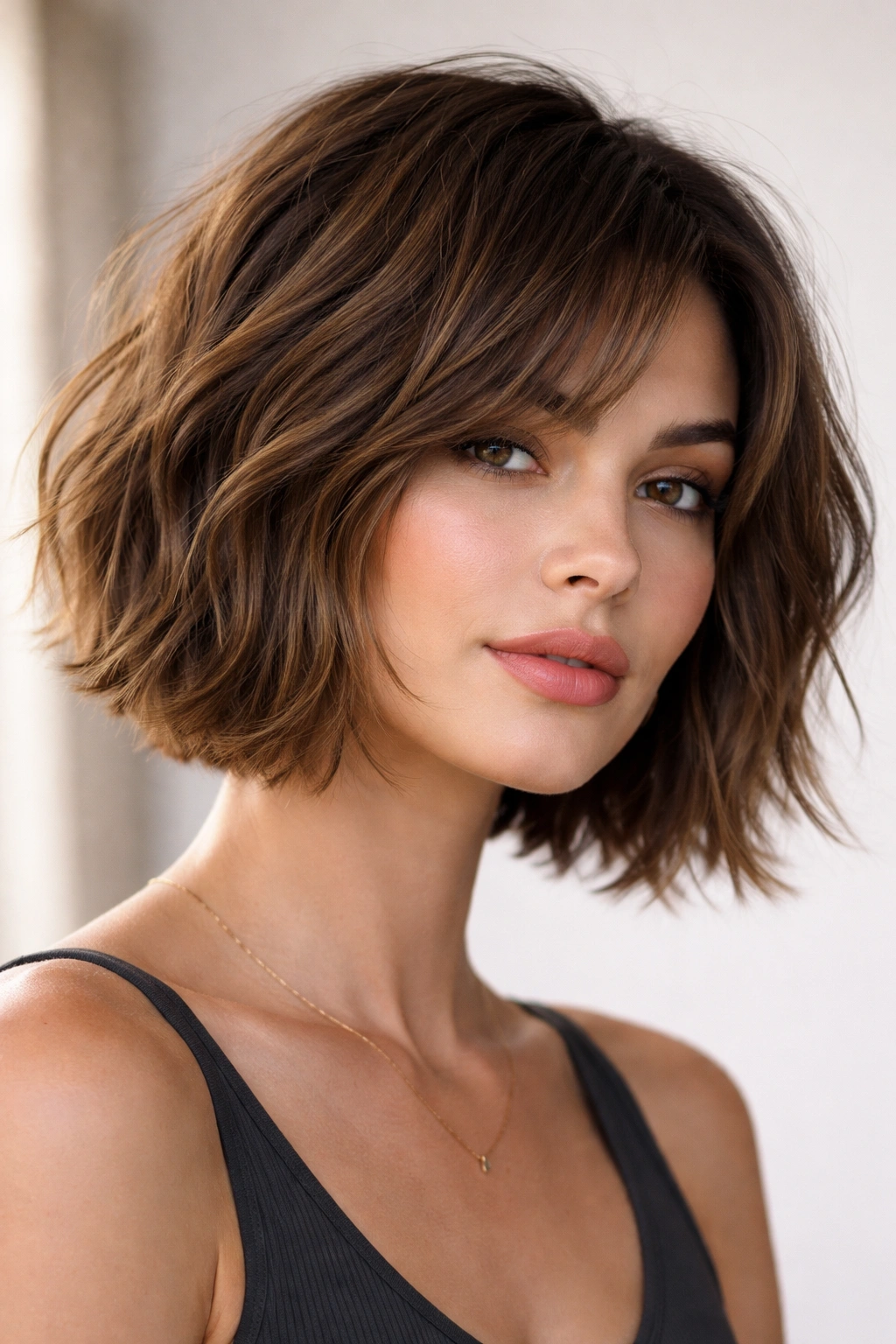
The bob isn’t dead—it’s evolved. A textured short bob sits right around chin length or shorter, with choppy, layered construction that creates movement instead of a blunt, heavy line. This is the bob for people who thought they didn’t like bobs because they found traditional bobs too rigid or matronly.
Why Texture Changes Everything
A textured bob has personality. Instead of a thick, helmet-like shape, the layers break up the weight and create visual interest. The cut works with your hair’s natural texture rather than fighting against it, which means less styling effort and more authentic results. It looks modern, playful, and intentional without feeling overly styled.
Styling and Hair Type Considerations
- Works beautifully on wavy or textured hair that naturally has movement
- On straight hair, you’ll typically need a styling product (mousse, cream, or salt spray) to create the textured effect
- Shorter in back, slightly longer in front creates a flattering frame for most face shapes
- The choppy layers mean you can air-dry this cut and have it look intentional rather than like you rolled out of bed
Insider note: If you have fine or thin hair, ask your stylist to point-cut the ends rather than blunt them. This creates the texture you want without making individual hairs look fragile or wispy.
4. French Crop
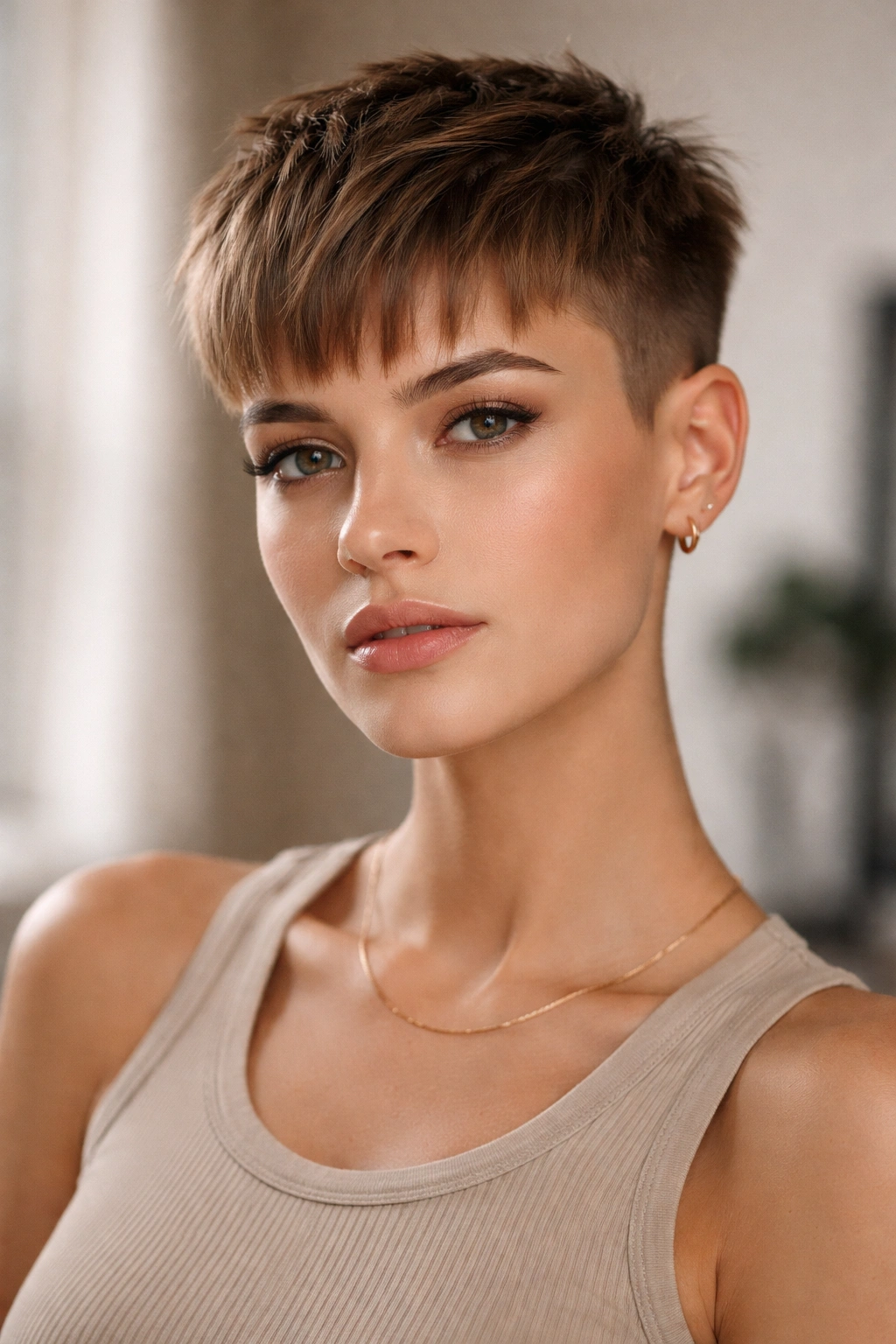
The French crop is the sophisticated cousin of the pixie—it has similar short sides and back, but the top is longer and fuller, usually 2 to 3 inches. The defining feature is the way the front creates a subtle fringe effect, shorter and fuller across the forehead than traditional pixies. It’s got European polish with a modern edge.
The Appeal of Structure with Softness
This cut offers something many people want: the confidence-boosting simplicity of short sides with the styling flexibility of having more length on top. You can style it flat and sleek, textured and messy, or swept to the side, depending on your mood and what you’re doing that day. The fuller crown also provides more volume on top, which flatters most face shapes.
Maintenance and Styling Versatility
- Requires cuts every 4 to 5 weeks to keep the sides clean and the shape defined
- Perfect for thick hair that needs thinning or wavy hair that has natural movement
- The length on top means you can use styling products strategically—pomade on the sides for definition, texture spray on top for volume
- Looks sharp in professional settings and equally cool dressed down
Quick facts:
- Works exceptionally well with color, especially blonde, brunette, or color blocking
- The longer top transitions beautifully if you decide to grow it out
- One of the easiest short cuts to style once you have a routine down
5. Asymmetrical Pixie
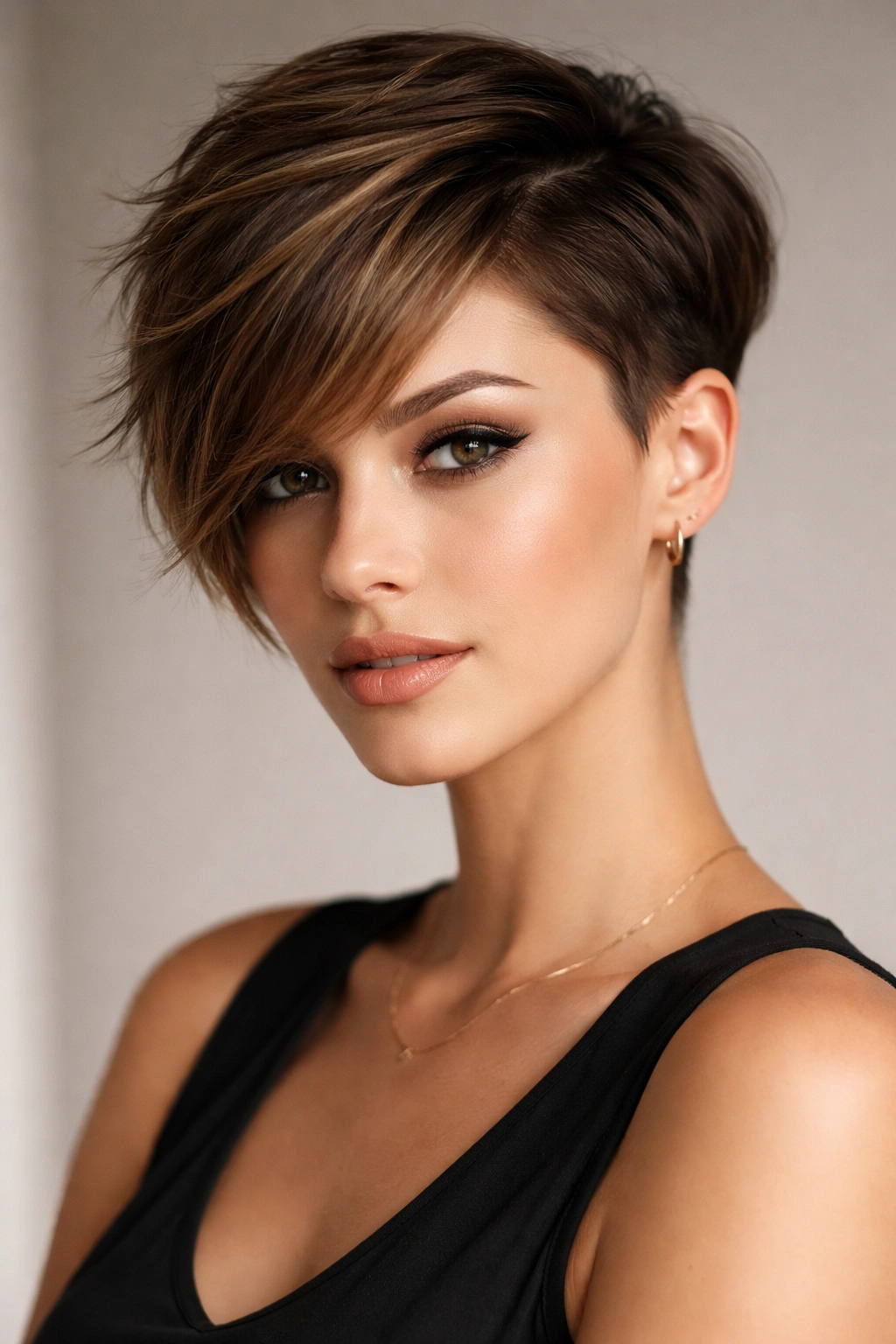
The asymmetrical pixie is a pixie cut with one side cut significantly shorter than the other, creating visual interest and an undeniably edgy aesthetic. One side might be buzzed close while the other has a few inches of length, or one side might be tapered while the other sweeps across. It’s bold, it’s contemporary, and it’s become one of the most requested cuts for people wanting to make a statement.
Why Asymmetry Works
An asymmetrical cut creates the illusion of dimension and movement even when your hair is bone-straight. It gives you personality on your head—it says you’re confident enough to do something different. The asymmetry also works as a balancing tool: if your face is wider on one side, a stylist can use the cut to optically balance your proportions.
Styling and Daily Wear
- Can be styled to show off one side dramatically or styled to hide the asymmetry if you’re going to a formal event
- Works best with clean lines, so you’ll need a cut every 3 to 4 weeks
- Looks absolutely stunning with asymmetrical color—different shades or tones on each side
- Creates a rebellious, youthful vibe that flatters most people
Real talk: This cut requires confidence and a stylist who understands proportion. If done poorly, it just looks like a bad haircut. If done well, it’s a style nobody can stop talking about.
6. Blunt Bangs with Short Hair
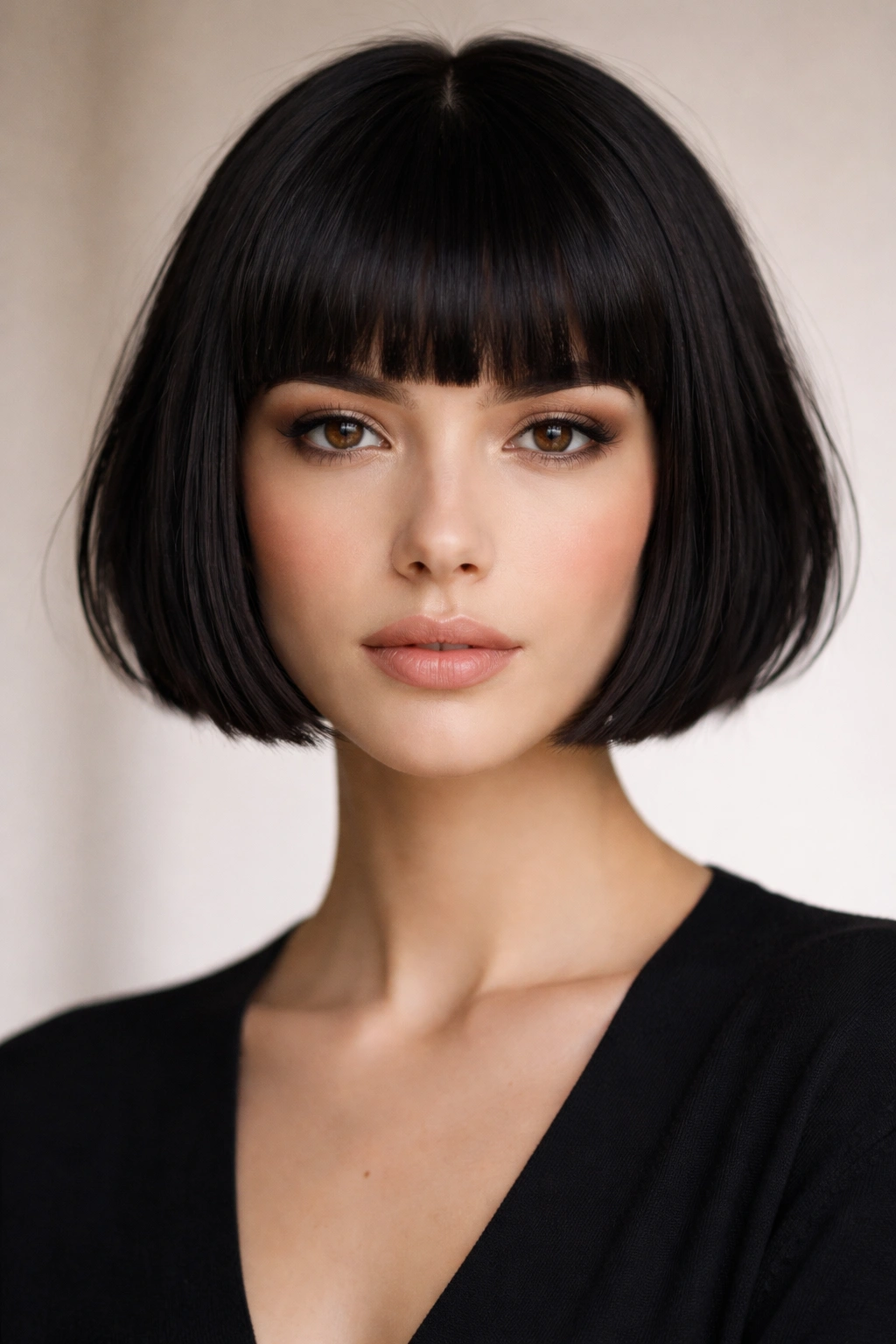
This look pairs short hair with true blunt, heavy bangs—the kind that sit right at your eyebrows and are cut straight across with no layers. The hair in back can be short or very short, creating a stark, graphic look that’s become increasingly popular. It’s retro-modern, distinctly chic, and undeniably bold.
The Drama of Bluntness
Blunt bangs create a graphic frame for your face and draw immediate attention to your eyes. They’re a statement—this isn’t subtle. Combined with short hair, they create a contemporary, almost architectural look. The key is precision: blunt bangs only work when they’re actually blunt, not slightly angled or feathered.
Practical Considerations
- You’ll be trimming these bangs yourself every 2 to 3 weeks if you want them to stay truly blunt
- They require the right face shape—typically work best on faces that are wider or rounder, as they ground and balance features
- Can feel heavy or overwhelming on people with very petite features or narrow faces
- Styling is minimal: just keep them clean and blunt, and you’re done
Pro tip: Practice trimming your own bangs with proper scissors before you attempt it. If you make a mistake at your salon appointment, the stylist can fix it, but at home you need confidence and the right tools.
7. Undercut with Top Length
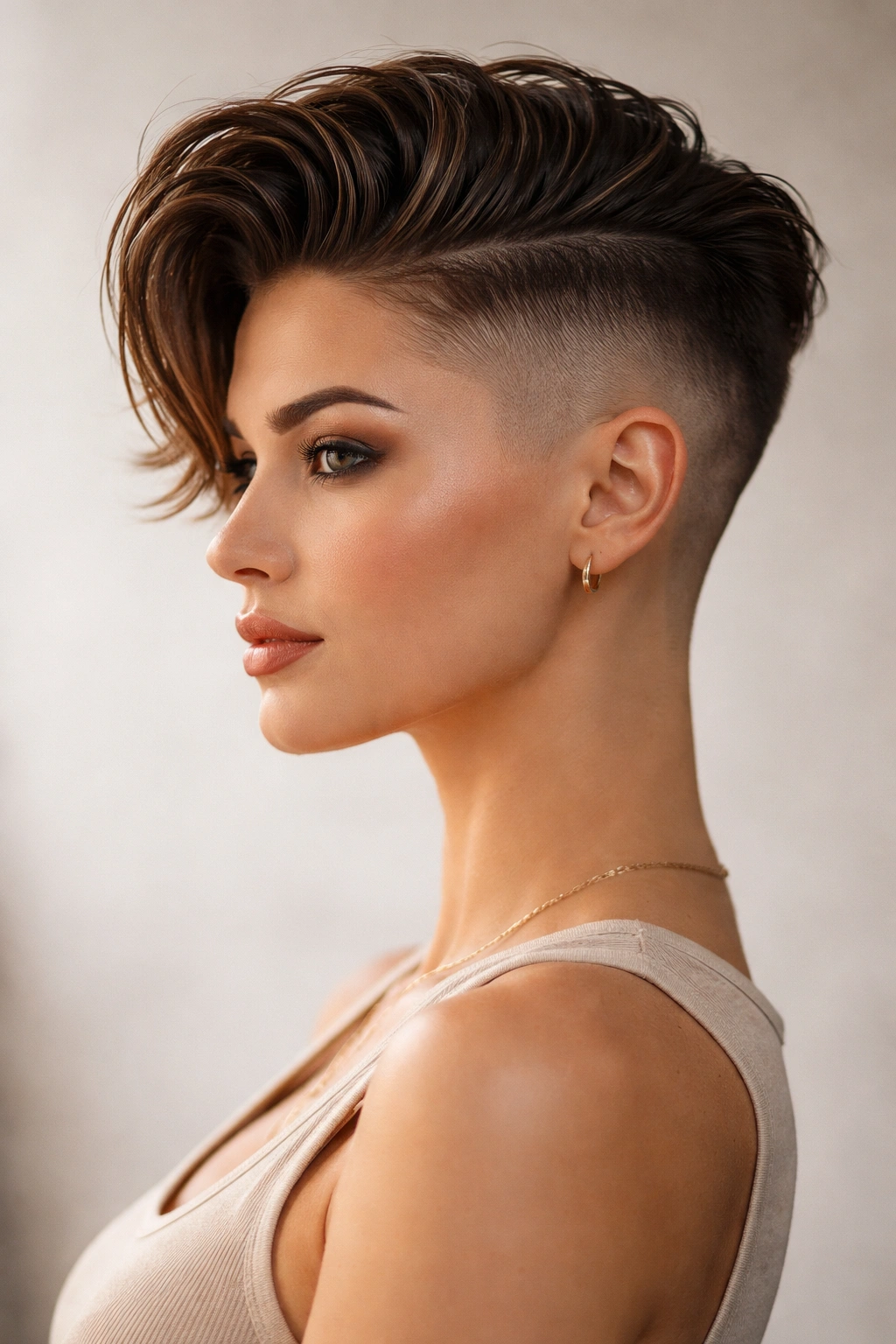
An undercut features very close-cropped sides and back (sometimes tapered, sometimes faded to skin) with significantly longer hair on top that can be styled over the undercut or swept back. The contrast between the lengths is the whole point—it’s dramatic, it’s modern, and it’s incredibly versatile depending on how you style the top.
Why Contrast Is Powerful
The undercut works because it gives you two different hair experiences in one cut. The close-cropped sides feel incredibly light and freeing, while the longer top gives you enough hair to actually style and play with. You can go sleek and professional, textured and artistic, or messy and casual depending on your styling approach.
Top Styling and Face Shape
- The length on top means you can style it in multiple directions—back, to the side, tousled, slicked
- Face shapes with wider jaws or stronger cheekbones look particularly striking with undercuts
- Works on all hair types, but thick or wavy hair on top creates the most dramatic effect
- The sides fade or taper beautifully, showing off neck, ears, and jawline
Quick facts:
- Requires cuts every 4 to 5 weeks to keep the fade or taper defined
- Color opportunities are endless: natural on top with a contrasting undercut, or all one color with texture showing the undercut
- One of the most transformative cuts if you’re used to long hair
8. Wolf Cut (Short Version)
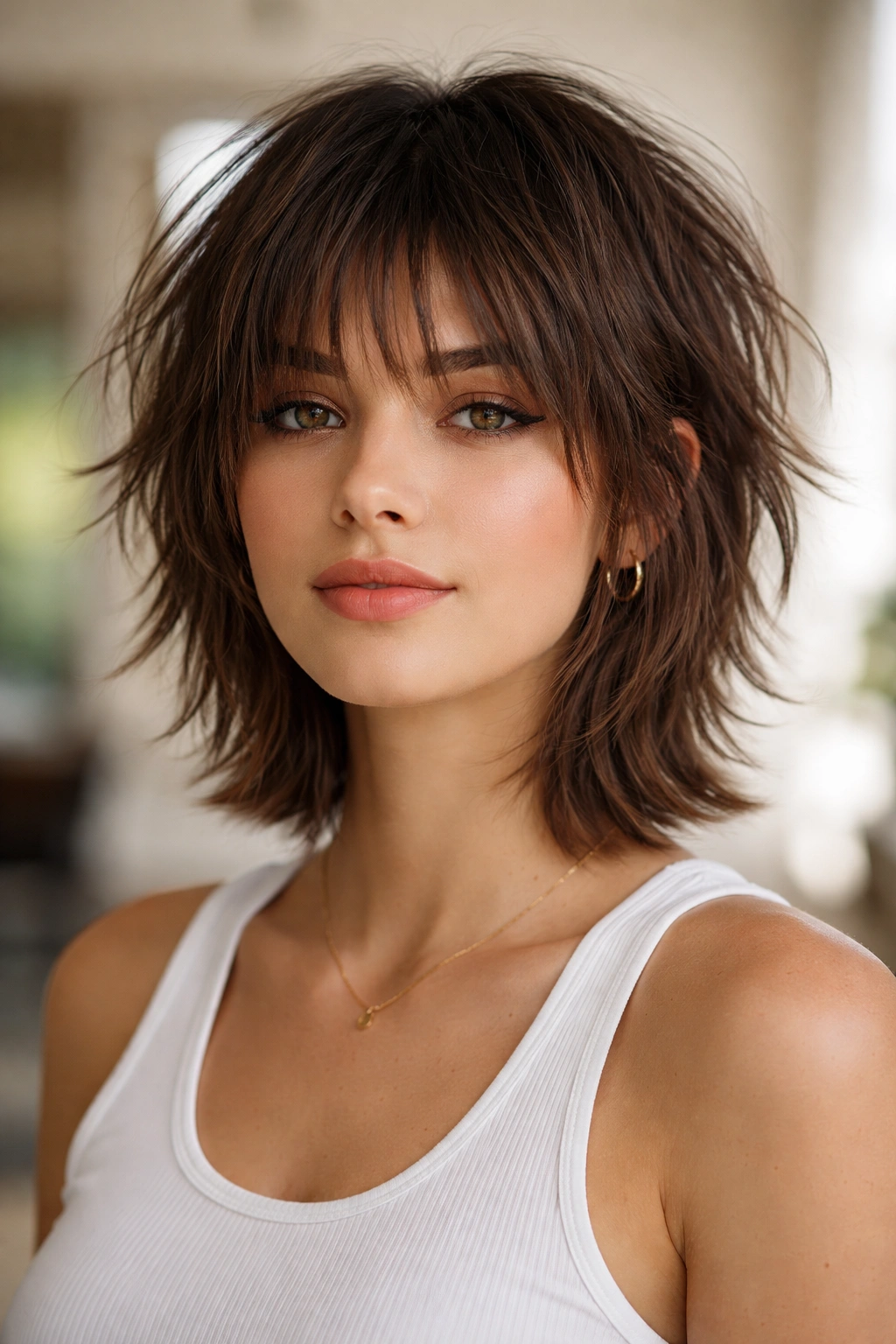
The wolf cut combines the spiky texture of a shag with the disconnected layers of a more modern cut. A shorter wolf cut takes that trend and applies it to hair that’s shorter overall—usually somewhere between chin-length and above the ears. It’s edgy, it’s textured, and it’s genuinely versatile.
The Texture Philosophy
Wolf cuts are all about texture and dimension. The layers are choppy and disconnected, creating multiple lengths that catch light and create movement. Unlike a traditional shag which can sometimes feel retro or heavy, a shorter wolf cut feels contemporary. It’s a cut that demands texture—smoothing it out defeats the purpose.
Styling the Wolf
- Looks best with some texture product applied to damp or dry hair (salt spray, mousse, or texture cream)
- Works beautifully on naturally wavy or curly hair where the texture is already built in
- On straight hair, you’ll want to enhance the texture intentionally rather than trying to fight it
- The shorter length means less styling time than a longer wolf cut, but you still need product and intention
Worth knowing: A wolf cut isn’t supposed to look neat or polished. The messier and more textured it is, the better it looks. If you’re someone who needs a “finished” look, this might feel uncomfortable at first.
9. Disconnected Undercut
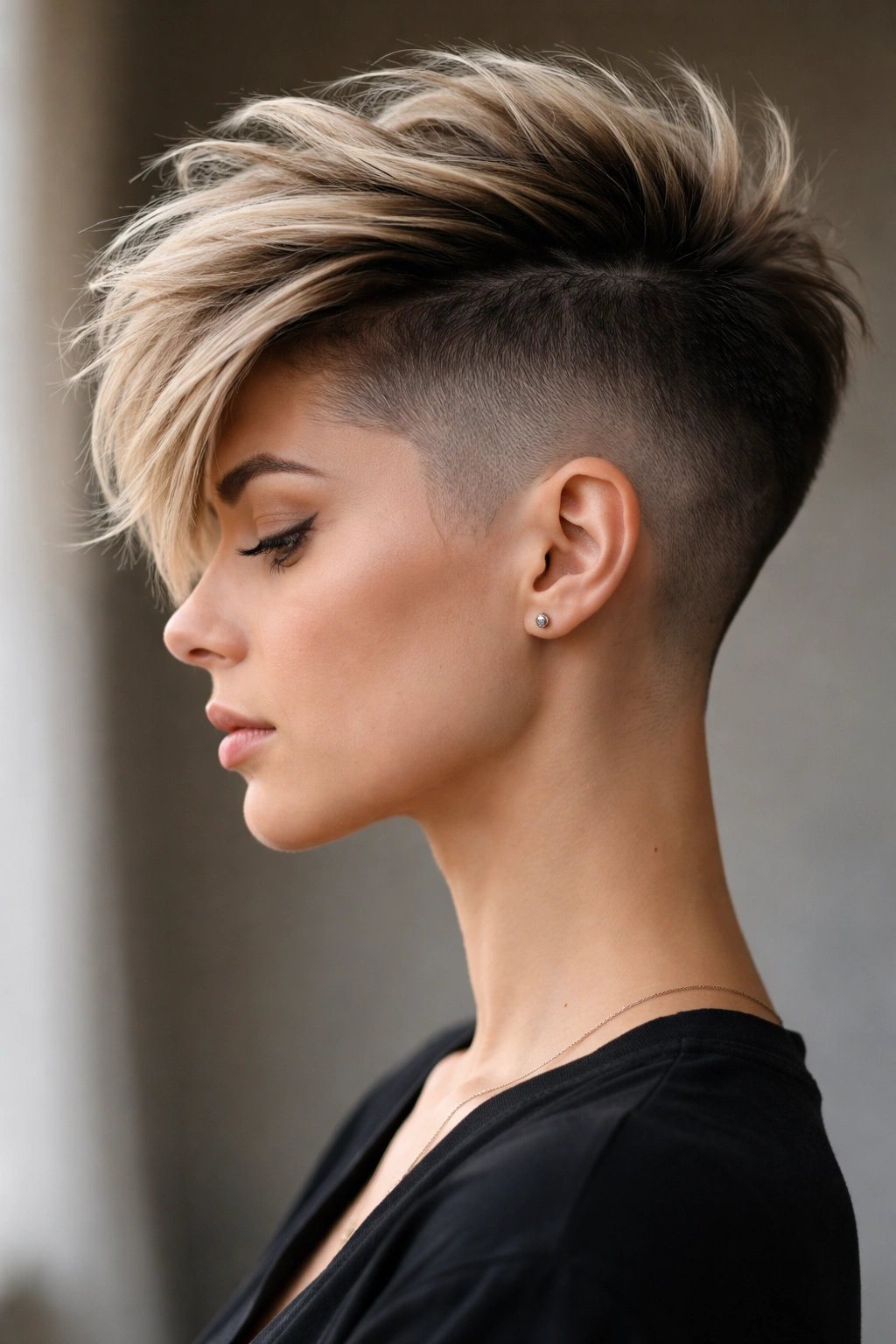
This is an undercut taken to its most extreme—the sides and back are closely cropped or faded to skin, while the top has a completely different texture and length, sometimes 3 to 4 inches or longer. The “disconnected” part is important: there’s no gradual blend. It’s a stark, intentional contrast.
Statement Through Contrast
A disconnected undercut is unapologetically bold. The stark contrast between nearly-buzzed sides and longer top says you’re confident and willing to be different. This cut actually becomes more flattering the bolder you style the top—long and flowing, textured and wild, or sleek and swept create entirely different vibes from the same cut.
Top Styling Versatility
- You can style the longer top almost any way you want—down, back, to the side, tousled
- The top can be straight, wavy, or curly, giving you flexibility if you have naturally textured hair
- Works as a bold, artistic statement or as an everyday practical cut depending on how you approach styling
- Perfect for people who want low-maintenance sides but the option to style longer hair on top
Insider note: The contrast actually gets more visually interesting the longer you grow the top. Two weeks into a cut looks different from six weeks in, and that’s part of the appeal.
10. Short Curly Cut
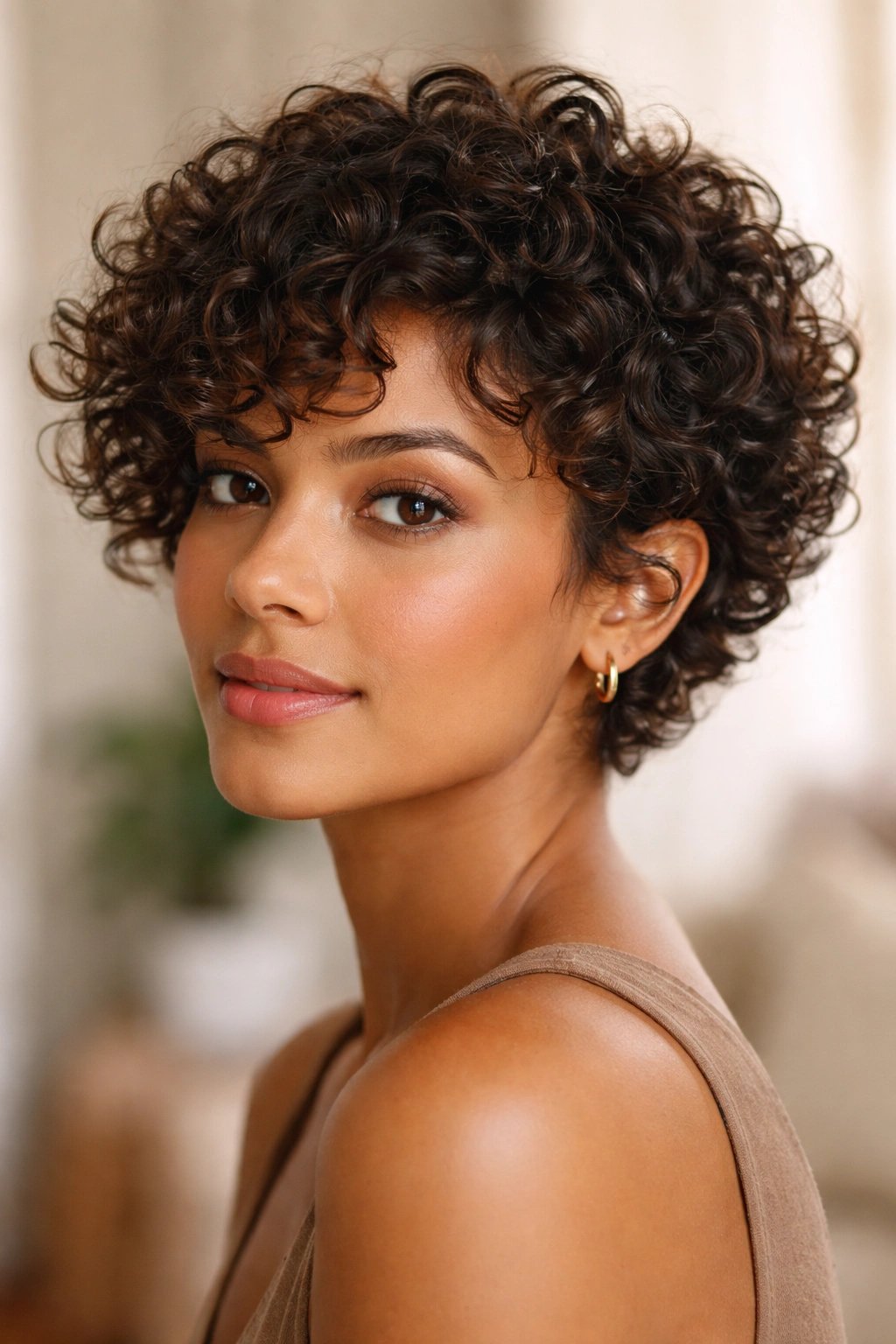
A short curly cut is specifically designed for naturally curly or coily hair, with the cut taking the curl pattern into account rather than fighting against it. This typically means shorter overall (2 to 4 inches depending on how defined the curls are), with layers that release curl and create movement rather than weight and flatness.
Embracing Your Natural Texture
A proper curly cut is a game-changer if you have naturally curly hair. Instead of fighting your texture or trying to make it into straight hair, the cut works with your curl pattern. This means less blow-drying, less products, and way more confidence in your natural hair. The key is finding a stylist who specializes in curly hair and understands how cut and curl interact.
The Curly Hair Advantage
- Curls take up less visual space than straight hair of the same length, so you can go very short and still have presence
- Layers release curl and create definition rather than matting everything down with weight
- A proper curly cut looks better the less you manipulate it—air-drying often creates the best results
- No need for complicated styling routines; usually just water, product, and scrunching
Quick facts:
- Cuts should be done on dry, curly hair so your stylist can see how the curl actually sits
- You’ll want a cut every 6 to 8 weeks, as curly hair shows the loss of shape more obviously as it grows
- Works at virtually any curl pattern level, from loose waves to tight coils
11. Sleek Pixie
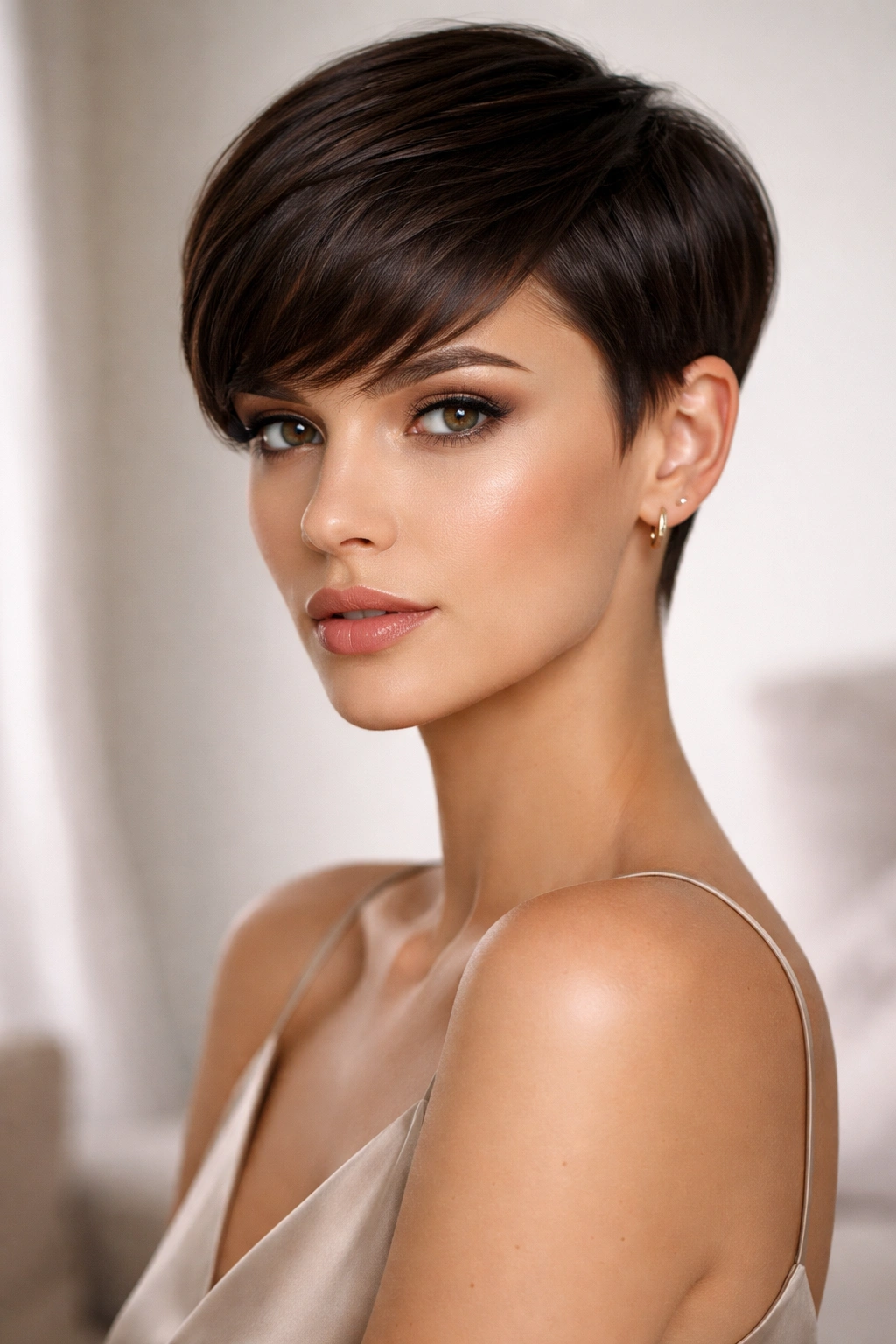
The sleek pixie is a close-cropped, neatly tapered pixie cut styled smooth and polished rather than textured or tousled. Every hair lies flat and clean, the lines are sharp, and it’s the opposite of the messy, lived-in pixie. It’s minimal, sophisticated, and requires actual styling to maintain the sleek aesthetic.
Precision and Polish
A sleek pixie is for someone who genuinely loves a polished look. It requires you to style it almost every day—usually with a smoothing serum, gel, or pomade to keep every hair in place. The payoff is a look that’s uncompromisingly chic and sophisticated. This is the pixie you see on celebrities and in high-fashion editorials.
Face Shapes and Styling
- Works particularly well on people with symmetric faces or strong features, as there’s nowhere for imperfection to hide
- Requires styling with product most days to maintain the sleek effect
- A slightly longer crown can help balance rounder faces
- The clean lines flatter most hair types, but you need a stylist who cuts with precision
Pro tip: A sleek pixie needs either straight hair or a daily blow-dry routine. If you have wavy hair and aren’t willing to blow-dry, the sleek effect won’t last all day.
12. Short Mullet
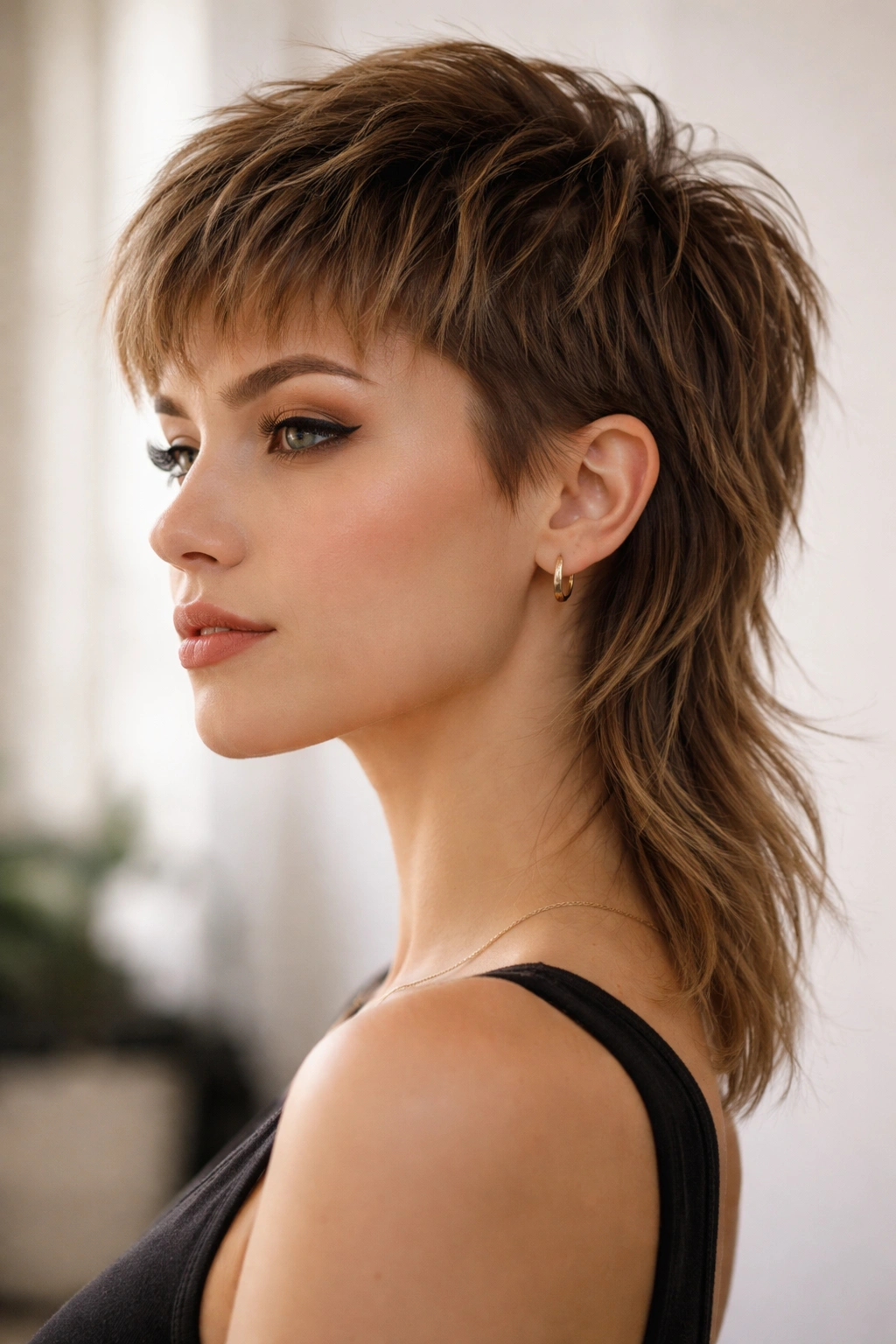
The modern short mullet takes the 80s mullet concept—business in the front, party in the back—and updates it for contemporary style. The front and sides are shorter (sometimes very short), while the back is longer, usually reaching somewhere between ear-length and shoulder-length. It’s retro, it’s trendy, and it’s surprisingly wearable.
The Appeal of Contrast
A mullet creates visual interest through the dramatic length difference between front and back. When done well (and that matters a lot), it’s playful and artistic rather than kitchy. The longer back gives you movement and flow, while the shorter front keeps your face visible and youthful. It’s a cut that photographs beautifully.
Styling and Face Shape
- The shorter front flatters most face shapes by keeping features visible and open
- The longer back can be styled multiple ways—tucked, flowing, textured with products
- Works best on people with some texture or wave in their hair (the back looks better with movement)
- Requires more frequent trims than some styles to keep the length contrast defined
Real talk: A mullet is a personality statement. You’re not doing it to be safe; you’re doing it because you like how it looks and you’re willing to be bold about it. Commit to the attitude and it absolutely works.
13. Tapered Fade
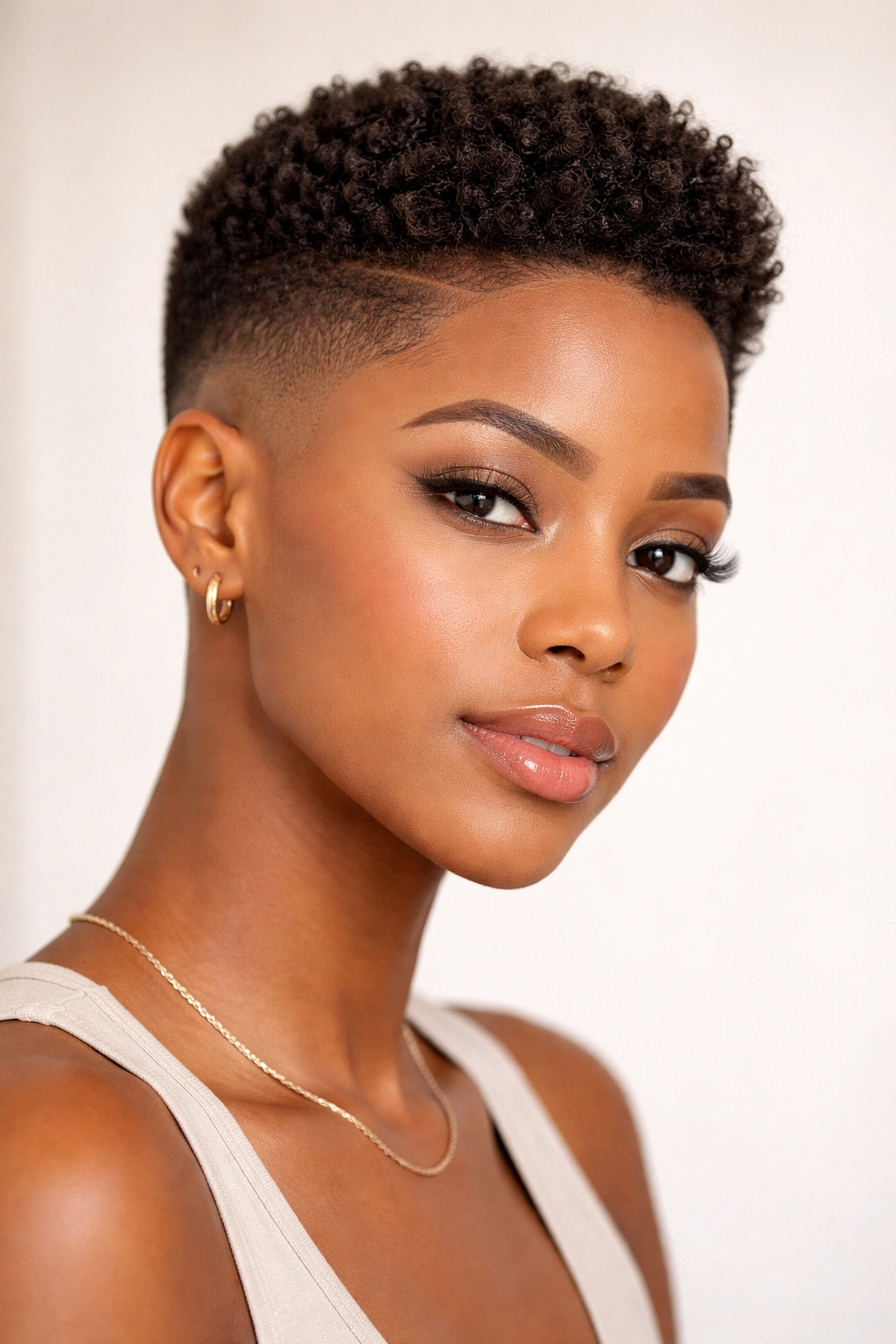
A tapered fade features hair that gradually gets shorter from top to bottom, with the sides and back fading to nearly skin-level while the top retains length. The key word is “gradual”—unlike an undercut with stark contrast, a fade has a smooth transition. It’s clean, geometric, and incredibly flattering when done well.
The Gradual Transition Advantage
A fade is flattering because it shows off your entire head shape and facial features without being quite as bold as a stark undercut. The gradual transition is soothing to look at—it’s geometric without being jarring. On top of that, a fade actually works with more hair types and face shapes than you’d expect.
Versatility and Styling
- The top can be textured, messy, sleek, or anywhere in between depending on your preference
- Works beautifully on wavy, curly, and straight hair
- Requires a cut every 3 to 4 weeks to keep the fade looking intentional rather than like you just need a haircut
- The fade can be a hard fade (very short) or a soft fade (less extreme contrast)
Quick facts:
- Pairs beautifully with color, especially if you do something subtle on top while keeping sides natural
- One of the most universally flattering short cuts for different face shapes
- Looks equally good styled messy or polished depending on your styling approach
14. Choppy Short Layers
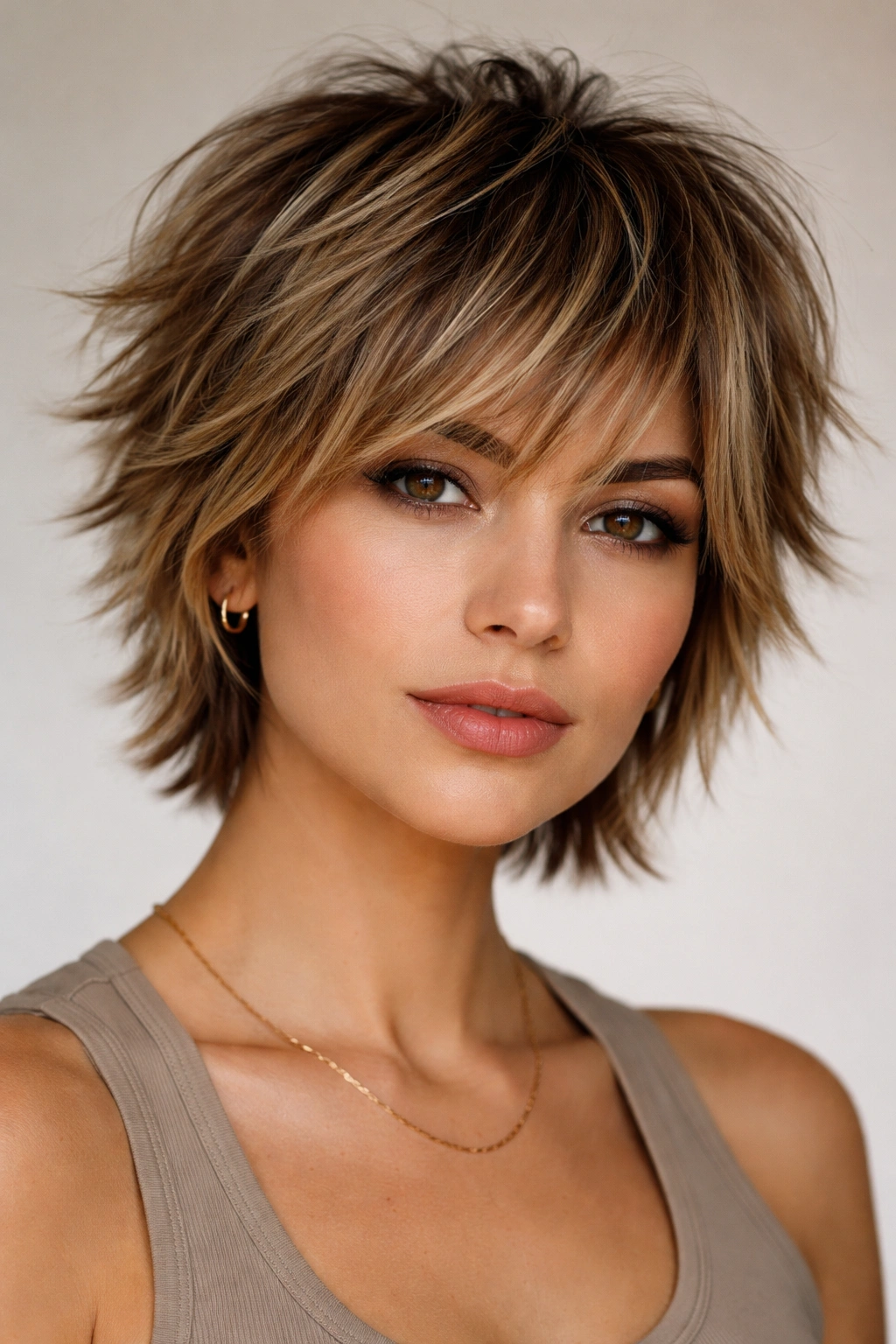
Choppy short layers is different from shaggy layers in its execution—the layers are more deliberate and structured, with distinct points where the length changes, rather than a more blended shag. This creates a cut with real movement and texture, but with more intention and less “accidental bedhead” feeling.
The Intentionality of Chop
Choppy layers work because each layer has a purpose. The varying lengths create depth and the choppy quality (rather than blended) means each layer is visible and contributes to the overall look. This is a cut that reads as intentional—you’re making a statement, not just wearing short hair.
Face Shape and Hair Type
- Works exceptionally well on people with smaller or more delicate features, as the softer texture than a pixie is flattering
- Creates a beautiful frame around the face without being as severe as some other short cuts
- Looks incredible on slightly wavy or textured hair where the choppiness creates natural movement
- Requires styling product to look its best, but the effort is minimal
Pro tip: Ask your stylist for longer layers in front and shorter in back to create a flattering frame. This gives you some face-framing movement while keeping the back neat.
15. Pixie with Longer Bangs
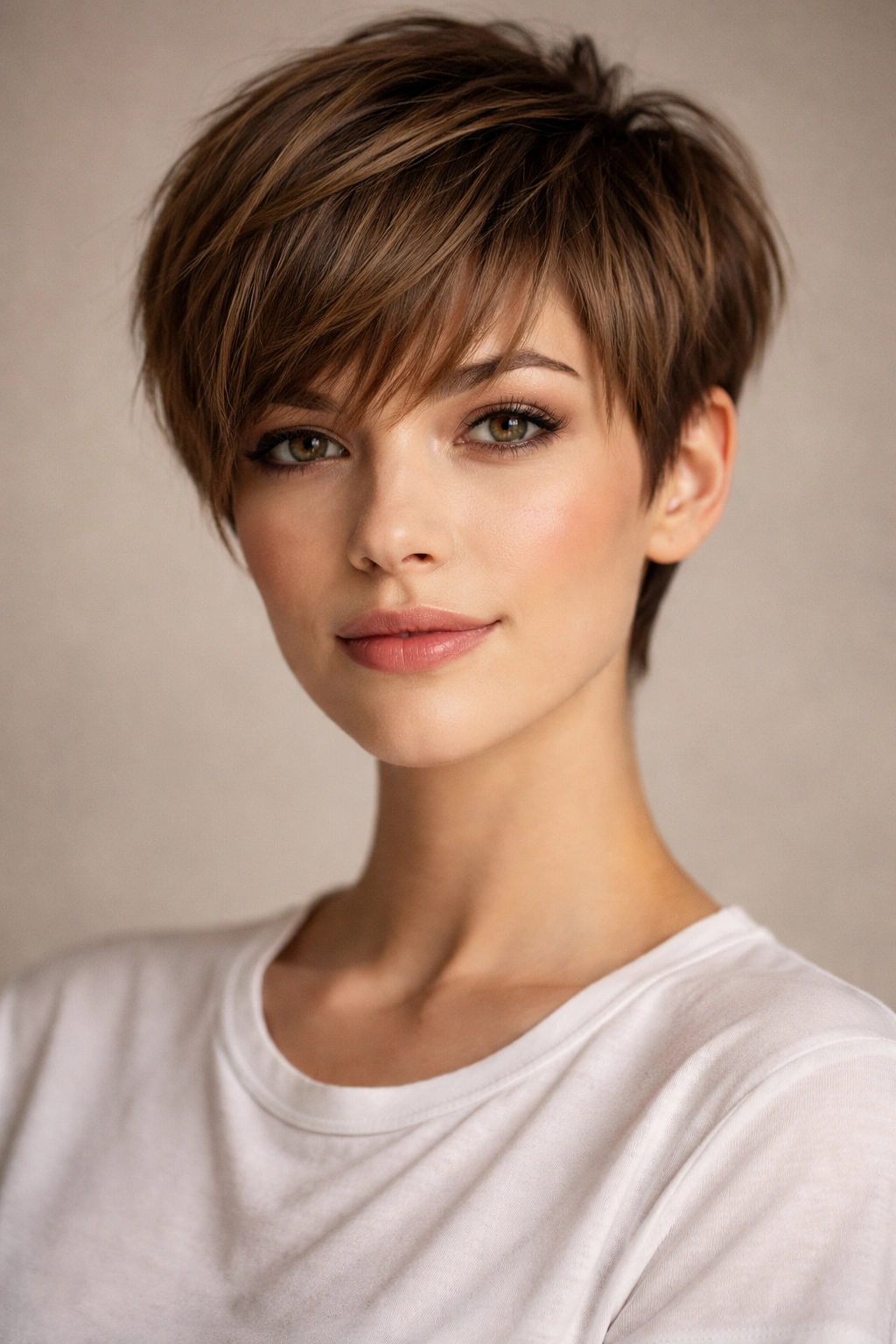
This is a classic pixie—short and close to the head overall—but with longer bangs or fringe that sits at or slightly below the eyebrows. It gives you the simplicity of a pixie with a bit more styling flexibility and face-framing around the eyes. It’s cute, slightly less severe than a traditional pixie, and works on most face shapes.
The Fringe as Softener
Longer bangs on a pixie create a focal point around the eyes while still maintaining the simplicity of the cut. The bangs give you something to play with and style, unlike a completely uniform pixie. This small change actually makes the cut feel less dramatic and more approachable for people who are hesitant about going truly short.
Styling the Fringe
- The bangs can be styled straight across, swept to the side, or even textured with product
- If your natural hair grows quickly, you might be trimming these bangs every 2 to 3 weeks
- This cut works beautifully on most face shapes because the longer bangs frame features softly
- Perfect for people who want a short cut but need something a tiny bit less bold
Worth knowing: If you have a cowlick or your hair grows in an awkward direction on your forehead, longer bangs can actually be easier to work with than very short ones.
16. Butterfly Cut (Short)
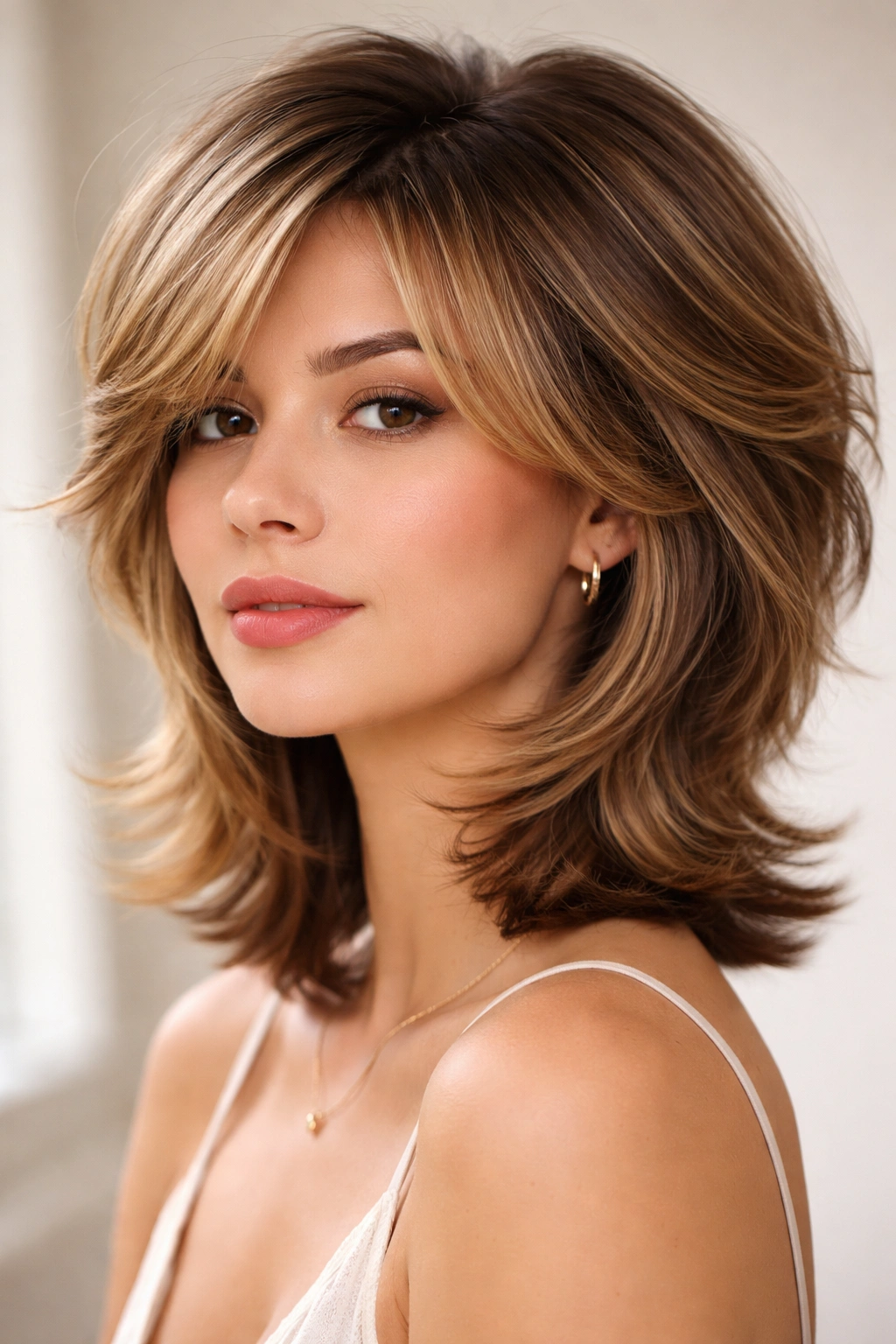
A butterfly cut is characterized by shorter layers in the crown and gradually longer layers toward the ends, creating a shape that’s wider in the middle and shorter on top and bottom—like butterfly wings. A short version applies this concept to shorter overall length, usually ear-length or shorter.
The Shape Philosophy
The butterfly cut is flattering because the shorter crown creates lift and the gradually longer layers create softness and movement. It’s particularly good at creating the illusion of volume if you have fine hair, and it’s incredibly flattering for rounder or wider faces. The shape is designed to balance face proportions through the strategic placement of length.
Who This Cut Suits
- Exceptional for round or wide faces because the shorter crown and layering balance width
- Creates the illusion of volume and lift, perfect for fine or thin hair
- Works on straight, wavy, and slightly curly hair
- The shorter crown means styling is relatively easy—you don’t need much length to work with
Quick facts:
- Requires cuts every 6 to 8 weeks to maintain the shape as layers grow out
- Looks best with some texture or movement; it’s less flattering if you style it completely flat
- Can be worn sleek or textured depending on your styling choice
17. Short Textured Crop
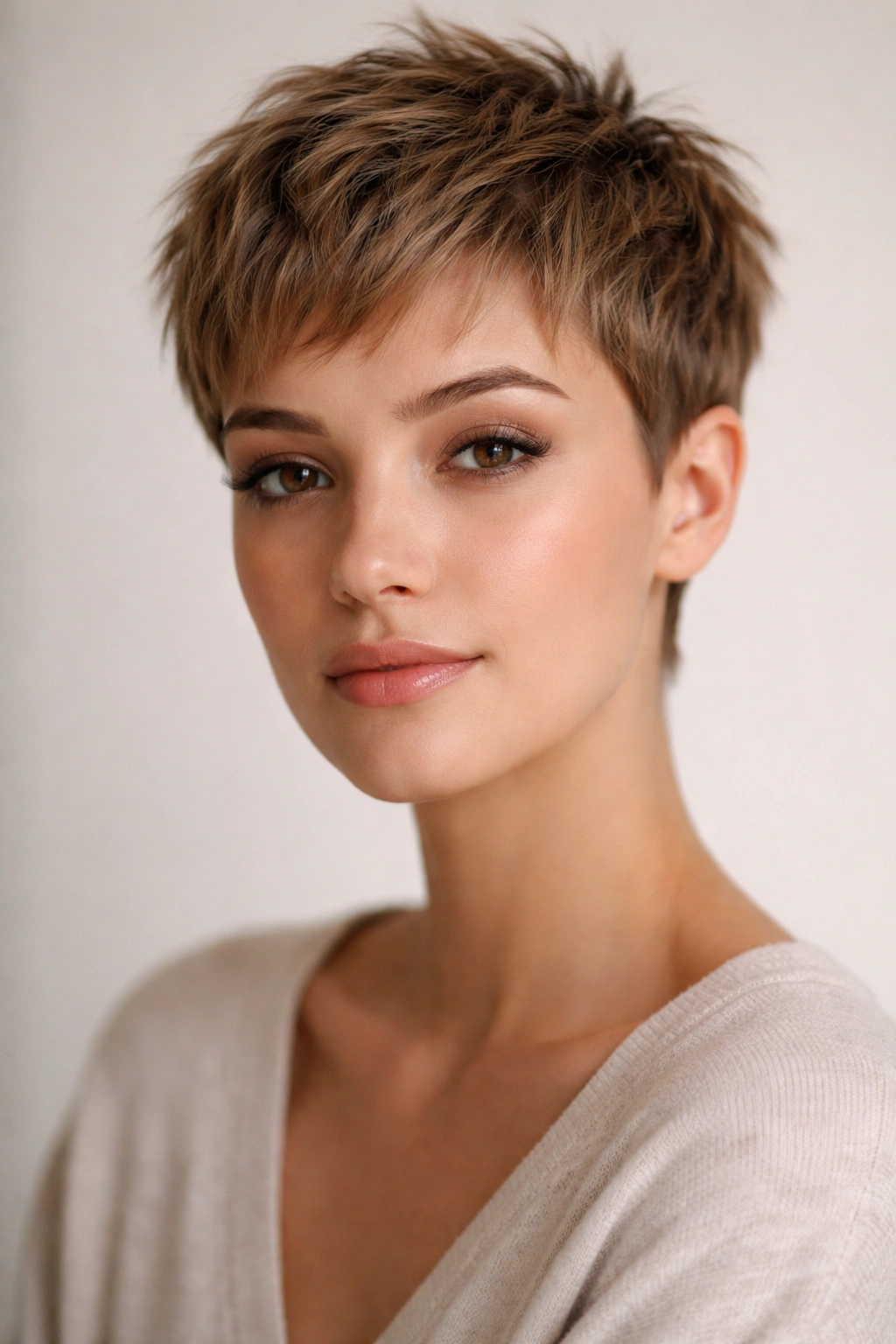
A short textured crop is basically the most minimal short cut—usually 1 to 2 inches all over with choppy, textured layers that create movement. It’s androgynous, it’s low-maintenance, and it reads as effortlessly cool. Think of it as the textured version of a buzz cut without actually buzzing everything.
Minimal but Mighty
The beauty of a short textured crop is that it requires almost no styling but looks intentional. Your natural hair texture becomes the whole point. If you have wavy or curly hair, the texture creates visual interest automatically. Even straight hair looks good with a crop because the choppy nature creates the suggestion of texture.
The Low-Maintenance Dream
- Requires a cut every 5 to 6 weeks to keep the texture looking fresh
- Can literally be washed and air-dried; no styling required unless you want to
- Works on all hair types but looks especially great on natural texture
- Perfect for active people, athletes, or anyone tired of styling routines
Insider note: This is the cut to ask for if you’ve been long-haired and want to go short but don’t want to commit to daily styling. It’s the closest thing to a low-maintenance short cut.
18. Androgynous Short Cut
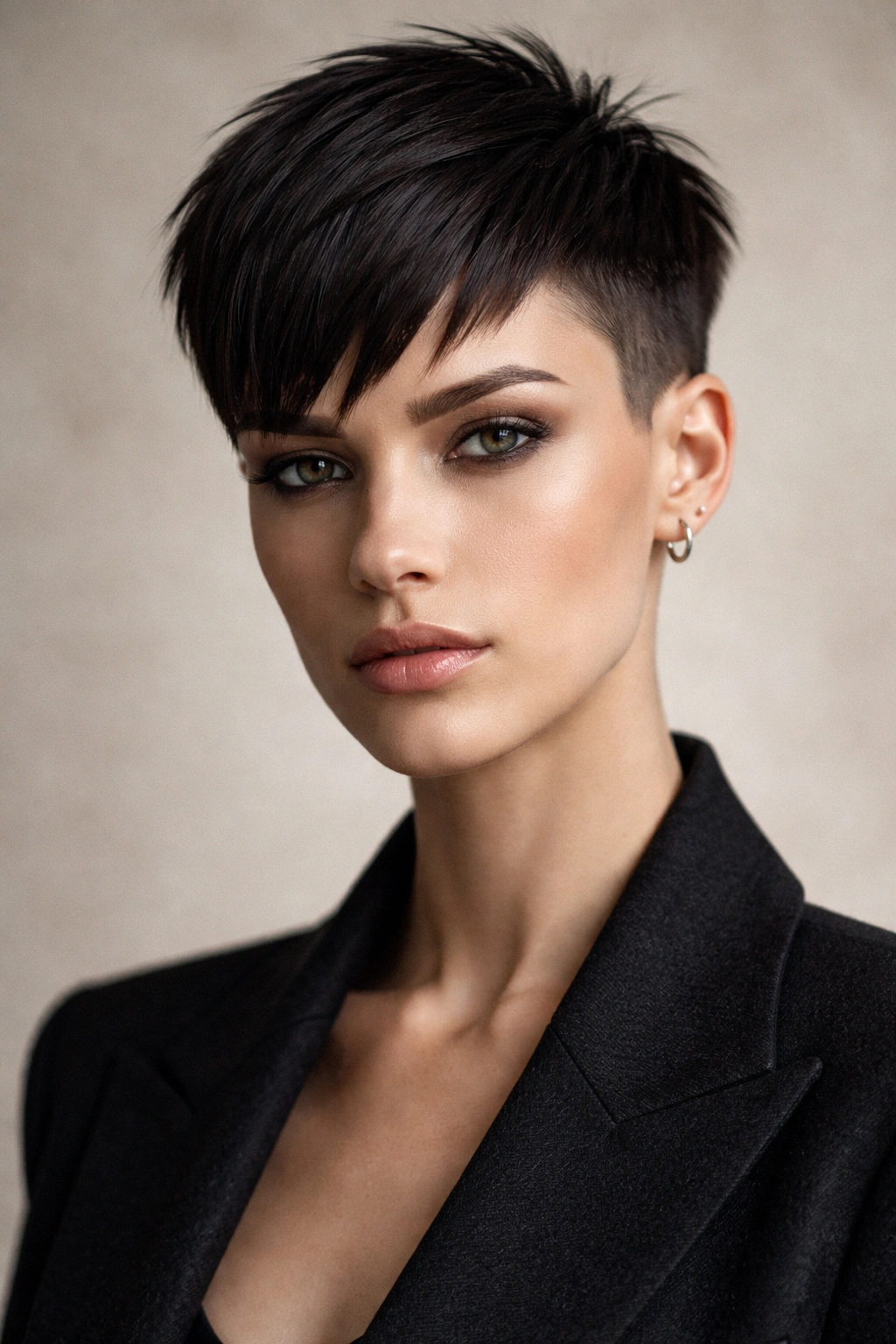
An androgynous short cut is deliberately geometric and doesn’t emphasize feminine characteristics—it’s not built around framing the face in a traditionally “feminine” way. Instead, it often features blunt lines, sharp angles, and sometimes asymmetry. It’s bold, it’s modern, and it’s for people who want their hair to be about aesthetics and self-expression rather than traditional beauty.
The Geometry of Confidence
This cut works because it’s intentional and unapologetic. The sharp lines, the geometric shapes, the asymmetry—these are all statements. An androgynous cut doesn’t try to soften or frame in traditional ways; it just exists as architecture on your head. That confidence reads.
Styling and Attitude
- Can be worn sleek, textured, or messy depending on your mood
- Works best on people who are comfortable with bold style choices
- The sharp lines look best with some styling intentionality, whether that’s sleekness or deliberate messiness
- Absolutely stunning with color, especially sharp color blocking or asymmetrical tones
Real talk: This cut requires you to own your style. If you’re uncomfortable with bold choices or need the comfort of “pretty and traditionally feminine,” this cut might make you feel vulnerable rather than confident.
19. Short Bob with Microbangs
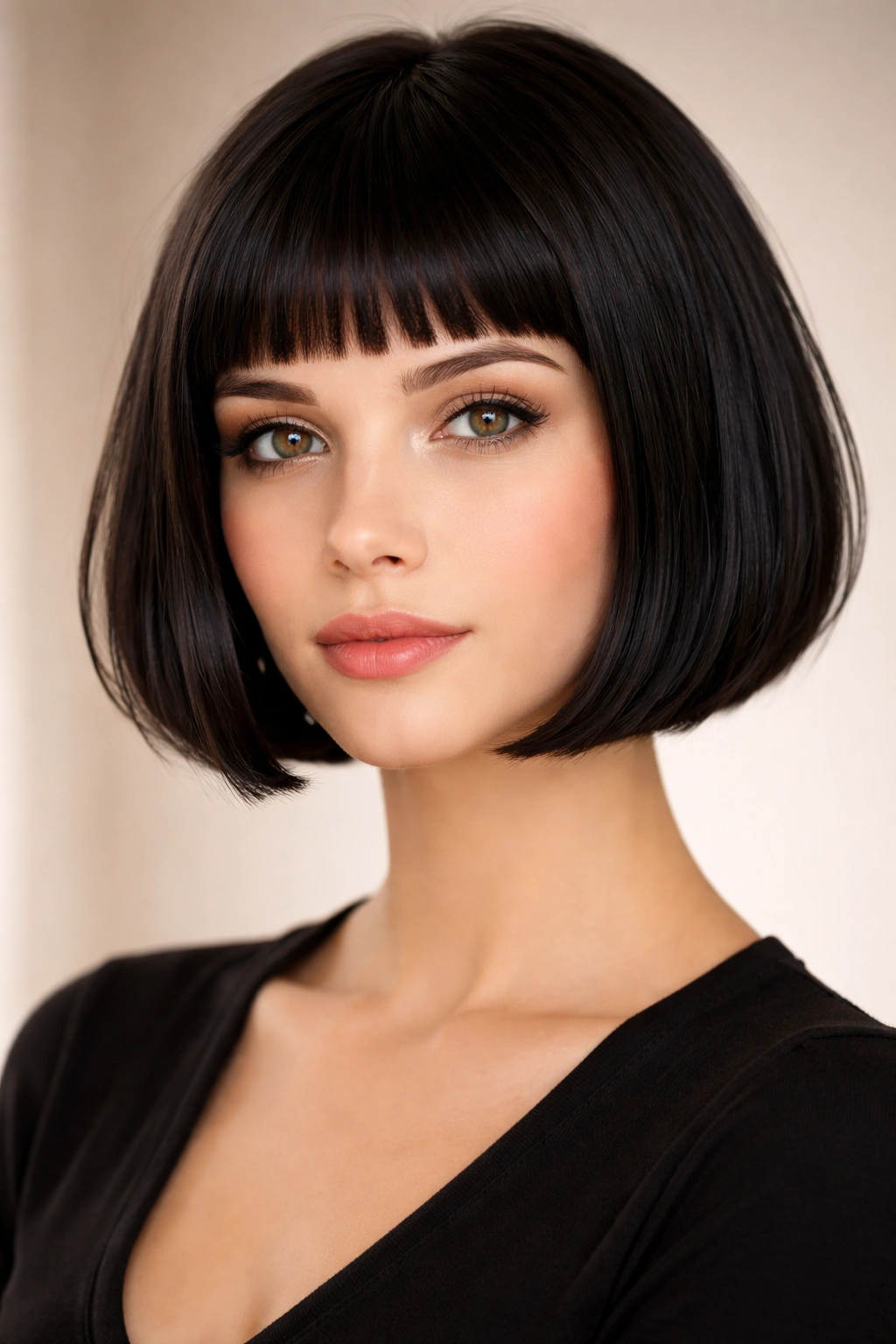
A short bob typically hits around chin-length or slightly shorter, with microbangs that sit right at the eyebrow line and are cut shorter than traditional bangs, creating an intense frame around the eyes. It’s retro-modern, it’s chic, and it’s increasingly popular with people who want a polished look.
The Drama of Detail
Microbangs create a dramatic focal point. Your eyes become the main event, and the shorter bob keeps everything neat and contained. It’s a look that’s unapologetically put-together—this is a styling choice that says you care about details and aesthetics. The microbangs also create visual interest and youthfulness.
Face Shape and Styling
- Works best on people with larger eyes or balanced facial proportions, as the microbangs are quite focal
- Requires styling or at least tidying the bangs regularly (they’re in your face)
- Pairs beautifully with bold makeup or lip color since the focus is on your face
- Works on straight, wavy, or curly hair but looks sharpest on straight hair
Pro tip: Microbangs require commitment. You’ll be trimming them or having them trimmed very frequently to keep the look sharp and prevent them from growing into your eyes.
20. Side-Swept Pixie
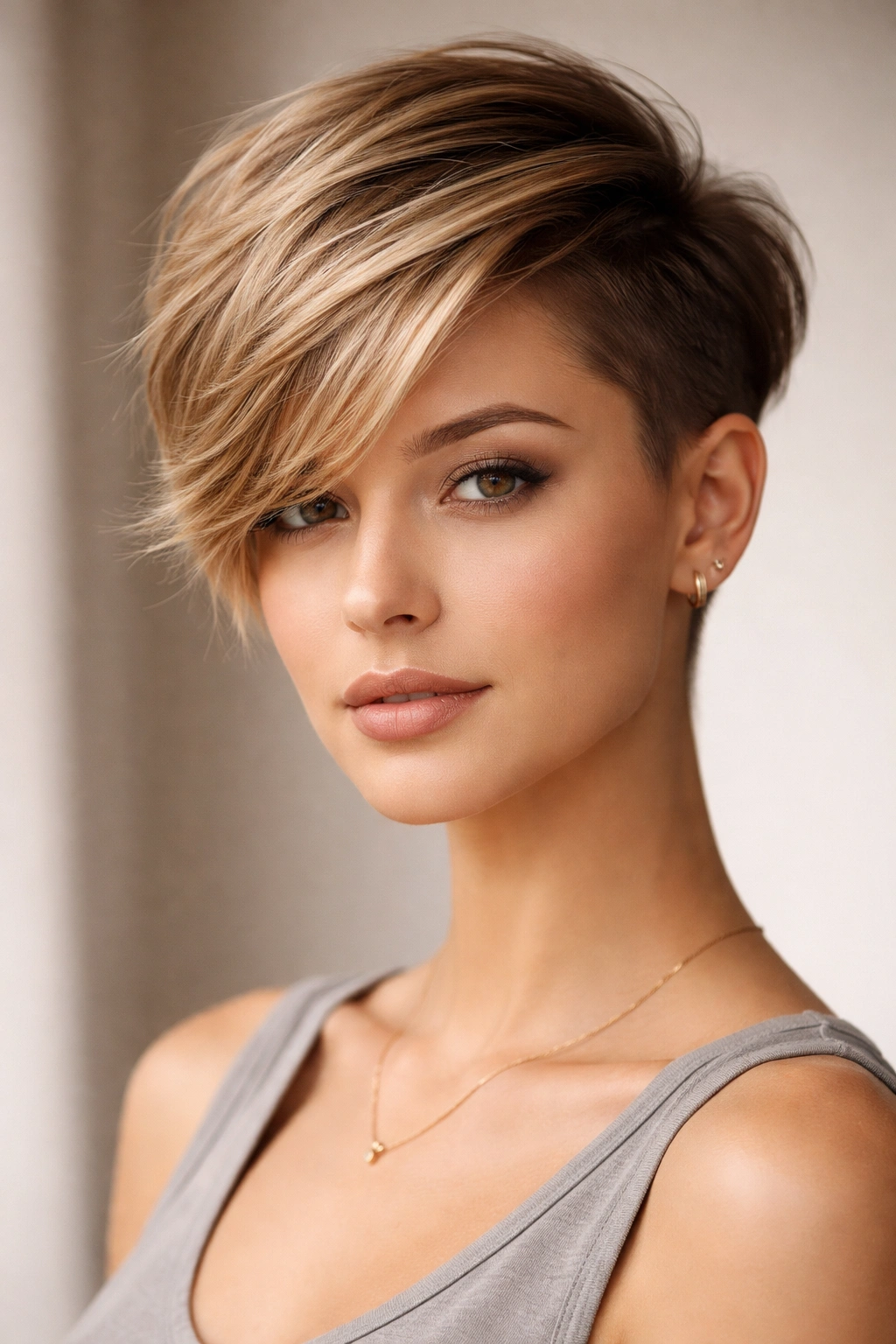
A side-swept pixie is a pixie cut where the longer length on top is styled to sweep dramatically to one side rather than being distributed evenly across the crown. One side is cropped very short while the other has more length, creating an asymmetrical silhouette that’s soft on one side and sharp on the other.
The One-Sided Drama
A side-swept pixie gives you the best of both worlds: the simplicity of a pixie with a softer, more feminine silhouette on one side. You can style it to show off the drama, or if you’re going somewhere you want to feel less bold, you can style it differently. It’s a pixie with flexibility.
Styling Options
- Can be styled swept dramatically to emphasize the asymmetry
- Can also be styled more evenly if you want to downplay the asymmetrical cut
- Works well with color, especially if you use color to emphasize one side over the other
- Flatters oval and slightly wider faces particularly well
Quick facts:
- Requires cuts every 3 to 4 weeks, but the growing-out process looks intentionally more side-swept
- Works on all hair types but looks especially good on straight or slightly wavy hair
- The longer side can be tucked behind your ear or let to sweep forward depending on your mood
21. Messy Short Crop
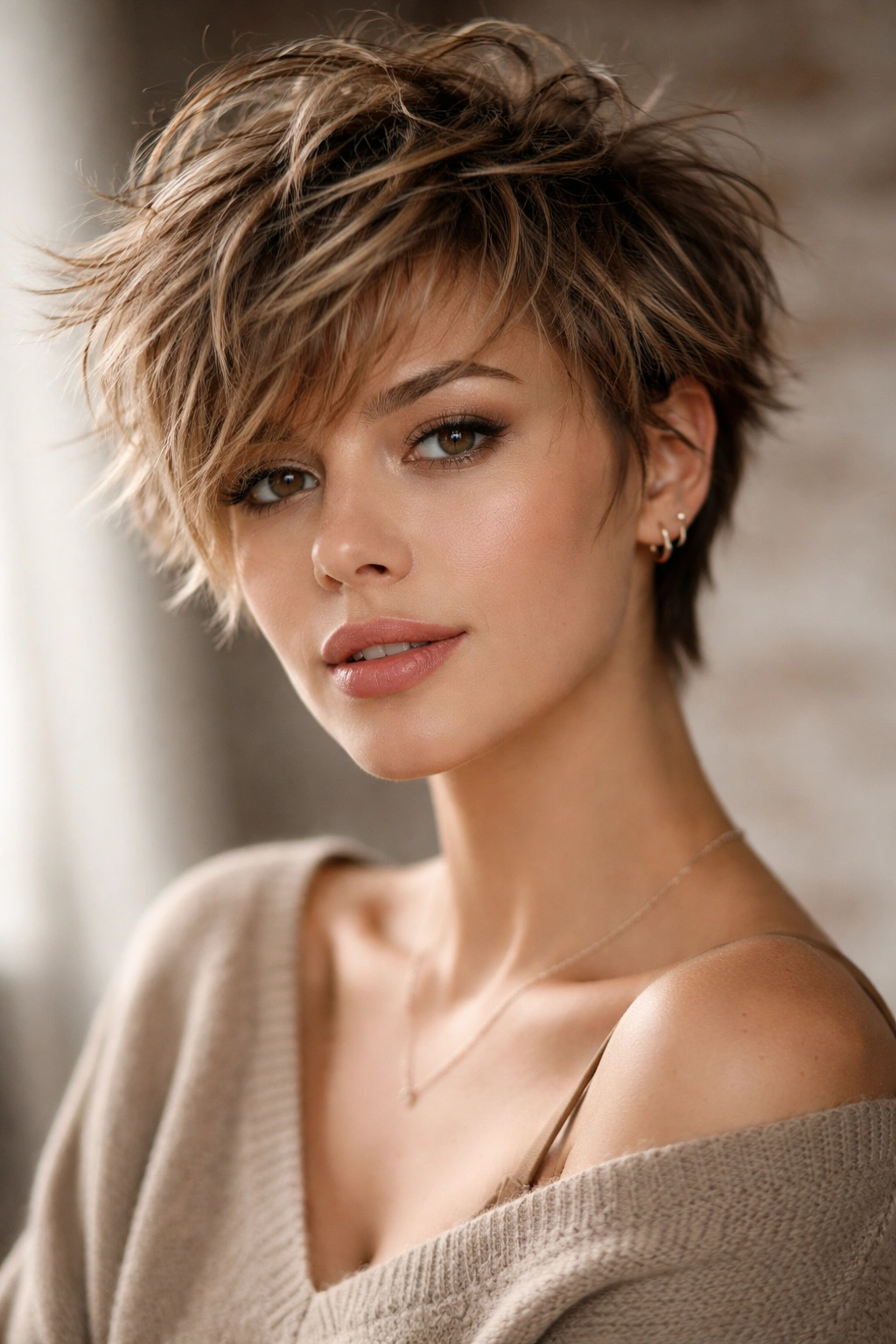
A messy short crop is like a textured crop but even more deliberately disheveled. The idea is that it looks like you just got out of bed and it looks fantastic. It’s built on texture, movement, and a complete disregard for perfection. It’s playful, it’s young, and it’s liberating if you’ve spent years caring too much about neatness.
Intentional Messiness
The messy crop works because the messiness is the whole point. It’s not a bad cut that looks messy—it’s a cut designed to look good messy. This requires texture in your hair (natural wave, curl, or created with product) and a willingness to let your hair be undone. It’s the opposite of a sleek pixie.
The Styling Philosophy
- Requires styling product (texture spray, mousse, or sea salt spray) to look its intentional best
- Works beautifully on wavy or textured hair where natural movement exists
- On straight hair, you’ll need to deliberately add texture with product
- The whole point is that it looks effortlessly undone, which sometimes requires deliberate effort
Worth knowing: This cut suits people who appreciate imperfection and understand that “effortless” sometimes takes effort. If you need to feel polished all the time, this cut might feel uncomfortable.
22. Short Layered Shag
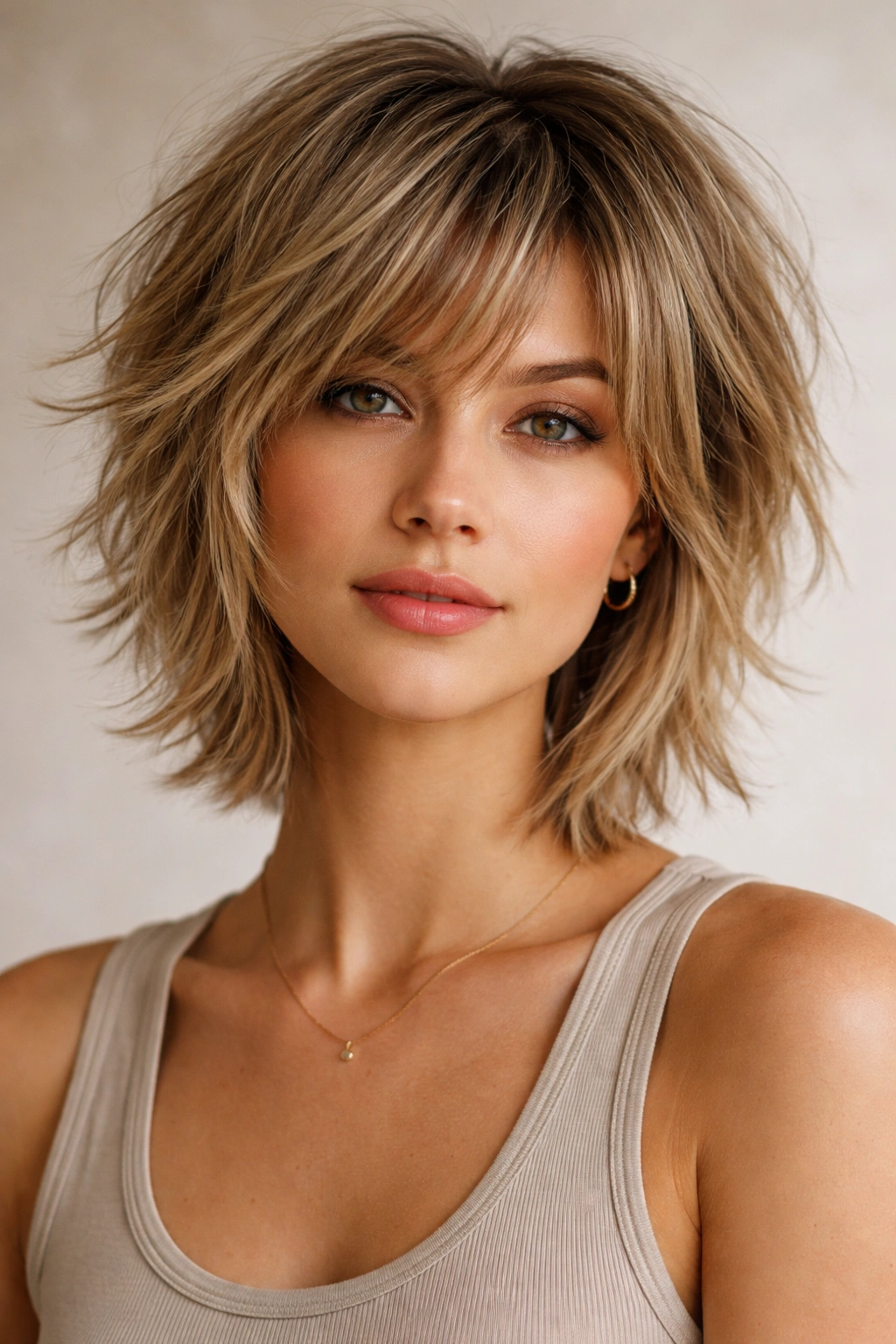
A short layered shag is more structured than the messy crop but still emphasizes layering and movement. It’s shorter than a traditional shag, closer to a modern crop, but with the choppy, playful character of a shag. It’s retro-inspired but contemporary in execution—fun, flirty, and genuinely low-maintenance.
The Shag Philosophy Updated
A modern short shag takes the fun of a traditional shag but makes it wearable for everyday life. The layers create movement, the shorter length keeps it manageable, and the overall vibe is playful rather than serious. It’s a cut that says you don’t take yourself too seriously and you appreciate style that’s a little bit rock and roll.
Versatility and Hair Type
- Works beautifully on wavy or textured hair where the layers create natural movement
- On straight hair, you can let the layers create their own soft texture or add product for definition
- Perfect for people who want something fun and textured but not so short they feel vulnerable
- Layers can be tighter and more defined or looser and shaggier depending on what you ask for
Quick facts:
- Requires cuts every 6 to 8 weeks to keep the layering looking intentional
- Looks best with some texture or movement; completely straight shags can look a bit flat
- Works on most face shapes, particularly oval and heart-shaped
23. Close-Cropped Cut
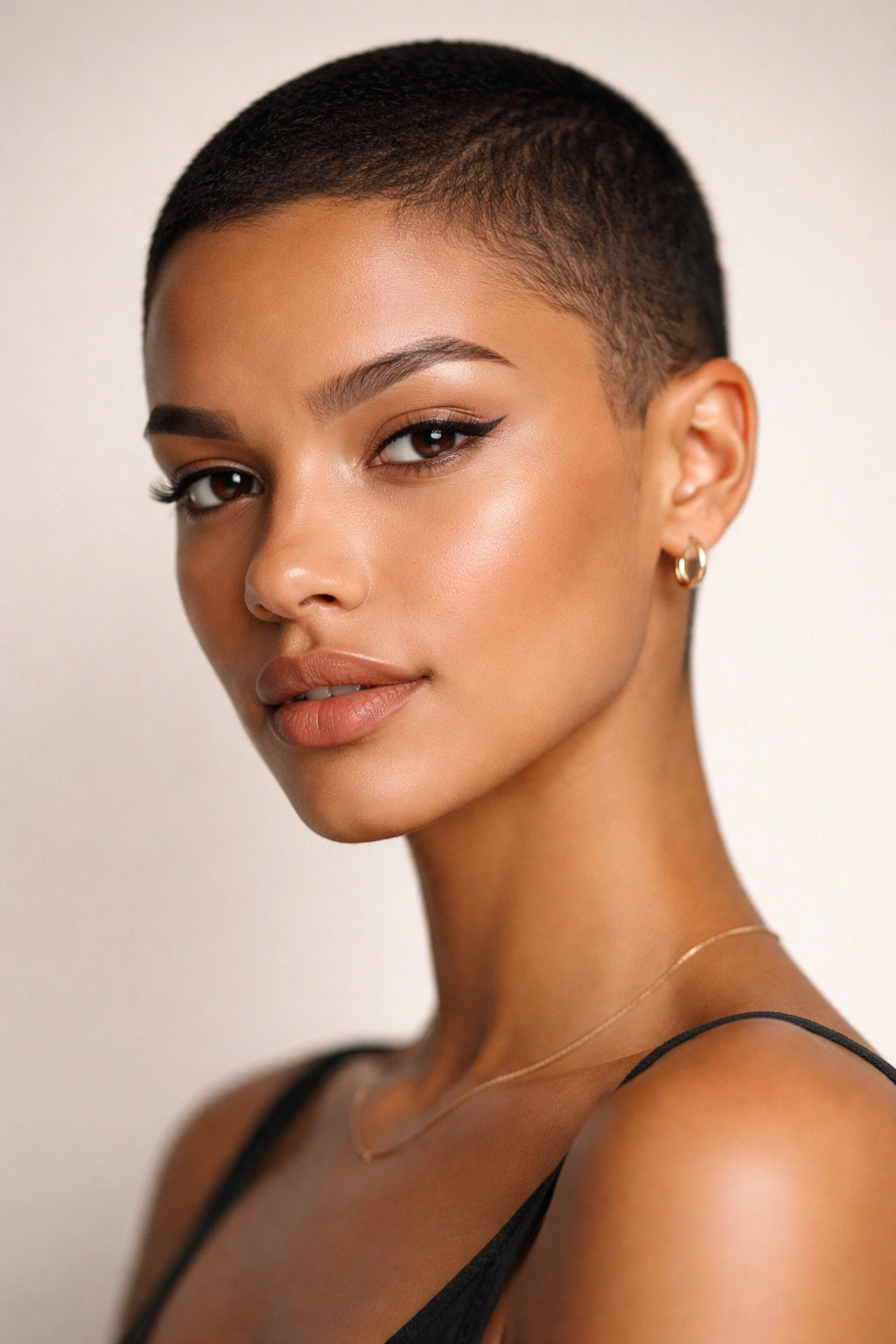
A close-cropped cut is one of the shortest options—usually 1 inch or less all over, with either uniform length (basically a very short crew cut) or slight texture through choppy layers. It’s radical, it’s liberating, and it’s becoming increasingly popular with women who want the ultimate low-maintenance look.
The Freedom of Short
There’s something genuinely liberating about a close-cropped cut. You’re not trying to be anything other than your face and your confidence. There’s no hair covering anything, no styling required, no bad hair days. Your head becomes a canvas for your facial features, your bone structure, and your attitude.
Who Pulls This Off
- Works best on people with confident attitudes and interesting facial features
- Actually flatters oval, oblong, and heart-shaped faces exceptionally well
- Can be styled with texture product if you want to add dimension
- Requires no styling, no products, nothing except maybe a trim every 4 to 5 weeks
Real talk: This cut requires owning your face and not being self-conscious about your head shape. If you’ve always hidden behind hair, this is a vulnerable choice—but it’s also incredibly freeing.
24. Textured Crop with Fade
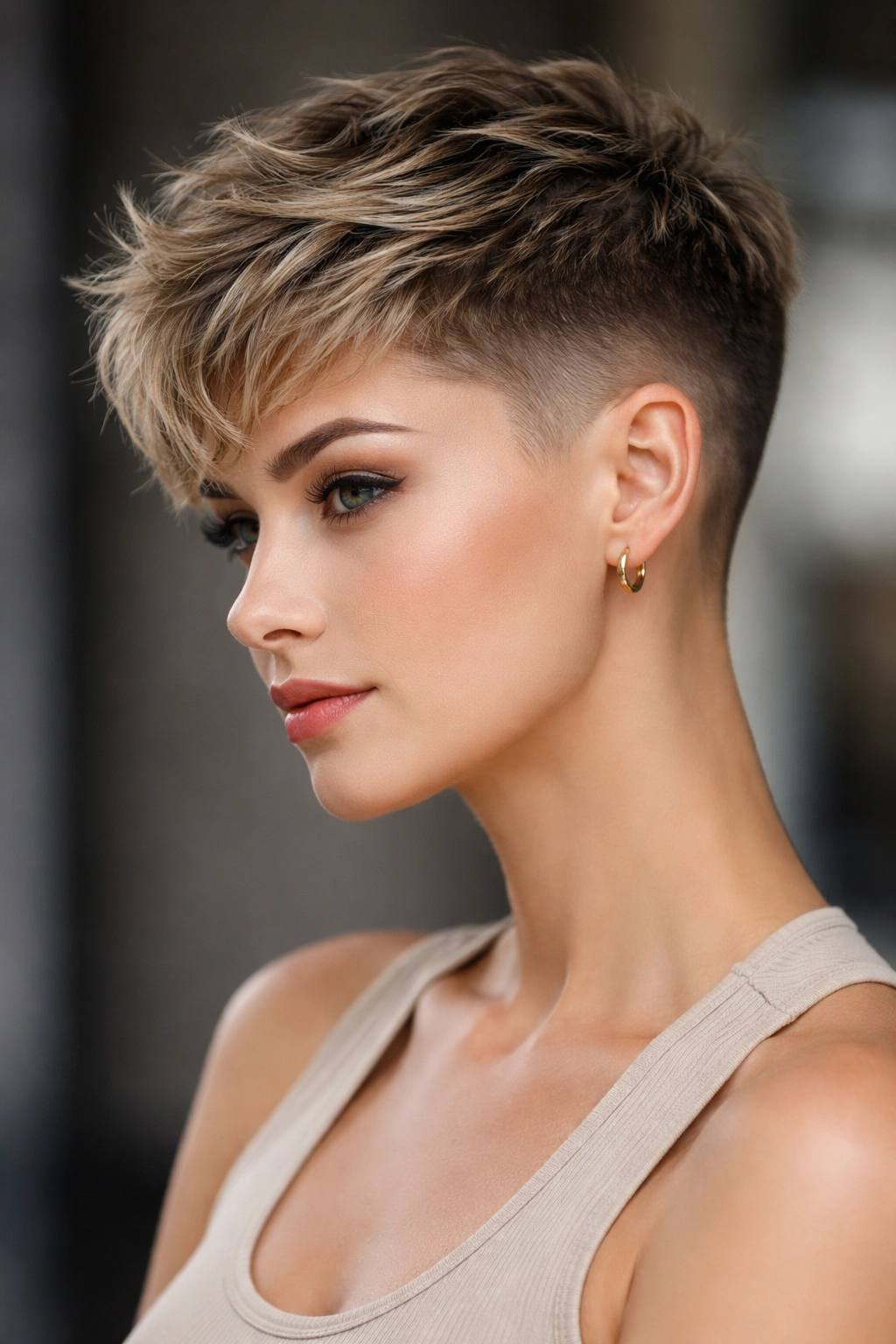
This combines two concepts: a short, textured crop on top with a faded undercut on the sides and back. The fade creates clean, defined lines while the textured top gives you movement and personality. It’s contemporary, it’s sharp, and it’s flattering on most people.
Combining Techniques
This cut works because it marries two different approaches—the geometric precision of a fade and the organic texture of a crop. You get the clean lines that show off your head shape and features, plus the texture and movement that prevent it from feeling too severe. It’s the best of both worlds.
Styling and Maintenance
- The textured top can be styled with product to enhance the movement and texture
- The fade keeps the sides clean and sharp, which frames your face well
- Requires cuts every 4 to 5 weeks to keep the fade looking defined
- Works on all hair types but looks particularly dynamic on naturally textured hair
Pro tip: Ask your stylist for a softer fade (medium rather than hard) if you want the style to look a bit less severe while still maintaining the clean, geometric aesthetic.
25. Short Spiky Cut
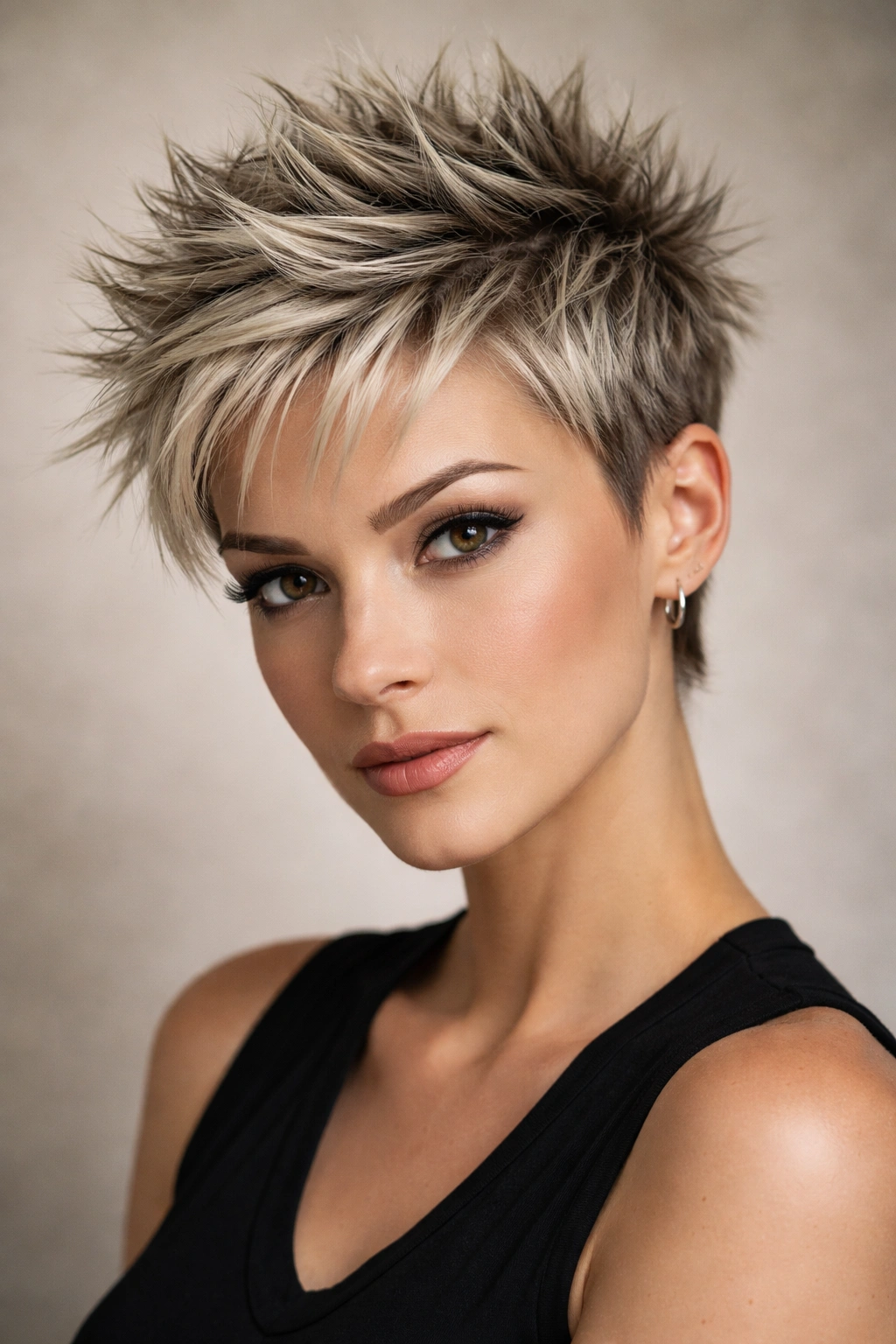
A short spiky cut is designed specifically to stand up and create height and texture. The hair is cut short with choppy layers, but the intention is that it’s styled with product to create points and elevation. It’s playful, it’s fun, and it’s perfect for people who want a textured short cut with some attitude.
The Architecture of Spikes
This cut works because the chopped layers are designed to be shaped by product. You apply a strong-hold pomade, wax, or gel, and style the hair into points and spikes. It’s deliberately styled rather than effortlessly undone. The spikes create visual interest and movement, and they draw the eye upward.
Personality and Styling
- Requires product every day to achieve the spiky effect; without styling, it just looks like a textured crop
- Works best on straight or slightly wavy hair that can hold a style
- Perfect for people who like playing with their hair and enjoy a more sculptural approach to style
- Looks fantastic with color, especially if you use different tones to emphasize the spiky texture
Quick facts:
- Requires a cut every 5 to 6 weeks to keep the choppy layers fresh
- The shorter the cut, the more dramatic the spike effect can be
- Pairs beautifully with an undercut or fade on the sides for maximum contrast
Final Thoughts
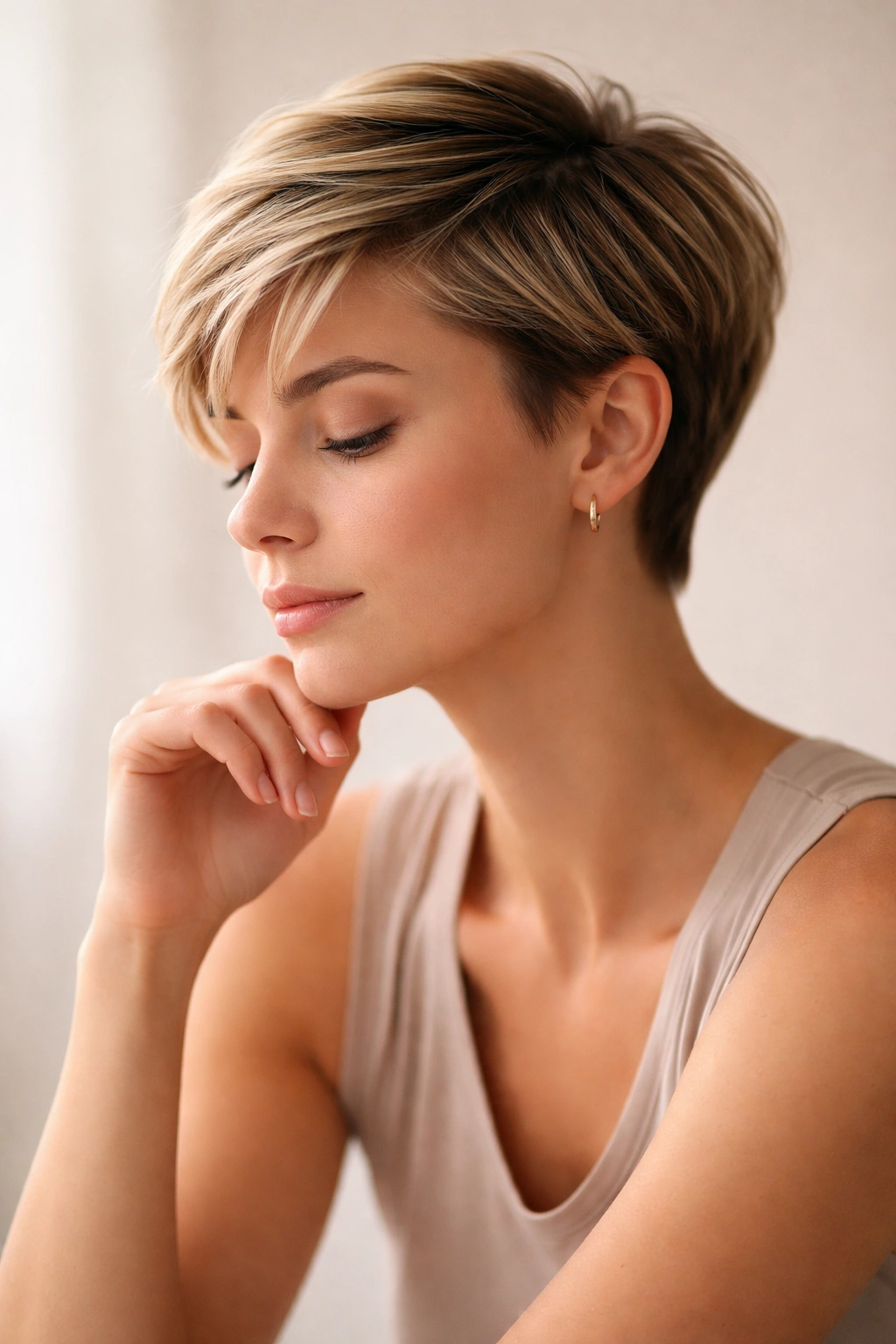
Short haircuts have earned their place as the most-requested styles in salons for good reason. Each of these cuts offers something different—from the radical confidence of a close crop to the playful texture of a shag, from the polished geometry of a fade to the soft movement of layered styles. The right short cut is less about following trends and more about understanding what works for your face, your hair, your lifestyle, and your personality.
The most important thing to remember when choosing a short cut is that your stylist matters tremendously. A pixie can look absolutely gorgeous or deeply unflattering depending on how it’s cut. An undercut needs clean, geometric precision. A shag needs choppy, intentional layers. Find a stylist who specializes in short hair, show them reference photos, and be honest about your styling willingness and your maintenance tolerance. Some cuts require daily styling; others require zero styling. Some need cuts every month; others can go two months between trims. Knowing what you’re getting into before you commit is half the battle.
Short hair is liberating, but it’s also a commitment to yourself. It says you’re confident, you’re willing to be bold, and you’re ready for something different. Whether you’re going for romantic and feminine, sharp and geometric, playful and textured, or androgynous and architectural, there’s a short cut on this list that’s going to feel absolutely right. The key is choosing the one that matches not just how you want to look, but how you actually want to live.
