



If you’ve spent more than five minutes trying to convince the hair at your crown to lay flat, you already know the special kind of frustration that comes with a cowlick. That stubborn whorl of hair that insists on sticking up, spiraling, or growing in an entirely different direction than the rest of your head can make even a fresh blowout feel incomplete. The worst part? You’re not imagining it — cowlicks are real anatomical features where hair genuinely grows at a different angle, making them nearly impossible to tame with styling alone.
The good news is that the right haircut can work with your cowlick instead of against it. A skilled stylist can strategically layer, texture, or cut around that trouble spot in ways that either hide it completely or blend it seamlessly into the overall style. Rather than fighting your hair’s natural growth pattern, a well-chosen cut embraces it, works around it, or uses texture and movement to break up the area so the cowlick becomes invisible rather than the focal point of your entire look.
The key is finding a style with enough texture, layers, or length that the cowlick area doesn’t become the most obvious part of your haircut. Whether you prefer short, sleek hair or longer, flowing locks, there’s absolutely a solution that will let you stop thinking about that one difficult spot and start feeling confident about your hair again. Let’s walk through the cuts that genuinely work.
1. The Textured Crop
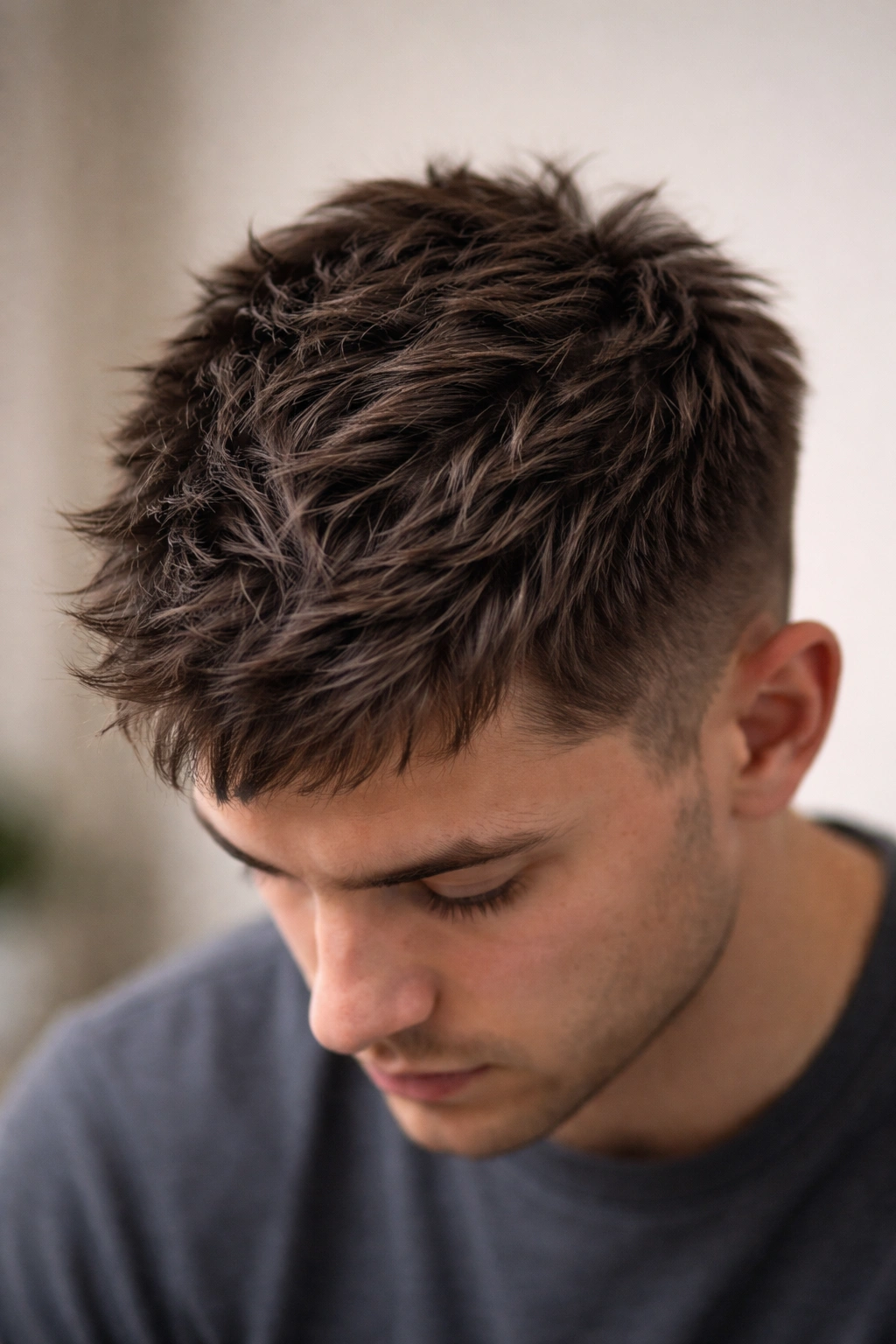
A textured crop cuts your hair quite short overall — typically 1 to 3 inches on top — but the magic happens in how a skilled stylist uses scissors and texture to create movement rather than trying to make everything lay flat. This style works brilliantly for cowlicks because the entire head becomes a intentional landscape of choppy, uneven texture where no single spot stands out as “wrong.”
Why the Textured Approach Hides Cowlicks So Well
The whole point of a textured crop is controlled chaos. Your stylist cuts into the hair with scissors rather than clippers, creating short, choppy pieces that naturally stick up in different directions. A cowlick that would be a disaster in a smooth, uniform short cut becomes invisible when surrounded by intentional texture everywhere. The cowlick area simply reads as part of the textured design rather than as a problem spot.
What Makes This Cut Work in Practice
- The entire top is cut with choppy, disconnected layers that give the appearance of intentional movement
- Texture is distributed evenly across the crown, so no single area draws the eye
- Styling is actually easier because you’re creating movement that already exists naturally in the hair
- The cut works best when you style it with a matte product like clay or paste that enhances the textured look
- Cowlicks blend seamlessly because the whole cut celebrates that kind of directional chaos
Pro tip: Ask your stylist to specifically identify where your cowlick is during the consultation, then request that they add extra texture to that entire crown area. This makes the cowlick part of the design rather than a flaw.
2. The Longer, Layered Pixie
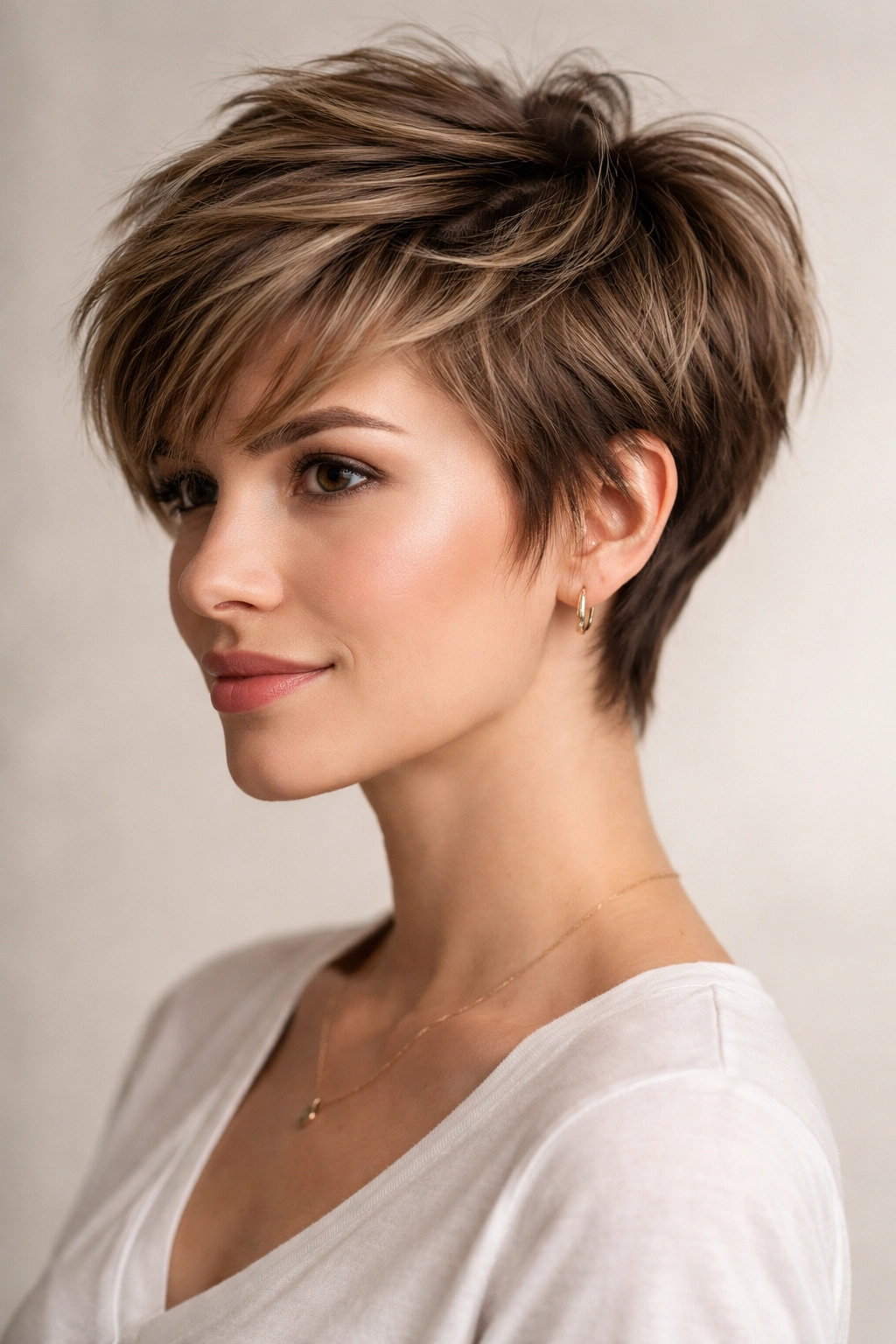
A layered pixie sits somewhere between a traditional pixie and a short shag — longer on top (usually 2 to 4 inches) with lots of choppy, disconnected layers that create volume and movement. The length and layers work together to give you styling options while the texture breaks up any single spot where a cowlick might dominate.
How Length and Layers Transform Problem Hair
When you have enough hair length on top, even a strong cowlick has room to move around and blend with the surrounding hair. Add strategically placed layers, and you’ve created a cut where hair falls and moves in multiple directions by design. The cowlick no longer looks like an aberration because the entire cut is built on the idea of varied texture and direction.
Key Features That Make This Style Low-Maintenance
- Longer hair on top than a standard pixie means more flexibility in how you style the cowlick area
- Layers are cut throughout the crown to ensure even texture and prevent any spot from looking flat or out of place
- The cut works with both tousled, textured styling and slightly more polished looks
- You have enough length to work with styling products and even blow-dry the area if you want to
- The pixie shape still keeps the overall look short, neat, and low-maintenance despite the layers
3. The Shaggy Bob
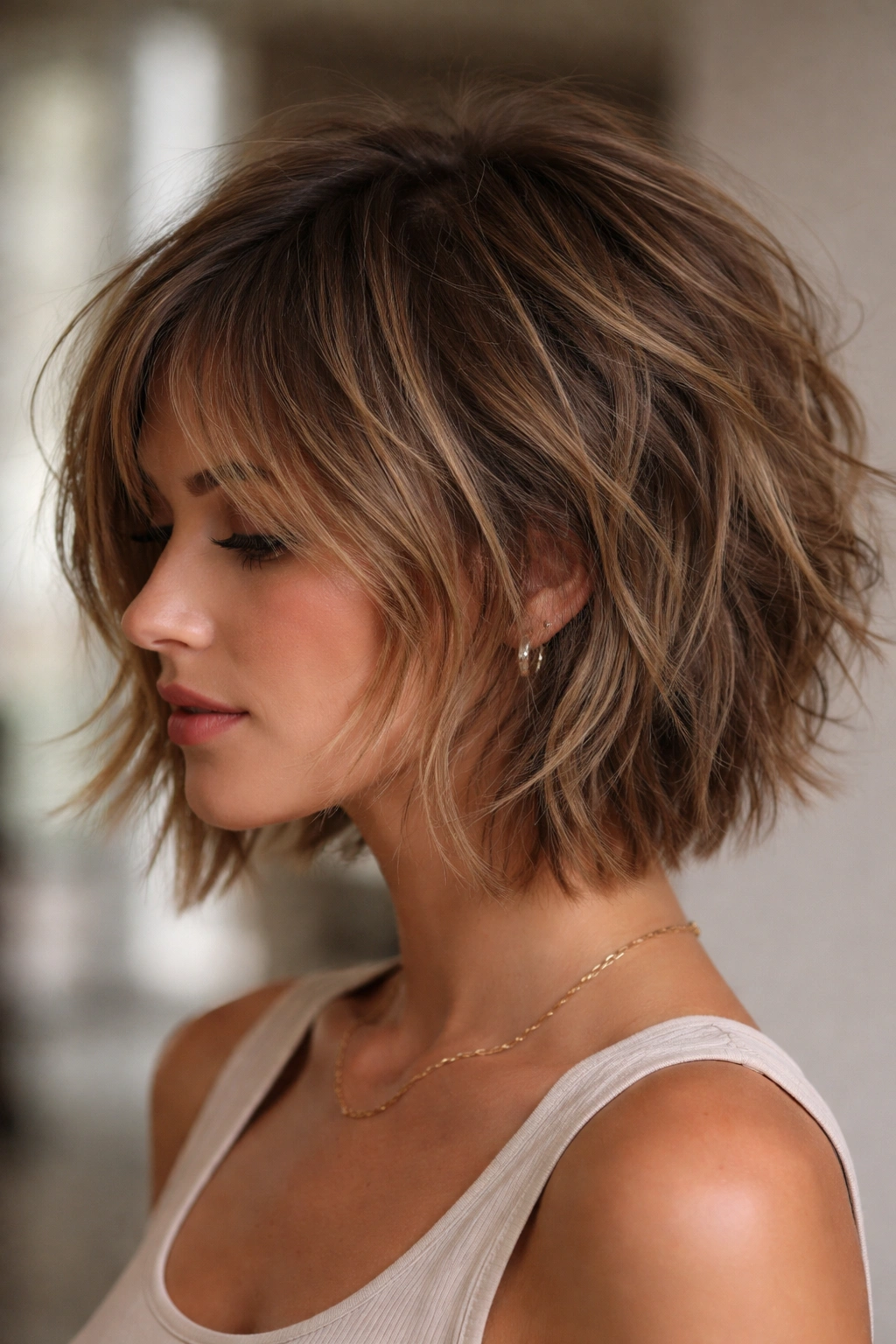
A shaggy bob combines the ease of shorter hair with the versatility of length — typically falling somewhere between chin and shoulder length with choppy, uneven layers throughout. The layers aren’t the delicate, blended kind; they’re deliberately disconnected and textured, creating a tousled, lived-in aesthetic that works perfectly for concealing cowlicks.
Why Shag Layers Make Cowlicks Disappear
A traditional blunt bob would make a cowlick painfully obvious because the line is too clean and uniform. But a shaggy bob’s entire purpose is to break up uniformity with choppy, varying lengths and directions. A cowlick that sticks up becomes just another piece of the shaggy texture rather than something that looks wrong.
What to Request When Getting a Shaggy Bob
- Ask for choppy layers throughout, not just subtle texture — the more visibly disconnected the pieces, the better for hiding a cowlick
- Request that the crown and the area around your cowlick get extra choppy layers to disperse any obvious lift
- Specify that you want a tousled, undone aesthetic rather than a more polished, blended look
- Layers should fall at different lengths so the eye has movement to follow rather than landing on any one spot
- The cut works best when you embrace the textured styling rather than trying to smooth everything into place
Worth knowing: This cut genuinely looks better the more you tousle it and the less you try to smooth it down. If you’re someone who likes a neater appearance, this might not be your best choice.
4. The Tousled Fringe Bangs
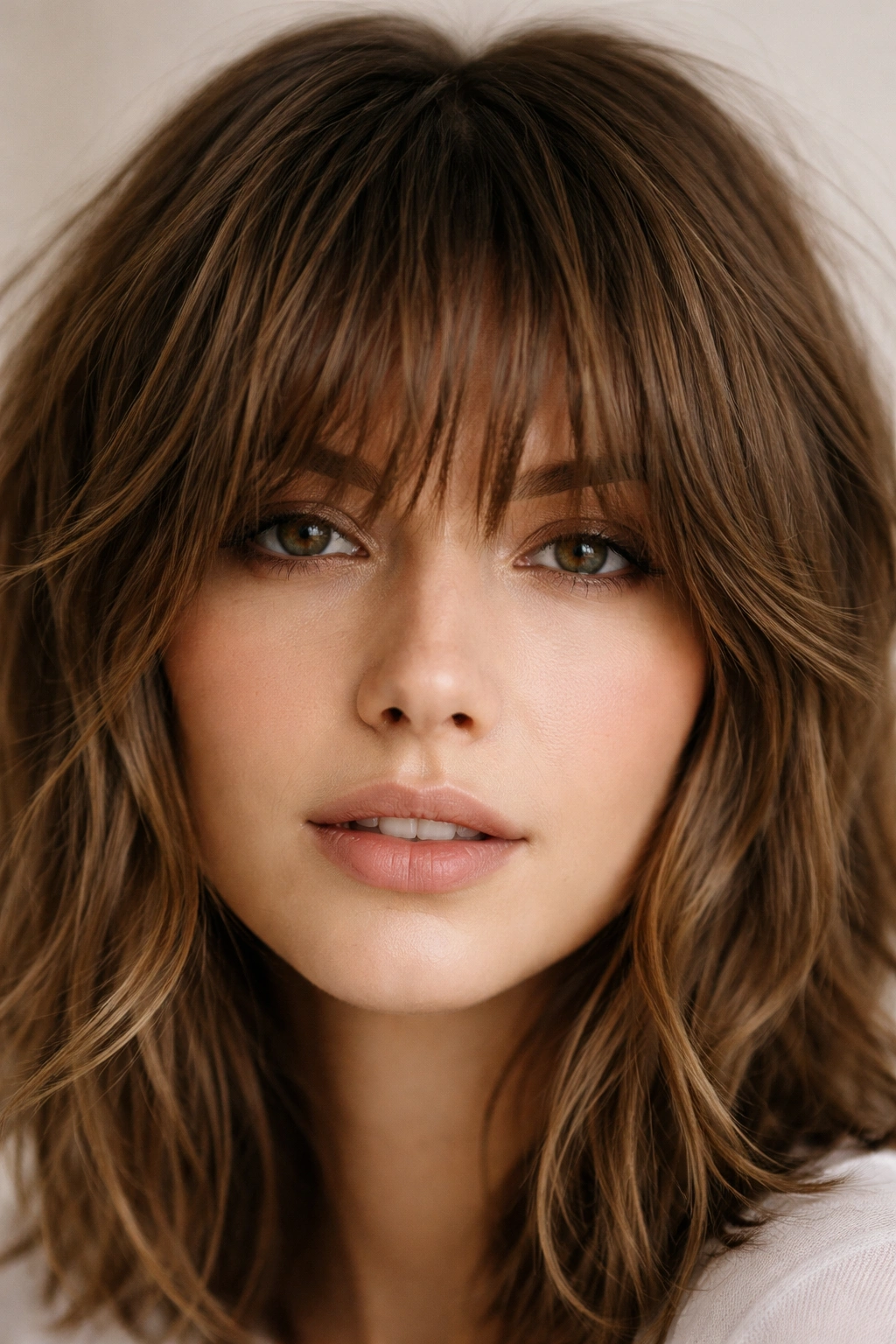
Adding choppy, textured fringe bangs to any length of hair is a strategic move that directs attention to the front of your face rather than the crown. Even if you keep the rest of your hair the same, introducing textured bangs with uneven layers creates visual interest in an area completely separate from where your cowlick lives.
How Bangs Redirect Focus Away From Crown Issues
Fringe bangs, especially ones with lots of texture and choppy layers, are inherently a high-attention focal point. When someone looks at your face, their eye goes to the fringe first. This pulls visual focus forward and away from the crown area entirely. Meanwhile, the textured, uneven nature of the bangs normalizes the idea that your hair should have movement and variation in all directions.
Styling and Maintenance Considerations
- Textured bangs work best with matching texture throughout the rest of your hair — otherwise the contrast might look intentional but disconnected
- This is a higher-maintenance style because bangs require regular trimming (roughly every 3 to 4 weeks)
- Bangs look best when styled with texture rather than blown smooth, which actually makes styling your cowlick easier since you’re creating movement anyway
- You can style bangs and crown together as one textured, tousled unit rather than trying to separate them
- This works at virtually any overall length as long as you have enough length on top for the bangs to have some presence
5. The Wavy Lob
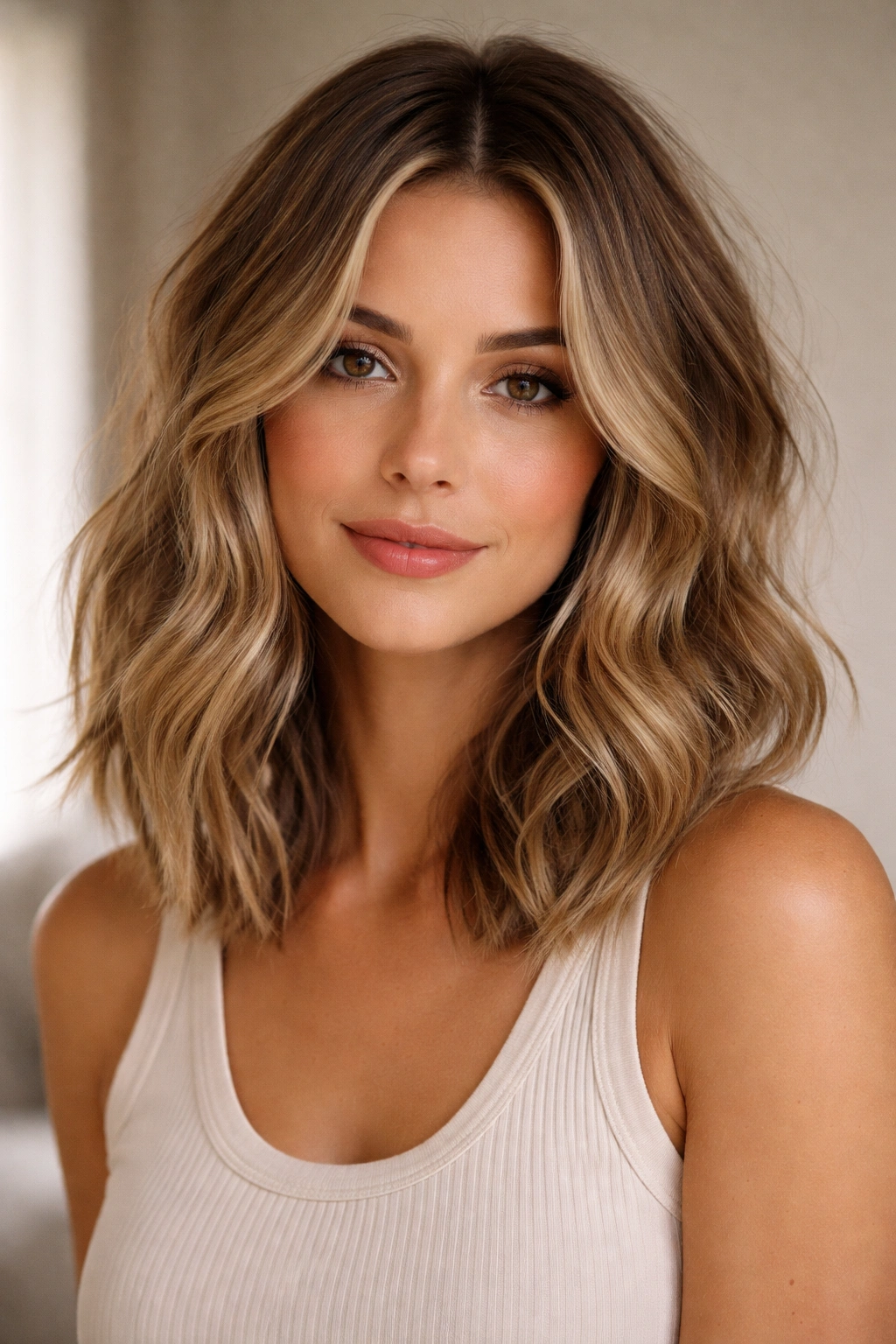
A lob (long bob, typically ending around shoulder length) takes advantage of a completely different principle: when your hair is long enough, it gains natural weight that can help anchor the cowlick area and minimize any upward lift. Combine that length with wave or curl, and you’ve created texture that breaks up the crown completely.
Why Length and Wave Neutralize Cowlicks
A straight lob would still show a cowlick because the hair would be smooth and the directional growth would be obvious. But a wavy lob creates an entirely different texture story. Waves and curls add volume and dimension across the entire crown, so a cowlick becomes just one piece of the overall curvy texture rather than a spot that stands out as wrong.
How to Achieve and Maintain the Wavy Look
- You can create waves with a curling iron or wand every time you style if you have naturally straight hair
- Alternatively, ask your stylist about a permanent wave or loose perm to give you natural wave texture that works for you
- Layers in a wavy lob should be choppy and disconnected to enhance the tousled feel rather than blended and subtle
- Styling with a texture spray, sea salt spray, or curl-enhancing product amplifies the wave and obscures the cowlick area
- The longer length also means the hair has weight, which naturally minimizes the upward lift of a cowlick
Real talk: This style requires more styling effort than a short crop or pixie, but the payoff is that your cowlick becomes virtually invisible when you’re wearing your hair wavy.
6. The Choppy Layers
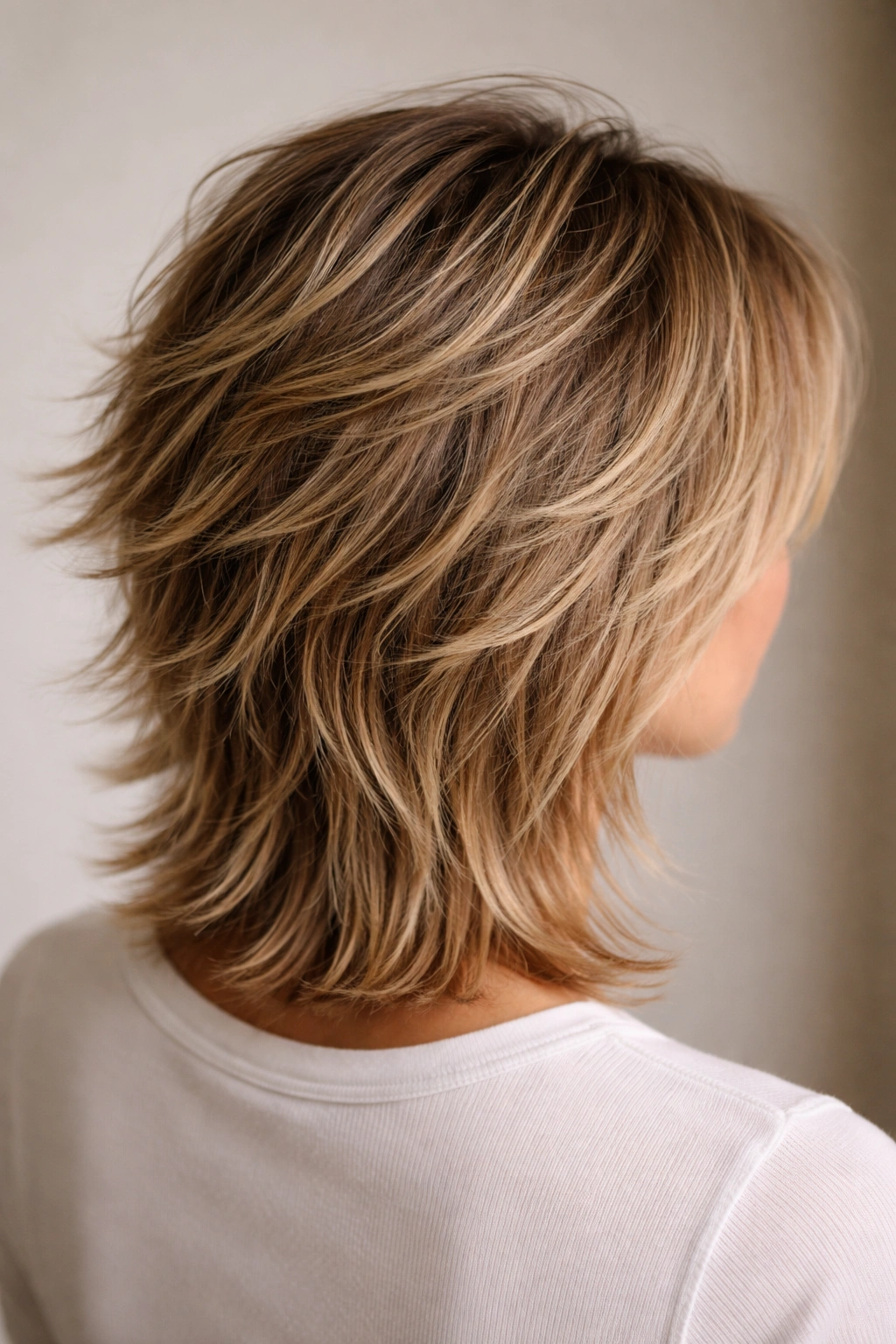
This is a style approach rather than a specific cut length — choppy, disconnected layers work at any length, but the key is making those layers truly choppy rather than blended. Each piece of hair should feel like it’s cut at a slightly different length and angle, creating a landscape of texture where a cowlick can hide.
The Difference Between Choppy and Blended Layers
Many people get layers, but if they’re blended smoothly from short to long, the overall effect is still fairly uniform and a cowlick will show. True choppy layers have visible separation and disconnection between pieces. When a stylist uses point-cutting or razor-cutting techniques to create this effect, you end up with hair that naturally falls in many different directions. A cowlick becomes part of that visual chaos rather than a problem.
Styling a Choppy-Layer Cut
- Use texture to your advantage — matte products, dry shampoo, texturizing sprays, and salt sprays all enhance choppy layers
- Avoid blow-drying perfectly smooth; instead, scrunch and tousle as you dry
- Sleeping on the layers naturally tousles them, which is exactly what you want
- You don’t need perfect styling every single day — the more undone the better for this cut
- The cowlick actually helps create the tousled texture you’re going for
Pro tip: When you get choppy layers, take photos of how your stylist styles them and ask exactly what products and techniques they use. That tousled texture is the whole point, so you want to recreate it.
7. The Modern Undercut
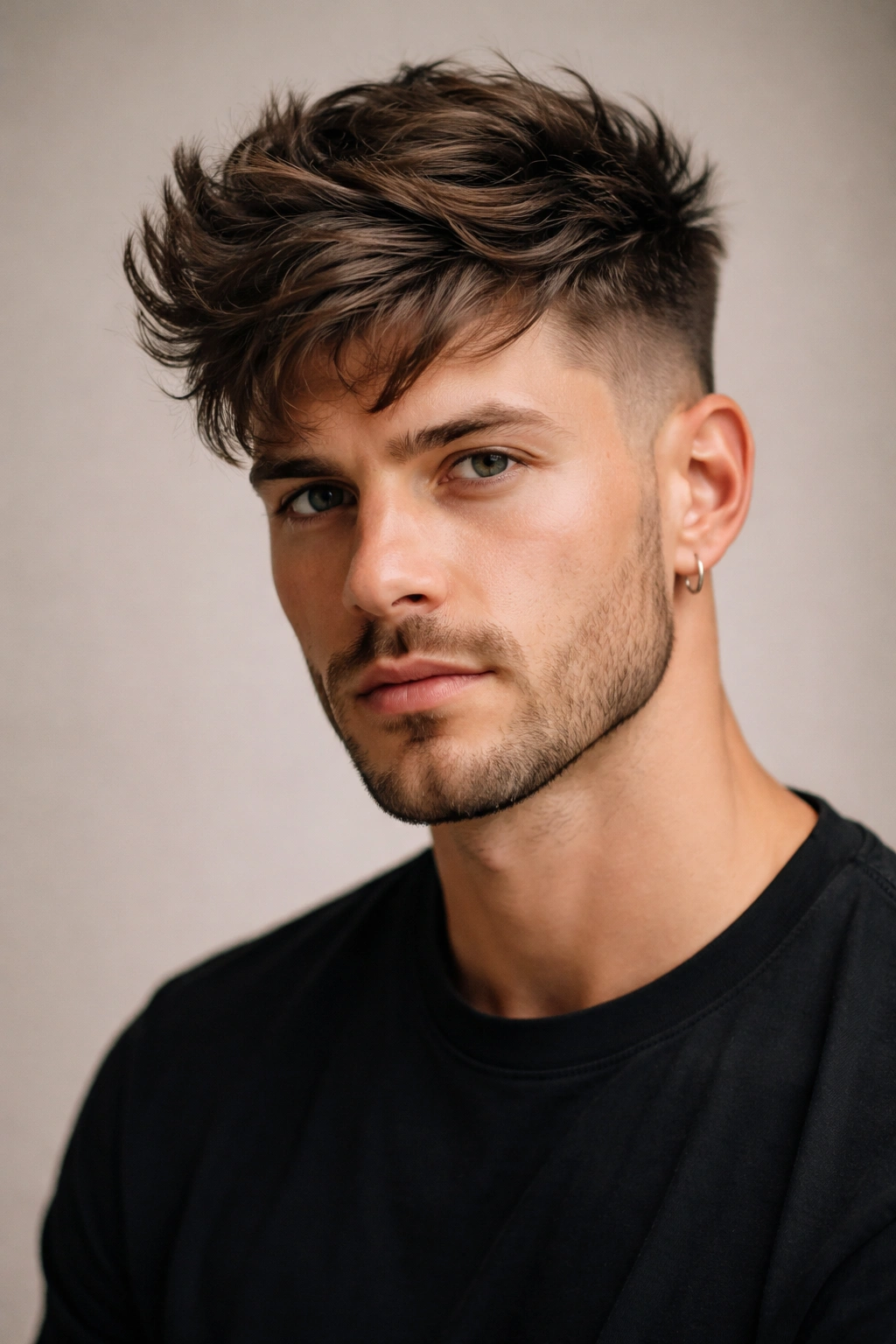
An undercut has longer hair on top with dramatically shorter hair on the sides and back — think of it as an extreme variation on a fade. The length on top gives you room to work with, and the contrast between the short sides and longer crown makes the overall look so visually striking that a cowlick becomes a non-issue.
Why Undercuts Handle Cowlicks With Style
The modern undercut is essentially a statement about intentional contrast and texture. The fact that you have longer hair on top that has texture and movement becomes the feature of the cut, not a problem to hide. A cowlick that might look disruptive in a uniform cut becomes part of the intentional texture and movement at the top.
Styling and Versatility Factors
- The longer hair on top can be styled with texture, waves, or even slicked back depending on your mood and the occasion
- An undercut can work at various lengths on top — from a longer pixie-like length (2 to 3 inches) all the way to a proper medium-length style
- The stark contrast of the undercut means your eye goes to the overall design rather than getting stuck on any single spot
- This style pairs well with textured styling products and actually looks better when you embrace some movement and texture
- Undercuts require maintenance because the sides need trimming every 3 to 4 weeks to maintain the clean contrast
8. The Textured Quiff
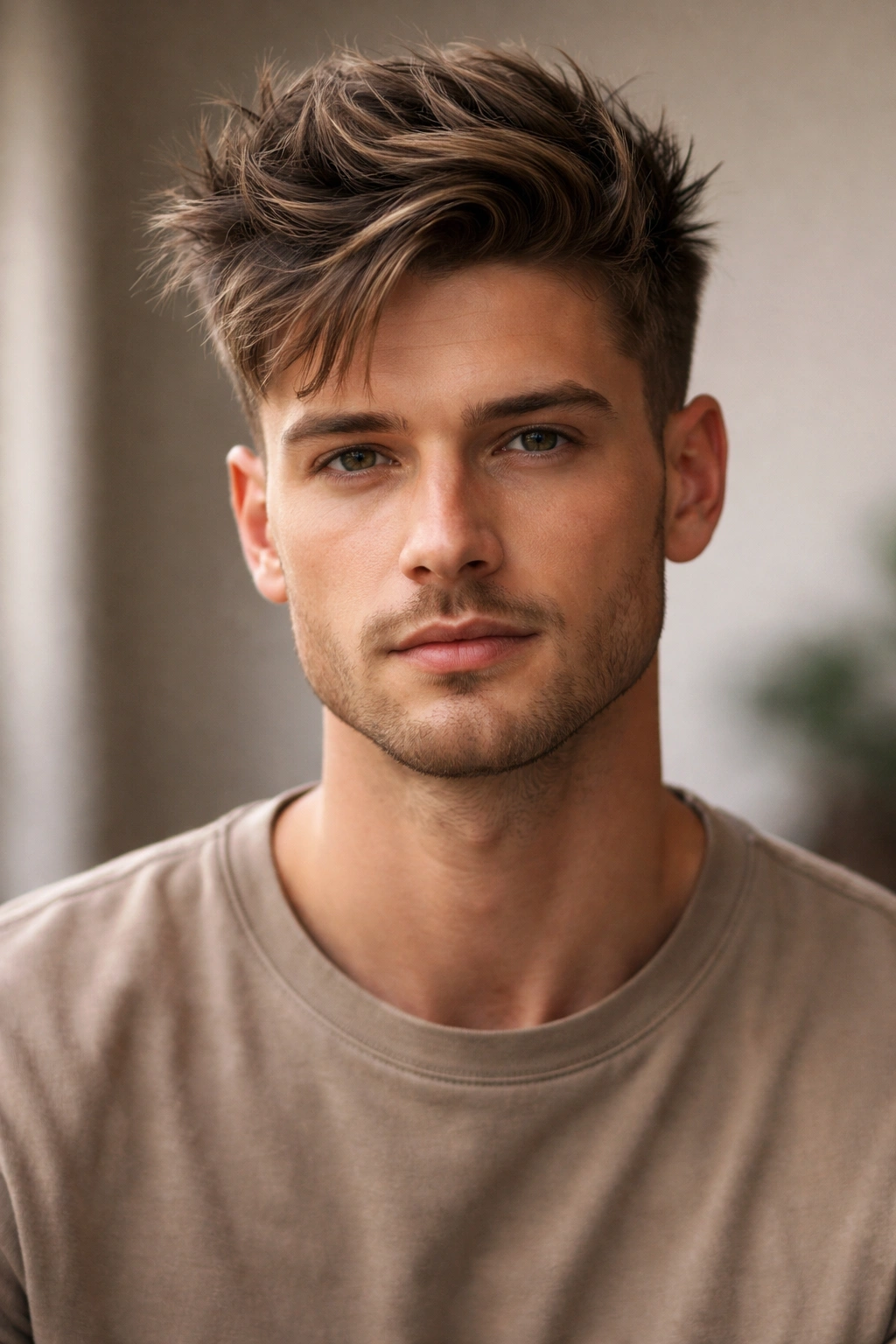
A quiff is similar to a textured crop but with deliberately longer hair on top that’s styled to have volume and height — typically 3 to 4 inches or longer on top with shorter sides. When you add choppy texture to this length, you get a style that’s both voluminous and textured in a way that obscures cowlicks completely.
How Volume and Texture Work Together to Hide Problem Areas
A quiff’s entire aesthetic is about deliberately creating height and volume on top. When you add choppy texture, you’re not trying to make that volume lay flat — you’re celebrating it and enhancing it. A cowlick that would fight against a smooth quiff becomes invisible when the whole style is about creating tousled, directional texture on top.
Styling a Textured Quiff for Daily Success
- Use a texture spray, dry shampoo, or styling clay to enhance the natural texture and create volume
- Blow-dry with your head tipped forward to build height, then style upward and back
- The longer hair on top gives you flexibility — you can slick it, tousle it, or angle it depending on your mood
- A textured quiff actually looks better when it’s slightly undone rather than perfectly neat, which works in your favor
- This style requires some daily styling effort, but it’s worth it for how completely the texture hides any cowlick
9. The Messy Bun-Friendly Length
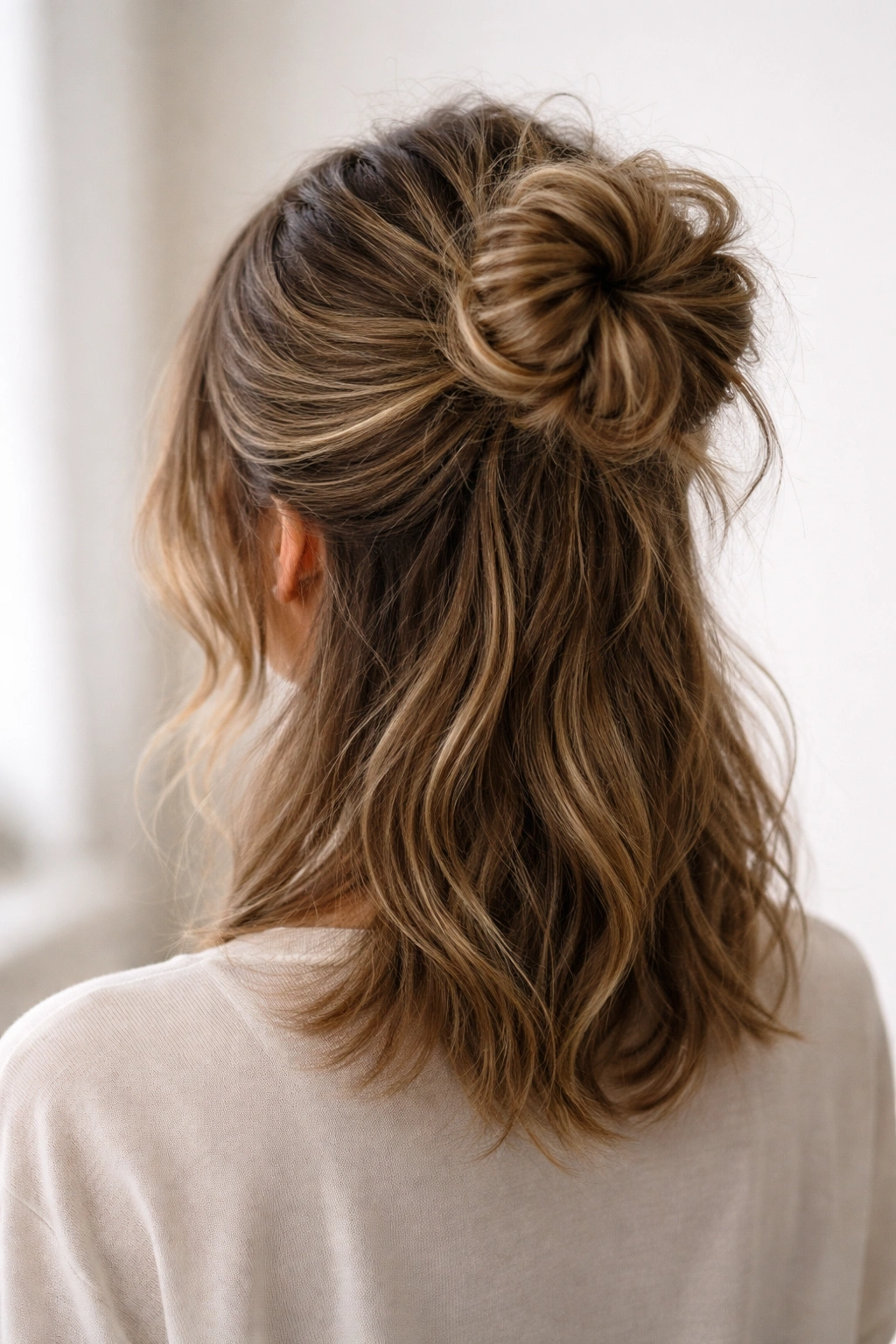
Longer hair — roughly shoulder-length or longer — opens up the possibility of wearing your hair in textured, messy buns or half-up styles. While your hair is down, length helps the cowlick blend. When you wear it up, the cowlick area is simply hidden under the bulk of the bun.
Why Length and Up-Styles Solve the Cowlick Problem Entirely
When you have shoulder-length or longer hair with some texture and layers, the length itself gives weight and anchor to your hair. A cowlick’s most obvious problem is when hair is short and stands up without anything to weigh it down. With length, that upward growth can be redirected or blended. And on days when you want a break from styling, a textured bun puts the whole problem out of sight.
Making This Approach Work in Practice
- Get choppy layers throughout the length to create texture that breaks up any obvious cowlick area
- When your hair is down, style with texture sprays or wave products to create movement that hides the cowlick
- For bun days, pull your hair back into a textured, intentionally undone bun that uses the choppy texture rather than fighting it
- Half-up styles work beautifully because the upper half of your hair is secured, leaving no room for the cowlick to show
- This style requires less daily effort because you have the option to change it up constantly
Worth knowing: This works best if you’re comfortable with somewhat longer hair. If you prefer shorter styles, this approach won’t solve your problem.
10. The Curly Perm Look
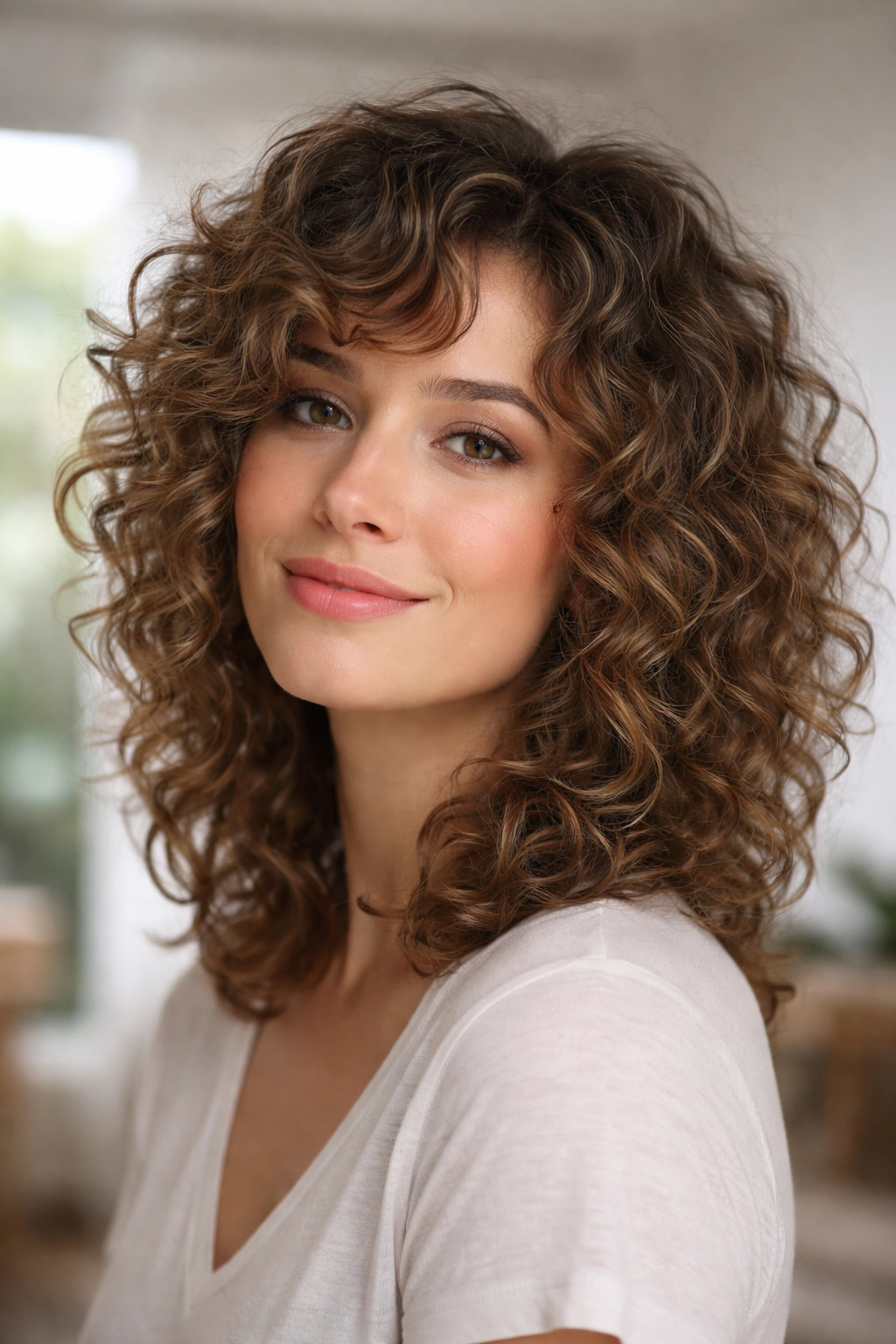
If you have naturally straight or wavy hair and you’re open to it, a loose permanent wave or body perm creates texture and curl that distributes across your entire head. Curly or wavy hair naturally has volume and directional texture everywhere, so a cowlick becomes one small part of the overall curl pattern rather than an obvious problem spot.
How Curl Texture Makes Cowlicks Invisible
Curls and waves add volume, texture, and directional variation to every part of your hair. A cowlick that’s obvious on straight hair becomes completely camouflaged when your entire head has that kind of texture and dimension. The curl pattern literally redistributes the hair in ways that hide the direct-growth nature of the cowlick.
Understanding Perm Maintenance and Styling
- A loose perm or body perm creates waves and texture without the tight ringlets of a traditional perm
- You’ll need to style with products designed for curly or wavy hair — typically leave-in conditioners, curl creams, or curl-defining gels
- Perms require touch-ups as your hair grows out, typically every 6 to 8 weeks depending on how fast your hair grows
- Curly hair often requires a different maintenance routine, including deep conditioning and avoiding certain brushing techniques
- Once you have the texture, styling becomes easier because you’re enhancing what’s already there rather than creating texture from scratch
Real talk: A perm is a chemical process that can affect hair health, so it’s important to go to an experienced stylist and commit to proper maintenance. But if you’re open to the process, it’s one of the most permanent solutions to the cowlick problem.
Final Thoughts
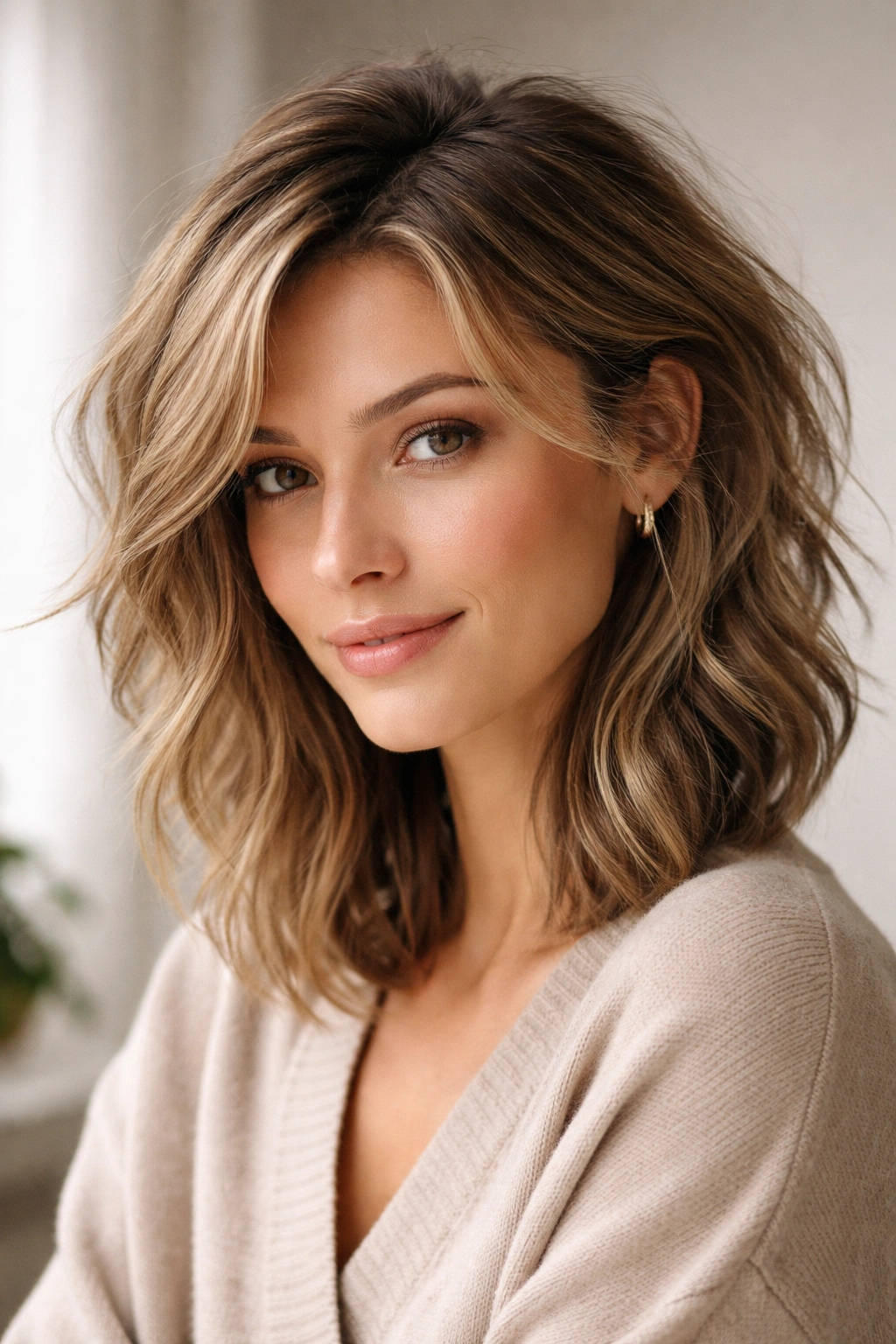
The cowlick you’ve been battling isn’t actually a flaw — it’s simply a growth pattern that needs the right cut strategy to become invisible. Every single style in this list works on the same fundamental principle: texture, layers, and movement that either hide the cowlick completely or blend it so seamlessly into the overall design that it stops being noticeable.
The best cut for you depends on how much styling effort you want to invest daily, how short or long you prefer your hair, and what kind of aesthetic appeals to you. A textured crop demands minimal daily fussing but is quite short. A wavy lob or longer layered cut requires more styling but gives you versatility and length. An undercut or quiff makes a statement and turns the potential problem into part of the intentional design.
Before you book your appointment, show your stylist photos of cuts that appeal to you and specifically mention where your cowlick is and how it’s been frustrating you. A skilled stylist will immediately understand how to cut around it, work with it, or use texture to make it disappear. You’re not limited to one solution — try one of these approaches, and if it doesn’t feel right, you can pivot to another. The point is that you now have real options, and your cowlick doesn’t have to define your haircut anymore.
