



The right hairstyle can transform how a blazer lands on you. While a well-fitted blazer communicates polish and intention, your hair either amplifies that message or undermines it. There’s something about the synergy between structured tailoring and intentional hair styling that creates an almost effortless elevation—like you’ve put real thought into how all the pieces work together rather than just grabbing whatever’s easiest.
Most people focus obsessively on finding the perfect blazer but give almost no attention to how their hair coordinates with it. Yet this pairing matters far more than most realize. A blazer worn with limp, flat hair or a casual messy bun reads as “I threw this together,” while the exact same blazer worn with deliberately styled hair reads as “I’m put-together and know what I’m doing.” The difference isn’t dramatic, but it’s undeniable.
The best blazer hairstyles share a common thread: they create intentionality through either sleekness, volume, or defined structure. They complement the clean lines of tailoring without competing for attention. Some styles enhance a professional aesthetic, others add unexpected interest that prevents the outfit from feeling stuffy, and a few strike that perfect balance between polished and approachable. The key is choosing a style that matches both the formality level of your blazer and the overall vibe you’re going for.
1. Sleek Low Bun
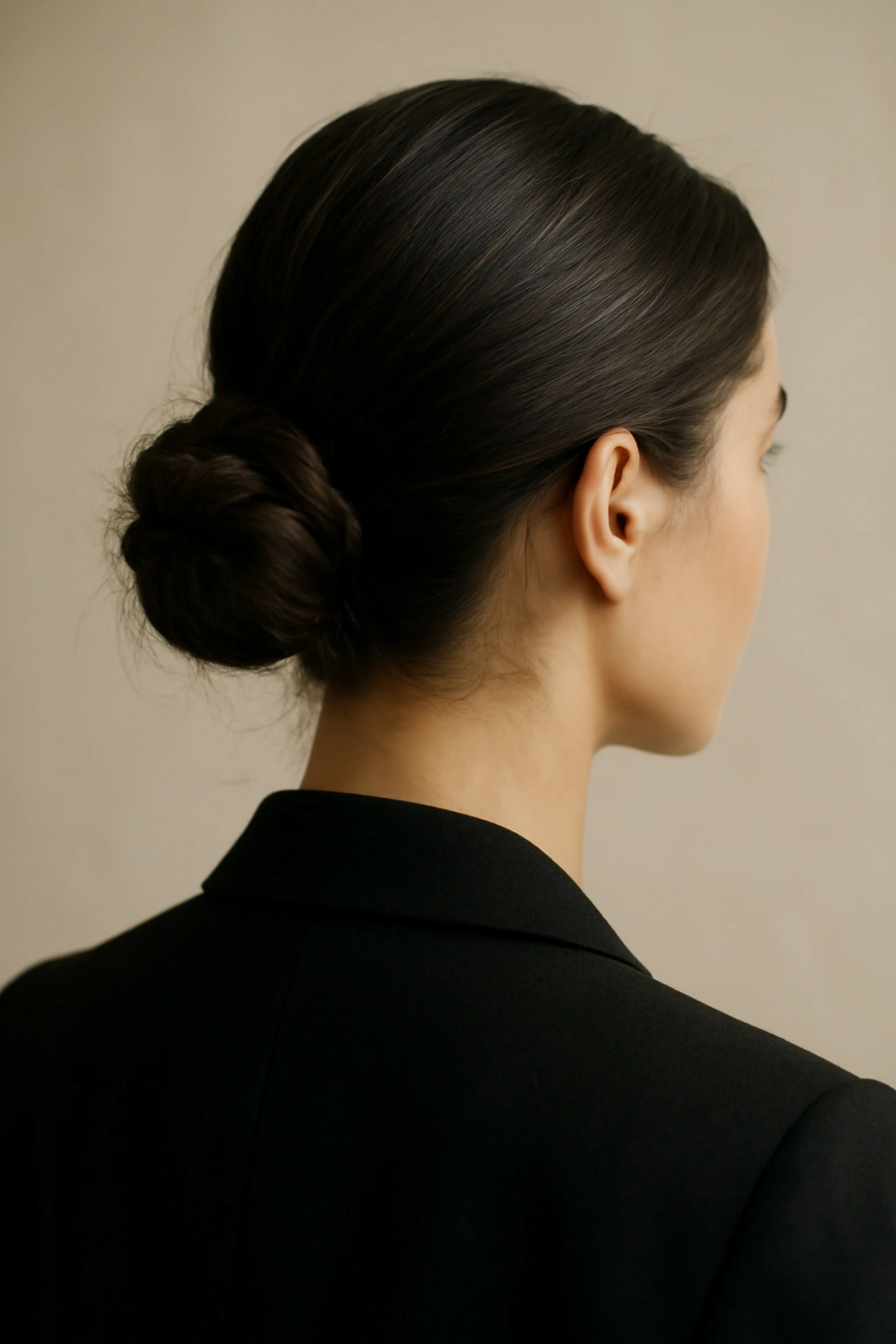
A low bun is the hairstyle equivalent of a perfect blazer—it works in almost every context because it nails the fundamentals of polish without trying too hard. The simplicity is deceptive; there’s actually a technique difference between a bun that looks intentional and one that looks like you just twisted your hair up because you didn’t have time to style it.
Why It’s the Perfect Blazer Match
The low bun complements blazer outfits because it creates a clean vertical line from the back of your head down your neck, which emphasizes the sharp shoulders of your jacket. There’s no competing texture or volume drawing attention away from the tailoring. The style reads as composed and deliberate without being overdone, which means it works equally well with a sharp power blazer or a softer, more relaxed cut. It also keeps your face visible and your neckline clear, so any details on the blazer—whether that’s interesting lapels, a specific fabric, or layered pieces underneath—still take center stage.
How to Build the Perfect Low Bun
- Start with textured hair: Slightly messy, undone texture looks more intentional than perfectly smooth hair. Apply dry shampoo the night before, or use a texturizing spray on day-of hair.
- Position at the nape of your neck: Not quite at the very base of your skull, but low enough that it feels part of the overall sleek silhouette.
- Use a strong hold product: Gel or pomade helps ensure pieces don’t fall out throughout the day, which matters if you’re going for deliberately polished rather than casual.
- Leave a few face-framing pieces loose: Two or three small sections around your face prevent the style from feeling severe or overly formal, adding a touch of softness that keeps the whole look approachable.
- Twist tightly before pinning: The tighter you twist the hair before wrapping it around the base, the more stable and sculpted the bun will look—which is the whole point.
Pro tip: A low bun works with almost every blazer length, but it’s particularly striking with cropped or fitted blazers because it creates an elongating vertical line. With an oversized blazer, the same style feels less connected to the overall silhouette.
2. Soft Waves
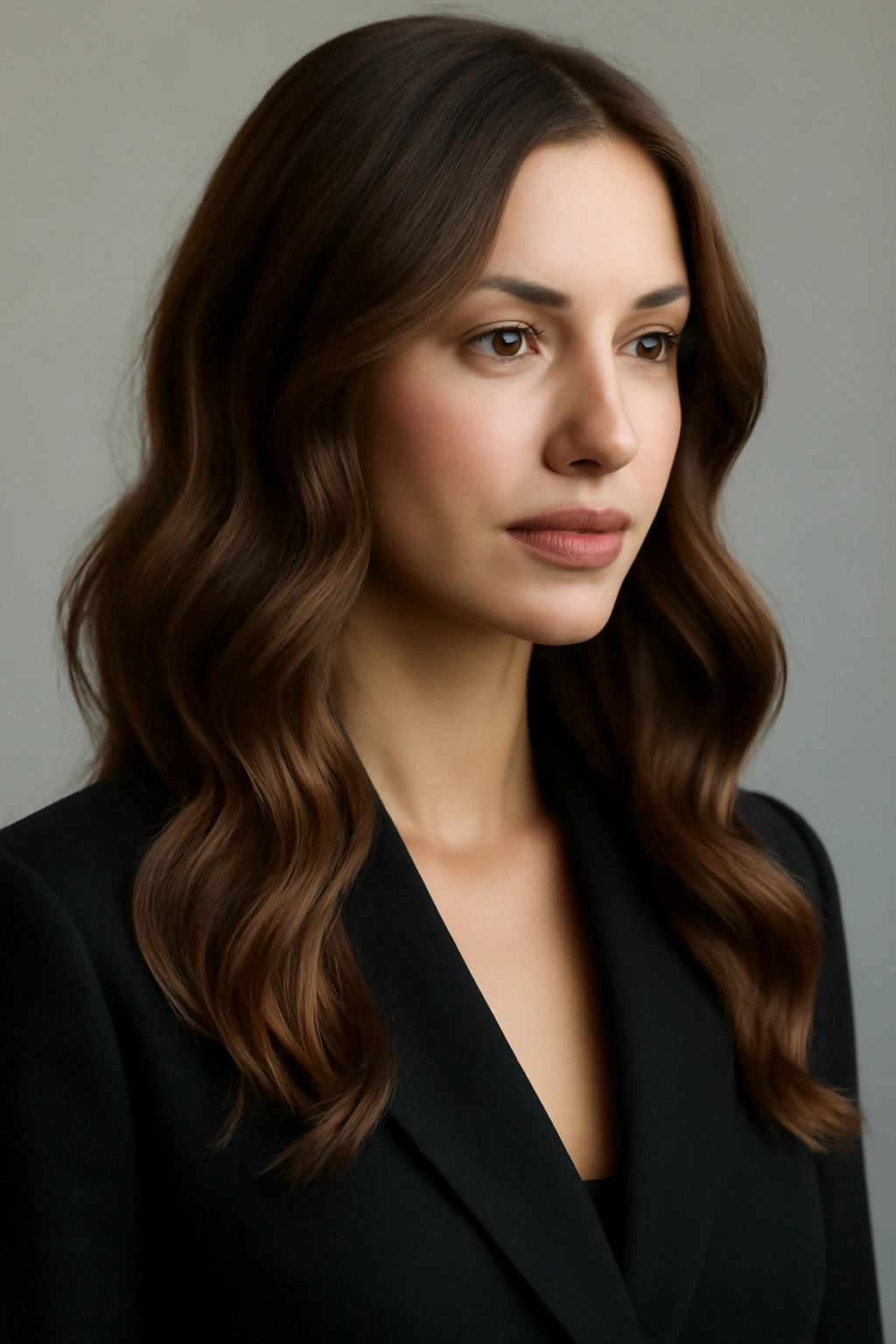
If you want to pair a blazer with something that feels a bit more approachable and less strictly corporate, soft waves are your answer. They add movement and femininity without looking unprofessional, which means they work brilliantly when you want your blazer outfit to feel styled rather than uniform-like.
The Science of Cascading Movement
Soft waves create an interesting contrast with structured blazers—the rigidity of tailoring is softened by the organic movement of your hair. This works especially well if your blazer is a neutral color or classic cut, because the waves become the unexpected detail that makes the outfit feel intentional rather than default. The beauty is that waves work with nearly every hair type and length; they just require slightly different techniques to achieve.
Techniques Based on Your Hair Type
- Fine or thin hair: Use a 1.25-inch curling iron and wrap smaller sections around the barrel, holding for fewer seconds. This creates definition without weighing hair down. Pin curls to a cool clamp while you finish styling everything else.
- Medium or thick hair: A 1.5-inch iron or wand works best. Wrap full sections and hold for 8-10 seconds. The extra texture in your hair holds the wave naturally.
- Textured or curly hair: Waves are often already present—you’re just defining and directing them. Use a leave-in conditioner and a light-hold spray to encourage the wave pattern without frizz.
- For maximum longevity: Mist finished waves with a flexible hold hairspray (not a crunchy one) and let them cool completely before running your fingers through them, which sets the wave pattern.
Worth knowing: The waves read differently depending on where you part your hair. A deep side part with waves feels more date-night, while a center part with waves feels more polished-and-modern. Consider which matches the formality level of your event.
3. Structured High Ponytail
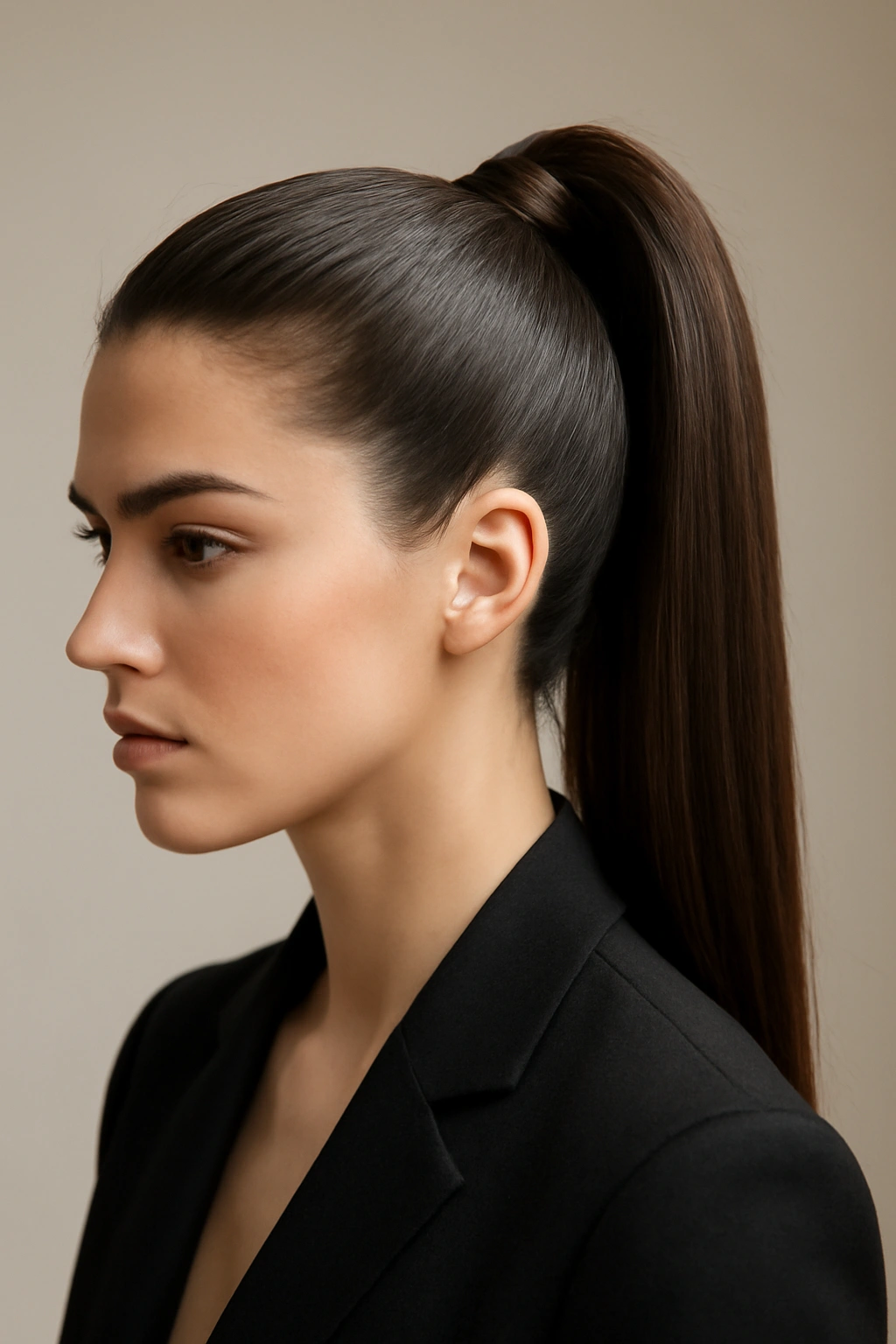
A high ponytail pairs with blazers in a way that might surprise you—it’s often considered too casual or gym-adjacent, but when executed with intention, it’s actually quite sophisticated. The trick is making it feel deliberate rather than functional, which changes everything about how it reads.
Why High Is Better Than Low With Tailored Pieces
A high ponytail creates visual lift that works against the shoulders of a blazer, which might initially seem like it could clash. But here’s what actually happens: the lifted hair creates a top-heavy silhouette that makes broad blazer shoulders feel proportional rather than overwhelming. It also keeps the entire back of your neck and shoulders visible, which means your blazer’s back seams and any layering underneath still register. The style says “I have space in my life for style details” rather than “I’m practical to a fault.”
Execution That Elevates Rather Than Compromises
- Position at crown height: Not directly on top of your head, but high enough that there’s visible distance between where your hair ties off and the base of your skull.
- Use a weighted elastic or silk scrunchie: Thin elastics can look cheap and slip throughout the day. A silk scrunchie is worth the investment because it doesn’t create a visible crease and holds more securely.
- Smooth the front completely: Use a firm-hold gel or pomade on your hairline and temples. Any flyaways or loose texture in the front undercuts the polish you’re building.
- Add subtle volume at the base: Tease gently at the crown before securing the ponytail, which gives the base some lift and prevents it from looking flat or plastered down.
- Wrap a small section around the elastic: Take a small piece of hair from the ponytail and wrap it around the base of the elastic, securing with a bobby pin. This disguises the elastic and makes the whole style look more refined.
Insider note: A high ponytail paired with a cropped blazer creates an incredibly polished silhouette. With a longer or oversized blazer, the same hairstyle can feel slightly unbalanced because the proportions shift.
4. Textured Lob
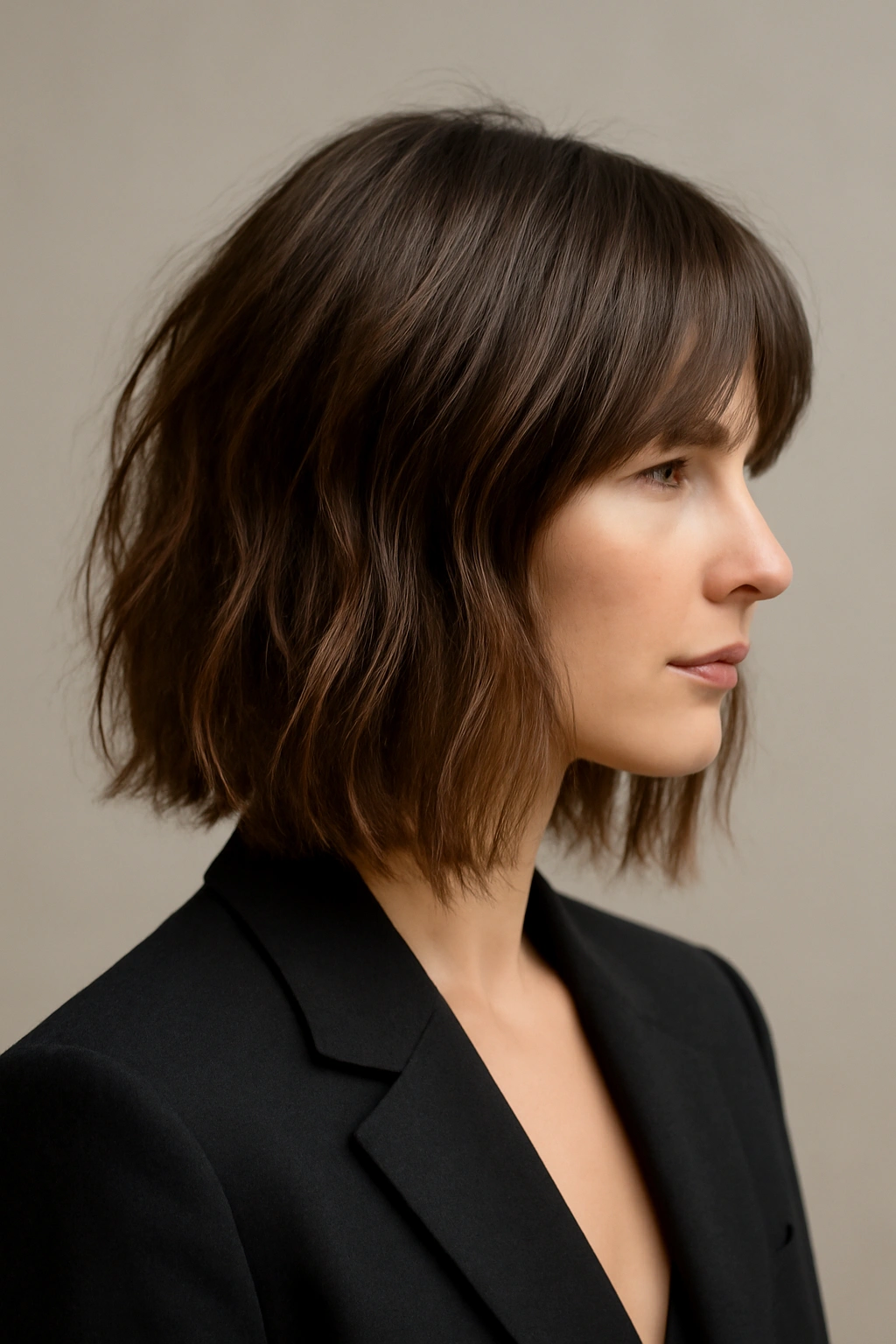
A lob—that shoulder-length sweet spot between a bob and longer hair—becomes genuinely strategic when paired with a blazer. The length is perfect because it sits right at the level where your blazer’s shoulder seam hits, which means the hair and jacket create one continuous silhouette rather than competing elements.
Why Length Matters With Structured Blazers
A lob gives you several advantages: it’s long enough to drape nicely and create movement, but short enough that it never feels limp or weighed down. The style reads as intentional rather than default, especially if it’s cut with texture and layers. With a blazer, a textured lob creates a polished-but-relaxed vibe that suggests you care about how you look without broadcasting that you spent hours on it. The shoulder-length hit is also incredibly flattering with most face shapes and body proportions.
Building Texture Into Your Lob
- Ask for choppy layers: Blunt bobs can look severe with structured jackets, but layers create movement that softens the overall silhouette. Aim for layers starting around your ear, increasing in length as you go down.
- Enhance texture with product: A texturizing spray or salt spray on slightly damp hair creates organic movement before you even blow-dry. This is your secret to the “I woke up like this” texture that actually requires intention.
- Blow-dry with movement: Don’t aim for smooth and straight. Use a round brush to create subtle waves, or rough-dry with your head tilted to one side, which distributes texture naturally.
- One side slightly shorter: A micro-asymmetry—just a quarter inch difference in length on one side—adds unexpected interest that prevents the style from feeling basic.
- Daily refresh trick: Damp your hair slightly with a spray bottle, apply texturizing spray, and rough-dry with your fingers. This reactivates the texture without needing to restyle from scratch.
Pro tip: A textured lob works beautifully with a blazer in a contrasting texture—say, a smooth silk blazer paired with textured hair, or a structured wool blazer paired with bouncy waves. The textural contrast creates visual interest.
5. Deep Side Part
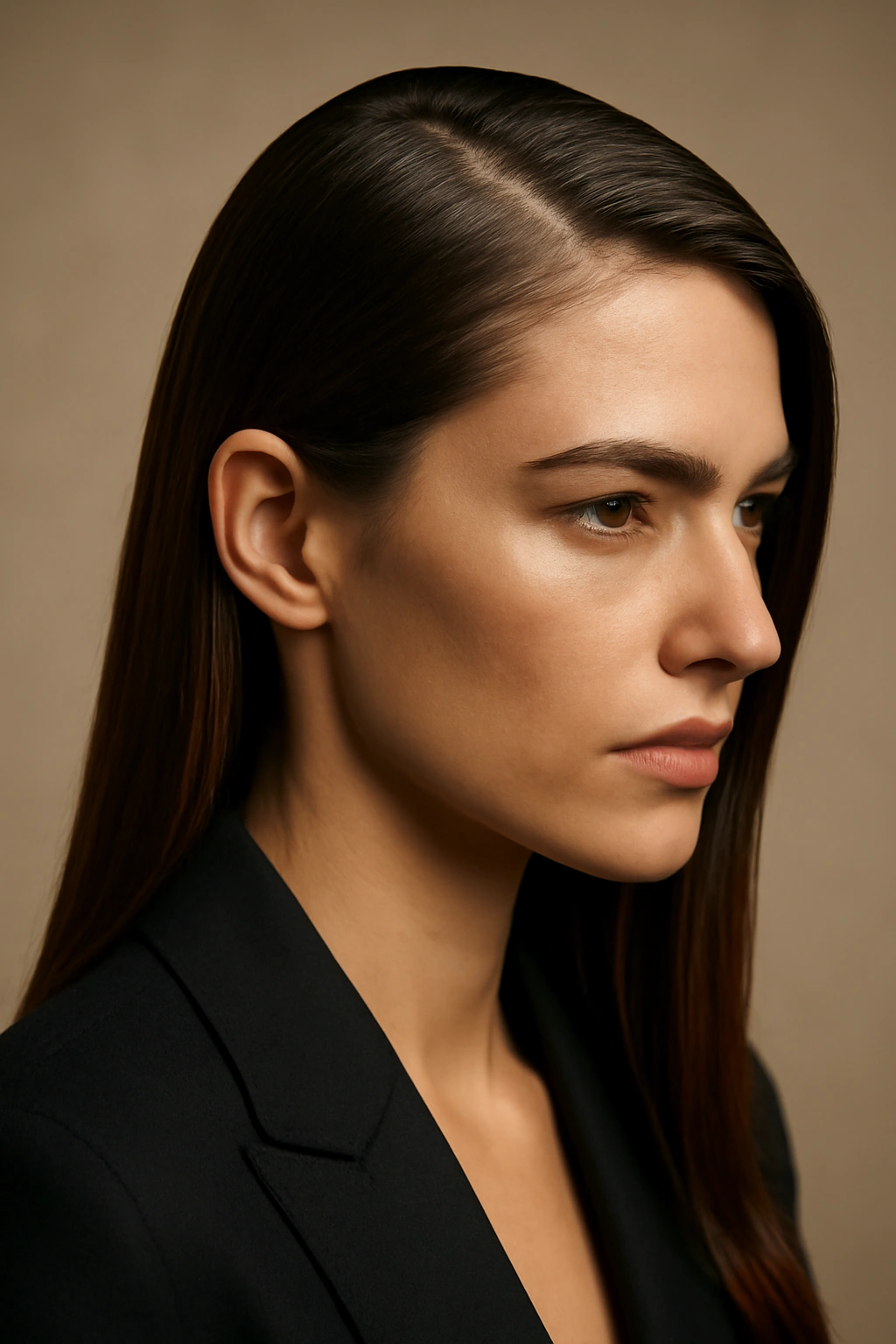
A deep side part is arguably the most underrated hairstyle for blazer outfits. It’s simple—just a matter of where you’re parting your hair—but the impact is genuinely significant. A deep side part automatically reads as more polished and intentional than a center part, and it creates asymmetry that prevents blazer outfits from feeling too buttoned-up.
The Psychology of Asymmetry
When you wear a blazer—which is inherently symmetrical in its tailoring—pairing it with an asymmetrical hairstyle creates balance. A deep side part does this instantly. It also draws attention to one side of your face, which can be flattering depending on which side you favor. More importantly, it’s one of the easiest ways to take an outfit from looking like you’re following a formula to looking like you made thoughtful choices about how everything works together.
How to Create a Deep Part That Lasts
- Start with dry hair or very slightly damp hair: Working with completely wet hair makes the part less likely to hold, and completely dry hair can be resistant. Damp is the sweet spot.
- Use a fine-tooth comb or old-fashioned rattail comb: These create a precise, defined line far better than your fingers alone. Make the line clear and deliberate.
- Part at least three inches to one side: A wimpy quarter-inch over doesn’t count. A true deep part is at least 25-30% of your hair on one side, with the majority on the other.
- Secure with a light-hold spray: This locks the part in place without making hair feel stiff. Avoid heavy products that can flatten your hair.
- Brush hair away from the smaller section: Direct the smaller section smoothly behind your ear if you want a polished look, or sweep it back loosely if you prefer something less formal.
Worth knowing: A deep side part works better with some blazer necklines than others. With a V-neck or open collar, the asymmetry of the part complements the asymmetrical neckline. With a high collar or turtleneck, a center part often feels more balanced.
6. Slicked-Back Undercut
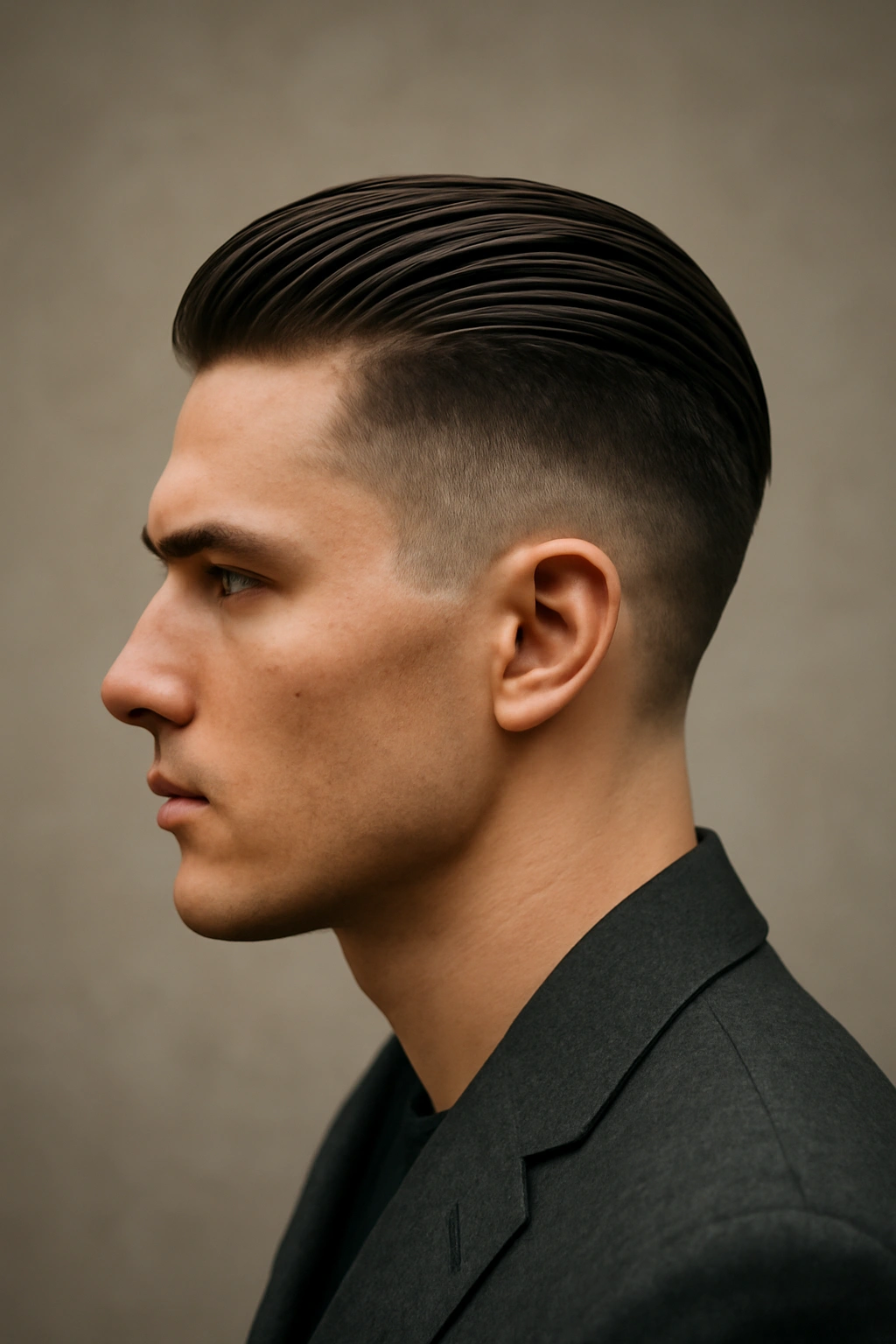
An undercut combined with slicked-back hair creates an intentional, almost editorial look that makes a blazer outfit feel high-fashion and deliberate. This style requires commitment and upkeep—it’s not for someone who wants a quick-and-easy hairstyle—but the payoff is that you’ll look like you’ve put genuine thought into your entire appearance.
Why Undercuts Complement Tailoring
A slicked-back undercut creates clean, strong lines that mirror the structural precision of a well-fitted blazer. There’s a visual alignment between the sharp definition of the undercut and the sharp tailoring of the jacket. The style also demands a sleek, polished finish on top, which means your hair becomes part of the overall sculptural silhouette rather than an afterthought. This works particularly well with blazers that have architectural details—interesting lapels, unusual closures, or unexpected proportions.
Maintaining an Undercut for Consistent Results
- Schedule touch-ups every 4-6 weeks: Undercuts require maintenance because the fade needs to stay crisp. As it grows out, the whole effect softens and looks less intentional.
- Use a strong-hold pomade or gel on top: Slicked-back means genuinely slicked—not just wet-looking. A firm pomade or gel designed for men’s styling often works better than traditional women’s products because it holds through movement and time.
- Apply while hair is damp, not wet: Towel-dry your hair first, then apply the product and comb or slick back with your fingers. Completely wet hair will break the hold throughout the day.
- Use a brush or comb to direct: A firm brush creates a smoother, more polished finish than fingers alone, especially if you’re going for ultra-sleek.
- Finish with a flexible hold spray: This prevents the pomade from flaking while keeping the slick appearance intact.
Pro tip: An undercut looks most striking with shorter hair on top (an inch or less), but you can also do a textured version where the top has some length and texture while the sides are undercut. This feels slightly less severe while maintaining the visual impact.
7. Braided Crown
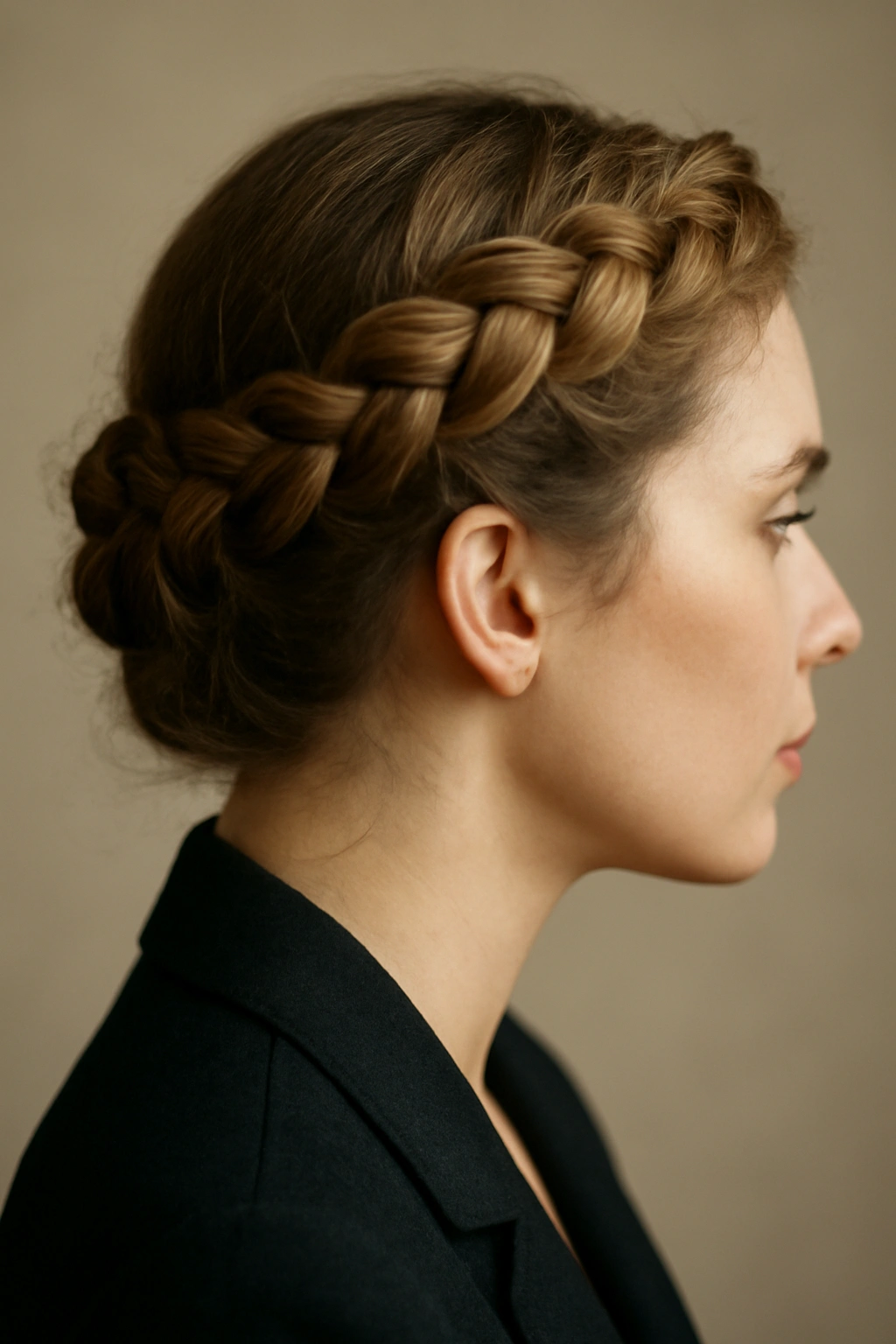
A braided crown—where a braid or multiple braids wrap around the top of your head like a halo—adds an element of craft and intentionality that elevates any blazer outfit. The style bridges the gap between polished and interesting, which is exactly where you want to be with structured tailoring.
The Sophistication of Braided Detail
A braided crown works with blazers because it adds texture and visual interest to the crown area without creating volume or mess. The style reads as deliberate and considered, but not overdone. It also adds a subtle feminine quality that prevents a blazer outfit from tipping into masculine-leaning territory, which is helpful if you’re aiming for balanced femininity. The craft involved in executing the style signals that you’ve put energy into your appearance, and that attention to detail extends to how others perceive your overall presentation.
Building a Braided Crown
- Start with textured hair: Completely smooth, slick hair is harder to braid because the sections slip. Use dry shampoo or texturizing spray beforehand to give your hair grip.
- Create a Dutch or French braid: A Dutch braid (where you cross sections underneath rather than over) looks more elegant and sits flatter against the head, which matters with the structure of a blazer. Start the braid above one ear.
- Wrap around and secure at the other ear: The most balanced look is a braid that starts on one side and wraps to the other, pinned where it ends. This creates an even, intentional frame for your face.
- Loosen the braid slightly after pinning: Gently pull sections of the braid to create texture and softness. An overly tight braid can look severe; a slightly loosened braid looks relaxed and intentional.
- Pin with bobby pins that match your hair color: This sounds small, but visible bobby pins break the clean line of the crown. Match the pin color to your hair, and anchor multiple pins so nothing shifts throughout the day.
Insider note: A braided crown works beautifully with blazers in jewel tones or interesting textures because it adds craft without competing for attention. With a basic black or white blazer, the braid becomes a standout detail that justifies the effort required to create it.
8. Voluminous Blow-Out
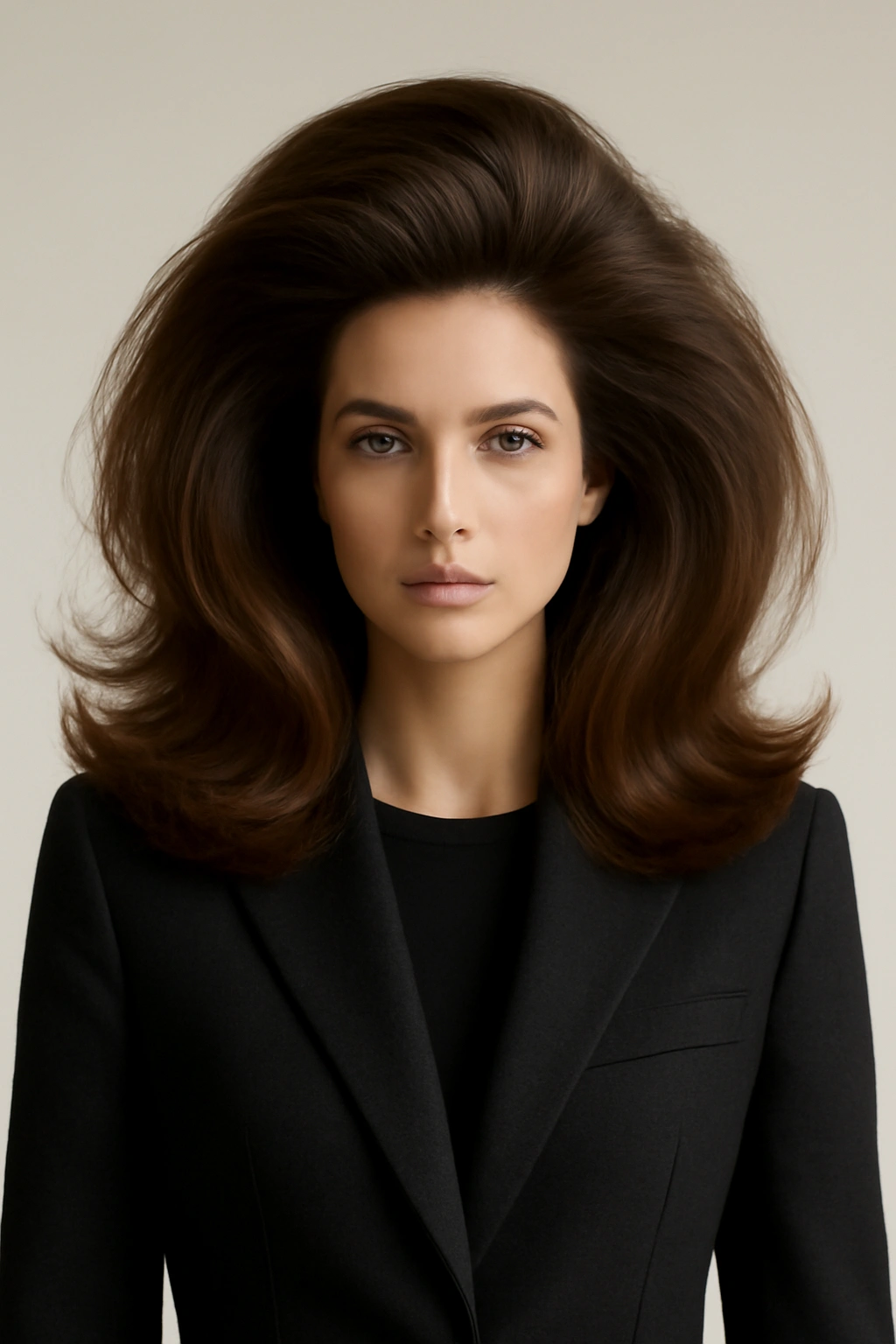
A full, voluminous blow-out is the most approachable way to add polish to a blazer outfit if you don’t want to commit to a specific style like a bun or ponytail. The volume creates lift and presence that makes you read as confident and intentional, and the style works with almost every face shape and feature.
Why Volume Works Against Structured Tailoring
A blazer, especially a well-fitted one, can sometimes flatten your overall silhouette if your hair is limp or flat. Volume at the crown and through the lengths counteracts this by creating an almost architectural quality to your hair—it takes up space and presence in a way that balances the structured geometry of a jacket. The style also suggests care and effort without looking like you’re trying too hard, which is the sweet spot for most blazer outfits.
Creating a Blow-Out That Lasts
- Start with the right foundation: Use a volumizing mousse or thickening spray on damp hair, focusing on the roots and crown area before blow-drying. This gives your hair body from the inside out.
- Blow-dry against the grain: Direct your hair opposite to how it naturally falls. If your hair naturally falls to the right, blow-dry sections toward the left. This creates lift that lasts longer than going with the grain.
- Use a round brush on the crown: The round brush creates natural waves while simultaneously lifting and directing hair upward. This is where most of your volume should concentrate.
- Rough-dry the underneath sections: Don’t smooth everything perfectly with the brush. Rough-dry the lower sections with your fingers or a paddle brush to create texture that holds the volume.
- Finish with a volumizing spray or mousse: A light mist of volumizing spray locks the style in place without weighing hair down. Apply to the crown and mid-lengths, not the ends.
Worth knowing: A blow-out reads differently depending on whether it’s sleek or textured. A sleek blow-out feels more formal and works better for events; a textured blow-out feels more everyday and works better for regular blazer wear.
9. Half-Up Half-Down
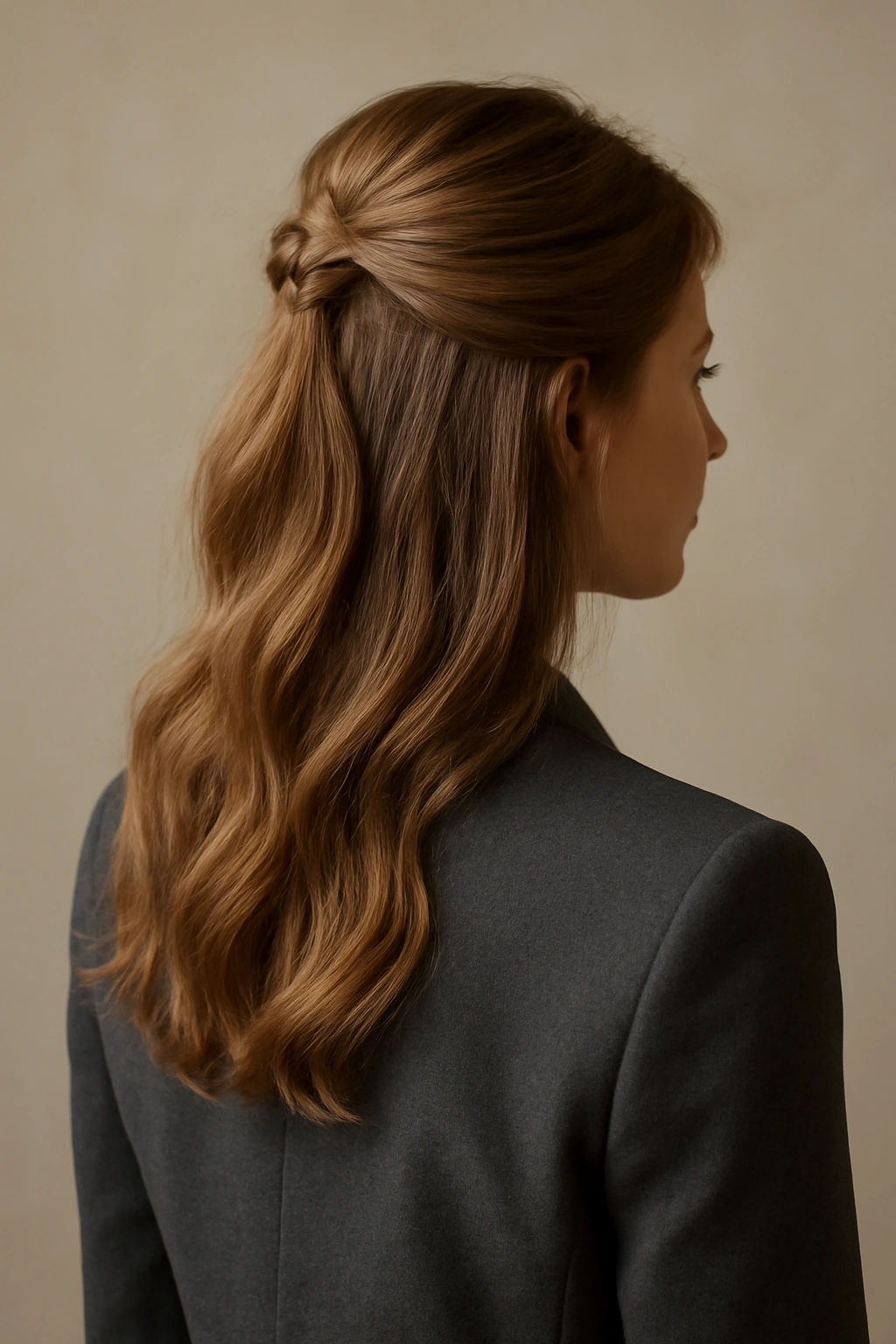
A half-up half-down style splits the difference between putting your hair up and wearing it down, which makes it perfect for occasions where a blazer outfit needs to feel polished but not overly formal. The style also works with almost every hair length and texture, making it one of the most versatile options.
Balancing Formality and Approachability
Half-up hair with a blazer reads as thoughtful without being stiff. You’ve clearly put effort into your appearance—you’ve secured part of your hair and created intentional styling—but you’re not committing to the full polish of an updo. This balance works particularly well with blazers that already feel formal or structured; the half-up style softens the overall impression without undermining the polish.
Executing a Polished Half-Up
- Section from ear to ear: Take a section from one ear, up and over the crown, to the other ear. This should be roughly the top 40% of your hair—not so little that it looks like you barely grabbed anything, not so much that it reads as almost all pulled up.
- Tease at the crown: Gently backcomb the section at the crown area before pulling it back. This creates texture and ensures the style holds without feeling slick or flattened.
- Create a low twist or braid: Rather than just pulling straight back, twist the section or create a loose braid. This adds intentionality and craft that makes the style feel more deliberately styled.
- Secure with bobby pins and finish: Use bobby pins that match your hair color, and anchor multiple pins behind where you’ve twisted or braided. Finish with a light-hold spray.
- Leave the bottom section to your shoulders: The hair that isn’t pulled back should have texture and movement. Waves or loose curls work beautifully; perfectly straight hair can look a bit flat in contrast to the pulled-back section.
Pro tip: A half-up half-down works especially well with blazers that have interesting back details or unexpected back seams, because the half-up approach reveals your neck and back while still incorporating styling intentionality.
10. Minimalist Bob
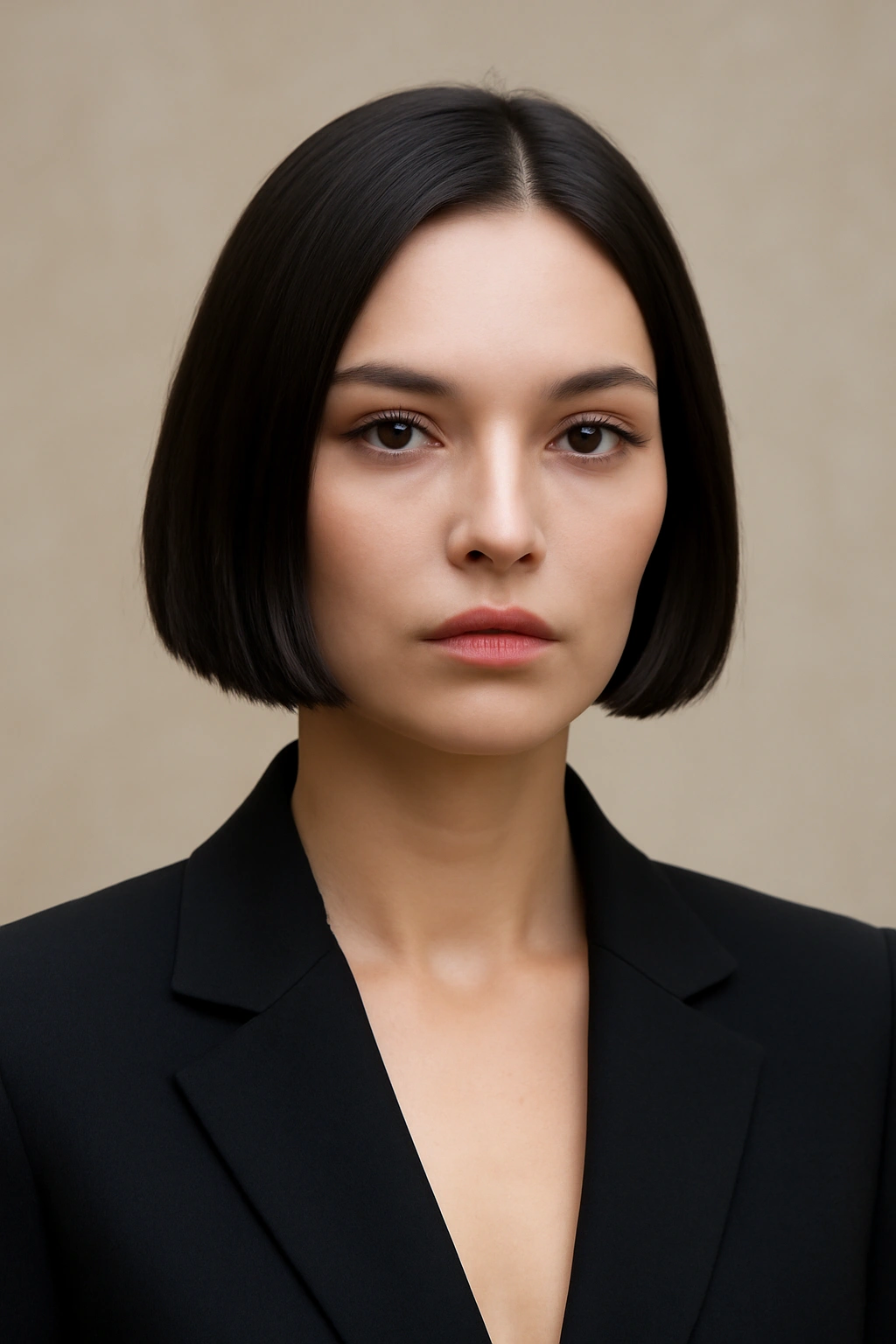
A blunt bob—whether chin-length or slightly longer—reads as supremely polished with a blazer outfit, particularly if the bob is precisely cut and maintained. There’s something about the clean lines of a well-executed bob paired with the clean lines of tailoring that creates visual harmony.
Why Bobs Deserve Their Reputation
A bob is technically simple, but execution matters enormously. A sloppy bob undermines a blazer outfit; a precise, intentional bob elevates it immediately. The style requires regular trims (every 4-6 weeks), a clear understanding of your face shape and how length flatters you, and commitment to maintaining the silhouette. But when all those elements align, a bob becomes one of the most powerful hairstyles for blazer outfits because it creates an unbroken line from your head through the shoulders and into the blazer itself.
Choosing and Maintaining Your Bob
- Find the right length for your proportions: A bob that hits at or just below your jawline works for most people, but some face shapes are better served by something slightly shorter or longer. Work with a skilled stylist who understands proportions, not just someone who cuts bobs as routine.
- Consider texture carefully: A completely blunt bob is striking but requires your hair to cooperate and frequent styling. Layers add versatility—your bob can look sleek when blow-dried and styled, or textured and relaxed on less demanding days.
- Commit to regular trims: A bob looks intentional for about three weeks after a trim, then begins to lose its sharp line as it grows out. If you love the bob aesthetic, plan on salon visits every 4-6 weeks.
- Invest in a good blow-dry routine: Even a textured, layered bob needs some styling attention to look intentional. A good blow-dryer and the right brush or comb make this quicker and easier.
- Add shine to enhance precision: A bob’s power comes partly from its clean lines, which are highlighted by shine. A glossing spray or oil treatment makes those lines read even more clearly.
Worth knowing: The most striking bob-and-blazer combinations involve a clear textural or color contrast. A sleek dark bob with a textured light-colored blazer, or a textured lighter bob with a structured dark blazer, creates visual interest that elevates both pieces.
Final Thoughts
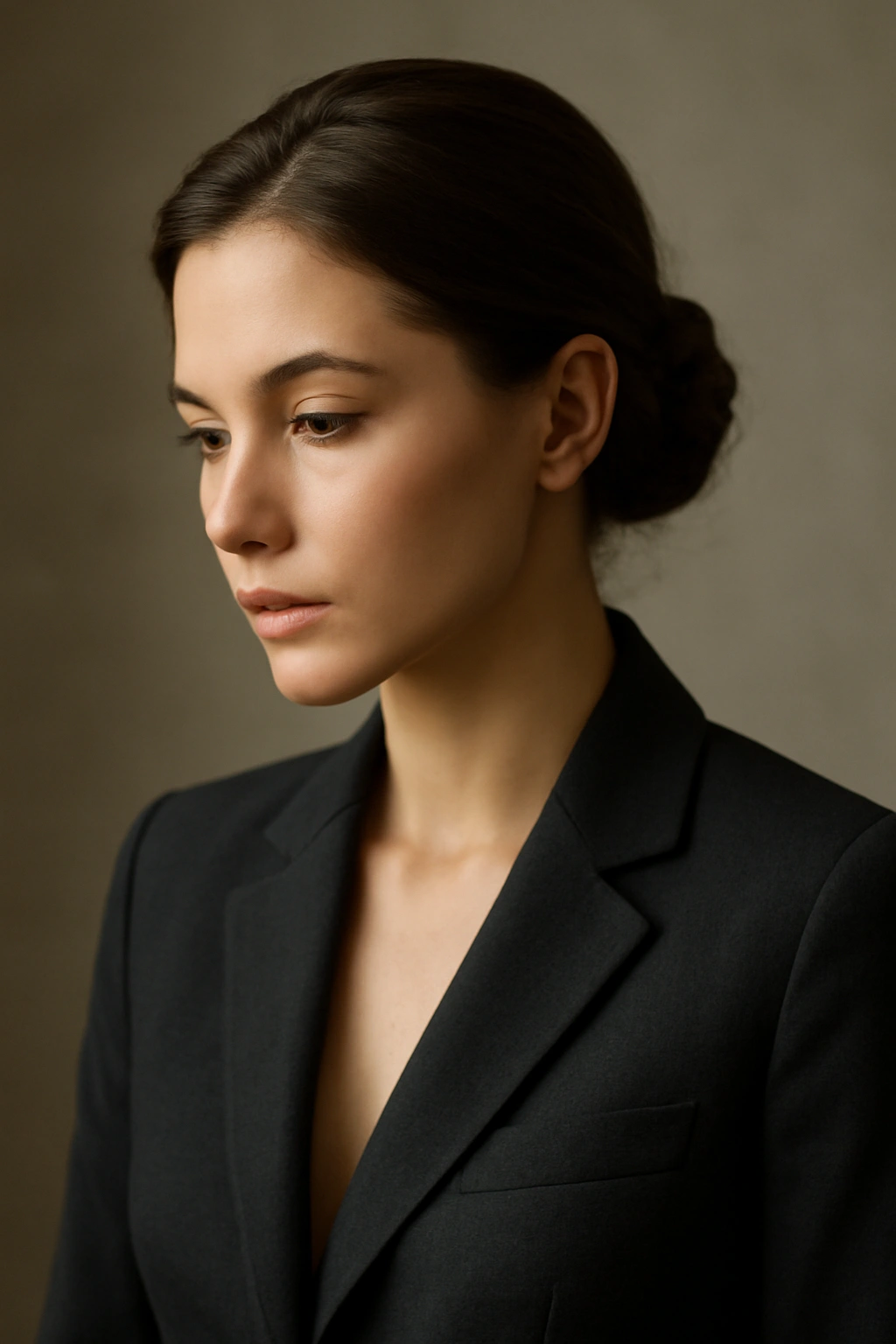
The right hairstyle isn’t an afterthought when you’re wearing a blazer—it’s the final element that determines whether your outfit reads as intentional or accidental. Each of these styles approaches that goal differently: some through sleekness and precision, others through movement and texture, and still others through subtle asymmetry or unexpected detail. The key is choosing a style that matches both the formality level of your blazer and the occasion you’re dressing for.
What these hairstyles share is intentionality. Even the styles that look effortless—like soft waves or a textured lob—actually require thoughtful execution and maintenance to read the way they should. That attention to detail extends to how others perceive your entire presentation, and it’s what tips a blazer outfit from “I found this in my closet” to “I deliberately chose everything.”
Pay attention to which of these styles genuinely speaks to your hair type, your lifestyle, and the amount of maintenance you’re willing to commit to. You don’t need to master all ten—just find two or three that feel natural and sustainable for you. Those become your go-to blazer hairstyles, the ones that consistently make you feel polished and intentional. The confidence that comes from knowing you look put-together always reads better than perfect execution of a style that doesn’t feel like you.
